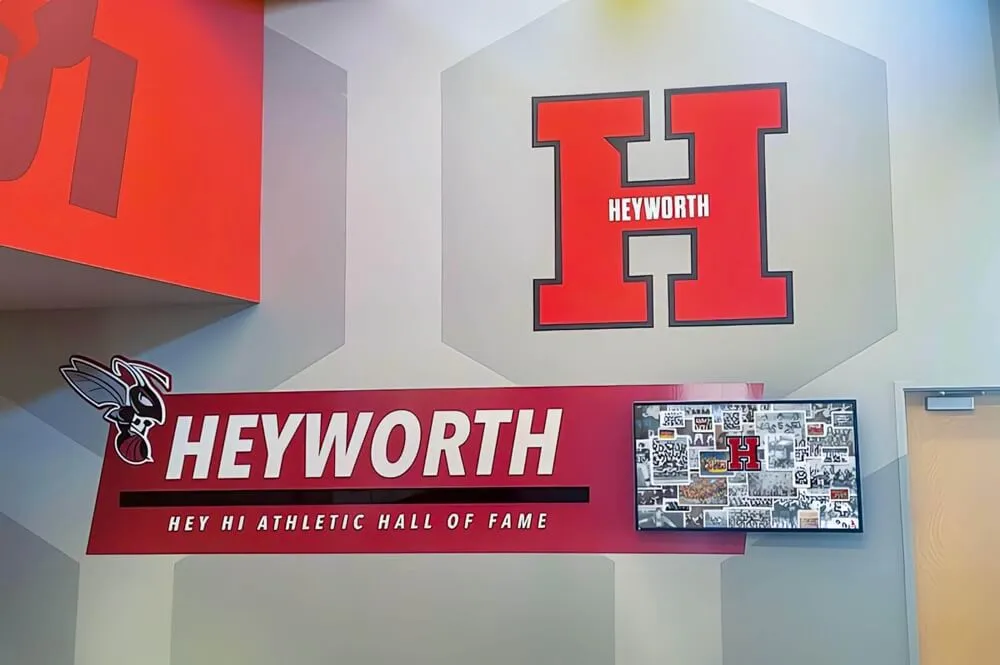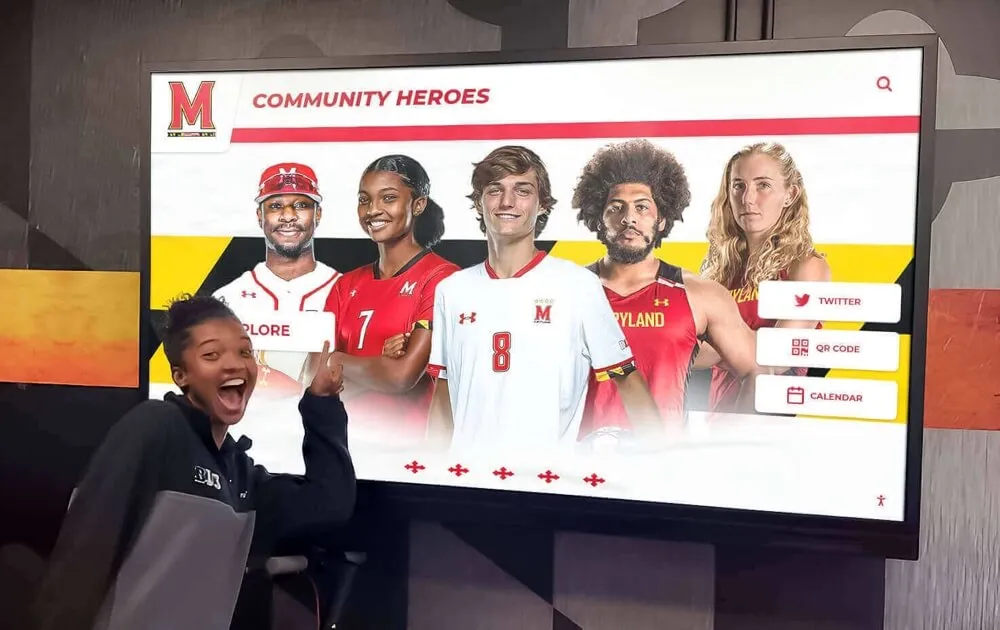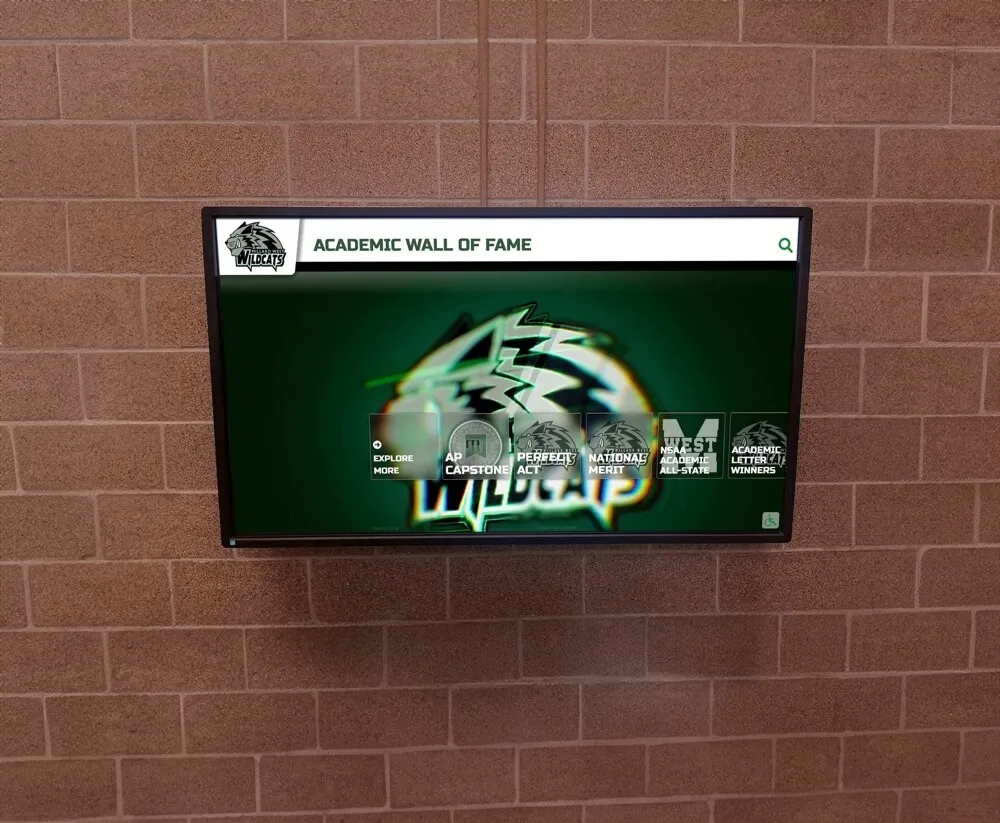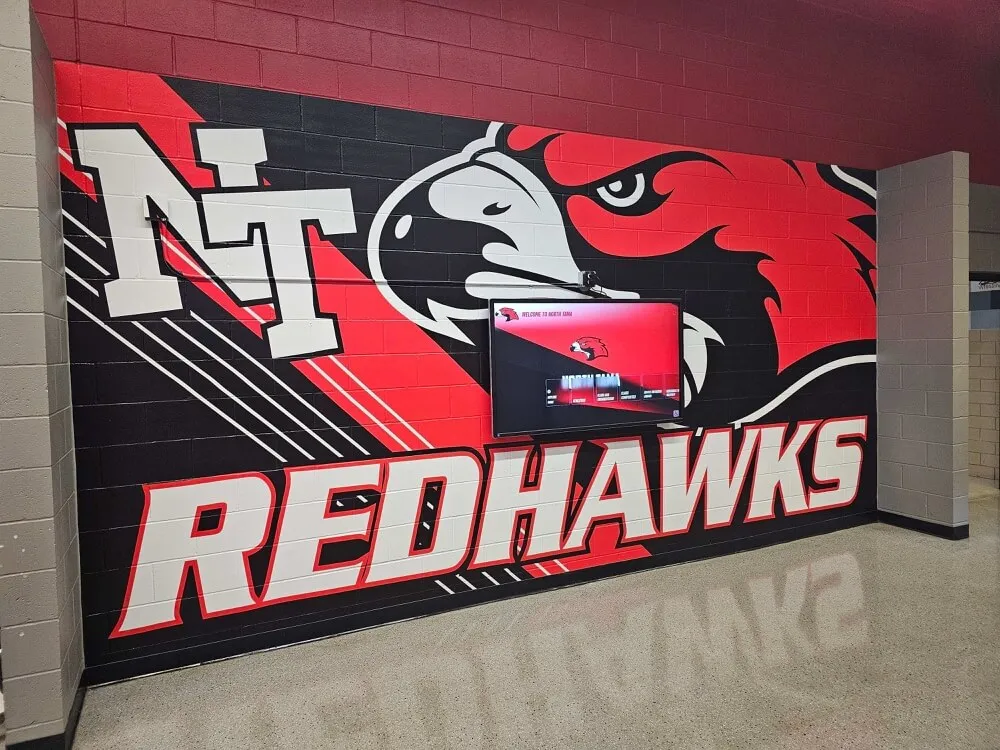




Small to medium public high schools face a unique challenge: how to celebrate student achievement, preserve school history, and build community pride when working with limited budgets, constrained physical space, and lean administrative teams. Traditional recognition methods—engraved plaques, printed banners, glass trophy cases—quickly become expensive, space-consuming, and difficult to maintain as schools accumulate decades of achievements across academics, athletics, arts, and community service.
Digital recognition systems offer a practical solution tailored to the specific needs and constraints of smaller schools. These platforms provide unlimited recognition capacity, require minimal physical space, operate within tight budgets, and need no specialized staff to maintain. More importantly, they create what educators call “digital warming”—transforming static displays into engaging, personalized experiences that draw students, parents, alumni, and community members into deeper connection with school heritage and current accomplishments.
The Recognition Challenge Facing Smaller Public High Schools
Public high schools serving 300 to 1,200 students operate in a fundamentally different environment than their larger counterparts. These schools typically maintain lean administrative staffs, manage tight operational budgets, and work within facility constraints that limit their ability to dedicate extensive physical space to recognition displays.
Yet the need for meaningful recognition remains just as critical. Students at smaller schools deserve celebration of their academic excellence, athletic achievements, artistic talents, and community contributions. Alumni who competed decades ago deserve lasting honor. Donors who support programs need acknowledgment. School traditions that define institutional identity require preservation.
Traditional recognition approaches create mounting problems for schools in this size category. Physical trophy cases fill up within years, forcing difficult decisions about what to remove or relocate. Engraved plaques become prohibitively expensive when honoring dozens of students annually across multiple programs. Printed banners deteriorate, creating maintenance headaches and visual clutter. Static displays provide no way to share rich stories, statistics, or multimedia content that makes recognition meaningful.
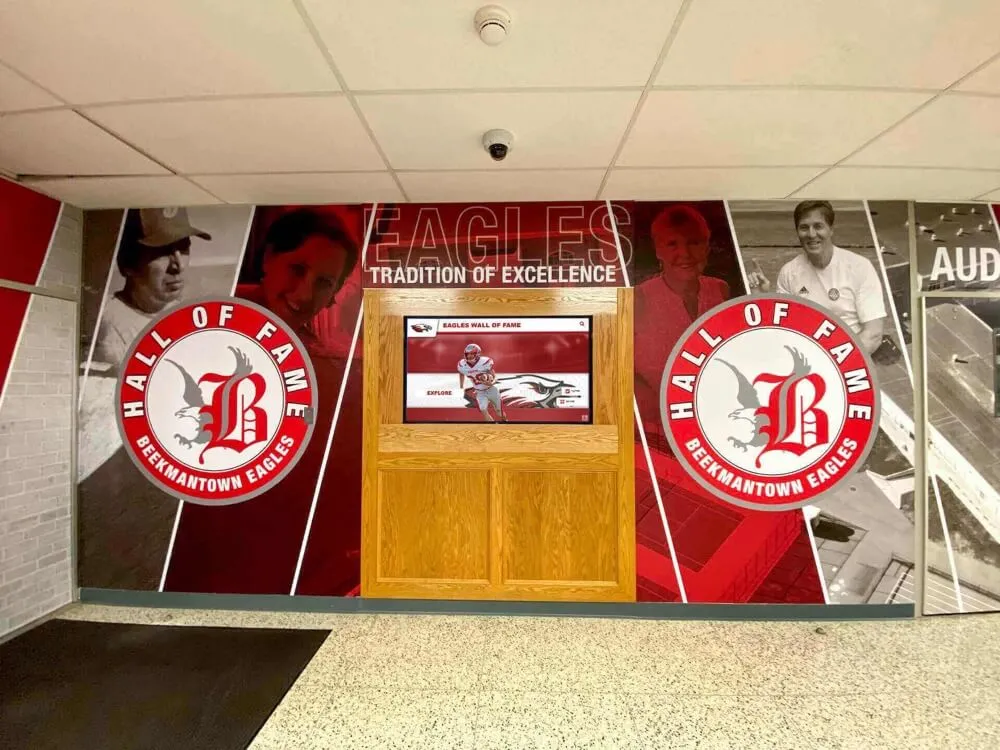
Budget constraints compound these challenges. Small to medium public schools rarely have discretionary funds for recognition infrastructure. Capital improvement budgets focus on essential educational needs—classroom technology, facility maintenance, curriculum resources. Recognition systems must demonstrate clear value while fitting within extremely limited financial parameters.
Staffing limitations create additional hurdles. These schools typically lack dedicated technology coordinators or alumni relations specialists. Athletic directors, counselors, and office administrators already manage multiple responsibilities. Any recognition system must operate with minimal ongoing staff time, require no specialized technical knowledge, and function reliably without constant intervention.
Why Digital Recognition Platforms Fit Smaller School Environments
Digital recognition systems address these specific challenges through several key characteristics that align perfectly with small to medium public school needs and constraints.
Unlimited Recognition Capacity in Minimal Physical Space
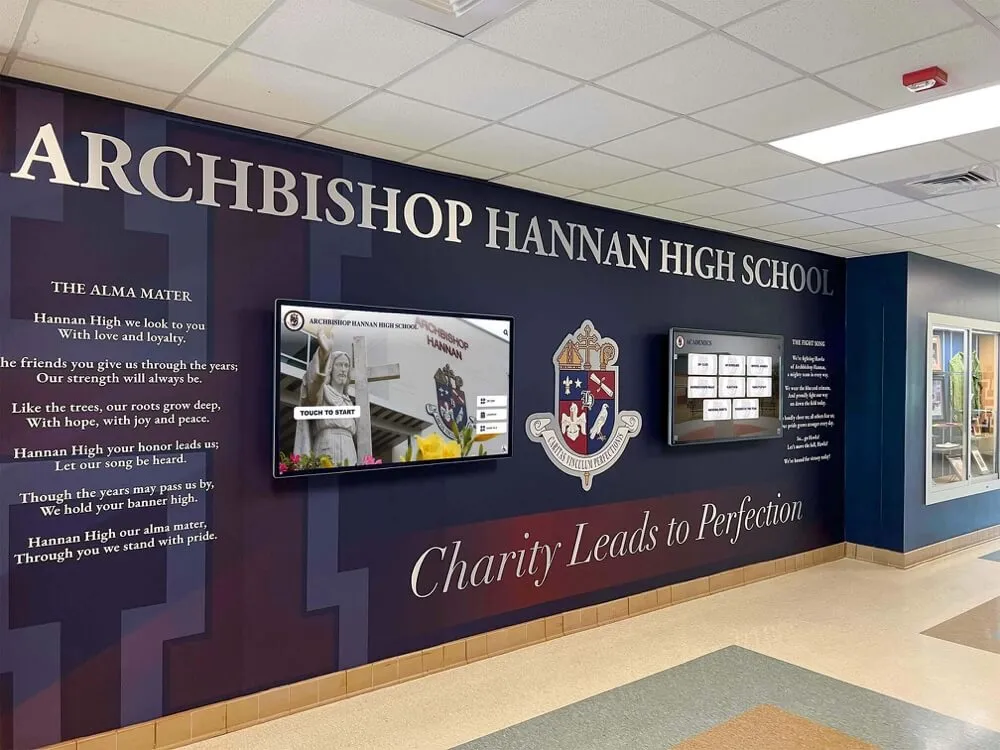
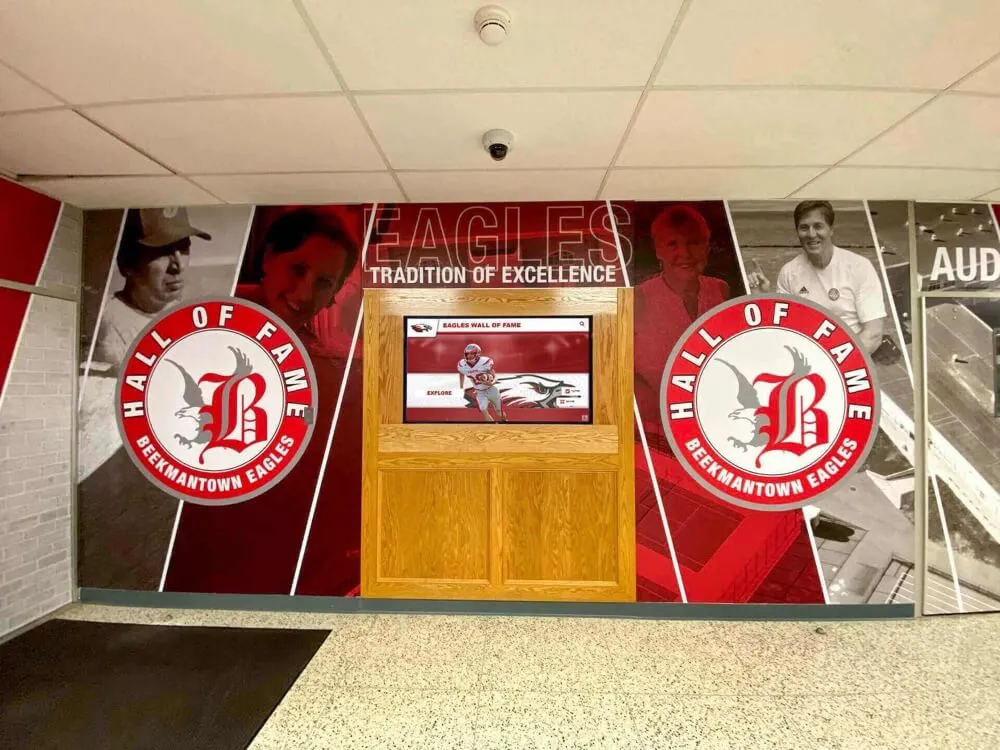
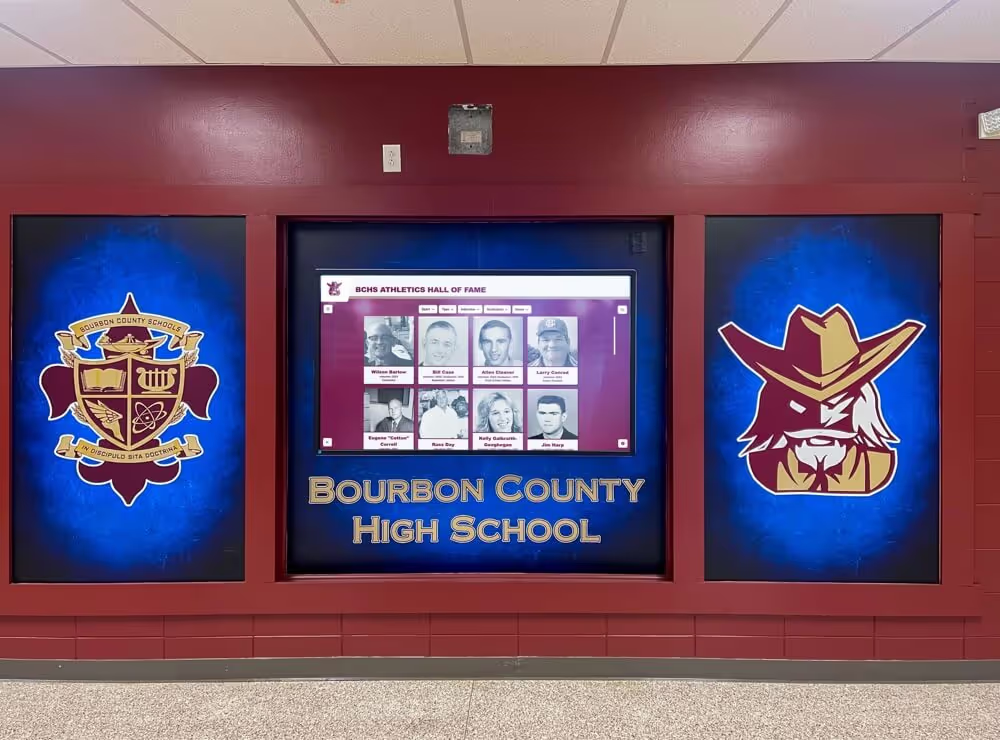
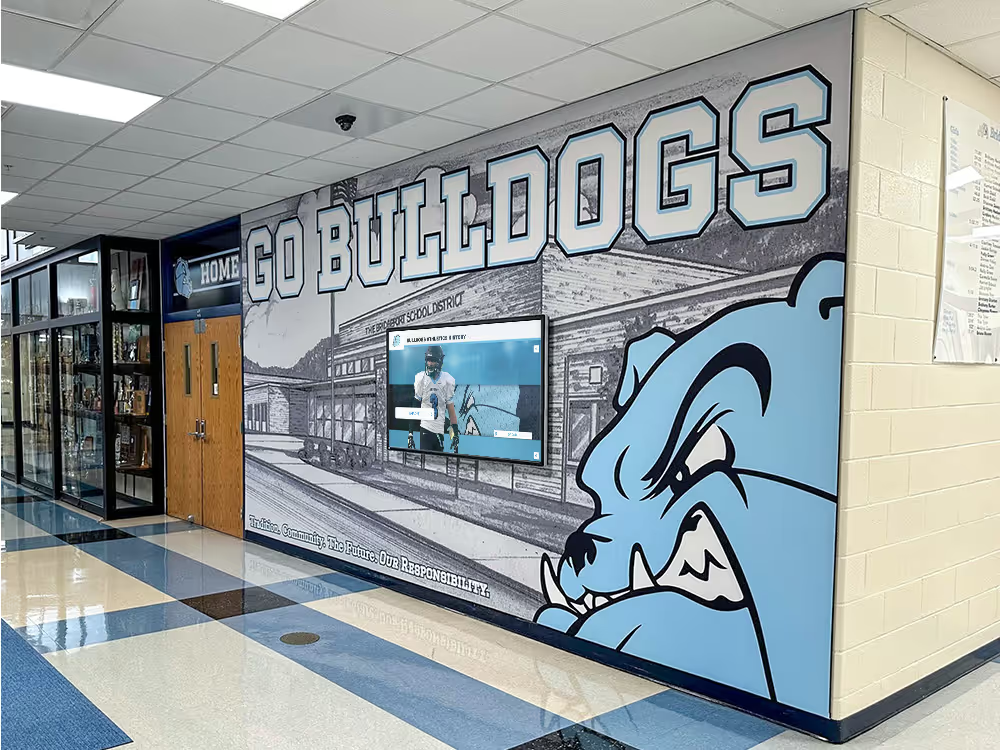
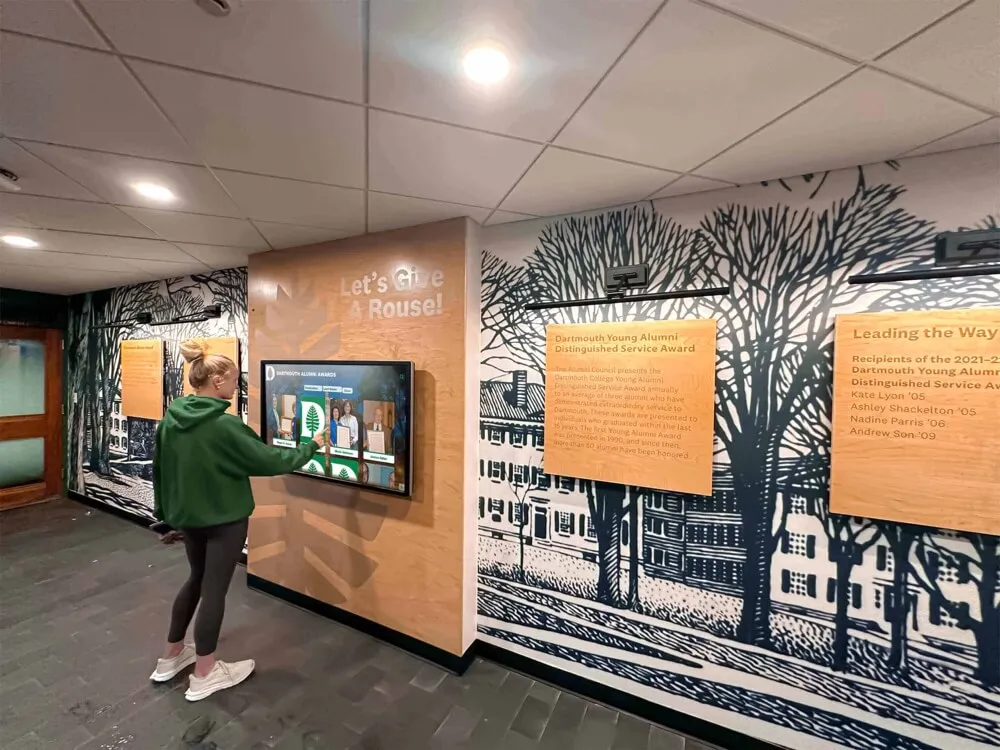
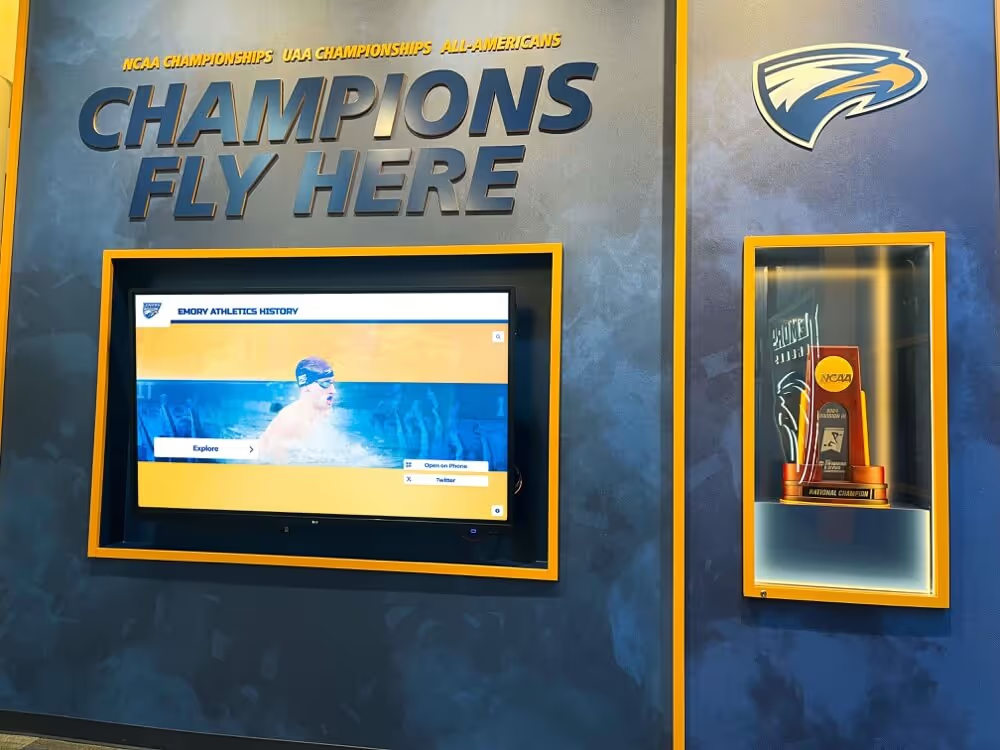
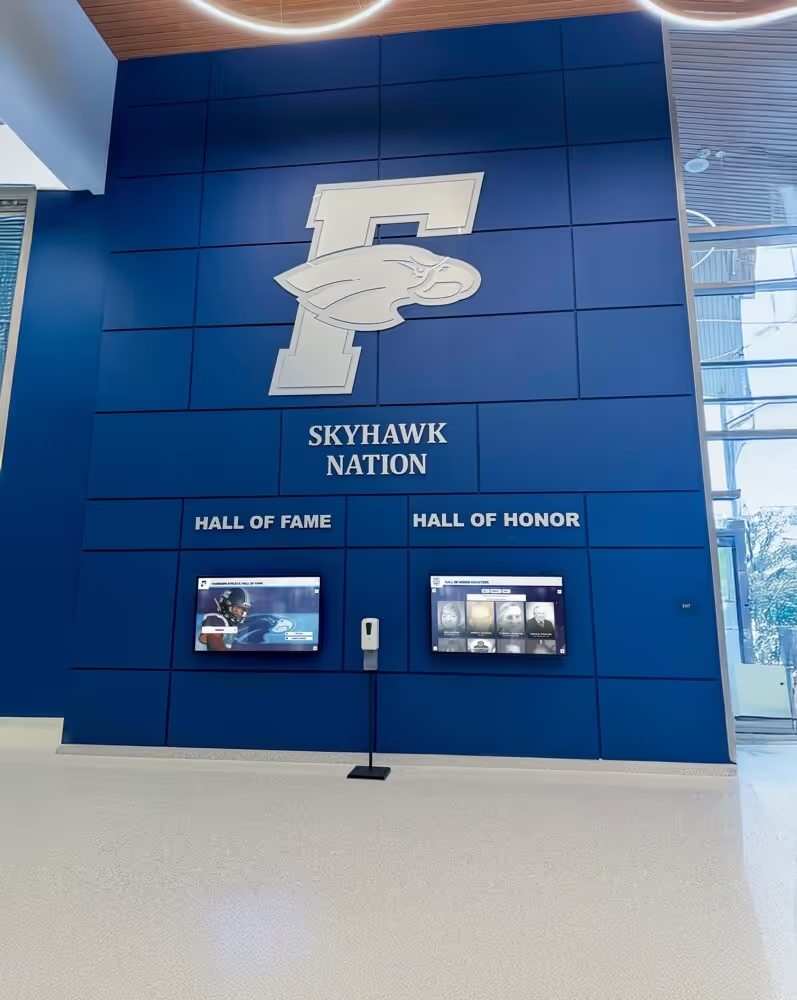
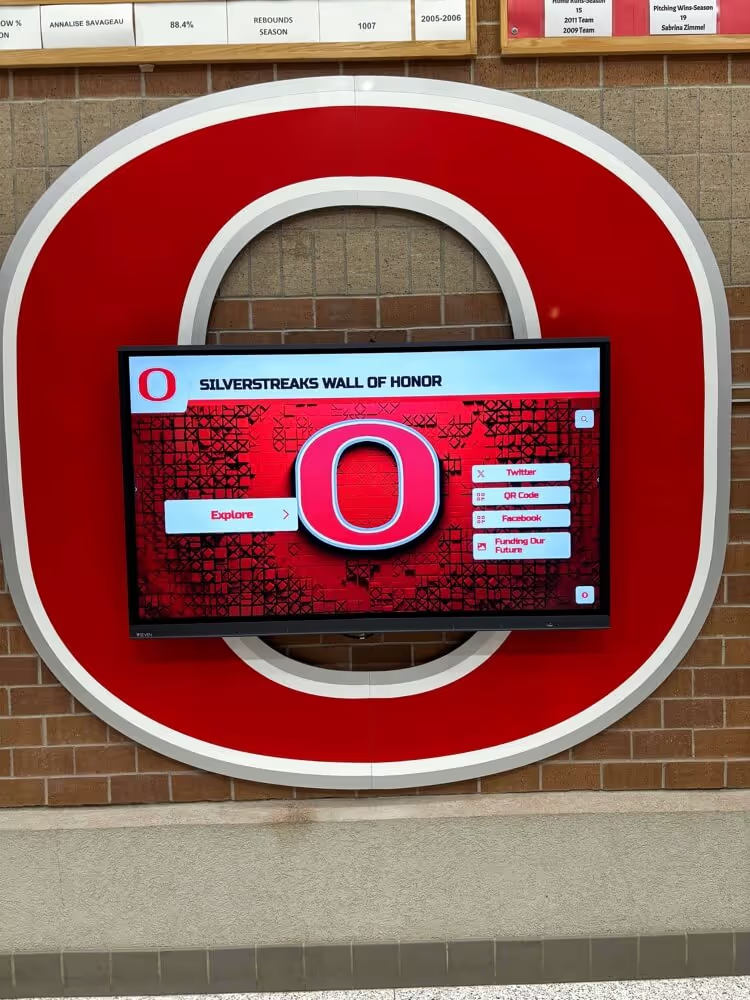
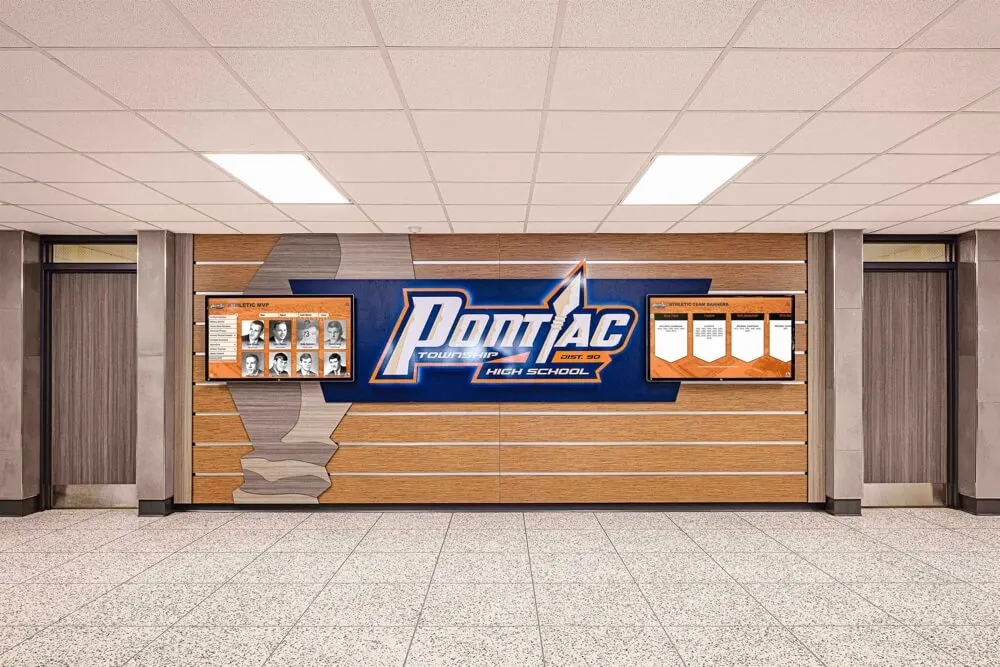
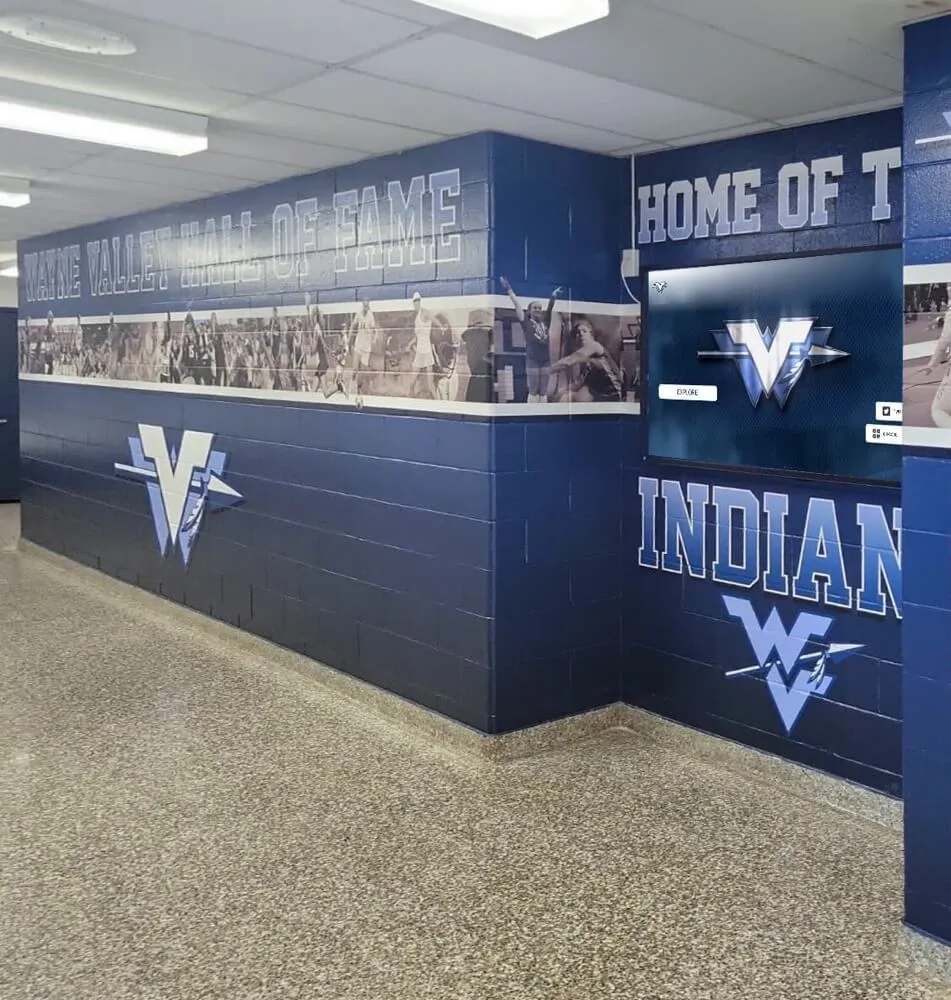
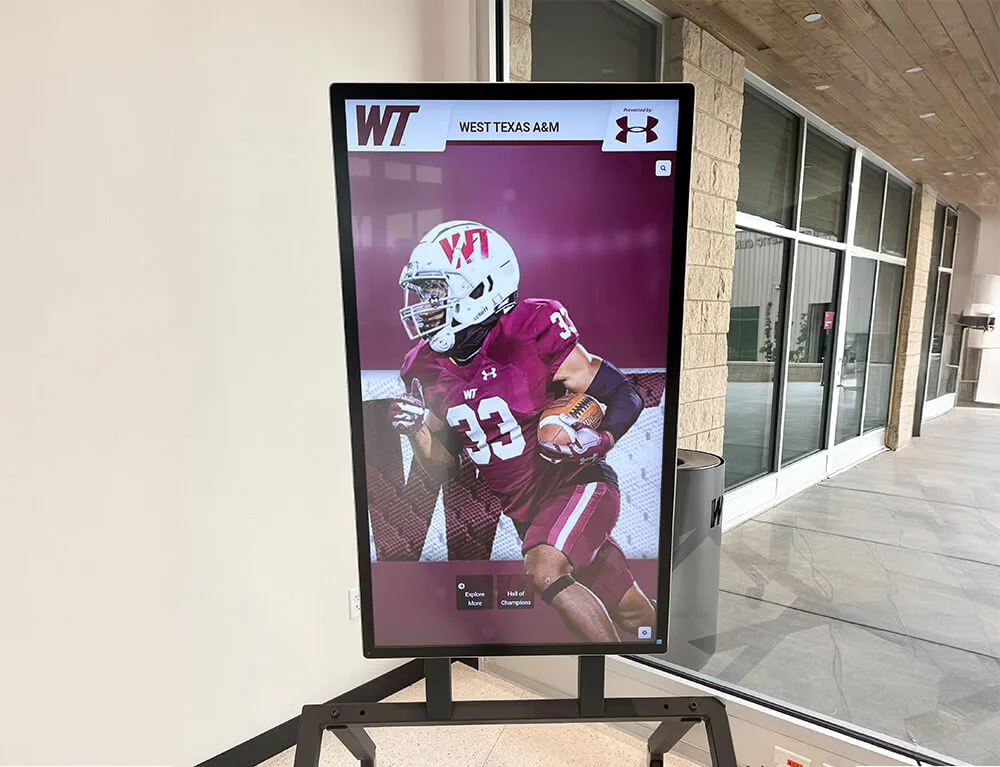
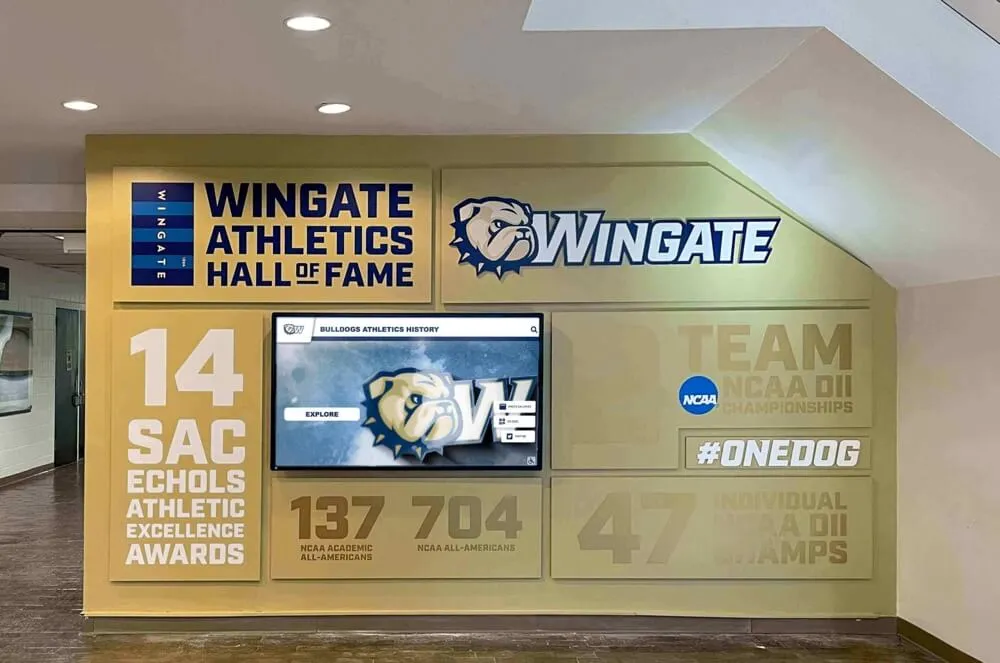
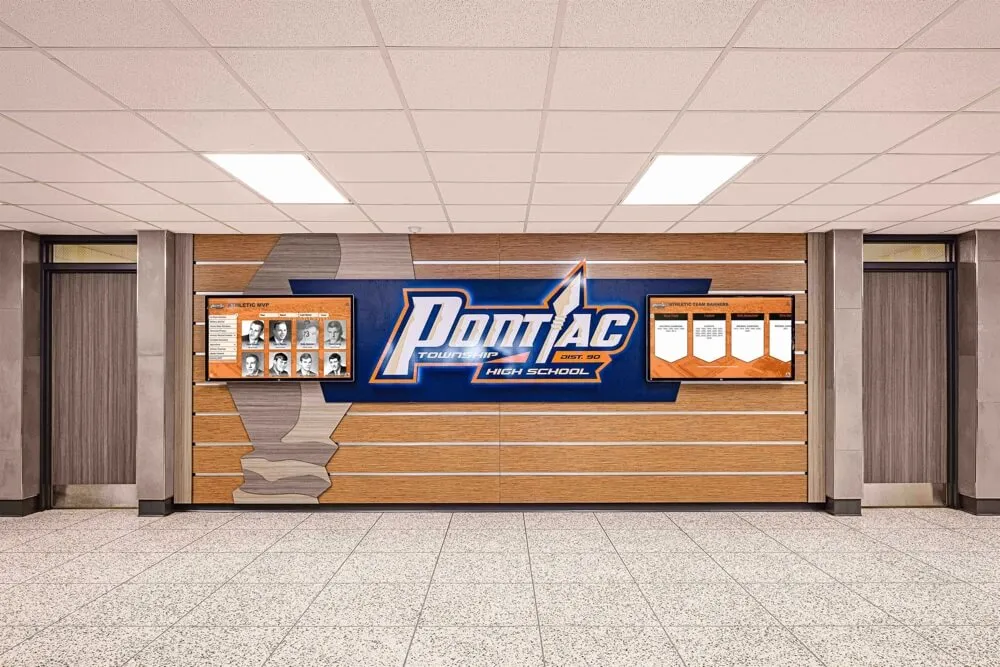
Perhaps the most immediate benefit involves space efficiency. A single touchscreen display measuring 43 to 55 inches can showcase unlimited inductees, award recipients, and achievements spanning decades of school history. Schools no longer face the impossible choice of which accomplishments to feature and which to relegate to storage.
This unlimited capacity particularly benefits schools with strong multi-generational communities. Small town public schools often serve the same families across generations, creating deep emotional connections to institutional heritage. Digital platforms enable schools to honor every graduate who earned all-conference recognition in athletics, every academic honor roll recipient, every student who served in student government, and every community service award winner—not just the most recent few years or the most prominent achievements.
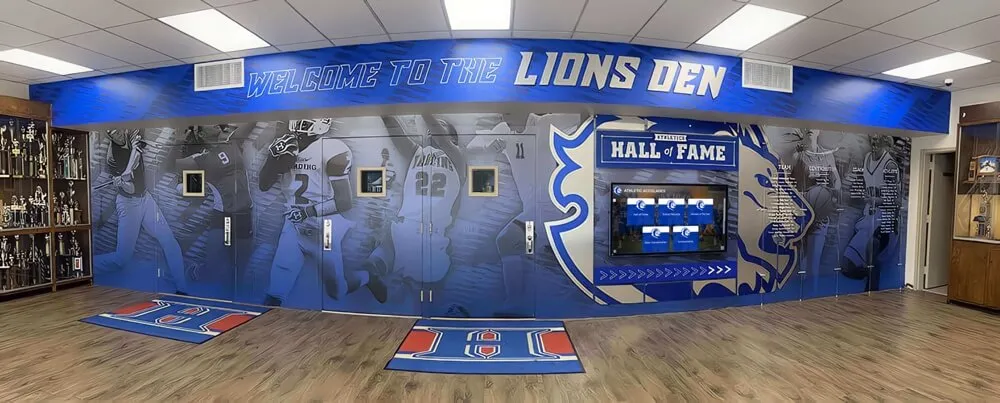
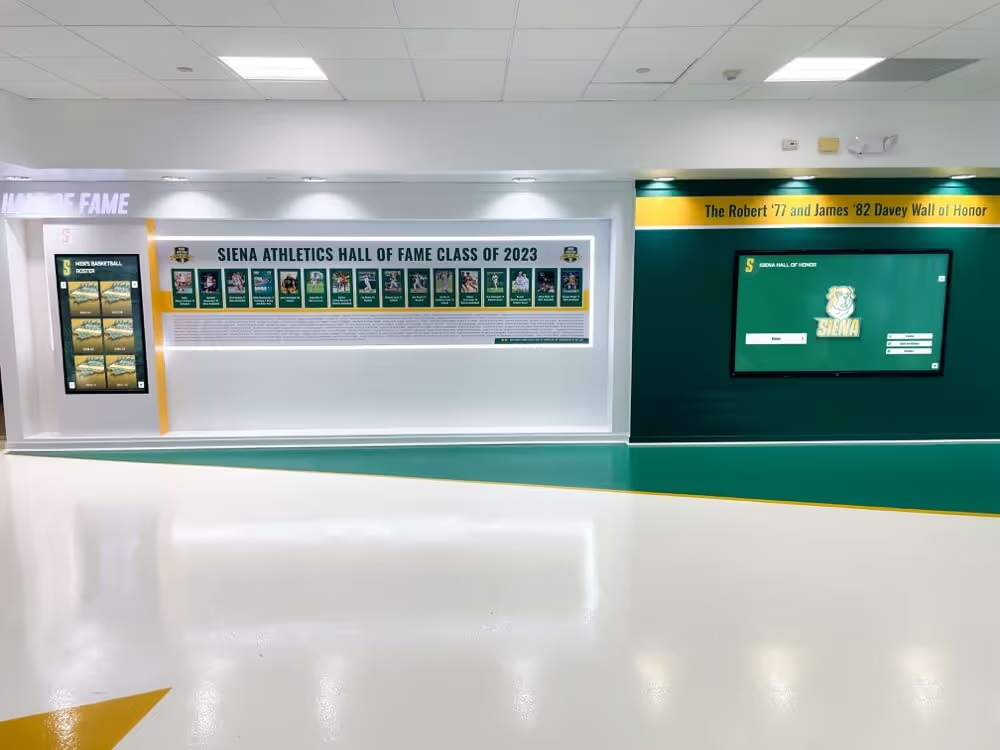
The space efficiency extends beyond the display itself. Schools eliminate the need for extensive trophy case installations, long hallway walls covered in plaques, or dedicated rooms filled with recognition artifacts. A single location in the main entrance or common area provides access to the school’s complete recognition archive.
Budget-Friendly Implementation and Operation
Cost represents the most critical factor for smaller public schools evaluating any new system. Digital recognition platforms designed for educational institutions typically operate on subscription models that spread costs across multiple years, making them far more accessible than traditional recognition infrastructure.
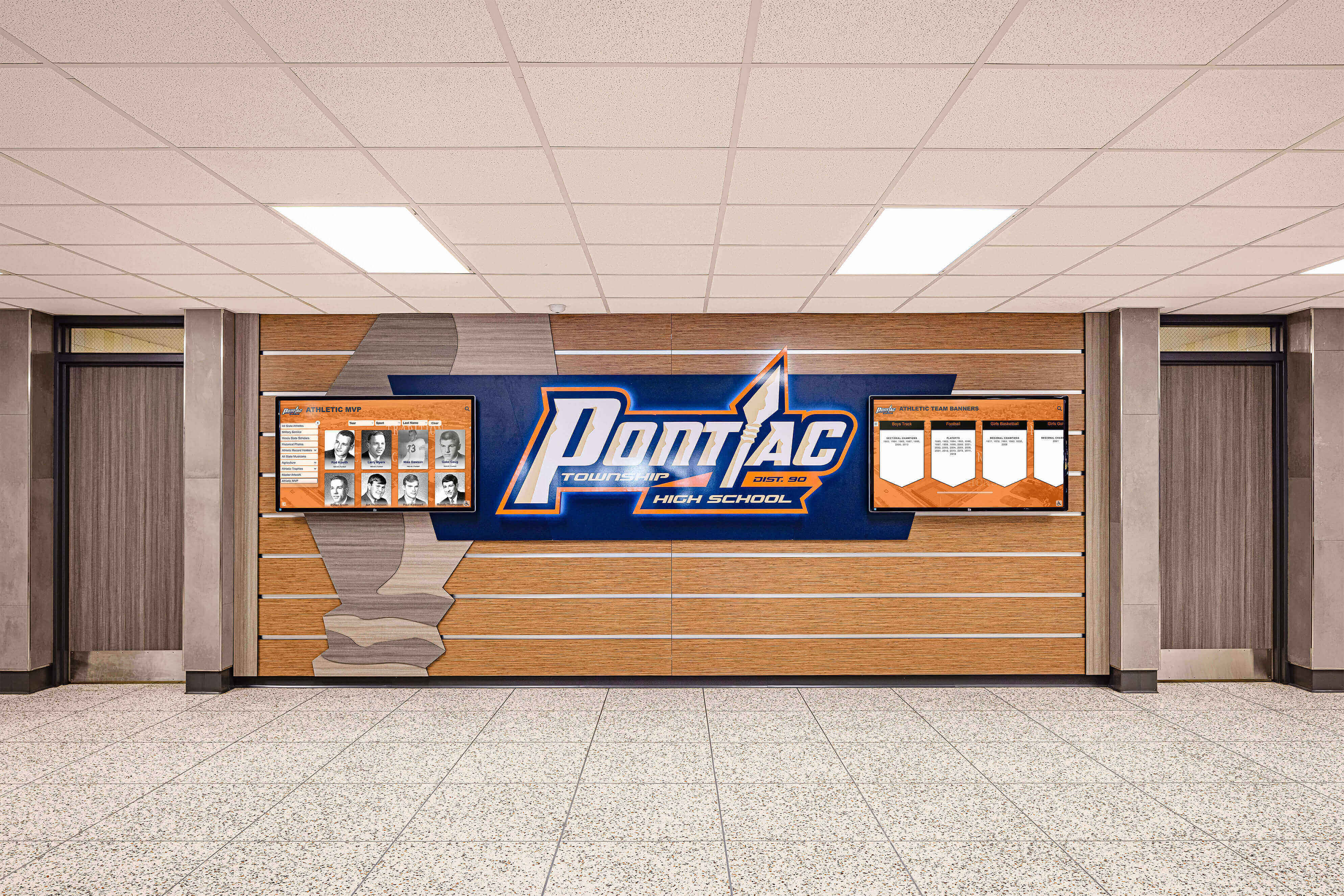
Consider the comparative economics. Traditional recognition approaches require significant upfront investment for physical infrastructure—custom trophy cases ($3,000-$8,000), engraved plaques ($75-$300 each), printed banners ($200-$500 each), and professional installation. These costs accumulate year after year as new achievements require new physical elements.
Digital platforms typically involve modest annual subscription fees that include the content management system, regular software updates, technical support, and unlimited recognition capacity. Many providers offer flexible subscription pricing models designed specifically for school budget cycles and constraints.
Hardware costs have also become increasingly reasonable. Commercial-grade touchscreen displays suitable for school environments range from $1,500-$3,500 depending on size and specifications. These displays typically last 7-10 years with minimal maintenance, representing a one-time investment that supports decades of recognition content.
Total cost of ownership becomes even more favorable when accounting for eliminated expenses. Schools no longer purchase plaques, print banners, commission trophy case construction, or pay for ongoing physical display maintenance and updates. The digital platform replaces all these recurring costs with a single predictable subscription.
Zero Technical Expertise Required
Small schools cannot rely on dedicated IT staff or technology coordinators to manage recognition systems. Platforms designed for educational institutions must be intuitive enough for any administrator, coach, or teacher to use without technical training.
Modern digital recognition systems operate through cloud-based content management interfaces accessible from any computer or tablet. Authorized users simply log in, fill out forms to add new inductees or achievements, upload photos, and publish content—no coding, design skills, or technical knowledge required.
This accessibility proves particularly valuable for schools where multiple staff members contribute content. Athletic directors can add sports achievements, counselors can update academic honor rolls, arts teachers can showcase student performances, and development coordinators can recognize donors—all working independently through the same system without coordinating with technology staff.
Remote management capabilities eliminate the need to physically access display hardware. Updates happen instantly from any location, whether administrators are working from their office, attending off-site events, or updating content from home. This flexibility accommodates the reality that smaller school administrators rarely have time during regular school hours to manage such tasks.
Engaging Student Experiences That Build Connection
Beyond solving practical challenges, digital recognition systems create qualitatively different student experiences that strengthen school culture and community connection. These platforms transform recognition from static acknowledgment into interactive exploration that invites deeper engagement.
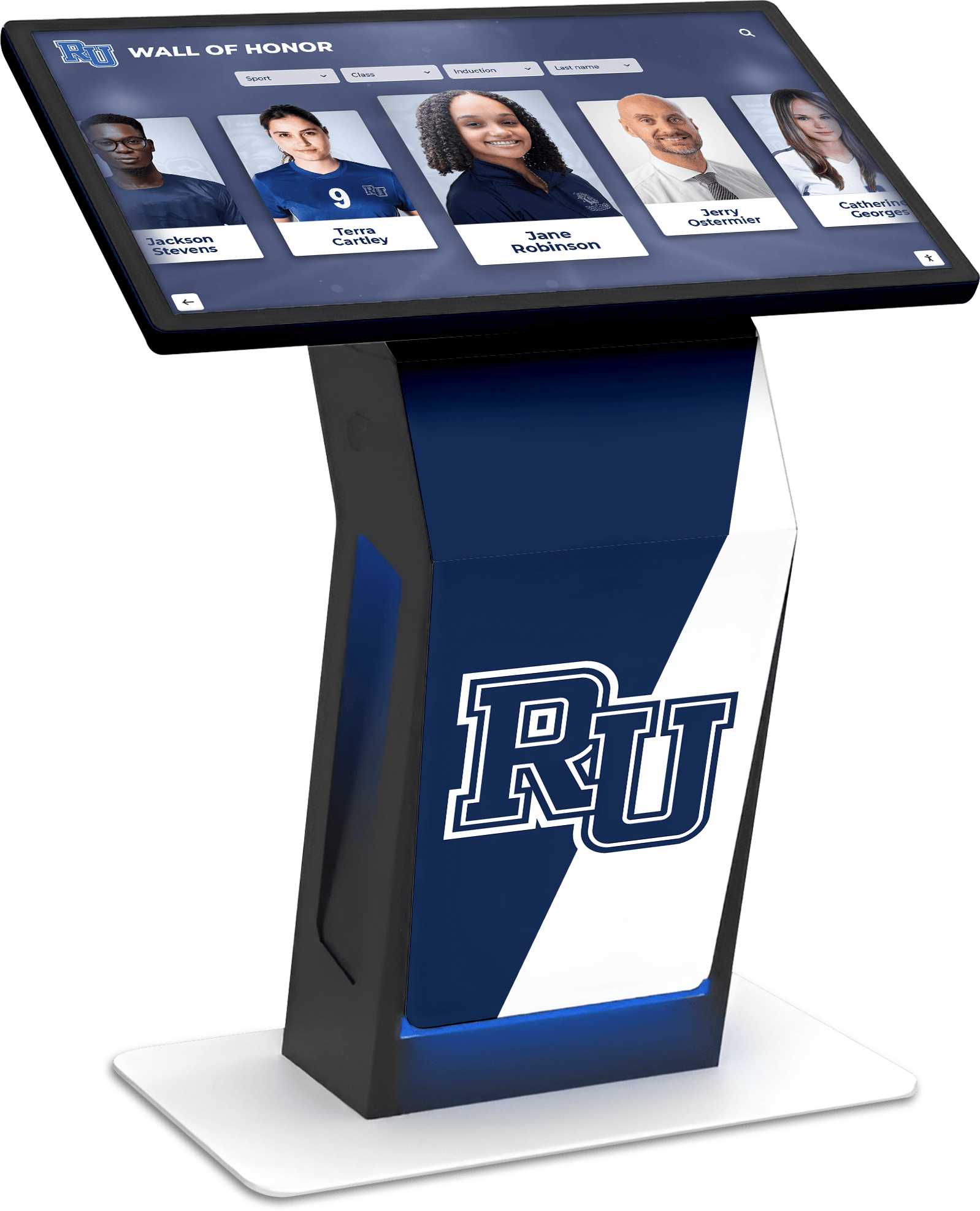
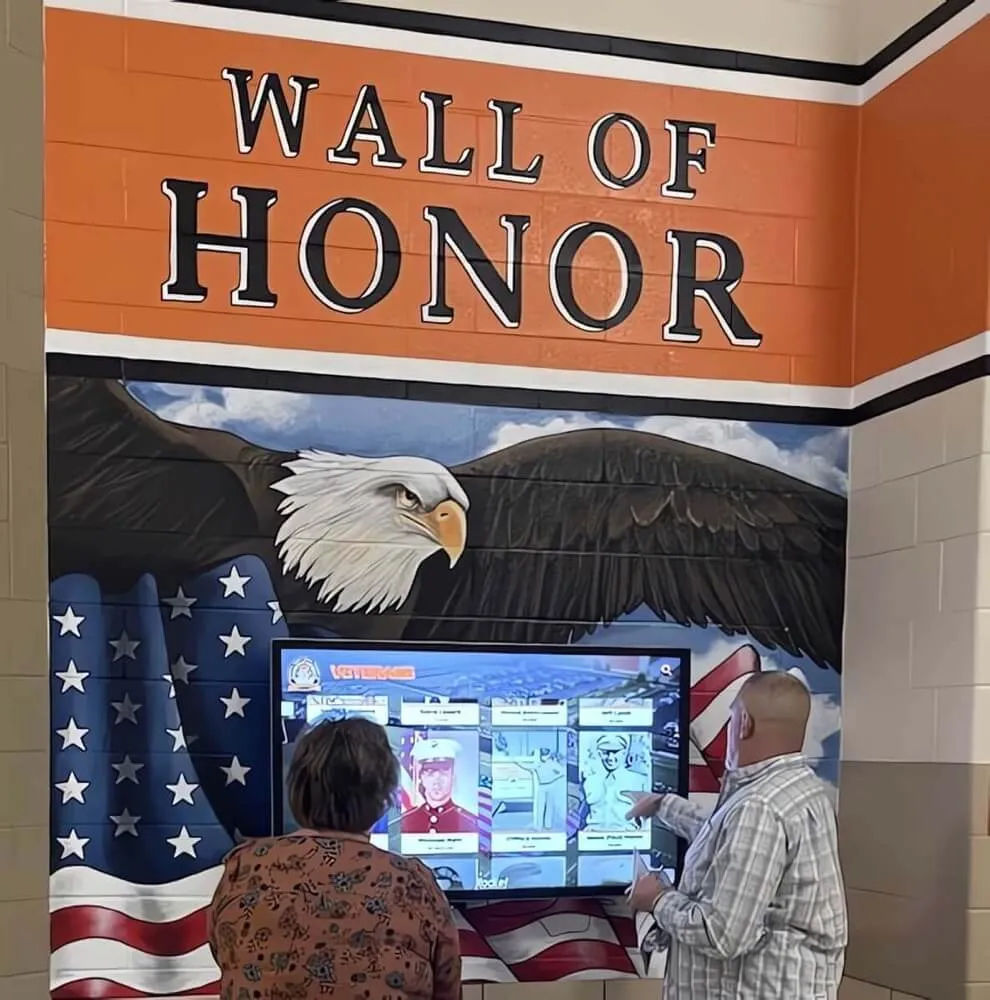
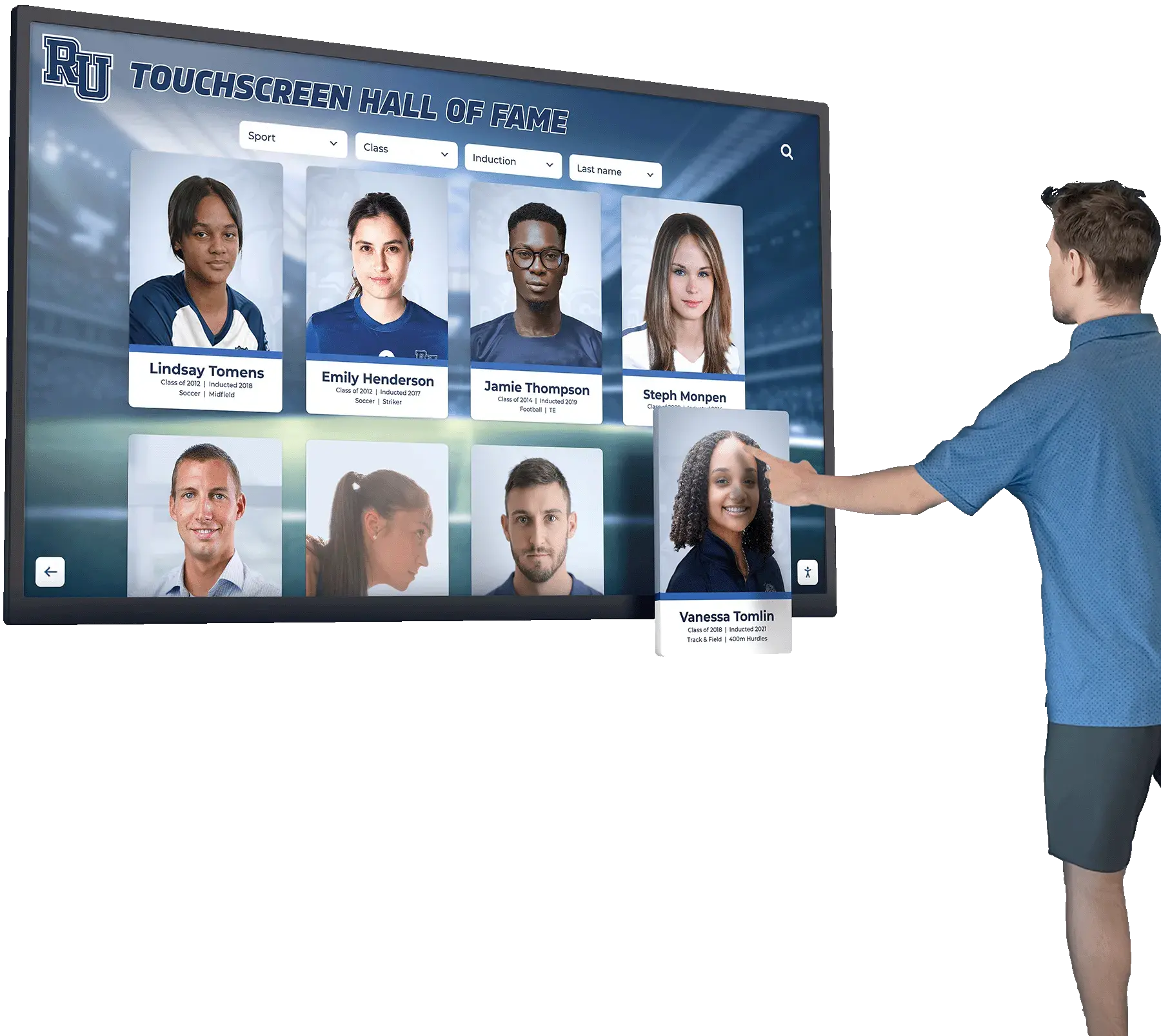
Students can search for their own achievements, discover which alumni share their hometown, explore the athletic records they’re chasing, or see who else participated in the same activities. Parents attending events naturally gravitate toward displays to find their children’s accomplishments or reminisce about their own high school experiences. Alumni visiting campus for reunions or events spend extended time exploring classmates, reliving memories, and connecting their personal history to current school programs.
This interactive engagement creates the “digital warming” effect—cold archives become vibrant exploration experiences. The difference parallels the contrast between reading a history textbook and exploring an interactive museum exhibit. Both provide information, but only one creates memorable, personally meaningful experiences that build emotional connection.
For smaller schools, this community-building effect carries particular importance. These institutions often serve as cultural anchors in their communities, bringing together families across generations. Recognition systems that facilitate personal connection and storytelling strengthen these bonds while celebrating the individual achievements that make schools special.
Equity Across All Student Achievement Categories
Small schools typically pride themselves on providing opportunities for all students, not just star athletes or top academic performers. Digital recognition platforms support this inclusive philosophy by providing equal visibility to achievements across every program and activity.
Traditional physical displays inherently create recognition hierarchies. Trophy cases prioritize team championships and major awards. Wall space goes to the most prominent achievers. Less visible accomplishments—student council service, academic progress, community volunteer hours, arts participation—often receive minimal or no recognition simply because physical space and budget ran out.
Digital systems eliminate these artificial limitations. Schools can create dedicated sections for academic recognition programs, honor roll recipients, perfect attendance achievers, community service leaders, performing arts participants, and career technical education standouts. Every category receives equal digital space and prominence.
This comprehensive recognition approach aligns with the whole-student development philosophy central to smaller school identities. Students who excel in non-athletic areas see their accomplishments celebrated with the same permanence and visibility as athletic achievements, reinforcing the message that all contributions to school community matter equally.
Key Features That Matter Most to Smaller Schools
When evaluating digital recognition systems, small to medium public high schools should prioritize specific capabilities that directly address their unique needs and constraints.
Simple Content Updates Without IT Support
The content management interface represents the most important evaluation criterion. Systems designed for schools must allow any authorized staff member to add, edit, or update content through intuitive web forms—no specialized technical knowledge required.

Look for platforms that provide templates for common recognition types: athletic hall of fame inductees, honor roll recipients, scholarship winners, team rosters, season records. Templates ensure consistency while eliminating the design and formatting work that creates barriers for non-technical users.
Bulk upload capabilities matter for schools digitizing historical records or updating large groups of recipients. Rather than manually entering hundreds of past honor roll recipients one at a time, administrators should be able to upload spreadsheets that populate multiple profiles simultaneously.
Mobile Access Through QR Codes
Physical touchscreen displays provide engaging experiences for visitors at school, but recognition should extend beyond campus boundaries. Systems that generate QR codes enable anyone to access the complete recognition archive from their smartphone—students can share their achievements with distant relatives, alumni can explore from anywhere, and community members can engage without visiting campus.
This mobile accessibility proves especially valuable for smaller schools serving geographically dispersed communities. Alumni who moved away decades ago can maintain connection to their school heritage. Parents can explore achievements during their daily routines. Prospective families researching schools can understand the recognition culture before ever visiting campus.
Accessibility Compliance
Public schools must ensure all programs and services comply with accessibility standards. Digital recognition systems should meet WCAG 2.2 AA compliance standards, ensuring students, alumni, and community members with disabilities can fully engage with recognition content.
This compliance should extend across both touchscreen and mobile web interfaces. Look for systems that provide appropriate color contrast, support screen readers, enable keyboard navigation, include alt text for images, and accommodate various assistive technologies.
Multi-Purpose Display Capabilities
Budget constraints mean schools need recognition systems that serve multiple functions beyond traditional hall of fame content. Modern platforms should support rotating content for digital signage services, daily announcements, upcoming event promotions, and sponsor recognition.
This versatility maximizes the value of the hardware investment while providing schools with flexible communication tools. The same display that showcases athletic achievements during evening events can promote upcoming parent-teacher conferences during school hours and recognize booster club sponsors during athletic events.
Some platforms even include features for schools to generate sponsorship revenue. Local businesses can purchase recognition on the digital display, creating ongoing funding to support athletic programs, academic initiatives, or recognition system costs themselves. For budget-conscious smaller schools, this self-funding potential represents a significant benefit.
Comprehensive Content Types
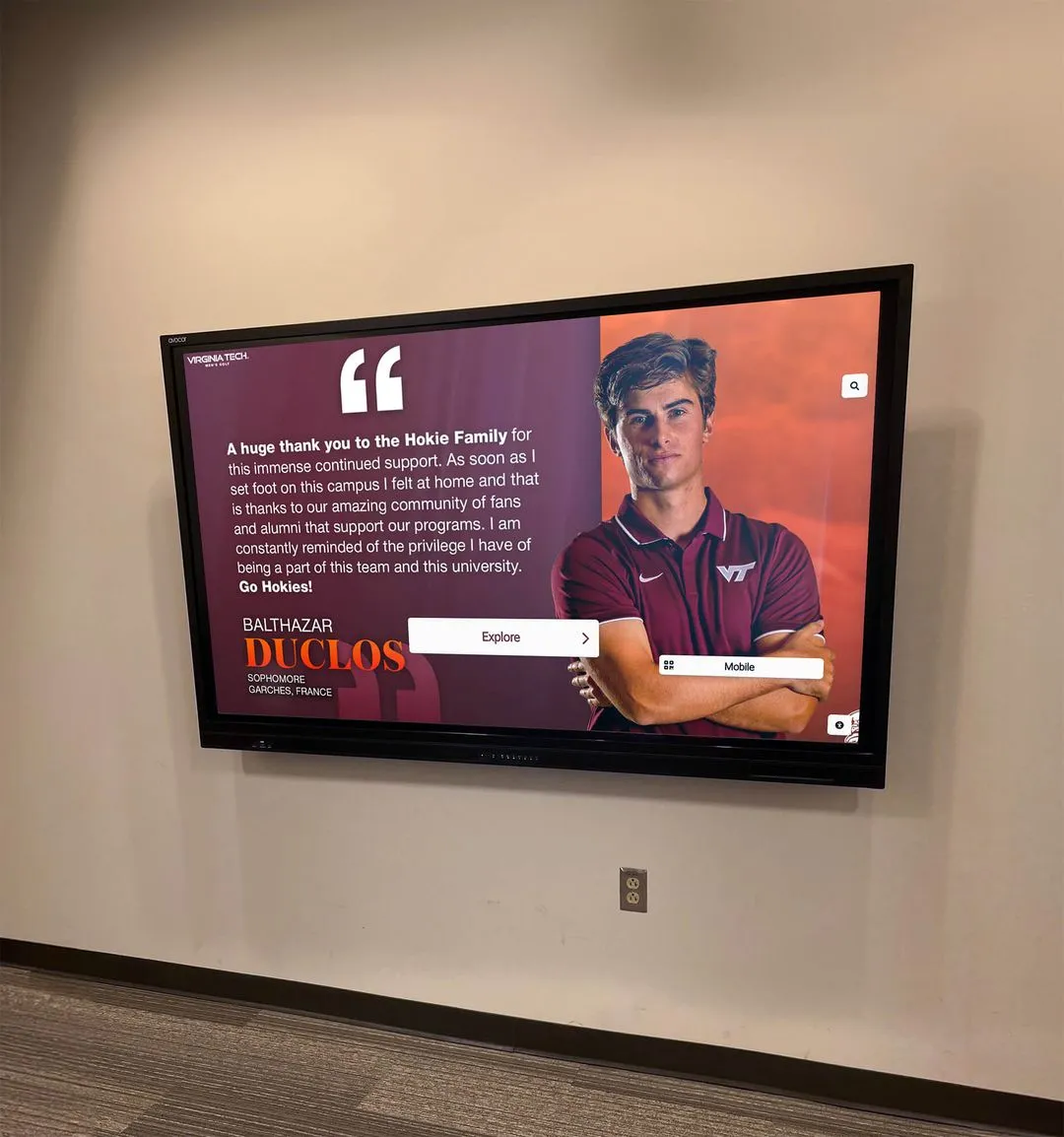
Recognition means more than names and dates. Look for systems that support rich multimedia content including photos, videos, statistics, biographies, quotes, and historical context. These elements transform basic acknowledgment into storytelling that creates emotional resonance and personal connection.
Athletic recognition particularly benefits from detailed statistics, season records, career highlights, and action photography. Academic recognition gains meaning from GPA displays, college destinations, scholarship amounts, and academic interest areas. Arts recognition comes alive through performance videos, artwork images, and program details.
The ability to include this depth of content enables schools to tell complete stories about student achievements rather than providing bare-bones listings. These stories create the engaging experiences that encourage extended exploration and community connection.
Implementation Considerations for Smaller Schools
Successfully implementing digital recognition systems requires attention to several practical factors specific to small to medium public school environments.
Placement Strategy
Display location significantly impacts engagement and perceived value. Main entrance lobbies provide maximum visibility for students, visitors, and parents. Athletic facility entrances serve families attending competitions and events. Library or media center locations accommodate student access during school hours.
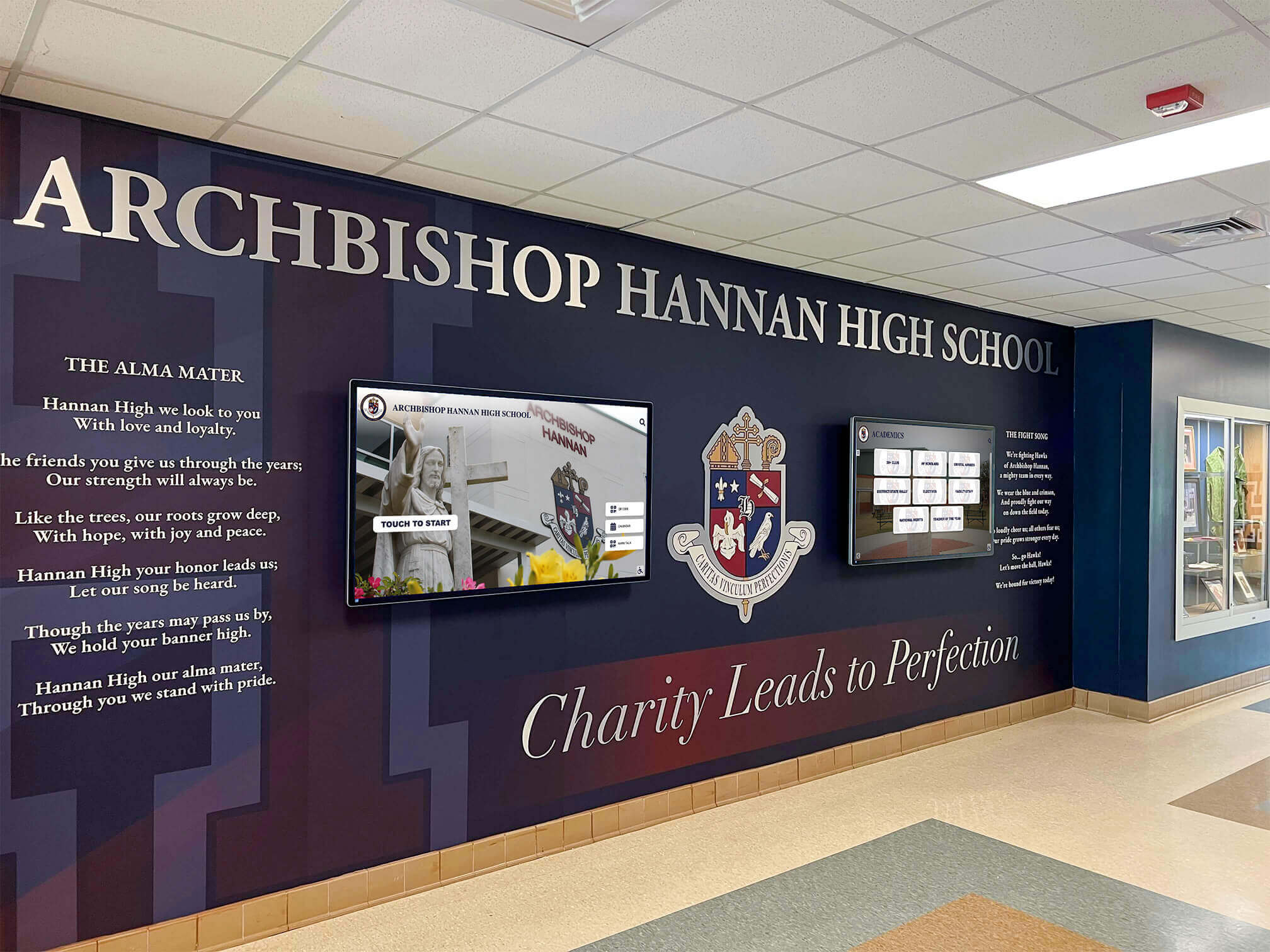
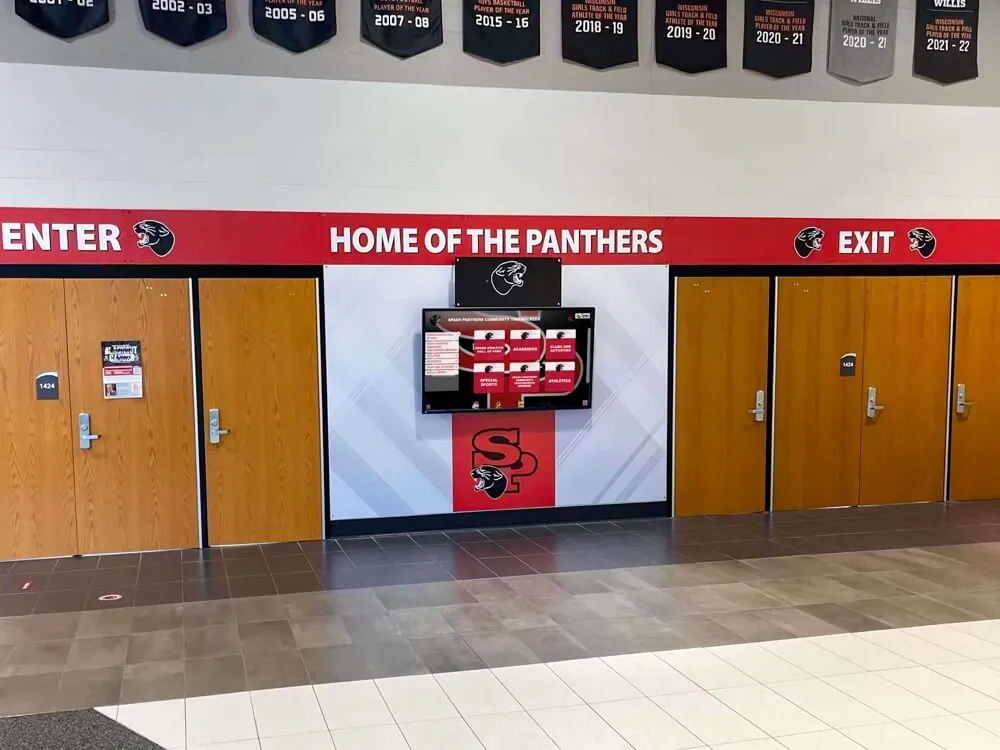
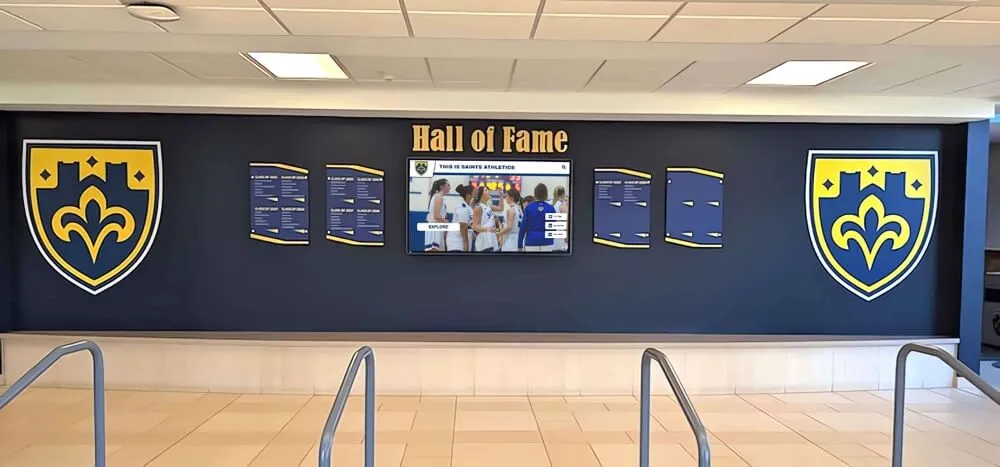
Smaller schools often benefit from central placement in high-traffic common areas where displays serve multiple audiences simultaneously. A touchscreen in the main entrance welcomes visiting teams, hosts parent conferences, celebrates current students, and engages returning alumni—maximizing utility from a single installation.
Consider power access, network connectivity, viewing angles, ambient lighting, and physical security when selecting locations. Displays should be easily visible but protected from damage, accessible for wheelchair users, and positioned where groups can gather without blocking traffic flow.
Content Migration Planning
Most small to medium schools possess extensive recognition history stored in file cabinets, trophy cases, photo albums, and printed programs. Transitioning this historical content to digital platforms creates a comprehensive archive but requires planning and effort.
Prioritize recent achievements that current students and active community members will explore first. Add historical content in phases rather than delaying launch until every past decade is digitized. Many schools discover that alumni volunteers enthusiastically contribute to digitizing historical content once the platform launches, turning content migration into a community engagement opportunity.
Consider partnering with student groups or classes to digitize archives as service learning projects. Students develop research, technology, and project management skills while contributing to school heritage preservation. This approach transforms content migration from an administrative burden into an educational opportunity.
Building Awareness and Adoption
Simply installing a digital recognition system does not guarantee engagement. Schools must proactively build awareness and encourage exploration through several strategies.
Announce new inductees and achievements through existing communication channels—morning announcements, newsletters, social media, parent emails—and include information about viewing full profiles on the digital display. This creates regular reminders that the system exists while giving students and families specific reasons to explore.
Incorporate the display into school events and programming. Have newly inducted hall of fame members demonstrate the system during team celebration events. Challenge students to find specific historical facts during orientation activities. Include display exploration in alumni reunion schedules.
Share the mobile QR code widely so recognition access extends beyond physical campus visits. Include QR codes on event programs, school publications, athletic passes, and alumni communications. This mobile access dramatically expands engagement opportunities while reinforcing that recognition is available anytime, anywhere.
Sustainability and Long-Term Success
Digital recognition systems should become permanent institutional infrastructure, not short-lived experiments. Several practices support long-term sustainability.
Establish clear ownership and update responsibilities. Designate which staff members manage different content categories—athletic director for sports achievements, counselor for academic honors, development coordinator for donor recognition. Define expectations for update frequency and content quality.
Create standard operating procedures documenting how to add common content types. These procedures ensure continuity when staff transitions occur and enable any administrator to update the system during vacations or absences.
Budget for the platform subscription as a permanent operational expense, not a temporary pilot project. Treating the system as essential infrastructure rather than a discretionary technology experiment ensures continued funding through budget cycles and leadership transitions.
Plan for hardware refresh cycles. Touchscreen displays typically last 7-10 years before requiring replacement. Including hardware replacement in long-term capital planning prevents future crises when displays eventually reach end-of-life.
The Community Impact Beyond Recognition
Digital recognition systems deliver value that extends well beyond simply displaying names and achievements. For small to medium public schools, these platforms support broader community engagement and institutional advancement goals.
Alumni engagement increases as graduates discover an easy way to reconnect with school heritage. Rather than vague nostalgia, alumni can explore specific teams they played on, find former classmates, see how records have changed, and understand how their contributions fit into school history. This concrete connection creates foundation for ongoing alumni participation, donations, and advocacy.
Prospective family recruitment benefits from visible celebration of student achievement. Families touring schools see tangible evidence that student accomplishments receive lasting recognition and appreciation. This commitment to celebration signals institutional values that resonate with families prioritizing supportive, community-oriented school environments.
Fundraising and development efforts gain momentum when donors see their contributions recognized professionally and permanently. Digital donor wall solutions integrated with achievement recognition demonstrate impact and express gratitude in ways that inspire continued support and encourage additional contributions.
Community pride deepens as local residents, businesses, and civic organizations see the school celebrating achievements and preserving heritage. Small town public schools often serve as community centers that unite residents across generations. Recognition systems that honor this multi-generational heritage strengthen the school’s role as cultural anchor while building community support for programs and initiatives.
School culture improves as students see that achievements across all areas receive equal recognition and permanent celebration. This comprehensive recognition approach reinforces growth mindset principles—all students can find success in some area, and that success deserves acknowledgment. The resulting culture of celebration increases student motivation, participation, and school pride.
Making the Decision: Evaluating Providers and Solutions
Small to medium public schools evaluating digital recognition systems should consider several key factors when comparing providers and solutions.
Total Cost of Ownership
Look beyond initial prices to understand complete multi-year costs including hardware, software subscriptions, content migration support, training, technical support, and future updates. Providers should offer transparent pricing with no hidden fees or surprise charges.
Many systems designed for schools offer flexible subscription pricing that accommodates school budget cycles and constraints. Some providers allow schools to purchase multiple years upfront at discounted rates, providing budget predictability while reducing annual costs.
Consider potential revenue offsets. Systems that support sponsor recognition enable schools to generate funding that covers subscription costs, creates net-positive financial returns, or provides resources for other programs.
Platform Capabilities and Limitations
Understand exactly what the system can and cannot do. Ask specific questions about content capacity limits, supported media types, number of user accounts, update frequency restrictions, and feature roadmaps.
Particularly important for schools: verify that the platform supports unlimited inductees and achievements with no per-profile charges. Some systems that appear affordable initially impose expensive per-entry fees that make comprehensive recognition financially prohibitive.
Confirm that content management truly requires no technical expertise. Request demonstrations showing typical update workflows and assess whether your actual staff could comfortably perform these tasks independently.
Support and Training
Even intuitive systems require initial training and occasional technical support. Evaluate what onboarding assistance, training resources, and ongoing support providers offer.
Look for providers that offer live training sessions, comprehensive documentation, video tutorials, and responsive support teams. Smaller schools cannot afford to struggle with unresponsive or inadequate support that leaves displays offline or prevents content updates.
Ask about typical response times for support requests and how support is delivered—phone, email, chat, ticketing system. Understand whether support is included in subscription costs or requires additional fees.
Provider Stability and Track Record
Digital recognition represents long-term infrastructure investment. Schools need assurance that providers will remain operational and continue supporting their platforms for many years.
Research provider history, client base, and reputation. Established providers with hundreds of school installations demonstrate staying power and reliability. Check references from schools similar to yours in size, budget, and needs.
Review the provider’s update and improvement history. Platforms that receive regular enhancements and new features demonstrate ongoing investment and commitment to long-term platform evolution.
Transforming Recognition in Small to Medium Public High Schools
Small to medium public high schools face unique challenges recognizing student achievement, preserving institutional history, and building community connection within the constraints of limited budgets, space, and staff capacity. Digital recognition systems specifically address these challenges while creating engaging experiences that strengthen school culture and community bonds.
Platforms like Rocket Alumni Solutions provide unlimited recognition capacity in minimal physical space, operate within tight school budgets, require no technical expertise, support comprehensive achievement categories, and create the interactive experiences that transform cold displays into warm community connections. These systems enable smaller schools to celebrate every student achievement, preserve complete institutional heritage, honor multi-generational community traditions, and provide recognition experiences that rival those at much larger, better-resourced institutions.
The shift from traditional physical recognition to digital platforms represents more than technology adoption—it reflects a commitment to equity, inclusion, community engagement, and institutional excellence. Every student who achieves something worthy deserves lasting recognition. Every alumni contribution to school heritage deserves preservation. Every community member should be able to access and explore this rich tradition.
Digital recognition systems make these aspirations achievable for small to medium public high schools working within real-world constraints of budget, space, and capacity. The result transforms not just how schools recognize achievement, but how students, alumni, and communities experience connection to the institutions that shape their lives.
Ready to explore how digital recognition can transform your school’s approach to celebrating achievement and preserving heritage? Book a demo to see how modern platforms create engaging recognition experiences that fit small school budgets and operational realities.