



Intent: define — A digital hall of fame is an interactive recognition system that replaces traditional physical plaques with dynamic, searchable displays that showcase achievements through touchscreen kiosks and web platforms. Unlike static walls limited by physical space and expensive updates, digital halls of fame provide unlimited capacity, instant content updates, global web accessibility, and engaging experiences that transform passive viewing into active community exploration.
Traditional halls of fame face inherent constraints that limit their effectiveness. Physical plaques fill quickly, forcing organizations to choose whose achievements receive visibility. Updates require costly engraving and installation delays of weeks or months. Recognition remains accessible only to campus visitors during facility hours. Most critically, static displays generate minimal engagement—brief glances rather than meaningful exploration that builds community connections.
Digital hall of fame systems powered by solutions like Rocket Alumni Solutions create what we call “digital warming”—the transformation of cold, impersonal spaces into vibrant, personalized experiences that draw members deeper into community engagement through continuously surfaced, relevant content that makes every visit feel fresh and personally meaningful.
This comprehensive guide explores what digital halls of fame are, how they work, why organizations are making the transition from traditional recognition, what benefits they provide, and how schools, universities, athletic programs, and organizations implement these systems to celebrate achievements while building engaged communities that maintain lifelong institutional connections.

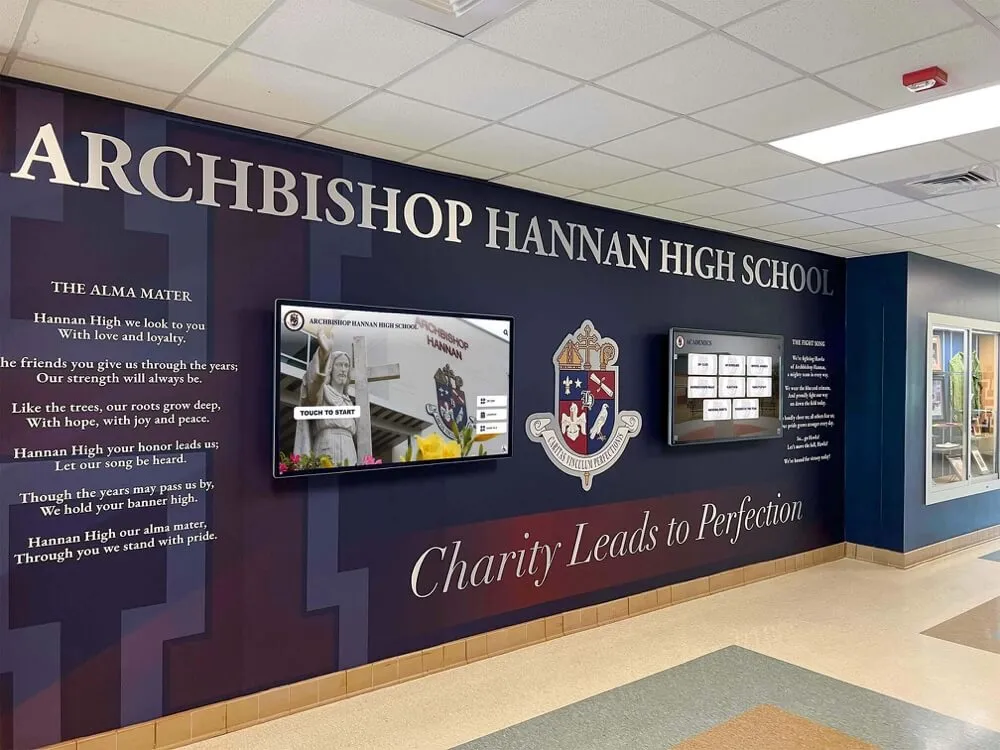
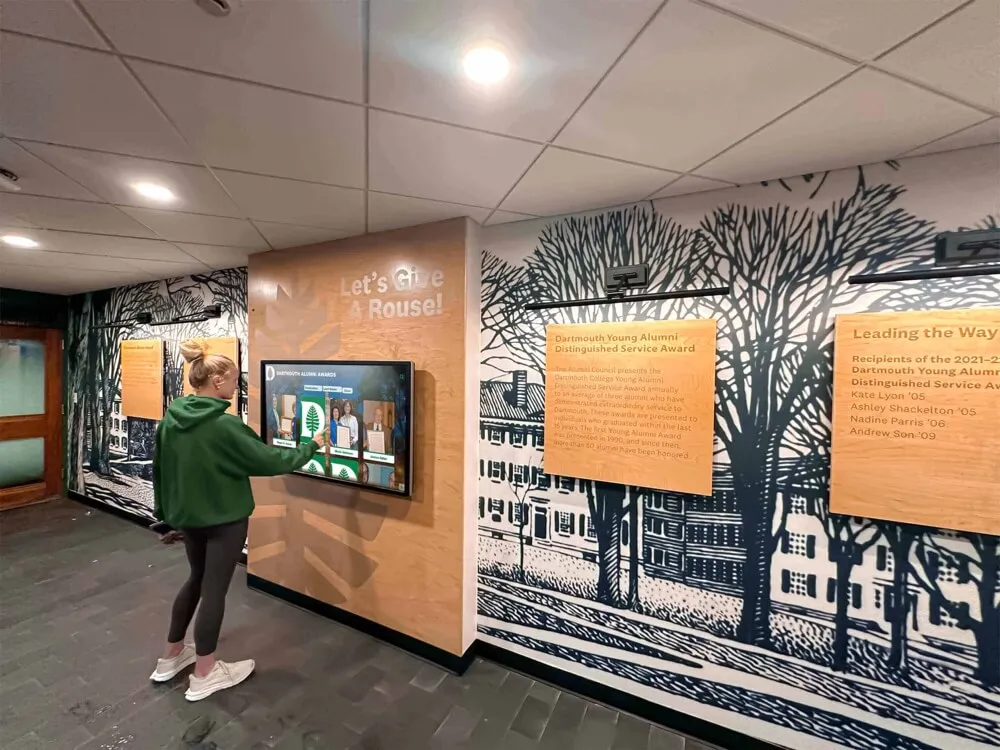
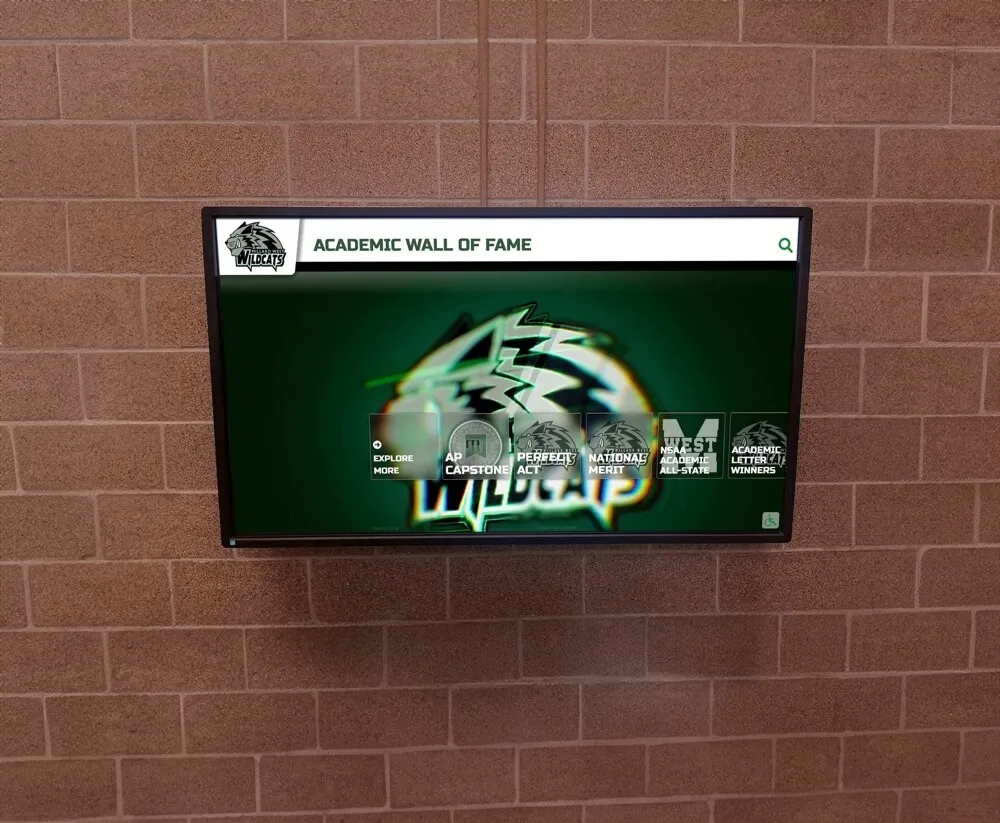
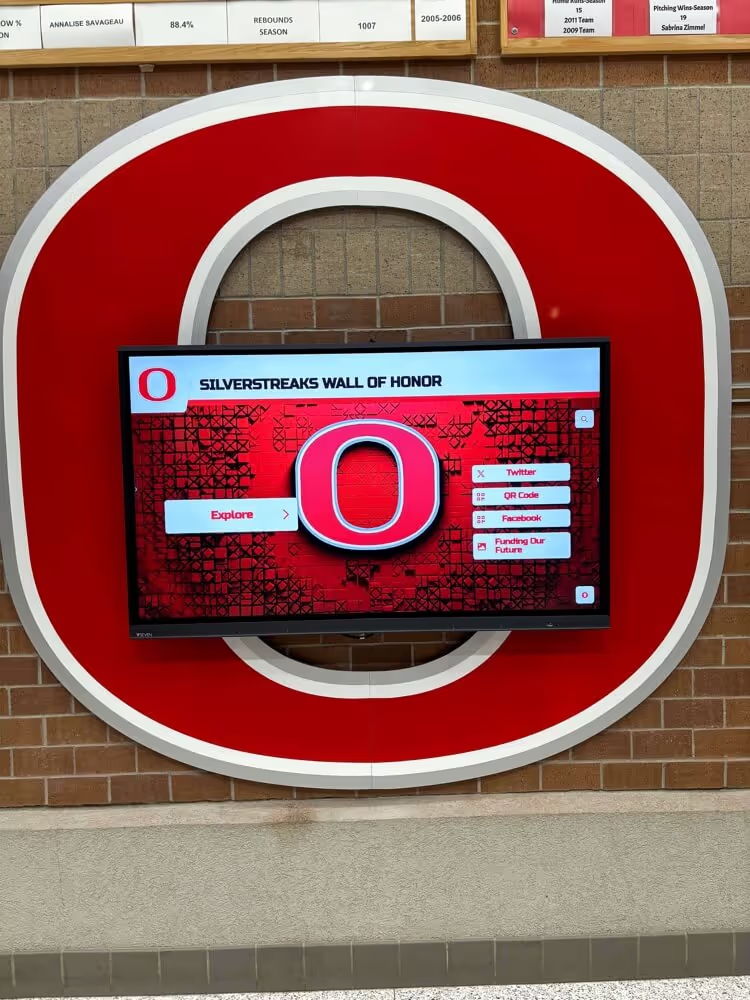
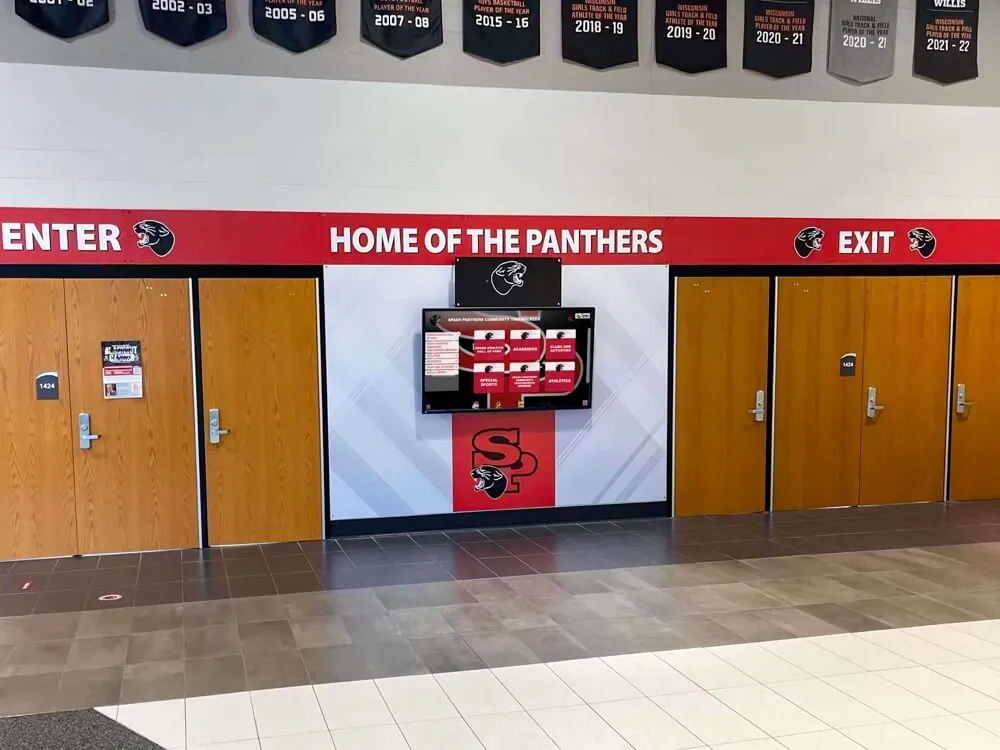
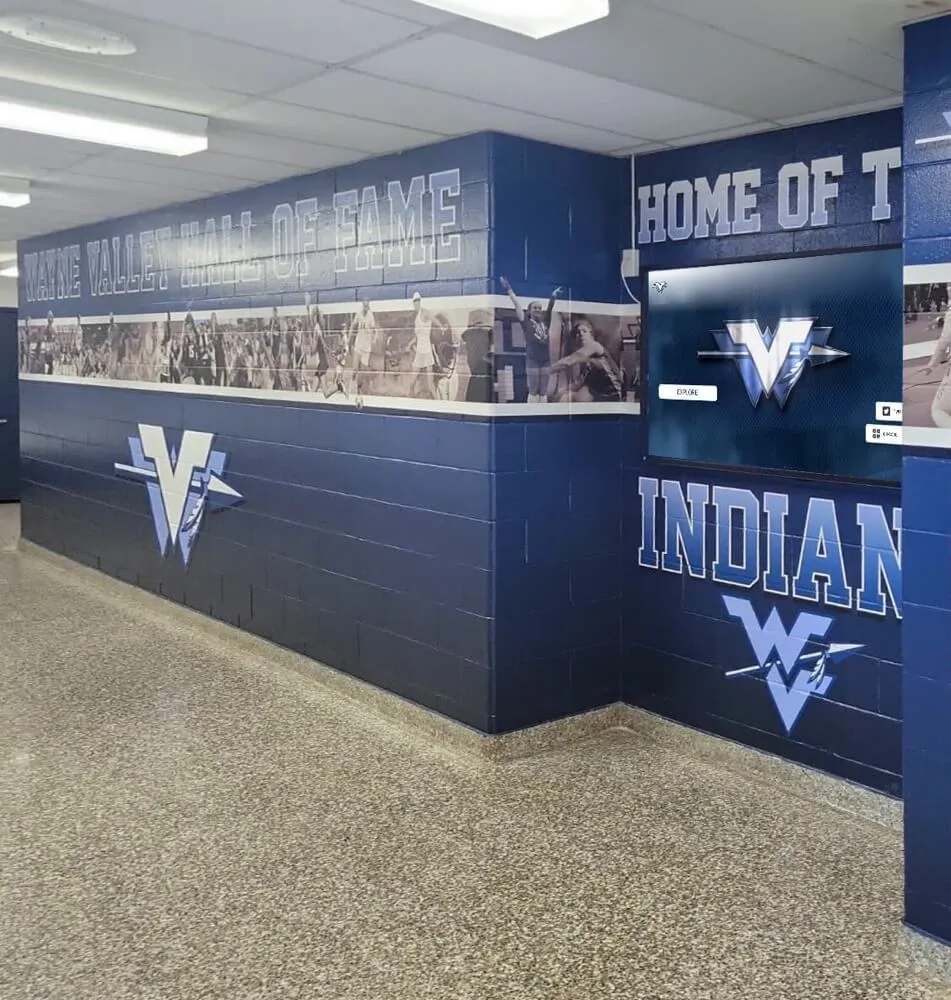
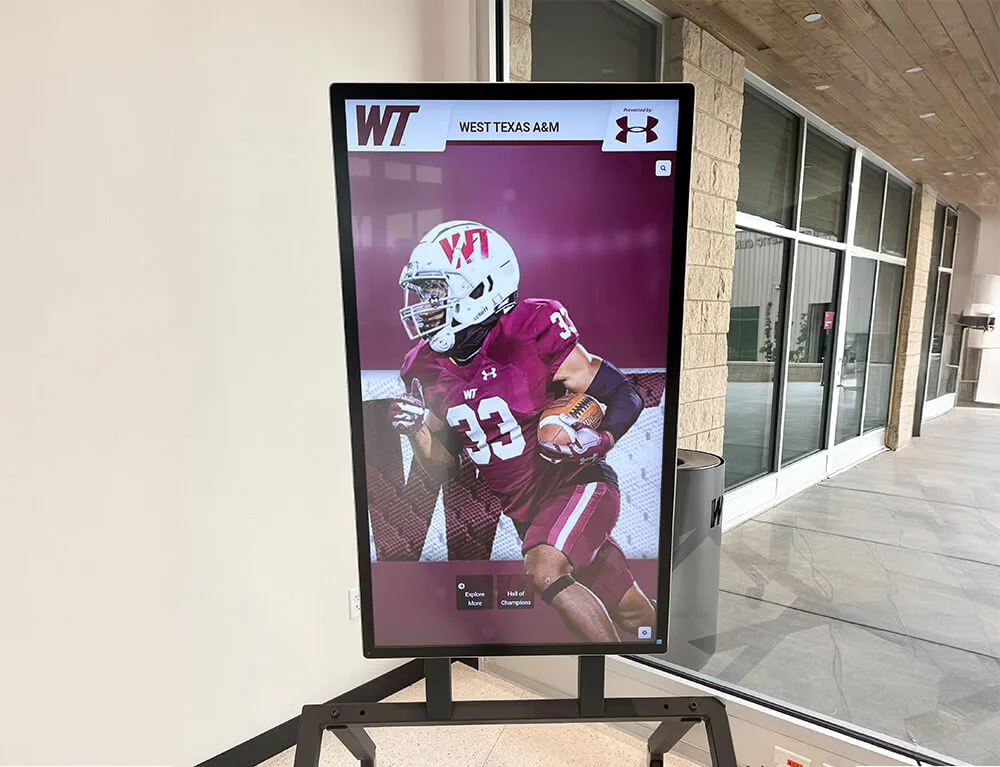
Digital hall of fame systems combine touchscreen kiosks with web platforms creating accessible recognition experiences
Understanding Digital Halls of Fame: Core Components
Digital halls of fame integrate multiple technology components working together to create comprehensive recognition experiences accessible both physically and online.
Physical Touchscreen Displays
The most visible component involves interactive touchscreen kiosks installed in high-traffic locations—main lobbies, athletic facility entrances, alumni centers, or hallway intersections where community members naturally gather.
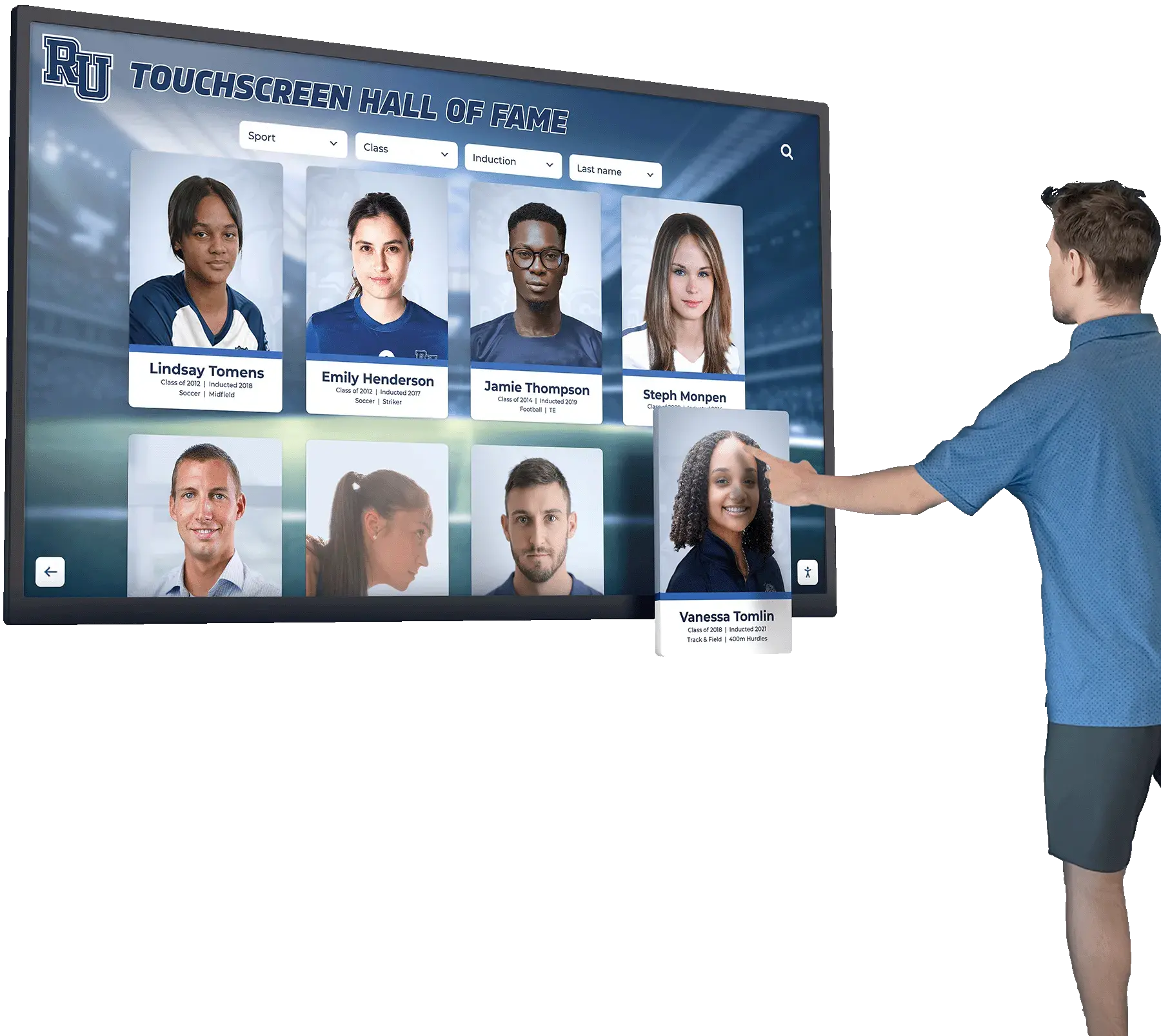
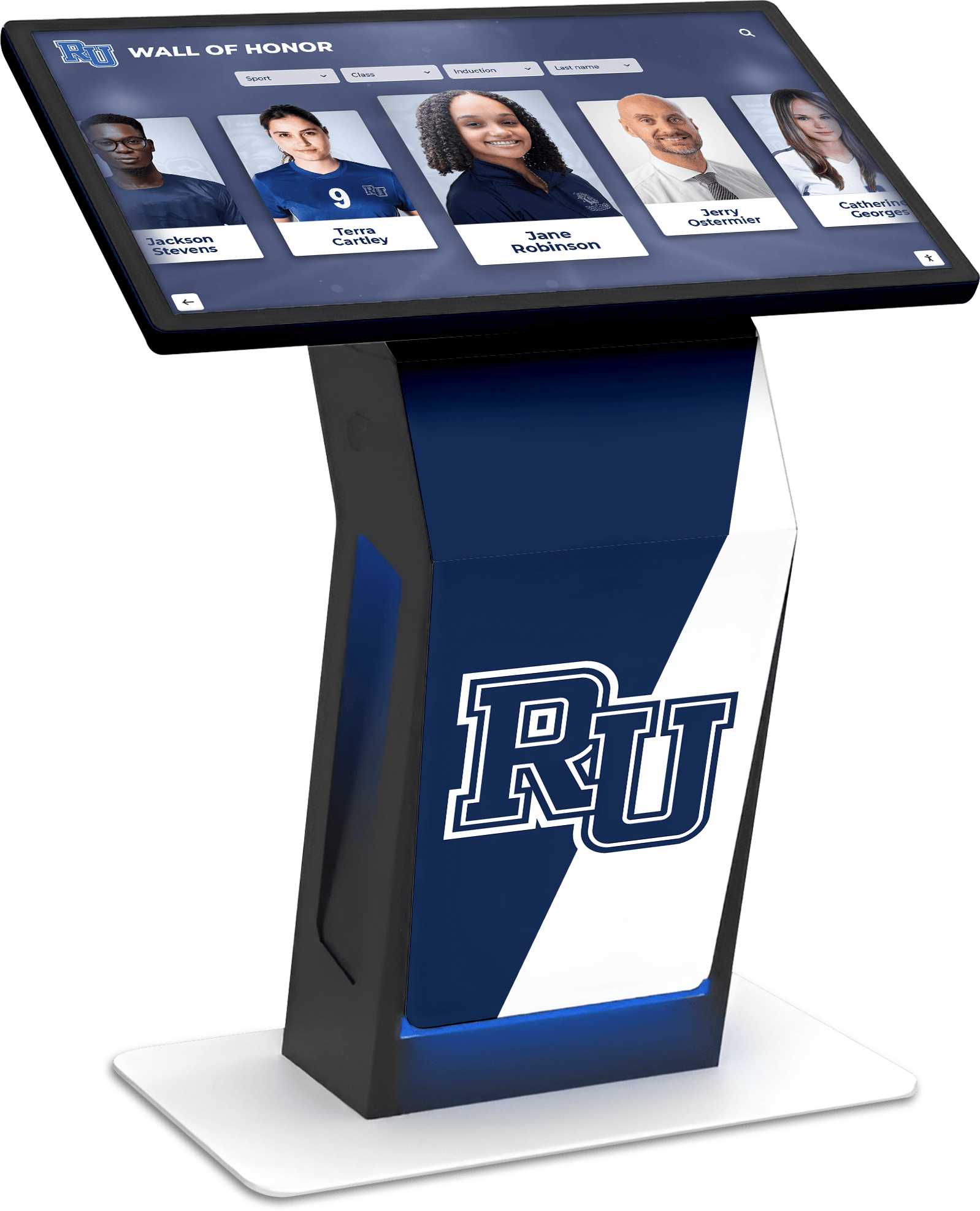
These commercial-grade displays typically range from 43 to 75 inches, mounted at accessible heights enabling comfortable viewing and interaction. Touchscreen capabilities allow visitors to search for specific inductees, browse by category or year, explore detailed profiles, and discover connections between recognized members.
Modern interactive touchscreen software designed specifically for recognition provides intuitive interfaces requiring no instructions—visitors immediately understand how to explore content through familiar touch gestures similar to smartphones and tablets.
Web-Based Recognition Platforms
Digital halls of fame extend far beyond physical kiosks through responsive web platforms accessible from any internet-connected device worldwide.
Alumni living across the country, family members unable to visit campus regularly, prospective students researching program excellence, and community supporters exploring institutional heritage all access recognition content online without requiring physical facility visits.
Web platforms amplify recognition impact by enabling social sharing—recognized members share profiles via social media, email, and messaging, extending acknowledgment beyond physical locations while promoting institutional pride through authentic personal networks that institutional communications cannot reach directly.
Cloud-Based Content Management Systems
Behind the scenes, cloud-based management platforms enable authorized staff to add new inductees, update existing profiles, schedule content publication, and maintain recognition databases from any internet-connected device without technical expertise or IT dependencies.
Intuitive visual editors show exactly how content will appear, drag-and-drop media management simplifies image handling, and template-based layouts ensure consistency across all profiles. This accessibility proves essential for organizations where recognition management responsibility falls to busy administrators, volunteer coordinators, or athletic staff managing numerous other priorities alongside recognition maintenance.
Remote management eliminates the costs and delays associated with traditional plaque updates requiring engraving services, physical installation, and often months-long timelines between achievement and public acknowledgment.
Unlimited Digital Storage Capacity
Perhaps the most transformative component involves removing the space constraints that plagued traditional recognition approaches.
Digital systems accommodate thousands or even tens of thousands of inductees across unlimited categories—athletic achievements, academic honors, distinguished alumni, donor recognition, historical preservation—all within single installations without competing for scarce physical wall space.
Organizations preserve complete recognition histories spanning decades or centuries while continuously adding current achievements, creating comprehensive archives demonstrating program depth and institutional excellence impossible with space-limited traditional approaches.
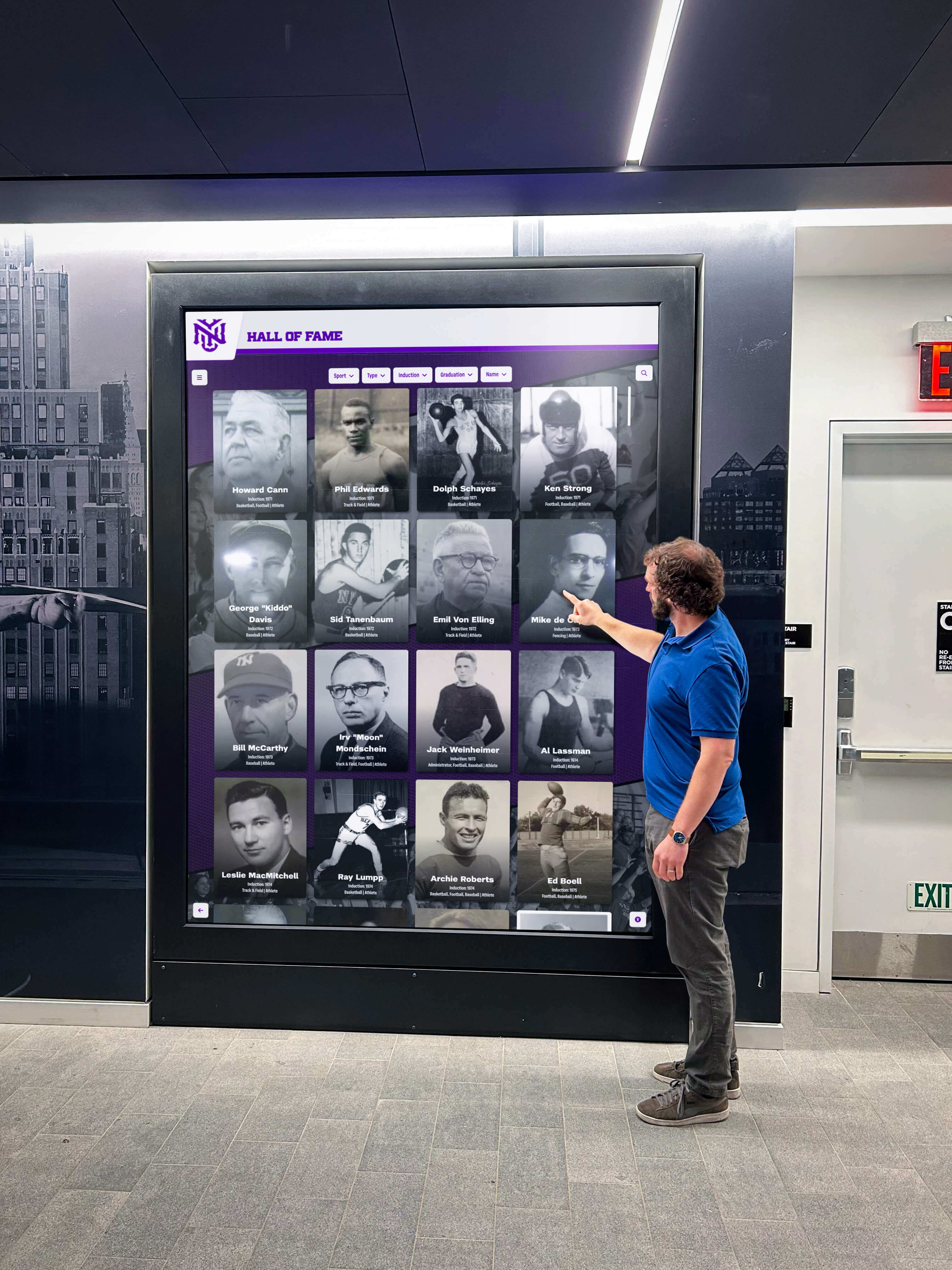
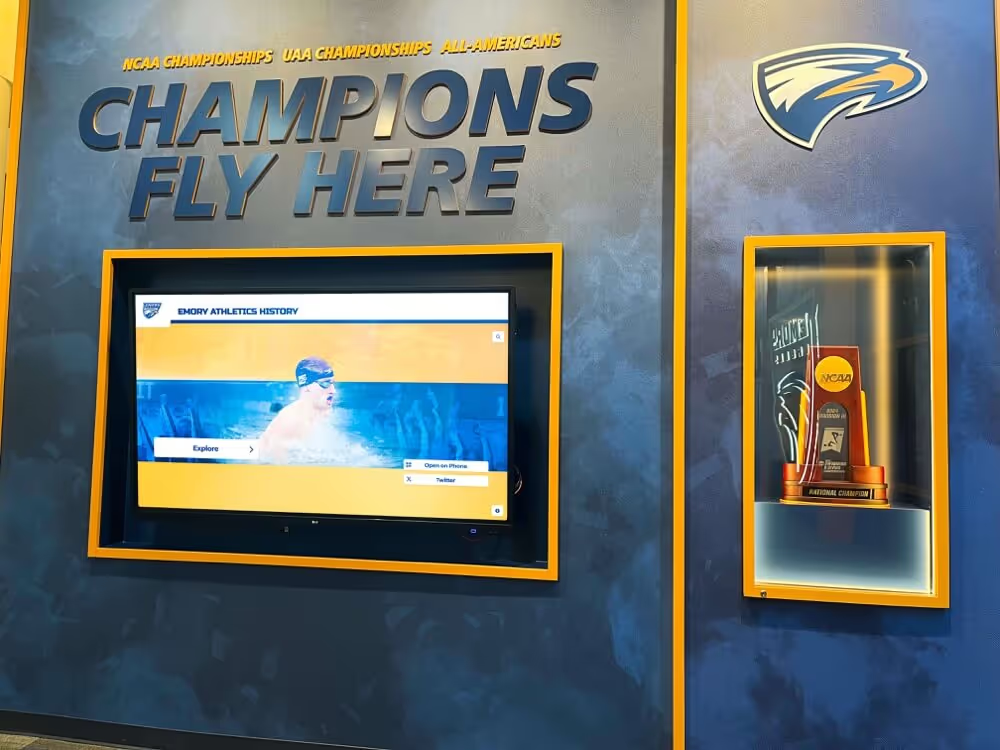
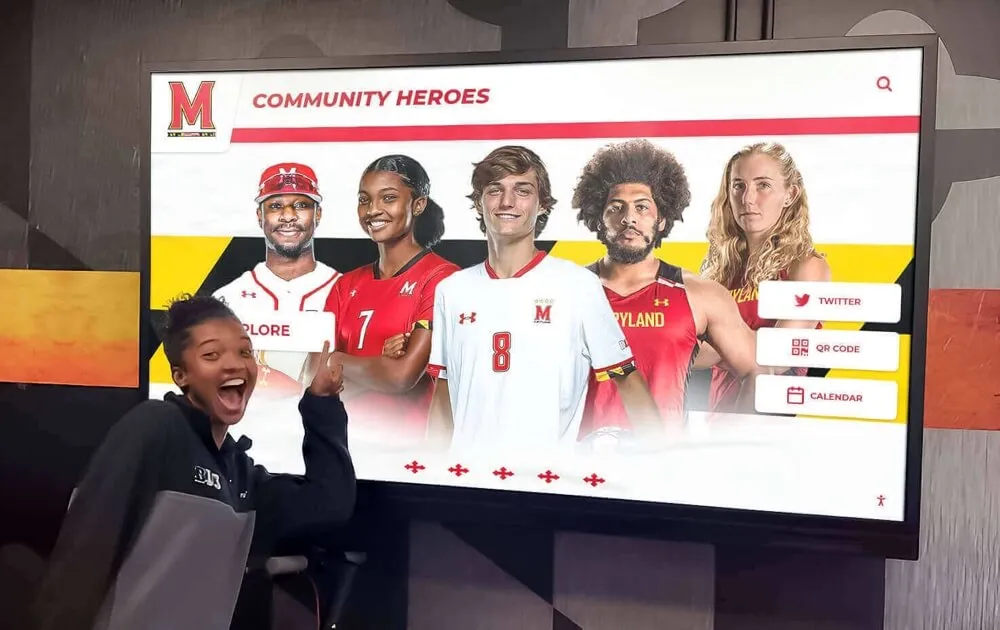
Intuitive touchscreen interfaces enable active exploration creating deeper engagement than passive plaque viewing
How Digital Halls of Fame Work: The Technology Behind Recognition
Understanding the technical foundation helps organizations evaluate platforms and make informed implementation decisions.
Recognition-Specific Software Architecture
Purpose-built digital hall of fame platforms differ fundamentally from generic digital signage systems not designed for recognition applications.
Database-Driven Content Management
Recognition systems organize inductees through structured databases enabling sophisticated search, filtering, and relationship discovery impossible with simple media players displaying static images.
Each inductee exists as a database record containing biographical information, statistics, achievements, photos, videos, graduation years, sports played, awards received, and custom fields accommodating organization-specific recognition criteria. This structured data enables powerful search capabilities—visitors find specific individuals by name, discover all inductees from particular years, explore everyone recognized in specific sports or categories, or filter by achievement types.
Automated Content Surfacing
Digital warming occurs through intelligent content rotation ensuring all recognized members receive visibility over time rather than permanent hierarchy where major achievements dominate while others remain buried in alphabetical lists.
Automated rotation features different inductees daily, highlights anniversary recognitions celebrating milestones, creates themed collections around shared characteristics, and ensures equitable visibility regardless of achievement level or contribution timing. This fairness proves impossible with traditional plaques where prominent placement depends on donation size, installation timing, or arbitrary decisions about visual hierarchy.
Multi-Device Responsive Design
Modern recognition platforms function seamlessly across desktop computers, touchscreen kiosks, tablets, and smartphones through responsive design automatically adapting layouts to screen sizes and input methods.
Content appears professionally formatted whether viewed on 55-inch lobby kiosks, alumni exploring from home laptops, or family members accessing recognition via smartphones. This device flexibility proves essential for maximizing recognition reach across diverse audiences with varying technology preferences and access patterns.
Integration with Existing Systems
Sophisticated platforms integrate with broader institutional technology ecosystems rather than functioning as isolated installations.
Advancement Database Connectivity
Recognition systems can connect with advancement databases and CRM platforms, automatically updating donor recognition when gifts process, synchronizing biographical information maintained in constituent records, and ensuring data consistency across multiple organizational systems.
This integration eliminates dual data entry, reduces errors from manual synchronization, and enables advancement staff to manage recognition through familiar existing tools rather than requiring separate platform expertise.
Content APIs and Feeds
Application programming interfaces enable recognition content to appear across multiple channels—embedded within institutional websites, featured in mobile apps, integrated with digital signage networks, and shared through social media automation creating comprehensive visibility beyond dedicated hall of fame installations.
Organizations leverage single recognition databases to power multiple engagement touchpoints, maximizing content value while maintaining centralized management ensuring consistency and accuracy regardless of where content appears.
Analytics and Engagement Tracking
Digital platforms provide quantitative engagement data unavailable with traditional recognition—total interactions, unique users, session duration, most-viewed profiles, search patterns, peak usage times, geographic distribution of web access, and social sharing activity.
These analytics inform optimization, demonstrate recognition value to stakeholders, and identify opportunities for content enhancement based on actual usage patterns rather than assumptions about what visitors find compelling.
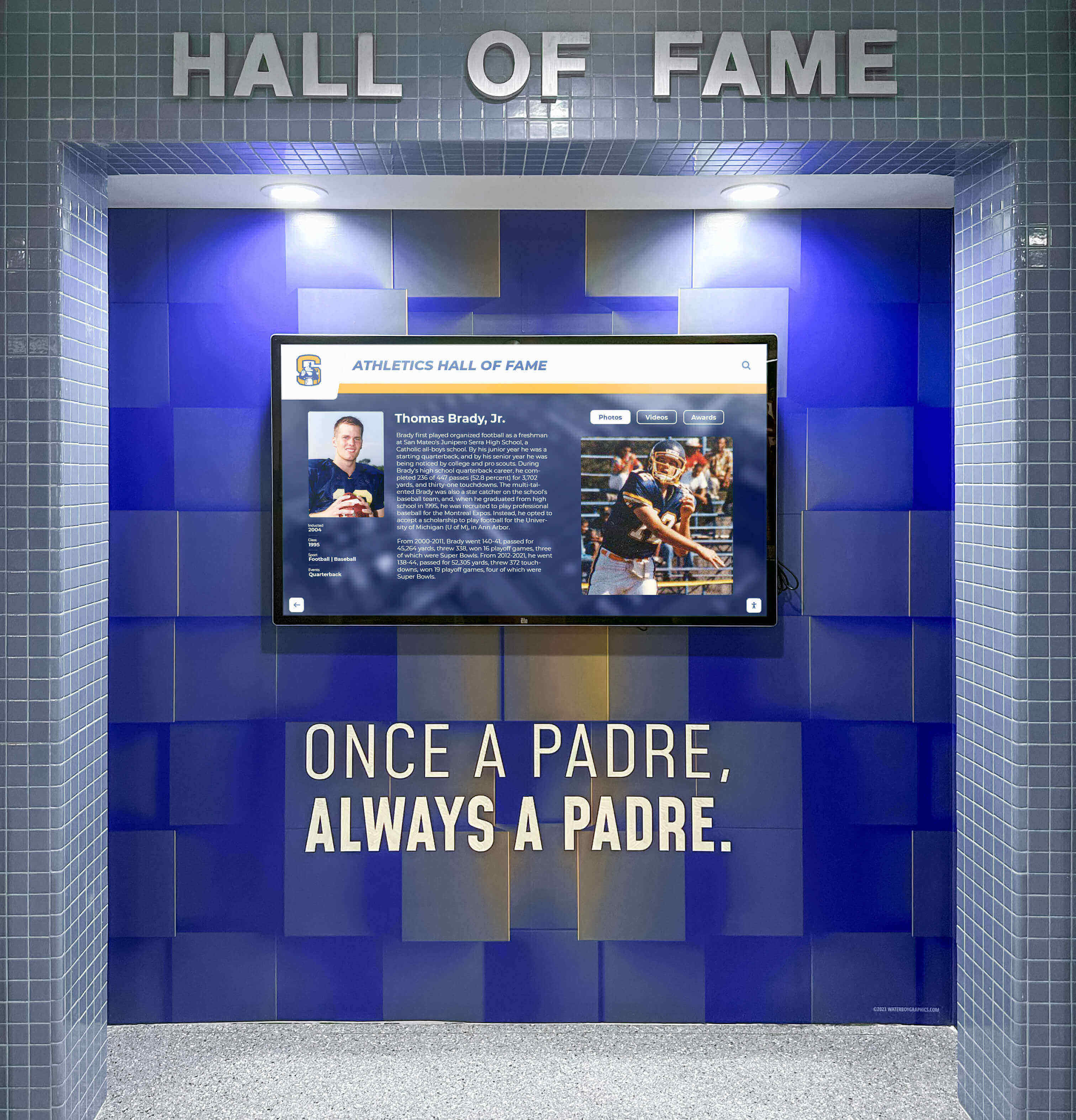
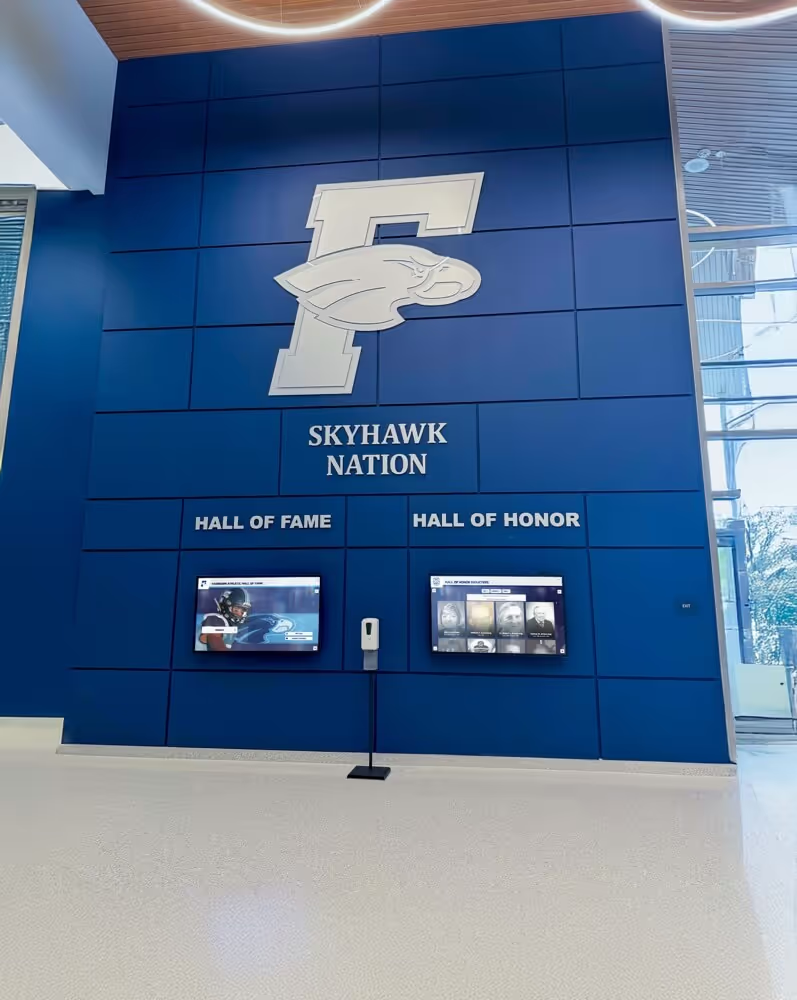
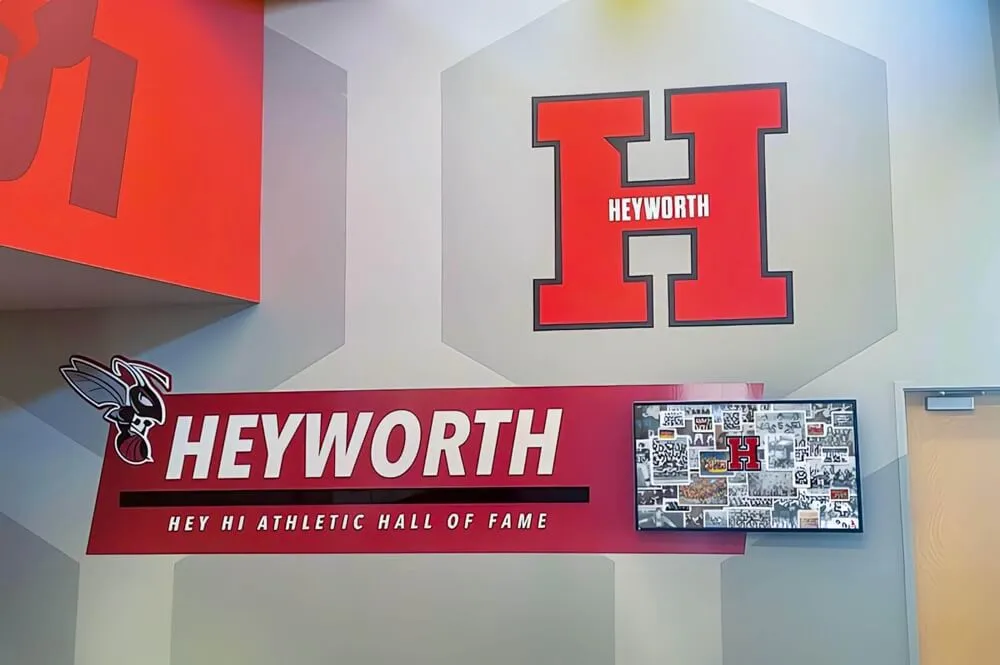
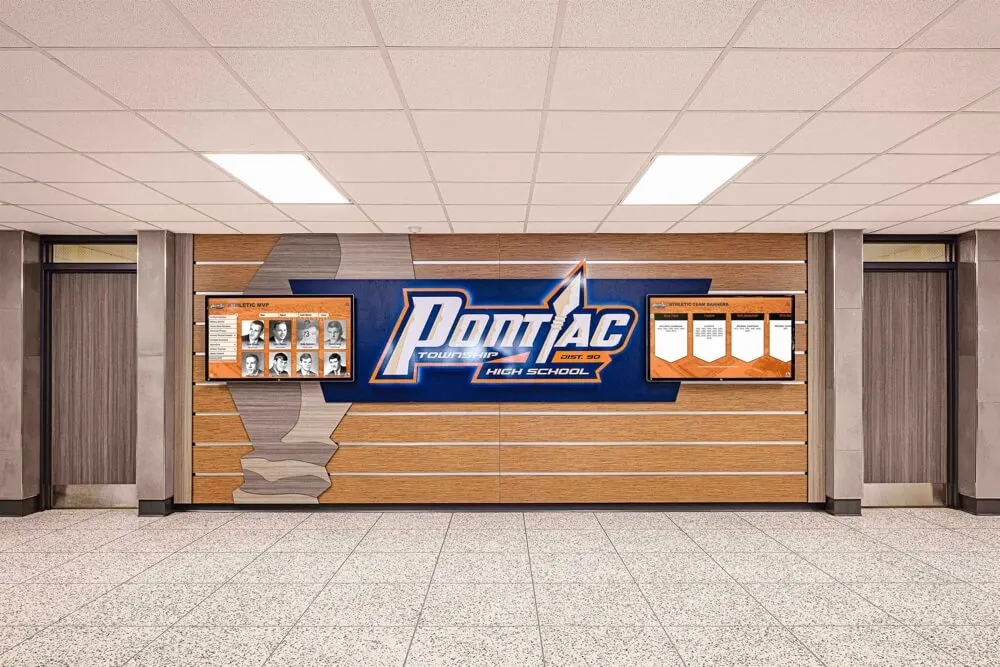
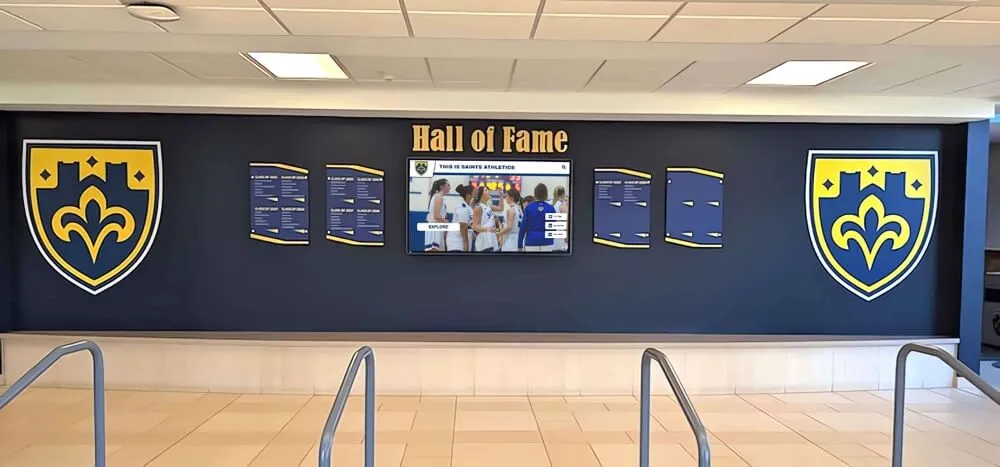
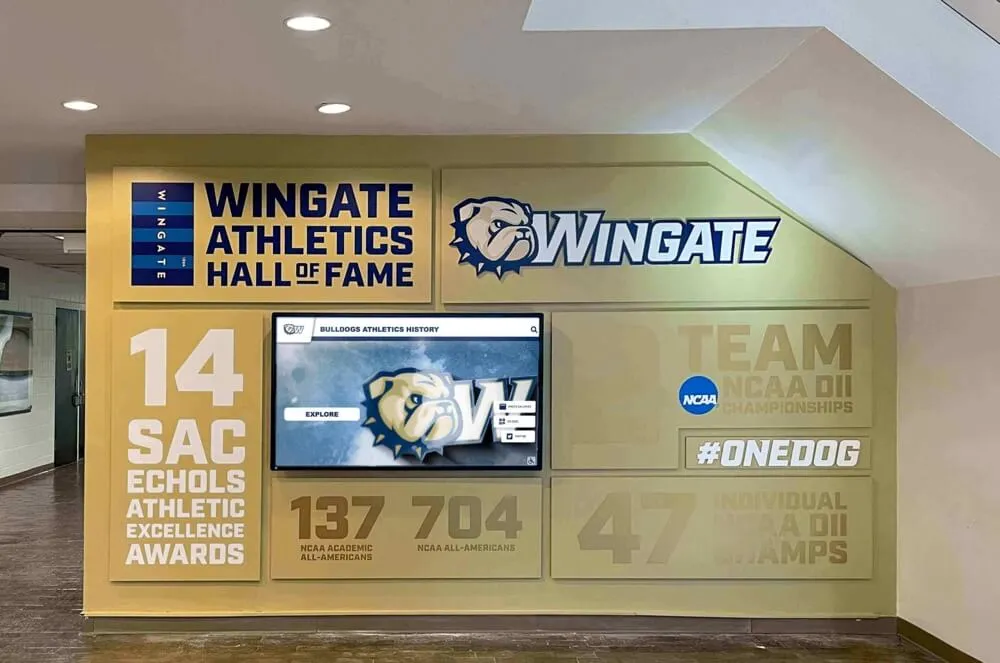
Professional installations integrate recognition with architectural design creating cohesive brand identity
Types of Digital Halls of Fame: Applications Across Contexts
Different organizational settings implement digital recognition optimized for specific recognition needs and audience expectations.
Athletic Halls of Fame
Sports recognition represents the most common digital hall of fame application, celebrating excellence across individual athletes, teams, coaches, and program contributors.
Athletic implementations typically feature comprehensive athlete profiles including career statistics, championship contributions, records set, photos from playing days, post-graduation accomplishments, and current updates maintaining connections between programs and former athletes. Digital hall of fame systems for athletics accommodate detailed statistical tracking impossible with traditional plaques limited to names and dates.
Team Achievement Archives
Beyond individual recognition, team-based celebration preserves championship seasons, record-breaking performances, and memorable squads through roster listings, season statistics, game highlights, and historical context documenting program evolution across decades.
Auto-Ranking Record Boards
Dynamic record boards automatically display top performances across all statistical categories, updating as new achievements occur while maintaining historical context showing record progression. When current athletes break decades-old records, displays update instantly reflecting new milestones while preserving historical recognition for previous record holders whose achievements remain accessible through comprehensive archives.
Multi-Sport Equity
Digital capacity enables equitable recognition across all sports regardless of program size, budget, or facility advantages. Football, basketball, soccer, track, swimming, golf, tennis, and every sport receive equal recognition opportunity ensuring comprehensive acknowledgment that traditional space-constrained approaches cannot provide when major sports dominate limited wall space.
Academic Recognition Systems
Schools implement digital recognition celebrating intellectual achievements alongside athletic accomplishments, reinforcing that academic excellence deserves comparable visibility.
Honor Roll and Academic Excellence
Quarterly and annual academic recognition provides systematic acknowledgment for GPA achievements, perfect attendance, subject-specific excellence, and improvement milestones. Digital systems accommodate all deserving students without space limitations forcing selective recognition that traditional honor boards face when hundreds of students qualify for acknowledgment.
National Academic Programs
National Merit Scholars, AP Scholars, Presidential Scholars, and other prestigious academic recognitions receive permanent celebration documenting institutional academic excellence and college readiness. Academic recognition programs through digital platforms showcase intellectual achievement creating pride comparable to athletic recognition.
Competition and Contest Success
Science fair winners, math competition participants, speech and debate champions, robotics competitors, and academic contest achievers receive recognition reinforcing that intellectual pursuits deserve systematic celebration inspiring future student participation in academic competitions.
Alumni Halls of Fame
Educational institutions recognize distinguished graduates whose personal, professional, or community achievements bring honor to alma maters while inspiring current students.
Career Achievement Recognition
Alumni recognition celebrates professional accomplishments, industry leadership, entrepreneurial success, creative achievements, and career milestones demonstrating educational program effectiveness and inspiring students exploring similar career paths. Detailed profiles include career trajectories, major accomplishments, professional recognition received, and advice for current students pursuing related fields.
Service and Community Impact
Beyond professional success, alumni recognition acknowledges community service, nonprofit leadership, volunteer contributions, public service, and social impact demonstrating institutional values extend beyond individual achievement to community betterment.
Multi-Generational Legacy Recognition
Families with multiple generations attending institutions receive special acknowledgment celebrating legacy connections and sustained institutional relationships spanning decades or centuries. These legacy profiles document family histories of institutional connection, creating meaningful recognition for families whose sustained engagement demonstrates extraordinary loyalty.
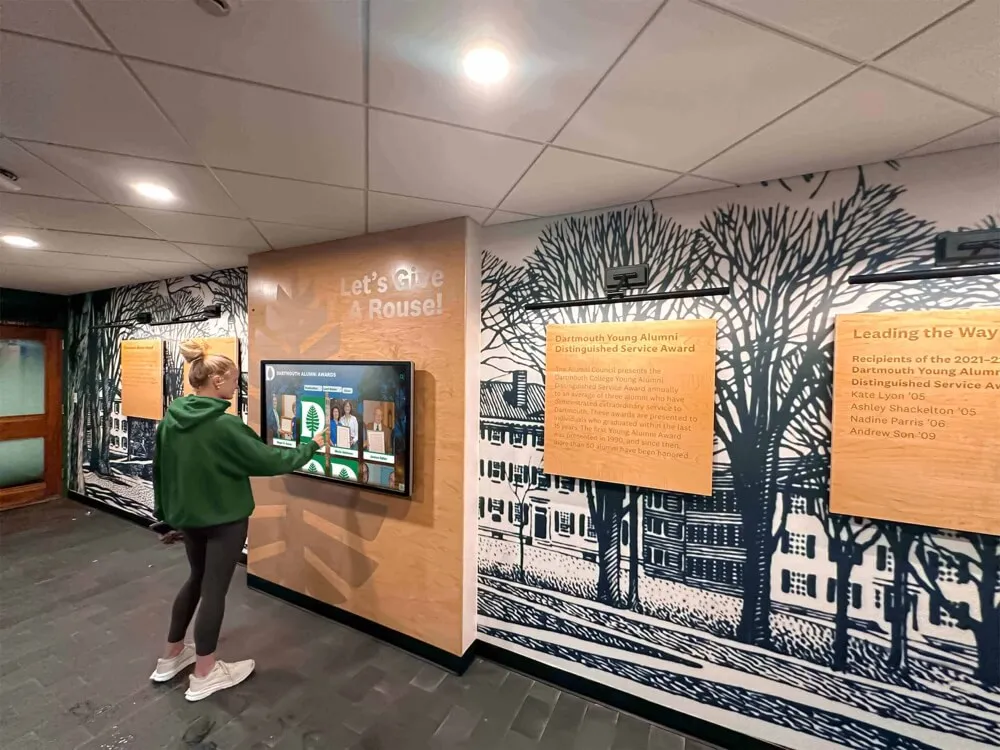
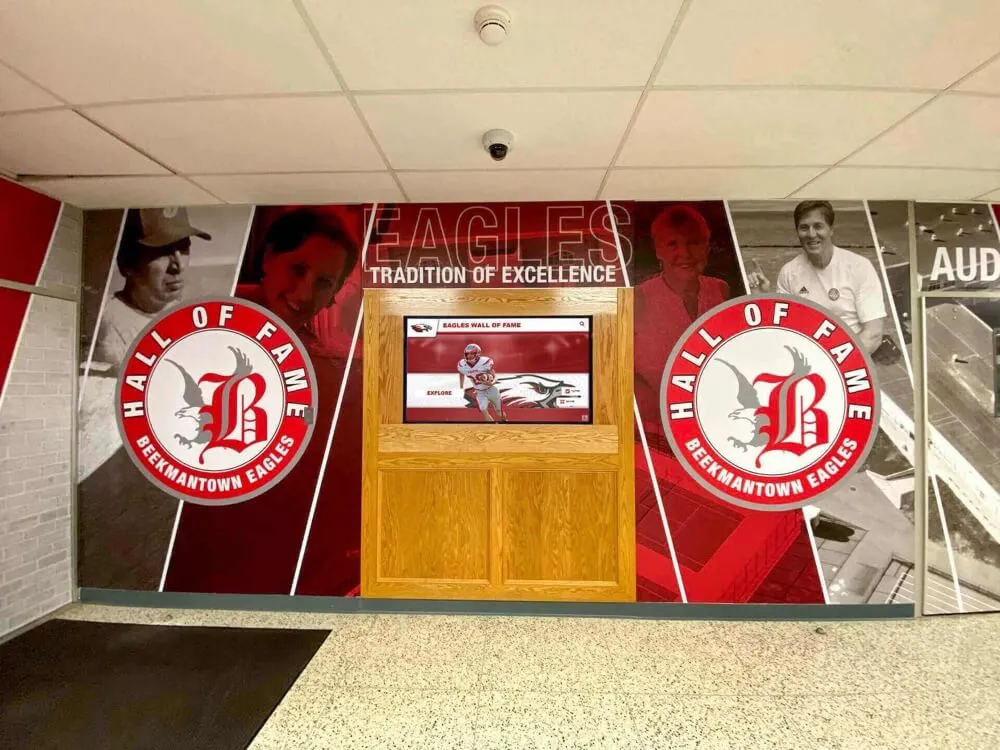
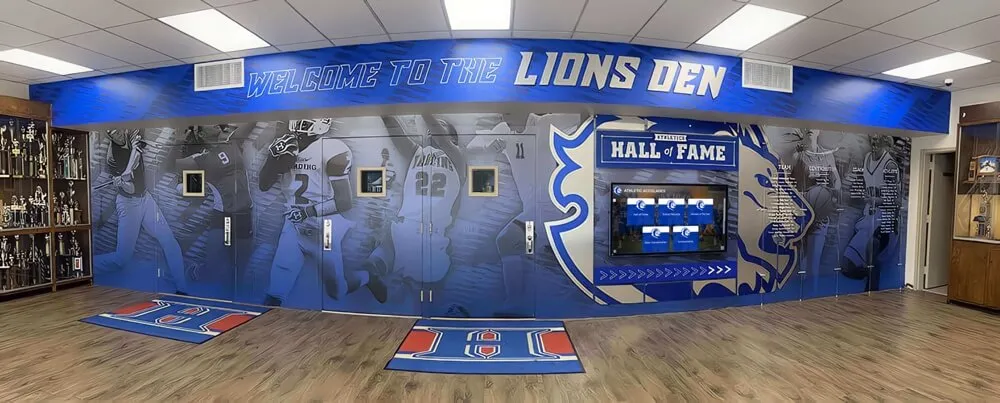
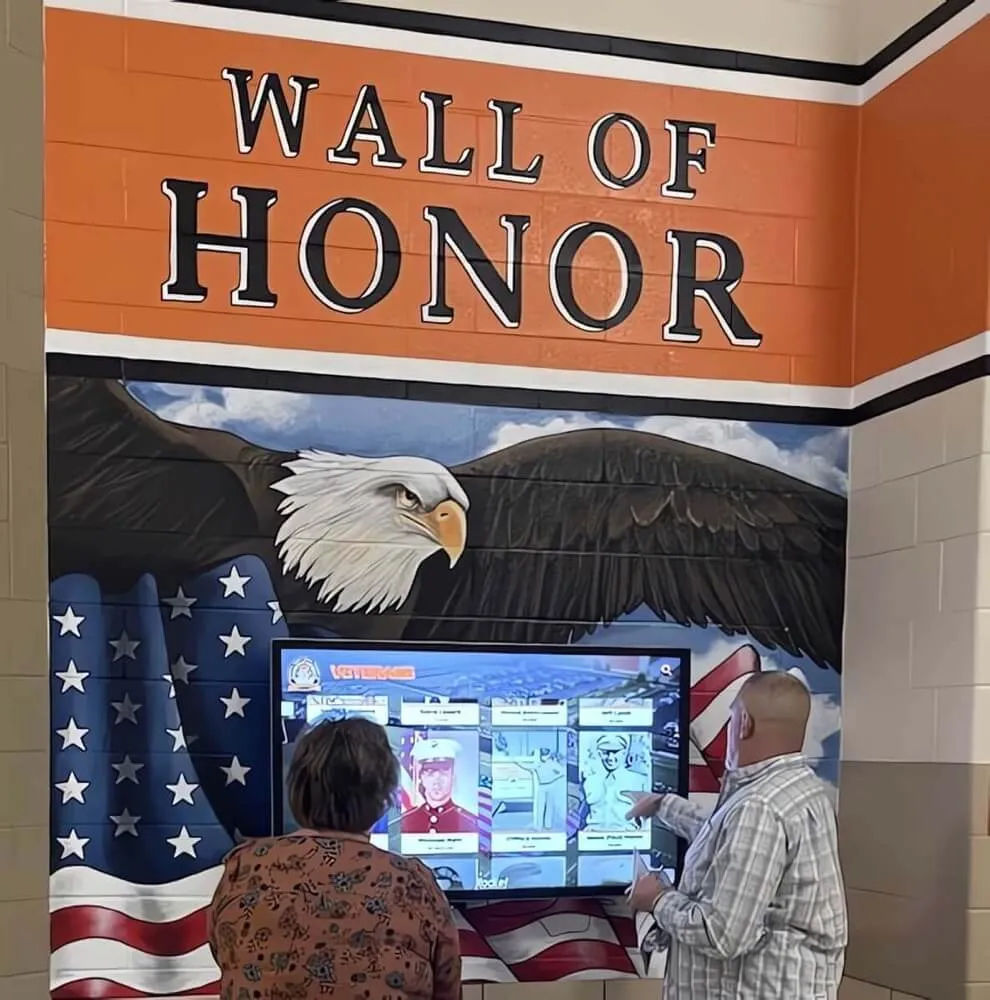
Digital recognition integrates with architectural elements creating immersive heritage experiences
Donor and Supporter Recognition
Organizations use digital recognition acknowledging financial supporters, volunteer contributors, and community partners whose generosity enables program success and institutional advancement.
Giving Level Societies
Structured recognition tiers acknowledge contribution levels through Bronze, Silver, Gold, and Platinum circles or customized naming reflecting organizational branding. Digital platforms display society membership clearly, enable filtering by recognition level, and celebrate donors approaching next thresholds creating natural upgrade pathways.
Cumulative Lifetime Recognition
Beyond annual contributions, lifetime giving recognition honors sustained commitment over years or decades through Legacy Circle, Heritage Society, or Founder’s Club designations acknowledging transformational long-term support.
Volunteer and Service Recognition
Comprehensive recognition celebrates non-financial contributions—board service, volunteer hours, committee leadership, event coordination, and operational support. This inclusive approach ensures all contribution forms receive appropriate visibility, reinforcing that program success depends on comprehensive community engagement beyond only financial gifts.
Explore detailed donor recognition strategies applicable across organizational contexts.
Historical Archives and Institutional Memory
Digital platforms preserve institutional history beyond formal recognition, creating comprehensive archives documenting organizational evolution and cultural heritage.
Interactive Historical Timelines
Chronological presentations trace institutional development through decades or centuries, preserving milestone events, leadership transitions, facility developments, cultural shifts, and defining moments shaping organizational identity. Interactive exploration enables visitors to discover specific eras, explore related content, and understand historical context connecting past accomplishments to present excellence.
Digitized Photo and Document Archives
Historical yearbooks, event photography, facility images, and institutional documents create visual records preserving institutional memory while making history accessible and engaging for current community members discovering heritage they might otherwise never encounter.
Oral History Integration
Video interviews with distinguished alumni, long-serving faculty and staff, and community leaders preserve first-person accounts of institutional history and cultural evolution. These personal narratives add human dimension to factual histories, creating emotional connections and deeper understanding impossible through text-based historical accounts alone.
Key Benefits of Digital Hall of Fame Systems
Organizations implementing digital recognition experience transformative advantages extending far beyond simple plaque replacement.
Unlimited Recognition Without Space Constraints
The most immediate benefit involves removing physical limitations forcing difficult choices about whose achievements receive visibility.
Every deserving individual and team receives recognition without competing for limited wall space. Schools no longer face impossible decisions about removing historical plaques to accommodate current inductees or creating recognition hierarchies where some achievements receive prominence while others remain invisible in storage.
Multi-category recognition through single installations accommodates athletic achievements, academic honors, distinguished alumni, hall of fame inductees, historical milestones, and donor recognition without requiring separate physical installations competing for scarce facility space.
Decades or centuries of institutional achievement remain permanently accessible rather than relegated to storage or removed entirely when physical capacity fills. This comprehensive historical preservation creates institutional memory impossible when space constraints force selective recognition prioritizing recent over historical achievements.
Enhanced Community Engagement Through Interactivity
Digital systems create active engagement impossible with static displays, transforming recognition from passive acknowledgment into participatory community experiences.
Intuitive Search and Personal Discovery
Visitors search by name, graduation year, sport, achievement type, or other criteria, finding specific individuals or exploring categories of personal interest. This active exploration increases time spent with recognition content from seconds (traditional plaques) to minutes (interactive displays), creating meaningful connections through personal discovery.
When visitors find themselves, classmates, family members, or role models through search, personal relevance transforms abstract institutional recognition into concrete community belonging. These discovery moments create emotional connections driving deeper engagement and stronger institutional attachment.
Rich Multimedia Content
Digital profiles accommodate comprehensive information impossible with space-limited plaques—detailed biographies, career statistics, multiple photos spanning playing days to current life, video highlights, personal statements, and post-achievement updates maintaining living connections rather than static historical acknowledgment.
This content depth transforms generic lists into meaningful celebration honoring individual uniqueness while creating compelling examples inspiring others through specific accomplishments and personal stories demonstrating what achievement requires and enables.
Dynamic Featured Content
Automated rotation ensures all recognized members receive featured prominence over time rather than permanent hierarchy based on contribution size or achievement level. Monthly spotlights, anniversary recognitions, themed collections, and milestone celebrations keep content fresh for repeat visitors while democratizing visibility ensuring comprehensive community recognition rather than only highlighting major donors or star athletes.
Operational Efficiency and Cost-Effectiveness
Cloud-based management and digital delivery create significant operational advantages alongside long-term cost benefits.
Elimination of Recurring Engraving Costs
Traditional plaques require $50-200 per inductee for engraving and installation, creating recurring costs accumulating as recognition communities grow. Digital recognition involves zero marginal cost per additional inductee beyond initial system implementation, making comprehensive recognition economically viable for organizations with modest budgets.
Over five-year periods, cost differences prove dramatic. Organizations adding 50 inductees annually at $100 per plaque spend $25,000 on engraving alone—funds that could support scholarships, programs, or mission delivery. Digital recognition redirects these recurring expenses toward program needs while providing superior acknowledgment.
Real-Time Update Capabilities
Authorized staff update recognition immediately after achievements occur or decisions finalize, eliminating months-long delays between accomplishments and public acknowledgment. This immediacy creates gratification reinforcing achievement significance while demonstrating organizational responsiveness building community confidence.
Remote updates from any internet-connected device prove particularly valuable for organizations where recognition management falls to busy staff managing numerous responsibilities. Cloud-based platforms enable evening and weekend content management from home without requiring facility access, creating flexibility essential for sustainable recognition maintenance.
Reduced Physical Maintenance Requirements
Digital displays require minimal maintenance compared to traditional plaques needing regular cleaning, brass polishing, and periodic replacement when tarnished or damaged. Commercial-grade touchscreen hardware designed for continuous operation provides years of reliable service with basic care, eliminating ongoing maintenance consuming staff time and organizational resources.
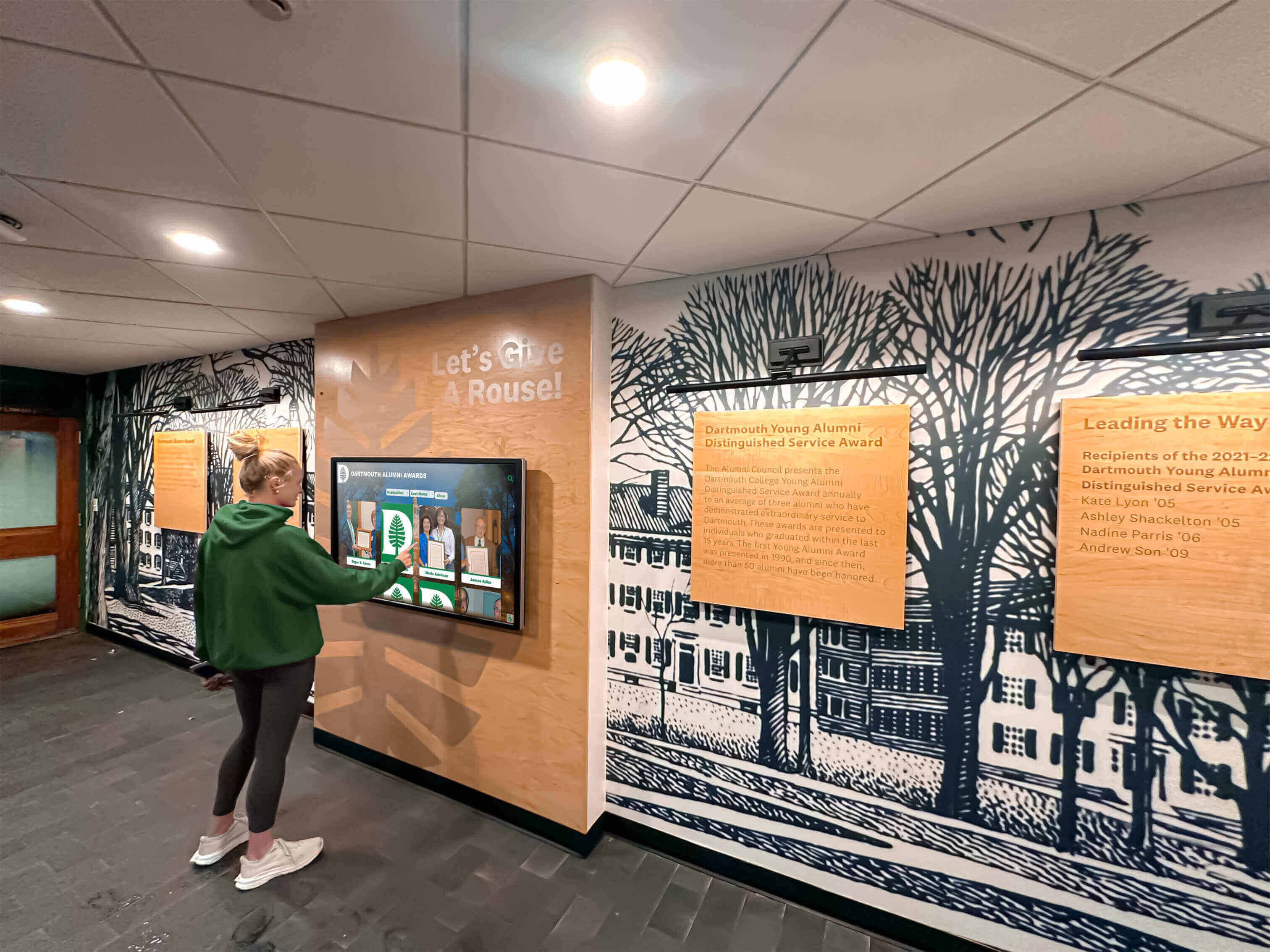
Students actively explore digital recognition discovering role models and institutional heritage
Global Accessibility and Inclusion
Digital platforms provide recognition accessibility impossible with physical-only approaches restricted to campus visitors.
Web Access for Distributed Audiences
Alumni living worldwide, family members unable to visit regularly, prospective students researching programs remotely, and community supporters exploring institutional excellence all access recognition online without requiring facility visits. This global accessibility dramatically expands recognition reach and impact beyond local communities to geographically distributed constituencies.
Web accessibility proves particularly valuable for organizations with distributed alumni bases spanning regions or nations. Digital recognition maintains connections with distant members who cannot physically visit but remain emotionally connected through online engagement with institutional recognition celebrating achievements and community they remain part of despite geographic distance.
ADA Compliance and Universal Design
Properly implemented digital systems meet accessibility standards through screen reader compatibility for visually impaired users, adjustable text sizes accommodating vision variations, high contrast modes assisting users with visual processing challenges, appropriate physical mounting heights enabling wheelchair accessibility, and keyboard navigation supporting users unable to use touchscreens.
Accessible digital displays ensure inclusive recognition experiences for all community members regardless of abilities, preventing legal exposure while honoring values that all members deserve equitable access to institutional recognition.
Mobile Device Optimization
Responsive web platforms and QR code mobile access enable recognition exploration via personal devices, accommodating visitors of all ages and technology comfort levels. Younger generations expect mobile-first experiences, while QR codes provide familiar entry points enabling older community members to access content via smartphones without requiring app downloads or complex navigation.
Data-Driven Insights and Continuous Improvement
Digital platforms provide quantitative engagement data enabling evidence-based recognition optimization impossible with traditional approaches offering no usage feedback.
Interaction Analytics
Track total interactions, unique users, session duration, return visit frequency, and peak usage times measuring engagement depth and patterns. These metrics reveal whether recognition generates genuine interest or remains largely ignored despite investment, informing enhancement decisions and demonstrating value to organizational leadership.
Content Performance Insights
Analyze most-viewed profiles, popular search terms, frequently accessed categories, and navigation patterns revealing what content resonates and how visitors explore recognition. Organizations use these insights to identify compelling profile elements worthy of emulation, understand audience interests guiding future content development, and optimize navigation based on actual usage rather than assumptions.
Geographic and Device Distribution
Web analytics show where access occurs geographically, demonstrating recognition reach across regions and identifying concentrated audience locations. Device usage patterns inform mobile optimization priorities ensuring recognition functions beautifully on platforms audiences actually use rather than only on development environments.
Planning and Implementing Digital Hall of Fame Systems
Successful implementation requires thoughtful planning addressing organizational needs, technical requirements, and stakeholder expectations.
Defining Recognition Objectives and Philosophy
Clear objectives guide system design and content strategy ensuring alignment with organizational values and priorities.
Recognition Categories and Scope
Determine which achievement types deserve recognition—athletic hall of fame, distinguished alumni, academic honors, donor acknowledgment, historical preservation, or comprehensive approaches encompassing multiple categories. This scope definition shapes platform requirements, content development priorities, and budget considerations.
Organizations must balance comprehensiveness with focus. Attempting to recognize everything simultaneously may create overwhelming complexity, while overly narrow approaches miss opportunities for comprehensive community celebration. Most successful implementations begin with core recognition priorities, establishing frameworks accommodating future expansion as resources and experience grow.
Induction Criteria and Selection Processes
Establish transparent criteria defining recognition eligibility, nomination processes, selection committees, and approval workflows ensuring consistent, fair recognition decisions building community confidence that acknowledgment reflects genuine achievement rather than favoritism or political considerations.
Clear criteria prove particularly important for competitive recognition like athletic or alumni halls of fame where many qualified candidates deserve acknowledgment but annual induction classes remain limited. Published criteria, transparent selection processes, and consistent application build legitimacy essential for recognition value and community acceptance.
Content Depth and Profile Standards
Decide how comprehensive individual profiles should be—basic name and achievement, moderate detail with photos and descriptions, or extensive profiles with statistics, videos, and biographical narratives. This decision affects content development workload, information gathering processes, and timeline expectations.
Many organizations implement tiered approaches where recent inductees with available information receive comprehensive profiles while historical recognition begins with essential elements gradually enhanced through sustained research and outreach. This phased approach enables reasonable launch timelines while building toward comprehensive content through ongoing effort.
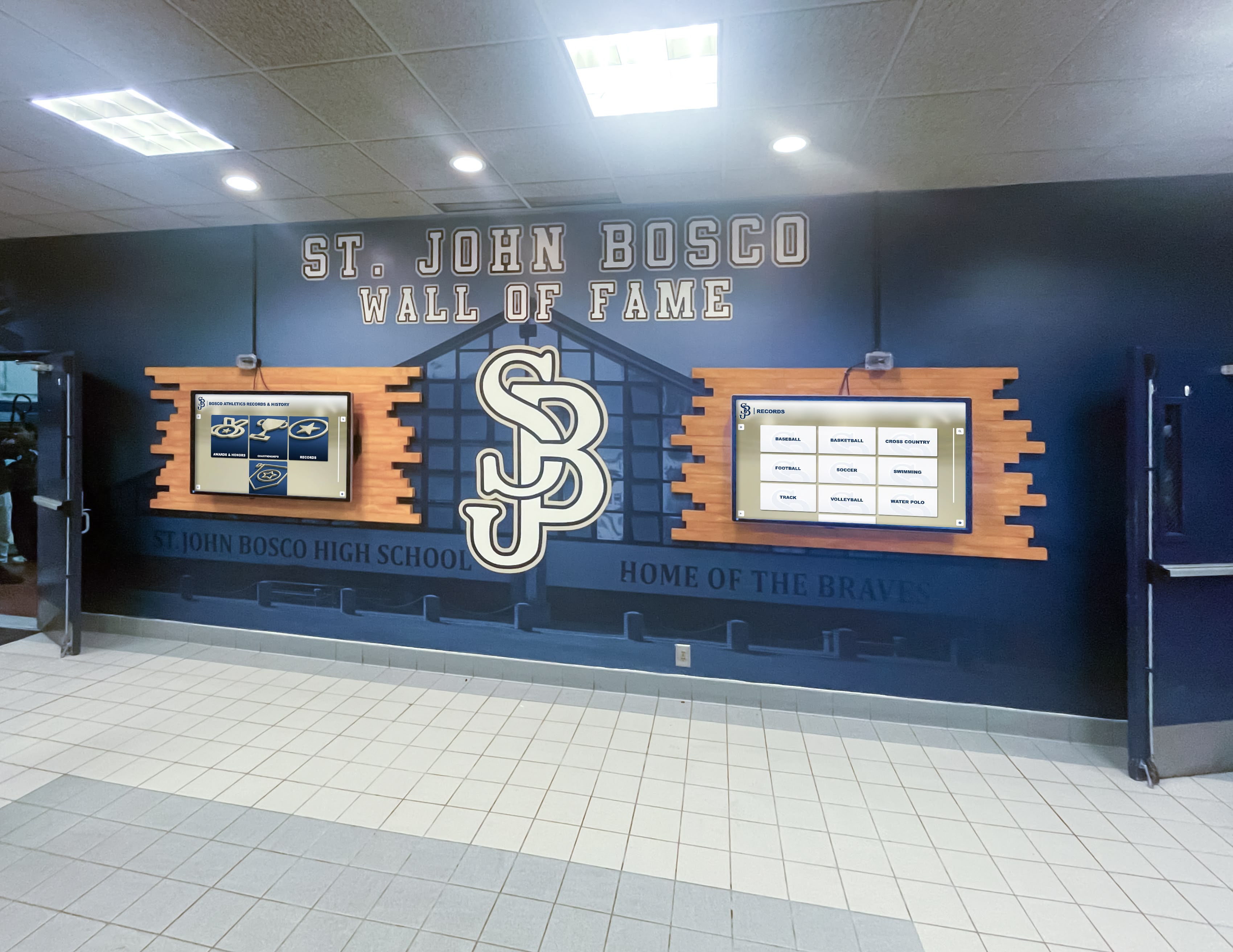
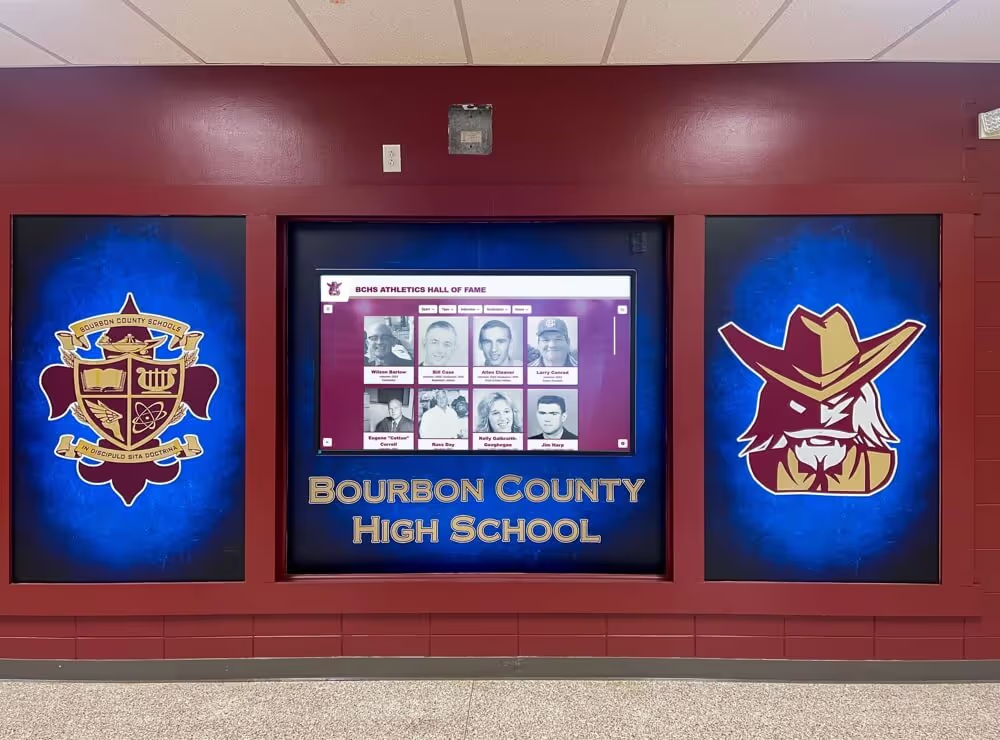
Multiple displays provide comprehensive recognition capacity celebrating diverse achievements across programs
Selecting Recognition Technology and Platforms
Platform selection significantly impacts long-term satisfaction, user experience, and operational sustainability.
Purpose-Built vs. Generic Solutions
Purpose-built recognition platforms designed specifically for hall of fame applications provide capabilities generic digital signage cannot match—unlimited inductee capacity, sophisticated searchability enabling personal discovery, individual profile support accommodating biographical depth, automated fair rotation ensuring equitable visibility, and recognition-specific features like giving society organization and achievement categorization.
Generic digital signage displays static content or simple slideshows lacking database-driven capabilities enabling the search, filtering, and relationship discovery that create engaging recognition experiences. Organizations implementing generic solutions frequently discover limitations requiring expensive platform replacement to achieve intended recognition goals.
Web-Based vs. Native Applications
Web-based platforms function across all devices without requiring app installations, receive automatic updates ensuring access to latest features and security patches, and enable instant content publishing visible immediately across all devices worldwide. Native applications require device-specific development, user-initiated updates frequently ignored creating version fragmentation, and app store approval processes delaying content changes.
Modern web technologies enable native-quality experiences through responsive design and progressive web app capabilities, making web-based approaches preferable for recognition applications requiring broad accessibility and minimal user friction.
Cloud vs. On-Premise Infrastructure
Cloud-based platforms eliminate local server requirements, IT maintenance responsibilities, backup concerns, and upgrade complexities while providing automatic scaling, professional security management, and accessibility from any internet-connected device. On-premise approaches require substantial IT resources, create single points of failure, and limit remote management requiring facility access for content updates.
For most organizations, cloud-based recognition platforms provide superior reliability, security, and operational efficiency compared to on-premise alternatives requiring IT infrastructure and expertise exceeding typical recognition program resources.
Physical Installation Planning
Strategic placement maximizes visibility and community engagement while working within facility constraints and budget realities.
High-Traffic Location Selection
Install touchscreen displays where they receive natural visibility from target audiences—main entrance lobbies capturing all facility visitors, athletic facility entrances serving students and families, alumni centers enabling advancement conversations, or common areas where community members naturally congregate before and after events.
Locations where people linger—building entrances, waiting areas, hallway intersections—encourage exploration rather than hurried glances from individuals rushing to specific destinations. Optimal placement balances visibility with appropriate context where recognition feels natural rather than forced or awkwardly positioned.
Hardware Specifications and Durability
Public installations require commercial-grade hardware designed for continuous operation and resistant to damage from heavy use in educational or public environments. Consumer-grade equipment proves inadequate for public touchscreen applications experiencing thousands of interactions monthly in environments where users may not handle equipment gently.
Display sizing depends on viewing distances, available space, and expected simultaneous users. Larger installations may warrant multiple screens or ultra-wide displays accommodating group viewing, while smaller spaces require compact installations maximizing impact within constrained footprints.
Accessibility Compliance
Physical installations must meet ADA requirements for mounting height, reach ranges, and clear floor space ensuring wheelchair accessibility. Additionally, kiosk positioning should avoid glare from windows or overhead lighting that could impair visibility, provide adequate lighting for comfortable viewing, and offer appropriate sound isolation if installations include audio content.
Budget-Appropriate Approaches
Organizations with limited budgets can implement web-first recognition launching immediately through mobile-optimized platforms accessible via QR codes displayed in facilities, existing screens during controlled time periods, or promoted through digital communications. These low-cost approaches establish recognition programs while building cases for future touchscreen investments through demonstrated engagement and stakeholder response.
Entry-level commercial touchscreen installations start around $3,000-5,000 for basic 43-55 inch displays with mounting and configuration. Mid-range solutions providing 7-10+ year commercial-grade reliability typically range $6,000-10,000. Premium custom installations incorporating architectural integration and branded enclosures may reach $15,000-25,000 for showpiece recognition reflecting program excellence and institutional commitment to supporter appreciation.
Learn about effective implementation strategies addressing common challenges.
Content Development and Information Architecture
Thoughtful content strategy and organization makes recognition accessible and engaging for diverse audiences.
Efficient Information Gathering
Content development proves sustainable when organizations implement practical collection strategies matching volunteer or staff capacity. Online submission forms where recognized members provide biographical information and upload photos distribute effort while enabling personal control over shared information. Event-based collection during ceremonies and banquets captures photos and information when members attend and volunteer photographers document occasions. Social media and email outreach leverages digital channels where communities already engage.
Phased approaches launching with essential elements—names, achievement descriptions, years—and systematically enhancing over time prevent unrealistic timelines requiring comprehensive information before recognizing anyone. This pragmatic approach enables reasonable launch schedules while building toward content depth through sustained effort rather than unsustainable crash development creating volunteer burnout.
Profile Template Development
Standardized templates ensure all recognized members receive comparable acknowledgment while allowing flexibility for varying information availability. Essential components typically include names, achievement descriptions, years/dates, categories, and basic photos. Enhanced profiles add biographical narratives, career information, personal statements, multiple images, statistical data, and quotes providing personal dimension to factual achievements.
Template consistency creates professional presentation while simplifying content development—volunteers follow established patterns rather than making individual formatting decisions for each profile potentially creating inconsistent results.
Navigation and Discovery Design
Intuitive organization enables visitors to explore through multiple pathways accommodating different interests—alphabetical search for finding specific individuals, chronological browsing by year or era, category filtering by sport or achievement type, keyword search discovering related content, and featured content highlighting compelling profiles and current campaigns.
This navigation flexibility ensures visitors with different goals—someone seeking a specific friend, someone curious about their graduation year cohort, someone researching particular achievement categories—all find intuitive pathways to relevant content without confusion or frustration.
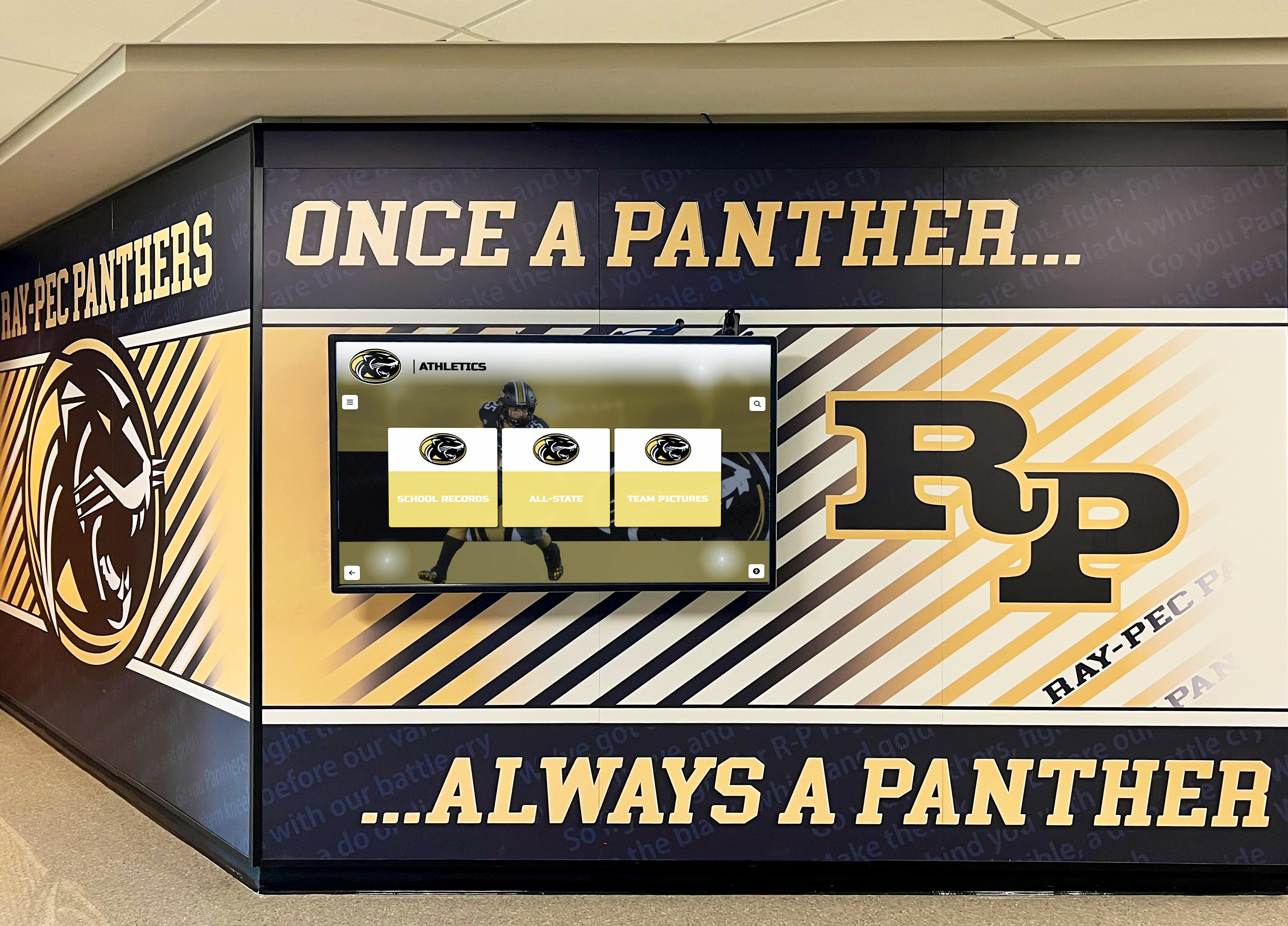
Recognition installations integrate with facility design creating cohesive program identity and pride
Digital Warming: The Community Engagement Philosophy
Digital warming describes the fundamental transformation from cold, impersonal spaces into vibrant, personalized experiences that draw members deeper into community engagement.
From Passive Viewing to Active Exploration
Traditional plaques generate brief glances as visitors scan alphabetical name lists without discovering personal connections or exploring achievement details. This passive consumption creates minimal engagement—visitors might notice whether they or someone they know appears on walls, but otherwise recognition receives only cursory attention.
Digital recognition enables active exploration where visitors search for specific individuals, discover classmates and peers who share commitments, filter by personal interest categories, and explore detailed profiles telling complete stories rather than listing only names. This active engagement increases recognition time from seconds to minutes, creating meaningful interaction rather than momentary acknowledgment.
Personalized Content Surfacing
Digital warming occurs through intelligent content presentation ensuring visitors discover personally relevant recognition rather than generic displays identical for all audiences.
Featured content rotation highlights different inductees regularly, ensuring visitors encounter fresh profiles during repeat visits rather than identical static presentations. Anniversary recognitions celebrating milestone years create timely relevance connecting current moments to historical achievements. Themed collections around graduation years, sports, or achievement types enable exploration of personally interesting recognition segments.
This continuous content surfacing keeps recognition feeling fresh and personally meaningful, encouraging repeated engagement as visitors return discovering new content rather than ignoring displays showing identical information during every visit.
Building Connected Communities
Recognition creates community when visitors discover themselves among valued members, find classmates and peers who share commitments, and explore achievement patterns connecting them to others with similar backgrounds and interests.
These discovery moments transform abstract institutional relationships into concrete community belonging. When alumni find former teammates recognized for achievements inspiring pride, when students discover role models in alumni from their hometowns pursuing similar career paths, when donors see themselves acknowledged alongside neighbors and friends—these personal connections create warmth that strengthens bonds and motivates ongoing participation.
Digital recognition creates what traditional plaques cannot—searchable communities where members actively discover personal connections rather than passively viewing generic lists offering minimal personal relevance or meaningful engagement opportunity.
Continuous Engagement Cycles
Digital warming creates sustainable engagement cycles where initial interactions lead to deeper exploration, social sharing extends recognition reach beyond physical installations, shared content brings new visitors into recognition experiences, and repeated visits discover fresh content maintaining ongoing interest.
This cyclical engagement proves impossible with static displays offering identical experiences during every encounter. Digital recognition through intelligent content surfacing, web accessibility, social sharing, and continuous updates creates ongoing relevance sustaining engagement across months and years rather than only initial curiosity upon installation.
Discover more about creating engaged communities through recognition.
Common Questions About Digital Halls of Fame
Organizations considering digital recognition frequently have similar questions about implementation, costs, and ongoing management.
How much do digital hall of fame systems cost?
Total costs depend on hardware choices, software platforms, installation complexity, content development scope, and ongoing support arrangements.
Hardware costs range from $3,000-5,000 for entry-level commercial touchscreen displays to $15,000-25,000 for premium custom installations with architectural integration. Many organizations implement mid-range $6,000-10,000 solutions providing commercial-grade reliability balancing quality and budget effectively.
Software licensing typically follows annual subscription models ranging $2,000-6,000 annually depending on features, capacity, and support levels. Some platforms offer one-time licensing with optional maintenance, though these often involve significant upgrade costs and may lack cloud-based features providing optimal flexibility.
Implementation services including content migration, staff training, design customization, and technical support may add $2,000-10,000 to initial investments depending on organizational needs and desired assistance levels.
Web-only approaches requiring no physical hardware can launch for annual software subscription costs alone, making digital recognition accessible even for organizations with extremely limited budgets while establishing frameworks for future touchscreen additions as resources grow.
How long does implementation take?
Implementation timelines vary based on content readiness, hardware procurement, installation complexity, and organizational decision processes.
Organizations with existing recognition data, clear implementation plans, and decisive leadership can launch within 4-8 weeks from project initiation. This accelerated timeline assumes readily available content, straightforward hardware installation requiring minimal facility modifications, and efficient vendor coordination.
More typical implementations require 8-16 weeks accommodating content development, stakeholder input, hardware procurement and installation, staff training, and phased rollout with testing before official launch. Historical content digitization, comprehensive profile development, or custom design work may extend timelines to 3-6 months for organizations prioritizing substantial launch content over quick deployment.
Many organizations implement phased approaches launching with recent recognition where content is readily available, systematically adding historical content through sustained post-launch effort distributed across months or years making comprehensive development sustainable rather than requiring unsustainable crash efforts before initial launch.
Can we integrate with existing donor databases?
Modern recognition platforms increasingly offer integration capabilities connecting with advancement databases, CRM systems, and constituent management platforms.
API-based integration enables automated data synchronization where gift processing triggers recognition updates, biographical information maintained in advancement systems populates recognition profiles, and donor engagement tracked through CRM platforms informs recognition management strategies.
Integration approaches vary from simple one-time data imports creating initial recognition populations to sophisticated real-time synchronization ensuring continuous alignment between advancement systems and public recognition. Organizations should evaluate integration needs during vendor selection, ensuring chosen platforms support required connectivity or offer alternative approaches like regular batch imports acceptable for less-frequent update requirements.
What about privacy and recognition preferences?
Comprehensive recognition programs respect individual preferences regarding public acknowledgment while maximizing community celebration.
Anonymous donation options accommodate supporters preferring privacy while enabling gift acknowledgment through “Anonymous Donor” listings maintaining giving level recognition without identifying individuals. Some organizations implement dual approaches where major donors receive private acknowledgment through exclusive events and personalized communications while public recognition remains anonymous respecting privacy preferences.
Opt-out mechanisms enable recognized members to request profile removal if recognition creates unwanted attention, career conflicts, or personal discomfort. Organizations typically retain achievement records internally while removing public visibility, balancing institutional documentation needs with individual privacy preferences.
Information control through online submission forms enables recognized members to determine what personal information appears publicly—contact information, family details, current employment, personal photos—ensuring individuals control personal data shared rather than organizations making unilateral publication decisions potentially violating privacy expectations.
How do we maintain content over time?
Sustainable recognition requires efficient ongoing management approaches matching organizational capacity and resources.
Clear responsibility assignment ensures specific individuals manage recognition updates, content quality, and technical coordination. Organizations should document recognition management processes, establish approval workflows preventing errors, and plan succession ensuring incoming staff or volunteers understand responsibilities despite leadership transitions.
Regular update schedules maintain content currency through quarterly content reviews, annual profile enhancement initiatives, and continuous addition of current achievements following established timelines rather than sporadic attention creating inconsistent maintenance.
Community contribution opportunities engage recognized members in content enhancement through periodic outreach requesting updated photos, biographical additions, career milestones, and personal reflections. This distributed approach reduces staff burden while building engagement as members actively participate in recognition representation rather than remaining passive subjects of institutional acknowledgment.
Vendor support arrangements provide technical assistance, platform training, and content development guidance helping organizations maximize recognition value despite limited internal expertise. Responsive support proves essential for volunteer-led organizations requiring occasional guidance but lacking IT resources for independent troubleshooting.

Recognition displays become community gathering points fostering pride and institutional connection
Future Trends in Digital Recognition
Digital hall of fame technology continues evolving with emerging capabilities expanding recognition possibilities and engagement potential.
Artificial Intelligence and Personalization
Advanced platforms increasingly leverage AI for enhanced experiences—intelligent content recommendations surfacing recognition relevant to individual visitors based on viewing patterns and expressed interests, natural language search enabling conversational queries rather than rigid search parameters, automated content enhancement suggesting biographical additions and relationship connections, and predictive analytics optimizing presentation based on engagement patterns.
These AI capabilities create increasingly personalized experiences where recognition feels tailored to individual visitors rather than presenting identical generic content to all audiences regardless of interests or connections.
Augmented and Virtual Reality Integration
Emerging technologies enable immersive recognition experiences—augmented reality overlaying additional content on physical displays through mobile devices, virtual hall of fame tours enabling remote visitors to experience physical installations digitally, immersive historical recreations bringing past achievements and eras to life through VR experiences, and holographic displays creating three-dimensional recognition combining physical presence with digital content.
While these technologies remain emerging for recognition applications, early implementations demonstrate potential for creating memorable experiences differentiating institutions through innovative approaches to celebrating achievements and engaging communities.
Integration with Broader Engagement Ecosystems
Recognition increasingly connects with comprehensive engagement platforms—CRM integration enabling coordinated constituent journeys where recognition touchpoints trigger automated communications and programming, social networking features enabling recognized members to connect and share memories through institutional platforms, event coordination where recognition anniversaries trigger automated invitations and programming, and advancement integration connecting recognition moments to giving opportunities capturing inspiration when visitors discover vibrant supporter communities.
These integrations transform recognition from isolated acknowledgment into comprehensive engagement strategy components working with other touchpoints to build lifelong institutional relationships supporting advancement, enrollment, and community development goals.
Conclusion: Recognition That Builds Vibrant Communities
Digital halls of fame represent fundamental shifts in how organizations celebrate achievement, preserve heritage, and maintain community connections. Moving beyond traditional plaque limitations, digital systems enable unlimited recognition, global accessibility, engaging interaction, and operational efficiency creating comprehensive celebration impossible with space-constrained traditional approaches requiring costly updates and offering minimal engagement.
The digital warming concept captures what happens when cold, impersonal recognition transforms into personalized, interactive experiences drawing members deeper into community engagement. When individuals discover themselves among valued members, find peers who share commitments, and explore detailed stories rather than minimal plaque text—these interactions create warmth strengthening bonds and motivating ongoing participation supporting organizational missions and advancement goals.
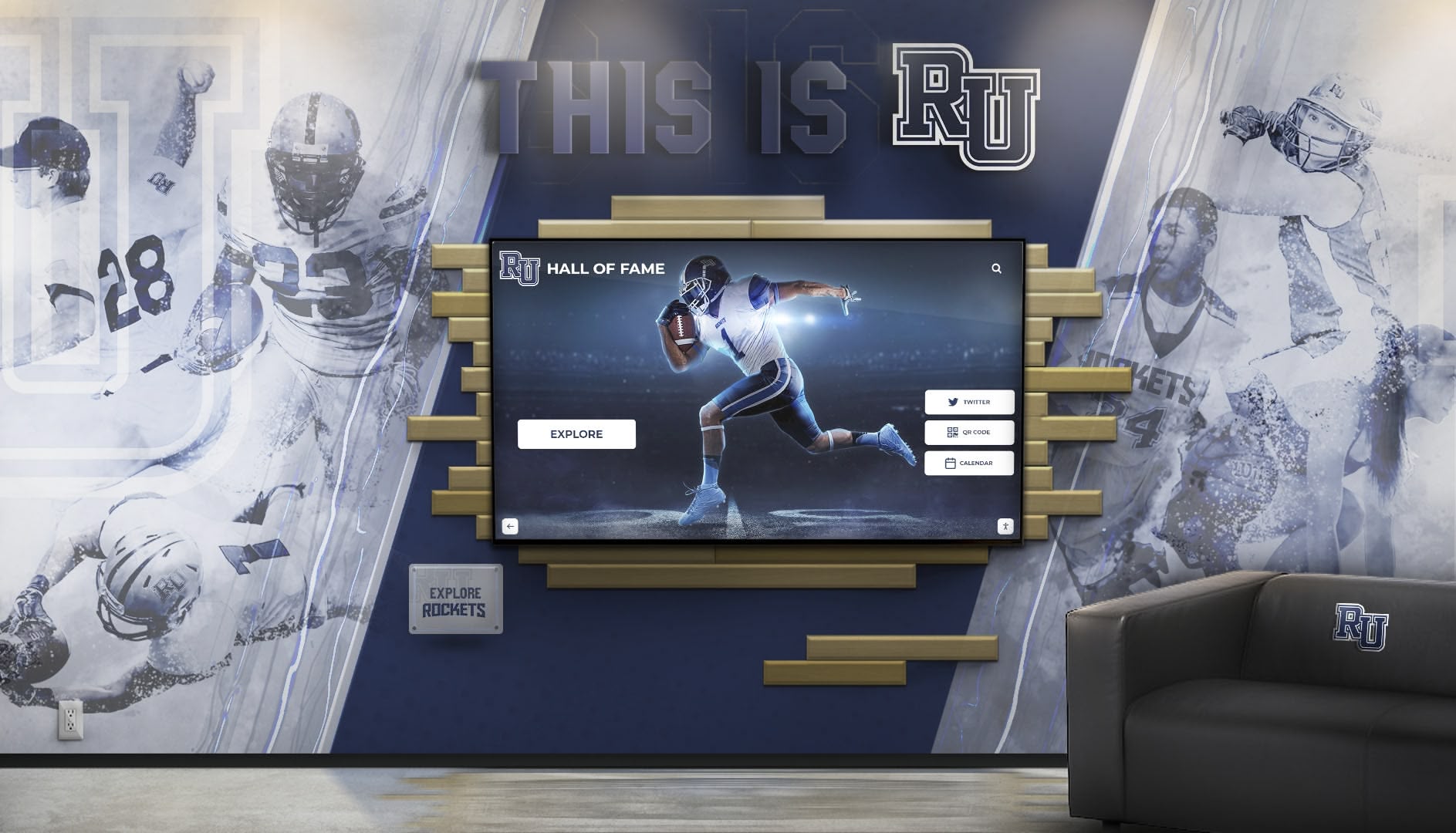
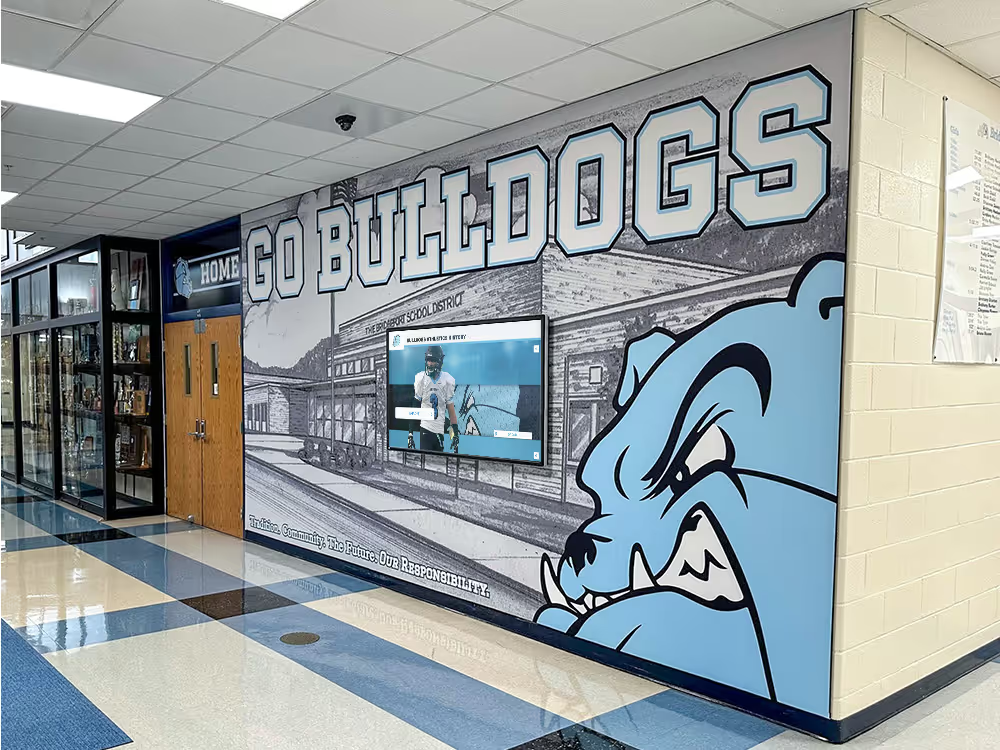
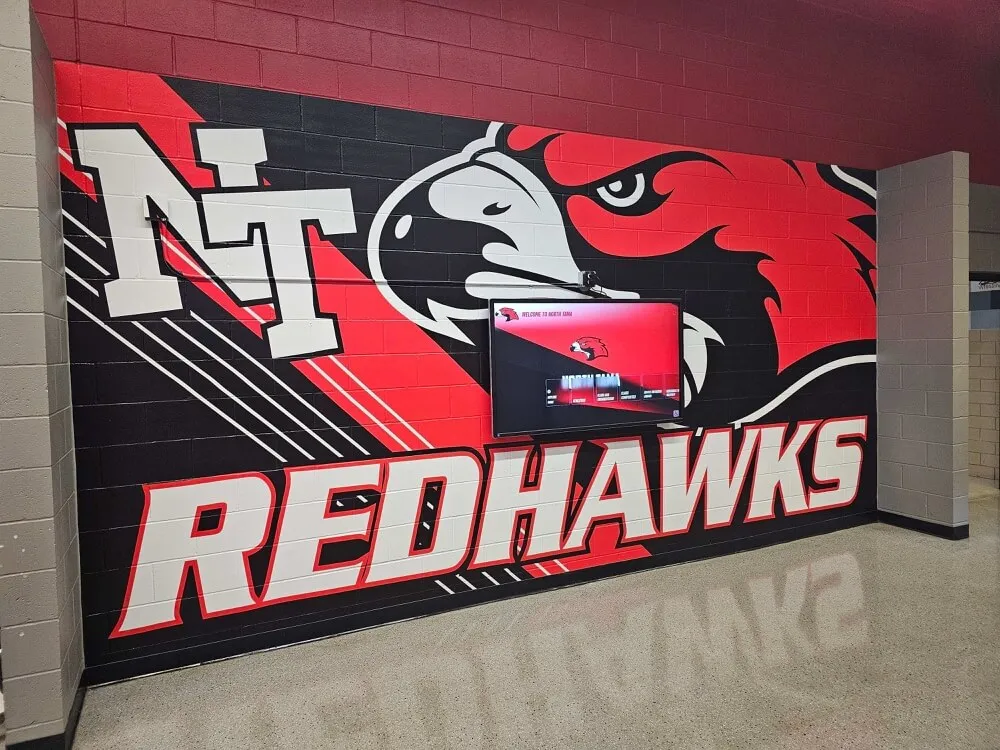
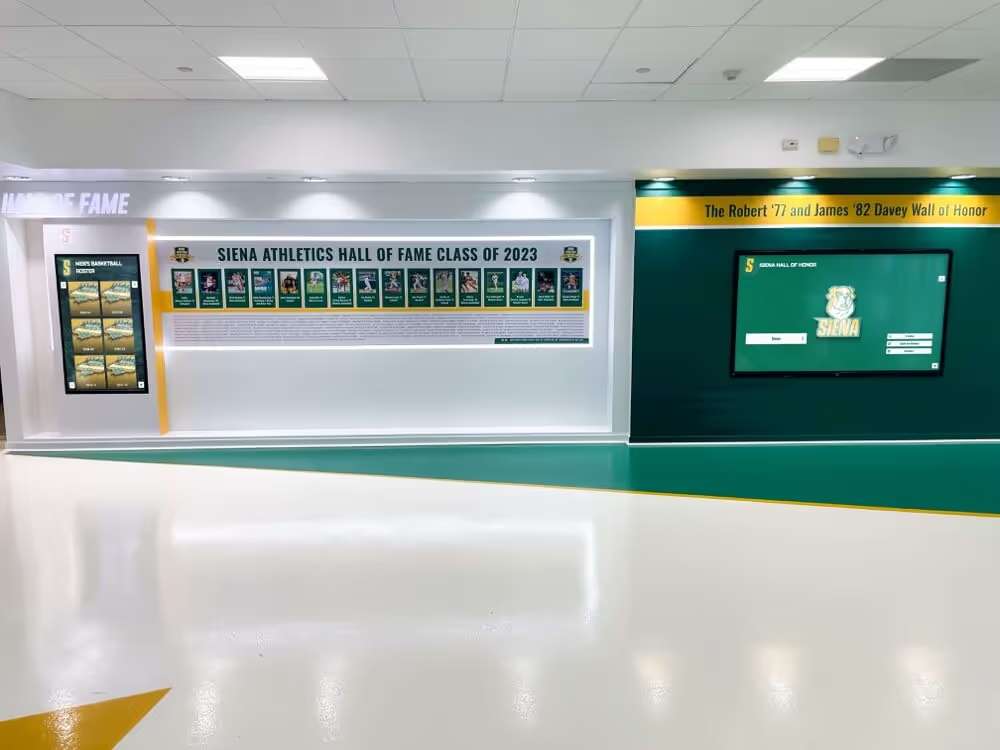
Integrated recognition creates destination experiences combining technology with architectural design
Organizations implementing digital recognition consistently report dramatic engagement increases as members spend significantly more time exploring achievements compared to brief glances at static plaques. Extended engagement creates opportunities for deeper institutional connection, strengthened identity, and ongoing relationship building supporting advancement, recruitment, and community development objectives across constituencies.
Practical benefits prove equally compelling—unlimited capacity eliminating space constraints and difficult prioritization decisions, eliminated recurring engraving costs redirecting resources toward program needs, operational efficiency enabling efficient content management, long-term cost-effectiveness as marginal costs per inductee approach zero, true accessibility ensuring global audiences access recognition regardless of location, and continuous improvement through analytics revealing engagement patterns informing optimization.
Implementation requires thoughtful planning addressing organizational goals, technical requirements, content strategies, and stakeholder expectations. Successful organizations follow systematic approaches beginning with clear objective definition, progressing through careful vendor evaluation prioritizing purpose-built recognition platforms over generic alternatives, and culminating in comprehensive content development creating experiences worthy of celebrated achievements.
Your achievements and the people behind them deserve recognition honoring excellence while building community pride and engagement. Digital hall of fame systems make comprehensive celebration achievable within reasonable budgets and sustainable management models, creating the vibrant, engaged communities where members feel valued and motivated to maintain lifelong institutional connections.
Ready to explore how digital recognition transforms community engagement while celebrating institutional achievements? Book a demo to discover how purpose-built platforms create engaging recognition experiences accessible globally while providing unlimited capacity, operational efficiency, and the digital warming that builds vibrant communities celebrating excellence across programs and eras.