Intent: define — A class ring is far more than a piece of jewelry. It’s a wearable milestone—a symbol of years spent learning, growing, and belonging to a community that shaped who you are. When students receive their class rings, they join a tradition nearly two centuries old, worn by generations of graduates who wanted a permanent, personal reminder of where they came from and what they accomplished.
Yet despite the tradition’s longevity, many students, parents, and educators aren’t entirely sure what a class ring represents—what the different design elements mean, how the tradition started, what role ring ceremonies play, and how schools can honor this milestone in ways that extend beyond the ring itself. Understanding these questions helps schools and families appreciate why the class ring has endured as one of America’s most meaningful educational traditions.
This guide explores everything schools need to know about class rings—from their origins at a 19th-century military academy to the symbolism embedded in every stone and engraving, through the ceremonies that mark their presentation and the ways modern schools are complementing this physical tradition with lasting digital recognition.
This comprehensive guide covers what a class ring is, the history behind it, what each element of a ring symbolizes, how class ring ceremonies work, the differences between high school and college ring traditions, and how schools can build on this legacy to create recognition cultures that endure long after graduation day.

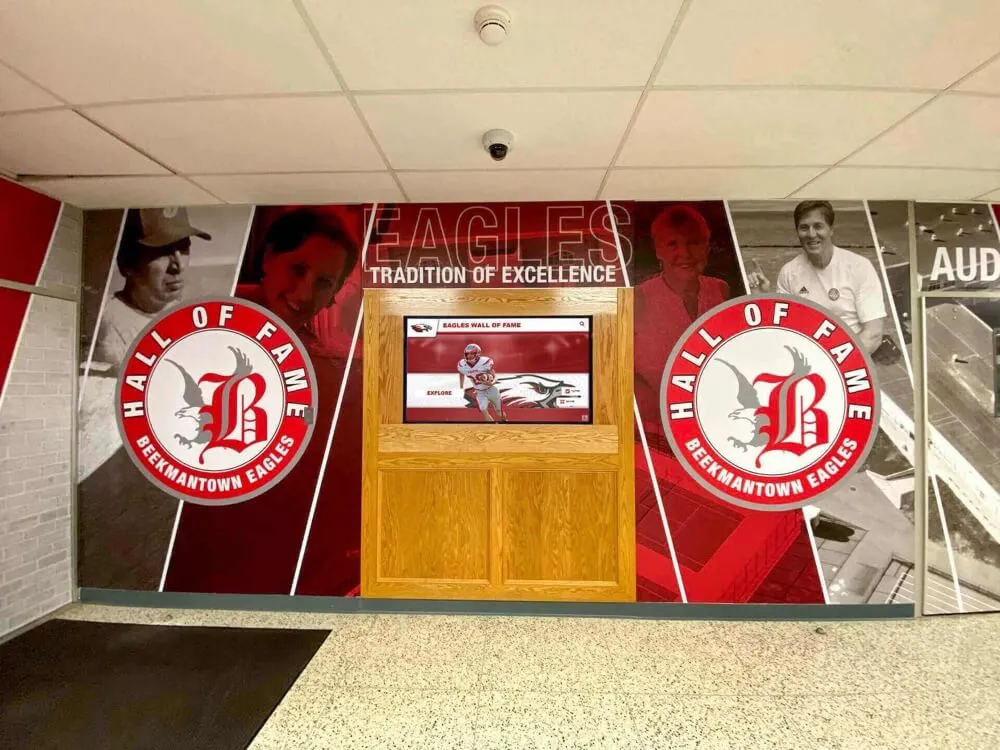
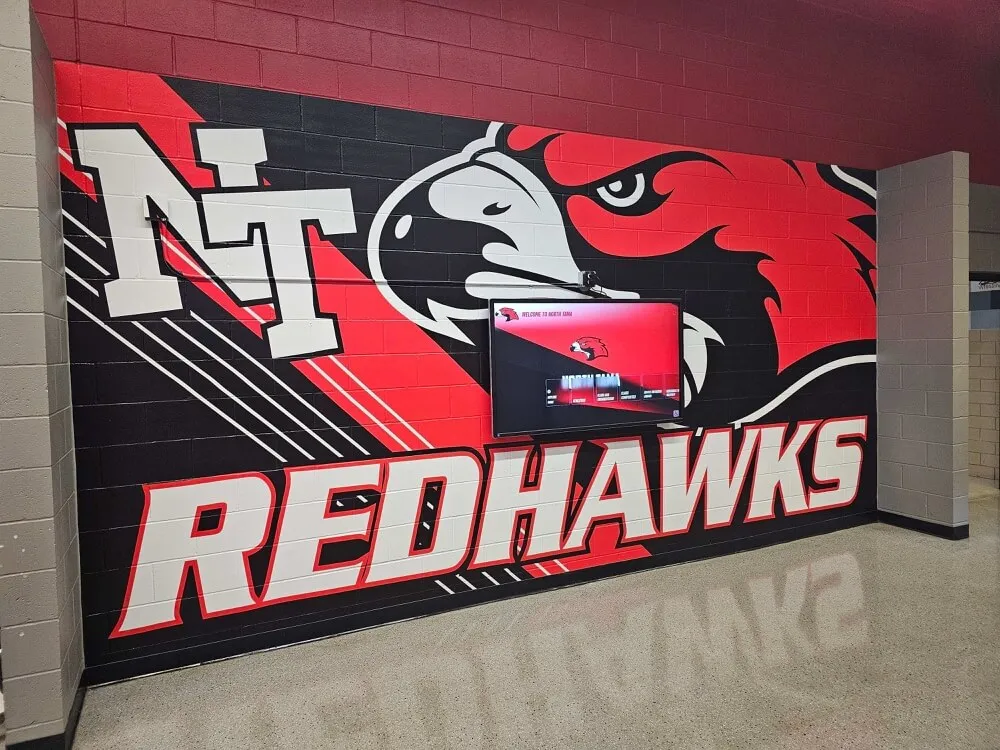
Class rings are part of a broader tradition of honoring students' journeys—a legacy schools increasingly preserve through both physical and digital recognition
What Is a Class Ring?
A class ring is a commemorative ring worn by students and graduates to represent their membership in and graduation from a specific school or university. Unlike a general piece of jewelry, a class ring is customized with symbols, dates, colors, and imagery tied directly to the wearer’s educational experience—making each ring a uniquely personal artifact.
The Basic Definition
At its core, a class ring functions as a tangible marker of achievement and identity. It says: I attended this school, I graduated with this class, and I carry this experience with me. Students typically order class rings during their junior year of high school or a comparable milestone year in college, receiving them in a ceremony that marks the beginning of the final stretch toward graduation.
The ring is meant to be worn throughout life, not just during school years. Unlike a diploma rolled up in a tube or a yearbook on a shelf, a class ring travels with its wearer—to college, to a first job, to family gatherings—serving as a daily reminder of formative years and the people who shared them.
What Makes a Class Ring Different from Other Rings
Several features distinguish a class ring from ordinary jewelry:
- School-specific imagery: The school’s name, crest, or mascot appears prominently on the ring
- Graduation year: The year the student graduates is typically engraved on the band or set into the design
- Personalization options: Students select gemstone colors, side emblems representing activities or achievements, and interior engravings
- Standardized design within customization: While students make personal choices, the ring’s overall framework identifies it as belonging to a specific institution
This combination—institutional identity paired with personal customization—makes every class ring simultaneously a symbol of belonging and a record of individual achievement.
The History of Class Rings: Nearly 200 Years of Tradition
Understanding where the class ring tradition began reveals why it has proven so durable across centuries of changing educational culture.
The West Point Origin, 1835
The class ring tradition traces directly to the United States Military Academy at West Point, New York. In 1835, members of the graduating class commissioned matching rings to commemorate their shared experience and the bonds forged during their years of training. The rings symbolized unity—the idea that these graduates, now heading into different assignments and postings, would carry with them a shared identity as West Point graduates.
The concept resonated immediately. Subsequent West Point classes adopted the tradition, and the idea gradually spread to other colleges and universities. By the late 19th and early 20th centuries, universities across the country had established their own class ring traditions. High schools followed suit through the mid-20th century as the custom became a recognized milestone in American secondary education.
Spread to High Schools and Colleges
As class rings moved from military academies to civilian universities and then to high schools, the tradition evolved in important ways. Military rings emphasized unity and branch identity. University rings celebrated academic achievement and institutional loyalty. High school rings became symbols of adolescent milestone—something given to students on the threshold between youth and the next chapter of life.
Ring manufacturers worked closely with schools to develop designs reflecting each institution’s unique identity: mascots, school colors, mottos, and crests that would distinguish one school’s ring from every other. This customization deepened the tradition’s meaning, ensuring that a graduate’s ring identified not just “school” generically but this specific school, this particular community, this exact graduating class.
Why the Tradition Has Lasted
Other graduation symbols have come and gone, but the class ring has endured for nearly two centuries. Several factors explain its staying power:
Wearability: A ring travels with its owner everywhere a diploma cannot. It participates in daily life rather than sitting in a drawer.
Personalization: Students invest in the design process, selecting elements that represent their specific high school or college experience. That investment creates attachment.
Ceremony: The ring day or ring presentation ceremony transforms the ring from a purchased item into a received honor—something bestowed by the school community rather than merely bought.
Intergenerational continuity: When parents and grandparents wore class rings from the same school, a child wearing their own ring joins a family tradition within an institutional one.

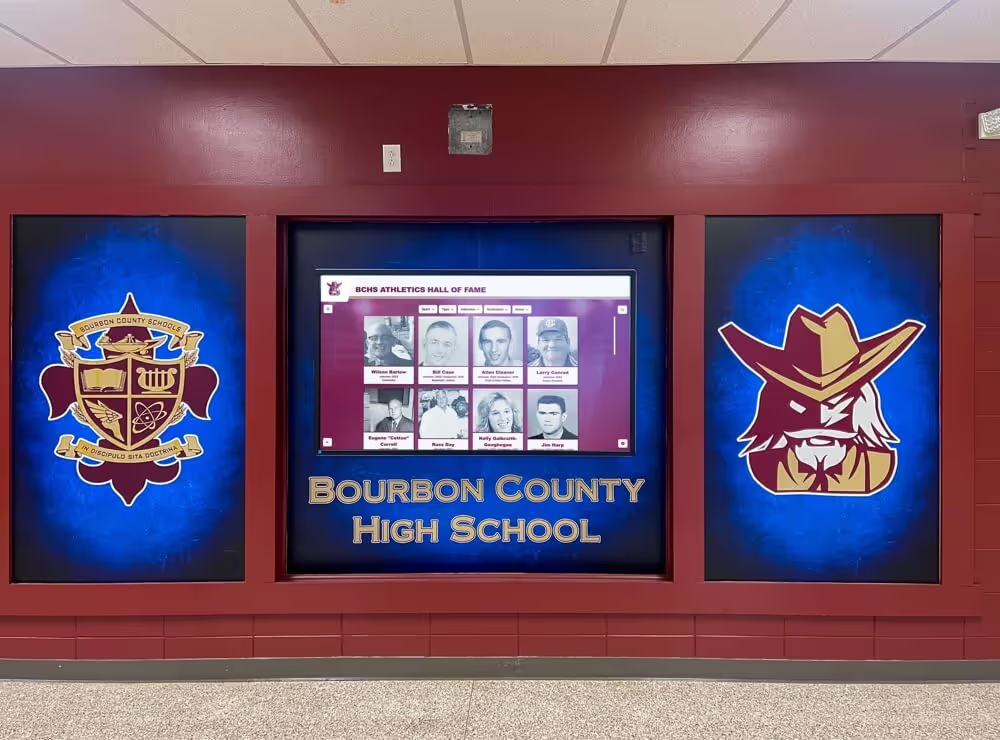
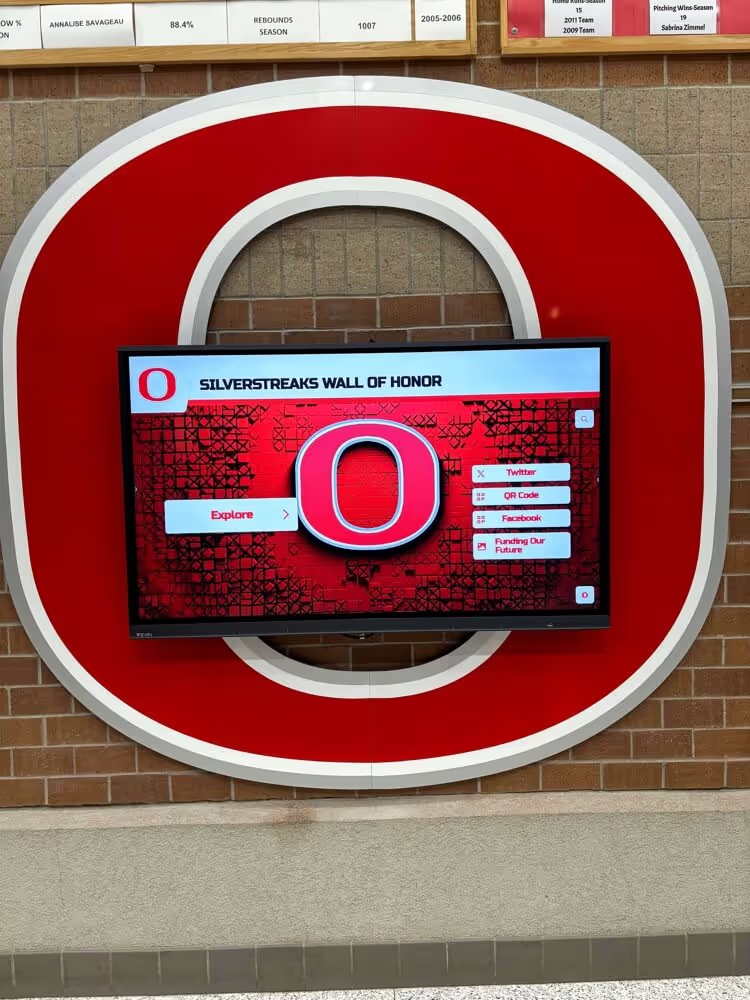
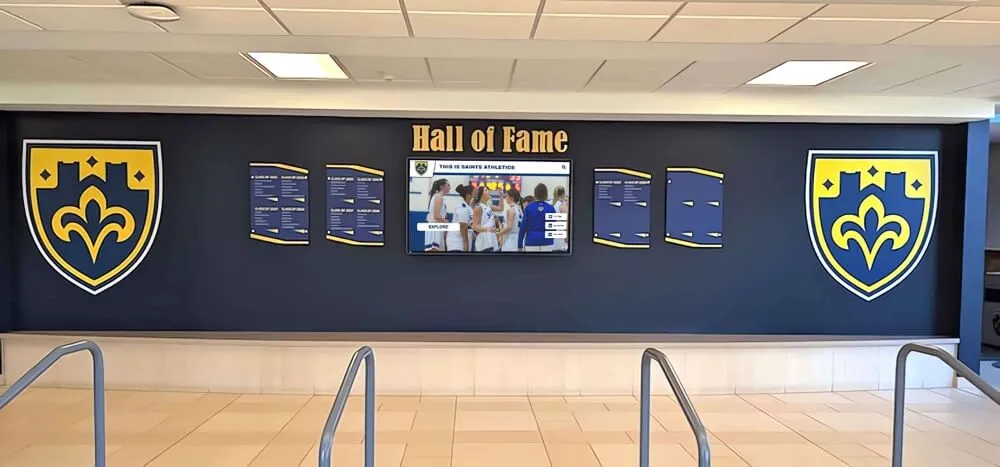
Schools build on physical traditions like class rings with permanent digital recognition that celebrates achievement year-round across generations
What Each Element of a Class Ring Symbolizes
Class rings are designed to communicate meaning. Every design choice—stone, metal, engraving, side panel—carries symbolic weight that students and families should understand before customizing their ring.
The Gemstone
The gemstone is typically the most visible element of a class ring, set prominently in the center of the ring’s top face.
School color stones: Many students choose a gemstone in their school’s official color, visually tying the ring to their specific institution. A school with blue and gold colors might see students choosing blue topaz or blue synthetic stones.
Birthstones: Other students select their birth month’s gemstone, creating a more personal connection. A student born in October might choose an opal or pink tourmaline regardless of school colors.
Traditional stones: Some schools or ring manufacturers maintain traditions around specific stones associated with particular class years or graduation milestones.
The color of the stone becomes part of how others identify the ring—alumni often recognize each other’s rings by school color before reading the engraving.
The School Crest or Seal
Most class rings feature the school’s official crest, seal, or mascot on the top face alongside or framing the gemstone. This imagery functions as the ring’s primary identifier, distinguishing a ring from one institution from every other.
Schools with strong visual identities—distinctive mascots, long-established crests, recognized athletic imagery—have advantages here. The more immediately recognizable the school symbol, the more the ring communicates about where its wearer attended.
The Graduation Year
The class year typically appears on one side of the band, sometimes as four numerals and sometimes integrated into the ring’s decorative elements. This date anchors the ring in a specific moment: not just “I graduated from this school” but “I graduated with this particular class, in this year.”
For alumni, the year creates instant common ground. Two graduates from the same school encountering each other’s rings immediately know whether they overlapped, who came before whom, and what shared context—school events, faculty, facilities—they might share.
Side Panels and Personal Emblems
The sides of a class ring’s band offer space for personalization that goes beyond institutional identity. Common side panel options include:
- Academic achievements: Honor society symbols, academic team imagery, or graduation distinctions like cum laude or valedictorian status (some students extend this to include Latin honors recognition)
- Athletic achievements: Sport-specific imagery for varsity athletes, including championship or all-state recognition
- Extracurricular involvement: Band, choir, theater, student government, or other activity symbols
- Personal symbols: Meaningful imagery selected by the student that captures aspects of their personality or values
These choices transform the ring from a generic institutional symbol into a personal autobiography of the student’s high school or college experience.
Interior Engravings
Most class rings allow personalized text engraved on the inside of the band. Common choices include:
- The student’s full name
- A personal motto or meaningful phrase
- A graduation date
- Initials or a meaningful abbreviation
Interior engravings remain private to the wearer—a personal message from the student to themselves about who they were when they received the ring.

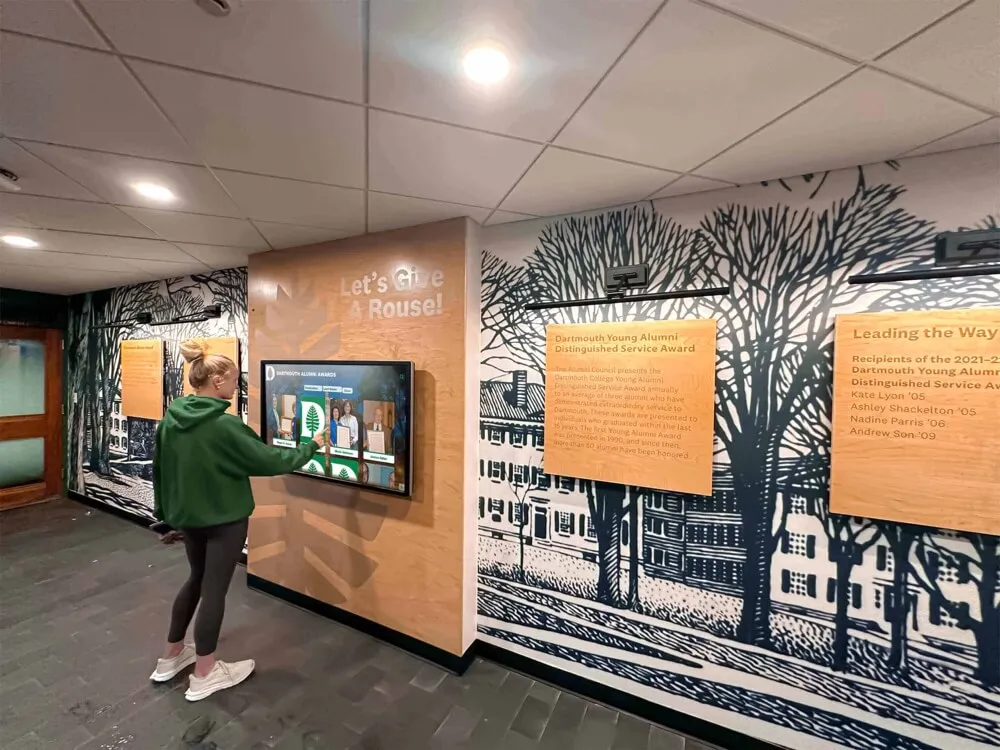
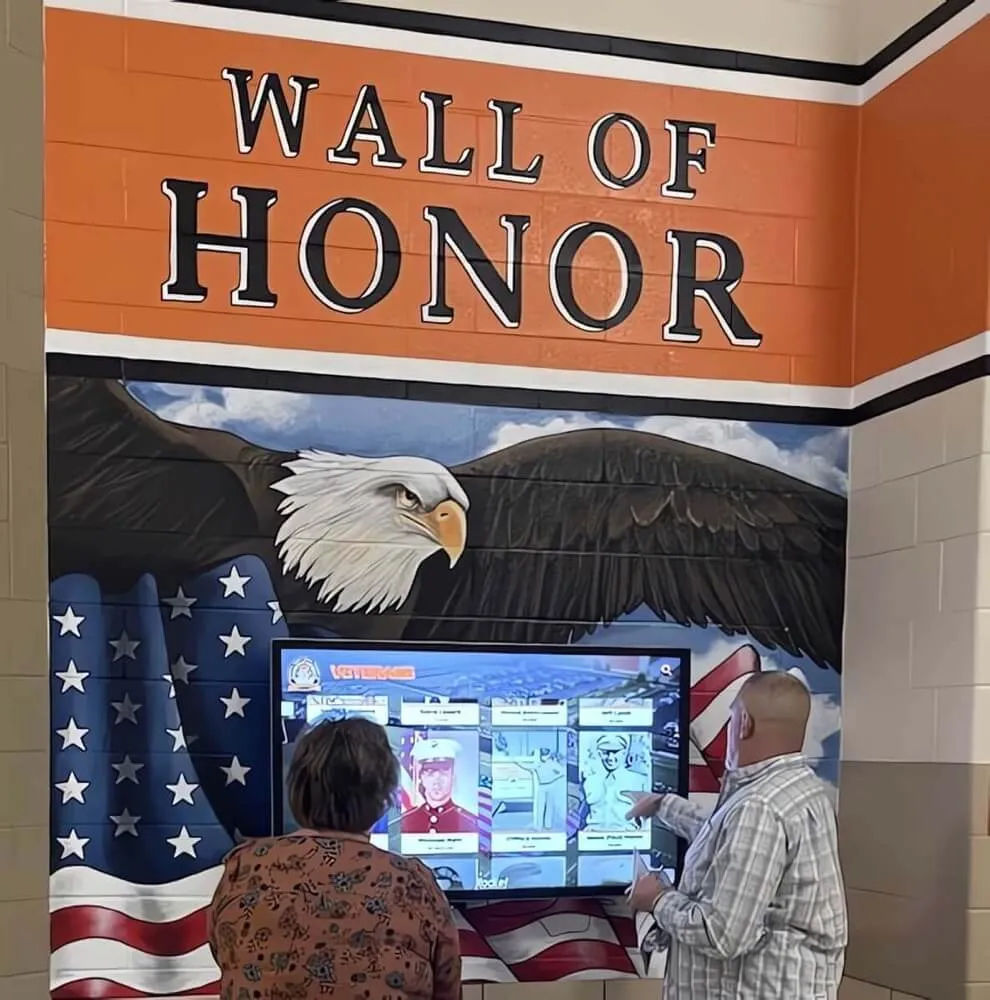
Class rings and digital recognition work together—rings mark personal achievement while permanent displays build the institutional memory that connects generations
Class Ring Ceremonies: How Schools Honor the Tradition
Receiving a class ring isn’t simply a transaction—for many schools, it’s a ceremony marking a significant milestone in a student’s educational journey.
Ring Day and Ring Presentation Ceremonies
Most high schools and many universities host dedicated ring ceremonies, variously called Ring Day, Ring Night, or Ring Presentation events. These gatherings typically occur when students are juniors (in high school) or at a milestone year in college, well before graduation—giving students time to wear their rings during their final year of school.
A ring ceremony might include:
- Formal presentation of rings by administrators, teachers, or parents
- Speeches or remarks about the significance of the milestone
- A pledge or commitment statement from students about upholding school values
- Photography capturing the moment students first wear their rings
- Reception or celebration following the formal presentation
By surrounding the ring with ceremony, schools transform it from an object into an event—something remembered alongside the ring itself.
The Stone-Facing Tradition
One of the most recognized class ring traditions involves the direction the stone faces on the wearer’s finger.
Stone facing inward (toward the heart): Many schools teach students to wear their rings with the stone facing inward during their remaining school years. The inward-facing stone symbolizes that the student still belongs to the school—their loyalty points toward the institution.
Turning the stone outward at graduation: At the graduation ceremony—or sometimes during senior events preceding graduation—students turn their rings so the stone faces outward. This reversal symbolizes the graduate carrying their school out into the world, sharing their alma mater’s identity with everyone they encounter.
This tradition varies by institution, and not every school practices it, but where it exists, the turning of the ring at graduation carries genuine emotional weight—a simple gesture marking a profound transition.
Other Regional and School-Specific Traditions
Some schools have developed their own distinctive class ring traditions over decades:
Ring dunking: At certain schools and universities, students “dunk” their newly received rings—briefly submerging the ring in a symbolic liquid, often connected to the school’s history or culture—as part of the acceptance ritual.
Parent or mentor presentation: Some schools have parents, grandparents, or significant mentors present the ring rather than administrators, emphasizing the family dimension of the milestone.
Class-wide ring reveals: Students in some schools keep their ring selections secret until Ring Day, revealing their personalized designs to classmates simultaneously.
These variations underscore the fact that class ring traditions aren’t monolithic—they’re living customs shaped by each school’s identity, history, and community values. Much like homecoming traditions every high school should know, ring ceremonies are among the rituals that make each school’s culture distinct.
High School vs. College Class Rings: Key Differences
While the underlying tradition is the same, class rings function somewhat differently depending on whether students receive them from high school or college.
High School Class Rings
High school class rings are typically:
Ordered junior year: Most high schools work with ring vendors to hold ordering events during junior year, so students receive their rings at the start of senior year—giving them an entire year to wear their ring before graduation.
Highly personalized: High school rings often offer extensive personalization options given the competitive market for student business. Students choose stones, metals, side emblems, and engravings from extensive option menus.
A family milestone: For many families, the class ring represents the first significant piece of personalized jewelry a child owns. Parents often contribute to or fully fund the purchase, and many families document the ring presentation as a family celebration.
A social marker: Among high school students, class rings signal membership in the graduating class and often become conversation pieces—students examining each other’s ring designs and personalization choices.
College Class Rings
College class rings carry a somewhat different weight:
Institutional tradition varies: Some universities—particularly military academies, engineering schools, and large flagship institutions—maintain powerful, specific ring traditions with elaborate ceremonies. Others have minimal traditions around class rings. Students should research their specific institution’s culture before investing in a college ring.
Alumni identity: College class rings more often function as long-term alumni identifiers than high school rings. Graduates wearing college rings decades later are immediately identifiable to fellow alumni in professional and social settings.
More limited customization: Some universities use standardized designs with limited personalization, emphasizing institutional uniformity over individual expression.
Connection to honor societies and academic achievement: College rings sometimes incorporate honor society membership, Latin honors status, or other academic recognitions that have less relevance at the high school level. Students pursuing academic distinction might also pursue recognition through honor societies like the National Society of Leadership and Success during their college years alongside their class ring milestone.

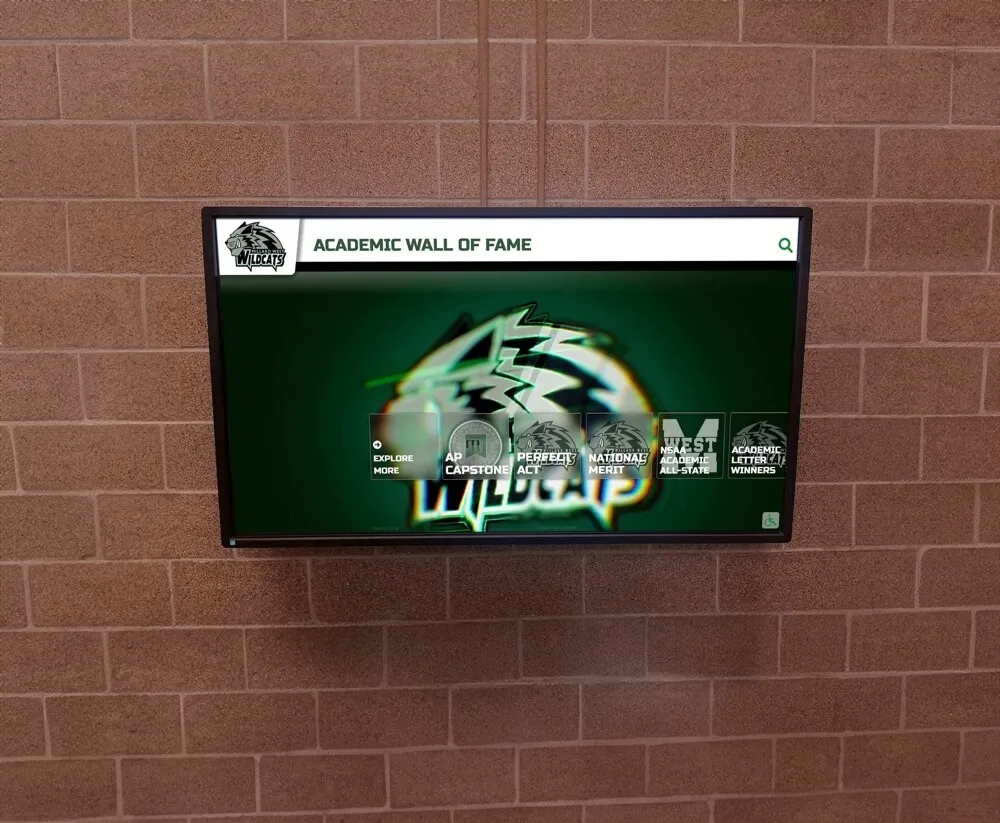
Class rings celebrate individual students—digital recognition platforms extend that celebration to entire generations, making achievement visible to every visitor and prospective student
Class Rings and Academic Recognition: A Broader Picture
Class rings represent individual achievement, but they exist within broader school cultures that celebrate excellence in multiple ways. Understanding where class rings fit in the larger recognition ecosystem helps schools build cohesive programs.
Class Rings as Part of the Academic Recognition Continuum
A student’s class ring is one piece of a recognition continuum that includes:
- Honor roll and academic distinctions that reward performance throughout school (including academic markers like the President’s List and Dean’s List at the collegiate level)
- Honor society membership recognizing sustained academic achievement and character
- Athletic and extracurricular awards celebrating achievement beyond academics
- Graduation honors—valedictorian recognition, Latin honors, departmental awards
- Physical keepsakes like class rings, graduation stoles, and yearbooks that mark the journey’s end
Schools that build intentional recognition cultures understand that the class ring is most meaningful when it arrives in a school environment that has been celebrating achievement all along. A student who has seen their name on the honor roll display, received athletic or arts recognition, and participated in school ceremonies develops a richer sense of what the ring represents by the time they receive it.
Honor Societies and Class Rings
Many students who receive class rings are also members of honor societies—organizations that recognize academic excellence, leadership, and service. Spanish honor society induction ceremonies and recognition programs, for instance, celebrate a different dimension of achievement than the class ring—one focused on specific academic excellence within a discipline rather than general school membership.
Schools with strong recognition cultures celebrate both types of achievement. The class ring says “I was here and I grew here.” The honor society membership says “I excelled here in this particular way.” Together, they build a comprehensive picture of a student’s school experience.
Athletic and Extracurricular Recognition Alongside Class Rings
Class ring side panels allow students to represent their athletic and extracurricular involvement, but the ring can only communicate so much. Schools that combine class ring traditions with comprehensive end-of-season athletic awards recognizing every player’s contribution create recognition cultures where no student’s achievement falls through the cracks.
The student who put a volleyball emblem on her class ring also deserves to see her name on the athletic display board, her senior night celebrated, and her contribution acknowledged in the school’s permanent record. These layered forms of recognition work together to create the sense that a school genuinely values what its students accomplish—not just at graduation but throughout their years in the building.
How Schools Extend Class Ring Traditions Through Digital Recognition
The class ring tradition thrives because it creates lasting, tangible connection to a school’s identity. Modern schools are discovering that interactive digital recognition technology offers a powerful complement—extending that sense of connection from the individual ring to the entire school community.
From Individual Keepsakes to Community Archives
A class ring is deeply personal—it belongs to one graduate and travels through one life. But the graduation class it represents, the achievements it symbolizes, and the school whose name appears on it all belong to a broader community.
Digital recognition platforms allow schools to build the community dimension of class ring culture. An alumni wall that inspires current students works on the same principle as the class ring: it says “these people came before you, they achieved things here, and they carry this school with them.” Where the class ring carries that message on a single graduate’s finger, an alumni wall delivers it to every student who walks down the hallway.
This is what digital warming means in practice—surfacing stories and recognition in ways that make cold institutional hallways feel warm with shared achievement and belonging.
Searchable Archives Preserving Graduating Class History
Every graduating class that receives class rings represents years of accumulated achievement. Interactive touchscreen platforms allow schools to build searchable archives where:
- Students from the class of 2026 can see themselves alongside the class of 1986
- Visitors can search for alumni by name, graduation year, sport, or activity
- Achievement records update automatically as new accomplishments are entered
- QR codes make these archives accessible on mobile devices from anywhere
When a graduate who received their class ring in 1994 visits their old high school in 2026, they can walk up to the touchscreen display and find their own name—connecting their personal keepsake (the ring) to an institutional archive that has preserved their place in school history. That experience creates the kind of alumni reunion engagement that drives lifelong loyalty and giving.
Displaying Student Achievement Beyond the Ring
Class rings communicate achievement through emblems and engravings, but they’re limited to what fits on a small piece of metal. Digital recognition platforms have no such constraints.
Schools can display:
- Full athlete profiles with photos, statistics, and career achievements
- Academic honor roll history across multiple years and marking periods
- Individual student portfolios and artistic achievements (digital artist gallery displays let schools celebrate creative students who might not have athletics-focused rings)
- Championship team histories with photos and context
- Hall of fame inductees across decades of graduating classes
Where the class ring whispers achievement to whoever notices the ring, a well-implemented digital display shouts it to everyone who passes through the building.

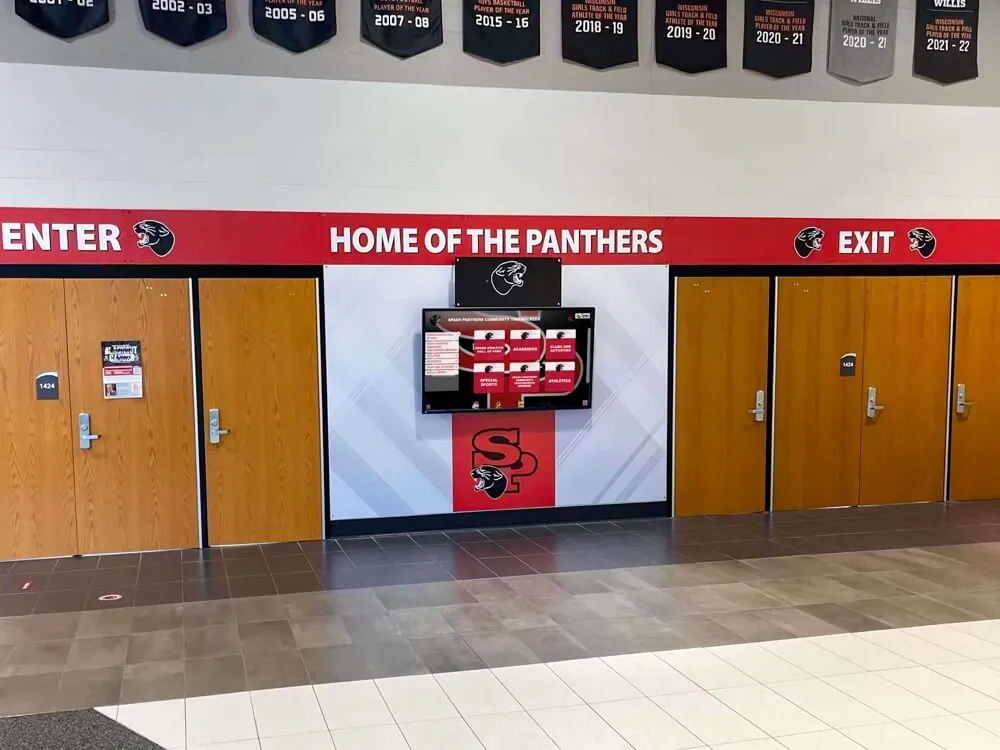
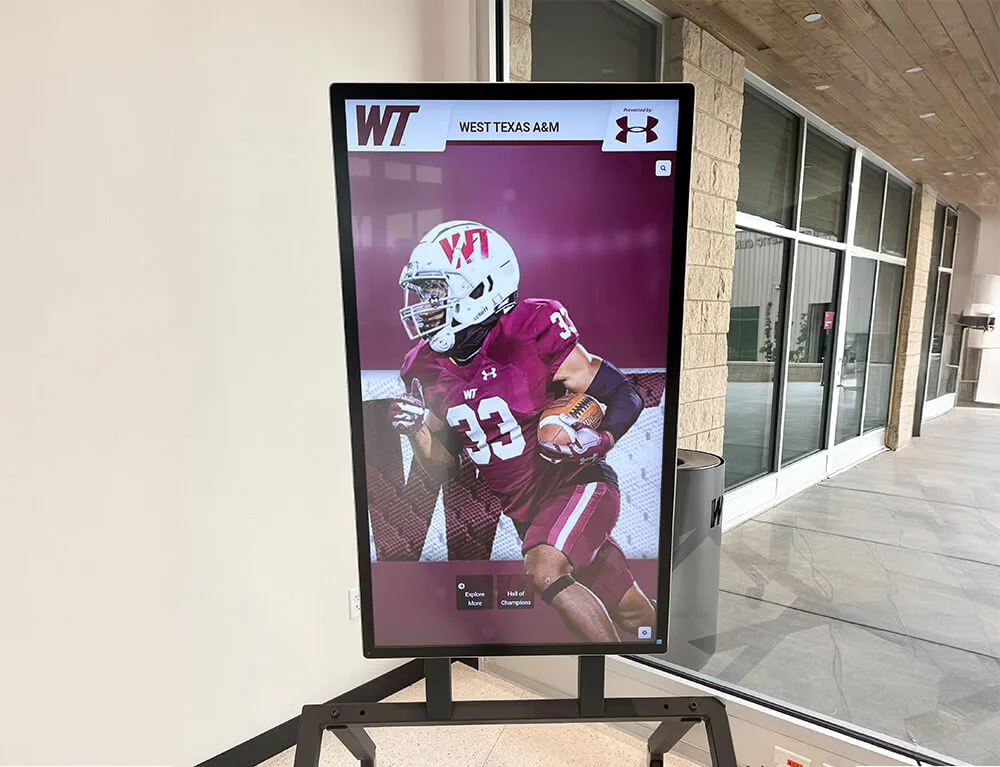
Interactive lobby displays build on class ring traditions by making institutional achievement visible to every student, visitor, and prospective family
Frequently Asked Questions About Class Rings
When should students order a class ring?
Most high school students order class rings during junior year, with delivery timed to arrive at the start of senior year. College students typically order rings based on their specific institution’s traditions—some universities have designated ring ceremony years while others leave the timing to students.
How much do class rings cost?
Prices vary significantly based on metal type, stone quality, and customization level. Basic class rings typically start under $200, while rings in precious metals with high-quality stones can exceed $1,000. Schools often partner with ring vendors to offer multiple price tiers accommodating different family budgets.
Can students customize their class ring after ordering?
Most personalization happens at the time of ordering. Interior engravings can sometimes be added later, but stone selections, metal types, and side emblems are typically fixed during the initial order. This is why reviewing options carefully before ordering matters.
Is a class ring required?
No. Class rings are entirely optional, and many students graduate without one. The tradition remains meaningful partly because participation is a choice—students who receive rings do so because the symbol matters to them.
Do class rings hold resale value?
Class rings have personal value far exceeding their market value. The precious metal content carries some resale value, but the personalized nature of class rings makes them far more valuable to the original owner than to anyone else. Schools occasionally maintain programs helping students who lose rings or need replacements due to changing circumstances.
What if a student loses their class ring?
Most ring manufacturers offer replacement options, though the cost and lead time depend on whether the original mold is still available. Schools sometimes keep records of their ring designs to assist with replacements. Some graduates choose to re-order updated rings celebrating milestone anniversaries.
Conclusion: Honoring a Tradition That Endures
A class ring answers a deeply human need: the desire to mark important chapters of life with something physical, beautiful, and personal. The nearly 200-year history of this tradition—from West Point’s first ring in 1835 to the millions of rings ordered by students today—demonstrates that this need doesn’t fade with changing technology or educational culture.
What changes is how schools build on this tradition. The most engaged school communities complement physical milestones like class rings with recognition cultures that celebrate achievement continuously—not just at ring ceremonies and graduation, but throughout every school year, in every hallway, on every visitor’s screen.
When a student receives their class ring, they should feel that they’re entering a recognition culture that has been celebrating people like them all along. The ring says: you belong here, and what you’ve accomplished here matters. The school’s broader recognition program—its honor roll displays, its digital hall of fame, its athletic archives—should say the same thing, to every student, every day.
Build a Recognition Culture That Lasts Beyond Graduation Day
Class rings mark individual milestones—but lasting school pride is built by recognition systems that celebrate every student, every season, every year. Discover how Rocket Alumni Solutions helps schools create interactive halls of fame, searchable alumni archives, and digital recognition platforms that extend the spirit of class ring traditions to your entire community.
Explore Recognition Solutions for SchoolsSchools that invest in comprehensive recognition—weaving together physical traditions like class rings with modern digital platforms—create communities where achievement is visible, alumni stay connected, and current students see clear evidence that their school values what they accomplish. That’s not just a better recognition program. That’s what makes a school feel like a place worth remembering for life.

Permanent recognition installations preserve the legacy of every graduating class—complementing class rings with institutional memory that spans generations