



Walk through most school hallways and you’ll encounter blank walls or outdated displays that fail to celebrate the vibrant communities within. These empty spaces represent missed opportunities to build school pride, communicate institutional values, honor achievements, and create inspiring environments where students, staff, and visitors feel genuine connection to place and community.
Wall wraps for schools address this challenge through professional graphic installations that transform ordinary corridors, gyms, lobbies, and common spaces into branded environments celebrating school identity, recognizing student achievement, and creating memorable experiences that strengthen institutional culture. When implemented thoughtfully, wall wraps convert underutilized walls into strategic assets supporting school pride, recruitment, recognition, and community engagement.
Many schools maintain recognition programs and celebrate achievements through scattered trophies, aging bulletin boards, or paper certificates that fail to create the inspiring environments students deserve. Traditional approaches face limitations around space constraints preventing comprehensive recognition, maintenance challenges requiring constant updates and repairs, aesthetic deterioration as materials age and fade over time, inflexibility making content changes expensive and time-consuming, and limited engagement since static displays create passive viewing rather than interactive exploration.
This comprehensive guide explores how wall wraps transform school environments through strategic design combining traditional graphic installations with modern digital recognition creating flexible, engaging spaces that celebrate community while addressing the limitations schools face with conventional approaches.

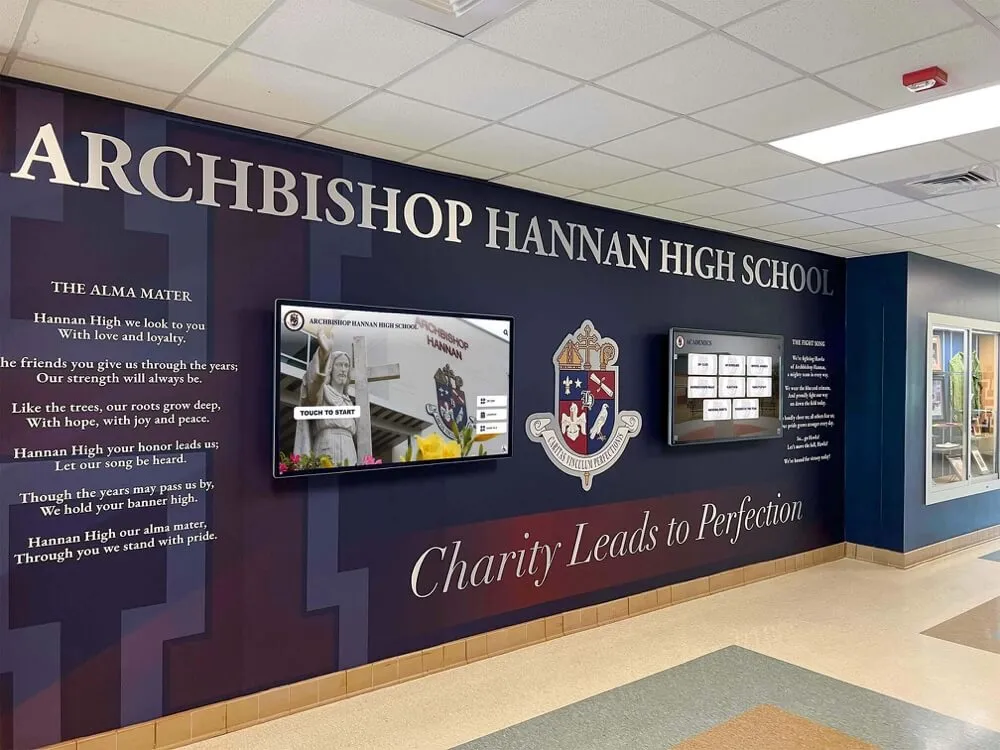
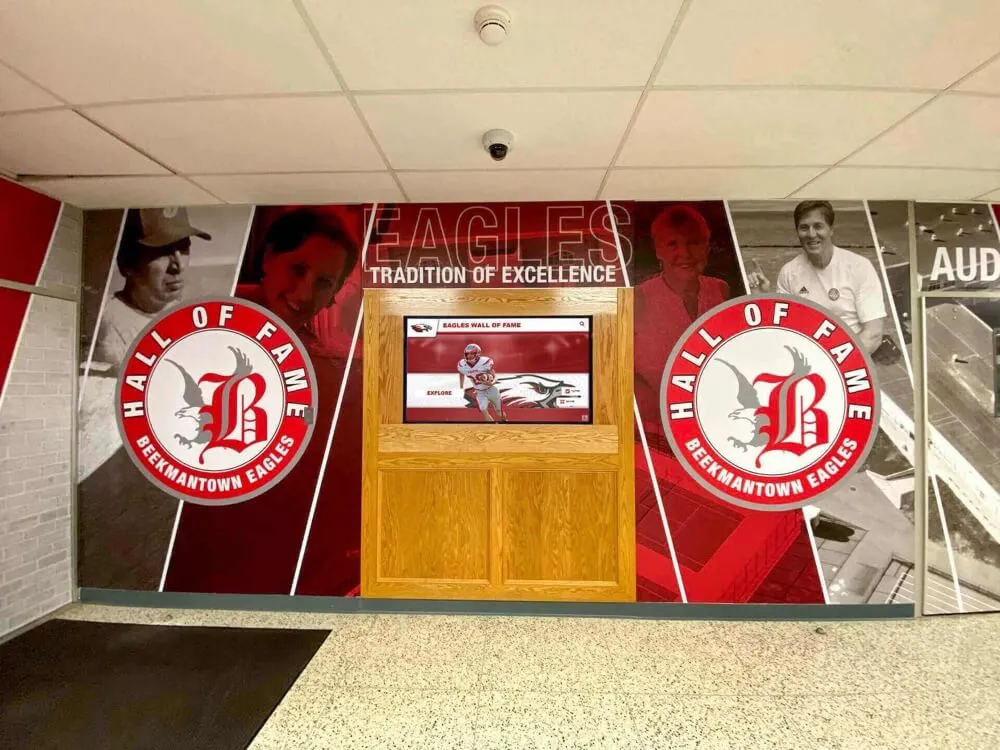
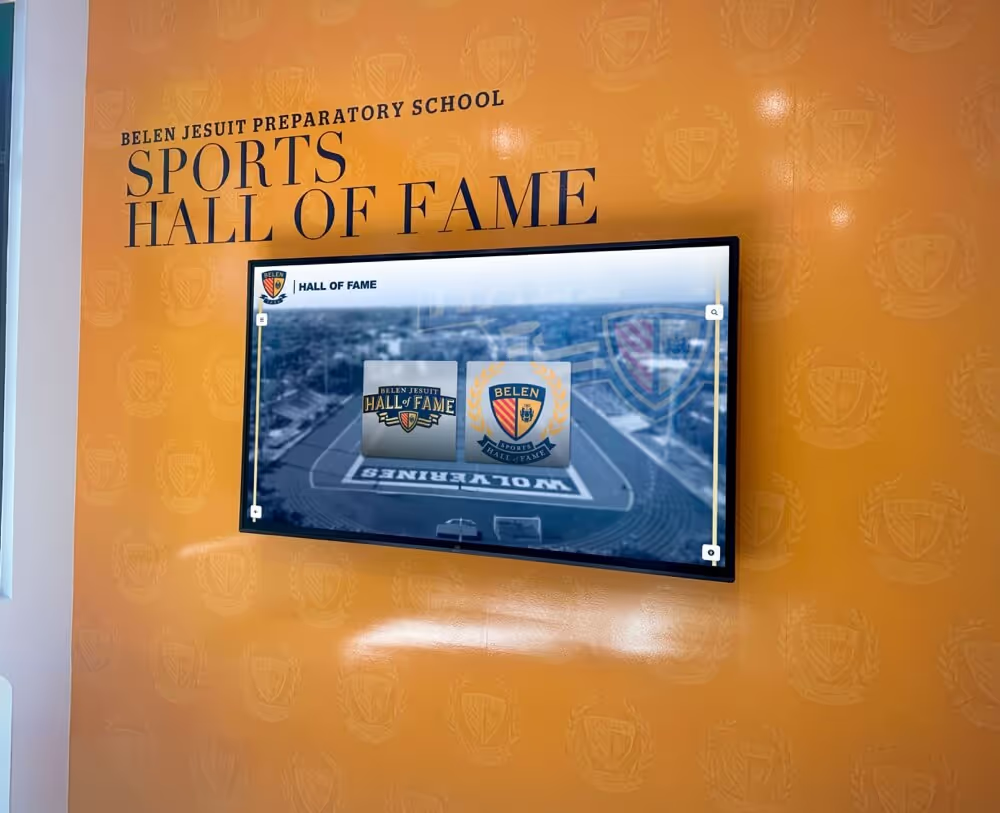
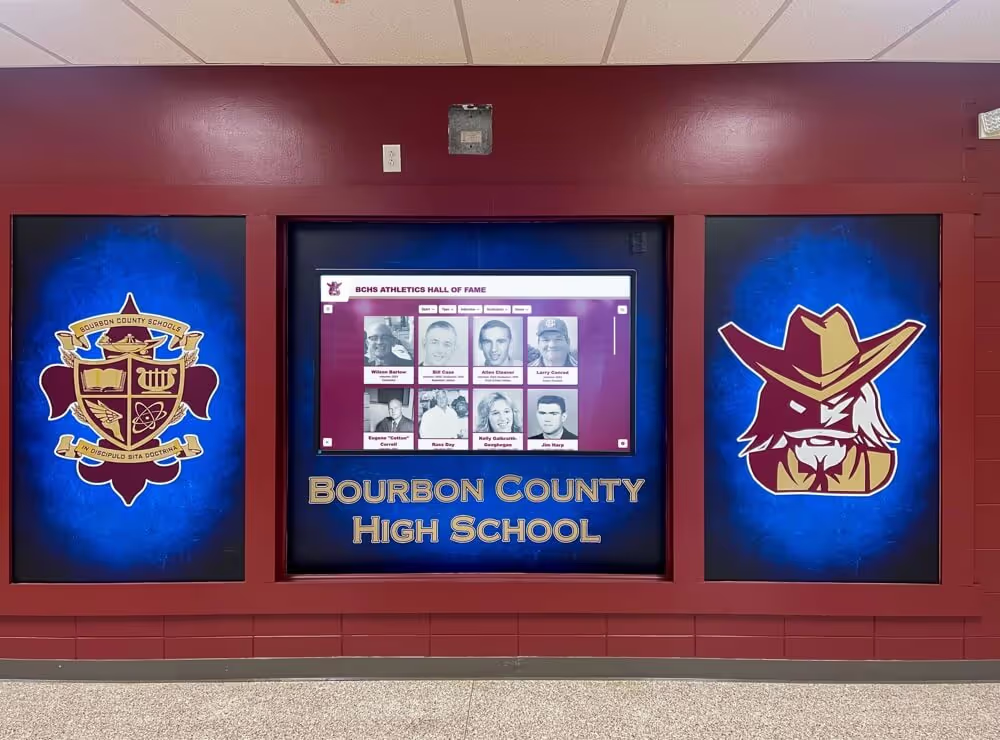
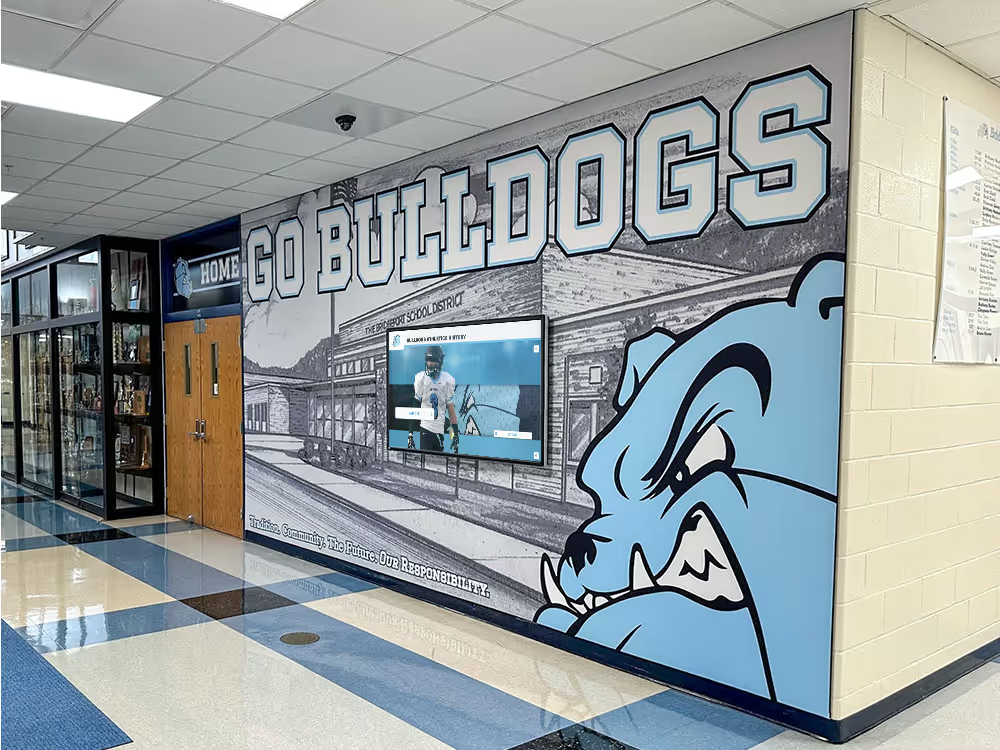
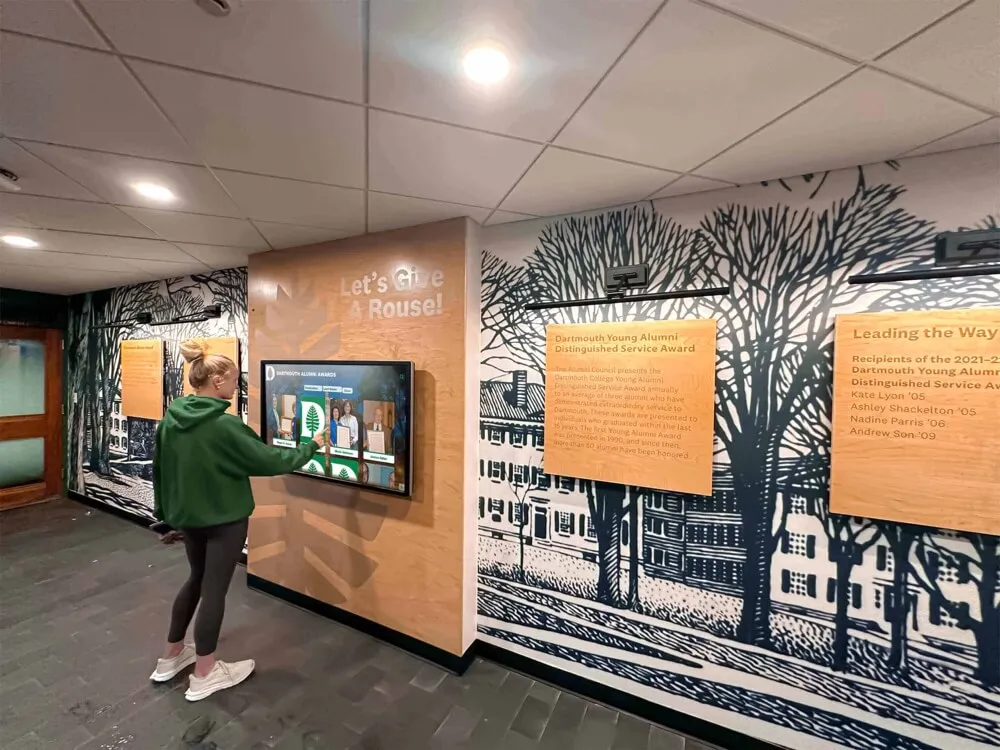
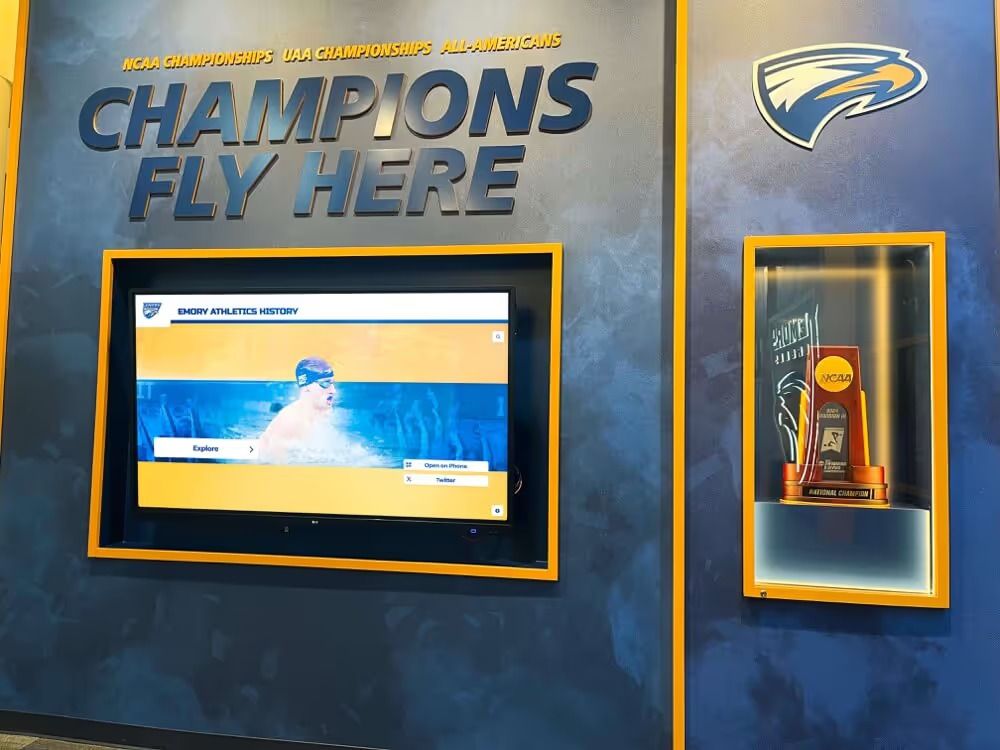
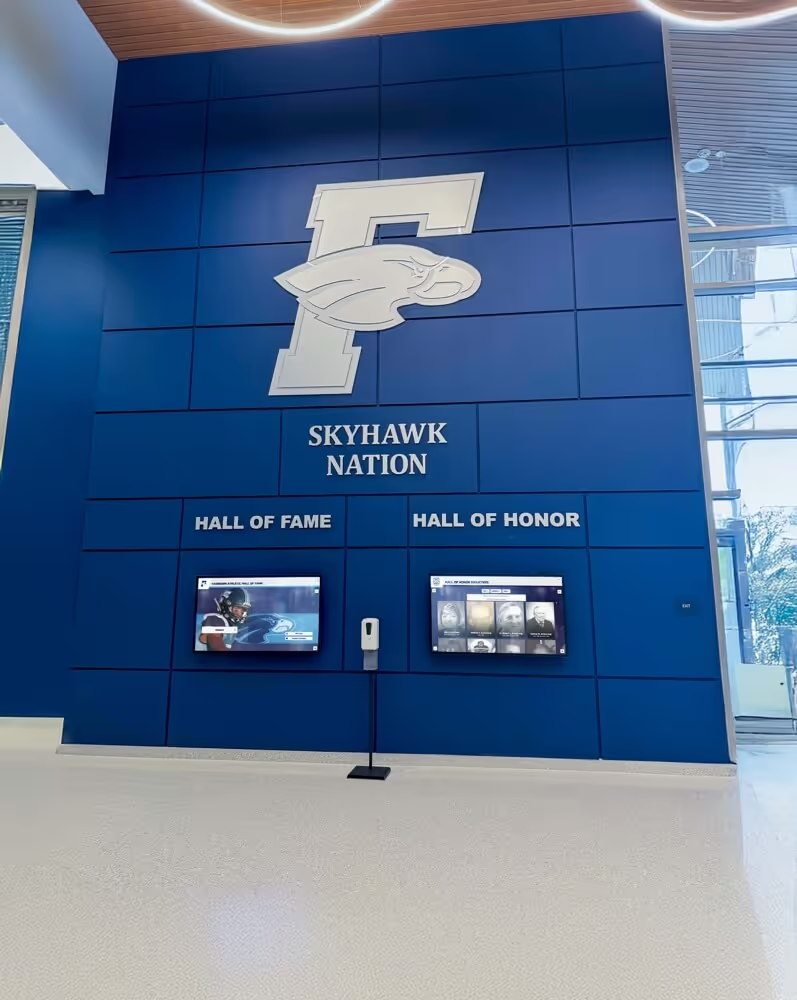
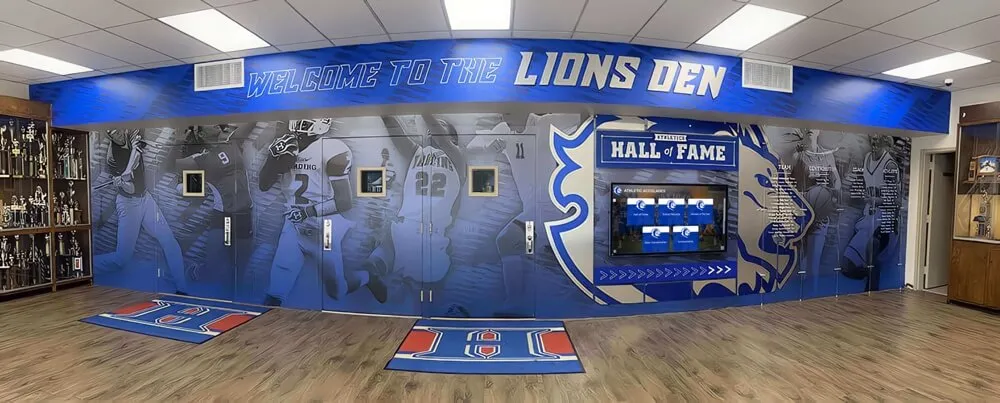
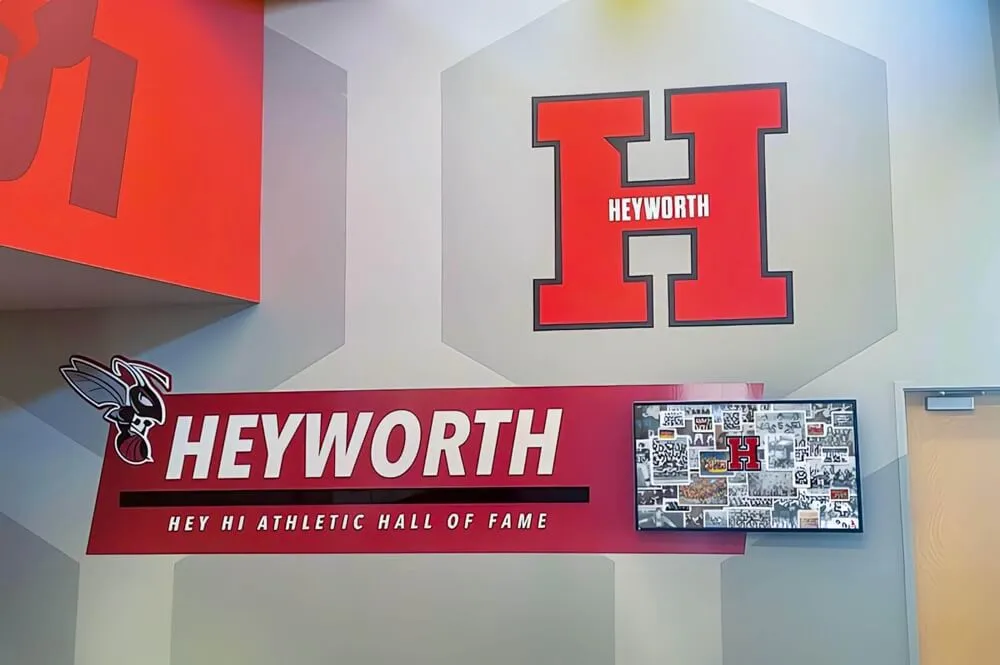
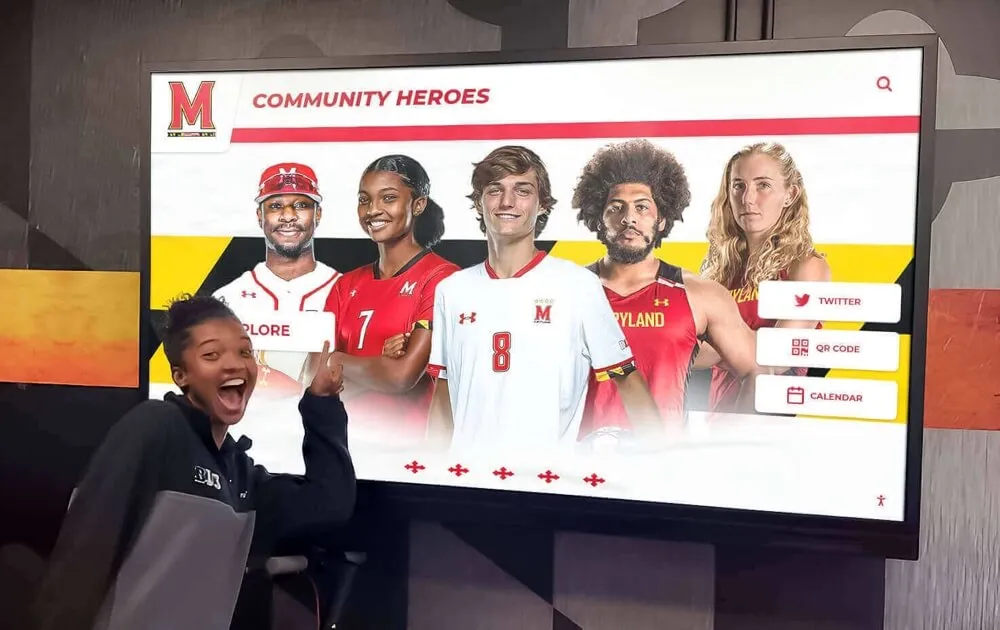
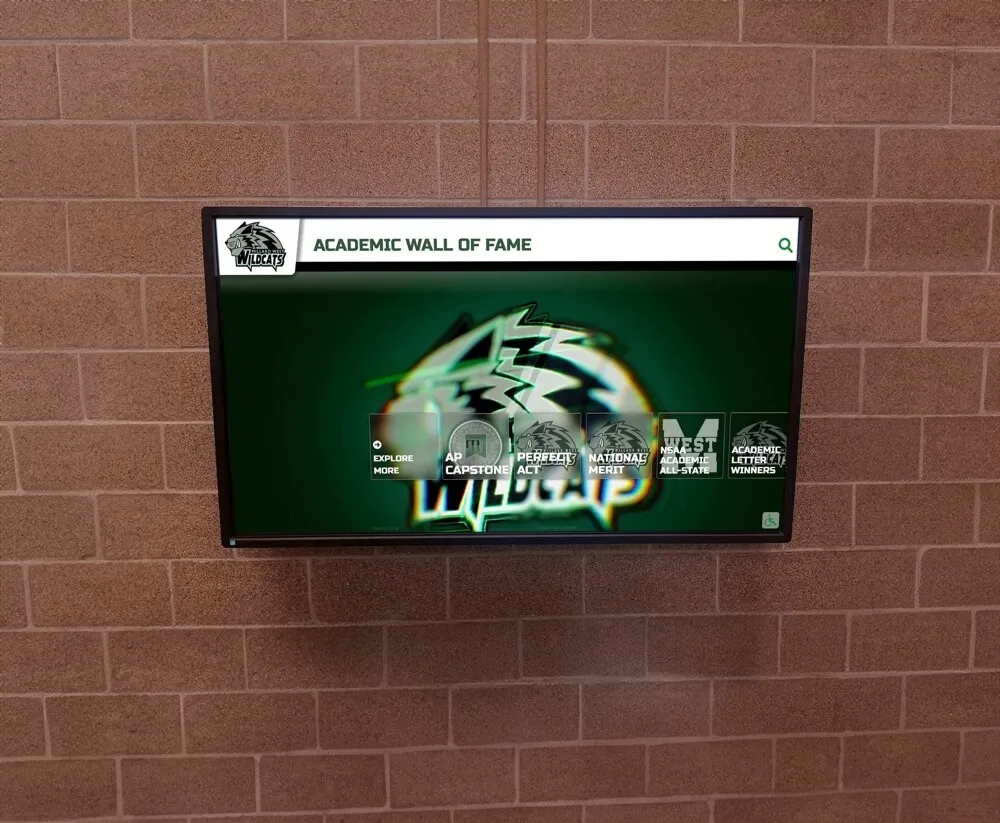
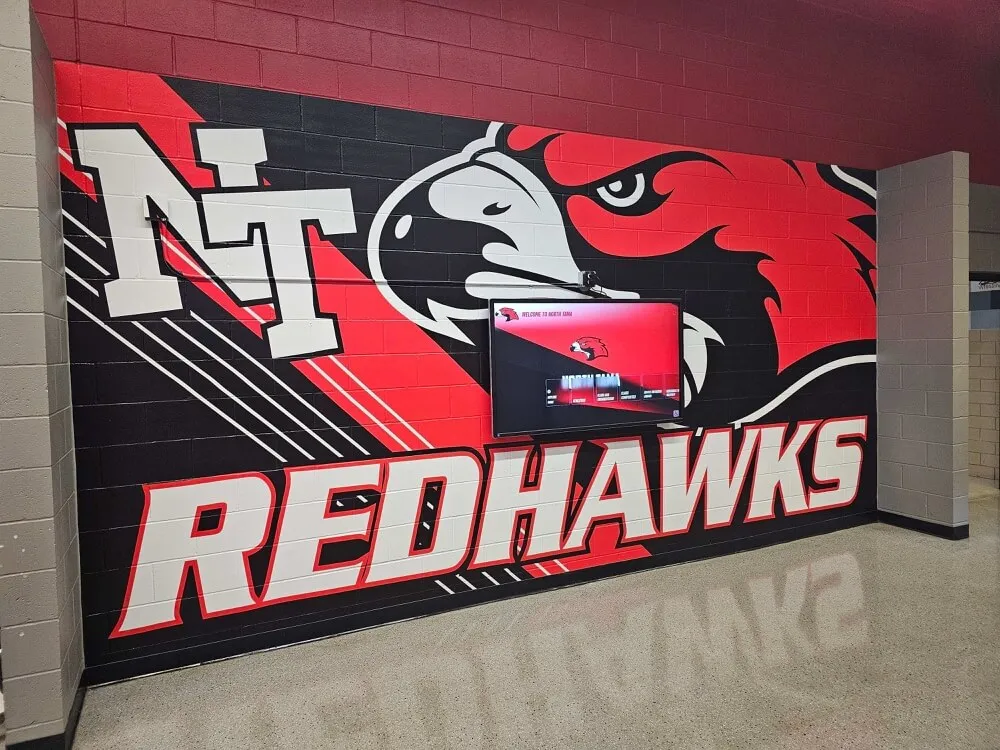
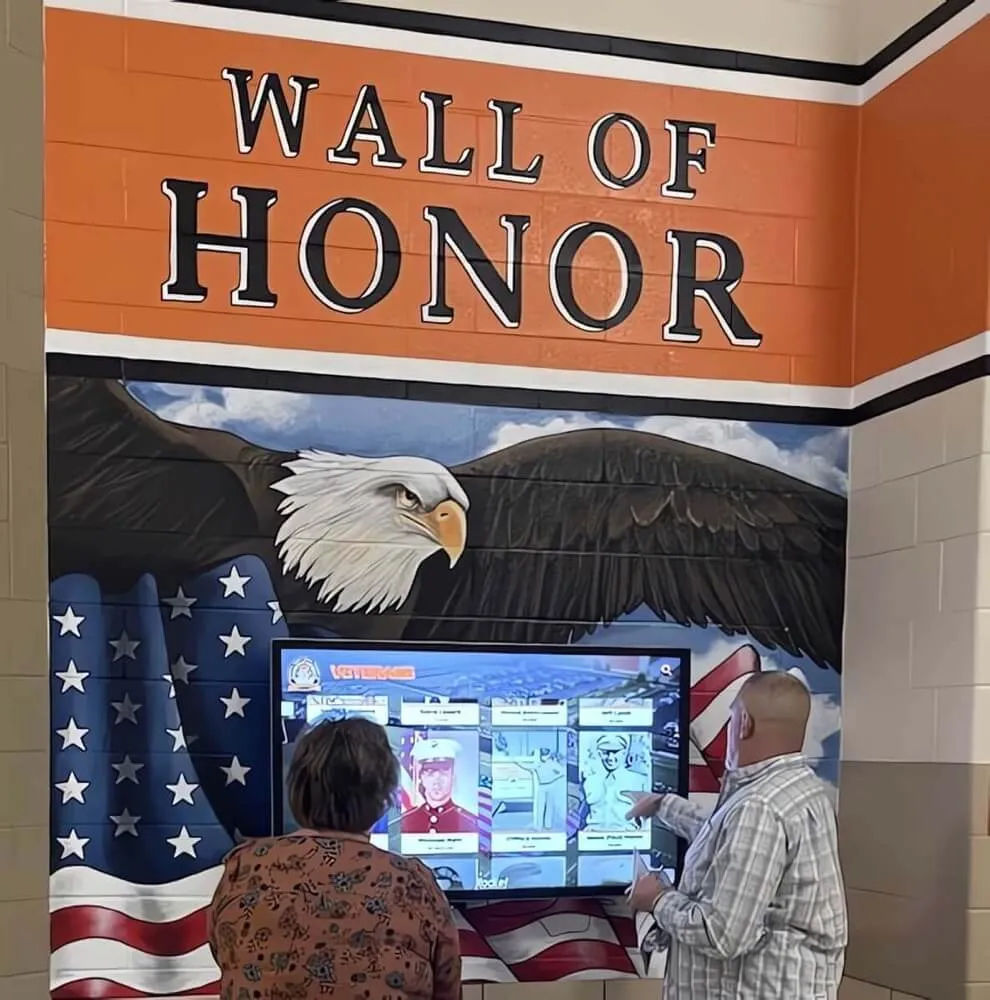
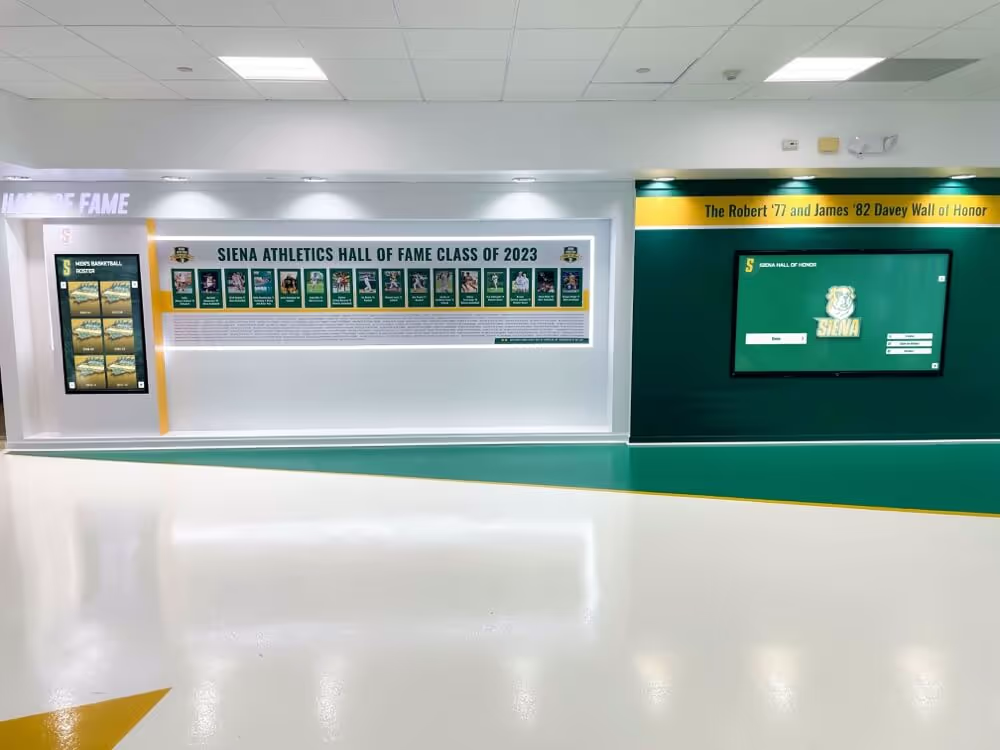
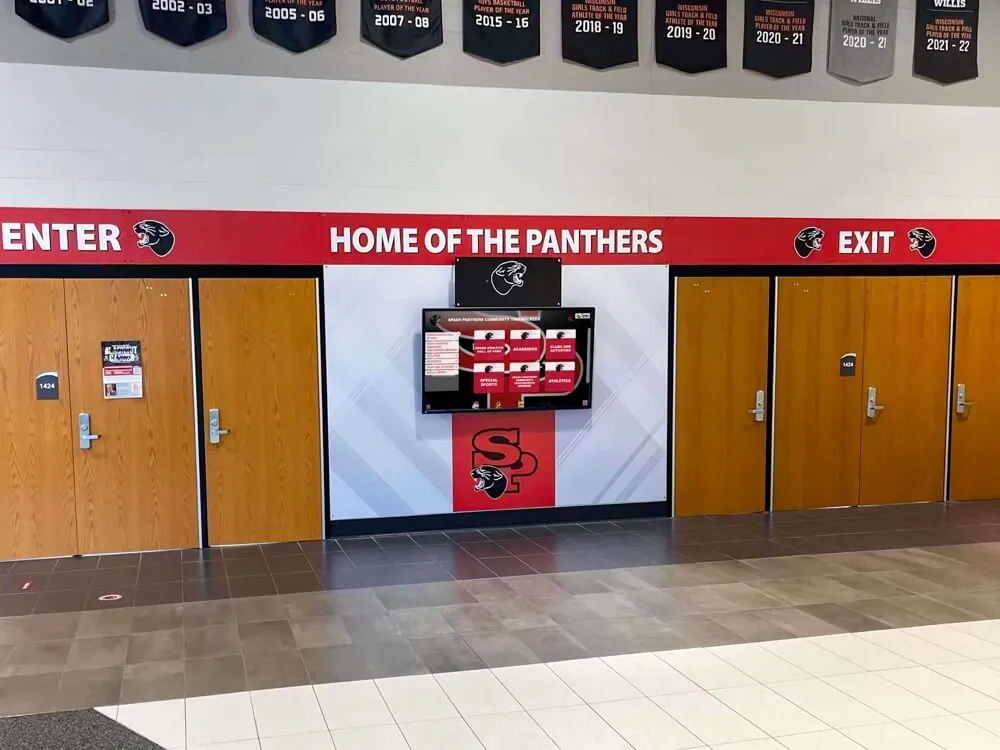
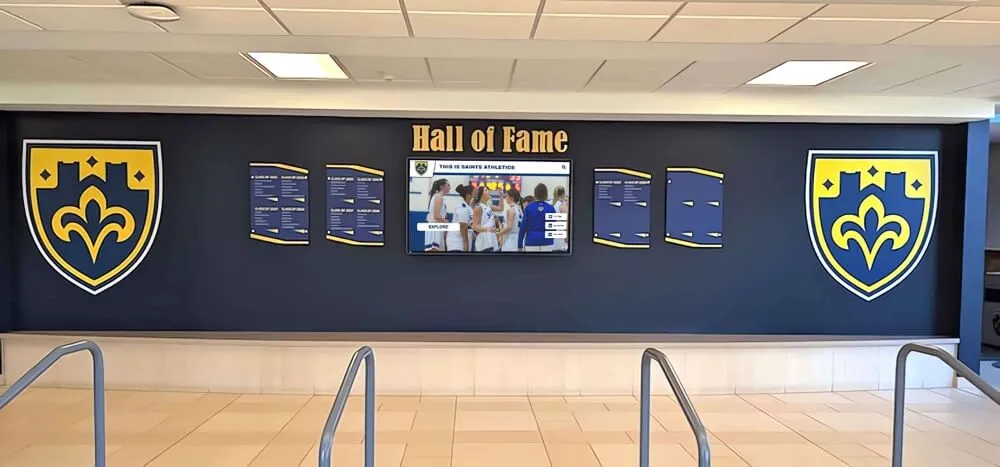
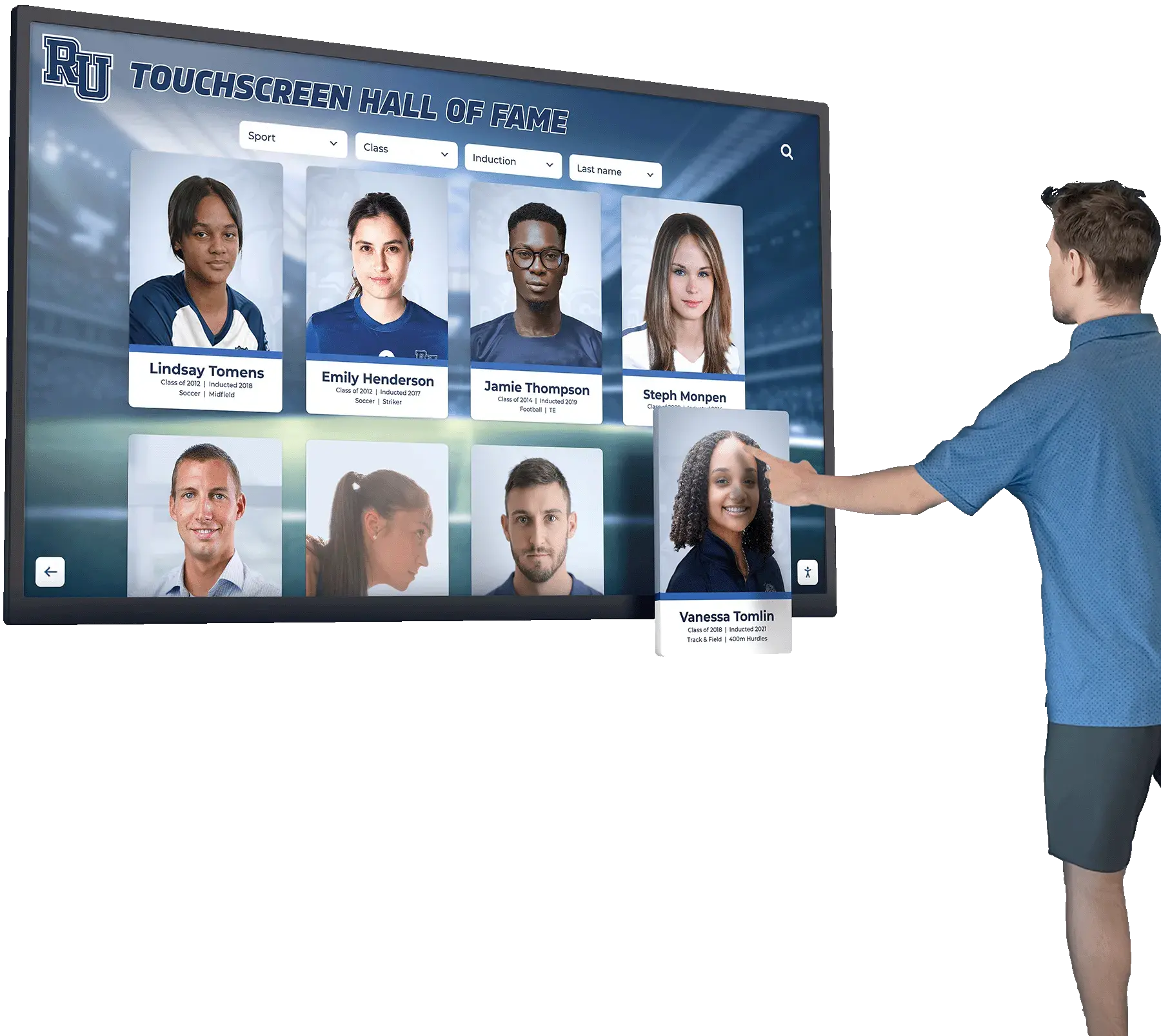
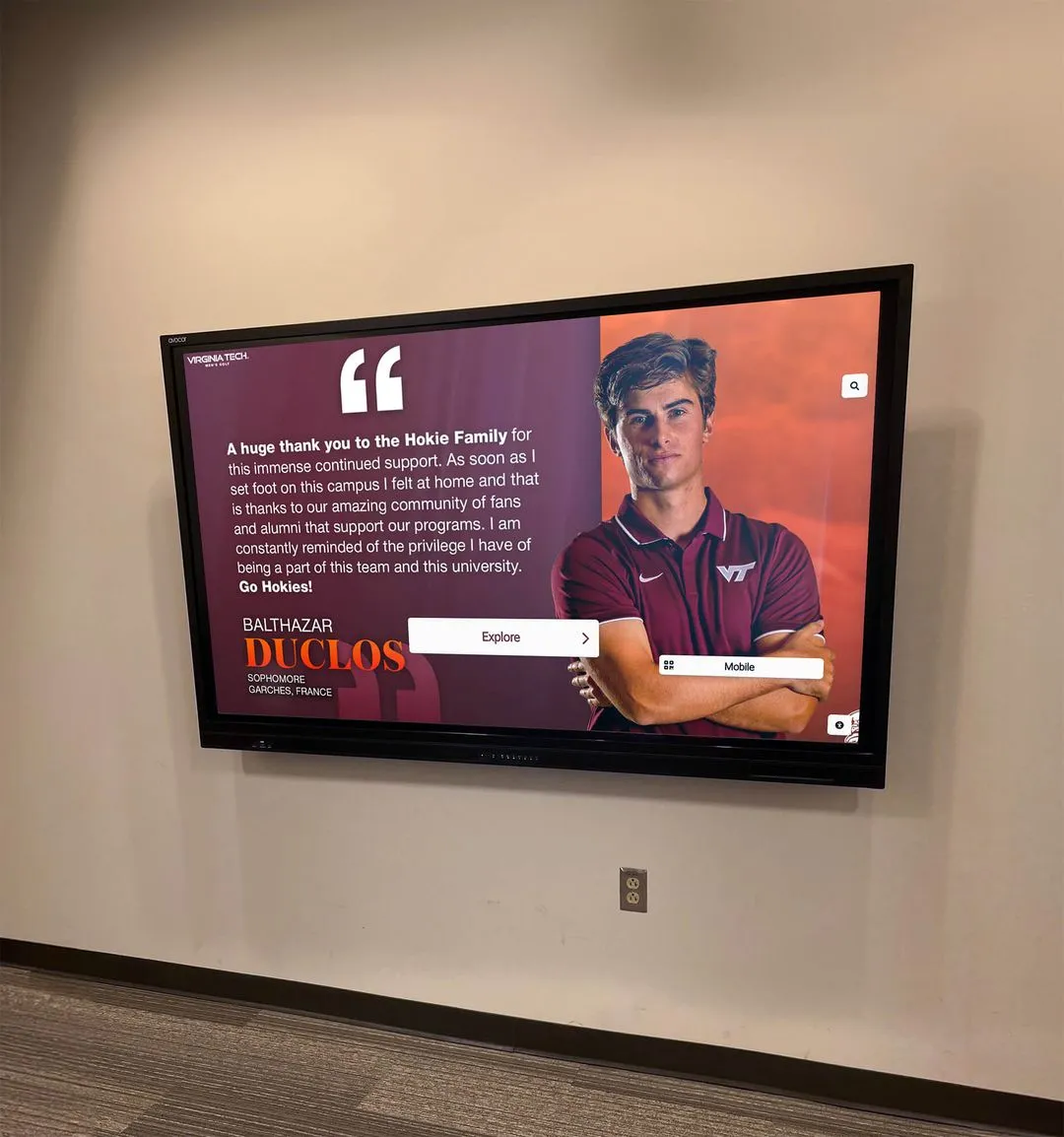
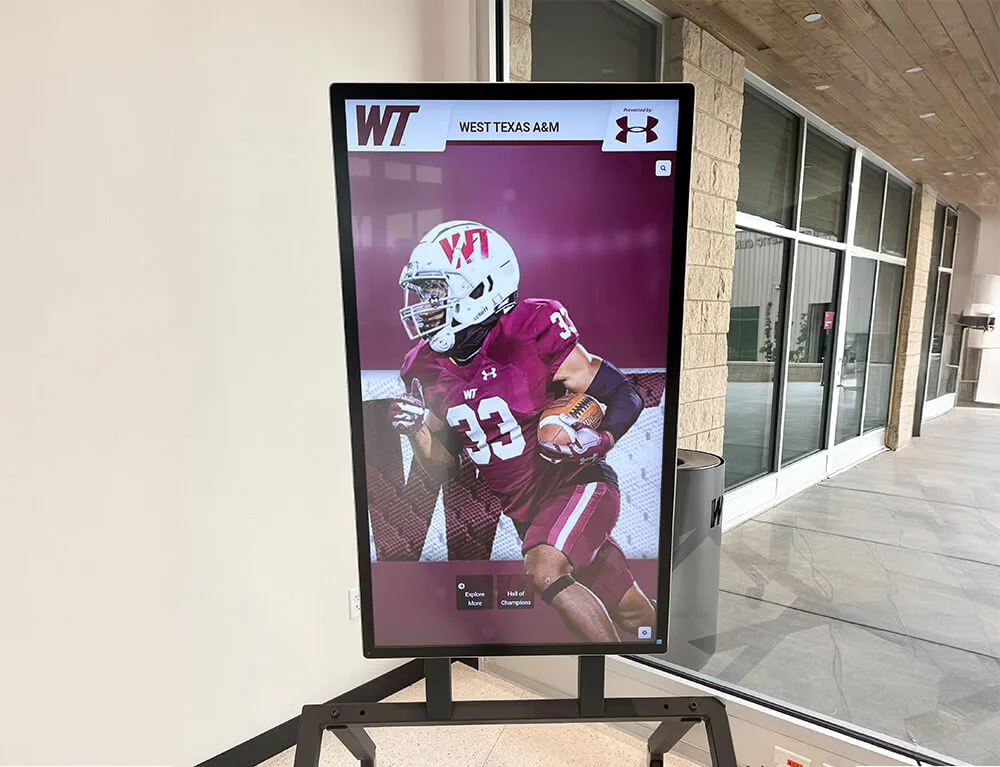
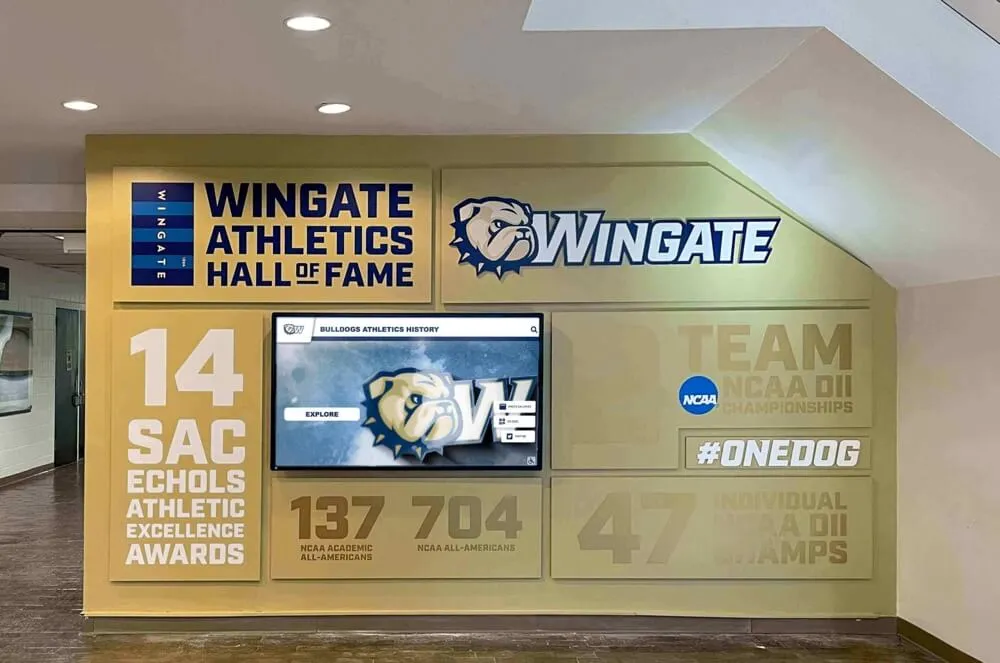
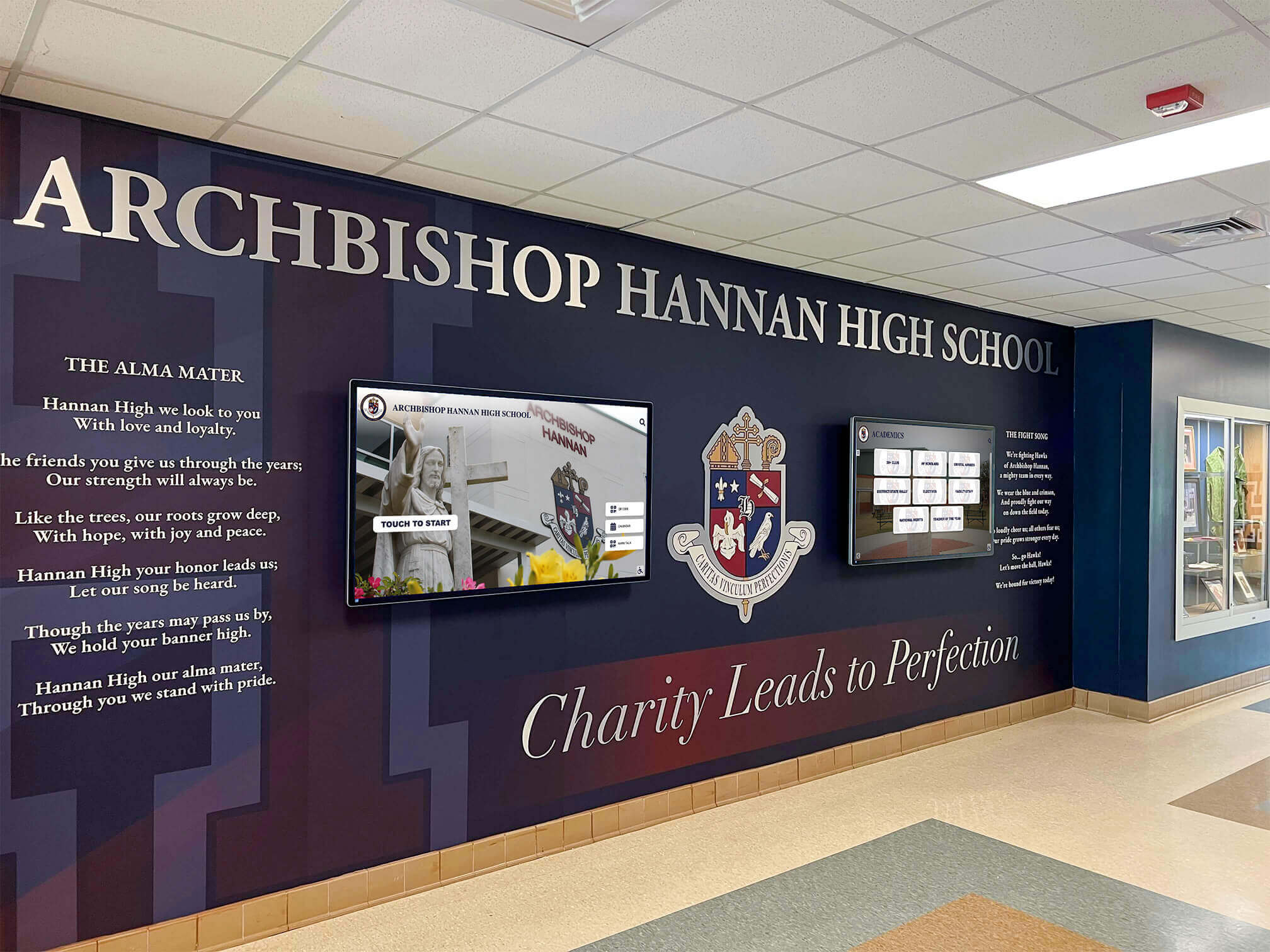
Contemporary school design integrates wall wraps with digital recognition creating impressive branded environments celebrating institutional identity and achievement
Understanding Wall Wraps for Schools
Before diving into specific applications and design considerations, understanding what wall wraps entail and the value they provide helps schools make informed decisions about environmental graphic investments.
What Are School Wall Wraps?
Wall wraps represent professional graphic installations using specialized vinyl materials adhered directly to wall surfaces, creating large-scale visual displays that transform spaces through branded imagery, colors, text, and design elements.
Materials and Installation Methods
Professional wall wraps typically utilize cast vinyl materials designed specifically for wall applications. These specialized materials differ from standard adhesive vinyl through repositionable adhesives enabling installation adjustments without damage, textured surfaces providing visual depth and interest, durability withstanding high-traffic school environments, and removability allowing future design changes without permanent wall damage.
Installation requires professional expertise ensuring proper surface preparation eliminating contaminants affecting adhesion, precise alignment maintaining design integrity across large installations, bubble-free application creating professional finished appearance, and seam management making multi-panel installations appear seamless.
Scale and Coverage Options
Wall wraps range from small accent panels highlighting specific areas to comprehensive full-wall coverage transforming entire spaces. Schools commonly implement partial wall coverage focusing on high-visibility areas, full-wall installations creating immersive branded environments, column wraps activating architectural elements throughout spaces, floor graphics complementing vertical installations, and window graphics providing privacy while maintaining natural light.
This flexibility enables schools to scale investments matching available budgets while targeting highest-impact locations for maximum visual effect and community engagement.
Core Benefits Schools Gain from Wall Wraps
Strategic wall wrap installations deliver multiple benefits that justify investment through improved environments supporting institutional goals.
Enhanced School Pride and Identity
Professional environmental graphics create powerful visual statements about school identity through consistent branded colors coordinating spaces throughout facilities, mascot imagery celebrating institutional symbols building emotional connections, achievement celebration highlighting accomplishments creating pride, historical storytelling connecting current communities to traditions, and inspirational messaging reinforcing values and aspirations.
These visual elements work together creating cohesive institutional identities that strengthen sense of place and belonging essential for school culture. Research in environmental psychology demonstrates that physical environment design significantly impacts organizational culture and community engagement.
Recruitment and Marketing Impact
Impressive facilities influence prospective families evaluating school options. Professional wall wraps demonstrate commitment to quality environments, showcase achievement creating social proof, communicate institutional values through visual storytelling, differentiate facilities from competing schools, and create memorable impressions during campus tours and events.
Athletic facilities particularly benefit from impactful wall graphics that help recruit athletes by demonstrating program prestige and creating collegiate atmospheres that appeal to competitive student-athletes considering school options.
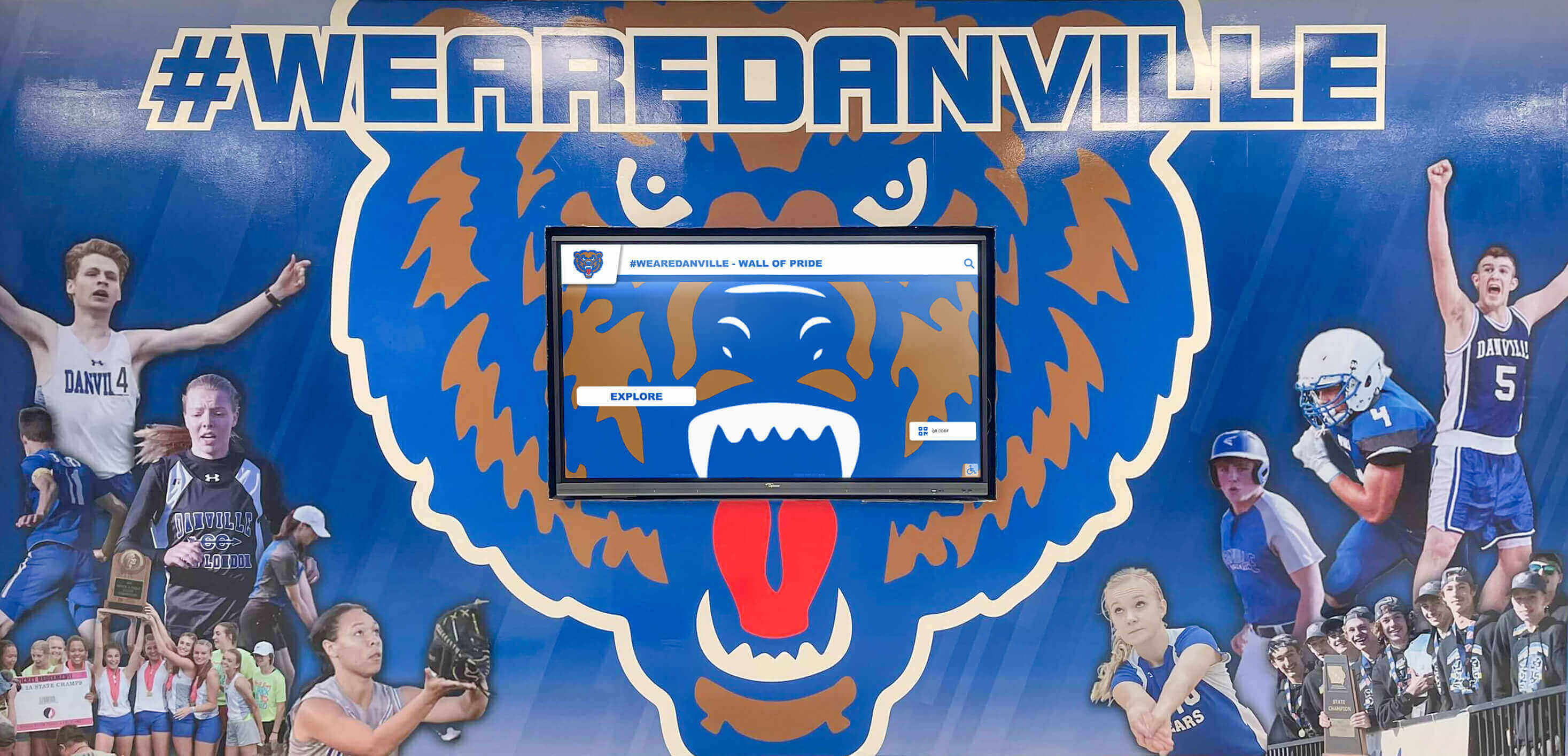
Athletic spaces benefit from bold wall graphics celebrating team identity while creating inspiring environments for student-athletes
Wayfinding and Functional Communication
Beyond aesthetics, wall graphics serve practical purposes including directional signage guiding visitors through complex facilities, department identification helping people locate specific areas, schedule displays communicating important information, safety messaging reinforcing protocols throughout campuses, and multilingual content supporting diverse school populations.
These functional applications ensure that environmental graphics deliver practical value beyond visual appeal, supporting operational efficiency and communication needs.
Cost-Effective Visual Impact
Compared to architectural renovations or permanent design changes, wall wraps provide high visual impact at relatively modest investment. Vinyl installations cost substantially less than paint murals requiring artist labor, permanent architectural elements demanding construction expertise, or comprehensive renovations disrupting school operations.
Additionally, removability enables future design evolution without permanent commitments, allowing schools to refresh environments as needs change or budgets permit enhanced installations over time.
Strategic Planning for School Wall Wrap Projects
Successful wall wrap implementations require systematic planning addressing design goals, content strategy, and installation logistics before committing to specific approaches.
Defining Project Goals and Priorities
Clear objectives guide design decisions ensuring installations deliver desired outcomes rather than creating attractive graphics that fail to serve institutional needs.
Identifying Primary Purposes
Different wall wrap applications serve distinct goals requiring focused approaches:
School Pride and Identity projects prioritize bold branded colors and mascots, historical timelines celebrating traditions, inspirational quotes and messaging, achievement highlights building community pride, and cohesive design creating consistent identity throughout facilities.
Recognition and Celebration installations emphasize hall of fame and honor walls acknowledging distinguished achievement, team championship displays documenting success, academic excellence recognition celebrating scholarly accomplishment, arts showcase highlighting creative talent, and service recognition honoring community contribution.
Functional Wayfinding implementations focus on directional signage and room identification, department area designation, event space labeling, visitor guidance during tours and events, and emergency protocol communication.
Schools often pursue multiple objectives within single projects, but establishing priority hierarchy ensures design decisions support most critical goals when compromises become necessary due to space or budget constraints.
Site Assessment and Location Selection
Thoughtful location selection maximizes wall wrap impact by targeting high-visibility, high-traffic areas where installations reach intended audiences effectively.
High-Priority Installation Locations
Certain school spaces deliver exceptional return on wall wrap investment through visibility and symbolic importance:
Main Entrance Lobbies represent premier locations because all visitors pass through creating universal exposure, first impressions form immediately upon arrival establishing facility perceptions, prospective families evaluate school quality based on entrance environments, and centralized locations enable comprehensive recognition or storytelling impossible in scattered spaces.
Gymnasium and Athletic Facilities prove particularly effective because competitive venues benefit from inspiring environments, championship banners and achievement displays motivate student-athletes, recruitment visits focus on athletic facilities making visual impact critical, and community events bring public audiences exposing broader populations to school environments.
Hallways and Common Areas provide consistent daily exposure ensuring students and staff encounter graphics regularly, distributed installations throughout facilities create cohesive institutional identity, transitional spaces often feature underutilized wall space perfect for graphic applications, and high foot traffic guarantees visibility maximizing recognition impact.
Schools implementing comprehensive visual recognition programs coordinate wall wrap installations with complementary digital displays creating integrated environments balancing permanent graphics with flexible content.
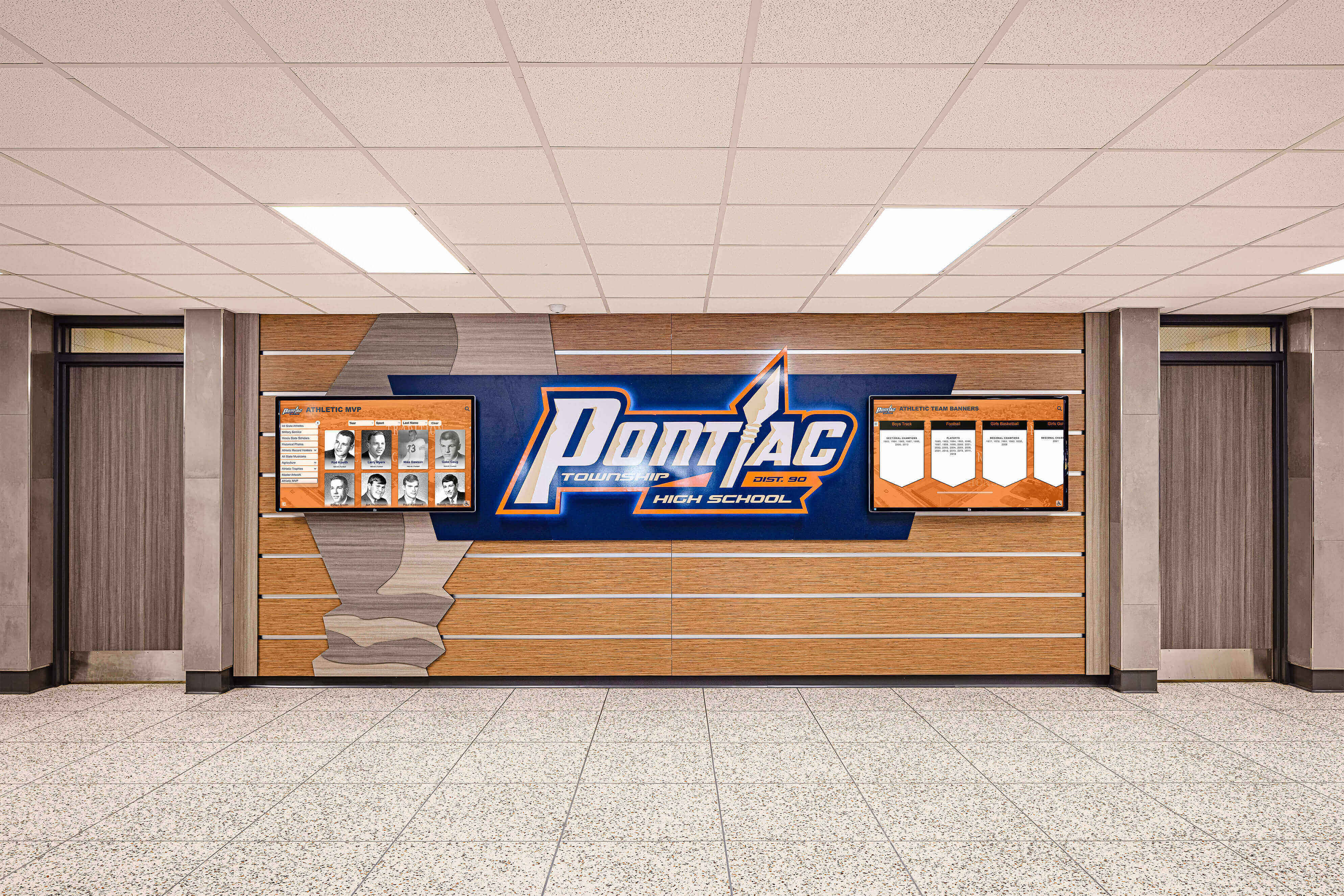
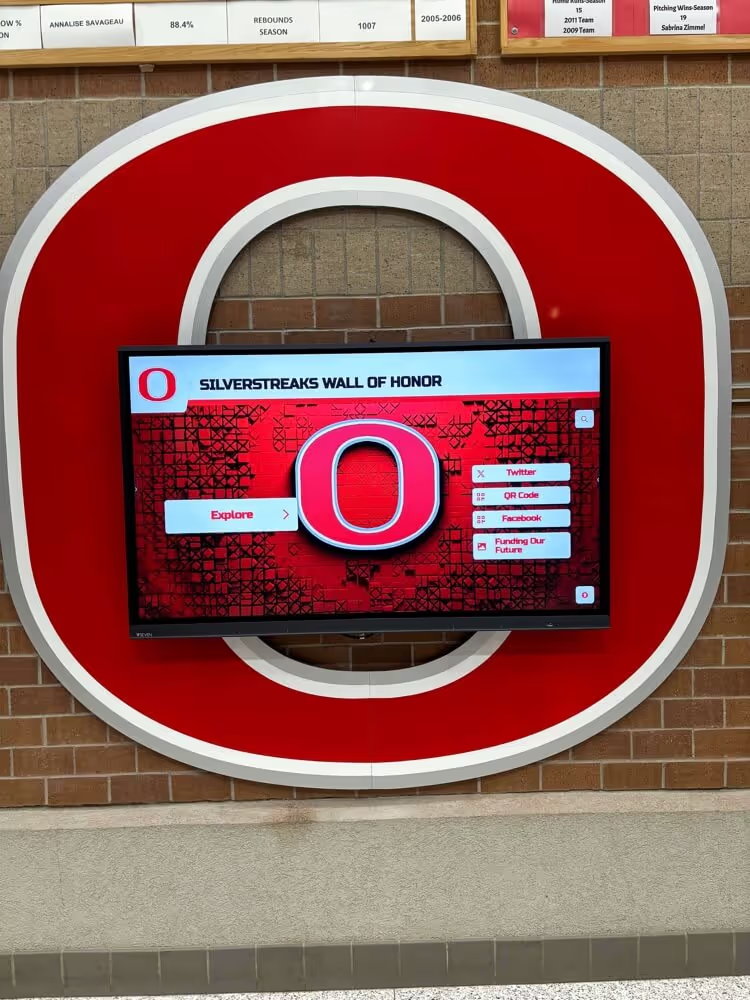
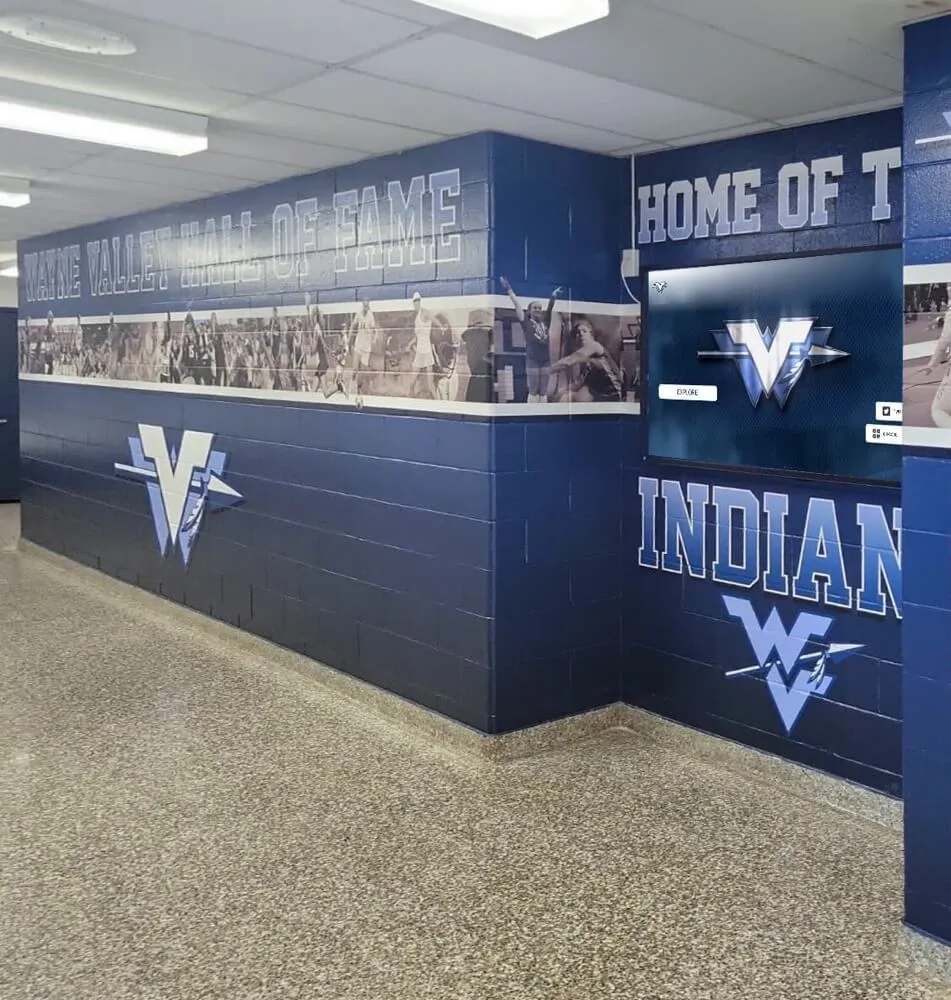
Hallway installations create consistent branded environments throughout facilities while celebrating achievement and building community pride
Surface Condition and Preparation Requirements
Not all walls accommodate vinyl graphics equally well. Surface assessment identifies preparation needs before installation:
Ideal Surfaces include smooth painted walls providing optimal adhesion, non-textured drywall enabling clean installation, sealed concrete offering durable mounting surfaces, and properly prepared panels specifically intended for graphic applications.
Problematic Surfaces requiring additional preparation or alternative approaches include heavily textured walls preventing proper adhesion, dirty or contaminated surfaces needing thorough cleaning, damaged walls with cracks or holes requiring repair, surfaces with failing paint needing removal, and cinderblock requiring special primers or panel mounting systems.
Professional installers assess surface conditions during site visits, recommending preparation steps or alternative mounting approaches ensuring successful long-term installations.
Budget Development and Cost Factors
Realistic budget planning accounts for all project costs rather than only graphic production, ensuring adequate resources for professional results.
Primary Cost Components
Comprehensive wall wrap budgets include design and artwork creation translating concepts into production-ready files, material costs varying by quality, size, and finish specifications, professional installation labor ensuring proper application, surface preparation addressing existing wall conditions, shipping and logistics for materials and equipment, and project management coordinating timeline and stakeholder communication.
Schools should anticipate total project costs ranging from $15-40 per square foot for standard installations, $40-80 per square foot for premium materials and complex designs, and additional preparation costs for problematic surfaces or architectural challenges. These ranges vary significantly based on project scale, design complexity, and regional labor rates.
Phased Implementation Strategies
Schools facing budget constraints can implement wall wraps progressively through prioritized location phases focusing highest-impact spaces first, design frameworks establishing consistent visual identity enabling coordinated multi-phase expansion, scalable content strategies accommodating future additions, and scheduled refresh timelines spreading investments across multiple budget years.
Phased approaches enable schools to begin environmental graphic programs immediately with available resources rather than delaying projects until complete ideal budgets become available—which often never occurs given competing institutional priorities.
Design Considerations and Best Practices
Effective wall wrap design requires balancing aesthetic appeal with practical considerations ensuring installations remain attractive, appropriate, and functional throughout their intended lifespan.
Color Selection and Brand Consistency
Strategic color application creates visual impact while reinforcing institutional identity through consistent branding throughout facilities.
Primary School Colors as Foundation
Successful school wall wraps prominently feature official institutional colors establishing immediate brand recognition. Implementation approaches include dominant color backgrounds creating bold impact, color blocking defining zones and establishing visual hierarchy, accent colors providing contrast highlighting key elements, and gradient transitions creating depth and visual interest without additional colors.
Consistent color application throughout facilities creates cohesive institutional identity that strengthens sense of place while making facilities immediately recognizable as belonging to specific schools rather than generic educational spaces.
Complementary Colors and Contrast
While featuring school colors prominently, effective designs incorporate complementary hues ensuring text and imagery remain visible against backgrounds, creating visual variety preventing monotonous single-color domination, highlighting specific content directing attention to key messages, and accommodating photography and complex graphics requiring neutral backgrounds.
Professional designers understand color theory principles ensuring complementary palette choices enhance rather than compete with official institutional colors.
Typography and Readability Standards
Text-based content requires careful typographic treatment ensuring messages communicate clearly to audiences viewing graphics from various distances and angles.
Font Selection for Different Applications
Different content types demand specific typographic approaches:
Headlines and Primary Messages benefit from bold, high-contrast fonts readable from long distances, simplified letterforms reducing visual complexity, generous letter spacing improving character distinction, and stylized typefaces complementing institutional identity while maintaining legibility.
Body Text and Detailed Information requires more conservative approaches through standard sans-serif fonts offering clear readability, adequate size ensuring comfortable reading at expected viewing distances, sufficient line spacing preventing dense text blocks, and strong contrast against backgrounds eliminating eye strain.
Historical or Traditional Content may incorporate serif typefaces or script fonts evoking specific periods, provided decorative choices never compromise legibility for actual readers attempting to understand content.
Typography failures rank among the most common wall wrap mistakes, with schools selecting attractive fonts that prove difficult to read in actual viewing conditions, undermining communication effectiveness.

Professional typography and layout ensure wall graphics communicate effectively while creating impressive visual environments
Content Balance and Visual Hierarchy
Thoughtful content organization guides viewer attention ensuring important messages receive emphasis while avoiding overwhelming visual confusion.
Establishing Clear Focal Points
Effective wall wraps direct attention through primary focal points featuring largest and most prominent elements, secondary content supporting main messages with appropriate visual weight, tertiary details providing context without demanding immediate attention, negative space preventing cluttered appearances that confuse viewers, and visual flow creating logical reading progression through multiple content elements.
This hierarchical approach ensures viewers grasp primary messages immediately while discovering supporting information through continued engagement rather than encountering undifferentiated visual noise where all elements compete equally for attention.
Balancing Images and Text
Wall wraps combining photography, illustrations, and text require careful balance. Guidelines include dominant visual elements establishing emotional tone and atmosphere, supporting text providing necessary context without overwhelming imagery, strategic placement preventing important visual elements from text overlay, and integrated design where graphics and text feel cohesive rather than arbitrarily combined.
Schools should prioritize visual storytelling over dense text, recognizing that wall graphics function differently than printed publications. Compelling imagery with minimal text typically proves more effective than paragraph-heavy designs that passersby won’t read.
Incorporating School History and Traditions
Successful wall wraps celebrate institutional heritage while remaining relevant to current school communities.
Historical Timeline Presentations
Many schools feature chronological displays documenting significant institutional milestones: founding dates and origin stories establishing institutional roots, facility evolution showing campus development over decades, achievement highlights celebrating distinguished moments, notable alumni showcasing famous graduates, and decade-by-decade progression creating comprehensive historical narratives.
These historical elements create connection between current students and generations of predecessors who attended the same institutions, building sense of belonging to something larger than momentary enrollment.
Balancing History with Contemporary Relevance
While celebrating heritage, effective designs maintain relevance for current students through contemporary design aesthetics appealing to modern audiences, current student recognition ensuring present community sees themselves represented, living traditions that continue today rather than only historical practices, and flexible content systems enabling updates as new achievements warrant recognition alongside historical celebration.
The most effective approaches honor tradition while remaining dynamic, avoiding museum-like presentations that feel disconnected from current school life.
Schools can explore how digital recognition systems complement traditional wall wraps by maintaining permanent graphic installations while providing flexible digital content accommodating ongoing recognition needs impossible through static vinyl alone.
Popular Wall Wrap Applications for Schools
Different school spaces accommodate specific wall wrap applications serving distinct purposes and supporting varied institutional goals.
Athletic Facility Recognition Walls
Gymnasiums, field houses, and athletic complexes benefit tremendously from impactful wall graphics celebrating sports programs and honoring athletic achievement.
Championship Banner Displays
Traditional fabric championship banners face mounting challenges and spatial limitations. Wall wrap alternatives include comprehensive championship history documentation listing all titles chronologically, visual banner reproductions creating physical banner appearance through graphics, sport-specific sections organizing achievements by athletic program, photo integration showing championship teams celebrating victories, and coach recognition honoring leaders responsible for program success.
These permanent graphic installations eliminate concerns about falling banners, fading fabrics, or limited mounting space that plague traditional banner programs.
Hall of Fame and Record Boards
Athletic recognition content proves particularly suited to wall wrap treatment through all-time record displays highlighting program achievement benchmarks, individual record holders celebrating standout performances, season leaders documenting annual excellence, statistical achievements showcasing program depth, and career milestone recognition honoring multi-year standout athletes.
Schools pursuing comprehensive athletic recognition often combine wall wrap foundation graphics with integrated digital displays providing real-time content updates as new records occur, creating hybrid environments balancing permanent branded graphics with flexible recognition content.
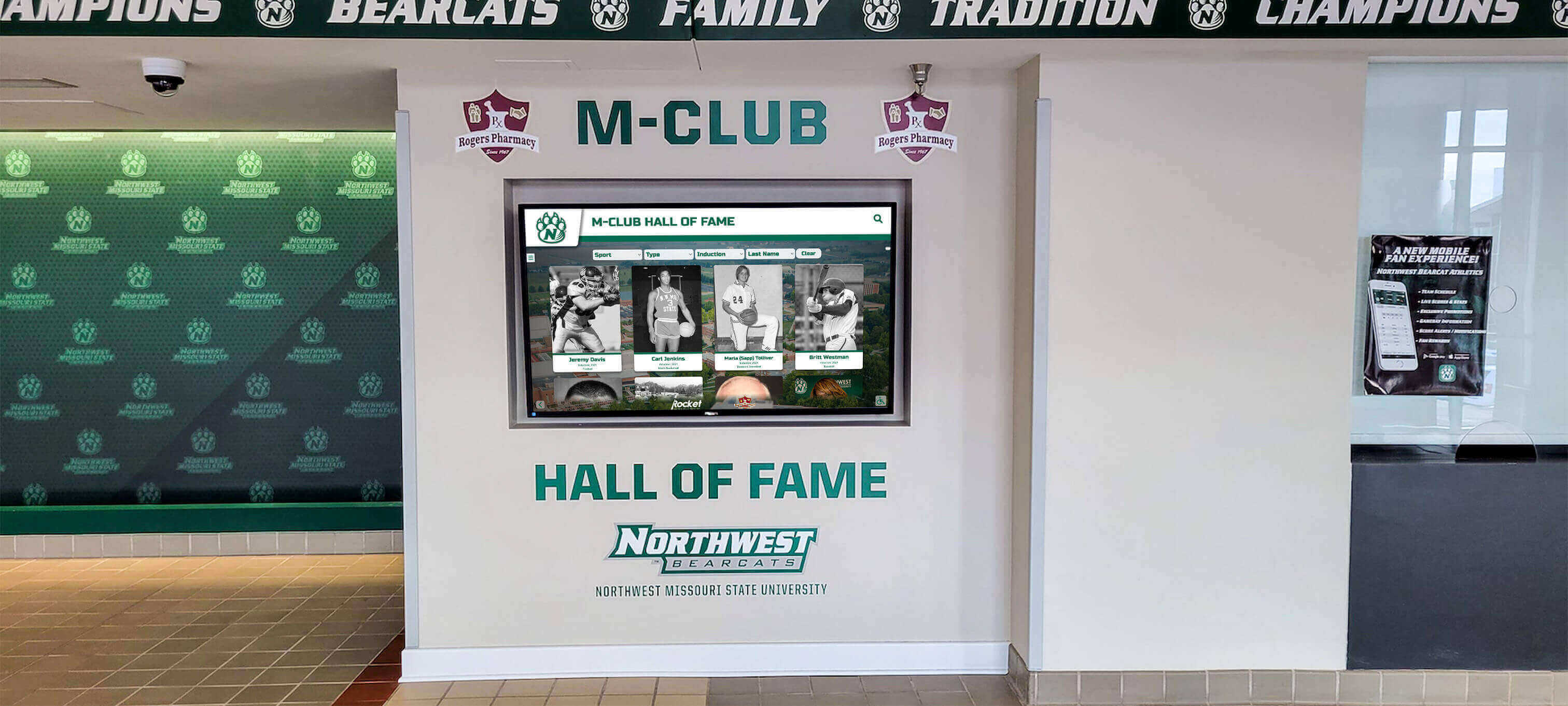
Athletic facilities benefit from wall graphics celebrating program history while integrated digital displays enable ongoing recognition updates
Team Culture and Motivational Content
Beyond recognition, athletic spaces use wall graphics creating inspiring environments through motivational quotes from coaches and distinguished athletes, team values and culture statements defining program identity, program goals and achievement standards establishing expectations, practice principles reinforcing training philosophies, and inspirational imagery showing elite athletic performance and achievement.
These elements help establish program culture while creating recruiting advantages when prospective student-athletes visit facilities evaluating whether they want to join athletic programs.
Academic Recognition and Excellence Walls
Academic spaces deserve recognition installations comparable to athletic facilities, celebrating scholarly achievement through dedicated wall wrap applications.
Honor Roll and Academic Achievement Displays
Academic recognition walls highlight student excellence through honor roll recognition by semester or year, National Honor Society induction displays, academic scholarship recipients celebrating students earning merit-based awards, subject-specific academic competitions and awards, and standardized test achievement recognition honoring exceptional performance.
These installations demonstrate that schools value academic excellence equally alongside athletic achievement, sending powerful messages about institutional priorities while motivating students through visible celebration of scholarly accomplishment.
College Acceptance and Matriculation Walls
Many schools feature displays documenting where graduates attend college including comprehensive university logo displays showing acceptance breadth, competitive institution acceptance highlighting prestigious admissions, scholarship recipient recognition celebrating financial awards, first-generation college student celebration honoring students breaking family educational barriers, and military service recognition acknowledging graduates serving through ROTC or academy programs.
These displays serve dual purposes celebrating individual student achievement while demonstrating program quality to prospective families evaluating school options.
Comprehensive approaches to academic recognition programs coordinate wall graphics with complementary recognition methods creating complete frameworks validating diverse achievement types.
School History and Heritage Walls
Institutional storytelling walls celebrate school history while building connection between current communities and institutional traditions.
Timeline-Based Historical Narratives
Chronological presentations document institutional development including founding and establishment stories, facility construction and expansion phases, program additions and curriculum evolution, significant community events and milestones, and demographic growth showing enrollment development over decades.
Visual timelines work particularly well for schools celebrating centennial anniversaries or significant historical milestones, creating impressive installations that honor heritage while educating current students about institutional foundations.
Distinguished Alumni Recognition
Notable graduate celebrations acknowledge successful former students including professional achievement in various career fields, community leadership and public service, athletic excellence at collegiate or professional levels, artistic and creative accomplishment, and military service and sacrifice.
Distinguished alumni displays demonstrate program quality through graduate success while providing relatable role models showing students what they might accomplish through education. These installations particularly benefit from searchable digital extensions enabling viewers to explore detailed profiles beyond basic wall graphic information.
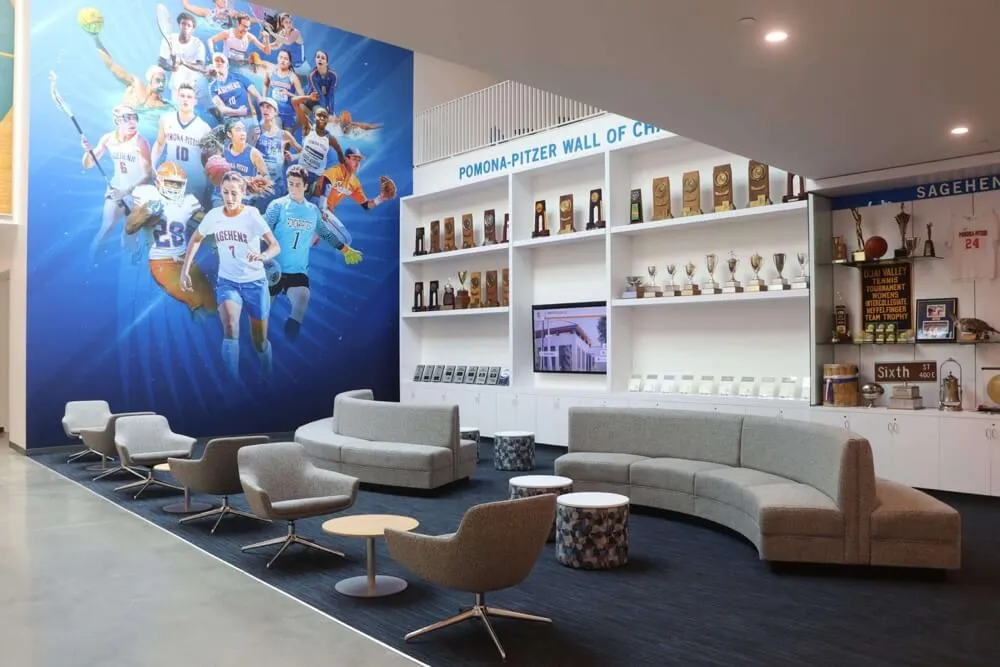
Historical recognition walls celebrate institutional heritage while creating inspiring environments documenting program traditions and excellence
Mission, Vision, and Values Walls
Inspirational messaging walls communicate institutional philosophy and culture through prominent display.
Core Values and Character Education
Many schools feature wall graphics reinforcing character development including core value statements defining institutional priorities, character trait definitions and examples, positive behavior frameworks and expectations, social-emotional learning concepts and language, and inspirational quotes from historical figures or educational leaders.
These displays serve educational purposes while creating positive environments that consistently reinforce desired behaviors and mindsets through environmental messaging students encounter daily.
Mission and Vision Statement Displays
Prominent mission and vision presentations ensure entire school communities understand institutional purposes through clearly displayed mission statements, aspirational vision descriptions, strategic goal communication, motto and tagline prominence, and supportive imagery reinforcing stated values through visual representation.
These installations ensure that organizational purpose remains visible and central to school culture rather than existing only in handbooks and website pages that community members rarely reference.
Installation Process and Project Timeline
Understanding installation logistics helps schools plan appropriately and set realistic expectations about project timelines from concept through completion.
Pre-Installation Planning Phase
Successful projects begin with systematic planning addressing all requirements before installation work begins.
Design Development and Approval Workflow
Professional projects follow structured design processes including initial concept development translating goals into preliminary visual approaches, stakeholder review gathering feedback from administrators, staff, and community members, revision cycles refining designs based on input, final approval authorization confirming design meets all requirements, and production file preparation translating approved designs into manufacturing-ready specifications.
This collaborative development ensures final installations reflect community input while maintaining design quality and institutional brand standards. Schools should anticipate 4-8 weeks for design development depending on project complexity and stakeholder review requirements.
Site Preparation and Scheduling
Installation success depends on proper preparation including surface cleaning removing contaminants affecting adhesion, repair work addressing wall damage before graphic application, primer application on problematic surfaces, access equipment arrangement for high installations, and coordination scheduling minimizing disruption to school operations.
Most schools schedule installation during summer breaks, extended weekends, or holiday periods when students aren’t present, allowing installers uninterrupted access while avoiding classroom disruption.
Professional Installation Requirements
Vinyl wall wrap installation requires specialized expertise ensuring professional results and long-term durability.
Installer Qualifications and Experience
Schools should select installers demonstrating certified training in vinyl application techniques, portfolio evidence of successful large-format wall projects, liability insurance protecting schools from installation damage, warranty offerings guaranteeing workmanship quality, and references from previous school clients validating capability.
Inexperienced installers produce poor results including visible seams, bubbles and wrinkles, adhesion failures, and premature material degradation—making professional installer selection critical for investment protection.
Installation Timeline Expectations
Project timelines vary significantly based on installation size and complexity. Schools should anticipate small accent installations (under 200 square feet) requiring 1-2 days, medium projects (200-800 square feet) typically taking 3-5 days, large comprehensive installations (800+ square feet) demanding 1-2 weeks, and complex multi-location projects potentially requiring 2-4 weeks depending on coordination requirements.
These timelines assume proper surface preparation completion before installation begins. Additional time required for preparation work extends overall project duration accordingly.
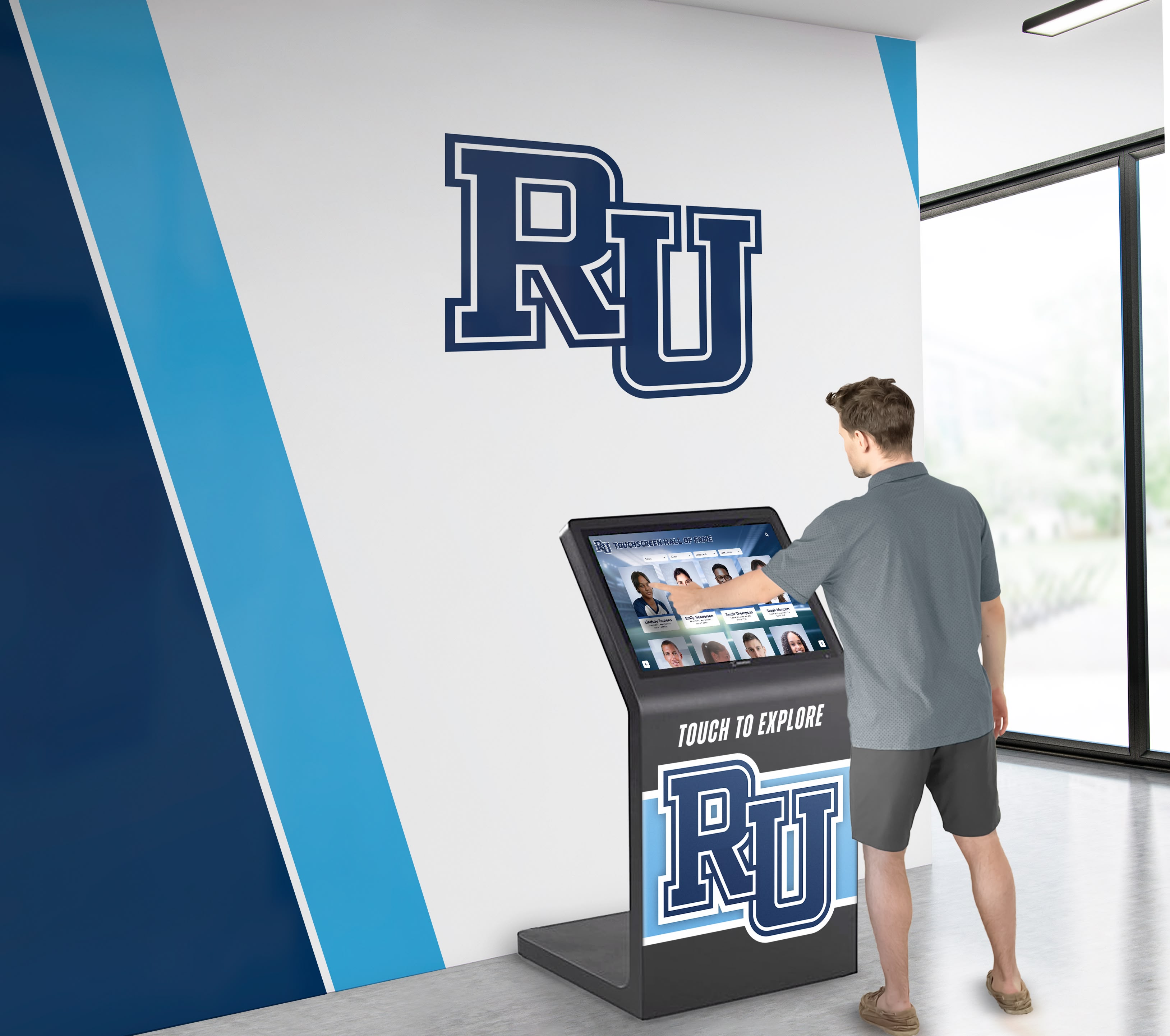
Professional installation ensures seamless graphic application creating impressive finished environments that will maintain quality over years of use
Quality Assurance and Post-Installation Care
Project completion includes verification and maintenance planning ensuring installations deliver long-term value.
Installation Quality Verification
Upon completion, schools should inspect seam quality ensuring panel alignment appears seamless, adhesion completeness with no lifting edges or bubbles, color accuracy matching approved design specifications, text readability confirming clarity from expected viewing distances, and finish quality examining overall professional appearance.
Documented acceptance with installer signatures creates accountability while providing warranty activation baselines for future reference if issues develop.
Maintenance and Longevity Considerations
Proper care extends installation lifespan through routine cleaning using appropriate non-abrasive methods, damage prevention educating community members about respecting installations, periodic inspection identifying issues before they worsen, prompt repair addressing damage quickly preventing expansion, and replacement planning anticipating eventual refresh needs as materials age.
Quality wall wraps typically last 5-10 years with proper care, though high-traffic areas may show wear earlier requiring touch-up or replacement. Schools should budget for eventual refresh cycles rather than treating installations as permanent solutions never requiring future investment.
Integrating Wall Wraps with Digital Recognition
The most effective contemporary school environments combine permanent wall wrap graphics with digital recognition displays, creating hybrid installations that balance lasting branded aesthetics with flexible content accommodating ongoing recognition needs.
Complementary Strengths of Physical and Digital Elements
Wall wraps and digital displays serve different purposes, with combined approaches delivering advantages neither technology provides independently.
Permanent Graphics Establishing Visual Identity
Wall wrap installations excel at creating branded environments featuring consistent color schemes throughout facilities, mascot imagery and logos establishing institutional identity, inspirational messaging reinforcing values and culture, historical context celebrating traditions, and architectural impact through impressive large-scale installations.
These permanent elements create stable visual frameworks that define spaces while requiring no ongoing content management beyond periodic cleaning and eventual replacement as materials age.
Digital Displays Enabling Dynamic Recognition
Digital platforms complement static graphics through unlimited recognition capacity accommodating all achievement levels, real-time content updates adding recognition without installation delays, searchable databases enabling name and achievement discovery, multimedia content including photos, videos, and detailed profiles, and flexible presentation rotating content ensuring equitable visibility over time.
This dynamic capacity addresses the primary limitation of static wall graphics—their inability to change as new achievements occur and communities evolve.
Designing Coordinated Physical-Digital Environments
Successful integration requires thoughtful design ensuring physical and digital elements feel cohesive rather than arbitrarily combined.
Visual Continuity and Brand Consistency
Coordinated installations maintain consistent color schemes matching wall graphics to digital display backgrounds, complementary typography using similar font families across media, cohesive design language creating unified aesthetic, coordinated content themes ensuring physical and digital elements support common purposes, and intentional spatial relationships positioning displays within graphic environments purposefully.
This integration creates professional installations where technology enhances rather than competes with environmental graphics, producing cohesive branded environments greater than either element independently.
Architectural Integration Planning
Physical coordination considerations include display placement within graphic compositions as design elements, mounting systems concealed within wall wrap designs, power and connectivity infrastructure hidden behind graphic installations, protective framing coordinating with graphic aesthetics, and lighting strategies ensuring both graphics and displays remain visible.
Professional design treats digital displays as integral environmental components rather than technology additions awkwardly mounted onto otherwise complete graphic installations.
Schools exploring comprehensive digital recognition approaches discover that purpose-built platforms integrate seamlessly with wall wrap environments while delivering flexible recognition capacity impossible through graphics alone.
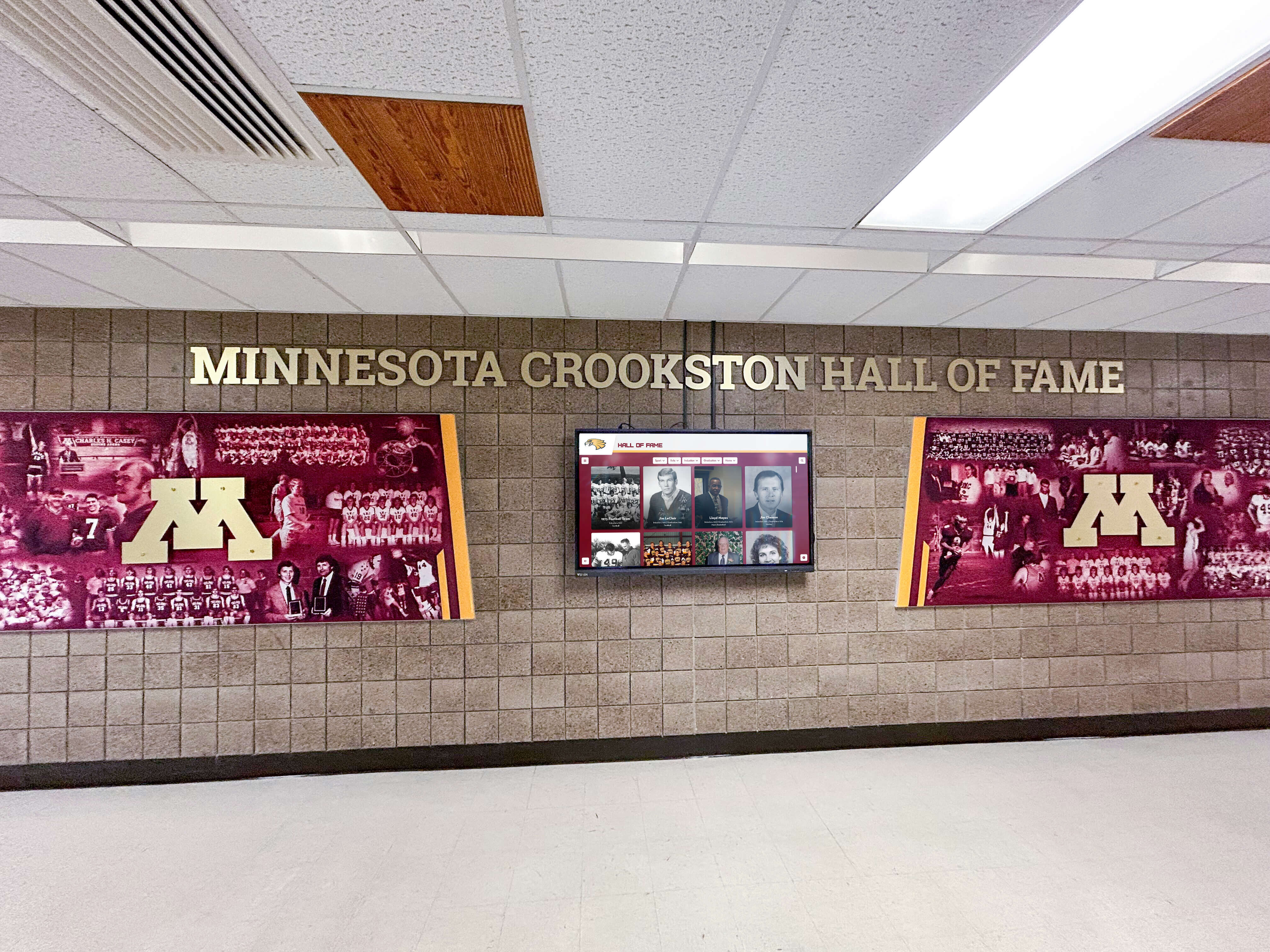
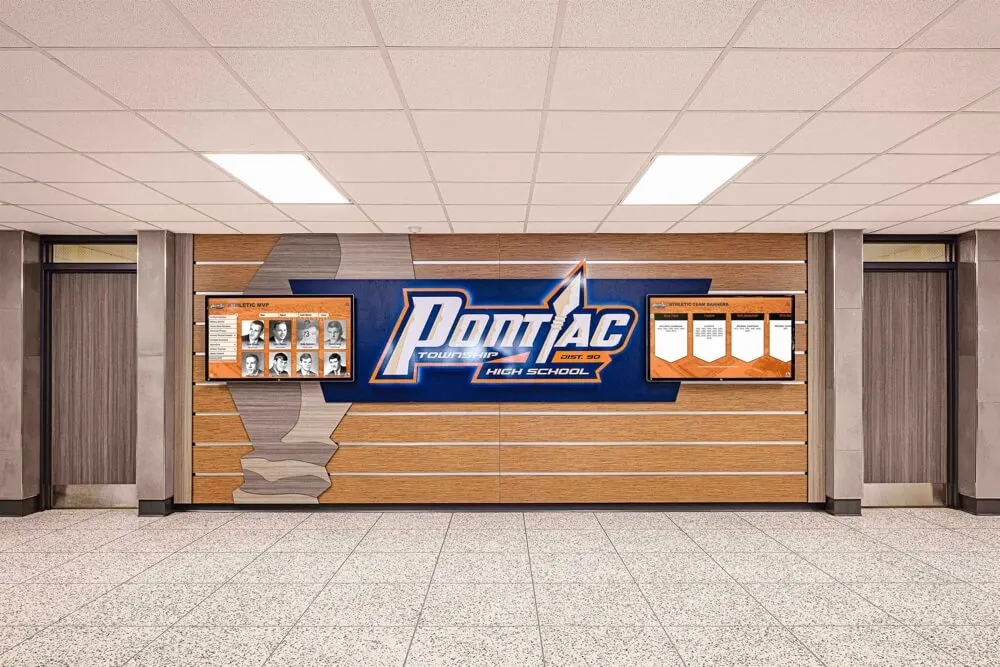
Contemporary school environments integrate wall graphics with digital displays creating cohesive branded spaces featuring both permanent design elements and flexible recognition content
Content Strategy for Hybrid Recognition Environments
Thoughtful content planning maximizes effectiveness of combined physical-digital installations.
Static Graphics for Foundational Content
Reserve wall wrap graphics for content including institutional branding and identity elements, mission and values statements, historical information and traditions, inspirational messaging and quotes, and program overviews and category frameworks.
This foundational content changes infrequently and benefits from permanent prominent display that doesn’t require ongoing updates.
Digital Content for Dynamic Recognition
Utilize digital displays for current student and athlete recognition requiring frequent updates, recent achievement celebration as accomplishments occur, record board data changing when new performances happen, event promotion and schedule information, and detailed profiles extending basic wall graphic information.
This content distribution ensures appropriate technology application while preventing wall graphics from becoming outdated as communities and achievements evolve.
The concept of digital warming describes what happens when permanent branded wall environments integrate with dynamic personalized digital recognition—transforming cold institutional hallways into warm, engaging community spaces where students, families, and visitors discover personal connections to institutional traditions and contemporary excellence. Rather than walking past generic walls or encountering static recognition that quickly becomes invisible through familiarity, community members engage with spaces celebrating their specific achievements while exploring broader institutional stories that build authentic pride and belonging.
Common Mistakes to Avoid with School Wall Wraps
Learning from frequent implementation mistakes helps schools achieve better outcomes through awareness of pitfalls that compromise project success.
Design Mistakes Undermining Effectiveness
Visual design errors create installations that fail to communicate effectively or appear unprofessional.
Overcrowded Layouts Creating Visual Confusion
Perhaps the most common mistake involves attempting to include too much content in available space. Overcrowded designs suffer from illegible text that’s too small to read, competing focal points preventing clear message hierarchy, overwhelming visual density discouraging viewer engagement, insufficient negative space creating cluttered appearance, and poor aesthetic impression undermining institutional credibility.
Less content presented clearly proves far more effective than comprehensive information presented unintelligibly. Schools should ruthlessly edit content, prioritizing most important messages rather than attempting to document everything within single installations.
Poor Color Contrast Reducing Readability
Color mistakes compromise communication effectiveness through insufficient contrast between text and backgrounds, competing colors creating visual discord, faded colors appearing unprofessional, inconsistent color application lacking cohesion, and poor lighting consideration resulting in invisible content under actual viewing conditions.
Professional designers understand color theory principles while testing designs under actual lighting conditions ensuring readability in real environments rather than only on computer screens during design development.
Technical Implementation Errors
Installation mistakes produce poor aesthetic results and premature material failure.
Inadequate Surface Preparation
Improper preparation causes adhesion problems including failing graphics lifting from walls, visible surface irregularities showing through vinyl, trapped air bubbles creating unprofessional appearance, premature material degradation from contamination, and warranty violations when manufacturers require specific preparation procedures.
Professional preparation proves essential for installation longevity, making installer experience and proper process adherence critical for project success.
Inappropriate Material Selection
Material choices must match specific applications through wall-rated vinyl with appropriate adhesive strength, textured finishes providing visual depth without compromising adhesion, appropriate thickness preventing show-through of underlying surfaces, removability characteristics enabling future changes, and durability ratings matching expected wear levels.
Budget-focused material substitutions often result in premature failure requiring complete reinstallation at significantly higher total cost than proper initial material selection.
Content and Maintenance Oversights
Non-design issues also compromise long-term effectiveness.
Static Content Requiring Frequent Updates
Schools sometimes include inherently changing information in permanent wall graphics including current year-specific content becoming outdated immediately, roster listings requiring annual updates, event schedules and calendars, temporary recognition better suited to bulletin boards, and championship year listings better maintained through digital displays accommodating ongoing additions.
Permanent graphics should feature timeless content remaining accurate indefinitely, with dynamic information handled through complementary systems enabling easy updates without graphic replacement.
Neglecting Ongoing Maintenance and Care
Installation quality preservation requires routine attention through regular cleaning removing dirt and marks, prompt damage repair addressing issues before expansion, protective measures preventing intentional or accidental damage, periodic professional inspection identifying developing problems, and planned replacement budgeting acknowledging eventual refresh needs.
Schools treating installations as permanent maintenance-free solutions find graphics deteriorate prematurely, undermining investment return and creating negative impressions through shabby appearances.
Measuring Wall Wrap Impact and Success
Systematic assessment helps schools understand whether environmental graphic investments achieve intended goals while identifying improvement opportunities.
Qualitative Impact Assessment
Stakeholder feedback reveals how wall wraps affect school culture and community perceptions.
Community Response and Feedback
Gather perspectives through student surveys about environmental preferences and pride impact, staff observations regarding culture changes and community behavior, parent comments during tours and events, visitor impressions from prospective families and community members, and alumni reactions reconnecting with improved facilities.
Positive qualitative feedback validates investment decisions while critical input identifies areas requiring adjustment or enhancement in future phases.
School Pride and Culture Indicators
Observe behavioral changes suggesting cultural impact including increased photography and social sharing of branded spaces, spontaneous gathering in recognition areas, visible student pride wearing school gear and colors, positive facility references in school communications, and enhanced recruitment responses from prospective families and athletes.
These indicators suggest that environmental improvements translate into tangible culture enhancements beyond purely aesthetic upgrades.
Quantitative Metrics and ROI Considerations
While cultural impact proves difficult to quantify precisely, certain metrics provide objective assessment.
Recruitment and Enrollment Impacts
Track prospective family conversion rates, tour attendance and response patterns, athletic recruitment outcomes, waitlist depth and demand indicators, and comparative performance against peer institutions following installation completion.
Positive trends following environmental improvements suggest return on investment through enhanced recruitment—though multiple variables affect enrollment making definitive causation claims impossible.
Recognition Program Participation
For recognition-focused installations, monitor donor contribution patterns, booster club membership and engagement, alumni giving participation rates, recognition request volume from community members, and social sharing of recognition content.
Increased participation suggests that visible celebration motivates community involvement, validating recognition program value.
Schools implementing comprehensive recognition strategies combining environmental graphics with digital platforms gain advantages from measuring digital engagement metrics impossible with purely physical installations, enabling data-driven continuous improvement.
Future Trends in School Environmental Graphics
Understanding emerging trends helps schools make forward-looking investment decisions avoiding approaches that quickly appear dated or obsolete.
Increasing Digital Integration
The trajectory points toward hybrid environments combining permanent architectural elements with integrated technology.
Coordinated Physical-Digital Ecosystems
Future school environments will feature seamless integration where wall graphics frame digital displays as design elements, content coordination synchronizes themes across physical and digital media, mobile connectivity enables personal device interaction with recognition content, augmented reality layers add digital content to physical graphics, and unified content management updates all platforms through single systems.
This integration creates comprehensive branded environments serving diverse purposes while accommodating changing content needs impossible through static installations alone.
Sustainability and Materials Innovation
Environmental consciousness drives material development addressing ecological concerns.
Eco-Friendly Materials and Processes
Emerging options include recyclable vinyl materials reducing environmental impact, water-based adhesives eliminating solvent emissions, sustainable production processes minimizing waste, local manufacturing reducing transportation carbon footprint, and removable installation methods enabling material reuse.
Schools prioritizing sustainability can increasingly select environmentally responsible options without compromising visual quality or installation longevity.
Personalization and Community-Generated Content
Technology enables recognition approaches impossible with traditional methods.
Student and Community Content Integration
Forward-looking schools incorporate student-created artwork and design into environmental graphics, community photography and personal stories, user-generated content from social media, rotating featured content highlighting different community members, and participatory design processes involving stakeholders in environmental planning.
This inclusion creates authentic environments reflecting actual communities rather than administrator-defined institutional identities, strengthening personal connections between individuals and shared spaces.
Conclusion: Creating Inspiring School Environments Through Strategic Wall Wraps
Wall wraps represent powerful tools for transforming ordinary school spaces into inspiring branded environments that celebrate institutional identity, honor achievement, communicate values, and build authentic community pride. When implemented thoughtfully through strategic planning, professional design, quality installation, and ongoing maintenance, environmental graphics deliver lasting value supporting recruitment, recognition, culture, and community engagement goals essential for educational excellence.
Traditional approaches to school recognition and environmental design face inherent limitations. Scattered trophy cases accommodate minimal achievement content. Aging bulletin boards create maintenance challenges and unprofessional appearances. Paper certificates and temporary displays fail to create the lasting impressions that significant accomplishments deserve. Blank walls represent missed opportunities to build pride and communicate institutional values.
Contemporary wall wrap solutions overcome these limitations through professional graphic installations creating impressive visual impact, comprehensive recognition capacity documenting excellence across all achievement domains, strategic placement in high-visibility locations maximizing community exposure, and integrated design frameworks coordinating multiple installations throughout facilities.
The most effective contemporary approaches combine permanent wall wrap foundations establishing branded visual identity with integrated digital recognition platforms providing flexible content capacity. This hybrid model balances lasting architectural impact with adaptive recognition systems accommodating ongoing achievement celebration impossible through static graphics alone. Digital warming occurs when these integrated environments transform cold institutional hallways into warm, engaging community spaces where students, families, and visitors discover personal connections to traditions and contemporary excellence.
Implementation success requires systematic planning beginning with clear goal definition, strategic location selection, realistic budget development, professional design ensuring visual effectiveness, quality installation by experienced professionals, and ongoing maintenance preserving long-term value. Schools following these practices create environmental graphics delivering benefits for decades while accommodating periodic refreshes maintaining contemporary relevance.
Purpose-built digital recognition platforms like Rocket Alumni Solutions complement wall wrap installations through unlimited recognition capacity, intuitive content management, multimedia profile support, searchable databases, web accessibility extending recognition globally, and professional implementation support. This integration enables schools to create comprehensive recognition environments celebrating achievement comprehensively while maintaining branded physical spaces supporting institutional identity.
Every school community deserves inspiring environments that celebrate their unique identity while honoring the achievements that define institutional excellence. Your students, staff, families, and visitors all benefit from spaces that communicate pride, values, and commitment to excellence rather than generic institutional buildings devoid of character and recognition. Wall wraps combined with thoughtful digital integration provide the tools necessary for creating these transformational environments.
Ready to transform your school environment through strategic wall wrap design and integrated digital recognition? Explore how Rocket Alumni Solutions creates comprehensive recognition environments combining professional environmental graphics with flexible digital platforms that celebrate community while building the authentic engagement essential for thriving educational institutions.