A volleyball senior banner has a specific job: represent one athlete, instantly, at a distance. Whether it hangs from a gymnasium ceiling, lines the entrance hallway, gets carried during senior night introductions, or anchors a lobby display before the final home match, a well-designed banner compresses a four-year career into a single image that families stop to photograph and teammates point to with pride. Getting that compression right requires decisions about sizing, content, photo direction, and placement before you ever request a vendor quote—and a clear plan for what happens to those banners once the season ends.
Senior banners for volleyball occupy a distinct category from championship ceiling banners and general program identity pieces. They are personal, seasonal, and meant to celebrate the individual player rather than broadcast a team milestone. That specificity shapes every decision from canvas dimensions to where the banner lives after senior night concludes.

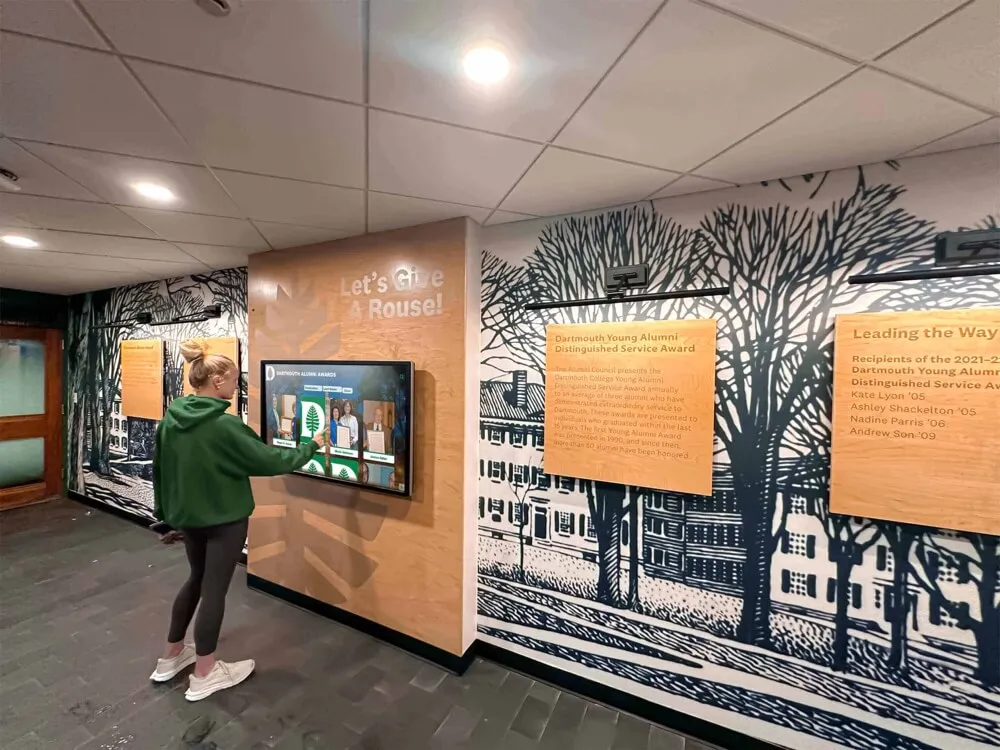
Individual player banners create immediate personal recognition that championship ceiling banners cannot deliver—every athlete gets their own space, their own story
What to Include on a Volleyball Senior Banner
The content on a senior banner needs to read clearly at the distances where it actually gets viewed—ten feet away in a hallway, thirty feet away from the bleachers, or at arm’s length in a family photo. That viewing-distance requirement shapes what information belongs on the banner and what belongs in a program or digital profile instead.
The Essentials
Every volleyball senior banner should include these core elements:
- Full name and jersey number: Name at large type size, jersey number prominently displayed—often oversized as a design element rather than simply listed
- Graduation year: Establishes the class and lets future athletes, alumni, and families immediately place the banner in program history
- Position: Setter, libero, outside hitter, middle blocker, right side, or defensive specialist—one line is enough
- High-quality senior photo: The primary visual element; more on framing and pose direction below
Optional Content Worth Considering
These elements add personal dimension without overcrowding the layout:
- A short personal quote or motto: One sentence maximum; often the element families remember most
- Career highlight: A concise stat or achievement phrased simply—“three-year starter,” “team captain,” or a career kills total—not a full statistics line
- College or post-graduation destination: If the player is continuing in volleyball or committing to a school, including that destination celebrates the accomplishment and connects to program legacy
- Years of participation: “2022–2026” communicates longevity and commitment without extra explanation
What to Leave Off
Senior banners fail visually when they are treated as information sheets. Long biographical paragraphs, full statistics tables, and multi-sentence coach quotes create clutter that cannot be read at distance and shrinks the photo to a thumbnail. Keep the banner to five or six content elements maximum. Detailed biographical information and career statistics belong in a printed program, a digital profile, or an alumni recognition platform—not on the banner face itself.
Volleyball Senior Banner Sizes: A Format Guide
Banner dimensions determine where the piece can hang, how readable it is from different distances, and whether it fits within gymnasium ceiling hardware, hallway display brackets, or lobby mounting points. Standard sizes for volleyball senior banners fall into three practical categories based on placement:
| Format | Typical Dimensions | Best Placement | Notes |
|---|---|---|---|
| Large vertical pull-up banner | 2’ × 6’ or 2’ × 8' | Gymnasium floor (flanking entrance or sideline) | Portable; easy to position for ceremonies and photos |
| Wall-mounted fabric banner | 2’ × 5’ or 3’ × 6' | Hallway wall or gymnasium perimeter wall | Requires grommets and hardware; designed for seasonal hanging |
| Ceiling drop banner | 2.5’ × 6’ or 3’ × 8' | Gymnasium ceiling trusses alongside championship banners | Most permanent display option; requires installer access to trusses |
| Tabletop or easel display | 18" × 24" to 24" × 36" | Gymnasium lobby, front table, or entrance area | Lower cost; accessible for close-up photos by families |
| Digital display format | Landscape 16:9 or portrait 9:16 | Lobby screens, hallway digital displays | No print production cost; updateable; permanent archive value |
Most programs use more than one format: a large vertical banner for the ceremony itself, a smaller wall-mounted version for the hallway after senior night, and a digital version that remains accessible long after physical banners are stored.
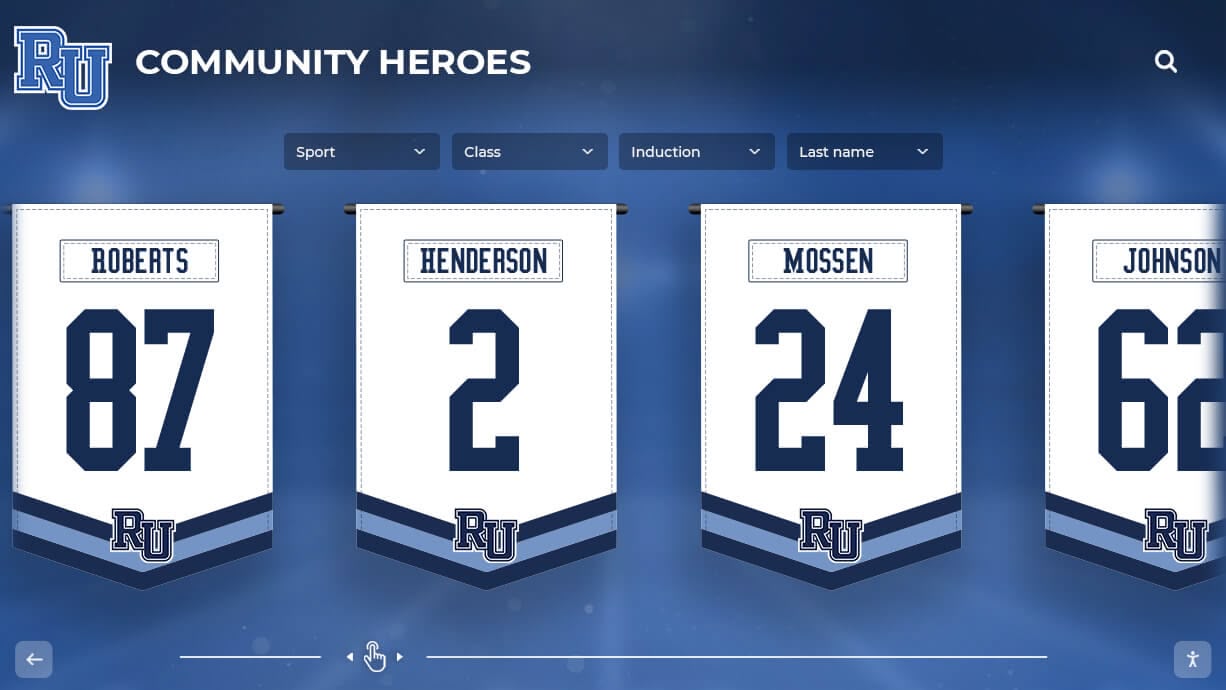
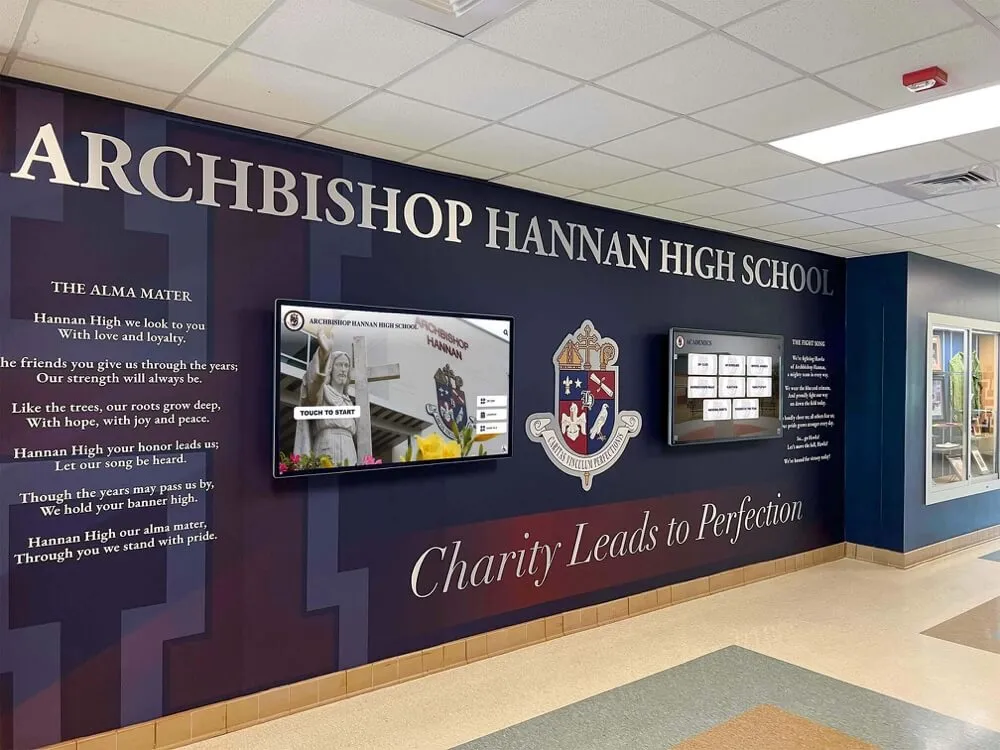
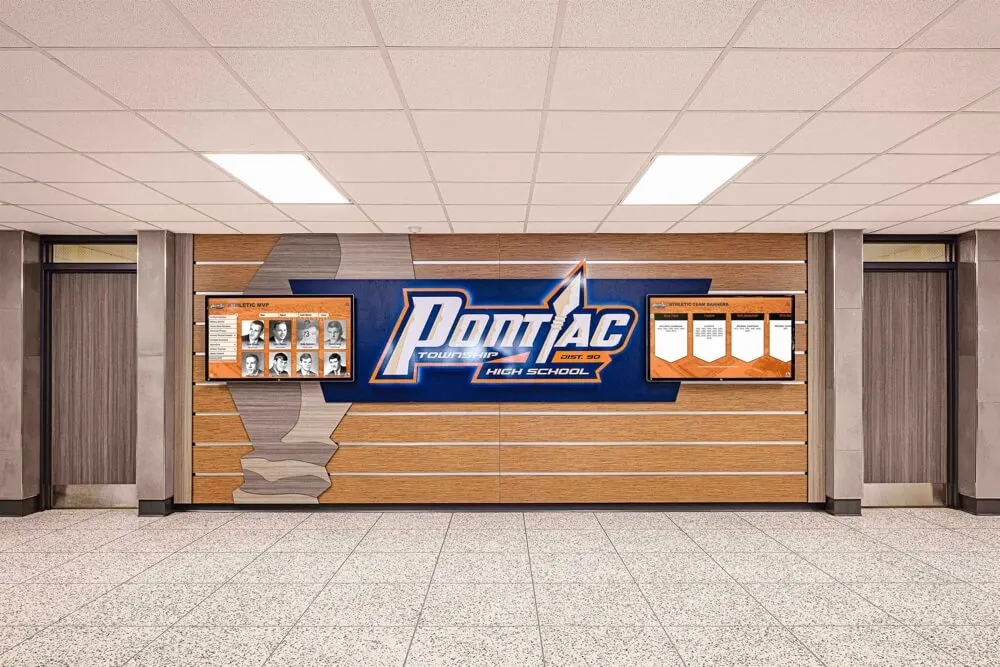
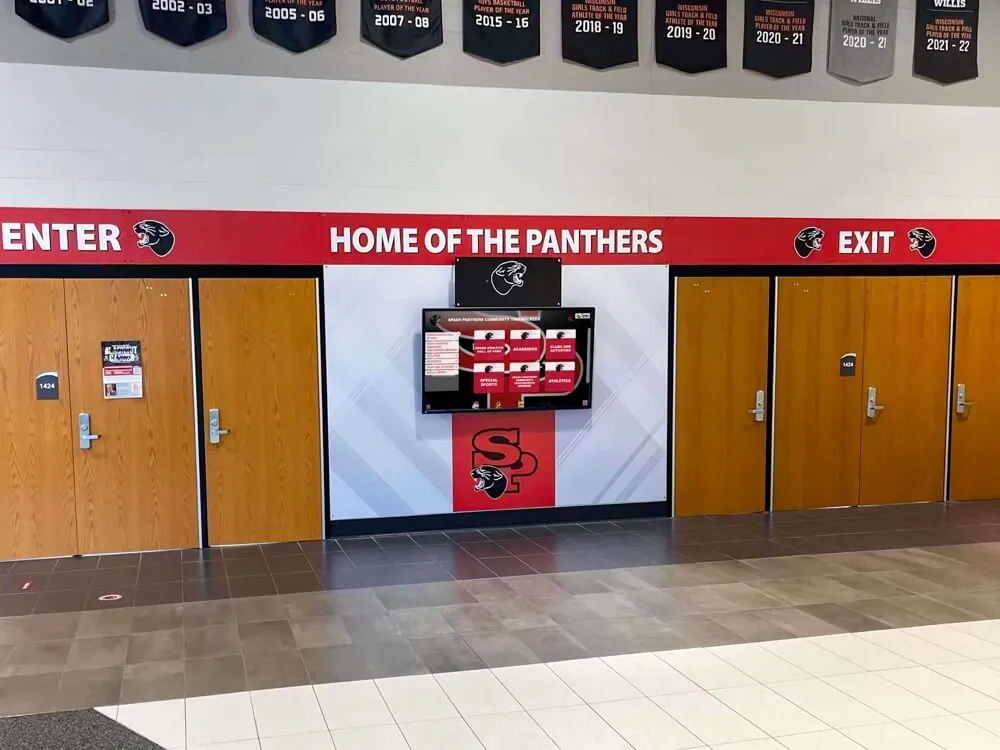
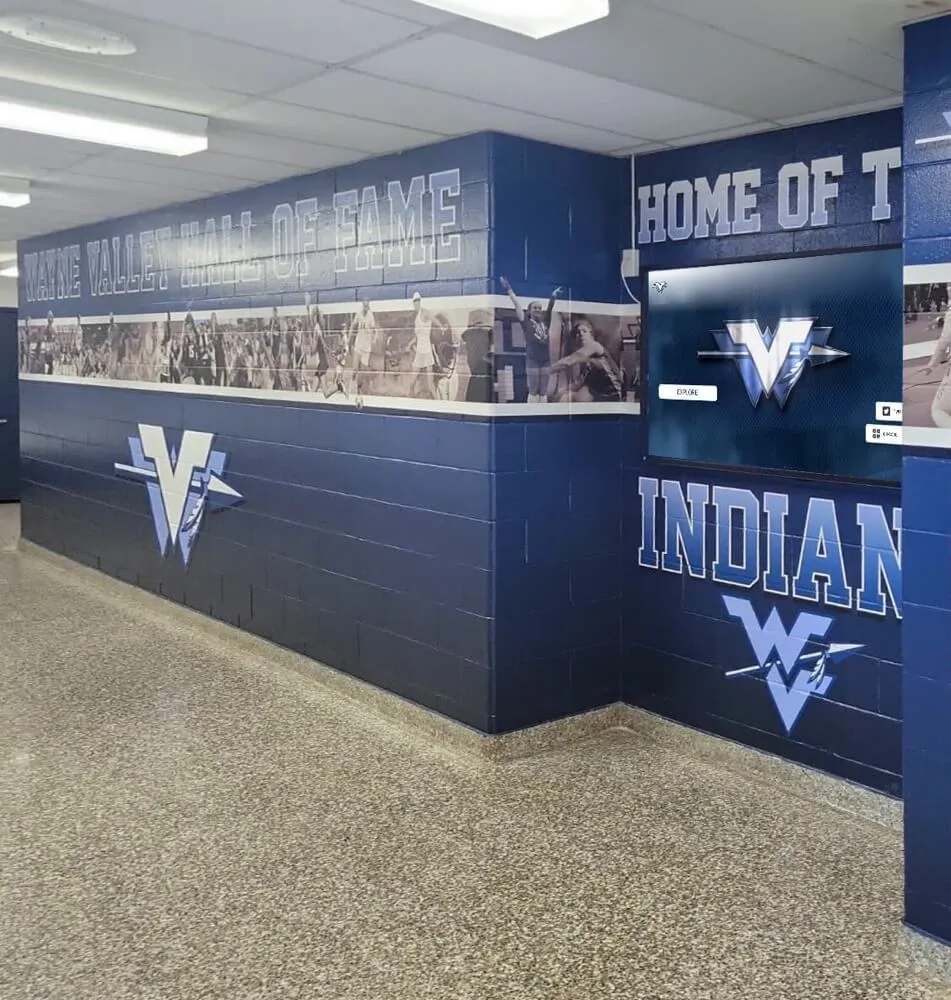
Hanging senior banners in a dedicated lobby or hallway space gives the recognition a permanent home that remains visible to every visitor throughout the season and beyond
Volleyball Senior Banner Pose Ideas
The photo is the element families focus on most. A generic studio portrait works, but coaches and athletic directors consistently find that action-oriented or personality-driven photos create more memorable banners that players are genuinely proud to display. The following pose categories work well for volleyball-specific recognition.
Action and Athletic Poses
The spike approach: Player positioned mid-swing with arm extended above head, approaching the net. This is the most volleyball-specific pose available and instantly communicates the sport. Works best outdoors against a plain background or in the gym with good lighting.
The serve: Player in full service motion—arm extended, ball leaving the hand. This works for both overhand and jump servers and creates strong vertical energy that suits banner proportions.
The set: Setter in ball-contact position with hands extended overhead. Less common than spike or serve photos, which makes it distinctive for setters who want recognition that matches their role.
The dig: Player in low defensive position. Technically challenging to photograph effectively, but creates compelling visual energy for liberos and defensive specialists whose contributions rarely appear in highlight imagery.
The block: Player at the net with hands extended above the tape. Works well for middle blockers and right-side hitters whose primary contributions come at the net.
Portrait and Personality Poses
Holding the ball: Player sitting or standing with a volleyball in hands or cradled under one arm. Simple, universally recognizable as a volleyball photo, and easier to produce without a full action setup.
Jersey number display: Player holding jersey away from body to feature the number prominently, or seated with jersey number facing the camera. Pairs well with large-format jersey number design elements on the banner itself.
Team context shot: Senior posed with teammates in a candid moment—laughing on the bench, celebrating after a point, or lined up for warmups. Creates emotional authenticity that staged photos sometimes lack.
Progression comparison: Using two photos side by side—a freshman-year photo and the current senior portrait—can be a powerful design element on larger banner formats. This approach requires more design space and works best for 3’ × 6’ or larger banners.
Photo Production Tips for Volleyball Banners
The photo used on a banner will be enlarged significantly from its source file. Provide your vendor with the highest-resolution file available—ideally a professional or semi-professional digital camera file, not a phone screenshot. Minimum resolution for sharp printing at 3’ × 6’ is typically 300 DPI at the final printed size, which means a source file of at least 2700 × 5400 pixels.
Shoot against simple backgrounds. A plain gym wall, an outdoor brick wall in school colors, or a clean neutral sky all work better than busy backgrounds that compete with the player’s image at scale. Team photos work well when the background is controlled; candid action shots often require cropping to eliminate visual clutter behind the player.
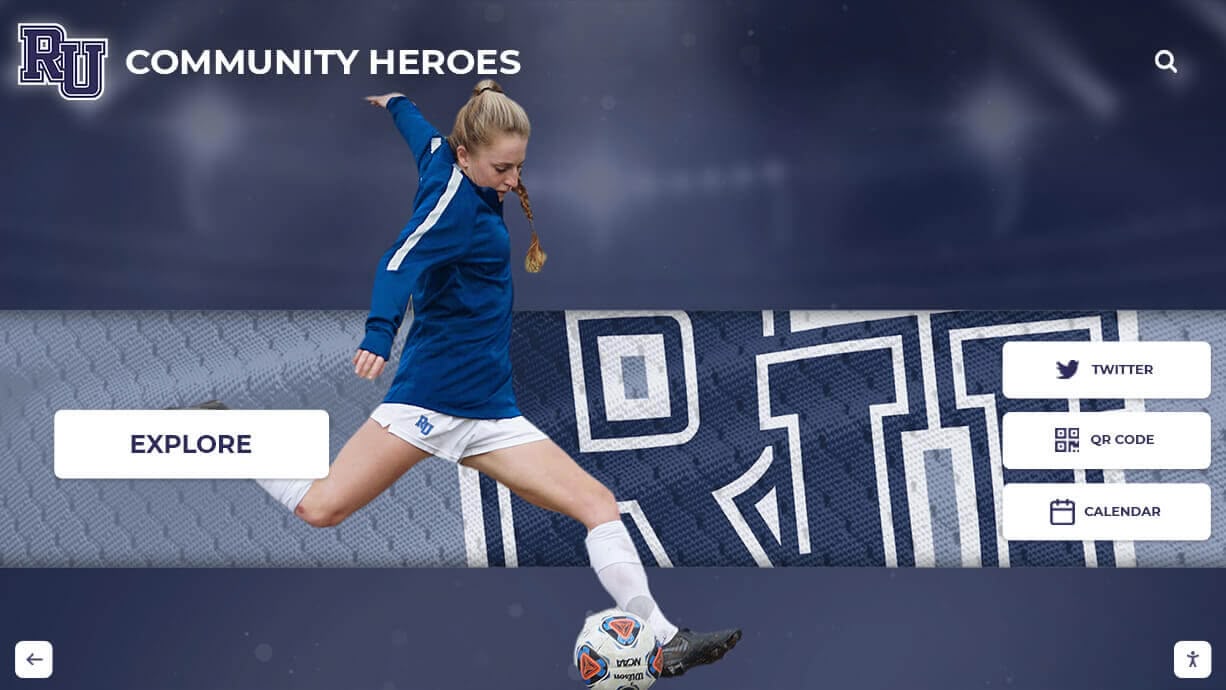
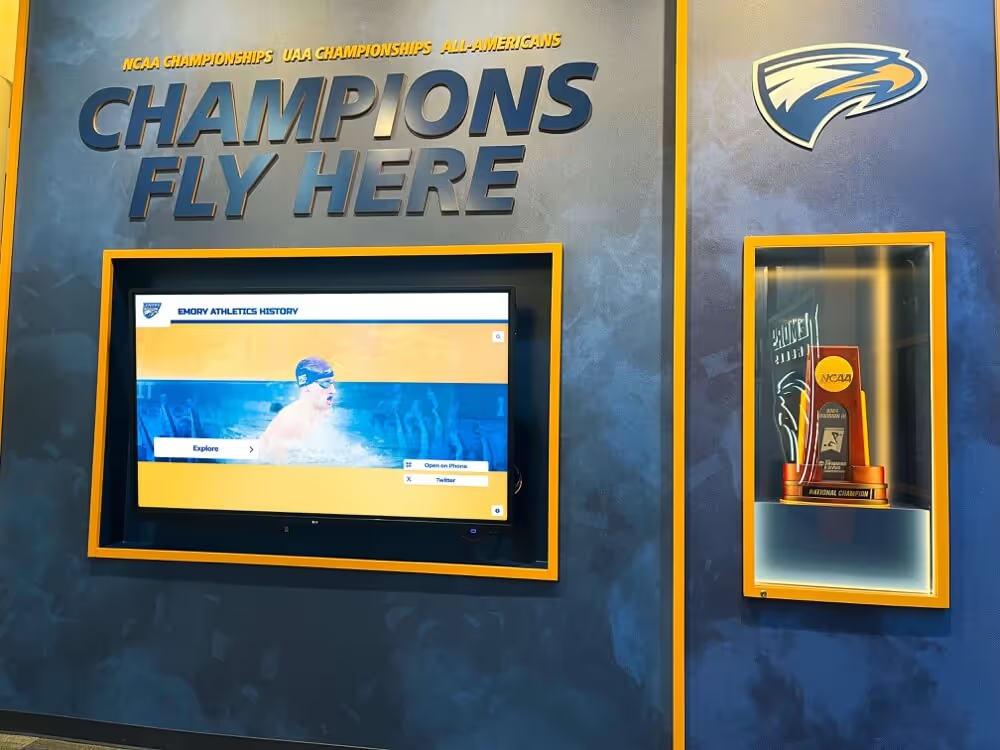
Action poses that capture an athlete's specific sport create stronger personal recognition than generic studio portraits—the movement itself tells the story
Where to Display Volleyball Senior Banners in Your Facility
Placement determines how much recognition value a senior banner actually delivers. A banner in a location where athletes, families, and community members naturally pass creates ongoing recognition; a banner stored in a gym closet after senior night creates none.
Gymnasium Entrance and Lobby
The lobby or main entrance to your athletic facility is the highest-traffic location available. Families arriving for games, visiting teams, prospective athletes, and administrators all pass through this space. Senior banners positioned here—either hanging from brackets, mounted on walls, or displayed on floor stands—receive continuous visibility throughout the season.
Grouping all senior banners together in the entrance creates a gallery effect that emphasizes the senior class as a cohesive unit rather than scattering individual recognitions around the facility. This also makes the space easier to photograph as a group for social media and program documentation.
Along the Gymnasium Perimeter Wall
Wall-mounted senior banners along the gymnasium perimeter—particularly the side walls visible from bleacher seating—get viewed during every home game of the season. This placement ensures that teammates, opponents, and spectators all see the recognition during competition, which is often where families feel the recognition most directly.
When hanging perimeter wall banners, position them at a consistent height with adequate spacing so each banner reads individually rather than blending into a visual wall. A 2’ × 5’ banner hung with eighteen inches of space on each side reads clearly from the opposite bleachers; banners hung edge-to-edge become difficult to parse individually.
Hallway Display Outside the Gymnasium
A dedicated hallway running between the main building and the athletic facility often becomes the natural home for seasonal sports recognition. Senior banners displayed in this corridor benefit from close-proximity viewing—students and staff pass within a few feet, enabling them to read details that ceiling-height displays cannot convey.
After the season ends, hallway-displayed senior banners can remain visible through the school year as a continuing recognition of the senior class, giving the investment a lifespan that extends well beyond a single senior night ceremony. Programs that establish consistent hallway display standards year over year create an evolving visual history connecting current athletes to previous classes.
Digital Displays in Athletic Lobbies and Hallways
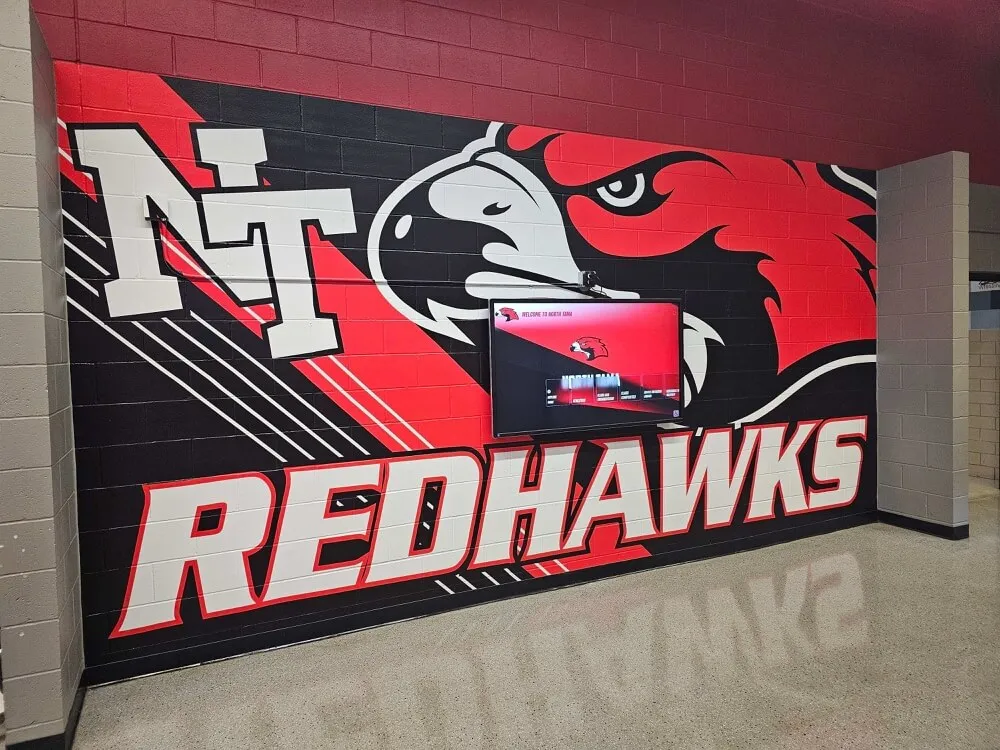
Digital displays positioned in high-traffic areas extend senior banner recognition in ways physical fabric cannot. A screen in the athletic lobby can cycle through all senior banner designs before home games, display a senior spotlight during warmups, or present senior profiles alongside current-season schedules. The same display can show a career-highlights recap during senior night itself.
Tools covered in resources on best hall of fame and recognition platforms for athletic programs often include lobby display capabilities alongside deeper archival functions—making digital installations dual-purpose from day one rather than requiring separate systems.
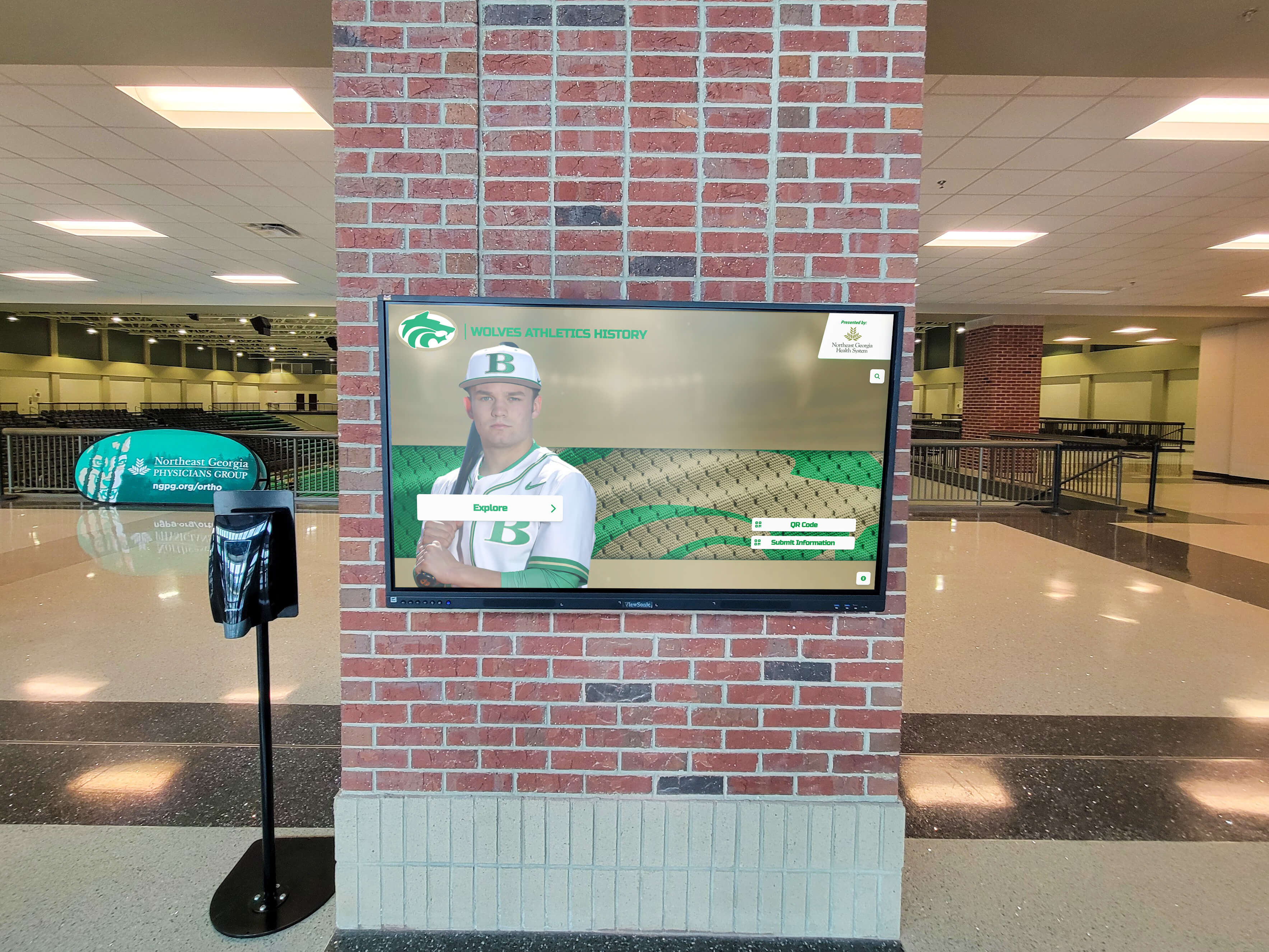
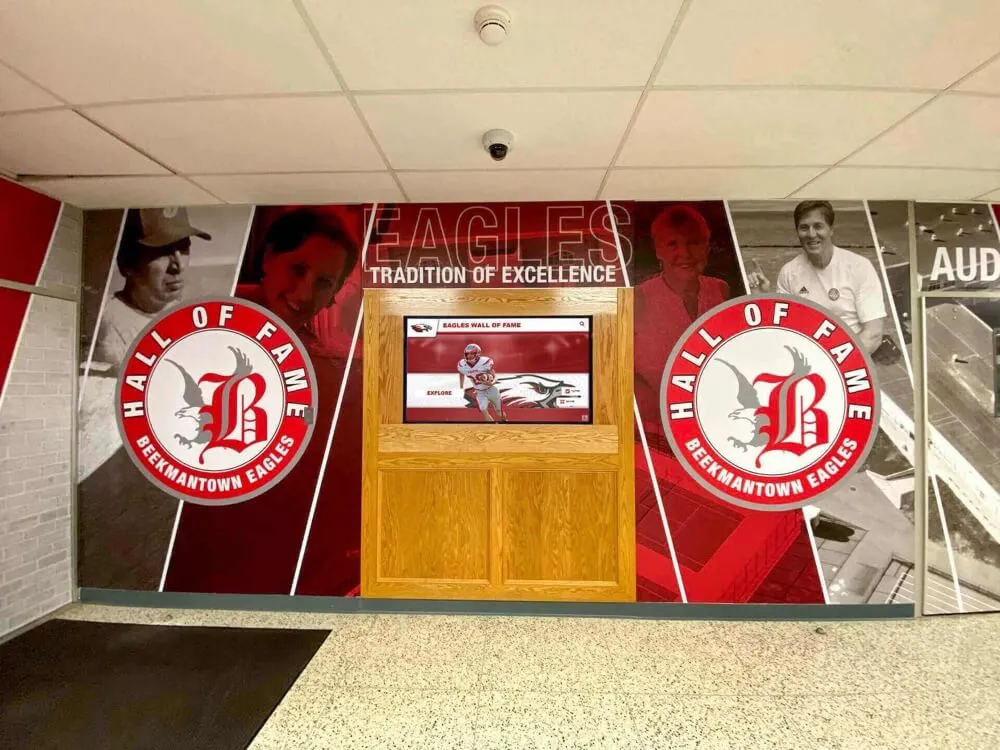
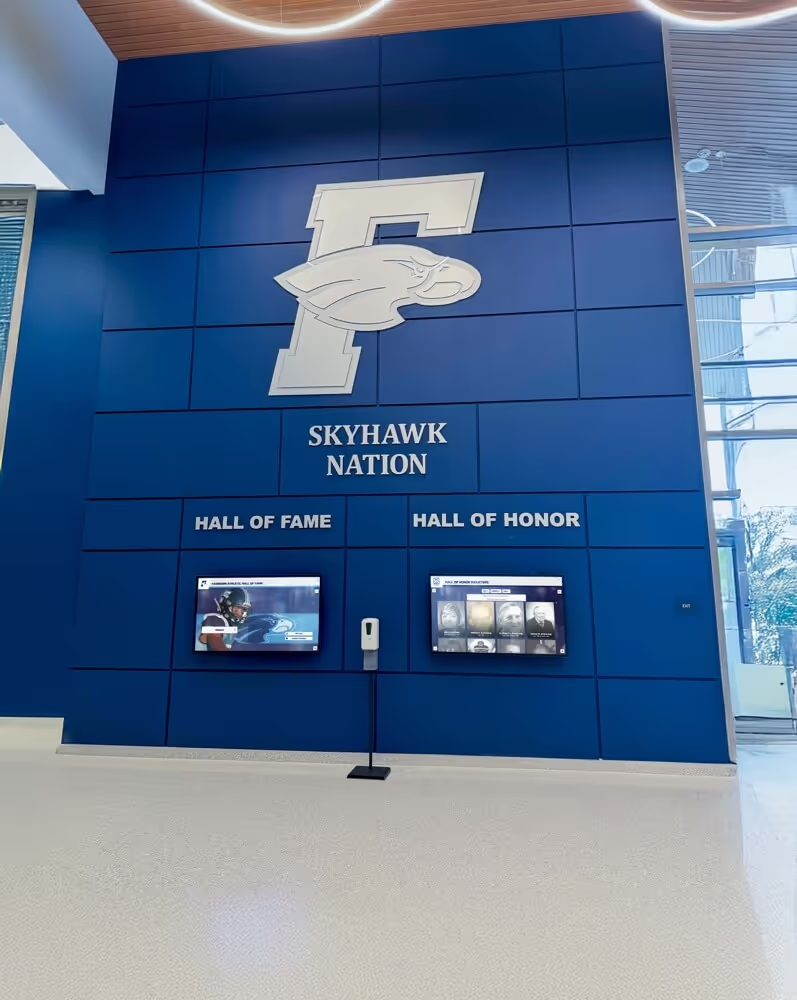
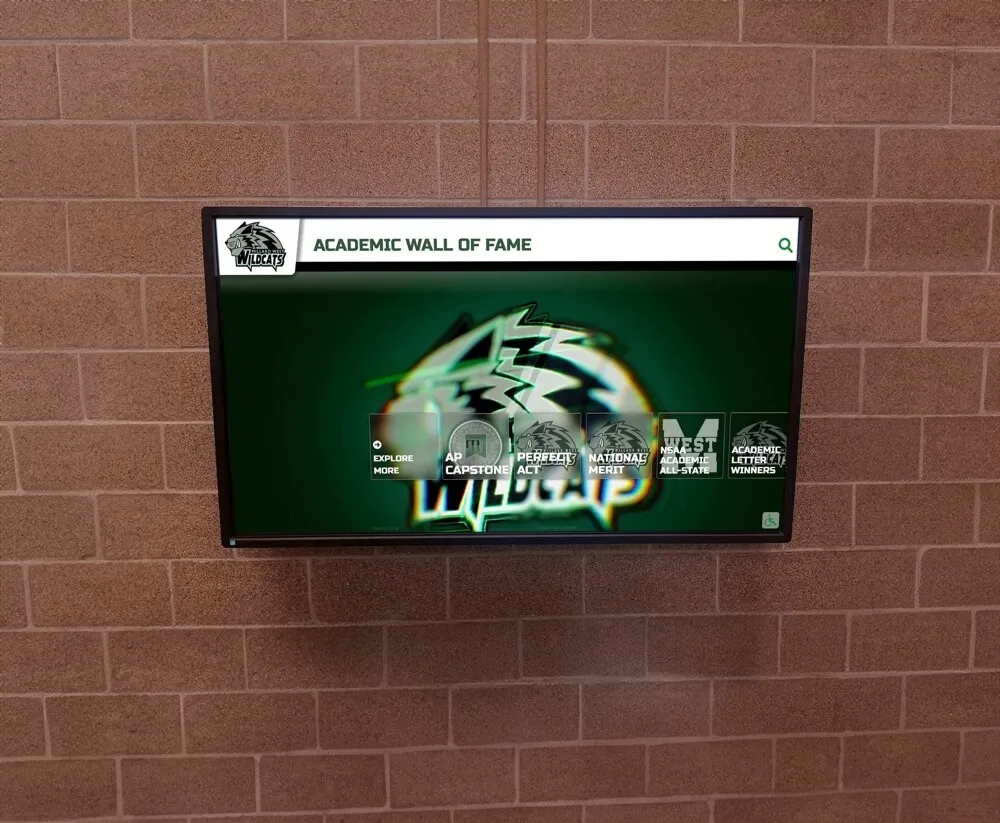
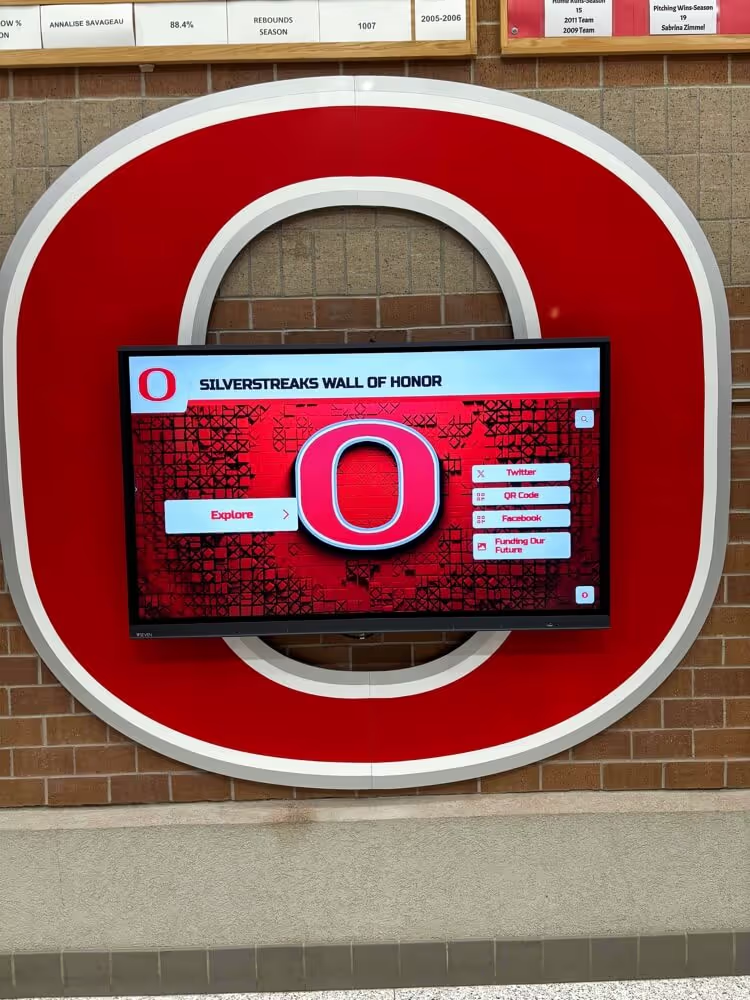
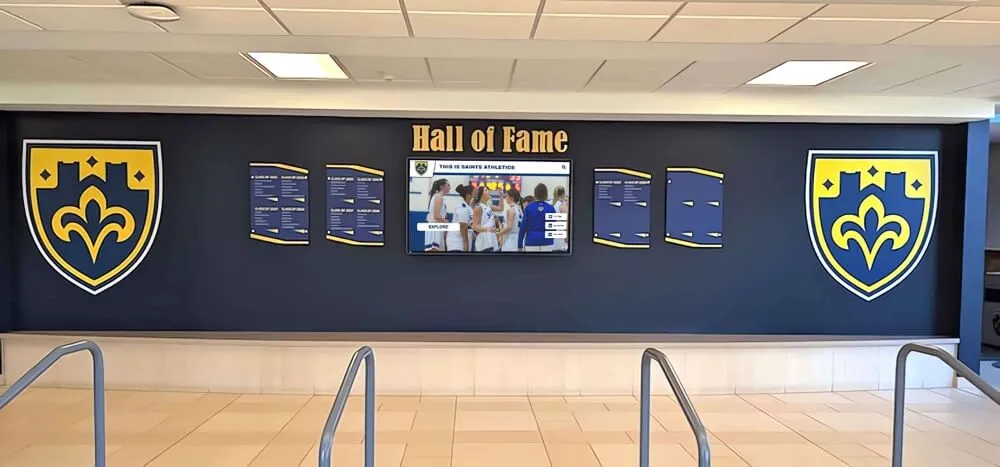
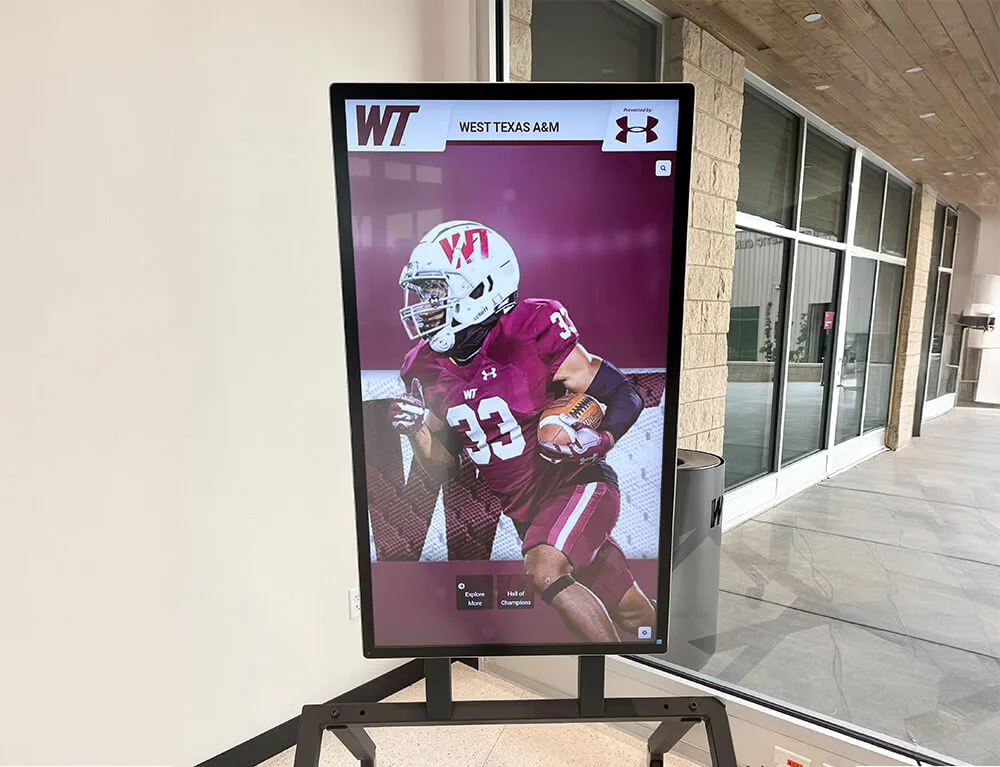
Digital displays in lobby and entrance spaces reach every visitor who enters the facility—a location that ceiling banners cannot serve at readable scale
Planning the Senior Banner Program: A Practical Timeline
Most senior banner production problems trace back to starting too late. Vendors need lead time for design review and printing, photos need to be collected and approved, and families often have strong opinions that require a revision cycle. The following timeline assumes a senior night in late October, which is typical for a fall volleyball season.
Eight to ten weeks before senior night: Brief all seniors on photo requirements—resolution, background preferences, pose direction, and submission deadline. Collect jersey number information, position, graduation year, quote or motto, and any achievement language they want included.
Six to seven weeks before: Receive all photos and content. Begin design work or send materials to vendor. Flag any missing submissions immediately—photo retakes are much harder to arrange inside four weeks.
Four to five weeks before: Review design proofs with seniors and families. One revision round is standard; two is manageable. Beyond that, you are compressing the production and delivery window.
Two to three weeks before: Approve final designs and confirm production order. This window allows time for shipping delays and quality review before installation.
One week before: Receive, inspect, and prepare banners for installation. Test any hanging hardware or mounting brackets before the night itself.
After senior night: Photograph banners in place for program archives and social media documentation. Begin planning the handoff process—whether that means continued hallway display, storage, gifting to seniors, or migration to a digital archive.
From Seasonal Display to Permanent Archive: Managing Senior Banners After the Season
Physical senior banners create a recurring decision: what happens to them after the season ends? The answer shapes how much long-term recognition value the investment delivers.
Option One: Gift the Banner to the Senior
Many programs present the physical banner to each senior as a keepsake gift. This is popular with families and eliminates the storage question, but it also removes the recognition from the facility entirely—future students, recruits, and alumni who walk through your gym will not see those players represented.
Option Two: Store and Rotate for Reunions or Homecoming
Some programs store senior banners and bring them back out for reunion weekends, homecoming events, or milestone gatherings. This approach preserves the physical pieces while creating additional recognition touchpoints throughout the year. Storage requires space and an organized inventory system to ensure banners can actually be located when needed.
Option Three: Maintain a Dedicated Senior Banner Wall
Programs with sufficient hallway or corridor space create permanent or semi-permanent senior banner galleries where previous classes remain displayed alongside current seniors. This creates a living program history visible to every student who walks those halls. The challenge is space—after ten years, a multi-sport program accumulates hundreds of senior banners.
Frameworks for categorizing what recognition earns permanent wall space versus what should rotate or move to digital are covered in depth in resources on youth sports awards and recognition planning, which offer useful structures that translate directly to senior banner decisions.
Option Four: Migrate to a Digital Recognition Platform
A digital archive preserves the full content of every senior banner—photo, name, position, career note, graduation year—without physical space constraints. Athletic programs using comprehensive recognition platforms can display digital versions of all senior classes on lobby screens, embed them on program websites, and make them accessible to alumni from anywhere.
This approach solves the space problem permanently. The 2016 senior class occupies the same digital footprint as the 2026 class; searching by name, graduation year, or position takes seconds; and alumni can share their recognition directly from their phones without needing to be present in the facility.
Digital hall of fame and recognition platforms range from standalone display systems to comprehensive alumni recognition suites, with options suited to programs at every budget level. Many programs that begin with physical senior banners eventually migrate to a hybrid approach: a physical banner for the ceremony and the hallway season, then a permanent digital entry that outlasts the fabric.
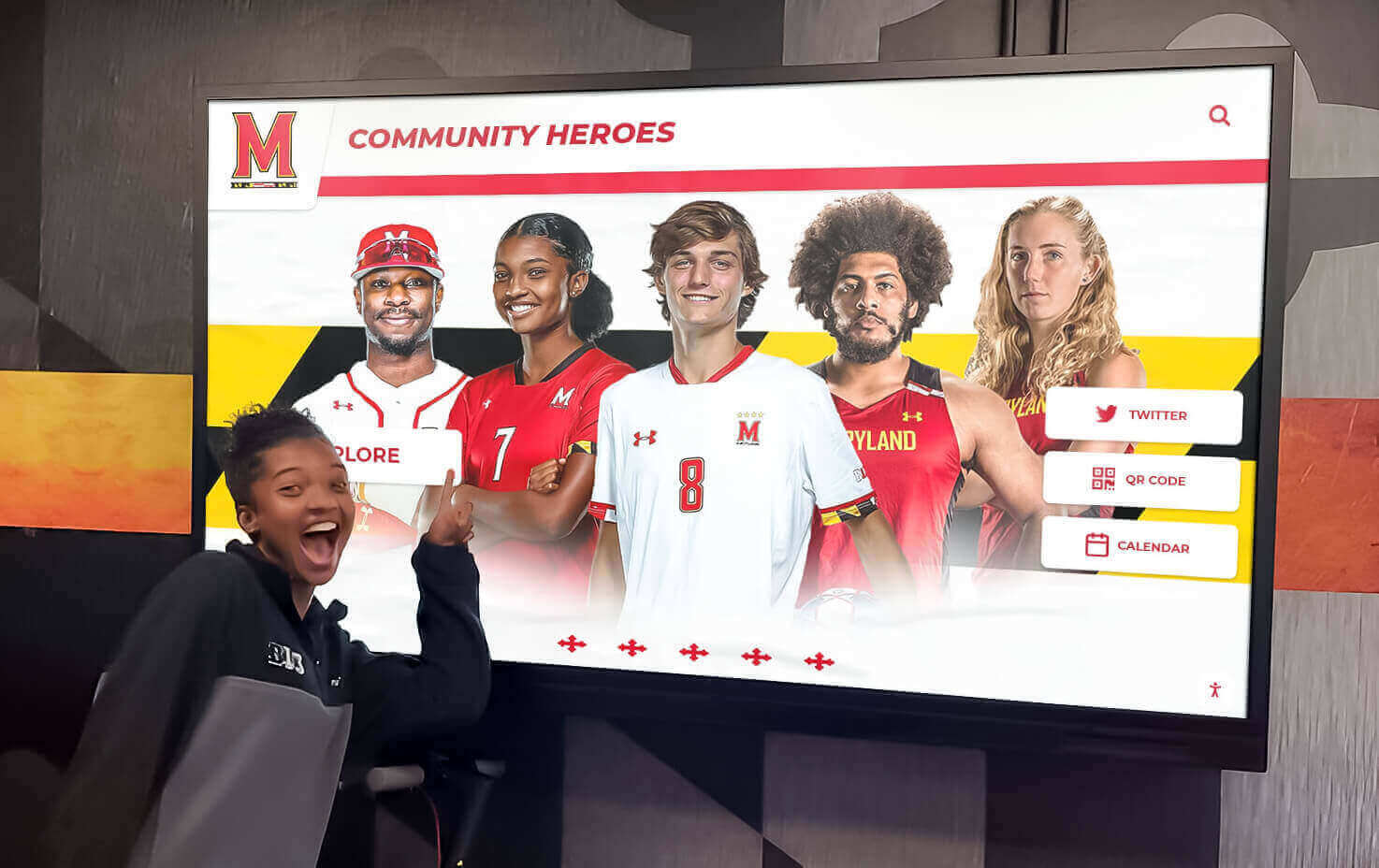
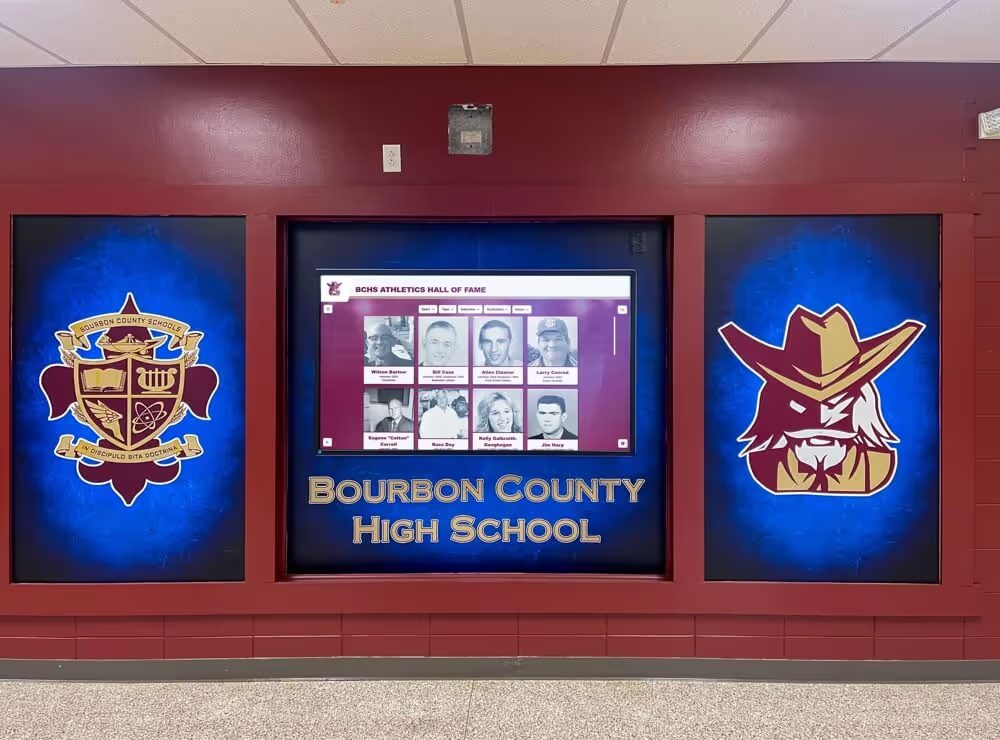
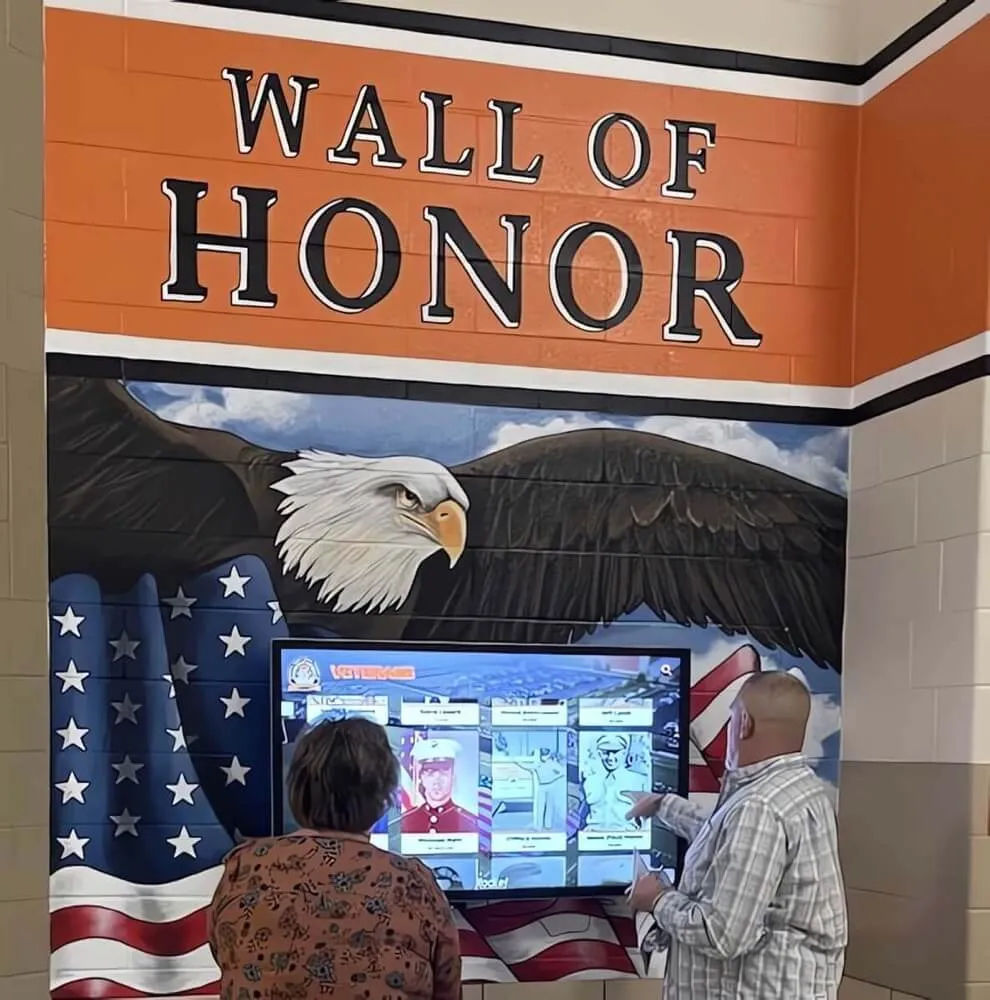
Current students exploring past senior recognition creates the intergenerational connection that isolated ceiling banners rarely achieve
Building a Consistent Volleyball Senior Banner Tradition
The most effective senior banner programs are not recreated from scratch each year—they operate from documented standards that coaches, parents, and vendors can follow reliably. When standards exist on paper, the program runs the same way regardless of who organizes it in a given year.
A senior banner standard document for a volleyball program should specify:
- Approved dimensions for each display location (lobby, hallway, ceremony floor stands)
- Required content elements and any optional elements permitted
- Photo specifications (resolution, background, pose direction options)
- Design template or brand guide (school colors, fonts, logo placement rules)
- Vendor contact and ordering process
- Timeline with hard deadlines at each stage
- Post-season disposition plan (gifted, stored, or migrated to digital)
This documentation also protects recognition equity. When every sport operates from the same standard, the volleyball program is not producing smaller or lower-quality banners than football because no one thought to specify otherwise. Athletic programs navigating recognition equity considerations will find that consistent written standards remove the implicit hierarchy that unspecified processes create.
Resources on structured sports recognition frameworks address how to build equitable, scalable recognition programs across multiple sports, which is the broader challenge that senior banner programs sit within.
For programs ready to go further—connecting senior banners to complete digital recognition archives that include career statistics, alumni updates, and hall of fame integration—platforms like Rocket Alumni Solutions provide the infrastructure to turn a physical banner into the entry point of a permanent recognition profile. Explore how Rocket Alumni Solutions handles senior athlete recognition for programs that want physical and digital recognition working together rather than separately.
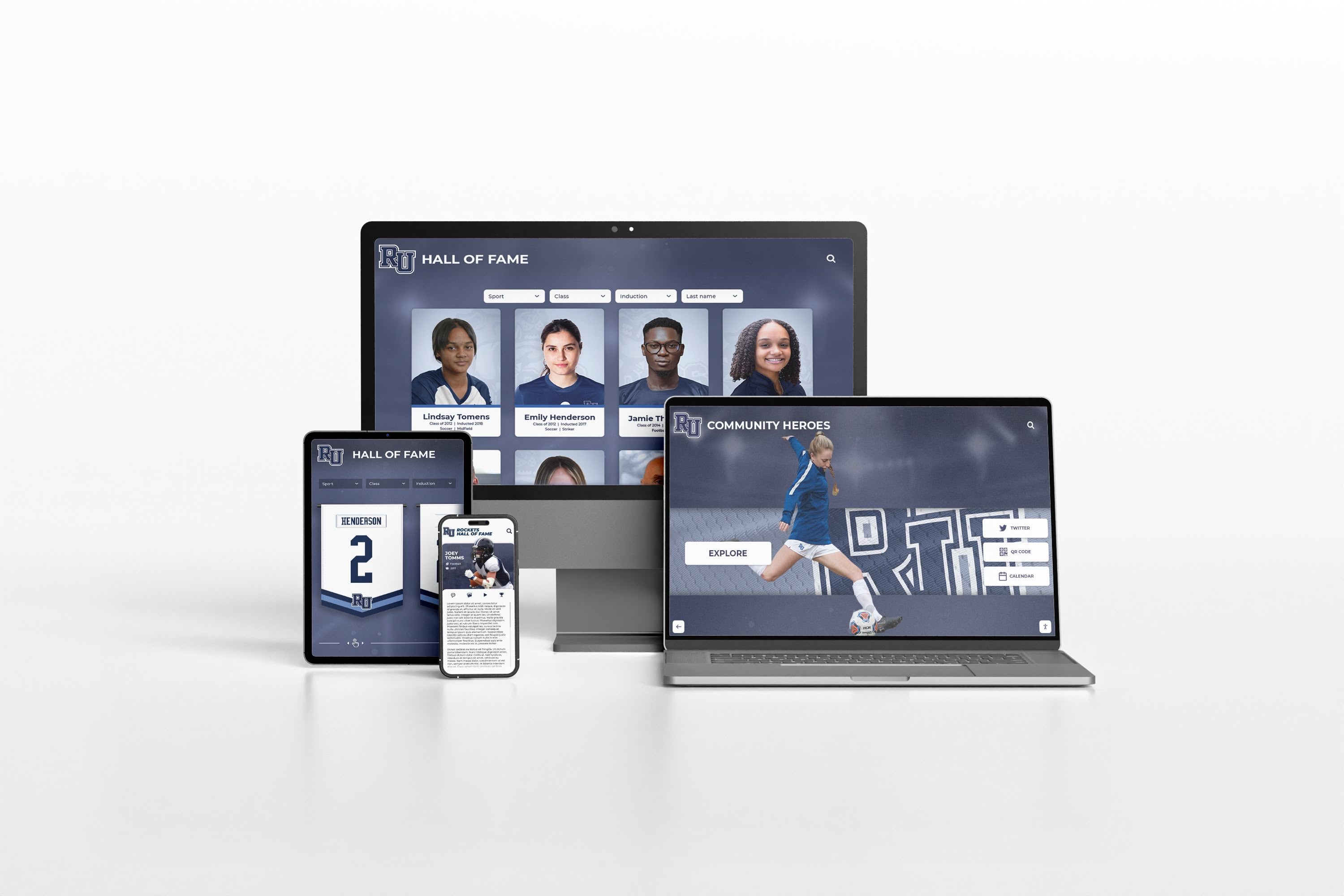
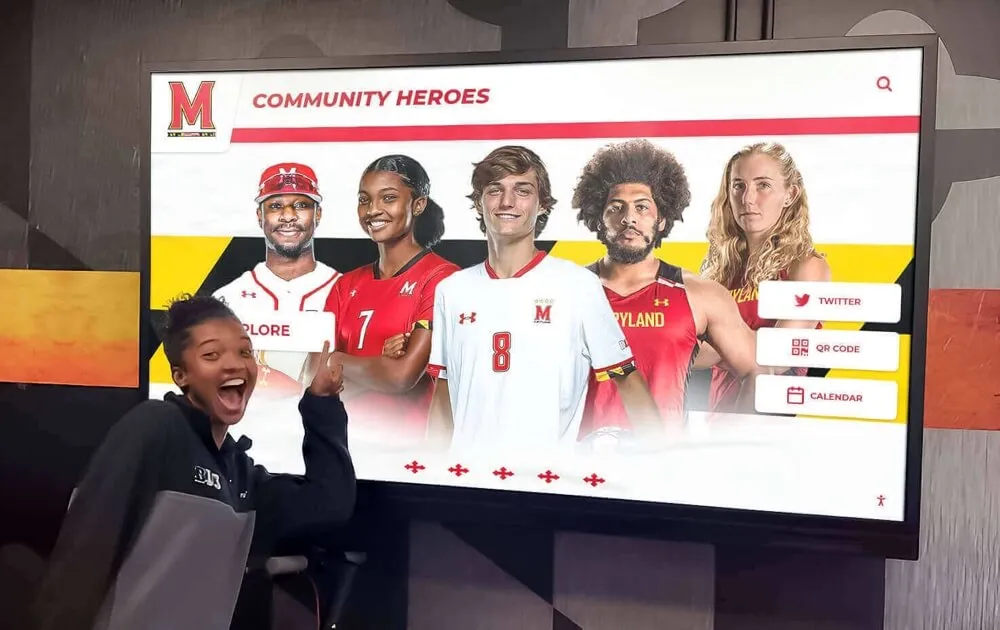
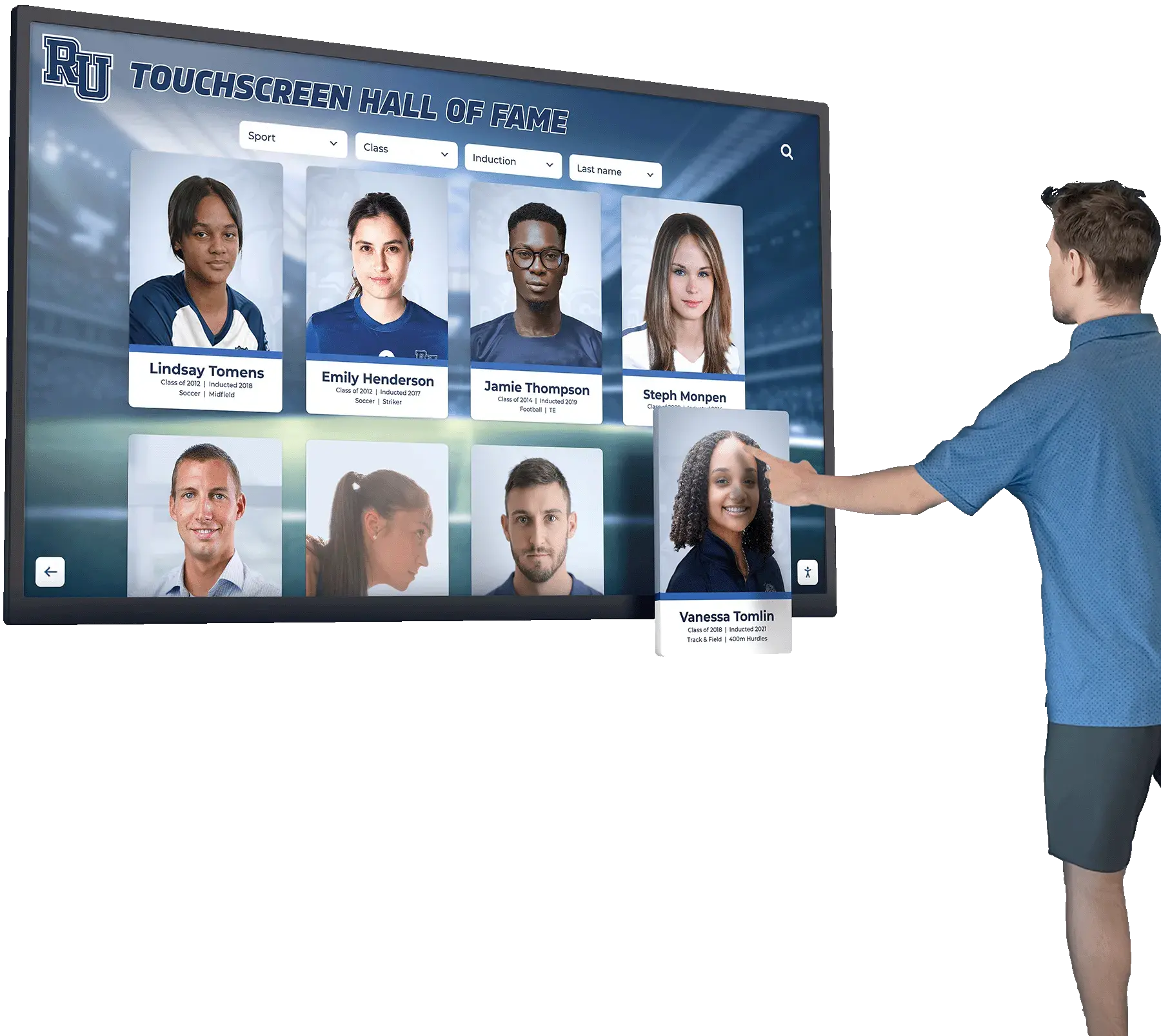
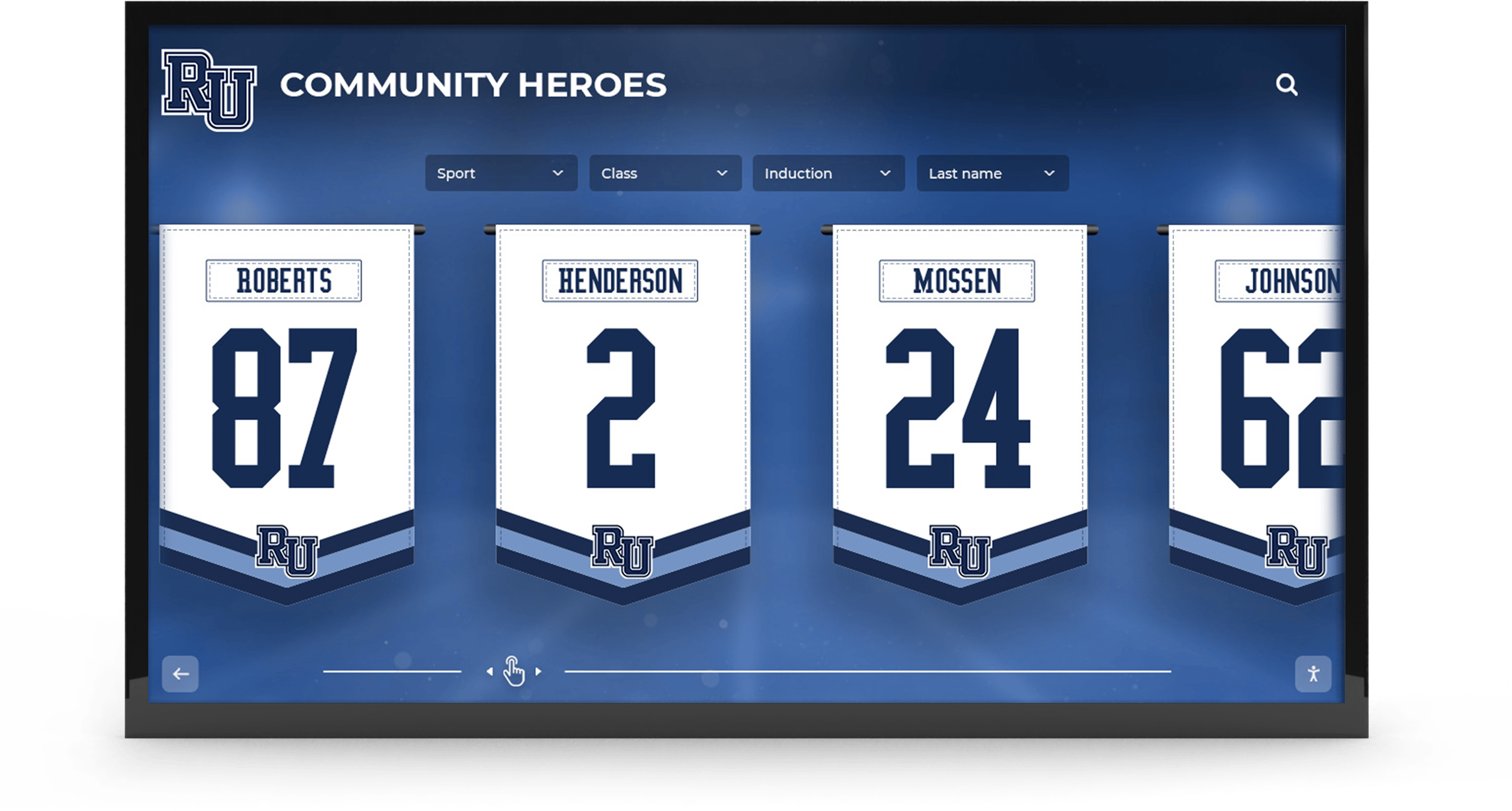
Digital recognition platforms make senior athlete profiles accessible on any device—families and alumni can view recognition from anywhere, not just in the facility
Frequently Asked Questions: Volleyball Senior Banners
What size banner works best for a volleyball senior night display?
For a banner that gets carried during senior night introductions or displayed on floor stands, a 2’ × 6’ pull-up format is the most practical—it is visible from the bleachers, portable enough for ceremony use, and standard enough that most banner vendors produce them at predictable cost. For permanent hallway mounting, a 2’ × 5’ wall-mounted fabric banner with grommets is a common choice. Programs with tall gymnasium ceilings and existing ceiling hardware sometimes commission 3’ × 8’ ceiling drops that match championship banner proportions.
What information should be printed on a volleyball senior banner?
At minimum: full name, jersey number, position, graduation year, and a high-quality photo. Optional additions that work well when space allows include a short personal quote, a career highlight or achievement, and a post-graduation destination if the player is attending college. Avoid anything that cannot be read from fifteen feet away—save detailed statistics and biographical text for printed programs and digital recognition profiles.
What are good volleyball senior banner pose ideas?
Action poses perform best for volleyball: spike approach with arm extended, jump serve in progress, defensive dig in low position, or set with hands extended above the head. For players who prefer portraits, holding a volleyball or displaying the jersey number creates sport-specific context. Progression photos comparing freshman and senior images work well on larger banner formats. In all cases, use a simple, uncluttered background and provide the highest-resolution file available for print production.
How long should senior banners stay up in the gym?
Most programs display senior banners from early November through the end of the school year, giving the recognition visibility through the full athletic cycle. Some programs keep banners up through graduation as an explicit connection between athletic and academic senior recognition. After that point, options include gifting the banner to the senior, storing it for reunion events, or replacing it with a digital archive entry that has no physical storage requirement.
Can senior banners be archived digitally?
Yes, and this is increasingly the preferred approach for programs managing recognition across multiple years and sports. A high-resolution scan or re-render of each senior banner can be uploaded to a digital recognition platform, where it becomes searchable and permanently accessible alongside career statistics, team history, and other program archives. Several athletic recognition platform reviews compare platforms that support this kind of multi-year archiving.
How much do volleyball senior banners typically cost?
Production costs vary by format, quantity, and vendor. A 2’ × 6’ vinyl pull-up banner typically runs $80 to $150 per unit depending on material quality and order volume. Double-sided polyester fabric banners suitable for ceiling or wall mounting run $150 to $300 per unit. Programs ordering five or more banners as a set generally receive volume pricing that reduces per-unit cost. Design fees are separate unless your vendor includes template customization in the production price. Digital display formats eliminate per-unit print cost entirely once the display hardware is in place.
Is it possible to feature senior banners on a digital display without printing physical banners?
Yes. Programs with lobby or hallway digital displays can display senior banner graphics on screen during home games, on senior night itself, and throughout the rest of the season without printing a physical banner at all. This approach works well as either a complement to physical banners or a standalone recognition format for programs where printing and installation costs are prohibitive. Platforms designed for athletics and school recognition displays typically include tools for scheduling recognition content across multiple display locations.
Should senior banners match the design of championship banners in the gym?
Not necessarily, and often deliberately not. Championship banners communicate program permanence and milestone significance—they look authoritative on purpose. Senior banners are personal and seasonal; a more dynamic, photo-forward design that emphasizes the individual works better here than the formal graphic treatment appropriate for a state championship. Using consistent colors and fonts from your school identity guidelines is important, but matching the visual weight of championship ceiling banners can actually reduce the personal character that makes a senior banner meaningful to families.
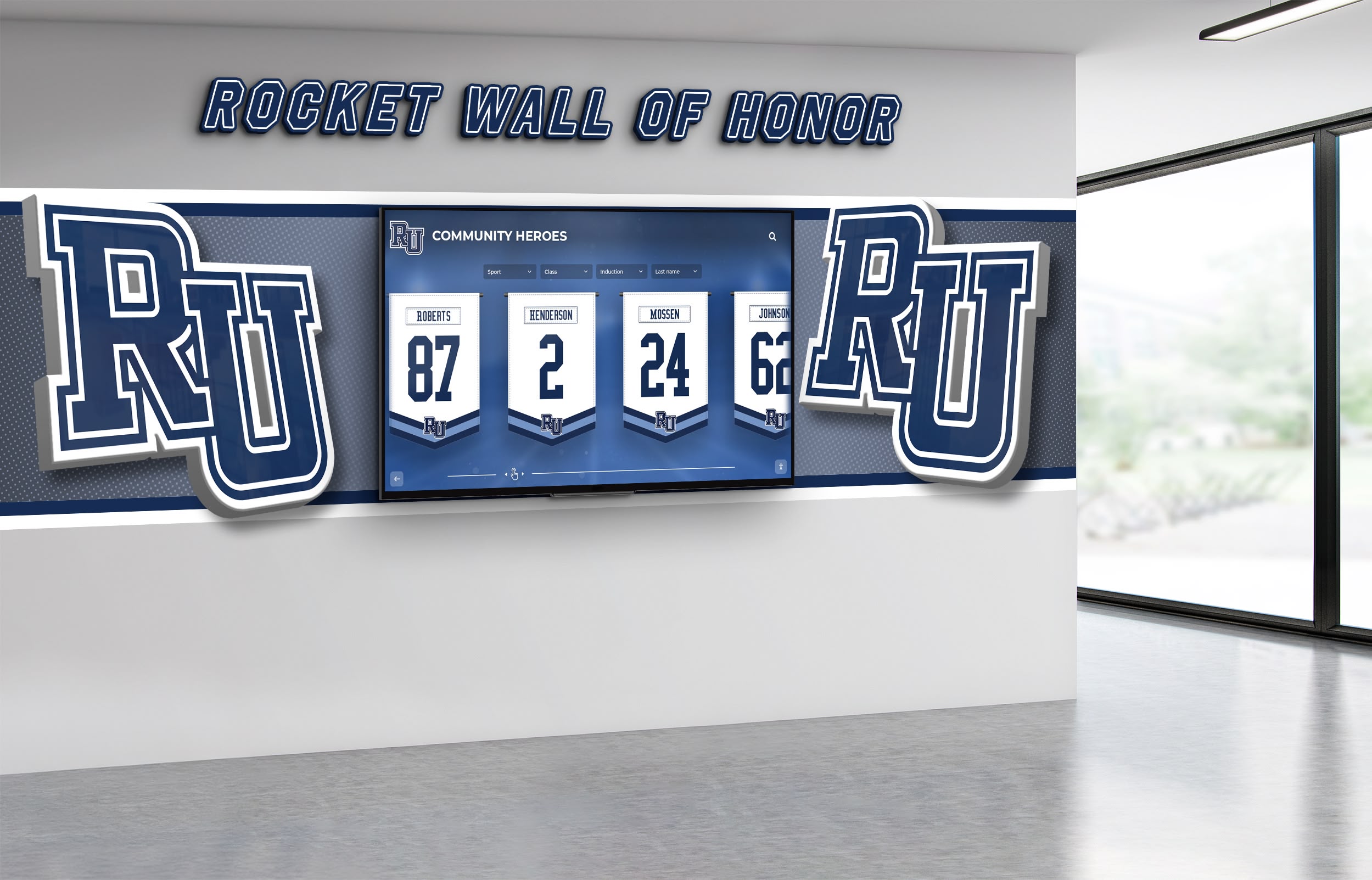
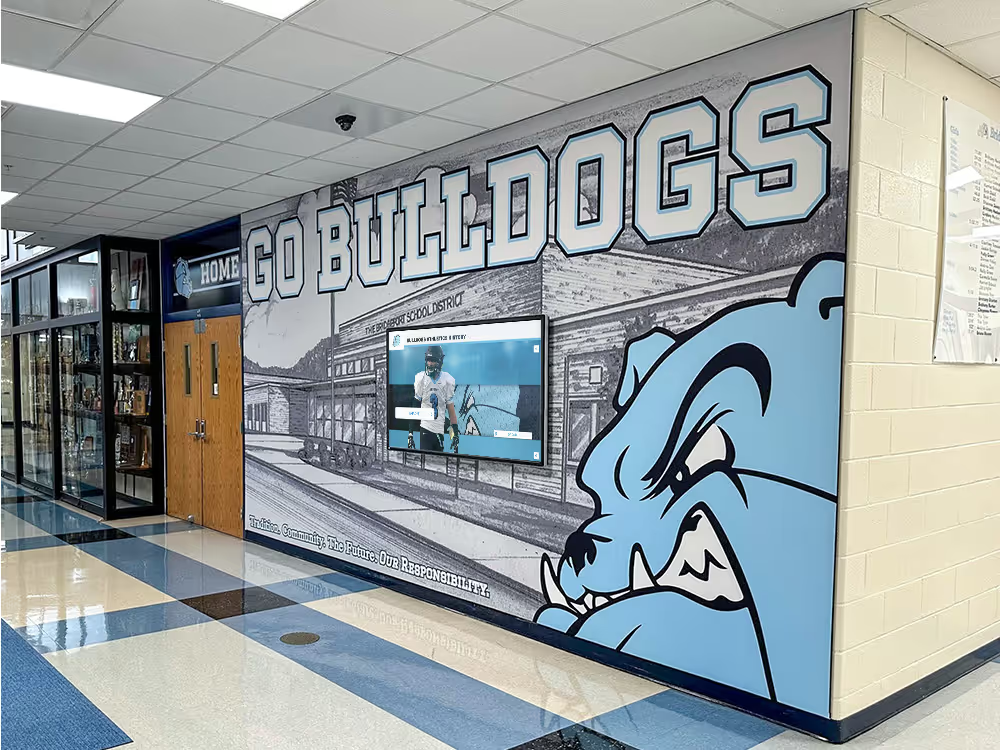
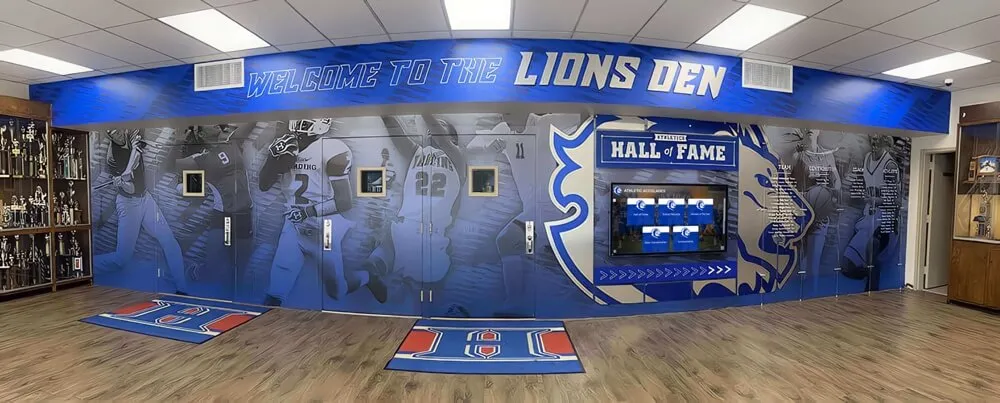
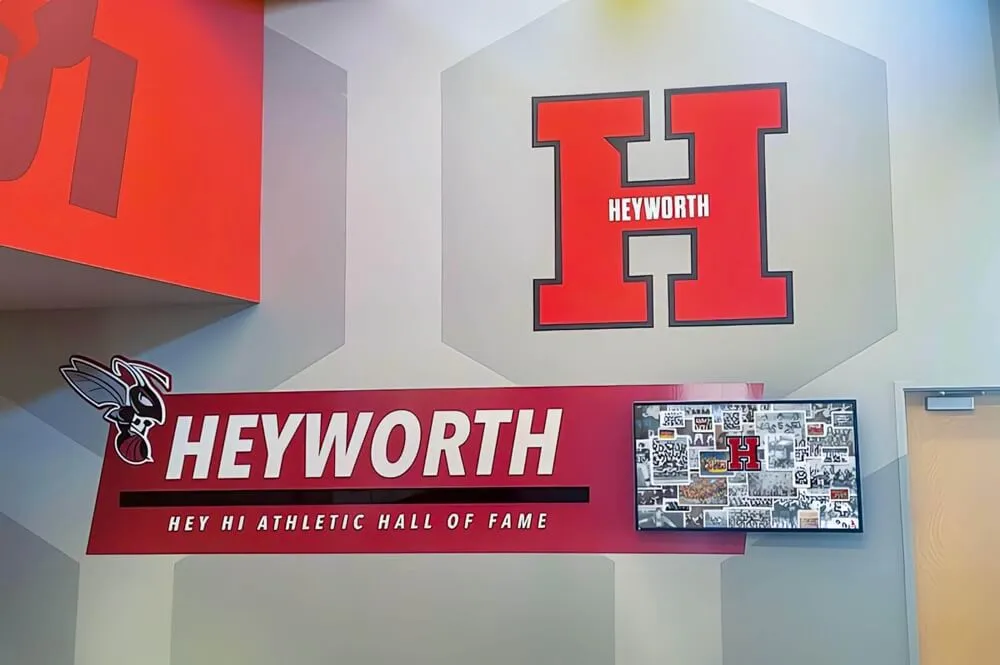
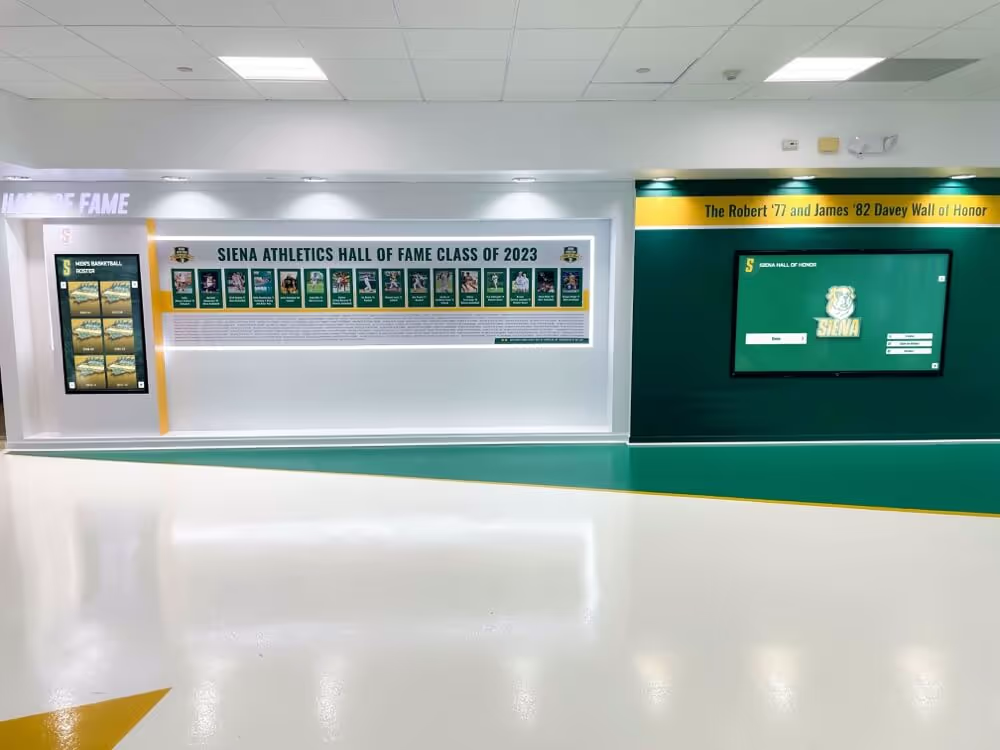
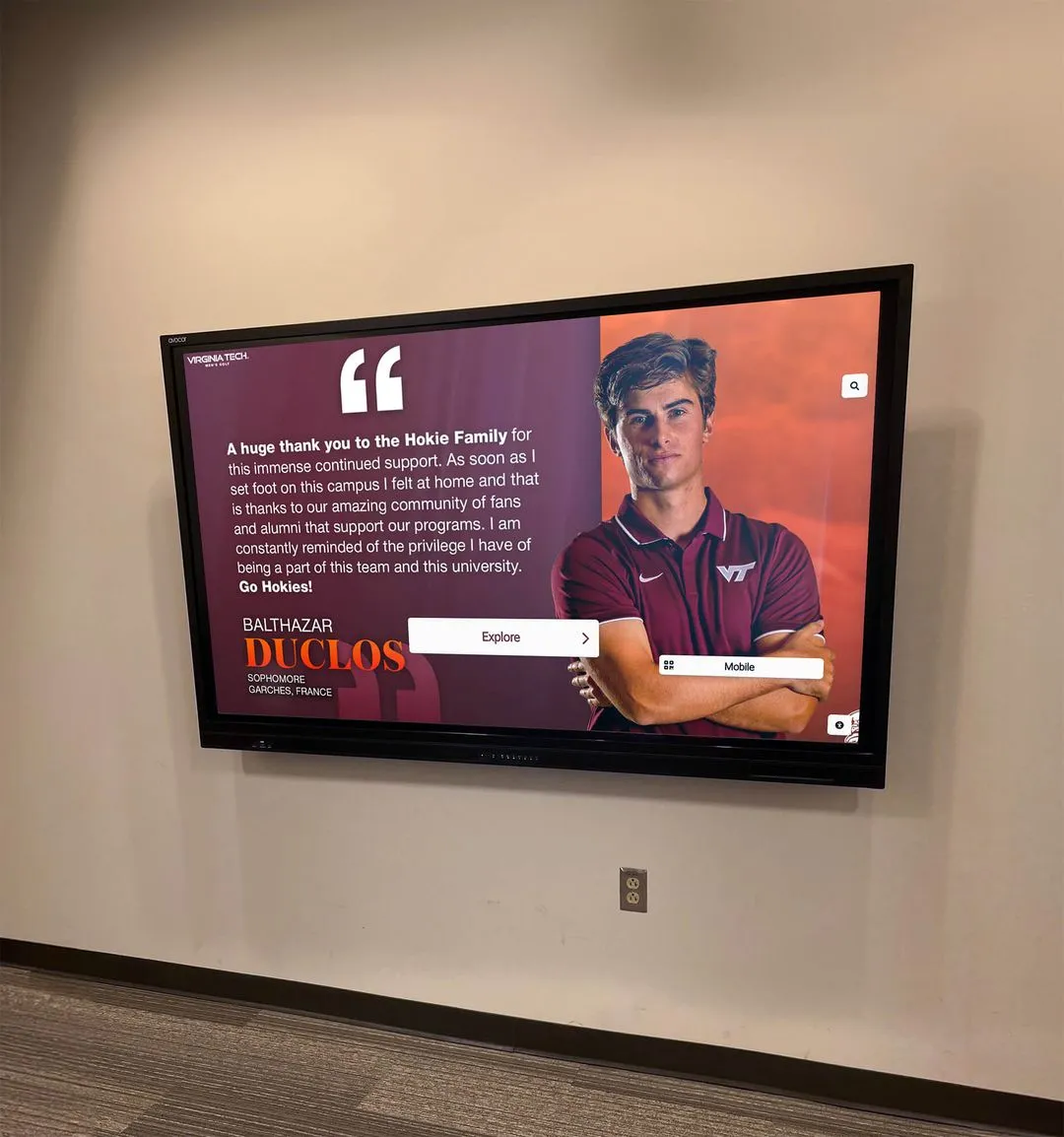
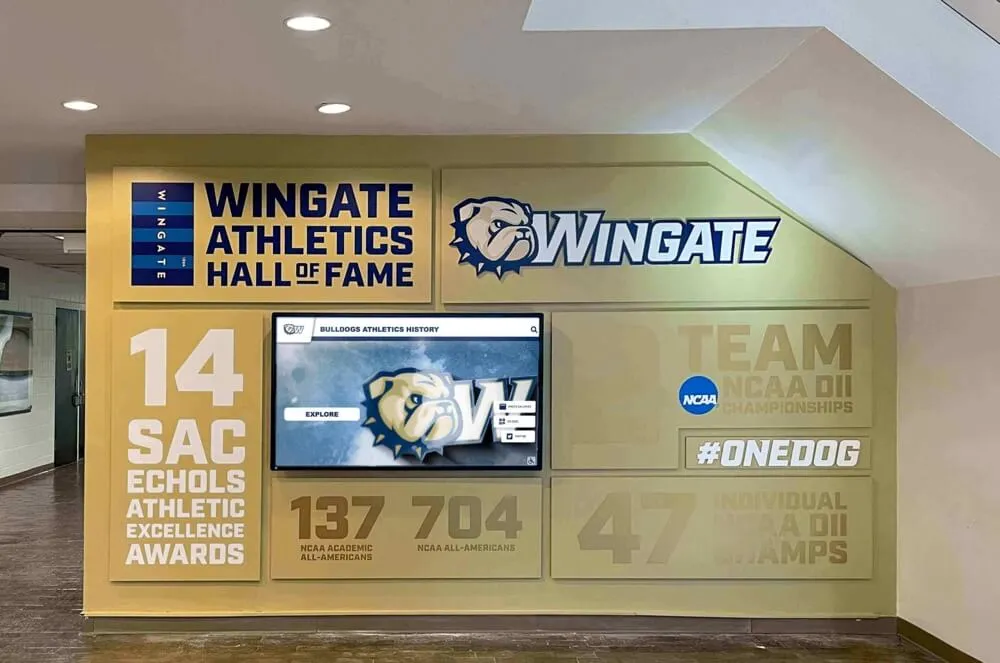
Wall of honor installations that combine physical jersey displays with digital recognition screens bridge seasonal banners and permanent program archives in a single facility space
Connecting Senior Banners to Broader Program Recognition
A volleyball senior banner is most valuable when it connects to a larger recognition structure rather than standing alone as a one-time production. Programs that integrate senior banners into a complete recognition ecosystem—hall of fame archives, individual record boards, alumni profiles, digital lobby displays—give those banners a context that multiplies their significance.
When a current junior walks past a senior banner for a player two classes ahead and can then pull up that player’s full career profile on a lobby touchscreen, the recognition creates a motivational bridge that no single piece of fabric delivers on its own. That kind of connection builds the engaged program culture where recognition actually influences how current athletes think about their own careers.
Ideas for structuring individual athletic recognition across seasons and sports—including how senior spotlights connect to broader award frameworks—appear in roundups of youth sports recognition ideas that cover both physical and digital formats. For programs building or expanding their digital recognition infrastructure, comparisons of touchscreen and interactive recognition platforms provide practical guidance on which systems fit different program sizes and budgets.
The volleyball senior banner is ultimately a starting point—a physical artifact of recognition that declares this player matters to this program in this season. The most enduring version of that declaration is one that does not depend on a fabric banner staying hung and readable for twenty years. It lives in an archive that graduating seniors can access the morning of their college graduation, share with their own children years from now, and point to as lasting evidence that their four years of early practices and late-match rallies meant something to the program they helped build.
Turn Senior Banners Into Permanent Recognition
Rocket Alumni Solutions helps athletic programs build searchable digital archives that preserve senior athlete recognition alongside career statistics, hall of fame profiles, and program history—accessible from anywhere, forever, without filling another inch of gym ceiling.
Explore Rocket Alumni Solutions