Understanding volleyball referee signals transforms the game experience for everyone involved—from players making split-second adjustments to coaches strategizing timeouts, from parents following match flow to officials maintaining consistency. Yet many spectators watch entire matches without fully understanding what referees communicate through their hand signals, missing crucial context about violations, scoring decisions, and game management that shapes competitive outcomes.
Volleyball hand signals represent the universal language of the sport. Unlike verbal calls that may not carry across noisy gymnasiums, standardized hand signals provide clear visual communication ensuring everyone—players on the court, coaches on the sidelines, scorekeepers at the table, and spectators in the stands—understands exactly what officials have called and why play has stopped or points have been awarded.
Whether you’re a new volleyball official learning proper signal mechanics, a coach teaching athletes to recognize calls instantly, a player wanting to understand referee decisions affecting your team, or a parent simply wanting to follow your student’s matches more knowledgeably, this comprehensive guide provides everything you need to decode the visual language officials use to manage every volleyball match.
This visual reference guide explores every volleyball referee signal used by USA Volleyball and FIVB officials, from basic scoring and service signals through complex fault calls and game management communications. You’ll discover what each hand signal means, when officials use specific signals during match situations, how proper signal mechanics ensure clarity, and why understanding referee signals enhances your volleyball program experience whether you’re on the court or celebrating achievements in your school’s athletic recognition displays.

Modern athletic facilities celebrate volleyball achievements through digital recognition displays honoring players who excel on the court
Understanding Volleyball Referee Signal Systems
Before examining individual signals, understanding the overall communication system helps contextualize how officials use hand signals throughout matches.
The Two-Referee System
Most competitive volleyball uses a two-referee system with distinct responsibilities and signal requirements.
First Referee (R1) - Up Referee
The first referee, positioned on an elevated stand at one end of the net, holds primary authority for match decisions. The up referee focuses on net violations, centerline violations, back-row attack faults, blocking violations, and judgment calls about whether balls landed in or out. The R1 makes the final decision on all calls and uses hand signals visible to the entire gymnasium communicating decisions to teams, scorekeepers, and spectators.
The first referee’s signals carry special weight—when both referees disagree about a call, the R1’s decision stands. This authority structure requires the up referee to signal clearly and decisively, establishing credibility through consistent mechanics and confident communication that teams and spectators can trust throughout competitive matches.
Second Referee (R2) - Down Referee
The second referee, positioned on the ground opposite the first referee, manages different aspects of match flow. The R2 focuses on rotation violations, service order errors, substitution procedures, timeout administration, and assisting the first referee with calls from a different angle. The down referee signals primarily to the first referee and scorer’s table rather than the entire gymnasium, though their signals still follow standardized mechanics ensuring clarity.
The second referee serves as crucial support, catching violations the up referee may miss from their elevated position and managing administrative aspects that keep matches flowing smoothly without the first referee needing to leave their position at the net.
Line Judges and Their Signal System
Competitive matches include two or four line judges positioned at court corners, each monitoring specific boundary lines.
Line judges use different signals than referees, employing flags rather than just hand positions to communicate calls visible from across large gymnasiums. Their responsibilities include determining whether balls land in or out on their assigned lines, identifying whether servers step on or over the end line during service, and signaling whether balls touch antennas or pass outside antenna positions on their side of the net.
Understanding line judge signals proves essential for coaches and players because these officials provide crucial information about boundary decisions that determine whether teams earn points or commit violations on plays occurring far from the first referee’s position.
Schools celebrate volleyball program culture through hallway displays honoring team achievements and championship traditions
Basic Volleyball Referee Signals: Scoring and Service
The most frequently used volleyball official signals relate to point scoring and service management that occur on virtually every rally.
Point Award Signals
Point to the Serving Team (Beckon for Service)
When a team wins a rally, the first referee extends their arm toward the team that will serve next, making a beckoning motion bringing the hand from the extended position toward their body. This signal simultaneously awards the point and indicates which team earned the serve, communicating the outcome clearly to scorekeepers who record the point and to teams who need to know whether they rotate.
The beckoning motion should be deliberate and visible, sweeping from full extension toward the referee’s shoulder in a smooth arc that spectators throughout the gymnasium can see clearly, eliminating confusion about which team scored.
Eight-Second Service Timer
After beckoning for service, the first referee immediately starts counting with their other arm, raising it vertically with open palm facing the server. This visual countdown indicates the server has eight seconds to complete their service from when the referee whistled to authorize service.
If the server takes longer than eight seconds, the referee calls a delay sanction by rotating their forearms around each other in a “rolling” motion parallel to their torso. Understanding this timing prevents service delays that slow match pace and risk unnecessary violations that cost points on technicalities rather than competitive play.
Authorization of Service
Whistle and Arm Sweep
The first referee authorizes each service by blowing their whistle while sweeping the arm from a raised position (showing the eight-second timer) laterally across their body, ending with the arm extended horizontally toward the serving team’s court. This distinct arm sweep with whistle indicates the server may now serve—serving before this authorization results in a violation and point for the opponent.
The whistle-and-sweep combination prevents servers from rushing service before officials have verified proper rotation, ensured the receiving team is ready, and confirmed no substitutions or timeouts are pending. This protocol maintains fairness while establishing consistent rhythm that teams anticipate throughout matches.
Service Fault Signals
When servers violate service rules, referees signal the specific fault. A foot fault occurs when the server steps on or over the end line during service contact—the referee points at the end line then makes the point award signal to the receiving team. Service tossing faults happen when servers toss the ball and let it drop without attempting service or when servers violate the toss-and-hit requirement in specific ways.
Service order violations, when teams serve out of rotation, require the second referee signaling by making circular finger motions indicating rotation error, then pointing to the correct server who should have served.
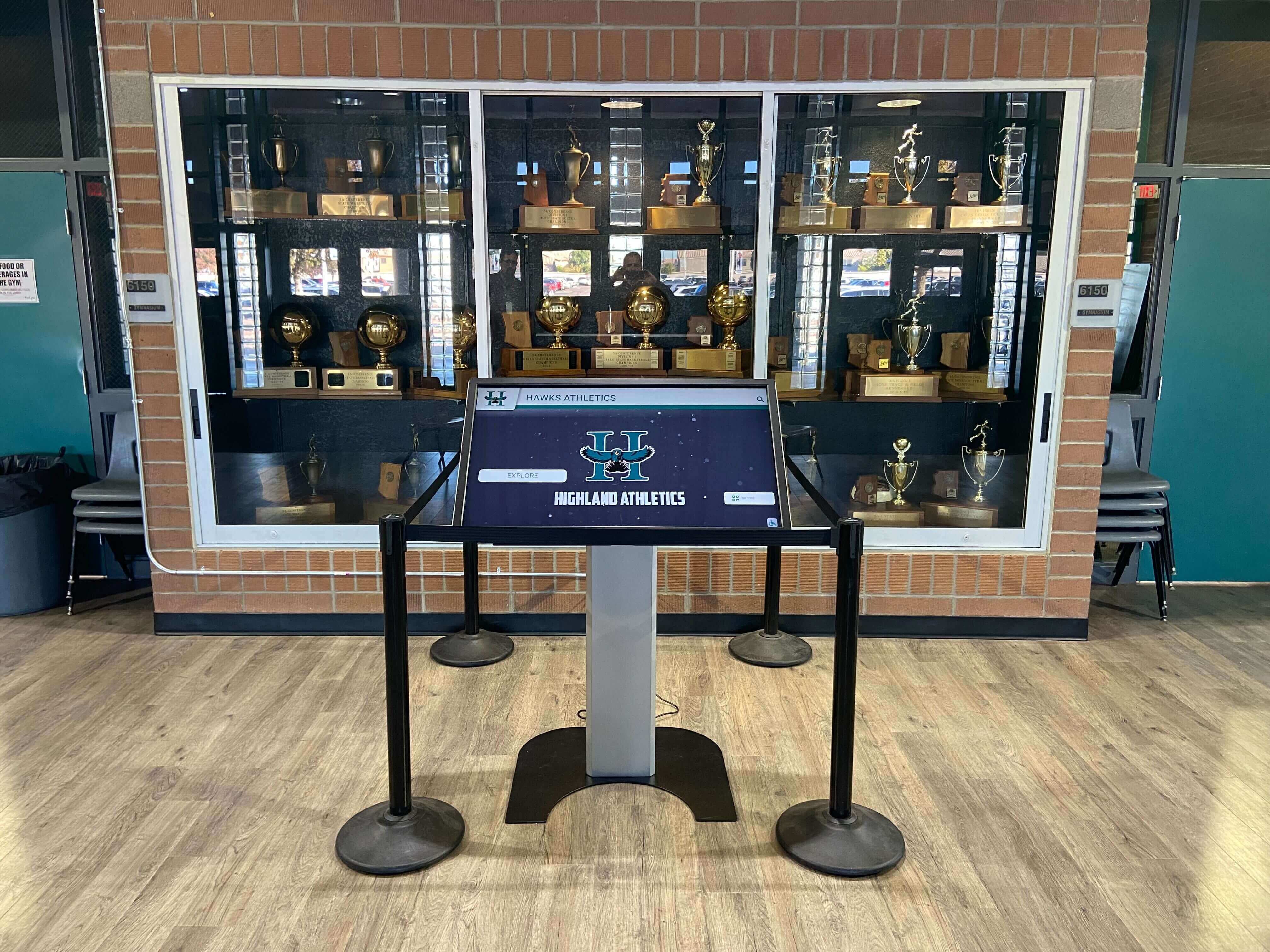
Digital recognition systems in trophy cases allow volleyball programs to showcase championship achievements and player statistics interactively
Net and Attack Violation Signals
Many volleyball referee signals address violations occurring at or near the net during the dynamic exchanges that define competitive rallies.
Net Touch Violations
Net Contact by Player
When a player touches the net during play, the first referee indicates this violation by touching the net on the side of the team that committed the fault. The referee reaches forward with the hand closer to the offending team and touches the net at approximately shoulder height, making the violation clear to everyone watching.
This signal differentiates between different players on opposite sides who may have been near the net, clearly identifying which team committed the violation. After indicating net contact, the referee immediately signals the point to the opposing team, completing the communication sequence that awards points and prepares teams for the next rally.
Net Touch Timing Matters
Not all net contact constitutes a violation—only contact during the action of playing the ball or contact that interferes with play results in faults. Players may touch the net after the ball becomes dead without penalty. Referees use judgment determining whether contact affected play, and their net touch signal indicates they determined the contact was illegal rather than incidental after the rally concluded.
Centerline Violations
Foot Over Centerline
When a player completely crosses the centerline under the net with their foot or hand, the referee signals by pointing down at the centerline with one hand while making a “safe” signal (arms extended horizontally, palms down) with the other hand, then pointing down at the specific location where the violation occurred.
Modern volleyball rules permit players to cross the centerline partially as long as some part of the crossing foot or hand remains on or above the centerline—only complete crossing to the opponent’s court constitutes a violation. This nuance requires officials to watch the centerline carefully during net play where players frequently reach across while attacking, blocking, or pursuing balls near the net.
Screening Violations
When servers’ teammates position themselves or wave arms blocking the receiving team’s view of the server, the first referee signals screening by making a vertical circular motion with the forearm at head height, then pointing to the players who committed the screen. This relatively uncommon violation prevents teams from gaining unfair advantage by hiding serves from opponents’ view until the last moment, ensuring receiving teams can track serves from initial contact through flight toward their court.
Attack Violations
Back-Row Attack Fault
One of volleyball’s most technical violations occurs when back-row players attack the ball from in front of the attack line (ten-foot line) while the ball is completely above the net height. The first referee signals this violation by making a downward brushing motion with the hand, palm down, at approximately mid-torso height while pointing toward the attack line.
This signal specifically indicates an illegal attack from an improper position—back-row players may attack from behind the attack line or from in front of the line if the ball is below net height when contacted. The nuance requires officials to judge both the player’s takeoff position and the ball’s height simultaneously, making back-row attack calls some of the most technically demanding referee decisions.
Four Hits
When a team contacts the ball four times before returning it over the net (exceeding the three-hit maximum), the referee raises four fingers clearly separated, showing the number of illegal contacts. Block contacts do not count as one of the three allowed hits, creating situations where teams may appear to have more touches but remain legal when the first contact was a block.
Double Contact (Double)
When a single player contacts the ball twice in succession or when the ball visibly comes to rest during contact rather than being cleanly directed, the referee signals double contact by raising two fingers together. On setting attempts, referees watch for prolonged contact indicating a lift or throw rather than a clean set—a judgment call requiring officials to distinguish between legal sets and illegal catches based on contact duration and ball rotation.
Understanding these attack violation signals helps players avoid technical faults that coaches can address in practice while preparing athletes for the precise rule enforcement they’ll encounter in competitive matches celebrated in season-end recognition ceremonies.
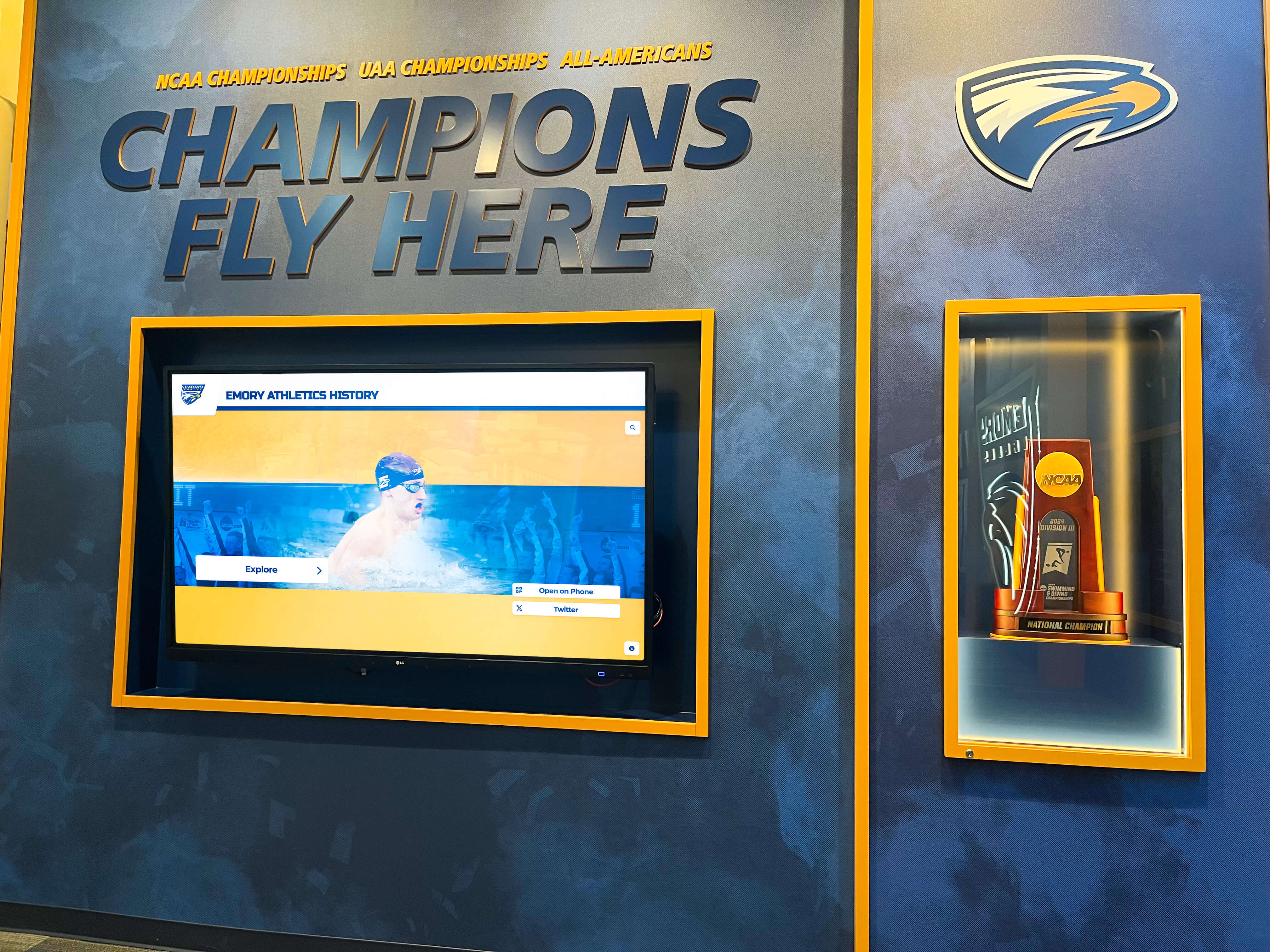
Championship recognition displays celebrate volleyball team excellence while creating inspiring environments honoring tournament success
Blocking Violations and Ball Handling Signals
Blocking represents one of volleyball’s most complex skills, generating specific referee signals addressing various violations that occur during this crucial defensive action.
Blocking Fault Signals
Illegal Block or Screen
When back-row players participate in completed blocks—blocks where they contact the ball or are part of a collective block that contacts the ball—the first referee signals by placing both hands vertically in front of the face with palms facing outward, then lowering them to chest height. This signal indicates an illegal participation in blocking by a player not permitted to block based on their rotational position in the back row.
Front-row players may block, but back-row players may only jump near the net without touching blocked balls or being part of the blocking action. This distinction requires officials to track rotations carefully, knowing which players occupy front-row versus back-row positions throughout each rotation.
Blocking the Serve
Blocking or attacking opponent serves is illegal at all levels of volleyball. When a team commits this violation by jumping at the net to block or attack an opponent’s serve before it crosses the net plane or while it is completely above net height in the opponent’s court area, the referee signals by placing both hands above the head in a blocking position, then immediately awarding the point to the serving team.
This rarely-seen violation typically occurs when aggressive teams overcommit to quick attacks, forgetting they cannot interfere with serves using the same blocking techniques legal during regular rallies.
Ball Handling Signal Variations
Lift or Carry
When players catch, lift, or throw the ball rather than cleanly contacting it, the referee signals by making an upward motion with both palms facing upward as if lifting something. This signal indicates the ball came to rest in the player’s hands rather than being legally played, often called on setting attempts where hands close around the ball or contacts last too long creating visible carries.
Lift calls represent judgment decisions where officials determine whether contact duration exceeded acceptable limits—one of the more controversial calls because players and coaches may disagree with officials about whether borderline contacts constituted legal plays or illegal lifts.
Ball Touched (Team)
When the first referee is uncertain whether a ball was touched by a player before going out of bounds or crossing the net, they may consult the second referee or line judge. If officials confirm a touch, the referee signals by brushing one hand across the fingers of the opposite hand held vertically, indicating the ball contacted a player. This signal commonly occurs on block touches, where balls deflect off blockers’ hands before traveling out of bounds—the touch awards the point to the opponent because the team that last touched the ball caused it to go out.
Understanding ball-touched signals proves crucial for coaches tracking whose errors led to point losses and for teams preparing for recognition celebrations that honor defensive specialists whose blocking touches forced opponent errors even when the blocks didn’t result in immediate kills.
Line Judge Signals: Boundary and Antenna Calls
Line judges use flag signals providing crucial information about balls landing near boundaries or passing outside legal airspace defined by antennas.
In/Out Boundary Signals
Ball In
When a ball lands clearly inside the court on the line judge’s assigned boundary line, the judge signals “in” by pointing their flag downward at a 45-degree angle toward the court, indicating the ball contacted the court within legal boundaries. In volleyball, balls touching boundary lines are considered in, so line judges signal “in” even when balls contact the line itself rather than landing inside it completely.
The downward flag angle provides a clear visual signal distinct from out-of-bounds signals, ensuring referees, players, and coaches can see the line judge’s call from across the gymnasium even in noisy competitive environments where verbal communication proves impossible.
Ball Out
When a ball lands outside the court beyond the boundary line, the line judge raises the flag vertically straight upward above their head, signaling “out” clearly. This vertical flag position contrasts sharply with the downward “in” signal, preventing confusion and allowing the first referee to see the call immediately without needing to seek out the line judge’s position.
If the line judge cannot see whether the ball landed in or out due to visual obstruction or the ball’s position relative to their sightline, they wave the flag back and forth in front of their torso, indicating they were unsighted and cannot make a definitive call. The first referee then makes the decision based on their perspective or defers to other line judges who may have had better views.
Ball Touched Before Going Out
When a ball was touched by a player before crossing the boundary (typically on defensive digs or blocks), the line judge signals this touch by brushing their free hand across the top of the flag hand, similar to the referee’s ball-touch signal but using the flag as the reference point. This signal indicates that while the ball went out of bounds, the team that touched it last should be charged with the error rather than the team that hit the ball toward the boundary.
Antenna and Net Signals
Ball Crosses Net Outside Antenna
The antenna—the flexible vertical rod attached at each edge of the net—defines the legal crossing space for the ball. When balls cross the net outside the antenna on either side or contact the antenna during flight, line judges signal this violation by waving the flag vertically overhead in a back-and-forth motion, indicating illegal crossing or antenna contact.
This signal proves crucial on serves and attacks near the sidelines where balls may appear to cross legally from some viewing angles but actually passed outside the defined crossing space marked by antennas.
Service Foot Fault
Line judges positioned at the service end line watch for service foot faults—when servers step on or over the end line before contacting the ball during service. When a foot fault occurs, the line judge raises the flag and points toward their feet or the end line, indicating the server violated service position rules by stepping into the court too early.
These foot fault calls require line judges to watch the server’s feet precisely during the serving motion rather than tracking the ball, dividing attention between ensuring proper service technique and confirming the ball’s trajectory after contact.
Understanding line judge signals helps players and coaches recognize when to challenge calls in systems permitting challenges, and helps spectators follow the detailed officiating that determines whether championship-caliber performances deserve recognition during season-end celebrations honoring athletic achievement across entire programs.
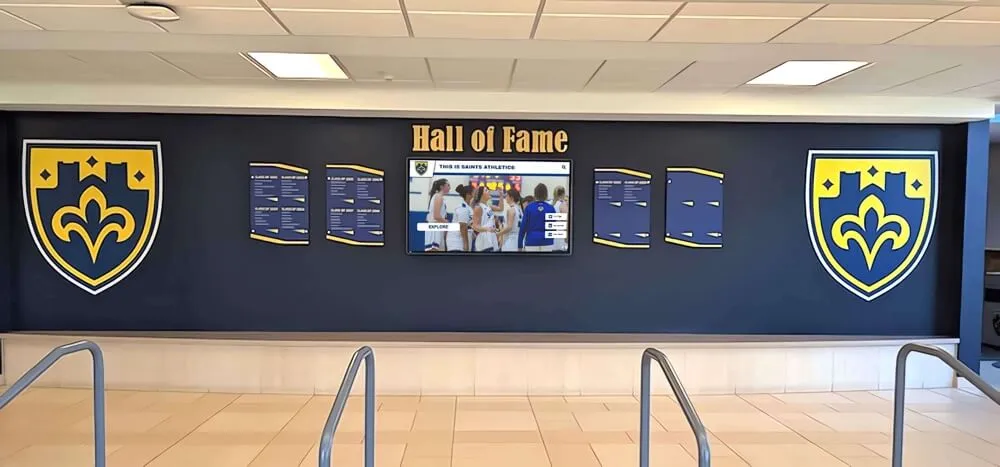
Integrated recognition systems honor volleyball program traditions combining classic commemorative elements with interactive achievement displays
Game Management and Procedural Signals
Beyond calling faults and awarding points, referees use hand signals managing match flow, substitutions, timeouts, and sanctions that maintain competitive fairness and consistent pace.
Timeout and Substitution Signals
Timeout
When a team requests a timeout, the second referee signals by forming a “T” with both hands—one hand held vertically with the other hand placed horizontally at its top, creating the letter T visible to scorekeepers and the first referee. Timeouts in volleyball are brief (typically 30 seconds or 60 seconds depending on the level), requiring officials to track timeout duration and signal when play should resume.
The first referee acknowledges the timeout by making the same T signal, confirming the timeout is official and stopping the timing. Understanding timeout signals helps teams track how many timeouts remain and when they’ve been properly charged to each team’s allowance.
Substitution
When teams substitute players, the second referee signals by making a circular motion with forearms rotating around each other at chest height, indicating a substitution is being processed. The R2 manages the substitution procedure, verifying the substitute is legal, checking the scorer has recorded the substitution properly, and ensuring proper player rotation before authorizing play to continue.
Teams are limited in the number of substitutions per set (typically 6-12 depending on the governing rules), making substitution tracking important for coaches managing player rotations strategically throughout matches.
Delay and Sanction Signals
Delay Warning
When teams delay the match through slow substitutions, extended discussions, or other tactics that interrupt normal flow, referees signal delay warnings by making a rolling motion with both hands rotating around each other at waist height. This warning indicates the team is consuming excessive time, and continued delays will result in formal delay sanctions costing points.
Yellow and Red Cards
Volleyball uses a card system for misconduct and sanctioning inappropriate behavior:
A yellow card serves as a formal warning for minor misconduct—shown by the referee holding the yellow card overhead, this indicates the first formal sanction without immediate point penalty but establishing that continued misconduct will result in point loss.
A red card penalizes misconduct with a point and service to the opponent—shown by holding the red card overhead, this sanctions serious misconduct or repeated minor violations after a yellow card warning.
A yellow and red card shown together (held in separate hands simultaneously) results in expulsion—the penalized individual must leave the playing area for the remainder of the set, and their team loses a point and service.
Understanding sanction signals prevents escalation and helps teams recognize when behavior crosses from competitive intensity into unsportsmanlike conduct requiring official intervention.
End-of-Set and Match Signals
End of Set
When a set concludes because a team reached the winning point total with the required two-point margin, the first referee crosses their forearms in front of their chest at wrist level, then extends them outward in a sweeping motion, signaling the set’s conclusion. This signal prompts teams to switch sides if additional sets remain and alerts scorekeepers to finalize the set score before beginning the next set.
End of Match
When the final set concludes, determining match outcome, the first referee makes a more emphatic crossed-arm signal, often holding the position longer and sometimes raising the arms overhead in the crossed position before sweeping them apart, signaling match conclusion. This prompts teams to form lines for the traditional post-match handshake ceremony and alerts tournament officials that the court will soon be available for subsequent matches.
These procedural signals maintain match flow and fairness, ensuring competitive integrity that makes championship achievements meaningful when honored through recognition programs celebrating athletic excellence and sportsmanship.
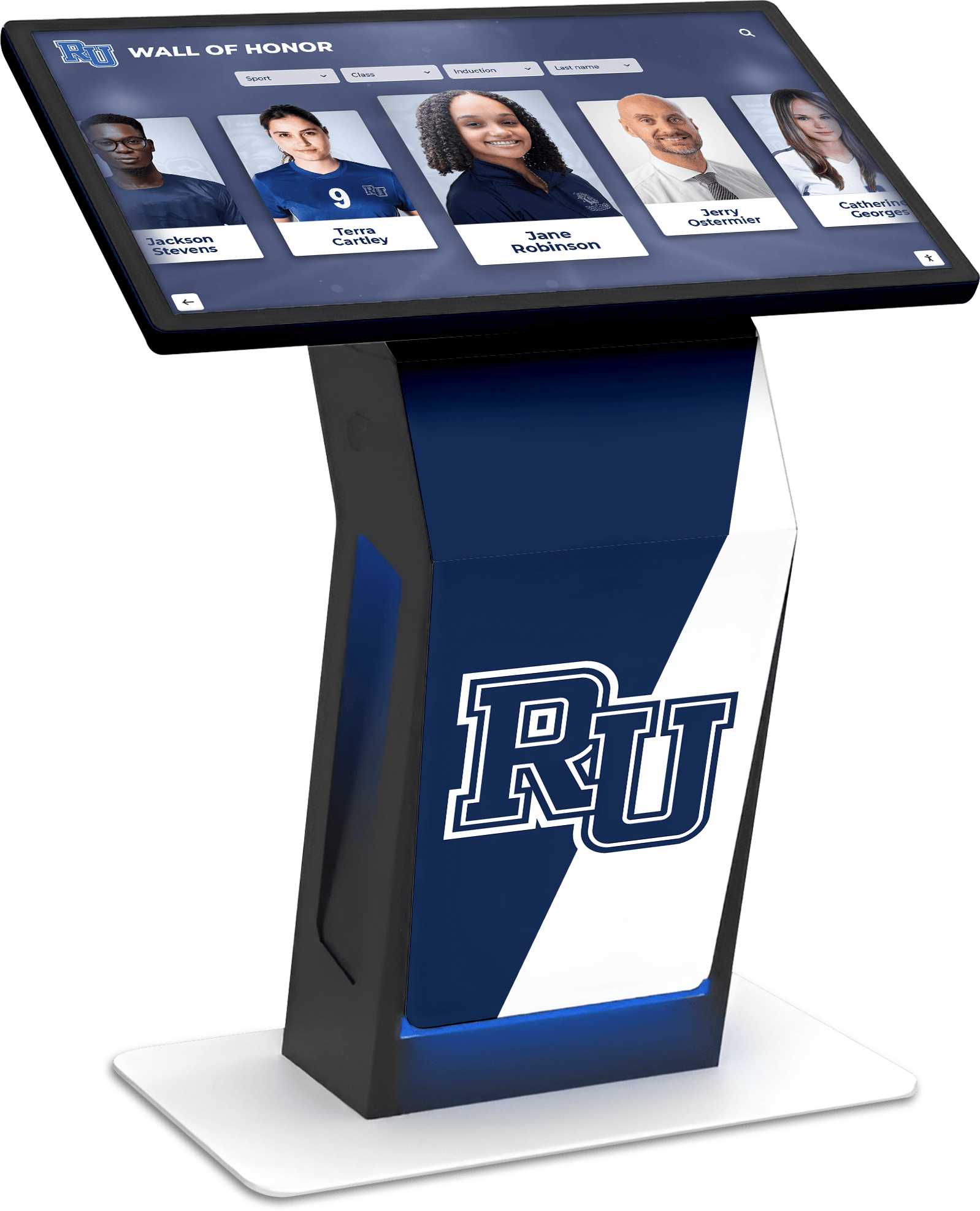
Professional digital recognition installations enable volleyball programs to showcase player profiles, statistics, and championship histories interactively
Special Situation Signals and Replay Challenges
Advanced competitive volleyball includes additional signals addressing unique situations, replay reviews, and challenge systems at higher competition levels.
Ball Contact and Possession Signals
Ball Touched by Team
Beyond the basic ball-touched signal, referees sometimes need to indicate which team last touched the ball when simultaneous contact occurs or when determining possession after unusual plays. The referee points toward the team that touched the ball last or that will receive possession based on the decision, often combined with other signals explaining the reasoning.
Simultaneous Contact
When players from opposing teams contact the ball simultaneously during net play, creating a joust or true simultaneous contact, the referee signals by raising both arms vertically overhead, indicating the play results in a replay without penalty to either team. The next serve goes to the team that served the previous rally, essentially replaying the point when neither team gained advantage from the simultaneous contact.
Replay Signal
In situations requiring a replay—equipment malfunction, external interference, or other circumstances where neither team should be penalized—the referee rolls their hands around each other at shoulder height making a large circular motion, indicating the rally will be replayed with the same server attempting service again.
Challenge and Review Signals
Challenge Request
At levels using video review challenge systems, coaches request challenges by forming a “C” shape with their hand or making a rectangular television-screen shape with their hands, indicating they wish to challenge the previous call using video replay review. The first referee acknowledges the challenge request, then signals to scorekeeper and review officials that a challenge is being processed.
Challenge Outcome Signals
After video review, the first referee signals the outcome:
If the challenge is successful (the call is overturned), the referee makes the corrected call using appropriate signals, then taps the wrist of one arm with the fingers of the opposite hand, indicating the challenging team retains their challenge for potential future use.
If the challenge is unsuccessful (the call is confirmed as correct), the referee repeats the original signal, then makes a sweeping brushing motion across the forearm, indicating the challenging team has lost their challenge and may not challenge again in that set.
Understanding challenge procedures helps coaches strategize when to use limited challenges on calls most likely to be overturned and most significant to match outcome.
Rare and Specialized Signals
Illegal Replacement
When a replacement player enters incorrectly or a team exceeds substitution limits, the second referee makes a circular motion with their index finger, then crosses both forearms in front of the chest in an X pattern, indicating an illegal replacement has occurred. This results in the improper substitution being reversed and potentially a point penalty depending on whether the violation was inadvertent or intentional.
Court Switch Error
If teams switch court sides at the wrong time or fail to switch when required between sets, the referee makes a circular motion with both arms at shoulder height, indicating court switch is needed or occurred incorrectly, then points to the correct court positions where teams should be positioned.
These specialized signals address unusual situations that officials rarely encounter but must handle consistently when they occur, maintaining the procedural integrity that makes volleyball competition fair and meaningful for players developing skills worthy of recognition when programs celebrate achievements through comprehensive recognition systems.
Learning and Mastering Volleyball Referee Signals
Whether you’re a new official, coach, player, or dedicated parent, effectively learning volleyball hand signals requires systematic study and practical application.
For New Volleyball Officials
Study USA Volleyball and FIVB Resources
USA Volleyball provides comprehensive officiating resources including signal diagrams, video demonstrations, and training materials for officials at all levels. The FIVB (International Volleyball Federation) maintains the international standard for signals used worldwide, ensuring consistency across different competition levels and geographic regions.
New officials should study official signal charts showing proper hand positions, arm angles, and movement sequences for each signal, ensuring their mechanics match standardized forms that players and coaches recognize consistently across different officials. Video resources showing experienced referees performing signals in game contexts help officials understand proper timing and positioning that makes signals visible throughout gymnasiums.
Practice Signal Mechanics
Effective signals require practice developing muscle memory for proper hand positions and smooth execution. Officials should practice in front of mirrors checking that signals appear clear and distinct, rehearse signal sequences commonly used together (point award following fault signals), and work with mentoring officials who observe mechanics and provide feedback about visibility and clarity.
Consistent mechanics build credibility—when officials execute signals the same way every time, players and coaches trust the officiating because predictable mechanics indicate mastery and confidence rather than hesitation suggesting uncertainty about calls.
Attend Officials Clinics and Certification Programs
Formal officiating education through regional volleyball associations provides structured learning, practical assessments, and certification validating competency at specific officiating levels. Clinics include classroom instruction on rules and signals, on-court practice officiating scrimmages with feedback, written testing on rules knowledge, and practical evaluations where experienced officials assess signal mechanics and game management skills.
Certification programs create pathways for officials to advance from youth and recreational levels through high school, club, college, and potentially national or international competition as skills develop and experience accumulates over multiple seasons.
For Coaches and Players
Incorporate Signal Recognition in Practice
Coaches can help players recognize signals instantly by incorporating signal review into practice sessions: reviewing common signals before scrimmages, having coaches make signals during drills calling hypothetical violations, stopping scrimmages to explain referee signals when they occur, and testing players on signal recognition to ensure understanding that prevents confusion during competitive matches.
When players recognize signals immediately, they respond faster to referee calls, avoid arguing about decisions they don’t understand, and demonstrate professionalism that referees appreciate, potentially influencing borderline judgment calls in close competitive situations where referee perception of team conduct may unconsciously affect decision-making.
Use Signals as Teaching Moments
When referees call violations during matches or practice scrimmages, coaches should treat these as teaching opportunities explaining why the call occurred, what signal the referee used and what it means, how players can avoid similar violations in the future, and what adjustments the team should make responding to patterns in how specific referees interpret rules.
This coaching approach transforms referee calls from frustrating interruptions into learning experiences that improve technical skills and rules knowledge, ultimately making players more sophisticated competitors who play within rules while maximizing performance rather than committing unnecessary technical violations that cost points on technicalities.
For Parents and Spectators
Study Basic Signals Before Matches
Parents wanting to follow matches more knowledgeably can study basic volleyball referee signals before attending competitions, focusing on the most common signals they’ll see frequently: point awards and service authorization, basic fault signals like net violations and out-of-bounds, timeout and substitution signals for understanding match flow, and end-of-set signals marking major match milestones.
Understanding these core signals allows spectators to follow match flow without constantly asking neighbors what happened, appreciating the skill and athleticism on display more fully when they understand both the action and the officiating that governs competitive play.
Respect Officials Even When Disagreeing
Officials make judgment calls based on their viewing angles and interpretation of rules that sometimes differ from what spectators believe they saw from different perspectives. Respectful spectator behavior creates positive competitive environments and models sportsmanship for student-athletes who learn as much from how adults behave as from what coaches explicitly teach.
Understanding that officials use standardized signals following precise training helps spectators appreciate the professionalism officials bring to competition and the difficulty of making split-second decisions about fast-paced action requiring judgment under pressure from invested coaches, players, and fans with competing interests.
Quality officiating and respectful competitive environments create the meaningful athletic experiences that schools celebrate through comprehensive recognition programs honoring not just championship results but also the sportsmanship and character development that make athletic participation valuable beyond wins and losses.
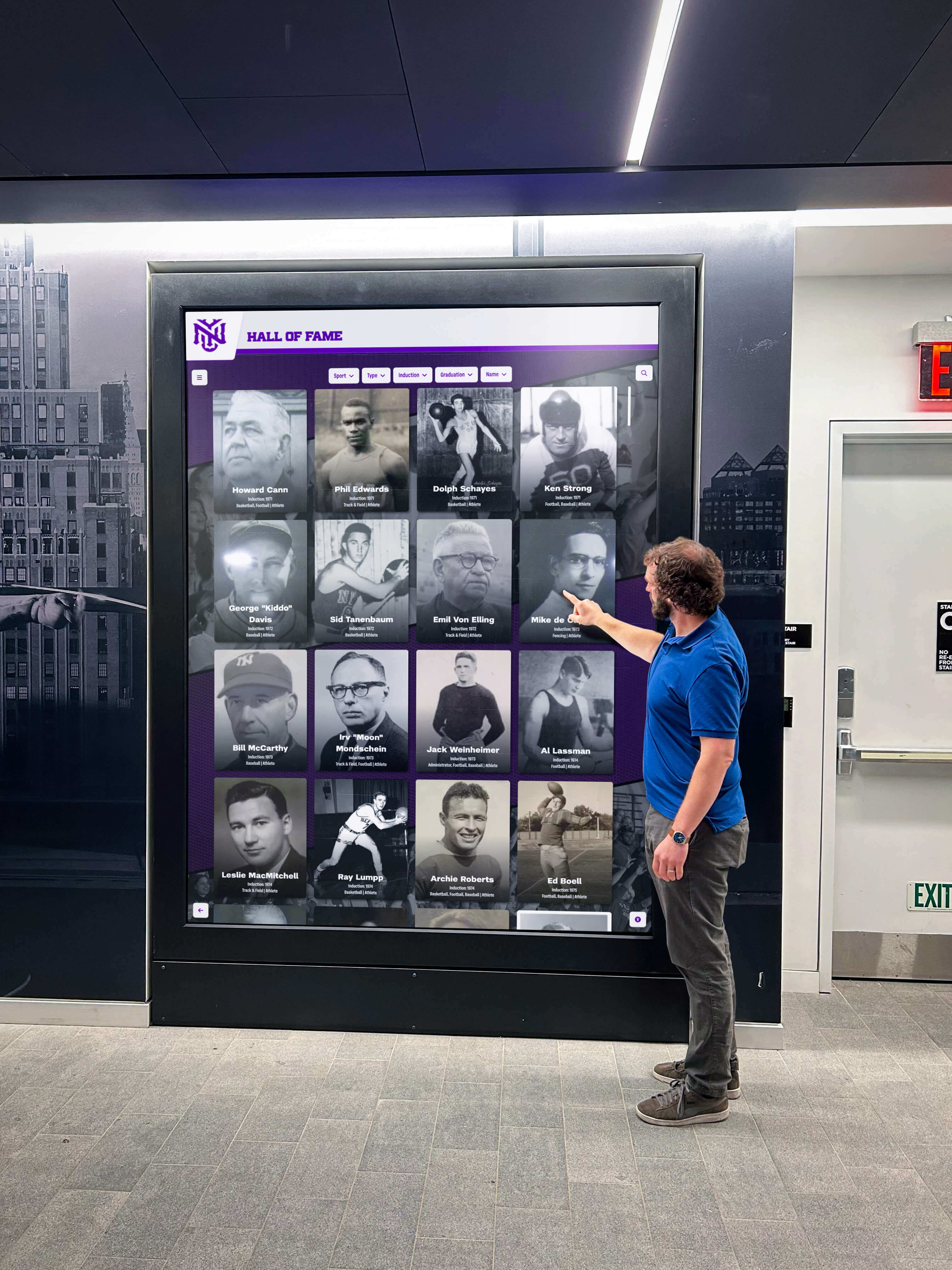
Interactive athletic recognition displays create engaging ways to explore volleyball program history and honor players who exemplified excellence and sportsmanship
How Understanding Referee Signals Enhances Program Culture
Knowledge of volleyball referee signals extends beyond just following match action—it contributes to comprehensive program development and culture building that distinguishes excellent volleyball programs from merely competitive ones.
Building Rules Knowledge and Volleyball IQ
Players who understand referee signals develop deeper volleyball knowledge recognizing not just what was called but why violations occurred and how to avoid them. This sophisticated understanding separates advanced players from beginners who simply react to whistles without understanding the technical requirements that officials enforce during competitive matches.
Coaches can build on signal knowledge teaching players to recognize referee tendencies—some officials strictly enforce certain violations while others allow more contact, some referees signal immediately while others allow plays to develop before making calls, and different officials interpret judgment calls like lifts or net touches with varying strictness. Understanding these tendencies helps teams adjust tactics based on how specific matches are being officiated.
Enhancing Communication and Reducing Conflict
Teams that understand referee signals spend less time arguing and more time competing, accepting calls quickly and refocusing on the next rally rather than dwelling on past decisions that cannot be changed. This emotional control represents a competitive advantage because teams that maintain composure and focus consistently outperform equally skilled teams that lose emotional control arguing with officials about calls they cannot change.
Coaches who educate players about signals can defuse potential conflicts by explaining calls quickly during timeouts rather than allowing frustration to build when players don’t understand why referees made specific decisions. This conflict reduction creates positive relationships with officials who appreciate teams that compete hard but respectfully, potentially influencing how officials perceive borderline plays when judgment calls could reasonably go either way.
Supporting Comprehensive Athletic Recognition
Understanding the complete volleyball experience—including officiating, rules, and competitive procedures—enriches the athletic achievement that programs celebrate through comprehensive recognition systems. Programs that honor not just statistical leaders but also players who demonstrated exceptional sportsmanship, respected officiating, and modeled character under competitive pressure send powerful messages about what institutions truly value.
When schools celebrate volleyball achievements through digital recognition displays, team photos, championship banners, and hall of fame inductions, they preserve memories of seasons where athletes learned lessons extending far beyond volleyball techniques—lessons about respect for authority, emotional control under pressure, graceful acceptance of adverse decisions, and maintaining integrity even when competitive outcomes disappoint.
These character qualities developed through volleyball participation, reinforced through proper understanding of rules and officiating that maintains competitive fairness, create the comprehensive educational value that justifies athletic program investment and merits the permanent celebration schools provide through facility recognition systems connecting current students to institutional traditions and values spanning generations.

Comprehensive facility recognition creates constant visibility for volleyball achievements and program traditions throughout school environments
Conclusion: The Universal Language of Volleyball Excellence
Volleyball referee signals represent more than just communication mechanics—they embody the universal language that makes volleyball competition fair, understandable, and enjoyable for everyone involved regardless of language barriers or prior experience with the sport. From the first beckoning signal awarding the opening point through the final crossed-arm signal ending championship matches, hand signals provide the visual communication system that enables volleyball’s fast-paced action while maintaining the procedural integrity essential to meaningful competition.
Understanding volleyball official signals enhances the experience for every stakeholder in volleyball programs. Officials execute signals with confidence and consistency when they’ve mastered proper mechanics through dedicated study and practice. Coaches strategize more effectively when they recognize signals instantly, understanding how referees are interpreting rules and adjusting tactics accordingly. Players compete more successfully when they anticipate calls before they occur, avoiding violations through technical mastery and rules knowledge that separate advanced competitors from beginners still learning the game.
Parents and spectators enjoy matches more fully when they understand the visual language officials use to manage competition, following match flow without confusion and appreciating both the athletic skill on display and the professional officiating that enables fair competition. Program administrators build stronger volleyball cultures when they emphasize complete volleyball education including rules knowledge and officiating understanding alongside technical skill development and competitive preparation.
The hand signals explored throughout this guide—from basic service authorization through complex blocking violations, from line judge boundary calls through game management procedures—create the standardized communication system that makes volleyball comprehensible worldwide. These signals transcend language barriers, enabling international competition where officials from different countries manage matches using the same visual language that players everywhere recognize regardless of their native languages.
As your volleyball program develops, consider how comprehensive education including officiating knowledge contributes to the complete athletic experience worthy of celebration. Programs that emphasize sportsmanship, rules mastery, and respectful competition alongside competitive success create the meaningful achievements that schools proudly preserve through permanent recognition systems honoring not just championship trophies but also the character development and educational growth that make athletic participation valuable throughout life.
Solutions like Rocket Alumni Solutions enable volleyball programs to celebrate achievements comprehensively—championship seasons, individual statistical leaders, sportsmanship award recipients, coaching milestones, and program traditions spanning decades. Digital recognition platforms transform static trophy cases into interactive explorations of program history, allowing current players to discover predecessor achievements, prospective families to understand program culture and values during recruitment, and alumni to reconnect with their experiences while following current team development through accessible displays that engage communities year-round.
Your volleyball program invests tremendous resources developing athletes—coaching expertise, facility costs, equipment, travel, competition fees, and countless hours of practice time. The achievements your players earn through this investment deserve recognition matching their significance. When athletes master not just technical volleyball skills but also the complete competitive experience including rules knowledge and officiating understanding, they develop comprehensive volleyball literacy that serves them whether they continue playing at higher levels or carry lessons learned into other life domains requiring rules mastery, emotional control, and respectful engagement with authority.
Ready to celebrate your volleyball program’s achievements while building lasting traditions that connect current players to institutional excellence spanning generations? Explore comprehensive digital recognition platforms that preserve championship memories, honor individual accomplishments, and create engaging interactive experiences showcasing your program’s proud history through modern technology accessible to athletes, families, alumni, and communities celebrating volleyball excellence together.