



Intent: decide — Schools seeking digital hall of fame displays frequently face a common frustration when requesting quotes: vendors provide hardware pricing but leave critical questions unanswered about content setup, data migration, staff training, and ongoing support. A true turnkey solution should include everything needed to go from empty screen to fully operational recognition system, yet many providers treat these essential services as separate line items or afterthoughts. Understanding complete pricing—including hardware, installation, content creation, training, and support—becomes essential for accurate budget planning and vendor comparison.
Most schools want a single point of contact who handles physical installation, imports existing honoree data, trains staff on content management, and provides responsive technical support throughout the system’s lifespan. When evaluating providers, the definition of “turnkey” varies dramatically. Some vendors ship hardware and expect schools to figure out mounting, networking, and content creation independently. Others provide comprehensive white-glove service from initial consultation through launch and beyond.
Schools typically discover these differences only after selecting a vendor, when unexpected costs for mounting brackets, network configuration, content design, or training sessions appear. Smart institutions request detailed pricing breakdowns upfront, comparing not just hardware costs but the total investment required to create a functioning recognition experience that engages students, honors alumni, and activates community participation.
What “Turnkey” Actually Means for Digital Hall of Fame Systems
The term “turnkey” promises simplicity—one vendor handling everything from hardware procurement through final installation and training. In practice, turnkey services for digital hall of fame displays vary significantly across providers. Some companies offer truly comprehensive packages while others use “turnkey” as marketing language for basic hardware sales.

Essential Components of True Turnkey Service
Complete turnkey implementations should include these core elements:
Hardware and Physical Installation
- Commercial-grade touchscreen display or wall-mounted screen
- Professional mounting hardware appropriate for wall type (brick, drywall, concrete)
- All necessary cables, power management, and network connectivity
- On-site installation by certified technicians
- Integration with existing network infrastructure
- Physical setup coordination with facilities staff
Content Setup and Data Migration
- Initial system configuration and branding
- Import of existing inductee data from spreadsheets, documents, or databases
- Photo digitization or optimization for display requirements
- Template design matching school colors and identity
- Content organization into logical categories (sports, academics, performing arts, etc.)
- Quality control review before launch
Training and Documentation
- Live training sessions for administrative staff
- Recorded video tutorials for future reference
- Written documentation covering common tasks
- Training on content updates, publishing workflows, and troubleshooting
- Guidance on establishing internal content approval processes
Ongoing Support and Maintenance
- Technical support via phone, email, or online portal
- Software updates and security patches
- Hardware warranty coverage
- Remote troubleshooting assistance
- Access to knowledge base and user community
When providers include all these elements in quoted pricing, schools can accurately compare total cost of ownership. When vendors exclude certain components, schools should request itemized pricing for each element to understand true implementation costs.
Typical Pricing Ranges for Turnkey Digital Hall of Fame Solutions
Digital hall of fame pricing varies based on screen size, touchscreen capabilities, content complexity, and service level. Schools should expect the following general ranges for complete turnkey implementations:
Entry-Level Systems ($3,000 - $7,000)
Basic systems typically include:
- 43"-55" commercial display or touchscreen
- Standard mounting hardware
- Basic content management system
- Initial content setup (50-100 inductees)
- Remote training session
- Email support
These systems work well for smaller schools with modest recognition needs. Content management typically requires basic technical skills. Updates happen through web-based interfaces accessible from any computer.
Mid-Range Systems ($7,000 - $15,000)
Professional systems typically include:
- 55"-65" commercial touchscreen display
- Professional mounting and installation
- Comprehensive content management platform
- Extensive content setup (100-500 inductees)
- On-site training for multiple staff members
- Phone and email support with faster response times
- Basic customization of templates and branding
These systems suit medium-sized high schools and smaller colleges seeking robust recognition capabilities without enterprise-level complexity.
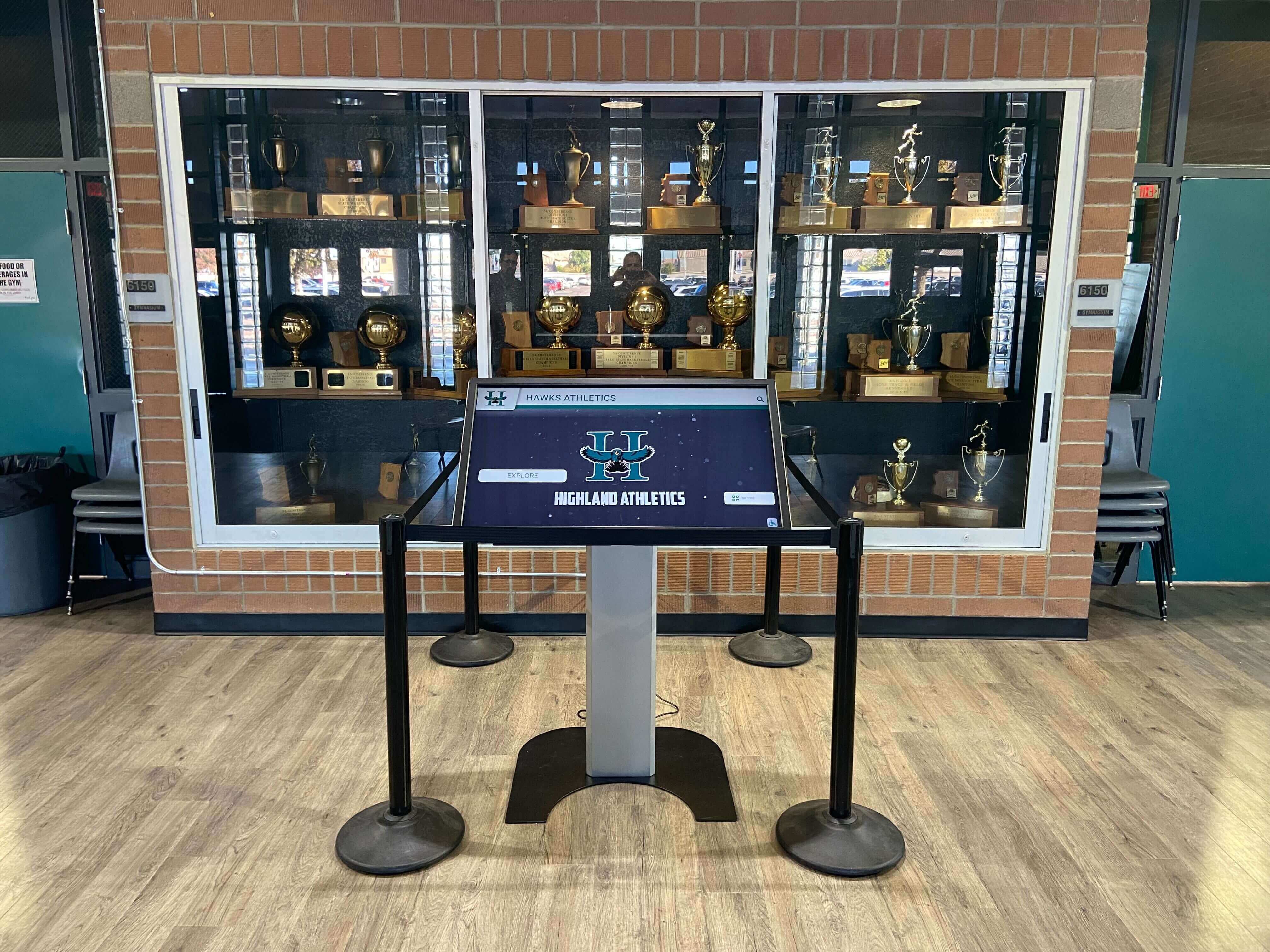
Enterprise Systems ($15,000 - $35,000+)
Comprehensive solutions typically include:
- Multiple displays (65"+ each) or video wall configurations
- Custom mounting solutions and professional installation
- Advanced content management with unlimited capacity
- Extensive initial content creation (500+ inductees)
- Full-day on-site training with multiple sessions
- Dedicated account management
- Priority support with guaranteed response times
- Custom template design and branding
- Advanced features: QR code mobile access, social sharing, interactive donor recognition, sponsorship capabilities
Large high schools, universities, and athletic departments typically invest at this level to create signature recognition experiences that serve multiple purposes—honoring inductees while generating community engagement and potential sponsorship revenue.
Key Providers Offering Turnkey Digital Hall of Fame Solutions
Several providers specialize in turnkey digital recognition systems for schools. Each approaches the market with different philosophies regarding pricing, service levels, and technology platforms.
Rocket Alumni Solutions
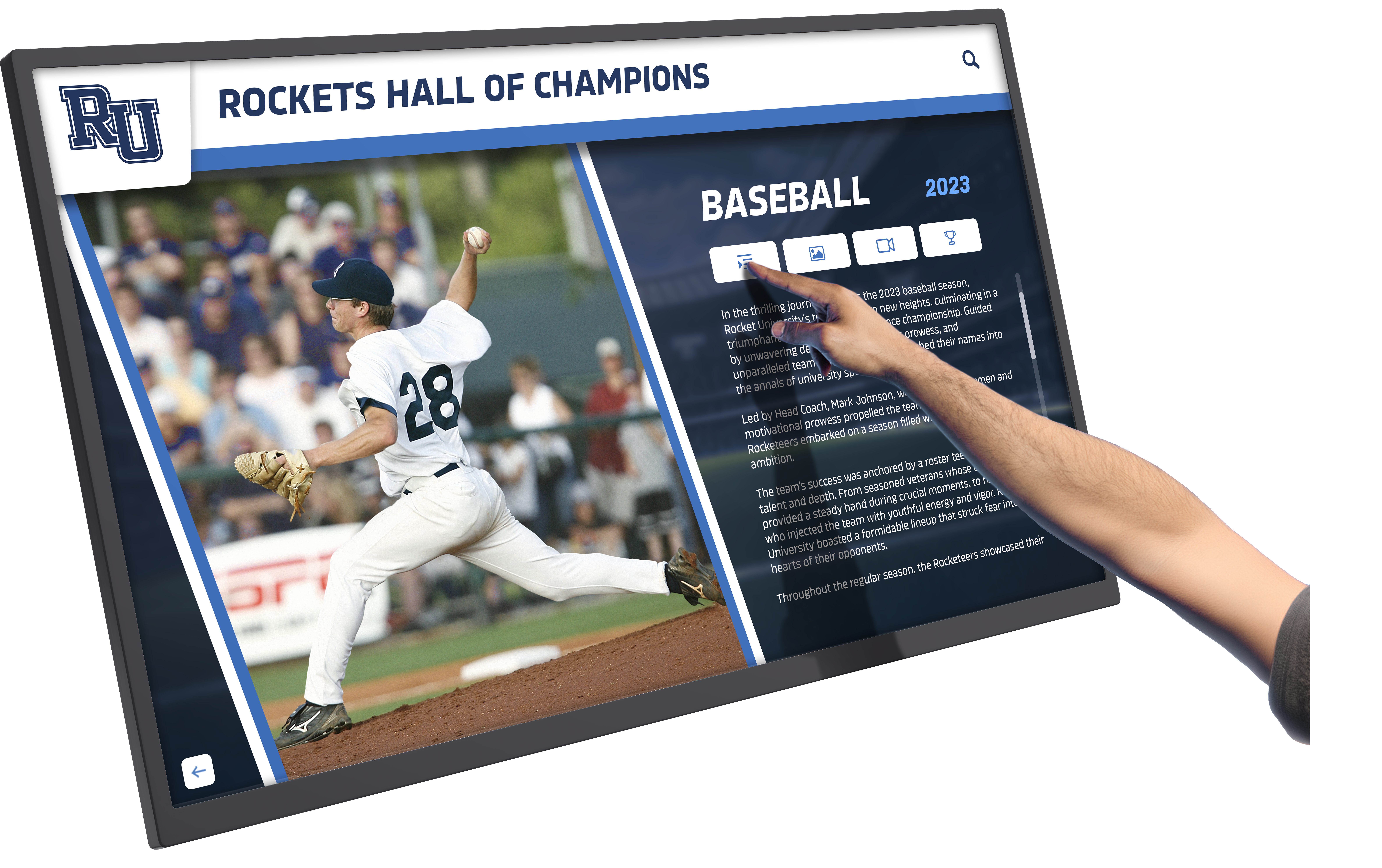
Rocket Alumni Solutions positions itself as the comprehensive turnkey provider specifically designed for schools, universities, and athletic programs. Their approach emphasizes removing technical barriers through white-glove service and unlimited content capacity.
Pricing Structure: Rocket typically packages everything into transparent subscription pricing starting around $6,000-$8,000 for initial setup including hardware, with annual subscriptions ranging from $2,000-$4,000 depending on features. Their model emphasizes no hidden costs or capacity limits—unlimited inductees, photos, videos, and content without additional fees.
What’s Included:
- Commercial-grade touchscreen displays (various sizes available)
- Professional installation with mounting and networking
- Complete content migration from existing sources
- Custom template design matching school identity
- Comprehensive on-site training
- Remote content management system
- Mobile-responsive web access via QR codes
- ADA WCAG 2.2 AA accessibility compliance
- Unlimited ongoing updates at no additional cost
- Dedicated customer success support
- Regular platform updates and improvements
Key Differentiators: Rocket focuses on eliminating ongoing costs and capacity restrictions that create budget surprises. Schools can add unlimited inductees, upload unlimited media, and make unlimited updates without per-item fees or annual capacity increases. Their interactive recognition displays emphasize accessibility, with full WCAG 2.2 AA compliance ensuring all community members can engage regardless of disabilities.
The platform serves multiple recognition needs simultaneously—athletic halls of fame, academic achievement, donor recognition, school history, and community partners—all within a single system. This flexibility makes Rocket particularly attractive for schools wanting comprehensive recognition beyond athletics alone.
TouchHallofFame.us
TouchHallofFame.us offers digital recognition solutions with emphasis on hardware quality and installation services. Their approach typically separates hardware costs from content services, allowing schools to choose service levels matching budget constraints.
Typical Pricing: Hardware packages generally start around $5,000-$7,000 for display and installation. Content setup services are often quoted separately, ranging from $1,500-$5,000 depending on complexity and inductee count.
Service Model: TouchHallofFame.us provides flexibility in service selection. Schools can purchase hardware and handle content internally, or engage their team for complete turnkey implementation. This a la carte approach helps budget-conscious schools manage initial costs while maintaining options for professional content services.
HallofFameWall.com
HallofFameWall.com specializes in both traditional and digital recognition solutions, bringing decades of experience with physical plaques and trophy cases to digital platforms.
Pricing Approach: Pricing typically ranges from $4,000-$12,000 for complete systems depending on size and complexity. Their dual expertise in physical and digital recognition allows schools to create hybrid solutions—combining traditional trophy cases with digital displays for comprehensive recognition experiences.
Content Services: HallofFameWall.com’s content setup services draw on experience organizing physical recognition displays. They understand how schools traditionally categorize inductees and translate those organizational models to digital interfaces. This makes them particularly valuable for schools transitioning from traditional trophy cases to digital recognition systems.
TouchWall.us
TouchWall.us provides interactive touchscreen solutions across multiple market segments, including educational recognition displays. Their broad market experience brings insights from museums, corporate environments, and public installations to school implementations.
Pricing Range: Systems typically range from $6,000-$18,000 depending on screen size, interactivity level, and content complexity. Their pricing often reflects higher-end hardware specifications suitable for high-traffic institutional environments.
Technology Focus: TouchWall.us emphasizes technical specifications—screen resolution, touch responsiveness, commercial durability ratings, and advanced interactivity features. Schools prioritizing cutting-edge technology and hardware performance often find value in their offerings.
ChaseMcKee.com
ChaseMcKee.com offers custom digital signage and recognition solutions with strong emphasis on design and user experience. Their approach treats each implementation as a custom project rather than deploying standardized templates.
Pricing Model: Custom pricing based on project scope, typically starting around $8,000 for smaller implementations and scaling upward based on design complexity, content volume, and feature requirements.
Design Emphasis: ChaseMcKee.com’s strength lies in creating unique visual experiences tailored to specific school identities. Schools seeking distinctive designs that don’t resemble other institutions’ displays often engage ChaseMcKee for custom development work.
Hidden Costs That Inflate “Turnkey” Pricing
Even providers advertising turnkey solutions sometimes exclude costs that surface during implementation. Schools should specifically inquire about these frequently-hidden expenses:
Network Infrastructure Requirements
Digital displays require reliable network connectivity for content updates and remote management. Some schools discover their existing network infrastructure can’t support additional devices without upgrades:
- Network switch ports or wireless access point capacity
- Cable runs from network closets to display locations
- Firewall configuration for cloud-based content management
- Static IP addresses or VLAN assignments
- Network security compliance with district IT policies
True turnkey providers coordinate with school IT departments during planning, identifying infrastructure needs before installation. They should either include necessary network equipment in proposals or clearly document requirements schools must address independently.
Electrical Work and Mounting Modifications
Standard mounting assumes ideal wall conditions—solid construction with convenient electrical outlets nearby. Reality often differs:
- Running new electrical circuits to display locations
- Installing recessed outlet boxes for clean cable management
- Reinforcing walls insufficient for display weight
- Cutting openings in finished walls for cable routing
- Repairing or repainting wall surfaces after installation
- Building custom mounting structures for non-standard locations
Comprehensive turnkey providers conduct site surveys before quoting, identifying electrical and mounting challenges upfront. They should include costs for addressing these issues or clearly specify what constitutes schools’ responsibility versus their scope.
Content Creation and Ongoing Updates
Initial content setup represents significant work—collecting inductee information, gathering photos, writing biographical content, and organizing materials. Some providers underestimate this effort:
- Photo scanning or digital conversion from physical materials
- Biographical research for historical inductees lacking documentation
- Copywriting and editing for consistent tone and quality
- Photo editing, cropping, and optimization
- Ongoing content addition for new inductees
- Annual updates to maintain relevance and accuracy
Schools should clarify exactly what content services providers include. Does initial setup cover 50 inductees or 500? Does training enable staff to handle all future updates, or will schools need ongoing professional content services? Are photo scanning and biographical research included or extra?
Training and Change Management
Launching a new digital recognition system affects multiple stakeholders—administrative staff managing content, facilities personnel maintaining hardware, IT departments supporting infrastructure, and development teams leveraging the platform for fundraising. Comprehensive training addresses all these groups:
- Initial administrator training on content management
- Advanced training on features like sponsorships or donor recognition
- Facilities staff training on physical maintenance and troubleshooting
- IT staff training on network management and security
- Refresher training when staff turnover occurs
- Training materials and documentation in accessible formats
Turnkey pricing should specify how many training sessions are included, which stakeholders they cover, and whether refresher training requires additional fees.
Comparing Total Cost of Ownership Beyond Initial Purchase
Upfront turnkey pricing represents only part of the total investment. Schools should evaluate long-term costs over the system’s expected 5-10 year lifespan:
Annual Subscription and Licensing Fees
Most modern digital hall of fame platforms operate on subscription models rather than one-time purchases. Annual fees typically cover:
- Software licensing and platform access
- Cloud hosting and data storage
- Ongoing software updates and improvements
- Technical support and customer service
- Security patches and compliance updates
Subscription fees commonly range from $1,000-$4,000 annually depending on features and capacity. Some providers charge based on inductee count or content volume, creating variable costs as recognition programs grow. Others, like Rocket Alumni Solutions, offer unlimited capacity subscriptions eliminating concerns about hitting limits that trigger price increases.
Hardware Maintenance and Replacement
Commercial displays typically last 5-7 years in educational environments. Long-term budgeting should account for:
- Extended warranty coverage beyond initial terms
- Component replacement (power supplies, touch sensors, etc.)
- Display recalibration or professional cleaning
- Eventual full hardware replacement
- Technology upgrades as newer displays emerge
Some providers offer hardware refresh programs—discounted replacement displays for existing customers when technology improves or original equipment ages. These programs help schools maintain current technology without full system replacements.
Content Management Time Investment
While platforms automate many tasks, maintaining active recognition displays requires ongoing staff time:
- Adding new inductees annually or quarterly
- Updating biographical information as achievements accumulate
- Organizing induction ceremonies and content reveals
- Gathering photos and media from various sources
- Reviewing and approving content submissions
- Monitoring system engagement and adjusting content strategy
Schools should realistically estimate internal time commitments. Some invest 5-10 hours monthly managing content, while others with larger programs or multiple recognition categories may require 20+ hours. Understanding this helps determine whether hiring dedicated recognition coordinators makes sense or if existing staff can absorb responsibilities.
Integration and Enhancement Costs
As schools discover new uses for recognition displays, they often want additional integrations:
- Connecting with student information systems for automatic honor roll updates
- Integrating with fundraising databases for donor recognition
- Adding social media feeds or live event streams
- Implementing digital donor walls alongside hall of fame content
- Enabling QR code access for mobile engagement
- Creating branded mobile apps
Some platforms include these capabilities in standard subscriptions while others charge separately. Schools should understand expansion possibilities and associated costs when initial systems prove successful and stakeholders request enhanced functionality.
Questions to Ask Providers During Pricing Discussions
Armed with understanding of typical costs and common hidden expenses, schools should ask specific questions when requesting turnkey pricing:
About Initial Setup:
- What exactly does “turnkey” include in your standard pricing?
- How many inductees does initial content setup accommodate?
- Do you provide on-site installation, or is this separate?
- What electrical and network requirements must our facilities team handle?
- Does pricing include photo scanning and biographical research?
- How many training sessions are included, and for how many staff members?
- What happens if installation reveals unforeseen challenges?
About Ongoing Costs:
- What are annual subscription or licensing fees?
- Do subscriptions include unlimited inductees and content, or are there limits?
- What triggers price increases—time, content volume, user count, or features?
- Are software updates included or separately charged?
- What level of technical support does subscription include?
- How do you handle major version upgrades or platform migrations?
About Content Management:
- How difficult is your platform for non-technical staff to use?
- Can we make unlimited updates ourselves, or do updates require your team?
- What’s your typical response time when we need content assistance?
- Do you offer ongoing content services if we prefer outsourcing updates?
- Can multiple staff members access the system simultaneously?
- How do you handle content approval workflows?
About Hardware and Technology:
- What screen sizes and configurations are available?
- Are displays fully commercial-grade with appropriate warranties?
- How long should we expect displays to last in school environments?
- What happens when hardware fails—replacement process and timeline?
- Can we add additional displays later at discounted pricing?
- Is the platform web-based or does it require specific hardware?
About Accessibility and Compliance:
- Is your platform ADA compliant (specifically WCAG 2.2 AA standards)?
- Can community members with disabilities fully access content?
- Does the system work on mobile devices via QR codes or web access?
- How do you handle data privacy and student information compliance?
- What security measures protect sensitive inductee information?
About Flexibility and Growth:
- Can the system handle multiple recognition purposes beyond athletics?
- Is it possible to add donor recognition, school history, or other content?
- How do you accommodate schools with multiple campuses or buildings?
- Can we customize templates and branding ourselves?
- What limits exist on photos, videos, or text per inductee?
The Digital Warming Effect: Why Comprehensive Service Matters
Beyond comparing price sheets, schools should consider how turnkey service quality affects recognition program outcomes. Comprehensive implementation creates what we call digital warming—transforming cold, static recognition into engaging experiences that activate community participation.
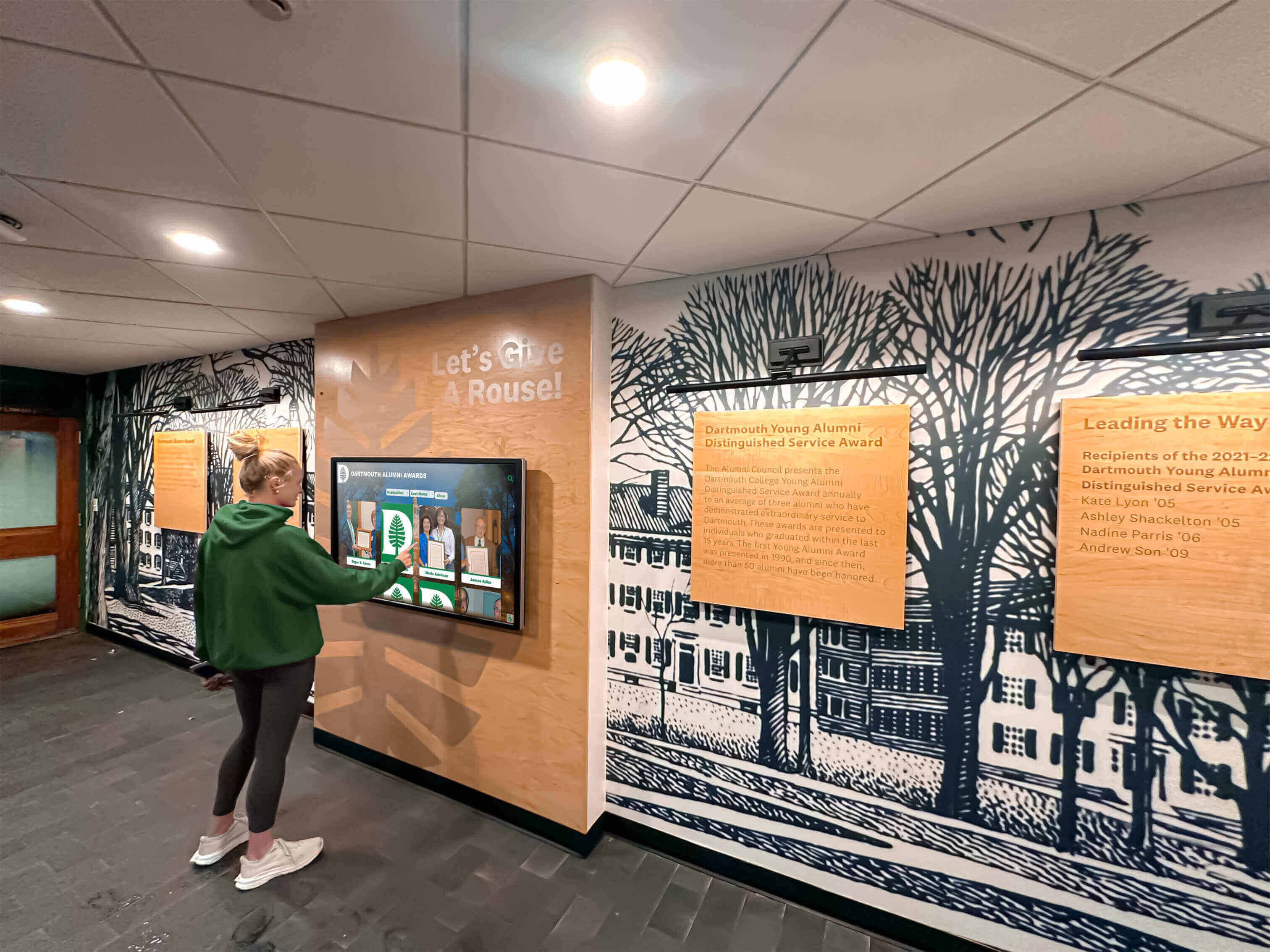
When vendors handle everything from installation through training competently, schools can focus on celebrating achievements rather than troubleshooting technical issues. Staff members actually use systems they understand, updating content regularly rather than letting displays grow stale. Well-trained administrators explore advanced features like social sharing, mobile access, and donor integration—expanding recognition’s reach beyond physical displays.
Conversely, inadequate turnkey service creates frustration. When schools receive hardware without proper training, systems often sit underutilized. When content setup proves more complex than anticipated, launch dates slip and enthusiasm wanes. When technical support fails to respond promptly, small issues cascade into abandonment.
The price difference between adequate and excellent turnkey service may appear significant initially—perhaps $2,000-$5,000. But over a recognition system’s 5-10 year lifespan, this represents a small fraction of total investment. The engagement difference between actively maintained recognition displays and abandoned technology proves far more consequential than modest upfront savings.
Schools seeking digital recognition platforms that genuinely transform community engagement should prioritize comprehensive service over lowest-cost options. The goal isn’t simply installing screens—it’s creating engaging recognition experiences that honor achievements, inspire current students, connect alumni, and build institutional pride. True turnkey service makes this transformation possible.
Making the Right Investment Decision
Selecting a turnkey digital hall of fame provider requires balancing budget constraints against service quality and long-term value. Schools should approach this decision systematically:
Create a Complete Requirements List Document everything the recognition system should accomplish—not just displaying inductees but potentially handling donor recognition, showcasing school history, celebrating current achievements, and enabling community engagement. Understanding complete scope prevents discovering limitations after purchase.
Request Detailed Pricing from Multiple Providers Obtain quotes from at least three providers, ensuring each proposal addresses identical requirements. Compare not just bottom-line prices but specific inclusions—hardware specifications, content setup volume, training hours, support response times, and subscription terms.
Evaluate References and Existing Installations Request contact information for schools currently using each provider’s systems. Ask about implementation experience, ongoing support quality, system reliability, and whether they would choose the same provider again. If possible, visit existing installations to see systems firsthand and observe actual usage.
Calculate Total Five-Year Cost Add initial turnkey pricing to five years of subscription fees, estimated content management time costs, and potential expansion expenses. This reveals true investment comparisons—sometimes higher initial pricing with lower ongoing costs proves more economical than bargain upfront pricing with escalating fees.
Consider Internal Capacity Realistically Assess whether staff can realistically manage content updates, or if ongoing professional content services make sense. Evaluate technical comfort levels—will administrators embrace new platforms or struggle with change? Match provider service levels to actual institutional capabilities rather than optimistic assumptions.
Prioritize Long-Term Partnership over Transaction The ideal provider becomes a long-term partner invested in recognition program success, not simply a vendor completing a transaction. Look for providers demonstrating genuine interest in school goals, offering ideas beyond basic requirements, and committing to responsive ongoing support.
Creating Recognition Experiences That Engage Communities
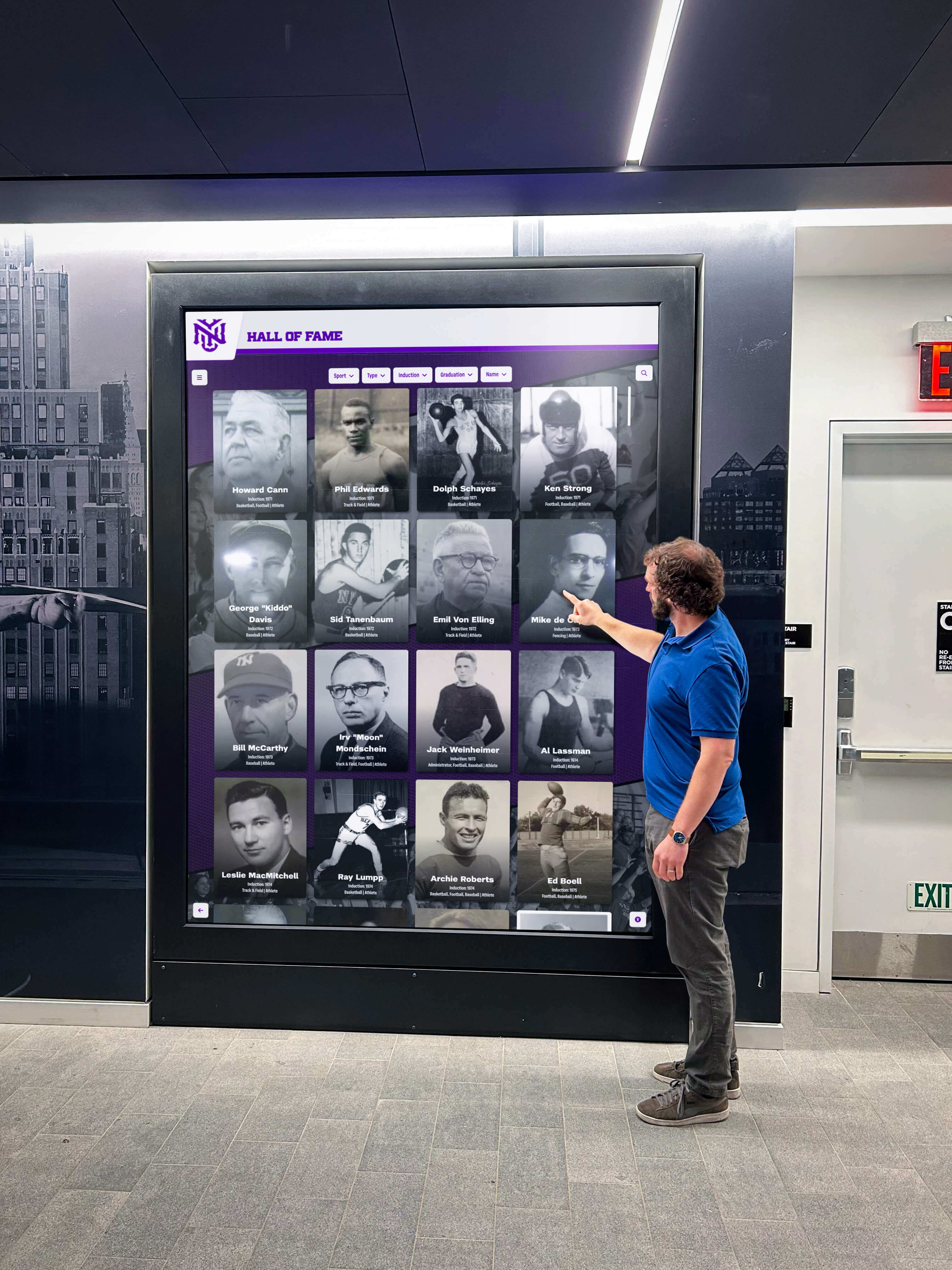
The ultimate measure of a digital hall of fame investment isn’t screen size or feature count—it’s community engagement. Does the system inspire current students by showcasing possible achievement paths? Do alumni feel honored when their accomplishments receive prominent, accessible recognition? Does the broader community understand institutional history and values through curated content?
True turnkey providers understand this outcome focus. They don’t simply deliver hardware and software—they partner with schools to create recognition experiences generating meaningful engagement. This requires thinking beyond technical specifications to understand institutional culture, recognition traditions, and community dynamics.
When schools select providers based on comprehensive service quality rather than minimum viable pricing, they position recognition programs for long-term success. Initial investments in professional content migration, thorough training, and responsive support create foundations for actively maintained displays that genuinely engage communities rather than becoming expensive digital wallpaper.
Platforms like Rocket Alumni Solutions emphasize this engagement-first philosophy, treating recognition displays as community activation tools rather than simple digital trophy cases. Their unlimited content capacity, accessibility compliance, mobile access, and white-glove service all serve the same goal—removing barriers between achievement stories and the people who find inspiration in them.
Taking the Next Step
Schools ready to explore turnkey digital hall of fame solutions should begin by documenting current recognition needs and future aspirations. Create lists of existing inductees requiring migration, identify what content already exists versus what needs creation, and clarify which staff members will manage the system ongoing.
With requirements documented, reach out to providers including Rocket Alumni Solutions, TouchHallofFame.us, HallofFameWall.com, TouchWall.us, and others serving educational markets. Request detailed proposals addressing specific needs rather than generic pricing. Schedule demonstration calls to see platforms in action and assess whether interfaces match staff technical comfort levels.
Most importantly, view this decision as an investment in community engagement and institutional culture rather than simply a technology purchase. The right turnkey solution should create digital warming effects—transforming passive recognition into active celebration that honors achievements, inspires current students, connects alumni, and builds lasting pride in institutional excellence.
Ready to explore comprehensive turnkey digital hall of fame solutions designed specifically for schools? Book a demo to see how Rocket Alumni Solutions creates engaging recognition experiences with complete content setup, training, and unlimited ongoing support.