Intent: demonstrate — Trophy display cases anchor school hallways as proud testaments to athletic excellence, transforming glass-fronted cabinets into storytelling spaces that inspire current students while honoring past champions. Yet choosing the right trophy display case for school environments involves far more than selecting furniture—it requires understanding how recognition shapes student motivation, how space constraints affect long-term value, and how modern alternatives address challenges that traditional cases cannot solve.
Walk through any high school and you’ll likely encounter trophy cases lining the main hallway or positioned prominently near the gymnasium entrance. These displays serve multiple purposes simultaneously: celebrating championship victories, motivating current athletes to pursue excellence, building institutional pride that extends across generations, and communicating program strength to visitors, prospective families, and community members.
The challenge emerges as achievements accumulate and schools face difficult decisions. Do you remove older trophies to make room for new ones? Purchase additional cases that consume precious hallway space and strain budgets? Allow displays to become overcrowded and illegible? Or explore modern digital alternatives that address capacity constraints while creating richer engagement opportunities? This comprehensive guide explores trophy display case options for schools, from traditional glass cabinets to cutting-edge digital recognition systems, helping administrators make informed decisions that serve their communities for decades to come.
Trophy display cases represent significant investments in institutional identity and student recognition. Schools typically spend $2,500-$8,000 per traditional trophy case, with ongoing costs for new trophies, plaques, and maintenance adding thousands more annually. Understanding the full range of options—traditional, hybrid, and digital—ensures schools choose solutions aligned with their recognition philosophy, budget parameters, and long-term vision.

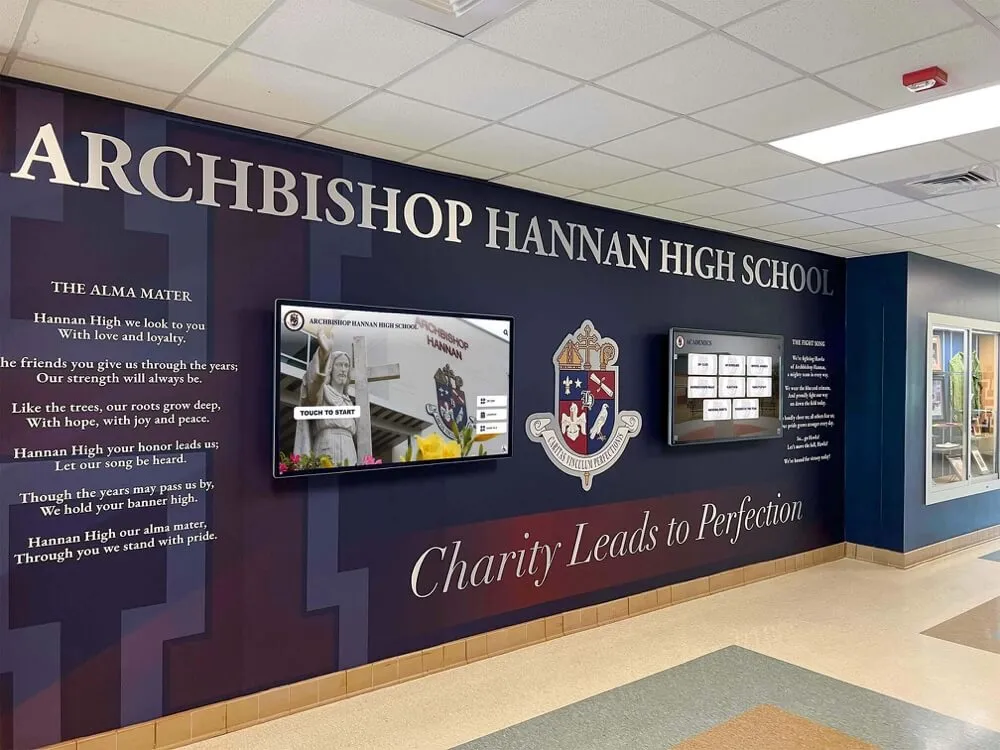
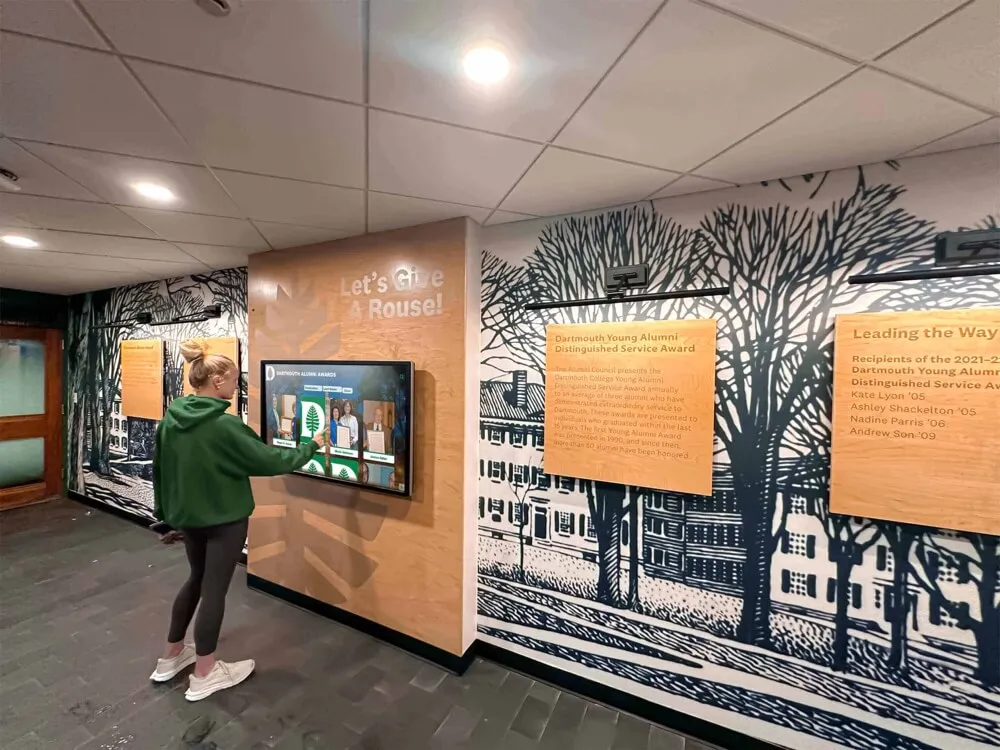
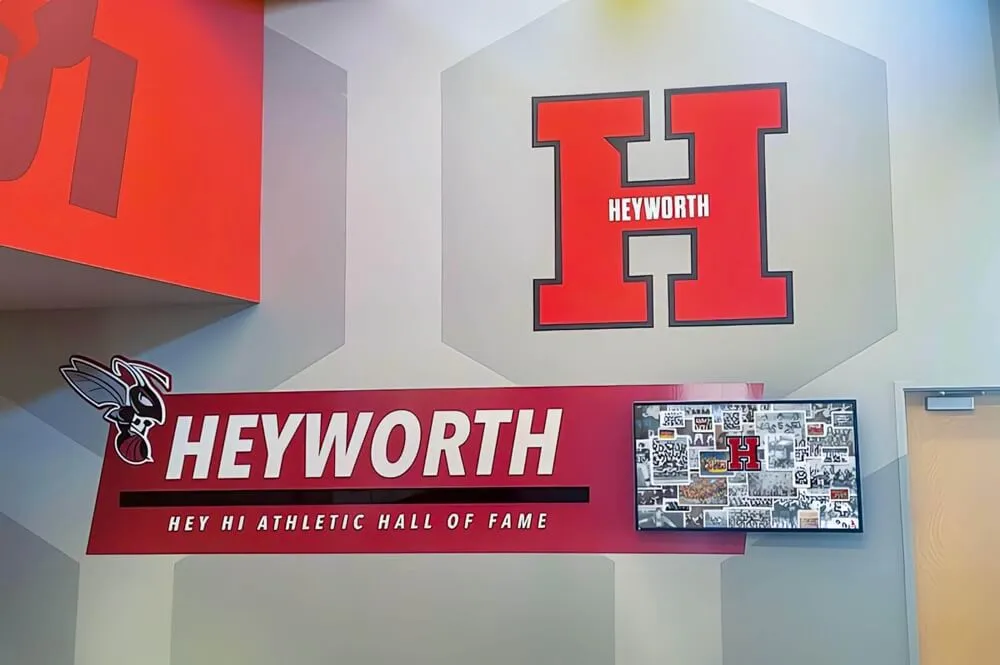
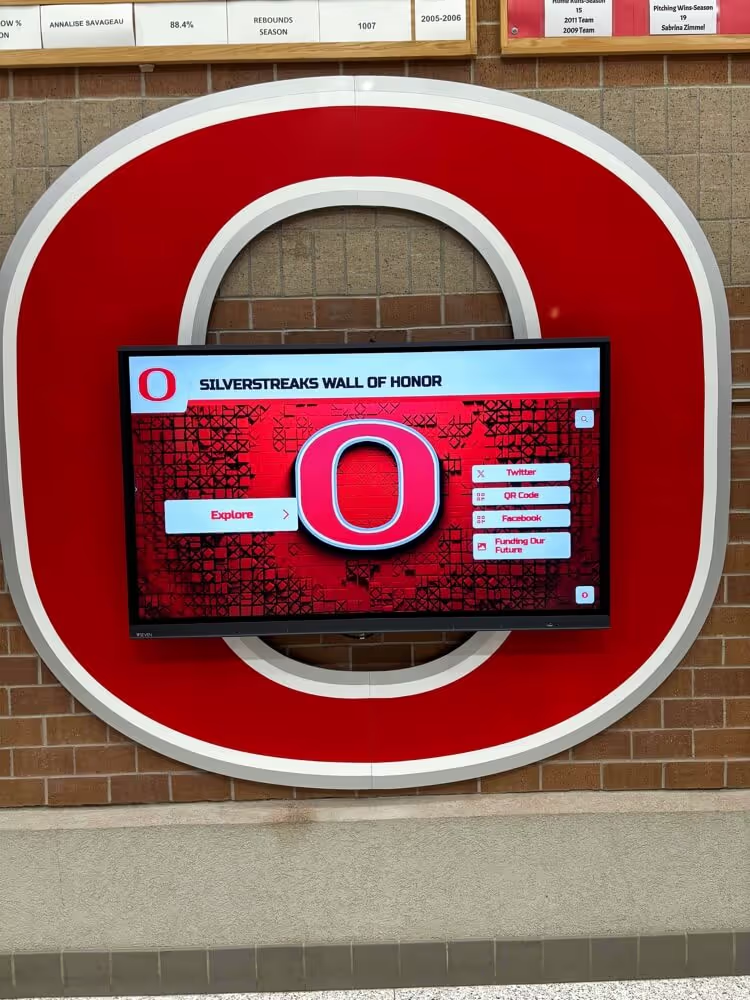
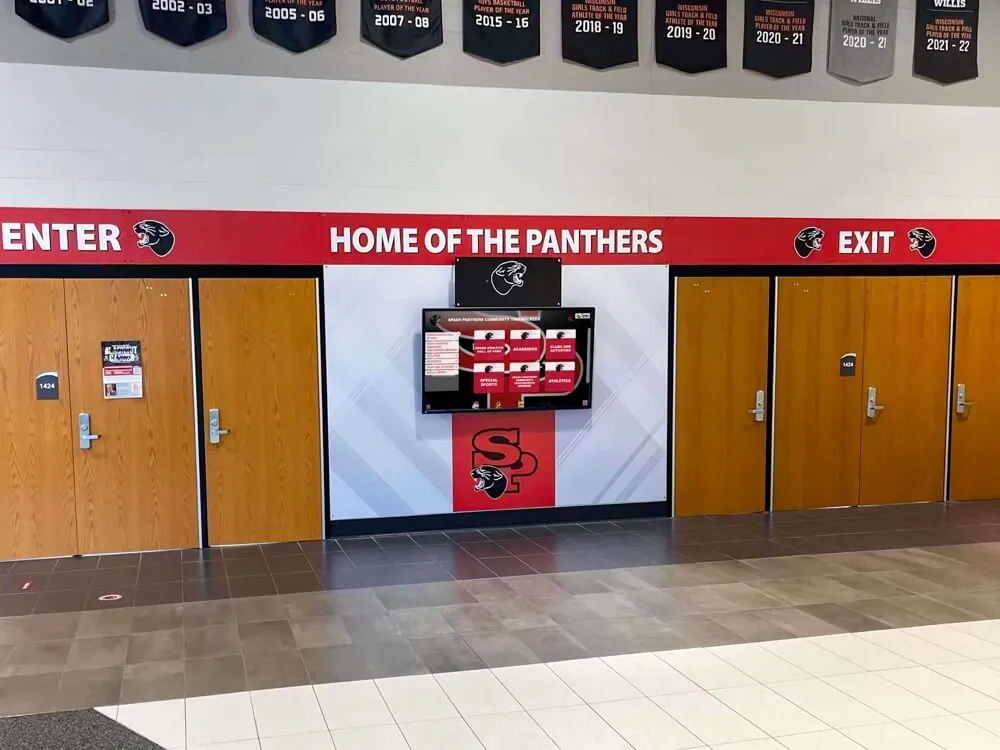
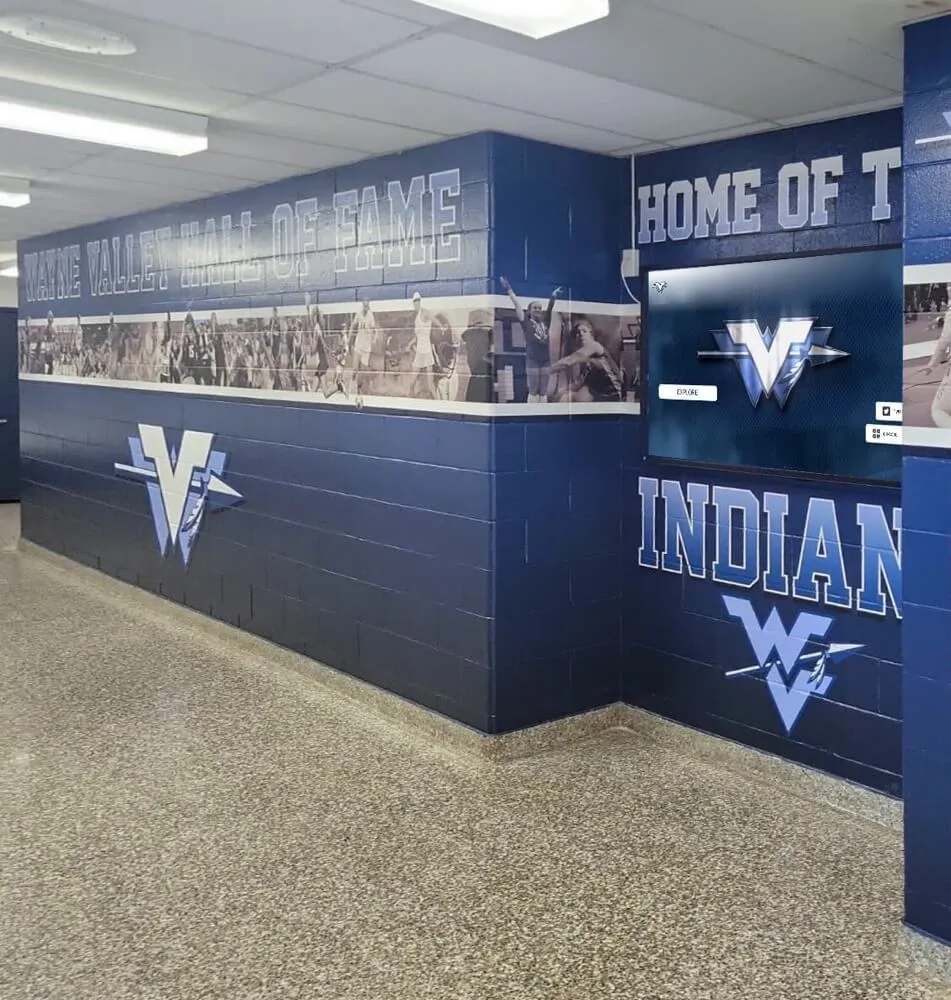
Well-designed trophy display areas combine traditional cases with environmental branding to create inspiring spaces that celebrate program heritage
Understanding Trophy Display Cases for School Environments
Before selecting specific display cases, understanding fundamental purposes and design principles helps schools create recognition spaces that truly resonate with students, alumni, and communities.
Why Schools Invest in Trophy Display Cases
Trophy display cases serve functions that extend well beyond simply storing awards. They shape school culture in meaningful ways that justify their prominence in educational environments.
Creating Visible Reminders of Excellence
Trophy cases positioned in high-traffic areas ensure that championship achievements and individual honors remain visible to everyone who enters the building. A freshman walking past state championship trophies daily receives ongoing messages about what’s possible within their school’s athletic programs. This visibility creates aspirational targets—concrete examples of excellence that students can pursue rather than abstract encouragement to “do your best.”
The physical presence of trophies carries emotional weight that photographs or lists cannot match. Actual championship trophies—polished, substantial, and occupying three-dimensional space—communicate that these achievements warranted permanent recognition. Students understand intuitively that accomplishments receiving this treatment represent truly exceptional performance worthy of pursuit.
Building Institutional Pride and Identity
Athletic achievements contribute significantly to how schools define themselves and how communities perceive them. Trophy cases make this excellence immediately visible. A prospective family touring the school sees rows of championship trophies and immediately understands they’re visiting an institution with strong athletic traditions. Current students feel pride knowing they attend schools where excellence receives appropriate celebration.
This pride-building effect extends beyond athletics. Strong athletic programs with visible recognition contribute to overall school reputation, potentially influencing enrollment decisions, community support for funding initiatives, and alumni engagement long after graduation. Trophy cases become physical embodiments of institutional quality that stakeholders encounter during every building visit.
Schools looking to expand their recognition beyond physical displays often implement comprehensive digital solutions that complement traditional trophy cases while addressing capacity limitations.
Honoring Student Achievement and Effort
Recognition matters deeply to student-athletes who invest countless hours in training, competition, and team commitment. Trophy display cases provide tangible acknowledgment that their dedication produced results worth celebrating permanently. An athlete seeing their championship trophy displayed prominently understands that their school values their accomplishment and preserves it for future generations to appreciate.
This recognition extends beyond championship teams to individual achievement awards, all-conference honors, academic athletic recognition, and milestone accomplishments. When schools display these achievements alongside major trophies, they communicate that various forms of excellence all deserve celebration, encouraging broad participation and diverse achievement pathways.
Traditional Trophy Case Fundamentals
Understanding traditional trophy case options helps schools select appropriate solutions for their specific environments, space constraints, and recognition needs.
Wall-Mounted vs. Freestanding Cases
Trophy display cases come in two primary configurations, each offering distinct advantages depending on available space and installation contexts.
Wall-Mounted Trophy Cases:
Wall-mounted cases attach directly to hallway walls, maximizing floor space while creating prominent visual displays at eye level. These cases work particularly well in corridors where floor space must remain clear for student traffic, accessibility requirements, or building code compliance. Wall-mounted options typically range from 4-8 feet wide and 3-6 feet tall, providing substantial display capacity without protruding significantly into hallways.
Installation requires solid wall structures capable of supporting considerable weight—fully loaded trophy cases can weigh several hundred pounds. Schools should verify wall construction and use appropriate mounting hardware, often involving professional installation to ensure safety and longevity. The permanent nature of wall-mounted cases means location decisions carry long-term consequences, as relocating mounted cases involves wall repair and reinstallation costs.
Freestanding Trophy Cases:
Freestanding cases sit on the floor like furniture, offering mobility advantages and easier installation compared to wall-mounted options. These cases work well in lobbies, gymnasium entrances, athletic complex common areas, or spaces with insufficient wall structure for mounting heavy displays. Freestanding cases often feature finished backs and sides, allowing placement away from walls when space permits.
The mobility of freestanding cases enables repositioning during building renovations, allowing schools to adjust trophy locations as needs evolve without leaving wall damage behind. However, these cases consume floor space and may present obstacles in narrow hallways where clearance matters for accessibility and student traffic flow.
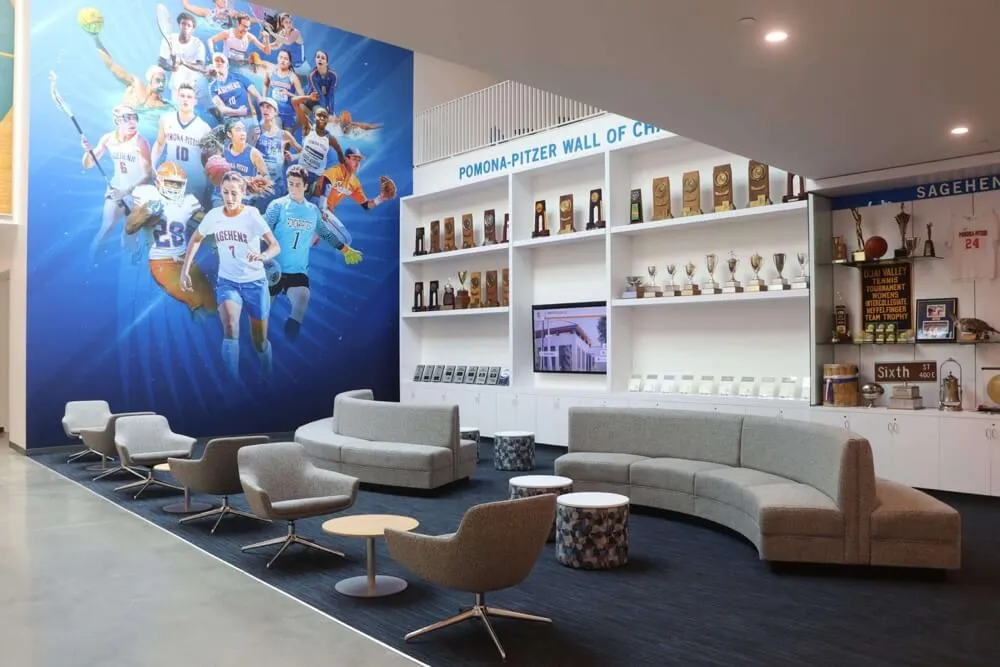
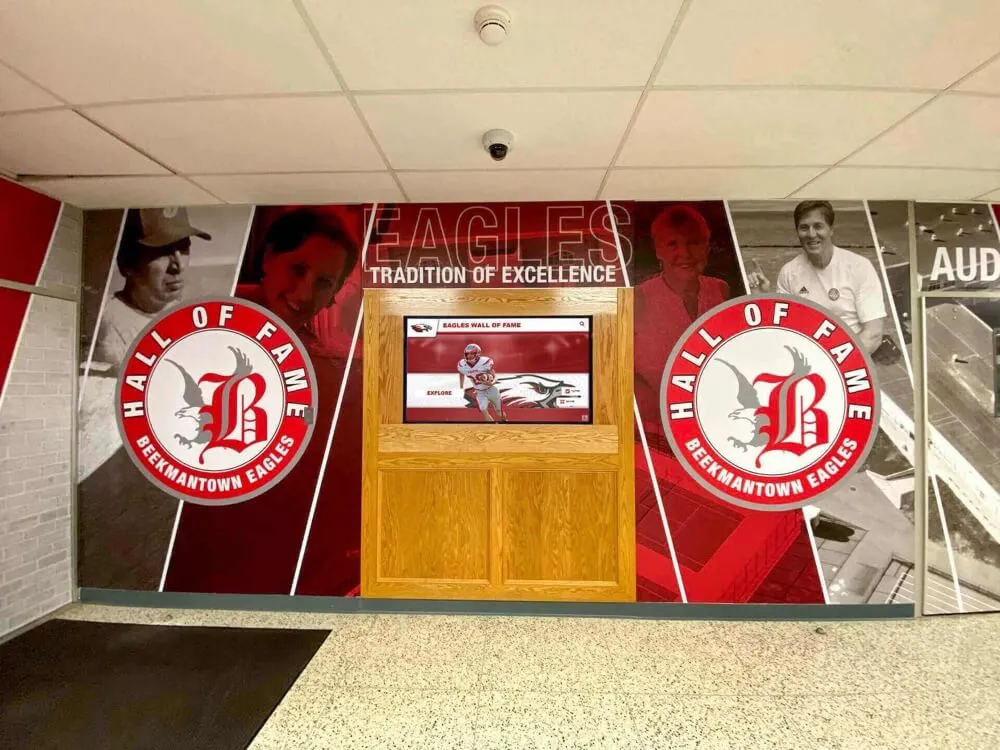
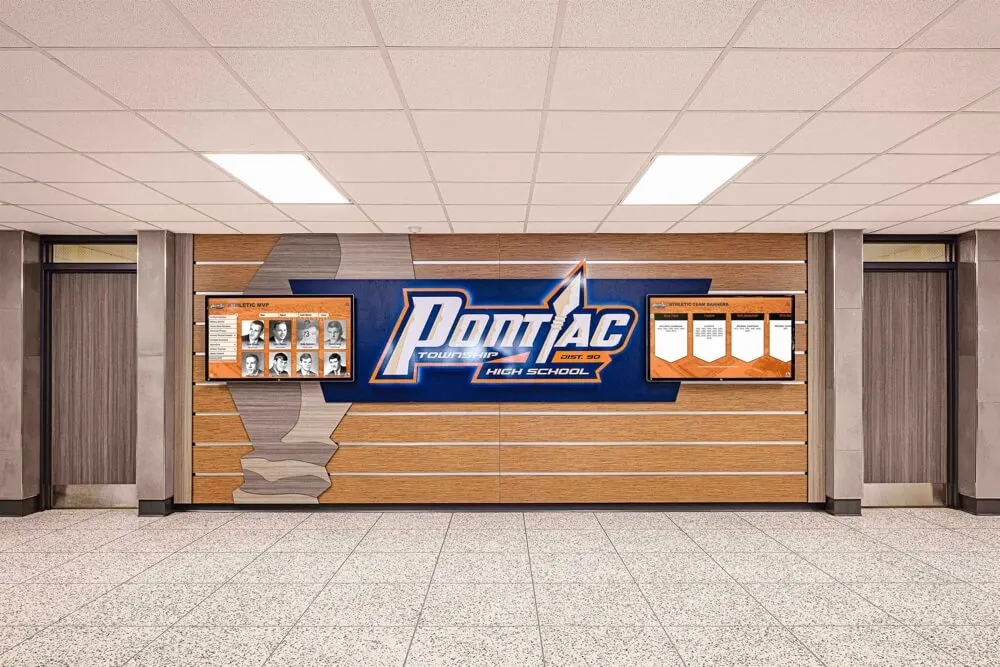
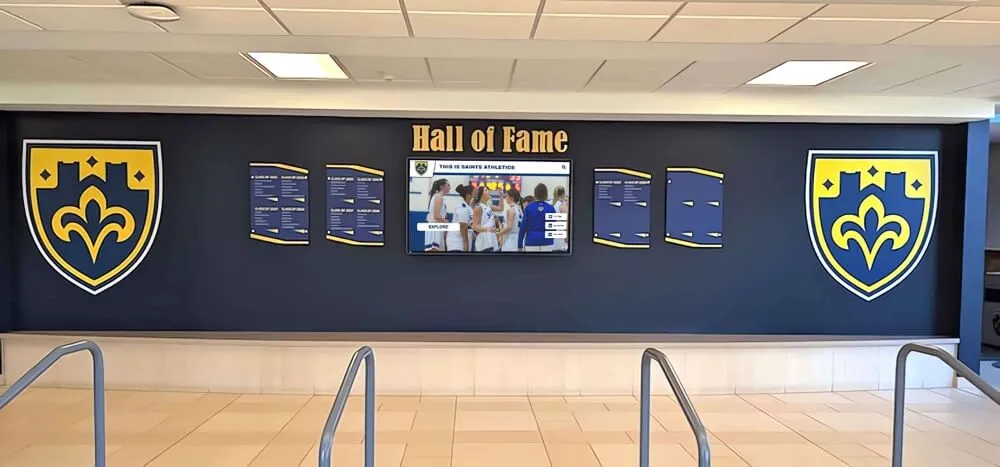
Trophy display areas integrated with school branding and comfortable viewing spaces encourage students to engage with athletic heritage
Material and Construction Considerations
Trophy case quality varies dramatically based on materials, construction methods, and finish quality. Schools investing in permanent recognition displays should prioritize durability over short-term cost savings.
Frame Materials:
Aluminum frames offer lightweight construction, corrosion resistance, and lower costs compared to wood alternatives. These frames suit schools with limited budgets or those planning to replace cases as needs evolve. However, aluminum cases may feel less substantial and prestigious than wood-framed options.
Wood frames—particularly hardwoods like oak, cherry, or maple—create more traditional, prestigious aesthetics that many schools prefer for important recognition spaces. Wood construction costs more initially but often lasts decades with proper maintenance, potentially offering better long-term value. Schools should ensure wood cases feature moisture-resistant finishes that withstand humidity variations in school environments.
Glass Quality:
Tempered glass provides essential safety features for school environments, shattering into small, less dangerous pieces if broken compared to standard glass. Schools should specify tempered glass for all trophy cases, particularly those positioned in high-traffic areas or locations where student contact is possible.
Glass thickness affects both safety and visual quality. Thicker glass (1/4 inch or 6mm) resists flexing, provides better security, and creates more substantial impressions compared to thinner options. Some schools choose anti-reflective glass that reduces glare, improving visibility from various angles—particularly valuable for trophy cases positioned near windows or under strong artificial lighting.
Lighting Systems:
Quality trophy cases include lighting that showcases displayed items effectively. LED lighting systems offer the best combination of energy efficiency, long lifespan (reducing maintenance needs), and light quality that makes trophies, plaques, and memorabilia stand out visually.
Top-mounted LED strips provide even illumination throughout cases, while some premium options include adjustable lighting allowing schools to highlight specific trophies or create dramatic effects. Schools should avoid cheaper cases with fluorescent lighting, which requires frequent bulb replacement, consumes more energy, and often produces harsh light quality that makes displays look less appealing.
Space Planning and Capacity Considerations
One of the most critical yet frequently overlooked aspects of trophy case selection involves realistic capacity planning that accounts for years of future achievements.
Calculating Long-Term Capacity Needs
Schools often purchase trophy cases based on current needs without adequately projecting future requirements. A case that perfectly accommodates ten years of past trophies may fill completely within just three years if the athletic program continues achieving at similar rates.
Consider a comprehensive planning approach: Count existing trophies and plaques requiring display space, estimate annual additions based on sports offered and typical achievement rates, account for both team championships and individual honors, include recognition for various achievement levels (conference, sectional, regional, state), and plan for at least 10-15 years of future growth rather than just current needs.
This calculation often reveals sobering realities. A school with fifteen sports might earn 8-12 significant trophies or plaques annually when accounting for conference championships, tournament achievements, and individual honors. Over ten years, that’s 80-120 new items requiring display space—far exceeding what most single trophy cases accommodate comfortably.
Schools committed to comprehensive athletic recognition must either plan for multiple trophy cases, accept that older recognition will eventually be removed, or explore digital alternatives that eliminate capacity constraints entirely.
The Inevitable Space Constraint Problem
Traditional trophy cases eventually reach capacity limits regardless of initial size. This creates difficult decisions that many schools struggle to navigate appropriately.
Some schools remove older trophies to make room for new ones, storing historical awards in boxes or athletics department offices where they become invisible to current students. This approach dishonors past achievements and may upset alumni who return to campus expecting to see their championship recognition displayed prominently.
Other schools purchase additional trophy cases as space fills, creating banks of recognition displays that consume increasing amounts of hallway space. While this preserves all achievements, it creates escalating costs ($3,000-$8,000 per additional case) and eventually exhausts available wall space in even large facilities.
A third approach involves allowing trophy cases to become overcrowded, packing items tightly together until individual trophies become difficult to see and read. This cluttered presentation diminishes the impact of recognition and makes cases feel more like storage than celebration.
These challenges have led many schools to explore modern digital trophy case alternatives that honor unlimited achievements without physical space constraints.
Traditional Trophy Display Case Options
Schools have numerous traditional trophy case options spanning price points, quality levels, and aesthetic styles. Understanding these options helps match solutions to specific needs and budgets.
Standard School Trophy Cases
Entry-level trophy cases designed specifically for educational environments balance cost considerations with durability requirements for public spaces.
Budget-Conscious Options
Basic trophy cases with aluminum frames, single sliding doors, and standard lighting typically cost $1,800-$3,500 depending on size. These options suit schools with limited budgets or those creating secondary recognition displays in specific program areas like team locker rooms or auxiliary gymnasiums.
While budget cases fulfill basic display functions, schools should carefully evaluate construction quality. Cheaper cases often feature thin glass, basic locking mechanisms that fail quickly, insufficient lighting, and aluminum frames that may bend or warp over time. A low-cost case requiring replacement after five years may ultimately cost more than investing in quality construction upfront.
Mid-Range Quality Cases
Trophy cases in the $3,500-$6,000 range typically offer significantly better construction quality, more sophisticated lighting systems, hardwood frame options, tempered glass, superior locking mechanisms, and professional appearance appropriate for main hallway installations.
These mid-range options represent the most common choice for schools creating primary athletic recognition displays. They balance quality construction that lasts decades with reasonable pricing that fits typical school budgets without requiring major fundraising campaigns.
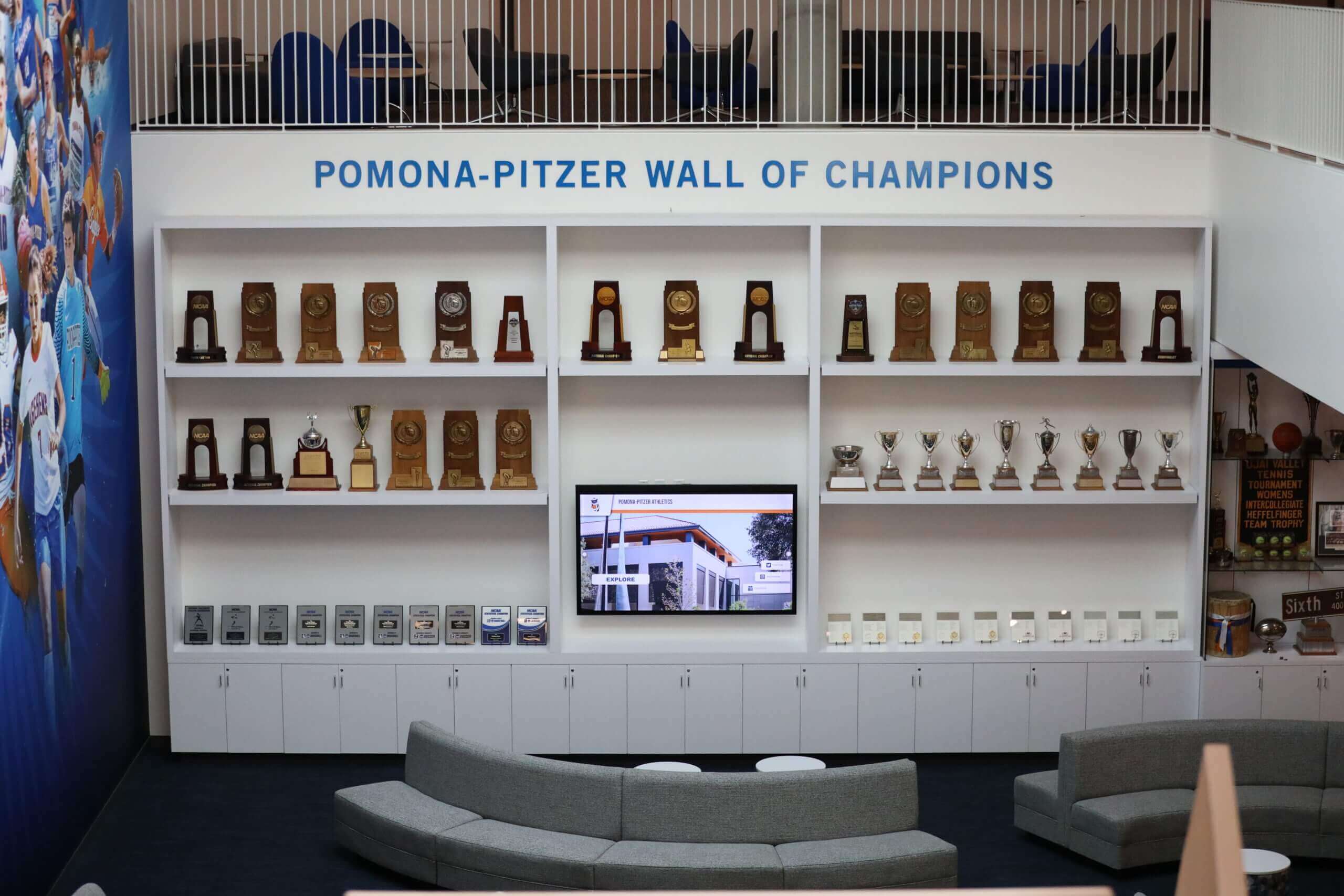
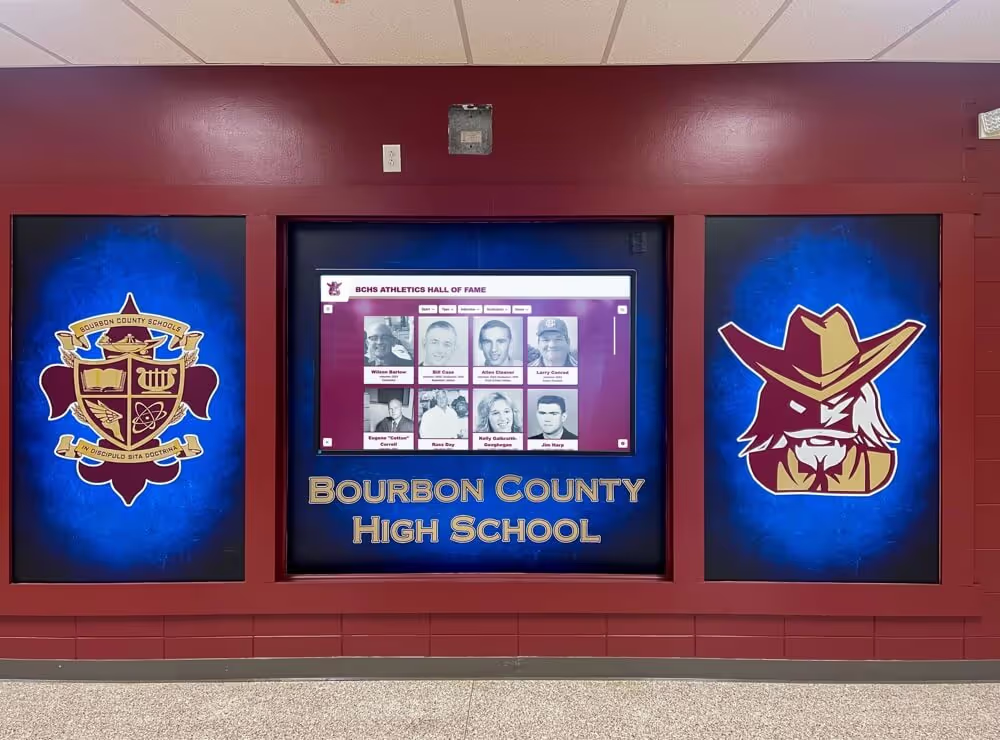
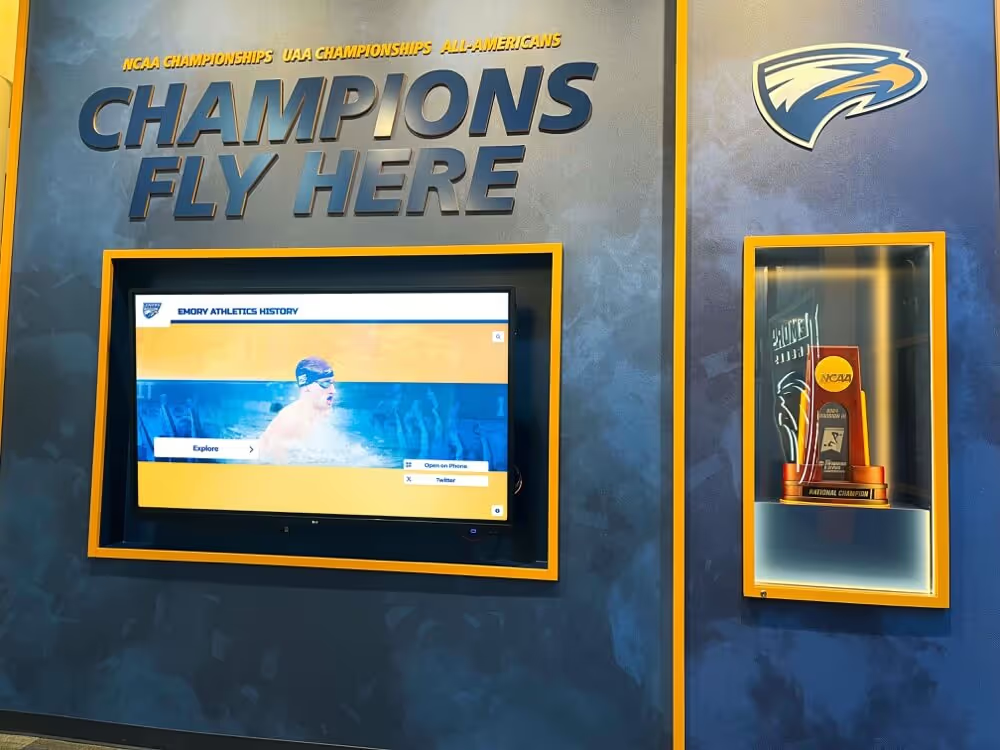
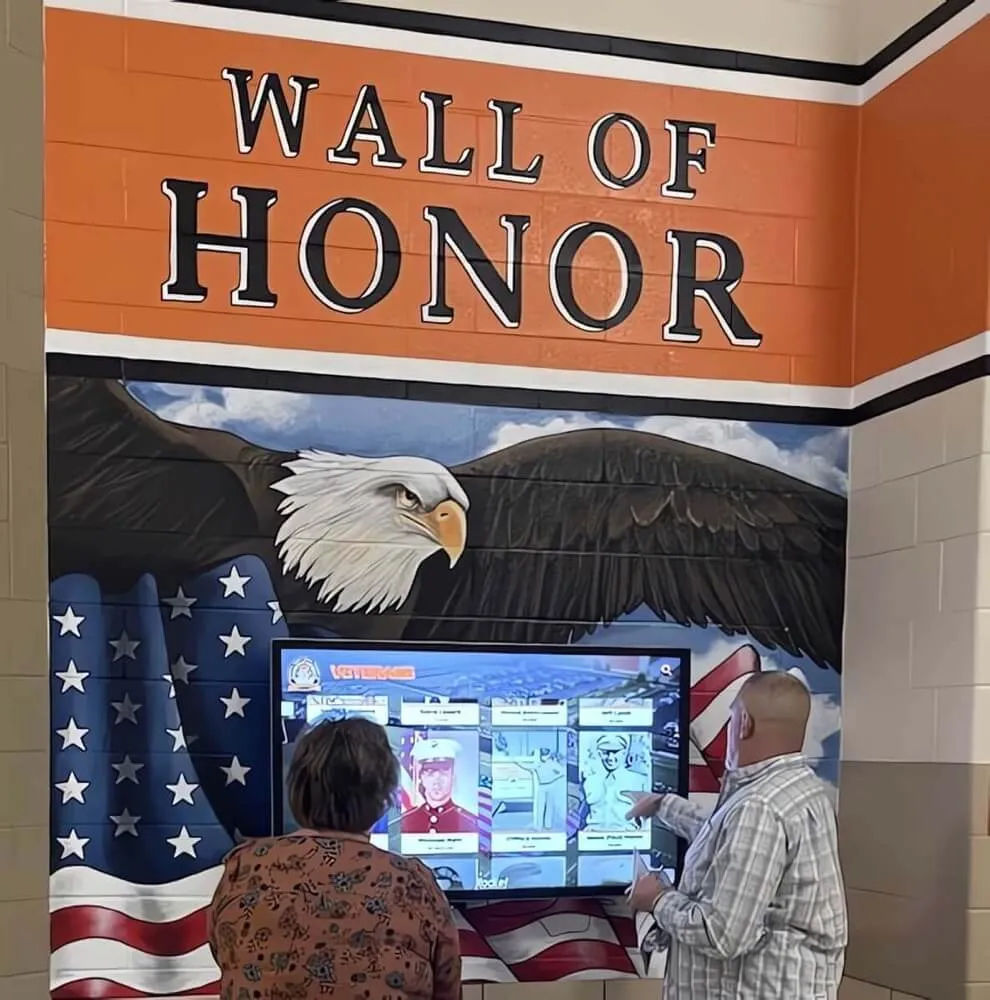
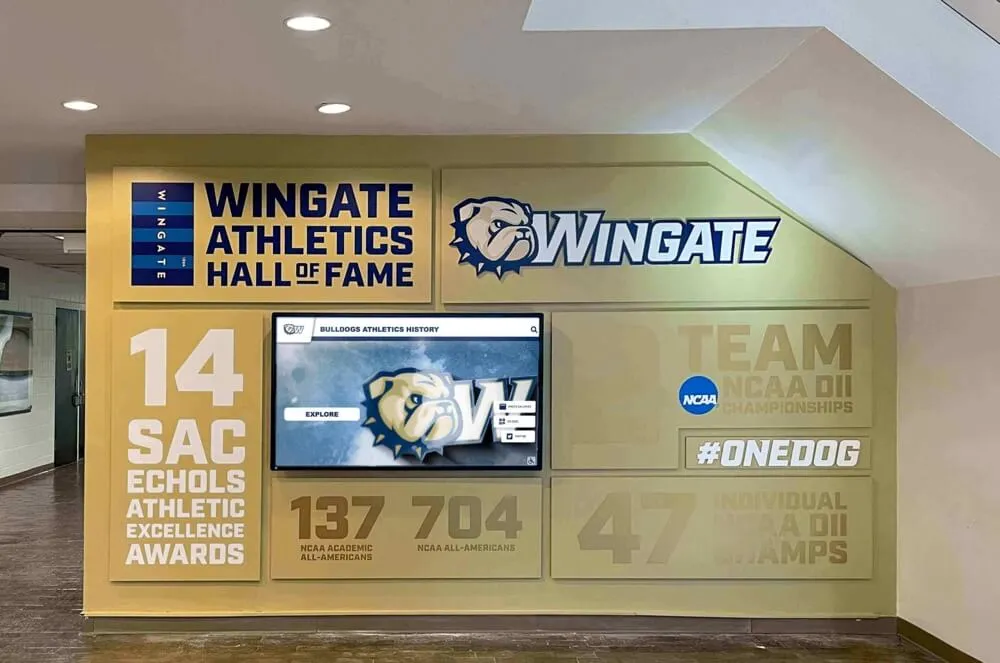
Premium trophy display spaces combine quality cases with comfortable viewing environments that invite extended engagement with athletic achievements
Premium Custom Trophy Cases
High-end trophy cases offer custom design, superior materials, and distinctive aesthetics for schools prioritizing prestigious recognition displays.
Custom-Built Display Systems
Premium trophy cases ranging $6,000-$15,000+ feature custom sizing matching specific spaces, hardwood construction with hand-selected materials, sophisticated LED lighting with dimming or color options, museum-quality glass with anti-reflective coatings, custom finishes matching school colors or architectural elements, and integrated digital displays or monitors for multimedia content.
Schools with significant athletic traditions, major championship histories, or renovation projects creating premier recognition spaces often choose custom solutions that become architectural features rather than simply furniture. These installations frequently include surrounding wall treatments, integrated branding elements, and environmental design creating cohesive recognition destinations.
Architecturally Integrated Displays
The highest-end approach involves integrating trophy recognition into building architecture during construction or major renovation projects. This might include recessed display niches built into walls, custom millwork creating floor-to-ceiling recognition environments, integrated lighting systems controlled by building automation, and permanent installations that become defining features of athletic facilities.
These premium approaches make sense when schools are building new athletic complexes, renovating historic gymnasiums, or creating signature recognition spaces intended to define institutional character for generations. The investment reflects recognition’s central role in school identity rather than treating trophy display as afterthought or purely functional necessity.
Specialty Display Cases for Specific Items
Beyond general trophy cases, schools may need specialized displays for particular recognition types.
Jersey and Uniform Display Cases
Retired jerseys from legendary athletes require different display approaches than trophies. Specialized jersey cases typically feature mannequin forms or mounting systems that display uniforms three-dimensionally, preserving garment shape and creating visual interest that flat displays cannot match.
These cases often mount on walls near trophy displays or in prominent locations throughout athletic facilities, creating comprehensive recognition environments that honor individual athletic excellence alongside team championships. Schools implementing varsity recognition programs often combine traditional trophy cases with jersey displays to celebrate multiple achievement dimensions.
Memorabilia and Artifact Cases
Some athletic programs possess unique memorabilia deserving specialized display—signed equipment from professional athletes who attended the school, balls or equipment from historic games, championship rings, newspaper clippings documenting exceptional achievements, or historical photographs requiring preservation.
Specialty cases designed for memorabilia typically include adjustable shelving accommodating various item sizes, museum-quality materials preventing deterioration, and climate considerations if items require protection from humidity or temperature variations. Schools with significant athletic heritage often dedicate separate display spaces to these unique items rather than mixing them with standard trophy recognition.
Modern Digital Alternatives to Traditional Trophy Cases
While traditional trophy cases remain popular, digital recognition solutions address fundamental limitations that physical displays cannot overcome—capacity constraints, update difficulties, engagement opportunities, and storytelling richness.
Interactive Touchscreen Trophy Recognition
Digital displays transform trophy recognition from static observation into interactive exploration experiences where students actively engage with athletic history rather than passively viewing it.
How Digital Trophy Recognition Works
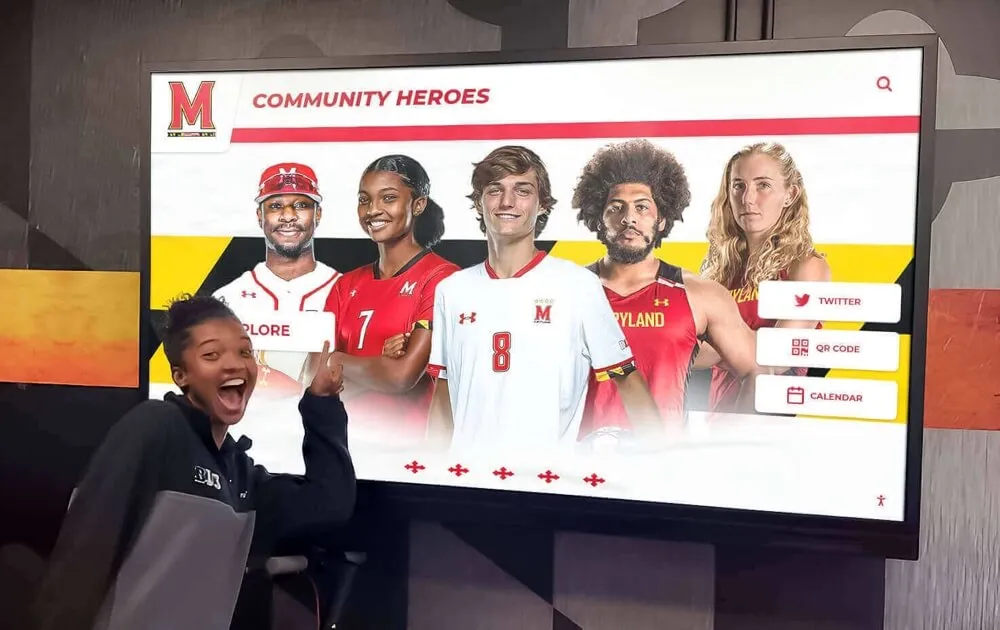
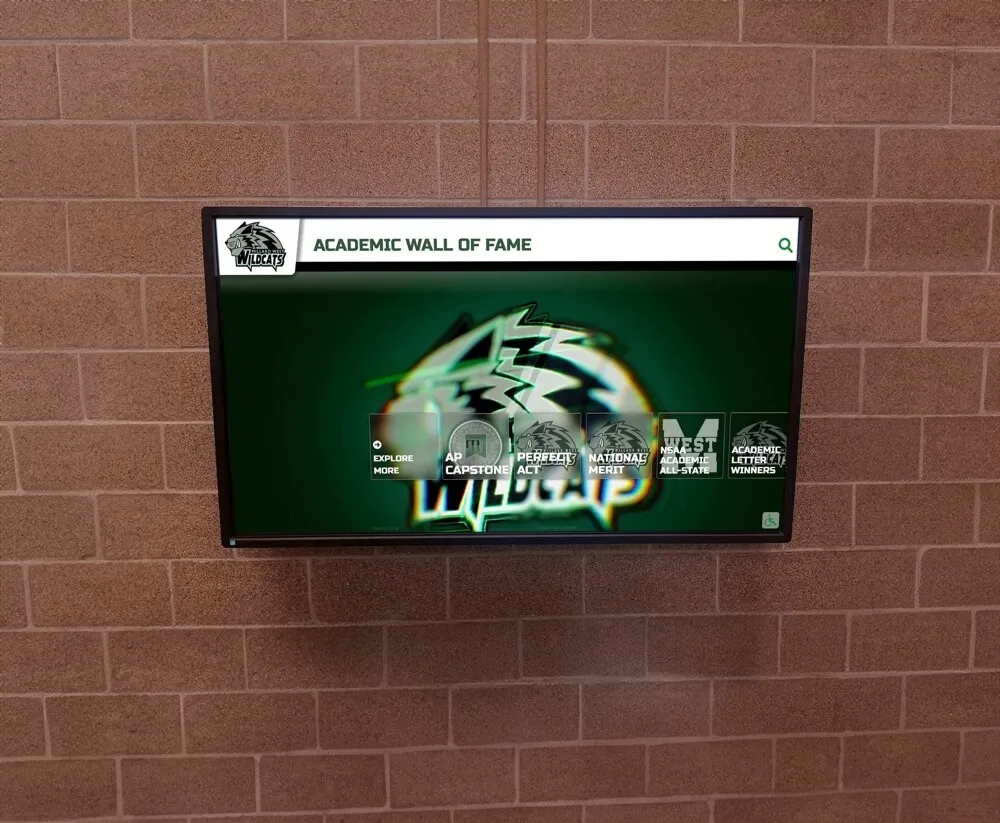
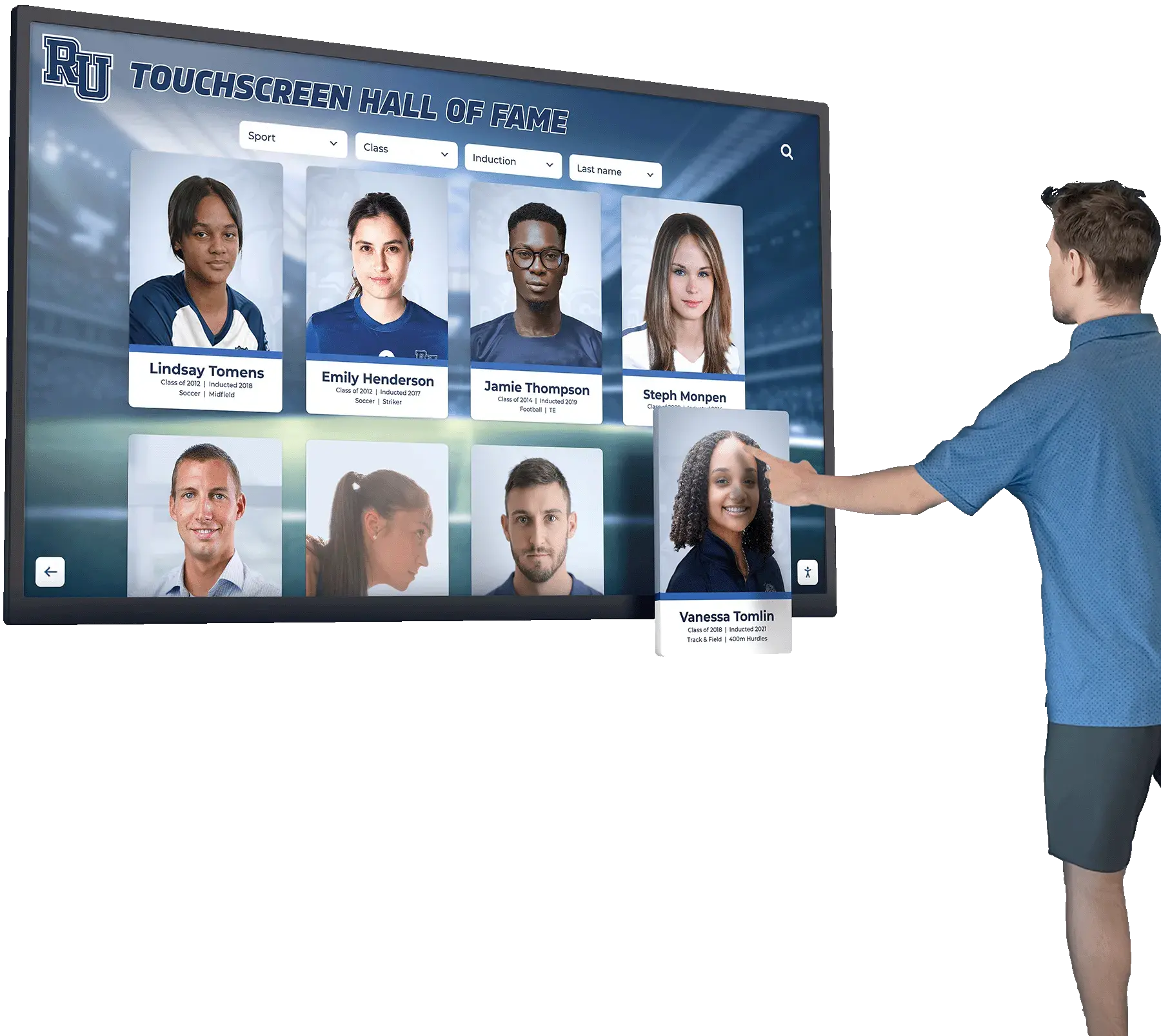
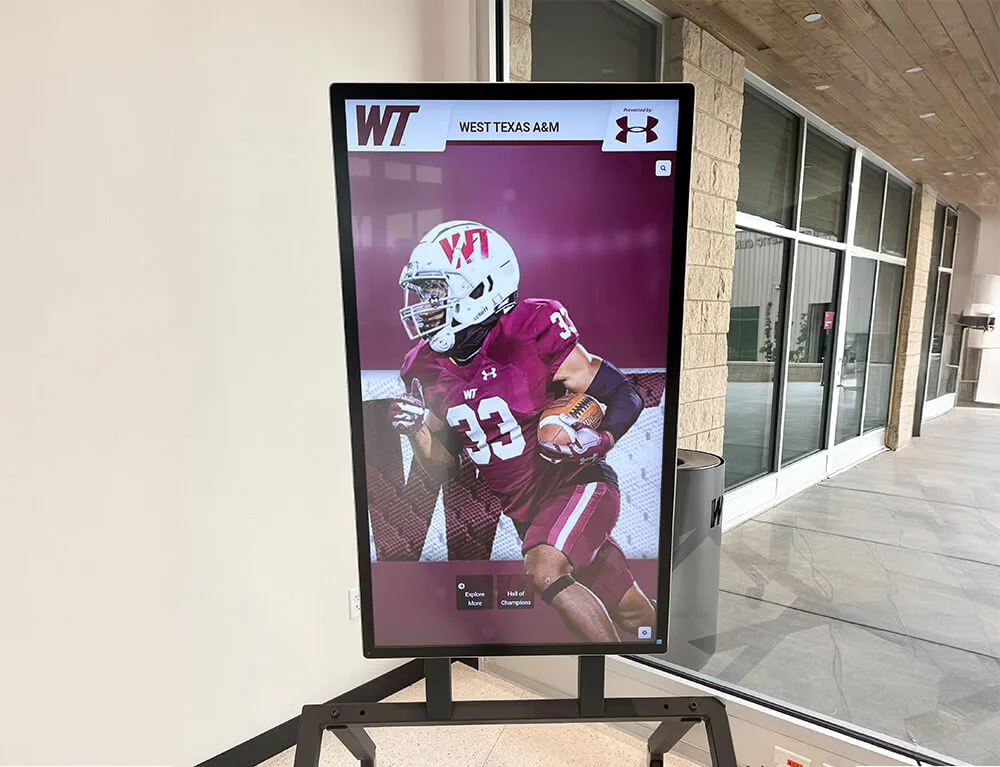
Modern touchscreen displays—typically 43-65 inch commercial-grade screens—mount on walls or stand on floor kiosks in locations where traditional trophy cases would be positioned. These displays showcase championship achievements, individual honors, athlete profiles, team photos, and comprehensive athletic program history through intuitive touchscreen interfaces.
Students, alumni, and visitors interact by browsing different sports, searching specific athletes or years, viewing detailed achievement information including statistics and stories beyond what fits on trophy plaques, watching video highlights from championship games, exploring team rosters with individual athlete profiles, and sharing recognition through social media or QR code mobile access.
This interactivity creates engagement patterns fundamentally different from trophy cases. Rather than glancing at displays while passing, students spend meaningful time exploring content, discovering connections to alumni, and engaging repeatedly as new achievements are added.
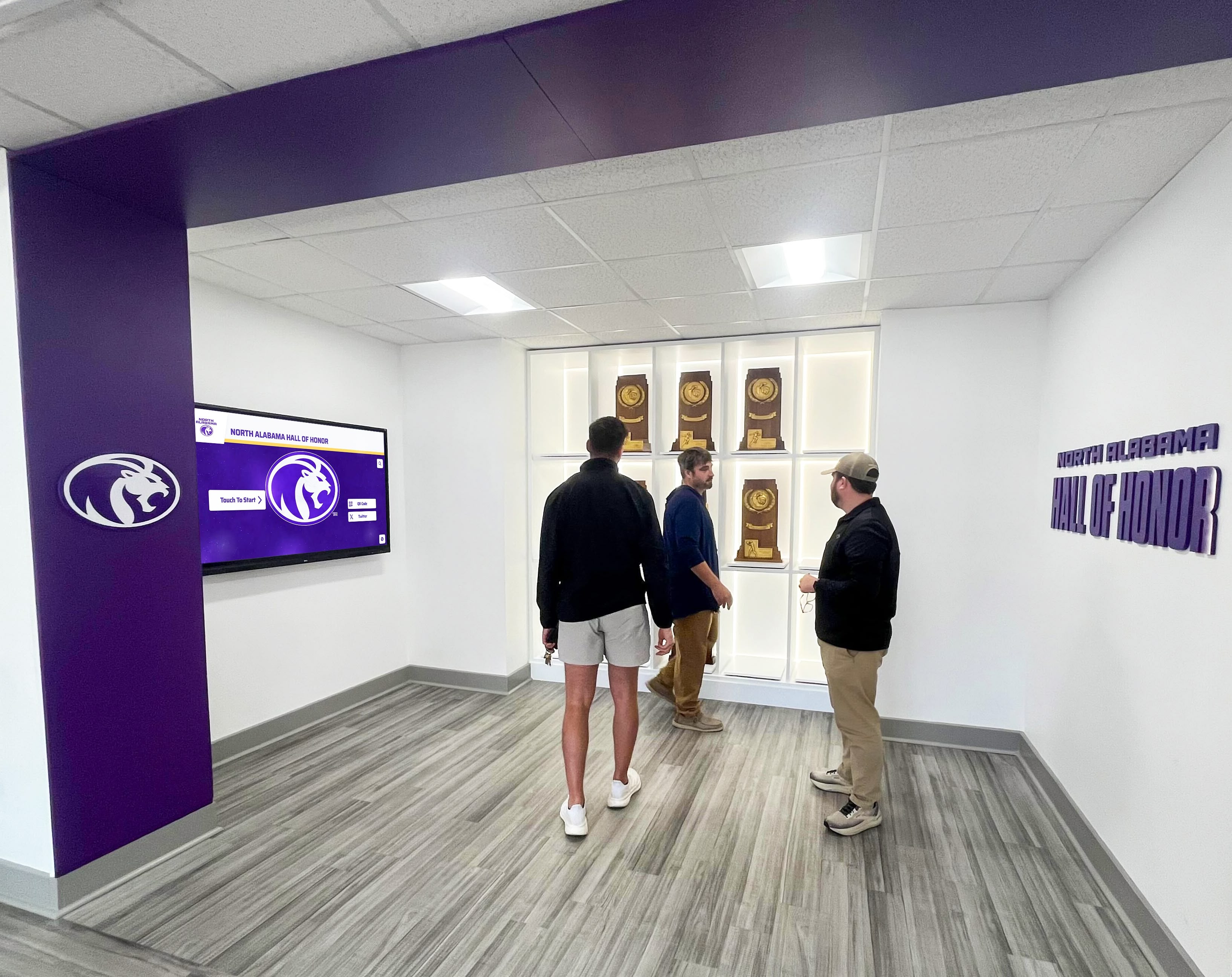
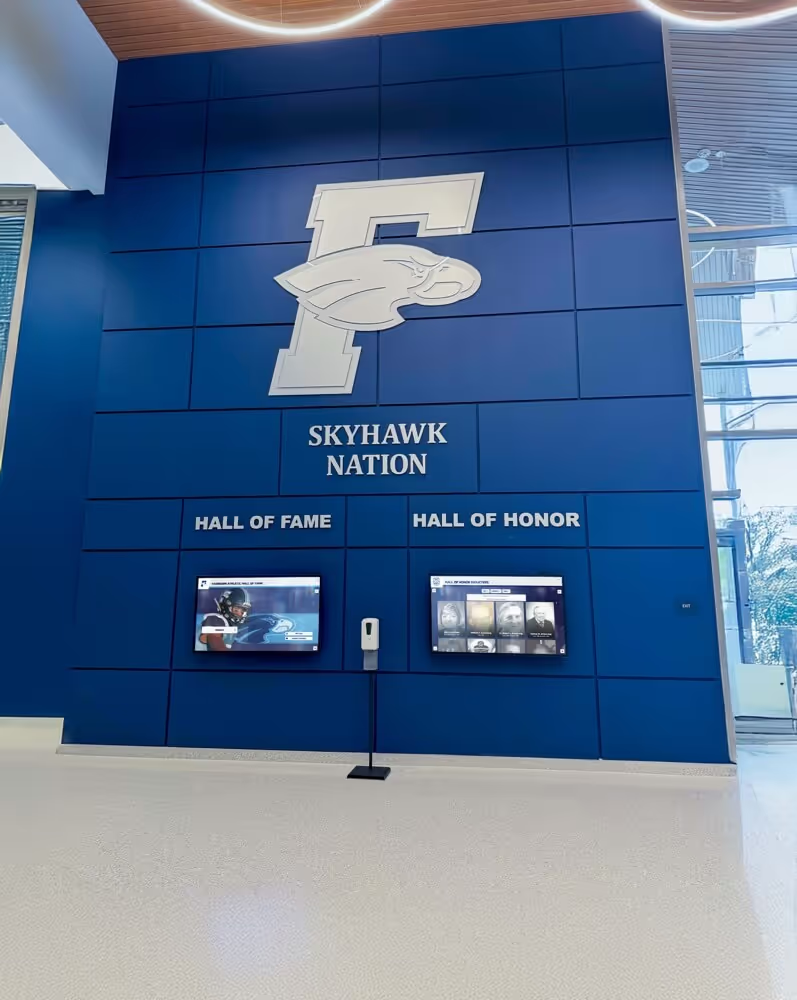
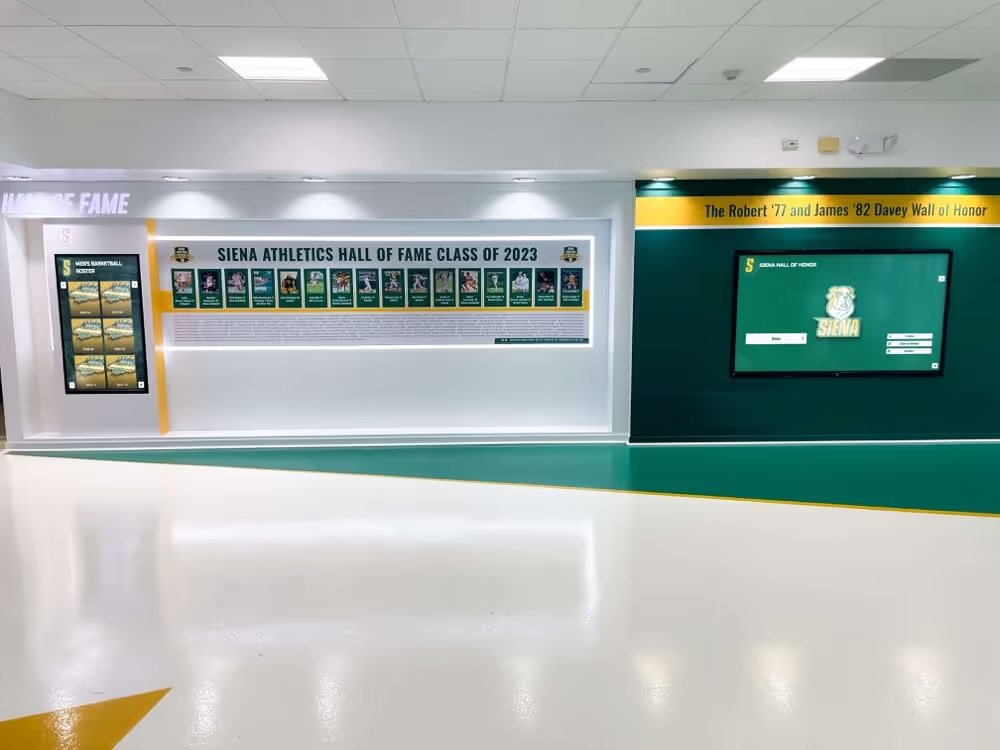
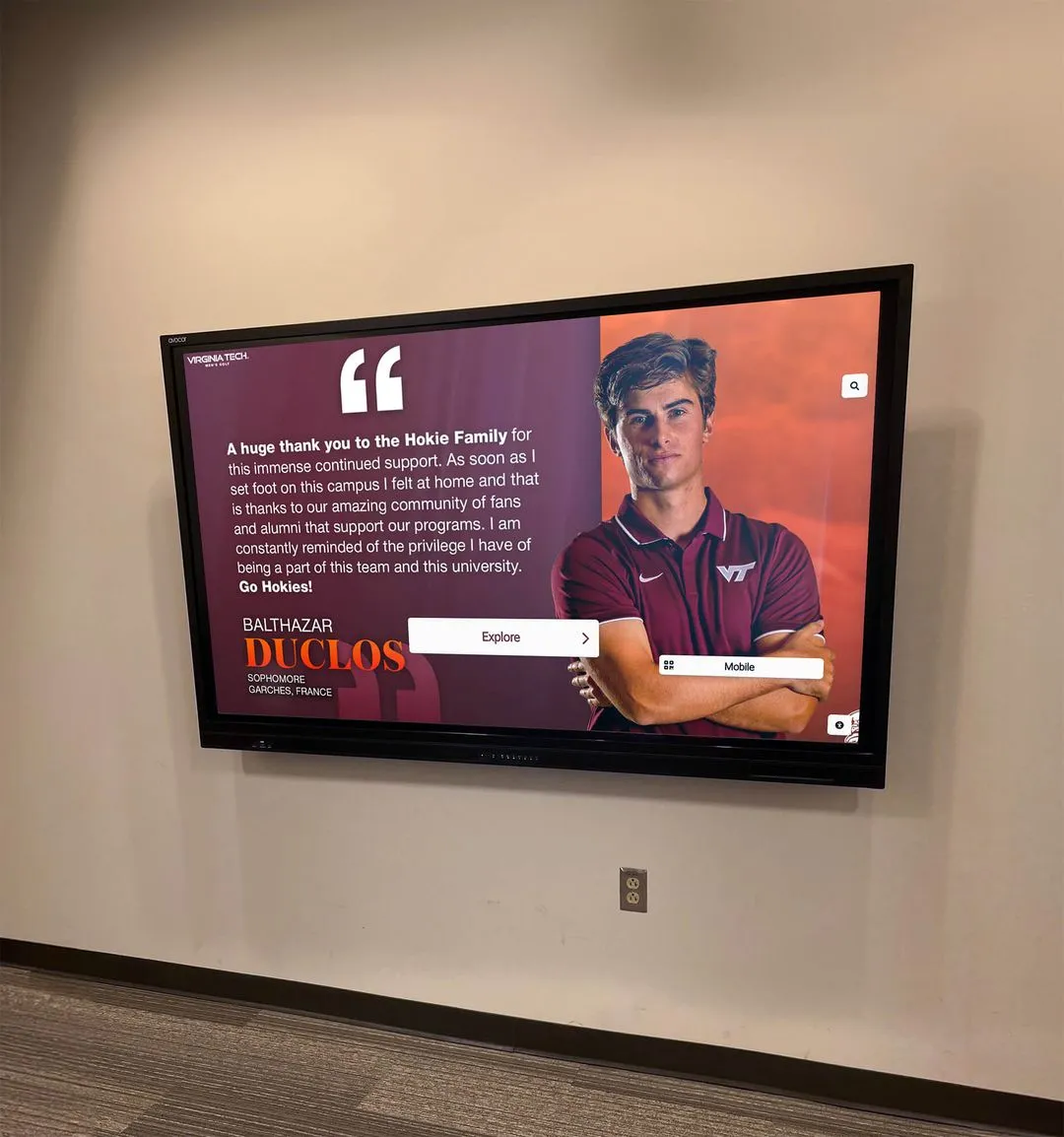
Modern recognition spaces create environments where visitors can comfortably explore athletic achievements through both traditional and digital displays
Unlimited Capacity Without Physical Expansion
The most compelling advantage digital recognition offers involves eliminating capacity constraints entirely. A single touchscreen display can honor unlimited achievements—hundreds, thousands, or tens of thousands—without requiring additional physical space or removing older recognition to accommodate new accomplishments.
When your basketball team wins a conference championship, adding that recognition to a digital system takes minutes through a content management interface rather than weeks waiting for trophy vendors. Individual athlete honors, season highlights, record-breaking performances, and milestone achievements all receive immediate recognition without space allocation decisions or physical trophy purchases.
This unlimited capacity transforms what schools can celebrate. Rather than limiting recognition to only major championships due to trophy case space constraints, digital systems enable comprehensive athletic recognition including all-conference selections, academic all-state honors, milestone performances, team captains and leadership roles, season MVPs across all sports, and individual records in events or statistics.
Schools with extensive athletic programs particularly benefit from this capacity. A large high school with 20+ sports might generate 50-100 recognition-worthy achievements annually when including various honor levels. Traditional trophy cases would require massive investments and extensive hallway space to accommodate this volume, while digital systems handle unlimited recognition through single display installations.
Digital Content Management and Updates
Behind effective digital trophy recognition sits content management infrastructure determining how easily schools maintain current, engaging displays.
Remote Update Capabilities
Modern digital recognition platforms provide web-based content management systems accessible from any internet-connected device. Athletic directors can add championship results immediately after games conclude, coaches can submit athlete achievements during off-season periods, and designated staff can update recognition displays from home, offices, or anywhere without physical access to display hardware.
This remote management capability proves particularly valuable for schools where athletic directors juggle numerous responsibilities, coaches want to contribute recognition for their specific sports, or administrative staff handle updates across multiple locations or campuses. Multiple users receive appropriate permissions, distributing update work efficiently across available personnel.
Maintaining Fresh, Current Recognition
The ease of digital updates fundamentally changes recognition currency. Traditional trophy cases often lag months or years behind actual achievements because physical update processes create logistical and financial barriers. Digital systems eliminate these barriers, enabling recognition that happens immediately while achievement excitement remains high.
This currency matters for student engagement and motivation. Athletes celebrated the same week they earn all-state honors feel that acknowledgment carries meaningful weight. Teams seeing their championship recognized days after victory parades rather than months later maintain emotional connection to the accomplishment. Parents and community members visiting schools encounter recognition reflecting current program status rather than outdated information suggesting neglect.
Platforms like Rocket Alumni Solutions specifically design content management for school athletic recognition contexts, providing intuitive interfaces requiring no technical expertise, template systems maintaining consistent visual presentation automatically, scheduled publishing for strategic recognition timing, and unlimited content capacity accommodating comprehensive athletic program histories alongside current achievements.
Hybrid Approaches: Combining Physical and Digital
Many schools find value in hybrid recognition strategies that preserve treasured physical trophy displays while adding digital systems addressing capacity and engagement limitations.
Curating Physical Displays
Under hybrid approaches, traditional trophy cases display the most significant championships and historic artifacts—state championship trophies, major individual awards, retired jerseys, or memorabilia with special community meaning. These physical displays honor the most prestigious achievements through traditional recognition that alumni specifically return to see.
Meanwhile, comprehensive digital systems handle the vast majority of recognition—conference championships, individual athlete honors, season-by-season results, team rosters, detailed program histories, and thousands of achievements deserving celebration but not requiring physical trophy space. This division preserves trophy case prestige by limiting displayed items to truly exceptional accomplishments while ensuring comprehensive recognition through digital platforms.
Schools pursuing this approach typically limit physical trophy cases to 1-3 carefully curated displays rather than banks of cases consuming extensive hallway space. The cases become showcases for top-tier recognition while digital systems do the heavy lifting of comprehensive athletic program documentation.
Creating Comprehensive Recognition Environments
Hybrid recognition spaces might feature traditional trophy cases displaying championship trophies adjacent to digital touchscreen displays providing detailed information about those championships—team rosters, season highlights, game statistics, video content, and athlete profiles. This combination offers the visual impact and prestige of physical trophies alongside the rich storytelling and engagement that digital systems enable.
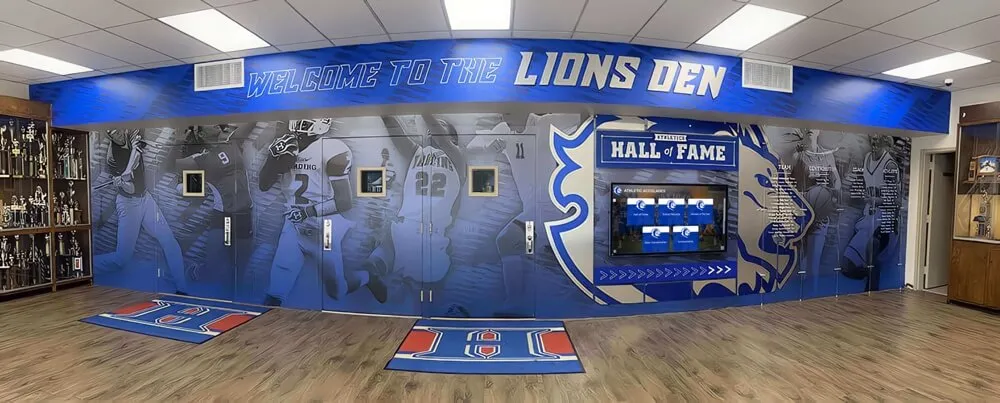
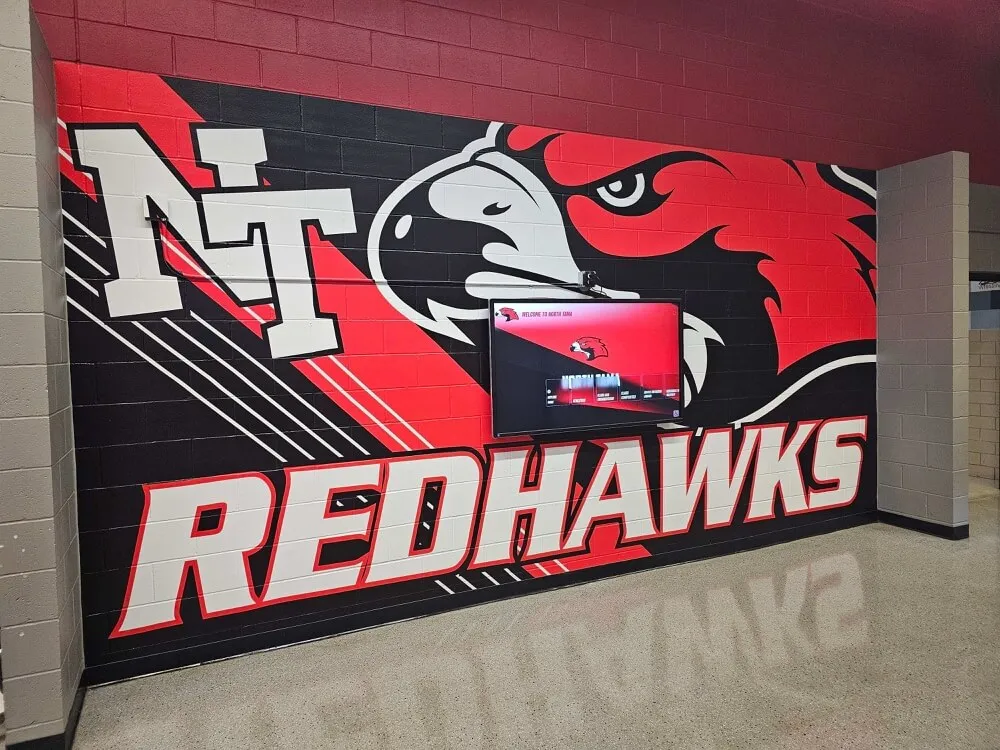
Schools creating new athletic recognition spaces during renovation projects often design integrated environments featuring both traditional and digital elements working together. These installations might include trophy cases integrated into branded murals, digital displays positioned to complement physical recognition, comfortable seating areas encouraging extended engagement, and wayfinding or informational signage creating cohesive recognition destinations rather than disconnected display elements.
Some schools even implement digital championship recognition alongside their traditional trophy cases, creating layered experiences that honor tradition while embracing modern engagement opportunities.

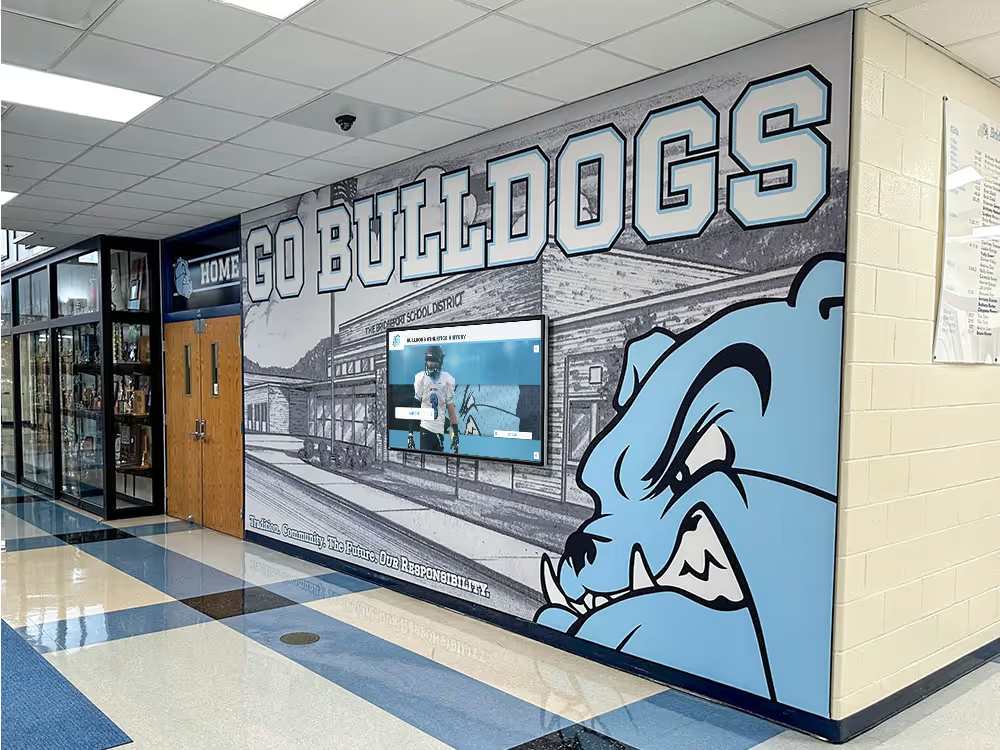
Integrated recognition environments combine traditional trophy cases with digital displays and environmental branding to create comprehensive athletic celebration spaces
Design Best Practices for Trophy Display Spaces
Effective trophy recognition requires thoughtful design considerations extending beyond simply purchasing display cases.
Location and Visibility Optimization
Where schools position trophy displays significantly affects their visibility, impact, and effectiveness in building school pride and motivating students.
High-Traffic Positioning
Trophy displays achieve maximum impact in locations where students, staff, visitors, and families naturally congregate and have time to view recognition comfortably.
Ideal Trophy Display Locations:
Main building entrances where all visitors encounter recognition immediately, gymnasium lobbies and hallways where athletes, families, and spectators gather before and after events, athletic complex entrances serving as recognition gateways to competition spaces, cafeterias or student commons where students spend extended time daily, and administrative areas where prospective families tour during enrollment visits.
Schools should avoid positioning trophy recognition in seldom-visited corridors, poorly lit spaces, or areas where student traffic moves too quickly to allow comfortable viewing. The best trophy display locations offer adequate space for multiple people to view simultaneously without blocking hallways, sufficient lighting (natural or artificial) to showcase displayed items clearly, and comfortable viewing angles without glare or reflection issues.
Creating Recognition Destinations
Rather than treating trophy displays as isolated furniture pieces, consider creating recognition destinations—spaces where visitors want to spend time engaging with athletic achievement stories. This might involve positioning comfortable seating near trophy displays allowing extended viewing, incorporating school branding elements, murals, or artwork creating visual interest, adding informational signage providing context about significant championships or athletes, and designing lighting that highlights displays while creating inviting atmospheres.
These environmental enhancements transform trophy displays from things people walk past into destinations they deliberately visit, particularly valuable for prospective families touring schools or alumni returning to campus.
Visual Design and Aesthetics
Trophy display aesthetics should reflect school identity while ensuring displayed items remain clearly visible and appropriately honored.
School Branding Integration
Trophy displays offer excellent opportunities to reinforce school colors, mascots, and visual identity through coordinated design approaches.
Effective branding integration includes trophy cases featuring custom finishes matching school colors, surrounding wall treatments displaying school colors or mascot imagery, backdrops inside cases using school color fabrics or graphics, custom plaques or bases for trophies incorporating school logos, and coordinated lighting using colored LED systems highlighting school colors.
This branding integration creates cohesive recognition environments that feel intentionally designed rather than simply functional. Visitors immediately connect displays to institutional identity, reinforcing school pride through every visual element.
Maintaining Clean, Organized Presentations
Trophy display effectiveness depends heavily on organization and visual clarity. Overcrowded cases diminish impact regardless of achievement significance. Best practices include leaving adequate space between displayed items for visual clarity, grouping trophies logically by sport, year, or achievement type, using risers or platforms creating visual interest and improving smaller item visibility, maintaining consistent trophy base or plaque styles for cohesive appearances, and regularly cleaning cases, glass, and displayed items to maintain professional presentation quality.
Schools should resist the temptation to maximize every inch of available space, instead maintaining visual breathing room that allows individual trophies and honors to stand out. This requires honest capacity planning and willingness to explore digital alternatives when physical space becomes insufficient for recognition needs.
Accessibility and Inclusion Considerations
Recognition displays should serve all community members, requiring attention to accessibility beyond basic compliance requirements.
Trophy cases should be positioned at heights allowing wheelchair users comfortable viewing, with glass positioned to minimize glare for visitors with visual impairments, displays illuminated sufficiently for clear visibility without creating excessive glare, and space in front of cases allowing wheelchair maneuvering and comfortable viewing from various positions.
Schools pursuing comprehensive accessibility often choose digital recognition systems that meet web accessibility standards, providing recognition accessible to community members with diverse abilities through features like text sizing controls, high-contrast display modes, screen reader compatibility, and web access allowing engagement from any location rather than requiring physical campus visits.
Maintenance, Updates, and Long-Term Management
Even beautifully designed trophy displays lose effectiveness without systems ensuring ongoing maintenance and timely updates.
Establishing Update Protocols
Clear processes determining who updates trophy displays, when updates occur, and how changes are approved prevent recognition from becoming outdated.
Assigning Responsibilities
Successful programs designate specific people responsible for trophy display maintenance with athletic directors typically holding ultimate oversight, coaches providing achievement information for their respective sports, administrative staff potentially handling physical trophy ordering and case updates, and facilities personnel maintaining case hardware, lighting, and structural integrity.
Written protocols clarifying these responsibilities prevent situations where everyone assumes someone else handles updates, resulting in displays remaining unchanged for years while achievements accumulate in storage.
Creating Update Schedules
Regular schedules ensure trophy displays stay current rather than receiving attention only when problems become obvious. Effective schedules include post-season updates adding new championships and honors as sports conclude, annual comprehensive reviews verifying all displayed information remains accurate, immediate updates for exceptional achievements capitalizing on community excitement, and summer maintenance periods when athletic activity is lower for deep cleaning, lighting replacement, or case repairs.
Digital recognition systems make frequent updates practical through simple content management interfaces, while traditional trophy cases require advance planning coordinating with trophy vendors, budgeting for new items, and scheduling physical case access.
Budget Planning for Ongoing Trophy Expenses
Trophy display costs extend well beyond initial case purchase prices, requiring realistic long-term budget planning.
Traditional Trophy Case Ownership Costs
Schools maintaining traditional trophy displays should budget for new trophies and plaques ($75-$300 per item) added multiple times annually, engraving services for names, dates, and achievement details, periodic case maintenance including lock repairs, glass replacement, and lighting updates, and potential additional cases ($3,000-$8,000 each) as space fills over time.
For a typical high school athletic program, annual trophy costs often reach $3,000-$6,000 depending on achievement volume and trophy quality standards. Over twenty years, these recurring expenses plus additional case purchases can exceed $100,000 while capacity constraints continue limiting recognition possibilities.
Digital System Investment Models
Digital recognition platforms typically involve higher initial investment ($8,000-$20,000 for quality systems) but dramatically lower ongoing costs since content additions require no physical purchases or vendor coordination. Schools add unlimited achievements at no per-inductee cost, update recognition immediately through remote content management, and avoid recurring trophy vendor expenses while expanding recognition capacity.
Over multi-year periods, total ownership costs for digital solutions often run significantly lower than traditional approaches while delivering superior engagement, unlimited capacity, and easier maintenance. Schools should evaluate recognition investments through total cost of ownership rather than initial purchase price alone.
Preserving Trophy Condition and Presentation Quality
Physical trophies require ongoing care maintaining their appearance and honoring the achievements they represent.
Regular maintenance includes cleaning trophy cases inside and out quarterly or more frequently in high-traffic areas, polishing metal trophies annually to prevent tarnishing, dusting displayed items and case interiors, replacing failed lighting promptly to maintain proper illumination, tightening any loose mounting hardware, hinges, or locks before failures occur, and inspecting glass for cracks or damage requiring replacement.
Schools should assign specific personnel or establish maintenance schedules ensuring these tasks happen consistently rather than being neglected until problems become obvious. Well-maintained trophy displays communicate that the school values the achievements they represent, while neglected cases suggest institutional indifference that undermines recognition purpose.
Selecting the Right Solution for Your School
The choice between traditional trophy cases, digital recognition systems, or hybrid approaches depends on specific school contexts, but several factors commonly guide successful decisions.
Choose Traditional Trophy Cases When:
- Your school has limited existing recognition with manageable future achievement volumes
- Displaying actual physical trophies matters deeply for your institutional culture
- Available hallway space accommodates multiple cases as needs grow
- Budget supports ongoing trophy purchases and periodic case additions
- Your community strongly prefers traditional recognition aesthetics
- Technical support for digital systems would be challenging
Explore Digital Recognition When:
- Space constraints limit traditional trophy display expansion possibilities
- You want to celebrate comprehensive achievements beyond just major championships
- Interactive engagement matters more than physical trophy display
- Budget predictability is important and you prefer avoiding recurring per-trophy costs
- Accessibility and remote access to recognition are priorities
- You value multimedia storytelling beyond basic trophy labels
- Quick, timely recognition updates matter for student engagement
Consider Hybrid Approaches When:
- You want to preserve treasured physical trophy displays for top achievements
- Comprehensive recognition matters but you also value traditional aesthetics
- You’re creating new recognition spaces during renovation projects
- Different stakeholder groups have varying preferences between traditional and digital
- Budget allows investment in both physical cases and digital systems
Most schools discovering digital recognition possibilities find that concerns about losing traditional trophy displays fade quickly once they experience the community engagement that interactive, comprehensive recognition creates. The ability to celebrate every achievement rather than making difficult space-allocation decisions, combined with immediate updates and rich multimedia storytelling, typically outweighs attachment to physical-only recognition.
Creating Recognition Spaces That Inspire and Engage
Ultimately, trophy display decisions should focus on creating recognition that accomplishes fundamental purposes—celebrating student achievement meaningfully, motivating current athletes through visible excellence standards, building institutional pride that strengthens school communities, and honoring program heritage while remaining relevant to contemporary students.
The most effective recognition combines appropriate presentation quality with sustainable maintenance and genuine engagement. Students should feel pride encountering recognition displays, athletes should see achievement standards worth pursuing, alumni should connect with their own accomplishments, and visitors should understand immediately that they’re encountering institutions that value and celebrate excellence.
Modern digital solutions increasingly enable this comprehensive recognition while addressing practical challenges that traditional trophy cases struggle to overcome. Rather than gradually becoming outdated as updates lag and space constraints force difficult decisions about which achievements deserve display, digital platforms remain perpetually current while celebrating unlimited accomplishments through engaging, multimedia-rich presentations.
Schools planning trophy display investments should evaluate options through long-term lenses—not just initial costs but total ownership expenses, not just current needs but decades of future achievements, not just display aesthetics but actual community engagement patterns. These longer perspectives often reveal that solutions appearing expensive initially provide better value over time, while seemingly economical approaches create recurring costs and limitations that ultimately prove more expensive and less effective.
Whether choosing traditional trophy cases, modern digital alternatives, or hybrid approaches combining both, the key lies in creating recognition systems that truly serve students, programs, and communities rather than simply fulfilling institutional expectations or following familiar patterns.
Celebrating Athletic Excellence with Modern Recognition
Trophy display cases for schools represent more than furniture decisions—they shape how institutions honor achievement, build community pride, and inspire students for years to come. While traditional glass-fronted cases filled with championship trophies remain familiar sights in school hallways, modern digital alternatives address fundamental limitations around capacity, engagement, updates, and comprehensive recognition that physical displays cannot overcome.
Schools exploring recognition solutions should consider platforms specifically designed for educational athletic programs—systems offering unlimited achievement capacity without physical space constraints, intuitive content management requiring no technical expertise, rich multimedia storytelling beyond basic trophy labels, and displays that maintain engagement through perpetually current content.
Ready to create trophy recognition that celebrates every achievement while inspiring current and future athletes? Rocket Alumni Solutions provides comprehensive digital recognition platforms that transform how schools honor athletic excellence—combining unlimited capacity with effortless updates and engaging presentations that keep recognition meaningful across generations. Discover how modern athletic recognition builds warmer, more connected school communities while preserving achievements that inspire for decades to come.