Every school’s playoff run follows the same arc: weeks of anticipation, close games, and a final result that either ends or extends the season. Then, within days, the bracket poster comes down, the seeding sheet goes into a folder, and the details that made the postseason run memorable fade from institutional memory. A tournament bracket board changes that pattern. It takes the raw data of a playoff journey—opponents, scores, advancement rounds, and final results—and turns it into a display that lives in the gym, lobby, or touchscreen wall long after the season ends. This guide covers what belongs on a tournament bracket board, which formats work for different school environments, and how to build a postseason update workflow that keeps the record current without creating extra work.
The short answer: A tournament bracket board is any display—physical or digital—that shows a team’s progression through a postseason bracket, including the opponents faced, results, and championship context. The best versions combine the visual clarity of a bracket with photo documentation, key stats, and enough detail to preserve the run as institutional history rather than just a score sheet.

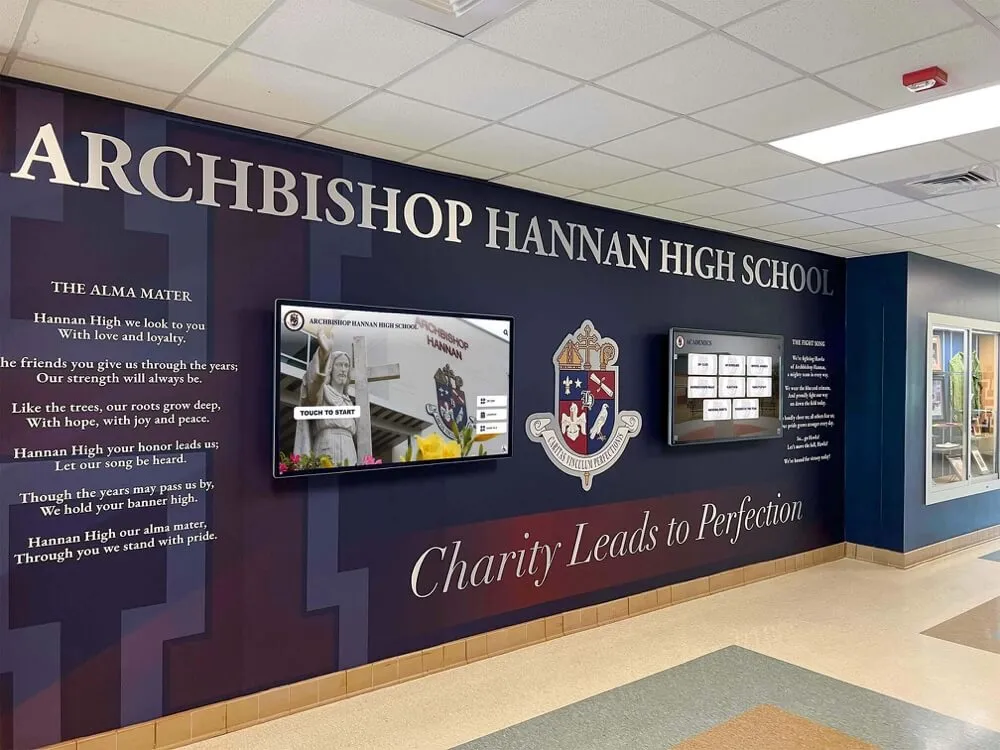
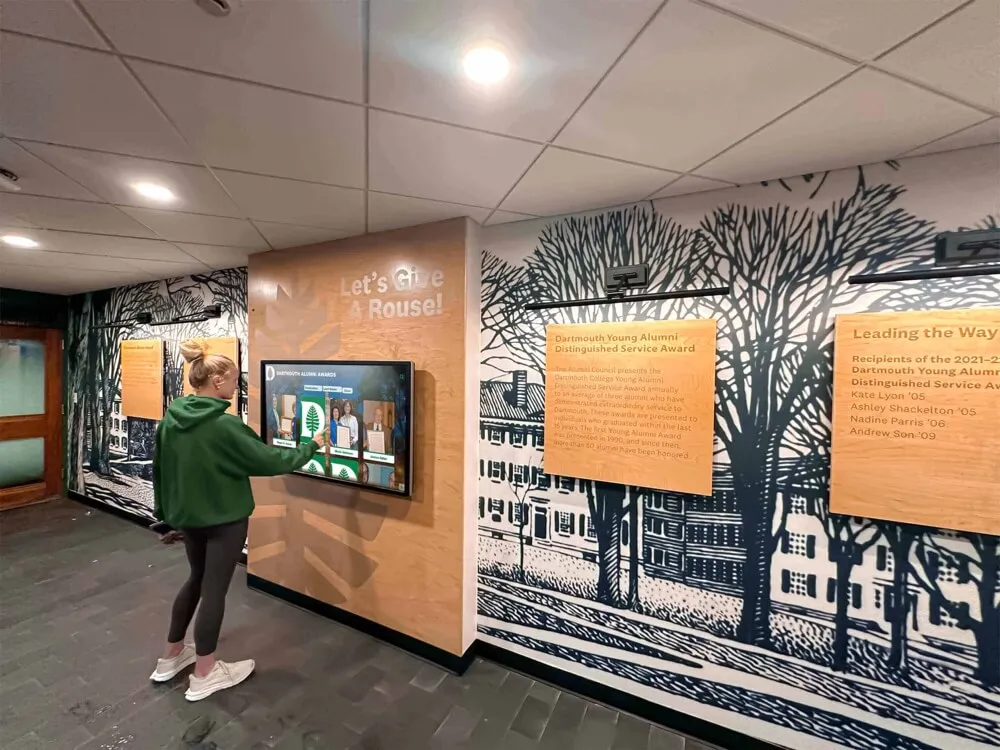
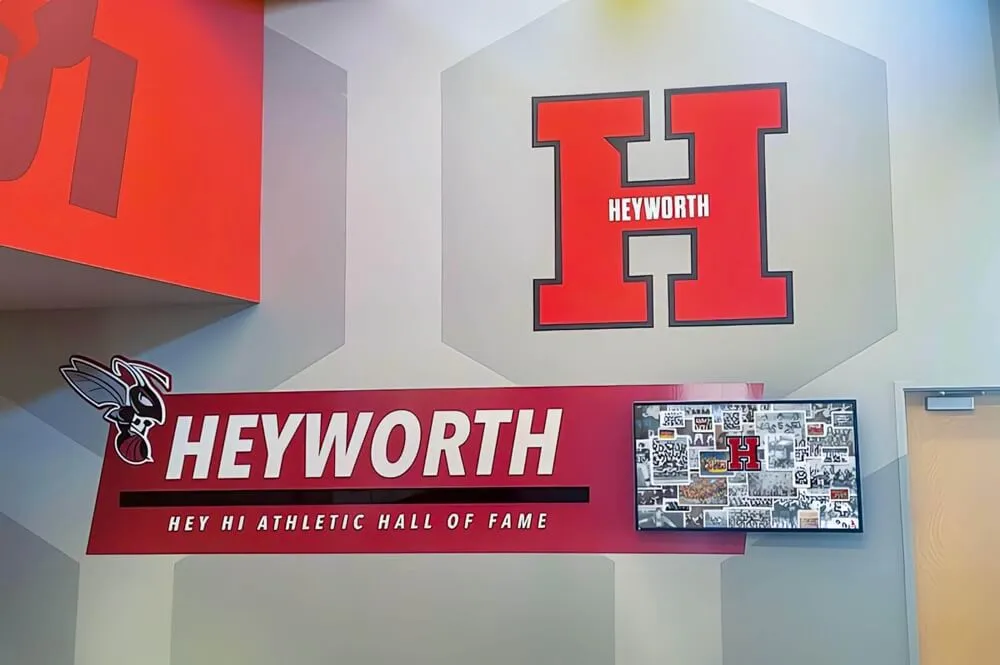
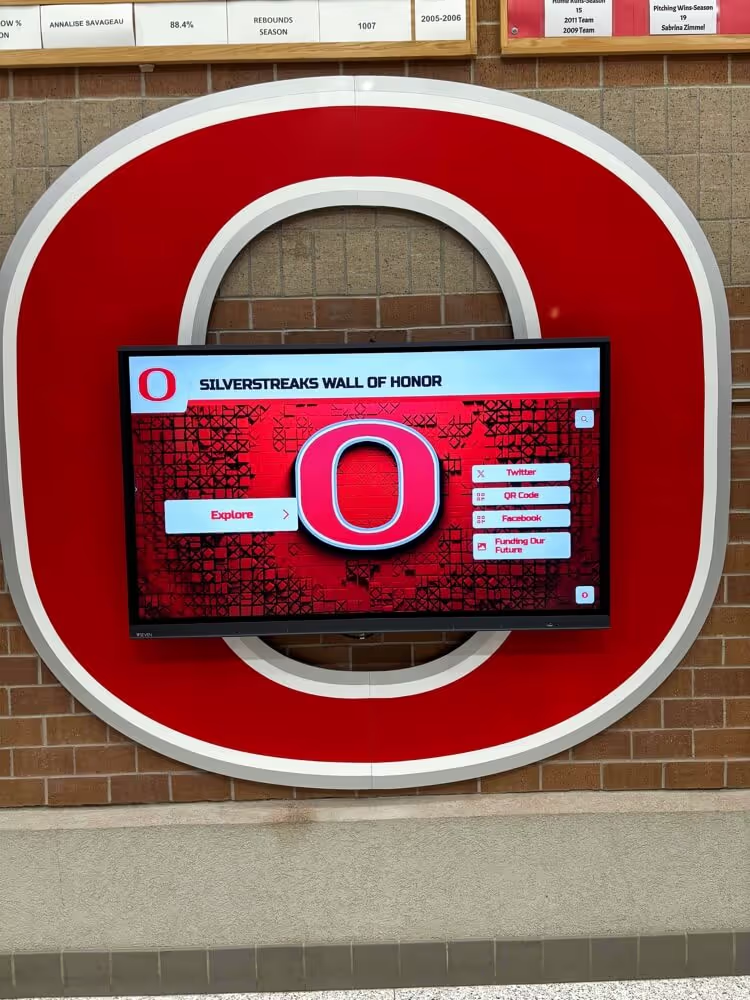
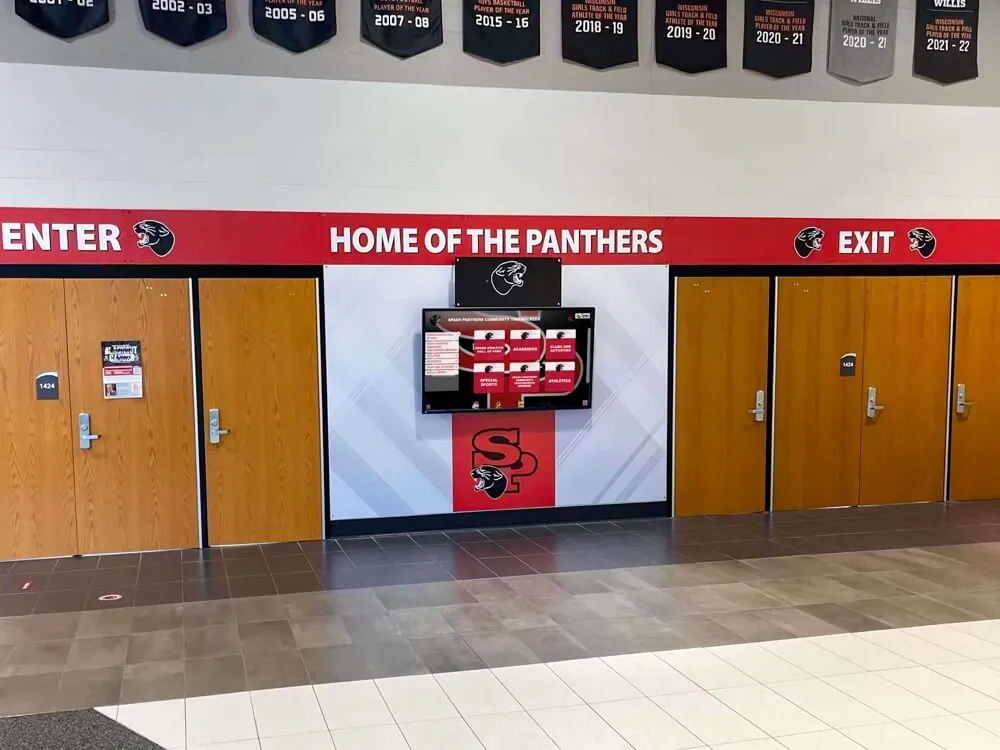
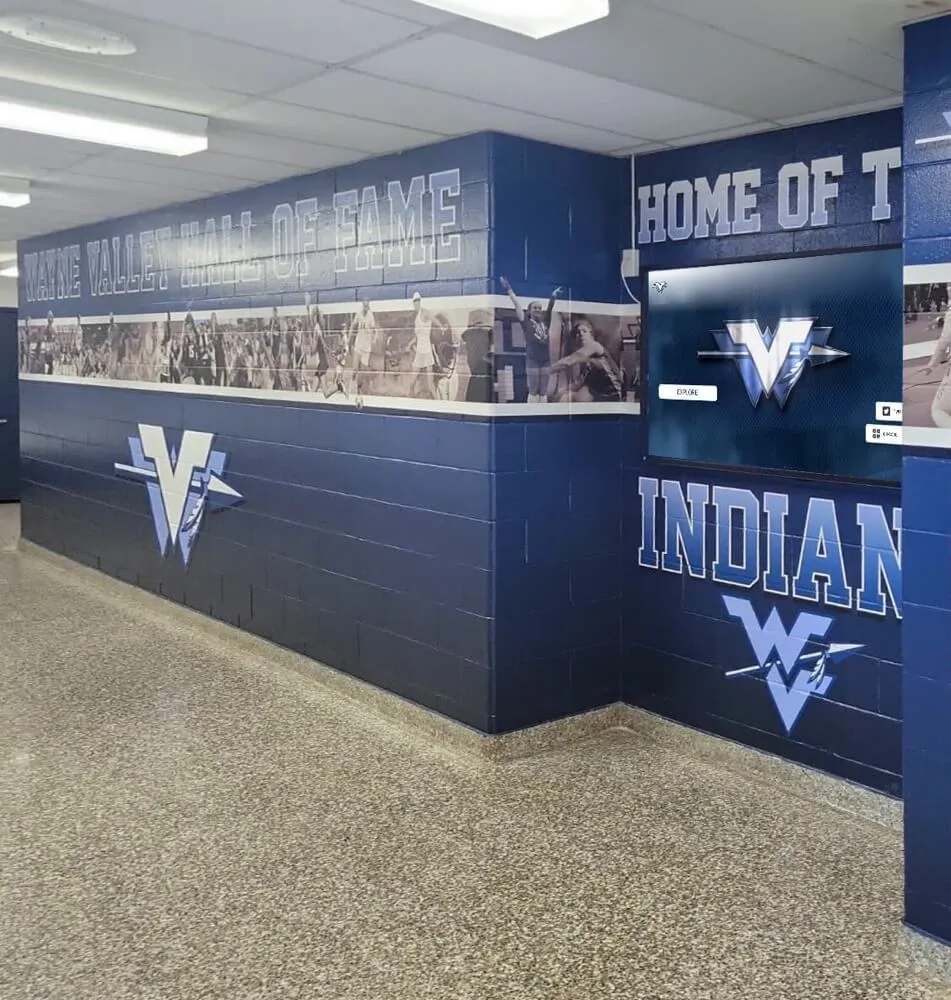
Permanent athletic corridor displays preserve playoff milestones as part of a school's year-round identity—not just as a season recap
What a Tournament Bracket Board Actually Displays
A tournament bracket board can range from a single printed poster to a full interactive touchscreen installation. What separates an effective bracket display from a forgotten folder is the depth of content it holds and the permanence of where it lives.
The minimum viable bracket board shows:
- School and sport — visible at a glance without explanation
- Season and year — so the board remains interpretable decades later
- Each round’s opponent — with school name and geographic context where helpful
- Score or result — wins and losses with final tallies
- Final placement — first round, regional final, state semifinals, champion
Richer versions add:
- Photos from key games or the championship event
- Individual player or roster acknowledgment
- Statistical milestones from the postseason run (points per game, shutouts, team records set)
- Coach and program context
Conference and postseason traditions in major sports demonstrate how bracket documentation at any level—from power conferences to small-school districts—becomes a reference point that communities return to for years. The same principle applies to a high school’s local tournament history.
Bracket Field Table: What to Include on Every Board
The following table provides a field-by-field guide for documenting a tournament run. Using consistent fields across all sports and all years means the display builds into a searchable archive rather than a collection of mismatched formats.
| Field | Required | Notes |
|---|---|---|
| Sport | Yes | Football, Basketball (Boys/Girls), Soccer, etc. |
| Season year | Yes | Use academic year format: 2025-26 |
| Classification or division | Yes | Class 4A, Division II, District 7, etc. |
| Seeding (if available) | Recommended | Shows competitive context—e.g., #3 seed advancing to finals |
| Round 1: Opponent + Score | Yes | Home/away designation is helpful |
| Round 2: Opponent + Score | Yes | Add all rounds through elimination or championship |
| Final placement | Yes | e.g., “Regional Runner-Up,” “State Semifinalist,” “State Champion” |
| Head coach | Recommended | Ties the run to program leadership |
| Starting roster or key contributors | Optional | Adds a human dimension to the record |
| Team record entering postseason | Optional | Provides seasonal context |
| Photos from postseason rounds | Optional | Strongest addition for long-term engagement |
A school that applies these fields consistently across five or ten years of postseason history creates something qualitatively different from a wall of trophies or a stack of banners: a browsable record that shows how the program developed, where it succeeded, and which playoff runs were exceptional.
Physical Tournament Bracket Board Formats
Physical formats remain common—and genuinely effective—when installed in high-traffic locations with a clear update plan.
Gym Wall Mount
The most visible option for athletic programs is a bracket board mounted in the main gymnasium or adjacent corridor. Printed on vinyl or mounted on a whiteboard, this format works well for current-season documentation and can be switched out or updated with each postseason cycle.
The limitation is longevity. A current-season bracket on a gym wall is compelling during the run. Five years later, it is competing with newer brackets for the same physical space. Schools that rely on gym wall mounts often find themselves rotating displays out rather than accumulating them—which means the historical record only covers the most recent seasons.
Display Case With Bracket Insert
Incorporating a laminated or framed bracket into an existing display case—alongside team photos, trophies, or medals—extends the life of the documentation. Physical display cases create the impression of permanence, and a framed bracket alongside the season’s hardware tells a more complete story than the trophy alone.
Championship ring displays and bracket documentation often live alongside each other in high-performing programs, giving visitors both the artifact and the context for how it was earned.
The challenge with display case formats is the same as any physical recognition: space is finite. A program with multiple sports and multiple postseason appearances per year will exceed case capacity within a decade.
Lobby Poster or Banner
A printed bracket poster or vertical banner in the school lobby announces the postseason run to every visitor who enters the building. This format works well for championship seasons where high visibility beyond the athletic facility is the goal.
Posters and banners require periodic replacement and lack interactivity—visitors can read the result but cannot explore deeper context. For a single-season celebration, this format is appropriate. For building a multi-decade archive, it is a starting point rather than a complete system.
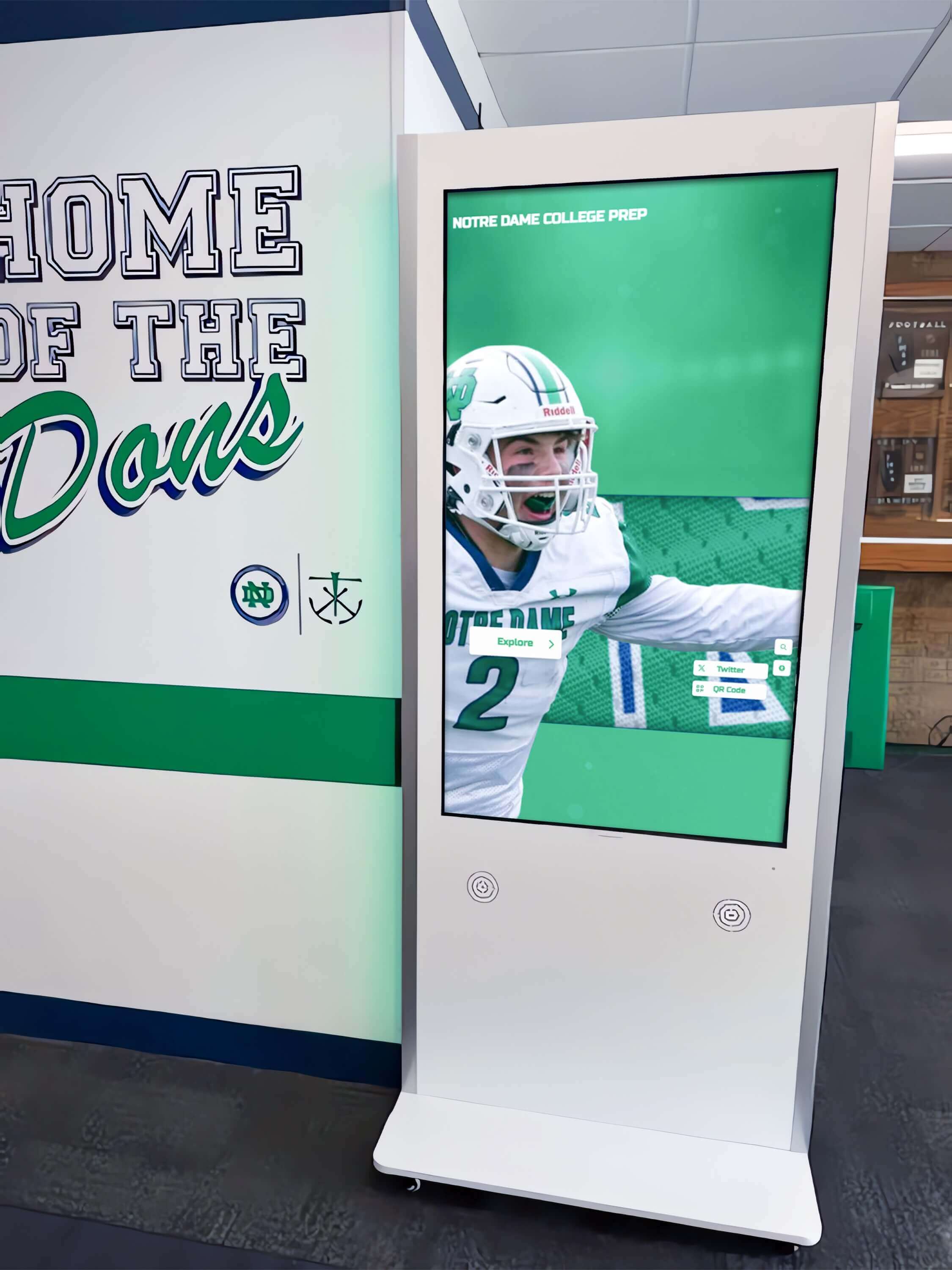
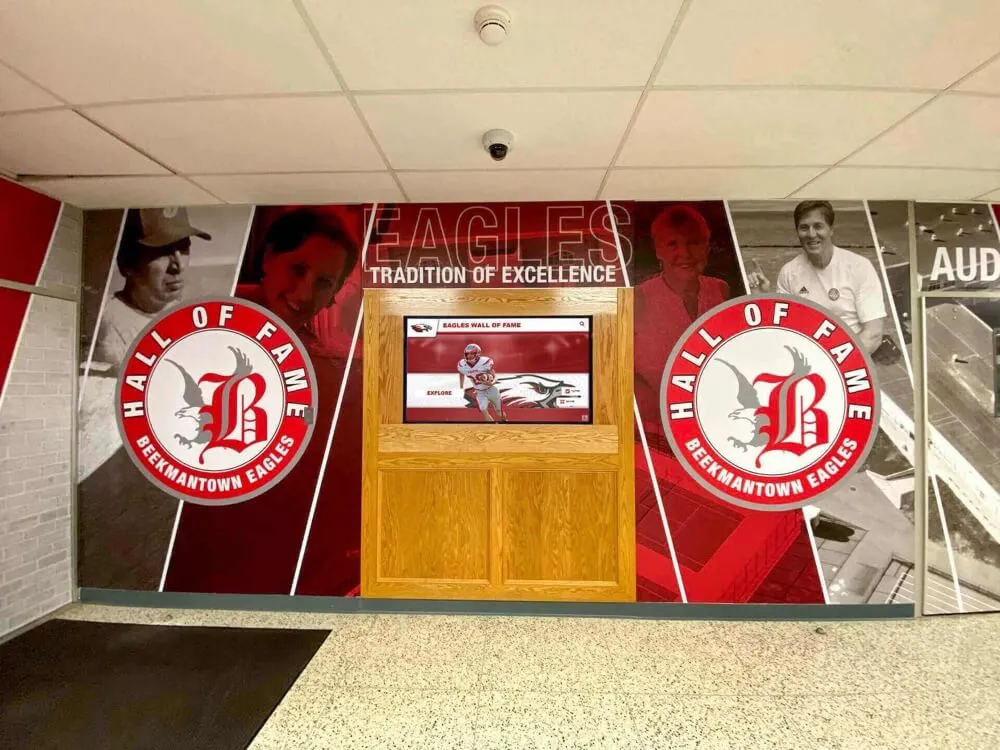
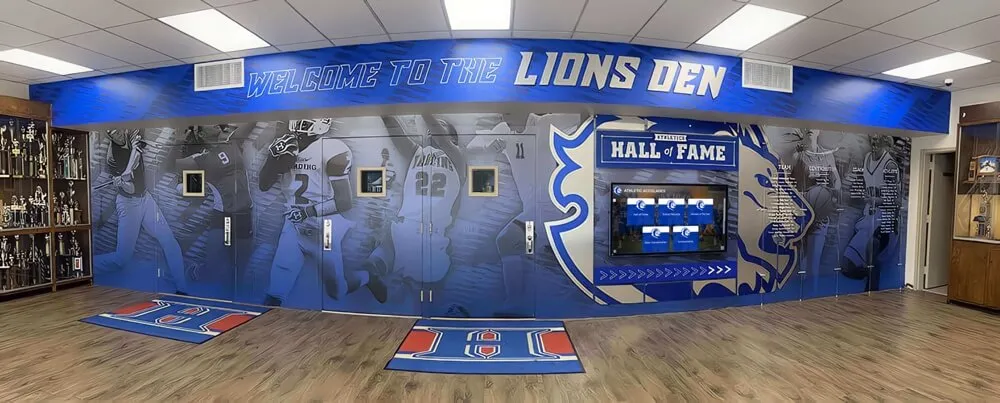
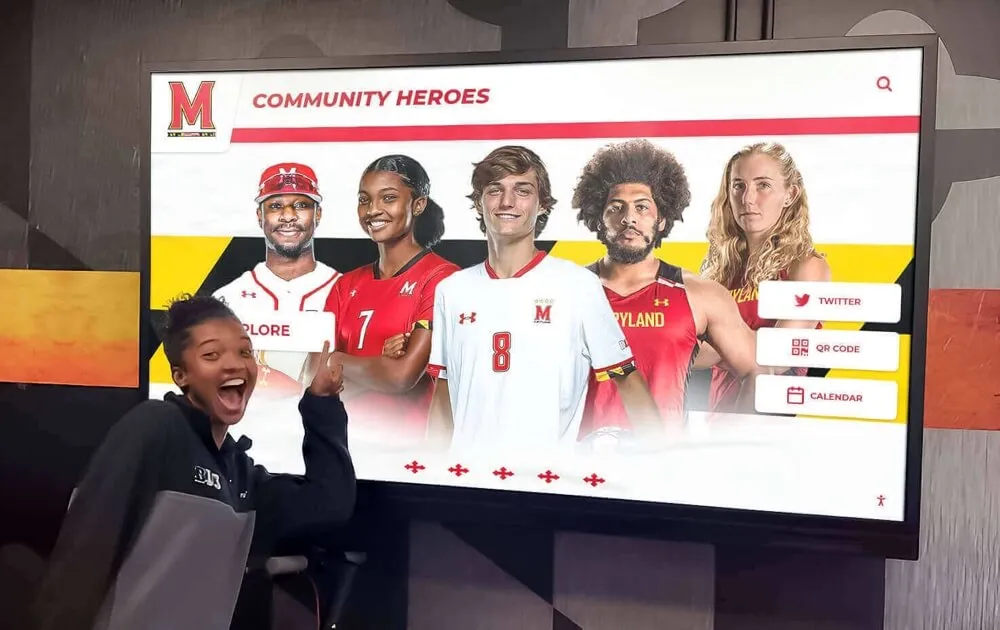
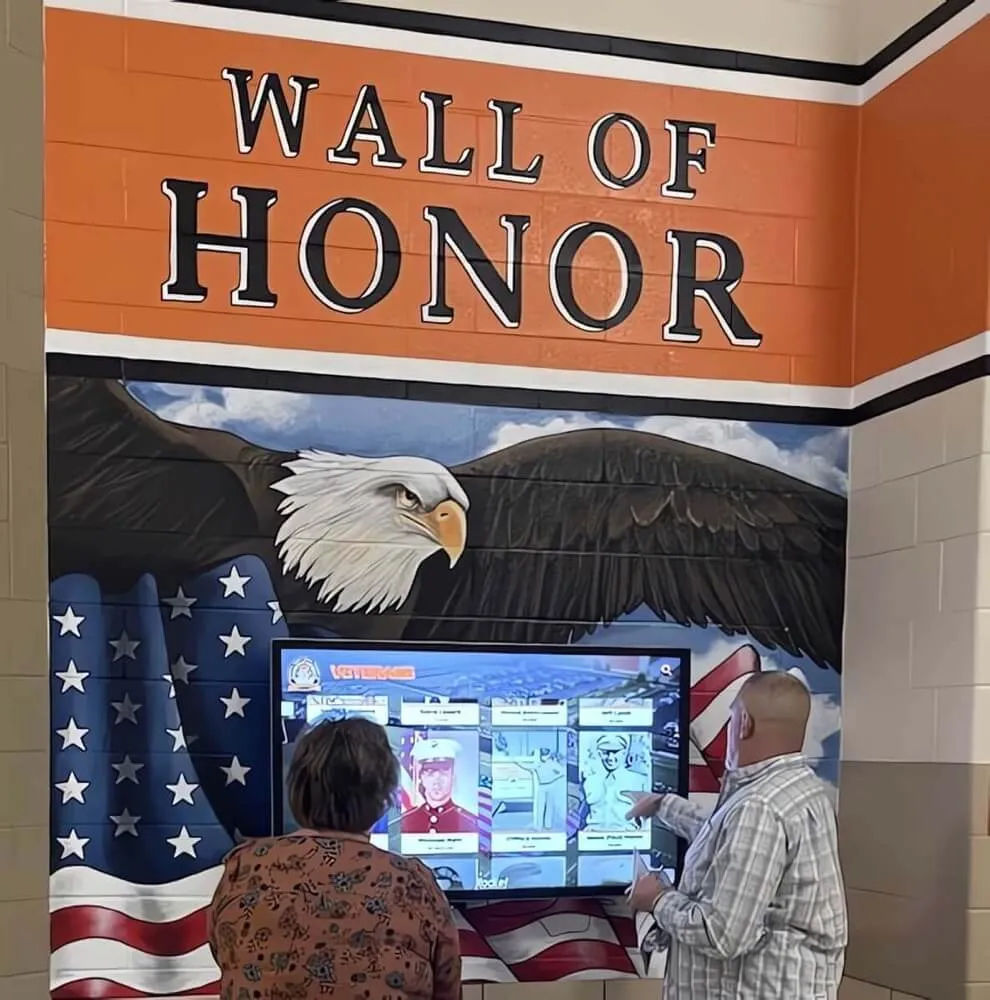
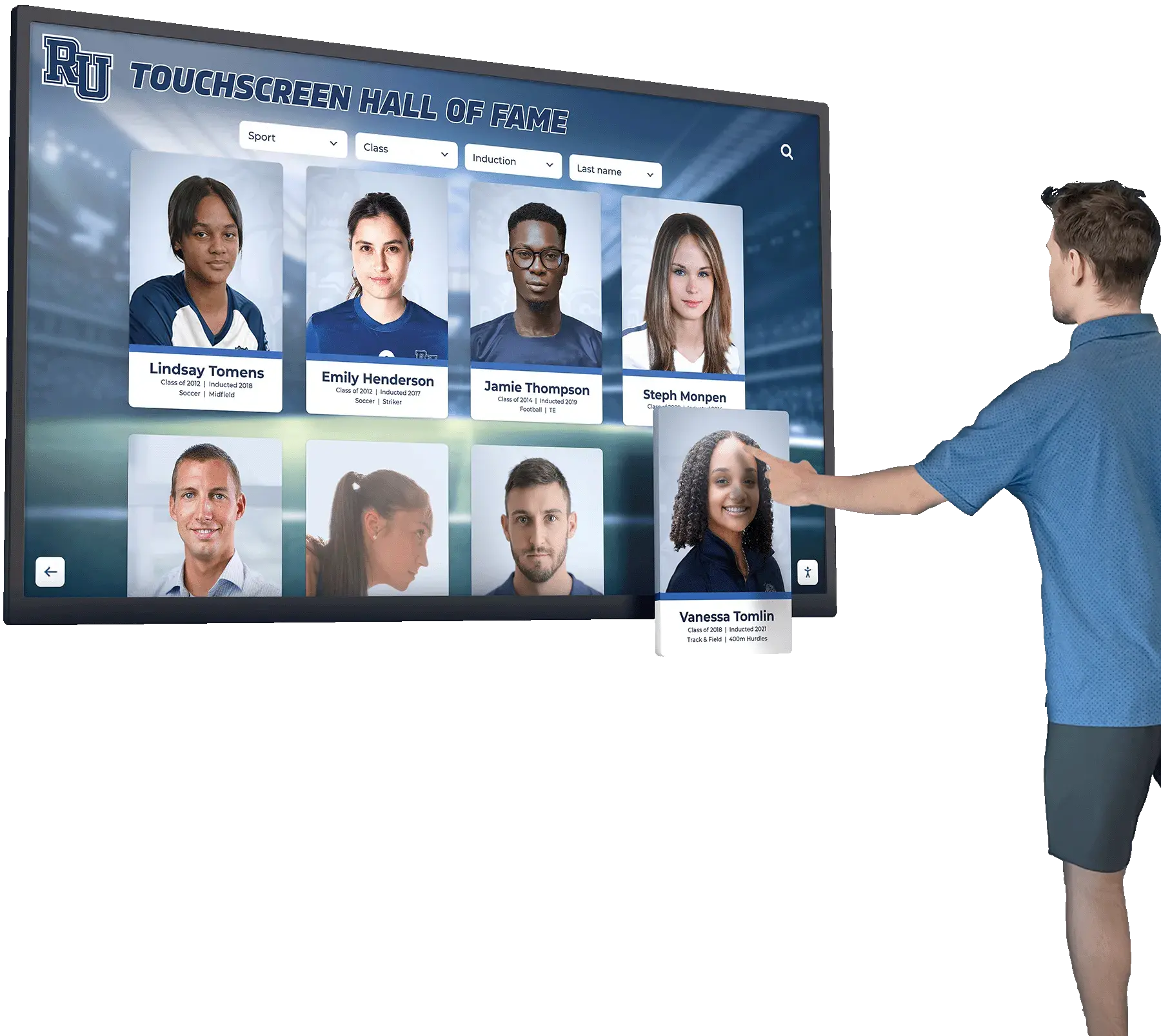
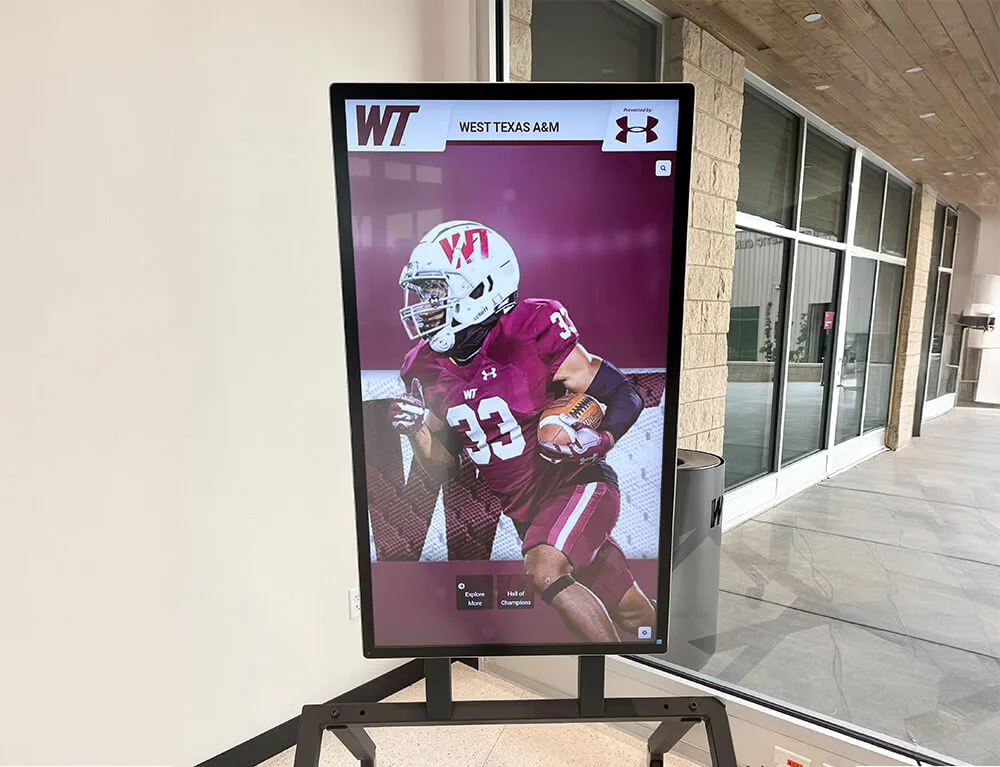
Lobby touchscreen kiosks add interactivity to bracket displays—visitors can explore full game histories, rosters, and photos from each postseason run
Digital Tournament Bracket Boards
Digital platforms resolve the core limitation of physical formats: they do not fill up, and they allow each bracket to carry far more context than a printed poster.
Lobby or Gym Touchscreen Display
A touchscreen display in the gym lobby or main hallway can house an interactive bracket viewer showing every postseason run across multiple sports and multiple years. Visitors tap a season to view the bracket, then tap a game to see the score, photos, and any statistical context attached to that round.
This format works because it makes the archive browsable—not just visible. A student whose older sibling played on the 2019 regional finalist team can find that bracket, see the roster, and share a photo from the tournament. That access is what transforms a bracket board from a record into a community touchpoint.
Award display cases versus digital display systems represent two fundamentally different approaches to the same problem—schools that have hit the wall on physical case space often discover that a digital platform can absorb decades of history without any of the space planning a physical installation requires.
Digital Record Board With Postseason Results
For programs that track athletic records alongside postseason achievements, a digital record board with a dedicated postseason section handles both types of recognition in a single interface. Regular season records—scoring leaders, win streaks, team stats—live alongside the bracket history, so both dimensions of program excellence are visible in one display.
Championship banner transitions to digital displays have shown how schools are moving away from the physical constraints of rafters and walls—and using digital screens to present richer, more accessible records of the same athletic achievements.
Web-Accessible Bracket Archive
For schools that want to extend bracket visibility beyond the physical campus, a web-accessible platform allows families, alumni, and prospective students to browse postseason history from home. This is particularly valuable for alumni engagement: a graduate from 20 years ago can search for their team’s bracket, find their senior season, and share the display with family members who never visited campus.
See How Schools Turn Playoff Runs Into Permanent Displays
Rocket Alumni Solutions builds touchscreen halls of fame, digital record boards, and interactive lobby displays that preserve tournament bracket history—searchable by sport, year, and round—in a format that grows with your program.
Schedule a DemoPostseason Update Checklist
The window for capturing bracket information accurately is short. Within two to three weeks of the final game, the details needed for a complete record are still fresh and available. The following checklist applies to any postseason run—whether a first-round exit or a state championship.
| Timing | Task | Owner |
|---|---|---|
| During the run | Save the official bracket (PDF or screenshot) with all round results | Athletic director or designated staff |
| During the run | Photograph each game—team warm-up, key moments, final buzzer or whistle | Team photographer or volunteer |
| Within 48 hours of final game | Confirm final placement and correct opponent names in writing | Coaching staff sign-off |
| Within 1 week | Export complete roster for the postseason squad | Coach or registrar |
| Within 2 weeks | Upload bracket, photos, and roster to display platform | Recognition coordinator |
| Within 30 days | Verify display is live and visible; notify team members and families | Athletic director |
| End of academic year | Archive physical materials (printed bracket, programs, certificates) | Activities office |
Running this checklist at the end of every postseason—regardless of how far the team advances—builds a consistent archive. Schools that only document championship seasons end up with gaps that are difficult to fill retroactively.
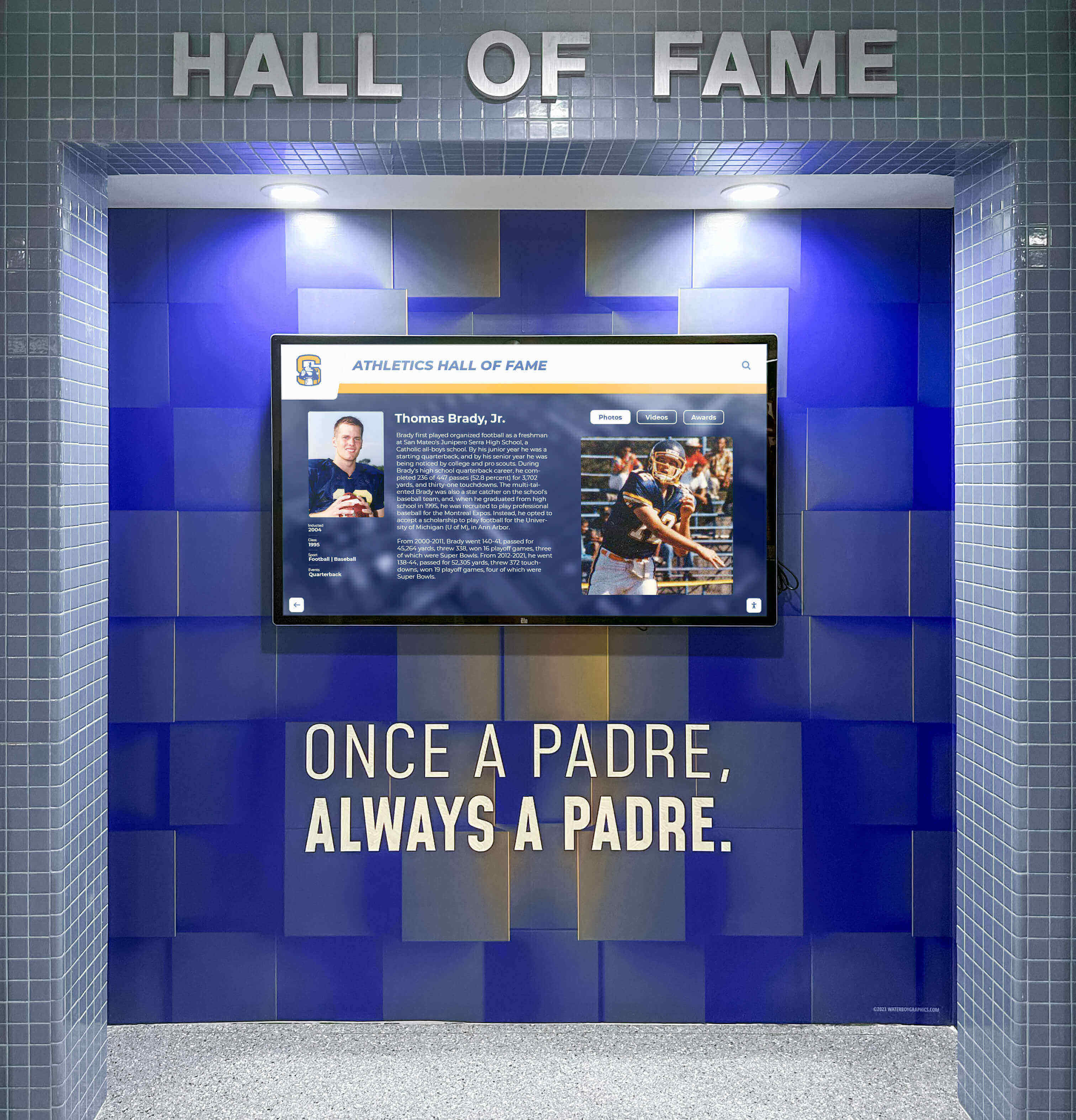
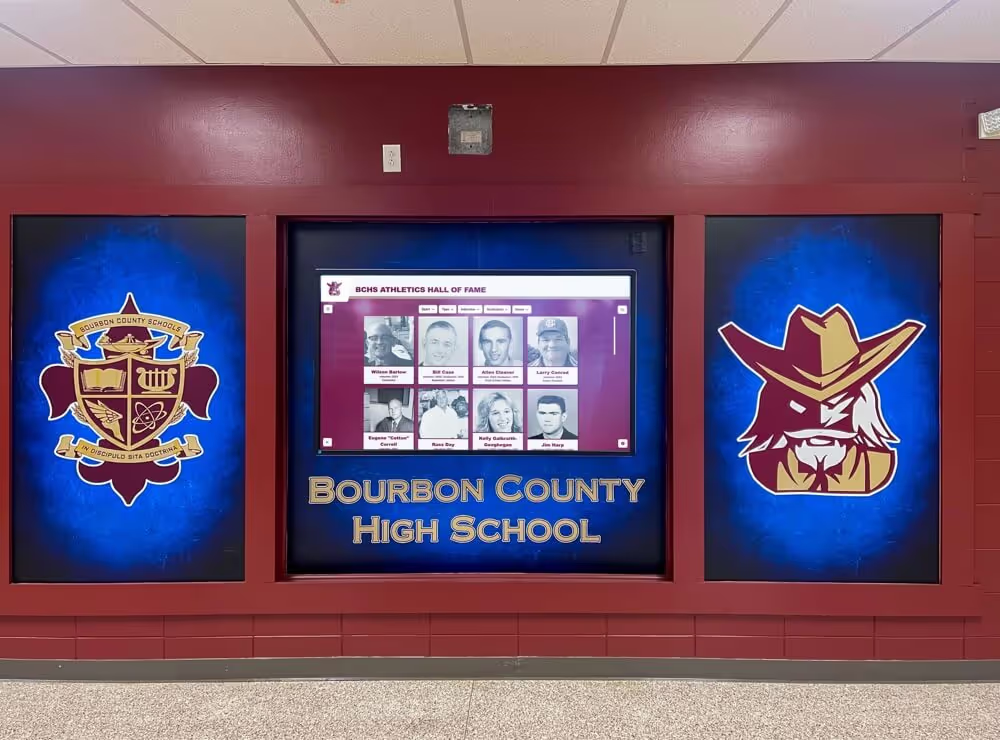
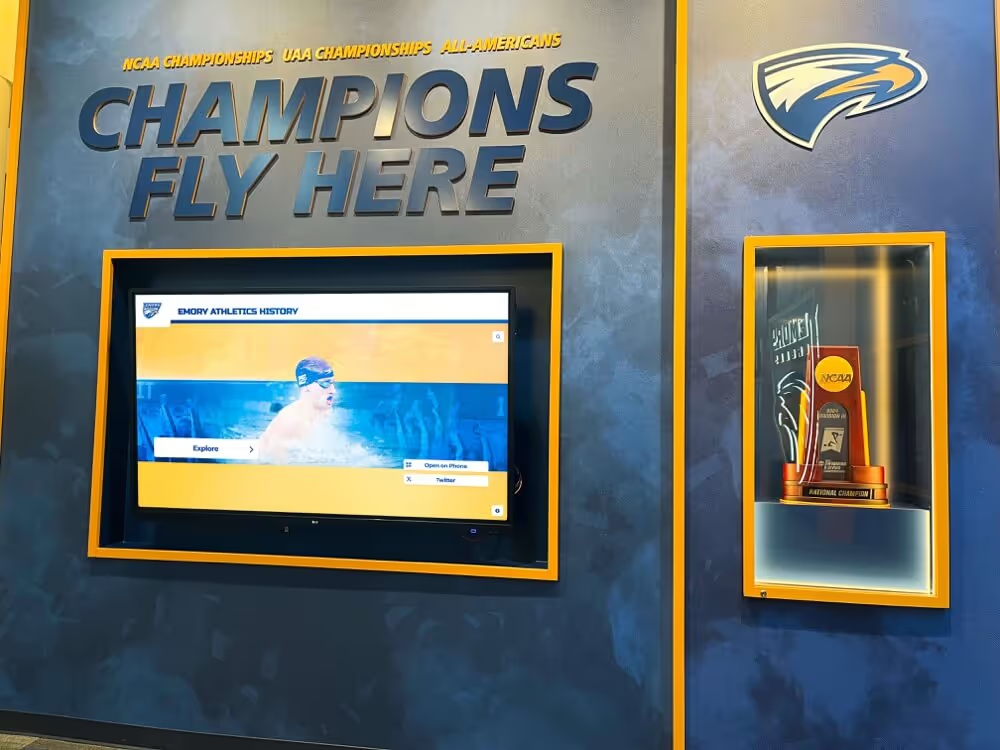
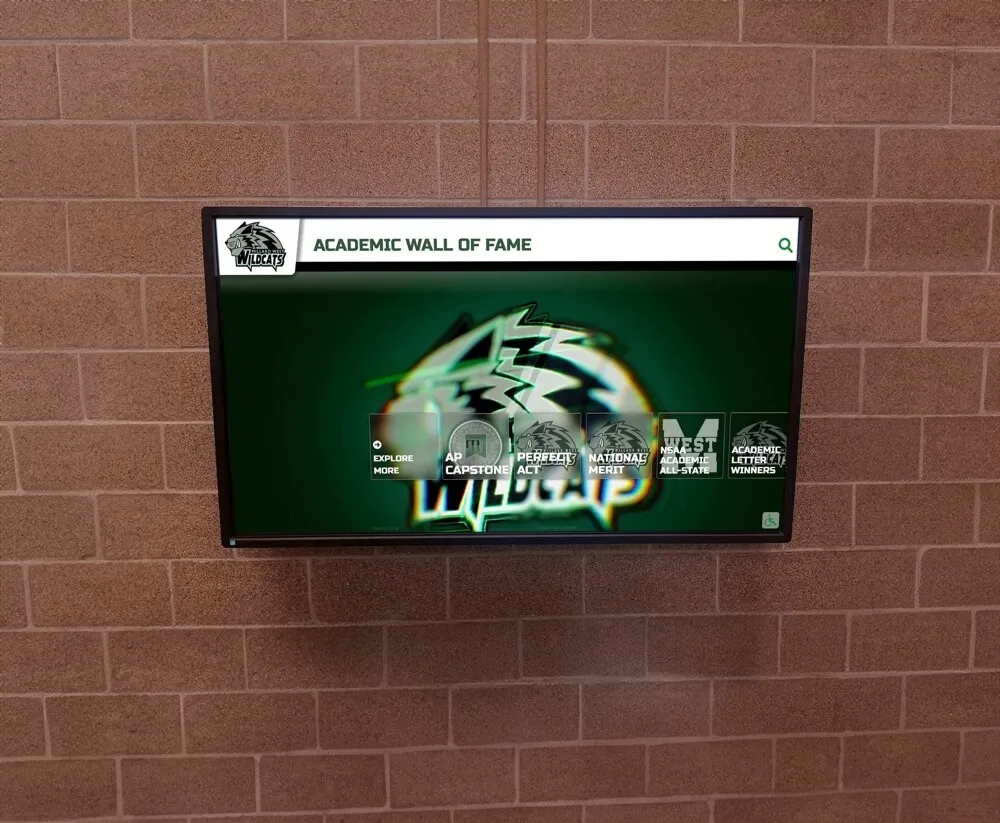
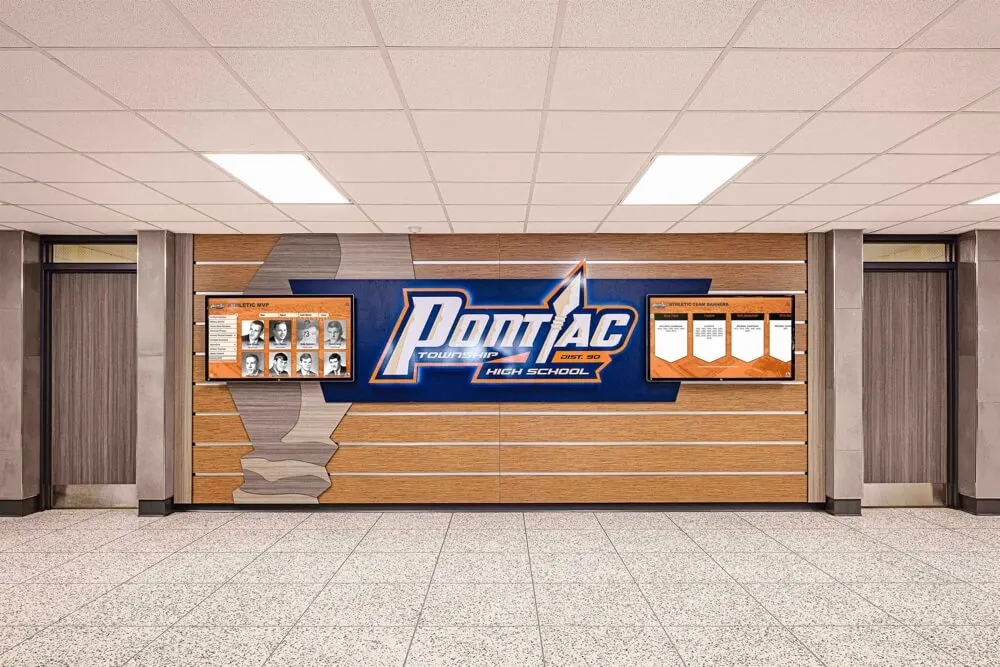
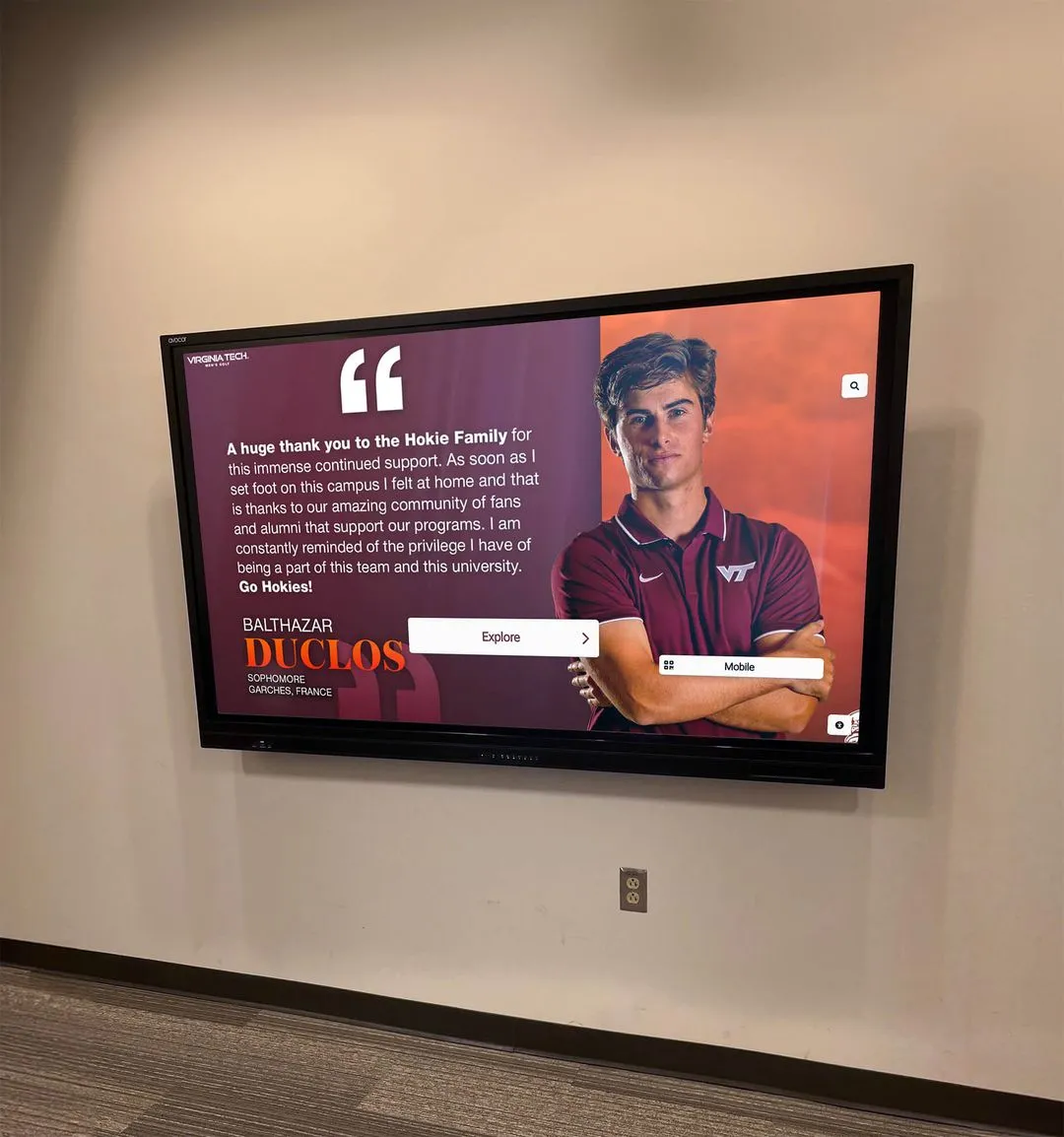
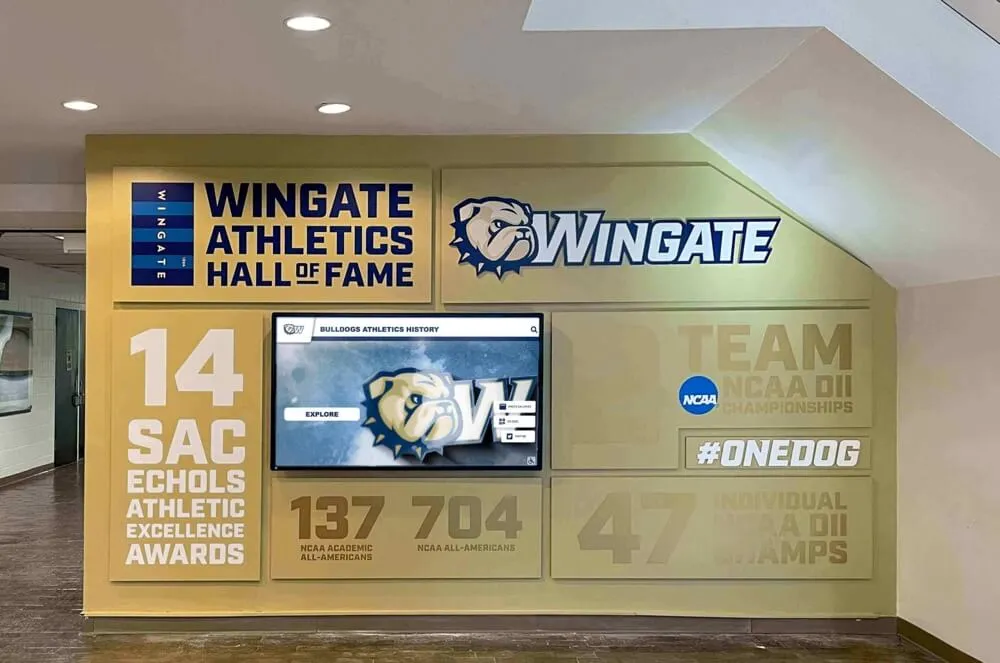
Digital displays in athletic facilities keep postseason records visible year-round—not just during tournament season
Where to Place a Tournament Bracket Board
Display location affects how often the bracket record gets seen and by whom. The right placement depends on the school’s goals: building program culture with current athletes, welcoming families and visitors, or engaging alumni who return to campus.
Main gym lobby or entrance corridor: Highest traffic for athletic events. Every family attending a game walks past the display. This location prioritizes community visibility and reinforces program culture for current athletes.
Main school lobby: Reaches the broadest audience—students, parents, visitors, staff, and prospective families. Best for championship-season displays or multi-sport bracket archives that represent the whole school.
Athletic hallway near locker rooms: Seen most consistently by athletes in active programs. A bracket board here becomes part of the daily environment for teams currently competing, which has the strongest motivational effect.
Cafeteria or commons area: High student traffic creates broad visibility. Works well for schools where athletic recognition is integrated into overall school culture rather than isolated in the gym.
Preserving game-winning moments and tournament trophies follows the same logic as bracket boards: the context that surrounds an artifact determines how meaningful it becomes. A bracket on a wall with no surrounding context is less engaging than a bracket alongside photos, rosters, and a note about what made that run significant.
How to Preserve Bracket Context Beyond the Score
The score tells you who won. Context tells you why the run mattered. Schools that add a layer of context to their bracket boards create displays that still feel meaningful a decade later.
Photos from each round: A single game photo per round gives the bracket a human face. Even low-resolution photos from a parent’s phone are better than a scoreboard alone.
Notable stats or milestones: If a player broke a school record during the postseason run, that note belongs alongside the bracket. If the team was unseeded and won four consecutive road games, that detail is part of the story.
Opponent context: Noting that an opponent was a defending state champion or a program with a lengthy win streak adds competitive weight to the result. Future generations reading the bracket years later will understand what the win represented.
Coach acknowledgment: Including the head coach’s name ties the run to program leadership. For alumni engagement, the coach’s name is often what triggers a memory and makes the display personally relevant.
Championship rings and the stories behind them illustrate how even small contextual details—the year the ring was designed, which game it commemorates—turn a physical object into a narrative. Bracket boards work the same way.
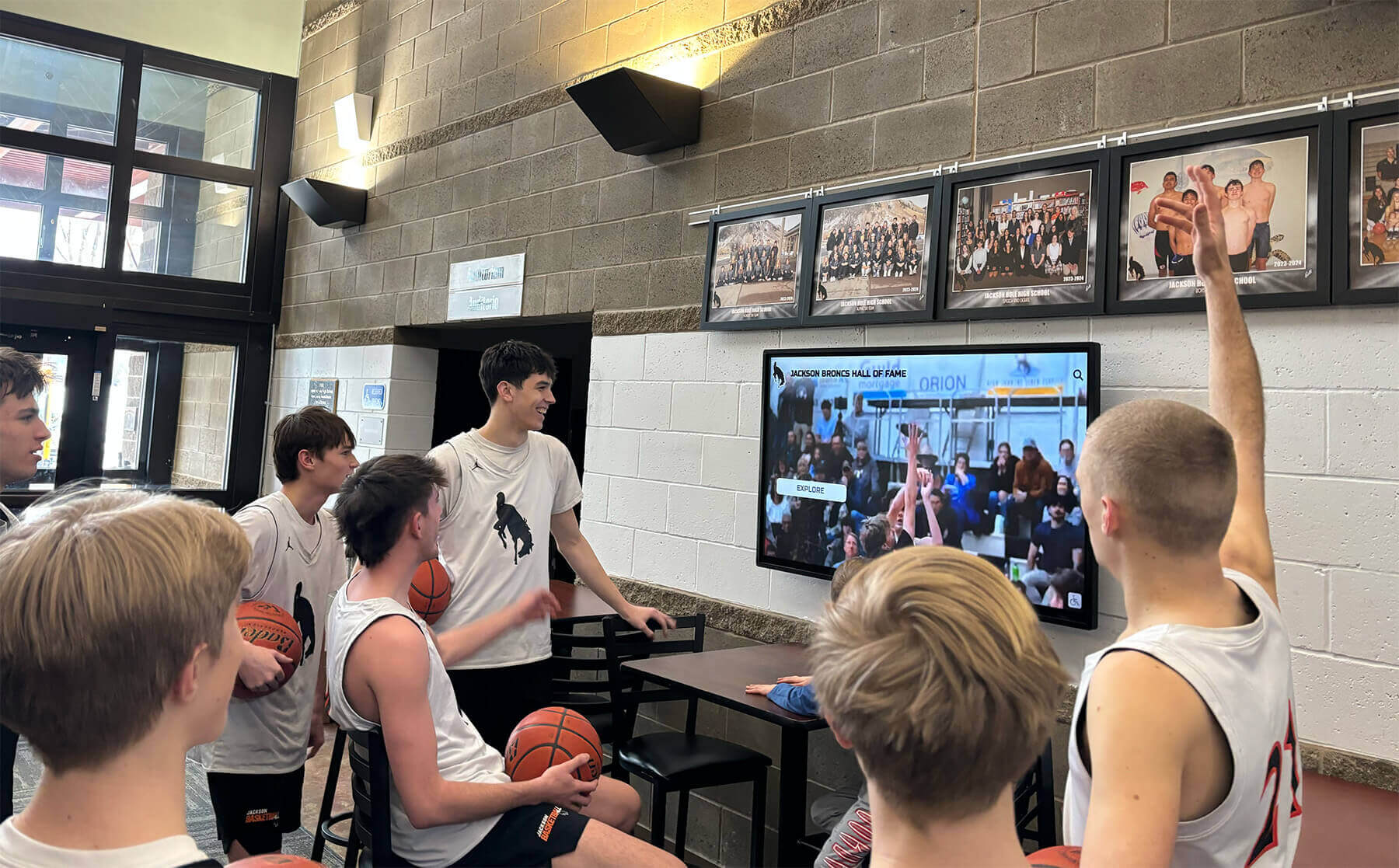
Student athletes viewing postseason highlights reinforces program culture and motivates current competitors through visible recognition of past runs
Recovering Historical Bracket Records
Many schools have postseason runs from five, ten, or twenty years ago that were never formally documented. Those gaps are worth filling—the effort required is manageable, and the result is an archive that reflects the program’s full history.
Where to find historical bracket data:
- State athletic association websites often maintain championship history for member schools
- Local newspaper archives (print or digital) typically covered playoff rounds in detail
- Yearbooks from the relevant year typically include team photos and season records
- Former coaches and long-tenured staff often retain personal records or scrapbooks
- Alumni outreach through email or social media can surface photos and documents that never made it into official files
Academic recognition programs and athletic records both benefit from this kind of retroactive documentation—the investment in recovering historical data pays dividends each time an alumnus sees their name or program era represented in the display.
Start with championship seasons first—those are the most visible gaps. Then work backward through deep playoff runs, and eventually include all documented postseason appearances. Even a partial record is better than none, and platforms that accept incomplete entries allow schools to add detail as it surfaces over time.
Frequently Asked Questions
What is the difference between a tournament bracket board and a trophy case?
A trophy case holds physical artifacts—trophies, medals, and plaques. A tournament bracket board documents the competitive journey that produced those artifacts. The two formats are complementary: a trophy tells you a team won; a bracket board shows how they got there, who they beat, and at what point in the postseason they were eliminated. Digital platforms can hold both the artifact inventory and the bracket documentation in a single searchable interface.
Should every sport have its own bracket board, or should they share one display?
For physical installations, sport-specific boards in dedicated athletic spaces (basketball in the gym corridor, soccer near the field house) work well. For digital installations, a unified platform that organizes all sports under a single interface is more practical—visitors can filter by sport, and the school does not need to maintain multiple separate systems.
How often should a bracket board be updated?
Immediately after each postseason ends—within 30 days at the outside. Waiting longer allows key details to fade (correct name spellings, photo attribution, stats) and increases the likelihood that the update never happens. A brief post-season documentation window built into the athletic calendar prevents the accumulation of undocumented seasons.
What if we only want to display championship brackets, not every postseason run?
Championship-only displays are common and entirely appropriate as a starting point. The tradeoff is that seasons with deep playoff runs—a team that reached the state semifinals but lost in the finals—go undocumented, which creates gaps in the historical record. A tiered approach works well: championships get the most prominent placement and full context, while other postseason runs receive a leaner entry that still preserves the basic bracket data.
Can a tournament bracket board serve as a recruiting tool?
Yes, directly. College coaches evaluating athletes want to see the competitive level their recruits have played at. A visible postseason history showing a program that consistently reaches the regional or state level communicates more effectively than a verbal description. A digital bracket archive with round-by-round results and opponent context gives recruiting coaches something concrete to reference.
How do we handle bracket documentation for individual sports like wrestling or track where the bracket structure is different?
For individual sports, adapt the bracket documentation to the tournament format used. Wrestling uses a bracket by weight class; track uses qualifying heats and final placements by event. Document the relevant structure—who qualified, which rounds they advanced through, final placement—using the same field consistency you would apply to a team sport bracket. The goal is the same regardless of sport: a browsable record of how far athletes went and against what competition.
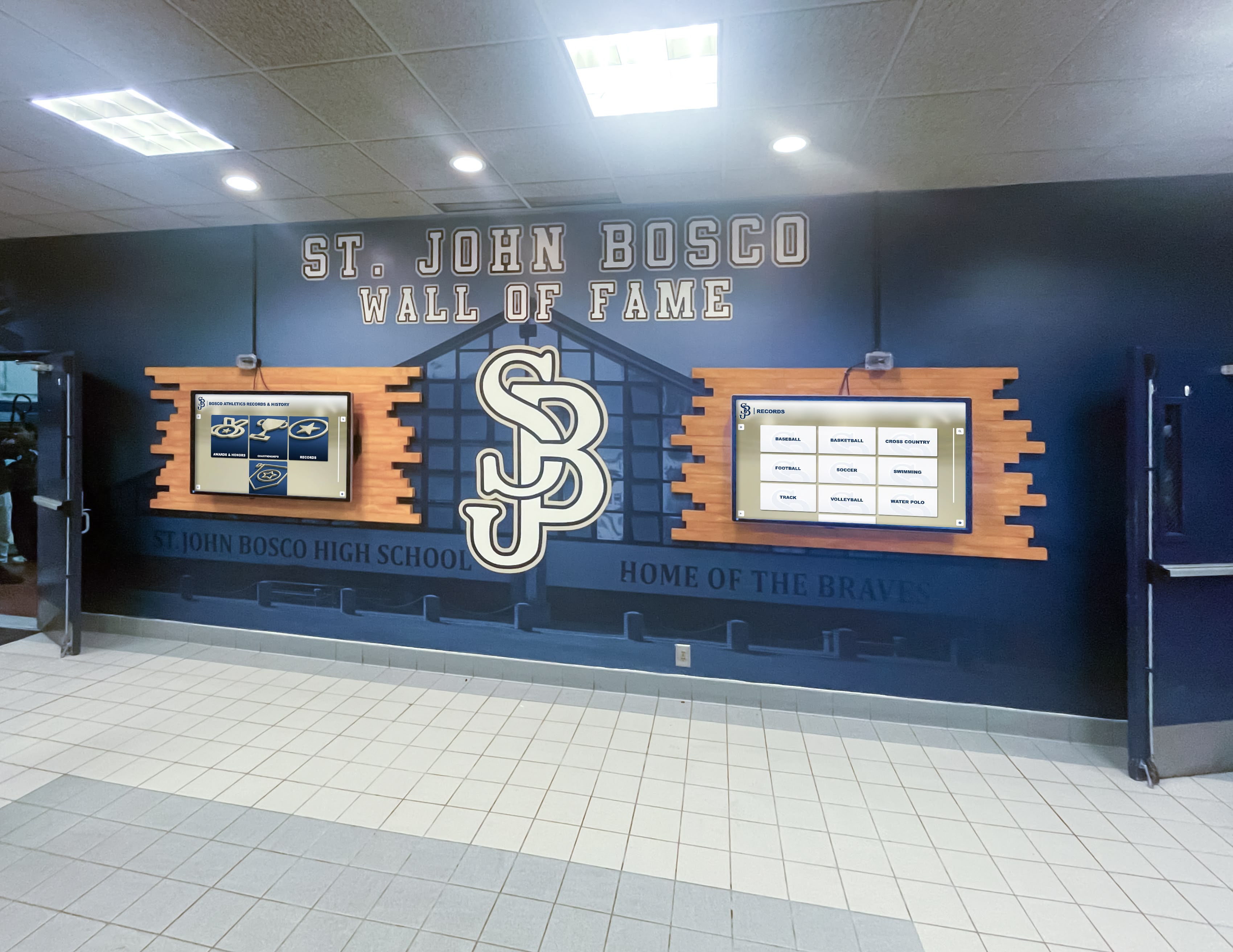
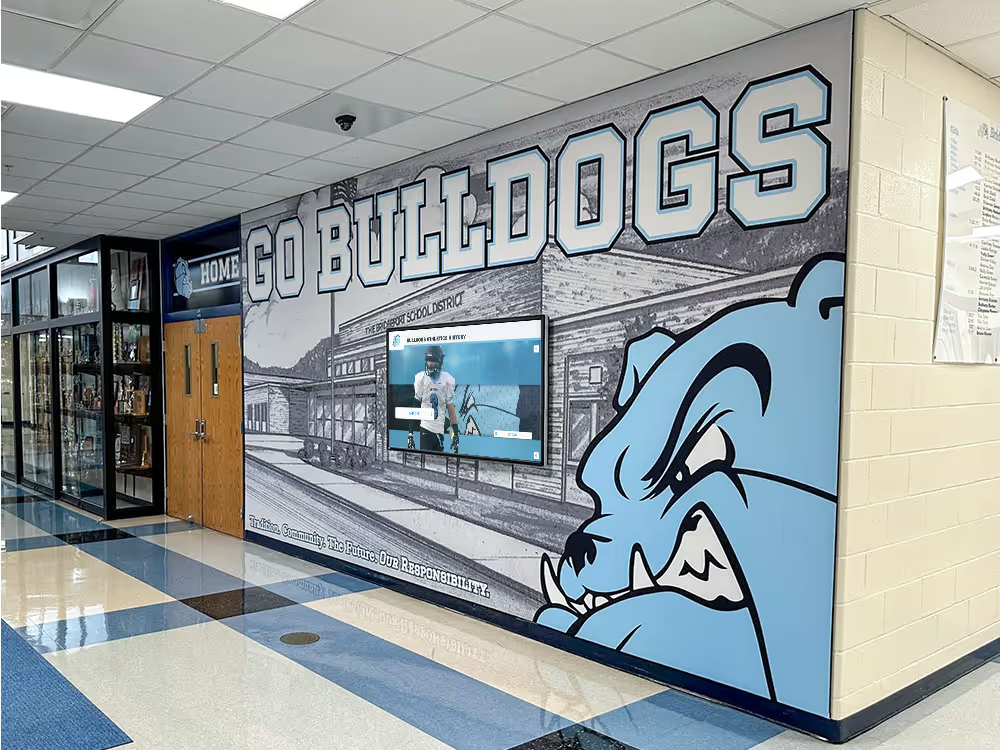
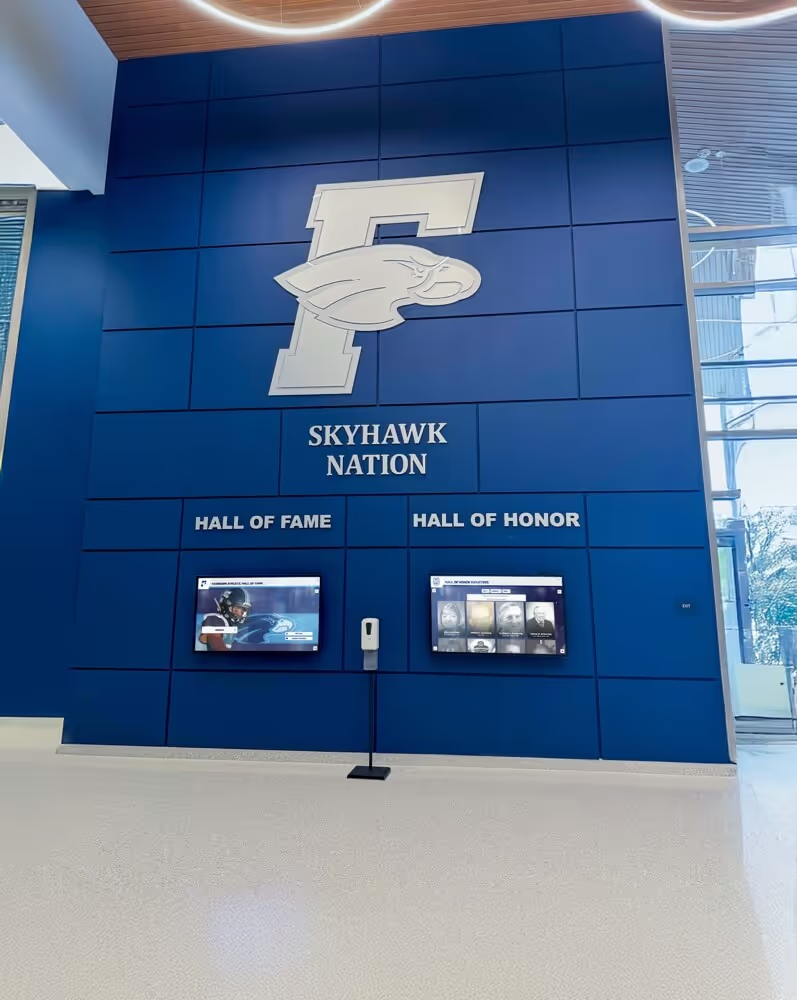
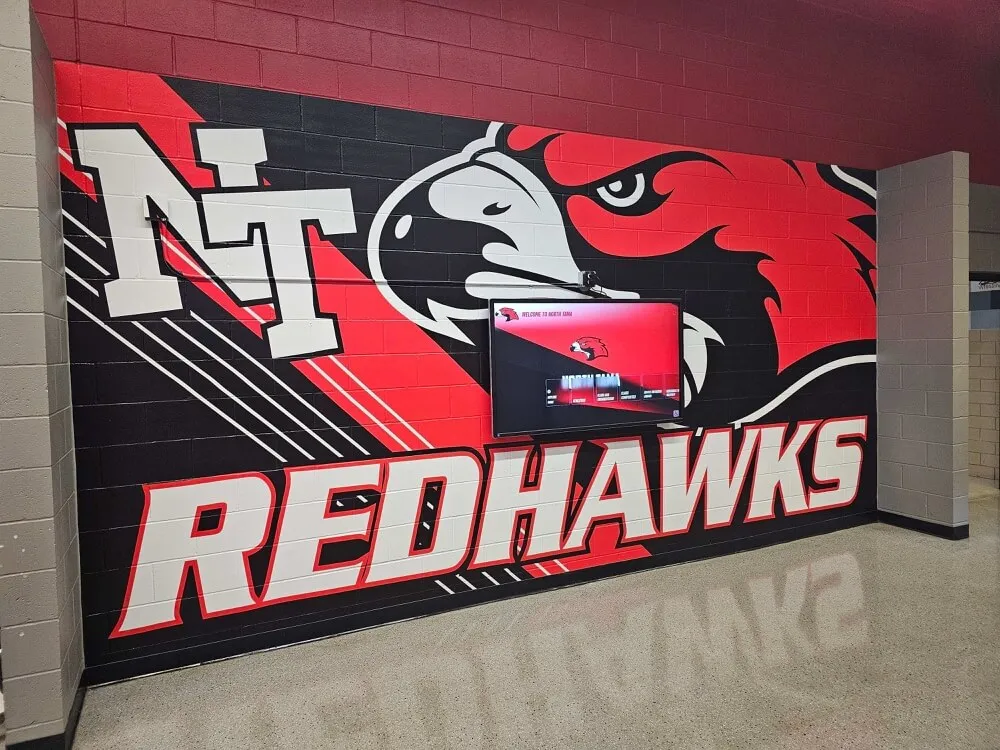
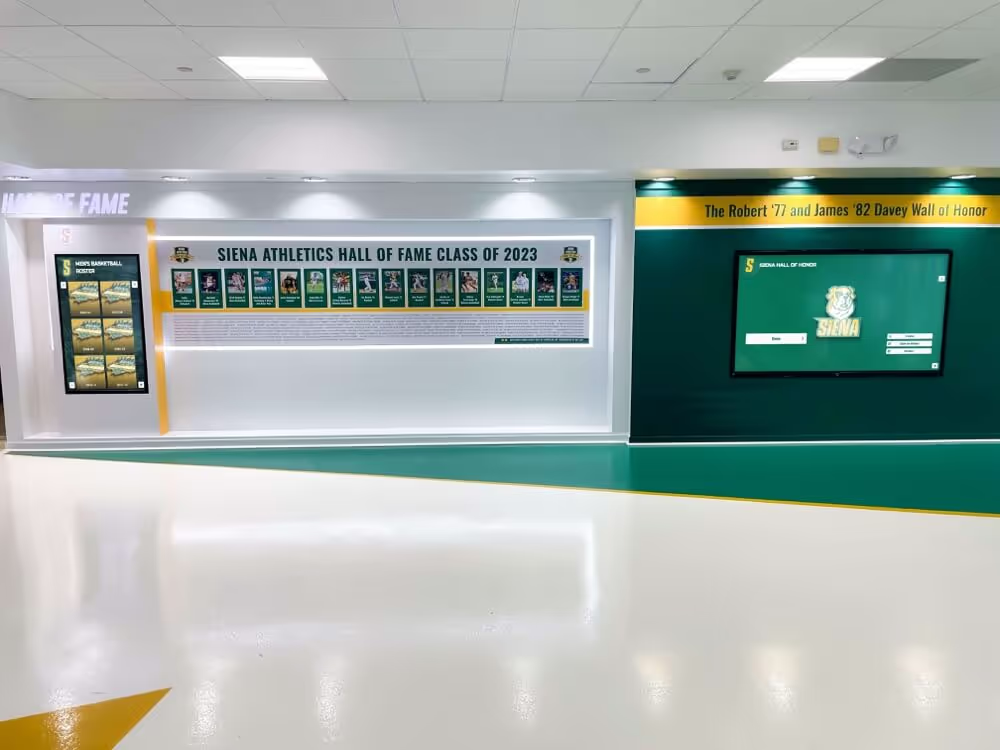
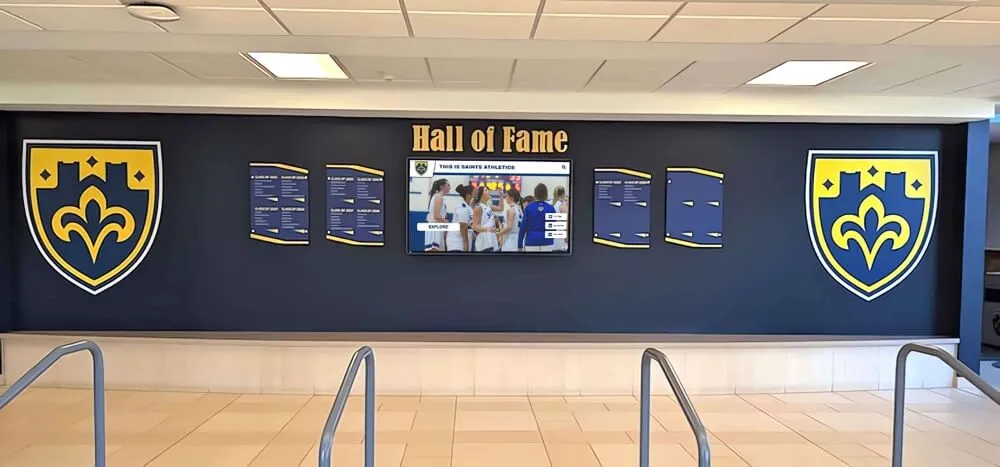
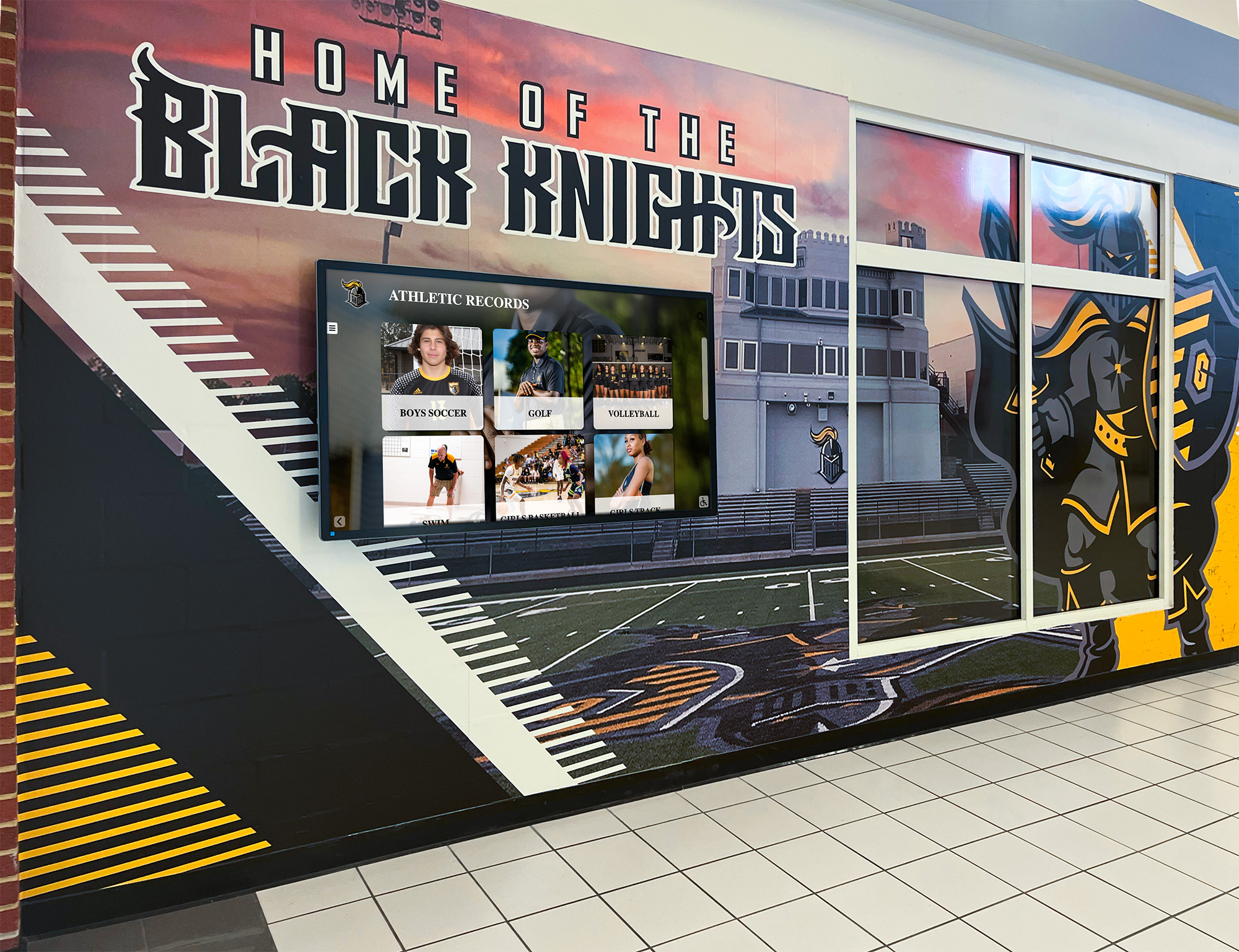
Multi-screen lobby installations give schools the display space to show bracket history alongside hall of fame recognition without physical space constraints
Conclusion: The Bracket Is the Story, Not Just the Result
A final score tells you who won. A tournament bracket board tells you everything else: who the team faced, how far they went, which games defined the run, and how the program fits into the larger competitive history of the school. That narrative is what motivates current athletes, engages families during postseason visits, and gives alumni something specific to connect to when they return to campus.
The mechanics are straightforward—consistent bracket fields, photos from key rounds, a postseason update checklist, and a display location that puts the record in front of the right audiences. The formats range from a framed bracket in a display case to a fully interactive touchscreen archive that organizes every sport and every season into a browsable platform.
What separates schools with strong athletic cultures from those without is often not the number of championships—it is the visibility of the program’s history. A tournament bracket board, updated consistently and placed prominently, makes that history accessible to everyone who walks through the door.
Build a Bracket Archive That Lasts Beyond the Season
Rocket Alumni Solutions designs interactive touchscreen displays, digital record boards, and lobby installations built specifically for school athletic programs. If your postseason history deserves a permanent, searchable display, we can show you what that looks like for your gym, lobby, or hallway.
Schedule a Demo