



High school gym lobbies face a growing challenge that seems almost contradictory: athletic programs generate more achievements worth celebrating than physical space allows for recognition. Trophy cases overflow with awards stacked three-deep, championship banners crowd ceiling space until no room remains, and plaques cover every available wall surface. Success creates its own problem—how do you honor current achievements without dismantling past recognition?
This overcrowding reflects institutional vitality rather than poor planning. Active athletic programs produce dozens of championships, hundreds of all-conference selections, thousands of milestone achievements, and countless moments worth preserving. Traditional recognition methods simply cannot scale to match this achievement volume without gymnasium lobbies becoming cluttered warehouses that diminish rather than improve recognition value.
Digital touchscreen displays offer high schools a way to preserve unlimited recognition capacity while creating more engaging experiences than traditional trophy cases provide. Rather than replacing physical awards with inferior digital substitutes, these systems expand recognition possibilities—displaying comprehensive achievement databases, preserving detailed athlete stories, and enabling interactive exploration that connects current students to program heritage.
The transition from physical trophies to digital recognition represents thoughtful evolution rather than abandonment of tradition. Schools implementing touchscreen displays typically maintain signature championships and milestone trophies while moving comprehensive program recognition to interactive platforms that provide space, accessibility, and engagement benefits impossible with traditional cases.
Organizations report that digital recognition systems create what we call “digital warming”—transforming static displays into active engagement hubs where students, families, and visitors spend minutes exploring achievements rather than seconds glancing at crowded cases. This deeper interaction strengthens connection to athletic programs while validating individual contributions through comprehensive recognition that physical space constraints would otherwise prevent.

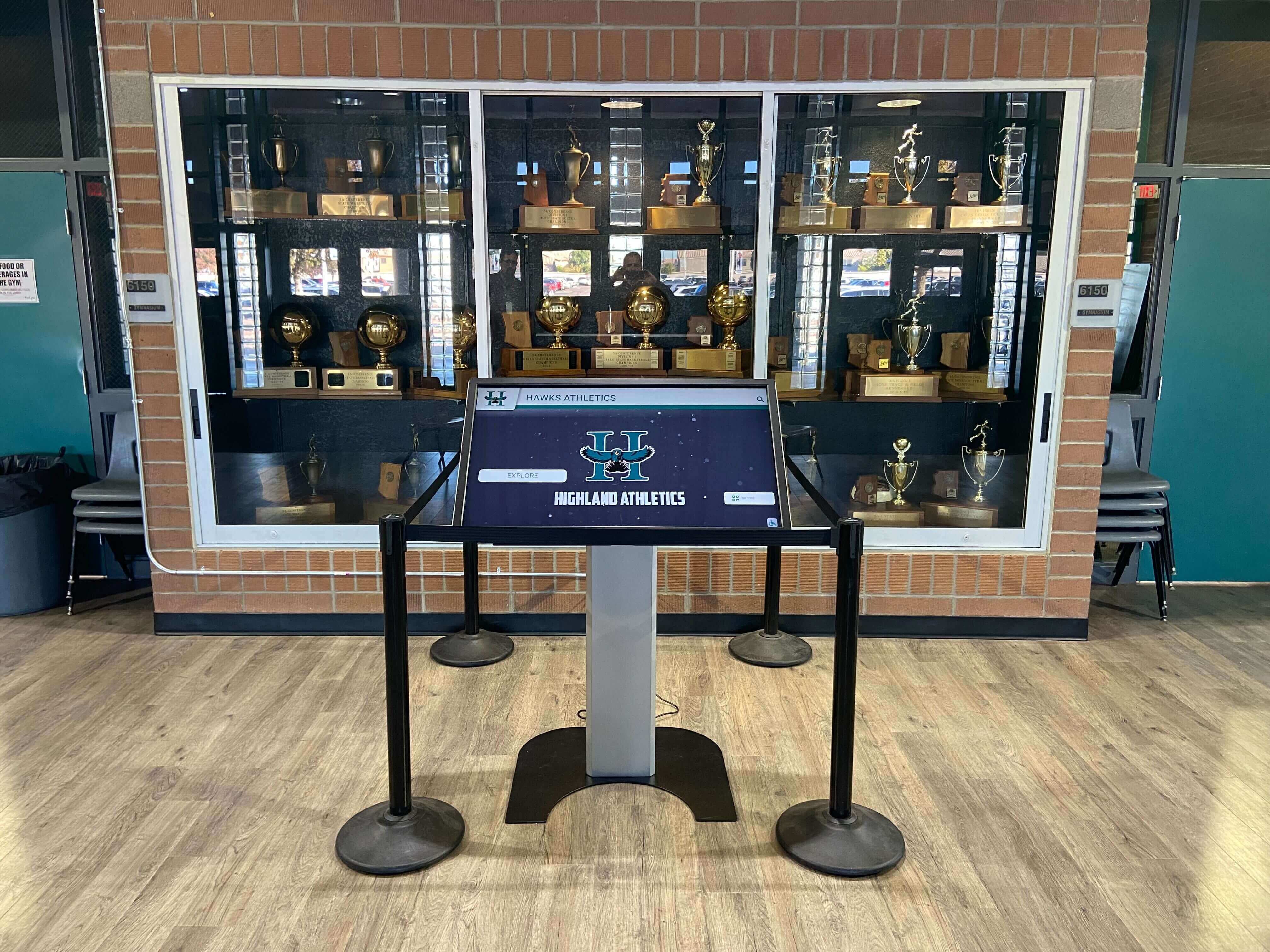
Modern touchscreen systems complement existing trophy displays while expanding recognition capacity beyond physical limitations
Understanding the Trophy Case Overcrowding Challenge
Before exploring digital solutions, understanding what creates trophy case overcrowding helps schools address root causes rather than symptoms.
Why Athletic Programs Outgrow Physical Recognition Space
Successful athletic programs generate recognition volume that exceeds available display space through predictable patterns most schools experience.
Achievement Volume Increases Over Time Each athletic season produces new champions, record-breakers, all-conference selections, milestone achievements, and memorable moments. This annual accumulation compounds across decades until even large trophy cases cannot accommodate recognition volume. A school with ten sports producing five recognizable achievements annually creates 50 new recognition items each year, 500 per decade, thousands across generations.
Programs Expand Rather Than Contract Athletic departments rarely eliminate sports or reduce team numbers. Instead, programs typically add sports, create additional team levels, and expand participation opportunities. These additions increase achievement volume requiring recognition—more teams mean more championships, more participants mean more milestones, more competitions mean more accomplishments worth celebrating.
Recognition Expectations Broaden Traditional trophy cases primarily honored championships and major awards. Contemporary recognition culture appropriately celebrates broader achievement categories including academic honors, character recognition, milestone participation, community service, and leadership contributions. This expanded recognition philosophy creates more items deserving display space than trophy cases designed for championship hardware alone can accommodate.
Physical Constraints Remain Fixed While achievement volume and recognition expectations grow continuously, gymnasium lobby space remains constant. Schools cannot expand building footprints to accommodate recognition growth, ceiling heights limit vertical display capacity, and architectural elements restrict where trophy cases can be placed. These fixed constraints eventually overwhelm any initially adequate recognition space.
The Hidden Costs of Traditional Trophy Storage
Trophy case overcrowding creates consequences extending beyond aesthetic concerns that affect athletic program culture and institutional effectiveness.
Recognition Value Diminishes Through Clutter When trophies stack three-deep behind glass with handwritten labels obscured by reflections and dust, recognition loses impact. Individual achievements disappear into undifferentiated visual noise where nothing stands out because everything competes for attention. This clutter degrades the very recognition that prompted display decisions initially.
Current Athletes Feel Less Valued Recent achievement recognition crowded among decades of accumulated trophies sends unintended messages that current accomplishments matter less than historical achievements. Student-athletes invest tremendous effort earning recognition only to see awards relegated to back corners of overflowing cases where visibility approaches zero. This devaluation affects motivation and program culture.
Maintenance Becomes Burdensome Overcrowded trophy cases create practical management challenges. Accessing cases requires removing multiple trophies to reach items in back rows, cleaning becomes nearly impossible without risk of damage, organization systems break down under volume pressure, and adding new items requires exhausting spatial planning. These burdens typically result in cases receiving minimal maintenance attention, which further degrades recognition quality.
Storage Space Costs Resources Trophy overflow requires dedicated storage space consuming square footage with opportunity costs. Many schools maintain entire rooms storing trophies removed from display, creating expensive recognition warehouses that provide zero engagement value. These storage costs compound annually as achievement volume continues growing while storage space reaches capacity.
Selective Recognition Creates Disappointment When space constraints force selective recognition decisions—displaying only championships while omitting individual achievements, featuring recent years while archiving historical recognition, or prioritizing certain sports over others—programs inevitably disappoint community members whose contributions disappear from visibility. These necessary compromises damage relationships and reduce program support.
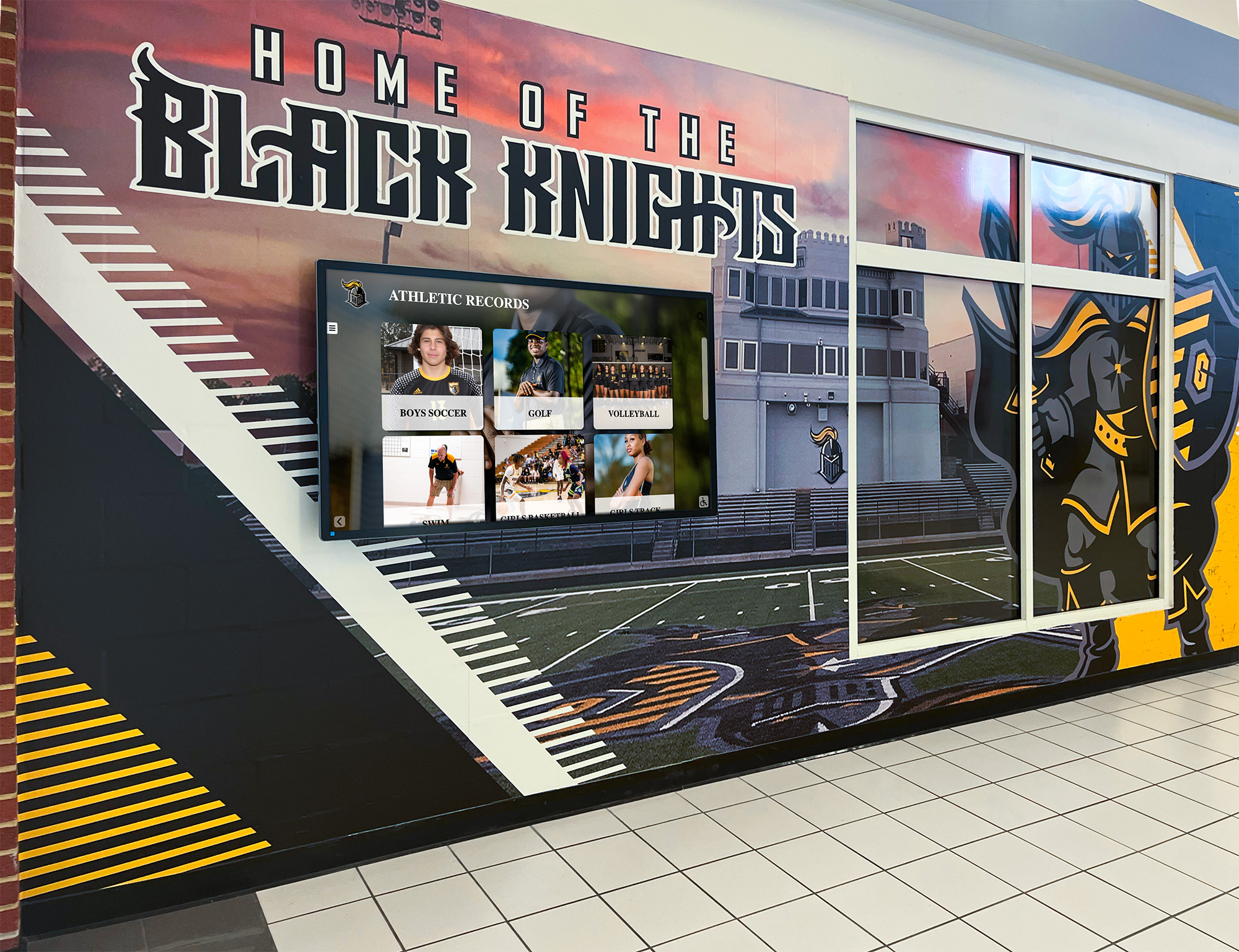
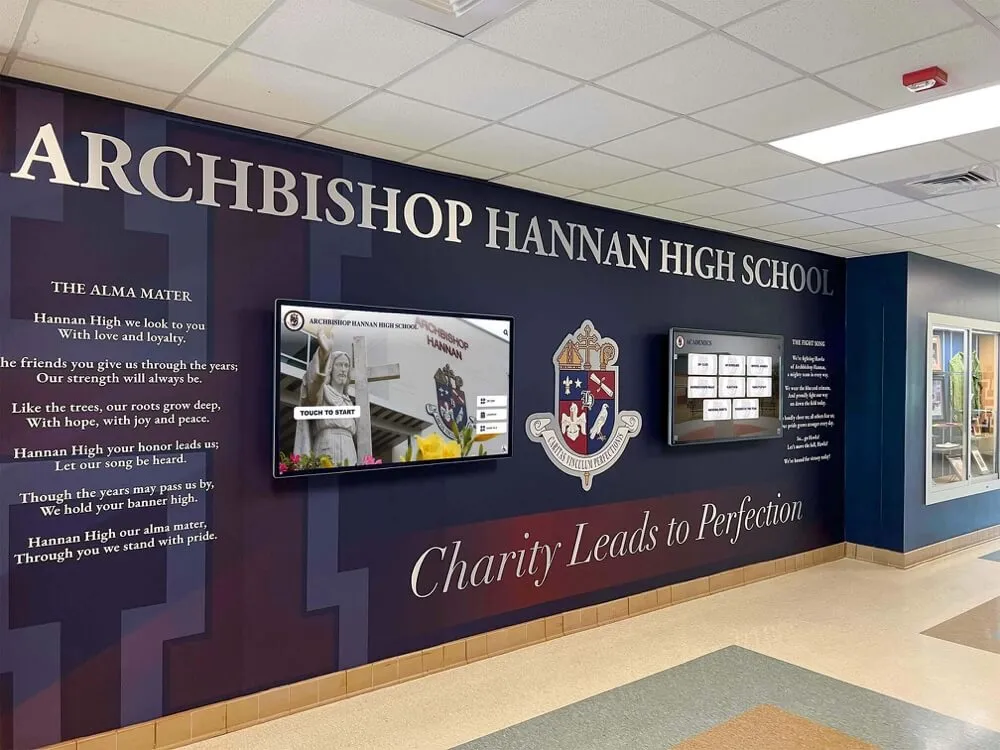
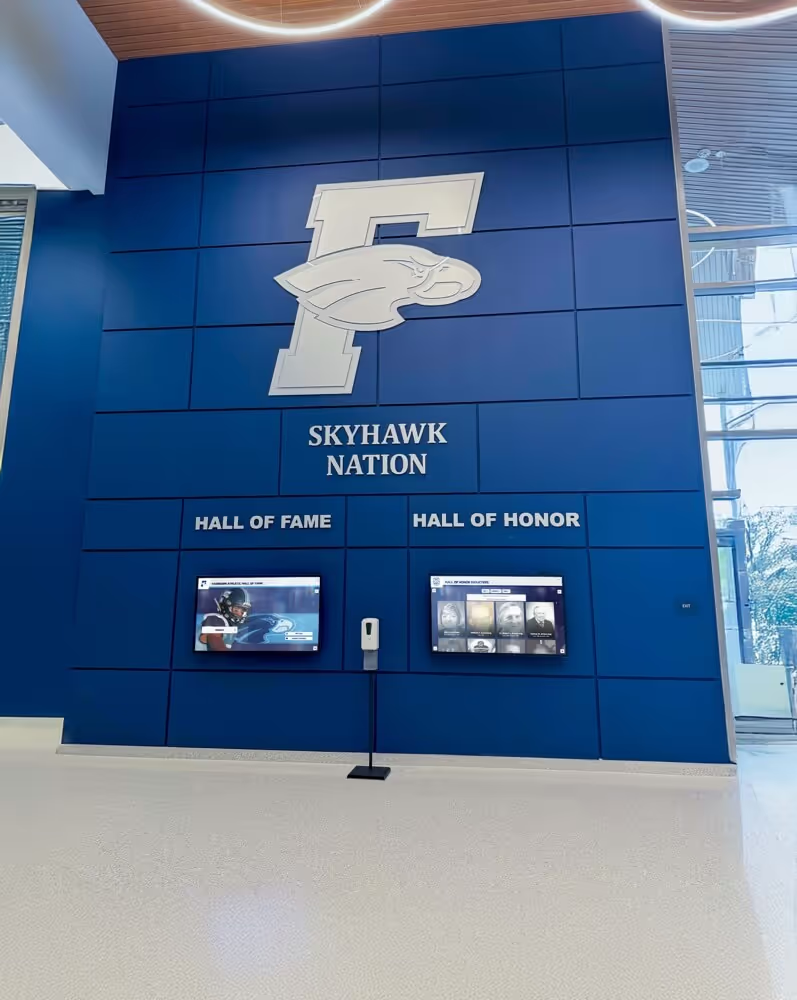
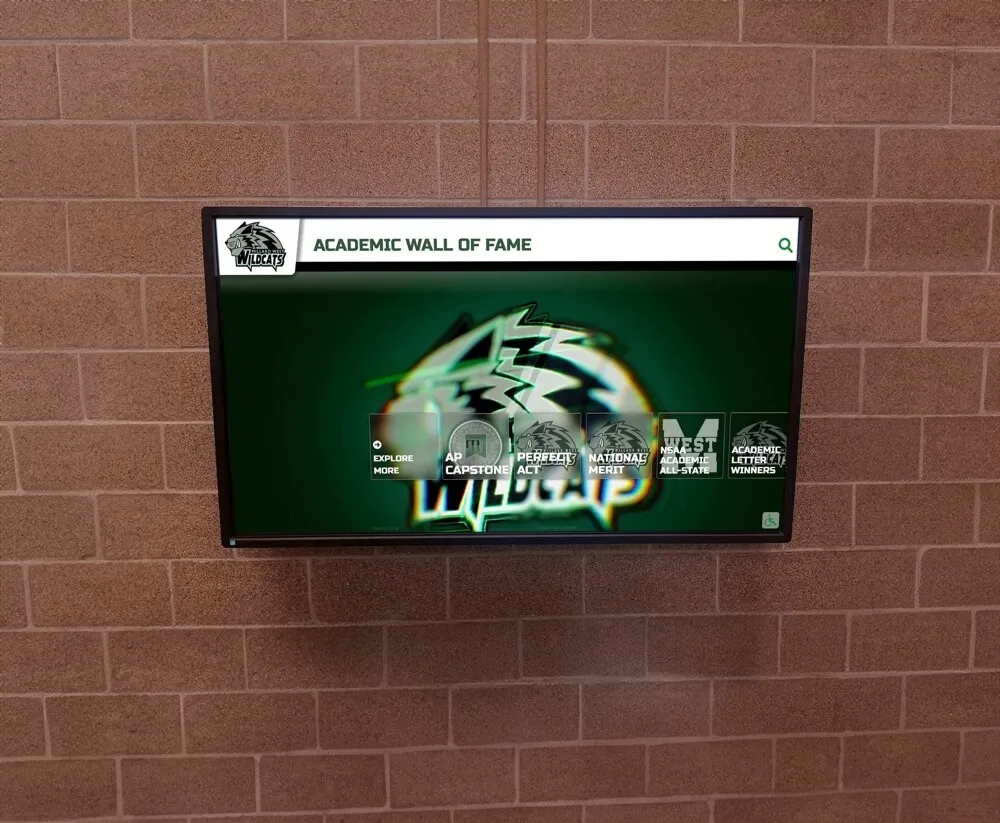
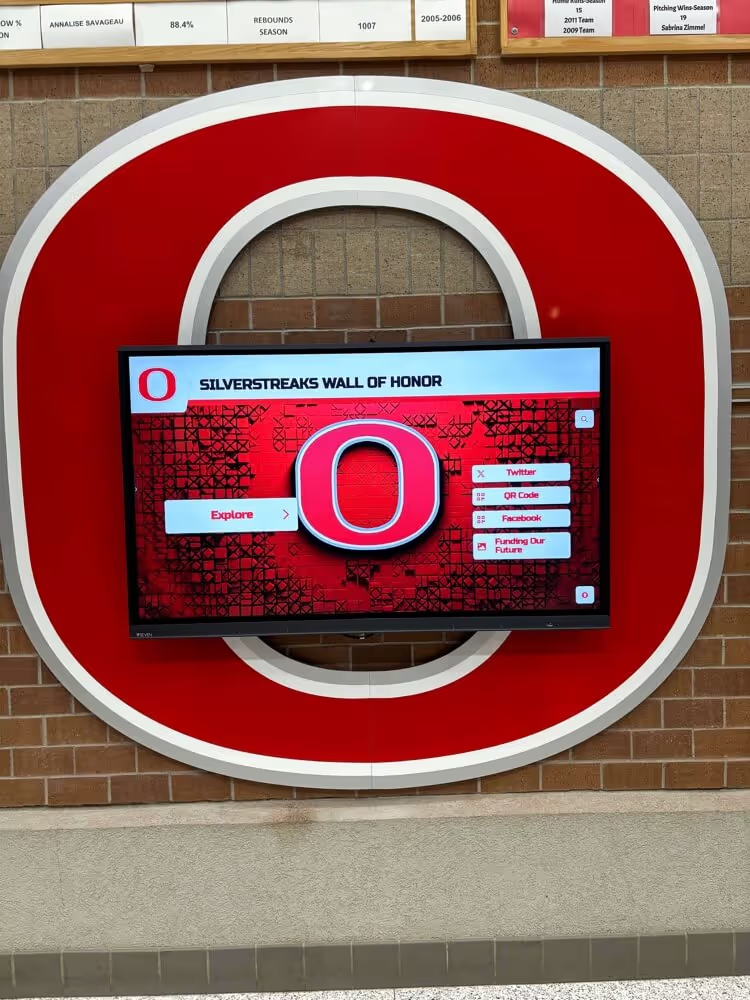
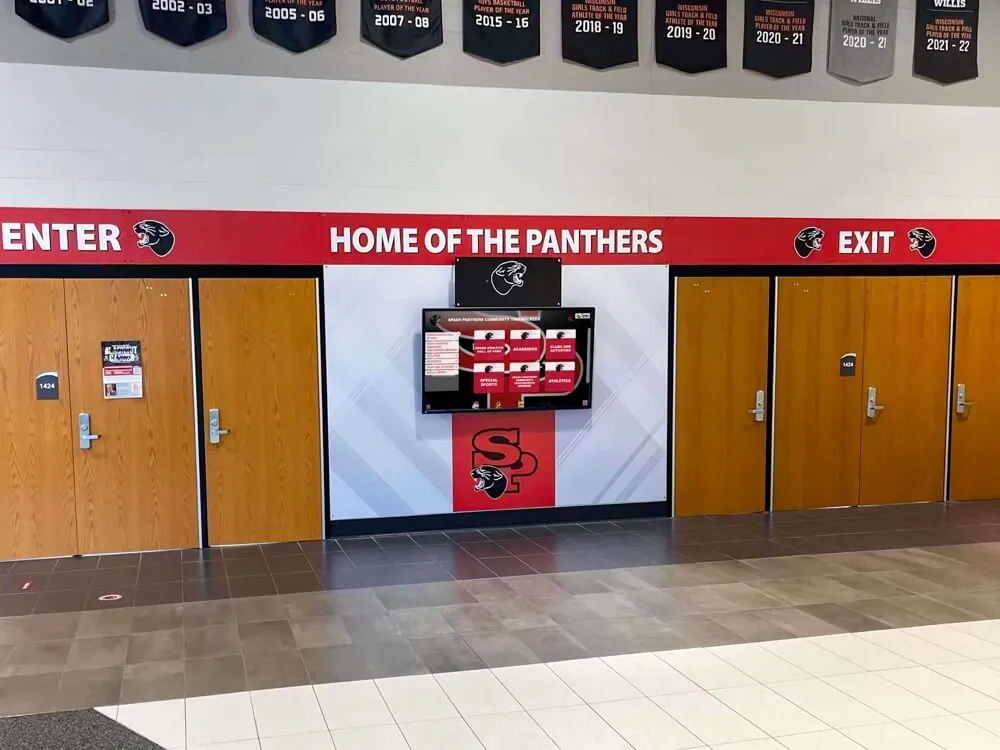
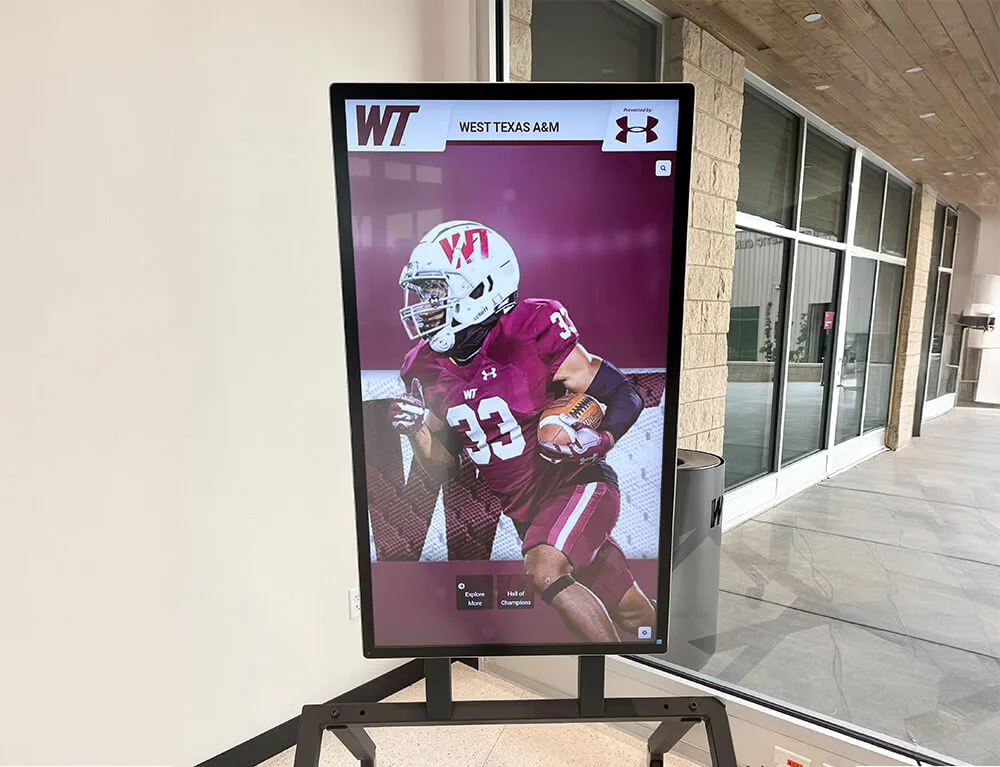
Strategic placement of digital displays in athletic corridors creates continuous visibility while preserving architectural aesthetics
How Touchscreen Displays Solve Space Constraints
Digital recognition systems address trophy case overcrowding through capabilities that physical displays cannot match while preserving recognition value.
Unlimited Recognition Capacity Without Physical Expansion
Purpose-built recognition platforms eliminate space constraints that limit traditional trophy displays.
Comprehensive Database Storage Digital systems store unlimited athlete profiles, team achievements, championship documentation, record boards, and historical information without physical space requirements. Schools can recognize every achievement worth celebrating—not just major championships—without worrying about display capacity. This comprehensive approach ensures no contributions disappear into storage rooms because trophy cases overflow.
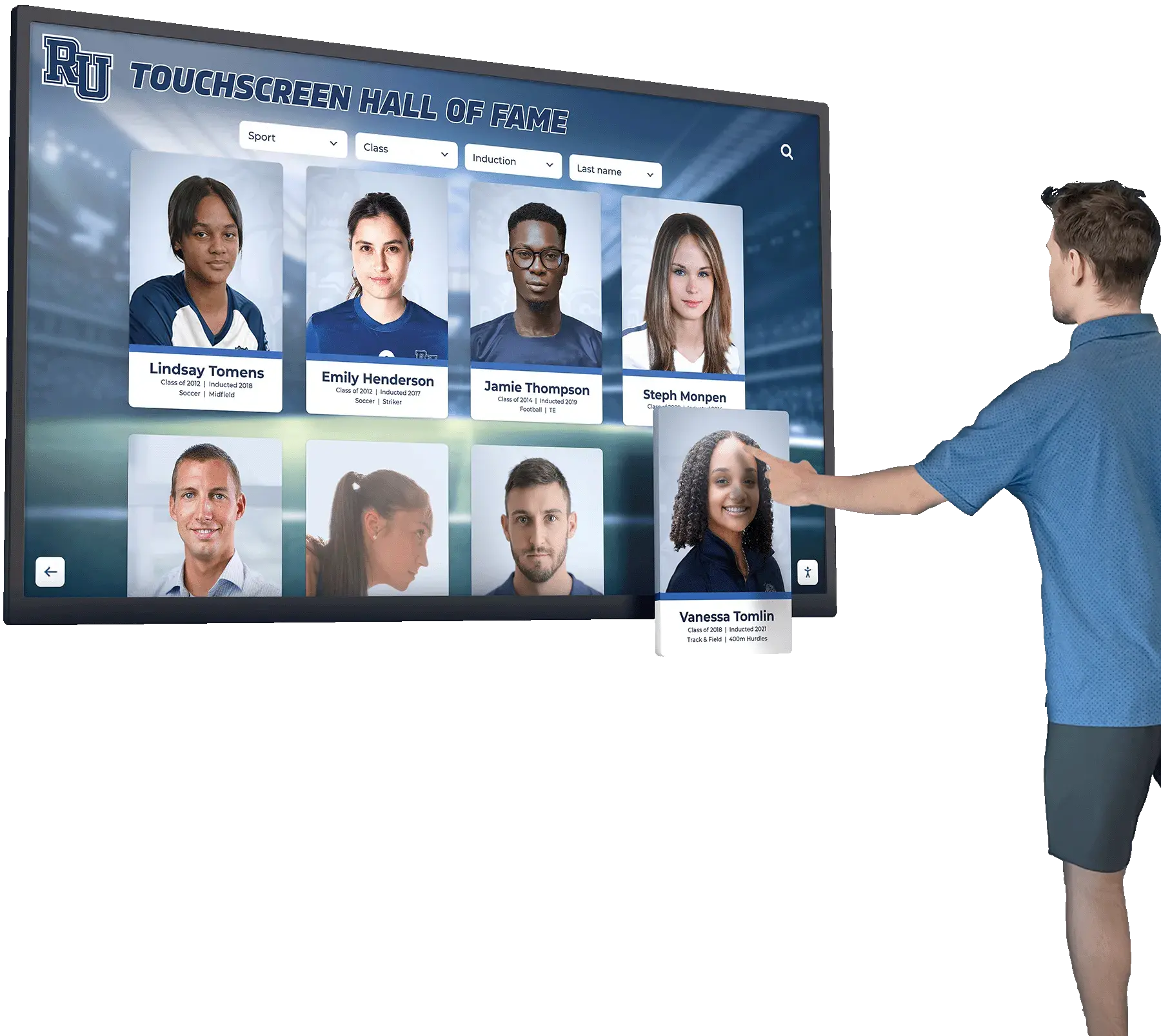
Searchable Recognition Access Rather than physically browsing crowded trophy cases hoping to find specific athletes or achievements, touchscreen displays enable searching by name, year, sport, achievement type, or keyword. This search capability makes every recognized individual or accomplishment easily discoverable regardless of database size. Students finding themselves or family members in recognition systems experience validation that generic trophy case browsing rarely provides.
Automatic Content Organization Digital platforms organize recognition systematically through automatic categorization, chronological sorting, record board ranking, and relationship mapping. Content organization that would require extensive physical reorganization in traditional trophy cases happens automatically as new achievements are added. This organization maintains recognition clarity regardless of volume while highlighting both historical and current contributions appropriately.
Flexible Infrastructure Recognition databases grow seamlessly without requiring physical modifications, additional equipment purchases, or space reallocation. Adding a thousand new inductees requires identical effort as adding ten—simply entering information into content management systems. This scalability removes recognition volume from institutional planning concerns that plague traditional trophy case approaches.
Solutions like Rocket Alumni Solutions provide web-based platforms designed specifically for comprehensive recognition without capacity limitations that create traditional trophy case overcrowding. These systems enable unlimited inductee profiles, achievement documentation, photo galleries, and record boards accessible through user-friendly touchscreen interfaces positioned in gymnasium lobbies alongside signature trophy displays.
Multi-Format Recognition Beyond Physical Trophies
Digital displays support recognition formats that physical trophy cases cannot accommodate, creating richer recognition experiences.
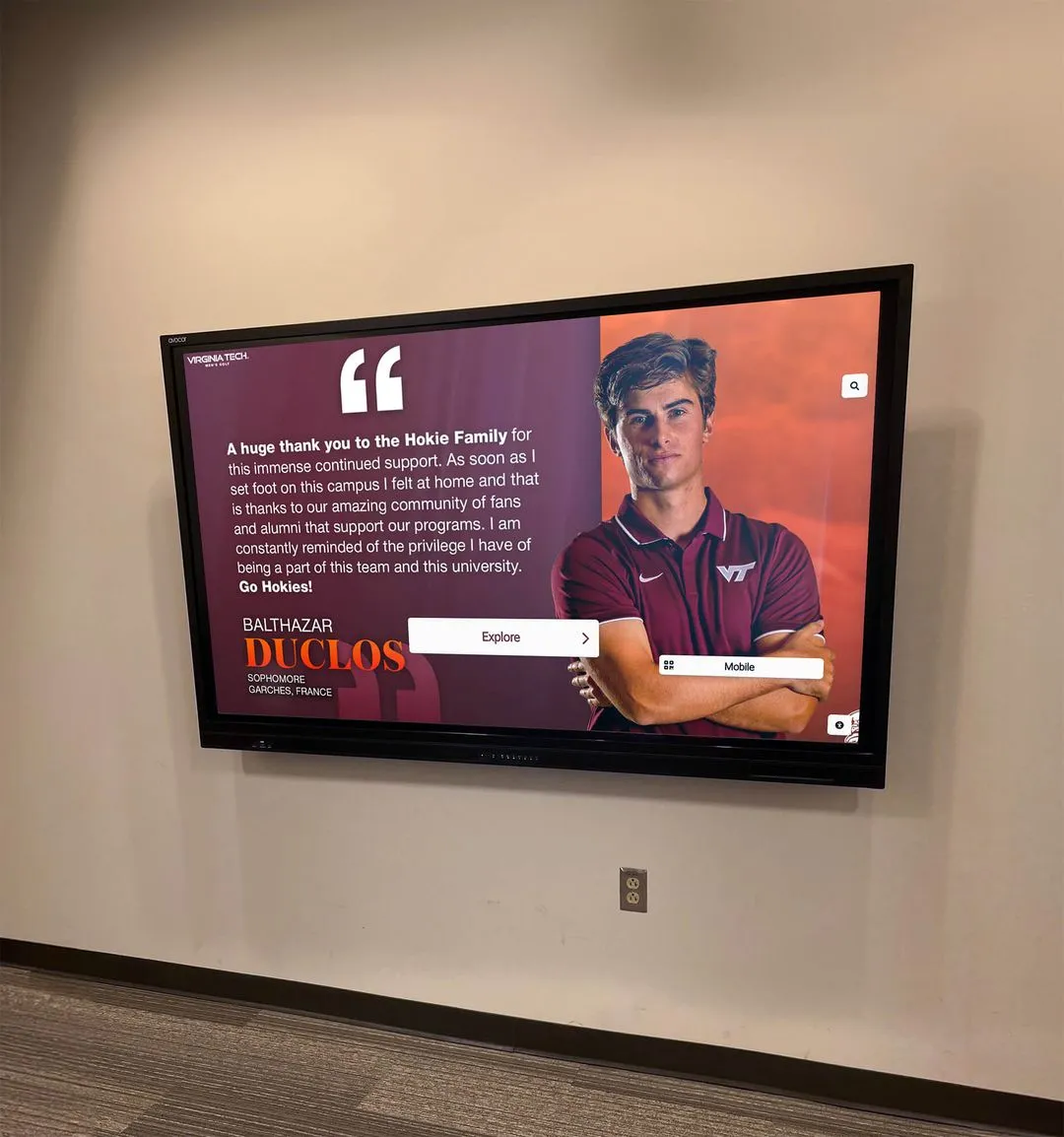
Athlete Biography Profiles Touchscreen systems showcase complete athlete stories including career statistics, biographical information, achievement timelines, quotes and reflections, post-graduation updates, and photo galleries. These comprehensive profiles provide context and narrative that physical trophies inherently lack. Families and teammates discover detailed documentation preserving memories and validating contributions through formats impossible with traditional recognition methods.
Video Highlight Integration Digital platforms incorporate video content showing championship moments, record-breaking performances, senior night ceremonies, and interview footage. This multimedia recognition creates emotional connections and preserved memories that static trophies cannot match. Current students watch historical achievements, inspiring them while understanding program heritage through concrete examples rather than abstract hardware.
Automatic Record Boards Auto-ranking record boards display top performances across statistical categories—career points, single-season records, single-game achievements—with automatic updates as current athletes break historical benchmarks. These digital record boards create ongoing engagement as communities track current athletes chasing historical standards while preserving complete statistical histories impossible to display comprehensively through physical plaques.
Team Season Documentation Digital systems preserve complete championship seasons including full rosters, season statistics, game-by-game results, playoff progression, photo galleries, and narrative documentation. This comprehensive season preservation contrasts with single championship trophies that provide minimal context about team composition, season progression, or individual contributors. Families discover detailed documentation of sons’ and daughters’ championship participation years after graduation.
Academic and Character Recognition Touchscreen platforms integrate athletic achievement recognition alongside academic honors, character awards, community service documentation, and leadership recognition. This comprehensive athlete recognition acknowledges that student-athletes excel across multiple dimensions rather than athletics alone. The integration reinforces educational values while providing appropriate visibility for achievements that trophy cases designed primarily for sports hardware struggle to display effectively.
Accessibility and Remote Engagement
Digital recognition systems extend access beyond individuals physically present in gymnasium lobbies, multiplying engagement opportunities.
Web-Based Platform Access Modern recognition platforms operate as web applications accessible from anywhere through standard web browsers—not just through physical touchscreen displays. This architecture enables alumni browsing recognition from other states, parents sharing athlete profiles with extended family, coaches reviewing historical statistics during recruitment conversations, and community members exploring achievements without visiting campus. Remote access creates engagement volume impossible when recognition requires physical gym lobby presence.
Mobile QR Code Integration QR codes positioned near touchscreen displays enable smartphone access to recognition content, allowing visitors to continue exploration on personal devices, share specific profiles through social media, bookmark content for later review, and engage more deeply than touchscreen interaction time permits. This mobile extension transforms brief lobby visits into extended engagement sessions continuing after individuals leave buildings.
ADA Compliance and Universal Design Purpose-built platforms like Rocket Alumni Solutions achieve ADA WCAG 2.1 AA accessibility compliance through web-based architecture—accommodating screen readers, keyboard navigation, adjustable text sizing, sufficient color contrast, and alternative text for images. This accessibility ensures recognition reaches individuals with visual impairments or other disabilities who cannot effectively access traditional trophy cases behind glass at fixed heights with inadequate lighting and small text labels. Universal design principles expand recognition impact while fulfilling legal obligations many schools overlook with physical displays.
24/7 Availability Digital recognition platforms remain accessible continuously rather than only during building hours. Alumni exploring late evening nostalgia, prospective families researching programs outside school hours, and distant relatives maintaining connection access recognition whenever convenient. This continuous availability multiplies engagement opportunities compared to physical trophy cases accessible only during limited building hours with visitor restrictions.
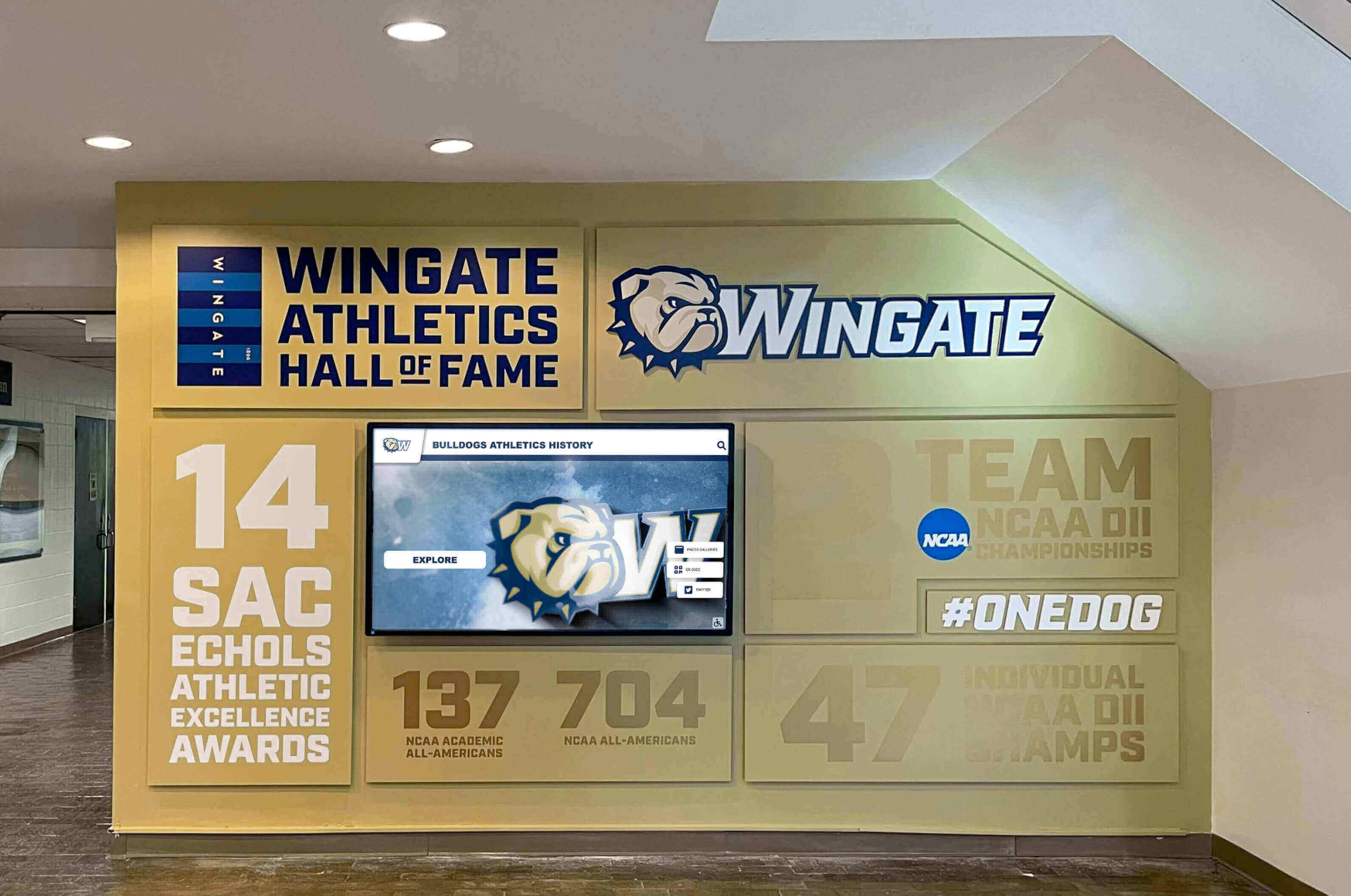
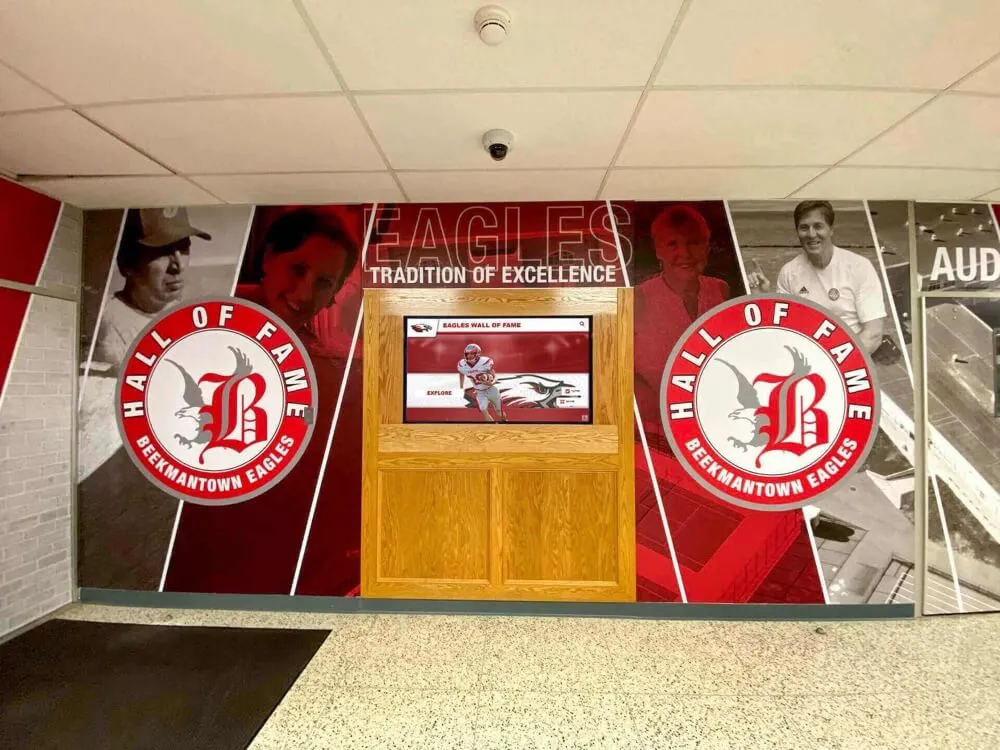
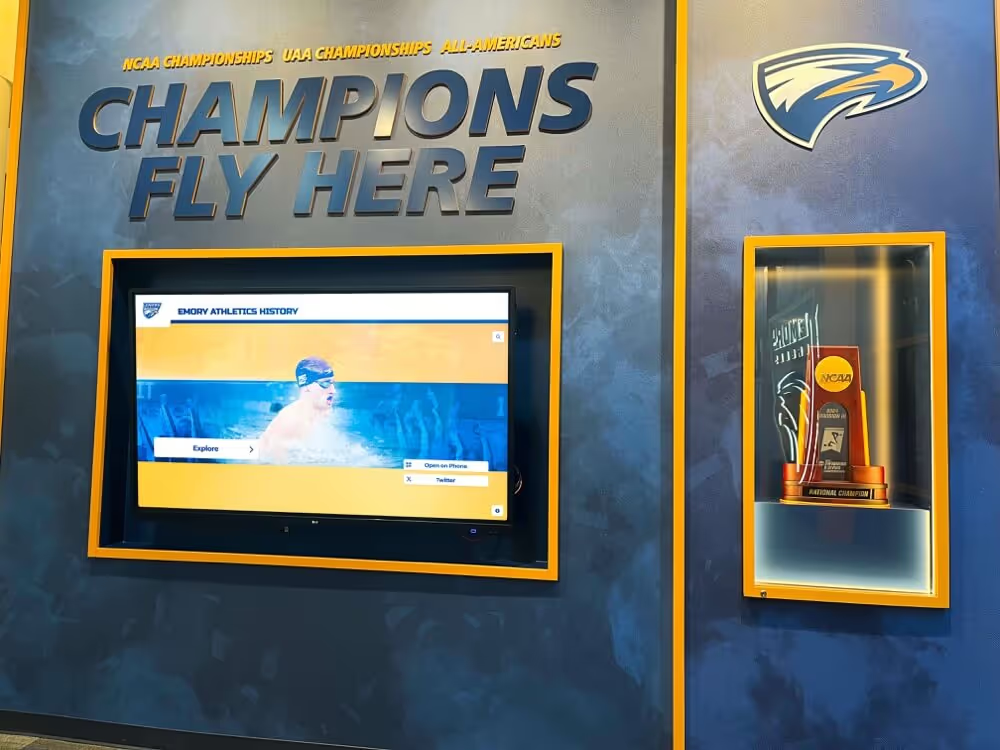
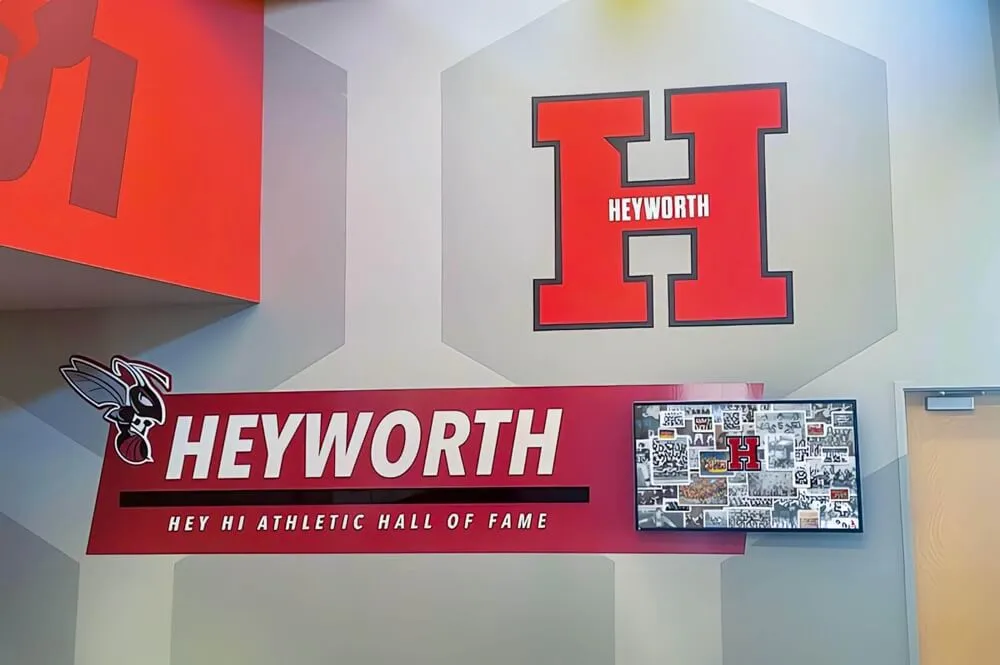
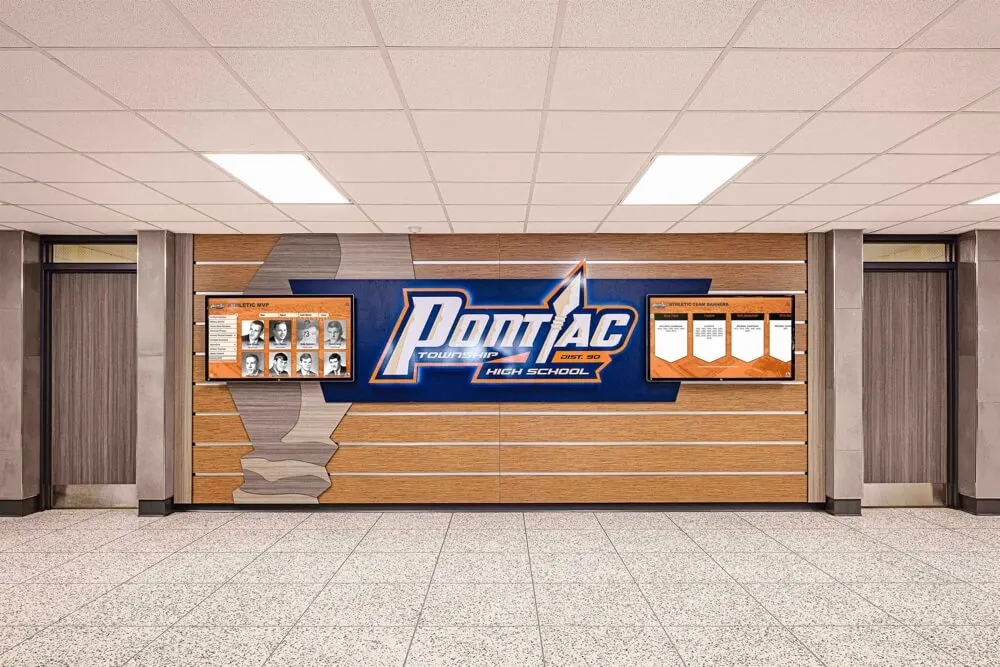
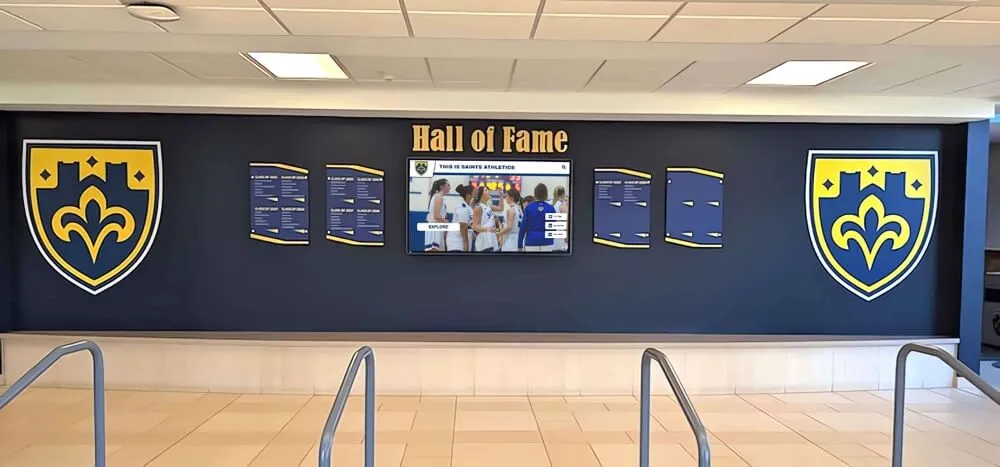
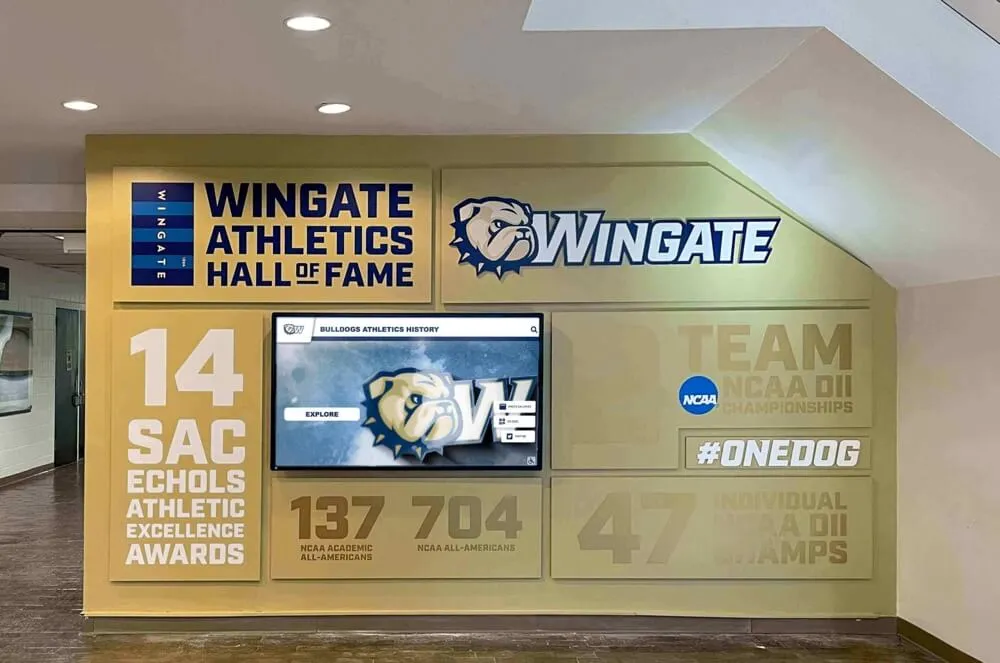
Professional athletic facility installations integrate school branding with recognition technology creating cohesive spaces celebrating achievement
Content Strategy for Gym Lobby Touchscreen Displays
Understanding what content to display ensures touchscreen installations create engagement rather than becoming expensive digital wallpaper.
Essential Athletic Recognition Content
Successful gymnasium lobby displays prioritize recognition content that communities want to explore and interact with repeatedly.
Hall of Fame Inductee Database Comprehensive athlete profiles form the foundation of engaging digital recognition. Each inductee deserves complete documentation including career statistics across all sports played, biographical information and class year, championship participation and individual awards, career highlights and milestone achievements, post-graduation updates when available, and photo galleries showing athletes during competition and ceremonies. Schools implementing comprehensive athletic hall of fame systems report alumni engagement increasing dramatically as individuals discover themselves and teammates through searchable databases celebrating careers comprehensively.
Championship Team Documentation Each championship team merits preservation beyond single trophies through complete season documentation. Championship displays should include full team rosters with photos, season schedules and results, playoff progression and bracket information, statistical leaders and key performances, championship game documentation, coach recognition, and historical context noting program firsts or significant achievements. This comprehensive documentation honors entire teams rather than reducing championships to isolated hardware while preserving memories for all participants regardless of individual statistical contributions.
Record Board Leaderboards Auto-ranking statistical leaderboards create ongoing engagement as current athletes pursue historical benchmarks while recognizing past achievement comprehensively. Record boards should track career statistical leaders across relevant categories for each sport, single-season performance records, single-game achievement records, career milestone achievements (1,000 points, 100 wins, etc.), and relay or team performance records. Effective record boards update automatically as current performances warrant ranking adjustments, maintaining relevance across years without manual intervention.
Current Season Recognition Digital displays should balance historical recognition with current season information connecting legacy to present excellence. Current content includes active team rosters with photos and positions, season schedules with results and upcoming competitions, recent game highlights and standout performances, playoff brackets and tournament progression, and senior athlete recognition celebrating graduating classes. This current content ensures displays feel relevant to present programs rather than exclusively historical museums.
Coaching Legacy Recognition Coaches shaping program excellence deserve recognition alongside athlete achievements. Coaching profiles should document career tenures and win-loss records, championships and major achievements, coaching philosophy and program impact, athlete development success stories, and career milestone recognition. Comprehensive coaching recognition acknowledges that athletic program success reflects leadership and mentorship that extends beyond individual athlete talents.
Complementary Content Beyond Athletics
While athletic recognition forms the core gymnasium lobby content, additional information categories serve community needs and increase display utility.
Academic Achievement Integration Student-athlete recognition should integrate academic excellence alongside athletic achievement reinforcing educational priorities. Academic content includes honor roll and academic award recognition, National Merit Scholar and AP Scholar designation, college acceptance and scholarship awards, student-athlete GPA recognition, and NCAA academic progress recognition. This integration presents comprehensive student-athlete recognition validating that excellence extends beyond playing fields.
Facility History and Heritage Gymnasium facility documentation connects communities to physical spaces where memories formed. Facility content includes building construction and renovation history, facility naming dedications and donor recognition, significant events hosted in facilities, facility records and memorable performances, and architectural or historical significance documentation. This content builds belonging through understanding institutional investment in athletic program support.
Athletic Department Information Practical information helps visitors and community members access athletic department resources and services. Useful information includes athletic director and coaching staff directory, ticket information and season pass details, booster club information and membership details, facility rental information, athletic training and sports medicine services, and compliance or eligibility information. While less engaging than recognition content, this practical information creates utility that drives repeated display interaction.
Alumni Engagement Opportunities Digital displays should promote ongoing alumni engagement encouraging continued connection beyond graduation. Alumni content includes reunion and homecoming information, mentorship program opportunities, alumni event announcements, athletic hall of fame induction nomination processes, and giving opportunities supporting current programs. These engagement pathways transform recognition from passive acknowledgment into active relationship-building tools.
Content Update Strategies
Static content reduces digital display value quickly regardless of initial quality, requiring ongoing update strategies maintaining relevance.
Seasonal Content Rotation Display content should reflect athletic calendar seasons highlighting active programs appropriately. Fall content emphasizes football, soccer, volleyball, and cross country during competition seasons. Winter content features basketball, wrestling, swimming, and indoor track. Spring content highlights baseball, softball, lacrosse, and outdoor track. This seasonal rotation maintains display relevance while ensuring all sports receive appropriate visibility throughout annual cycles.
Weekly Game Result Updates Recent competition results keep displays current and relevant to active programs. Athletic staff should establish weekly update routines publishing recent scores, highlighting standout performances, documenting milestone achievements, updating record boards when records fall, and featuring upcoming competition information. These regular updates demonstrate program vitality while rewarding athletes with timely recognition that validates recent efforts.
Quarterly Recognition Additions Recognition databases grow through scheduled quarterly updates rather than reactive ad-hoc processes. Quarterly addition cycles provide structure for recognizing seasonal award recipients, documenting completed championship seasons, adding new hall of fame inductees, integrating academic achievement recognition, and updating athlete profiles with post-graduation information. Regular update schedules prevent recognition backlogs while distributing content management workload sustainably.
Anniversary and Historical Recognition Strategic historical content rotation maintains interest and discovers new recognition opportunities. Anniversary recognition includes program founding anniversaries, championship anniversary features, facility dedication anniversaries, and coaching milestone celebrations. Historical recognition discovers forgotten achievements through yearbook research, documents unrecognized contributors, preserves coach and administrator histories, and connects historical context to current programs. This historical depth creates endless content possibilities while honoring complete program legacies.
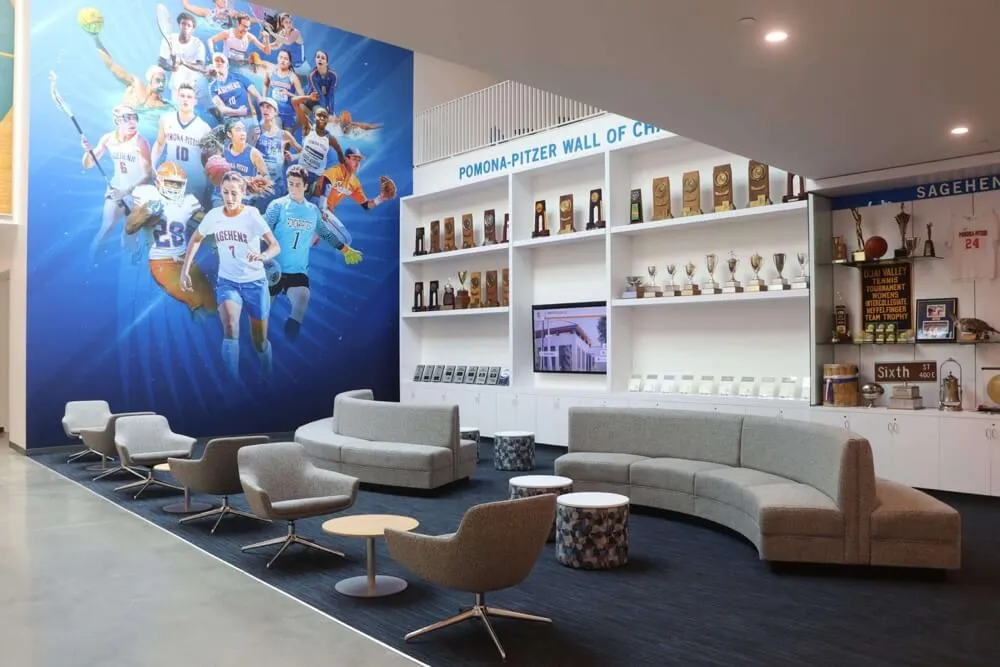
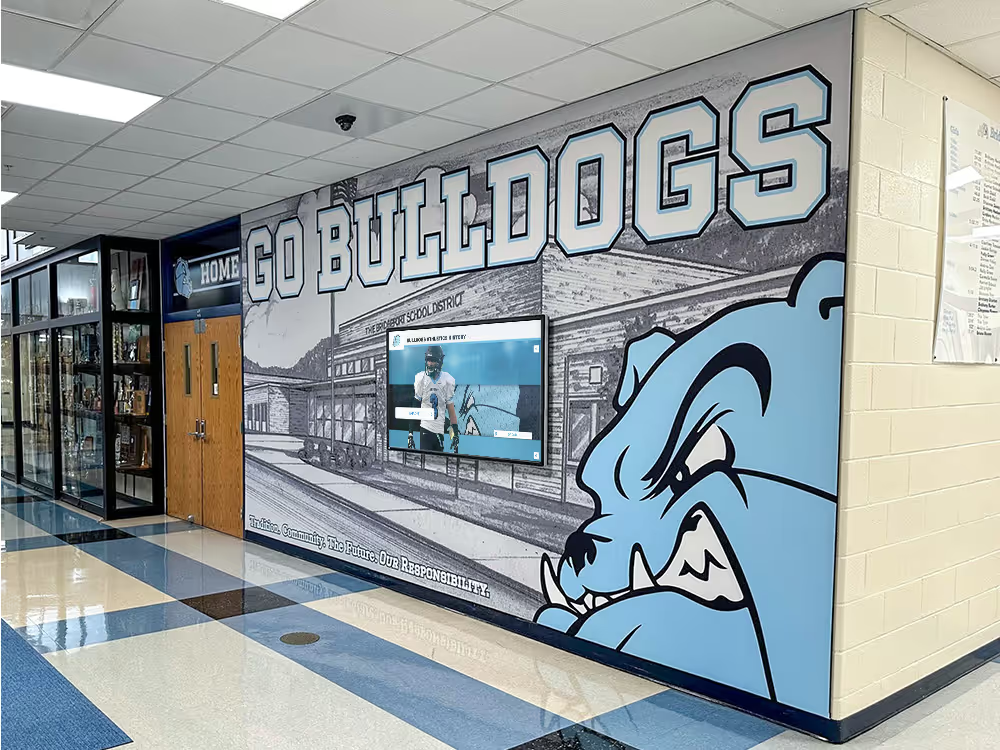
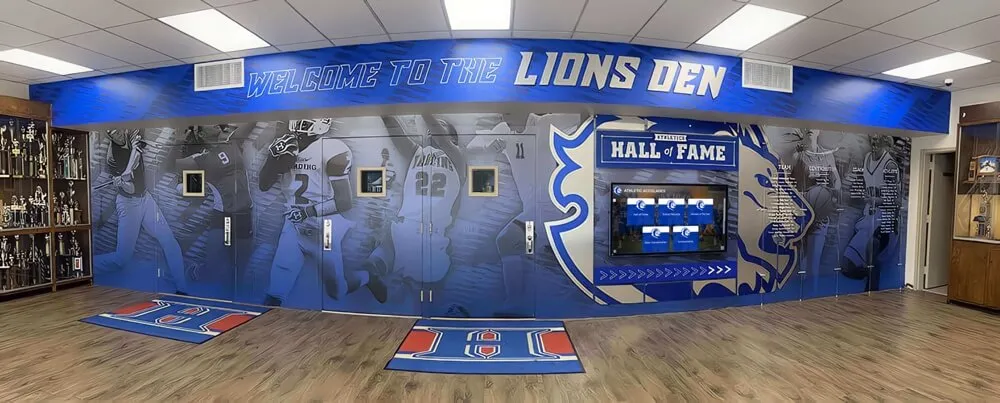
Comprehensive recognition spaces combine physical trophies, digital displays, and architectural elements creating welcoming environments celebrating program excellence
Implementation Planning for Gym Lobby Displays
Successful digital recognition requires careful planning addressing technology selection, physical installation, content migration, and ongoing management.
Technology Selection Considerations
Not all digital display systems provide equal capabilities, making selection decisions critical to long-term success.
Purpose-Built vs. Generic Digital Signage Generic digital signage platforms designed for announcements and wayfinding lack features necessary for comprehensive recognition. Purpose-built platforms like Rocket Alumni Solutions provide searchable databases enabling name, year, sport, or keyword searches, unlimited recognition capacity without tiered pricing escalation, comprehensive athlete profile capabilities supporting statistics and biographical information, auto-ranking record boards updating automatically, and mobile QR code access extending engagement beyond physical displays. Schools implementing generic digital signage for recognition typically discover significant limitations requiring expensive platform migrations when initial approaches prove inadequate.
Web-Based vs. Native Applications Web-based architectures provide advantages that native application approaches cannot match. Web platforms enable remote content management without touching physical hardware, universal device compatibility without platform-specific development, automatic security and feature updates without manual intervention, simultaneous deployment across physical displays and web browsers, and guaranteed accessibility compliance through responsive design. These architectural advantages explain why leading recognition platforms use web technologies rather than native applications requiring constant maintenance and limited accessibility.
Accessibility Compliance Verification ADA compliance represents legal obligation rather than optional feature, making accessibility verification essential during platform selection. Compliant platforms demonstrate WCAG 2.1 AA certification through third-party testing, support screen reader navigation throughout all interfaces, provide keyboard navigation alternatives to touch interaction, maintain sufficient color contrast ratios, and include alternative text for all meaningful images. Schools should request accessibility compliance documentation rather than accepting marketing claims without verification.
Content Management System Evaluation Long-term success depends on content management interfaces that non-technical staff can use confidently. Effective CMS platforms provide user-friendly interfaces requiring minimal training, template-based content creation reducing formatting decisions, bulk import capabilities for migrating historical data, scheduled publishing enabling advance content preparation, version history supporting content recovery, and user role permissions controlling access appropriately. Complex content management systems requiring IT staff intervention for routine updates create bottlenecks that result in outdated displays regardless of initial content quality.
Physical Installation Planning
Touchscreen placement and installation execution affects long-term display effectiveness and maintenance requirements.
Location Selection Strategy Display placement should prioritize high-traffic areas ensuring maximum visibility and engagement. Ideal locations include main gymnasium lobby entrances where all visitors pass, adjacent to traditional trophy cases creating complementary recognition zones, near concession stands or ticketing areas capturing event attendance traffic, and athletic hallway intersections connecting to multiple facilities. Avoid locations in low-traffic corridors, behind doors or in separate rooms, or areas with poor lighting or excessive glare. Prime locations multiply engagement opportunities while marginal placements waste investment regardless of technology quality.
Display Size and Format Decisions Touchscreen sizing should balance visibility, interaction comfort, and installation constraints. Most successful installations use 43-inch to 55-inch displays providing sufficient screen size for comfortable viewing and touch interaction while maintaining reasonable costs and installation flexibility. Larger displays improve visibility but increase costs exponentially, require more strong mounting systems, and may overwhelm smaller lobby spaces. Smaller displays reduce costs but compromise visibility and interaction quality. Multiple smaller displays often provide better value than single oversized installations when budget or space constraints exist.
Mounting and Protection Considerations Professional installation requires protective measures ensuring displays survive gymnasium environments. Installation requirements include secure wall mounting or freestanding kiosk enclosures protecting equipment, vandalism-resistant enclosures with tempered glass protecting screens, cable management concealing and protecting power and network connections, adequate ventilation preventing heat accumulation, and appropriate insurance coverage addressing damage risks. Schools should engage experienced installers familiar with gymnasium environments rather than attempting amateur installations risking equipment damage or safety hazards.
Network Infrastructure Requirements Reliable network connectivity ensures displays remain functional and enable remote content management. Infrastructure needs include hardwired Ethernet connections providing superior reliability versus Wi-Fi, sufficient bandwidth supporting video content and remote management, network security appropriate for public-facing devices, remote access capabilities enabling off-site troubleshooting, and backup connectivity options preventing extended outages. IT departments should evaluate network infrastructure before installation commitments ensuring adequate technical support for planned deployments.
Content Migration and Launch Preparation
Moving historical recognition from physical trophy cases to digital platforms requires systematic content migration strategies.
Historical Trophy Documentation Schools should systematically document existing trophy case content before digital transitions. Documentation processes include photographing all trophies capturing text and details, creating spreadsheets tracking sport, year, achievement type, recipient names when identified, recording trophy locations for future reference, and noting items requiring research for complete information. This systematic documentation preserves institutional memory while creating content foundations for digital platforms.
Yearbook Research and Data Collection Comprehensive recognition requires research beyond trophy documentation filling recognition gaps. Research activities include reviewing historical yearbooks documenting teams, athletes, and coaches, interviewing retired coaches and athletic directors capturing oral histories, consulting state athletic association archives for championship verification, researching local newspaper archives documenting achievements and athletes, and engaging alumni associations requesting missing information or corrections. This research investment creates recognition comprehensiveness that distinguishes professional implementations from superficial trophy list migrations.
Data Standardization and Quality Control Content quality determines long-term platform value requiring attention to standardization and accuracy. Quality processes include establishing consistent naming conventions, standardizing achievement terminology and abbreviations, verifying achievement years and dates, documenting information sources enabling future verification, flagging uncertain information requiring additional research, and conducting multiple review cycles catching errors before publication. Initial data quality investment prevents future correction efforts while building credible comprehensive recognition that communities trust.
Phased Content Launch Strategy Large-scale content migrations benefit from phased launch approaches rather than attempting comprehensive launches. Effective phases include initial launch featuring recent decade recognition establishing functionality, quarterly expansion adding historical decade recognition systematically, continuous research filling gaps and adding newly discovered achievements, and ongoing maintenance updating current season information and adding recent graduates. Phased approaches maintain momentum through visible progress while preventing delay paralysis from attempting perfect comprehensive launches before any content publication.
, protective kiosk enclosures or wall mounting systems ($800-$2,500), network infrastructure if not existing ($200-$1,000), cable management and installation materials ($200-$500), and installation labor ($500-$2,000 for professional installation). Total hardware investment typically ranges $3,200-$10,000 per display depending on size, mounting approach, and installation complexity. Schools should budget conservatively accounting for unexpected infrastructure requirements discovered during installation.
Software Platform Licensing Recognition platform costs vary dramatically based on architecture and pricing models. Pricing considerations include one-time setup fees ($500-$2,000 covering initial configuration), annual software licensing ($1,200-$4,800 annually depending on features and capacity), content management system access, technical support and maintenance, and platform updates and improvements. Schools should evaluate total cost of ownership across expected deployment lifespans rather than focusing exclusively on initial costs. Platforms charging per-inductee or capacity-tiered pricing create escalating costs as recognition databases grow while unlimited capacity platforms provide predictable long-term expenses.
Content Development Investment Creating comprehensive recognition content requires labor investment that often exceeds equipment costs. Content development includes historical research and documentation (40-200 hours depending on program history), data entry and profile creation (5-15 minutes per inductee profile), photo scanning and image preparation, content review and quality control, and initial athlete and family engagement collecting information. Schools should realistically budget content development time rather than assuming existing trophy documentation provides sufficient detail for meaningful digital recognition. Many successful implementations engage parent volunteers, alumni associations, or student workers distributing content creation workload sustainably.
Professional Design Services Effective digital recognition requires design expertise creating professional interfaces and visual branding. Design services include custom interface design matching school branding, graphic design for recognition templates and layouts, photo editing and image optimization, and video production for highlight content. Schools with internal design resources may minimize external service costs while institutions lacking design expertise should budget $1,500-$5,000 for professional design services ensuring displays reflect positively on institutional quality rather than appearing amateur regardless of content quality.
Ongoing Operational Expenses
Long-term budget planning should account for recurring costs beyond initial implementation investment.
Annual Platform Licensing and Support Software platforms require ongoing licensing covering hosting, maintenance, technical support, security updates, and feature improvements. Annual costs typically range $1,200-$4,800 depending on platform capabilities and support levels. Schools should verify what annual fees include ensuring technical support provides adequate response times, security updates deploy automatically without additional charges, platform improvements include all users rather than requiring upgrade fees, and content storage remains unlimited without capacity-triggered price increases. Understanding complete licensing terms prevents surprise expenses when databases grow or support needs arise.
Content Management Labor Maintaining current relevant content requires ongoing labor investment throughout athletic seasons. Labor requirements include weekly game result updates (30-60 minutes weekly during seasons), quarterly recognition additions (4-8 hours quarterly), annual hall of fame induction documentation (10-20 hours annually), seasonal content rotation (2-4 hours per season), and ad-hoc updates for milestones or special events. Schools should assign content management responsibility clearly ensuring displays receive consistent updates rather than becoming outdated through benign neglect when responsibilities remain ambiguous.
Technical Maintenance and Repairs Digital displays require occasional technical maintenance addressing hardware issues or software problems. Maintenance considerations include annual cleaning and inspection, screen protector replacement as needed, hardware component replacement for failed parts, software troubleshooting and support, and network connectivity issue resolution. Schools should budget $200-$500 annually for routine maintenance plus reserve funds addressing unexpected hardware failures. Extended warranty coverage or service agreements may provide cost predictability for risk-averse institutions.
Content Enhancement and Expansion Recognition databases benefit from continuous content improvement maintaining engagement and discovering new recognition opportunities. Enhancement activities include historical research filling recognition gaps, video content production documenting current seasons, photography improving profile visual quality, alumni engagement collecting post-graduation updates, and feature adoption utilizing new platform capabilities. While not strictly required, continuous content improvement distinguishes excellent implementations from minimal maintenance approaches. Schools should allocate 20-40 hours annually for content improvement activities when resources permit.
Return on Investment Considerations
Digital recognition creates value through multiple dimensions beyond simple cost analysis.
Physical Space Reclamation Digital recognition eliminates expensive trophy storage requirements freeing square footage for productive uses. Space benefits include repurposing storage rooms currently housing overflow trophies, reducing trophy case footprint freeing lobby space, eliminating future trophy case expansion costs, and avoiding building additions prompted by recognition space shortages. Schools should calculate reclaimed square footage value at institutional construction costs ($200-$400 per square foot) understanding digital recognition prevents capital expenditures far exceeding implementation costs.
Enhanced Community Engagement Metrics Digital recognition platforms generate engagement levels impossible with traditional trophy cases. Engagement benefits include 5-10x longer interaction time versus walking past trophy cases, web platform access multiplying physical display visitors by 10-50x, QR code mobile engagement extending beyond building visits, social media sharing amplifying recognition reach, and donor recognition opportunities creating revenue possibilities supporting athletic programs. While difficult quantifying financially, improved engagement creates community connection value exceeding monetary calculations.
Administrative Efficiency Gains Digital content management reduces labor compared to physical trophy maintenance. Efficiency gains include eliminating physical trophy cleaning and maintenance, reducing time locating specific achievements for inquiries, enabling rapid content updates without physical access, supporting remote management by multiple staff members, and scaling recognition without proportional labor increases. These efficiencies free athletic department time for program development rather than recognition maintenance.
Alumni Relations and Development Support Comprehensive digital recognition supports alumni engagement and development activities generating fundraising value. Development benefits include improved alumni engagement supporting giving campaigns, recognition stewardship validating donor contributions, naming opportunity possibilities supporting capital campaigns, strengthened alumni identity supporting annual giving, and platform sponsorship revenue possibilities. Schools with active development programs should consider digital recognition as advancement infrastructure supporting fundraising efforts rather than isolated athletic department expenses.
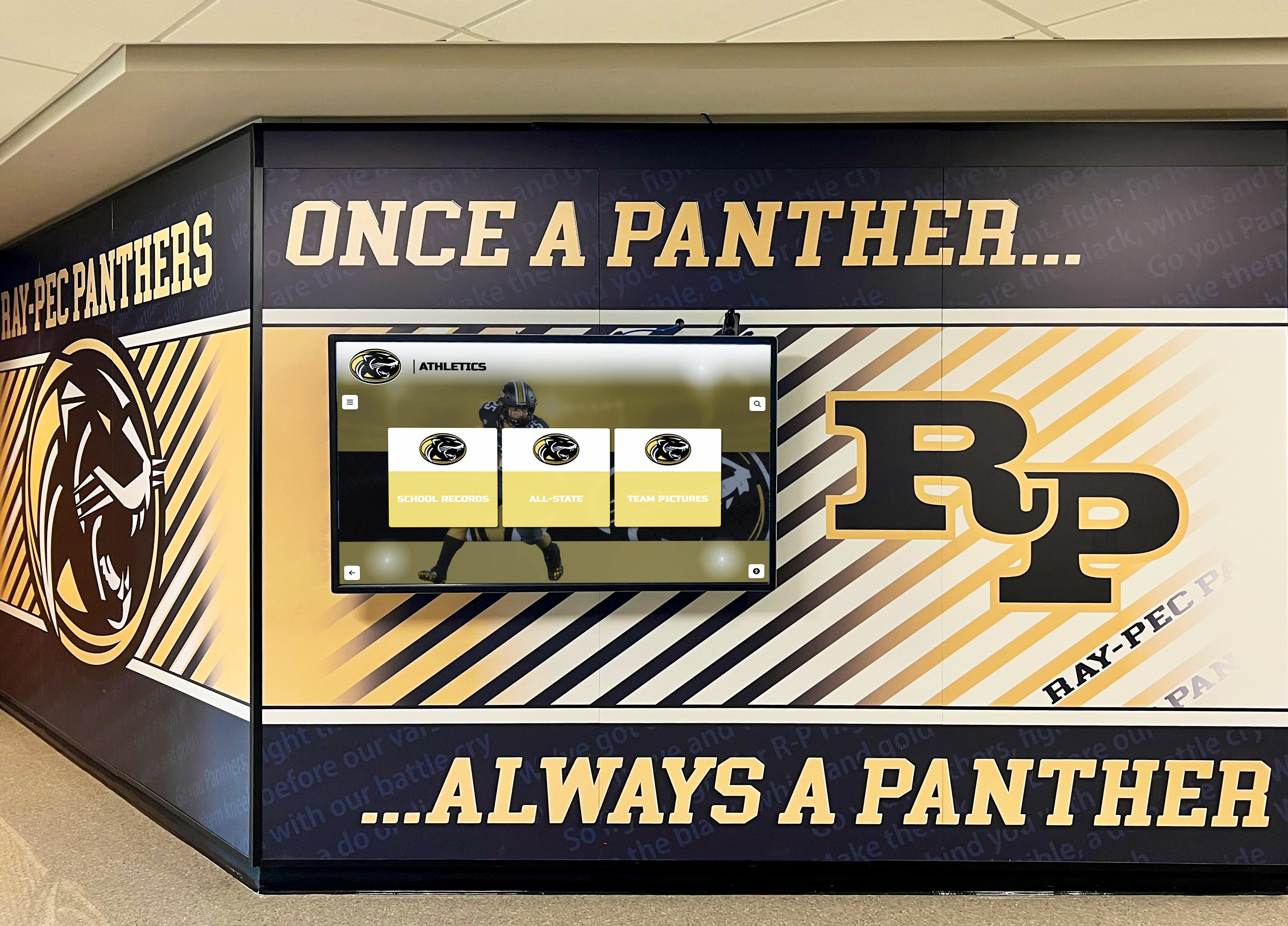
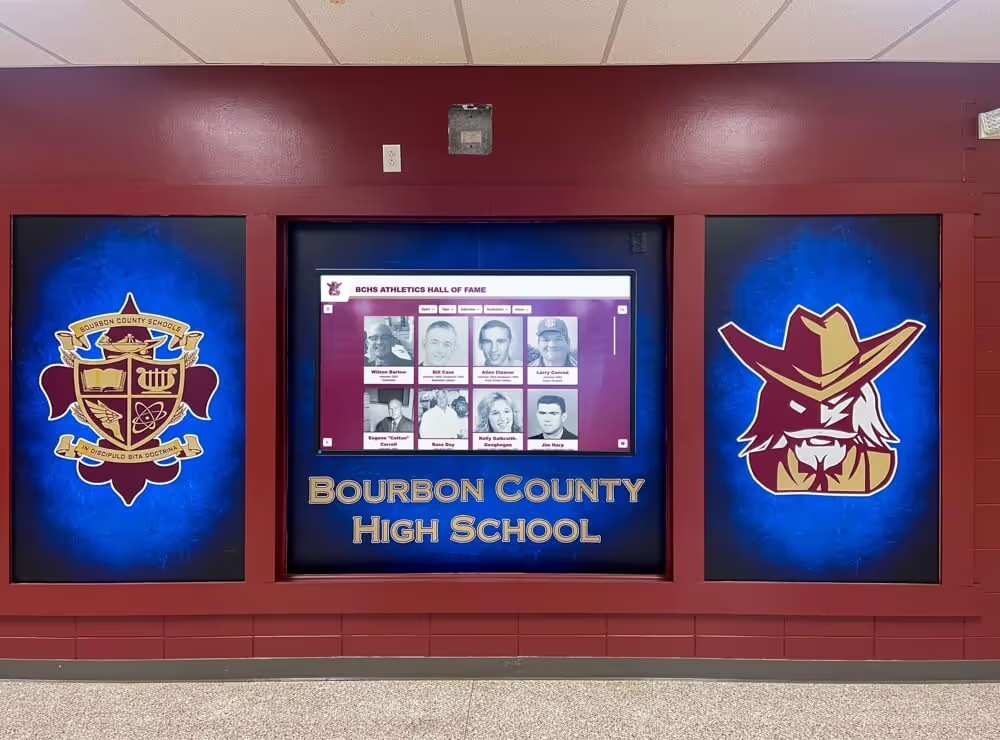
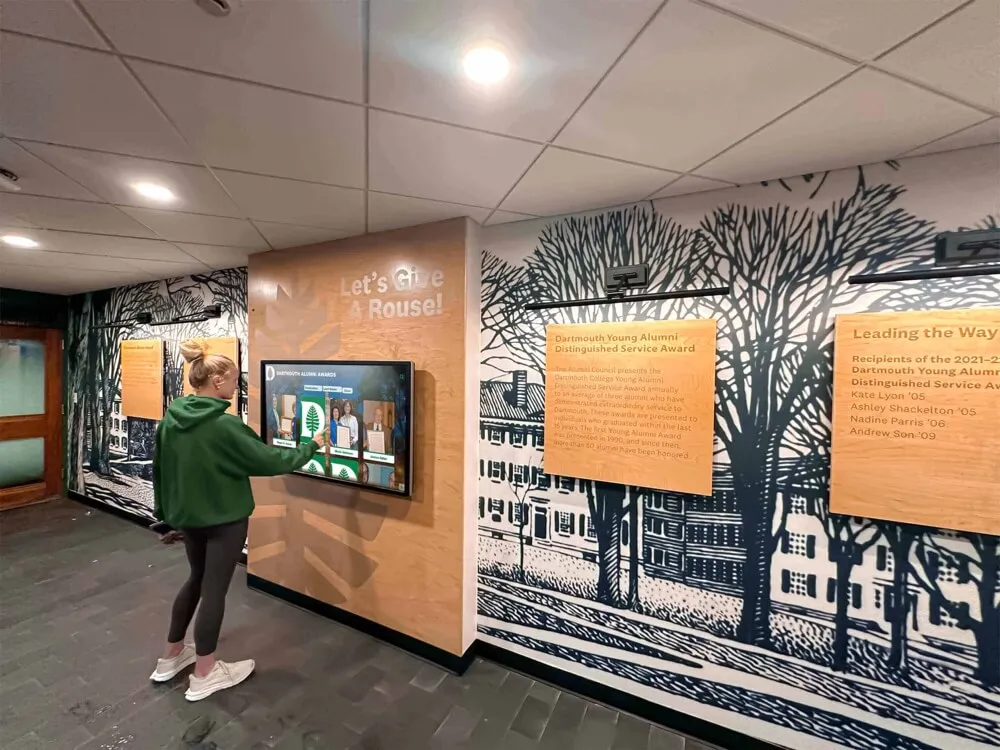
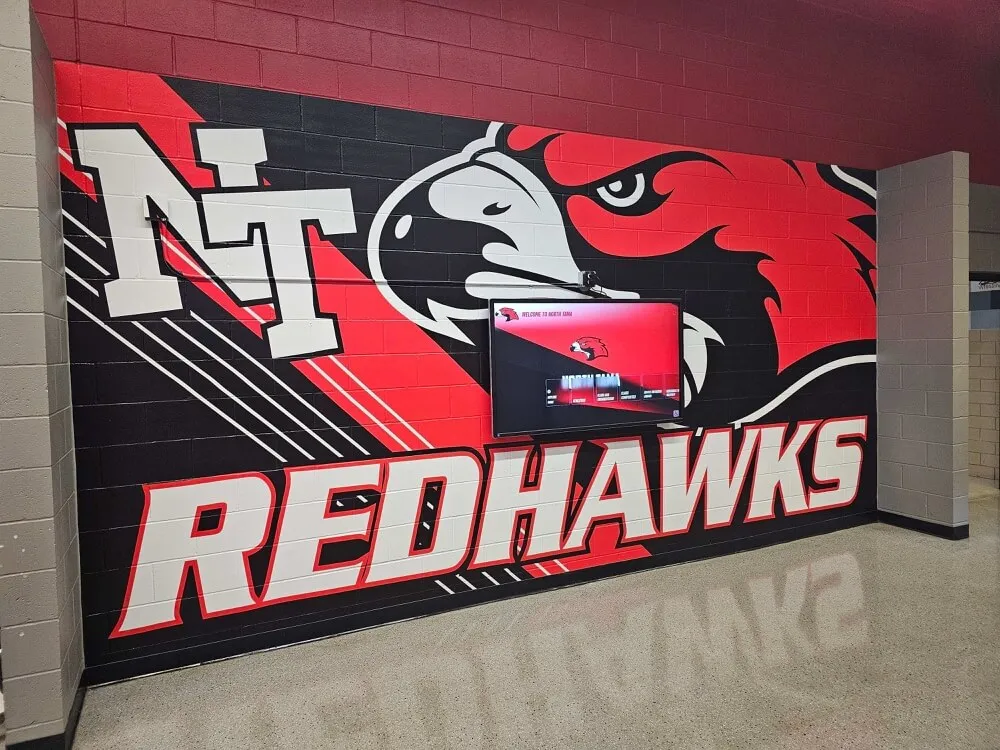
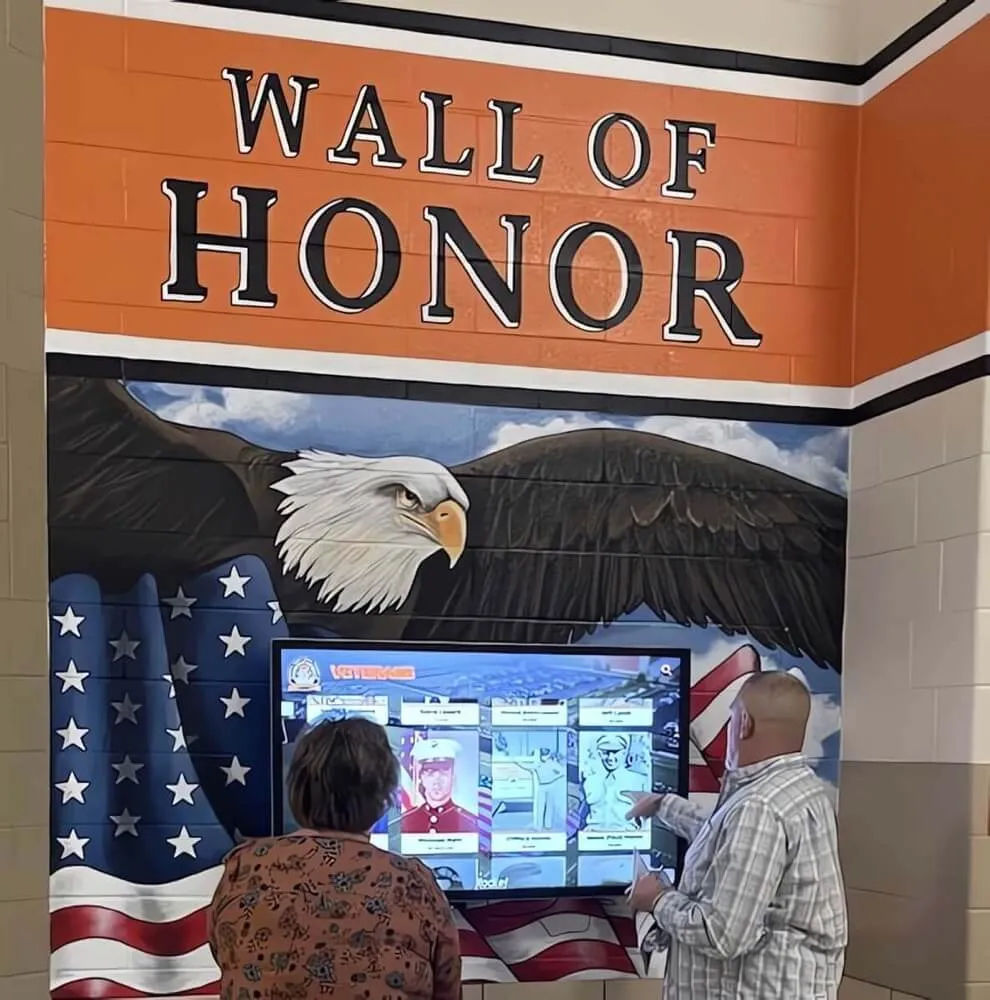
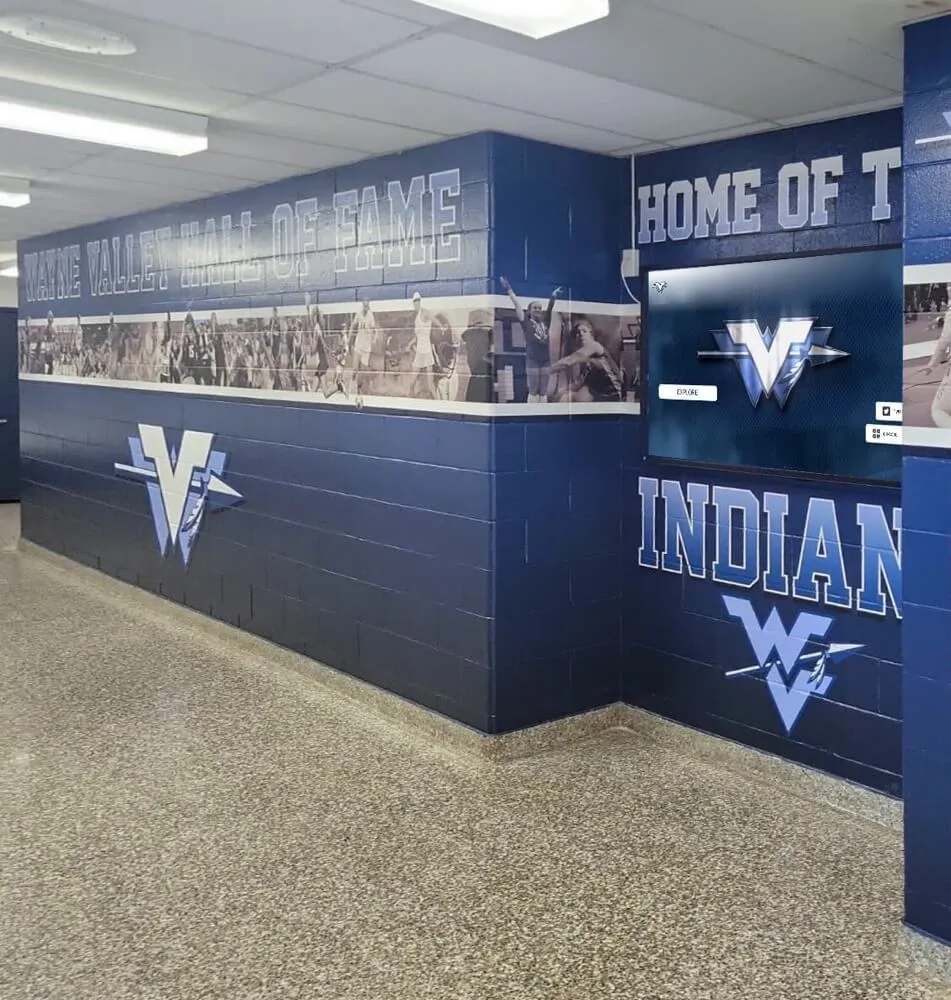
Coordinated design integration between architectural murals and digital displays creates cohesive spaces reflecting institutional pride and tradition
User Experience Design for Athletic Recognition
Creating engaging recognition experiences requires attention to user interface design, navigation patterns, and interaction flows.
Interface Design Best Practices
Touchscreen interfaces should prioritize user-friendly navigation enabling users discovering content without instruction or assistance.
Clear Visual Hierarchy Effective displays establish obvious visual priority guiding user attention appropriately. Hierarchy principles include prominent search functionality in consistent locations, large touch targets (minimum 44x44 pixels) accommodating imprecise touches, high-contrast text ensuring readability in varied lighting, logical information grouping reducing cognitive load, and consistent navigation patterns across interface sections. Poor hierarchy creates confusion requiring explicit instruction rather than enabling user-friendly self-directed exploration.
Simplified Navigation Patterns Complex navigation structures frustrate users and reduce engagement regardless of content quality. Navigation should provide home screen access from every interface location, maintain consistent back button placement and function, limit hierarchy depth to 3-4 levels maximum, display current location indicators preventing disorientation, and return to home screens after inactivity periods resetting for next users. Simplified navigation enables casual visitors confidently exploring displays without assistance while preventing confusion that terminates engagement prematurely.
Search Functionality Prominence Search represents the most valuable feature in comprehensive recognition databases deserving prominent interface positioning. Search design should include home screen search bars inviting immediate use, autocomplete suggestions accelerating entry and discovery, flexible search accepting names, years, sports, or achievement types, search result relevance ranking, and saved search capability for monitoring current athlete progress. Effective search enables visitors finding specific individuals or achievements quickly rather than browsing chronologically through extensive databases.
Rich Content Presentation Individual athlete or achievement presentation should leverage digital capabilities creating experiences impossible with physical trophies. Content presentation includes large high-quality photos showing athletes during competition, comprehensive statistics formatted for readability, biographical information providing personal context, achievement timelines documenting career progression, video highlights when available, and related content connections to teammates or associated achievements. Rich presentation validates recognition through attention to detail and comprehensive documentation.
Accessibility and Inclusive Design
Recognition platforms should serve all community members regardless of physical abilities or technical literacy.
ADA Compliance Requirements Legal accessibility requirements establish minimum standards that purpose-built platforms should exceed. Compliance includes WCAG 2.1 AA conformance verified through testing, screen reader compatibility supporting visually impaired users, keyboard navigation alternatives to touch-only interaction, sufficient color contrast ratios (minimum 4.5:1 for text), text resizing without loss of functionality, and alternative text for all meaningful images. Schools should request third-party accessibility audit documentation verifying compliance rather than accepting vendor claims without independent verification.
Physical Accessibility Considerations Display installation should accommodate users with varied physical abilities and heights. Physical accessibility includes appropriate mounting height enabling wheelchair users, clear approach space without obstacles, touch targets sized accommodating limited dexterity, tilted displays reducing glare and improving viewing angles, and adequate lighting without screen glare. Installation planning should consult accessibility specialists ensuring displays serve all potential users rather than creating barriers through thoughtless placement.
Literacy and Technical Skill Accommodation Recognition interfaces should serve users with varied reading abilities and technical experience. Accommodation strategies include simple language avoiding jargon or complex terminology, icon-based navigation supplementing text labels, consistent interaction patterns reducing learning requirements, forgiving interfaces allowing easy error recovery, and optional help or instruction without cluttering main interfaces. Inclusive design ensures displays engage entire communities rather than serving only tech-savvy visitors comfortable with digital interfaces.
Multilingual Content Considerations Schools serving diverse language communities should consider multilingual content accommodation. Multilingual approaches include Spanish language interface options in appropriate communities, easily switchable language selection, culturally appropriate content adaptation beyond literal translation, and community input ensuring respectful representation. While adding complexity, multilingual support demonstrates institutional commitment to inclusive recognition valuing all community members regardless of primary language.
Engagement Features Maximizing Interaction
Beyond basic recognition display, advanced features multiply engagement and extend interaction beyond physical display visits.
Social Media Integration Social sharing capabilities extend recognition reach beyond individuals physically visiting displays. Sharing features include profile sharing to Facebook, Twitter, or Instagram, social media card generation with proper formatting, hashtag suggestions supporting school branding, athlete permission processes respecting privacy preferences, and share analytics tracking social reach. Social integration transforms recognition from private school experiences to community celebration amplifying recognition value while supporting athletic program marketing.
QR Code Mobile Access QR codes positioned near displays enable smartphone access continuing engagement after leaving displays. Mobile access provides profile bookmarking for later review, extended content browsing without monopolizing displays, sharing capabilities from personal devices, accessibility features utilizing personal device accommodations, and engagement analytics tracking. Mobile extension significantly increases total engagement time while improving physical display availability for multiple simultaneous users.
Interactive Record Board Competition Auto-ranking leaderboards create ongoing engagement through performance comparisons and historical context. Record board features include real-time ranking as current athletes achieve new performances, proximity indicators showing how close athletes approach records, historical record holder recognition, achievement frequency statistics showing rarity, and achievement timelines documenting when records fell. Interactive leaderboards transform recognition from backward-looking history to forward-looking motivation as current athletes pursue visible benchmarks.
Alumni Update Contribution Platforms enabling alumni contributing profile updates maintain current content while deepening engagement. Contribution features include secure authenticated profile editing, moderated submission review before publication, post-graduation achievement documentation, career update sharing, and family information additions. Alumni contribution transforms platforms from static institutional publications to living community-maintained recognition celebrating ongoing accomplishments beyond graduation.
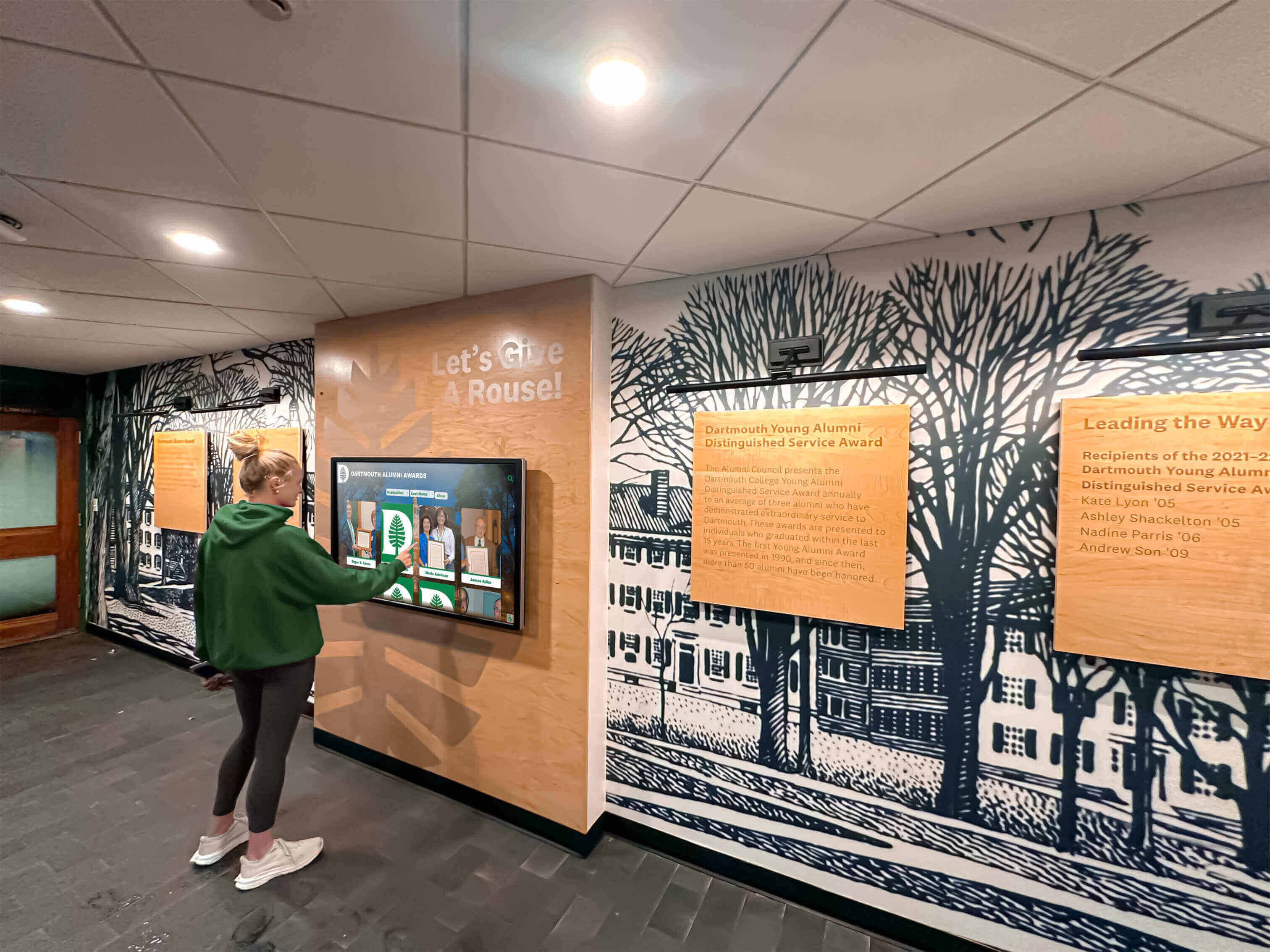
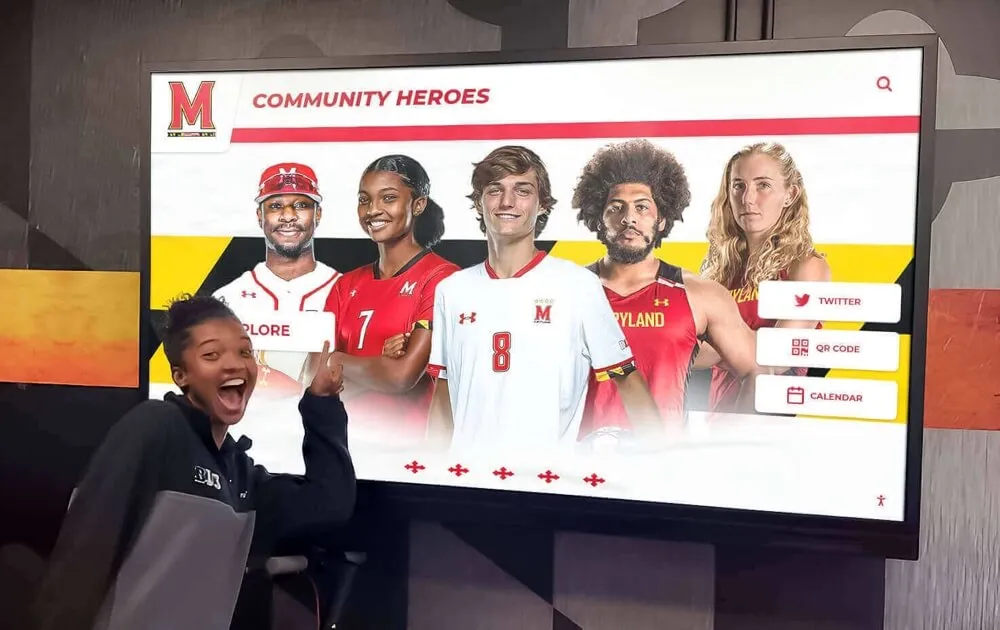
Student engagement with recognition displays creates opportunities for discovery, pride-building, and connection to institutional heritage
Balancing Digital and Physical Recognition
Effective implementations complement rather than completely replace traditional trophy displays through thoughtful hybrid approaches.
What to Keep in Physical Display
Certain recognition elements deserve continued physical display rather than complete digital migration.
Championship Trophies and Major Awards Signature championships and major program achievements maintain symbolic value through physical display that digital cannot fully replace. Physical display candidates include state championship trophies representing program peaks, conference championship recognition commemorating competitive excellence, major individual awards earned through exceptional achievement, milestone program achievements like all-time wins records, and retired jerseys or numbers honoring exceptional contributors. These signature items create visual impact and symbolic presence that justifies continued physical display even when comprehensive recognition moves digital.
Recent Season Recognition Current season achievement displays maintain relevance and celebrate present excellence validating active athletes. Recent physical recognition includes current year team photos establishing season identity, championship recognition from just-completed seasons, senior athlete recognition celebrating graduating classes, current season statistical leaders, and recent record-breaking achievements. This current physical recognition ensures gymnasium lobbies feel connected to active programs rather than exclusively historical museums while digital platforms preserve comprehensive historical recognition.
Architectural or Historically Significant Elements Certain recognition elements possess historical or architectural value beyond recognition function deserving preservation. Preservation candidates include original trophy cases with historical or architectural significance, donor-funded recognition elements honoring benefactor contributions, distinctive custom elements reflecting institutional identity, championship banners commemorating program peaks, and recognition art or sculpture created by distinguished artists or community members. These elements contribute to architectural character and institutional identity justifying continued display regardless of recognition efficiency considerations.
Space-Appropriate Recognition Displays Physical recognition should match space scale preventing either overwhelming clutter or sparse inadequate display. Appropriate scale considerations include maintaining trophy case displays where architectural elements create natural locations, preserving championship banner displays in ceiling space designed for this purpose, featuring memorial recognition when permanently dedicated spaces exist, and displaying signature awards in administrative offices or meeting rooms. Physical recognition scale should reflect deliberate curation rather than everything-on-display approaches that create clutter degrading recognition value.
Creating Complementary Digital-Physical Experiences
Most effective implementations integrate digital and physical recognition creating complementary experiences exceeding either approach independently.
QR Codes Linking Physical to Digital QR codes positioned near physical trophies enable smartphone access to comprehensive digital documentation providing context impossible through trophy labels alone. Physical-digital linking includes championship trophy QR codes accessing complete season documentation, individual award QR codes opening comprehensive athlete profiles, facility dedication plaques linking to donor recognition or facility history, and historic photo displays connecting to expanded digital galleries. This linking preserves physical recognition impact while extending engagement through rich digital content.
Digital Displays Adjacent to Trophy Cases Positioning touchscreen displays directly alongside traditional trophy cases creates natural complementary zones where physical hardware introduces digital exploration. Adjacent placement benefits include visual association connecting physical and digital recognition, space efficiency using existing trophy case areas, natural visitor traffic patterns, and architectural integration treating recognition as unified experience. This adjacency prevents visitors perceiving digital recognition as inferior replacement while positioning it as complementary improvement.
Signature Trophy Digital Documentation Maintaining physical championship trophies while creating comprehensive digital documentation preserves symbolic presence while adding context and detail. Documentation approaches include championship season complete rosters and statistics, game-by-game results and progression, playoff brackets and tournament paths, championship game documentation and highlights, and photo galleries preserving season memories. This approach honors physical trophy significance while acknowledging that hardware alone provides minimal information about team composition or individual contributors.
Recognition Ceremony Integration Hall of fame induction ceremonies and athletic award events should integrate both physical and digital recognition creating unified experiences. Integration approaches include physical plaque or award presentations during ceremonies, simultaneous digital profile activation and display, recognition ceremony video documentation posted digitally, digital platform demonstrations during events, and QR code distribution enabling ceremony attendee exploration. This integration demonstrates that digital recognition complements rather than replaces physical ceremony traditions while extending recognition reach beyond individuals attending events.
Transition Communication Strategies
Successfully implementing digital recognition requires clear communication managing expectations and explaining benefits.
Community Stakeholder Engagement Major recognition changes benefit from early communication addressing concerns and gathering input before implementation. Engagement approaches include athletic booster club presentation and feedback sessions, alumni association communication explaining benefits and requesting input, athlete family information meetings demonstrating platforms, coaching staff training and input sessions, and facilities committee review ensuring administrative alignment. Proactive engagement prevents resistance emerging from surprise or misunderstanding while gathering valuable implementation input from stakeholders with legitimate interests.
Transparent Rationale Communication Clear explanation of why digital recognition becomes necessary builds support by demonstrating thoughtful decision-making. Rationale communication should acknowledge trophy case overcrowding creating clutter reducing recognition value, explain space limitations preventing comprehensive achievement recognition, describe accessibility benefits serving all community members, emphasize engagement improvements through interactive exploration, and clarify that signature championships maintain physical display. Honest transparent communication prevents conspiracy theories suggesting administrative laziness or cost-cutting rather than genuine recognition improvement motivations.
Phased Implementation Benefits Gradual digital recognition adoption provides proof-of-concept opportunities building confidence before comprehensive transitions. Phased approaches include initial touchscreen installation alongside existing trophy cases, pilot digital content launch for recent recognition, community feedback collection and implementation refinement, gradual expansion of digital content, and selective physical trophy retirement as digital proves valuable. Phased implementation allows mid-course corrections while building community comfort through demonstrated success rather than requiring faith in untested approaches.
Success Metrics Communication Sharing engagement data demonstrates digital recognition effectiveness validating implementation decisions. Success metrics include display interaction frequency and duration, web platform access and usage statistics, QR code mobile engagement statistics, social media sharing metrics, and community satisfaction feedback. Regular success reporting maintains transparency while building confidence that investments produce measurable engagement improvements rather than solely administrative convenience.
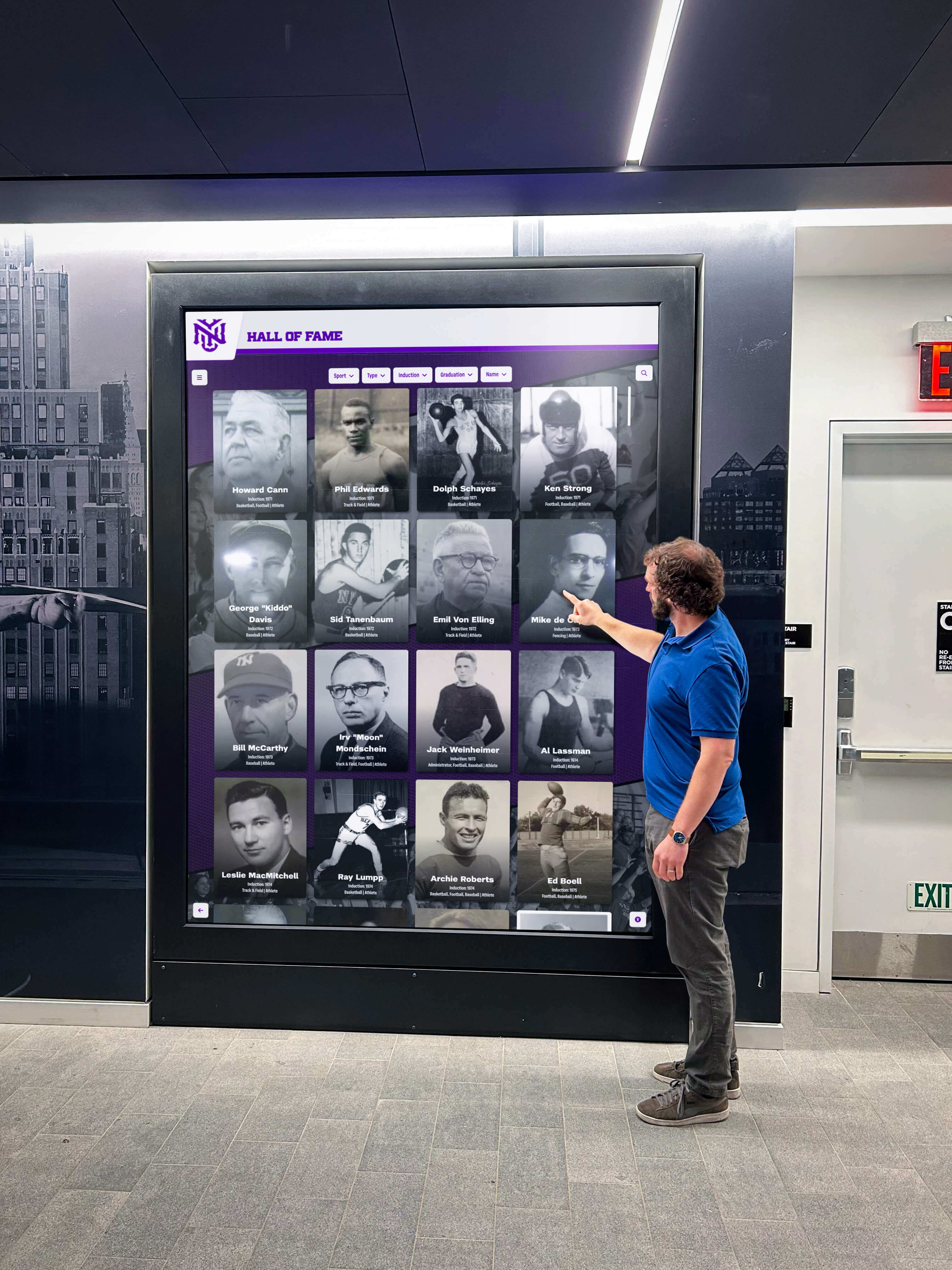
Intuitive interfaces invite exploration and discovery, transforming passive recognition viewing into active community engagement
Implementation Case Study Insights
Understanding common implementation patterns helps schools avoid predictable challenges while adopting proven strategies.
Common Implementation Challenges
Most schools encounter similar obstacles during digital recognition transitions requiring early planning.
Content Development Underestimation Schools consistently underestimate time required creating comprehensive recognition content resulting in delayed launches or incomplete implementations. Content challenges include historical research consuming more time than anticipated, missing information requiring extensive investigation, data entry requiring more detail than expected, photo quality issues necessitating rescanning or replacement, and content review revealing errors requiring correction. Schools should double initial content development time estimates accounting for inevitable complications while establishing realistic launch timelines preventing rushed inadequate implementations attempting to meet arbitrary deadlines.
Technical Infrastructure Gaps Network connectivity and technical infrastructure limitations emerge during installation revealing inadequate advance planning. Infrastructure challenges include insufficient network connectivity in gymnasium locations, Wi-Fi reliability problems requiring hardwired Ethernet, network security policies blocking necessary traffic, limited IT staff time for troubleshooting, and inadequate technical documentation creating support challenges. Early IT department engagement identifying and addressing infrastructure limitations prevents installation delays and ongoing reliability problems.
Ongoing Content Management Responsibility Ambiguity Unclear content management responsibility assignment results in outdated displays regardless of initial content quality. Management challenges include athletic directors assuming communications staff manage content while communications staff assume athletic department responsibility, content management added to existing roles without time allocation, seasonal staff turnover disrupting content management continuity, lack of training creating technical obstacles, and absence of performance expectations enabling benign neglect. Clear written responsibility assignment with adequate time allocation and accountability ensures displays receive consistent updates maintaining relevance.
Resistance to Change from Tradition-Oriented Stakeholders Alumni and community members valuing tradition may resist digital recognition perceiving it as inferior to physical trophies. Resistance sources include nostalgia for traditional trophy cases from their own athletic careers, perception that digital recognition costs less effort than physical awards, concerns that digital seems impermanent versus physical trophies, lack of familiarity with digital platform capabilities, and inadequate communication about implementation rationale. Proactive engagement addressing concerns before implementation while demonstrating digital recognition benefits reduces resistance transforming potential opponents into supporters.
Success Factor Patterns
Schools achieving excellent implementations share common approaches worth emulating.
Executive Sponsorship and Support Successful implementations enjoy visible athletic director and principal support allocating necessary resources. Executive support includes budget allocation covering comprehensive implementation, staff time protection for content development, clear responsibility assignment, regular progress monitoring, and public communication validating importance. Executive sponsorship signals institutional commitment preventing implementations becoming optional side projects vulnerable to deprioritization when competing demands emerge.
Community Content Contribution Schools leveraging parent volunteers, alumni associations, and student workers distribute content development workload sustainably. Community contribution approaches include parent volunteer research committees documenting program history, alumni association content collection campaigns, student work-study positions for data entry, retired coach interview projects capturing oral histories, and crowdsourced photo contribution campaigns. Community contribution builds ownership and engagement while providing content development capacity beyond limited athletic staff time.
Iterative Improvement Rather Than Perfect Launch Schools accepting initial launches containing incomplete content that improves continuously achieve success faster than institutions attempting comprehensive perfection before publication. Iterative approaches include launching with recent decade content while historical research continues, publishing athlete profiles with available information flagging gaps for future updates, starting with priority sports before comprehensive coverage, accepting imperfect photo quality initially while gradually replacing with better images, and communicating openly about ongoing improvement plans. Iterative improvement maintains momentum through visible progress while preventing delay paralysis from perfectionist standards.
Regular Content Update Routines Establishing specific weekly and quarterly update routines ensures displays receive consistent maintenance. Routine approaches include designating specific days (e.g., Monday mornings) for weekly game result updates, scheduling quarterly content addition sessions before seasonal transitions, assigning specific individuals with backup coverage preventing single-person dependencies, creating content calendars planning seasonal rotations, and establishing update checklists ensuring comprehensive coverage. Regular routines normalize content management as ongoing responsibility rather than reactive crisis response when displays become obviously outdated.
Performance Metrics Tracking and Reporting Schools tracking and reporting engagement metrics demonstrate value while maintaining stakeholder support. Metrics approaches include monthly physical display interaction statistics, quarterly web platform access reports, annual engagement summary reports to administrators and boards, social media reach documentation, and community satisfaction surveys. Regular metric reporting provides objective evidence supporting continued investment while identifying improvement opportunities when engagement fails to meet expectations.
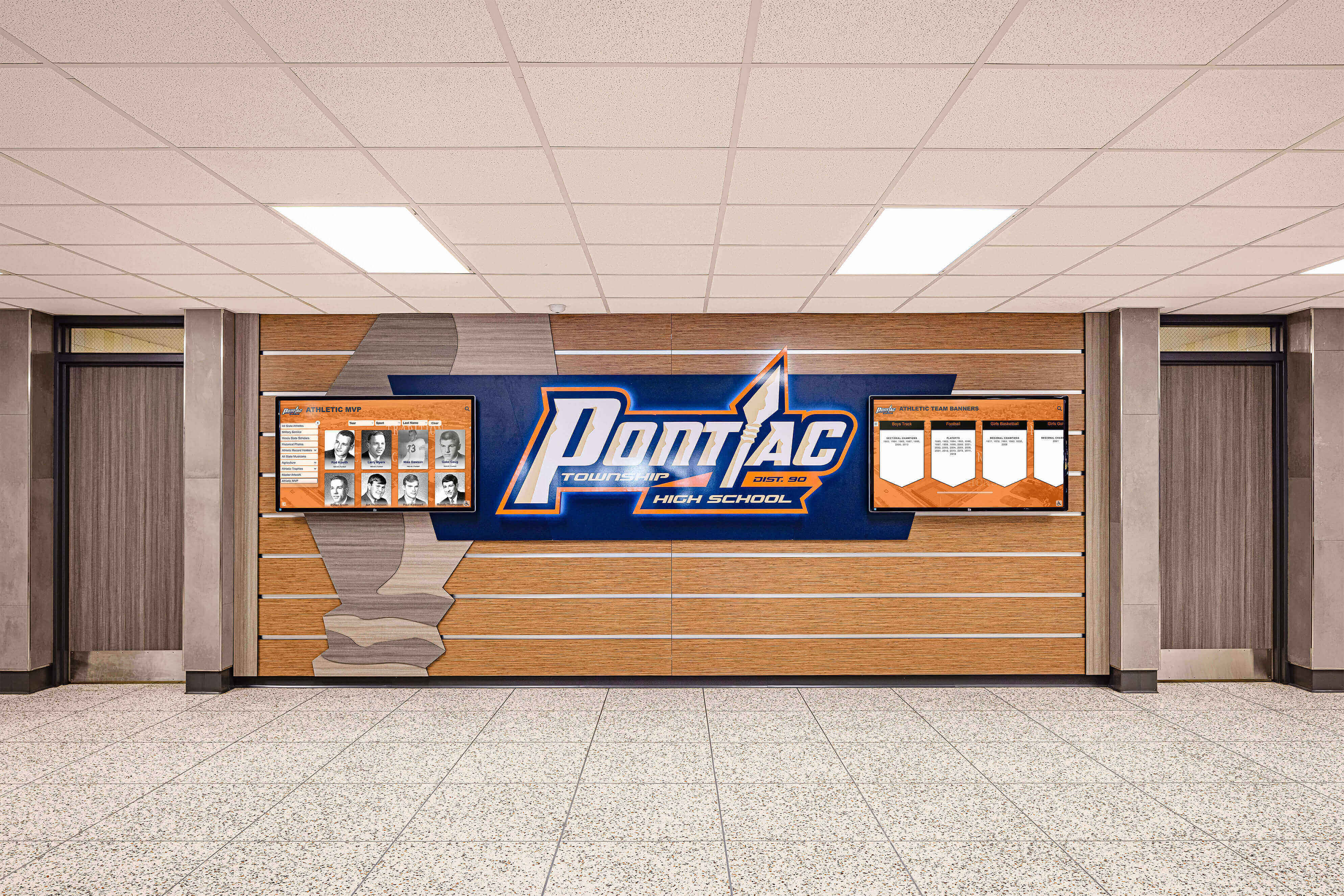
Traditional honor board displays complement comprehensive digital systems creating layered recognition approaches serving varied community preferences
Future Trends in Digital Athletic Recognition
Understanding emerging recognition technology trends helps schools make future-appropriate investments rather than purchasing soon-obsolete approaches.
Emerging Technology Capabilities
Digital recognition continues evolving through new capabilities enhancing engagement and expanding recognition possibilities.
Artificial Intelligence Content Enhancement AI technologies increasingly support recognition content creation and improvement reducing manual effort. AI applications include automatic photo improvement improving historical image quality, automated athlete profile generation from yearbook scanning, statistical pattern recognition identifying notable achievements, content recommendation suggesting related profiles or achievements, and natural language search understanding conversational queries. While raising appropriate data privacy concerns requiring careful consideration, AI capabilities promise significantly reduced content management burden while improving content quality and discoverability.
Augmented Reality Recognition Experiences AR technologies enable overlaying digital recognition content on physical environments through smartphone applications. AR recognition applications include pointing smartphones at trophy cases revealing comprehensive digital documentation, location-based campus tours automatically surfacing relevant recognition content, virtual trophy room experiences enabling remote exploration, historical photo overlays showing facility evolution, and interactive achievement hunts gamifying recognition exploration. AR bridges physical and digital recognition creating hybrid experiences impossible through either approach independently.
Voice Interface Navigation Voice control enables hands-free navigation supporting accessibility while accommodating interaction preferences. Voice applications include spoken search queries finding athletes or achievements, voice-commanded navigation through recognition content, audio descriptions supporting visually impaired users, interview audio integration sharing athlete perspectives, and podcast-style achievement storytelling. Voice interfaces particularly benefit accessibility while supporting engagement preferences shifting toward audio content consumption.
Predictive Analytics and Milestone Tracking Advanced analytics enable early recognition of athletes approaching historical benchmarks creating anticipation and attention. Analytics applications include automatic alerts when athletes near record thresholds, probability calculations estimating likelihood of record achievements, milestone countdown displays tracking progress toward notable achievements, historical context providing performance comparisons, and achievement rarity statistics quantifying accomplishment significance. Predictive recognition transforms backward-looking historical documentation into forward-looking anticipation supporting current athlete motivation.
Evolving Recognition Content Approaches
Beyond technology capabilities, recognition content philosophy continues evolving toward more comprehensive inclusive approaches.
Holistic Student-Athlete Recognition Recognition increasingly acknowledges student-athlete excellence extends beyond athletic performance alone. Holistic approaches include integrating academic achievement alongside athletic recognition, featuring character and leadership recognition, documenting community service contributions, acknowledging mental health awareness advocacy, and celebrating personal growth journeys beyond statistics. This comprehensive recognition philosophy reflects understanding that developing well-rounded individuals represents higher educational purpose than producing winning teams exclusively.
Equity and Inclusion Emphasis Recognition systems increasingly prioritize equity ensuring all sports, genders, and achievement types receive appropriate visibility. Equity approaches include balanced coverage across all sports regardless of revenue or visibility, equal prominence for male and female athletic achievement, recognition for junior varsity and team participation beyond varsity starters, celebration of individual improvement alongside top performers, and visibility for adaptive sports and special programs. Equity-focused recognition validates that all athletic participation merits celebration while avoiding traditional recognition biases favoring prominent sports or standout performers exclusively.
Mental Health and Wellness Integration Progressive schools incorporate mental health awareness into athletic recognition acknowledging comprehensive wellness importance. Mental health integration includes celebrating resilience through adversity, recognizing mental health advocacy leadership, featuring wellness education and resources, acknowledging injury recovery journeys, and destigmatizing mental health conversations. This integration reflects evolving understanding that athletic excellence requires mental and emotional health alongside physical performance.
Career and Life Success Documentation Recognition extending beyond graduation acknowledges that athletic programs develop individuals continuing contributing throughout lives. Extended recognition includes post-graduation career achievement documentation, life impact stories showing athletic lesson application, mentorship and giving back recognition, family legacy documentation connecting generations, and community leadership celebration. This longitudinal recognition philosophy demonstrates that athletic program value extends far beyond high school competition outcomes while inspiring current athletes through concrete adult success examples.
Platform Architecture Evolution
Recognition platform technologies continue maturing toward more capable accessible approaches.
Cloud-Native Architectures Modern platforms increasingly adopt cloud-native approaches providing advantages impossible with traditional server installations. Cloud benefits include automatic scaling accommodating traffic spikes without capacity planning, geographic redundancy ensuring continuous availability, automatic backup and disaster recovery, simplified IT infrastructure requirements, and consumption-based pricing reducing upfront investment. Cloud architectures eliminate many technical management burdens while improving reliability exceeding capabilities of school-managed servers.
Mobile-First Design Approaches Recognition platform design increasingly prioritizes mobile experience acknowledging smartphone dominance in content consumption. Mobile-first considerations include responsive designs adapting to varied screen sizes, touch-optimized interfaces designed for finger interaction, mobile photography accommodation accepting smartphone image uploads, mobile notification capabilities alerting to new recognition, and progressive web app technologies enabling app-like experiences without installation requirements. Mobile-first design reflects reality that most recognition consumption occurs through personal smartphones rather than physical displays or desktop computers.
Open Data and Integration Standards Platforms increasingly support data portability and system integration through open standards. Integration capabilities include standardized data export preventing vendor lock-in, API access enabling custom integrations, single sign-on supporting seamless authentication, analytics platform integration for comprehensive reporting, and social media platform integration for sharing. Open approaches ensure schools control recognition data while enabling integration with broader institutional technology ecosystems rather than isolated recognition silos.
Privacy-Conscious Design Recognition platforms increasingly incorporate privacy controls addressing legitimate personal information concerns. Privacy features include granular control over what information displays publicly, opt-in approaches requiring explicit consent before publication, minor protection policies limiting youth information exposure, right-to-be-forgotten support enabling profile deletion, and transparent data usage policies. Privacy-conscious design acknowledges that comprehensive recognition requires balancing celebration desires with legitimate personal information protection concerns.
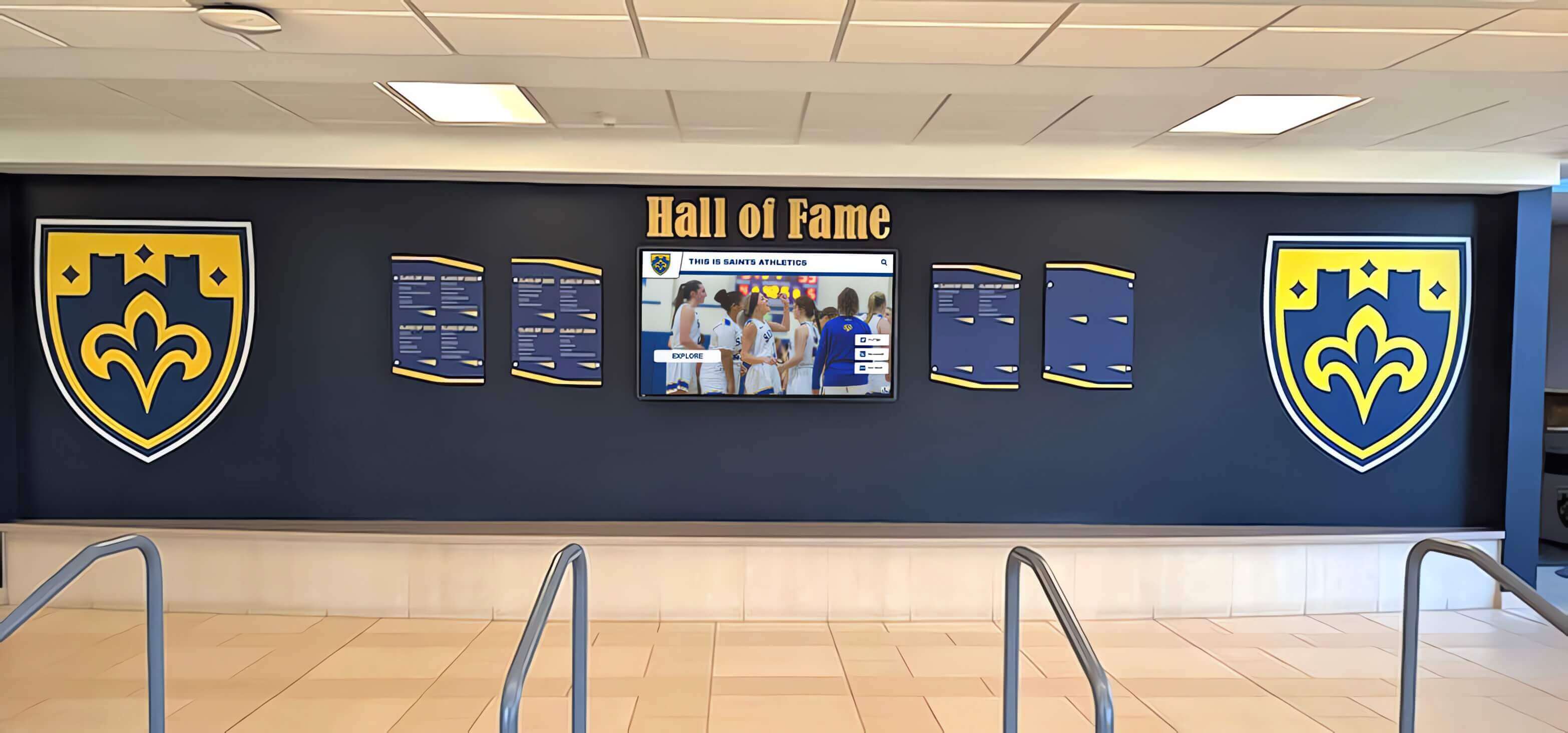
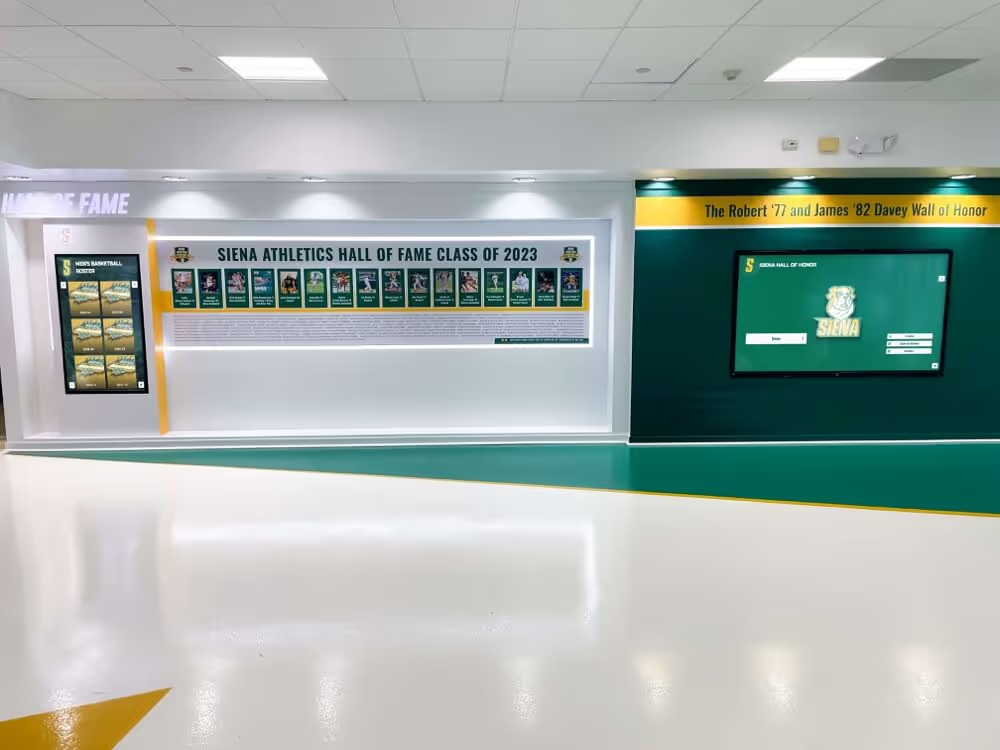
Cohesive design integration between traditional recognition elements and modern digital displays creates timeless spaces honoring past and present achievement
Getting Started with Gym Lobby Touchscreen Displays
Schools ready to address trophy case overcrowding through digital recognition should follow systematic planning processes ensuring successful implementations.
Needs Assessment and Requirements Definition
Successful implementations begin with clear understanding of specific institutional needs and priorities rather than generic technology purchases.
Current Recognition Inventory Documenting existing recognition establishes scope and informs planning. Inventory activities include cataloging all current trophy case contents, photographing existing displays and recognition, identifying overcrowding and space constraint problems, documenting recognition gaps or inequities, and surveying community recognition satisfaction. Comprehensive inventory prevents underestimating implementation scope while identifying specific problems that digital recognition should address.
Stakeholder Requirement Gathering Understanding diverse stakeholder needs ensures implementations serve entire communities rather than narrow perspectives. Requirement gathering includes interviewing athletic directors about management challenges, consulting coaches about recognition priorities, engaging alumni about historical documentation needs, surveying current athletes and families about desired recognition, and consulting IT departments about technical capabilities and constraints. Inclusive requirement gathering builds support while identifying specific capabilities necessary for success beyond generic platform features.
Budget and Resource Planning Realistic financial planning prevents implementations stalling mid-project when costs exceed expectations. Planning activities include identifying all cost categories beyond equipment purchases, establishing total available budget with contingency reserves, evaluating financing or phasing options when budgets prove inadequate, identifying potential donor funding sources, and calculating total cost of ownership including ongoing operational expenses. Complete budget planning enables informed scope decisions rather than discovering mid-implementation that resources prove inadequate for planned approaches.
Success Criteria Definition Clear success metrics enable objective evaluation determining whether implementations achieve intended value. Success criteria include specific engagement metrics (display interactions, web visits, social shares), content completion milestones, community satisfaction targets, accessibility compliance verification, and operational efficiency improvements. Defined success criteria prevent implementations declaring victory simply for launching while enabling objective assessment justifying continued investment or prompting corrective action when results disappoint.
Vendor Evaluation and Selection
Not all digital recognition vendors provide equal capabilities making careful evaluation critical to long-term success.
Platform Capability Assessment Technical capability evaluation ensures platforms support comprehensive recognition rather than generic digital signage. Capability requirements include unlimited inductee capacity without tiered pricing, comprehensive search functionality, auto-ranking record boards, mobile QR code access, remote web-based content management, ADA WCAG 2.1 AA accessibility compliance, scheduled content publishing, and multi-format content support (text, photos, videos, statistics). Schools should request detailed capability demonstrations rather than accepting marketing claims verifying platforms support specific required features.
Reference Customer Verification Speaking with existing customers provides unfiltered insight into vendor reliability and platform effectiveness. Reference activities include requesting multiple reference contacts from similar institutions, conducting phone or video interviews asking specific capability questions, visiting reference institutions observing implementations in-person, reviewing reference institution online platforms evaluating public-facing quality, and inquiring about vendor responsiveness and support quality. Reference verification prevents selecting vendors whose marketing promises exceed actual delivery capabilities.
Total Cost of Ownership Analysis Complete financial evaluation extends beyond initial pricing to comprehensive long-term costs. Cost analysis includes initial setup fees and equipment costs, annual software licensing across multi-year periods, content development and ongoing management labor, technical support and maintenance expenses, and future feature or capacity expansion costs. TCO analysis enables accurate vendor comparison while preventing selection decisions based on artificially low initial pricing that prove expensive long-term when hidden costs emerge.
Contract Terms and Exit Strategy Understanding contractual commitments and data portability ensures schools maintain flexibility and control. Contract considerations include commitment terms and cancellation provisions, data ownership and export capabilities, price increase limitations or guarantees, service level agreements defining support responsiveness, and renewal terms preventing automatic escalation. Favorable contract terms protect schools from vendor dependency while ensuring recognition data remains accessible even if platform changes become necessary.
Implementation Project Planning
Systematic project planning increases implementation success probability while managing complex multi-month efforts.
Project Timeline Development Realistic timelines account for all implementation phases preventing rushed inadequate execution. Timeline phases include vendor selection and contracting (4-8 weeks), hardware procurement and installation (4-6 weeks), content development and migration (8-16 weeks depending on scope), training and documentation (2-3 weeks), soft launch and testing (2-4 weeks), and official launch and promotion (1-2 weeks). Total implementation timelines typically span 5-9 months for comprehensive approaches, requiring patience and sustained effort rather than expecting rapid 30-day deployments.
Responsibility Assignment and Team Building Clear role definition prevents confusion and ensures all necessary activities receive attention. Team roles include executive sponsor providing resources and authority, project manager coordinating overall implementation, content manager leading recognition documentation, technical coordinator managing hardware and network infrastructure, communication lead managing stakeholder engagement, and training coordinator developing user documentation and staff training. Explicit responsibility assignment with adequate time allocation prevents implementation becoming nobody’s priority when added to existing roles without workload adjustment.
Risk Identification and Mitigation Proactive risk planning prevents common obstacles derailing implementations. Risk categories include content development delays requiring timeline contingency, technical infrastructure limitations necessitating backup approaches, staff turnover disrupting continuity requiring documentation and cross-training, budget overruns demanding scope adjustment or additional funding, and stakeholder resistance requiring improved communication efforts. Risk planning enables rapid response when predictable challenges emerge rather than treating them as unexpected crises.
Communication and Change Management Systematic communication builds support while managing expectations throughout implementations. Communication activities include initial announcement explaining vision and timeline, regular progress updates maintaining visibility and engagement, stakeholder feedback sessions addressing concerns and gathering input, staff training ensuring operational capability, launch promotion celebrating milestone achievement, and ongoing success reporting demonstrating value. Comprehensive communication prevents implementations surprising stakeholders while building enthusiasm supporting successful adoption.
Schools ready to transform overcrowded trophy cases into engaging digital recognition experiences should begin by exploring purpose-built platforms designed specifically for comprehensive athletic recognition. Solutions like Rocket Alumni Solutions provide unlimited capacity, searchable databases, auto-ranking record boards, mobile access, and accessibility compliance—addressing space constraints while creating more engaging recognition than traditional trophy cases provide.
Ready to Transform Your Gym Lobby Recognition?
Discover how digital touchscreen displays solve trophy case overcrowding while creating engaging experiences that celebrate unlimited athletic achievements.
Book a DemoFrequently Asked Questions
How much does a gym lobby touchscreen display system cost?
Complete gymnasium lobby touchscreen implementations typically cost $5,000-$15,000 initially including hardware, software licensing, installation, and content development. Ongoing costs include $1,200-$4,800 annual software licensing and 2-4 hours monthly content management. While representing significant investment, digital recognition eliminates trophy storage costs, prevents future trophy case expansion expenses, and provides unlimited recognition capacity that scales without additional physical space requirements. Many schools find digital recognition more cost-effective than continuous trophy case expansion when calculating long-term total costs.
Will digital displays replace traditional trophies completely?
No, most successful implementations maintain physical display for signature championships, major awards, and recent season recognition while moving comprehensive program recognition to digital platforms. This hybrid approach preserves symbolic physical trophy presence and tradition while solving overcrowding through digital capacity for comprehensive athlete profiles, complete record boards, and detailed historical documentation. Digital recognition complements rather than replaces physical trophies, creating recognition experiences exceeding capabilities of either approach independently.
How long does it take to implement a touchscreen recognition system?
Comprehensive implementations typically require 5-9 months from vendor selection through official launch. Timeline includes vendor evaluation and contracting (4-8 weeks), hardware installation (4-6 weeks), historical content development (8-16 weeks), training (2-3 weeks), and testing (2-4 weeks). Content development represents the longest phase, particularly for schools with extensive athletic history. Schools can reduce timelines through phased approaches launching with recent decade content while historical research continues, enabling 3-4 month initial launches that expand gradually.
What happens to existing trophies when implementing digital recognition?
Schools typically maintain physical display for approximately 10-20% of trophies representing major program achievements while moving comprehensive recognition digital. Retired trophies often find appropriate homes in administrative offices, team rooms, training facilities, or designated storage. Some schools offer certain trophies to families or athletes when appropriate. The goal involves thoughtful curation preserving most meaningful physical recognition while eliminating overcrowded clutter degrading recognition value. Schools should develop clear transparent processes determining what remains physically displayed versus what moves to digital or storage.
How do you keep digital content current and updated?
Successful implementations establish regular update routines rather than reactive approaches. Effective practices include designating specific individuals responsible for content management with backup coverage, scheduling weekly updates (30-60 minutes) during athletic seasons for recent results, planning quarterly content additions (4-8 hours) for seasonal recognition, and conducting annual historical expansion (10-20 hours) adding newly discovered achievements. Cloud-based content management systems enable updates from any device without physical display access, reducing update friction. Schools leveraging parent volunteers, alumni, or student workers distribute workload sustainably.
Can visitors access recognition information from their phones?
Yes, modern recognition platforms provide multiple access methods beyond physical touchscreen displays. QR codes positioned near displays enable smartphone access to recognition content, allowing continued exploration on personal devices, sharing profiles through social media or messaging, bookmarking content for later review, and accessibility features utilizing personal device accommodations. Many platforms also provide public web access enabling families, alumni, and distant relatives browsing recognition from anywhere without visiting campus. This multi-platform access dramatically increases engagement beyond individuals physically visiting gymnasium lobbies.
Are digital recognition systems accessible for people with disabilities?
Purpose-built platforms like Rocket Alumni Solutions achieve ADA WCAG 2.1 AA accessibility compliance through web-based architectures supporting screen readers, keyboard navigation alternatives to touch interaction, adjustable text sizing, sufficient color contrast, and alternative text for images. This accessibility ensures recognition reaches individuals with visual impairments or other disabilities who cannot effectively access traditional trophy cases behind glass at fixed heights with small labels. Schools should verify accessibility compliance through third-party testing documentation rather than accepting vendor claims without independent verification, as accessibility represents legal requirement beyond optional feature.
How do you measure whether digital recognition is successful?
Success measurement includes both quantitative metrics and qualitative feedback. Quantitative metrics include physical display interaction frequency and duration, web platform access statistics, QR code mobile engagement, social media sharing metrics, and search query analysis. Qualitative feedback includes community satisfaction surveys, athlete and family testimonials, stakeholder perception interviews, and recognition value assessments. Platforms providing built-in analytics enable continuous monitoring determining whether implementations achieve intended engagement improvements. Schools should establish baseline metrics before implementation and target specific improvement goals (e.g., 3x longer average interaction time) enabling objective success evaluation.
Digital touchscreen displays provide high schools with practical solutions addressing gymnasium lobby trophy case overcrowding while creating more engaging recognition experiences than traditional approaches provide. By enabling unlimited recognition capacity, searchable databases, multimedia content, and remote access, these systems solve space constraints while celebrating athletic achievement more comprehensively than physical trophies alone allow. Schools implementing thoughtful hybrid approaches that complement physical trophies with digital platforms create recognition experiences honoring tradition while embracing capabilities that strengthen community connection to athletic excellence.