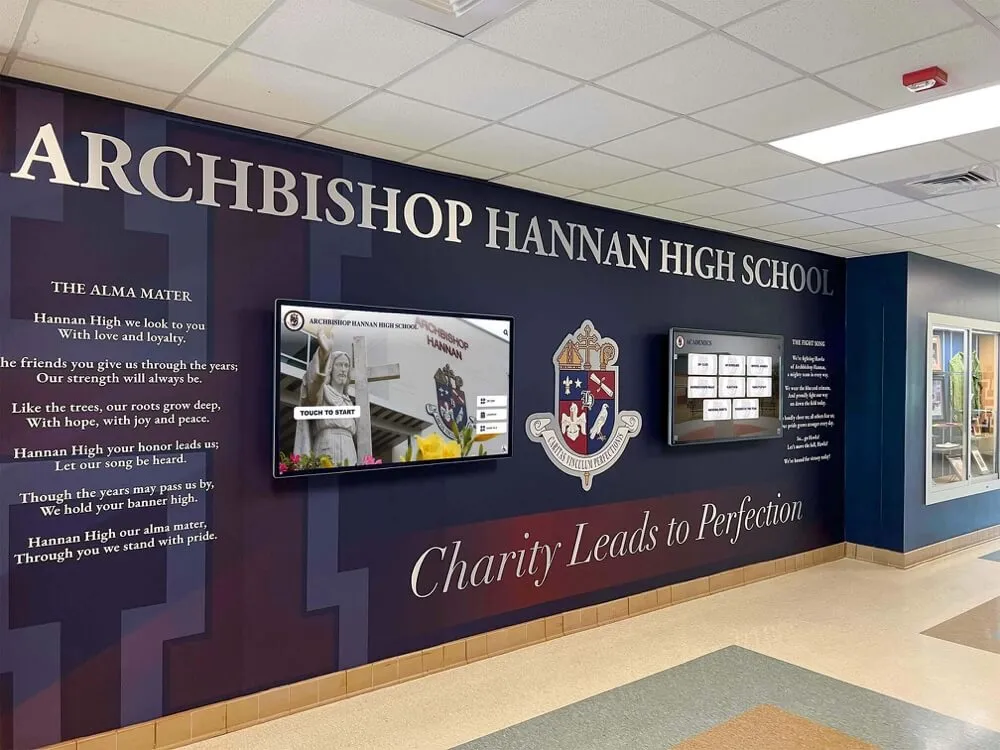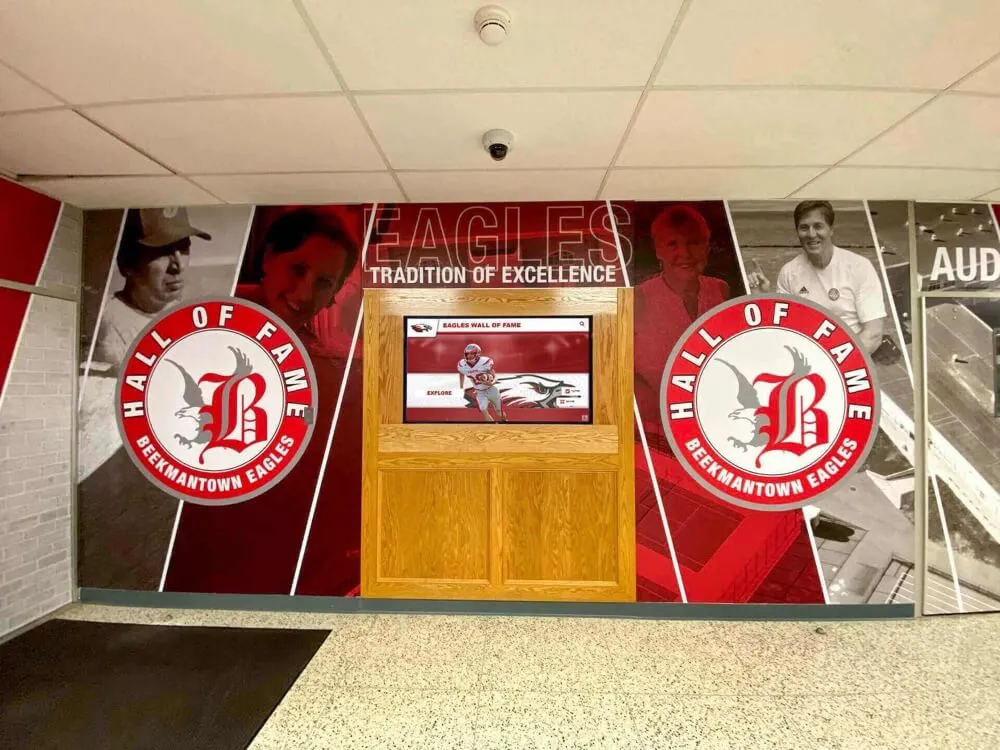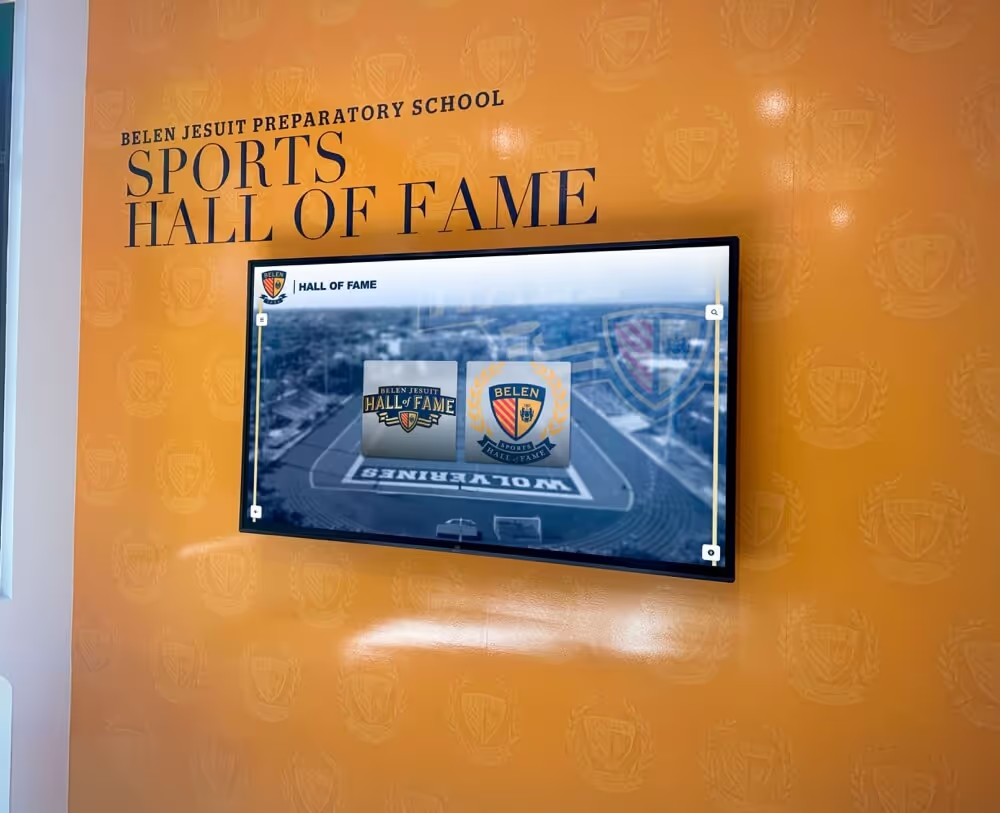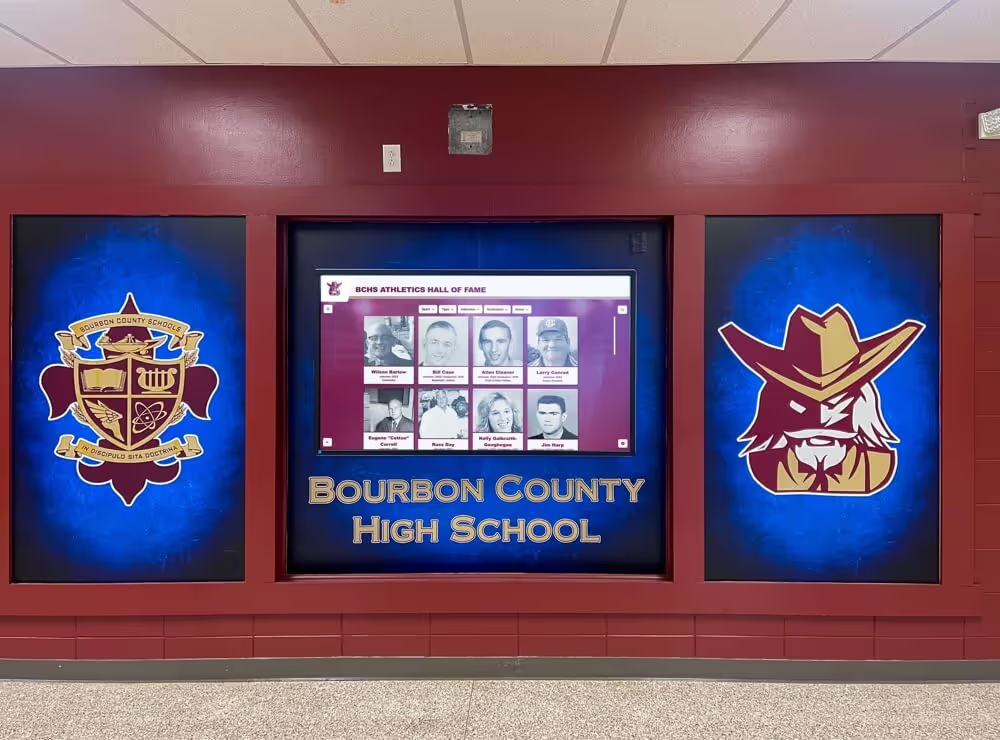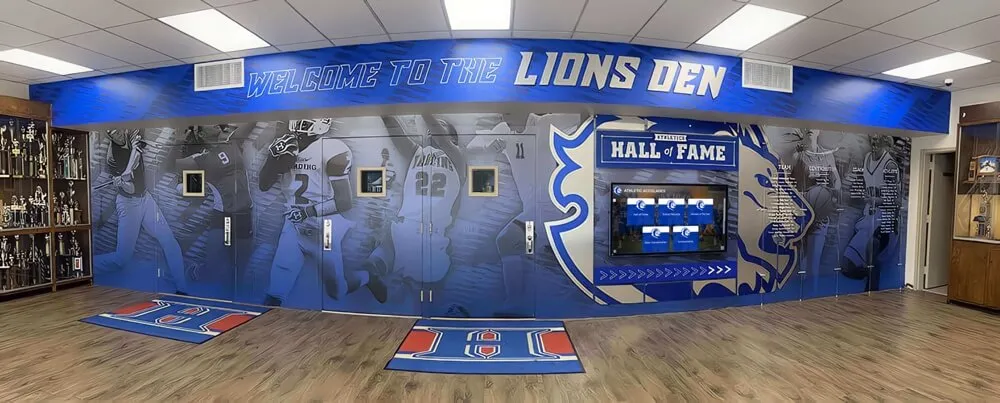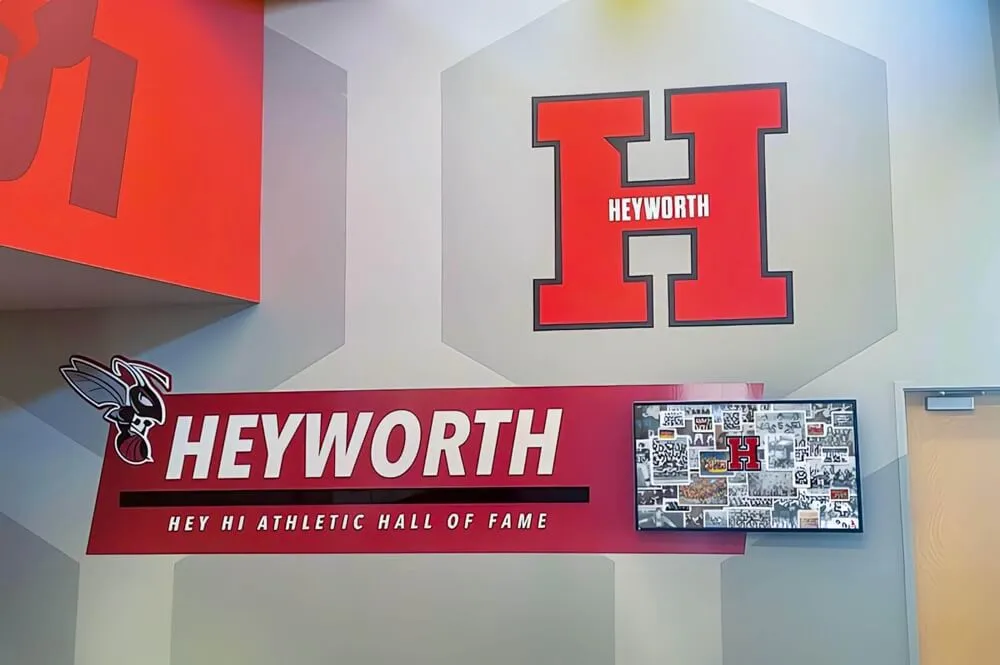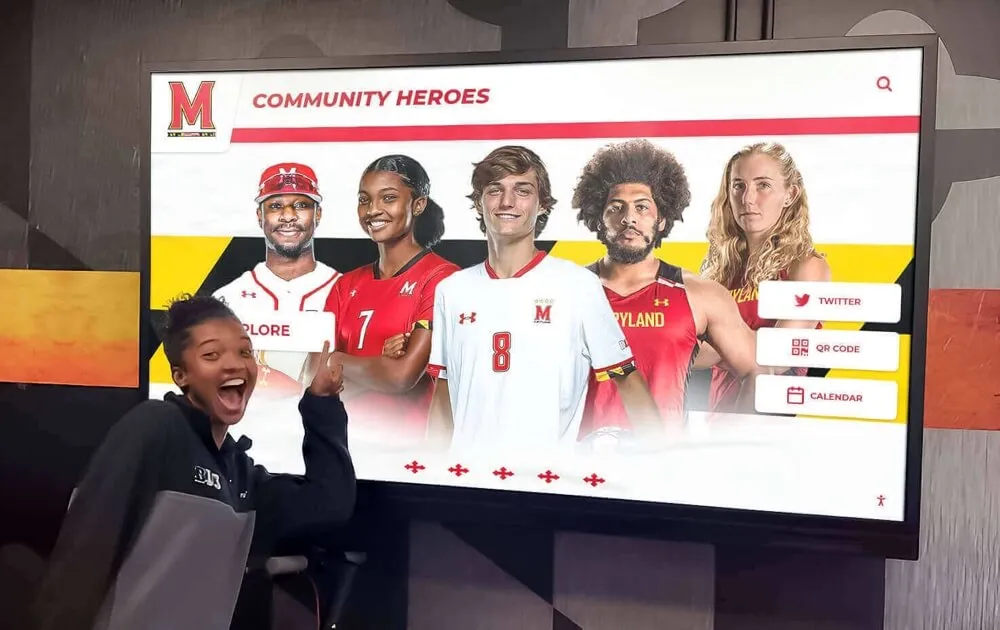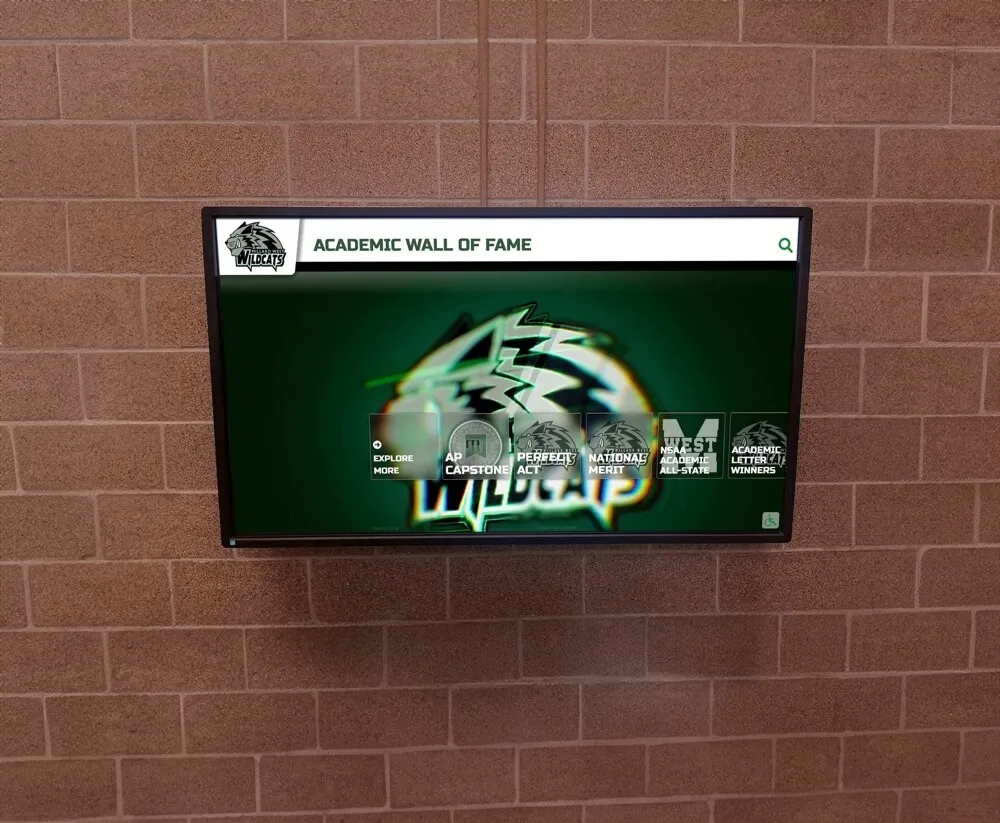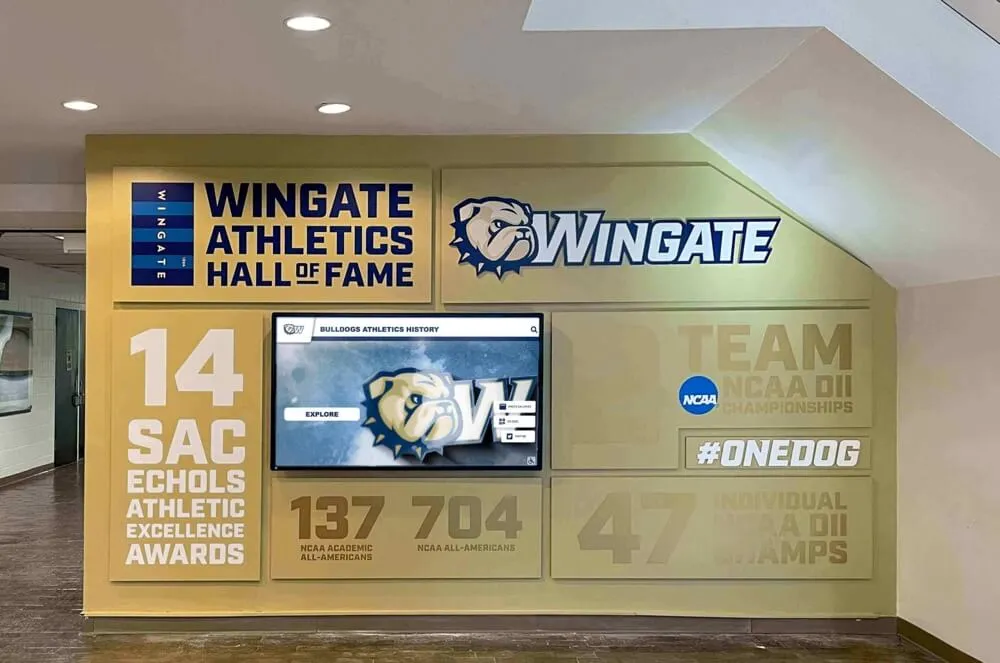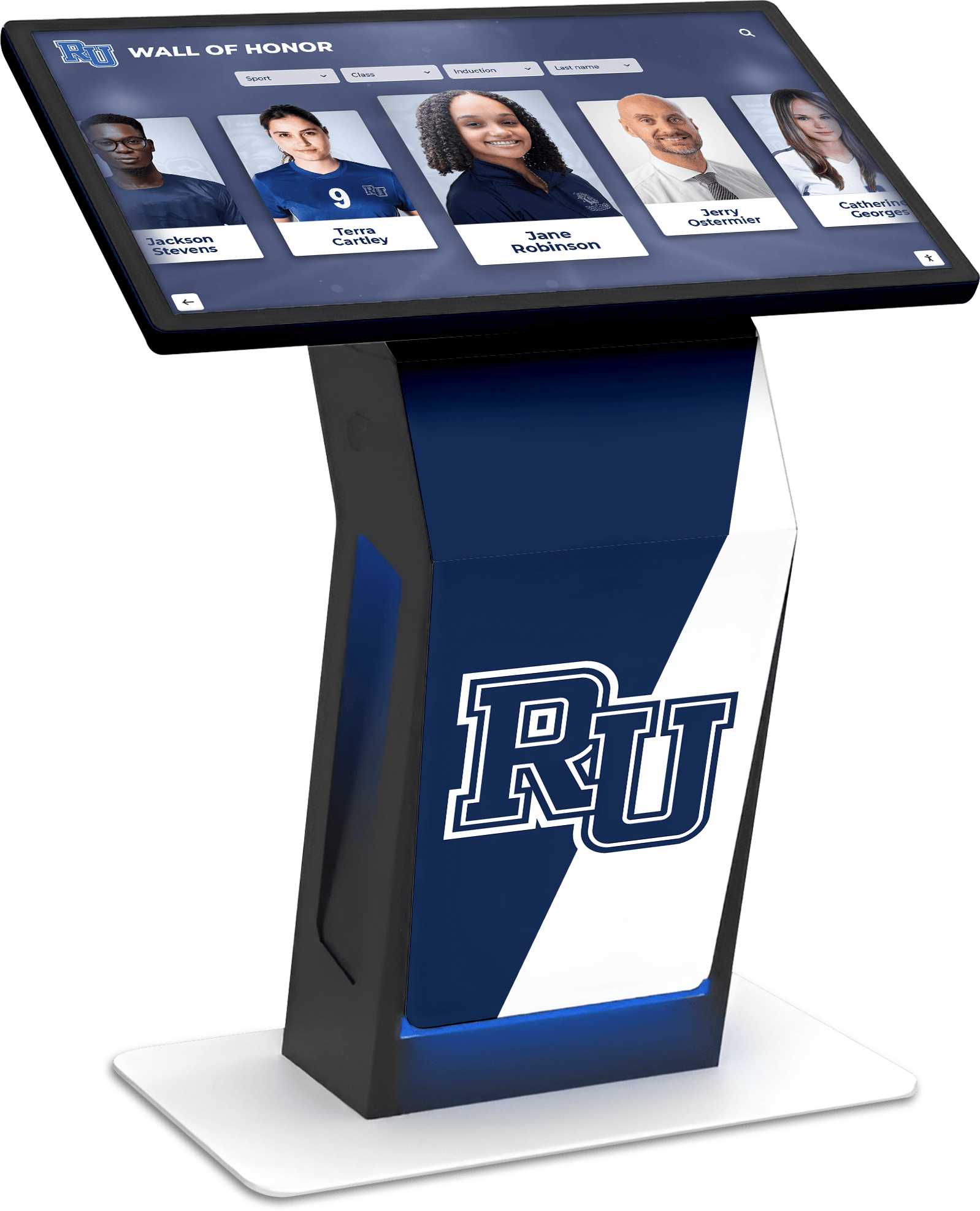




Intent: demonstrate — Touchscreen digital hall of fame walls and interactive awards displays represent the evolution from traditional recognition plaques to dynamic, engaging systems that transform how organizations celebrate achievement while building vibrant communities. These modern recognition platforms combine intuitive touchscreen technology, unlimited digital content capacity, web accessibility, and personalized discovery features to create experiences that inspire repeated engagement rather than passive viewing.
Traditional recognition approaches create inherent limitations—fixed physical space forces difficult decisions about whose achievements deserve visibility, expensive engraving costs accumulate over time, static displays offer no engagement beyond brief viewing, and physical-only accessibility restricts recognition to campus visitors. As organizations accumulate decades of achievements worthy of celebration, these constraints become increasingly problematic.
This comprehensive guide explores how touchscreen digital hall of fame walls and interactive awards systems create what we call “digital warming”—transforming cold, static recognition into personalized, interactive experiences that draw members deeper into exploration and connection. We’ll examine implementation strategies, technology requirements, design best practices, content development approaches, and proven methods for maximizing community engagement through modern recognition.
Organizations implementing touchscreen recognition systems consistently report dramatic engagement increases compared to traditional displays. Members spend significantly more time exploring achievements, discovering personal connections, and maintaining ongoing relationships with their institutions through recognition platforms that accommodate unlimited growth while delivering experiences worthy of celebrated accomplishments.

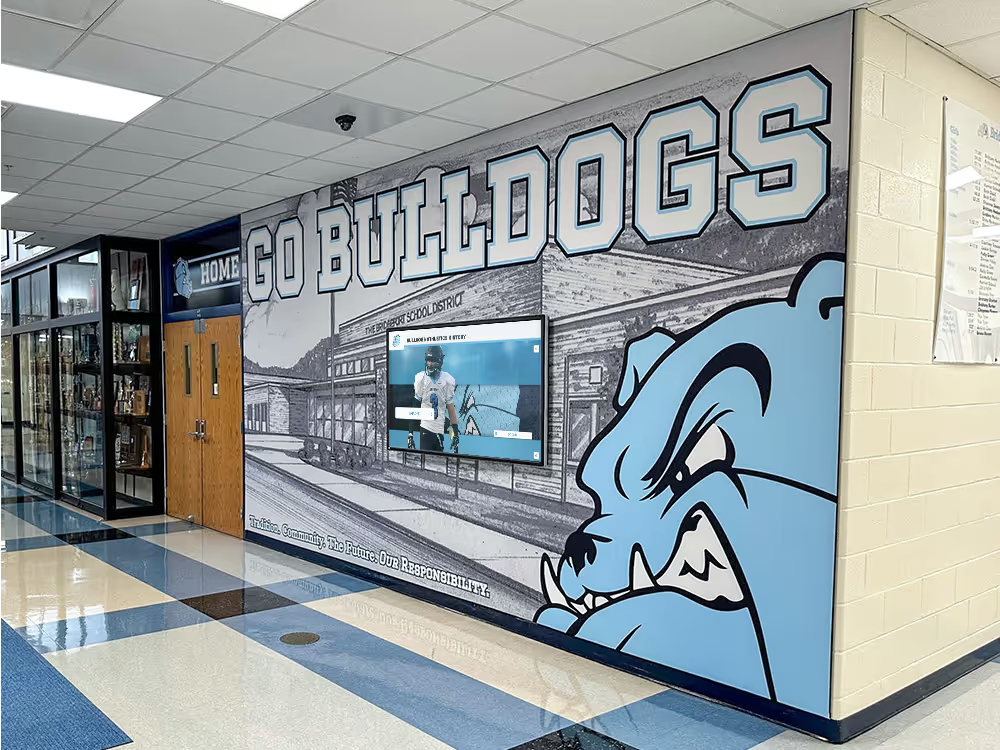
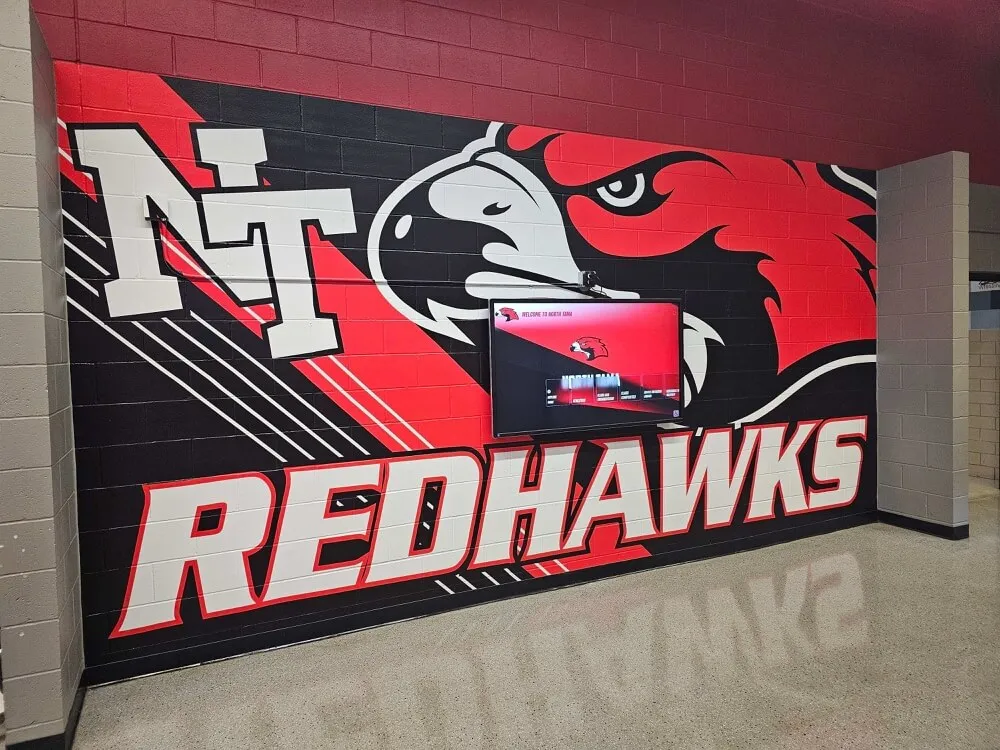
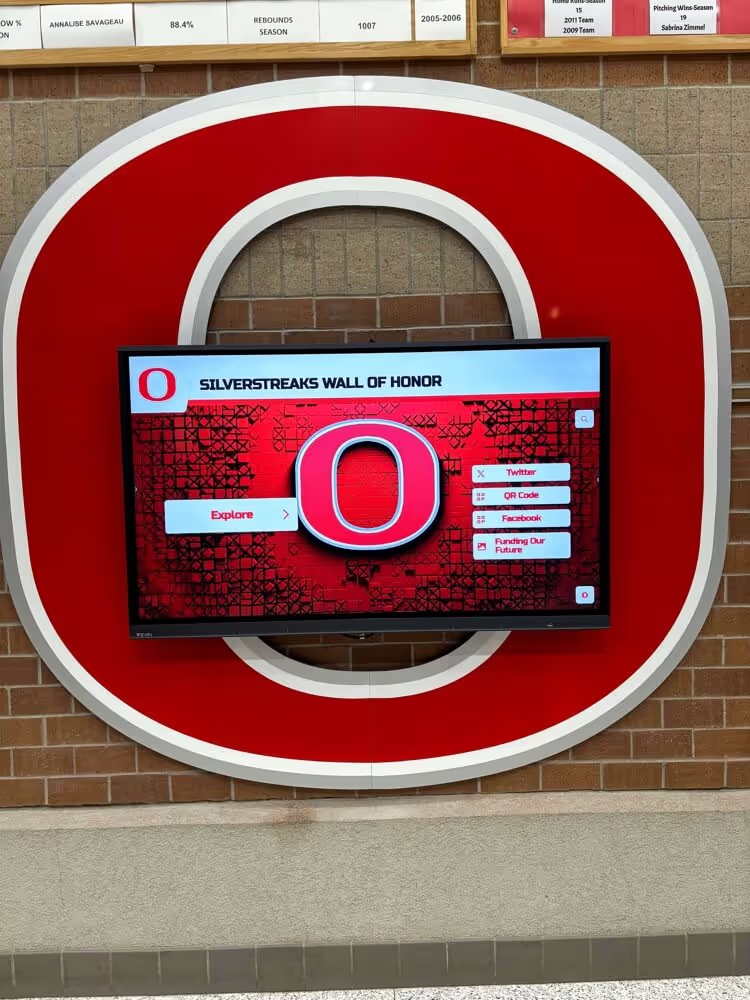
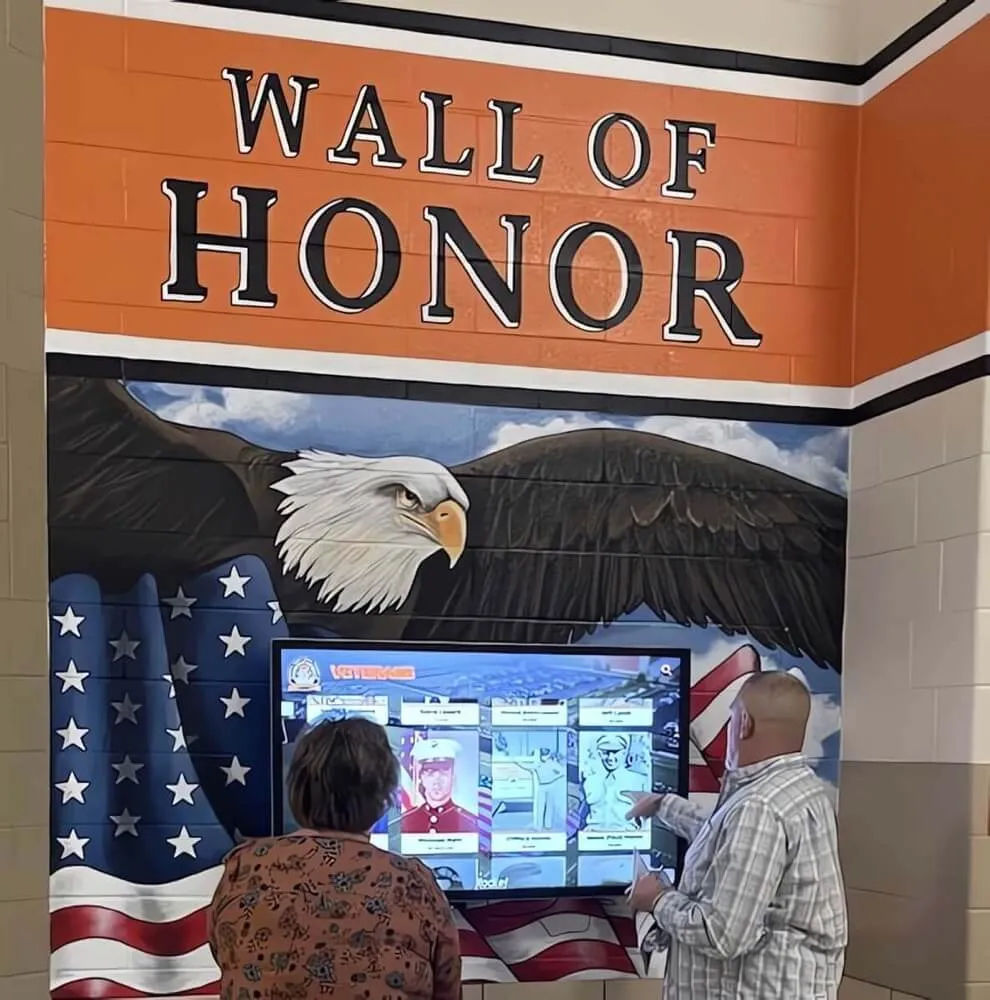
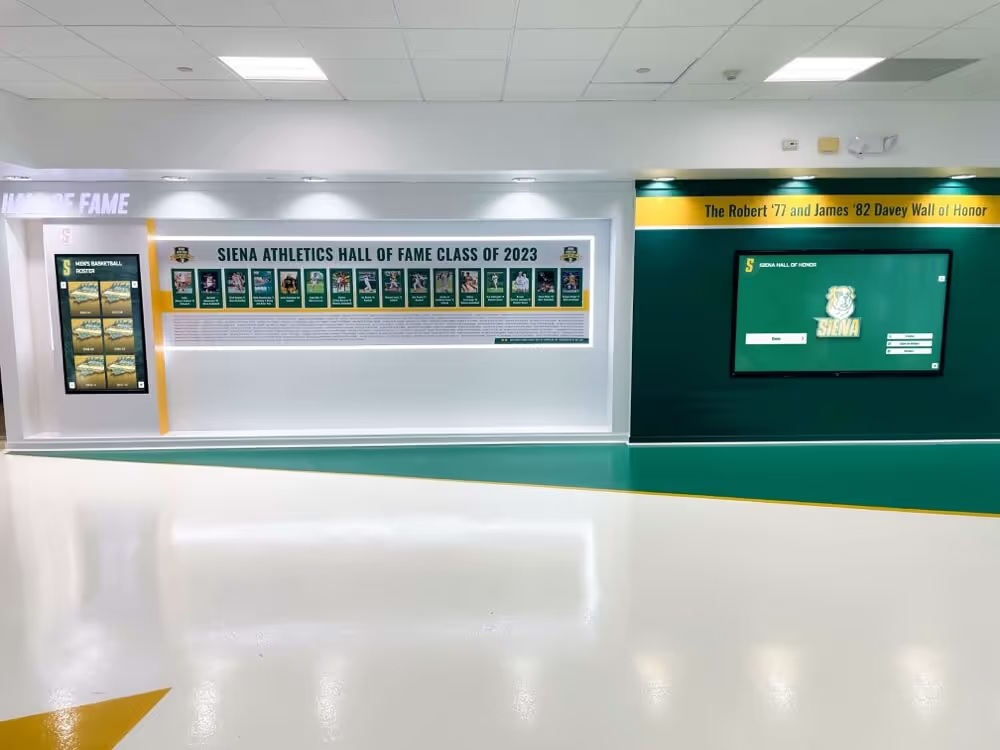
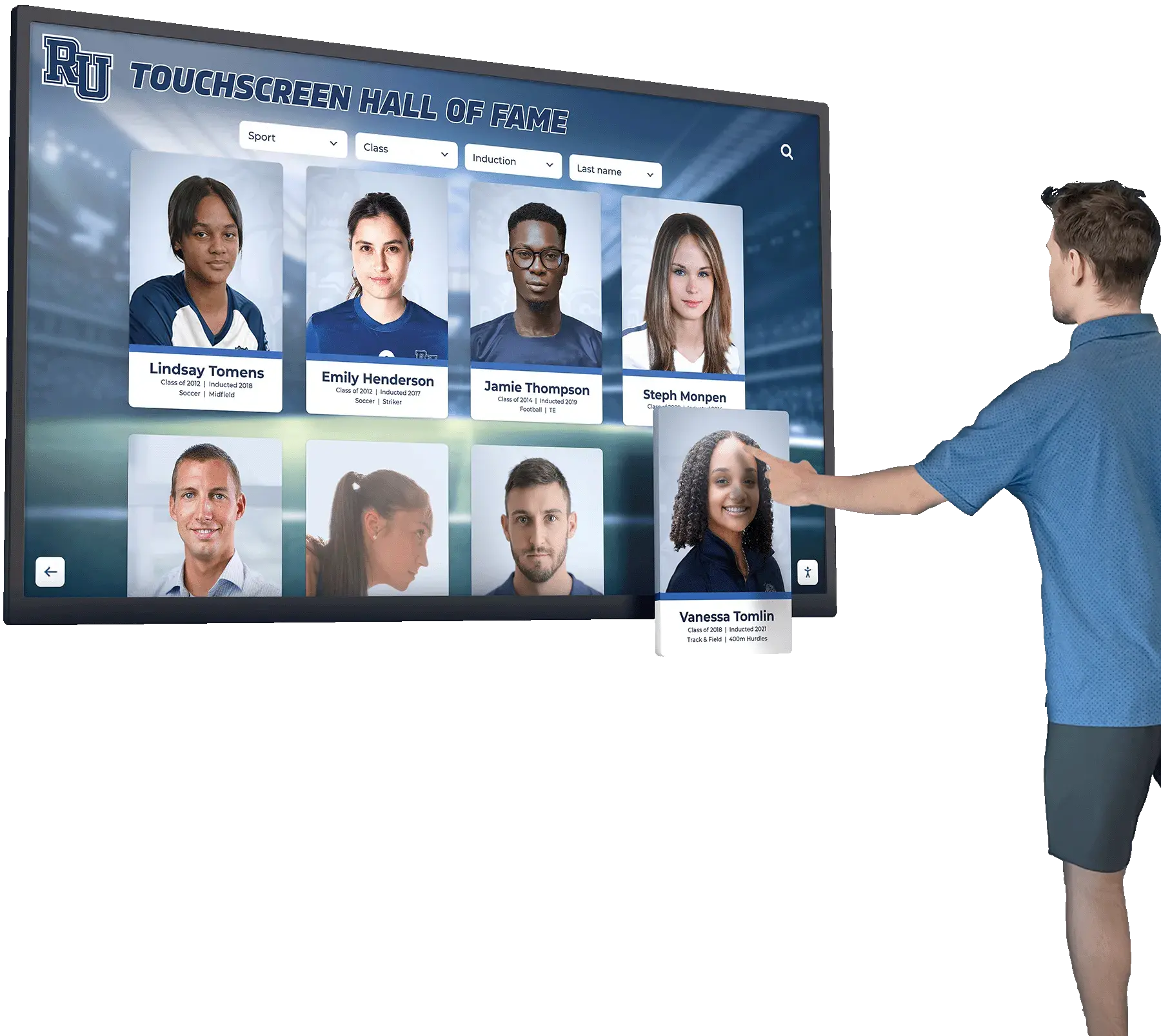
Modern touchscreen hall of fame walls combine professional hardware with intuitive software creating engaging recognition destinations
Understanding Touchscreen Digital Hall of Fame Systems
Touchscreen digital hall of fame walls replace traditional physical plaques with interactive systems enabling visitors to explore achievements, search for specific individuals, discover related content, and experience rich multimedia recognition impossible with static approaches.
Core Components of Interactive Recognition
Effective touchscreen hall of fame implementations integrate several essential technology and design elements working together to create comprehensive recognition experiences.
Commercial-Grade Touchscreen Displays
Professional installations require commercial displays designed for continuous operation in public environments. Consumer televisions adapted for recognition applications typically fail within 2-3 years, while commercial-grade equipment delivers 7-10+ year lifecycles justifying higher initial investment through reliable long-term performance. Capacitive touchscreen technology provides responsive, intuitive interaction comparable to smartphones, supporting multi-touch gestures and smooth operation essential for positive user experiences.
Display sizing depends on viewing distances and simultaneous user accommodation—55-inch displays work well for individual interaction, while 65-75 inch installations better serve group viewing in larger spaces. High brightness ratings (400+ nit) ensure visibility in naturally lit environments, while anti-glare treatments reduce reflection from windows and overhead lighting.
Purpose-Built Recognition Software
The software platform determines user experience quality, content management ease, and long-term functionality far more than hardware selection. Purpose-built recognition platforms understand that effective hall of fame applications require searchable databases with detailed individual profiles, intuitive category organization and filtering, multimedia content integration, and discovery features encouraging extended exploration beyond simple name searches.
Generic digital signage software adapted for recognition typically creates awkward user experiences lacking the fundamental architecture supporting genuine hall of fame functionality. Solutions like Rocket Alumni Solutions pioneered purpose-built recognition platforms specifically designed for interactive awards and achievement celebration.
Web-Based Accessibility Extensions
The most valuable systems extend recognition beyond physical touchscreen installations to responsive web platforms enabling global access. Alumni worldwide explore recognition content from personal devices, family members share profiles with extended networks, and institutions gain engagement far exceeding physical campus visits alone. This web accessibility transforms local installations into global engagement platforms connecting geographically distributed communities.
QR code integration enables seamless transitions from physical touchscreen exploration to mobile device continuation, allowing visitors to save profiles, share achievements, and return to content later without requiring physical presence. This mobile bridge creates continuous engagement spanning initial discovery through ongoing connection.
Cloud-Based Content Management
Remote content management platforms enable authorized staff to update recognition content from any internet-connected device without requiring physical access to display hardware. This cloud-based approach eliminates delays and costs associated with traditional plaque updates while enabling role-based permissions supporting collaborative management across multiple departments.
The best content management systems feature visual profile builders showing exactly how content will appear during creation, drag-and-drop media upload, template-based layouts ensuring consistency, and bulk import tools facilitating historical content migration from existing databases and spreadsheets.
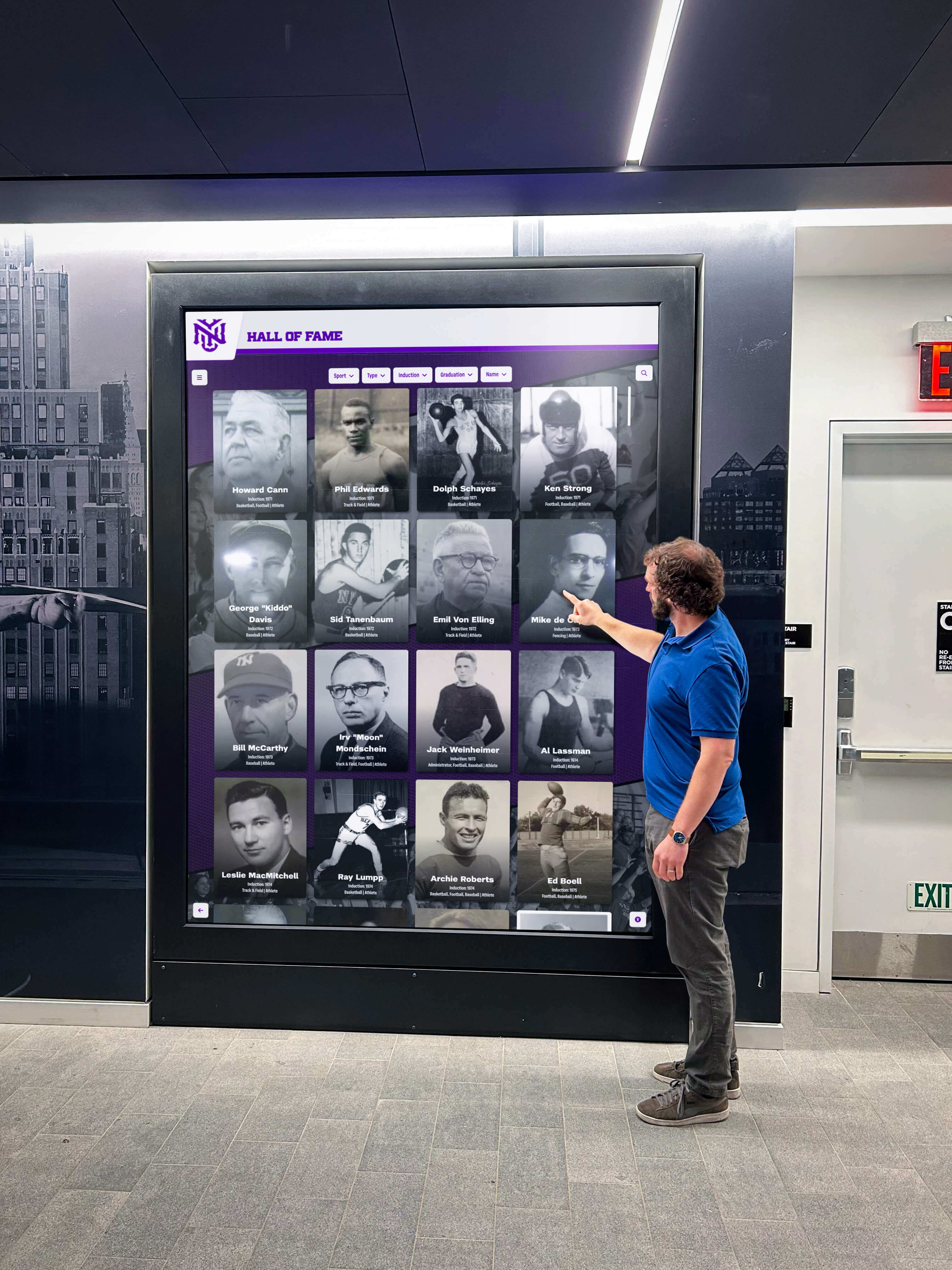
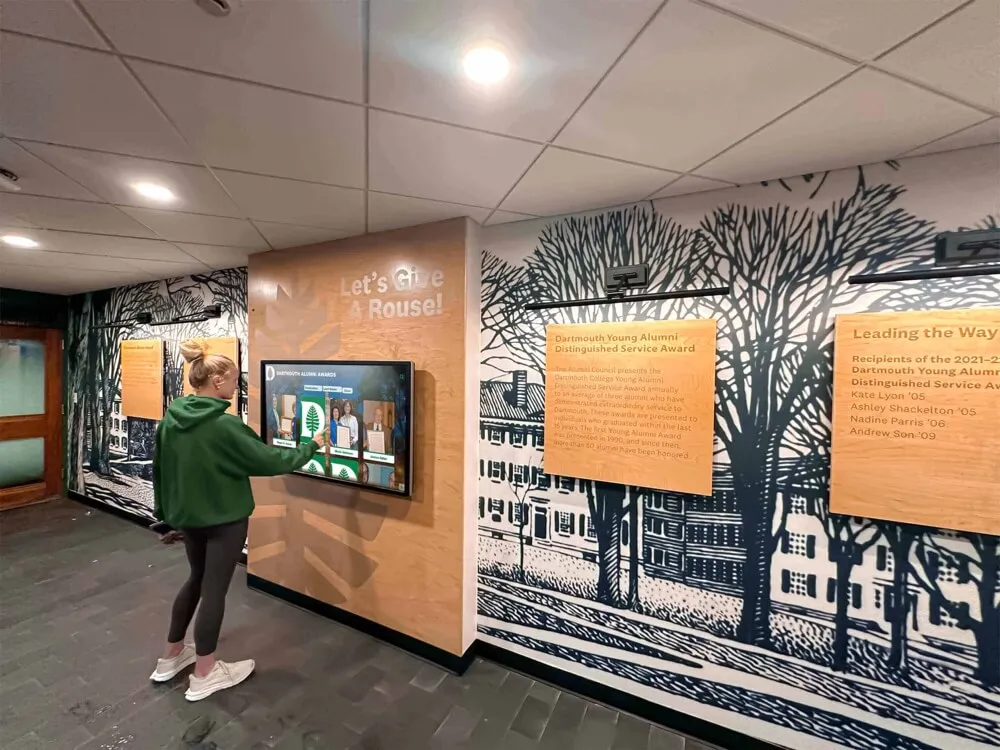
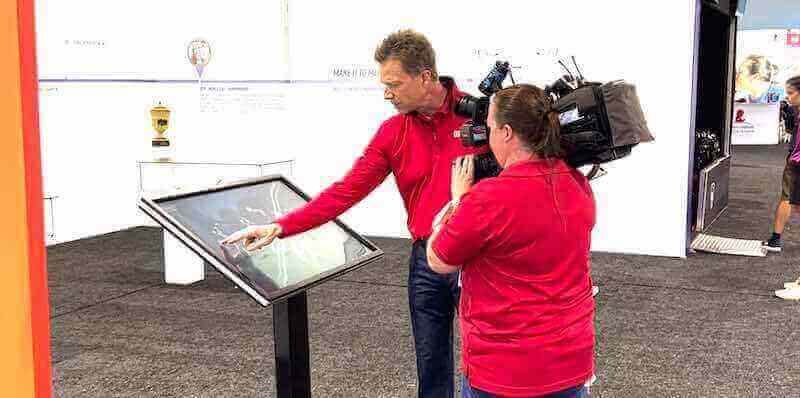
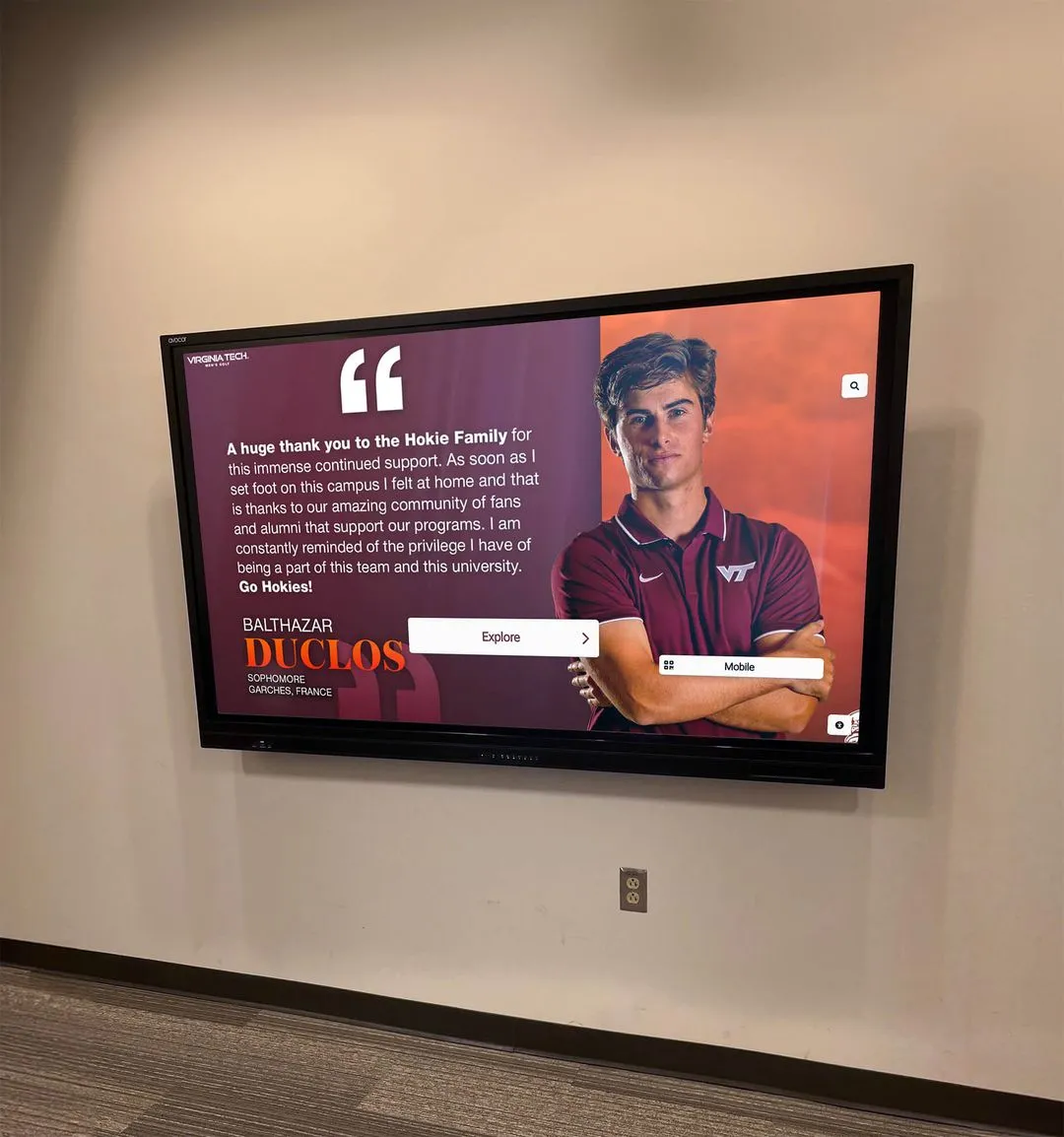
Touchscreen interaction creates active engagement rather than passive viewing of static plaques
Types of Touchscreen Recognition Applications
Different organizational contexts benefit from tailored touchscreen recognition approaches optimized for specific audiences and achievement types.
Athletic Hall of Fame and Sports Recognition
Sports recognition represents the most common touchscreen hall of fame application, celebrating athletic excellence across multiple dimensions.
Individual Athlete Recognition
Comprehensive athlete profiles showcase career statistics, championship contributions, record achievements, biographical information, photos capturing playing careers, and video highlights when available. Interactive athletic hall of fame displays enable statistical detail impossible with traditional plaques—complete season statistics, game-by-game performance tracking, record progression over time, and post-graduation athletic accomplishments.
Auto-ranking record boards dynamically display top performances across statistical categories, automatically updating as new achievements occur while preserving historical context showing record evolution over decades. This automated approach eliminates manual updates required by traditional record boards while ensuring all-time great performances receive perpetual recognition.
Team Championship Celebration
Championship teams deserve comprehensive recognition celebrating collective achievement. Touchscreen systems accommodate complete rosters with individual player profiles linked from team recognition, season statistics and game results, championship game highlights, coach and contributor acknowledgment, and historical context explaining championship significance within program history.
Schools with extensive athletic traditions spanning decades benefit from unlimited digital capacity enabling every championship team to receive full recognition without competing for limited display space with other achievements.
Multi-Sport Program Recognition
Comprehensive athletic recognition requires equal capacity across all sports programs. Traditional trophy case approaches typically favor major sports due to space constraints, creating inequitable recognition distribution. Touchscreen systems provide unlimited capacity ensuring every sport—from football and basketball to swimming, golf, and track—receives comparable recognition opportunity celebrating athlete achievements, team success, and program heritage.
This equitable capacity supports inclusive athletic culture where all athletes see their sports valued and celebrated comparably, regardless of program size or revenue generation.
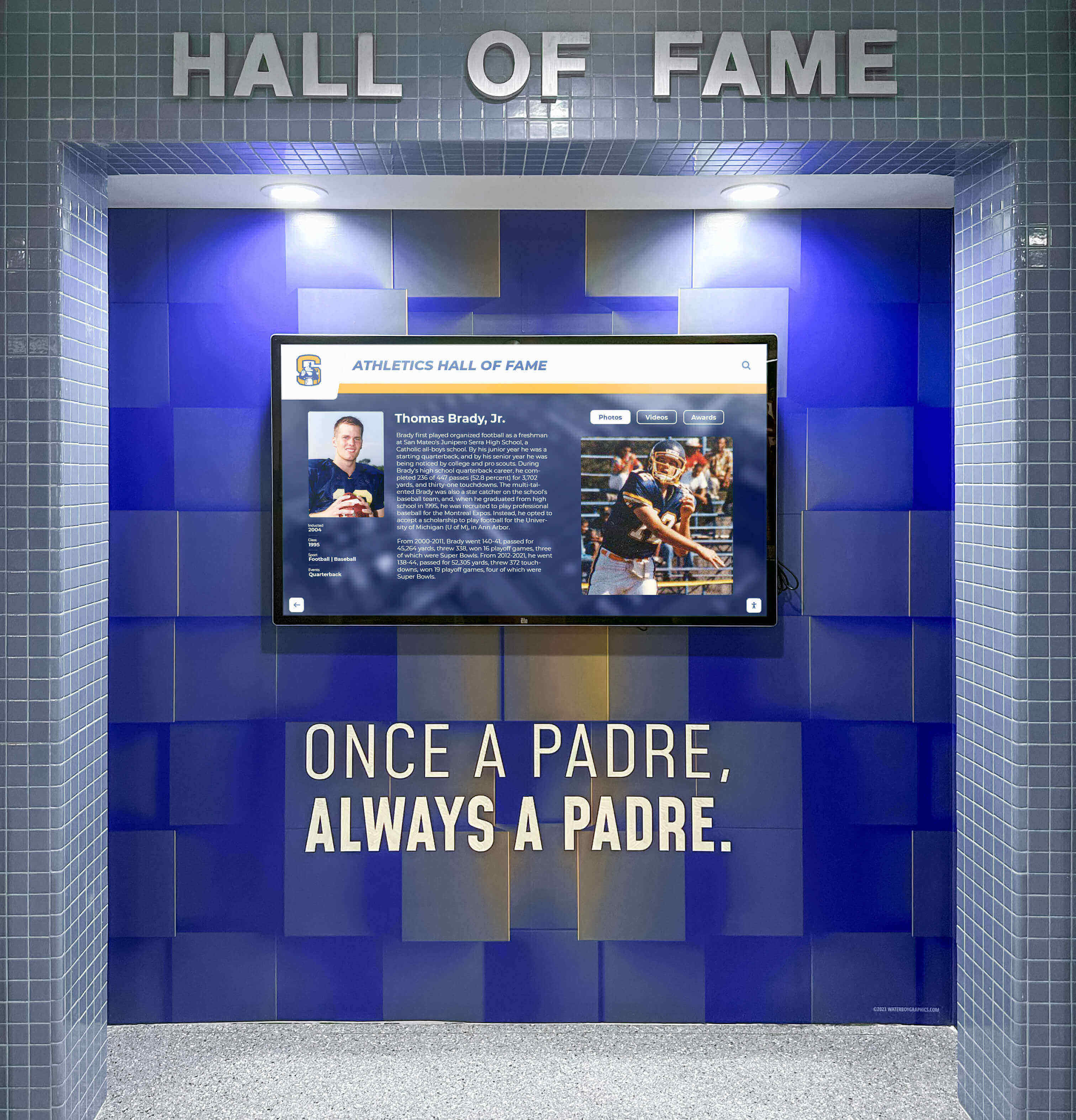
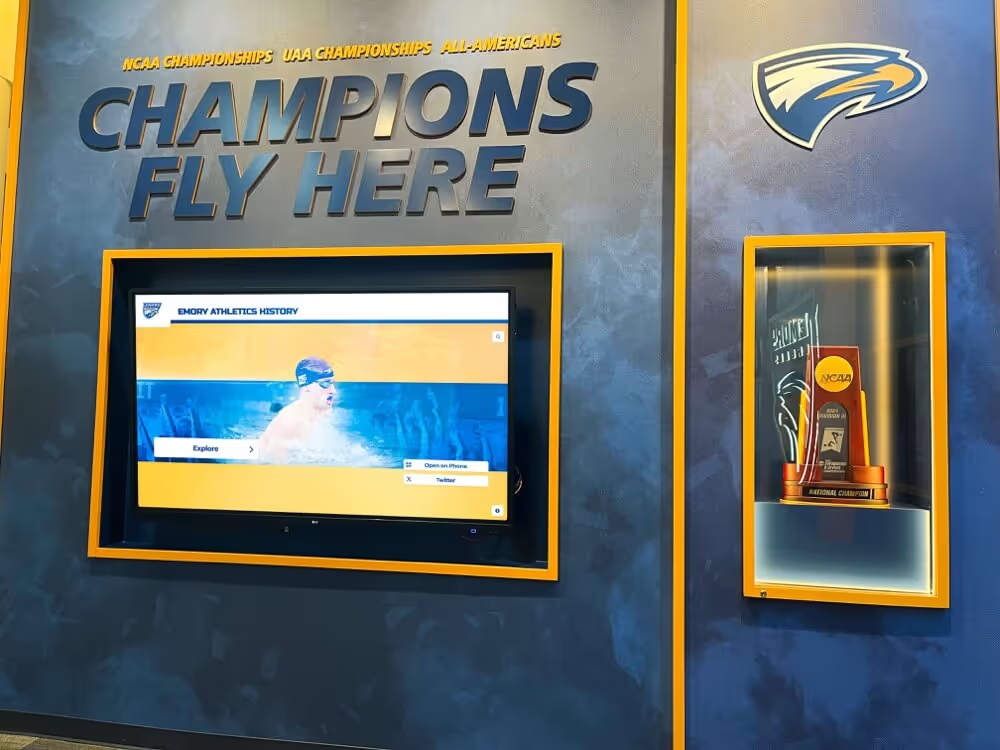
Purpose-built systems celebrate comprehensive athletic achievements across all sports and achievement levels
Academic Excellence and Scholar Recognition
Schools increasingly recognize that academic achievement deserves visibility comparable to athletic recognition.
Honor Roll and Academic Awards
Quarterly and annual academic recognition provides systematic celebration of intellectual excellence. Academic recognition programs include honor roll designation by GPA threshold, subject-specific academic excellence awards, perfect attendance recognition, and specialized program achievements. This systematic academic celebration creates balanced recognition culture valuing intellectual accomplishment alongside athletic success.
Touchscreen displays accommodate all honor roll recipients without space constraints forcing selective recognition, ensuring every qualifying student receives appropriate visibility encouraging continued academic focus.
National Recognition Programs
Students earning national academic recognition deserve prominent celebration. AP Scholar designations, National Merit recognition, National Honor Society membership, academic competition success, and specialized certification achievements create opportunities for systematic recognition inspiring peers while honoring individual accomplishment.
Interactive displays enable detailed recognition impossible with traditional plaques—specific AP exam scores and subject areas, competition performance details, and biographical information personalizing achievement beyond simple name listings.
STEM and Specialized Program Recognition
Career and technical education achievements, performing arts accomplishments, robotics competition success, debate and forensics excellence, and specialized program certifications deserve recognition highlighting diverse achievement types beyond traditional academic metrics. Touchscreen systems accommodate these varied recognition categories without requiring separate physical installations, creating comprehensive achievement celebration supporting diverse student interests and talents.
Interactive Awards and Distinguished Service
Many organizations recognize ongoing achievements and contributions requiring frequent updates impossible with traditional static approaches.
Employee and Member Recognition
Corporate environments, professional organizations, and membership associations implement touchscreen recognition celebrating employee milestones, outstanding performance awards, years of service recognition, volunteer contributions, and leadership positions. The ability to update recognition remotely and immediately makes digital approaches practical for dynamic recognition programs impossible to maintain with traditional engraving.
Donor Recognition Walls
Educational institutions, nonprofits, and cultural organizations implement interactive donor recognition celebrating philanthropic support. Touchscreen systems accommodate recognition across giving levels, enable detailed donor stories and impact narratives, support memorial giving recognition, and provide updateability essential as development programs grow and donor recognition evolves over time.
The ability to feature specific donors during fundraising campaigns, highlight anniversary giving, and update recognition as donors increase support creates dynamic recognition impossible with static donor walls requiring expensive renovation for updates.
Community Service and Volunteer Recognition
Schools, nonprofits, and community organizations celebrate service contributions through interactive recognition highlighting volunteer hours and contributions, community service project participation, leadership in service initiatives, and long-term commitment to organizational missions. This systematic service recognition reinforces organizational values while inspiring continued community engagement.
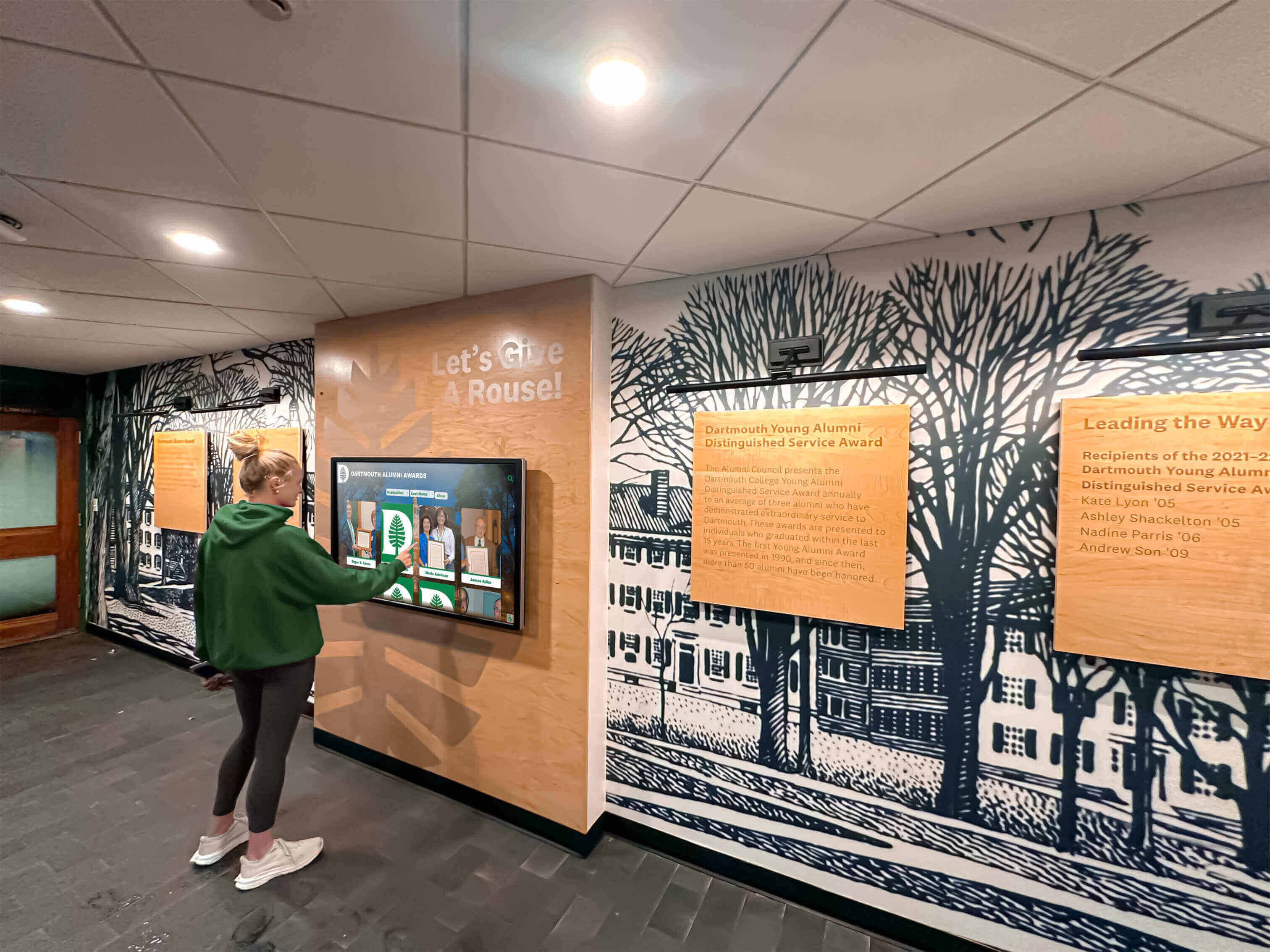
Touchscreen exploration helps students discover role models and institutional values through personal interaction
Technology Architecture and Platform Selection
Fundamental technology decisions significantly impact long-term ownership experience, maintenance requirements, and user accessibility.
Web-Based vs. Native Application Platforms
Platform architecture represents the most consequential technical decision affecting device compatibility, maintenance overhead, and future flexibility.
Universal Device Compatibility
Web-based platforms function on any device with modern browsers—touchscreen kiosks, desktop computers, tablets, smartphones—without requiring installation or device-specific applications. This universal compatibility eliminates technical barriers enabling truly accessible recognition across all community member devices regardless of operating system or hardware specifications.
Native applications requiring installation for each device type create friction limiting accessibility, introduce version compatibility issues, and generate ongoing maintenance overhead managing updates across multiple installations. Organizations evaluating touchscreen software options consistently find web-based platforms deliver superior flexibility and lower maintenance burden.
Automatic Updates and Feature Enhancement
Web platforms receive automatic updates delivering new features, security improvements, and performance enhancements without requiring local installations or administrator action. Organizations benefit from continuous improvement without maintenance burden or technical expertise requirements. Native applications require manual update installation across all devices, create version fragmentation problems, and often charge separately for major version upgrades delivering features web platforms include automatically.
Reduced IT Overhead
Web-based systems eliminate many technology management concerns—no application installation requirements, no local database maintenance, no software version tracking across installations, and minimal technical expertise required for operation. This reduced overhead proves particularly valuable for schools and nonprofits with limited IT resources supporting numerous competing technology priorities.
Future-Proof Flexibility
Web platforms adapt automatically to new devices and technologies as they emerge without requiring rebuilt applications. As display technologies, device form factors, and interaction paradigms evolve, web-based systems continue functioning while native applications may require expensive redevelopment accommodating technological change. This future-proof architecture protects recognition investments over decade+ deployment horizons.
Cloud Infrastructure and Security
Modern recognition platforms leverage cloud infrastructure providing reliability, security, and scalability impossible with self-hosted approaches.
Enterprise-Grade Reliability
Cloud platforms operated by major providers deliver uptime and reliability far exceeding what individual organizations can achieve with self-hosted systems. Professional service level agreements guarantee availability, automated backups protect against data loss, redundant infrastructure prevents single points of failure, and disaster recovery capabilities ensure business continuity despite infrastructure problems.
Professional Security Management
Cloud platforms implement security measures including encrypted data transmission and storage, regular security audits and vulnerability testing, compliance with educational and nonprofit data standards, automated security updates and patches, and professional security monitoring impossible for individual institutions to replicate cost-effectively with self-hosted alternatives.
Automatic Scalability
Cloud infrastructure scales automatically accommodating traffic spikes during major events, homecoming weekends, or viral social media sharing without requiring capacity planning or infrastructure investment. This elastic scalability ensures consistent user experiences regardless of simultaneous user volume while avoiding over-provisioning infrastructure for typical usage levels.
Simplified Vendor Management
Cloud-based platforms eliminate infrastructure management responsibilities—no server hardware to maintain, no operating system updates to install, no database optimization to perform, and no infrastructure security to manage. Organizations focus resources on content development and community engagement rather than technology infrastructure maintenance.
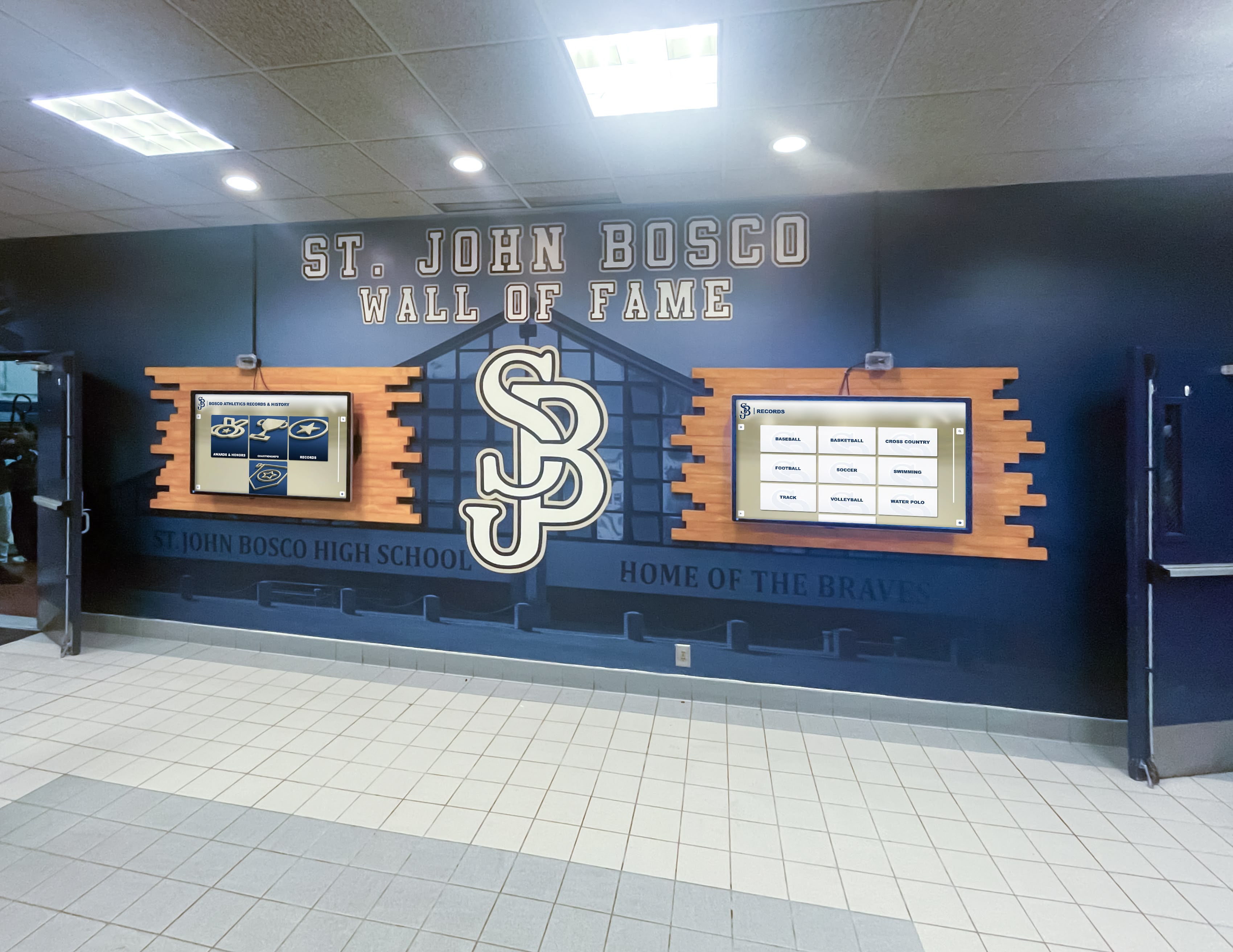
Cloud-based platforms seamlessly support multiple displays without complex local infrastructure
Design Best Practices for Interactive Recognition
Thoughtful design significantly affects user engagement, ease of content discovery, and overall recognition effectiveness.
User Interface and Interaction Design
Interface design determines whether visitors engage confidently or experience frustration preventing meaningful interaction.
Intuitive Navigation Architecture
Clear navigation enables visitors to explore recognition without confusion. Primary navigation should offer browsing by category (hall of fame, academic honors, donor recognition), search by name functionality with prominent placement, filtering by year, sport, or achievement type, and featured content highlighting rotating recognition. Navigation should remain consistently accessible throughout exploration rather than hiding critical functions behind multiple interaction layers.
Touch targets must accommodate diverse user capabilities—buttons and interactive elements sized adequately for accurate selection, appropriate spacing preventing accidental activation of adjacent controls, and clear visual feedback confirming interaction success. These accessibility-focused design principles benefit all users while ensuring those with motor control challenges can interact successfully.
Discoverable Search Functionality
Search represents the most common entry point for recognition exploration, requiring robust implementation supporting diverse search approaches. Comprehensive name search must accommodate partial names (users searching “Smith” finding “John Smith”), alternate spellings and variations, maiden names alongside married names, and nickname recognition where commonly used alternatives differ from formal names.
Search autocomplete suggestions help users find correct spellings while encouraging exploration of similar names users might not have searched initially. Clear “no results” messaging with alternative search suggestions prevents dead-ends frustrating visitors who don’t find expected content.
Visual Hierarchy and Content Presentation
Clear visual hierarchy guides attention to most important content while maintaining scannable layouts enabling quick orientation. Profile pages should feature prominent photos establishing personal connection, clear achievement headlines summarizing recognition, scannable biographical sections with appropriate typography, and secondary content sections providing depth without overwhelming initial presentation.
Consistent layout patterns across all profiles create familiarity enabling efficient exploration as users navigate between multiple inductees, while appropriate variations accommodating different achievement types prevent rigid templates feeling inappropriate for diverse recognition contexts.
Responsive Multi-Device Experience
Recognition interfaces must function beautifully across screen sizes from large touchscreen kiosks to smartphones. Responsive design ensures layouts adapt appropriately to available screen real estate, touch targets remain accessible regardless of device size, images display optimally without distortion or awkward cropping, and navigation patterns feel native to each device type rather than awkwardly adapted from desktop designs.
Mobile-optimized recognition enables community members to explore achievements from personal devices during campus visits, at home, or anywhere worldwide, dramatically expanding engagement beyond physical touchscreen installations alone.
Content Discovery and Featured Recognition
While search serves visitors seeking specific individuals, discovery features encourage extended exploration revealing achievements visitors didn’t know to seek.
Automated Content Rotation
Featured content rotation ensures all recognized individuals receive visibility while keeping displays fresh for repeat visitors. Automated rotation based on birthdays, achievement anniversaries, randomized selection, or milestone celebrations distributes featured visibility equitably without requiring manual curation becoming unsustainable as inductee numbers grow.
Rotation frequency should balance novelty encouraging return visits with sufficient dwell time enabling new visitors to explore featured content before it changes. Typical implementations rotate featured content daily or weekly depending on total inductee volume and location traffic patterns.
Related Content Connections
Sophisticated platforms highlight connections between inductees—teammates and classmates, family members across generations, career field similarities, and shared achievement types. These connection features create discovery pathways encouraging extended exploration as visitors follow relationship threads revealing community patterns and shared experiences spanning decades.
For example, exploring an individual athlete might surface teammates from championship seasons, family members also recognized, or current students from the same hometown, creating personal connection points deepening engagement beyond single-profile viewing.
Category and Achievement Browsing
Category-based exploration enables visitors to browse all athletic hall of fame inductees, view complete honor roll listings by year, explore donor recognition across giving levels, or discover community service recognition. This categorical browsing serves visitors interested in achievement types rather than specific known individuals, supporting broader exploration patterns complementing name-based search.
Achievement filtering enables narrowing categorical exploration—viewing only basketball hall of fame inductees, filtering academic recognition to specific graduation years, or exploring donor recognition within giving level ranges. This filtering functionality helps visitors navigate large recognition databases finding relevant content without overwhelming information volume.
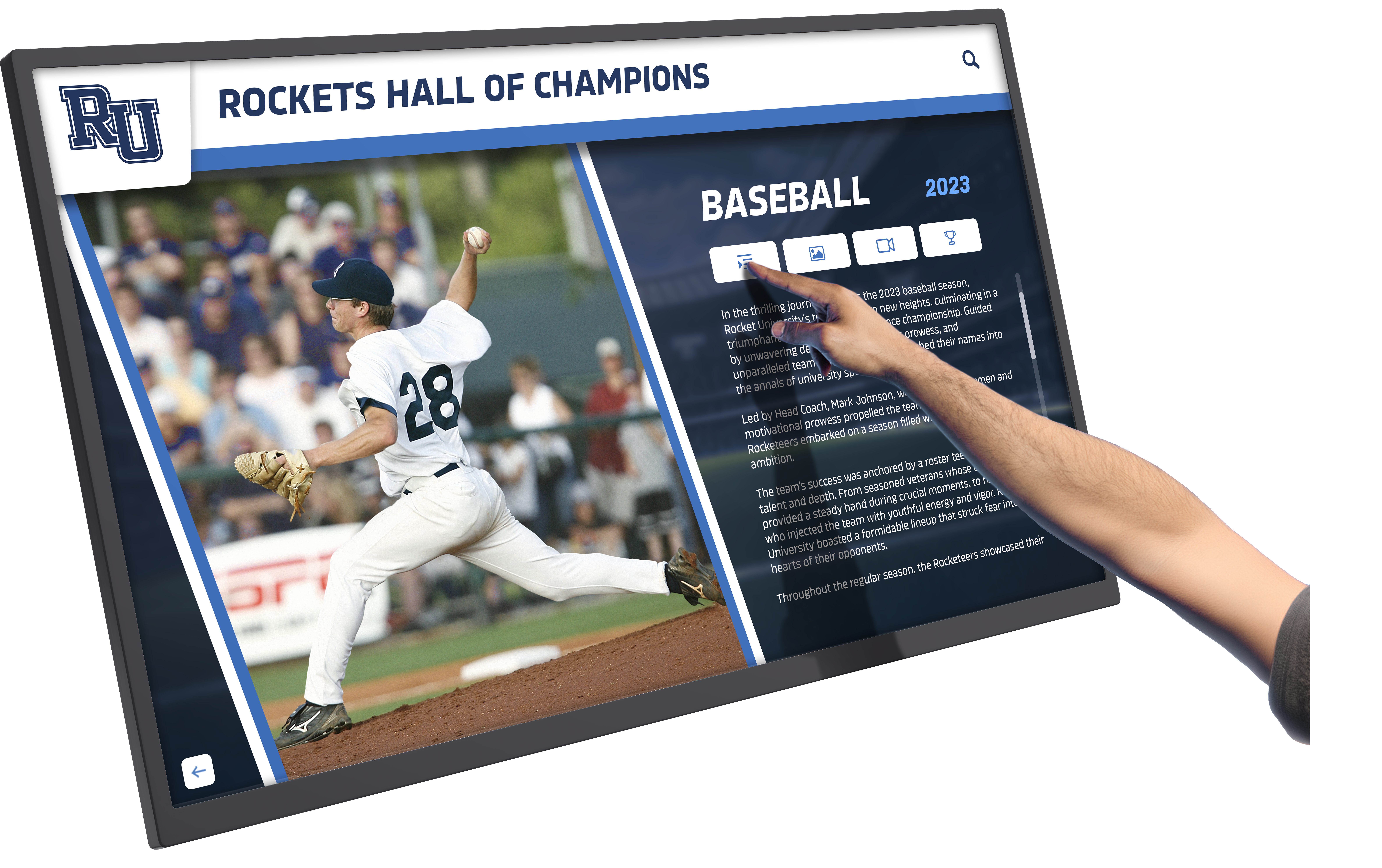
Rich content including statistics, photos, and biographical details creates meaningful recognition experiences
Hardware Selection and Installation Requirements
While software determines functionality and user experience, hardware selection affects reliability, user experience quality, and total cost of ownership.
Display Hardware Specifications
Commercial-grade displays designed for continuous operation in public environments prove essential for reliable long-term installations.
Commercial vs. Consumer Display Technology
Consumer televisions designed for home use typically offer 3-5 year lifespans with limited daily operation and minimal warranty coverage. These displays fail prematurely in demanding public installation environments requiring continuous operation. Commercial-grade displays engineered for 24/7 operation deliver 7-10+ year lifespans through higher-quality components, better thermal management, and commercial warranty coverage justifying higher initial costs through extended reliable service.
Organizations planning decade+ recognition deployments require commercial-grade hardware avoiding premature failure and expensive early replacement undermining recognition program continuity and community trust.
Touchscreen Technology Options
Capacitive touchscreen technology provides responsive, intuitive interaction supporting multi-touch gestures and smooth operation comparable to smartphones and tablets. This familiar interaction paradigm requires minimal learning enabling confident use across all age groups and technology comfort levels.
Resistive touchscreens prove less expensive but offer inferior user experience with less responsive touch detection requiring more pressure for activation and limited multi-touch support. For professional recognition installations creating positive impressions worthy of celebrated achievements, capacitive technology delivers experiences meeting contemporary user expectations.
Size and Viewing Distance Considerations
Appropriate display sizing depends on installation location characteristics and expected usage patterns. Consider typical viewing distances when displays will be used—viewers standing directly at touchscreen interfaces can comfortably interact with 55-inch displays, while larger 65-75 inch installations better serve viewing from several feet away or group viewing where multiple people observe simultaneously.
Available wall space and architectural integration also influence size selection. Displays appearing too large for mounting locations create awkward proportions, while undersized displays fail to make appropriate visual statements matching the importance of celebrated achievements.
Brightness and Environmental Factors
Installation environments significantly impact display specifications. Locations with substantial natural lighting require higher brightness ratings (400-500 nit or higher) ensuring visibility despite ambient light. Indoor locations with controlled lighting accommodate standard brightness specifications (250-350 nit) without premium pricing for higher performance unnecessary in ideal conditions.
Anti-glare treatments reduce reflection from windows and overhead lighting improving readability in challenging lighting conditions. Ambient noise levels influence whether audio content proves practical—quiet environments can incorporate video narration and audio enhancements, while loud spaces require visual-only content.
Mounting and Physical Installation
Professional installation ensures proper display positioning, appropriate cable management, and reliable long-term operation.
Wall-Mounted Installation
Wall-mounted displays provide clean aesthetics integrating recognition into existing spaces. Commercial mounting systems must support display weight safely, enable appropriate viewing angles optimizing interaction ergonomics, accommodate proper height positioning for accessibility, and include cable management concealing wiring for professional appearance.
Appropriate mounting height positions screens with center points approximately 48-52 inches from floor level, enabling comfortable viewing and interaction for most adults while maintaining accessibility for wheelchair users and children. Higher mounting serves viewing-only applications but creates interaction challenges when touchscreen functionality proves inaccessible.
Freestanding Kiosk Enclosures
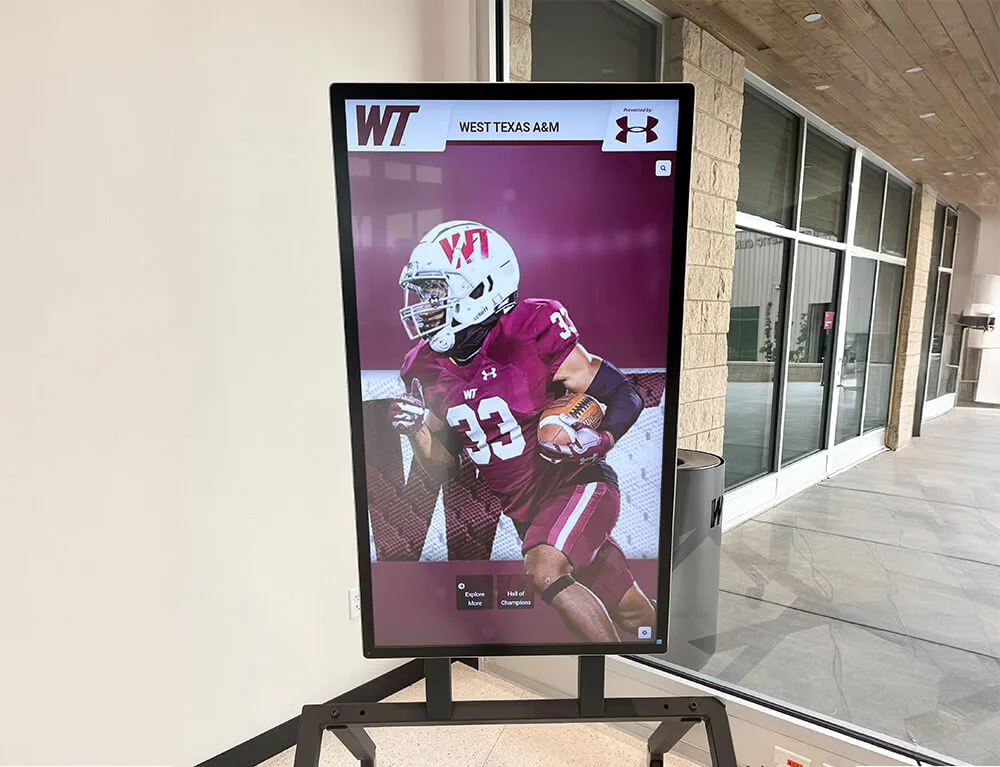
Freestanding kiosk enclosures provide flexible positioning not requiring wall mounting while creating professional presentation framing displays as intentional recognition destinations rather than repurposed televisions. Commercial kiosk enclosures include integrated mounting systems, concealed cable management, optional computing equipment housing, and weighted bases ensuring stability preventing tipping hazards in public environments.
Custom kiosk designs enable brand integration matching school colors, incorporating logos and visual identity elements, and creating cohesive aesthetic integration with architectural surroundings. This custom approach transforms recognition installations into distinctive focal points rather than generic off-the-shelf deployments.
Recessed and Architectural Integration
Premium installations integrate displays into architectural elements creating seamless aesthetic cohesion. Recessed mounting embeds displays flush with walls creating clean contemporary appearance, while custom millwork frames displays with wood or architectural materials matching surrounding environments. This integrated approach creates recognition destinations warranting visitor attention through thoughtful design rather than equipment appearing as afterthought installations.
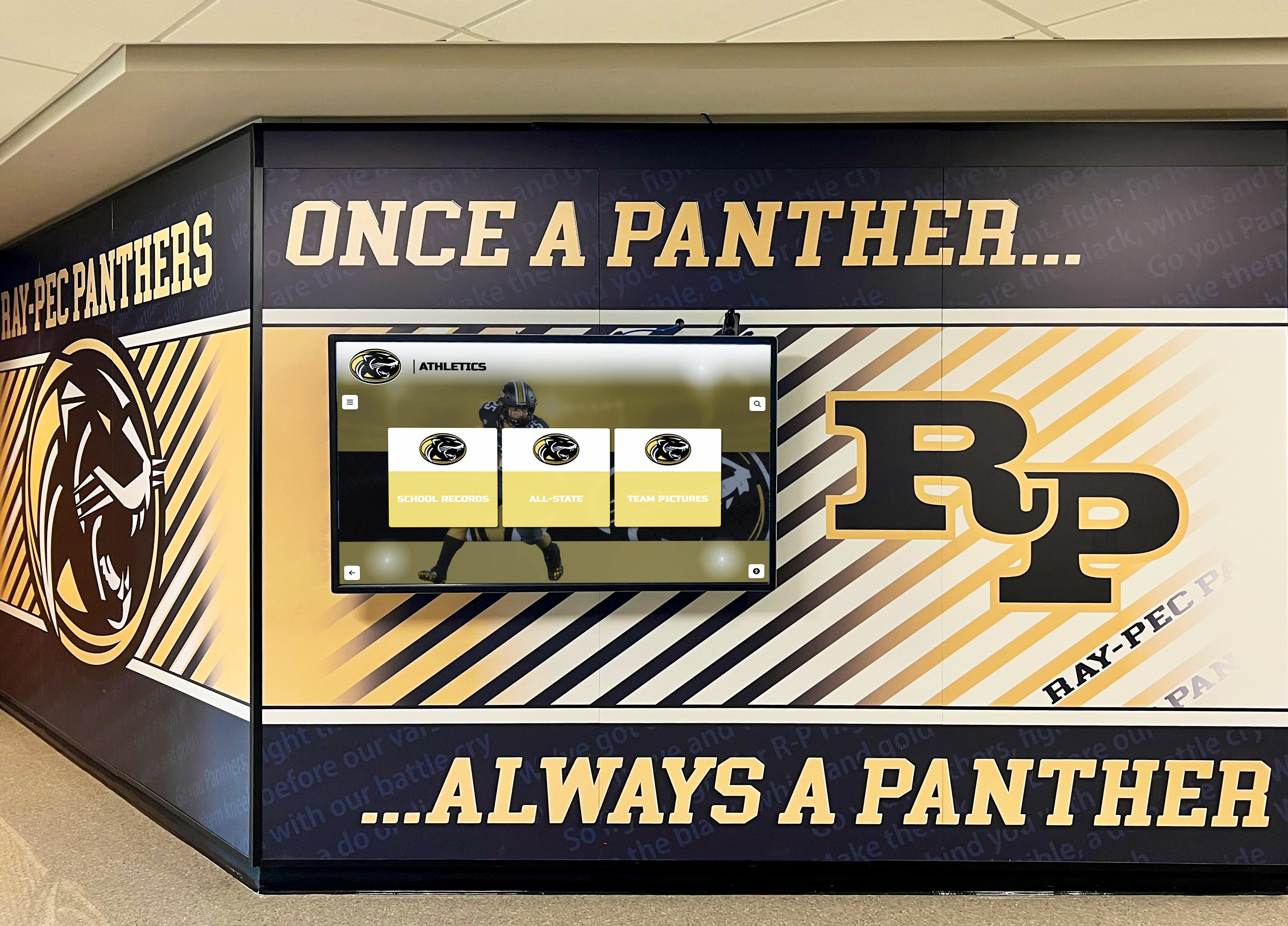
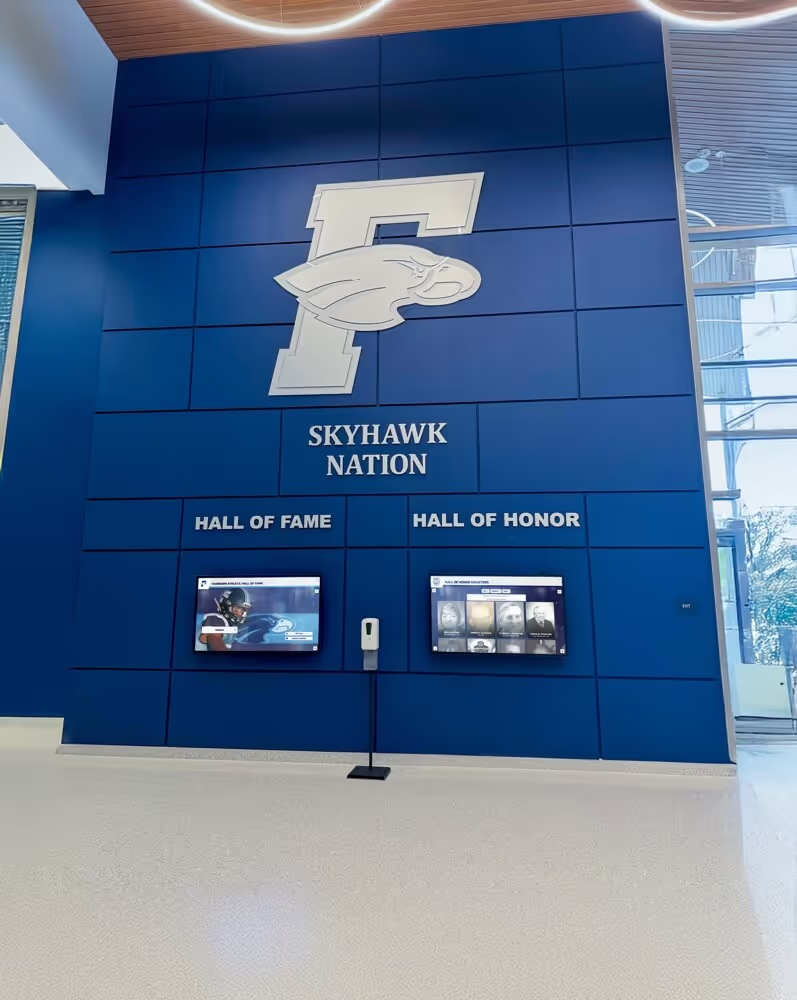
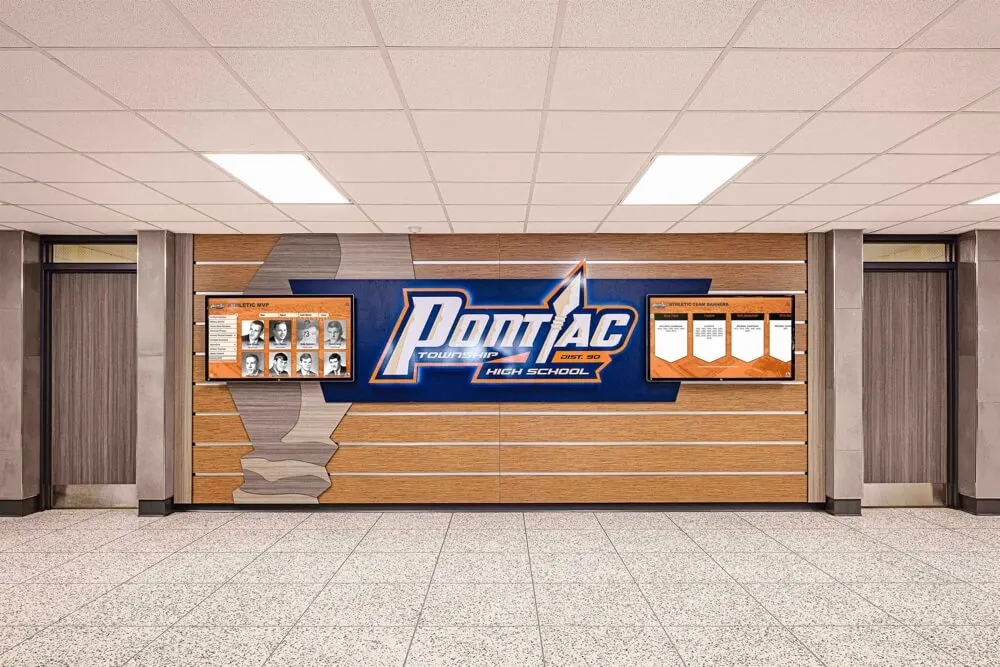
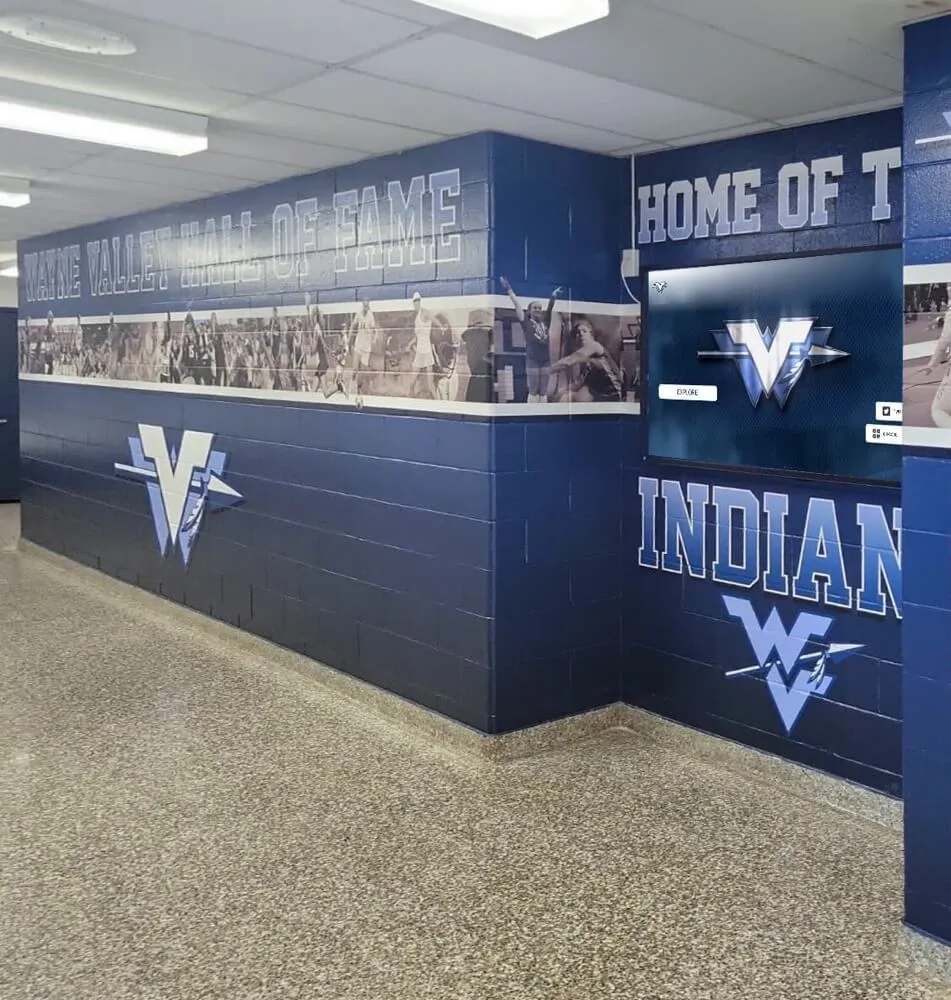
Professional installations integrate technology with architectural design creating cohesive recognition destinations
Network Infrastructure and Connectivity
Reliable network connectivity enables remote content management and ensures continuous operation essential for recognition program success.
Wired Ethernet vs. Wireless Connectivity
Wired Ethernet connections provide most reliable performance, better security through physical network access control, and consistent speeds without wireless interference concerns. When installation locations offer reasonable wired network access, Ethernet connectivity proves preferable for permanent recognition installations requiring ongoing reliable operation.
Wireless connectivity offers flexibility where running network cables proves impractical due to building construction, historical preservation requirements, or installation location challenges. Modern wireless networks provide adequate performance for recognition applications primarily serving text content and images rather than high-bandwidth video streaming, though wireless connectivity may encounter reliability variations and security considerations requiring careful network configuration.
Bandwidth Requirements
Recognition platforms require modest bandwidth for typical operation. Updating text content, uploading photos for new inductees, and remote content management consume minimal bandwidth well within capabilities of standard school and organizational networks. Initial large-scale content migrations uploading hundreds of historical profiles and associated media may temporarily require higher bandwidth but represent one-time events rather than ongoing operational requirements.
Most organizations find existing network infrastructure proves adequate without requiring upgrades specifically for recognition system operation, though network quality assessment during planning ensures installations will function reliably without connectivity problems frustrating users and administrators.
Power Requirements
Commercial displays typically consume 150-400 watts depending on size and specifications. Ensure adequate electrical capacity at installation locations without overloading existing circuits. Dedicated circuits for valuable equipment prove worthwhile in many installations, while uninterruptible power supplies (UPS) protect against power fluctuations in areas with electrical reliability concerns, preventing unexpected shutdowns during active use and providing orderly shutdown capability during extended outages.
Content Development and Management
Compelling recognition content maximizes engagement and impact while sustainable management approaches prevent initial enthusiasm from fading when ongoing administration proves overwhelming.
Creating Engaging Inductee Profiles
Thoughtful profile development transforms basic recognition into meaningful achievement celebration.
Comprehensive Biographical Content
Effective profiles tell complete stories rather than simple fact listings. Include achievements leading to recognition, personal background providing context, career accomplishments and post-graduation paths, family information when appropriate, and quotes from inductees providing personal perspective impossible to capture through factual achievements alone.
The most engaging profiles answer questions visitors naturally ask when exploring recognition—what made this individual exceptional, what obstacles did they overcome achieving success, how did their achievements impact the organization and broader community, what character qualities contributed to accomplishment, and what has their life journey been following recognized achievements?
High-Quality Visual Content
Photos create immediate personal connection and visual interest essential for engaging recognition. Source the best available photos from playing days or achievement eras, recent images showing inductees today, action shots capturing achievement moments, team photos providing broader context, and candid images revealing personality beyond formal portraits.
Multiple photos per profile enable richer storytelling than single images allow. Chronological photo presentations showing individuals across life stages create particularly engaging narratives following journey from youth through current day.
Statistical and Factual Accuracy
Verify all statistics, dates, achievements, and factual claims ensuring recognition accuracy maintaining credibility and honoring inductees appropriately. Errors undermine recognition value while potentially causing embarrassment for inductees and organizations. Establish fact-checking processes including source documentation, verification with athletic records, confirmation with inductees when possible, and systematic review before publication.
When complete information proves unavailable for historical inductees, acknowledge gaps honestly rather than inventing details. Phrases like “statistics unavailable” or “career details incomplete” maintain honesty while preserving recognition for individuals whose complete records weren’t preserved.
Multimedia Integration
When available, video content creates particularly engaging recognition. Brief video interviews with inductees reflecting on achievements, game or performance highlights showcasing accomplishments, and historical footage providing era context enhance profiles significantly beyond text and photos alone. Audio narration of biographical content accommodates users preferring listening to reading while supporting accessibility for vision-impaired visitors.

Rich profile content including photos, statistics, and biographical narratives honors achievements appropriately
Historical Content Migration Strategies
Preserving existing recognition content enables comprehensive digital archives honoring all institutional heritage rather than only recent achievements.
Systematic Plaque and Trophy Documentation
Begin historical migration by photographing existing plaques, trophies, and awards, extracting names, dates, and achievement information for digital profiles while maintaining photographic records of physical recognition. This documentation ensures no historical recognition is lost during digital transition while creating starting content for inductee profiles gradually enhanced as additional information becomes available.
Many schools include photos of original plaques within digital profiles, acknowledging traditional recognition while demonstrating continuity between historical approaches and modern systems. This visual connection reassures community members concerned about discarding traditional recognition that institutional memory remains preserved and honored.
Yearbook and Archive Research
Mine yearbooks, newspaper archives, program records, and institutional files for biographical information, photos, statistical records, and historical context enriching basic recognition facts derived from plaques. This research transforms simple name listings into substantive profiles worthy of celebrated achievements.
Student researchers, volunteers, and alumni can contribute to historical research, distributing substantial work across multiple contributors rather than overwhelming individual staff members. This participatory approach builds community investment in recognition program success while acknowledging practical resource constraints facing institutions with limited dedicated staff.
Phased Migration Approaches
Rather than attempting comprehensive historical digitization before launch, successful organizations often implement phased approaches. Populate recent 5-10 years where information is readily available and most relevant to current community members, launch with substantial but incomplete content demonstrating value while acknowledging ongoing development, and establish systematic historical expansion gradually building comprehensive archives post-launch through sustained effort.
This phased approach enables reasonable implementation timelines while building toward complete coverage through manageable ongoing work rather than requiring heroic pre-launch efforts proving unsustainable and delaying value realization indefinitely.
Ongoing Content Management and Enhancement
Recognition programs succeeding long-term treat content development as ongoing processes rather than one-time project completion.
Regular Inductee Additions
Establish consistent schedules for new inductee additions aligned with recognition ceremonies and awards presentations, ensuring timely publication celebrating new achievements. Automated scheduling features enable content preparation in advance with publication occurring automatically during ceremonies without requiring staff presence or manual intervention.
Clear induction criteria and nomination processes ensure systematic recognition additions rather than ad hoc approaches creating inconsistent recognition patterns. Transparent processes build community trust while managing expectations about recognition eligibility and selection.
Profile Updates and Enrichment
Initial profiles represent starting points rather than finished products. Establish processes for continuous enhancement—alumni submitting updated career information through online forms, volunteers adding newly discovered historical materials, systematic review cycles ensuring accuracy, and gradual profile enrichment as additional information becomes available.
Anniversary-based update schedules work well for historical profiles—10th, 25th, and 50th achievement anniversaries provide natural occasions for profile enhancement outreach requesting updated information from inductees and their families.
Community Contribution Opportunities
Community members often possess information and materials enriching recognition. Create submission processes enabling alumni to update biographical information, family members to provide photos and stories about deceased inductees, volunteers to contribute research for historical profiles, and classmates to share memories and additional context.
These community contributions transform recognition from institutional projects into community initiatives building broader investment while leveraging distributed knowledge impossible for any individual administrator to possess independently.

Recognition becomes community experience bringing members together around shared pride in achievement
Integration with Community Engagement Strategy
Touchscreen recognition delivers maximum value when integrated with comprehensive community engagement approaches rather than functioning as isolated technology installations.
Alumni Relations and Development
Recognition platforms support advancement and alumni relations goals creating natural touchpoints for ongoing engagement.
Mentorship and Career Connections
Alumni recognition profiles including career information enable students to identify potential mentors in fields matching their interests. Alumni career directories organized by industry facilitate connections between accomplished alumni and current students exploring career paths, creating valuable networking opportunities while building intergenerational bonds strengthening institutional relationships.
Recognition platforms can include optional contact information enabling recognized alumni to offer mentorship, with privacy controls ensuring only willing participants appear in searchable directories. This opt-in approach respects privacy while enabling relationship building serving student development and alumni engagement objectives.
Giving Campaign Integration
Recognition provides natural giving campaign hooks connecting philanthropy to visibility and legacy. Class giving initiatives linked to recognition updates, reunion fundraising featuring class recognition enhancement, and legacy recognition celebrating multi-generational family traditions create compelling advancement narratives tying giving to meaningful outcomes beyond simple financial appeals.
Donor recognition features acknowledging philanthropic support reinforce giving culture while honoring contributions enabling institutional mission advancement. The ability to update donor recognition easily as giving increases creates dynamic systems reflecting current contribution levels rather than static approaches quickly becoming outdated.
Event Promotion and Registration
Recognition platforms promote hall of fame induction ceremonies, homecoming celebrations, reunion events, and specialty gatherings while providing direct registration pathways increasing attendance. Event information integrated with relevant recognition content reaches highly targeted audiences most likely to attend specific programs—reunion information surfacing for classmates exploring class recognition, homecoming event promotion appearing during general alumni exploration.
Athletics Program Enhancement
Digital recognition strengthens athletic department marketing, recruiting, and community building.
Recruiting Showcase Materials
Comprehensive achievement archives demonstrate program excellence to prospective athletes and families. Athletic recognition displays provide concrete evidence of competitive success, individual development track records, championship traditions, and post-graduation athletic accomplishments proving program quality claims with verifiable achievement documentation.
Coaches incorporate recognition platforms into recruiting visits, using interactive exploration to showcase program heritage while enabling prospects to discover athletes from their hometowns or high schools who succeeded in programs they’re considering. These personal connections created through recognition exploration prove particularly influential during recruiting decisions.
Current Athlete Motivation
Current athletes see recognition awaiting future achievements, creating motivation while connecting them to successful predecessors and program traditions. Understanding recognition criteria and seeing concrete examples of celebrated accomplishments clarifies excellence standards while inspiring commitment to achievement worthy of eventual hall of fame induction.
Team exploration of historical championship teams and individual hall of fame inductees builds program culture connecting current athletes to heritage they continue while reinforcing values and standards defining program identity across generations.
Community Pride and Support
Visible recognition builds community pride in athletic accomplishments, strengthening booster support and community attendance at events. Recognition becomes talking point generating social media engagement, local media coverage, and community conversations maintaining athletic program visibility and positive reputation between seasons and major championship runs.
Educational Integration
Recognition supports educational objectives beyond simple achievement acknowledgment.
Student Research Resources
Historical recognition archives provide resources for student research projects exploring institutional history, local history, biographical studies, and thematic investigations of achievement patterns over time. School historical timelines and comprehensive archives create primary source materials supporting experiential learning grounded in authentic institutional records.
Projects analyzing recognition patterns across decades reveal demographic changes, evolving achievement definitions, and cultural shifts reflected in whom communities choose to celebrate, creating rich material for social studies, historical analysis, and critical thinking development.
Career Exploration
Distinguished alumni recognition introduces students to diverse career paths, professional achievements, and success stories inspiring academic focus and career planning. Students discover alumni in fields matching their interests, learn about career trajectories following different academic preparations, and encounter role models demonstrating possibilities accessible through educational commitment and talent development.
This career exploration function proves particularly valuable for first-generation college students lacking family networks exposing them to professional career possibilities and pathways achieving professional success.
Character Education
Recognition highlighting perseverance, character, service, and values provides concrete examples supporting character education curriculum and cultural messaging. Rather than abstract discussions of desired character qualities, students encounter real individuals exemplifying values through their achievement stories, overcoming obstacles, and contributing to communities beyond personal success.
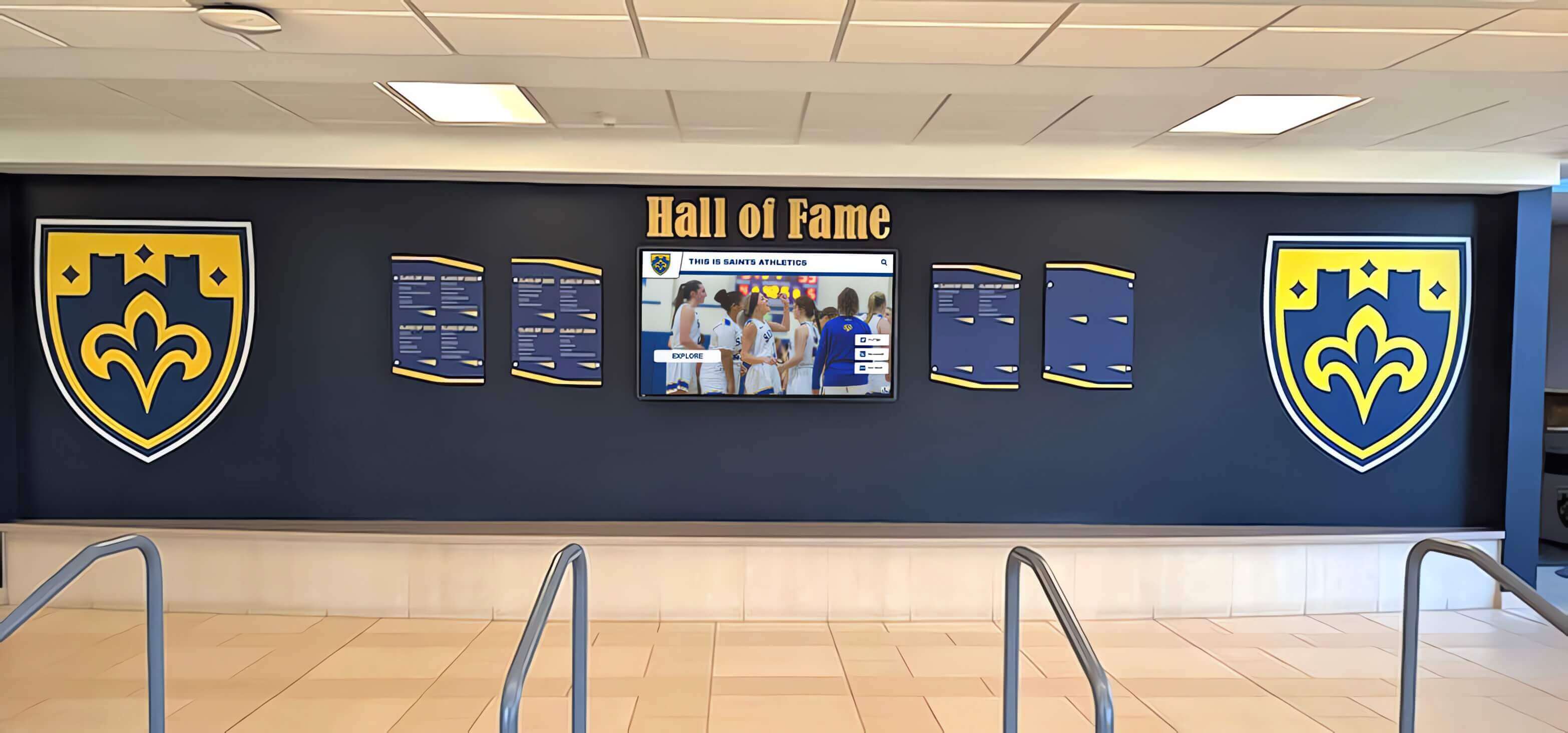
Strategic placement ensures recognition becomes part of daily school culture rather than forgotten installation
Measuring Success and Demonstrating Value
Systematic assessment ensures recognition investments achieve intended goals while identifying optimization opportunities justifying ongoing resource allocation.
Engagement Analytics and Metrics
Digital platforms capture quantitative data impossible to obtain with traditional recognition approaches.
Interaction Volume Tracking
Monitor total touchscreen interactions, unique users, session duration, return visit frequency, and trending growth patterns. These metrics reveal whether recognition generates sustained community engagement or limited initial curiosity followed by declining interest requiring intervention.
Successful implementations typically show growing engagement as word spreads, content expands creating increasing reasons for community exploration, and recognition becomes embedded in organizational culture as natural resource for discovering institutional heritage and achievement.
Search and Discovery Pattern Analysis
Analyze most-searched names revealing which inductees generate greatest interest, frequently viewed profiles indicating compelling content worthy of emulation as models for profile enhancement, popular recognition categories guiding content development priorities, and navigation pathways showing how visitors explore recognition systems.
These insights inform content development priorities ensuring ongoing enhancement focuses on high-value improvements rather than low-impact efforts. For example, consistently popular inductee profiles can be analyzed for elements making them particularly engaging, with findings applied to enhancing less-visited profiles.
Web Platform Analytics
Monitor website traffic to online recognition portals measuring global reach beyond physical installations, geographic distribution showing where access occurs revealing alumni concentration patterns, referral sources indicating how visitors discover recognition, social sharing activity demonstrating content resonating sufficiently to motivate voluntary promotion, and device usage patterns informing mobile optimization priorities.
Web analytics demonstrate recognition value extending far beyond physical campus installations to global engagement impossible with traditional plaques restricted to campus visitors. This extended reach typically reveals recognition accessed from dozens of states and countries as geographically distributed alumni maintain institutional connections through recognition exploration.
Qualitative Feedback Collection
Stakeholder perspectives provide context beyond quantitative metrics alone.
Visitor Observation and Commentary
Observe how visitors interact with displays noting engagement duration, spontaneous reactions and comments, group interaction patterns where multiple people explore together, and content types receiving most sustained attention. This observational research reveals user experience realities formal surveys may not capture.
Position brief feedback collection mechanisms at displays enabling convenient input—simple satisfaction ratings, optional comment submission, and QR codes linking to longer feedback surveys. Keep friction minimal encouraging participation while gathering valuable improvement insights.
Recognized Member Testimonials
Gather feedback from inductees and their families about recognition experiences. Personal accounts describing emotional impact, expressing appreciation for visibility and remembrance, noting accuracy concerns requiring correction, and sharing how recognition affects their ongoing institutional relationships provide powerful validation of recognition program value.
These testimonials prove particularly valuable for organizational leadership and donor communications demonstrating recognition impact in human terms complementing quantitative engagement metrics.
Community Sentiment Monitoring
Monitor broader community commentary through social media discussions, informal feedback shared during events and campus visits, media coverage and public perception, and general atmosphere changes attributable to enhanced recognition. Recognition should generate positive sentiment and pride rather than controversy or indifference suggesting implementation problems requiring attention.
Create Recognition That Engages Your Community
Discover how touchscreen digital hall of fame walls transform static recognition into interactive experiences that build vibrant communities celebrating unlimited achievement. See platform features, implementation approaches, and engagement results.
Book Your DemoImplementation Best Practices and Common Pitfalls
Learning from successful implementations and common mistakes helps organizations avoid problems while maximizing recognition value.
Successful Launch Strategies
Thoughtful launch approaches build enthusiasm and establish recognition as valued institutional resource.
Pre-Launch Content Development
Launch with substantial content rather than empty systems slowly populated over time. Minimally populate recent 5-10 years of recognition where information is readily available, ideally develop comprehensive historical archives demonstrating full institutional heritage, and include multimedia content showing platform capabilities rather than text-only profiles suggesting limitations.
Substantial launch content creates immediate value justifying investment while generating enthusiasm encouraging ongoing engagement and community contribution. Empty or sparse systems fail to impress, potentially creating negative first impressions difficult to overcome despite future content enhancement.
Strategic Communications Campaigns
Promote recognition launch through multiple communication channels ensuring broad awareness. Email campaigns announcing availability and encouraging exploration, social media content featuring individual profiles and achievement highlights, website landing pages explaining recognition programs and access methods, event-based promotion during homecoming, reunions, and ceremonies, and traditional media outreach generating local coverage all contribute to recognition visibility.
Consistent ongoing communication maintains recognition awareness preventing displays from fading into background despite substantial investment. Feature recognition content regularly in organizational communications rather than treating as one-time launch news quickly forgotten.
Ceremonial Integration
Align recognition launch and ongoing updates with ceremonial occasions maximizing significance. Unveil systems during homecoming events, feature during hall of fame induction ceremonies, coordinate with reunion weekends, and incorporate into admission tour scripts. This ceremonial integration elevates recognition importance while creating natural engagement opportunities embedded in organizational culture and calendar.
Common Implementation Mistakes
Understanding frequent errors helps organizations avoid problems undermining recognition value.
Inadequate Initial Content
Launching with minimal content creates disappointing first impressions suggesting platform limitations rather than comprehensive recognition vision temporarily limited by content development timing. Delay launch until substantial content exists demonstrating recognition breadth and depth, even if comprehensive historical archives require phased post-launch completion.
Neglecting Mobile Optimization
Recognition platforms must function beautifully on smartphones and tablets, not just large touchscreen kiosks. Increasingly, community members access recognition content primarily through mobile devices requiring responsive design, appropriate touch targets, readable typography, and navigation patterns feeling native to mobile contexts. Poor mobile experiences limit engagement to campus visitors despite platform’s potential for global reach.
Insufficient Staff Training
Platform features prove worthless if staff lack confidence managing content. Comprehensive initial training, quality documentation accessible for ongoing reference, and responsive support assistance enable staff to effectively maintain recognition. Complex platforms requiring extensive training for basic tasks or providing inadequate documentation create ongoing frustration potentially causing recognition to become neglected as trained staff depart and replacements lack adequate onboarding.
Failure to Plan for Growth
Recognition needs grow continuously as organizations accumulate additional achievements. Platforms with capacity limitations, escalating pricing as content grows, or architectural constraints limiting expandability create problems as recognition programs mature. Select systems supporting unlimited growth without capacity concerns or escalating costs based on recognition volume.
Overlooking Accessibility Requirements
Accessibility compliance proves legally required and morally essential for inclusive recognition. Platforms claiming accessibility without WCAG 2.1 AA compliance provide incomplete accommodation. ADA-compliant recognition systems ensure all community members can access and engage with recognition regardless of disabilities, preventing legal exposure while honoring inclusive values.
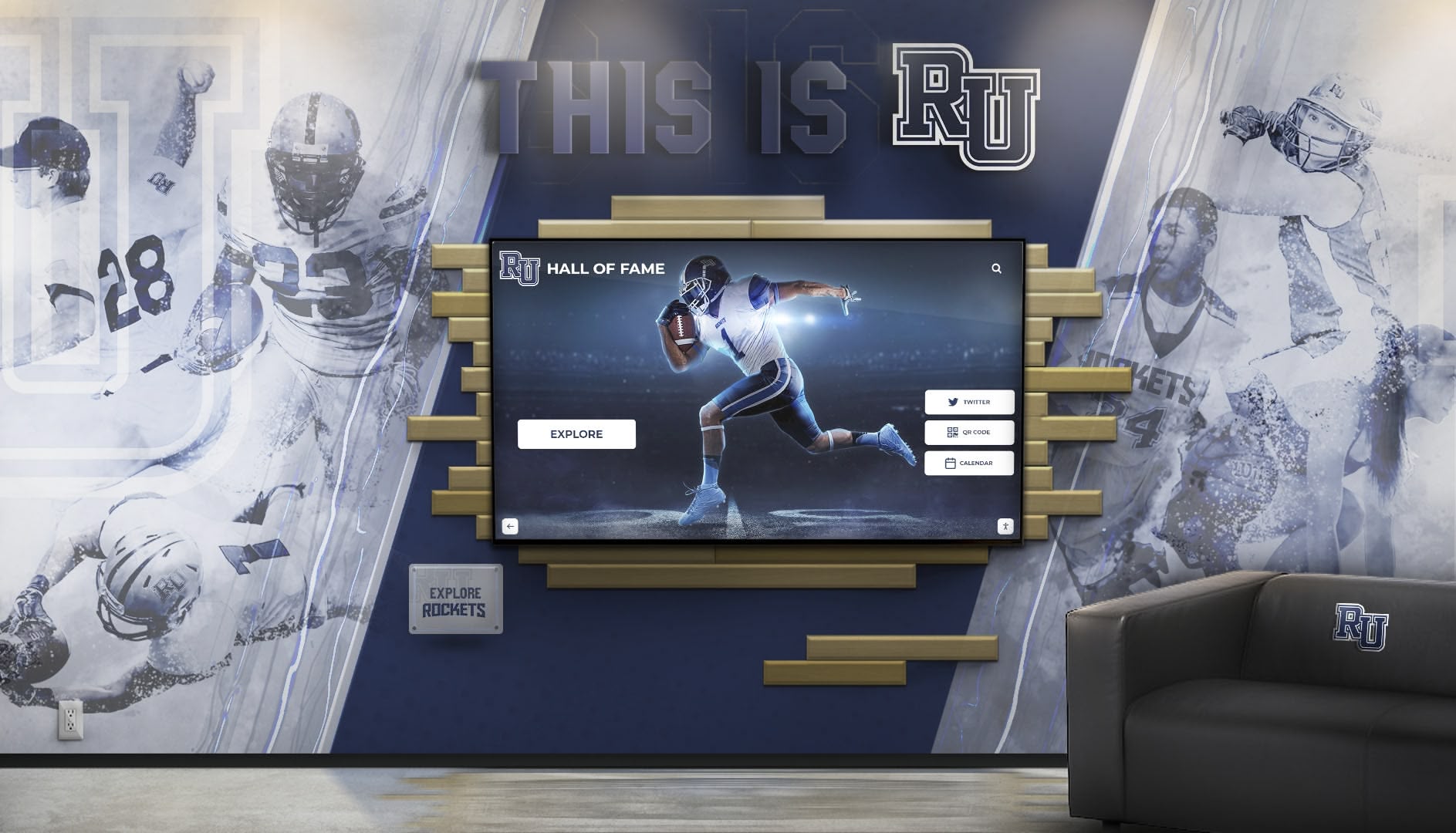
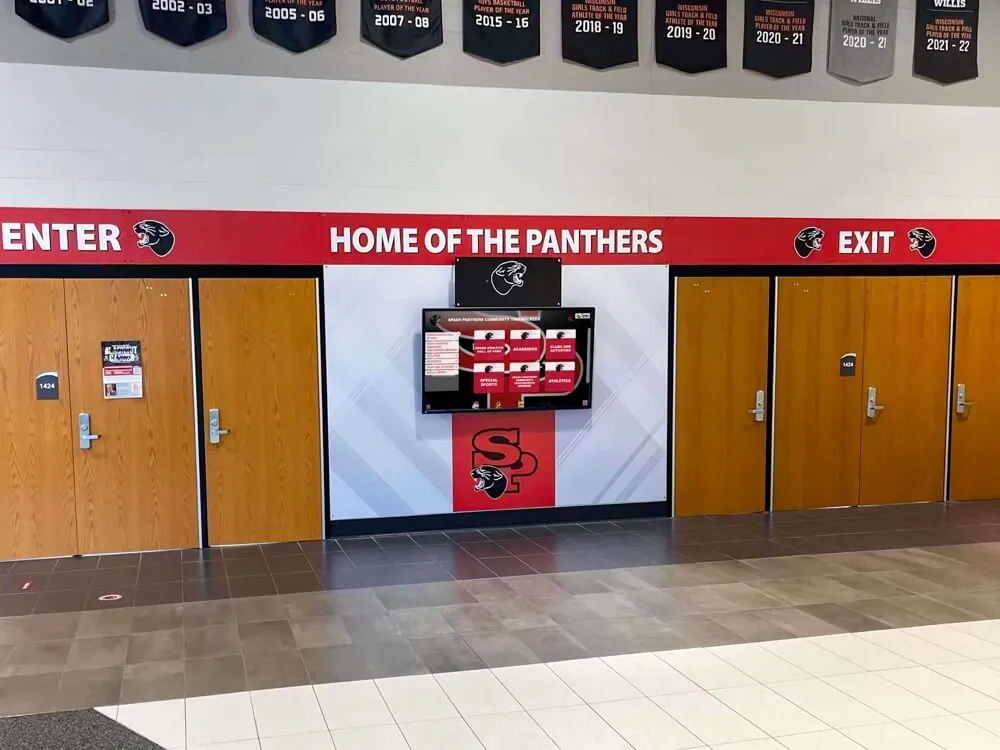
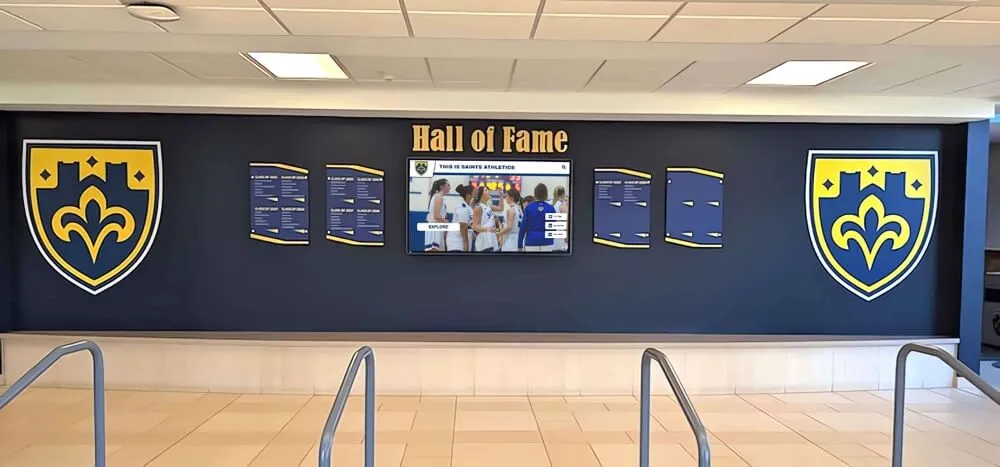
Custom design integration creates cohesive recognition installations reflecting organizational identity
Future Trends in Interactive Recognition
Digital recognition continues evolving with emerging technologies and changing user expectations.
Artificial Intelligence and Personalization
Advanced platforms increasingly leverage AI creating increasingly sophisticated engagement experiences.
Personalized Content Recommendations
AI-powered systems recognize individual users and their interests, highlighting relevant inductees based on browsing patterns, suggesting connections to users’ personal backgrounds, and surfacing content aligned with demonstrated preferences. This personalization creates increasingly relevant experiences encouraging deeper engagement as systems learn user interests.
Intelligent Search Enhancement
Natural language processing enables conversational search—users asking questions in natural language rather than rigid search syntax. “Show me all basketball players from the 1990s” or “Find alumni who work in medicine” becomes possible, making recognition more accessible to users unfamiliar with structured search approaches.
Automated Content Enhancement
AI assists with content development by suggesting biographical enhancements based on public records, identifying relevant historical context, highlighting connections between inductees, and flagging potential accuracy concerns. This AI assistance helps content managers maintain rich, accurate recognition with reasonable effort rather than heroic time investment.
Augmented and Virtual Reality
Emerging technologies create immersive recognition experiences impossible with traditional approaches.
AR-Enhanced Physical Displays
Mobile devices overlay additional content on physical displays through augmented reality. Pointing smartphones at recognition screens reveals extended biographical information, related multimedia content, and interactive elements exceeding what fixed displays can present simultaneously. This AR approach enables unlimited digital content accessed via personal devices while maintaining prominent physical recognition presence.
Virtual Recognition Experiences
Virtual reality enables remote visitors to experience physical recognition spaces digitally. Alumni worldwide explore recognition installations as if present on campus, creating authentic connection experiences despite geographic distance. This virtual access proves particularly valuable for older alumni unable to travel or international community members for whom campus visits prove impractical.
Enhanced Social Integration
Recognition increasingly connects to social platforms enabling community interaction around achievements.
Social Network Features
Recognition platforms evolve to include social features enabling recognized members to connect with each other, alumni to share memories and comment on profiles, and communities to engage in ongoing conversations around institutional heritage. These social features transform one-way recognition into interactive community platforms facilitating relationship building.
Live Event Integration
Recognition systems increasingly integrate with live events through synchronized displays during ceremonies, social media integration creating event hashtags and real-time sharing, and live-streaming coordination enabling remote attendance at recognition celebrations. This integration creates unified experiences spanning physical attendance and virtual participation.
Conclusion: Building Vibrant Communities Through Recognition
Touchscreen digital hall of fame walls and interactive awards displays represent far more than technology upgrades to traditional plaques—they embody fundamental shifts in how organizations celebrate achievement, preserve heritage, and maintain community connections. The transition from static, space-constrained recognition to dynamic, unlimited digital systems removes barriers preventing comprehensive celebration while creating engagement opportunities impossible with traditional approaches.
The concept of digital warming describes what happens when cold, impersonal recognition transforms into personalized, interactive experiences drawing members deeper into community engagement. When alumni discover themselves and classmates through intuitive search, when students explore role models and institutional traditions, when families share recognition profiles celebrating achievements—these interactions create warmth strengthening bonds and motivating ongoing participation.
Organizations implementing touchscreen recognition consistently report dramatic engagement increases compared to traditional displays. Members spend significantly more time exploring achievements, return repeatedly as content grows and featured recognition rotates, share profiles through social media extending recognition reach beyond campus visitors, and express appreciation for institutions honoring achievements through modern, accessible platforms worthy of celebrated accomplishments.
Practical benefits prove equally compelling—unlimited recognition capacity eliminating space constraints and difficult decisions about whose achievements receive visibility, simplified content management enabling efficient updates without expensive engraving, improved cost-effectiveness as marginal costs per inductee approach zero, true accessibility ensuring global audiences can access recognition regardless of location, and integration with broader community engagement strategies supporting advancement, recruiting, and cultural development objectives.
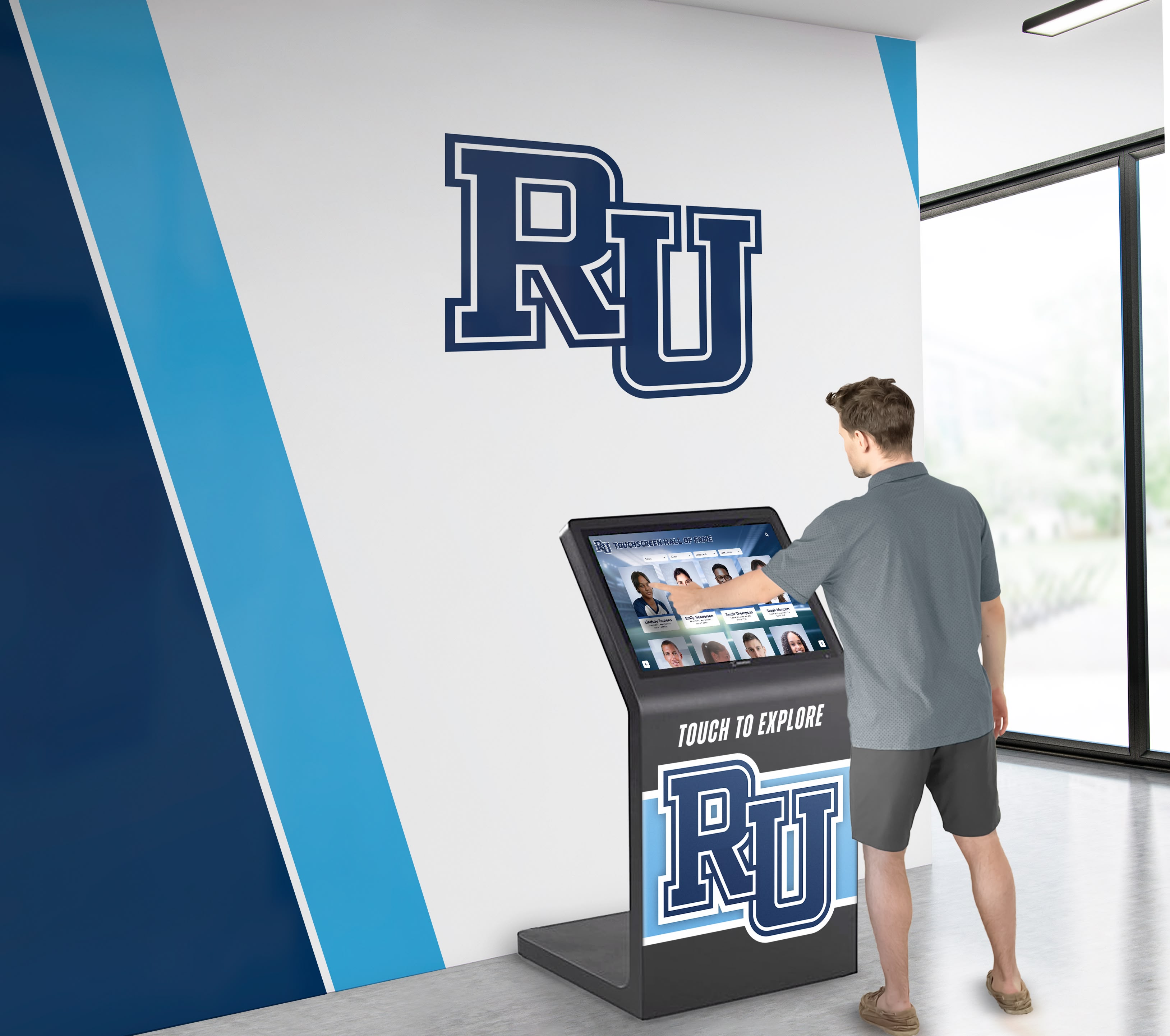
Touchscreen recognition creates destination experiences bringing communities together around achievement celebration
Moving from traditional recognition to touchscreen digital hall of fame systems requires thoughtful planning addressing organizational goals, technology requirements, content strategies, and stakeholder expectations. Successful implementations follow systematic approaches beginning with clear objective definition, careful platform evaluation prioritizing purpose-built recognition solutions over adapted digital signage, realistic budget planning accounting for complete ownership costs, and comprehensive content development creating recognition experiences worthy of celebrated achievements.
The technology choices matter profoundly—web-based platforms deliver universal device compatibility and automatic updates eliminating maintenance overhead, cloud infrastructure provides reliability and security exceeding self-hosted approaches, purpose-built recognition software understands hall of fame requirements impossible to achieve with generic digital signage adaptation, and thoughtful hardware selection ensures reliable long-term operation creating positive user experiences worthy of professional recognition installations.
Content development proves equally critical—comprehensive biographical narratives telling complete achievement stories, high-quality photos creating visual interest and personal connection, multimedia integration incorporating video and audio when available, and sustainable management approaches preventing initial enthusiasm from fading when ongoing administration proves overwhelming. Phased content migration approaches enable reasonable launch timelines while building toward comprehensive historical coverage through sustained effort rather than requiring impossible pre-launch completion.
Design excellence affects engagement profoundly—intuitive navigation enabling confident exploration without frustration, robust search accommodating real-world usage patterns, discovery features encouraging extended engagement beyond specific name searches, responsive design functioning beautifully across all device types, and accessibility compliance ensuring universal access regardless of user abilities or circumstances.
Integration with broader community engagement strategies delivers maximum recognition value—alumni relations programs leveraging recognition for mentorship connections and advancement initiatives, athletic programs using recognition for recruiting and current athlete motivation, educational programming incorporating recognition for student research and career exploration, and ceremonial integration embedding recognition into organizational culture rather than treating as isolated technology installation.
The future of interactive recognition continues evolving through artificial intelligence creating personalized experiences, augmented and virtual reality enabling immersive exploration, enhanced social integration building community interaction around achievements, and ongoing technological advancement delivering continuously improving experiences as platforms mature and user expectations evolve.
Every organization accumulates achievements worth celebrating—athletic excellence, distinguished service, academic accomplishments, community contributions, and countless individual and collective successes deserving recognition honoring excellence while building community pride. Touchscreen digital hall of fame walls ensure these achievements receive the visibility, accessibility, and celebration they deserve while building vibrant, engaged communities where members feel valued and motivated to maintain lifelong connections.
Your achievements and the people behind them deserve recognition approaching excellence they demonstrated earning celebration. With thoughtful planning, appropriate technology selection, comprehensive content development, and commitment to recognition as ongoing community engagement priority, you can create touchscreen hall of fame experiences worthy of your community’s accomplishments while building cultural foundations supporting organizational mission for decades to come.
Ready to explore how touchscreen recognition transforms community engagement? Learn about athletic hall of fame implementations creating team pride or discover comprehensive buying guidance helping you select the right platform for your recognition program. See how solutions like Rocket Alumni Solutions create the digital warming effect transforming static recognition into vibrant community experiences celebrating unlimited achievement while building the engaged communities where every member feels valued and connected.
Book a demo to explore how interactive recognition platforms create engaging experiences worthy of your community’s achievements while supporting your advancement, recruiting, and community building objectives through comprehensive, accessible, unlimited recognition capacity.