Intent: demonstrate — The Texas Sports Hall of Fame stands as one of the nation’s premier athletic recognition institutions, celebrating legendary athletes, coaches, and sports contributors who’ve shaped Texas’s rich athletic heritage. For school administrators and athletic directors, this prestigious hall of fame offers valuable lessons in honoring excellence, preserving athletic history, and creating engaging recognition experiences that inspire current athletes while connecting communities to their sporting legacy.
Texas’s passionate sports culture—from Friday night football to championship basketball programs—creates natural opportunities for schools to develop meaningful athletic recognition programs. Yet many schools struggle with fundamental questions: How do we select honorees fairly? What recognition formats keep communities engaged rather than creating static displays that gather dust? How can we preserve decades of athletic achievement without overwhelming limited physical space or budget constraints?
This comprehensive guide explores how the Texas Sports Hall of Fame’s approach to athletic recognition can inspire school-level programs, covering selection philosophy, recognition strategies, modern digital display solutions, community engagement methods, and practical implementation steps that transform athletic recognition from afterthought into powerful institutional tool celebrating excellence while strengthening school identity.
Schools with effective athletic recognition programs report measurable benefits extending far beyond nostalgia. These programs increase alumni engagement, boost current athlete motivation, strengthen fundraising through sports connections, and create distinctive school identity markers differentiating institutions within competitive educational landscapes. Understanding how established halls of fame achieve these outcomes provides actionable insights for building school recognition systems delivering similar community-building results.

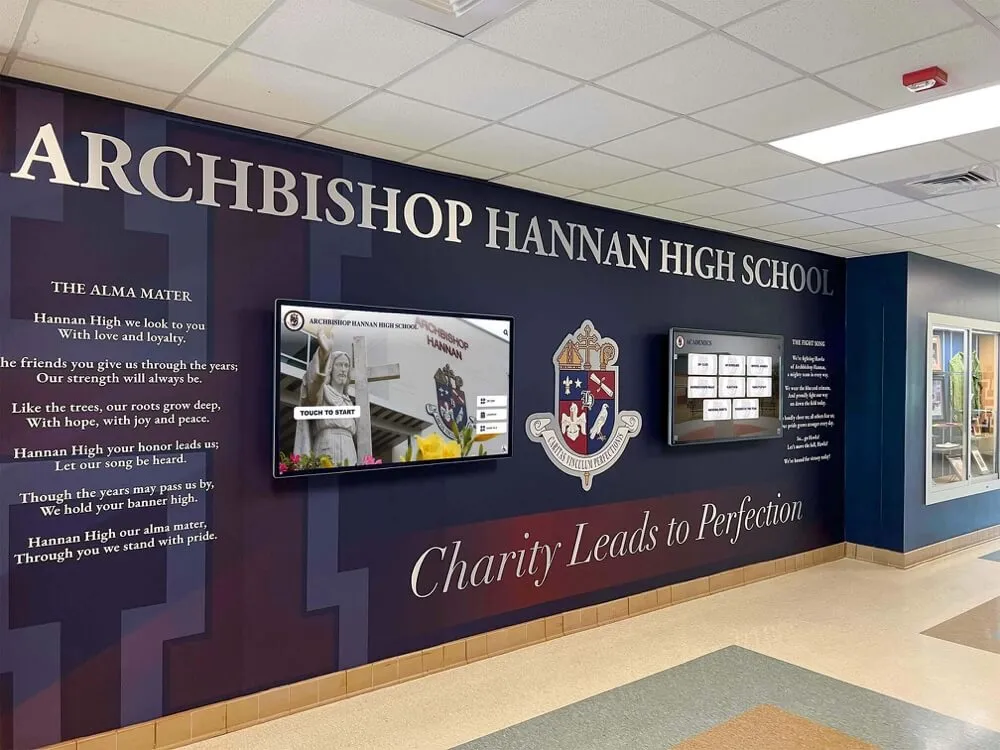
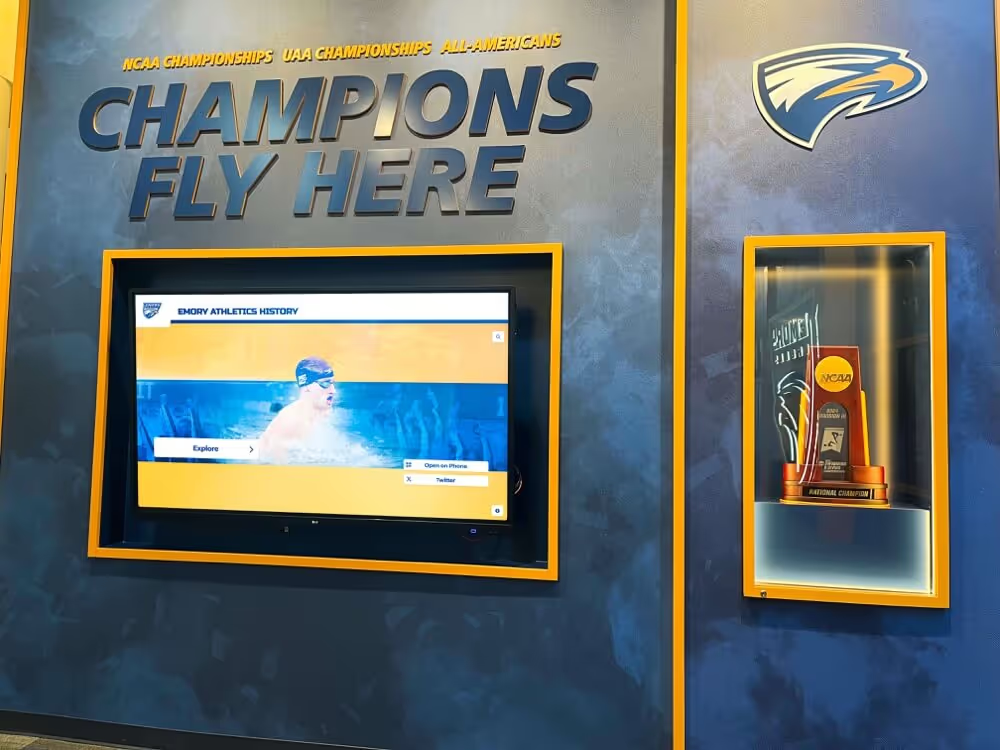
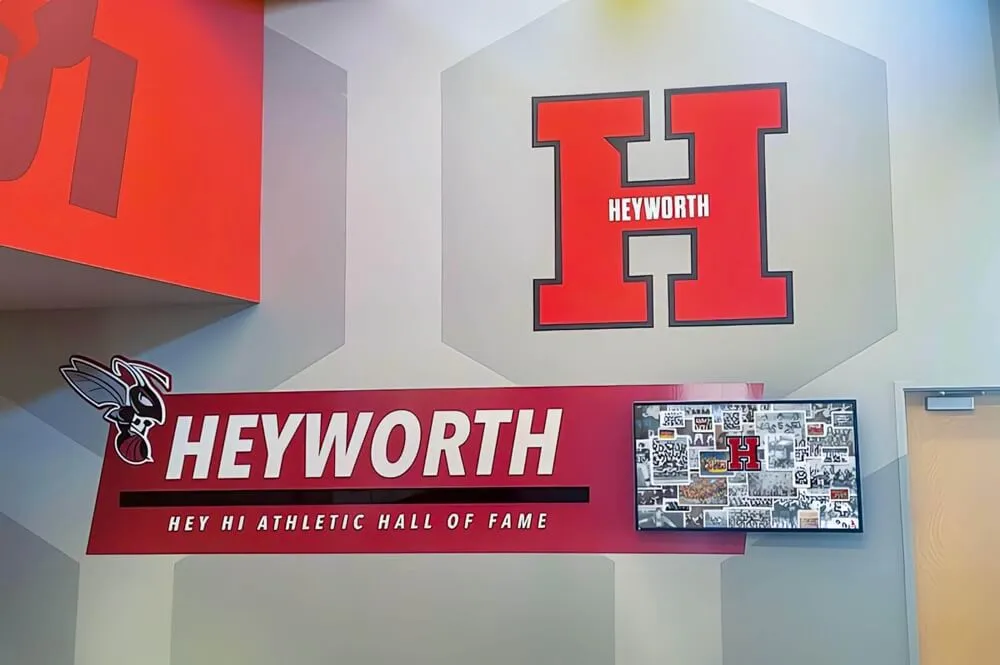
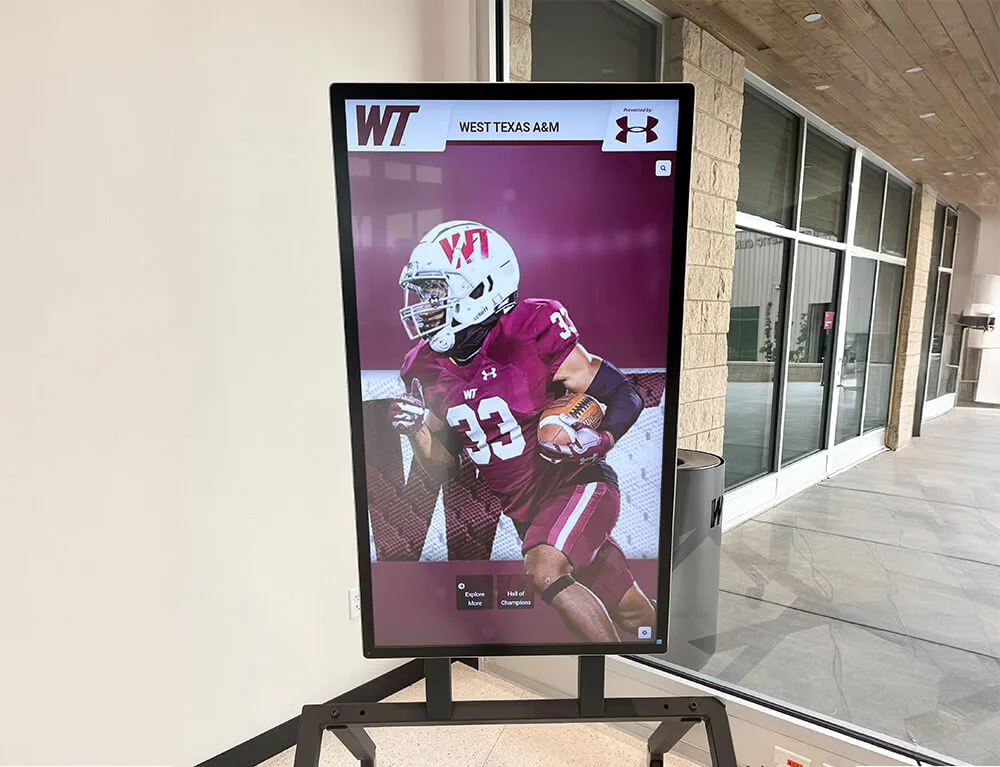
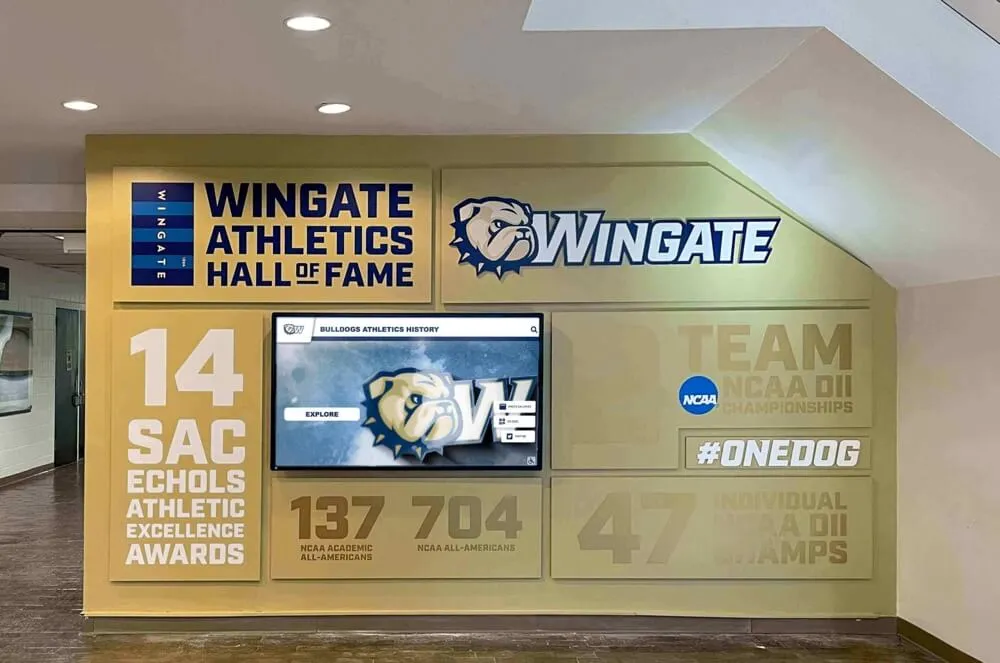
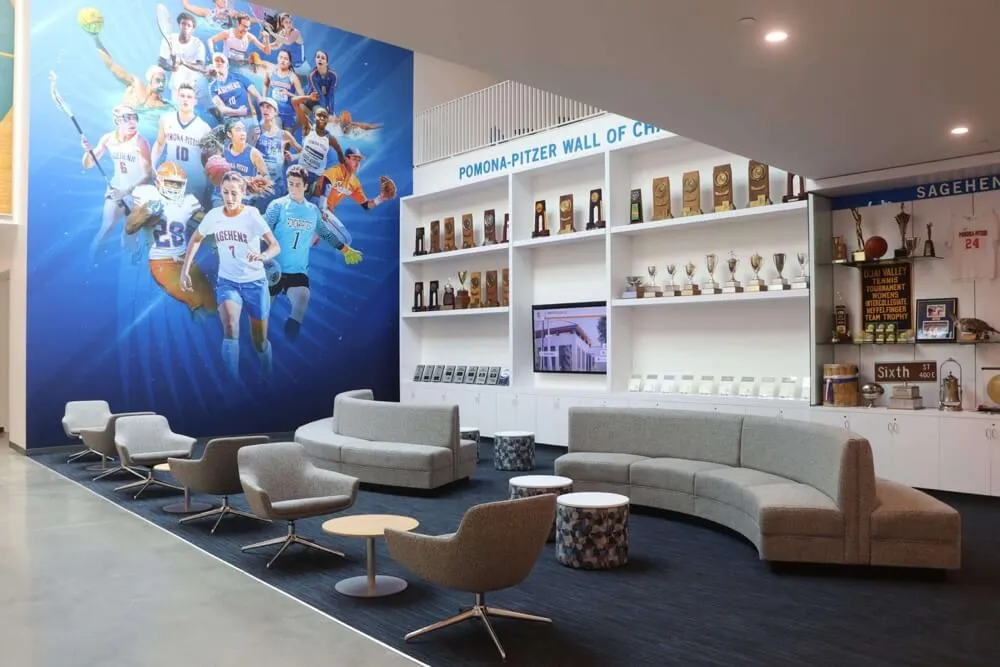
Championship trophy displays and athletic murals create inspirational environments celebrating sports excellence
Understanding the Texas Sports Hall of Fame Model
The Texas Sports Hall of Fame, established in 1951, has developed recognition methodologies that schools can adapt regardless of size or athletic program scope. Examining this institution’s approach reveals transferable principles applicable to school-level programs.
Selection Philosophy and Criteria
The Texas Sports Hall of Fame employs rigorous selection processes balancing objective achievement metrics with subjective impact assessment. This dual approach ensures honorees represent genuine excellence while acknowledging that athletic contribution transcends statistics alone.
Achievement-Based Criteria
Championship victories, record-setting performances, all-state selections, collegiate athletic success, and professional sports achievements provide quantifiable benchmarks for recognition consideration. These objective measures establish minimum qualification thresholds preventing purely subjective selections that might undermine program credibility.
Schools can adapt this approach by identifying comparable metrics relevant to their competitive level. District championships, school records, conference honors, team leadership roles, and post-high-school athletic continuation create measurable standards appropriate for school-level recognition programs.
Character and Contribution Assessment
Beyond statistics, the Texas Sports Hall of Fame values sportsmanship, community impact, character demonstration, and lasting influence on Texas athletics. These qualitative factors acknowledge that legendary athletes inspire through example, not just performance.
School programs similarly benefit from recognizing athletes who exemplified program values, demonstrated leadership regardless of individual statistics, overcame significant obstacles, or made lasting contributions to team culture. Including character criteria ensures recognition systems honor the complete athlete, not just statistical leaders, creating more inclusive programs that celebrate diverse forms of athletic excellence.
Recognition Categories and Inductee Diversity
Successful halls of fame recognize multiple contribution categories ensuring diverse representation across sports, eras, and role types.
Multi-Sport Recognition
The Texas Sports Hall of Fame honors excellence across football, basketball, baseball, track and field, and other sports preventing single-sport dominance. This balanced approach reflects Texas’s diverse athletic landscape while preventing any sport from overshadowing others.
Schools should establish category systems ensuring equitable recognition across offered sports programs. Gender equity considerations are particularly important, with equitable athletic visibility becoming increasingly central to recognition program credibility and compliance.
Beyond Athletes: Coaches and Contributors
Recognizing coaches, administrators, supporters, and behind-the-scenes contributors who enabled athletic success creates comprehensive recognition systems honoring entire athletic ecosystems. The Texas Sports Hall of Fame’s inclusion of coaches and sports figures acknowledges that athletic excellence requires more than talented athletes.
Schools can expand recognition beyond athletes to include influential coaches, long-serving athletic trainers, program-building administrators, and community supporters whose contributions deserve celebration. This broader approach strengthens community connections while acknowledging the collaborative nature of athletic achievement.
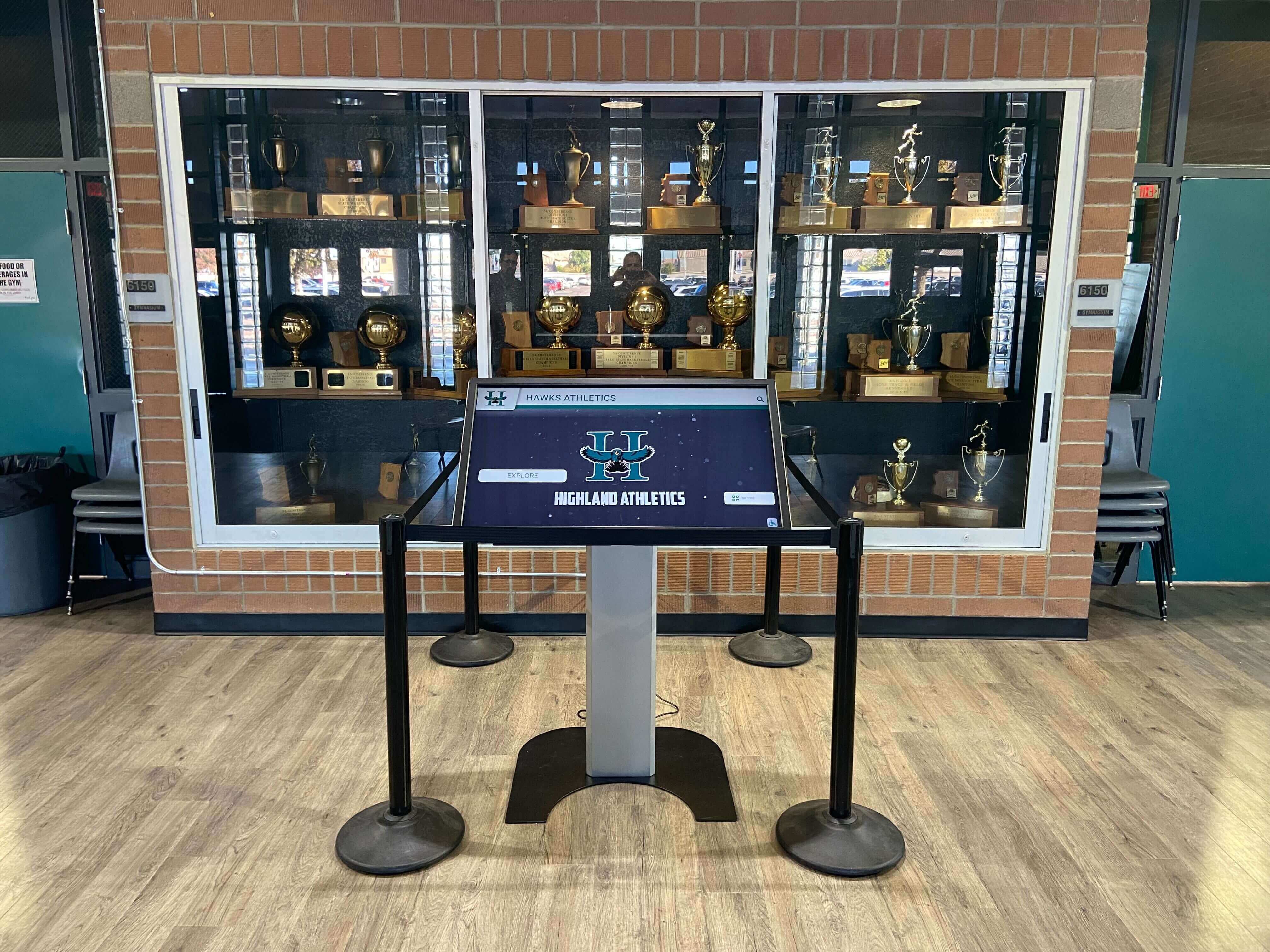
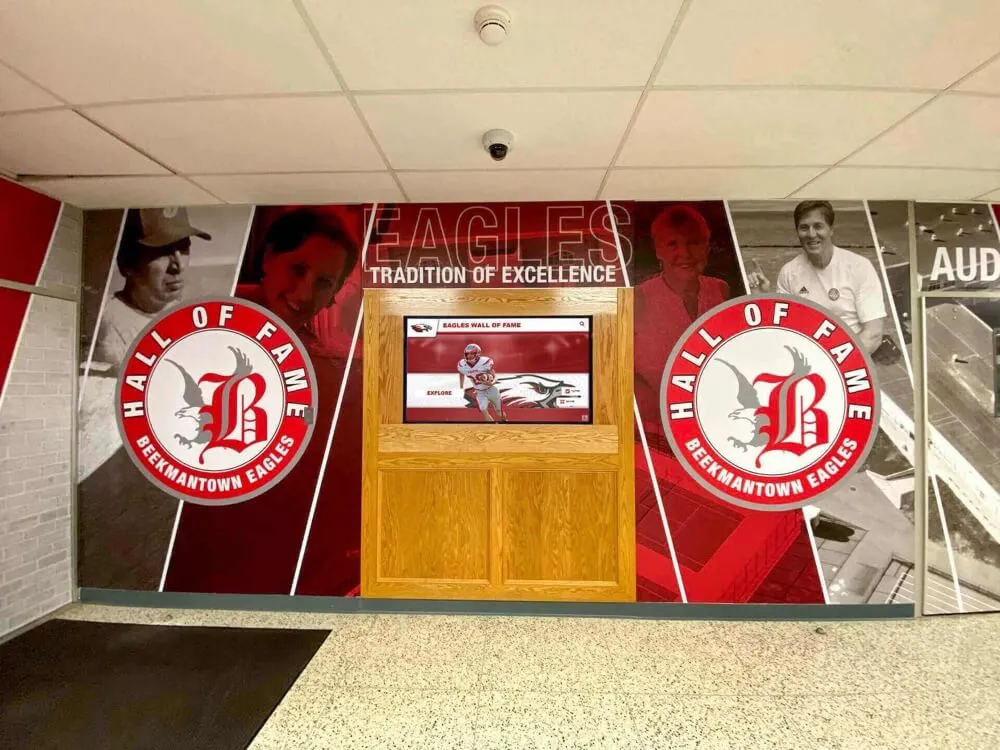
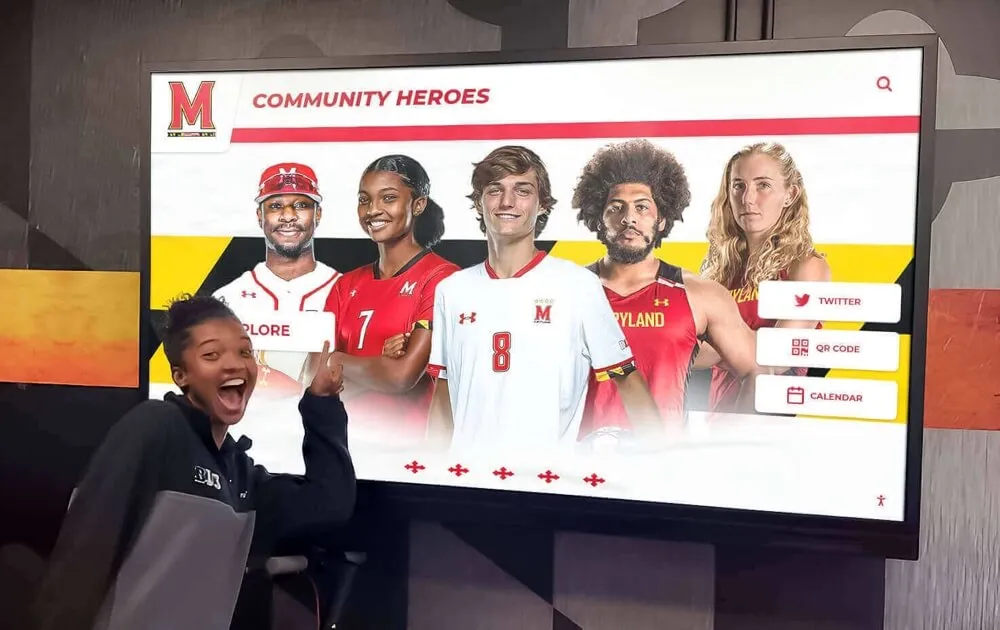
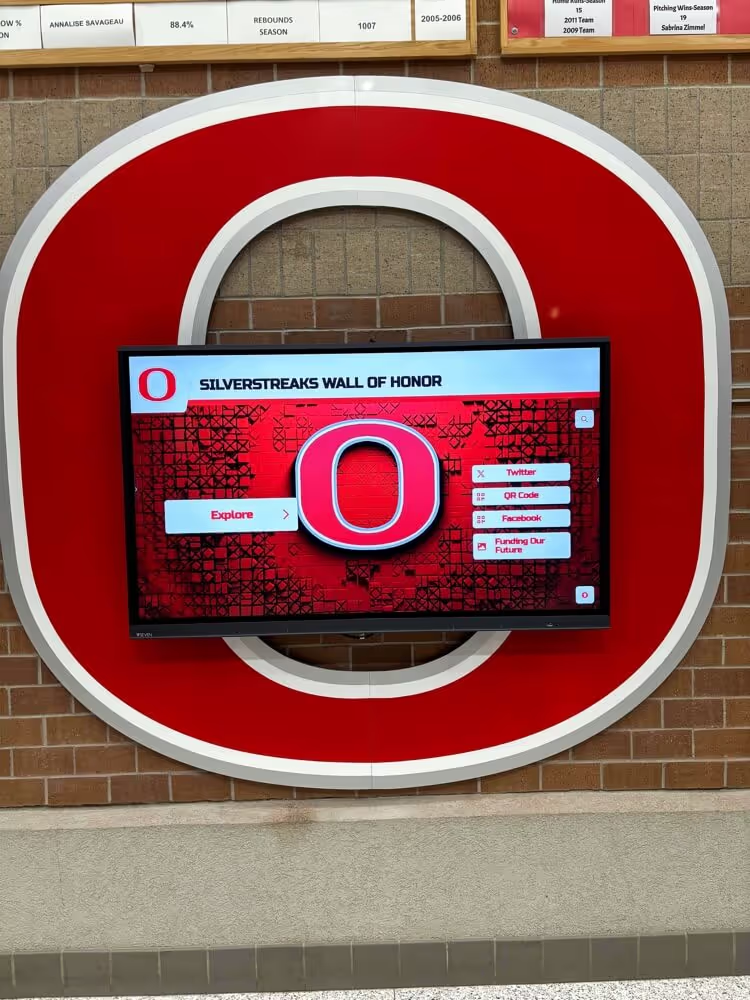
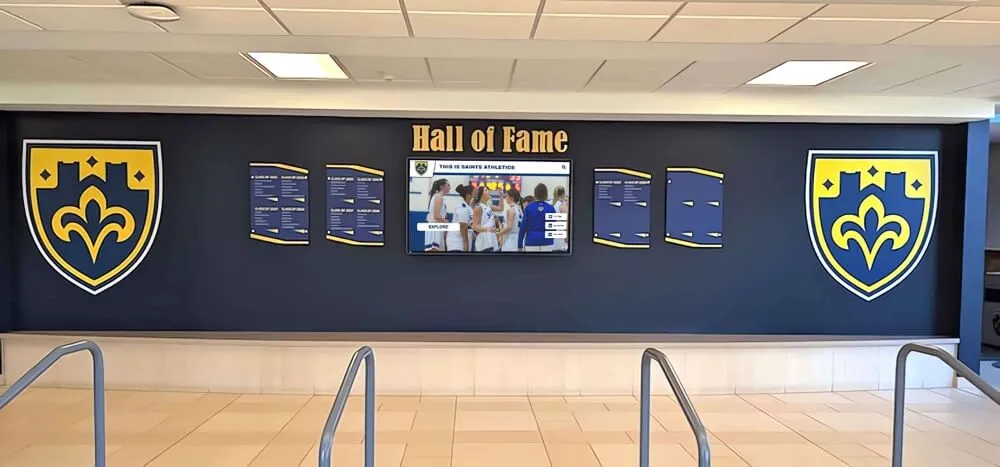
Modern digital displays integrate seamlessly with traditional trophy cases, combining physical memorabilia with unlimited digital recognition capacity
Modernizing Athletic Recognition: From Physical to Digital
While the Texas Sports Hall of Fame maintains a physical facility, schools can leverage modern technology creating recognition programs that surpass traditional limitations while delivering superior engagement and accessibility.
The Space and Cost Challenge
Traditional physical halls of fame face inevitable constraints that limit their effectiveness as recognition programs grow.
Physical Space Limitations
Schools accumulating decades of athletic achievement eventually exhaust wall space for plaques, trophy case capacity, and hallway real estate. This physical limitation forces difficult decisions about whose accomplishments receive visibility while consigning most recognition to storage rooms or forgotten corners.
Texas schools particularly face this challenge given the state’s intense athletic culture producing multiple championship teams and standout athletes annually. A successful football program alone might generate dozens of all-state players, district champions, and record-setters each decade, quickly overwhelming traditional recognition space.
Maintenance and Update Costs
Adding new plaques, updating displays, maintaining trophy cases, and refreshing aging recognition materials creates ongoing expenses that strain athletic budgets. Traditional approaches require physical materials, installation labor, and periodic renovations keeping displays presentable, with costs escalating as recognition programs expand.
Digital Recognition Solutions
Modern digital displays solve physical limitations while creating more engaging, accessible, and cost-effective recognition systems that better serve today’s digitally-native students and communities.
Unlimited Recognition Capacity
Digital platforms eliminate space constraints entirely. Schools can recognize unlimited athletes, teams, coaches, and contributors without worrying about wall space availability or display capacity. Every state qualifier, team captain, record-holder, and championship contributor receives equal recognition opportunity regardless of how many honorees the program accumulates over decades.
Solutions like Rocket Alumni Solutions provide interactive touchscreen displays with unlimited content capacity, allowing schools to build comprehensive athletic recognition databases that grow indefinitely without additional space requirements or physical material costs.
Rich Multimedia Storytelling
Digital recognition transcends static text and photos by incorporating video highlights, audio interviews, game statistics, career timelines, and interactive content that brings athletic achievements to life. Imagine students exploring a digital hall of fame displaying championship game footage, athlete testimonials, season statistics, and career progression narratives rather than just reading names and dates on plaques.
This multimedia approach creates significantly higher engagement compared to traditional displays. Students, alumni, and visitors actually interact with digital recognition systems, exploring content that interests them rather than passively glancing at wall plaques while walking hallways.
Accessibility and Remote Engagement
Web-based digital recognition platforms allow community members to explore athletic history from anywhere, not just when physically present at school facilities. Alumni living across Texas or beyond can browse their school’s digital hall of fame, relive their athletic careers, and share recognition with family members who never attended their games.
This accessibility dimension dramatically expands recognition program reach and impact. When digital displays integrate mobile access through QR codes or web URLs, recognition becomes perpetually accessible rather than limited to specific physical locations and visiting hours.

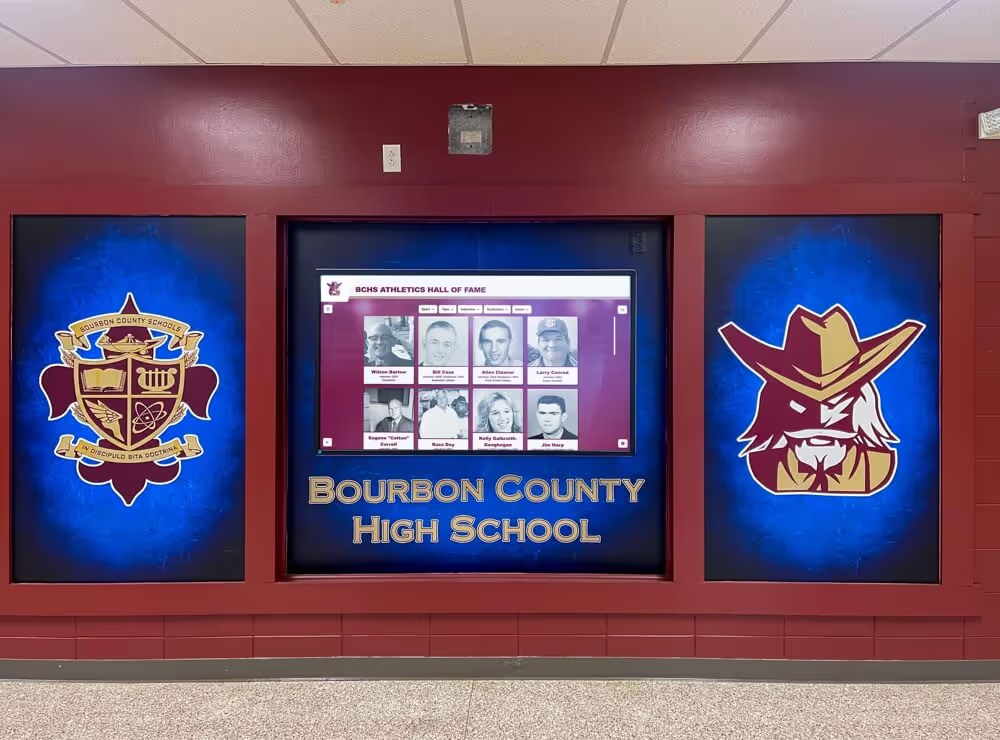
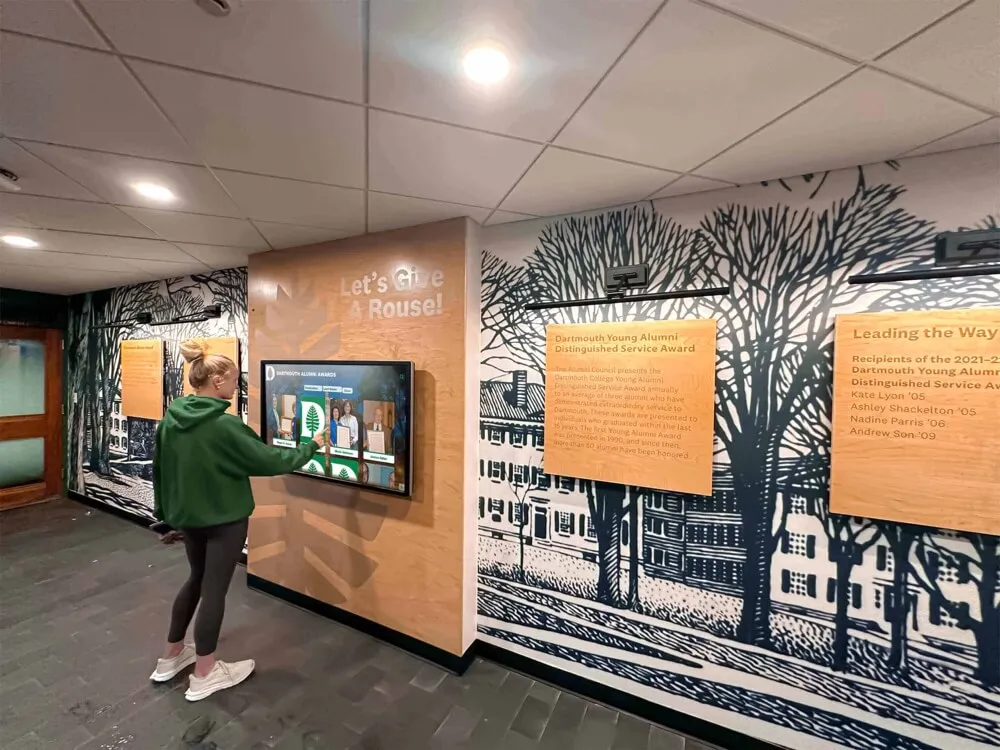
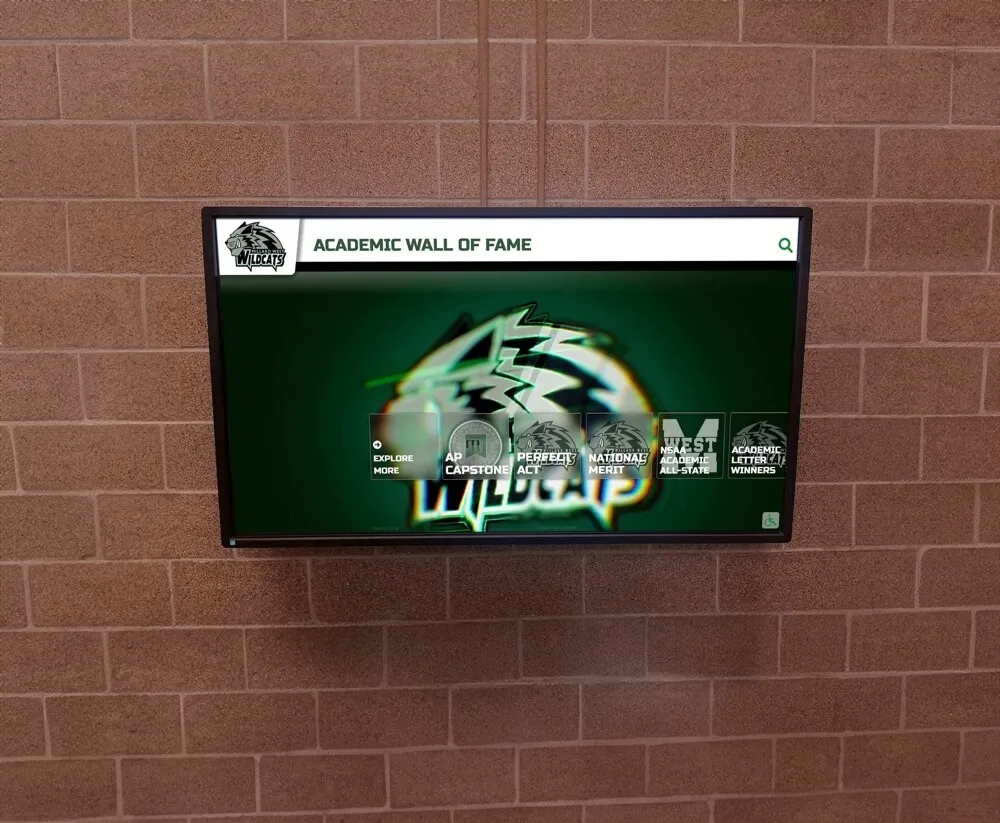
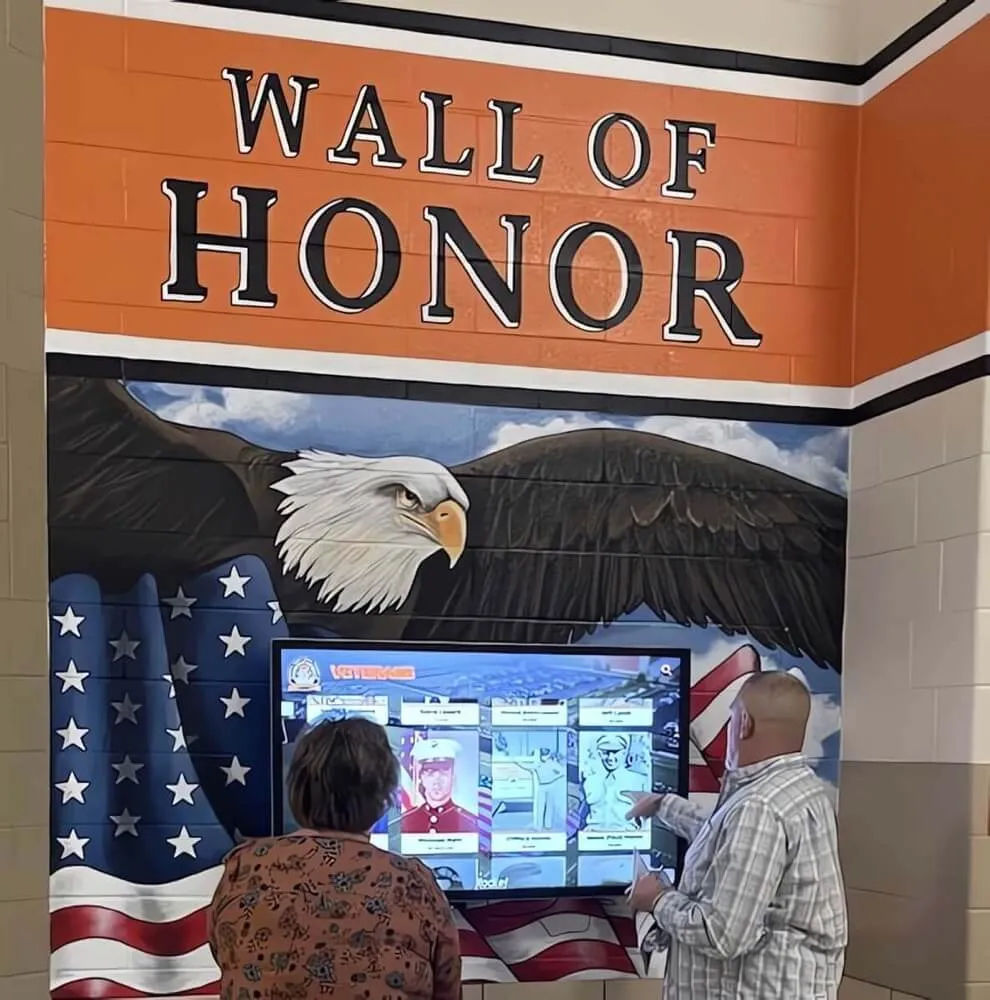
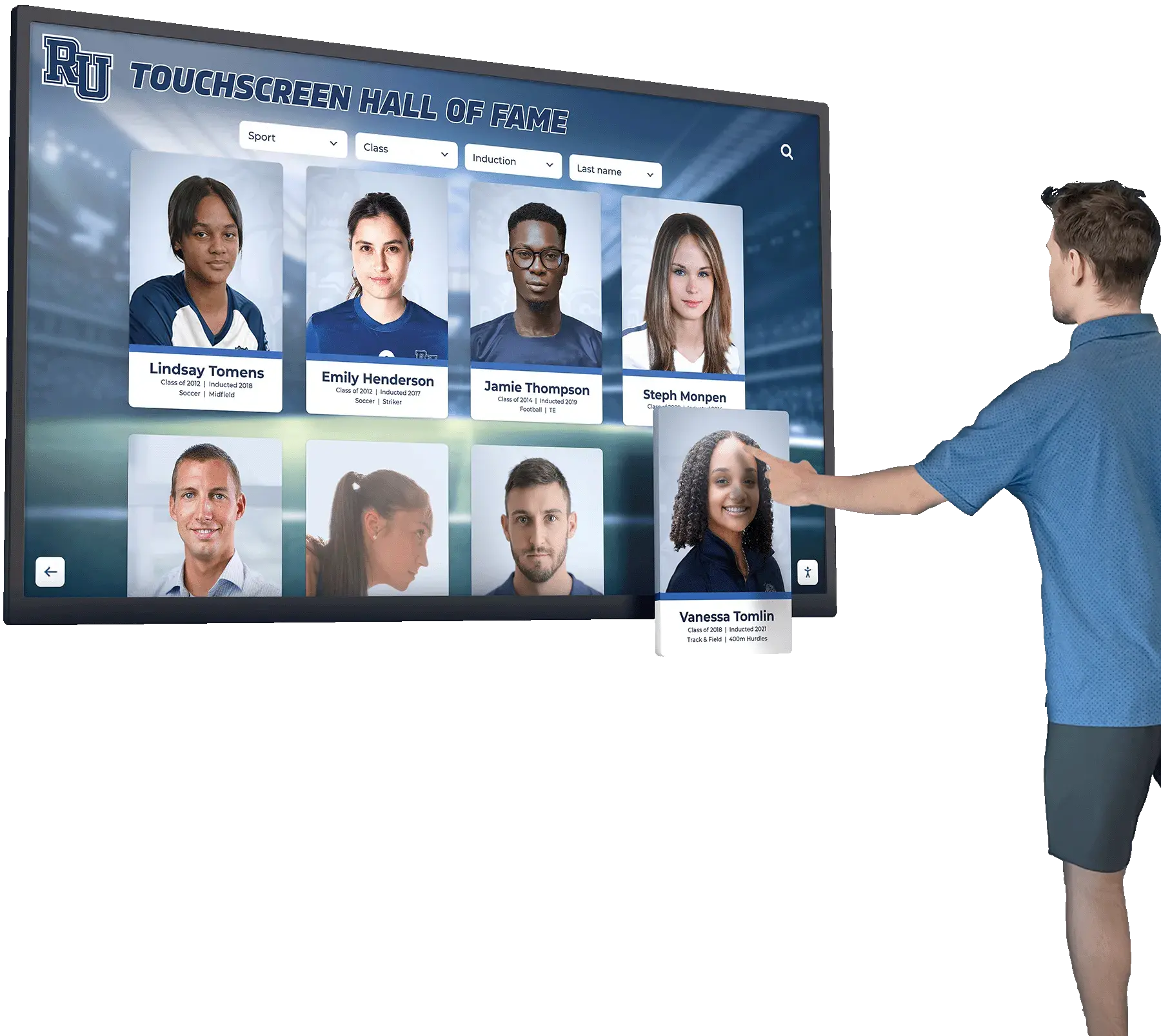
Interactive touchscreen displays invite active exploration rather than passive viewing, increasing engagement with athletic recognition content
Building Your School’s Athletic Hall of Fame Program
Developing an effective athletic recognition program requires thoughtful planning that adapts hall of fame principles to your school’s specific context, resources, and community culture.
Establishing Selection Criteria and Processes
Transparent, consistent selection processes ensure program credibility while preventing perceptions of favoritism or bias that undermine recognition value.
Committee Formation
Assemble diverse selection committees including athletic directors, coaches representing multiple sports, former athletes, community members, and administrators. Diverse committee composition ensures balanced perspectives across sports programs, graduation eras, and stakeholder groups.
Texas schools with strong booster cultures might include booster club representatives, while schools emphasizing academic-athletic balance could include teachers or counselors providing non-athletic perspectives ensuring honorees represent positive role models beyond sports performance alone.
Nomination and Evaluation Systems
Establish clear nomination processes allowing community members, coaches, alumni, and families to submit candidates with supporting documentation. Require specific achievement evidence, character references, and impact narratives preventing nominations based solely on popularity or recent memory.
Create evaluation rubrics scoring candidates across defined criteria categories—athletic achievement, character demonstration, leadership contribution, and program impact. Numeric scoring systems introduce objectivity reducing bias while allowing flexibility for qualitative assessment of factors not captured by statistics.
Induction Cycle Planning
Most schools benefit from annual or biennial induction cycles creating regular recognition events that maintain community interest while spreading implementation effort. Annual inductions keep programs active in community consciousness, though biennial cycles may suit smaller schools generating fewer qualified candidates annually.
Limit annual inductee numbers preventing program dilution. Inducting three to five individuals or teams annually maintains selectivity ensuring honorees feel genuinely distinguished rather than participating in mass recognition events diminishing special distinction.
Honoring Teams vs. Individuals
Texas athletics celebrates both individual excellence and team achievements, with legendary teams often achieving cultural significance rivaling individual stars. School recognition programs should accommodate both recognition types.
Championship Team Recognition
State championship teams, undefeated seasons, and historically significant squads deserve collective recognition preserving team identity. Digital platforms excel at team recognition by allowing roster listings, season statistics, championship game recaps, and team photos creating complete team narratives impossible with single plaques.
Consider recognizing milestone team achievements like state championships, undefeated seasons, or record-setting performances separately from individual inductees, creating dual recognition tracks honoring both collective and individual excellence.
Individual Athletes and Coaches
Individual recognition allows detailed storytelling about specific athletes’ journeys, records, collegiate careers, and lasting program impacts. Individual profiles showcase personal narratives that inspire current athletes by demonstrating pathways to excellence developed by program predecessors.
Balancing team and individual recognition prevents either category from overshadowing the other. Some schools alternate induction cycles, some recognize both categories annually, and others create separate recognition sections within comprehensive athletic displays.
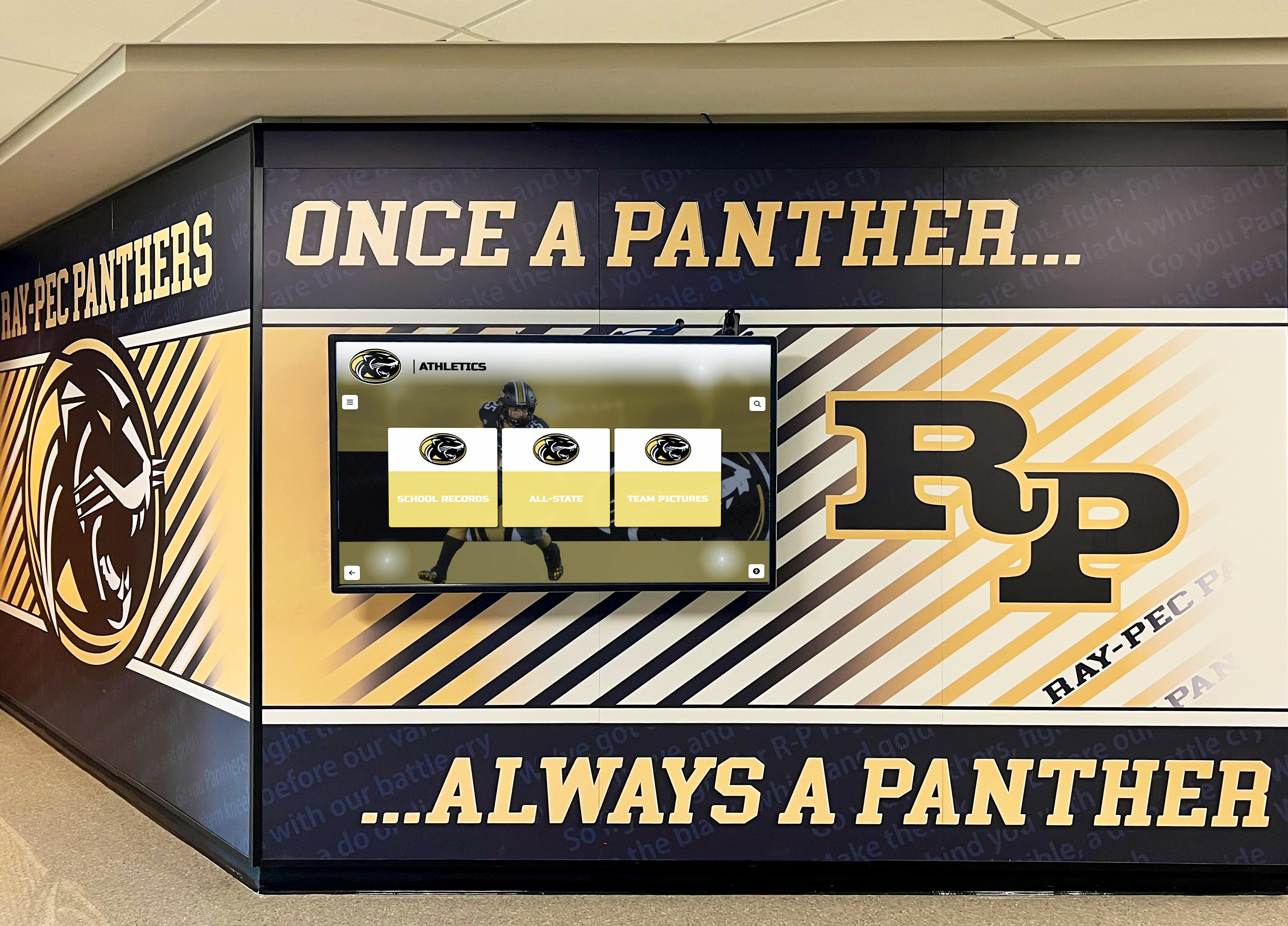
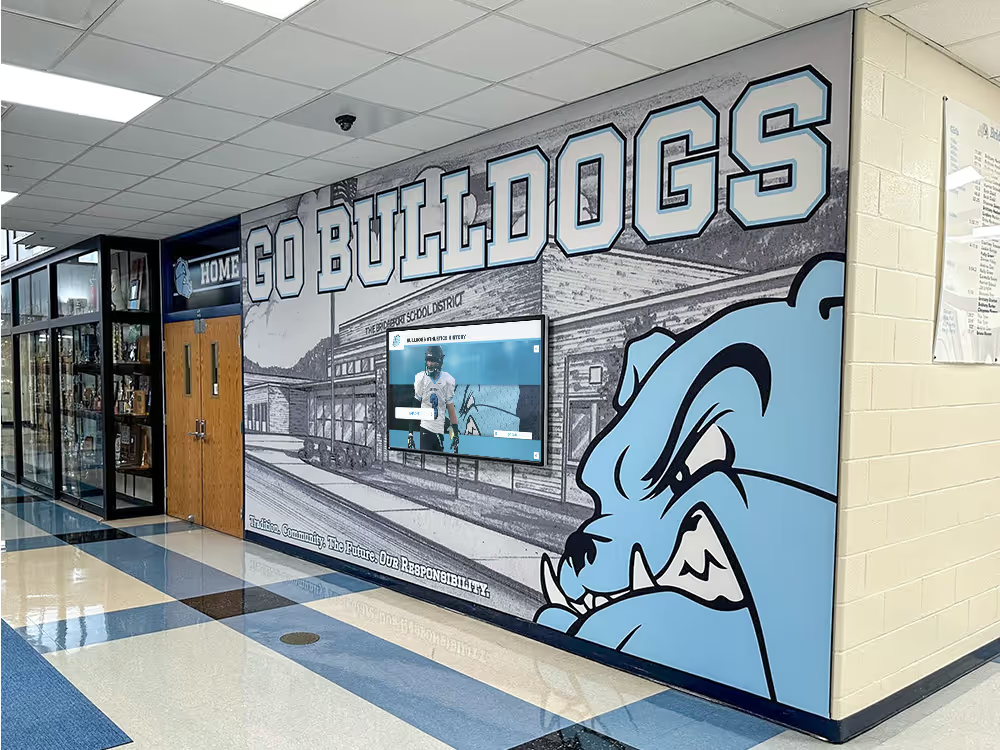
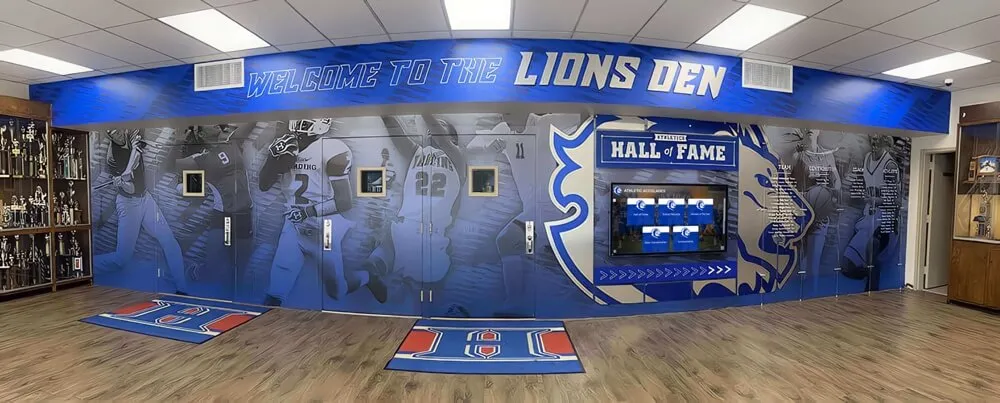
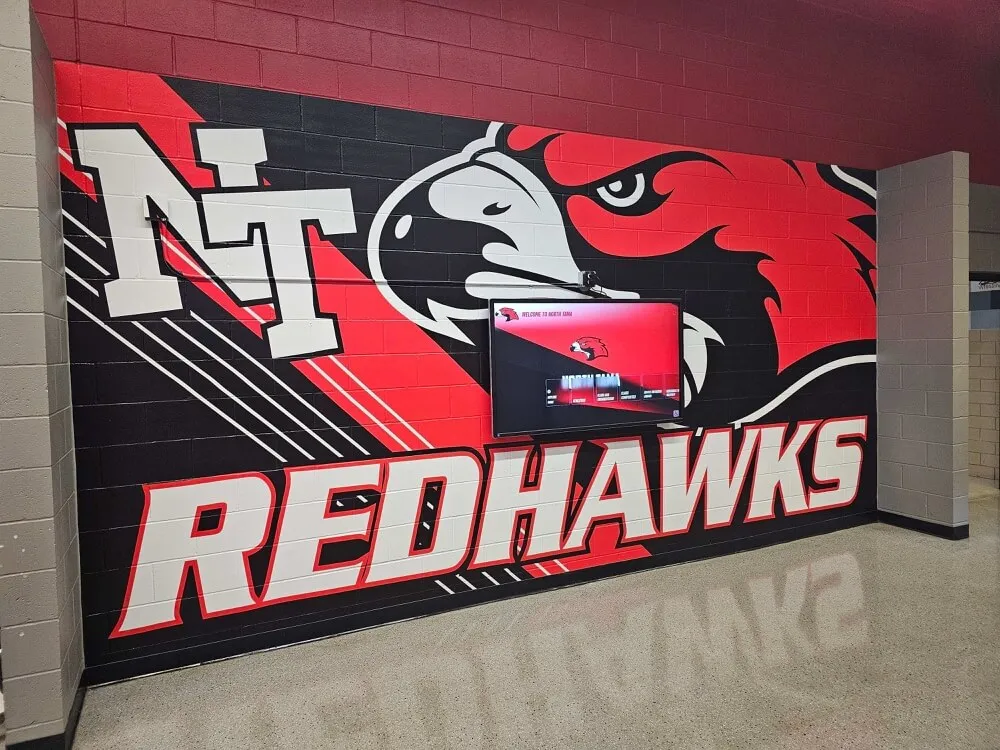
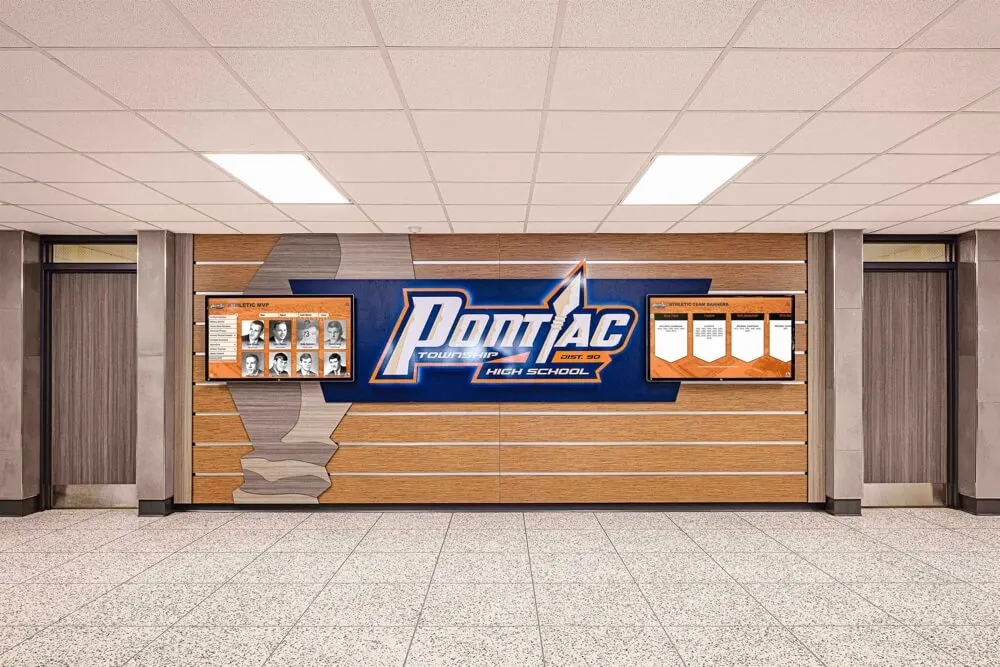
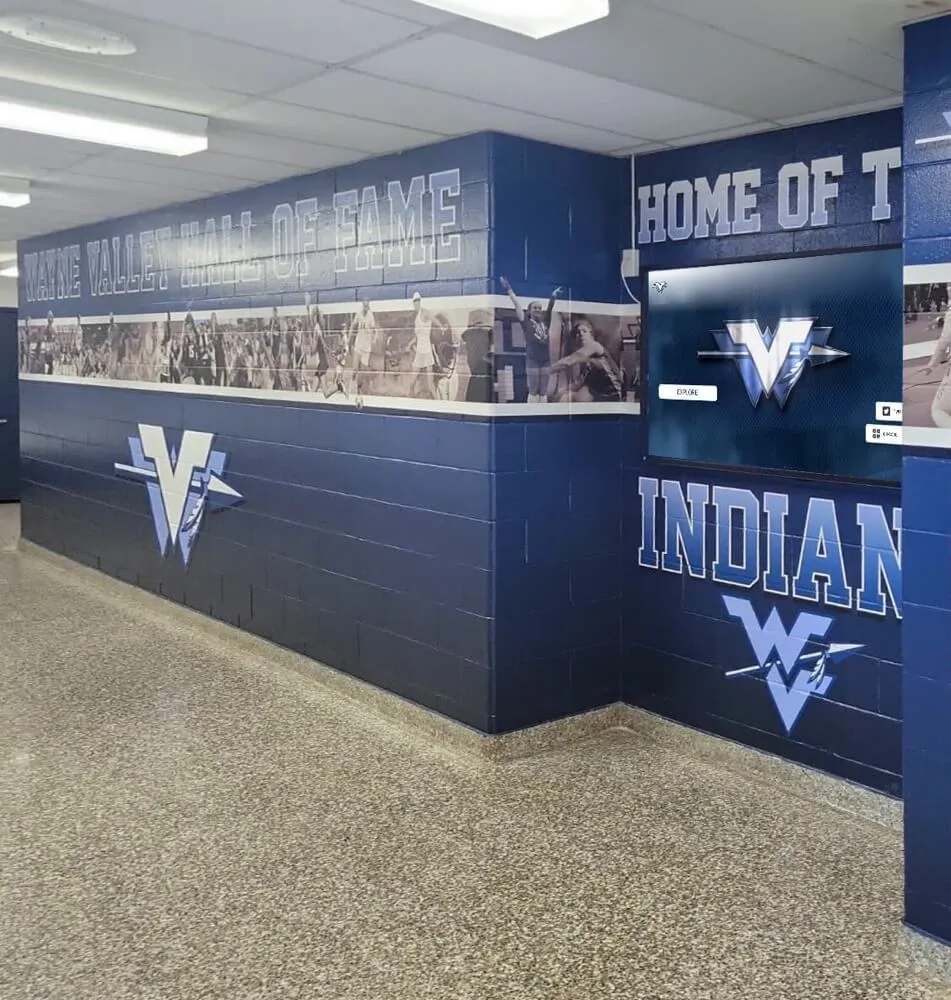
School hallways transform into athletic showcases through branded murals integrated with digital recognition displays
Creating Engaging Recognition Ceremonies and Events
The Texas Sports Hall of Fame hosts annual induction ceremonies creating celebratory events that honor inductees while strengthening community bonds. Schools can adapt this approach creating meaningful recognition traditions.
Induction Ceremony Planning
Well-planned induction ceremonies provide honorees with memorable recognition experiences while creating community events celebrating athletic tradition.
Event Timing and Venue Selection
Schedule induction ceremonies during high-attendance events maximizing audience size and community participation. Homecoming games, basketball tournaments, annual athletic banquets, or dedicated hall of fame evenings all provide suitable timing options with different advantages.
Homecoming timing leverages existing alumni return events ensuring strong attendance from past athletes who appreciate witnessing current recognition ceremonies. Dedicated hall of fame evenings create focused attention on inductees without competing with game action, though they require stronger promotion ensuring adequate attendance.
Ceremony Elements and Recognition Moments
Create meaningful ceremony components including inductee biographies read aloud, video highlight presentations, acceptance speeches, certificate or plaque presentations, and photo opportunities. These elements combine providing honorees with substantive recognition while creating emotional resonance with audiences.
Digital displays enhance ceremonies by showing inductee content during events, creating visual focal points, and allowing real-time content additions like speech videos or ceremony photos that immediately join permanent recognition records.
Family Involvement and Community Connection
Involve inductee families in ceremonies through special seating, recognition moments, and participation opportunities. Athletic achievement represents family investment through years of support, transportation, encouragement, and sacrifice deserving acknowledgment during recognition events.
Community connection strengthens when ceremonies include current athletes, allowing them to meet program legends, hear their stories, and understand the tradition they inherit. These intergenerational connections reinforce program culture while inspiring current athletes through direct contact with recognized excellence.
Maintaining Year-Round Engagement
Effective recognition programs extend beyond annual ceremonies through ongoing content additions, interactive features, and community touchpoints maintaining year-round engagement.
Regular Content Updates
Digital platforms allow continuous content additions beyond annual inductions. Add current season highlights, update inductee profiles with recent accomplishments, feature athlete spotlights, and share historical photos maintaining fresh content that gives community members reasons to repeatedly engage with recognition systems.
This continuous updating creates what’s known as “digital warming”—the phenomenon where regularly updated, personalized content transforms cold digital spaces into warm, engaging destinations that community members actively visit rather than ignore. Solutions designed for continuous content surfacing excel at creating this ongoing engagement that traditional static displays cannot achieve.
Interactive Features and Exploration
Enable community interaction through searchable databases, filter options, comparison tools, and social sharing features. When visitors can search for specific athletes, filter by sport or era, compare statistics across decades, or share profiles on social media, engagement increases dramatically compared to passive viewing experiences.
Consider incorporating gamification elements like athlete trivia, record challenges, or historical sports quizzes that educate while entertaining, particularly appealing to younger students who might otherwise dismiss athletic history as irrelevant to their experience.
Alumni Connection and Networking
Recognition programs create natural opportunities for alumni networking and connection. Digital platforms can include contact information for willing alumni, enable message features connecting current athletes with program predecessors, or facilitate mentoring relationships between recognized athletes and current students pursuing similar sports or career paths.
These connection opportunities transform recognition from backward-looking nostalgia into forward-looking community building that provides current students with valuable networks while keeping alumni engaged with their schools.
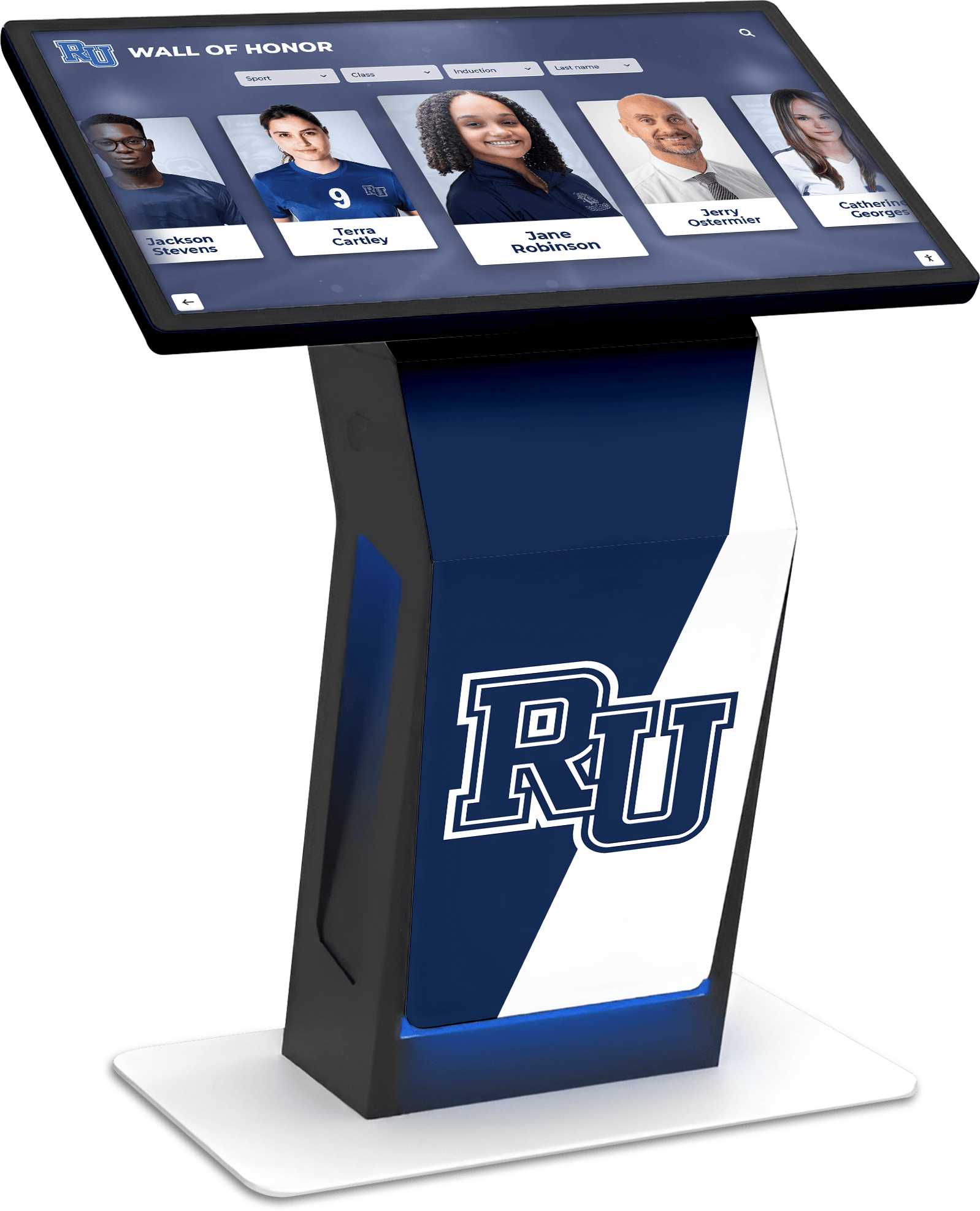
Freestanding touchscreen kiosks provide flexible installation options for schools without dedicated wall space for recognition displays
Overcoming Common Implementation Challenges
Schools developing athletic recognition programs encounter predictable obstacles that, when anticipated, become manageable through strategic planning and appropriate solutions.
Budget Constraints and Funding Strategies
Athletic recognition programs compete with numerous other priorities for limited school budgets. Strategic funding approaches make programs achievable even with modest resources.
Phased Implementation
Rather than attempting comprehensive program launches, implement recognition systems in phases. Start with recent inductees or specific sports, then expand gradually as resources allow. Digital systems particularly support phased approaches since adding content later costs nothing beyond staff time unlike physical displays requiring additional materials and installation.
This incremental approach demonstrates value through initial implementation, making subsequent funding requests easier to justify with concrete engagement evidence and community enthusiasm.
Booster Club and Alumni Funding
Athletic recognition programs appeal naturally to booster clubs and alumni donors who value athletic tradition celebration. Position recognition system development as naming opportunities, memorial tributes, or legacy projects connecting donors personally to recognition outcomes.
Texas schools with strong Friday night football cultures often find boosters enthusiastic about funding recognition programs that honor athletes they watched compete. Alumni who themselves achieved athletic recognition may fund programs immortalizing their accomplishments and those of teammates.
Sponsorship and Revenue Generation
Some digital recognition platforms include sponsorship features allowing local businesses to sponsor athlete profiles, team pages, or content categories. These modest sponsorships can generate revenue offsetting system costs while providing local businesses with community goodwill and visibility to engaged school audiences.
Sponsorship revenue opportunities work particularly well for schools in communities with strong local business networks seeking authentic connection opportunities beyond generic advertising.
Historical Data Collection and Organization
Schools with decades of athletic history face challenges collecting, organizing, and digitizing historical information, photos, and records necessary for comprehensive recognition programs.
Community Sourcing and Alumni Outreach
Leverage community members and alumni as historical research resources. Former athletes, long-serving faculty, dedicated fans, and community historians often possess photos, newspaper clippings, programs, statistics, and stories not available in official school records.
Create structured outreach requesting specific information categories with clear submission guidelines. Digital platforms simplify content aggregation from distributed sources compared to physical recognition requiring centralized material collection before display creation.
Prioritization and Incremental Building
Accept that comprehensive historical recognition takes time. Prioritize recent eras with better documentation and living participants who can provide information, then work backwards through school history as resources allow.
Digital systems excel for incremental historical building since adding past eras later integrates seamlessly with existing content unlike physical displays where retrofitting historical recognition appears awkward or requires complete redesign.
Balancing Comprehensiveness with Feasibility
Recognize that perfect historical completeness may prove impossible, especially for schools with century-long athletic programs. Focus on celebrating available history comprehensively rather than paralyzing programs pursuing impossible documentation standards.
Some gaps in historical records are inevitable. Acknowledge these limitations transparently while celebrating the athletic heritage that can be documented, leaving framework for future additions as additional information surfaces.
Maintaining Long-Term Program Sustainability
Initial program launches often benefit from enthusiasm and dedicated champion leadership, but lasting programs require sustainability planning ensuring they endure through leadership transitions and competing priority pressures.
Institutionalizing Selection and Update Processes
Document all procedures, criteria, timelines, and responsibilities ensuring programs survive individual champion departures. Create policy documents, operations manuals, and procedural calendars preventing institutional knowledge loss when key personnel change.
Assign clear ownership to specific roles—athletic directors, hall of fame committees, administrative assistants—with documented handoff procedures for position transitions.
Technology Selection for Longevity
Choose recognition technology platforms designed for longevity with clear update paths, vendor stability, and content ownership guarantees. Avoid solutions dependent on individual champions’ technical skills or platforms with uncertain vendor viability.
Web-based systems generally offer superior longevity compared to proprietary software or hardware-dependent solutions. Choose vendors with established customer bases, clear support structures, and simple content management systems that non-technical staff can operate during transitions.
Building Cultural Tradition
Recognition programs achieve sustainability when they become ingrained cultural traditions that communities value and expect. Annual ceremonies, consistent update schedules, and visible displays create expectations that future leadership must maintain even when founding champions move on.
Texas schools excel at building lasting athletic traditions. Positioning hall of fame programs within broader athletic culture rather than as isolated projects increases likelihood they endure across leadership generations.
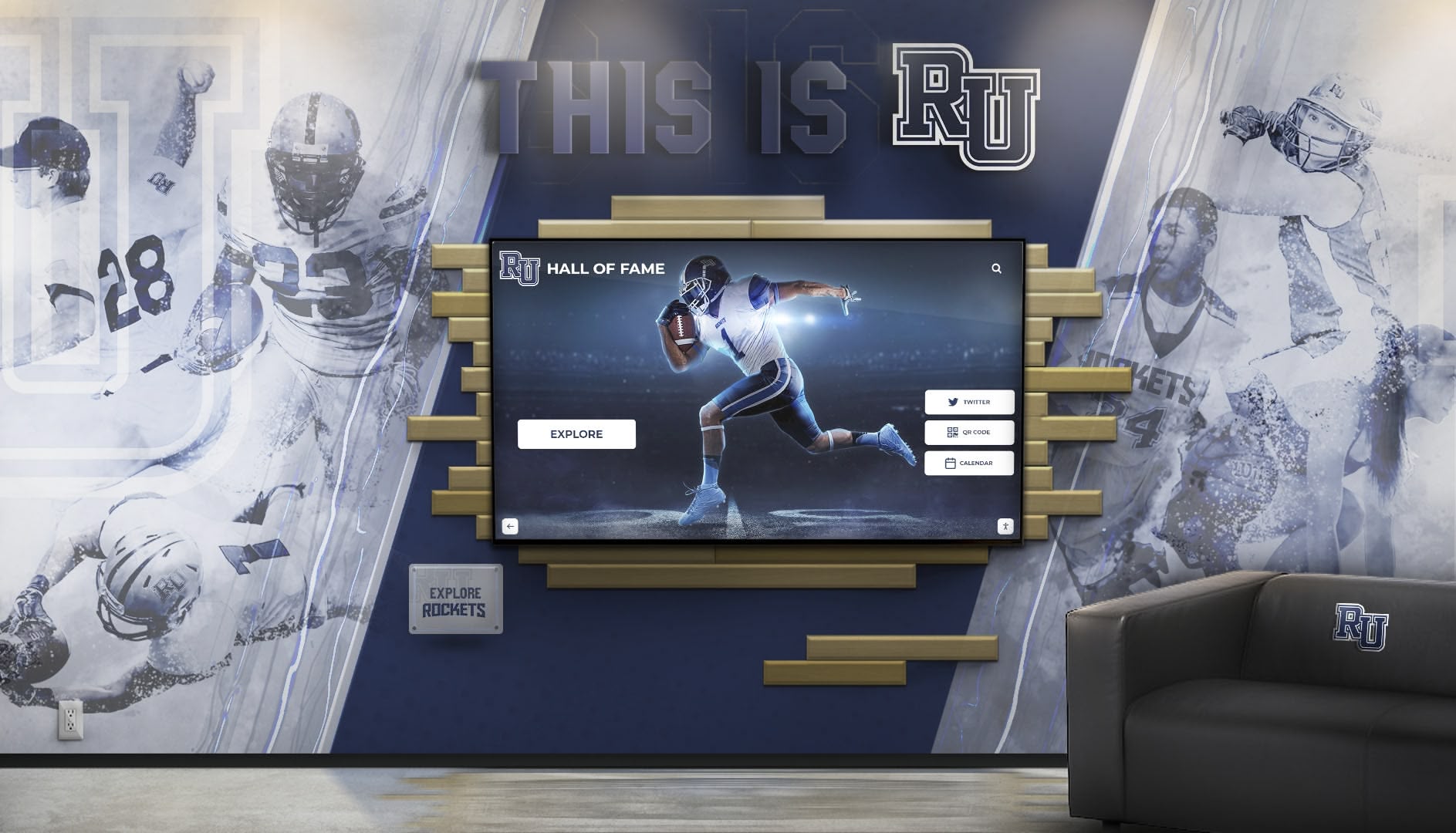
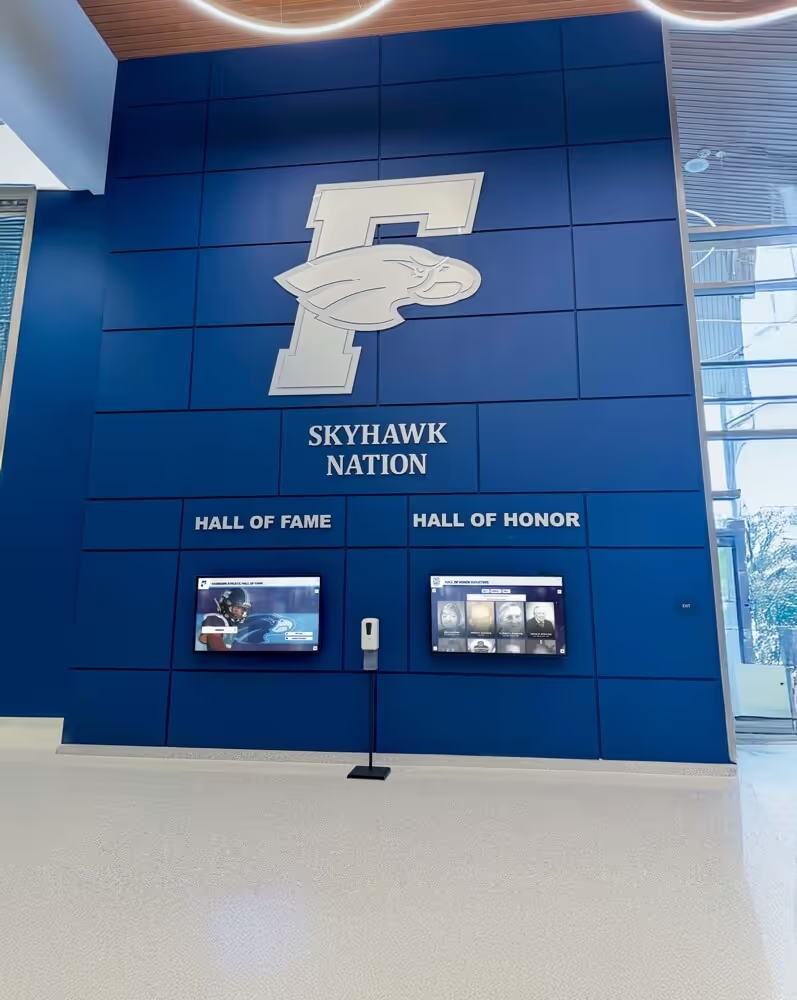
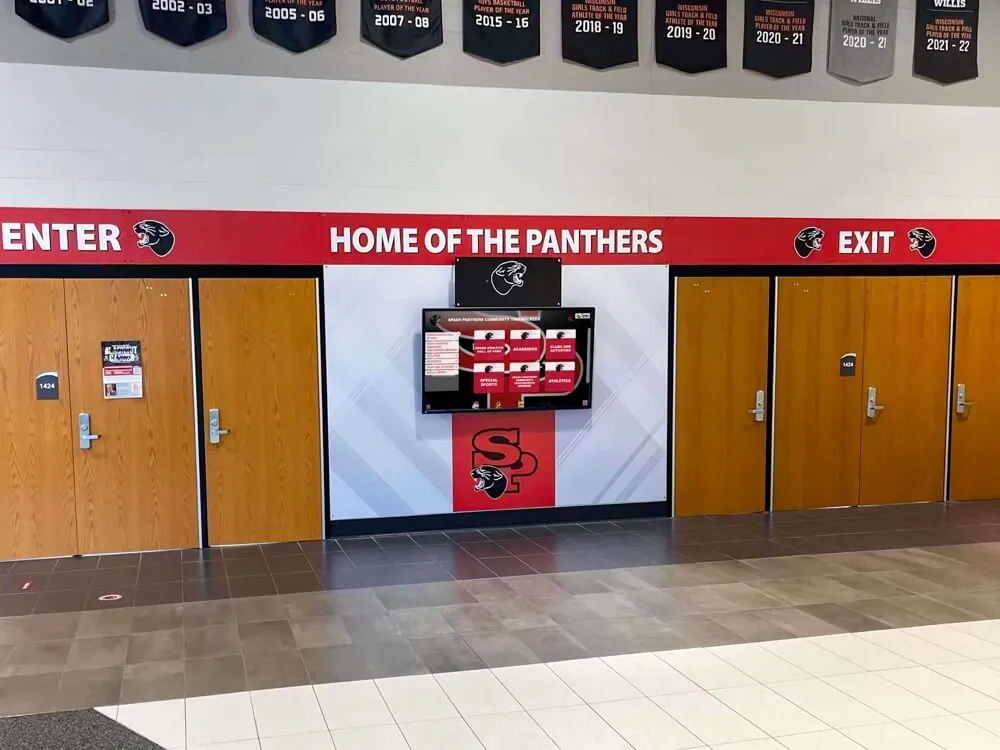
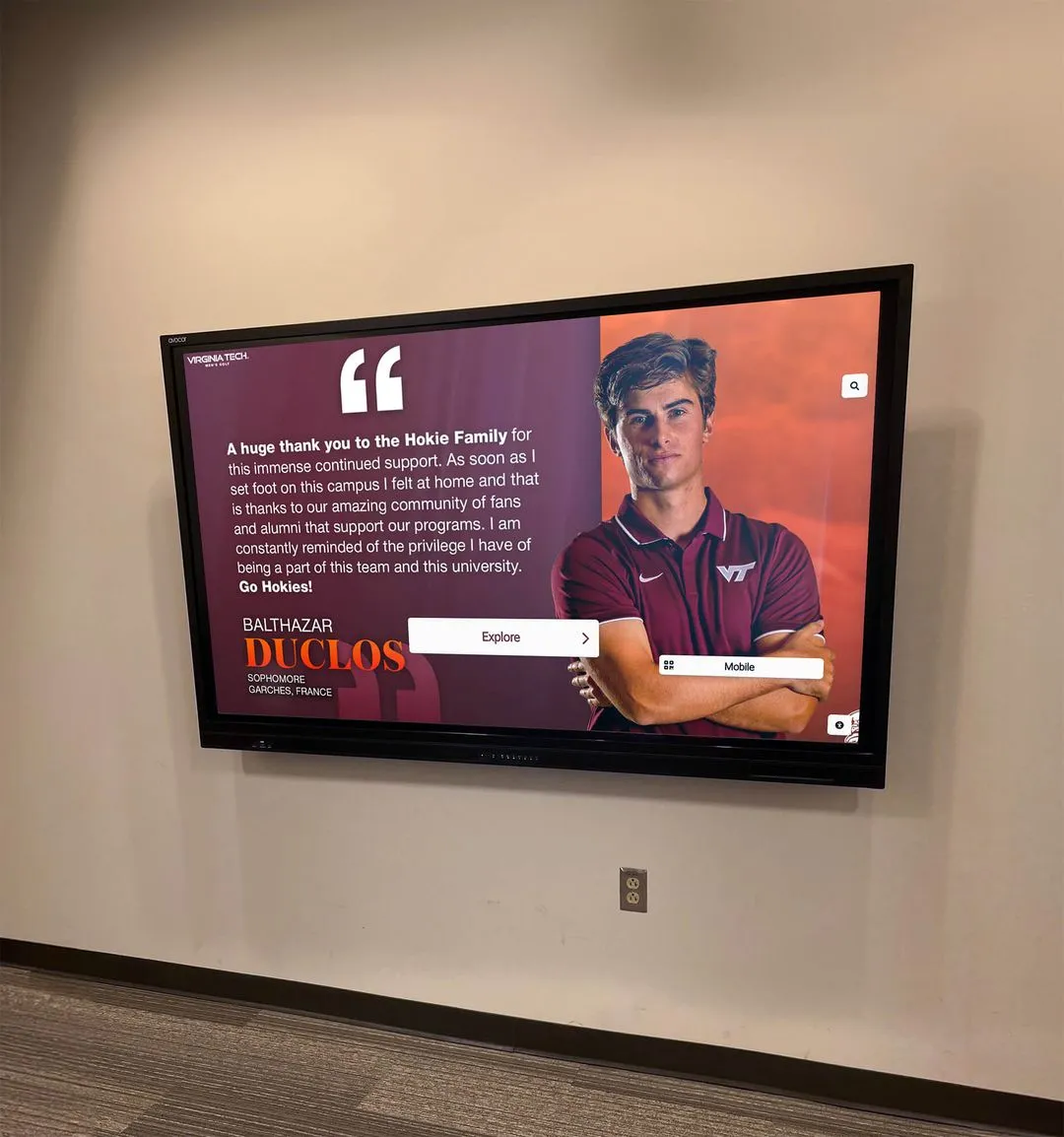
Lobby installations create high-visibility recognition that visitors encounter immediately upon entering school facilities
Texas-Specific Considerations and Opportunities
Schools in Texas operate within unique athletic and cultural contexts that influence recognition program development and presentation approaches.
Celebrating Texas Sports Culture
Texas’s distinctive sports culture provides rich thematic opportunities for athletic recognition programs that resonate with community identity.
Friday Night Football Tradition
Football occupies special cultural status across Texas, particularly in communities where Friday night games represent central social events. Recognition programs can acknowledge this cultural reality without neglecting other sports by creating football-specific content sections, historical football tradition features, or championship season spotlights within broader multi-sport frameworks.
Balancing football’s cultural prominence with equitable recognition across sports requires intentional planning ensuring that while football receives appropriate attention given its community significance, other sports receive proportional recognition preventing single-sport dominance that alienates athletes in other programs.
Multi-Sport Excellence
Beyond football, Texas produces national-caliber programs in basketball, baseball, softball, track and field, volleyball, soccer, and other sports. Recognition programs should celebrate this multi-sport excellence showcasing schools’ comprehensive athletic achievement rather than narrow single-sport focus.
Digital platforms excel at multi-sport recognition through category filters, sport-specific sections, and search features allowing visitors to explore sports individually while seeing complete athletic program scope.
Connecting School Programs to State Athletic Legacy
Position school recognition programs within Texas’s broader athletic heritage, creating connections between local athletes and state sports history.
State Tournament and Championship Recognition
Schools producing state tournament participants or championship teams earn distinction worth celebrating extensively. Create dedicated recognition for state-level achievements connecting school athletes to Texas’s broader high school athletics history.
Digital displays can incorporate UIL (University Interscholastic League) tournament brackets, championship game recaps, state meet results, and historical progression showing how many athletes reached state competition across decades.
Professional and Collegiate Athlete Tracking
Texas high schools regularly produce athletes continuing careers at collegiate and professional levels. Recognition programs can track these post-high school achievements, celebrating when program alumni compete at Texas universities, earn collegiate honors, or reach professional ranks.
This tracking demonstrates program quality, inspires current athletes by showing pathways from their school to higher competition levels, and maintains alumni connections as careers progress beyond high school.
Hall of Fame Connections
When school alumni achieve recognition in collegiate halls of fame, professional sports halls of fame, or the Texas Sports Hall of Fame itself, celebrate these achievements as ultimate program validation. These rare accomplishments deserve special recognition showing your school’s connection to Texas athletic elite.
Taking Action: Starting Your School’s Athletic Recognition Program
Schools ready to develop athletic hall of fame programs can follow proven implementation pathways moving from concept to reality.
Assessment and Planning Phase
Begin with thorough assessment establishing program foundations before public launch announcements or resource commitments.
Community Interest Evaluation
Survey stakeholders including administrators, coaches, athletes, alumni, boosters, and community members gauging interest and gathering input about recognition priorities, preferred formats, and participation willingness. This consultation builds stakeholder buy-in while preventing programs that reflect narrow interests rather than broader community values.
Resource Inventory
Catalog available resources including budget potential, historical materials, volunteer availability, physical space options, and technical capabilities. Realistic resource assessment prevents overpromising or underdelivering, ensuring program scope aligns with actual implementation capacity.
Goal Definition
Articulate specific program goals beyond generic “honor athletes” statements. Do you primarily seek to increase school pride, strengthen alumni engagement, motivate current athletes, preserve athletic history, or create distinctive institutional identity? Clear goals drive focused implementation and provide success metrics.
Selection and Technology Decisions
Critical decisions about recognition criteria and display technology fundamentally shape program character and effectiveness.
Criteria Development
Develop selection criteria balancing achievement standards with inclusive recognition ensuring diverse athletes, sports, and contribution types receive consideration. Document these criteria transparently, creating public confidence in selection fairness.
Platform Selection
Choose recognition display technology matching your goals, resources, and technical capabilities. Digital platforms offer compelling advantages for schools prioritizing engagement, accessibility, unlimited capacity, and update flexibility. Solutions like Rocket Alumni Solutions provide purpose-built recognition systems designed specifically for schools, combining touchscreen displays, web accessibility, simple content management, and features like automatic record boards that rank athletes by performance metrics.
When evaluating options, prioritize systems with unlimited content capacity, ADA accessibility compliance, remote content management, and vendor support ensuring long-term viability. Avoid solutions requiring frequent hardware replacement or imposing per-inductee fees that create unsustainable cost escalation.
Launch and Ongoing Operations
Successful program launches create positive momentum while establishing operational rhythms sustaining long-term success.
Inaugural Induction Planning
First induction classes establish program tone and quality expectations. Select unquestionable inaugural inductees representing obvious excellence that validates selection processes. Include diverse representation across sports, eras, and recognition categories demonstrating program comprehensiveness from inception.
Plan memorable launch ceremonies generating community enthusiasm and media coverage establishing programs prominently in school culture.
Content Development and Display Installation
Allocate sufficient time for content creation ensuring quality that reflects honorees’ achievements. Rushed content creation produces mediocre results undermining program value. Digital platforms simplify ongoing content additions, but initial content establishing program quality standards deserves careful development.
Coordinate display installation timing with launch events maximizing visibility and impact.
Promotional Strategy
Promote programs through multiple channels including school communications, local media, social platforms, alumni networks, and community events. Recognition programs only achieve community engagement goals when communities know they exist and understand how to interact with them.
Create QR code links allowing smartphone access, publish web URLs prominently, and demonstrate digital features showing community members how to explore content beyond passive viewing.
Conclusion: Building Recognition That Inspires
The Texas Sports Hall of Fame demonstrates how thoughtful athletic recognition preserves heritage, honors excellence, and inspires future achievement. Schools can adapt these proven principles creating recognition programs scaled appropriately for their communities while delivering similar benefits—strengthened school identity, increased alumni connection, motivated current athletes, and preserved institutional memory.
Modern digital recognition technology removes traditional barriers that prevented schools from building comprehensive hall of fame programs. Unlimited capacity, affordable implementation, simple content management, and superior engagement potential make quality athletic recognition achievable regardless of school size or budget.
Athletic excellence deserves celebration that matches the dedication athletes invest in their sports. Recognition programs honoring this excellence create lasting value extending far beyond individual honorees, strengthening entire school communities while building traditions that endure across generations.
Ready to bring Texas-caliber athletic recognition to your school? Explore how Rocket Alumni Solutions helps schools create engaging, accessible digital hall of fame programs that celebrate athletic achievement while building vibrant school communities. From championship programs to schools just beginning their recognition journey, discover how modern technology makes comprehensive athletic celebration achievable, affordable, and engaging for your entire community.