



For high school swimmers, qualifying for and competing at the state championship meet represents the pinnacle of their seasonal journey—a culmination of months spent perfecting technique, building endurance, and shaving tenths of seconds off personal records. State championship meets bring together the fastest swimmers from across entire states, creating high-stakes competition that can determine college recruitment opportunities, set lasting records, and cement athletic legacies within school communities.
Yet many swimmers, parents, and even coaches find state championship qualification processes confusing. Standards vary significantly between states and even between conferences within states. Qualification paths differ between individual events and relays. Championship meet formats, prelim-final structures, and scoring systems follow complex rules that determine both individual recognition and team standings. Understanding these systems helps swimmers set appropriate goals, prepare mentally for championship-level competition, and maximize performance when it matters most.
This comprehensive guide explains how high school swimmers qualify for state championships, what to expect at championship meets, how schools recognize state-level achievement, and how digital recognition platforms help schools celebrate swimming excellence in ways that inspire current and future athletes.
High school swimming represents one of the most technically demanding and individually measurable sports, where electronic timing systems capture performances to hundredths of seconds, creating objective qualification standards based purely on speed rather than subjective evaluation. This precision enables clear pathways to state championship qualification while simultaneously creating intense pressure as single races often determine whether swimmers advance to postseason competition or end their seasons at conference or sectional meets.

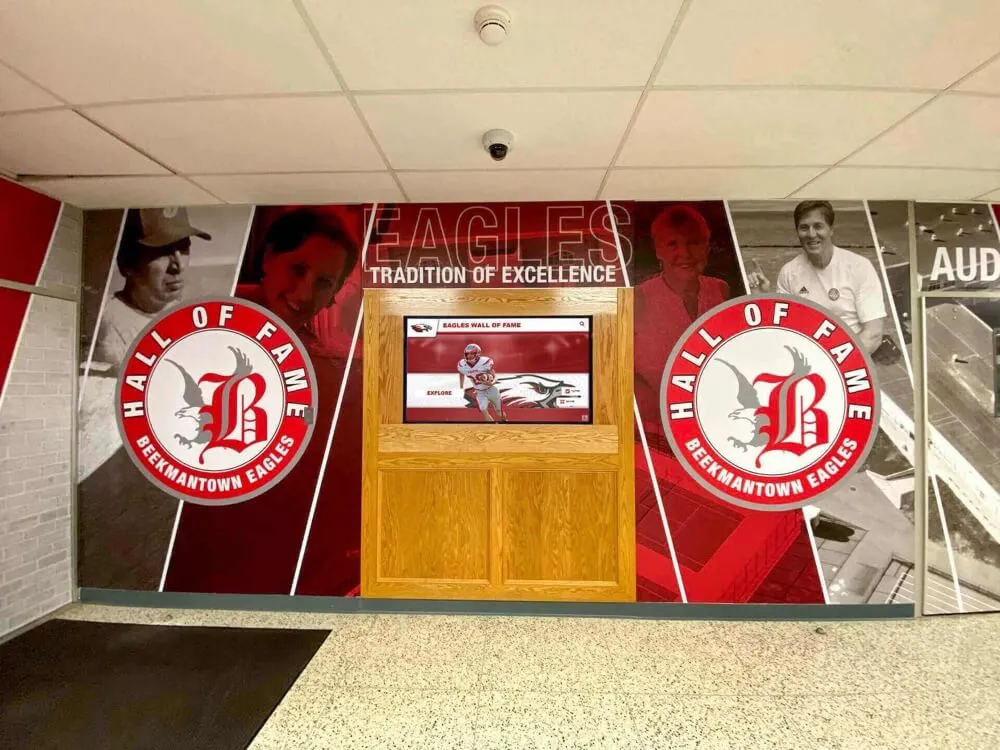
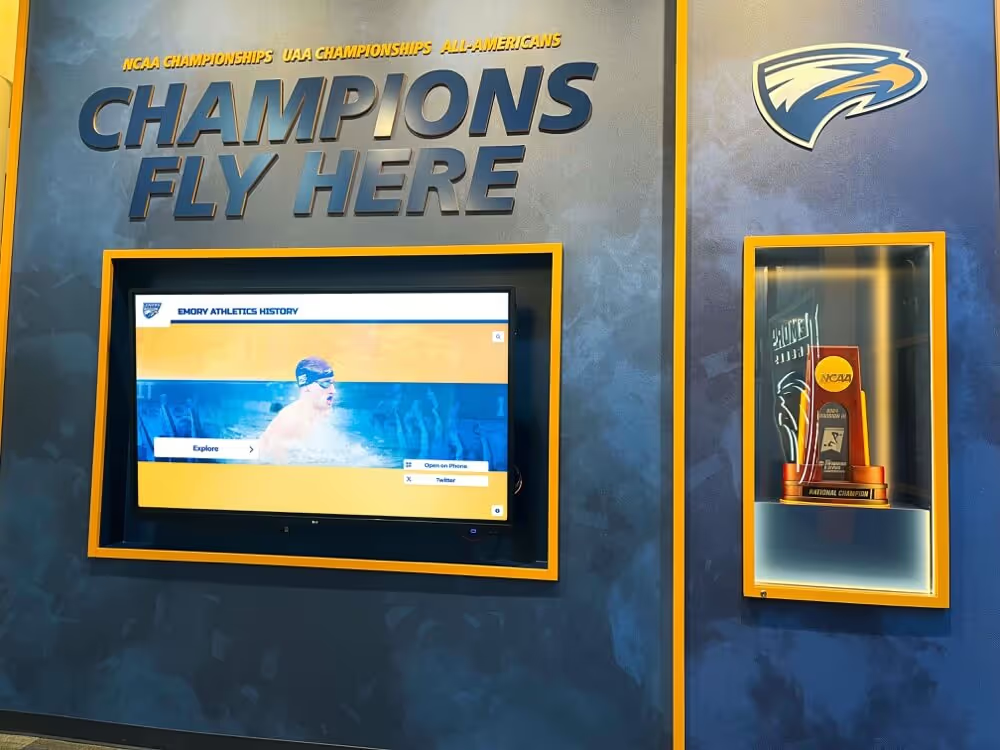
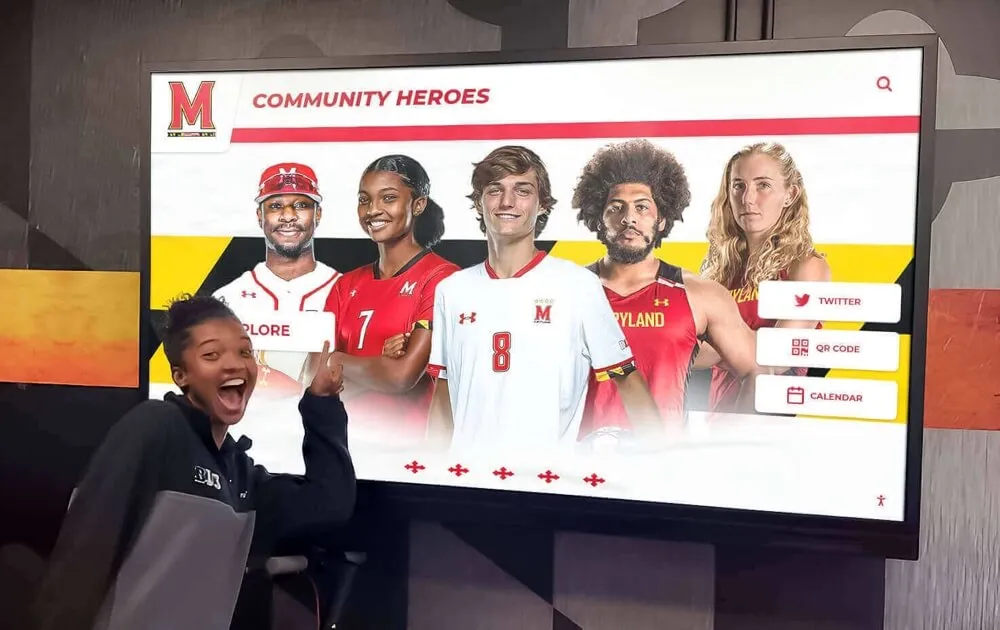
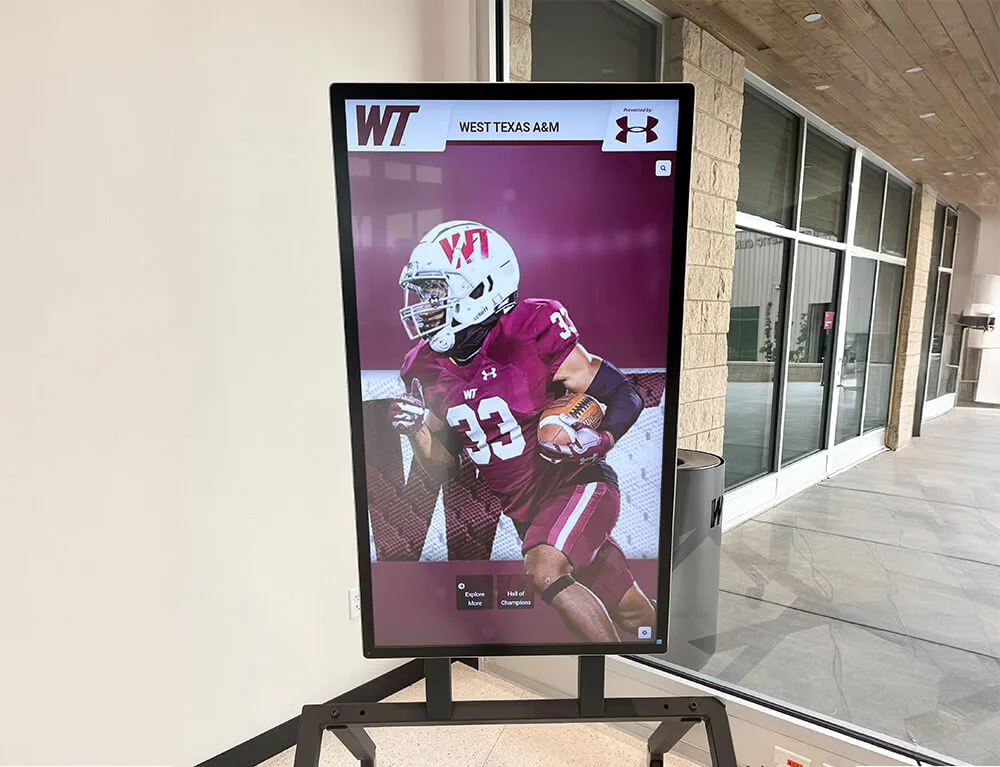
Championship swimming programs preserve achievement through comprehensive recognition celebrating individual and team success at state meets
Understanding State Championship Qualification Systems
State championship qualification follows structured pathways that vary by state association rules but share common elements ensuring only the fastest swimmers compete at state meets.
State Association Structures and Divisions
Most state high school athletic associations organize swimming into divisions based on school enrollment or competitive level, creating appropriately scaled championship meets.
Division Classification Systems
Larger states typically separate schools into multiple divisions preventing small rural schools from competing against large suburban powerhouses with substantially greater depth. Common division structures include:
- Class-based systems (Classes A, AA, AAA, etc.) determined by school enrollment
- Geographic district systems grouping schools by region before state-level competition
- Public vs. private school separate championships in states with significant private school populations
- Combined classifications where smaller states host single championship meets including all schools regardless of size
Division structures significantly impact qualification difficulty—qualifying times in large school divisions typically require faster performances than small school standards since competition depth increases with student population and program resources.
Boys vs. Girls Championships
Nearly all states conduct separate boys and girls state championship meets, either on different weekends or consecutive days at the same venue. Event structures remain parallel between genders—both compete in identical distance races (50/100 freestyle, 200/500 freestyle, 100 backstroke/breaststroke/butterfly, relays) ensuring equitable competitive opportunities as recognized through high school athletics equity frameworks.
Qualifying Time Standards
State associations publish qualifying time standards that swimmers must achieve to compete at state championship meets, with standards varying by event, division, and sometimes gender.
Automatic vs. Consideration Times
Most states establish two qualifying thresholds for each event:
Automatic Qualifying Times guarantee state meet entries when achieved at sanctioned competitions during qualifying periods. Swimmers meeting automatic standards in prelim-finals conference championships or designated qualifying meets earn definite state championship berths regardless of how many other swimmers also qualify.
Consideration Times create qualifying pools when state meet capacity limitations prevent all automatic qualifiers from competing. Swimmers achieving consideration standards but not automatic times may advance to state meets if spots remain available after automatic qualifiers are entered. Selection typically follows fastest-time priority when consideration pools exceed available slots.
This two-tier system ensures state meets include genuinely competitive fields while managing facility capacity and meet duration constraints that prevent unlimited entries.
Time Standard Development Process
State associations typically establish qualifying standards based on previous years’ performance data, aiming to fill championship meets with appropriate athlete numbers while maintaining selectivity ensuring only accomplished swimmers advance. Standards usually fall within the fastest 5-15% of statewide performances depending on state size and competitive depth.
Associations periodically revise standards, generally making them faster as overall competition levels improve through better training, technique refinement, and facility upgrades across states. Swimmers should verify current season standards rather than assuming previous years’ times remain valid.

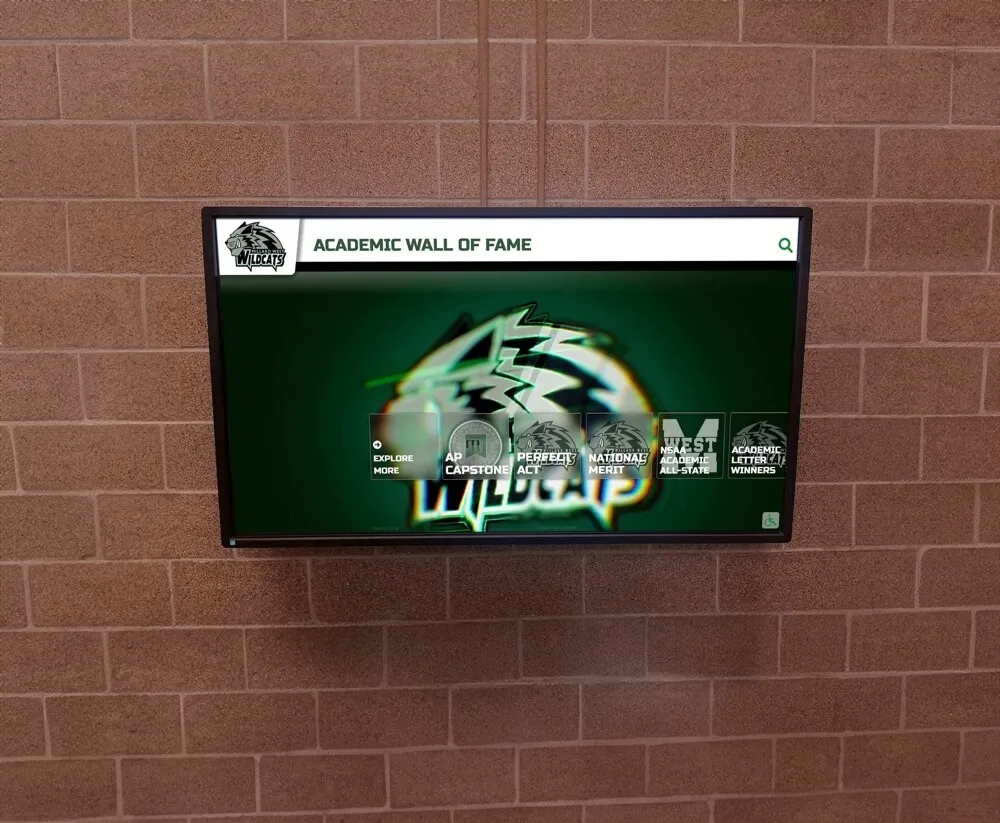
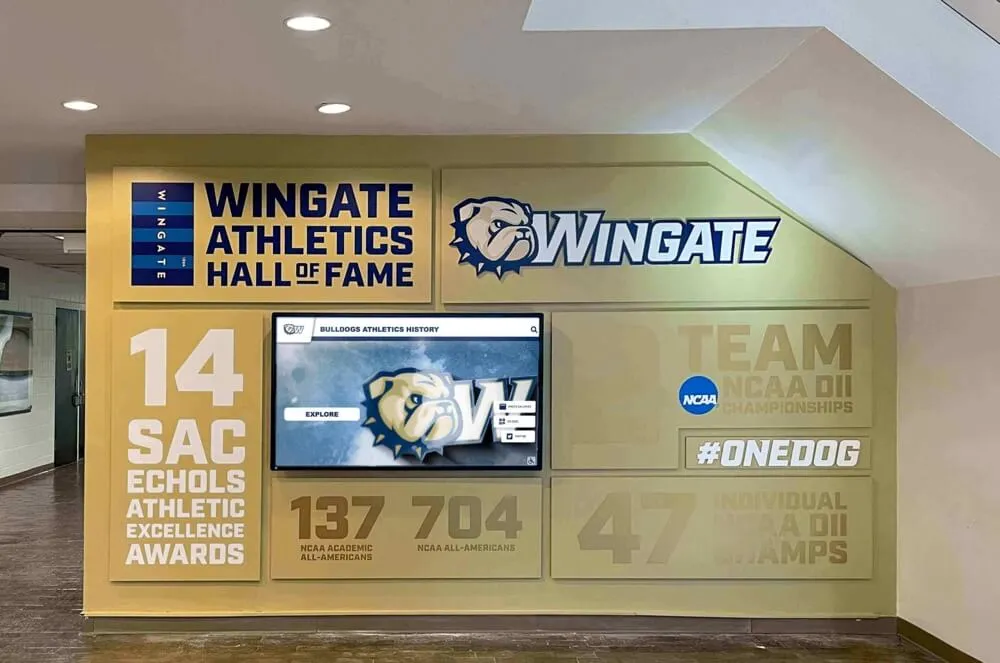
Modern schools display championship qualification standards and state meet qualifiers through digital systems keeping current swimmers informed about performance targets
Sanctioned Competition Requirements
Qualifying times must be achieved at officially sanctioned competitions meeting state association standards for timing equipment, officiating, and meet conduct.
Approved Timing Systems
Valid qualifying times require electronic touchpad timing systems where swimmers physically touch pads at race completion, with touchpad times taking precedence over manual stopwatch times. Backup manual times serve only for timing system failures or disqualifications requiring official verification.
This electronic timing requirement ensures accuracy and prevents disputes about hand-timed performances that might vary between officials operating stopwatches. Schools lacking touchpad timing systems must achieve qualifying times at neutral sites or invitational meets with appropriate equipment.
Qualifying Period Windows
States establish seasonal qualifying windows—typically extending from early season through conference championship meets—during which valid qualifying times can be achieved. Times achieved at club team meets, summer competitions, or outside designated windows generally don’t satisfy high school state championship qualification requirements even if they meet or exceed established standards.
Conference Championship Priority
Many states prioritize conference or district championship performances for qualification, with some requiring qualification attempts at designated meets rather than accepting times from any sanctioned competition. This priority ensures athletes compete under pressure conditions similar to state meets while giving conference championships significance beyond simple seeding for postseason competition.
Swimmers should understand their specific state’s qualifying timeline and approved competition list to ensure they attempt qualifying swims at appropriate meets rather than discovering after season’s end that impressive times don’t qualify for state championships due to meet sanction or timing issues.
Individual Event vs. Relay Qualification
Qualification processes differ between individual events and relays, with additional complexity around relay-only state meet entries.
Individual Event Qualification
Individual swimmers qualify for specific events by achieving required standards in those distances and strokes. A swimmer might qualify in multiple events—potentially swimming up to the maximum individual event limit (typically two individual events plus relays at state meets) if they achieve standards in multiple races.
Individual qualification gives swimmers ownership of their state meet participation, with advancement depending solely on their performances rather than team considerations or relay selection decisions.
Relay Qualification Requirements
Relay qualification follows different pathways, with states using various systems:
- Combined time standards where relay teams must achieve designated times as complete four-person units during qualifying competitions
- Individual cumulative standards where relay qualification occurs when four swimmers on a team each achieve individual qualifying times in the relay stroke/distance even if they haven’t swum together as a relay unit
- Automatic relay qualification for schools with minimum numbers of individual qualifiers regardless of relay times achieved
Relay Composition Flexibility
Schools whose relays qualify for state meets typically can alter relay composition between qualifying meets and state championships, substituting different swimmers who individually qualified in related events. This flexibility enables coaches to optimize relay performance based on state meet schedules, individual event commitments, and tactical considerations.
However, some states require relay swimmers to have achieved individual qualifying standards or competed on the qualifying relay, preventing schools from assembling state meet “super relays” with swimmers who didn’t previously compete together.
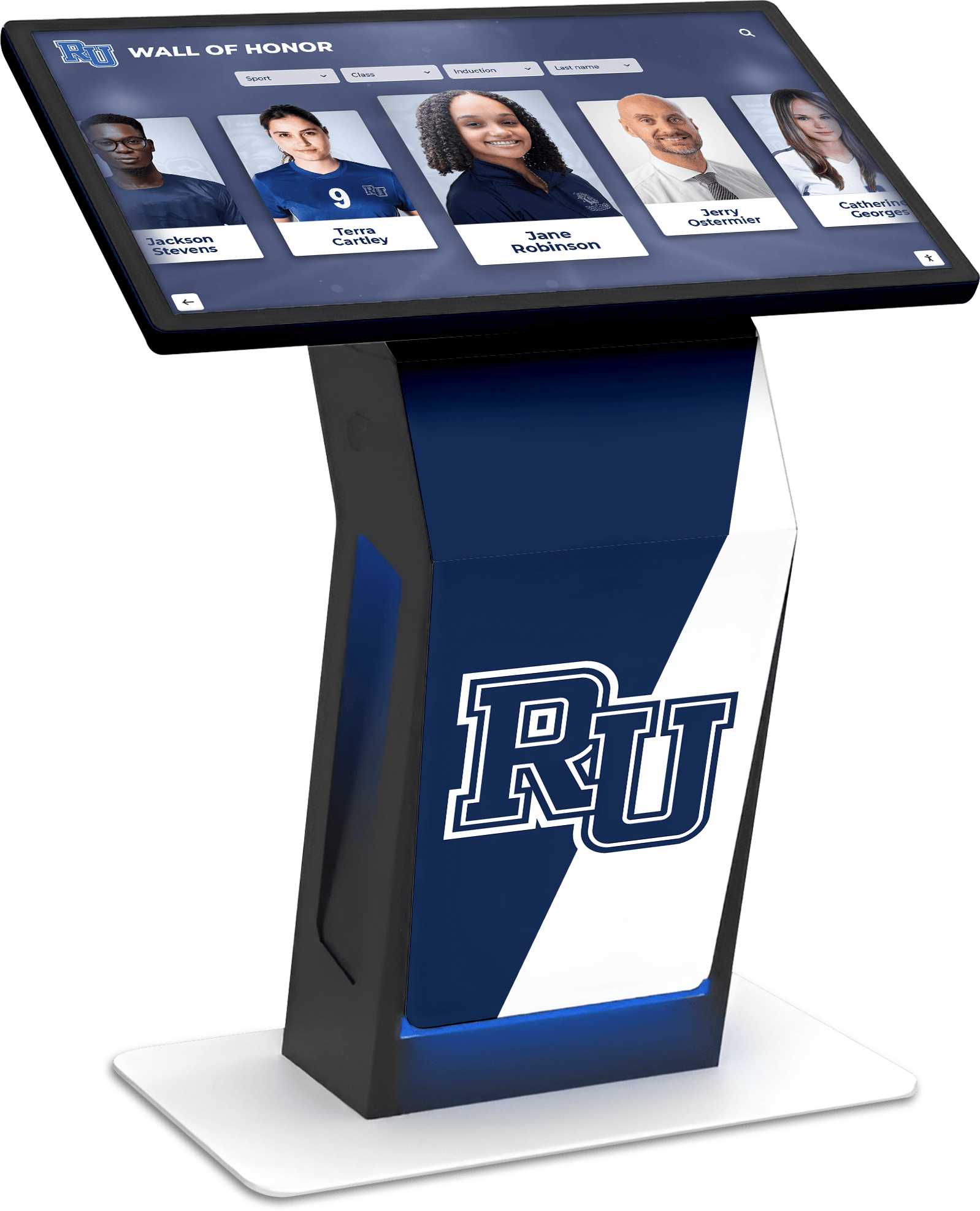
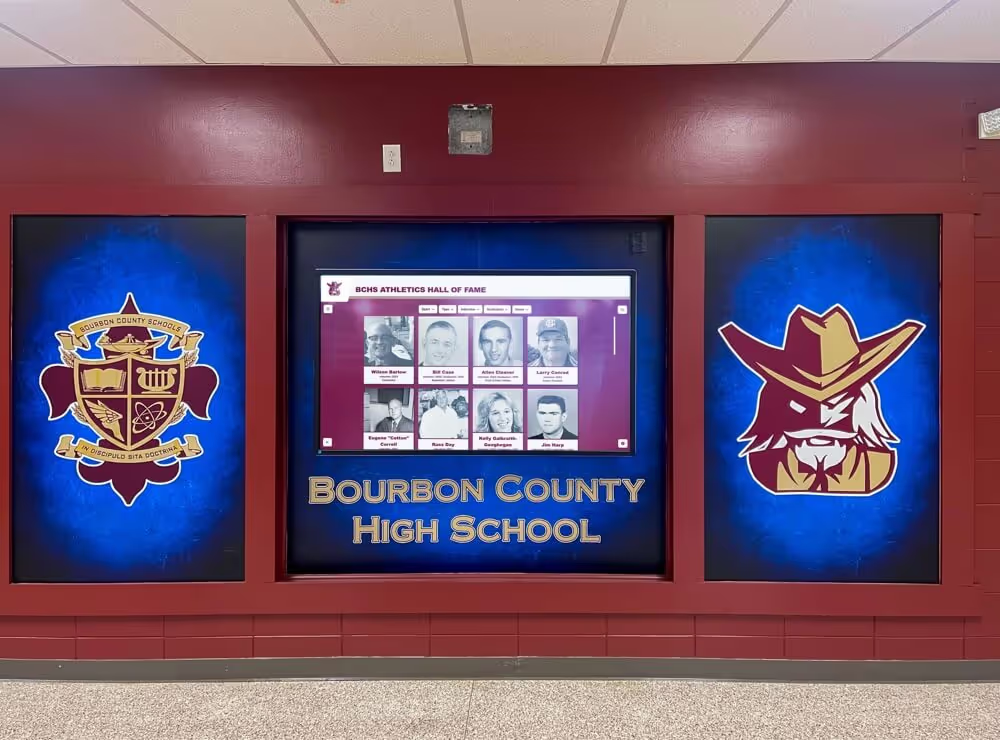
Schools preserve records of state championship qualifiers and medalists through interactive displays enabling exploration of swimming program history
State Championship Meet Format and Structure
Understanding championship meet format helps swimmers and coaches prepare mentally for competition schedules, race strategies, and the unique atmosphere of state-level meets.
Prelims-Finals Format
Most state championship swimming follows prelims-finals structures spreading competition across multiple sessions, unlike dual meets or smaller invitationals with single-session finals-only formats.
Preliminary Session Purpose
Morning or afternoon preliminary sessions include all state meet qualifiers swimming their entered events, with preliminary times determining finalist advancement and final heat seeding. Prelims establish competitive hierarchy while giving swimmers championship meet experience before evening finals races determining medals and final placements.
Prelims typically proceed quickly with short rest between events, testing swimmers’ warm-up efficiency and ability to perform without extensive recovery time. Strong preliminary swims ensure favorable final heat positions while avoiding slower consolation finals, making prelims strategically important beyond simple advancement.
Finals Session Structure
Evening finals sessions feature only top swimmers from prelims, typically divided into:
- Championship Finals (top 8 or top 16 depending on state) competing for medals, state titles, and top placements
- Consolation Finals (typically 9th-16th or 17th-24th place from prelims) competing for final placement and recognition while championship finalists rest before their races
Finals session atmosphere intensifies dramatically compared to prelims, with larger crowds, team celebration, and heightened pressure as medals and championships are determined. Swimmers must manage energy between prelims and finals while preparing mentally for the elevated competition environment.
Swimmers Club Finals and Seeding
Some states implement swimmers club formats where finals include more heats (potentially 3-4 championship heats) competing directly for placements rather than separate championship and consolation finals. This format ensures more swimmers compete in prime evening sessions while simplifying meet management.
Regardless of specific format, understanding whether your state uses prelims-finals, timed finals, or swimmers club structures helps swimmers mentally prepare for appropriate pacing, energy management, and tactical approaches across multiple races on single days.
Event Order and Scheduling
Championship meets follow standardized event orders balancing individual and relay events across meet sessions.
Standard Event Progression
Typical state championship meets include eleven events structured as:
- 200 Medley Relay
- 200 Freestyle
- 200 Individual Medley
- 50 Freestyle
- 100 Butterfly
- 100 Freestyle
- 500 Freestyle
- 200 Freestyle Relay
- 100 Backstroke
- 100 Breaststroke
- 400 Freestyle Relay
This sequence balances stroke variety, prevents swimmers from racing similar events consecutively, and positions relays strategically to build team excitement throughout meets. Many coaches reference how athletic recognition programs highlight state meet event performance to motivate swimmers year-round.
Rest Intervals Between Events
At championship meets, substantial time separates sequential events—often 30-45 minutes between individual races—creating warm-down and re-warm-up requirements. Swimmers competing in multiple events must manage these intervals effectively, maintaining readiness without over-fatiguing between races.
Multiple-Day Meet Considerations
Some states spread championship meets across two or three days, particularly when hosting multiple divisions or very large fields. Multi-day formats create additional preparation requirements including consistent sleep schedules, nutrition management, mental reset between days, and potentially hotel accommodations for swimmers from distant schools.
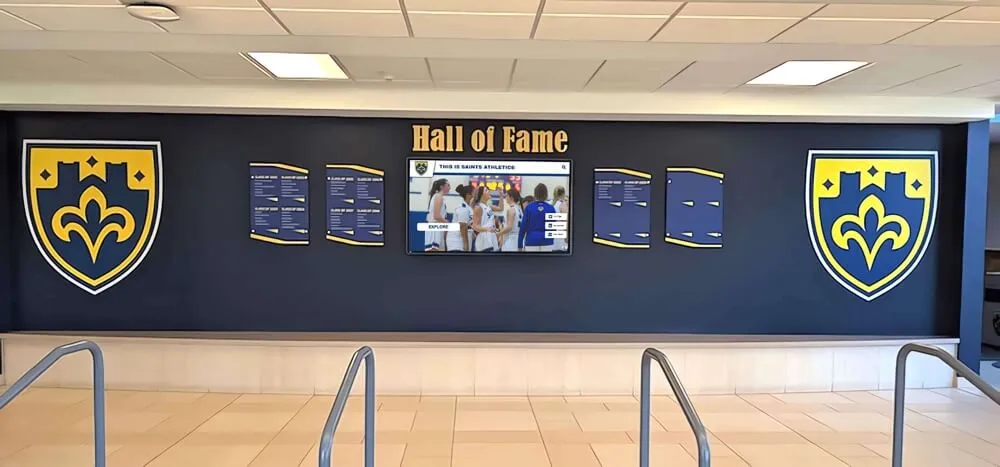
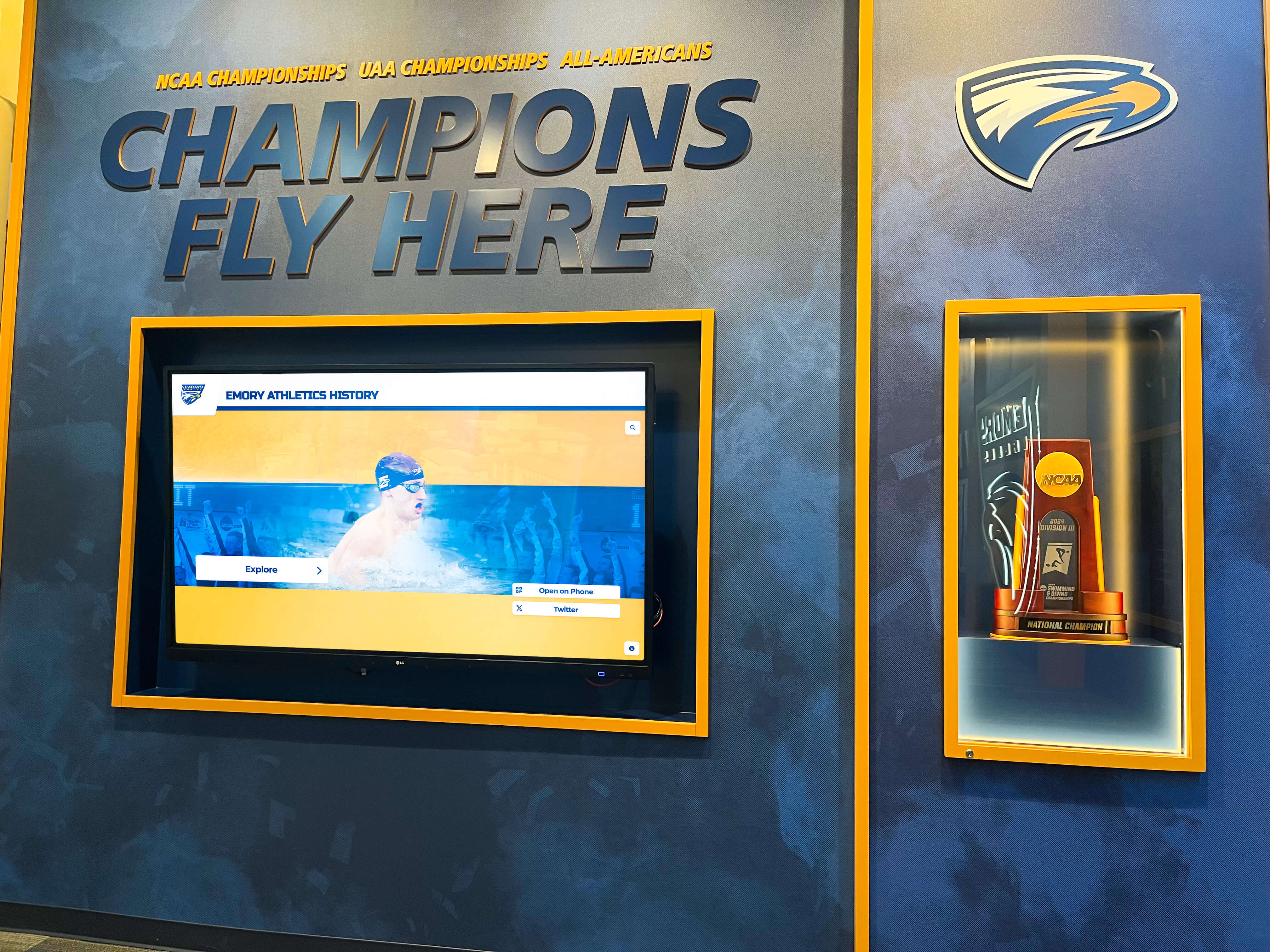
Schools commemorate state championship achievements through permanent recognition displays celebrating individual and relay performances
Scoring and Team Championships
While individual achievement motivates most swimmers, team scoring determines state championship team titles creating additional competitive dimensions.
Individual Event Scoring
Championship finals typically award points to top finishers using descending scales:
- Championship Finals: Points awarded to top 8 or top 16 finishers (common scales include 20-17-16-15-14-13-12-11 for top 8, or extended scoring for larger finals fields)
- Consolation Finals: Points awarded to consolation finishers (typically 9-7-6-5-4-3-2-1 for 9th-16th places)
Point structures reward both championship-level performances and scoring depth across multiple swimmers, with state titles often determined by which schools score consistently across many events rather than dominating few races.
Relay Event Scoring
Relay events typically award double points compared to individual races, reflecting four-swimmer participation and team tactical importance. Top relay finishes can significantly impact team championships, making relay composition decisions strategically crucial.
Team Championship Determination
State team championships go to schools accumulating most points across all events in their divisions. Team titles represent comprehensive program excellence rather than individual brilliance, requiring depth across multiple events and strokes.
Some swimmers find team championship pursuits more motivating than individual achievements, while others focus primarily on personal performances and records. Understanding both dimensions helps swimmers appreciate their roles within broader team contexts while pursuing individual excellence.
Preparing for State Championship Competition
State meet success requires specific preparation addressing the unique challenges of championship-level competition.
Physical Preparation and Taper Strategies
Championship meets typically occur after long training cycles, requiring coaches to implement taper strategies reducing training volume while maintaining speed and sharpness.
Taper Purpose and Duration
Taper periods—typically 1-3 weeks depending on training philosophy—reduce cumulative fatigue allowing swimmers to perform at maximal capacity during state meets. Proper tapers balance adequate rest permitting recovery with sufficient training maintaining feel, technique, and conditioning.
Swimmers often feel anxious during tapers when training volume decreases dramatically, sometimes worrying they’re losing fitness. Understanding that strategic rest enables peak performance helps swimmers trust taper processes even when reduced training feels counterintuitive.
Intensity Maintenance During Taper
Effective tapers reduce training volume substantially (often 40-70% reduction in total yards/meters) while maintaining high-intensity work preserving speed and power. Short race-pace sets, starts and turns practice, and focused technique work continue even as total practice time decreases.
Individual Taper Variations
Optimal taper duration and structure varies between swimmers based on training age, physical maturity, training volume background, and event distances. Distance swimmers often require longer tapers than sprinters. Younger swimmers with less training volume may need shorter tapers than highly-trained senior swimmers.
Experienced coaches individualize tapers based on swimmer responses and previous championship preparation, while less experienced swimmers may experiment across seasons to identify personal optimal taper approaches preparing for significant meets such as those recognized through state championship displays.
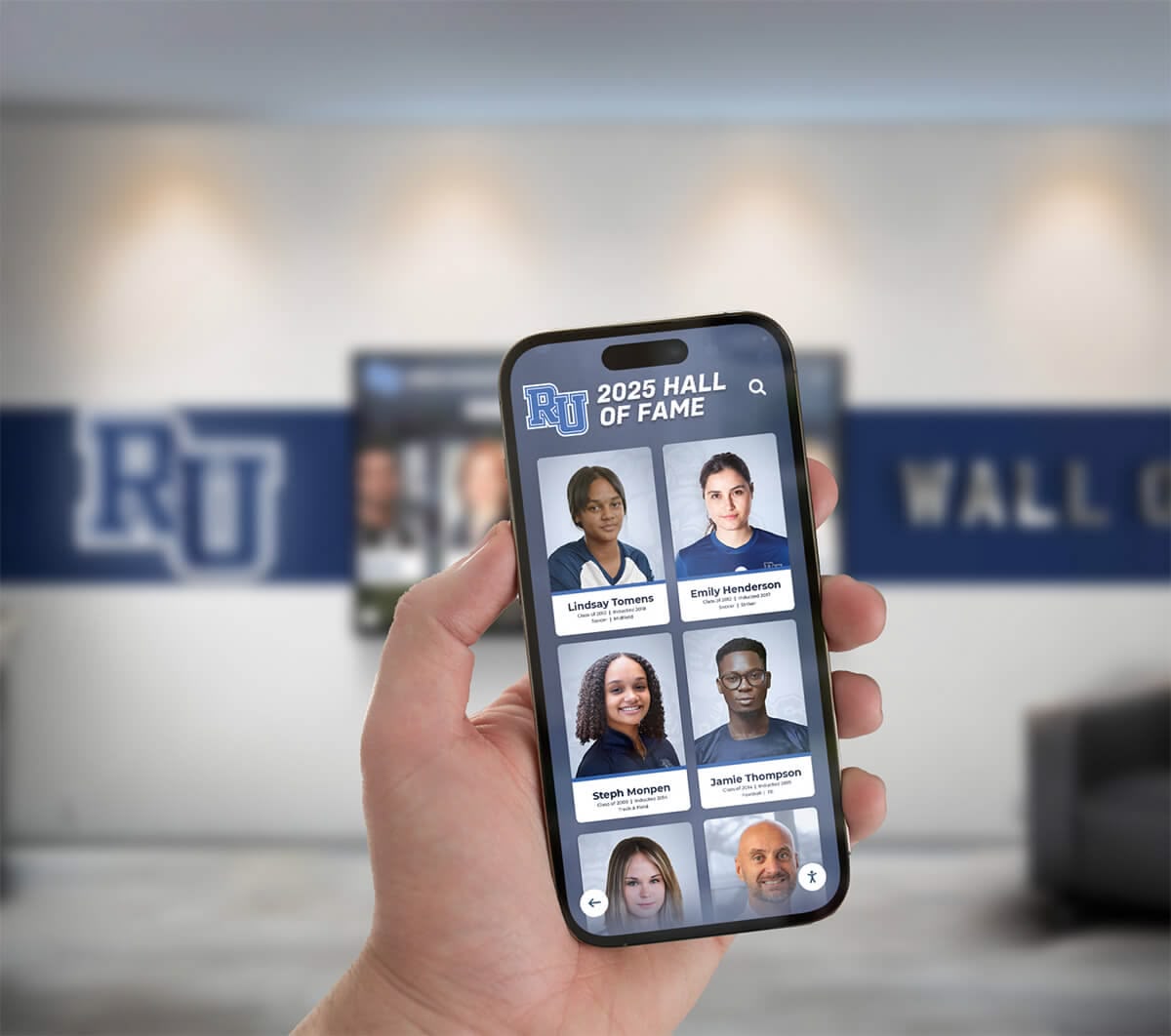
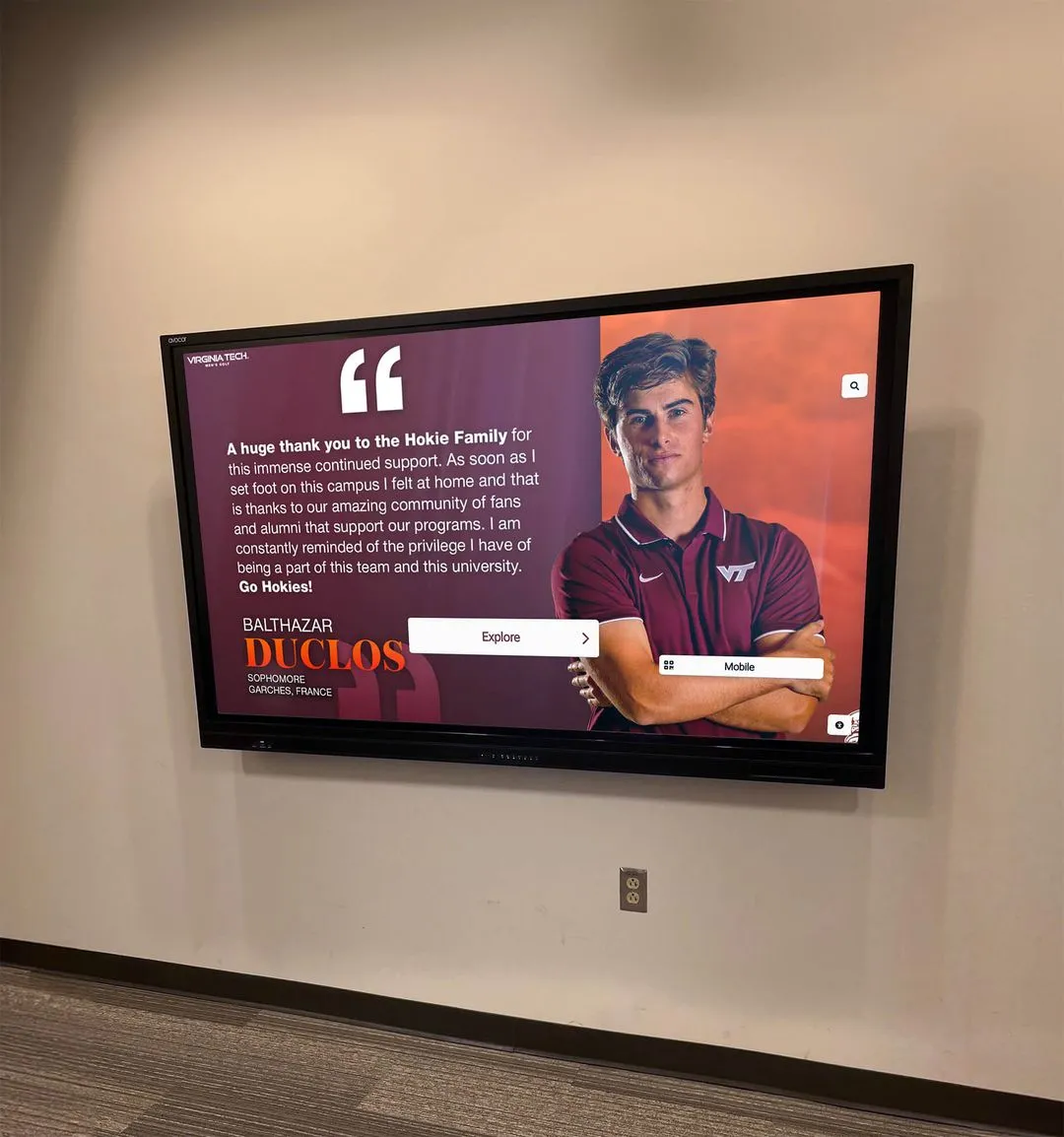
Digital platforms enable swimmers and families to access state championship results and recognition from any device maintaining connection to athletic achievements
Mental Preparation and Competition Mindset
Championship meet mental demands differ substantially from regular season competitions, requiring specific psychological preparation.
Managing Championship Pressure
State meet pressure intensifies dramatically compared to regular season dual meets. Larger crowds, team expectations, college coach observations, and personal aspirations create stress that can undermine performance if not managed effectively. Mental preparation strategies include:
- Visualization practice mentally rehearsing races including starts, turns, pacing, and finishes
- Breathing and relaxation techniques reducing physical tension that accompanies anxiety
- Process focus concentrating on controllable technique and race execution rather than outcomes or competition
- Positive self-talk replacing negative thoughts with confident, encouraging internal dialogue
- Pre-race routines establishing consistent preparation sequences creating comfort and familiarity
Handling Prelims-Finals Mental Challenges
Prelims-finals formats create unique mental demands—swimmers must perform well in morning preliminaries while conserving energy for evening finals. This balancing act requires:
- Appropriate prelims intensity swimming fast enough to advance favorably without expending maximum effort
- Mental reset between sessions releasing prelims results mentally and refocusing on finals performance
- Energy management maintaining activation between sessions without excessive nervous energy expenditure
- Confidence regardless of prelims trusting that finals represent fresh opportunities regardless of preliminary performances
Overcoming Setbacks and Disappointment
Not every state meet performance meets expectations. Disappointing preliminary swims, missed finals advancement, or underperformances in finals create significant emotional responses requiring mental resilience. Swimmers benefit from:
- Perspective maintenance recognizing single meets don’t define athletic worth or identity
- Learning orientation analyzing what went wrong technically or mentally rather than simply feeling disappointed
- Future focus channeling disappointment into motivation for future training and competition
- Support systems leaning on coaches, teammates, and family for encouragement during difficult moments
Technical and Tactical Race Preparation
State championship races require refined technical execution and tactical awareness maximizing performance within championship meet contexts.
Starts and Turns Excellence
At championship levels where hundredths of seconds determine placements, starts and turns dramatically impact final results. Effective state meet preparation includes:
- Start reaction time optimization through repeated practice and focus on auditory starter signal processing
- Underwater streamline maximization optimizing push-off angles and dolphin kick effectiveness off walls
- Turn approach and execution refinement maintaining speed into walls while executing tight rotations and powerful push-offs
Race Pacing Strategies
Different events require distinct pacing approaches optimized for specific distances and stroke characteristics:
- Sprint events (50/100) demand aggressive starts, maximum sustained intensity, and pain tolerance through finish
- Middle distance races (200s) require disciplined pacing preventing early over-effort while maintaining speed throughout
- Distance events (500/1650) depend on consistent pacing, strategic surges, and mental toughness managing extended effort
Swimmers should practice race-specific pacing during training and smaller meets, developing internal pacing sense and strategic awareness before state championship competition.
Heat Seeding and Lane Selection Implications
Preliminary heat and lane assignments impact race execution through:
- Surrounding competition affecting pacing cues and competitive drive during races
- Lane assignments with center lanes (typically 3-6 in eight-lane pools) providing optimal visibility of competition
- Heat timing with later heats sometimes benefiting from watching earlier competition and extended warm-up time
While swimmers can’t control seeding, understanding these factors helps them prepare mentally for their specific situations rather than being surprised by assignments during championship meets.
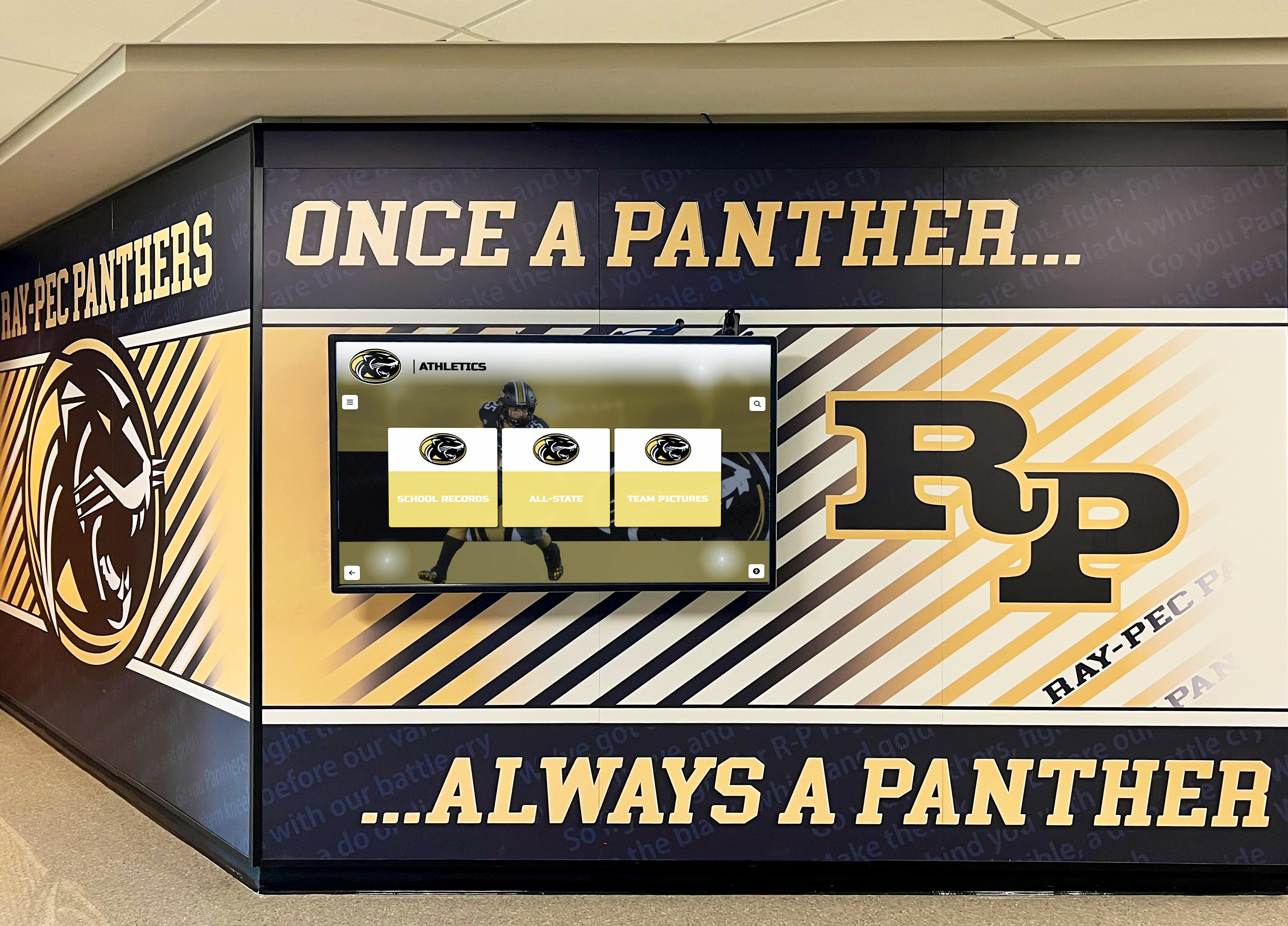
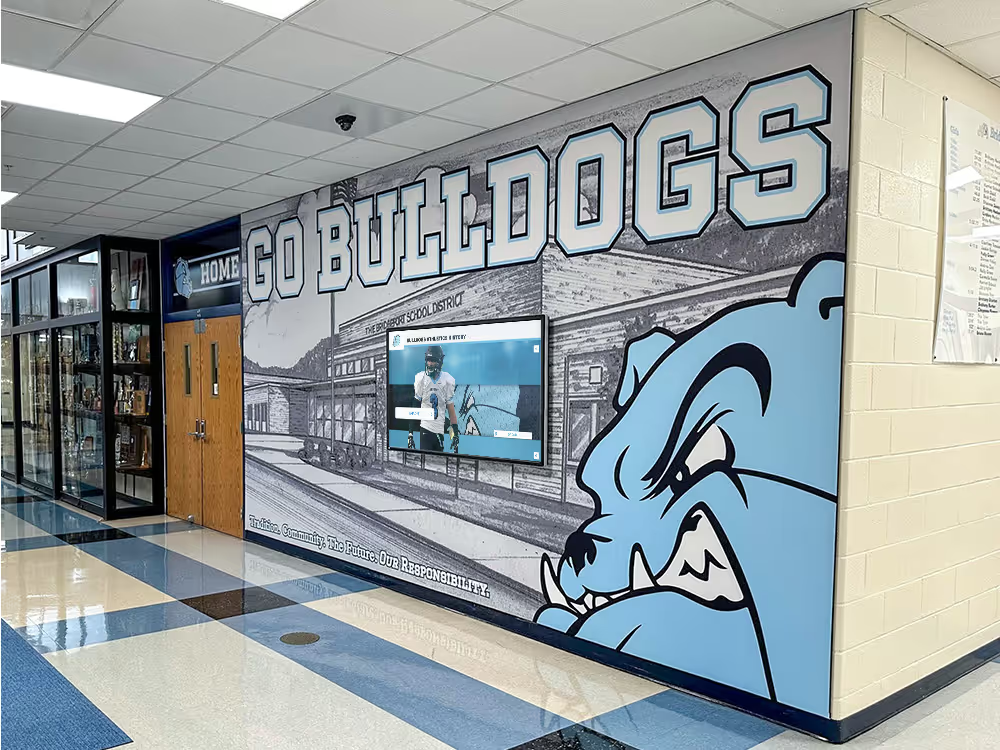
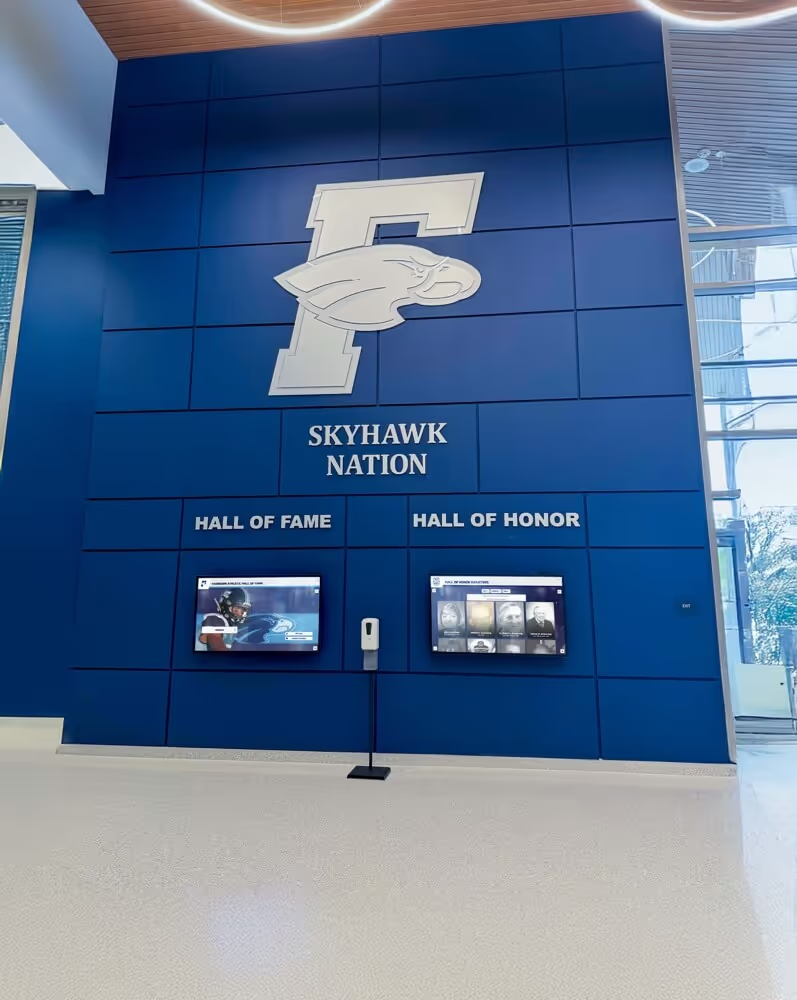
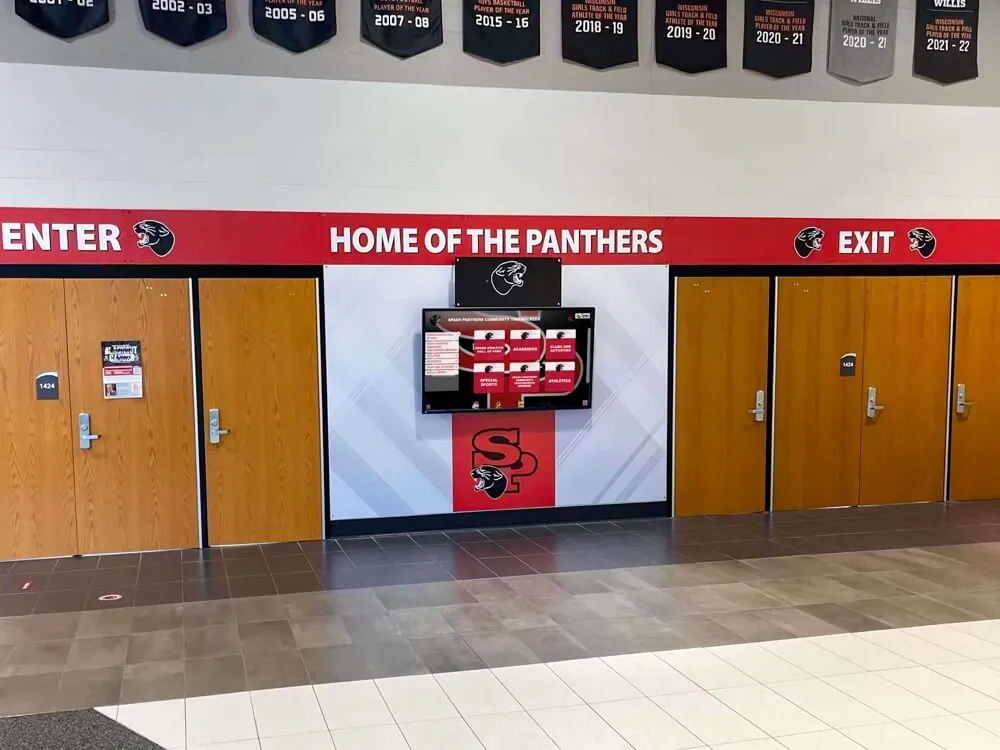
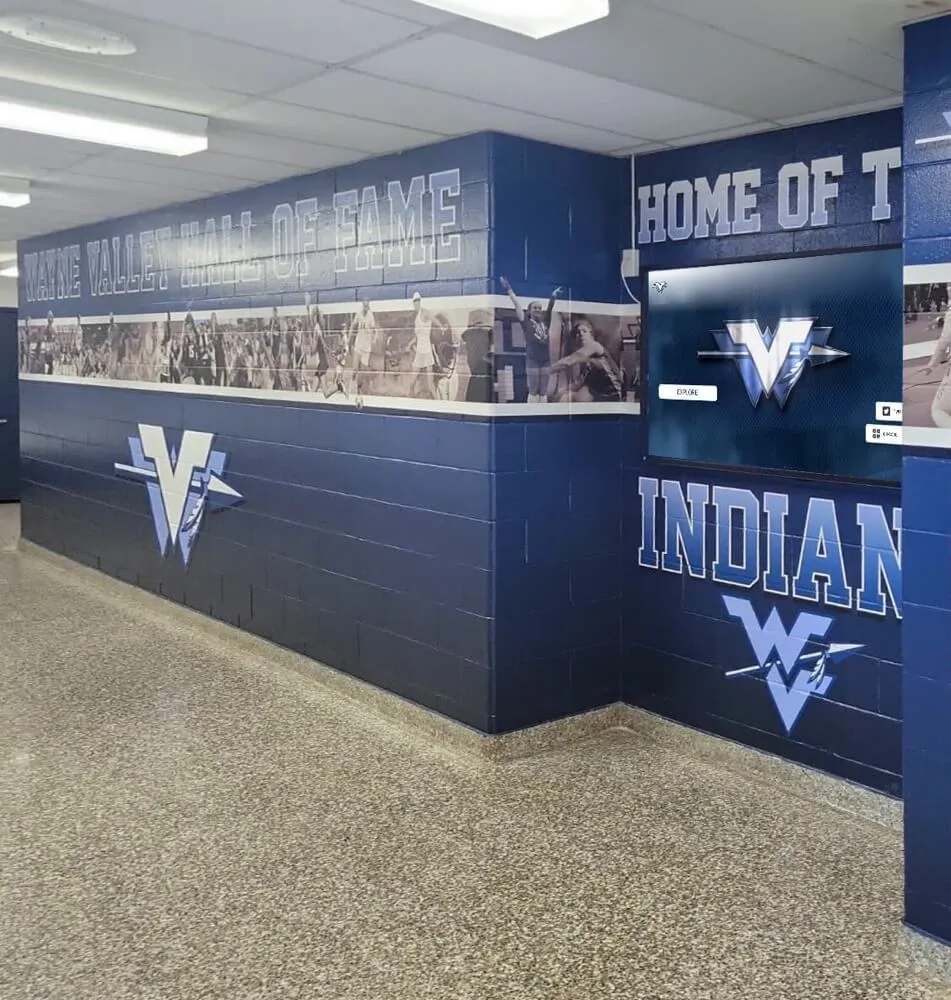
Strategic hallway placement of recognition displays ensures daily visibility reminding current swimmers of state championship standards and program achievement traditions
Recognizing State Championship Achievement
Schools celebrate state championship qualification and performance through various recognition approaches acknowledging significant athletic accomplishment.
Traditional Recognition Methods
Established recognition traditions honor swimming achievement through visible, permanent celebrations.
Varsity Letter and Special Awards
State championship qualifiers typically earn varsity letter recognition marking elite achievement within school athletic programs. Additional special awards might include:
- State qualifier certificates documenting championship meet participation
- State medalist recognition for individual or relay top finishers
- State champion special honors for event winners and record-setters
- Team championship celebration for schools winning overall team titles
Physical Display Recognition
Traditional recognition methods include:
- Trophy cases displaying state championship team trophies and individual medals
- Wall plaques listing state qualifiers, finalists, and champions by year
- Banner recognition hanging championship banners in natatorium facilities
- Lobby displays featuring photographs of state championship teams and individuals
Athletic Banquet Acknowledgment
End-of-season athletic banquets provide formal recognition opportunities celebrating state championship participation through coach remarks, video highlights, special awards presentation, and public acknowledgment before families and school communities as commonly featured in athletic banquet programming.
Digital Recognition Platforms
Modern schools increasingly supplement or replace traditional recognition with digital platforms offering expanded capacity, interactivity, and ongoing accessibility.
Interactive Digital Record Boards
Digital record boards display comprehensive swimming achievement including:
- School records by event with swimmer names, times, and years achieved
- State qualifier historical listings preserving all state meet participants across program history
- Championship performance highlights featuring medalists and state champions
- Season performance tracking displaying current season top times and qualification progress
Unlike static printed records requiring physical updates, digital record boards enable instant updates when records fall or new qualifiers emerge, maintaining currency throughout seasons while engaging swimmers who regularly check standings and qualification status.
Comprehensive Hall of Fame Systems
Purpose-built athletic hall of fame platforms celebrate accomplished swimmers through:
- Individual swimmer profiles featuring photographs, biographical information, achievement lists, and state meet performances
- Team championship documentation preserving rosters, scores, and meet highlights from championship seasons
- Searchable databases enabling exploration by swimmer name, year, event, or achievement type
- Multimedia integration supporting photos, videos, newspaper clippings, and other historical documentation
These comprehensive systems ensure state championship achievement receives permanent recognition accessible to current swimmers, alumni, families, and community members rather than being limited to those physically visiting trophy cases or reading static plaques. Swimmers often feel more connected to program traditions when they can explore detailed historical achievements through engaging interactive platforms compared to simply reading names on walls.
Web-Based Recognition Extensions
Digital recognition extends beyond physical school displays through web platforms enabling:
- Remote family access for parents and grandparents unable to attend state meets but wanting to celebrate achievements
- Alumni engagement connecting graduated swimmers with program updates and continued recognition
- Recruit showcase providing recruiting timeline documentation for prospective college coaches evaluating swimmers
- Social sharing enabling swimmers to share their recognition profiles celebrating accomplishments with extended networks
Mobile QR Code Integration
Schools implementing physical recognition displays increasingly add QR codes linking to comprehensive digital profiles, creating hybrid approaches that honor traditional display permanence while leveraging digital depth, multimedia capabilities, and instant updates impossible with static installations.
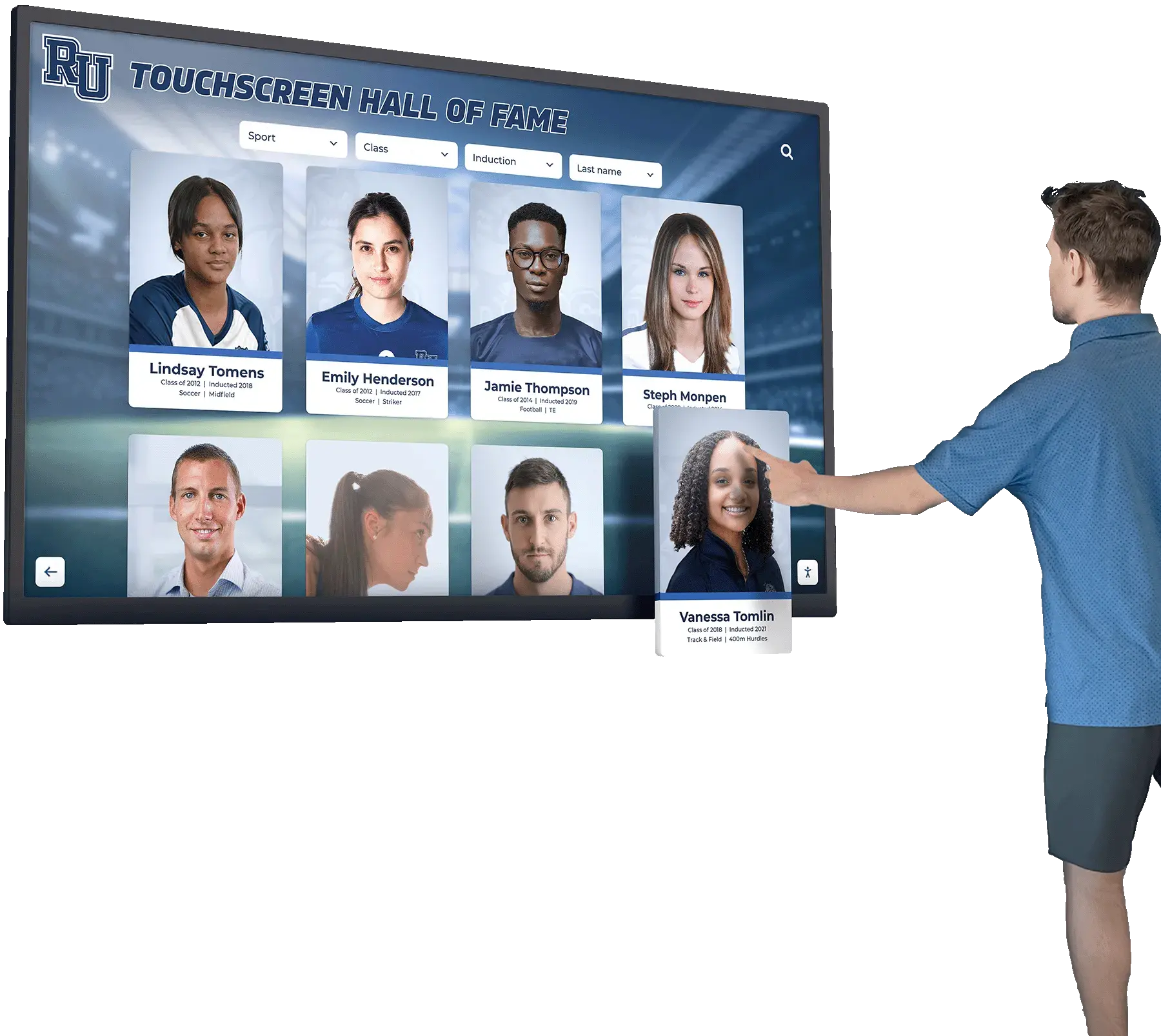
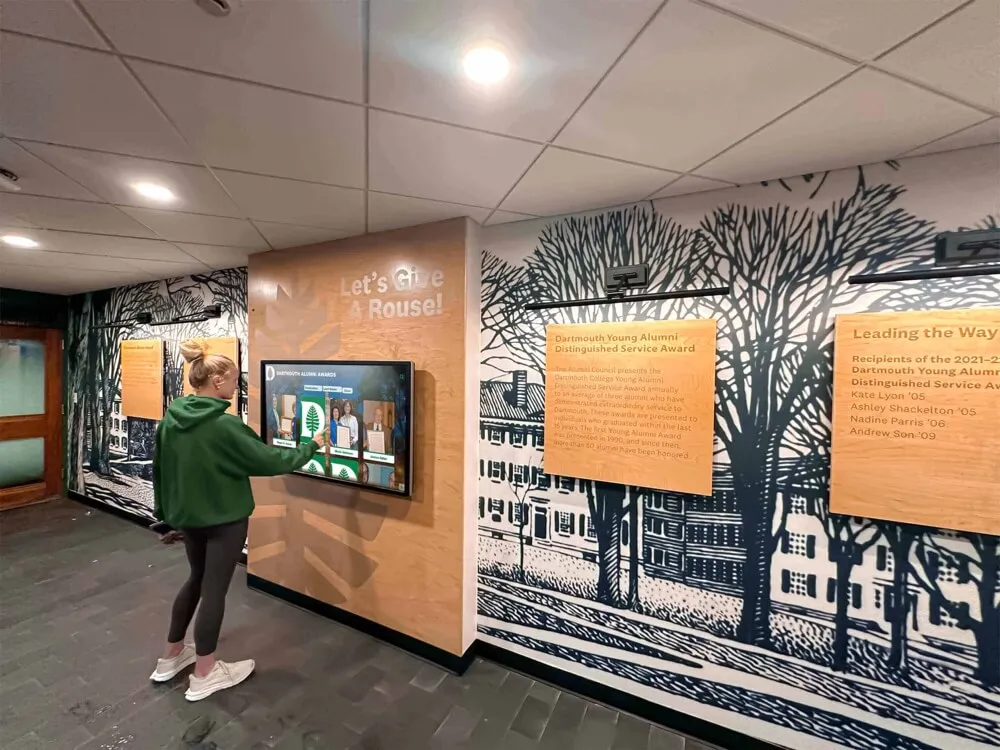
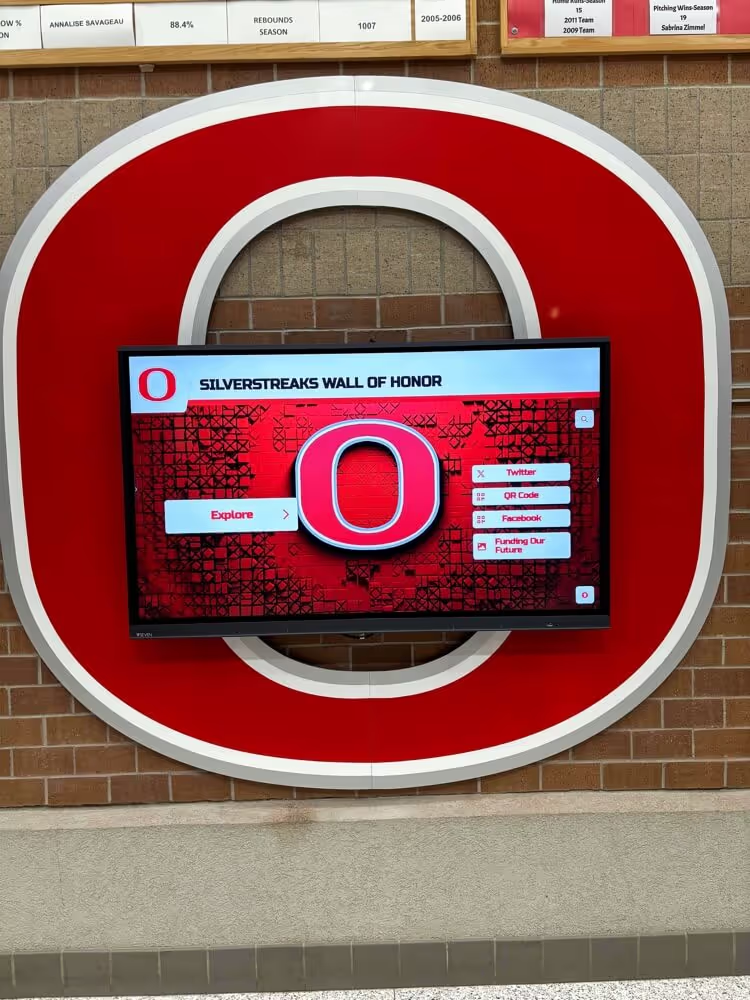
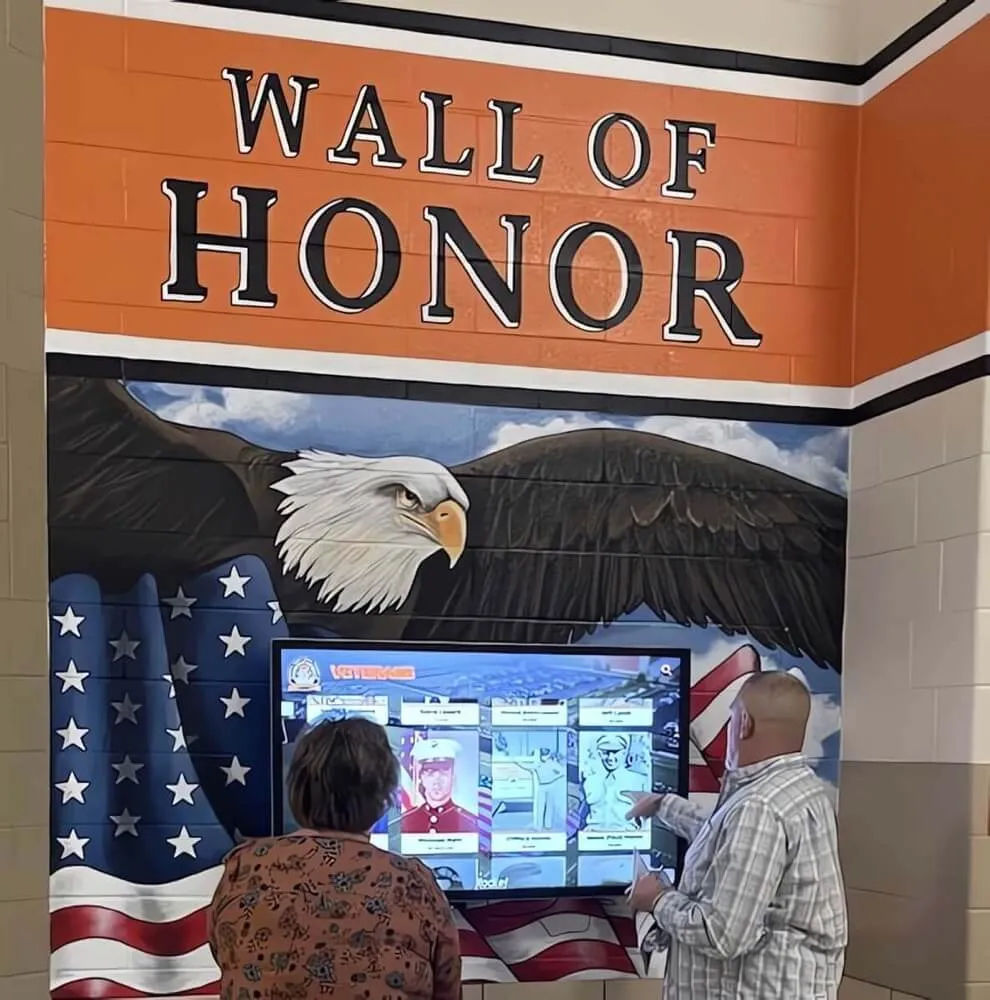
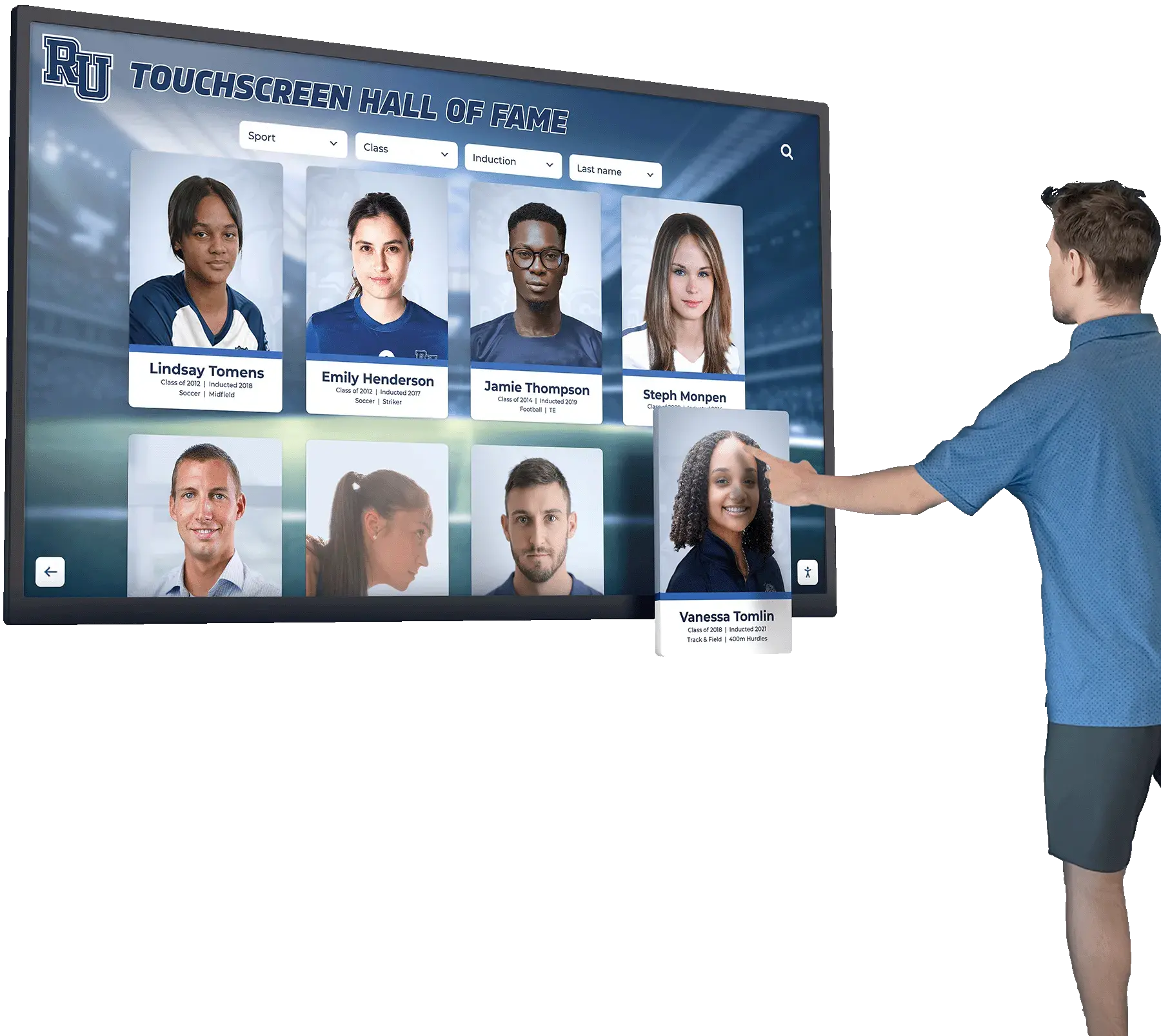
Touchscreen displays enable detailed exploration of swimmer achievements including event specialties, personal records, and state championship performances
Senior Night and Special Recognition Events
Swimming programs create special recognition moments celebrating achievement during season.
Senior Night Traditions
Senior night recognitions during final home meets provide emotional celebration opportunities for graduating swimmers, frequently including:
- Senior introductions with escort by parents/guardians and public acknowledgment of contributions
- Career highlight videos celebrating four-year journeys and memorable moments
- Coach testimonials sharing personal reflections on senior leadership and character
- Team recognition from younger swimmers expressing gratitude for senior mentorship
- Parent acknowledgment recognizing family support throughout swimming careers
For state championship qualifiers, senior night acknowledgments often specifically celebrate their elite achievements and program contribution setting competitive standards for younger swimmers. Schools might reference how senior night planning integrates state meet recognition into broader season-end celebration.
State Send-Off Celebrations
Schools often host state meet send-off assemblies or events before swimmers depart for championship meets, creating school-wide celebration building excitement and demonstrating community support. Send-offs might include:
- School assembly recognition introducing state qualifiers to entire student body
- Athletic department acknowledgment celebrating qualification achievement
- Good luck messages from administrators, teachers, and students
- Team bonding activities strengthening connections before competition
These community celebrations help swimmers feel supported while raising school-wide awareness of swimming program excellence and state championship participation.
State Championship Records and Historical Context
Understanding state swimming records and historical championship context helps swimmers appreciate their achievements within broader program traditions.
State Meet Records
State athletic associations maintain official records for fastest times achieved at state championship meets in each event, gender, and division.
Meet Records vs. State Records
Important distinctions exist between:
- State meet records representing fastest times achieved specifically at state championship competitions in championship meet environments
- State records (maintained in some states) representing fastest times achieved anywhere by swimmers from that state regardless of meet or location
- School records documenting fastest performances by swimmers from individual schools regardless of where achieved
State meet records carry special significance since they’re achieved under championship pressure at season’s end when tapers maximize performance but stress potentially undermines it. Breaking state meet records represents extraordinary achievement acknowledging elite performances under competitive stress.
Historical Record Progression
Swimming records improve progressively over decades through:
- Training advancement with more sophisticated periodization, dryland strength work, and sport science application
- Technique evolution through video analysis, underwater observation, and biomechanical research
- Facility improvements including deeper pools, lane rope designs reducing turbulence, and starting block modifications
- Equipment developments like technical suits (now regulated) that historically accelerated record progression
Long-standing records often indicate historically exceptional performances by remarkable athletes whose achievements withstood decades of program development and competitive advancement. Breaking established records deserves special celebration acknowledging rare accomplishment.

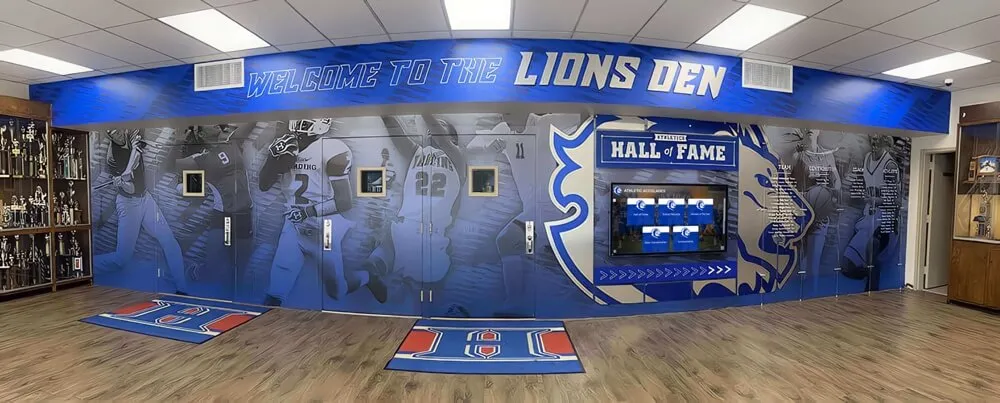
Comprehensive athletic recognition systems integrate swimming achievements within broader multi-sport celebration creating complete athletic program history
Team Championship History
Swimming programs accumulate championship traditions creating cultural identity and competitive expectations.
Consecutive Championship Dynasties
Some programs establish championship dynasties winning consecutive state team titles across multiple years or decades. Dynasty programs develop:
- Competitive cultures where championship expectations permeate team identity
- Sustained excellence requiring consistent recruiting, development, and coaching continuity
- Program traditions connecting current swimmers to historical success and championship standards
Swimmers on dynasty teams face unique pressure maintaining championship traditions while creating their own achievement chapters within program history. Recognition systems should celebrate both historical championships and current season accomplishments, helping swimmers understand their place within continuing excellence narratives.
Program Building and First Championships
Conversely, emerging programs pursuing first-ever state championships or ending long championship droughts face different dynamics where breakthrough achievements carry special significance. First championships often represent:
- Cultural transformation from developing programs to competitive forces
- Community galvanization where breakthrough success builds support and pride
- Foundation building establishing championship expectations for future teams
Schools experiencing championship breakthroughs deserve comprehensive recognition celebrating transformational achievement and honoring swimmers who elevated programs to new competitive levels.
Individual vs. Team Achievement Balance
Swimming culture balances individual achievement recognition with team success celebration, creating tension requiring thoughtful navigation.
Individual Excellence Celebration
Swimming’s objective measurement enables clear individual achievement recognition through:
- Personal record progression celebrating improvement regardless of competitive placement
- Event specialization honoring excellence in specific strokes or distances
- Individual state championships recognizing event winners and medalists
- Record-breaking performances celebrating swimmers surpassing previous standards
Individual recognition motivates swimmers through personal goal pursuit while acknowledging that swimming excellence primarily reflects individual work and dedication to technical mastery and physical conditioning.
Team Success Emphasis
Simultaneously, swimming teams function as genuine communities where:
- Relay success depends on four-swimmer cooperation and team depth
- Team championships require scoring across multiple events and broad roster contribution
- Training culture reflects collective commitment where teammates push each other daily
- Program tradition connects individual swimmers to larger historical narratives
Effective recognition balances both dimensions—celebrating standout individual performances while acknowledging that even elite swimmers develop within team contexts providing training partners, competitive motivation, and supportive community. Solutions like Rocket Alumni Solutions help schools recognize both individual achievement and team success through flexible platforms accommodating diverse recognition needs.
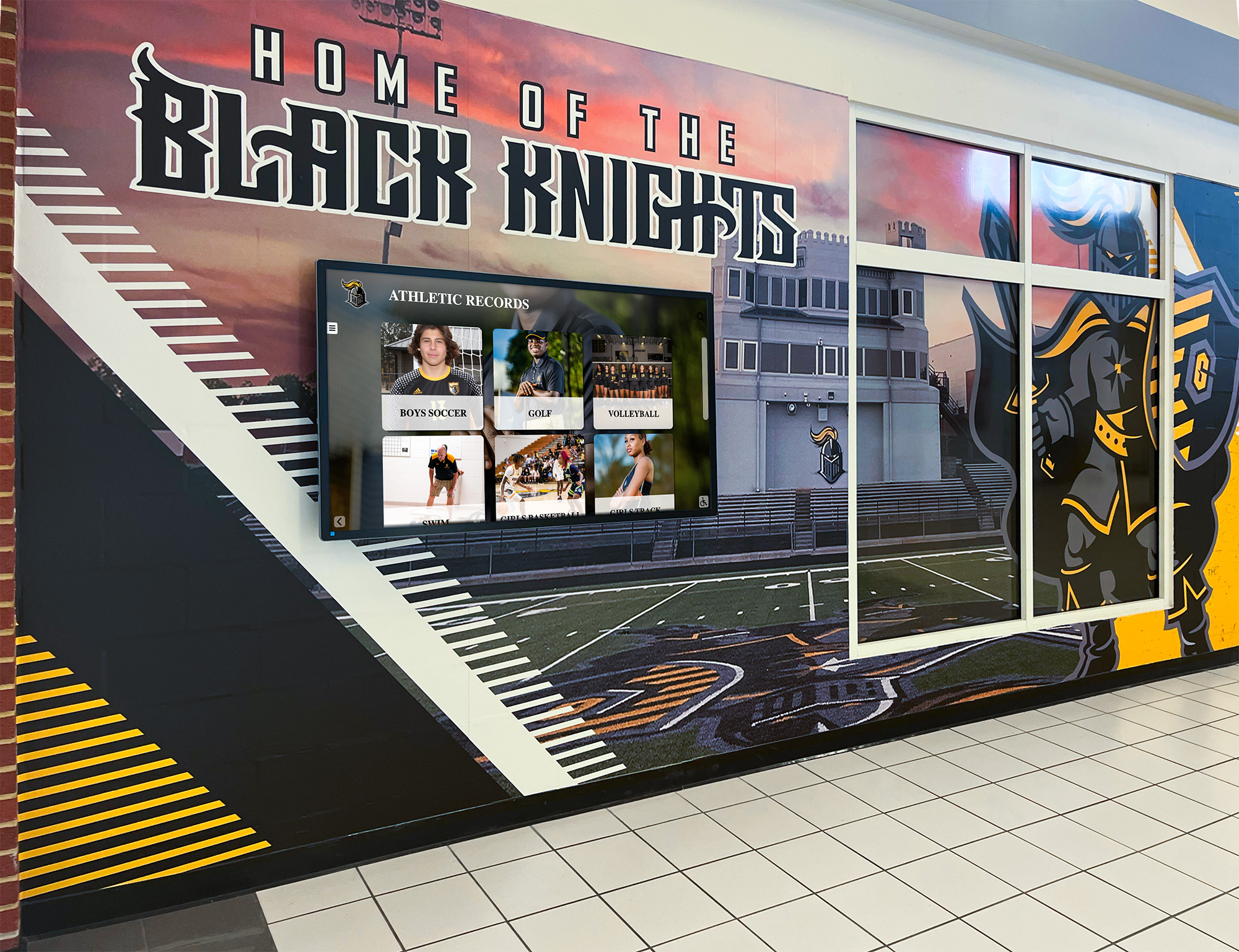
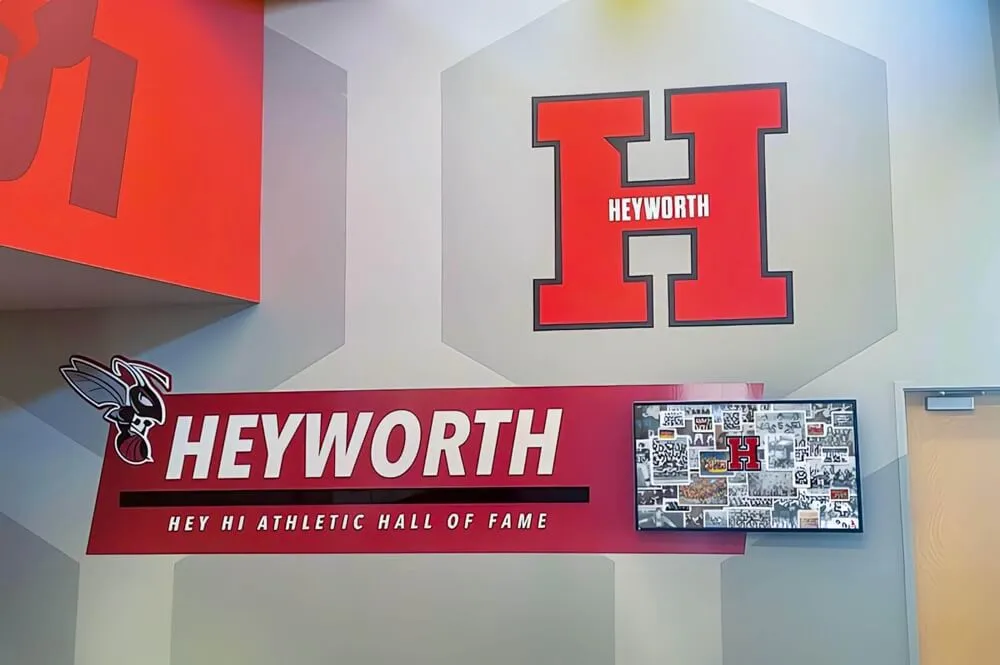
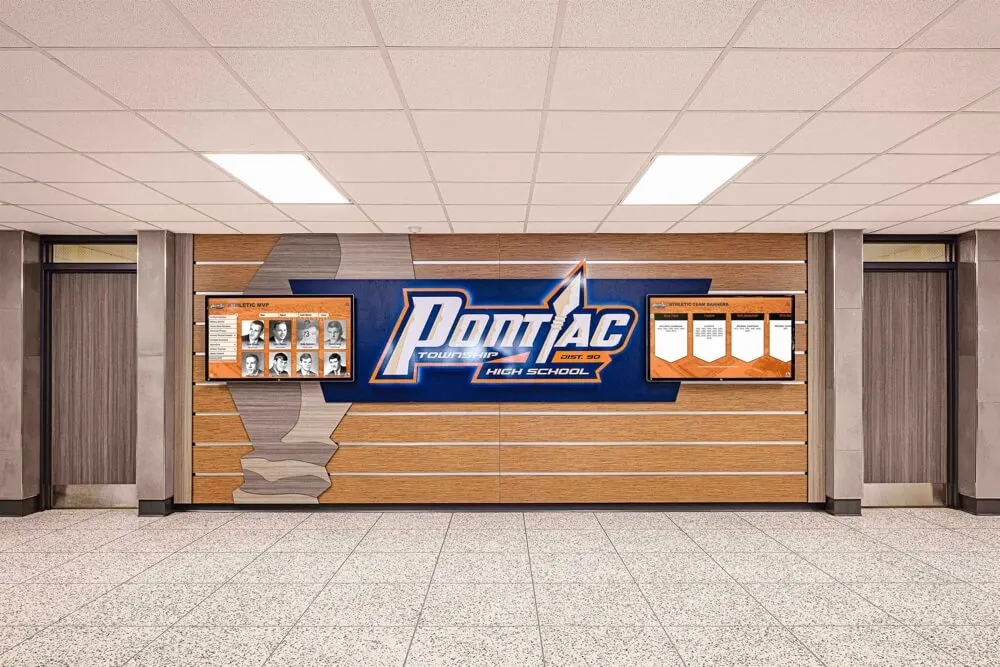
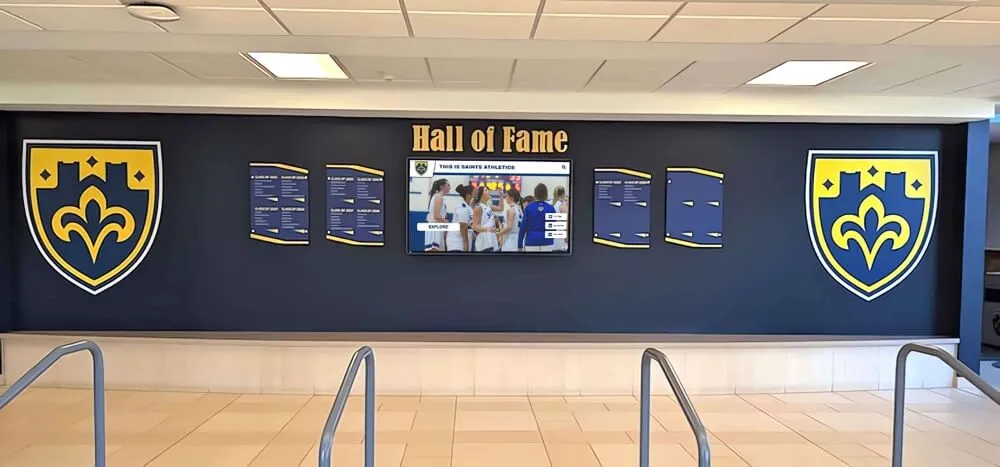
Integrated corridor designs combine traditional school branding with modern digital recognition creating inspiring environments celebrating athletic excellence
College Recruiting and State Championship Performance
State championship performance significantly impacts college recruiting processes, particularly for swimmers targeting NCAA Division I, II, or III programs.
Recruiting Timeline Alignment
State championship meets typically occur during active recruiting periods when college coaches evaluate prospects and extend scholarship offers.
Division I and II Recruiting Considerations
NCAA Division I and II programs offering athletic scholarships closely monitor state championship performances as data points evaluating:
- Competitive capability demonstrating ability to perform under pressure at important meets
- Seasonal improvement showing training response and development trajectory
- Event versatility indicating potential for multiple event contributions at collegiate level
- Relay potential assessing speed relevant for college relay composition
Strong state meet performances validate recruiting profiles while disappointing performances require explanation, potentially affecting scholarship offers or recruiting positioning. Swimmers with recruiting aspirations should understand that state championships represent high-visibility competitions substantially influencing recruiting outcomes.
Division III Recruiting Dynamics
Division III schools cannot offer athletic scholarships but recruit swimmers through admissions support and academic aid. State championship performances still matter for D-III recruiting as:
- Program competitiveness indicators showing which swimmers might contribute to competitive teams
- Athletic commitment demonstrations proving sustained dedication deserving admissions consideration
- Academic-athletic balance evidence particularly when state qualifiers also maintain strong academic records
Communicating State Meet Results
Swimmers in recruiting processes should proactively communicate state championship results to interested coaches through:
- Email updates reporting qualification, prelim times, and final results
- Video sharing when available from championship meet performances
- Result context explaining competitive depth, meet conditions, and performance relative to goals
- Follow-up conversations discussing state meet experiences and future development plans
Post-High School Competitive Pathways
State championship experience prepares swimmers for multiple post-high school competitive pathways.
NCAA Collegiate Swimming
Swimmers advancing to NCAA programs encounter:
- Increased training volume with double-session daily practices common
- Higher competitive standards with conference championships and NCAA meets extending beyond high school state meet intensity
- Year-round training versus high school seasonal structures
- Balancing academics and athletics managing full course loads alongside demanding training
State championship preparation—mentally managing pressure, technically executing under stress, tactically racing against quality competition—provides foundation for collegiate transition though intensity increases substantially.
Club and Masters Swimming
Not all high school swimmers pursue collegiate competition, with alternative pathways including:
- USA Swimming club teams for continued high-level competition outside collegiate structures
- Masters swimming offering age-group competition throughout adult life
- Triathlon and open water applying swimming fitness to multisport competition
- Coaching and leadership sharing swimming knowledge with younger generations
State championship participation creates lifelong swimming identity regardless of whether competitive careers continue at collegiate levels, with many former high school state qualifiers maintaining swimming involvement through coaching, officiating, or recreational participation.
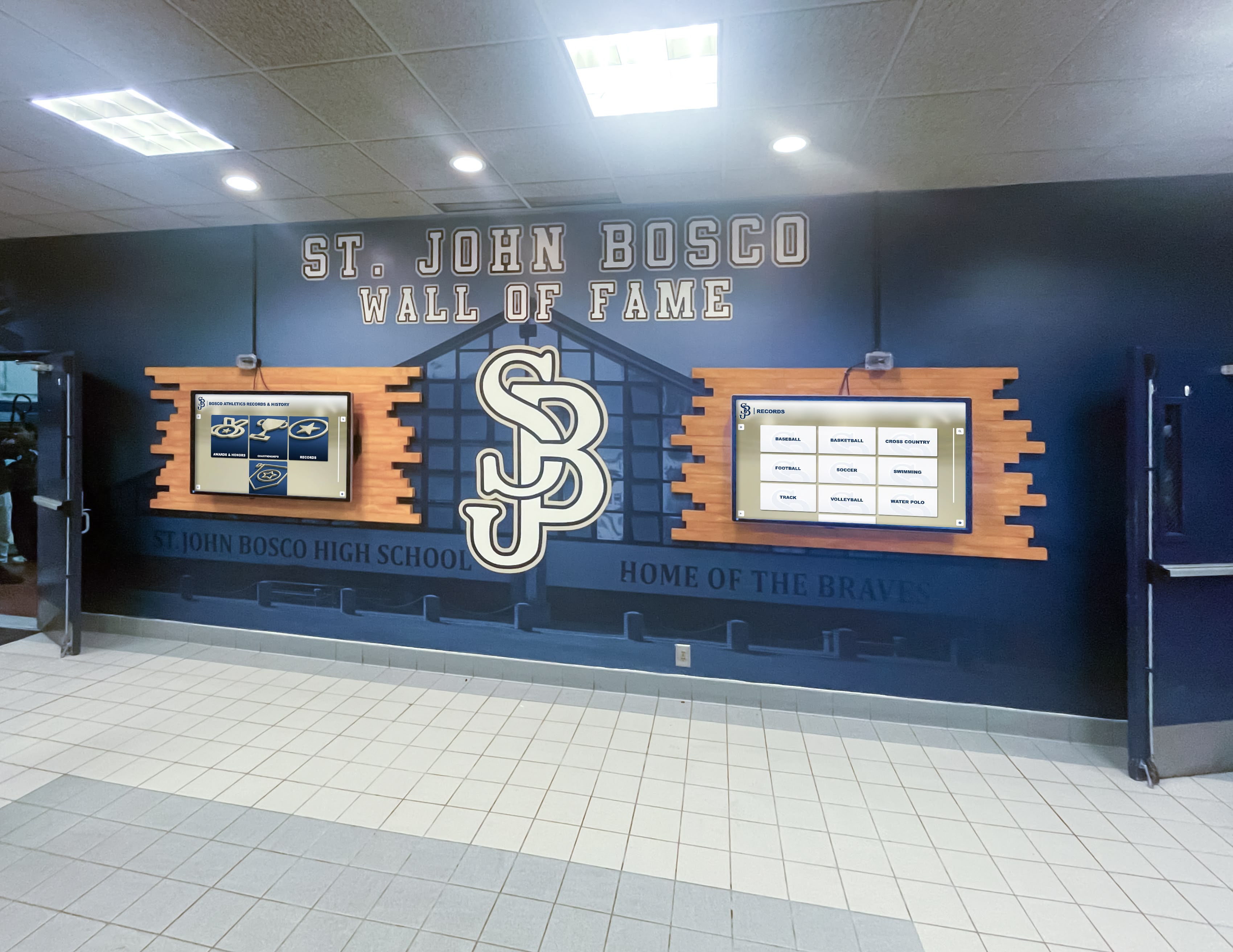
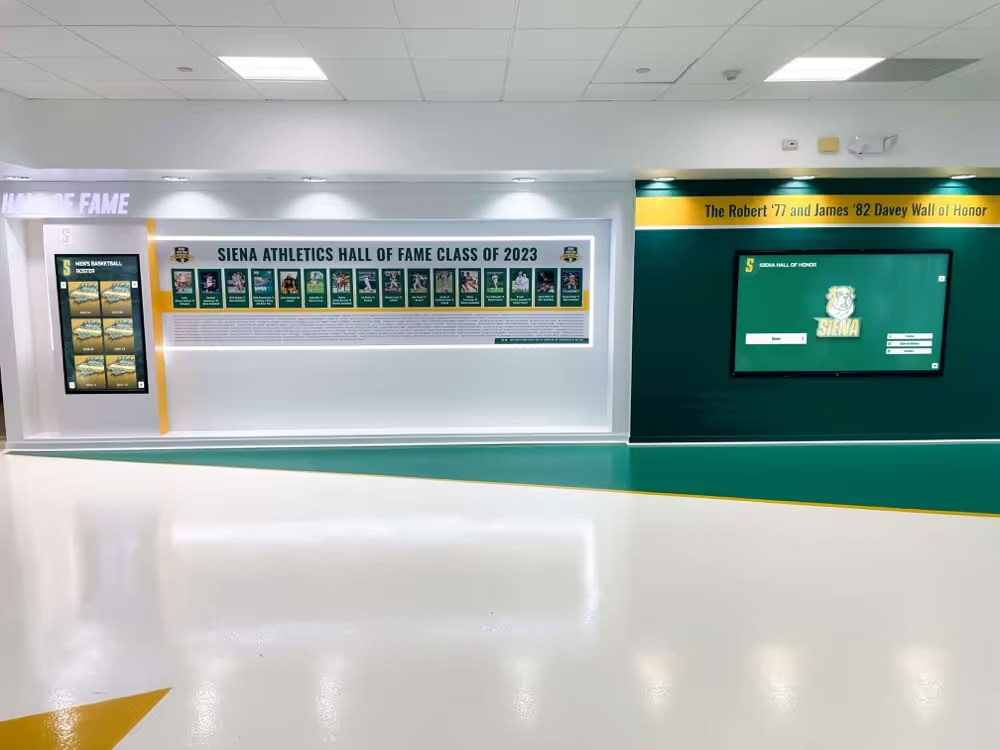
Larger swimming programs implement multiple display installations documenting individual records, relay achievements, and championship team rosters
Conclusion: Celebrating Swimming Excellence
High school swimming state championships represent pinnacle competitive experiences combining months of dedicated training, technical refinement, and mental preparation with the intensity and excitement of championship-level competition. Understanding qualification processes, championship meet formats, and performance expectations helps swimmers, coaches, and families navigate state championship pathways while maximizing competitive potential and managing the unique pressures accompanying elite competition.
State championship qualification itself deserves celebration—achieving standards that separate elite swimmers from recreational participants validates years of early morning practices, sacrificed social opportunities, and physical discomfort endured during intense training sets. Regardless of final placements at state meets, qualification proves swimmers reached exceptional performance levels achieved by relatively small percentages of high school athletes.
For swimmers advancing to championship finals or earning medals, recognition becomes even more significant—acknowledging not just qualification but genuine excellence within already-elite competitive fields. State champions and record-setters achieve rare distinction earning permanent places in school swimming history while potentially establishing legacies inspiring future generations of swimmers pursuing similar excellence.
Schools enhance state championship meaning through comprehensive recognition celebrating qualification, participation, and achievement. Traditional approaches like trophy cases, wall plaques, and banner displays provide visible, permanent tributes while digital recognition platforms extend celebration through interactive exploration, unlimited capacity accommodating all qualifiers regardless of space constraints, and web accessibility enabling remote viewing by families and alumni unable to visit physical installations.
Modern digital recognition systems like those provided by Rocket Alumni Solutions enable schools to comprehensively document swimming achievement including individual swimmer profiles with photos and biographical information, searchable records by event and year, state championship performance documentation, and team championship history preservation. Purpose-built platforms designed specifically for athletic recognition ensure swimming programs receive appropriate celebration while avoiding limitations of generic digital signage lacking features essential for meaningful recognition.
State championship participation creates defining moments in swimmers’ athletic journeys—regardless of whether they continue competing collegially or conclude competitive careers after high school. These experiences teach valuable life lessons about goal pursuit, handling pressure, overcoming setbacks, and pushing physical and mental limits that extend far beyond pool decks into future personal and professional challenges. Swimmers who qualified for state championships decades ago often cite those experiences as formative moments demonstrating capabilities they didn’t know they possessed until tested under championship pressure.
Recognition ensures these achievement moments receive appropriate honor rather than fading into forgotten history. When schools comprehensively celebrate state championship qualification and performance, they communicate that athletic excellence matters and deserves permanent acknowledgment. Current swimmers benefit from seeing predecessor achievements, understanding they participate in continuing traditions while creating new chapters in program histories. Alumni appreciate schools maintaining recognition of their accomplishments, validating that their high school swimming contributions remain valued despite years or decades passing since graduation.
Ready to comprehensively celebrate your swimming program’s state championship tradition? Explore how Rocket Alumni Solutions creates engaging digital recognition that honors every state qualifier, medalist, and champion while inspiring current swimmers to pursue excellence worthy of joining your school’s championship legacy.