



Students who receive academic recognition demonstrate 18-25% higher sustained achievement over time compared to non-recognized peers. Yet many schools treat student achievement certificates as administrative formalities—printed documents handed out during rushed assemblies, filed away in drawers, and quickly forgotten despite representing significant academic accomplishments earned through months of dedicated effort.
When recognition becomes a paper certificate without sustained visibility or community celebration, schools miss opportunities to create the motivational impact that transforms individual acknowledgment into cultural momentum. Traditional certificate programs provide momentary validation without building the ongoing recognition that inspires younger students, engages families continuously, and creates environments where academic excellence receives visibility comparable to athletic achievement.
The gap between certificate distribution and meaningful recognition creates missed opportunities affecting student motivation, family engagement, and institutional culture development. Students achieve academic milestones without experiencing the celebration that reinforces continued dedication. Families receive certificates without context explaining significance or enabling sharing with extended networks. Younger students miss role model visibility inspiring their own excellence pursuit.
This comprehensive guide explores how schools transform student achievement certificates from forgotten paper into meaningful recognition that motivates excellence, builds academic culture, and creates lasting impact through systematic approaches combining traditional acknowledgment with modern digital recognition infrastructure enabling continuous celebration reaching entire communities.

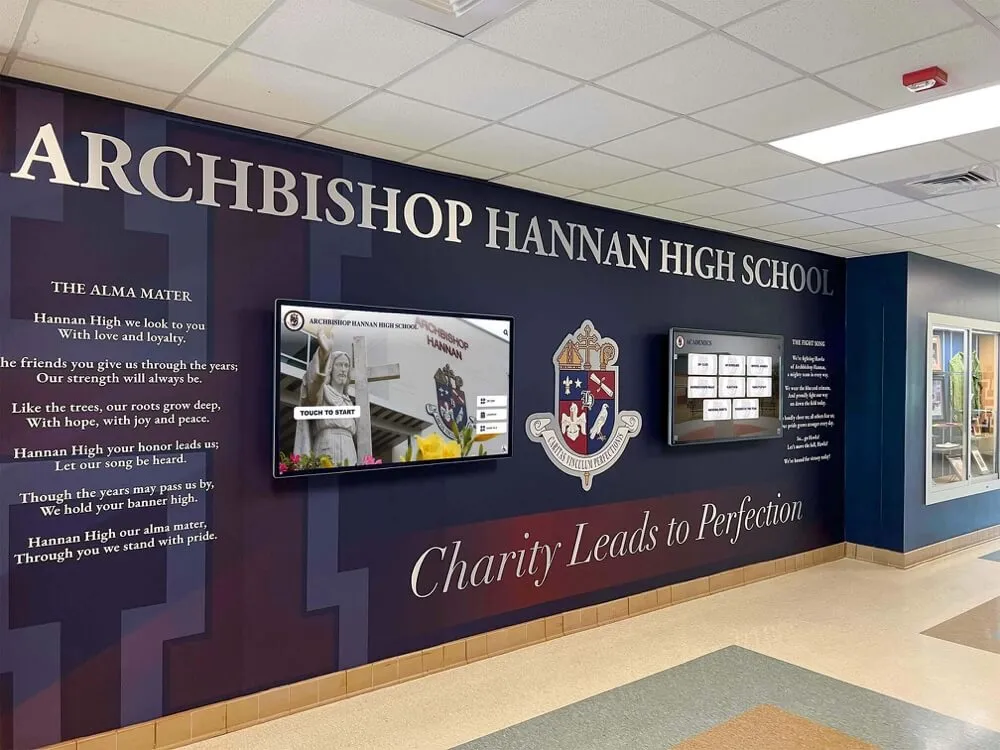
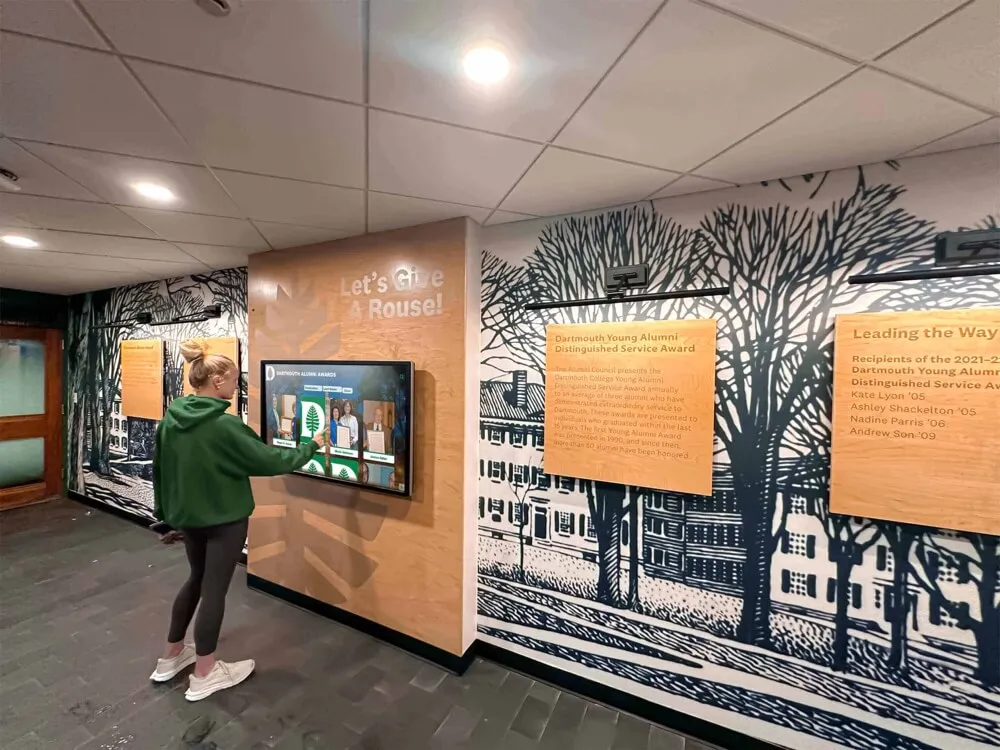
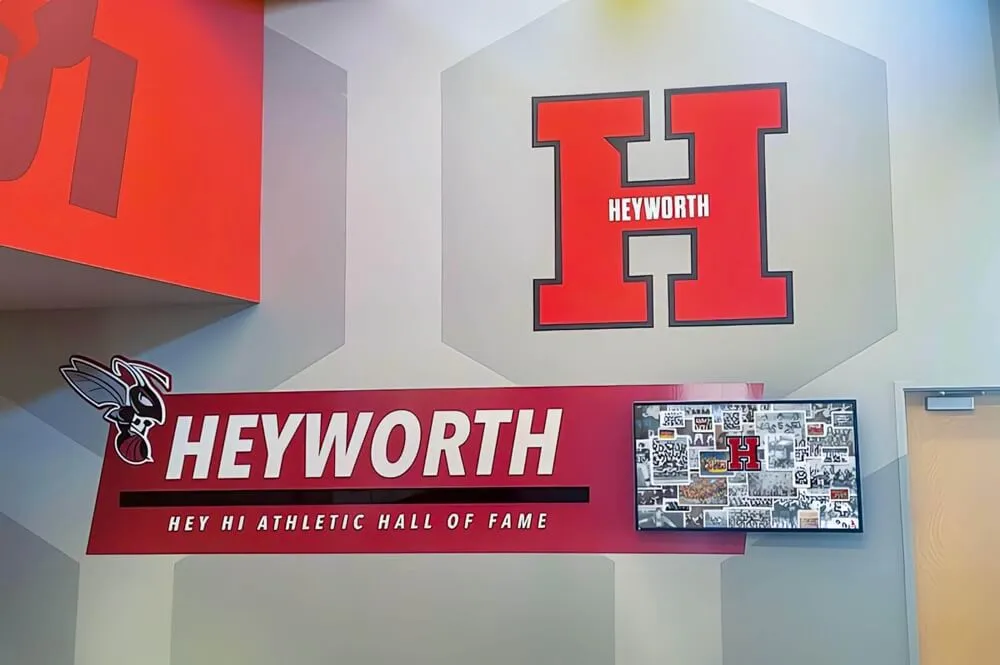
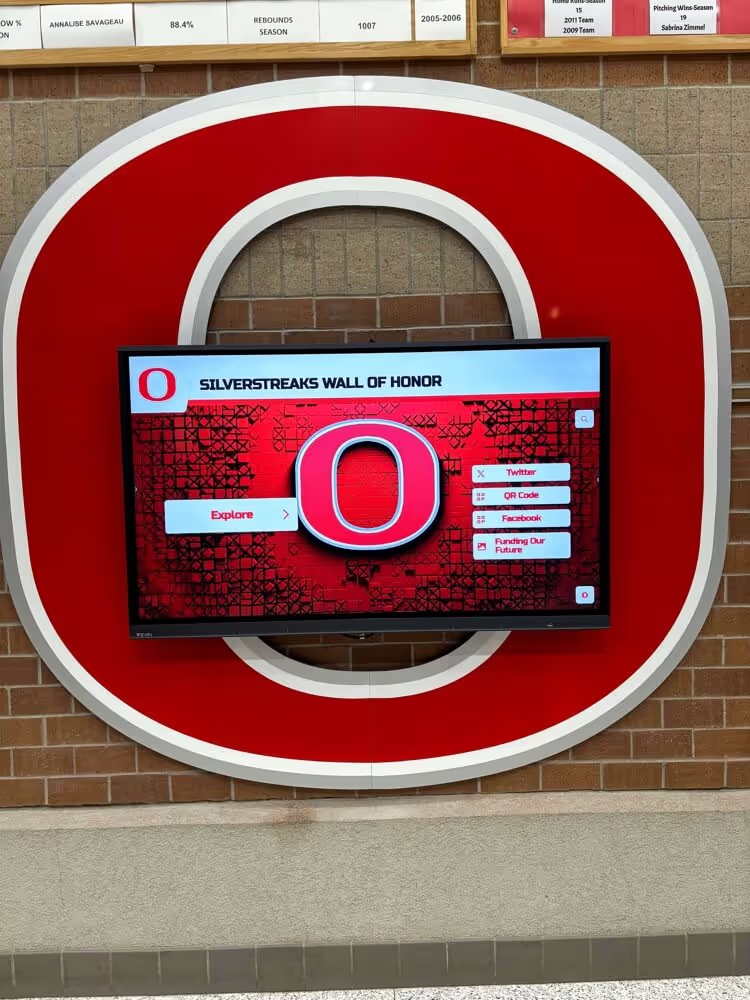
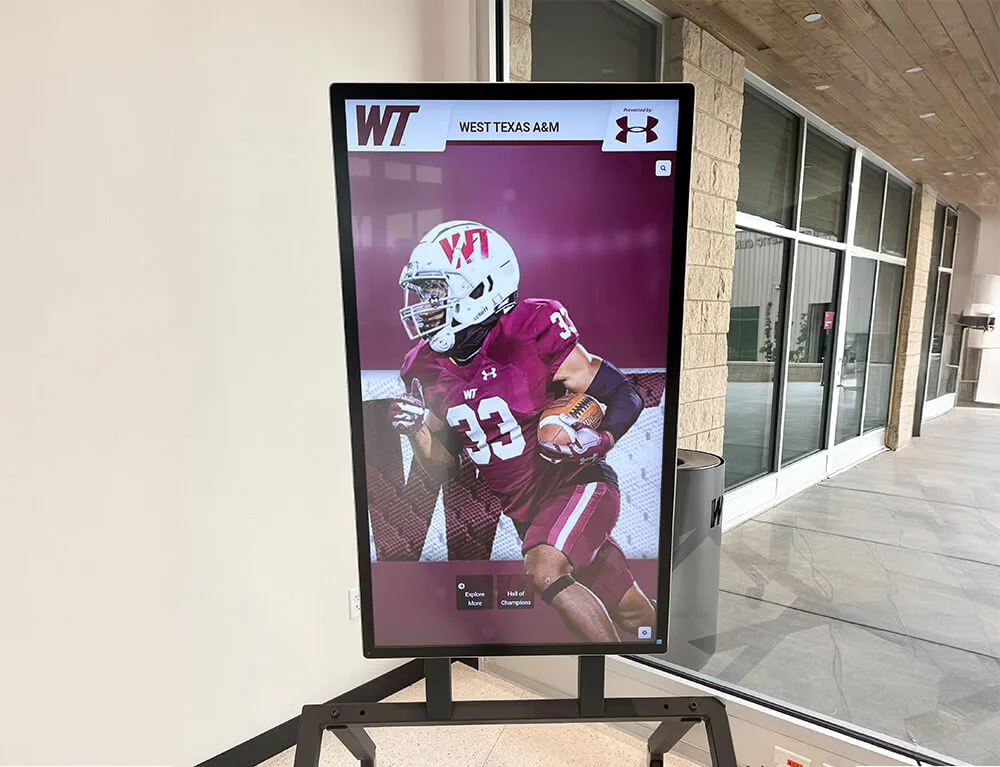
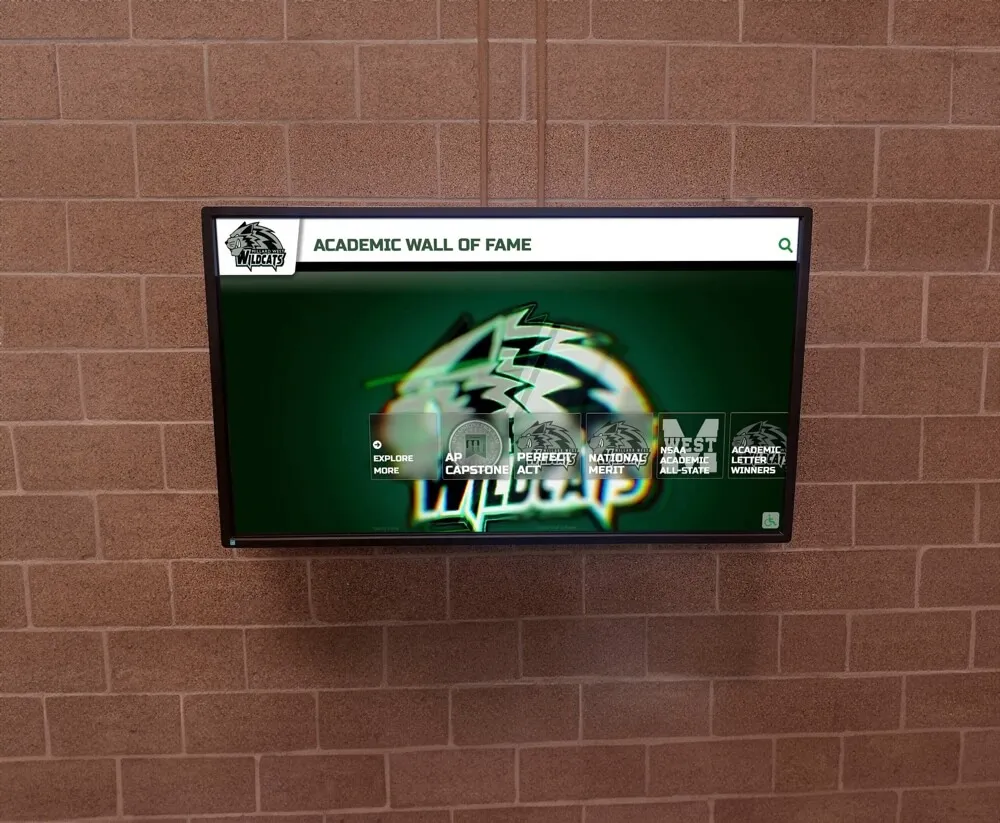
Modern recognition displays make academic achievement visible and celebrated throughout school communities
Understanding Student Achievement Certificate Significance
Before implementing recognition programs, understanding what achievement certificates represent helps schools design acknowledgment systems creating maximum motivational impact while honoring diverse excellence forms.
The Psychology of Academic Recognition
Research consistently demonstrates that appropriate academic acknowledgment affects student motivation, engagement, and long-term achievement trajectories:
Achievement Reinforcement Through Public Recognition
Certificates provide tangible validation of academic accomplishment, but their impact multiplies significantly when combined with public visibility enabling peer awareness, family celebration, and community acknowledgment. Students receiving both certificates and public recognition demonstrate higher sustained achievement compared to certificate-only acknowledgment because visible celebration creates social reinforcement motivating continued excellence.
Public recognition activates multiple psychological mechanisms—social approval satisfying belonging needs, competence validation strengthening academic self-concept, visible achievement normalizing intellectual excellence as desirable rather than socially problematic, and external acknowledgment creating positive feedback loops where recognition motivates effort producing achievements generating additional recognition.
Family Engagement and Support Strengthening
Achievement certificates enable family conversations about academic progress, provide concrete evidence of student dedication, and create celebration opportunities strengthening home support for educational priorities. When schools enhance certificates with digital recognition displays accessible remotely, families worldwide can view achievements, share recognition with extended networks, and maintain connection with students’ academic journeys regardless of geographic distance from campus.
Institutional Culture Development
Schools creating comprehensive certificate programs combined with visible recognition systems build academic cultures where intellectual achievement receives appropriate celebration alongside athletic success, artistic excellence, and service contributions. This cultural balance attracts academically motivated families, supports recruitment of talented educators, and creates environments where diverse achievement forms receive equitable acknowledgment rather than allowing single excellence dimensions to dominate institutional identity.
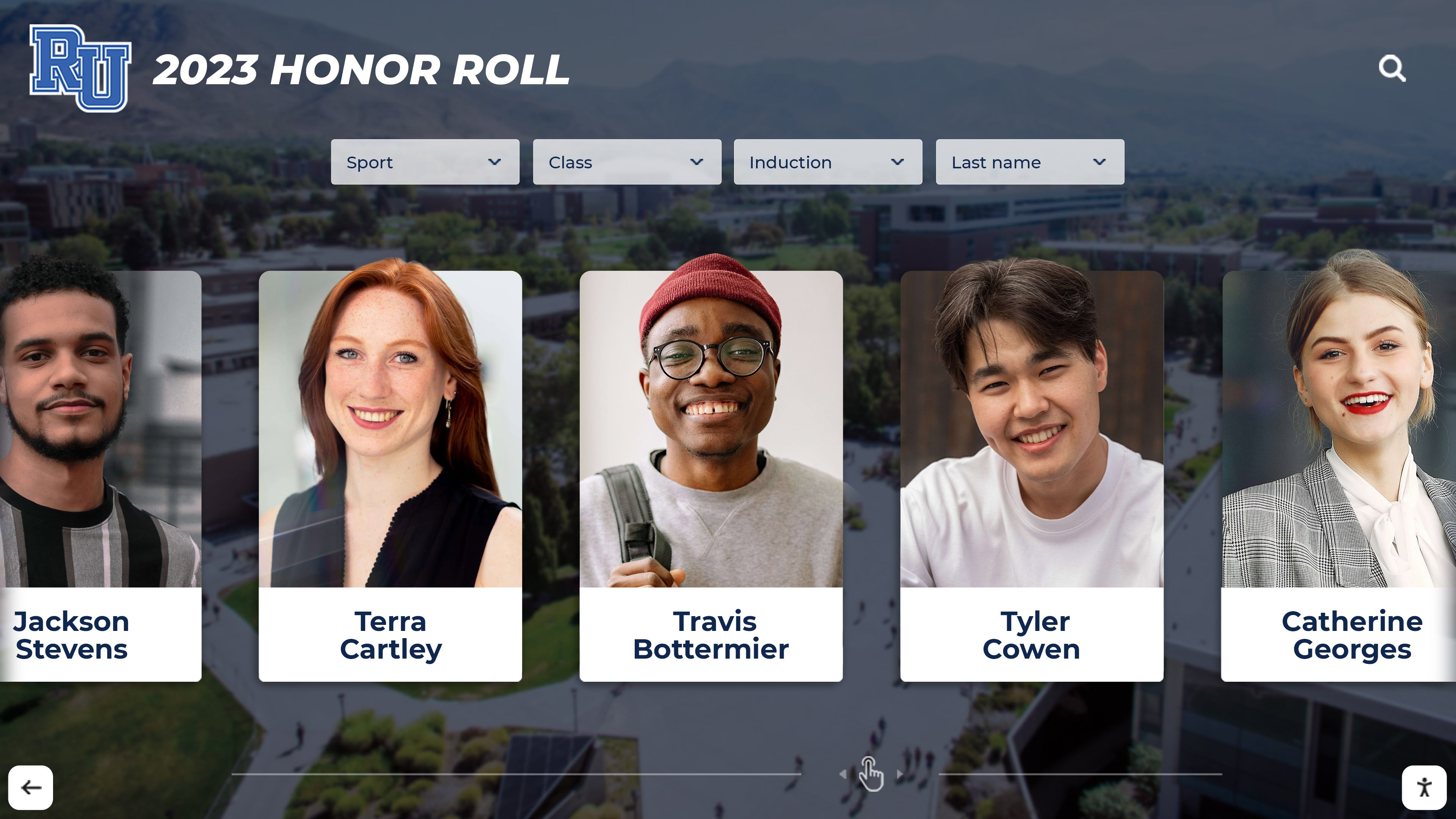
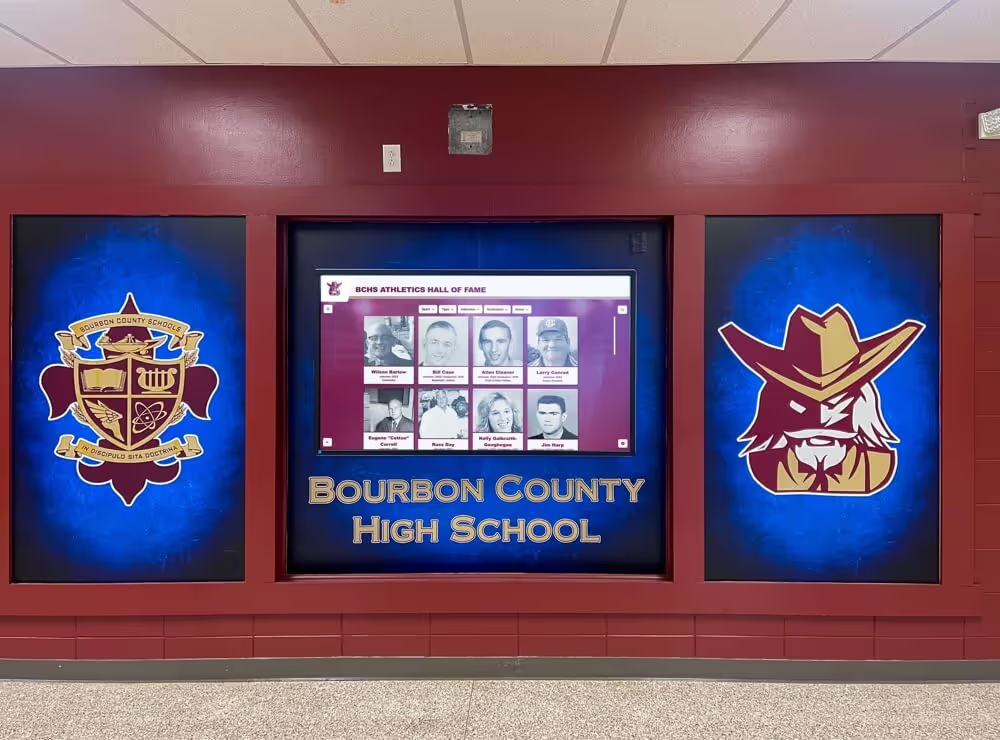
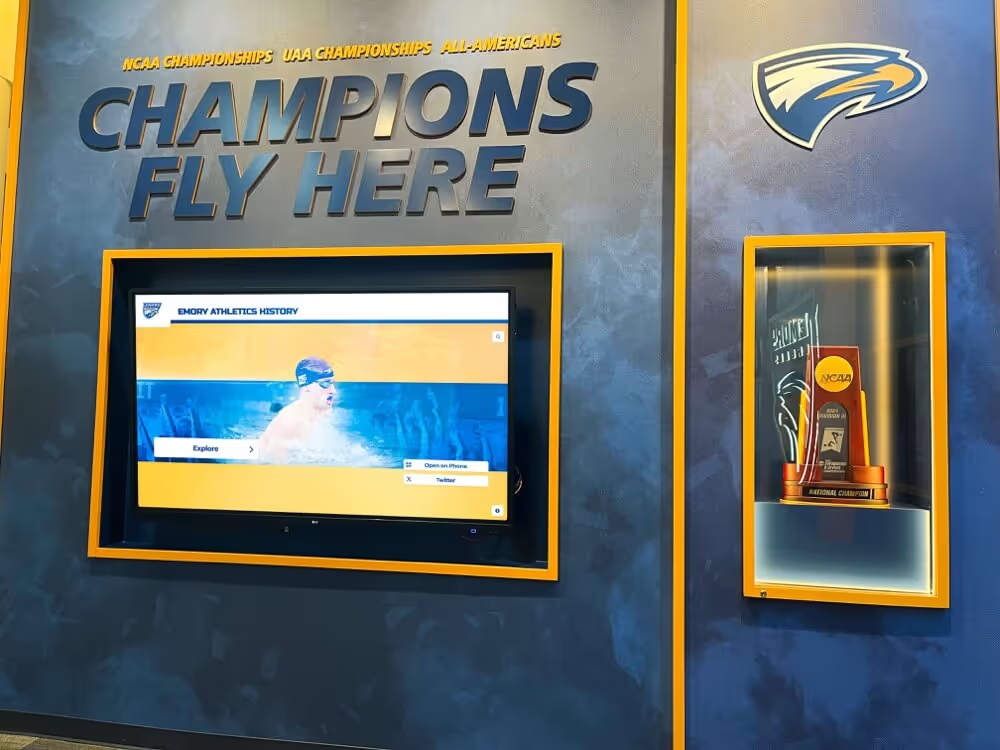
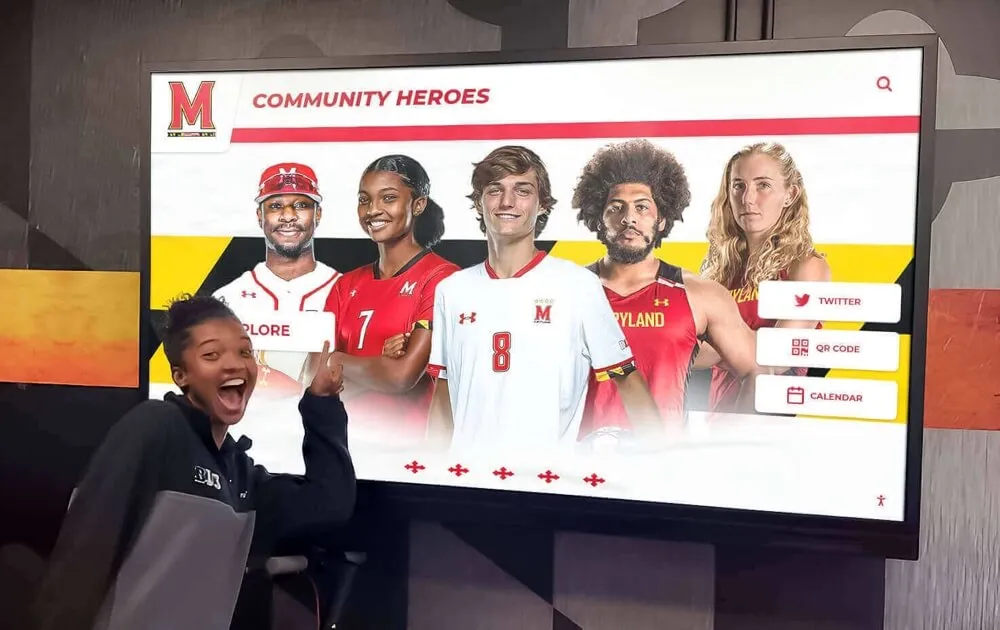
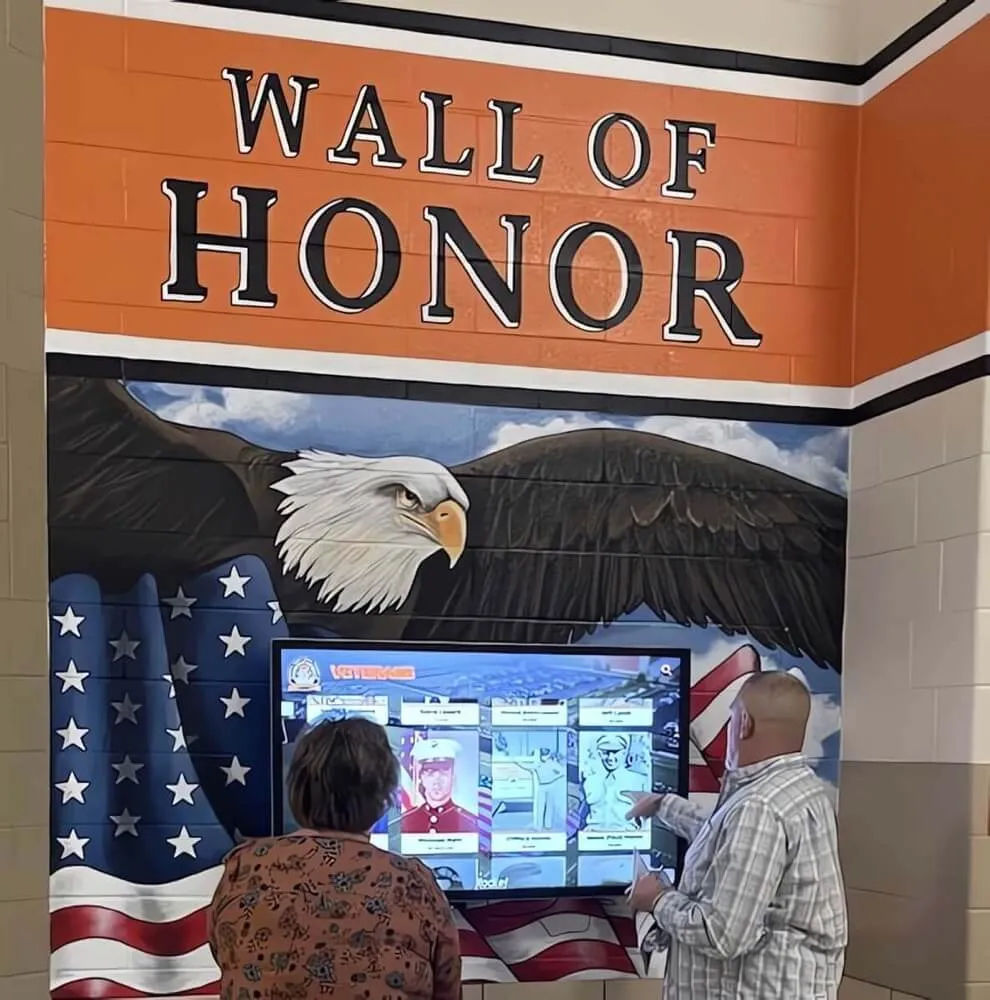
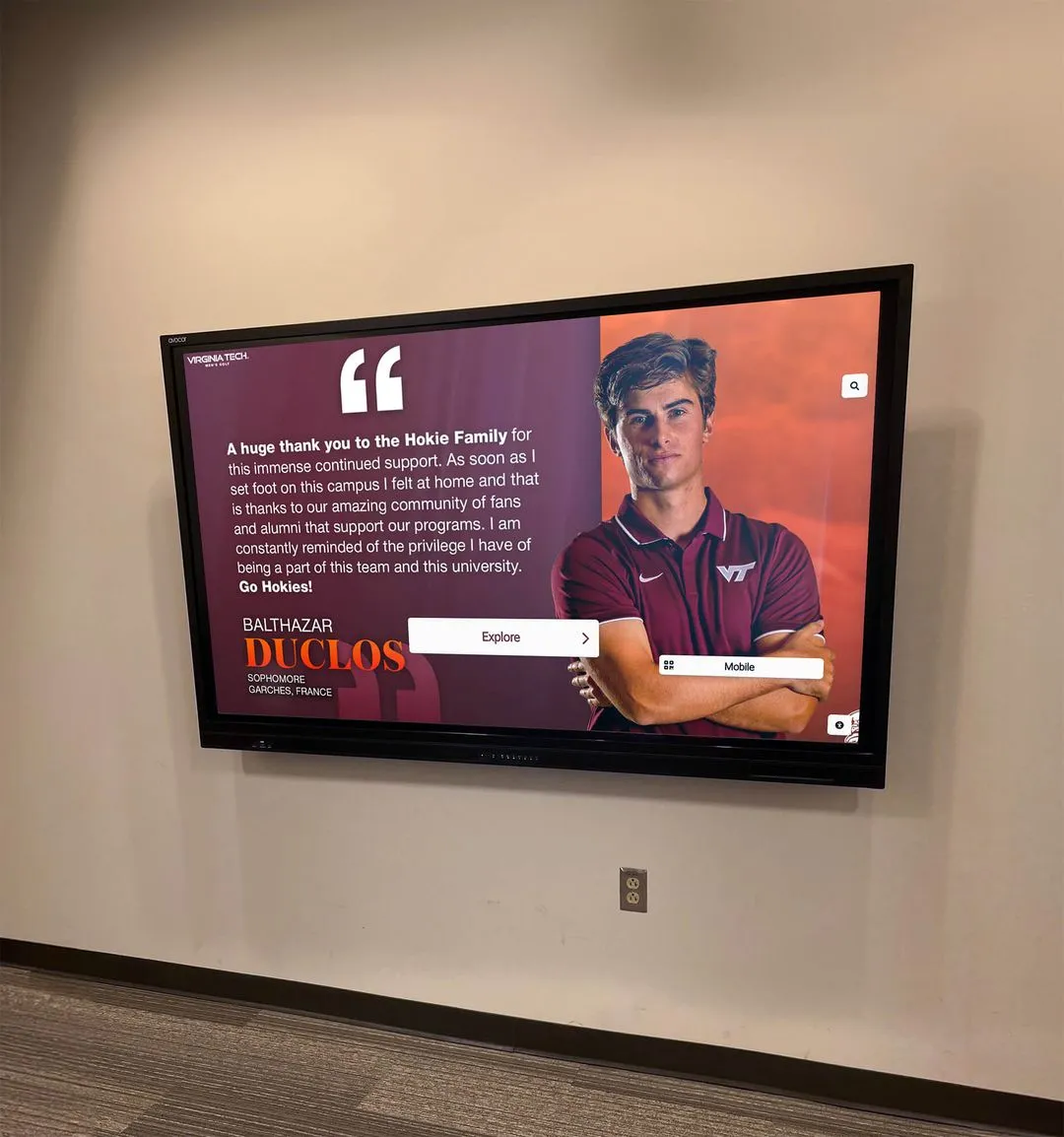
Individual recognition profiles celebrate specific achievements and academic journeys beyond simple certificate distribution
Common Achievement Certificate Categories
Comprehensive recognition programs acknowledge diverse academic accomplishments through systematic certificate programs:
Honor Roll Recognition Certificates
Traditional honor roll acknowledgment remains fundamental to academic recognition:
- First honor roll recognizing highest academic achievement (typically 3.8+ GPA or straight A’s)
- Second honor roll acknowledging strong academic performance (typically 3.5-3.79 GPA)
- Subject-specific honor roll celebrating excellence in individual departments
- Improvement honor roll recognizing significant GPA growth from previous terms
- Perfect attendance combined with academic achievement acknowledging dedication
Honor roll certificates should include specific achievement details—exact GPA when appropriate, qualifying subjects for subject-specific recognition, improvement metrics for growth acknowledgment—rather than generic templates that reduce individualized accomplishment to standardized formats lacking personal meaning.
Subject Excellence Awards
Department-specific recognition celebrates focused academic strengths:
- Mathematics excellence recognizing computation skill, problem-solving ability, and quantitative reasoning
- Science achievement acknowledging laboratory skills, scientific method mastery, and research aptitude
- English and language arts excellence celebrating writing proficiency, literary analysis, and communication skills
- Social studies achievement recognizing historical understanding, civic knowledge, and critical thinking
- World language proficiency honoring linguistic competency and cultural learning
- Arts excellence acknowledging creative expression, artistic technique, and aesthetic understanding
- Physical education and health recognizing wellness knowledge and personal fitness development
Subject certificates demonstrate that academic recognition extends beyond traditional core subjects to acknowledge excellence across complete curriculum, preventing recognition concentration in mathematics and English while other achievement forms go unacknowledged.
Standardized Achievement Recognition
Test performance milestones deserve systematic celebration:
- National Merit recognition celebrating PSAT/NMSQT excellence including Commended Student, Semifinalist, and Finalist designations
- ACT 30+ achievement acknowledging superior college admission test performance
- SAT score milestone certificates recognizing exceptional section or composite scores
- Advanced Placement exam success celebrating scores of 3 or higher demonstrating college-level mastery
- State assessment proficiency and advanced performance acknowledgment
- Academic competition achievements including quiz bowls, olympiads, and subject contests
Standardized achievement recognition provides objective validation complementing grade-based acknowledgment while celebrating accomplishments enabling college admission advantages and scholarship qualification.
Growth and Improvement Recognition
Equitable recognition systems acknowledge achievement growth regardless of starting point:
- Most improved GPA certificates celebrating significant academic trajectory changes
- Reading level advancement recognizing literacy development and comprehension growth
- Course completion in challenging subjects acknowledging perseverance through difficult material
- Credit recovery success celebrating students overcoming previous setbacks through dedicated effort
- Grade improvement in specific subjects recognizing focused development in challenging areas
Growth recognition ensures students at all achievement levels experience acknowledgment, preventing recognition concentration among consistently high-achieving students while others pursuing meaningful improvement go unrecognized despite significant dedication and progress.
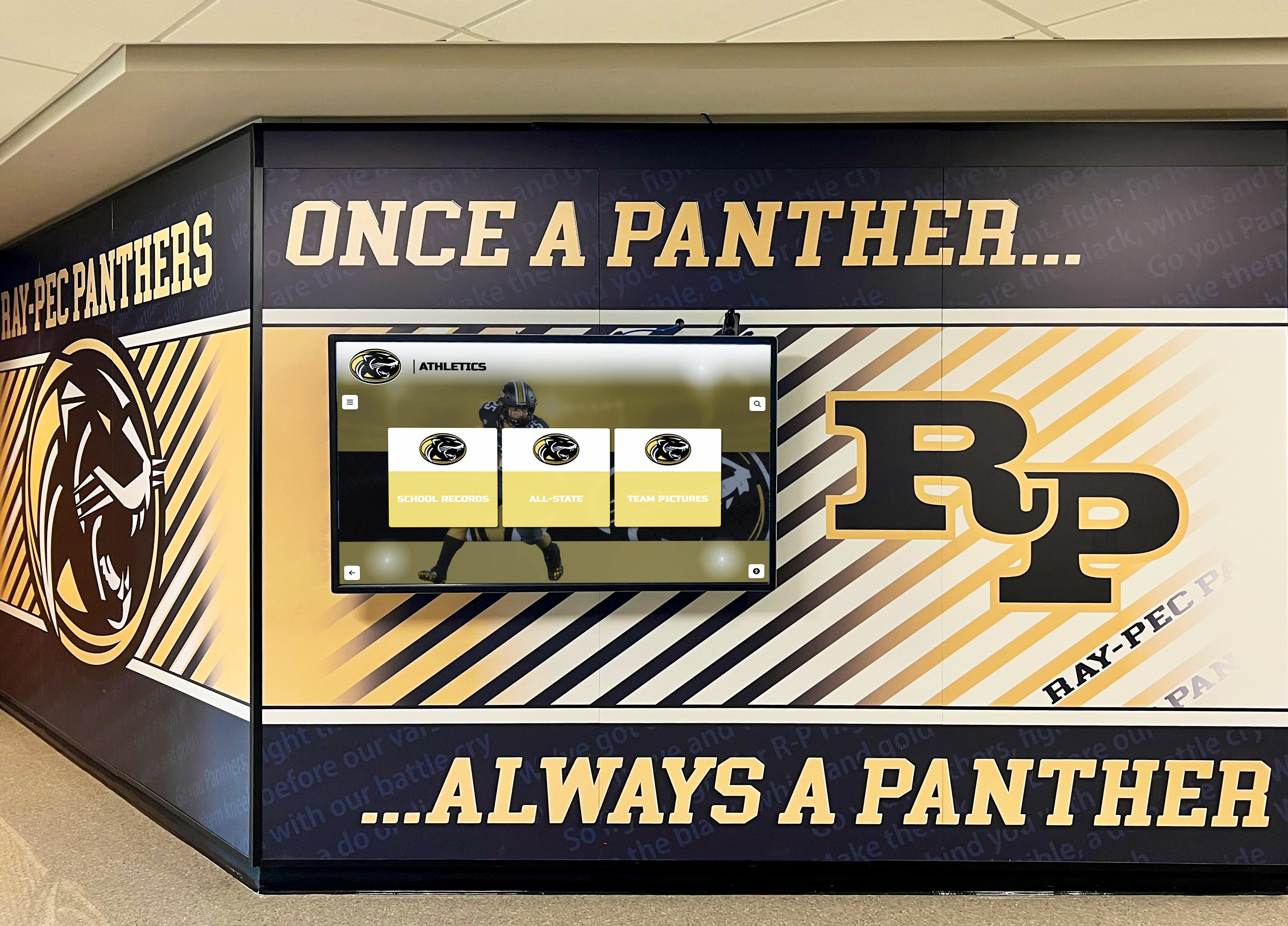
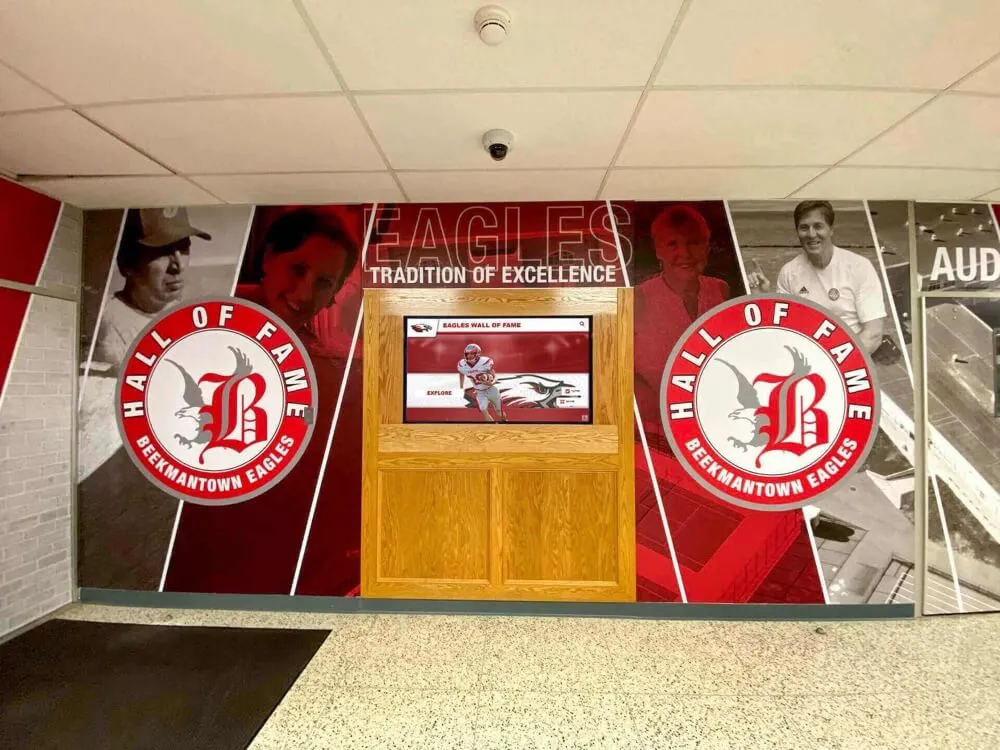
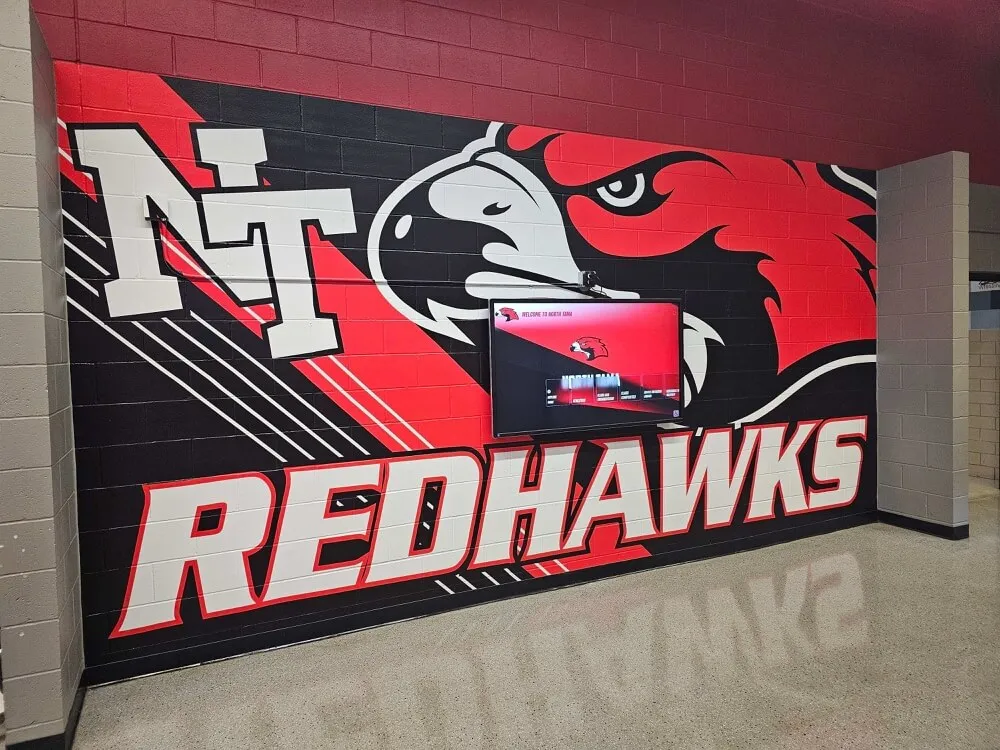
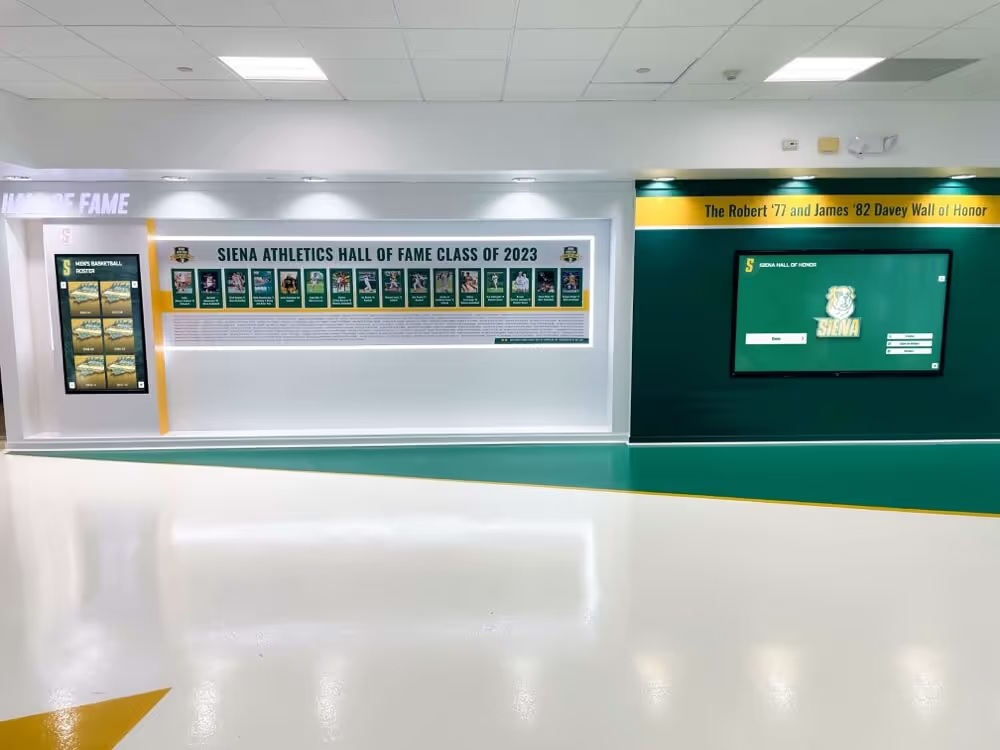
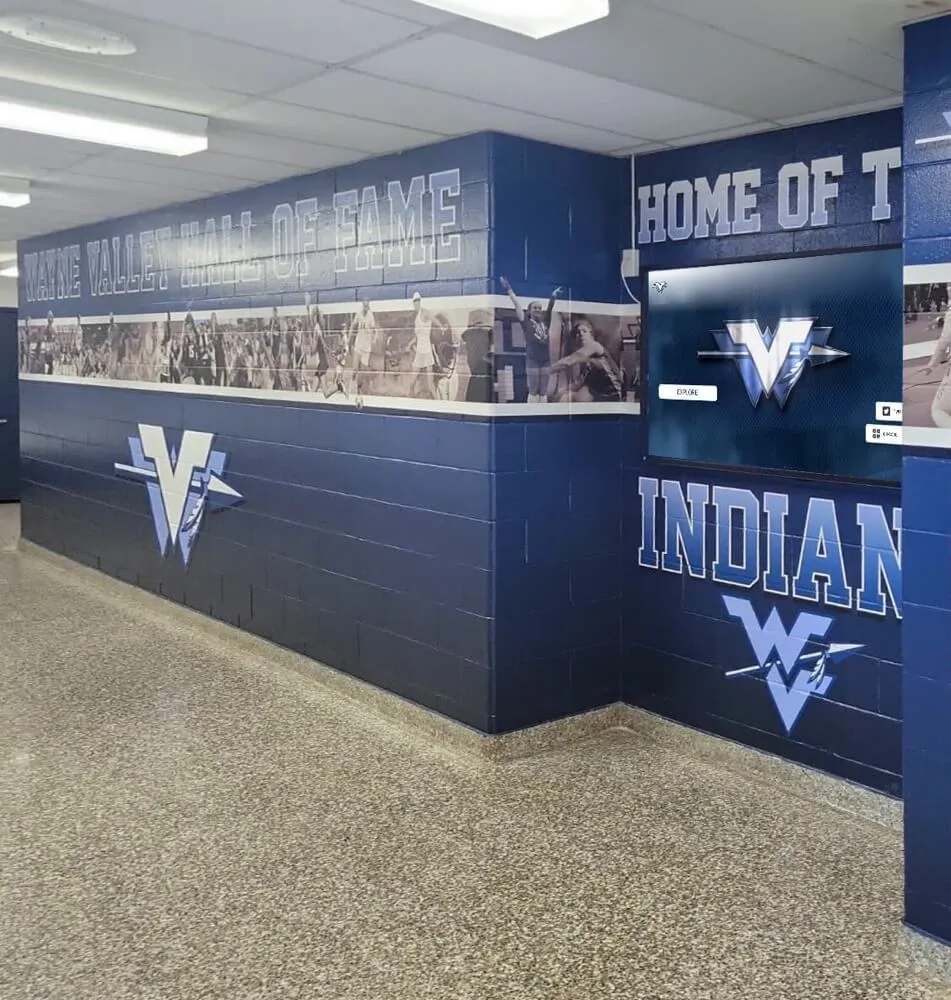
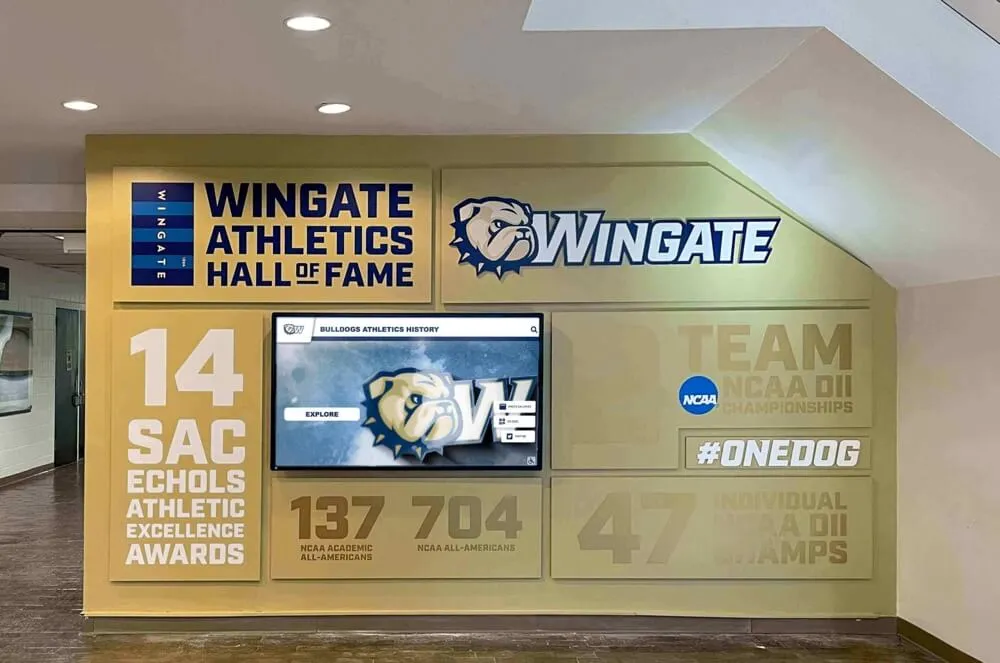
Environmental integration makes recognition displays natural parts of institutional identity and culture
Beyond Paper: Modern Recognition Approaches
Traditional paper certificates maintain ceremonial value while modern schools enhance acknowledgment through complementary approaches creating sustained visibility and community engagement impossible with certificates alone.
The Limitations of Certificate-Only Recognition
Understanding traditional approach constraints helps schools design enhanced programs:
Ephemeral Impact and Limited Visibility
Paper certificates provide momentary acknowledgment during distribution ceremonies followed by minimal ongoing visibility. Students file certificates in drawers or binders where family members see them briefly if at all, extended family never encounters recognition, and younger students miss role model visibility that might inspire their own excellence pursuit.
This ephemeral impact means recognition affects individual recipients temporarily without creating broader cultural momentum building academic achievement environments. Schools investing significant resources in academic standards, instruction quality, and student support see minimal return on achievement acknowledgment when recognition exists only as certificates lacking sustained community visibility.
No Community Engagement or Discovery
Certificates enable private individual acknowledgment without facilitating community engagement with academic achievement patterns. Schools cannot easily showcase complete honor roll history across decades, families cannot explore classmates sharing similar accomplishments, younger students cannot discover role models demonstrating achievement accessibility, and prospective families evaluating schools cannot assess academic culture quality through brief campus visits.
This engagement limitation means certificate programs serve only immediate recipients rather than functioning as cultural infrastructure supporting institutional mission advancement, family connection strengthening, and community pride building through visible academic excellence celebration.
Administrative Burden Without Strategic Value
Creating, printing, signing, and distributing certificates consumes administrative resources while delivering minimal strategic return because recognition disappears immediately after distribution. Schools invest time in recognition programs without generating sustained visibility supporting recruitment, donor engagement, alumni connection, or community relations—missed opportunities where comprehensive recognition could serve multiple institutional priorities simultaneously.
Digital Recognition Display Integration
Modern schools combine traditional certificates with digital recognition infrastructure:
Permanent Accessible Achievement Documentation
Solutions like Rocket Alumni Solutions provide unlimited capacity for documenting student achievements across all recognition categories throughout complete institutional history. Unlike certificate drawers holding individual accomplishments privately, digital platforms showcase comprehensive achievement patterns demonstrating sustained academic excellence traditions while enabling easy discovery through search, filtering, and intuitive navigation supporting personalized exploration.
Digital documentation preserves recognition permanently—students graduating years ago remain discoverable in searchable archives, families accessing platforms remotely can view achievements anytime, and institutional memory remains intact across administrative transitions that sometimes disrupt traditional record-keeping systems. This permanence ensures recognition investment creates lasting value extending decades beyond individual certificate distribution ceremonies.
Rich Storytelling Beyond Certificate Text
Digital profiles enable comprehensive achievement narratives impossible on printed certificates:
- Professional student photography presenting achievers personally rather than as names on lists
- Complete achievement documentation showing honor roll history, subject excellence, test scores, competition success, and awards across academic careers
- Academic interest statements explaining intellectual passions and learning goals
- Teacher testimonials celebrating specific contributions and classroom excellence
- College admission success connecting achievement recognition to post-graduation outcomes
- Service and leadership acknowledgment presenting complete student contributions beyond academic metrics alone
These rich narratives honor complete individuals whose academic achievement reflects dedication, intellectual curiosity, and personal qualities deserving comprehensive celebration rather than reduction to certificate bullet points lacking human connection or inspiring detail.

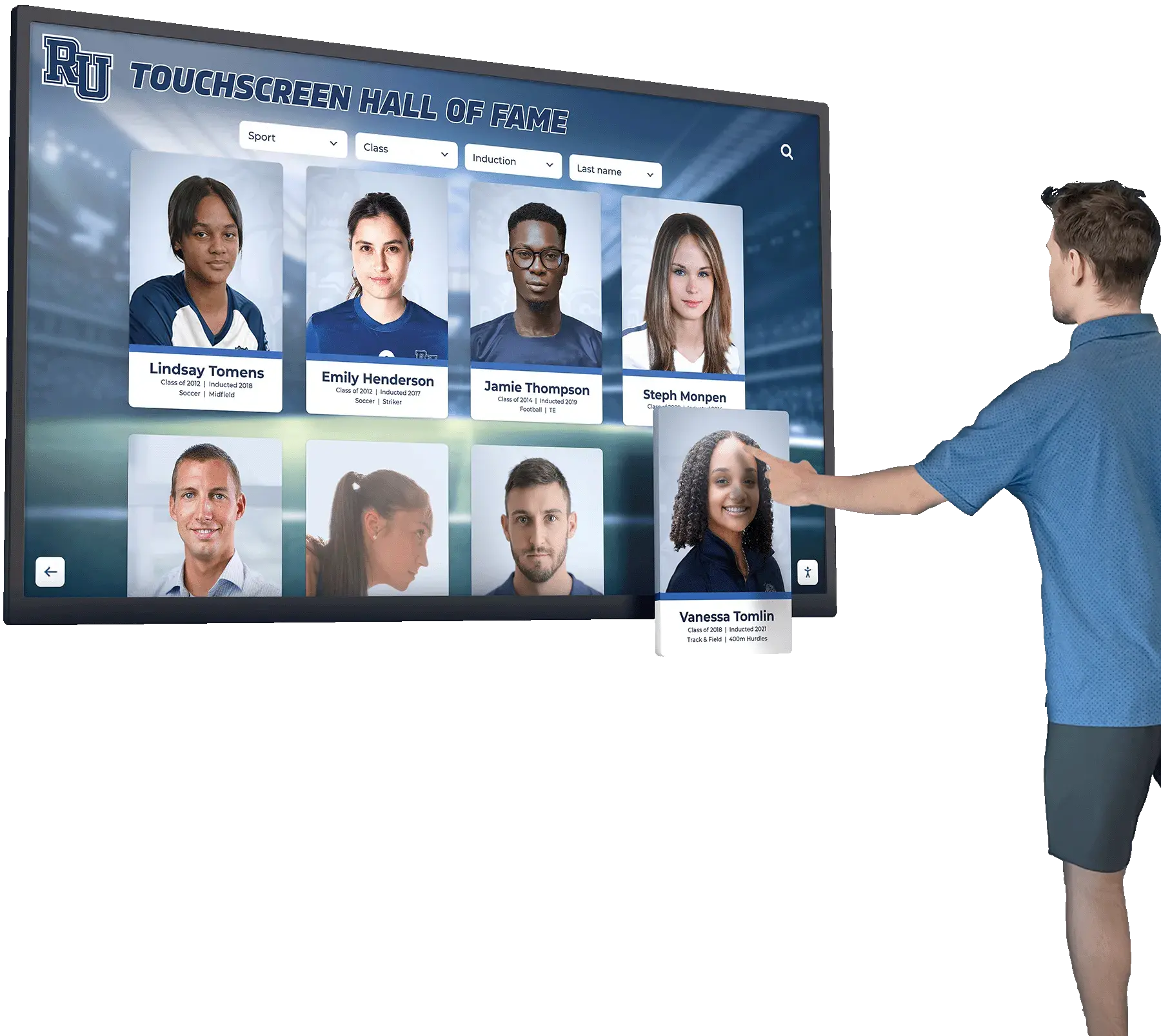
Intuitive interfaces enable exploration that creates personal discovery and emotional connection
Interactive Exploration Creating Engagement
Touchscreen kiosk solutions transform recognition from passive certificate viewing into active exploration where community members invest time discovering achievement patterns, exploring individual student profiles, and connecting personally with academic excellence narratives:
- Search functionality enabling quick location of specific students, family members, or friends
- Year and term filtering showing achievement patterns across marking periods and academic years
- Subject and category filtering discovering excellence in particular departments or recognition types
- Achievement level sorting celebrating highest performers while acknowledging all recognition tiers
- Related student connections revealing siblings, classmates, teammates, and friends sharing accomplishments
Interactive engagement creates memorable experiences where visitors spend minutes exploring recognition rather than glancing briefly at static certificates displayed on bulletin boards before moving on without meaningful connection or retention.
Web-Based Recognition Extensions
Physical display advantages multiply when combined with web accessibility reaching global communities:
Anywhere Access for Distributed Families
Mobile-responsive web platforms enable families to view student achievement recognition from anywhere worldwide—grandparents living distant states can celebrate academic milestones immediately, deployed military parents maintain connection with students’ educational progress, and extended family members unable to attend campus events can participate in recognition through remote access creating inclusive celebration regardless of geographic constraints.
QR codes connecting physical displays to expanded online content enable seamless transitions from campus exploration to extended engagement where visitors can bookmark profiles, share recognition through social networks, and return repeatedly to updated content as additional achievements occur throughout academic careers.
Social Sharing Amplifying Recognition Reach
Modern platforms include one-click social sharing enabling students and families to celebrate achievements across personal networks—Facebook, Instagram, Twitter, and other platforms where recognition extends exponentially beyond physical display viewers to reach hundreds or thousands through organic sharing creating authentic institutional promotion more credible than administrative marketing messaging.
This amplification serves multiple strategic purposes simultaneously—individual students receive validation from broader communities strengthening motivation, families build pride sharing recognition throughout extended networks, prospective families researching schools discover authentic achievement evidence proving academic culture quality, and alumni maintain connections encountering recognition updates through social feeds keeping institutional awareness high despite geographic distance.
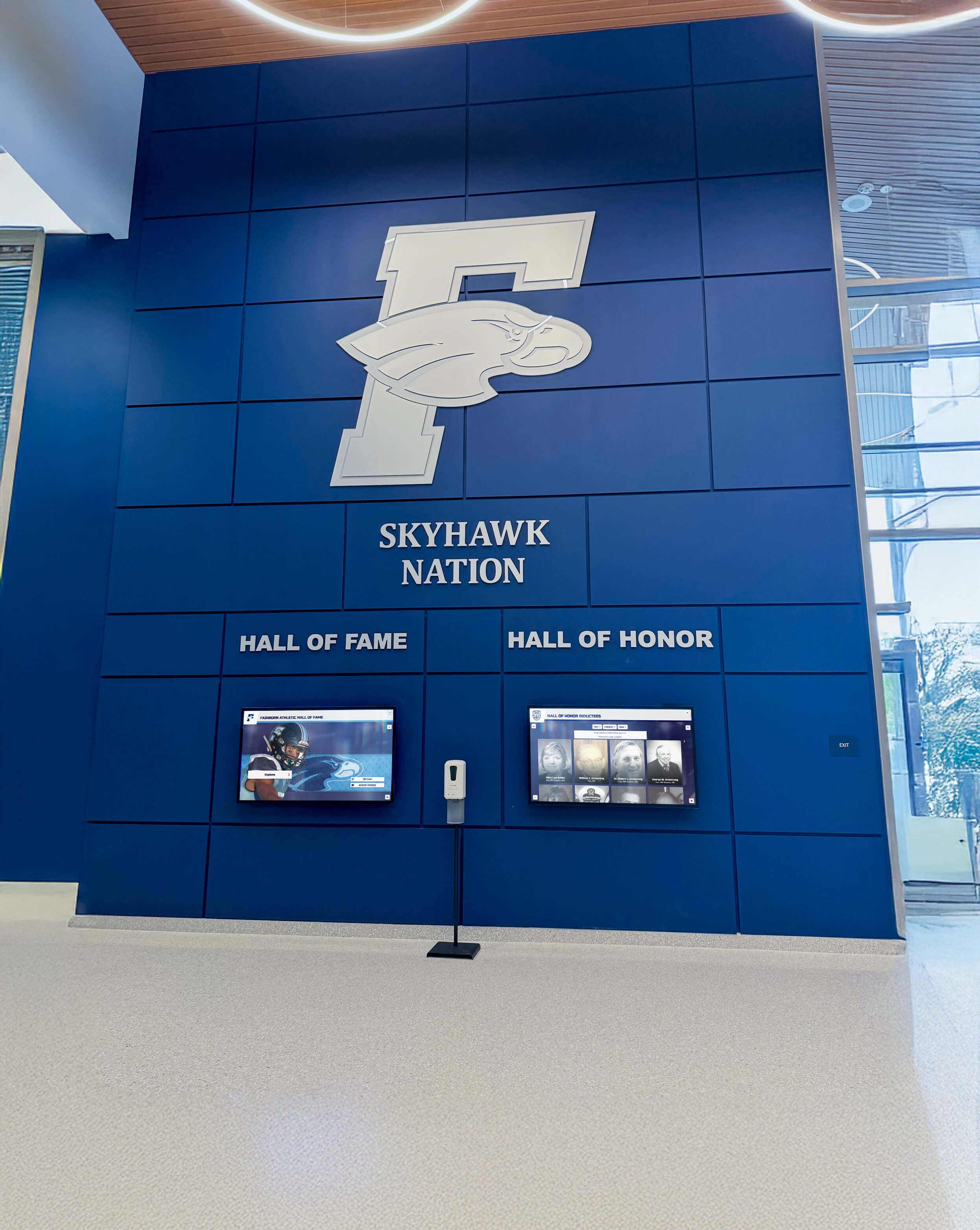
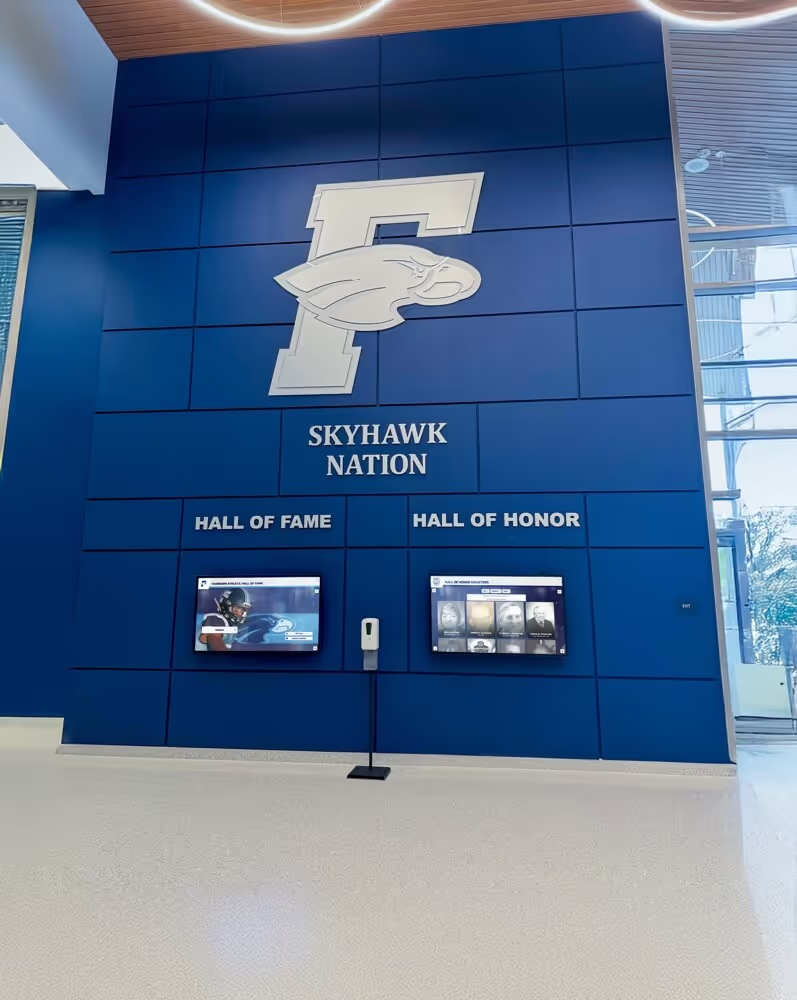
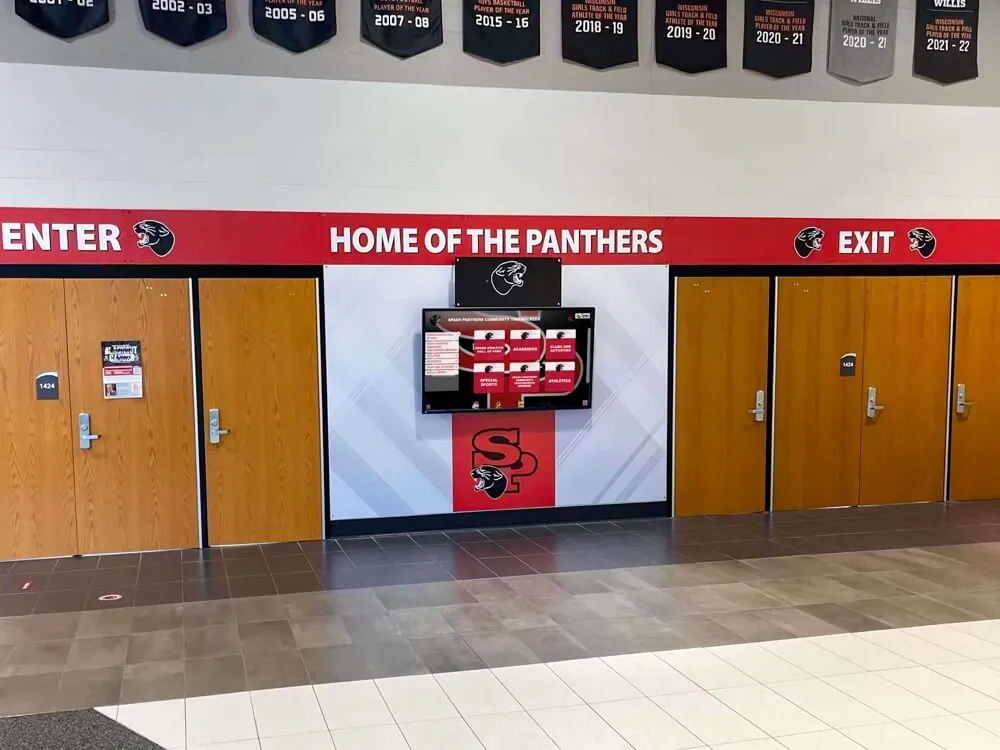
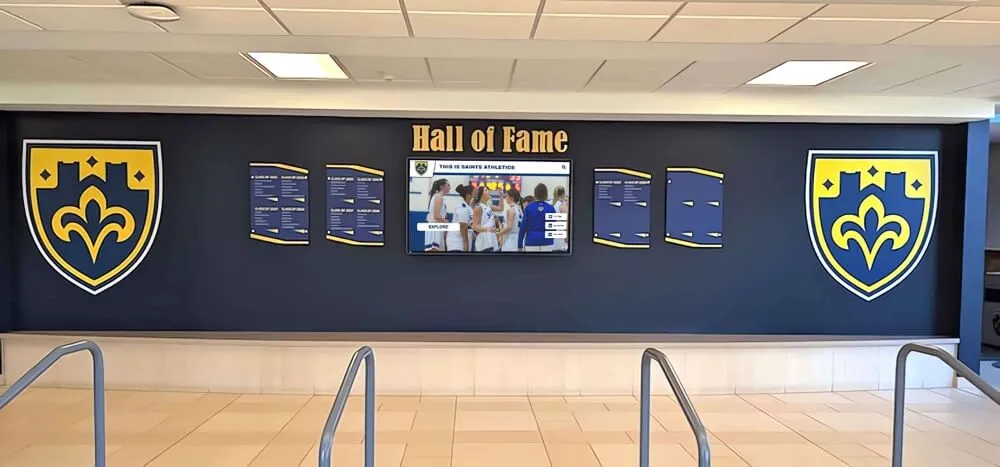
Prominent lobby installations establish recognition as institutional priority visible to all visitors
Designing Effective Achievement Certificate Programs
Successful recognition systems combine thoughtful certificate design with strategic visibility ensuring acknowledgment creates intended motivational and cultural impacts.
Certificate Design Best Practices
Professional certificate presentation demonstrates achievement significance:
Visual Quality and Professional Presentation
Achievement certificates should reflect accomplishment importance through high-quality design:
- Professional graphic design featuring institutional branding, mascots, colors, and identity elements
- Substantial certificate stock (65-110 lb cardstock) communicating significance through physical quality
- Official signatures from principals, superintendents, or board presidents adding ceremonial weight
- Specific achievement documentation including exact GPAs, test scores, or improvement metrics rather than generic acknowledgment lacking individualized detail
- Official seals and institutional logos authenticating recognition through formal validation
Visual quality matters because certificate physical presence signals achievement importance—flimsy paper with generic templates communicates minimal significance while substantial certificates with professional design demonstrate genuine institutional commitment to academic recognition deserving student and family pride.
Comprehensive Achievement Documentation
Effective certificates provide complete information enabling full understanding:
- Specific achievement earned (First Honor Roll, Subject Excellence, Most Improved, specific competition results)
- Qualifying metrics when appropriate (3.8+ GPA, 95+ average, 10% improvement, specific test scores)
- Time period covered (Q1 2025-26, Fall Semester 2025, Academic Year 2025-26)
- Additional recognition context (consecutive honor roll quarters, first-time achievement, cumulative honors)
- Personalized congratulations acknowledging effort, dedication, and accomplishment significance
Comprehensive documentation ensures certificates provide lasting value as meaningful achievement records rather than generic acknowledgments lacking specific information enabling recipients and families to understand accomplishment context years after distribution.
Strategic Certificate Presentation Timing
Distribution timing affects recognition impact and motivational influence:
Quarterly Recognition Maintaining Momentum
Frequent recognition throughout academic years creates sustained motivation:
- End-of-quarter honor roll recognition celebrating marking period achievement
- Mid-term progress acknowledgment recognizing improvement trajectory
- Semester conclusion comprehensive recognition documenting sustained excellence
- End-of-year cumulative achievement celebrating annual academic success
Quarterly cycles ensure recognition occurs regularly rather than concentrating acknowledgment into single annual ceremonies providing minimal motivational impact during most of academic year. Regular recognition creates ongoing feedback loops where achievement generates acknowledgment motivating continued excellence producing additional achievements receiving further recognition.
Ceremonial Presentation Maximizing Impact
Formal recognition ceremonies enhance certificate significance:
- Dedicated academic recognition assemblies celebrating intellectual achievement specifically rather than combining with other purposes diluting focus
- Family invitation enabling parent attendance witnessing student acknowledgment
- Public presentation with student names announced celebrating achievement visibly rather than distributing certificates privately in advisory periods
- Administrator participation demonstrating institutional leadership commitment to academic excellence
- Photography capturing recognition moments enabling family preservation and social sharing
- Coordinated display updates ensuring digital recognition coincides with certificate distribution creating comprehensive celebration
Ceremonial presentation creates memorable experiences students and families cherish throughout educational journeys and beyond, transforming acknowledgment from administrative formality into meaningful celebration demonstrating genuine appreciation for academic dedication and achievement.
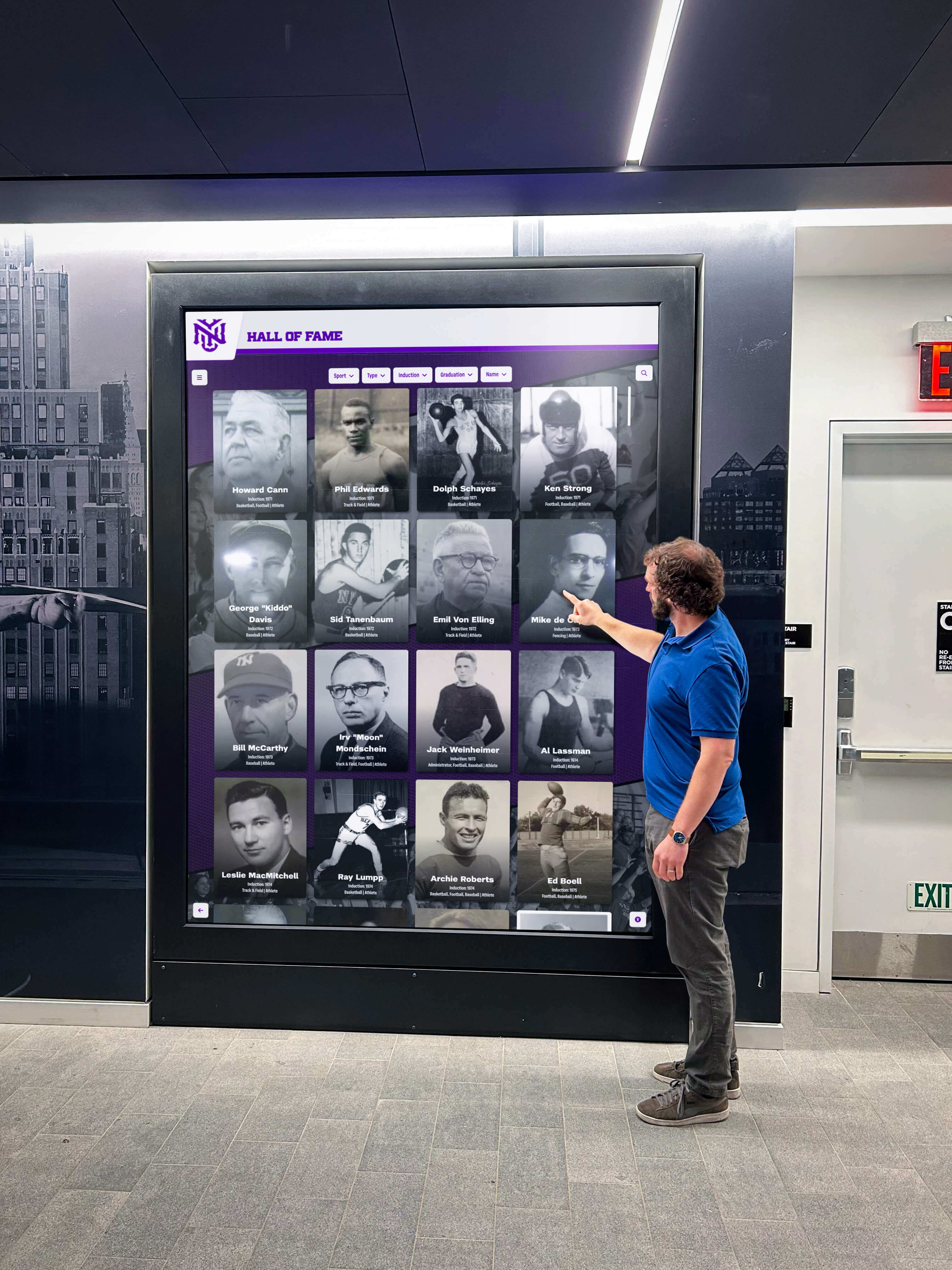
Interactive displays enable families and community members to explore academic excellence during recognition ceremonies and daily visits
Creating Inclusive Recognition Systems
Comprehensive programs ensure achievement acknowledgment reaches students across all starting points, learning profiles, and circumstantial challenges rather than concentrating recognition among consistently highest-performing populations.
Multiple Achievement Pathways
Equitable recognition includes diverse excellence dimensions:
Absolute Achievement Recognition
Traditional acknowledgment remains important:
- Honor roll certificates celebrating sustained high academic performance
- Subject excellence awards recognizing exceptional department achievement
- Standardized test milestone certificates acknowledging superior examination performance
- Academic competition success celebrating intellectual contests and scholarly competitions
- Advanced coursework completion recognizing rigorous curriculum pursuit through AP, IB, dual enrollment programs
Absolute achievement recognition celebrates students reaching objective high-performance standards regardless of starting point, demonstrating educational excellence and readiness for advanced academic challenges.
Growth and Improvement Recognition
Progress acknowledgment ensures equitable access:
- Most improved certificates celebrating significant GPA growth trajectories
- Reading level advancement recognizing literacy development particularly for struggling readers
- Credit recovery success acknowledging students overcoming previous setbacks
- Behavior improvement combined with academic progress recognizing complete student development
- From failing to passing recognition celebrating fundamental achievement for students facing significant challenges
Growth recognition demonstrates institutional commitment to acknowledging all students experiencing meaningful progress rather than limiting recognition to elite performers already starting from advantaged academic positions.
Effort and Character Recognition
Process acknowledgment complements outcome celebration:
- Perfect attendance combined with passing grades recognizing fundamental dedication
- Homework completion consistency celebrating work ethic regardless of outcome variations
- Classroom participation excellence acknowledging intellectual engagement and contribution
- Peer tutoring and academic support recognizing students helping classmates succeed
- Academic integrity and ethical behavior celebrating character in learning contexts
Effort recognition honors students whose circumstances create achievement challenges but who demonstrate dedication, responsibility, and positive engagement deserving acknowledgment even when outcomes don’t reach honor roll thresholds.
Accessibility and Equity Considerations
Recognition systems must remove barriers preventing equitable participation:
Eliminating Financial Barriers
Achievement recognition should never create costs:
- Schools provide all certificates, frames, and recognition materials without family expense
- No premium levels requiring payment for enhanced recognition or special acknowledgment
- Equal ceremony participation regardless of family resources or socioeconomic status
- Recognition criteria focusing exclusively on achievement and effort rather than participation requiring fees
Financial accessibility ensures recognition remains purely achievement-based rather than allowing wealth to influence acknowledgment students receive regardless of identical academic accomplishments.
Cultural and Linguistic Inclusivity
Recognition should serve complete communities:
- Multilingual certificates when serving diverse populations ensuring family understanding
- Culturally responsive recognition acknowledging varied achievement values across traditions
- Name pronunciation respect during public presentations honoring diverse cultural backgrounds
- Family-friendly ceremony scheduling enabling working parent attendance
- Virtual ceremony options ensuring accessibility when transportation or schedule constraints prevent physical attendance
Inclusive practices ensure all families experience welcoming recognition environments regardless of language, culture, work schedule, or circumstances creating potential barriers to participation in traditional ceremony formats.
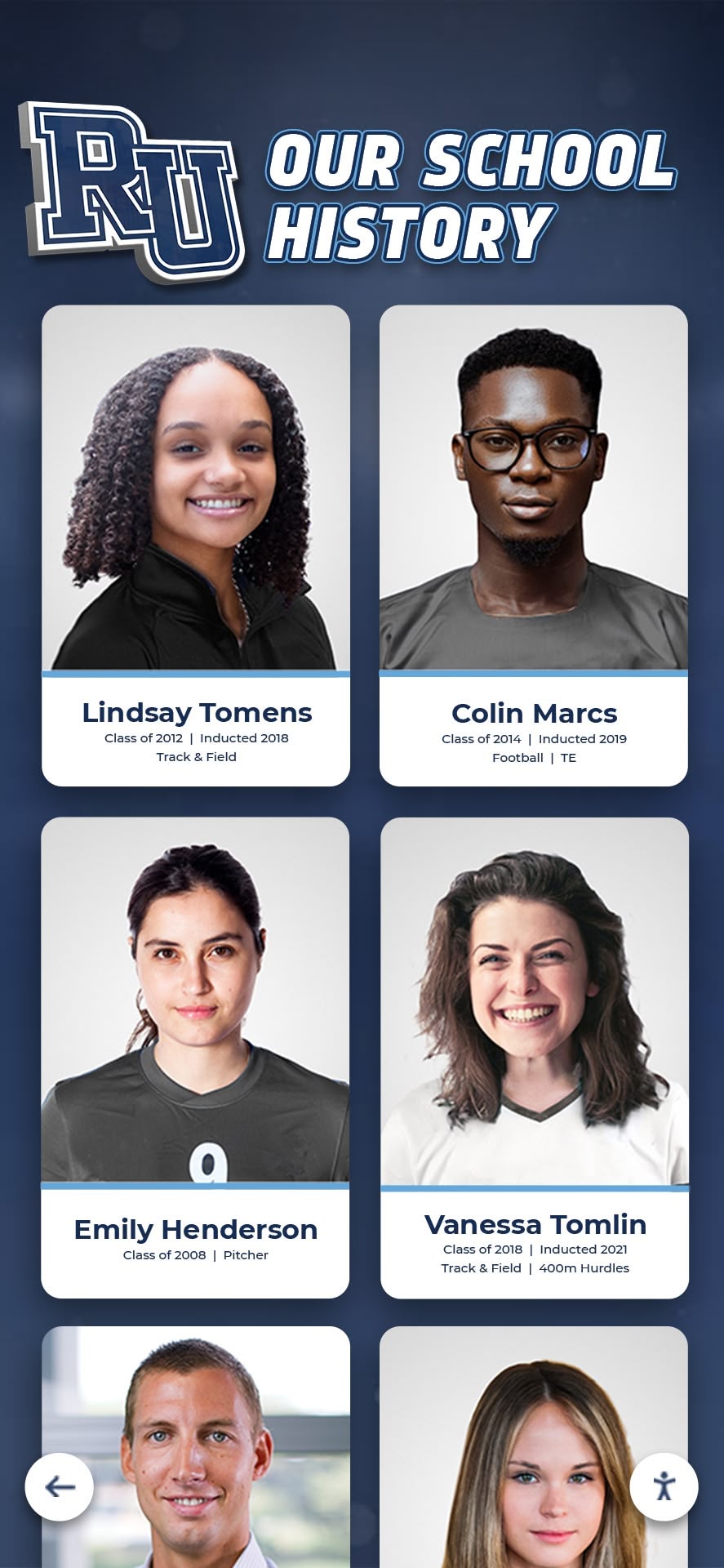
Organized profile collections enable systematic recognition while maintaining individual celebration
Integrating Certificates with Digital Recognition Infrastructure
Maximum impact occurs when traditional certificates combine with modern platforms creating comprehensive acknowledgment serving multiple audiences and purposes simultaneously.
Coordinated Recognition Launch Strategies
Synchronize certificate distribution with digital visibility:
Ceremony Day Digital Display Updates
Schedule recognition platform updates coinciding with certificate presentations:
- New achiever profiles publishing automatically on ceremony dates ensuring immediate visibility
- Featured content highlighting current quarter or semester honorees prominently
- Search capabilities enabling ceremony attendees to locate students immediately
- Social sharing features encouraging immediate celebration through personal networks
- Photography from ceremonies updating profiles documenting recognition milestones
Coordinated launches ensure students receiving certificates simultaneously experience digital recognition visibility creating comprehensive acknowledgment across traditional and modern modalities serving diverse preference and access patterns.
Progressive Recognition Building Throughout Years
Digital platforms document cumulative achievement impossible with individual certificates:
- Complete honor roll history showing sustained excellence across all marking periods
- Achievement trajectories visualizing GPA growth and improvement patterns
- Multiple recognition category documentation presenting complete academic excellence spanning subjects, competitions, and achievement types
- Milestone celebrations highlighting significant accomplishments—first honor roll, consecutive quarters, improvement breakthroughs
- Senior legacy profiles celebrating cumulative four-year achievement before graduation
Progressive documentation creates comprehensive academic narratives honoring complete student journeys rather than isolated achievement snapshots lacking context or continuity across educational careers.
Strategic Display Placement
Recognition visibility depends on installation location:
High-Traffic Academic Locations
Position displays where academic culture matters most:
- Main entrance lobbies greeting all visitors with prominent academic recognition
- Library and learning commons areas where academic focus naturally occurs
- College counseling and guidance office spaces connecting recognition to future success
- Academic hallway intersections with sustained student traffic throughout days
- Building school pride through visible celebration in cafeterias and common gathering spaces
Strategic placement ensures recognition receives visibility proportional to achievement significance while signaling institutional commitment to academic excellence through prominent real estate allocation comparable to athletic recognition displays often occupying premium campus locations.
Coordinated Recognition Environments
Comprehensive installations integrate multiple elements:
- Digital touchscreen displays providing interactive exploration
- Traditional certificate or achievement displays maintaining familiar recognition formats
- Environmental graphics incorporating institutional branding and academic identity
- Coordinated design aesthetics matching facility architecture and school colors
- Trophy case integration when combining academic and athletic recognition comprehensively
Coordinated environments create impressive acknowledgment spaces communicating genuine institutional commitment to student achievement celebration worthy of significant investment and prominent visibility throughout campus facilities.
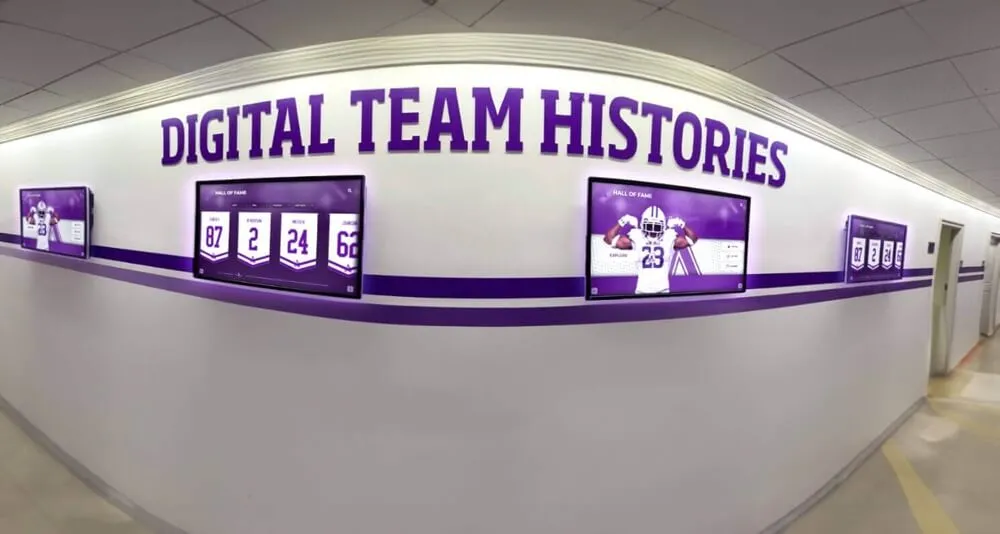
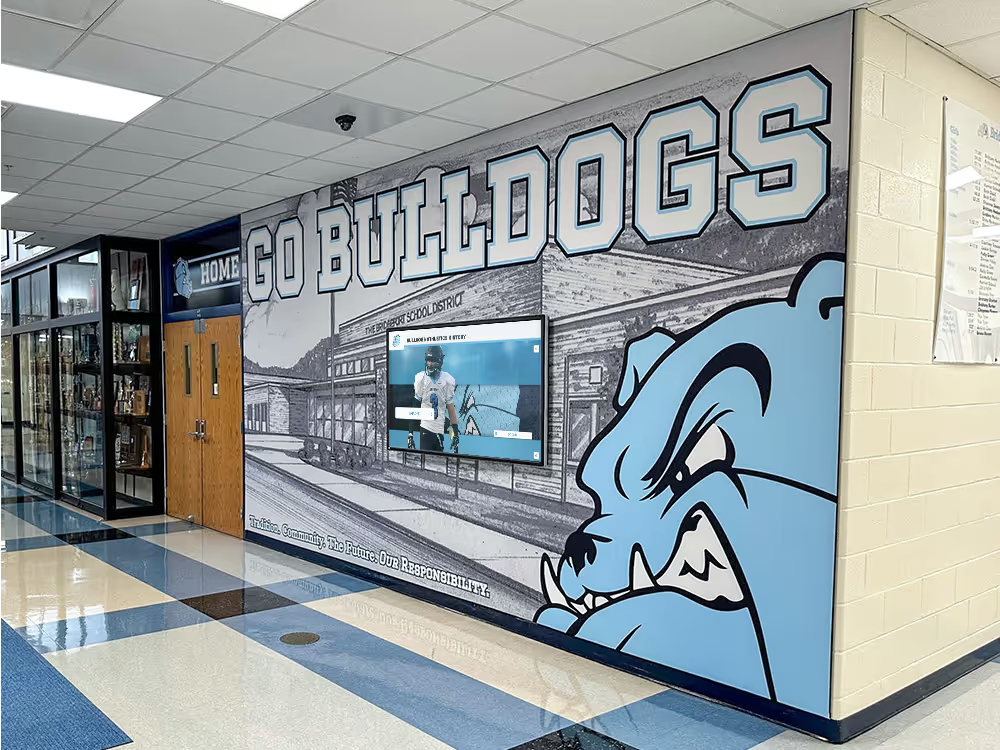
Multiple coordinated displays create distributed recognition throughout facilities ensuring widespread visibility
Measuring Recognition Program Impact
Assessment demonstrates program value while identifying improvement opportunities:
Academic and Motivational Metrics
Achievement Trend Analysis
Evaluate whether recognition correlates with improved outcomes:
- Honor roll participation rates comparing periods before and after enhanced recognition implementation
- Academic performance trajectories among recognized versus non-recognized students
- Course rigor pursuit analyzing whether recognition motivates advanced class enrollment
- Standardized test score trends correlating with recognition program visibility
- Academic competition participation rates indicating enhanced engagement with intellectual challenges
Positive trends demonstrate recognition programs generate intended motivational effects justifying continued investment while identifying areas needing enhancement when expected improvements don’t materialize.
Engagement and Awareness Indicators
Measure community interaction with recognition:
- Digital display interaction rates and average session duration showing engagement depth
- Recognition platform web traffic and unique visitor counts indicating reach
- Social sharing frequency measuring voluntary content amplification through personal networks
- Ceremony attendance rates reflecting family engagement and community interest
- Student feedback about recognition awareness and motivational influence
High engagement metrics prove recognition resonates meaningfully rather than existing as ignored administrative formality consuming resources without generating value through genuine community connection and motivational impact.
Cultural and Strategic Benefits
Institutional Reputation Enhancement
Recognition programs support broader strategic goals:
- Prospective family perceptions during admissions tours where recognition displays showcase academic culture quality
- Enrollment trends among academically motivated students seeking schools valuing intellectual achievement
- Community perception surveys measuring awareness of academic excellence programs
- Media coverage frequency for academic achievement stories amplifying institutional visibility
- Alumni connection patterns indicating whether recognition maintains engagement
Positive strategic outcomes demonstrate recognition generates value extending beyond individual student motivation to include institutional reputation, recruitment advantages, and community relations benefits justifying comprehensive program investment.
Climate and Culture Improvements
Recognition affects overall educational environment:
- School climate survey results showing enhanced academic culture perception
- Teacher satisfaction with institutional commitment to celebrating student achievement
- Student sense of belonging measures indicating inclusive recognition creating connection
- Family satisfaction ratings regarding communication about student success
- Peer culture observations revealing whether academic achievement becomes normalized and celebrated
Cultural improvements suggest recognition contributes to environment transformation supporting educational mission beyond merely satisfying individual recipients through personal acknowledgment.
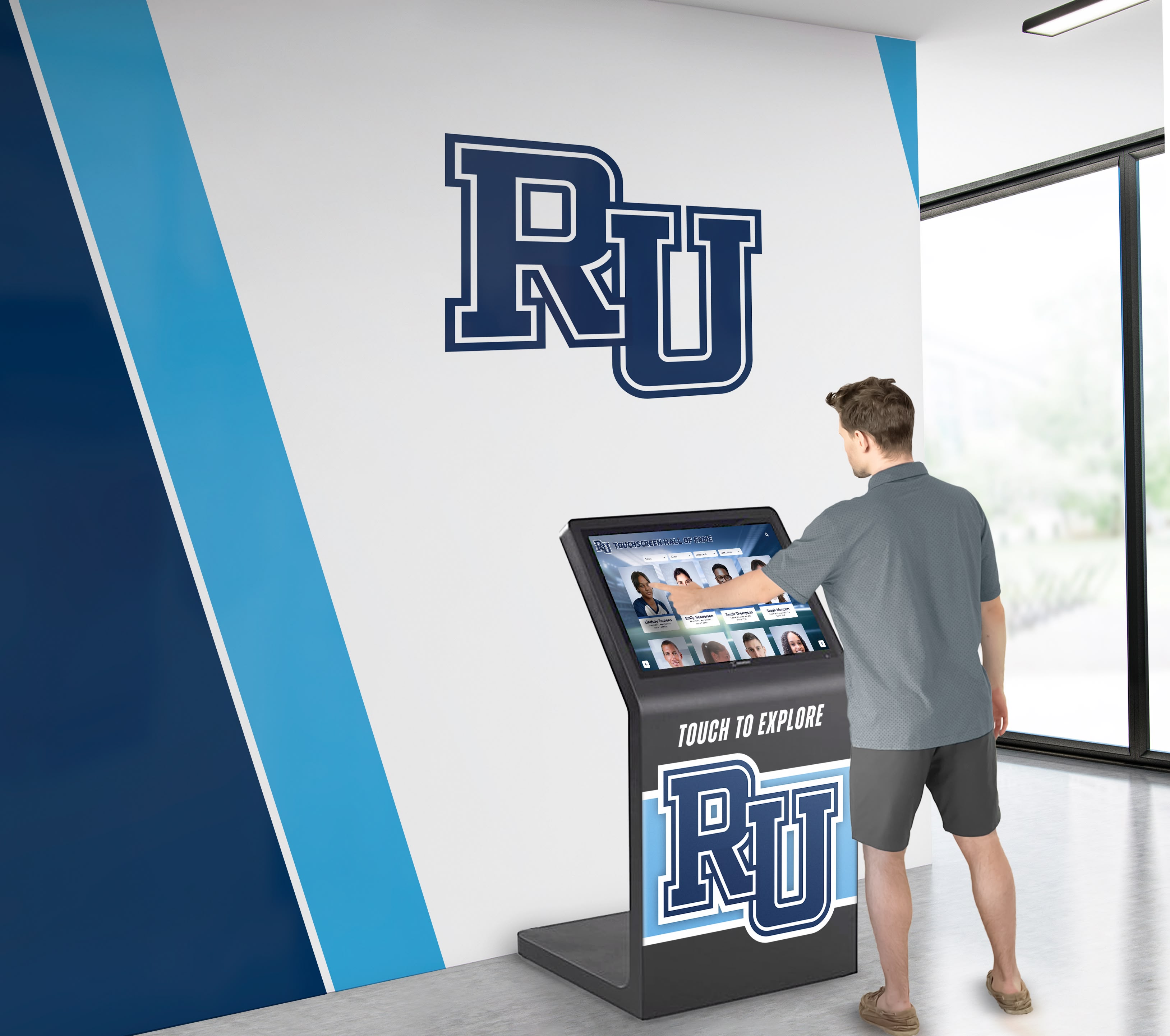
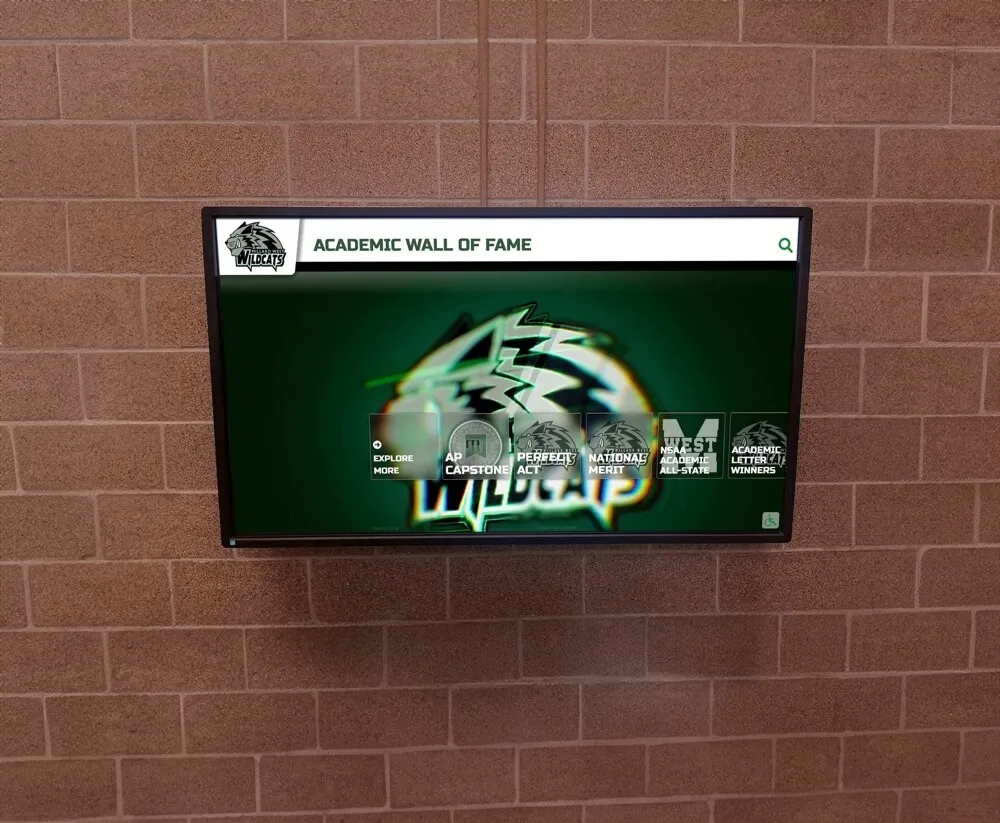
Professional installations with intuitive interfaces ensure accessible community engagement with recognition
Technology Platform Selection for Student Recognition
Choosing appropriate digital recognition technology significantly affects user experience, administrative efficiency, and long-term satisfaction.
Essential Platform Capabilities
Unlimited Student Capacity
Recognition archives grow continuously as academic years accumulate—comprehensive platforms accommodate unlimited student profiles across all achievement categories without performance degradation, storage constraints, or costly system upgrades forcing difficult decisions about whose recognition receives preservation versus removal.
Intuitive Content Management
Prioritize platforms enabling counselors, administrators, or student services staff to confidently manage recognition without IT dependencies. Purpose-built systems provide workflows specifically designed for student recognition—bulk imports from student information systems, template-based profile creation, scheduled publishing automation for ceremony coordination, and role-based permissions enabling distributed management responsibilities.
Comprehensive Accessibility Compliance
Recognition displays must meet accessibility standards ensuring universal community access:
- Full ADA WCAG 2.1 AA compliance ensuring inclusive experiences for all abilities
- Keyboard navigation alternatives to touchscreen interaction for users unable to touch screens
- Screen reader compatibility enabling vision-impaired community members to access content
- High-contrast modes supporting low-vision users and varied lighting conditions
- Mobile-responsive web versions ensuring smartphone and tablet accessibility
Rocket Alumni Solutions represents the only web-based touchscreen recognition platform achieving comprehensive WCAG 2.1 AA compliance, ensuring all community members can engage with student achievement recognition regardless of abilities or assistive technology needs.
Integration and Sustainability Features
Student Information System Connectivity
Efficient platforms integrate with existing school systems:
- Direct data imports from PowerSchool, Infinite Campus, Skyward, and other SIS platforms reducing manual entry
- Automated honor roll list generation based on GPA thresholds eliminating manual identification
- Scheduled updates coordinating with marking period conclusions and grading cycles
- Grade-level advancement automation maintaining accurate student information
- Graduation status updates preserving historical recognition while indicating current enrollment
Integration eliminates duplicate data entry reducing administrative burden while ensuring recognition accuracy through authoritative information sources preventing errors inherent in manual processes.
Long-Term Platform Evolution
Recognition investments should serve schools for decades—prioritize providers with track records for regular feature additions, user-driven improvements, and responsive development. Platforms should improve continuously based on user feedback and technological advances, ensuring long-term value without requiring complete system replacements when initial implementations become outdated.
When institutions implement comprehensive digital recognition solutions like Rocket Alumni Solutions, they access turnkey systems providing complete recognition infrastructure without custom development complexity, enabling focus on program content and strategy rather than technical challenges.

Comprehensive recognition environments integrate technology with architecture creating immersive appreciation experiences
Best Practices for Sustained Recognition Success
Long-term value requires establishing operational practices supporting content quality, currency, and community engagement beyond initial implementation enthusiasm.
Annual Recognition Cycle Documentation
Sustainable programs follow predictable patterns:
Quarterly Honor Roll Cycles
Develop standardized timelines for regular recognition:
- Grade posting and honor roll calculation (week following term conclusion)
- Certificate design, printing, and administrative signing (within 2 weeks of calculation)
- Recognition ceremony planning and family invitation (2-3 weeks advance notice)
- Digital platform updates and profile creation (coordinated with ceremony dates)
- Ceremony execution with certificate distribution and photography
- Post-ceremony social sharing and family communication
- Web platform promotion through newsletters and communication channels
Documented timelines ensure recognition occurs consistently without last-minute rushes or forgotten steps compromising program quality while building community expectations about recognition patterns maintaining engagement through predictable annual rhythms.
Recognition Communication Strategies
Systematic promotion ensures broad community awareness:
Multi-Channel Announcement Approaches
Coordinate communications across platforms:
- School-wide announcements celebrating achievement ceremony dates and highlighting honorees
- Family emails with personalized congratulations and direct links to digital profiles
- Social media campaigns sharing collective statistics and featuring individual students
- Newsletter segments providing achievement data and celebrating excellence patterns
- Morning announcements reading honoree names during recognition weeks
- Website homepage features spotlighting current achievement displays
- Press releases to local media covering major achievement milestones
Coordinated communication ensures recognition reaches diverse community members through preferred information sources while creating sustained visibility maintaining academic achievement prominence within institutional consciousness.
Alumni Connection Through Historical Recognition
Digital recognition archives enable alumni engagement opportunities:
- Historical achievement exploration allowing alumni to locate their own recognition
- Reunion programming incorporating recognition displays enabling attendees to reminisce
- Alumni update features maintaining lifelong connections showing post-graduation success
- Mentorship connections between current students and successful alumni
- Multi-generational family celebration discovering parents, grandparents, or siblings sharing achievements
Alumni engagement transforms recognition from current-student-only benefit into institutional asset supporting advancement, connection maintenance, and community relationship strengthening across decades.
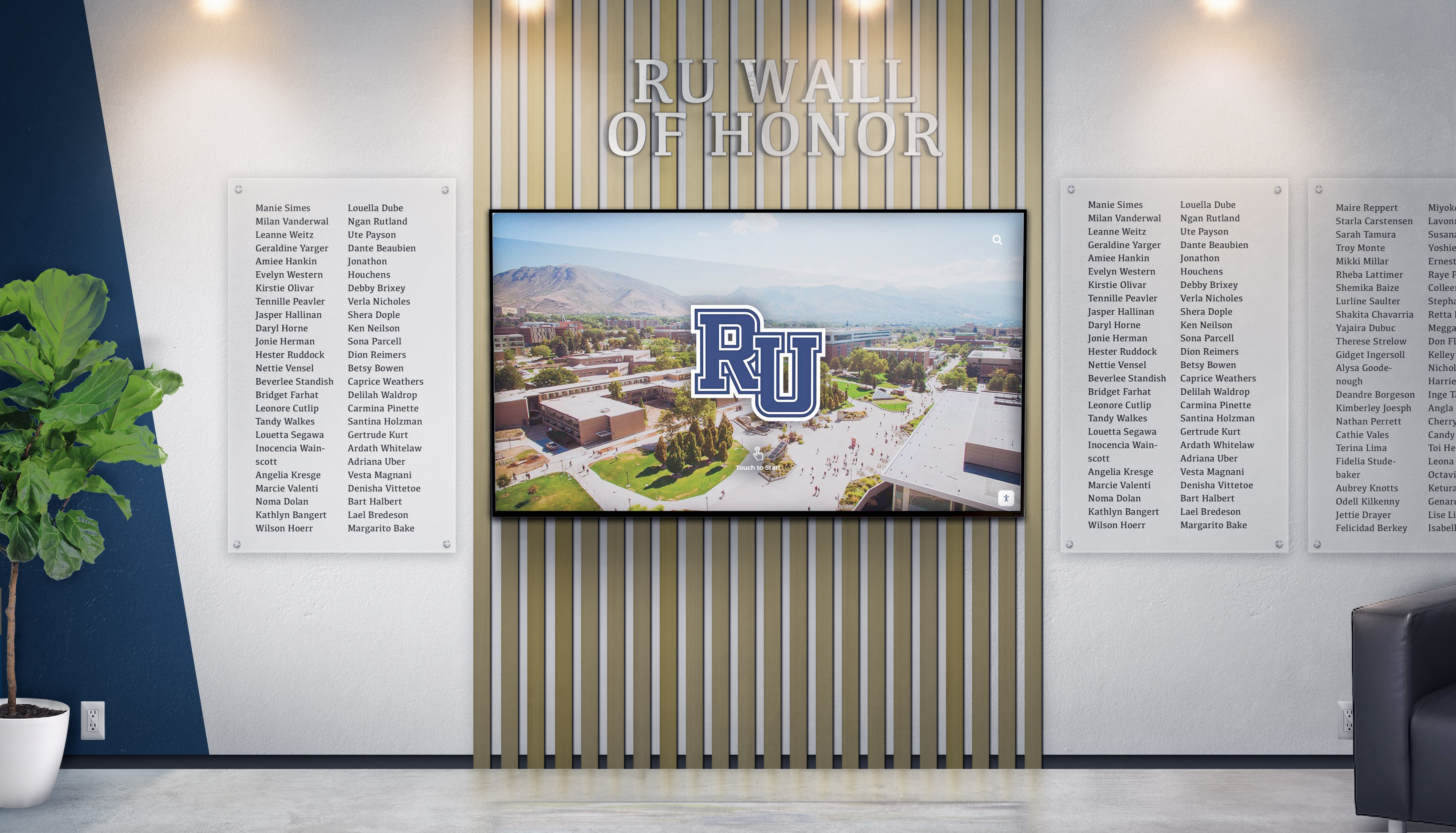
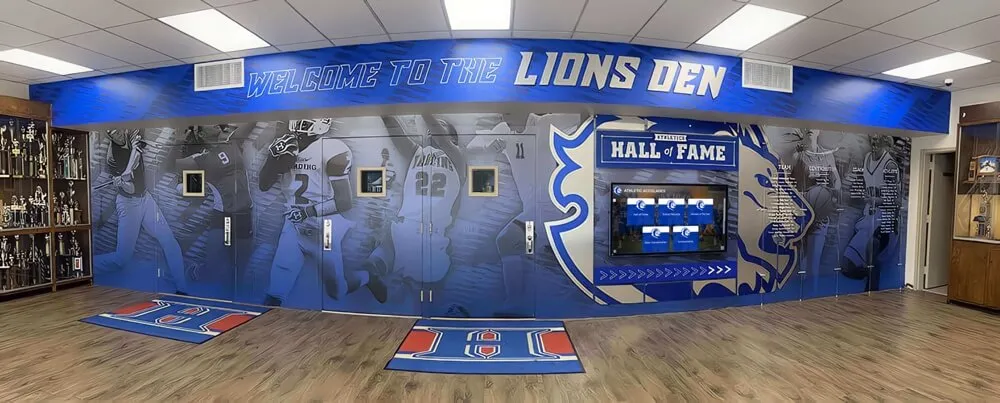
Integrated systems combine digital displays with traditional recognition elements creating comprehensive celebration environments
Conclusion: Building Achievement Culture Through Meaningful Recognition
Student achievement certificates represent more than administrative acknowledgment—they provide tangible validation communicating institutional appreciation for academic dedication while creating opportunities for family celebration and community pride. However, certificates alone deliver limited impact without sustained visibility, community engagement, and comprehensive storytelling enabling genuine connection with achievement narratives inspiring continued excellence.
Modern schools maximize recognition impact by combining traditional certificates maintaining ceremonial significance with digital recognition infrastructure eliminating historical constraints—unlimited capacity accommodating every achieving student without space limitations, rich multimedia profiles celebrating complete academic journeys beyond simple honor roll listings, intuitive exploration enabling personalized discovery creating meaningful engagement, and extended web access reaching global communities regardless of campus visit frequency.
These comprehensive approaches transform recognition from momentary certificate distribution into ongoing cultural infrastructure supporting student motivation throughout academic careers, family engagement strengthening home support for educational priorities, community pride building institutional reputation attracting talented students and educators, and alumni connection maintaining lifelong relationships supporting advancement goals. Recognition investment generates returns extending far beyond individual recipient satisfaction to include strategic benefits affecting enrollment, culture, relationships, and reputation.
The concept of digital warming—transforming cold achievement data into warm community experiences through personalized content and accessible celebration—applies powerfully to academic recognition. When students discover their achievements receive comprehensive visible recognition they can share with families and networks, when younger students explore role models demonstrating excellence accessibility, when families access recognition remotely celebrating milestones immediately regardless of distance, when alumni reconnect discovering their historical achievements preserved permanently—these interactions create warmth strengthening connections while building excellence cultures where academic success becomes aspirational, celebrated, and central to institutional identity.
Your students’ academic achievements—honor roll qualification, subject excellence, standardized test success, competition victories, growth accomplishments—represent dedicated effort, intellectual engagement, and commitment to learning deserving recognition matching significance. These accomplishments merit celebration extending beyond filed certificates toward comprehensive acknowledgment creating the motivation, pride, and community connection propelling continued excellence throughout educational journeys and beyond.
Ready to transform student achievement recognition from paper certificates into comprehensive celebration experiences? Explore how Rocket Alumni Solutions creates engaging recognition that honors academic excellence while building vibrant communities where student success receives visibility, celebration, and appreciation inspiring generations of achievement.