Qualifying for state competition represents one of the most significant achievements in a high school athlete’s career. While championship trophies and medals celebrate the ultimate victors, the journey to state competition itself deserves meaningful recognition. State qualifiers overcome fierce competition, demonstrate exceptional dedication, and represent their schools at the highest level of interscholastic athletics.
Yet many athletic programs struggle to honor state qualifiers appropriately. State champions understandably receive prominent recognition, but what about the athlete who placed fourth at districts to earn that final state berth? The wrestler who fought through a grueling regional tournament to advance? The swimmer who shaved precious seconds off their personal best to qualify by hundredths of a second? These athletes achieved something remarkable—they made it to state.
The challenge facing athletic directors becomes clear during end-of-season recognition. Trophy cases overflow with championship hardware while state qualifier achievements often receive only brief mentions at awards ceremonies. Banners celebrating state championships hang prominently in gymnasiums, but systematic recognition for qualifying athletes remains inconsistent or entirely absent. Parents naturally want their children’s significant accomplishments acknowledged, coaches understand the motivational value of celebrating qualification milestones, and current athletes need tangible proof that reaching state competition earns lasting recognition.
This comprehensive guide explores how schools create meaningful recognition programs specifically honoring state qualifiers across all sports. Whether your program sends dozens of athletes to state competition annually or celebrates the occasional breakthrough qualifier, these strategies ensure athletes who earn the privilege of competing at the highest level receive recognition worthy of their achievement while building athletic culture that values both the journey and the destination.

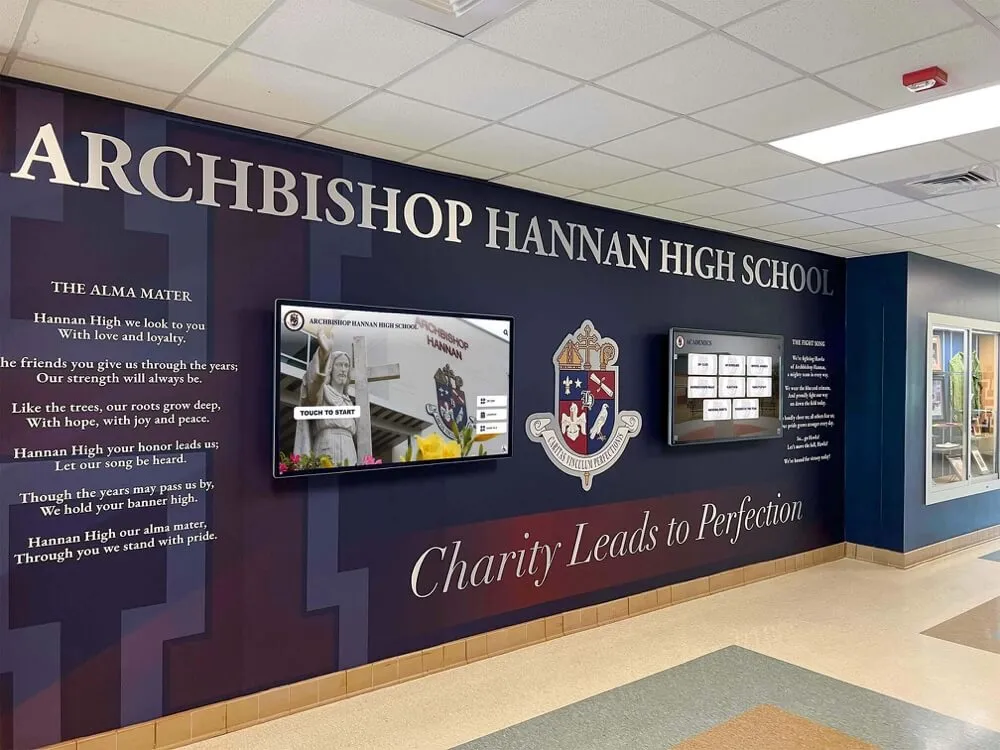
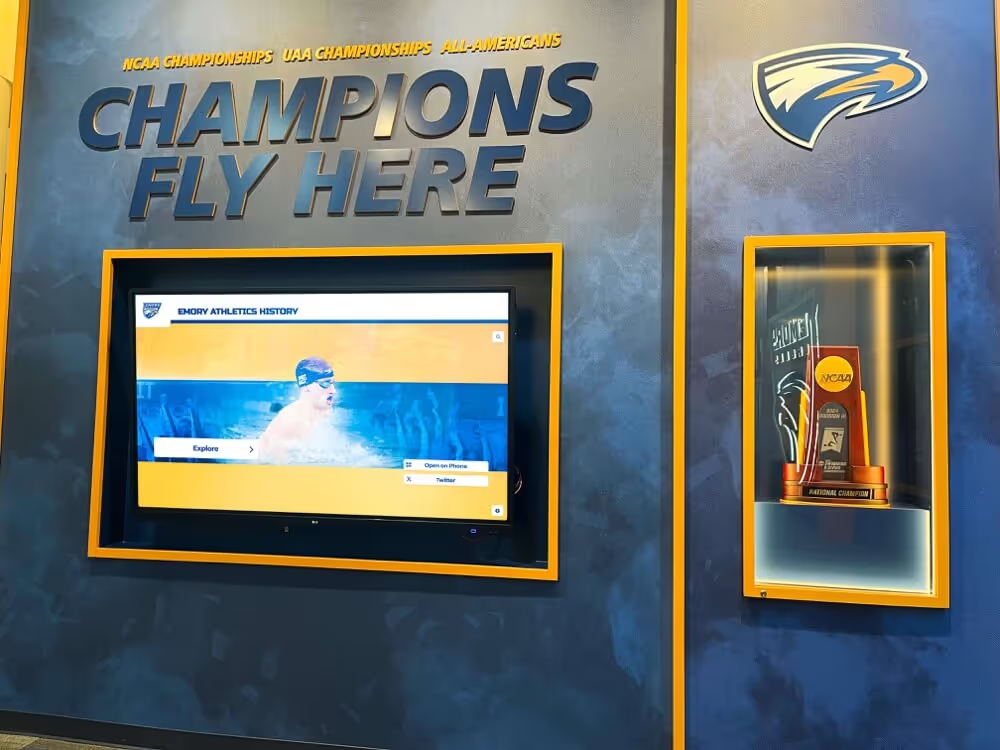
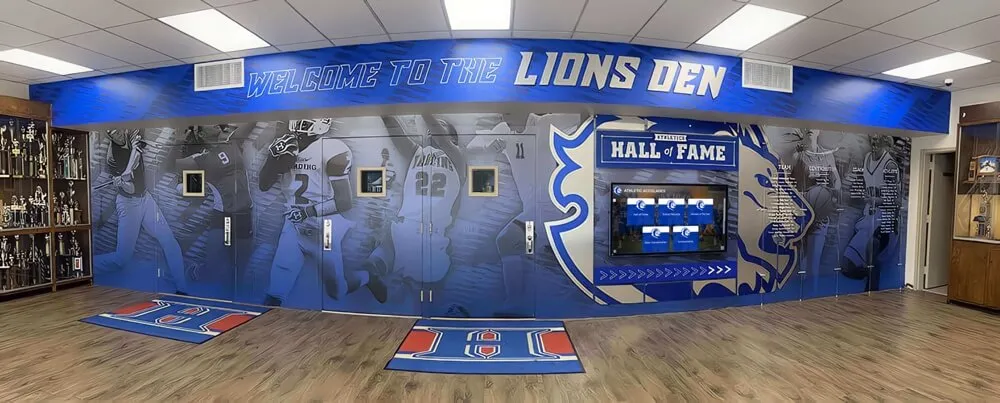
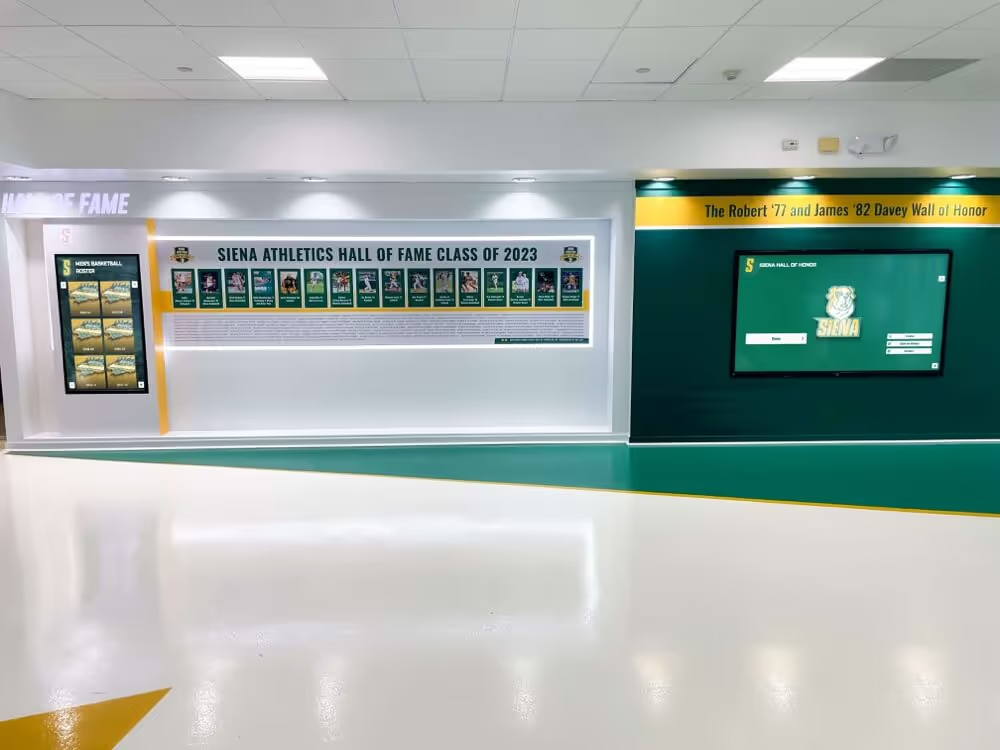
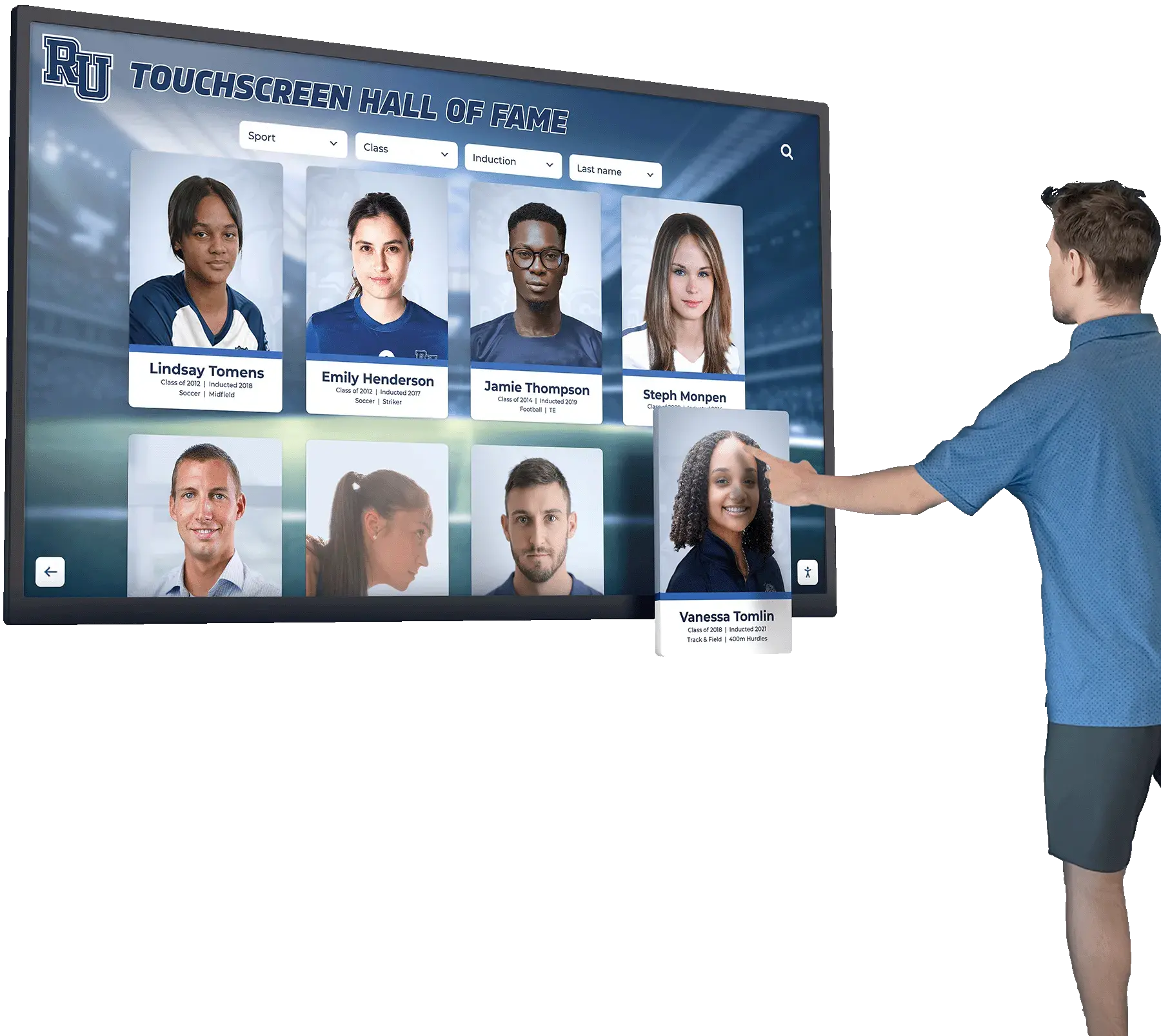
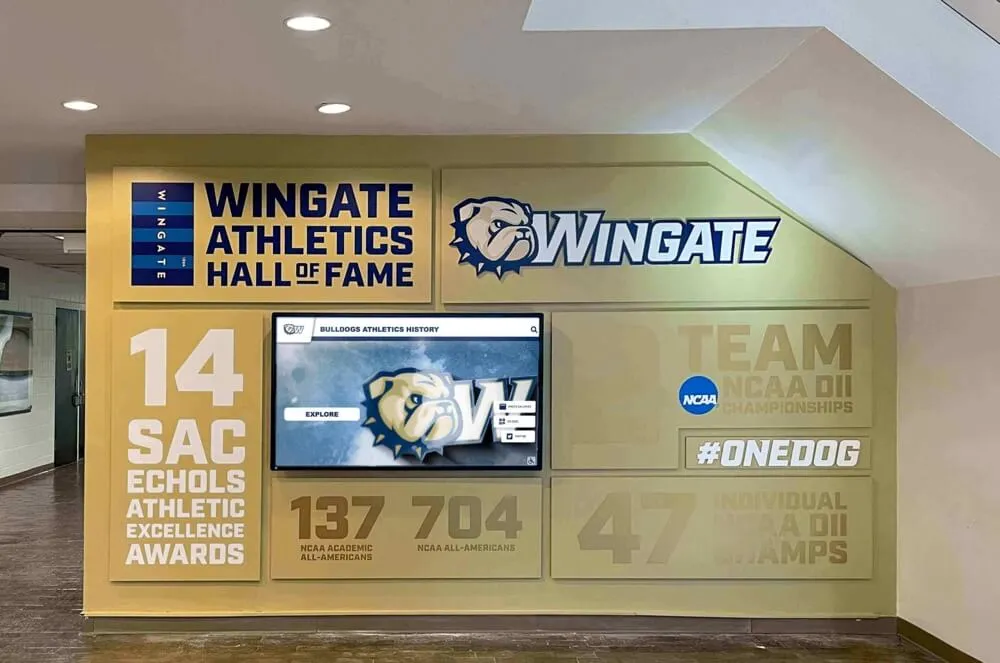
Modern recognition systems celebrate state qualifiers alongside champions, honoring all athletes who reach competition's highest level
Understanding State Qualifier Achievement Significance
Before designing recognition programs, understanding what state qualification represents helps schools create celebration systems matching achievement magnitude and motivational impact.
The Path to State Competition
State qualification requires overcoming multiple competitive barriers that vary by sport but consistently demand exceptional performance.
District and Regional Competition Excellence
Athletes earn state berths by placing in top positions at district, sectional, or regional competitions where dozens of competitors battle for limited state tournament spots. A wrestler might face 30 athletes at districts with only the top four advancing. A track athlete must run, jump, or throw at qualifying standards achieved by less than 10% of competitors statewide. Team sport state tournament berths require winning conference championships, playoff games, and regional finals against the strongest programs in geographic areas.
This competitive gauntlet means state qualifiers have already defeated the vast majority of athletes competing in their sports. They’ve proven themselves among the best in regions comprising hundreds of schools and thousands of athletes. State qualification alone places athletes in elite company regardless of state tournament outcomes.
Season-Long Preparation and Development
Reaching state competition represents months or years of dedicated preparation. Athletes wake early for training sessions before school, sacrifice social activities for practice commitments, manage demanding schedules balancing athletics with academics, recover from injuries and setbacks while maintaining competitive focus, and continuously push performance boundaries through thousands of repetitions and countless hours of conditioning.
Many student athletes dedicate multiple years to achieving state qualification goals, making recognition particularly meaningful when these sustained efforts finally produce breakthrough performances earning state berths.
Team Contribution and Program Pride
State qualifiers elevate entire athletic programs through their achievements. Their success attracts positive attention to schools, inspires younger athletes developing in programs, demonstrates coaching quality and program effectiveness, creates recruitment advantages for programs building competitive rosters, and generates community support and pride in athletic excellence.
Schools implementing comprehensive athletic recognition programs understand that celebrating state qualifiers reinforces program values while motivating current and future athletes toward similar achievement.
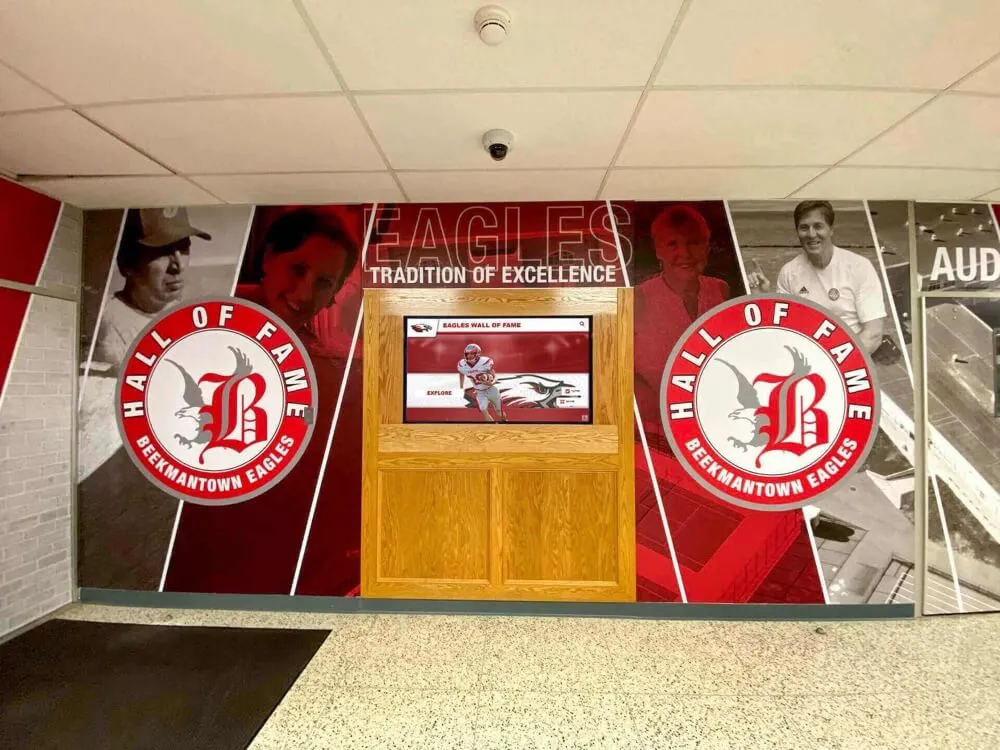
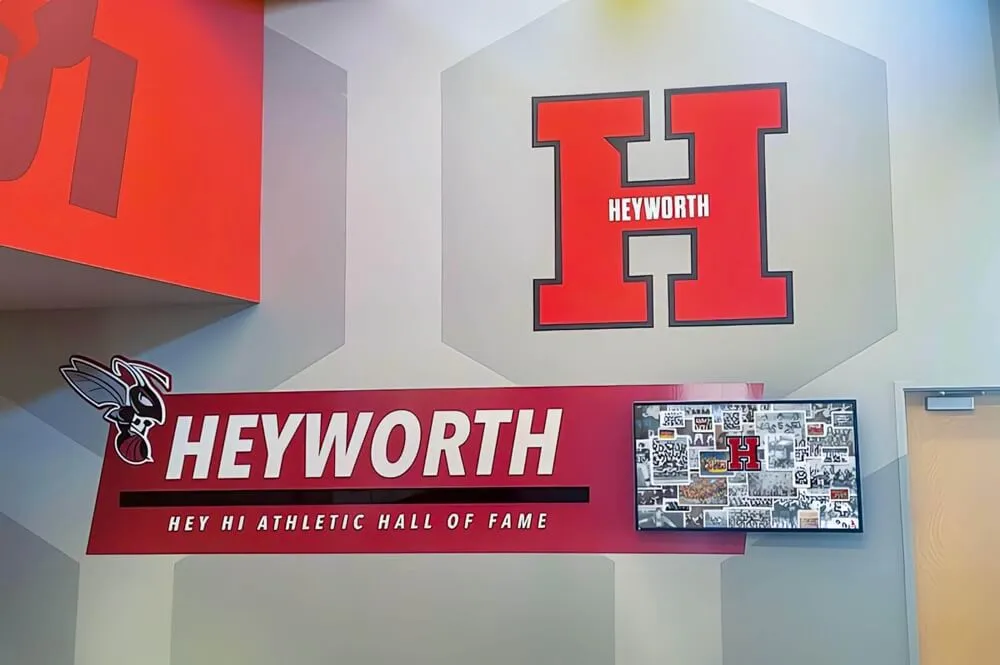
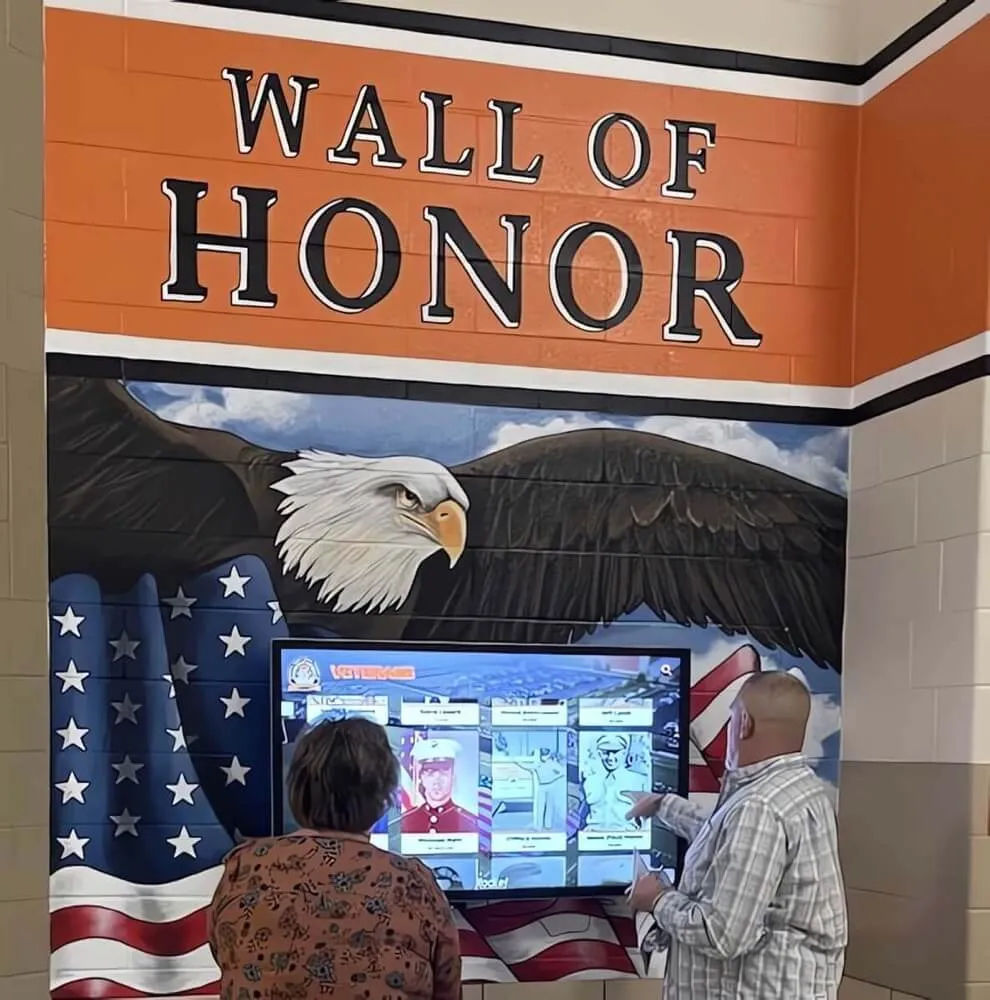
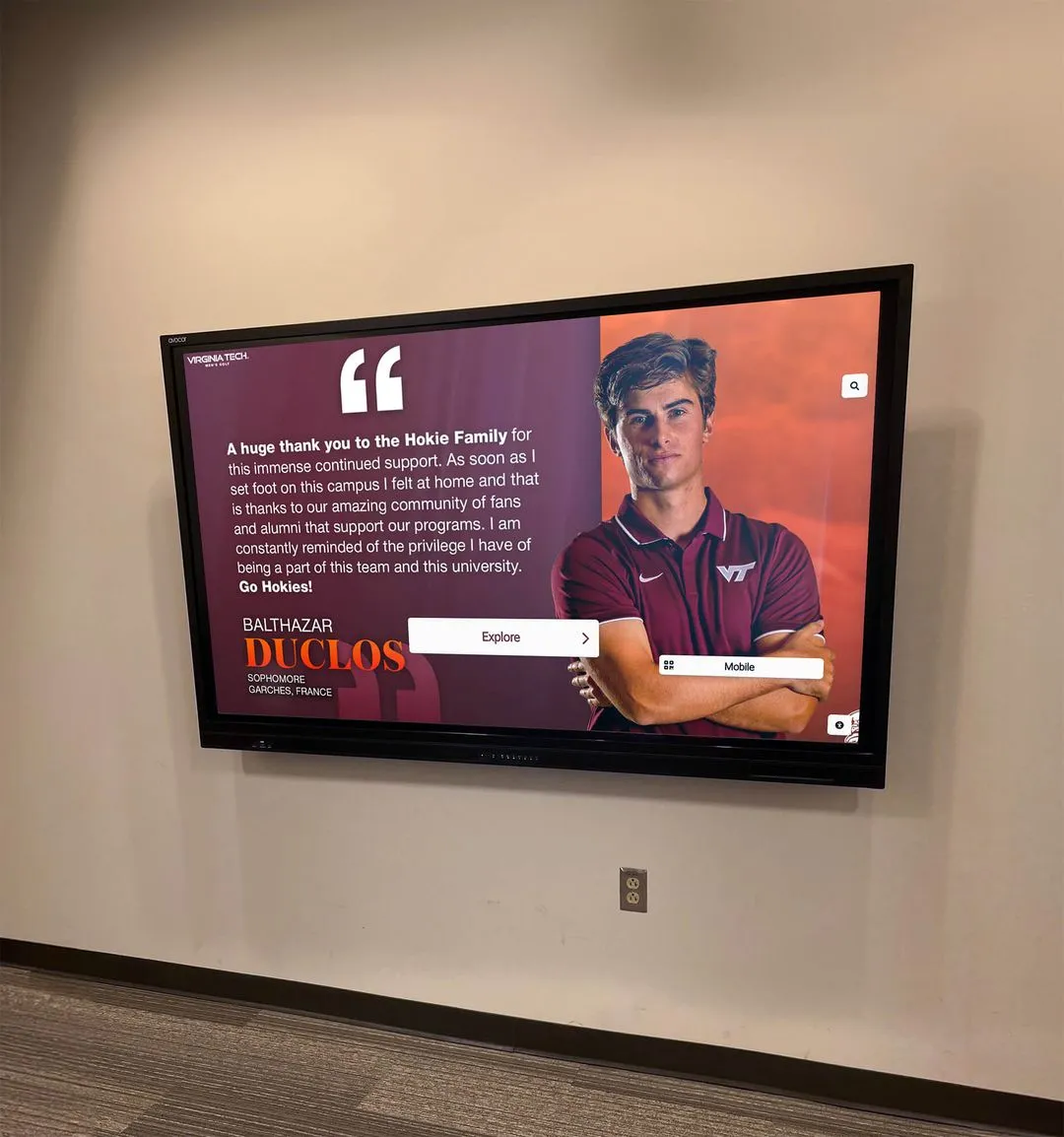
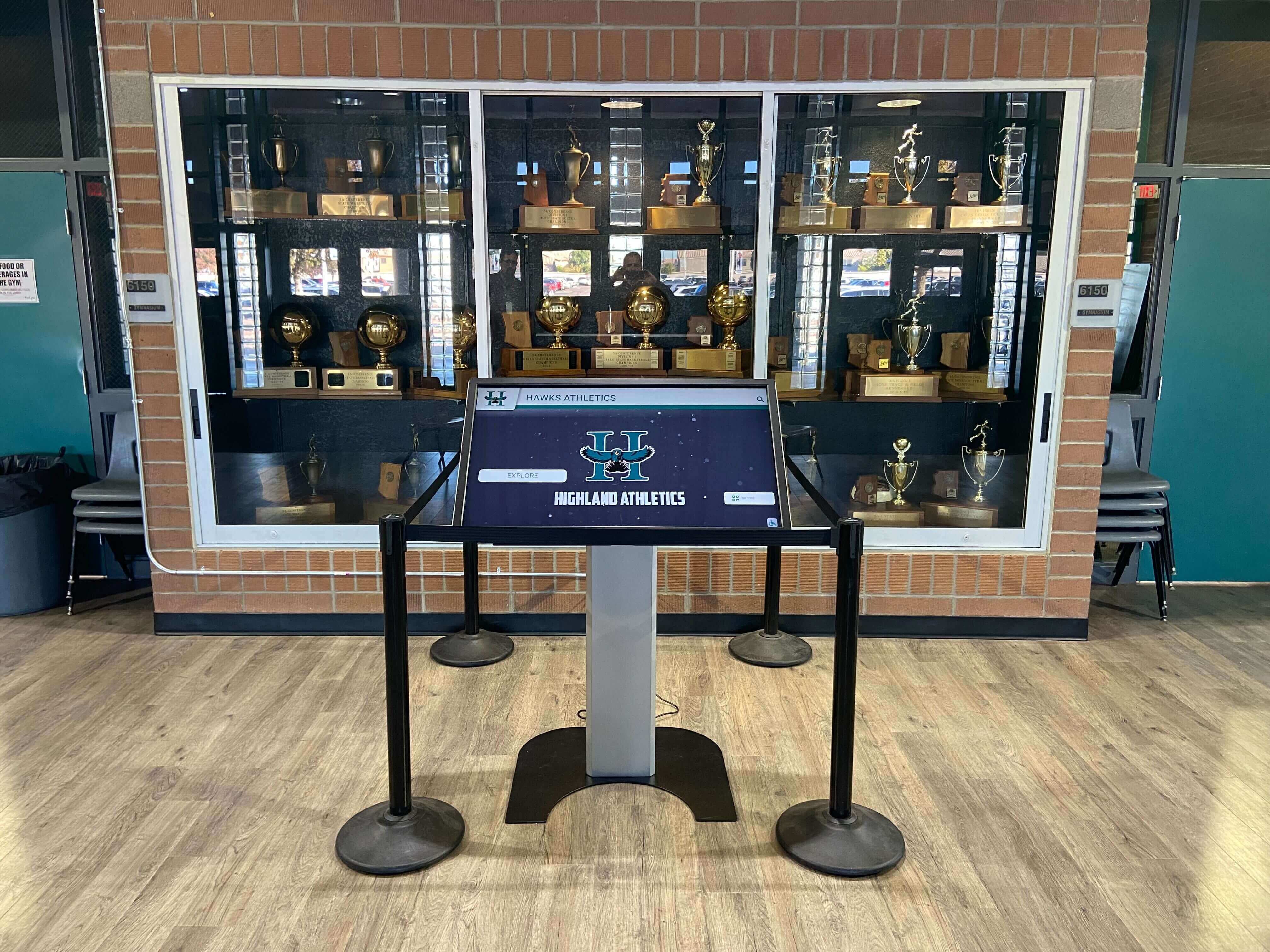
Interactive displays enable students and visitors to explore state qualifier achievements across multiple sports and decades
Why State Qualifier Recognition Matters
Systematic recognition for state qualifiers produces tangible benefits extending throughout athletic programs and school communities.
Motivating Development Across All Skill Levels
When schools visibly celebrate state qualification as a significant milestone, athletes throughout programs gain concrete performance targets. Freshman and sophomore athletes see upperclassmen honored as state qualifiers and naturally aspire toward similar recognition. The acknowledgment communicates that reaching state competition—regardless of final tournament placement—represents accomplishment worthy of celebration and permanent institutional recognition.
This motivation proves particularly powerful in individual sports where athletes compete against measurable standards. Knowing that achieving state qualifying times, distances, or weights earns lasting recognition creates sustained motivation through difficult training periods when improvement feels incremental or elusive.
Validating Effort for Non-Champions
Athletic competition inevitably produces more participants than champions. State qualifiers who don’t win medals still achieved something remarkable deserving validation. Recognition systems honoring the journey to state competition—not merely championship outcomes—demonstrate that schools value dedication, improvement, and competitive excellence even when athletes don’t finish first.
This validation becomes especially important for athletes in programs competing against dominant state powers. The wrestler who loses to an eventual state champion in early rounds, the track athlete who makes finals but doesn’t medal, or the soccer team eliminated in state quarterfinals all accomplished something significant. Appropriate recognition ensures these athletes feel pride in their achievements rather than disappointment at not winning championships.
Building Comprehensive Athletic Program Culture
Programs that systematically recognize state qualifiers create culture celebrating diverse achievement forms while maintaining excellence standards. Teams competing in state tournaments receive appropriate acknowledgment whether finishing first or eighth. Individual athletes advancing to state meets earn recognition alongside those winning medals. This comprehensive approach builds inclusive athletic culture where all athletes who reach competitive peaks receive celebration commensurate with their accomplishments.
Schools implementing digital recognition displays find that unlimited capacity enables celebrating both champions and qualifiers without forced prioritization decisions that traditional trophy cases impose.
Traditional State Qualifier Recognition Methods
Understanding conventional recognition approaches helps schools identify strengths worth preserving and limitations requiring modern solutions.
Physical Display Approaches and Their Constraints
Schools have long relied on visible physical recognition celebrating state qualifier achievements.
State Qualifier Banners and Signage
Many gymnasiums feature banners listing state qualifiers by year and sport. These permanent displays typically include athlete names, sports, qualifying years, and sometimes individual or team state finishes. Banners provide prominent visibility during athletic events, create visual history showing program tradition, and require minimal ongoing maintenance beyond periodic updates.
However, banner recognition faces inherent limitations. Physical space constraints limit how many years of qualifiers can be displayed before gymnasiums become cluttered. Small text necessary to fit multiple names reduces readability from bleachers. Updates require professional printing and installation rather than simple digital edits. Most significantly, banners provide only names and years without the context that makes achievements meaningful—what events athletes qualified in, how they performed at state, what they accomplished after high school.
Trophy Case Recognition Additions
Some programs add state qualifier recognition to existing trophy displays through name plaques, team photos with qualifier designations, or small awards acknowledging qualification achievement. Trophy case additions keep state recognition physically proximate to championship hardware, remain visible throughout school years to broad student populations, and leverage existing display infrastructure without requiring new installations.
Yet trophy cases present severe space limitations. Programs with decades of history and multiple sports find cases overflowing, forcing difficult decisions about which achievements deserve visibility. Static displays lack context explaining significance of qualification achievements. Maintenance challenges accumulate as plaques tarnish, photos fade, and protective cases require cleaning. Perhaps most problematically, athletes qualify for state competition each year while trophy case capacity remains fixed, inevitably forcing removal of older recognition to accommodate current achievements.
Program Record Boards and All-Time Lists
Many athletic facilities display record boards showing top performances in various events or categories. Some programs specifically designate sections for state qualifiers, listing names chronologically or by performance level. Record boards provide clear performance benchmarks for current athletes, create lasting documentation of program excellence, and require relatively simple periodic updates as new qualifiers emerge.
Record board limitations mirror other physical recognition constraints. Space restrictions eventually necessitate removing older qualifiers as lists grow. Maintenance requires ongoing labor ensuring accuracy and legibility. Most importantly, record boards reduce complex achievement stories to names and numbers without capturing the dedication, obstacles overcome, or post-competition success that contextualizes qualification significance.
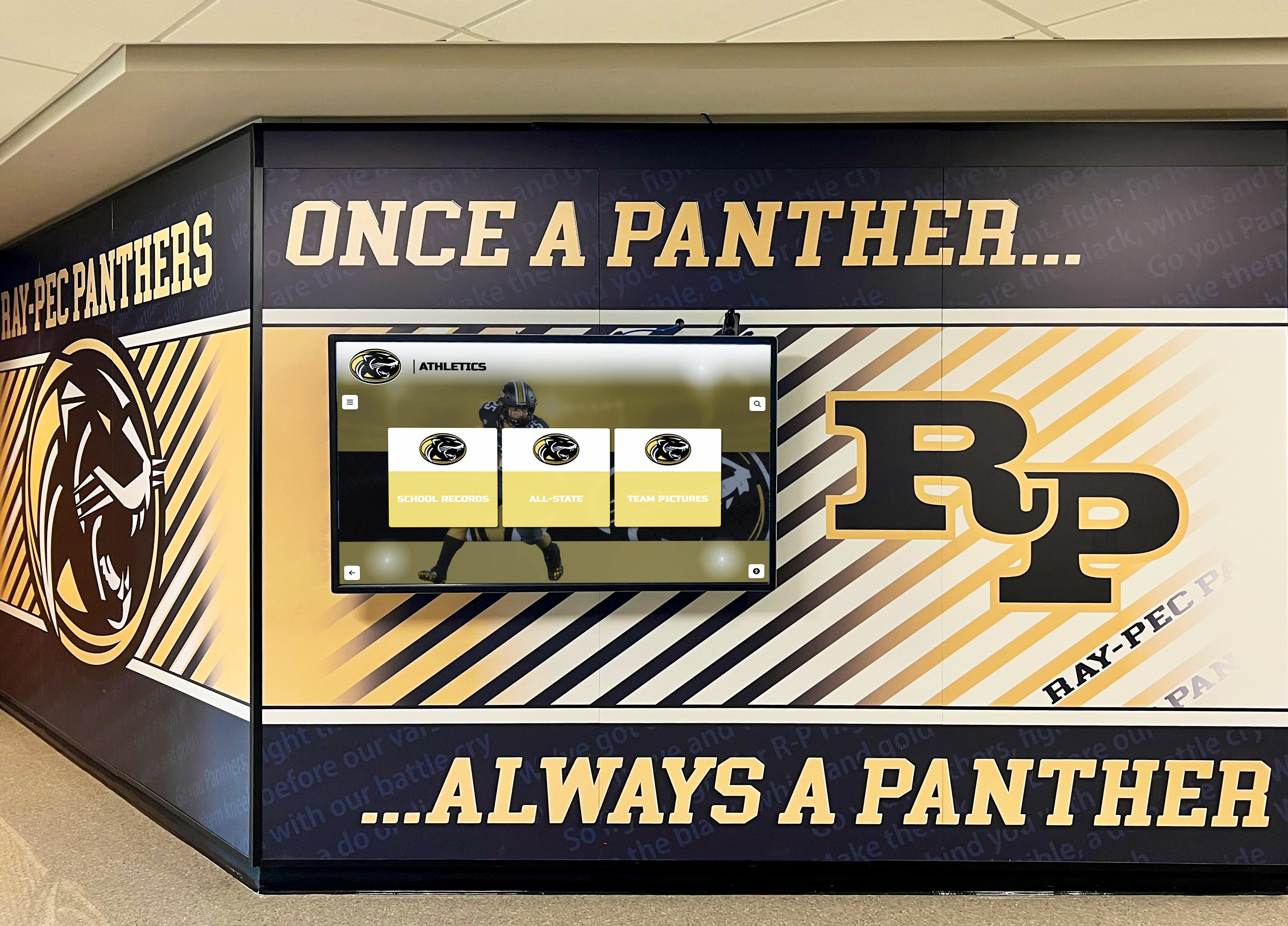
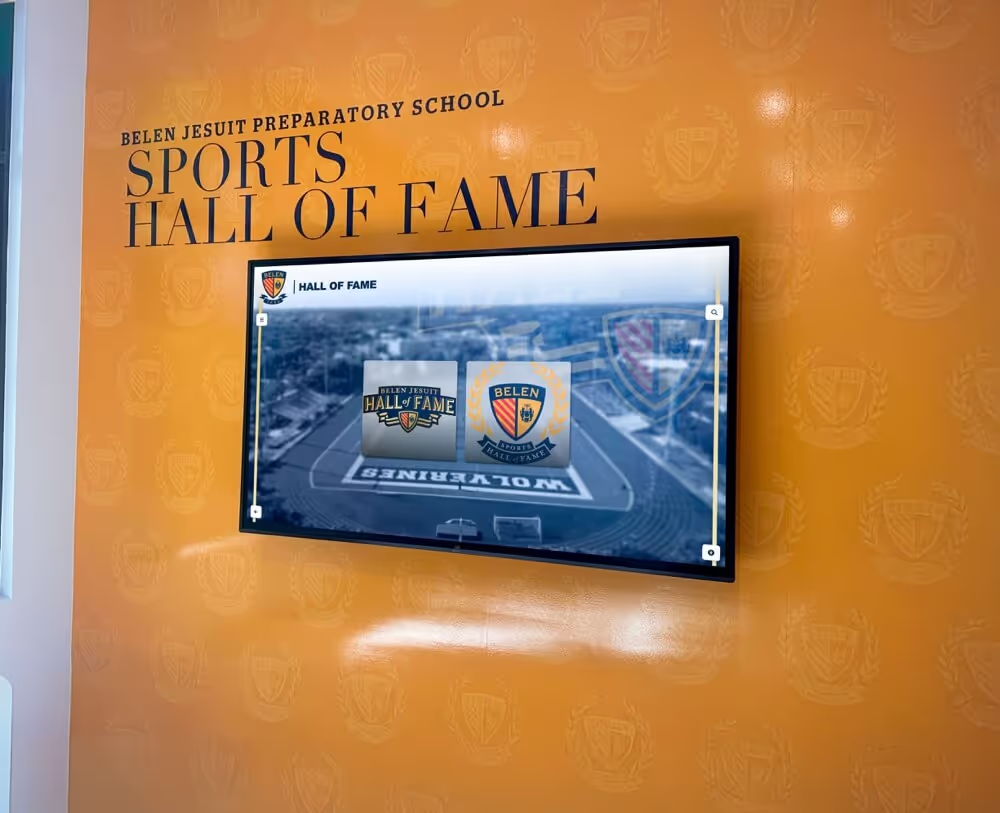
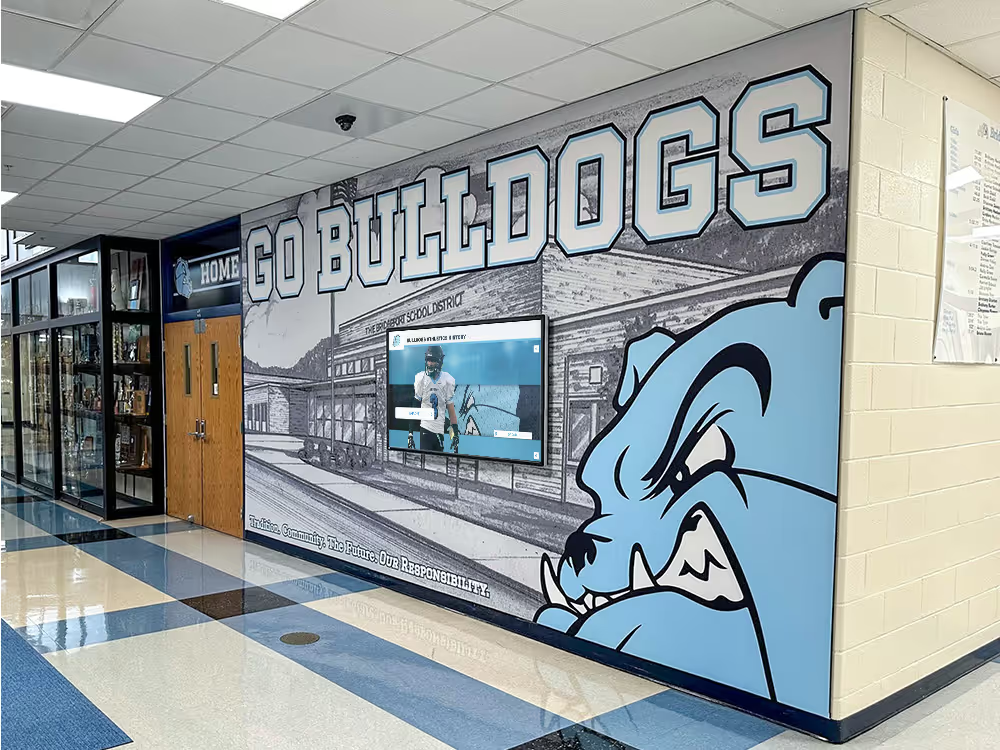
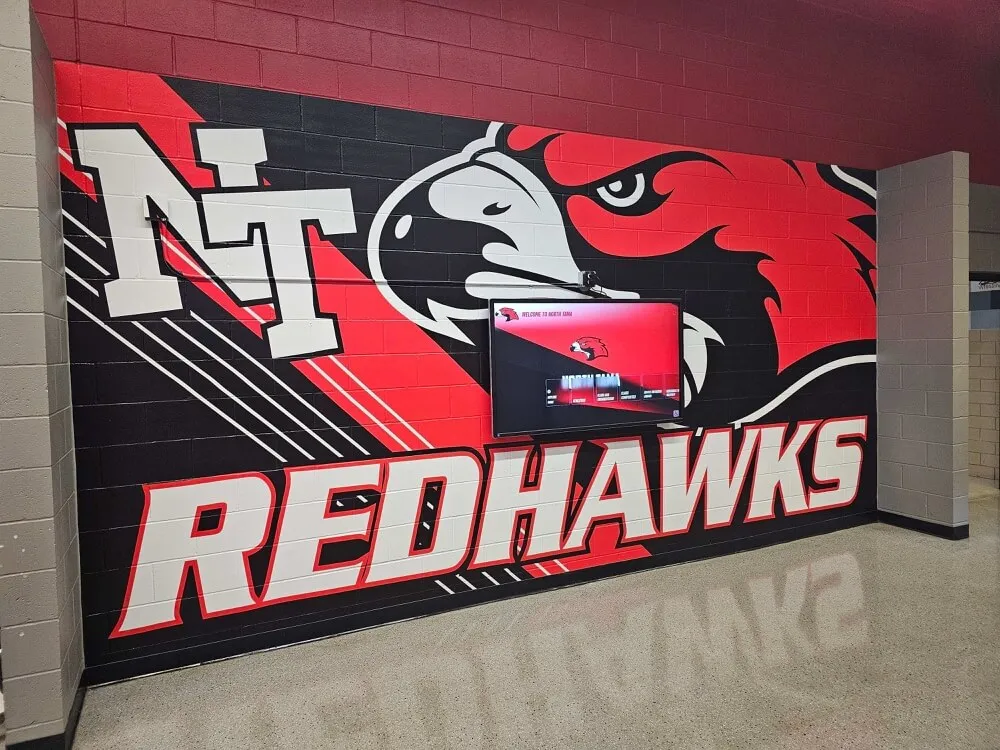
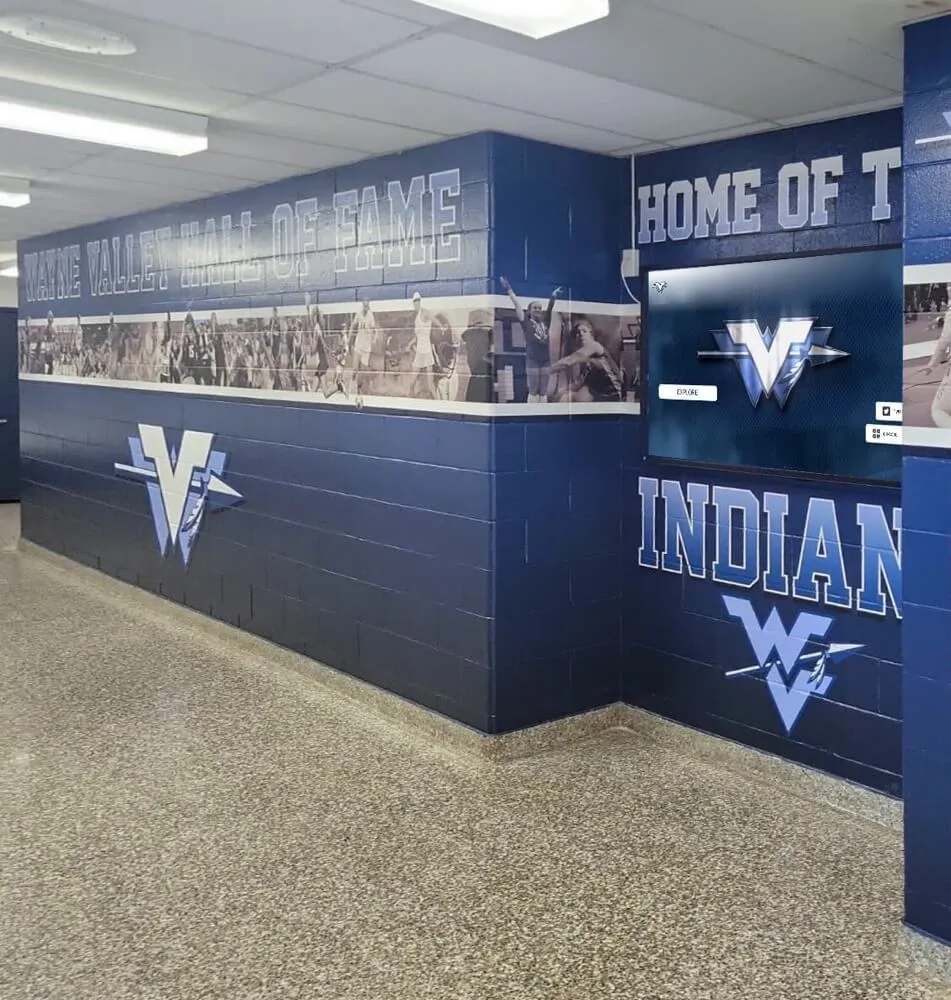
Combining traditional athletic program murals with digital displays creates comprehensive recognition capacity honoring decades of state qualifiers
Recognition Ceremonies and Their Temporal Limitations
Beyond physical displays, schools traditionally recognize state qualifiers through various ceremonial approaches.
End-of-Season Athletic Award Ceremonies
Most programs host banquets or assemblies recognizing seasonal achievements including state qualification. Coaches present certificates or small awards to qualifiers, highlight significant accomplishments, and celebrate the journey to state competition. These ceremonies provide important public acknowledgment, create memorable celebration moments for athletes and families, and demonstrate institutional appreciation for qualification achievements.
However, ceremonial recognition exists only in the moment. After applause fades and ceremonies conclude, athletes receive little ongoing acknowledgment unless physical recognition systems preserve their achievements. Family members unable to attend ceremonies miss recognition entirely. Perhaps most significantly, ceremonial acknowledgment reaches only current community members present at specific events rather than building lasting institutional memory connecting past, current, and future athletes through shared state qualification achievement traditions.
School Assembly Recognition and Announcements
Some schools recognize state qualifiers through all-school assemblies, morning announcements, or bulletin displays. These broad approaches create schoolwide awareness of athletic achievements, build school pride around student accomplishment, and provide peer recognition motivating both honored athletes and observing underclassmen.
Yet these recognition forms prove even more ephemeral than award ceremonies. Announcements last minutes before school attention moves to other topics. Assembly recognition reaches only students present on specific days. Bulletin board displays accumulate over time until removed to make space for current school news. Families and community members outside schools entirely miss these internal recognition forms.
Local Media Coverage and Social Sharing
Schools often promote state qualifiers through social media posts, local newspaper coverage, and website announcements. Media recognition reaches broader audiences than internal school communications, creates shareable content families proudly distribute, and generates positive community awareness of program success.
Social media recognition faces significant durability challenges. Posts rapidly disappear in social feeds, becoming essentially invisible within days as algorithms prioritize recent content. Newspaper coverage provides tangible keepsakes but reaches limited audiences and offers no ongoing accessibility. Most problematically, this recognition exists in distributed, disconnected formats rather than comprehensive systems where current athletes can discover state qualifier traditions spanning decades of program history.
Schools seeking to complement traditional recognition with modern digital systems discover that digital platforms preserve the best aspects of ceremonial and media recognition while eliminating temporal limitations and accessibility barriers.
Modern Digital Recognition Solutions for State Qualifiers
Digital platforms transform state qualifier recognition by eliminating traditional physical and temporal constraints while creating engaging experiences impossible with conventional approaches.
Unlimited Recognition Capacity Without Space Constraints
Digital systems accommodate comprehensive state qualifier documentation across all sports and decades without capacity limitations.
Permanent Recognition for All Qualifiers Across All Sports
Unlike trophy cases and banners with finite physical space, digital platforms enable schools to recognize every state qualifier in every sport across program history. Wrestling programs can honor every wrestler who earned a state tournament berth over five decades. Track and field programs can celebrate every athlete who qualified in every event. Team sports can recognize every squad that competed in state tournaments regardless of whether they won championships.
This unlimited capacity proves transformative for programs with rich competitive traditions. Schools no longer face agonizing decisions about which state qualifiers deserve recognition and which must be omitted due to space constraints. Every athlete who achieved the milestone of competing at state receives permanent acknowledgment ensuring their accomplishments never get discarded or forgotten when physical display space fills.
Comprehensive Achievement Context Beyond Names and Dates
Digital profiles enable schools to tell complete state qualifier stories rather than reducing achievements to names on banners or lists. Comprehensive qualifier recognition includes:
- Specific events or positions in which athletes qualified
- Qualifying performances, times, distances, or weights demonstrating excellence
- State competition results and final tournament placements
- Season statistics and accomplishments leading to qualification
- Photos from state competitions showing athletes in action
- Quotes from athletes reflecting on qualification achievement significance
- Coach commentary explaining what made qualification meaningful
- College athletic destinations and post-high school success
- Current pursuits demonstrating how high school athletics influenced life trajectories
This rich context transforms cold achievement lists into warm, engaging narratives celebrating complete individuals and creating emotional connections impossible with traditional recognition displaying only names and years.
Dynamic Content Updates and Living Recognition
Digital platforms enable ongoing recognition updates impossible with static physical displays. Schools can add current year qualifiers within hours of state tournament qualification, update athlete profiles with state competition results in real-time, incorporate post-season honors and recognition, and maintain connections with qualifier alumni through career and life updates.
This living recognition demonstrates to current athletes that qualification acknowledgment extends throughout their lives rather than ending with high school graduation, reinforcing that exceptional performance creates lasting institutional pride and permanent community belonging.
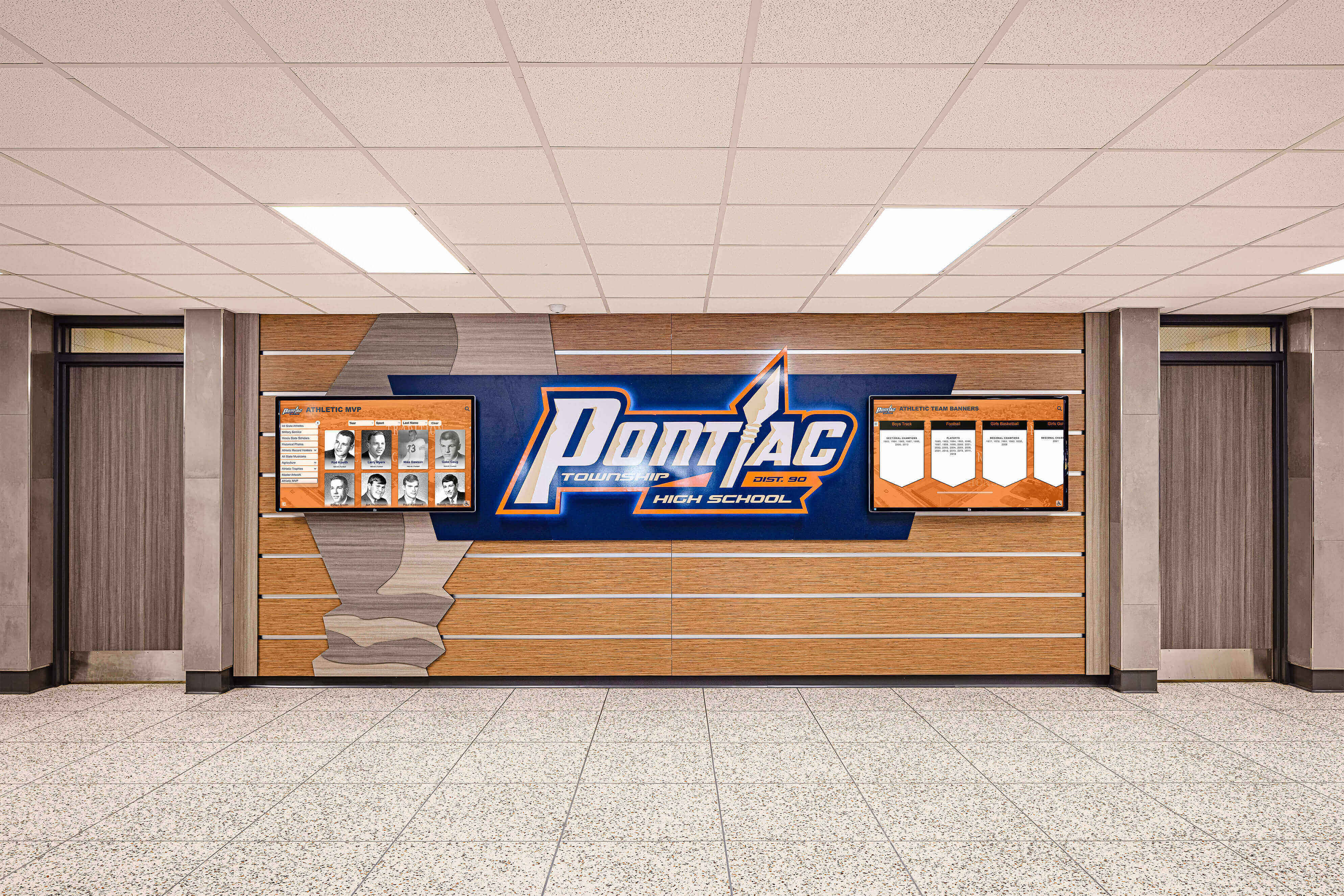
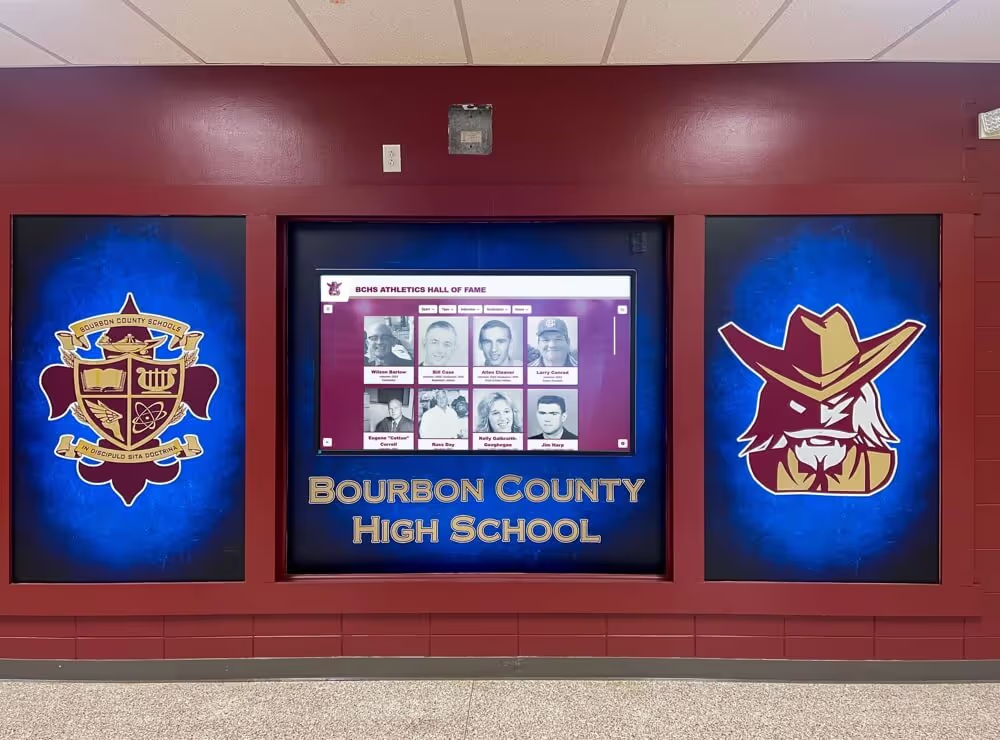
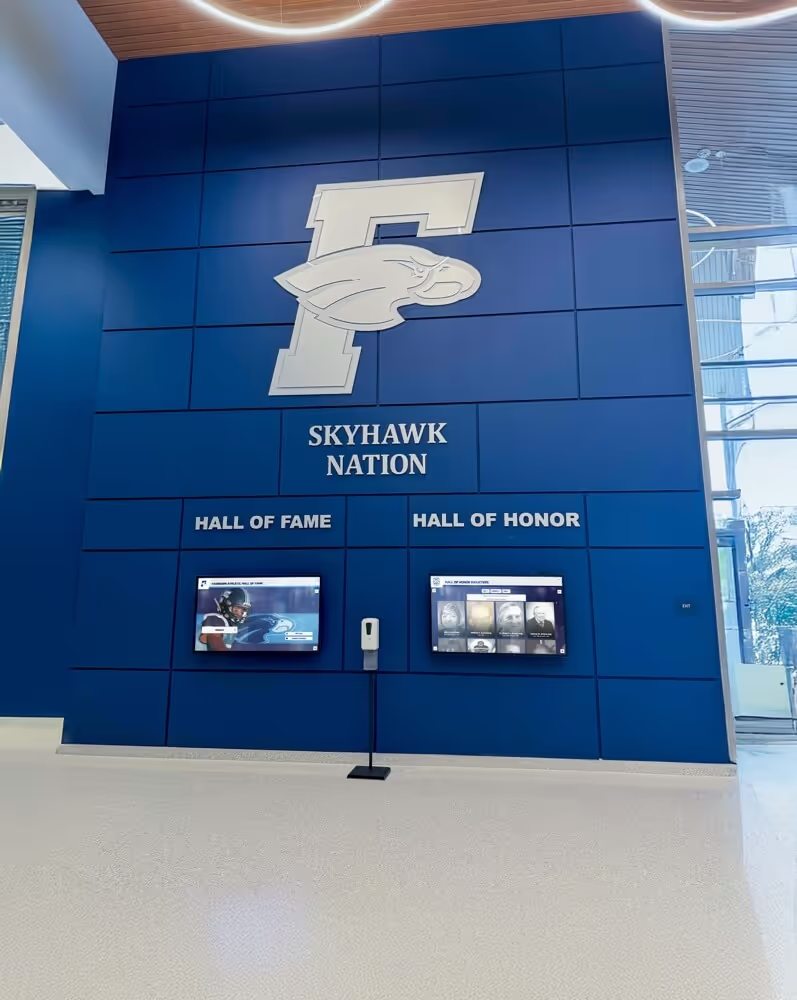
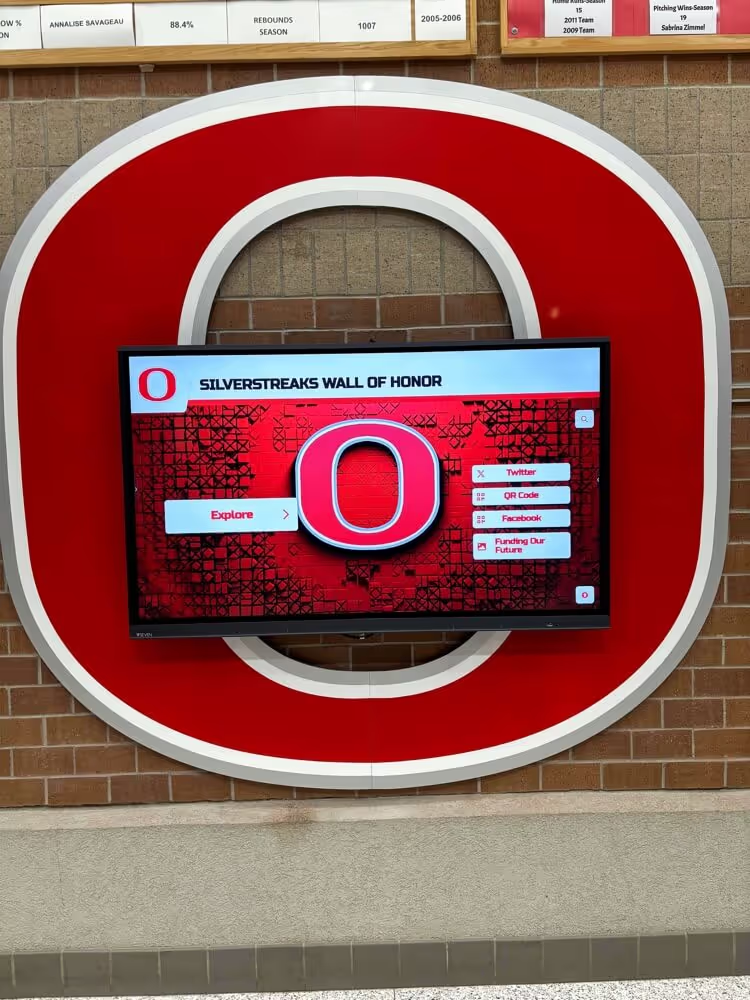
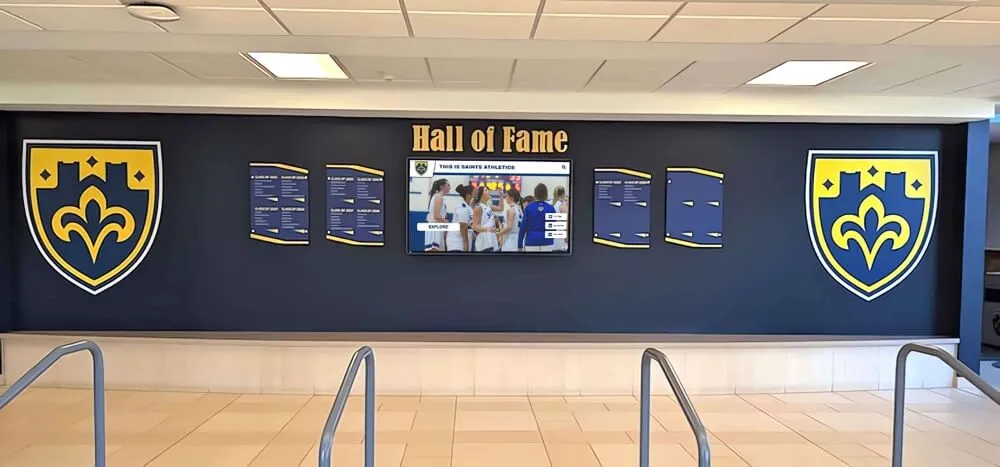
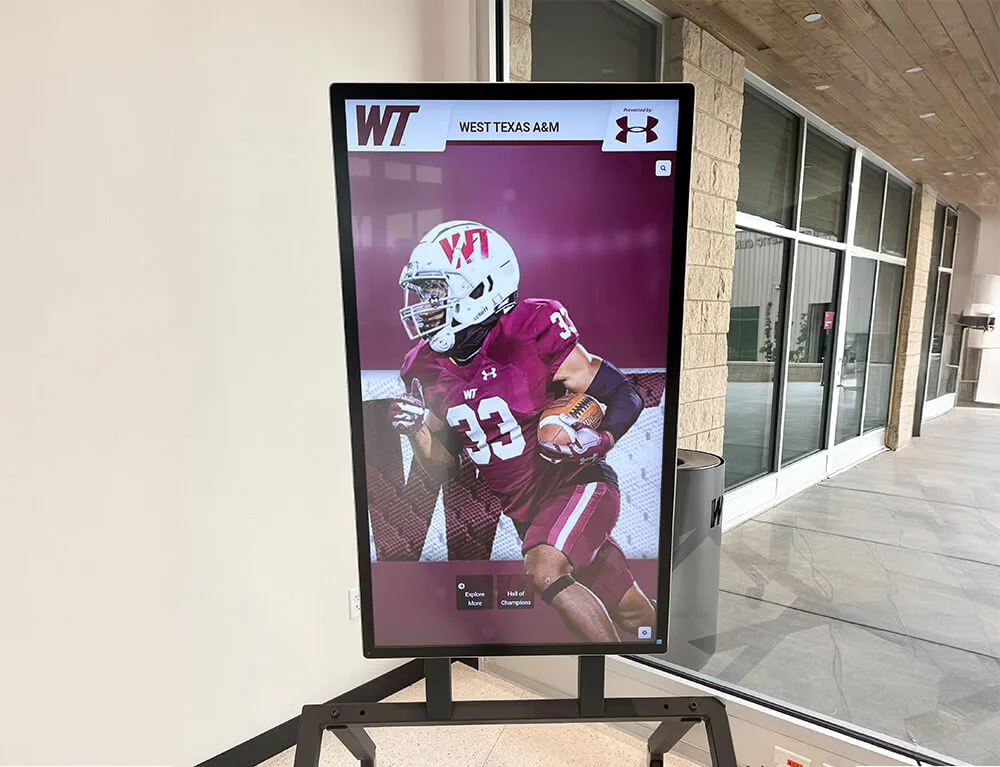
Digital recognition systems complement traditional athletic displays, providing unlimited capacity for celebrating decades of state qualifiers
Interactive Exploration and Personalized Discovery
Digital recognition platforms enable active engagement rather than passive viewing of state qualifier achievements.
Multi-Dimensional Search and Filtering Capabilities
State qualifier digital archives enable users to explore achievements through various personalized pathways:
- Sport-specific views showing all state qualifiers in particular sports (wrestling, track, soccer, basketball)
- Year or decade filters discovering qualifiers from specific eras
- Event or position searches finding qualifiers in particular track events, wrestling weight classes, or team positions
- State competition result sorting highlighting qualifiers who medaled or placed at state
- Name searches locating specific athletes or family members
- School record holder identification connecting state qualifiers to program records
- College destination filtering discovering where qualifier alumni competed collegiately
This personalized discovery creates relevance ensuring community members find recognition content connecting to their specific interests rather than confronting overwhelming comprehensive archives. A former wrestler can quickly discover all wrestlers in their weight class who qualified for state over program history. Parents can explore all track athletes who qualified in their child’s events. Current athletes can study qualifiers who competed in their positions, discovering role models and understanding qualification traditions.
Featured Content Rotation and Anniversary Recognition
Automated systems ensure all state qualifiers receive prominent visibility over time through:
- Milestone graduation anniversaries (5th, 10th, 25th year celebrations)
- Seasonal features highlighting qualifiers in currently active sports
- Historical throwbacks introducing newer community members to program traditions
- Notable accomplishment spotlights when qualifier alumni achieve significant success
- Pre-state competition motivation featuring past qualifiers’ advice to current athletes
Dynamic rotation keeps recognition fresh for repeat visitors while ensuring every state qualifier receives featured prominence rather than remaining buried in chronological archives only discovered through deliberate searches.
Multimedia Integration Creating Emotional Connection
Digital platforms enable rich multimedia recognition impossible with traditional displays:
- State competition video highlights showing qualifiers competing at highest level
- Qualification moment videos capturing athletes earning state berths
- Podium photos for qualifiers who medaled at state
- Team celebration images from state tournament experiences
- Current video messages from qualifier alumni to current athletes
- Audio interview content exploring what state qualification meant to athletes
Video and audio content creates emotional resonance extending far beyond what static banners or trophy case recognition can achieve, bringing qualifier stories to life through their own voices and images while inspiring current athletes working toward similar achievements.
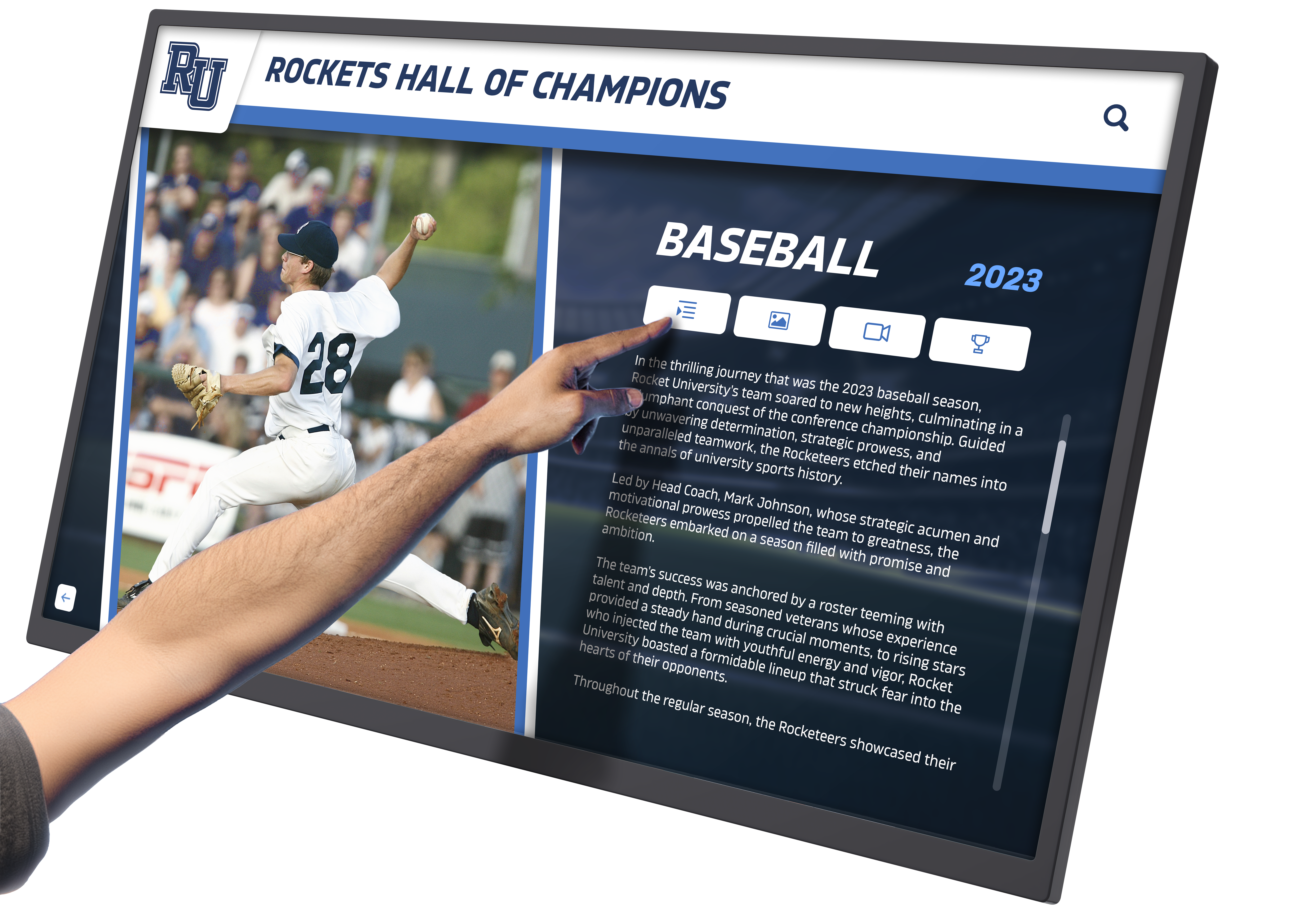
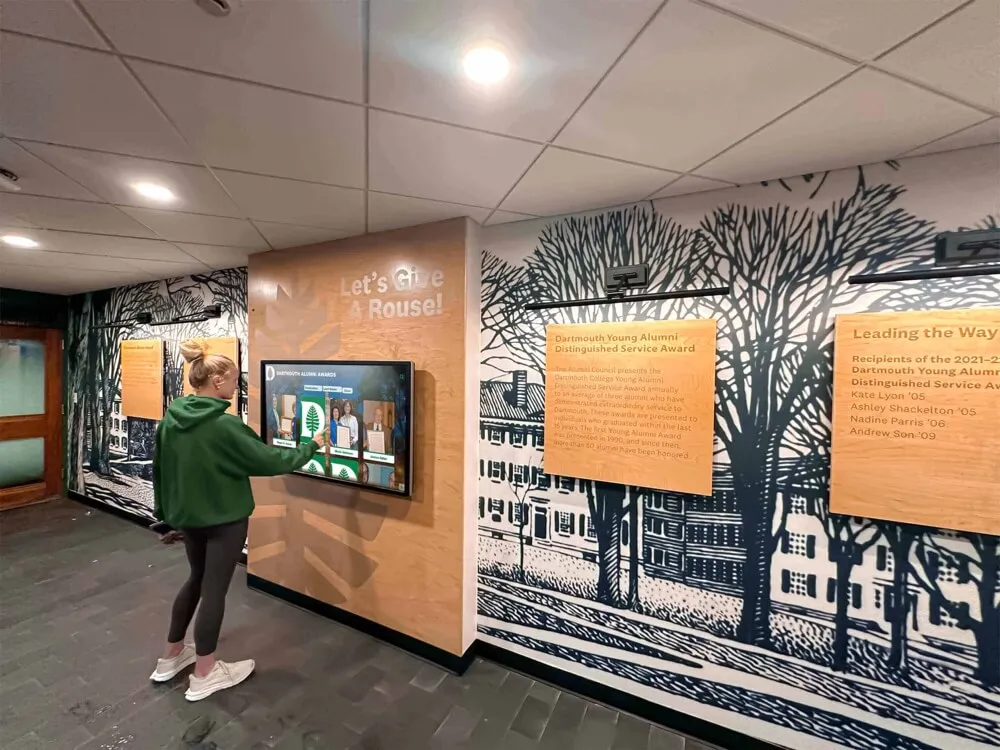
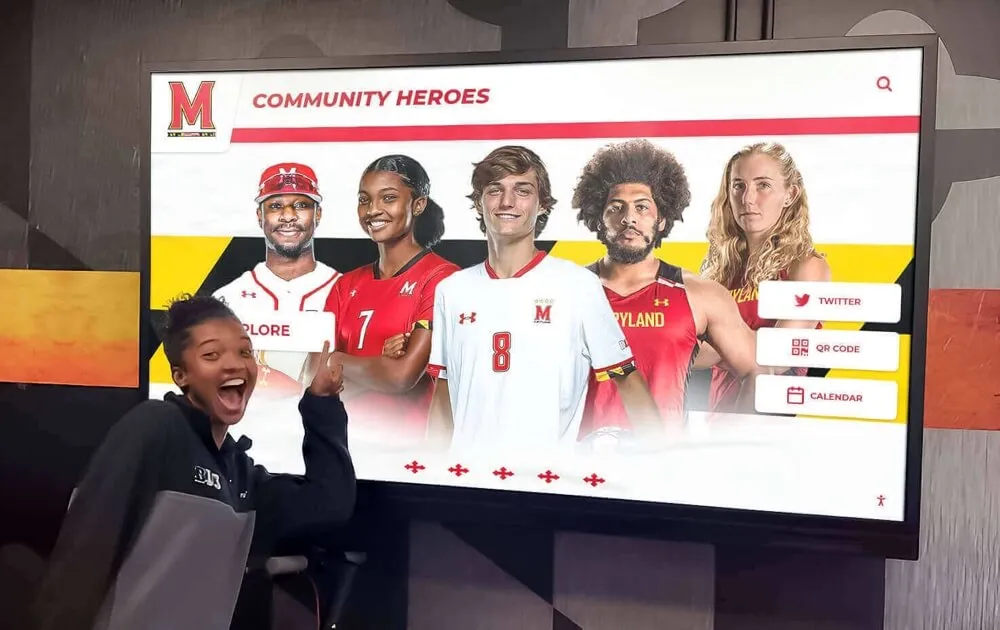
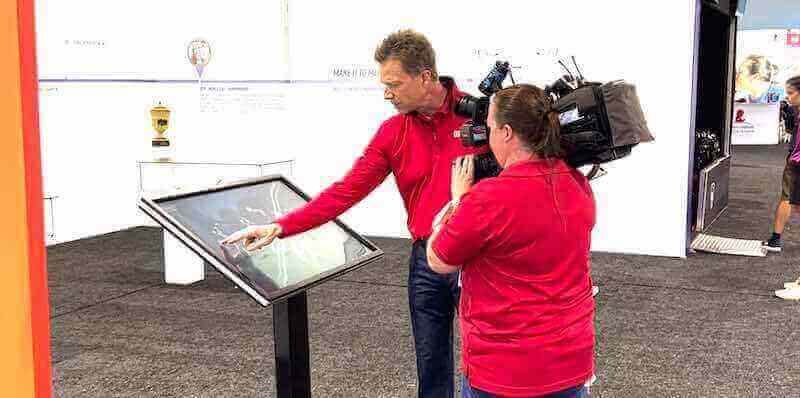
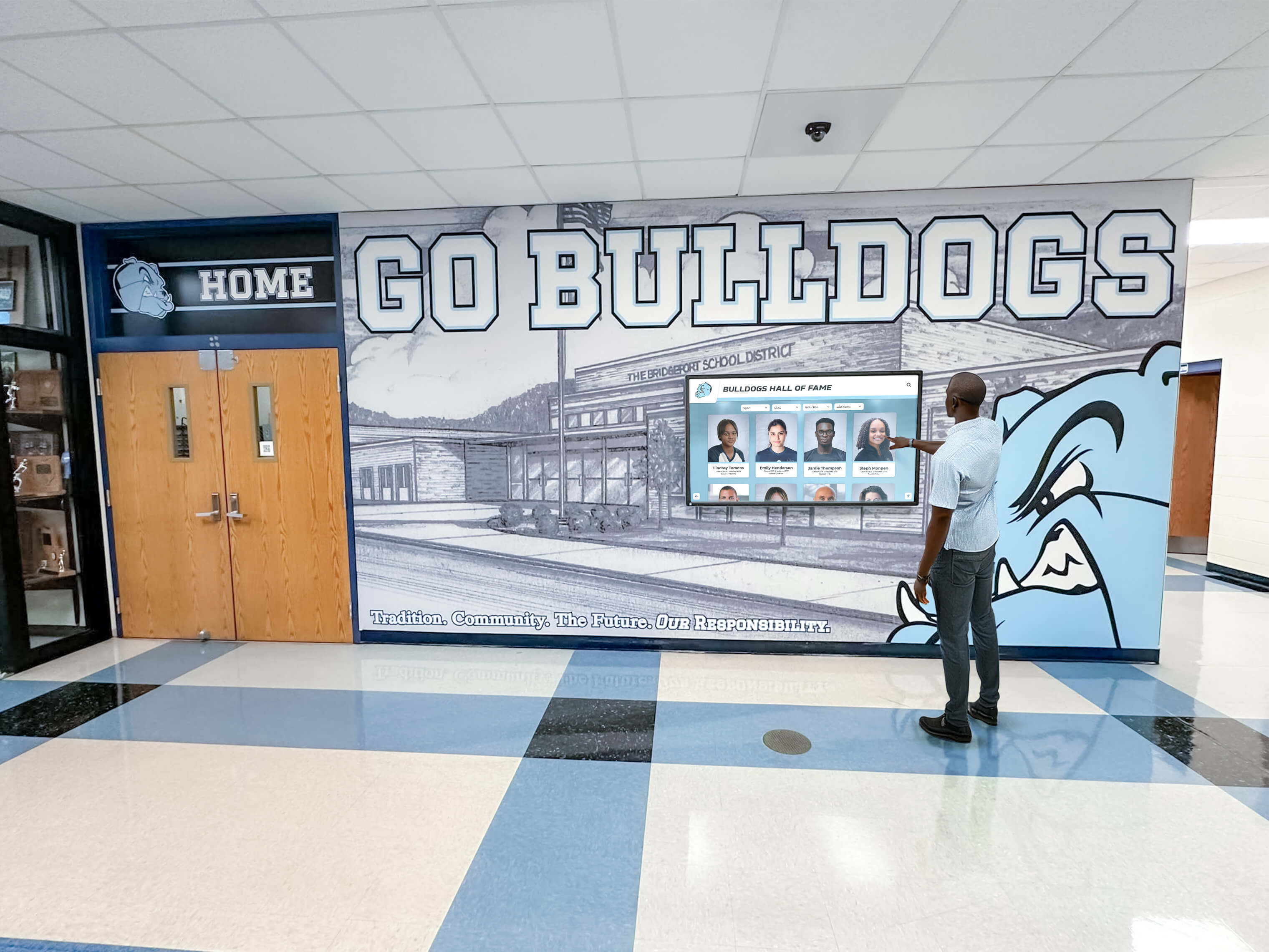
Touchscreen interfaces enable intuitive exploration of state qualifier profiles including statistics, photos, and career trajectories
Extended Access Beyond Physical Campus Locations
Digital recognition reaches audiences impossible with gymnasium banners and trophy cases accessible only during campus visits.
Web and Mobile Platform Accessibility
Modern state qualifier recognition systems provide access through multiple channels:
- Responsive web platforms accessible from any internet-connected device
- Mobile applications enabling smartphone and tablet engagement
- QR codes linking gymnasium displays to expanded digital qualifier content
- Social media integration enabling easy achievement sharing
- Email notifications announcing new qualifier additions each season
Extended accessibility ensures families, alumni, community members, college recruiters, and prospective students can explore state qualifier recognition regardless of whether they can visit campuses during limited facility hours.
Global Reach for Distributed Family and Alumni Communities
Many state qualifier families live far from school campuses. Grandparents, extended family members, and family friends often cannot attend state competitions or school recognition ceremonies. Digital recognition enables geographically distributed family networks to celebrate athletes’ achievements and maintain connections to schools long after graduation regardless of physical distance.
Qualifier alumni who’ve relocated for college, careers, or military service maintain connections to their high school achievements through accessible digital platforms. When former state qualifiers can share their recognition profiles with colleagues, friends, and family members who never knew about their high school excellence, institutional pride extends throughout their adult lives while creating organic program promotion through personal networks.
Recruiting and Program Promotion Benefits
Prospective athletes researching high school athletic programs rarely visit campuses before making enrollment decisions. When state qualifier recognition exists only in physical trophy cases and gymnasium banners, these powerful program quality indicators remain invisible to families evaluating school options.
Comprehensive digital athletic recognition enables prospective athletes and families to explore decades of state qualifier achievement from anywhere, discovering program traditions, competitive success rates, and college placement records that inform enrollment decisions while demonstrating coaching quality and development effectiveness.
Implementing Comprehensive State Qualifier Recognition Programs
Strategic planning ensures state qualifier recognition systems honor achievements effectively while remaining manageable for athletic staff.
Defining Recognition Scope and Achievement Tiers
Effective programs establish clear criteria determining which accomplishments receive state qualifier recognition.
Individual Sport State Qualifier Standards
Individual sports typically feature objective state qualification criteria:
Track and Field and Swimming - Athletes achieving state qualifying times, distances, or heights in their events earn recognition, along with relay team members on qualifying relay units. Some programs recognize both automatic and provisional state qualifiers who accepted invitations to compete.
Wrestling - Wrestlers placing in top positions at district or regional tournaments (typically top 4-6 depending on state association structures) earning state tournament berths receive recognition. Some programs also acknowledge wrestlers who qualified for state but couldn’t compete due to injury.
Cross Country - Runners finishing in qualifying positions at regional championships (individual qualifiers) and members of qualifying team rosters both receive recognition.
Golf and Tennis - Athletes earning state tournament berths through district or regional qualifying tournaments merit recognition.
Gymnastics and Individual Sports - Competitors achieving state meet qualification standards through district performances receive acknowledgment.
Team Sport State Qualifier Recognition
Team sport state qualification typically involves tournament advancement:
Football, Basketball, Soccer, Volleyball, Baseball, Softball - Teams advancing to state tournaments through playoff victories earn state qualifier recognition. Some programs recognize entire rosters while others specifically highlight varsity letter winners or significant contributors.
Programs must decide whether to recognize teams reaching state tournaments without winning championships differently from state champions. Many programs use tiered recognition systems where state champions receive prominent celebration while state tournament participants receive appropriate acknowledgment honoring qualification achievement even without championship outcomes.
Establishing Consistent Recognition Standards
Whatever standards schools establish, consistency proves essential. Athletes should understand exactly what accomplishments earn state qualifier recognition. Current athletes need clear targets motivating performance while past athletes deserve assurance that recognition standards remain stable rather than shifting arbitrarily with coaching changes or administrative turnover.
Schools implementing milestone recognition programs understand that clearly defined standards create achievement motivation while ensuring all qualifying athletes receive appropriate celebration.

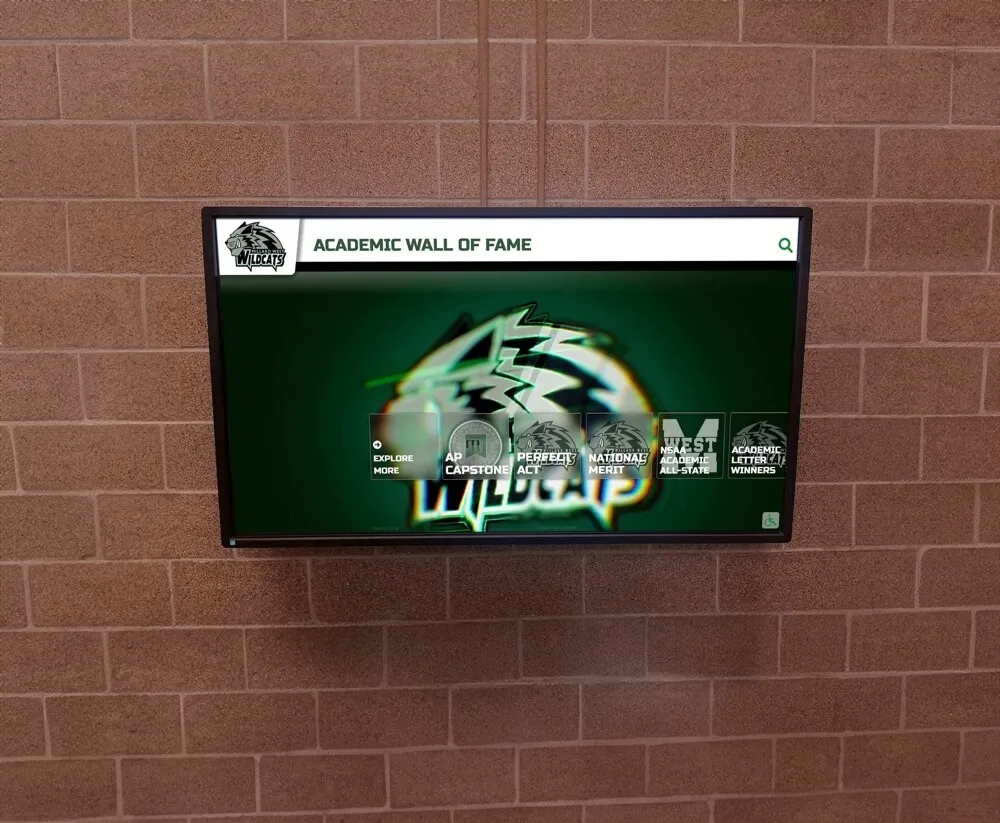
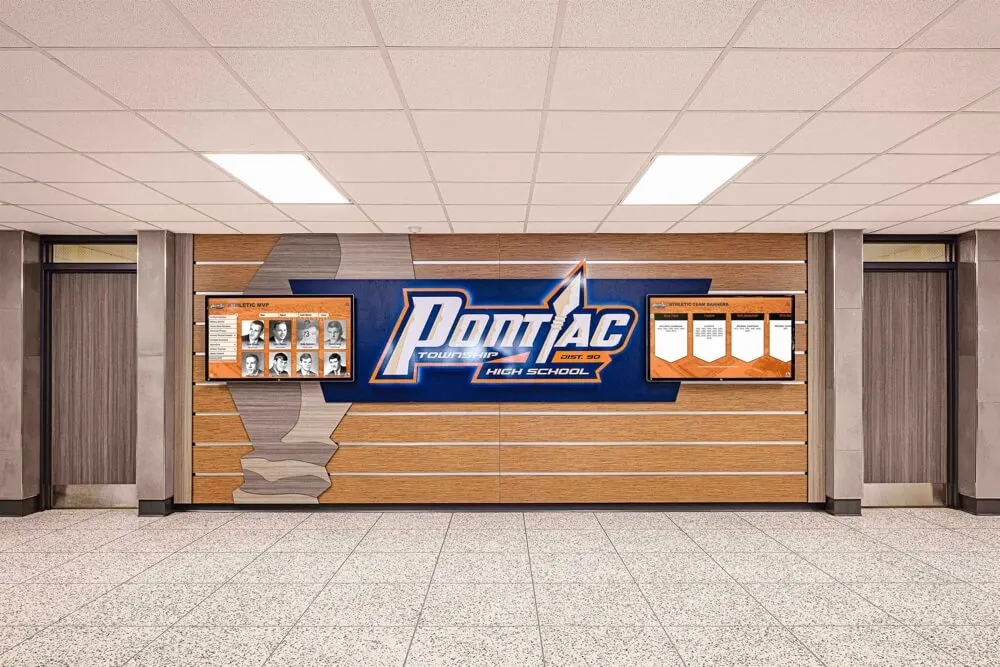
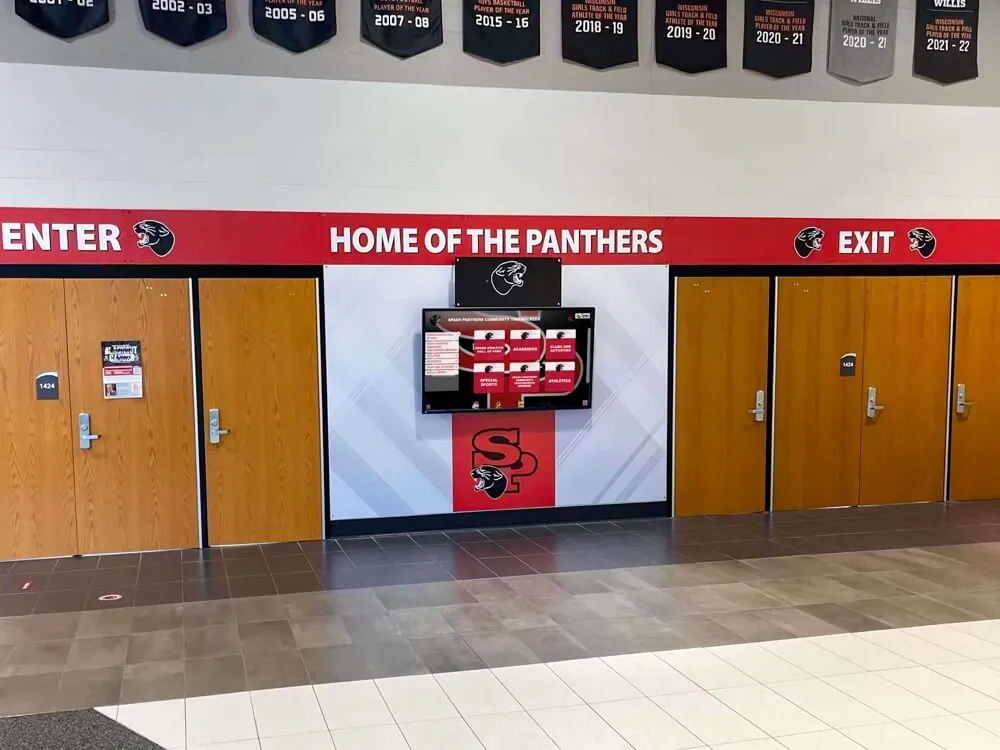
Strategic display placement in high-traffic athletic facility locations ensures state qualifier recognition reaches broad school and community audiences
Historical Documentation and Research Processes
Launching comprehensive state qualifier recognition requires gathering historical information documenting past achievements.
Athletic Department Record Searches
Athletic departments typically maintain records documenting state qualifier achievements:
- Coaching files containing season rosters and state tournament brackets
- State association tournament programs listing state competitors
- Trophy case plaques and existing recognition providing qualifier names
- Athletic director archives documenting state competition participation
- Existing banner displays and gymnasium signage listing historical qualifiers
Systematic searches through departmental records create baseline documentation for recognition systems while identifying information gaps requiring additional research.
Yearbook Research and Historical Photo Documentation
School yearbooks provide valuable state qualifier documentation including athlete names and photos, team rosters from state tournament seasons, athletic accomplishment listings in athlete senior profiles, season summary sections documenting state qualifications, and action photos from state competitions providing visual content for digital recognition.
Many schools possess complete yearbook archives either physically or through digitization projects. Methodical yearbook research across decades ensures comprehensive historical qualifier documentation while providing photos bringing recognition to life visually.
Alumni Outreach and Community Crowdsourcing
Former state qualifiers themselves often possess the richest information about their achievements. Direct alumni outreach requesting qualification details, state competition experiences, current biographical information, and photos from high school athletic careers generates content making recognition personally meaningful while building alumni engagement in recognition program development.
Social media campaigns asking community members to identify state qualifiers from past decades often produce unexpected documentation from family members, former teammates, and community supporters who maintained clippings, photos, and memories from state competitions. These crowdsourcing efforts build community investment in recognition preservation while discovering information unavailable in official school records.
Local Media Archive Searches
Local newspaper archives contain valuable state qualifier documentation through state competition preview articles, state tournament results reporting, and feature stories profiling athletes or teams competing at state level. Many historical newspapers have been digitized, enabling keyword searches discovering decades of state qualifier coverage.
Library partnerships can facilitate accessing historical newspaper archives while community historical societies often maintain sports scrapbooks documenting local athletic achievements including state qualifier accomplishments.
Technology Platform Selection for State Qualifier Recognition
Choosing appropriate recognition technology ensures programs meet current needs while remaining flexible for future expansion.
Purpose-Built Athletic Recognition System Advantages
Specialized platforms designed specifically for athletic recognition offer significant benefits over generic content management systems or custom development:
Pre-Configured Athletic Functionality - Purpose-built systems include features specifically designed for sports recognition including athlete profile structures, performance statistics tracking, team roster management, season and tournament organization, multiple sport support with sport-specific fields, and record board capabilities automatically highlighting top performances.
Scalable Performance and Unlimited Capacity - Recognition platforms must accommodate growth without degradation. Decades of state qualifier documentation across all sports should remain instantly searchable without performance slowdowns. High-resolution photos and video content should be added without storage constraints. Systems should handle concurrent user access during peak periods without crashes.
Accessibility Compliance for Public Institutions - Recognition platforms must meet ADA WCAG 2.1 AA accessibility requirements ensuring all community members can engage with content regardless of abilities. Compliance includes keyboard navigation, screen reader compatibility, appropriate color contrast, alternative text for images, and mobile responsiveness.
Purpose-built platforms like solutions from Rocket Alumni Solutions provide turnkey recognition systems designed specifically for schools celebrating athletic achievement including state qualifier recognition, eliminating the extensive customization required to adapt generic platforms for athletic recognition purposes while ensuring accessibility compliance and unlimited recognition capacity.
Implementation Support and Ongoing Management
Technology selection should consider operational requirements beyond initial setup:
Professional Implementation Assistance - Quality platforms provide comprehensive implementation support including historical content migration assistance, staff training on content management systems, design consultation ensuring professional presentation, and technical integration with existing school websites.
Ongoing Platform Enhancement - Recognition systems require long-term technical sustainability through regular platform updates maintaining security and performance, new feature releases expanding recognition capabilities over time, responsive technical support resolving issues and answering questions, automated content backup and disaster recovery protection, and comprehensive hosting requiring no school IT involvement.
Organizations exploring touchscreen recognition solutions discover that turnkey platforms providing comprehensive ongoing support prove more sustainable than custom-developed systems requiring ongoing technical maintenance competing with limited IT department resources.
Creating Engaging State Qualifier Recognition Experiences
Beyond simply documenting state qualifier names, effective recognition creates warm, engaging experiences deepening community connections and inspiring current athletes.
Personalization Features Creating Relevance
Modern platforms enable individuals to discover state qualifier recognition content most meaningful to them through personalized exploration pathways.
Individual Connection Discovery
Users naturally seek recognition connecting to their personal experiences:
- Former athletes discover their own qualifier profiles and reminisce about state competition experiences
- Parents explore their children’s recognition and share proudly with extended family
- Current athletes study qualifiers in their positions or events, discovering role models and performance standards
- Alumni discover former teammates they competed alongside at state
- Community members find qualifiers they coached, taught, or supported through youth programs
Personalized discovery transforms comprehensive archives from overwhelming databases into meaningful connection points where each community member finds content resonating with their unique school relationships and athletic program connections.
Smart Content Recommendations
Advanced platforms provide contextual suggestions helping users discover relevant recognition:
- Showing other state qualifiers from the same graduating class
- Highlighting qualifiers in the same sport or event
- Recommending qualifiers who achieved similar performance levels
- Connecting qualifiers who attended the same colleges
- Surfacing qualifiers with similar post-graduation career paths
These recommendations extend user engagement beyond initial searches while creating discovery moments revealing unexpected connections between community members and state qualifier traditions.
Social Sharing Amplifying Recognition Impact
Digital platforms multiply recognition reach through social integration enabling easy sharing across personal networks.
Athlete and Family Self-Celebration
State qualifier profiles enable athletes and families to share achievements through direct social media posting to Facebook, Instagram, Twitter, and LinkedIn, creating shareable links distributed through personal networks, generating individual recognition pages suitable for college applications and recruiting profiles, and producing printable recognition certificates for personal display.
This self-celebration extends recognition impact exponentially beyond campus visitors. When families share qualifier recognition through their social networks, they create organic program promotion reaching hundreds or thousands of people who would never see gymnasium banners or trophy case displays. College coaches, extended family members, and community supporters all become aware of qualification achievements through these personal sharing networks.
Program Promotion Through Achievement Celebration
Athletic departments leverage state qualifier recognition for program marketing through social media highlighting featuring different qualifiers regularly, email newsletters to booster clubs and athletic supporters showcasing recent qualifiers, website integration displaying current season qualifiers prominently, and prospective family recruitment materials demonstrating competitive excellence traditions.
Schools implementing comprehensive state qualifier recognition through modern digital platforms discover that systematic celebration generates continuous content fueling athletic program promotion and recruitment efforts throughout competitive seasons.
Alumni Engagement and Ongoing Connections
State qualifier recognition creates foundations for sustained alumni relationships benefiting programs long after graduation.
Alumni Profile Updates and Life Milestone Recognition
The most engaging recognition platforms maintain current information about qualifier alumni through annual outreach requesting career and life updates, milestone anniversary recognition encouraging reconnection, social media monitoring discovering significant alumni achievements, and documentation of continued athletic participation in college or beyond.
Regular engagement ensures recognition remains living celebration rather than static historical archive while demonstrating to current athletes that their achievements will be honored throughout their lives.
Mentorship Connections and Current Athlete Support
State qualifier recognition platforms enable relationship building between past and current athletes:
- Current athletes discover former qualifiers competing in their positions or events
- Alumni offer advice and encouragement to athletes pursuing state qualification
- Returned qualifiers speak at team meetings or recognition events
- Virtual mentorship connections between qualifier alumni and current athletes
- Alumni attend state competitions supporting current qualifiers
These mentorship relationships provide current athletes with role models and guidance while giving qualifier alumni meaningful ways to maintain program connections and contribute to continued athletic excellence.
Organizations implementing comprehensive student recognition systems discover that recognition creates infrastructure supporting community building and alumni engagement extending far beyond simple achievement documentation.
Integrating State Qualifier Recognition Across Athletic Programs
Comprehensive approaches ensure state qualifier recognition exists within broader athletic recognition ecosystems rather than as isolated programs.
Connecting Qualification with Championship Recognition
Effective systems celebrate both the journey to state competition and championship outcomes without diminishing either achievement.
Tiered Recognition Distinguishing Achievement Levels
Clear visual or organizational distinction between achievement tiers ensures state champions receive appropriate prominence while state qualifiers receive meaningful recognition:
- State Champions - Most prominent recognition with championship-specific elements
- State Medalists/Placers - Recognition acknowledging podium finishes at state
- State Qualifiers - Comprehensive recognition honoring all athletes reaching state competition
- District/Regional Champions - Acknowledgment of achievements earning state qualification
This tiered approach eliminates false equivalence between different achievement levels while ensuring all significant accomplishments receive appropriate celebration commensurate with their competitive difficulty and program impact.
Comprehensive Athlete Profiles Telling Complete Stories
Individual athlete profiles within recognition systems can document entire competitive journeys including career progression leading to state qualification, district and regional championship achievements, state competition results and placements, and post-graduation athletic pursuits and accomplishments.
Complete profiles demonstrate that state qualification represents achievement pinnacle within larger athletic career arcs, providing context that makes recognition meaningful beyond isolated season results.
Multi-Sport Athlete Recognition and Career Achievement Tracking
Comprehensive systems enable discovery of athletes who qualified for state across multiple sports, showcasing remarkable versatility and athletic excellence.
Cross-Sport Achievement Highlighting
Digital platforms enable automatic identification of multi-sport state qualifiers through athlete profiles linked across different sports, career achievement summaries showing all state qualifications earned, special recognition categories highlighting exceptional multi-sport excellence, and historical documentation of program’s most decorated multi-sport athletes.
Multi-sport recognition proves particularly valuable for smaller schools where individual athletes competing in multiple sports contribute disproportionately to overall athletic program success. Celebrating these versatile competitors demonstrates that schools value well-rounded athletic development and participation breadth alongside specialized excellence.
Career Milestone Recognition Integration
State qualifier recognition integrates naturally with other athletic milestone programs recognizing accomplishments like 1000-point scorers in basketball, 100-win wrestlers, school record holders across events, All-State and All-Conference selections, and academic All-State scholar-athlete honors.
Integrated systems enable discovering athletes who achieved multiple milestones, revealing complete pictures of athletic excellence rather than fragmenting recognition across disconnected systems requiring separate searches to understand individual achievement breadth.
Measuring State Qualifier Recognition Program Impact
Systematic evaluation demonstrates recognition value while identifying improvement opportunities ensuring programs remain effective and engaging.
Quantitative Engagement Metrics
Digital platforms provide detailed usage data unavailable with traditional gymnasium banners and trophy case displays.
Access and Traffic Analysis
- Total platform visits and unique visitor counts
- Return visitor rates indicating sustained engagement
- Average session duration showing content exploration depth
- Peak usage periods revealing when audiences engage most actively
- Geographic distribution showing reach beyond local communities
- Device type analysis informing mobile optimization priorities
High return rates and extended session durations indicate engaging content that community members value and revisit regularly, suggesting recognition creates the intended digital warming effects transforming cold achievement archives into warm, personally relevant experiences.
Content Interaction Patterns
- Most-viewed state qualifier profiles revealing particularly compelling stories
- Search patterns showing how visitors discover content
- Filter and sort usage indicating preferred exploration pathways
- Social sharing frequency measuring content virality
- Video view rates and completion percentages for multimedia content
- Download activity when platforms offer printable recognition certificates
Understanding which state qualifier content generates highest engagement informs future content development priorities while identifying underutilized recognition opportunities requiring enhanced documentation or improved discoverability.
Qualitative Impact Assessment
Beyond quantitative metrics, successful state qualifier recognition demonstrates qualitative benefits across multiple stakeholder groups.
Current Athlete Motivation and Awareness
- Recognition program awareness among current athletes
- Understanding of state qualification requirements and standards
- Motivational impact of knowing qualification earns lasting recognition
- Use of qualifier databases for discovering role models and performance standards
- Goal-setting inspired by former qualifier achievement examples
Regular feedback through surveys or focus groups ensures recognition resonates with primary audiences—current athletes who should experience motivation and pride from state qualifier celebration.
Qualifier Alumni Satisfaction and Engagement
- State qualifier satisfaction with recognition quality and visibility
- Alumni engagement with platforms and profile update participation
- Social sharing activity and pride in achievement visibility
- Return visit frequency to campus and program events
- Continued program support through mentorship, financial contributions, or event attendance
Strong alumni satisfaction demonstrates recognition creates intended value while building sustained relationships benefiting programs through mentorship, advocacy, and financial support extending decades after graduation.
Family and Community Reception
- Family satisfaction with comprehensive achievement celebration
- Extended family engagement and pride in accessible recognition
- Community awareness of program competitive excellence
- Local media coverage amplifying recognition and program reputation
- Prospective family responses during recruitment and campus visits
Broad stakeholder satisfaction reveals whether state qualifier recognition creates intended effects transforming achievement documentation into warm, engaging community experiences deepening institutional connections.
Conclusion: Honoring the Journey to State Competition
State qualification represents significant achievement deserving recognition matching its competitive difficulty and personal meaning. Athletes who overcome months or years of dedicated training, defeat fierce competition at district and regional tournaments, and earn the privilege of competing at the highest level of interscholastic athletics have accomplished something remarkable regardless of state tournament outcomes.
Yet many athletic programs struggle to honor state qualifiers appropriately. Traditional recognition methods—gymnasium banners, trophy case additions, end-of-season ceremonies—face inherent limitations. Physical space constraints force difficult prioritization decisions. Static displays reduce complex achievement stories to names and dates without meaningful context. Recognition reaches only those able to visit campuses during limited hours. Perhaps most problematically, conventional approaches often celebrate state champions prominently while state qualifiers who didn’t win championships receive minimal acknowledgment.
Modern digital recognition platforms eliminate these traditional constraints while creating engaging experiences impossible with conventional approaches. Unlimited capacity accommodates every state qualifier across all sports and decades without forcing recognition removals when space fills. Rich multimedia profiles tell complete achievement stories including qualification journeys, state competition experiences, and post-graduation success. Interactive exploration enables personalized discovery ensuring each community member finds content connecting to their unique school relationships. Extended digital access reaches families, alumni, prospective students, and communities regardless of campus visit frequency.
The concept of digital warming describes what happens when cold achievement lists transform into vibrant, accessible celebrations of athletic excellence. When state qualifiers discover their accomplishments receive comprehensive, permanent recognition they can share with family, colleagues, and friends throughout their lives—when current athletes explore former qualifiers in their positions discovering role models and performance standards—when families unable to attend state competitions still experience their children’s achievements celebrated prominently—these interactions create warmth strengthening community bonds and motivating ongoing athletic excellence across generations.
State qualifiers brought honor to their schools through dedication, competitive excellence, and breakthrough performances. These accomplishments deserve celebration extending far beyond brief mentions at award ceremonies, creating lasting institutional recognition demonstrating that reaching state competition earns permanent pride and acknowledgment. Modern technology makes this comprehensive, accessible, impactful celebration achievable for schools committed to honoring both the destination of state championships and the remarkable journey of state qualification itself.
Your athletic program’s state qualifiers represent years of dedication, countless training hours, sacrificed opportunities, and breakthrough competitive performances. These athletes deserve recognition matching achievement significance while inspiring future athletes to pursue the same excellence. When students graduate, when they move away, when they build careers and families—their high school state qualification achievements deserve permanent visibility demonstrating that exceptional performance receives lasting recognition worthy of their accomplishments.
Don’t let space limitations or traditional recognition constraints force you to minimize state qualifier achievements or celebrate only state champions. Create comprehensive recognition systems honoring all athletes who earned the privilege of competing at state level while building engaged communities celebrating athletic excellence in all its forms.
Ready to transform your state qualifier recognition? Book a demo with Rocket Alumni Solutions to discover how purpose-built digital recognition platforms celebrate state qualifiers alongside champions while creating warm, engaging experiences connecting entire communities with athletic excellence traditions spanning decades.