The gymnasium lights dim slightly as the announcer calls each senior’s name. Parents walk alongside their athletes across the court, cameras flash, and the crowd rises in applause. For many families, this moment represents years of early morning practices, countless games, team dinners, and unwavering dedication finally receiving public recognition. This is senior night—a tradition so deeply embedded in American athletic culture that its origins and deeper meanings often go unexamined.
Yet understanding what senior night truly means reveals far more than a simple pre-game ceremony. This tradition represents a cultural acknowledgment that athletic participation shapes young people profoundly, that competitive careers deserve formal conclusions, that families merit recognition for years of support, and that communities benefit from celebrating achievement publicly. Senior night ceremonies create bridge moments between adolescence and adulthood, between team membership and alumni status, between active participation and lifelong connection to athletic programs.
For schools and universities, senior night serves multiple essential purposes: honoring individual athletes who dedicated years to programs, reinforcing institutional values through public recognition, building program culture connecting current and future athletes, engaging families and communities in celebrating achievement, and creating memorable transitions marking significant life milestones.
This comprehensive guide explores the meaning behind senior night traditions—tracing historical origins, examining cultural significance, understanding ceremonial purposes, and discovering how modern digital recognition extends these traditions beyond single evenings into permanent celebrations connecting generations of athletes through shared program legacies.

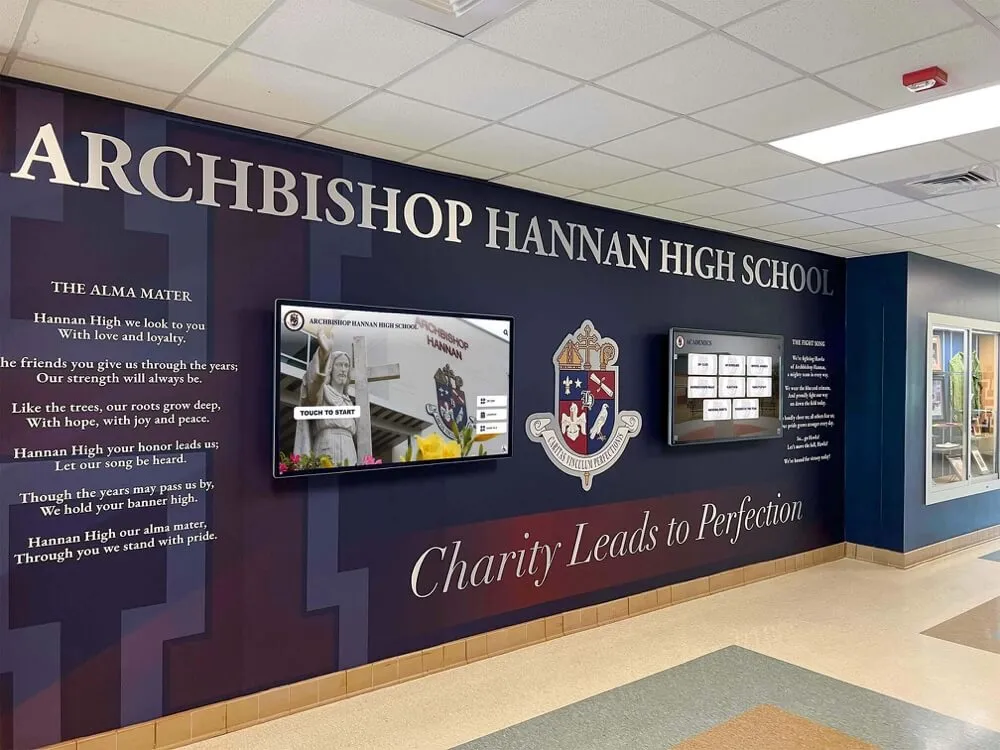
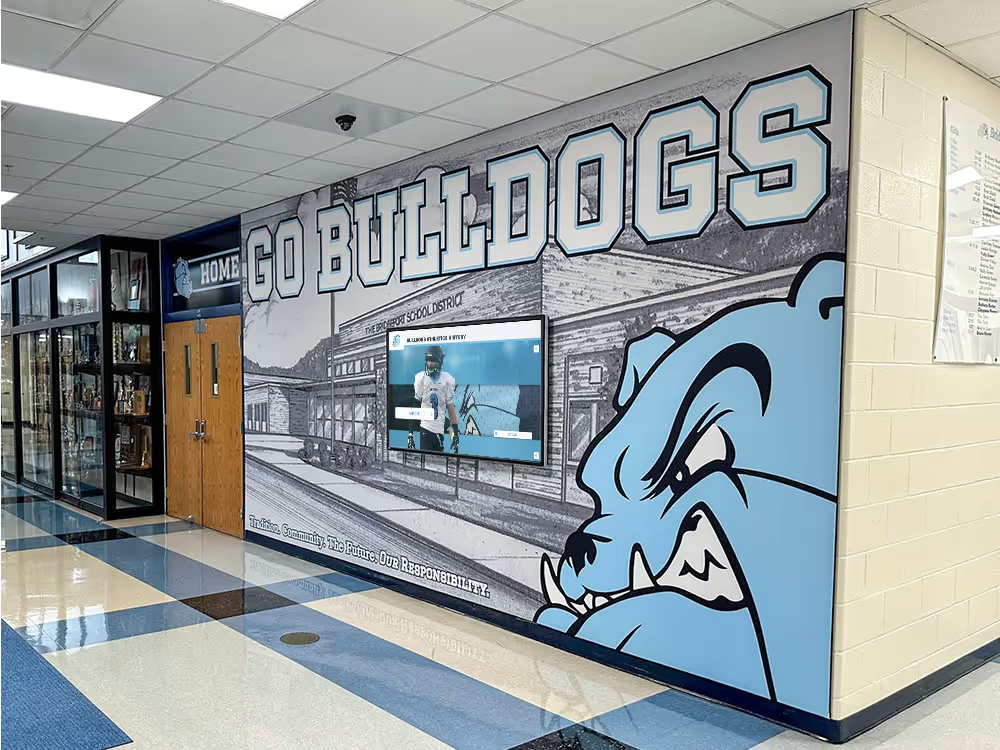
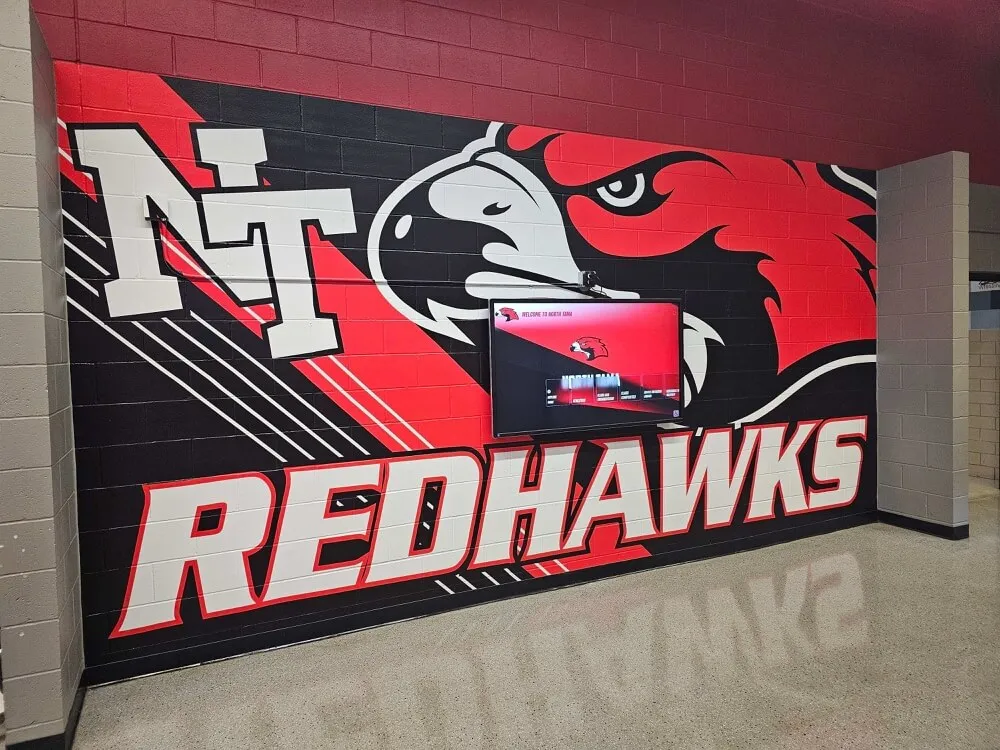
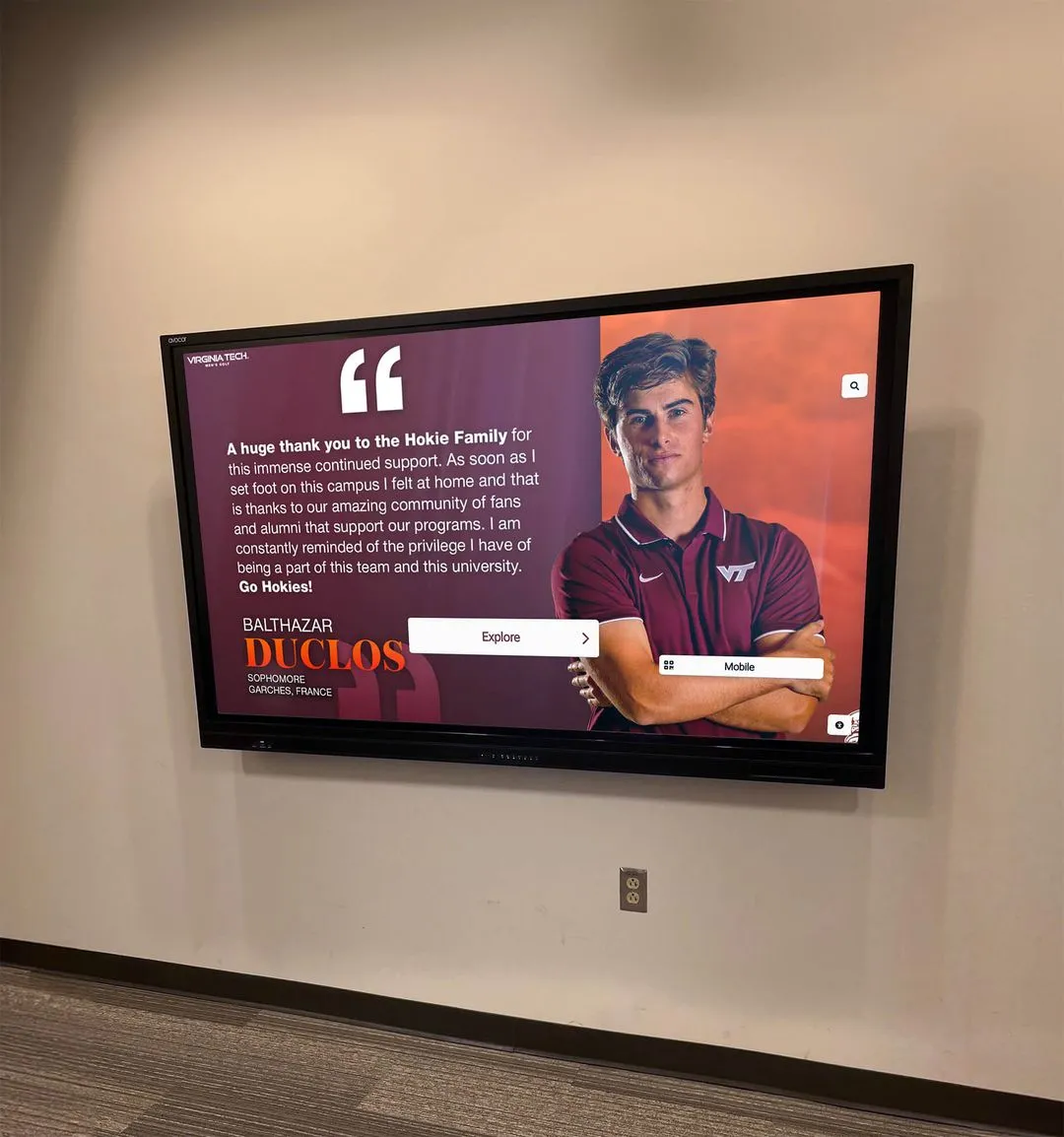
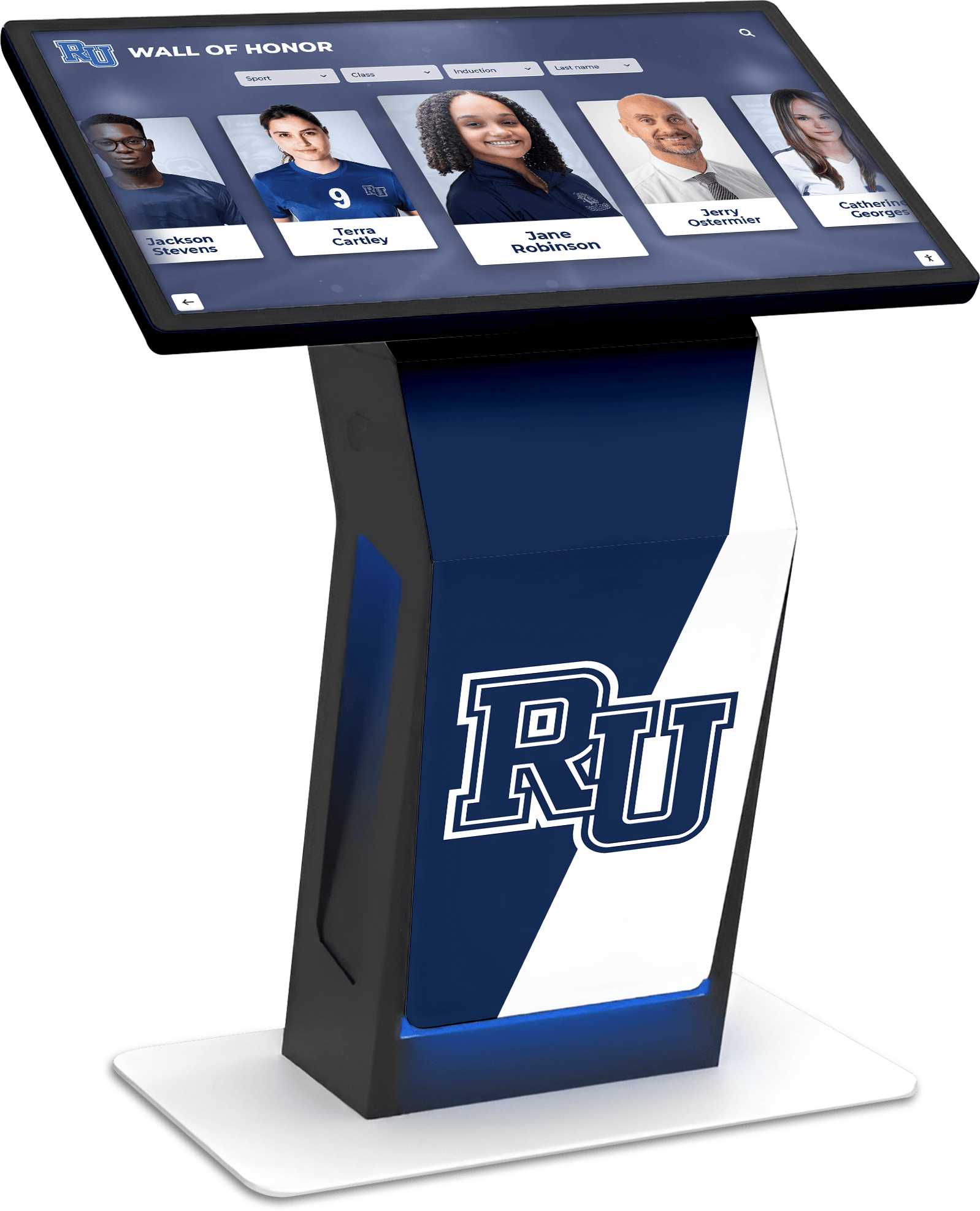
Modern recognition systems preserve senior night memories permanently, allowing athletes to revisit their achievements throughout their lives
The Origins and Evolution of Senior Night Traditions
Understanding senior night’s historical development illuminates why this tradition became so culturally significant across American athletics.
Early Athletic Recognition Practices
Senior night traditions emerged gradually from broader American patterns of honoring graduating students and celebrating athletic achievement.
Pre-1950s Athletic Recognition
Before senior night ceremonies became standardized, athletic recognition took varied forms. High schools and colleges celebrated athletes primarily through end-of-season banquets held weeks after final competitions, yearbook dedications featuring graduating athletes, informal gatherings acknowledging departing team members, and occasional championship celebrations when teams achieved exceptional success. These approaches honored athletes but lacked the immediate, public, family-inclusive nature defining modern senior nights.
Post-World War II American culture increasingly emphasized public ceremonies marking life transitions—graduations became more elaborate, wedding traditions standardized, and milestone celebrations gained cultural importance. Athletic programs naturally absorbed these broader cultural patterns, developing more formalized recognition for departing athletes.
The Rise of High School Senior Night (1950s-1970s)
Senior night ceremonies as we recognize them today gained prominence during the 1950s through 1970s, coinciding with several cultural developments. Suburban expansion created dedicated high school athletic facilities enabling pre-game ceremonies, increased parental involvement in youth activities drove demand for family-inclusive recognition, television coverage of college athletics showcased formal recognition ceremonies, and growing emphasis on student-athlete identity made athletic participation a more central aspect of student experience.
Basketball programs frequently pioneered senior night traditions because indoor venues provided controlled environments for ceremonies, basketball’s shorter seasons concentrated recognition into specific periods, and the sport’s popularity ensured strong attendance for senior recognition events. Football programs soon adopted similar practices, followed gradually by other sports across athletic departments.
By the 1980s, senior night had become nearly universal in American high school athletics, with most programs scheduling dedicated ceremonies during final home competitions of regular seasons.
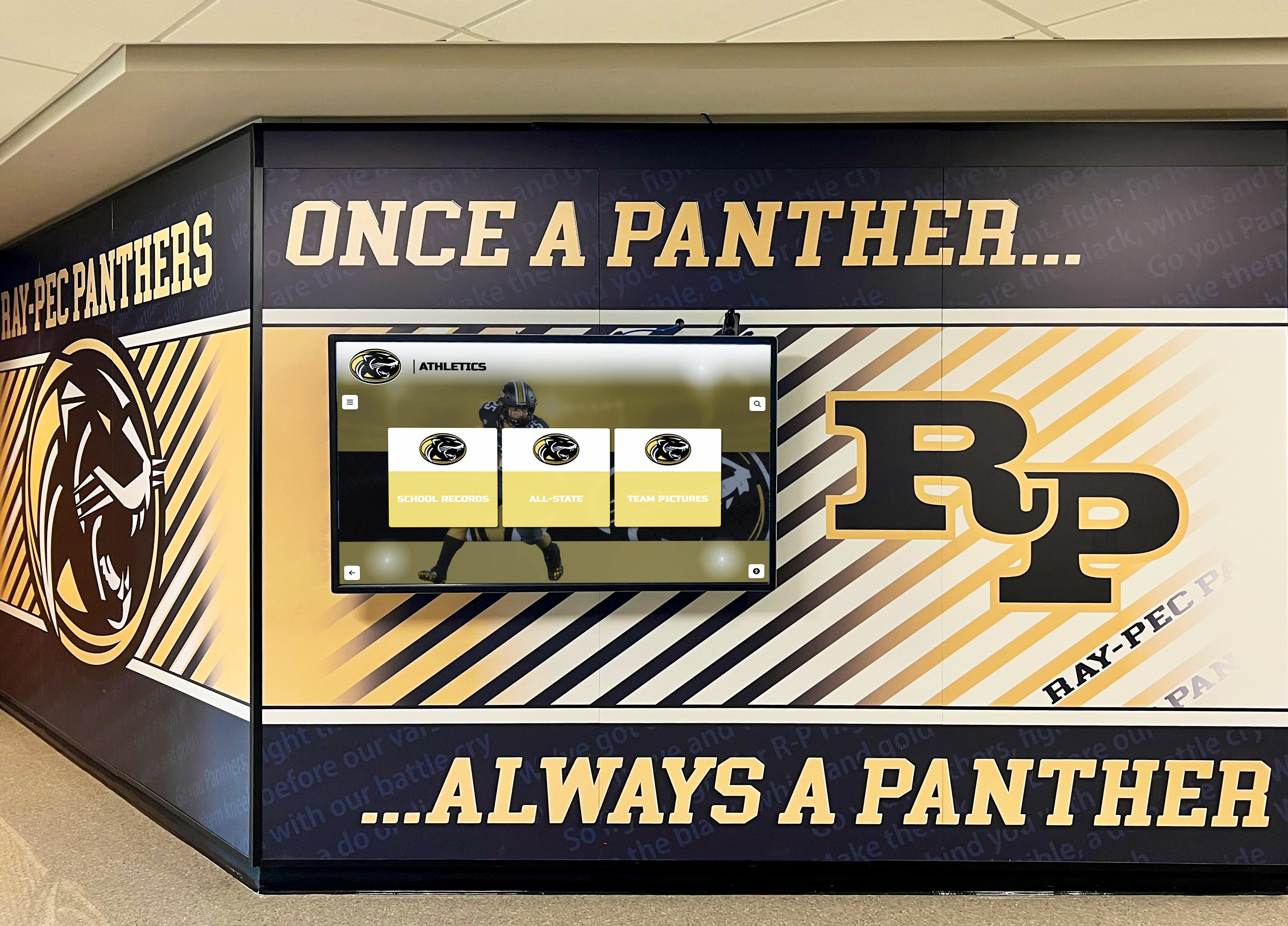
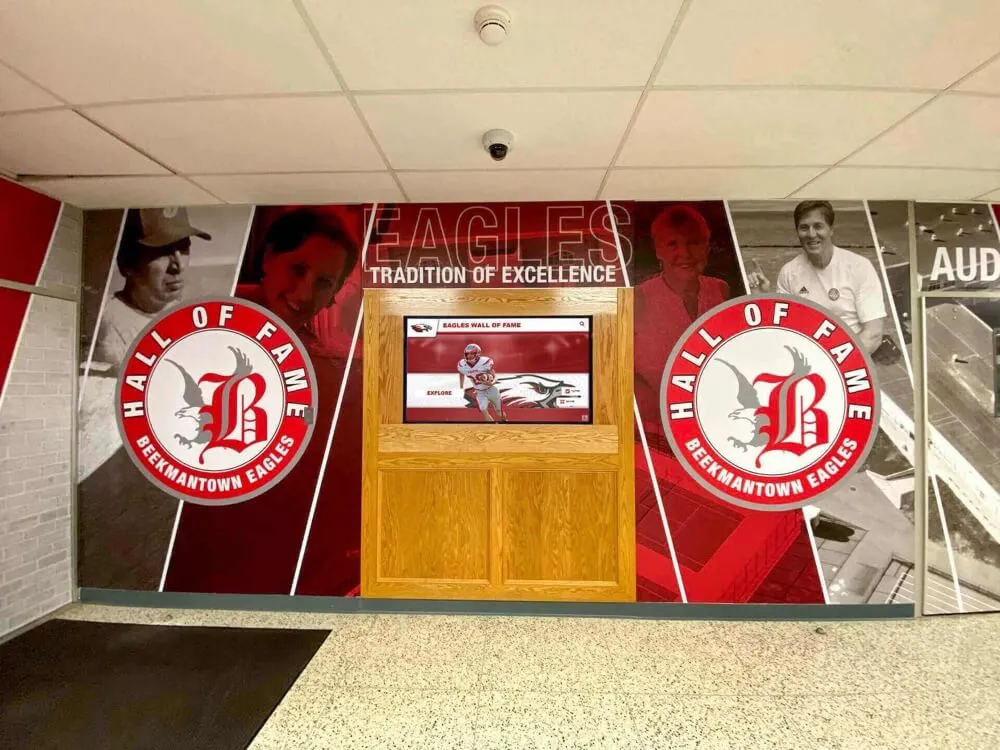
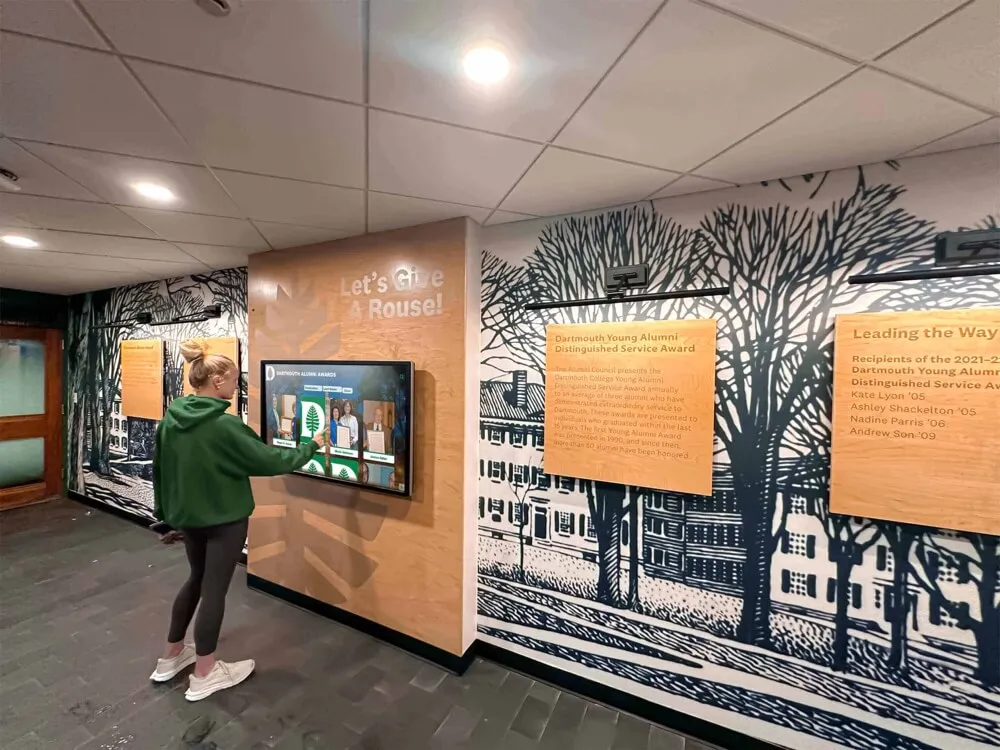
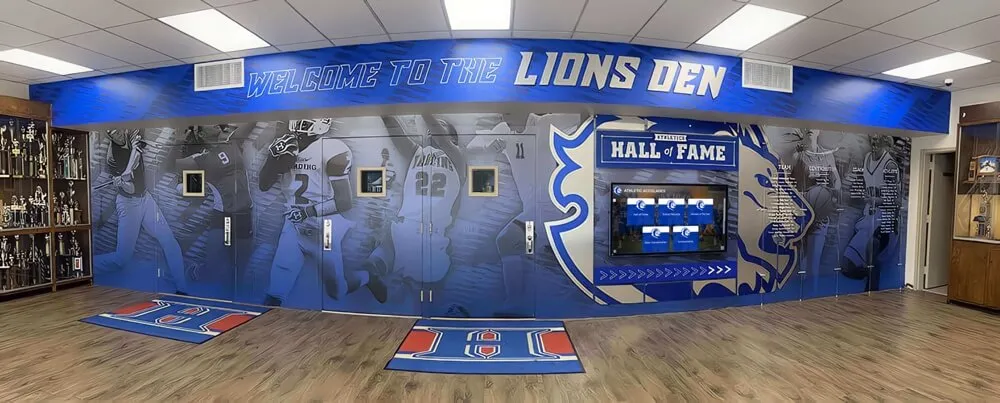
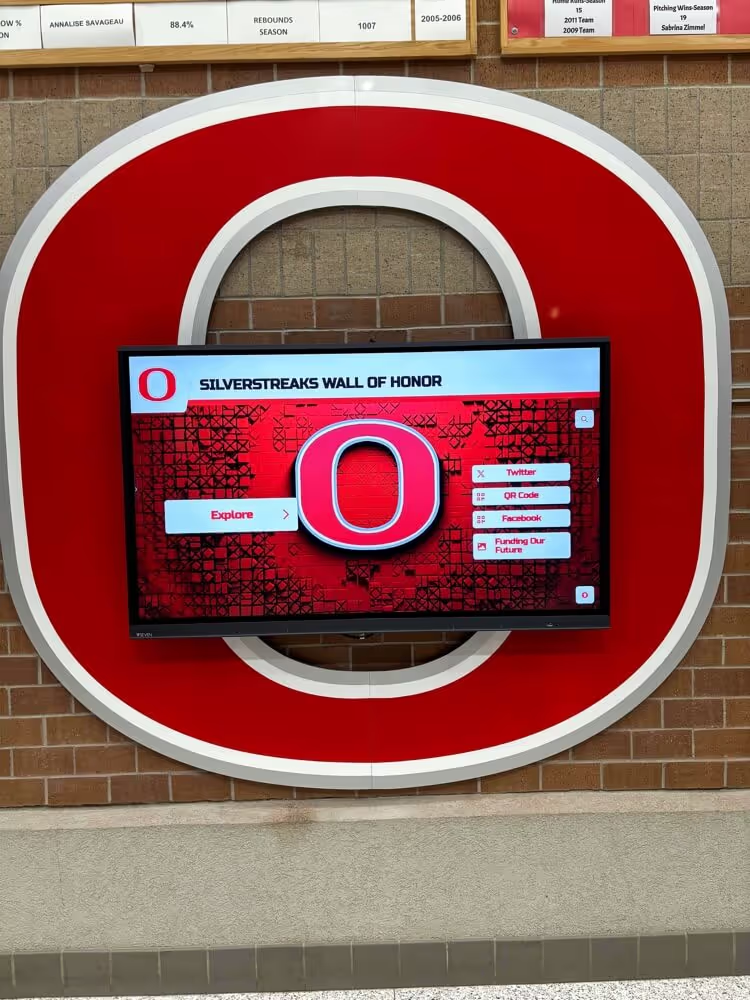
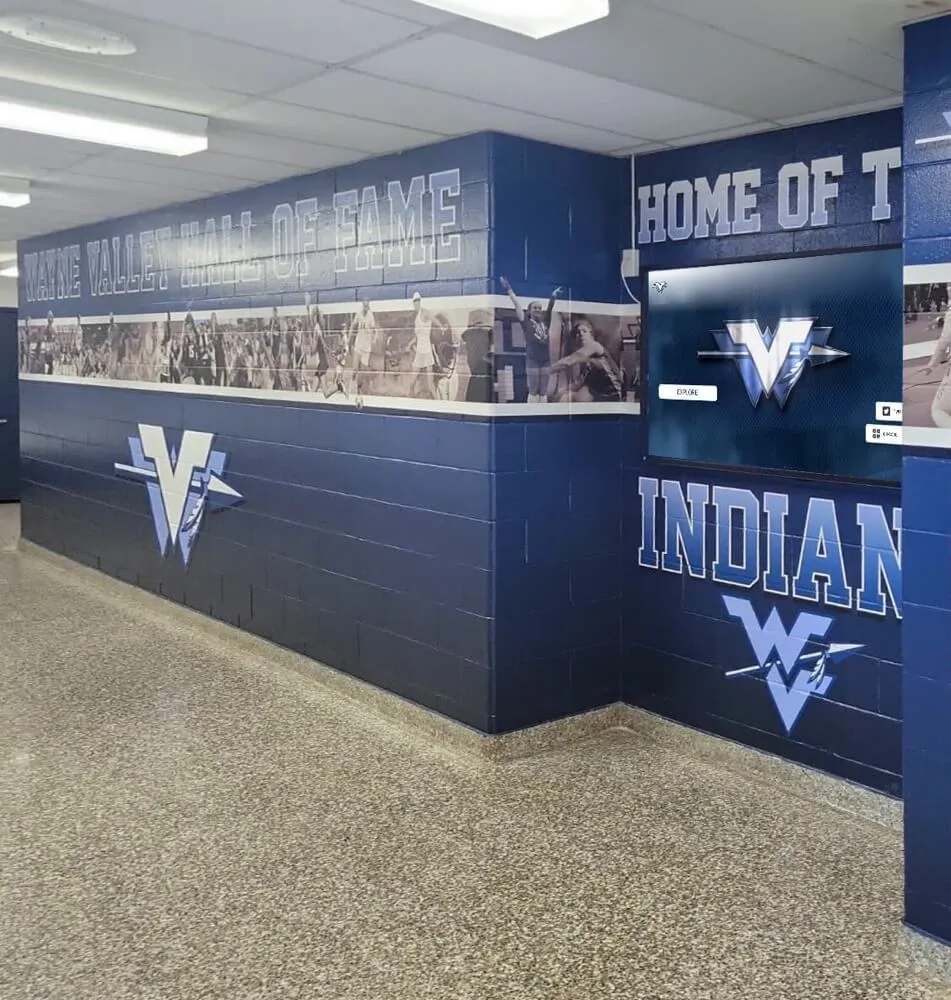
Athletic recognition displays throughout school facilities maintain year-round connection to senior achievements and program traditions
How Senior Night Evolved Across Different Sports
While core recognition concepts remained consistent, different sports adapted senior night traditions to match their unique characteristics and competitive calendars.
Basketball Senior Night Traditions
Basketball established many foundational senior night practices that other sports subsequently adopted. The sport’s indoor setting allowed elaborate presentations regardless of weather, halftime breaks provided natural ceremony timing without extending events excessively, relatively small senior classes (compared to football) enabled meaningful individual recognition, and high community interest in basketball ensured strong attendance for recognition events.
Traditional basketball senior night elements included senior introductions with family escorts walking from team benches to center court, presentation of roses to mothers or special family members, brief biographical announcements highlighting careers and achievements, special senior-only starting lineups regardless of typical rotation, and post-game celebrations allowing extended family interaction on courts.
These elements became templates that other sports adapted to their specific contexts and competitive formats.
Football Senior Night Adaptations
Football programs modified basketball’s indoor senior night model for outdoor stadiums and larger senior classes. Ceremonies typically occurred before games rather than at halftime due to extended halftime requirements for bands and performances, larger senior classes necessitated streamlined presentations balancing individual recognition with reasonable ceremony length, outdoor settings required weather contingency planning, and emphasis on position groups created natural recognition subdivisions within larger classes.
Football senior nights often featured ceremonial captaincy honors where seniors received first opportunity to participate in coin tosses and lead teams onto fields.
Individual Sport Senior Recognition
Sports like track and field, swimming, wrestling, tennis, and golf faced unique senior night challenges because athletes competed individually while contributing to team scores, seasons extended over months with multiple home competitions, and varying event schedules meant not all seniors competed at every meet.
These programs often adapted senior night through designated “senior meet” events near season conclusions featuring all seniors regardless of individual competitive schedules, special recognition of seniors during championship meets or conference competitions, combined senior night celebrations with end-of-season banquets, or integrated senior recognition into larger championship ceremonies when programs hosted postseason competitions.
Learn how schools create comprehensive athletic recognition programs celebrating diverse sports and achievement types.
The Deeper Meaning and Purpose of Senior Night
Beyond surface-level recognition, senior night ceremonies serve multiple psychological, social, and institutional purposes that explain their cultural persistence and emotional resonance.
Honoring Years of Commitment and Dedication
At its core, senior night acknowledges that athletic participation represents significant investment of time, energy, and personal development spanning years.
Recognizing Unseen Sacrifice
Most athletic achievement occurs away from public view—early morning practices before school begins, off-season conditioning maintaining physical readiness, film study and strategic preparation developing competitive intelligence, injury rehabilitation requiring physical and mental perseverance, and countless small daily choices prioritizing team commitments over alternative activities. Senior night provides public acknowledgment that communities often overlook these invisible sacrifices defining athletic careers.
For athletes whose playing time was limited or whose teams struggled competitively, senior night validates that dedication and character matter independently from statistics and wins. The ceremony affirms that showing up consistently, supporting teammates, maintaining positive attitudes through adversity, and representing programs honorably constitute genuine achievements worthy of recognition regardless of competitive outcomes.
Validating Complete Athletic Journeys
Senior athletic careers rarely follow linear progression. Most athletes experience injuries interrupting development, coaching changes requiring adaptation to new systems, position switches demanding new skill acquisition, personal challenges affecting performance, and competitive setbacks requiring resilience. Senior night ceremonies acknowledge complete journeys—not just highlight moments but the full complex narratives of growth, struggle, and perseverance defining meaningful athletic participation.
When coaches share senior recognition speeches referencing specific challenges athletes overcame or character growth they demonstrated, these narratives validate that athletic value extends beyond final statistics into personal development and life skill acquisition with significance extending well beyond competitive careers.
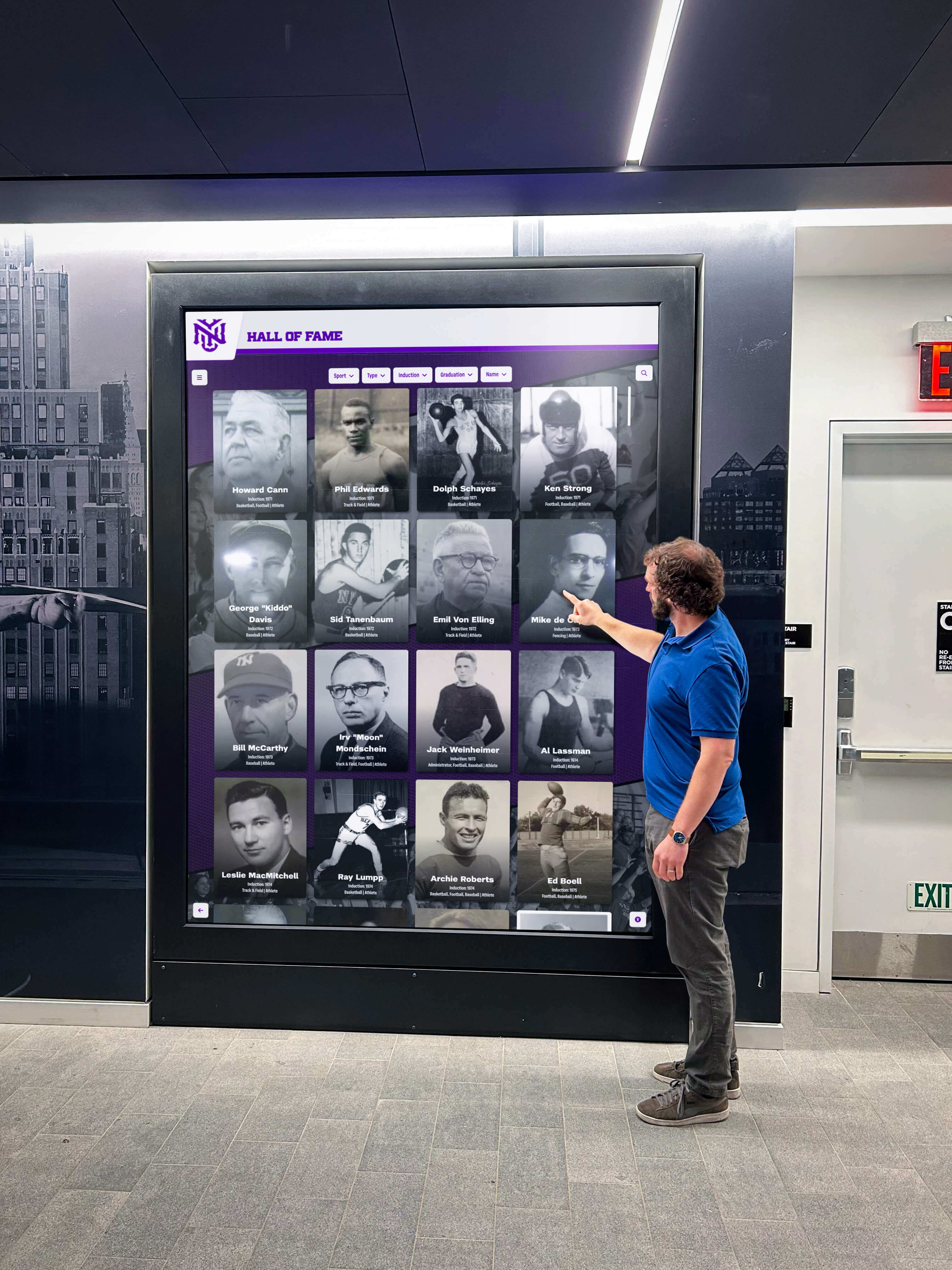
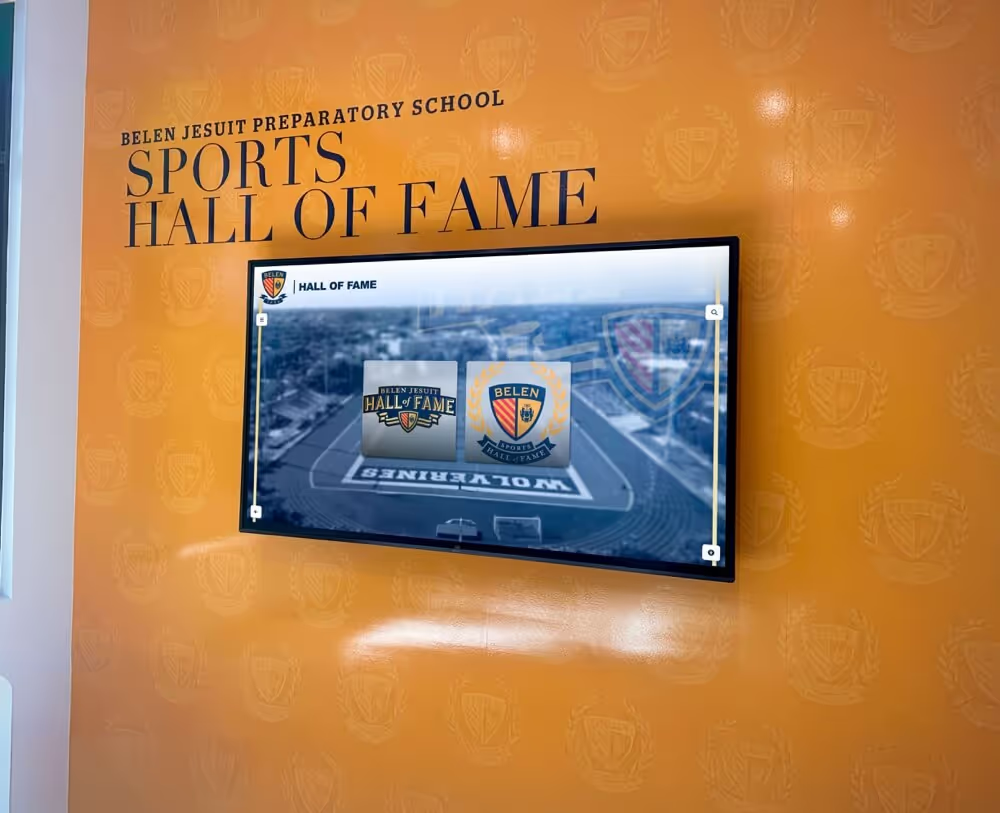
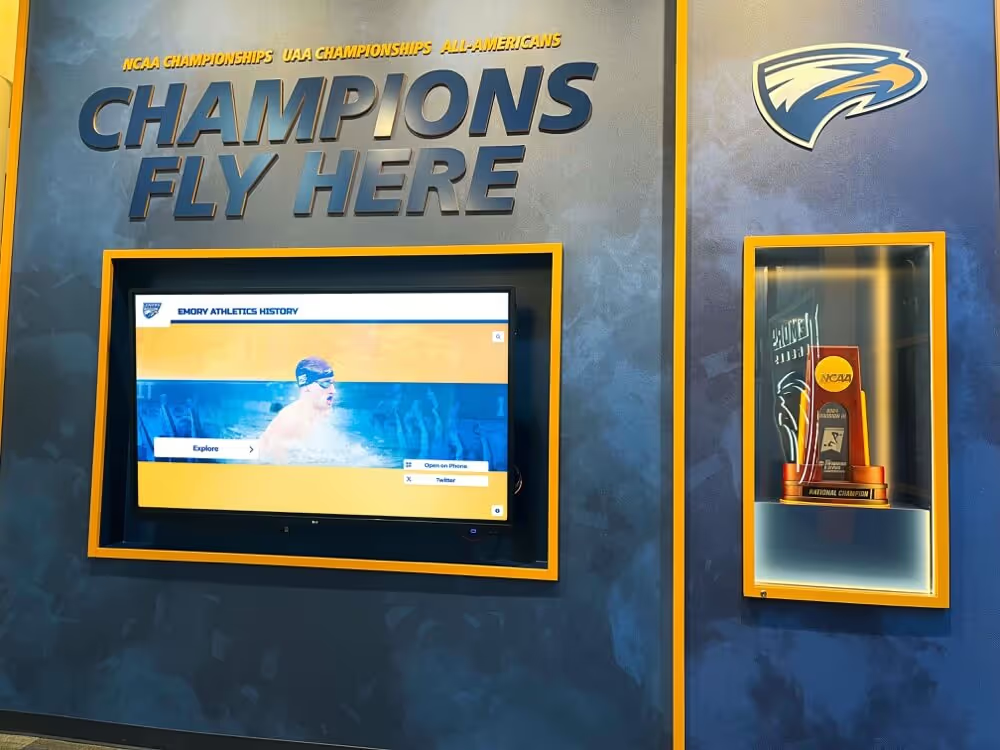
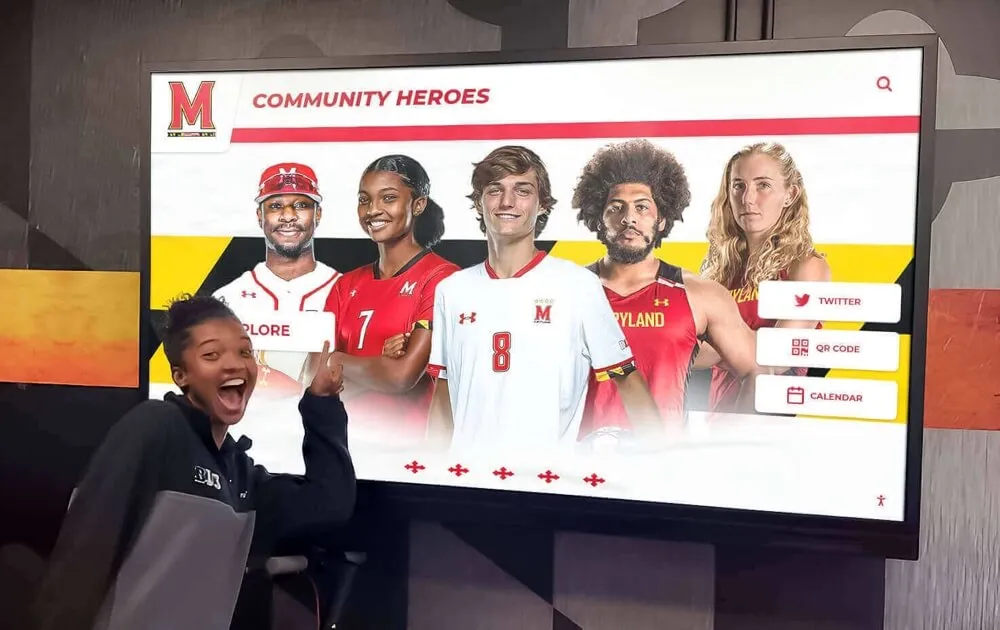
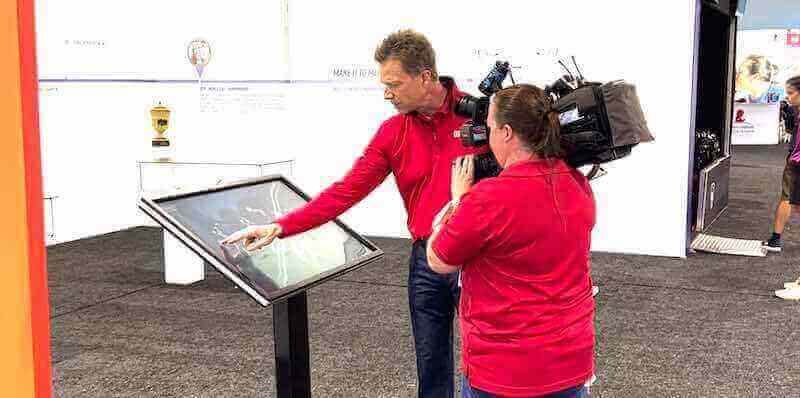
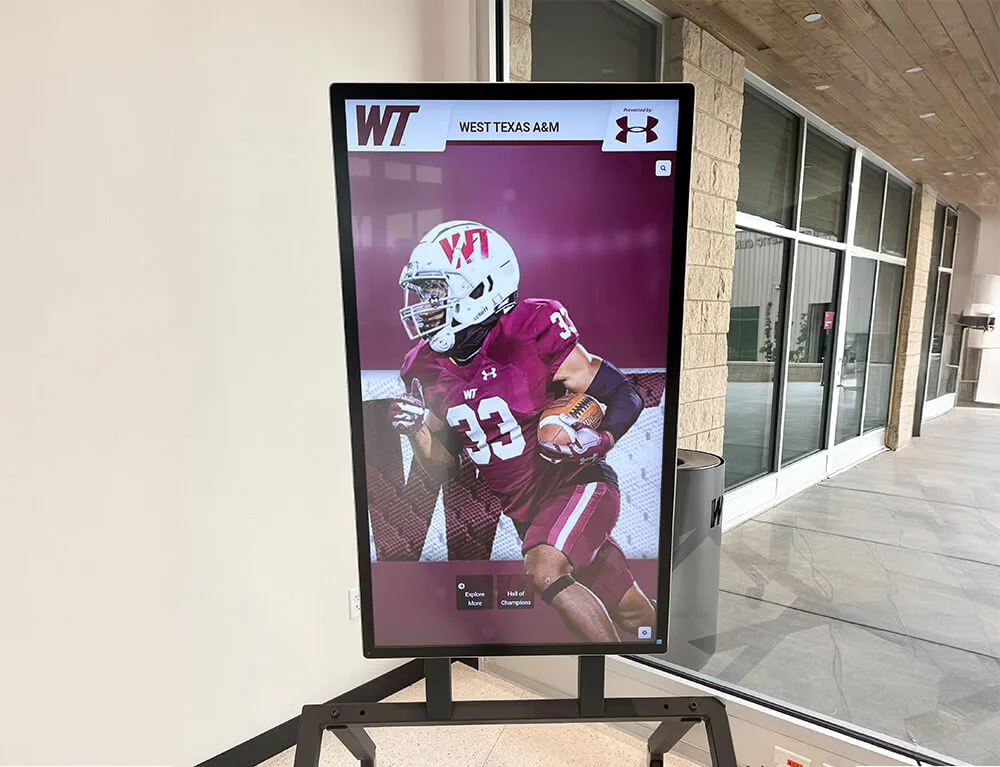
Interactive recognition systems enable communities to explore senior achievements while understanding complete athletic narratives
Acknowledging Family Support Systems
Senior night ceremonies explicitly recognize that athletic participation requires extensive family investment and support.
Public Gratitude for Parental Sacrifice
Parents of student-athletes typically invest thousands of hours attending practices and competitions, driving to tournaments and away games, funding equipment and travel expenses, managing schedules coordinating athletics with academics, providing emotional support through victories and defeats, and reorganizing family life around competitive calendars. These sacrifices often occur with minimal recognition or public acknowledgment.
Senior night provides formal opportunity for public gratitude. When athletes walk across fields or courts accompanied by parents, the ceremony visually represents the partnership enabling athletic careers. The tradition of presenting roses or flowers to mothers symbolically acknowledges specific parental sacrifices, while brief biographical narratives often reference family support explicitly.
For many families, senior night represents their own milestone as “athletic parents”—an identity they’ve carried for years reaches its conclusion alongside their child’s athletic career. The ceremony honors this shared journey and transition.
Extended Family and Community Connection
Senior night ceremonies typically encourage extended family attendance—grandparents, siblings, aunts, uncles, and family friends who supported athletes throughout careers. This inclusive approach acknowledges that athletic success requires community support extending beyond immediate family to broader networks providing encouragement, attending games, and celebrating achievements.
The public nature of recognition also connects athletes to their local communities. Seeing local students honored for dedication and achievement builds community pride and investment in youth development, strengthening social bonds while demonstrating that communities value youth athletic participation for reasons extending beyond entertainment into character development and achievement celebration.
Creating Meaningful Transitions and Closure
Senior night ceremonies serve important psychological functions helping athletes, families, and teams process significant transitions.
Marking the End of Competitive Careers
For most high school seniors, their final season represents the conclusion of competitive athletic careers. Few will continue playing at collegiate levels, and even those who do transition to new programs leaving behind familiar contexts where they developed as athletes and people. This ending carries genuine emotional weight requiring acknowledgment and processing.
Senior night provides formal recognition that important life chapters are concluding. The ceremony creates space for reflection on what athletes experienced and achieved, allows public expression of gratitude toward coaches and teammates, enables emotional processing of endings in supportive community contexts, and helps athletes begin mental transition from active participation toward alumni status.
Without this formal recognition, significant life transitions can feel anticlimactic—careers simply end without acknowledgment or closure. Senior night prevents this by creating defined moments where endings receive appropriate attention and emotional processing.
Building Bridges to Future Connections
While senior night acknowledges endings, it simultaneously establishes ongoing connections between athletes and programs. The ceremony communicates that graduates remain valued program members—their achievements become part of permanent program histories, their examples inspire future athletes, and they’re welcomed back as alumni connected to ongoing program communities.
Modern digital recognition systems extend this bridging function by creating permanent accessible recognition graduates can revisit throughout their lives, share with future families and colleagues, and maintain as lasting evidence of athletic achievement and program connection.
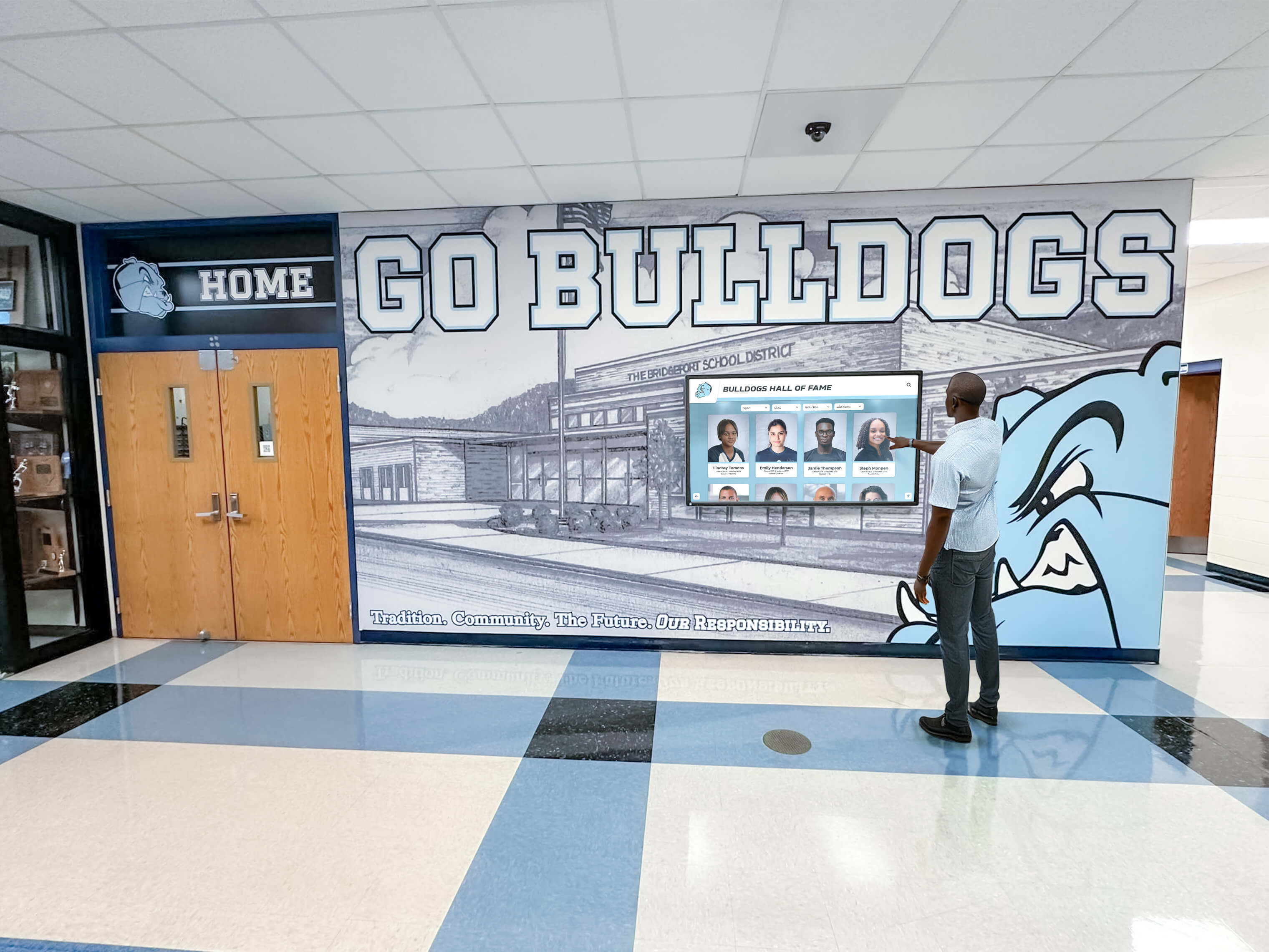
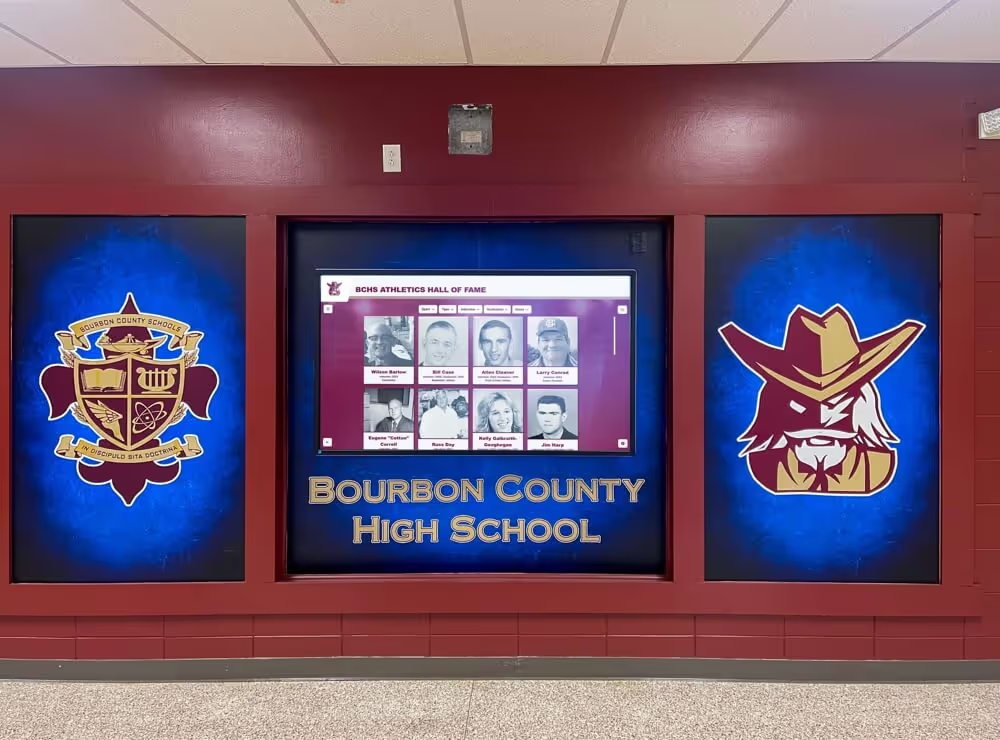
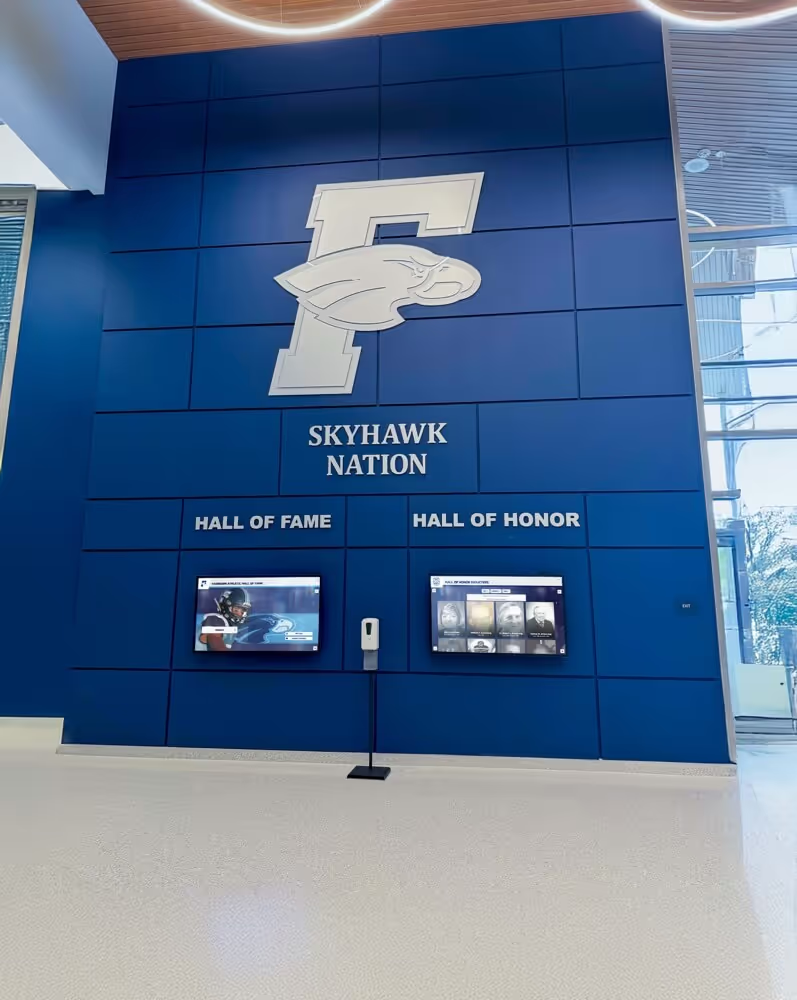
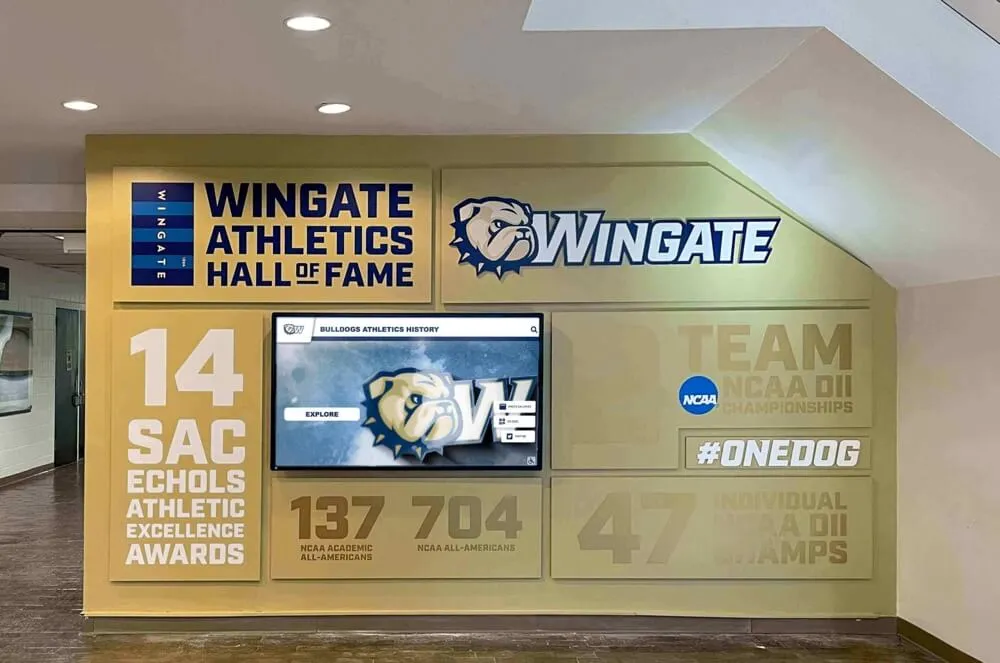
Year-round recognition displays enable returning alumni to reconnect with their achievements while inspiring current student-athletes
The Cultural Significance of Senior Night in American Athletics
Senior night traditions reflect and reinforce broader American cultural values regarding education, athletics, and youth development.
Athletic Participation as Character Development
American culture has long emphasized that athletic participation builds character and life skills extending beyond sports themselves.
Reinforcing Educational Athletics Philosophy
Senior night ceremonies embody the educational athletics philosophy distinguishing American scholastic sports from purely competitive or recreational models. By celebrating seniors regardless of team records or individual statistics, ceremonies affirm that athletic participation has inherent developmental value—teaching discipline, teamwork, resilience, time management, goal-setting, and leadership regardless of win-loss outcomes.
Coach speeches during senior recognition frequently reference character development, work ethic, and personal growth alongside athletic achievements. This rhetorical emphasis reinforces that schools sponsor athletics primarily for educational and developmental purposes rather than purely competitive entertainment, distinguishing scholastic athletics from professional or commercial sport models.
Senior night thus serves institutional communication functions—demonstrating to families, communities, and athletes themselves that schools view athletics as valuable components of comprehensive education worthy of formal recognition comparable to academic honors and achievements.
Celebrating Multi-Dimensional Achievement
Senior night recognition typically extends beyond athletic statistics to acknowledge academic achievement, community service, leadership roles, and character demonstration. Athletes might be recognized for maintaining honor roll status while competing, volunteering in community programs, serving as team captains or mentors, or demonstrating sportsmanship and integrity.
This comprehensive recognition approach reflects American ideals about well-rounded development and balanced achievement. The celebration of “student-athletes” rather than simply “athletes” during senior night underscores that optimal youth development integrates athletic, academic, social, and character dimensions rather than pursuing single-dimension excellence at the expense of broader growth.
Community Identity and Social Cohesion
Senior night ceremonies function as community rituals that strengthen social bonds and collective identity.
Shared Celebration Building Community Ties
Senior nights attract diverse community members—families of honored seniors, families of younger teammates, school administrators and staff, community members without direct team connections, and alumni returning to witness tradition continuation. This gathering creates opportunities for social connection across different community segments unified around shared celebration of youth achievement.
The communal nature of recognition builds social capital—strengthening relationships, creating shared positive experiences, and fostering collective identity around institutional values and traditions. Communities that gather regularly to celebrate youth achievement develop stronger social cohesion and institutional support networks benefiting schools and youth development broadly.
Athletic Success as Community Pride
In many communities, particularly smaller towns where high school athletics receive significant attention, senior night represents public celebration of community identity and achievement. Local athletes don’t simply represent themselves or even their schools exclusively—they symbolize their communities, and their recognition reflects positively on local institutions and collective quality.
This dynamic explains why senior night ceremonies often receive local media coverage and social media attention extending far beyond immediate team circles. Community members share pride in local youth achievement, and public recognition validates community investment in youth development while reinforcing social bonds around shared institutional affiliations.
Explore how digital recognition displays create community engagement around athletic achievement and program excellence.
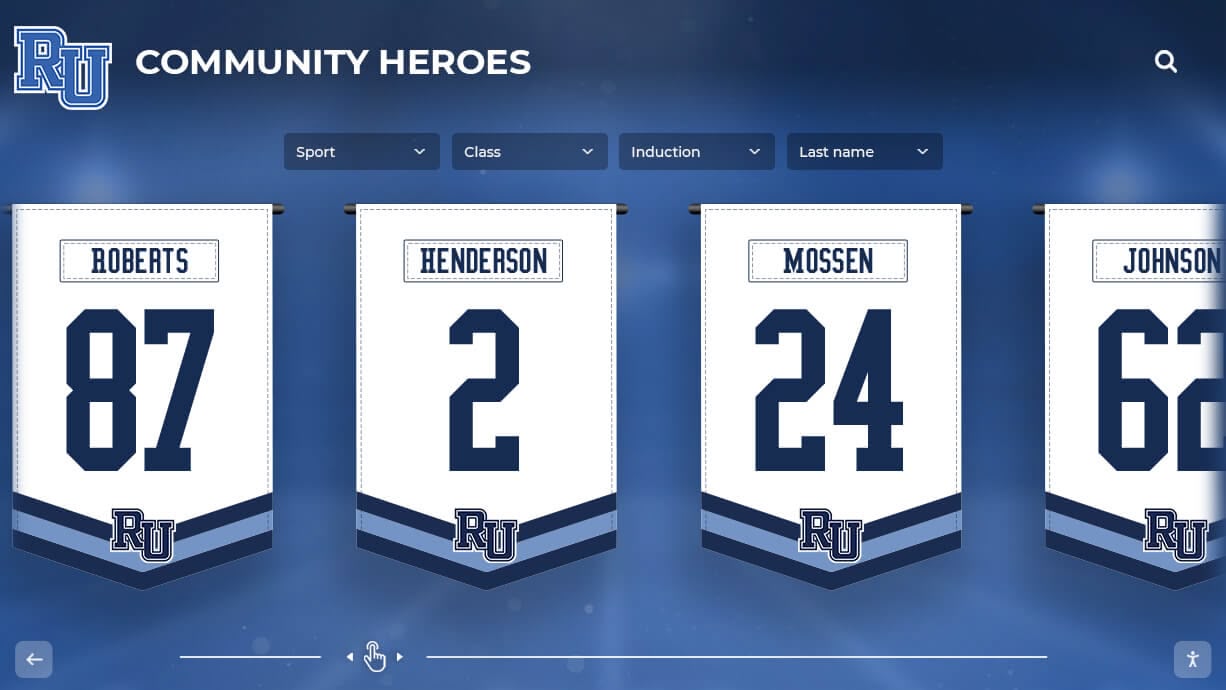
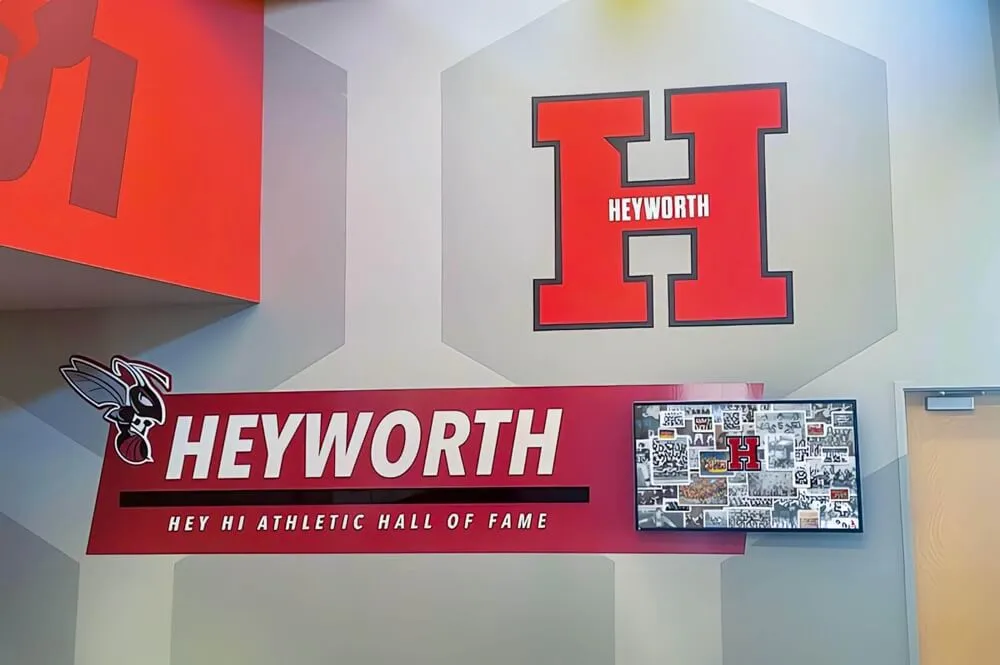
Visual recognition elements celebrate senior contributions while building visible program culture throughout athletic facilities
How Senior Night Ceremonies Are Structured and Conducted
While specific formats vary by school, sport, and tradition, most senior night ceremonies follow recognizable structures balancing individual recognition with practical constraints.
Typical Senior Night Ceremony Elements
Understanding common ceremonial components helps explain how senior nights create meaningful recognition experiences.
Pre-Ceremony Preparation and Setup
Senior night planning typically begins weeks in advance with coordinators collecting senior information and photos, coordinating with families regarding ceremony participation, preparing biographical information for announcer scripts, arranging gifts or recognition items for presentation, and organizing logistics like processional routes and photo opportunities.
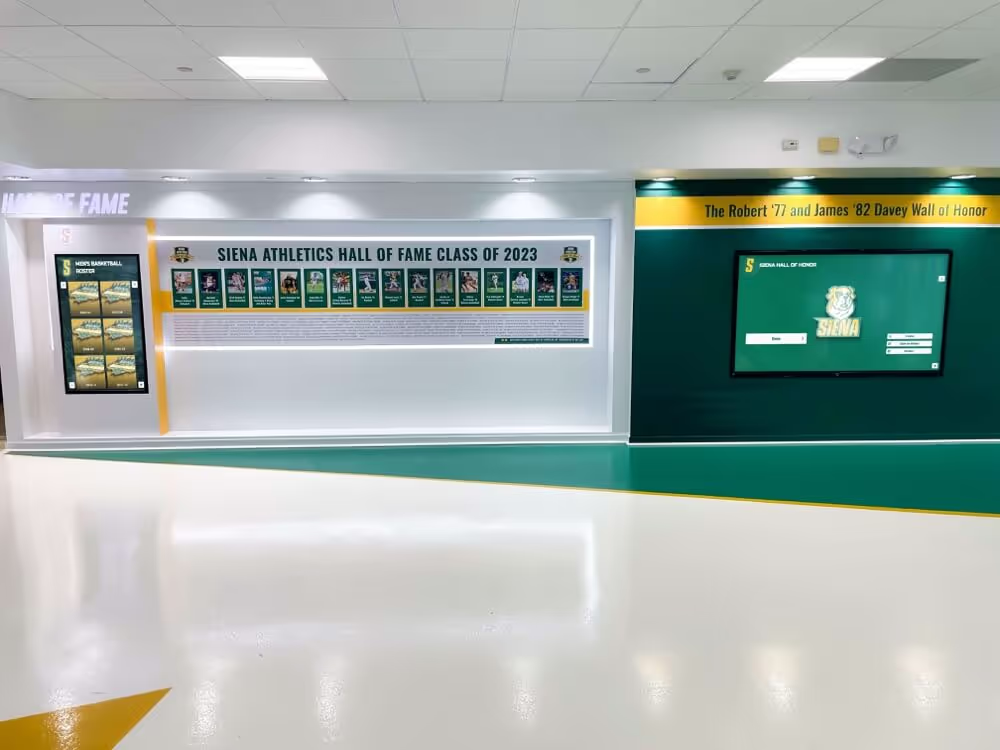
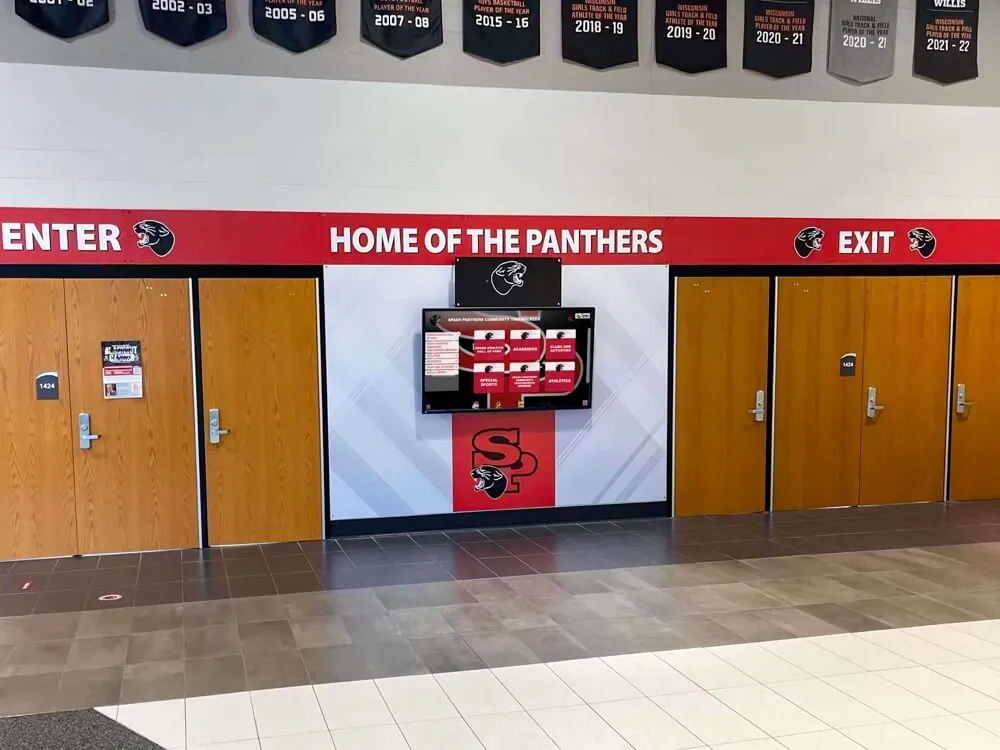
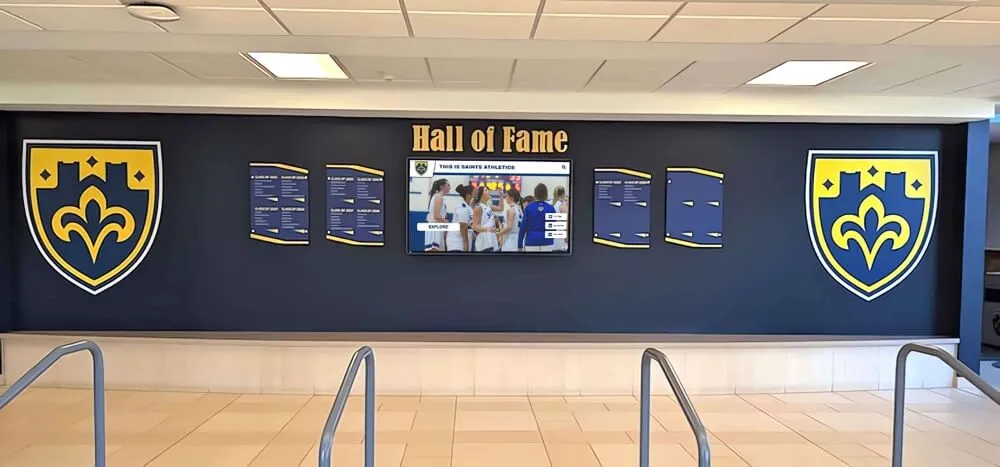
Many programs create visual displays featuring senior photos, career highlights, and achievements positioned near stadium or gymnasium entrances where early-arriving attendees can engage with recognition before formal ceremonies begin. These displays build anticipation while providing content families photograph and share on social media.
Individual Senior Introductions
The ceremony centerpiece involves individual recognition of each senior. Typical formats include announcer reading biographical information highlighting years of participation, positions played, achievements and awards, post-graduation plans, and expressions of gratitude, seniors walking across playing surfaces accompanied by parents or family members, presentation of flowers, commemorative items, or small gifts to seniors or family members, photo opportunities at designated ceremony locations, and brief pauses allowing applause and celebration for each senior.
For sports with large senior classes, coordinators balance meaningful individual recognition against reasonable ceremony length. Some programs introduce seniors in position groups or present them more quickly with extended biographies in printed programs rather than fully announcing every detail during ceremonies.
Coach and Administrative Remarks
Many senior nights include brief speeches from head coaches reflecting on senior class contributions, athletic directors acknowledging seniors’ impact on broader programs, or team captains expressing teammate gratitude for senior leadership. These remarks provide context explaining what made specific senior classes significant while reinforcing program values and traditions.
Effective remarks focus on specific examples and stories rather than generic praise, making recognition feel personal and authentic rather than formulaic. The best speakers balance appropriate emotion with celebratory tone while maintaining reasonable length respecting audience attention and competition schedules.
Competitive Elements
Following recognition ceremonies, actual competitions proceed. Many programs maintain traditions where seniors receive special consideration—starting lineups regardless of typical rotation, first opportunity to touch the ball or initiate play, or ceremonial participation in coin tosses and pre-game rituals.
These elements extend senior night significance beyond pre-game formalities into actual competition, allowing seniors to compete at home with enhanced meaning while recognized status remains visible throughout events.
Adapting Ceremonies for Different Contexts
Senior night formats adapt based on various factors including sport-specific characteristics, program size and resources, and venue capabilities.
Large vs. Small Senior Classes
Programs with one or two seniors can provide extensive individual recognition without time constraints—longer biographical narratives, individual video tributes, extended family participation beyond parents, and more elaborate ceremonial elements. Small classes enable intimate recognition creating powerful personal moments.
Large senior classes (10+ athletes) require efficient approaches providing meaningful recognition without excessive ceremony duration. Strategies include grouping seniors by position or contribution type for recognition, creating comprehensive printed programs with full biographies while announcing abbreviated versions, using video montages showing all seniors rather than individual presentations, or conducting multi-phase ceremonies spreading recognition across pre-game and between-period opportunities.
The goal remains ensuring every senior feels individually valued while maintaining reasonable overall ceremony length respecting audiences and competition schedules.
Budget and Resource Considerations
Senior night ceremonies range from elaborate productions with professional videography, extensive decorations, and premium gifts to modest acknowledgments with simple announcements and flowers. Both approaches can create meaningful recognition when executed with genuine care and attention.
Resource-limited programs focus on what matters most—ensuring every senior receives personal recognition, including families in ceremonies, creating photo opportunities preserving memories, and expressing authentic gratitude for contributions. These core elements cost little but deliver significant emotional impact when done thoughtfully.
Programs with greater resources can enhance ceremonies through professional photography and videography documenting events comprehensively, elaborate visual displays and decorations creating special atmosphere, premium recognition gifts or keepsakes for seniors, digital recognition systems preserving achievements permanently, or extended post-ceremony receptions allowing relaxed celebration and connection.
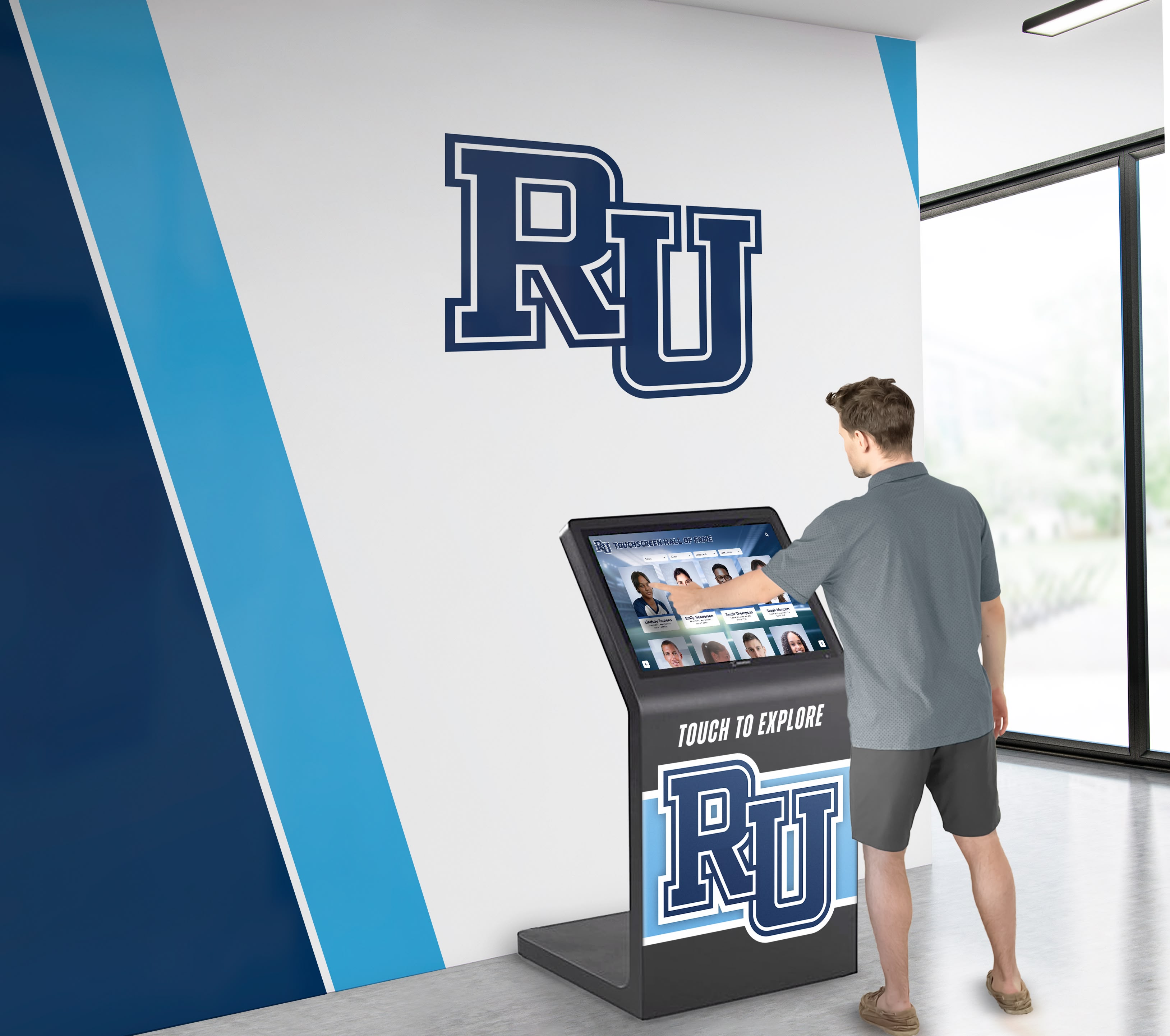
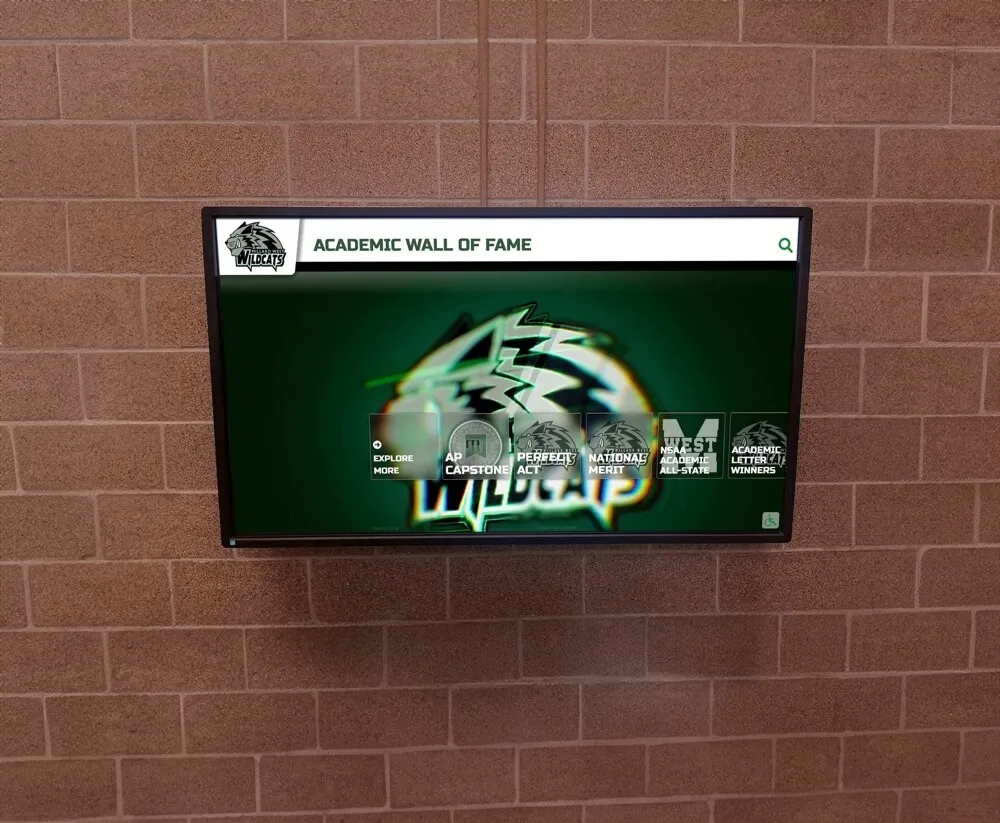
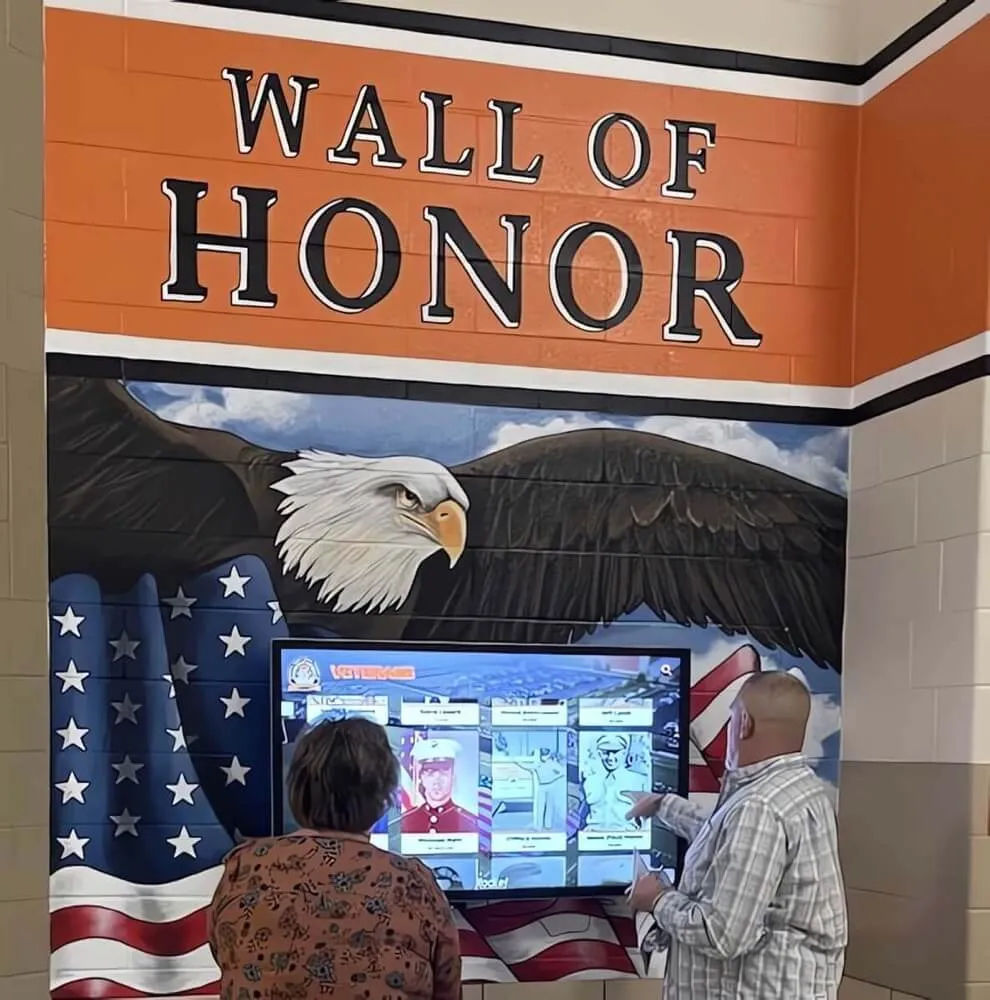
Touchscreen kiosks enable ongoing engagement with senior achievements throughout athletic facilities and school campuses
Modern Evolutions: Digital Recognition Extending Senior Night Impact
Traditional senior night ceremonies create powerful single-evening experiences, but recognition impact has historically faded quickly once events concluded and physical mementos collected dust in storage. Modern digital recognition systems transform temporary ceremonies into permanent accessible celebration.
The Limitations of Traditional Senior Night Recognition
Understanding traditional approach limitations illuminates why digital solutions create transformative value.
Temporal Limitations
Traditional senior night occurs once—recognition happens during a specific ceremony, emotions peak during that evening, then the moment passes. Athletes receive physical mementos like plaques or framed photos that may get displayed initially but often end up stored away as life progresses. Years later, few tangible accessible reminders of senior night remain beyond personal memories and occasional photos.
This temporal limitation means recognition impact concentrates into brief periods rather than extending throughout athletes’ lives, senior night memories fade without systematic preservation and accessibility, and younger athletes gain limited awareness of senior night significance for previous classes.
Physical Space Constraints
Schools maintaining traditional trophy cases or recognition walls face inevitable space limitations. They can display finite plaques or photos, must choose which achievements merit limited space, and struggle to accommodate decades of seniors across multiple sports without overcrowding.
These constraints often result in selective recognition where only certain achievement types get permanent display, recent years receive visibility while older recognition gets removed or stored, or programs simply run out of physical space for ongoing recognition expansion.
How Digital Platforms Preserve and Extend Senior Night Recognition
Modern digital recognition systems address traditional limitations while amplifying senior night impact.
Permanent Accessible Recognition
Digital platforms like Rocket Alumni Solutions enable schools to create comprehensive permanent profiles for every senior including complete career statistics across all seasons, photo galleries documenting athletic development, video highlights preserving signature performances, biographical information and post-graduation updates, and integration within complete program histories connecting individuals to broader athletic traditions.
These digital profiles remain accessible throughout seniors’ lives—graduates revisit recognition decades later maintaining connection to athletic achievements, share profiles easily with colleagues, future families, and extended networks, and preserve comprehensive documentation physical gifts cannot accommodate.
Unlike physical trophies that may be lost or damaged, digital recognition persists permanently through cloud-based systems accessible from any device anywhere.
Year-Round Community Engagement
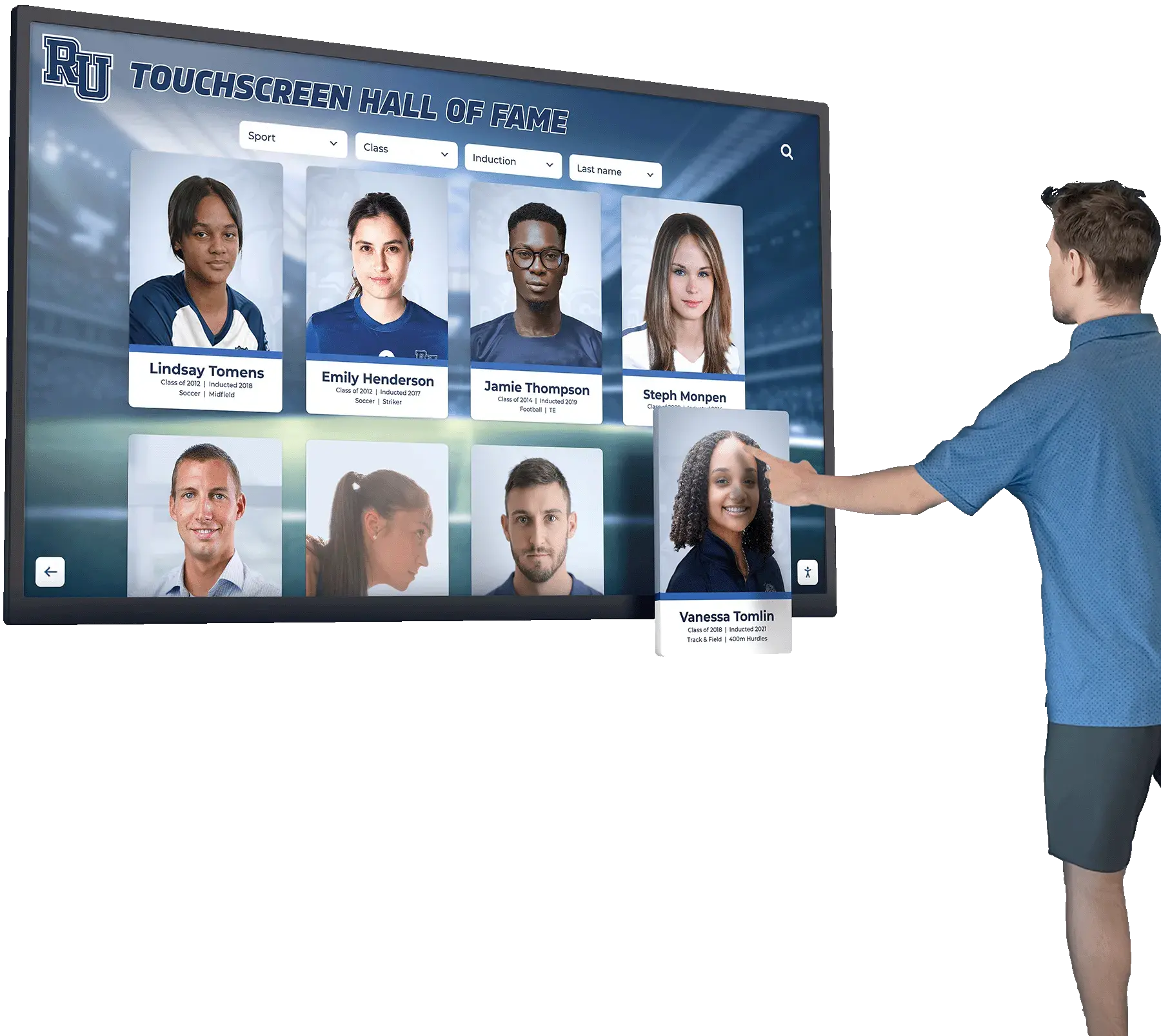
Physical installations within school facilities enable ongoing engagement with senior recognition. Interactive touchscreen displays allow current students to explore senior class histories discovering role models and inspiration, families to access their athletes’ comprehensive documentation during campus visits, prospective families considering programs to understand traditions and values, and alumni to reconnect with their recognition when returning to campuses.
These installations create what we call “digital warming” effects—transforming cold forgotten recognition into vibrant accessible celebration where personalized content surfaces relevant connections, comprehensive documentation preserves complete narratives, and interactive systems enable discovery impossible with static physical displays.
Learn how athletic programs implement comprehensive recognition systems celebrating seniors while building lasting program traditions.
Unlimited Capacity and Easy Updates
Digital systems eliminate physical space constraints by accommodating unlimited profiles without competing for wall space, including comprehensive information beyond what fits on plaques, easily updating content as programs add new seniors annually, and scaling effortlessly as programs grow without facility renovations.
This unlimited capacity enables truly inclusive recognition where every senior receives equal permanent recognition regardless of playing time or achievement level, programs can maintain complete historical records spanning decades, and future additions never force removal of previous recognition.
Mobile Access and Social Sharing
Modern platforms integrate QR code access enabling instant mobile engagement. Seniors can share their recognition profiles instantly with distant relatives unable to attend ceremonies, maintain permanent digital portfolios they access throughout lives, easily share achievements on social media and professional networks, and enable grandchildren decades later to explore their athletic histories.
This mobile accessibility creates recognition experiences matching how digital-native students naturally engage with content and share important life milestones with their extended networks.
The Psychology Behind Senior Night’s Emotional Impact
Understanding psychological factors explaining senior night’s emotional resonance reveals why this tradition creates such memorable experiences.
The Power of Public Recognition
Psychological research consistently demonstrates that public recognition produces more significant impact than private acknowledgment.
Social Validation and Self-Worth
When communities publicly honor individuals, the recognition validates that their contributions mattered to others—not just in their own perception but in objective social terms verified through community response. This social validation provides powerful affirmation of self-worth and achievement significance.
For athletes who invested years in programs, public recognition affirms that their dedication wasn’t simply personal pursuit but valuable contribution to something larger than themselves—their teams, schools, and communities. This external validation from respected sources (coaches, administrators, communities) carries psychological weight exceeding internal self-assessment alone.
Witness and Memory Formation
Events witnessed by significant people create more powerful memories with greater long-term emotional resonance. Senior night’s public nature ensures that important people in athletes’ lives—parents, siblings, friends, coaches, teammates—share the experience, witness the recognition, and can reference and reminisce about it subsequently.
These shared witnessed experiences create collective memories that groups can revisit and reinforce over time, strengthening emotional significance and ensuring senior night remains meaningful throughout athletes’ lives rather than fading like unwitnessed private moments.
Ritual and Ceremonial Significance
Senior night ceremonies incorporate ritualistic elements that humans find psychologically meaningful.
Threshold Moments and Life Transitions
Anthropologists recognize that cultures worldwide create ceremonies marking significant life transitions—coming of age rituals, graduation ceremonies, wedding celebrations, funeral rites. These threshold moments receive formal recognition helping individuals and communities process important changes.
Senior night functions as an athletic threshold ceremony—marking transition from active athlete to alumnus, from dependent youth to independent adult, from current participant to program legacy. The formal ceremonial structure signals to participants and witnesses that something significant is occurring requiring special attention and emotional processing.
Symbolic Actions and Meaning-Making
Senior night ceremonies incorporate symbolic actions—walking with parents, receiving flowers, hearing biographical narratives, wearing special uniforms or receiving recognition items. These symbolic elements create meaning beyond their literal functions, representing concepts like gratitude, achievement, support, and transition in concrete tangible ways.
Humans find symbolic rituals psychologically satisfying because they make abstract concepts concrete and provide structured ways to express complex emotions difficult to articulate otherwise. The structured familiar nature of senior night rituals enables participants to engage emotionally without needing to create meaning structures spontaneously.
Discover how schools create meaningful recognition traditions connecting generations of student-athletes through shared ceremonial experiences.
Best Practices for Meaningful Senior Night Ceremonies
Schools seeking to maximize senior night impact can adopt proven approaches ensuring recognition feels genuine and memorable rather than perfunctory.
Making Recognition Personal and Authentic
Generic recognition feels hollow; specific personal acknowledgment creates genuine emotional impact.
Collecting Comprehensive Senior Information
Well in advance of ceremonies, programs should gather detailed information about each senior including positions played throughout careers including changes or versatility, specific memorable moments and achievements that defined their experiences, personal qualities and character demonstrations beyond statistics, post-graduation plans providing context about next life chapters, individuals they wish to thank or recognize, and family information for accurate acknowledgment and coordination.
This comprehensive information gathering enables personalized recognition reflecting each senior’s unique journey rather than applying generic templates creating forgettable experiences.
Involving Coaches in Personal Narrative Development
Head coaches who worked with seniors throughout careers possess unique perspectives on their development, character, and significance. Involving coaches in developing recognition narratives ensures acknowledgments reference specific meaningful examples rather than vague generalizations.
Effective coach involvement includes coaches writing personal reflections about each senior for announcers to read, coaches delivering verbal tributes sharing specific stories and observations, or coaches participating directly in presentation ceremonies expressing personal gratitude. This personal coach investment demonstrates genuine appreciation creating emotional authenticity families and athletes recognize.
Balancing Tradition with Contemporary Relevance
While maintaining valued traditions, successful programs adapt senior night to contemporary contexts and expectations.
Incorporating Modern Technology Appropriately
Video tributes, social media integration, and digital recognition enhance rather than replace traditional personal elements. Effective technology use includes video highlights playing before ceremonies while crowds gather, live streaming enabling distant relatives to participate virtually, social media hashtags aggregating community celebration and sharing, and QR codes linking to comprehensive digital recognition accessible beyond ceremony evenings.
Technology should enhance emotional connection and accessibility rather than distracting from core human recognition at ceremony centers.
Ensuring Inclusive Recognition
Modern senior nights reflect evolving understanding about inclusive recognition honoring diverse contribution types. Programs should ensure recognition celebrates various achievement types beyond statistics, acknowledges athletes with limited playing time equally to starters, includes athletes who faced injuries or challenges throughout careers, recognizes character and leadership alongside athletic performance, and creates space for diverse family structures and relationships.
Inclusive approaches ensure all seniors feel genuinely valued regardless of individual circumstances while demonstrating that programs honor complete contributions rather than narrow performance metrics alone.
Creating Lasting Documentation
Senior night impact extends through systematic memory preservation and ongoing accessibility.
Professional Photography and Videography
Quality visual documentation creates lasting records families treasure throughout their lives. Schools should consider hiring professional photographers or assigning skilled volunteers to capture ceremony moments comprehensively, photographing each senior individually and with families, documenting candid emotional moments beyond staged photos, recording video of complete ceremonies preserving audio and visual elements, and providing families access to high-quality images and video subsequently.
This documentation transforms ephemeral experiences into permanent accessible memories while demonstrating that schools value senior recognition enough to invest in quality preservation.
Integrating Senior Night into Permanent Recognition Systems
The most forward-thinking programs integrate senior night into comprehensive ongoing recognition through permanent digital displays featuring each year’s senior class, archived ceremony videos accessible through recognition platforms, complete career profiles combining statistics, photos, and narratives, and systems connecting individual seniors to broader program histories and traditions.
When senior night feeds into permanent archives rather than ending with ceremonies, recognition impact extends indefinitely. Athletes revisit their recognition years later, current students explore program history, and families access and share achievement information through mobile devices using QR codes.
Solutions like Rocket Alumni Solutions specifically address this need by providing platforms where athletic departments continuously update recognition content, maintaining living archives that grow with each season while preserving every senior’s contribution to program history.
Conclusion: Why Senior Night Matters Beyond the Ceremony
Senior night represents far more than an obligatory pre-game tradition or simple recognition formality. When understood in its full cultural, psychological, and institutional context, this ceremony embodies fundamental values about youth development, community connection, and the lasting significance of athletic participation in shaping young people’s lives.
The tradition’s persistence across decades despite constantly evolving athletic landscapes demonstrates that senior night fulfills essential human and institutional needs. Athletes require formal acknowledgment that significant life chapters are concluding with appropriate recognition and closure. Families merit public gratitude for years of support and sacrifice enabling athletic participation. Communities benefit from shared celebration reinforcing social bonds and collective identity around institutions supporting youth development.
Senior night ceremonies accomplish these purposes through carefully structured recognition balancing individual honor with reasonable scale, family inclusion with athlete centrality, traditional elements with contemporary relevance, and emotional resonance with appropriate celebration. The best senior nights create defining moments athletes remember throughout their lives as validations of dedication and achievements while simultaneously building program traditions connecting current and future generations through shared recognition experiences.
Modern digital recognition systems extend traditional senior night impact by transforming temporary ceremonies into permanent accessible celebration, enabling ongoing community engagement with athletic achievements throughout years, connecting individual athletes to complete program histories spanning decades, and creating “digital warming” effects where personalized accessible content maintains vibrant living recognition rather than cold forgotten trophies collecting dust in storage.
As schools and athletic departments plan senior nights, they should recognize they’re creating more than single evening events. They’re building cultural traditions defining program values, creating bridge moments connecting athletes to lifelong program relationships, validating years of dedication deserving public acknowledgment, and contributing to comprehensive recognition systems celebrating athletic excellence while inspiring future generations pursuing their own competitive dreams.
Whether your program conducts intimate ceremonies for one or two seniors or elaborate productions honoring dozens of athletes across multiple sports, the fundamental purpose remains constant: ensuring graduating student-athletes receive the recognition they deserve for dedication, sacrifice, and achievement that enriched their own lives, strengthened their teams and programs, and inspired their communities. Senior night provides the structure, tradition, and community validation making that recognition genuinely meaningful—not just on ceremony evenings but throughout athletes’ lives as they reflect on competitive careers and the values, relationships, and experiences those years created.
Ready to transform your senior night recognition into permanent celebration extending far beyond single ceremonies? Discover how Rocket Alumni Solutions creates comprehensive digital recognition systems preserving senior achievements, engaging communities year-round, and building lasting athletic traditions connecting generations of student-athletes through shared program excellence and the timeless bonds athletics creates among teammates, families, and communities.