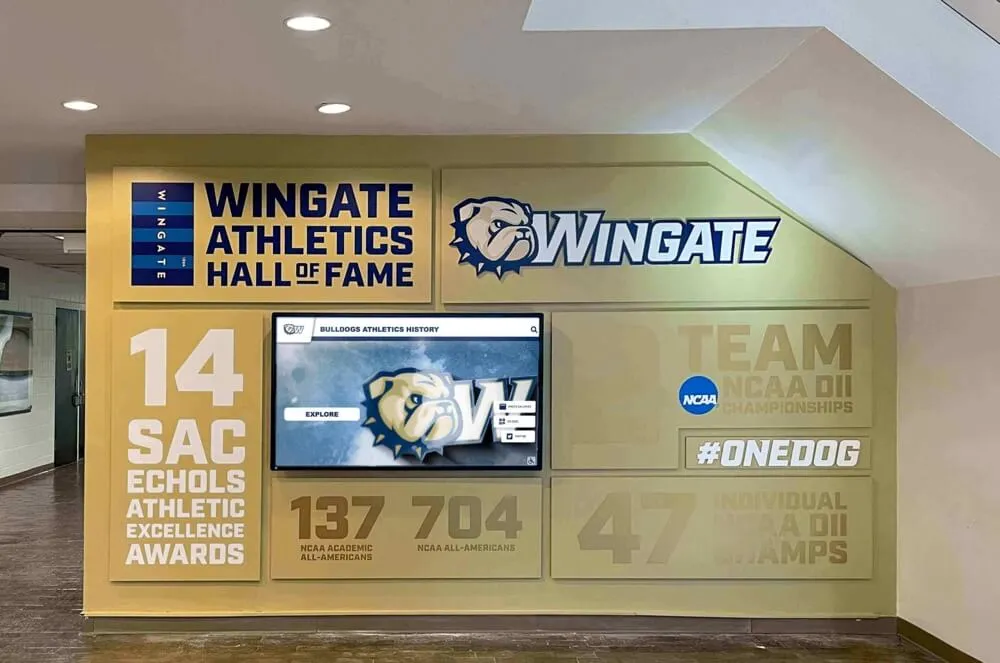
School lobbies serve as the critical first impression for prospective families, visiting athletes, community partners, and daily stakeholders—yet many schools still maintain entrance spaces that feel dated, unwelcoming, or disconnected from the vibrant educational experiences happening beyond those doors. When visitors enter lobbies featuring faded bulletin boards, outdated trophy cases with tarnished plaques, and generic institutional design, these spaces fail to communicate the innovation, excellence, and community pride that define modern educational institutions.
The lobby transformation challenge extends beyond mere aesthetics. School leaders must balance limited renovation budgets with competing facility priorities, navigate stakeholder opinions about design directions, and create spaces that remain relevant for decades rather than requiring frequent updates. Meanwhile, entrance areas must serve multiple functions—welcoming visitors, orienting wayfinders, celebrating achievements, and reinforcing school identity—all within constrained square footage.
This comprehensive guide explores school lobby transformation ideas that overcome these challenges through strategic design, modern recognition technology, and creative approaches that maximize impact while respecting real-world budget constraints.
Successful lobby transformations don’t require complete building overhauls or unlimited budgets—they demand thoughtful planning that identifies high-impact changes creating dramatic before-and-after results. Schools that excel at entrance design understand how strategic focal points, cohesive branding, and modern recognition systems transform utilitarian spaces into impressive environments that build pride and strengthen institutional identity.

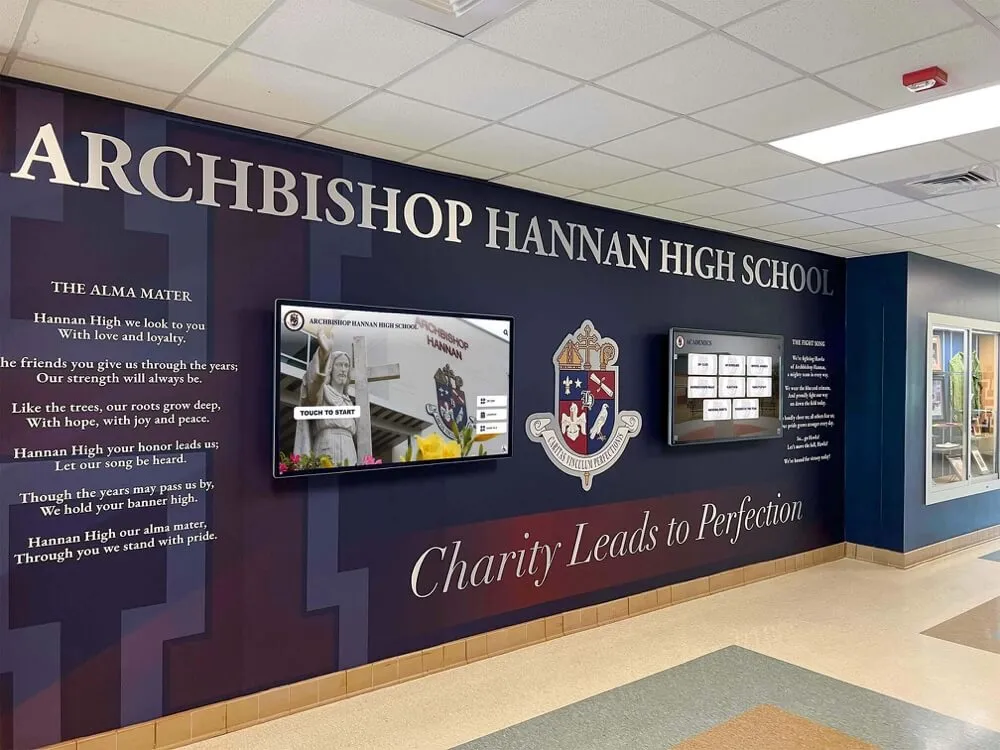
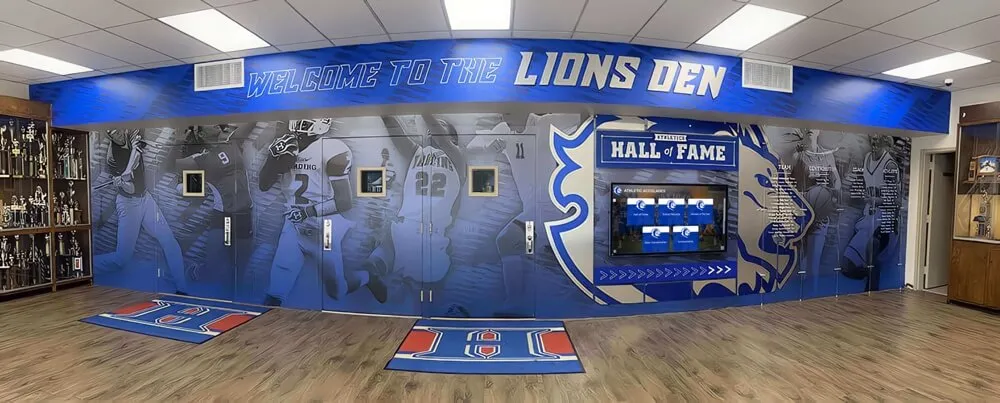
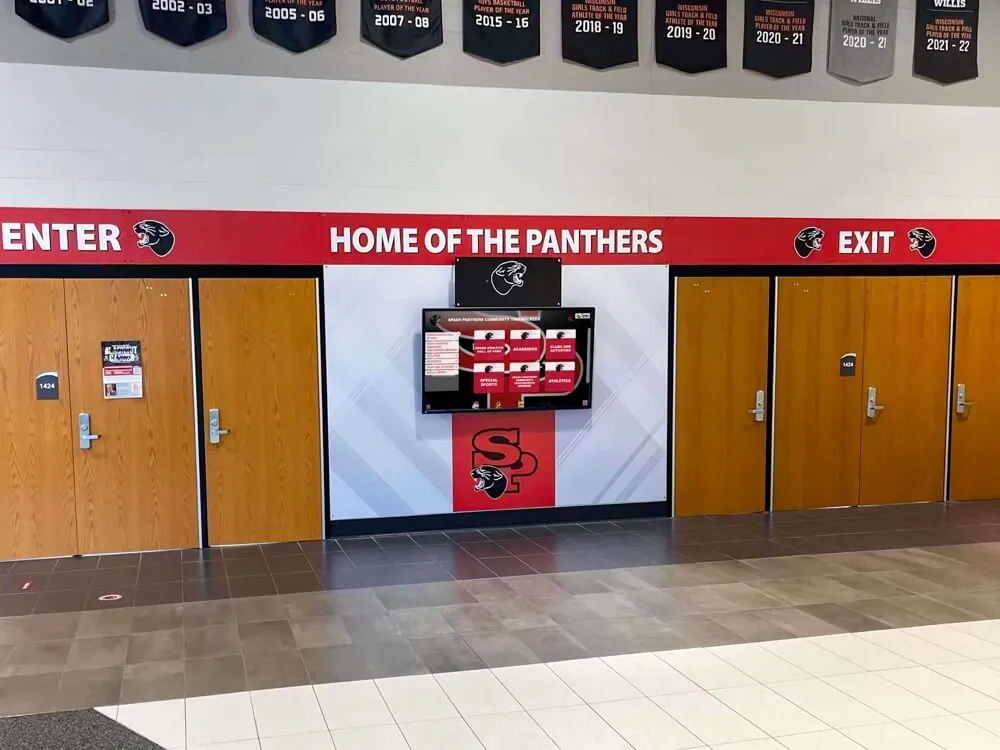
Modern school lobbies combine branded design elements with functional technology for impressive first impressions
Understanding Common Lobby Challenges Before Transformation
Before exploring transformation solutions, identifying typical lobby problems helps target improvements where they’ll create maximum impact.
The “Institutional Generic” Problem
Many school lobbies suffer from design approaches that prioritize durability and maintenance over welcoming atmosphere and institutional character.
Uninspiring Color Schemes and Materials
Traditional school lobbies often feature beige walls, commercial-grade tile flooring, and minimal architectural interest—spaces that communicate “institutional efficiency” rather than “vibrant learning community.” These generic environments fail to differentiate schools from office buildings or municipal facilities, missing opportunities to showcase personality, values, and unique institutional character from visitors’ first moments on campus.
Color psychology research demonstrates that environmental design significantly influences perceptions of organizational quality, warmth, and innovation. Lobbies maintaining neutral, uninspired palettes inadvertently communicate conservative, outdated institutional cultures regardless of actual educational programming excellence.
Disconnected Branding and Identity Elements
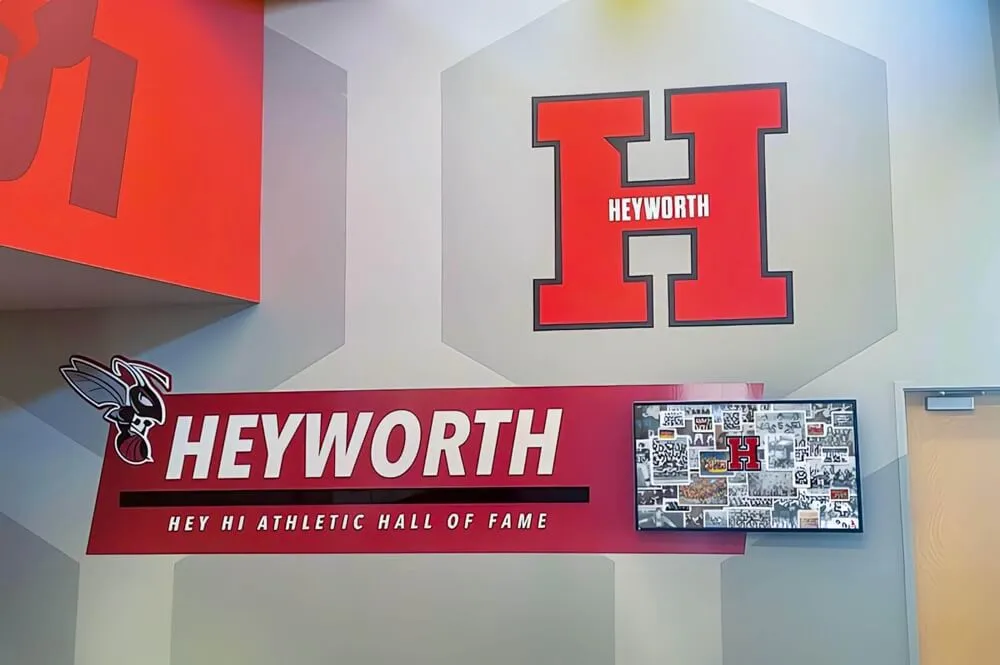
Many school entrances lack cohesive visual identity reinforcing school colors, mascots, and brand elements that create immediate recognition and community connection. When lobbies feature generic signage, absent or minimal logo visibility, and no integration of school traditions, visitors miss opportunities to understand institutional personality and pride that define community culture.
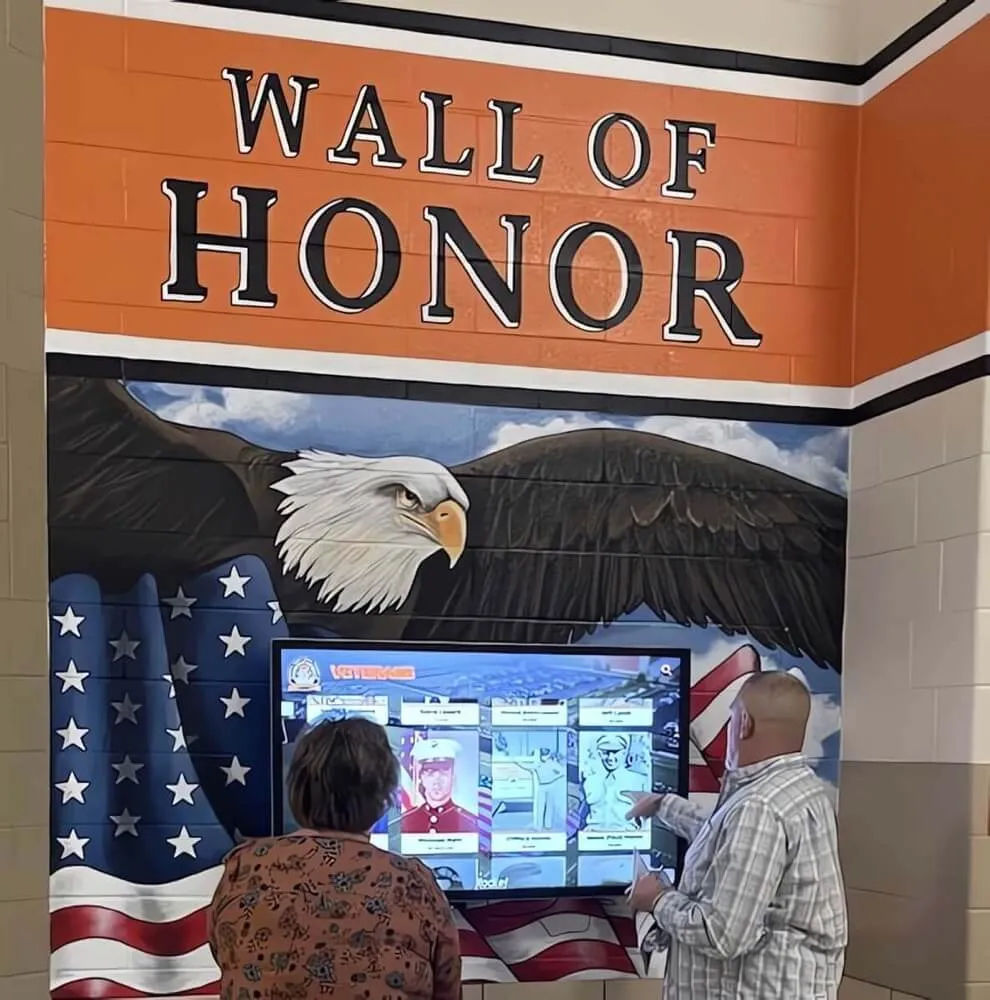
Effective lobby transformations address these branding gaps through strategic color integration, custom murals featuring mascots and achievements, and coordinated design elements that create immediate, memorable impressions distinguishing schools from competitors.
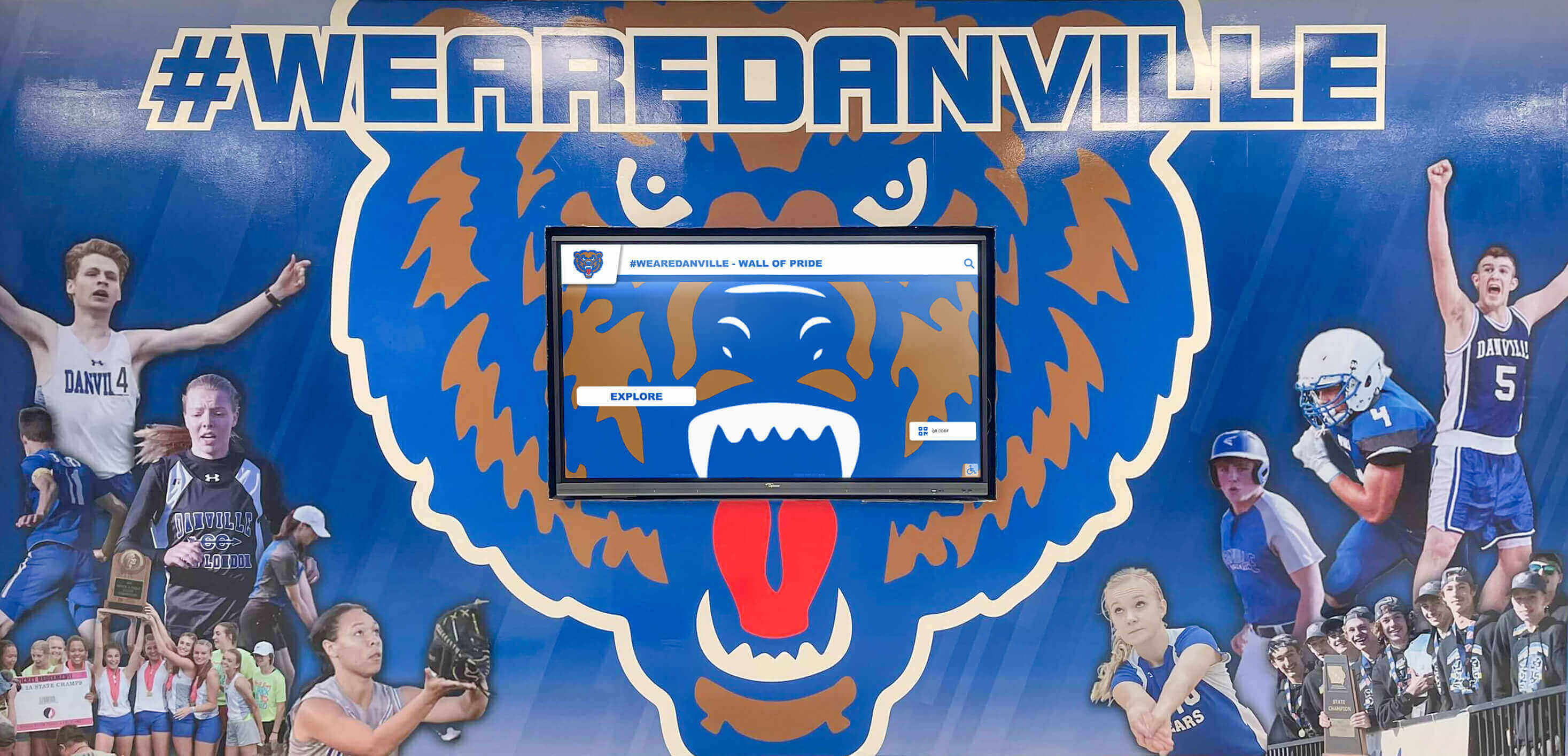
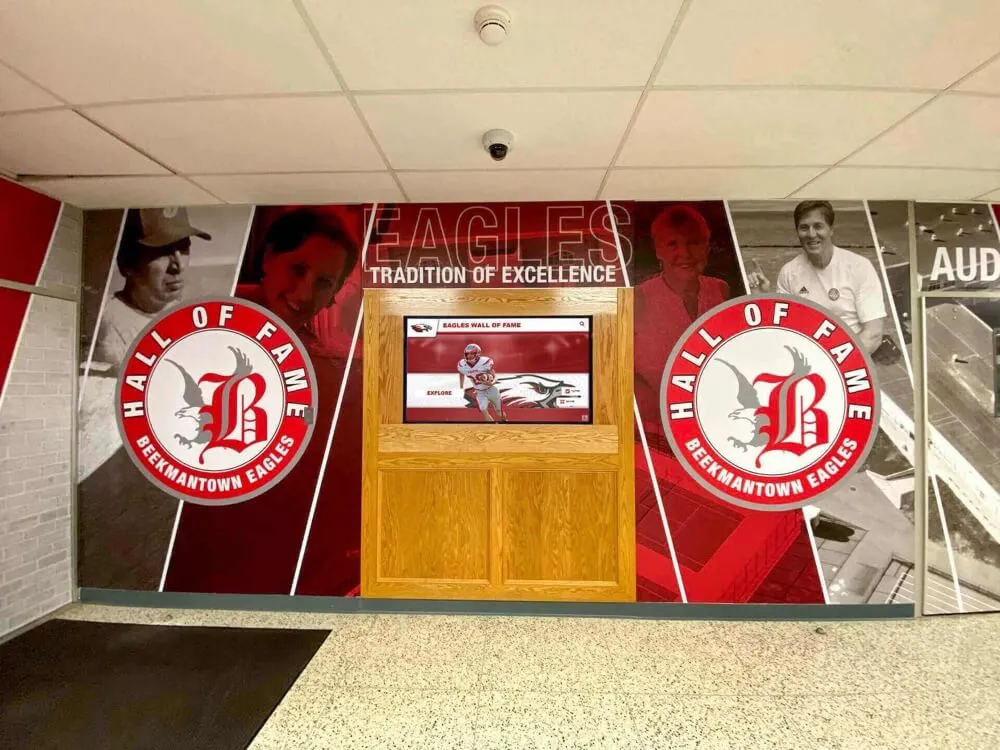
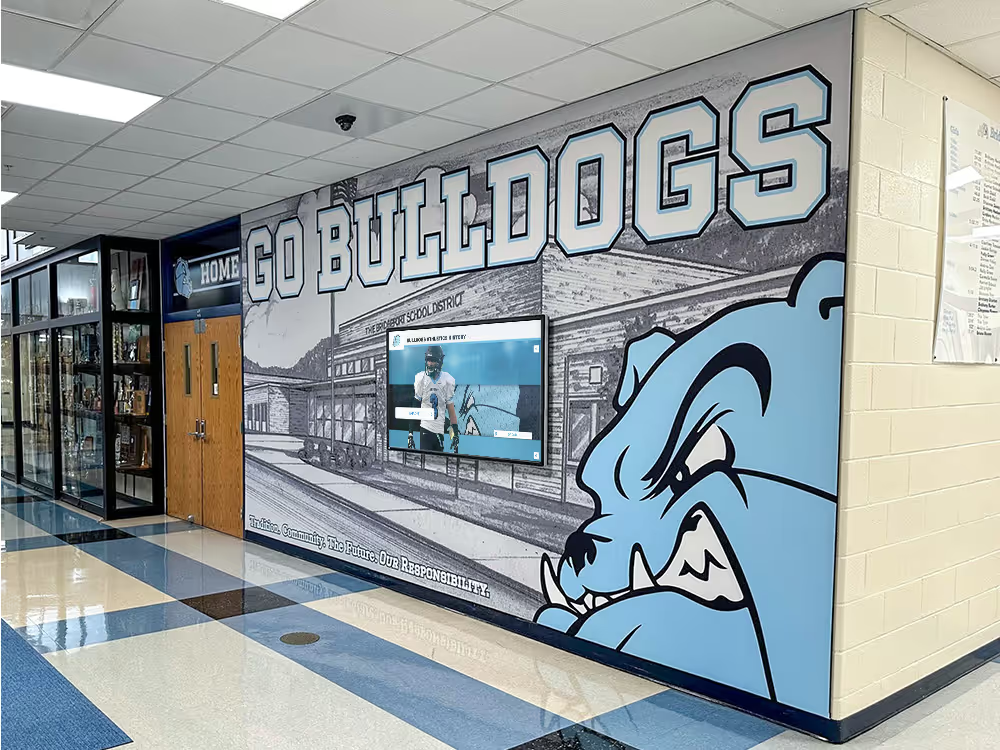
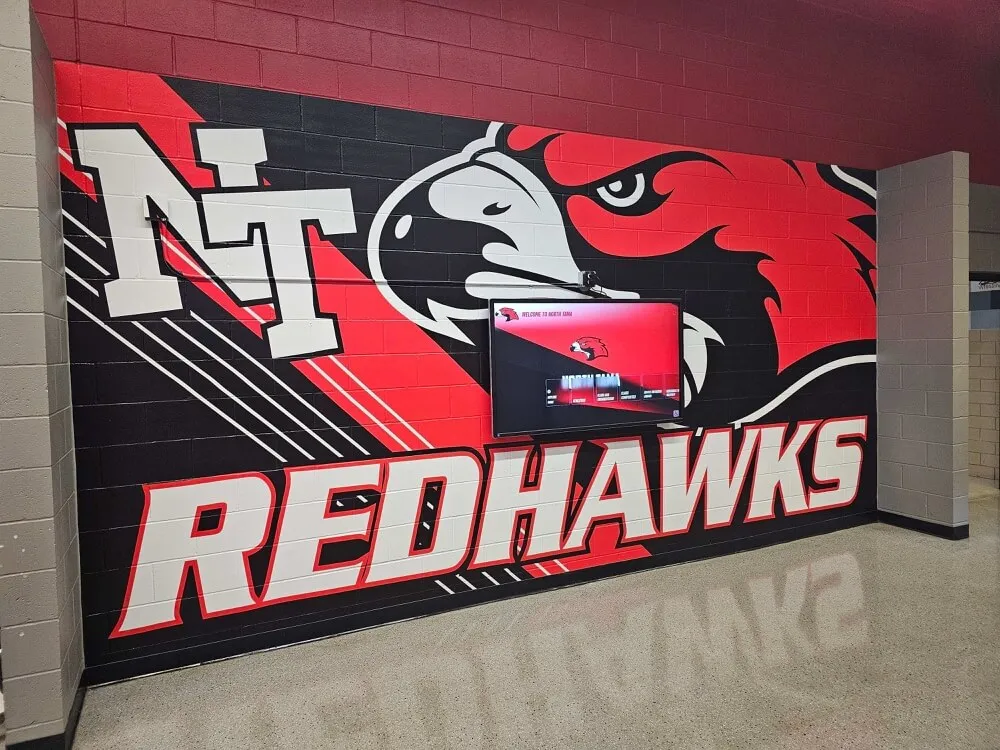
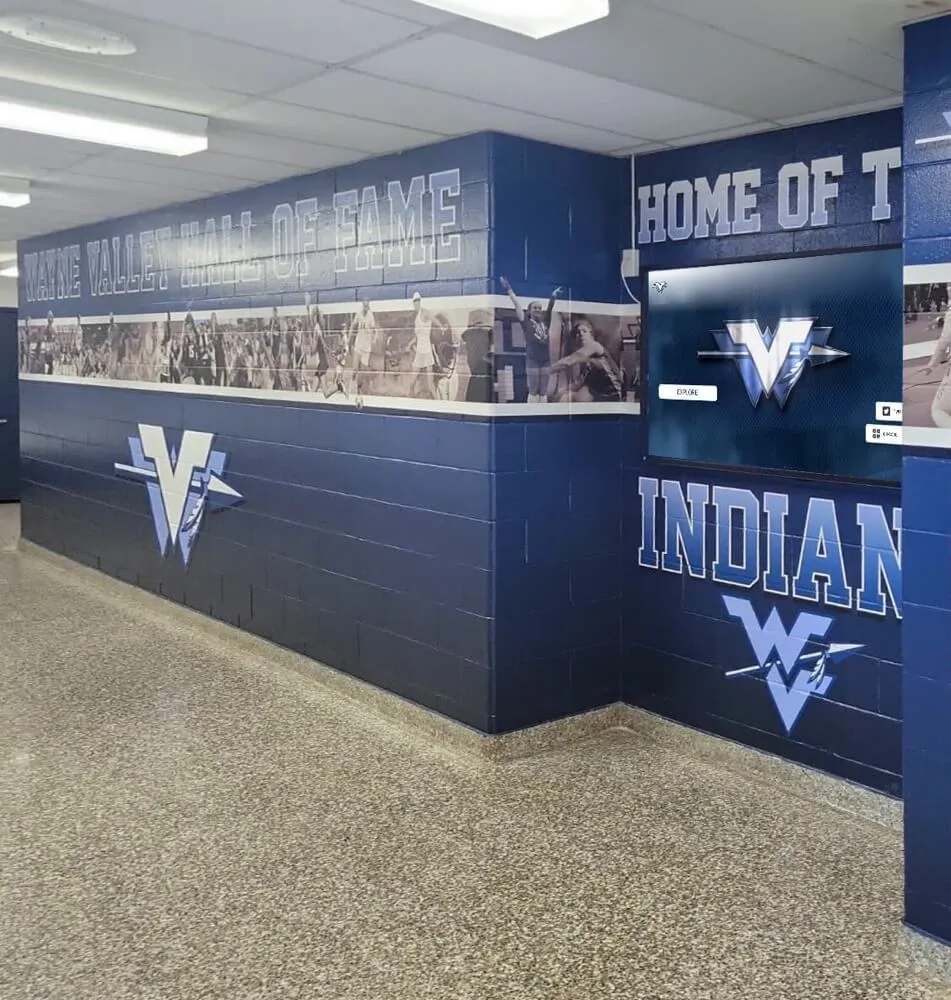
Custom murals incorporating school mascots and colors transform generic hallways into branded experiences
Outdated Recognition and Communication Systems
Beyond general design challenges, most school lobbies struggle with recognition displays and communication methods that fail to serve modern needs.
Static Trophy Cases with Space Limitations
Traditional glass trophy cases filled with decades of awards create several problems: they consume valuable lobby real estate while accommodating limited recognition capacity, they become cluttered and difficult to navigate as achievements accumulate, and they require physical access for updates that delay current recognition. These static displays often highlight only athletic achievements while academic, artistic, and community accomplishments receive minimal visibility.
When trophy cases reach capacity, schools face difficult decisions about removing older recognition to accommodate recent achievements—choices that disappoint alumni whose accomplishments disappear from view. This space limitation problem compounds annually as new achievements deserve celebration but physical constraints prevent comprehensive recognition.
Bulletin Boards with Outdated Information
Many school lobbies feature cork bulletin boards or wall-mounted display cases intended for timely announcements and event promotion. In practice, these boards often contain outdated flyers from past events, faded printouts with sun-bleached text, and information that ceased being relevant weeks or months ago. The maintenance burden of regularly updating physical displays means many schools simply allow lobby communications to stagnate, creating impressions of disorganization and institutional neglect.
Modern digital signage solutions for schools address these communication challenges through remotely updatable displays that showcase current events, celebrate recent achievements, and provide wayfinding assistance—all while maintaining visual consistency impossible with physical bulletin boards.
Wayfinding and Navigation Deficiencies
First-time visitors to school campuses often struggle with navigation challenges that lobbies should address but frequently don’t.
Absent or Inadequate Directional Signage
Many school lobbies lack clear directional information helping visitors locate administrative offices, athletics facilities, auditoriums, or specific classrooms. When wayfinding signage exists, it often uses institutional terminology unfamiliar to visitors (“proceed to the 200 wing” or “see the administrative suite”) rather than plain language helping people reach actual destinations.
Families visiting for enrollment meetings, guest coaches arriving for competitions, and community partners attending events shouldn’t need to interrupt staff members for basic navigation assistance. Effective lobby design incorporates intuitive wayfinding that orients visitors immediately and reduces confusion that creates negative first impressions.
Limited Welcome and Context Information
Beyond directional needs, lobbies should provide context helping visitors understand school history, achievements, and unique characteristics. Traditional approaches offer minimal institutional storytelling, missing opportunities to build immediate connection and communicate distinctive value propositions that differentiate schools from alternatives.
Explore how modern facility design approaches integrate storytelling and wayfinding into cohesive renovation strategies.

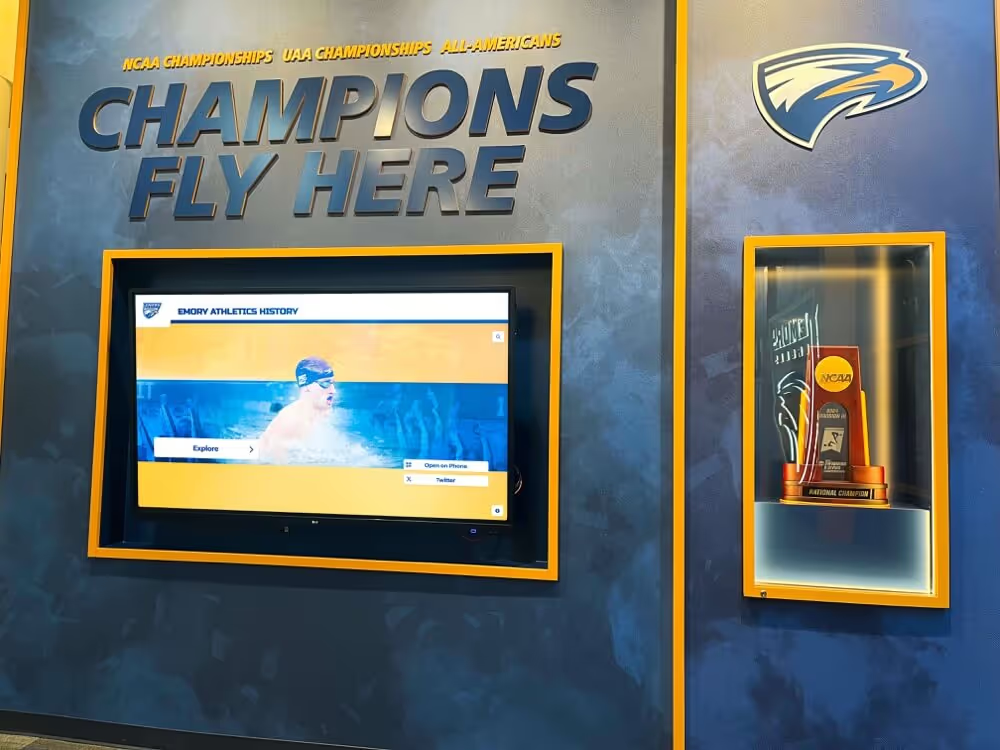
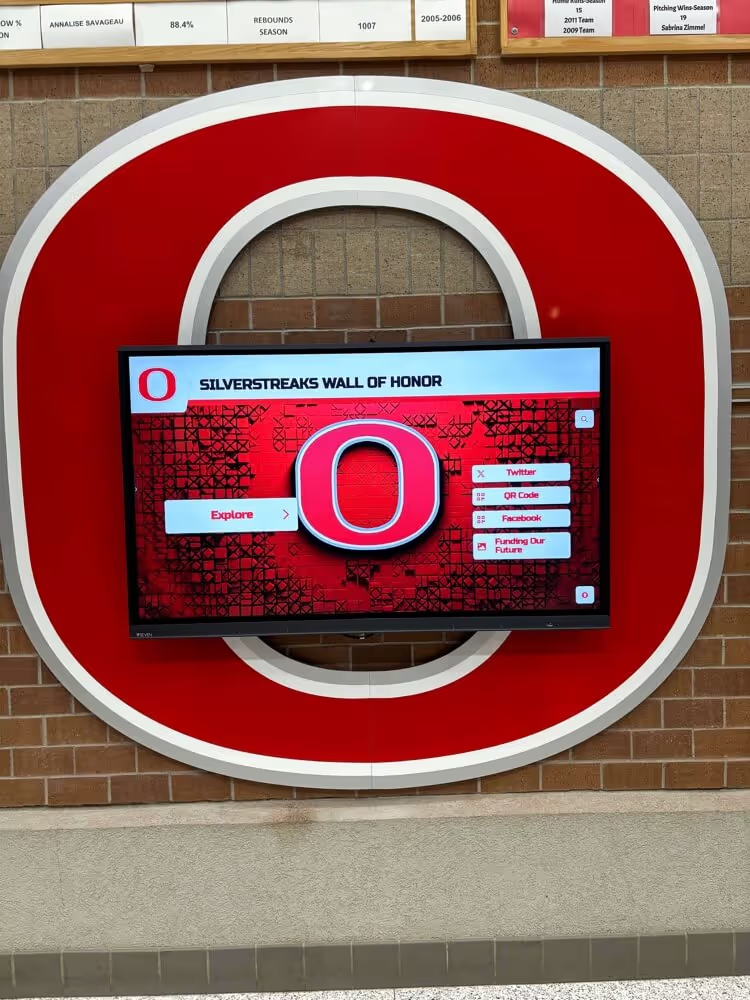
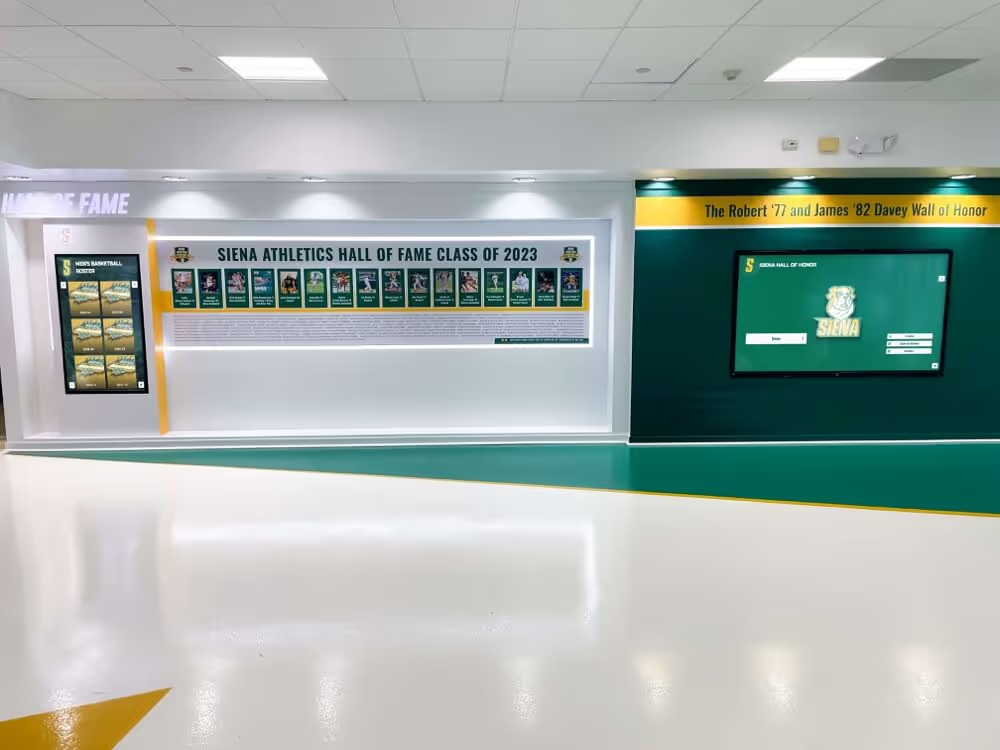
Successful transformations often blend traditional elements like trophy cases with modern digital recognition for comprehensive appeal
High-Impact Lobby Transformation Ideas for Immediate Improvement
Understanding common challenges reveals specific transformation strategies that create dramatic before-and-after results within realistic budgets.
Create a Signature Branded Focal Wall
The single highest-impact lobby transformation involves creating one dramatic focal point that immediately communicates school identity and pride.
Custom Mural Design Featuring Mascots and Colors
Professional murals incorporating school mascots, colors, and achievement themes transform generic wall space into memorable branded experiences. These custom installations might feature:
- Oversized mascot graphics rendered in school colors creating immediate visual impact
- Timeline elements showcasing institutional history and milestone achievements
- Inspirational quotes from school mottos or distinguished alumni
- Athletic and academic imagery celebrating diverse achievement types
- Three-dimensional elements adding architectural interest and texture
Mural design works particularly well in lobbies with large, unbroken wall expanses that currently serve no functional purpose. Professional mural artists can create custom installations scaled to available space and aligned with specific school branding guidelines for cohesive results that feel intentional rather than afterthought.
Budget-conscious schools might explore student-involved mural projects that engage art programs while creating ownership in the finished installation. When properly designed and supervised, student-created murals can achieve professional results while controlling costs and building campus investment.
Integrated Digital Recognition Within Branded Design
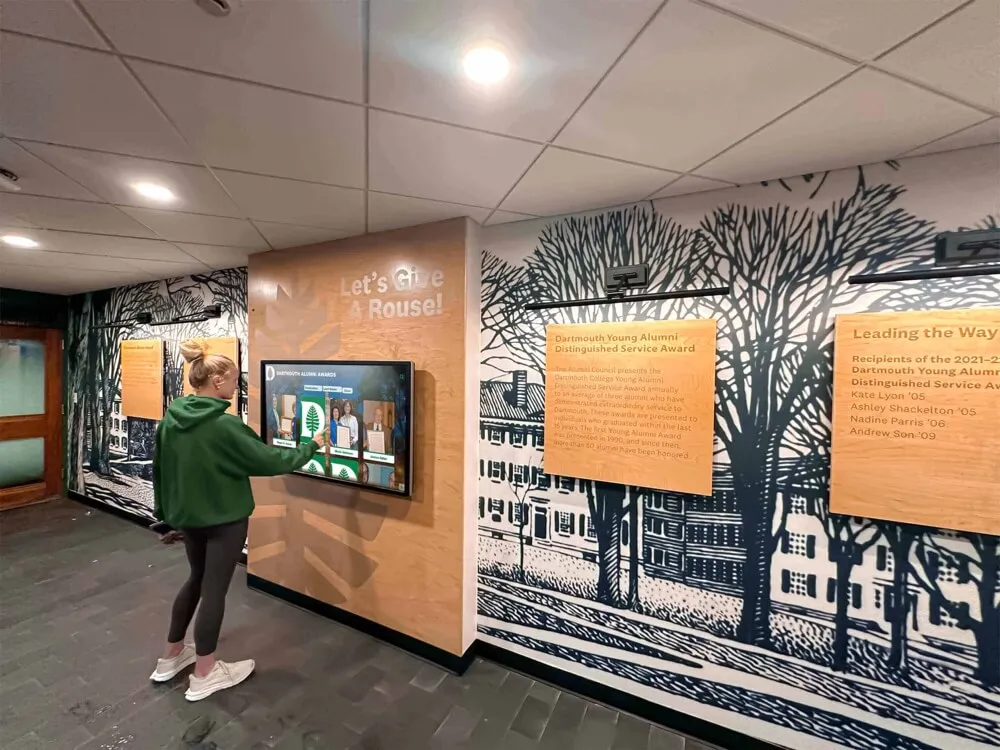
The most sophisticated lobby transformations integrate modern digital displays seamlessly within custom branded environments rather than treating technology as separate add-ons. This integrated approach might feature digital screens incorporated directly into mural designs, creating cohesive installations where recognition technology enhances rather than competes with architectural elements.
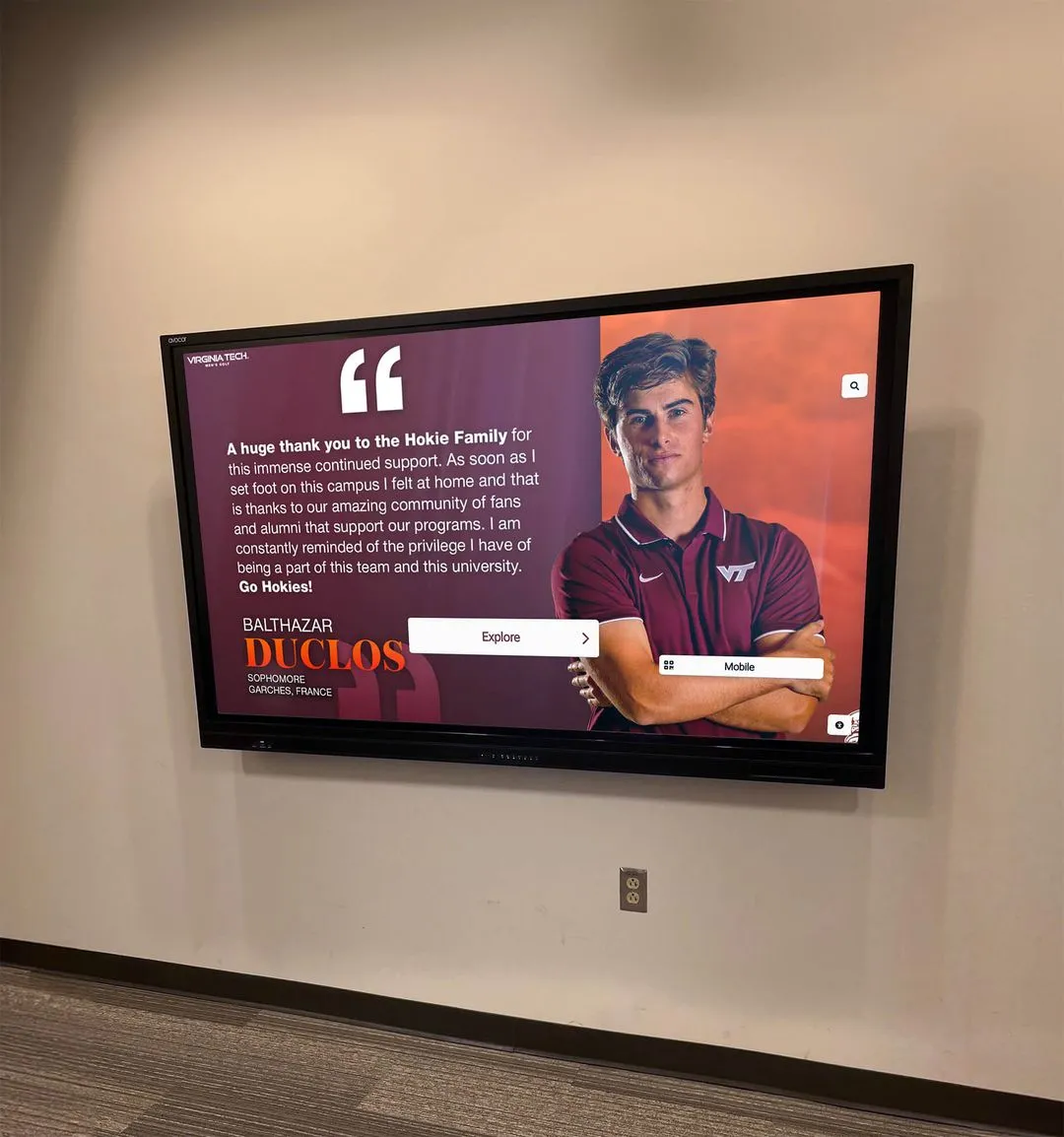
For example, a custom mural might include dedicated spaces for touchscreen recognition displays that showcase athletic achievements, academic honors, and donor recognition within the broader branded design. These integrated installations create professional, intentional appearances that elevate perceived design quality and institutional investment.
Schools pursuing this integration approach should work with recognition technology providers during initial design phases to ensure proper screen sizing, mounting requirements, and electrical planning. This advance coordination prevents situations where technology installations occur as awkward afterthoughts disrupting otherwise cohesive designs.
Modernize Recognition with Interactive Digital Displays
Replacing or supplementing traditional trophy cases with digital recognition systems represents another high-impact transformation strategy.
Unlimited Recognition Capacity Without Space Constraints
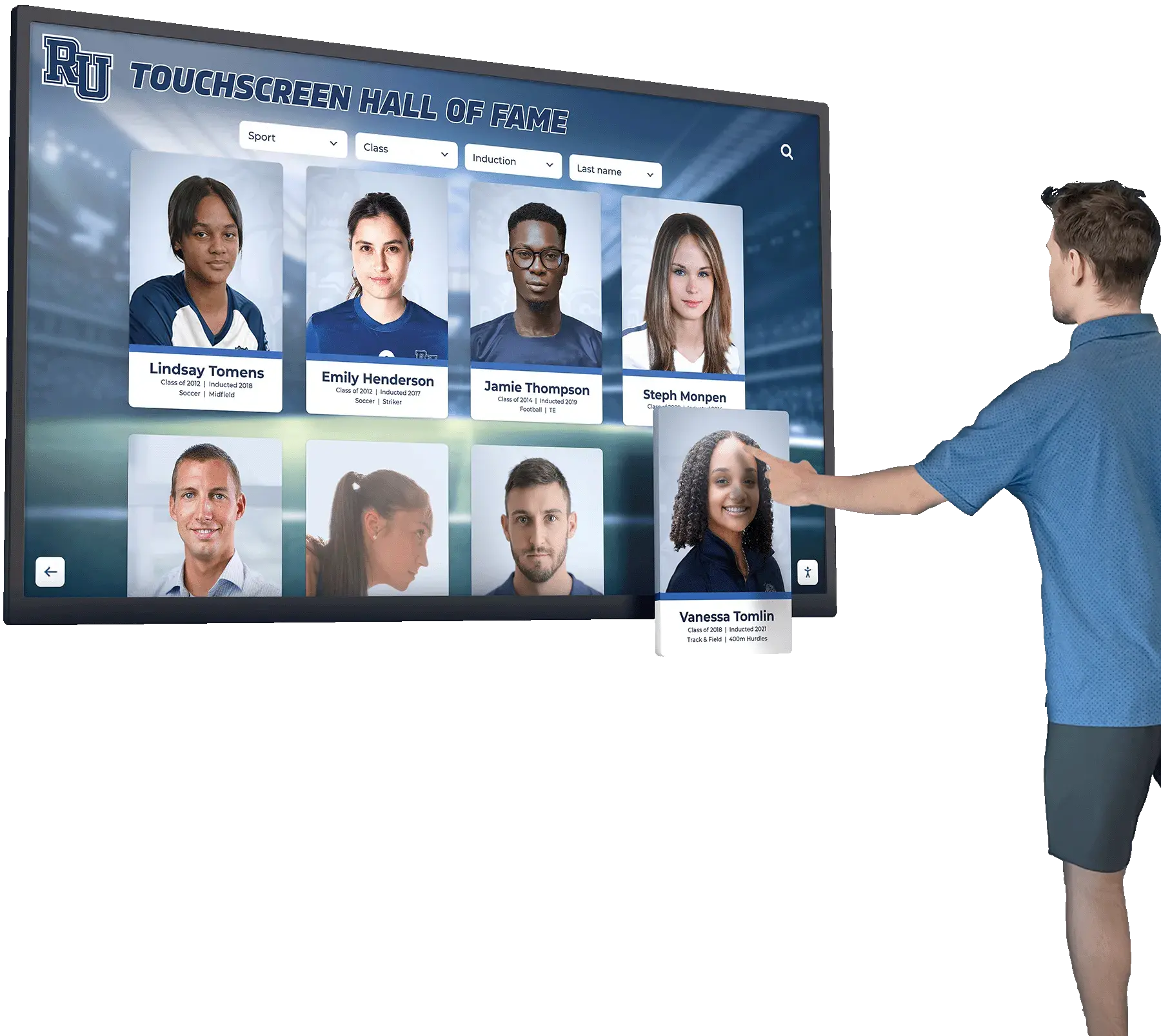
Modern digital recognition platforms eliminate the space limitations that plague traditional trophy cases. Solutions like Rocket Alumni Solutions accommodate unlimited athletes, students, donors, and achievement categories without requiring additional lobby square footage or creating visual clutter that diminishes recognition impact.
This unlimited capacity enables comprehensive recognition approaches celebrating:
- All-conference athletic selections and championship teams
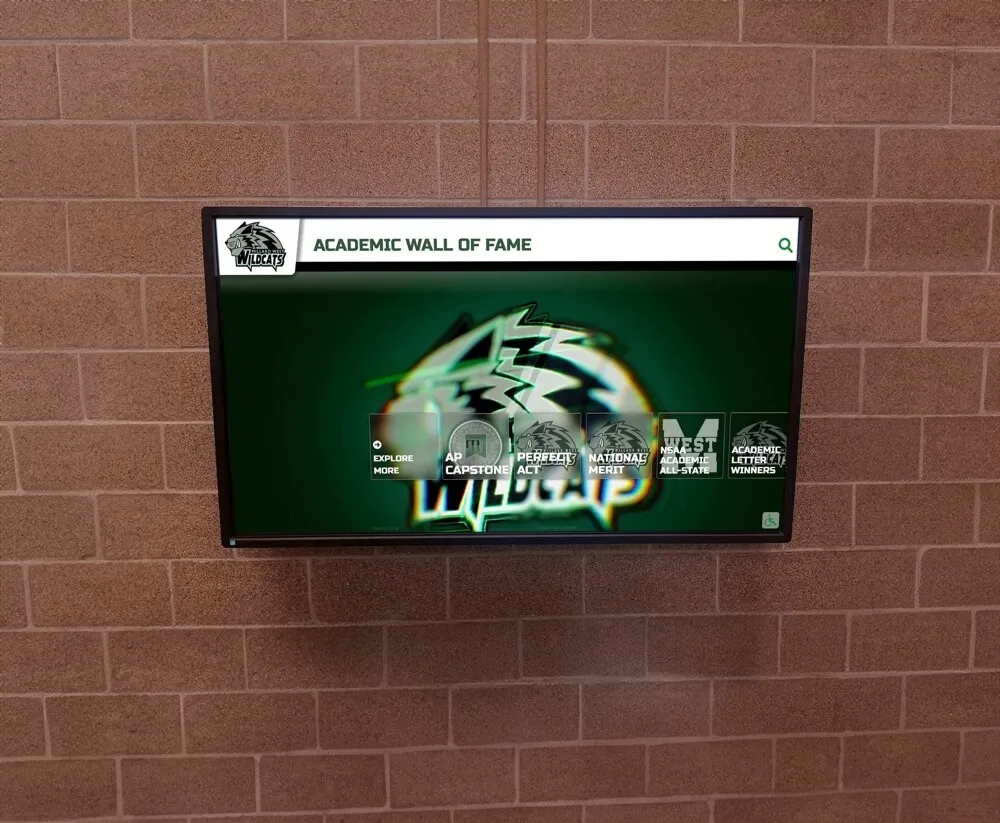
- Academic honor roll students across all grade levels
- Performing arts achievements and competitive success
- Community service awards and leadership recognition
- Perfect attendance and character awards
- Donor acknowledgment at all giving levels
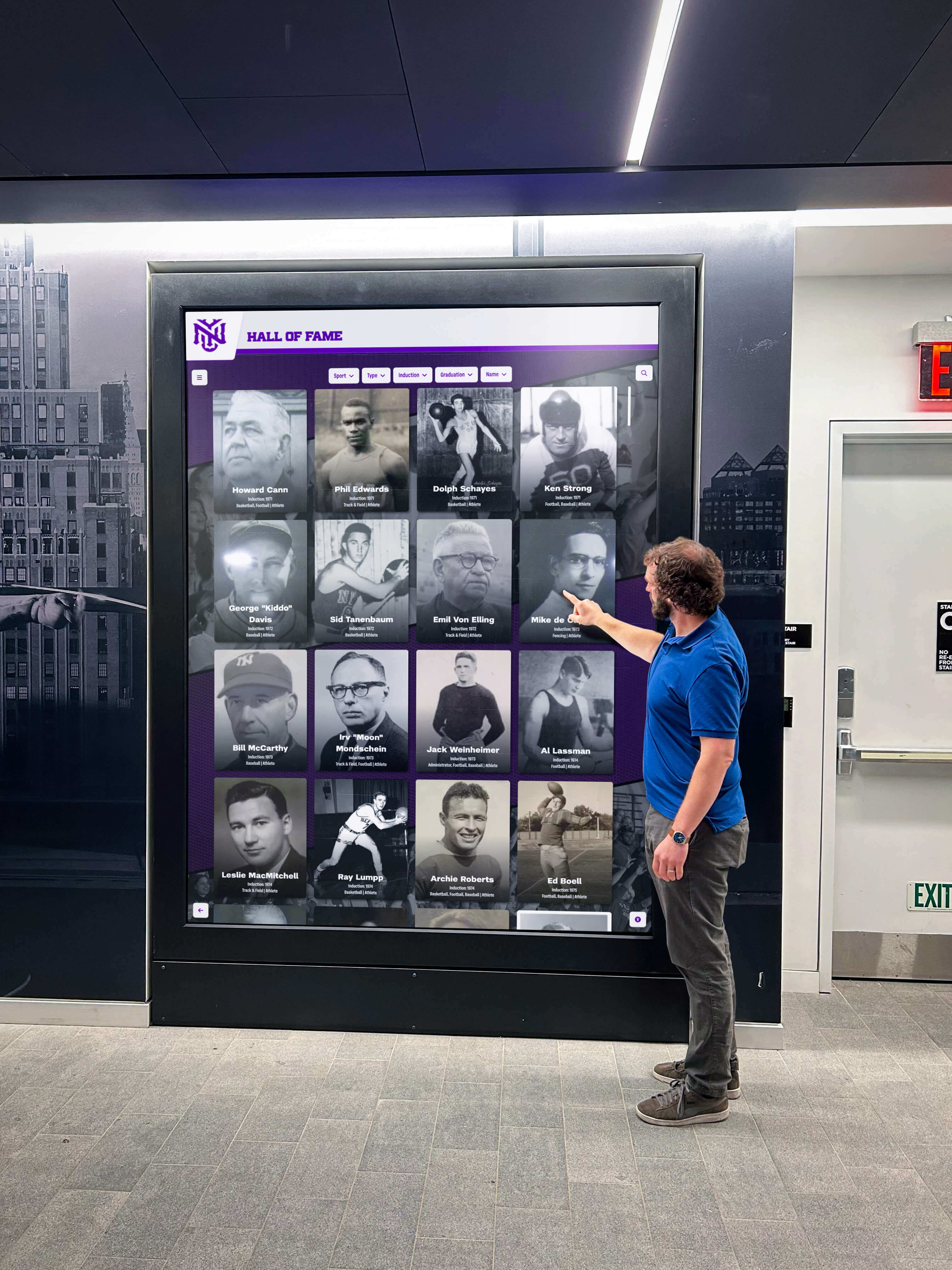
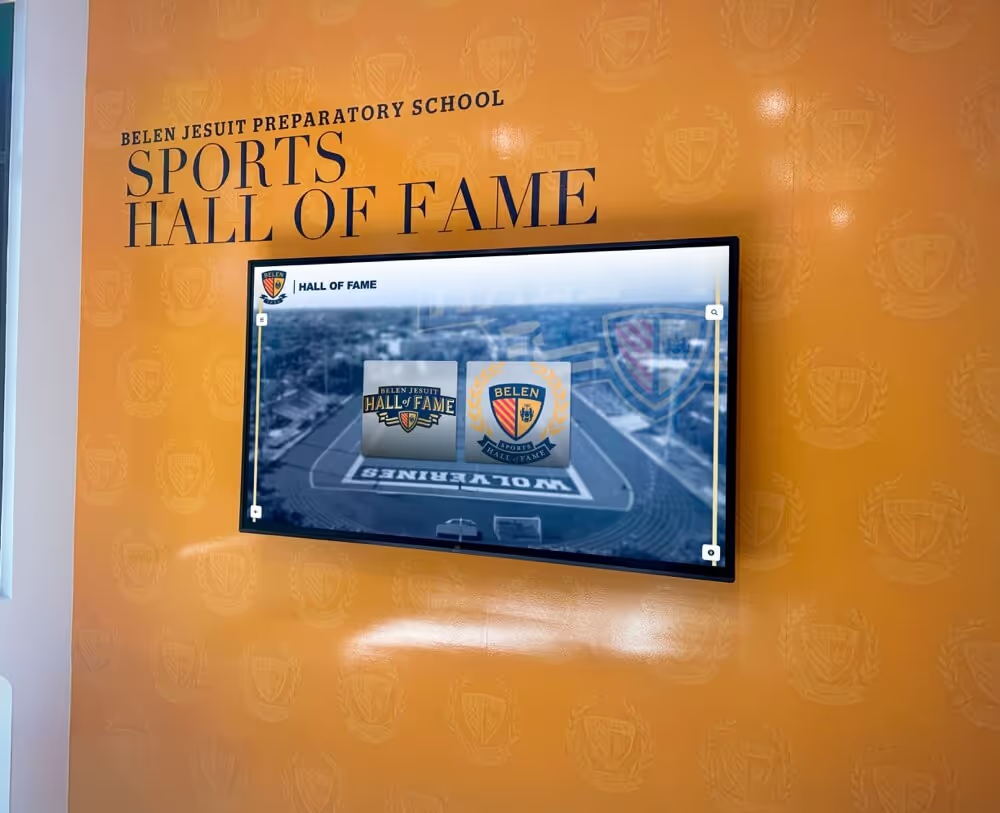
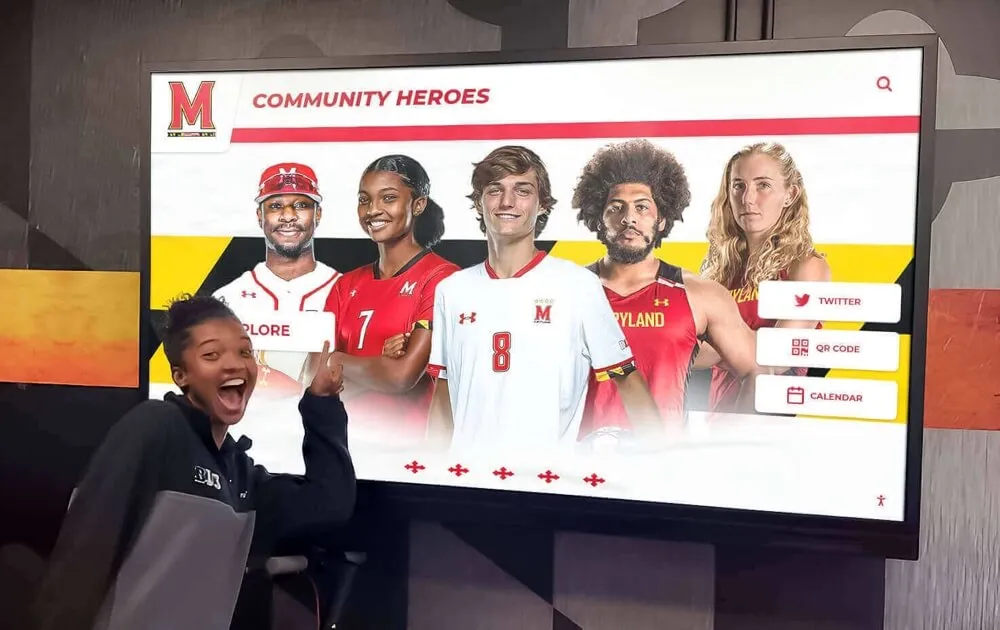
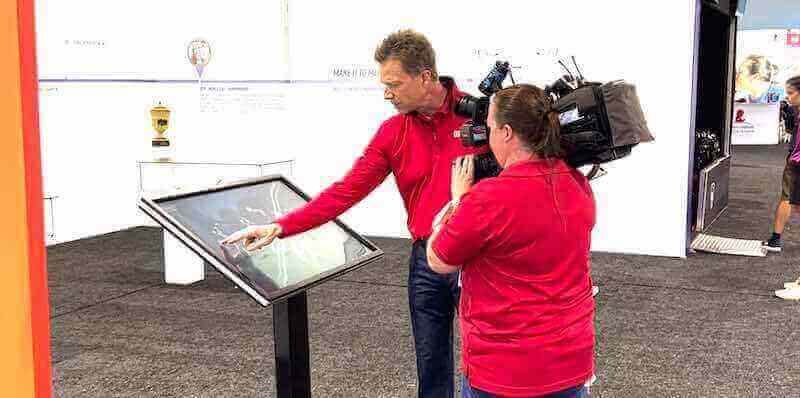
Interactive digital recognition creates engaging experiences where visitors can explore achievements and search for specific individuals
Rich Multimedia Storytelling Beyond Names and Dates
Digital recognition enables comprehensive profiles featuring photos, statistics, biographical information, and achievement narratives that traditional plaques cannot accommodate. Visitors can explore individual athlete careers, read about academic achievements, and understand donor motivations through rich content that creates emotional connections and demonstrates genuine institutional appreciation.
This storytelling capability proves particularly valuable for academic recognition programs where context about student growth, specialized achievements, and individual journeys provides meaning beyond grade point averages.
Instant Updates Maintaining Current, Relevant Content
Perhaps most importantly, digital recognition systems enable real-time updates that keep lobby displays current without the delays, expenses, and logistics of physical engraving. Recognition coordinators can add new achievements immediately following competitions, update information as students progress through grades, and correct errors without costly plaque replacement.
This update flexibility ensures lobby recognition remains perpetually current, creating impressions of organizational excellence and attention to detail that outdated static displays undermine.
Upgrade Lighting for Drama and Focus
Often overlooked in lobby transformations, strategic lighting creates dramatic impact with relatively modest investment.
Accent Lighting Highlighting Key Features
Professional lighting design uses focused illumination to draw attention to signature elements while creating visual hierarchy that guides visitor attention. Track lighting might spotlight mural installations, LED strips could highlight trophy cases or achievement displays, and accent lighting can emphasize architectural features that otherwise disappear in general overhead illumination.
Lighting transformations prove particularly effective in lobbies with adequate architectural bones but insufficient visual interest. Strategic illumination can transform bland spaces into dynamic environments where lighting itself becomes a design element creating warmth and sophistication.
Color-Changing LED Systems for Event Flexibility
Advanced LED lighting systems offering color-changing capabilities enable lobbies to adapt for different events, seasons, or purposes. Schools might illuminate entrance spaces in school colors for athletic events, shift to seasonal themes for holidays, or create specialized lighting for recognition ceremonies and special occasions.
This lighting flexibility allows single lobby spaces to serve multiple purposes while maintaining appropriate atmospheres for different contexts—professional and subdued for business meetings, spirited and energetic for game days, elegant and refined for donor events.
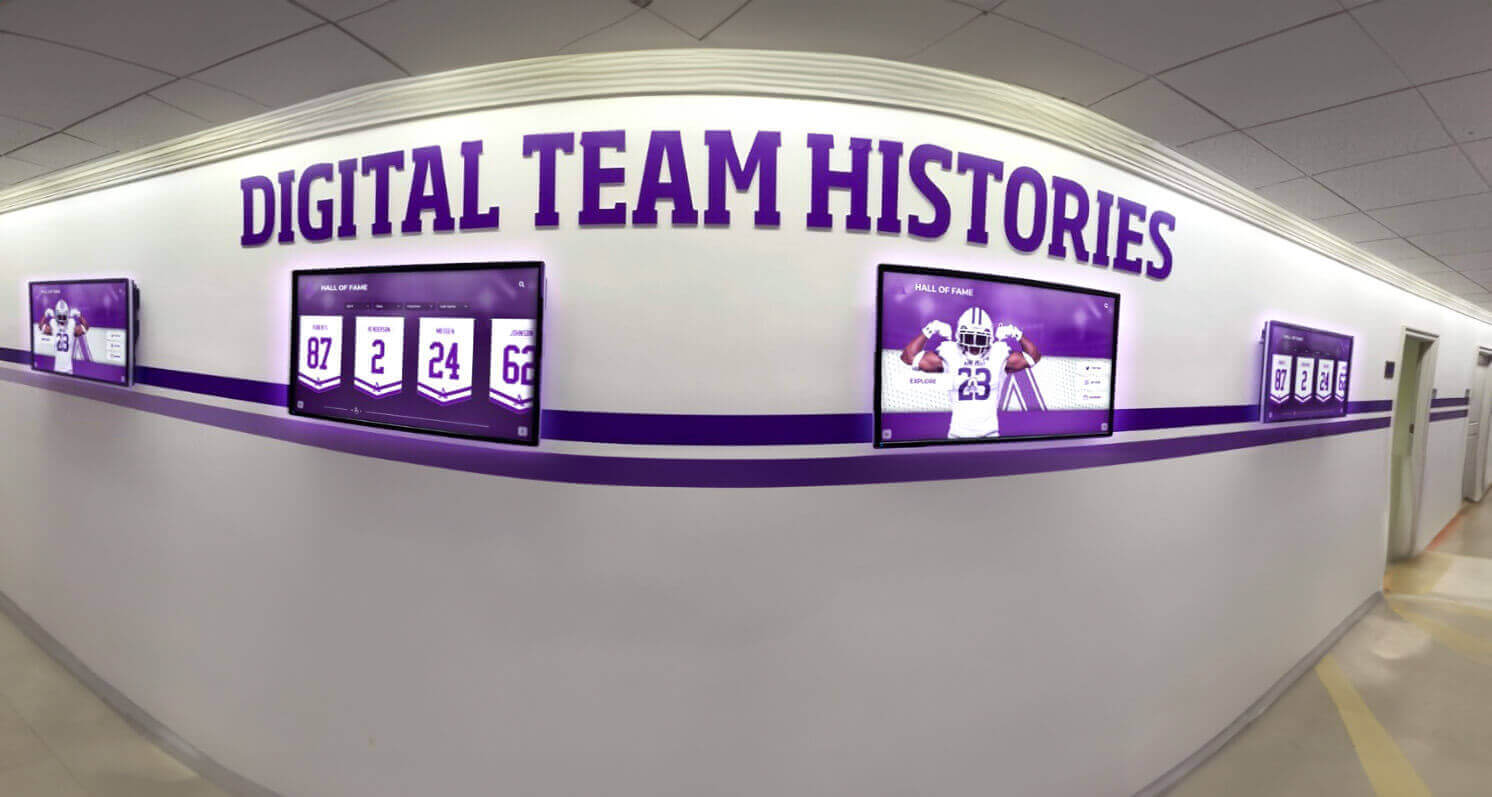
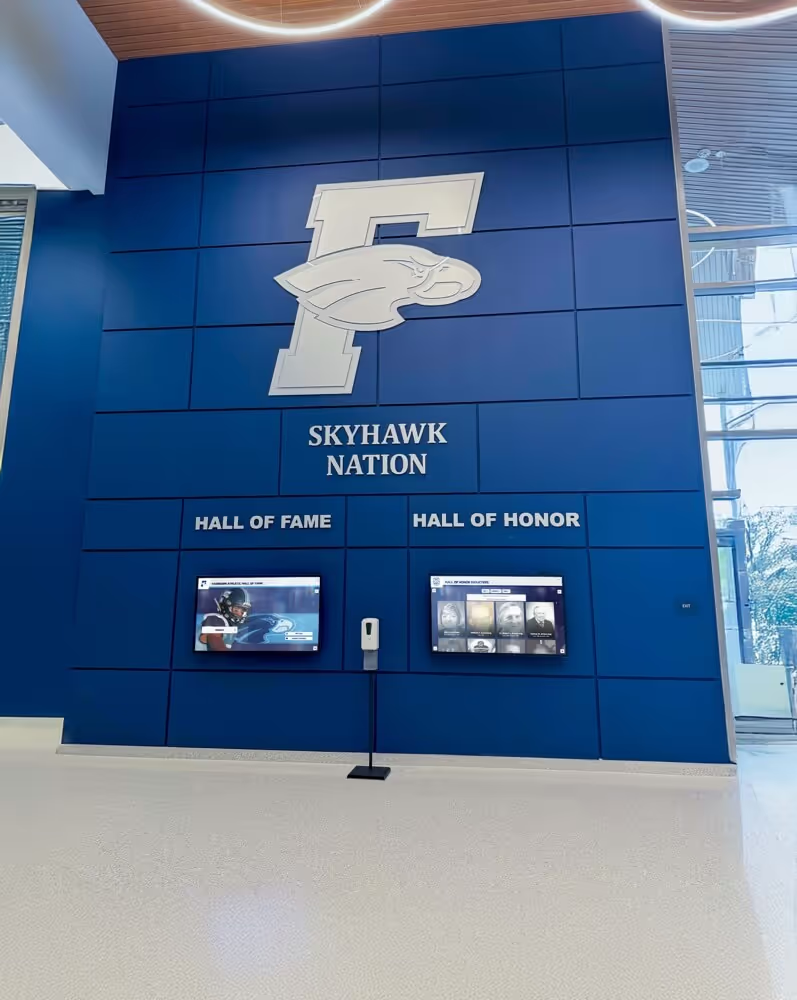
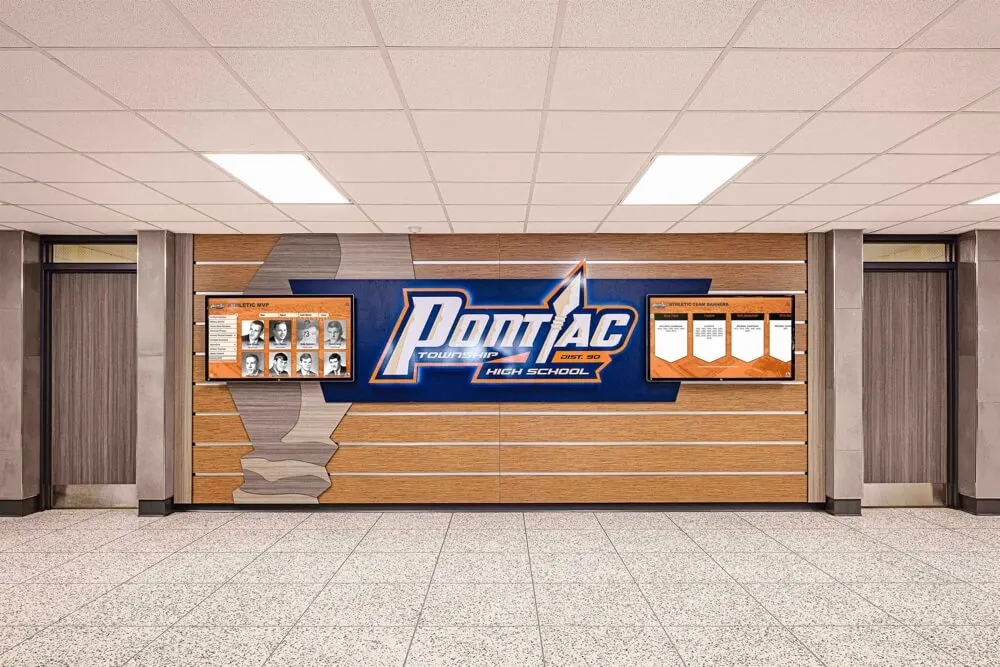
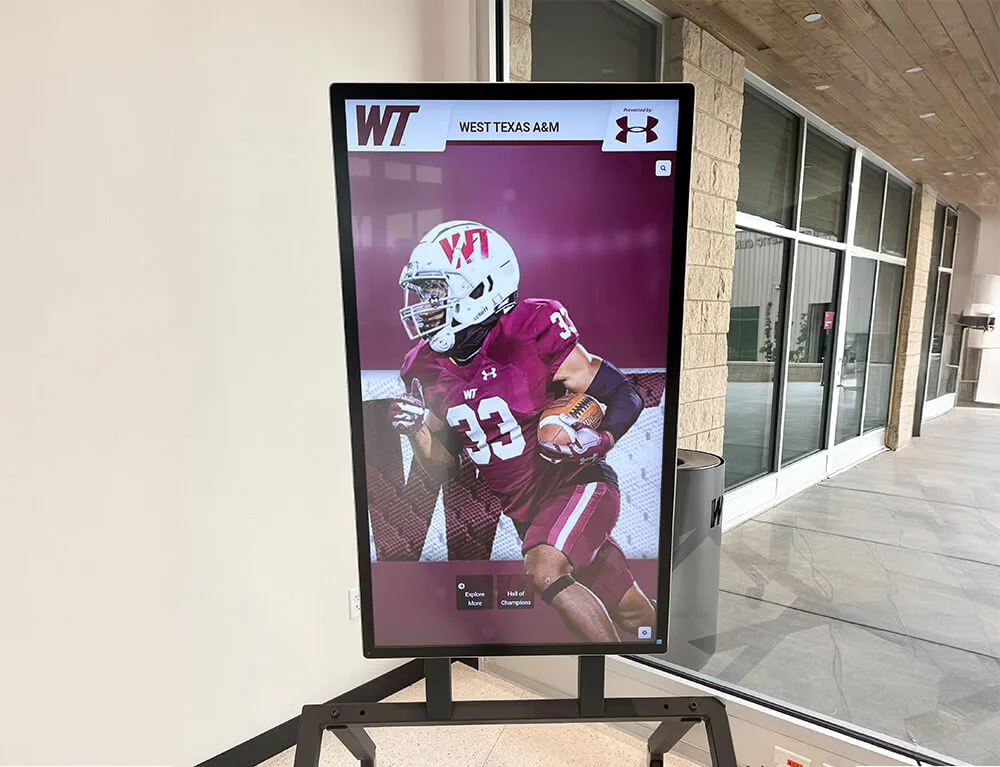
Coordinated lighting and display placement create cohesive branded environments that reinforce school identity
Strategic Planning for Successful Lobby Transformations
Moving from conceptual ideas to implemented transformations requires structured planning that maximizes results while respecting budget realities.
Conduct a Comprehensive Lobby Audit
Before committing to specific transformation approaches, honest assessment of current lobby strengths and weaknesses ensures improvements address actual deficiencies.
Evaluate Current Functionality and Traffic Flow
Observe how students, staff, and visitors actually use existing lobby spaces. Document traffic patterns, identify bottlenecks where congestion occurs, and note areas receiving minimal use despite prime locations. This functional analysis often reveals opportunities—underutilized wall space perfect for recognition displays, awkward corners where seating could create welcoming gathering spots, or circulation paths requiring clearer wayfinding.
Involve multiple stakeholder perspectives in these assessments. Office staff might identify reception desk sightline problems, coaches could highlight trophy case access challenges, and custodial teams often understand maintenance pain points that design improvements should address.
Assess Brand Consistency and Visual Impact
Evaluate existing lobbies through fresh eyes, ideally by soliciting candid feedback from first-time visitors who can articulate gut reactions without institutional familiarity bias. Questions to explore include:
- Does the lobby immediately communicate our school identity and values?
- Would visitors understand our mascot, colors, and culture from lobby design alone?
- What emotional responses does the space create—warmth, pride, institutional efficiency, neglect?
- How does our lobby compare to competing schools’ entrance experiences?
- What specific elements date the space or undermine desired impressions?
This honest assessment often identifies quick-win improvements that create disproportionate impact—fresh paint in school colors, updated signage reflecting current branding, or removal of outdated elements that inadvertently communicate neglect.
Develop Phased Implementation Plans for Budget Management
Most schools cannot fund comprehensive lobby transformations through single budget allocations, making phased implementation essential for progress within financial constraints.
Prioritize Highest-Impact Changes First
Not all lobby improvements create equal visitor impact. Focus initial phases on changes delivering maximum transformation per dollar invested:
Phase 1: Quick Visual Wins (Lowest Cost)
- Fresh paint in school colors replacing institutional beige
- Decluttering and removal of outdated recognition elements
- Basic signage updates reflecting current branding
- Strategic furniture repositioning improving traffic flow
Phase 2: Signature Focal Point (Medium Investment)
- Professional mural installation or branded wall treatment
- Digital recognition display replacing outdated trophy cases
- Accent lighting highlighting key architectural features
- Updated flooring or entrance treatment defining space
Phase 3: Comprehensive Enhancements (Higher Investment)
- Architectural modifications improving flow or visibility
- Custom furniture and seating creating welcoming atmospheres
- Advanced lighting systems with programmable capabilities
- Technology integration beyond recognition (wayfinding, event displays)
This phased approach enables schools to begin transformations with available budgets while planning for future enhancements as additional funding becomes available. Early phases often generate community enthusiasm that facilitates fundraising for subsequent improvements.
Identify Funding Sources Beyond General Operating Budgets
Lobby transformations often attract support from funding sources unavailable for general facility maintenance:
- Capital campaigns targeting facility improvements can include lobby renovation components
- Alumni fundraising often resonates when projects create visible, tangible improvements
- Booster organization support particularly for lobbies featuring athletic recognition
- Memorial giving opportunities where recognition displays honor deceased community members
- Corporate sponsorships from local businesses receiving acknowledgment in renovated spaces
- Grant applications targeting school facility improvements and community spaces
Learn more about comprehensive approaches through donor recognition strategies that create funding opportunities.
Engage Stakeholders Throughout Planning and Implementation
Successful transformations require input from multiple perspectives while managing diverse opinions that might otherwise create decision paralysis.
Form Representative Planning Committees
Establish lobby transformation committees including:
- Administrative leadership providing budget guidance and approval authority
- Facilities staff offering practical insights about maintenance and implementation
- Athletic directors contributing sports recognition perspectives
- Development officers connecting transformation to fundraising opportunities
- Teacher representatives ensuring academic achievement receives appropriate recognition
- Student government leaders providing current student perspectives
- Alumni association members offering graduate community viewpoints
These diverse committees ensure transformations address actual needs while building ownership that facilitates implementation and creates ambassadors explaining projects to broader communities.
Present Multiple Conceptual Approaches for Feedback
Rather than developing single transformation proposals that become “take it or leave it” scenarios, present multiple conceptual approaches representing different budget levels, aesthetic directions, and functional priorities. This options-based approach:
- Demonstrates thorough exploration of possibilities rather than predetermined conclusions
- Enables stakeholders to identify preferred elements across multiple concepts
- Facilitates discussion about priorities and trade-offs between competing goals
- Creates pathways toward consensus by identifying common themes across diverse opinions
- Manages expectations by clarifying relationships between desired outcomes and required investments
Professional designers can develop conceptual renderings showing before-and-after visualizations that help stakeholders envision transformation results beyond verbal descriptions or individual material samples.
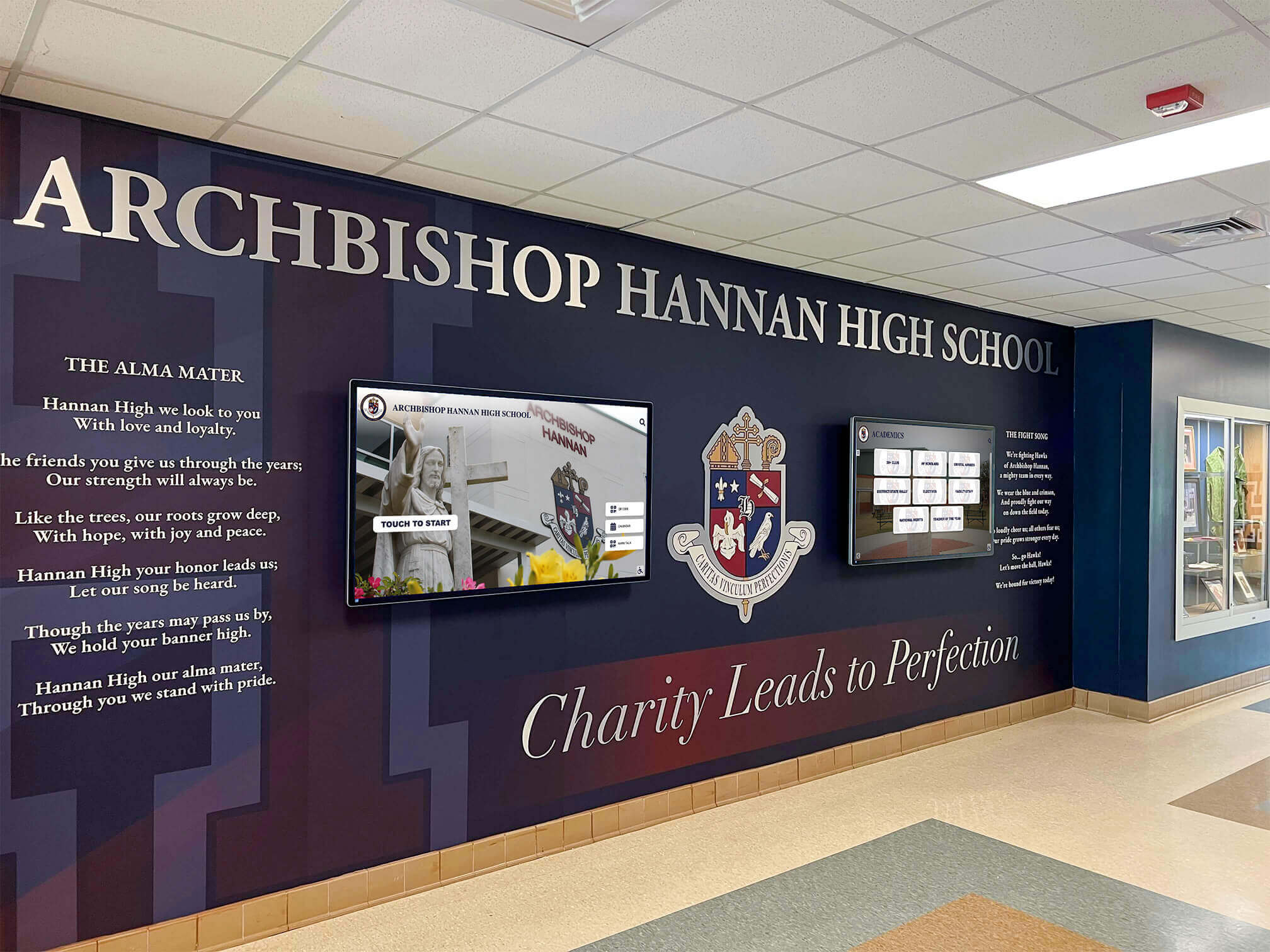
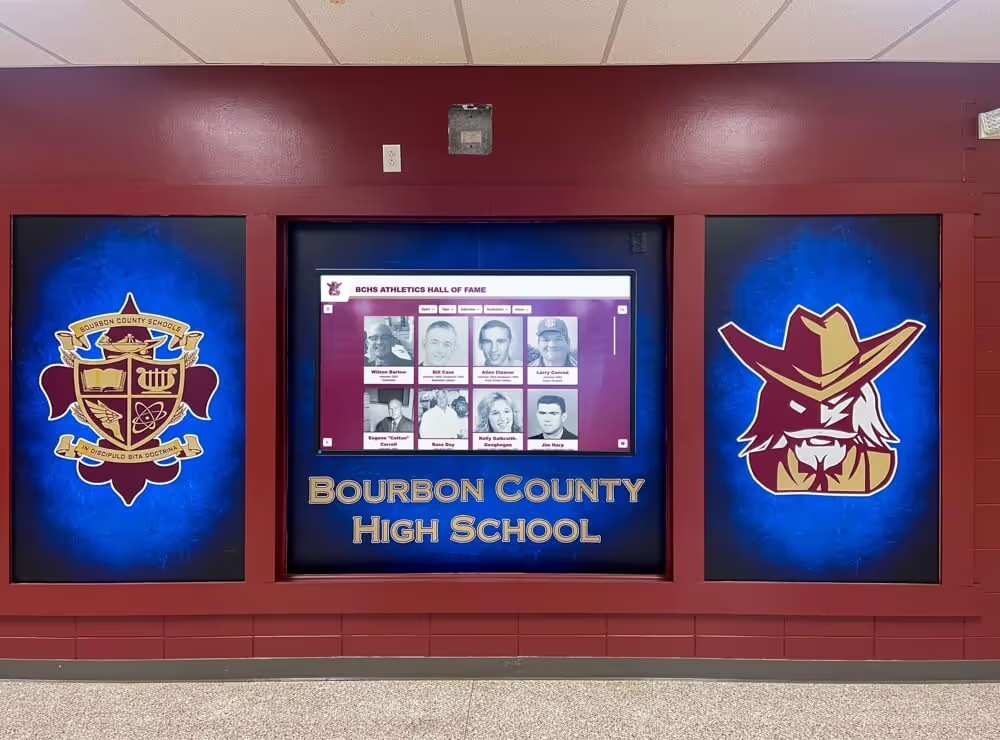
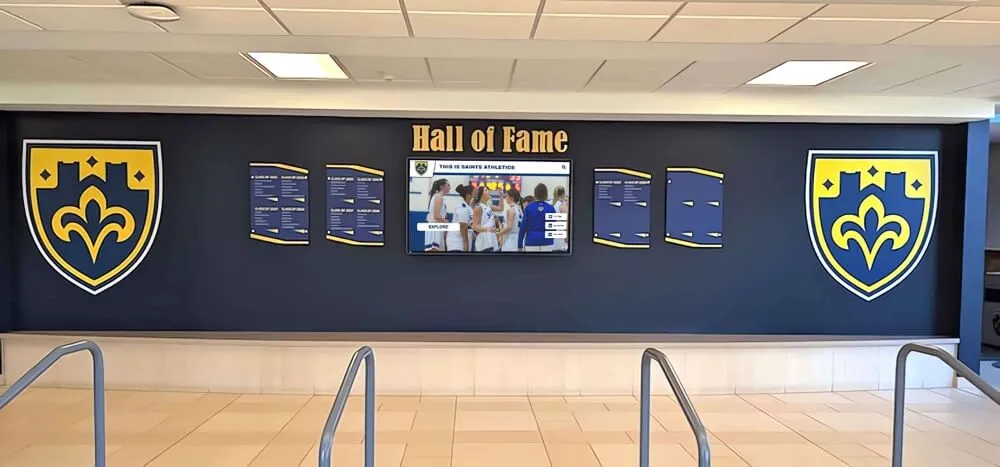
Thoughtful integration of traditional branding elements with modern technology creates timeless designs serving schools for decades
Maintaining Transformed Lobbies for Lasting Impact
Even excellently designed lobby transformations require ongoing maintenance and periodic refreshes ensuring spaces remain impressive over time.
Establish Clear Content Management Responsibilities
Digital recognition displays and changeable lobby elements require designated staff ownership preventing content stagnation.
Assign Recognition Coordinators with Update Authority
Identify specific staff members responsible for maintaining current recognition content across different achievement categories. Clear ownership might include:
- Athletic directors managing sports recognition and team achievements
- Academic administrators maintaining honor roll and scholarly recognition
- Development staff updating donor acknowledgment and giving recognition
- Alumni coordinators curating graduate profiles and community connections
These designated coordinators need appropriate training, system access, and time allocation enabling regular updates that keep lobby displays perpetually current. Without clear ownership, even sophisticated digital systems gradually become outdated as responsible parties remain unclear or overwhelmed by competing priorities.
Create Update Schedules Preventing Content Drift
Rather than relying on ad hoc updates when coordinators remember or find time, establish regular schedules ensuring minimum update frequencies:
- Weekly rotations of featured achiever spotlights or student highlights
- Monthly updates incorporating recent competition results and academic achievements
- Quarterly refreshes of event calendars and upcoming program information
- Annual comprehensive audits ensuring all recognition remains accurate and complete
Scheduled approaches prevent situations where lobby content gradually becomes stale without anyone noticing declining relevance until significant gaps become embarrassingly obvious.
Plan for Physical Maintenance and Periodic Refreshes
Beyond digital content, physical lobby elements require ongoing care and eventual updates.
Protect Murals and Branded Installations
Custom murals and painted elements require protective coatings preventing damage from cleaning, contact, and environmental factors. Work with mural artists or facilities teams to establish appropriate maintenance protocols:
- Use only approved cleaning solutions that won’t damage artwork or finishes
- Apply protective clear coats that can be periodically reapplied maintaining appearance
- Address minor damage immediately before small issues become major restoration needs
- Plan for eventual touch-ups as normal wear gradually impacts high-traffic areas
Budget for Periodic Design Refreshes
Even excellent lobby designs eventually require updates as materials age, design trends evolve, and institutional priorities shift. Rather than viewing transformations as one-time projects, anticipate periodic refreshes every 7-10 years that update elements while maintaining core design investments.
These planned refreshes might update color schemes, modernize technology components, or refine recognition categories while preserving major architectural investments like custom murals or structural modifications.
Measuring Transformation Success and Impact
Lobby transformation investments deserve outcome assessment demonstrating actual impact beyond subjective aesthetic improvement.
Track Visitor Response and Stakeholder Feedback
Systematically collect visitor impressions before and after lobby transformations, documenting changes in perception and response.
Conduct Visitor Perception Surveys
Survey prospective families, visiting teams, community partners, and other stakeholders about lobby impressions. Compare baseline pre-transformation perceptions with post-renovation responses across dimensions including:
- Professional appearance and perceived institutional quality
- Welcoming atmosphere and comfort level
- Understanding of school identity and values
- Ease of navigation and wayfinding
- Perception of school investment in facilities and student experience
Statistically significant improvements in these perception metrics demonstrate tangible returns from transformation investments beyond anecdotal positive comments.
Monitor Social Media and Online Review Mentions
Track whether lobby transformations generate increased social media sharing from visitors, mentions in online school reviews, or inclusion in campus tour feedback. Digital-age visitors frequently photograph and share impressive spaces, creating organic marketing amplifying transformation impact beyond immediate physical visitors.
Count social media posts featuring lobby spaces, analyze sentiment in online reviews mentioning entrance areas, and monitor whether campus tour attendees specifically reference lobbies in post-visit feedback or questions.
Connect Transformations to Institutional Outcomes
Ultimately, lobby improvements should contribute to broader institutional goals beyond pure aesthetics.
Enrollment Impact for Schools Competing for Students
For schools where enrollment depends on competitive family choice, monitor whether lobby transformations correlate with improved admissions metrics:
- Campus tour attendance and yield rates from inquiry to tour scheduling
- Prospective family perceptions of facility quality relative to competitor schools
- Enrollment conversion rates from campus visits to submitted applications
- Student and family feedback highlighting facility quality in decision factors
While many variables influence enrollment, significant lobby transformations often contribute measurably to improved facility perceptions that influence family school selection.
Development and Fundraising Results
Track whether impressive lobby transformations—particularly those featuring donor recognition—correlate with improved philanthropic outcomes:
- Increases in annual fund participation rates following recognition installations
- Major gift solicitation success when prospects visit campuses with modern recognition
- Planned giving commitments from alumni experiencing updated recognition of graduates
- Booster organization membership and contribution levels after athletic recognition improvements
Development professionals often report that visible, high-quality donor recognition creates positive fundraising cycles where impressive installations inspire additional giving enabling further recognition enhancements.
Explore comprehensive approaches to team bonding and recognition that strengthen community connections.
Transform Your School Lobby into an Impressive Welcome Experience
School lobby transformations represent high-leverage facility improvements that create disproportionate impact relative to investment when approached strategically. By understanding common lobby challenges, implementing focused improvements that address actual deficiencies, and maintaining transformed spaces through clear content management, schools create entrance experiences that build pride, strengthen identity, and communicate excellence to all stakeholders.
The most successful transformations don’t necessarily require unlimited budgets or complete renovations—they demand thoughtful planning identifying high-impact changes, creative integration of modern recognition technology with timeless design elements, and phased implementation approaches that enable progress within realistic financial constraints.
Whether your school lobby currently suffers from generic institutional design, outdated recognition systems, or simple neglect over decades, transformation remains achievable through strategic improvements that create dramatic before-and-after results visitors immediately notice and remember.
Ready to transform your school lobby with modern digital recognition? Rocket Alumni Solutions provides touchscreen walls of fame and digital recognition displays that seamlessly integrate into lobby transformation projects—creating impressive focal points that celebrate unlimited achievements without space constraints. Discover how digital recognition technology can anchor your lobby renovation while providing decades of flexible, current recognition that traditional trophy cases cannot match.