When a school lobby recognition display serves athletic profiles in more than one language, the HTTP Vary header becomes a practical concern for anyone responsible for the server or content delivery layer. A Vary header in the HTTP response tells shared caches which request headers they must include in the cache key. Get it wrong and a visitor whose browser requests Spanish receives the English page because the cache stored only one version of the URL. Get it right and every visitor—regardless of the language preference their browser sends—sees the athlete’s name, awards, and story in the correct locale. This guide gives school IT staff, AV integrators, and athletic directors a structured school lobby recognition display Vary header test to confirm that language variants are cached and served correctly.
Athlete names, championship years, and award citations carry meaning that translation must preserve accurately. A multilingual lobby recognition display amplifies that meaning for a broader community—recent graduates whose families speak another language at home, visiting families who arrived when the school’s demographic composition was different, and prospective students who first encounter the school’s culture of achievement in a lobby hallway. Whether the correct language variant reaches each visitor depends partly on how the display server and any intermediate caches handle the HTTP layer.

A school lobby recognition display often combines a permanent mural with digital content—the digital layer is where language variant behavior and HTTP cache configuration interact.
What the Vary Header Does and Why It Matters for Athletic Profiles
The HTTP Vary header is a response header that identifies which request header fields the server used when selecting the representation it is returning. When a server responds with Vary: Accept-Language, it is telling any intermediate cache—a CDN edge node, a school-network reverse proxy, or a shared hardware cache—that the response may differ depending on the value of the incoming request’s Accept-Language header. The cache must therefore store and serve separate response variants for different Accept-Language values, rather than handing the first cached response to every subsequent request for the same URL.
RFC 9110, Section 12.5.5 defines Vary as part of the HTTP Semantics standard. According to that specification, a cache that receives a response containing a Vary field must not use the cached response to satisfy a subsequent request unless the listed request header fields in the stored response match those in the new request. In practical terms: if the stored response declares Vary: Accept-Language, the cache key for a profile page at /athletes/123 is not the URL alone—it is the URL plus the specific Accept-Language value from the browser.
Without that header, an intermediate cache stores one response for /athletes/123. The first browser to request that URL—using Accept-Language: en-US—gets English content. The cache stores it. The second browser, sending Accept-Language: es, arrives and requests the same URL. The cache serves the stored English response because the URL matched and no Vary instruction told it to treat the two requests differently. The Spanish-speaking visitor sees an English athletic profile.
For a recognition display where every inductee’s story matters, that failure is not a cosmetic issue. Incorrect language delivery undermines the display’s core purpose.
Two Locale Strategies and How They Affect Cache Behavior
Before testing, identify which of two locale strategies the display’s server uses. The strategy determines whether Vary: Accept-Language is required at all.
URL-based locale encodes the language directly in the path or query string: /es/athletes/123, /en/athletes/123, or /athletes/123?lang=es. The URL itself differs between language variants. Intermediate caches treat distinct URLs as distinct cache entries automatically, without any Vary instruction. A visitor reaching the Spanish variant requests a different URL than the visitor reaching the English variant. No Vary header is required for cache correctness in this model.
Header-based locale uses the same URL for all language variants—/athletes/123—and derives the language from the Accept-Language request header. This produces cleaner URLs and requires no URL prefix logic, but it places the entire burden of cache-key differentiation on the Vary header. Without Vary: Accept-Language in the response, no intermediate cache has a basis for storing and serving separate English and Spanish responses for that shared URL.
Both strategies are legitimate. The choice has implications beyond caching: URL-based locale makes it straightforward to share a direct link to a Spanish profile; header-based locale simplifies routing but can complicate debugging when a visitor receives unexpected language content. The test steps below address both, but the pass or fail criteria differ depending on which strategy the server uses.
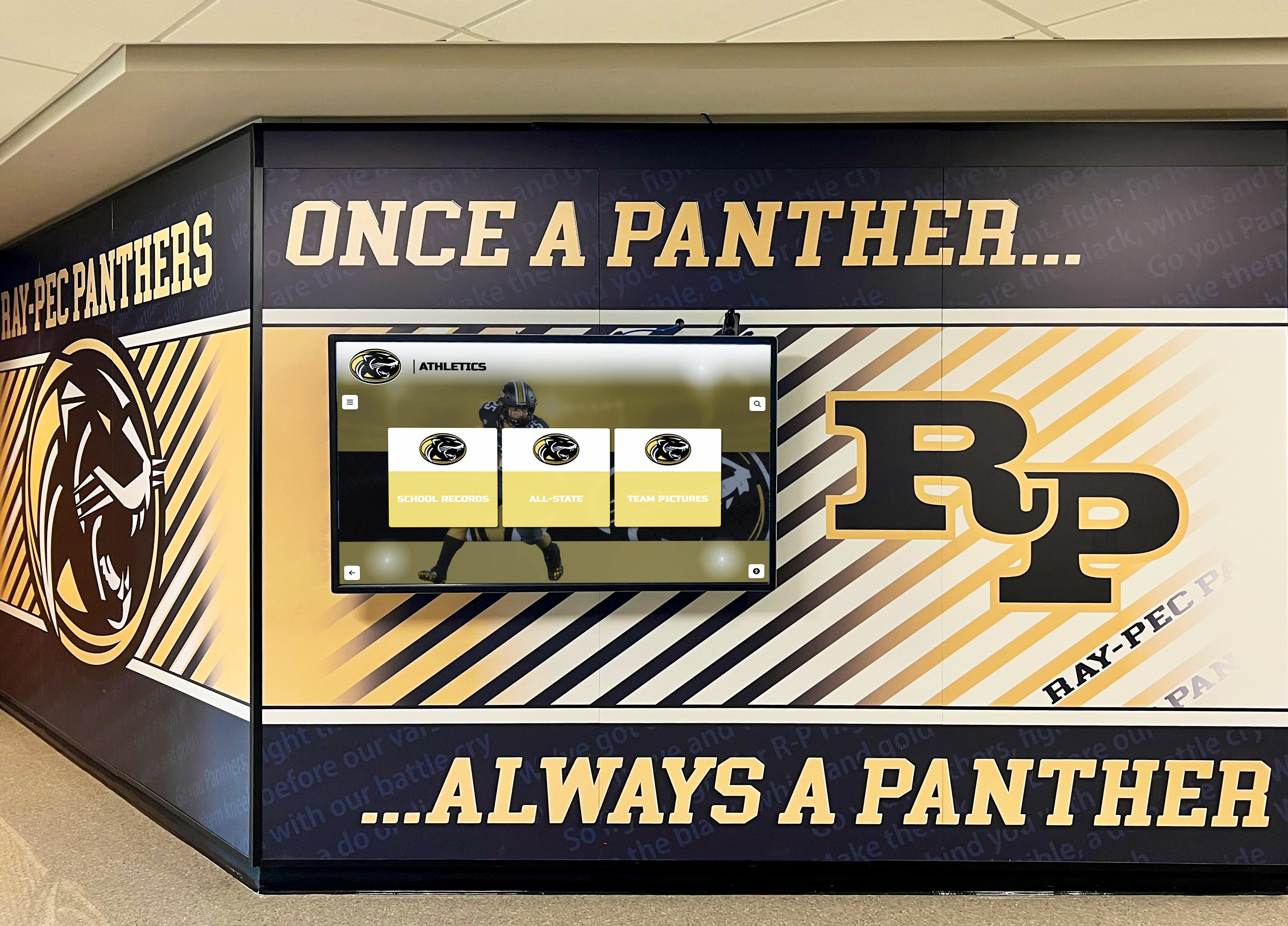
Athletic recognition profiles displayed in school hallways serve a multilingual community—verifying that each language variant is delivered correctly protects the integrity of every inductee's recognition.
Pre-Test Checklist
Complete these checks before running the Vary header test. Results are difficult to interpret without confirming these prerequisites first.
| Prerequisite | Why It Matters | How to Verify |
|---|---|---|
| Identify locale strategy (URL-based or header-based) | Determines which test steps and pass criteria apply | Review the profile URL structure with your display vendor or server administrator |
| Confirm at least two language variants exist | The test requires requesting English and at least one additional locale | Navigate to a translated profile and confirm translated content is present |
| Identify any shared caches in the request path | CDNs, school-network reverse proxies, and hardware caches all affect Vary behavior | Ask your network team for a topology diagram showing traffic from the lobby display to the profile server |
| Obtain a tool capable of setting custom request headers | curl on a command-line machine on the same network allows precise Accept-Language control | Verify curl is available: curl --version |
| Document 3–5 specific athletic profile URLs | The test needs repeatable URLs for fair comparison across locales | Record the full URL for each profile page you plan to test |
| Confirm the profile server is not behind a cache-busting proxy | Some school proxies strip Vary headers from responses before storing them | Ask your network team whether HTTP response headers, specifically Vary, pass through unchanged |
Step-by-Step: Running the School Lobby Recognition Display Vary Header Test
Work through these steps in order. Record the raw output at each step before moving on.
Step 1 — Request a profile page and inspect the Vary header. From a machine on the same network segment as the lobby display, run:
curl -s -I -H "Accept-Language: en-US,en;q=0.9" \
  https://your-display-domain.example/athletes/123
Look for a Vary field in the response headers. Record its exact value.
- If you see
Vary: Accept-Language(or a comma-separated list that includesAccept-Language): the server is declaring language as a cache-key dimension. Proceed to Step 2. - If you see no
Varyfield, orVarywith no mention ofAccept-Language: the server is not declaring language as a cache-key dimension. If the server uses header-based locale, this is a misconfiguration. If it uses URL-based locale, the absence ofVary: Accept-Languageis expected—proceed to the URL-based path in Step 3. - If you see
Vary: *: the server treats every possible request variation as distinct. Intermediate caches must not store this response. This is correct for highly personalized content but prevents any caching benefit for multilingual recognition pages.
Step 2 — Compare Content-Language against visible content.
Request the same profile URL twice: once with an English Accept-Language header and once with the locale your display serves as a second language. Compare the Content-Language response header against the actual body content returned.
# English request
curl -s -I -H "Accept-Language: en-US" \
  https://your-display-domain.example/athletes/123

# Spanish (or other locale) request
curl -s -I -H "Accept-Language: es" \
  https://your-display-domain.example/athletes/123
The Content-Language response header should match the language of the content returned. If the Spanish request returns Content-Language: es but the HTML body still contains English text, the server is sending an incorrect Content-Language declaration—or the translation is incomplete at that profile URL. Document both the headers and a representative excerpt of body content (such as the <title> tag or the profile name markup) for each locale.
Step 3 — For URL-based locale: confirm the Spanish and English URLs return distinct content. Request both locale-specific URLs and compare the body content:
curl -s https://your-display-domain.example/en/athletes/123 | grep -i "<title>"
curl -s https://your-display-domain.example/es/athletes/123 | grep -i "<title>"
The title tags should differ in language. Confirm the athlete’s name is spelled identically in both versions—names are proper nouns and must not be altered by translation.
Step 4 — Alternate requests through a shared cache and observe which variant is returned. If your display has an intermediate cache—a CDN or reverse proxy—this step confirms the cache is honoring the Vary header. Send two requests using different Accept-Language values in rapid succession:
# First request — this may populate the cache
curl -s -H "Accept-Language: en-US" \
  https://your-display-domain.example/athletes/123 | grep -i "<html lang="

# Second request — cache should serve a distinct Spanish variant
curl -s -H "Accept-Language: es" \
  https://your-display-domain.example/athletes/123 | grep -i "<html lang="
If both requests return the same <html lang=""> value, the cache is not differentiating by Accept-Language. Possible causes: the Vary header is missing, a proxy is stripping it, or the cache implementation does not support Vary-based differentiation for this content type.
Step 5 — Document locale placement and results. Record, for each profile URL tested: the Vary header value returned, the Content-Language header returned, the Accept-Language value sent in each request, and whether the body content language matched the requested locale. Note whether locale is in the URL or the header. This record gives your display vendor or server administrator a precise starting point for any configuration correction.
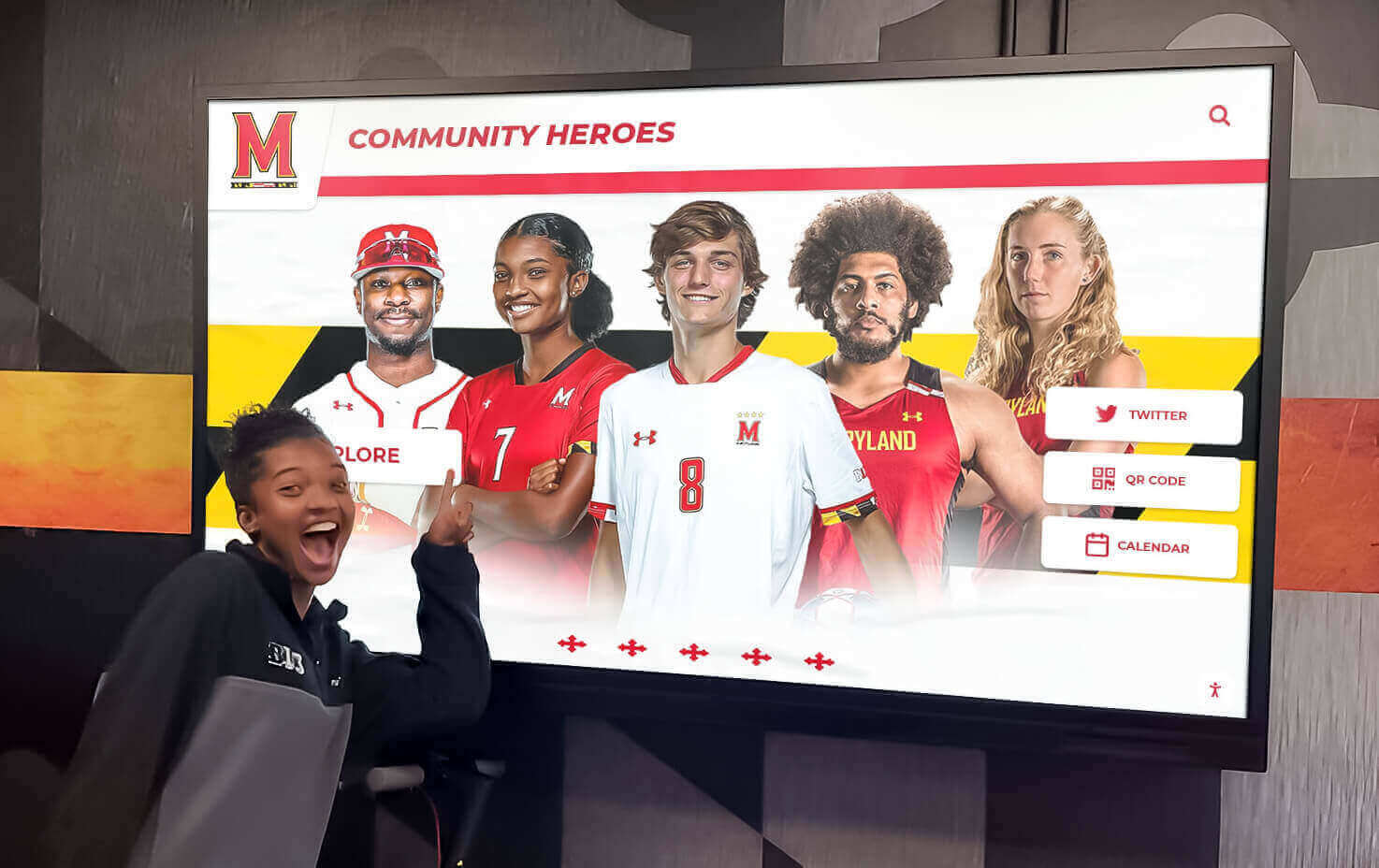
When a student or family member taps an athlete's profile, the language they receive depends on how the server and cache handled their browser's Accept-Language preference—the Vary header test confirms that chain is working correctly.
Acceptance Tests and Decision Table
Use this table to evaluate results and decide on next steps.
| Observed Result | Locale Strategy | Interpretation | Recommended Action |
|---|---|---|---|
Vary: Accept-Language present; Spanish request returns Spanish body content | Header-based | Functioning correctly | Document configuration; retest after any server or CDN update |
Vary: Accept-Language present; Spanish request returns English body content | Header-based | Server declares Vary but does not serve translated content | Confirm translated profile content exists server-side; check content negotiation logic |
No Vary header present | Header-based | Cache has no instruction to key by language; wrong variants will be served | Add Vary: Accept-Language to profile page responses; confirm with server administrator |
No Vary header present | URL-based | Expected behavior; locale is encoded in URL, not header | No action required for Vary; verify URL structure serves distinct content per locale |
Vary: * | Either | Cache cannot store this response; every request hits origin | Acceptable for personalized content; not suitable for shared cacheable profiles |
Content-Language header missing from response | Either | Downstream systems cannot determine response language without parsing body | Add Content-Language to responses; useful for CDN logging and accessibility tools |
| Intermediate cache returns the same content for both locales despite correct Vary | Header-based | Proxy is stripping or ignoring Vary; cache is not keying by Accept-Language | Investigate proxy configuration; confirm CDN respects Vary for this content type |
| Profile name differs between language variants | Either | Translation tool altered a proper noun | Restore the original athlete name spelling in the translated template |
Vary: Accept-Language, Accept-Encoding | Either | Cache keys on both language and encoding; valid and common | Acceptable; verify the display browser sends consistent Accept-Encoding |
Locale in URL vs. Header: Choosing and Verifying
The choice of where locale lives—URL or header—shapes how your athletic recognition profiles behave across the entire content lifecycle, not just in the cache layer.
URL-based locale makes each translated profile independently addressable. A QR code printed on a physical plaque can point directly to an athlete’s English or Spanish profile page. Linking to a specific inductee’s translated record in a hall of fame announcement template for new school inductees is straightforward when the URL itself identifies the language version. The trade-off is URL proliferation: every profile exists at two or more paths, which requires consistent routing, sitemap maintenance, and duplicate-content awareness.
Header-based locale keeps URLs clean and consistent. A single QR code works for all visitors—the browser’s Accept-Language header determines which translation they receive. The trade-off is increased operational complexity: the display server must implement content negotiation correctly, every intermediate cache must honor the Vary header, and debugging language delivery issues requires examining request headers rather than simply differing URLs.
For school athletic programs where digital preservation of inductee records is a long-term concern, URL-based locale tends to be easier to maintain over years. Records archived from a URL-based system are unambiguous: the URL tells you which language version is stored. The discipline required to keep language variants synchronized is comparable to the synchronization discipline needed to prevent athletic archive bit rot in any digitized record collection.
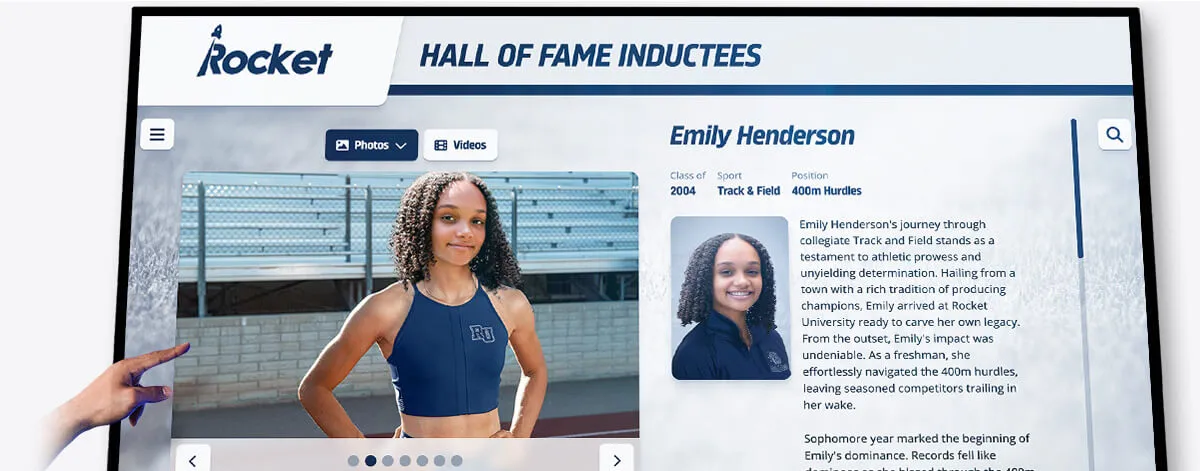
An individual athletic profile that appears on a lobby recognition display must preserve the athlete's name, award description, and achievement dates exactly—translation must carry that information accurately, not alter it.
Rocket vs. Static and Manual Display Options
This test applies to web-based, browser-rendered recognition display systems that serve dynamic profile content from a server. Not all display systems work this way. Understanding the difference helps identify whether this test is relevant to your lobby setup.
Rocket Alumni Solutions operates a web-based platform where athletic profiles are served dynamically. Locale handling, content negotiation, and cache configuration in a Rocket deployment are questions for the Rocket support team—your role as an IT partner or athletic director is to verify that the end-to-end chain (server response, CDN, display browser) is behaving correctly using the test steps above, then bring the results to that conversation. A dynamic platform like Rocket also enables remote CMS updates, ADA WCAG 2.1 AA accessibility compliance, auto-ranking record boards, and QR code mobile access—capabilities that static options cannot match.
Static display options, which cycle through pre-rendered image slides or video loops, have no HTTP server layer serving dynamic content. There is no Vary header, no Content-Language declaration, and no shared cache keying decision because the display player renders a local file, not an HTTP response. Multilingual content on a static display means separate slide sets for each language—typically managed by swapping playlist schedules or using a dedicated display time slot for each language version. The Vary header test does not apply to these systems, but the operational burden of keeping separate slide sets synchronized for each athlete’s record is real. Every award added or name correction made must be applied to every language version of the slide set manually.
Manual and printed recognition options—plaques, photo boards, trophy case labels—have no digital delivery layer at all. Language variants require physical duplication: a bilingual plaque for each inductee, or separate sections of the trophy case for each language version. There is no cache to misconfigure, but there is also no mechanism for remote updates. When an inductee’s name appears misspelled on a physical plaque, correcting it requires a vendor order. The criteria used to evaluate athletes for recognition program eligibility apply equally regardless of the display medium, but the speed of correction for errors differs significantly between physical and digital options.
What Vary Is Not
This section addresses two common misunderstandings about Vary that are worth clarifying explicitly before running a test.
Vary is not a freshness control. The Vary header tells caches which request headers define a cache key. It says nothing about how long a cached response is valid—that is the domain of Cache-Control and related headers. A recognition display that serves slowly-changing inductee profiles may combine Cache-Control: max-age=3600 with Vary: Accept-Language to allow one-hour caching of each language variant. Adjusting Vary to fix a language delivery issue does not alter freshness; adjusting Cache-Control to fix a freshness issue does not change which variants a cache stores.
Vary is not an authorization boundary. Some servers include Vary: Cookie or Vary: Authorization to signal that authenticated or session-specific responses differ per user. For an athletic recognition display that serves public profile pages, language negotiation is typically not combined with authentication-based variation. If your test reveals unexpected Vary values—particularly Vary: Cookie on pages that should be publicly cacheable—raise that with your vendor, as it may prevent any caching of recognition content even for anonymous visitors.
Connecting This Test to Physical and Long-Term Record Care
A Vary header test confirms that the digital delivery layer is correct at the moment of testing. Two adjacent concerns deserve mention for completeness.
Physical athletic trophies, photos, and jersey displays that accompany a lobby recognition installation are subject to environmental risks that digital content is not. Managing humidity around physical trophy cases and framed jersey displays is a facilities concern that runs in parallel with server configuration work—both protect the school’s record of athletic achievement, just in different domains.
For schools that are transitioning from traditional trophy cases to digital-first recognition, the practical questions of cost, installation, and content migration are covered by resources that examine why schools are switching to digital trophy case formats. That transition context is useful background when explaining to administrators why a digital display server needs HTTP header configuration that a physical trophy case never required.

A visitor navigating an athletic hall of fame in a school hallway expects to see consistent, accurate information—the Vary header test is the mechanism that confirms the server is supporting that expectation for multilingual communities.
Reader Questions
Does a missing Vary header always mean the wrong language is served? Not necessarily, but the risk is real. If no intermediate cache sits between the display browser and the origin server—because the display is on a LAN and requests go directly to a local application server—Vary is irrelevant; the server handles each request independently. The problem occurs when a CDN, reverse proxy, or school-network cache is in the path. That shared cache may serve any stored variant to any subsequent request for the same URL, regardless of language preference. Run Step 1 of this guide to determine whether Vary is present, and ask your network team whether any shared caches exist in the path.
Our display shows the same content to all visitors—does this test apply?
If the display serves a single language to all visitors, there are no language variants to differentiate and no need for Vary: Accept-Language. The test applies specifically to displays that serve different language versions of the same athletic profiles based on browser or visitor language preference.
Can a CDN’s Vary support differ from the origin server’s Vary header? Yes. Some CDNs have their own behavior for Vary-keyed caching that may not honor all Vary field values, may normalize Accept-Language values before using them as keys, or may require explicit CDN-side configuration to enable Vary-based cache splitting. After confirming the origin server is sending the correct Vary header, verify with your CDN provider that Vary: Accept-Language is respected at the edge and that language-specific variants will be cached separately.
What if the display browser always sends the same Accept-Language regardless of visitor preference? A kiosk locked to a fixed browser locale sends a fixed Accept-Language value for every request. In that case, language selection for a multilingual display may happen at the application layer—a language toggle button in the display UI, for example—rather than through HTTP content negotiation. Verify which mechanism your display uses. If language selection is UI-driven rather than header-driven, the Vary header test for Accept-Language is not the right tool; instead, verify that the UI toggle navigates to the correct URL or triggers the correct API call for each language.
How often should this test be repeated? Run it after any server software update, CDN configuration change, or display platform version upgrade. Any of those changes can alter how the server generates response headers without producing a visible error on the display. Add a Vary header check to your regular display health audit alongside HTTP version verification, TLS certificate renewal, and accessibility testing.
Does the athlete’s name need to be translated, or only surrounding text? Athlete names are proper nouns and must not be translated, altered, or localized phonetically unless the athlete’s official record uses a localized name. Award names, sport categories, and contextual descriptions are appropriate targets for translation. The same principle applies to team names that are official school designations. Before deploying a translated recognition profile, confirm with the athletic director that name spellings have been reviewed against the official school record.
Our profile pages load from a third-party platform. Who is responsible for the Vary header?
The organization hosting the server that generates the HTTP response is responsible for the response headers that response includes. For a vendor-hosted recognition display platform, ask the vendor directly: does the platform emit Vary: Accept-Language on profile page responses, and can you provide a sample response header from a multilingual deployment? Use the curl command in Step 1 to verify the answer against the actual behavior of your deployed instance.
Every visitor who steps into a school lobby brings a language background—a correctly configured Vary header ensures the digital display speaks that language when the content exists to do so.
See How Rocket Alumni Solutions Handles Recognition Display Configuration
Language variant delivery, ADA WCAG 2.1 AA accessibility, remote CMS management, and unlimited content capacity are part of how Rocket Alumni Solutions builds lobby recognition displays for school athletic programs. Ask about multilingual profile support and server configuration during a live demo.
Book a Rocket Demo