School lobbies represent far more than functional transition spaces between exterior and interior environments—they serve as the institution’s handshake, offering prospective families, community partners, and daily stakeholders their most immediate and visceral impression of educational quality, institutional values, and community vitality. A thoughtfully designed entrance communicates confidence, celebrates achievement, and creates emotional connections before visitors speak with a single staff member or observe any classroom instruction.
Yet many educational institutions approach lobby design as an afterthought, applying generic institutional aesthetics focused on durability and maintenance rather than strategic environments that welcome, inspire, and engage diverse audiences. When school leaders prioritize function over experience, entrance spaces become sterile transitions that fail to differentiate institutions from competitors or communicate the vibrant learning communities thriving beyond those doors.
This comprehensive guide explores evidence-based school lobby design ideas that transform entrance spaces into strategic assets—welcoming environments that orient visitors, celebrate achievements, reinforce institutional identity, and create lasting positive impressions that influence enrollment decisions, community support, and organizational pride.
Effective school lobby design balances multiple objectives simultaneously: creating warm, accessible environments that welcome diverse visitors, showcasing institutional achievements and values, providing practical wayfinding assistance, and maintaining visual coherence that communicates organizational excellence. The most successful entrance designs achieve these goals through intentional planning that considers traffic flow, brand identity, recognition opportunities, and the psychological impact of environmental design on visitor perceptions.

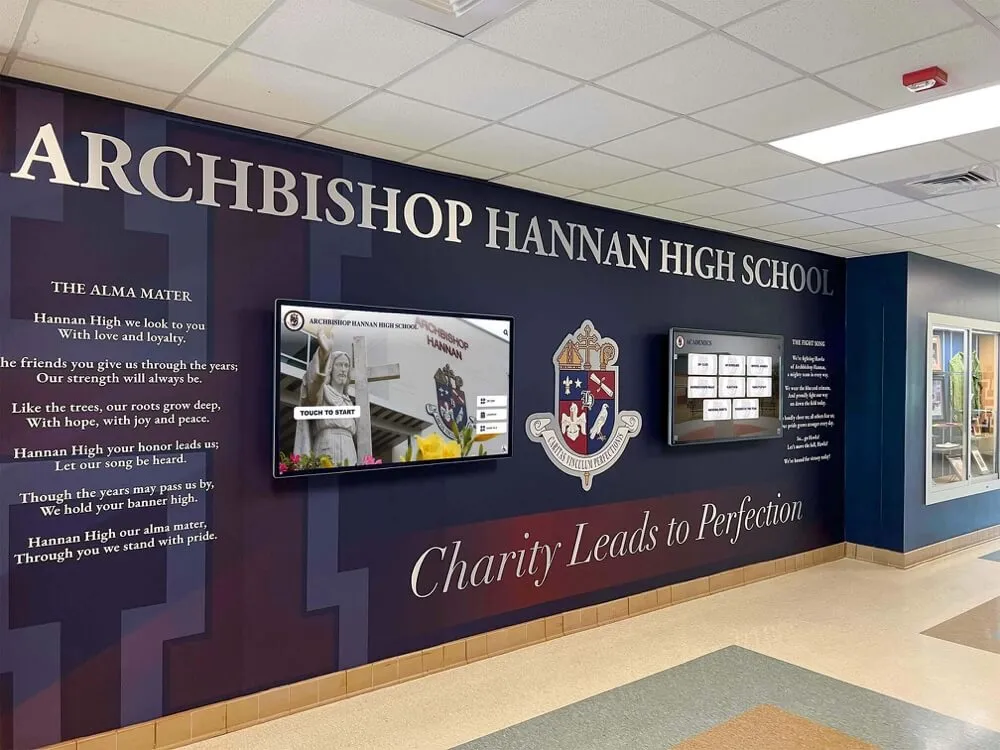
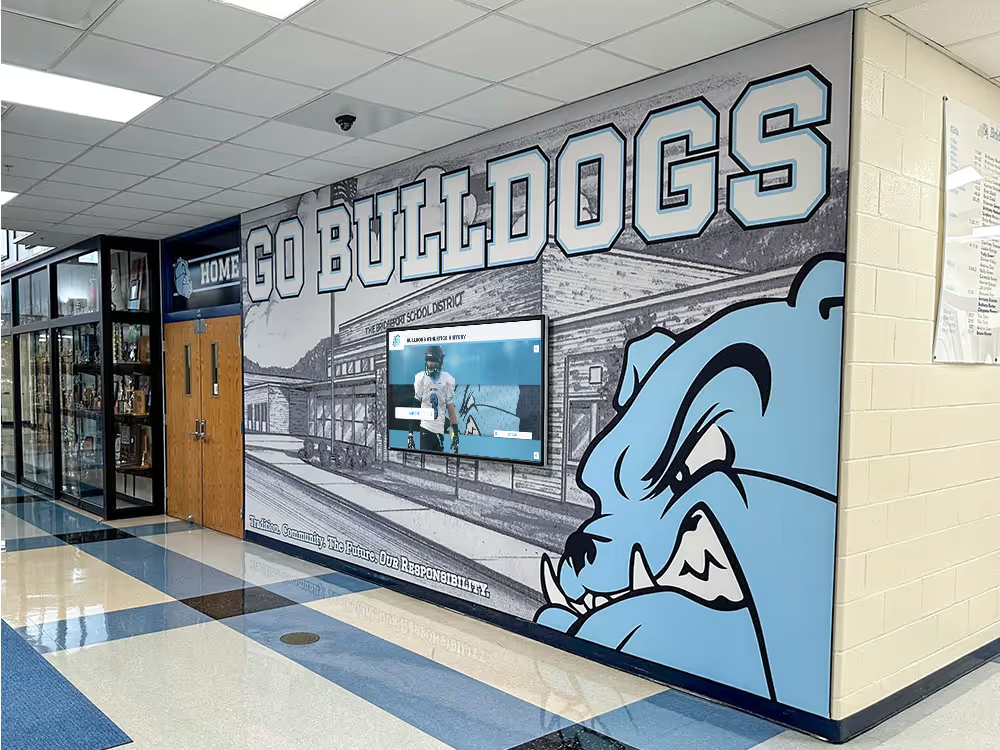
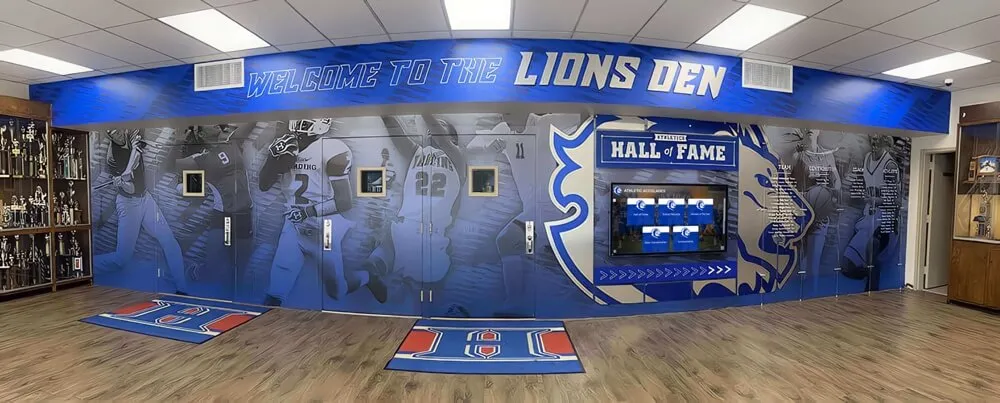
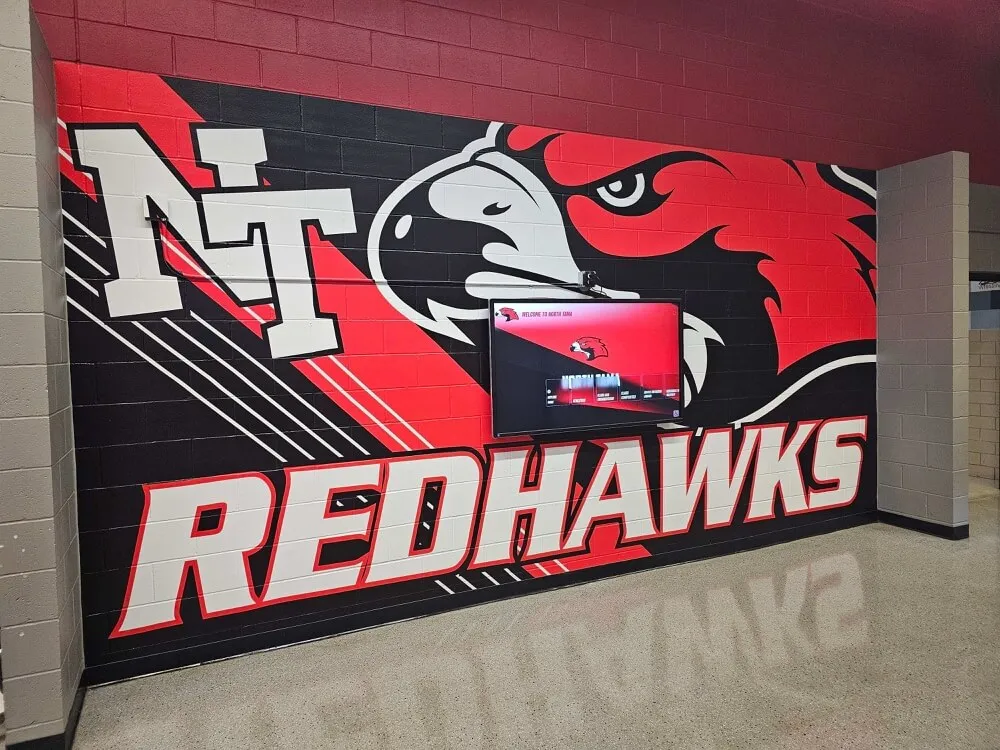
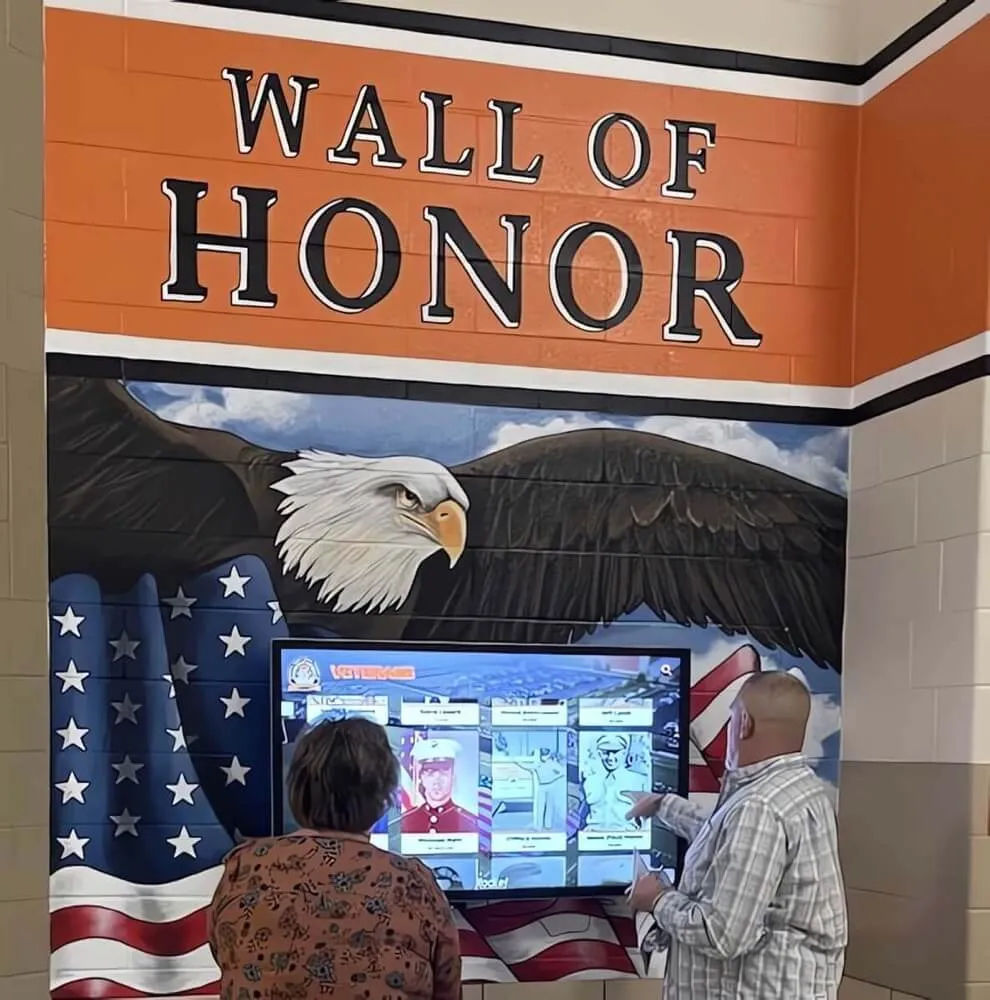
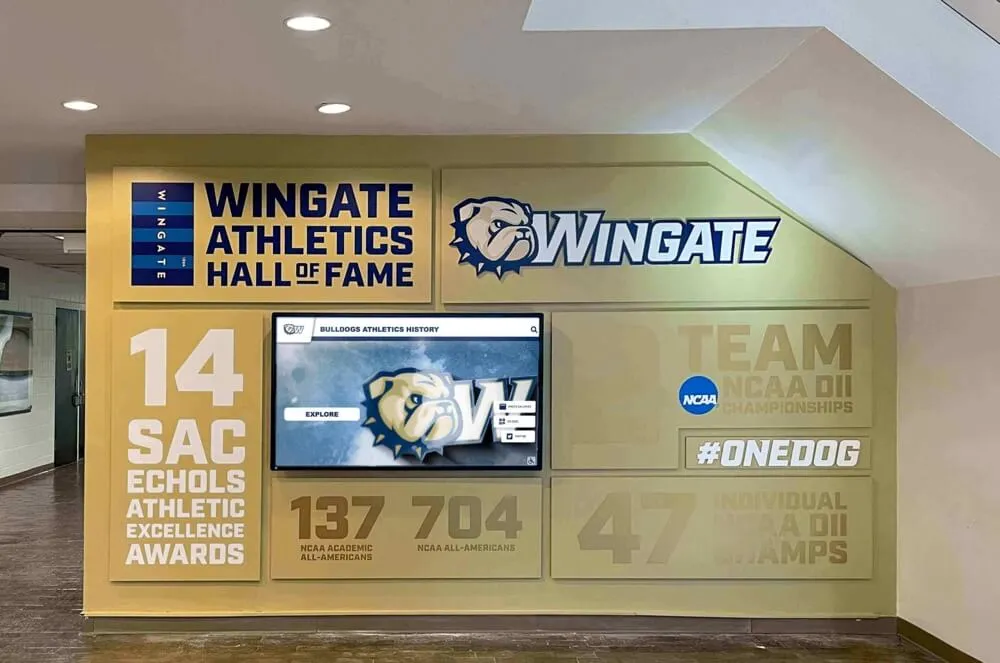
Strategic lobby design integrates branded elements with functional technology, creating memorable first impressions that communicate institutional pride and modern innovation
Understanding the Strategic Role of School Lobby Design
Before exploring specific design ideas, school leaders should recognize the multiple functions entrance spaces serve and the opportunities these environments present.
The Psychology of First Impressions in Educational Settings
Research in environmental psychology demonstrates that physical environments significantly influence perceptions of organizational quality, trustworthiness, and competence within the first few seconds of exposure.
Immediate Judgment Formation
Visitors form impressions about school quality, safety, and organizational effectiveness based primarily on visual cues encountered in entrance environments. Well-designed lobbies featuring coordinated aesthetics, visible achievement recognition, and modern amenities signal institutional investment, attention to detail, and educational excellence. Conversely, dated lobbies with peeling paint, cluttered bulletin boards, and generic institutional design inadvertently communicate limited resources, outdated approaches, and organizational neglect regardless of actual educational programming quality.
For prospective families evaluating school options, lobby design often disproportionately influences enrollment decisions because these spaces represent the most tangible, immediately assessable evidence of institutional quality available during brief campus visits.
Emotional Connection Through Environmental Storytelling
Beyond functional orientation, effective lobbies create emotional resonance through environmental storytelling that communicates institutional values, celebrates community achievements, and demonstrates pride in educational mission. When entrance spaces prominently feature student work, showcase historical photos preserving institutional heritage, and display recognition honoring diverse accomplishments, visitors immediately understand that this institution values achievement, preserves tradition, and celebrates community.
This emotional connection proves particularly powerful for alumni returning to campus, who experience nostalgia and institutional pride when lobbies honor shared heritage and recognize familiar names from their own educational experiences.
Functional Requirements Beyond Aesthetics
While visual appeal matters enormously, effective school lobbies must simultaneously serve practical functions that support daily operations and visitor needs.
Traffic Flow and Circulation Patterns
School lobbies accommodate diverse circulation patterns—students passing through during transitions, visitors checking in at reception desks, parents waiting for meetings, delivery personnel locating offices, and community members attending evening events. Design must account for these varied traffic flows, creating intuitive paths that guide visitors toward appropriate destinations while preventing congestion during peak periods.
Effective circulation design considers arrival points (main entrances, parking lot access, bus drop-offs), destination clustering (administrative offices typically near lobbies, while specialized facilities might be deeper in buildings), and sightlines enabling reception staff to monitor entrance activity and assist visitors efficiently.
Security and Visitor Management Integration
Modern school safety protocols require controlled access and visitor screening that lobbies must accommodate without creating unwelcoming fortress-like atmospheres. Design approaches that balance security with hospitality include:
- Reception desk positioning with clear sightlines to all entrance points
- Visitor check-in stations creating natural stopping points before building access
- Badge printing systems and temporary pass distribution built into reception areas
- Interior door systems requiring credential access beyond lobby areas
- Welcoming design elements that frame security measures as standard protocols rather than exceptional restrictions
The most successful approaches integrate security requirements so seamlessly that visitors experience efficient check-in processes without feeling uncomfortably scrutinized or unwelcome.
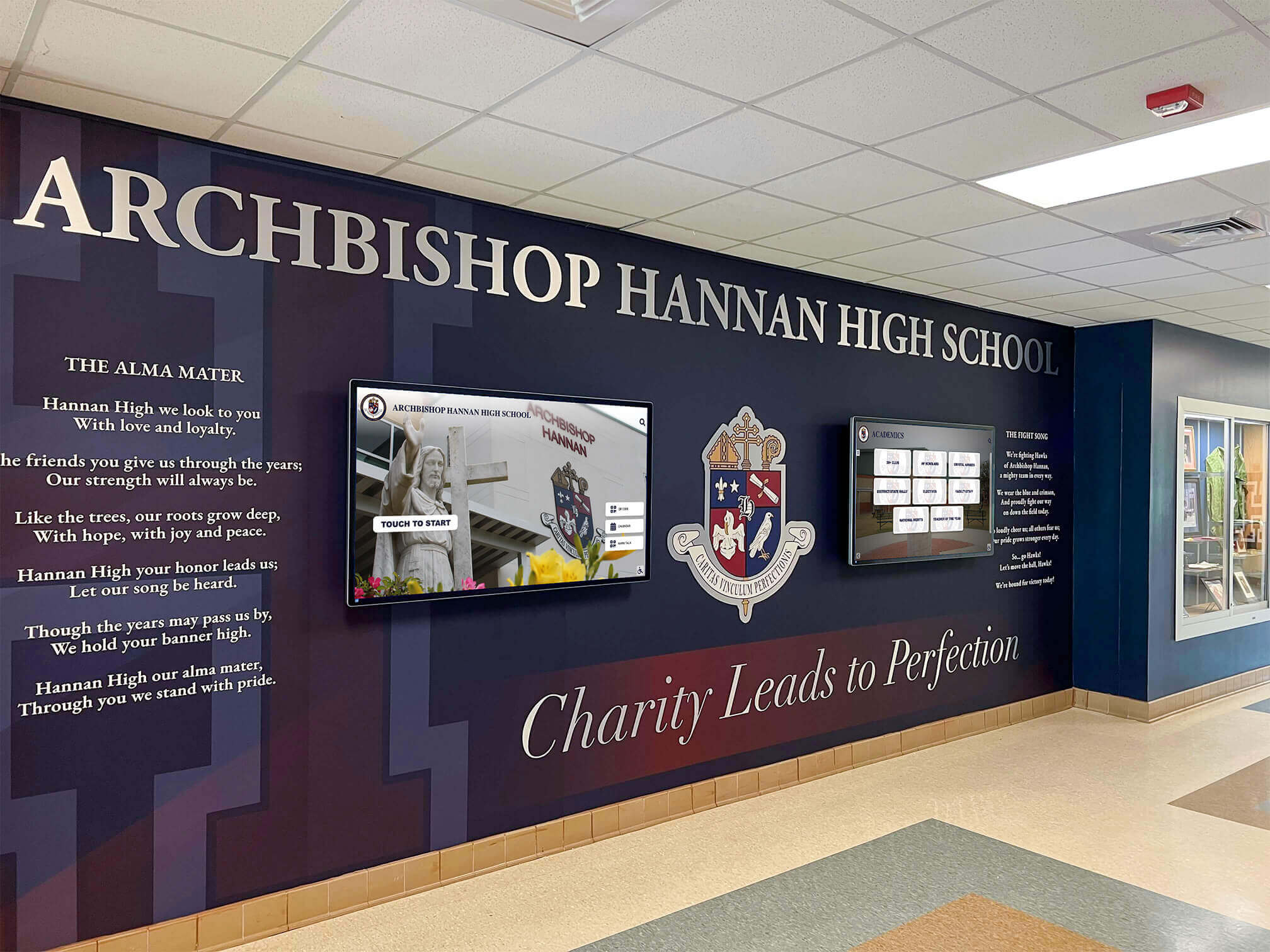
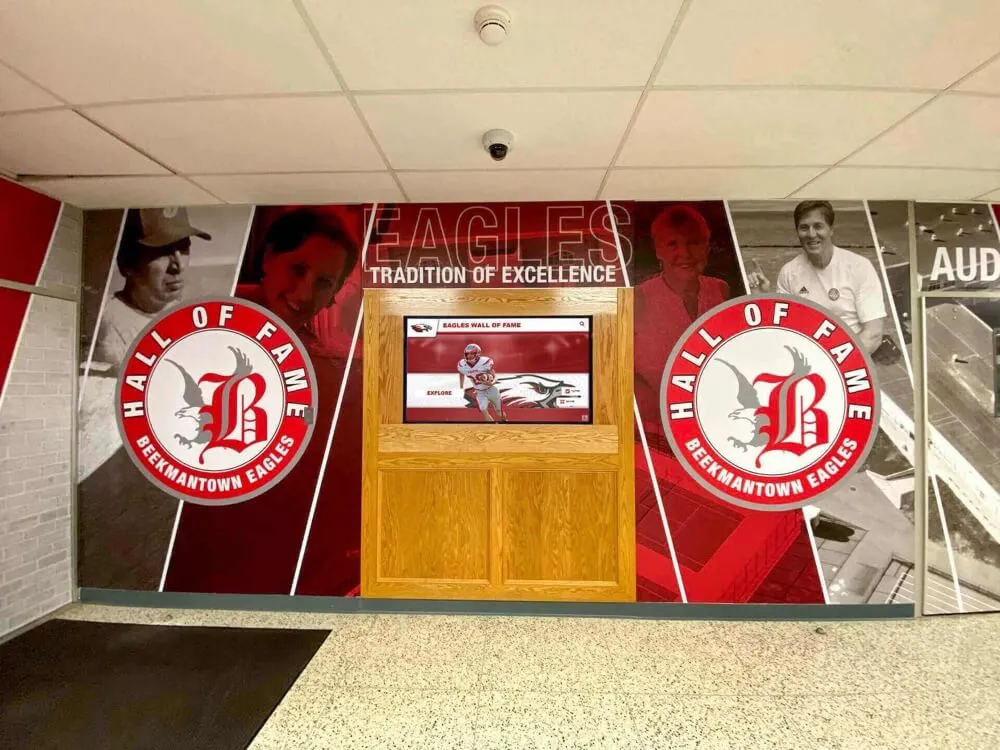
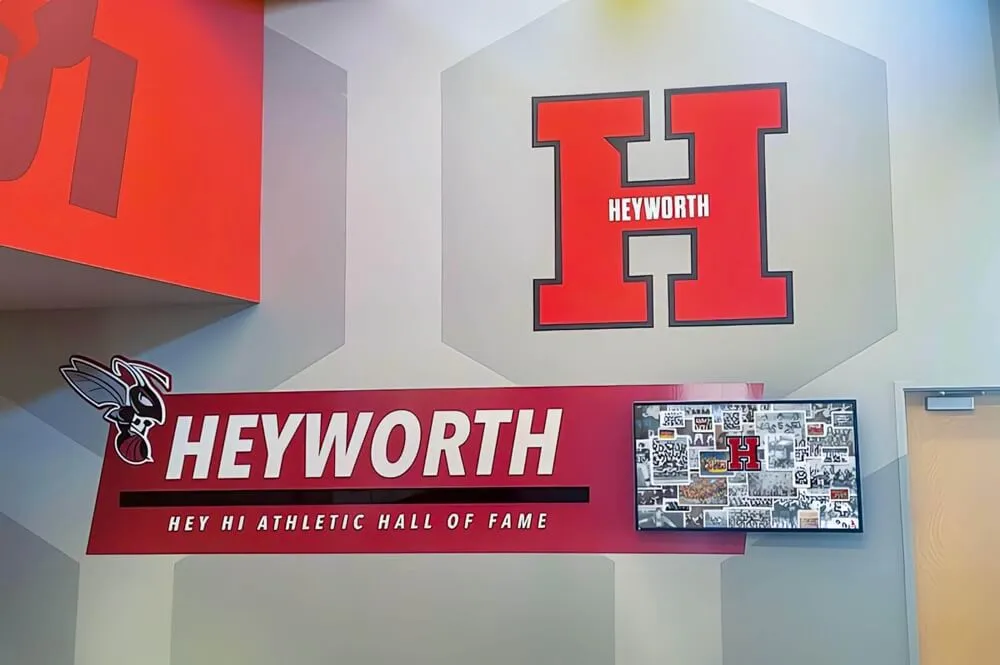
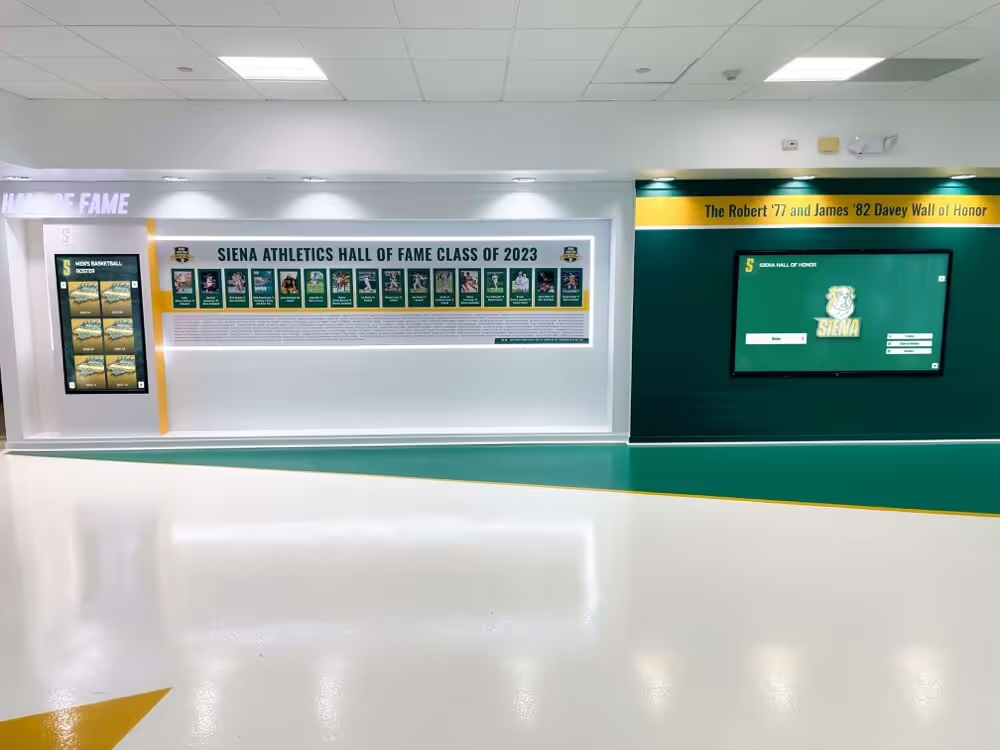
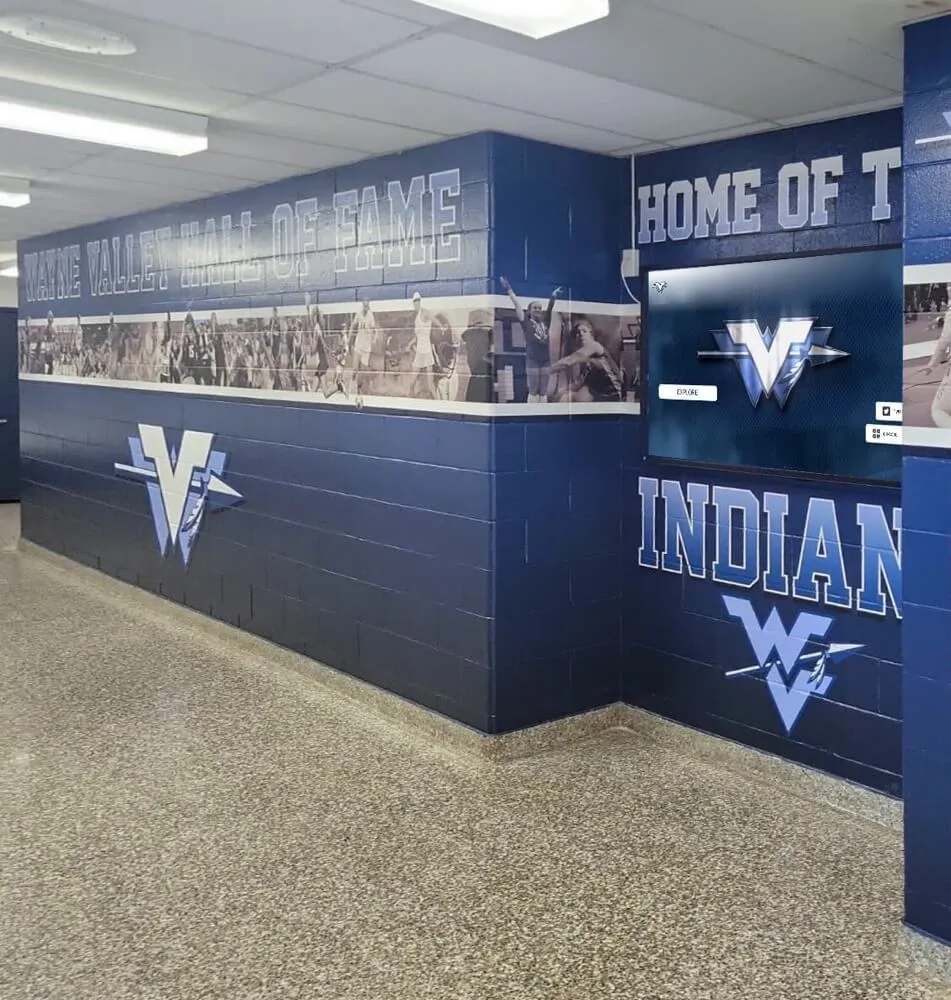
Comprehensive lobby design integrates branded murals, professional reception areas, and modern digital displays for cohesive, impressive environments
Core Design Elements for Welcoming School Lobbies
Effective lobby design draws on specific elements that work synergistically to create environments that feel both professional and approachable.
Color Psychology and Material Selection
The colors, textures, and materials comprising lobby environments significantly influence visitor emotional responses and institutional perceptions.
Strategic Color Application
Color theory research demonstrates that environmental hues affect mood, energy levels, and organizational perceptions in measurable ways:
School color integration: Prominently featuring institutional colors creates immediate brand recognition while building community pride. Strategic application through accent walls, flooring patterns, or architectural elements reinforces identity without overwhelming spaces with excessive saturation.
Warm accent tones: Incorporating warm colors (oranges, yellows, warm reds) in moderate amounts creates welcoming, energetic atmospheres that combat the institutional coldness of many educational facilities. These tones work particularly well in seating areas, reception desks, or recognition display surrounds.
Neutral foundations with colorful highlights: Many successful designs use neutral wall colors (grays, taupes, soft whites) as foundations that won’t feel dated, then add institutional colors and vibrant accents through easily changeable elements like furniture, graphics, or digital displays.
Material Choices Communicating Quality
Surface materials substantially influence perceived institutional investment and quality:
Durable yet refined flooring: Moving beyond basic institutional tile to materials like polished concrete with integrated school logos, commercial luxury vinyl planks mimicking wood, or patterned tile creating visual interest demonstrates design intentionality while maintaining necessary durability.
Textured accent walls: Incorporating dimensional materials like wood paneling, brick veneer, or textured wall coverings on focal walls creates architectural interest impossible with paint alone.
Quality furniture and fixtures: Reception desks, seating areas, and lighting fixtures in higher-quality materials (real wood, metal accents, upholstered seating) elevate perceived institutional status compared to basic laminate furniture and plastic chairs.
Branding and Identity Integration
School lobbies should immediately communicate institutional identity through cohesive branding elements that create recognition and connection.
Mascot and Logo Visibility
Prominent display of school mascots, logos, and identifying symbols throughout lobby spaces creates immediate institutional recognition while building community pride. Effective approaches include:
- Oversized mascot graphics rendered in dimensional materials or custom murals
- School logo integration in flooring patterns, wall-mounted installations, or reception desk designs
- Trophy cases or recognition displays incorporating mascot imagery and school colors
- Digital displays alternating between recognition content and branded graphics featuring institutional marks
The key lies in strategic repetition without excessive saturation—visitors should clearly understand institutional identity without feeling overwhelmed by logos covering every available surface.
Mission Statement and Values Communication
Beyond logos and mascots, lobbies provide ideal opportunities to communicate institutional mission, core values, and educational philosophy through environmental graphics. Wall-mounted displays might feature:
- Framed mission statements using quality typography and materials signaling importance
- Core value statements paired with photographic imagery demonstrating values in practice
- Graduate profiles or testimonials illustrating educational outcomes and student success
- Historical timelines connecting current programs to institutional heritage and tradition
These message-driven displays transform lobbies from purely functional spaces into environments actively communicating educational purpose and institutional differentiation.
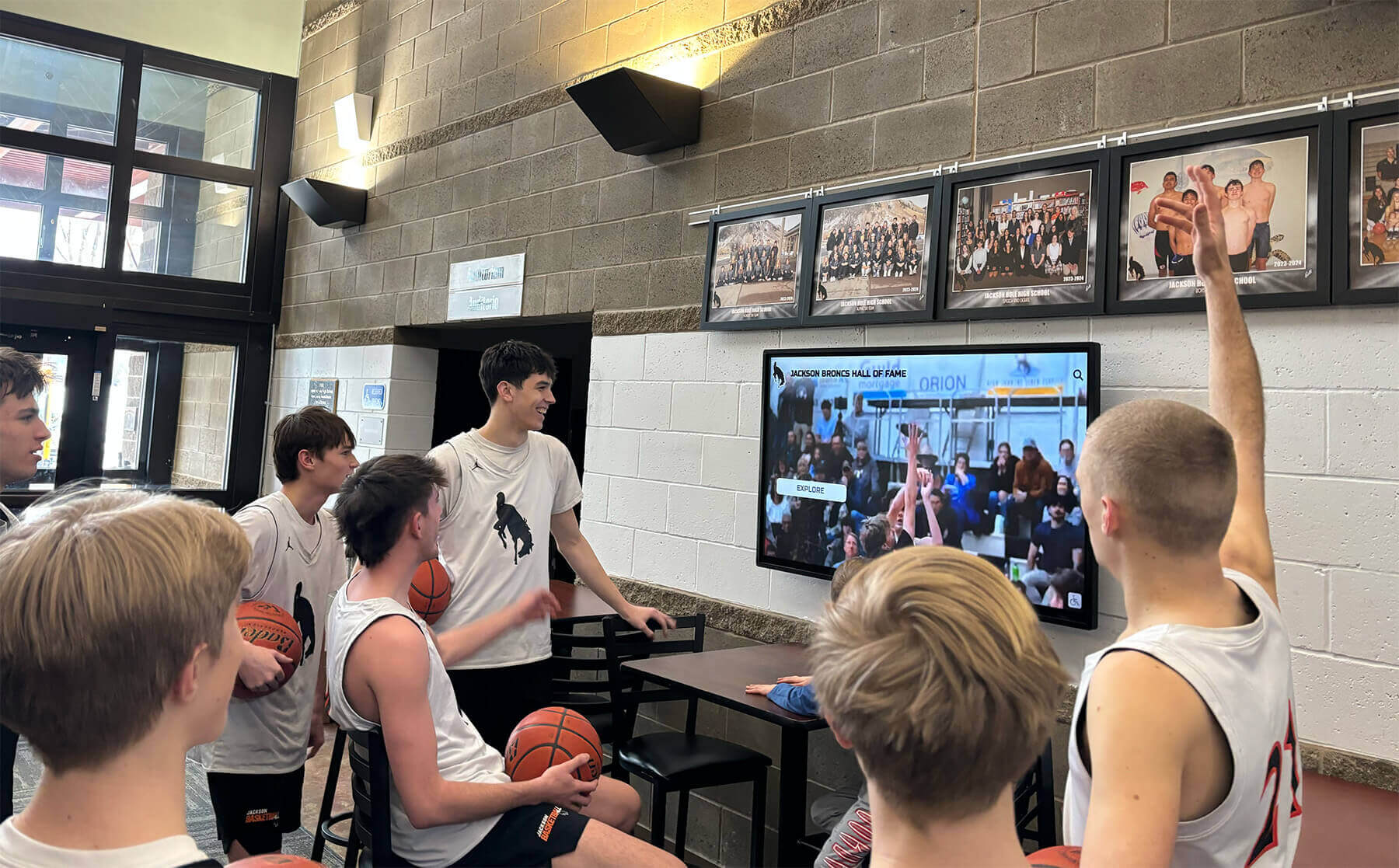
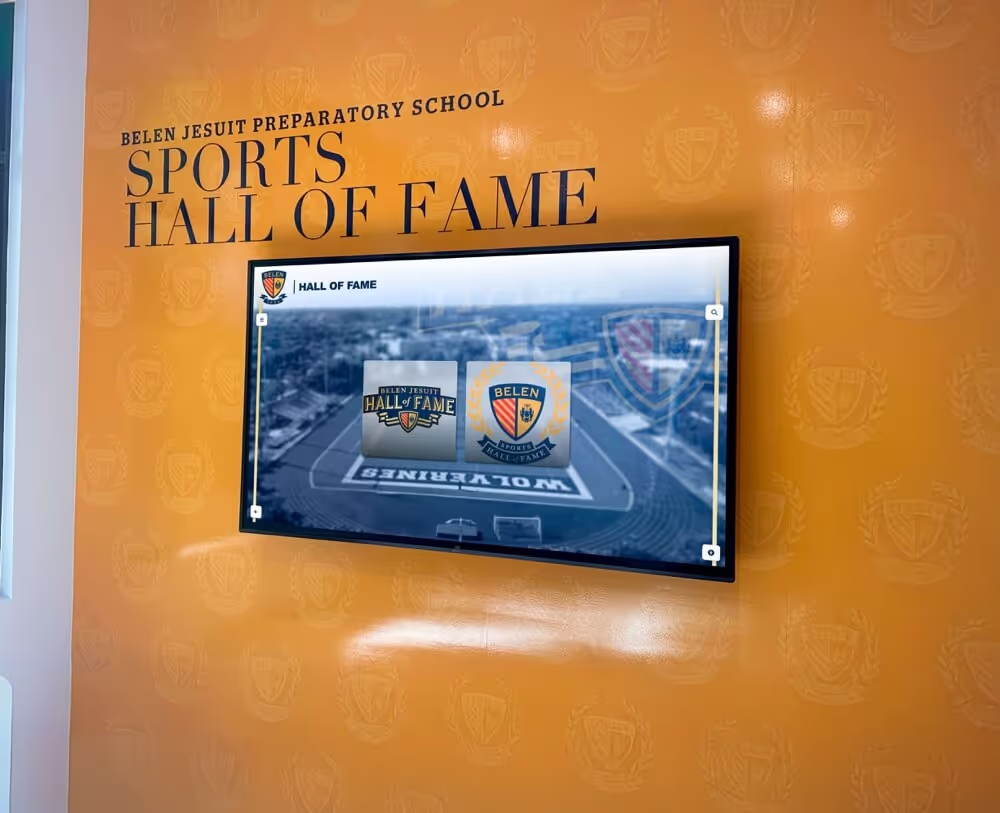
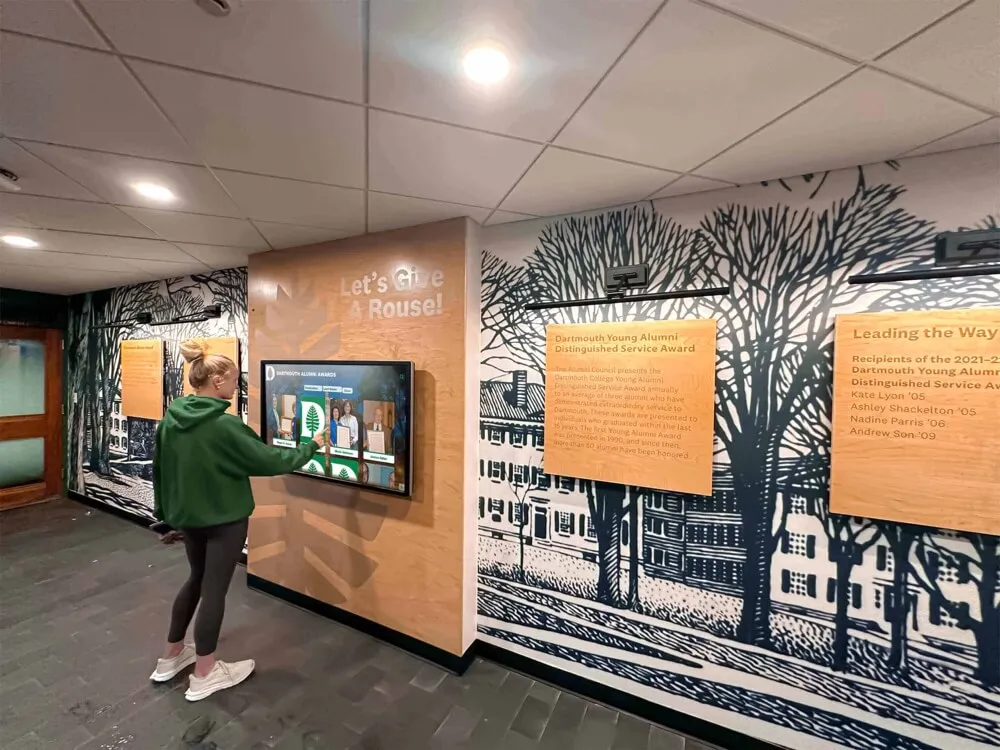
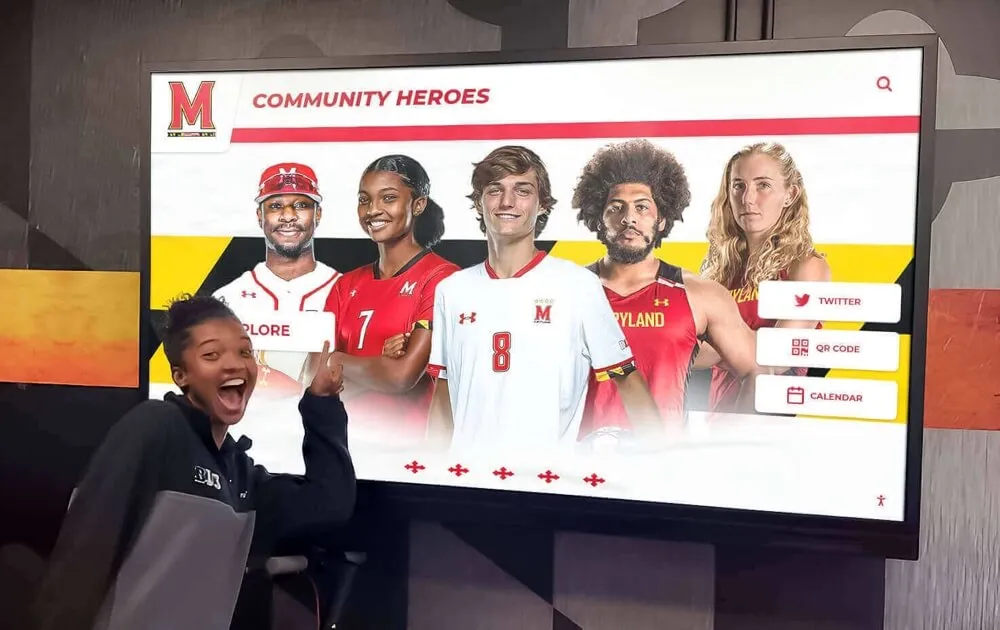
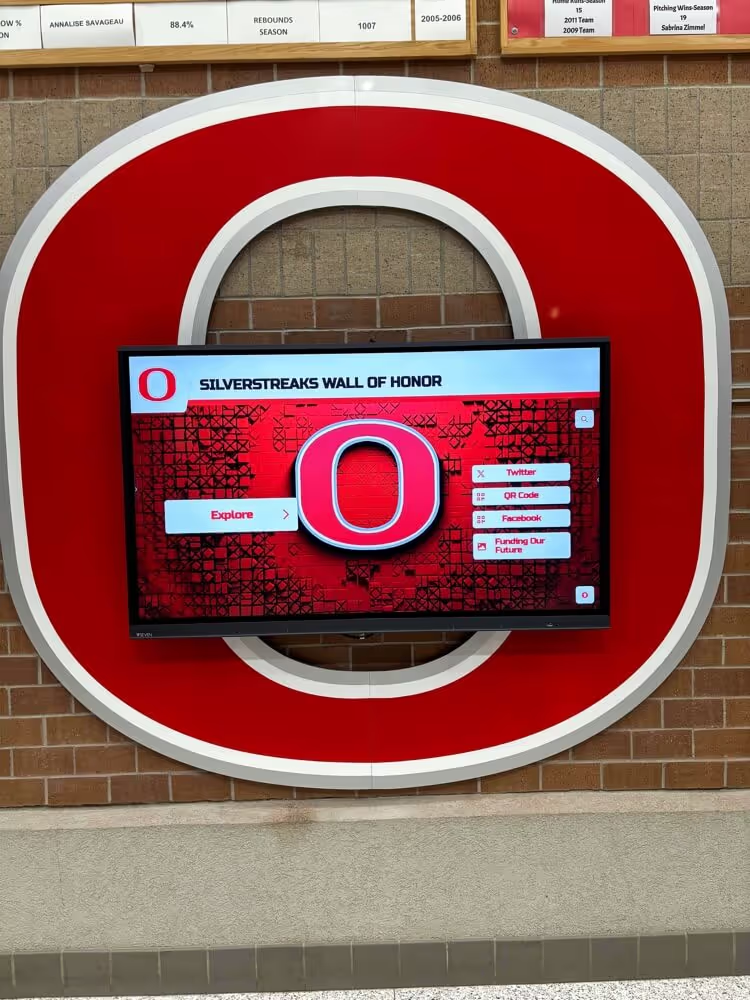
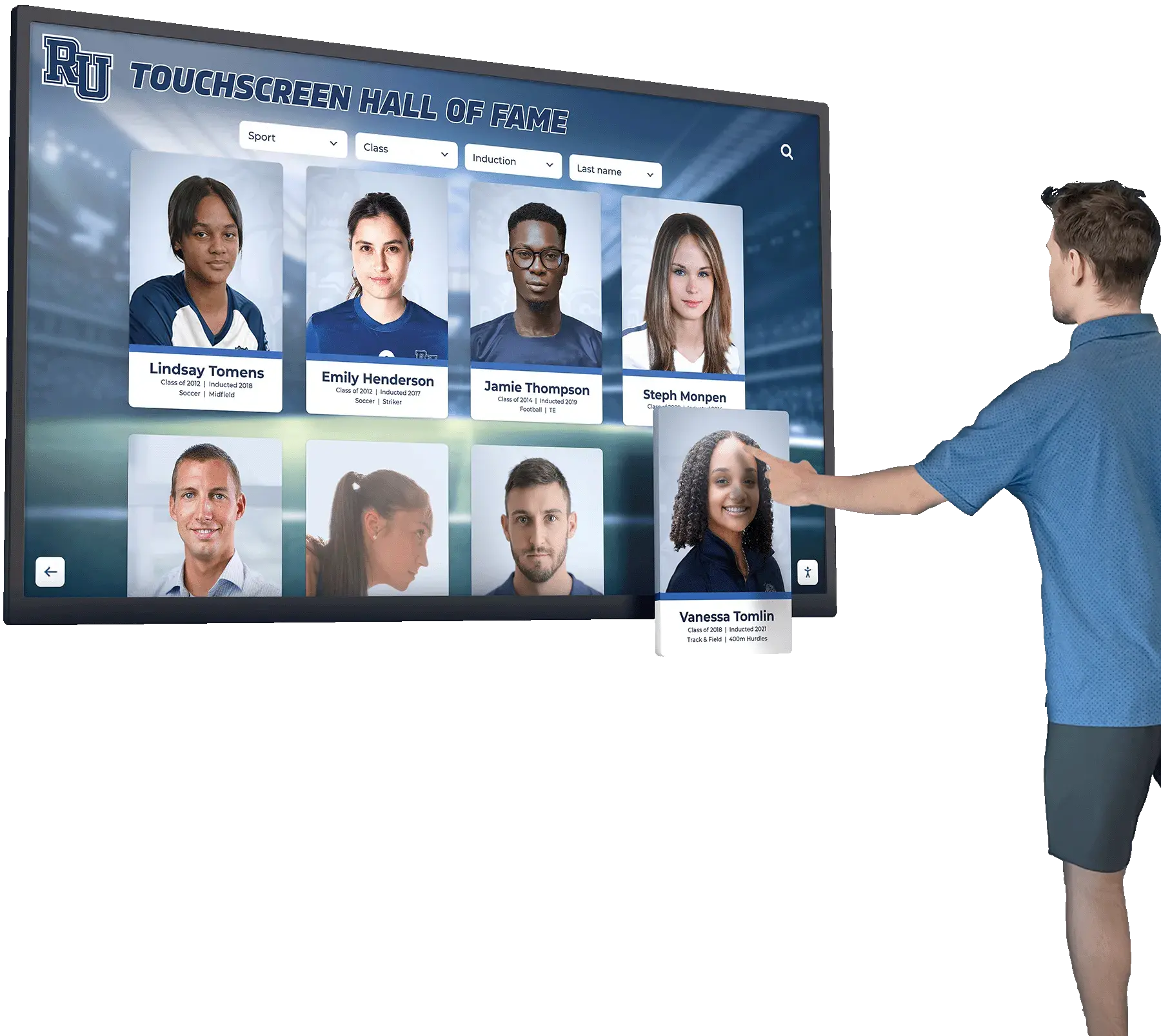
Interactive lobby displays create engaging gathering spaces where students can celebrate achievements and build community connections
Modern Recognition and Display Solutions
Recognition displays represent some of the most impactful design elements in school lobbies, celebrating achievement while creating visual interest and community engagement.
Interactive Digital Recognition Systems
Modern digital displays offer dramatically expanded recognition capacity and engagement opportunities compared to traditional static approaches.
Unlimited Recognition Capacity Without Physical Constraints
Traditional trophy cases and plaque walls face inevitable space limitations that force difficult decisions about which achievements merit recognition and when older honors must be removed to accommodate recent accomplishments. Digital hall of fame displays eliminate these constraints entirely, accommodating unlimited athletes, scholars, donors, and achievement categories without consuming additional lobby square footage.
This unlimited capacity enables comprehensive recognition approaches celebrating:
- Athletic achievements across all sports and competition levels, not just championship teams
- Academic honors including honor roll students, subject-specific awards, and scholarship recipients
- Arts recognition for theater performances, music competitions, and visual arts achievements
- Community service awards and character-based honors
- Alumni accomplishments and post-graduation success stories
- Donor recognition at all giving levels, from annual fund supporters to major capital campaign contributors
Schools implementing platforms like Rocket Alumni Solutions report dramatically increased recognition breadth, with hundreds or thousands of individuals honored compared to the dozens accommodated by physical trophy cases.
Rich Multimedia Storytelling
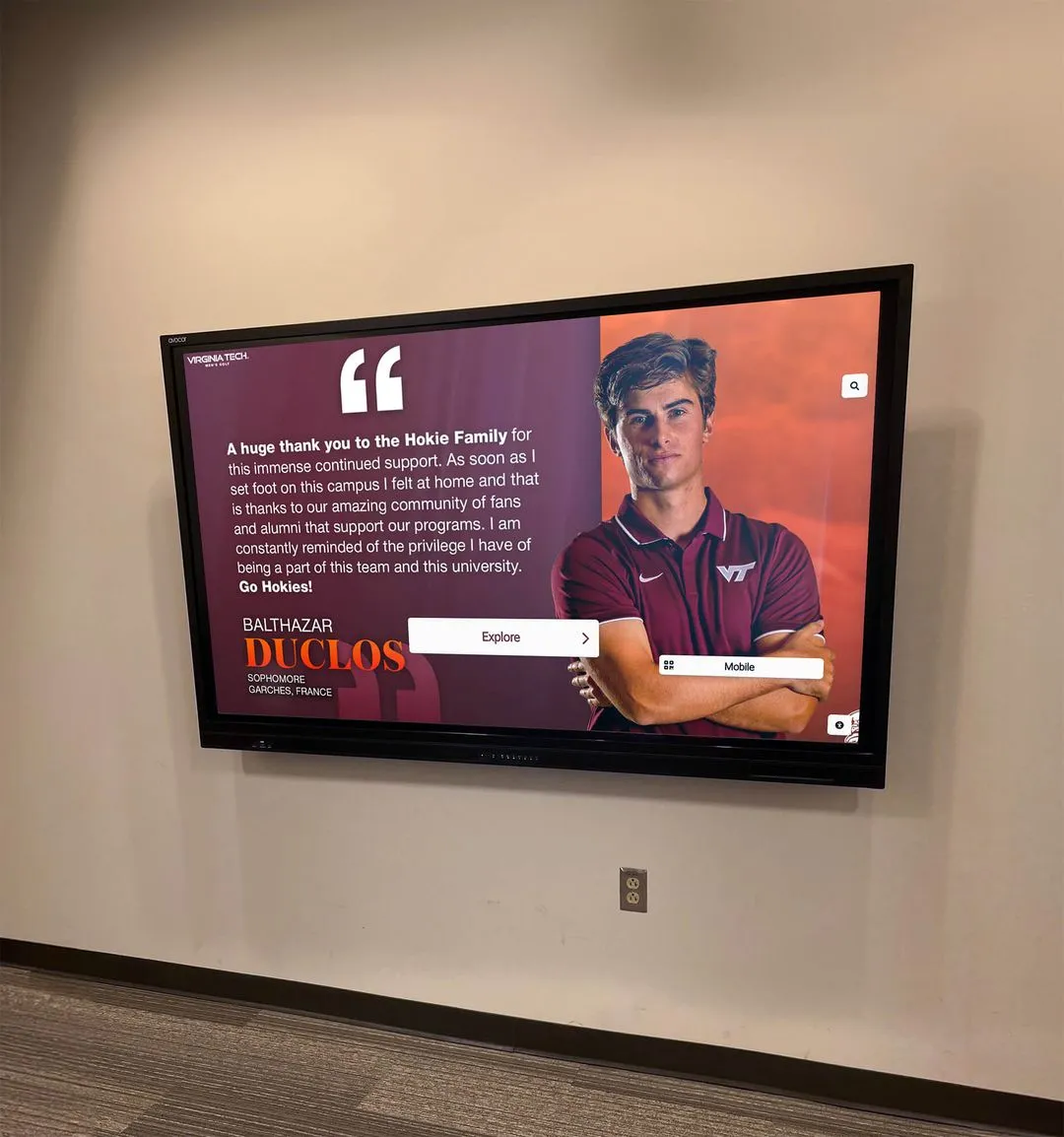
Digital recognition transcends the name-and-date limitations of traditional plaques, enabling rich multimedia profiles featuring photographs, biographical narratives, achievement statistics, video highlights, and personal testimonials. Visitors can explore individual athlete careers, understand academic achievement contexts, and connect emotionally with recognition content in ways static plaques cannot facilitate.
This storytelling capability proves particularly valuable for engaging younger visitors who expect interactive, media-rich experiences and struggle to connect with text-only traditional displays. When lobbies feature touchscreen displays where students can explore athlete profiles, watch championship highlights, or search for family members’ achievements, recognition becomes active engagement rather than passive observation.
Perpetually Current Content Through Remote Updates
Perhaps most importantly, digital recognition platforms enable instant updates maintaining perpetually current displays without physical plaque production delays or installation logistics. Recognition coordinators can add new achievements immediately following competitions, update information as students progress through academic programs, and correct errors without costly engraving replacement.
This update flexibility ensures lobby recognition remains continuously relevant, creating impressions of organizational excellence and attention to detail that outdated static displays undermine.
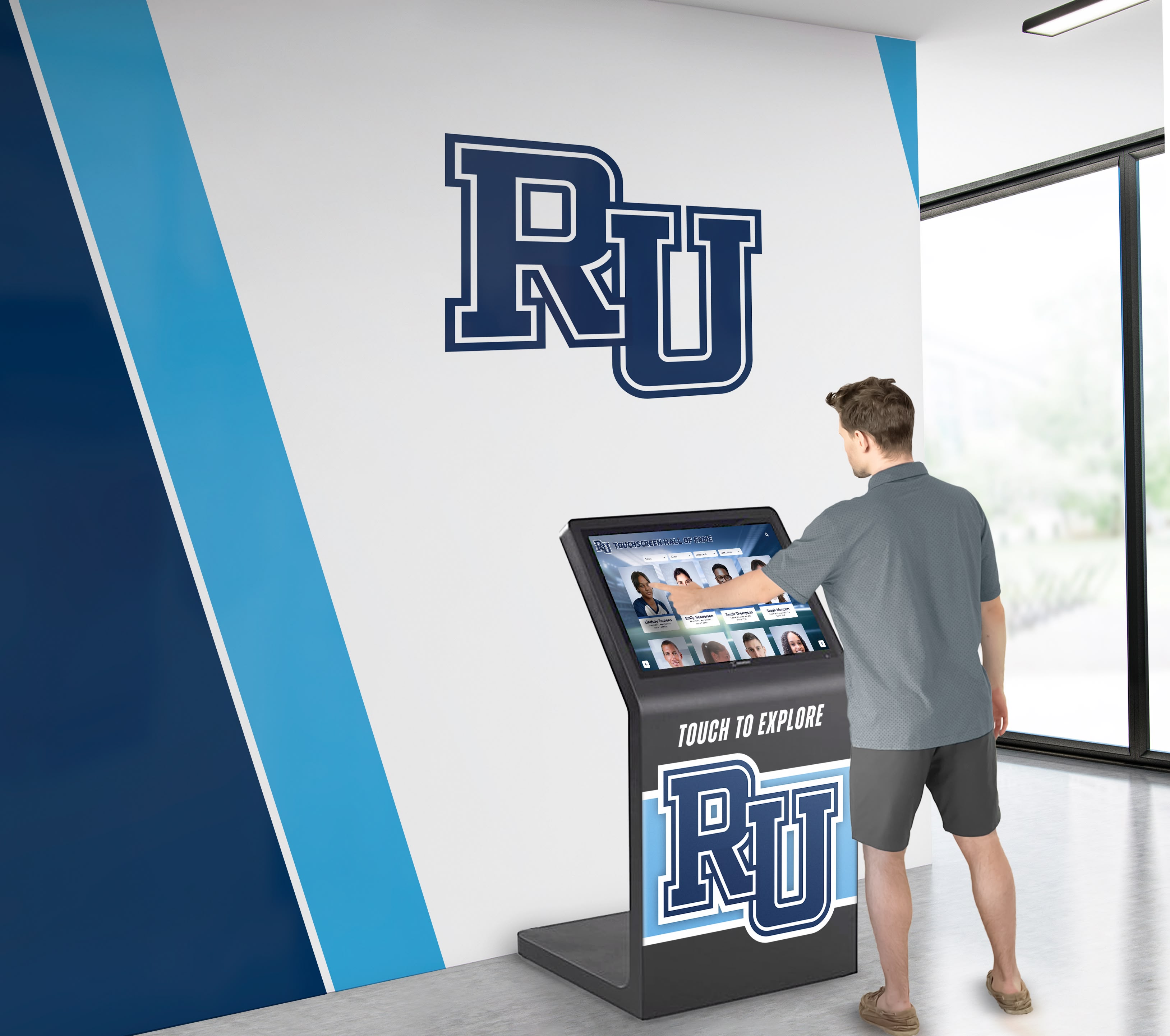
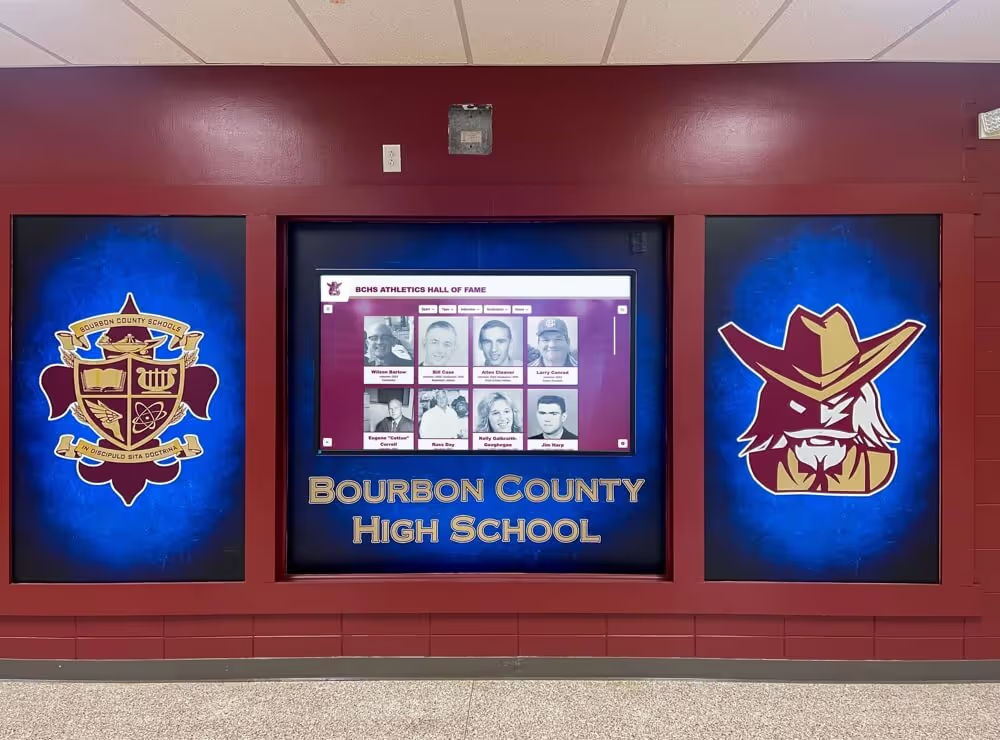
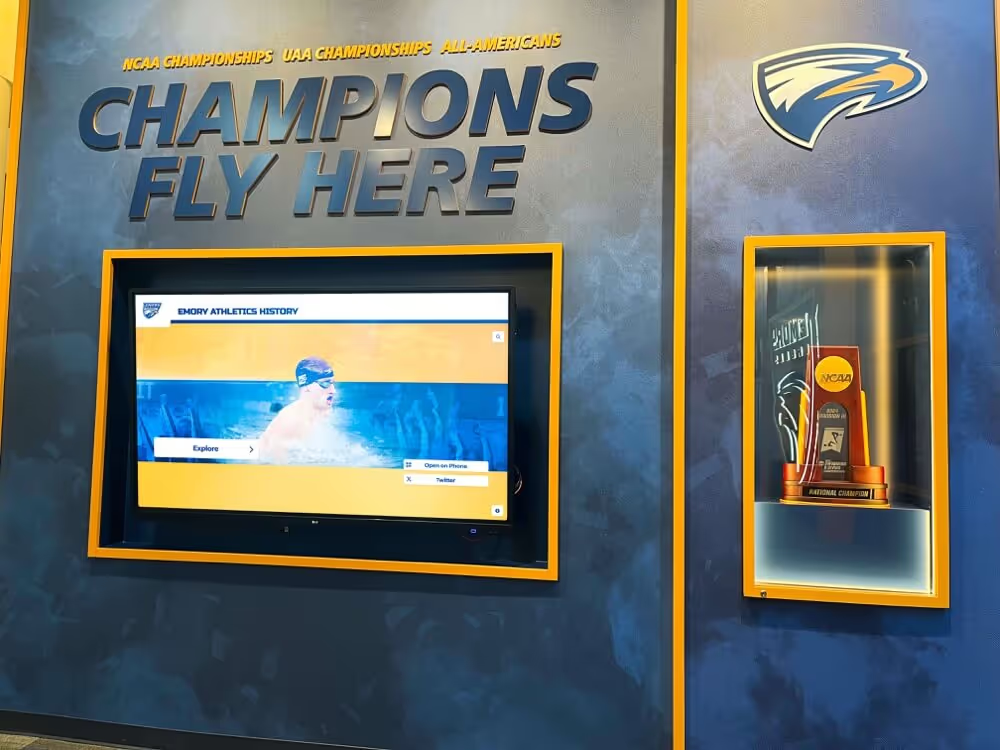
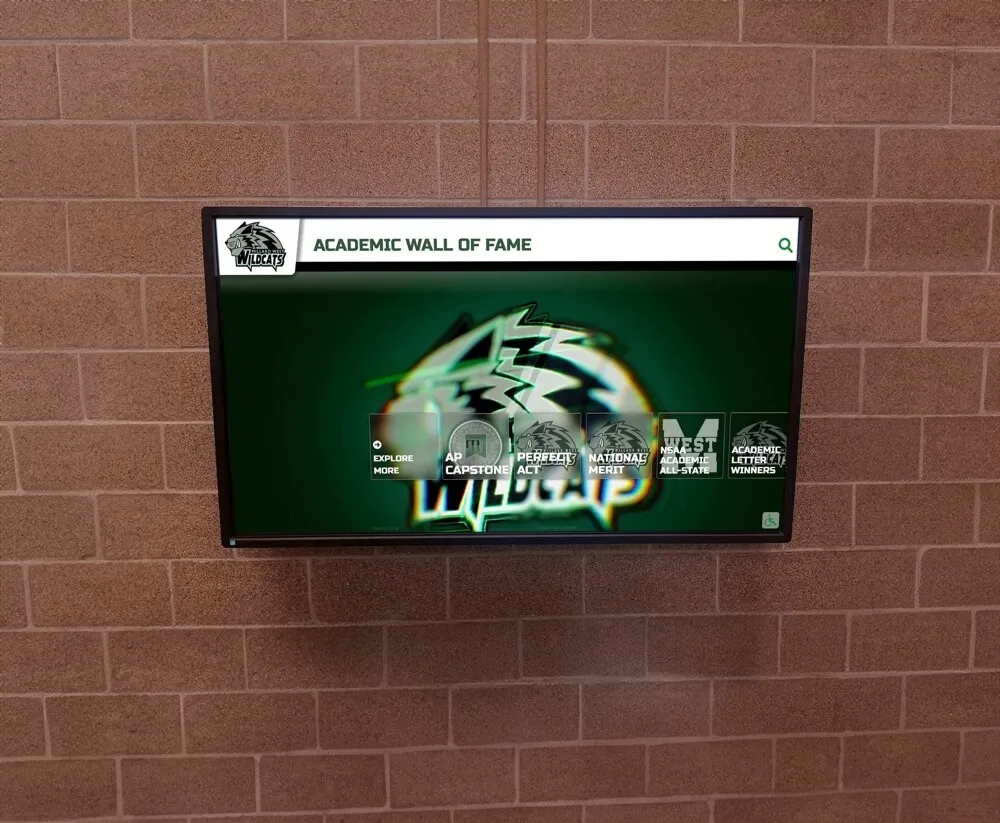
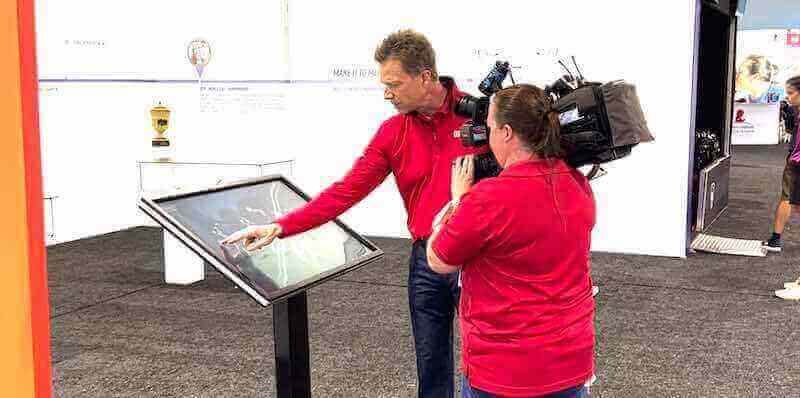
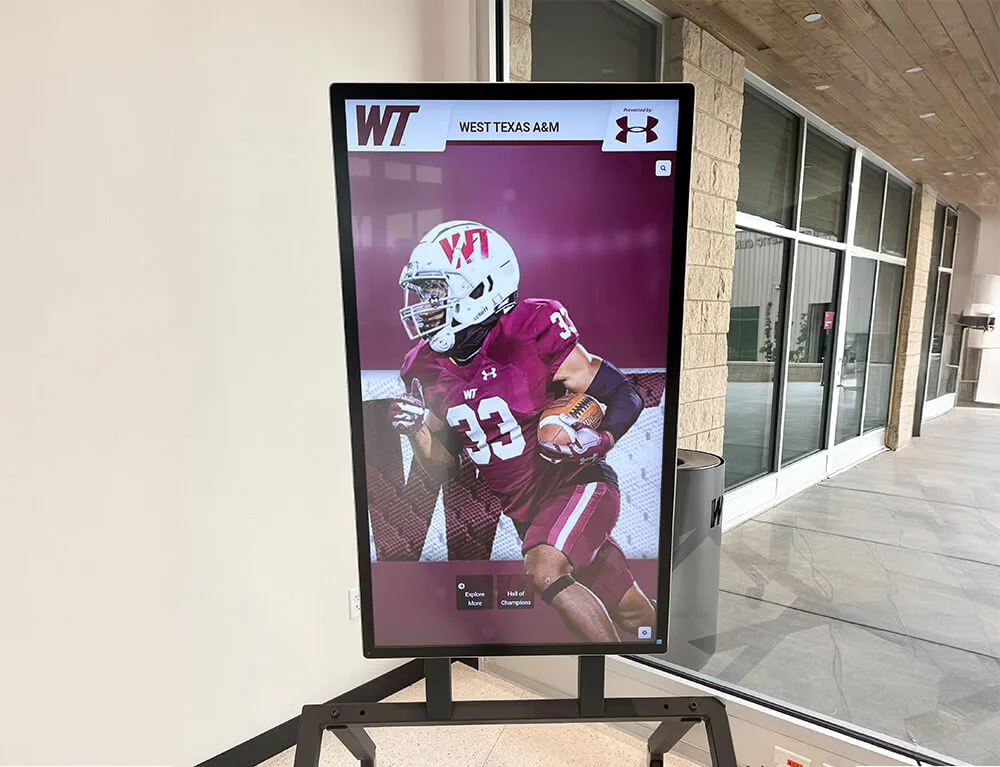
Touchscreen recognition kiosks create engaging visitor experiences while serving dual purposes as wayfinding and information displays
Blending Traditional and Digital Recognition
Many successful lobby designs thoughtfully combine traditional physical recognition with modern digital displays, honoring heritage while embracing contemporary technology.
Preserving Historical Trophy Cases
Schools with significant trophy case investments or historical artifacts worth preserving can retain these traditional elements while supplementing with digital displays that overcome physical space limitations. This blended approach might feature:
- Central traditional trophy case showcasing championship trophies, historical artifacts, and especially significant awards
- Flanking digital displays providing comprehensive recognition for all athletes, teams, and achievements impossible to accommodate physically
- Coordinated design ensuring digital displays complement rather than compete with traditional elements through matching cabinetry, coordinated colors, or integrated mounting approaches
This combination honors tradition and preserves meaningful physical artifacts while capturing the capacity, engagement, and update advantages digital systems provide.
Custom Hybrid Recognition Walls
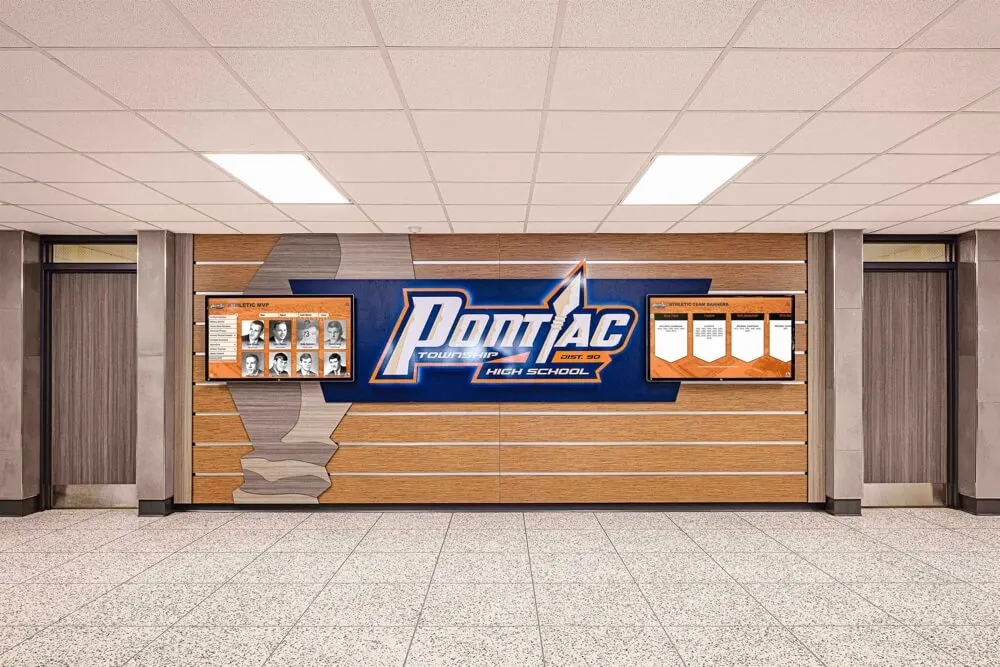
Sophisticated lobby designs integrate digital screens within custom millwork, branded murals, or architectural features creating cohesive recognition walls where technology enhances rather than dominates design. For example, wall wraps for schools might incorporate dedicated spaces for digital screens within larger branded graphics featuring mascots, school colors, and achievement themes.
These integrated approaches require coordination between recognition technology providers and design teams during planning phases to ensure proper screen sizing, mounting specifications, and electrical infrastructure. Schools working with solutions like Rocket Alumni Solutions during hardware setup benefit from expertise ensuring technology integration aligns with broader design visions.
Wayfinding and Navigation Design
Effective lobbies help visitors orient themselves and locate destinations efficiently through thoughtful wayfinding design.
Visual Wayfinding Systems
Clear directional signage and orientation information should be immediately visible upon entrance, preventing the confusion and anxiety visitors experience when unsure how to reach intended destinations.
Intuitive Directory Design
Lobby directories listing building occupants, room numbers, and facility locations should follow design principles maximizing usability:
- Prominent placement: Directories positioned along natural traffic paths where visitors pause after entering, typically near main entrances or reception desks
- Hierarchical organization: Information organized by visitor intent (looking for administrative offices, athletic facilities, specific classrooms) rather than arbitrary alphabetical or numerical schemes
- Plain language descriptions: Avoiding institutional jargon in favor of clear descriptions matching how visitors think about destinations
- Visual hierarchy: Typography and spacing that help visitors quickly scan and locate relevant information without reading entire directories
Directional Signage Consistency
Beyond lobby directories, directional signs throughout facilities should use consistent terminology, colors, and design language established in entrance areas. This consistency prevents confusion when lobby directories reference “Athletic Center” but corridor signs indicate “Gymnasium” for the same destination.
Digital Wayfinding and Interactive Maps
Modern touchscreen wayfinding systems provide dynamic navigation assistance impossible with static signage while serving dual purposes as recognition displays and information hubs.
Interactive Campus Maps
Digital wayfinding kiosks positioned in lobbies enable visitors to search for specific destinations, browse facility categories, and receive turn-by-turn directions through intuitive touch interfaces. These systems might include:
- Searchable databases finding people, departments, rooms, or facility types
- Interactive floor plans showing current location and desired destinations
- Photographic landmarks helping visitors recognize route features
- QR code generation allowing visitors to transfer directions to personal smartphones
- Multi-language support serving diverse community populations
Dual-Purpose Recognition and Wayfinding
Strategic schools recognize that prominent lobby touchscreens need not serve exclusively navigational purposes. When not actively used for wayfinding, these displays can showcase recognition content, upcoming events, emergency notifications, or institutional messaging. This dual-purpose approach maximizes return on technology investment while creating engaging environments serving both functional and community-building purposes simultaneously.
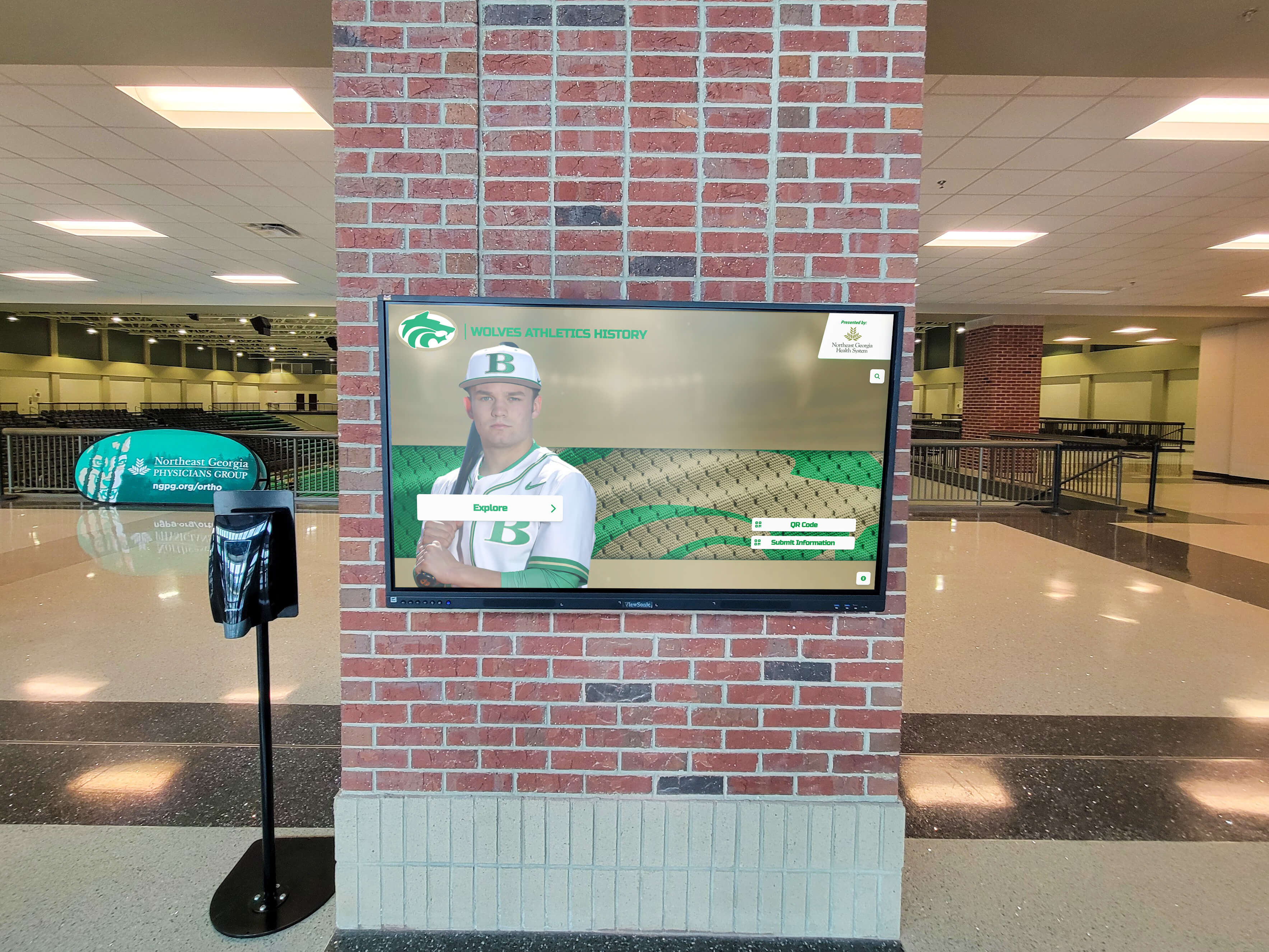
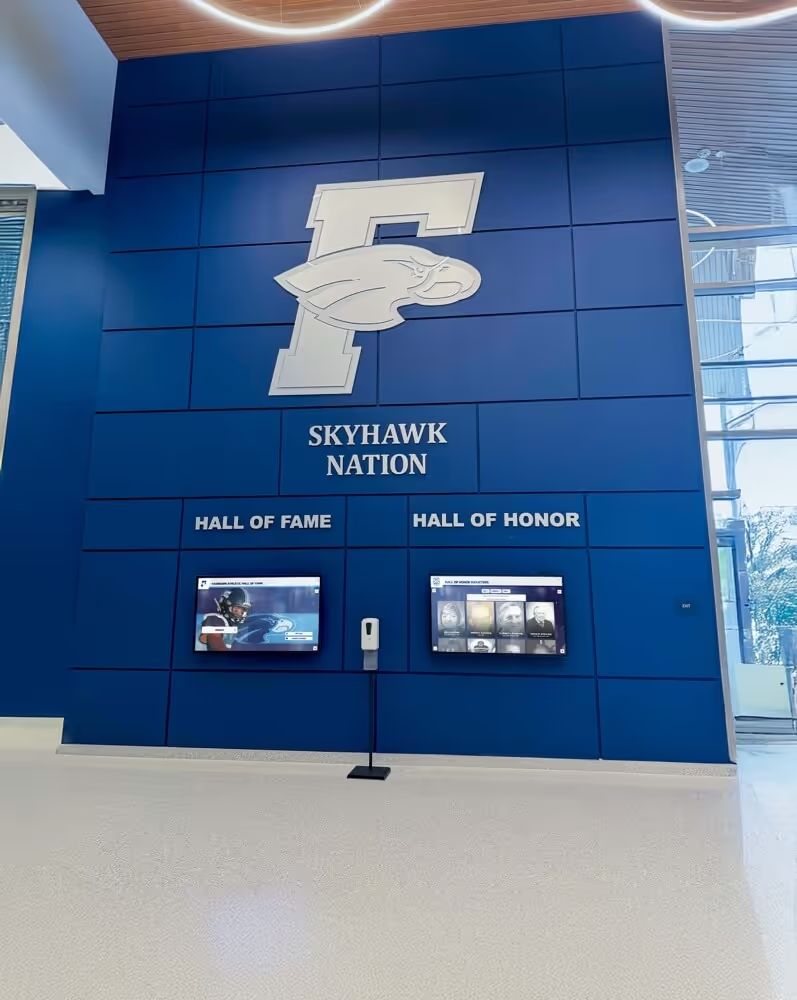
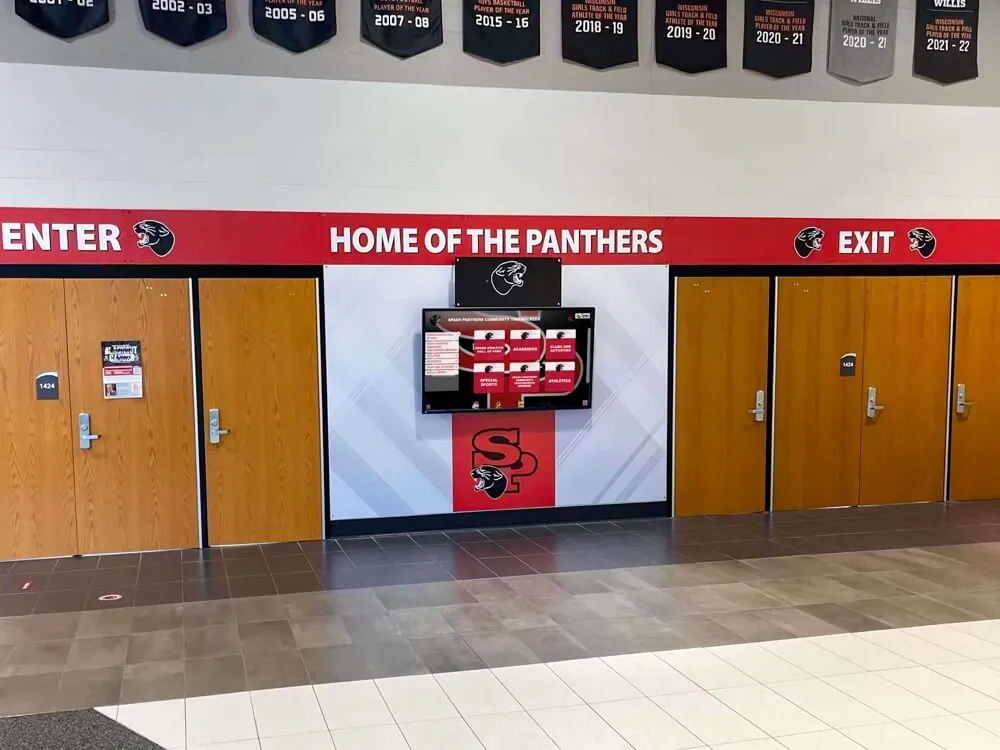
Strategic display placement on architectural features integrates technology seamlessly while maximizing visibility in high-traffic areas
Creating Gathering Spaces Within Lobbies
Beyond pure circulation and wayfinding functions, thoughtful lobby design creates inviting gathering spaces that encourage community interaction and campus engagement.
Seating Areas and Social Zones
Lobbies with comfortable seating arrangements become informal gathering spaces where parents wait for students, visitors pause before appointments, and community members connect during events.
Furniture Selection and Arrangement
Seating areas should balance comfort with durability while supporting varied uses:
- Diverse seating options: Combining individual chairs, small sofas, and bench seating accommodates different group sizes and preferences
- Conversation groupings: Arranging furniture to facilitate conversation rather than theater-style rows facing forward
- Charging stations: Integrating electrical outlets and USB charging ports within seating areas serves modern connectivity expectations
- Coffee table or work surfaces: Providing surfaces where visitors can review documents, work on laptops, or set down personal belongings
Creating Welcoming Atmosphere
Seating zones feel most inviting when designed as distinct spaces rather than furniture simply pushed against walls:
- Area definition: Using area rugs, distinctive lighting, or architectural elements defining seating zones as intentional spaces
- Natural light access: Positioning seating near windows when possible, providing pleasant environments and reducing institutional feel
- Visual interest: Ensuring seating areas have interesting views—either exterior windows or interior focal points like recognition displays, artwork, or architectural features
Student Work and Achievement Displays
Lobbies provide excellent venues for rotating displays of current student work, creating engagement for daily occupants while demonstrating educational quality to visitors.
Curated Display Systems
Rather than haphazard bulletin boards, professional display systems might include:
- Gallery-style mounting systems with consistent frames and spacing
- Digital displays cycling through photographs of student projects, performances, or activities
- Three-dimensional display cases for sculpture, science projects, or other artifacts
- Rotating exhibition schedules ensuring fresh content and broad representation across academic programs
Many schools discover that quick team-building activities and collaborative projects produce excellent lobby display content while strengthening student connections and school culture.
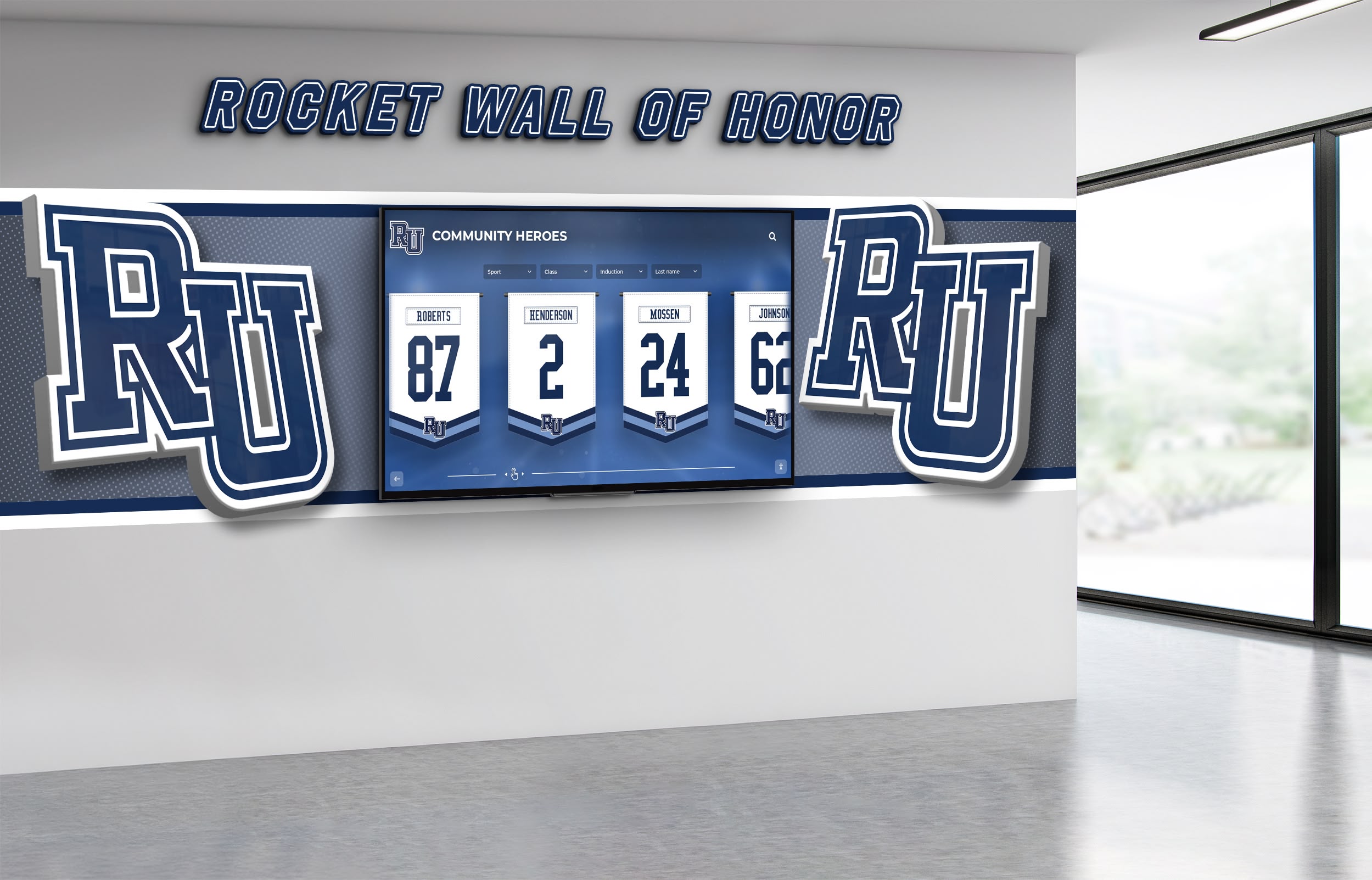
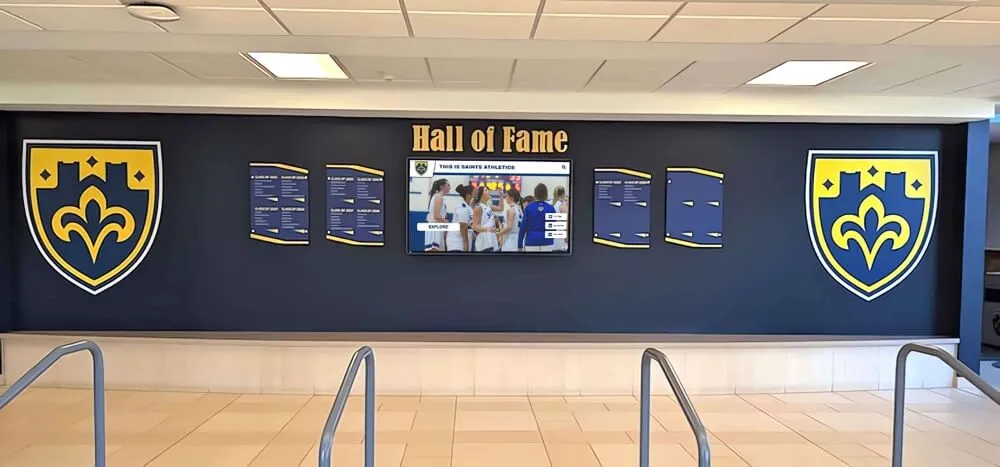
Comprehensive digital recognition walls can celebrate diverse achievement types—from athletics to academics to community service—within unified, professionally designed installations
Accessibility and Universal Design Principles
Truly welcoming lobbies ensure all visitors can navigate, access information, and engage with recognition content regardless of physical, sensory, or cognitive abilities.
Physical Accessibility Requirements
Beyond ADA compliance minimums, thoughtful design considers the full spectrum of mobility considerations:
Circulation and Maneuvering Space
- Wide, clear pathways accommodating wheelchairs, walkers, and other mobility aids without requiring navigation around obstacles
- Reception desk heights enabling comfortable interaction for both standing and seated visitors
- Seating areas with spaces for wheelchair users to join groups rather than sitting separately
- Automatic doors or power-assist door openers at entrance points
Accessible Recognition and Information Displays
- Interactive touchscreens mounted at heights accommodating both standing visitors and wheelchair users (typically 40-44 inches center screen height)
- Traditional displays positioned to allow close approach without architectural barriers
- Adequate maneuvering space in front of all interactive elements
Sensory Accessibility Considerations
Accessibility extends well beyond physical mobility to include visitors with vision, hearing, or cognitive differences.
Visual Accessibility
- High-contrast color schemes ensuring text and graphics remain visible for visitors with low vision
- Adequate lighting levels that don’t create glare on screens or reflective surfaces
- Digital displays with adjustable text sizes and screen reader compatibility
- Braille signage supplementing visual directional information
Cognitive Accessibility
- Simple, intuitive wayfinding requiring minimal reading or complex navigation
- Consistent design language and terminology throughout facilities
- Visual cues (icons, colors, imagery) supplementing text-based information
- Digital interfaces designed for intuitive interaction without extensive instruction
Solutions like Rocket Alumni Solutions demonstrate the importance of genuine accessibility compliance—offering the only web-based recognition platform meeting WCAG 2.1 AA standards rather than merely claiming accessibility without rigorous validation.
Budget-Conscious Design Strategies
Effective lobby design doesn’t require unlimited budgets—strategic approaches create impressive results through focused investments in high-impact elements.
Phased Implementation Approaches
Rather than attempting comprehensive renovations beyond available budgets, schools can plan multi-phase improvements addressing priorities sequentially as funding becomes available.
Phase One: High-Impact Visual Elements
Initial phases might focus on relatively affordable improvements creating immediate visual transformation:
- Fresh paint in school colors or coordinated palettes
- Branded vinyl graphics or wall murals featuring mascots and achievement themes
- Updated lighting creating better ambiance and highlighting focal areas
- Professional signage replacing outdated directional information
Phase Two: Technology Integration
Subsequent phases can add more capital-intensive technology investments after visual foundations are established:
- Interactive donor recognition displays serving dual purposes for wayfinding and achievement celebration
- Digital signage systems for events, announcements, and community information
- Upgraded reception desk technology supporting modern visitor management
Phase Three: Architectural Enhancements
Long-term phases might address more substantial architectural improvements:
- Flooring replacement with branded patterns or higher-quality materials
- Custom millwork integrating recognition displays within architectural elements
- Reconfigured reception areas improving traffic flow and security monitoring
Maximizing Impact Within Constraints
When budgets severely limit options, strategic choices can still create meaningful improvements:
Focus on Single Focal Points
Rather than spreading limited resources across many minor improvements, creating one dramatic focal element often delivers better results:
- Single statement mural wall in prominent location
- One high-quality digital recognition display rather than multiple cheaper alternatives
- Professional reception desk upgrade creating immediate impression improvement
Leverage Student and Community Talent
Schools can control costs while building community investment through collaborative approaches:
- Student art program involvement in mural design and execution
- Community volunteers with relevant expertise (painters, electricians, carpenters) contributing skilled labor
- Alumni donations of professional services or materials at reduced costs
- Booster organization fundraising specifically for lobby improvements
Implementing Your School Lobby Design Vision
Moving from conceptual ideas to realized designs requires systematic planning, stakeholder engagement, and thoughtful project management.
Stakeholder Engagement and Feedback
Successful lobby designs reflect input from diverse community members who use these spaces in different ways.
Gathering Multiple Perspectives
Consider soliciting feedback from:
- Administrative staff who work in lobby areas daily and understand operational needs
- Students who transit lobbies regularly and can articulate peer perspectives
- Parents who form first impressions during campus visits
- Alumni who can provide historical context and emotional connections to institutional heritage
- Facilities staff who understand maintenance requirements and technical constraints
Balancing Diverse Opinions
Design-by-committee often produces compromised results satisfying no one, so leadership must balance broad input with decisive direction. Effective approaches include:
- Presenting stakeholders with specific options rather than completely open-ended questions
- Identifying consensus around core priorities while allowing design professionals to resolve implementation details
- Explaining decision rationales when final designs don’t incorporate all suggested feedback
Working with Design Professionals
While some schools attempt DIY lobby improvements, professional design expertise typically delivers superior results justifying investment.
When to Engage Architects or Designers
Professional design assistance makes particular sense for:
- Comprehensive renovations involving architectural changes, electrical systems, or structural modifications
- Lobbies requiring ADA compliance improvements or building code updates
- Situations where previous DIY attempts produced unsatisfactory results
- Schools seeking cohesive, professionally executed designs that will remain current for decades
Coordinating Recognition Technology Installation
Schools implementing digital recognition systems should coordinate between design teams and technology providers during planning phases. This integration ensures proper screen sizing, mounting requirements, electrical infrastructure, and internet connectivity align with broader design visions.
Many institutions exploring concepts from creative sports recognition categories to homecoming traditions discover that comprehensive digital platforms accommodate this diverse recognition content within unified lobby installations.
Maintaining Design Integrity Over Time
Even expertly designed lobbies deteriorate without ongoing maintenance and periodic refreshes ensuring spaces remain current and impressive.
Establishing Maintenance Protocols
Assign clear responsibility for:
- Daily cleaning ensuring lobbies remain spotless and welcoming
- Regular inspection of technology ensuring displays function properly and content remains current
- Periodic deep cleaning of carpets, upholstery, and other materials
- Prompt repair of damage or wear preventing minor issues from becoming major problems
Planning Periodic Refreshes
Even well-maintained lobbies benefit from periodic updates preventing dated appearances:
- Rotating student work displays ensuring fresh content throughout academic years
- Updating recognition content celebrating recent achievements
- Refreshing paint or graphics elements showing wear
- Replacing worn furniture or fixtures before they appear shabby
Creating Lobbies That Welcome, Inspire, and Engage
School lobbies represent opportunities far beyond functional transition spaces—they serve as institutional ambassadors creating first impressions, celebrating community achievements, and communicating educational values to every visitor who enters. The most effective entrance designs balance aesthetic appeal with practical functionality, honor tradition while embracing innovation, and create environments that welcome diverse visitors while inspiring pride among daily community members.
Successful lobby design begins with understanding the strategic purposes these spaces serve: orienting visitors, communicating institutional identity, celebrating achievements, and creating emotional connections that influence enrollment decisions and community support. From there, thoughtful application of design principles—strategic color psychology, cohesive branding, comprehensive recognition systems, intuitive wayfinding, and genuine accessibility—transforms generic institutional spaces into memorable environments that differentiate schools from competitors.
Whether planning new construction, comprehensive renovations, or focused improvements within constrained budgets, school leaders can create impressive lobby environments through intentional design choices that prioritize high-impact elements, leverage modern recognition technology, and maintain spaces that remain current and welcoming for years to come. The investment in thoughtful lobby design pays dividends through improved community perceptions, increased enrollment interest, strengthened alumni connections, and enhanced pride among students, staff, and families who experience these welcoming environments daily.
Modern recognition platforms transform lobby potential by eliminating physical space constraints while enabling rich multimedia storytelling, perpetual content currency, and comprehensive celebration of achievements across athletics, academics, arts, and community service. Schools ready to create truly engaging lobby environments discover that Rocket Alumni Solutions provides the strategic technology foundation enabling these welcoming, inspiring entrance experiences that strengthen communities and communicate institutional excellence to every visitor.