School hallways serve as far more than simple passages connecting classrooms and facilities—they represent hundreds of daily touchpoints where students, staff, and visitors experience institutional culture, encounter community achievements, and form impressions about educational priorities. Yet many schools treat these high-traffic corridors as functional necessities rather than strategic opportunities, leaving walls blank or cluttered with outdated bulletin boards that fail to engage, inspire, or celebrate the vibrant communities thriving within those buildings.
The most effective schools recognize hallways as prime real estate for recognition displays that transform utilitarian passages into celebration spaces showcasing student achievement, honoring program excellence, and creating emotional connections to institutional heritage. When thoughtfully designed, hallway displays become destinations rather than afterthoughts—places where students pause to find their names, alumni return to discover their legacy, and prospective families witness tangible evidence of educational excellence.
This comprehensive guide explores practical school hallway display ideas that leverage modern recognition approaches, balance aesthetics with functionality, and create engaging environments that strengthen community pride while celebrating diverse achievements across athletics, academics, arts, and service.
School hallways present unique display opportunities and challenges simultaneously. Unlike lobby entrances designed specifically for visitors or trophy rooms dedicated entirely to recognition, hallways serve multiple functions—student circulation during transitions, wayfinding for guests, emergency egress routes, and potential gathering spaces during non-class periods. Effective hallway displays must work within these constraints while creating sufficient visual impact to capture attention in high-traffic, high-distraction environments.

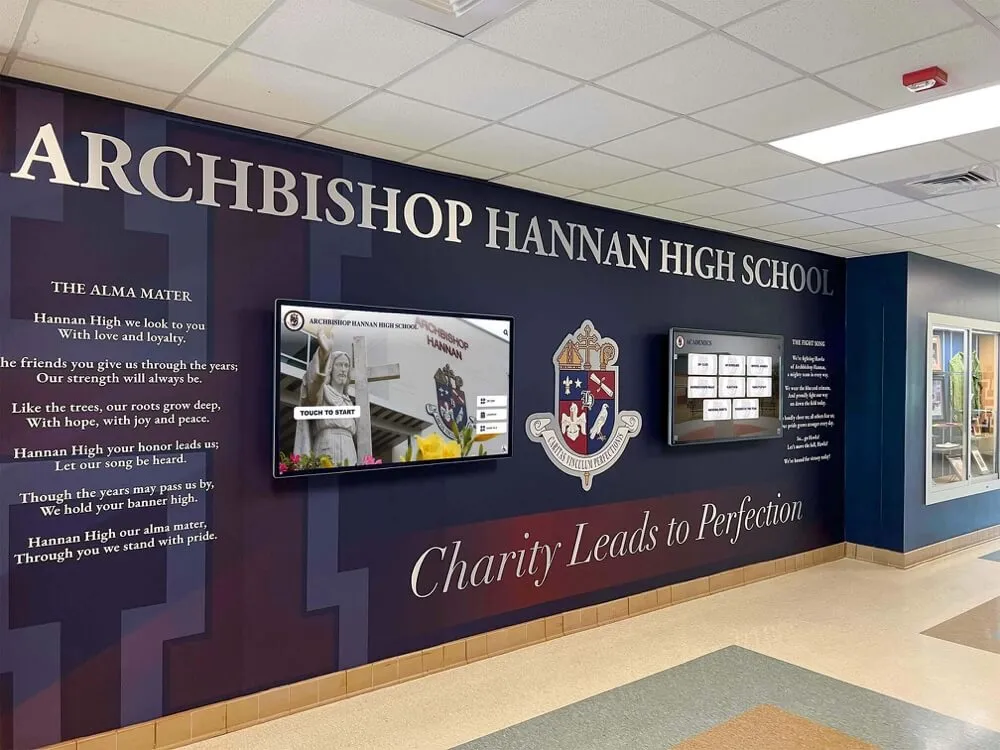
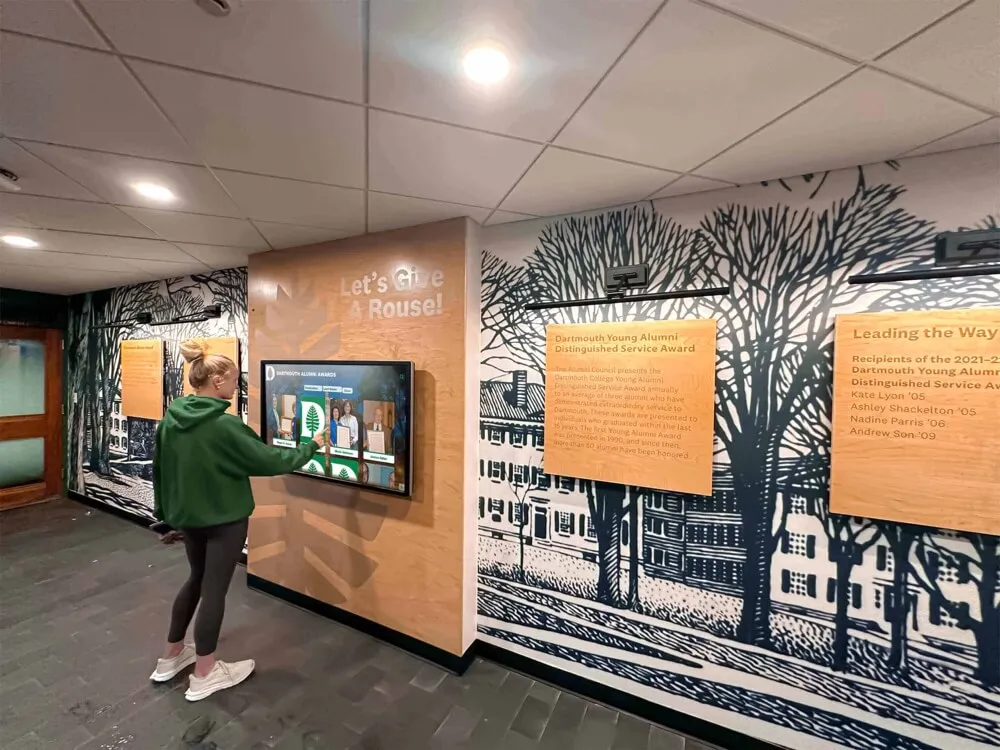
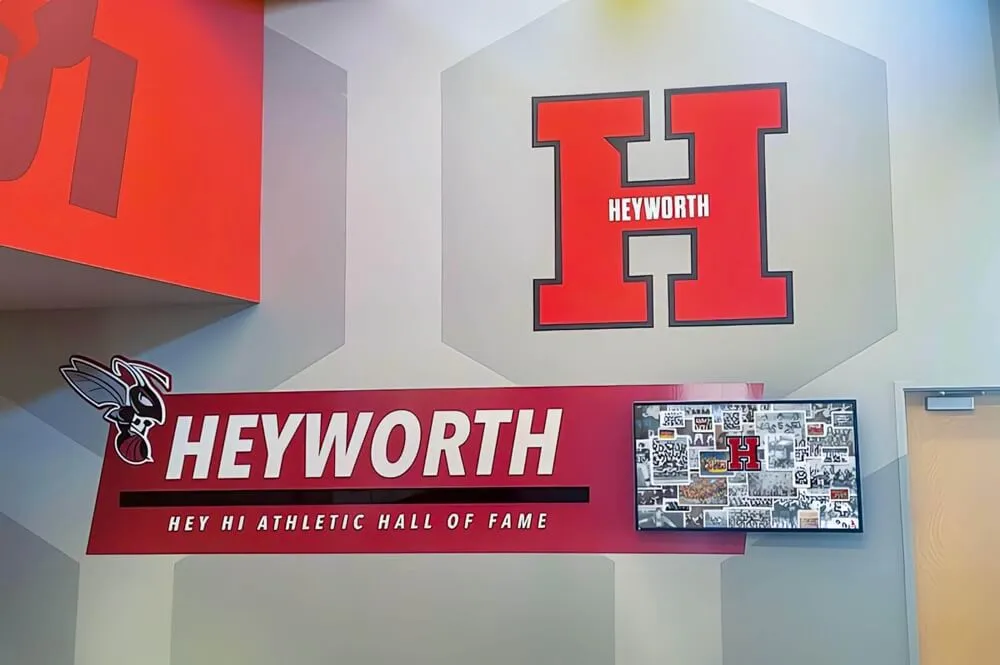
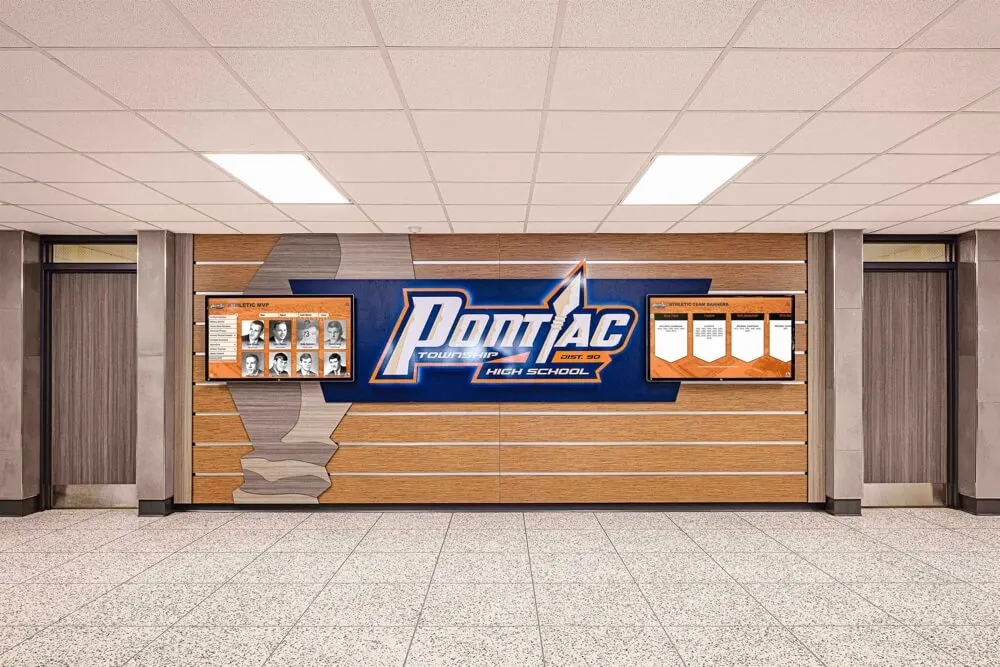
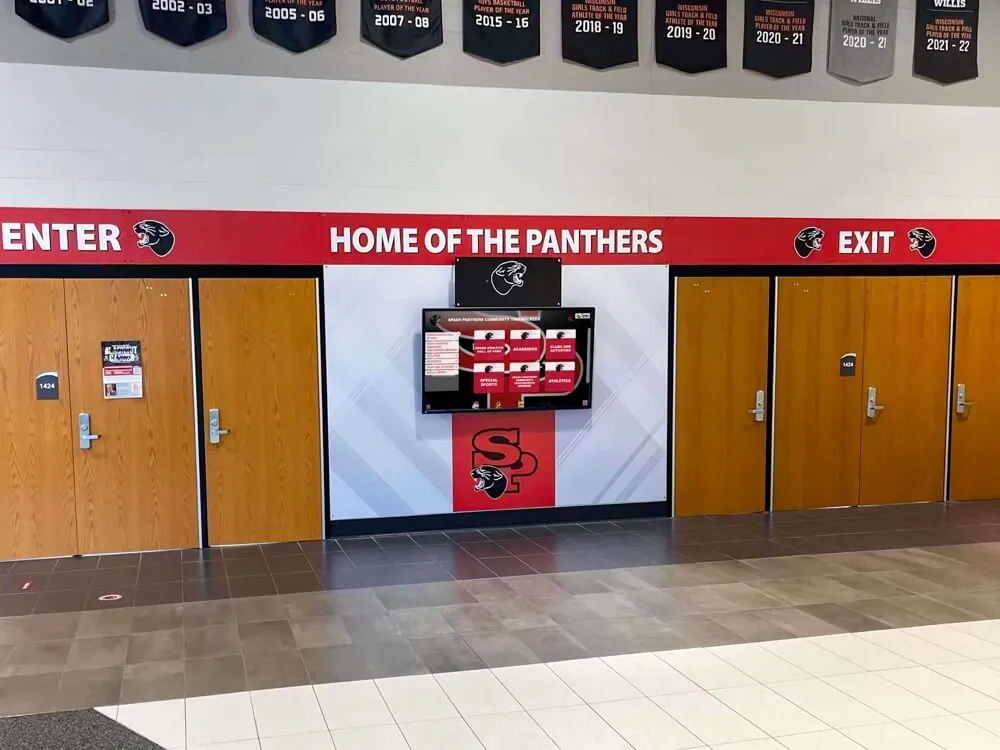
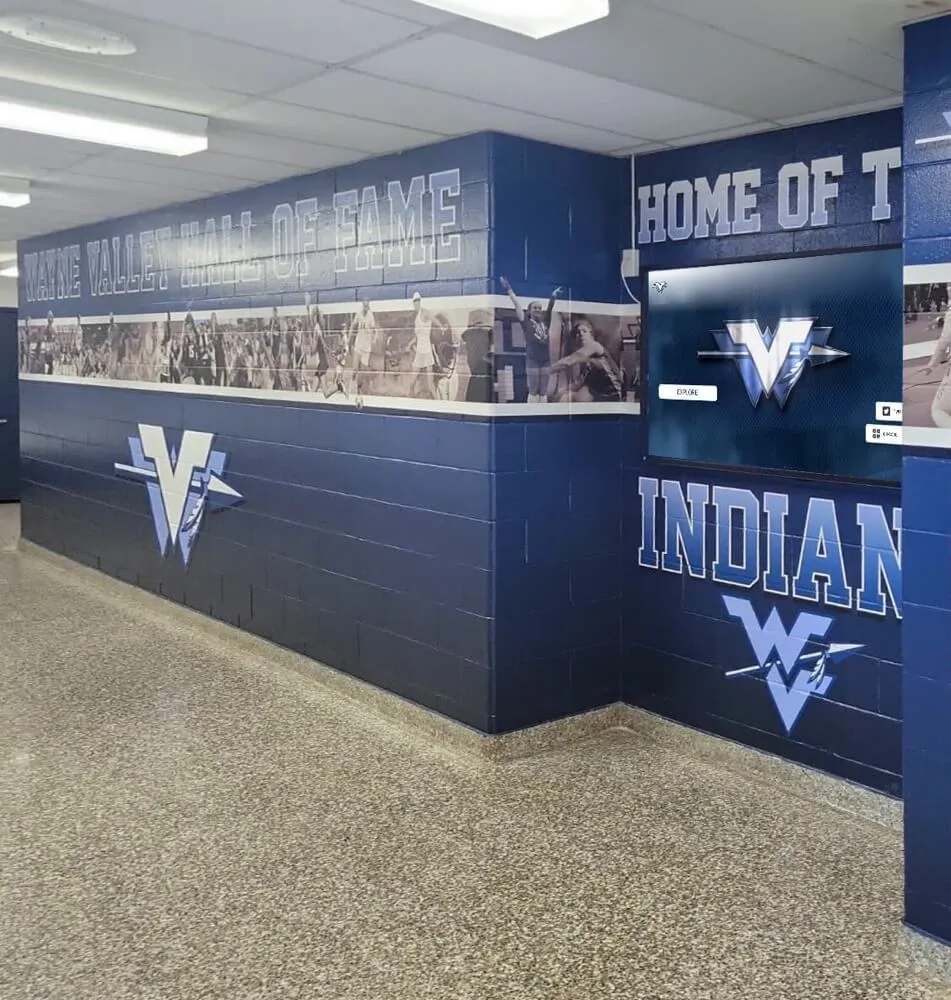
Strategic hallway design combines branded environmental graphics with modern digital displays, creating memorable recognition spaces that celebrate achievement while reinforcing institutional identity
Understanding Hallway Display Opportunities and Constraints
Before implementing specific display ideas, school leaders should assess the unique characteristics of hallway spaces and the opportunities they present for recognition and engagement.
The Strategic Value of Hallway Recognition
Hallways offer recognition visibility that more secluded spaces cannot match. Every student passes through common corridors multiple times daily, creating hundreds of potential engagement moments throughout each week. When hallways prominently feature achievement recognition, celebration becomes embedded in daily school experience rather than isolated in spaces students rarely enter.
Daily Visibility Creates Lasting Impact
Recognition displayed in hallways reaches audiences that lobby displays or dedicated trophy rooms might miss. Athletes see their achievements celebrated during routine class transitions, reinforcing the value placed on their commitments. Academic honors displayed along main corridors communicate that educational excellence matters as much as athletic success. Arts recognition positioned in high-traffic areas demonstrates that creative achievement receives equal celebration alongside traditional accomplishments.
This daily exposure creates cumulative psychological impacts that single visits to trophy rooms cannot replicate. When students encounter recognition hundreds of times throughout academic years, achievement becomes normalized as expected community standard rather than exceptional outlier. The environmental messaging shapes culture—hallways celebrating diverse accomplishments across multiple domains communicate that this institution values many paths to success and recognizes students who pursue them.
Connecting Current Students to Institutional Legacy
Hallway displays create powerful connections between current students and institutional history. When corridors feature historical photos and digital archives preserving program heritage, students discover that their current athletic pursuits continue traditions spanning decades, that their academic achievements build on foundations established by previous generations, and that they contribute to ongoing institutional stories larger than individual experiences.
These heritage connections prove particularly meaningful during challenging moments. Athletes pushing through difficult seasons find inspiration discovering that program legends faced similar struggles. Students pursuing academic excellence see that scholarship recipients featured on hallway displays overcame obstacles resembling their own challenges. The visible evidence that others navigated similar paths successfully provides tangible hope during difficult periods.
Practical Constraints Shaping Hallway Displays
While hallways offer tremendous recognition opportunities, they also present practical limitations that effective displays must accommodate.
Traffic Flow and Safety Requirements
School hallways must maintain clear passage for student circulation, emergency egress, and accessibility compliance. Recognition displays cannot create bottlenecks during class transitions, obstruct emergency exit paths, or violate fire code requirements for corridor widths. These safety constraints influence display positioning, depth, and mounting approaches.
Wall-mounted displays typically work best, minimizing corridor intrusion while maximizing visibility. Floor-standing displays require careful positioning ensuring adequate clearance around all sides. Interactive displays that draw crowds need locations where student gathering doesn’t impede traffic flow—corridor alcoves, wider hallway sections, or intersection areas where multiple corridors meet.
Durability in High-Traffic Environments
Hallways experience significantly more physical stress than protected lobby environments. Recognition displays face potential impacts from passing backpacks, athletic equipment, crowded transitions, and the general wear that thousands of daily passages create. Materials and mounting systems must withstand this abuse while maintaining professional appearance.
This durability requirement doesn’t mean hallway displays must look institutional or utilitarian. Modern materials like polycarbonate protective covers, impact-resistant frames, and commercial-grade mounting hardware enable attractive designs that survive hallway environments without constant maintenance or replacement. Digital hall of fame displays versus traditional trophy cases often demonstrate superior durability precisely because they eliminate fragile glass cases and easily-damaged physical trophies that hallway traffic inevitably damages.
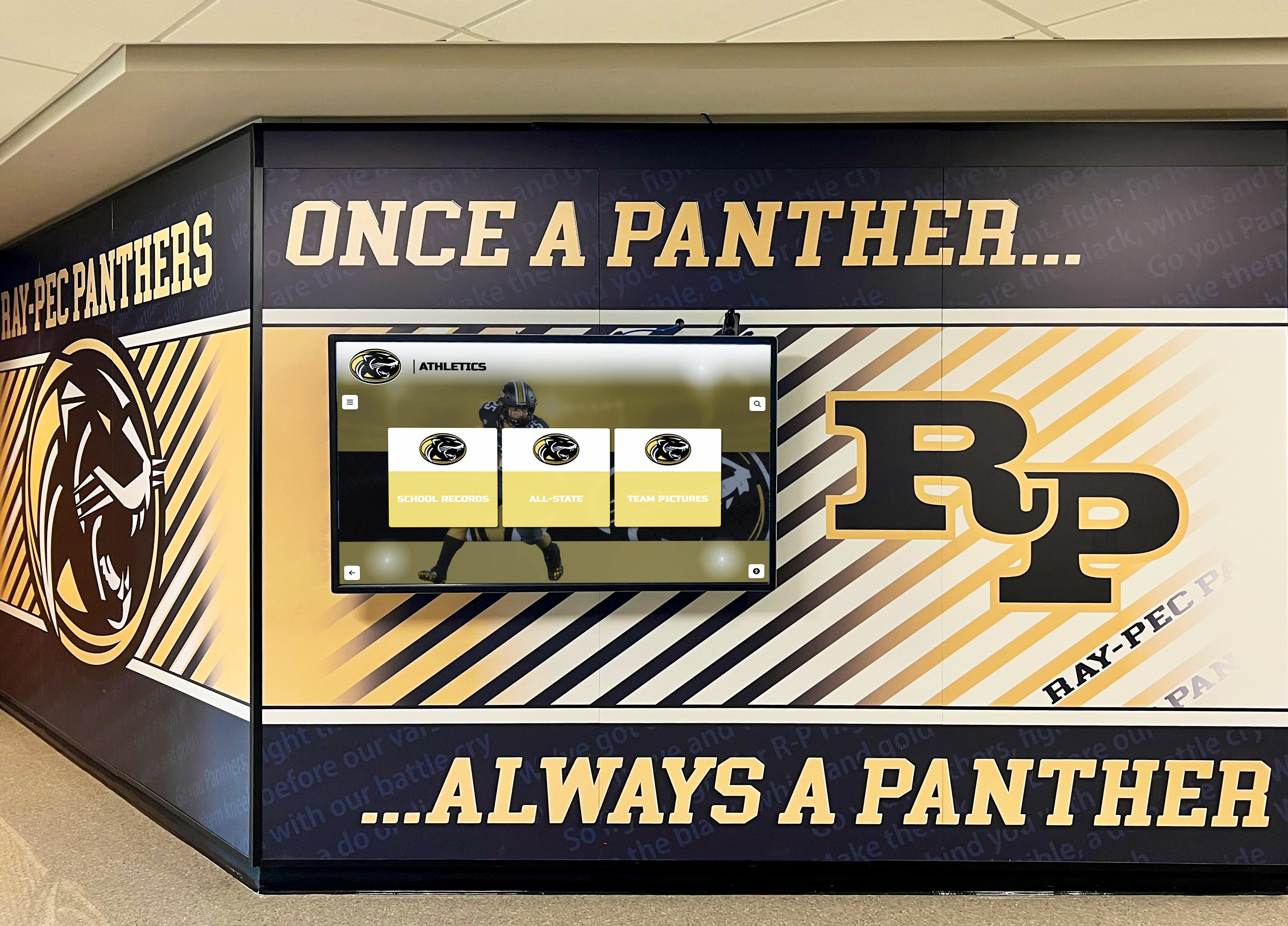
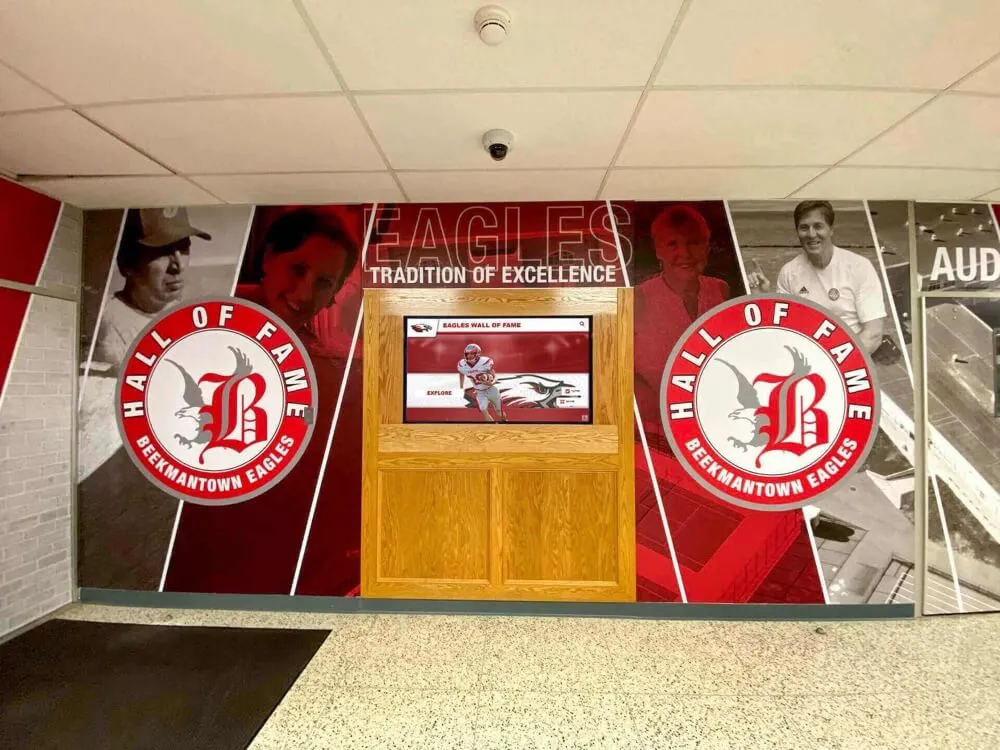
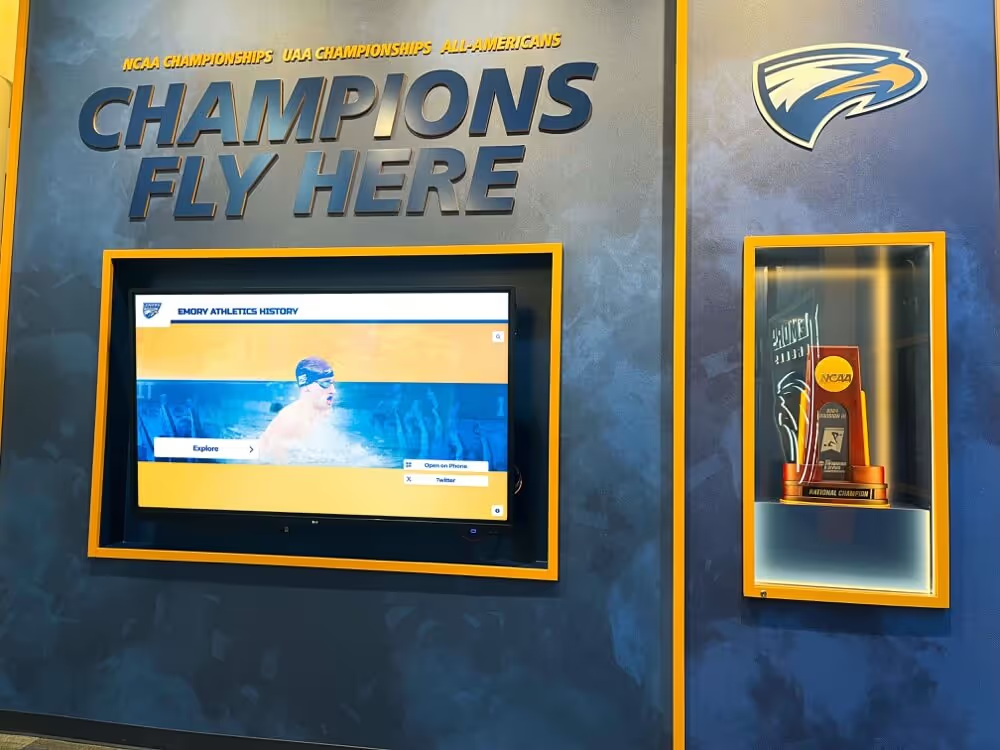
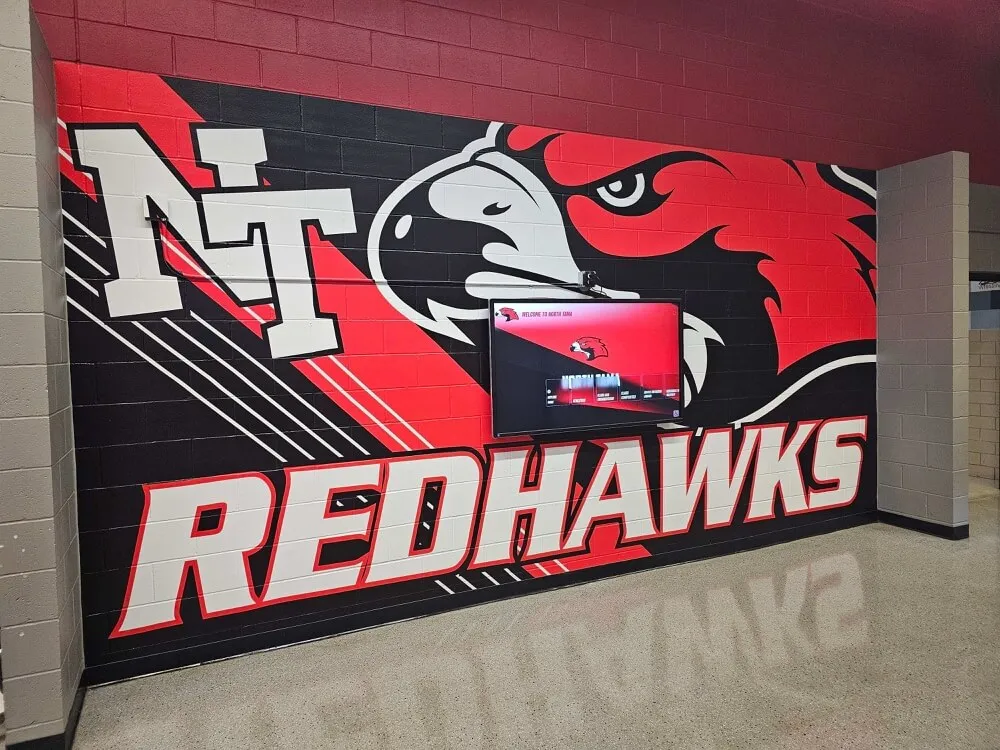
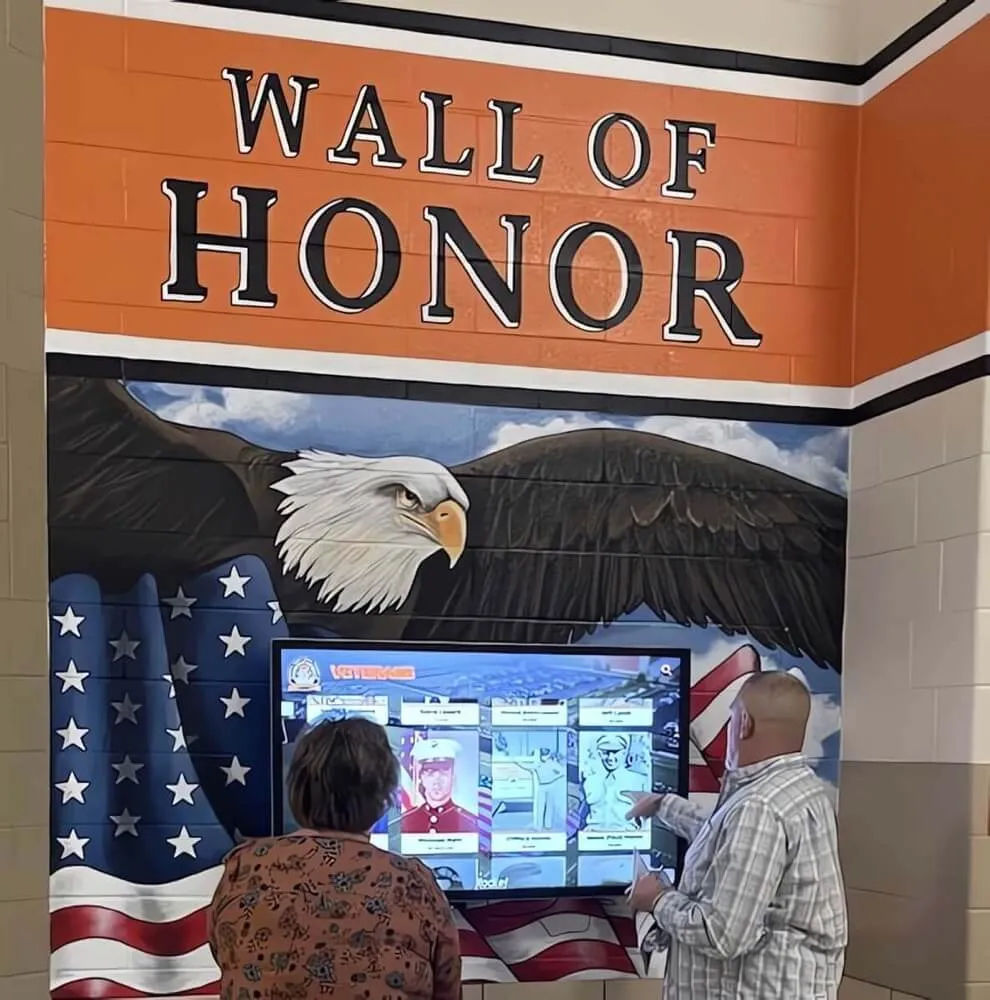
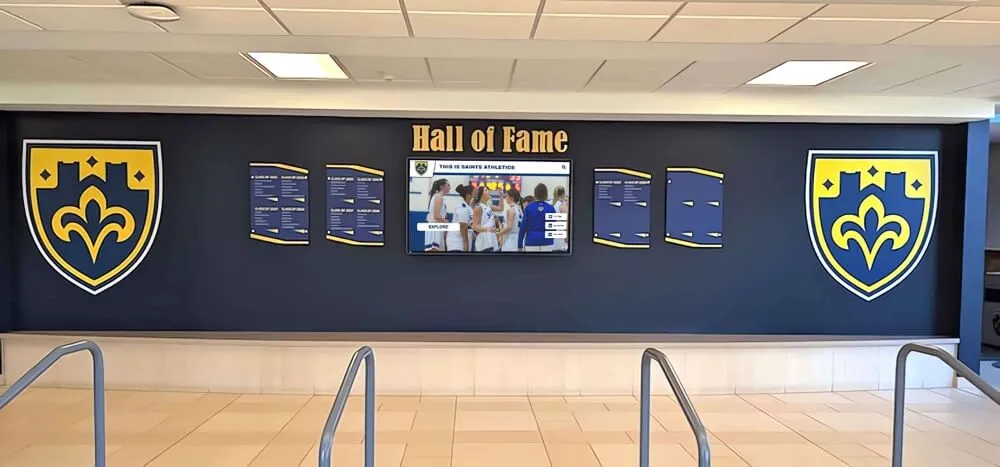
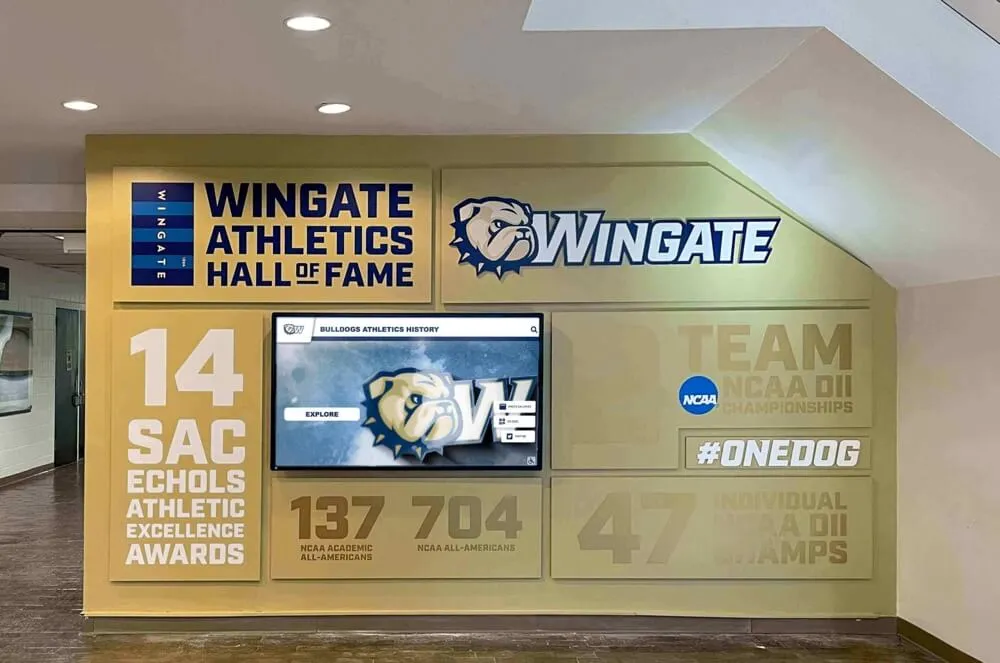
Comprehensive hallway displays integrate school branding through custom murals while incorporating modern digital screens for flexible, updatable recognition content
Modern Digital Display Solutions for Hallways
Digital recognition systems have transformed what’s possible in hallway recognition, overcoming traditional space limitations while creating engaging experiences that static displays cannot match.
Wall-Mounted Digital Recognition Displays
Contemporary digital displays designed for educational environments offer hallway recognition solutions that maximize impact while minimizing spatial footprint and maintenance requirements.
Unlimited Recognition Capacity in Minimal Space
Traditional hallway trophy cases face inevitable space constraints—each linear foot of corridor dedicated to recognition displaces other potential uses and eventually fills to capacity, requiring difficult decisions about which achievements merit inclusion. Digital displays eliminate these limitations entirely, accommodating unlimited recognition honorees within single-screen footprints.
A single 55-inch or 65-inch digital display mounted on a hallway wall can celebrate hundreds or thousands of individuals—every athlete across all sports and competition levels, comprehensive academic honorees including honor roll students and scholarship recipients, arts program participants and award winners, and community service leaders. Schools implementing platforms like Rocket Alumni Solutions touchscreen displays report recognition capacity increases of ten to hundred times compared to traditional trophy cases, without consuming additional corridor space.
This unlimited capacity transforms recognition philosophy. Rather than limiting celebration to championship teams or highest academic achievers, schools can recognize personal bests, improvement trajectories, leadership development, and countless achievements that space-constrained traditional displays exclude. The message shifts from “only the best receive recognition” to “we celebrate achievement at all levels and value diverse paths to success.”
Rich Multimedia Storytelling Beyond Names and Dates
Digital hallway displays enable storytelling impossible with traditional plaques and trophies. Instead of listing state championship team members with simple names and dates, schools can feature game highlight videos, individual player profiles with statistics and accomplishments, coach interviews, photo galleries from championship seasons, and narrative descriptions that capture the journey rather than just the outcome.
This content depth creates dramatically different engagement patterns. Students actually pause during hallway transitions to watch game highlights, explore athlete profiles, or search for classmates’ achievements. The recognition becomes active experience rather than passive observation, transforming how students relate to institutional accomplishment.
The storytelling capacity extends across all recognition domains. Academic recognition programs can incorporate student essays, research project descriptions, college acceptance information, and future plans. Arts recognition might feature performance videos, artwork images, competition results, and artist statements. Service recognition can highlight project descriptions, impact metrics, and personal reflections.
Perpetual Currency Through Remote Content Management
Perhaps most importantly, digital hallway displays maintain perpetually current content through remote content management systems enabling instant updates from any internet-connected device. Athletic directors can add championship results immediately following competitions, counselors can publish honor roll students the same day grades finalize, and recognition coordinators can correct errors or update information without physical plaque production delays.
This update flexibility ensures hallway displays never become outdated—the kiss of death for student engagement. When recognition remains continuously current, students check displays regularly to see new additions, creating ongoing engagement rather than one-time viewing. The same real-time update patterns that make social media engaging apply to institutional recognition—immediate celebration creates stronger community connections than delayed acknowledgment.
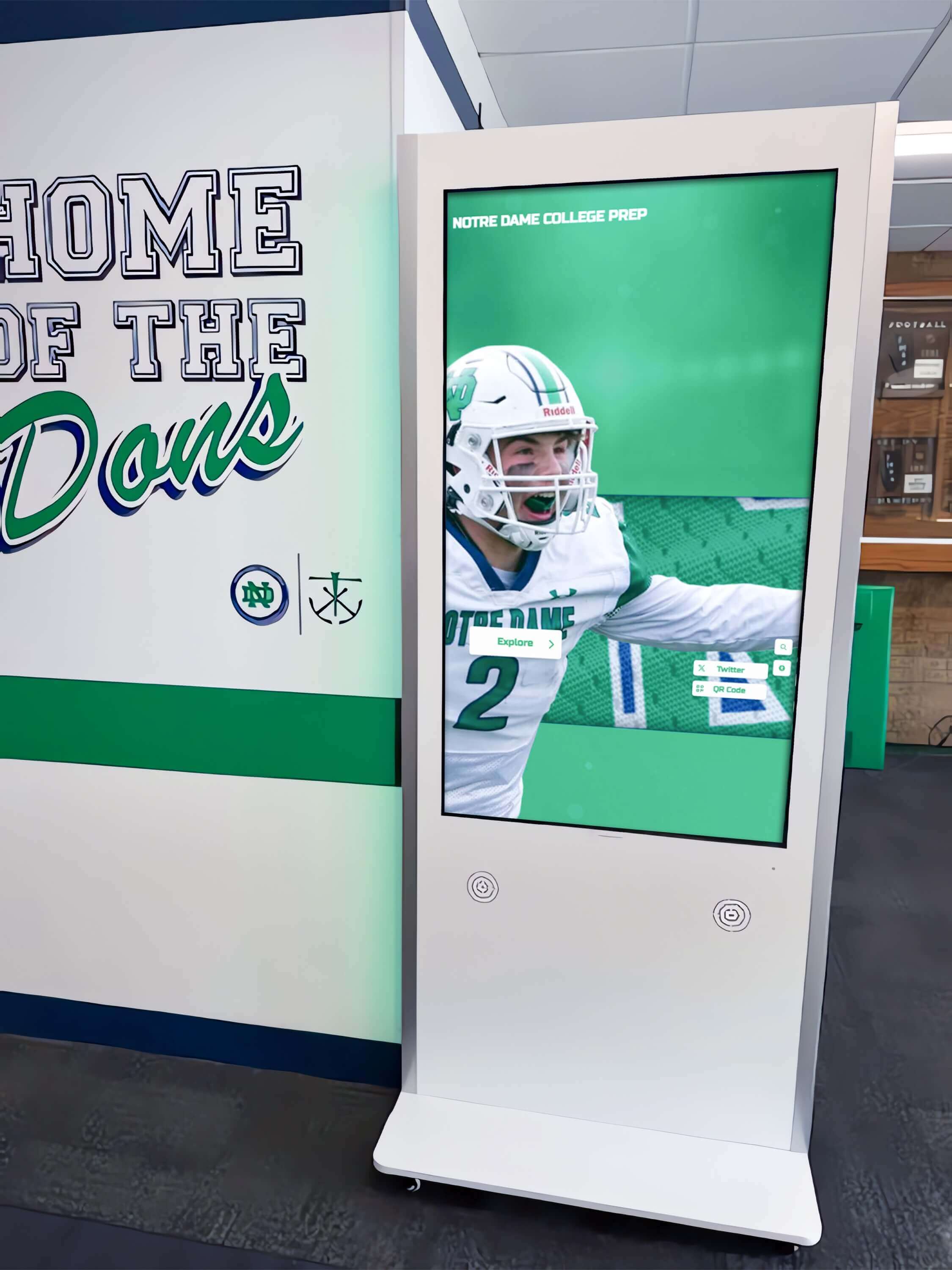
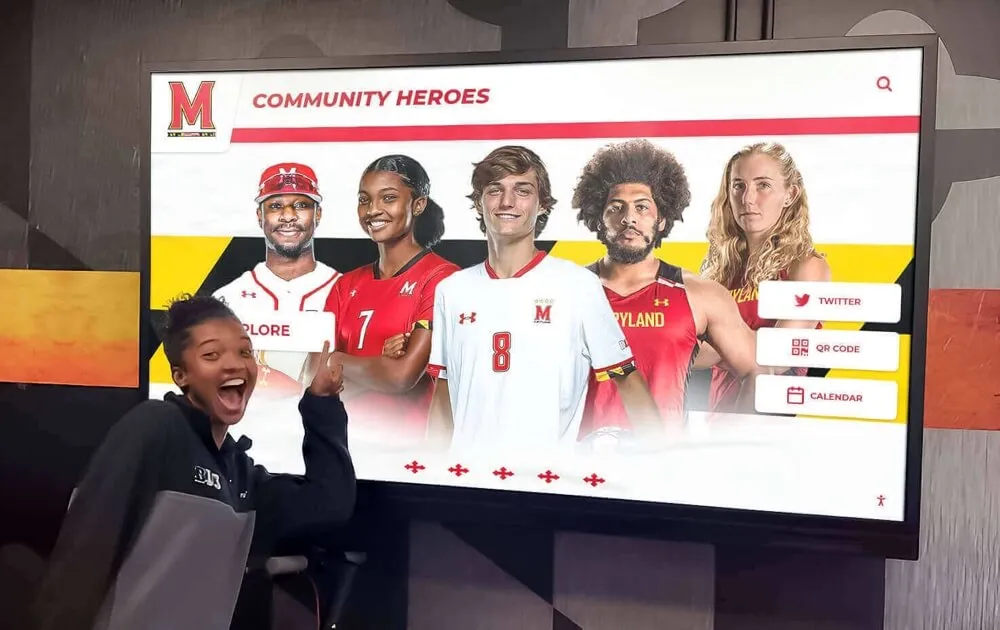
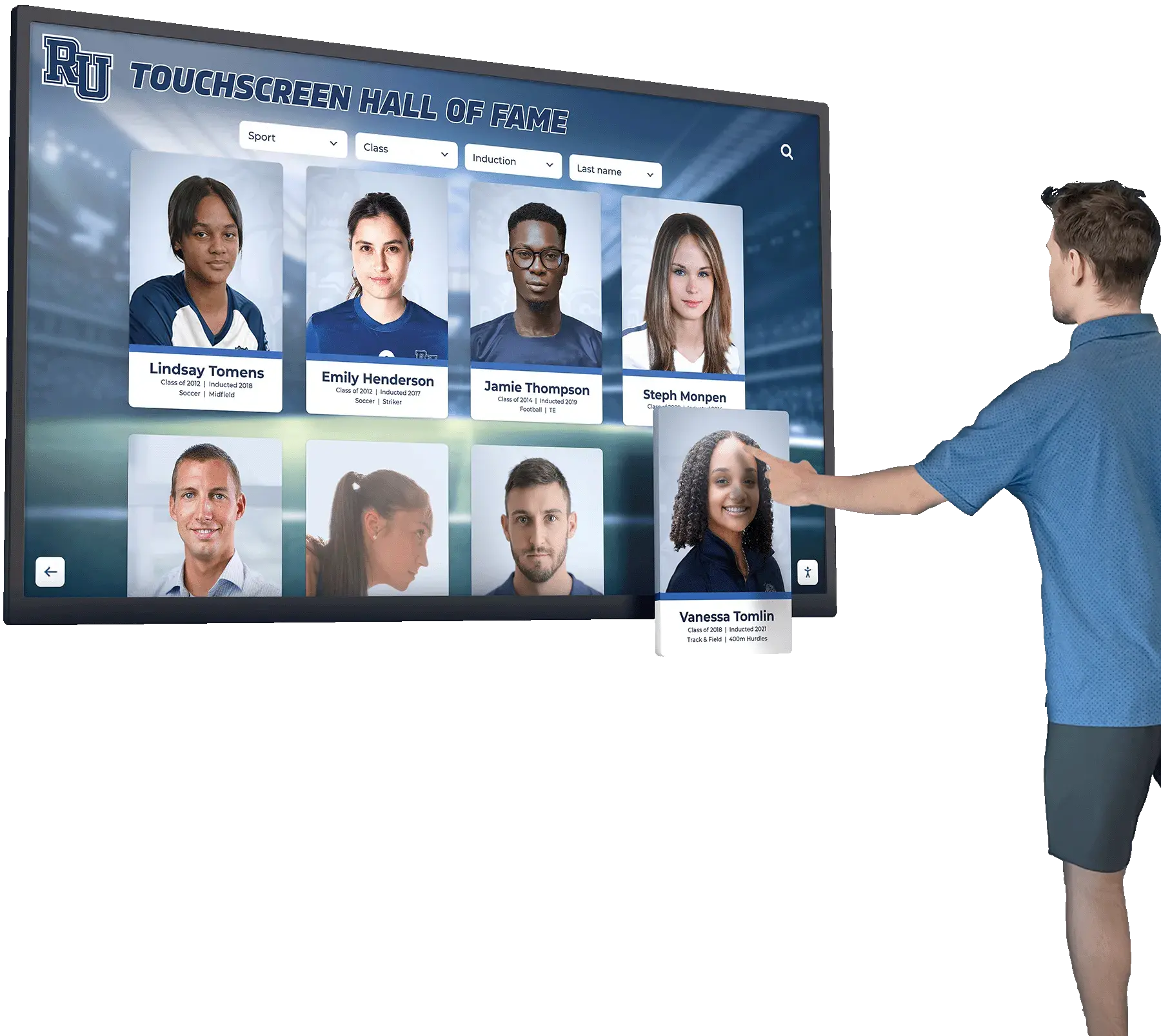
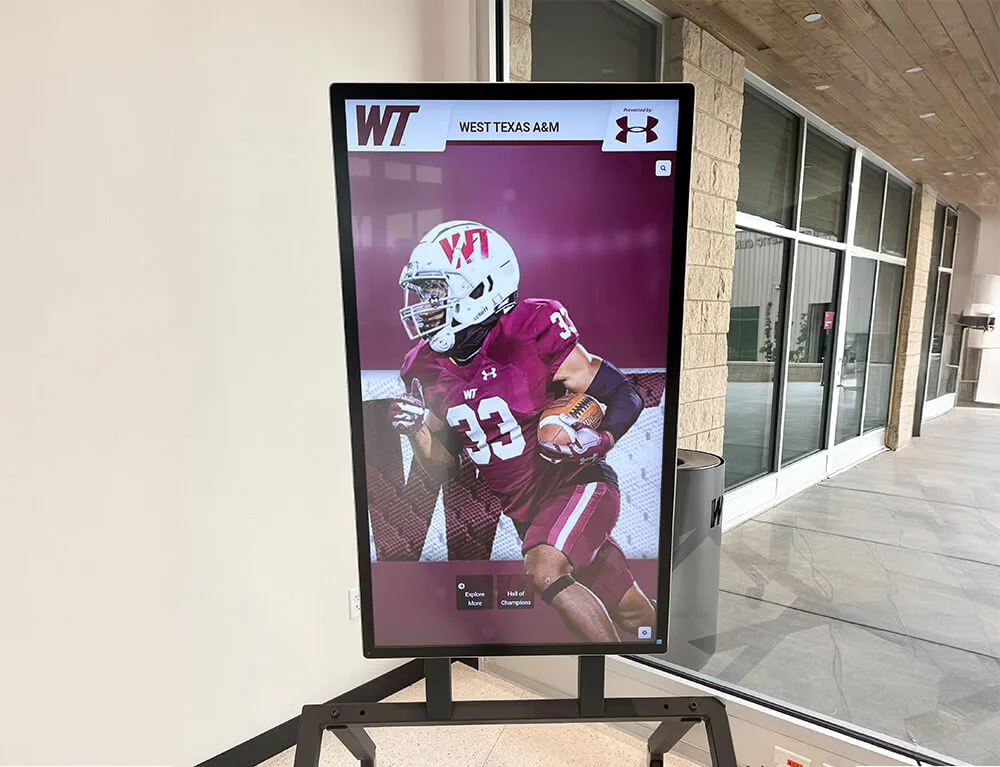
Interactive hallway kiosks create self-service recognition experiences where students, visitors, and alumni can explore achievements, search for individuals, and engage with institutional history
Interactive Touchscreen Experiences
Beyond simple digital displays showing rotating content, interactive touchscreen systems create fundamentally different hallway engagement opportunities.
Self-Directed Exploration and Discovery
Touchscreen interfaces positioned in hallways enable students to actively search for themselves, discover alumni who share their interests, filter achievements by sport or academic discipline, and explore recognition content according to personal interests rather than passive consumption of predetermined sequences.
This self-directed discovery creates powerful ownership and connection. Students can find every mention of their names across multiple recognition categories, creating comprehensive personal achievement portfolios. They discover that the college they’re considering features multiple distinguished alumni, creating tangible connection to potential futures. Athletes explore team histories and legacy records, understanding their place within larger program narratives.
The exploration capability also serves visitors during campus tours. Prospective families can browse athletic programs they’re interested in, explore academic honor roll standards, and assess whether this school celebrates achievements they value. The interactive discovery answers questions tours might not address, creating more informed enrollment decisions.
Mobile Access Through QR Code Integration
Modern hallway touchscreens often incorporate QR code functionality enabling students to transfer discovered content to personal smartphones. When a student finds their athletic profile on a hallway display, they can scan a QR code to access that same content on their phone, then share through social media or text to family members.
This mobile extension amplifies recognition impact far beyond physical hallway presence. Students sharing their recognition creates organic social media content celebrating school achievement. Parents receive immediate notification when their students earn recognition. Alumni browsing from home can access the same hallway content remotely, creating engagement opportunities that transcend physical campus visits.
Traditional Hallway Display Approaches That Still Work
While digital systems offer tremendous advantages, certain traditional hallway display approaches continue providing value when thoughtfully implemented.
Branded Environmental Graphics and Murals
Custom wall graphics and murals create hallway visual impact while reinforcing institutional identity and celebrating achievement themes.
Mascot and School Color Integration
Hallways featuring prominent mascot imagery, school colors, and identifying symbols create immediate institutional recognition while building community pride. Custom murals might depict mascots in action, incorporate motivational messages aligned with school values, or celebrate program histories through timeline graphics.
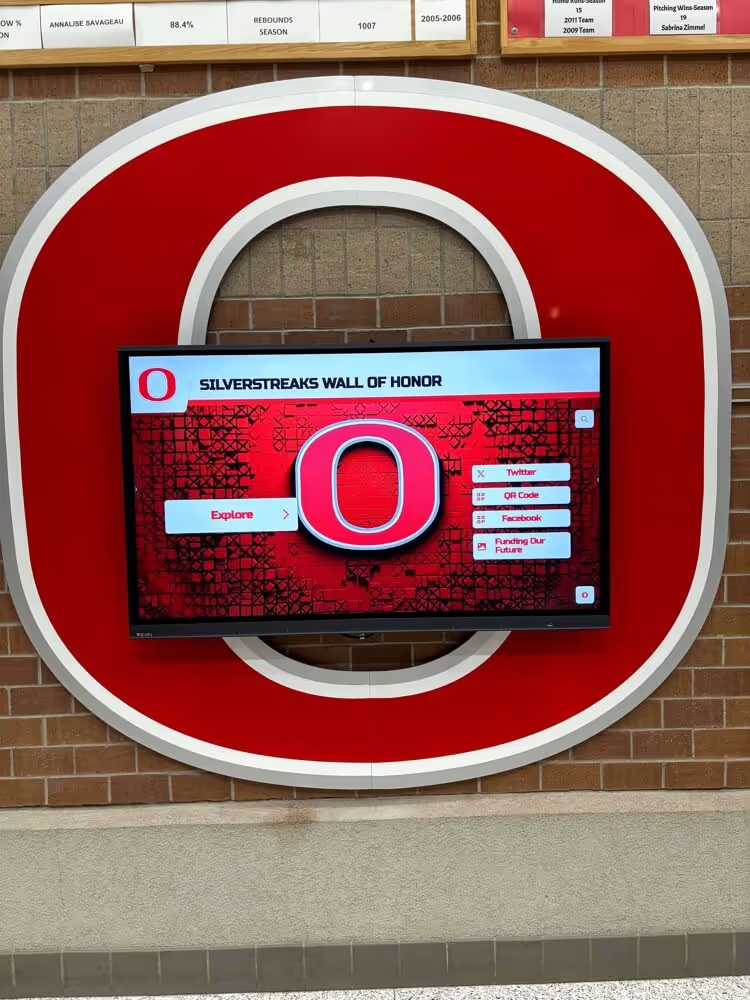
These environmental graphics work particularly well as backdrops for other recognition elements. Digital displays mounted within larger murals create cohesive designs where technology enhances rather than competes with branding. Trophy cases or honor roll boards positioned against branded wall graphics feel intentionally designed rather than randomly placed.
Achievement Theme Visualization
Beyond pure branding, hallway murals can visualize achievement themes that inspire current students. Graphics might feature silhouettes of athletes in various sports, diverse academic disciplines represented through symbolic imagery, or arts program elements celebrating creative expression. These thematic designs communicate that achievement takes many forms and that this institution celebrates diverse paths to excellence.
Rotating Display Cases for Student Work
Hallways provide excellent venues for showcasing current student work, creating engagement for daily occupants while demonstrating educational quality to visitors.
Professional Display Systems
Rather than cluttered bulletin boards with haphazard posting, professional display systems create gallery-quality presentations of student work. Illuminated display cases with consistent backing, uniform frames, and thoughtful spacing elevate student projects from classroom assignments to celebrated accomplishments worthy of public exhibition.
These curated displays might feature exceptional writing samples from English classes, standout science projects with research summaries, award-winning artwork from visual arts programs, or photographic documentation of team bonding experiences that build school culture. Rotating exhibition schedules ensure fresh content throughout academic years while providing many students opportunities for recognition rather than repeatedly featuring the same exceptional individuals.
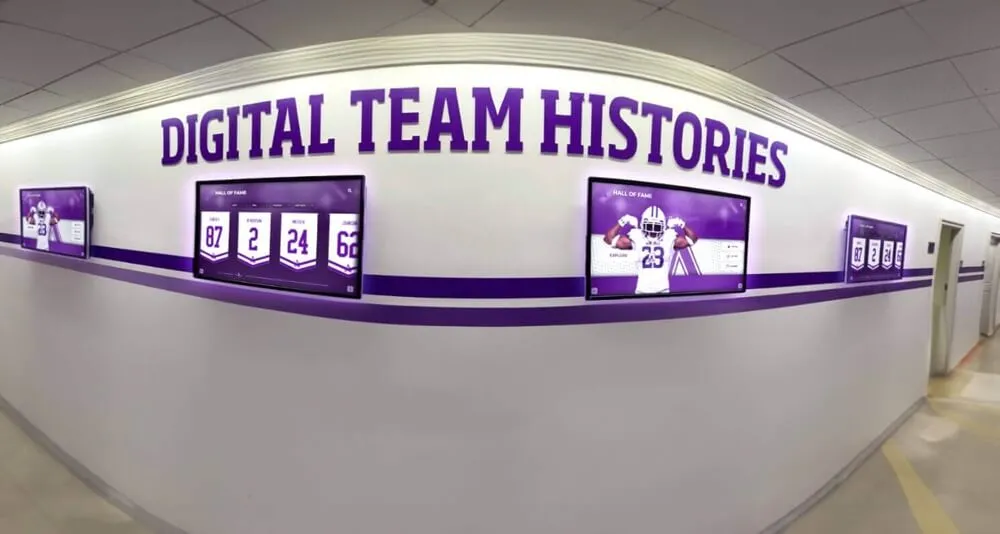
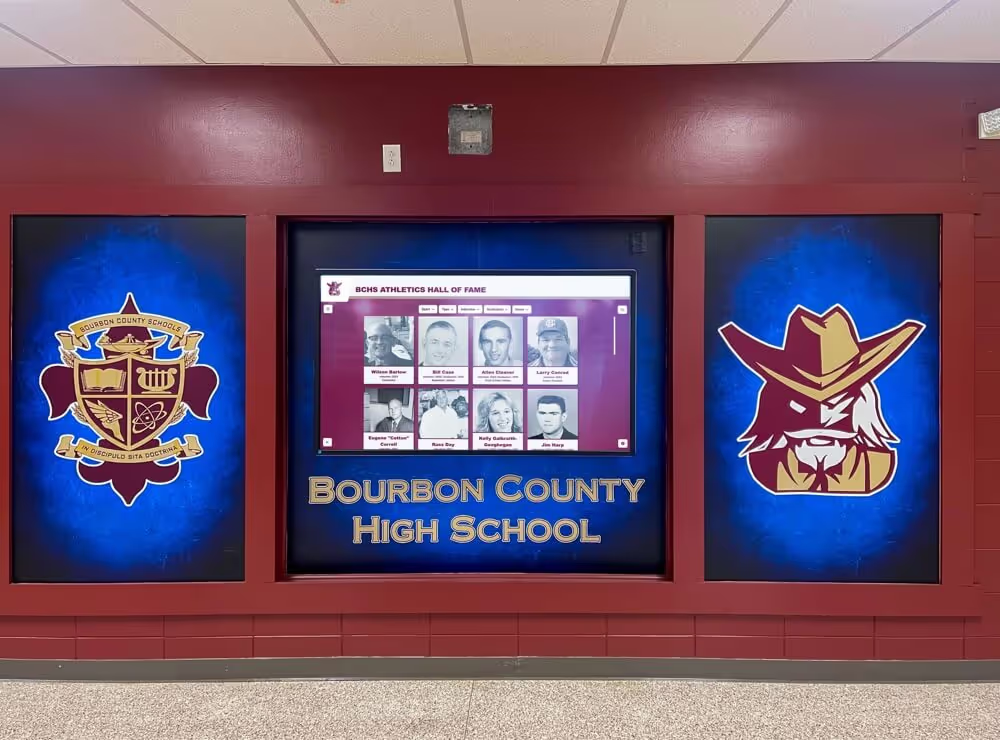
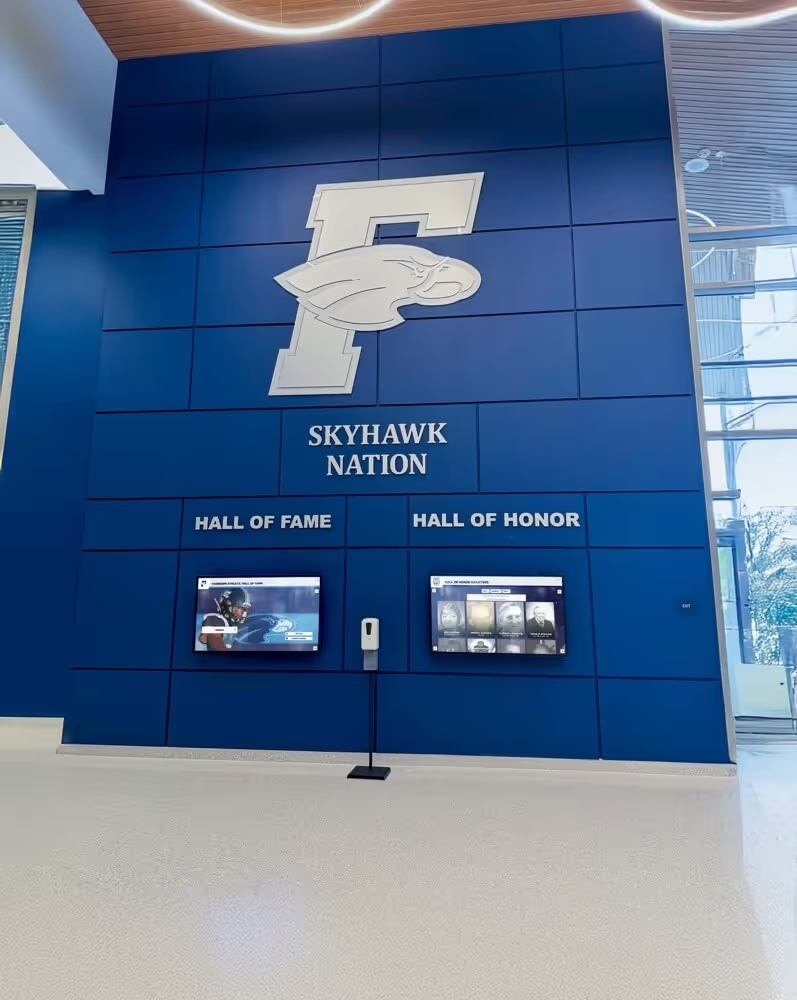
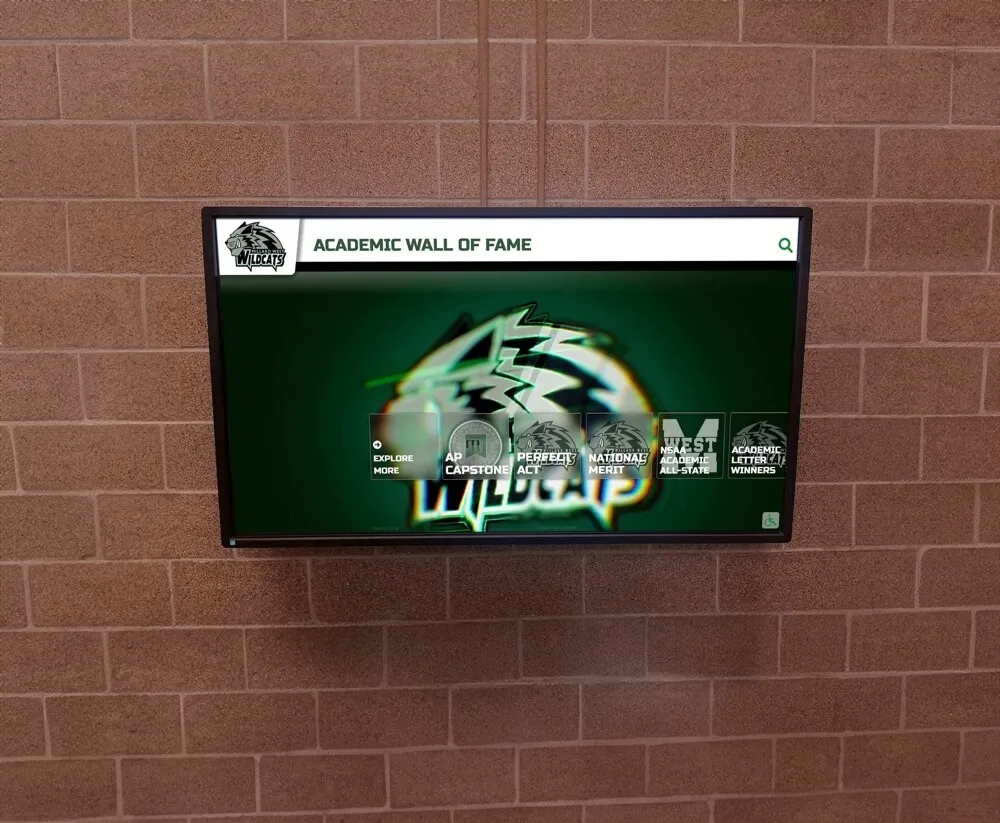
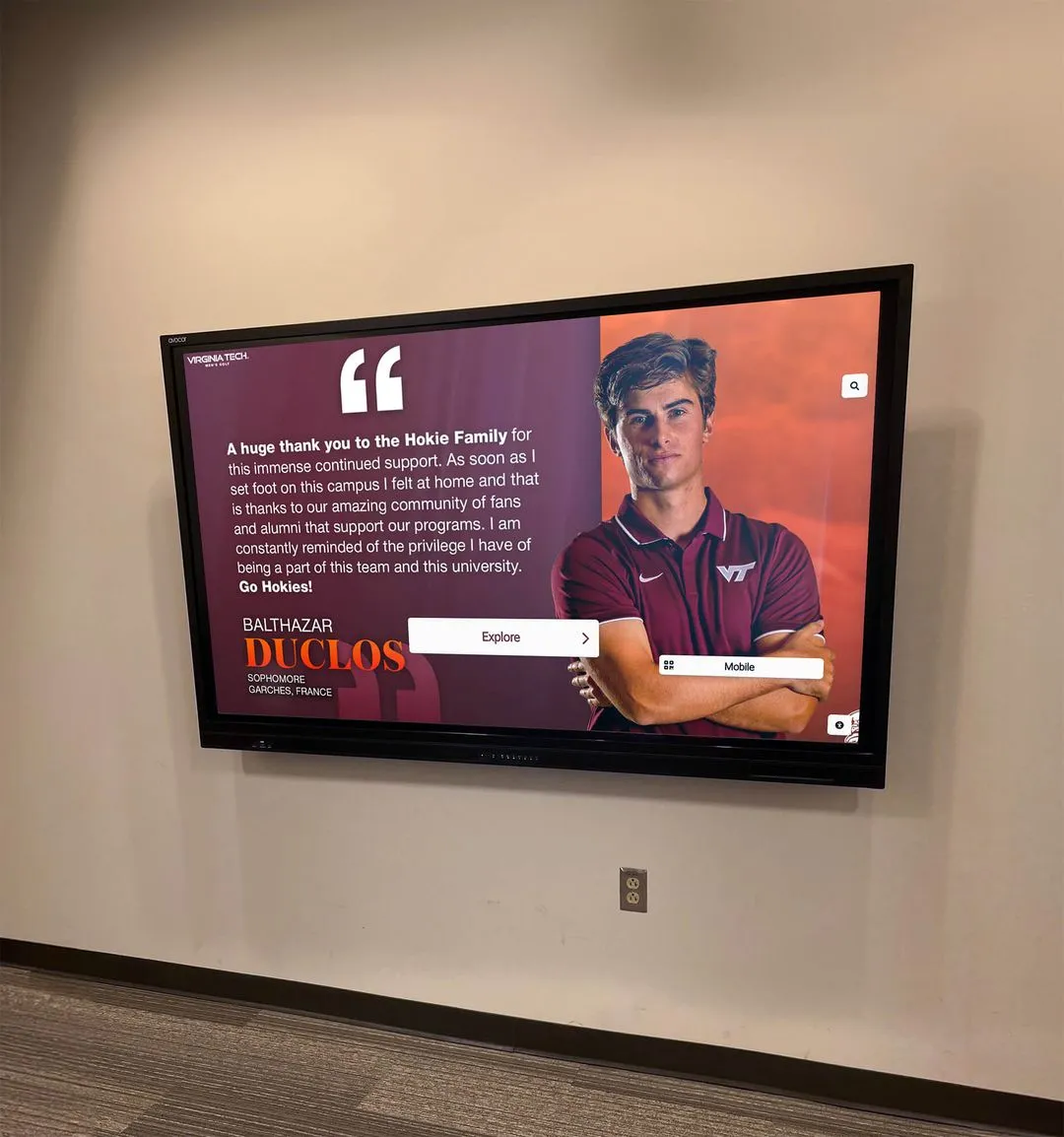
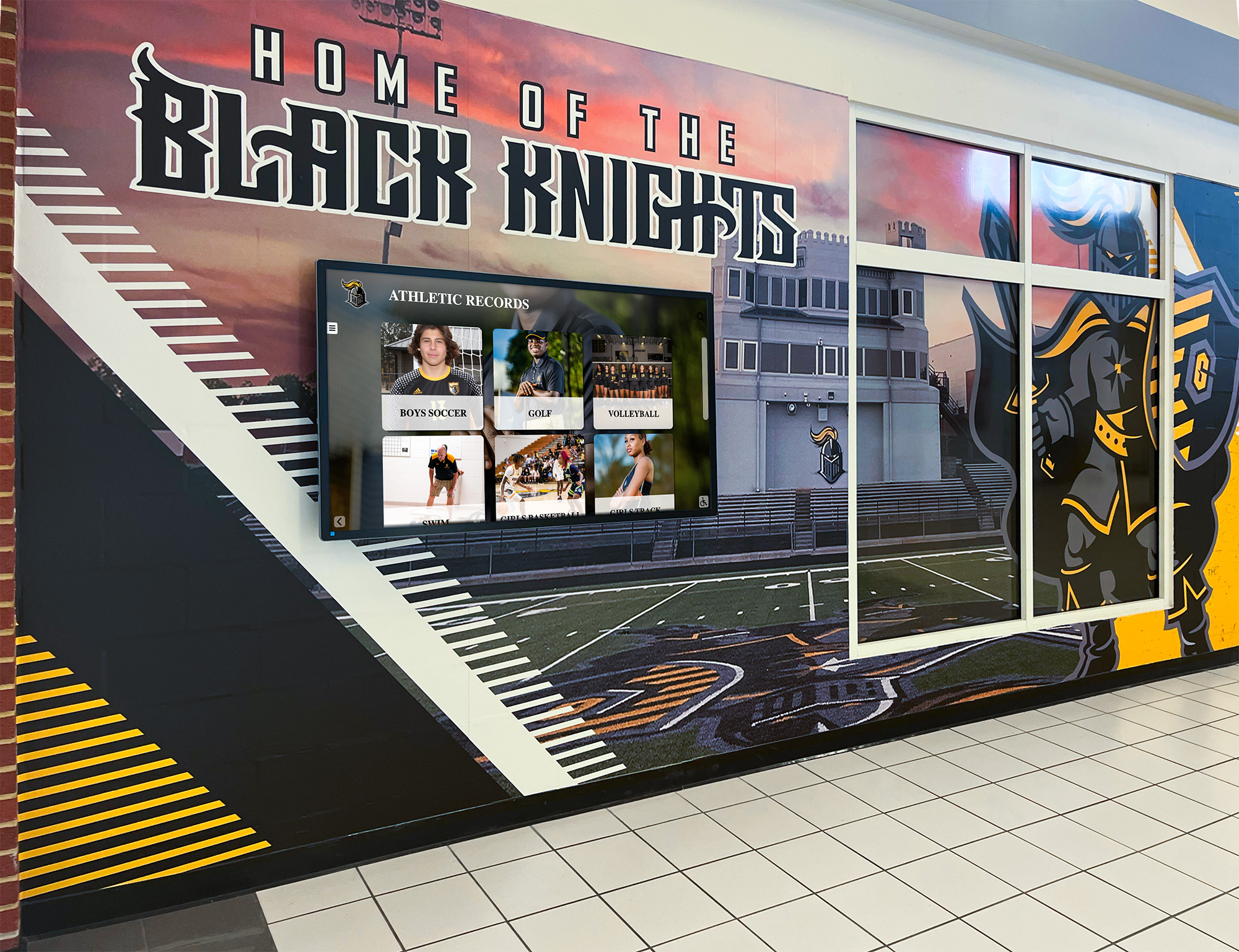
Strategic placement of multiple digital screens along hallways creates recognition zones where students can explore comprehensive program histories and individual achievements
Organizing Hallway Displays by Content Theme
Thoughtful schools often organize hallway recognition displays around thematic areas, creating coherent experiences rather than random collections of disconnected elements.
Athletic Corridor Concepts
Hallways near gymnasiums, locker rooms, or athletic facilities provide natural locations for sports-focused recognition creating athletic program pride while inspiring current competitors.
Comprehensive Team Recognition
Rather than limiting recognition to championship teams, comprehensive athletic corridors celebrate achievements across all competitive levels and sport types. Digital displays or organized wall sections might feature:
- Varsity team rosters and seasonal results for all sports
- Individual athlete achievements including all-conference, all-state, and academic honors
- Championship teams and tournament results across multiple decades
- Record boards tracking program performance standards and top performances
- Distinguished alumni athletes and their post-graduation accomplishments
This comprehensive approach demonstrates that athletic programs value participation and excellence at all levels, not just championship outcomes. Students competing in less prominent sports see their achievements celebrated alongside football and basketball, creating equity and validating their commitments.
Legacy and Tradition Communication
Athletic hallways provide excellent venues for communicating program traditions, celebrating legendary coaches, and connecting current athletes to institutional heritage. Displays might feature letter jacket traditions and their significance, timeline graphics showing program development across decades, or profiles of coaches who shaped program identities.
Academic Excellence Corridors
Hallways near academic departments, libraries, or administrative areas can emphasize educational achievement and scholarly excellence.
Honor Roll and Academic Awards
Dedicated academic hallways might feature comprehensive honor roll recognition showing student achievement across grade levels and marking periods, scholarship recipient profiles and college destinations, subject-specific academic awards and competition results, and National Honor Society members and their service contributions.
Digital systems excel at academic recognition precisely because they accommodate the large numbers of students earning academic honors each year—quantities that traditional trophy cases cannot physically display. When hundreds of students make honor roll each marking period, digital recognition becomes practical necessity rather than optional enhancement.
STEM and Academic Competition Recognition
Schools with strong academic competition programs can create hallway displays celebrating Science Olympiad teams, robotics competition results, math team achievements, quiz bowl accomplishments, and debate tournament success. These displays communicate that competitive achievement extends beyond athletics and that intellectual excellence receives equal celebration.
Arts and Activities Showcases
Hallways near performing arts facilities, music rooms, or activity centers provide natural locations for celebrating creative achievement and co-curricular involvement.
Performance and Production Recognition
Arts-focused hallways might feature theater production highlights with cast photos and performance videos, music program achievements including concert recordings and competition results, visual arts displays showcasing award-winning student work, and creative writing publications and literary competition recognition.
Digital displays enable rich documentation of performing arts achievements that traditional static displays struggle to capture. Video clips from musical performances, dramatic productions, or dance concerts bring recognition to life in ways that simple plaques listing cast members cannot match.
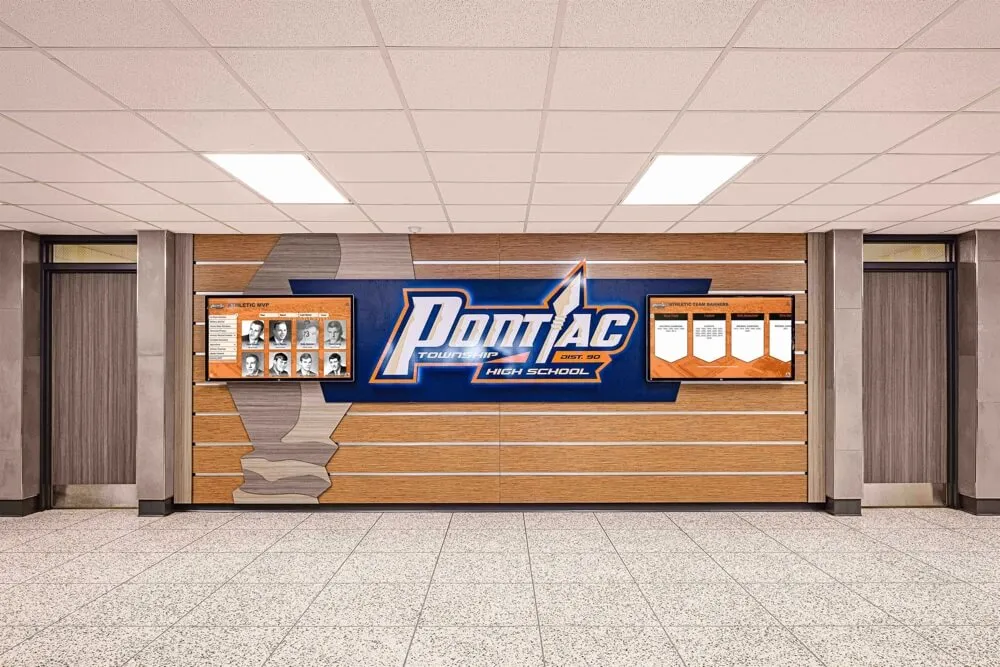
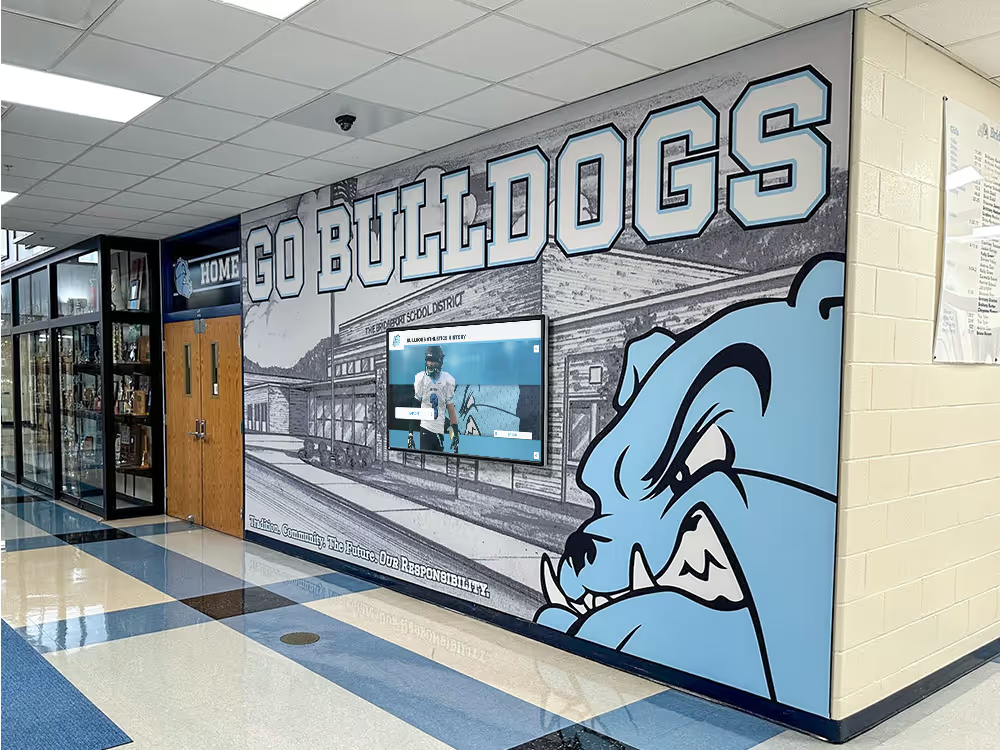
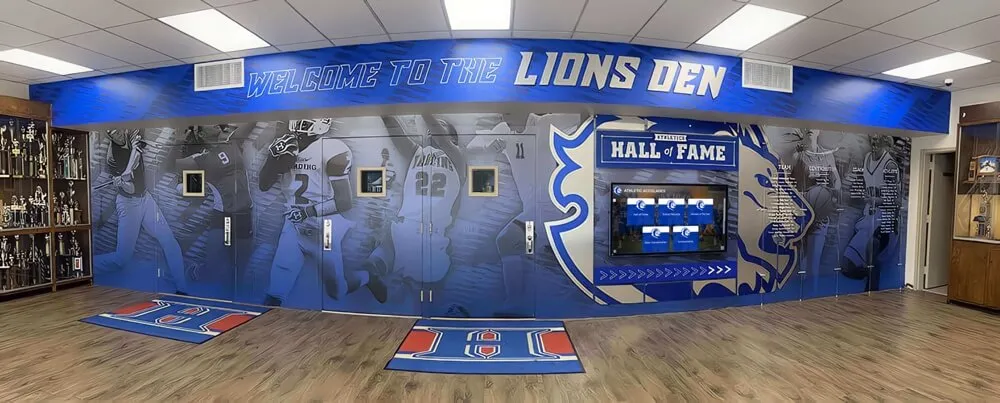
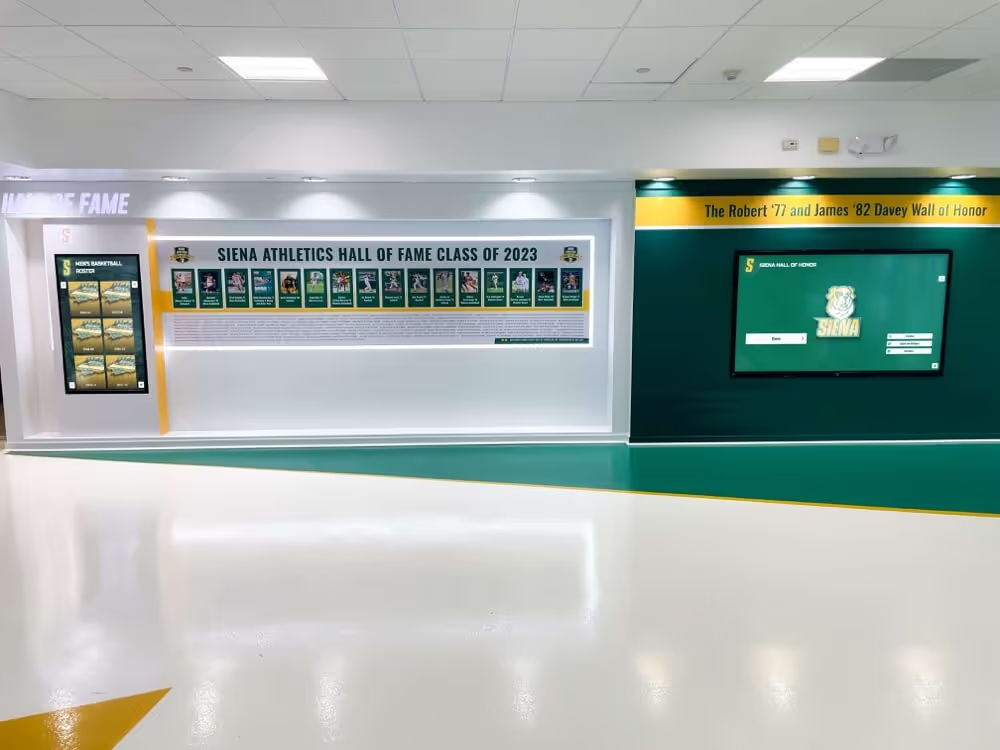
Organized recognition walls create cohesive hallway experiences where multiple display elements work together to celebrate diverse achievements while maintaining visual coherence
Design Principles for Effective Hallway Displays
Regardless of specific display types chosen, certain design principles improve hallway recognition effectiveness and engagement.
Visual Hierarchy and Organization
Effective hallway displays create clear visual organization helping viewers quickly understand content structure and locate areas of interest.
Logical Content Grouping
Displays should group related content together rather than mixing unrelated elements. Athletic recognition separated from academic honors, achievements organized by year or sport, and thematic sections with clear headings all help viewers navigate content efficiently. This organization proves particularly important for digital displays where navigation structure significantly impacts user experience.
Consistent Design Language
Multiple displays along hallways should share consistent design elements—coordinated colors, complementary fonts, similar mounting approaches, and unified graphic treatments. This consistency creates professional appearance while helping viewers understand that disparate elements belong to cohesive recognition system rather than random accumulation of unrelated displays.
Accessibility Considerations
Hallway displays must serve diverse audiences including visitors with varying abilities and accessibility needs.
Viewing Height and Approach Space
Displays should mount at heights enabling comfortable viewing for both standing visitors and wheelchair users. Interactive touchscreens typically mount with center screen heights between 40-48 inches, while static displays position primary content within 36-60 inch range. Adequate clear floor space must allow close approach without architectural barriers.
High Contrast and Legibility
Hallway lighting varies considerably, so displays need high-contrast designs remaining legible under diverse conditions. Text sizes should accommodate viewers reading from several feet away, recognizing that hallway displays receive viewing from greater distances than lobby installations where visitors typically stand closer. Digital displays with brightness controls should adjust for changing ambient light throughout days and seasons.
Maintenance and Update Protocols
Even well-designed displays fail if they fall into disrepair or contain outdated information that undermines credibility and engagement.
Establishing Clear Ownership
Specific staff members should have assigned responsibility for maintaining hallway displays, updating content, cleaning surfaces, and monitoring functionality. Without clear ownership, displays gradually deteriorate as everyone assumes someone else will handle maintenance.
Regular Content Refresh Cycles
Static displays benefit from scheduled updates ensuring current relevance. Honor roll boards should update each marking period, student work displays should rotate quarterly or by semester, and seasonal recognition should change throughout academic years. Digital displays enable more frequent updates but still benefit from scheduled reviews ensuring content remains fresh and engagement remains high.
Creating Hallways That Celebrate and Connect
School hallways represent tremendous opportunities for recognition that transforms utilitarian corridors into celebration spaces strengthening community identity and inspiring achievement. The most effective hallway displays balance practical constraints with strategic design, leverage modern technology while preserving tradition where appropriate, and create engaging environments that students actively explore rather than passively ignore.
Successful hallway recognition begins with understanding the unique characteristics of corridor spaces—high traffic volumes, daily student exposure, practical limitations, and tremendous visibility that lobby displays cannot match. From there, thoughtful application of modern digital recognition, strategic environmental graphics, thematic organization, and accessibility-focused design transforms hallways into destinations that celebrate diverse achievements while connecting current students to institutional heritage.
Whether implementing comprehensive digital recognition systems, creating themed recognition corridors, or thoughtfully upgrading existing traditional displays, school leaders can maximize hallway potential through intentional design choices that prioritize engagement, maintain currency, and celebrate the full spectrum of student achievement. The investment in transforming hallways from forgotten passages into celebration spaces pays dividends through strengthened school culture, increased student pride, enhanced community connections, and visible evidence of institutional values communicated hundreds of times daily to every person who travels these corridors.
Schools ready to transform hallway corridors into engaging recognition spaces discover that modern digital platforms eliminate traditional space constraints while enabling rich storytelling, perpetual content currency, and comprehensive celebration of achievements across all programs. Rocket Alumni Solutions provides the strategic technology foundation enabling these celebration environments that strengthen communities and inspire achievement through hallways that welcome, engage, and celebrate everyone who passes through.