A school hallway represents far more than transitional space between classrooms—these corridors shape daily experiences for hundreds or thousands of students, communicate institutional values to visitors, reflect community investment in education, establish emotional connections to place, and create opportunities for recognition, learning, and belonging that extend well beyond traditional instruction.
Yet most schools struggle with hallway design questions that administrators, facilities teams, and educators face regularly: How do you transform institutional corridors into welcoming community spaces? What recognition approaches celebrate achievement without creating exclusivity? How can limited budgets produce meaningful environmental improvements? Which design elements build lasting pride versus temporary decoration? How do you balance aesthetic appeal with practical maintenance realities? What role should technology play in modern educational environments?
These challenges intensify as schools seek to strengthen community identity, improve climate and culture, maximize existing facility value, and create environments where every student sees themselves reflected and valued within their school’s physical spaces.
This comprehensive guide explores practical hallway decor strategies that administrators, facilities managers, and school leaders can implement to transform corridors into community-building environments. You’ll discover design principles supporting belonging, recognition approaches celebrating diverse achievements, technology integration creating dynamic engagement, maintenance considerations ensuring sustainability, and budget-conscious implementation pathways making meaningful improvements accessible regardless of resource constraints.

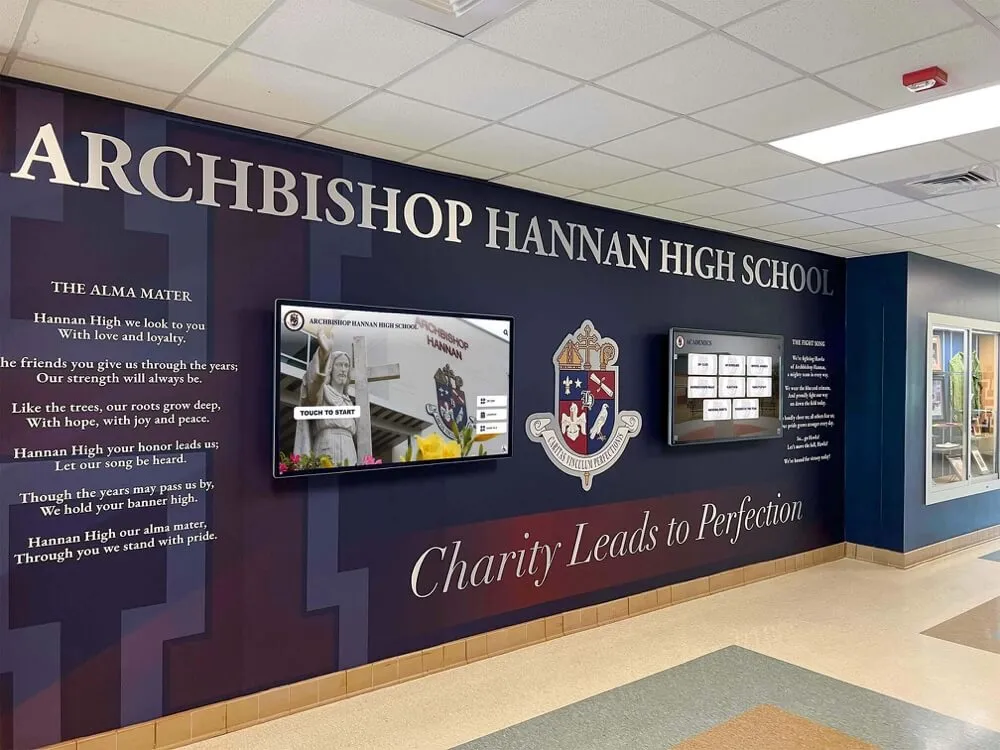
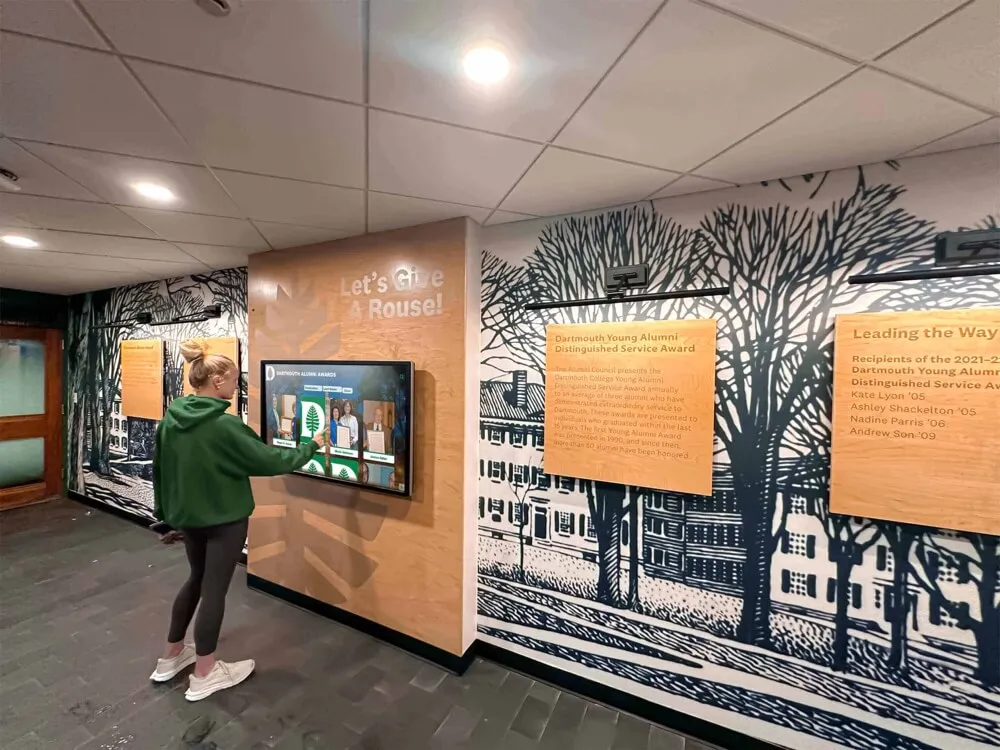
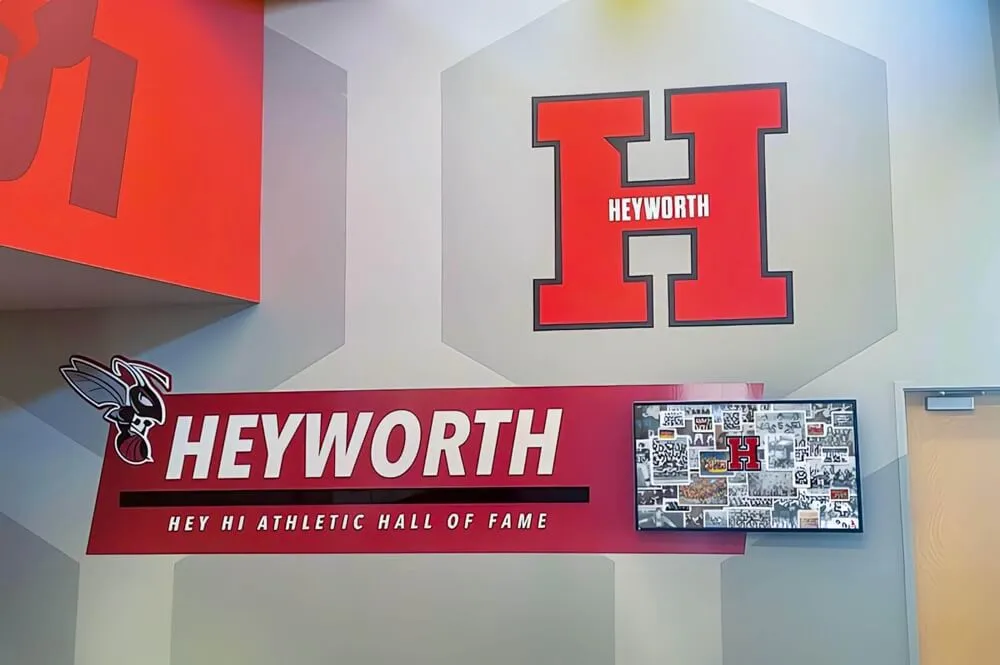
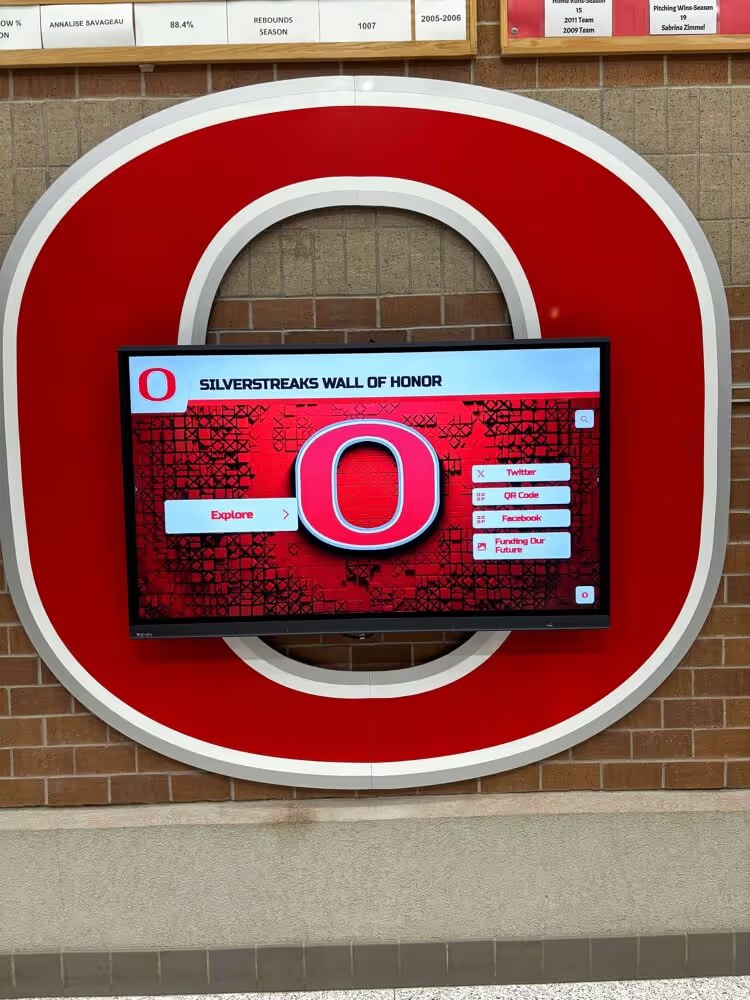
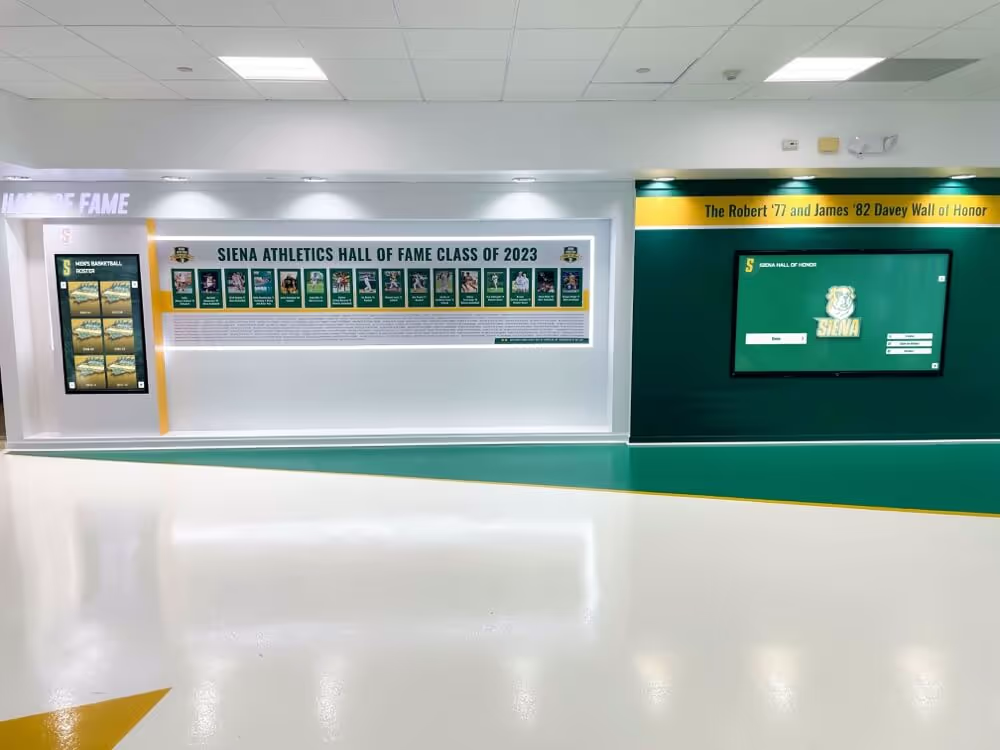
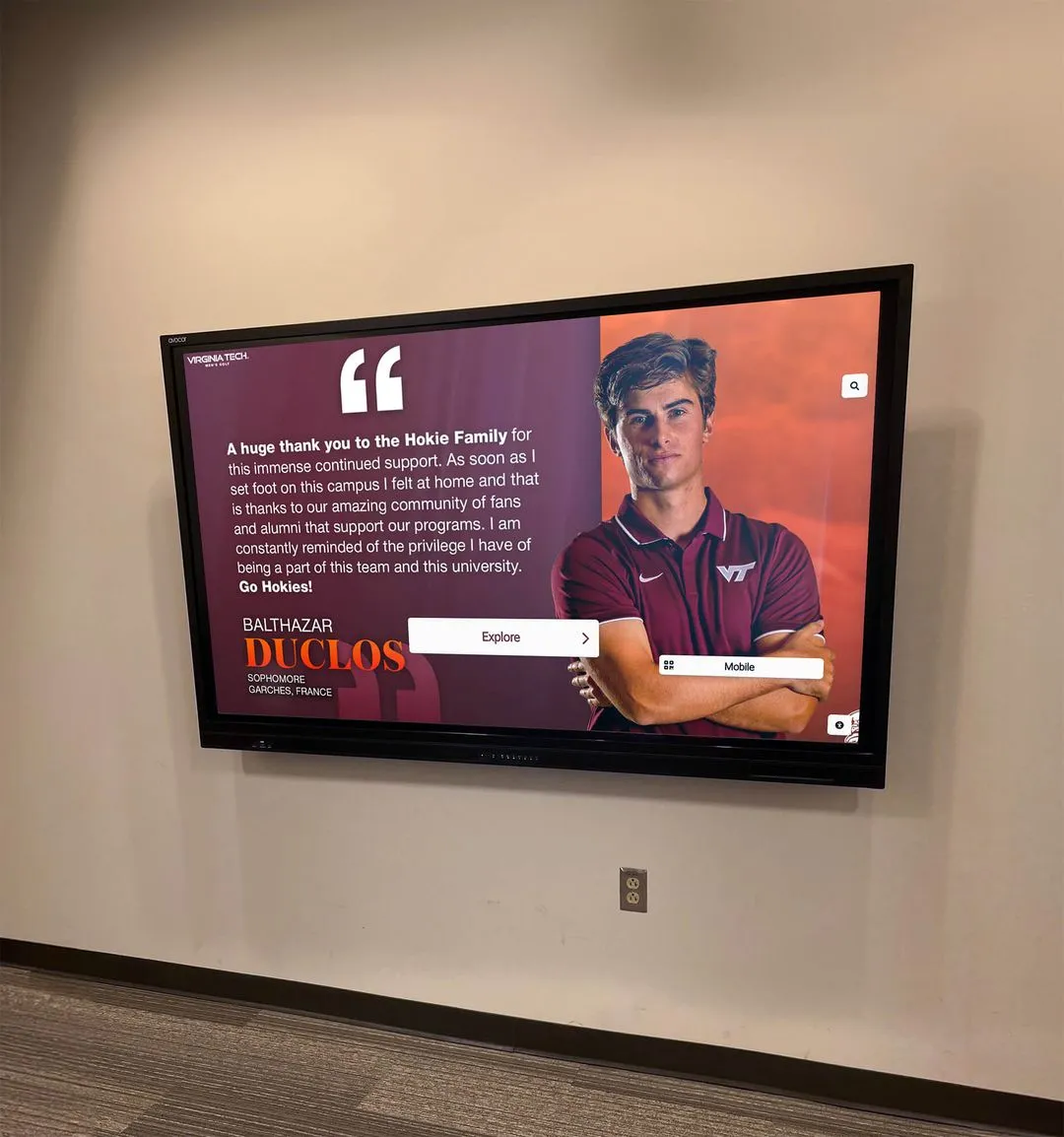
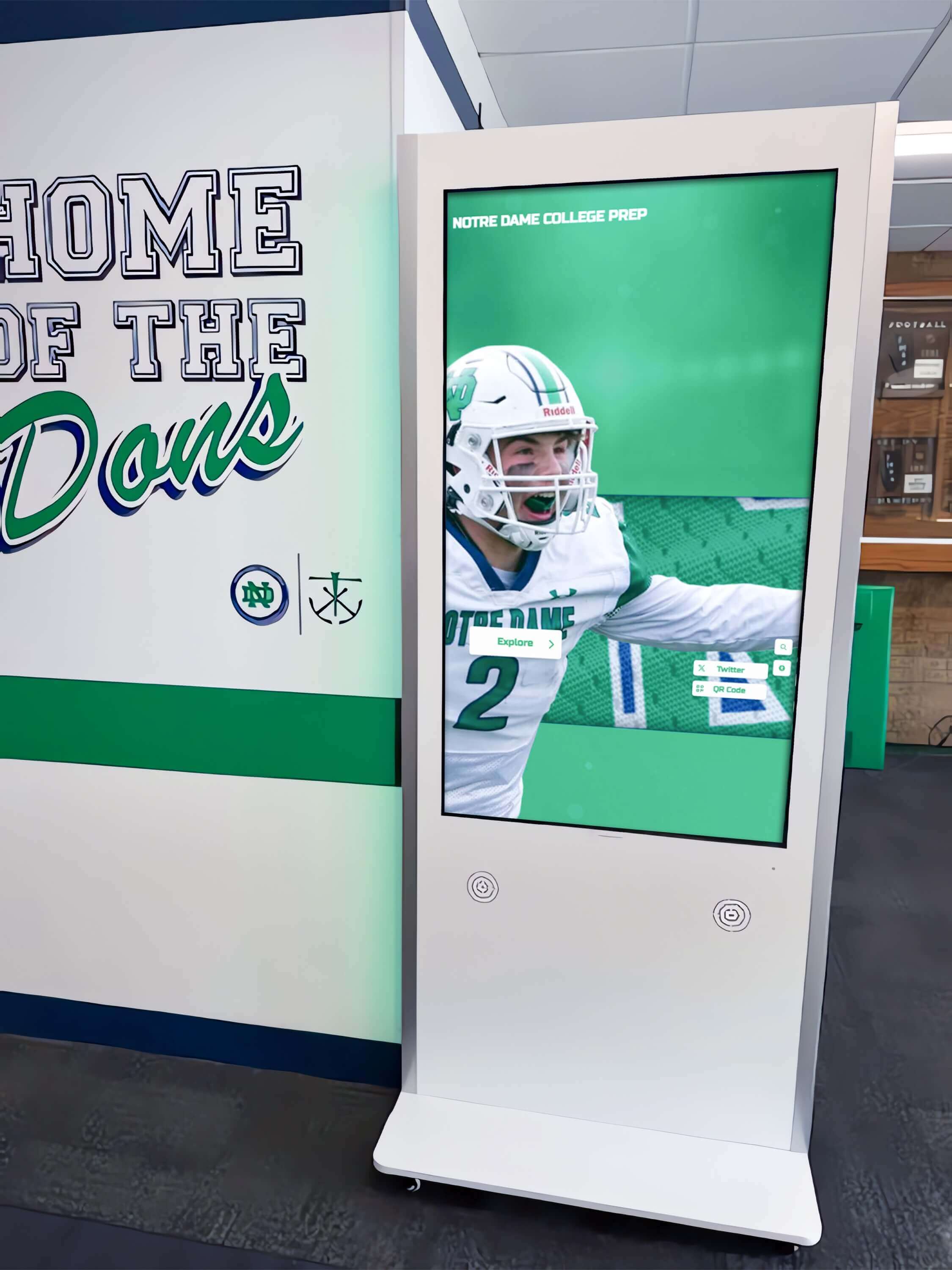
Modern school hallways integrate interactive recognition technology creating engaging community touchpoints throughout daily student experiences
Understanding Hallway Function Beyond Circulation
Effective school hallway design begins by reconceptualizing these spaces from mere circulation routes into active community environments serving multiple essential functions.
Hallways as Community Gathering Spaces
A school hallway naturally creates informal gathering opportunities before classes, during transitions, and throughout the school day.
Designing for Social Interaction
Rather than viewing hallway socialization as problematic behavior requiring control, thoughtful design intentionally creates appropriate gathering zones where students connect safely without impeding traffic flow. Wider corridor sections, alcove areas, or corner expansions provide natural congregation points reducing hallway congestion while acknowledging legitimate student social needs.
These designated social zones benefit from comfortable seating elements, ambient lighting creating welcoming atmosphere, and visual interest elements giving students reasons to pause and engage with their environment beyond functional necessity.
Schools incorporating intentional gathering spaces within hallway design report improved climate outcomes as students develop stronger peer connections and sense of community belonging tied directly to physical environment quality.
Visual Storytelling and Identity Building
Hallway walls provide prime real estate for communicating school identity, celebrating community diversity, showcasing student work, and reinforcing institutional values through curated visual experiences encountered daily by entire school populations.
Unlike classroom spaces accessed only by specific student groups, hallways reach everyone—making them ideal for messages, recognition, and content intended to build whole-school community rather than individual class or program identity.
Strategic use of this universal visibility creates shared reference points, common language, and collective pride that transcends individual academic programs or extracurricular activities, strengthening bonds across diverse student populations.
Hallways as Learning Extensions
Progressive educational design recognizes that learning happens everywhere, not just in designated classroom spaces.
Informal Learning Opportunities
Hallway displays showcasing student research projects, scientific concepts, historical timelines, literary themes, or mathematical principles extend instruction beyond classroom periods. Students encounter these learning elements during transitions, absorbing information through repeated passive exposure and curiosity-driven active exploration.
Digital displays enable rotation of learning content aligned with current curriculum units, keeping hallway education fresh and relevant rather than static displays becoming invisible through overfamiliarity.
Interactive elements allowing students to test knowledge, explore concepts, or contribute their own learning artifacts transform passive hallway transit into active educational engagement opportunities multiplying instructional contact hours without requiring additional class time.
Career and College Awareness
Hallway spaces provide excellent venues for career exploration content, college information, scholarship opportunities, and future-planning resources. Students regularly encountering this guidance throughout daily routines internalize possibilities and pathways they might miss if information appears only in counseling offices or isolated presentations.
Recognition of alumni achievements and career paths helps current students envision their own futures while maintaining connections between graduates and current school community—relationships valuable for mentorship, internships, and ongoing institutional support.

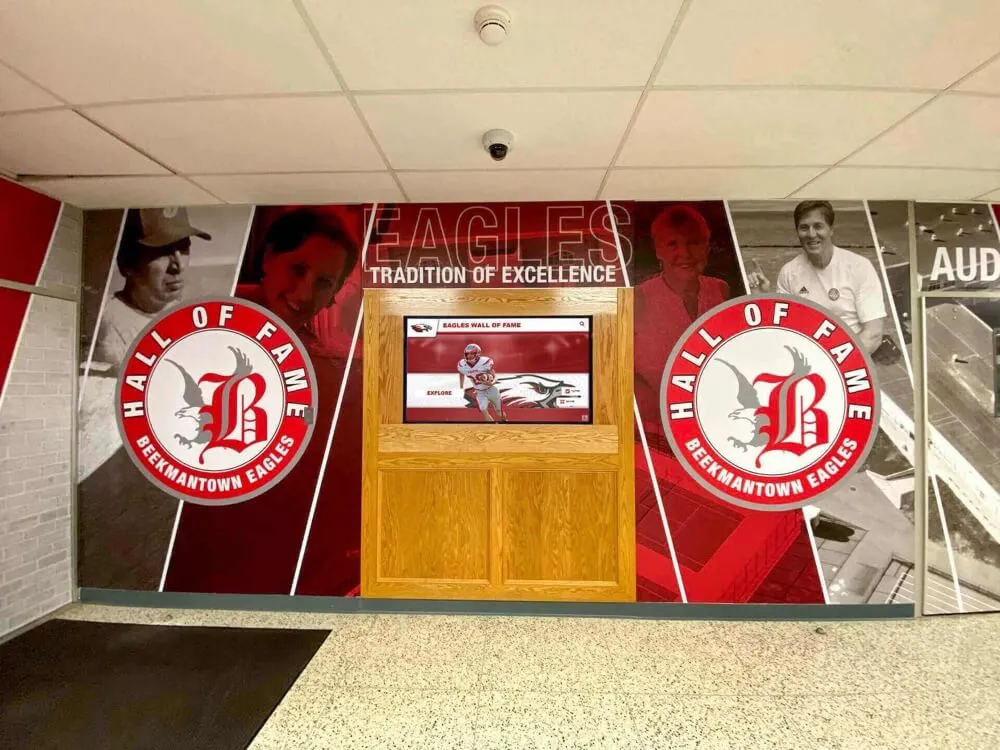
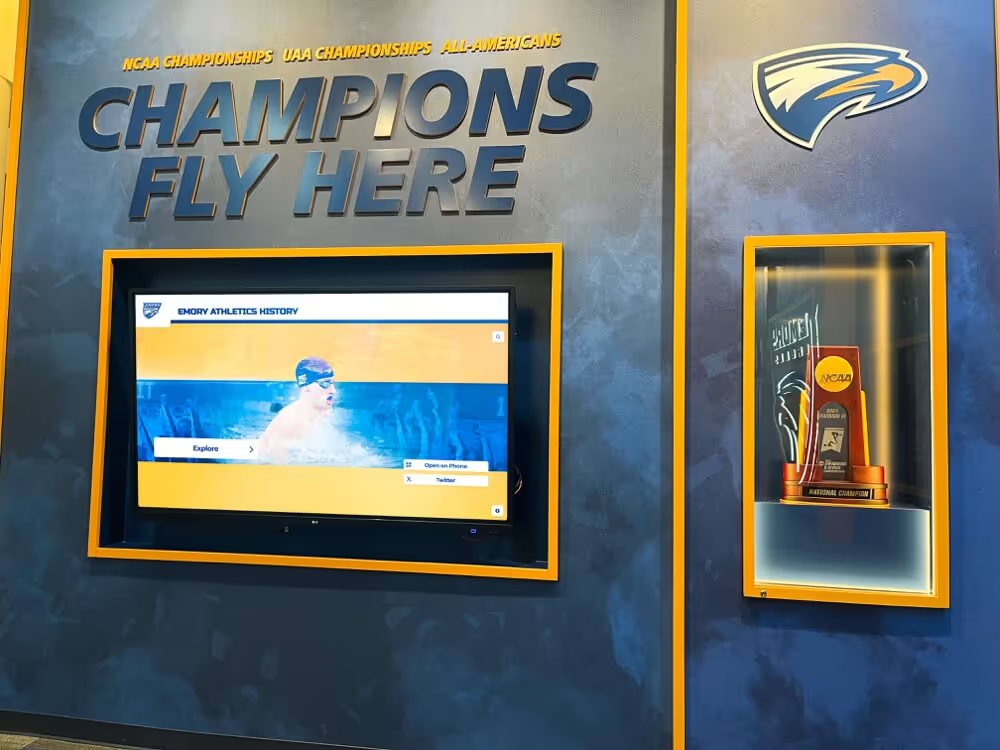
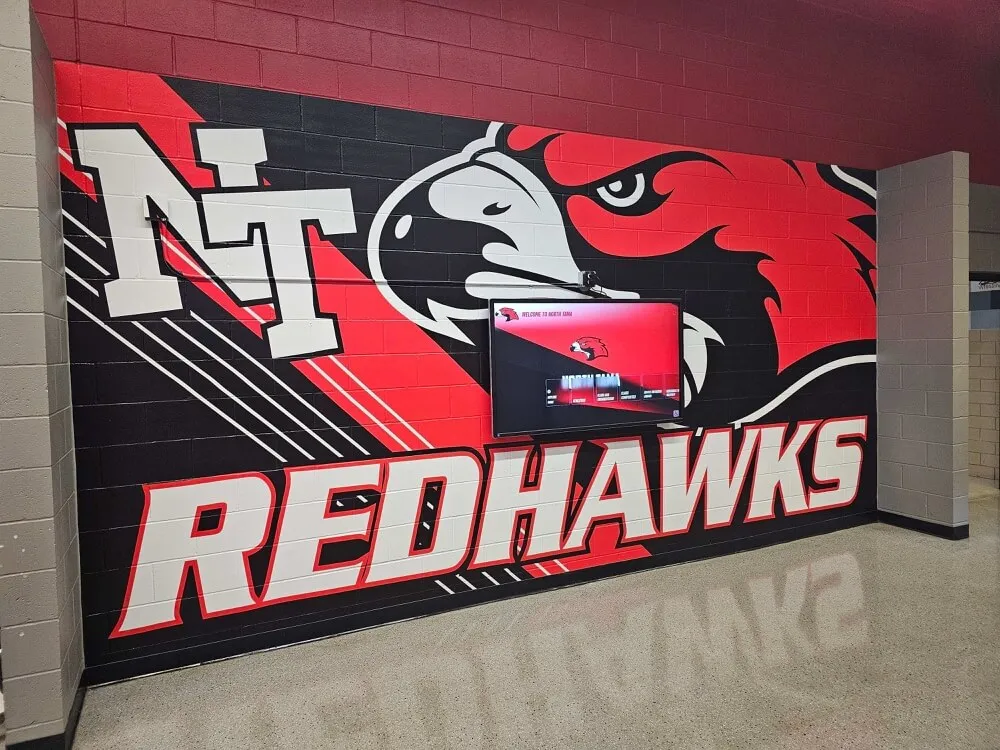
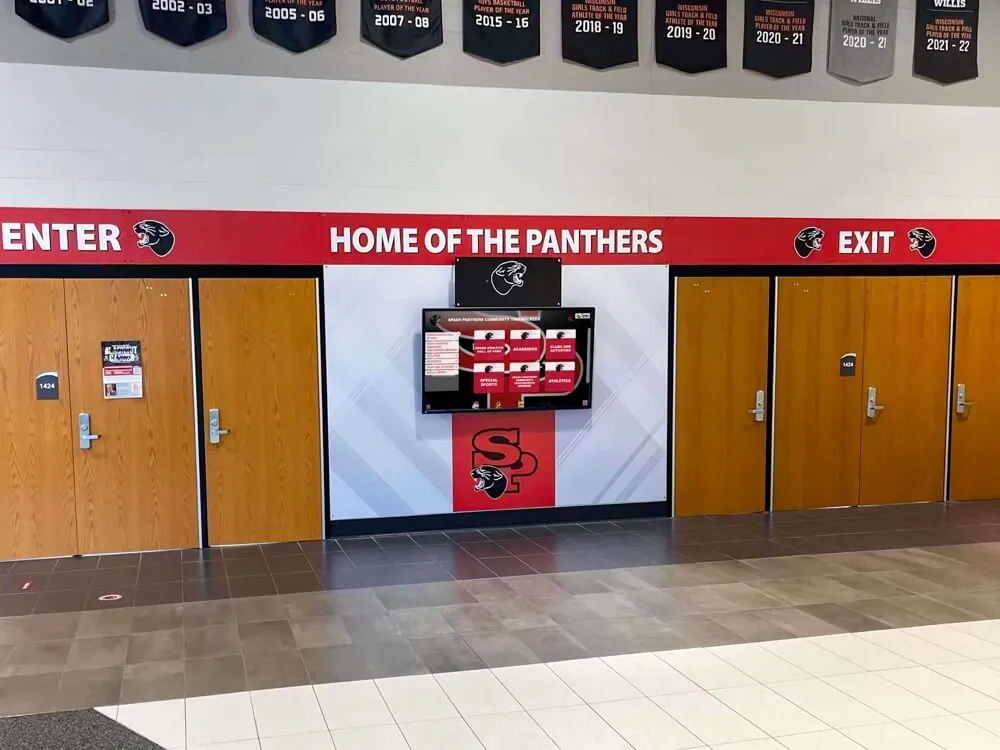
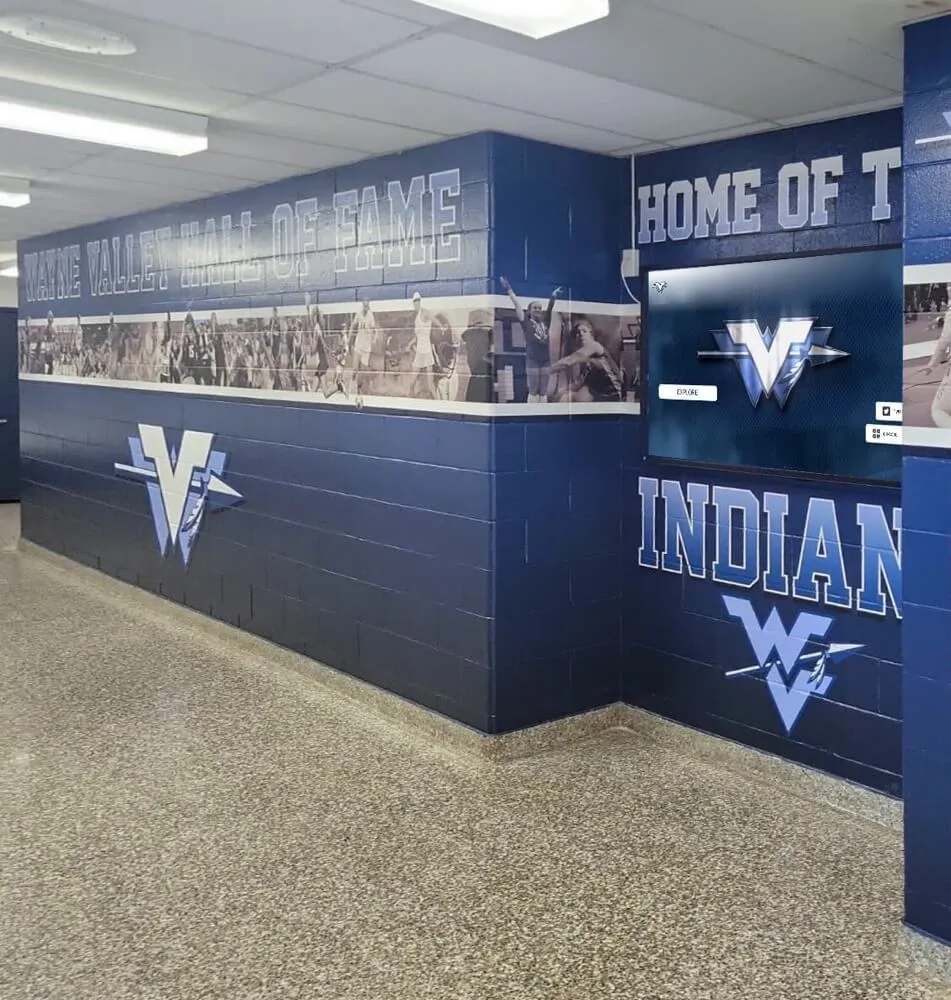
Bold program branding combined with modern recognition technology creates powerful first impressions while celebrating community achievement
Strategic Design Elements That Build Pride
Certain design approaches consistently produce environments where students, staff, and community members develop deeper connections to their schools.
School Branding and Visual Identity
Cohesive visual identity throughout hallway spaces reinforces institutional pride and creates distinctive character setting your school apart from generic educational environments.
Color Palette Implementation
Consistent use of school colors throughout hallways creates visual cohesion while reinforcing brand identity. This doesn’t require painting every surface in team colors—strategic accent walls, wayfinding elements, display backgrounds, or architectural details in signature colors achieve brand reinforcement without overwhelming spaces.
Thoughtful color application balances school spirit with sophisticated design avoiding the elementary school aesthetic that secondary institutions sometimes struggle to outgrow. Deep, rich tones; modern color blocking; or accent applications communicate maturity while maintaining identity.
Mascot and Logo Integration
School mascots and logos provide natural focal points for hallway design, but implementation quality dramatically affects whether these elements build pride or appear amateur. Professional design and installation transforms mascots from cartoonish decorations into powerful brand anchors.
Large-format wall graphics, dimensional signage, or integrated architectural elements featuring mascots create impressive visual impact establishing immediate institutional identity. These installations communicate investment and pride that resonates with students, impresses visitors, and builds community esteem.
Schools implementing digital recognition displays alongside traditional branding elements create cohesive environments where static visual identity complements dynamic achievement celebration through coordinated design approaches.
Achievement Recognition Systems
Celebrating accomplishments builds pride while motivating continued excellence across academic, athletic, artistic, and community service domains.
Beyond Traditional Trophy Cases
Conventional trophy cases present numerous limitations—physical space constraints limiting recognition capacity, static displays requiring manual updates, accessibility challenges for shorter students or those with disabilities, and maintenance difficulties keeping displays current and dust-free.
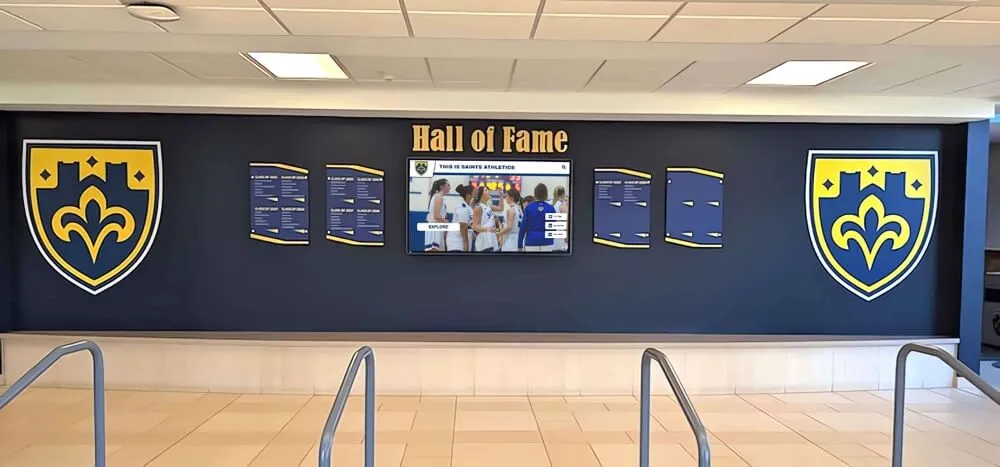
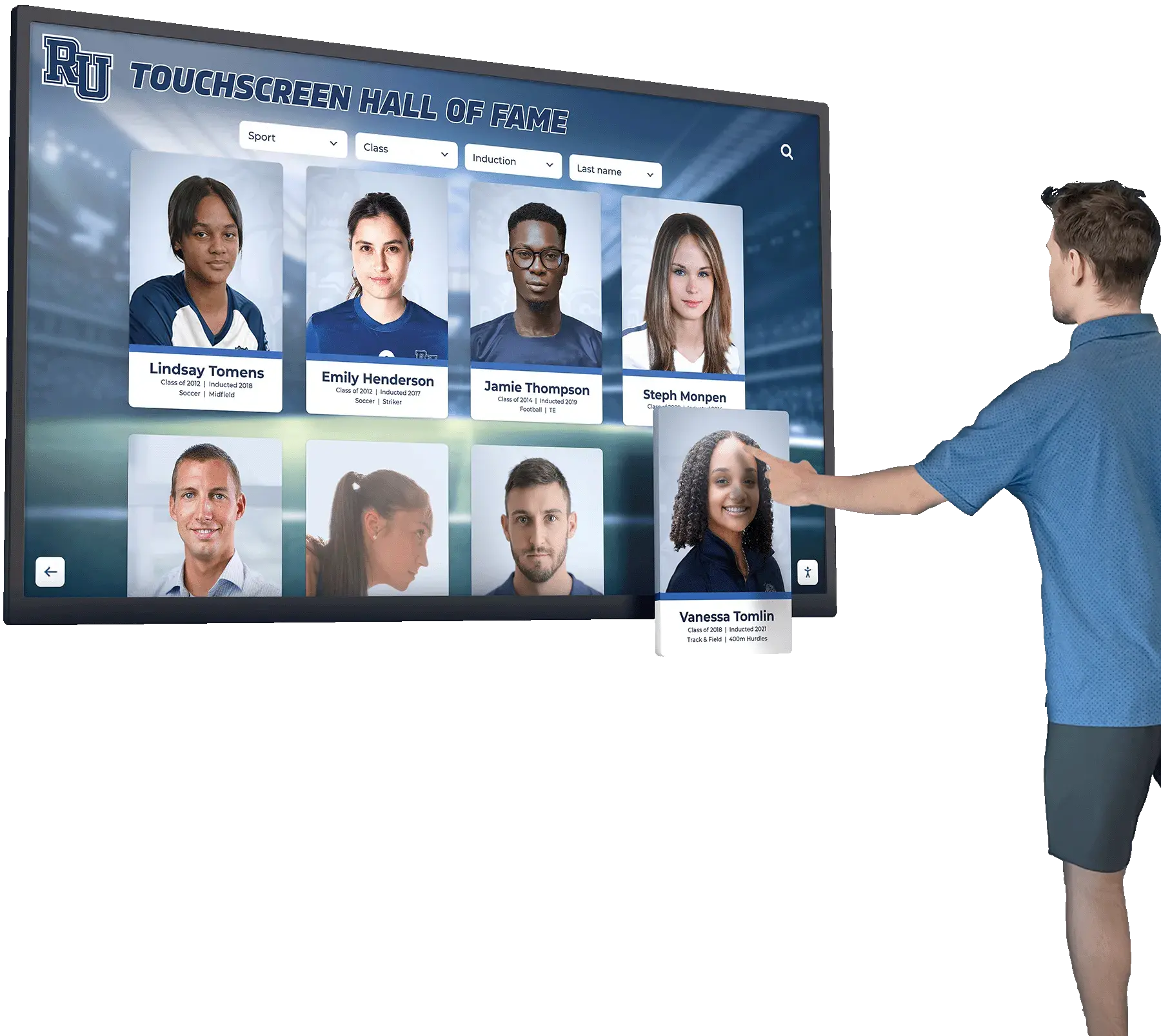
Modern touchscreen recognition systems address these limitations while creating more engaging recognition experiences. Digital platforms provide unlimited recognition capacity accommodating growing achievement lists without physical expansion, enable instant updates maintaining currency, ensure ADA-compliant accessibility for all community members, and facilitate interactive exploration of achievement details and individual profiles.
These platforms celebrate diverse accomplishments—academic honors, athletic championships, artistic achievements, community service milestones, attendance recognition, and leadership contributions—ensuring every student pathway receives appropriate visibility and validation.
Inclusive Recognition Approaches
Recognition systems should celebrate achievement diversity rather than exclusively honoring traditional markers like athletic championships or academic top performers. Hallway displays acknowledging kindness, growth mindset, creative expression, peer collaboration, and personal improvement communicate that every student can achieve recognition through effort aligned with their strengths and interests.
Schools implementing comprehensive digital recognition walls report increased student engagement and belonging as more individuals see themselves represented in school celebration systems rather than feeling excluded from achievement culture dominated by narrow excellence definitions.
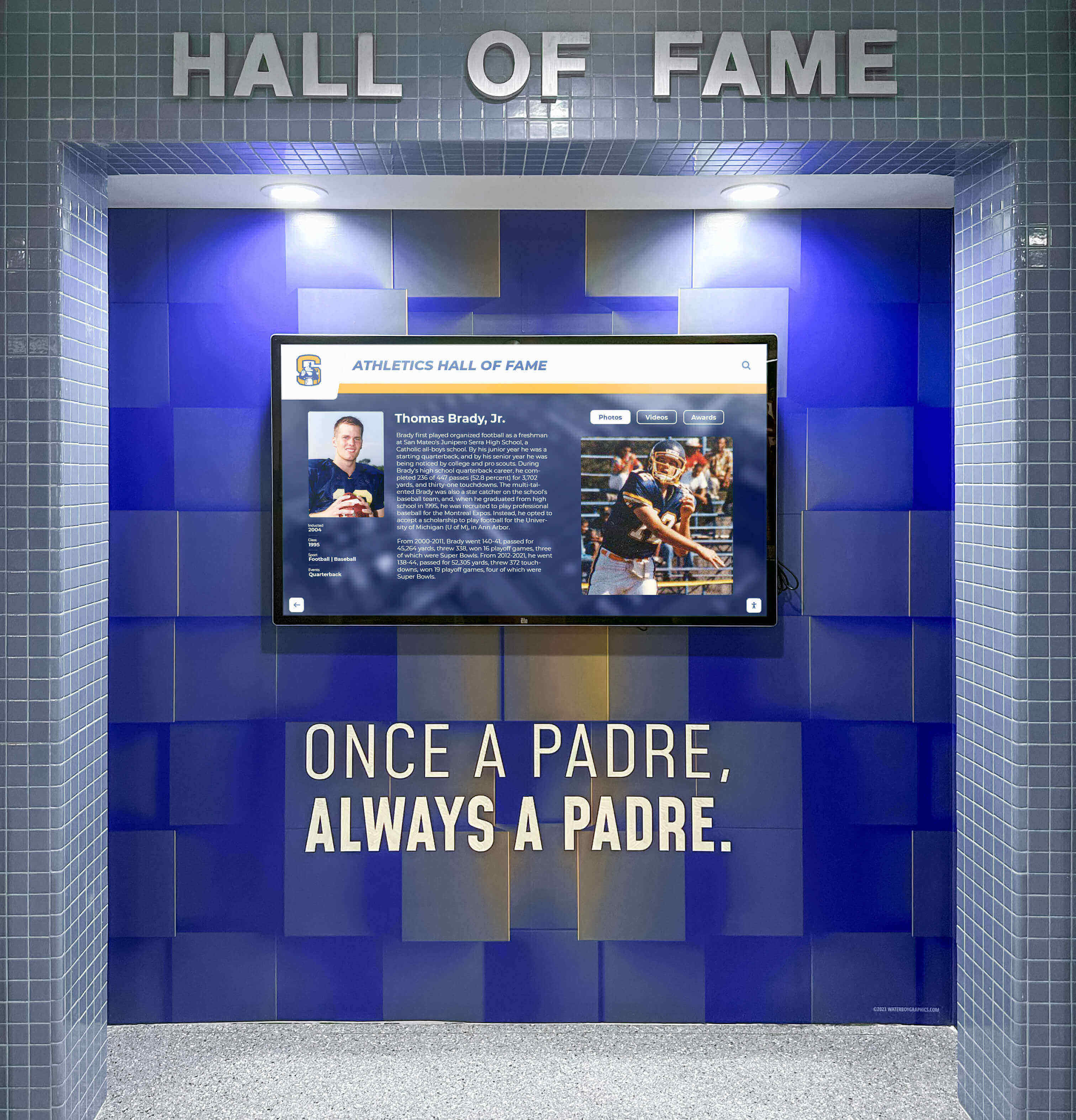
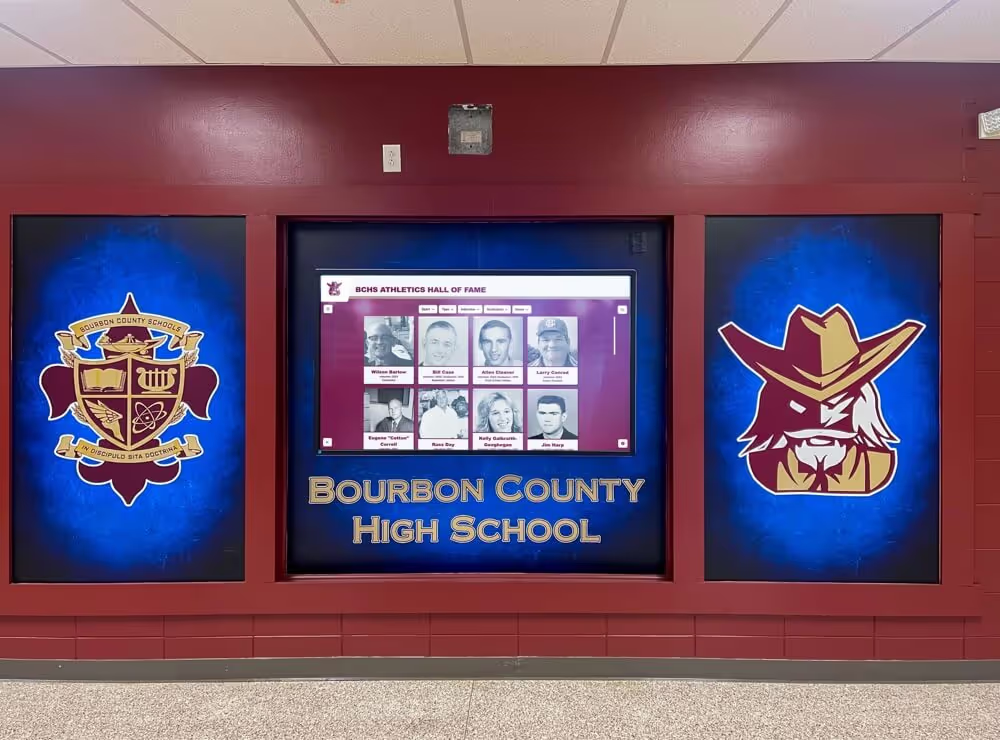
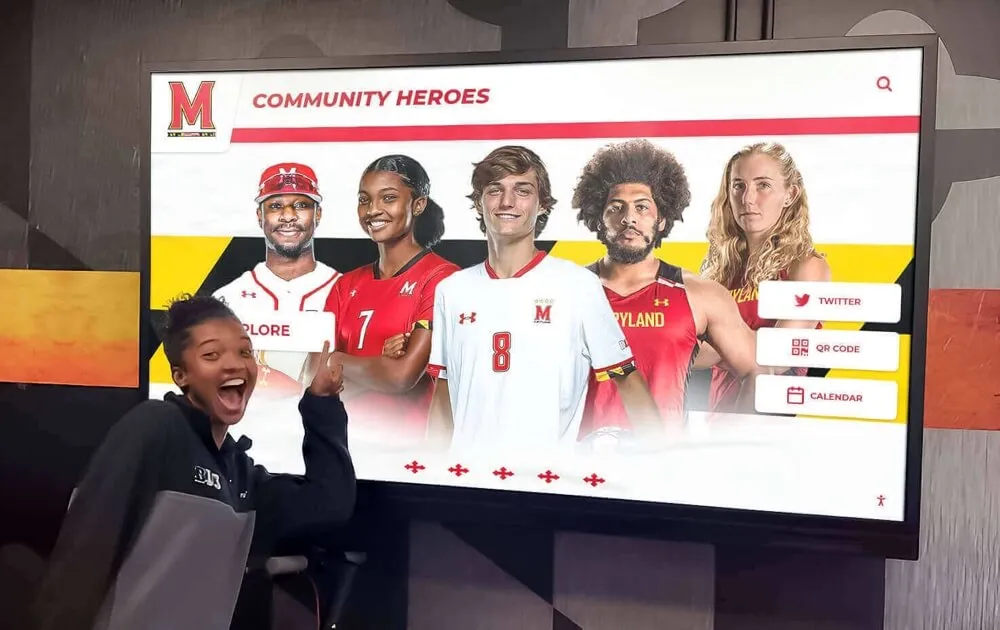
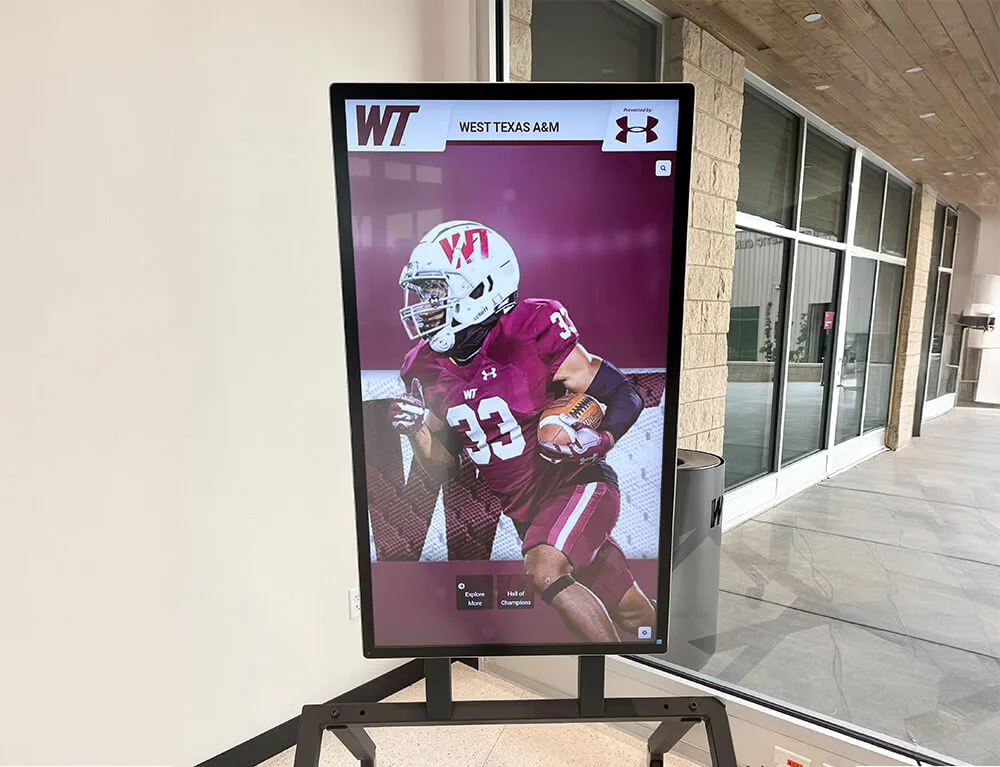
Digital recognition platforms provide unlimited achievement celebration capacity while maintaining clean, contemporary hallway aesthetics
Interactive and Technology-Enhanced Elements
Technology integration creates dynamic hallway experiences that evolve continuously rather than remaining static after initial installation.
Digital Display Applications
Modern digital displays serve multiple functions beyond simple recognition, transforming hallways into dynamic information and engagement hubs.
Multi-Purpose Content Rotation
Digital hallway displays can rotate between various content types throughout the day—morning announcements and daily schedules during arrival, lunch menus and event reminders during midday, achievement celebrations and club information during dismissal, and community messages or facility rental information during evening events.
This content versatility maximizes display utility and investment value while keeping hallway environments fresh and relevant. Students encountering different content during each passing period remain engaged rather than tuning out unchanging static displays.
Student-Generated Content Platforms
Digital systems enabling student content contributions build ownership and engagement. Students can submit artwork for display rotation, share project presentations, contribute to digital yearbook elements, or create announcements for clubs and activities.
This participatory approach transforms students from passive content consumers into active community contributors, strengthening connection to school environment and increasing investment in community success.
Schools implementing interactive library displays and hallway installations report significant increases in student engagement with both technology platforms and the broader school community they showcase.
QR Code Integration for Mobile Engagement
QR codes bridge physical hallway displays with extended digital content accessible via student smartphones.
Extended Information Access
Physical hallway space limitations prevent comprehensive information display, but QR codes enable deep exploration. Students scanning codes on recognition displays can access complete athlete statistics, detailed project descriptions, video presentations, or alumni career profiles extending far beyond what physical or screen-based displays can accommodate.
This layered information approach provides casual browsers quick recognition while enabling interested individuals to explore topics deeply through personal device access—accommodating varying engagement levels and interests.
Multi-Language Access and Accessibility
QR-linked content can provide translations supporting multilingual families, audio descriptions assisting visually impaired community members, or simplified text versions helping readers with learning differences. This accessibility ensures hallway content serves entire school community regardless of language background or disability status.
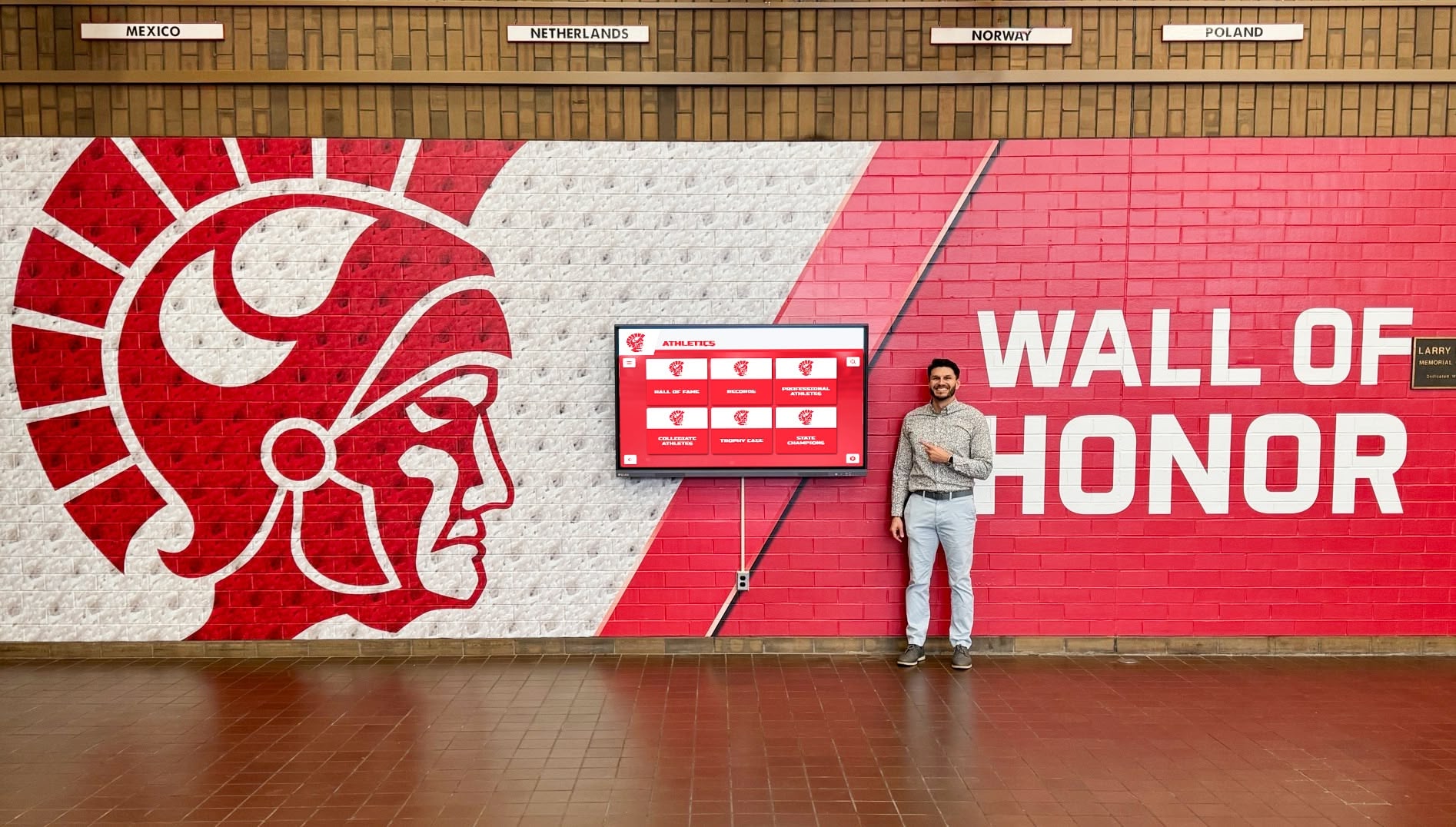
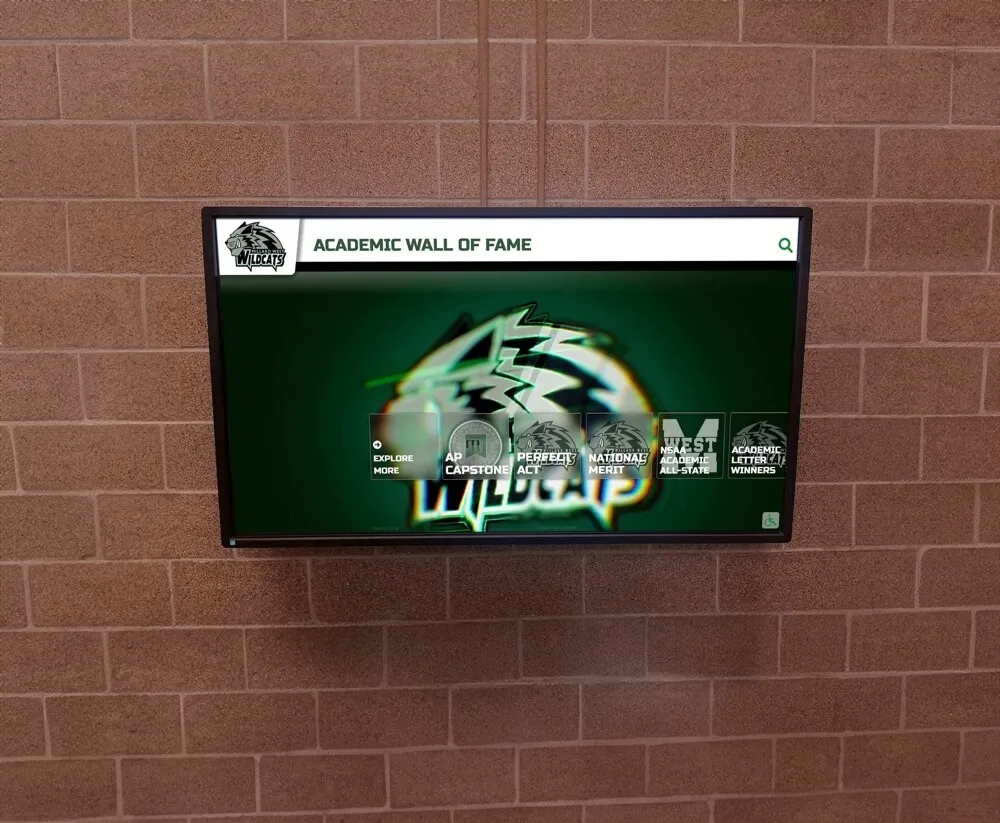
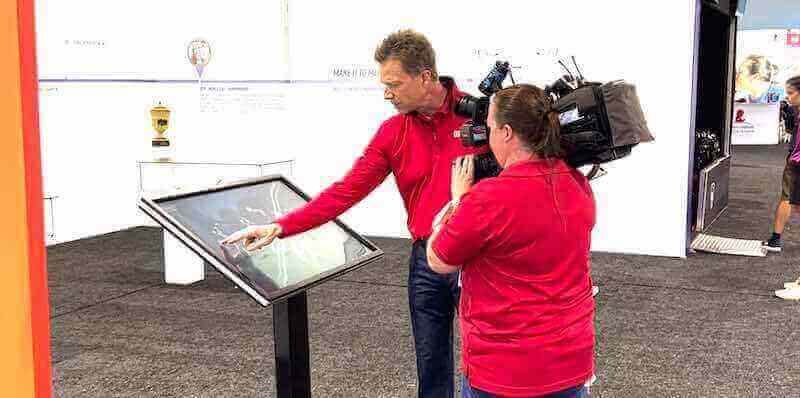
Interactive touchscreen technology encourages active engagement with school achievement history throughout regular hallway transitions
Student Work and Creative Expression Galleries
Showcasing student work throughout hallways validates creative effort while demonstrating learning outcomes to broader school community.
Rotating Exhibition Spaces
Designated hallway gallery zones with regular content rotation ensure diverse student work receives visibility throughout the academic year.
Curriculum-Connected Displays
Hallway exhibitions of student projects, essays, artwork, or research reinforce that academic work produces results worthy of public celebration. Seeing their work displayed professionally motivates students while communicating to peers and families that learning generates tangible, valuable outcomes.
Rotating displays quarterly or by semester ensures fresh content while giving multiple classes and student groups exhibition opportunities rather than permanent installations favoring select individuals or subjects.
Cross-Disciplinary Showcases
Thematic hallway exhibitions highlighting connections across subject areas—science and art exploring color theory, math and music examining patterns, history and literature investigating cultural movements—demonstrate integrated learning while creating more interesting visual experiences than single-subject displays.
These interdisciplinary approaches also ensure broader student representation as exhibitions draw from multiple classes and programs rather than isolated academic departments.
Digital Portfolio Displays
Technology enables more dynamic student work presentation than traditional bulletin boards or static wall mounts.
Multimedia Project Presentations
Digital displays accommodate video presentations, audio recordings, digital artwork, and interactive projects that physical hallway spaces cannot effectively showcase. This multimedia capability particularly benefits students working in contemporary media, technology, or performance disciplines where traditional print displays poorly represent their actual work.
Students developing digital recognition portfolios build valuable skills documenting and presenting their accomplishments—capabilities increasingly important for college applications, scholarship competitions, and career readiness.
Searchable Archives
Digital systems can maintain searchable archives of student work across multiple years, allowing students to explore work by former classmates, track their own growth over time, or find inspiration from past projects. This historical perspective builds continuity and tradition while demonstrating value placed on student work beyond immediate grading purposes.
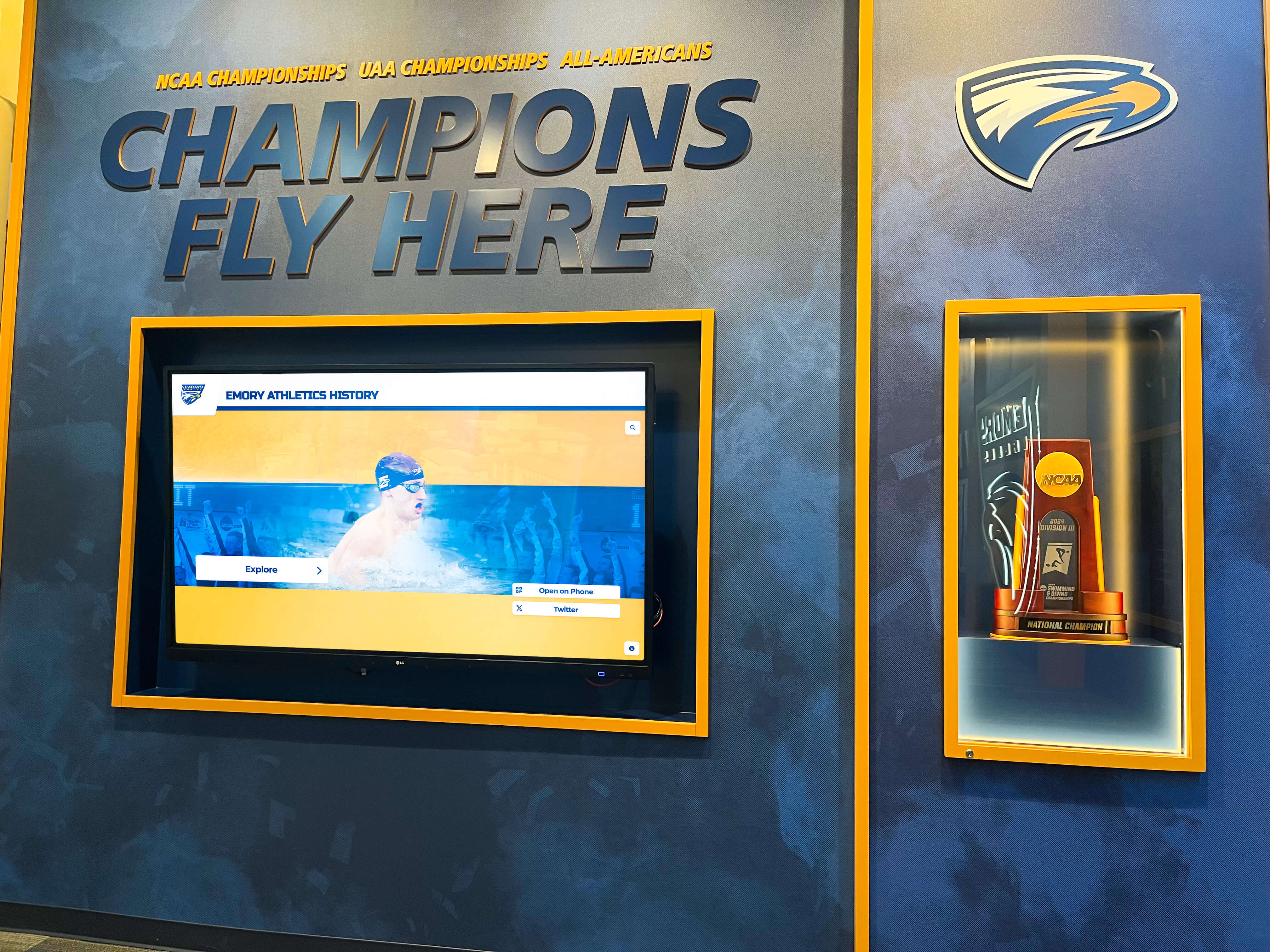
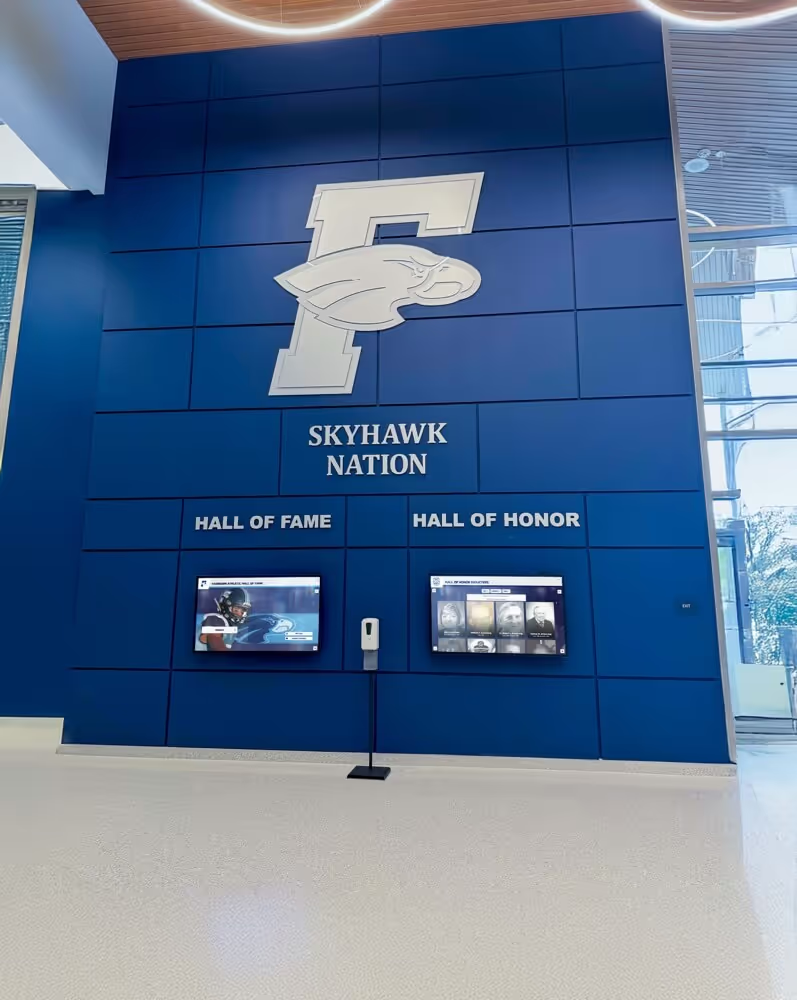
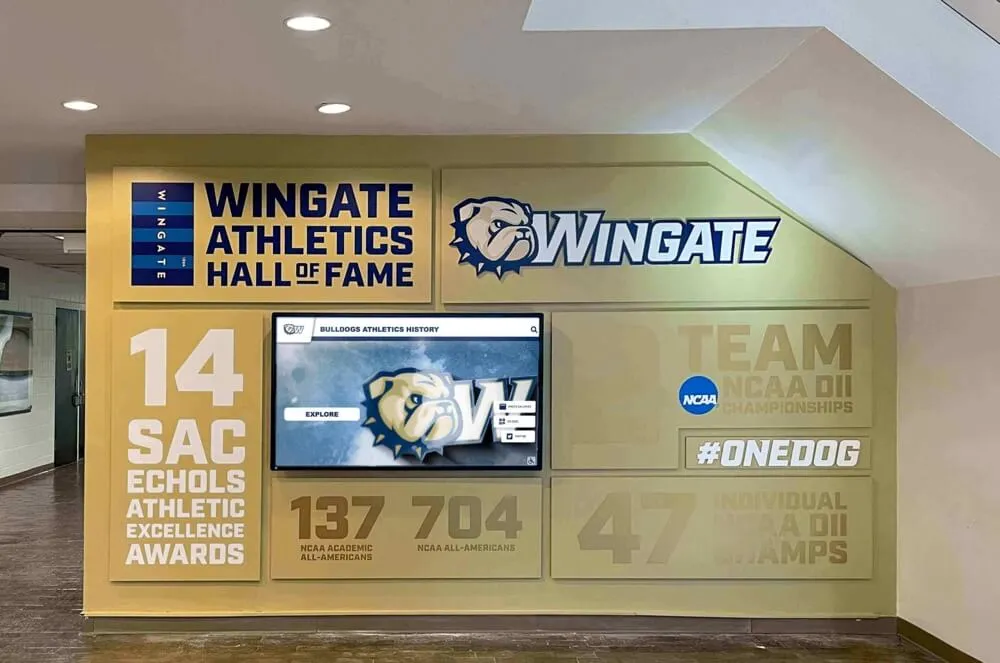
Championship recognition walls celebrate team achievements while establishing competitive standards inspiring current student athletes
Wayfinding and Functional Design Elements
Beautiful hallways must also function effectively, guiding movement and supporting operational needs.
Intuitive Navigation Systems
Clear wayfinding reduces confusion while creating opportunities for branded design integration.
Color-Coded Zones
Different hallway sections designated by color simplify navigation—blue hallway for science classrooms, green for mathematics, red for English, yellow for social studies. This system helps students, substitute teachers, and visitors orient quickly while creating visual interest through strategic color application.
Color wayfinding integrates naturally with school branding when zone colors incorporate or complement institutional color palettes.
Prominent Room Numbering and Signage
Clear, consistently formatted room numbers and directional signage seems basic but proves essential for efficient building navigation. Professional signage communicates organizational competence while amateur or inconsistent markers suggest institutional disorganization.
Signage systems should accommodate accessibility requirements including appropriate sizing, contrast ratios, tactile elements, and height placement ensuring usefulness for individuals with vision impairments or mobility limitations.
Flexible Display Infrastructure
Building infrastructure supporting varied display types allows hallway adaptation as needs evolve without requiring major renovation.
Rail Systems and Mounting Solutions
Picture rail systems, clip rails, or standardized mounting points enable easy display changes without wall damage from repeated installations. This flexibility proves particularly valuable for rotating student work, seasonal decorations, or temporary recognition displays.
Permanent infrastructure supporting changing content provides display versatility while maintaining professional appearance superior to tape, pushpins, or adhesive solutions that damage surfaces and appear unprofessional.
Power and Data Accessibility
Hallway technology installations require power and network connectivity. Planning these infrastructure elements during construction or renovation prevents expensive retrofitting or visible conduit installations detracting from hallway aesthetics.
Strategic power placement accommodates future technology additions as schools expand digital display networks, add device charging stations, or implement interactive kiosks enhancing hallway functionality.
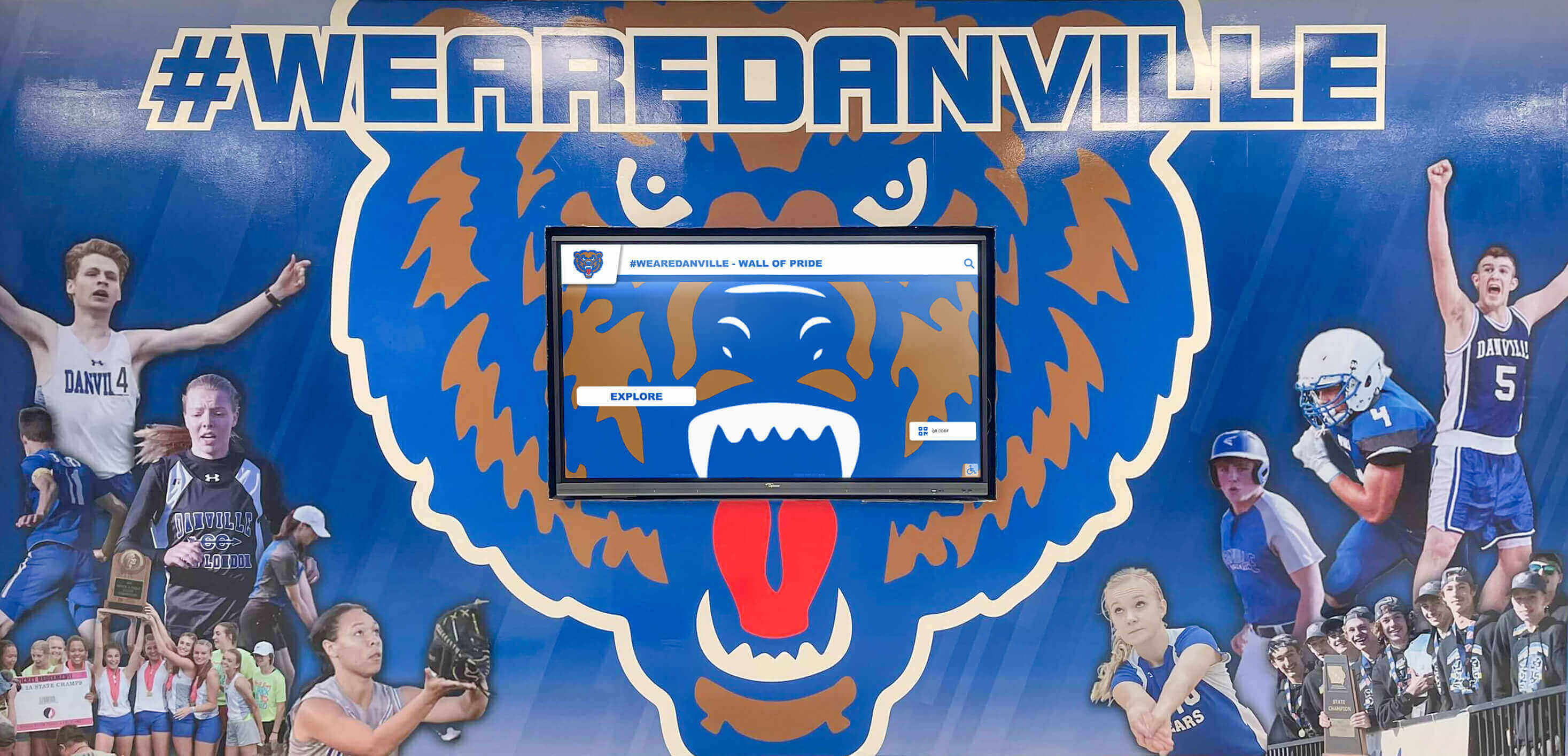
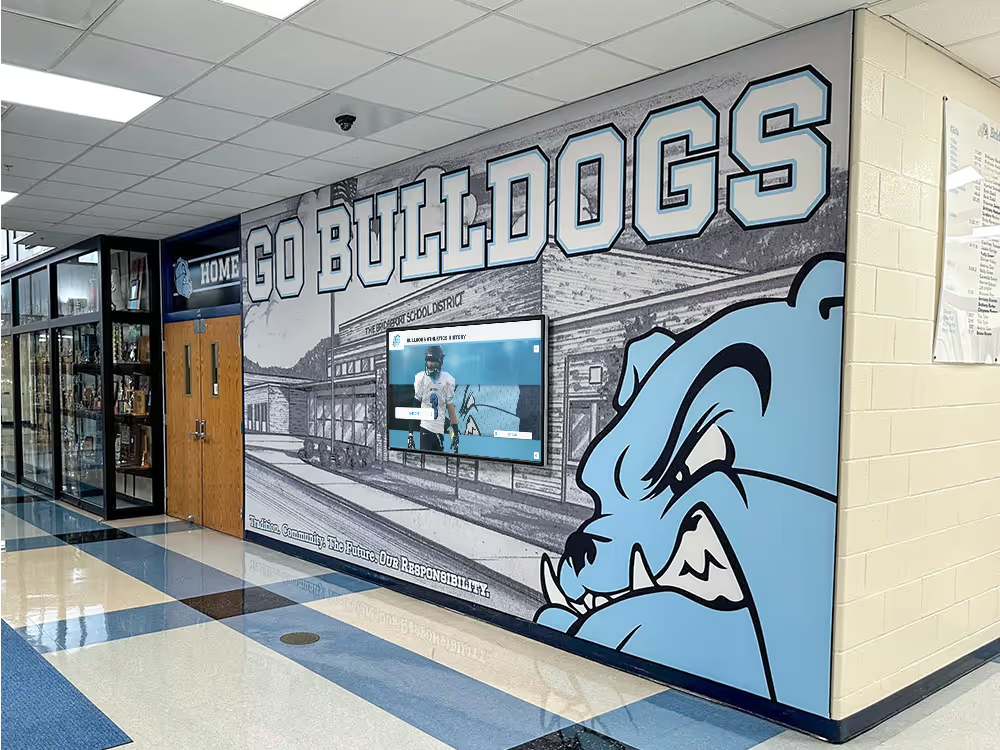
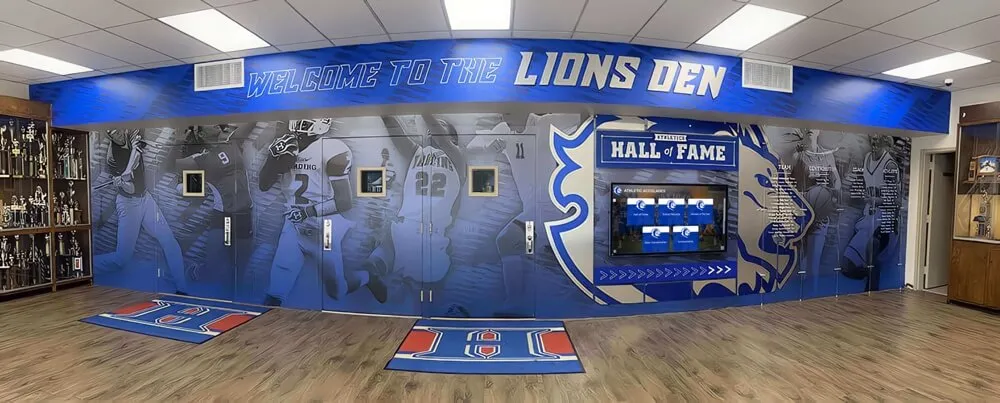
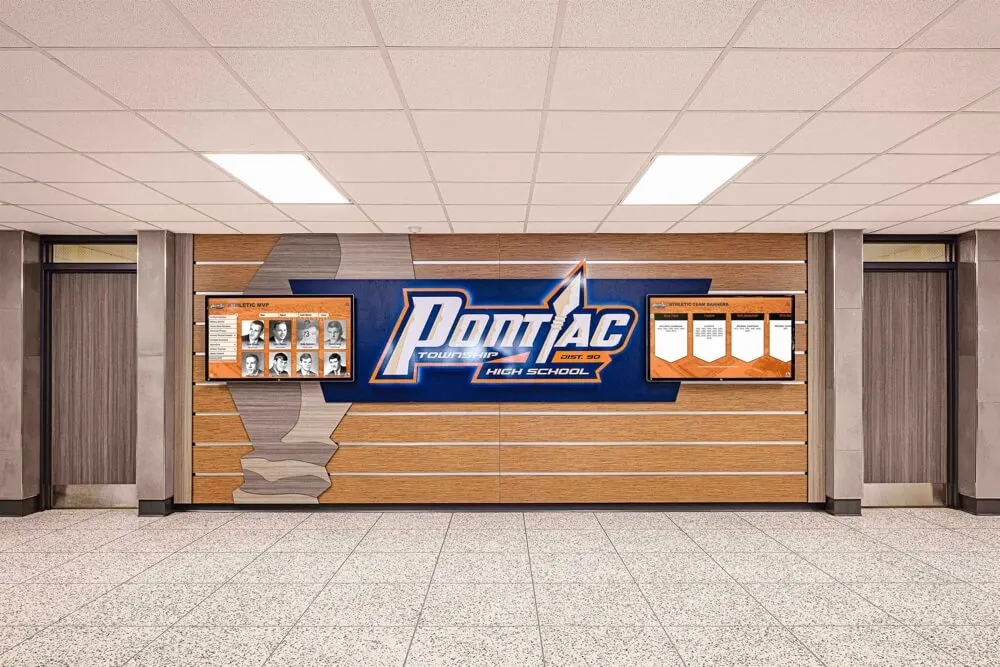
Integrated design approaches combining traditional branding elements with modern technology create cohesive environments celebrating school identity
Budget-Conscious Implementation Strategies
Meaningful hallway improvements don’t require unlimited budgets—strategic planning produces significant impact within varied resource constraints.
Phased Development Approach
Multi-year improvement plans allow gradual transformation rather than requiring comprehensive immediate investment.
Year One: Foundation and Planning
Initial phases focus on establishing design standards, refreshing paint and basic finishes, implementing cost-effective improvements like vinyl wall graphics or painted murals, and planning infrastructure for future technology additions.
Even modest investments in professional paint application, basic branding elements, or organized bulletin board systems dramatically improve hallway appearance while establishing design direction guiding future enhancements.
Year Two: Technology Integration
After establishing visual foundation, subsequent phases can add digital recognition displays, interactive wayfinding kiosks, or multimedia student work presentation systems elevating hallway functionality while maintaining design cohesion established previously.
Technology additions benefit from earlier infrastructure planning ensuring power, networking, and mounting solutions exist without requiring expensive retrofit work.
Year Three and Beyond: Expansion and Refinement
Subsequent years allow extending successful approaches to additional hallway areas, upgrading high-traffic zones with enhanced materials or features, or adding specialized elements like dedicated alumni recognition areas, donor acknowledgment displays, or themed educational corridors supporting specific academic programs.
This gradual approach prevents overwhelming upfront costs while creating continuous improvement momentum demonstrating ongoing institutional investment in facility quality.
Leveraging Community Resources
External partnerships and community engagement can significantly extend available resources for hallway improvements.
Student and Parent Volunteers
Art students, parent volunteers with design or construction skills, or community members seeking service opportunities can contribute labor for mural painting, display construction, or installation work under appropriate supervision.
This volunteer involvement reduces costs while building community ownership and connection to school environments. Participants develop personal investment in spaces they helped create, strengthening overall community bonds.
Alumni and Booster Fundraising
Hallway improvement initiatives create natural fundraising opportunities for alumni groups, parent boosters, or community foundations. Recognition opportunities—named hallway sections, donor walls, or legacy programs—provide meaningful acknowledgment for contributions supporting facility enhancements.
Schools implementing donor recognition displays report increased fundraising success as contributors see tangible, visible results of their support throughout daily school operations rather than contributions disappearing into general operating budgets.
Grant Opportunities
Various grant programs support educational facility improvements, technology integration, arts education, or community engagement initiatives. Hallway improvement projects framed as supporting educational mission, student belonging, or community building align well with foundation priorities and funding criteria.
Dedicated time researching grant opportunities and developing compelling applications can unlock funding sources unavailable through traditional school budgets.
Maintenance and Sustainability Considerations
Beautiful hallways require ongoing maintenance—design decisions should anticipate realistic upkeep capacity ensuring long-term sustainability.
Durable Materials and Finishes
Material selection dramatically affects maintenance requirements and appearance longevity.
High-Traffic Surface Solutions
Hallway surfaces endure constant use requiring durable finishes withstanding impacts, scuffs, cleaning chemicals, and continuous wear. Commercial-grade paint, impact-resistant wall coverings, or reinforced corner guards prevent damage while maintaining appearance despite intensive use.
Initial investment in quality materials prevents frequent replacement cycles while reducing ongoing maintenance labor and material costs that cheap alternatives impose through accelerated degradation.
Cleanability and Stain Resistance
Hallway surfaces will get dirty—design should assume this reality rather than hoping for perpetual perfection. Materials enabling effective cleaning without damage or permanent staining ensure hallways remain presentable throughout years between major refreshes.
Sealed surfaces, stain-resistant fabrics, and finishes tolerating rigorous cleaning maintain appearance despite inevitable messes while reducing custodial labor requirements.
Digital Display Advantages
Technology-based hallway elements offer maintenance benefits beyond their engagement advantages.
Eliminating Physical Updates
Traditional recognition displays require physical labor for every update—ordering plaques, mounting new elements, rearranging existing displays to accommodate additions, or removing outdated content. This recurring physical work consumes facilities staff time while creating periods where displays appear incomplete during update processes.
Digital recognition systems enable instant content updates through web-based content management without requiring physical access to displays. Athletic directors, communications staff, or designated administrators update content remotely from any device, eliminating installation labor while ensuring displays remain current without time lags.
Reducing Physical Clutter
Digital displays consolidate content that might otherwise require multiple bulletin boards, poster cases, or physical installations throughout hallways. This consolidation reduces visual clutter while simplifying maintenance by reducing the number of physical elements requiring regular attention.
Clean, streamlined hallway aesthetics prove easier to maintain than spaces filled with multiple disparate display types each requiring different maintenance approaches and update procedures.
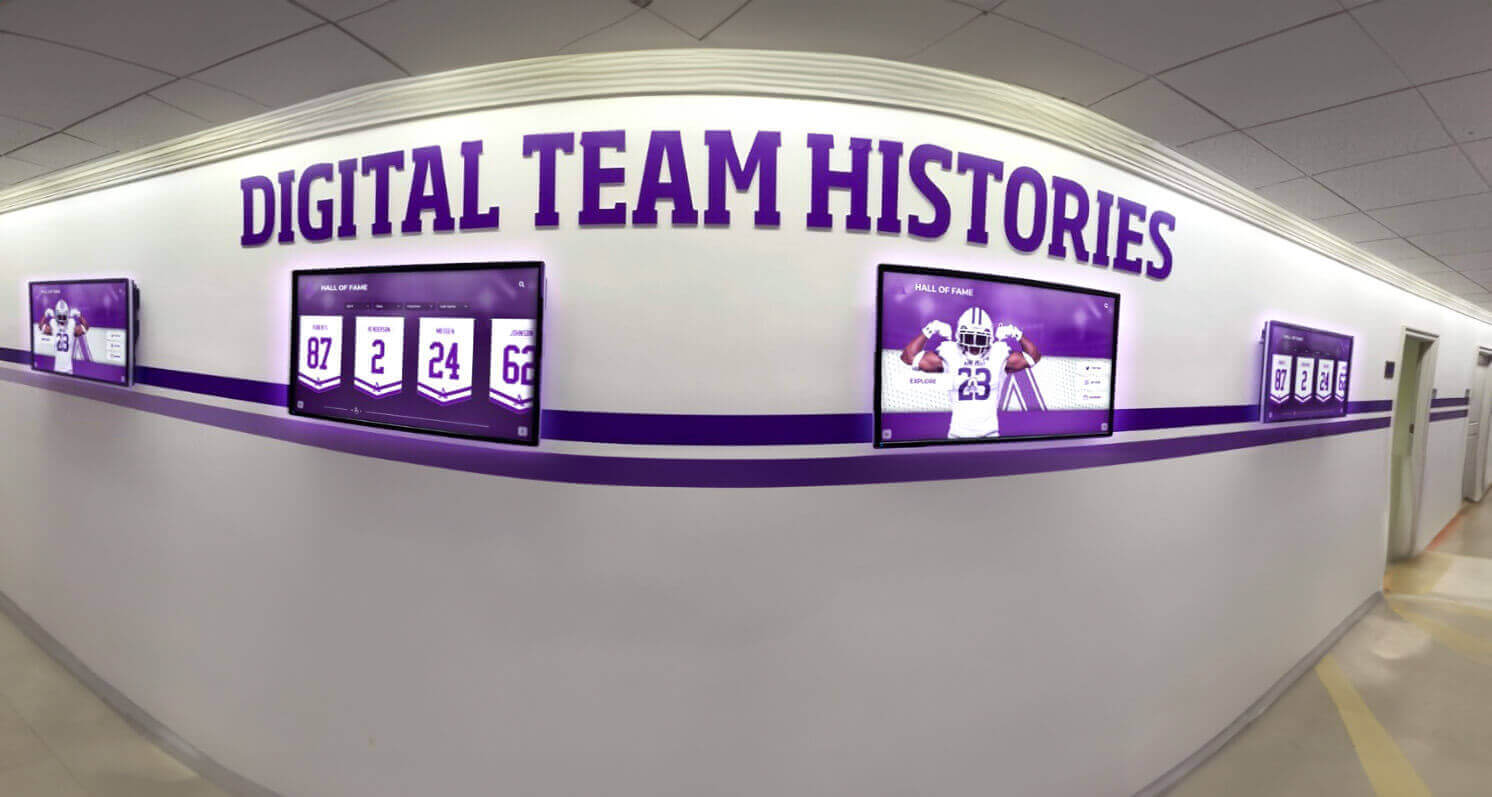
Coordinated digital display networks transform entire hallway corridors into dynamic engagement environments celebrating comprehensive school achievement
Creating Welcoming Environments for All
Inclusive hallway design ensures every community member feels welcomed, represented, and valued within school spaces.
Multicultural and Diversity Celebration
Hallway environments should reflect and celebrate the diverse backgrounds, identities, and experiences comprising school communities.
Representative Content and Imagery
Visual content throughout hallways should include diverse representation ensuring students of varied backgrounds, abilities, and identities see themselves reflected in school environments. This representation extends beyond occasional diversity posters to comprehensive integration throughout recognition systems, student work displays, historical content, and visual storytelling.
Authentic representation requires ongoing attention and intentionality rather than one-time efforts, with regular content review ensuring continued relevance and inclusion as community demographics and awareness evolve.
Multilingual Communication
Schools serving multilingual communities should incorporate multiple languages throughout hallway communication, recognition, and wayfinding systems. This linguistic inclusion demonstrates value for home languages while supporting comprehension for students and families still developing English proficiency.
Digital systems provide particular advantages for multilingual content, enabling language selection rather than requiring separate physical installations for each language representation.
Accessibility and Universal Design
Hallway environments must accommodate community members across ability spectrums.
Physical Accessibility
Beyond ADA compliance requirements for clearances and pathways, thoughtful design considers sight lines for wheelchair users, reach ranges for individuals of varied heights or mobility limitations, and sensory considerations for those with autism or sensory processing differences.
Display placement, seating options, and interactive element positioning should accommodate universal access rather than defaulting to average adult height and ability assumptions.
Digital Accessibility Features
Touchscreen display systems should meet WCAG accessibility standards ensuring usability for individuals with vision impairments, motor limitations, or cognitive differences. Features like adjustable text sizing, audio descriptions, keyboard navigation alternatives, and simplified navigation modes enable participation across ability ranges.
Accessible technology demonstrates institutional commitment to inclusion while ensuring recognition and engagement opportunities reach entire school communities rather than excluding members with disabilities.
Impact on School Culture and Climate
Thoughtfully designed hallway environments produce measurable effects on institutional culture, student belonging, and community engagement.
Student Belonging and School Connection
Physical environment quality significantly influences how students perceive their school and their place within it.
Seeing Yourself Reflected
Students who see their achievements, identities, cultures, and interests reflected throughout hallway environments develop stronger sense of belonging and connection to school community. This representation communicates that they matter, their contributions receive recognition, and the institution values who they are beyond academic performance.
Schools reporting improved climate and reduced disciplinary issues often point to environmental improvements increasing student investment in maintaining and respecting spaces they feel represent and value them.
Pride in Place
Well-designed, maintained hallway environments communicate that the institution values its physical spaces and, by extension, the people occupying those spaces. Students internalize these environmental messages, developing pride in their school that influences behavior, effort, and community commitment.
Conversely, neglected, poorly maintained, or institutional-feeling hallways communicate lack of care that students may mirror through disrespectful treatment of facilities or disengagement from school community.
Visitor Impressions and Community Perception
Hallway environments create immediate impressions influencing how families, community members, and prospective students perceive institutional quality.
Recruitment and Enrollment
Families touring schools form rapid impressions based heavily on physical environment. Hallways representing the most visible, accessible spaces during tours significantly influence these perceptions. Professional, engaging, well-maintained corridors suggest organizational competence, community investment, and student-centered priorities that appeal to prospective families.
Schools competing for enrollment benefit from hallway investments creating positive differentiating impressions during the critical tour experience when families evaluate options and form preferences.
Community Support and Funding
Community members, potential donors, and district stakeholders visiting schools form opinions about institutional effectiveness and investment worthiness partially based on facility impressions. Hallways demonstrating thoughtful design, maintained quality, and student achievement celebration build confidence in organizational leadership while creating emotional connections motivating financial support.
Recognition systems acknowledging community contributions and donor support strengthen these relationships while encouraging continued engagement from individuals seeing their impact visibly acknowledged throughout school environments.
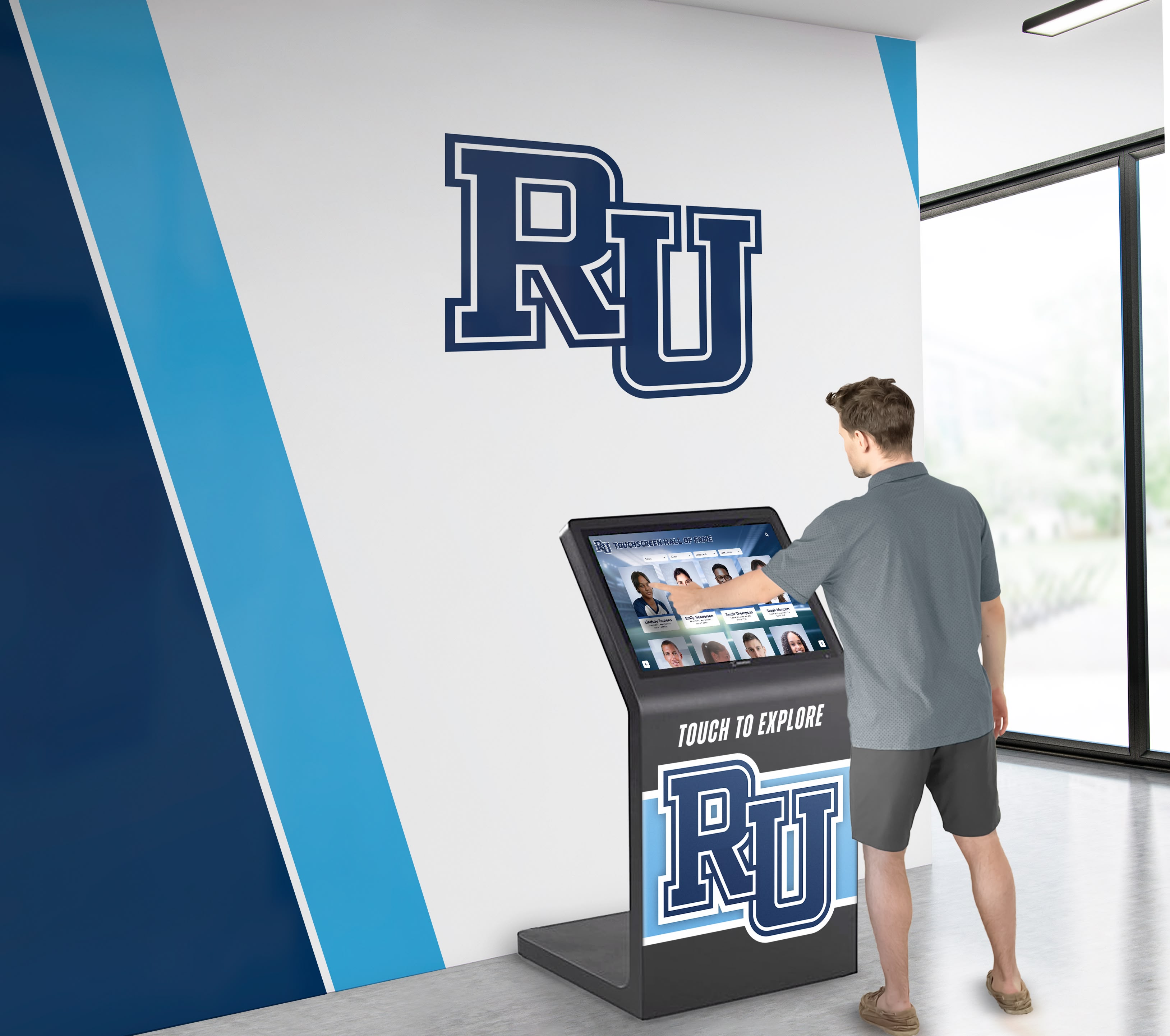
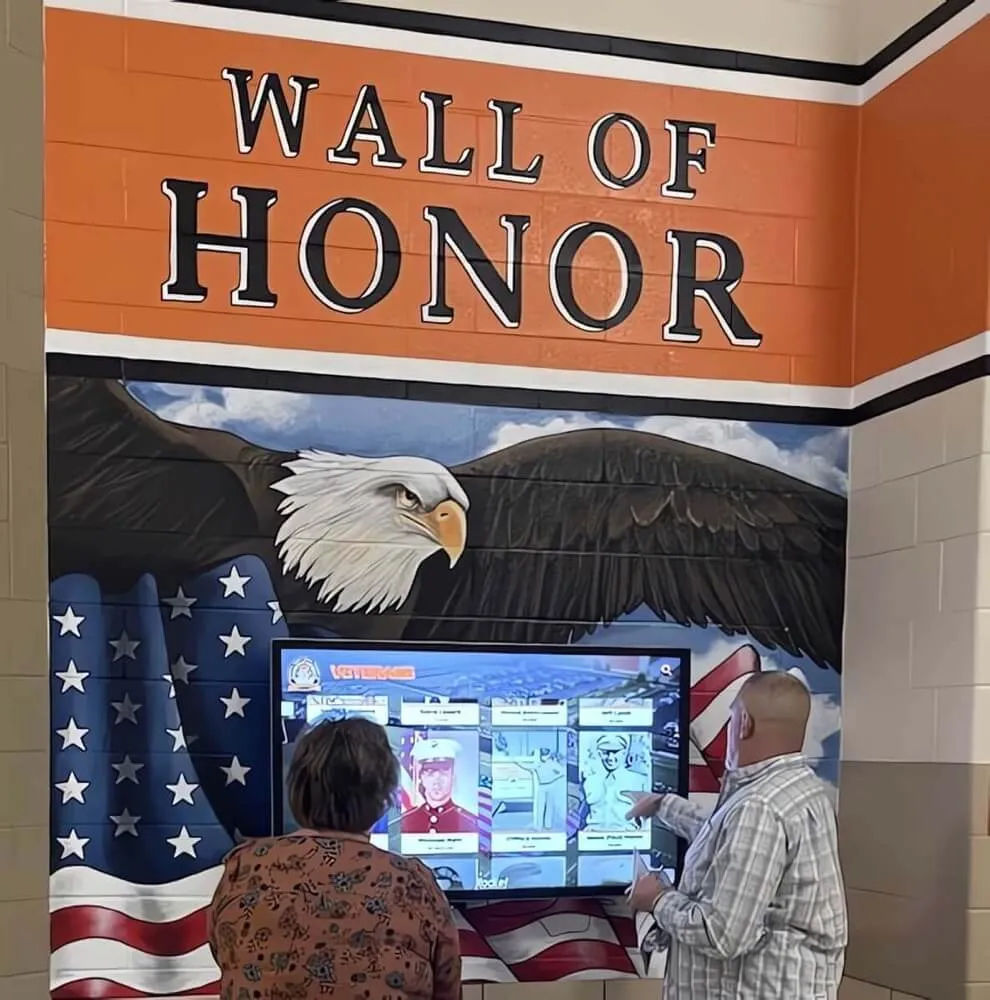
Intuitive touchscreen interfaces enable community members of all ages to explore school achievement history and connect with institutional legacy
Conclusion: Hallways That Build Community
A school hallway designed with intention transforms from transitional necessity into community asset building pride, celebrating achievement, supporting learning, welcoming diversity, and creating daily opportunities for connection and belonging. Effective hallway environments balance aesthetic appeal with functional performance, incorporate both traditional and technology-enhanced elements, accommodate diverse needs and backgrounds, and remain sustainable through realistic maintenance planning.
Whether planning comprehensive renovation, implementing targeted improvements, or optimizing existing spaces, the strategies outlined in this guide help school leaders create corridors that serve, inspire, and unite their communities. Start with clear understanding of hallway functions beyond circulation, invest strategically in elements building pride and recognition, leverage technology extending engagement beyond physical limitations, and maintain environments demonstrating ongoing institutional care and student value.
Championship school environments don’t emerge from unlimited budgets—they result from thoughtful planning, community engagement, and commitment to creating spaces where every student develops belonging and pride. The hallways you design shape the community you build.
Transform Your School Recognition Experience
Ready to elevate your school’s hallway recognition with modern digital displays that celebrate unlimited achievements while creating engaging interactive experiences for students, families, and community members? Rocket Alumni Solutions provides comprehensive digital recognition platforms designed specifically for educational institutions, combining touchscreen interaction with unlimited recognition capacity, remote content management, ADA-compliant accessibility, and engaging presentation formats that transform hallway environments into dynamic community celebration spaces. Our solutions help schools build pride and strengthen community connections through technology that makes recognition accessible, current, and inspiring. Contact us to discover how digital recognition can enhance your school hallway design and strengthen institutional culture.