School gym branding shapes how athletes feel the moment they walk onto the floor and how visiting teams size up the program before tip-off. A gymnasium that displays championship history, honors its sponsors, and tells the story of the athletes who built the program does more than look good—it creates a culture that current athletes step into and want to extend. Yet most school gyms develop their branding through a series of unrelated decisions: a banner here, a vinyl logo there, a sponsor panel added when someone wrote a check. This guide offers a deliberate framework for gym walls, digital screens, sponsor recognition, and team history so every element pulls in the same direction.
Athletic directors and facilities leaders who think systematically about school gym branding avoid the most common failure: a cluttered space where no single element gets the attention it deserves. The goal is intentional layering—permanent identity on the walls, dynamic content on screens, clear stewardship for sponsors, and an archive of team history that makes the gym feel like it belongs to every generation of athletes who competed in it.

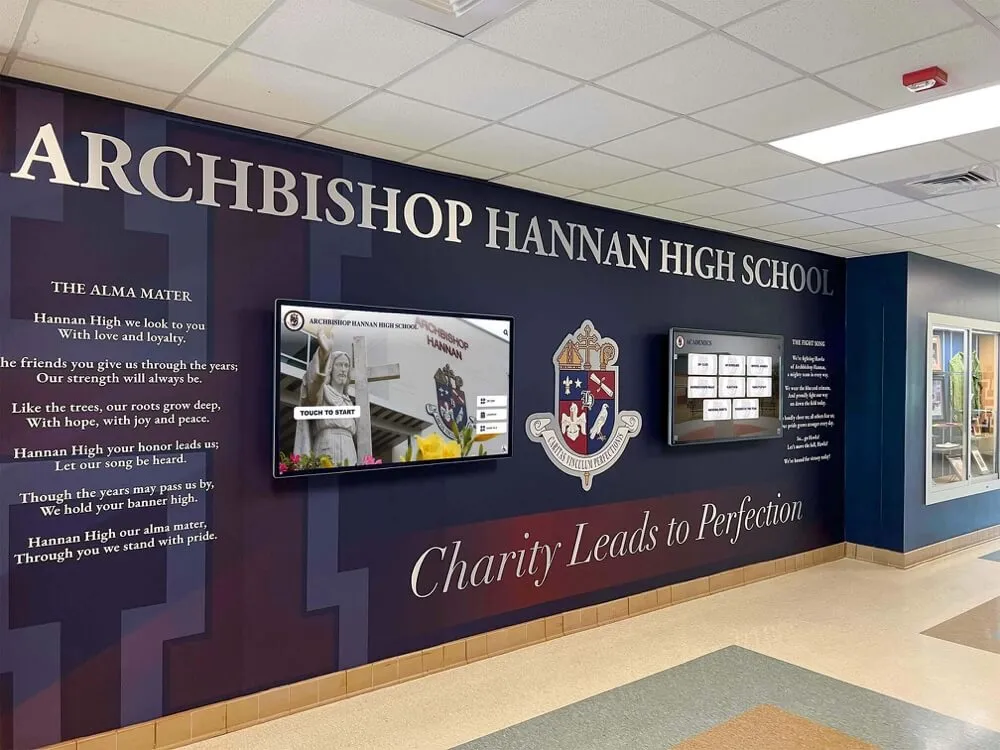
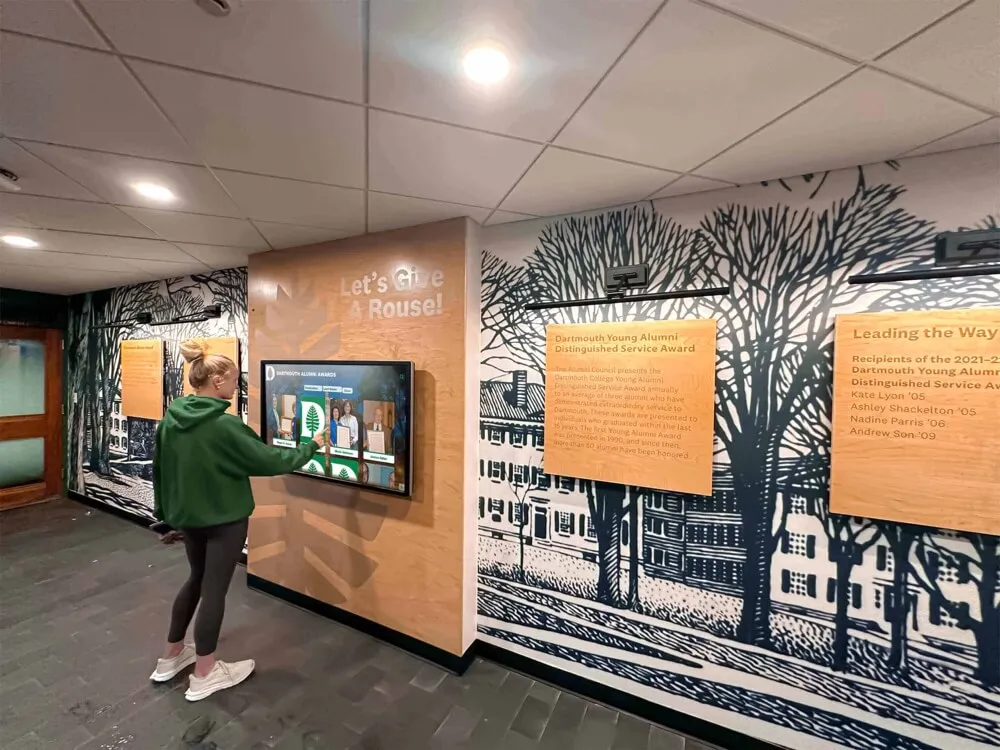
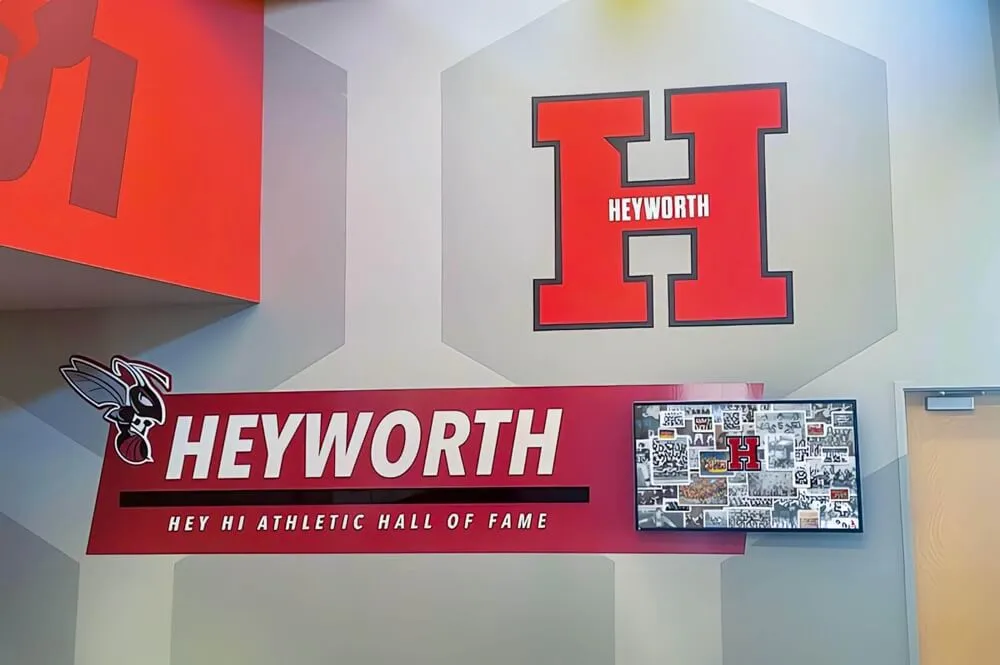
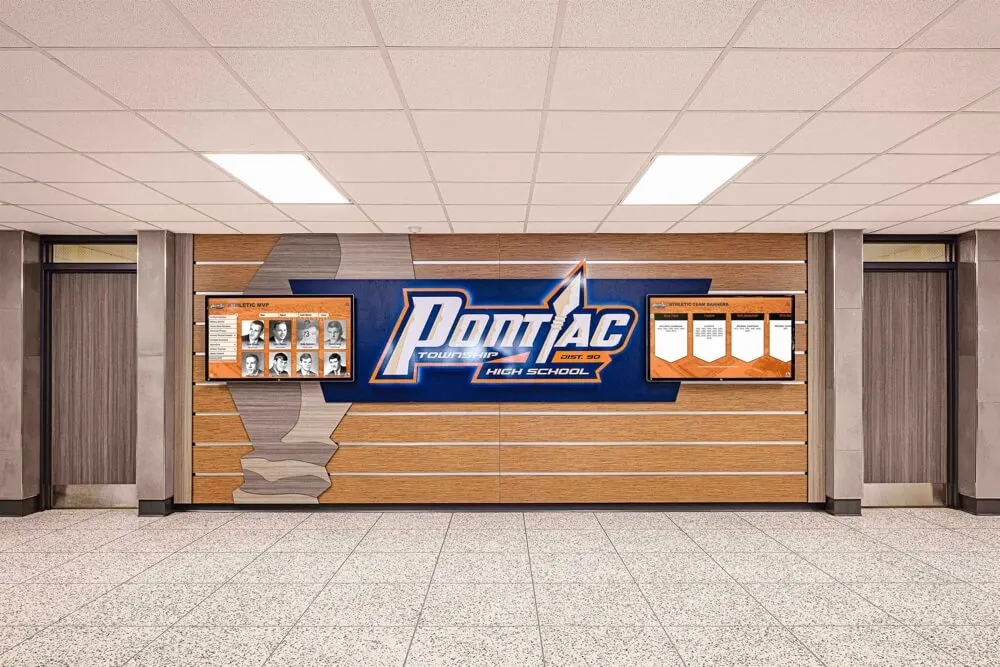
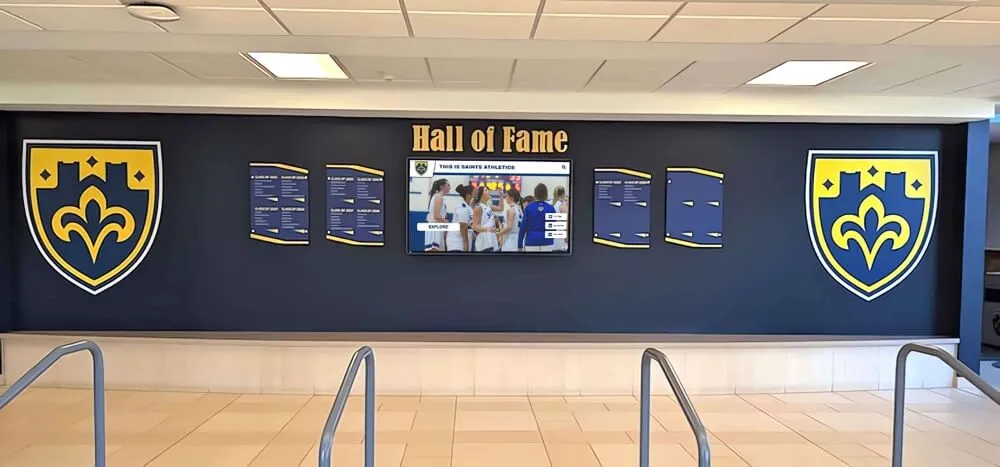
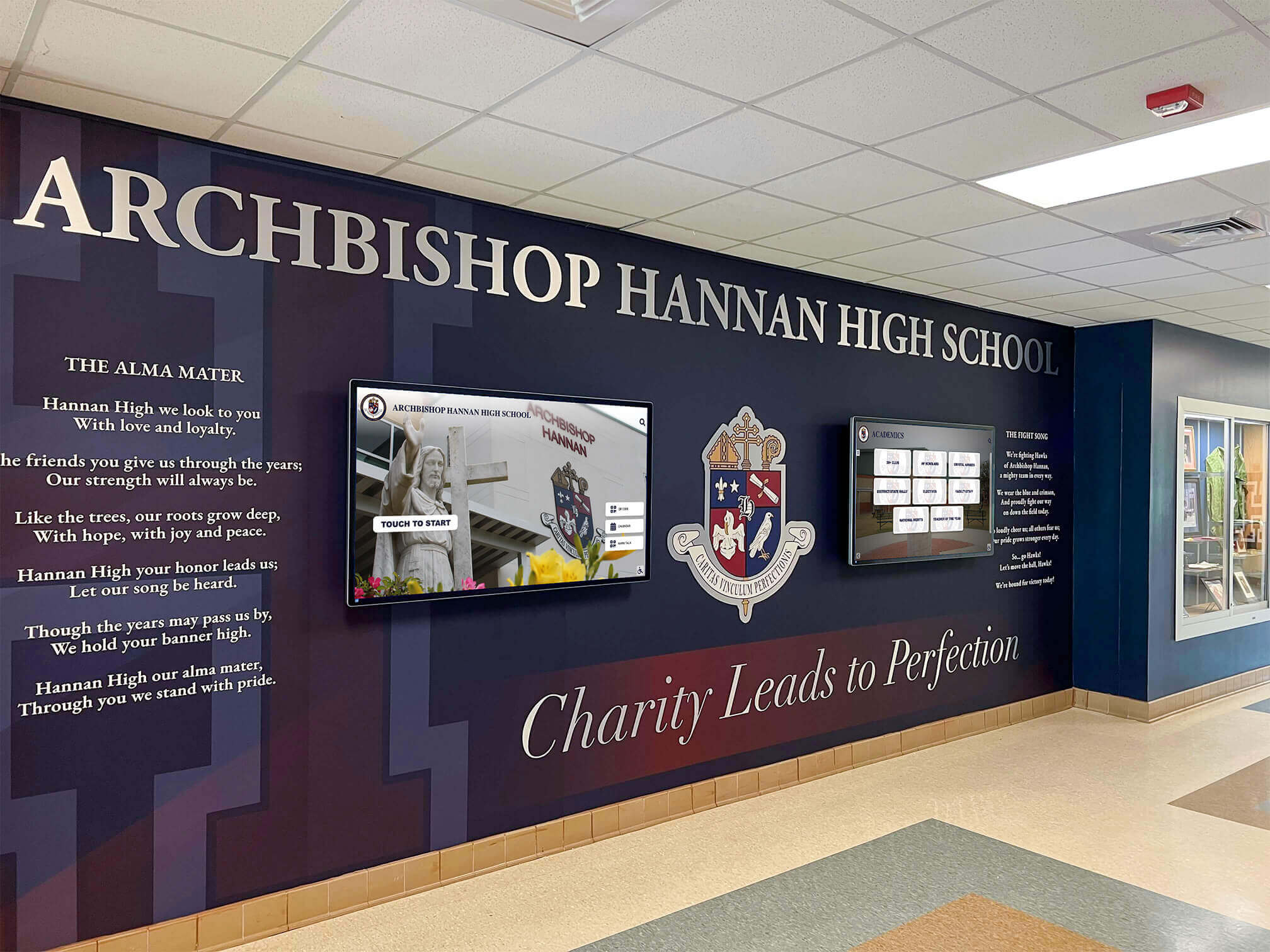
Combining a permanent school crest mural with integrated digital screens creates a layered branding environment that works for daily traffic and special events
Why School Gym Branding Matters Beyond Aesthetics
A well-branded gymnasium communicates program values before a single athlete takes the floor. Recruits visiting for the first time read the room: championship banners signal sustained excellence, a hall of fame wall communicates that the school honors its own, and a clean digital display running highlight reels suggests the program takes its story seriously.
Branding also creates a retention effect. Students who see their school’s identity expressed with clarity—mascot, colors, program history, records—develop stronger attachment to the institution and the athletic program. Research on school belonging consistently connects visible institutional identity to student engagement, and gyms are among the most frequently visited spaces in a school building.
For advancement and alumni teams, a well-branded gym is a fundraising asset. Donors who walk through a space where their previous gifts are acknowledged—and where recognition feels permanent and meaningful—are more likely to give again. That logic applies whether the gift supported a scoreboard, a floor renovation, or an endowed scholarship. Community hero walls and recognition programs demonstrate how visible acknowledgment of contribution strengthens community ties and encourages continued investment.
Gym Wall Ideas: Murals, Mascots, and Recognition Zones
The walls are the most permanent branding surface in a gymnasium. Changes require real investment, so decisions about wall space deserve careful planning.
Establish a Visual Identity Zone at Each Entrance
Every gym has a primary entrance that visitors and athletes use on game day. That threshold is the single highest-impact branding moment in the space. A well-designed entrance zone should include:
- Mascot graphic or school crest at a scale visible from mid-court
- School colors applied consistently to framing, trim, and background
- Program tagline or motto if the program has one that resonates authentically
- Year the program was established, which signals tradition even to first-time visitors
This entrance treatment functions as an anchor for all other branding in the space. Every subsequent element—banners, screens, display cases—should feel visually connected to it.
Create Distinct Zones for Different Recognition Types
One of the most effective approaches to gym wall planning is dividing recognition into clearly defined zones rather than mixing everything together. A typical framework:
Championship zone: State and regional titles, displayed at consistent scale and organized by year and sport. This zone should be reserved exclusively for competitive achievement—no sponsor panels, no conference titles, no participation banners.
Program history zone: Retired numbers, hall of fame honorees, record holders. This zone accommodates more content than the championship zone and benefits from a display system that can grow over time.
Community and sponsor zone: Booster recognition, naming rights acknowledgment, and sponsor panels. Keeping this zone visually separate from athletic achievement recognition protects the integrity of both.
Current season zone: Rotating content celebrating this year’s teams, senior portraits, game-day starting lineups. This zone is typically digital.
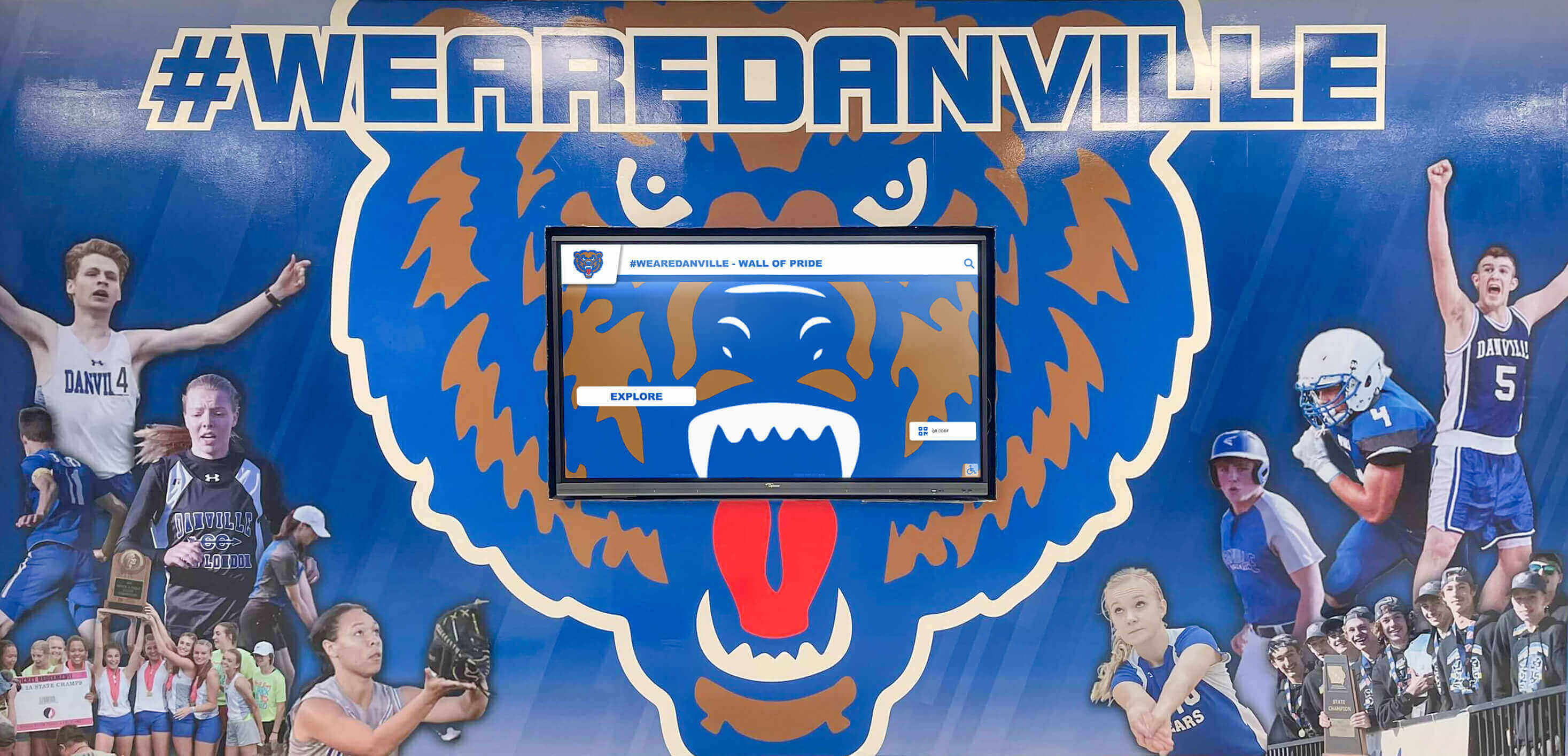
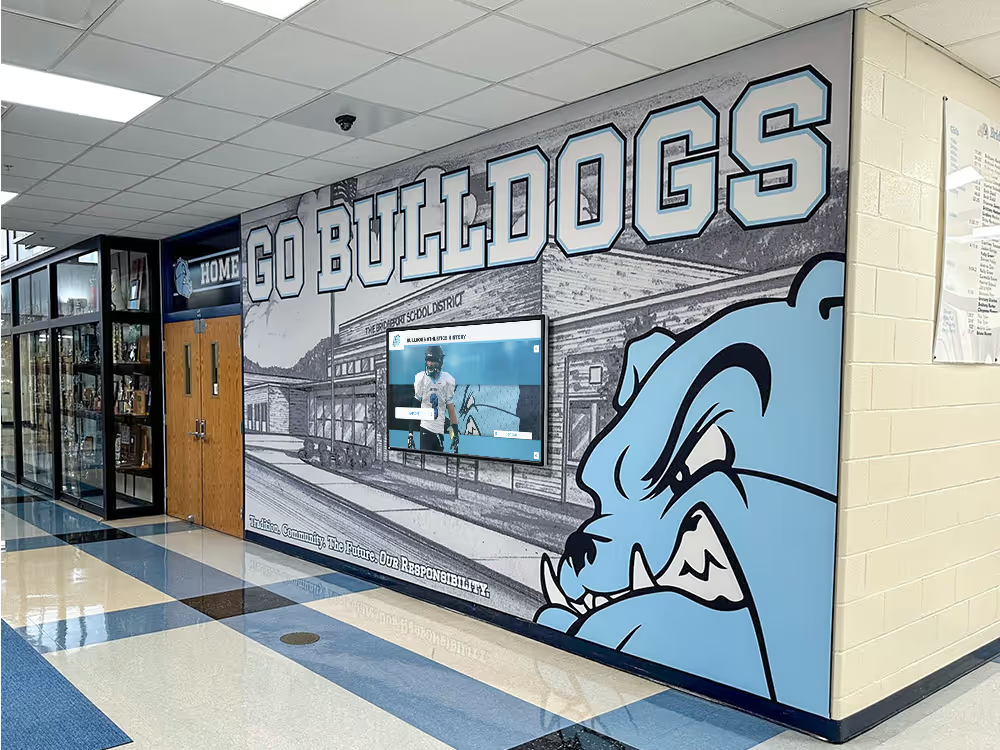
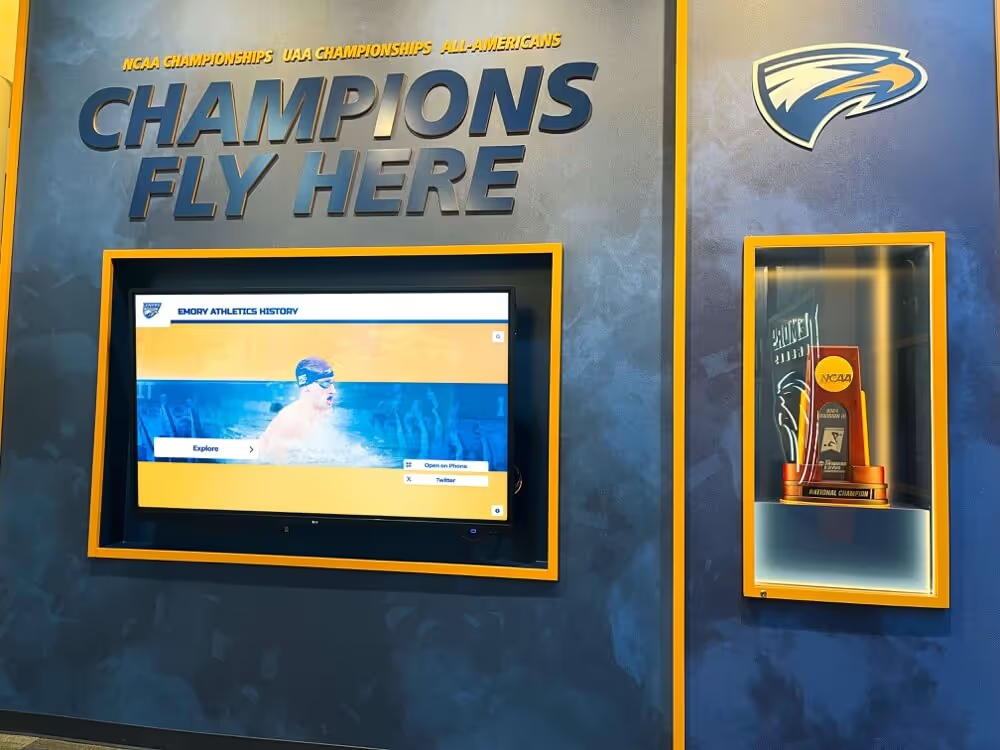
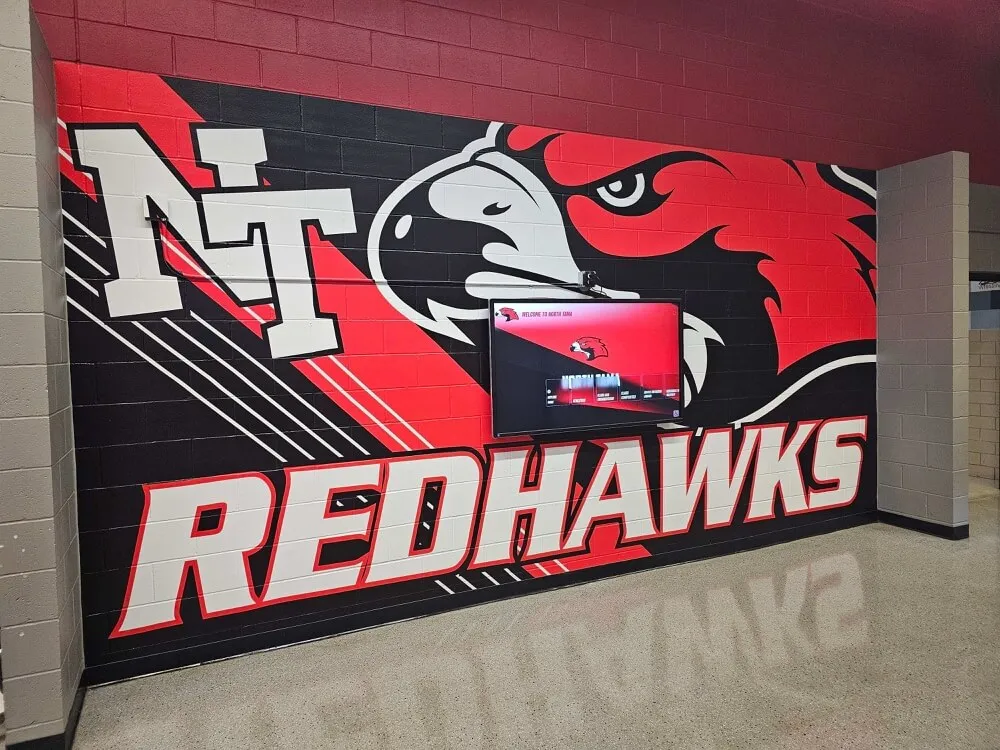
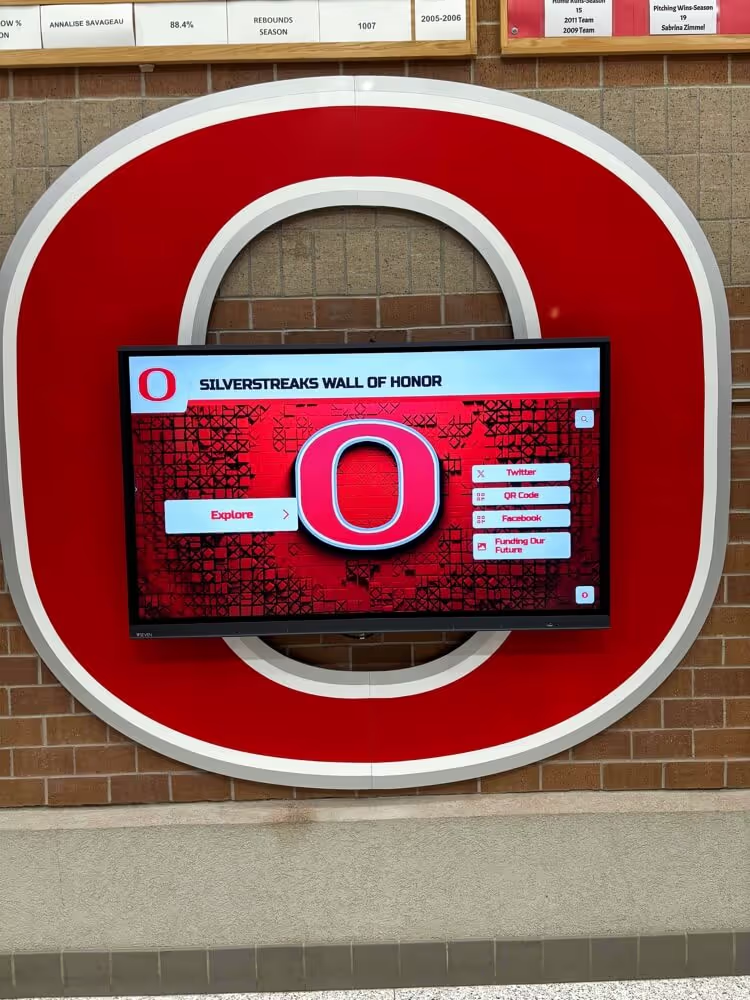
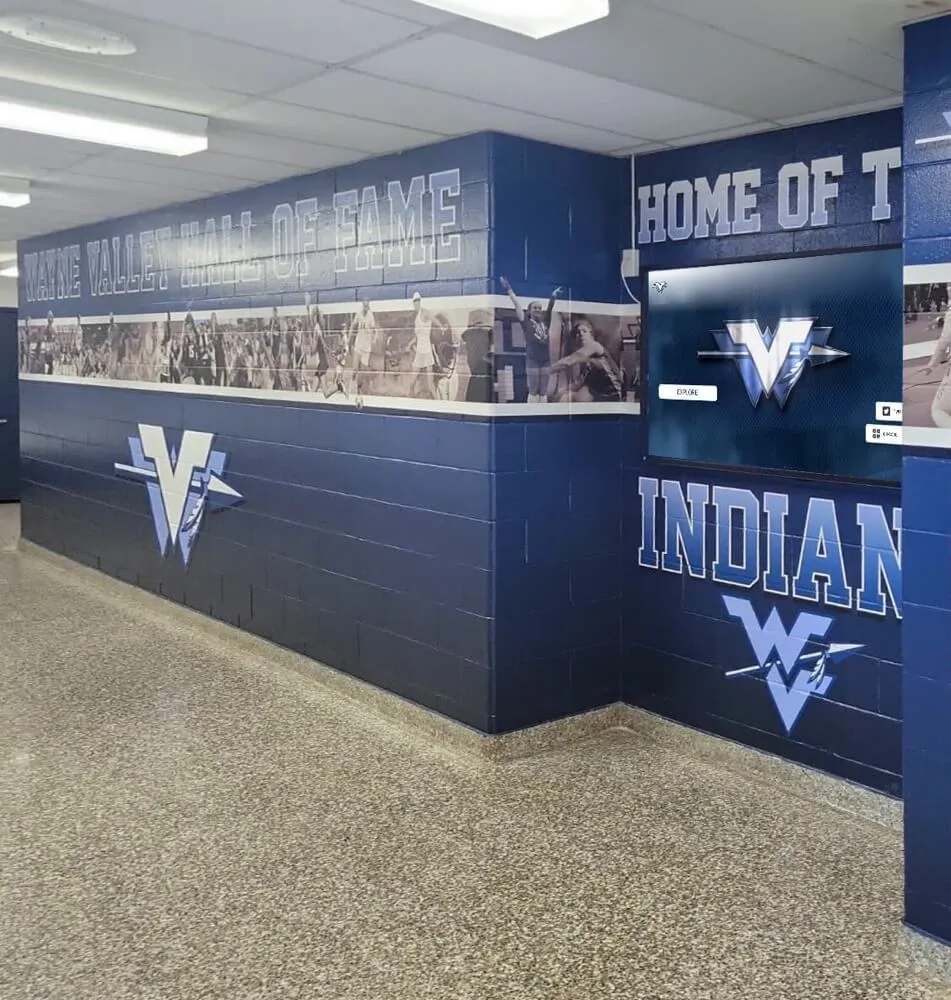
A mascot mural paired with a mounted display creates a permanent identity anchor that can carry dynamic content without redesigning the wall
Vinyl, Paint, or Panel: Choosing the Right Wall Treatment
Each wall treatment has tradeoffs worth understanding before committing budget.
Painted murals create the most visually powerful result and read well at gym distances, but require professional installation and make updates expensive. Best used for mascot graphics, school crests, and permanent identity elements unlikely to change.
Vinyl graphics offer comparable visual impact at lower cost with the ability to update specific panels. A good choice for program taglines, zone headers, and recognition frames where content might evolve.
Modular panel systems use mounted boards, shields, or plaques to display achievement content in a format that grows incrementally. These systems are particularly effective for hall of fame displays, record boards, and championship documentation—each new induction or record is an addition, not a renovation.
Integrated digital screens sit within a framed wall treatment or alongside a mural. The screen becomes part of the wall rather than an object mounted to it. This approach requires planning during the original design phase but creates the cleanest visual result.
Digital Screens in School Gyms: Content Strategy and Placement
A screen without a content strategy is a problem waiting to happen. Schools that install digital displays in their gymnasiums without planning what runs on them end up with idle monitors or a loop of generic clipart. The display earns its place on the wall by showing content that is specific to the school, updated regularly, and meaningful to the people who see it.
What to Show on Gym Screens
The most effective content categories for school gym displays:
- Team history highlights: Season records, coaching tenure, program milestones. Content that connects current athletes to the program’s past.
- Current season rosters: Player photos with jersey numbers, positions, and hometowns. Families and fans can identify athletes at a glance.
- Record boards: School records by sport with the athlete’s name and year. These update automatically when new records are entered.
- Hall of fame profiles: Inductee photos with career summaries. Digital hall of fame systems used at professional venues demonstrate how searchable inductee content outperforms static plaques for audience engagement.
- Sponsor acknowledgment: Rotating sponsor logos and messaging kept visually consistent with the gym’s branding palette.
- Upcoming event schedules: Game-day schedules, facility reservations, and community events relevant to the space.
Placement Principles
Screen placement in a gymnasium requires balancing visibility, safety, and structural feasibility:
- End walls behind the baskets offer high visibility from most seating areas but require mounting solutions that account for ball impact zones.
- Side walls at mid-court reach the majority of seated spectators and work well for larger displays running slower-cycling content like sponsor recognition or program history.
- Lobby and entrance areas outside the gym floor serve pre-game and post-game traffic—the right location for content that rewards closer attention, including touchscreen interactive displays.
- Concourse hallways connecting the gym to other athletic spaces are underused branding surfaces well suited to team history and record board content.
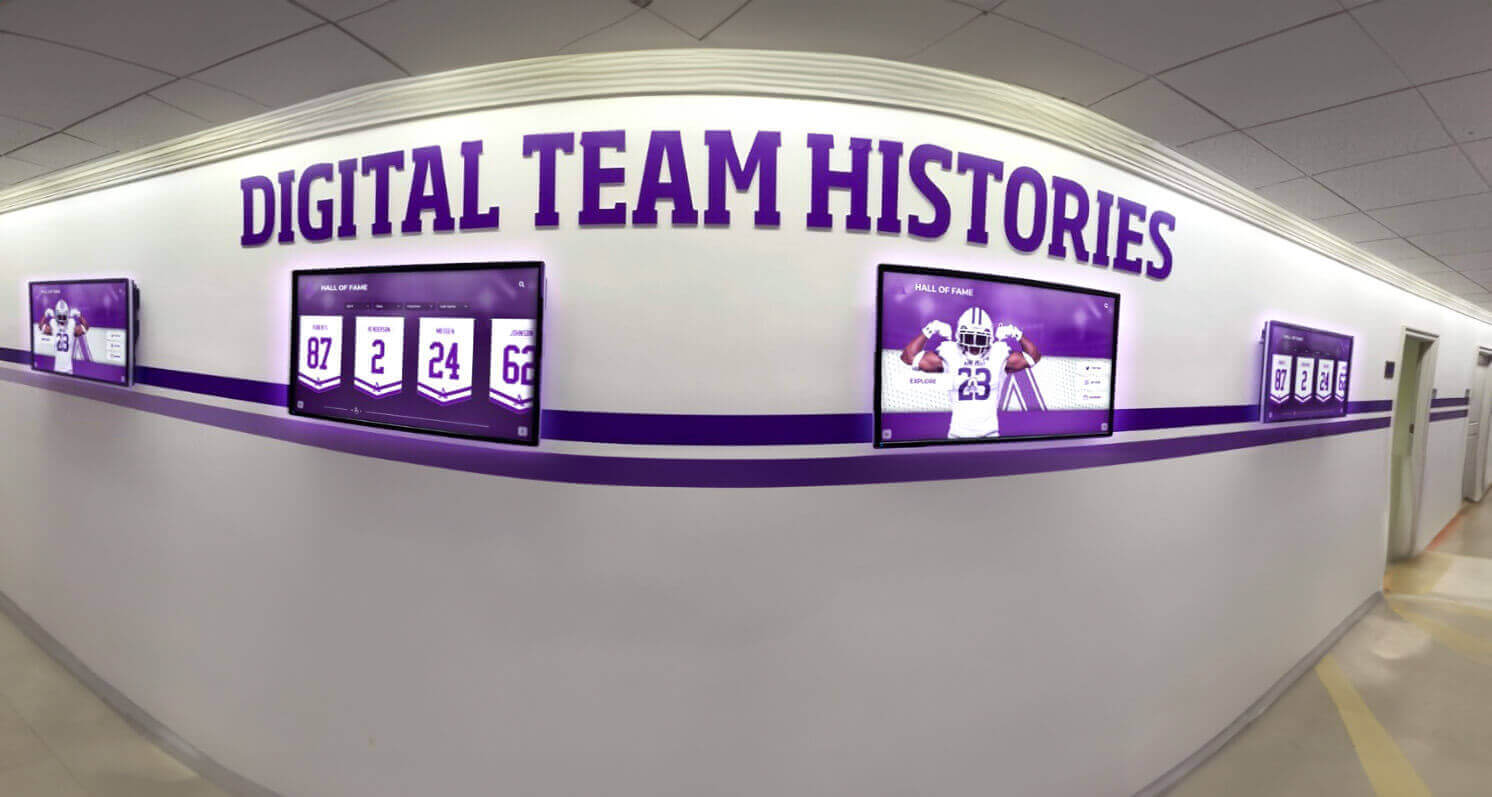
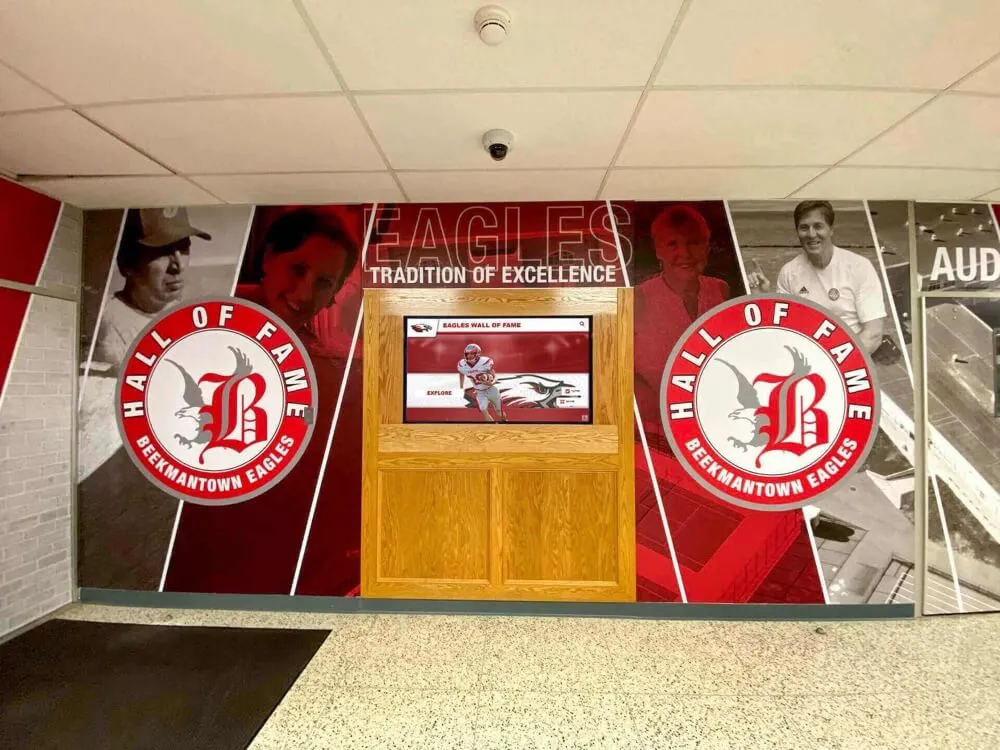
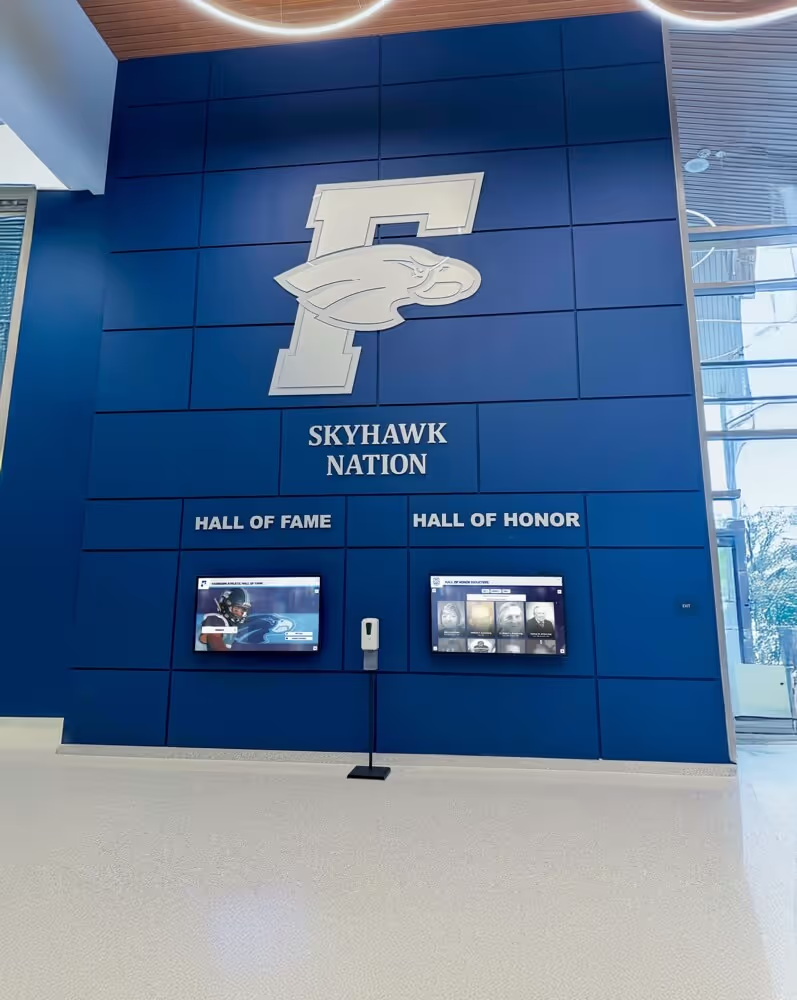
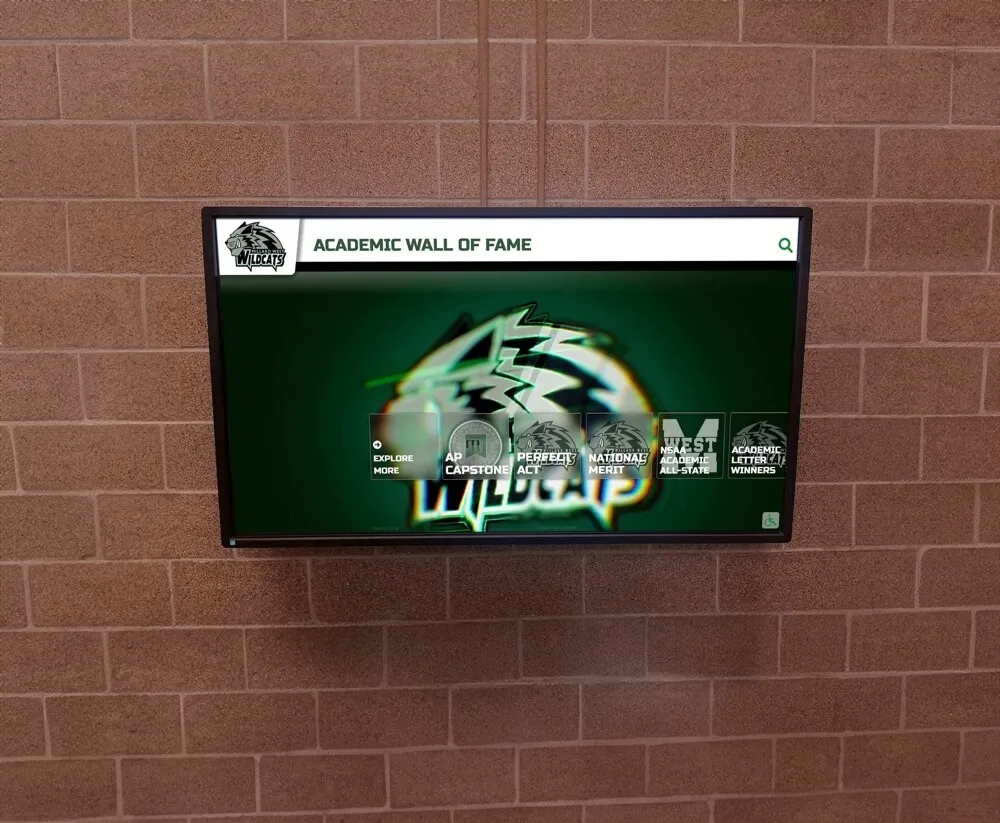
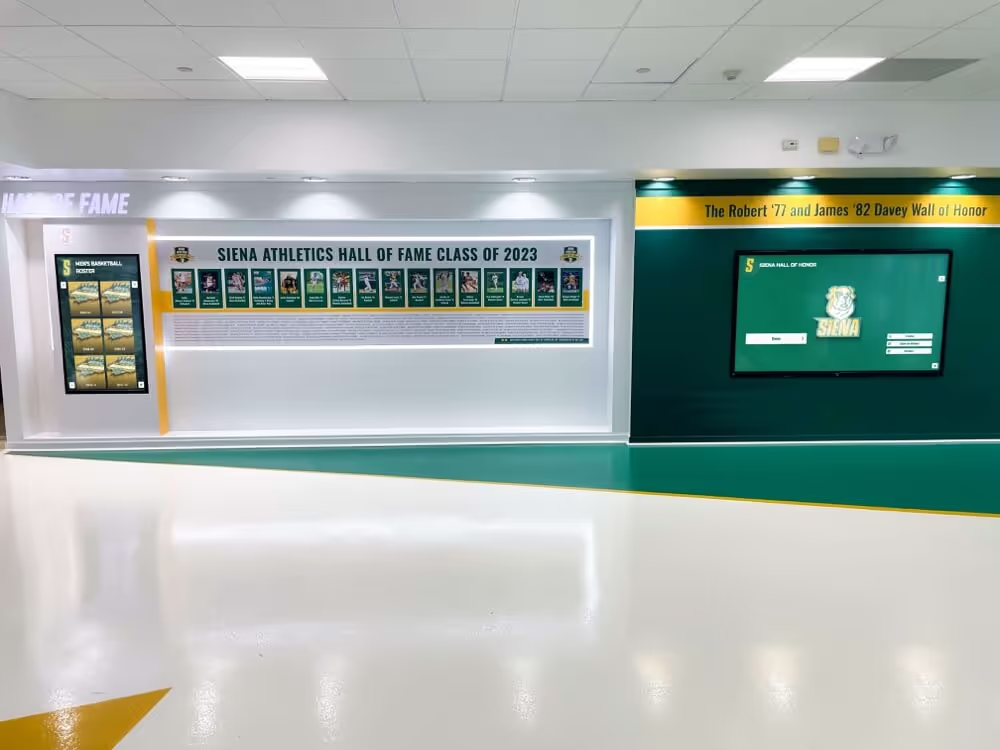
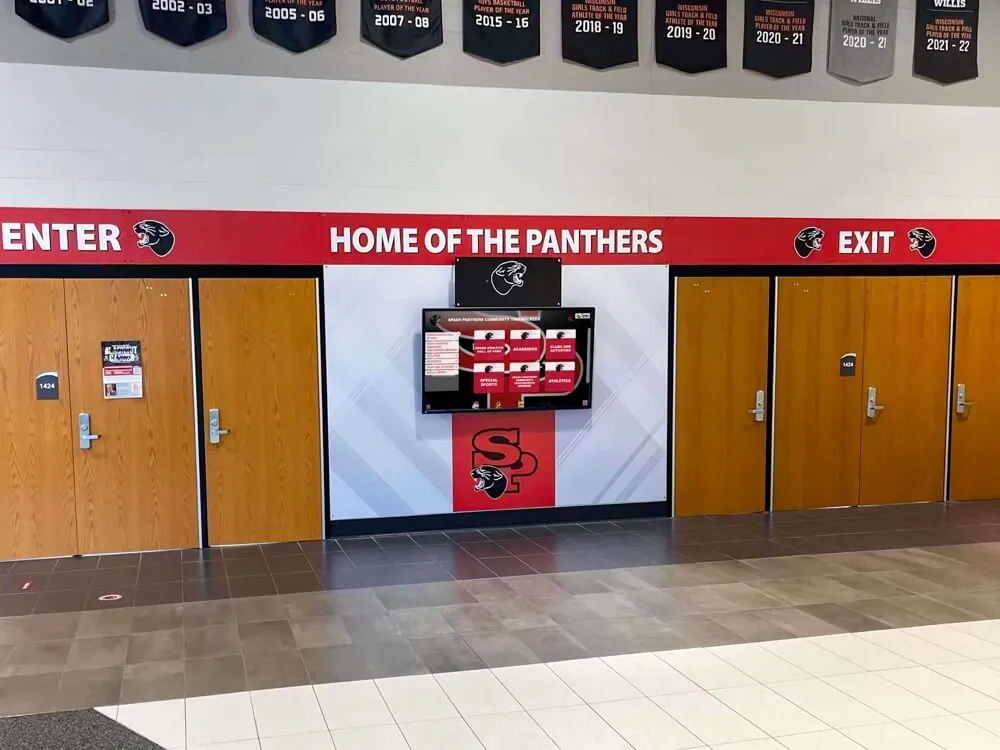
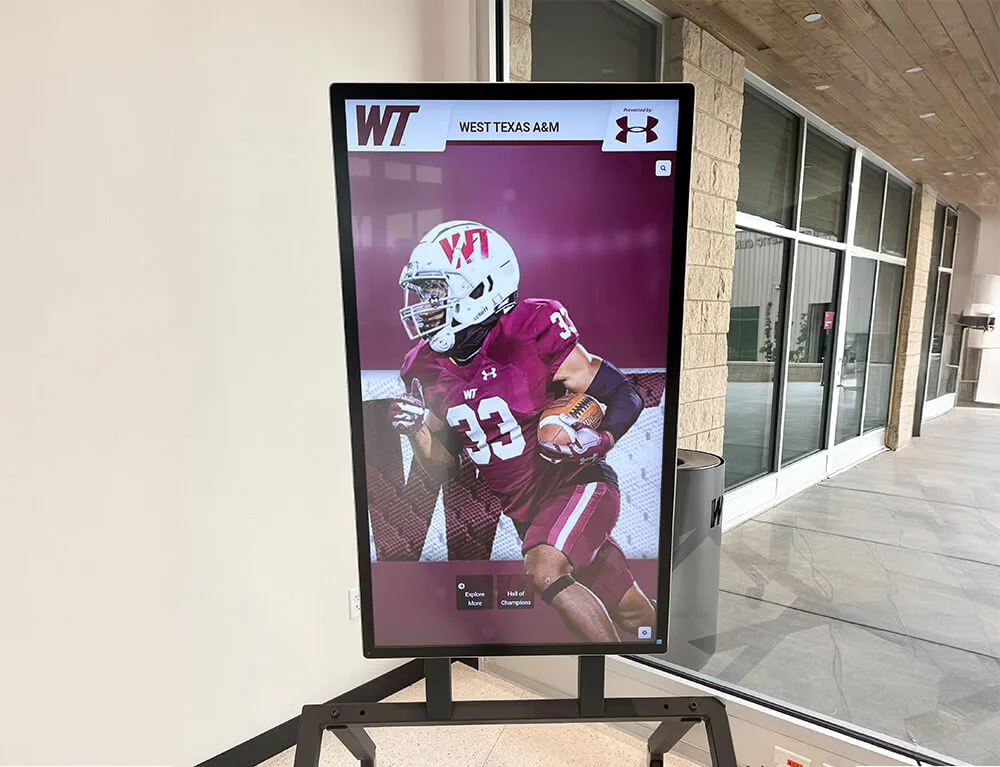
Hallway screens running team history content reach athletes, families, and visitors in a less pressured viewing environment than the gym floor itself
Interactive vs. Passive Displays
Passive displays—screens running a content loop—work well for ambient recognition content visible at a distance. They require minimal interaction from viewers and work during events when spectators are focused on competition.
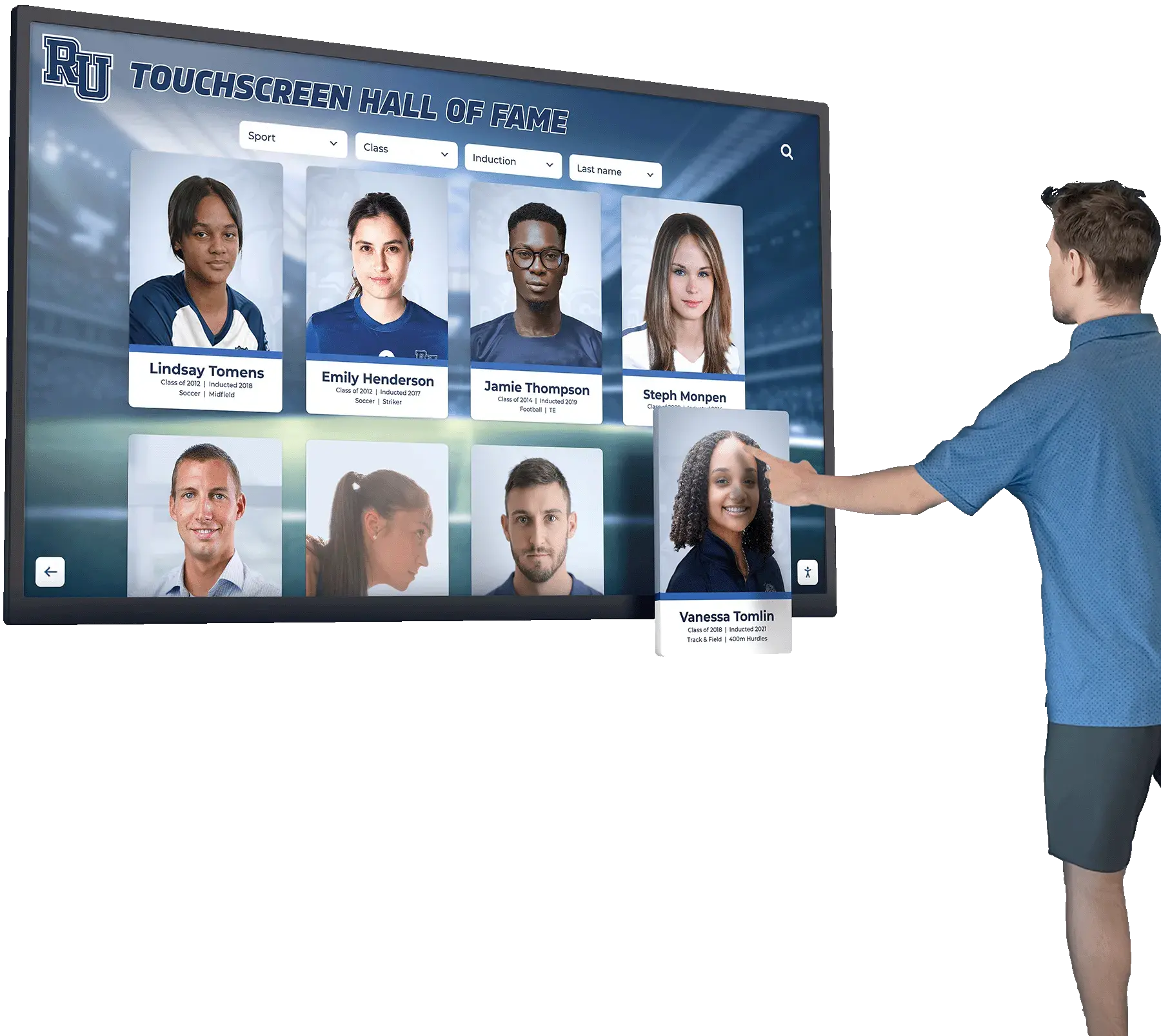
Interactive touchscreen displays serve a different purpose: exploration. A visitor who wants to look up a specific athlete’s career statistics, browse hall of fame inductees from a particular decade, or find records in a sport they played will not get that experience from a passive loop. Touchscreens placed in lobbies, trophy areas, and hallways adjacent to the gym give that depth without competing with the in-game experience. Touchscreen recognition systems for hockey programs show how interactive formats handle multi-year, multi-team data in ways no physical display can match.
Sponsor Recognition in School Gyms
Sponsors who contribute to athletic programs deserve clear, appropriate acknowledgment. The challenge is integrating that acknowledgment into the gym’s branding in a way that looks intentional rather than transactional.
Tiered Recognition That Matches Contribution Level
A tiered sponsor recognition system creates clear expectations before gifts are made and communicates value to each donor level:
| Tier | Recognition Elements |
|---|---|
| Presenting Sponsor | Named placement on primary digital display, dedicated panel in sponsor zone, verbal acknowledgment at events |
| Gold Level | Logo in sponsor rotation on digital screens, panel in sponsor zone |
| Silver Level | Logo in sponsor rotation on digital screens |
| In-Kind Supporter | Acknowledgment in printed programs, listing on facility website |
This structure lets development staff confidently promise specific recognition in exchange for specific giving levels—and ensures the gym itself doesn’t become a patchwork of unrelated sponsor panels at mismatched scales.
Digital Sponsor Displays vs. Physical Panels
Physical sponsor panels work well for naming rights acknowledgments—the scoreboard presented by a local business, the weight room named for a major donor. These are permanent, high-value recognitions that benefit from physical permanence.
Digital screens handle rotating sponsor acknowledgment more gracefully than physical panels. A business sponsor rotated into a digital loop receives consistent exposure without the visual congestion of many fixed banners competing for attention. Digital systems also make updates trivial: when a sponsor renews or a partnership ends, the content change takes minutes.
The best-branded gyms treat physical and digital sponsor recognition as complementary. A cornerstone sponsor may have both a named panel and logo placement in the digital rotation. Smaller supporters appear in the digital system without requiring physical real estate. Employee and community recognition frameworks offer transferable models for how to structure tiered acknowledgment across contribution levels—the same principles that work for staff recognition apply to athletic program sponsors.
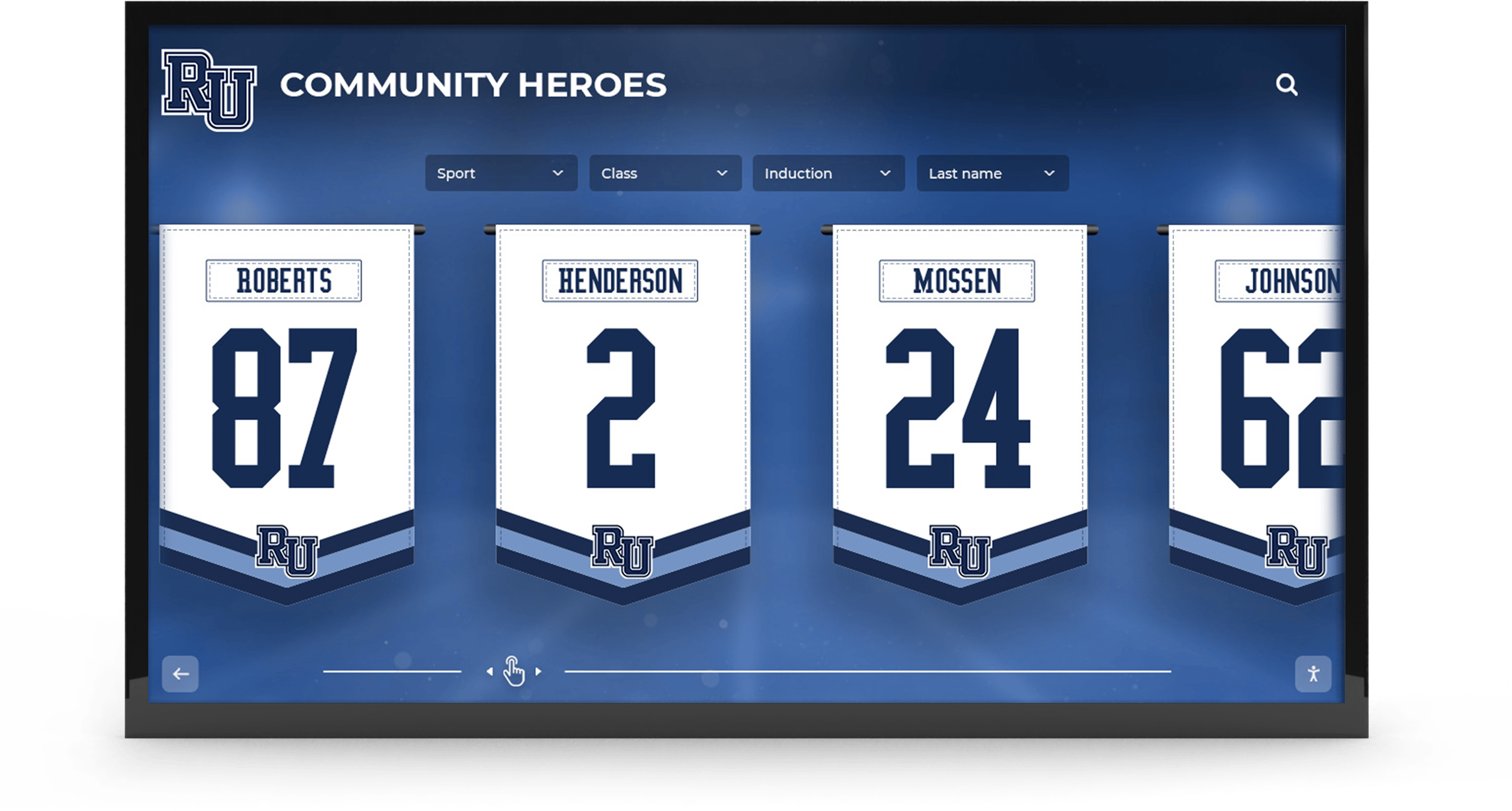
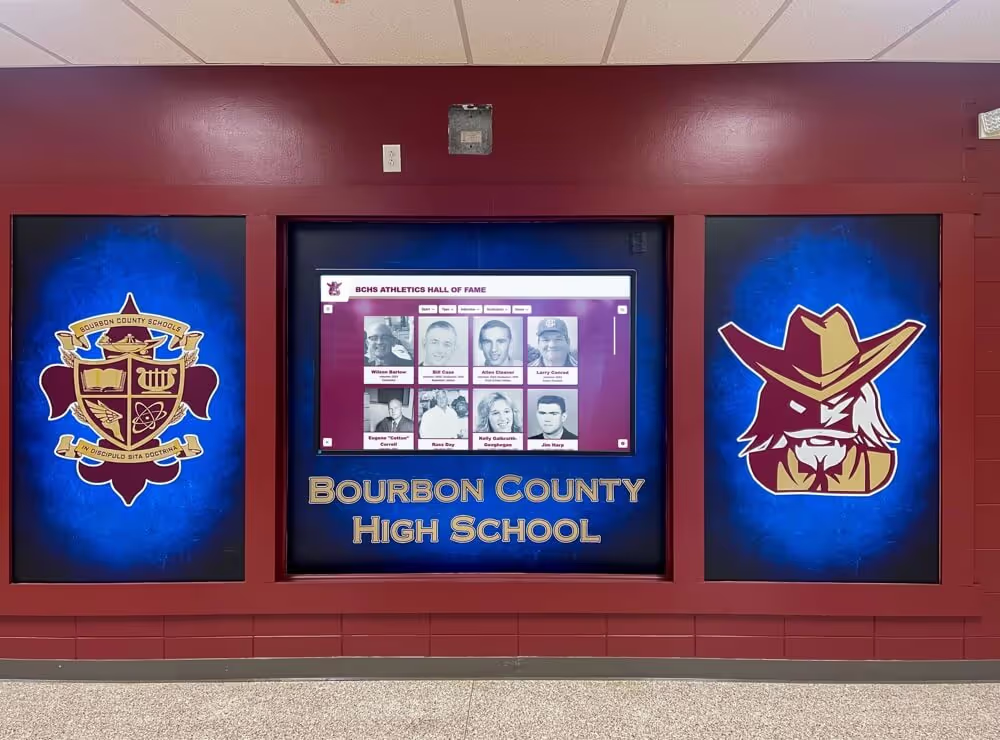
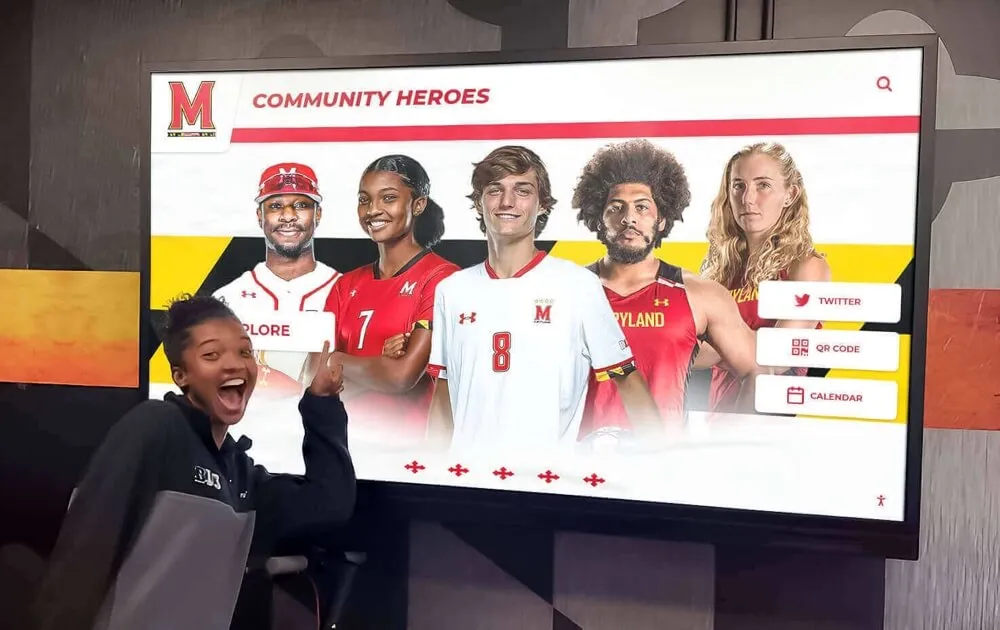
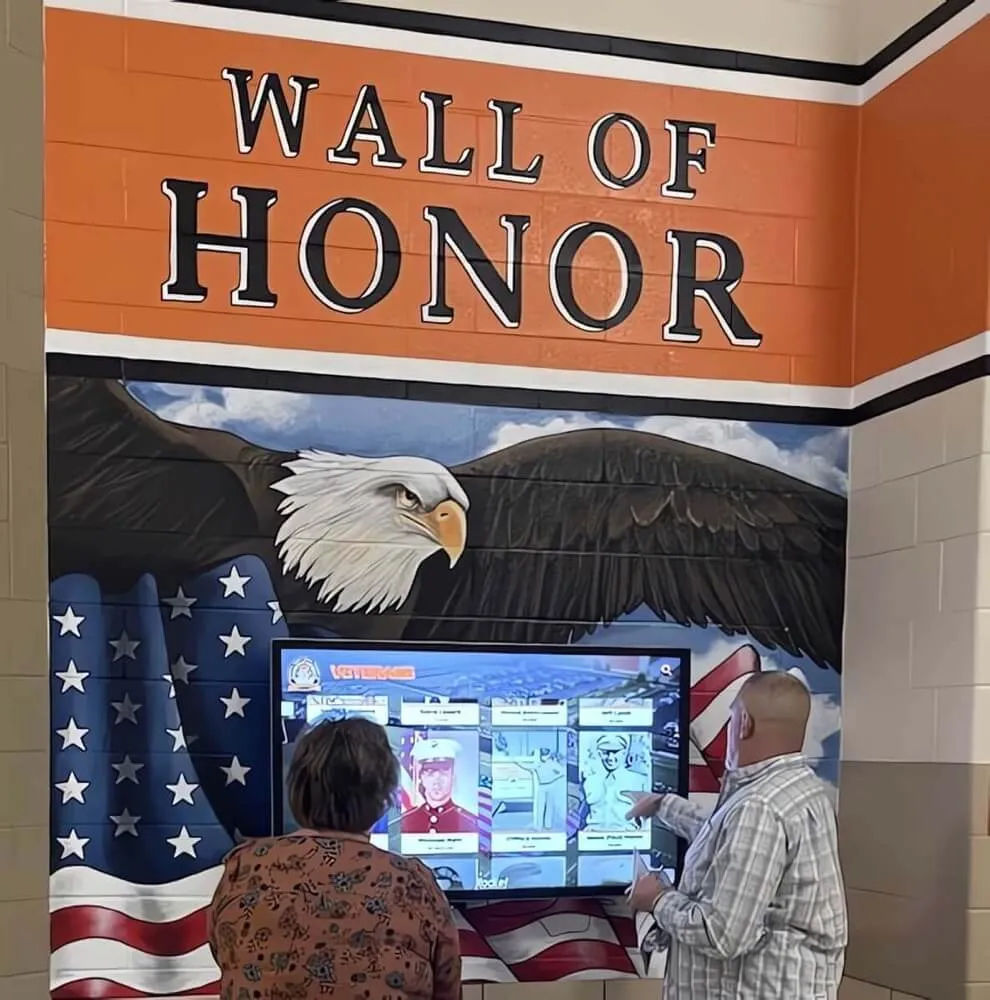
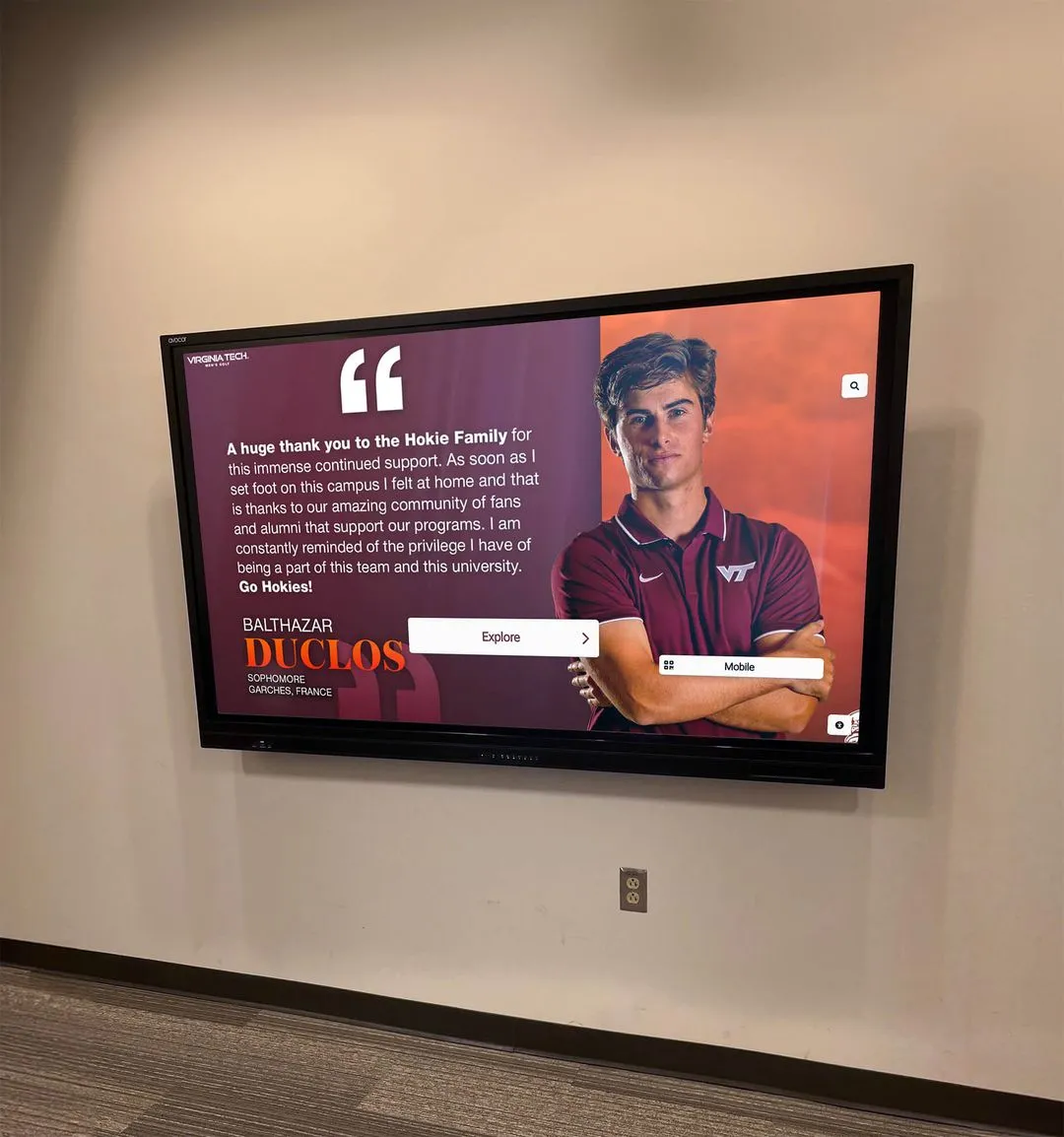
Digital displays can honor community contributors alongside athletes without requiring separate physical display infrastructure
Team History Displays: Building an Athletic Archive
Team history is among the most under-leveraged content in school athletics. Most programs have decades of records, photographs, game programs, and statistical data sitting in filing cabinets or storage boxes. None of it is visible to current students, and none of it is accessible to alumni who return to the building years later.
A deliberate team history display strategy changes that by surfacing institutional memory in ways that inform current athletes and engage the broader community.
What Belongs in a Team History Display
Season-by-season records: Win-loss records, conference finishes, and playoff results by sport and year. A simple table format makes this information scannable and creates natural conversation starters between alumni and current athletes.
Coaching tenure records: Head coaches, their tenure years, career records, and major achievements. Programs with long coaching histories have strong stories here that rarely get told in traditional recognition formats.
Individual athletic records: School records by sport and event, with the record holder’s name and year. These function as both recognition and motivation—current athletes see exactly what standard they’re chasing.
Historic photographs: Team photos, championship celebration images, and action photographs from previous eras. These create the strongest emotional connection between past and present and are particularly powerful in touchscreen formats where users can zoom, search by decade, or explore a specific team.
Alumni outcomes: Where former athletes went—college programs, professional careers, community service. This content is particularly powerful for current student-athletes and their families making decisions about program investment.
Physical vs. Digital Team History Formats
Physical display cases and trophy arrangements work well for artifacts: trophies, championship medals, game balls, and retired jerseys. These objects carry a tactile significance that photographs of them cannot replicate.
For data-rich content—records, season histories, coaching tenures, hall of fame profiles—digital systems dramatically outperform physical formats. A hallway display case holds perhaps twenty items. A digital archive holds everything. Fallen heroes and memorial display guides demonstrate the depth of historical content that digital systems can hold and present with appropriate care—content categories relevant to many school athletic programs honoring former athletes who served in the military or passed away.
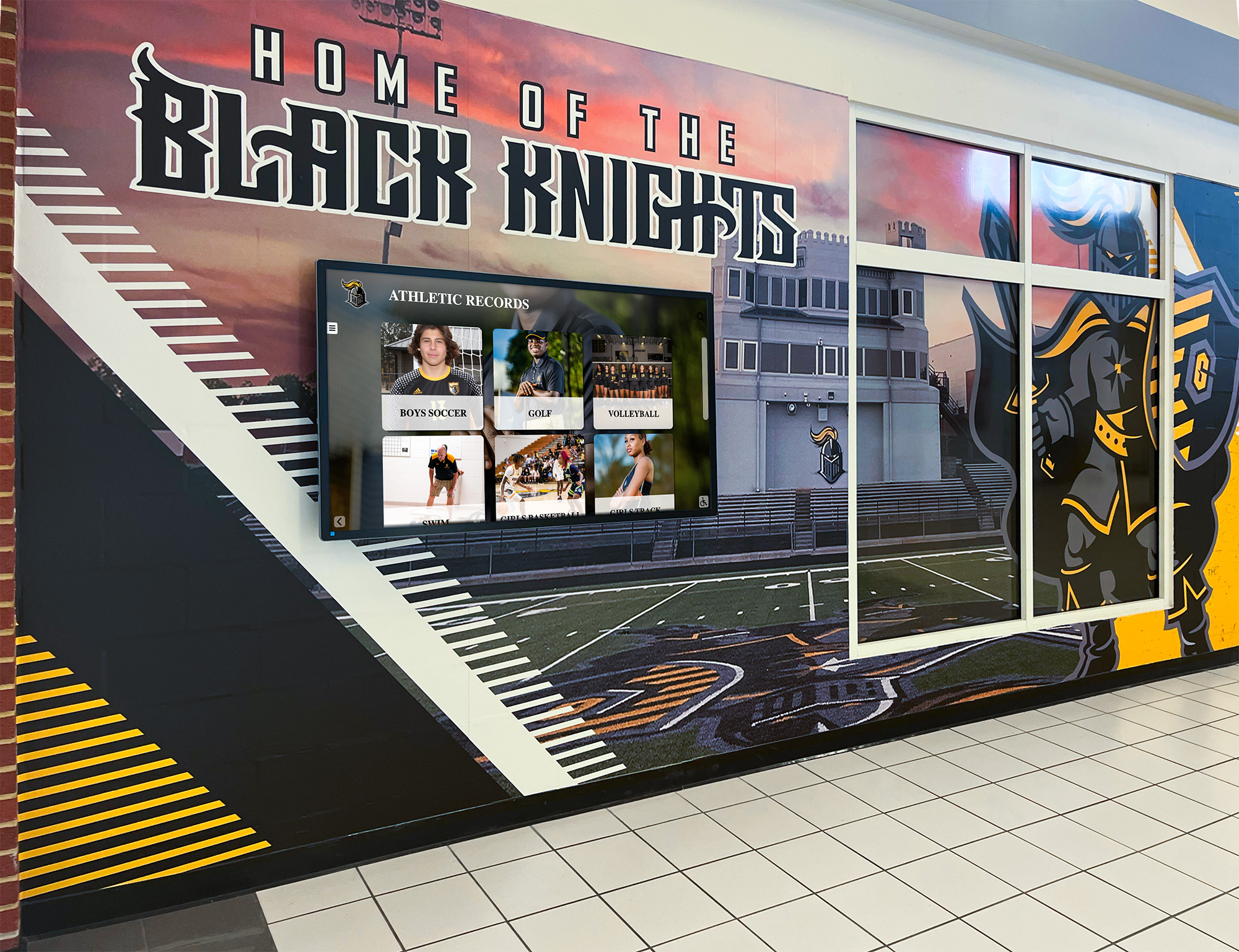
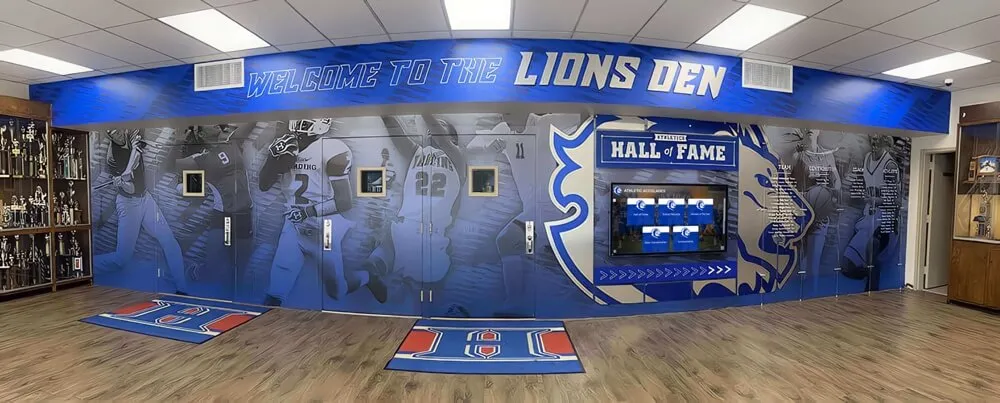
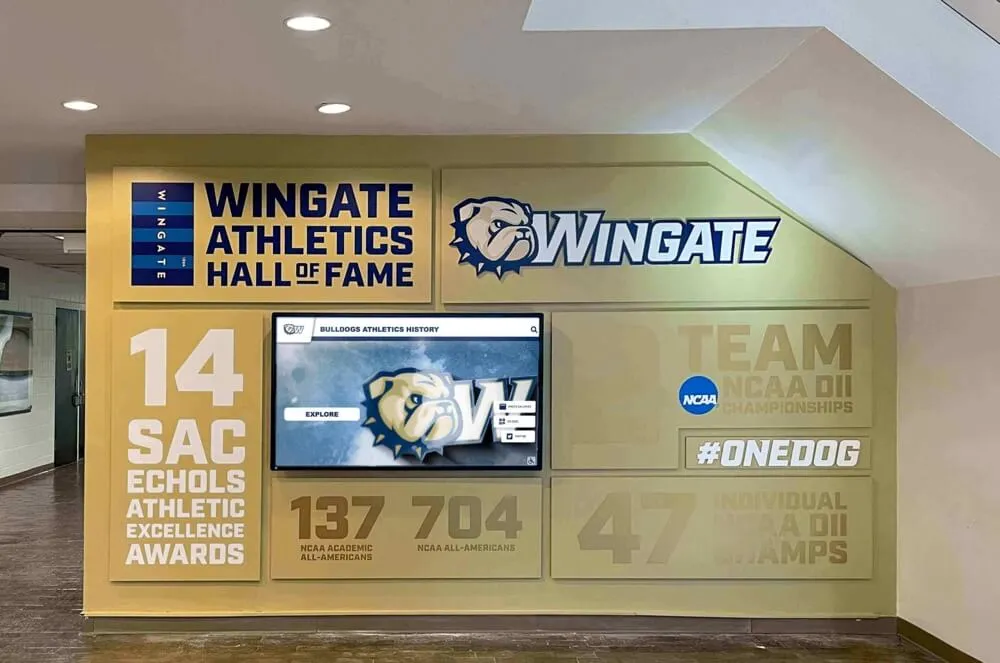
A mural paired with a digital records display creates a permanent identity element that updates automatically when new records are broken
Getting the Archive Started
The most common obstacle to team history displays is not technology or budget—it’s the assumption that collecting historical data is a large project that requires dedicated staff time. In practice, most school athletic archives can be started with three sources:
- The athletic director’s files: Record books, historical schedules, and championship documentation that already exists but isn’t organized for display.
- The school newspaper or yearbook archive: Most schools have decades of yearbooks that contain rosters, season summaries, and photographs.
- Alumni outreach: A single email or social post asking former athletes to share photographs and memories typically returns more material than expected. Class rank and academic history archiving approaches used by schools illustrate how structured data collection from existing institutional sources builds comprehensive archives without requiring new data entry.
The goal is not a perfect archive before launch—it’s a display that can grow as new content is contributed and discovered.
Putting It Together: A Gym Branding Checklist
| Element | Physical | Digital | Both |
|---|---|---|---|
| Mascot / school crest | Primary | Secondary rotation | — |
| Championship documentation | Permanent banners | Interactive archive | — |
| Hall of fame inductees | Plaque / shield wall | — | Touchscreen profiles |
| Athletic records | — | Record board display | — |
| Sponsor recognition | Named panels (cornerstone) | — | Logo rotation |
| Team history | Trophy cases | — | Searchable archive |
| Current season content | — | Rotating screen loop | — |
| Community/alumni recognition | — | — | Digital + printed program |
This framework prevents the most common gym branding failure: putting everything on the walls and ending up with visual noise rather than a coherent identity.
How Rocket Alumni Solutions Approaches School Gym Branding
Rocket Alumni Solutions works with schools to build digital recognition environments that connect gymnasium branding to broader athletic identity. The platform handles hall of fame profiles, athletic records, team histories, and sponsor acknowledgment through a content management system designed for athletic directors and communications staff—not IT departments.
Schools using Rocket’s platform report that the ability to update content remotely—adding a new inductee, refreshing a sponsor panel, updating a broken record—removes the primary friction that keeps school gym branding from staying current. A display that updates in real time reflects the program as it actually exists, not the version that was accurate when the panel was printed three years ago. Volleyball programs, for example, benefit from record boards that automatically surface historical statistics as teams pass career milestones—volleyball achievement tracking shows how specific statistical categories connect athletic history to current performance.
Ready to see school gym branding in action?
Rocket Alumni Solutions builds digital recognition systems for athletic programs—hall of fame walls, team history archives, record boards, and sponsor displays managed from a single platform.
Frequently Asked Questions About School Gym Branding
What’s the most important element to get right first in a gym branding project?
The entrance zone. The threshold where visitors and athletes enter the gym is the highest-impact branding moment in the space. A mascot graphic, consistent school colors, and a clear sense of program identity at that entry point anchors everything else. Start there before addressing individual recognition elements deeper in the space.
How do schools manage sponsor recognition without cluttering the gym walls?
The most effective approach is a tiered system with a designated sponsor zone that is physically separate from athletic achievement recognition. Digital displays handle rotating sponsor content without requiring permanent wall space for every partner. Cornerstone sponsors receive named physical elements; all others appear in the digital rotation.
Can team history displays include content from before digital records existed?
Yes. Historical photographs, printed programs, and newspaper clippings can be scanned and added to digital archive systems. Many schools find that alumni contributions—photographs and memorabilia from former athletes—fill gaps in institutional records effectively. The first step is typically the yearbook archive, which most schools have intact for several decades.
What is the typical lifespan of a gym branding installation?
Physical elements—murals, panel systems, display cases—typically last ten to twenty years before requiring renovation. Digital display hardware has a shorter lifecycle, typically five to seven years before screens require replacement. Content management systems built on cloud platforms have no functional expiration date and grow in value as the archive accumulates more history.
How do you handle recognition for teams that no longer exist at the school?
A digital archive is the most appropriate format for discontinued programs. Physical space should generally be reserved for currently active sports, while historical documentation of discontinued programs belongs in a searchable digital format where it can be found by alumni and historians without competing with current recognition for wall space.
School gym branding works best when it reflects a deliberate philosophy: permanent identity elements on the walls, dynamic content on screens, respectful stewardship of sponsor relationships, and an archive that gives every era of athletes a place in the story. Schools that approach branding as a coherent system rather than a series of individual decisions create gyms that feel genuinely institutional—spaces athletes are proud to walk into and alumni want to return to.
See how Rocket Alumni Solutions builds gym branding systems for schools.
From digital hall of fame walls to team history archives and sponsor recognition displays, Rocket’s platform is built for athletic programs that take their story seriously.