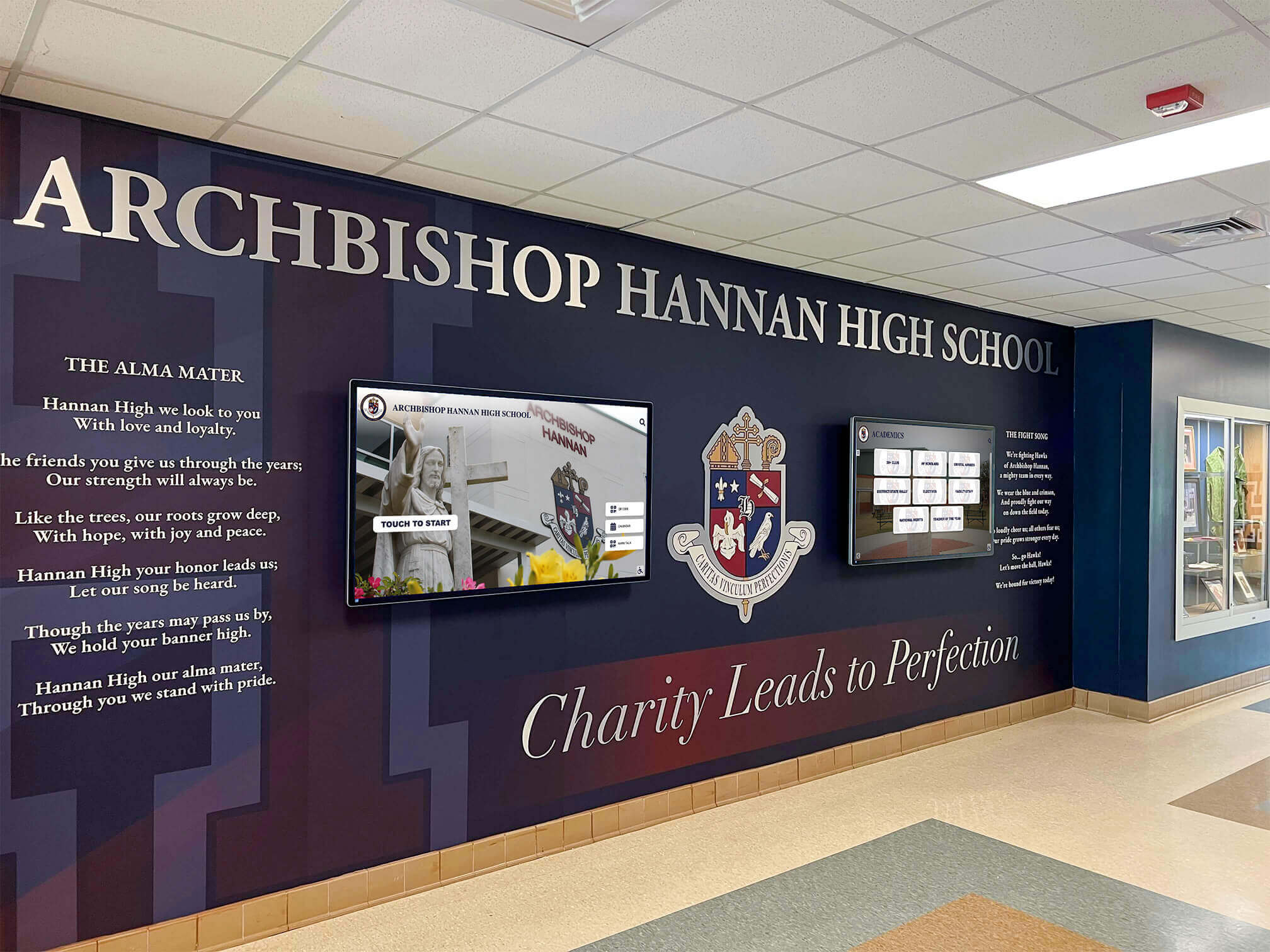
Your school entrance serves as the decisive first impression moment—the space where prospective families evaluate whether your institution matches their expectations, where community visitors form immediate perceptions about educational excellence, where daily arrivals either reinforce or undermine the welcoming culture you claim to provide, and where every design choice communicates institutional values before anyone speaks a single word. Yet most school entrances feature generic bulletin boards cluttered with outdated flyers, static trophy cases celebrating achievements from decades past, bland wall colors suggesting bureaucratic indifference, and environments that communicate administrative necessity rather than the vibrant, achievement-focused community that defines your educational mission.
The challenge extends beyond simple aesthetics. How do you create entrance displays that welcome authentically while showcasing institutional excellence? Which recognition elements communicate school pride without overwhelming visitors? How can limited entrance spaces accommodate wayfinding, celebration, information sharing, and community building simultaneously? Where do digital displays fit within architectural constraints while creating the dynamic engagement modern families expect?
Strategic school entrance displays create digital warming—transforming cold, utilitarian entry spaces into welcoming environments where personalized recognition, dynamic achievement celebration, and engaging content surface community pride continuously, building immediate connections that convert touring families, inspire current students, and demonstrate the institutional excellence that distinguishes your school from alternatives.
This comprehensive guide explores school entrance display ideas that transform utilitarian entry points into welcoming environments celebrating your community while creating powerful first impressions. You’ll discover design approaches balancing functionality with inspiration, learn strategic placement principles for recognition elements, understand how digital signage replaces static bulletin boards while creating continuously fresh content, and explore how purpose-built solutions enable entrance experiences worthy of the students, families, and communities you serve.

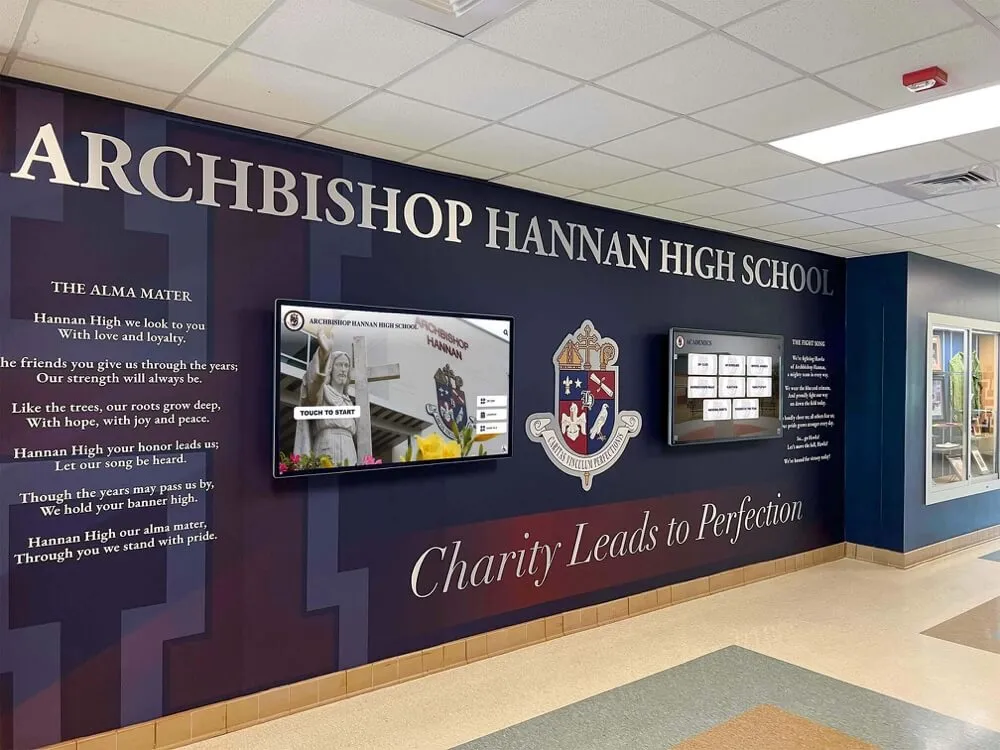
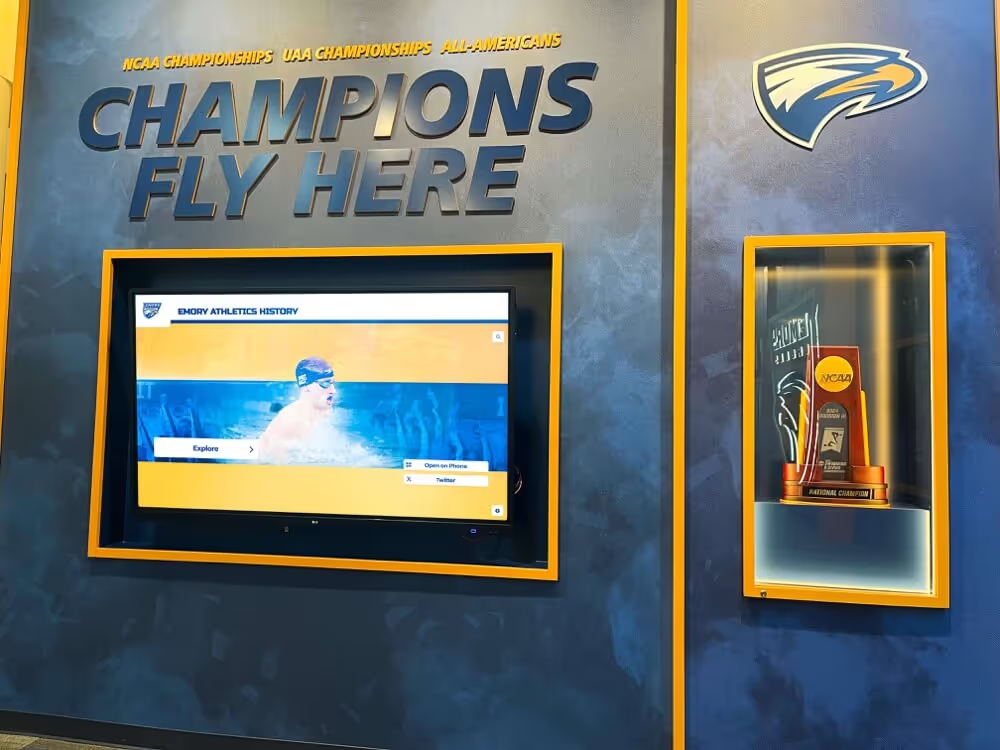
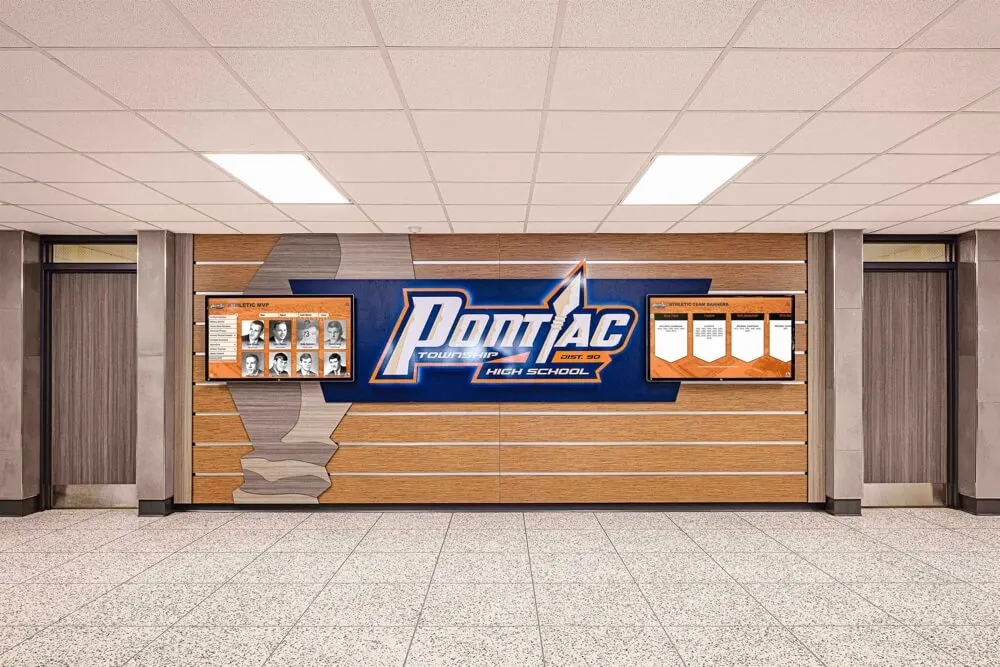
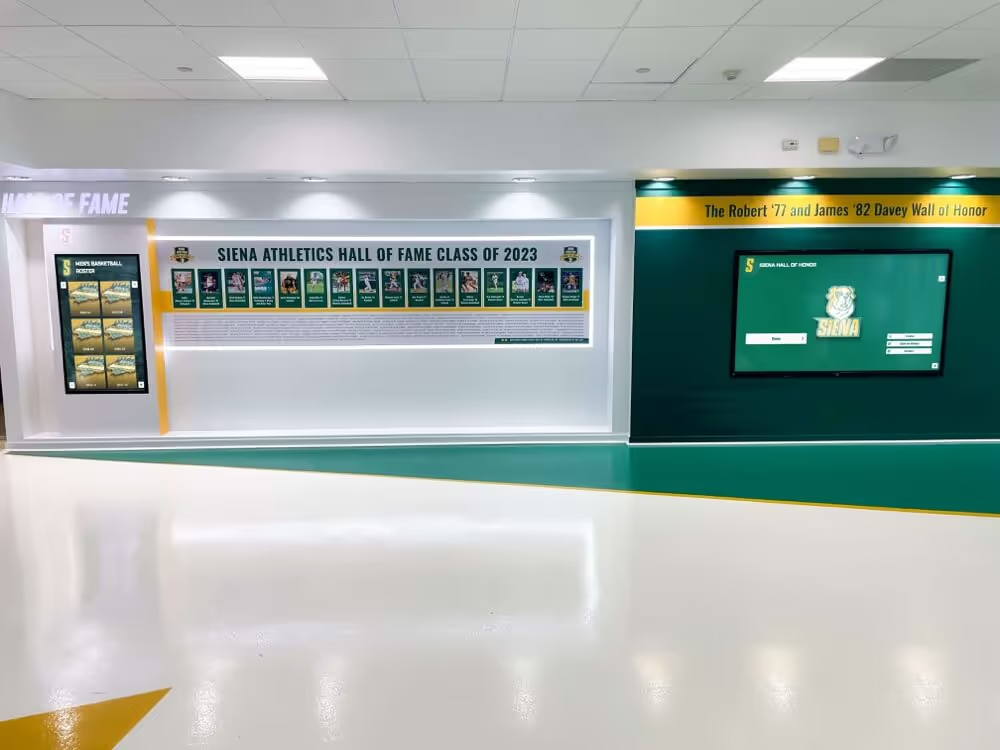
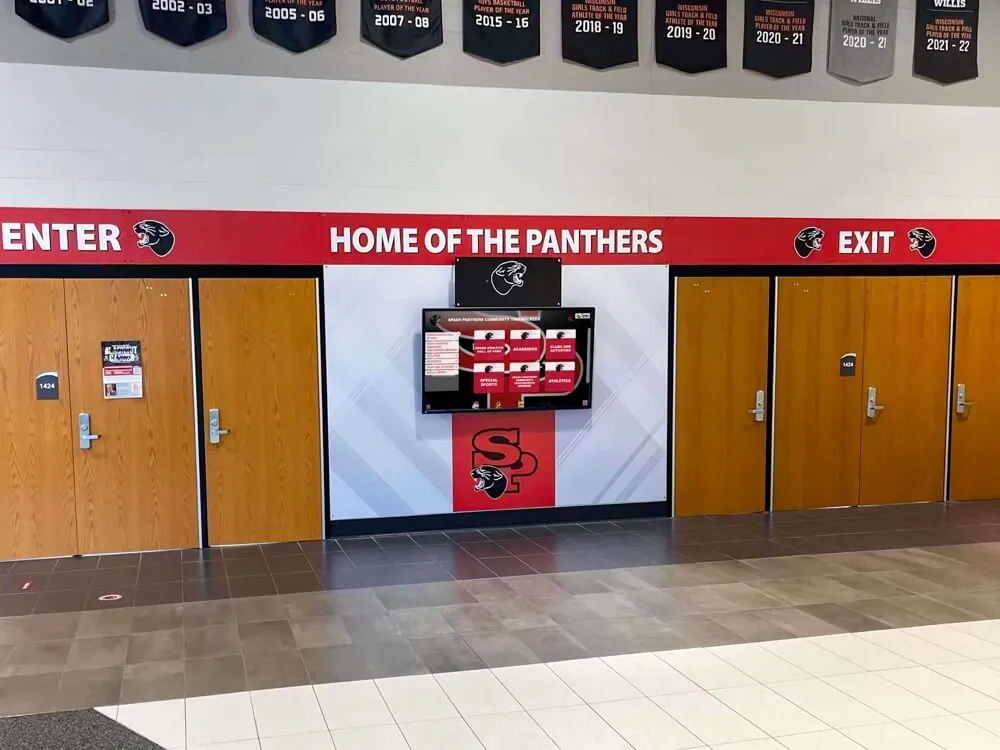
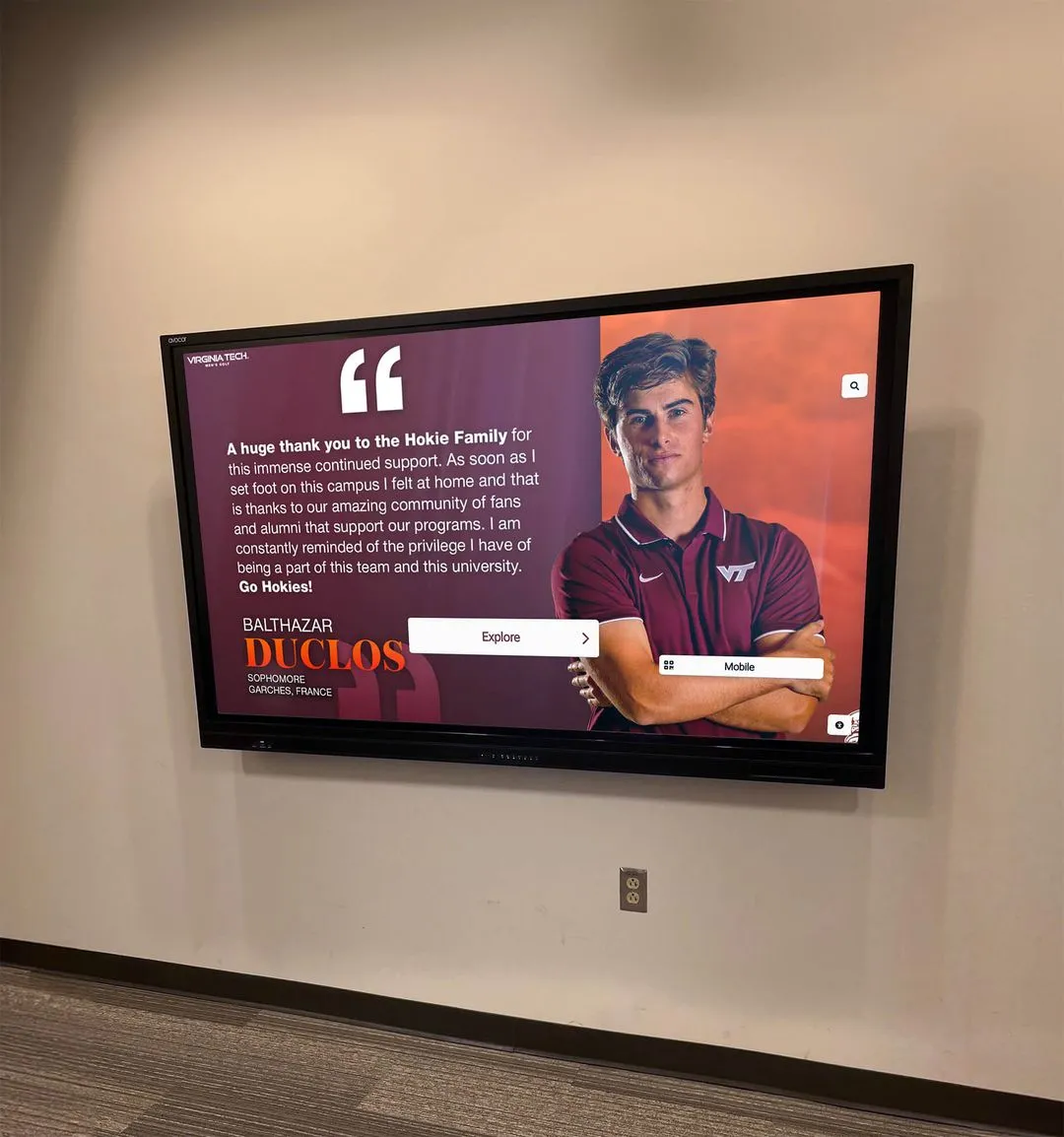
Effective entrance displays combine architectural branding elements with digital recognition technology to create cohesive environments that welcome visitors while celebrating community achievement
Understanding the Critical Role of Entrance Displays
Before exploring specific design ideas, it’s essential to understand how entrance environments shape institutional perceptions and community experiences at the decisive first impression moment.
First Impressions That Determine Enrollment Decisions
School entrance displays create immediate, lasting impressions that significantly influence prospective family enrollment choices and community perceptions.
Prospective Family Evaluation Windows
Research consistently demonstrates that touring families form preliminary judgments within the first 90 seconds of entering school facilities—evaluations largely driven by visual environmental factors rather than verbal presentations. Clean, contemporary entrance design suggests institutional investment and operational excellence. Visible achievement recognition demonstrates commitment to celebrating student success across diverse categories. Welcoming color palettes and professional organization communicate that your institution values details and creates environments worthy of students. Modern technology integration signals educational innovation and forward-thinking leadership.
When prospective families encounter entrance displays featuring current student achievements, diverse recognition categories, professional design execution, and engaging interactive elements, they experience immediate evidence supporting enrollment decisions. Conversely, when visitors encounter outdated bulletin boards featuring faded announcements from previous semesters, static plaques recognizing achievements from decades past, or generic environments suggesting administrative indifference, first impressions create skepticism requiring substantial effort to overcome during subsequent facility tours.
Schools implementing comprehensive digital recognition approaches in entrance displays report measurably stronger touring family feedback and improved enrollment conversion rates compared to institutions maintaining traditional static recognition methods.
Community Perception Management
Beyond prospective families, school entrances serve hundreds of daily visitors—parents managing attendance, community volunteers, substitute educators, delivery personnel, district officials, and local partners. Each interaction creates perceptions about institutional professionalism, organizational culture, and operational competence. Thoughtful entrance displays demonstrate that your school values excellence in every detail, celebrates achievement comprehensively, invests in modern facilities and technology, and creates welcoming environments for all community members.
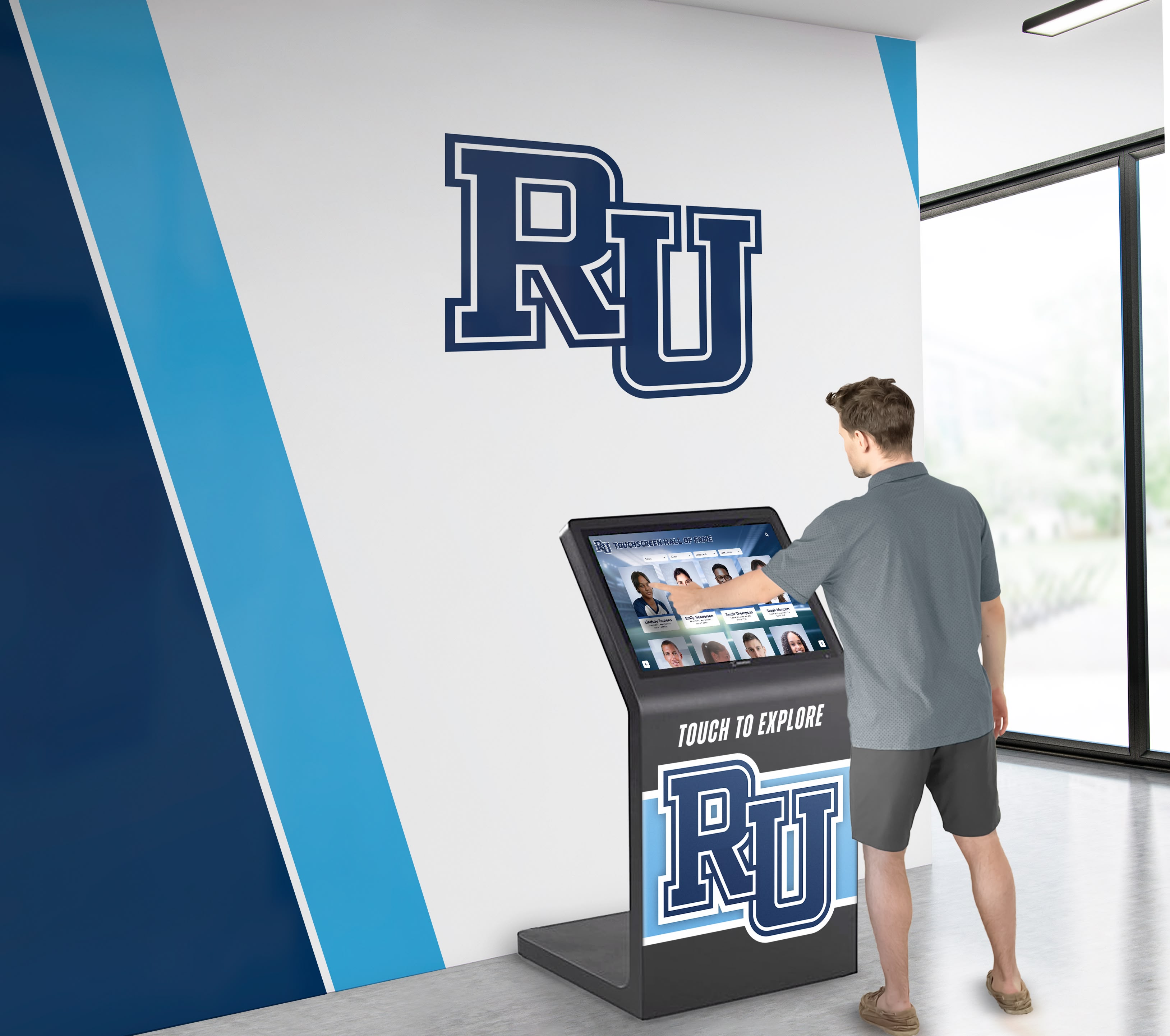
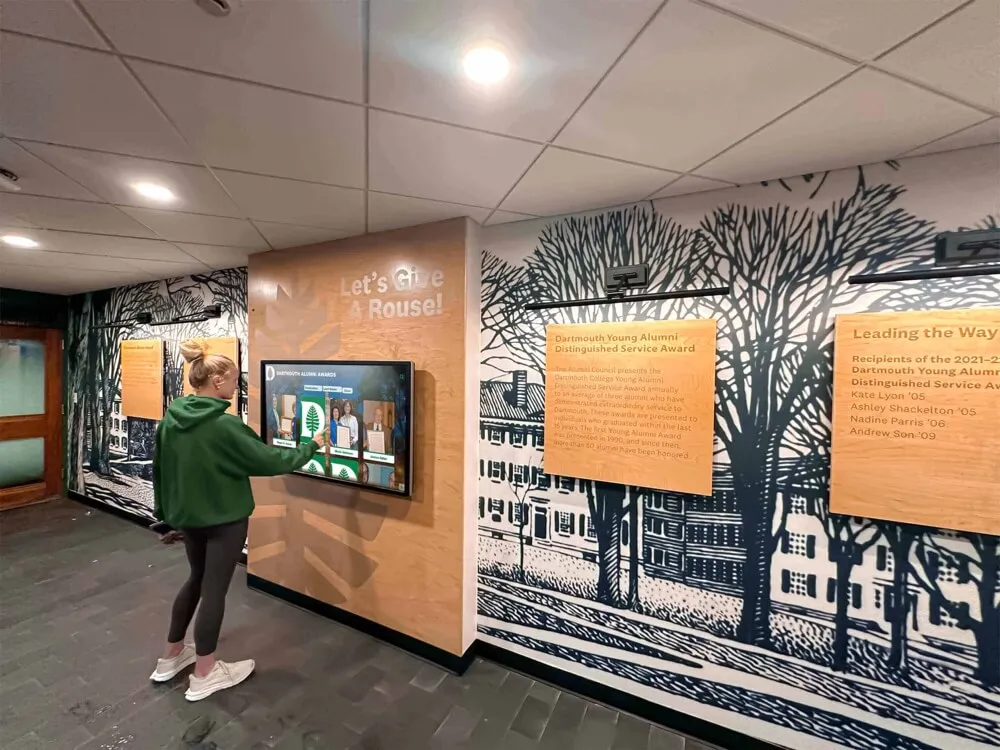
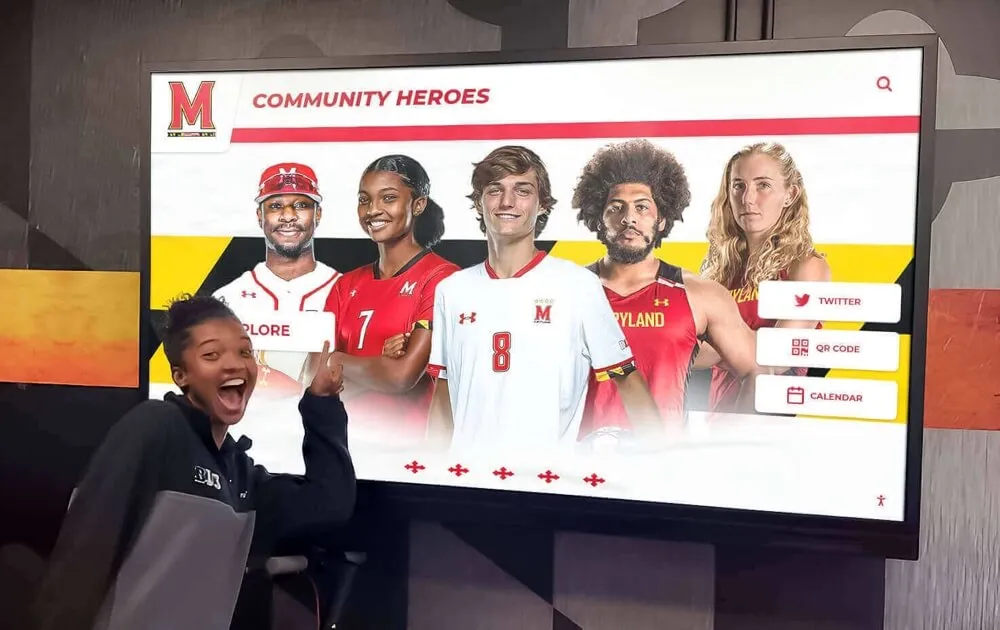
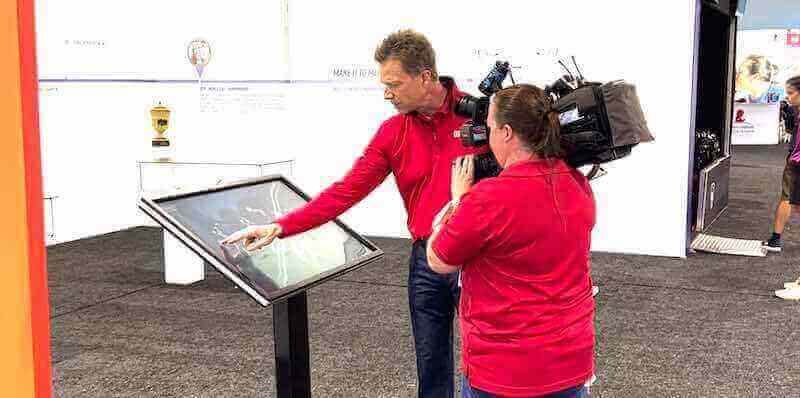
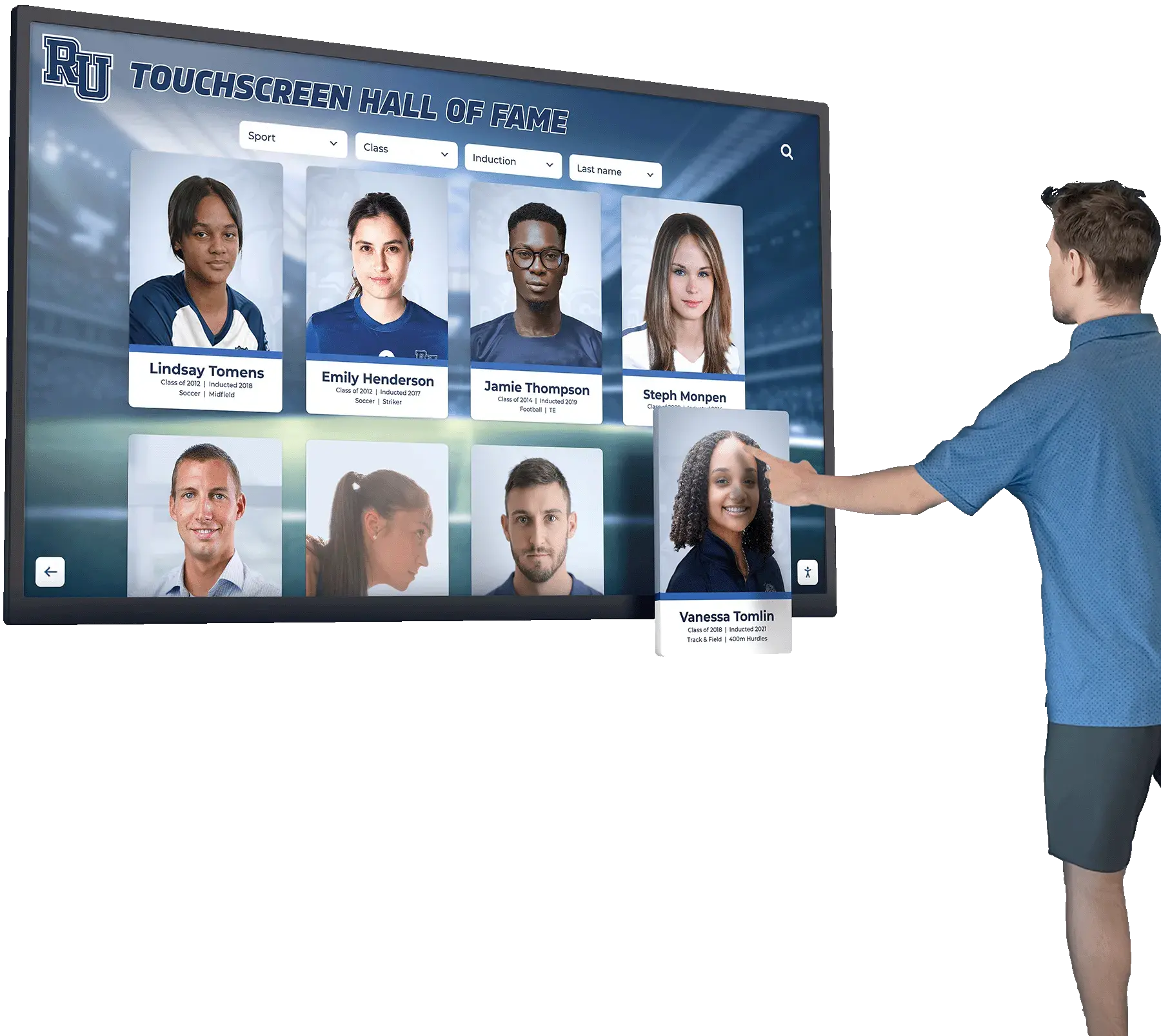
Interactive entrance displays transform passive viewing into active discovery, engaging visitors while showcasing comprehensive student achievement
Supporting Multiple Functions Within Architectural Constraints
Effective entrance displays must accommodate diverse, often competing purposes within typically limited square footage, requiring strategic design solutions that maximize impact without creating visual chaos.
Wayfinding and Navigation Support
School entrances serve as primary orientation points for visitors navigating facilities. Clear directional signage, building maps, and departmental directories help guests locate destinations efficiently while reducing interruptions to front office staff managing visitor questions. Digital displays can provide dynamic wayfinding content that adapts based on time of day, scheduled events, or visitor traffic patterns—showing athletic facility directions during game times, auditorium locations during performance evenings, or classroom wings during academic open houses.
Strategic placement of digital signage systems in entrance areas enables comprehensive information sharing without cluttering wall space with permanent directional plaques that become outdated as facilities evolve and programs expand.
Achievement Recognition and School Pride
Entrance displays provide prime real estate for celebrating student accomplishments, recognizing community supporters, and demonstrating institutional values through visible acknowledgment of excellence. Academic honors, athletic achievements, performing arts accolades, community service recognition, and alumni success all deserve celebration in spaces where visibility reinforces their importance to institutional culture.
The challenge involves showcasing diverse achievement categories comprehensively without creating overwhelming visual clutter. Traditional plaques and bulletin boards quickly run out of space, forcing uncomfortable decisions about which accomplishments receive entrance visibility while others remain hidden in secondary hallway locations. Digital displays overcome these capacity limitations while enabling recognition breadth impossible with static methods.
Event Promotion and Community Communication
Schools manage complex event calendars featuring athletics competitions, performing arts presentations, academic programs, parent meetings, community gatherings, and student activities. Entrance displays serve as natural communication channels for promoting upcoming events, celebrating recent successes, and keeping community members informed about institutional happenings.
Static bulletin boards require manual updates—printing flyers, removing outdated announcements, posting new information—creating maintenance burdens that often result in cluttered, confusing presentations featuring expired event notices alongside current information. Digital displays enable automated content scheduling, ensuring entrance communications remain current without constant manual intervention.
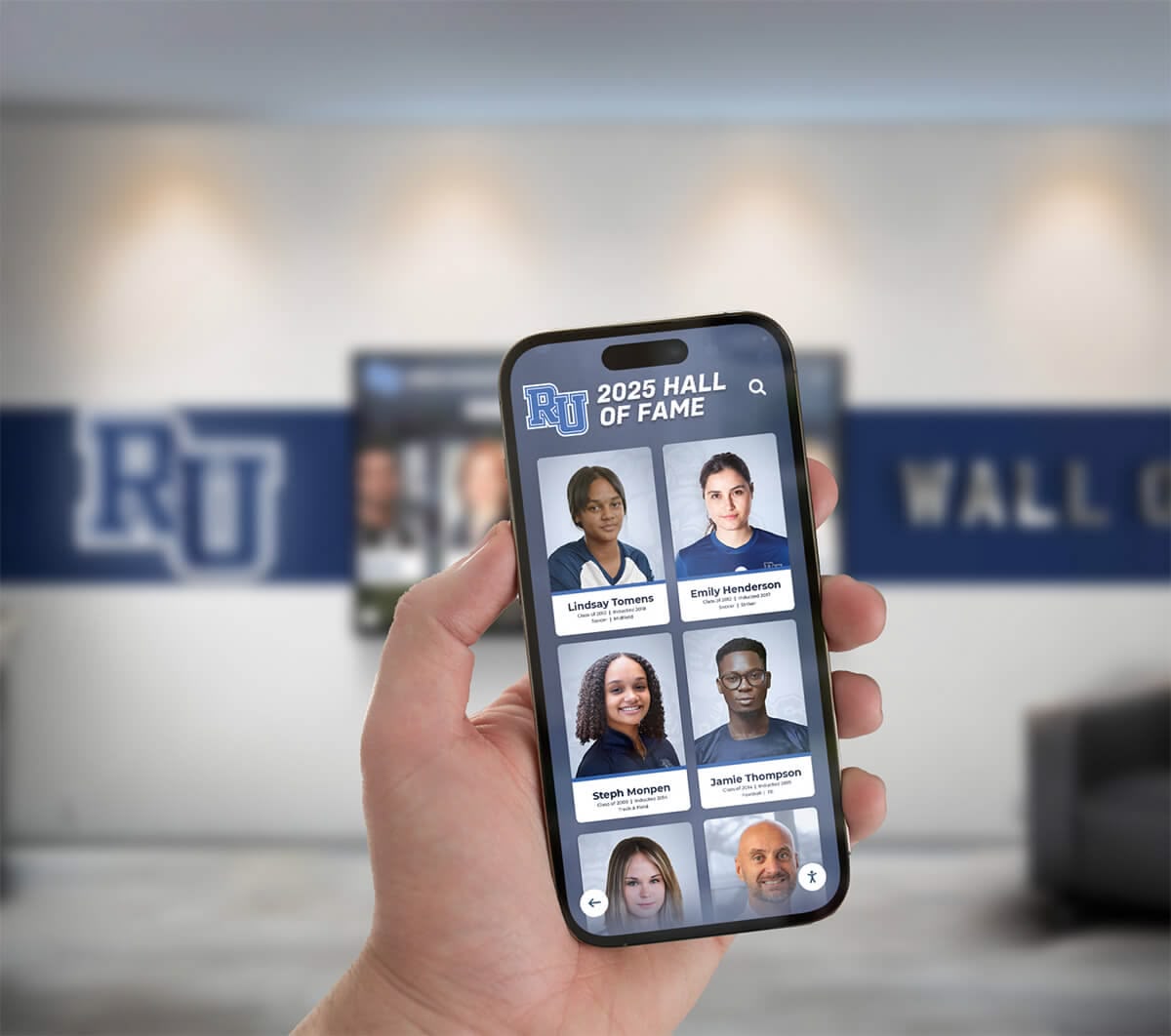
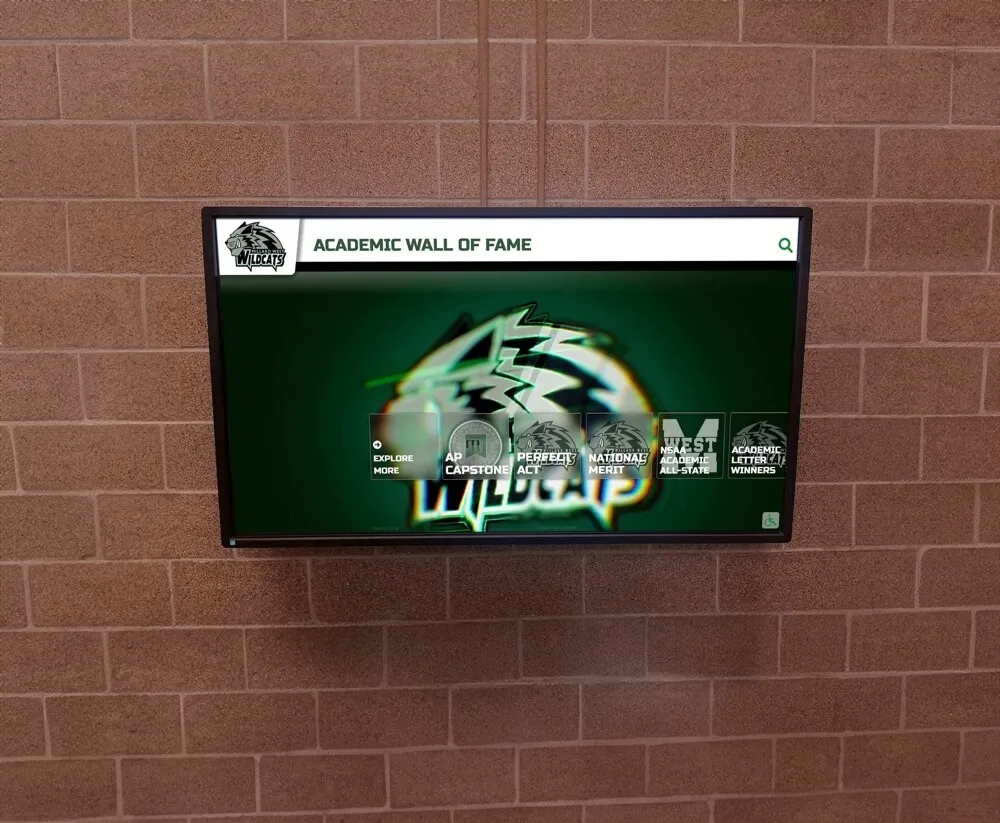
Modern entrance displays integrate with mobile technology, enabling visitors to explore recognition content from anywhere while creating seamless physical-digital experiences
Strategic Design Principles for Welcoming Entrance Displays
Understanding entrance display purposes reveals strategic design principles that maximize impact while creating cohesive, welcoming environments.
Balance Visual Impact with Functional Clarity
Effective entrance displays create immediate visual interest without overwhelming visitors or obscuring essential information.
Focal Point Hierarchy
Design entrance displays around clear visual hierarchies directing visitor attention strategically. Primary focal points—large branded murals, digital recognition screens, or architectural features—should capture immediate attention and communicate institutional identity. Secondary elements—wayfinding signage, event announcements, or directory information—should remain visible but subordinate to primary design statements. Tertiary details—emergency procedures, administrative notices, or regulatory postings—should be accessible without competing for focal attention.
This hierarchical approach prevents entrance environments from becoming visually chaotic while ensuring all necessary information remains accessible to visitors seeking specific content. When everything demands equal attention, nothing receives focus—creating confusing environments that fail to guide visitor experience effectively.
Strategic Color Application
School colors provide natural design foundations connecting entrance displays to broader institutional identity. However, successful applications balance bold color statements with neutral backgrounds preventing visual fatigue. Consider accent walls in primary school colors behind digital displays, creating visual emphasis while maintaining neutral tones on surrounding surfaces. Branded graphics and recognition elements can incorporate full color palettes, but floor-to-ceiling color immersion often overwhelms rather than welcomes.
Successful school branding implementations in entrance displays use color strategically for emphasis rather than extensively for saturation, creating environments that celebrate school identity without exhausting visitors encountering spaces repeatedly throughout school years.
Integrate Technology Seamlessly with Architecture
Digital displays should enhance rather than conflict with architectural design, creating cohesive installations that appear intentional rather than retrofitted.
Architectural Planning for Display Integration
The most successful entrance displays incorporate technology during initial architectural planning rather than adding screens as afterthoughts to completed spaces. Built-in mounting solutions, dedicated power infrastructure, concealed cabling, and proportional screen sizing create installations appearing architecturally integrated rather than technically imposed.
When planning entrance renovations or new construction, allocate wall space for digital displays during design phases, ensuring adequate electrical capacity, network connectivity, and mounting structure. This forethought prevents awkward retrofit installations featuring visible conduit, improvised mounting solutions, and proportional mismatches between screens and surrounding architectural elements.
Complementary Physical Elements
Digital displays achieve maximum impact when combined with complementary physical design elements. Branded murals provide visual context framing digital content. Custom cabinetry or millwork creates finished installations elevating screens beyond basic wall mounts. Coordinated lighting emphasizes display areas while creating ambient environments that enhance readability and visual appeal.
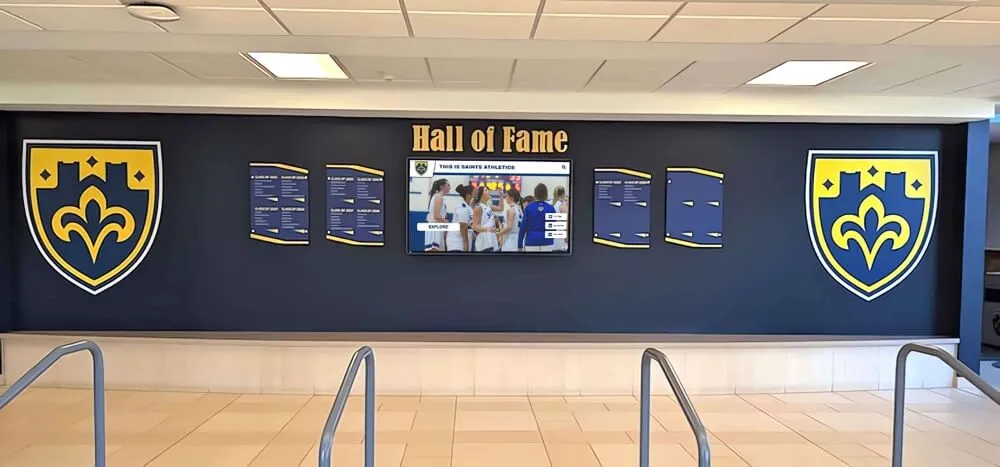
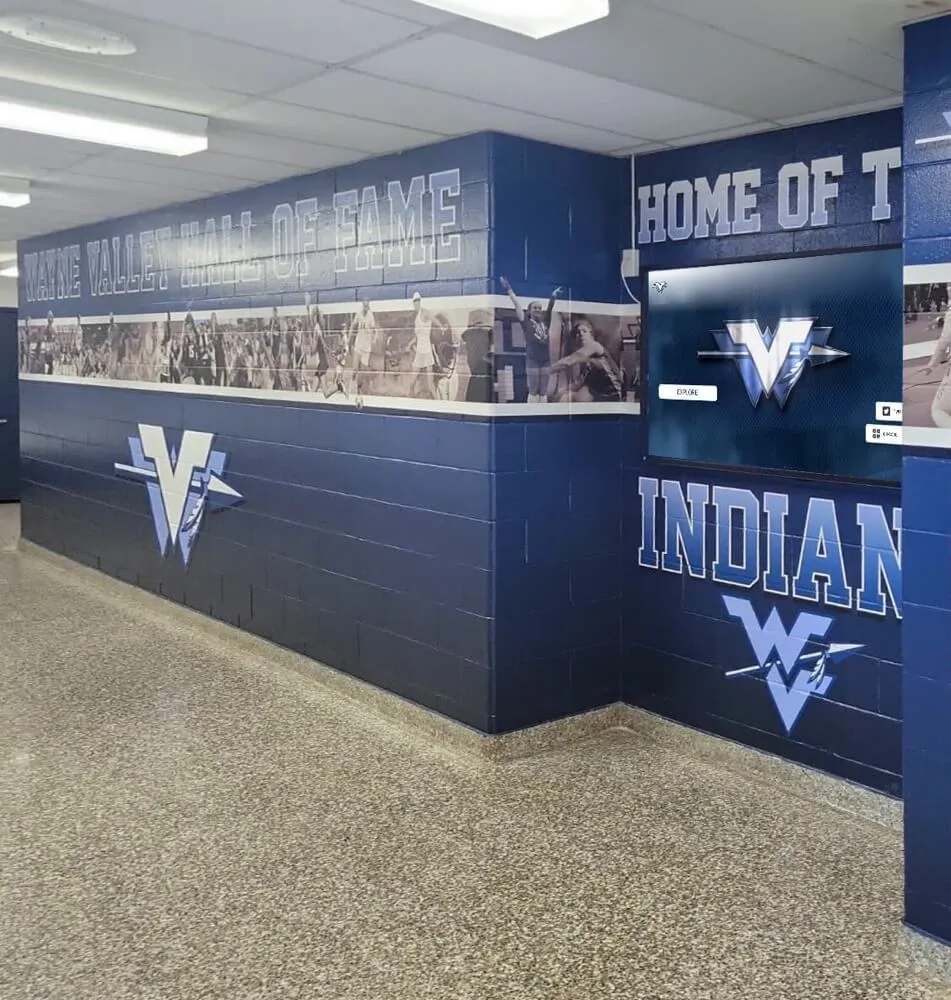
Consider installations pairing large-scale branded murals featuring school mascots or institutional crests with flanking digital recognition screens, creating cohesive presentations where physical branding and dynamic digital content reinforce each other. This integrated approach communicates institutional investment in comprehensive design rather than piecemeal technology additions.
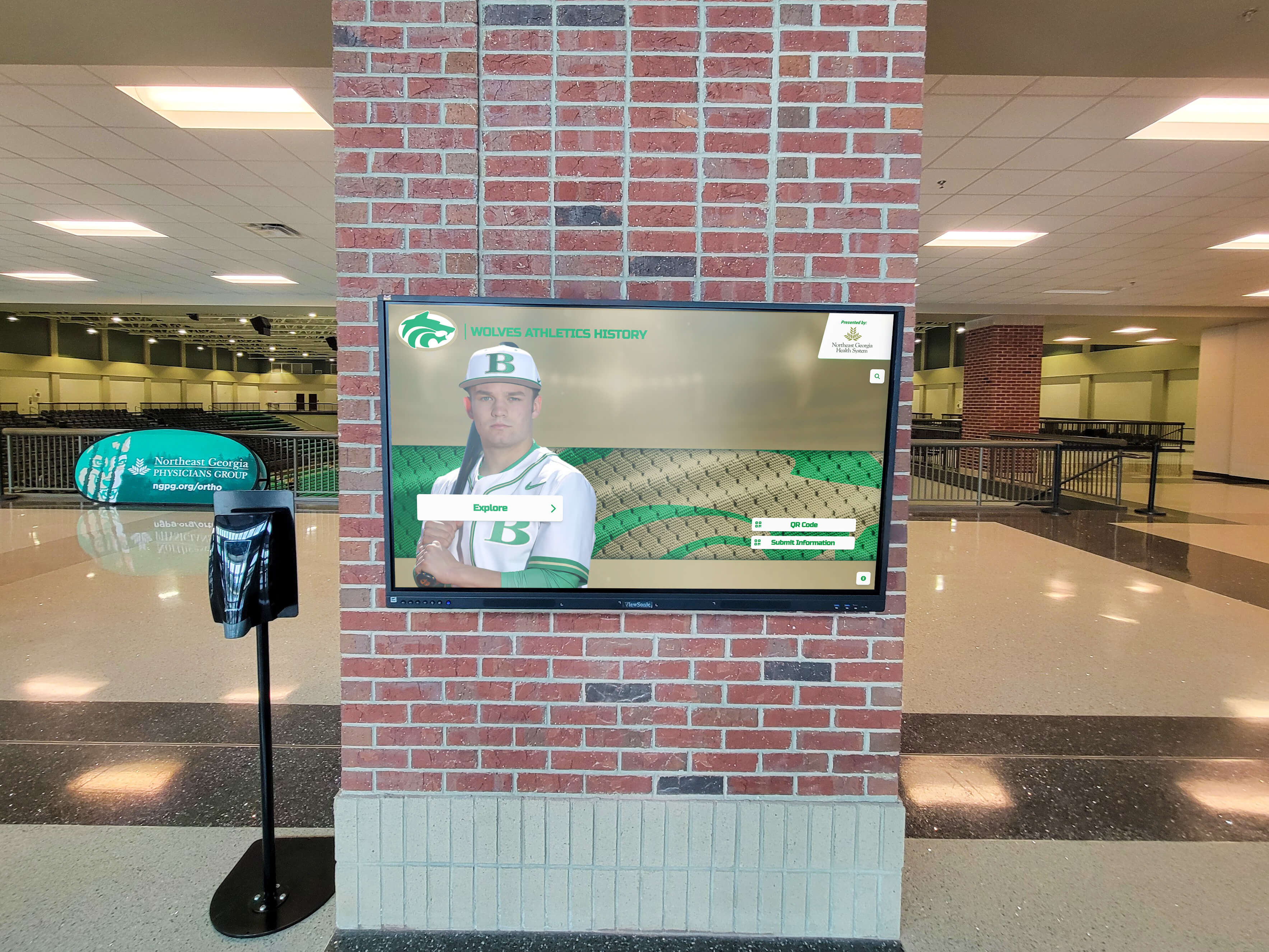
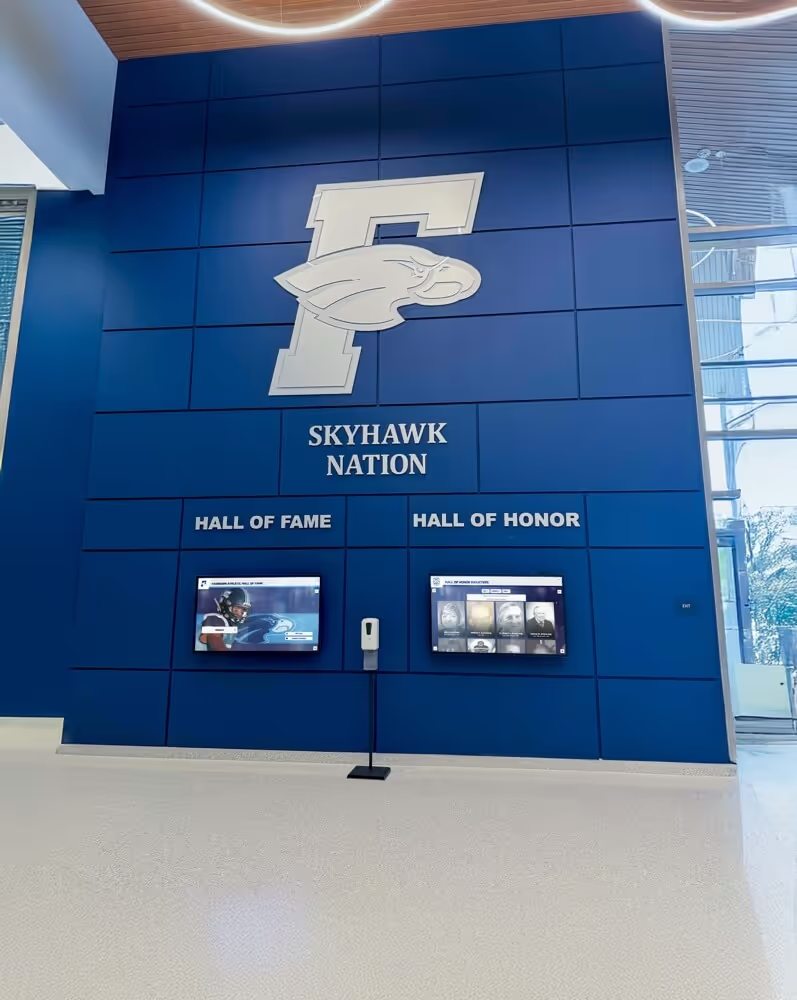
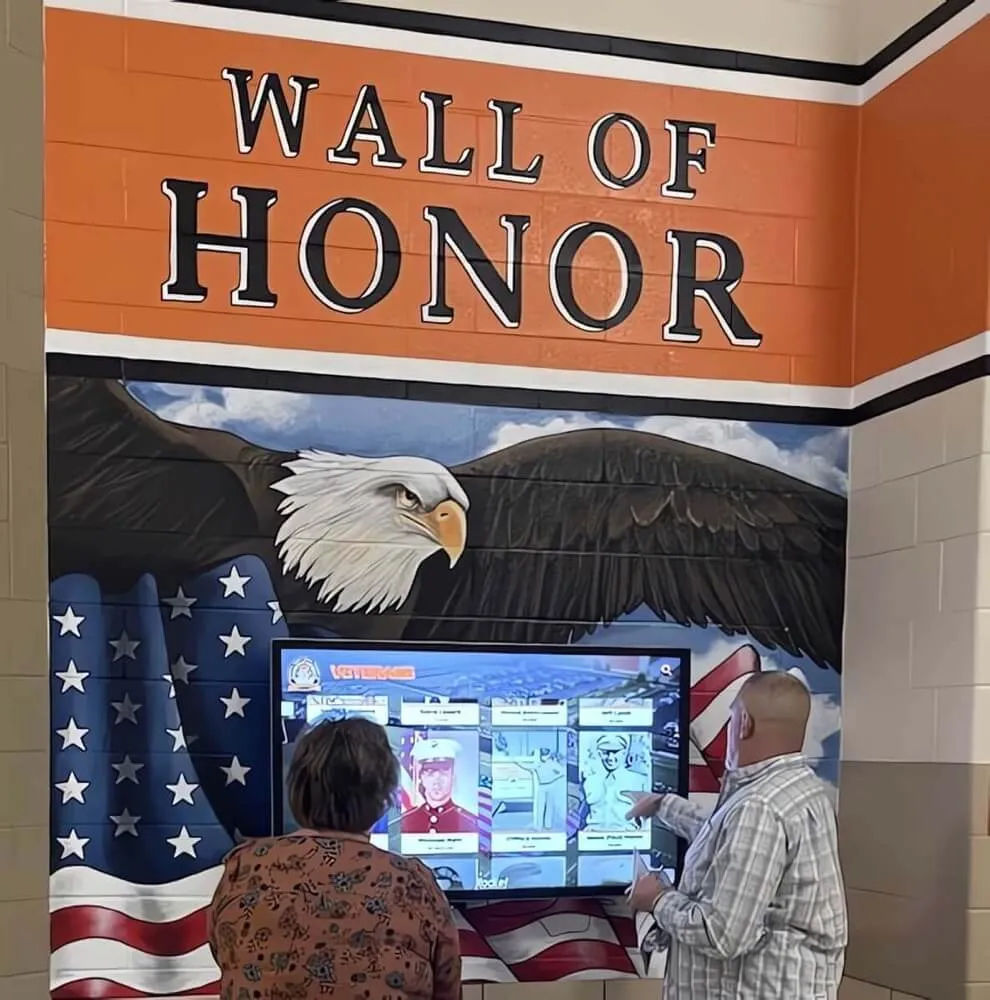
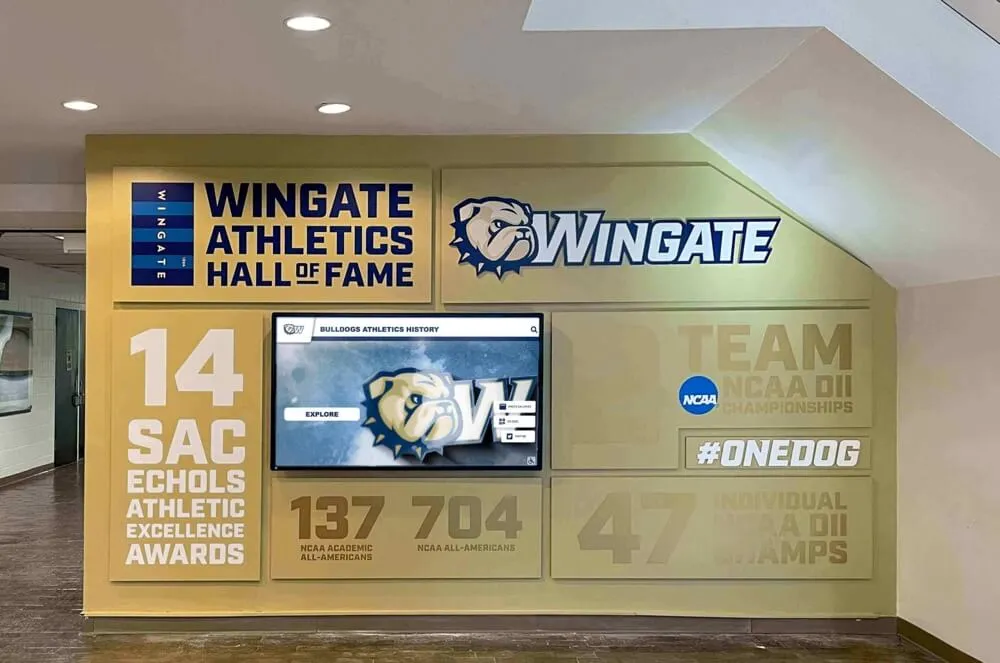
Strategic placement of digital displays on architectural features creates bold visual statements while maintaining structural integration
School Entrance Display Ideas That Transform First Impressions
Understanding design principles reveals specific entrance display approaches that create welcoming, engaging environments celebrating school communities effectively.
Digital Recognition Walls Showcasing Student Achievement
The most impactful entrance displays feature comprehensive student recognition that demonstrates institutional commitment to celebrating excellence across diverse achievement categories.
Interactive Touchscreen Recognition Kiosks
Large-format touchscreen displays installed in entrance lobbies enable visitors to explore comprehensive student achievement databases featuring academic honors, athletic accomplishments, performing arts recognition, community service awards, leadership acknowledgment, and alumni success. These interactive installations transform passive viewing into active discovery, engaging visitors while showcasing recognition breadth impossible with static plaques.
Families touring schools particularly appreciate searchable recognition systems enabling them to explore achievement categories relevant to their students’ interests—browsing athletic records if their child plays sports, examining performing arts accolades for student musicians, or discovering academic honors for scholars. This personalized exploration creates engagement impossible with generic wall displays showing fixed content to all visitors regardless of individual interests.
Purpose-built platforms like Rocket Alumni Solutions enable schools to showcase unlimited student achievements without space constraints, featuring searchable databases with photos, biographical details, accomplishment descriptions, and related content. These systems create entrance experiences worthy of celebrated students while demonstrating institutional commitment to comprehensive recognition across entire communities.
Automated Recognition Displays with Dynamic Content
Digital screens displaying automatically rotating recognition content create continuously fresh entrance experiences without requiring constant manual updates. Content management systems enable administrators to upload new achievements remotely, schedule recognition reveals coinciding with ceremonies or events, and maintain current displays without physical intervention.
Automated displays overcome the primary limitation of traditional bulletin boards—staleness resulting from update burdens. When adding recognition requires printing, laminating, posting, and removing outdated content, entrance displays quickly become neglected repositories of expired information. Digital systems reduce updates to simple content uploads, enabling consistently current recognition that reflects ongoing achievement rather than historical accomplishments from previous semesters.
Schools implementing digital honor roll systems report significantly more frequent recognition updates and broader achievement coverage compared to traditional methods, with entrance displays remaining current throughout academic years rather than becoming outdated shortly after installation.
Branded Murals with Integrated Digital Elements
Combining large-scale branded murals with integrated digital displays creates visually striking entrance statements that celebrate school identity while enabling dynamic content presentation.
Mascot Murals Flanked by Recognition Screens
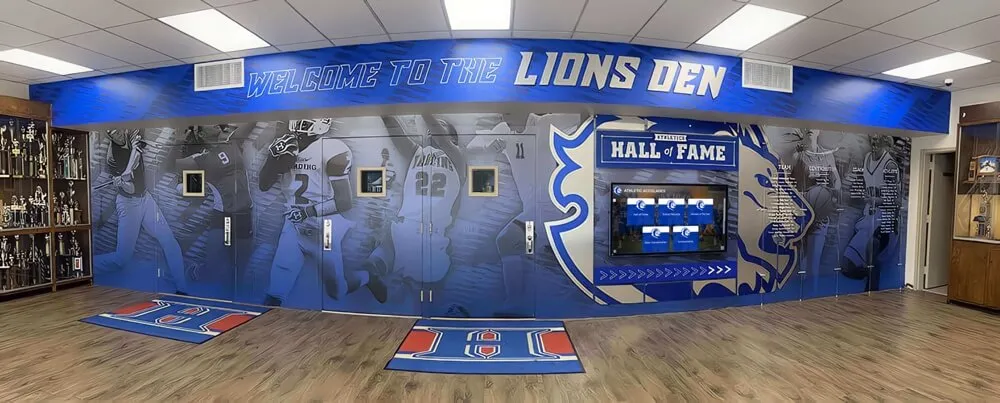
Large-format murals featuring school mascots, institutional crests, or emblematic imagery create bold visual anchors for entrance environments. Flanking these central murals with digital recognition screens creates balanced, symmetrical installations where permanent branding elements and dynamic achievement content complement each other.
This approach provides “permanence plus flexibility”—branded murals remain constant, communicating enduring institutional identity, while digital screens display evolving recognition content reflecting current student achievements, upcoming events, and community celebrations. The combination creates entrance installations that feel both established (through permanent murals) and contemporary (through digital technology).
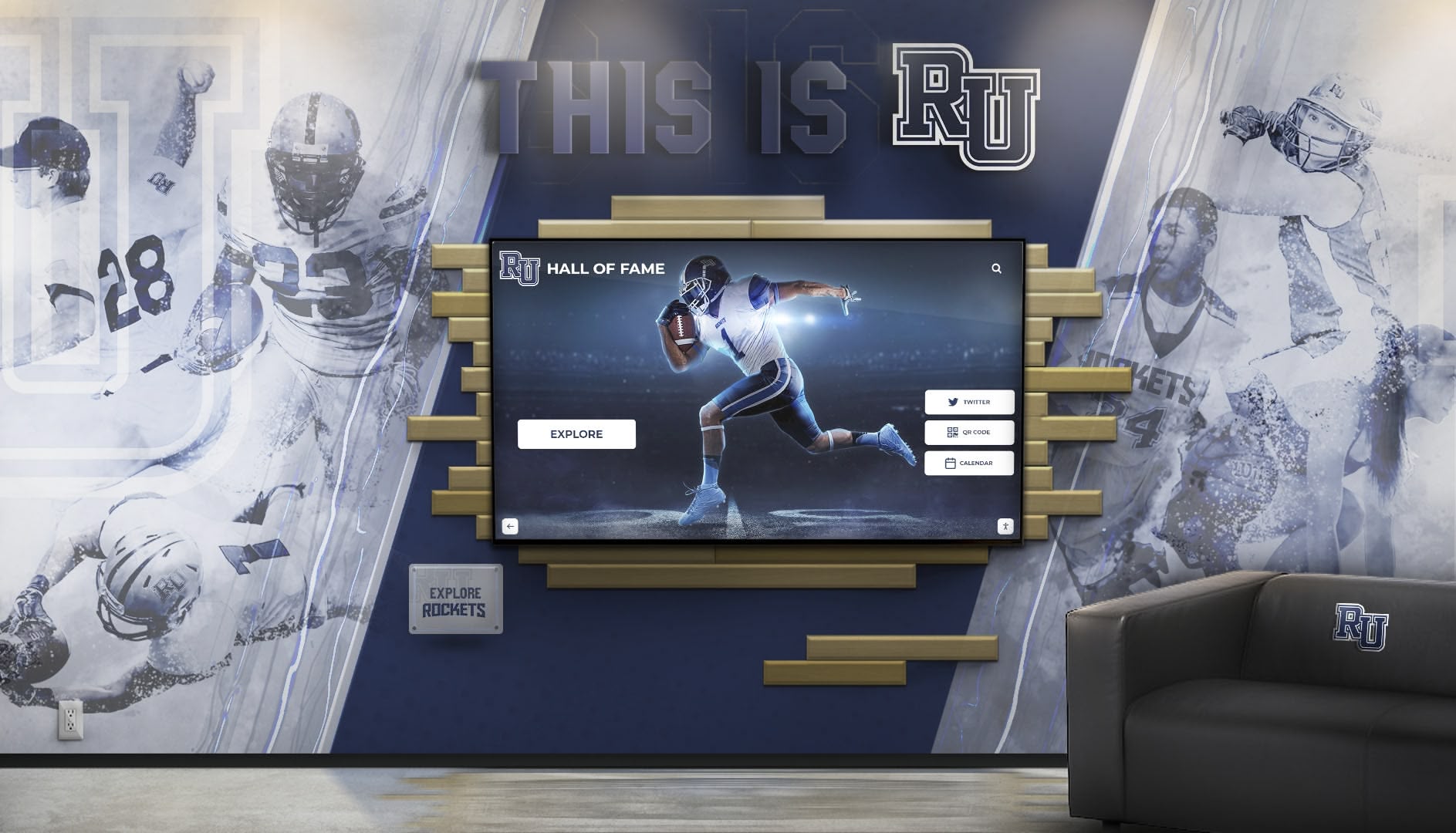
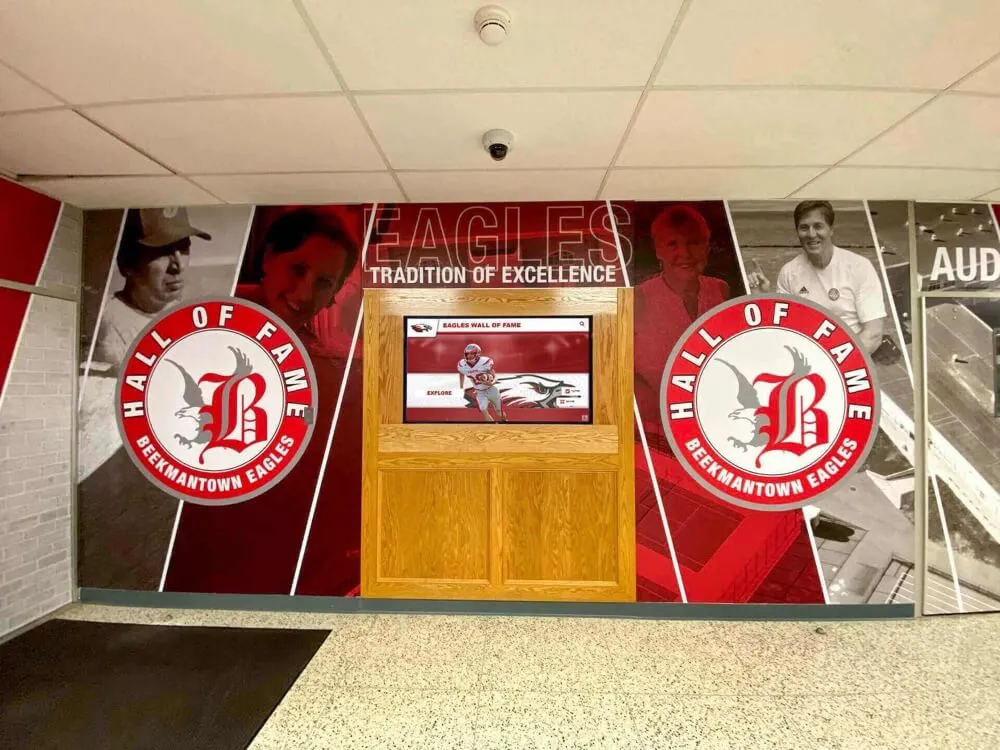
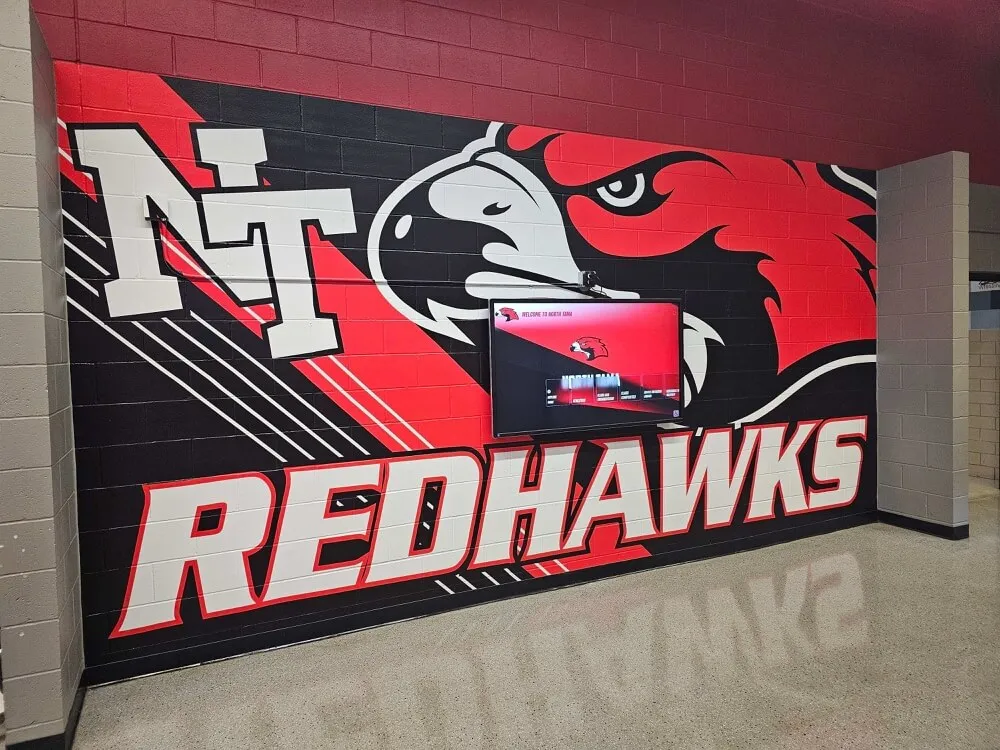
Coordinated mural and digital display installations create cohesive entrance statements combining permanent branding with dynamic achievement celebration
Athletic Program Showcases
School entrances serving athletic facilities benefit from sport-specific murals celebrating program traditions, championship histories, and team cultures. Pairing these athletic murals with digital recognition screens enables dynamic content showcasing current rosters, season schedules, recent results, record holders, and hall of fame inductees.
Athletic entrance displays serve recruiting functions when prospective student-athletes visit campuses, demonstrating program investment, tradition, and achievement culture. Digital elements enable real-time updates reflecting current season progress, creating living tributes to programs rather than static historical markers frozen at installation dates.
Programs implementing comprehensive athletic recognition approaches in entrance displays report stronger family engagement during recruiting visits and increased community pride as achievements accumulate throughout seasons.
Welcome Messages and Daily Announcements
Digital entrance displays can rotate between recognition content, welcome messages, daily announcements, and event promotions, creating comprehensive communication hubs serving multiple purposes.
Scheduled Content Rotation
Content management systems enable administrators to schedule display content based on time of day, day of week, or calendar dates. Morning arrivals might see daily announcements, lunch periods could feature cafeteria menus or afternoon event reminders, after-school hours might showcase athletic schedules or club meetings, and evening visitors could encounter performance announcements or community program information.
This automated rotation ensures entrance displays remain relevant to current visitor needs while maximizing display utility. Rather than showing static content continuously, dynamic scheduling creates contextually appropriate presentations that serve diverse audiences accessing facilities throughout days and weeks.
Event-Triggered Content
Digital displays can automatically adjust content based on calendar events—showing wayfinding information during open houses, displaying performance programs on theater presentation evenings, featuring athletic opponent information during game days, or highlighting graduation ceremonies during commencement weekends.
This event responsiveness creates entrance experiences specifically tailored to visitor purposes rather than generic presentations showing identical content regardless of circumstances. Touring families visiting during academic showcases encounter different entrance content than community members attending evening performances, with each group receiving contextually relevant information serving their specific needs.
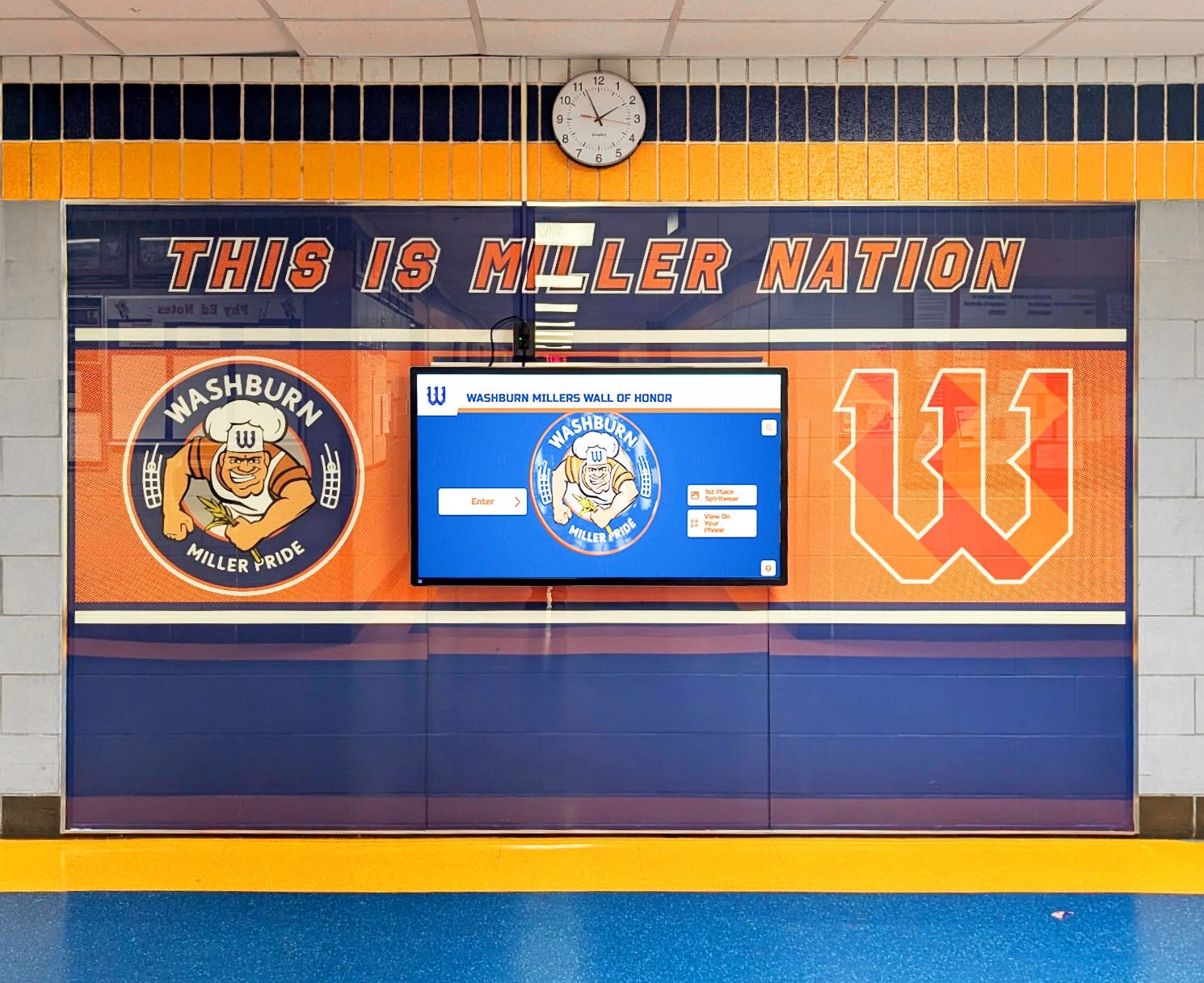
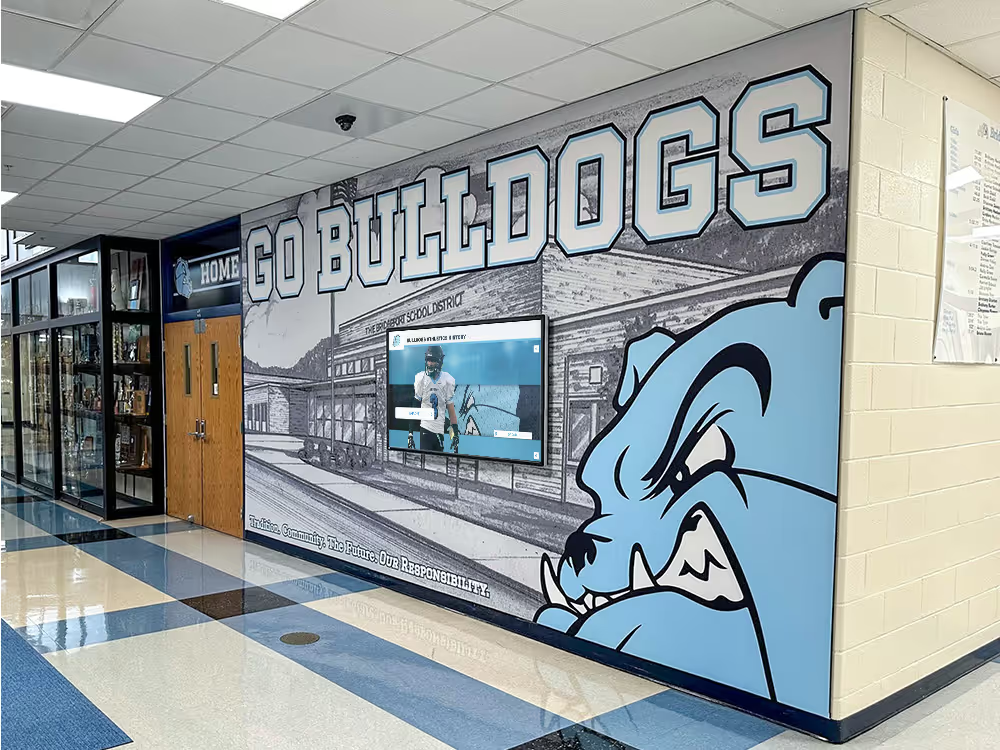
Entrance hallways provide natural locations for digital recognition displays visible to all facility visitors while maintaining wayfinding functionality
Alumni Recognition and Community Connection
School entrances serve as natural locations for celebrating alumni success and demonstrating institutional impact extending beyond current enrollment.
Distinguished Alumni Showcases
Digital displays featuring notable alumni create powerful recruiting tools during prospective family tours, demonstrating that your institution produces successful graduates across diverse career fields. Searchable alumni databases enable visitors to explore graduates by graduation year, career field, achievement category, or geographic location, discovering connections relevant to their specific interests.
These alumni showcases also serve current students by providing role models and inspiration—seeing graduates who pursued similar interests, attended desired colleges, or achieved in comparable fields. The message becomes clear: this institution develops students who accomplish meaningful things after graduation, and current students can expect similar support and outcomes.
Comprehensive alumni recognition programs in entrance displays strengthen institutional development efforts by demonstrating appreciation for graduate support while encouraging ongoing alumni engagement and philanthropic investment.
Donor and Supporter Acknowledgment
Entrance displays provide prominent locations for recognizing community supporters, capital campaign contributors, program sponsors, and philanthropic investors. Digital donor walls overcome traditional capacity limitations, enabling comprehensive recognition of supporters across all giving levels while providing flexibility to add new donors continuously without space constraints.
Unlike static donor plaques requiring expensive updates as new contributors join recognition programs, digital systems enable simple additions maintaining current, comprehensive acknowledgment. This ease of updating encourages administrators to maintain recognition currency rather than allowing donor displays to become outdated repositories of historical giving patterns.
Campus Wayfinding and Information
Digital entrance displays can provide essential wayfinding support helping visitors navigate facilities efficiently while reducing front office interruptions.
Interactive Campus Maps
Touchscreen displays featuring interactive campus maps enable visitors to search for specific destinations—classroom wings, athletic facilities, performing arts centers, administrative offices, or outdoor spaces—receiving visual directions and navigation support. These digital wayfinding tools prove particularly valuable during open houses, sporting events, performances, and community gatherings when visitor volumes exceed front office staff capacity to provide individual assistance.
Interactive maps can highlight accessibility routes, parking information, restroom locations, emergency exits, and facility amenities, creating comprehensive navigation support serving diverse visitor needs. Updated map content reflects facility changes, temporary room assignments, or construction detours without requiring expensive signage replacement.
Department Directories and Contact Information
Digital displays can show departmental directories, staff contacts, office hours, and administrative information helping visitors locate specific personnel or services. Searchable directories enable guests to find contact details without navigating complex websites or interrupting office staff with basic information requests.
These digital directories maintain accuracy more easily than printed materials or static directory boards, with updates happening remotely through content management systems rather than requiring physical signage replacement. As staff assignments change, new personnel join, or organizational structures evolve, digital directories remain current without manual intervention at display locations.
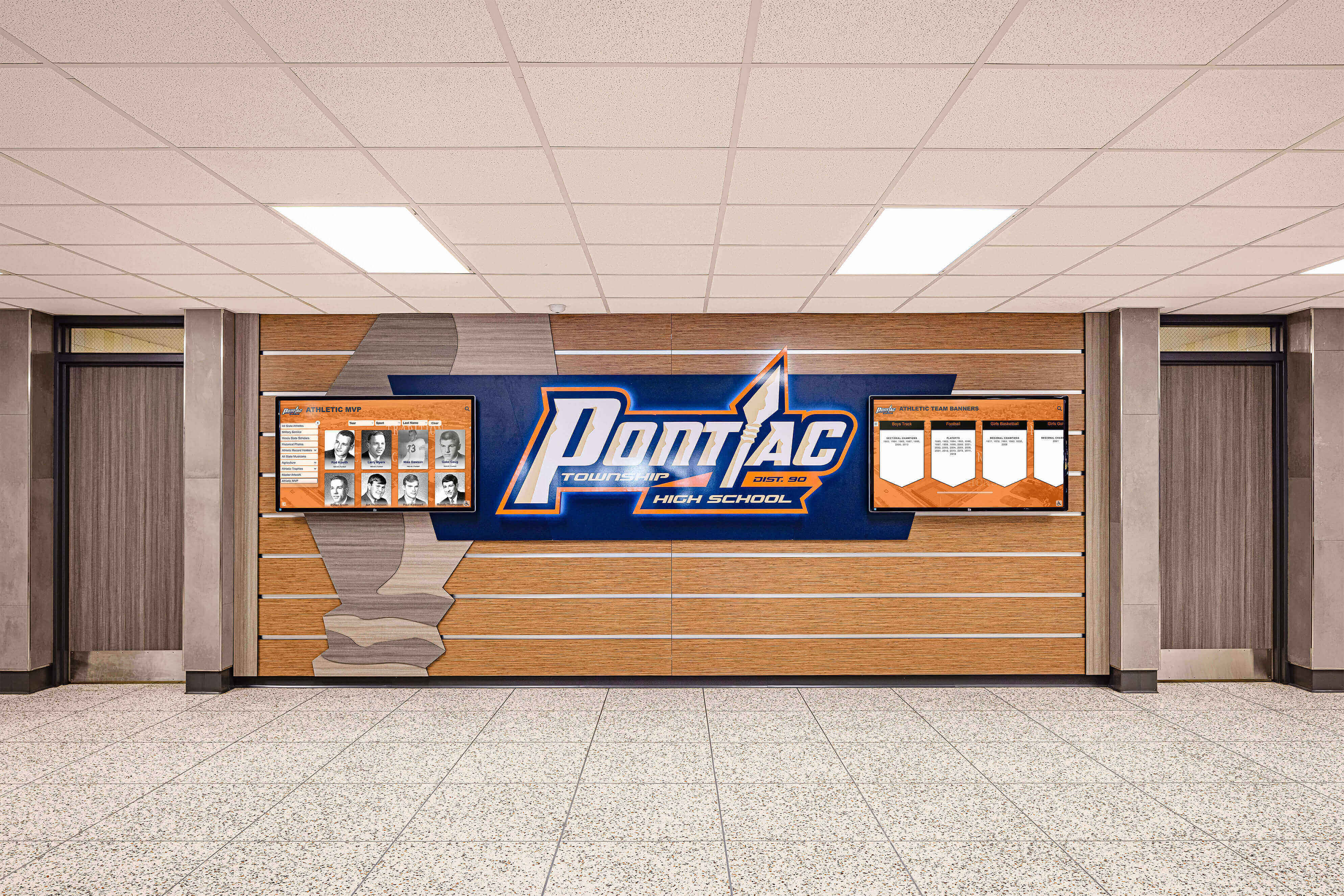
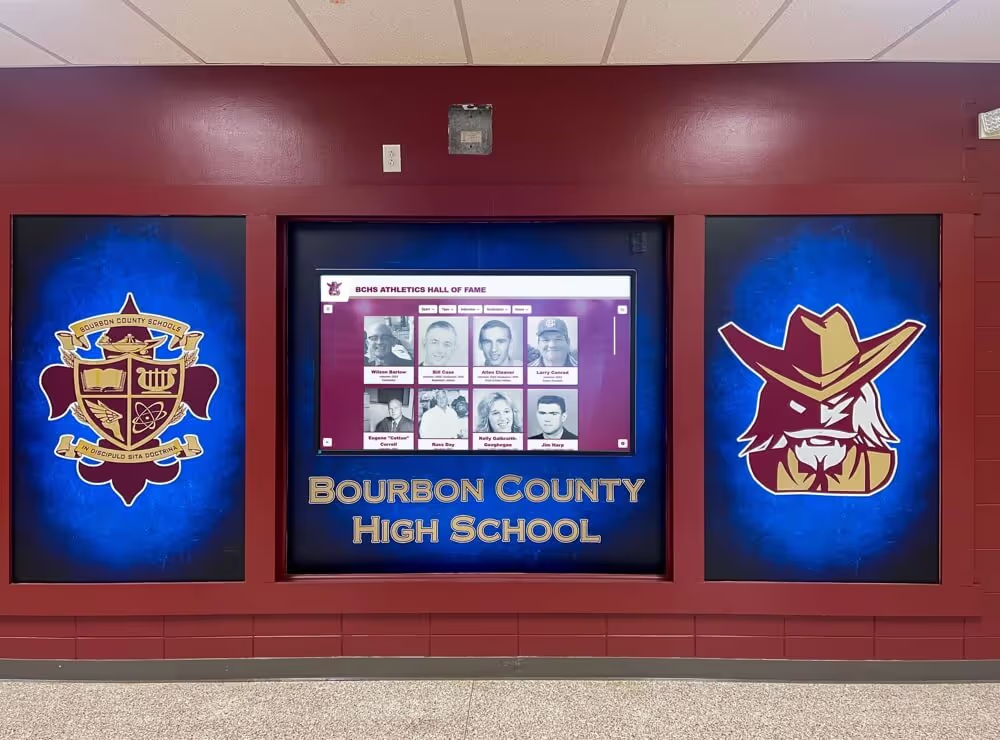
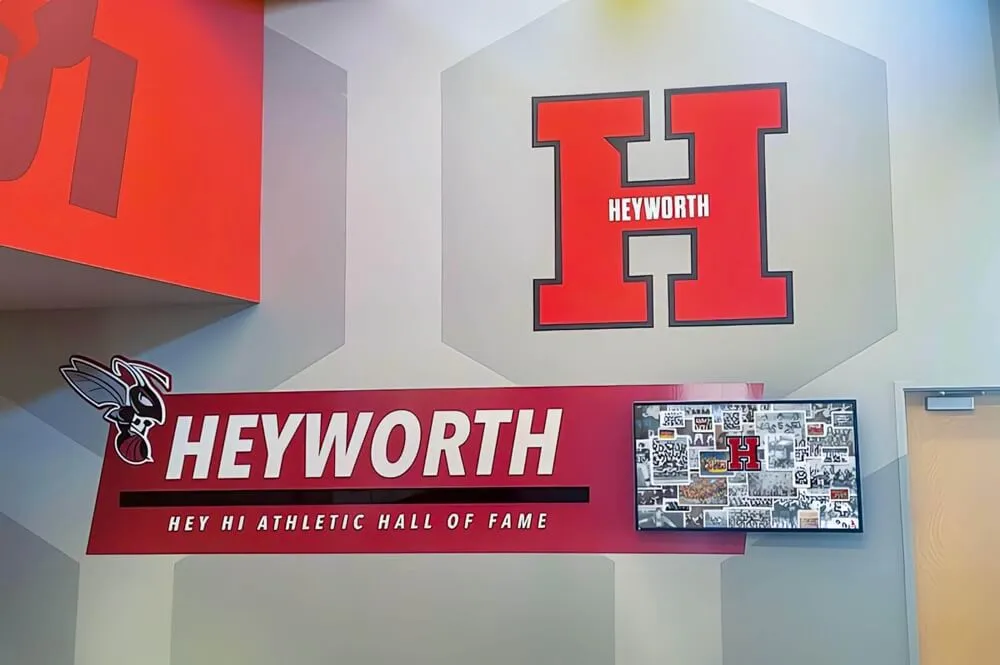
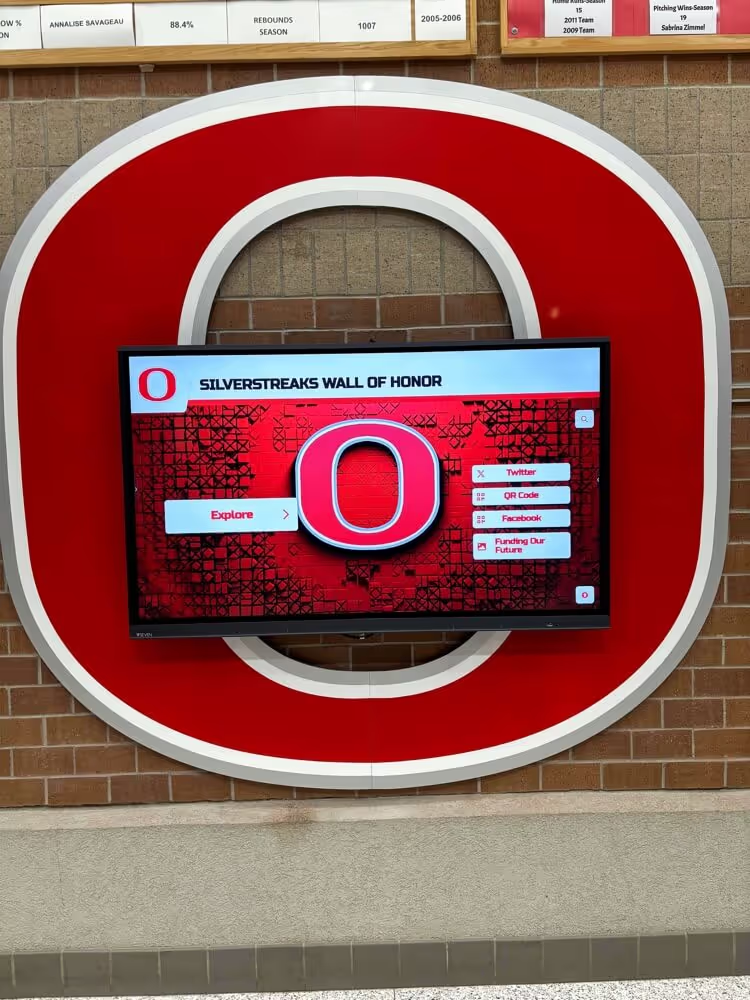
Strategic logo placement combined with recognition displays creates cohesive entrance branding that reinforces institutional identity while celebrating achievement
Overcoming Common Entrance Display Challenges
Even well-planned entrance displays face implementation challenges requiring thoughtful solutions that maintain design integrity while addressing practical constraints.
Managing Limited Wall Space and Architectural Constraints
Schools often face entrance space limitations restricting display size, placement options, or installation approaches.
Vertical Space Utilization
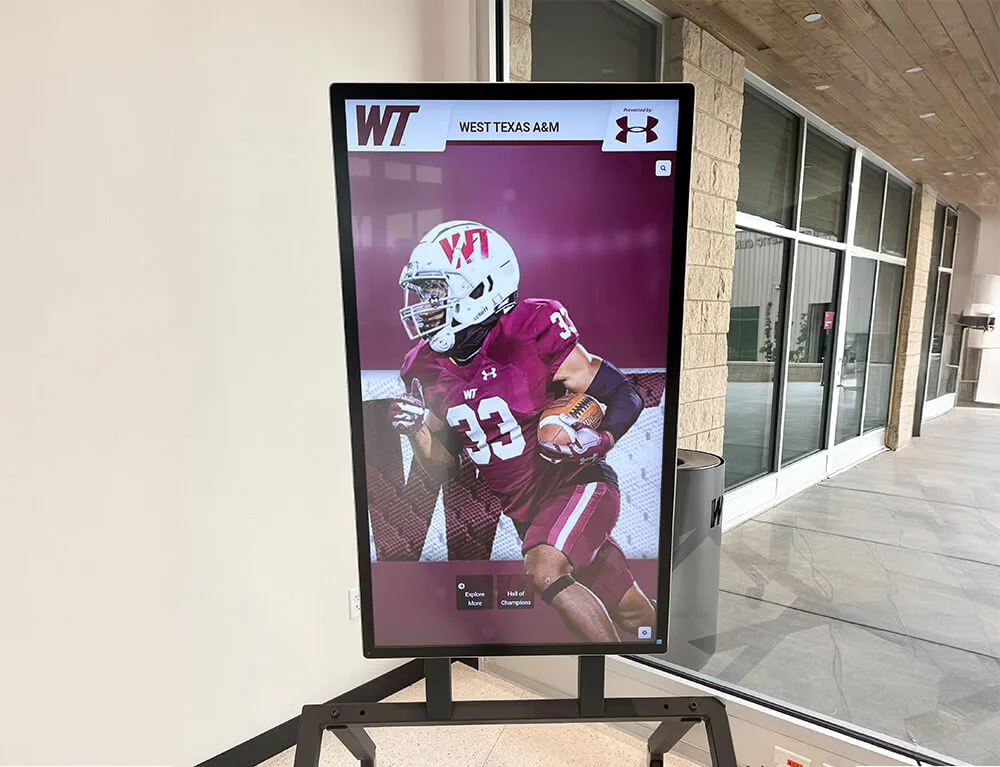
When horizontal wall space proves limited, consider vertical display orientations maximizing available architectural surfaces. Portrait-oriented screens utilize wall height rather than width, creating tall, narrow installations fitting constrained spaces while maintaining visual impact. Multiple smaller displays arranged vertically can create column-like installations providing substantial screen area within narrow wall sections.
This vertical approach works particularly well in entrance corridors, narrow lobbies, or spaces where horizontal installations would block doorways, windows, or circulation paths. The key involves ensuring screen proportions feel intentional rather than awkward, with mounting heights positioning primary content at average sight lines despite vertical orientations.
Mobile Display Solutions
In facilities where permanent wall installations prove impossible due to architectural constraints, historical building restrictions, or rental agreements, mobile digital display kiosks provide flexible alternatives. Freestanding kiosks can be positioned in entrance lobbies, relocated during events, or moved as traffic patterns and facility uses evolve.
Mobile solutions trade architectural integration for flexibility, enabling recognition displays in spaces where permanent installations aren’t feasible. Quality kiosks featuring professional design, stable bases, and integrated cable management can achieve impressive presentations rivaling built-in installations while maintaining relocation capabilities as institutional needs change.
Balancing Multiple Content Priorities
Entrance displays often need to serve competing purposes—recognition, wayfinding, announcements, event promotion—within limited screen time and visual real estate.
Content Scheduling Strategies
Effective content management systems enable administrators to allocate screen time proportionally across content categories. Recognition content might receive 60% of rotation time, event announcements 20%, wayfinding information 10%, and welcome messages 10%, ensuring primary purposes receive appropriate emphasis while supporting secondary functions.
Time-based scheduling can adjust these proportions contextually. Morning arrivals might see more announcement content, midday periods could emphasize recognition, afternoon hours might increase event promotion, and evening displays could prioritize wayfinding for program attendees. This dynamic allocation ensures entrance displays serve changing visitor needs throughout days and weeks.
Multi-Zone Display Layouts
Large-format displays can divide screen area into multiple zones serving different content purposes simultaneously. Primary zones might show rotating recognition content while secondary areas display upcoming events, tertiary sections show date/time information, and ticker regions present scrolling announcements.
This multi-zone approach enables comprehensive information presentation without requiring visitors to wait through complete rotation cycles to access specific content. The trade-off involves potentially busier screen layouts compared to full-screen presentations, requiring careful design ensuring visual clarity despite multiple simultaneous content streams.
Ensuring Content Remains Current and Engaging
The primary risk with digital displays involves content neglect—installed systems showing outdated information because update processes prove too burdensome for busy administrators.
Simplified Content Management Systems
Purpose-built recognition platforms featuring intuitive content management interfaces dramatically reduce update burdens compared to generic digital signage systems requiring technical expertise. User-friendly systems enable administrative staff to add achievements, upload photos, schedule content reveals, and maintain current displays without specialized training or IT department involvement.
The best systems provide remote access enabling updates from any internet-connected device rather than requiring physical presence at display locations. This remote capability means administrators can add recognition content immediately following ceremonies, update event information as schedules change, or modify wayfinding content reflecting facility updates—all from office computers or mobile devices.
Automated Content Population
Advanced recognition systems can automatically populate displays from existing data sources—student information systems, athletic scheduling software, event calendars, or academic databases—eliminating manual content entry. This automation ensures entrance displays remain current without requiring dedicated staff time for updates, with fresh content appearing automatically as underlying data sources change.
Schools implementing automated recognition systems report dramatically higher content currency and update frequency compared to manual approaches, with entrance displays reflecting real-time institutional activities rather than becoming historical snapshots frozen at installation dates.
Technical Considerations for Successful Installations
Beyond design and content planning, successful entrance displays require attention to technical specifications ensuring reliable, professional operation.
Hardware Selection for Entrance Environments
Entrance locations present specific environmental conditions affecting hardware selection and installation approaches.
Commercial-Grade Display Specifications
School entrance displays require commercial-grade screens designed for extended operation rather than consumer televisions built for intermittent home use. Commercial displays feature enhanced brightness (400+ nits) maintaining readability in naturally lit entrance areas, extended operational ratings supporting continuous daily use, thermal management preventing overheating during all-day operation, and professional mounting interfaces enabling secure installation.
Resist temptations to save costs through consumer television installations—these devices typically fail within 1-2 years under continuous commercial operation, creating replacement expenses and extended downtime periods while broken displays communicate institutional neglect rather than excellence.
Appropriate Screen Sizing
Display dimensions should correspond proportionally to entrance space scale and typical viewing distances. Entrance lobbies accommodating 15-20 foot viewing distances benefit from 55-75 inch displays providing adequate visibility without requiring close approach. Narrow corridors with 8-12 foot viewing distances might utilize 42-55 inch screens avoiding overwhelming proportions in confined spaces.
The governing principle involves ensuring primary content—recognition photos, text headlines, event announcements—remains clearly legible from typical visitor positions within entrance environments. Test content readability at expected viewing distances before finalizing screen specifications.
Touchscreen vs. Display-Only Decisions
Interactive touchscreen installations enable visitor engagement with searchable recognition databases, detailed achievement information, or wayfinding content. However, touchscreens involve higher initial costs, require regular cleaning maintaining appearance, and may experience higher failure rates compared to display-only screens.
Consider whether entrance display purposes justify interactive capabilities. If primary functions involve broadcasting recognition content, announcements, and event information to passing visitors, display-only screens may serve effectively at lower costs. If entrance experiences should enable visitor exploration of comprehensive achievement databases or interactive campus navigation, touchscreen investments deliver value justifying additional expenses.
Infrastructure Requirements
Successful installations require adequate infrastructure supporting reliable display operation and remote content management.
Electrical and Network Connectivity
Digital displays require dedicated electrical circuits preventing interference with other equipment while supporting reliable operation. Network connectivity—wired Ethernet preferred over wireless connections—enables remote content management, automated updates, and system monitoring. Plan infrastructure during renovation projects rather than retrofitting after construction completion.
Concealed cable routing maintains professional appearance while protecting connections from damage. Surface-mounted conduit creates obviously retrofitted appearances undermining architectural integration, while in-wall routing during construction creates finished installations appearing built-in rather than added afterward.
Remote Management Capabilities
Systems providing cloud-based content management enable administrators to update displays remotely, schedule content reveals, monitor operational status, and troubleshoot issues without physical access to installation locations. This remote capability proves essential for maintaining content currency without dedicating staff time to on-site display management.
Platforms offering mobile applications extend management capabilities to smartphones and tablets, enabling administrators to upload recognition content immediately following ceremonies, respond to display issues during evening events, or update announcements during weekends—all without returning to office computers.
Creating Digital Warming Through Entrance Displays
Strategic entrance displays transcend simple information presentation, creating digital warming that transforms cold, utilitarian entry spaces into welcoming environments building immediate community connections.
Personalized Recognition Surfacing Individual Stories
Unlike static plaques listing names without context, digital entrance displays can surface rich individual stories—achievement details, personal backgrounds, institutional connections—creating emotional engagement impossible with traditional methods.
When prospective families explore recognition databases during tours, discovering alumni from their hometowns, graduates who pursued similar interests, or students who overcame comparable challenges, these personalized discoveries create connections demonstrating that your institution serves students like theirs. This relevance transforms generic recognition into meaningful evidence supporting enrollment decisions.
Current students encountering entrance displays featuring their own achievements, their classmates’ accomplishments, or their team’s successes experience visible institutional appreciation reinforcing positive school connections. This recognition visibility communicates that achievements matter, contributions receive acknowledgment, and the institution values celebrating community members across diverse excellence categories.
Implementing comprehensive digital recognition strategies in entrance displays creates personalized experiences that warm community relationships through continuous, meaningful engagement rather than occasional ceremonial acknowledgment.
Continuous Content Surfacing Maintaining Engagement
Digital warming requires continuous content updates maintaining fresh, relevant displays that reward repeat engagement rather than static presentations showing identical information during every encounter.
Schools implementing automated recognition systems report that entrance displays become community destinations rather than ignored background fixtures, with students, families, and visitors actively engaging with displays during each facility visit to discover newly added achievements, updated event information, or recent accomplishment celebrations.
This continuous freshness creates return engagement patterns impossible with static displays. When visitors know entrance content changes regularly, they actively check displays during each visit rather than ignoring familiar, unchanging presentations. Over time, this repeated engagement builds community connections strengthening school culture while creating positive associations with institutional environments.
Accessibility Ensuring Inclusive Participation
Digital warming requires that all community members—regardless of physical abilities—can access recognition content and participate fully in entrance experiences.
WCAG 2.1 AA Compliance Standards
Purpose-built recognition platforms meeting Web Content Accessibility Guidelines (WCAG) 2.1 AA standards ensure entrance displays serve visitors with visual, auditory, motor, or cognitive disabilities. Compliance features include adjustable text sizes accommodating low vision, high contrast modes supporting various visual capabilities, screen reader compatibility enabling audio content access, keyboard navigation supporting users unable to use touchscreens, and alternative text descriptions providing context for visual content.
Rocket Alumni Solutions provides the only web-based touchscreen recognition platform meeting full WCAG 2.1 AA accessibility standards, ensuring entrance displays welcome all visitors equally while demonstrating institutional commitment to inclusive design extending beyond regulatory compliance to genuine community service.
Mobile Access Extending Engagement Beyond Physical Displays
QR codes positioned near entrance displays enable visitors to access recognition content on personal mobile devices, exploring comprehensive databases without requiring physical interaction with shared touchscreens. This mobile access serves visitors with mobility limitations unable to approach wall-mounted displays comfortably, provides alternative interaction modes for those preferring personal devices over shared surfaces, and extends engagement beyond entrance visits as families explore recognition content later from anywhere.
Mobile integration creates seamless physical-digital experiences where entrance displays spark initial interest that extends into deeper exploration via smartphones, tablets, or home computers. This extended engagement transforms momentary entrance encounters into sustained recognition experiences building lasting community connections.
Implementing Your School Entrance Display Vision
Understanding design possibilities, technical considerations, and digital warming principles enables strategic implementation planning that transforms entrance visions into welcoming realities.
Assessing Current Entrance Environments
Begin by honestly evaluating current entrance displays and identifying improvement opportunities.
Inventory Existing Elements
Document all current entrance components—bulletin boards showing what content and update frequency, trophy cases displaying which achievements and from what time periods, plaques recognizing whom for what accomplishments, directories providing what information and how current, wayfinding signage directing visitors where and how effectively.
This inventory reveals what’s working effectively and should be retained or enhanced, what’s failing to serve purposes and requires replacement or elimination, where gaps exist in recognition coverage or information provision, and which elements compete for attention without clear hierarchies guiding visitor experience.
Gather Stakeholder Input
Involve multiple perspectives in entrance planning—administrative staff managing daily operations, development personnel understanding donor recognition priorities, athletic directors knowing sports program needs, performing arts leaders with recognition requirements, facilities managers handling technical constraints, and current students/families providing visitor viewpoint feedback.
This comprehensive input prevents narrow solutions serving limited constituencies while ignoring broader community needs. The most successful entrance displays serve multiple purposes effectively rather than prioritizing single functions while neglecting others.
Planning Strategic Implementations
Armed with assessment insights and stakeholder input, develop implementation plans balancing immediate possibilities with long-term visions.
Phased Approach for Budget Management
Comprehensive entrance transformations often require substantial investments exceeding single budget cycles. Consider phased implementations spreading costs across multiple years while creating incremental improvements maintaining progress toward ultimate visions.
Initial phases might focus on primary focal points—installing marquee digital recognition displays in central entrance locations creating immediate impact. Subsequent phases could add complementary elements—branded murals, architectural enhancements, or additional displays serving secondary purposes. Final phases might address refinements—lighting upgrades, furniture additions, or wayfinding enhancements completing comprehensive transformations.
This phased approach enables significant improvements within annual budgets while building toward ambitious long-term goals that might prove impossible through single-year implementations.
Integration with Broader Facility Plans
Entrance display planning should coordinate with broader facility improvement initiatives—renovations, expansions, or new construction projects. When entrance updates can align with planned architectural work, combined projects often achieve economies of scale reducing overall costs while ensuring design coherence between entrance displays and surrounding facility elements.
Communicate entrance display visions to architects and facility planners during early project phases, ensuring adequate infrastructure, appropriate wall allocations, and coordinated design aesthetics rather than retrofitting displays after construction completion as disconnected additions.
Selecting Partners and Solutions
Implementation success depends significantly on partner selection and solution choices.
Evaluate Purpose-Built Recognition Platforms
Generic digital signage systems provide basic content display capabilities but lack recognition-specific features that educational institutions require—searchable achievement databases, automated record ranking, mobile integration, accessibility compliance, scheduled content reveals, and intuitive content management designed for non-technical administrators.
Purpose-built platforms like Rocket Alumni Solutions provide comprehensive recognition capabilities specifically designed for educational environments, enabling schools to showcase unlimited achievements across diverse categories, maintain effortlessly current displays through remote content management, ensure full accessibility compliance, integrate mobile access extending engagement beyond physical installations, and create professional presentations worthy of celebrated students and communities.
When evaluating solutions, prioritize platforms specifically designed for educational recognition rather than adapting generic tools to purposes they weren’t built to serve.
Consider Total Cost of Ownership
Implementation planning should account for total ownership costs—not merely initial hardware expenses but ongoing maintenance, content management labor, update requirements, technical support needs, and eventual replacement expenses.
Solutions requiring specialized technical expertise for routine updates create hidden ongoing costs as busy IT departments divert time from other priorities or schools hire additional personnel managing display content. Platforms providing intuitive interfaces enabling administrative staff to manage content independently eliminate these recurring expenses while maintaining operational control within appropriate departments.
Conclusion: Transforming Entrances into Welcoming Community Celebrations
Your school entrance represents far more than architectural necessity—it serves as the decisive first impression space where prospective families evaluate institutional excellence, where daily visitors form perceptions about organizational culture, where community members encounter visual demonstrations of institutional values, and where every design choice either builds or undermines the welcoming, achievement-focused environment distinguishing your school from alternatives.
Strategic entrance displays create digital warming that transforms cold, generic entry spaces into vibrant celebrations of community achievement, institutional pride, and educational excellence. Through personalized recognition surfacing individual stories, continuous content updates maintaining engagement, accessible design ensuring inclusive participation, and professional execution worthy of celebrated students, modern entrance displays build immediate connections that convert prospective families, inspire current students, engage visiting alumni, and strengthen entire community relationships.
The investment in comprehensive entrance displays extends far beyond aesthetic improvement—it represents strategic commitment to creating first impressions worthy of your educational mission, maintaining recognition programs celebrating diverse excellence, implementing communication channels keeping communities informed, and building digital warming effects that strengthen institutional cultures while supporting enrollment, development, and community engagement objectives fundamental to school success.
Ready to transform your school entrance into a welcoming environment that showcases student achievement and builds community pride? Explore how Rocket Alumni Solutions’ purpose-built recognition platform creates entrance displays combining unlimited recognition capacity, full accessibility compliance, intuitive content management, and professional design worthy of your exceptional school community.