Your school’s entrance creates the first impression for every visitor who walks through the doors. In those initial moments, families evaluating school options, prospective employees, community partners, and even current students form opinions about your institution’s values, organization, and culture. Yet many schools treat entrance design as an afterthought, installing generic bulletin boards, outdated trophy cases, or simple directional signs that fail to communicate the vibrant community within.
Modern school entrance design has evolved beyond basic wayfinding to become a strategic communication tool that welcomes visitors, showcases student achievement, reinforces brand identity, and sets the tone for the entire campus experience. Forward-thinking schools recognize that entrance lobbies and walls serve as dynamic storytelling spaces that can simultaneously orient visitors, celebrate accomplishments, and communicate institutional values—all within the critical first moments of a campus visit.
This comprehensive guide explores how contemporary schools are transforming entrance spaces through strategic use of lobby displays, digital signage, entrance walls, and integrated recognition systems. We’ll examine design principles, technology integration, content strategies, and practical implementation considerations that help schools create welcoming, informative, and memorable entrance experiences.
School entrance design represents one of the most valuable communication opportunities on any campus. Unlike classroom spaces seen only by students and teachers, or administrative areas accessed primarily by staff, entrance lobbies welcome every visitor—from prospective families on school tours to alumni returning for events, community members attending performances, and vendors making deliveries. These spaces shape perceptions, communicate priorities, and establish the visitor experience framework for everything that follows.

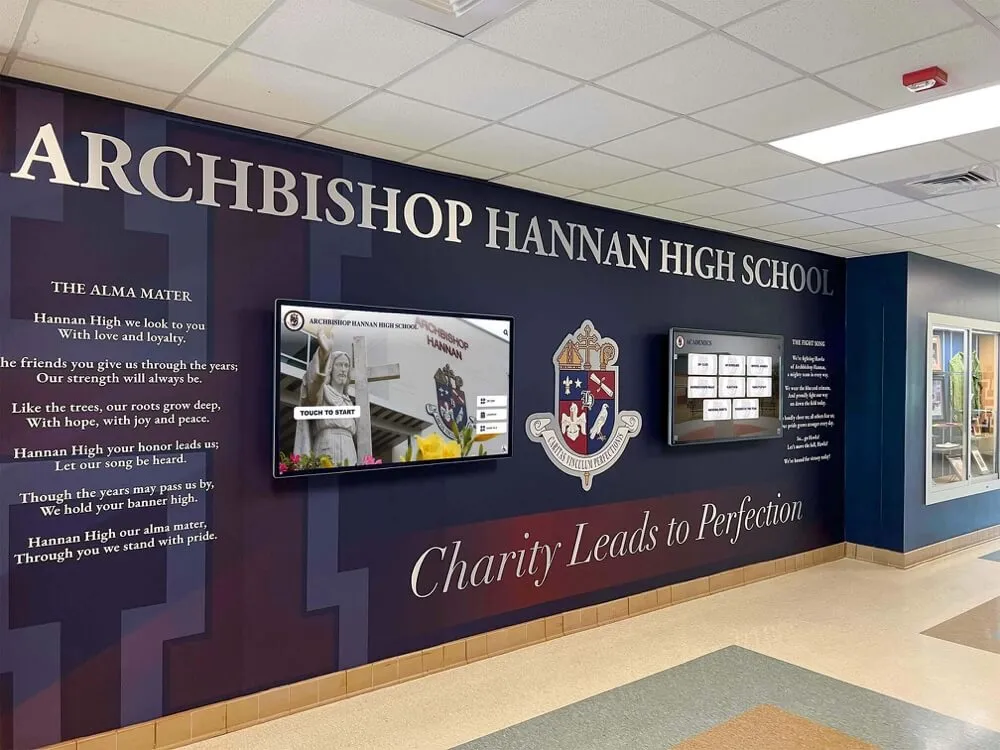
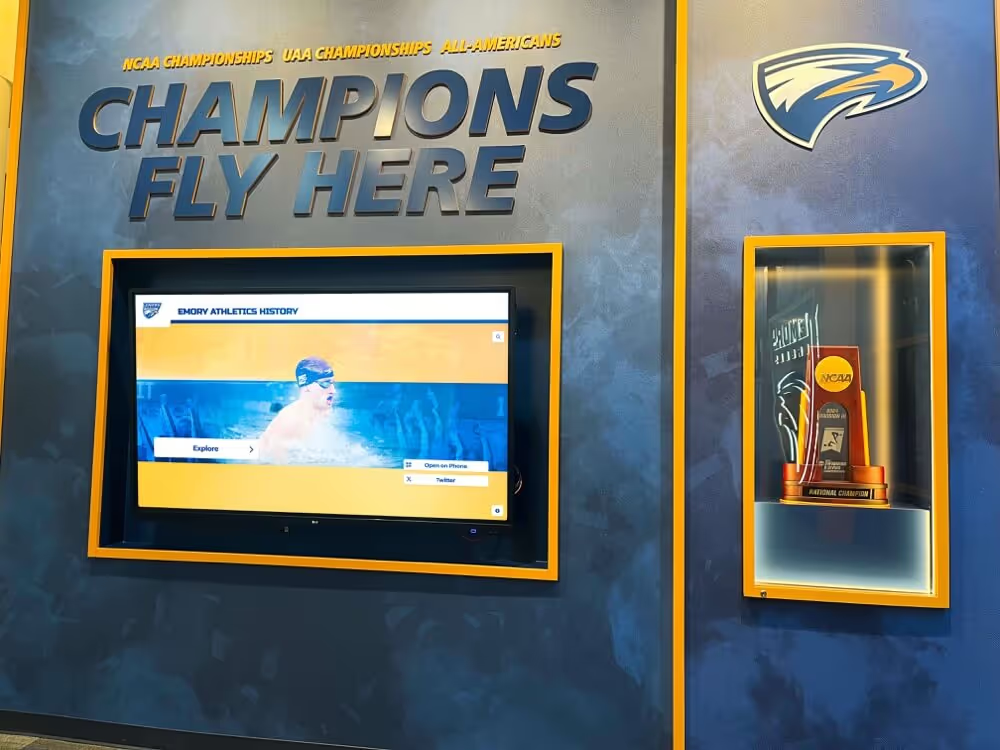
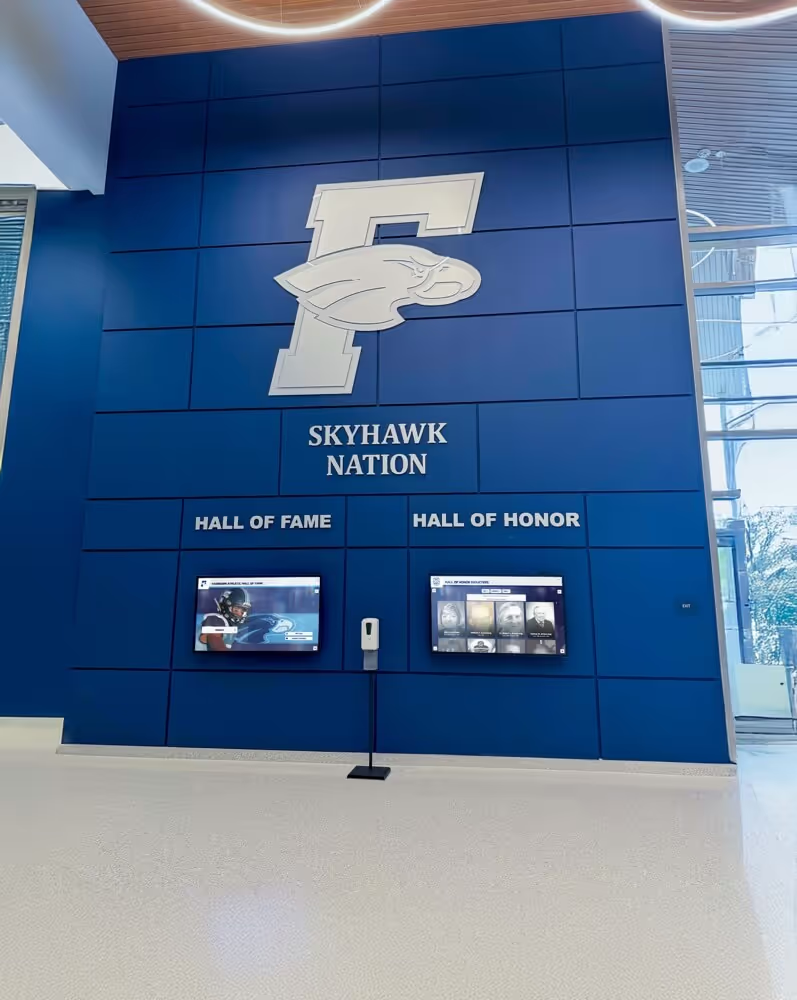
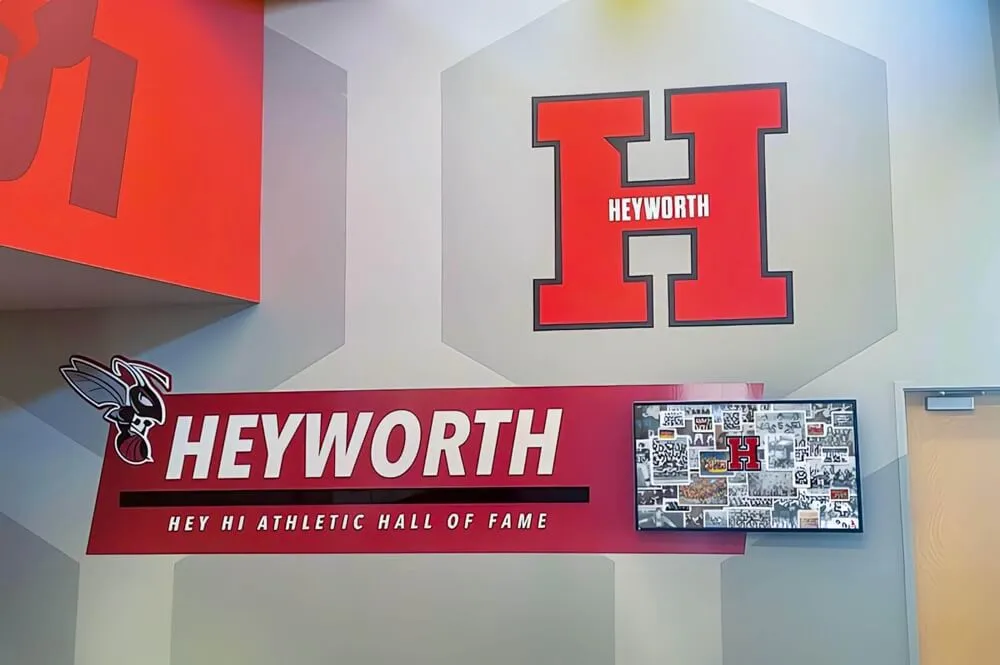
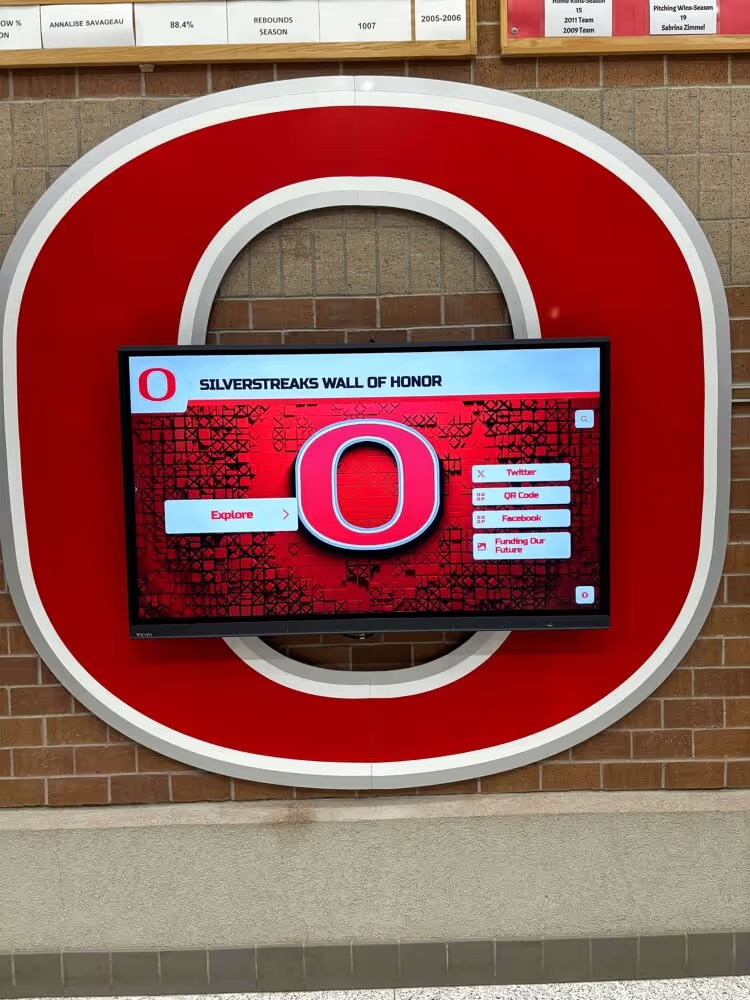
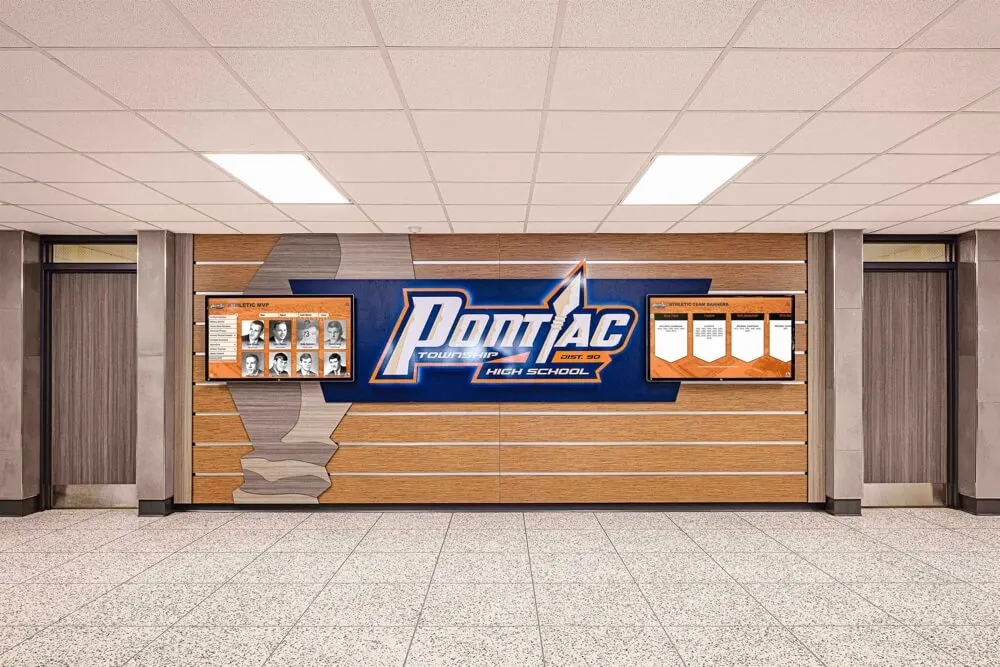
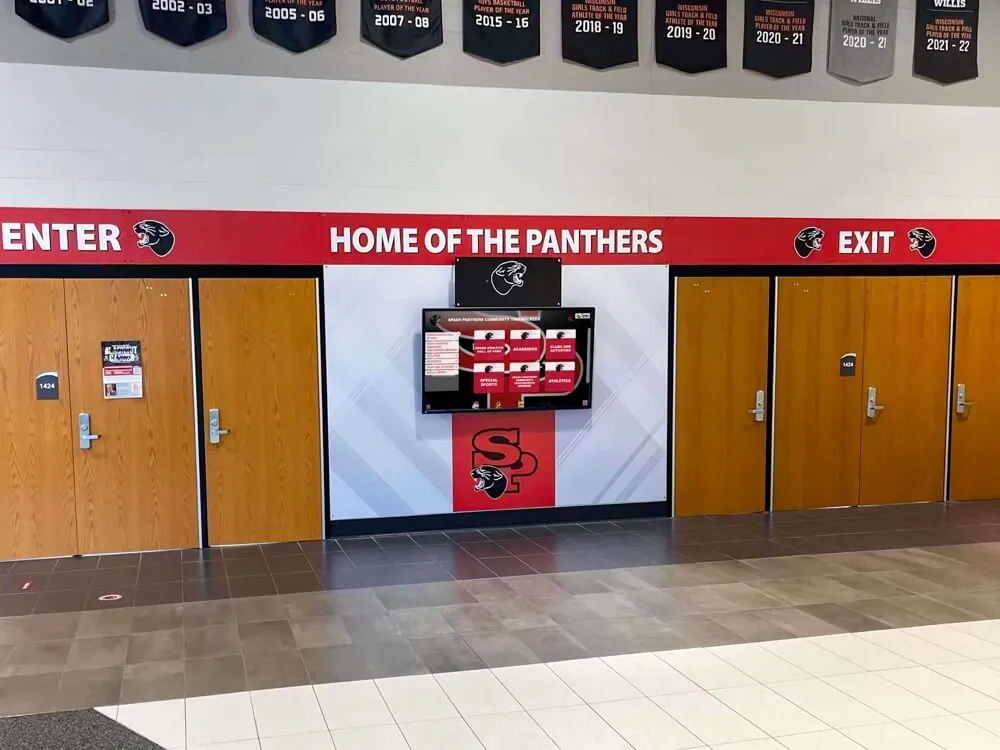
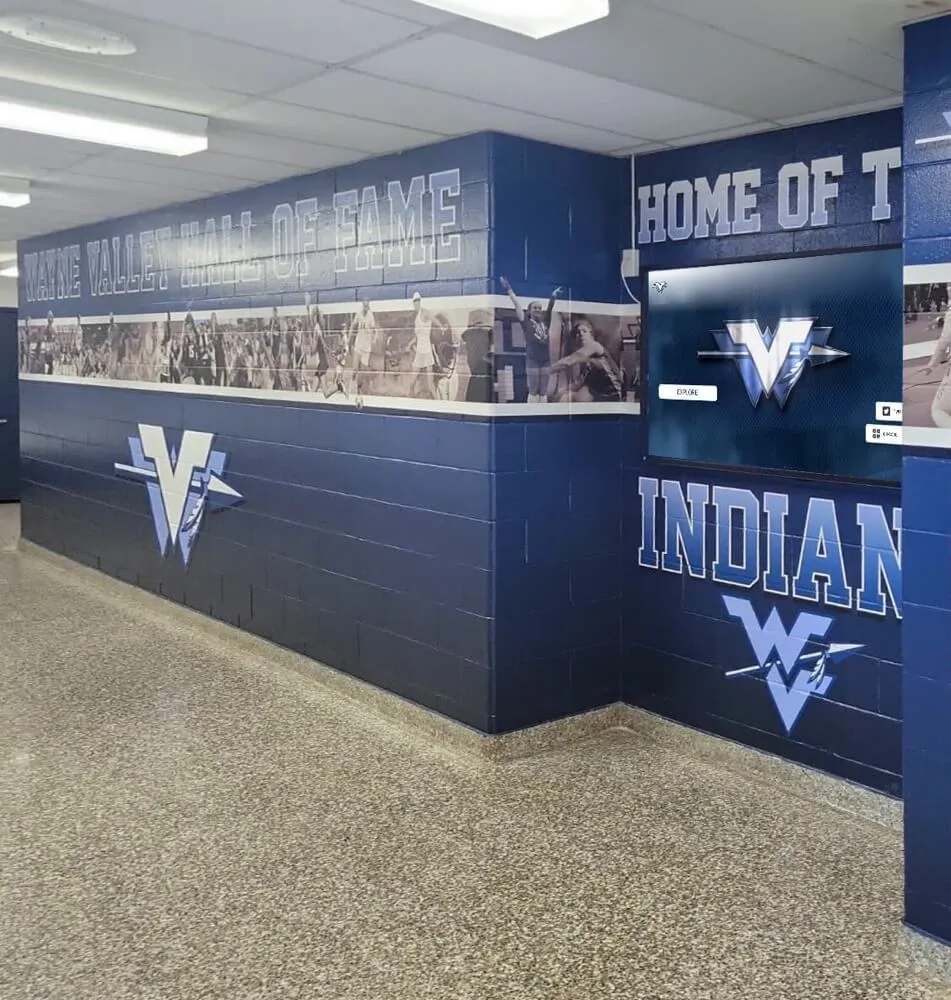
Modern school entrances combine architectural elements, branding, and digital displays to create welcoming spaces that communicate institutional identity
The Strategic Role of Entrance Spaces in School Communication
Before exploring specific design elements, understanding how entrance spaces function as communication hubs helps schools make strategic decisions about layout, technology, and content.
First Impressions and Institutional Perception
Research on environmental psychology demonstrates that physical spaces significantly influence perception formation. Visitors unconsciously assess organization, professionalism, values, and culture based on entrance design within the first 30 seconds of entering a building. Schools with thoughtfully designed entrance spaces convey attention to detail, pride in community, and investment in the visitor experience.
Entrance design elements communicate specific messages through visual cues. Clean, organized spaces suggest administrative competence. Recognition displays celebrating student achievement signal academic values and community pride. School colors, mascots, and branded elements establish identity. Digital signage displaying current information demonstrates technological sophistication and commitment to transparency.
Schools undergoing enrollment challenges or reputation rebuilding often discover that entrance design improvements create measurable perception shifts. Prospective families touring multiple schools frequently cite entrance experiences as factors influencing enrollment decisions, particularly when comparing schools with similar academic programs or facility quality.
Multi-Purpose Functionality Requirements
Effective entrance spaces serve multiple simultaneous purposes, creating design challenges that require careful planning and flexible solutions.
Wayfinding and Navigation Every visitor needs basic orientation: where to find the main office, how to locate specific destinations, and which areas require authorization to access. Traditional static signage provides baseline wayfinding, but digital displays enable context-specific directions, event-based routing, and temporary wayfinding for special occasions like open houses or evening performances.
Recognition and Celebration Entrance lobbies provide natural locations for celebrating student achievement, honoring community members, and showcasing program excellence. Unlike recognition displays in specialized areas like gymnasiums or academic wings, entrance placement ensures broad visibility across all stakeholder groups—not just athletics supporters or specific department communities.
Information Distribution Schools constantly communicate schedules, announcements, policies, and current events. Entrance displays serve as information hubs where visitors can access calendars, learn about current initiatives, and stay informed about school activities without navigating to department-specific locations or requiring staff assistance.
Brand Identity Communication Entrance spaces establish visual identity through coordinated use of school colors, mascots, logos, and messaging that reinforces institutional values. This branding creates consistency, builds community pride, and distinguishes the school from competitors in enrollment markets.
Traffic Flow and Accessibility Considerations
Successful entrance design balances engagement with efficient traffic flow, ensuring displays attract attention without creating congestion or accessibility barriers.
High-traffic entrance lobbies require careful placement of interactive elements. Displays positioned directly in primary walkways create bottlenecks during peak arrival and dismissal times. Effective designs locate engagement zones adjacent to main traffic paths, allowing interested visitors to explore content without blocking general circulation.
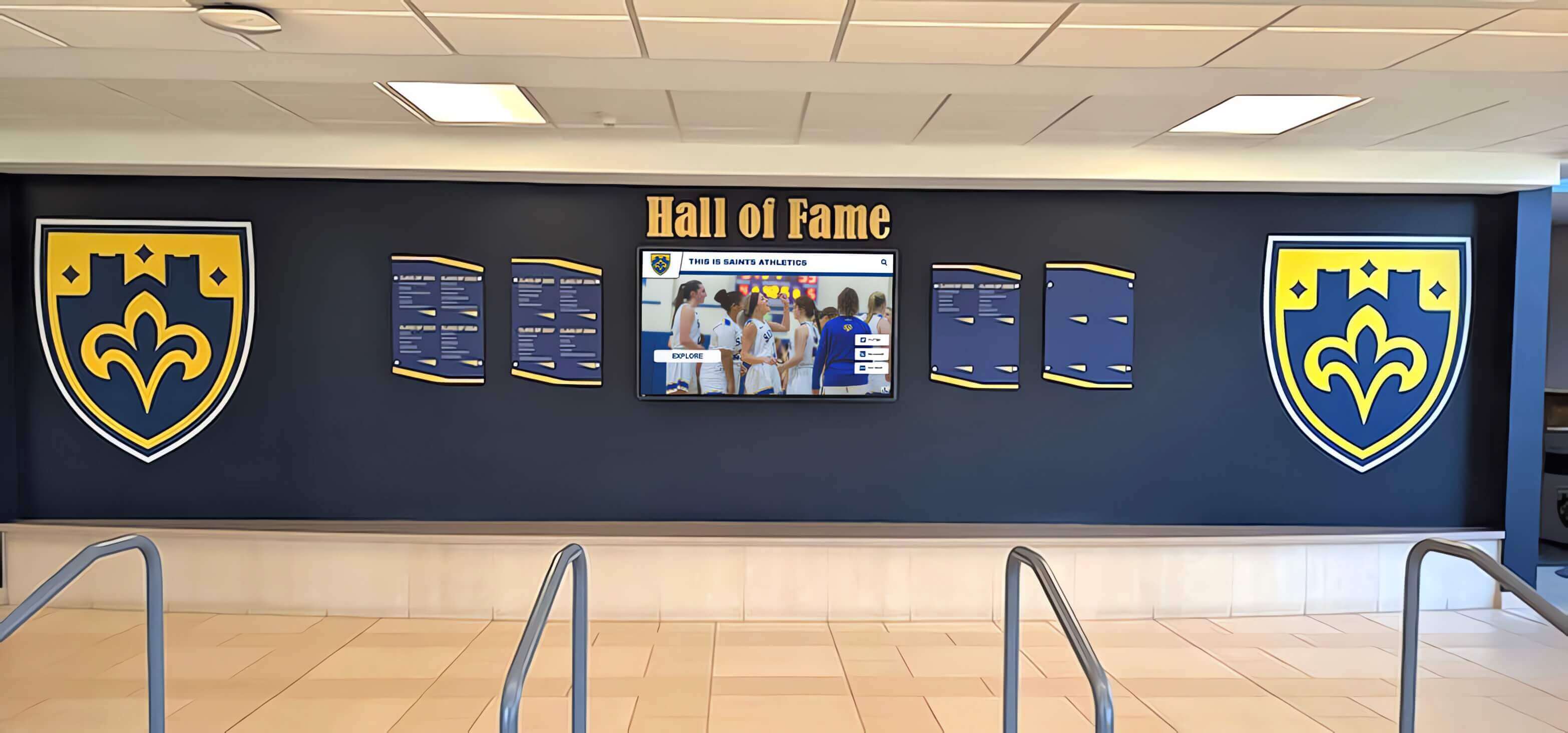
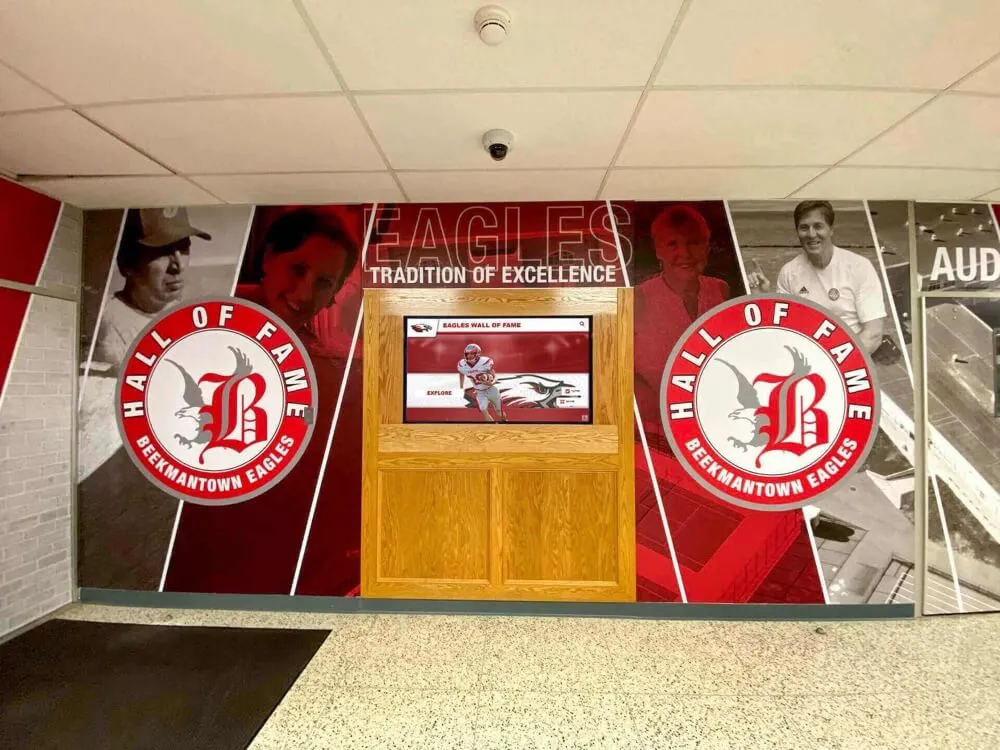
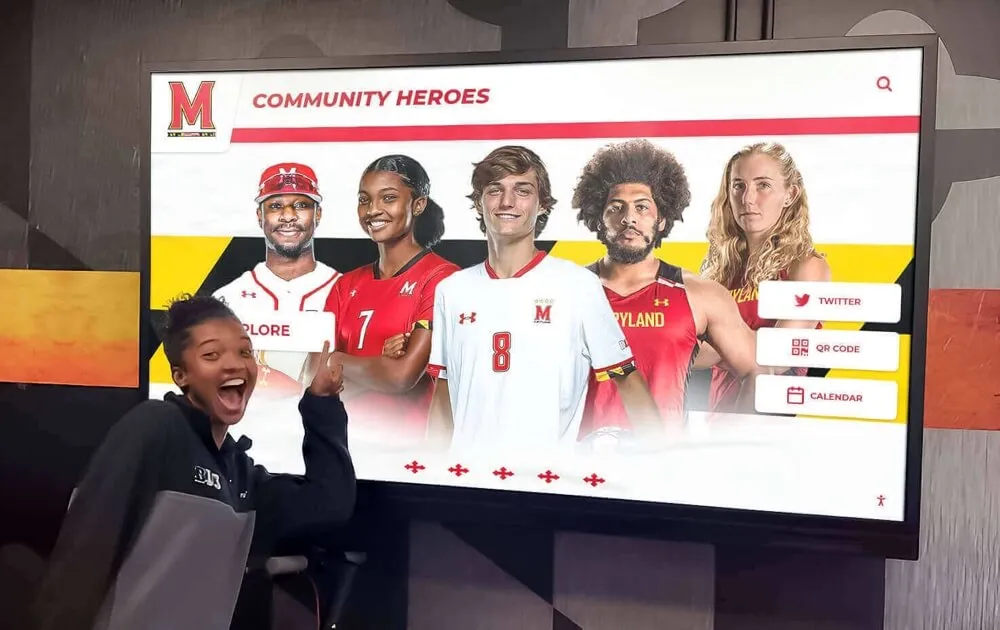
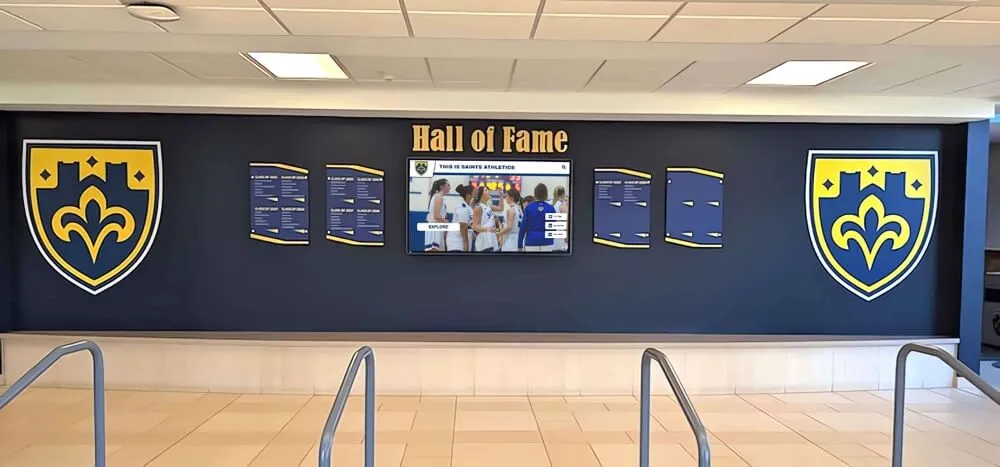
Strategic placement positions displays for maximum visibility while maintaining clear traffic flow through entrance areas
Accessibility requirements extend beyond ADA compliance to consider how diverse visitor populations interact with entrance spaces. Mounting heights must accommodate wheelchair users, young children, and standing adults. Interactive touchscreen displays should position active areas within comfortable reach ranges. Information displays need sufficient contrast and font sizing for visitors with visual impairments. Schools implementing digital recognition systems must ensure content accessibility through proper design and optional audio alternatives.
Design Elements That Transform Entrance Spaces
Modern school entrance design integrates multiple components that work together to create cohesive, functional, and welcoming environments.
Entrance Wall Treatments and Architectural Features
The physical architecture of entrance walls provides the foundation for all other design elements, establishing visual hierarchy and directing attention.
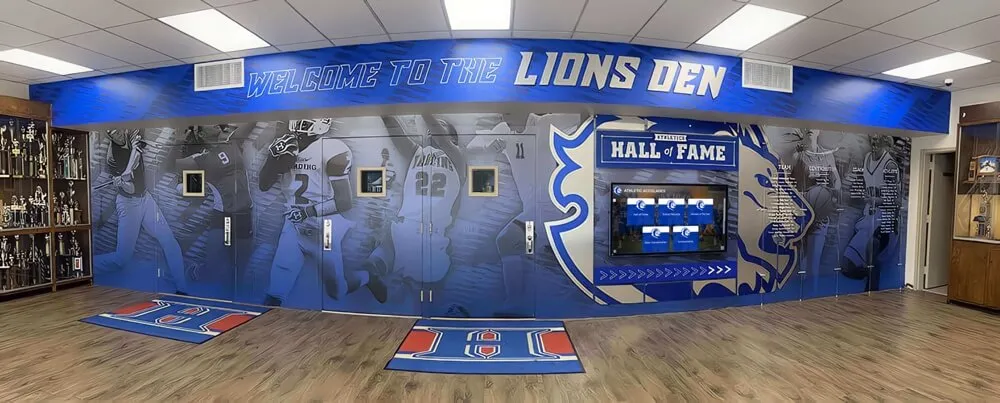
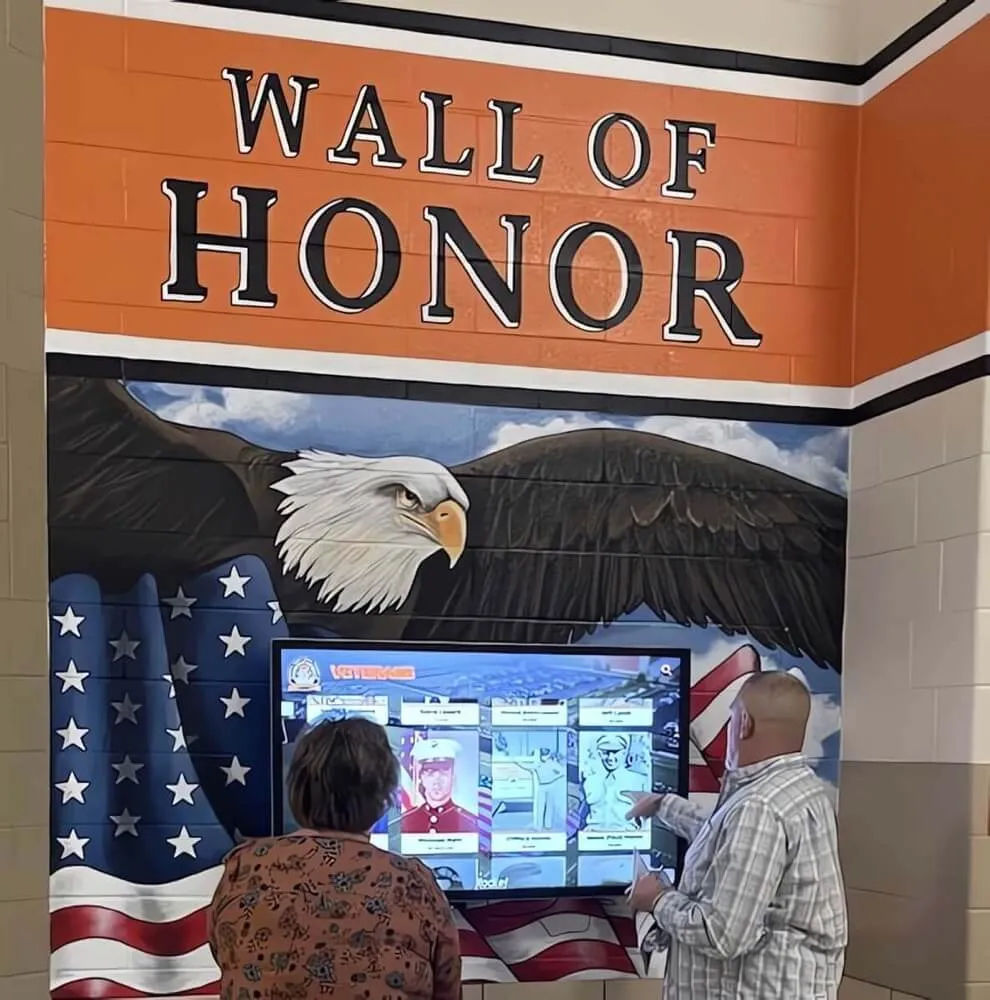
Branded Wall Murals and Graphics Large-scale wall graphics create immediate visual impact that establishes school identity. Custom murals featuring school mascots, colors, mission statements, or community imagery transform generic entrance spaces into distinctive environments that reflect institutional character. Unlike portable displays or temporary decorations, architectural wall treatments demonstrate permanent investment in creating welcoming spaces.
Professional wall treatments range from painted murals to dimensional graphics, vinyl wraps, and mixed-media installations. Wall wraps offer versatility for schools wanting professional graphics without permanent paint applications, enabling future updates as branding evolves or building use changes.
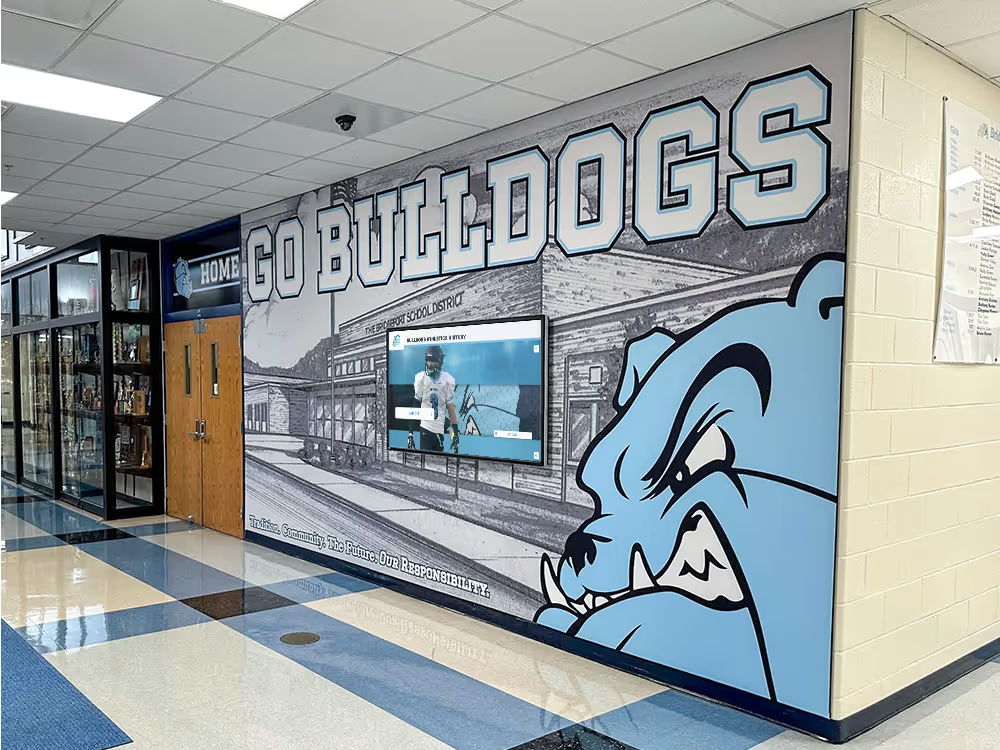
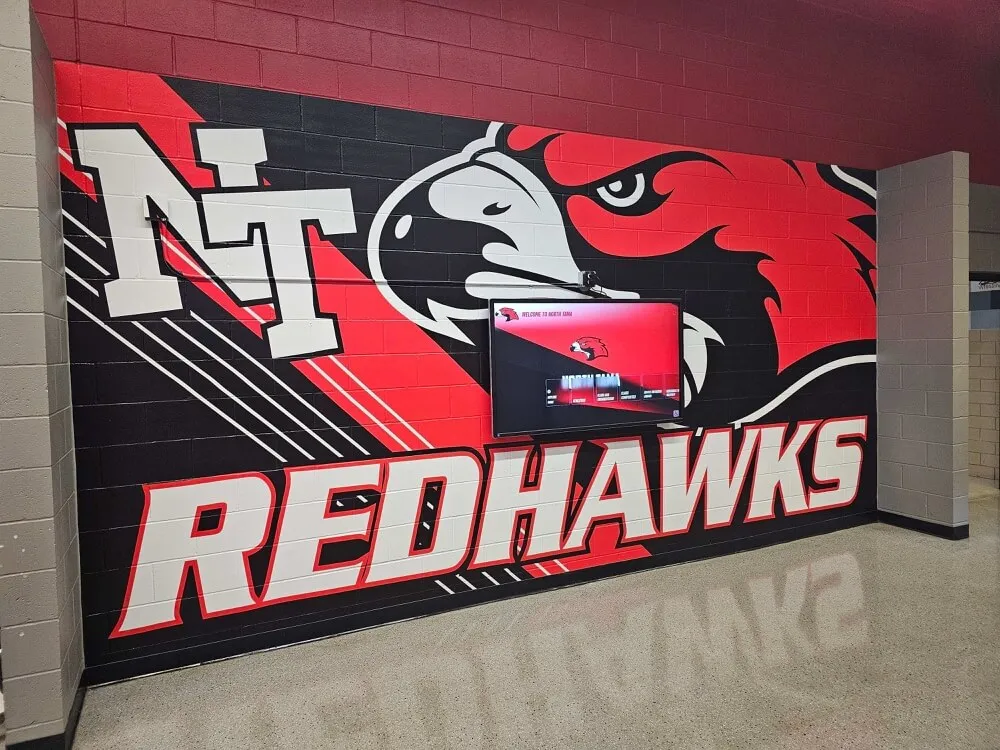
Effective wall treatments balance brand identity with functional space. Pure decorative murals create visual interest but provide limited communication utility. The most successful entrance wall designs integrate decorative elements with functional zones for digital displays, recognition areas, and information distribution, creating cohesive environments where form and function reinforce each other.
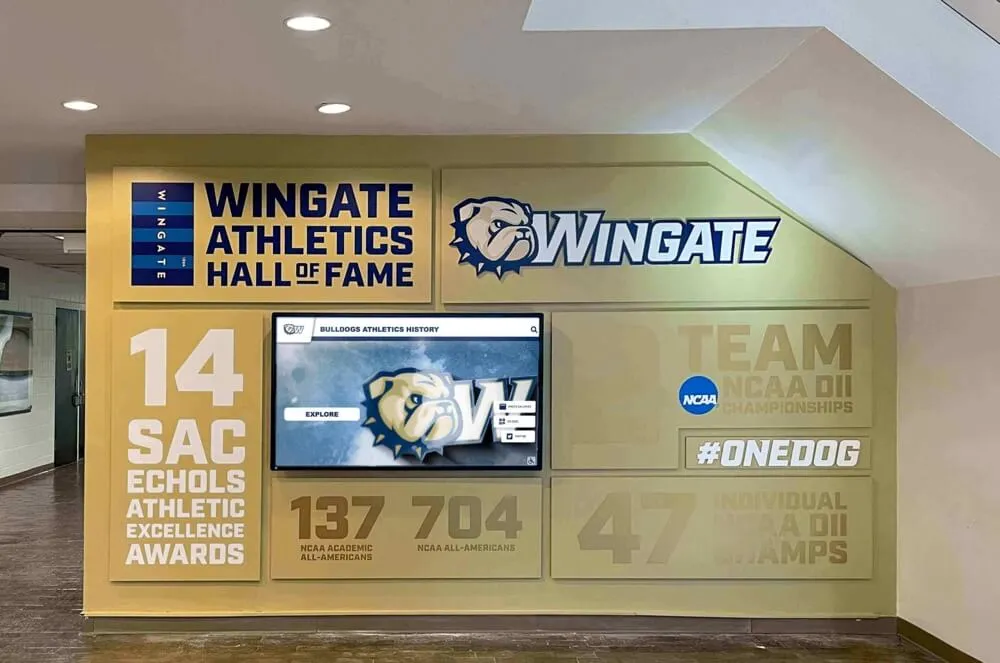
Dimensional Elements and Texture Flat wall graphics provide visual interest, but dimensional elements add depth and sophistication to entrance design. Raised lettering for school names, dimensional mascot sculptures, textured background treatments, and architectural columns or frames create three-dimensional environments that feel intentionally designed rather than simply decorated.
Schools renovating entrance areas increasingly incorporate dimensional branding elements during construction, building display niches, creating architectural surrounds for technology, and establishing dedicated recognition walls with specialized lighting. These permanent architectural investments provide frameworks that accommodate changing content and technology while maintaining consistent visual identity.
Digital Display Integration
Digital signage and interactive displays bring dynamic content capabilities to entrance spaces, enabling schools to update information, showcase achievements, and engage visitors in ways static displays cannot match.
Content Display Technologies Schools implement various digital display technologies depending on space requirements, interaction needs, and budget considerations.
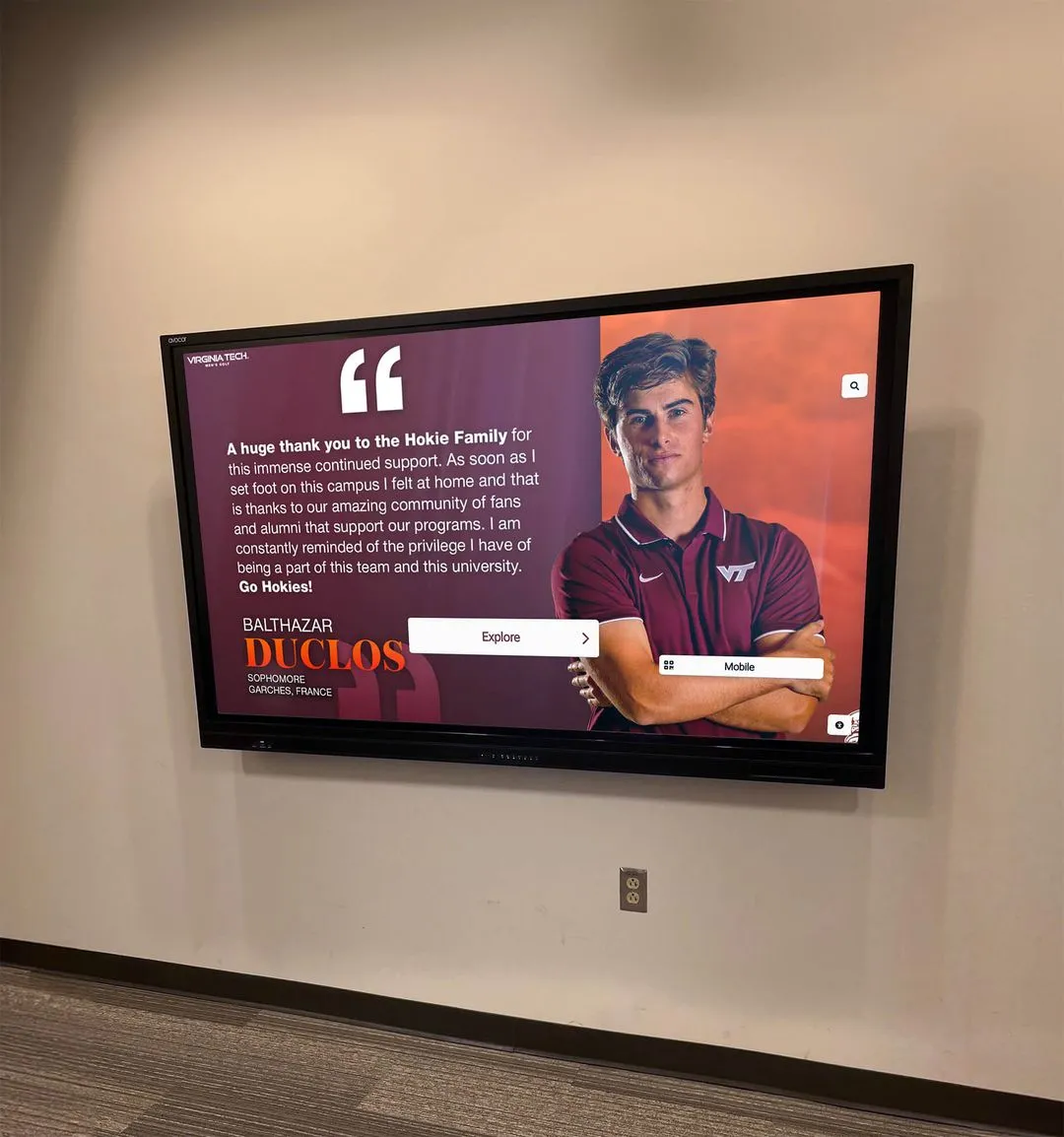
Traditional digital signage screens display scheduled content including announcements, event calendars, student recognition, and programmatic information. These displays update remotely through content management systems, eliminating manual poster changes and enabling consistent messaging across multiple campus locations. Non-interactive displays work well for information distribution and recognition showcases where visitors primarily view rather than engage with content.
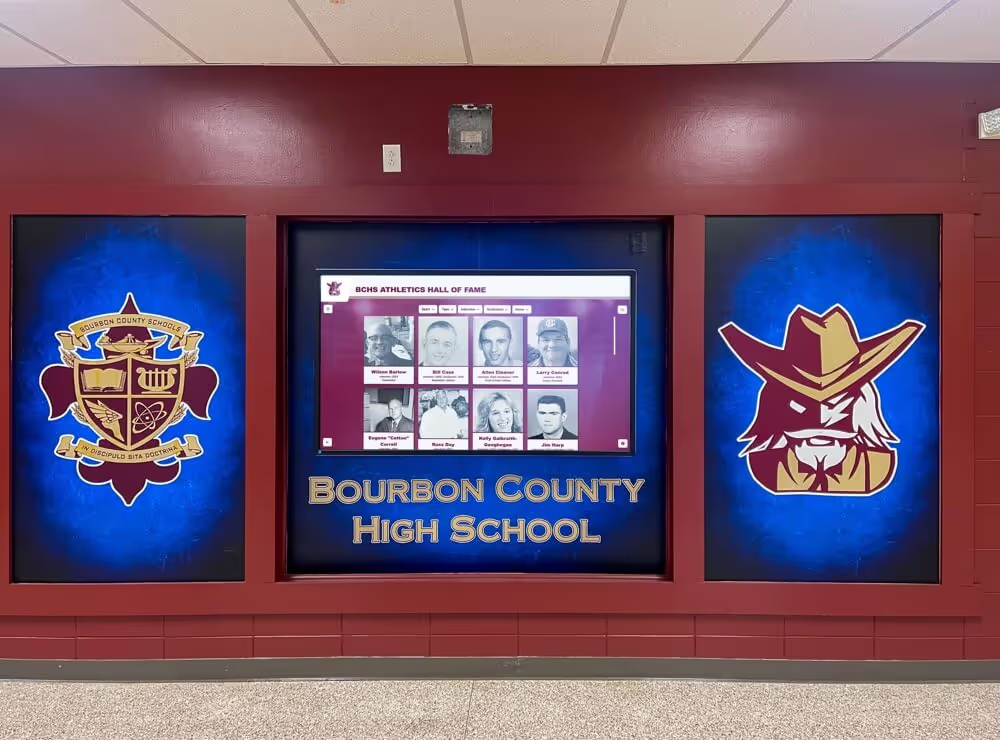
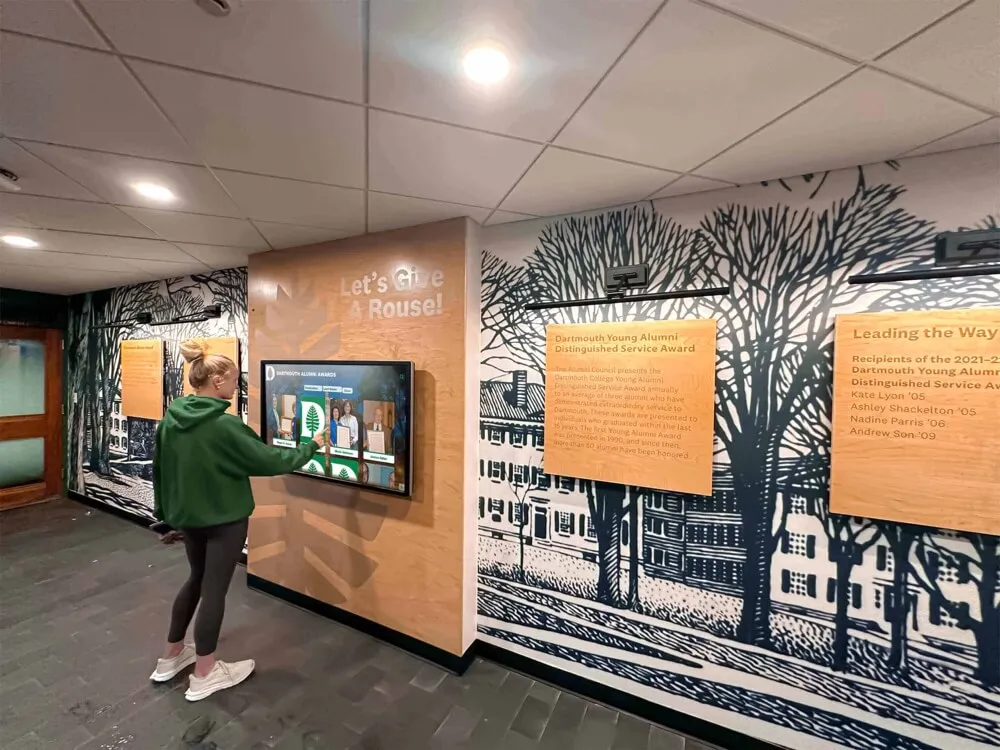
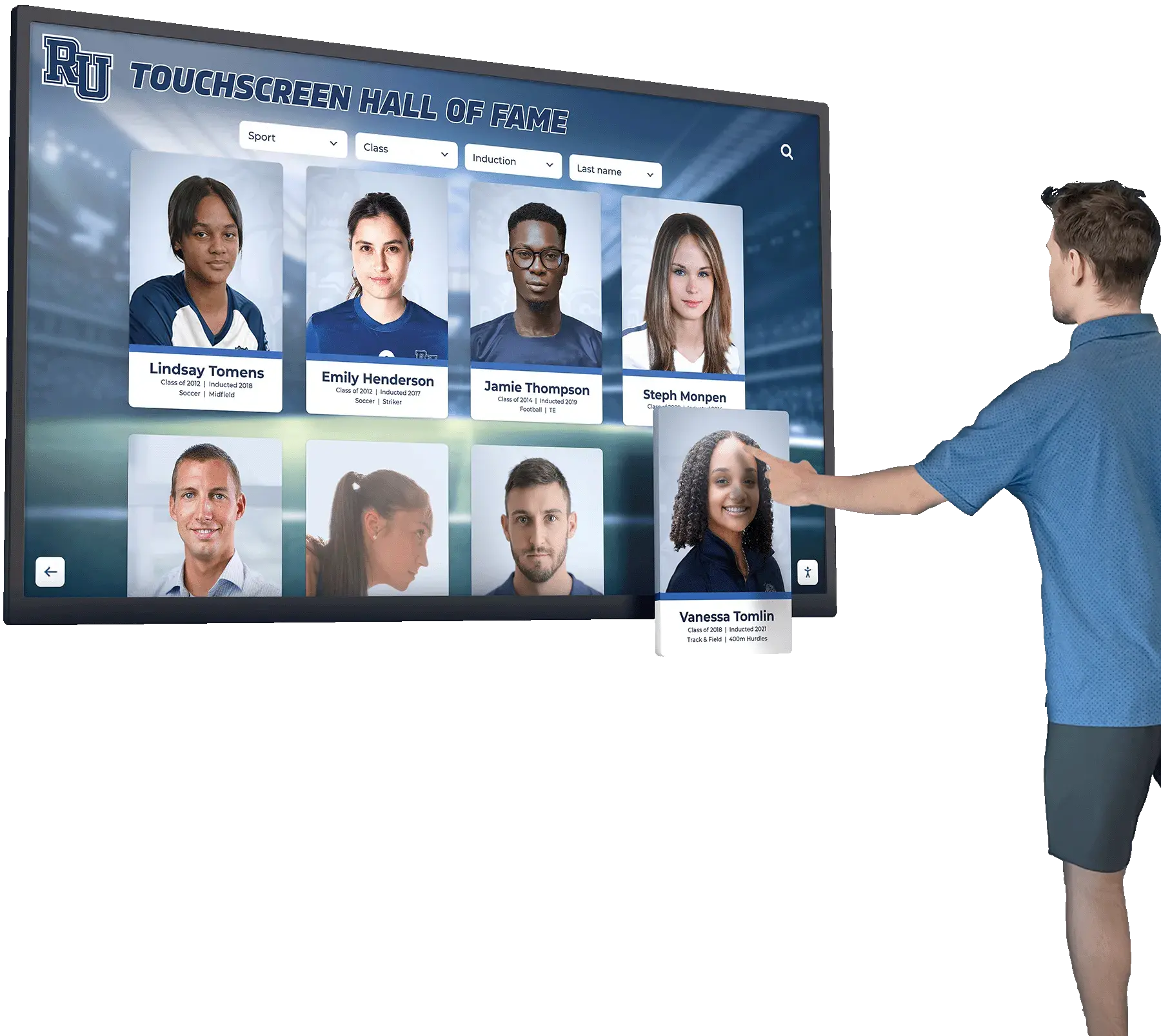
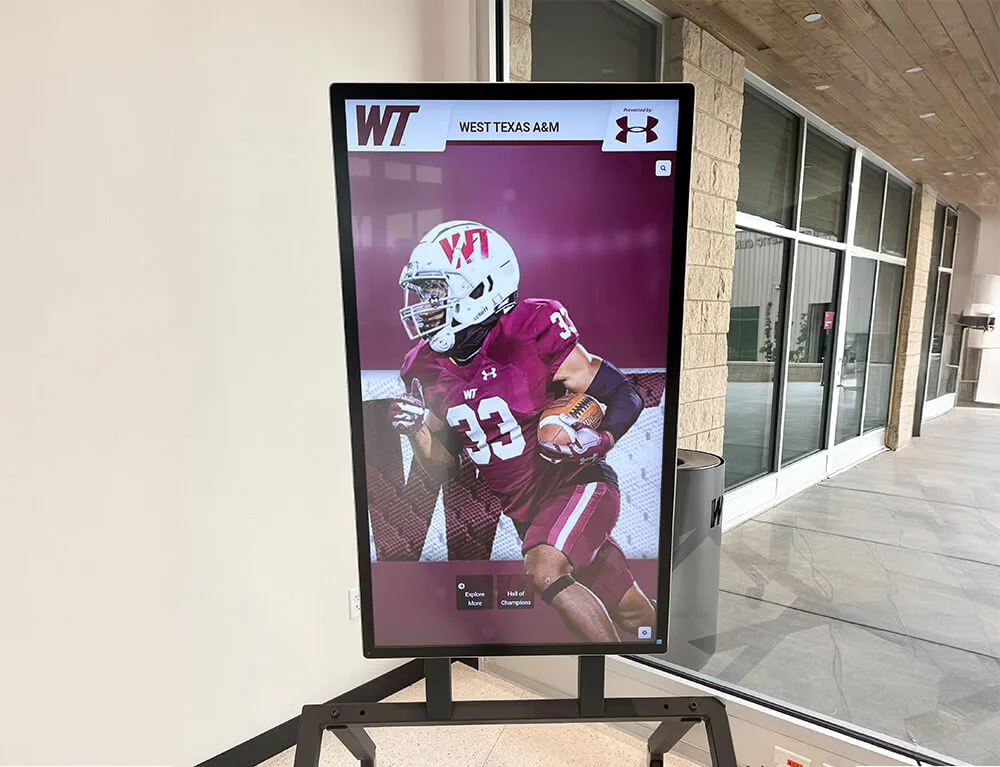
Interactive touchscreen displays enable deeper engagement through searchable databases, detailed profiles, and self-directed exploration. Touchscreen displays in entrance lobbies allow visitors to browse hall of fame inductees, explore student achievements, access campus directories, and discover program information through intuitive touch interfaces that accommodate diverse visitor needs without staff assistance.
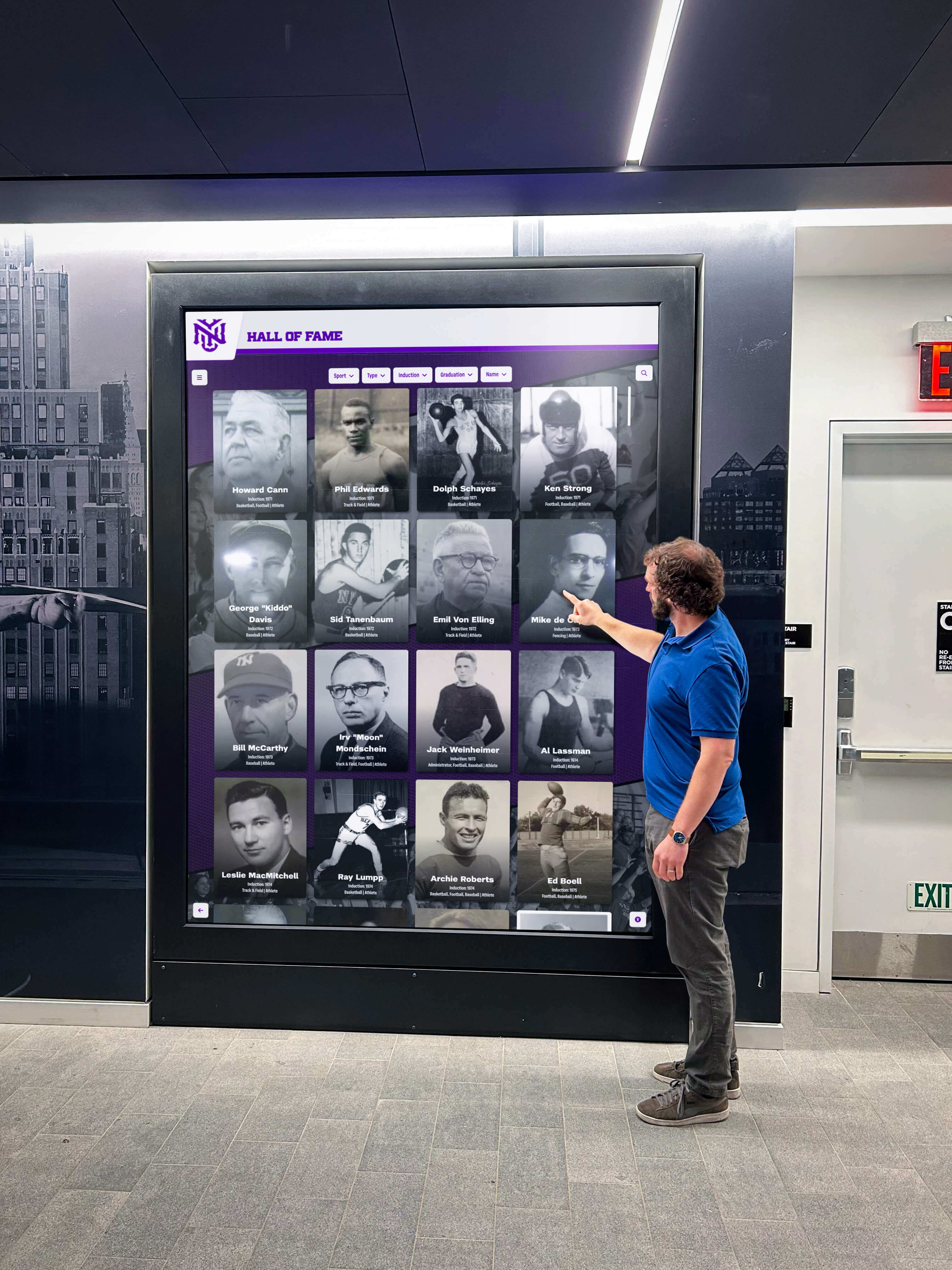
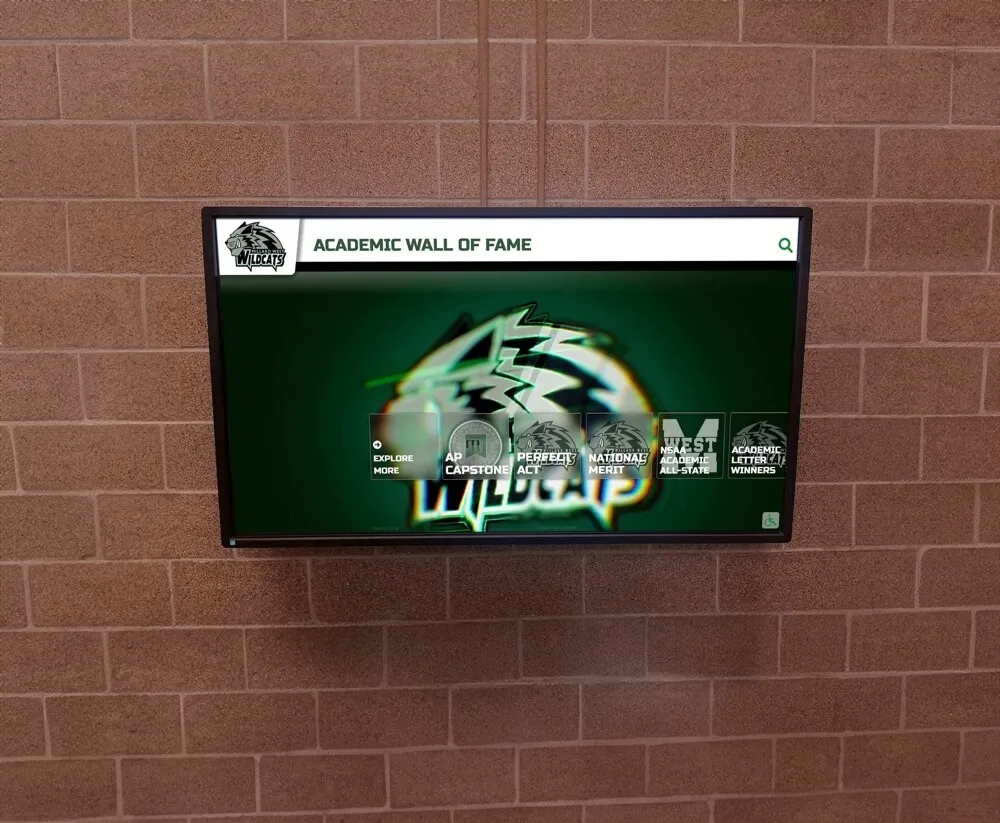
Interactive touchscreen displays enable self-directed exploration of school history, achievements, and current information through intuitive interfaces
Video walls create dramatic visual impact through multiple synchronized screens displaying coordinated content. Large-format video installations work particularly well in spacious entrance lobbies where architectural scale supports impressive display sizes that capture attention from distance and create memorable first impressions.
Strategic Placement for Maximum Impact Digital display effectiveness depends heavily on placement decisions that consider sight lines, lighting conditions, and visitor movement patterns.
Displays positioned directly opposite main entrance doors capture immediate attention as visitors enter, establishing digital engagement as central to the entrance experience. Side wall placements work better when entrance doorways face perpendicular to lobby length, directing visitors toward displays as they turn to access main office or navigate further into the building.
Lighting conditions significantly affect display visibility. Direct sunlight creates glare that renders many screens unreadable during certain times of day. Professional entrance design positions displays away from direct sun exposure or uses high-brightness commercial displays designed for challenging lighting environments.
Multiple display placement creates information redundancy ensuring all visitors encounter digital content regardless of their entrance pathway or navigation route. Schools with separate main entrances for visitors and students may install coordinated displays at both locations, customizing content for each audience while maintaining consistent visual design.
Recognition Display Systems
Entrance spaces provide ideal locations for celebrating student, staff, and community achievements through dedicated recognition displays that communicate institutional values while honoring excellence.
Traditional Physical Recognition Elements Physical recognition displays maintain value even as digital systems proliferate. Trophy cases displaying championship hardware, permanent plaques honoring significant donors or dedicated community members, and memorial installations create tangible connections to institutional history that resonate emotionally in ways digital representations sometimes cannot.
Modern trophy case design has evolved beyond simple glass boxes displaying dusty awards. Contemporary recognition cases feature integrated lighting, architectural framing, labeled shelving that provides context for displayed items, and coordinated design that complements surrounding entrance aesthetics rather than appearing as furniture additions to generic lobbies.
Digital Recognition Platforms Digital recognition systems overcome space limitations inherent in physical displays while enabling comprehensive celebration of achievements across entire communities.
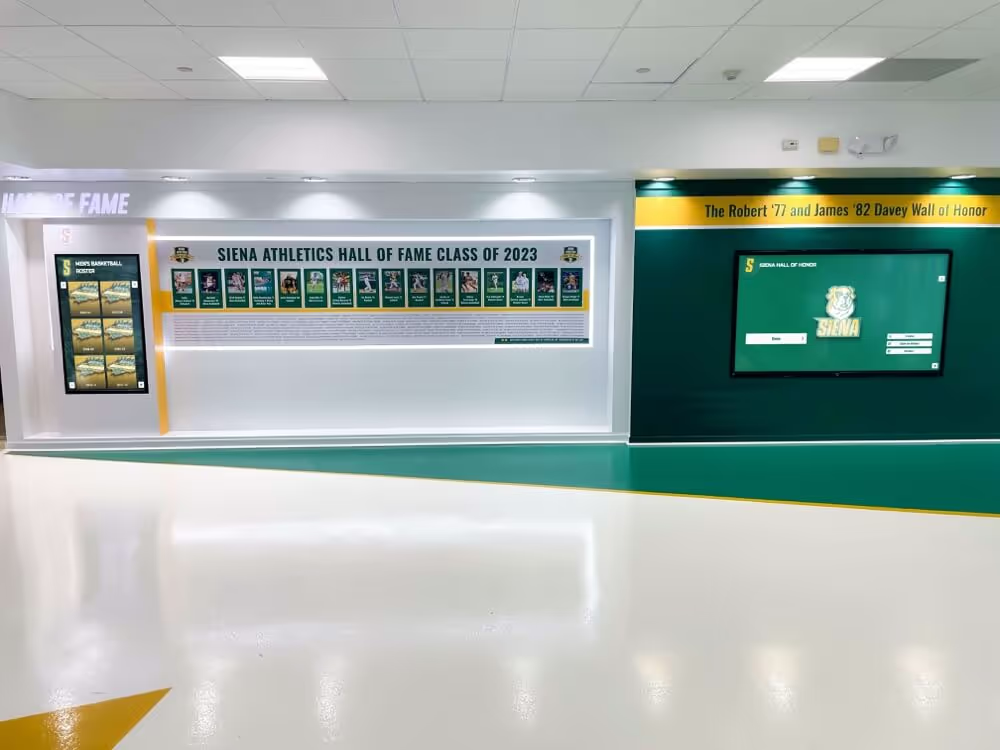
Unlike trophy cases constrained by physical space, digital walls of fame can honor unlimited inductees with detailed profiles including photos, biographical information, achievement descriptions, and even video content. This unlimited capacity enables schools to recognize broader communities—not just championship athletes or valedictorians, but also distinguished alumni, dedicated volunteers, generous donors, and exemplary students across diverse achievement categories.
Interactive recognition displays invite engagement that passive plaques cannot provide. Visitors can search for specific individuals, filter by achievement category or time period, explore detailed stories, and discover connections they might never find through static displays. This interactivity transforms recognition from one-way information presentation into engaging experiences that build emotional connections to institutional history.
Solutions like Rocket Alumni Solutions provide comprehensive digital recognition platforms specifically designed for educational institutions, offering intuitive content management, beautiful presentation templates, and interactive features that help schools celebrate their communities while creating welcoming entrance experiences that engage visitors from their first moments on campus.
Hybrid Recognition Approaches Many schools implement hybrid recognition strategies that combine physical and digital elements, leveraging the strengths of each approach.
Common hybrid models include trophy cases displaying recent championship hardware paired with digital displays showcasing historical records and athlete profiles, permanent plaques honoring major donors complemented by touchscreen databases detailing contribution histories and naming opportunities, and physical hall of fame induction plaques near interactive displays enabling exploration of detailed inductee biographies.
These hybrid approaches create layered recognition experiences that honor tradition through physical elements while embracing technology’s capacity for comprehensive celebration and ongoing updates.
Wayfinding and Information Distribution
Beyond recognition and branding, entrance displays serve critical functional roles in visitor orientation and information access.
Digital Wayfinding Solutions
Modern schools implement digital wayfinding systems that provide dynamic navigation assistance adapting to current events, temporary room assignments, and visitor-specific needs.
Basic digital wayfinding includes building directories listing staff names and office locations, room number guides with wing or floor designations, and maps highlighting key destinations like main offices, restrooms, auditoriums, and gymnasiums. These foundational elements orient first-time visitors and reduce demands on office staff who would otherwise provide repetitive directional assistance.
Advanced wayfinding systems offer context-aware navigation based on current events or visitor purposes. During open house events, displays might highlight program showcases and presentation locations. On parent-teacher conference nights, wayfinding could direct families to specific classrooms or provide teacher schedules. Athletic event days might emphasize gymnasium locations, concession areas, and parking information.
Some schools implement mobile-integrated wayfinding where entrance displays generate QR codes providing navigation instructions on visitor smartphones, enabling continued guidance beyond the entrance lobby as visitors navigate to specific destinations throughout campus.
Event Calendars and Scheduling Information
Entrance displays serve as always-available information sources about upcoming events, schedule changes, and current activities.
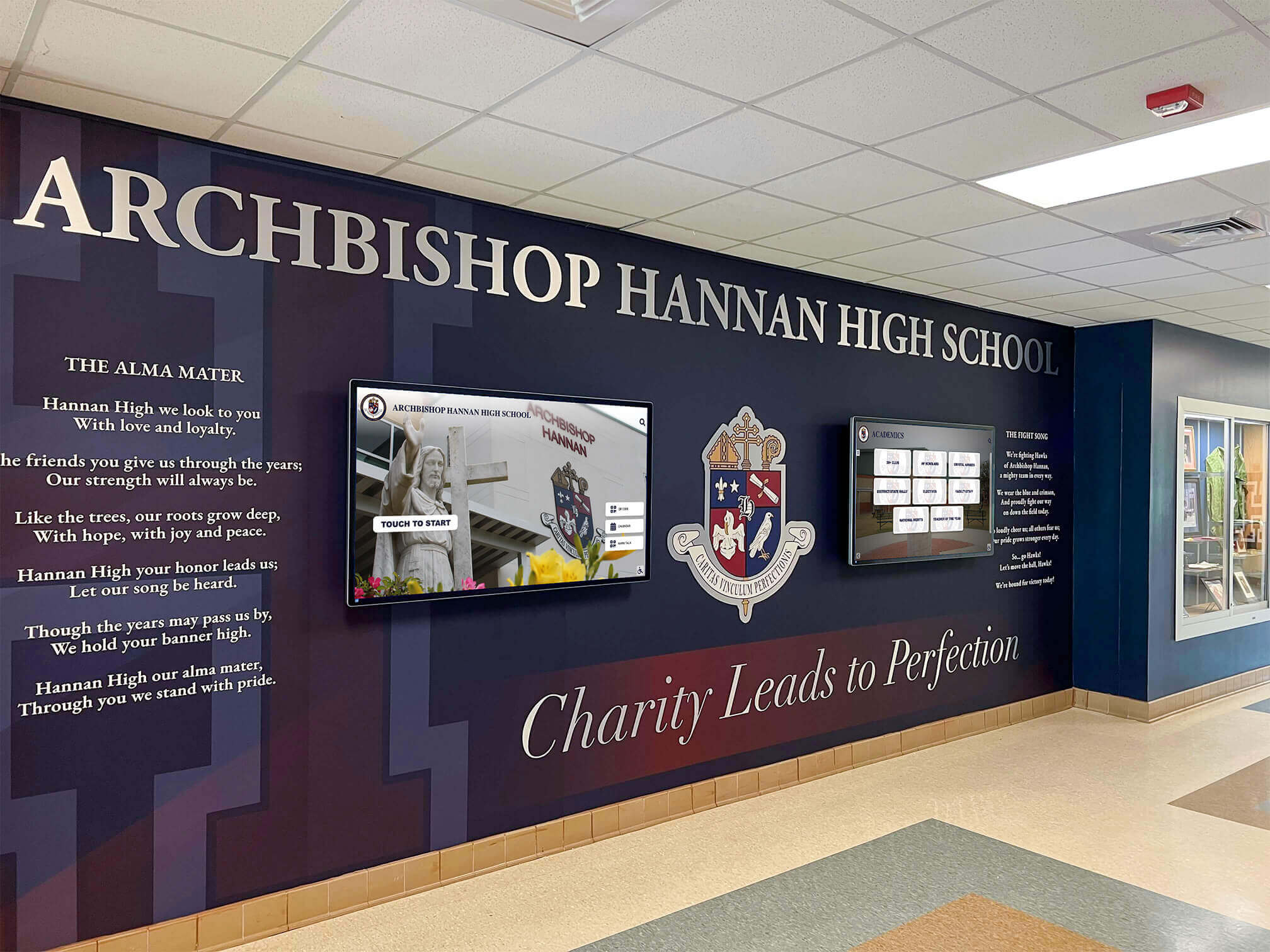
Integrated entrance designs combine permanent architectural elements with dynamic digital displays providing current event information and schedules
Digital calendars replace outdated bulletin boards with automatically updated event listings pulled from school management systems. This automation ensures accuracy while eliminating manual update requirements that cause static calendar boards to fall out of date as busy administrators deprioritize low-visibility maintenance tasks.
Event information extends beyond simple date listings to include registration details, ticket information, volunteer opportunities, and program descriptions that help community members engage with school activities. Rather than requiring visitors to access school websites or call offices for event details, comprehensive entrance displays provide immediate access to relevant information.
Emergency Communication and Safety Information
Entrance displays increasingly serve emergency communication functions, providing critical safety information during crises while supporting everyday security protocols.
During emergencies, digital displays can instantly broadcast alerts, evacuation instructions, shelter-in-place guidance, and reunification procedures. This immediate communication capability proves particularly valuable for visitors unfamiliar with building layouts or emergency protocols, ensuring everyone receives critical information regardless of their location on campus when situations arise.
Routine security protocols also benefit from entrance display communication. Visitor check-in procedures, identification requirements, restricted area designations, and emergency exit locations can be clearly communicated through digital signage that ensures every campus visitor understands security expectations and procedures.
Some schools integrate entrance displays with security systems, showing real-time footage from public areas, highlighting camera coverage, and reinforcing that campus security receives active monitoring—measures that provide both actual security benefits and perception of safety that reassures visitors.
Content Strategy and Management
Technology provides the platform, but content determines whether entrance displays deliver value or become ignored screens displaying generic stock content.
Developing Effective Content Calendars
Successful entrance displays rely on content calendars that ensure fresh, relevant information appears consistently without requiring constant manual intervention.
Content calendars should map scheduled updates across the school year including seasonal content transitions, event-specific information periods, recognition showcases timed to awards ceremonies or induction events, and recurring features that create visitor expectations. This planning prevents last-minute scrambling to update displays while ensuring content remains timely and relevant.
Many schools implement rotating content categories that automatically cycle through different themes. A typical rotation might include student achievement showcases on Mondays, upcoming event previews on Wednesdays, historical throwbacks on Fridays, and weekend schedules Saturday through Sunday. This predictable rotation ensures diverse content coverage while simplifying content creation through established templates and formats.
Automated content feeds reduce management burden by pulling information from existing data sources. Calendar displays can sync with school event management systems, recognition displays can update from athletic record databases, and announcement sections can aggregate from email distribution lists or school news feeds. This automation ensures accuracy while freeing staff time for creating custom features that automated feeds cannot provide.
Balancing Consistency with Fresh Content
Entrance displays must strike careful balance between consistent design that reinforces brand identity and dynamic content that rewards repeat viewing by regular visitors.
Visual templates establish consistent layout, color schemes, fonts, and branding elements while enabling content variation within defined frameworks. This templated approach allows staff without graphic design expertise to create professional-looking content that maintains visual standards while telling diverse stories and sharing varied information.
Schools that successfully maintain engaging displays typically designate specific staff ownership with defined content responsibilities rather than treating display management as everyone’s job and therefore no one’s priority. Athletic directors might manage sports-related recognition content, communications coordinators handle event information and announcements, and alumni relations staff oversee hall of fame profiles and donor recognition.
Measuring Engagement and Impact
Understanding how visitors interact with entrance displays helps schools refine content strategies and demonstrate value to stakeholders questioning technology investments.
Basic engagement metrics available through most digital signage platforms include display views and dwell time, interactive touchscreen engagement rates and common navigation paths, content piece performance showing which features attract most attention, and peak usage times revealing when displays receive heaviest traffic.
More sophisticated assessment combines technology analytics with traditional feedback methods. Visitor surveys can ask about entrance experience perceptions, information accessibility, and whether displays influenced campus navigation or institutional opinions. School tour guides can incorporate questions about entrance impressions into prospective family discussions. Staff observations during events provide qualitative insights about how different visitor types interact with displays.
Schools should resist the temptation to measure success purely through technology metrics. The goal is not maximizing touchscreen interactions but rather creating welcoming, informative entrance experiences that communicate institutional identity and serve visitor needs. Sometimes the most effective displays provide needed information at a glance without requiring any direct interaction—a success that traditional engagement metrics might miss.
Implementation Planning and Budget Considerations
Understanding the practical realities of entrance design projects helps schools move from aspiration to implementation.
Phased Implementation Approaches
Schools rarely need to implement comprehensive entrance redesigns simultaneously. Phased approaches spread costs across budget cycles while allowing learning from initial deployments to inform later expansion.
Common phasing sequences start with foundational wayfinding addressing immediate visitor navigation needs, then add recognition displays celebrating community achievements, and eventually incorporate advanced features like interactive touchscreens or video walls as budgets allow and staff become comfortable managing digital content.
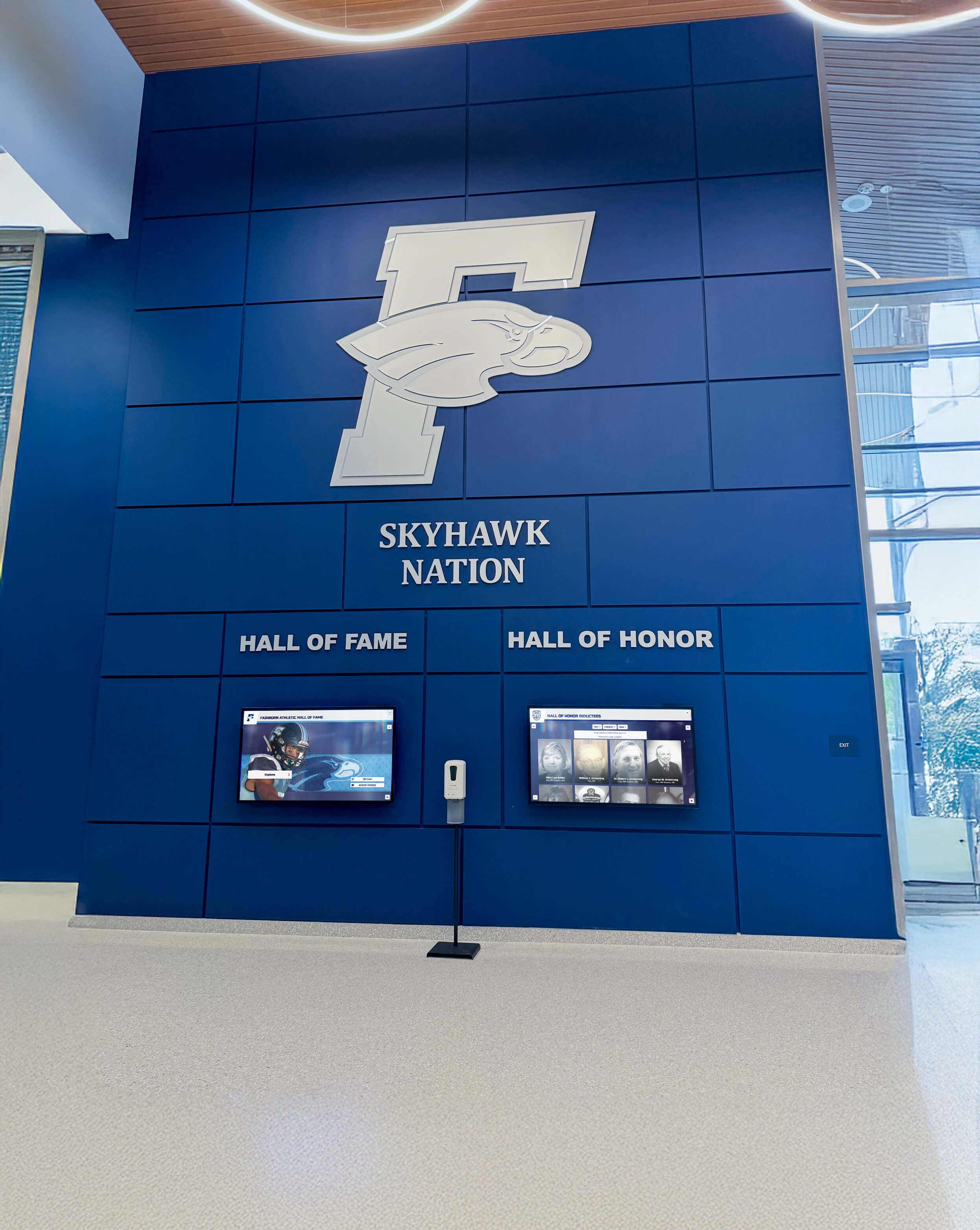
Phased implementation allows schools to build comprehensive entrance experiences over time as budgets permit and needs evolve
Phased approaches also enable schools to begin with single entrance locations, prove value, and then expand successful models to additional campus entry points. Starting with the main visitor entrance establishes priorities while gaining experience before tackling secondary locations with potentially different requirements or audiences.
Budget Framework and Cost Considerations
Entrance design project costs vary dramatically based on scope, technology choices, and whether work coincides with broader renovations or occurs as standalone initiatives.
Basic entrance improvements including fresh paint, wall graphics, and directional signage might require budgets of $5,000-$15,000 depending on space size and material quality. Mid-range projects incorporating digital displays, architectural branding elements, and professional installation typically fall in the $20,000-$50,000 range. Comprehensive entrance transformations featuring interactive touchscreens, custom architectural work, integrated lighting, and sophisticated content systems can exceed $75,000-$150,000 for large spaces with premium features.
Schools planning entrance projects should budget for both initial installation and ongoing costs including content management staff time, software subscriptions or licensing fees, maintenance and occasional hardware updates, and electrical costs for powering displays. Technology vendors should provide clear information about total cost of ownership beyond initial purchase prices.
Many schools fund entrance improvements through capital campaigns or donor recognition programs where entrance displays themselves become naming opportunities. This approach aligns fundraising with facility improvements while creating recognition opportunities that honor contributors through the very systems their donations funded.
Selecting Vendors and Implementation Partners
Schools should evaluate potential vendors and implementation partners based on multiple criteria beyond simple cost comparisons.
Educational experience matters significantly. Vendors who primarily serve corporate or retail environments may not understand school schedules, budget constraints, stakeholder dynamics, or content needs. Providers with extensive school experience bring valuable insights about what works in educational settings, common implementation challenges, and realistic expectations for staff capacity and technical infrastructure.
Comprehensive service offerings reduce coordination complexity. Single vendors who can provide design consultation, technology selection, installation services, content setup, staff training, and ongoing support simplify project management compared to coordinating between separate contractors for various components. However, schools should ensure comprehensive providers actually perform work rather than simply subcontracting every component while adding markup.
References from similar institutions provide valuable reality checks about vendor performance. Schools should speak directly with reference contacts about implementation timeline accuracy, responsiveness to issues, training effectiveness, ongoing support quality, and whether finished installations met expectations established during sales processes.
Staff Training and Change Management
Technology installation represents only half of implementation success. Staff capacity to manage content and utilize display capabilities determines whether systems deliver ongoing value or become static screens displaying never-changing default content.
Effective training programs include initial hands-on sessions during implementation, reference documentation for common tasks, ongoing access to vendor support for complex needs, and periodic refresher training as staff changes or capabilities expand. Schools should identify multiple staff members for comprehensive training rather than relying on single individuals whose departure or absence leaves organizations without content management capacity.
Change management considerations extend beyond technical training to address how entrance displays alter visitor experience workflows, staff communication responsibilities, and institutional communication strategies. Front office staff should understand how to direct visitors to displays for common questions, various departments need clarity about who manages specific content sections, and leadership should establish expectations about information accuracy and update frequency.
Design Trends and Future Directions
School entrance design continues evolving as technology advances, design aesthetics shift, and institutional priorities change.
Personalization and Visitor-Specific Content
Emerging technologies enable entrance displays to adapt content based on visitor identity or visit purpose, creating personalized experiences rather than generic one-size-fits-all presentations.
Some schools implement simple personalization through manual content scheduling—displaying different information during prospective family tour times versus evening event periods. More sophisticated systems might enable visitors to identify themselves through mobile apps or check-in kiosks, triggering customized wayfinding, relevant information, or personalized welcomes.
Future entrance designs may incorporate AI-driven content selection that analyzes visitor patterns, engagement metrics, and contextual factors to automatically optimize displayed information for maximum relevance and impact. However, schools must carefully consider privacy implications and ensure personalization enhances rather than invades visitor experience.
Sustainability and Energy Efficiency
As schools pursue sustainability goals and manage energy costs, entrance display technologies increasingly emphasize efficiency and environmental responsibility.
Modern commercial displays consume significantly less power than older technologies while delivering superior brightness and image quality. Schools replacing aging displays often discover notable energy savings alongside visual improvements. LED backlighting, automatic brightness adjustment based on ambient light, and sleep modes during unoccupied periods all contribute to reducing environmental impact and operating costs.
Some schools integrate entrance displays with broader building automation systems, coordinating display activation with HVAC, lighting, and security systems for comprehensive facility efficiency. This integration ensures displays operate only when buildings are occupied while gathering usage data that informs facility management decisions.
Integration with Broader School Communication Ecosystems
The most sophisticated entrance displays function as components within integrated communication ecosystems rather than isolated technology installations.
Content management platforms increasingly connect entrance displays with school websites, mobile apps, email communications, and social media channels, ensuring message consistency across touchpoints while reducing redundant content creation. Information published once can automatically distribute to multiple channels through centralized platforms.
Analytics integration provides holistic understanding of how stakeholders access information across various channels. Schools can identify whether certain audiences prefer mobile access versus entrance displays, discover which content types drive engagement on different platforms, and optimize communication strategies based on comprehensive data rather than channel-specific metrics.
This ecosystem approach transforms entrance displays from standalone technology into strategic communication nodes within broader institutional engagement frameworks that serve increasingly diverse stakeholder needs across multiple interaction contexts.
Creating Welcoming Entrance Experiences That Showcase Your School
Modern school entrance design represents far more than aesthetic improvement or technology installation. Thoughtfully designed entrance spaces serve as strategic communication hubs that welcome visitors, orient navigation, showcase achievements, and reinforce institutional identity through coordinated use of architectural elements, digital displays, and carefully curated content.
Schools investing in entrance improvements gain valuable tools for shaping first impressions, celebrating community accomplishments, distributing essential information, and creating distinctive environments that set their institutions apart in increasingly competitive enrollment markets. Whether implementing comprehensive lobby transformations or beginning with focused improvements to specific entrance elements, the key lies in strategic planning that aligns design decisions with institutional priorities, visitor needs, and available resources.
The entrance experience you create today shapes how your community perceives your school tomorrow. By combining architectural branding, digital display technology, recognition systems, and effective content management, you can transform generic entrance spaces into welcoming environments that tell your school’s story, honor your community’s achievements, and establish positive first impressions that resonate with every visitor who walks through your doors.
Ready to transform your school entrance into a welcoming space that showcases your community? Explore how Rocket Alumni Solutions can help you create engaging digital displays that celebrate achievements, orient visitors, and communicate your school’s identity through beautiful, easy-to-manage recognition systems designed specifically for educational institutions.