



Walk through any school hallway and you’ll likely encounter trophy cases—traditional glass-enclosed cabinets displaying decades of athletic achievements, academic awards, and student accomplishments. These familiar fixtures have served schools for generations, creating visible celebrations of excellence that inspire current students while honoring past achievers. Yet as schools accumulate more achievements and face evolving recognition needs, traditional display cases increasingly reveal fundamental limitations that undermine their effectiveness.
Physical trophy cases face unavoidable constraints that force schools into difficult compromises. Limited shelf space fills quickly, requiring removal of older awards to accommodate new achievements or restricting recognition to only the most exceptional accomplishments. Static displays gather dust while struggling to engage tech-savvy students who walk past without meaningful interaction. Update processes involve manual rearrangement, printed labels that fade, and expanding cases that consume valuable hallway space while failing to solve underlying capacity problems.
Modern schools face a pivotal question: How do we honor growing achievements, engage contemporary students, preserve complete institutional histories, and build vibrant recognition experiences within practical space and budget constraints? The answer lies in understanding both traditional and digital recognition approaches—their respective strengths, limitations, costs, and community-building potential.
This comprehensive comparison explores school display cases through multiple lenses: physical infrastructure requirements, content capacity and flexibility, engagement potential, maintenance demands, cost considerations, and ability to strengthen school communities. Whether you’re an administrator evaluating recognition investments, a facilities director planning renovations, or a development officer seeking donor engagement tools, this guide provides the insights needed to make informed decisions about how your school celebrates achievement and builds institutional pride.

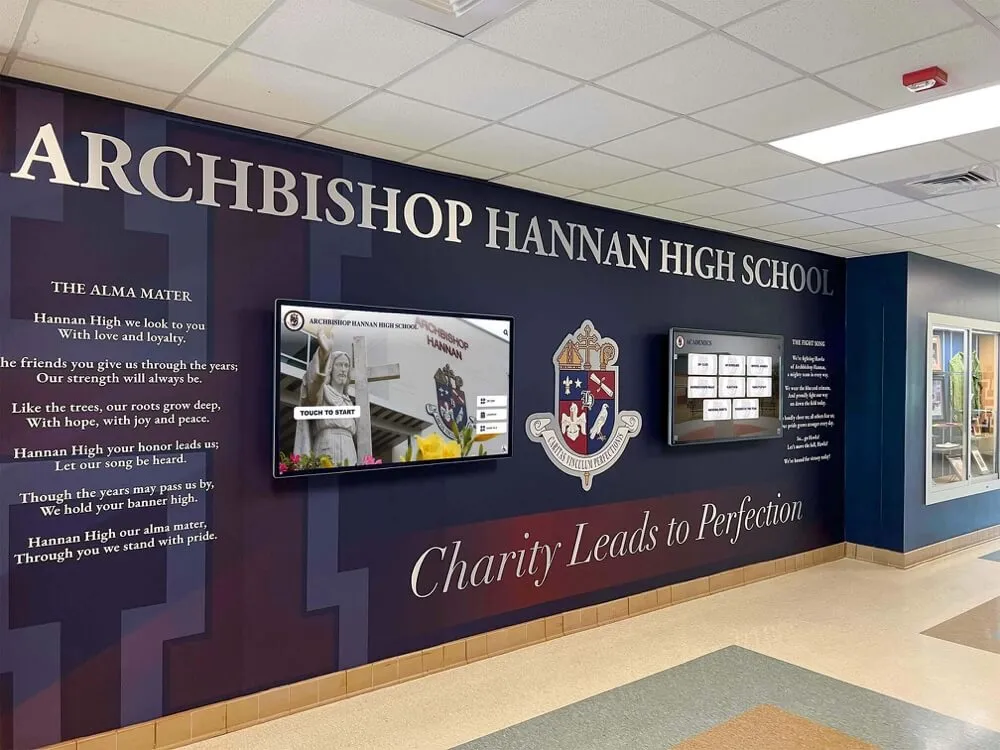
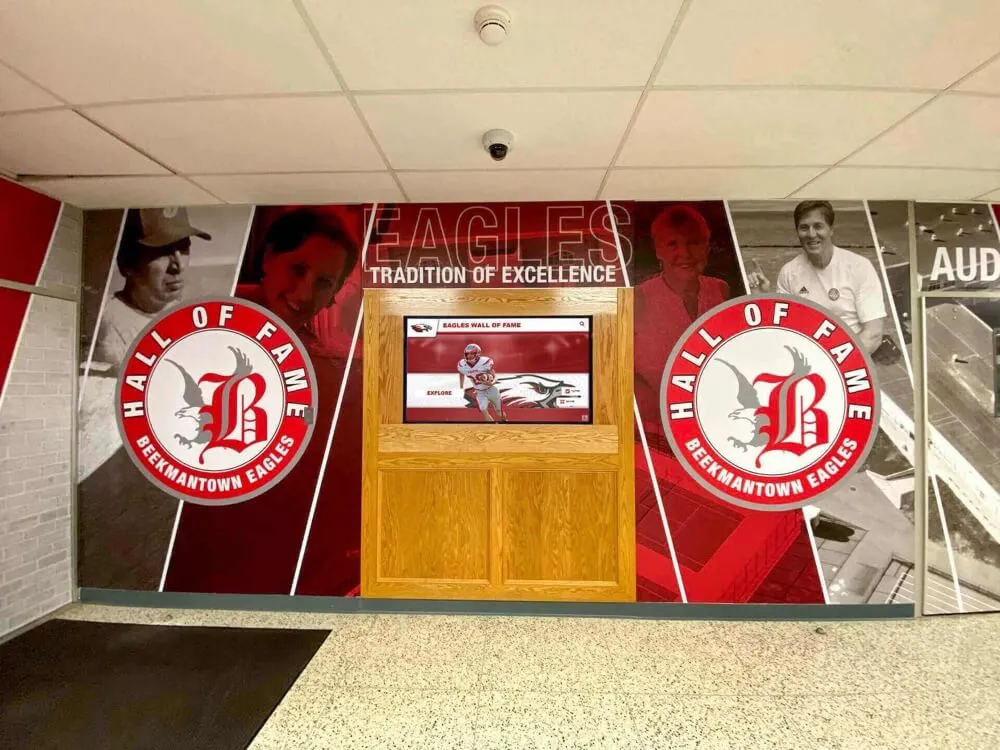
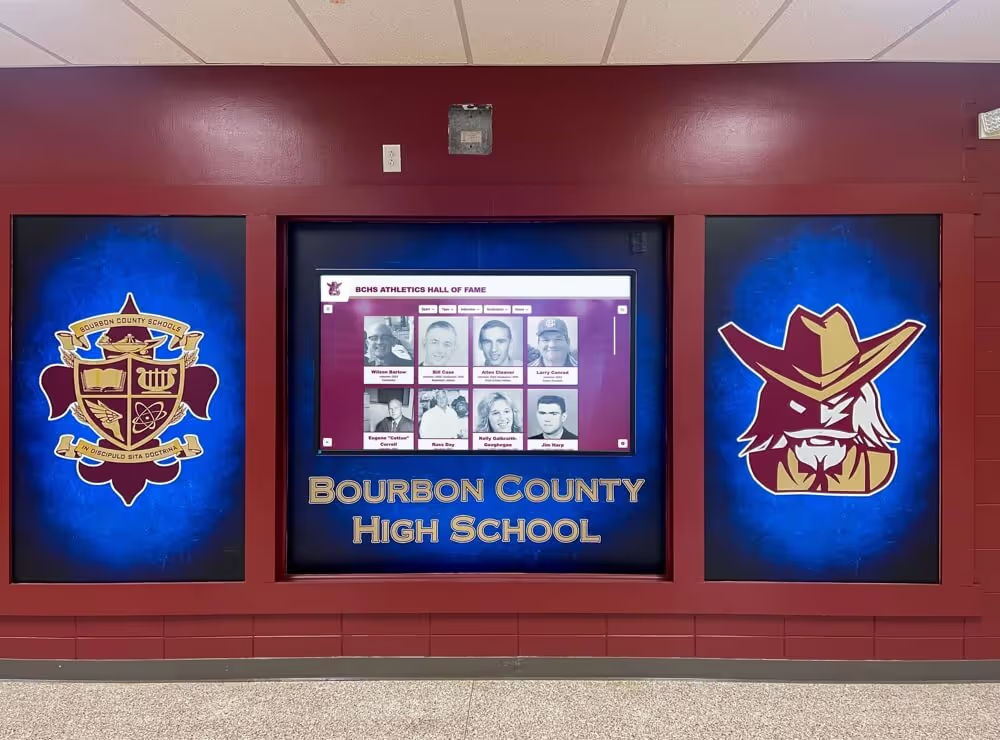
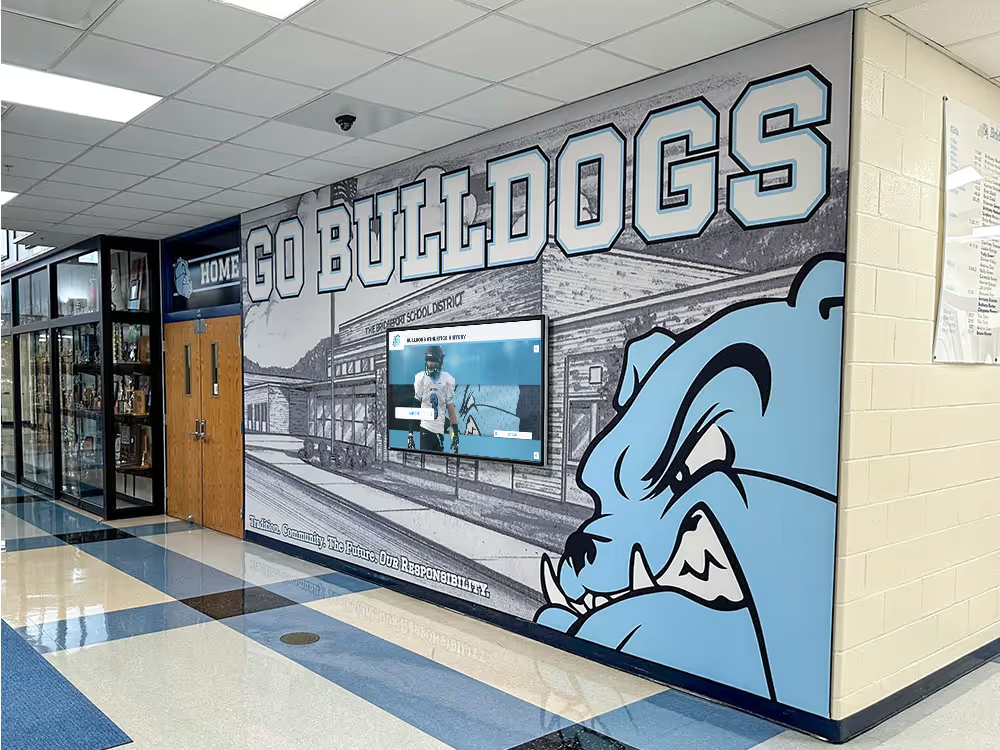
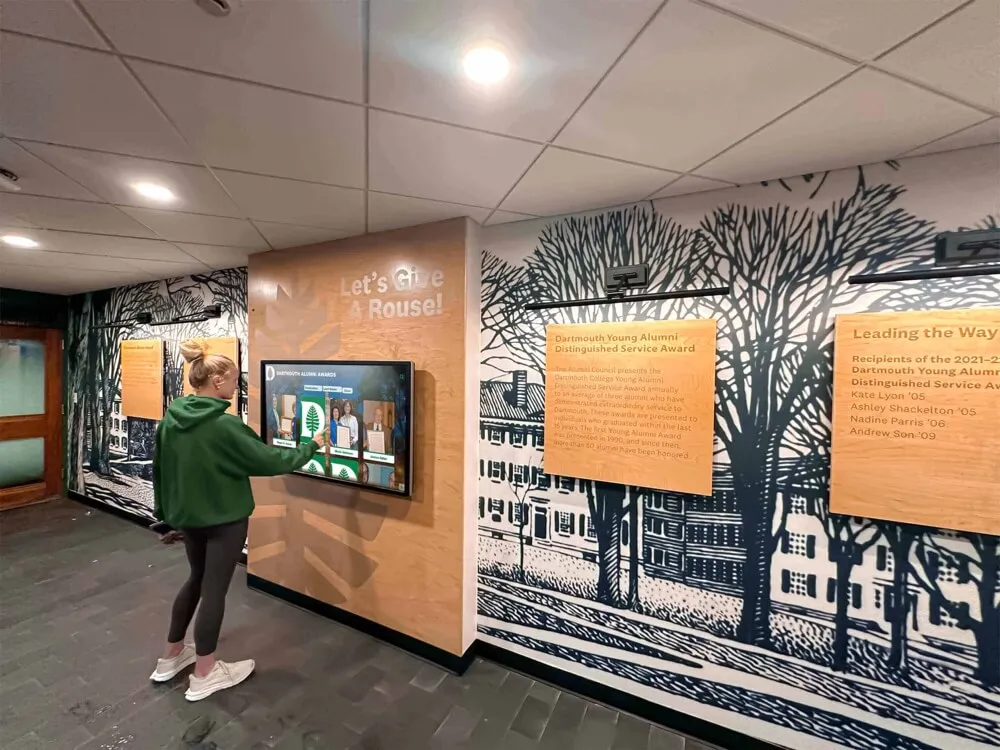
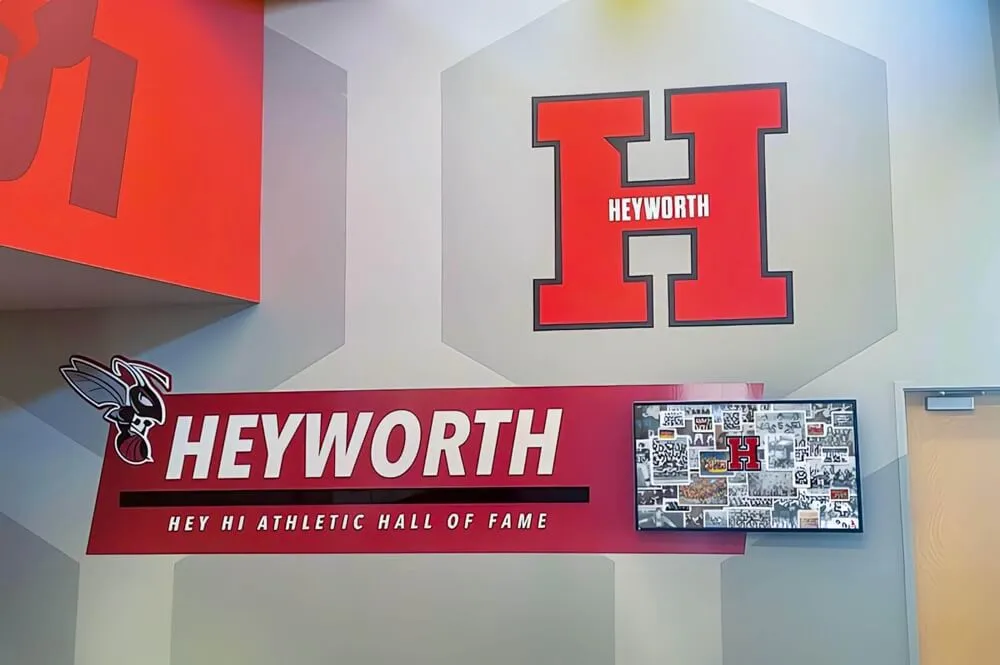
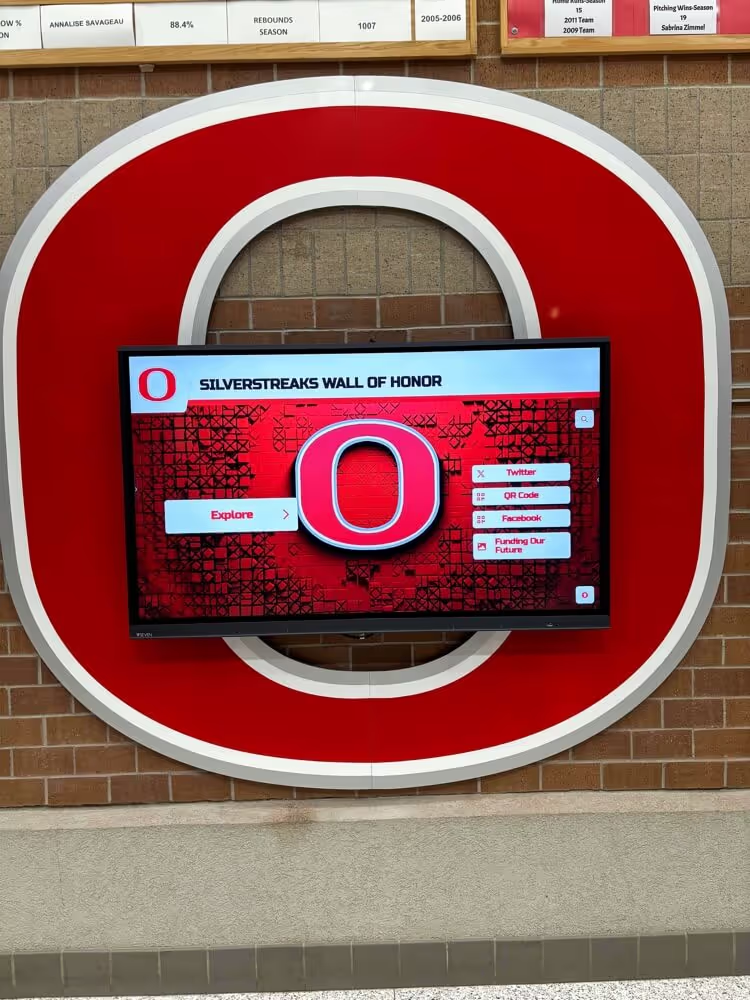
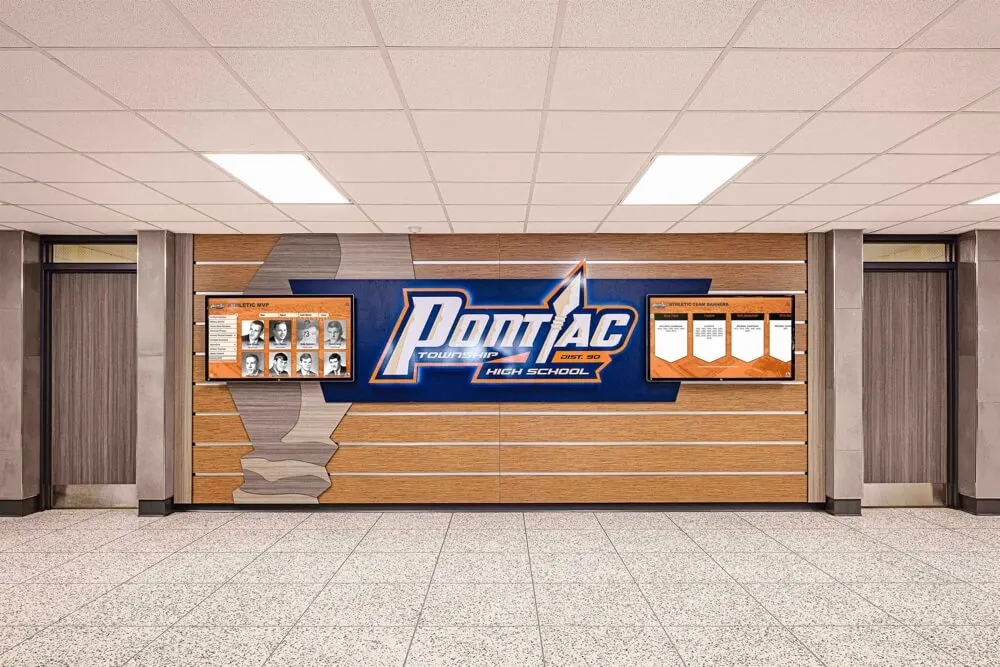
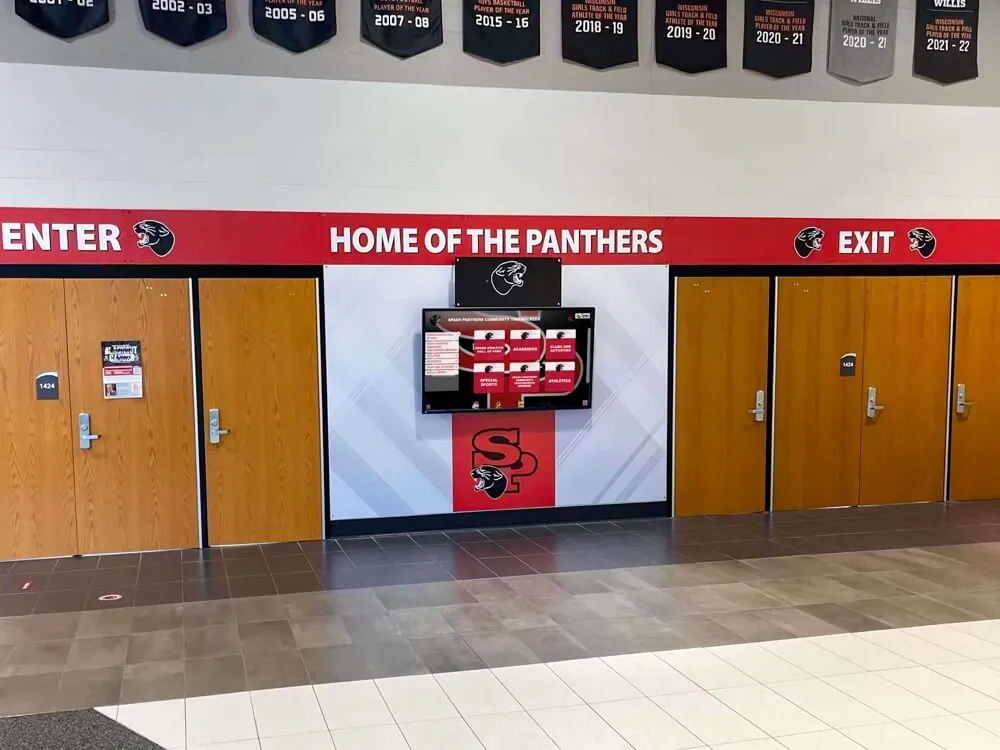
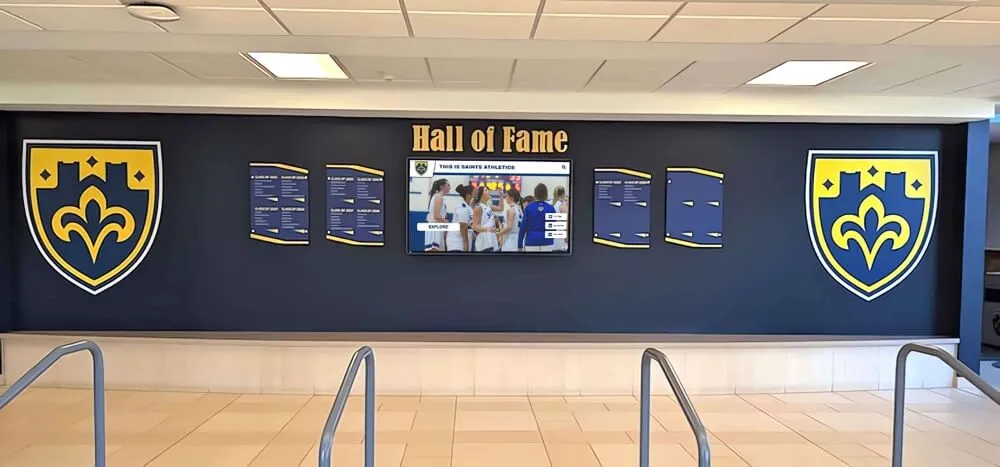
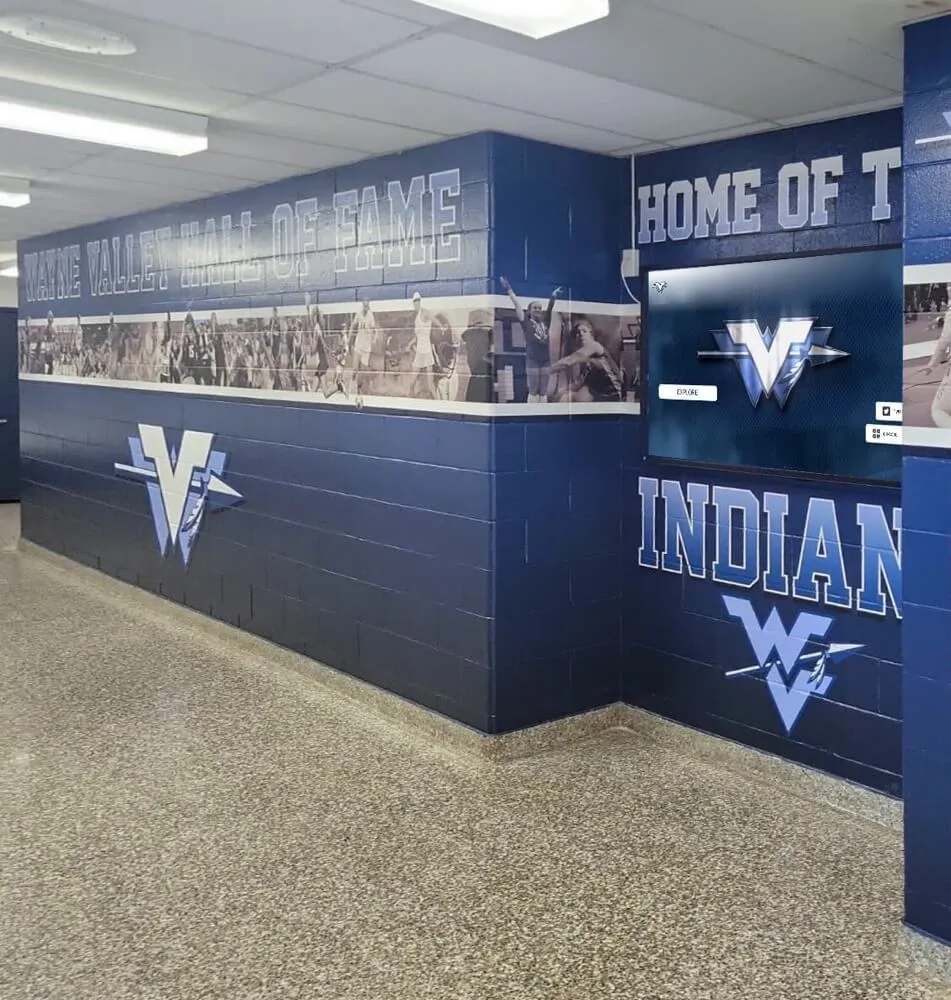
Modern recognition combines architectural design with digital displays creating immersive celebrations that engage students daily
Understanding Traditional School Display Cases
Before evaluating alternatives, understanding traditional trophy cases’ strengths and limitations provides essential context for recognition decisions.
The Enduring Appeal of Physical Trophy Cases
Traditional display cases have served schools effectively for decades, offering tangible benefits that explain their continued prevalence.
Immediate Visual Impact
Well-maintained trophy cases command attention through physical presence that architectural glass, professional lighting, and three-dimensional artifacts create naturally. Walking past championship trophies, gleaming awards, and carefully arranged memorabilia delivers instant recognition of program excellence requiring no technology or user interaction.
Physical displays provide unambiguous status symbols—the size, quality, and quantity of trophy cases communicate program priorities and achievement levels immediately. Visitors touring schools form instant impressions from hallway displays showcasing institutional pride through visible celebration of excellence.
Tangible Artifact Preservation
Traditional cases serve crucial archival functions preserving physical artifacts representing school history—championship trophies, historic uniforms, autographed equipment, commemorative plaques, and memorabilia connecting present students to institutional heritage. These authentic objects carry emotional weight and historical significance that photographs or digital representations cannot fully replicate.
Many schools maintain precious artifacts deserving careful preservation—founding documents, historic photos, donated memorabilia from distinguished alumni, or items commemorating significant institutional milestones. Traditional cases provide climate-controlled security protecting irreplaceable materials from environmental damage while making them accessible for community viewing.
Permanent Physical Presence
Unlike digital systems requiring electricity and network connectivity, traditional cases maintain constant visibility without technical dependencies. Power outages, network failures, and equipment malfunctions don’t affect trophy case displays, ensuring recognition remains consistently accessible regardless of infrastructure challenges that sometimes disrupt school operations.
This reliability proves particularly valuable in older facilities with challenging infrastructure or rural schools facing connectivity limitations. Traditional cases require minimal ongoing technical support, functioning independently once installed and stocked.
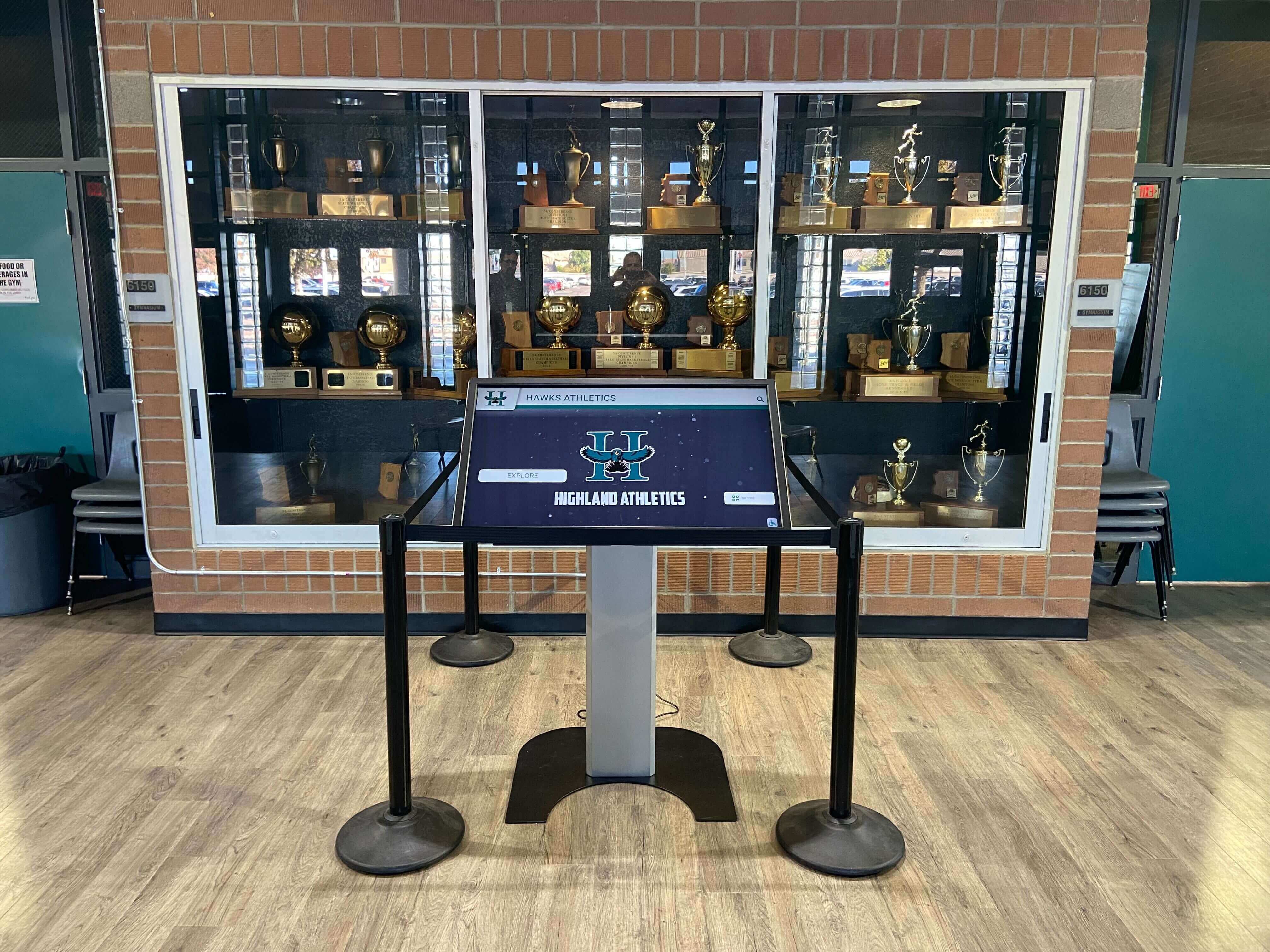
Traditional trophy cases preserve physical artifacts while providing always-visible recognition requiring no technical infrastructure
Fundamental Limitations of Traditional Display Cases
Despite proven value, physical display cases face inherent constraints that increasingly limit their effectiveness for comprehensive school recognition.
Finite Physical Capacity
Trophy case space fills inexorably as schools accumulate achievements. A single case might accommodate 50-100 awards comfortably, but athletic programs generating multiple championships annually, academic teams earning regional and state recognition, and diverse co-curricular achievements quickly consume available space.
Schools face difficult choices when cases fill: remove older achievements to accommodate new recognition, install additional cases consuming precious hallway space and substantial budgets, or restrict recognition to only exceptional achievements excluding worthy accomplishments that merit celebration. Each option involves significant compromises—removing historical recognition, allocating limited capital funds, or leaving achievements unacknowledged.
Static, Non-Interactive Presentation
Traditional displays offer passive viewing experiences with limited engagement depth. Students glance at trophy cases while walking between classes but rarely stop for extended exploration or detailed examination. Static presentations communicate minimal information beyond what printed labels provide—typically just award names, dates, and basic identifiers.
This superficial engagement especially challenges schools serving digital-native students accustomed to interactive technology enabling exploration, searching, and personalized content discovery. Traditional cases provide no searchability, filtering capabilities, or adaptive features that could increase relevance and engagement for diverse student interests.
Time-Consuming Manual Updates
Maintaining current recognition requires physical access, manual rearrangement, printed label creation, and often professional assistance for lighting adjustments or case modifications. Athletic directors or activities coordinators spend hours annually updating displays—removing awards to accommodate new additions, printing fresh labels, cleaning glass, and reorganizing arrangements for visual balance.
Significant recognition updates—replacing entire seasons of awards, reorganizing for new layout concepts, or accommodating major achievements—require even more substantial time investments, sometimes involving professional exhibit designers or facilities staff for major rearrangements.
Schools implementing comprehensive athletic recognition programs report that traditional case maintenance consumes 10-15 hours monthly just maintaining current recognition accuracy.
Limited Storytelling Depth
Physical space constraints and static presentation severely limit context and storytelling. Trophy cases display awards accompanied by minimal printed labels—typically just sport or activity name, achievement type, year, and perhaps team member names if space permits. This surface-level information fails to capture compelling stories behind achievements—the adversity overcome, extraordinary performances, individual contributions, or historical significance.
Students viewing championship trophies learn basic facts but miss rich narratives that create emotional connections and inspirational impact. Who were the star players? What obstacles did teams overcome? What made particular seasons memorable? How did coaches build championship programs? Traditional displays rarely communicate these engaging details that transform recognition from mere acknowledgment into meaningful celebration.
Inflexible Physical Infrastructure
Once installed, trophy cases create relatively permanent fixtures difficult to relocate or reconfigure. Building renovations, space repurposing, or circulation pattern changes often require expensive case modifications or replacements rather than simple adjustments. This inflexibility constrains facility planning while creating sunk cost pressures to maintain recognition in potentially suboptimal locations rather than adapting to evolving school needs.

Traditional installations create impressive architectural statements but face capacity limits as achievement accumulation continues
Exploring Modern Digital Recognition Solutions
Digital recognition platforms represent fundamental reconceptualizations of how schools celebrate achievement, addressing traditional limitations while creating entirely new engagement possibilities.
Core Capabilities of Interactive Digital Displays
Purpose-built recognition systems provide capabilities traditional cases cannot match, transforming acknowledgment into dynamic community-building experiences.
Unlimited Recognition Capacity
Digital platforms eliminate physical space constraints entirely. Schools can recognize every team championship, individual achievement, academic honor, performing arts accomplishment, and co-curricular contribution across all activities and decades without competing for limited display area. Single touchscreen installations showcase thousands of achievements through searchable, browsable interfaces organizing content logically rather than physically.
This unlimited capacity proves transformative for schools with extensive athletic traditions, large student populations, or comprehensive co-curricular programming. Rather than agonizing over which achievements merit limited physical space, schools celebrate everything worthy of recognition, creating inclusive communities where all excellence receives appropriate acknowledgment.
Rich Multimedia Content
Digital recognition supports comprehensive achievement celebration through photos, videos, statistics, narratives, and biographical information creating meaningful tributes. Championship celebrations might include season highlight videos, team photos, individual player statistics, coaching perspectives, and memorable game recaps bringing recognition to life beyond trophy images.
Academic recognition can showcase student research projects, competition performances, collaborative works, and first-person reflections explaining achievement significance. Performing arts recognition might feature performance videos, behind-the-scenes rehearsal photos, cast interviews, and creative process documentation celebrating artistic excellence comprehensively.
Interactive Exploration and Discovery
Touchscreen interfaces enable active exploration through search by name, year, sport, achievement type, or custom criteria. Students discover connections to older siblings, parents, or coaches while exploring program histories learning institutional traditions. Alumni visiting campus reconnect with their own achievements or discover teammates’ subsequent accomplishments, maintaining bonds years after graduation.
Featured content rotation ensures all achievements receive highlighted visibility over time rather than gathering dust in trophy case corners. Automated prominence distribution provides equity impossible with physical displays where prime positions remain static and middle shelves receive minimal attention.
Real-Time Content Management
Cloud-based management systems enable immediate updates from any internet-connected device without facilities access or technical expertise. Athletic directors add championship recognition from home offices the evening after state tournaments. Activities coordinators update during summer breaks without coordinating facility access. Multiple authorized staff manage content collaboratively without scheduling conflicts or location constraints.
This management flexibility proves particularly valuable during active competition seasons when achievements accumulate rapidly. Rather than waiting weeks or months for physical display updates, digital recognition reflects current achievements within hours or days, creating timely acknowledgment that reinforces student accomplishment and maintains community awareness of ongoing program success.
Schools implementing platforms like Rocket Alumni Solutions report 80-90% time savings for recognition maintenance compared to traditional trophy case management.
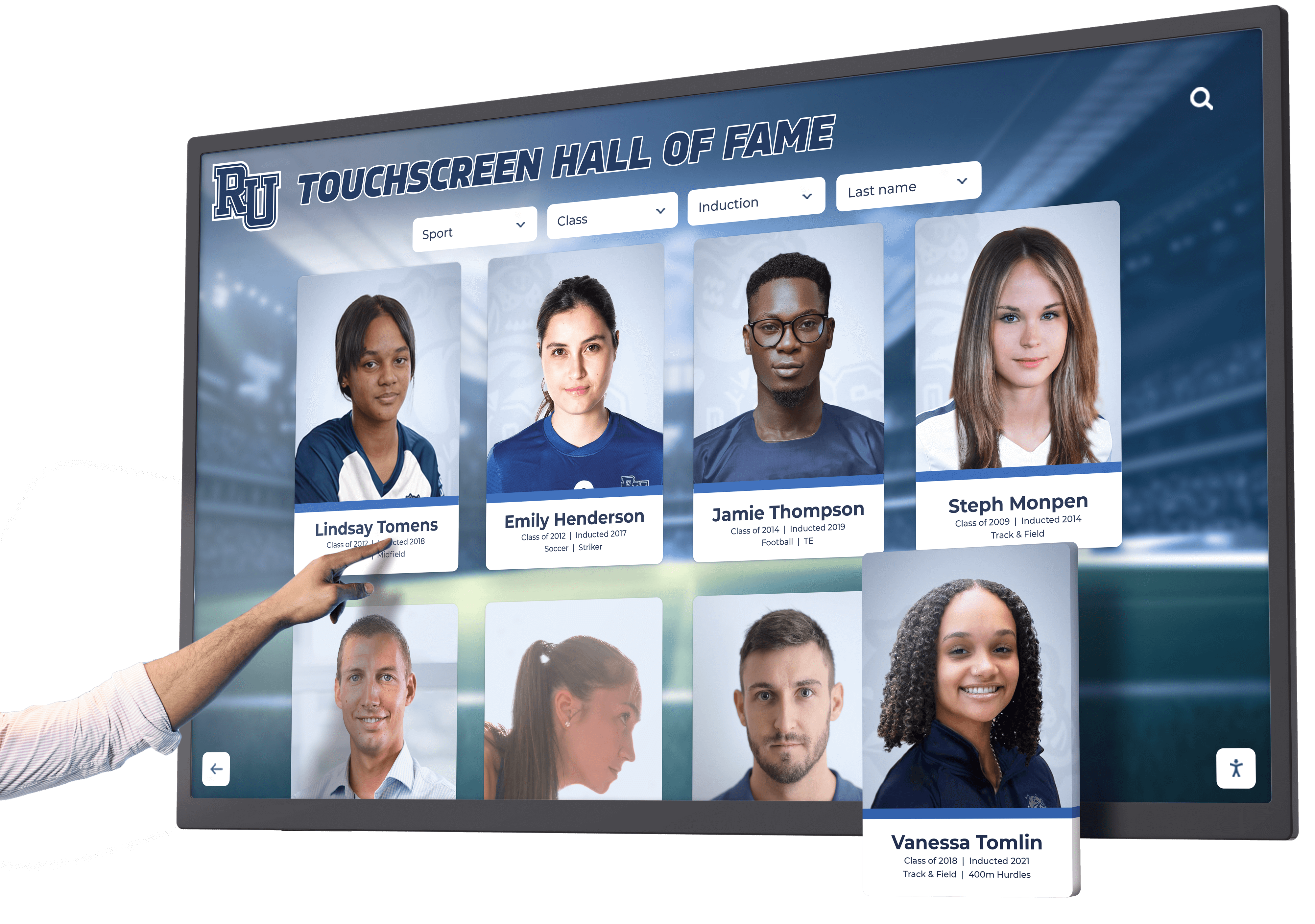
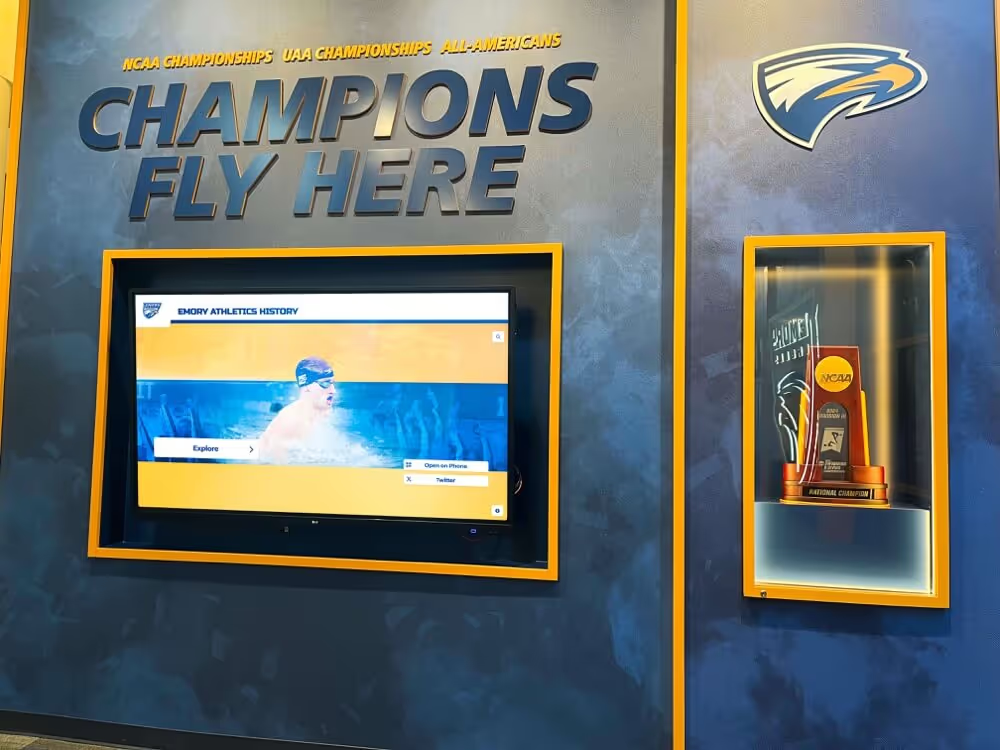
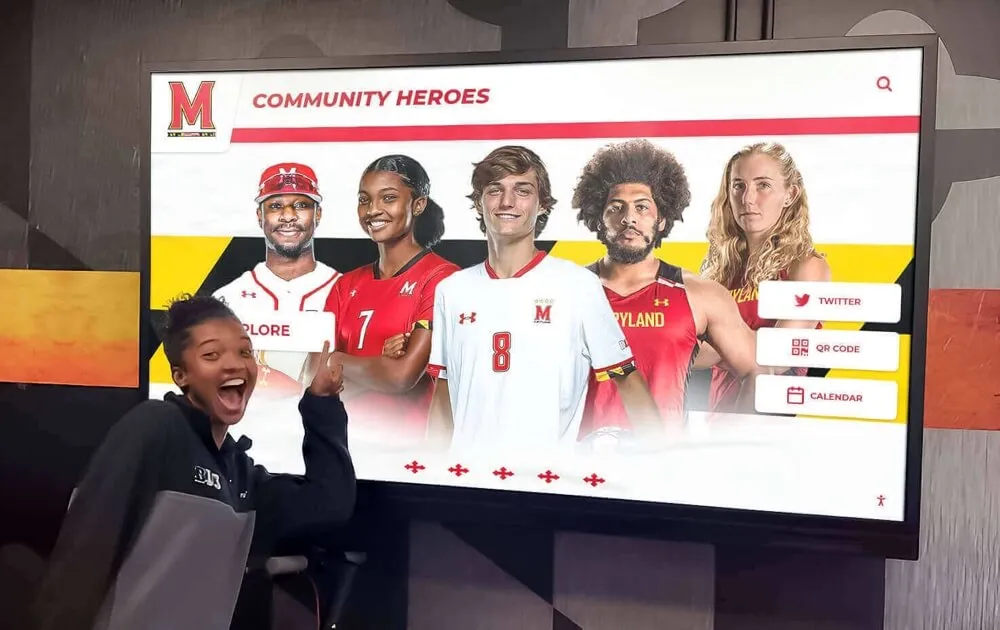
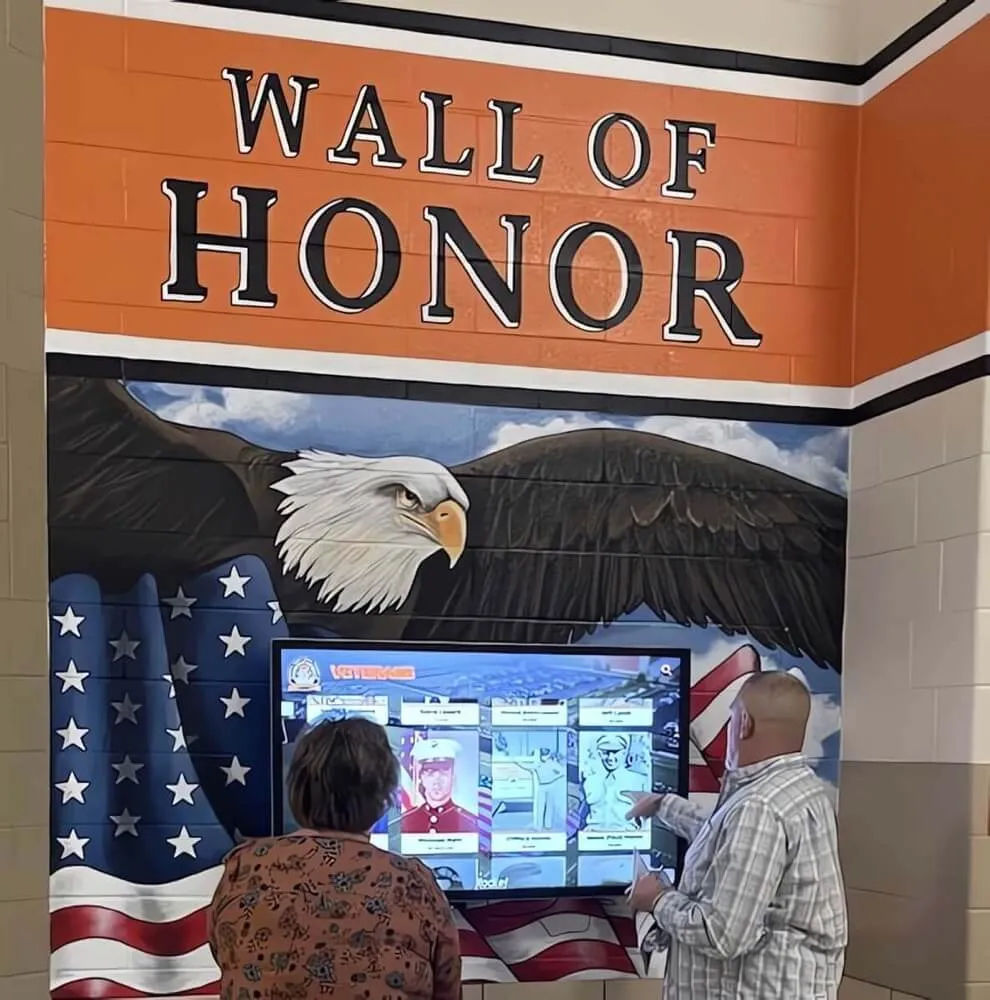
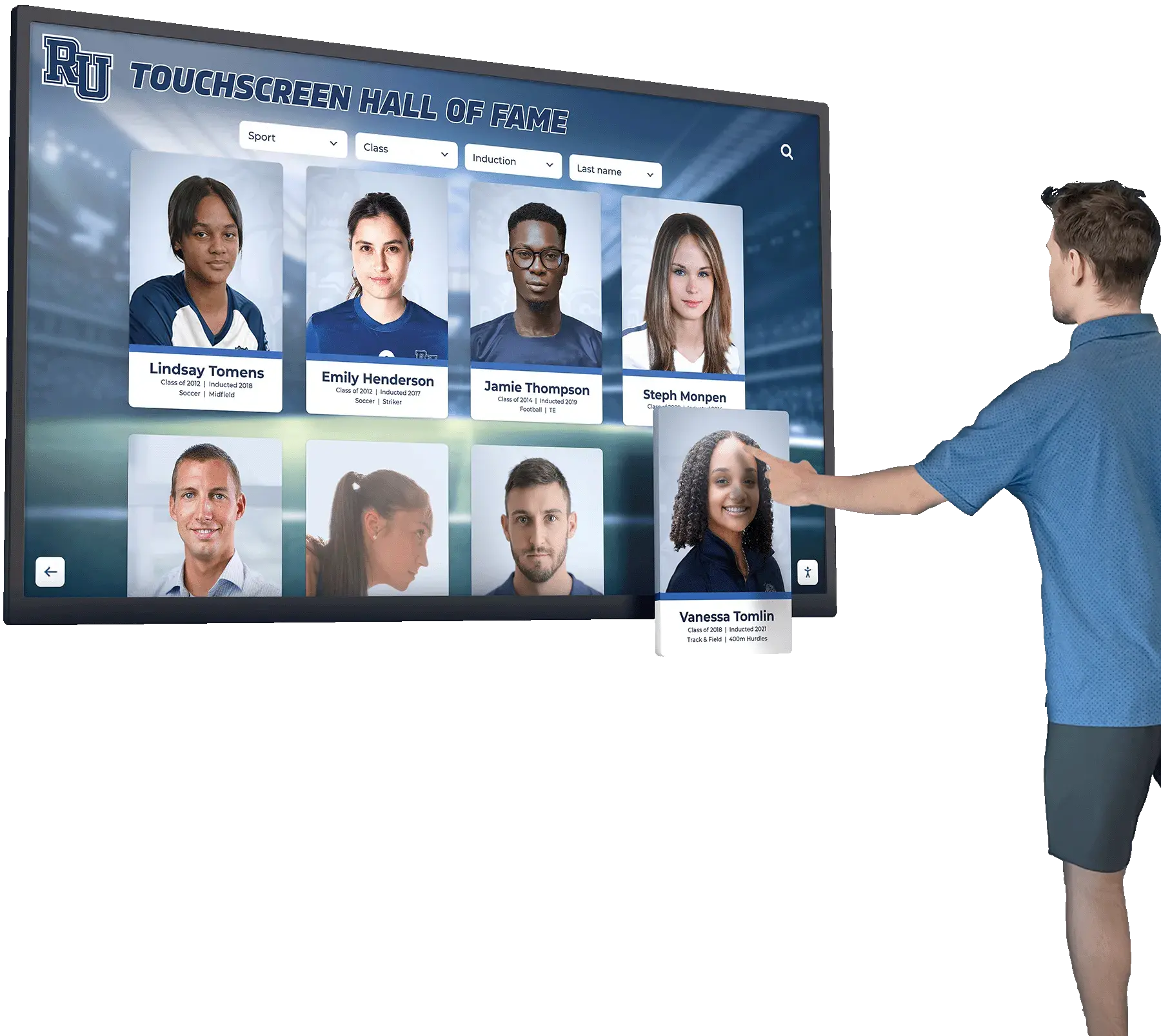
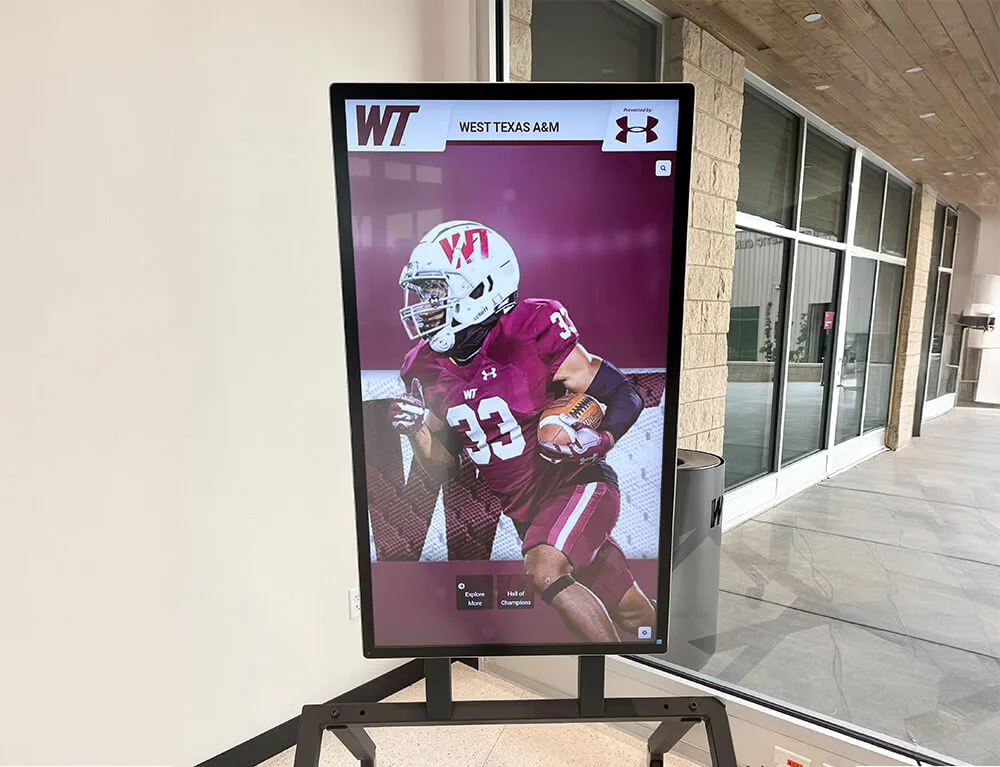
Intuitive touchscreen interfaces transform passive viewing into active exploration enabling personal discovery and deep engagement
Web Accessibility and Social Amplification
Online extensions enable global access for families, alumni, and community members regardless of location. Graduates living across the country or internationally explore achievement archives discovering program evolution and maintaining connections to institutional heritage without requiring campus visits.
Web platforms provide social sharing integration enabling recognized students to celebrate achievements with extended networks—posting accomplishments to Instagram, sharing with family members via text, or including recognition in college applications. This amplification exponentially extends visibility beyond trophy case viewers to potentially thousands of additional impressions per achievement through supporter networks.
Digital Recognition Categories and Applications
Modern platforms serve diverse recognition needs extending far beyond traditional trophy case functions.
Athletic Recognition Systems
Comprehensive athletic recognition celebrates championships, individual records, all-conference selections, academic achievements, coaching excellence, and program milestones. Digital trophy displays showcase complete program histories while maintaining currency with current seasons through effortless content updates.
Record boards automatically update as students break marks, maintaining accuracy without manual intervention. Championship celebrations persist indefinitely without competing for physical space, ensuring decades of excellence remain accessible rather than archived in storage when trophy cases fill.
Academic Honor Recognition
Honor roll acknowledgment, valedictorian histories, National Merit recognition, academic competition achievements, scholarship recipients, and distinctive academic accomplishments deserve celebration comparable to athletic excellence. Digital platforms provide capacity and flexibility ensuring academic achievement receives prominence equal to athletic recognition, reinforcing that schools value intellectual excellence as central to mission.
Many schools implement comprehensive academic recognition programs celebrating diverse excellence including STEM competitions, creative writing awards, debate championships, and research distinctions that traditional trophy cases cannot accommodate comprehensively.
Performing and Visual Arts Celebration
Theater productions, musical performances, art exhibitions, creative writing publications, and other artistic achievements merit recognition showcasing school creativity and cultural enrichment. Digital platforms accommodate performance videos, artwork galleries, composition recordings, and creative process documentation celebrating artistic excellence through appropriate media rather than forcing representation through physical trophies.
Hall of Fame and Historical Archives
Athletic halls of fame, distinguished alumni recognition, institutional history documentation, and heritage preservation benefit dramatically from digital capacity and multimedia capabilities. Schools develop comprehensive hall of fame systems showcasing hundreds of inductees across decades through searchable databases providing biographical information, achievement documentation, and multimedia content impossible within physical trophy case constraints.
Historical archives preserve yearbook digitizations, historic photos, facility evolution documentation, program milestones, and institutional memory creating accessible heritage resources for students, staff, and community members.

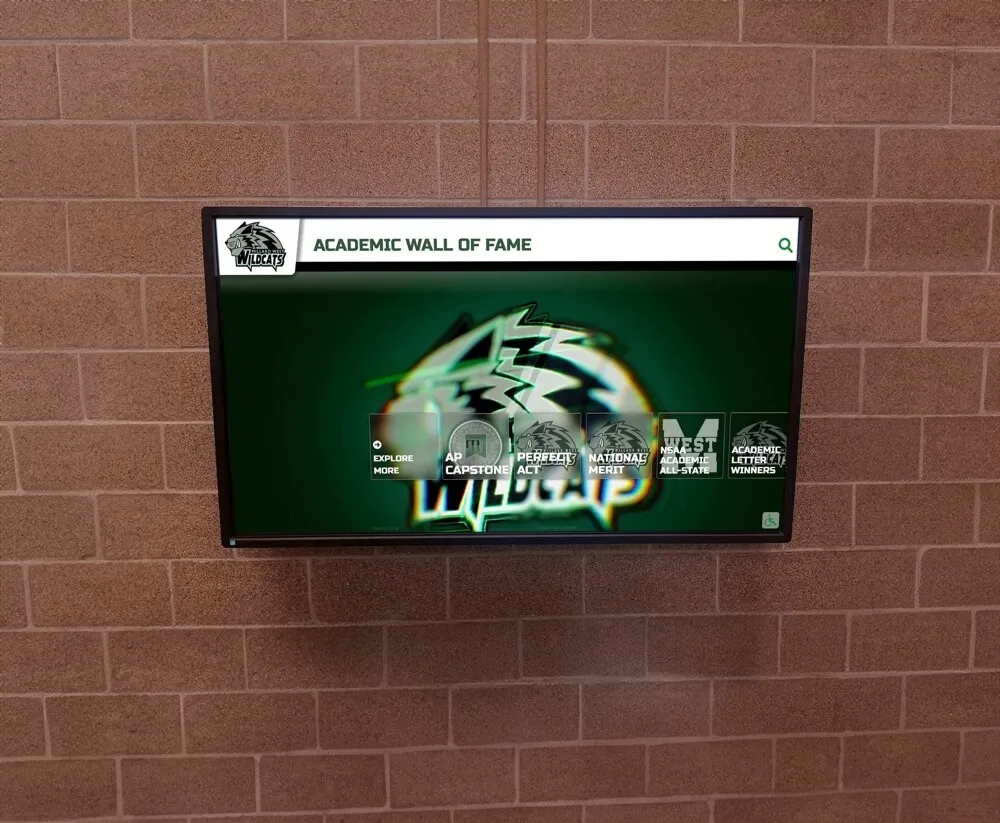
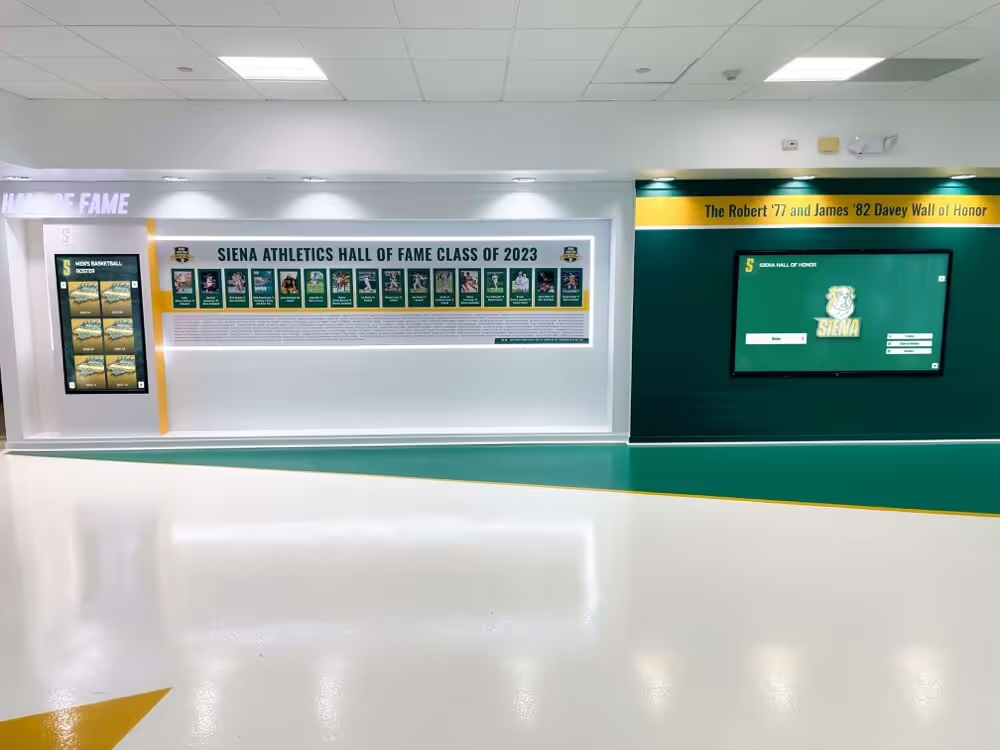
Comprehensive digital recognition showcases complete program histories with depth impossible in traditional physical displays
Donor and Community Recognition
Schools fundraising for facilities, programs, or endowments implement donor recognition celebrating supporters who enable institutional excellence. Digital donor walls provide unlimited capacity accommodating all contributors regardless of gift size, creating inclusive recognition that builds engaged supporter communities rather than exclusive displays limited to major donors.
Memorial recognition honors deceased community members, retired staff, or alumni through lasting digital tributes that families can access remotely while maintaining perpetual institutional acknowledgment.
Technology Infrastructure and Requirements
Understanding technical requirements ensures successful implementation matching institutional capabilities and constraints.
Display Hardware Options
Commercial-grade touchscreen displays designed for continuous operation provide reliability essential for public installations experiencing daily use. Screen sizes typically range from 55-75 inches for individual viewing appropriate for hallway installations, though larger ultra-wide or video wall configurations suit expansive lobbies serving groups.
Display selection should consider ambient lighting conditions, viewing distances, mounting heights, and traffic patterns ensuring optimal visibility and accessibility. Professional installation ensures proper mounting, appropriate angles, ADA-compliant positioning, and secure integration with building architecture.
Network Connectivity Requirements
Digital recognition platforms require internet connectivity for content updates and web integration. Hardwired ethernet connections provide superior reliability compared to WiFi, particularly in locations with challenging wireless coverage or network congestion common in educational environments with thousands of simultaneous device connections.
Content caching enables continued operation during temporary connectivity interruptions while updates occur automatically when connections restore. This resilience ensures recognition remains consistently accessible despite occasional network challenges.
Software Platform Considerations
Purpose-built recognition systems provide specialized capabilities generic digital signage cannot match—searchable databases, individual profile pages, automated content rotation, social sharing integration, and intuitive content management designed for educational contexts.
Web-based platforms operating through standard browsers require no app installation or device-specific development, ensuring universal accessibility across all devices and operating systems while simplifying long-term maintenance. Native applications require platform-specific versions and regular updates maintaining compatibility with evolving operating systems.
For most schools, web-based recognition platforms provide optimal balance of accessibility, maintainability, functionality, and compliance with accessibility standards ensuring all students and visitors can engage regardless of abilities.
Content Management Systems
Non-technical staff need intuitive management interfaces enabling confident updates without IT dependencies. Cloud-based systems enable remote updates from any internet-connected device—administrators working from home offices, coaches traveling with teams, or activities coordinators managing multiple buildings all maintain recognition independently.
Bulk import tools enable historical content migration from spreadsheets or databases, while scheduled publishing allows timed content releases coordinating with events or ceremonies. Schools report that staff managing digital recognition typically require only 2-3 hours training before achieving comfortable independent operation.
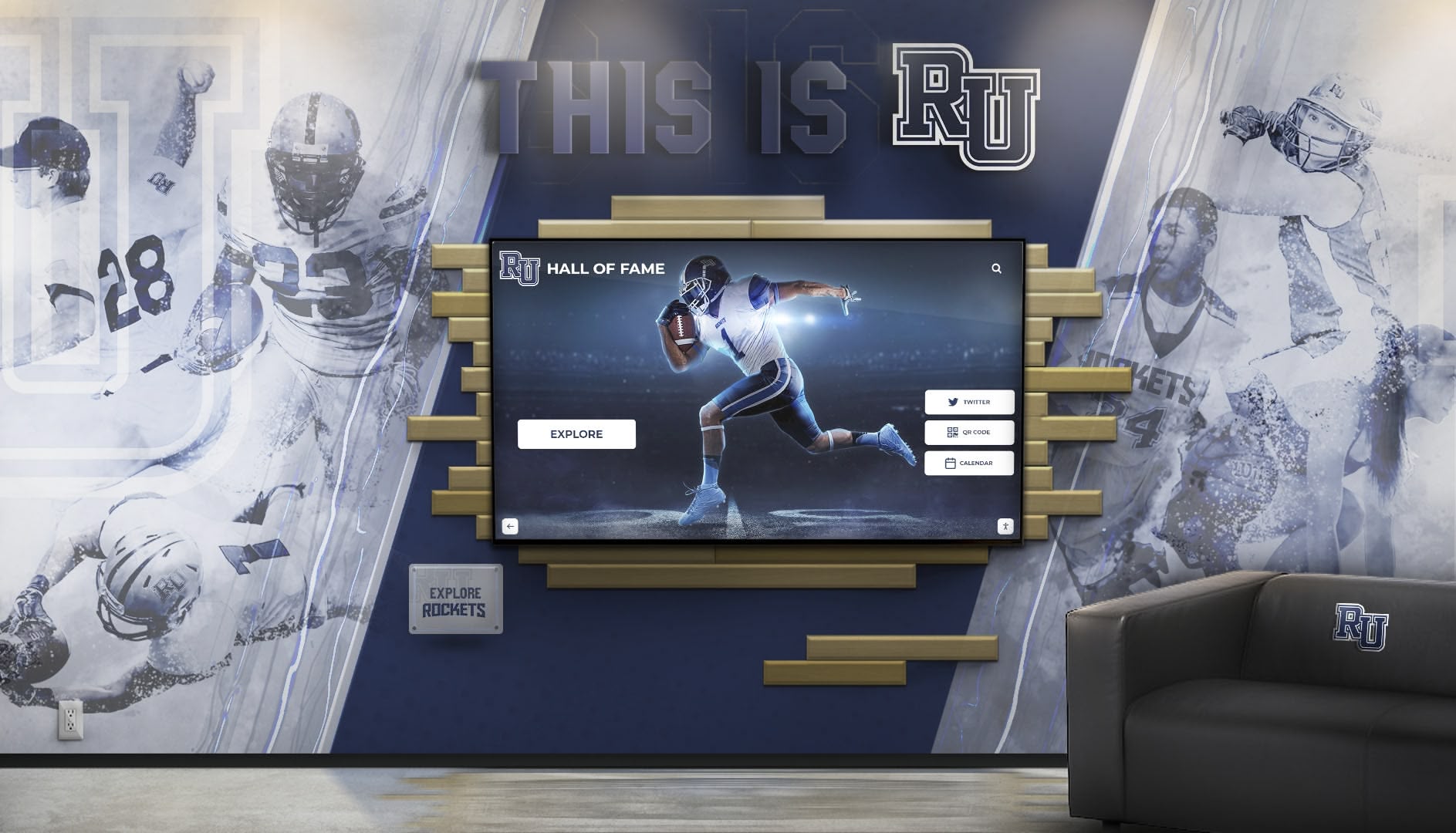
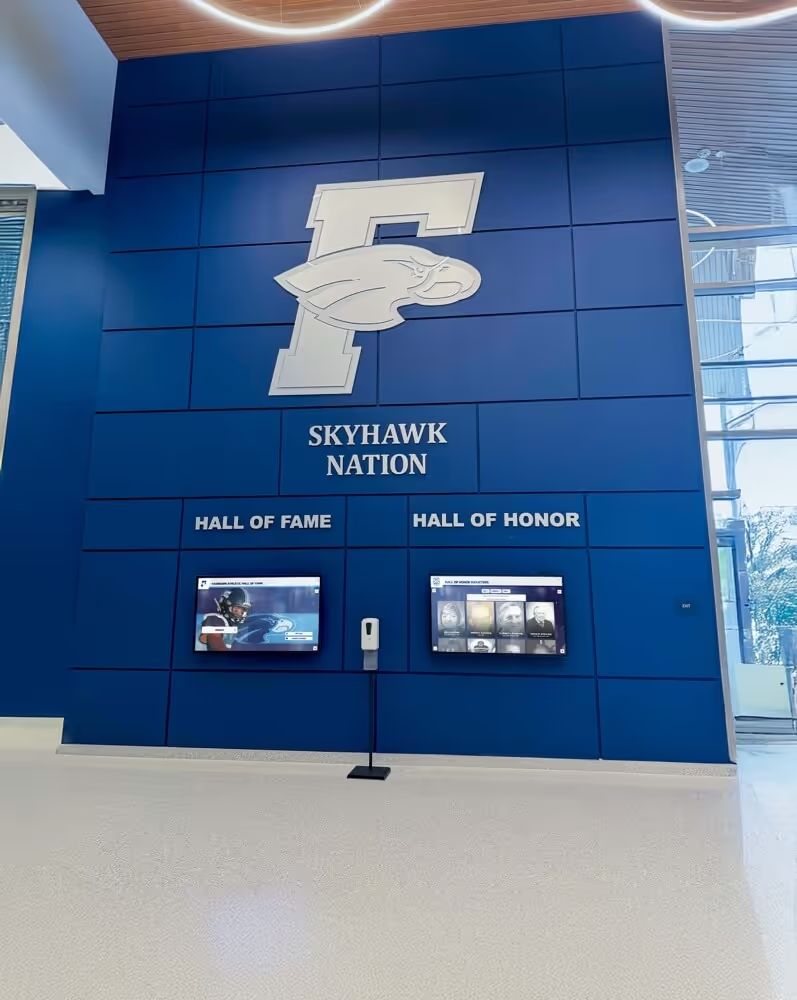
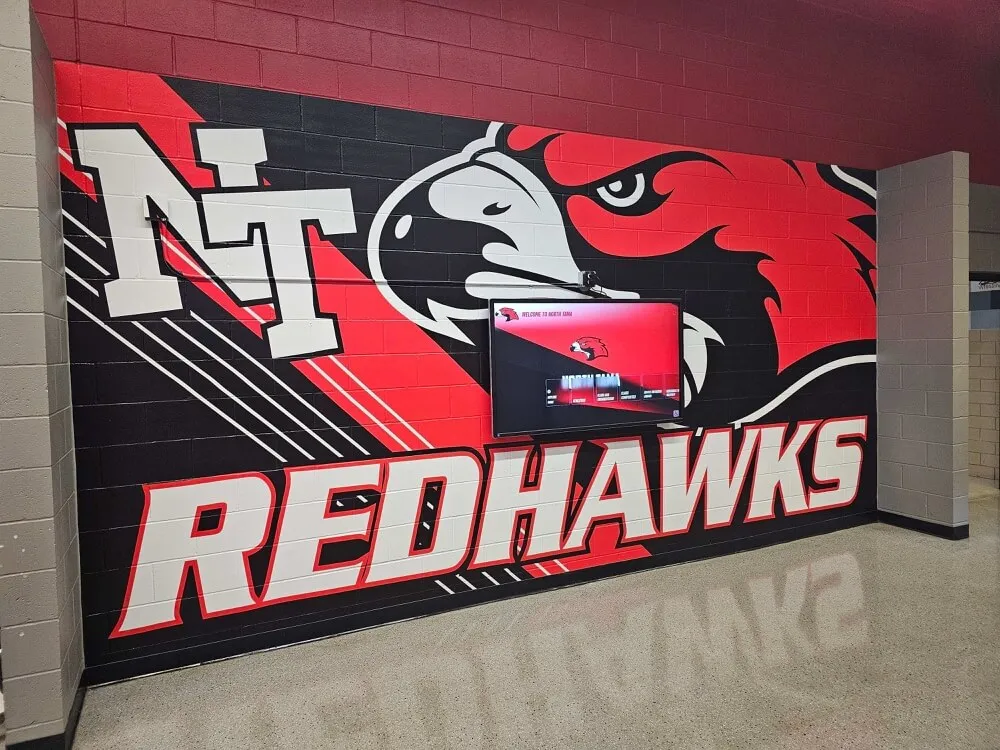
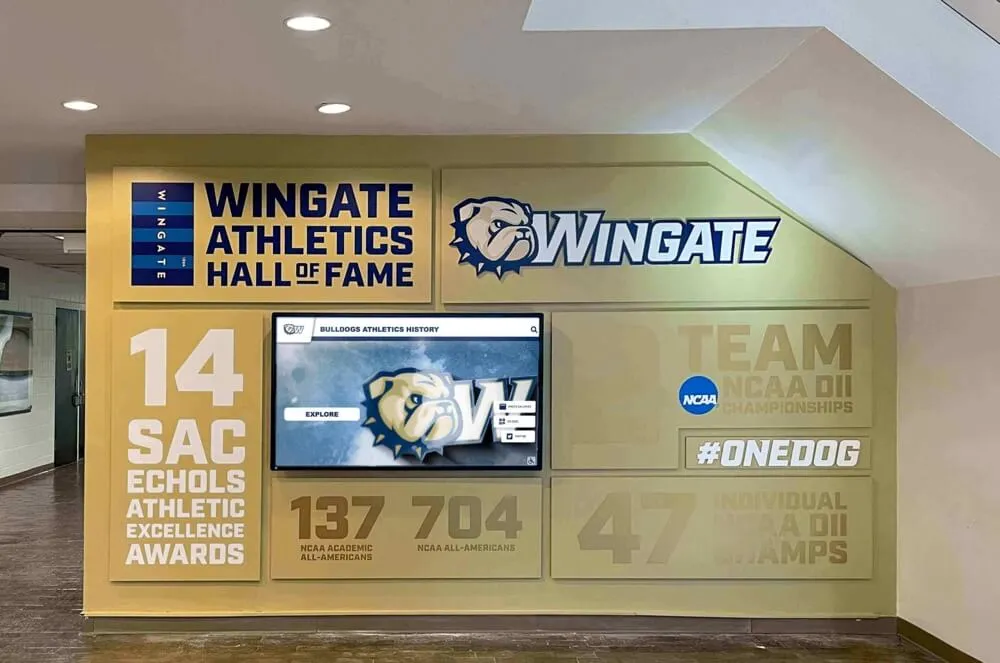
Professional installations integrate digital recognition with architectural design creating cohesive environments celebrating excellence
Direct Comparison: Traditional vs. Digital School Display Cases
Systematic comparison across key evaluation criteria provides clear frameworks for recognition investment decisions.
Physical Space and Capacity
Traditional Trophy Cases:
- Fixed capacity of 50-100 awards per case depending on size
- Requires physical expansion for additional recognition—typically $5,000-15,000 per additional case including installation
- Necessitates difficult decisions removing older achievements or limiting recognition to exceptional accomplishments only
- Consumes valuable hallway or common area space as recognition needs expand
- Creates architectural constraints difficult to modify during facility renovations
Digital Recognition Systems:
- Unlimited recognition capacity within single installation
- Accommodates thousands of achievements without performance degradation
- Eliminates difficult decisions about removal or recognition restrictions
- Single footprint serves expanding recognition needs indefinitely
- Flexible placement adapted easily during renovations or space repurposing
Winner: Digital Recognition for schools with extensive achievements across multiple decades, comprehensive programming generating substantial annual accomplishments, or space constraints limiting physical expansion options.
Content Flexibility and Storytelling Depth
Traditional Trophy Cases:
- Limited to physical artifacts—trophies, plaques, medals, uniforms, equipment
- Minimal context beyond printed labels with basic information
- Static presentation unchanged between manual updates
- No search, filtering, or personalization capabilities
- Shallow engagement with surface-level information only
Digital Recognition Systems:
- Rich multimedia content including photos, videos, statistics, biographical narratives, and achievement context
- Comprehensive storytelling celebrating complete achievement context
- Dynamic content updates enabling real-time currency
- Advanced search and filtering enabling personalized discovery
- Deep engagement through interactive exploration and featured content rotation
Winner: Digital Recognition for schools prioritizing engagement, storytelling depth, and creating inspiring recognition experiences that motivate current students through compelling narratives rather than basic acknowledgment.
Maintenance and Update Requirements
Traditional Trophy Cases:
- Manual physical updates requiring facilities access and staff time
- Printed label creation, mounting, and aging replacement
- Glass cleaning and lighting maintenance
- Physical rearrangement for new layout concepts
- Professional assistance often required for major updates
- Estimated 10-15 hours monthly for active programs
Digital Recognition Systems:
- Remote cloud-based updates from any device
- Immediate content publication without facilities access
- No printing, mounting, or physical manipulation required
- Automated content organization and layout
- Minimal ongoing maintenance beyond content updates
- Estimated 2-3 hours monthly for equivalent recognition volume
Winner: Digital Recognition for schools seeking operational efficiency, remote management flexibility, or facilities with limited staff time for manual trophy case maintenance.

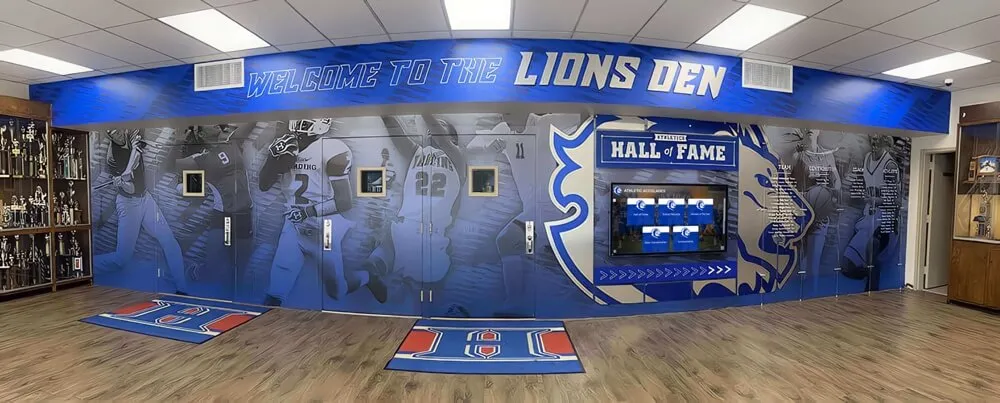
Hybrid approaches combine traditional artifact preservation with digital recognition capacity and engagement advantages
Student and Community Engagement
Traditional Trophy Cases:
- Passive viewing with minimal interaction
- Brief glances during passing periods
- No personalized discovery or exploration
- Campus-only accessibility for facility visitors
- No sharing capabilities or digital presence
Digital Recognition Systems:
- Active exploration through touchscreen interaction
- Extended engagement sessions averaging 3-5 minutes
- Personalized search and discovery of relevant content
- Global accessibility through web extensions
- Social sharing amplifying reach through supporter networks
Schools implementing interactive displays report 5-10x higher engagement duration compared to traditional trophy case viewing, with significantly higher student awareness of program achievements and institutional traditions.
Winner: Digital Recognition for schools prioritizing active student engagement, building school pride through compelling content, or serving geographically distributed communities including alumni nationwide.
Cost Considerations: Total Investment Analysis
Comprehensive cost comparison requires examining both upfront investment and long-term accumulated expenses over typical recognition system lifespans.
Traditional Trophy Cases:
Initial Investment:
- Quality display cases: $3,000-8,000 per unit
- Professional installation: $500-1,500 per case
- Lighting systems: $300-1,000 per case
- Total initial: $3,800-10,500 per case
Ongoing Annual Costs:
- New plaque production: $50-200 per achievement (schools adding 20-40 achievements annually: $1,000-8,000)
- Label printing and materials: $200-500
- Professional cleaning and maintenance: $300-600
- Periodic lighting replacement: $100-300
- Total annual: $1,600-9,400
10-Year Total Cost (single case, modest program):
- Initial: $5,000
- 10 years × $3,000 annual average: $30,000
- Total: $35,000
Capacity Challenges:
- Additional cases required as space fills: +$5,000-10,000 per expansion
- Many active programs require 3-5 cases: multiply costs accordingly
Digital Recognition Systems:
Initial Investment:
- Commercial touchscreen display (55-75"): $2,000-5,000
- Purpose-built recognition software: $2,000-4,000 annual subscription
- Professional installation and training: $1,000-3,000
- Content development support: $500-2,000
- Total initial: $5,500-14,000
Ongoing Annual Costs:
- Software subscription: $2,000-4,000
- Content updates: staff time only, no production costs
- Technical support: included in subscription
- Minimal maintenance: $100-300
- Total annual: $2,100-4,300
10-Year Total Cost:
- Initial: $8,000
- 10 years × $3,000 annual average: $30,000
- Total: $38,000
Cost Analysis:
Initial investment for digital systems typically exceeds single traditional trophy cases, but long-term total cost of ownership proves comparable or advantageous when considering:
No Per-Achievement Production Costs: Digital recognition eliminates $50-200 per plaque expenses that accumulate dramatically across programs adding dozens of achievements annually
Unlimited Capacity Included: Digital systems accommodate unlimited achievements within single installation, avoiding $5,000-15,000 expansions required as trophy cases fill
Comprehensive Multi-Purpose Use: Digital platforms serve multiple recognition needs—athletics, academics, arts, donor recognition, halls of fame—using single installation rather than separate physical systems for each purpose
Reduced Labor Costs: Remote cloud management saves 60-80% of staff time compared to manual trophy case maintenance
Schools implementing comprehensive digital recognition typically achieve ROI within 3-5 years through eliminated production costs and operational efficiencies, while gaining substantially enhanced capacity and engagement impossible with traditional approaches.
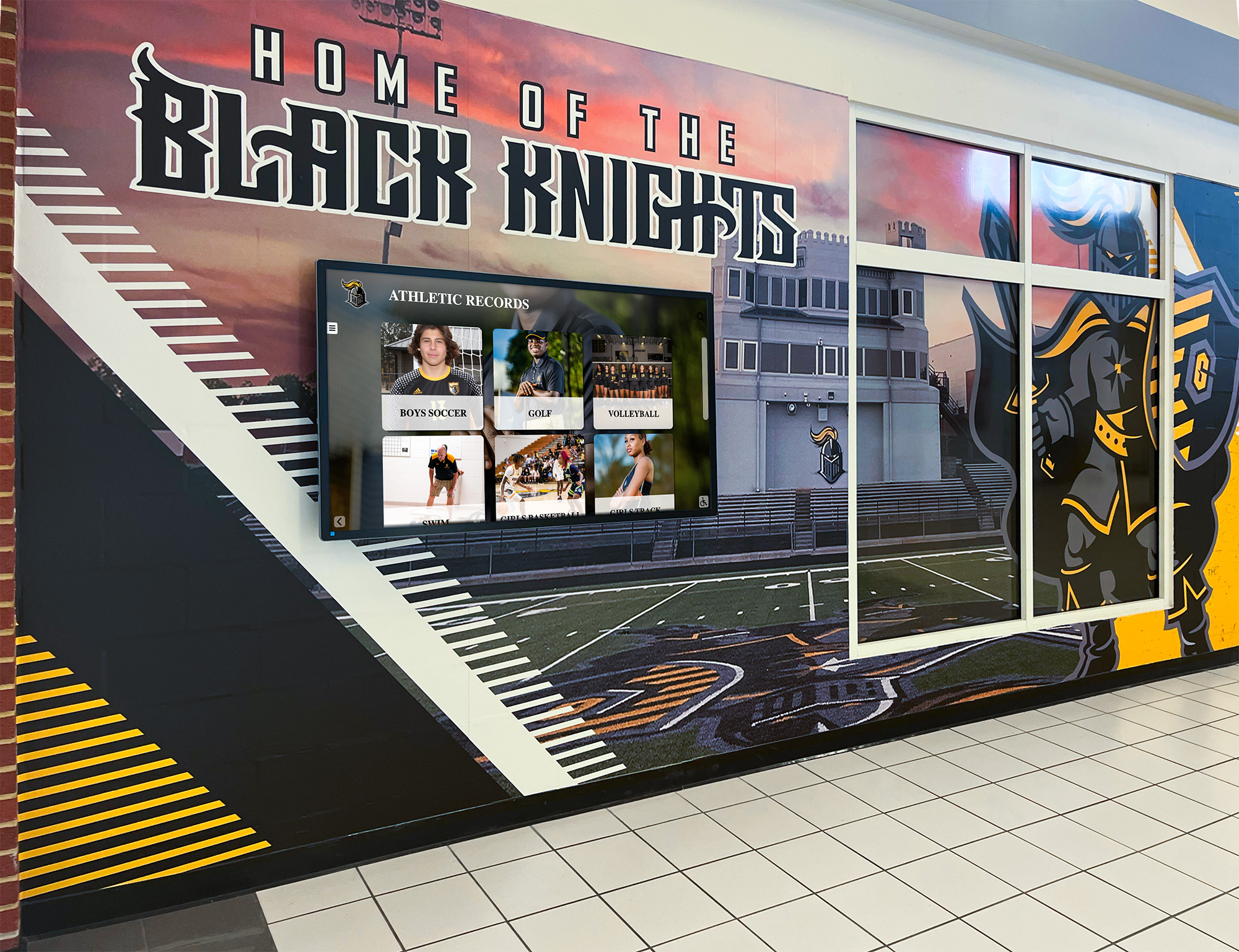
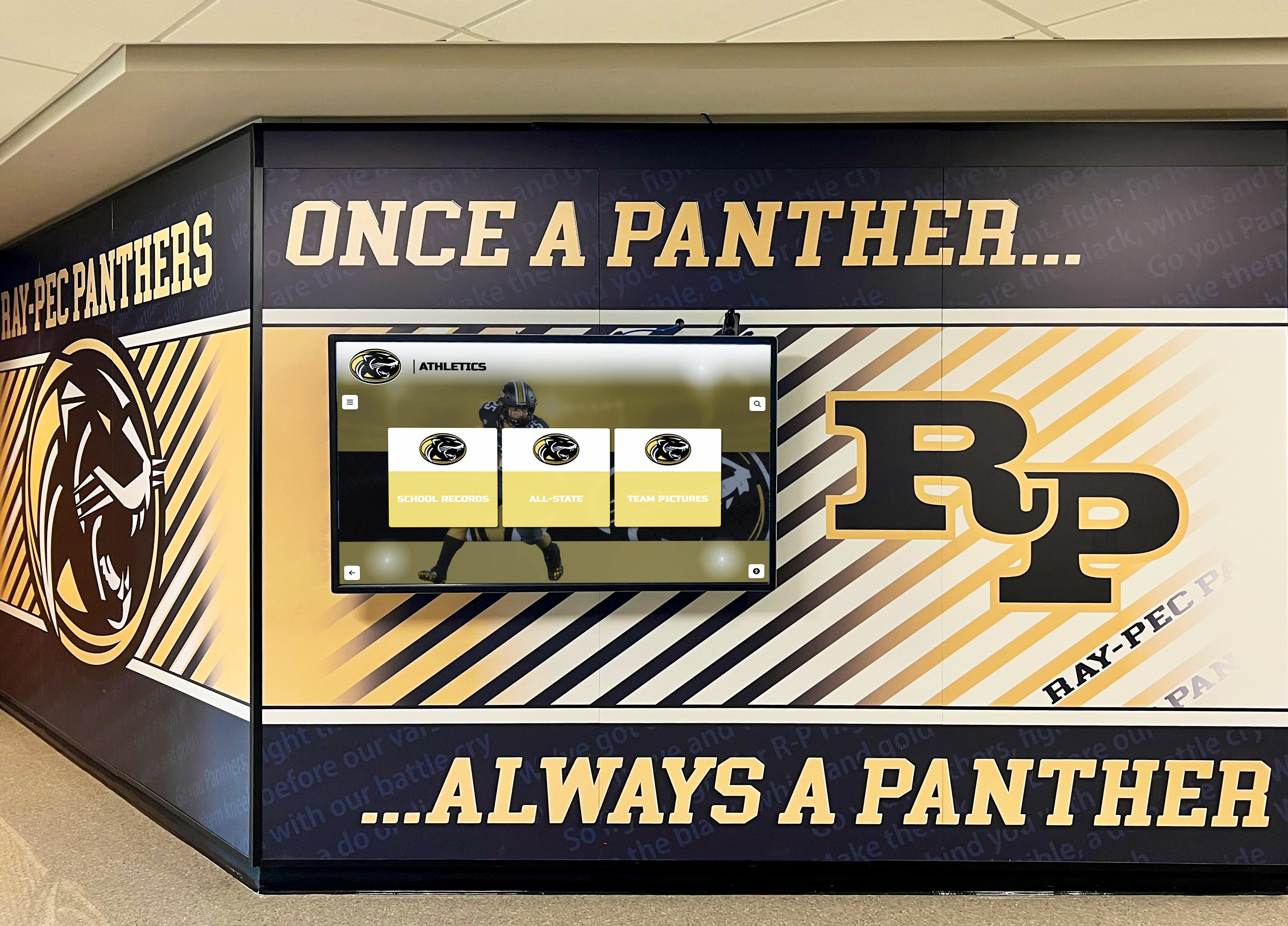
Professional installations integrate multiple recognition approaches creating comprehensive celebration serving diverse school community needs
Hybrid Recognition Strategies: Combining Traditional and Digital
Schools need not choose between traditional and digital recognition exclusively. Hybrid approaches optimize benefits from both while addressing respective limitations.
Complementary Recognition Framework
Strategic combination leverages each approach’s strengths while mitigating weaknesses.
Physical Artifacts in Traditional Cases
Preserve irreplaceable physical memorabilia—championship trophies, historic uniforms, founding documents, donated artifacts, or commemorative items—in traditional display cases providing appropriate security and environmental protection. These authentic objects carry tangible significance and emotional resonance that digital representations cannot fully replicate.
Comprehensive Digital Recognition
Implement interactive digital systems for scalable recognition accommodating complete achievement documentation across all activities, timeframes, and student participation. Digital platforms celebrate every worthy accomplishment without physical space constraints, creating inclusive communities where all excellence receives acknowledgment.
QR Code Integration
Install QR codes adjacent to traditional display cases linking to comprehensive digital content. Visitors viewing physical trophies scan codes accessing extended information—season highlights, team rosters, individual statistics, championship game recaps, and multimedia content providing context impossible within physical display space limitations.
This integration bridges traditional and digital approaches, maintaining familiar physical presence while extending engagement through rich digital storytelling that brings recognition to life.
Strategic Placement and Visibility
Coordinated placement maximizes impact from both recognition types.
High-Prestige Traditional Displays
Position traditional trophy cases featuring most significant achievements in prominent locations—main entrance lobbies, administrative areas, or athletic facility showcases creating immediate visual impact for visitors and communicating program excellence through architectural prominence.
High-Traffic Digital Installations
Install interactive digital displays in locations maximizing daily student engagement—commons areas, cafeterias, main hallways, or student gathering spaces ensuring consistent visibility and exploration opportunities throughout school days.
This strategic distribution provides both impressive traditional displays for special occasions and visitors while creating ongoing digital engagement supporting daily school pride and community building.
Phased Implementation Approach
Budget constraints often prevent simultaneous implementation of comprehensive recognition systems. Phased approaches enable progress while managing financial realities.
Phase One: Preserve Existing Traditional Displays
Maintain current trophy cases serving basic recognition needs while beginning digital platform content development. Schools can populate cloud-based recognition databases, develop content frameworks, and prepare comprehensive documentation before physical display investment.
Phase Two: Initial Digital Installation
Add first interactive touchscreen installation in strategic high-traffic location, implementing comprehensive digital recognition previously developed. This foundational installation demonstrates value and engagement potential while serving immediate recognition needs.
Phase Three: Expand Digital Coverage
Based on success and available funding, expand digital installations to additional locations—separate buildings, sport-specific facilities, or multiple displays serving different recognition categories (athletics, academics, arts, community).
Phase Four: Traditional Display Evolution
Evaluate whether traditional trophy cases continue serving valuable functions or whether expanded digital recognition enables repurposing space for other needs. Some schools maintain selective traditional displays for special artifacts while transitioning comprehensive recognition to digital platforms providing superior capacity and engagement.
Schools implementing recognition through staged approaches manage investments across budget cycles while making continuous progress toward comprehensive recognition goals.
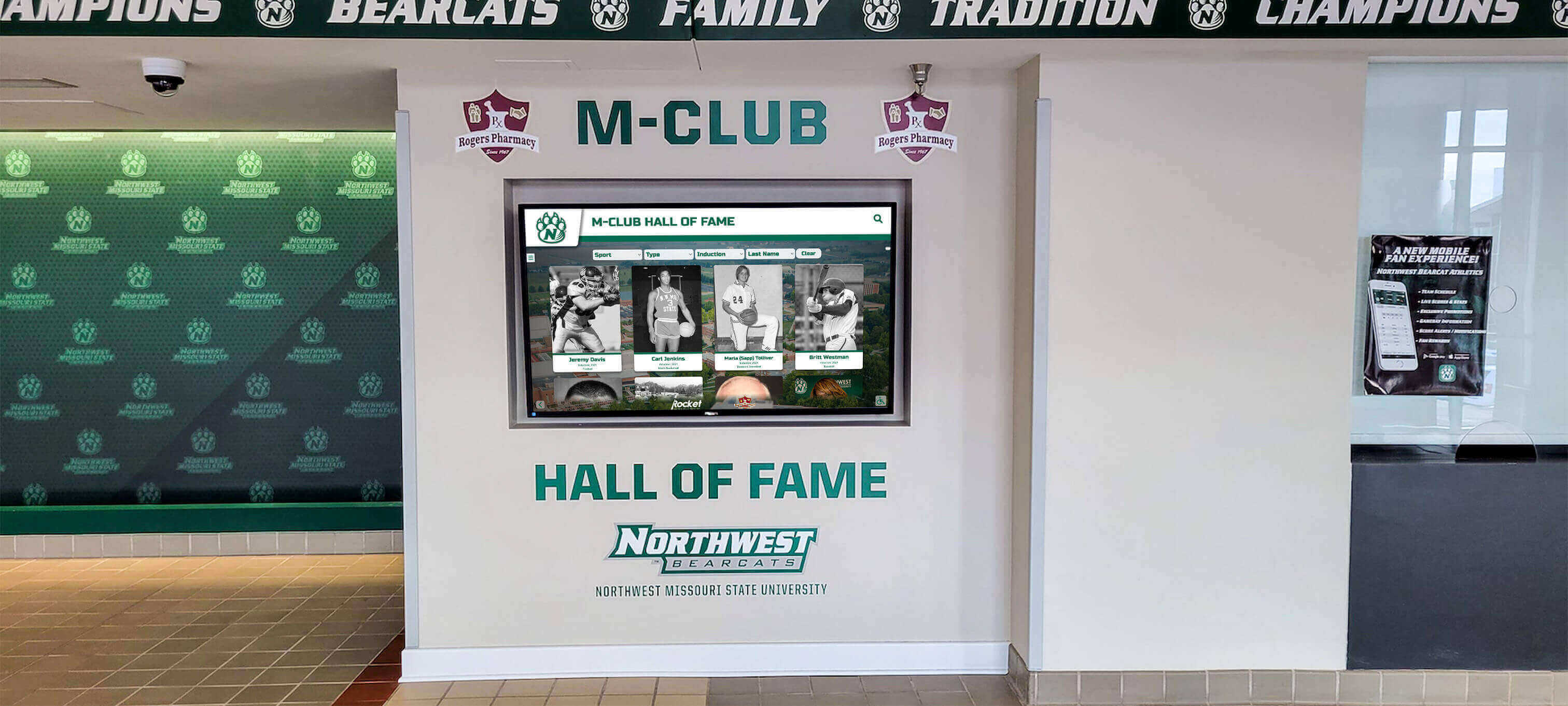
Professional recognition installations create destination experiences celebrating excellence while serving multiple functional and community-building purposes
Implementation Considerations for School Administrators
Successful recognition system selection and implementation requires systematic planning addressing institutional contexts, stakeholder needs, and practical realities.
Needs Assessment and Goal Definition
Clear objectives guide platform selection ensuring recognition investments align with institutional priorities.
Capacity Requirements Analysis
Evaluate recognition volume across all categories:
- How many annual achievements require acknowledgment across athletics, academics, arts, and co-curriculars?
- What historical recognition exists requiring preservation or migration?
- How rapidly does achievement accumulation occur across all programs?
- What capacity projections exist for 5-10 year horizons?
Schools adding 30+ achievements annually will exhaust traditional trophy case capacity within 2-3 years, requiring expansion investments or recognition restrictions. Digital platforms accommodate unlimited growth without capacity-based costs or constraints.
Engagement Priority Assessment
Define engagement goals:
- Should recognition inspire current students through compelling storytelling and deep content?
- How important is interactive exploration versus passive display?
- Do alumni and family remote access priorities exist?
- Should recognition integrate with broader communications and advancement efforts?
Schools prioritizing active student engagement, community building, and comprehensive storytelling benefit dramatically from digital recognition capabilities traditional cases cannot provide.
Operational Capacity Evaluation
Assess administrative realities:
- What staff resources exist for recognition management and content updates?
- How much time should recognition maintenance consume?
- What technical capabilities do staff possess for system management?
- How important is remote management versus facilities-dependent access?
Digital platforms with intuitive cloud-based management dramatically reduce operational burden compared to manual trophy case maintenance, freeing staff time for higher-value activities while ensuring recognition currency.
Stakeholder Consultation and Buy-In
Recognition systems serve diverse constituencies whose perspectives inform successful implementation.
Administrative Leadership
Principals, assistant principals, and administrative teams need confidence that recognition investments deliver value justifying expenditure while reflecting school values and mission appropriately. Present comprehensive cost analyses, engagement research, and peer school examples demonstrating return on investment through enhanced school pride and community building.
Athletic Directors and Activities Coordinators
Staff directly managing recognition require systems enabling efficient operation without creating administrative burden. Demonstrate platform usability through hands-on evaluation, emphasize time savings compared to current processes, and ensure selected solutions accommodate sport-specific and activity-specific recognition needs comprehensively.
Development and Alumni Relations
Advancement professionals value recognition supporting fundraising efforts, alumni engagement, and donor stewardship. Emphasize web accessibility enabling global reach, social sharing amplifying institutional visibility, and comprehensive historical content maintaining alumni connections across decades.
Facilities and IT Staff
Technical teams need assurance that systems integrate successfully with existing infrastructure while avoiding excessive support burden. Demonstrate reliability, address network requirements, clarify support responsibilities, and establish technical specifications ensuring successful integration.
Student and Family Voices
Survey students and families regarding recognition preferences, engagement patterns, and value perceptions. Student perspectives reveal whether traditional displays effectively engage contemporary audiences or whether interactive digital experiences resonate more strongly with current populations.
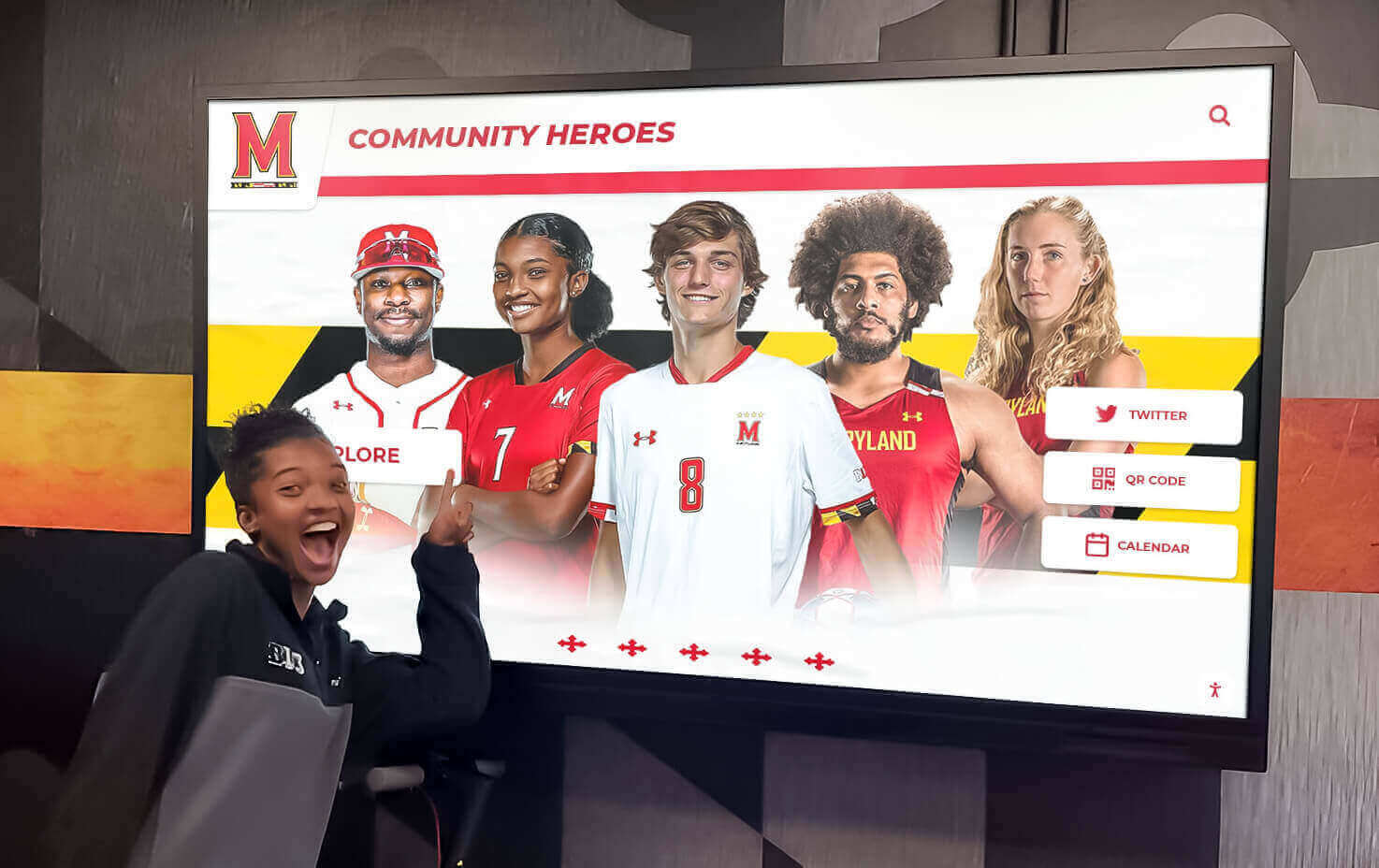
Student-centered recognition creates engagement and school pride through accessible, compelling celebration of peer achievement
Vendor Selection and Partnership Quality
Platform and vendor selection significantly impacts long-term satisfaction and recognition program success.
Purpose-Built vs. Generic Solutions
Generic digital signage platforms designed for corporate communications or retail advertising lack features essential for educational recognition—searchable achievement databases, individual profile pages, automated equitable rotation, intuitive educational content management, or ADA compliance ensuring accessibility for all students.
Purpose-built recognition solutions like Rocket Alumni Solutions provide specialized capabilities generic platforms cannot match while eliminating expensive custom development creating recognition-specific functionality.
Educational Experience and Understanding
Vendors serving educational markets understand schools’ unique contexts, constraints, and priorities that differ substantially from corporate environments. Evaluate educational client rosters, request school references, and assess whether vendors demonstrate genuine understanding of academic calendars, student privacy requirements, budget realities, and institutional decision-making processes.
Implementation Support and Training
Comprehensive onboarding ensures successful launches and confident operation. Quality vendors provide content migration assistance, staff training, launch support, and ongoing technical assistance ensuring schools achieve value quickly rather than struggling through difficult implementations independently.
Ongoing Partnership and Platform Evolution
Recognition systems serve schools for decades, making vendor stability and platform development trajectories crucial evaluation criteria. Assess financial stability, product roadmaps, update frequencies, and customer retention rates indicating whether vendors deliver sustained value through continuous improvement rather than initial sales followed by minimal support.
Building School Community Through Modern Recognition
Beyond practical considerations of capacity, cost, and maintenance, recognition systems fundamentally influence school culture, community bonds, and institutional pride that determine educational environment quality.
Creating Digital Warming Through Personalized Recognition
The concept of digital warming describes transformation occurring when cold impersonal acknowledgment becomes vibrant personalized celebration drawing community members into deeper institutional connection.
Continuous Content Surfacing
Unlike static trophy cases receiving occasional glances, interactive digital recognition creates ongoing discovery experiences. Featured content rotation ensures all achievements receive highlighted visibility over time. Students exploring recognition regularly discover new content—recent achievements, historical milestones, or spotlighted individuals—creating reasons for repeated engagement maintaining sustained awareness of institutional excellence.
This continuous surfacing builds what we call warming effects—the cumulative impact of regular exposure to compelling content that deepens community bonds and strengthens school pride through frequent positive reinforcement.
Personalized Discovery Pathways
Advanced search and filtering enable individuals to discover personally relevant content matching their interests and connections. Students search for older siblings’ achievements, parents’ high school accomplishments, or specific sports and activities they participate in. This personalization creates individual relevance impossible with generic displays, transforming recognition from background information into personal discoveries sparking pride and connection.
Social Connection and Community Building
Recognition showcasing comprehensive school achievement creates visible communities where students see themselves as participants in ongoing excellence narratives. When students explore recognition discovering hundreds of accomplished predecessors in their activities, they understand themselves as joining distinguished traditions while feeling accountability to maintain excellence standards established by those who came before.
This community dimension proves particularly powerful during challenging periods. Students struggling with difficult seasons or disappointing outcomes gain perspective understanding that all programs experience ups and downs across years, that institutional support persists regardless of immediate results, and that their contributions matter within broader program histories extending beyond single seasons.
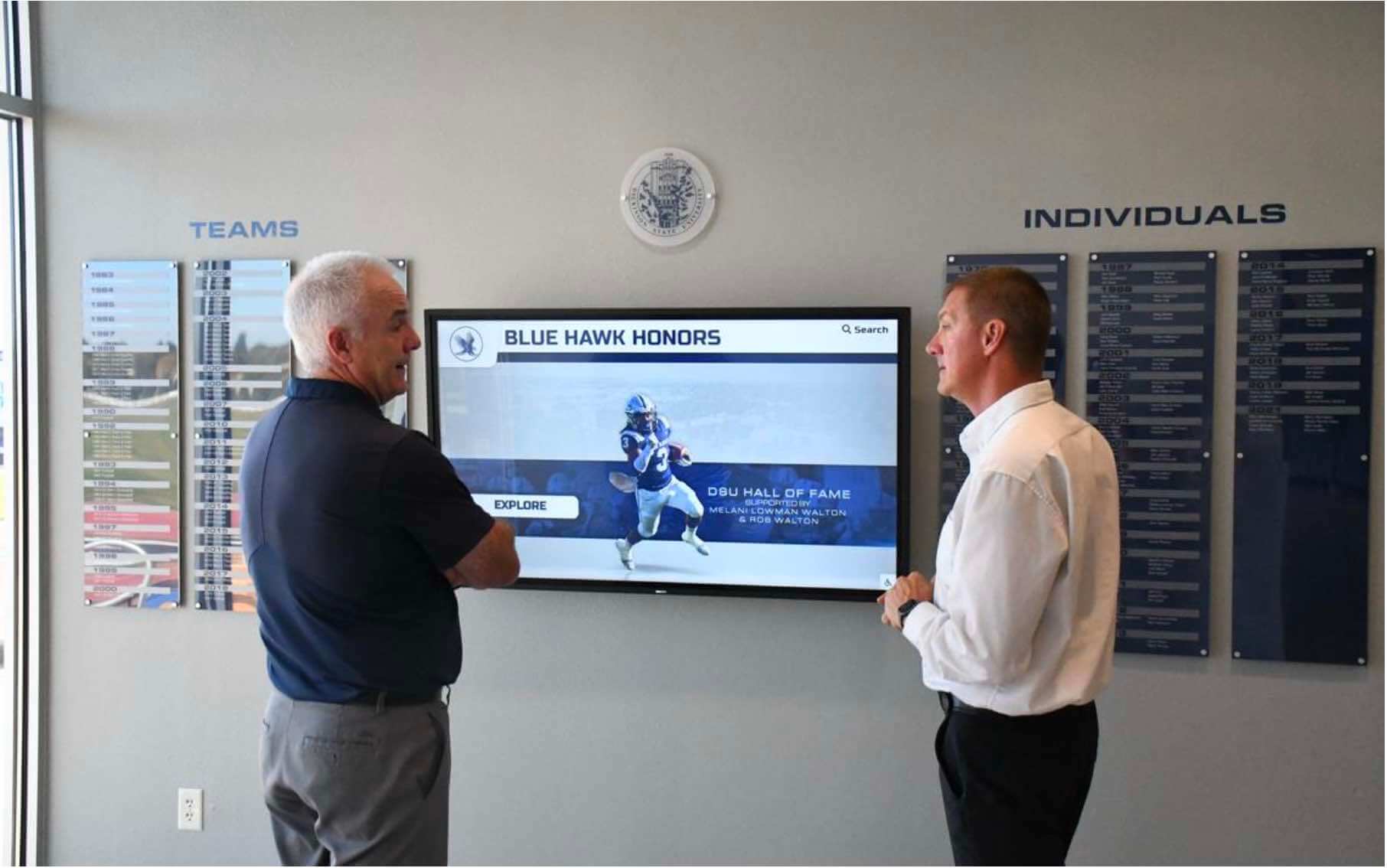
Recognition installations create gathering destinations where community members connect around shared pride and institutional heritage
Supporting School Pride and Positive Culture
Visible achievement celebration influences institutional culture, student attitudes, and community perceptions in ways that extend far beyond simple acknowledgment.
Reinforcing Excellence Expectations
Comprehensive recognition communicating that schools notice, celebrate, and remember achievement establishes cultural norms where students expect high performance and feel motivated to meet established standards. When excellence pervades visible institutional recognition, students internalize these expectations, understanding that their schools value and celebrate achievement as central to identity and mission.
Motivating Current Student Participation
Seeing older students, recent graduates, and historical achievers celebrated through engaging recognition creates aspirational targets motivating current student effort and commitment. Athletes train harder knowing championship achievements earn lasting recognition rather than brief congratulations quickly forgotten. Academic competitors prepare diligently understanding that distinction brings permanent acknowledgment celebrating intellectual excellence comparably to athletic achievement.
Research consistently demonstrates that visible recognition of predecessors motivates current students more effectively than abstract adult encouragement, as peer examples feel more relatable and achievable than external expectations.
Building Positive Institutional Narratives
Schools with prominent achievement recognition create self-reinforcing positive narratives attracting families, supporting enrollment, and building community support. Prospective families touring campuses encounter visible excellence celebrations communicating that schools prioritize student success and maintain traditions of achievement. This visible excellence influences enrollment decisions, particularly for families prioritizing athletic opportunities, academic rigor, or comprehensive co-curricular programming.
Local community members encountering recognition during school events develop enhanced perceptions of institutional quality, supporting levy campaigns, bond issues, and community partnerships essential for public school success.
Engaging Alumni and Building Lifelong Connections
Recognition extending beyond current students creates lasting institutional relationships supporting advancement priorities and community engagement.
Maintaining Alumni Connections
Graduates living across the country or internationally reconnect with school memories through online recognition platforms showcasing their achievements and enabling exploration of program evolution. This remote accessibility maintains bonds that might otherwise fade as alumni establish lives far from school communities.
Regular communication highlighting newly added historical content, anniversary recognitions, or spotlight features brings alumni back to recognition platforms repeatedly, creating ongoing engagement rather than single nostalgia visits.
Supporting Fundraising and Advancement
Prominent recognition demonstrating schools value and remember alumni contributions creates positive advancement climates supporting fundraising success. When alumni see that schools maintained recognition of their achievements decades after graduation, they feel greater institutional connection and obligation to support schools that honored their contributions.
Development officers utilize recognition content during cultivation conversations, prospect research, and stewardship communications demonstrating institutional appreciation extending across decades. Donor recognition platforms integrated with alumni achievement databases create comprehensive relationship profiles supporting personalized engagement strategies.
Enabling Mentorship and Professional Networking
Comprehensive achievement databases facilitate mentorship connections between accomplished alumni and current students sharing interests. Schools implement formal programs connecting current athletes with graduated predecessors in related sports or careers, creating guidance relationships benefiting students while maintaining alumni engagement through meaningful contribution opportunities.
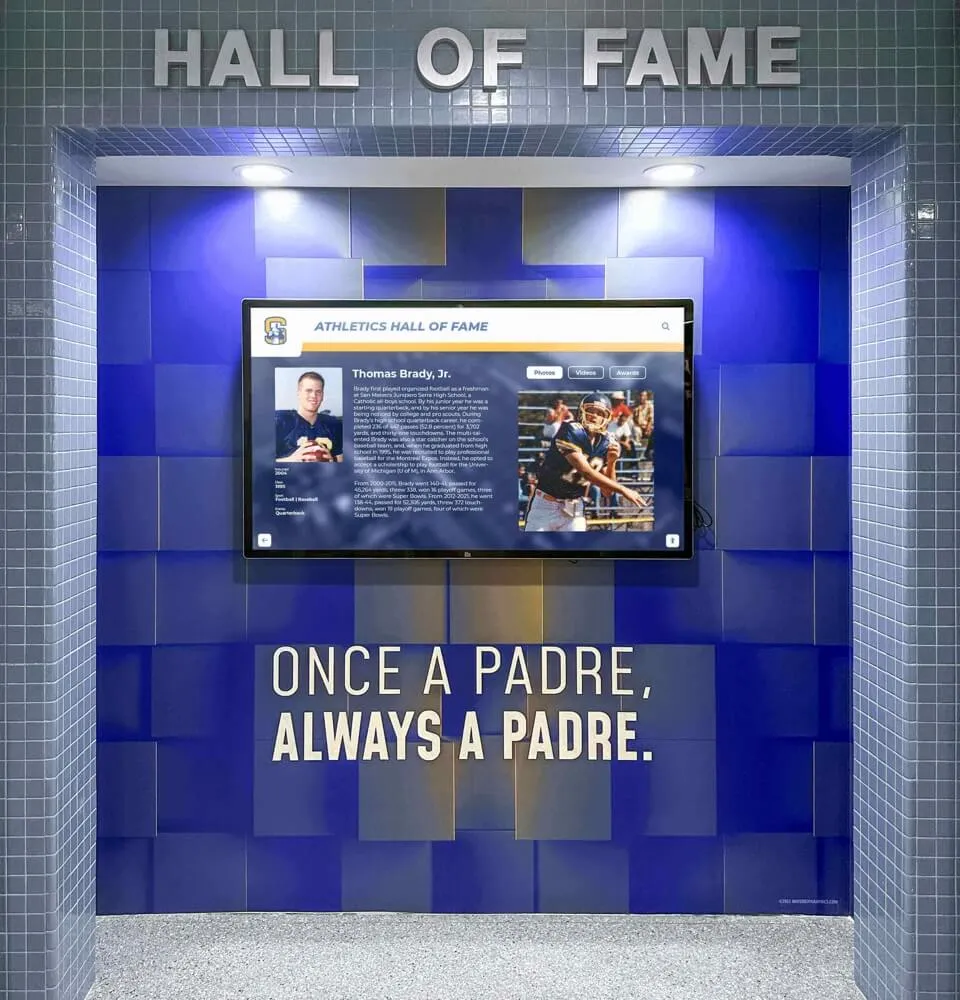
Branded recognition installations communicate institutional pride while creating permanent legacies celebrating decades of school excellence
Future Considerations: Recognition Technology Evolution
Digital recognition platforms continue evolving, with emerging capabilities creating new engagement opportunities and institutional value.
Artificial Intelligence and Content Automation
AI technologies increasingly support recognition management through automated content enhancement and intelligent personalization.
Automated Content Generation
Machine learning analyzes achievement data generating narrative summaries, statistical highlights, and contextual information without manual writing. Systems might automatically create season recaps highlighting key performances, identify record-breaking achievements warranting special recognition, or generate comparative analyses showing current accomplishment significance relative to program history.
Intelligent Content Recommendations
Recognition platforms learn individual user interests through interaction patterns, suggesting relevant content matching demonstrated preferences. Students frequently exploring specific sports receive personalized recommendations highlighting related achievements, while academic competition enthusiasts discover comprehensive recognition across intellectual domains.
Enhanced Multimedia Integration
Advancing mobile technology and media capabilities enable richer content types improving recognition engagement and emotional impact.
Video Content Expansion
High-quality video capture becoming ubiquitous through smartphones enables extensive highlight collection without expensive production. Schools systematically capture game highlights, performance recordings, competition presentations, and achievement moments creating video libraries enriching digital recognition exponentially.
Automated video editing tools generate highlights from longer recordings, identifying key moments through AI analysis and assembling polished presentations from raw footage with minimal manual editing required.
Augmented Reality Experiences
Emerging AR capabilities overlay digital content on physical environments through smartphones or tablets. Students pointing devices at traditional trophy cases might see three-dimensional holographic representations of championship seasons, animated statistics, or immersive highlight experiences bringing static physical artifacts to life through digital enhancement.
Integration with Broader School Systems
Recognition platforms increasingly integrate with comprehensive school technology ecosystems creating seamless experiences across multiple touchpoints.
Student Information System Connections
Direct integration with student information systems enables automated recognition updates triggered by achievement data entries. When coaches enter game statistics, administrators record academic honors, or activities coordinators log competition results, recognition platforms automatically generate appropriate acknowledgment without manual duplicate entry across multiple systems.
Social Media and Communications Coordination
Recognition content feeds automatically into school communications channels—social media posts celebrating recent achievements, newsletter features highlighting historical milestones, website updates maintaining recognition currency, and mobile app notifications keeping school communities informed about recognition additions.
This integration ensures recognition serves multiple institutional communications needs simultaneously rather than creating isolated displays disconnected from broader community engagement efforts.
Schools evaluating modern recognition technologies should consider platforms positioned for continuous evolution rather than static solutions requiring eventual replacement as capabilities advance.
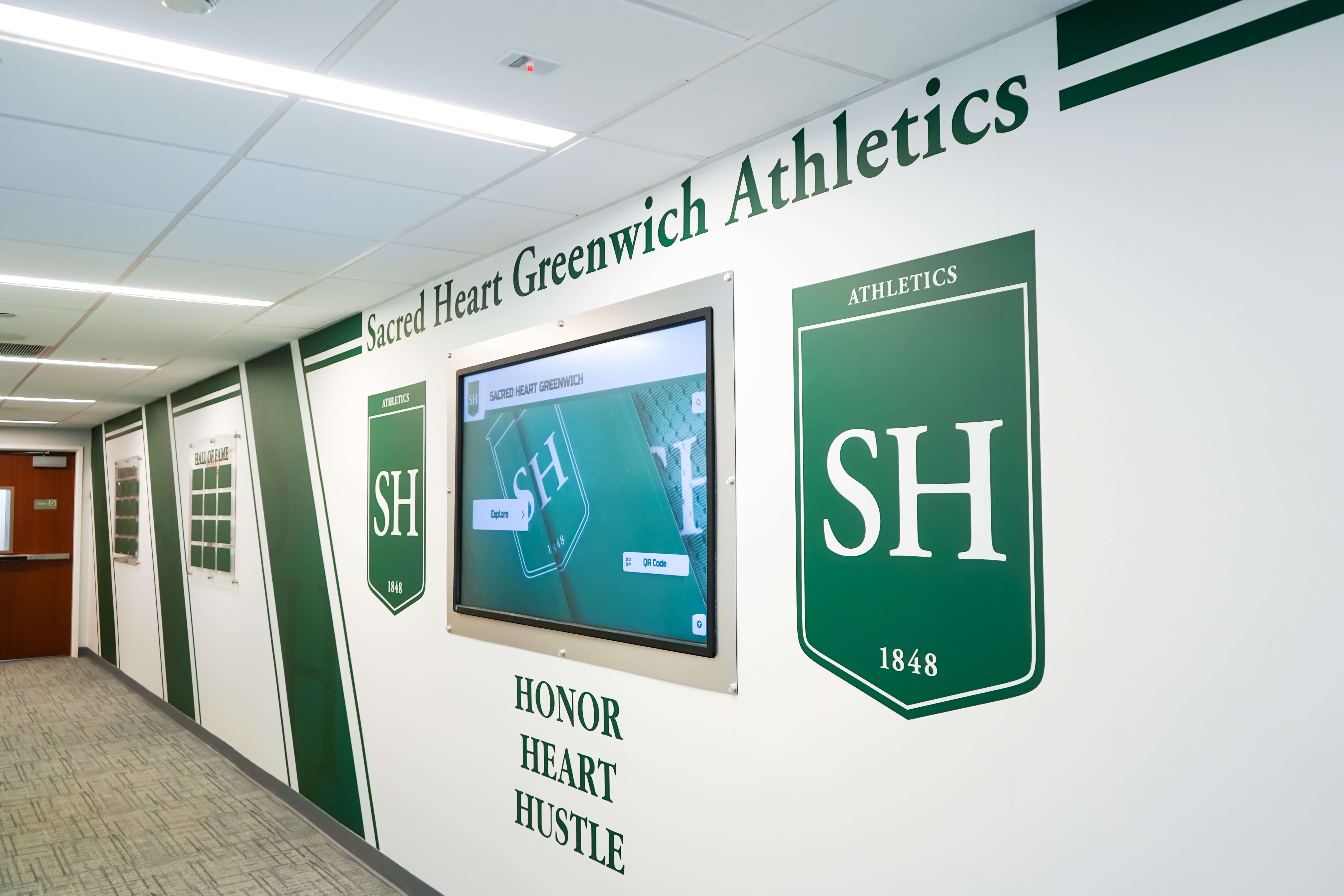
Thoughtfully designed recognition environments integrate traditional architectural elements with modern digital capabilities creating comprehensive celebration
Making the Decision: Is Modern Recognition Right for Your School?
Schools considering recognition investments should evaluate whether digital solutions align with institutional priorities, contexts, and constraints.
Scenarios Strongly Favoring Digital Recognition
Certain situations clearly indicate digital approaches deliver superior value compared to traditional alternatives.
Rapidly Growing Achievement Volume
Schools adding 30+ achievements annually across athletics, academics, and activities will exhaust traditional trophy case capacity quickly. Rather than continually expanding physical infrastructure at $5,000-15,000 per addition, digital platforms accommodate unlimited growth within single installations providing permanent capacity solutions.
Limited Physical Space
Schools with constrained hallway or commons area space cannot accommodate extensive trophy case installations without sacrificing circulation, accessibility, or other functional requirements. Digital systems maximize recognition within minimal physical footprints, often replacing 4-6 traditional cases with single touchscreen installations providing exponentially greater capacity.
Emphasis on Comprehensive Storytelling
Schools prioritizing deep engagement through compelling narratives, multimedia content, and rich context benefit dramatically from digital capabilities traditional displays cannot match. Interactive platforms transform superficial name listing into meaningful celebration building school pride through emotional connection rather than basic acknowledgment.
Geographically Distributed Communities
Schools serving broad geographic areas with alumni nationwide or internationally gain substantial value from web accessibility extending recognition beyond campus visitors. Online platforms maintain connections with graduates who cannot visit frequently while enabling social sharing amplifying institutional visibility through supporter networks.
Staff Time Constraints
Schools lacking dedicated staff time for manual trophy case maintenance benefit from cloud-based digital management requiring 60-80% less time investment while enabling remote updates without facilities dependencies. This operational efficiency proves particularly valuable in smaller schools with limited administrative support staff.
Scenarios Where Traditional Approaches May Suffice
Despite digital advantages, some contexts support continued traditional trophy case use.
Very Limited Achievement Volume
Small schools with minimal competitive programming adding only 5-10 achievements annually may not exhaust traditional case capacity for decades. When physical space remains abundant and recognition volume stays modest, traditional approaches continue serving basic needs without justifying digital investment.
Exceptional Physical Artifact Collections
Schools possessing historically significant artifact collections requiring climate-controlled preservation and public display need traditional cases providing appropriate archival conditions. Priceless memorabilia, founding documents, donated collections, or historic objects demand secure physical displays regardless of supplementary digital recognition.
Severely Constrained Technology Infrastructure
Rural schools with limited internet bandwidth, unreliable connectivity, or minimal technical support capacity may find traditional approaches more practical than digital systems requiring network access and occasional technical assistance. Though increasingly rare as connectivity expands, infrastructure limitations sometimes constrain digital implementation feasibility.
Strong Community Attachment to Traditional Recognition
Communities with powerful traditional attachments to trophy cases may resist digital transitions despite practical advantages. In these contexts, hybrid approaches combining traditional displays for most significant achievements with supplementary digital capacity for comprehensive recognition may provide optimal paths forward respecting tradition while embracing innovation.
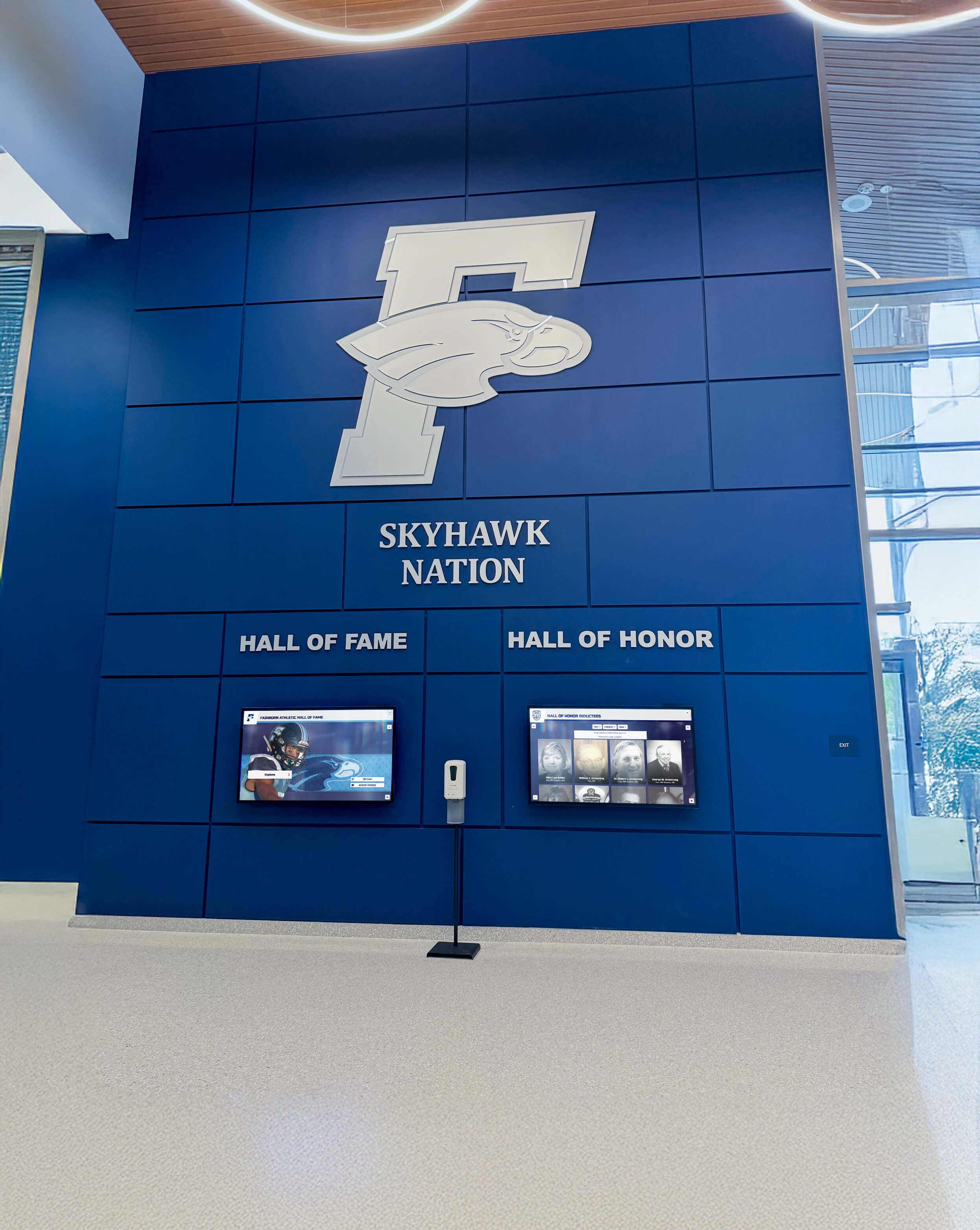
Prominent recognition installations communicate institutional values and celebrate excellence as central to school identity and community pride
Conclusion: Transforming School Recognition for Contemporary Communities
School display cases serve far more important functions than simple acknowledgment—they communicate institutional values, celebrate excellence as central to school identity, motivate current student achievement, preserve institutional heritage, and build community bonds that strengthen school culture and pride. As schools navigate recognition decisions, understanding both traditional approaches’ proven value and digital innovations’ transformative potential enables informed choices aligned with institutional contexts, priorities, and resources.
Traditional trophy cases delivered exceptional value for generations of schools, providing tangible artifact preservation, physical presence requiring no technical infrastructure, and familiar recognition formats communities understand intuitively. These strengths ensure physical displays remain relevant for specialized applications including irreplaceable artifact preservation and supplementary recognition honoring most exceptional achievements through prominent physical tributes.
Yet traditional approaches face fundamental limitations that digital recognition addresses comprehensively. Physical capacity constraints forcing difficult decisions about recognition scope or removal, static presentation limiting engagement depth and storytelling potential, expensive update processes consuming substantial staff time, and campus-only accessibility excluding remote community members create increasingly untenable trade-offs as schools seek comprehensive recognition serving diverse contemporary needs.
Modern digital recognition platforms like Rocket Alumni Solutions transform what school celebration accomplishes. Unlimited recognition capacity enables inclusive acknowledgment celebrating all worthy achievements regardless of volume, rich multimedia capabilities support compelling storytelling impossible within physical constraints, interactive exploration creates active engagement replacing passive viewing, real-time content management eliminates update delays while reducing administrative burden, and web accessibility extends reach globally while enabling social amplification through supporter networks.
The concept of digital warming captures transformation occurring when schools implement modern recognition systems. Cold impersonal name lists become vibrant personalized communities where students discover relevant content matching their interests and connections. Occasional glances at static displays transform into extended exploration sessions averaging 3-5 minutes. Campus-only acknowledgment expands to global accessibility enabling families and alumni worldwide to celebrate achievements and maintain institutional bonds regardless of location. Generic recognition becomes personalized discovery creating individual relevance and emotional connection impossible with traditional approaches.
Beyond practical considerations of capacity, cost, and maintenance, recognition profoundly influences school culture, student motivation, alumni engagement, and community perceptions determining institutional reputation and advancement success. Schools implementing comprehensive recognition building genuine pride and connection create self-reinforcing positive environments attracting families, supporting enrollment, building community backing, maintaining alumni relationships, and strengthening advancement outcomes across multiple dimensions simultaneously.
Whether implementing recognition systems initially, evaluating traditional display replacement, or expanding existing programs, the frameworks explored throughout this guide provide evidence-based foundations for decisions that will serve schools for decades. Hybrid approaches combining physical artifact preservation with digital capacity and engagement optimize both traditional and modern approaches, while phased implementations enable progress within budget realities across multiple years.
Your students’ achievements—the championships won, records broken, academic distinctions earned, artistic excellence demonstrated, and leadership contributions made—deserve recognition matching their significance. Whether that recognition takes traditional forms preserving physical artifacts through secure display, modern digital platforms creating unlimited capacity and rich engagement, or hybrid combinations optimizing both approaches, the essential priority remains creating school communities where excellence receives celebration building the pride, motivation, and institutional bonds that define exceptional educational environments.
The schools that will thrive in coming decades will be those creating vibrant communities where all excellence receives meaningful celebration, where students feel genuinely valued and motivated toward continuous improvement, where alumni maintain lifelong connections supporting advancement priorities, and where institutional pride pervades daily experiences creating positive culture benefiting everyone. Recognition systems thoughtfully designed and implemented become powerful tools achieving these goals, transforming acknowledgment obligations into community-building experiences that strengthen schools fundamentally.
Ready to explore how modern recognition can transform your school’s celebration of excellence? Discover comprehensive digital recognition solutions that honor every achievement while building the engaged school community where students, staff, alumni, and supporters celebrate excellence together across generations.