



Every student who pushes through challenging coursework, demonstrates leadership in their community, perseveres through obstacles, or contributes to school culture deserves recognition that validates their efforts. School awards ceremonies create these defining moments—public celebrations honoring achievements that might otherwise pass unnoticed, validating dedication that students might question, and demonstrating that communities genuinely value excellence beyond grades and test scores.
Yet many schools struggle with awards ceremony planning. How do you create events that feel meaningful rather than tedious obligation? What award categories recognize diverse achievement types without diluting excellence? How do you balance celebrating exceptional students with acknowledging broad participation? What formats keep audiences engaged while ensuring honorees receive proper recognition? How do budget and time constraints limit what you can accomplish?
These challenges intensify as schools recognize that effective recognition extends beyond annual ceremonies into year-round engagement building pride, motivation, and connected communities where students feel genuinely valued for their contributions.
This comprehensive guide explores everything schools need to plan awards ceremonies that truly honor student achievement. You’ll discover strategic planning frameworks, meaningful award categories, engaging ceremony formats, inclusive recognition approaches, budget-conscious solutions, and modern digital recognition methods extending celebration beyond single events into permanent traditions connecting generations of students.

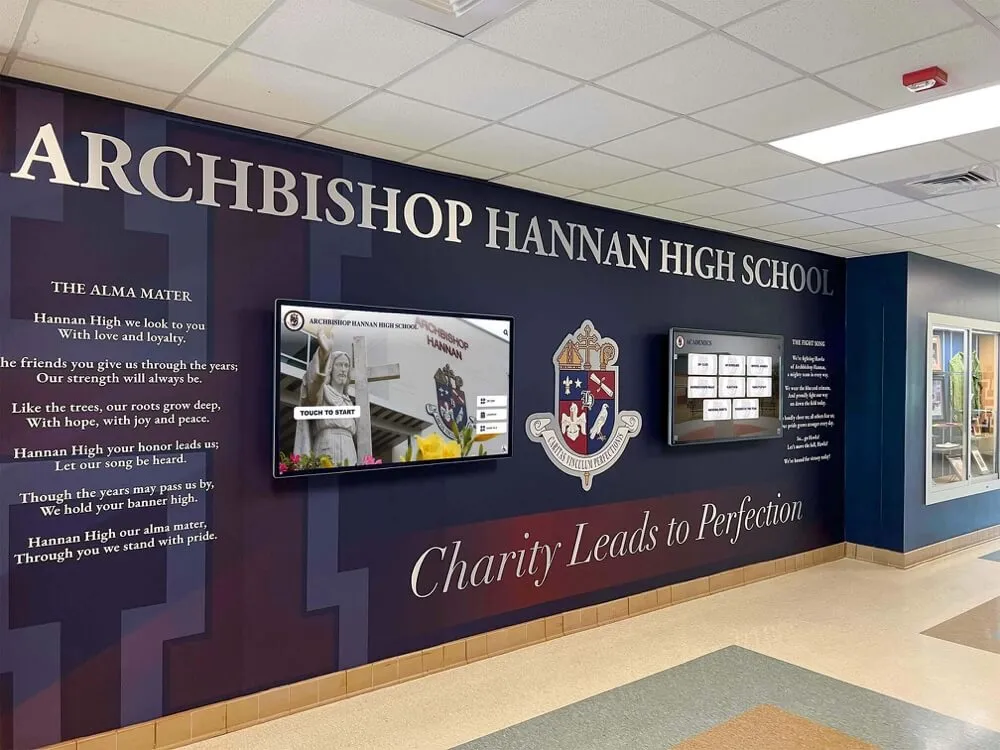
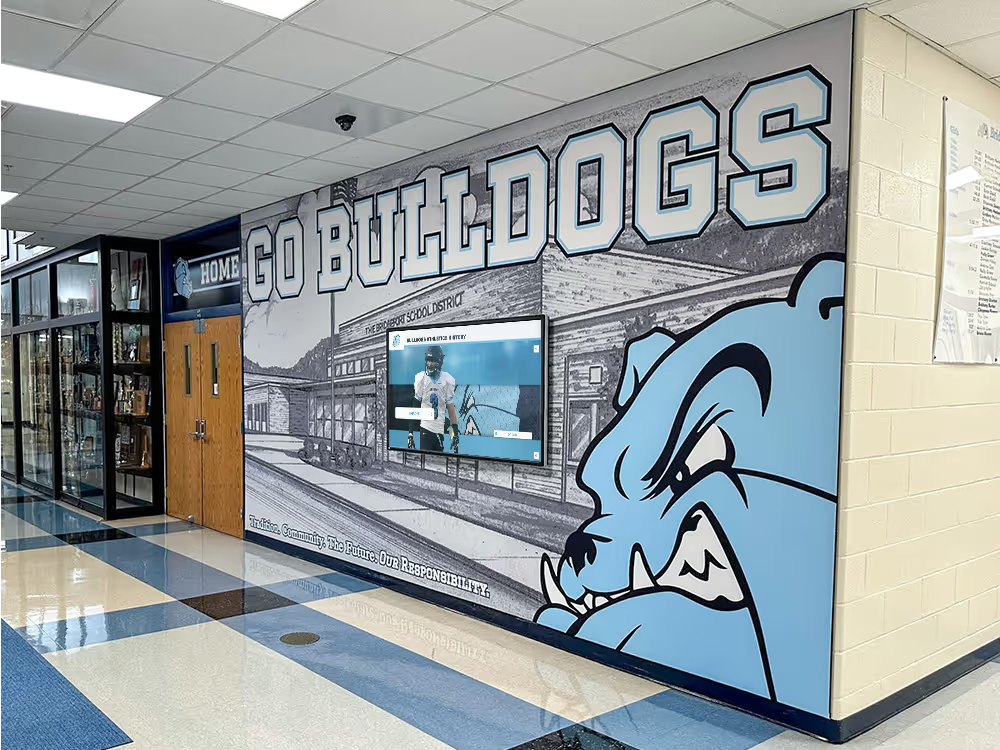
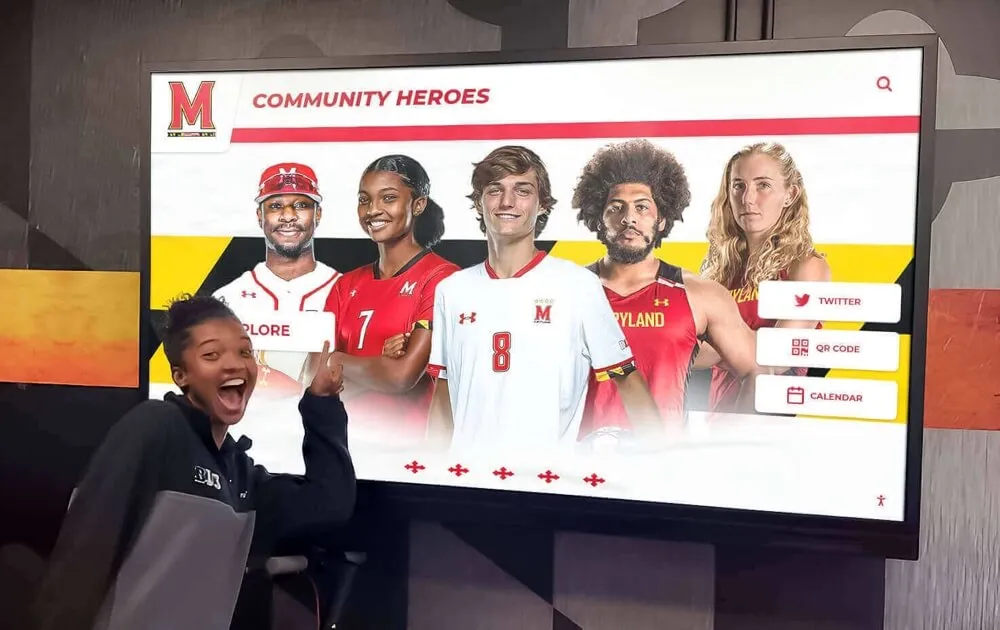
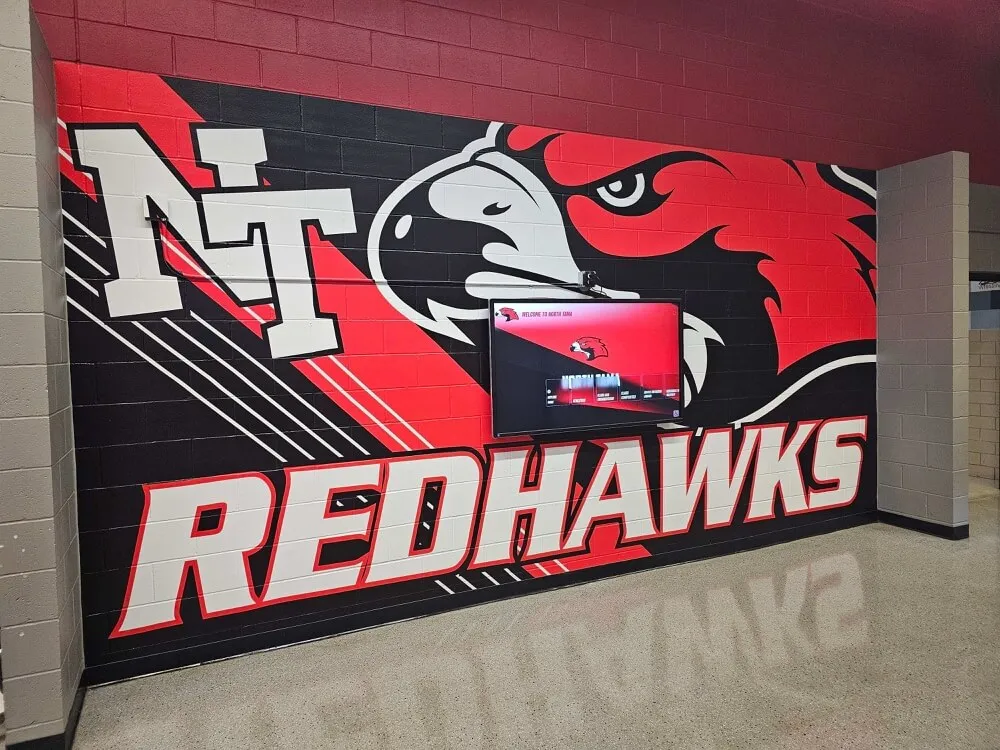
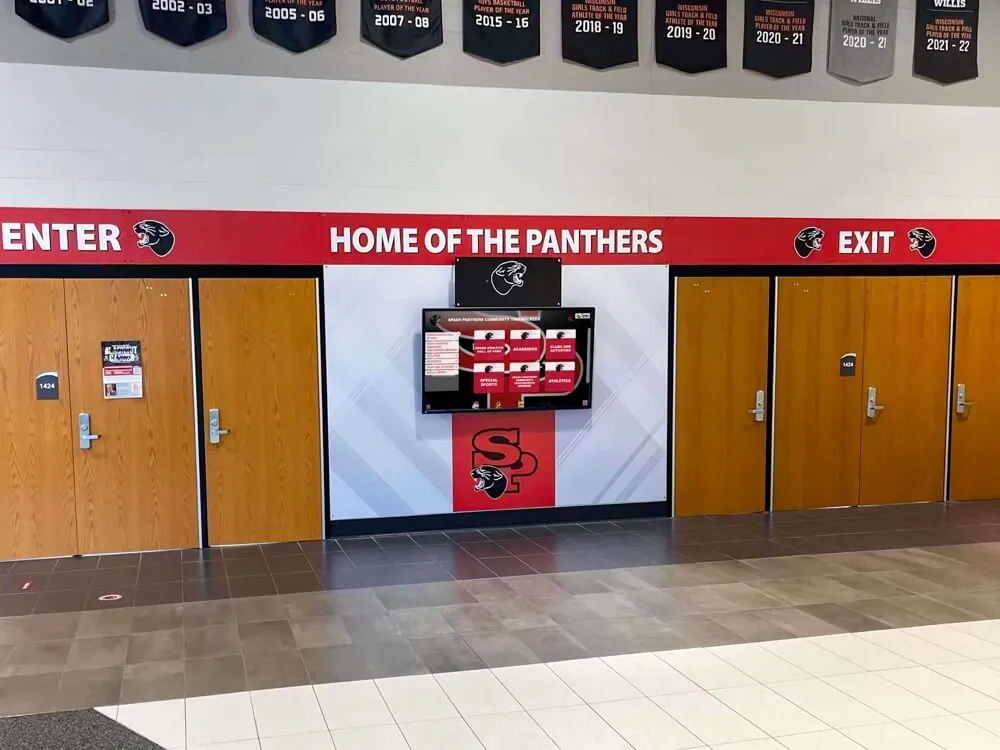
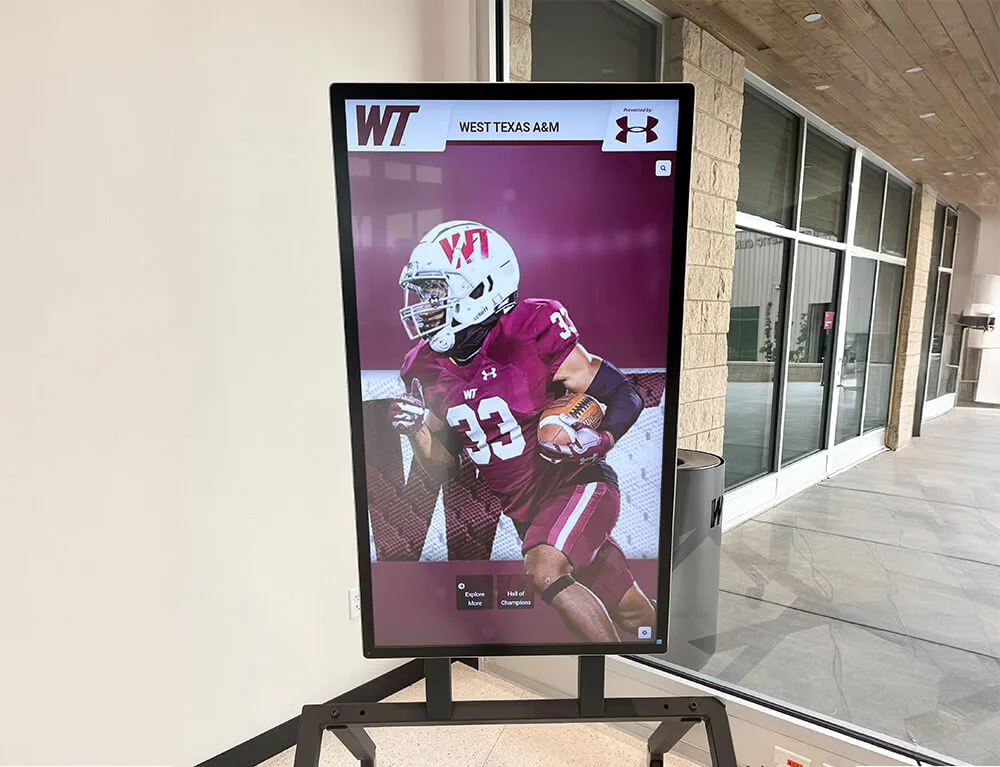
Interactive recognition displays create engaging exploration of student achievements building school pride throughout facilities
Understanding the Purpose of School Awards
Before diving into logistics and planning details, understanding why school awards matter helps organizers create ceremonies achieving intended impacts.
Why Recognition Programs Matter
School awards serve multiple vital functions within educational communities and student development.
Validating Student Effort and Achievement
Students invest enormous energy into academic pursuits, leadership activities, artistic endeavors, athletic participation, and community service. Awards provide formal acknowledgment that their dedication received notice and appreciation from educators, peers, families, and communities.
This validation proves particularly meaningful for students whose achievements don’t generate obvious external recognition—students who improved dramatically without reaching top performance levels, reliable contributors who support peers without seeking attention, or students demonstrating character qualities like integrity or perseverance that don’t appear on transcripts or standardized test results.
Ceremonies create opportunities acknowledging these essential contributions beyond competitive outcomes while reinforcing that schools value diverse excellence types rather than singular narrow achievement definitions.
Motivating Continued Excellence
Recognition inspires future achievement by demonstrating that effort and excellence receive acknowledgment. When students witness peers honored for specific accomplishments—academic improvement, community service, artistic achievement, or leadership development—they develop clear understanding of institutional values and pathways toward earning similar recognition.
Research consistently demonstrates that meaningful recognition increases student motivation, improves engagement with school communities, enhances persistence through challenging work, and strengthens commitment to personal excellence across domains including academics, arts, athletics, and character development.
Building School Culture and Community
Annual awards traditions create cultural continuity connecting current students to institutional legacies. When today’s students receive honors that celebrated distinguished alumni decades prior, they join proud traditions extending beyond individual academic years. When recognition ceremonies articulate institutional values through award categories and selection criteria, they communicate what communities prioritize and celebrate.
Schools implementing comprehensive recognition systems preserve achievements permanently, allowing future students to discover former honorees and understand how their recognition joins legacies celebrated across generations while building appreciation for institutional history and tradition.
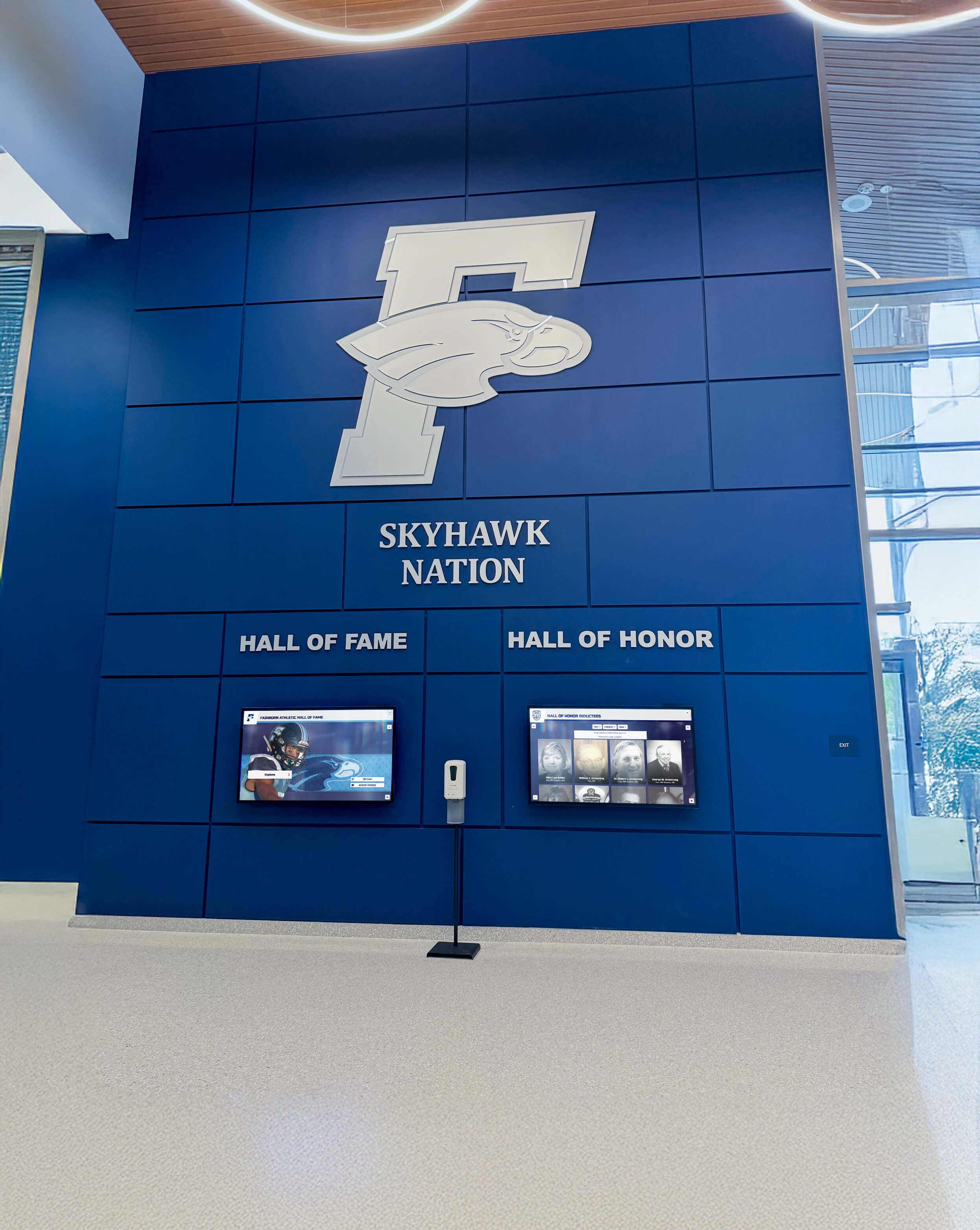
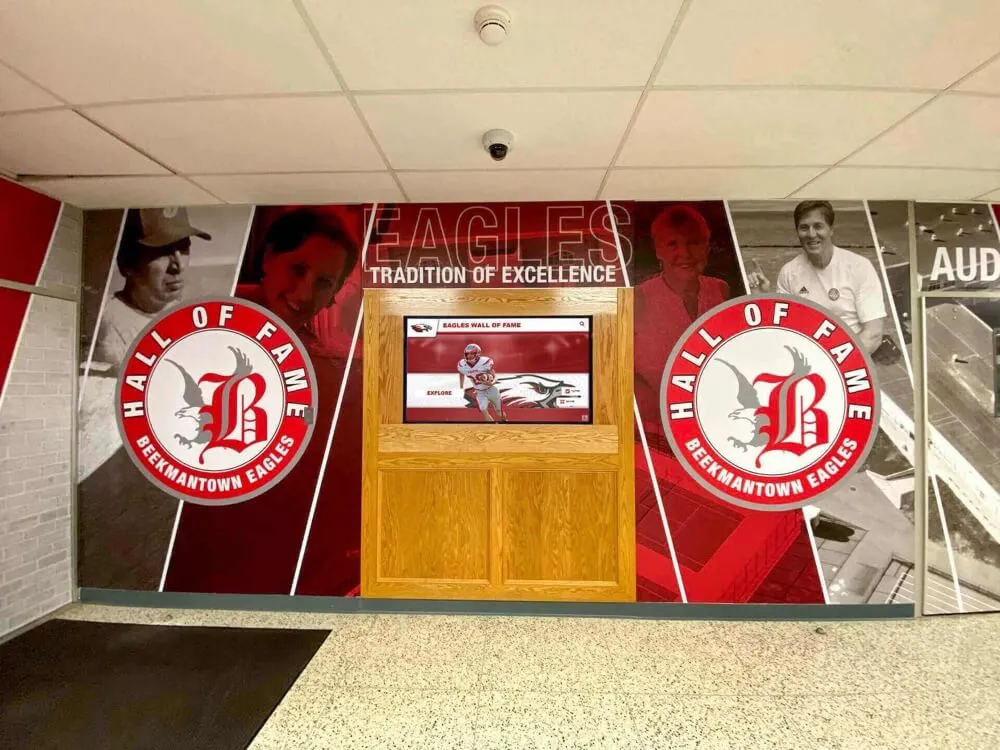
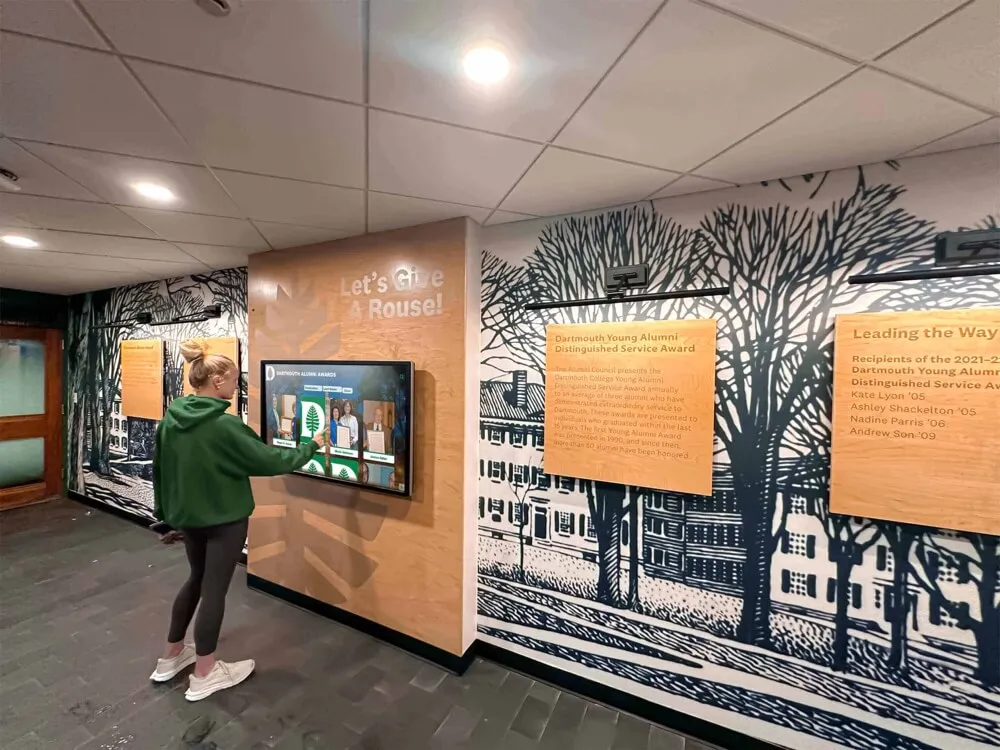
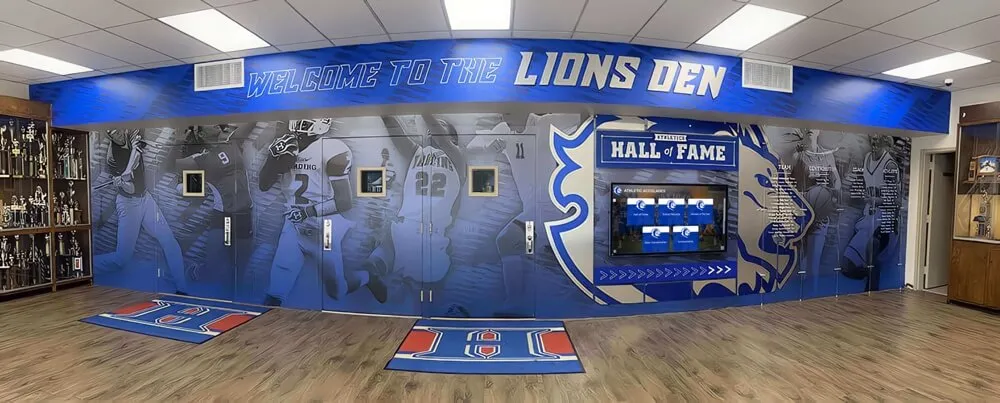
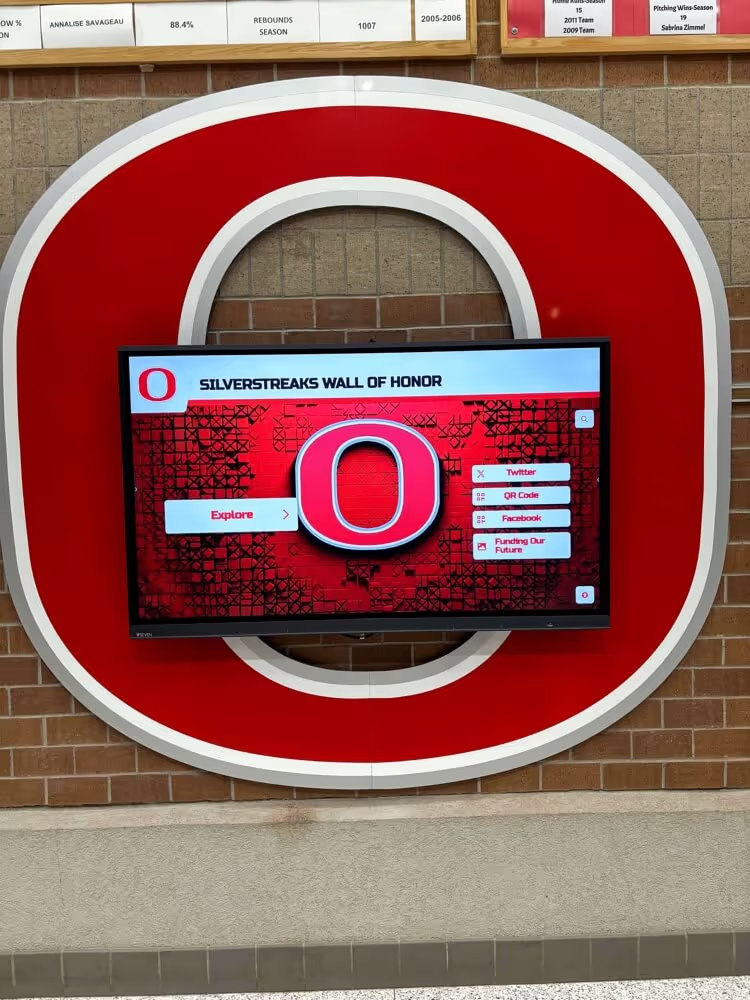
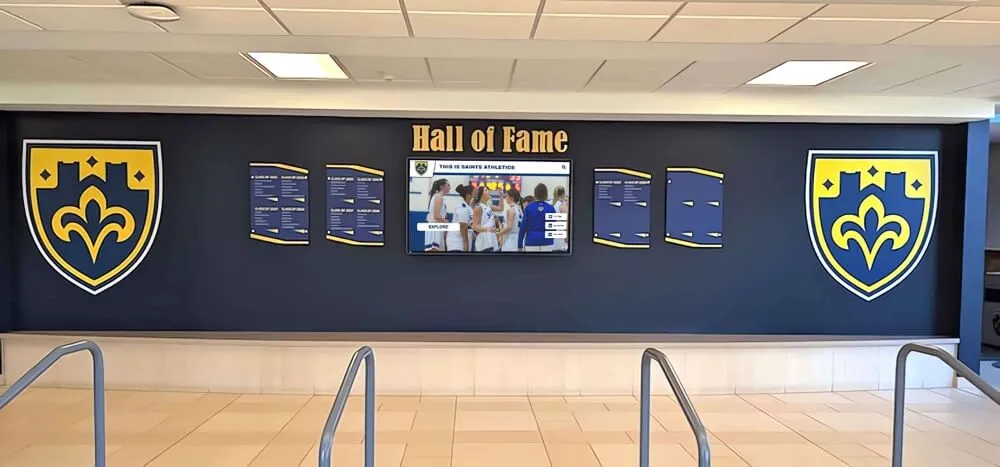
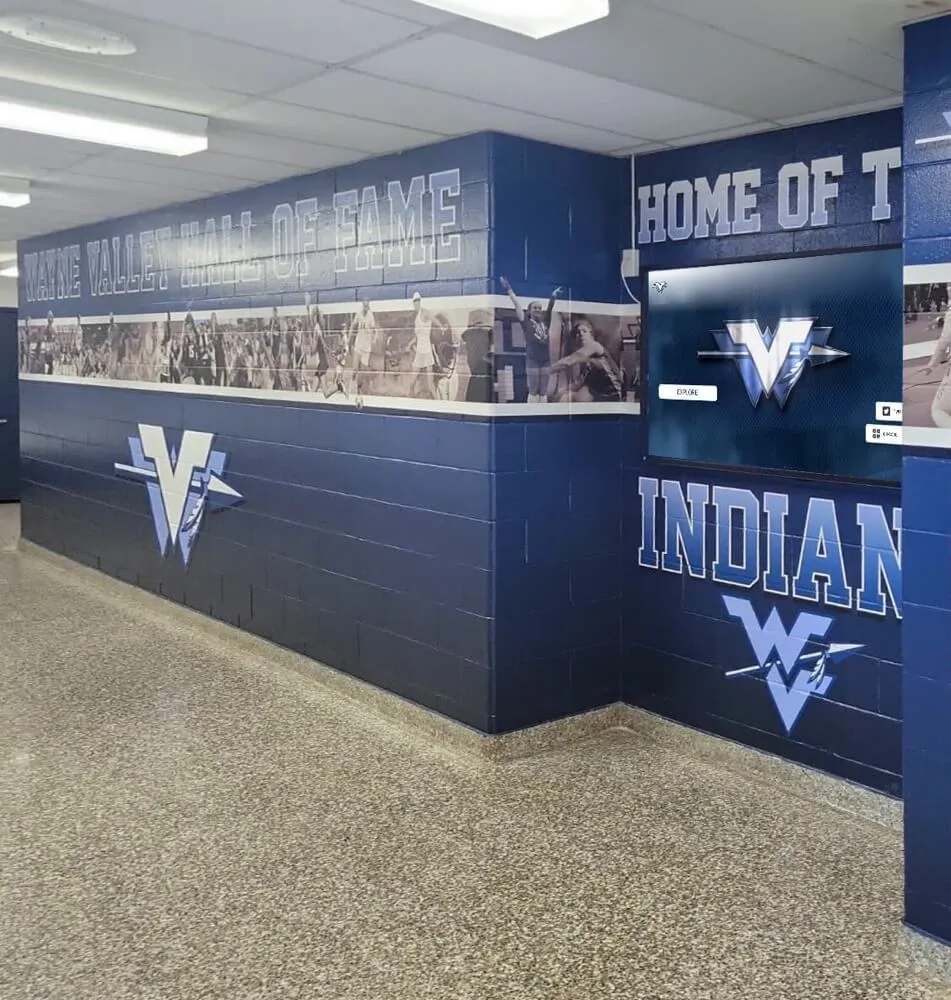
Professional recognition installations demonstrate school commitment to celebrating student achievement creating inspiring environments throughout facilities
Common Awards Ceremony Challenges
Understanding typical obstacles helps organizers plan proactively rather than react to problems.
Ceremony Length and Audience Engagement
Perhaps the most persistent challenge involves balancing comprehensive recognition with audience tolerance. Ceremonies honoring hundreds of students across dozens of award categories can extend for hours, testing patience of families attending primarily to see their specific students recognized during brief moments in lengthy programs.
Successful programs address this challenge through strategic ceremony design: grouping similar awards enabling efficient presentation, incorporating engaging multimedia elements maintaining attention, scheduling strategic breaks or transitions preventing monotony, and creating pre-ceremony recognition opportunities reducing formal program length.
Inclusive Recognition Versus Prestige Maintenance
Schools face delicate balance between celebrating exceptional achievement while ensuring broad student populations receive acknowledgment. Focusing exclusively on highest performers risks marginalizing students whose contributions prove equally vital despite not reaching pinnacle levels. Conversely, excessive participation recognition without meaningful distinctions dilutes award significance.
Effective programs create tiered recognition systems ensuring pinnacle awards maintain prestige while broader categories acknowledge varied achievement types, improvement accomplishments, and character qualities alongside competitive excellence. This approach honors exceptional students without excluding peers whose contributions deserve validation.
Budget and Resource Constraints
Many schools face limited budgets for recognition events, particularly institutions celebrating achievements across academics, arts, athletics, and activities requiring separate or combined ceremonies. Venue costs, award purchases, program printing, and refreshment expenses accumulate quickly, forcing difficult decisions about element prioritization.
Strategic schools address budget challenges through creative venue utilization, volunteer coordination, digital recognition platforms eliminating ongoing physical award costs, and sponsorship partnerships enabling enhanced recognition without excessive budget strain.
Strategic Planning Timeline
Systematic planning prevents last-minute stress while ensuring all essential elements receive adequate attention.
Awards Ceremony Planning Timeline
Establish clear timelines for major planning milestones:
12-16 Weeks Before Event
Early planning establishes foundation for successful execution:
- Form planning committee (administrators, counselors, teacher representatives)
- Establish preliminary budget and identify funding sources
- Select tentative date and time considering conflicts with other school events
- Determine ceremony scope (academic only, comprehensive, grade-level specific)
- Define award categories and selection criteria
- Establish nomination and selection processes with clear deadlines
- Begin venue research and preliminary reservations
8-10 Weeks Before Event
Mid-range planning addresses major logistical elements:
- Finalize venue reservation with signed contracts or confirmations
- Launch nomination processes for peer-selected or committee-reviewed awards
- Communicate award opportunities to students, families, and staff
- Begin teacher and counselor consultations for selection input
- Order or create awards, trophies, certificates, and recognition materials
- Develop preliminary ceremony program and presentation order
- Recruit volunteers for specific event responsibilities

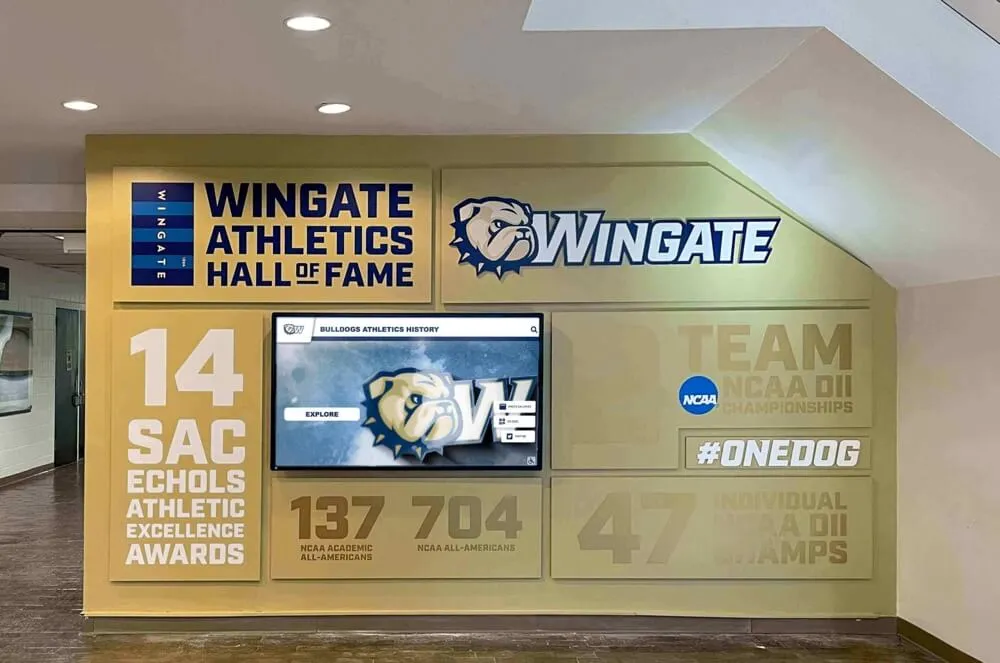
Coordinated recognition installations throughout facilities create year-round celebration of student achievements and school culture
4-6 Weeks Before Event
Finalist selection and ceremony development occur:
- Complete award selection processes and finalize recipients
- Send invitations to honorees and families with ceremony details
- Create detailed ceremony programs with recipient names and award descriptions
- Prepare speeches and award presentation content
- Confirm volunteer assignments and train participants on responsibilities
- Arrange audiovisual equipment for presentations, videos, and multimedia
- Create or order decorations and recognition displays
- Coordinate refreshments if applicable
2-3 Weeks Before Event
Final preparations ensure smooth execution:
- Confirm attendance from award recipients and families
- Finalize venue setup requirements and technical specifications
- Complete all award preparation and verification for accuracy
- Print programs, certificates, and presentation materials
- Test presentation equipment and resolve technical issues
- Brief students participating in presentations or performances
- Prepare recognition materials for digital platforms or permanent displays
- Create backup plans for potential technical or logistical issues
Week of Event
Final touches complete preparation:
- Conduct final walkthrough of venue with setup requirements
- Confirm timing and presentation order with all participants
- Set up decorations, displays, and recognition materials
- Test all audiovisual equipment in actual venue conditions
- Prepare student seating arrangements if applicable
- Coordinate volunteer arrival and station assignments
- Conduct brief rehearsal with student presenters or speakers
- Ensure all awards and materials are organized for efficient distribution
Optimal Ceremony Timing and Scheduling
Strategic timing maximizes attendance and emotional impact while avoiding conflicts.
Academic Calendar Placement
Most schools schedule major awards ceremonies during specific academic milestones: end-of-year celebrations honoring cumulative achievement across full academic years, semester-end recognition acknowledging first-semester excellence or improvement, or quarterly ceremonies providing more frequent recognition opportunities maintaining ongoing motivation.
End-of-year timing proves most popular, allowing comprehensive recognition of annual achievement while creating capstone celebrations as academic years conclude. However, waiting until May or June risks conflicts with final examinations, graduation activities, and family vacation plans beginning as school years end.
Consider scheduling 2-3 weeks before academic year conclusions, balancing comprehensive achievement recognition with avoiding end-of-year schedule compression when too many events compete for limited time and attention.
Day and Time Selection
Evening ceremonies typically provide best family attendance, allowing working parents to participate without daytime conflicts. Tuesday, Wednesday, or Thursday evenings generally work better than Mondays (start-of-week conflicts) or Fridays (competing with other school events, sports, and family weekend plans).
For elementary or middle schools where younger siblings attend, consider early evening start times (6:00-6:30 PM) allowing families to participate without excessive late-night schedules for young children. High schools can schedule slightly later (7:00 PM) accommodating athletic practices or after-school activities.
Some schools implement daytime honors assemblies for students with separate evening receptions for families, balancing peer recognition benefits with family participation opportunities without forcing students to choose between audiences.
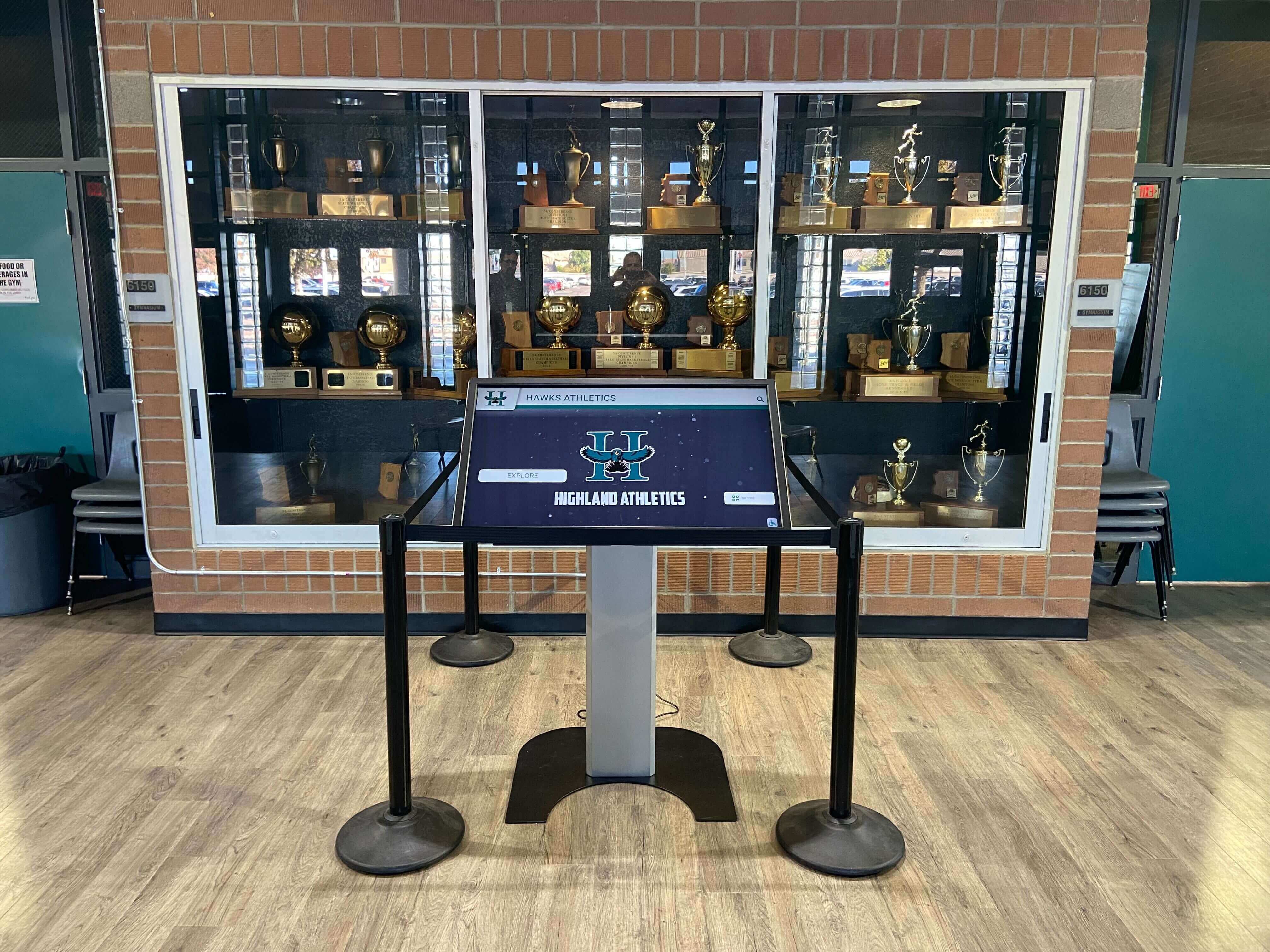
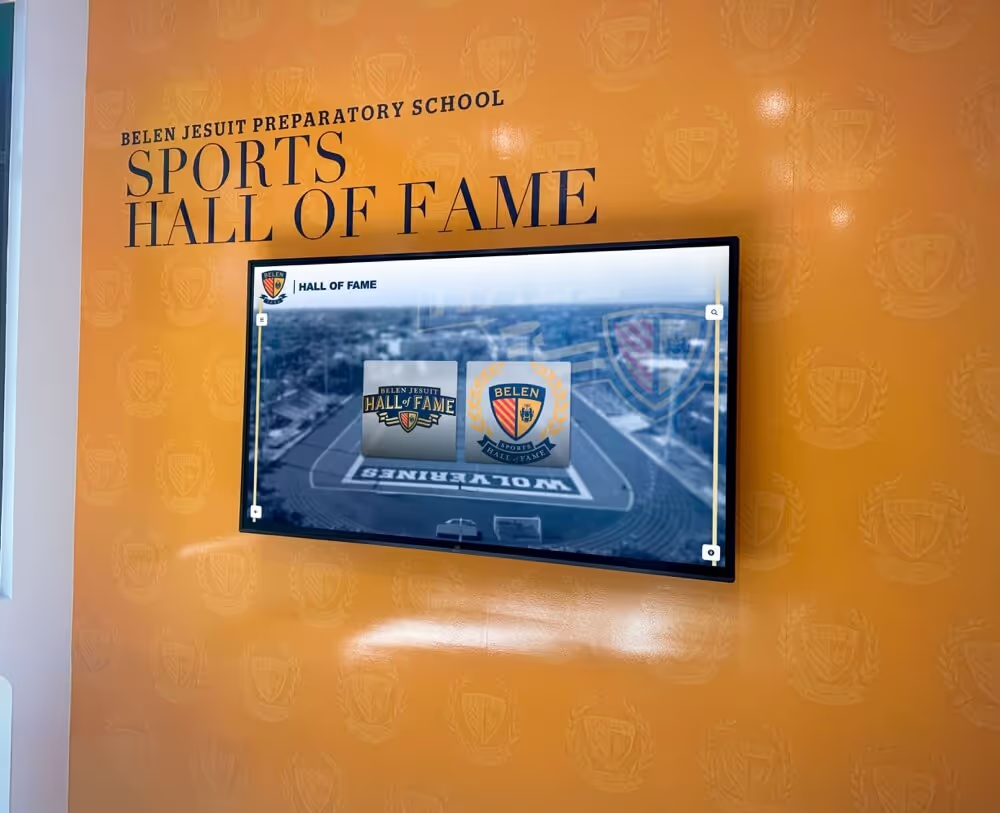
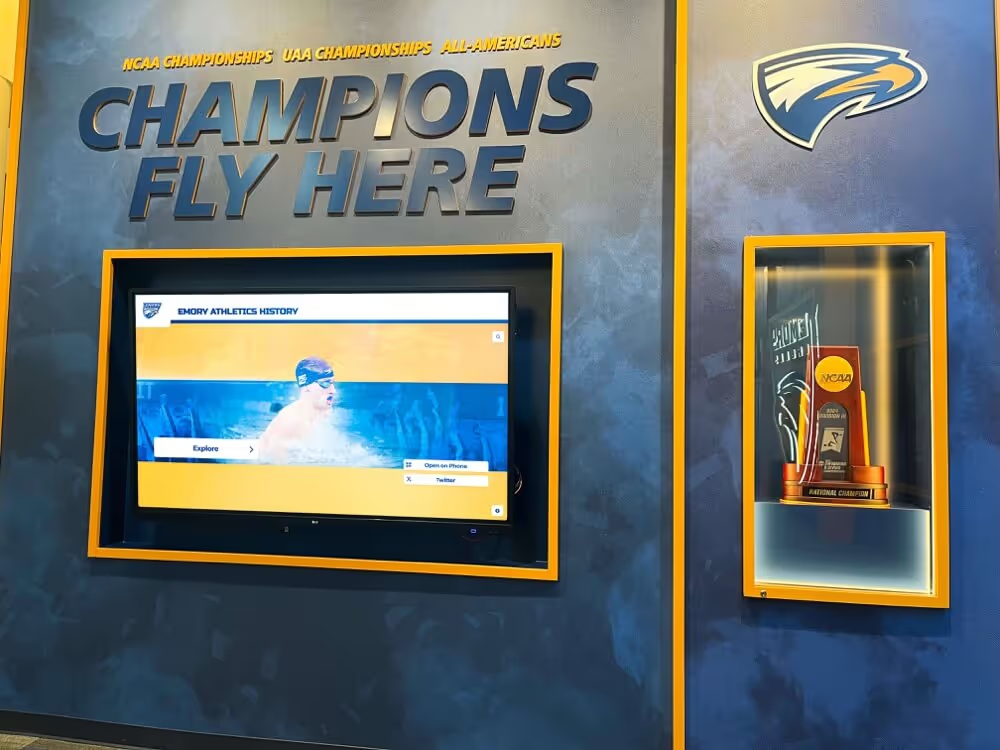
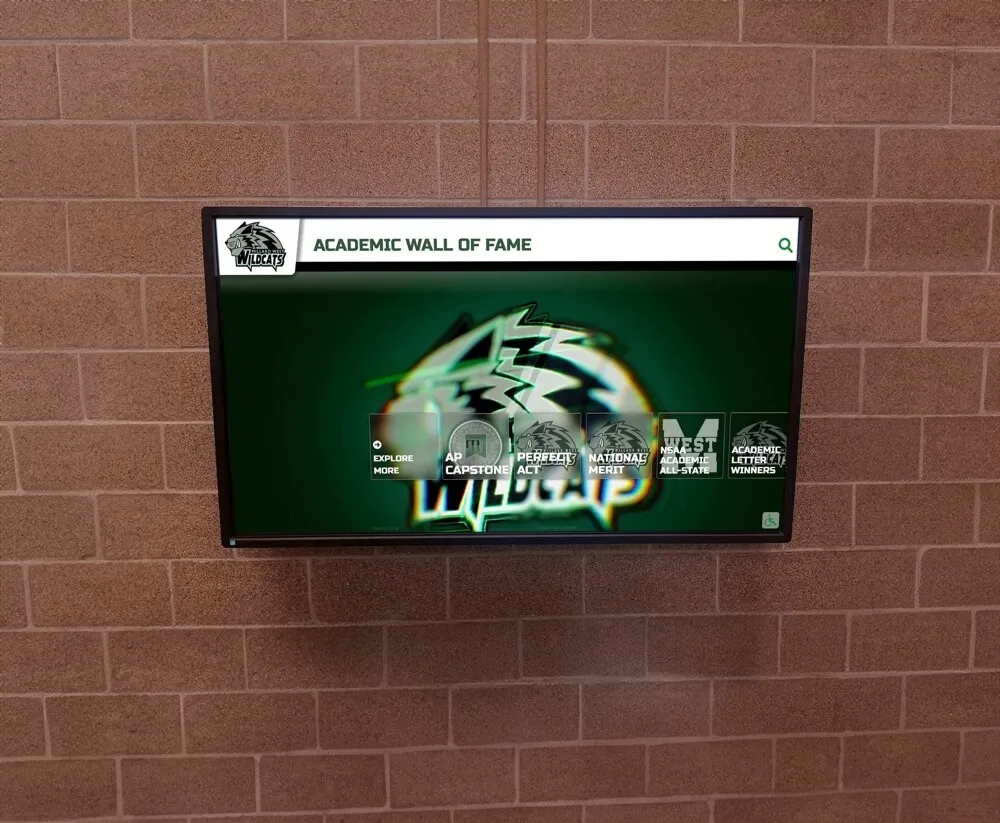
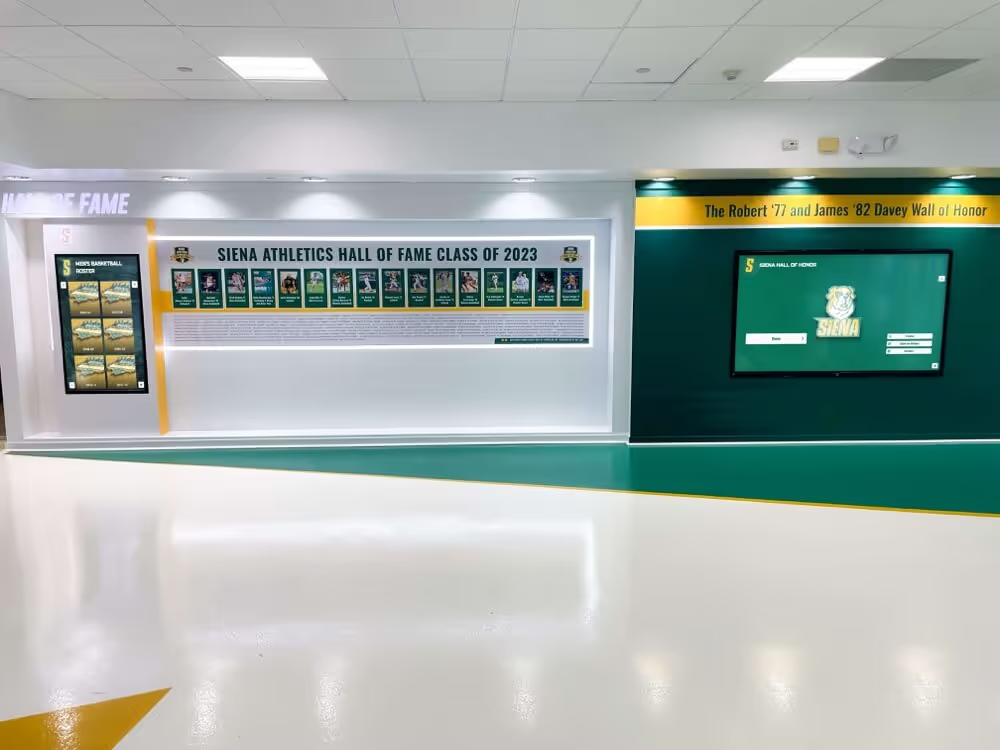
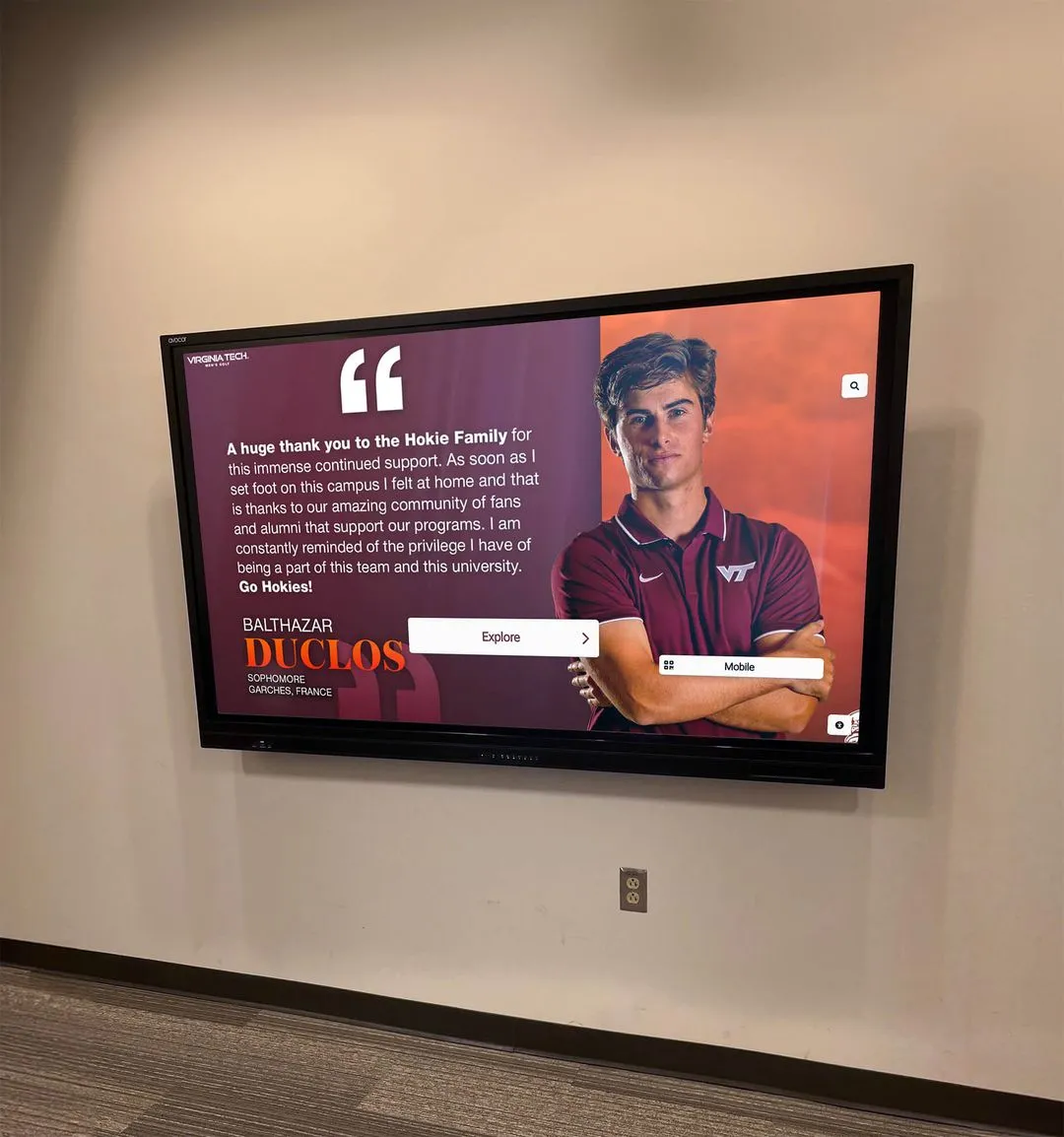
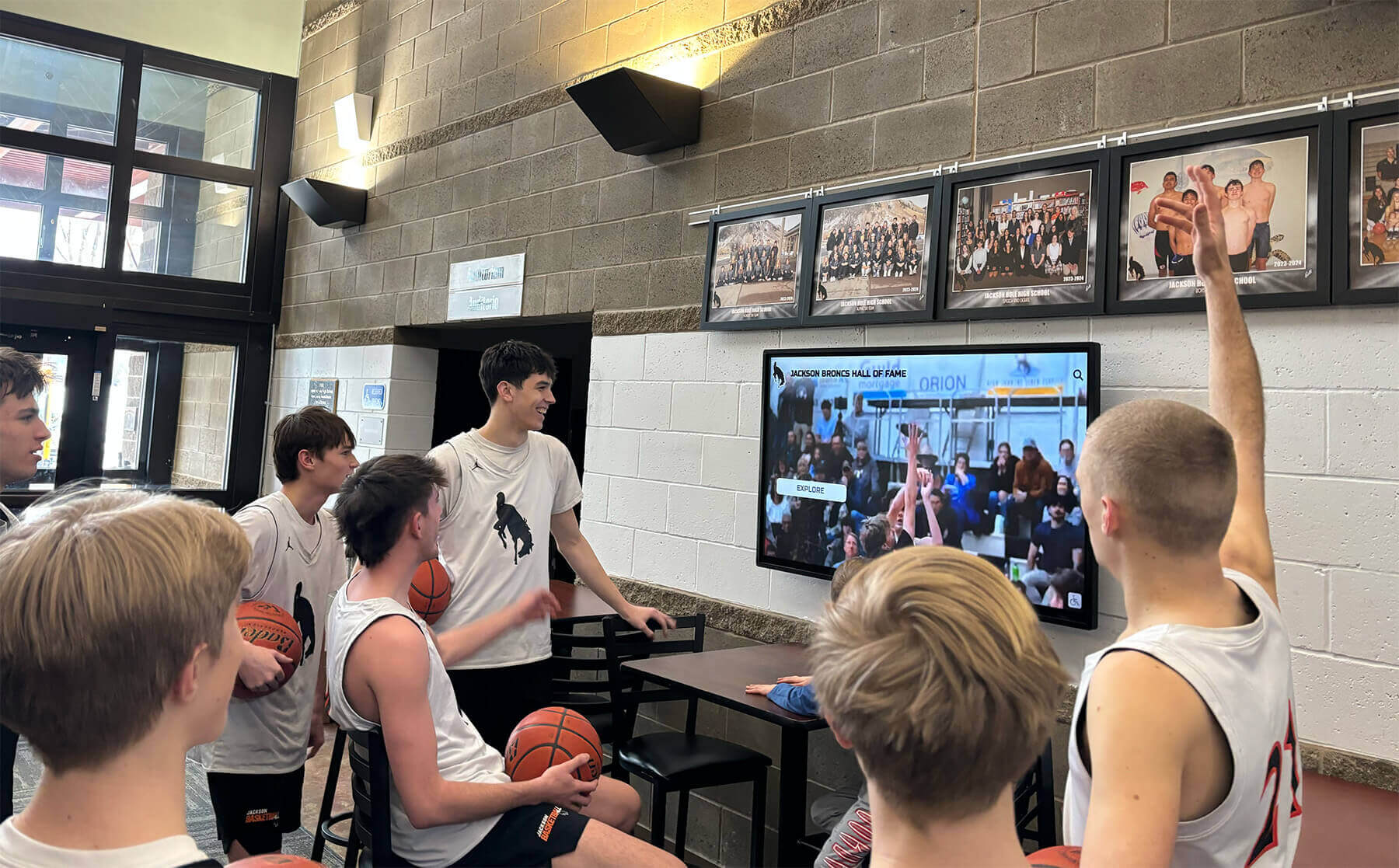
Modern recognition technology integrates with traditional displays creating engaging exploration of student achievements and school history
Meaningful Award Categories
Award selection communicates institutional values while creating recognition opportunities for diverse achievement types.
Academic Excellence Awards
Core academic recognition acknowledges intellectual achievement and scholarly dedication.
Academic All-Around Excellence
Pinnacle honors recognizing students demonstrating exceptional achievement across all academic disciplines. Selection criteria typically include cumulative GPA requirements (often 3.8-4.0 unweighted), enrollment in rigorous coursework, consistent excellence across core subjects, and sustained performance throughout academic careers.
These prestigious awards should maintain high standards ensuring recipients truly represent exceptional comprehensive academic achievement rather than diluting value through excessive distribution to large percentages of student populations.
Subject-Specific Academic Achievement
Department awards recognize excellence within specific disciplines: mathematics achievement honoring advanced problem-solving and quantitative reasoning, English or language arts recognition celebrating writing ability and literary analysis, science awards acknowledging research skills and scientific inquiry, social studies honors recognizing historical thinking and civic understanding, and world language achievement celebrating linguistic proficiency and cultural competency.
Subject-specific awards create additional recognition opportunities while acknowledging that students often demonstrate particular strength areas deserving specialized acknowledgment alongside comprehensive achievement recognition.
Academic Improvement and Growth
Perhaps the most motivational recognition celebrates dramatic improvement regardless of absolute achievement levels. Effective growth awards recognize: students increasing GPA by full points or more across academic years, learners overcoming significant academic struggles through dedication and perseverance, students demonstrating exceptional semester-to-semester improvement, or those mastering content areas where they previously struggled.
These awards validate that schools value effort and growth as much as natural ability, providing powerful encouragement for students who work harder for achievement than peers for whom academic success comes easily. Many students remember improvement recognition more vividly than higher-achieving peers remember excellence awards because validation proved unexpected and particularly meaningful.
Honor Roll and Academic Recognition Tiers
Tiered recognition systems acknowledge achievement across performance levels: highest honors recognizing exceptional GPA achievement (typically 3.75-4.0), honor roll celebrating strong academic performance (3.5-3.74), and merit recognition acknowledging solid achievement (3.0-3.49).
Tiered approaches balance prestige for highest achievement with inclusive recognition validating broader student populations whose accomplishments deserve acknowledgment even when they don’t reach pinnacle levels. Schools can implement comprehensive academic recognition programs celebrating achievement across these varied levels.
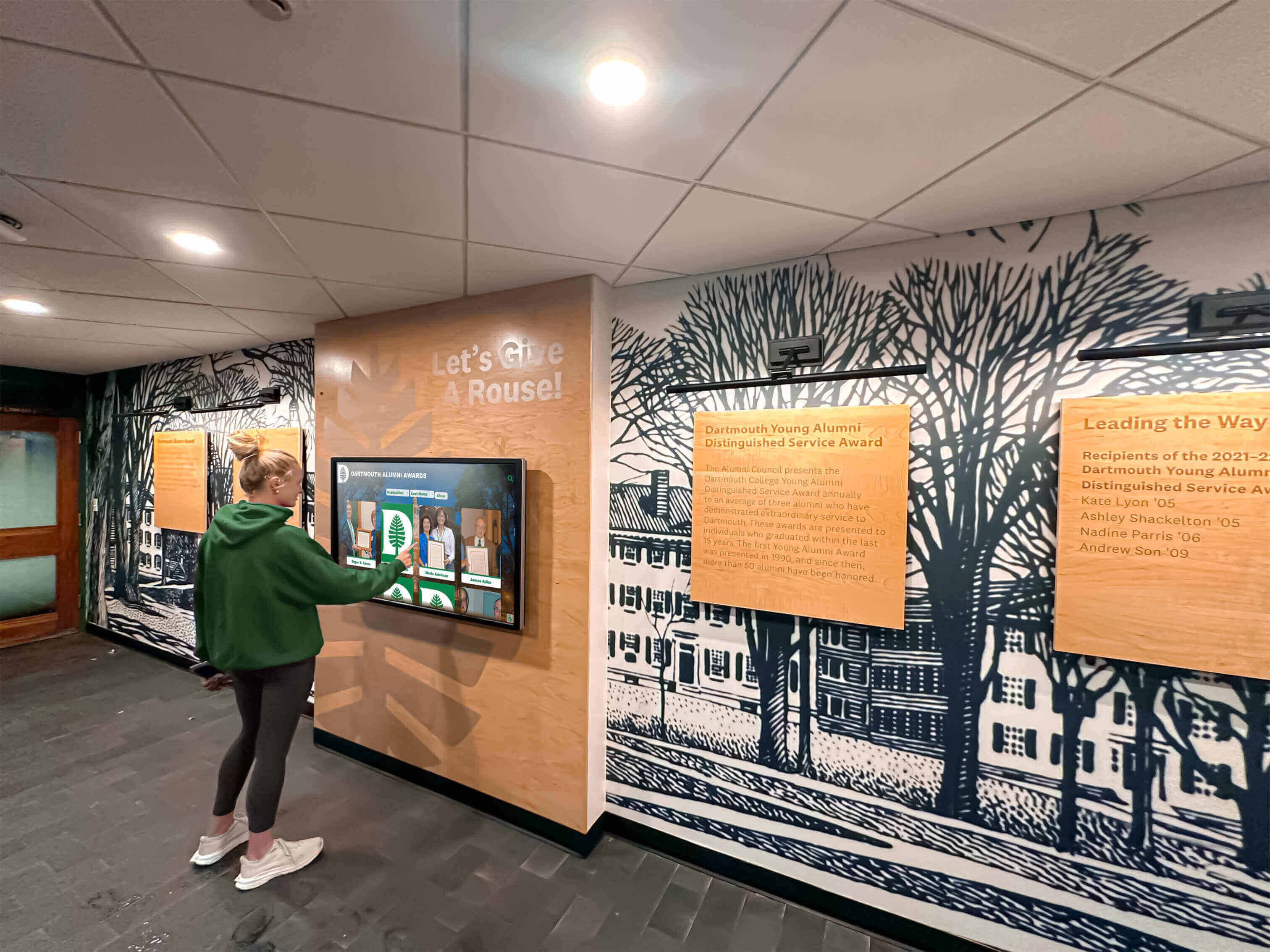
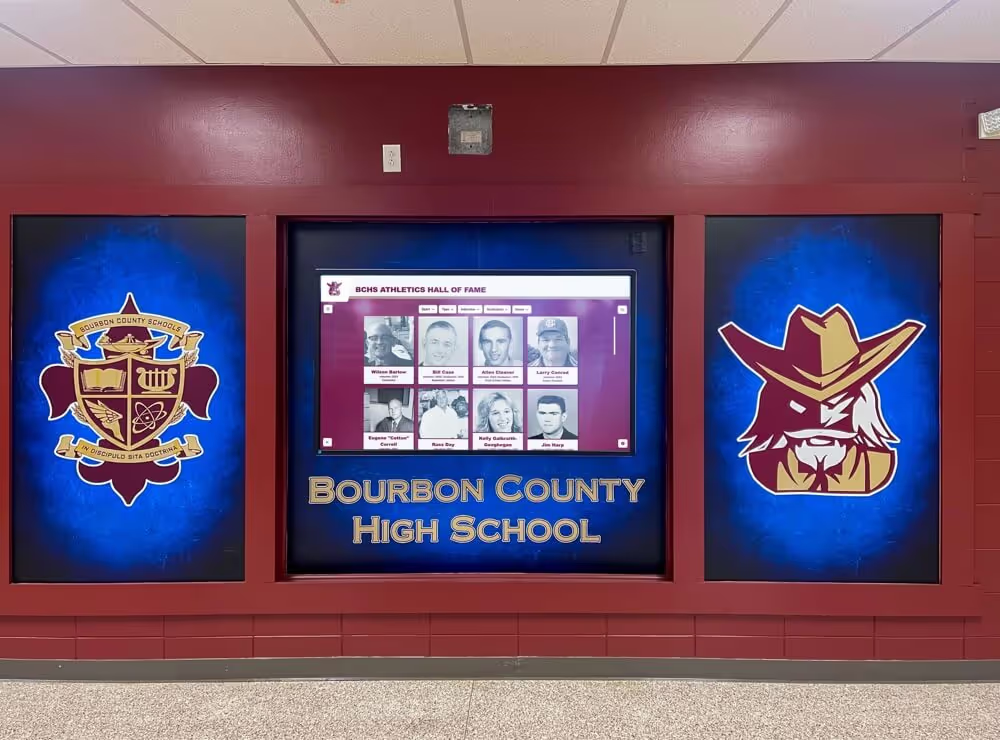
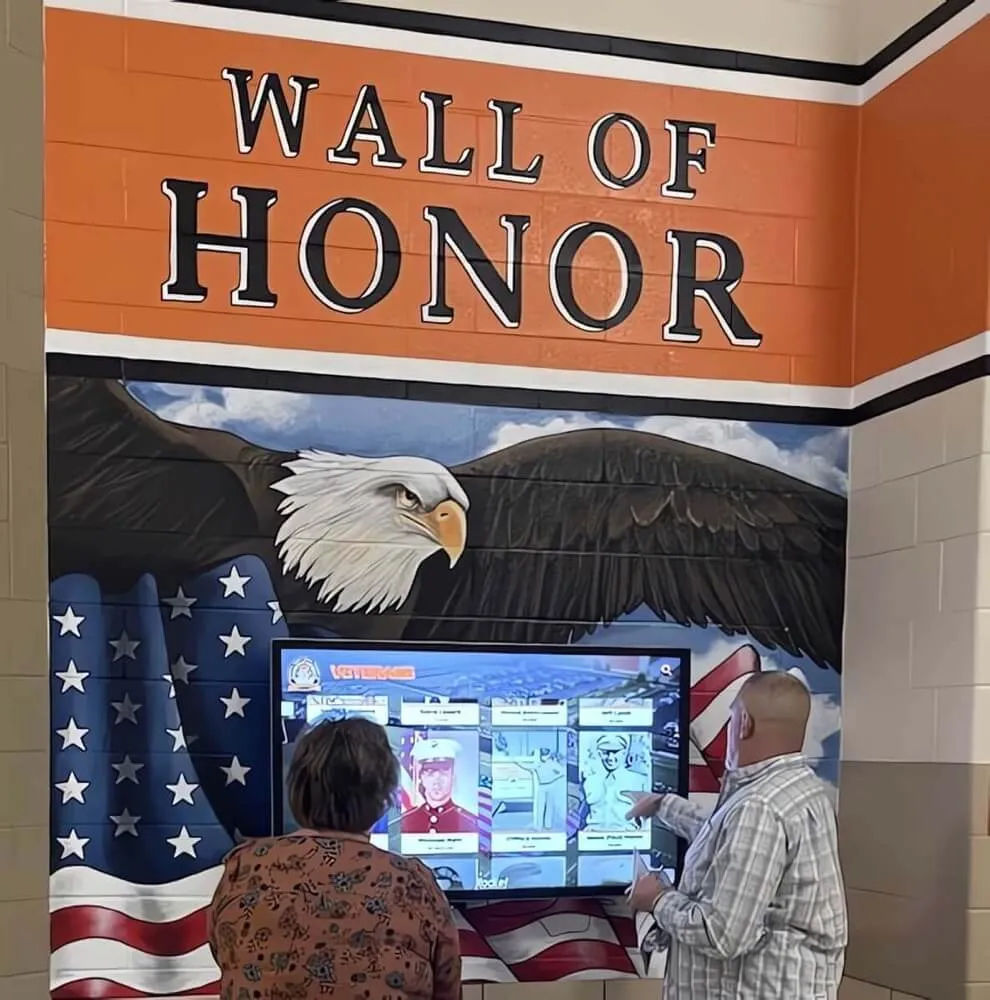
Interactive recognition enables students to explore achievements and connect with school culture and traditions throughout facilities
Character and Leadership Recognition
Beyond academic performance, character recognition reinforces institutional values and personal qualities.
Leadership Excellence Awards
Recognizes students demonstrating exceptional leadership across school communities: student government officers who effectively represent peers and organize initiatives, club presidents managing organizations and coordinating activities, project leaders who organize events or programs, or informal leaders whose influence positively impacts school culture despite lacking formal positions.
Effective leadership recognition requires specific examples—how recipients motivated peers, solved problems constructively, advocated for improvements, or modeled behaviors inspiring others to elevate their own engagement and contribution levels.
Service and Community Contribution
Celebrates students dedicating significant time and energy to community improvement: extensive volunteer service hours with local organizations, leadership in service-learning projects or community partnerships, organizing charitable initiatives or fundraising campaigns, or sustained commitment to causes beyond school requirements.
Service recognition validates that schools value civic engagement and social responsibility alongside academic achievement while inspiring peers to consider their own community contribution opportunities.
Character and Integrity Awards
Perhaps the most personally meaningful recognition celebrates exceptional character qualities: consistent demonstration of integrity and ethical behavior, positive influence on school culture and peer relationships, resilience and perseverance through significant challenges, or embodiment of school values like respect, responsibility, or compassion.
These awards require thoughtful selection with specific examples rather than generic “good student” recognition lacking substance. Share stories illustrating why recipients earned character recognition, creating emotional moments validating complete contributions beyond academic statistics and competitive results.
Citizenship and School Spirit
Recognizes students contributing to positive school culture: exceptional attendance and participation in school events, enthusiastic support for athletics, arts, and activities, positive representation of school in community contexts, or infectious enthusiasm inspiring peers to increase their own engagement and school pride.
School spirit recognition communicates that institutions value active engaged participation contributing to vibrant communities rather than passive attendance fulfilling minimum requirements.
Specialized Achievement Recognition
Additional awards acknowledge diverse excellence types within comprehensive school communities.
Arts and Creative Achievement
Celebrates excellence across artistic disciplines: visual arts recognition for exceptional creativity and technical skill, performing arts awards acknowledging theater, music, or dance achievement, creative writing honors celebrating literary talent, and multimedia or digital arts recognition for innovative work in emerging creative fields.
Arts recognition ensures comprehensive achievement acknowledgment rather than limiting celebrations to academic or athletic domains, demonstrating that schools value creativity and artistic expression as genuine excellence forms deserving equal recognition with traditional achievement categories.
Athletic Achievement and Sportsmanship
Sports recognition within comprehensive ceremonies includes: athletic excellence awards for exceptional competitive achievement, all-conference or all-state recognition celebrating regional or statewide honors, team captain leadership acknowledging those elected by teammates and coaches, and sportsmanship awards recognizing exemplary conduct and respect.
While comprehensive athletic recognition typically occurs in separate sports banquets, including athletic representation in school-wide ceremonies demonstrates that achievements across all domains receive institutional validation and celebration.
Perfect Attendance and Dedication
Reliability awards recognize consistent presence and commitment: perfect attendance throughout academic years, multi-year sustained attendance records, or punctuality and preparedness consistently demonstrated.
While attendance recognition receives criticism from some educators concerned about rewarding factors outside student control (illness, family circumstances), many schools continue these traditions believing consistent presence deserves acknowledgment while recognizing that for some students, attendance awards represent their primary recognition opportunity during ceremonies otherwise dominated by high-achieving peers.

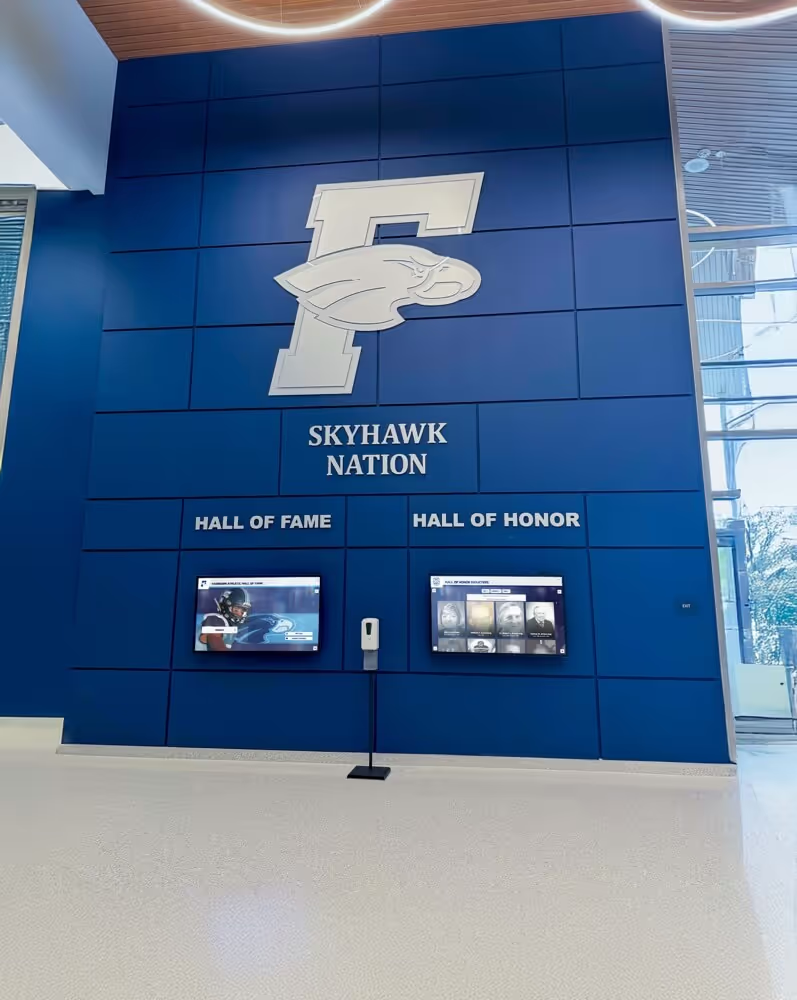
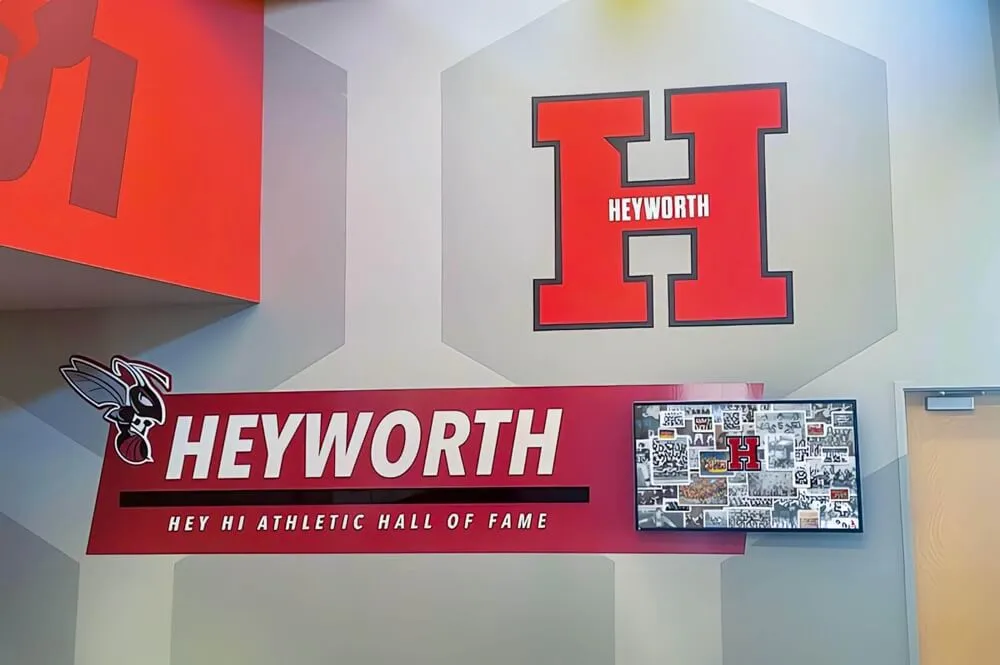
Professional recognition installations in high-visibility locations demonstrate institutional commitment to celebrating student achievement and school pride
Engaging Ceremony Format Design
Beyond award selection, ceremony structure determines whether recognition feels meaningful or merely tedious.
Pre-Ceremony Activities and Displays
Activities before formal ceremonies set positive tones while accommodating early arrivals.
Interactive Recognition Displays
Position digital displays or kiosks enabling guests to explore comprehensive achievement documentation before ceremonies begin: browse individual honoree profiles with photos and accomplishments, view historical award recipients discovering program traditions, watch video tributes or student achievement highlights, or explore subject-specific recognition celebrating department excellence.
These interactive systems create engaging pre-ceremony entertainment while building anticipation for formal recognition and allowing families arriving early to explore without idle waiting creating boredom before programs even begin.
Student Achievement Galleries
Create visual displays celebrating diverse accomplishments throughout academic years: poster boards featuring club activities and achievements, art installations showcasing student creative work, photography displays documenting school events and traditions, or digital slideshows presenting academic projects and research accomplishments.
Achievement galleries provide conversation starters while demonstrating comprehensive school excellence beyond individuals receiving specific awards during formal ceremonies, building community pride and appreciation for institutional achievement diversity.
Photo Opportunities
Designate areas with school branding or achievement backdrops where families can capture commemorative photos: branded step-and-repeat banners creating professional photo backgrounds, digital photo stations with instant social sharing capability, themed props or signage celebrating specific achievement categories, or displays featuring awards that will be presented during ceremonies.
Photo opportunities create memorable keepsakes while generating social media content amplifying ceremony reach beyond physical attendees when families share images celebrating their students’ recognition throughout broader social networks.
Structured Ceremony Programming
Thoughtful program design balances recognition with entertainment and engagement.
Opening Remarks and Context Setting
Administrators typically open ceremonies with welcoming remarks establishing context: acknowledge diverse achievement types being celebrated, articulate institutional values guiding award selection, thank families for supporting student success, recognize educators and staff who mentor and guide students, and frame recognition as community celebration rather than competitive comparison.
Effective opening remarks set emotional tones providing meaning for specific awards following while celebrating complete student development beyond individual recognition categories.
Featured Speakers and Student Voices
Incorporate authentic voices bringing perspective to recognition: valedictorian or student government speeches reflecting on achievement meanings, alumni speakers sharing how school recognition influenced their lives, community leaders discussing excellence importance, or student performances celebrating artistic achievement.
Varied voices create engagement variety while providing natural transitions between recognition segments preventing monotonous continuous award distribution testing audience patience and attention.
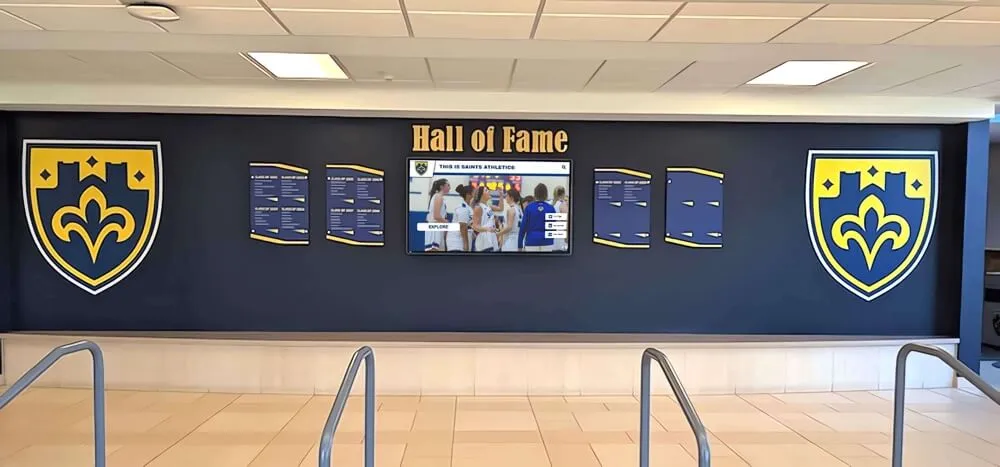
Integrated recognition combines traditional commemorative elements with modern digital technology creating engaging comprehensive displays
Award Presentation Strategies
Structure award distribution strategically maximizing efficiency while maintaining meaningful recognition:
Individual Recognition for Prestigious Awards: Pinnacle honors deserve individual presentation with specific achievement descriptions, personal anecdotes or accomplishments shared, presentation by relevant administrators or teachers, and brief recipient responses when appropriate. This personalized approach transforms routine recognition into memorable tributes creating emotional impacts validating years of dedication.
Group Recognition for Category Awards: Tiered recognition like honor roll can be presented efficiently by calling groups forward together, reading names while students stand or approach stage, presenting certificates simultaneously to groups, and capturing group photos celebrating collective achievement. This approach maintains recognition dignity while preventing excessive individual presentations extending ceremony length beyond reasonable limits.
Multimedia Enhancement: Incorporate student photos during name reading, display brief achievement highlights on screens, play subtle background music creating atmosphere, or include short video montages celebrating award categories. Visual and auditory elements maintain audience engagement during extended recognition sequences while creating production quality demonstrating ceremony importance and institutional commitment to meaningful celebration.
Faculty and Staff Recognition
Include educator acknowledgment within ceremonies: recognize teachers nominated by students for exceptional mentorship, honor counselors or support staff who facilitate student success, acknowledge department chairs or program directors, or celebrate retiring faculty who influenced generations of students.
Educator recognition reinforces that student achievement results from collaborative efforts between students, families, and dedicated professionals whose guidance enables excellence development while demonstrating that recognition culture extends beyond students to encompass entire school communities.
Post-Ceremony Reception and Networking
Consider extending ceremonies with informal reception opportunities: simple refreshments allowing families to mingle and celebrate, designated spaces where honorees can photograph with awards or educators, digital recognition displays available for continued exploration, or recognition certificate pickup areas organized efficiently preventing congestion.
Receptions provide emotional closure allowing authentic celebration rather than abrupt dismissal immediately following final award distribution, while creating networking opportunities where families connect with educators, students celebrate with peers, and communities strengthen bonds through shared pride in collective achievement.
Budget-Friendly Recognition Strategies
Meaningful recognition doesn’t require extravagant budgets when schools prioritize creativity and strategic resource allocation.
Cost-Effective Award and Recognition Approaches
Strategic decisions significantly reduce expenses without sacrificing quality.
Digital Certificates and Recognition Materials
Modern printing technology enables professional-quality recognition materials at modest costs: design custom certificate templates incorporating school branding, print on premium paper or cardstock using high-quality printers, use digital frames displaying certificates that students can easily share digitally, or create digital recognition profiles supplementing physical certificates.
Quality printed certificates on specialty paper often cost under $1-2 per student, providing tangible recognition that families value without requiring expensive engraved plaques or trophies for all honorees.
Tiered Physical Awards
Reserve expensive physical awards for pinnacle achievement while using certificates for broader recognition: engraved trophies or medals for highest honors creating tangible prestigious recognition, specialty plaques for departmental or category winners, printed certificates for tiered recognition like honor roll, and digital recognition documenting all achievements permanently regardless of physical award type.
This tiered approach maintains physical award prestige for exceptional achievement while acknowledging all deserving students without excessive expense distributing expensive items to large populations where cost becomes prohibitive.
Reusable Ceremony Elements
Invest in quality reusable materials rather than disposable single-use items: permanent banners and signage featuring school branding used annually, digital presentation equipment used across multiple events, quality decorations stored and reused across years, and permanent recognition installations documenting achievements permanently.
Initial investment in reusable materials costs more upfront but provides superior long-term value compared to annual purchases of disposable alternatives that create recurring expenses without building permanent assets.
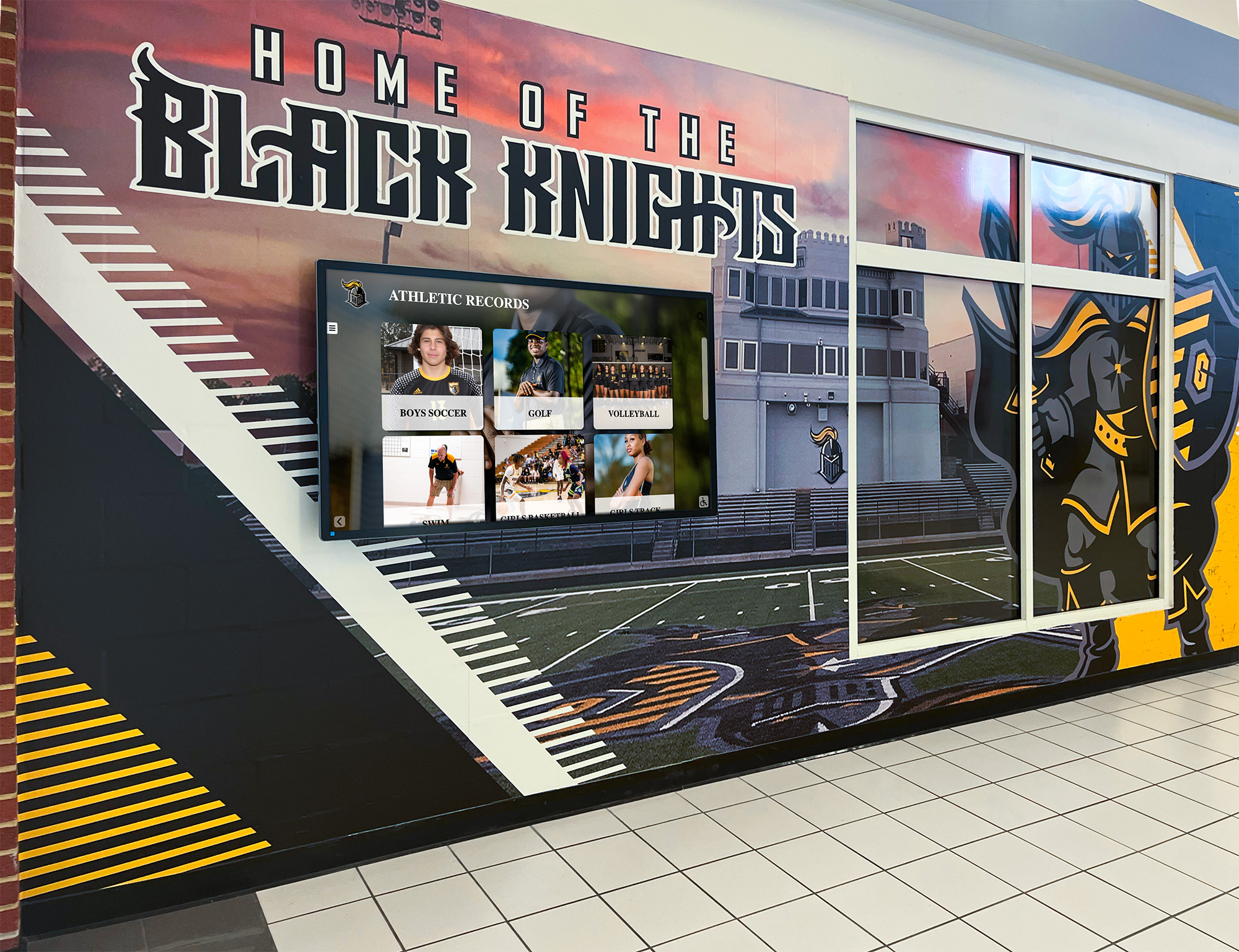
Facility recognition installations demonstrate institutional commitment to celebrating achievement while creating inspiring environments throughout school spaces
Venue and Event Cost Management
School Facility Utilization
On-campus venues eliminate rental costs while providing adequate space: transform auditoriums or gymnasiums through strategic decoration, lighting adjustments, and ceremony staging; utilize outdoor spaces for smaller celebrations when weather permits; or combine ceremony with existing school events like graduation rehearsals or academic year culminations.
Creative on-campus venue use redirects potential rental expenses toward award materials, recognition technology, or permanent installations providing lasting value beyond single events.
Volunteer Coordination
Leverage parent, community, and student volunteers reducing staffing costs: parent committees managing logistics and coordination, student volunteers handling setup and greeting, faculty volunteers presenting awards or managing technical elements, or community partners providing services or materials at reduced costs.
Comprehensive volunteer engagement reduces financial burden while building community ownership in recognition programs creating broader stakeholder investment in student success celebration.
Strategic Sponsorship Partnerships
Explore local business sponsorships supporting recognition programs: printing companies providing program materials at cost, restaurants donating reception refreshments, photography services capturing ceremony documentation, or general businesses contributing funding in exchange for recognition.
Create sponsorship packages outlining benefits: recognition in programs or presentations, social media acknowledgments, public thanks during ceremonies, or permanent recognition in facilities. Clear benefit articulation increases sponsorship success rates while building community partnerships demonstrating that local businesses value and support student achievement.
Modern Digital Recognition Systems
While traditional ceremonies create meaningful moments, modern technology extends recognition beyond single events into permanent accessible celebration.
Benefits of Digital Recognition Platforms
Digital systems overcome limitations inherent in physical-only approaches.
Unlimited Recognition Capacity
Physical trophy cases fill quickly, and budget constraints limit numbers of physical awards schools can provide. Digital recognition enables unlimited capacity celebrating every achievement regardless of physical space or budget limitations.
Schools can recognize all honor roll students, document comprehensive achievement across categories, preserve nomination materials and selection rationales, and showcase diverse accomplishment types without choosing between deserving individuals or restricting recognition to only exceptional performers.
Comprehensive Achievement Documentation
Digital platforms enable recognition beyond names and categories, incorporating: achievement photos showing students receiving awards or engaged in recognized activities, detailed accomplishment descriptions providing context and specific examples, nominator comments or teacher recommendations, complete academic records or statistics, and personal statements about achievement meanings or future aspirations.
These rich multimedia profiles create more engaging meaningful recognition than printed lists or physical certificates alone provide, especially for digital-native students accustomed to dynamic content experiences in most other life contexts.
Year-Round Accessible Recognition
Physical awards typically remain in student homes visible only to family members or stored in closets after initial excitement fades. Digital recognition extends reach and longevity dramatically: students sharing achievements with extended family and social networks, grandparents and relatives accessing recognition regardless of geographic distance, permanent archives preserving recognition long after physical certificates are damaged or discarded, mobile access allowing students revisiting recognition anytime anywhere, and social media integration amplifying recognition reach beyond immediate school communities.
Searchable Historical Archives
Comprehensive digital systems document complete institutional recognition history: current students exploring award legacy and tradition, prospective families researching school culture and values, alumni reconnecting with their achievements and seeing program evolution, and educators analyzing recognition patterns or researching specific student accomplishments.
This ongoing visibility builds school prestige and reputation while strengthening community connections across generations discovering shared recognition traditions creating bonds between current students and distinguished alumni who received same awards decades prior.
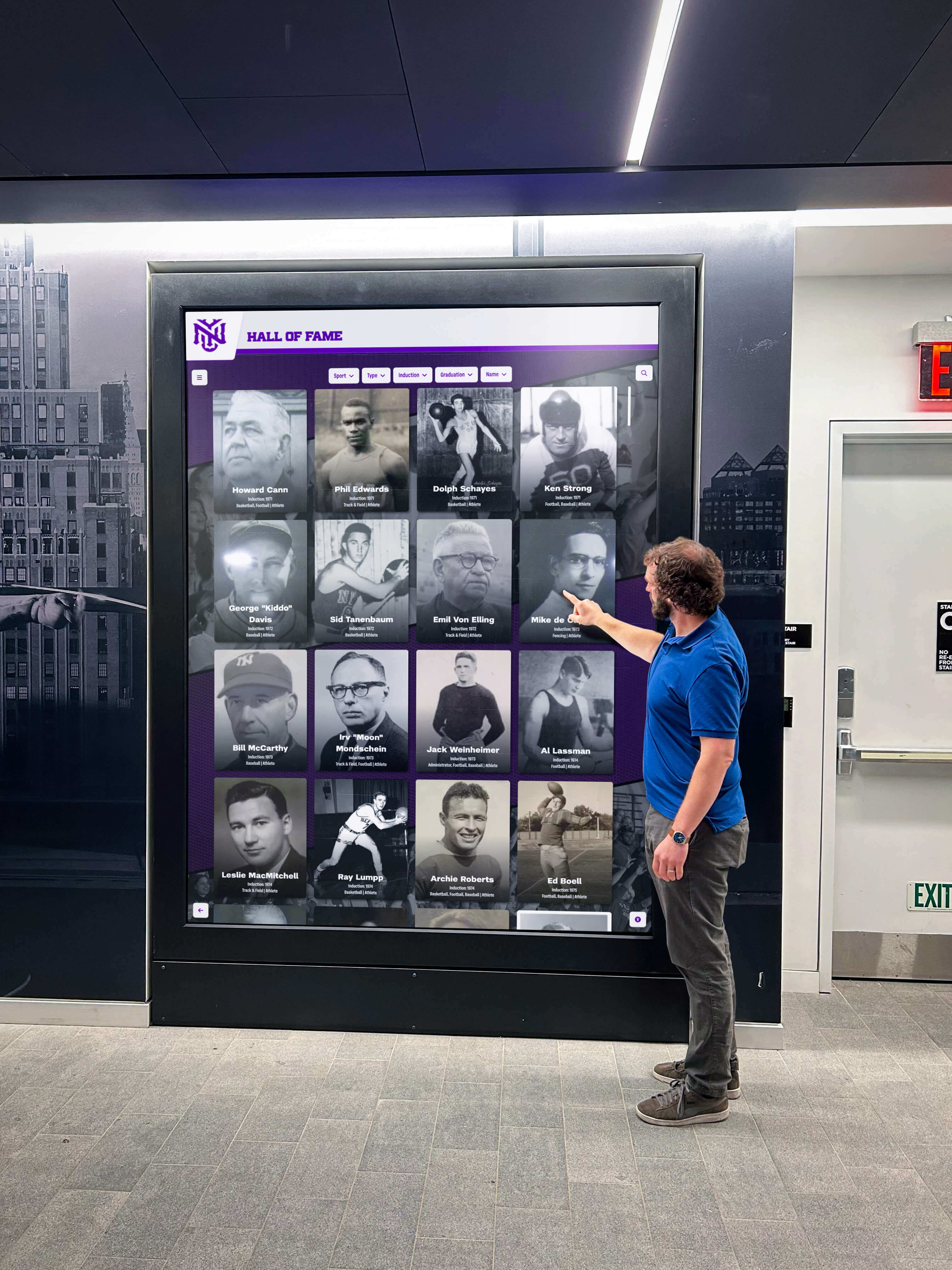
Professional digital recognition installations enable intuitive exploration of student achievements throughout school facilities
Implementing Comprehensive Digital Recognition
Effective digital recognition requires systematic content development and platform selection.
Purpose-Built Recognition Platforms
Schools without technical resources can implement digital recognition through turnkey platforms designed specifically for educational achievement documentation. Solutions like Rocket Alumni Solutions provide: pre-built templates designed for academic recognition content, intuitive content management enabling updates without technical expertise, mobile-responsive interfaces ensuring accessibility across devices, unlimited storage for photos, documents, and achievement materials, and ongoing platform updates with customer support.
These purpose-built platforms enable schools implementing professional recognition systems without requiring custom development, technical staff, or substantial technology investments while ensuring systems remain current through continuous platform evolution.
Integration With Physical Recognition
Digital recognition works best complementing physical awards rather than replacing them. Effective hybrid approaches combine: physical certificates or trophies presented at ceremonies creating tangible recognition and celebration moments, digital profiles documenting achievements with comprehensive multimedia content, QR codes on physical awards linking to complete digital recognition profiles, social media sharing amplifying recognition reach beyond ceremony attendance, and printed certificates including digital access information for extended exploration.
This balanced approach delivers both tangible awards families value and digital recognition extending reach and engagement beyond physical objects that often end up filed away or forgotten after initial presentation excitement fades.
Content Strategy for Awards Recognition
Systematic content development ensures comprehensive documentation rather than sporadic incomplete recognition:
During Academic Year: Document achievements as they occur capturing immediate context, photograph students receiving recognition or engaged in recognized activities, collect nomination materials and selection rationales for reference, gather student statements about achievement meanings, and systematically organize materials for efficient processing during ceremony preparation.
Post-Ceremony Updates: Immediately following ceremonies, update digital recognition systems with: final award recipients and category descriptions, ceremony photos and videos, complete achievement lists or honor rolls, student reflections or future plans, and historical context connecting current recognition to institutional traditions.
Historical Content Migration: Strong digital recognition includes historical context connecting current students to institutional legacies: compile past award recipients across categories and years, gather photos of historical ceremonies or recognition events, document program changes or category evolution, seek alumni updates showing life trajectories after school recognition, and digitize past printed materials preserving institutional memory.
Historical compilation creates baseline content demonstrating recognition tradition depth while identifying gaps requiring additional research, family outreach, or alumni engagement to complete comprehensive program documentation that might otherwise be lost as years pass and collective memory fades.
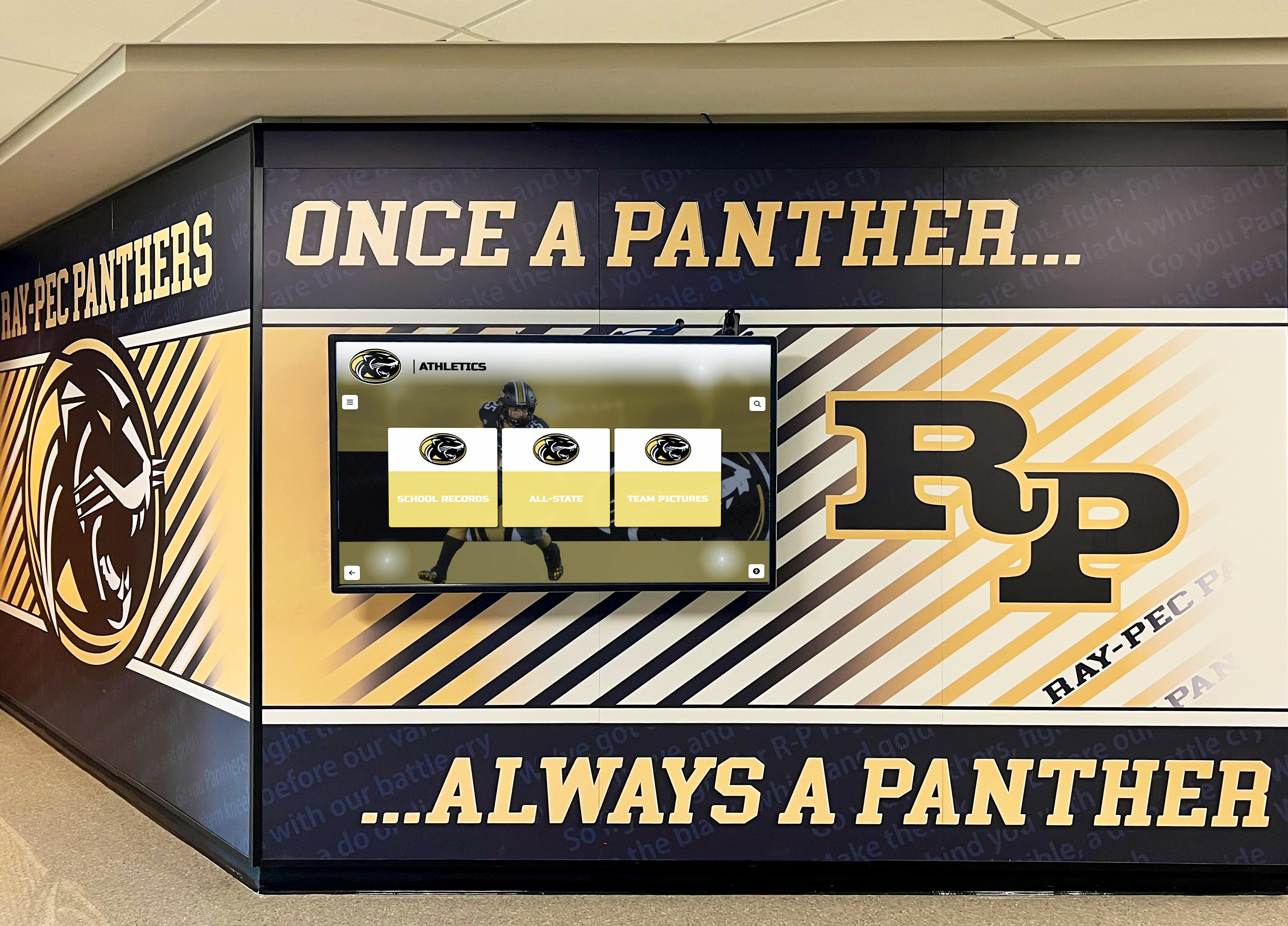
Comprehensive facility recognition creates daily celebration of school culture and achievement throughout educational environments
Inclusive Recognition Approaches
Thoughtful ceremony design ensures diverse students find representation and validation.
Balancing Excellence With Broad Recognition
The most successful recognition programs celebrate exceptional achievement while acknowledging broader student populations.
Tiered Recognition Systems
Implement recognition levels acknowledging achievement across performance ranges: pinnacle awards maintaining high standards for exceptional accomplishment (valedictorian, top academic honors, prestigious scholarships), merit-based recognition celebrating strong achievement (honor roll levels, subject awards, leadership positions), and participation acknowledgment validating contribution regardless of outcome (club membership, program participation, attendance milestones).
Tiered approaches ensure every student finds recognition opportunities while preserving prestigious award significance and maintaining meaningful distinctions between achievement levels rather than providing identical recognition regardless of accomplishment differences.
Growth and Improvement Recognition
Complement achievement awards with improvement recognition celebrating development: most improved academic performance regardless of absolute achievement level, dramatic skill development in specific subjects or activities, overcoming significant obstacles or challenges, or demonstrating exceptional perseverance despite setbacks.
Growth recognition validates that institutions value effort and dedication as much as natural ability or competitive results, providing powerful encouragement for students who work harder for achievement than peers for whom success comes easily or naturally.
Recognizing Diverse Excellence Forms
Comprehensive recognition acknowledges achievement diversity rather than privileging narrow definition of excellence.
Multiple Intelligence Acknowledgment
Award categories should span varied excellence forms: academic/intellectual achievement, artistic and creative accomplishment, athletic and kinesthetic excellence, interpersonal and leadership skills, intrapersonal development and character, and practical skills or career preparation.
This comprehensive approach reflects reality that students demonstrate excellence across diverse domains deserving equal institutional validation and celebration rather than creating implicit hierarchies suggesting academic achievement represents superior excellence form compared to artistic, athletic, or interpersonal accomplishments.
Character and Contribution Recognition
Ensure recognition extends beyond competitive measurable achievement toward character qualities and community contributions: integrity and ethical behavior consistently demonstrated, positive influence on peers and school culture, community service and civic engagement, resilience through challenges and obstacles, or supportive teamwork and collaboration.
Character recognition communicates that schools value who students become as people alongside what they achieve in measurable competition or assessment, creating comprehensive definition of excellence encompassing personal development and social contribution rather than limiting recognition to narrow academic or competitive domains.
Accessibility and Inclusion Considerations
Design ceremonies ensuring all families can participate meaningfully regardless of circumstances.
Language and Cultural Accessibility
Consider translation services or multilingual programs for families with limited English proficiency, culturally appropriate ceremony elements respecting diverse family traditions, scheduling sensitivity regarding religious or cultural observances, and recognition of students from varied cultural backgrounds through inclusive award categories acknowledging diverse achievement forms valued across cultures.
Physical and Accommodation Needs
Ensure venues provide wheelchair accessibility and accommodations for mobility limitations, assistive listening devices or interpretation services for families with hearing challenges, clear sight lines from all seating areas, adequate seating without excessive standing requirements for lengthy ceremonies, and temperature control considering comfort for elderly family members or individuals with medical conditions.
Accessibility considerations demonstrate that recognition programs genuinely celebrate entire school communities rather than creating barriers preventing some families from participating in celebrations honoring their students’ achievements.

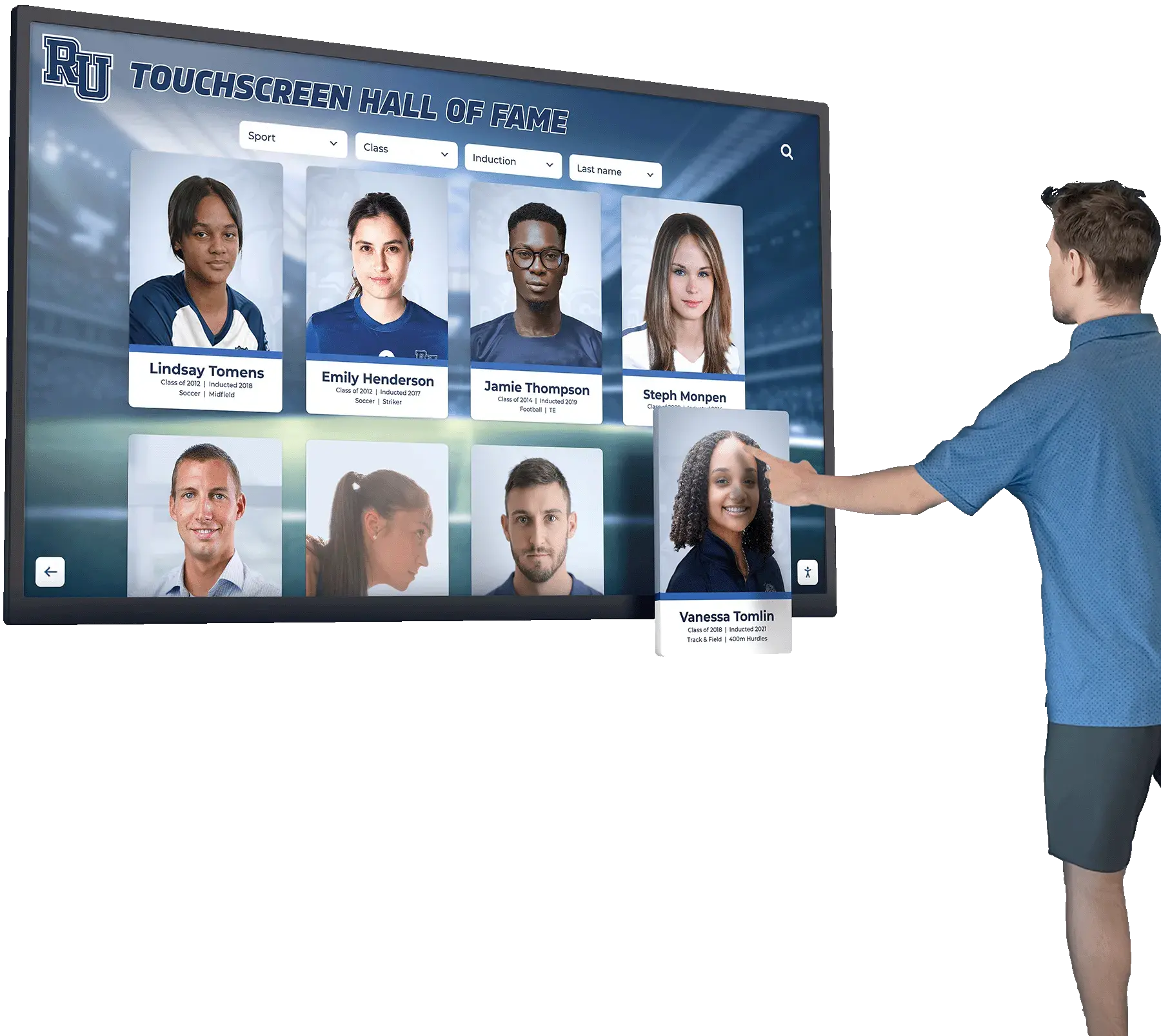
Touchscreen interfaces enable intuitive exploration of individual student profiles and comprehensive achievement documentation
Building Recognition Traditions
The most impactful awards ceremonies become traditions students anticipate, remember, and eventually celebrate as alumni.
Named Awards Honoring School Legacy
Consider naming major awards after distinguished former students, longtime educators, or significant school figures. The “Principal Johnson Leadership Award” or “Sarah Martinez Academic Excellence Award” carries more weight than generic titles while building institutional tradition and preserving memory of individuals who shaped school culture.
When establishing named awards, share honoree stories explaining why individuals deserve recognition, creating context about award significance while teaching current students about school history and values worthy of perpetuation through continued recognition programs.
Alumni Involvement in Recognition
Invite former students participating in ceremonies: present awards they previously received providing meaningful continuity, share reflections about how school recognition influenced their lives, serve as guest speakers discussing education importance or achievement pathways, or attend as honored guests representing institutional tradition.
Alumni involvement creates powerful connections between current students and school history while demonstrating that recognition relationships extend beyond graduation into lifelong connections and mentorship opportunities bridging generations through shared institutional experiences.
Schools can develop comprehensive alumni recognition programs creating ongoing engagement connecting distinguished graduates with current student recognition traditions.
Documentation and Historical Preservation
Systematic documentation ensures recognition traditions survive personnel changes and institutional transitions: photograph every ceremony capturing event atmosphere and individual recipient images, video record complete ceremonies preserving formal programs and speeches, archive physical programs and materials documenting award categories and recipients, compile digital records in searchable databases enabling historical research, and create anniversary retrospectives celebrating milestone recognition moments across decades.
Comprehensive documentation preserves institutional memory while enabling future recognition programs building on established traditions rather than repeatedly reinventing ceremonies without historical context or awareness of what previous generations established.
Post-Ceremony Follow-Through
Recognition impact extends beyond ceremonies through thoughtful follow-through activities.
Digital and Social Recognition Extension
Amplify ceremony impact through continued recognition: share ceremony highlights on school social media platforms, publish recipient lists with photos in school communications, create digital recognition profiles accessible to broader communities, encourage students sharing their achievements through social networks, and distribute ceremony recordings for families who couldn’t attend.
Extended recognition demonstrates that ceremonies represent visible celebrations of achievement that institutions value deeply enough to document and share rather than treating recognition as fleeting moments without lasting significance or institutional priority.
Recognition Display Integration
Integrate award recipients into permanent school recognition installations: update digital displays documenting new award recipients, add photos to physical recognition walls or trophy cases, create video presentations showing ceremony highlights, develop searchable databases enabling community members discovering recipients, and establish comprehensive recognition systems preserving achievements permanently throughout facilities.
Permanent integration transforms temporary ceremony recognition into ongoing celebration visible throughout academic years reminding students that achievement receives sustained attention rather than momentary acknowledgment quickly forgotten as institutional attention shifts toward subsequent priorities.
Recognition Impact Assessment
Evaluate ceremony effectiveness enabling continuous improvement: survey students about meaningful recognition elements and improvement suggestions, gather family feedback about ceremony experience quality, assess attendance patterns and engagement levels, review budget efficiency and resource utilization, and analyze whether recognition programs achieve intended motivational and cultural impacts.
Systematic assessment prevents stagnation while identifying opportunities for enhancement ensuring recognition programs remain meaningful and relevant rather than becoming rote traditions that lose significance through repetitive execution without thoughtful ongoing refinement and adaptation.

Integrated recognition installations create comprehensive celebration of school excellence throughout high-visibility facility locations
Conclusion: Recognition That Transforms School Culture
School awards ceremonies represent far more than routine annual obligations—they create defining moments validating student dedication, inspiring continued excellence, and building cultural traditions connecting generations through shared institutional identity and achievement celebration. Thoughtfully designed ceremonies honor diverse accomplishment forms from academic excellence to character development, competitive achievement to service contribution, and individual accomplishment to collaborative success.
The strategies explored throughout this guide provide frameworks for creating ceremonies that genuinely honor student achievement rather than becoming tedious obligations testing audience patience. Strategic planning ensures comprehensive preparation without last-minute chaos. Meaningful award categories acknowledge varied excellence forms rather than privileging narrow achievement definitions. Engaging ceremony formats maintain attention while providing proper recognition depth. Budget-conscious approaches enable quality recognition without excessive expense. Inclusive design ensures all students and families find representation and validation. Modern digital recognition extends celebration beyond single events into permanent accessible tradition.
Beyond logistics and planning details, effective recognition requires genuine institutional commitment demonstrating through actions and resources that schools truly value student achievement across diverse domains. This commitment manifests through quality venues and production rather than perfunctory gymnasium assemblies, through personalized recognition with specific accomplishment details rather than generic name reading, through year-round visibility in permanent installations rather than forgotten certificates filed away, and through consistent messaging that achievement matters to entire school communities rather than representing isolated individual accomplishments.
Modern recognition technology particularly transforms ceremony impact. Traditional approaches—single ceremonies, printed certificates, forgotten physical awards—provide momentary celebration that quickly fades from memory and visibility. Digital platforms like Rocket Alumni Solutions create lasting recognition that current students explore discovering institutional traditions, prospective families research understanding school culture, alumni revisit connecting with formative experiences, and communities engage with building pride in educational excellence. This digital warming effect transforms cold archived achievements into vibrant ongoing celebration inspiring engagement beyond single ceremony moments.
Transform Your School Recognition Programs
Discover how comprehensive digital recognition platforms help schools create lasting impact through engaging celebration of student achievements—building warm connected communities where excellence flourishes and all students find validation for their contributions.
Explore Recognition SolutionsYour students invest extraordinary effort into academic pursuits, leadership development, artistic expression, athletic participation, and community contribution. They balance demanding coursework with extracurricular commitments, overcome obstacles and setbacks, support peers and contribute to school culture, and demonstrate character qualities like integrity and perseverance that transcend measurable outcomes. They deserve recognition matching the significance of their dedication—thoughtful ceremony planning honoring varied contributions, meaningful presentations creating lasting validation, and permanent preservation ensuring achievements inspire future students while remaining accessible throughout their lives.
Ready to create recognition programs that truly transform school culture? Start with essential foundations: form planning committees representing diverse school constituencies, establish award categories reflecting comprehensive achievement values, develop ceremony formats balancing recognition depth with audience engagement, implement digital recognition systems extending celebration beyond single events, and create traditions connecting current students with institutional legacies inspiring continued excellence.
Most importantly, remember why recognition matters. Awards ceremonies communicate what communities genuinely value, demonstrating through investment of time, resources, and attention that student achievement represents institutional priority deserving celebration. When schools recognize diverse excellence forms across academic, artistic, athletic, and character domains, they create inclusive cultures where every student finds pathways toward acknowledgment and validation. When recognition extends beyond elite performers toward improvement, contribution, and character alongside competitive excellence, schools demonstrate commitment to comprehensive development rather than narrow outcome-focused education.
Your school community’s students are counting on recognition that validates their dedication and inspires continued growth. Start building recognition traditions that will celebrate excellence for generations to come.