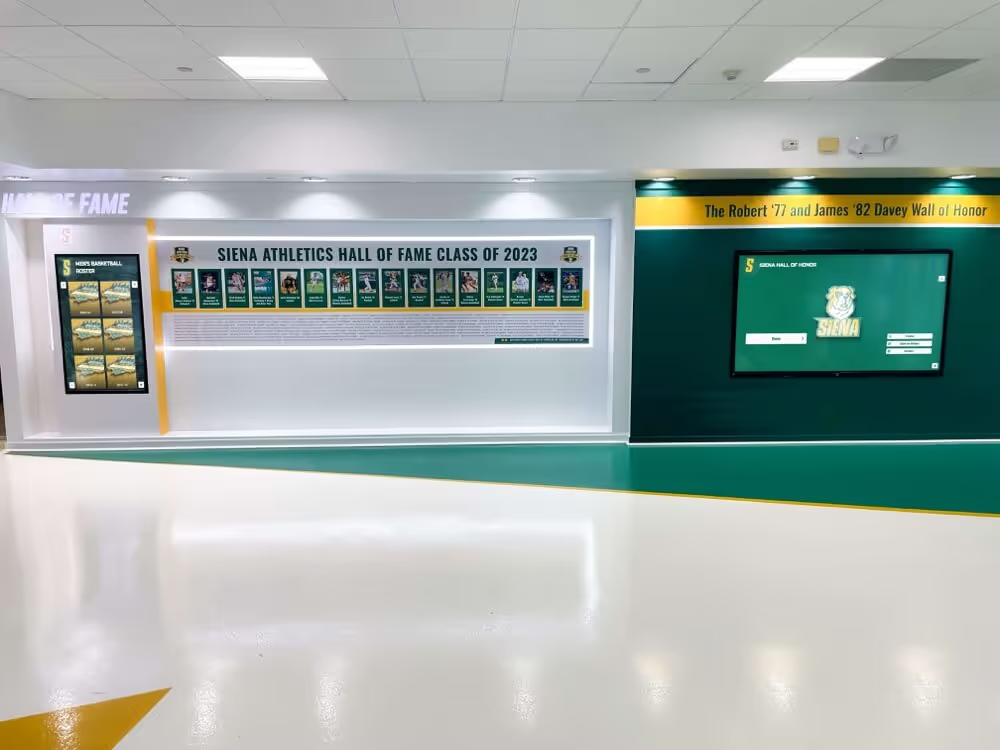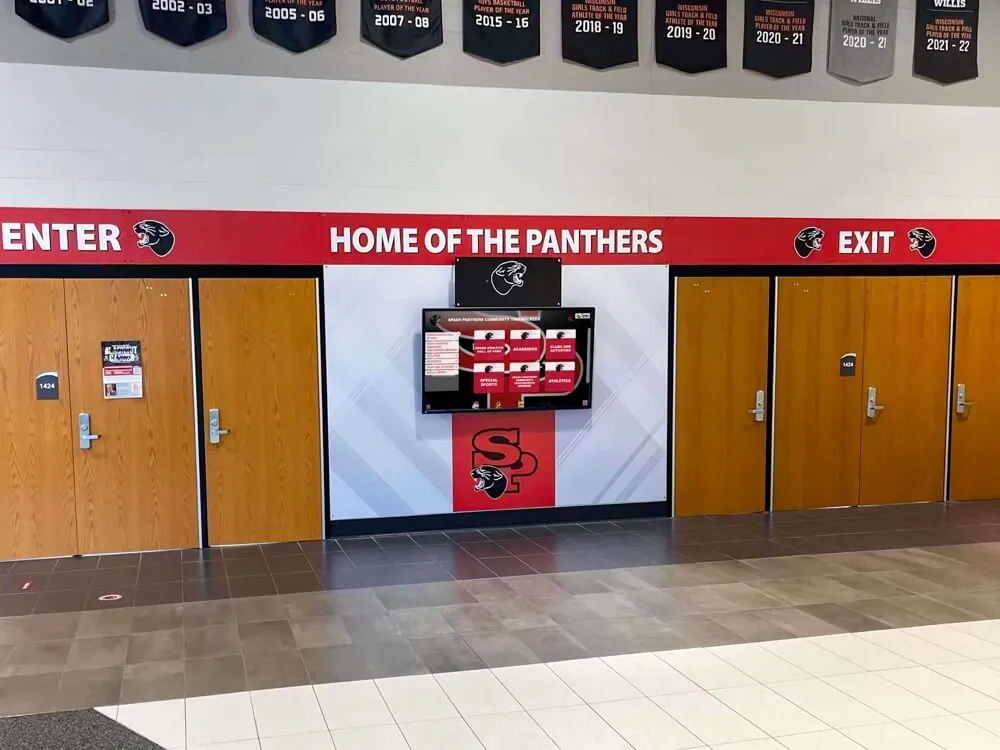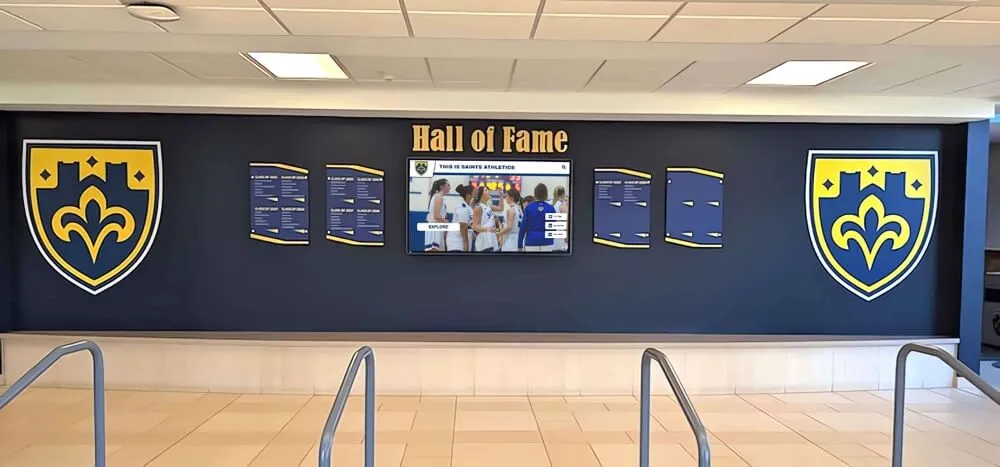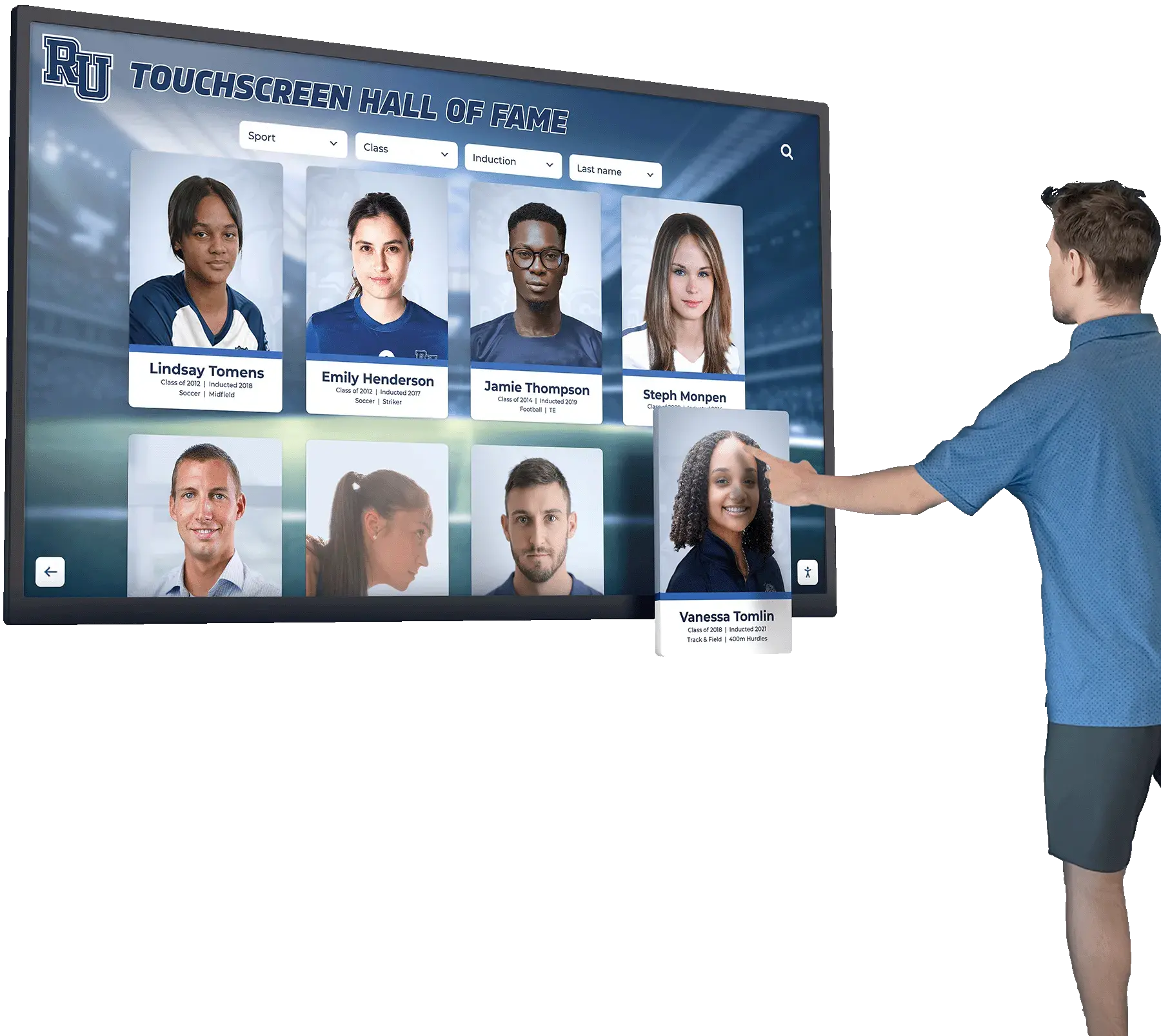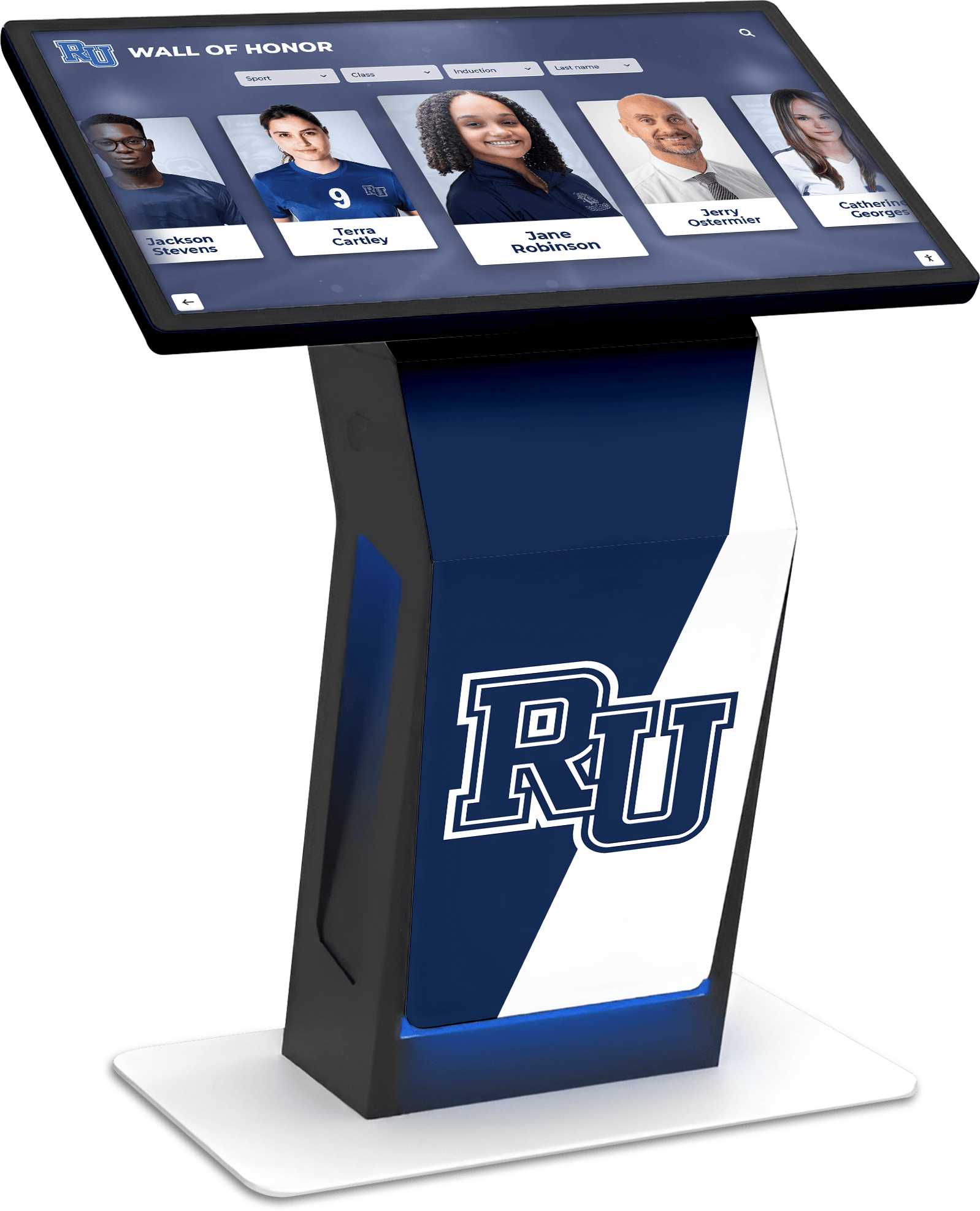




Every organization accumulates achievements worth celebrating—championship teams, distinguished alumni, academic scholars, generous donors, dedicated volunteers, and countless milestones marking institutional excellence. Yet traditional recognition methods force impossible choices: whose accomplishments receive limited wall space? How much should organizations spend on endless plaque additions? When does static recognition become invisible background noise rather than inspiring celebration?
Rocket Recognition, the flagship product platform from Rocket Alumni Solutions, eliminates these compromises through comprehensive digital recognition technology specifically designed to transform how schools, nonprofits, athletic departments, and organizations celebrate achievement while building the engaged, connected communities where members feel genuinely valued. Unlike generic digital signage adapted for recognition purposes, Rocket Recognition was purpose-built from inception to showcase people, preserve institutional heritage, and create the continuous, personalized engagement that keeps communities connected.
This comprehensive guide explores everything about Rocket Recognition—its core capabilities and unique features, the organizations and use cases it serves, implementation strategies and best practices, how it creates digital warming effects that activate communities, and why purpose-built recognition platforms outperform makeshift alternatives cobbled together from generic display solutions.
Organizations implementing Rocket Recognition consistently report dramatic engagement improvements compared to traditional static displays or generic digital signage approaches. Where static plaques receive brief glances during occasional hallway passages, interactive recognition systems create extended exploration sessions averaging 3-7 minutes per visitor. Where traditional walls fill completely within years, digital capacity accommodates unlimited growth. Where generic signage broadcasts information, purpose-built recognition platforms invite discovery, foster connection, and build community identity.

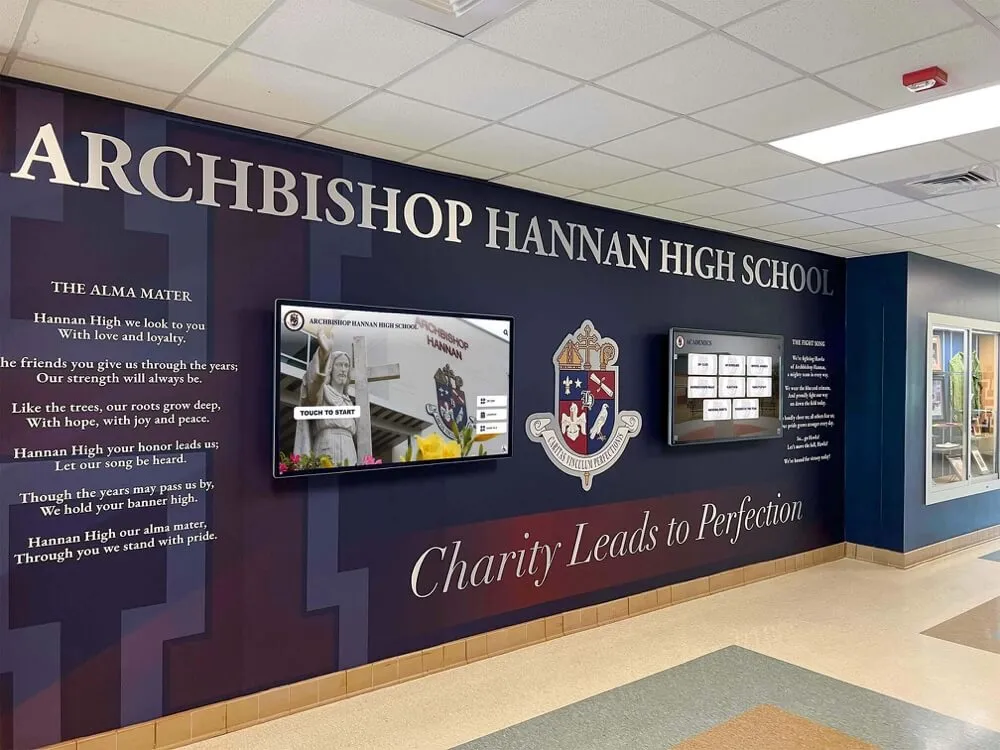
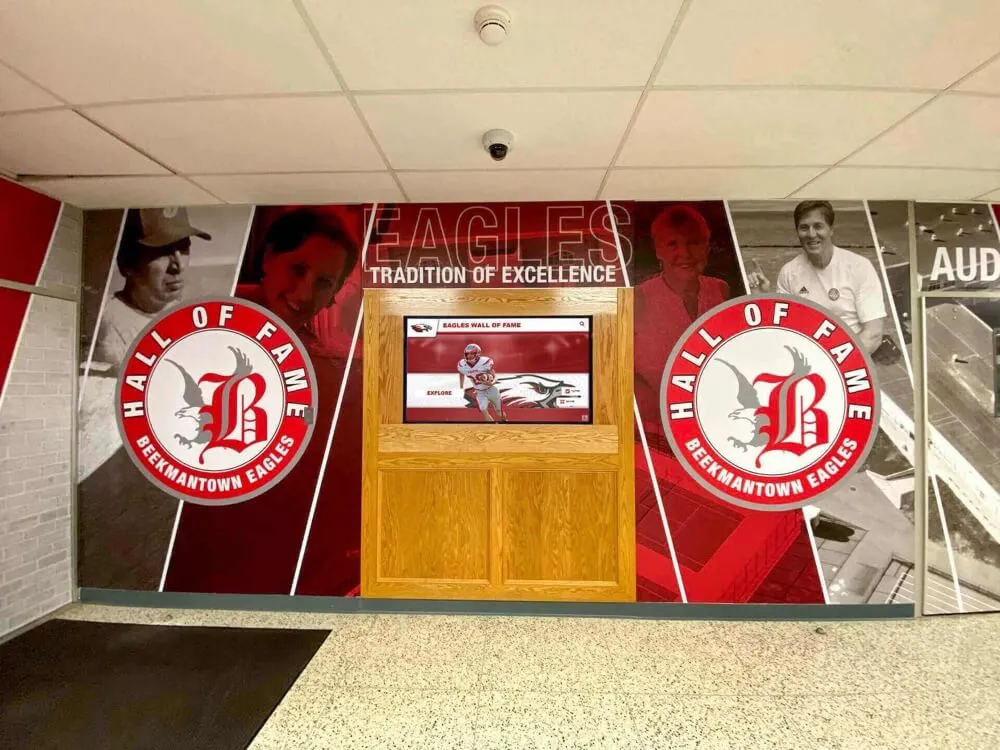
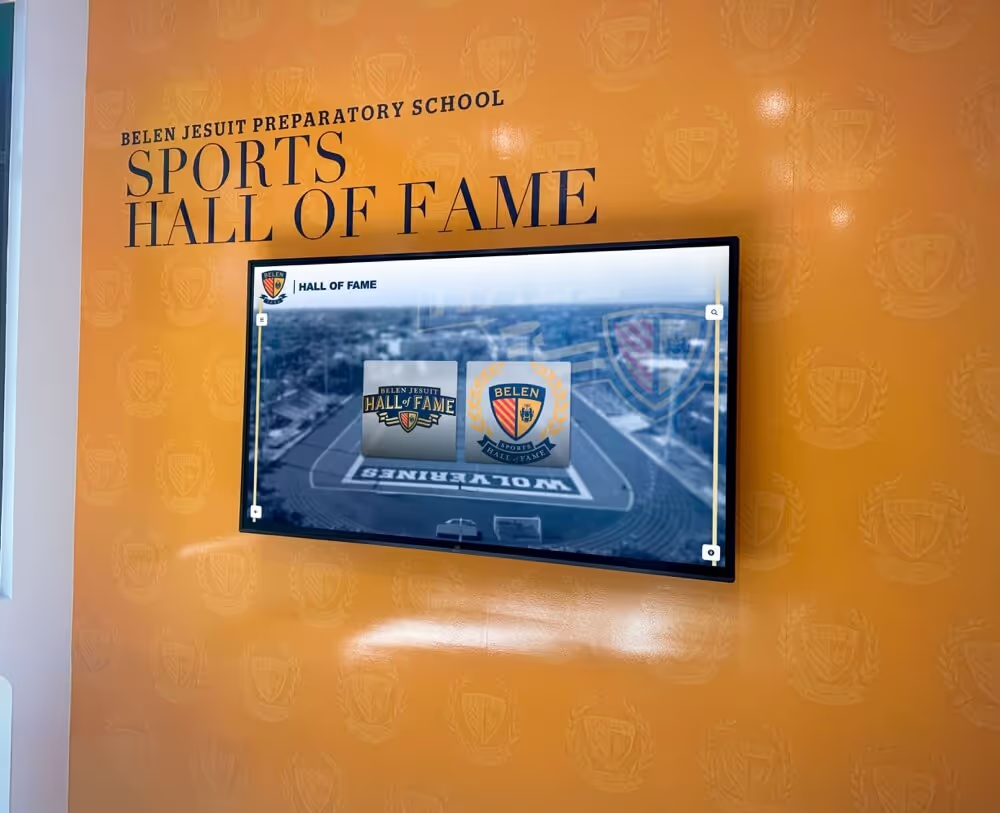
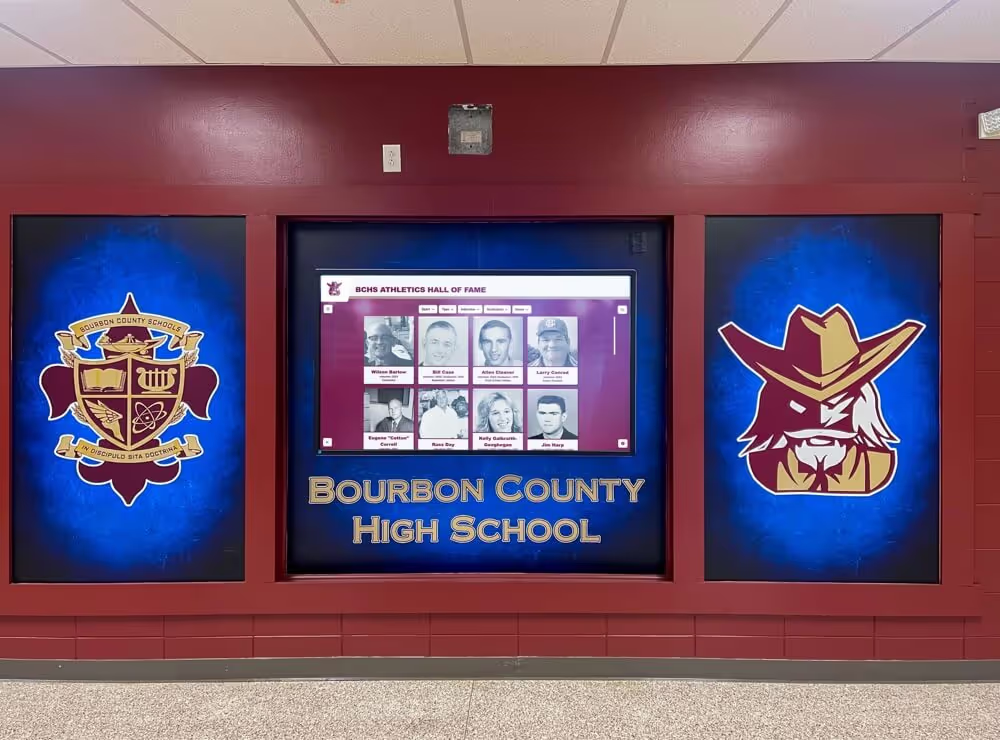
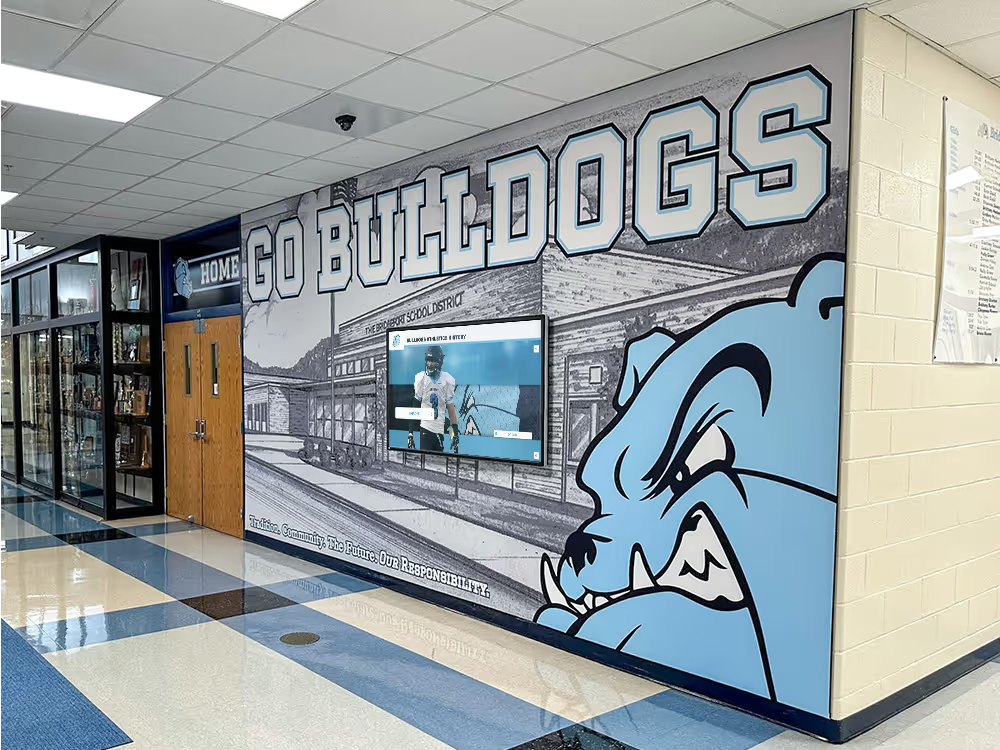
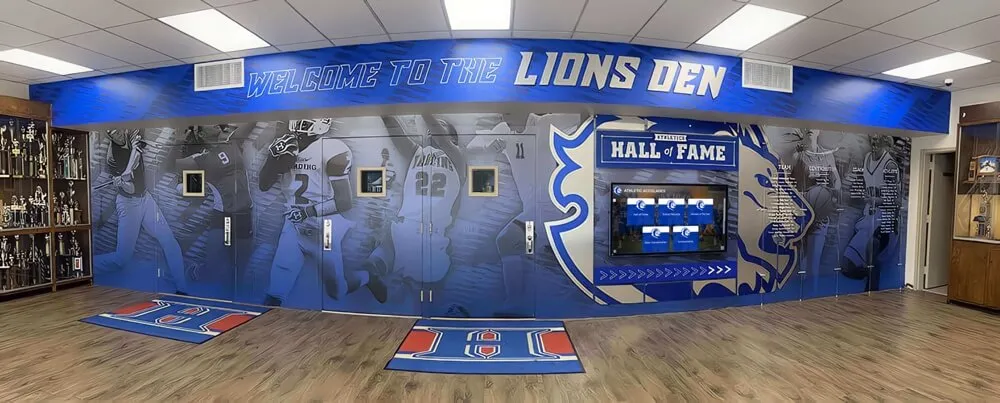
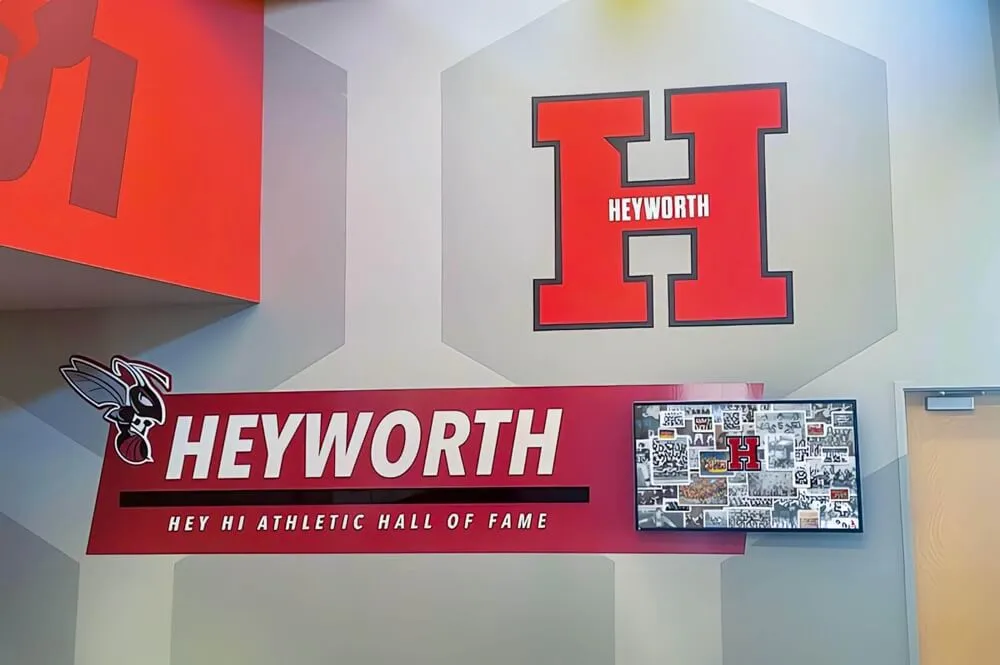
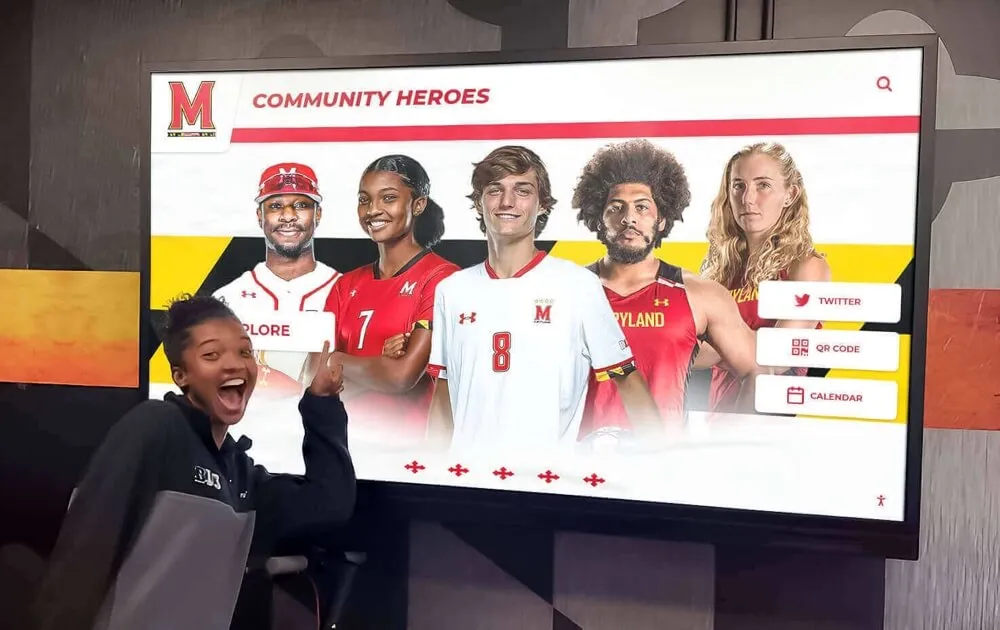
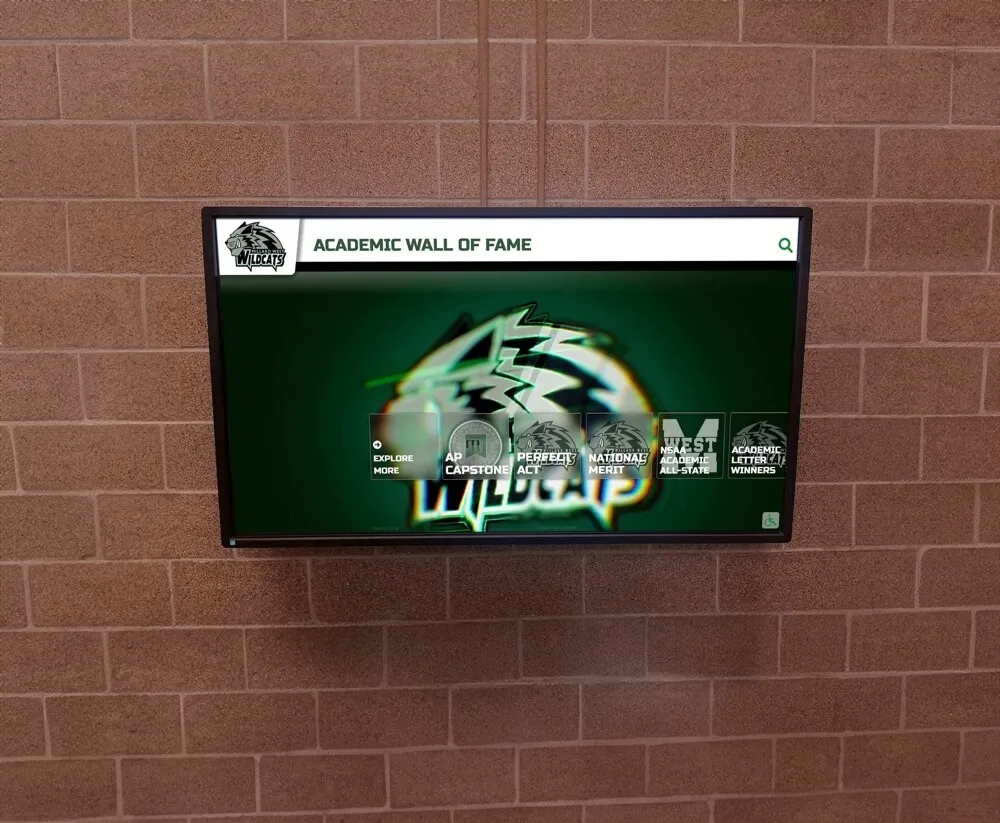
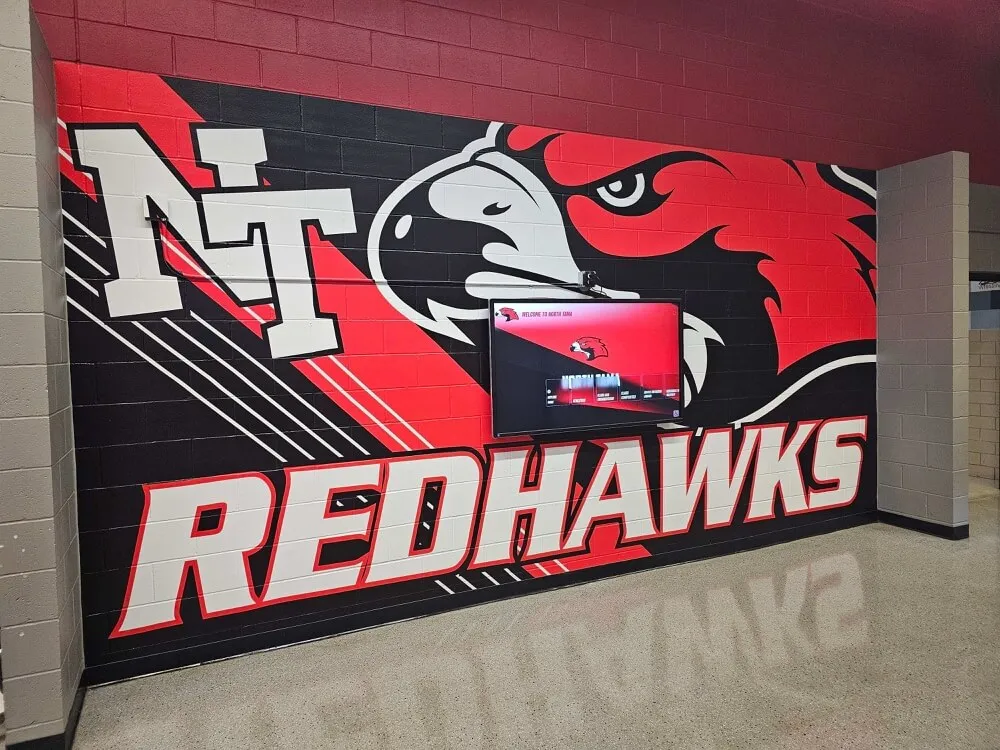
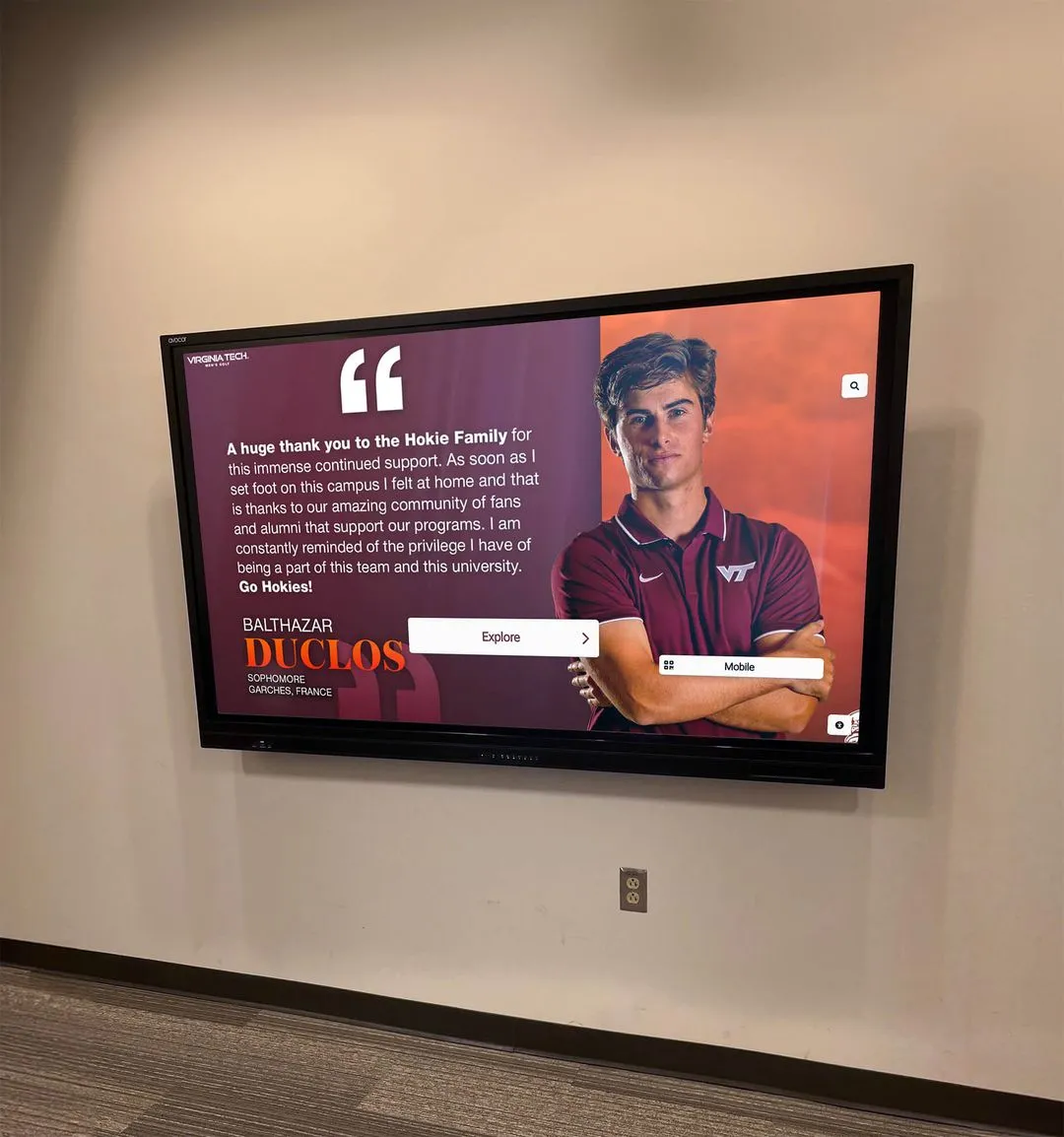
Modern recognition technology transforms static acknowledgment into interactive exploration where community members actively discover achievements and institutional heritage
Understanding Rocket Recognition: Core Platform Capabilities
Rocket Recognition represents comprehensive recognition technology addressing every dimension of institutional acknowledgment needs through integrated, purpose-built solutions.
Interactive Touchscreen Display Systems
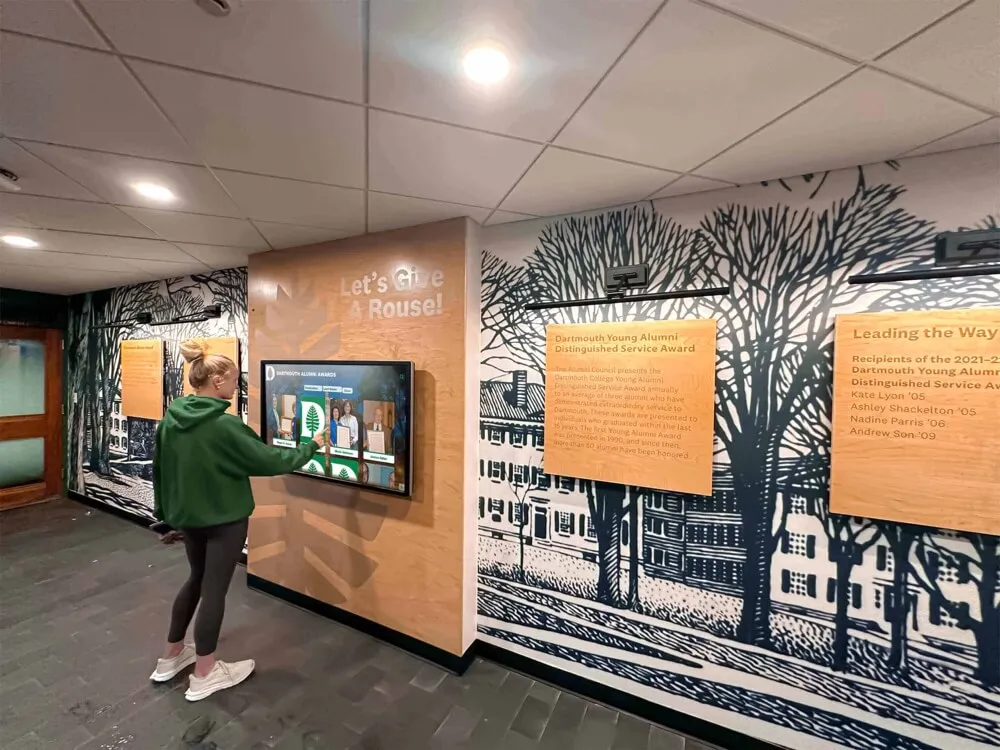
The most visible Rocket Recognition component features professional-grade touchscreen installations transforming lobbies, hallways, and common areas into engaging recognition destinations.
Hardware and Installation Excellence
Rocket Recognition provides complete hardware solutions including commercial-grade touchscreen displays designed for continuous public operation, professional mounting systems accommodating various architectural contexts, appropriate sizing from standard displays to ultra-wide installations, coordinated branding integrating institutional identity, and professional installation services ensuring reliable operation and appropriate accessibility compliance.
Unlike consumer-grade displays or DIY installations, Rocket Recognition hardware withstands intensive public use in educational and institutional environments, maintains performance through continuous daily operation, and presents professional appearance reflecting organizational quality standards. The difference between purpose-built institutional technology and consumer repurposing becomes obvious over time as inferior systems fail, fade, or frustrate users through unreliable performance.
Intuitive Recognition-Specific Interface Design
Rocket Recognition interfaces were designed specifically for biographical content, achievement recognition, and institutional storytelling—not repurposed from advertising or corporate communications applications. This purpose-built approach delivers critical advantages including intuitive search functionality designed for name discovery, sophisticated filtering enabling exploration by year, category, achievement, or custom attributes, rotating featured content ensuring all recognized individuals receive visibility, and easy navigation accessible to visitors of all ages and technical comfort levels.
Generic digital signage platforms require extensive customization attempting to force advertising-focused systems to function for recognition purposes—customization that still fails delivering user experiences purpose-built platforms provide naturally.
Unlimited Recognition Capacity
Traditional plaques face absolute space limitations forcing difficult decisions about whose achievements deserve recognition. Rocket Recognition eliminates these constraints through essentially unlimited digital capacity accommodating thousands of individuals across all recognition categories, comprehensive achievement archives preserving decades of institutional history, multi-tier recognition systems celebrating contributions at every level from transformational to modest, and flexible categorization supporting diverse recognition types within unified platforms.
This unlimited capacity enables truly comprehensive community celebration where every deserving individual receives appropriate acknowledgment without competing for finite physical space—creating inclusive recognition cultures impossible with traditional approaches.
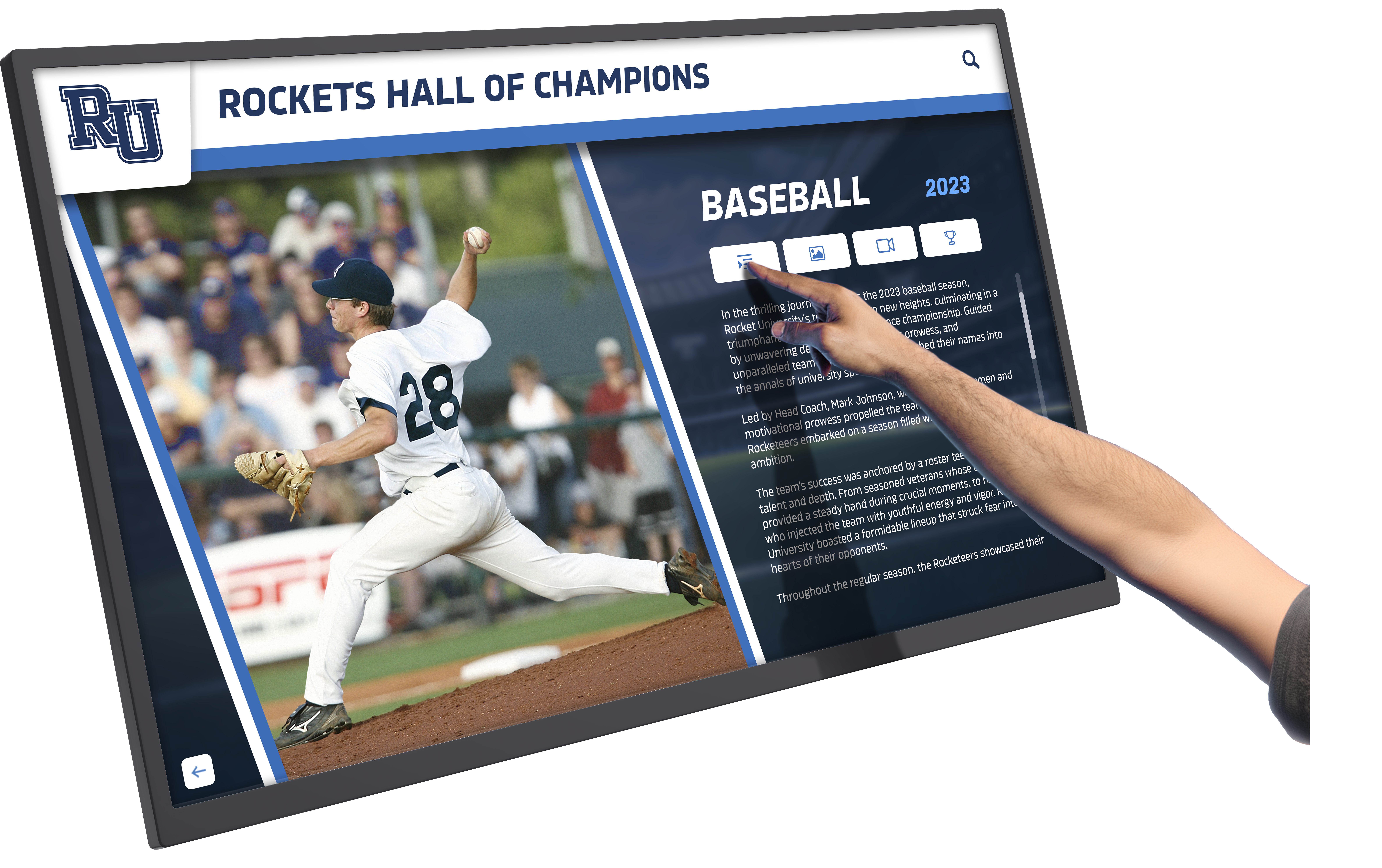
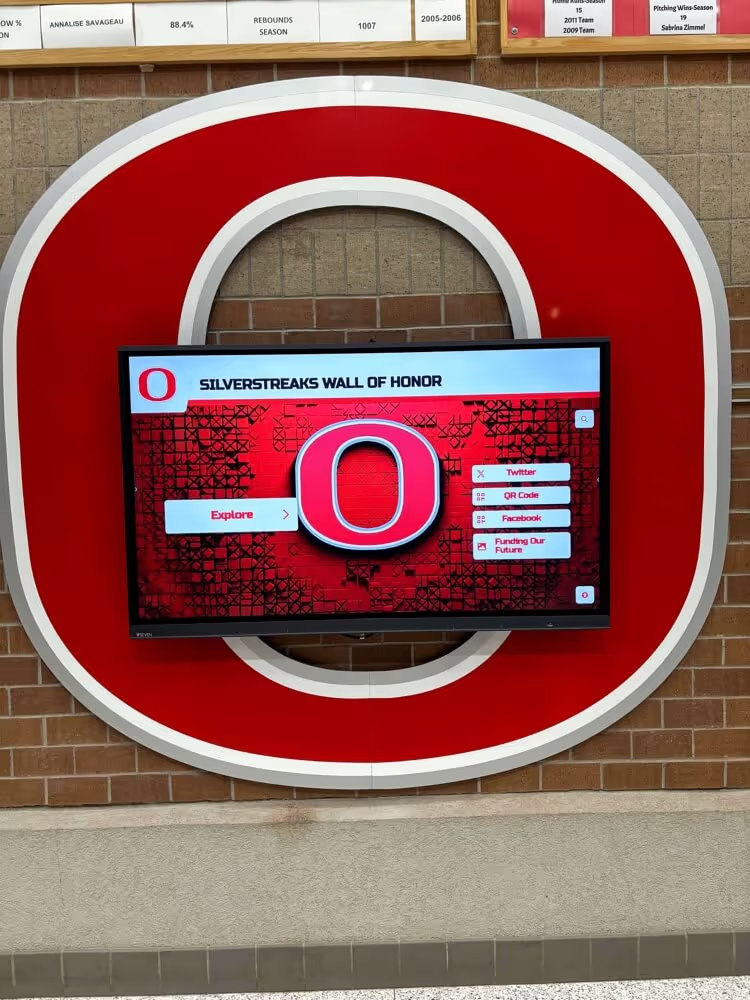
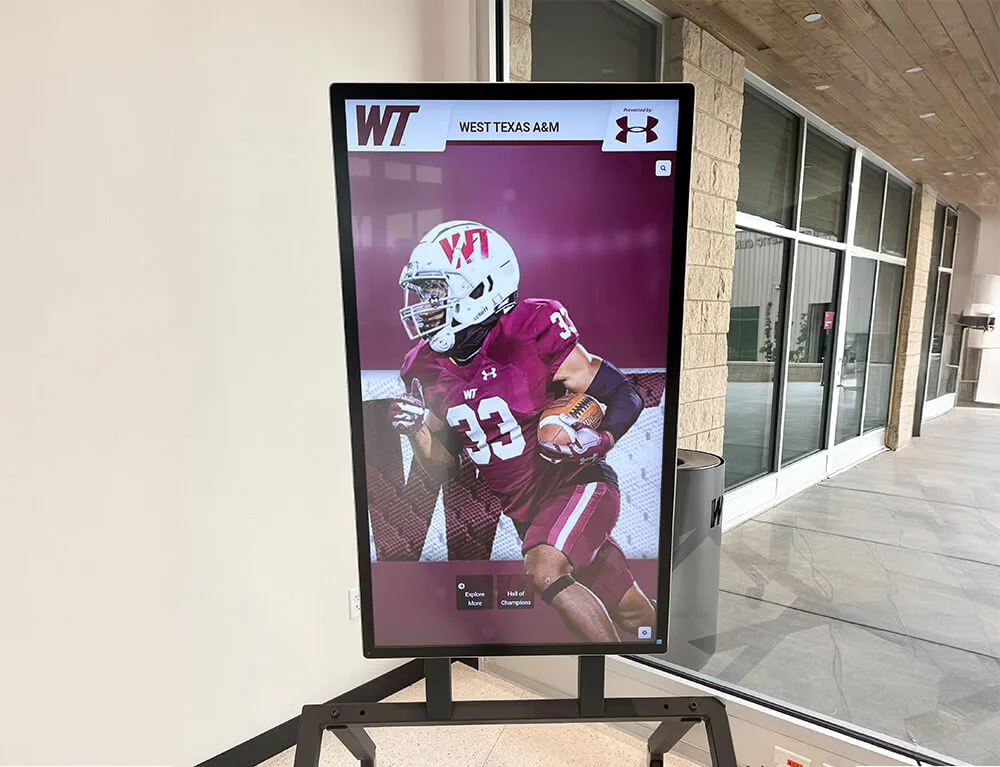
Intuitive touchscreen interfaces make exploration natural and engaging for community members discovering achievements and connecting with institutional heritage
Web-Based Recognition Platforms
Recognition impact extends far beyond physical display locations through comprehensive web platforms.
Global Access and Extended Reach
Every Rocket Recognition installation includes corresponding web platforms ensuring worldwide accessibility through responsive designs functioning across devices from desktop computers to smartphones, searchable databases enabling remote exploration, social sharing integration extending recognition through personal networks, and 24/7 availability transcending facility operating hours and geographic constraints.
Web accessibility proves particularly valuable for alumni scattered globally, family members unable to visit campuses physically, prospective members researching organizational communities, and supporters maintaining connections despite distance. Recognition that would remain invisible except during occasional facility visits becomes continuously accessible, dramatically amplifying appreciation impact.
Mobile-Responsive Design
Modern audiences access content through smartphones and tablets more frequently than desktop computers. Rocket Recognition platforms provide fully mobile-responsive experiences including touch-optimized navigation designed for mobile interaction, appropriate content presentation adapting to screen sizes, fast loading optimized for cellular connections, and QR code integration enabling instant mobile access from physical locations.
Mobile accessibility enables visitors to continue exploring recognition after leaving physical facilities, share discoveries with friends and families immediately, and maintain ongoing engagement with organizational communities through convenient pocket access.
SEO and Discoverability
Web-based recognition creates unexpected discovery opportunities through search engine visibility including individuals discovering their own recognition through Google searches, family members finding loved ones through search queries, researchers exploring institutional histories through search results, and journalists accessing information for stories about organizations or recognized individuals.
This organic discoverability extends recognition reach beyond intentional platform visits to capture interested audiences discovering content through general web searches—amplifying visibility impossible with physical-only recognition.
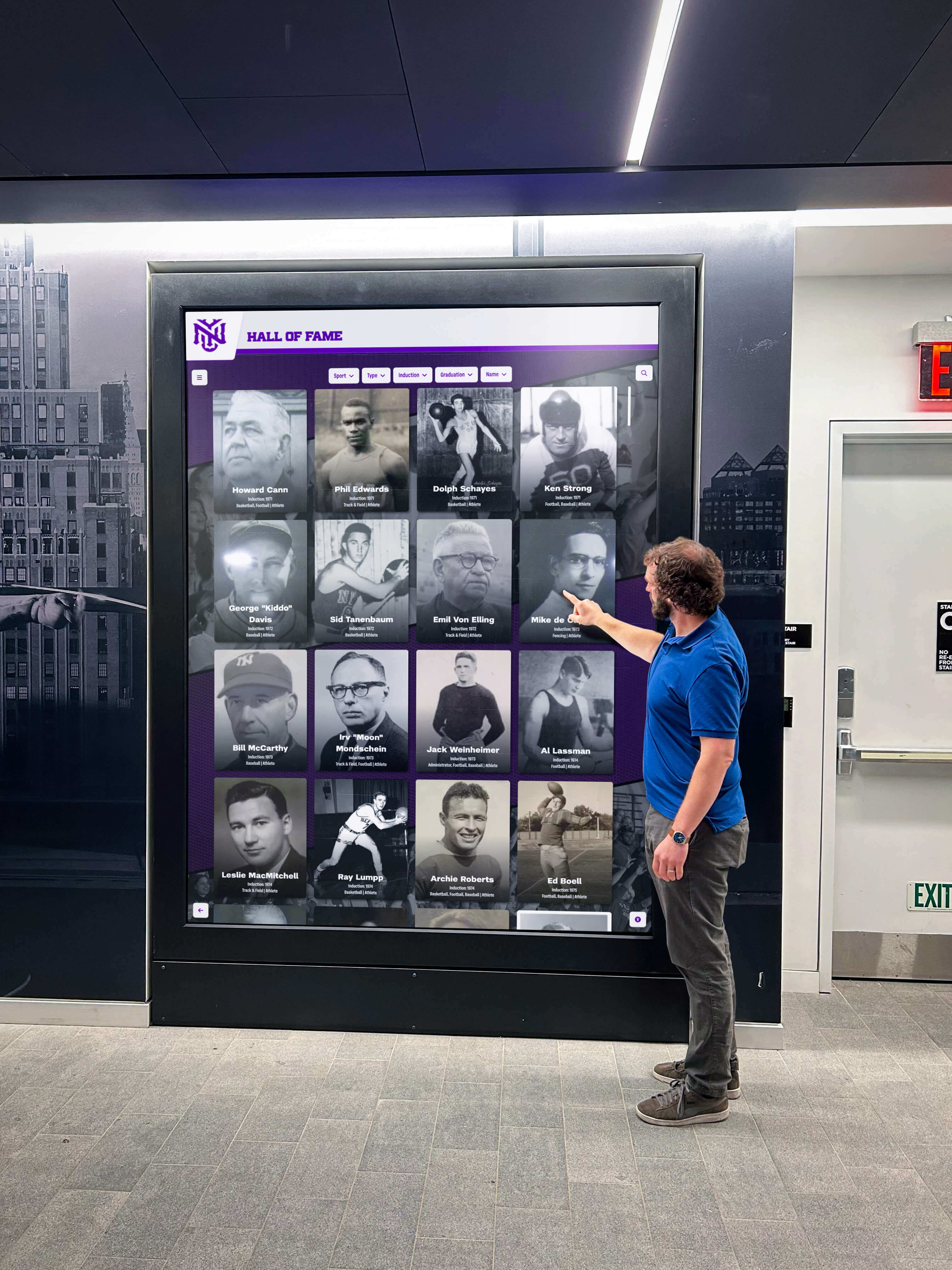
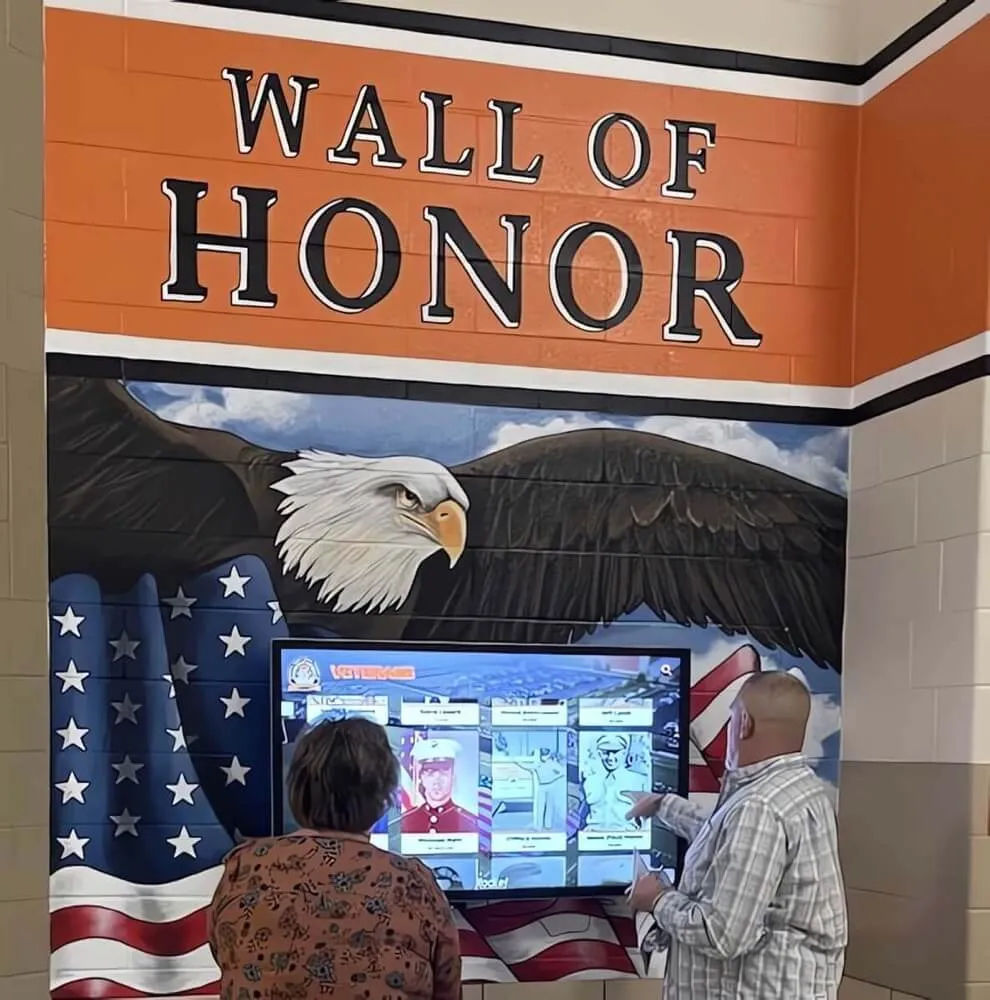
Recognition displays become gathering points where community members explore achievements, discover connections, and share stories with visitors
Cloud-Based Content Management Systems
Behind engaging public displays and web platforms, powerful content management systems enable efficient recognition maintenance.
Remote Management from Anywhere
Cloud-based management liberates recognition administrators from physical hardware constraints through web-based access from any internet-connected device, immediate content updates appearing instantly across all displays and platforms, scheduled publishing enabling recognition timed to ceremonies or announcements, and multi-device flexibility allowing management from offices, homes, or mobile devices.
This remote accessibility proves essential for distributed teams, enables responsive recognition updates as achievements occur, and eliminates traditional plaque production delays creating months-long gaps between accomplishments and visible acknowledgment.
Intuitive Content Management for Non-Technical Staff
Rocket Recognition content management was designed for typical organizational staff rather than IT professionals including simple profile creation through clear forms and prompts, straightforward image uploading with automatic optimization, easy text editing through familiar word-processor-style interfaces, and guided workflows preventing common errors while ensuring consistency.
Recognition platforms requiring technical expertise or extensive training create management bottlenecks limiting sustainable maintenance. Purpose-built systems accommodate typical users, enabling confident updates by development staff, athletic administrators, alumni office personnel, or designated volunteers without IT intervention.
Collaborative Features and Role-Based Permissions
Organizations benefit from distributed content management while maintaining appropriate oversight through role-based permissions controlling who can create, edit, or publish content, approval workflows ensuring quality control before public visibility, collaborative editing enabling multiple contributors, and audit trails documenting changes for accountability.
These collaborative capabilities enable appropriate staff across departments to contribute relevant content—athletic directors adding sports recognition, alumni offices managing distinguished graduate profiles, development teams maintaining donor acknowledgment—while maintaining centralized governance ensuring consistent quality standards.
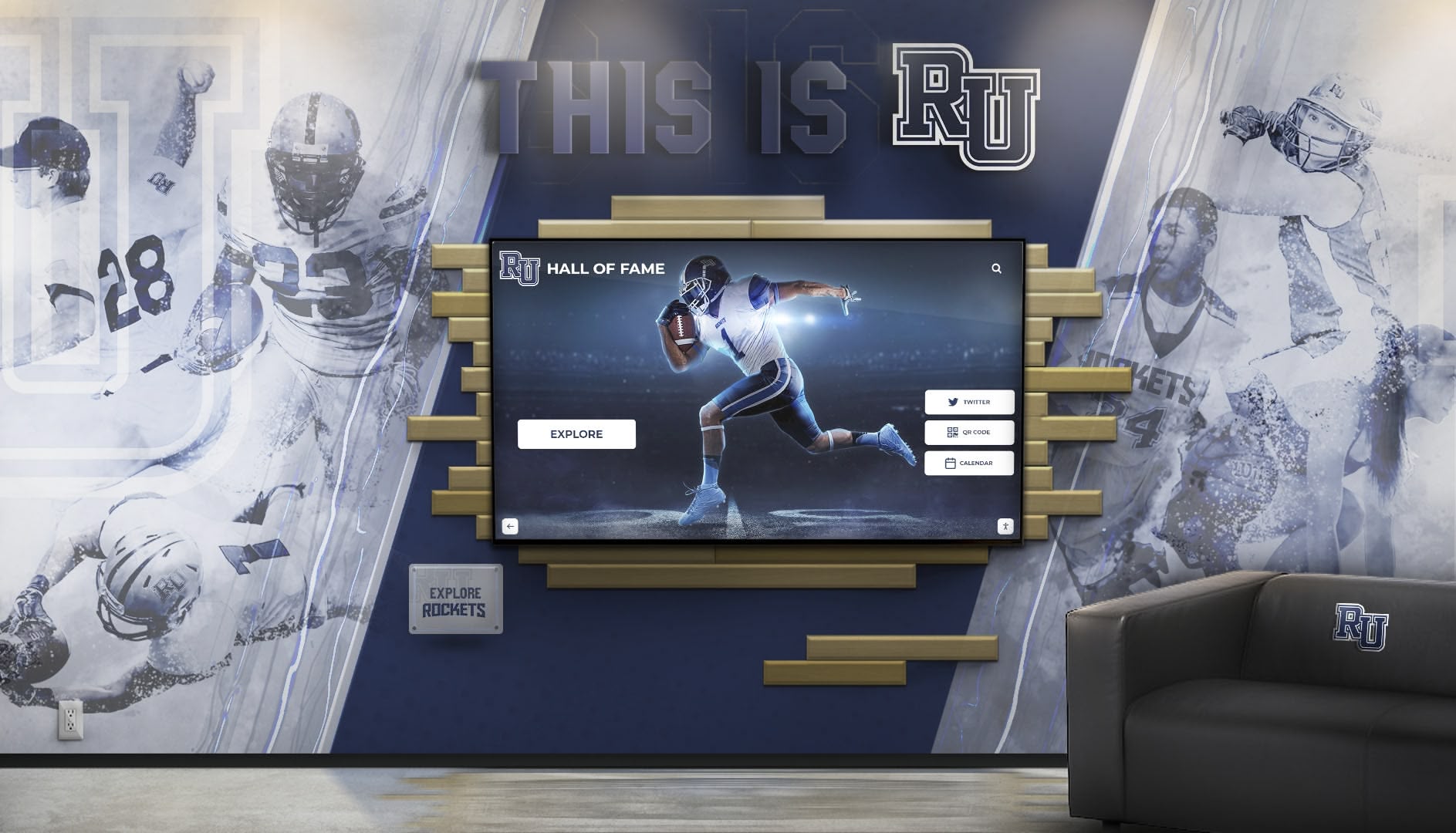
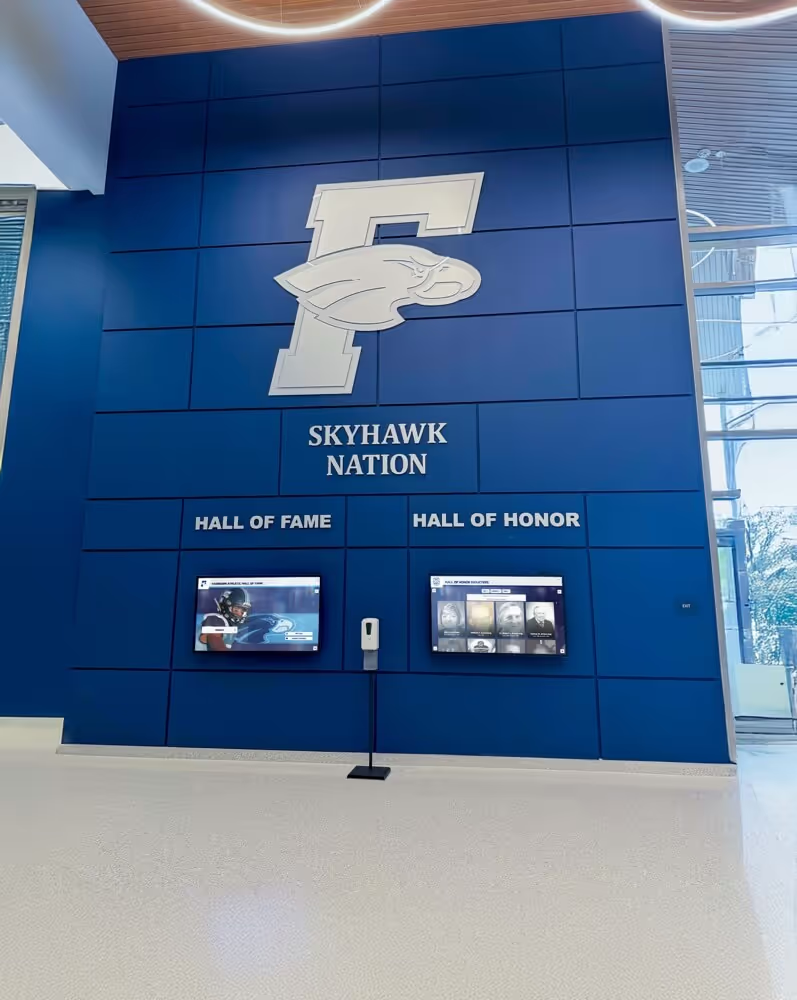
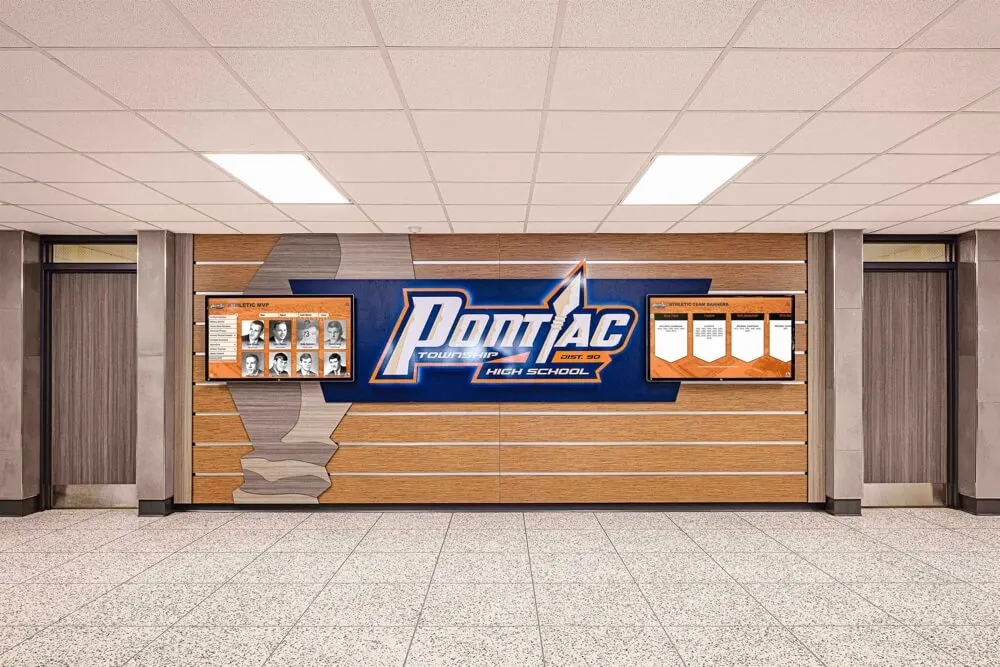
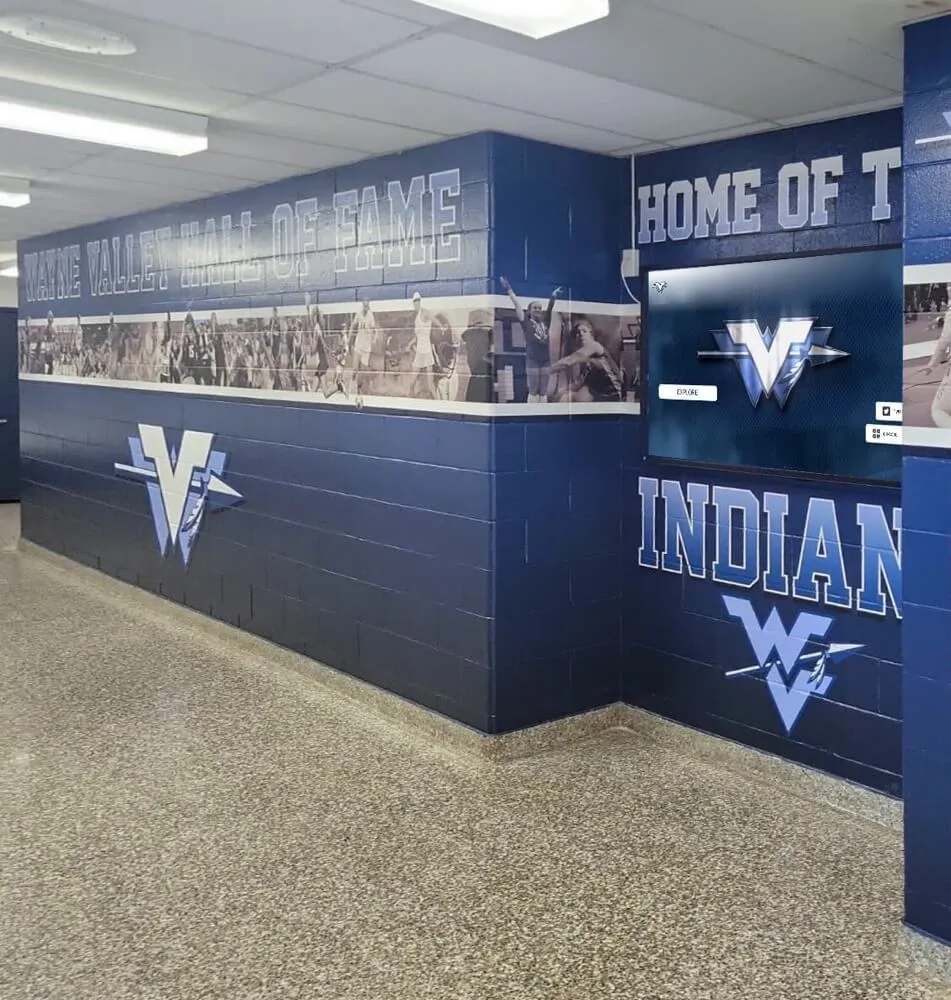
Strategic installations combine digital recognition with architectural elements creating impressive environments celebrating institutional excellence and community pride
Rocket Recognition Use Cases: Organizations and Applications
Purpose-built recognition technology serves diverse organizational contexts, each with specific requirements and priorities.
Educational Institutions: Schools, Colleges, Universities
Educational organizations represent Rocket Recognition’s largest user category, with hundreds of schools leveraging platforms for comprehensive recognition needs.
Athletic Recognition and Hall of Fame
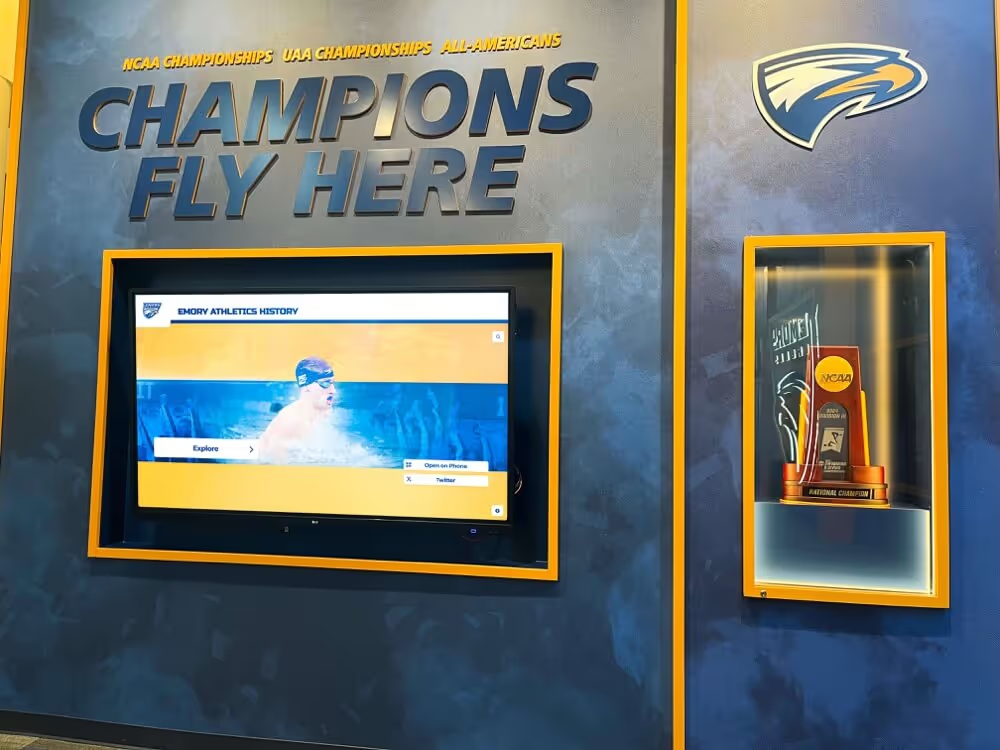
Athletic departments utilize Rocket Recognition for extensive sports celebration including individual athlete recognition with comprehensive profiles, statistics, and achievements, championship team archives preserving historic seasons with rosters and photographs, digital record boards automatically ranking top performances across statistical categories, coach recognition honoring leadership contributions to program excellence, and comprehensive sports coverage ensuring all teams receive equal recognition capacity regardless of profile or budget.
Traditional athletic recognition forced difficult space allocation decisions favoring major sports while marginalizing others. Digital platforms provide unlimited capacity, enabling truly equitable recognition celebrating every athlete, team, and program contributor without space constraints or recurring plaque expenses that accumulate substantially over decades.
Academic Achievement Recognition
Schools implement comprehensive academic celebration parallel to athletic recognition through honor roll displays celebrating scholarly achievement each semester, national recognition programs highlighting AP Scholars, National Merit Scholars, and similar distinctions, graduation honors showcasing valedictorians, salutatorians, and distinguished graduates, academic competition success recognizing debate, robotics, math olympiad, and similar accomplishments, and specialized program recognition celebrating career technical education, performing arts, and other achievements beyond traditional academics.
Academic recognition at scale matching athletic visibility communicates institutional values prioritizing intellectual achievement while providing deserved celebration motivating continued excellence.
Alumni Recognition and Engagement
Educational institutions leverage Rocket Recognition for alumni relations including distinguished alumni hall of fame honoring accomplished graduates, class reunion displays featuring graduating class composites and highlights, legacy family recognition celebrating multi-generational institutional connections, geographic alumni networks organized by regions, and career pathway showcases demonstrating diverse graduate outcomes by academic program or industry.
Alumni recognition serves dual purposes—honoring graduate accomplishments while demonstrating outcome possibilities inspiring current students and attracting prospective families evaluating institutional value.
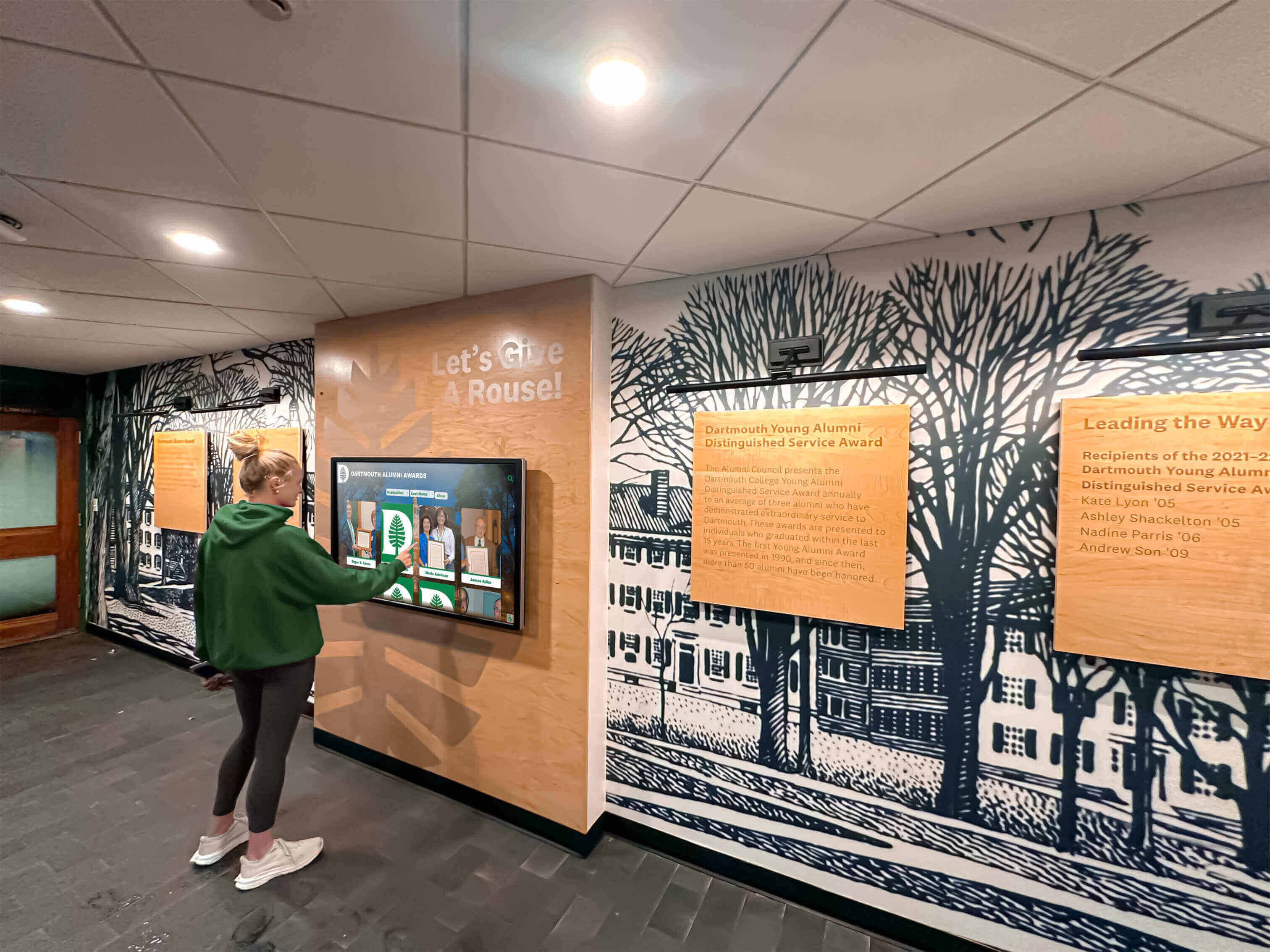
Current students naturally explore recognition discovering role models, institutional traditions, and community heritage that builds belonging and pride
Nonprofit Organizations and Foundations
Nonprofit sectors utilize Rocket Recognition for mission-critical donor appreciation and community building.
Donor Recognition and Stewardship
Development offices implement comprehensive donor celebration through giving society recognition organized by contribution levels, campaign-specific acknowledgment connecting donors to funded initiatives, memorial and tribute recognition honoring individuals through philanthropic gifts, volunteer recognition celebrating non-financial contributions supporting missions, and impact storytelling connecting donor support to tangible mission outcomes.
Research across nonprofit sectors demonstrates that recognized donors give 30-50% more over lifetimes and maintain relationships three times longer than unrecognized supporters. Rocket Recognition enables comprehensive, inclusive donor celebration at sustainable costs compared to traditional plaque approaches requiring substantial recurring expenses as donor communities grow.
Mission Impact Demonstration
Beyond simple donor acknowledgment, recognition platforms demonstrate accountability through beneficiary testimonials showing supported individuals and program impacts, program milestone documentation evidencing mission progress, partnership recognition celebrating collaborative relationships, and outcome metrics demonstrating return on philanthropic investment.
This transparency builds donor confidence supporting continued commitment while attracting new supporters seeking evidence that organizations effectively deploy resources toward stated missions.
Community Building and Member Engagement
Nonprofits serving members, participants, or beneficiaries utilize recognition for community strengthening including participant celebration recognizing program involvement and completion, volunteer appreciation honoring service contributions, member milestone recognition celebrating participation longevity, and leadership acknowledgment highlighting board service and organizational governance.
Visible recognition builds community identity, creates belonging among members, and demonstrates organizational appreciation extending beyond transactional program delivery to genuine relationship cultivation.
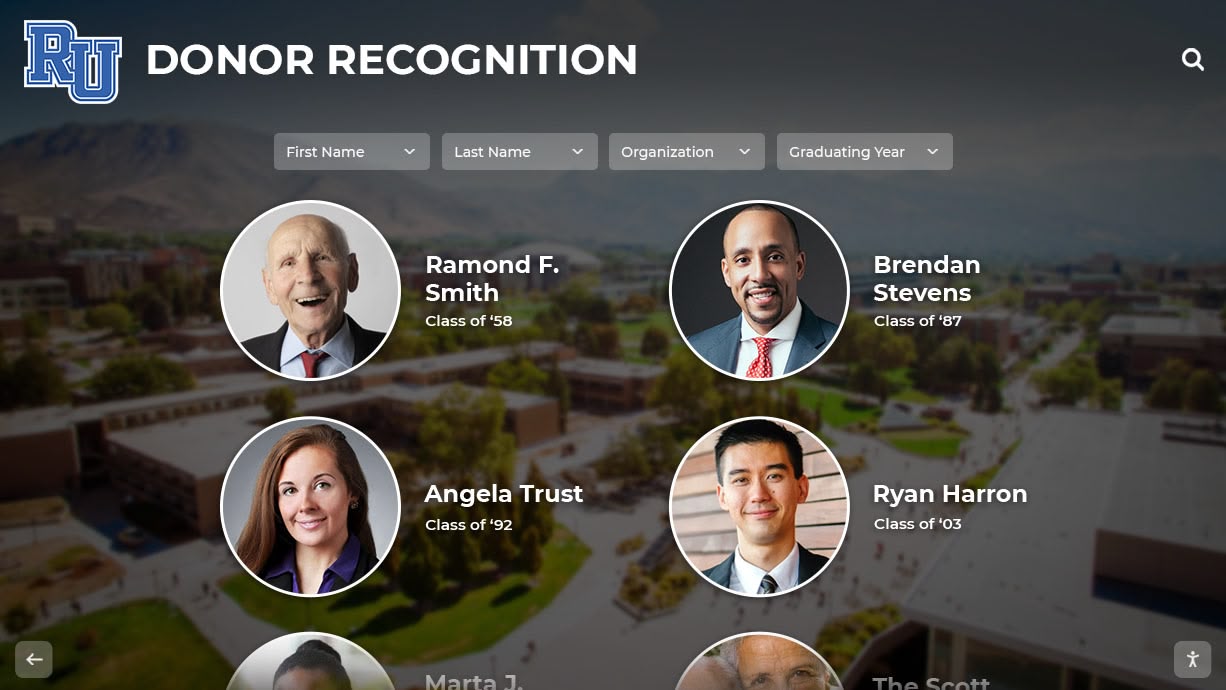
Professional installations create inspiring environments demonstrating gratitude while building donor communities that sustain organizational missions through ongoing support
Athletic Facilities and Sports Organizations
Sports contexts beyond educational settings leverage Rocket Recognition for comprehensive athletic celebration.
Professional and Semi-Professional Sports Organizations
Club teams, minor league organizations, and professional sports franchises utilize recognition including player hall of fame celebrating franchise legends, team history archives preserving championship seasons and memorable moments, record boards tracking statistical achievements across franchise history, coaching and front office recognition honoring organizational leadership, and community partner acknowledgment celebrating sponsors and supporters enabling operations.
Athletic recognition builds community pride, attracts fan engagement, and creates facility destinations where supporters linger exploring history rather than simply attending events.
Recreational Sports Leagues and Club Programs
Community recreation programs and club sports implement accessible recognition including participant milestone celebration recognizing longevity and dedication, volunteer coach recognition honoring leadership enabling programs, championship team acknowledgment preserving successful seasons, individual achievement celebration encouraging continued participation, and alumni tracking maintaining connections with program graduates.
Recognition proves particularly powerful in youth and recreational contexts where positive reinforcement motivates continued participation, builds confidence through visible achievement celebration, and demonstrates organizational commitment to participant development beyond competitive outcomes alone.
Training Facilities and Athletic Complexes
Specialized athletic facilities leverage recognition for multiple purposes including facility donor recognition acknowledging capital campaign support, athlete achievement showcase demonstrating training outcome quality, coaching staff credentialing displaying expertise and qualifications, program milestone documentation evidencing organizational history and stability, and member community building creating belonging among facility users.
Recognition transforms transactional facility usage into community membership where participants identify with organizations and develop lasting connections beyond simple service consumption.
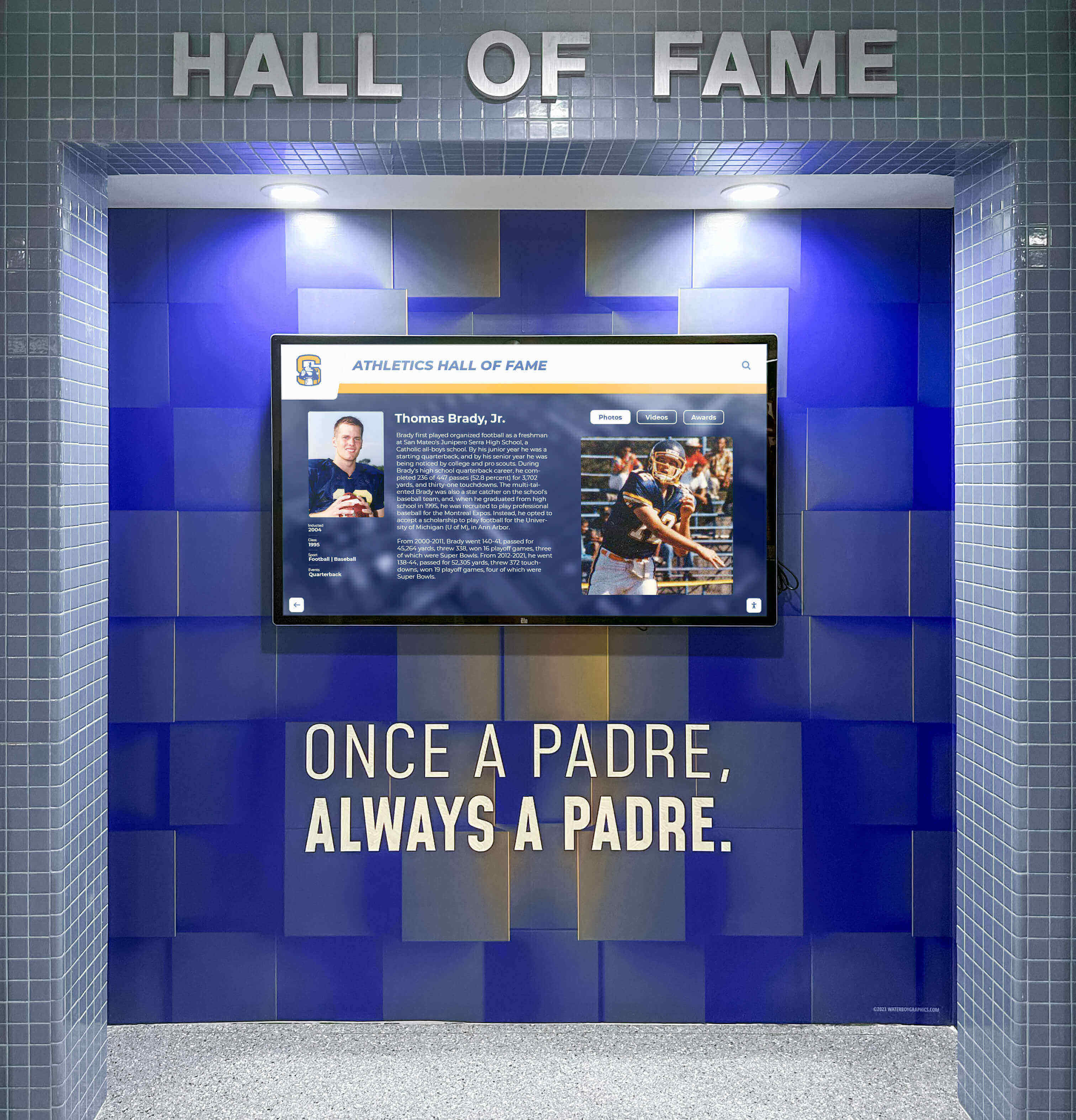
Athletic recognition installations celebrate competitive excellence while building program traditions that motivate current athletes and connect alumni to institutional heritage
Corporate and Professional Environments
Business contexts increasingly adopt recognition technology for employee engagement and organizational culture building.
Employee Recognition Programs
Organizations implement comprehensive staff appreciation including employee of the month highlighting exceptional performance, service milestone recognition celebrating employment longevity, achievement awards acknowledging specific accomplishments and contributions, team recognition celebrating collaborative successes, and leadership acknowledgment honoring management excellence.
Employee recognition research demonstrates that acknowledged staff exhibit higher engagement, lower turnover, improved performance, and stronger organizational commitment—making recognition strategic investments in workforce development rather than optional cultural niceties.
Sales Team Motivation and Celebration
Sales-driven organizations utilize recognition for performance motivation including top performer rankings creating visible competitive incentives, quota club recognition celebrating achievement milestones, deal closing celebration acknowledging significant wins, team competition displays tracking divisional or regional performance, and career progression showcase demonstrating advancement pathways rewarding success.
Visible recognition creates powerful motivation through public acknowledgment, competitive dynamics, and aspirational examples demonstrating achievement possibilities.
Company Culture and Values Demonstration
Organizations leverage recognition communicating cultural priorities including values-based awards celebrating behavior exemplifying organizational principles, innovation recognition encouraging creative thinking and risk-taking, customer service excellence acknowledging exceptional client experiences, community service recognition honoring volunteer engagement, and diversity leadership celebrating inclusion advancement.
What organizations choose to recognize reveals authentic values more credibly than mission statements alone, making recognition powerful cultural communication demonstrating priorities through visible celebration.
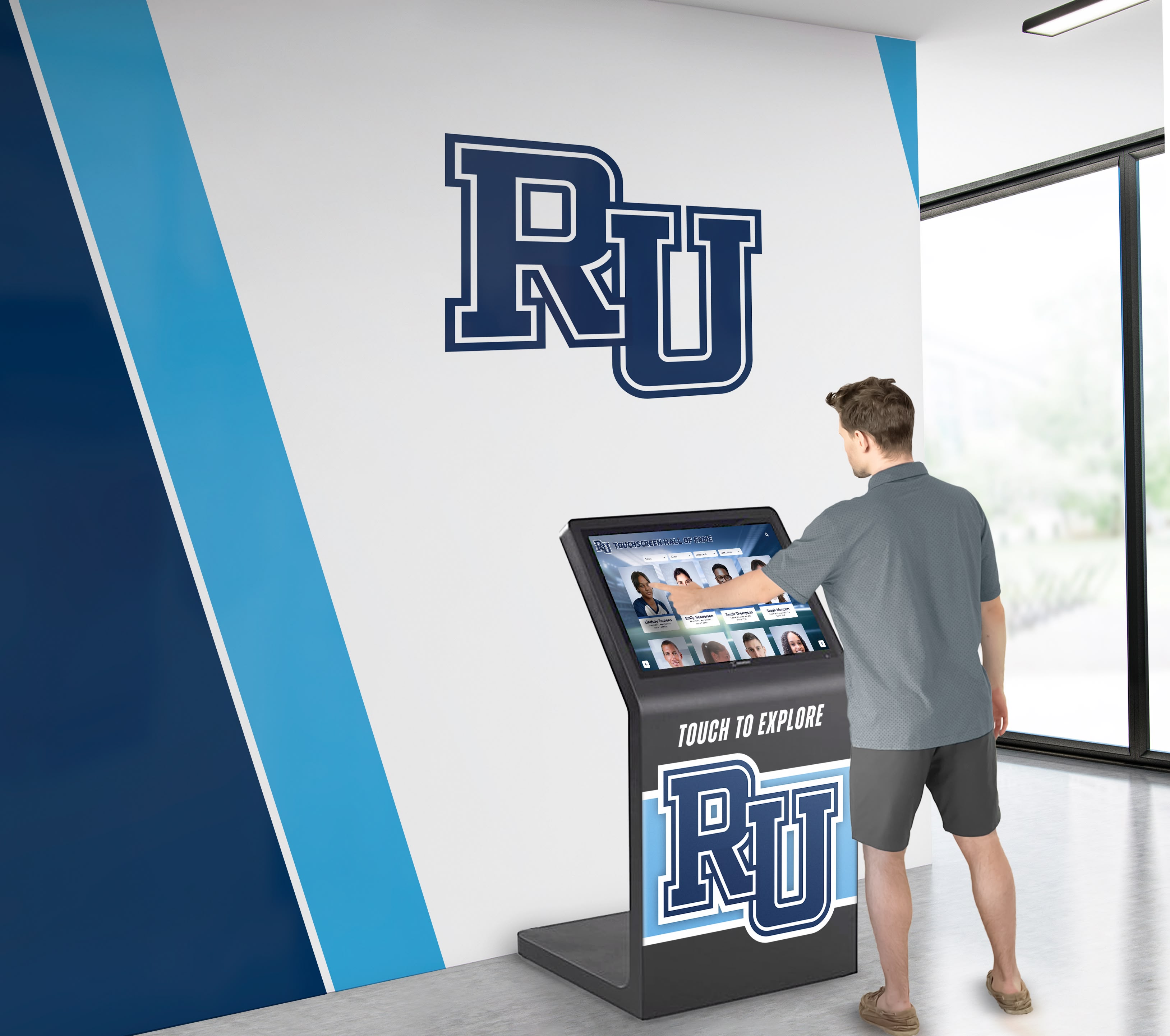
Corporate installations create professional environments demonstrating appreciation while building cultures where employees feel valued and motivated toward continued excellence
The Digital Warming Effect: How Rocket Recognition Activates Communities
Beyond simple acknowledgment, Rocket Recognition creates what experts call digital warming—the transformation of cold, static spaces into active community destinations through continuously surfaced, personalized content.
Personalization and Individual Discovery
Generic broadcasting fails engaging modern audiences expecting relevant, personalized experiences. Rocket Recognition enables personal discovery creating genuine connection.
Search and Filter Functionality
Unlike passive viewing of predetermined content, interactive recognition enables active exploration through intuitive name search allowing individuals to find themselves, classmates, family, or acquaintances, year-based browsing enabling class or era-specific discovery, category filtering helping visitors explore specific achievement types, program-based organization enabling department or activity-specific discovery, and keyword searching finding content matching personal interests.
Personal discovery creates emotional connection impossible through generic content presentation. When visitors find unexpected connections—discovering hometown alumni, identifying graduates from their high schools, or recognizing family members—these surprise moments generate enthusiasm and belonging.
Individual Profile Depth
Rocket Recognition enables rich biographical profiles including comprehensive biographical information contextualizing achievements, multiple photographs showing individuals across career or program tenure, video content featuring first-person perspectives and authentic voices, statistical and factual documentation evidencing accomplishments, and narrative descriptions explaining achievement significance and contextual meaning.
This depth transforms acknowledgment from name listings into meaningful celebration honoring complete individuals rather than reducing people to simple data points on plaques.
Continuous Content Surfacing Through Rotation
Unlimited capacity creates discoverability challenges—how do visitors find specific content among thousands of profiles? Rocket Recognition addresses this through intelligent featured content rotation ensuring all recognized individuals receive homepage visibility over time, themed collections highlighting specific groups or achievement types, anniversary recognition surfacing individuals based on temporal milestones, and algorithmic fairness preventing popular content from monopolizing attention while less-viewed profiles remain invisible.
This continuous surfacing ensures comprehensive recognition where every individual receives deserved visibility rather than permanent burial in database depth that only intentional search retrieves.
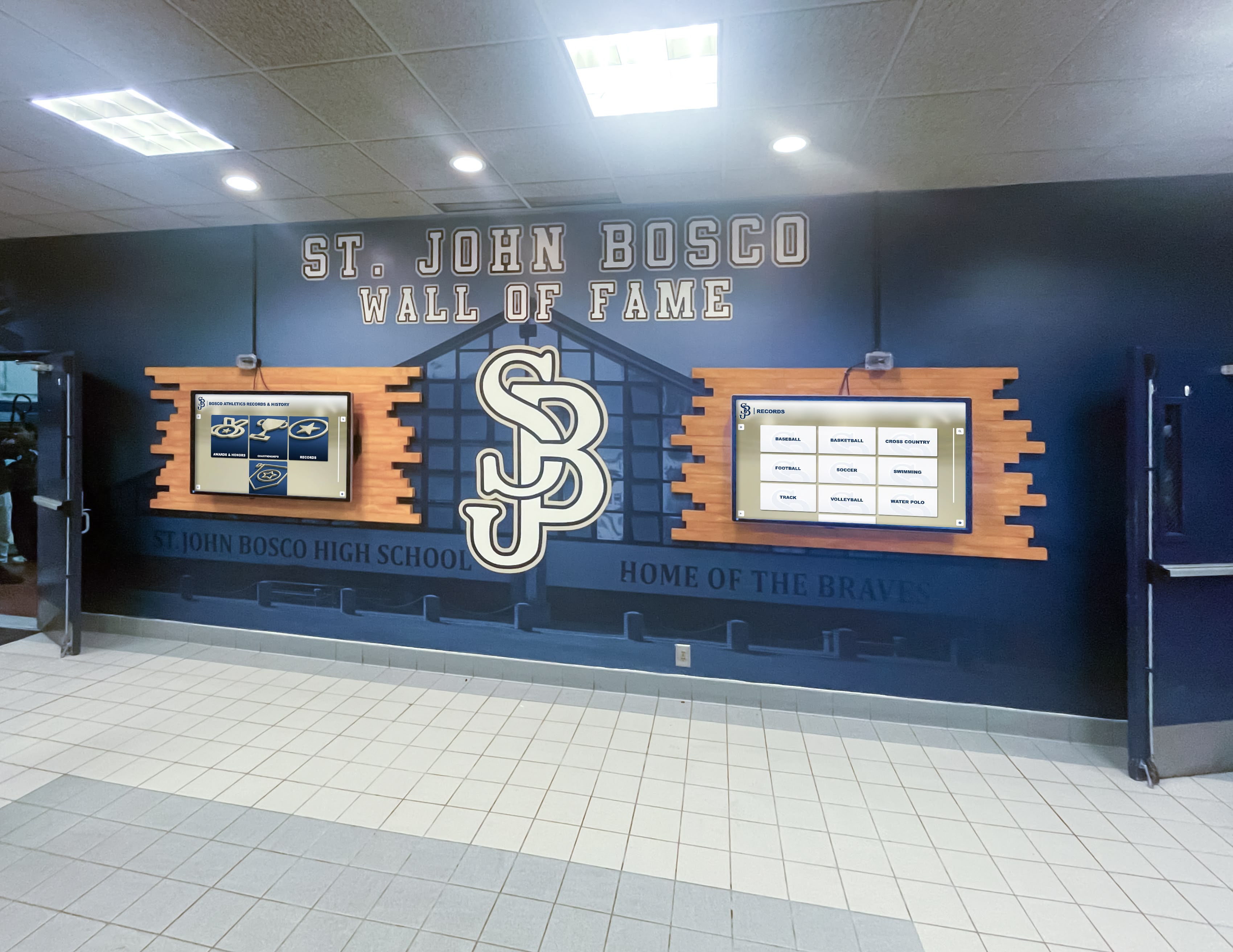
Multiple coordinated displays provide extensive recognition capacity while creating impressive installations demonstrating institutional commitment to comprehensive community celebration
Extended Engagement and Ongoing Connection
Recognition creates touchpoints maintaining institutional relationships beyond initial acknowledgment moments.
Repeat Visitation and Updated Content
Static plaques provide identical experiences during every encounter, creating familiarity that breeds invisibility as repeated viewers stop noticing unchanging displays. Rocket Recognition maintains engagement through regularly updated featured content providing fresh experiences, new profile additions giving returning visitors reasons to explore, anniversary recognition surfacing different individuals based on current dates, and seasonal themes creating relevant contextual connections.
Organizations committed to content maintenance report that community members regularly check displays discovering what’s new—behavior impossible with static recognition providing identical experiences regardless of visit timing.
Social Sharing and Network Extension
Recognition amplifies exponentially when celebrated individuals share acknowledgment through personal networks including one-click social media sharing to Instagram, Facebook, LinkedIn, and other platforms, direct link copying enabling text message or email sharing, screenshot functionality allowing mobile image capture and distribution, and download capabilities providing offline content access.
When recognized individuals share achievements through personal networks, organizational visibility extends far beyond facility visitors to encompass extended social networks—creating organic reach and positive association impossible through institutional marketing alone.
Alumni and Member Lifecycle Engagement
Recognition serves as continuous engagement vehicle throughout relationship lifecycles including prospective member exploration during evaluation and recruitment, new member orientation introducing institutional heritage and traditions, current member motivation through aspiration and role modeling, graduating member celebration marking transitions, and alumni engagement maintaining connections after formal membership ends.
This lifecycle utility makes recognition platforms valuable beyond simple acknowledgment to become central community engagement infrastructure supporting relationships from initial awareness through lifelong connection.
Community Identity and Cultural Reinforcement
Recognition communicates organizational values and builds collective identity.
Tradition Preservation and Institutional Memory
Rocket Recognition serves archival functions preserving institutional heritage including historical documentation protecting organizational memory from natural attrition, tradition explanation maintaining cultural knowledge across generations, significant milestone commemoration marking organizational evolution, and legacy storytelling connecting past to present and future.
Organizations without systematic heritage preservation risk cultural amnesia as long-tenured members depart, taking institutional memory with them. Recognition platforms capture and preserve this knowledge, ensuring traditions and stories survive personnel transitions.
Values Communication Through Recognition Choices
What organizations choose to recognize reveals authentic priorities including academic achievement celebration demonstrating intellectual value, athletic excellence recognition showing competitive commitment, service awards highlighting civic engagement priorities, diversity recognition reflecting inclusion values, and creative accomplishment honoring artistic expression.
Prospective members, current participants, and external observers form impressions about organizational character based on visible recognition patterns. Thoughtful recognition design communicates desired cultural messages while reinforcing behaviors organizations wish to encourage.
Belonging and Community Connection
Recognition builds belonging through multiple mechanisms including individual validation through personal acknowledgment, peer connection through discovery of similar individuals, tradition participation through understanding cultural rituals, role modeling through discovery of aspirational examples, and collective celebration creating shared pride and identity.
These belonging mechanisms prove particularly valuable for newcomers seeking cultural understanding, marginal participants questioning continued engagement, and alumni maintaining post-departure connections to communities they still value.
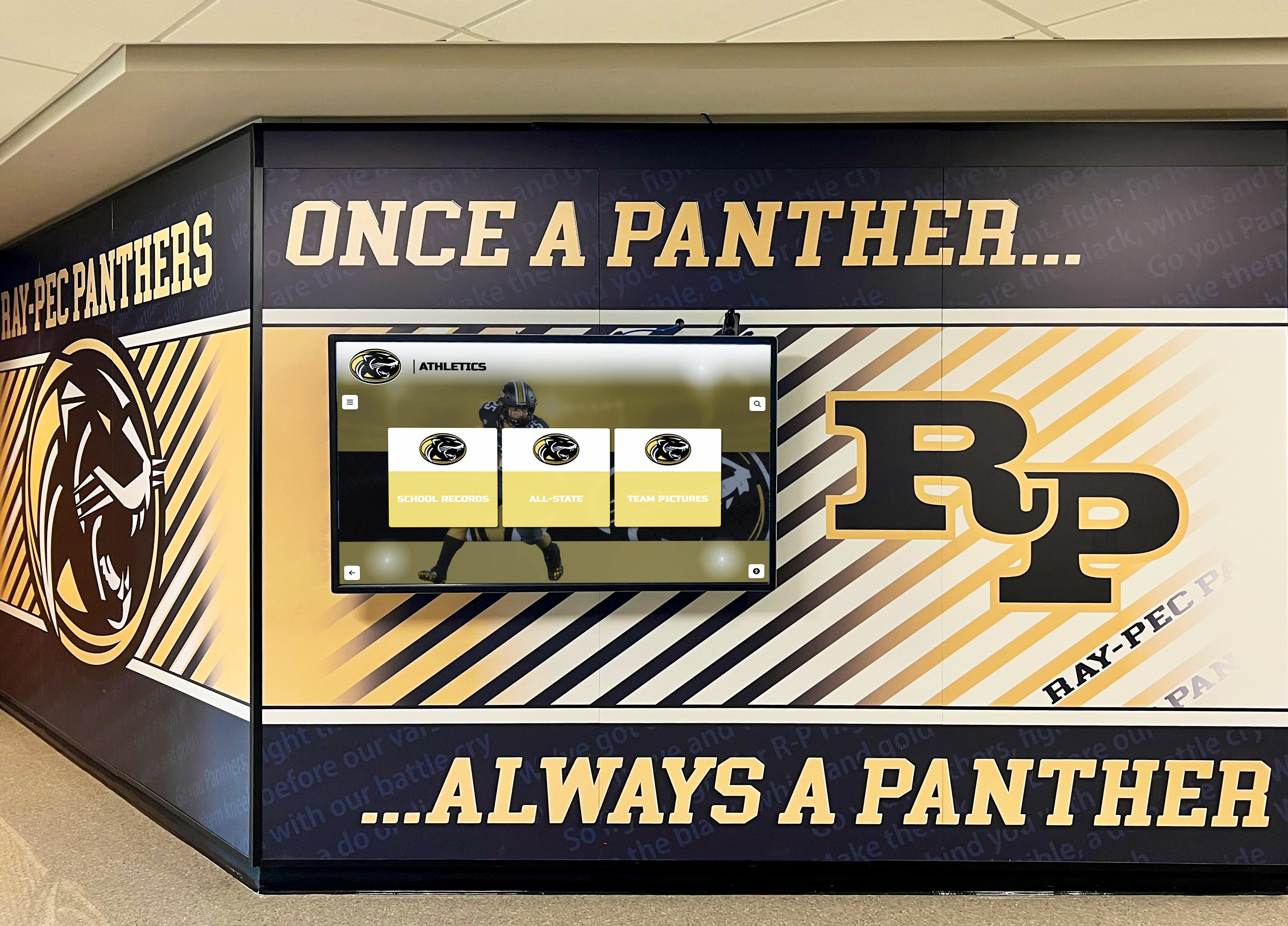
Coordinated installations integrate recognition with architectural branding creating impressive environments demonstrating institutional pride while celebrating community achievement and excellence
Rocket Recognition vs. Generic Digital Signage: Why Purpose-Built Platforms Matter
Organizations considering recognition technology often wonder whether specialized platforms like Rocket Recognition justify costs compared to generic digital signage solutions. Significant differences emerge through actual use.
Recognition-Specific Functionality
Generic digital signage was designed for advertising, announcements, and corporate communications—fundamentally different applications than biographical recognition.
Search and Discovery Capabilities
Purpose-built recognition requires sophisticated search functionality including name search with partial matching and nickname recognition, year-based filtering enabling temporal exploration, multi-attribute search supporting complex queries, category and tag-based discovery, and relevance ranking showing most appropriate results first.
Generic signage platforms lack these capabilities entirely, forcing linear content presentation or primitive navigation inadequate for databases containing hundreds or thousands of individuals. Organizations attempting to adapt signage platforms for recognition inevitably discover missing critical functionality no amount of customization can fully address. This explains why schools choose purpose-built recognition systems over generic alternatives.
Profile Structure and Biographical Content
Recognition demands rich individual profiles including structured biographical fields for consistent information collection, multiple image support showing individuals across timeframes, video integration for authentic voice and storytelling, statistical tables for achievement documentation, and flexible text formatting for narrative descriptions.
Digital signage designed for promotional slides and simple announcements cannot accommodate this content complexity without extensive customization—if accommodation proves possible at all.
Automatic Content Rotation and Fairness
Recognition platforms must ensure all individuals receive visibility over time rather than allowing popular content to monopolize attention. Rocket Recognition provides algorithmic rotation ensuring systematic featured content cycling, view count tracking preventing over-representation, anniversary-based surfacing connecting recognition to temporal milestones, and manual override capabilities allowing special highlighting when appropriate.
Generic signage platforms provide simple playlist rotation designed for advertising sequences—inadequate for equitable recognition requiring sophisticated fairness algorithms ensuring everyone receives deserved visibility.
Content Management Designed for Recognition
Management interfaces reveal design priorities matching intended applications.
Intuitive Biographical Entry
Recognition-specific content management guides users through systematic profile creation including clear biographical information prompts, achievement documentation fields, relationship tracking connecting individuals across generations or programs, media library integration for photograph and video management, and quality assurance validations preventing incomplete or inconsistent entries.
Generic platforms offer basic text and image uploading suited for simple announcements but frustrating for complex biographical content requiring structured information collection and organization.
Bulk Import and Data Migration
Organizations often possess existing recognition data in spreadsheets, databases, or historical records requiring systematic migration. Rocket Recognition provides comprehensive import capabilities including CSV and Excel file processing, database connector integration, field mapping allowing flexible data structure accommodation, batch processing handling thousands of records efficiently, and error reporting identifying data quality issues requiring correction.
Generic signage platforms lack sophisticated import infrastructure, forcing manual content entry—acceptable for dozens of announcements but completely impractical for hundreds or thousands of biographical profiles.
Collaborative Workflows and Governance
Multi-departmental organizations need distributed content contribution with centralized oversight. Purpose-built platforms provide role-based permissions controlling create, edit, and publish capabilities, approval workflows ensuring quality control, change tracking documenting modification history, scheduled publishing enabling timed content release, and collaborative editing supporting team content development.
Generic platforms offer minimal permissions and workflow capabilities designed for centralized marketing departments creating simple announcements rather than distributed teams building comprehensive recognition archives.
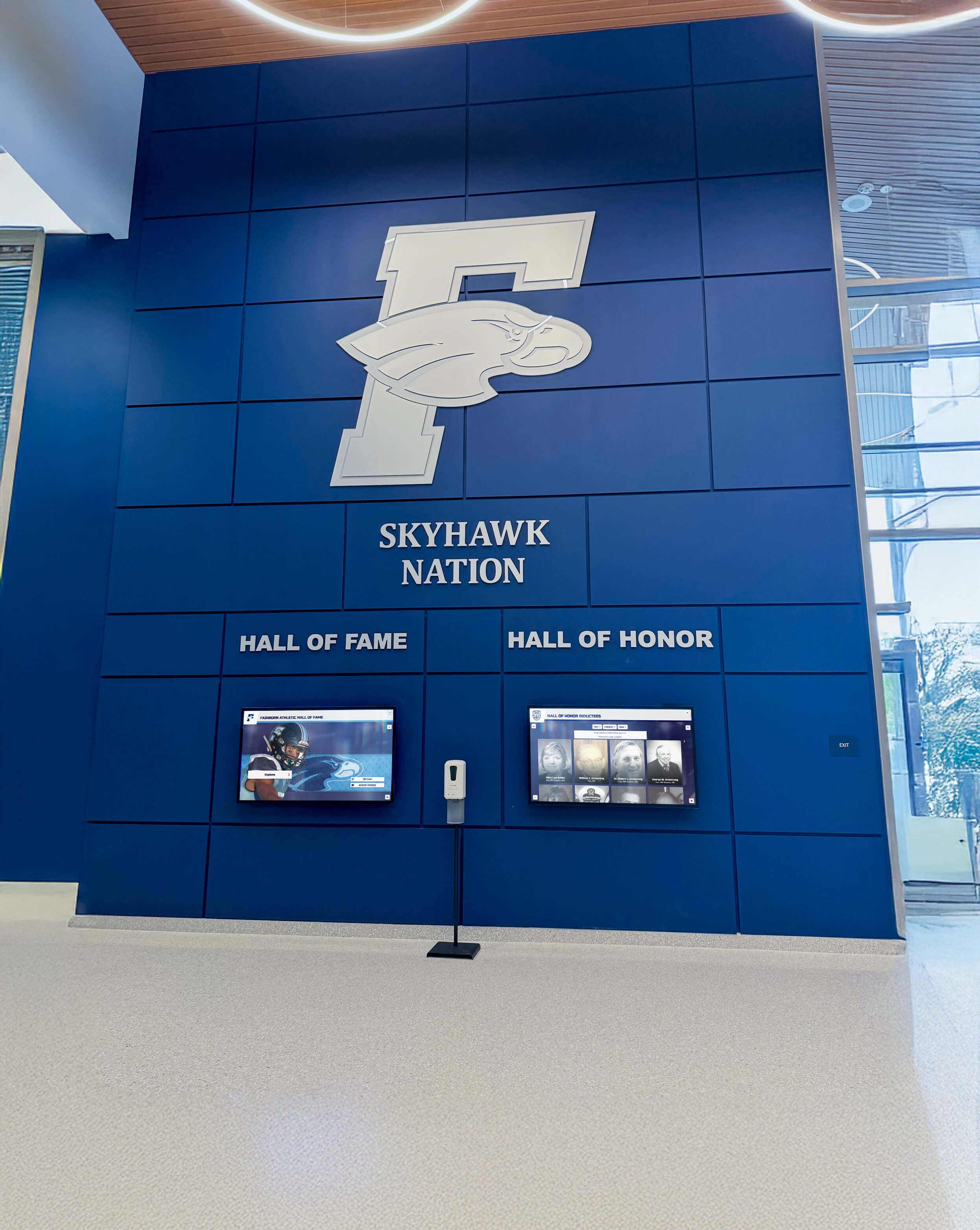
Professional installations create impressive first impressions demonstrating organizational quality and community pride while providing practical recognition functionality serving institutional needs
User Experience Designed for Public Interaction
Recognition displays serve diverse public audiences including current members, prospective participants, alumni, family members, and casual visitors—each with different technical comfort levels and exploration goals.
Intuitive Navigation for All Users
Purpose-built recognition interfaces accommodate complete technical ability ranges through clear navigation requiring no instruction or experience, prominent search functionality immediately visible, intuitive gestures matching mobile device conventions, appropriate button sizing and touch target dimensions, and forgiving interaction design recovering gracefully from user confusion.
Generic signage interfaces designed for professional corporate environments often assume technical familiarity and provide minimal navigation beyond simple forward/backward paging—inadequate for public installations serving elderly visitors uncomfortable with technology alongside digital-native youth expecting sophisticated functionality.
Accessibility and Universal Design
Institutional recognition must serve all community members including those using assistive technologies. Rocket Recognition provides WCAG accessibility compliance including screen reader compatibility for vision-impaired users, appropriate color contrast and text sizing, keyboard navigation alternatives to touch interaction, appropriate physical display mounting heights and approach spaces, and multilingual support for international communities.
Generic signage platforms rarely prioritize accessibility beyond basic considerations, reflecting their corporate target audiences rather than institutional contexts requiring universal access.
Engagement Optimization and Analytics
Organizations benefit from understanding how communities interact with recognition. Purpose-built platforms provide comprehensive analytics including interaction volume and session duration metrics, search query analysis revealing discovery patterns, most-viewed content identifying community interests, geographic access patterns from web platforms, and time-based usage trends informing content strategy.
Generic signage provides minimal analytics designed for advertising effectiveness rather than community engagement assessment—limiting organizational learning and continuous improvement.
Implementing Rocket Recognition: Planning and Best Practices
Successful recognition requires thoughtful planning addressing organizational needs, stakeholder expectations, and operational realities.
Assessment and Planning Phase
Begin with comprehensive evaluation of recognition requirements and opportunities.
Defining Recognition Philosophy and Scope
Organizations should articulate clear recognition approaches addressing will all contributors receive recognition regardless of level, or do minimum thresholds apply, how will recognition balance exceptional achievement while maintaining comprehensive acknowledgment, what categories deserve recognition beyond obvious choices like athletics or major donors, how will historical recognition integrate with current acknowledgment, and what governance processes will manage recognition decisions and ensure appropriate consistency.
These philosophical clarifications prevent later conflicts while communicating organizational values through recognition design demonstrating authentic priorities beyond mission statement rhetoric.
Stakeholder Requirements Gathering
Effective recognition serves multiple constituencies each with distinct priorities including athletic directors needing comprehensive sports recognition, development offices requiring donor appreciation, alumni relations seeking engagement vehicles, academic administrators prioritizing scholarly achievement, student life staff highlighting co-curricular participation, and facilities managers considering physical installation requirements.
Systematic stakeholder engagement through interviews, focus groups, or surveys ensures selected approaches accommodate diverse needs while establishing governance preventing future conflicts about recognition priorities and resource allocation.
Success Metrics Definition
Establish clear indicators enabling post-implementation assessment including engagement volume and duration on touchscreen displays, web platform traffic and user behavior, community feedback and satisfaction measures, recognition efficiency improvements compared to traditional methods, and institutional outcome correlations with recruitment, retention, giving, or other priorities.
Defined metrics enable objective evaluation demonstrating recognition value while identifying optimization opportunities through data-informed continuous improvement.
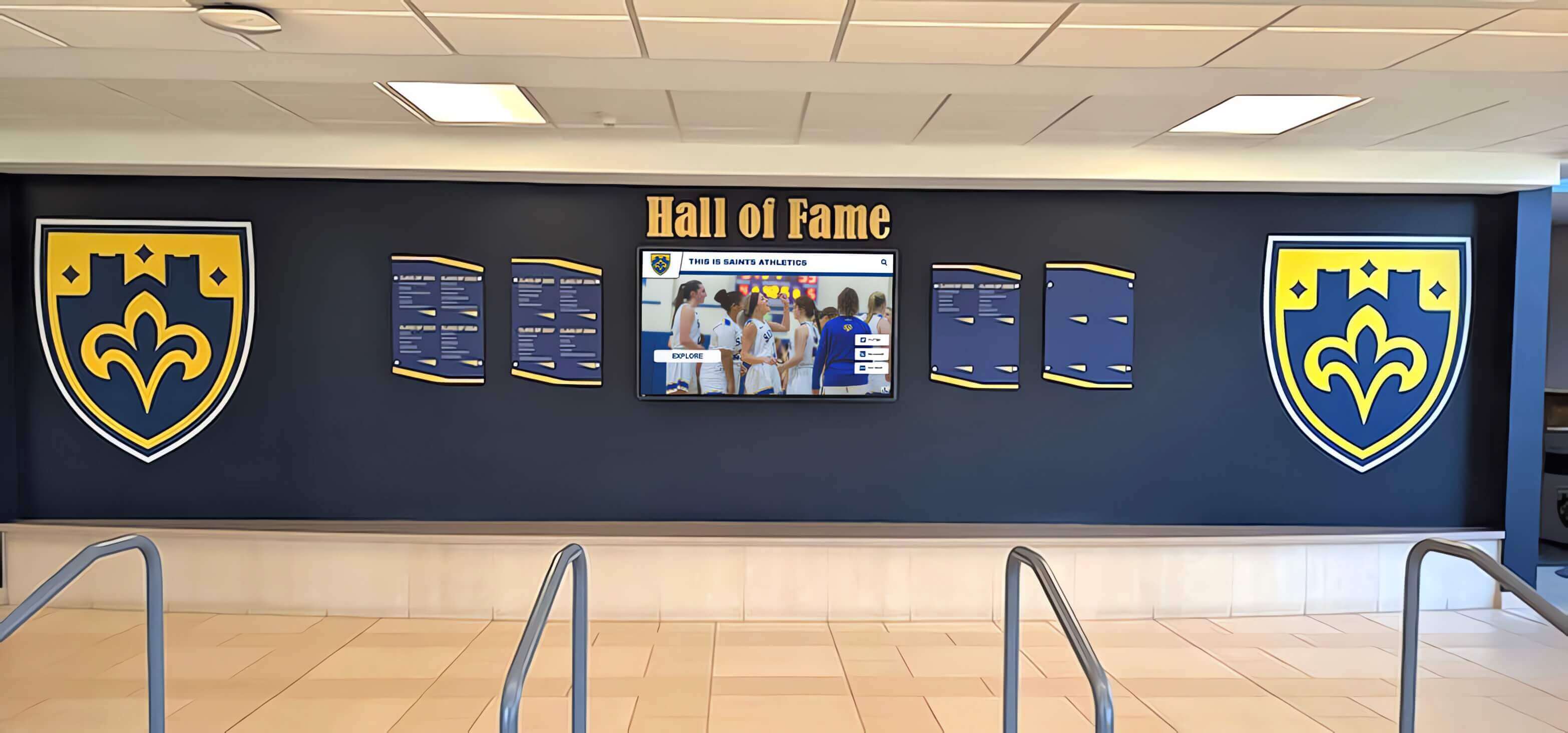
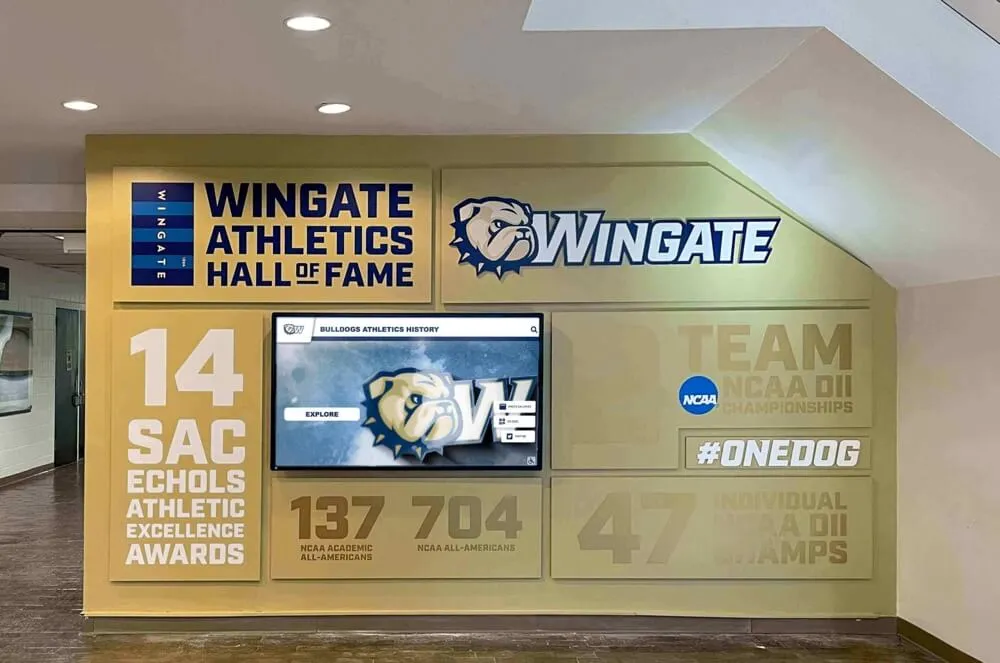
Strategic installations combine traditional architectural elements with modern technology creating impressive recognition environments that honor heritage while embracing innovation
Content Strategy and Development
Compelling recognition depends on quality content worth exploring.
Comprehensive Information Gathering
Systematic content collection includes achievement records from athletics, academics, development, and activities, historical materials from institutional archives and libraries, photographic assets from marketing and communications departments, video content from events and ceremonies, and biographical information through alumni surveys and outreach.
Thorough content inventories reveal existing assets requiring organization alongside gaps necessitating development—enabling realistic implementation timelines and resource planning.
Quality Standards and Profile Templates
Consistent recognition requires clear standards including biographical information requirements and optional enhancements, photograph specifications and quality expectations, video format and length guidelines, factual accuracy verification processes, and narrative tone and style guidance.
Documented standards enable distributed content development while ensuring consistency across contributors—critical for professional presentation and user experience quality.
Phased Content Development
Attempting comprehensive content completion before launch typically delays implementation indefinitely. Successful organizations pursue phased approaches including priority content enabling valuable initial launches, systematic expansion addressing categories sequentially, continuous addition maintaining ongoing freshness, and community contribution enabling recognized individuals to enhance profiles.
Launching with excellent foundational content followed by systematic enhancement proves more effective than delaying indefinitely pursuing impossible initial completeness.
Technology Selection and Installation
Appropriate technology choices significantly impact long-term satisfaction and outcomes.
Hardware Specifications and Placement
Physical installations require consideration of display sizing appropriate for viewing distances and available space, touchscreen technology providing reliable public operation, commercial-grade components designed for continuous use, installation locations ensuring maximum visibility along natural traffic patterns, and accessibility compliance meeting ADA requirements for heights and approach spaces.
Professional hardware selection and installation prevents countless frustrations from undersized displays, unreliable consumer-grade components, poor placement limiting visibility, and accessibility issues creating legal liability.
Network and Infrastructure Requirements
Reliable operation demands appropriate infrastructure including adequate network connectivity for content synchronization and updates, sufficient electrical capacity and appropriate outlet placement, secure mounting systems meeting weight and safety requirements, cable management providing professional appearance, and environmental considerations addressing lighting, temperature, and ambient noise.
Infrastructure planning during implementation prevents expensive retrofitting addressing oversights discovered after installations complete.
Integration with Existing Systems
Organizations benefit from connecting recognition with existing technology including website integration embedding recognition into institutional digital presence, database synchronization maintaining content consistency across systems, authentication integration for secure content management access, analytics platform connections enabling comprehensive reporting, and social media integration facilitating content distribution.
Thoughtful integration creates recognition as central community engagement infrastructure rather than isolated standalone systems disconnected from broader institutional technology ecosystems.
Rich biographical profiles provide comprehensive recognition including photographs, statistics, narratives, and multimedia content transforming simple acknowledgment into meaningful celebration
Training, Governance, and Ongoing Management
Sustained recognition success requires systematic operational approaches.
Staff Training and Documentation
Confident content management requires comprehensive training including hands-on practice with content creation and editing, review of governance policies and approval workflows, troubleshooting common issues and accessing support resources, documentation providing reference for occasional tasks, and ongoing refresher training as systems evolve.
Multi-person training builds institutional capacity surviving personnel transitions while preventing single-person dependencies creating operational vulnerabilities.
Content Governance and Quality Assurance
Recognition credibility depends on consistent quality through clear approval processes before public visibility, regular content audits identifying accuracy issues or gaps, systematic updating maintaining currency, community feedback integration addressing concerns or suggestions, and accessible governance enabling appropriate community input without creating unmanageable demands.
Quality governance prevents embarrassing errors, maintains professional presentation standards, and demonstrates organizational respect for recognized individuals through accurate, comprehensive celebration.
Sustained Engagement Through Content Freshness
Recognition platforms remain engaging through continuous attention including regular addition of new recognized individuals, periodic profile enhancements adding media or updated information, rotating featured content surfacing different individuals, thematic collections highlighting specific communities or achievements, and anniversary recognition connecting to temporal milestones.
Organizations treating recognition as “set it and forget it” technology rather than ongoing engagement vehicles quickly discover that static content becomes invisible regardless of digital presentation—wasting technology investment through neglected content management.
Conclusion: Recognition That Builds Vibrant, Connected Communities
Rocket Recognition represents fundamental advancement beyond traditional acknowledgment toward comprehensive community engagement platforms that celebrate achievement, preserve heritage, build belonging, and create the continuous personalized experiences keeping members genuinely connected to organizations they value. Purpose-built recognition technology eliminates the impossible compromises traditional approaches forced—limited space requiring exclusion, expensive recurring costs accumulating over decades, minimal storytelling depth reducing people to name listings, and fixed content providing identical experiences regardless of visit timing.
Organizations implementing Rocket Recognition consistently report dramatic engagement improvements as community members shift from brief glances at static plaques to extended exploration sessions discovering personal connections, learning institutional histories, and developing deeper relationships with organizational identities. This transformation from passive viewing to active exploration creates what experts call digital warming—the heating of cold institutional spaces through continuously surfaced, personalized content making every visitor feel personally connected rather than generic observer of impersonal information.
The platform serves extraordinarily diverse organizational contexts from educational institutions celebrating students, athletes, and alumni to nonprofits honoring donors, volunteers, and mission partners to athletic organizations recognizing competitive excellence to corporate environments building cultures through employee appreciation. Despite this diversity, common threads connect successful implementations: comprehensive recognition capacity enabling celebration at all levels, rich biographical storytelling providing meaningful context beyond simple acknowledgment, intuitive discovery supporting personal exploration matching individual interests, and sustained engagement through regular content addition and intelligent rotation ensuring ongoing freshness.
Transform Your Recognition Strategy
Discover how Rocket Recognition creates engaging community experiences that celebrate every achievement while building the connected, thriving organizations where members flourish. Purpose-built platforms deliver capabilities generic solutions cannot match.
Explore Rocket RecognitionPurpose-built recognition platforms matter profoundly compared to generic digital signage adapted for recognition purposes. Organizations discovering this truth after implementing generic solutions and experiencing frustrations from missing critical functionality, inadequate content management, poor user experiences, and limited engagement report substantial improvements after migrating to specialized platforms designed specifically for biographical recognition and institutional storytelling. The difference between tools built for their purposes versus tools adapted from incompatible applications becomes obvious through daily use.
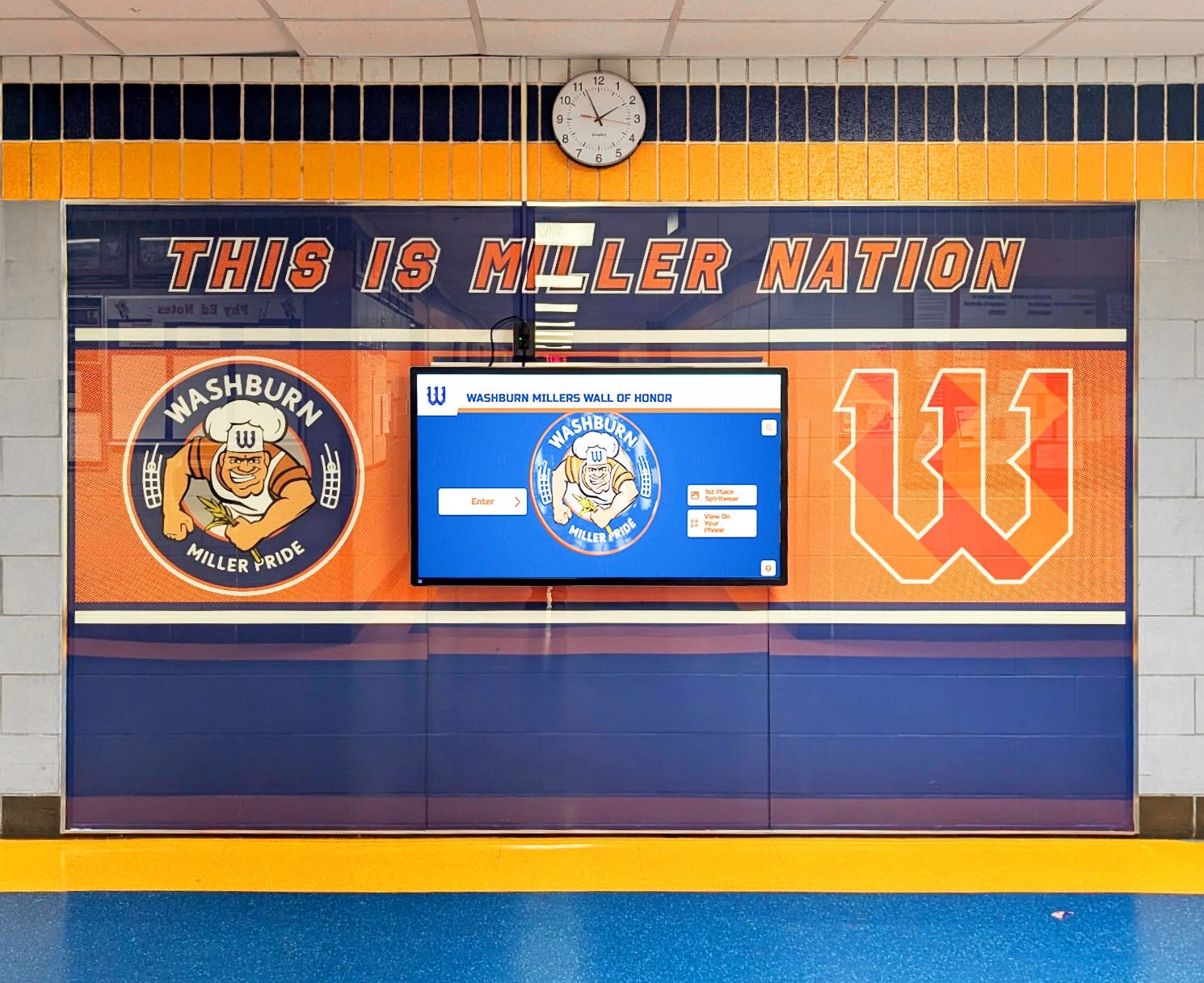
Strategic recognition installations create destination experiences where community members naturally gather, exploring achievements and connecting with institutional heritage and identity
Implementation success requires thoughtful planning addressing organizational recognition philosophy, stakeholder requirements, content development strategies, technology selection criteria, governance processes, and ongoing management approaches. Organizations approaching recognition strategically rather than tactically—understanding recognition serves community building objectives beyond simple acknowledgment obligations—achieve substantially better outcomes than those treating recognition as technology projects rather than cultural initiatives supported by appropriate technology.
Every organization possesses achievements worth celebrating and individuals deserving recognition. Traditional approaches forced impossible choices about whose accomplishments received limited visibility while requiring substantial recurring expenses for routine additions. Rocket Recognition eliminates these constraints through unlimited digital capacity accommodating comprehensive recognition, remote cloud management enabling efficient content maintenance, rich storytelling capabilities providing meaningful celebration depth, and extended reach through web platforms ensuring global accessibility.
Your community members deserve recognition celebrating their contributions meaningfully while building connections inspiring continued engagement and commitment. With appropriate planning, quality content, sustained management, and purpose-built technology designed specifically for recognition rather than generic applications adapted from incompatible purposes, you can create recognition experiences that honor every achievement while building vibrant, connected communities where members feel genuinely valued and motivated toward continued excellence.
Ready to discover how Rocket Recognition transforms community engagement through comprehensive digital acknowledgment? Explore interactive recognition platforms specifically designed for celebrating people, preserving heritage, and building the warm, connected communities where members thrive and organizations flourish.