



Schools and organizations exploring interactive recognition displays commonly encounter a frustrating pattern: vendors provide software while deflecting hardware responsibility to third parties, creating fragmented support nightmares where nobody owns complete accountability for uptime. When touchscreens fail, network issues emerge, or mounting hardware breaks, customers find themselves trapped coordinating between multiple vendors—each pointing fingers while displays remain dark and recognition programs suffer.
Rocket Alumni Solutions operates fundamentally differently. Rocket provides the hardware, is expert in the full kiosk stack from mounting to networking to software, and Customer Success serves as the single point of contact for any issue—triage, replacement, and restoration. Even if an OEM warranty exists in the background, Rocket owns the outcome—keeping your displays running so the “you’ll be stuck dealing with third parties” concern doesn’t apply.
This comprehensive analysis examines Rocket’s complete hardware and setup approach based on implementations across hundreds of schools, exploring why expertise spanning the entire kiosk stack creates superior reliability, faster issue resolution, and sustainable long-term operation compared to software-only providers offloading hardware decisions and support to customers or fragmented vendor networks.
The digital signage industry developed unfortunate patterns where software providers treat hardware as “not our problem”—directing customers toward generic commercial display dealers, local AV integrators, or consumer electronics retailers without accepting responsibility for complete system operation. This fragmentation creates predictable failures: incompatible hardware selections, unreliable installations, complex support mazes, and abandoned systems when inevitable issues arise.
Organizations implementing interactive recognition displays need providers accepting complete accountability for operational outcomes rather than disclaiming responsibility beyond software licensing. Rocket’s approach—providing hardware, owning the full stack, and maintaining single-point Customer Success—represents fundamental philosophical commitment to customer success rather than technical convenience.

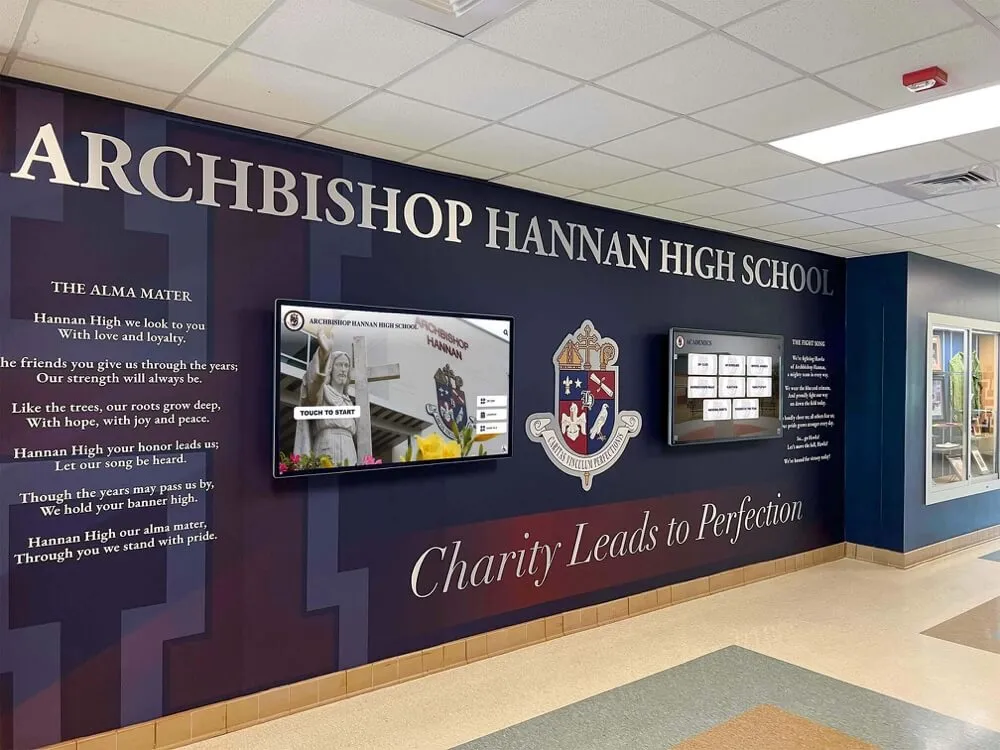
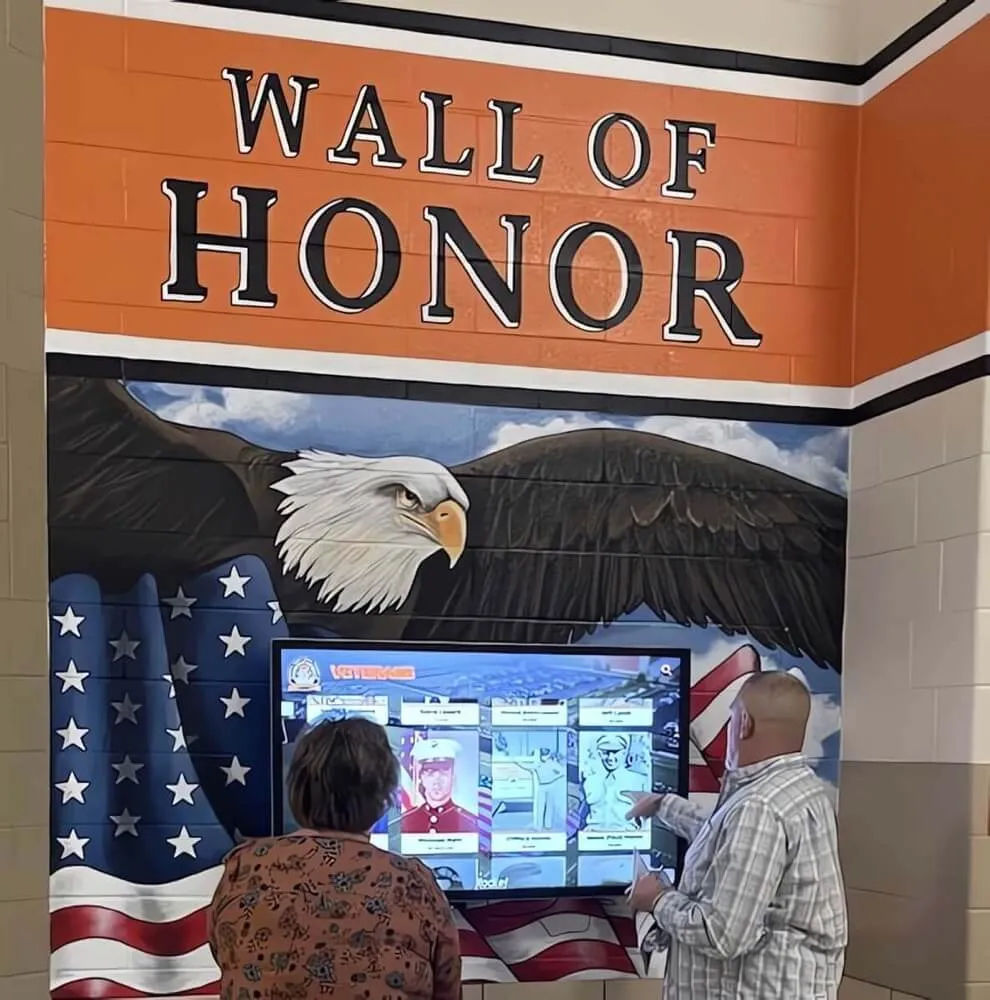
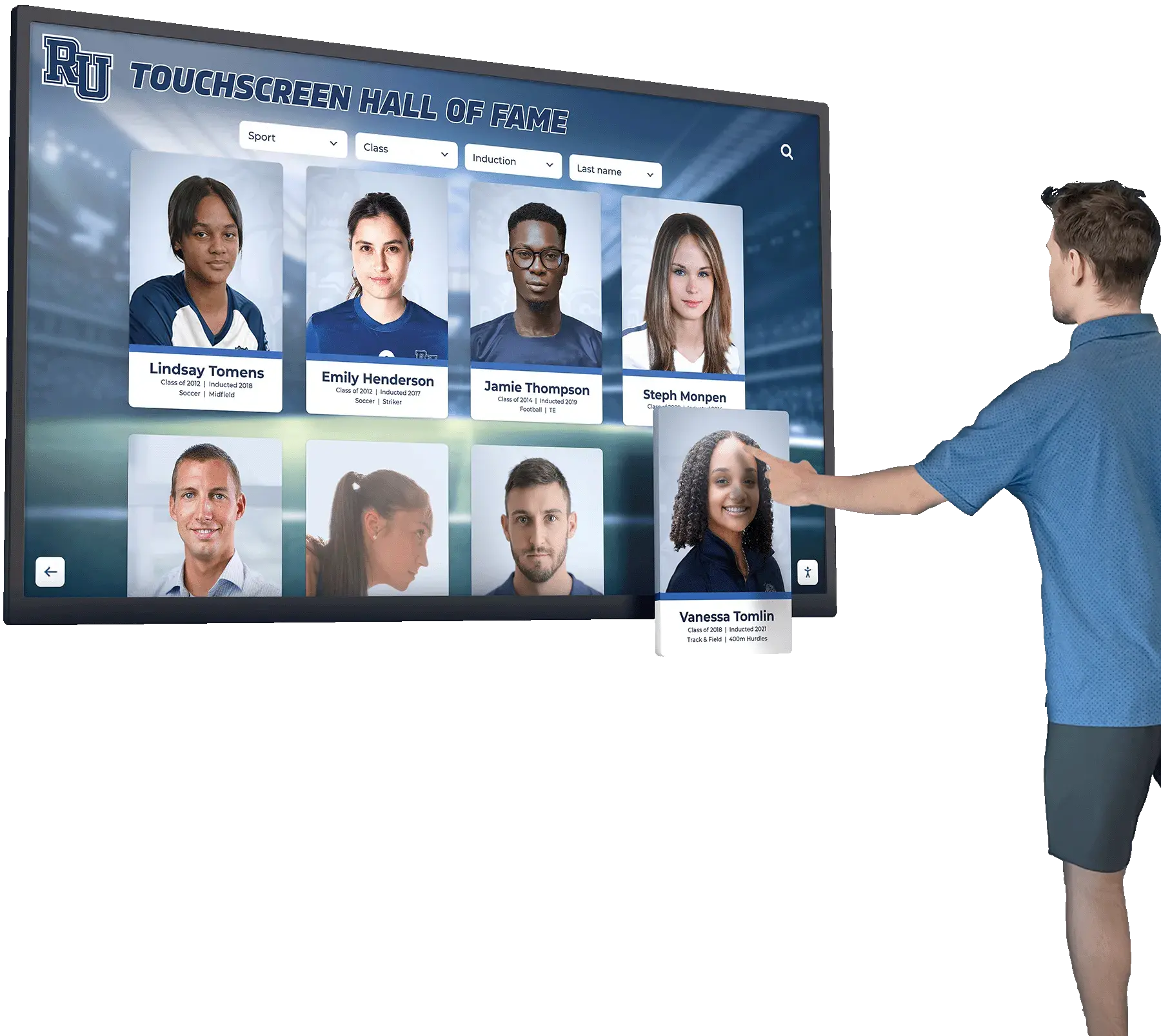
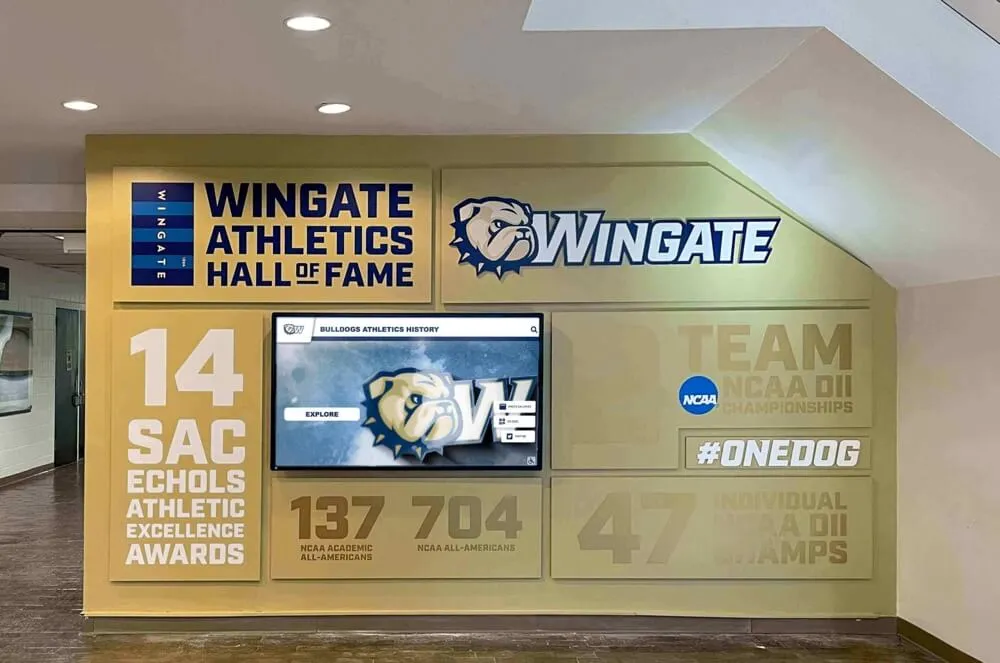
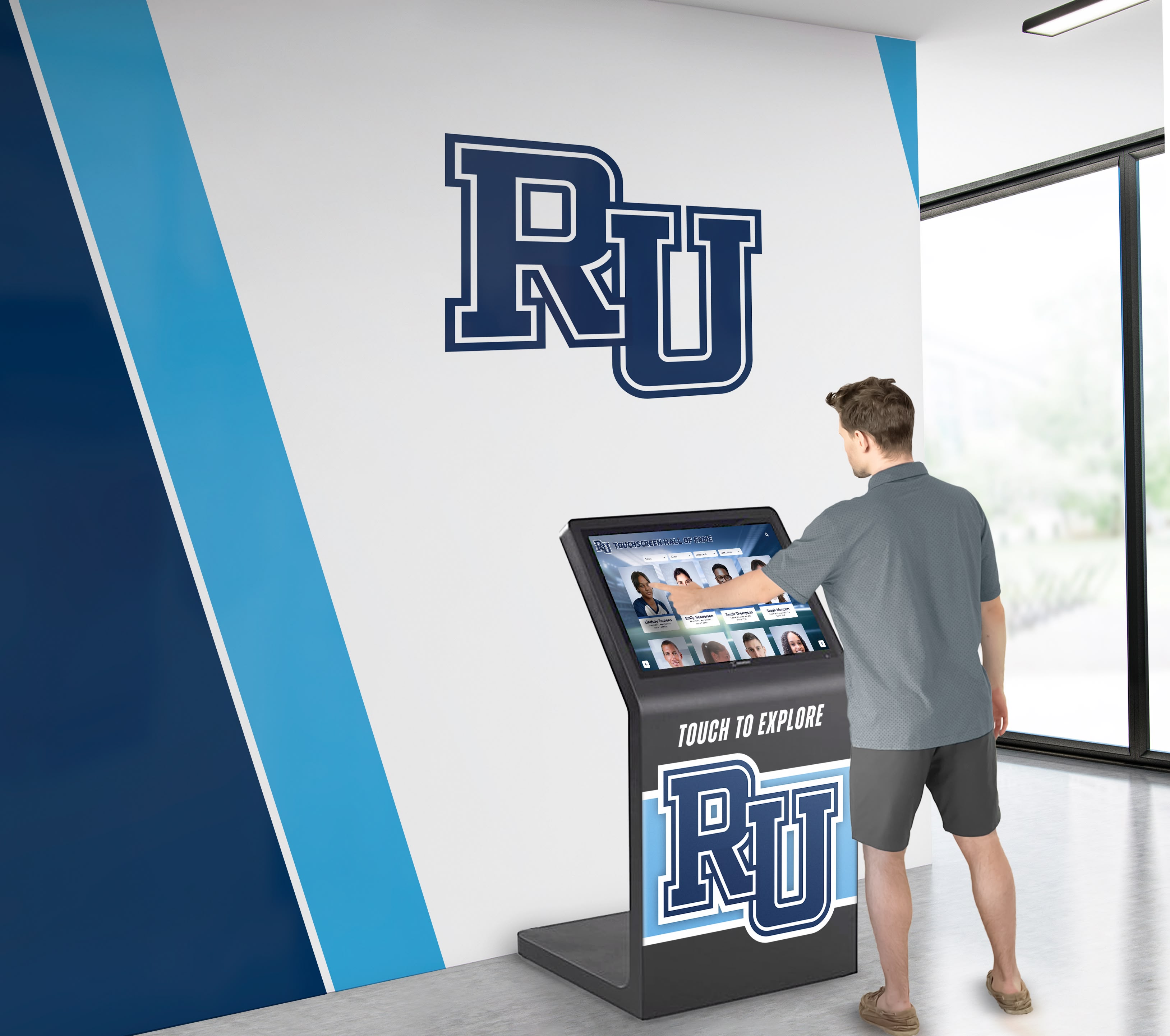
Professional kiosk installations require expertise spanning hardware, software, networking, and support—not just software licensing
Why Complete Kiosk Stack Expertise Matters
Software-only providers claiming hardware neutrality sounds appealing until reality hits—displays fail, networks disconnect, touch functionality degrades, and suddenly nobody accepts responsibility for fixing fundamental operational problems.
The Software-Only Provider Problem
Companies focusing exclusively on software development avoid hardware responsibility through various deflection strategies:
“Works With Any Hardware” Marketing Software vendors promote hardware flexibility as customer benefit—“run our software on any display you choose!"—while obscuring genuine implications. This “freedom” transfers hardware selection burden, compatibility verification, troubleshooting complexity, and support coordination entirely to customers lacking expertise for informed decisions.
Schools purchasing incompatible commercial displays discover too late that resolution mismatches create interface scaling problems, touch calibration proves unreliable with certain manufacturers, mounting specifications don’t accommodate intended installations, or network capabilities can’t support platform requirements.
Fragmented Support Nightmares When systems fail, software-only providers direct hardware issues toward display manufacturers, mounting problems toward installers, network troubles toward IT departments, and integration challenges back toward customers. Organizations spend hours coordinating between parties—each disclaiming responsibility for issues crossing vendor boundaries—while displays remain non-functional and recognition programs suffer.
Educational institutions implementing digital hall of fame displays report abandoning software-only platforms after exhausting months trying to coordinate fragmented support preventing basic operational reliability.
Hidden Complexity and Cost Software-only approaches appear cost-effective initially—lower software licensing without hardware markup. However, actual implementation costs balloon through hardware purchasing mistakes requiring replacement, professional installation coordination consuming staff time, troubleshooting complexity demanding IT resources, and eventual system abandonment representing total investment loss when support fragmentation proves unsustainable.
Rocket’s Complete Stack Ownership
Rocket accepts responsibility for entire kiosk operation—hardware, software, networking, installation, and ongoing support:
Hardware Selection and Provision Rocket provides purpose-built touchscreen kiosks specifically tested for recognition applications. Every hardware component—display panels, touch sensors, mounting systems, computing units, network interfaces—undergoes compatibility verification ensuring reliable integration with recognition platform requirements.
Organizations receive hardware Rocket knows works reliably because hundreds of installations prove real-world performance rather than theoretical compatibility claims requiring customer verification through expensive trial and error.
Installation Coordination and Verification Rocket coordinates complete installation processes including mounting hardware delivery, professional installer recommendations when needed, network configuration guidance, initial setup and testing, and operational verification before considering projects complete.
Schools implementing touchscreen recognition systems receive installation support ensuring displays mount correctly, connect properly, operate reliably, and meet intended functionality from day one rather than discovering problems after installation investments become sunk costs.
Network and Technical Configuration Effective kiosk operation requires proper network configuration, security settings, content delivery optimization, and system hardening preventing common failure modes. Rocket’s expertise spanning complete technical stack enables proactive configuration eliminating issues software-only providers never address because they lack hardware and networking knowledge.
Technical guidance includes appropriate network bandwidth requirements, firewall and security configuration, content caching strategies, remote management access, and monitoring enabling proactive maintenance rather than reactive crisis response.
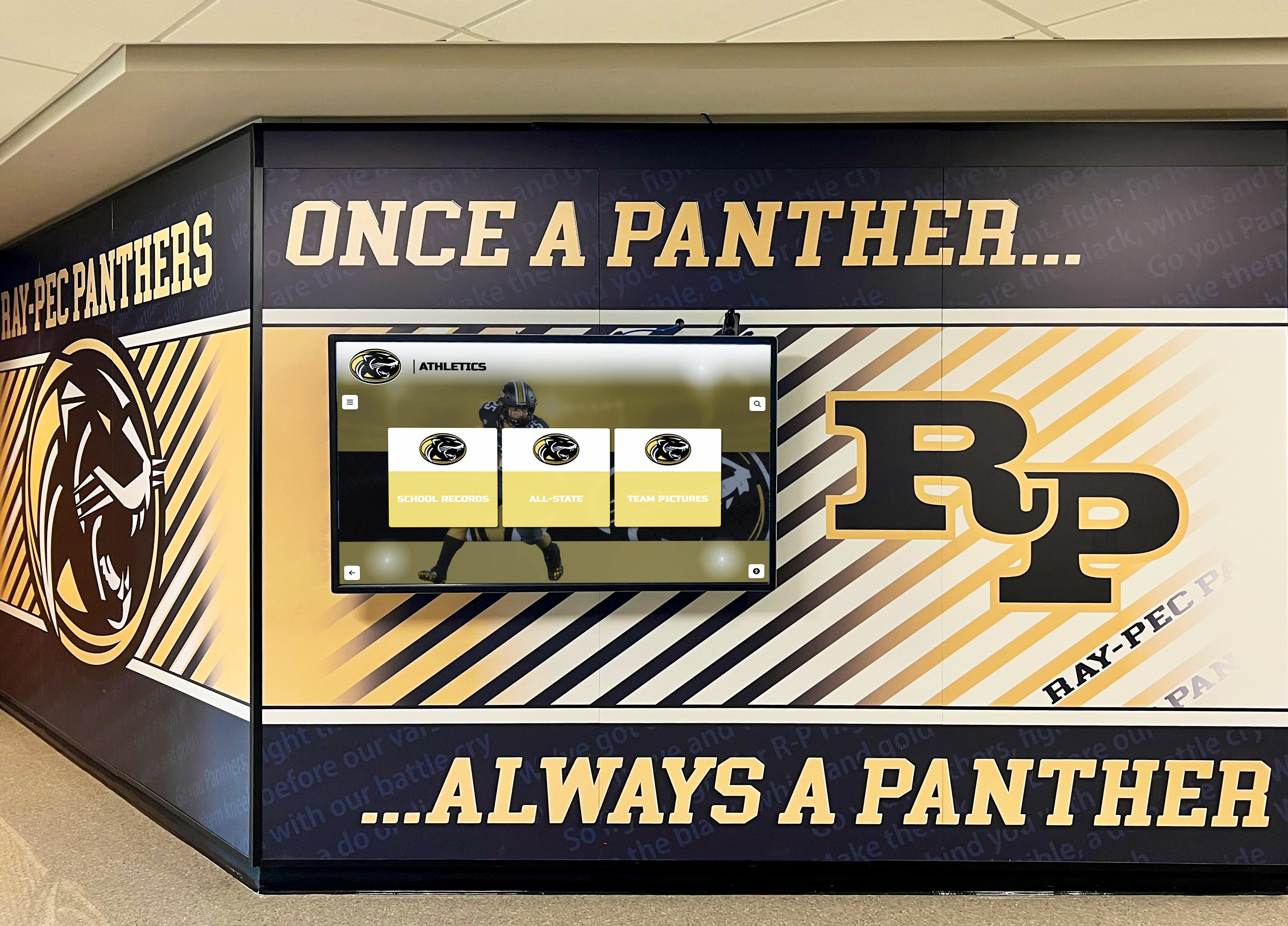
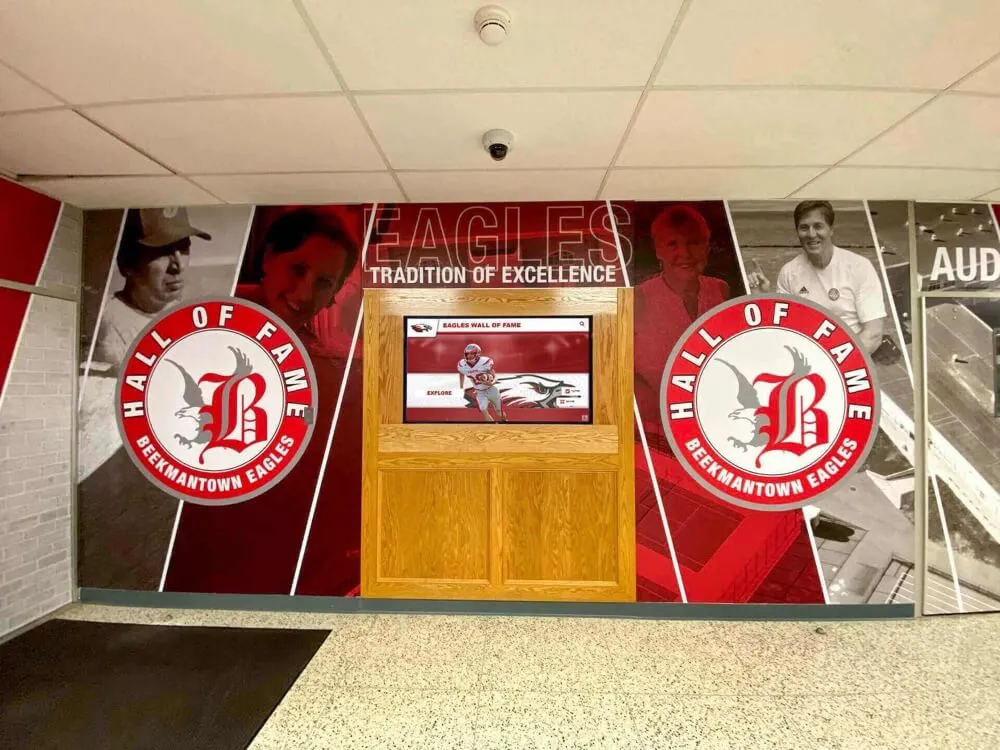
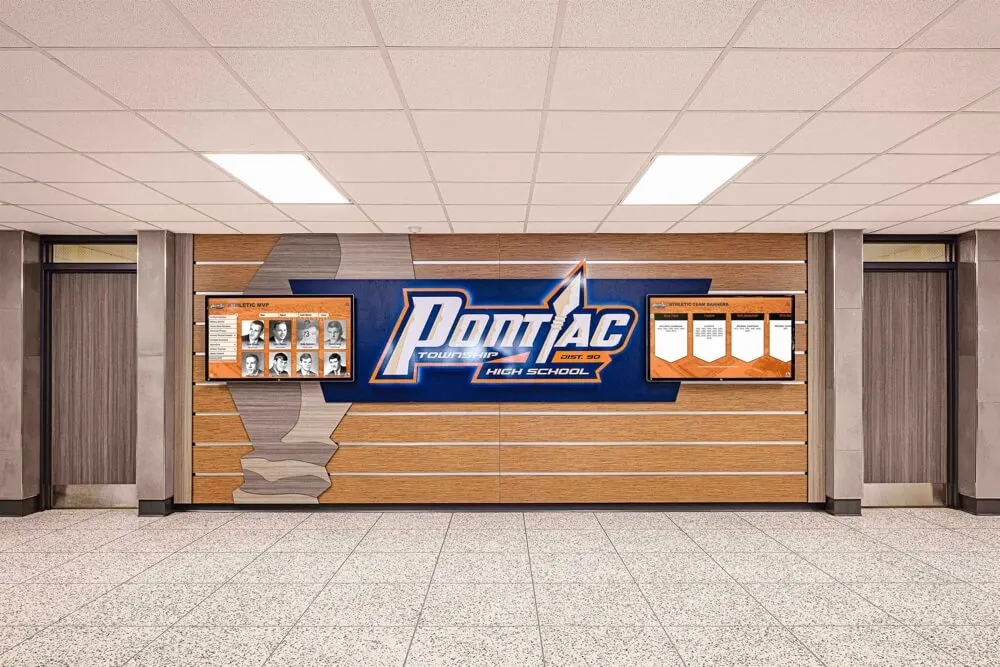
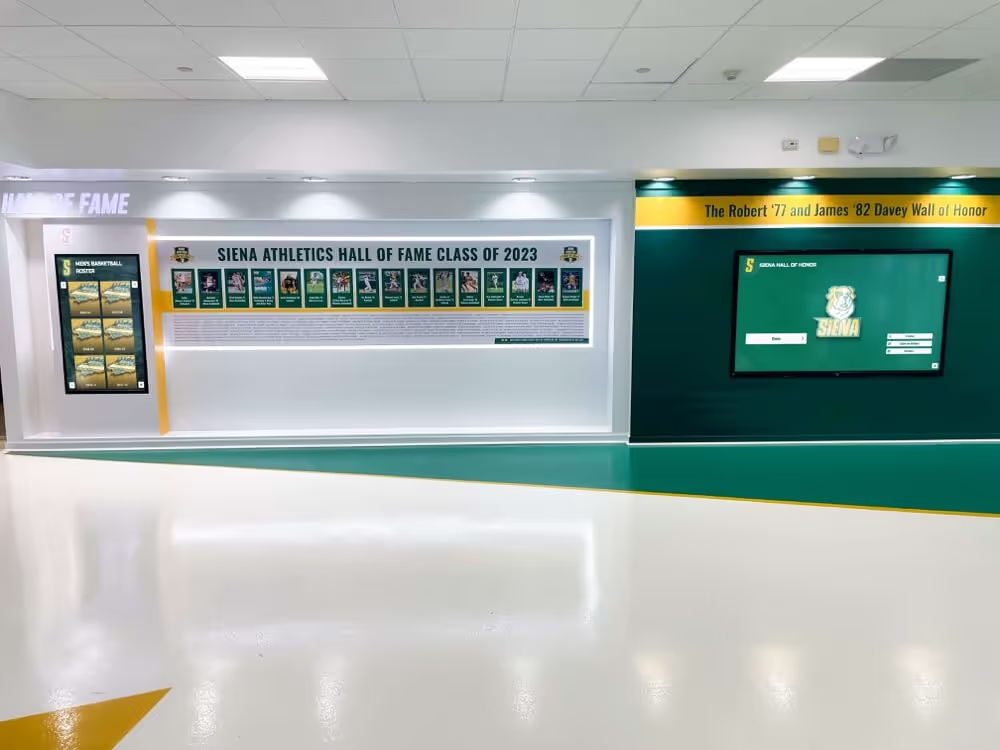
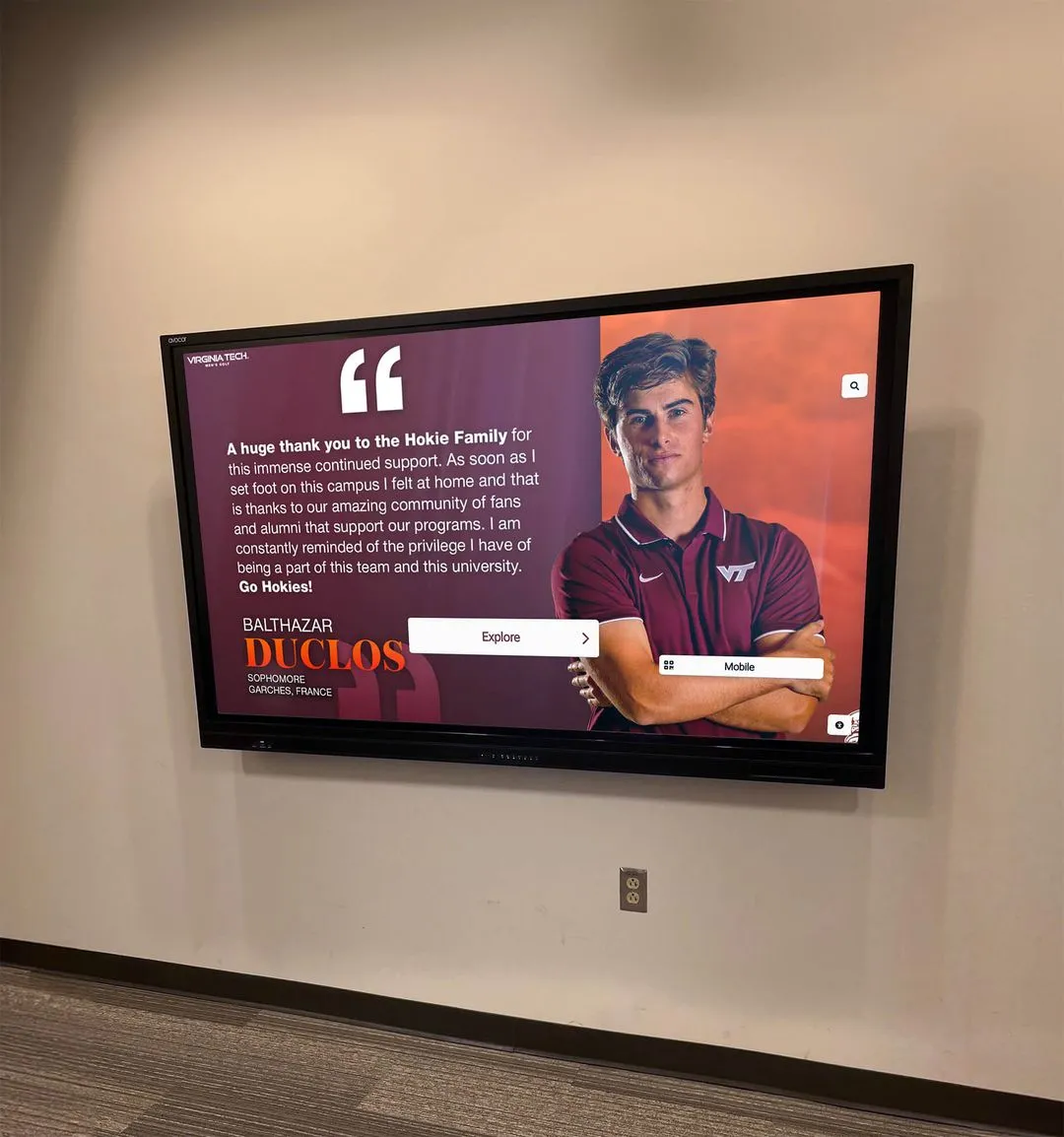
Professional installations integrate displays effectively with facility architecture through complete stack expertise
Single-Point Customer Success for All Issues
Fragmented vendor relationships create support nightmares where organizations waste enormous time coordinating between parties disclaiming responsibility while displays remain broken. Rocket’s single-point Customer Success fundamentally changes accountability dynamics.
Complete Issue Triage and Resolution
When displays experience problems, organizations contact one team accepting responsibility for resolution:
Unified Troubleshooting Customer Success triages all issues regardless of whether problems originate from hardware failures, software bugs, network configuration, mounting problems, or user confusion. Organizations never hear “that’s not our department”—Rocket accepts responsibility for diagnosing root causes and coordinating complete resolution.
Schools report dramatic time savings and frustration reduction when single contacts handle complete issue investigation rather than forcing coordination between software vendors, hardware manufacturers, installers, and IT departments—each deflecting responsibility while problems persist.
Hardware Replacement Authority When hardware fails, Rocket owns replacement decisions and coordinates delivery. Organizations don’t navigate manufacturer RMA processes, argue warranty coverage with third parties, or coordinate shipping logistics—Customer Success handles complete replacement processes including troubleshooting verification, replacement authorization, new hardware shipping, and installation coordination.
Even when OEM warranties exist in background technical infrastructure, organizations interact exclusively with Rocket rather than navigating manufacturer support bureaucracies designed to minimize replacement costs rather than maximize customer satisfaction.
Software Updates and Optimization Ongoing platform improvements, feature additions, bug fixes, and performance optimization deploy automatically without customer intervention. Organizations never coordinate software updates with hardware compatibility, worry about version mismatches breaking functionality, or delay critical updates fearing unknown impacts.
Rocket’s complete stack control ensures updates deploy smoothly across all hardware configurations because testing verifies compatibility before rollout rather than discovering problems through customer reports after release.
Proactive Monitoring and Maintenance
Beyond reactive issue resolution, Rocket monitors display health identifying potential problems before customer impact:
System Health Monitoring Displays report operational status enabling proactive identification of network connectivity degradation, storage capacity approaching limits, performance anomalies indicating hardware stress, content delivery failures requiring investigation, and update deployment success verification.
Schools implementing digital recognition displays benefit from monitoring that identifies emerging issues allowing preventive intervention before displays fail rather than reacting after recognition programs suffer visible operational problems.
Preventive Maintenance Coordination Long-term reliability requires proactive maintenance including periodic hardware health checks, software optimization, content delivery tuning, network configuration updates, and security patching. Rocket coordinates these activities through Customer Success rather than expecting organizations to maintain technical expertise sustaining kiosk operation indefinitely.
Organizations receive guidance about cleaning procedures maintaining touch responsiveness, environmental factors affecting hardware longevity, usage pattern optimization reducing wear, and replacement planning before catastrophic failures rather than emergency response after displays die.
Performance Optimization As content databases grow, user traffic increases, and usage patterns evolve, ongoing optimization maintains excellent performance. Rocket monitors content delivery efficiency, search responsiveness, navigation speed, and overall user experience metrics—proactively identifying opportunities for improvement before performance degradation reduces engagement.
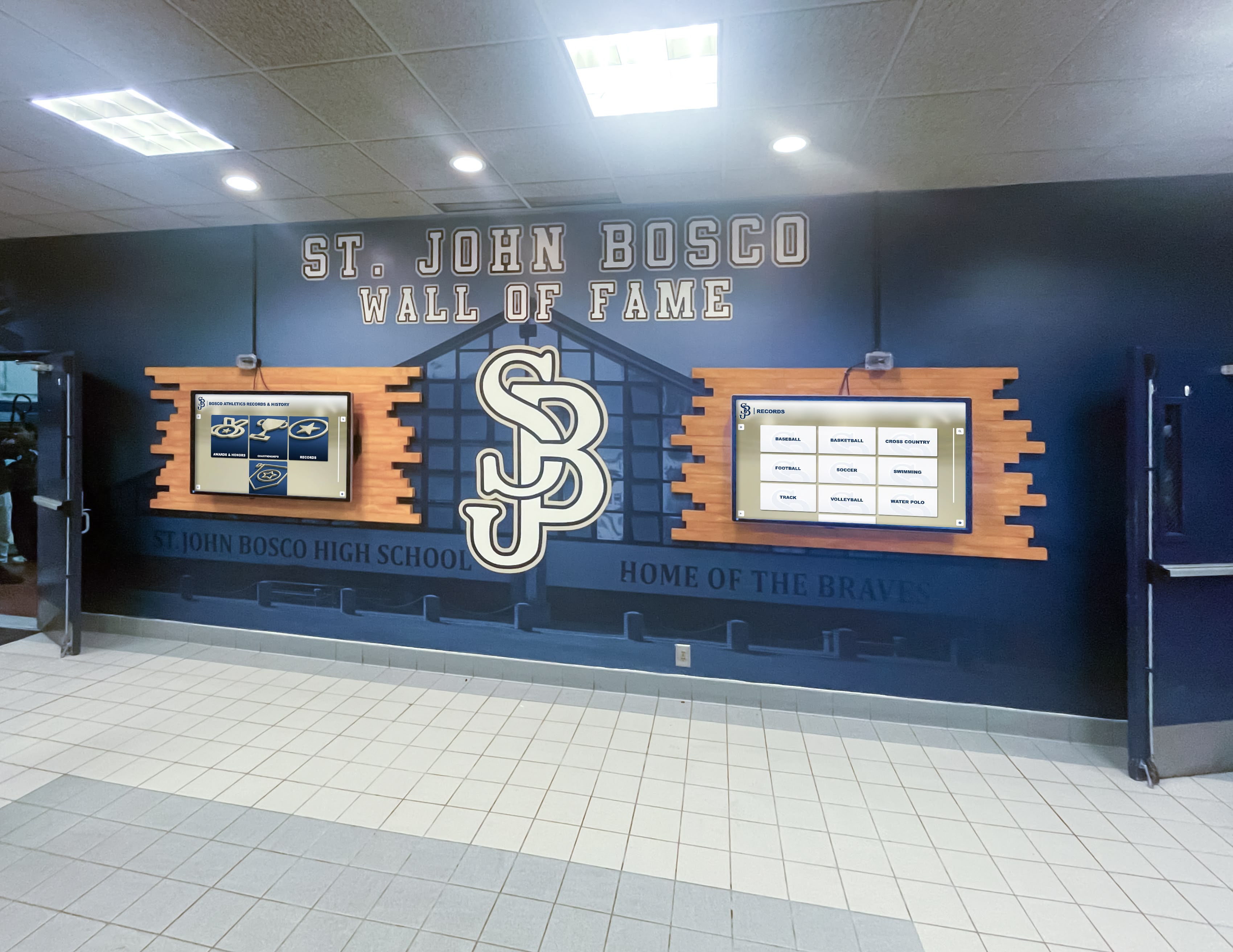
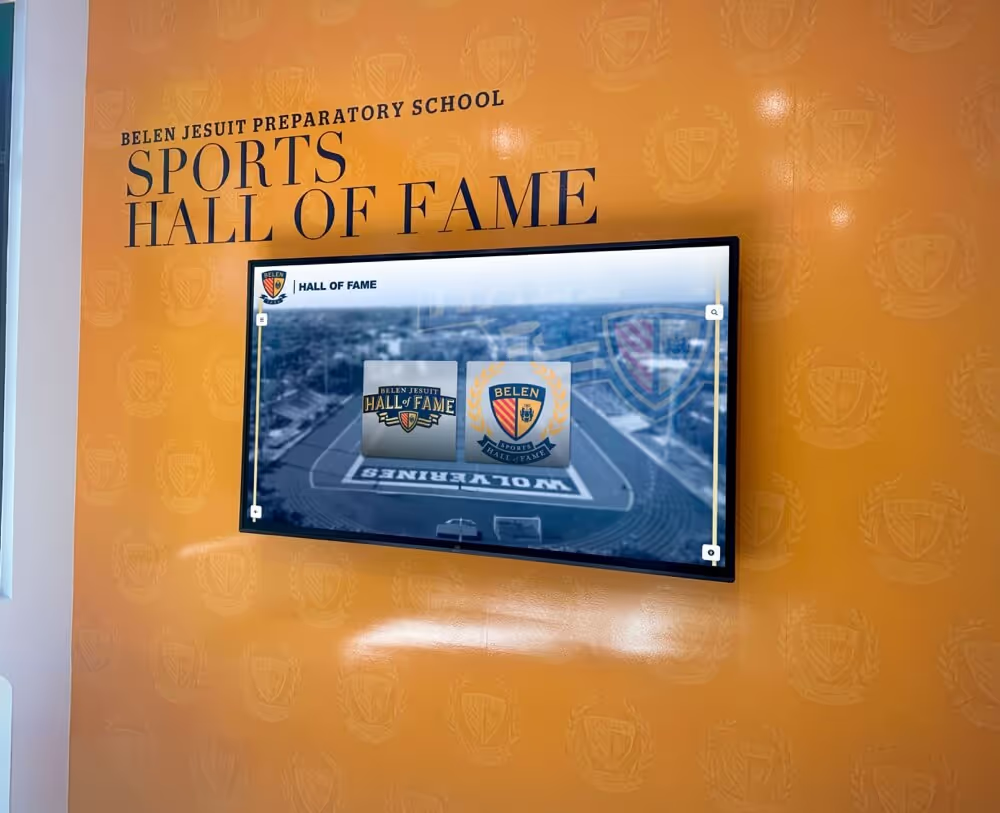
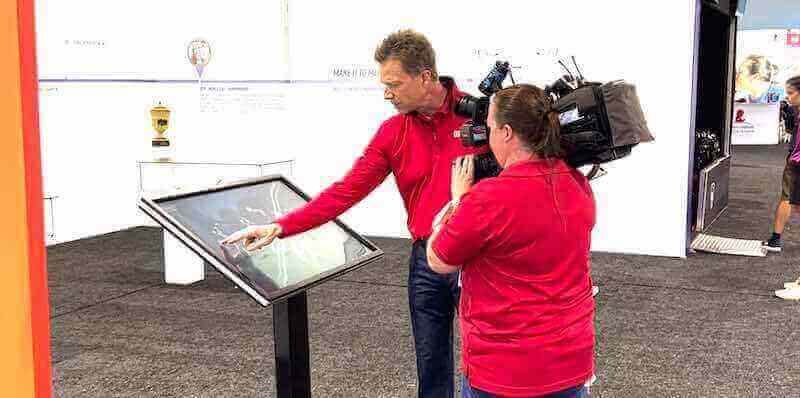
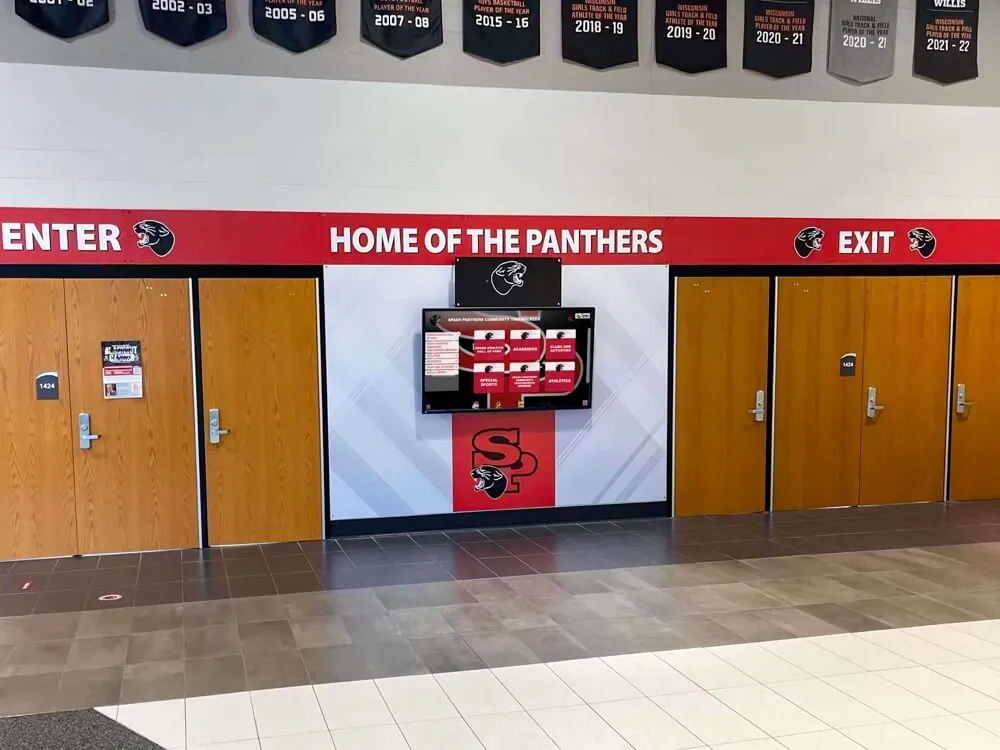
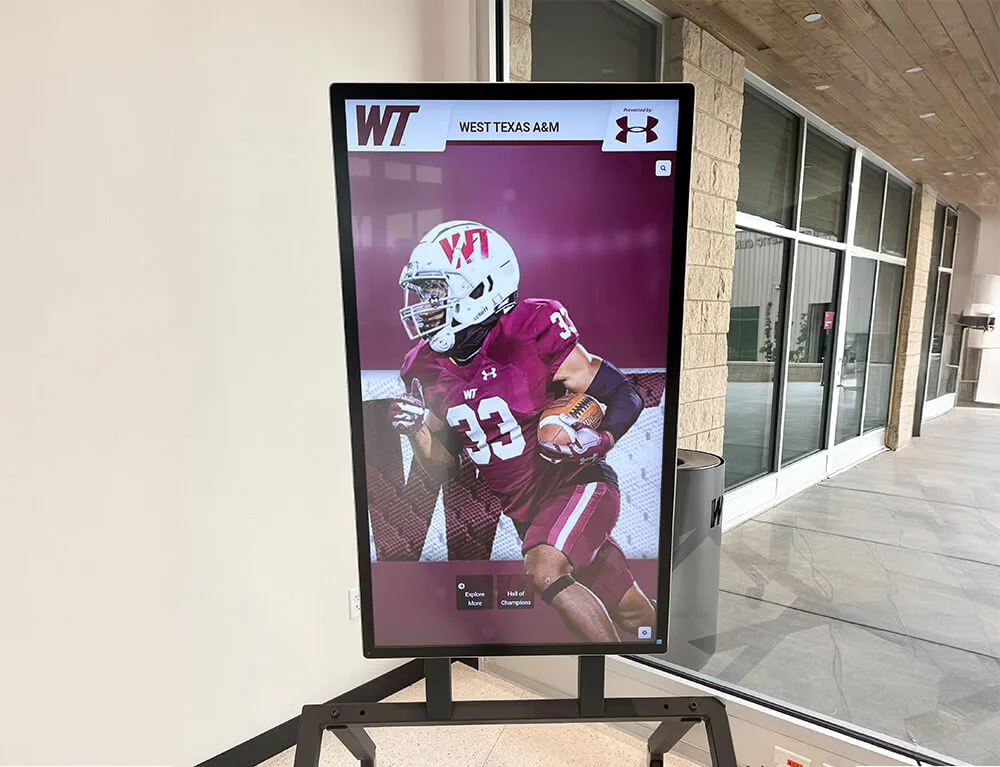
Multi-display installations require coordinated support expertise spanning complete technical stack
Hardware Expertise Creating Reliable Outcomes
Rocket’s complete stack knowledge manifests through hardware decisions suited for recognition applications rather than generic commercial signage:
Purpose-Built Touchscreen Selection
Recognition displays demand different characteristics than advertising screens or corporate communication displays:
Touch Technology Optimization Effective recognition requires responsive, accurate touch input supporting exploration, search, profile browsing, and navigation. Rocket selects capacitive touch technology providing smartphone-like responsiveness rather than cheaper resistive alternatives requiring pressure and exhibiting slower response degrading user experience.
Touch sensor quality, calibration accuracy, multi-touch capability, edge responsiveness, and durability under continuous public use vary dramatically across manufacturers. Rocket’s testing identifies reliable components based on real-world performance rather than specification sheets often failing to reveal practical shortcomings discovered through deployment.
Display Panel Quality Recognition content demands excellent viewing angles ensuring visibility from various positions, accurate color reproduction presenting photos professionally, high contrast maintaining readability under varying facility lighting, and commercial-grade panel longevity surviving continuous operation years longer than consumer displays designed for intermittent home use.
Organizations implementing athletic recognition displays benefit from panel selection prioritizing features meaningful for recognition viewing rather than specifications suited for entirely different applications like menu boards or advertising.
Computing Platform Integration Kiosk computing requires sufficient processing power delivering responsive search and navigation, adequate memory supporting large content databases, reliable storage withstanding continuous write cycles, proper thermal management preventing overheating during continuous operation, and network interfaces supporting reliable content delivery without performance bottlenecks.
Rocket integrates computing platforms tested across hundreds of installations rather than expecting customers to specify technical requirements they lack expertise evaluating or vendors to recommend appropriate components when they don’t understand recognition application demands.
Installation and Mounting Expertise
Proper mounting proves surprisingly complex with failure modes creating safety hazards, aesthetic problems, or operational issues:
Mounting System Selection Wall mounting, floor mounting, or custom enclosure selection depends on facility architecture, traffic patterns, accessibility requirements, and institutional preferences. Rocket provides mounting options specifically designed for recognition kiosks rather than generic display mounts failing to accommodate integrated computing, power management, cable routing, or ventilation requirements.
Schools receive guidance about mounting height optimizing touch interaction, viewing angle considerations, ADA accessibility compliance, approach space requirements, and safety considerations preventing injury from sharp edges or unstable installations.
Professional Installation Coordination While some organizations possess internal installation capability, many benefit from professional installer recommendations. Rocket maintains networks of qualified installers familiar with recognition kiosk requirements rather than forcing organizations to identify and vet contractors lacking relevant experience.
Installation coordination includes mounting hardware specifications, electrical requirements, network connectivity planning, cable management, final positioning adjustments, and operational testing verifying complete functionality before considering installations complete.
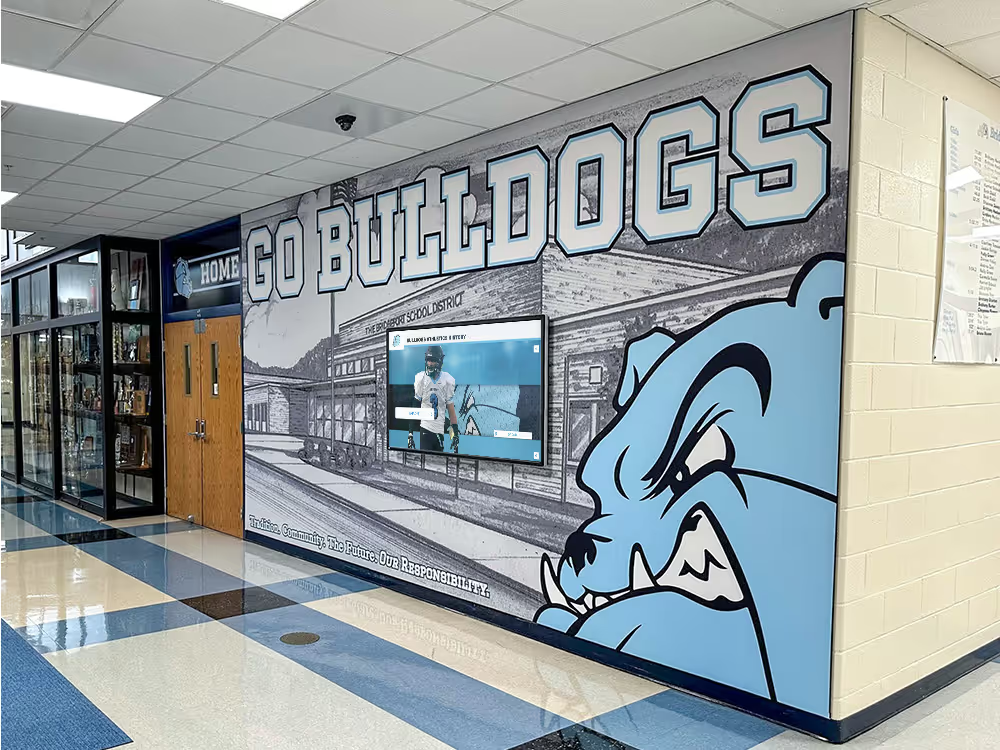
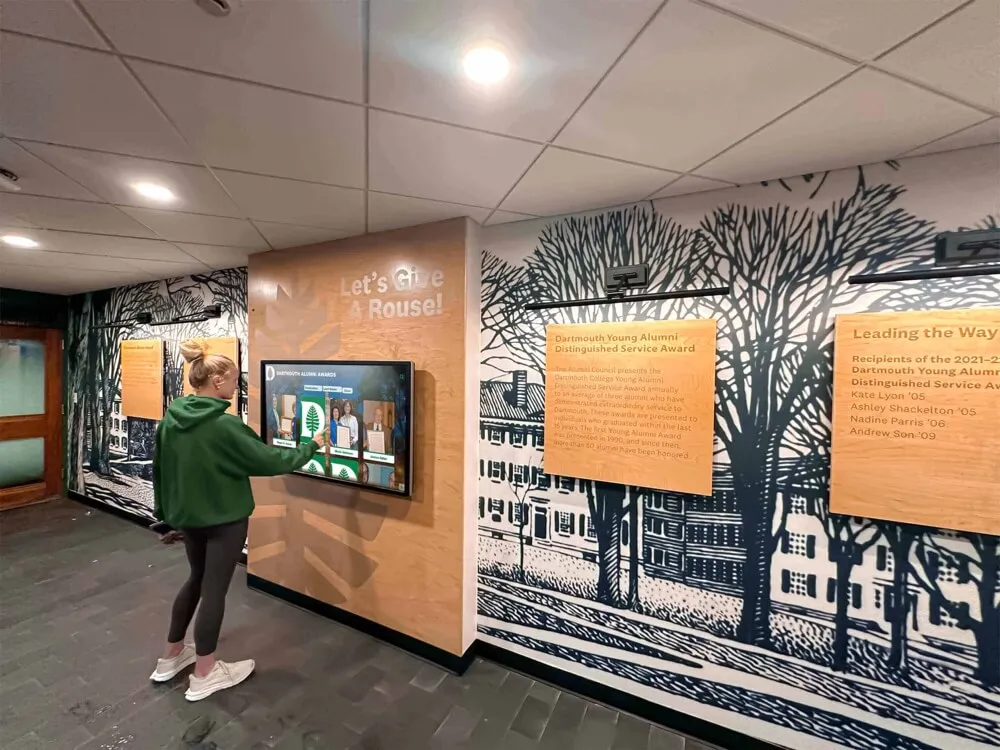
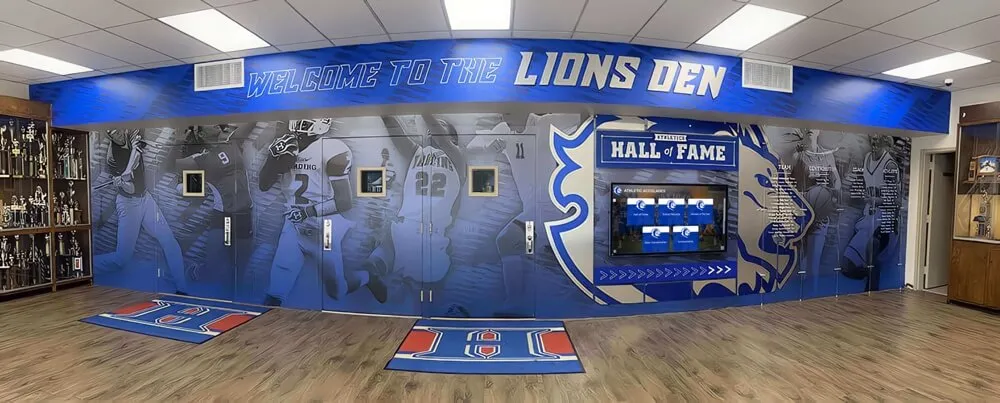
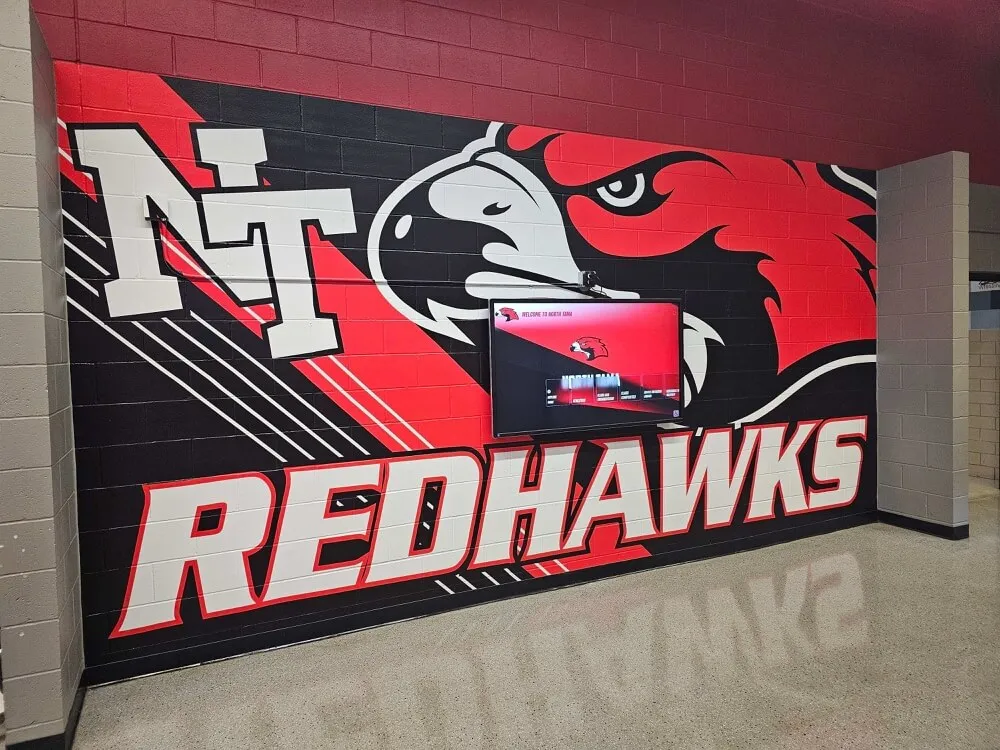
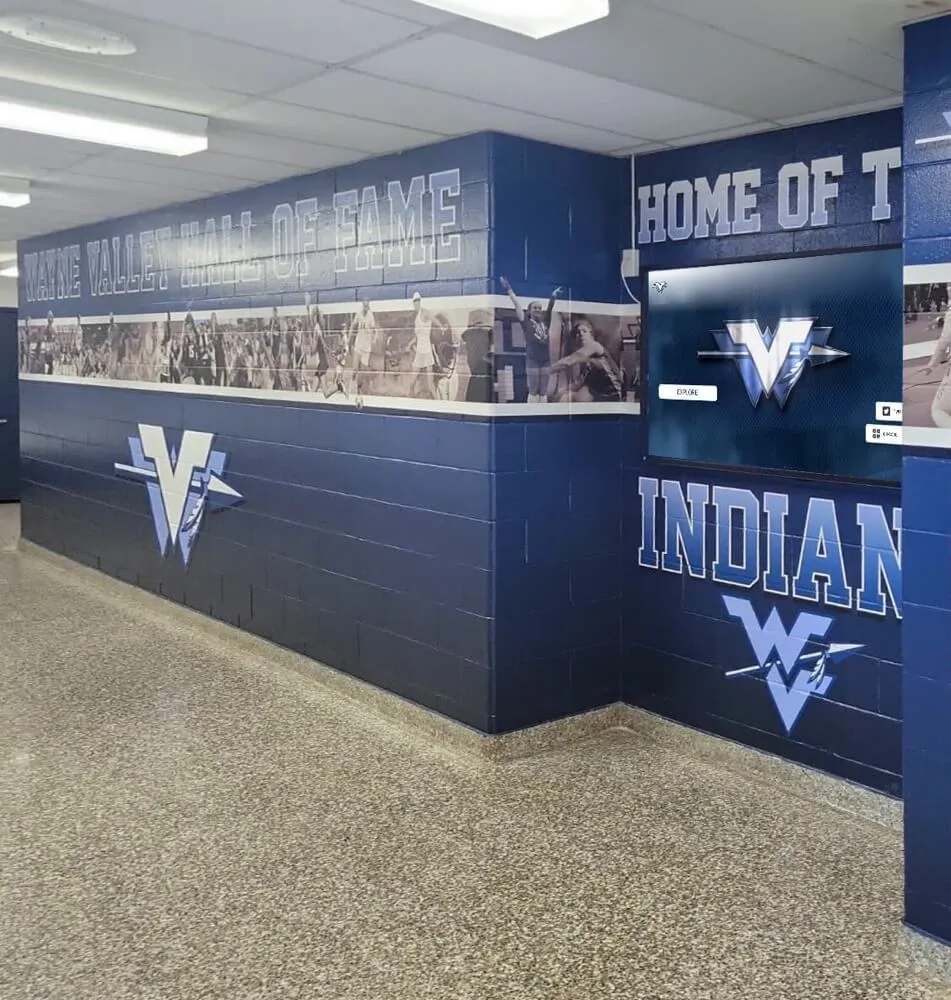
Environmental Integration Effective installations integrate sympathetically with facility architecture—coordinating with murals, respecting sightlines, avoiding obstructions, matching institutional aesthetics, and creating cohesive recognition environments rather than appearing as technological afterthoughts disrupting spaces.
Organizations implementing school lobby displays receive design consultation ensuring kiosks enhance rather than detract from facility aesthetics through thoughtful integration rather than generic mounting creating visual discord.

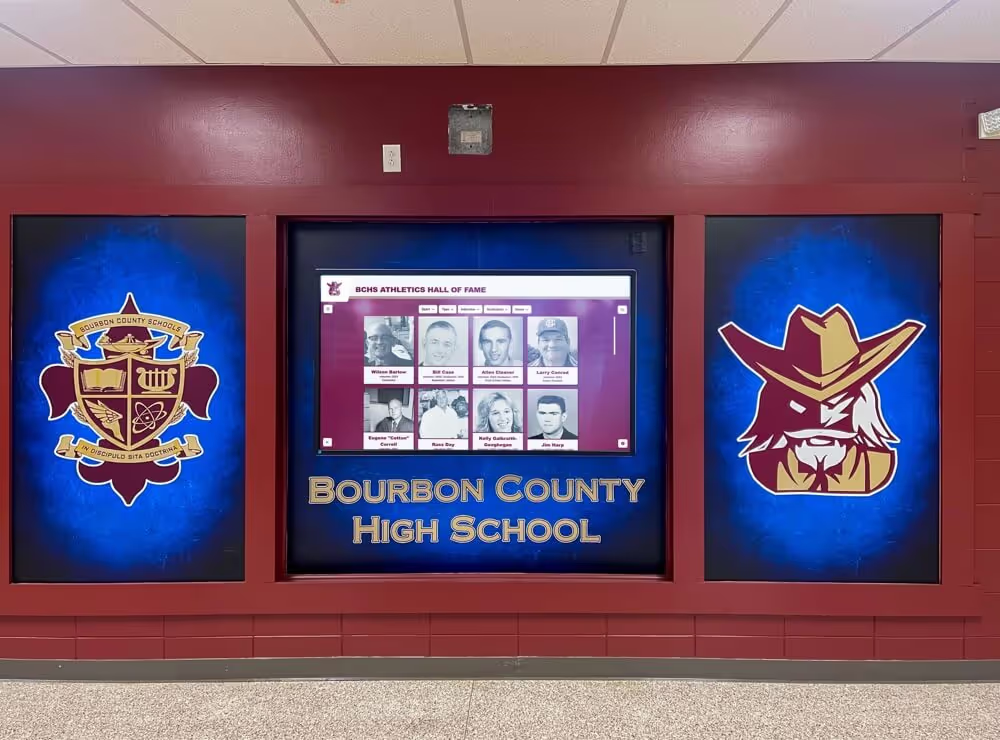
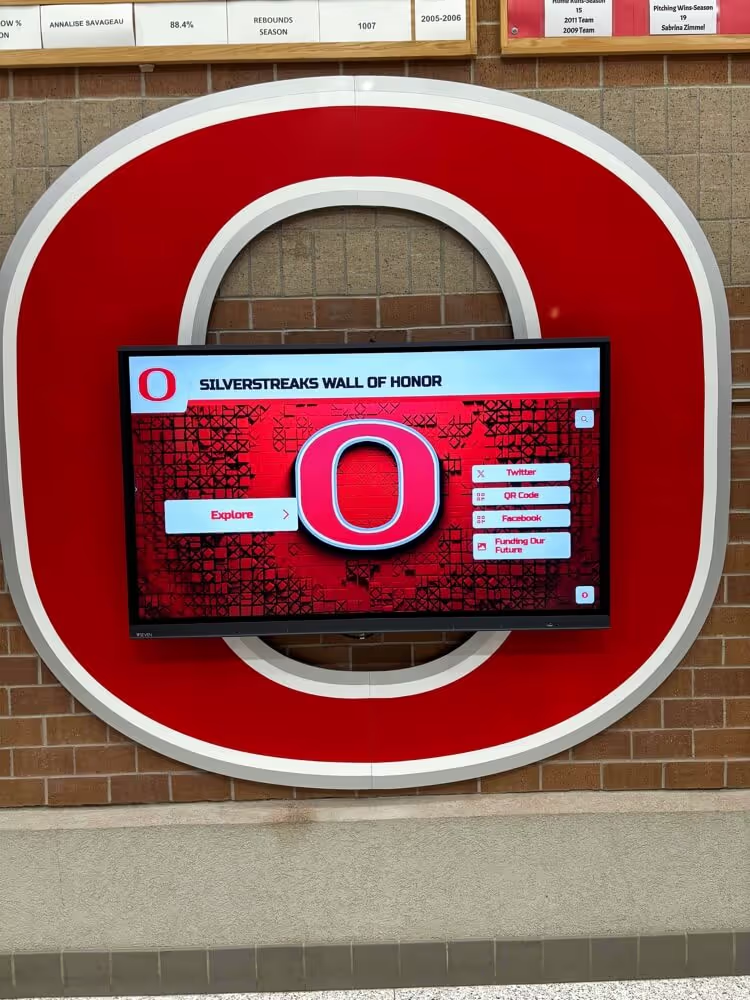
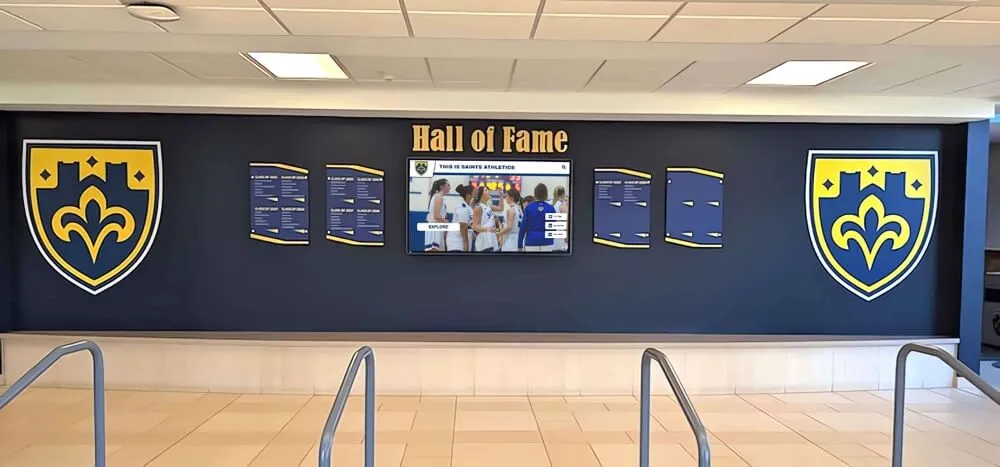
Professional installations integrate displays cohesively with facility architecture and recognition programs
Network Configuration and Security Expertise
Reliable kiosk operation requires proper network infrastructure and security configuration—areas software-only vendors typically ignore:
Network Requirements and Optimization
Recognition platforms demand specific network characteristics ensuring reliable operation:
Bandwidth and Latency Management Interactive recognition requires adequate bandwidth supporting responsive content delivery, image loading, video playback, and search functionality. Network latency affects perceived responsiveness—even adequately fast connections exhibiting high latency create frustrating delays between user actions and system responses.
Rocket provides specific network requirement guidelines ensuring organizations provision appropriate connectivity rather than discovering inadequacy after deployment when resolution proves expensive and disruptive.
Connectivity Reliability Continuous internet connectivity proves essential for cloud-based platforms. Network interruptions cause displays to appear broken, content fails to update, usage analytics stop flowing, and remote management becomes impossible creating support challenges.
Organizations receive guidance about wired versus wireless connectivity trade-offs, network redundancy options, monitoring approaches identifying connectivity problems, and configuration ensuring automatic reconnection after temporary interruptions rather than requiring manual intervention restoring operation.
Content Delivery Optimization Large media libraries require efficient delivery preventing excessive bandwidth consumption, storage management avoiding local capacity exhaustion, and caching strategies balancing content freshness with delivery performance.
Rocket’s complete stack expertise enables content delivery optimization that software-only vendors can’t provide because they lack control over delivery infrastructure and hardware storage configuration.
Security Configuration and Hardening
Public-facing kiosks require security configuration preventing unauthorized access, malicious interference, or system compromise:
Operating System Hardening Kiosk computing platforms need locked-down configurations preventing unauthorized software installation, restricting access to system functions, disabling unnecessary services creating attack surfaces, and implementing automatic security updates maintaining protection against emerging threats.
Schools implementing touchscreen kiosk solutions benefit from hardening expertise ensuring public displays don’t create network security vulnerabilities or enable unauthorized access to institutional systems.
Network Security Integration Proper firewall configuration, network segmentation, access control, and traffic monitoring ensure kiosks operate securely without creating institutional network vulnerabilities. Organizations receive guidance integrating displays with existing security infrastructure rather than creating security bypasses or excessive restrictions preventing normal operation.
Physical Security Considerations Public kiosk placement requires physical security addressing vandalism risks, unauthorized access attempts, environmental hazards, and theft prevention. Hardware selection, mounting approaches, and configuration choices account for security requirements that software-only vendors never consider because they disclaim hardware responsibility.
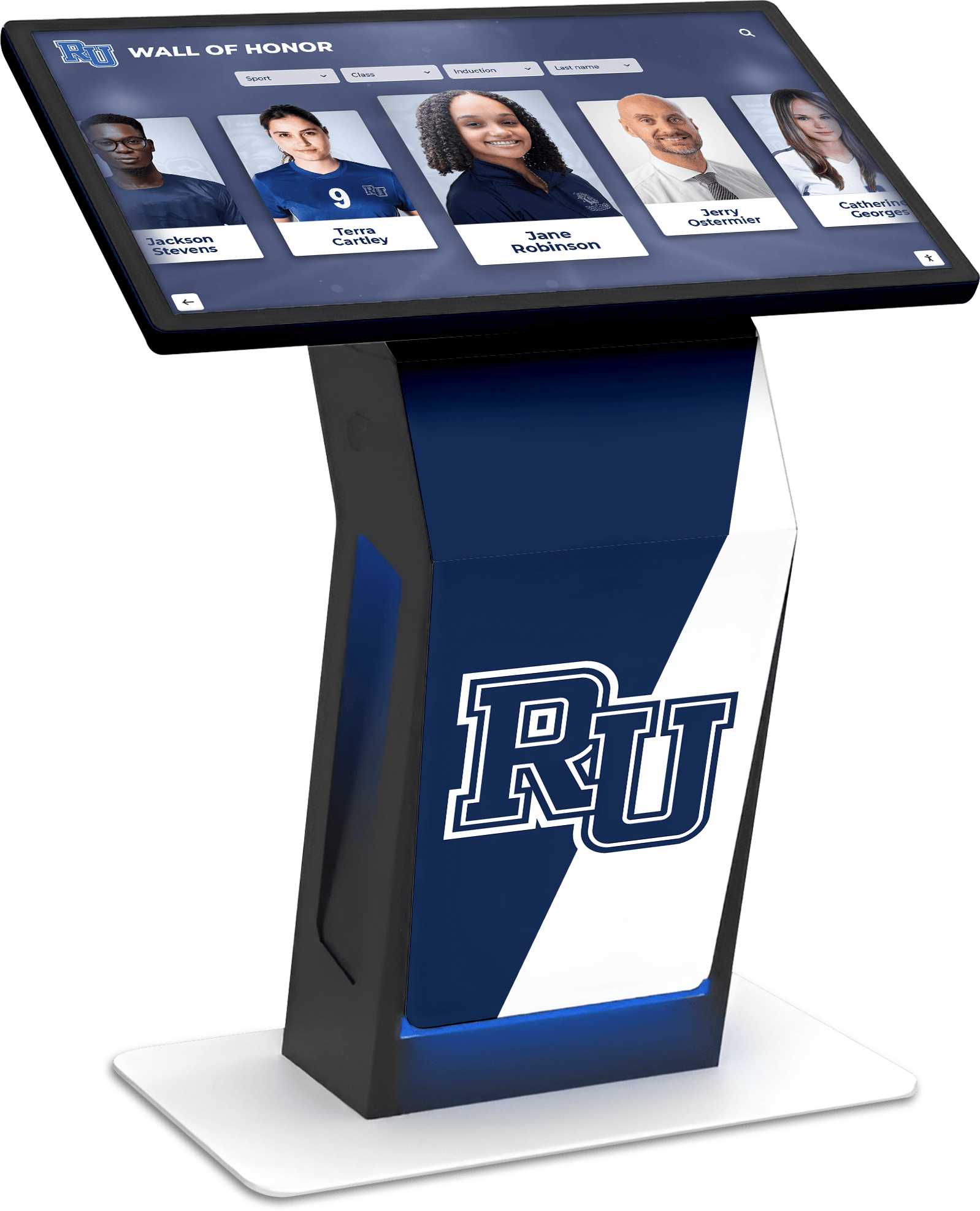
Secure kiosk deployments require expertise spanning hardware, software, network, and physical security domains
Real-World Implementation Experience
Rocket’s complete stack approach proves value through successful implementations across diverse educational environments:
Initial Deployment Success
Organizations launching recognition programs benefit from complete implementation support:
Hardware Delivery and Setup Rocket ships purpose-built kiosks configured for immediate operation. Organizations don’t procure displays separately, coordinate computing platform integration, configure software installations, or troubleshoot compatibility issues—complete systems arrive ready for mounting and network connection.
Initial setup guidance ensures proper network configuration, content management account creation, staff training on platform administration, and verification that all functionality operates as expected before considering deployments complete.
Content Migration and Population Launching comprehensive recognition programs requires populating extensive historical archives. Rocket assists with data import from existing systems, photo digitization strategies, profile template creation, and initial content publication ensuring launches showcase comprehensive recognition rather than sparse databases undermining perceived value.
Schools implementing hall of fame recognition receive content strategy guidance ensuring effective launches creating immediate community engagement rather than tentative starts requiring years building critical mass justifying investment.
Staff Training and Documentation Sustainable operation requires multiple trained staff members confidently managing content. Rocket provides comprehensive training covering content management, publishing workflows, search optimization, troubleshooting common issues, and effective recognition program administration.
Organizations receive documentation supporting ongoing self-service while maintaining Customer Success access for complex situations, unusual problems, or strategic guidance as programs evolve and expand.
Ongoing Operational Reliability
Long-term value depends on sustained reliable operation:
Proactive Issue Prevention System monitoring identifies emerging problems enabling intervention before customer impact. Network connectivity degradation receives investigation and resolution, storage capacity planning prevents exhaustion causing failures, performance optimization maintains responsiveness as content grows, and security updates deploy automatically preventing vulnerabilities.
Schools report years of reliable operation with minimal intervention because proactive monitoring and maintenance prevent problems rather than reacting after displays fail and recognition programs suffer visible operational disruptions.
Rapid Issue Resolution When problems occur, single-point Customer Success dramatically accelerates resolution. Organizations describe issues once to teams investigating root causes and coordinating complete solutions rather than explaining situations repeatedly to multiple vendors each disclaiming responsibility while problems persist.
Hardware failures resolve through replacement coordination, software issues receive immediate escalation to engineering teams, network problems get technical support guidance, and user training addresses operation questions—all through unified contact points accepting complete accountability for outcomes.
Continuous Improvement Regular platform updates deliver new features, interface refinements, performance optimization, and expanded capabilities without customer effort. Organizations benefit from continuous development investment because cloud-based architecture enables seamless deployment rather than requiring upgrade projects coordinating software updates with hardware compatibility.
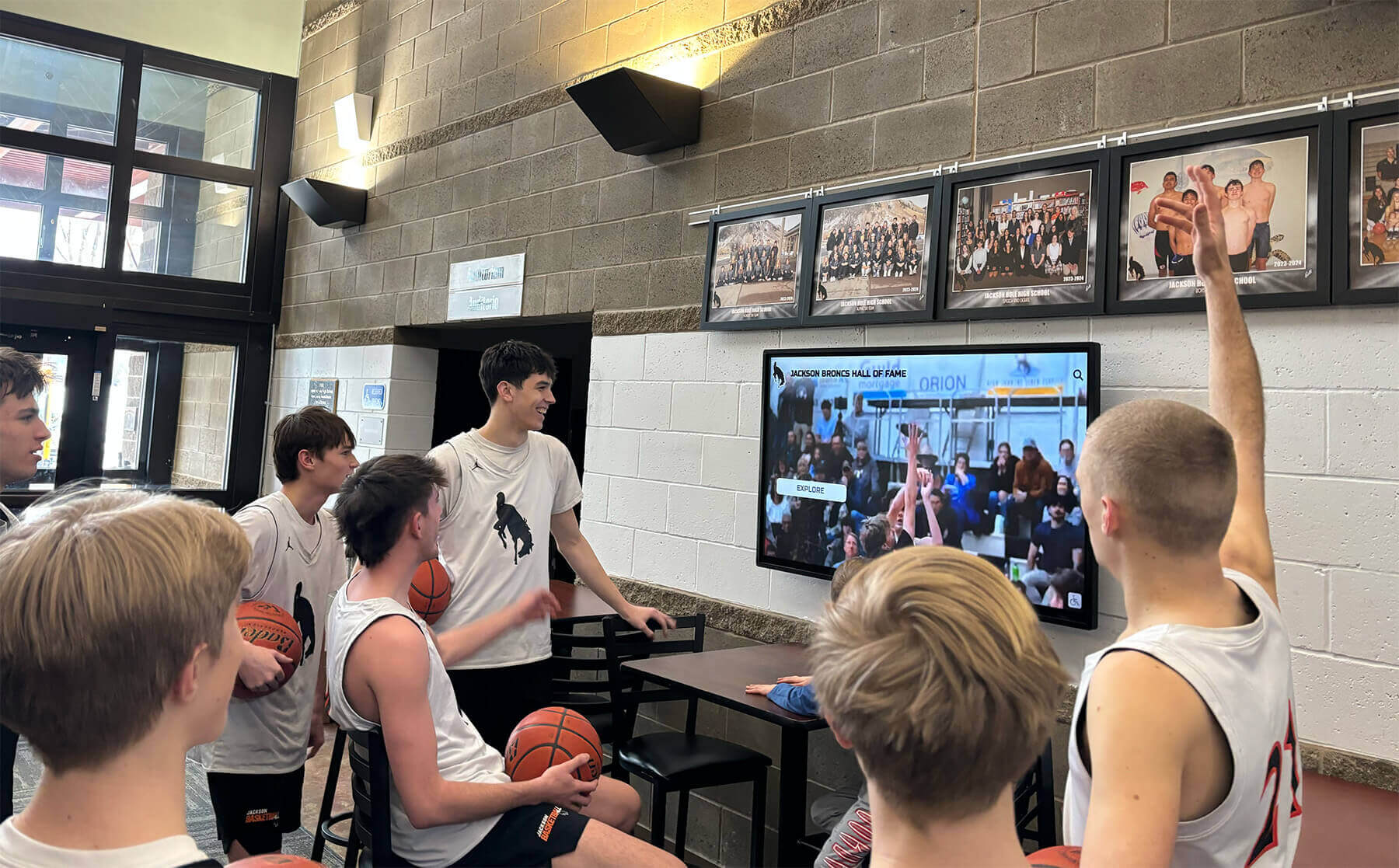
Reliable operation creates sustained community engagement demonstrating recognition program value
Why Software-Only Approaches Fail Long-Term
Understanding software-only provider limitations clarifies Rocket’s complete stack value:
Hardware Selection Failures
Organizations lacking expertise make predictable hardware mistakes:
Incompatible Display Selection Consumer TVs purchased for low cost lack commercial reliability, exhibit limited viewing angles, don’t support continuous operation, and fail within months. Touch overlays added to standard displays suffer calibration problems, exhibit poor responsiveness, lack durability, and create frustrating user experiences undermining engagement.
Schools report replacing inadequate hardware multiple times—spending more on failures than purpose-built solutions cost initially—while recognition programs suffer credibility damage from unreliable operation between replacement cycles.
Installation Problems Generic mounting solutions don’t accommodate integrated computing, create unsafe installations risking injury, fail to meet accessibility requirements, or produce aesthetically poor results conflicting with facility design. Organizations discover problems after installation investments become sunk costs requiring expensive corrections.
Technical Configuration Gaps Organizations lack expertise for proper network configuration, security hardening, performance optimization, or ongoing maintenance. Displays operate suboptimally, create security vulnerabilities, experience preventable failures, and eventually get abandoned when accumulated problems exceed organizational troubleshooting capacity.
Support Coordination Nightmares
Fragmented vendor relationships create predictable support failures:
Finger-Pointing and Responsibility Disclaimers Software vendors blame hardware manufacturers, hardware vendors blame software configuration, installers disclaim responsibility for technical issues, and IT departments resist supporting kiosks outside standard system categories. Organizations exhaust staff time coordinating between parties disclaiming responsibility while displays remain broken and recognition programs suffer.
Schools implementing donor recognition displays report abandoning software-only platforms because support fragmentation proves unsustainable—investments become total losses rather than long-term assets.
Extended Resolution Timeframes Coordinating between multiple vendors extends issue resolution from hours to weeks. Each interaction requires explaining problems again, waiting for responses, attempting suggested solutions, reporting results, and starting cycles over when attempts fail. Displays remain broken throughout extended troubleshooting creating visible program failures undermining confidence and engagement.
Hidden Costs and Vendor Lock-In Software-only approaches appear cost-effective initially but actual total cost of ownership balloons through hardware selection mistakes, installation problems, support complexity, staff time consumption, and eventual replacement when solutions prove unsustainable. Organizations discover lock-in after significant content investment makes switching platforms disruptive despite operational dissatisfaction.
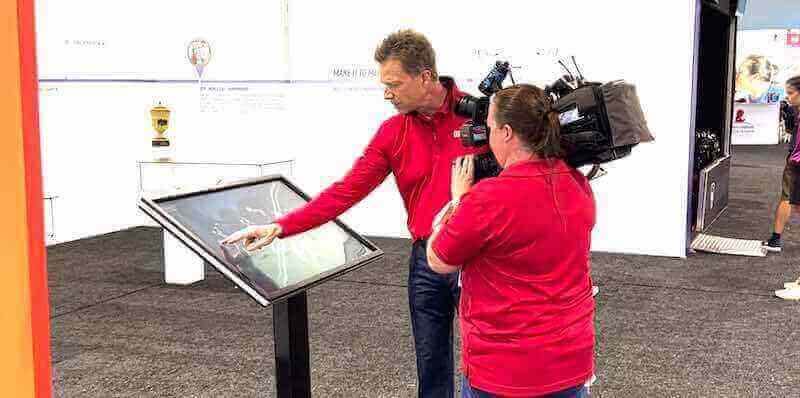
Professional implementation requires complete stack expertise preventing common failure modes
Comparing Rocket’s Approach to Industry Alternatives
Understanding typical vendor approaches clarifies Rocket’s distinctive complete stack commitment:
Software-Only Digital Signage Platforms
Generic digital signage vendors focus exclusively on software development:
Minimal Hardware Guidance Software-only platforms provide specification lists suggesting minimum requirements but don’t recommend specific hardware, coordinate purchases, verify compatibility, or accept responsibility for selection decisions. Organizations navigate procurement independently without expertise for informed choices.
Installation and Configuration Disclaimers Vendors disclaim responsibility for installation quality, mounting approaches, network configuration, or technical setup—directing customers toward local contractors or internal IT departments without guidance ensuring adequate expertise or coordination preventing common failure modes.
Fragmented Support Structures Software problems receive vendor support, but hardware issues, network troubles, installation defects, or integration challenges create support nightmares. Organizations waste enormous time coordinating between parties while problems persist and displays remain non-functional.
Schools implementing digital signage services through software-only vendors report unsustainable support complexity forcing recognition program abandonment despite significant content investment.
Hardware-Only Display Dealers
Commercial display dealers provide hardware without software expertise:
Generic Display Solutions Display dealers offer commercial screens without recognition software, lack content management platforms, don’t provide user interface design, and can’t deliver complete kiosk solutions. Organizations must separately source software, coordinate integration, and accept responsibility for making independent components work together reliably.
Limited Installation Capability While dealers coordinate mounting, they lack software configuration expertise, don’t tune network performance, can’t troubleshoot platform issues, and provide no ongoing content management support. Organizations receive hardware installations without operational systems.
No Ongoing Support Hardware warranties cover component failures but not software problems, network issues, content management questions, or user experience optimization. Organizations need separate support relationships for various aspects of kiosk operation creating fragmentation even when purchasing complete hardware from single dealers.
Integrated AV System Providers
Audio-visual integrators install complete systems but lack ongoing software expertise:
Project-Based Engagement AV integrators excel at installation projects but don’t provide ongoing software support, content management assistance, platform updates, or continuous operational monitoring. Organizations receive installed systems without sustainable long-term support.
Limited Platform Expertise Integrators install various platforms but lack deep expertise in specific recognition software. They configure initial setups following vendor instructions but can’t refine user experiences, troubleshoot complex software issues, or guide content strategy decisions maximizing engagement.
High-Cost Structures Full-service integrators deliver excellent installation quality but charge premium rates for ongoing support when needed. Organizations face expensive per-incident support costs or comprehensive maintenance contracts covering far more than recognition displays require.
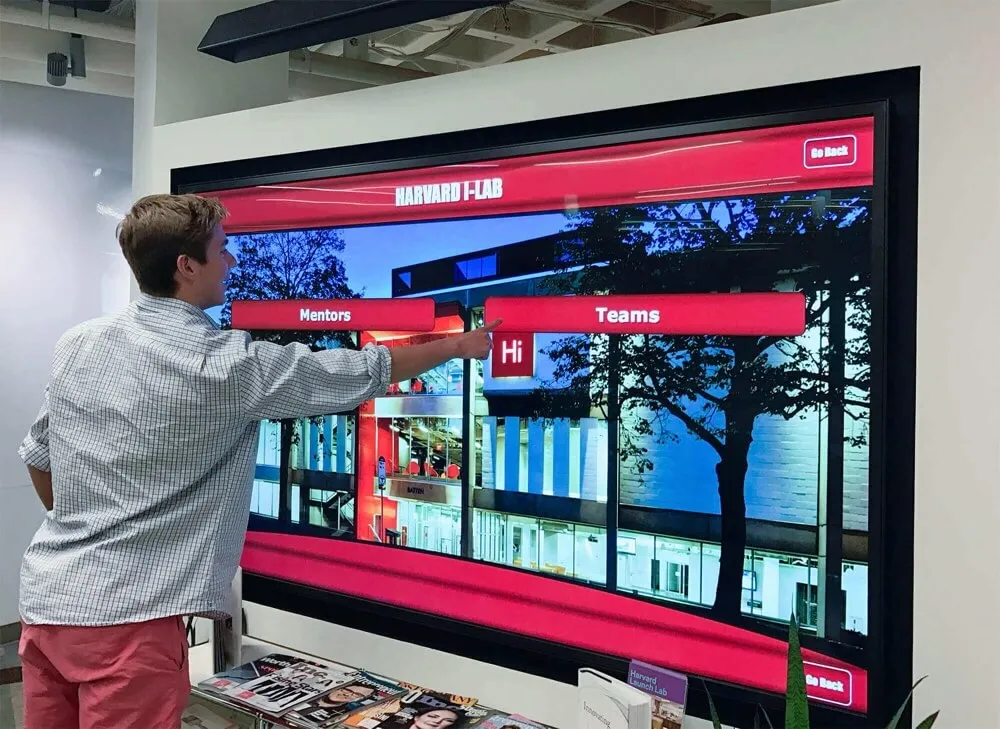
Complete stack expertise delivers intuitive user experiences through coordinated hardware and software optimization
Rocket’s Complete Stack Advantage
Rocket’s integrated approach delivers advantages impossible through fragmented vendor relationships:
Unified Responsibility Single vendor accountability eliminates support coordination nightmares. Organizations contact one team handling all issues regardless of whether problems originate from hardware, software, network, installation, or user confusion. Customer Success owns outcomes rather than disclaiming responsibility.
Purpose-Built Hardware Rocket provides touchscreen kiosks specifically suited for recognition applications based on hundreds of installations rather than generic displays requiring customers to verify compatibility through expensive trial and error.
Proactive Support System monitoring identifies emerging problems enabling preventive intervention. Organizations benefit from expertise spanning complete kiosk stack rather than coordinating between parties each understanding isolated components without holistic operational knowledge.
Sustainable Long-Term Operation Continuous platform updates, hardware replacement coordination, performance optimization, and strategic guidance ensure displays remain current and valuable for years. Organizations avoid abandonment cycles common with fragmented approaches where accumulated problems exceed troubleshooting capacity.
Implementation Best Practices
Organizations implementing recognition displays benefit from preparation maximizing Rocket’s complete stack support:
Site Preparation and Planning
Effective deployments require advance planning:
Location Assessment Identify optimal display locations balancing high traffic visibility, accessible mounting surfaces, network connectivity availability, electrical power access, and environmental conditions supporting reliable operation. Rocket provides location planning guidance ensuring deployments meet operational and accessibility requirements.
Network Infrastructure Verification Confirm adequate network connectivity at intended locations. Rocket specifies bandwidth requirements, latency tolerance, reliability expectations, and configuration recommendations ensuring infrastructure supports recognition platform demands.
Stakeholder Coordination Engage facilities management for mounting approval, IT departments for network configuration, administration for content strategy decisions, and recognition committees for inductee criteria and selection processes. Coordinated planning prevents deployment delays from administrative obstacles discovered late in processes.
Organizations implementing recognition displays benefit from advance planning ensuring smooth deployments rather than discovering obstacles after ordering hardware and beginning content development.
Content Strategy Development
Sustainable recognition programs require thoughtful content planning:
Recognition Category Definition Determine which achievements deserve celebration—athletic hall of fame, distinguished alumni, academic honors, donor recognition—and establish clear criteria ensuring transparent, fair selection processes maintaining credibility.
Historical Archive Scope Define whether programs launch with comprehensive historical recognition requiring significant digitization effort or focus initially on recent inductees while gradually expanding archives. Rocket assists with data migration and content population strategies appropriate for organizational capacity.
Ongoing Management Responsibilities Assign clear roles for adding inductees, updating profiles, managing featured content, and maintaining database accuracy. Multiple trained staff members create resilience preventing single-person dependencies making long-term maintenance unsustainable when individuals leave positions.
Staff Training and Adoption
Effective utilization requires staff preparation:
Content Management Training Multiple staff members should receive comprehensive content management training ensuring confident platform administration. Rocket provides training covering routine operations, troubleshooting common issues, and advanced features maximizing engagement.
Stakeholder Communication Develop communication strategies informing communities about new recognition capabilities, encouraging exploration, and promoting social sharing extending recognition reach. Launch announcements, facility signage, and digital promotion drive awareness creating initial engagement momentum.
Usage Monitoring and Optimization Review engagement analytics understanding which content attracts interest, how visitors navigate platforms, what search patterns reveal about discovery, and where interface improvements could enhance experiences. Data-driven optimization maximizes community value demonstrating recognition investment impact.
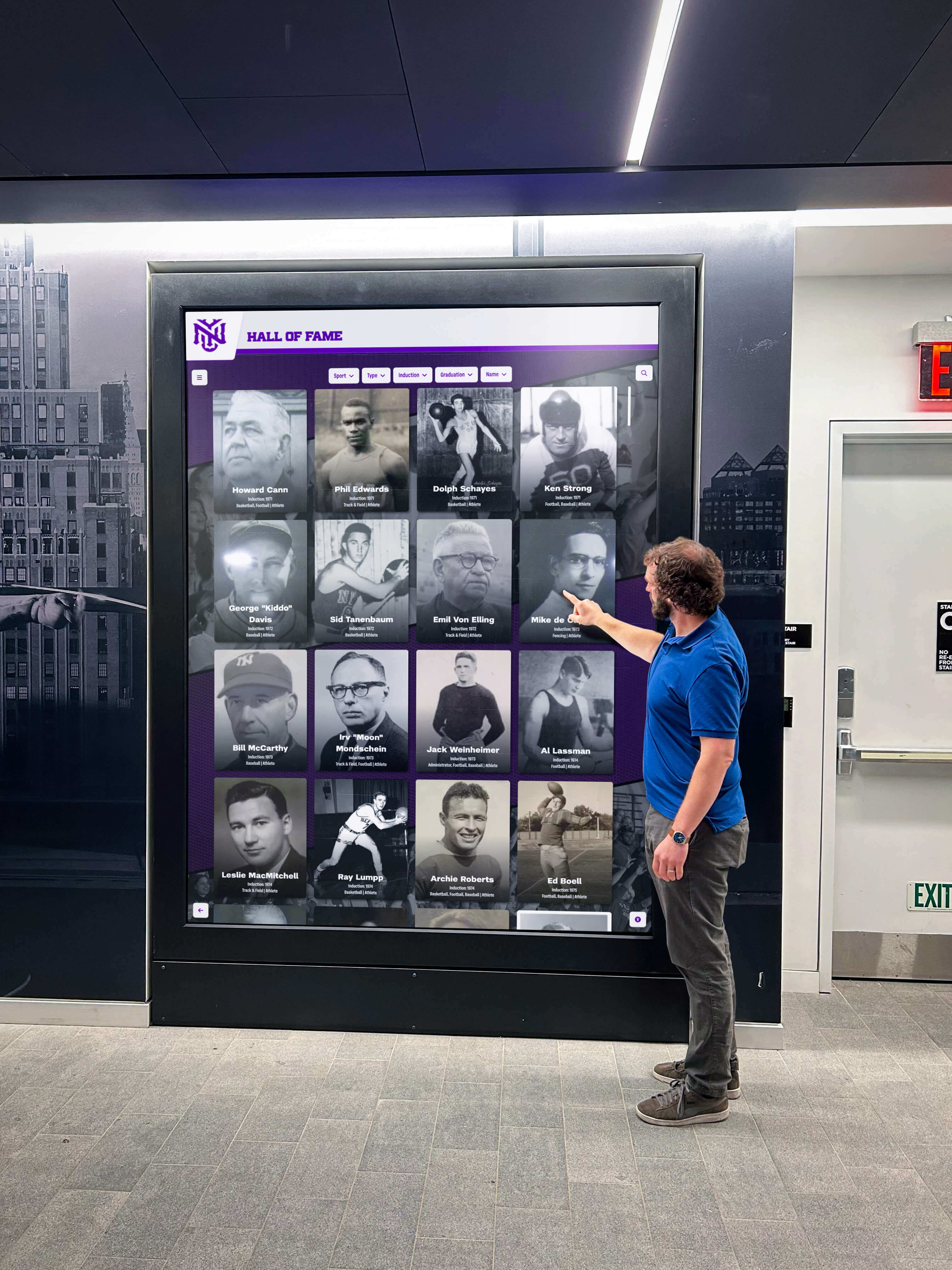
Engaged communities demonstrating recognition program value through active participation and exploration
Long-Term Value and Total Cost of Ownership
Complete stack support creates superior long-term value despite potentially higher initial investment:
Avoiding Hidden Costs
Software-only approaches conceal actual total ownership costs:
Hardware Selection Mistakes Inadequate displays purchased for low initial cost require replacement when failures manifest, compatibility problems emerge, or performance proves unsatisfactory. Organizations spend more replacing failures than purpose-built solutions cost initially while recognition programs suffer credibility damage from unreliable operation.
Support Complexity Time Sink Coordinating between fragmented vendors consumes staff time that should advance institutional missions rather than troubleshooting technical problems. Hidden labor costs quickly exceed apparent software-only platform savings.
Abandoned System Risk When accumulated problems exceed organizational troubleshooting capacity, recognition programs get abandoned despite significant content investment. Total loss represents far higher cost than integrated solutions maintaining long-term operation.
Rocket’s Value Proposition
Complete stack support delivers superior total ownership value:
Predictable Investment Comprehensive solutions eliminate unexpected hardware replacement costs, support time consumption, or system abandonment risks. Organizations understand total investment enabling confident budgeting rather than discovering hidden costs destroying business cases.
Sustained Reliability Professional hardware, expert installation, proactive monitoring, and unified support create years of reliable operation maximizing recognition program value. Displays remain operational and current rather than degrading over time as software-only solutions commonly experience.
Continuous Improvement Regular platform updates deliver new features, interface refinements, and expanded capabilities without additional cost or complex upgrade projects. Organizations benefit from continuous development investment rather than platforms stagnating after initial deployment.
Long-Term Partnership Rocket’s business model depends on customer success creating incentive alignment. Sustainable operation benefits both parties whereas software-only vendors profit from licensing regardless of operational success or customer satisfaction.
Conclusion: Why Complete Stack Ownership Matters
The recognition display industry contains too many vendors disclaiming hardware responsibility, creating fragmented support nightmares, and leaving organizations stranded when inevitable problems arise. Schools deserve better—providers accepting complete accountability for operational outcomes rather than technical excuses when displays fail.
Rocket Alumni Solutions’ fundamental commitment—providing hardware, owning the full kiosk stack, maintaining single-point Customer Success for all issues—represents philosophical difference in customer relationship approach. Rocket succeeds when recognition displays operate reliably creating engaged communities rather than merely licensing software regardless of operational outcomes.
Organizations implementing interactive touchscreen recognition should demand complete stack accountability. The “you’ll be stuck dealing with third parties” concern doesn’t apply when vendors accept unified responsibility for triage, replacement, and restoration—even if OEM warranties exist in background infrastructure.
Purpose-built hardware, expert installation coordination, proactive monitoring, unified support, and continuous platform improvement create sustainable recognition programs delivering long-term community value. Complete stack ownership isn’t luxury feature—it represents fundamental requirement for reliable operation that software-only alternatives cannot deliver regardless of appealing initial pricing or technical capability claims.
Your recognition program deserves provider treating operational reliability as priority equal to software features. Rocket’s complete stack approach—hardware provision, installation expertise, network configuration, security hardening, unified support, and ongoing optimization—delivers this reliability through hundreds of successful implementations proving real-world value.
When evaluating recognition display providers, ask direct questions: Who provides hardware? Who coordinates installation? What happens when displays fail? Can organizations contact single support teams owning complete resolution? How many vendors must we coordinate between when problems arise? Answers reveal whether vendors accept accountability or disclaim responsibility when reality inevitably diverges from marketing promises.
Ready to explore recognition displays backed by complete stack expertise and unified Customer Success accountability? Book a demo to discover how Rocket’s integrated approach creates sustainable recognition programs through hardware provision, installation coordination, proactive support, and single-point accountability eliminating fragmented vendor nightmares.