A jersey hangs from the rafters, frozen in time—number 23, never to be worn again. Retired numbers represent one of sports’ most powerful and enduring forms of recognition. When institutions permanently remove a number from circulation, they make a profound statement: this athlete’s contributions transcended statistics and championships to fundamentally shape program identity. Yet behind every retired number hangs complex questions about worthy criteria, equitable selection processes, meaningful presentation, and sustaining relevance for future generations who never witnessed these legends compete.
Athletic directors and school administrators increasingly recognize that jersey retirement ceremonies represent more than isolated recognition moments—they create program defining traditions, establish excellence standards, inspire current athletes, engage alumni communities, and provide tangible connection to institutional athletic history. The most effective retired number programs balance selectivity with inclusivity, honor past achievements while remaining relevant to present athletes, and create visible permanent recognition that educates and inspires daily rather than gathering dust in storage rooms.
Understanding the Significance of Retired Numbers
Retired numbers occupy unique territory in athletic recognition hierarchies. Unlike hall of fame inductions that honor broader career contributions or record boards celebrating specific statistical achievements, number retirement makes definitive statement: this athlete embodied program values so completely that their jersey becomes permanent monument rather than temporary uniform.
This permanence carries weight. Schools operate on generational timescales where today’s freshmen will graduate, establish careers, raise families, and eventually send their own children to campus. A number retired today remains retired decades later, creating recognition that outlasts individual memories to become institutional history. The #32 jersey retired in 1985 still hangs in 2026, connecting current athletes to legends they never saw play but whose standards they’re expected to uphold.

Professional sports pioneered jersey retirement traditions that now influence school programs. Major League Baseball retired Jackie Robinson’s #42 across all teams, establishing precedent for league-wide honors recognizing impact beyond individual organizations. The NBA has retired hundreds of numbers, creating rafters filled with championship banners and legendary jerseys. College programs followed suit, with institutions like Duke, UCLA, and Alabama creating extensive retired number displays that document program legacies spanning generations.
Schools adapting these traditions face distinct considerations. Professional franchises operate with unlimited rosters and frequent draft classes replenishing talent. Educational institutions navigate finite jersey numbers (typically 0-99 in most sports), roster continuity spanning just four years, and mission-centered values emphasizing education alongside athletics. These constraints require thoughtful approaches ensuring retired number programs remain sustainable rather than depleting available uniform options.
The psychological impact on current athletes proves equally significant. Walking past retired jerseys daily creates constant reminder of excellence standards and program expectations. For some athletes, this inspires elevated performance and commitment to legacy building. For others, it can feel like intimidating shadow cast by unreachable legends. Effective programs frame retired numbers as aspirational rather than intimidating—celebrating that greatness emerged from this program while suggesting current athletes can add their own chapters to continuing story.
Establishing Criteria for Jersey Retirement
The decision to retire a number demands clear, defensible criteria preventing arbitrary selections while maintaining flexibility for exceptional circumstances. Schools implementing retired number programs typically establish baseline standards addressing athletic achievement, character demonstration, career longevity, and community impact.
Statistical Excellence and Performance Standards: Most retirement criteria begin with measurable athletic achievement. Career record holders, multi-year all-conference performers, state championship contributors, and athletes achieving professional or Olympic success represent common qualification thresholds. Specific benchmarks might include career scoring records that stand for minimum periods, multiple season MVP awards, or unbroken performance streaks demonstrating sustained excellence.
However, pure statistics can disadvantage athletes in team-oriented roles or defensive positions where contributions don’t generate traditional scoring metrics. A defensive lineman who never appears on scoring summaries might have been equally essential to championship success as the quarterback who did. Comprehensive criteria account for diverse contribution types rather than privileging positions generating obvious statistics.

Character and Sportsmanship Requirements: Jersey retirement should honor athletes embodying institutional values alongside athletic prowess. Character requirements might include academic achievement standards, disciplinary record expectations, leadership demonstration, and community engagement evidence. Some schools require minimum GPA thresholds or academic honor recognition ensuring retired numbers celebrate student-athletes rather than just athletes.
Post-graduation conduct increasingly factors into retirement decisions. An athlete with stellar high school career who later faces criminal charges or behaves contrary to school values creates complicated legacy questions. Some institutions establish waiting periods—requiring 5, 10, or even 25 years post-graduation before number retirement consideration—allowing time to evaluate whether character demonstrated during competition sustained beyond school years.
Team Success and Program Impact: Individual excellence matters, but jersey retirement often emphasizes contribution to team achievement. Athletes on championship teams, players elevating programs from mediocrity to competitiveness, or individuals attracting recognition that raised program profile merit retirement consideration even without record-breaking statistics. The player who transformed program culture, recruited other top talent, or created winning tradition might deserve recognition equal to the scoring leader.
Equity Across Sports and Genders: Schools with multi-sport athletic programs face challenging equity questions. Should basketball and football receive majority of retired numbers simply because they’re higher-profile sports? How do schools ensure female athletes receive proportional recognition in era when women’s athletic programs may have shorter institutional histories? Some schools establish sport-specific retirement criteria acknowledging different competition structures while others maintain universal standards applied equally regardless of sport. Schools committed to athletic recognition equity proactively review retirement patterns ensuring diverse representation.
Selection Committee Structures: Rather than allowing athletic directors to make unilateral retirement decisions, many schools establish selection committees including athletic department staff, coaching representatives, hall of fame selection board members, and alumni representatives. Committee processes bring multiple perspectives, reduce favoritism perceptions, and create more defensible selection rationale when explaining why certain athletes received honor while others did not.
Planning Memorable Jersey Retirement Ceremonies
The ceremony presenting retired numbers transforms recognition from administrative decision into community celebration honoring legacy while inspiring future athletes. Thoughtfully planned ceremonies create emotional moments validating athlete contributions while educating attendees about honoree impact.
Strategic Timing and Event Integration: Jersey retirement ceremonies typically integrate with existing events maximizing attendance and emotional resonance. Halftime presentations during well-attended games create captive audiences and connect current competition to historical excellence. Homecoming events, senior nights, athletic banquets, or reunion weekends provide natural ceremonial contexts where community members already gather to celebrate athletics.
Some schools establish annual “Legends Weekend” events specifically honoring athletic history. These dedicated occasions allow extended ceremonies, panel discussions with honorees, autograph sessions for current athletes to meet legends, and comprehensive program history showcasing multiple retired numbers rather than rushing through brief halftime presentations.

Ceremony Program Elements: Effective ceremonies balance honoring the past with engaging the present. Video highlight packages showcasing career achievements educate younger attendees about honoree accomplishments. Testimonials from former coaches and teammates provide personal perspective beyond statistics. Current athletes often participate through video messages explaining what the legend means to today’s team, creating intergenerational connection.
The physical jersey presentation represents the ceremonial centerpiece. Whether unveiling framed jersey displayed permanently in facility, raising banner to rafters, or revealing digital recognition on modern displays, the presentation moment should feel significant. Some schools invite honorees to participate in jersey exchange with current team captains—legend presenting their retired number to current leader who accepts responsibility for upholding program standards.
Family and Community Involvement: Jersey retirement often represents highly emotional experience for honorees and their families. Parents who drove to countless practices, siblings who attended every game, coaches who developed talent, and teammates who competed alongside deserve recognition as part of athlete’s support system. Ceremonies acknowledging these contributors honor collective investment in individual achievement.
Community attendance demonstrates institutional commitment to recognition. Promoting ceremonies through social media, local news coverage, alumni communication channels, and school announcements maximizes turnout. High attendance validates honoree significance while demonstrating to current athletes that their eventual achievements will receive similar celebration.
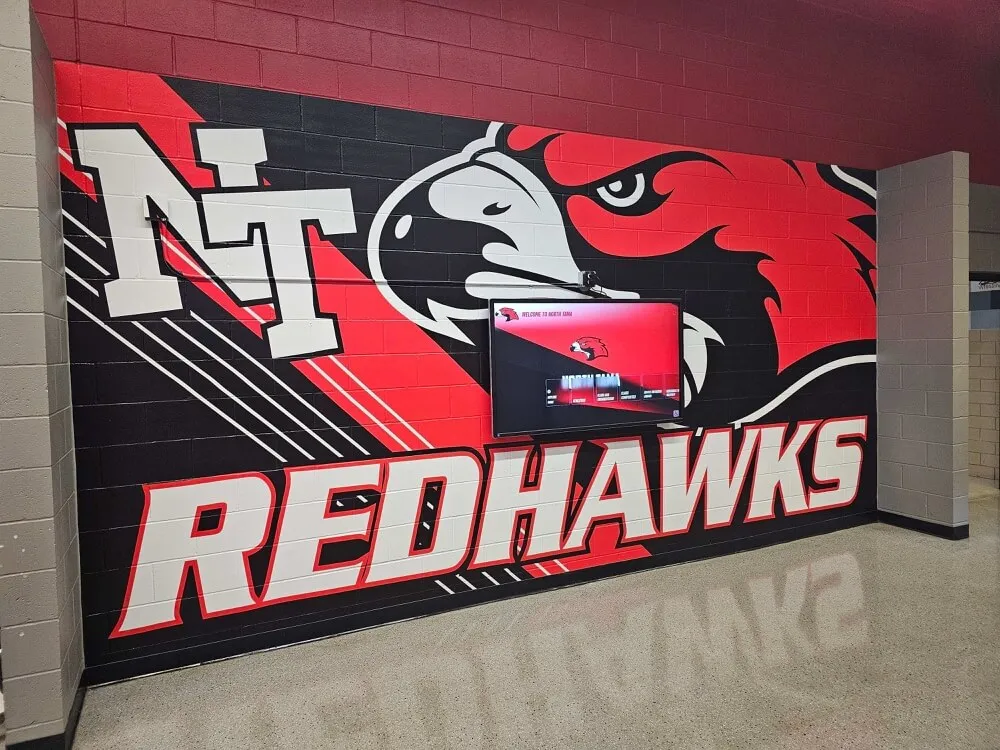
Post-Ceremony Recognition: The ceremony concludes, but recognition should continue. Retired numbers deserve permanent prominent display where athletes and community members encounter them regularly. Traditional approaches include painted numbers on facility walls, banner displays hanging from ceilings, or dedicated wall spaces featuring framed jerseys and career achievement plaques.
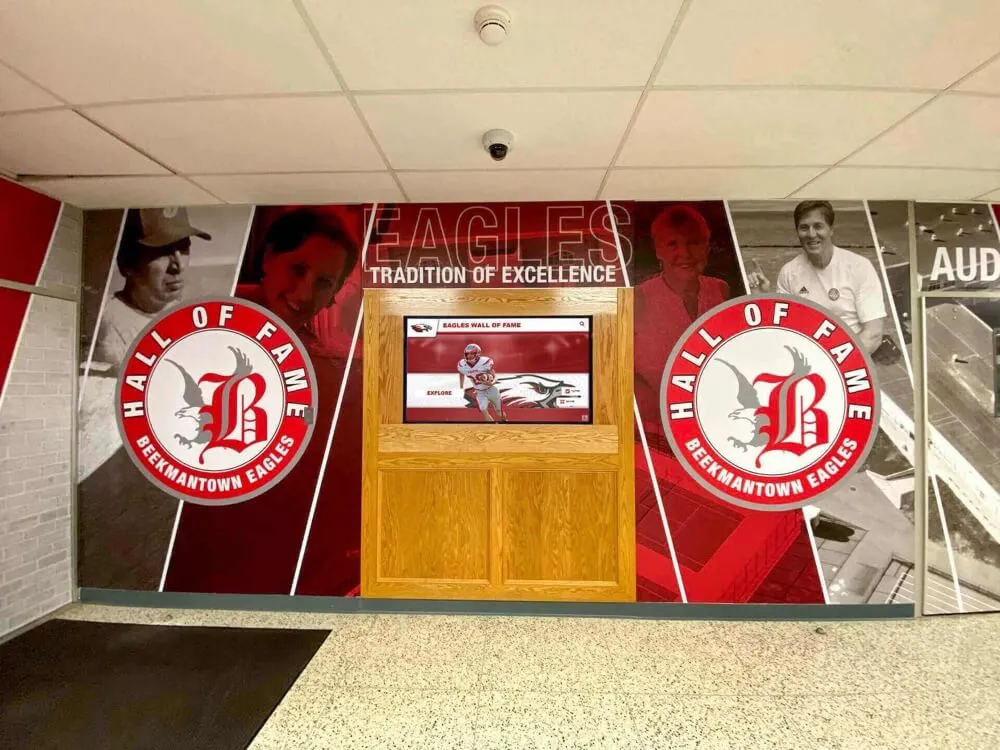
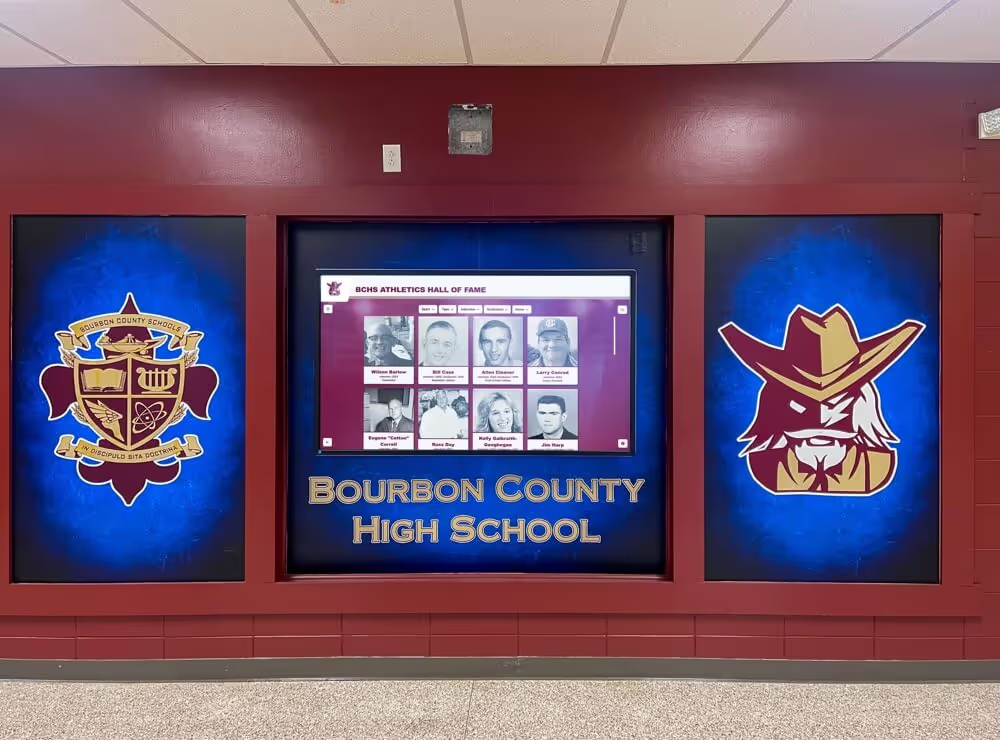
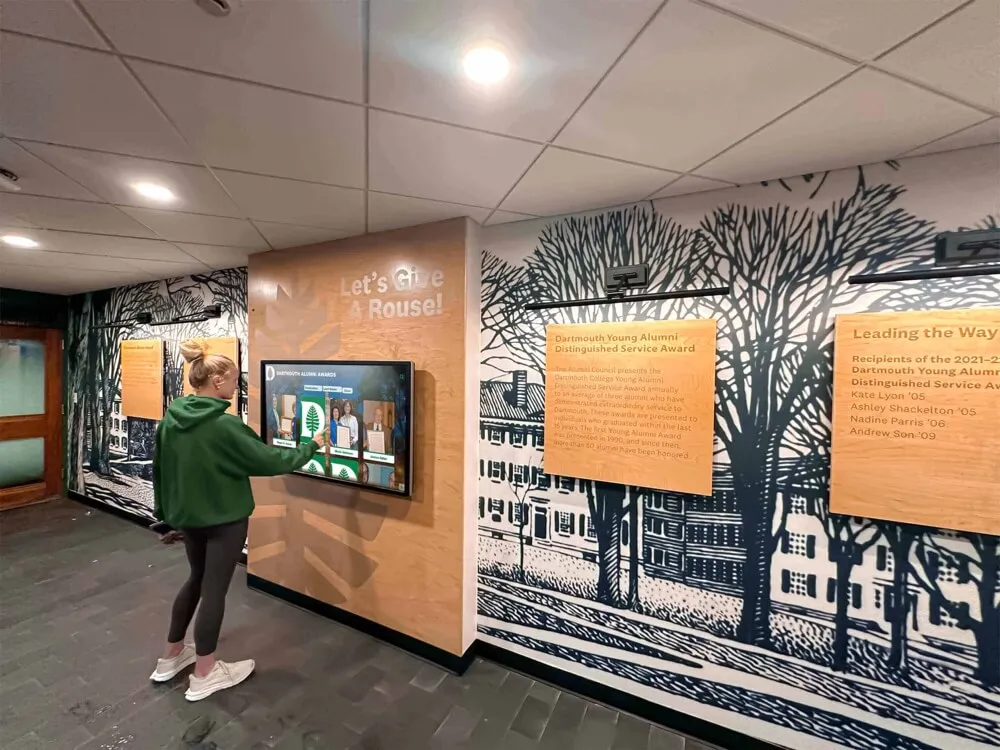
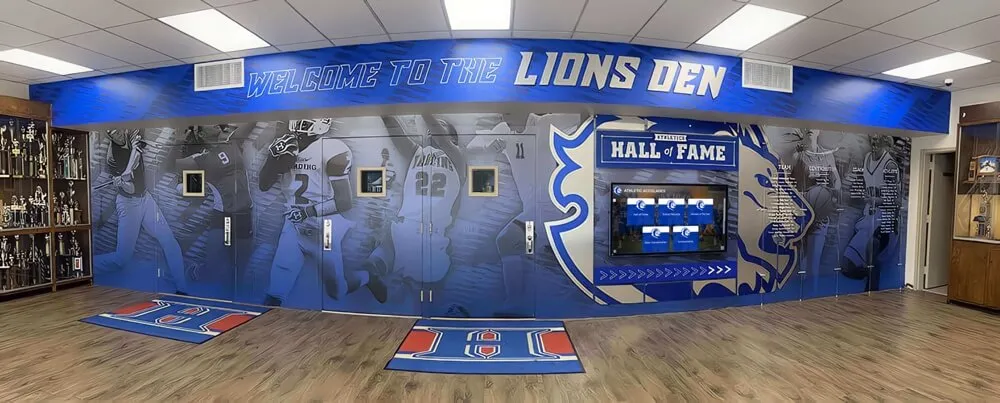
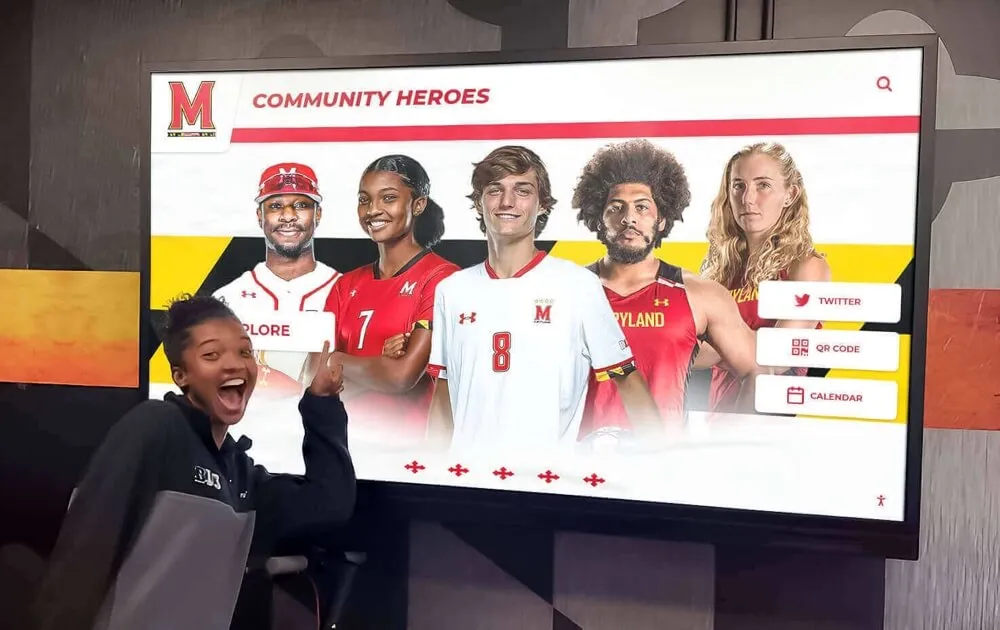
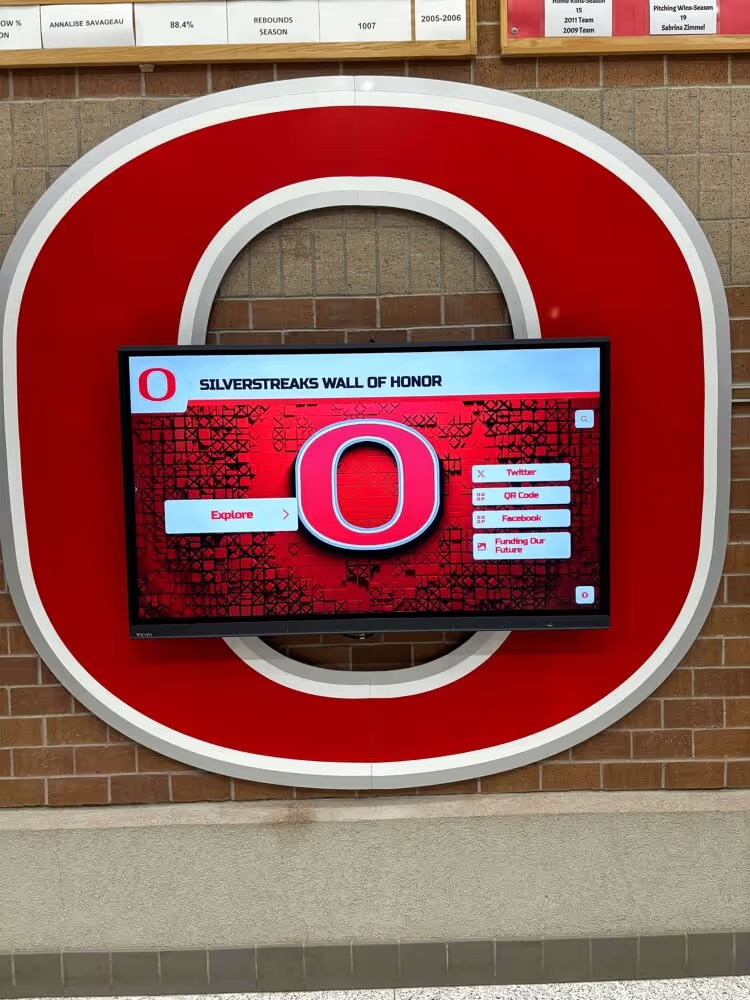
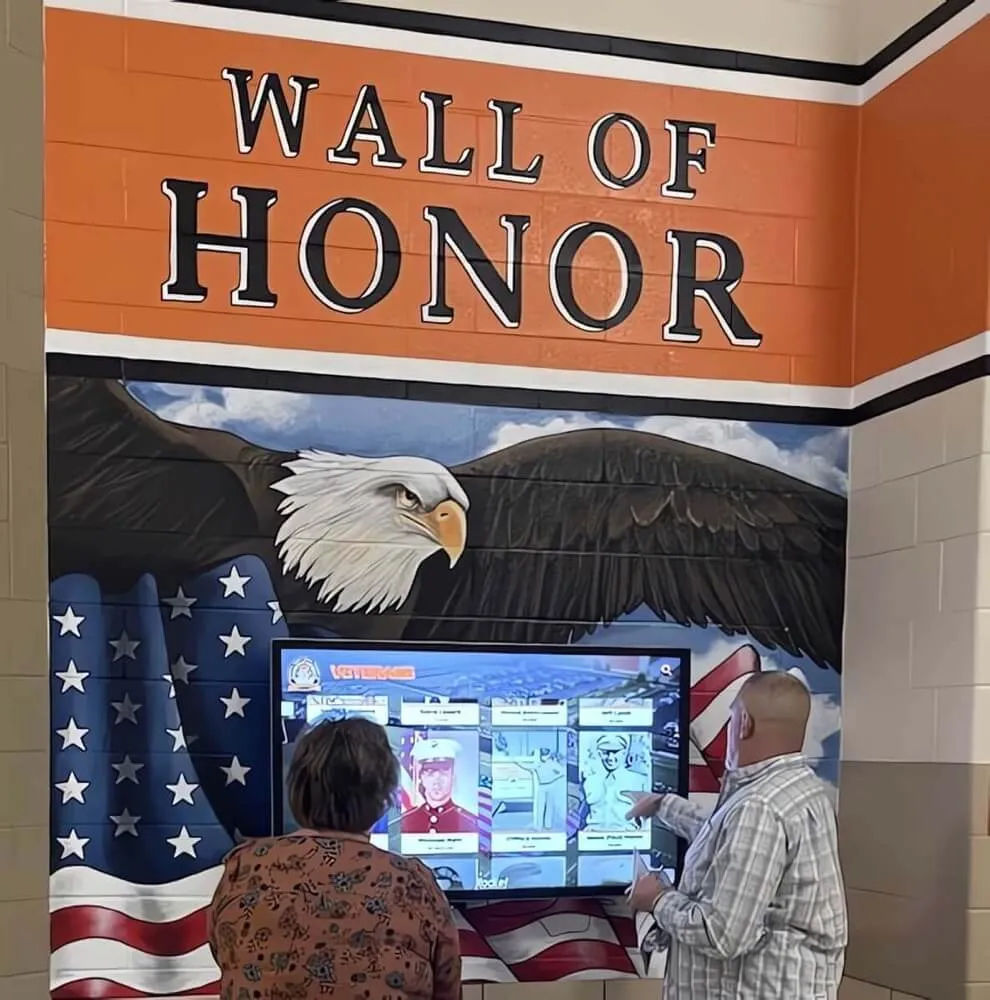
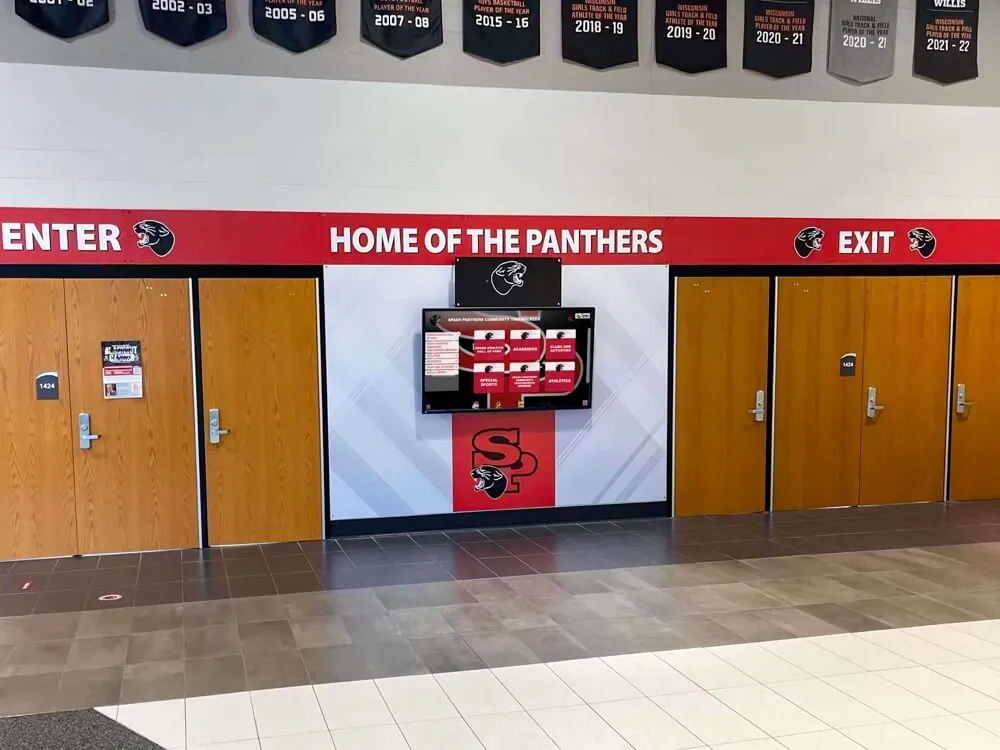
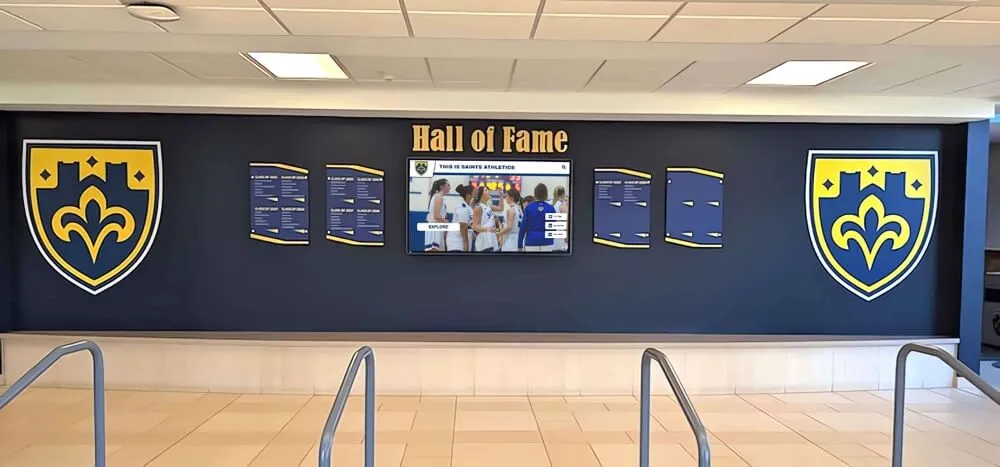
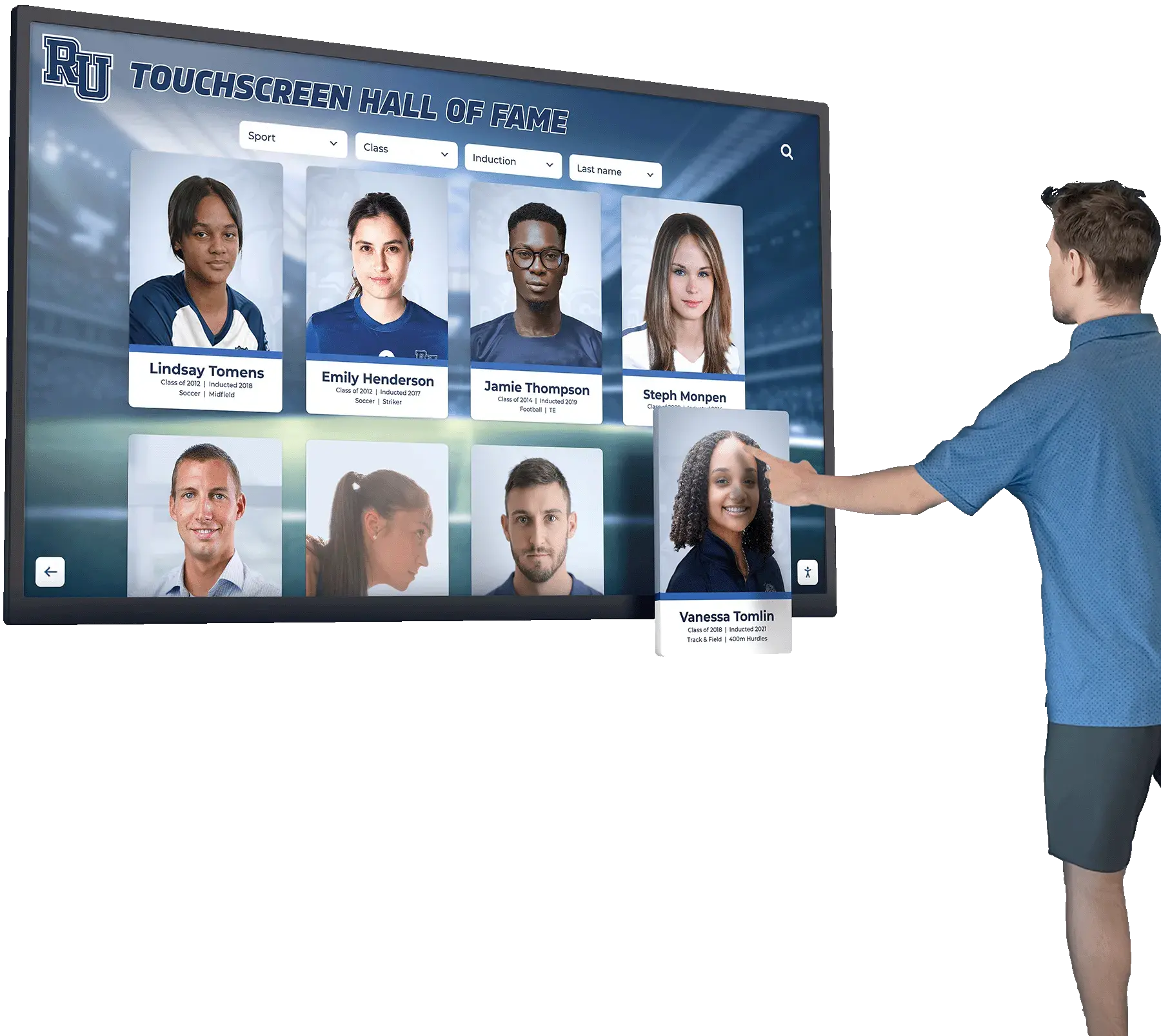
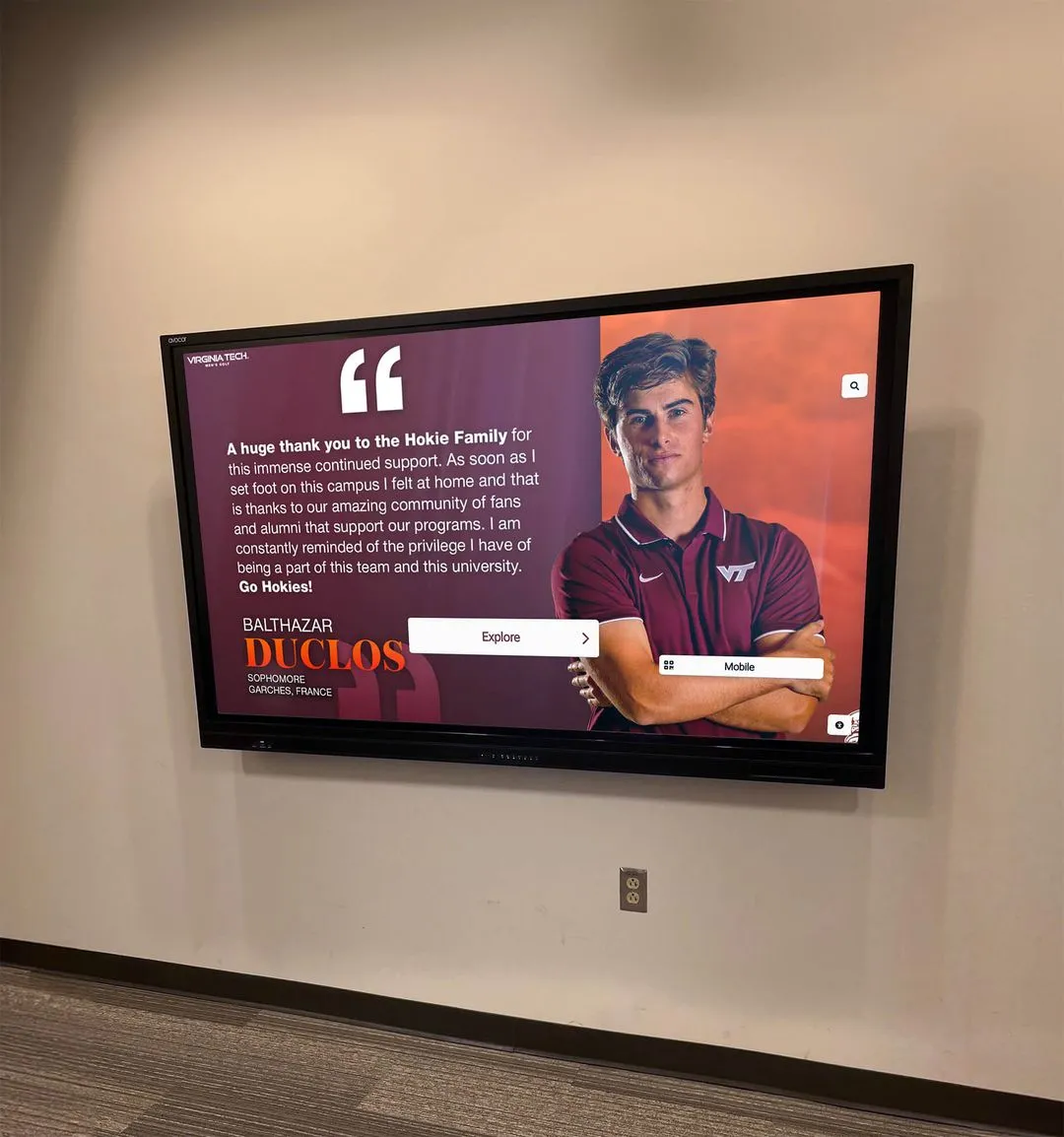
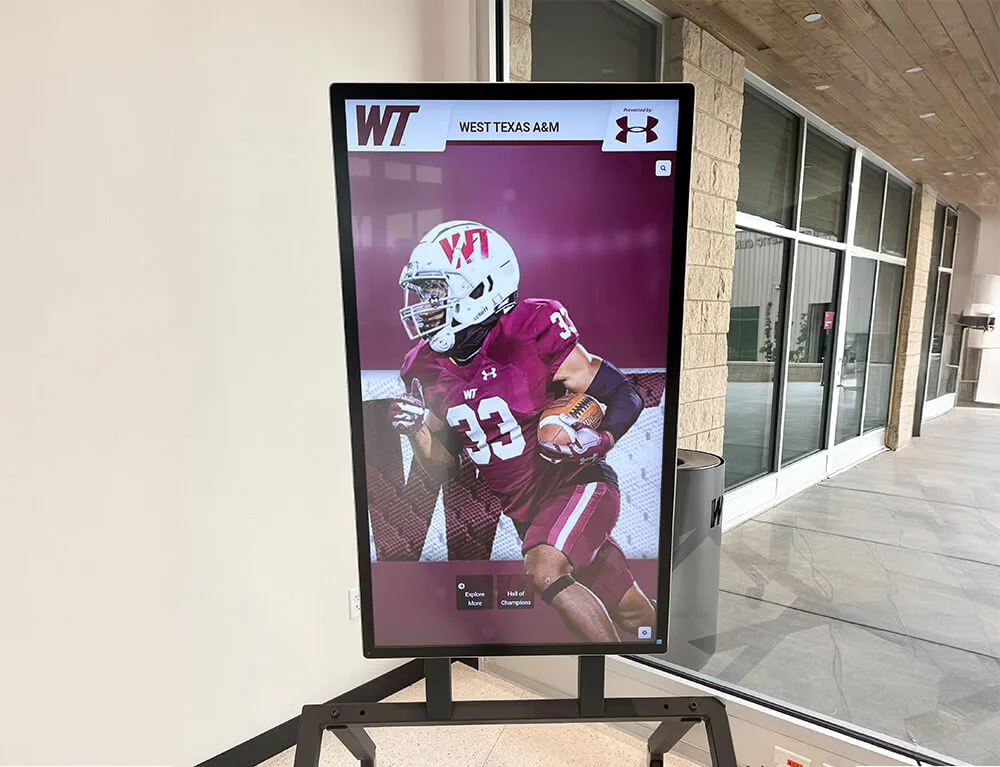
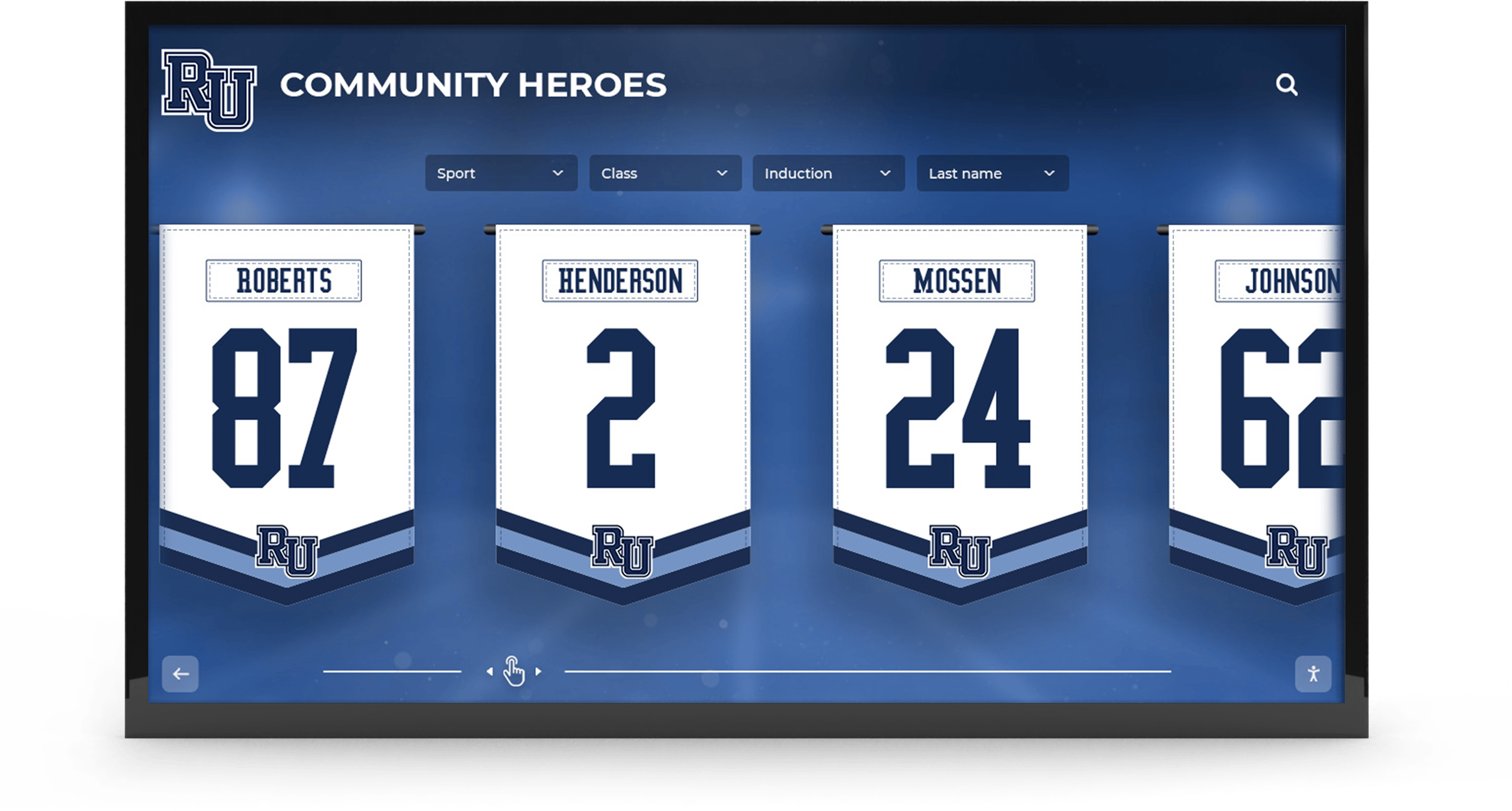
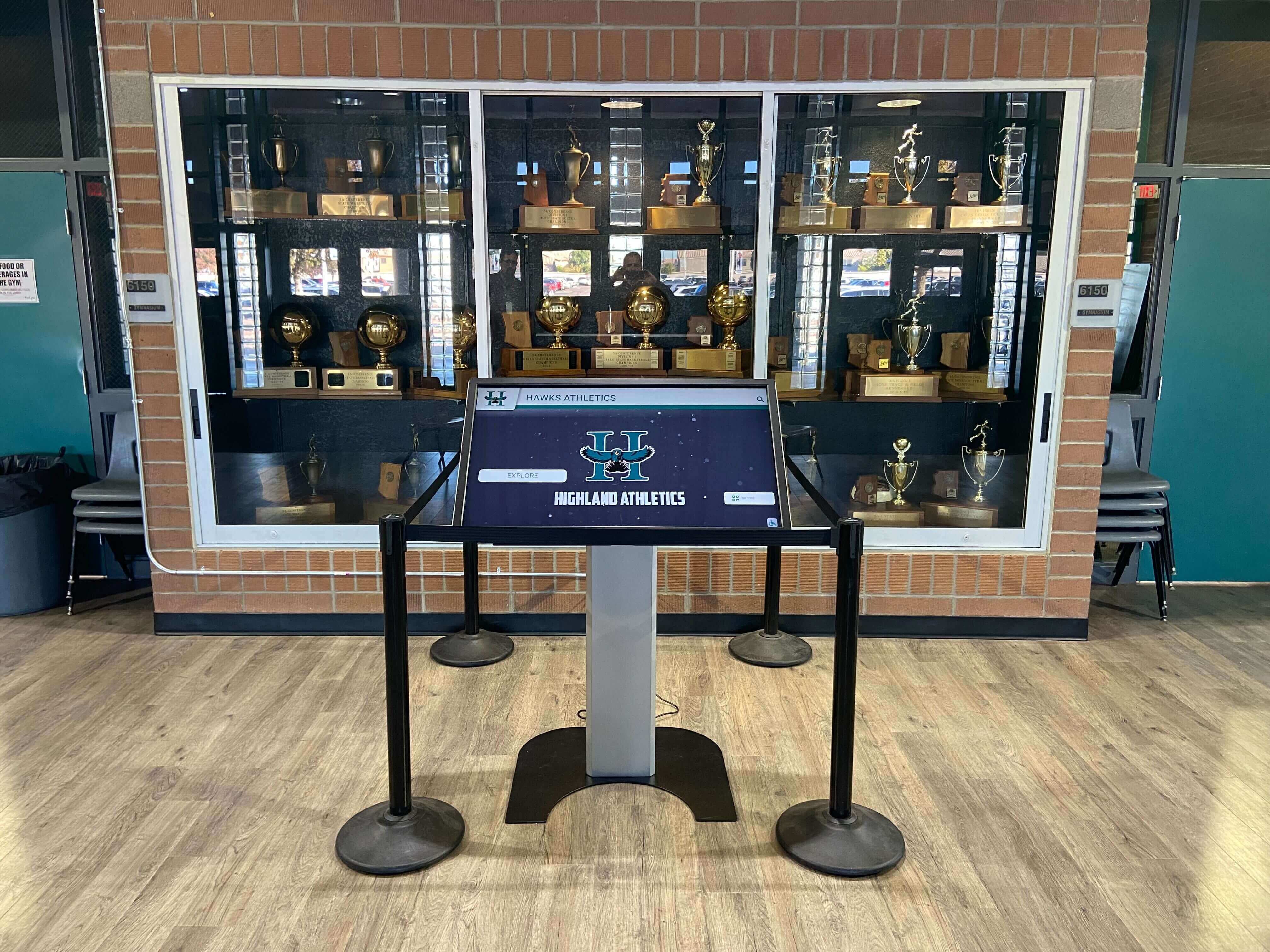
Modern schools increasingly implement digital recognition displays providing interactive access to retired number histories. Touchscreen systems allow visitors to explore complete career statistics, view highlight videos, read biographical information, and understand historical context that static displays cannot convey. These platforms ensure retired numbers remain educationally engaging rather than becoming overlooked background decoration.
Modern Display Solutions for Retired Numbers
While traditional jersey displays maintain nostalgic appeal, contemporary recognition technology offers compelling advantages for preserving and presenting retired number honors. Digital platforms address common challenges with physical displays while expanding storytelling capabilities that deepen community connection to athletic legends.
Limitations of Traditional Physical Displays: Framed jerseys hanging on walls face practical constraints. Physical space limitations restrict how many numbers can receive prominent display before walls become cluttered. Environmental factors—sunlight exposure, humidity, dust accumulation—gradually degrade fabric and printed numbers requiring periodic replacement. Static displays provide minimal context beyond name and number, offering no mechanism to educate viewers about why this particular athlete earned retirement honor.
Location also constrains traditional displays. A jersey hanging in the gymnasium remains invisible to anyone not visiting that specific facility. Multiple campus locations require duplicate displays or leaving certain buildings without recognition presence. When schools consolidate or merge, integrating retired numbers from predecessor institutions into limited physical space creates difficult prioritization decisions.

Digital Recognition Advantages: Interactive touchscreen platforms like Rocket Alumni Solutions address these limitations while expanding recognition capabilities. Digital displays present unlimited retired numbers without physical space constraints—systems accommodate ten retired jerseys as easily as one hundred. Content updates instantly without requiring physical maintenance, allowing schools to add newly retired numbers or update biographical information as honorees achieve post-graduation accomplishments.
The storytelling depth distinguishes digital platforms. Beyond displaying jersey numbers, systems present comprehensive athlete profiles including career statistics, championship achievements, awards received, video highlights, biographical narratives, and post-graduation updates. Visitors can search by sport, year, or achievement type, creating personalized exploration rather than passive observation of static displays.
Interactive elements engage younger visitors whose digital fluency makes touchscreen exploration natural. Students who wouldn’t pause to read wall plaques enthusiastically browse digital athlete profiles, watch highlight videos, and discover program history through intuitive interfaces. This engagement transforms retired numbers from historical artifacts into active educational tools connecting past excellence to present possibility.
Accessibility and Inclusivity: Digital platforms support accessibility features often impossible with physical displays. Text can scale for visually impaired visitors. Audio descriptions provide alternative content access. Multiple language options serve diverse communities. These capabilities ensure retired number recognition remains inclusive rather than creating barriers for visitors with different abilities or language backgrounds.
Mobile accessibility extends recognition beyond physical facilities. QR codes adjacent to displays allow visitors to continue exploration on personal devices, accessing complete athlete profiles, sharing favorites via social media, or bookmarking content for later review. This mobile integration keeps retired number recognition active beyond the moment someone stands before physical display.
Preservation of Athletic History: Digital systems inherently preserve content through backup and cloud storage, protecting against physical damage or loss. When fires, floods, or other disasters damage facilities, digital content survives intact. Schools closing or merging can seamlessly integrate their retired number histories into successor institution platforms rather than facing painful decisions about what physical memorabilia receives preservation.
Historical content enrichment becomes ongoing process rather than fixed installation. As schools discover additional photographs, unearth old game footage, or collect new honoree interviews, digital platforms accommodate continuous enhancement. Retired numbers from 1960 can receive same rich multimedia treatment as retirements from 2020, creating equitable recognition across eras.
Integrating Retired Numbers with Broader Recognition Programs
Jersey retirement represents one recognition tier within comprehensive athletic honor systems. Schools maximize impact by integrating retired numbers with complementary programs creating multiple pathways for athlete acknowledgment while maintaining appropriate prestige distinctions.
Hall of Fame Relationships: Many schools distinguish between hall of fame induction and number retirement, treating the latter as higher honor reserved for exceptional few. Hall of fame status might recognize outstanding career achievement worthy of permanent institutional memory, while number retirement celebrates transcendent impact that redefined program standards. This two-tier approach allows broader recognition through hall of fame induction while preserving number retirement exclusivity.
Other institutions make hall of fame induction prerequisite for number retirement consideration. Athletes first gain hall of fame status based on career achievement, then years later may receive number retirement if their legacy proves exceptionally enduring. This staged approach allows time to evaluate long-term impact before making permanent number retirement decision.
Schools implementing athletic hall of fame programs benefit from establishing clear criteria distinctions between various honor levels. Documentation explaining qualification differences educates community about recognition hierarchy while setting aspirational standards for current athletes understanding the achievement levels required for different honors.
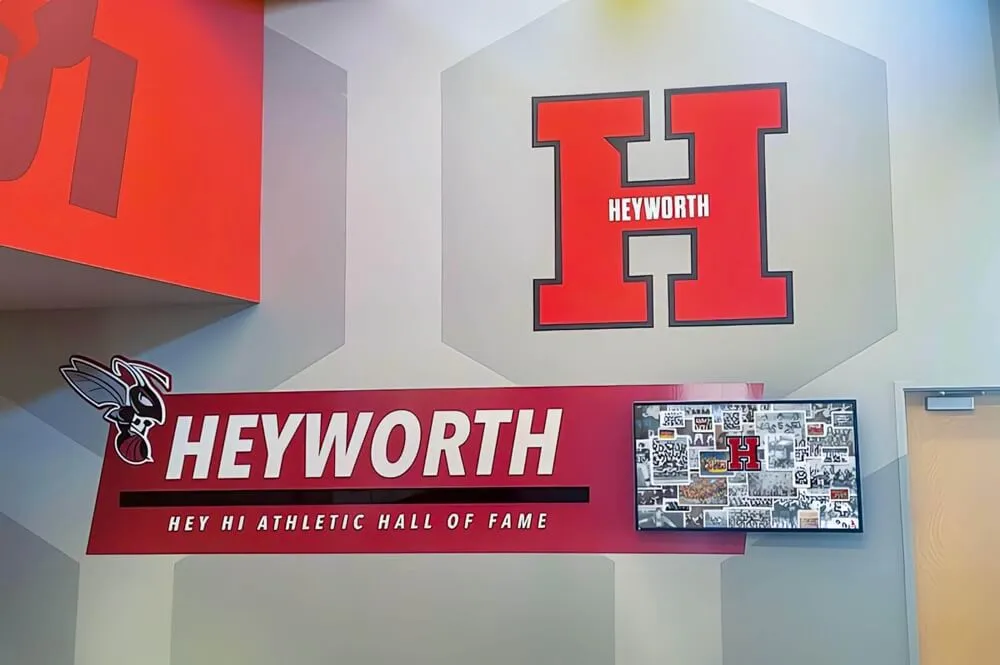
Recognition Walls and Champion Displays: Retired numbers often appear within larger recognition ecosystems including championship banners, record holder displays, and season achievement commemorations. Thoughtful spatial design creates visual hierarchies helping visitors understand relative significance. Retired jerseys might occupy central prominent positions with hall of fame inductees surrounding them and record boards positioned adjacently, creating comprehensive athletic achievement narrative.
Digital trophy case systems allow simultaneous display of all recognition tiers without physical space competition. Visitors can filter content by honor type—viewing only retired numbers, exploring complete hall of fame, or examining record holders by sport and category. This flexibility ensures retired numbers receive appropriate prominence without diminishing other recognition programs.
Academic Integration: Schools emphasizing student-athlete identity often integrate academic achievement into retired number recognition. Displays might highlight honoree graduation status, academic awards received, post-graduation education achievements, and career accomplishments demonstrating that athletic excellence complemented rather than replaced academic development. This integration reinforces institutional values while presenting more complete athlete portraits.
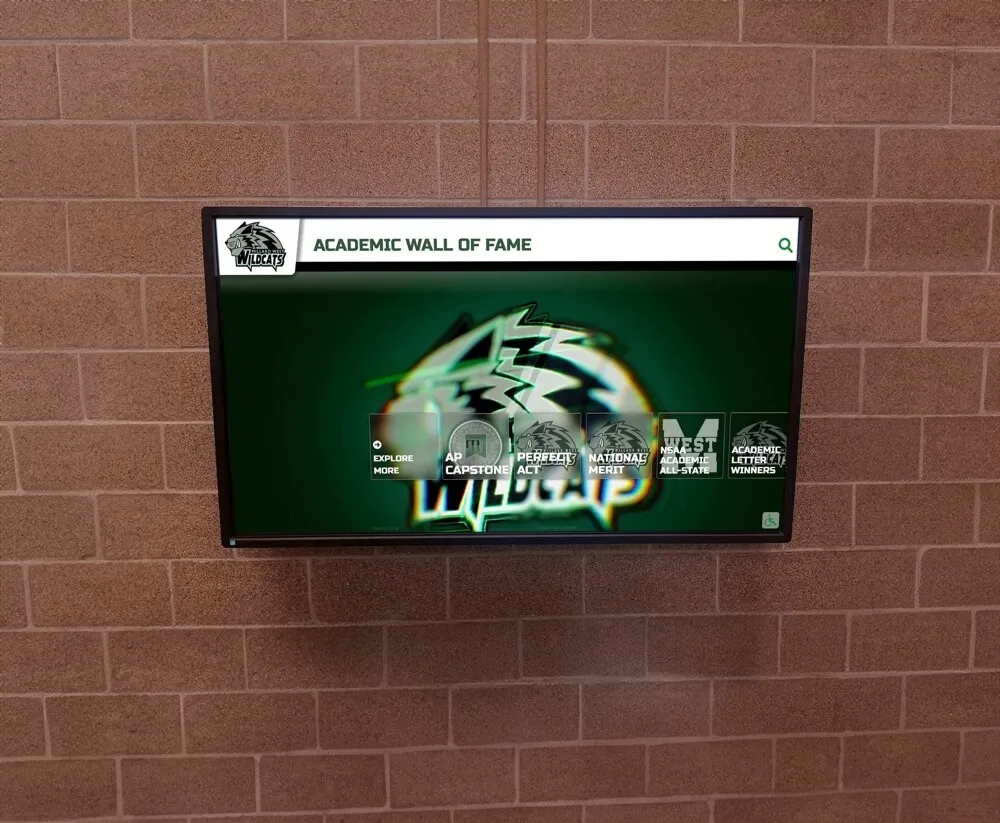
Some schools implementing retired number programs establish parallel academic honor systems. Academic recognition displays celebrating valedictorians, National Merit Scholars, or academic competition champions create visual balance suggesting schools value intellectual achievement equally with athletic accomplishment.
Current Team Connections: Retired numbers should inspire rather than intimidate current athletes. Programs explicitly connecting legends to present teams—through mentorship programs, guest coaching appearances, or motivational messages from honorees—create relationship rather than distance between eras. Some schools arrange for retired number honorees to present team awards at season banquets, creating tangible connection between past excellence and present achievement.
Navigating Challenges in Number Retirement Programs
Jersey retirement programs inevitably encounter difficult decisions and community debates. Anticipating common challenges allows schools to develop policies and processes managing complications while maintaining program integrity.
Number Scarcity Management: Schools operating successful athletic programs for decades may retire enough numbers to create availability problems. Football programs with extensive retirement lists might exhaust single-digit numbers particularly meaningful in that sport. Basketball programs could retire fifteen or twenty numbers representing substantial portion of typical uniform sets.
Some institutions address scarcity by establishing “honor” rather than “retirement” distinctions. Honored numbers remain in circulation but receive special recognition, with current athletes understanding they wear jerseys celebrating previous legends. Others implement sunset policies where numbers retired for specific periods (25 or 50 years) return to circulation after honorees pass away, though this approach can generate controversy about diminishing recognition permanence.
Honoring Multiple Athletes: When multiple exceptional athletes wore the same number in different eras, retirement creates dilemma. Does the school retire #21 honoring both the 1975 and 2005 legends who wore it, or does first athlete to merit retirement claim exclusive association with that number? Most schools acknowledge all outstanding athletes who wore retired numbers, crediting multiple honorees rather than suggesting later athletes’ achievements matter less because number was already retired for predecessor.
Posthumous Retirements: Tragic circumstances—athletes dying during high school or shortly after graduation—prompt emotional retirement considerations. Schools must balance honoring lost community members with maintaining program standards that number retirement represents highest athletic honor. Some institutions establish separate memorial recognition distinct from traditional retirement criteria, ensuring appropriate commemoration without conflating remembrance with performance-based honors.
Controversial Legacy Situations: Athletes whose high school excellence remains undisputed but whose later life involved serious misconduct create painful questions about whether retirement should continue. Some schools establish conduct clauses allowing number restoration to circulation if honorees commit acts fundamentally contradicting institutional values. Others maintain that retirement honors what the athlete accomplished during their time representing the school, separating school-era achievement from post-graduation behavior.
Equity and Inclusion Considerations: Historical biases mean retired number collections at many schools disproportionately feature male athletes or participants in specific sports that received greater institutional support decades ago. Contemporary schools reviewing retired number rosters increasingly question whether current collections accurately represent comprehensive program excellence or reflect past inequities.
Addressing these imbalances requires thoughtful approaches. Retroactive retirement reviews can identify deserving athletes from earlier eras whose contributions went unrecognized due to systematic bias. Establishing clear going-forward criteria emphasizing equity ensures future retirements represent diverse excellence across all sports and genders. Schools may also implement athletic equity reviews examining whether recognition programs including number retirements provide proportional honors across programs.
Building Community Engagement Through Retired Numbers
Jersey retirement programs offer significant opportunities for ongoing community engagement extending far beyond initial ceremonial moments. Schools leveraging retired numbers as continuing engagement tools strengthen alumni connections, enhance donor relationships, and create educational opportunities for current students.
Alumni Reunion Programming: Retired number ceremonies provide natural focal points for alumni gatherings. Scheduling retirements during reunion weekends creates built-in audiences while giving alumni tangible reason to return to campus. Schools might organize “Decades Recognition” events retiring multiple numbers from specific eras, creating reunion occasions for entire generations of athletes who competed during those periods.
Digital recognition platforms extend reunion engagement beyond single weekend. Alumni accessing retired number displays from anywhere can explore their own playing eras, reconnect with teammates whose numbers received retirement, and stay current with ongoing program achievements. This remote access maintains continuous connection rather than limiting engagement to periodic campus visits.

Storytelling and Historical Education: Retired numbers become teaching tools when schools develop comprehensive historical narratives around honorees. Written profiles, video documentaries, podcast episodes, or social media series exploring retired number legends educate current students about program history while providing engaging content for broader community. These storytelling efforts transform retired jerseys from abstract honors into human stories about perseverance, excellence, and growth.
Schools implementing historical archive programs often feature retired number athletes prominently, positioning them as entry points into broader institutional athletic history. A visitor exploring the retired #33 discovers not just that individual’s achievements but contextual program history from that era, understanding team success, coaching philosophies, and community support that enabled individual excellence.
Donor Recognition Connections: Retired number programs intersect with fundraising when athletic facilities receive naming rights or major donations fund program improvements. Donors might sponsor retired number display areas, fund digitization of historical content, or support technology enabling interactive recognition platforms. These sponsorship opportunities acknowledge donor contributions while enhancing recognition programs benefiting entire community.
Some schools integrate retired numbers into capital campaigns by offering naming opportunities for specific display elements—individual touchscreen stations, digital display sections, or recognition wall areas—creating multiple donor engagement levels. These structured giving opportunities provide clear tangible outcomes for donor investment while funding recognition infrastructure improvements.
Social Media and Digital Content: Retired numbers generate ongoing content opportunities for athletic department social media and communications. Anniversary posts celebrating retirement dates, birthday recognitions for honorees, throwback highlights showcasing legendary performances, and “where are they now” updates create regular engagement touchpoints. These content series keep retired numbers visible rather than treating them as historical artifacts relevant only during formal ceremonies.
Digital platforms enable content distribution beyond school-controlled channels. When retired number displays include social sharing functionality, visitors can post favorite legends to personal social media, tag honorees still active on platforms, and create organic promotion extending recognition program visibility far beyond campus boundaries.
Making the Case for Digital Recognition Investment
Athletic directors and administrators evaluating recognition program improvements face budget realities requiring clear justification for technology investments. Understanding the comprehensive value proposition of modern digital recognition platforms helps make compelling cases for funding.
Cost Comparison Over Time: Initial digital platform investment may exceed traditional display costs, but long-term economics favor digital solutions. Physical displays require periodic refurbishment as materials degrade, updated printing when information changes, and ongoing maintenance addressing damage or wear. Digital systems operate on subscription models including maintenance, updates, and technical support as part of regular costs rather than requiring separate service contracts.
Labor cost savings prove substantial. Traditional displays require staff time for physical installation, content updates requiring reprinting and reinstallation, and coordination managing physical materials. Digital systems enable content management from any computer, eliminating travel to physical display locations and reducing update time from hours to minutes. For schools with limited athletic department staffing, this efficiency gain represents real operational value beyond pure dollar costs.
Scalability and Future-Proofing: Schools beginning with single-display installations can expand seamlessly as budgets allow. Additional displays connect to existing content management systems without requiring separate content creation, allowing schools to extend recognition to multiple campus locations, off-site athletic facilities, or community venues hosting games without proportional content maintenance increases.
This scalability proves particularly valuable for growing programs. A school retiring three numbers today might retire fifteen over next two decades. Digital platforms accommodate this growth without space constraints, while traditional wall displays face physical limitations requiring difficult prioritization decisions about which honors receive prominence.
Multi-Purpose Functionality: Modern digital recognition platforms serve purposes beyond static athlete displays. Systems can rotate between retired number recognition, current team rosters, upcoming event schedules, sponsor acknowledgments, and community announcements. This versatility provides return on investment through multiple use cases rather than dedicated single-purpose installations.
Schools can also leverage recognition platforms for donor wall displays, academic honor rolls, historical timeline presentations, and wayfinding information. A single investment serves comprehensive communication and recognition needs rather than requiring separate systems for each purpose.
Engagement Metrics and Evidence: Digital platforms provide usage data impossible with physical displays. Schools can track how many visitors interact with retired number content, which athletes receive most interest, how long users engage with displays, and what content types generate strongest response. These metrics demonstrate recognition program value to stakeholders while informing content strategy improvements.
This data proves particularly valuable during fundraising conversations. Rather than subjectively claiming community values athletic recognition, schools can present concrete evidence showing thousands of annual interactions with retired number displays, demonstrating tangible engagement justifying continued investment.
Conclusion: Creating Lasting Athletic Legacy
Retired numbers represent schools’ most prestigious athletic honors—permanent recognition celebrating extraordinary achievement while inspiring future generations to pursue excellence. Effective programs balance selectivity maintaining honor significance with inclusive processes ensuring worthy athletes across all sports and eras receive appropriate consideration. Modern digital recognition platforms transform retired numbers from static historical displays into dynamic engagement tools educating visitors, connecting alumni, and building community pride.
Schools implementing or enhancing retired number programs should establish clear criteria balancing athletic achievement with character requirements, plan meaningful ceremonies creating memorable recognition moments for honorees and community, integrate number retirement with comprehensive recognition ecosystems honoring diverse excellence, and leverage modern display technology maximizing storytelling depth and accessibility.
The jersey hanging in the rafters tells story—about dedication, excellence, perseverance, and impact extending beyond individual achievement to shape program legacy. Whether presented through traditional physical displays or modern interactive platforms, retired numbers create tangible connections between past legends and present athletes, reminding communities that greatness emerged from this program and suggesting it can emerge again.
For schools ready to enhance how they honor athletic legends and preserve program history, solutions like Rocket Alumni Solutions provide comprehensive digital recognition platforms designed specifically for educational institutions. These systems enable schools to celebrate retired numbers alongside hall of fame inductees, record holders, team achievements, and community contributions—creating vibrant digital spaces where athletic excellence receives the recognition it deserves while inspiring the champions of tomorrow.