



Intent: compare — Athletic programs face mounting costs maintaining traditional championship banners and recognition displays. A single custom championship banner commonly costs $200-500, while larger recognition displays reach $1,000 or more. As athletic programs accumulate championships, all-state selections, and record-breaking achievements across multiple sports, traditional banner costs multiply rapidly while gym ceiling space fills completely. Schools celebrating 20-30 championships annually spend thousands maintaining physical banner programs that become invisible clutter once ceiling space saturates.
Digital recognition displays eliminate these recurring costs while creating more engaging, accessible, and dynamic celebration experiences. Modern athletic programs replace expensive hanging banners with interactive touchscreen displays and digital banner recognition systems that showcase unlimited achievements without physical space constraints or per-banner production costs. This transformation represents more than cost savings—it reflects fundamental improvements in how athletic programs celebrate excellence while building the warm, engaged communities where achievements inspire ongoing participation and pride.
Traditional championship banners served athletic programs well for decades. Hanging from gym ceilings, these fabric displays provided permanent, visible recognition for conference championships, state titles, and exceptional achievements. However, schools accumulating achievements across expanding athletic programs discover that banner approaches create cascading challenges affecting budgets, visibility, engagement, and accessibility.

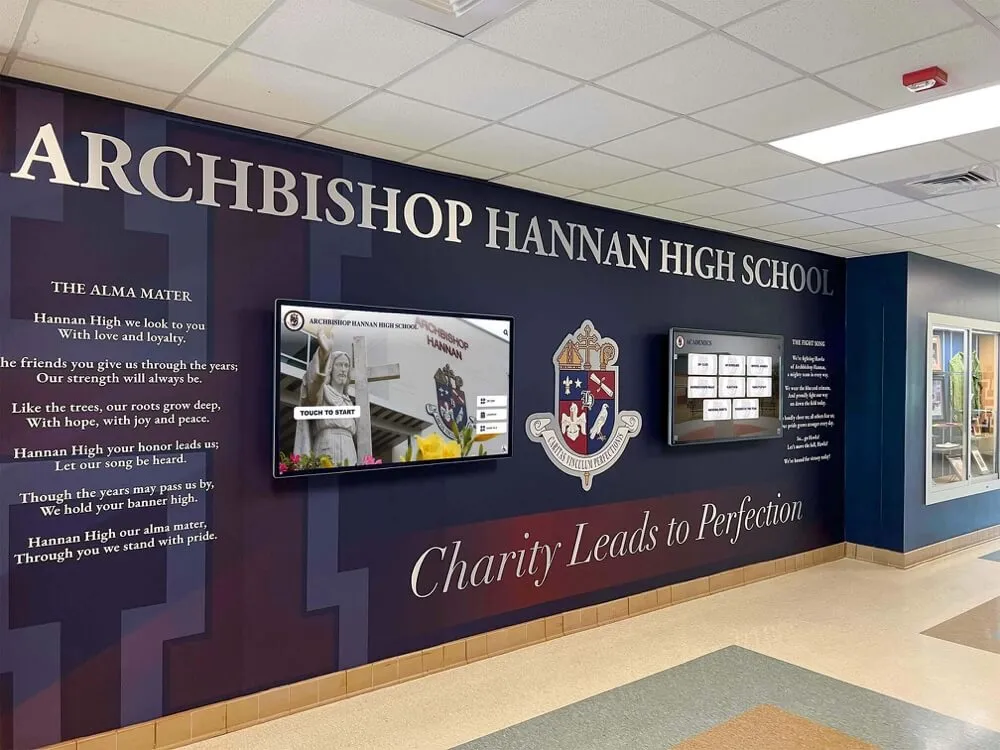
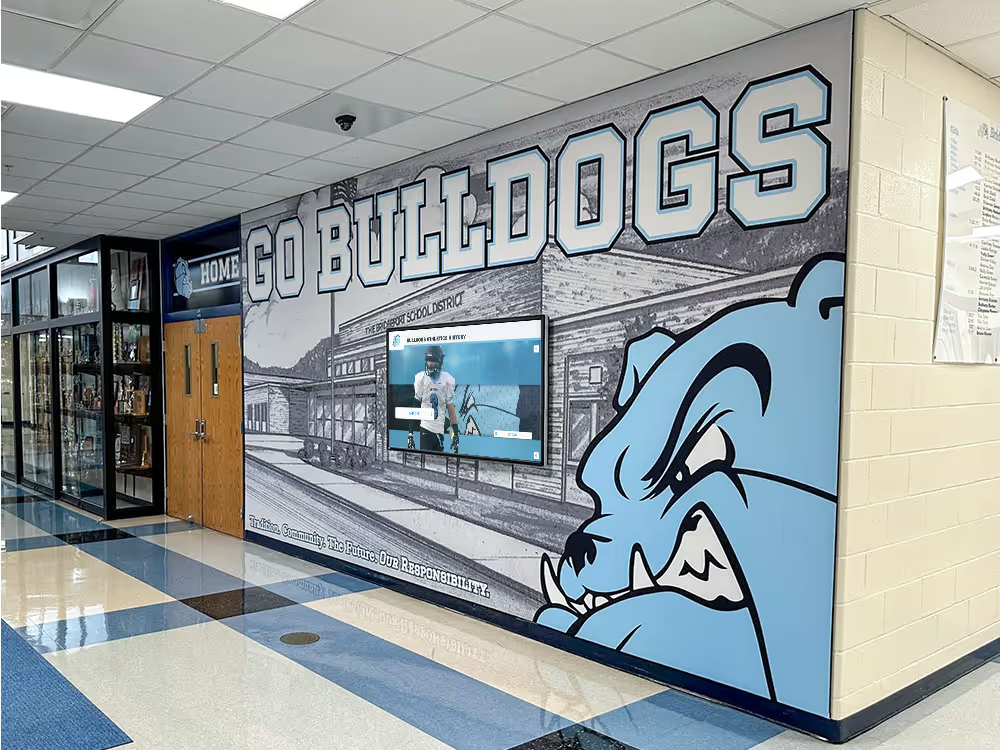
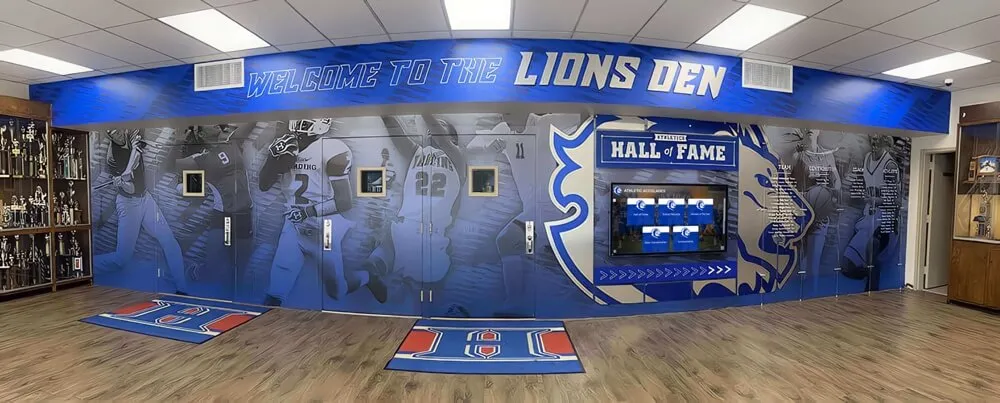
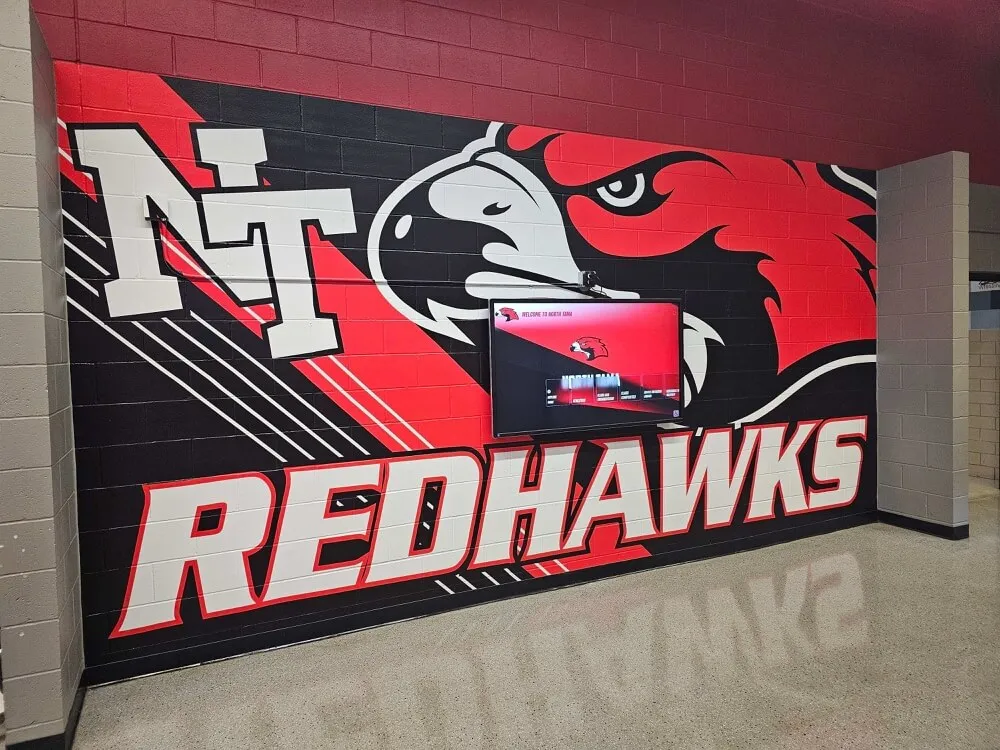
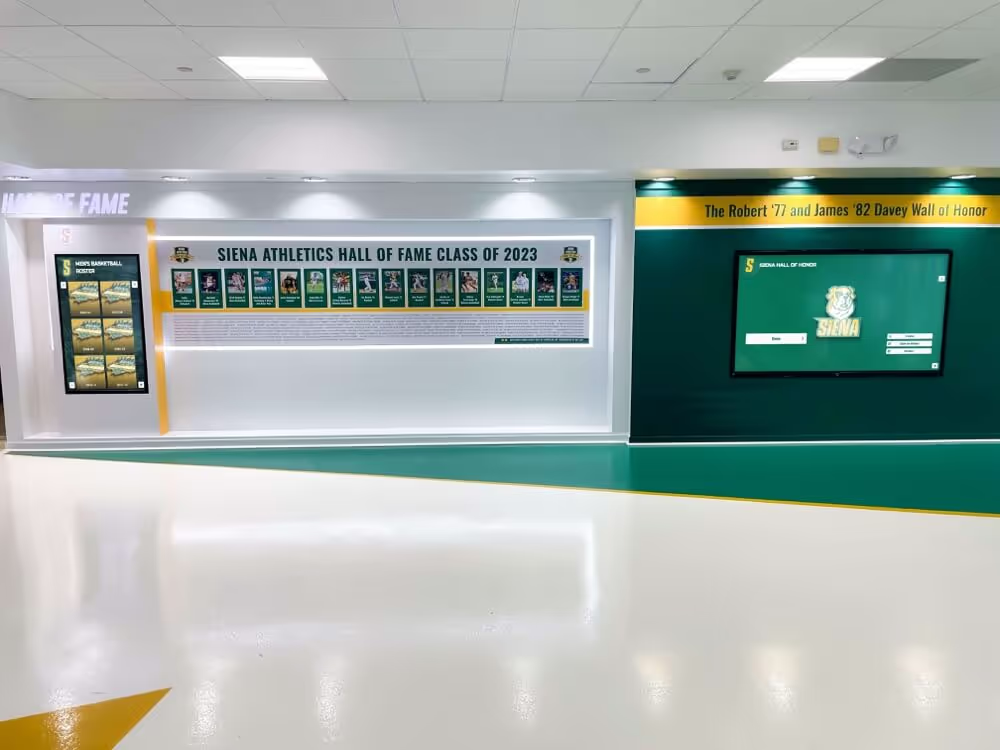
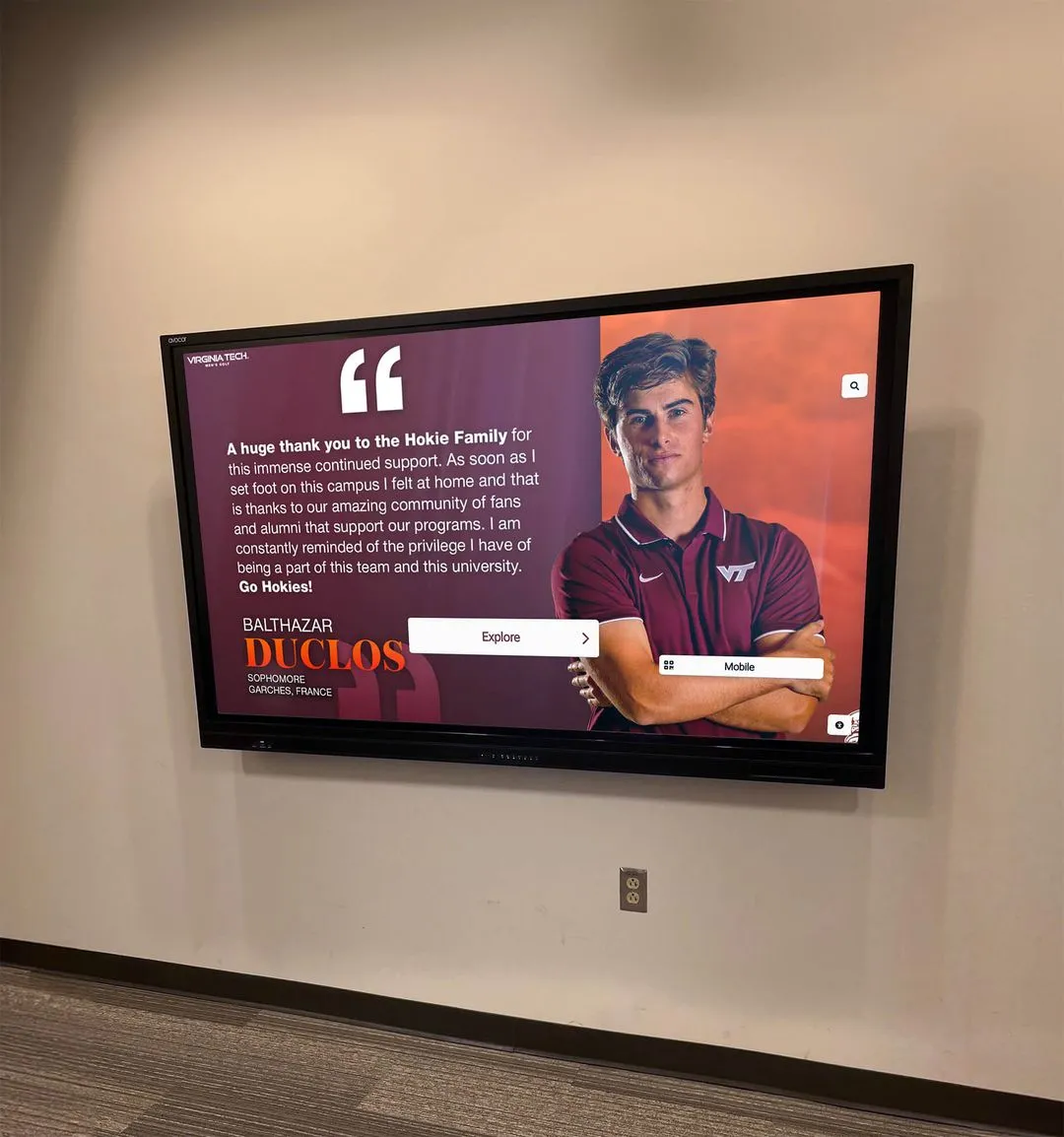
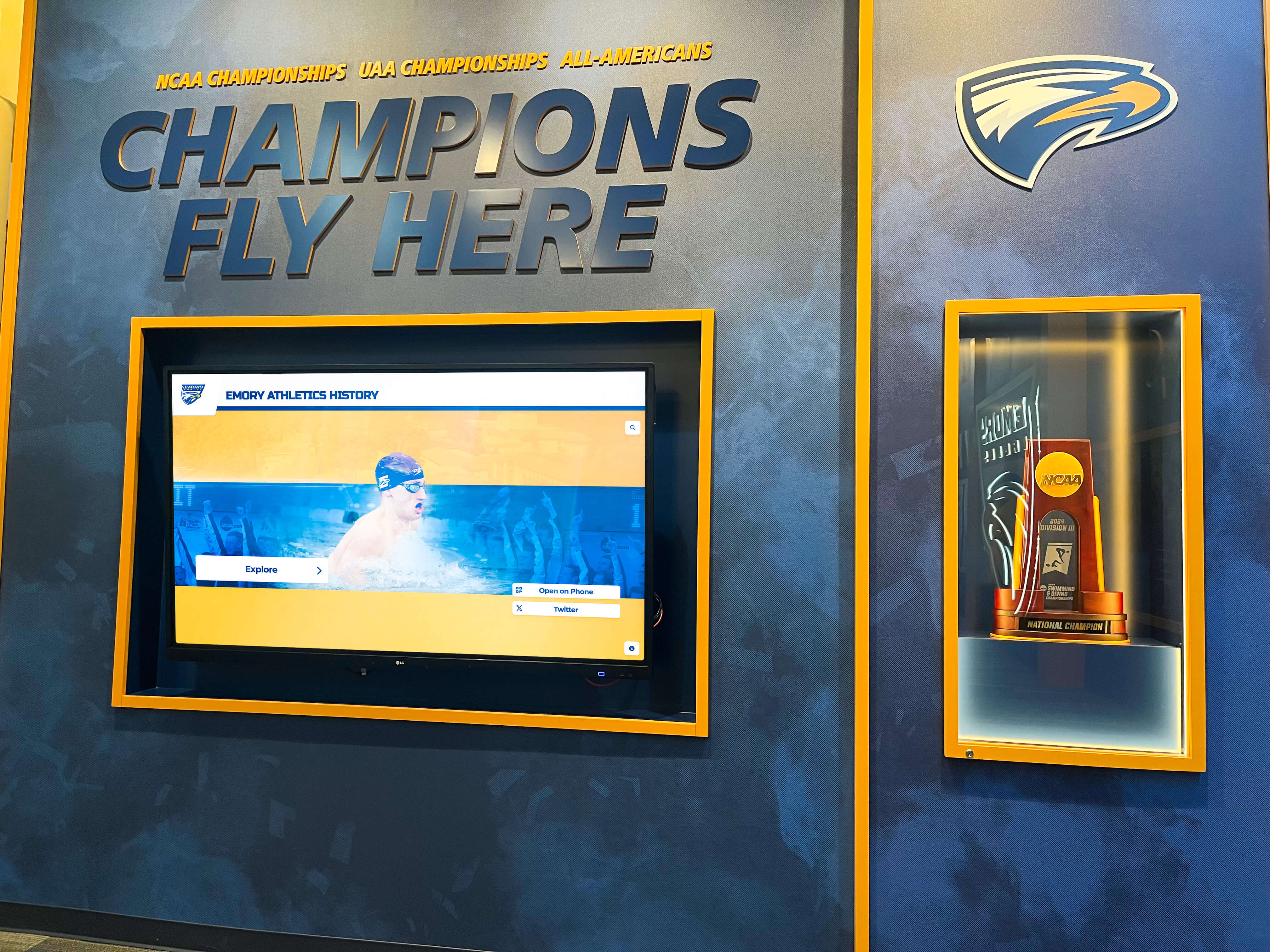
Contemporary athletic facilities integrate championship recognition with engaging digital displays creating lasting impression
The True Cost of Traditional Athletic Banners
Understanding complete banner costs reveals why athletic programs increasingly explore digital alternatives.
Initial Production and Installation Expenses
Physical championship banners involve multiple cost layers:
Design and Production Costs
Custom banner design typically costs $100-200 before production begins. Production costs range from $150-400 for standard gymnasium banners depending on size, material quality, printing complexity, and order volume. Premium materials, detailed graphics, or specialty finishes increase costs further. Schools ordering single banners pay maximum per-unit costs, while larger orders qualify for modest volume discounts that still represent substantial annual expenses.
Installation and Hardware Requirements
Banner installation adds $50-150 per banner for hardware, labor, and equipment rental. Ceiling-mounted displays require specialized rigging hardware, lift equipment access, and experienced installers understanding structural requirements and safety protocols. High gymnasium ceilings necessitate bucket trucks or scissor lifts, adding equipment rental costs ranging from $200-500 per installation day.
Many facilities install permanent banner hanging systems attempting to reduce per-banner installation costs. These systems cost $2,000-5,000 initially but still require lift equipment and labor for each new banner addition. Pulley systems enabling ground-level banner changes provide convenience while adding $3,000-7,000 to initial infrastructure investment.
Ongoing Maintenance and Replacement
Fabric banners deteriorate over time from dust accumulation, fading from natural light exposure, and general aging. Athletic programs typically replace banners every 5-10 years maintaining appearance standards, creating ongoing replacement cycles consuming budgets. Damaged banners from water leaks, maintenance activities, or accidental contact require immediate replacement preserving recognition programs.
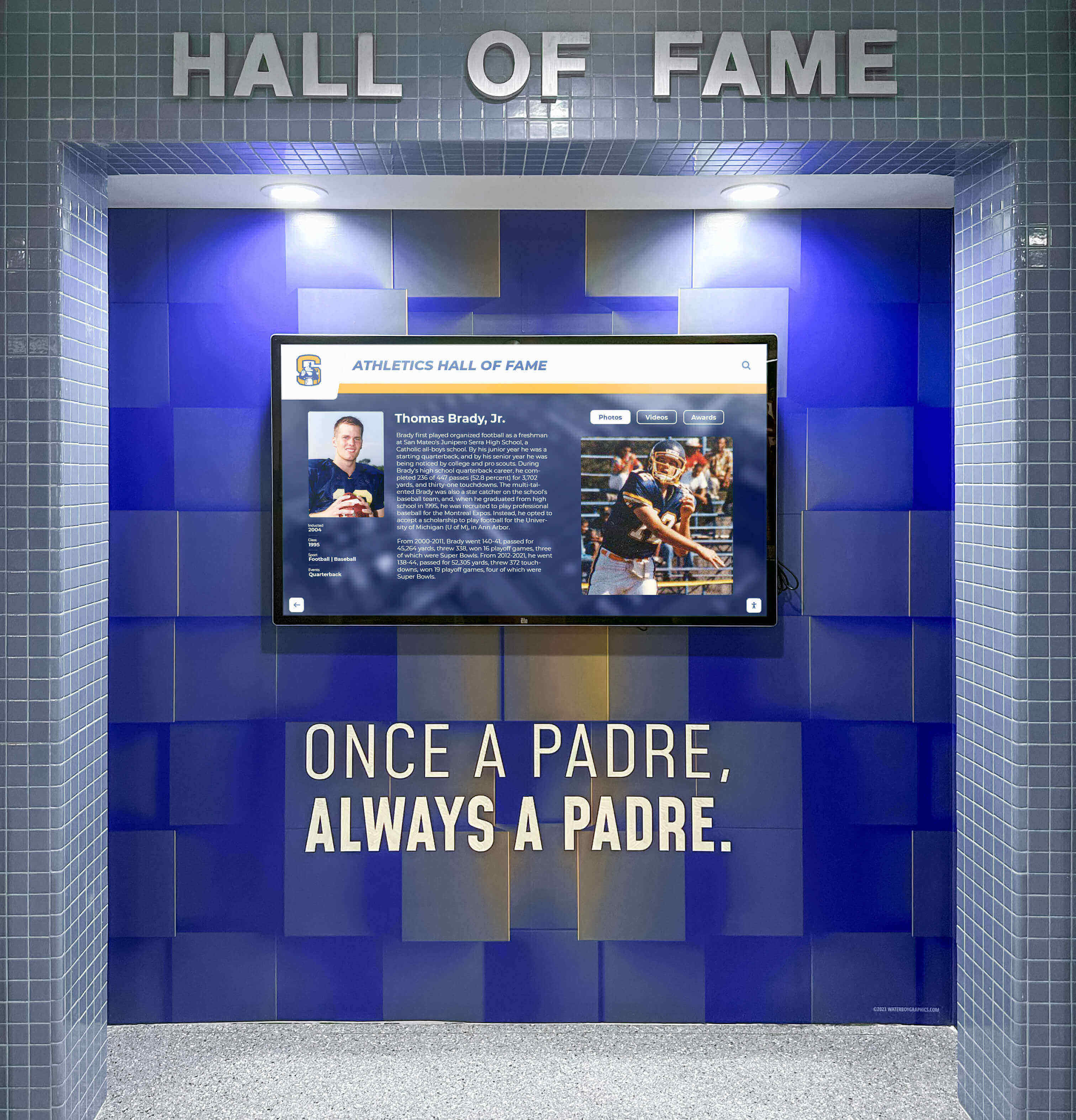
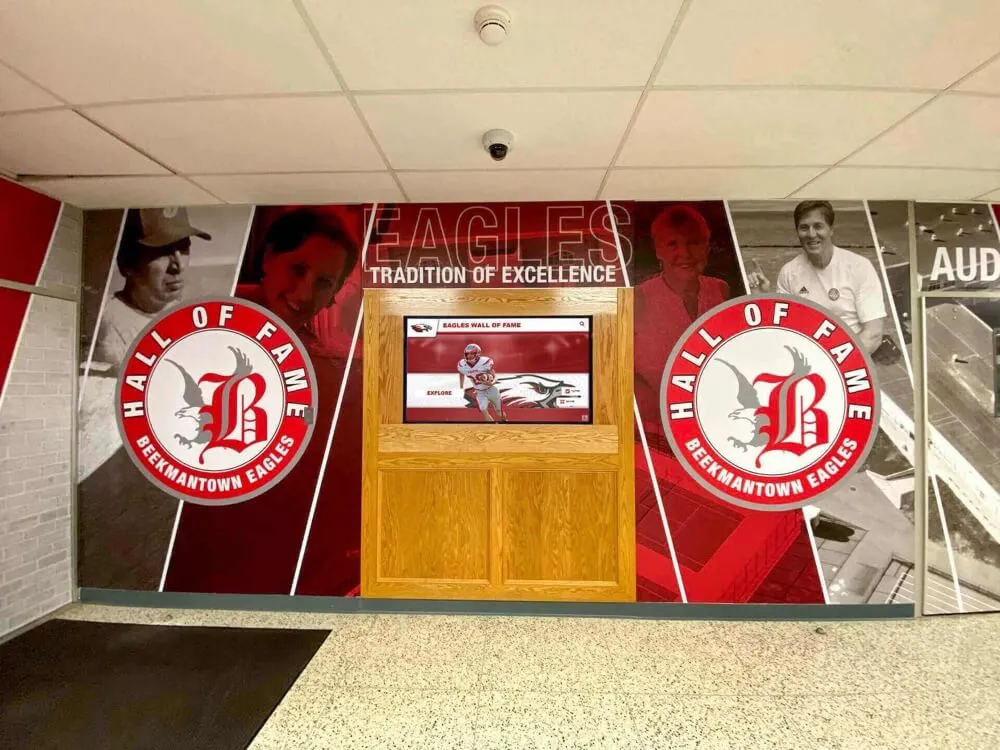
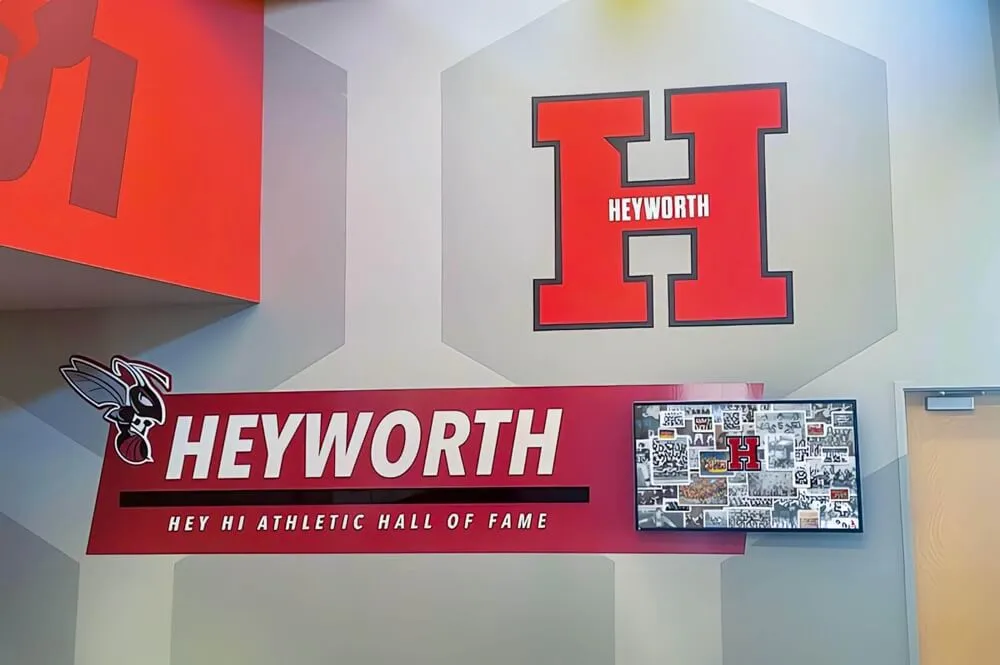
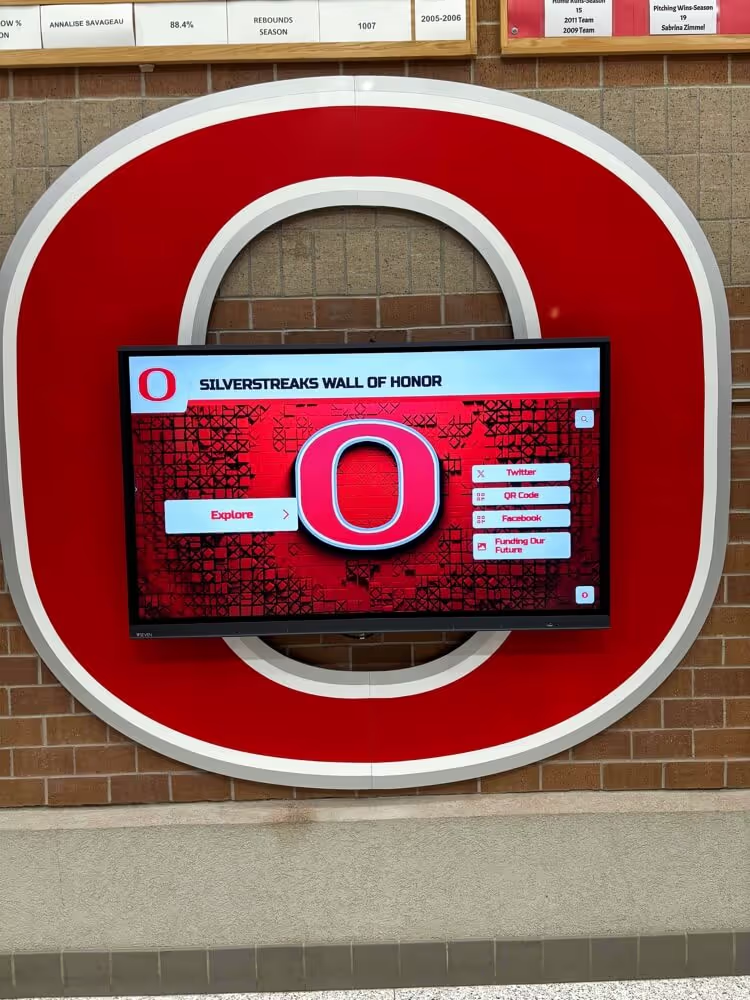
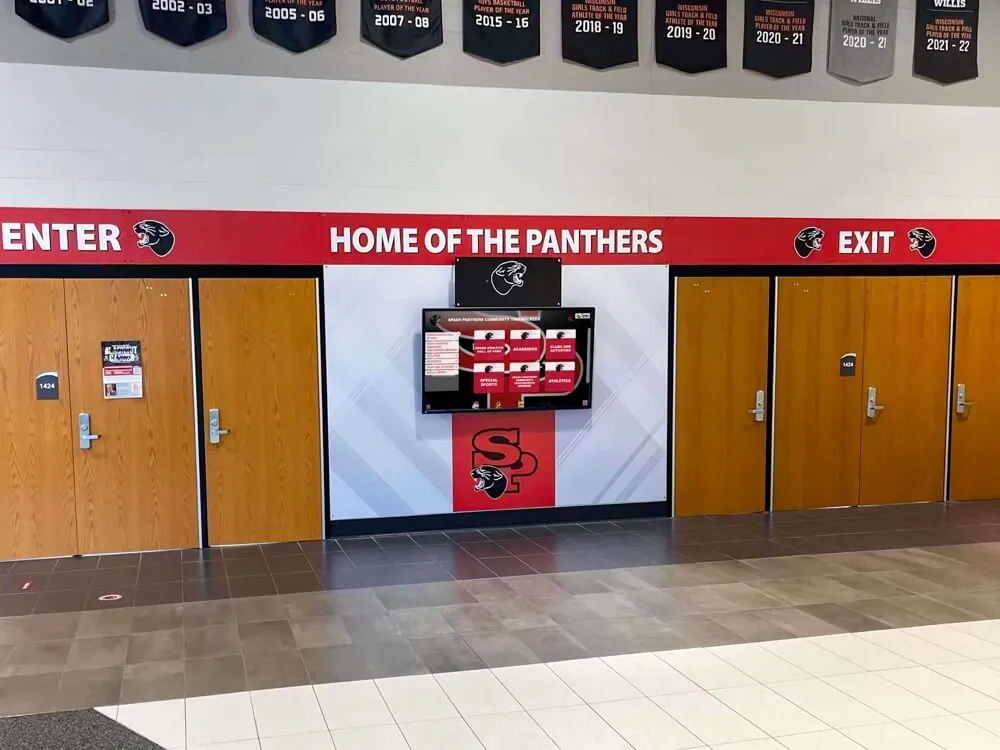
Wall-mounted digital displays provide permanent recognition solution eliminating maintenance concerns
Space Constraints and Visibility Issues
Physical space limitations create recognition challenges:
Finite Ceiling Capacity
Successful athletic programs accumulate championships faster than gym ceilings provide display space. Schools offering 20-30 sports across multiple competition levels generate 15-25 championship-worthy achievements annually. Within a decade, gymnasium ceilings fill completely, forcing difficult decisions about which achievements receive visibility while others remain unrecognized or relocated to low-traffic areas where impact diminishes dramatically.
Some schools attempt solving space constraints by removing older banners making room for recent achievements. This approach damages alumni relations, diminishes institutional history, and creates perceptions that past accomplishments matter less than current success. Other programs hang banners in auxiliary gymnasiums, fieldhouses, or hallways where visibility decreases substantially compared to main gymnasium placement.
Readability and Engagement Limitations
Banners hanging 25-40 feet above gym floors become difficult reading for many viewers. Small text, detailed statistics, or multiple names prove illegible from floor level, reducing recognition impact to simple color and basic championship information. Visitors attending games rarely examine banners closely, glancing briefly at colorful displays before focusing on events rather than recognition details.
Traditional banners provide no interactive engagement opportunities. Unlike digital displays enabling exploration, search, and detailed information access, fabric banners offer single-view static information that spectators either notice briefly or ignore completely. This passive recognition approach fails capitalizing on opportunities creating deeper engagement with athletic heritage and achievement celebration.
Inequitable Recognition Across Programs
Budget constraints create recognition disparities:
Major vs. Minor Sport Recognition Gaps
Schools often prioritize championship banner production for high-visibility sports like football, basketball, and volleyball while limiting banner recognition for sports with smaller spectator bases. This creates equity issues where athletes in certain sports receive prominent ceiling recognition while equally accomplished athletes in other programs see achievements acknowledged through inexpensive printed posters or receive no physical recognition.
Title IX compliance and equity considerations increasingly require schools provide comparable recognition across men’s and women’s programs. Traditional banner budgets stretched across expanding sport offerings force compromises where either all sports receive modest recognition or schools invest heavily ensuring equitable championship celebration across all athletic offerings.
Individual Achievement Recognition Challenges
Team championship banners dominate traditional recognition while individual all-state selections, record-breaking performances, or exceptional career achievements receive less prominent acknowledgment. The cost and space required for individual athlete banners proves prohibitive for most programs, limiting recognition to team accomplishments while individual excellence receives minimal celebration despite inspiring peers and building program culture.
Organizations implementing comprehensive recognition explore solutions like digital athletic halls of fame that accommodate unlimited individual and team achievements without physical constraints limiting visibility or creating budget pressures.
Digital Recognition: Modern Athletic Celebration
Digital displays transform how athletic programs celebrate achievements while addressing traditional banner limitations.
Unlimited Recognition Capacity
Digital platforms eliminate space constraints entirely:
Comprehensive Achievement Archives
Digital displays accommodate unlimited championships, individual recognitions, record-breaking performances, and historical achievements without competing for physical space. Athletic programs showcase every state championship, conference title, individual all-state selection, and exceptional performance across all sports and competition levels. This comprehensive approach ensures every achievement receives equal visibility opportunity while building complete athletic heritage archives.
Solutions like Rocket Alumni Solutions provide unlimited content capacity enabling athletic programs to recognize hundreds or thousands of achievements, athletes, coaches, and contributors without platform constraints or additional costs per inductee.
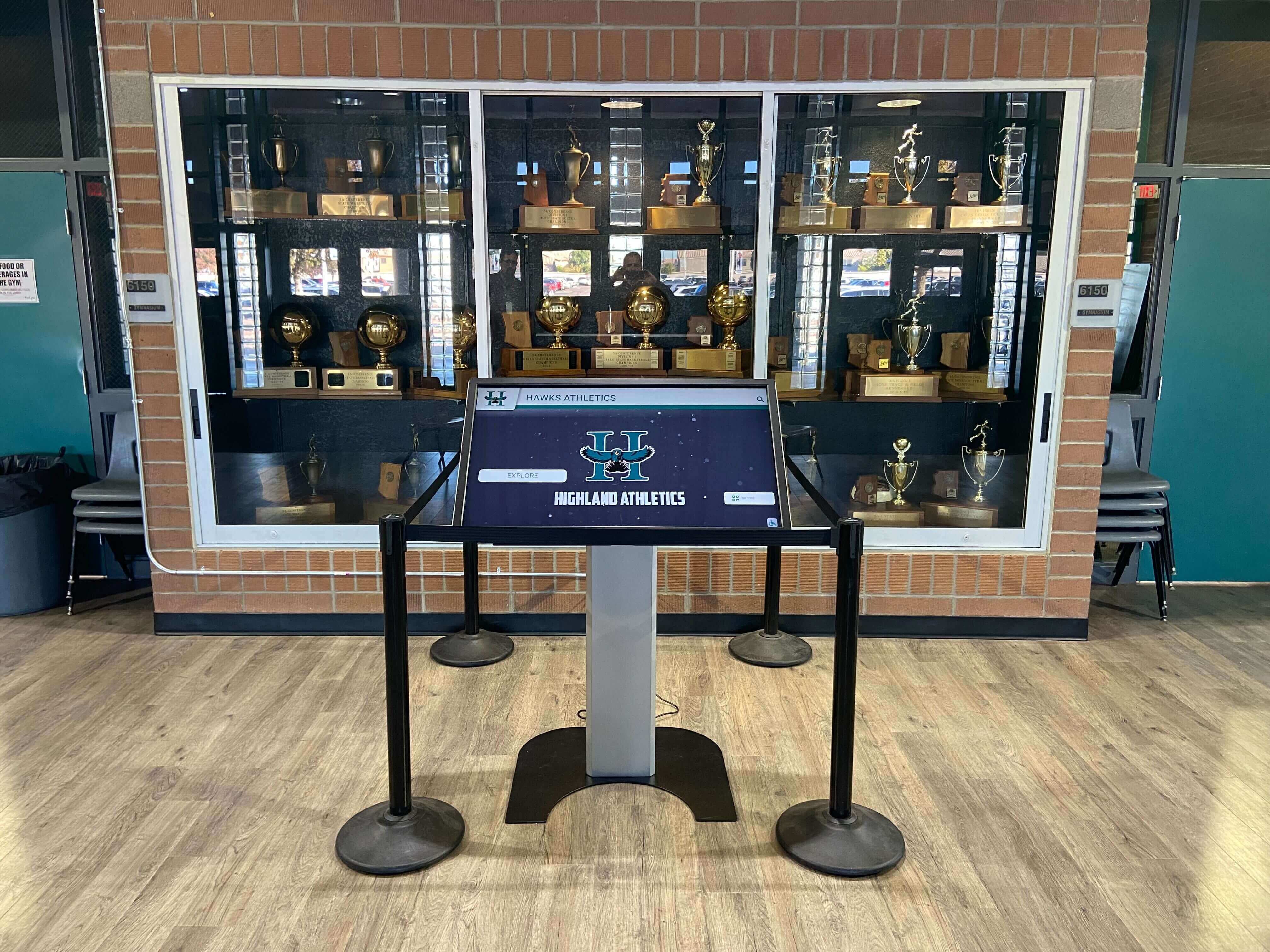
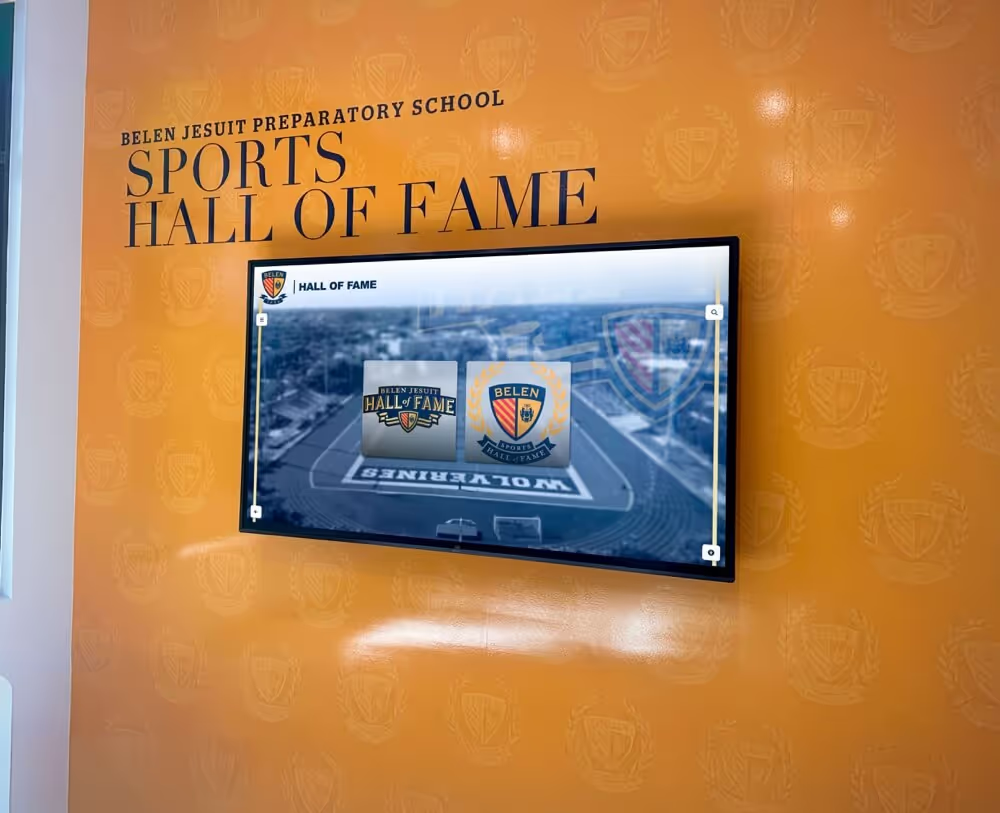
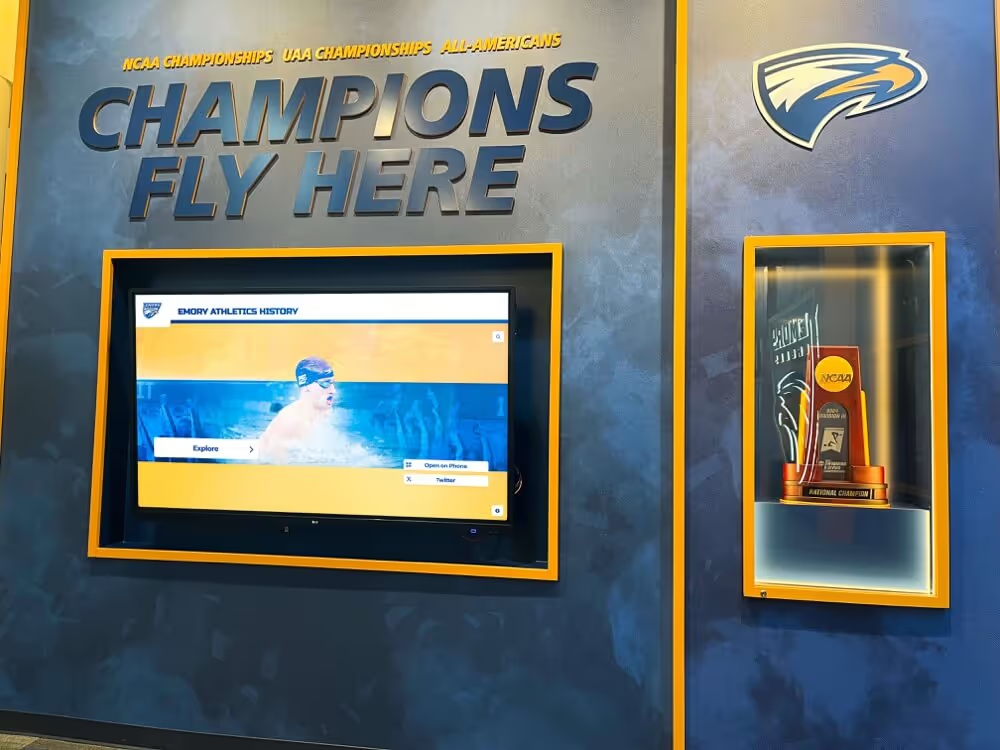
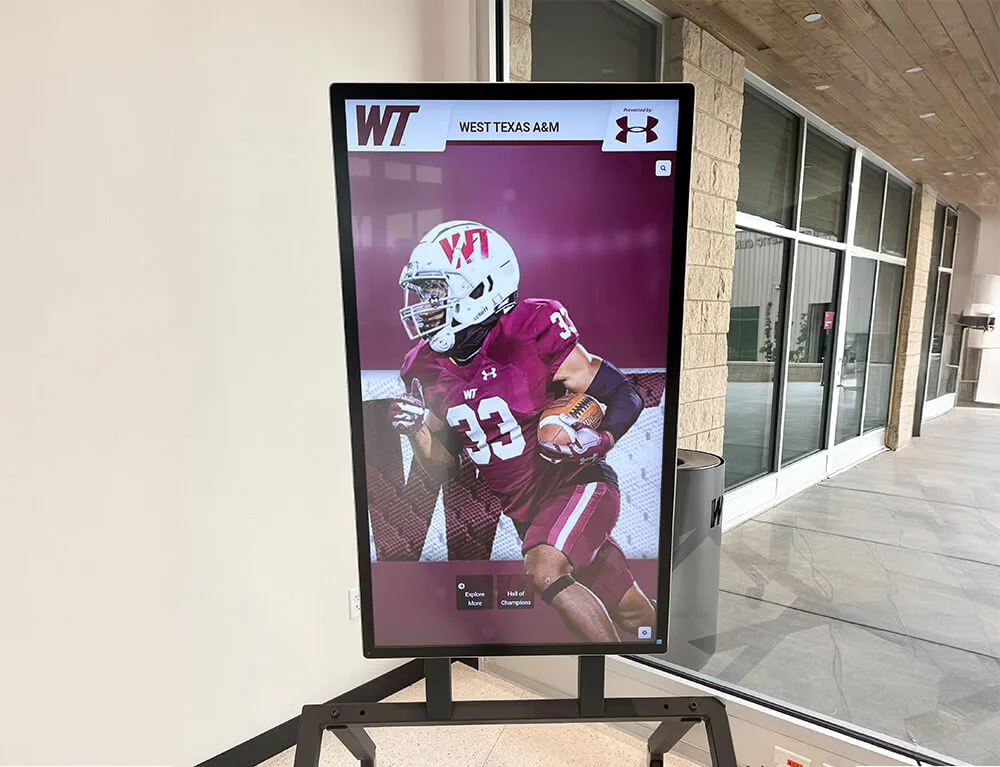
Touchscreen kiosks complement traditional trophy cases with interactive digital recognition
Dynamic Content and Real-Time Updates
Digital recognition updates instantly without production delays or installation requirements. When teams win championships or athletes achieve exceptional accomplishments, recognition appears within hours through cloud-based content management systems accessible from any internet-connected device. Athletic directors add championship recognition Friday evening celebrating Saturday’s state title without ordering banners, scheduling installers, or waiting weeks for production.
This immediacy enhances recognition impact by acknowledging achievements while excitement remains fresh. Athletes see accomplishments celebrated quickly rather than waiting months until banner orders arrive and installation schedules align, creating stronger psychological reinforcement connecting performance with recognition.
Cost-Effectiveness and Long-Term Savings
Digital approaches deliver substantial financial advantages:
Elimination of Per-Achievement Costs
After initial hardware and software investment, digital recognition adds unlimited achievements at zero marginal cost. Athletic programs celebrating 20 championships annually save $4,000-10,000 yearly eliminating banner production and installation expenses. Over 10-year periods, savings reach $40,000-100,000—funds redirected toward coaching, equipment, facility improvements, or program expansion rather than banner maintenance.
Reduced Maintenance Requirements
Modern commercial-grade displays require minimal maintenance beyond occasional cleaning. Solid-state components provide reliable operation for 50,000+ hours (6-8 years continuous operation) before requiring replacement. Unlike fabric banners deteriorating annually, digital displays maintain appearance and functionality throughout operational lifespans without ongoing restoration or replacement expenses.
Software updates improve functionality over time rather than requiring physical replacement. Rocket Alumni Solutions provides weekly platform improvements enhancing features, interface design, and capabilities without additional costs, ensuring recognition systems remain current and engaging.
Multi-Purpose Functionality
Digital displays serve multiple functions beyond championship recognition. Schools use single installations for athletic recognition, academic honor roll celebration, distinguished alumni showcases, historical archives, and school announcements. This versatility maximizes return on investment by serving broad recognition needs through unified technology infrastructure.
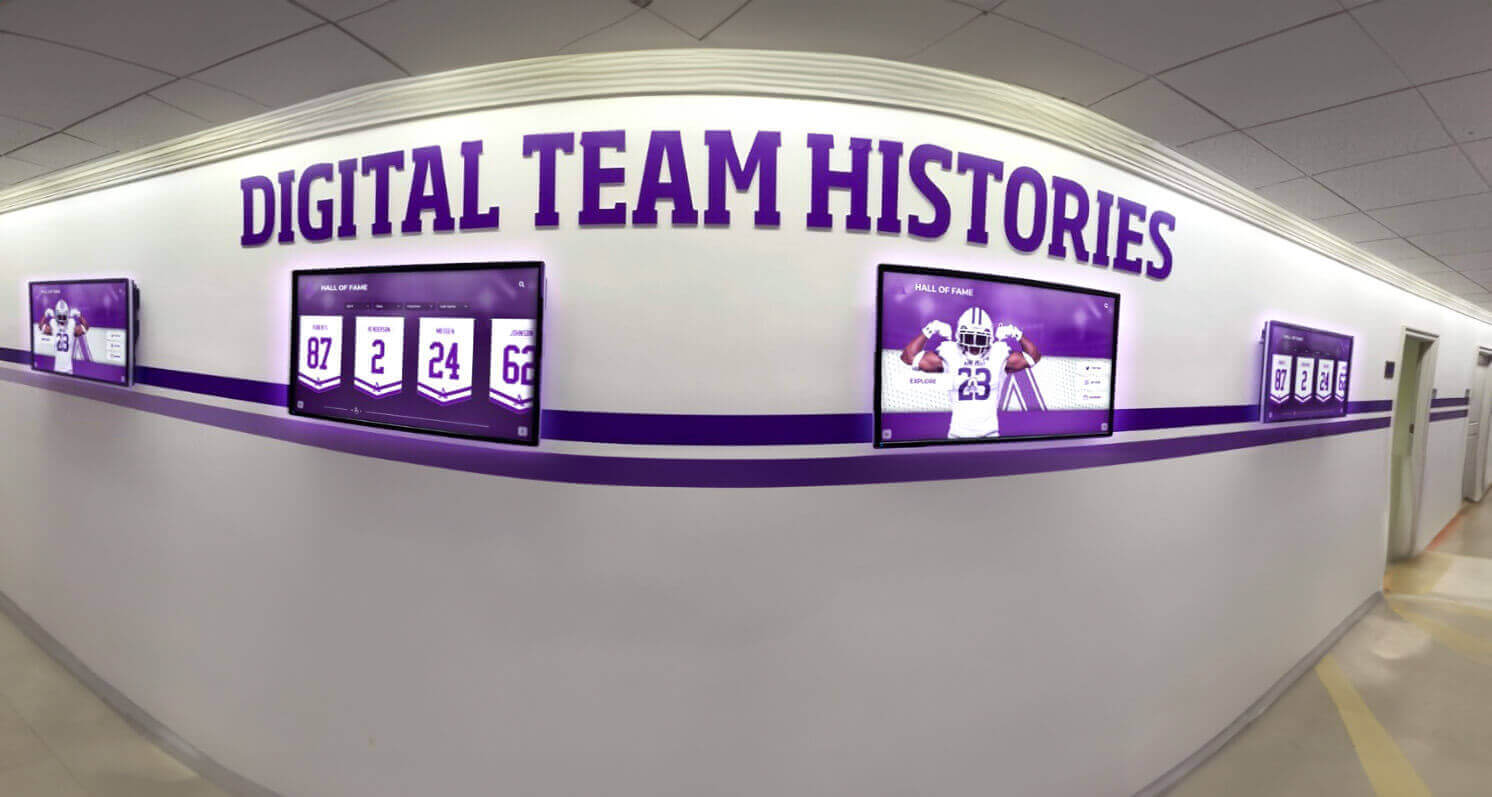
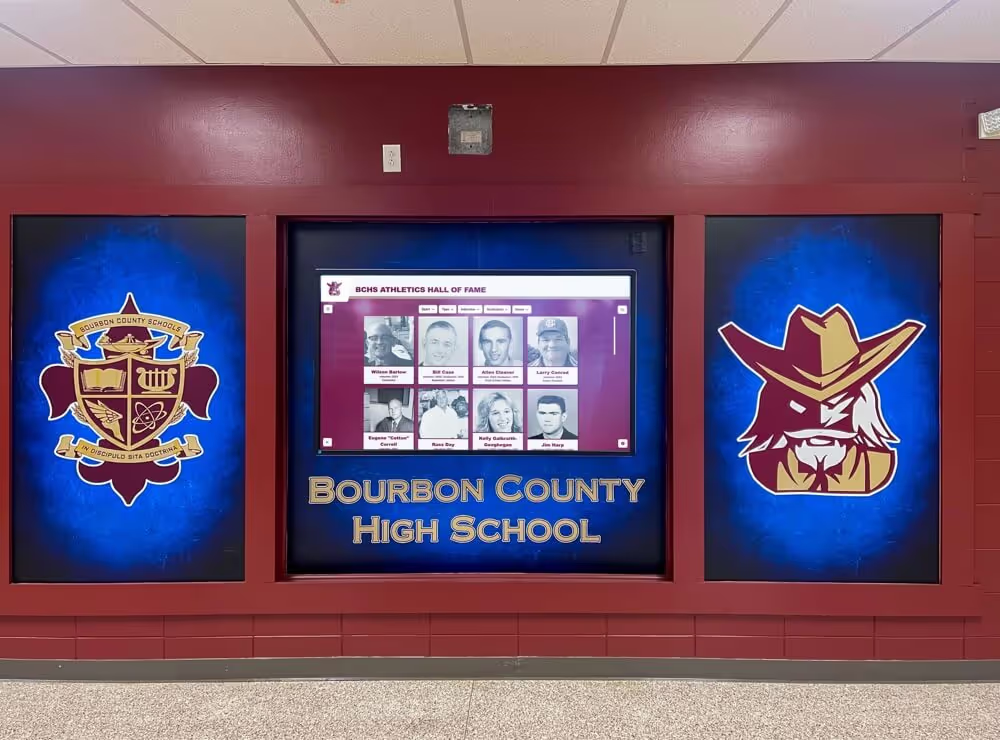
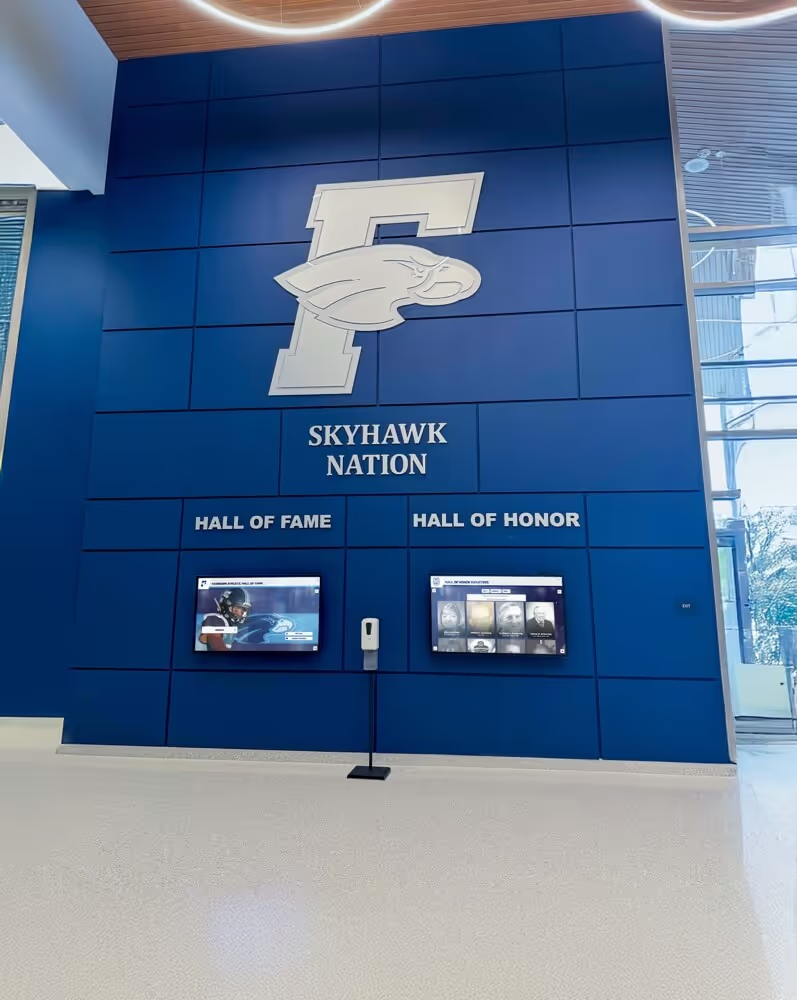
Multiple displays throughout athletic facilities provide comprehensive recognition celebrating all programs
Enhanced Visibility and Engagement
Digital recognition creates active engagement impossible with static banners:
Interactive Exploration Experiences
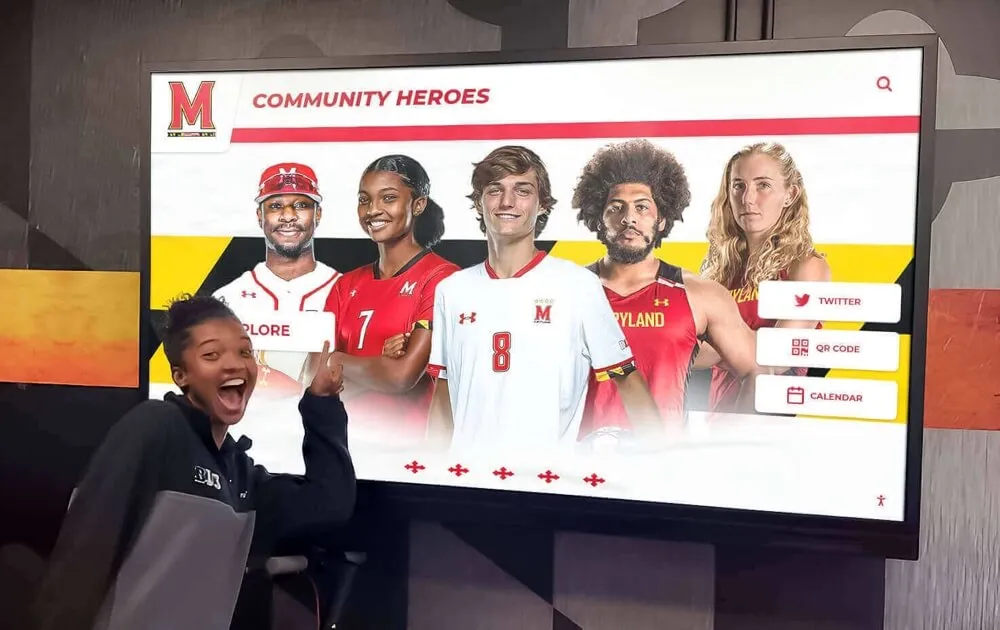
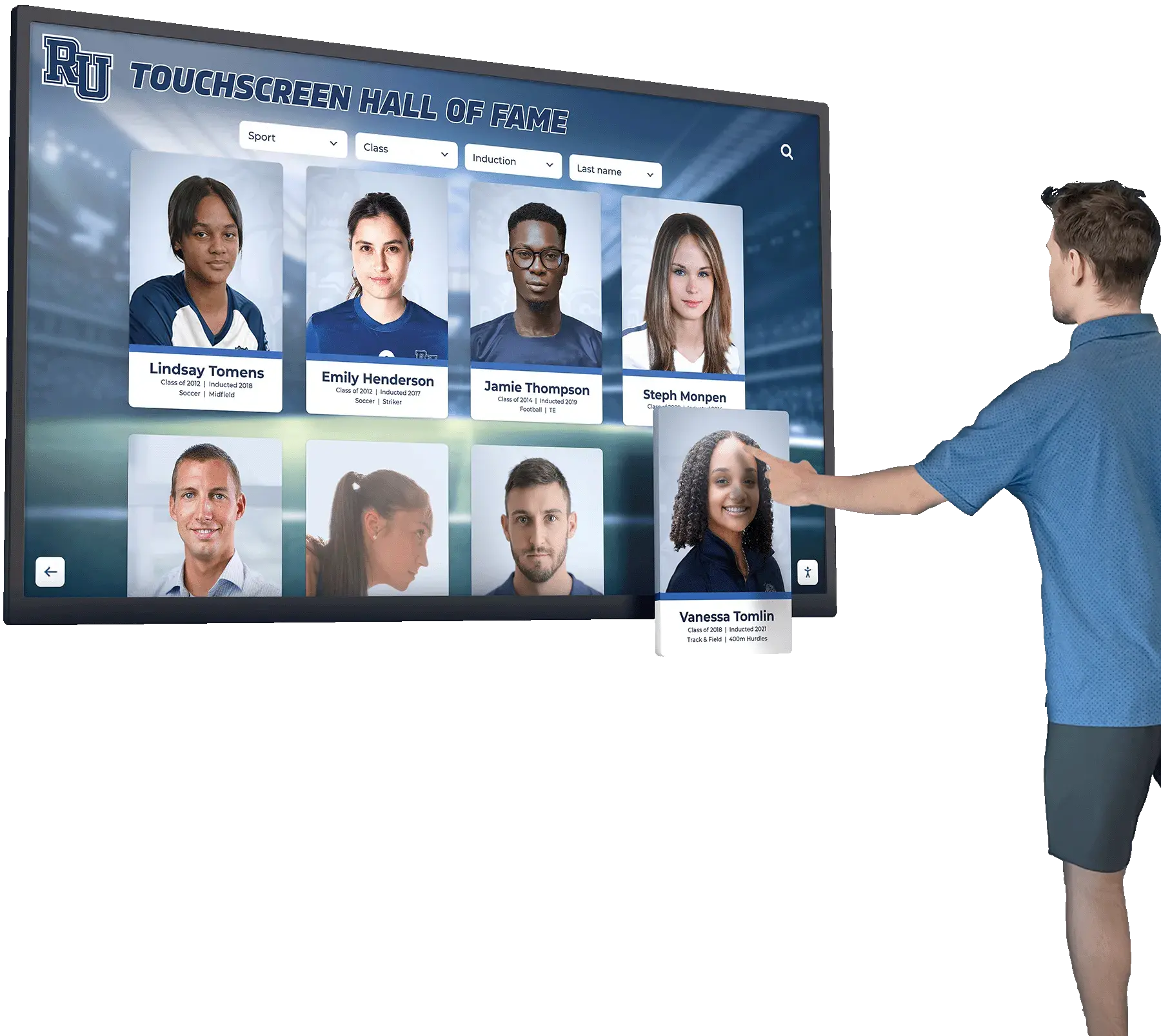
Touchscreen displays enable visitors to search for specific athletes, teams, or championships, filter by sport or year, and explore detailed achievement information including statistics, photos, videos, and narratives. This active exploration keeps visitors engaged 5-10 minutes per session compared to brief glances at static banners, deepening connections with athletic heritage while inspiring respect for program excellence.
Students discover alumni role models who attended their school decades earlier, alumni reconnect with teammates and coaches, and prospective athletes explore program success histories informing recruitment decisions. Organizations implementing interactive touchscreen displays report dramatic engagement increases compared to traditional recognition methods.
Rich Multimedia Content
Digital platforms showcase achievements through photos, videos, statistics visualizations, and detailed narratives impossible with fabric banners. Championship teams receive recognition featuring game photos, season highlights, roster lists, coach profiles, and championship game summaries. Individual record-breaking performances include action photos, statistical progressions, and athlete quotes providing context and personality making recognition memorable and meaningful.
Accessible Beyond Physical Campus
Web-based recognition platforms extend visibility beyond gymnasium walls to global audiences. Alumni worldwide access athletic recognition online, sharing accomplishments through social networks and maintaining connections despite geographic distance. Families of recognized athletes view celebrations from anywhere, amplifying recognition impact while promoting school pride to extended networks.
This extended reach proves particularly valuable for recruitment, enabling prospective athletes and families to explore program histories, championship traditions, and athletic excellence documentation before campus visits. Digital accessibility creates powerful first impressions supporting enrollment and athletic participation goals.
Implementation Strategies: Transitioning from Banners to Digital
Athletic programs implementing digital recognition benefit from strategic planning ensuring successful transitions.
Assessment and Planning Phase
Thoughtful preparation supports successful implementations:
Current Recognition Audit
Document existing banner recognition determining what achievements current displays celebrate, identifying recognition gaps where deserving accomplishments lack visibility, and assessing overall effectiveness of traditional approaches. Photography all existing banners creates reference libraries supporting content migration while preserving legacy recognition.
Gather stakeholder input from athletic directors, coaches, boosters, and athletes about recognition priorities, preferred features, and success criteria. Understanding diverse perspectives ensures digital solutions address community needs while building support for technology adoption.
Budget and Funding Strategy
Digital recognition requires upfront investment ranging from $3,000-15,000 depending on hardware selections, software capabilities, and implementation scope. Compare initial costs against annual banner expenses demonstrating payback periods typically ranging 2-5 years depending on championship volume and traditional banner costs.
Explore funding sources including booster organizations, memorial gifts, facility improvement budgets, or capital campaigns. Some athletic programs fund digital recognition through sponsorship opportunities, enabling local businesses to support athletic recognition while receiving visibility supporting their community involvement.
Organizations researching digital donor walls discover similar funding approaches apply to athletic recognition, with sponsors and donors supporting digital transformations while receiving appropriate acknowledgment.
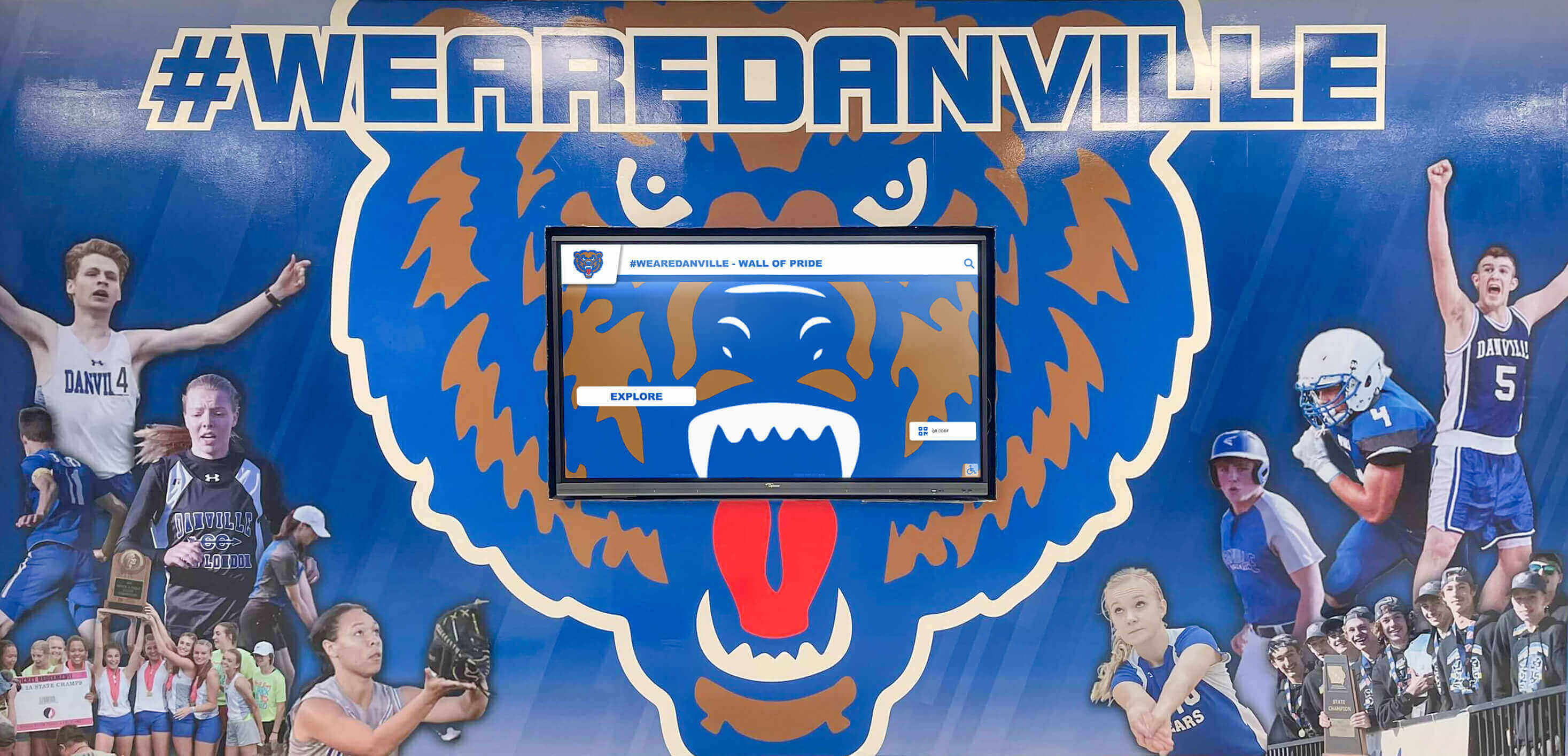
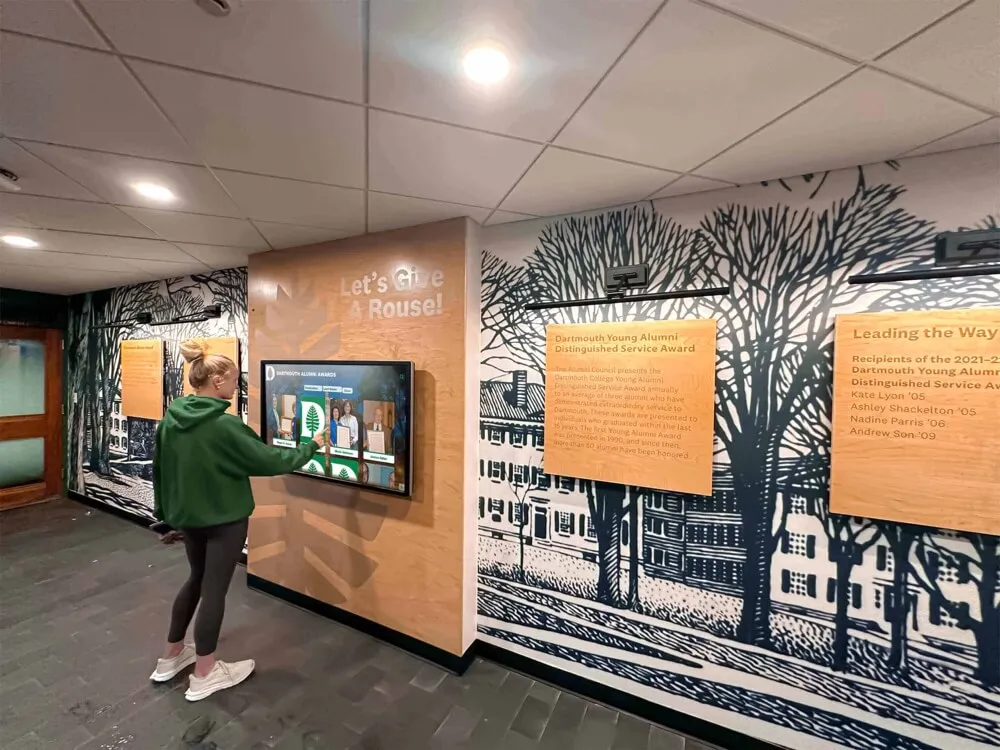
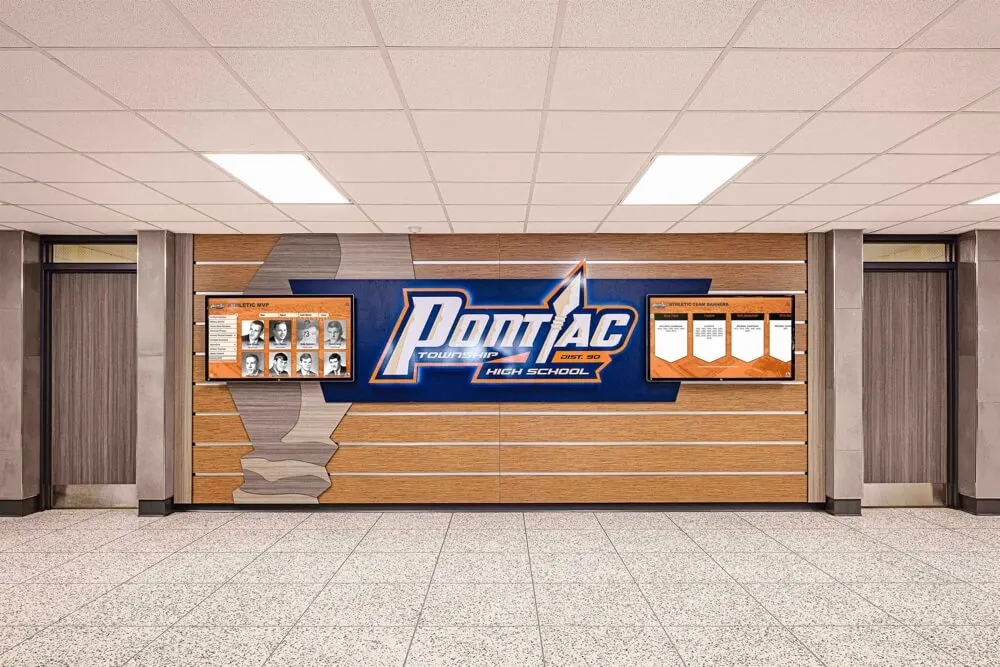
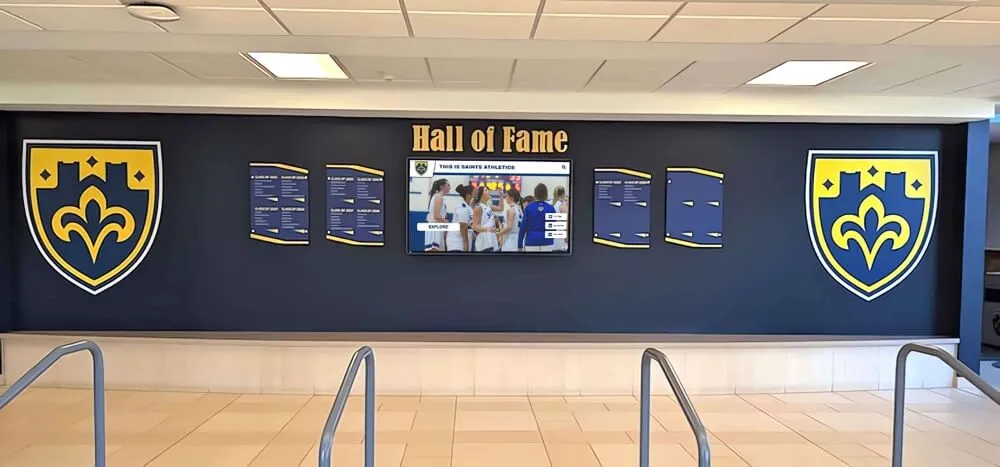
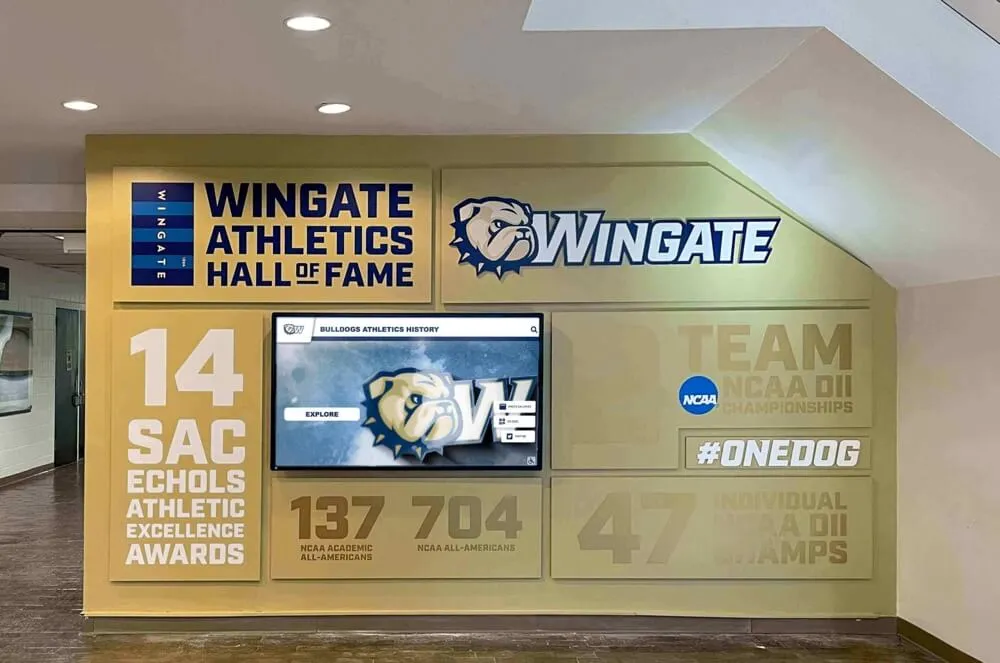
Integrated installations combine traditional architectural elements with modern digital recognition
Hardware Selection and Placement
Strategic decisions about equipment and locations:
Display Type and Size Selection
Choose between wall-mounted touchscreen displays (43"-75"), freestanding kiosk systems, or digital signage installations based on available space, usage patterns, and budget considerations. Touchscreen displays enable interactive exploration while non-touch digital signage costs less for passive viewing applications.
Larger displays (55"-75") provide better visibility in spacious gymnasiums and commons areas where viewing distances exceed 10-15 feet. Smaller displays (43"-50") work well for hallway installations, auxiliary gymnasiums, or intimate spaces where viewers stand closer to screens.
Strategic Location Planning
Install displays where maximum visibility ensures broad community engagement. Primary gymnasium lobbies receive consistent traffic from athletes, spectators, and school community members. Main hallway intersections connecting athletic facilities to academic buildings capture diverse audiences including students uninvolved in athletics.
Some programs install multiple displays throughout athletic facilities—main gymnasium lobby, fieldhouse entrance, weight room, and athletic offices—creating comprehensive recognition presence celebrating achievements wherever athletic community members gather. Solutions supporting multiple display management enable centralized content coordination across all locations while allowing location-specific customization when appropriate.
Integration with Existing Recognition
Digital displays complement rather than immediately replace all traditional recognition. Many programs maintain select legacy championship banners representing program milestones or particularly significant achievements while transitioning recent and future recognition to digital platforms. This hybrid approach respects tradition while embracing technology advantages.
Consider installations near existing trophy cases, hall of fame plaques, or retired jersey displays creating comprehensive recognition zones where physical and digital elements reinforce athletic heritage celebration. Architectural integration enhances professional appearance while signaling organizational commitment to athletic excellence acknowledgment.
Content Development and Migration
Comprehensive content ensures impactful launches:
Historical Achievement Documentation
Systematically photograph existing championship banners extracting team names, years, championships, and visible details. Research school records, yearbooks, newspaper archives, and booster records identifying achievements lacking current recognition. Many athletic programs discover forgotten championships or exceptional individual performances worthy of digital inclusion while conducting historical research.
Prioritize recent achievements where information proves readily available and community memory remains fresh. Gradually expand historical coverage as time and research reveal additional documentation. Comprehensive digital archives develop over months or years as programs systematically add historical content supplementing robust recent recognition.
Rich Profile Development
Create detailed championship profiles including team photos, roster lists, coach information, season records, championship game or meet summaries, and statistical highlights. Individual achievement recognition features athlete photos, statistical accomplishments, quotes, and post-graduation updates when available.
Organizations implementing student recognition programs apply similar content development approaches to athletic contexts, creating engaging profiles celebrating accomplishments comprehensively rather than through basic name and date acknowledgment.
Ongoing Content Management Process
Establish clear workflows determining who adds new recognition content, what approval processes ensure accuracy and appropriateness, and when updates occur maintaining program currency. Athletic directors, athletic secretaries, or designated booster volunteers typically manage recognition additions using intuitive cloud-based content management systems requiring no technical expertise.
Schedule regular content reviews ensuring all recent achievements receive recognition promptly, featured content rotates maintaining display freshness, and historical additions gradually expand archive comprehensiveness.
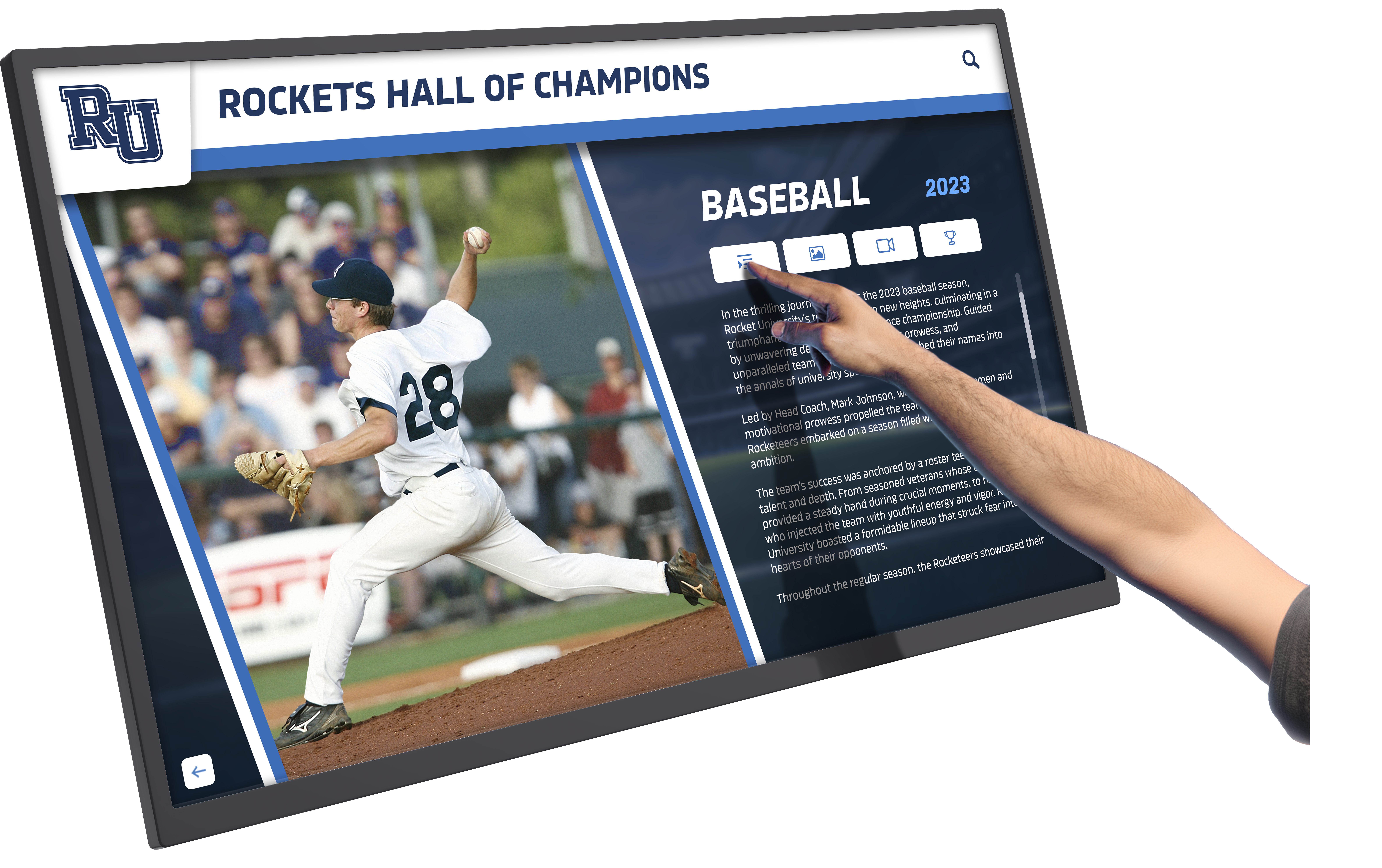
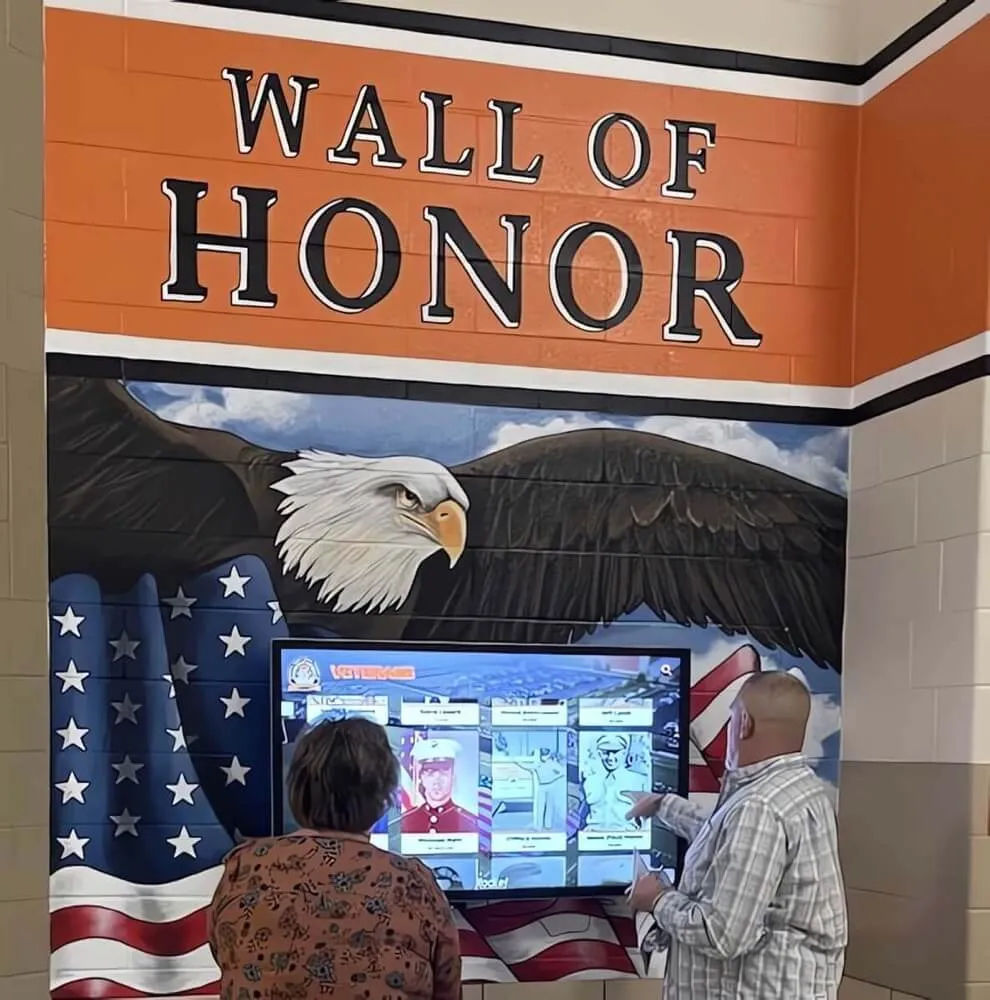
Intuitive touchscreen interfaces encourage exploration and deeper engagement with athletic achievements
Maximizing Impact: Best Practices for Digital Athletic Recognition
Successful programs implement strategies ensuring digital recognition delivers maximum community value.
Comprehensive Recognition Philosophy
Inclusive approaches build stronger athletic cultures:
All-Sport Recognition Equity
Celebrate championships and achievements across all athletic offerings ensuring football, golf, swimming, and every program receives equal recognition capacity and visibility. Digital platforms eliminate space constraints that historically forced difficult prioritization decisions, enabling comprehensive celebration reflecting true breadth of athletic excellence.
Feature rotation algorithms ensure all sports receive homepage visibility rather than allowing major sports to dominate recognition displays. This equity signals organizational values while motivating athletes across all programs seeing their accomplishments celebrated prominently.
Individual and Team Balance
Recognize exceptional individual performances alongside team championships. All-state selections, record-breaking achievements, career milestone accomplishments, and exceptional statistical performances deserve individual celebration complementing team recognition. This comprehensive approach acknowledges that athletic excellence manifests through both collective team success and individual exceptional performance.
Multi-Level Achievement Celebration
Beyond championships, recognize conference titles, tournament appearances, significant victories, improvement milestones, and sportsmanship recognition. Comprehensive celebration creates recognition opportunities for more athletes and teams, building inclusive culture where various achievement types receive acknowledgment rather than solely celebrating state championships.
Engagement Enhancement Strategies
Active approaches maximize recognition impact:
Featured Content Rotation
Automatically rotate featured achievements on display homepages ensuring diverse recognition visibility. Highlight current season championships, anniversary recognition for historical achievements, athlete birthdays, and themed collections celebrating specific sports, decades, or achievement types. This dynamic content keeps recognition fresh for repeat visitors while ensuring broad visibility distribution.
Social Media Integration
Share recognition content through school social media channels extending visibility beyond physical displays. Feature weekly championship throwbacks, athlete spotlights, and achievement anniversaries maintaining ongoing athletic recognition presence in digital communications. Social sharing amplifies community pride while promoting athletic programs to broader audiences.
Event Coordination
Schedule recognition additions coordinating with athletic ceremonies, homecoming celebrations, or championship commemorations. Launch new content during events when community attention focuses on athletic celebration, creating memorable recognition moments rather than quiet background updates receiving minimal notice.
Organizations implementing event highlight displays understand how coordinating recognition with gatherings amplifies impact through timing that captures heightened community attention.
Recruitment Showcase
Prospective athletes and families exploring athletic programs benefit from comprehensive digital recognition demonstrating program excellence, championship traditions, and athlete development success. Digital platforms provide recruiting advantages by professionally showcasing athletic achievements impressing visitors evaluating program quality and competitive success.
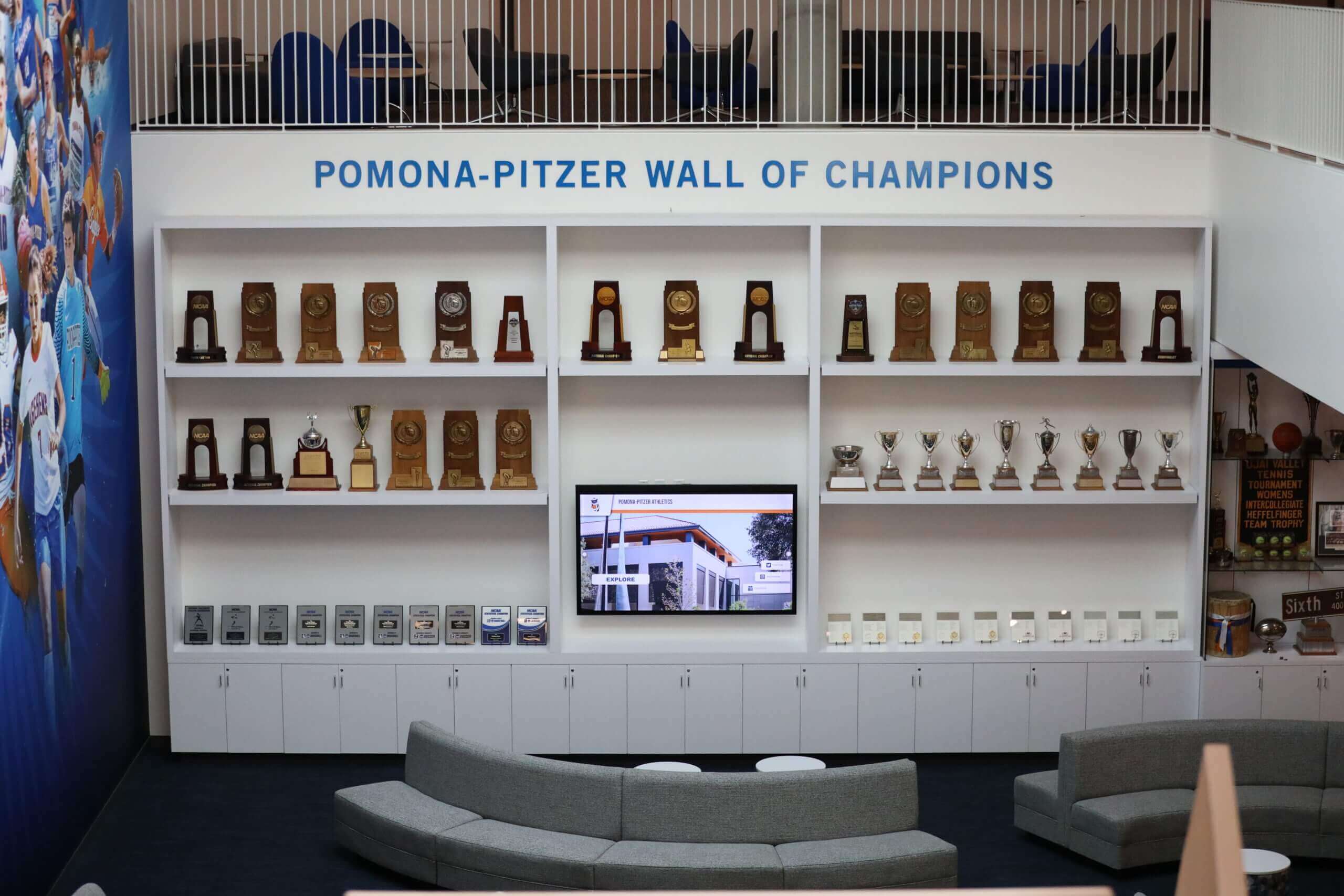
Comprehensive recognition creates impressive spaces celebrating athletic excellence and tradition
Analytics and Continuous Improvement
Data-informed decisions enhance effectiveness:
Engagement Measurement
Monitor how often recognition displays receive interaction, which content generates most engagement, how long visitors explore achievements, and what search terms reveal community interests. Analytics identify popular sports, frequently viewed athletes, and engagement patterns informing content strategies and feature priorities.
Recognition Distribution Analysis
Track recognition distribution across sports, achievement types, and time periods ensuring balanced coverage and identifying gaps requiring attention. Analytics reveal whether certain programs receive disproportionate visibility while others lack adequate representation, enabling corrections ensuring equitable recognition.
User Feedback Integration
Gather community feedback about recognition adequacy, display usability, content desires, and feature requests. Regular surveys, comment opportunities, and conversations with athletes, coaches, and boosters provide qualitative insights complementing quantitative analytics guiding continuous improvement.
Beyond Cost Savings: Strategic Value of Digital Recognition
Digital transformation delivers benefits exceeding simple expense reduction.
Strengthened Athletic Culture and Pride
Comprehensive recognition builds powerful program cultures:
Historical Connection and Tradition
Digital archives preserving decades of athletic achievement create tangible connections between current athletes and program traditions. Students discover alumni who attended their school 30 years earlier excelling in the same sport, creating inspirational role models and sense of belonging to something larger than individual teams or seasons.
This historical connection strengthens program culture by demonstrating that excellence represents ongoing tradition rather than isolated incidents. Current athletes see themselves contributing to legacy they inherit and will pass to future generations, creating motivational frameworks supporting sustained excellence.
Peer Recognition and Motivation
Visible achievement celebration motivates current athletes seeing recognition awaiting exceptional performance. Unlike distant professional athletic recognition, school-level digital displays showcase peers and recent graduates creating achievable aspirational targets. Athletes recognize that outstanding performance receives prominent celebration accessible to anyone willing to commit effort necessary for excellence.
Organizations implementing peer recognition programs understand how seeing peers celebrated creates powerful motivation through social proof and achievable role modeling.
Enhanced Community Engagement
Digital recognition strengthens bonds beyond active athletes:
Alumni Connection
Graduated athletes maintain ongoing connections with athletic programs through digital recognition celebrating their accomplishments. Alumni share recognition profiles through social networks, revisit achievements during campus visits, and introduce children to their historical recognition creating multi-generational engagement. This sustained connection supports alumni relations, facilitates mentorship opportunities, and strengthens community bonds transcending graduation.
Booster and Family Engagement
Parents, grandparents, and extended families engage with recognition celebrating loved ones’ achievements. Geographic distance no longer limits recognition access, enabling families worldwide to view championship celebrations and share accomplishments broadly. This extended engagement strengthens family connections with schools while building pride supporting ongoing program involvement and financial support.
Prospective Family Impressions
Families evaluating schools for enrollment examine athletic program quality, tradition, and recognition culture. Comprehensive digital recognition creates impressive first impressions demonstrating organizational commitment to athletic excellence celebration. Professional recognition installations signal program quality and administrative competence supporting enrollment decisions.
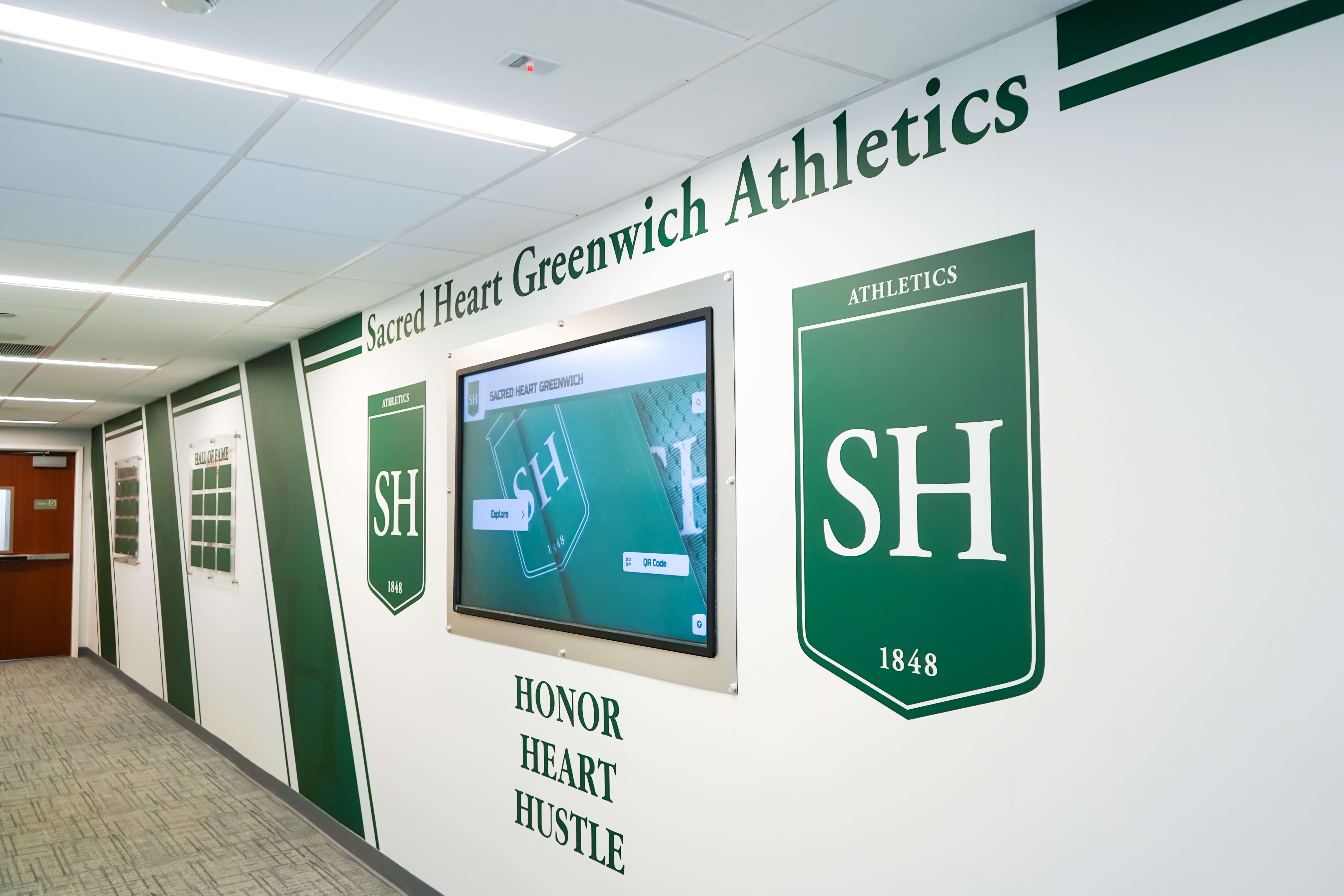
Architectural integration creates lasting installations reflecting organizational commitment to athletic celebration
Operational Efficiency and Flexibility
Technology advantages extend beyond recognition:
Rapid Achievement Recognition
Digital platforms enable immediate recognition without production or installation delays. Championship celebrations occur within hours of victories rather than waiting weeks or months for banner production, creating timely acknowledgment when excitement peaks and psychological impact proves strongest.
Easy Corrections and Updates
Digital recognition easily accommodates corrections addressing typos, updated information, or additional details without expensive reprinting. Add athlete photos years after initial recognition, update career accomplishments as alumni achieve professional success, or correct historical information as research reveals new details—all without production costs or physical installation requirements.
Adaptable to Changing Needs
Athletic programs evolve—adding sports, changing conference affiliations, reorganizing competition levels, or redefining recognition criteria. Digital platforms adapt instantly accommodating organizational changes without hardware replacement or physical reconstruction. This flexibility future-proofs recognition investments against inevitable programmatic evolution.
Transform Your Athletic Recognition Program
Discover how digital recognition displays eliminate banner costs while creating more engaging, comprehensive, and accessible celebration of athletic excellence. Schedule a demonstration exploring how your athletic program can save thousands annually while improving recognition impact.
Book Your DemoCommon Questions About Digital Athletic Recognition
Athletic directors considering digital transitions frequently raise similar concerns:
What happens to existing championship banners?
Most programs maintain select legacy banners representing particularly significant achievements or serving architectural functions while transitioning recent and future recognition to digital platforms. Some schools ceremonially retire banner collections to archives or displays in athletic offices, preserving physical recognition while freeing ceiling space and eliminating ongoing maintenance. Digital platforms typically include photographs of original banners preserving historical appearance within comprehensive digital archives.
How long does implementation take?
Hardware installation typically requires 1-2 days per display location depending on mounting complexity and electrical requirements. Content population timelines vary based on recognition scope—featuring 50 recent championships launches within 2-3 weeks, while comprehensive historical archives spanning decades develop over months as programs systematically research and document achievements. Most programs launch with substantial recent content, gradually expanding historical coverage over time.
What technical expertise is required for management?
Modern recognition platforms require no technical expertise. Athletic secretaries, administrative assistants, or designated volunteers manage content through intuitive web interfaces similar to social media platforms. Adding new championship recognition typically takes 10-15 minutes including uploading photos, entering details, and publishing updates. Cloud-based systems eliminate IT dependencies enabling authorized staff to manage recognition from any internet-connected device.
How do we handle internet connectivity issues?
Commercial-grade digital displays include local content caching ensuring displays function during temporary internet disruptions. Content updates require connectivity but displays continue showing cached information if connections temporarily fail. Most athletic facilities maintain reliable internet connectivity supporting digital displays alongside other technology infrastructure.
What about accessibility for visitors with disabilities?
Purpose-built recognition platforms like Rocket Alumni Solutions provide full ADA WCAG 2.1 AA compliance ensuring accessible experiences for visitors with visual, auditory, motor, or cognitive disabilities. Screen reader compatibility, keyboard navigation, high contrast modes, and appropriate mounting heights ensure inclusive access. Web-based recognition extends access globally through personal devices accommodating individual accessibility needs and assistive technologies.
How do digital displays perform in gymnasium lighting conditions?
Commercial displays designed for public installations feature high brightness ratings (400-700 nits) ensuring visibility in well-lit gymnasium environments. Anti-glare screens reduce reflection issues while maintaining image clarity. Strategic placement away from direct natural light windows prevents screen washout while maintaining optimal visibility.
Can multiple people update content simultaneously?
Cloud-based platforms support multiple authorized users managing content from different locations simultaneously. Role-based permissions ensure appropriate access levels—athletic directors approve all content while sport-specific coaches or team representatives submit recognition for approval. This collaborative approach distributes content management responsibilities while maintaining quality control.
How often should featured content rotate?
Automatic rotation algorithms typically cycle featured content weekly or bi-weekly ensuring diverse recognition visibility while maintaining sufficient exposure duration for community engagement. Special event coordination may accelerate rotation highlighting current championships or themed recognition during relevant periods. Analytics revealing engagement patterns inform optimal rotation frequencies balancing freshness against adequate visibility duration.
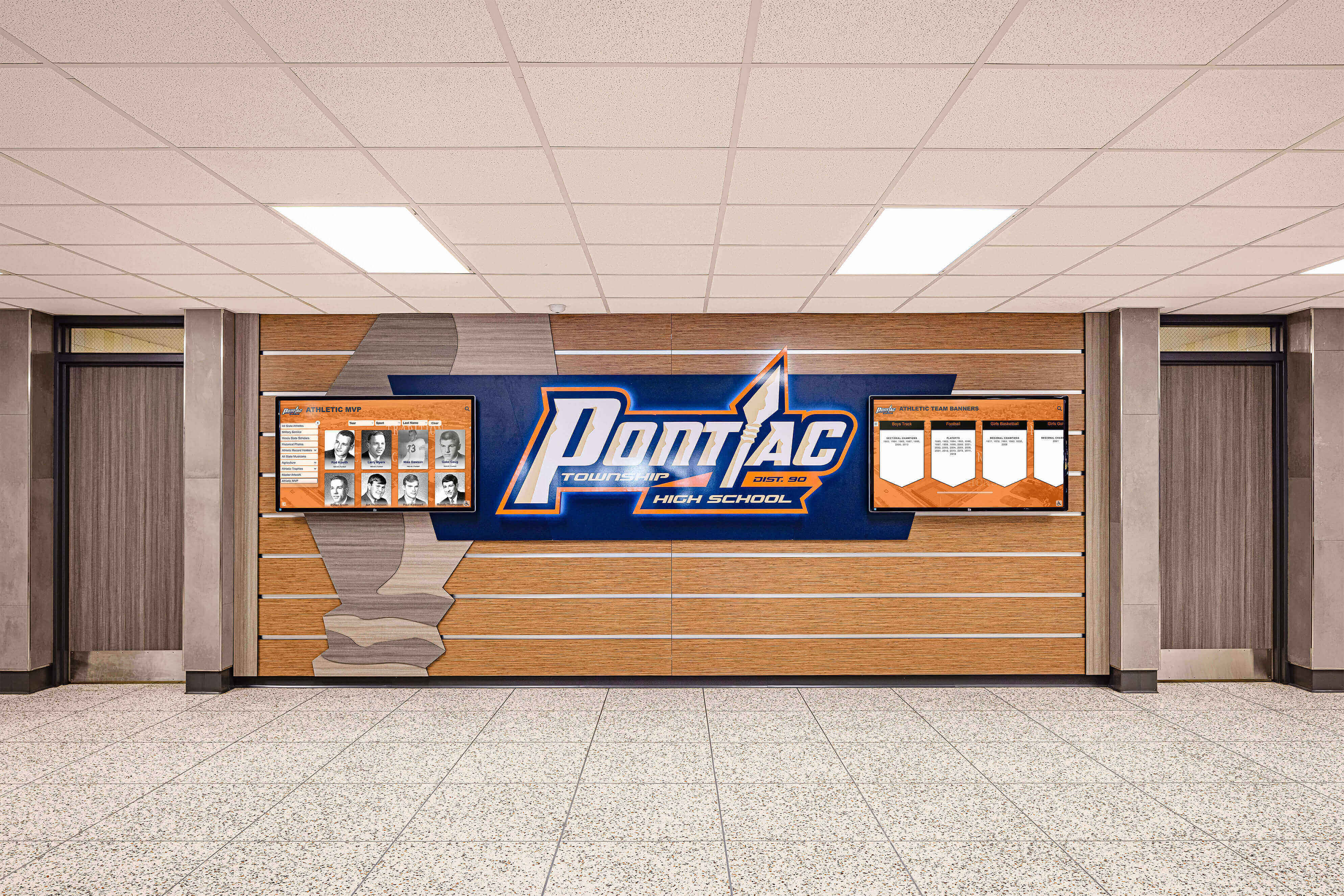
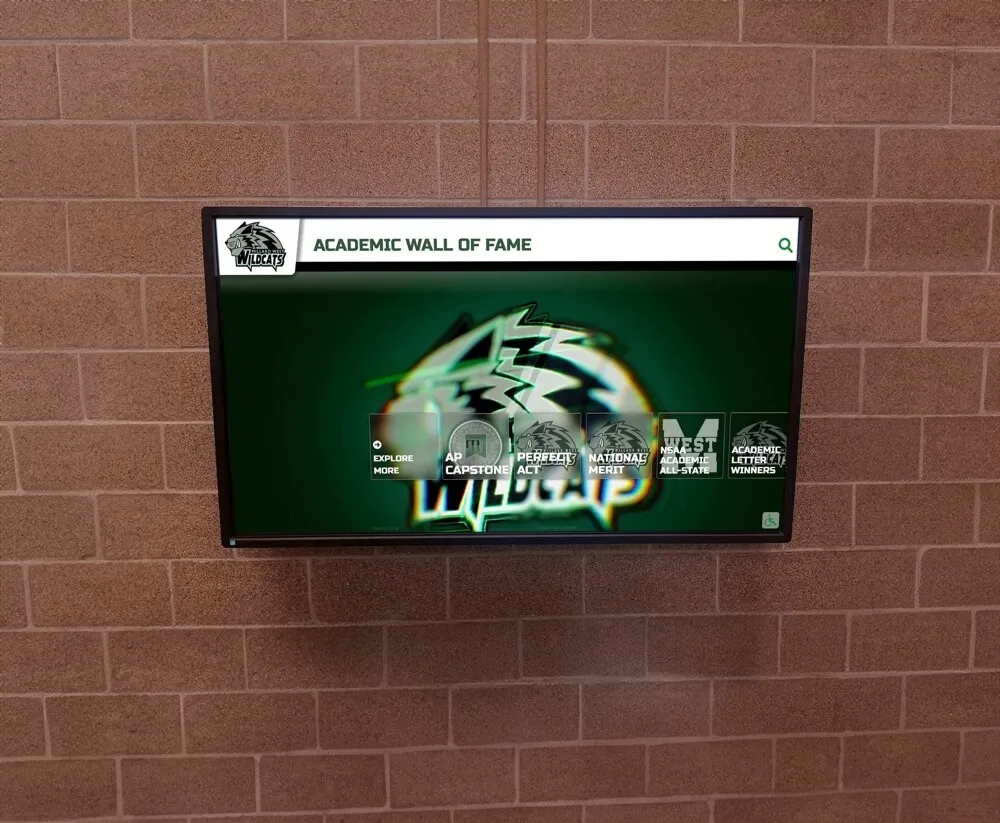
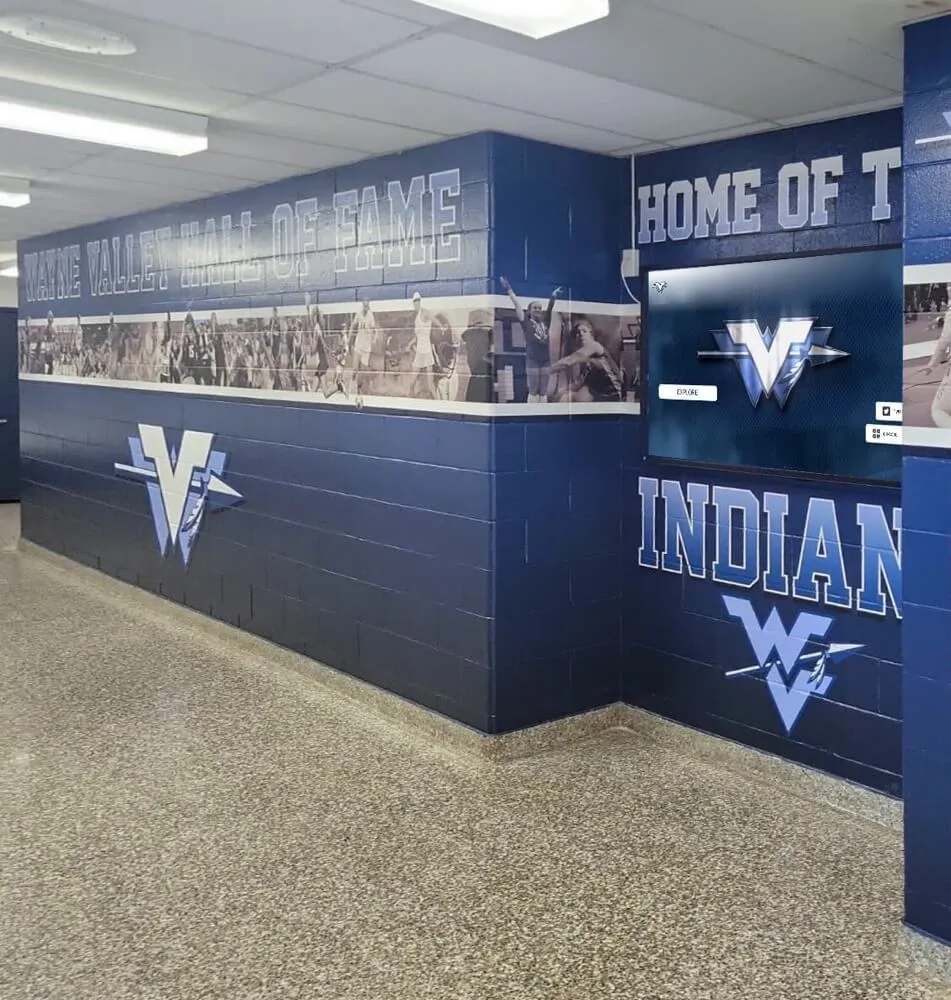
Hallway installations provide constant visibility celebrating athletic achievements throughout daily campus activities
The Future of Athletic Recognition
Athletic recognition continues evolving as technology advances and community expectations shift:
Increased Personalization
Future recognition platforms will leverage individual user accounts enabling personalized experiences highlighting relevant achievements, suggesting connections with alumni in similar sports, and creating customized recognition journeys based on individual interests and affiliations. This personalization increases engagement by surfacing most relevant content rather than requiring manual search and exploration.
Enhanced Multimedia Integration
Video content becomes increasingly central to recognition as documentation becomes universal. Future implementations will seamlessly integrate championship game highlights, athlete interviews, season recap videos, and multimedia content creating rich recognition experiences impossible through static approaches. Cloud storage advances enable unlimited video hosting supporting comprehensive multimedia archives.
Augmented Reality Extensions
Emerging augmented reality technology will enable mobile devices to overlay additional digital content on physical spaces. Visitors pointing smartphones at trophy cases or recognition areas might see virtual championship banners, athlete statistics, or historical photos creating immersive experiences blending physical and digital recognition.
Social Network Integration
Recognition platforms increasingly function as social networks enabling recognized athletes to connect, share memories, and maintain relationships mediated through institutional platforms. This social functionality transforms recognition from passive archives into active community spaces supporting ongoing engagement and relationship building.
Predictive Analytics and Insights
Advanced analytics will identify engagement patterns informing strategic decisions about athletic programming, facility improvements, and resource allocation. Understanding which sports, achievements, and content types generate strongest community engagement provides data supporting evidence-based decision making optimizing athletic programs.
Organizations exploring comprehensive digital transformation understand that today’s implementations position programs to adopt advancing capabilities ensuring recognition systems remain current and engaging for decades.
Conclusion: Recognition Investment with Lasting Impact
Replacing expensive championship banners with digital recognition represents strategic transformation delivering financial, engagement, and cultural benefits far exceeding simple cost reduction. Athletic programs eliminating recurring $4,000-10,000 annual banner expenses redirect funds toward coaching, equipment, facility improvements, or program expansion directly supporting athletic excellence rather than static recognition maintenance.
Beyond cost savings, digital recognition creates dramatically more engaging experiences where students, alumni, families, and community members actively explore athletic achievements rather than passively glancing at ceiling decorations. Interactive displays enable searching for specific athletes or teams, filtering by sport or era, and accessing rich multimedia content including photos, videos, statistics, and narratives making recognition meaningful and memorable. This active engagement typically keeps visitors exploring 5-10 minutes compared to seconds spent viewing traditional banners, deepening connections with athletic heritage while inspiring respect for program traditions.
Unlimited digital capacity ensures comprehensive recognition celebrating every championship, exceptional athlete, and noteworthy achievement across all sports and competition levels without physical constraints limiting visibility or creating equity issues between major and minor sports. This comprehensive approach builds inclusive athletic cultures where all programs receive equal recognition opportunities signaling organizational commitment to excellence across entire athletic offerings.
The concept of digital warming describes what happens when cold, forgotten ceiling banners transform into dynamic, accessible recognition experiences that draw community members deeper into athletic heritage exploration. When students discover alumni role models who attended their school decades earlier, when graduated athletes share championship recognition with extended networks, when families worldwide access loved ones’ achievements—these interactions create warmth strengthening bonds and motivating ongoing participation supporting athletic programs.
Implementation requires upfront investment ranging $3,000-15,000 depending on hardware selections and feature requirements, typically achieving payback within 2-5 years through eliminated banner costs while delivering engagement and cultural benefits impossible to achieve through traditional approaches. Strategic planning addressing current recognition assessment, stakeholder engagement, hardware selection, content development, and ongoing management ensures successful transitions maximizing recognition impact.
Athletic directors considering digital recognition should evaluate not just immediate cost savings but comprehensive value including enhanced engagement, unlimited capacity, operational efficiency, improved accessibility, and cultural strengthening supporting athletic excellence and community connection. The question isn’t whether digital recognition costs less than traditional banners—it does—but rather how much additional value digital transformation delivers beyond simple expense reduction.
Your athletic achievements and the student-athletes behind them deserve recognition honoring excellence while building community pride and engagement. Digital platforms create celebration experiences worthy of exceptional performance while eliminating recurring costs and physical constraints limiting traditional approaches. With thoughtful planning, appropriate technology, and commitment to comprehensive recognition, athletic programs transform how they celebrate heritage while building futures where every achievement receives visibility it deserves.
Ready to explore how digital recognition can transform your athletic program? Schedule a demo with Rocket Alumni Solutions to discover how eliminating banner costs creates more engaging recognition, or learn about implementing digital recognition systems that celebrate athletic excellence comprehensively while supporting community engagement goals that strengthen programs for decades to come.