Intent: decide — A recognition display that suddenly loses its IPv6 default gateway, adopts an incorrect IPv6 prefix, or begins routing its content management system traffic through an unexpected path is not malfunctioning. It is responding exactly as IPv6 specifies: it received a Router Advertisement message and configured its network stack accordingly. The problem is that the Router Advertisement came from a rogue device on the same VLAN — a student laptop, a misconfigured access point, or a test device left plugged into a hallway data jack — rather than from the school’s actual IPv6 router. Without IPv6 RA Guard active on the serving switch, the display has no way to distinguish a legitimate advertisement from a rogue one, and the result is a display that appears to work fine on IPv4 while silently failing all IPv6-dependent content delivery, CMS connections, or DNS resolution. The failure is difficult to reproduce on demand, often misattributed to the display platform, and invisible to ping-based monitoring that tests only IPv4 reachability.
This checklist walks school IT coordinators, AV technicians, and athletic directors through a recognition display IPv6 RA Guard test: how to confirm RA Guard is active on the switch port serving the display, how to verify that the display’s port is classified as a host port so rogue RAs are blocked, how to confirm that legitimate router-originated advertisements still reach the display correctly, and how to detect whether a rogue RA has already altered the display’s IPv6 configuration before the test was run.
A recognition display IPv6 router advertisement guard test takes 25–45 minutes and closes one of the more subtle security and reliability gaps on school networks that have deployed IPv6 — one that requires no attacker sophistication, leaves no obvious log trail, and targets the exact network behavior that recognition display content delivery depends on for reliable upstream connectivity.

Multi-screen recognition installations that deliver live content from a cloud CMS over IPv6 are the environments where rogue Router Advertisement attacks cause the most disruptive and difficult-to-diagnose connectivity failures
What IPv6 Router Advertisements Are and Why They Matter for Recognition Displays
IPv6 uses Router Advertisement (RA) messages — ICMPv6 Type 134 — to configure hosts on a network segment automatically. When an IPv6 router is present, it periodically multicasts RA messages to the all-nodes multicast address (ff02::1) announcing the IPv6 prefix in use on the segment, the default gateway address, the recommended MTU, and other parameters that hosts need to configure their network interfaces. Hosts also send Router Solicitation (RS) messages — ICMPv6 Type 133 — to request an RA immediately rather than waiting for the next scheduled advertisement.
A recognition display running a modern operating system — Linux, Windows 10 or later, or any embedded OS with IPv6 enabled — will process every RA it receives and update its network configuration accordingly. If the display receives a legitimate RA from the school’s router advertising prefix 2001:db8:school:av::/64 with the router as the default gateway, the display configures its interface with an address from that prefix and sends its IPv6 traffic to the correct gateway. If the display receives a rogue RA advertising a different prefix or a different default gateway — one controlled by an unauthorized device — the display configures itself with that information instead.
The display does not flag this as suspicious. IPv6 stateless address autoconfiguration (SLAAC) is designed to trust RA messages implicitly. A rogue RA is processed with exactly the same priority as a legitimate one, and if the rogue RA arrives after the legitimate one, it can override the display’s default gateway or add an additional default route that splits the display’s traffic unpredictably.
For a recognition display delivering champion roster slideshows, athletic hall of fame content, and senior tribute videos over a school LAN with IPv6 routing, a rogue RA can cause:
- Complete loss of IPv6 connectivity to the content management system if the rogue RA advertises a gateway that does not forward traffic upstream
- Intermittent content delivery failures if the display alternates between a correct and rogue default route
- DNS resolution failures if the rogue RA includes rogue IPv6 recursive DNS server addresses via the RDNSS option (RFC 8106)
- Invisible man-in-the-middle routing if the rogue RA redirects display traffic through an unauthorized device on the VLAN before forwarding it onward
IPv6 RA Guard (RFC 6105) addresses this directly. It is a Layer 2 switch feature that classifies each switch port as either a router port or a host port. RA messages arriving on host-classified ports are dropped by the switch before they reach any other device on the VLAN. RA messages arriving on router-classified ports are forwarded normally. Because recognition displays connect to access-layer switch ports — never to uplink or router-facing ports — the display port should always be a host port, and any RA arriving from it or from a device plugged in alongside it on that port should be blocked.
Academic recognition programs increasingly rely on cloud-delivered content over dual-stack networks — both IPv4 and IPv6 — meaning that a rogue RA affecting only IPv6 connectivity can silently degrade content delivery in ways that a basic IPv4 connectivity test does not catch.
How Rogue Router Advertisements Affect Recognition Display Behavior
The failure mode is subtle because IPv6 SLAAC works silently. The table below maps the most common observed symptoms to their rogue RA root cause:
| Observed Symptom | Rogue RA Root Cause |
|---|---|
| Display delivers content reliably on IPv4 but not IPv6 | Rogue RA replaced the correct IPv6 default gateway with an unreachable address |
| Content updates from CMS succeed intermittently — some hourly syncs complete, some time out | Display alternates between correct and rogue default route depending on most recent RA received |
| DNS lookups for CMS hostname fail intermittently | Rogue RA included RDNSS option pointing to a non-functional DNS server |
| Display shows correct static content but live data feeds do not update | Live feeds delivered over IPv6; static content cached locally; rogue RA disrupted only the live path |
| Problem appears during school hours, resolves in evenings and on weekends | Rogue RA source is a student device present only during school hours |
| Display on one VLAN is reliable; same display moved to a different VLAN becomes intermittent | RA Guard is configured on the first VLAN’s switch ports but not on the second |
| Restarting the display device temporarily restores connectivity | Restart clears the display’s IPv6 routing table and triggers a new RS; the next legitimate RA arrives before the rogue one and sets the correct default route |
| Problem only appears after a specific switch port is connected | The newly connected port’s device is the rogue RA source |
The most reliable indicator of a rogue RA problem is a mismatch between the IPv6 default gateway the display is using — visible on the display device itself — and the IPv6 address of the school’s actual router on that segment. This mismatch may not persist long enough to be observed unless the rogue RA source is still active, which is why RA Guard prevents the problem proactively rather than catching it after the fact.
School hall of fame programs that rely on accurate recognition data delivered from a centralized CMS depend on uninterrupted Layer 3 connectivity — protecting the display’s IPv6 stack from unauthorized reconfiguration is as important as protecting the content platform itself.
Before You Begin: What to Gather
Collect the following before opening a switch management interface or terminal:
- Recognition display IPv6 address — from the device’s network settings, the DHCPv6 server lease table, or the IPv6 neighbor discovery table on the router. Note whether the address was assigned via SLAAC or DHCPv6 — the method determines which RA Guard parameters are most critical.
- School router’s IPv6 link-local address on the display VLAN — this is the address the display should be using as its IPv6 default gateway. Obtain it from the router’s interface configuration or from the display device’s own routing table.
- Switch make, model, and firmware version — RA Guard command syntax and feature availability vary significantly between Cisco IOS, Cisco IOS XE, HP/Aruba ProCurve, Aruba CX, Juniper EX, Netgear, and Ubiquiti UniFi platforms.
- Switch port number serving the recognition display — the specific physical port the display’s Ethernet cable connects to.
- VLAN assignment of the display port — RA Guard policies may be applied per-VLAN or per-port depending on the switch platform.
- Switch management access with write permissions — read access is sufficient to inspect RA Guard status in Steps 1 through 4; write access is required in Step 6 to apply or correct the RA Guard configuration.
- A test laptop or device you can connect to the same switch port or VLAN segment — needed in Steps 3 and 5 to send a test RA packet and confirm it is blocked.
Recognition Display IPv6 RA Guard Test: Numbered Steps
Work through these steps in order. Each step produces a clear pass or fail result that tells you whether RA Guard is correctly applied, whether the display’s current IPv6 configuration is clean, or whether a rogue RA has already altered the display’s routing behavior.
Step 1 — Check Whether RA Guard Is Globally Enabled on the Switch
Before checking port-level configuration, confirm that the switch has RA Guard enabled at the global or VLAN level. An RA Guard policy that is defined but not attached to any port provides no protection.
Cisco Catalyst switches (IOS / IOS XE):
show ipv6 nd raguard policy
This command lists all defined RA Guard policies and their configured parameters. A useful output shows at least one policy with device-role host configured. If the command returns no output or is unrecognized, RA Guard is either not configured or not supported on the current firmware version.
To check whether the policy is attached to any interface:
show ipv6 nd raguard interface GigabitEthernet1/0/12
HP / Aruba ProCurve:
show ipv6 nd-ra-guard
The output shows whether RA Guard is enabled globally and lists ports where it is active.
Aruba CX (ArubaOS-CX):
show ipv6 nd-ra-guard policy
show ipv6 nd-ra-guard summary
Juniper EX Series:
show ipv6 ra-guard
Ubiquiti UniFi:
Native per-port IPv6 RA Guard is not available in the standard UniFi GUI as of current firmware versions. RA Guard on UniFi networks is typically implemented through IPv6 ACLs applied at the VLAN level via the USG or UDM firewall rules, or through third-party tools. If UniFi switches are serving recognition displays on an IPv6-enabled VLAN without RA Guard, document this gap and proceed to the mitigation options in Step 6.
Result interpretation:
- Policy defined with
device-role hostand attached to the display port: pass. Continue to Step 2 to verify the port role assignment is correct. - Policy defined but not attached to any interface: fail. RA Guard is configured but not protecting the display port. Proceed to Step 6.
- No policy defined: fail. RA Guard is absent. Proceed to Step 6.
Step 2 — Verify the Display Port Is Classified as a Host Port
RA Guard policies distinguish between router ports (which are allowed to send RA messages forward) and host ports (which are not). A recognition display’s access switch port must be a host port. If it is classified as a router port — or if no RA Guard policy is applied — RA messages from any device plugged into or sharing that port segment will be forwarded to the display.
Cisco Catalyst switches (IOS / IOS XE):
show ipv6 nd raguard interface GigabitEthernet1/0/12
Look for device-role host in the output. If the port shows device-role router, correct it in Step 6. If the output shows no policy attached, the port is not protected regardless of what global policies exist.
Verify the policy definition itself:
show ipv6 nd raguard policy RAGUARD-HOST
The policy should show:
device-role host- No
trusted-portoverride enabled
HP / Aruba ProCurve:
show ipv6 nd-ra-guard port 12
The port-level output should show port-role: host. If it shows port-role: router or no RA Guard entry, correct it in Step 6.
Result interpretation:
- Port shows
device-role hostorport-role: hostwith the RA Guard policy attached: pass. Continue to Step 3. - Port shows
device-role router: fail. The display port is trusted to send RA messages. Any device connected here can advertise itself as an IPv6 router to the display. Correct in Step 6. - Port shows no RA Guard configuration: fail. Proceed to Step 6.
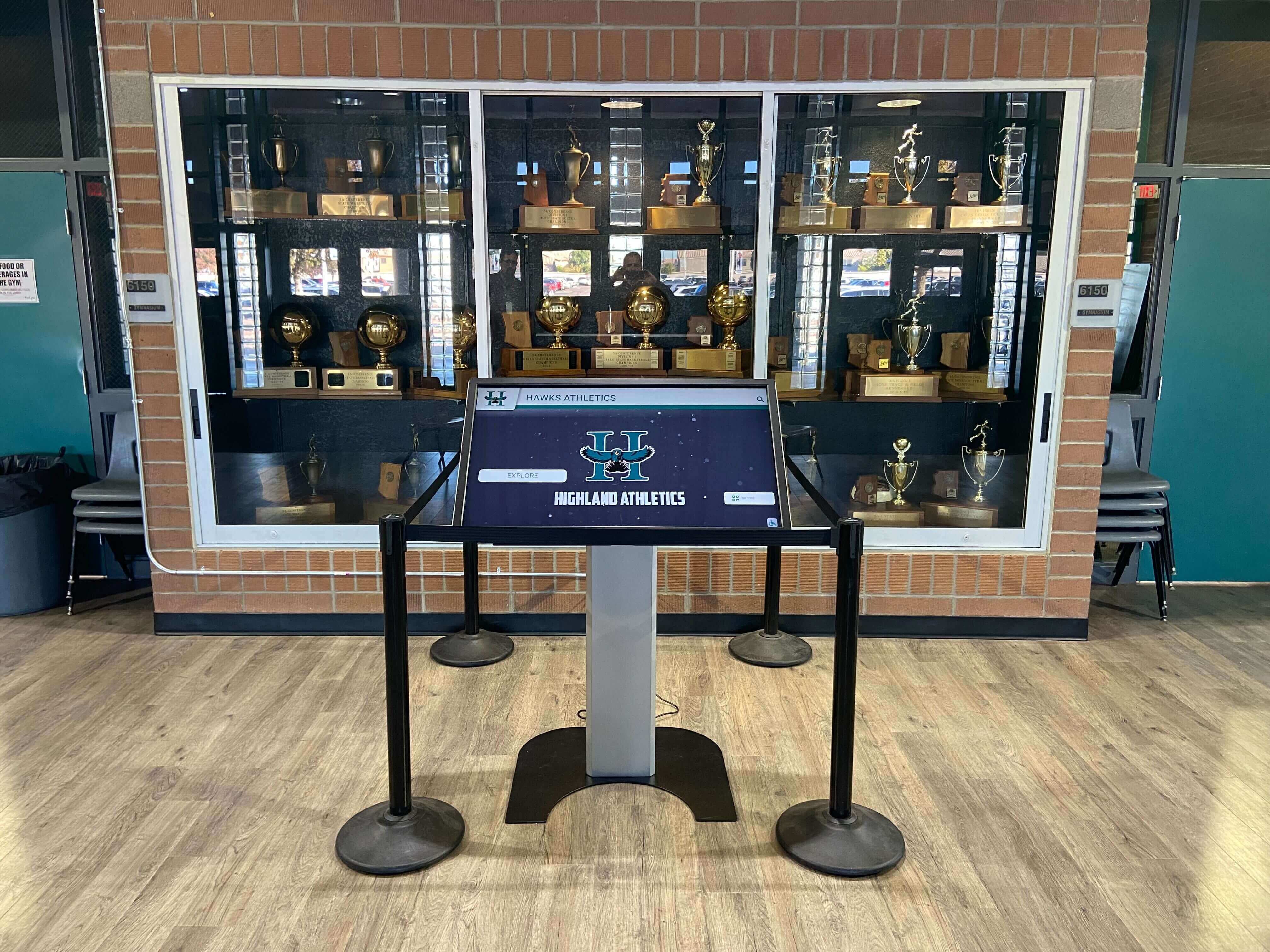
Trophy case kiosks connected to access-layer switch ports on IPv6-enabled VLANs need RA Guard active on those ports — without it, any device on the same VLAN can reconfigure the display's IPv6 default gateway
Step 3 — Verify the Uplink / Router Port Is Classified as a Router Port
RA Guard must allow legitimate Router Advertisements from the school’s actual IPv6 router to reach the display. If the uplink port carrying the router’s RA messages is also classified as a host port, the display will never receive a legitimate RA and will lose IPv6 connectivity entirely. This misconfiguration is a common cause of “RA Guard broke our displays” reports from school IT teams who applied the policy globally without exempting the uplink.
Cisco Catalyst switches (IOS / IOS XE):
Identify the uplink port connecting this access switch to the distribution or core switch. Then check its RA Guard policy:
show ipv6 nd raguard interface GigabitEthernet1/0/1
The uplink port should either have no RA Guard policy attached (which allows all RA messages through by default on untreated ports) or have a policy with device-role router applied.
Confirm RA Guard statistics show forwarded — not dropped — RAs on the uplink port:
show ipv6 nd raguard statistics interface GigabitEthernet1/0/1
A non-zero forwarded count and a zero drop count on the uplink confirms legitimate RAs are passing through.
HP / Aruba ProCurve:
show ipv6 nd-ra-guard port 25
The uplink port should show port-role: router or have no RA Guard assignment (which implicitly allows RA messages on unassigned ports on ProCurve firmware).
Result interpretation:
- Uplink port shows
device-role routeror no RA Guard policy: pass. Legitimate RAs are not blocked at the uplink. Continue to Step 4. - Uplink port shows
device-role host: fail. Legitimate RAs are being dropped before they reach the display VLAN. The display will have no IPv6 default gateway. Correct in Step 6 before continuing.
Step 4 — Verify the Display’s Current IPv6 Default Gateway
Before running the live RA injection test in Step 5, confirm what IPv6 default gateway the recognition display is currently using and compare it against the school router’s known link-local address. This check reveals whether a rogue RA has already corrupted the display’s routing table.
From the recognition display device itself (Linux-based media player — SSH in or open a terminal):
ip -6 route show default
The output should show one default route with the school router’s IPv6 link-local address as the via address and the display’s Ethernet interface as the dev. Example of a correct output:
default via fe80::1 dev eth0 proto ra metric 1024 expires 1799sec
Compare fe80::1 (or whatever link-local address appears) against the school router’s known link-local address on the display VLAN. If they match, the current default gateway is legitimate.
Multiple default routes indicate a rogue RA has been received:
default via fe80::1 dev eth0 proto ra metric 1024 expires 1799sec
default via fe80::bad1:1234 dev eth0 proto ra metric 1024 expires 899sec
Two default routes with different via addresses means the display has received two different RA messages. One is from the legitimate router; the other from a rogue source. IPv6 will distribute traffic between them, causing intermittent failures.
From a Windows-based media player (Command Prompt or PowerShell):
netsh interface ipv6 show routes
Look for routes with the Prefix: ::/0 (the default route) and check the Next Hop addresses.
Result interpretation:
- Single default route via the school router’s known link-local address: pass. The display’s IPv6 routing table is clean. Continue to Step 5.
- Multiple default routes or a default route via an unknown link-local address: fail. A rogue RA has already been received. After correcting RA Guard in Step 6, flush the display’s routing table and wait for the legitimate RA to restore a clean default route.
Step 5 — Send a Test Rogue RA and Verify It Is Blocked
This is the active validation step. Connect a test laptop to the same switch port as the display (or to another host port on the same VLAN) and send a crafted RA packet. Confirm that the switch drops it and that the display’s IPv6 configuration does not change.
Prerequisites:
- Test laptop with Linux installed (or a live Linux environment)
- The
radvddaemon or the Pythonscapylibrary installed on the test laptop - The display’s current IPv6 default gateway noted from Step 4 for comparison after the test
Option A — Using scapy to send a single test RA:
from scapy.all import *
from scapy.layers.inet6 import *

sendp(
    Ether(dst="33:33:00:00:00:01") /
    IPv6(src="fe80::test:1234", dst="ff02::1") /
    ICMPv6ND_RA(routerlifetime=1800) /
    ICMPv6NDOptPrefixInfo(
        prefix="2001:db8:rogue::",
        prefixlen=64,
        L=1, A=1, validlifetime=3600, preferredlifetime=1800
    ),
    iface="eth0"
)
Modify fe80::test:1234 to any link-local address that is not the school router’s address. Modify 2001:db8:rogue:: to any prefix different from the school’s legitimate IPv6 prefix.
Option B — Using radvd to send a test RA:
Create /etc/radvd.conf:
interface eth0 {
    AdvSendAdvert on;
    MinRtrAdvInterval 5;
    MaxRtrAdvInterval 10;
    prefix 2001:db8:rogue::/64 {
        AdvOnLink on;
        AdvAutonomous on;
    };
};
Start radvd with sudo radvd -n -C /etc/radvd.conf. Stop it after one RA is sent.
Verification after sending the test RA:
On the display device, check whether the default route changed:
ip -6 route show default
If RA Guard is working, the default route should be unchanged — the rogue prefix 2001:db8:rogue:: should not appear in the display’s routing table or address list.
On the switch, check whether the RA was dropped:
show ipv6 nd raguard statistics interface GigabitEthernet1/0/12
The drop counter for the test laptop’s port should have incremented. A non-zero drop count and an unchanged display routing table together confirm RA Guard is actively blocking rogue advertisements.
Result interpretation:
- Display routing table unchanged after test RA; switch drop counter incremented: pass. RA Guard is actively protecting the display port.
- Display adopted rogue prefix or changed default gateway: fail. RA Guard is not blocking the test RA. Investigate the policy attachment and port role from Steps 1–3 and correct in Step 6.
Hallway recognition screens on IPv6-enabled school networks need RA Guard active on their access switch ports — without it, a rogue RA from anywhere on the VLAN can silently redirect the display's traffic
Step 6 — Apply or Correct RA Guard on the Display Port
If Steps 1–5 revealed that RA Guard is absent, incorrectly configured, or failing to block test RAs, apply the correct configuration. The goal is a host-role RA Guard policy on the display’s access port and a router-role or unconfigured state on the uplink carrying legitimate RAs from the school router.
Cisco Catalyst switches (IOS / IOS XE) — create and attach a host policy:
ipv6 nd raguard policy RAGUARD-HOST
 device-role host
exit

interface GigabitEthernet1/0/12
 ipv6 nd raguard attach-policy RAGUARD-HOST
exit

write memory
If multiple display ports exist on the same switch, apply the policy to all of them:
interface range GigabitEthernet1/0/10 - 15
 ipv6 nd raguard attach-policy RAGUARD-HOST
exit

write memory
Ensure the uplink is not blocked:
The uplink port should have no RA Guard policy or a router-role policy:
interface GigabitEthernet1/0/1
 no ipv6 nd raguard attach-policy
exit
Or, if an explicit router policy is preferred:
ipv6 nd raguard policy RAGUARD-ROUTER
 device-role router
exit

interface GigabitEthernet1/0/1
 ipv6 nd raguard attach-policy RAGUARD-ROUTER
exit

write memory
HP / Aruba ProCurve:
ipv6 nd-ra-guard enable
ipv6 nd-ra-guard port-role host 10-15
ipv6 nd-ra-guard port-role router 25
write memory
Replace 10-15 with the display port range and 25 with the uplink port.
Aruba CX (ArubaOS-CX):
ipv6 nd-ra-guard policy HOST-POLICY
  device-role host
  exit
interface 1/1/12
  ipv6 nd-ra-guard attach-policy HOST-POLICY
  exit
write memory
Juniper EX Series:
set vlans DISPLAY-VLAN vlan-id 30
set forwarding-options helpers bootp interface irb.30
set protocols layer2-control mac-rewrite interface ge-0/0/12
set vlans DISPLAY-VLAN ra-guard
set vlans DISPLAY-VLAN ra-guard interface ge-0/0/12 role host
set vlans DISPLAY-VLAN ra-guard interface ge-0/0/1 role router
commit
Important: after applying RA Guard, flush the display’s IPv6 routing table if a rogue RA was already received:
On a Linux-based display device:
sudo ip -6 route flush proto ra
sudo ip -6 addr flush dev eth0 scope global
Then reconnect the Ethernet cable or restart networking to trigger a new RS/RA exchange via the now-protected switch port. The display should receive only the legitimate router’s RA and configure a clean default route.
Hall of fame tools that schools use to recognize athletic, academic, and arts achievements require network infrastructure that protects display devices from unauthorized reconfiguration — RA Guard is the IPv6-specific layer of that protection.
Step 7 — Verify Legitimate IPv6 Connectivity After RA Guard Is Applied
Confirm that the recognition display has restored correct IPv6 connectivity after RA Guard is in place and any rogue RA effects have been cleared.
Verify the display has a valid SLAAC or DHCPv6 address:
On a Linux-based display:
ip -6 addr show dev eth0
The output should include a global-scope address from the school’s legitimate IPv6 prefix (not the rogue prefix used in the test). A link-local address (fe80::) is always present and does not indicate legitimate connectivity — look for a global-scope (scope global) address.
Verify the default gateway is the school router:
ip -6 route show default
A single default route via the school router’s link-local address confirms correct routing.
Ping the CMS platform over IPv6:
ping6 -c 4 your-cms-hostname.example.com
If the CMS has an AAAA DNS record and the display has a correct IPv6 default gateway, the ping should succeed. If the ping fails and IPv4 works, the IPv6 path still has an issue — check firewall rules and router advertisement consistency.
Rerun Step 5 to confirm RA Guard is still active:
After saving the configuration, repeat the test RA injection from Step 5. The rogue prefix should remain blocked and the display’s routing table should remain clean.
Result interpretation:
- Display has a global IPv6 address from the correct prefix, a single default route via the school router, and the test RA is blocked: pass. RA Guard is correctly configured and protecting the display.
- Display has no global IPv6 address after RA Guard was applied: the uplink port may be inadvertently blocking legitimate RAs. Recheck the uplink port role from Step 3.
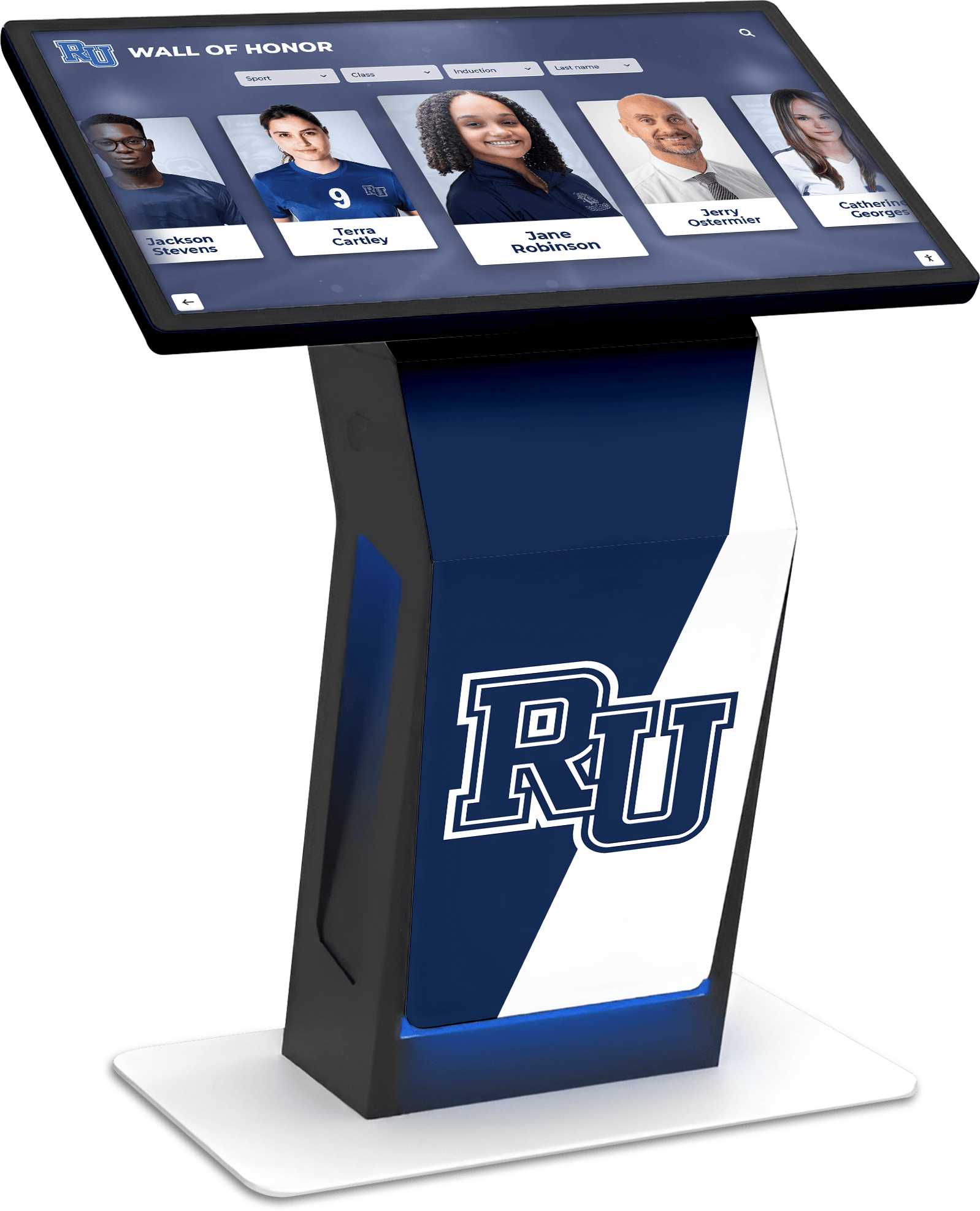
Honor wall kiosks depend on correct IPv6 gateway configuration to deliver live recognition content — RA Guard ensures the display always receives only the legitimate router's advertisements
RA Guard Configuration Reference for Common School Switch Platforms
| Switch Platform | RA Guard Support | Policy Command | Port Assignment Command | Uplink Handling |
|---|---|---|---|---|
| Cisco Catalyst (IOS) | Full | ipv6 nd raguard policy <name> | ipv6 nd raguard attach-policy <name> per interface | Apply router-role policy or leave unconfigured |
| Cisco Catalyst (IOS XE) | Full | ipv6 nd raguard policy <name> | ipv6 nd raguard attach-policy <name> per interface | Apply router-role policy or leave unconfigured |
| HP / Aruba ProCurve | Full | ipv6 nd-ra-guard enable | ipv6 nd-ra-guard port-role host <ports> | ipv6 nd-ra-guard port-role router <ports> |
| Aruba CX (ArubaOS-CX) | Full | ipv6 nd-ra-guard policy <name> | ipv6 nd-ra-guard attach-policy <name> per interface | Apply router-role policy or leave unconfigured |
| Juniper EX Series | Full | Per-VLAN RA Guard | set vlans <vlan> ra-guard interface <port> role host | set vlans <vlan> ra-guard interface <port> role router |
| Netgear Smart Managed | Limited | IPv6 ACL on VLAN | Block ICMPv6 Type 134 inbound on host ports via ACL | Permit ICMPv6 Type 134 on uplink port via ACL |
| Ubiquiti UniFi | Limited | USG/UDM firewall rules | Block ICMPv6 Type 134 on VLAN via firewall rule | Permit ICMPv6 Type 134 from router IP |
| TP-Link TL-SG2xxx | Limited | IPv6 ACL | Block ICMPv6 Type 134 on access ports via ACL | Permit on uplink via ACL |
For platforms that lack native RA Guard support, an IPv6 ACL blocking ICMPv6 Type 134 (Router Advertisement) inbound on all host-facing ports is a practical mitigation. It is less precise than a dedicated RA Guard policy — it cannot distinguish router-role from host-role based on content — but it prevents rogue RA injection from access ports effectively when implemented on the correct port set.
Practical Checks: Supplementary IPv6 Display Protection Measures
When full RA Guard is not available or as defense-in-depth alongside RA Guard:
| Method | How It Works | When to Use |
|---|---|---|
| DHCPv6-only mode with RA M-flag enforcement | Configure the router to set the Managed (M) flag in legitimate RAs, requiring hosts to use DHCPv6 for address assignment; configure displays to ignore SLAAC | When DHCPv6 infrastructure exists and display OS supports DHCPv6-only mode |
| IPv6 ACL blocking ICMPv6 Type 134 inbound on host ports | Blocks RA packets from being received on access ports regardless of their source | On switches without native RA Guard support |
| Dedicated IPv6 VLAN for recognition displays | Isolates displays to a VLAN served only by the legitimate router; limits the rogue RA attack surface to devices on that VLAN only | When display traffic can be separated from general student and staff traffic |
| Static IPv6 addressing on display devices | Assigns a fixed IPv6 address, prefix, and gateway to the display, bypassing SLAAC entirely | When RA Guard cannot be implemented and DHCPv6 is unavailable; requires manual maintenance on device replacement |
| Router RA rate limiting | Configure the router to send RAs frequently enough that the legitimate RA always arrives before a rogue one | Not a substitute for RA Guard; useful as defense-in-depth to reduce the window during which a rogue RA could take effect before the next legitimate RA |
Static IPv6 addressing on the display device is the most robust mitigation when RA Guard is unavailable, because it removes SLAAC dependency entirely — the display ignores all RA messages for address configuration. The drawback is manual maintenance on any IP change and the loss of automatic gateway failover if the school deploys redundant IPv6 routers.
Recognizing school communities through digital displays depends on displays that remain reliably connected to content platforms — protecting the IPv6 stack from rogue RA injection is as much a content reliability measure as it is a security measure.
Common RA Guard Pitfalls on School Recognition Networks
RA Guard applied globally without exempting the router-facing uplink. The most frequent misconfiguration: a network administrator applies a host-role RA Guard policy to all ports on a switch, including the uplink carrying legitimate RAs from the school router. The display no longer receives legitimate Router Advertisements, loses its IPv6 default gateway, and all IPv6 connectivity fails. The fix is always to explicitly exempt the uplink — either by applying a router-role policy or by removing any RA Guard policy from the uplink port.
RA Guard configured on the access switch but not on intermediate switches. If recognition displays connect through a stack of switches and RA Guard is only applied at the edge switch closest to the display, a rogue device connected to a different switch in the same broadcast domain can still inject RAs that reach the display. RA Guard must be applied at every access switch tier on all host ports in the affected VLAN.
Firmware updates resetting RA Guard configuration. On some switch platforms, a firmware update restores RA Guard settings to factory defaults, removing configured policies and port assignments. A display that ran reliably for months begins receiving rogue RAs after a scheduled firmware cycle, and the connection between the update and the new behavior is not immediately obvious. Add RA Guard verification to the post-update checklist for all switches serving recognition displays.
IPv6 tunneling bypassing RA Guard. If a device on the VLAN uses an IPv6 transition mechanism — 6in4 tunneling, Teredo, or ISATAP — it can deliver RA messages encapsulated inside IPv4 packets that RA Guard does not inspect. On school networks, disable IPv6 tunneling mechanisms at the firewall and on managed device policies to close this gap.
Display OS processing RAs with preference flags that override RA Guard-allowed routes. IPv6 RA messages carry preference flags (high, medium, low) that influence route selection when multiple default routes exist. A rogue RA arriving from outside the protected VLAN — for example, through a misconfigured router on an adjacent VLAN — with a high preference flag can override the legitimate default route even when RA Guard is protecting the display’s local segment. Verify that inter-VLAN routing does not allow RA messages to leak between VLANs.
Ensuring data integrity in digital recognition platforms requires attention to both application-layer data quality and network-layer connectivity reliability — RA Guard addresses the network layer, ensuring display devices receive correct routing information and deliver recognition content without IPv6-related disruption.
Recognition Display IPv6 RA Guard Test Checklist
Use this checklist during the test session with your network administrator. Print and complete it for each recognition display on an IPv6-enabled managed switch.
- Display IPv6 address confirmed — from device network settings or DHCPv6 lease table
- School router’s IPv6 link-local address on the display VLAN confirmed — used as comparison baseline
- Switch make, model, and firmware version noted for reference
- Display port number and VLAN assignment confirmed
- RA Guard global status checked — policy defined and not empty on the switch
- Display port RA Guard policy verified —
device-role hostorport-role: hostconfirmed - Uplink / router port RA Guard status verified — not classified as host; legitimate RAs are not blocked
- Display’s current IPv6 default gateway checked — matches school router’s link-local address
- No multiple default routes present — display routing table shows a single default via the school router
- Test RA packet sent from a host port on the same VLAN — using scapy or radvd on a test laptop
- Display routing table checked after test RA — rogue prefix not adopted; default gateway unchanged
- Switch RA Guard drop counter incremented — confirmed the test RA was dropped at the switch
- RA Guard configuration applied or corrected if any step above failed
- Rogue RA effects cleared — display IPv6 routing table flushed and rebuilt from legitimate RA if needed
- Display global IPv6 address confirmed — correct prefix assigned via SLAAC or DHCPv6
- CMS connectivity verified over IPv6 — ping6 or content sync test completed successfully
- Configuration saved to non-volatile storage —
write memoryor equivalent run on the switch - RA Guard verification added to post-firmware-update checklist for this switch
When to Rerun the IPv6 RA Guard Test
Run the recognition display IPv6 RA Guard test:
- At initial display installation on any IPv6-enabled VLAN — confirm RA Guard is active before declaring the display production-ready
- After any switch replacement or firmware update — replacement hardware may have different RA Guard defaults, and firmware updates may reset configured policies
- When intermittent IPv6 connectivity failures appear on a display that passes IPv4 tests — rogue RA injection is the first hypothesis on an IPv6-enabled network
- After adding a recognition display to a VLAN that previously served only IPv4 workstations — the VLAN may not have RA Guard policies configured because no prior IPv6 devices existed on it
- After any network redesign that changes VLAN assignments or switch port configurations — port roles and policy attachments must be revalidated after any structural change
- When a new unmanaged switch, access point, or PoE injector is added to the display’s network segment — devices connected through these can introduce rogue RA sources that bypass port-level RA Guard unless the device is behind a host-role port
Award display programs marking milestone reunions and class achievements — where displays run continuously and reliably in public spaces — depend on the same IPv6 protections as year-round athletic hall of fame installations; the test applies equally to any recognition display connected to an IPv6-enabled school network.
Lobby recognition screens depend on uninterrupted IPv6 connectivity to deliver live content during peak school hours — RA Guard ensures the display's gateway configuration is never silently overridden by an unauthorized device on the same VLAN
Frequently Asked Questions
Q: Do we need IPv6 RA Guard if our school uses only IPv4?
No. IPv6 RA Guard is relevant only when IPv6 is enabled on the VLAN serving the recognition display. If the display VLAN is IPv4-only and IPv6 is disabled at the router level for that segment, rogue RA injection cannot affect the display. However, many school networks have IPv6 enabled on student and staff VLANs even if IPv6 was never explicitly planned — verify with show ipv6 interface on the router to confirm whether IPv6 is active on the display VLAN before concluding the test is unnecessary.
Q: What if the recognition display uses DHCPv6 instead of SLAAC?
A display using DHCPv6 still processes RA messages for default gateway configuration unless the OS is configured to ignore them completely. The Router Advertisement’s Router Lifetime field and its M (Managed) and O (Other) flags influence whether the host uses DHCPv6, but the default gateway — the via address — comes from the RA regardless of whether addresses are assigned via SLAAC or DHCPv6. A rogue RA can still replace the default gateway even on a DHCPv6-addressed display. RA Guard remains necessary.
Q: Can RA Guard cause problems if the school deploys IPv6 redundant routers with VRRP or HSRP?
Yes, with a specific caveat. In a dual-router redundancy configuration, the standby router may need to send RA messages to take over as the default gateway when the primary fails. If RA Guard is configured with only one uplink port classified as a router port, the standby router’s RAs may be blocked. Verify that both router-facing uplink ports are classified as router ports in the RA Guard policy, or use a single logical port carrying both routers’ traffic through a redundancy-aware aggregation link.
Q: The switch platform we use does not support native RA Guard. What should we do?
Use an IPv6 ACL to block ICMPv6 Type 134 (Router Advertisement) inbound on all access ports serving recognition displays. Apply the ACL to the display VLAN’s access ports only — not the uplink. This stops rogue RAs from host ports without requiring native RA Guard support. Alternatively, assign static IPv6 addressing to the display device and disable SLAAC on the OS so no RA message — legitimate or rogue — affects the display’s routing configuration.
Q: Our display shows the correct content over IPv4 but the CMS reports intermittent disconnections. Could this be an RA Guard issue?
Only if the CMS connection uses IPv6. If the CMS has an AAAA DNS record and the display’s OS prefers IPv6 (which is default behavior on dual-stack hosts), the CMS connection will attempt IPv6 first. A rogue RA affecting the display’s IPv6 default gateway will cause those connections to fail intermittently, while IPv4 fallback connections — tried after a timeout — will succeed. The result is intermittent CMS disconnection events with a consistent recovery pattern. Verify the display’s IPv6 default gateway per Step 4 to confirm or rule out this cause.
Q: How does this test relate to other IPv6 security features like DHCPv6 Guard and ND Inspection?
RA Guard addresses the specific threat of unauthorized Router Advertisement messages. DHCPv6 Guard addresses a related threat: unauthorized DHCPv6 server responses that assign incorrect addresses or DNS servers to the display. Neighbor Discovery (ND) Inspection — sometimes called IPv6 Snooping — provides a broader framework that includes both, plus tracking of IPv6-to-MAC bindings similar to ARP inspection for IPv4. For comprehensive IPv6 security on a recognition display VLAN, all three are worth configuring. RA Guard is the most impactful first step because it prevents default gateway hijacking, which is the most disruptive attack for display connectivity.
Q: How does this relate to other network tests for recognition displays?
The RA Guard test addresses IPv6 Layer 3 routing security. It is complementary to — and distinct from — tests addressing Layer 2 stability such as the MAC address table aging test and ethernet auto-negotiation checks. For a complete network readiness picture on a dual-stack IPv6 school network, run the MAC address aging test to address Layer 2 forwarding stability, the DSCP marking verification to address QoS for video traffic, and the RA Guard test to address IPv6 routing integrity. Academic achievement award programs and athletic recognition displays share the same network foundation — these tests apply across all recognition display categories.
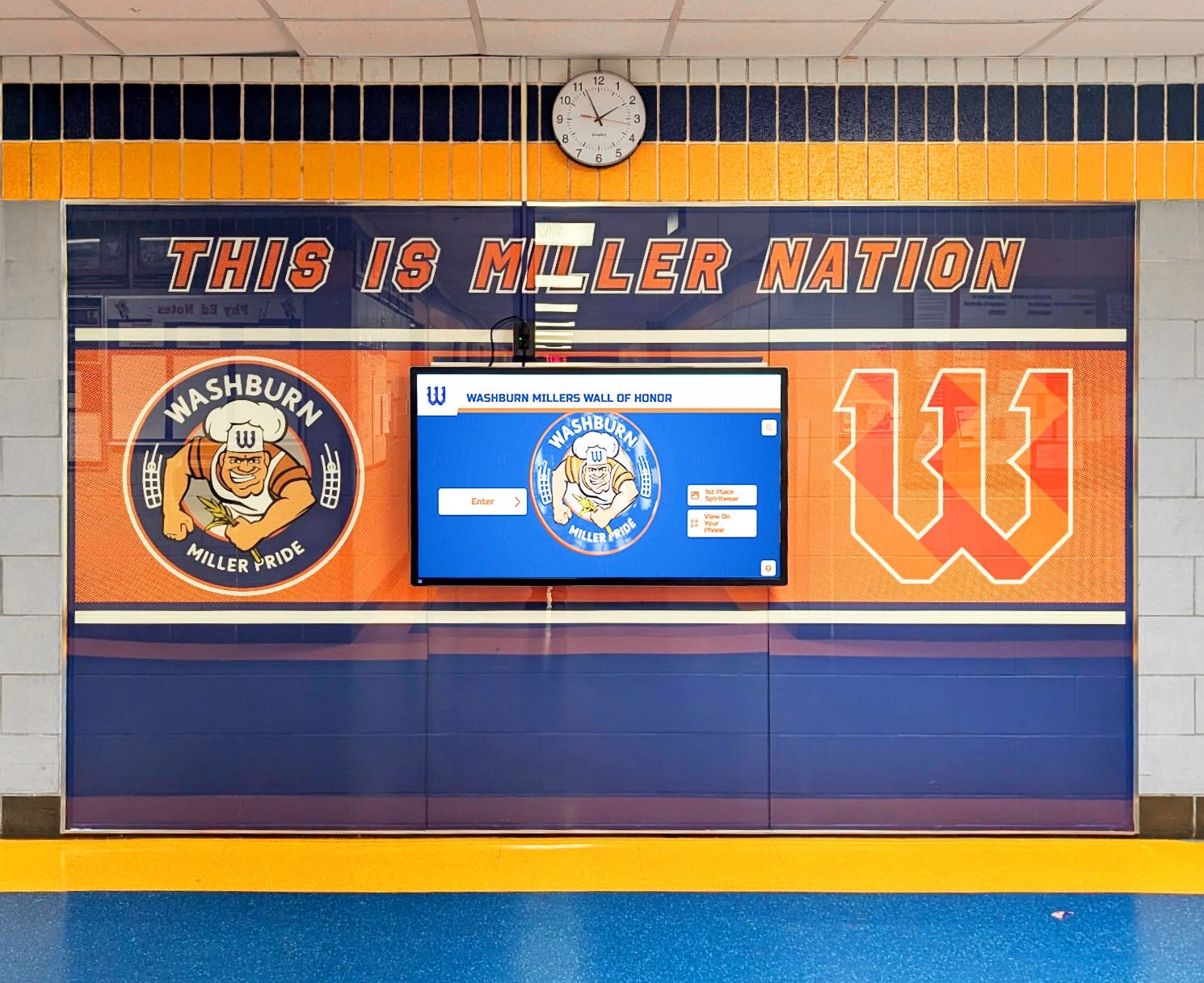
Wall of honor installations require network-level protections — including IPv6 RA Guard — to keep recognition content flowing reliably through every school day and event
Stable IPv6 Creates Warmer Recognition Experiences
A recognition display cannot warm a school community if it silently routes its CMS traffic through a rogue gateway, misses content updates because a student device on the same VLAN sent an unauthorized Router Advertisement, or intermittently fails to deliver hall of fame content because its IPv6 default route was overwritten without any visible indication. RA Guard closes that vulnerability at the switch level — before it affects visitors, students, and families who rely on the display to celebrate athletic history, academic achievement, and school community identity.
Running the recognition display IPv6 router advertisement guard test at installation, after any switch change, and whenever dual-stack connectivity failures appear gives school IT staff a concrete, verifiable answer for a class of network problems that bypasses conventional diagnostic tools: no link-down alert, no CMS error message, no IPv4 connectivity failure — only silent IPv6 traffic misdirection that clears itself when the rogue source disconnects and reappears whenever it reconnects.
Reunion and alumni recognition programs held in school facilities where lobby and corridor recognition displays are front and center depend on displays that work without interruption — IPv6 RA Guard is one of the network foundations that makes that reliability possible.
Rocket Alumni Solutions designs recognition display systems with school network environments in mind, including managed switch configurations, IPv6 VLAN deployments, RA Guard compatibility, and the security posture typical of modern K-12 and higher education networks. The implementation process covers RA Guard verification alongside MAC table stability, DSCP configuration, and content delivery readiness — so athletic directors, alumni leaders, and facilities teams have a complete network and security picture before the first visitor interacts with the display.
Ready to see a recognition display built to perform reliably on your school’s managed IPv6 network?
Schedule a demo with Rocket Alumni Solutions and see how athletic hall of fame walls, trophy corridor kiosks, and alumni recognition screens deliver consistent, uninterrupted content across dual-stack school network environments — with full support for RA Guard-protected switch configurations.