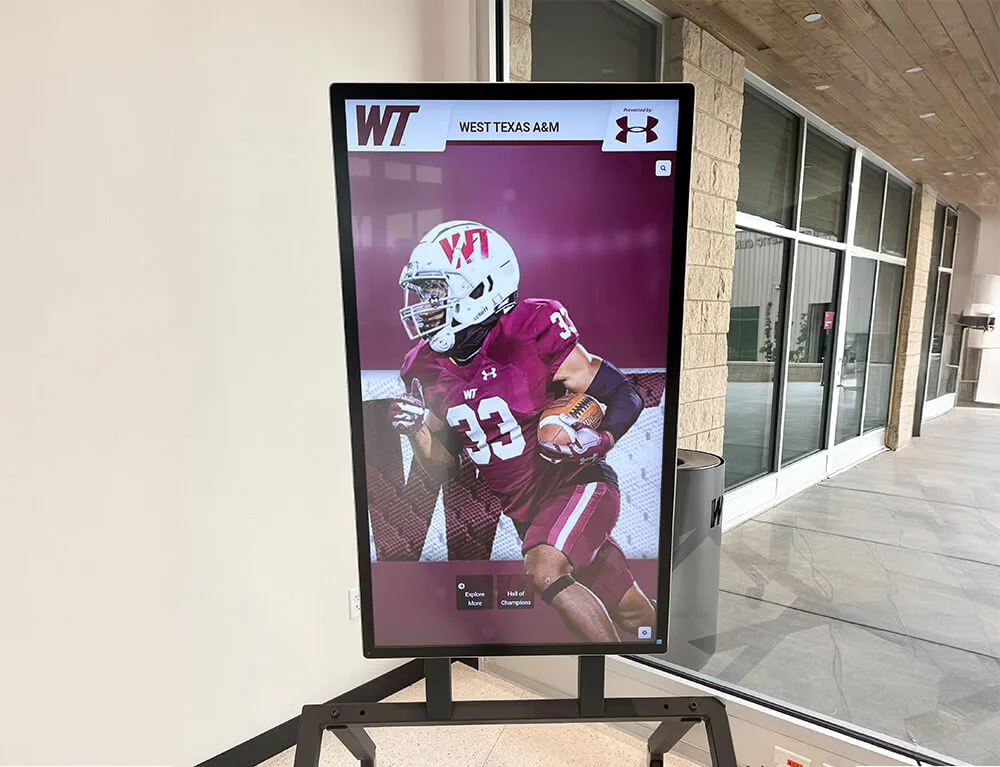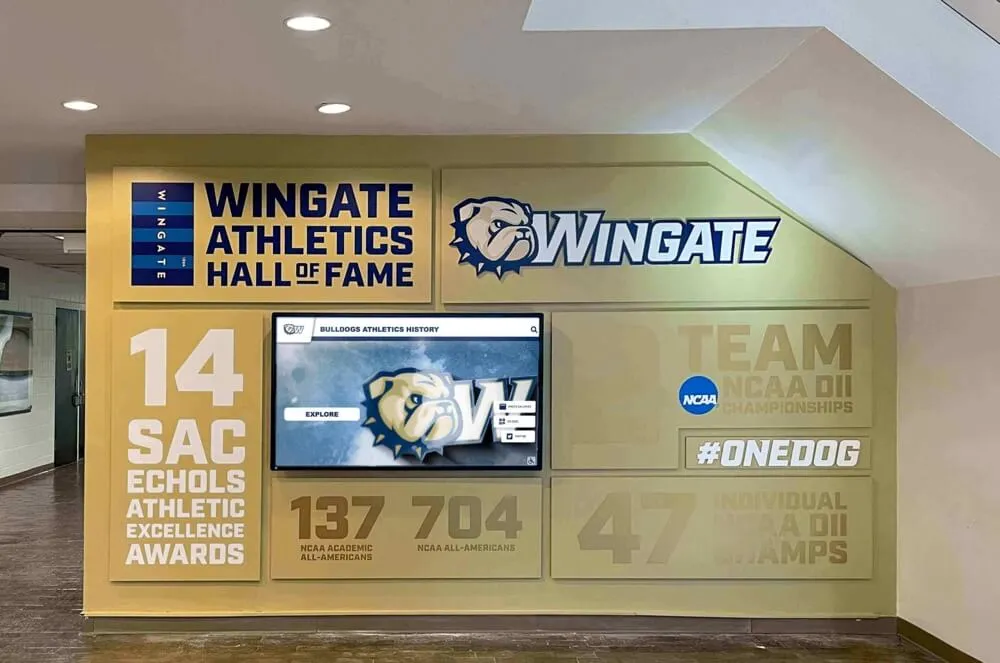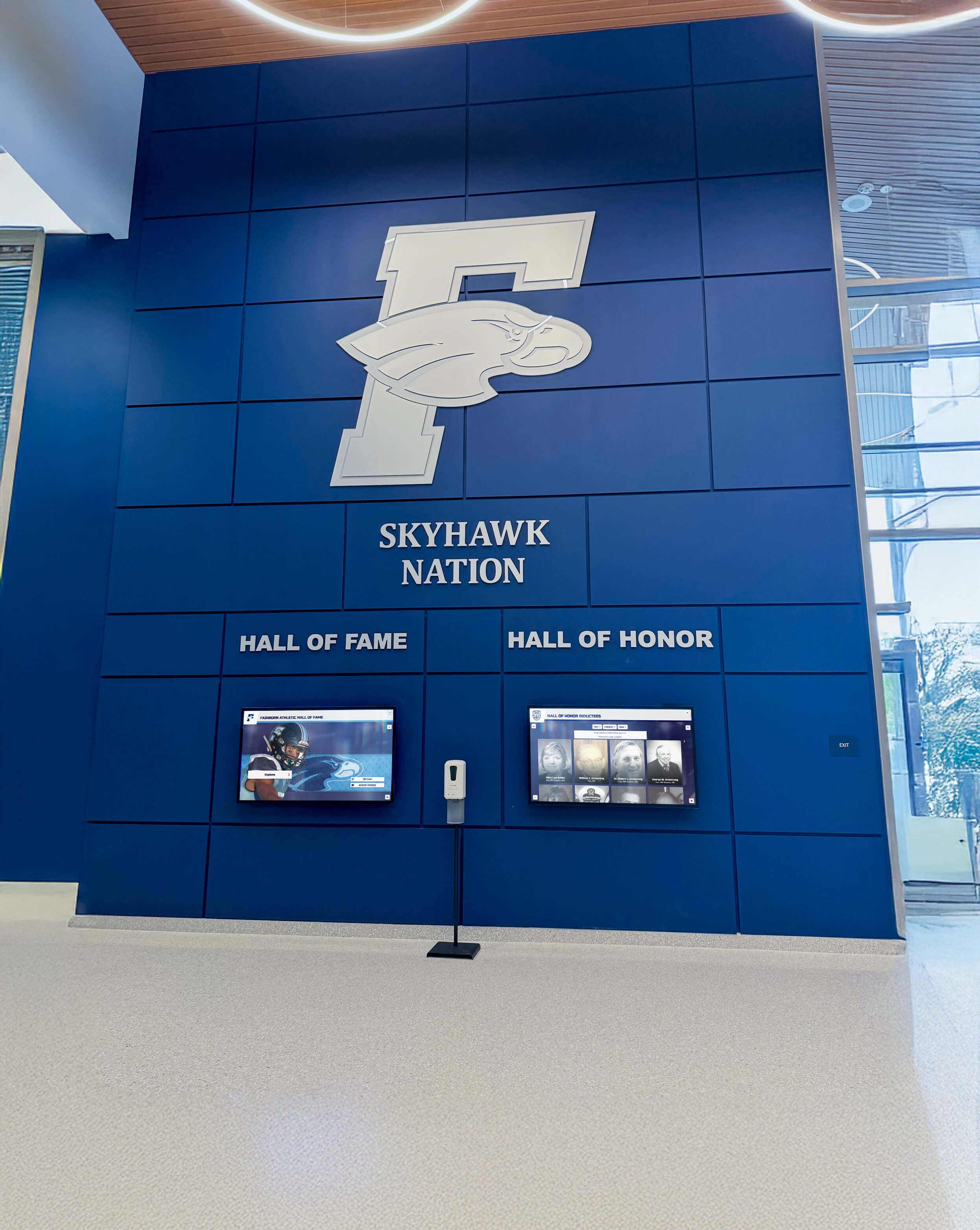
A principal shapes the culture of an entire school community—setting the tone each morning, supporting teachers through challenging days, advocating for students with special needs, welcoming families who feel uncertain, and quietly solving hundreds of problems most people never see. Principals carry the weight of accountability while distributing credit generously, invest evenings and weekends in planning that makes Monday mornings possible, and build institutional cultures that outlast any single school year.
Yet recognition for principals often arrives in bursts: a quick handshake during National Principals Month, an end-of-year gift card selected in a hurry, a generic card signed with dozens of indistinguishable names. Schools that genuinely want to honor their principals deserve better frameworks—thoughtful card designs that reflect care, wording crafted to feel personal rather than formulaic, and message strategies that help students, staff, and families articulate real gratitude.
A well-designed principal appreciation card accomplishes something simple but profound: it makes a leader feel genuinely seen. When wording moves beyond “thank you for everything” to name specific moments, decisions, and qualities that shaped community life, appreciation transforms from polite obligation into meaningful tribute. This guide provides the frameworks, wording ideas, and design strategies that help schools create principal appreciation cards worth keeping.
This comprehensive resource covers everything from quick single-message cards to large-scale group appreciation efforts, with specific wording examples for students, teachers, parents, and community members—plus guidance for schools wanting to extend principal recognition beyond paper and into the high-visibility spaces where communities gather.

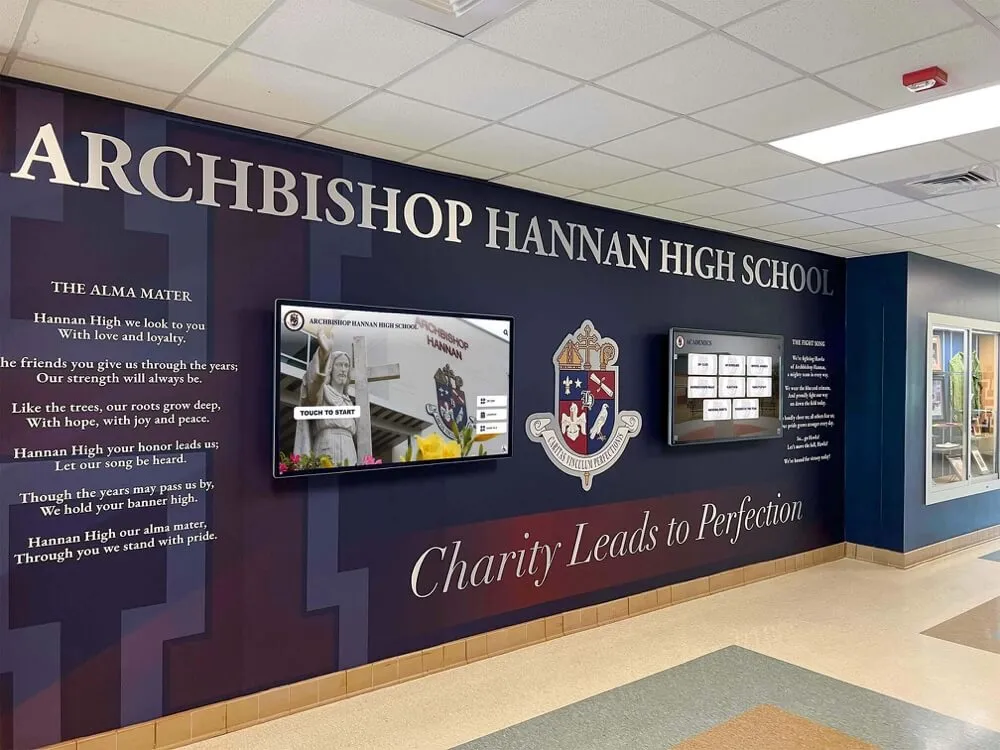
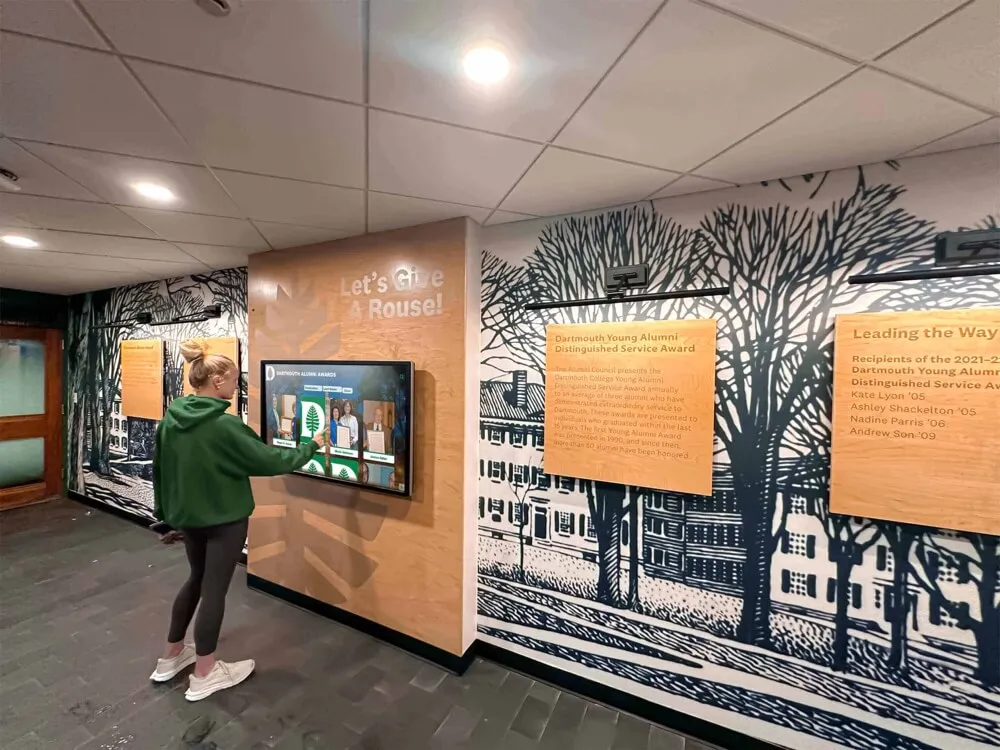
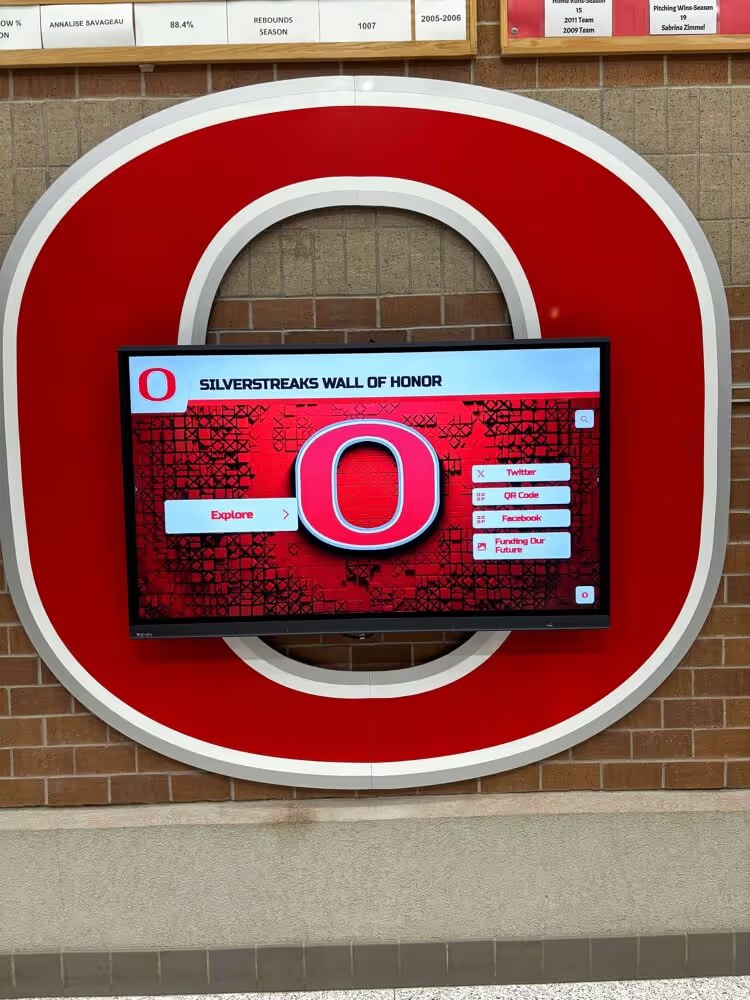
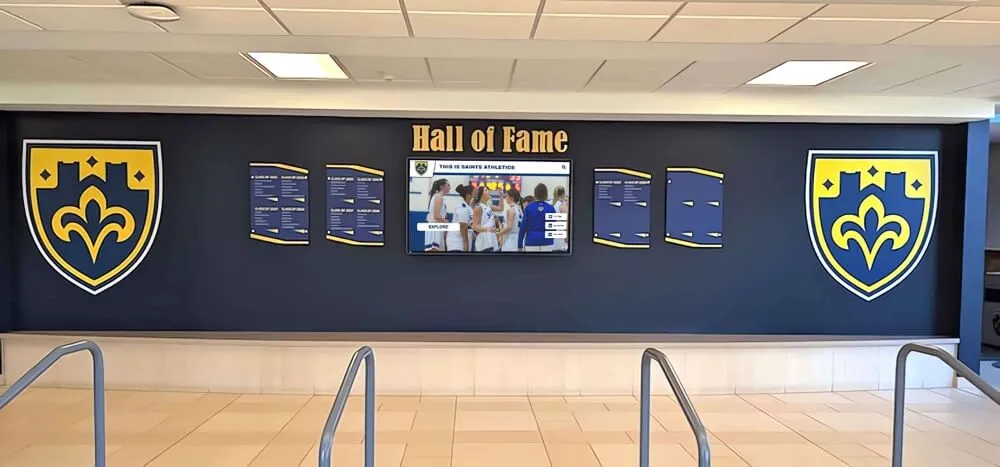
School lobbies and common areas offer powerful opportunities to display appreciation messages and recognition tributes where the entire community encounters them daily
When to Give a Principal Appreciation Card
Timing shapes how appreciation lands. A principal appreciation card given at the right moment carries meaning that a generic end-of-year gesture often misses.
National Principals Month and Appreciation Day
October is National Principals Month in the United States, with National Principals Day typically observed during the first week. This calendar anchor gives schools a natural, nationally recognized moment to organize appreciation efforts. Student councils often coordinate card campaigns during October, collecting messages from classrooms across grade levels and presenting a compiled tribute during a brief ceremony.
Appreciation during this period benefits from the shared context—principals often hear from peers at other schools, read recognition stories in professional communities, and feel the profession-wide acknowledgment that October brings. A thoughtfully written card delivered during National Principals Month arrives when the recipient is already reflecting on the meaning of educational leadership.
End of Year and Graduation Season
End-of-year appreciation occupies a natural emotional moment. Students and families are reflecting on growth across the school year, teachers are processing what the year meant, and the principal stands at the center of it all. Cards written in May and June often carry genuine reflection that rushed holiday cards lack.
For schools hosting senior appreciation events or graduation ceremonies, a principal recognition moment fits naturally. Student leadership programs frequently take ownership of end-of-year recognition, organizing class-wide card efforts and arranging thoughtful presentation moments.
Principal Retirement and Career Milestones
Retirement cards represent the most emotionally significant category of principal appreciation. A principal who has served a school for fifteen or twenty years has shaped the educational lives of thousands of students, mentored dozens of teachers, and left fingerprints on every corner of institutional culture. Retirement recognition deserves depth that a standard appreciation card cannot achieve alone.
When a principal announces retirement, schools benefit from beginning card collection several months in advance—reaching out to alumni who graduated under that principal’s leadership, gathering messages from teachers who began their careers in that building, and collecting reflections from community members who attended school board meetings, fundraisers, and athletics events over the years. Digital tribute systems for retiring staff provide one model for organizing and displaying the volume of recognition that a long-tenured principal’s career deserves.
Other milestone occasions worth card campaigns include:
- A principal’s fifth, tenth, or twentieth anniversary of service at the school
- Recognition following a school achieving accreditation or significant improvement status
- A principal receiving a district or state leadership award
- Completion of a major school renovation or building project the principal championed
Designing Principal Appreciation Cards That Feel Meaningful
Card design communicates care before the first word is read. A handmade card signals effort; a school-color-coordinated printed card signals institutional pride; a digital card with embedded photos and video signals sophistication. The right approach depends on who is giving, what the occasion calls for, and how much time is available.
Handmade Cards from Students
Elementary students creating handmade principal appreciation cards produce some of the most genuinely touching recognition any school leader receives. The imperfect letters, the crayon-drawn portraits, the specific observations children make about principals they admire—these carry authenticity that printed designs cannot replicate.
Classroom teachers can structure handmade card projects by asking students to complete a prompt before drawing: “My principal makes our school better because ___.” This simple framework channels creative energy toward specific appreciation rather than generic phrases. A first-grader who writes “because she always knows my name and I just moved here” gives a principal something worth framing.
For larger-scale student card efforts, recognition programs at the middle school level often coordinate across grade levels to collect cards that represent the full student body rather than a single class.
Printed and Designed Cards from Staff or Parents
Staff and parent organizations often produce cards with more visual polish—coordinating school colors, incorporating the school logo, and using design tools that allow for uniform, professional results. These cards work well for:
- Faculty appreciation signatures collected on a large-format printed card
- Parent organization tributes with space for dozens of signatures and messages
- Student council–designed cards representing the student body formally
When using printed templates, the most important design principle is leaving significant space for handwritten personal messages. A beautifully designed card filled with generic pre-printed sentiment and a few hurried signatures feels less meaningful than a simpler card covered in thoughtful personal notes.
Digital and Video Cards
Schools with access to video production resources or digital design tools can create multimedia appreciation experiences that go beyond what paper allows. A digital appreciation card might include:
- Compilation video of students and teachers sharing thirty-second messages
- Photo slideshow set to music showing the principal in memorable school moments
- Animated graphic with scrolling messages from community members
- Digital message board where contributors add notes from home
These formats work especially well for retirement recognition and major milestones where the depth of community appreciation justifies extended effort.
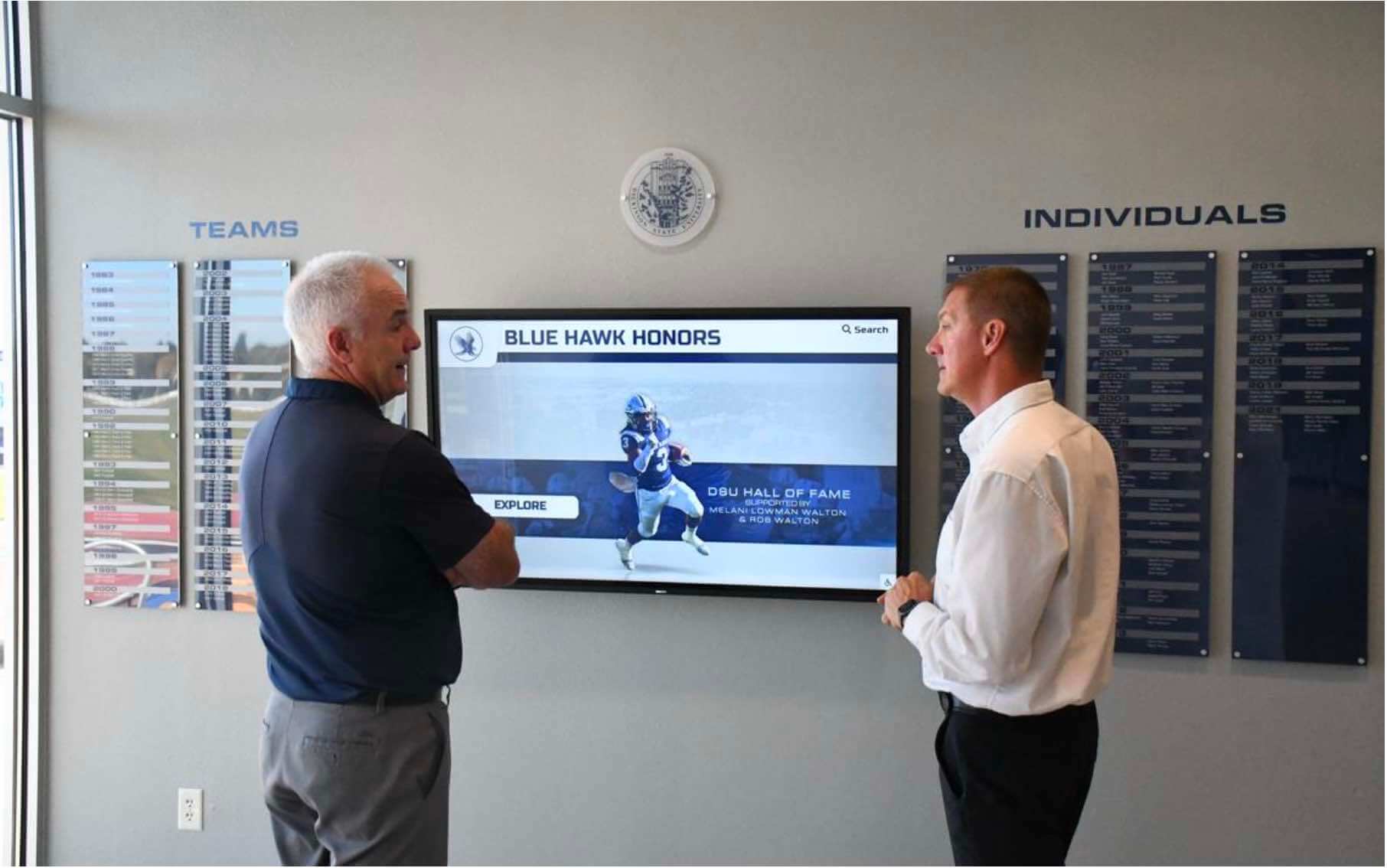
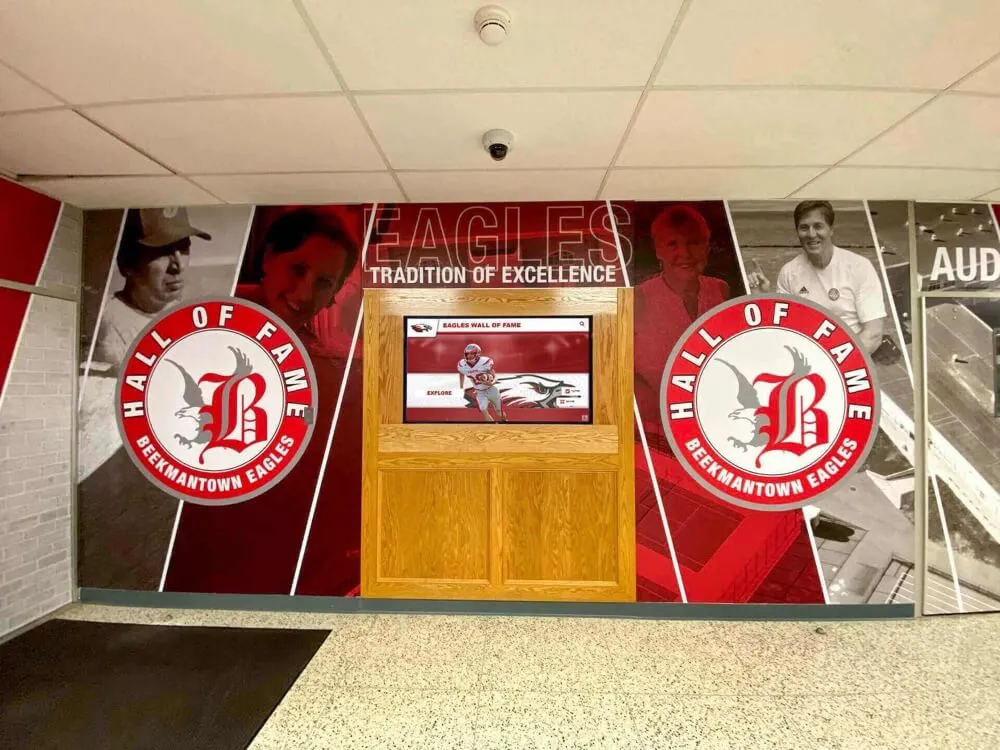
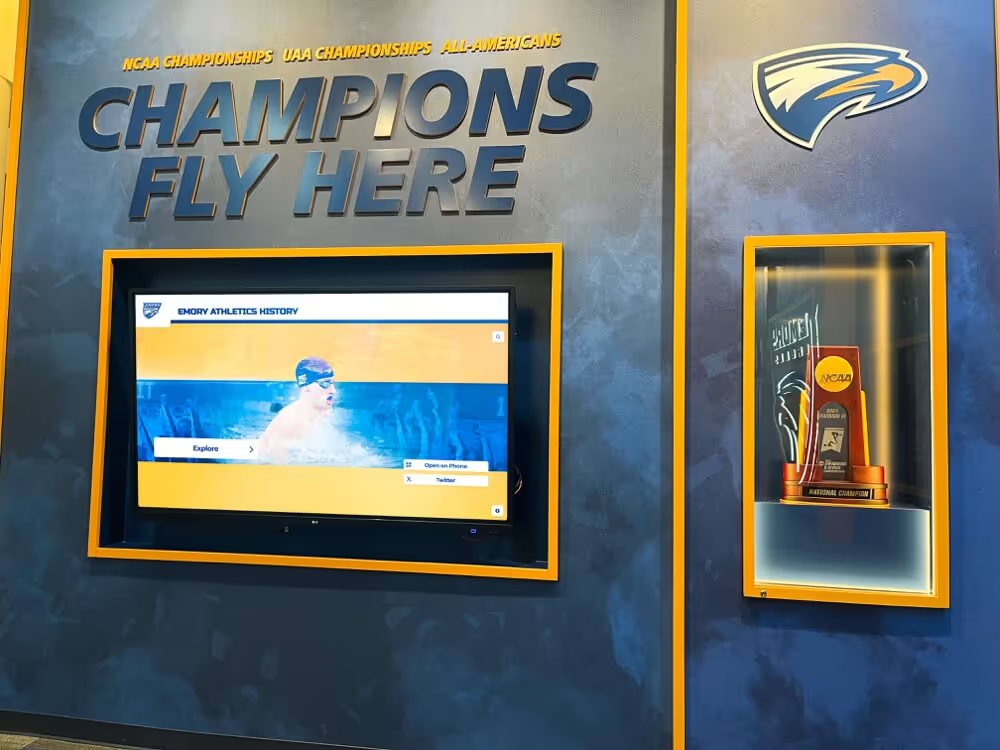
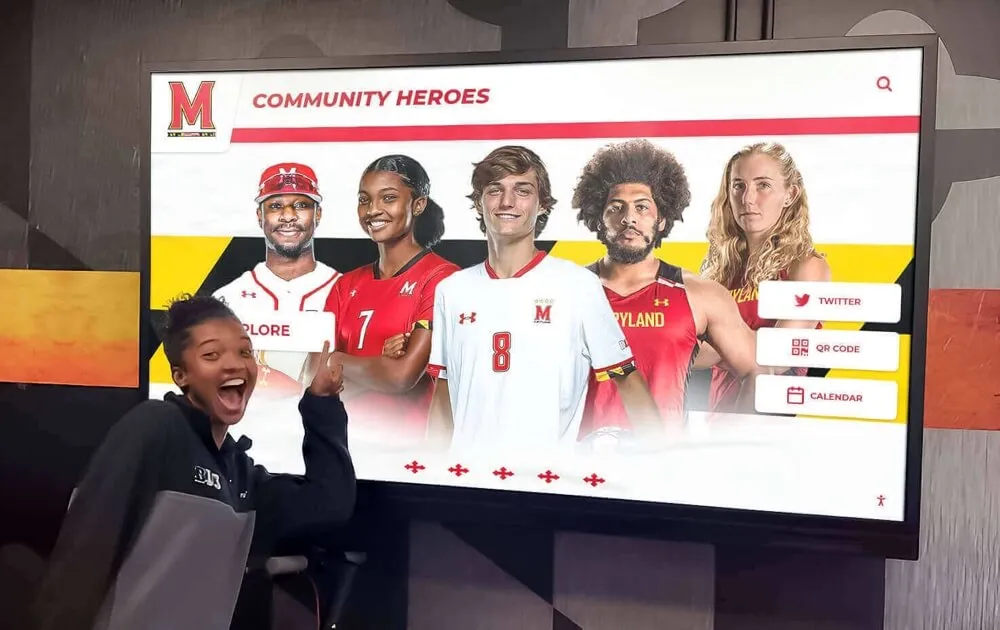
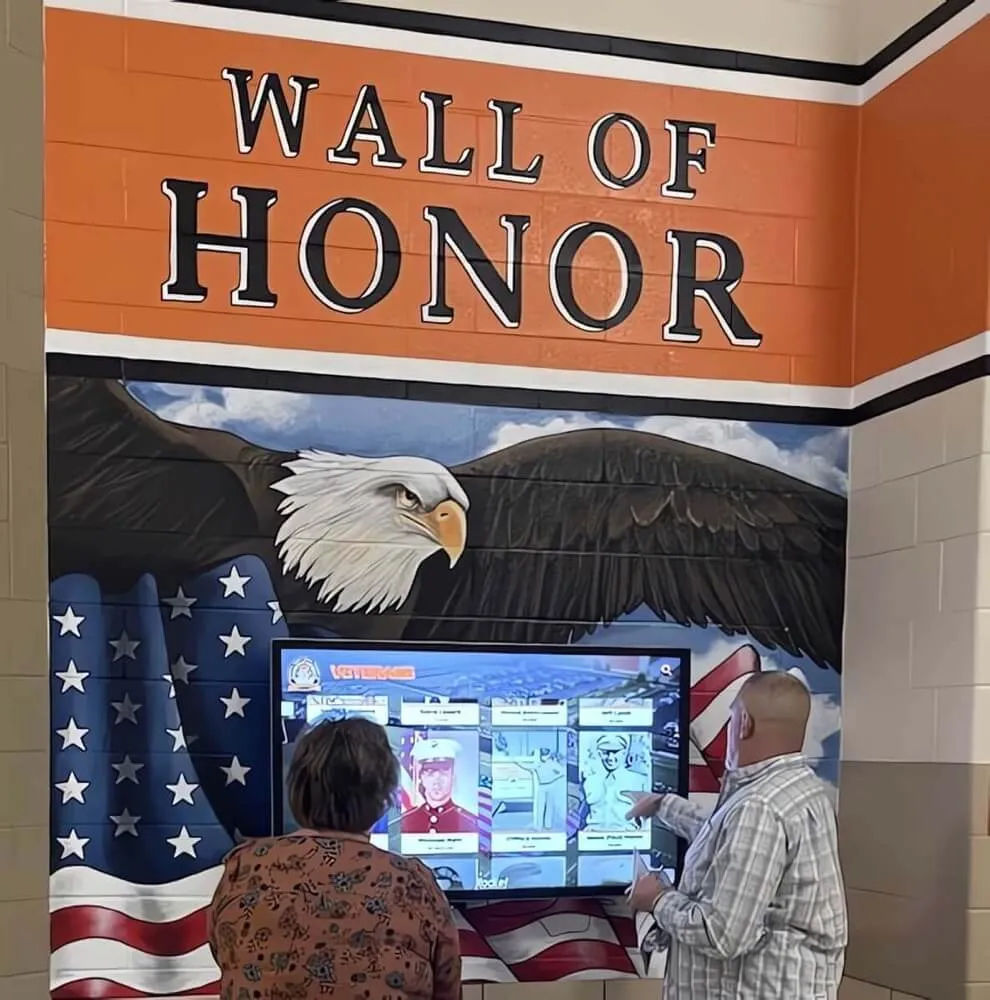
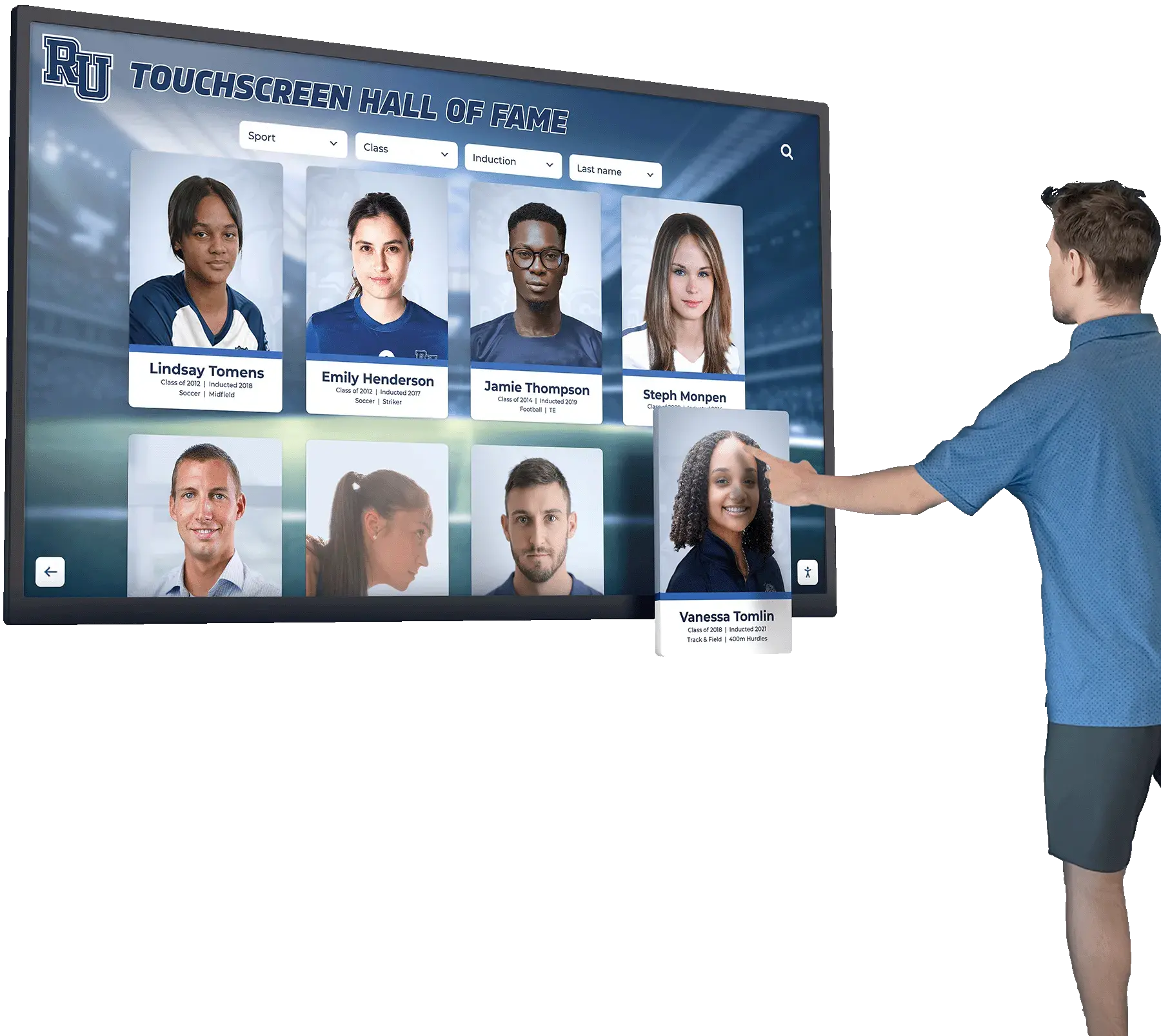
Interactive digital displays enable communities to engage with recognition content in ways that paper cards cannot—including browsing messages, watching video tributes, and exploring achievements
Wording Ideas for Principal Appreciation Cards
The most common complaint people make about writing appreciation messages is not knowing how to start or how to avoid sounding generic. These frameworks and examples provide starting points adaptable across different writers, grade levels, and occasions.
Messages from Elementary Students
Young students write most powerfully when they focus on concrete, observable things—what the principal does, how they act, what students notice:
Simple and specific:
- “You say good morning to everyone and it makes school feel safe. Thank you.”
- “When I was sad about lunch, you sat with me and talked. I didn’t forget that.”
- “You come to every assembly and you always clap the loudest for us.”
- “Thank you for making our school a place I like to come to.”
Observational appreciation:
- “I noticed you pick up trash in the hallway even though you’re the principal. That shows you care about our school.”
- “You remembered that I wanted to be a scientist and you told me about the science fair. Thank you for paying attention.”
Messages from Middle and High School Students
Older students can articulate appreciation more specifically and reflect on impact across years:
Reflective messages:
- “I came to this school not knowing anyone. You noticed I was nervous at orientation and you talked to me for five minutes. I’ve never forgotten that.”
- “The way you handled what happened in November—giving us space to grieve while keeping the school calm—showed me what leadership looks like under pressure.”
- “You’ve pushed me to take harder classes than I thought I could handle. I’m going to college because you believed in me before I did.”
Milestone-specific messages:
- “Four years goes fast. I want you to know that having a principal who knows students’ names and stories made this feel like a real community, not just a building.”
- “Thank you for fighting for the programs that made my high school years meaningful. Not every school has what we have.”
Messages from Teachers and Staff
Staff appreciation messages carry particular weight because they come from professional colleagues who observe principal leadership from close range:
Leadership recognition:
- “You’ve created a culture where teachers feel trusted. That trust makes us better educators.”
- “When the new testing requirements created chaos, you shielded our classrooms so we could keep teaching. That protection matters more than you know.”
- “You’ve given me honest feedback that made me a stronger teacher and delivered it in ways that felt supportive rather than critical. That balance is harder than it looks.”
Long-term service appreciation:
- “I’ve worked for several principals during my career. The way you run this school—with genuine respect for every person in it—is something I didn’t take for granted.”
- “Thank you for every professional development investment you made in our staff. The workshops, the coverage for observations, the coaching conversations—they added up to something significant.”
Retirement-specific messages:
- “Fifteen years of watching you turn this school into a community. The students who graduated never knowing what it was like before you arrived are the lucky ones.”
- “I was hired in your first year and I’m retiring in your last. Thank you for building something worth spending a career inside.”
Messages from Parents and Families
Parent appreciation carries the perspective of people whose children were shaped by a principal’s leadership:
Impact-focused messages:
- “My daughter struggled in third grade and you personally called us to talk about support options. You didn’t wait for us to come to you. That made all the difference.”
- “Three children through this school, twelve years of mornings at the front door, and you always made our family feel welcome. That’s not nothing—that’s everything.”
- “The way you handled the situation with the bullying last spring showed me that you care about individual kids, not just policies and procedures.”
Community leadership appreciation:
- “This neighborhood feels different because of this school, and this school feels different because of how you lead it.”
- “You’ve created a place where parents feel like partners rather than outsiders. Thank you for that.”
Messages from Community Members and Alumni
Community and alumni messages tend to carry historical perspective:
- “I graduated from this school twenty years ago. Walking back through these halls at the open house and seeing what you’ve built here—you should be proud.”
- “The students who come into my business for internships from this school are prepared, professional, and kind. You’re shaping people who are making this community better.”

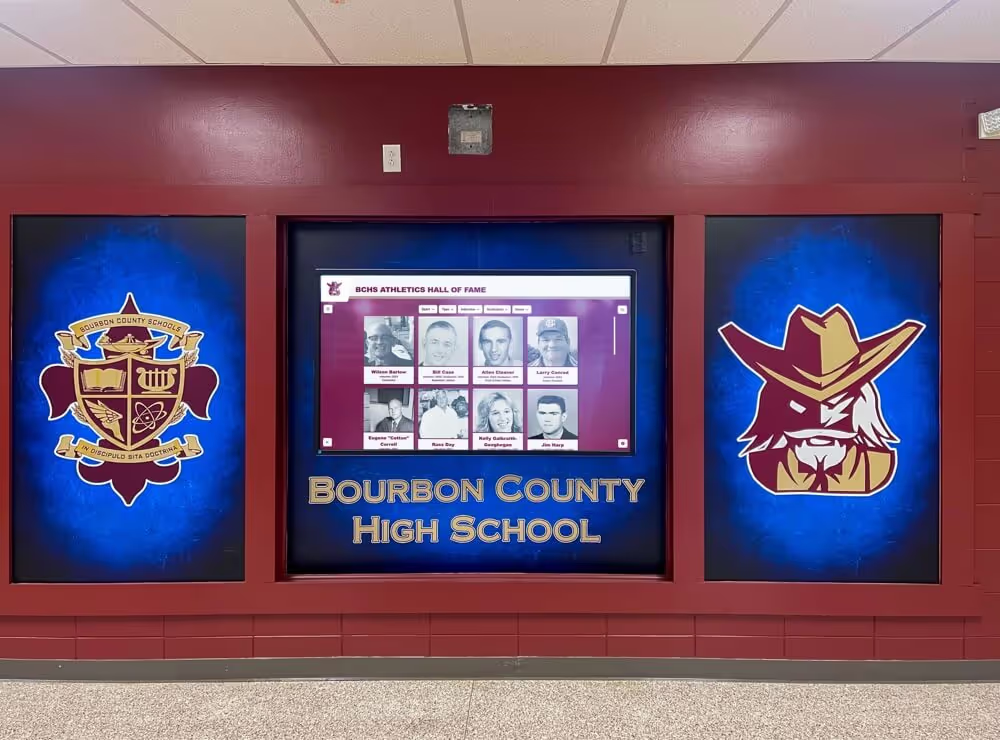
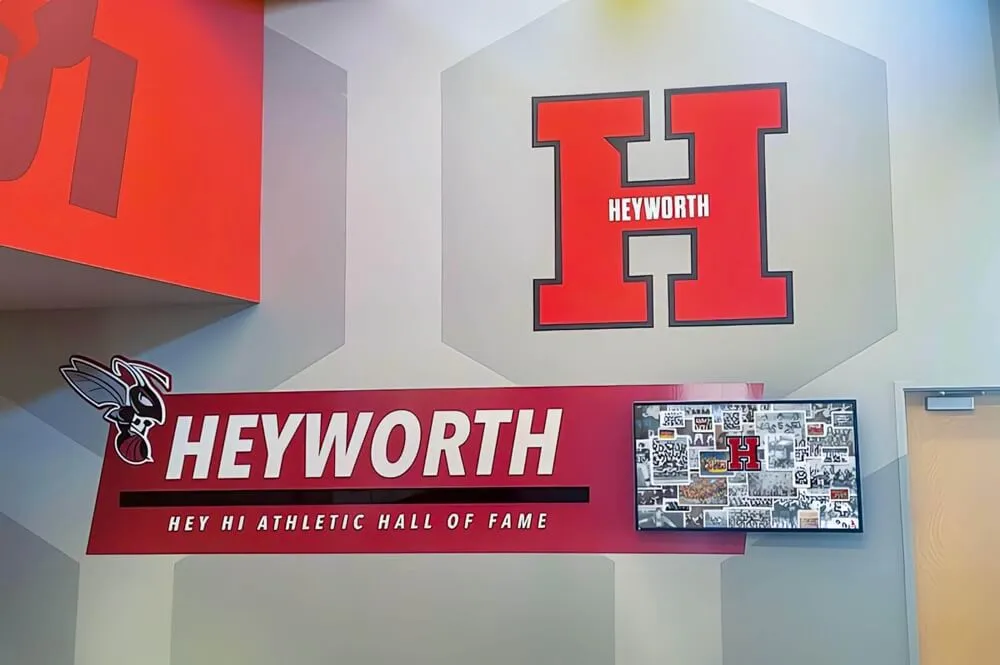
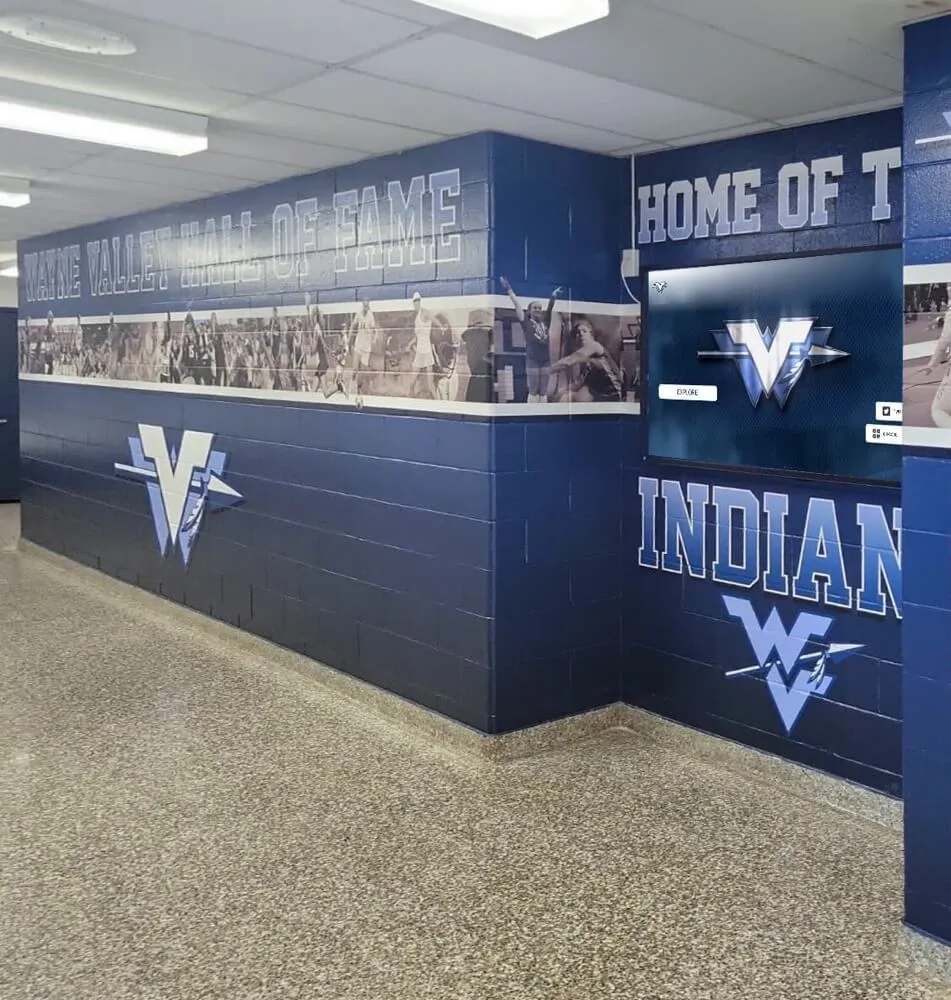
Hallway recognition displays create permanent visibility for school leaders and community contributors in high-traffic areas where students, staff, and visitors encounter them throughout the day
Organizing a School-Wide Principal Appreciation Card Campaign
Individual cards carry genuine warmth; organized community efforts carry institutional weight. When the entire school contributes to a single appreciation effort, the resulting tribute reflects the full scope of a principal’s impact.
Student Council-Led Campaigns
Student councils are natural organizers for school-wide appreciation card campaigns. An effective student council-led effort typically includes:
Planning phase (two to three weeks before presentation):
- Designate a small committee to design the card or select a template
- Establish a clear submission deadline that allows time for compilation
- Create a simple prompt that helps contributors move beyond generic messages
- Set up collection points in accessible classroom or common area locations
Collection phase:
- Distribute prompt cards to every homeroom or advisory class
- Coordinate with teachers to dedicate five minutes for students to write
- Collect faculty messages through the main office or department leads
- Gather parent messages through the school newsletter or parent organization email
Compilation and presentation:
- Arrange collected messages in a bound book, large-format poster, or digital display
- Coordinate with the assistant principal or a trusted staff member to arrange a surprise presentation
- Invite a student speaker to read selected messages aloud
- Consider presenting during morning announcements or a brief all-staff gathering
This kind of structured effort models the academic and community recognition programs that schools use to celebrate student and staff achievement across the year.
Coordinating Across Grade Levels
Large schools benefit from grade-level coordination that ensures broad participation without requiring individual teacher effort to improvise:
- Assign each grade level or department a different appreciation theme or prompt
- Create a visual display that shows contributions from every corner of the school
- Use color-coding to indicate message sources (blue for students, green for staff, yellow for parents)
- Incorporate multilingual messages for schools serving diverse language communities
Including Alumni and Long-Term Community Members
For principals with lengthy tenures, appreciation card campaigns gain depth when they reach beyond current community members:
- Post social media requests for alumni messages with a clear submission deadline
- Reach out to district staff who have worked with the principal over many years
- Contact athletic boosters, PTA alumni, and community organization leaders
- Ask retiring or recently departed staff members to contribute messages
Organizing these broader recognition efforts mirrors how schools build lasting staff tribute programs that preserve institutional memory and honor contributions across entire careers.
Moving Principal Appreciation Beyond Cards: Digital Recognition Displays
The principal appreciation card—however beautifully designed and thoughtfully worded—is a private exchange. The recipient reads it, feels the warmth, perhaps saves it in a desk drawer, and carries it privately through the next difficult week. That private resonance has real value. But many schools are discovering that appreciation messages gain additional power when they move into shared, public-facing spaces where the community encounters them continuously.
Lobby and Entrance Displays for Principal Recognition
School lobbies are the front doors of community life. Every family checking in, every prospective student touring the building, every community member attending an evening event enters through these spaces. Schools with digital display systems in lobbies and main corridors can use these high-visibility channels to share principal appreciation in ways that extend recognition into the daily flow of community life.
A lobby display cycling through curated appreciation messages—drawn from card campaigns, student tributes, staff reflections, and alumni testimonials—creates what might be called a digital warming effect: the accumulated warmth of community appreciation made continuously visible. Instead of a message tucked in a drawer, the community’s gratitude becomes part of the ambient experience of the building itself.
Comprehensive digital signage systems for schools now offer content management capabilities that make this kind of recognition straightforward: upload appreciation messages and photos, schedule display timing around appropriate occasions, and create recognition moments that the full community experiences together.
Interactive Touchscreen Recognition for School Leaders
Schools using touchscreen recognition installations in lobbies and hallways can dedicate profile space to current and former principals in the same way they honor athletes, donors, and academic leaders. An interactive principal recognition profile might include:
- Career biography and educational background
- Key initiatives and accomplishments during tenure
- Photos spanning the arc of service at the school
- Video testimonials from students, staff, and community members
- Curated appreciation messages representing different community voices
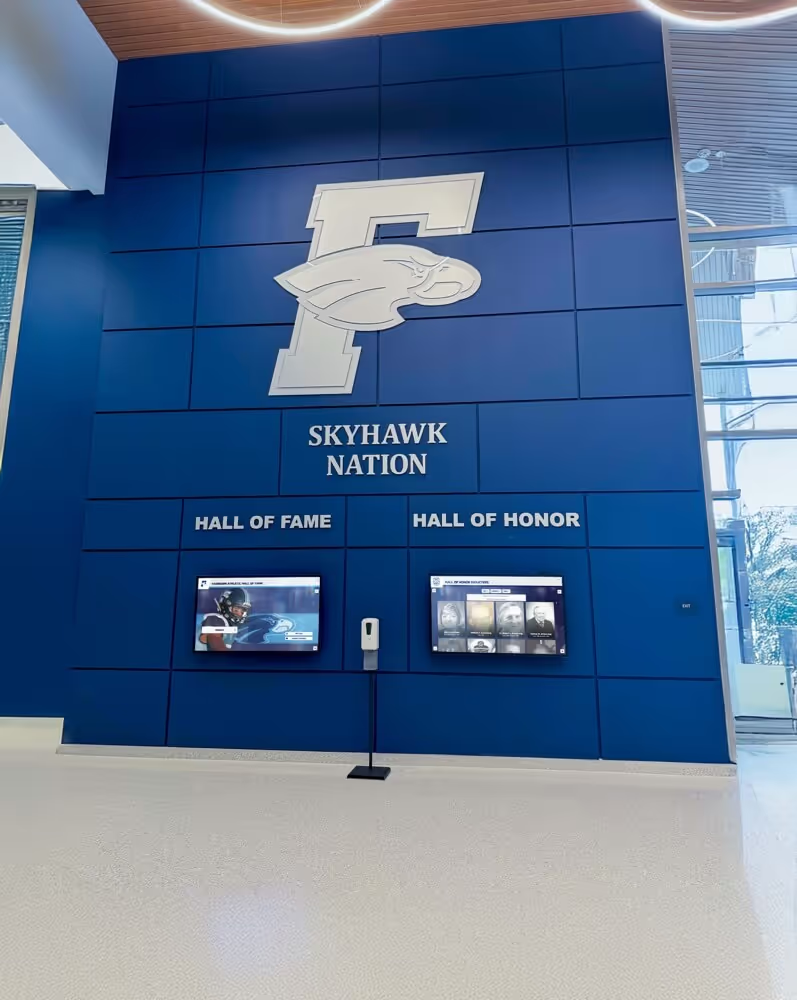
This kind of comprehensive recognition extends beyond a single card to create a lasting institutional record. Schools that have implemented high school touchscreen display systems report that including administrators and staff leaders—not just athletic honorees—creates recognition cultures where every community contributor feels seen.
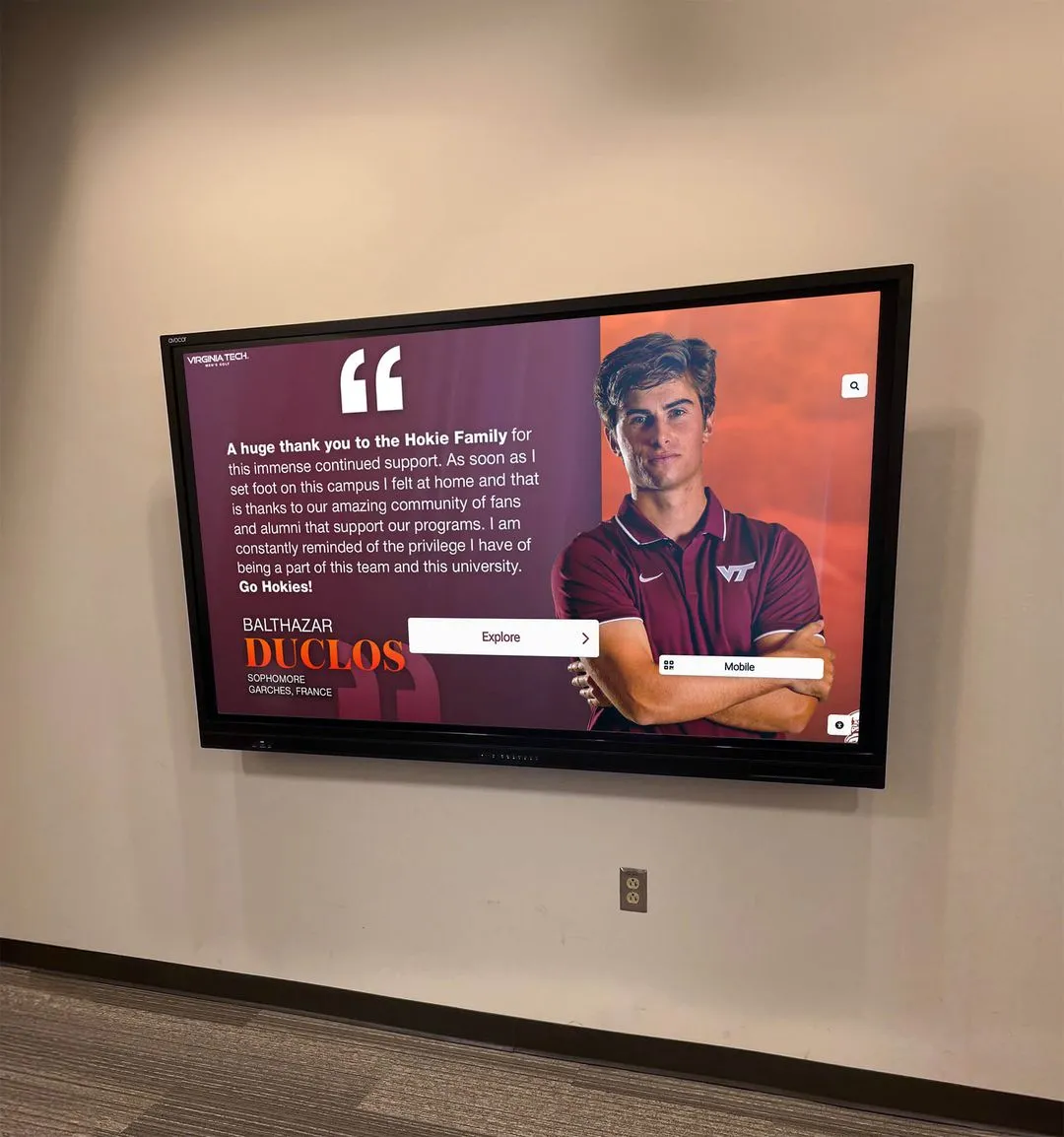
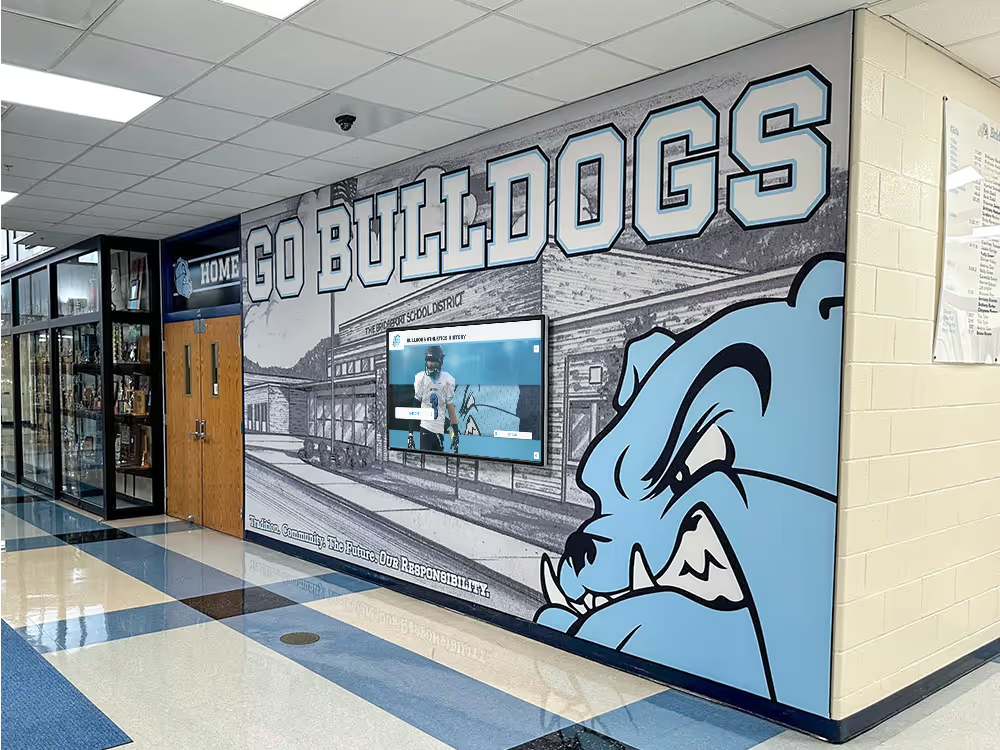
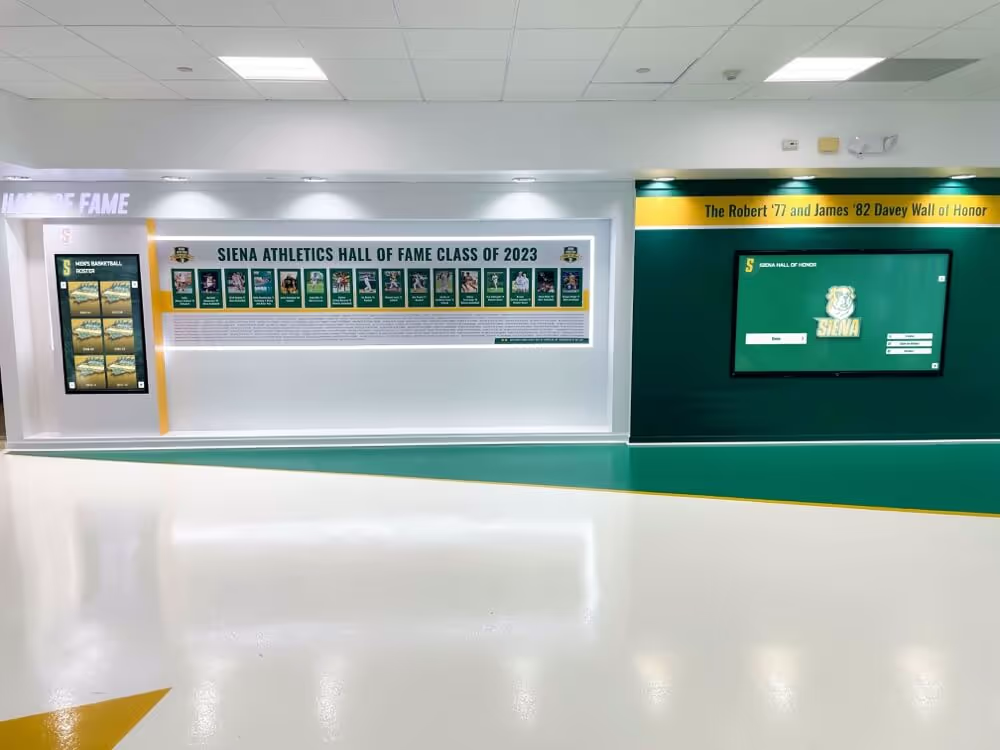
Recognition installations designed for student-facing spaces translate naturally to administrator appreciation—creating comprehensive displays that honor the leaders who shape school culture alongside the students they serve
Recognition That Lasts Beyond a Single Year
One practical limitation of appreciation cards is that they belong entirely to the recipient. When a principal retires, moves to a district role, or passes away, the cards move with them—or disappear. Digital recognition systems create institutional records that persist, preserving the community’s gratitude and the principal’s legacy as part of the school’s living history.
This matters for schools with long traditions. A principal who served for twenty years shaped the educational experiences of thousands of students. Creating a permanent digital profile honoring that service—accessible in the school lobby, the school website, and the school’s community portal—ensures that legacy remains visible to students who never met that principal but benefit every day from what they built.
Parallel to how schools honor coaches through permanent recognition, building permanent digital tributes for school administrators creates continuity between generations—connecting current students to the leaders who shaped the institution they inhabit.
Connecting Card Campaigns to Broader Appreciation Events
The most powerful principal appreciation efforts combine cards with broader recognition programming:
- Present the compiled card book at a staff appreciation event that celebrates all school leaders
- Display selected appreciation messages on lobby screens during the week of the presentation
- Record a video of students reading appreciation messages and screen it during morning announcements
- Archive digital appreciation content in the school’s recognition system for future access
Staff appreciation events that incorporate recognition moments for school administrators create occasions where the full community gathers around shared gratitude—transforming private appreciation into collective celebration.
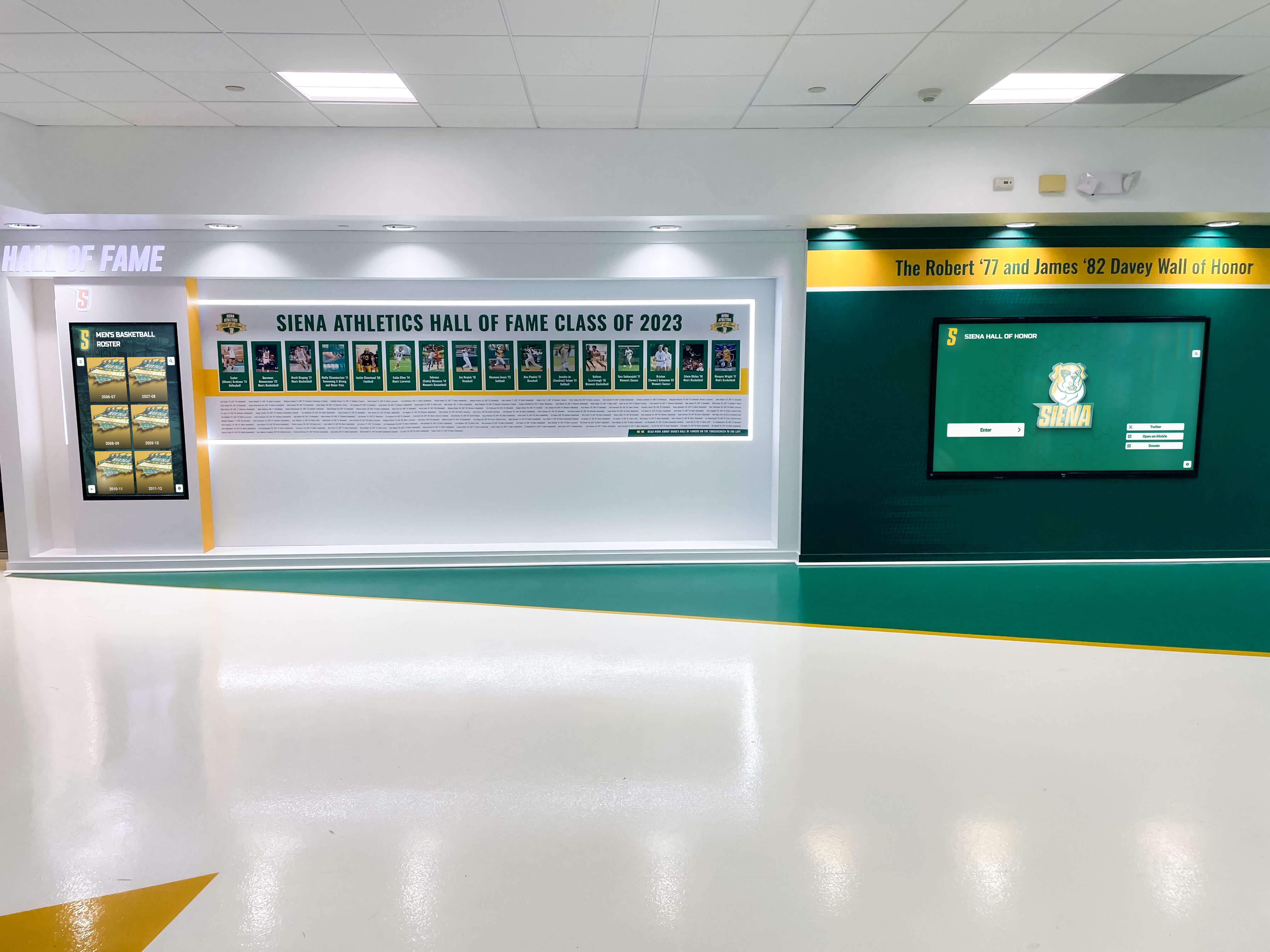
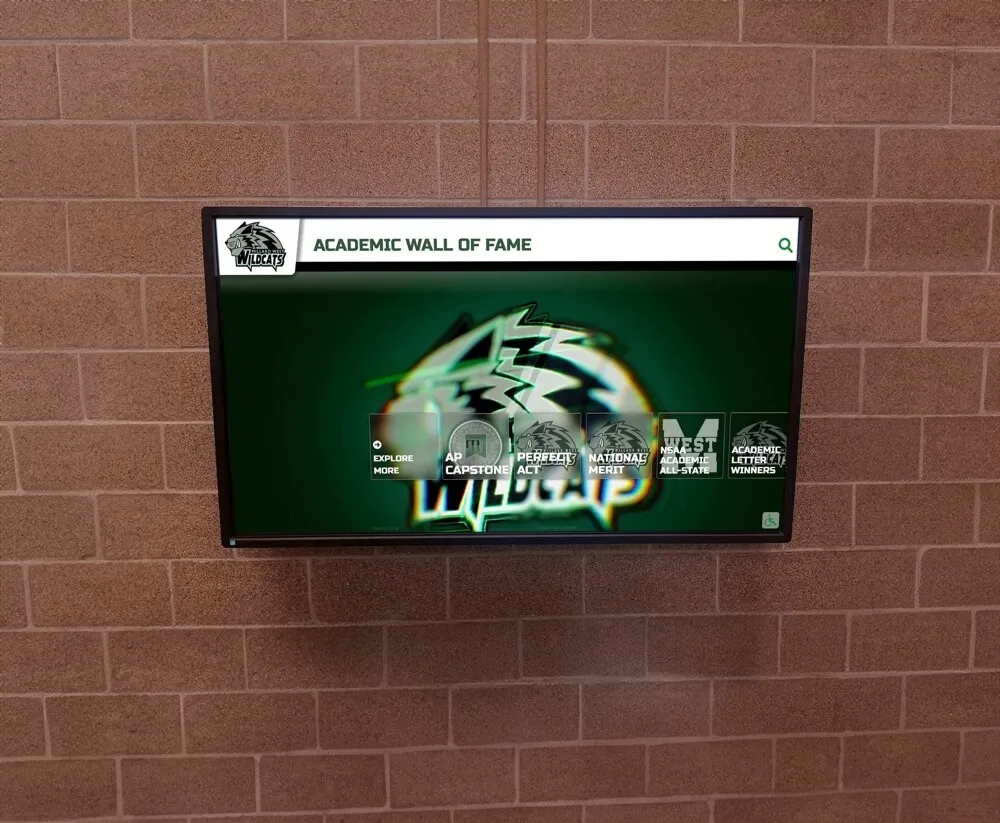
Organized recognition panels demonstrate how schools create lasting tributes to community contributors—a model that applies as naturally to principals and administrators as to athletic achievers
Practical Tips for Writing Appreciation Messages That Land
Across all the wording frameworks above, a few principles separate messages that principals genuinely treasure from those they read once and set aside:
Be specific about a moment. “Thank you for calling me directly when my son needed support last spring” carries ten times the impact of “thank you for caring about students.” Specificity signals that appreciation is genuine rather than obligatory.
Name a quality and explain how you observed it. “You are patient” is generic. “I’ve watched you stay calm in parent meetings that would have rattled anyone—and I’ve seen that calm change the outcome of difficult conversations” demonstrates rather than asserts.
Connect to personal impact. How did this principal’s leadership actually change something in your experience, your child’s experience, or your professional life? Messages that answer this question reach principal appreciation in ways that general gratitude rarely does.
Acknowledge difficulty honestly. “I know this year was hard” or “I watched you navigate something with real grace” validates the challenges of the role. Principals who receive only cheerful, uncomplicated messages sometimes feel that contributors haven’t fully understood what the work costs.
Keep it appropriately concise. Longer is not always better. A single perfectly crafted paragraph often makes more impression than five paragraphs of well-intentioned but wandering appreciation.
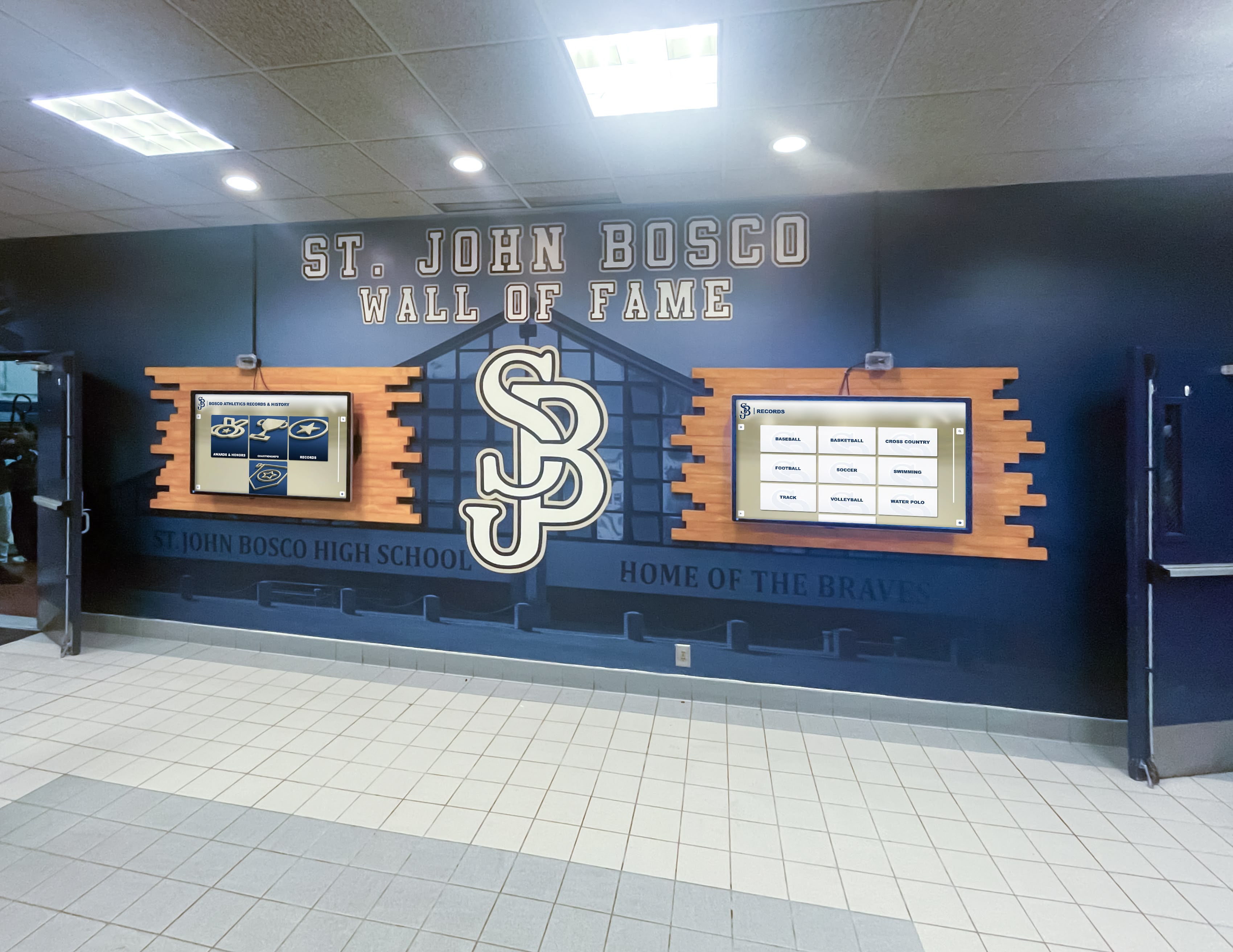
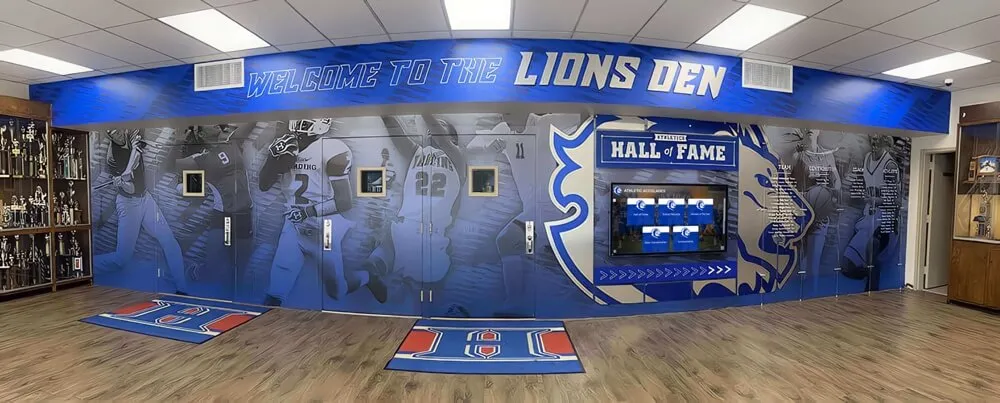
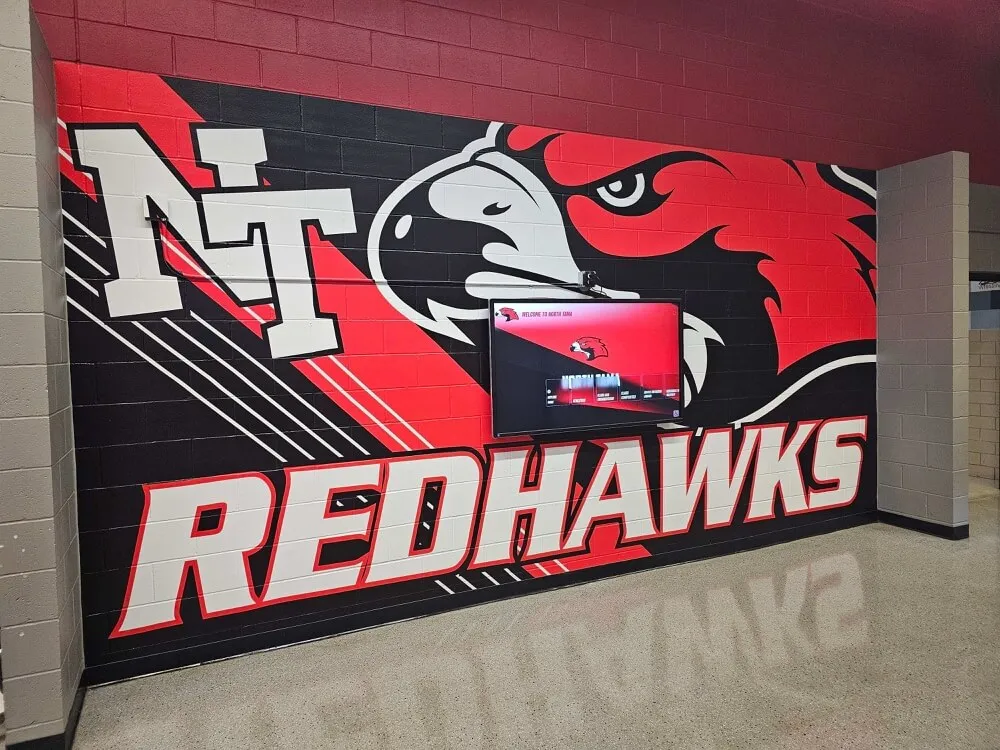
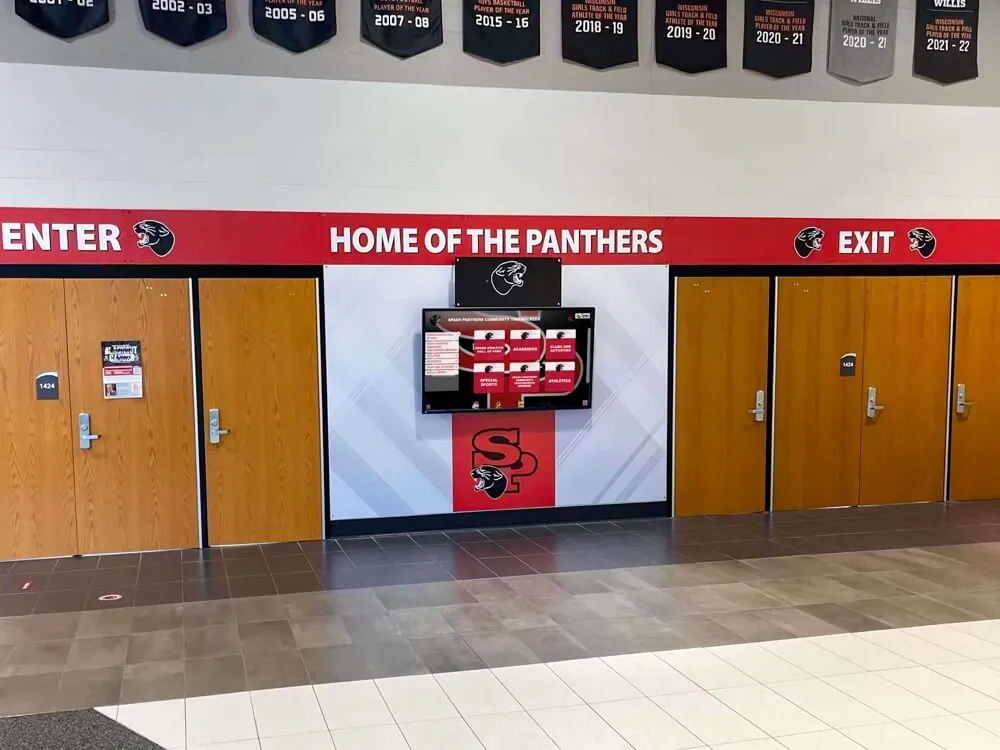
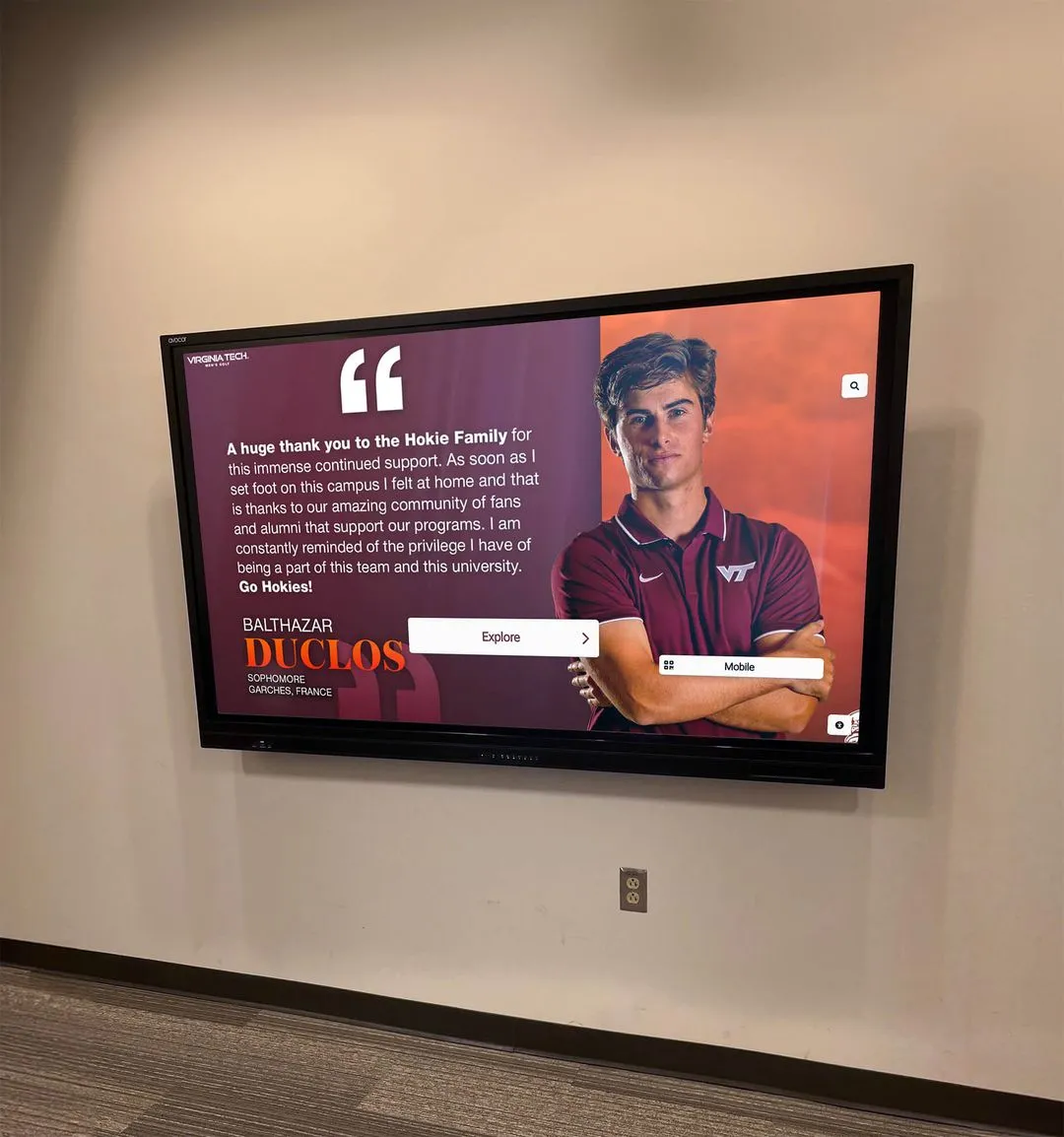
Dual digital display installations allow schools to present appreciation content alongside other recognition programs, creating cohesive environments where community contributions are continuously visible and celebrated
Building a Principal Recognition Culture Year-Round
The schools that make principals feel most genuinely valued don’t reserve appreciation for designated months or retirement moments. They build recognition cultures where principal contributions receive ongoing acknowledgment across the full arc of the school year:
- Monthly staff shoutouts that include administrative leadership alongside teaching staff
- Social media posts from student accounts celebrating principal decisions and achievements
- Bulletin board space near the main office featuring appreciation messages from different grade levels
- Annual video compilation highlighting the principal’s year that gets played at end-of-year staff events
- Formal inclusion of the principal in the school’s digital recognition system alongside athletic and academic honorees
This kind of sustained, distributed recognition creates what becomes possible when community warmth isn’t saved up for single moments: principals who feel seen and valued throughout challenging school years, who feel the community’s investment in their leadership reflected back to them consistently, and who carry that support into decisions that shape the school community for years to come.
Conclusion
A principal appreciation card, at its best, does something that no performance metric, evaluation form, or professional development plan accomplishes: it tells a leader that the human community they serve has noticed, has been moved, and is grateful. When students write with the specificity of children who observe everything, when teachers reflect honestly on how trust and mentorship changed their careers, when parents describe the moment a phone call meant everything—those messages reach principals in ways that matter.
The design frameworks, wording examples, and organizational strategies in this guide provide practical tools for creating principal appreciation cards that feel genuinely worthy of the leaders they honor. Extend that appreciation into the shared, visible spaces of school life—lobbies, hallways, community portals—and the impact multiplies. When recognition lives in the places where the community gathers, appreciation stops being a private gesture and becomes a community declaration.
Schools ready to build recognition systems that honor principals, administrators, and every contributor who shapes institutional life will find powerful tools in Rocket Alumni Solutions—interactive touchscreen displays, digital recognition platforms, and comprehensive content management systems designed to warm up the common spaces where school communities live, connect, and celebrate the people who make those communities worth belonging to.