Schools, universities, and nonprofit organizations face a fundamental tension in development work: urgent annual fund needs compete with long-term financial sustainability. Operating budgets demand immediate contributions while endowment growth, facility preservation, and program expansion require transformational gifts that extend beyond typical donor capacity. This tension creates strategic questions that define institutional futures—how do organizations balance today’s needs against tomorrow’s opportunities while building relationships that sustain mission across generations?
Planned giving programs resolve this tension by cultivating donor relationships that evolve from annual support into lasting legacies. Through estate gifts, charitable trusts, life insurance beneficiary designations, and other planned giving vehicles, supporters make commitments far exceeding their annual giving capacity while maintaining their current financial security. These legacy gifts create endowment principal funding scholarships in perpetuity, underwrite facilities serving students decades into the future, and establish program funds ensuring mission continuity beyond any single generation’s commitment.
Yet planned giving success extends far beyond technical gift mechanisms. The most effective programs recognize that legacy giving represents deeply personal decisions where donors imagine their values persisting after their lifetimes. Organizations that build thriving planned giving programs understand they’re cultivating relationships, not transactions—creating environments where supporters feel so connected to institutional mission that ensuring its permanence becomes integral to their own legacy planning.
This comprehensive guide explores how schools and nonprofits develop planned giving programs that transform donor relationships into institutional sustainability. You’ll discover the strategic foundations underpinning successful legacy giving initiatives, cultivation approaches that inspire supporters to include your organization in estate plans, recognition strategies that honor legacy commitments while inspiring others, and how modern donor engagement tools create the deep institutional connection that motivates planned giving decisions across all donor segments.

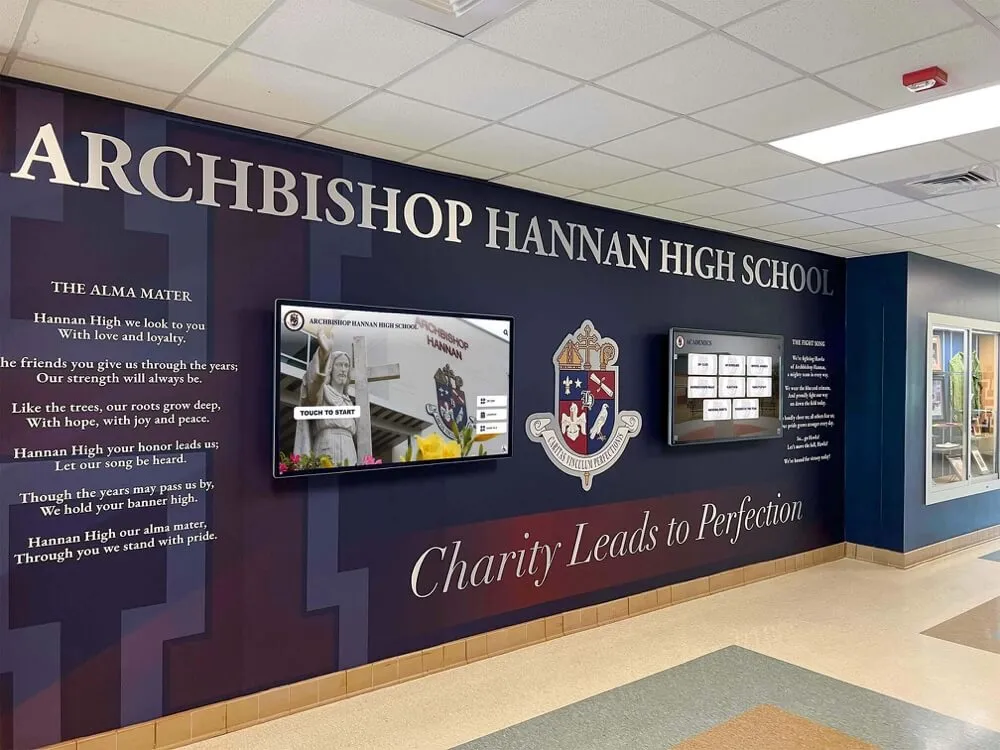
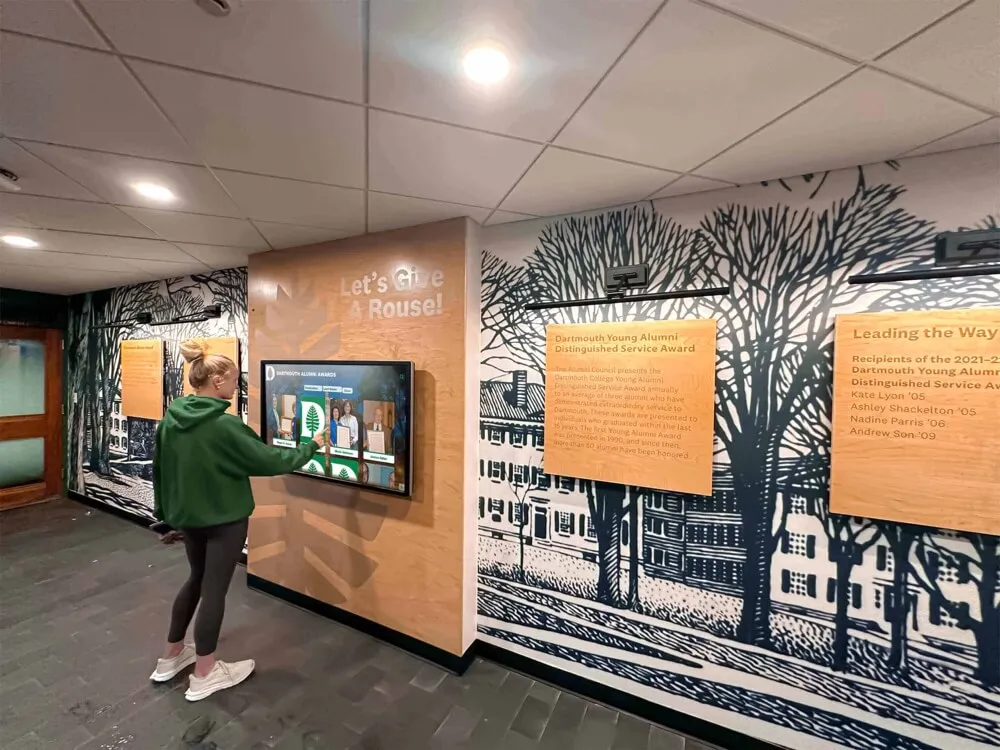
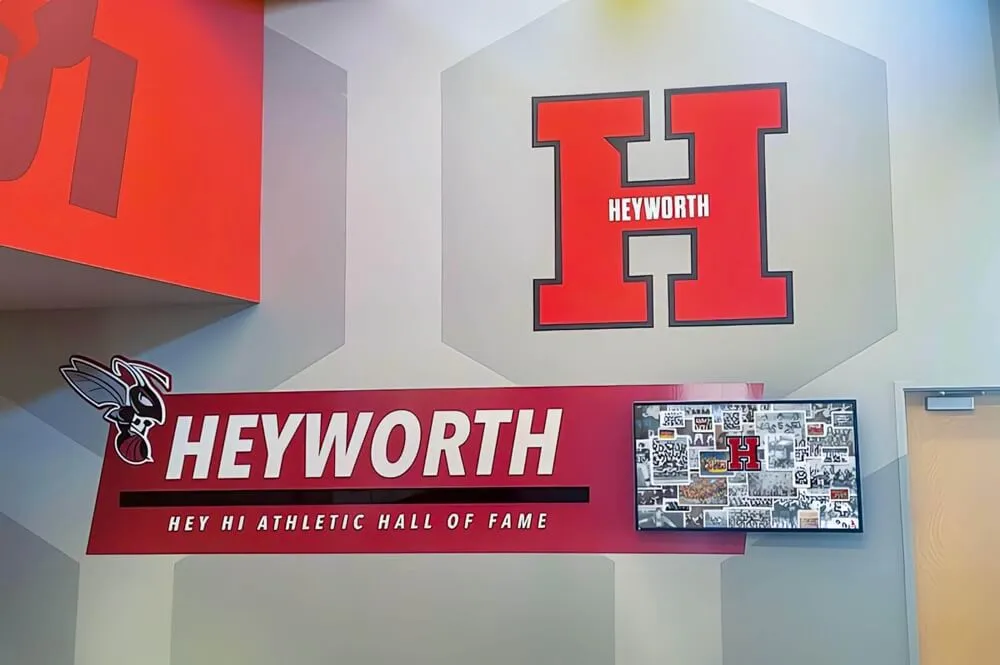
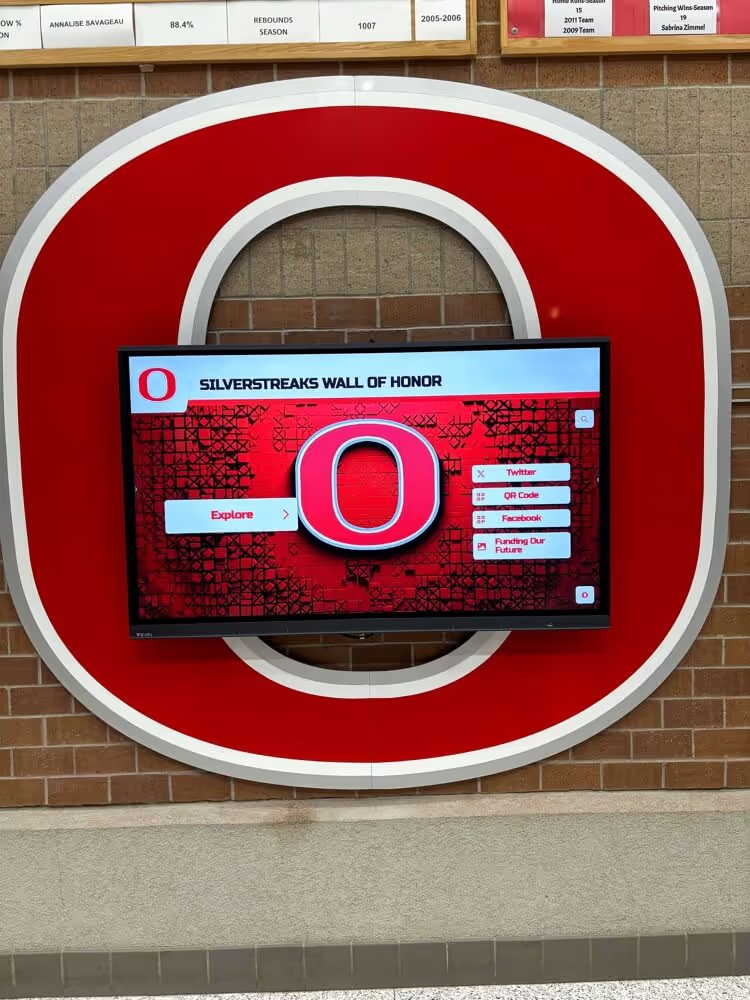
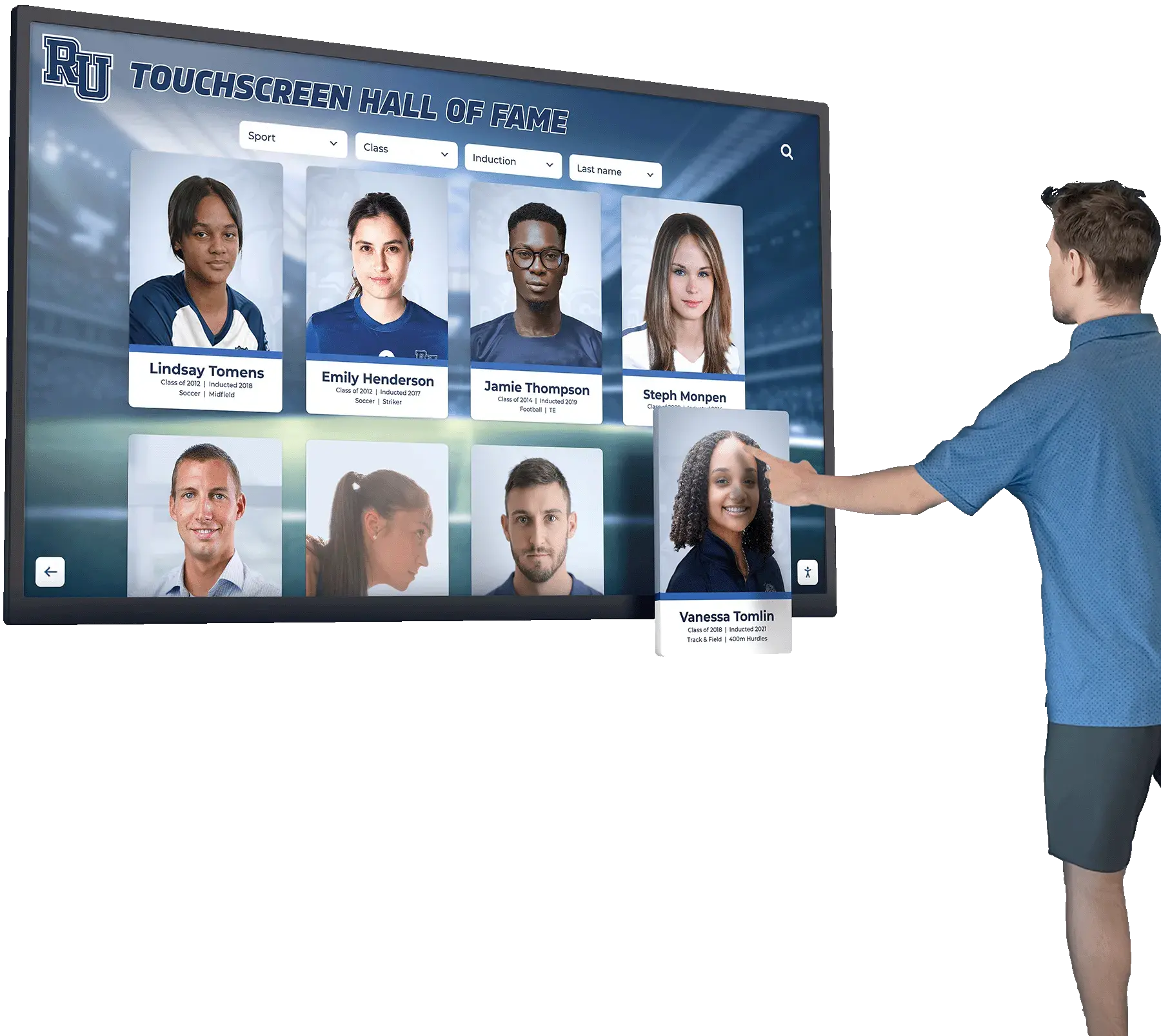
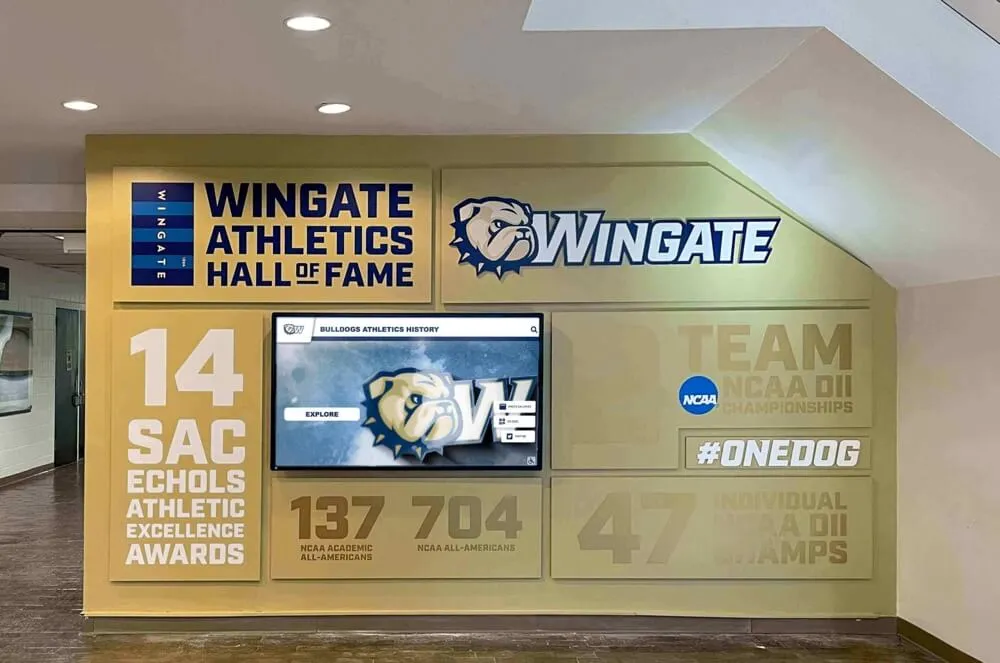
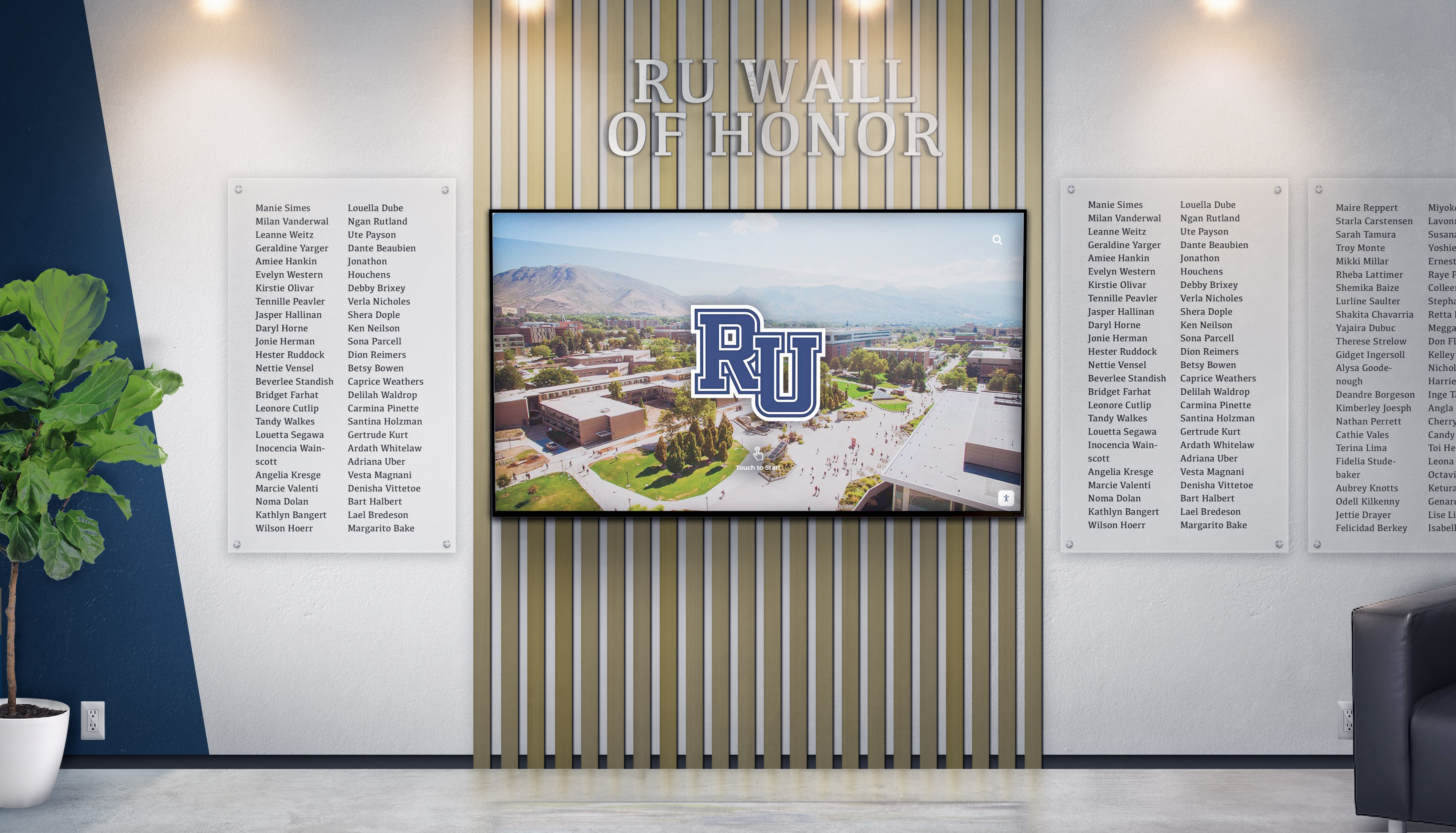
Modern donor recognition systems celebrate legacy commitments while creating inspiring community spaces that demonstrate philanthropic impact
Understanding Planned Giving Program Fundamentals
Successful planned giving programs begin with clear strategic understanding of what distinguishes legacy giving from other development activities and why these distinctions matter for program design.
What Makes Planned Giving Different
Planned gifts function differently than annual fund contributions or even major gifts, requiring distinct cultivation approaches, timeline expectations, and relationship strategies.
Deferred vs. Immediate Impact
Most planned gifts don’t benefit organizations until future dates—often decades after commitment. A 55-year-old alumna establishing a charitable remainder trust might not generate institutional benefit for 30+ years. This deferred timeline fundamentally changes cultivation strategy. Unlike capital campaigns where donors see building construction within months of pledging, planned giving donors make commitments knowing they won’t witness the impact their gifts create. This requires different motivational approaches emphasizing values perpetuation, institutional permanence, and legacy beyond personal lifespan rather than immediate project completion or recognized impact during donor lifetimes.
Organizations succeed in planned giving when they help prospective donors envision their values continuing through institutional mission after their deaths. The strongest cultivation connects current institutional impact with permanent endowment enabling future generations to experience similar transformation. Development officers articulate how today’s scholarship recipients represent tomorrow’s scholarship funders, creating perpetual cycles where legacy gifts enable student success that generates future philanthropic commitment sustaining mission indefinitely.
Financial Planning Integration
Planned gifts integrate with donors’ comprehensive financial and estate planning in ways annual gifts don’t. Establishing charitable remainder trusts, naming beneficiaries on retirement accounts, or structuring charitable gift annuities requires professional advisor involvement, legal documentation, and coordination with overall wealth transfer strategies. This complexity means planned giving cultivation often involves donor attorneys, financial advisors, and estate planners whose priorities center on client interests rather than institutional development goals.
Successful planned giving programs recognize these dynamics by positioning legacy gifts as sound financial planning strategies offering tax benefits, income streams, and estate solutions rather than purely charitable decisions. Development staff develop fluency in planned giving vehicles, tax implications, and estate planning concepts enabling productive conversations with donor advisors. Organizations provide resources helping advisors understand institutional stability, gift acceptance policies, and administrative capabilities giving advisors confidence recommending planned gifts to their clients.
Relationship Depth Requirements
Planned giving represents ultimate donor commitment—supporters literally inscribing your organization into final documents determining how they dispose of lifetime accumulated wealth. This extraordinary commitment requires exceptional relationship depth. Donors don’t include organizations they supported casually once or institutions representing convenient tax deductions in estate plans. Legacy gifts flow from deep emotional connection, sustained engagement over years, and conviction that institutional mission merits permanent support warranting estate plan inclusion.
This relationship requirement means planned giving cultivation extends across decades, not development cycles. Organizations build planned giving pipelines through consistent alumni engagement, regular communication demonstrating impact, opportunities for meaningful involvement beyond check writing, and cultivation recognizing donors as community members rather than funding sources. The deepest planned giving commitments emerge from supporters who’ve engaged with institutions across multiple decades, served in volunteer leadership, attended events regularly, and developed genuine relationships with staff, faculty, students, or organizational leaders.
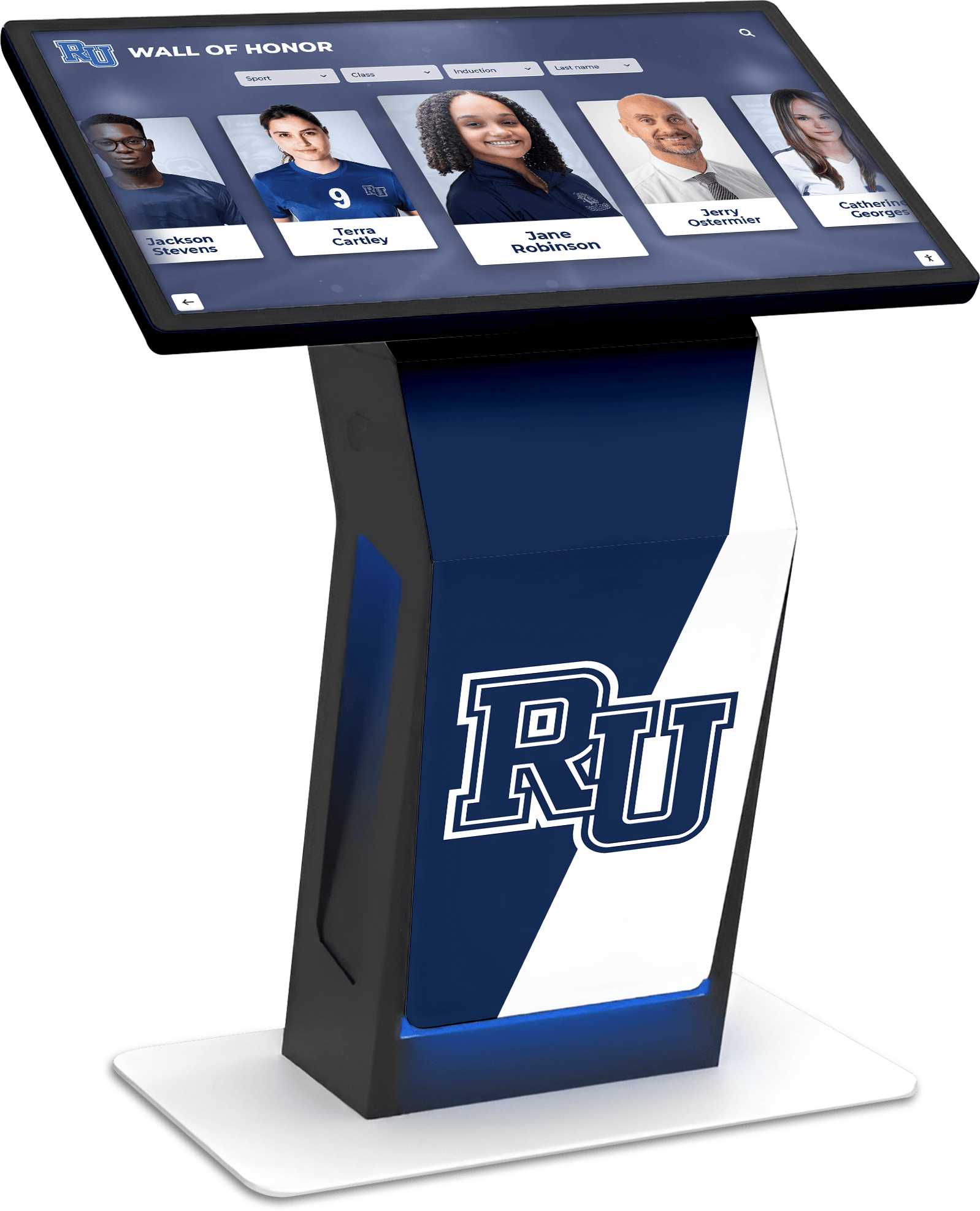
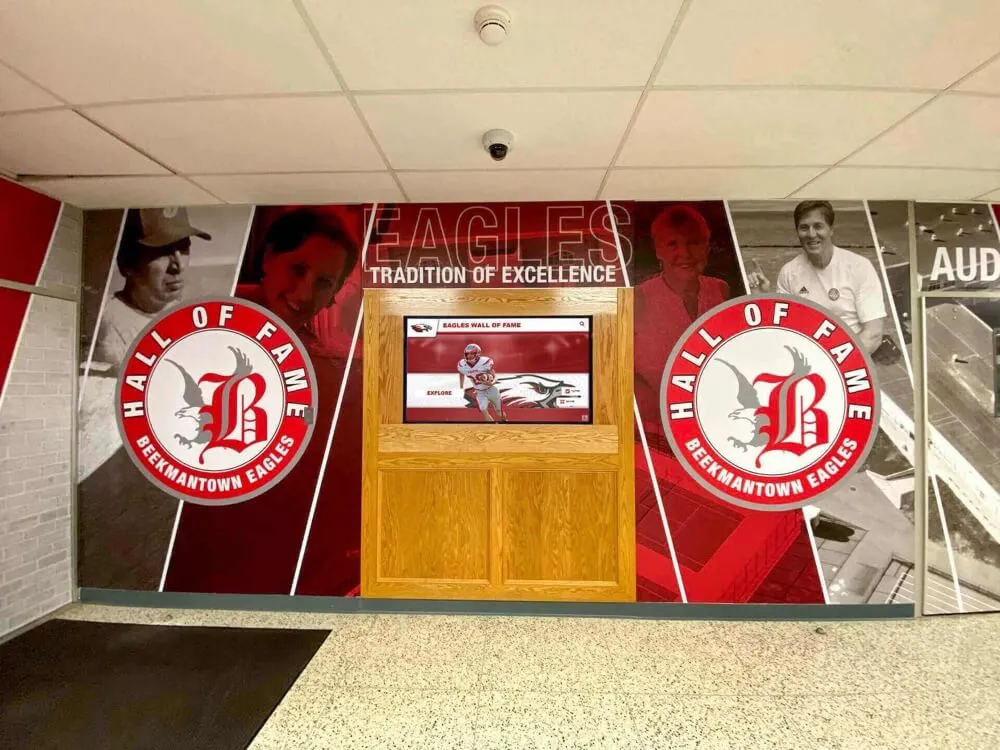
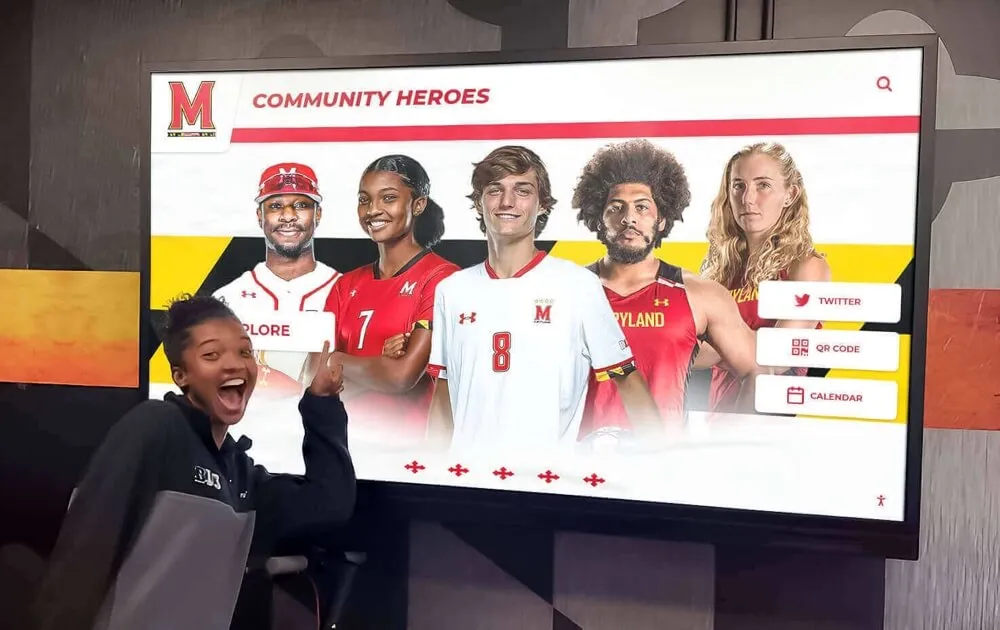
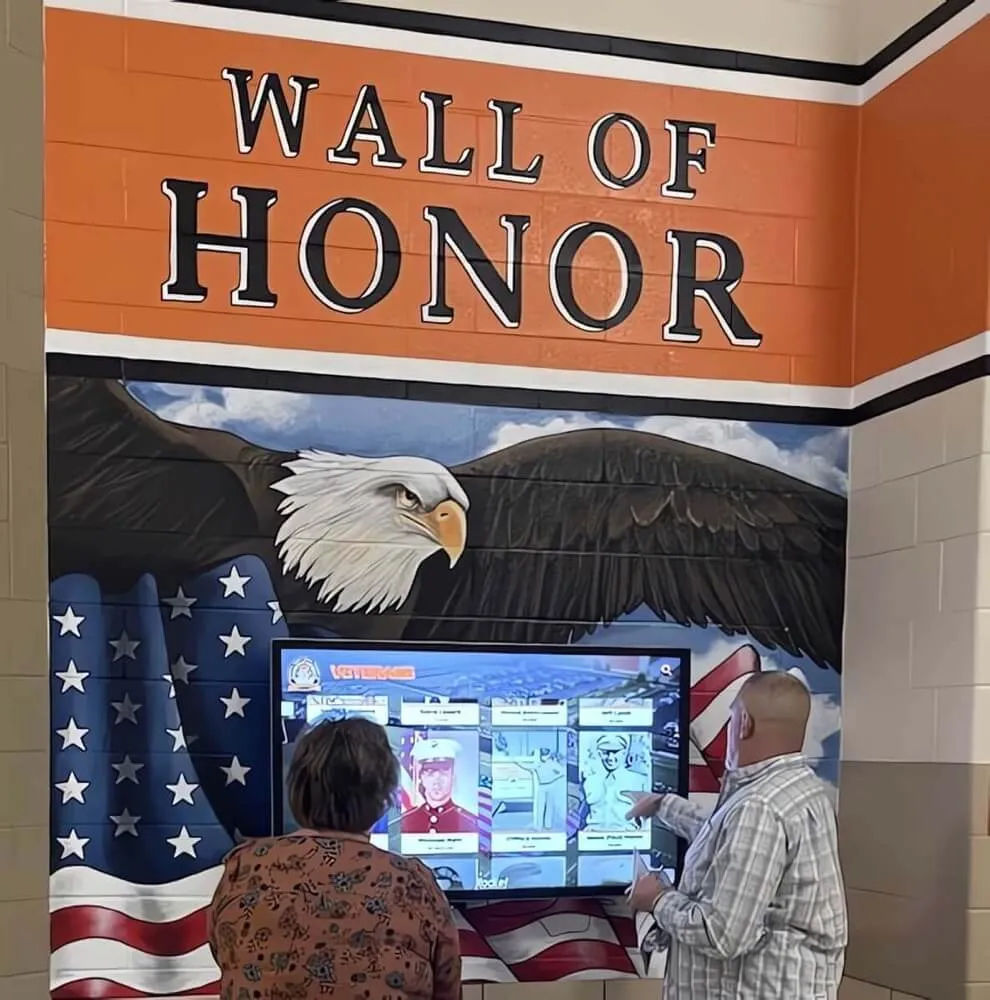
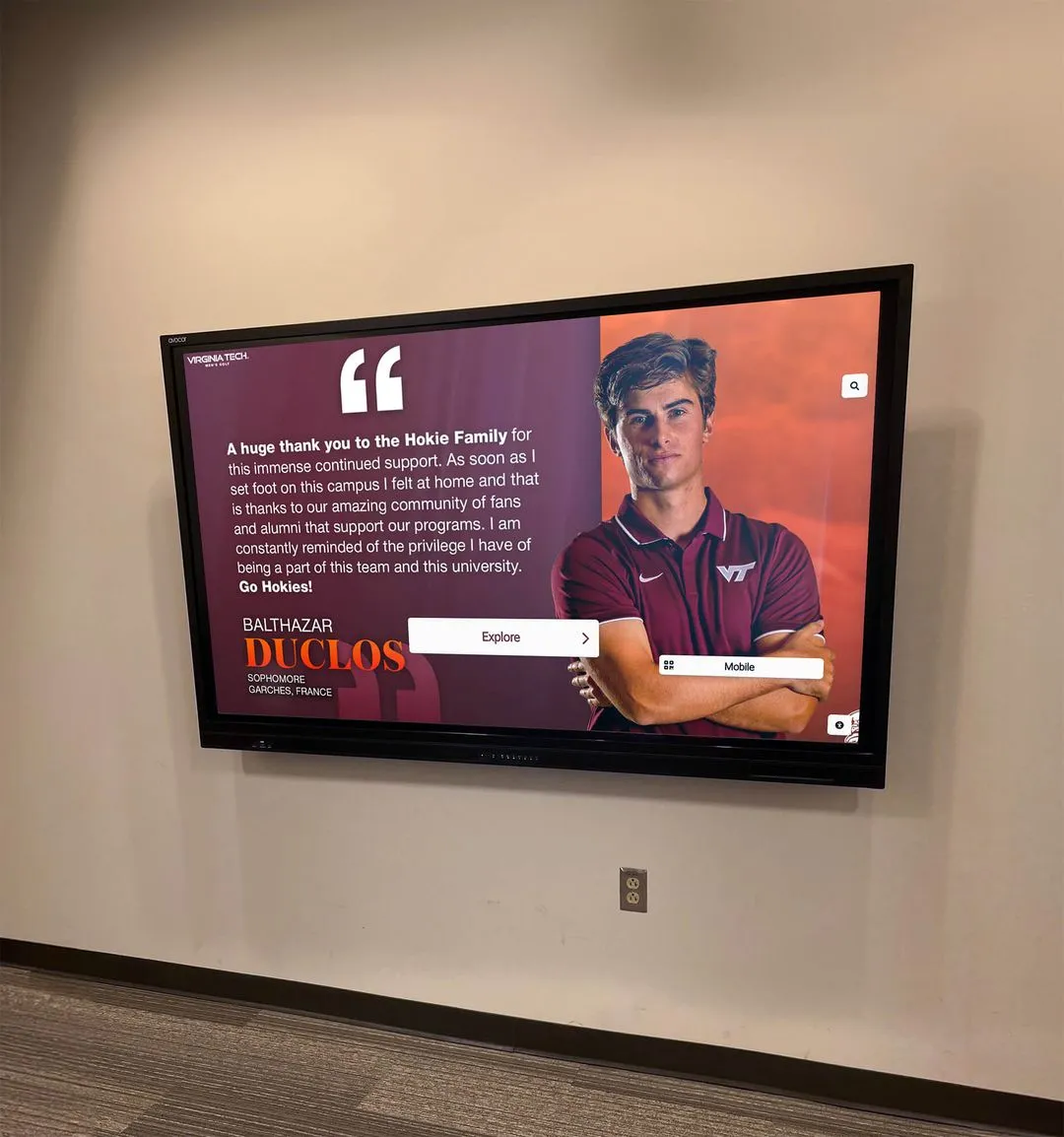
Interactive recognition displays enable donors to explore institutional history and see their legacy contributions within broader philanthropic narratives
Common Planned Giving Vehicles
Different planned giving instruments offer varying benefits for donors and organizations, requiring development staff to understand options matching diverse donor circumstances.
Bequests and Estate Gifts
Simple charitable bequests represent the most common planned giving vehicle—donors designating organizations in wills or living trusts to receive specific amounts, percentages of estates, or remainder assets after other beneficiaries receive designated portions. Bequest language requires minimal complexity (though legal review ensures proper documentation), donors maintain complete asset control during lifetimes, and changing circumstances allow bequest modification through simple will amendments or trust revisions.
For organizations, bequests create future revenue without requiring current asset sacrifice from donors. This accessibility makes bequests particularly valuable for mid-level donors whose annual giving capacity remains modest but whose estate assets enable transformational gifts. A retired teacher contributing $500 annually might establish $250,000 bequest creating endowed scholarship perpetuating their educational values beyond their lifetime. Organizations cultivate bequests by making commitment processes simple, offering suggested bequest language, and celebrating intent even when benefiting institutions decades hence.
Charitable Remainder Trusts
Charitable remainder trusts (CRTs) provide donors income streams during lifetimes while directing trust remainders to charitable organizations upon death. Donors fund CRTs with appreciated assets (stocks, real estate, business interests), receive immediate tax deductions for charitable portions, avoid capital gains taxes on appreciated transfers, and receive quarterly income based on trust values. When donors die, remaining trust assets transfer to designated charities.
CRTs particularly benefit donors with significant appreciated assets seeking to diversify holdings while generating income and supporting charitable causes. A business owner who built successful company might transfer stock into CRT, eliminating capital gains exposure while funding retirement income and ultimately benefiting institutions meaningful to their life story. Organizations promote CRTs by educating donors about benefits, connecting supporters with planned giving specialists, and recognizing CRT establishers as legacy society members even before receiving distributions.
Charitable Gift Annuities
Charitable gift annuities (CGAs) function like CRTs but organizations administer them directly rather than through separate trusts. Donors transfer assets to organizations in exchange for guaranteed lifetime income payments at fixed rates determined by donor ages. Upon donors’ deaths, remaining gift values support organizational mission.
CGAs appeal to older donors (typically 70+) seeking predictable income streams, organizations they trust managing investments, and simplified arrangements avoiding trust administration complexity. A widow might transfer $100,000 to alma mater establishing CGA paying $6,000 annually (6% payout rate based on age 75), receiving immediate tax deduction, and knowing remainder ultimately funds scholarships. Organizations offering CGAs must maintain reserves ensuring payment capacity, calculate actuarially sound payout rates, and demonstrate financial stability giving donors confidence in long-term payment security.
Beneficiary Designations
Retirement accounts, life insurance policies, and other financial instruments allow beneficiary designations directing asset distribution upon owners’ deaths. Naming charitable organizations as full or partial beneficiaries creates planned gifts without requiring will modifications, trust establishment, or legal documentation beyond beneficiary designation forms.
Beneficiary designations offer particular tax advantages—retirement account transfers to individual heirs create income tax liability on distributed amounts, but charitable transfers avoid these taxes entirely. This makes retirement accounts especially tax-efficient planned giving vehicles. Organizations promote beneficiary designations by explaining processes, providing account designation language, and emphasizing simplicity enabling legacy commitments within minutes through online beneficiary updates.
Building Your Planned Giving Program Foundation
Launching effective planned giving initiatives requires strategic infrastructure supporting cultivation, gift acceptance, donor recognition, and long-term relationship management.
Establishing Program Structure
Planned giving programs need clear organizational frameworks defining leadership, policies, and operational processes.
Dedicated Leadership and Staffing
While small organizations might assign planned giving responsibilities to development directors handling multiple functions, programs achieving significant scale require dedicated planned giving expertise. Planned giving officers bring specialized knowledge of gift vehicles, tax implications, and cultivation strategies differing substantially from annual fund or major gift approaches. These specialists develop marketing materials explaining planned giving options, conduct donor education seminars, work with professional advisors, and manage legacy society programs recognizing committed donors.
Even organizations without dedicated planned giving staff benefit from identifying who owns these responsibilities. Clear accountability prevents planned giving from becoming everyone’s responsibility but nobody’s priority. Board members, development committee volunteers, or senior staff can champion planned giving initiatives, ensuring consistent cultivation, donor education, and recognition activities advancing program growth even without specialized staffing.
Gift Acceptance Policies
Organizations must establish clear policies determining which planned gifts they’ll accept, what terms they require, and how they’ll administer different gift vehicles. Policies address questions like:
- What types of planned gifts will we accept (bequests, CRTs, CGAs, beneficiary designations, others)?
- Will we offer charitable gift annuities, and if so, what are payout rates, minimum gift amounts, and reserve requirements?
- How do we handle restricted bequests directing specific fund uses potentially conflicting with future priorities?
- What real estate gifts will we accept, and what environmental assessments or legal reviews do we require?
- Who authorizes acceptance of complex gifts like business interests, collectibles, or intellectual property?
Clear policies protect organizations from accepting gifts creating administrative burdens exceeding their value, ensure gift terms align with mission and capacity, and give donor advisors confidence that organizations can properly administer planned gifts their clients contemplate. Gift acceptance committees typically review unusual or complex proposals, providing structured decision processes balancing donor intentions with organizational interests.
Documentation and Legal Framework
Planned giving programs require proper legal documentation protecting both donors and organizations. Sample bequest language helps donors and attorneys draft will provisions properly designating organizations and specifying gift terms. CGA contracts outline payment terms, obligations, and conditions. Gift acknowledgment letters confirm planned gift commitments while clarifying what organizations can and cannot substantiate for tax purposes (documenting bequest intent versus valuing future gifts not yet received).
Organizations typically work with legal counsel experienced in planned giving ensuring documentation complies with IRS regulations, state laws governing charitable gifts, and institutional policies. This legal framework prevents future disputes about gift terms, protects tax benefits donors anticipate, and establishes clear expectations governing how organizations will administer and apply planned gifts when ultimately received.
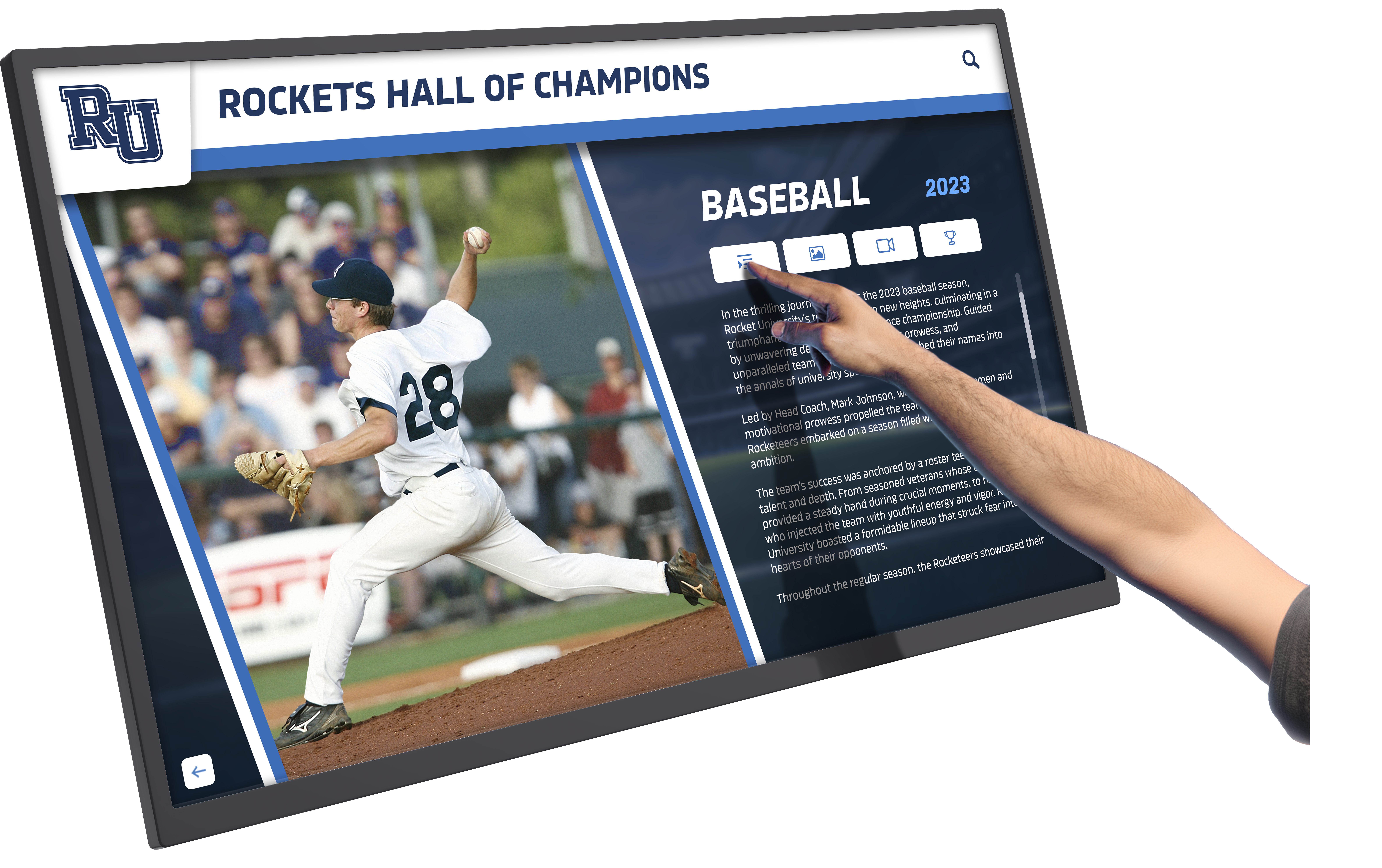
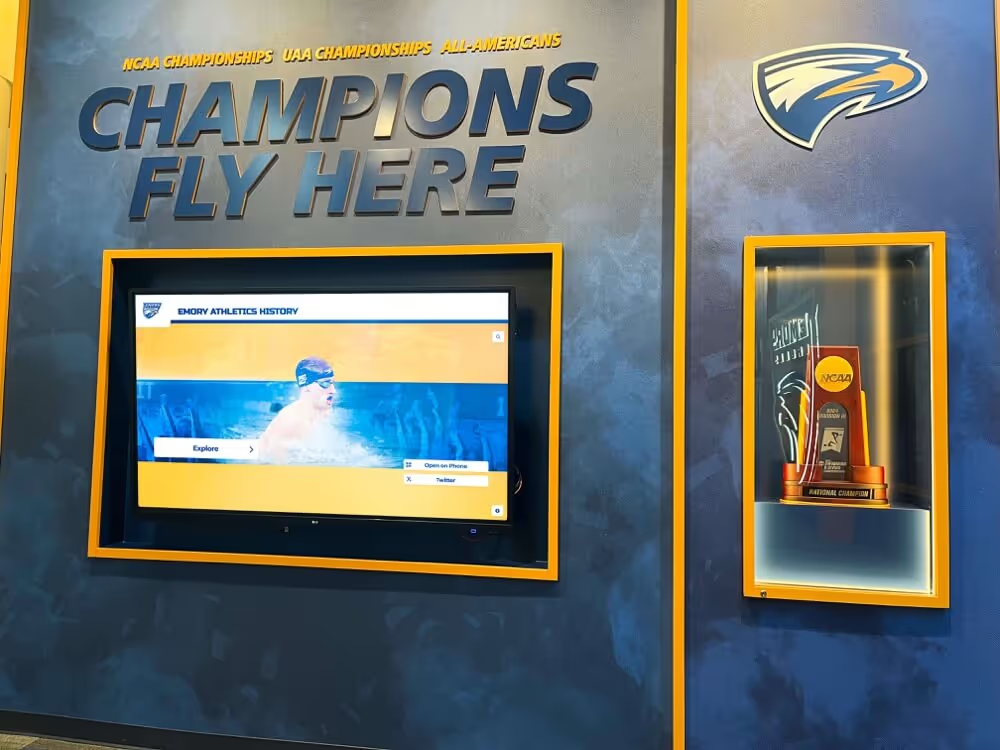
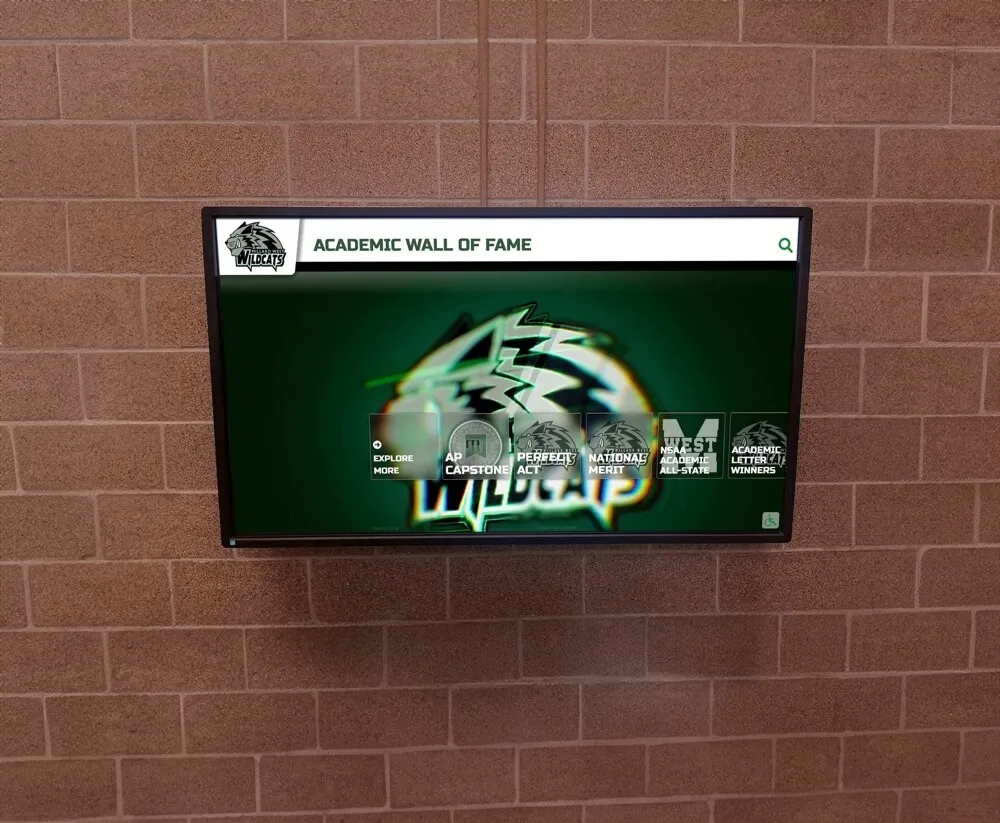
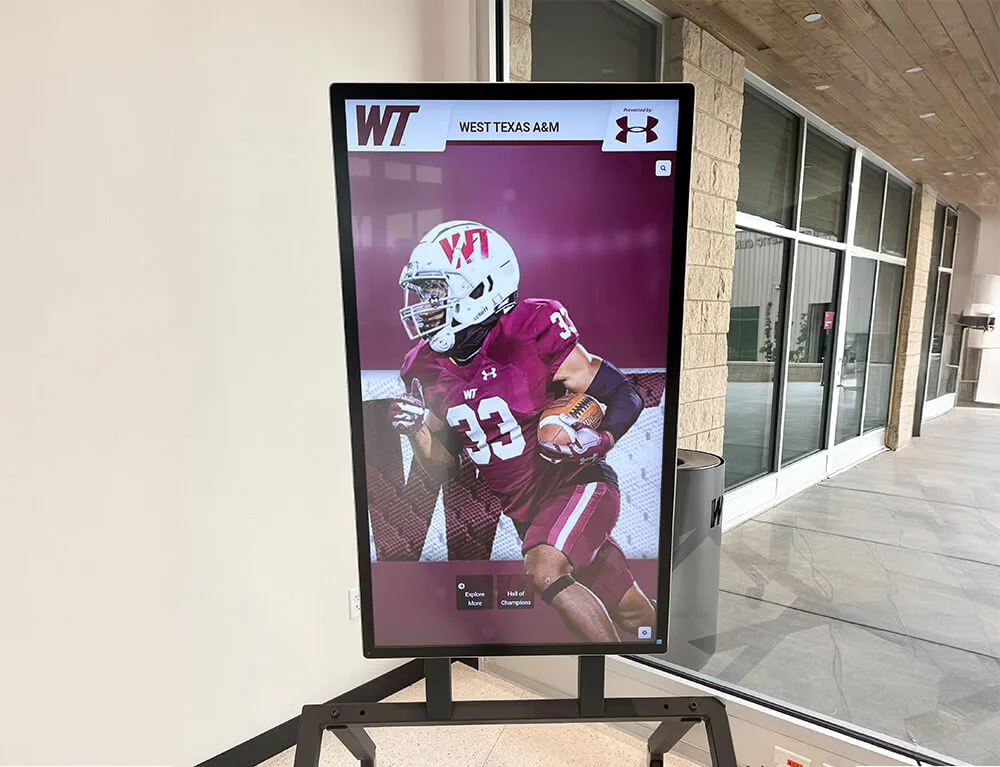
Engaging recognition experiences create emotional connections between donors and institutional mission, inspiring the deep commitment that motivates legacy giving decisions
Cultivating Legacy Donor Relationships
Successful planned giving depends less on technical gift mechanisms than on relationship cultivation inspiring donors to envision supporting your mission beyond their lifetimes.
Identifying Planned Giving Prospects
While anyone might include your organization in estate plans, certain donors demonstrate higher legacy giving likelihood based on observable behaviors and characteristics.
Long-Tenure Donors
Supporters maintaining giving relationships across decades show sustained commitment suggesting legacy giving potential. Someone contributing annually for 25+ years demonstrates institutional loyalty likely extending into estate planning. These loyal donors may give modest amounts annually—their planned giving capacity derives from accumulated lifetime assets and values commitment rather than current cash flow. Identifying long-tenure donors requires database analysis flagging consecutive giving years, first gift dates, and sustained participation even during financial uncertainties when casual donors lapse.
Volunteer Leaders and Engaged Alumni
Donors investing time through board service, committee participation, event attendance, or program volunteering often develop emotional connections transcending financial relationships. These engaged supporters understand institutional mission intimately, build personal relationships with staff and beneficiaries, and demonstrate commitment through presence not just checks. Alumni attending reunions regularly, volunteers tutoring students weekly, or board members dedicating hours to governance work show involvement depth predicting legacy giving consideration.
Organizations track engagement through participation databases recording event attendance, volunteer activities, committee service, and communication preferences. Combining giving history with engagement data reveals prospects demonstrating both financial capacity and emotional commitment warranting planned giving cultivation.
Donors Without Obvious Heirs
Supporters without children or close family frequently include charitable organizations prominently in estate plans. While tactful inquiry rather than assumptions guides cultivation, donors openly discussing pets, travel, or friendships rather than grandchildren when asked about retirement plans may signal openness to charitable estate planning conversations. Similarly, donors explicitly mentioning institutional impact on their lives, gratitude for educational opportunities, or desire to “give back” often welcome planned giving discussions even without development staff initiation.
Professional and Life Stage Indicators
Certain professions and life stages correlate with planned giving readiness. Attorneys, accountants, and financial professionals regularly update estate plans and understand planned giving mechanisms. Recent retirees often review estate documents, creating natural planned giving conversation opportunities. Widows and widowers reassess philanthropic priorities following spouse loss. Supporters experiencing health changes or downsizing homes frequently contemplate legacy questions. Development staff attentive to these life transitions can offer planned giving information when donors are most receptive without appearing opportunistic.
Cultivation Strategies That Inspire Commitment
Moving prospects from consideration to commitment requires intentional cultivation addressing both practical information needs and emotional legacy motivations.
Education Before Solicitation
Effective planned giving programs emphasize donor education rather than aggressive solicitation. Seminars explaining estate planning basics, workshops covering planned giving vehicle options, or individual consultations with planned giving staff create supportive environments where donors explore legacy options without pressure. Educational approaches position organizations as resources helping supporters achieve personal goals rather than fundraisers extracting commitments.
These educational forums particularly succeed when organizations partner with estate planning attorneys or financial advisors providing objective expertise. Donors attend “lunch and learn” sessions featuring estate planning panels more readily than events they perceive as solicitations. Quality educational content—guidebooks explaining bequest language, comparison charts showing different planned giving vehicles, or online calculators demonstrating charitable gift annuity benefits—provides value regardless of immediate gift decisions while establishing organizational credibility when donors ultimately engage advisors about estate plans.
Storytelling and Impact Demonstration
While planned giving involves technical mechanisms, commitment flows from emotional connection to mission impact. Organizations cultivate legacy giving by consistently demonstrating how current gifts transform lives, telling stories about previous legacy donors’ lasting impact, and helping prospects envision their values perpetuating through institutional mission.
Scholarship recipient profiles showing how endowed funds enabled educational access, facility naming recognizing transformational estate gifts, or program histories crediting legacy donors who established initiatives decades ago all reinforce that planned gifts create permanent impact. These stories help prospects imagine their own legacies—the future students who’ll benefit from scholarships they endow, the community members who’ll utilize facilities their gifts help maintain, or the mission advancement their planned gifts will enable.
Legacy Society Recognition
Most organizations establish legacy societies recognizing donors who’ve included institutions in estate plans. These societies create community among committed supporters, publicly celebrate planned giving commitment inspiring others, and provide cultivation venues for continued engagement. Legacy society members receive special recognition in publications, invitations to exclusive events, and opportunities for deeper institutional access.
Legacy societies work because they transform private estate planning decisions into public commitments worthy of celebration. A donor might hesitate to discuss will provisions in casual conversation, but legacy society membership creates appropriate context for explaining planned giving motivations, sharing excitement about future impact, and encouraging peers to consider similar commitments. Annual legacy society gatherings, donor recognition displays celebrating members, and communications spotlighting legacy donors all reinforce that planned giving represents aspirational philanthropy meriting institutional honor.
Personal Relationship Building
Ultimately, planned giving flows from trust and relationship depth development staff cultivate through consistent, genuine engagement over years. Donors include organizations led by presidents they respect, supported by development officers who know their families and interests, and governed by boards they trust with perpetuating mission. Building these relationships requires listening more than talking, remembering personal details, following through on small commitments, and treating donors as valued community members rather than prospect pipeline components.
Development officers succeeding in planned giving maintain contact through handwritten notes, phone calls on birthdays or anniversaries, updates about areas donors care about, and invitations to experiences matching their interests. They remember donors’ grandchildren’s names, ask about health challenges donors mentioned months earlier, and celebrate donors’ professional accomplishments. These relationship investments rarely produce immediate results but create foundation for eventual legacy conversations when donors contemplate how to perpetuate values through estate planning.
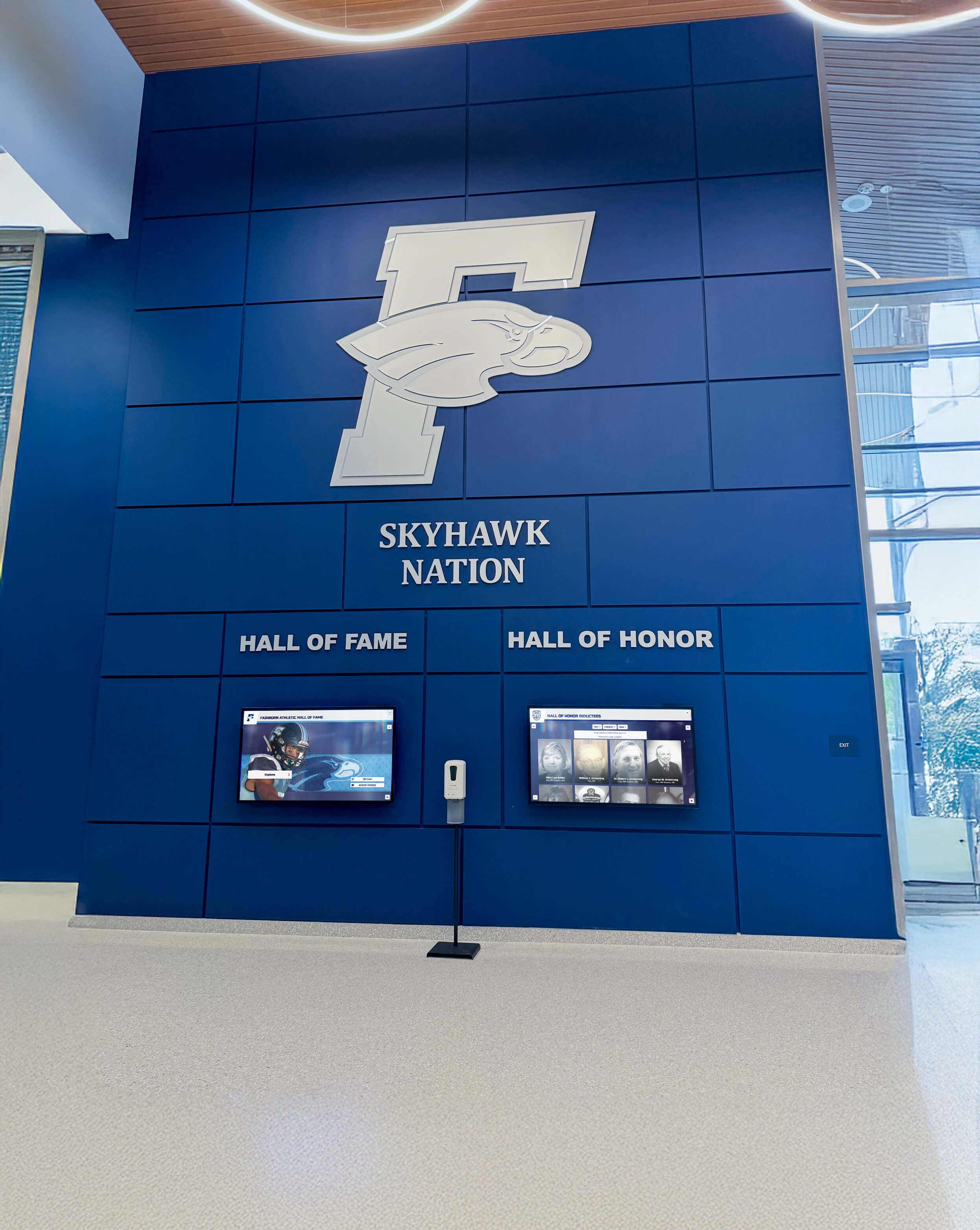
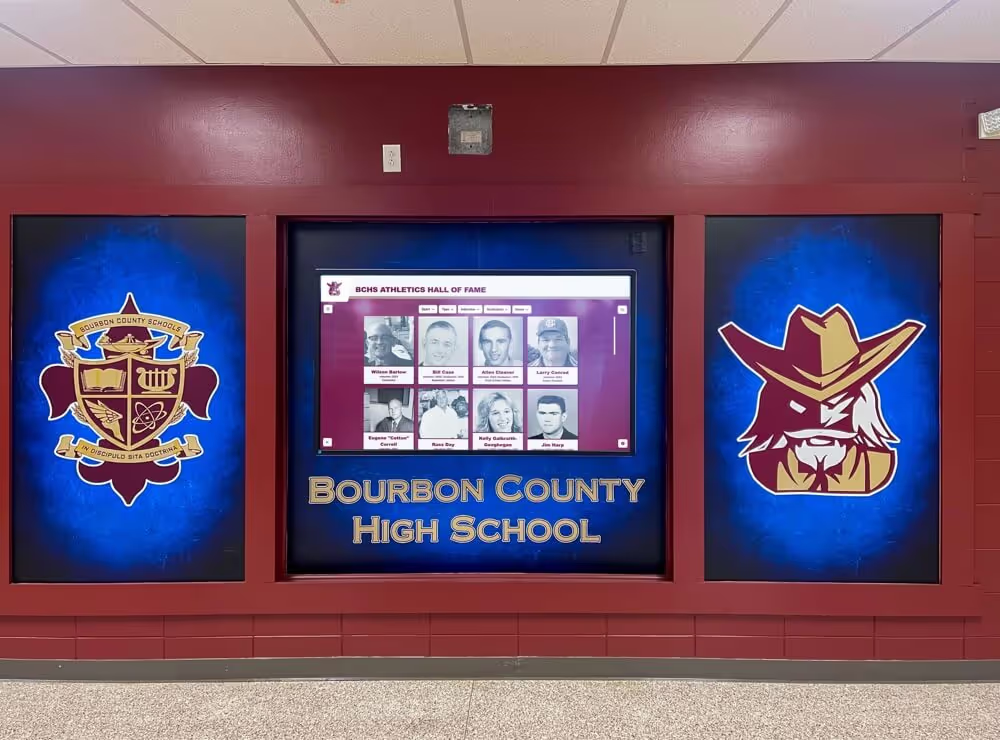
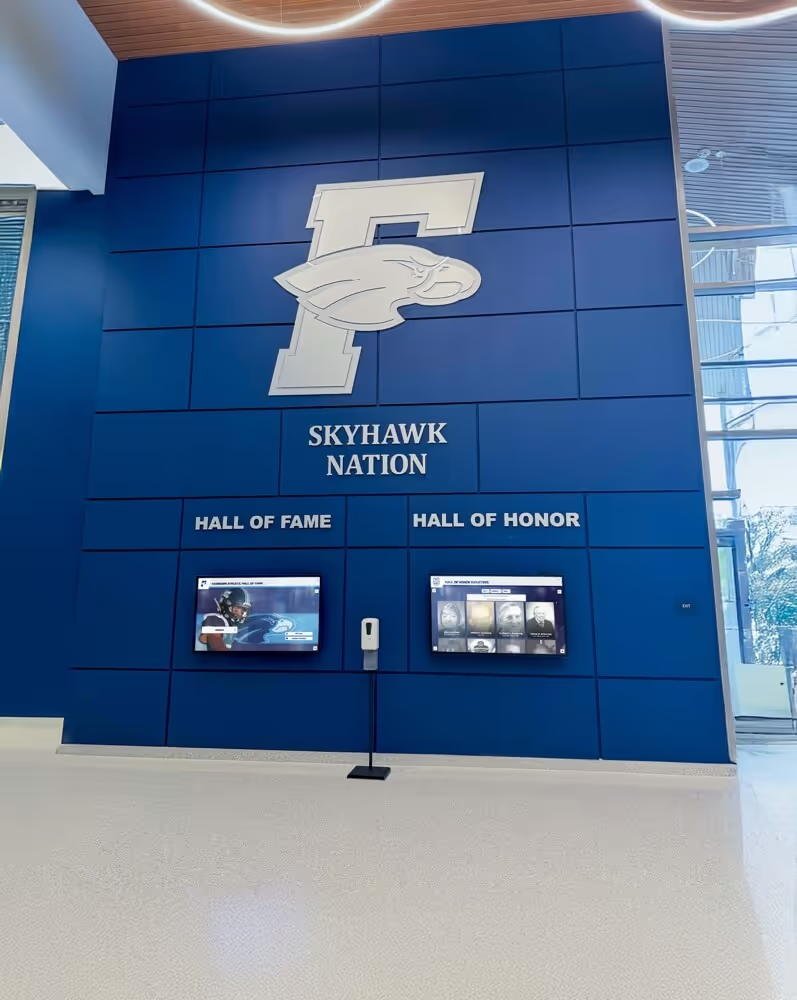
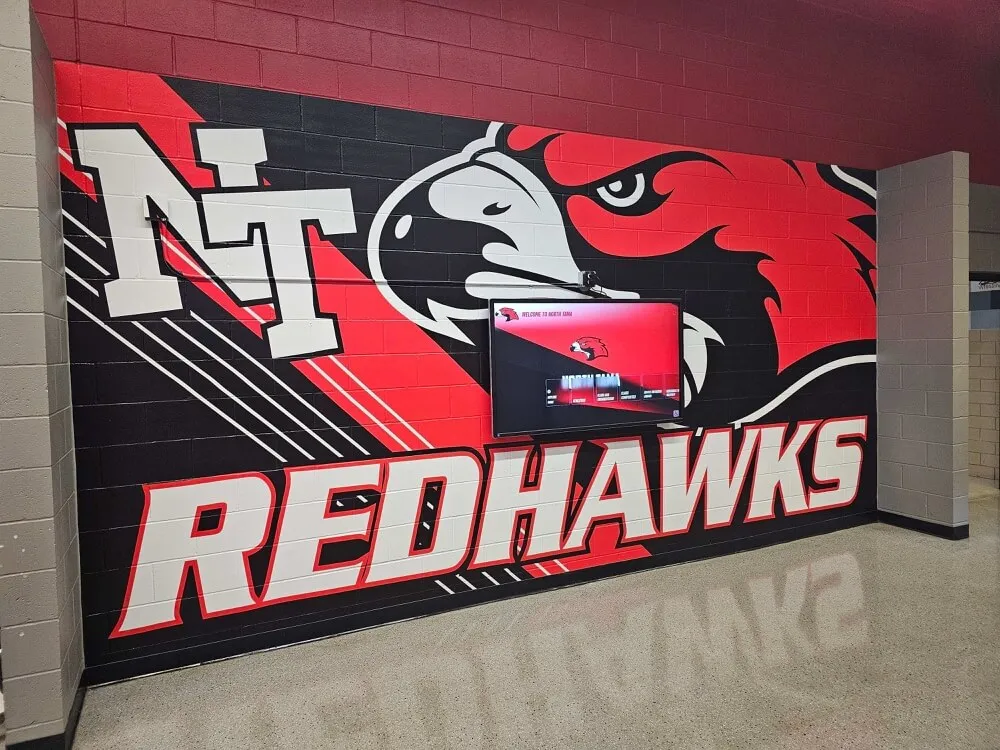
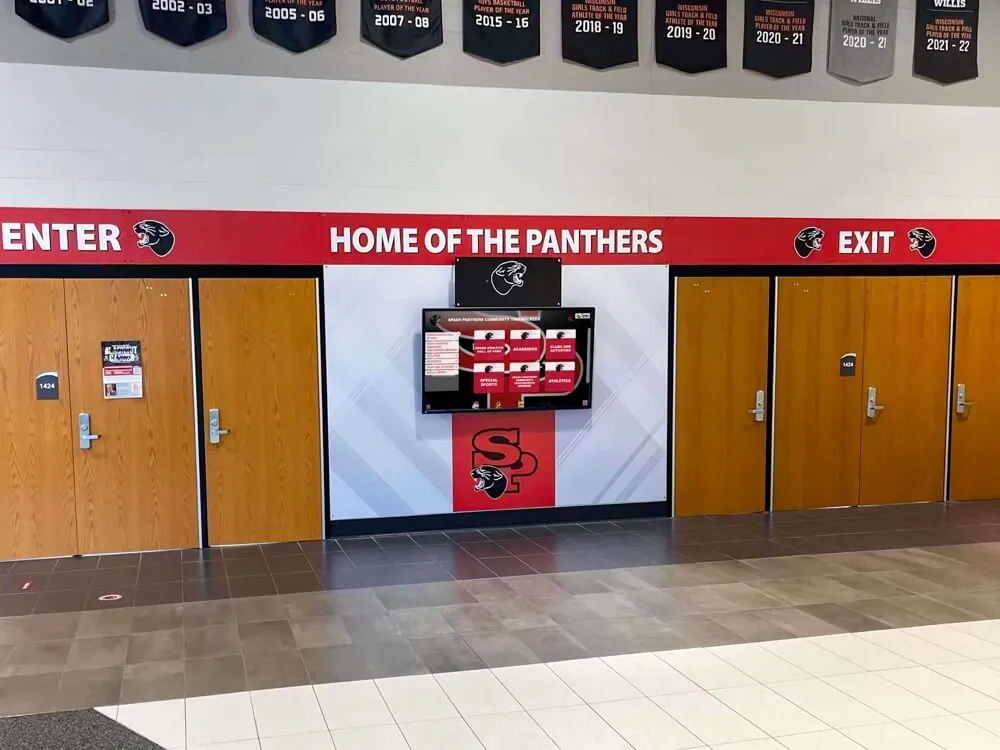
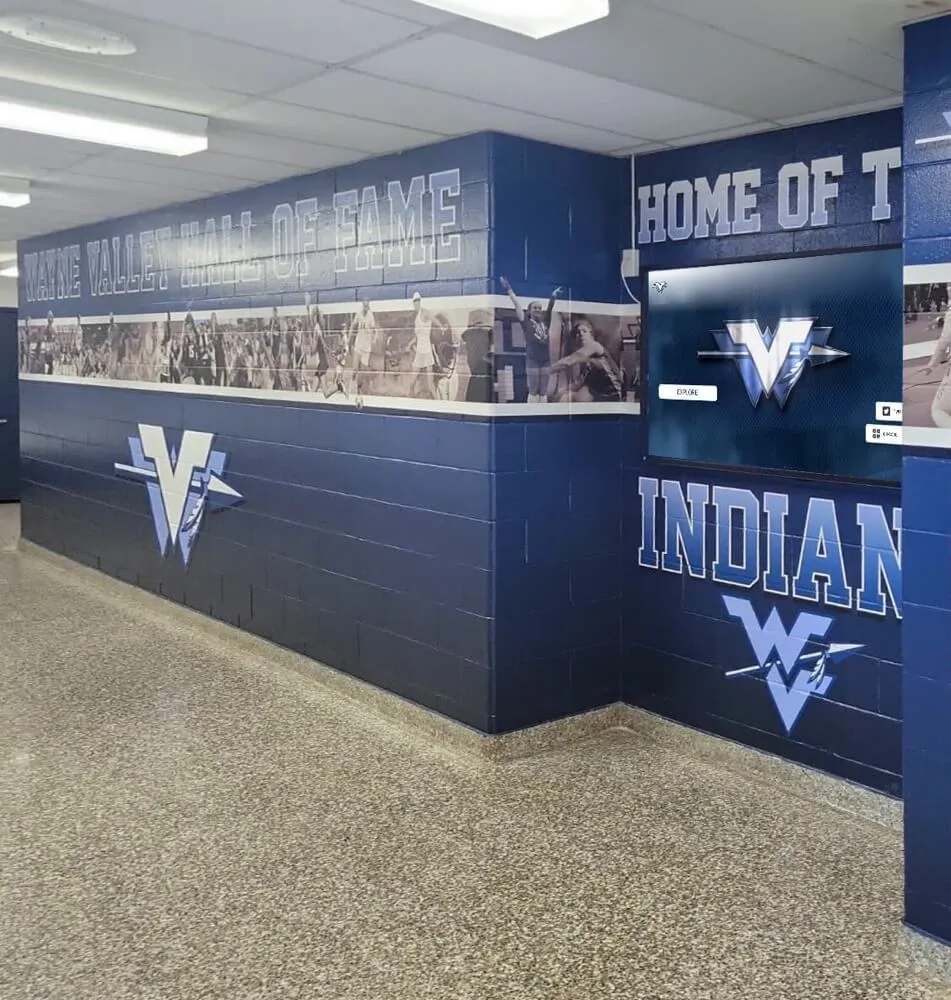
Prominent recognition spaces in high-traffic areas celebrate legacy donors while inspiring current community members to consider their own philanthropic impact
Creating Meaningful Legacy Donor Recognition
How organizations recognize planned giving commitments significantly influences both committed donors’ satisfaction and prospects’ willingness to make similar commitments. Recognition strategies must balance celebrating legacy intentions with acknowledging that actual gifts haven’t been received yet.
Recognition Timing and Approaches
Unlike immediate gifts where recognition follows contribution receipt, planned giving recognition occurs when donors document commitments even though organizations won’t receive benefits for years or decades.
Intent Recognition vs. Receipt Recognition
Organizations appropriately celebrate when donors provide written documentation of planned gift intentions—signed bequest letters, charitable remainder trust agreements, or beneficiary designation confirmations. This intent recognition honors commitment significance while acknowledging gifts remain revocable and values uncertain until actually received. Legacy society membership, published recognition listing donors as members, and wall displays noting legacy commitments all typically occur upon documented intent rather than gift receipt.
When gifts ultimately materialize—estates settle and bequest transfers complete, charitable remainder trusts distribute final assets, or life insurance policies pay upon death—organizations provide additional recognition commensurate with received amounts. This might include named endowments, building dedications, or major donor society membership based on realized gift values. Separating intent recognition from receipt recognition appropriately honors both commitment significance and actual gift impact without overstating uncertain future values.
Flexible Recognition Addressing Privacy Preferences
Planned giving donors vary widely in recognition preferences. Some eagerly publicize legacy commitments, wanting to inspire others while enjoying recognition during lifetimes. Others maintain strict privacy, uncomfortable with public acknowledgment or preferring anonymity. Successful recognition programs accommodate both preferences through tiered options.
Standard approaches include published legacy society membership lists with donor permission, anonymous listings for privacy-preferring donors still wanting to inspire others through collective member counts, and completely private recognition for those declining any public acknowledgment. Asking donors directly about recognition preferences during gift conversations prevents misunderstandings while demonstrating respect for individual comfort levels.
Traditional and Modern Recognition Methods
Organizations employ various recognition approaches celebrating legacy commitments while inspiring additional planned gifts.
Printed Recognition Materials
Annual reports, donor magazines, event programs, and dedicated legacy society publications traditionally recognize planned giving donors through printed member lists, donor profiles, and impact stories. These materials reach broad audiences including current donors who might consider similar commitments. High-quality printed pieces convey institutional permanence and values preservation central to planned giving appeals.
Printed recognition works particularly well for older donors who formed giving habits before digital communication dominance. These supporters often retain publications, share them with family members, and value tangible recognition more than digital alternatives. Anniversary editions celebrating legacy society milestones or special publications profiling major estate gift impacts create keepsakes donors treasure and families appreciate after donors’ deaths.
Physical Recognition Installations
Traditional donor walls, legacy society plaques, and named spaces provide permanent physical recognition honoring planned giving commitments. Bronze plaques listing legacy society members, donor walls in prominent campus locations, or named rooms recognizing transformational estate gifts create lasting tribute while inspiring others encountering these installations daily.
Yet static recognition faces capacity limits as legacy societies grow. Plaques accommodate finite names before requiring expansion, wall space limitations force difficult decisions about whom to include, and updating traditional installations proves expensive when new donors join or circumstances change. These constraints create recognition inequities where early planned giving donors receive prominent placement while later commitments lack available space.
Digital Donor Recognition Displays
Modern recognition technology addresses traditional donor wall limitations while creating engaging experiences that deepen institutional connection. Digital recognition displays offer unlimited capacity for donor listings, easy updates accommodating new legacy society members, and interactive features enabling visitors to explore donor stories, view historical impact, and understand how planned gifts sustain mission.
Solutions like Rocket Alumni Solutions provide web-based platforms creating sophisticated donor recognition experiences without the limitations plaguing traditional approaches. These systems enable organizations to:
- Accommodate unlimited legacy donors without space constraints, ensuring every planned giving commitment receives appropriate recognition regardless of when donors join legacy societies
- Update recognition instantly through remote content management, adding new legacy society members immediately upon commitment documentation without physical installation modifications
- Tell rich donor stories through photos, videos, biographical information, and impact narratives that text-based plaques cannot convey
- Enable visitor exploration with intuitive touchscreen interfaces letting community members search for classmates, browse donor listings by recognition level, or filter legacy society members by graduation year
- Integrate giving history showing how donors supported institutions across decades before making ultimate planned giving commitments, demonstrating sustained engagement patterns inspiring others
- Celebrate impact categories by organizing recognition around funded priorities—endowed scholarships, facility preservation, program support—helping prospects envision specific legacy focuses
- Maintain accessibility through WCAG 2.1 AA compliance ensuring recognition experiences serve all community members regardless of abilities
- Generate engagement data tracking which donor profiles visitors view most, how long they engage with content, and what recognition features prove most compelling
Digital recognition proves particularly valuable for planned giving because it enables organizations to celebrate intent appropriately while accommodating ultimate gift realization. Legacy society member profiles can note bequest commitments without claiming specific values, then update to recognize actual receipt when estates settle decades later. This flexible recognition grows with donor relationships rather than fixing recognition at commitment moments.
Moreover, interactive recognition creates the sustained engagement that cultivates additional planned giving commitments. Visitors exploring donor displays, reading legacy society member stories, and understanding endowment impact develop emotional connections inspiring their own legacy considerations. When recognition becomes engaging destination rather than static wall reading, it transforms from obligation into cultivation tool actively building planned giving pipeline.
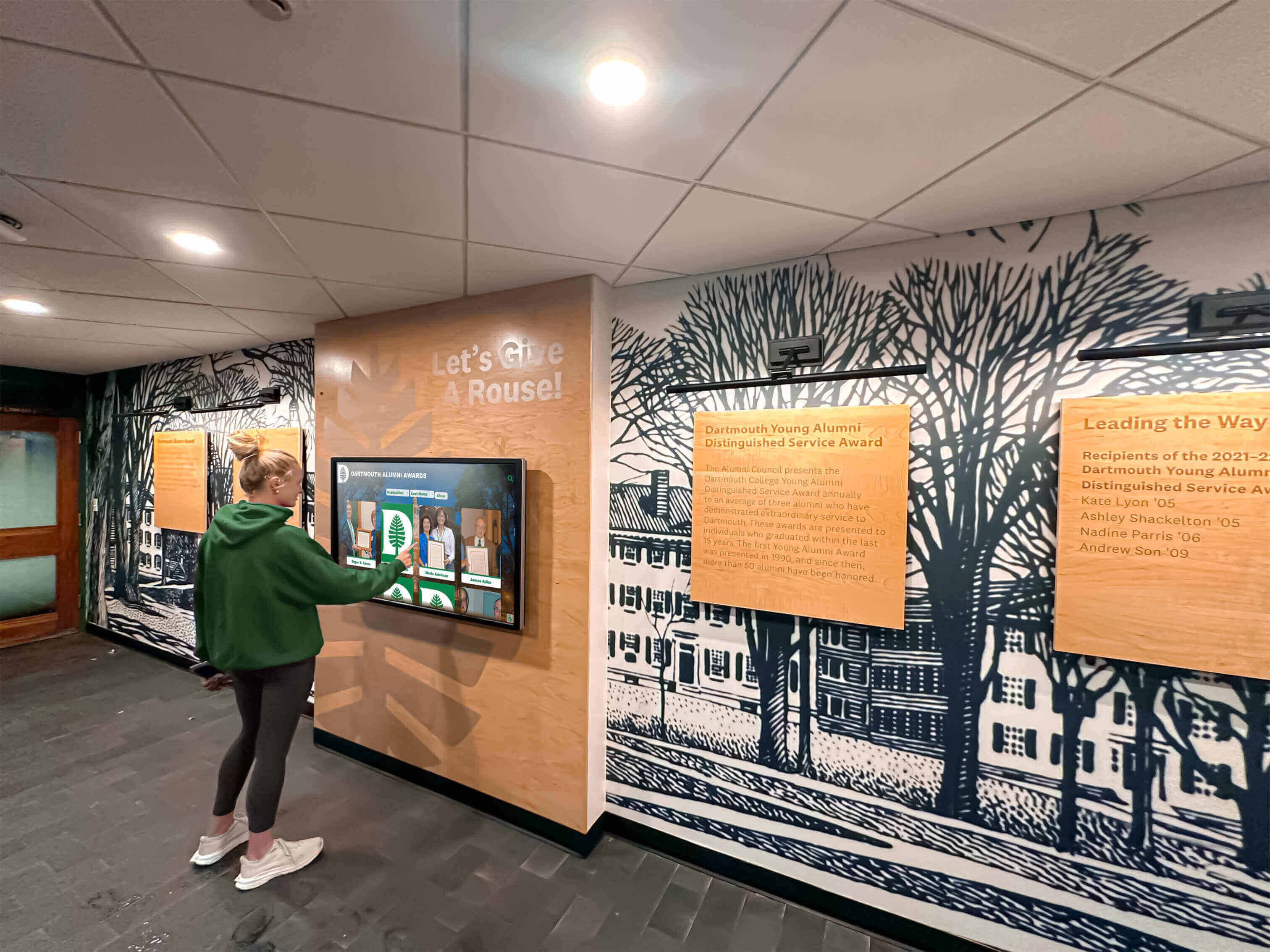
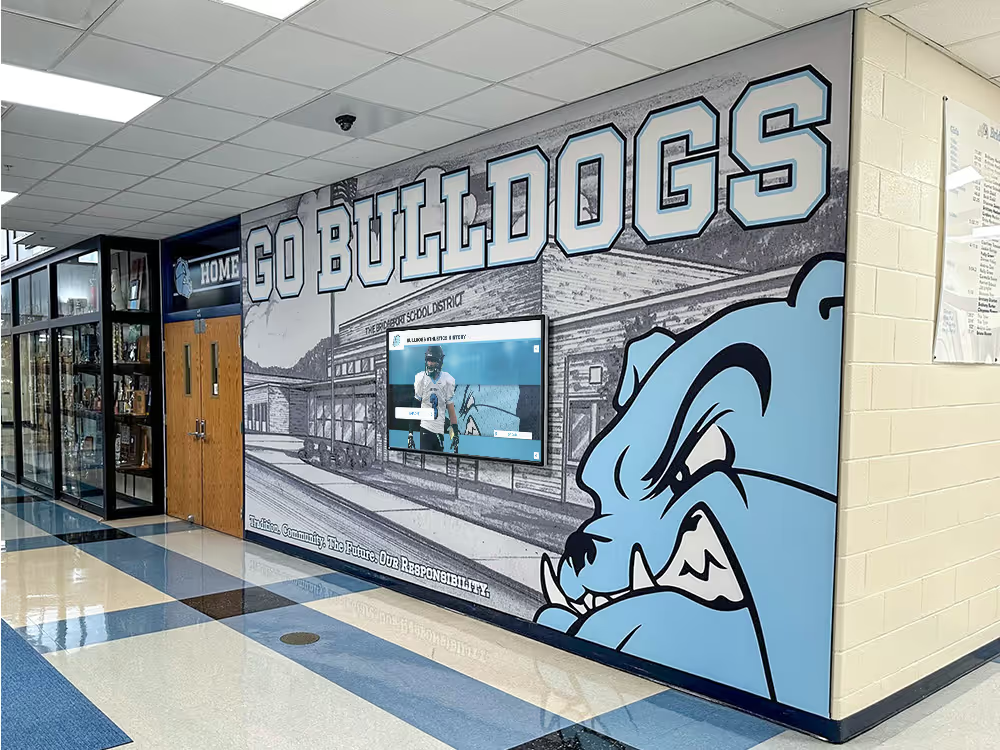
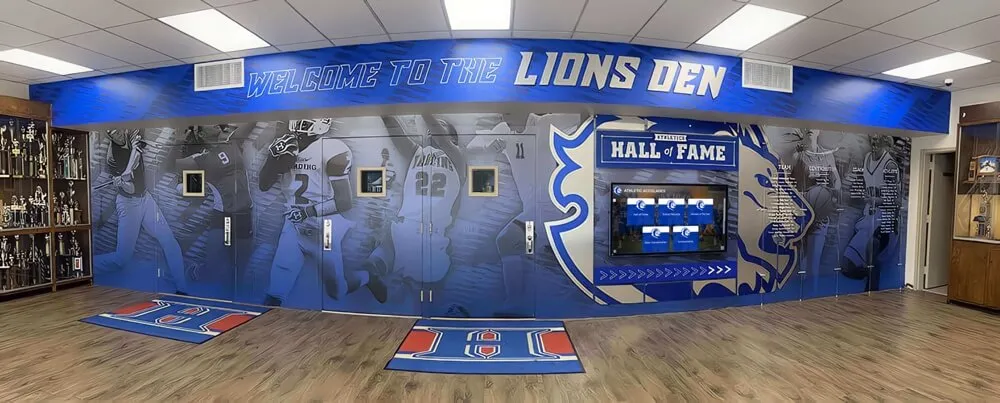
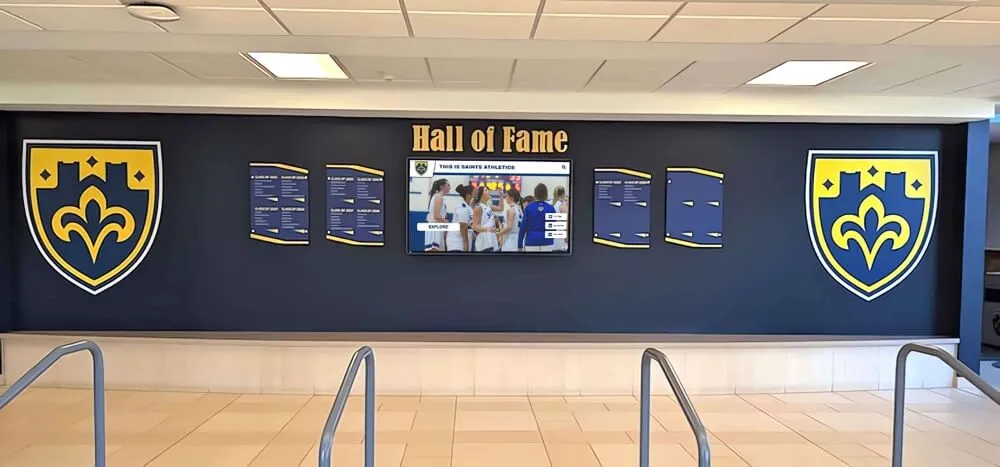
Interactive recognition displays create engaging community spaces where students, alumni, and visitors discover institutional history and consider their own legacy impact
Integrating Planned Giving With Broader Development Strategy
Planned giving programs achieve maximum impact when integrated thoughtfully with capital campaigns, annual giving, and major gift initiatives rather than operating as isolated development silos.
Coordinating Across Development Functions
Development staff must collaborate to ensure donors receive coordinated cultivation respecting their total relationship rather than fragmented appeals from different program areas.
Annual Fund to Planned Giving Pipeline
Consistent annual giving often predicts eventual planned giving commitment. Organizations should view annual fund programs as planned giving prospect development, cultivating habits of regular support while building relationships deepening over decades. Annual fund materials can introduce planned giving concepts, invitations to donor events provide opportunities for planned giving conversations, and annual giving stewardship demonstrates the consistent donor engagement that builds legacy commitment.
Transitioning donors from annual fund to planned giving requires strategic coordination. Development staff should avoid creating perception that planned giving conversations replace expectations for continued annual support. The most valuable donors maintain annual giving while also making planned gift commitments. Positioning planned giving as additional way to ensure mission permanence beyond annual support capacity—rather than substitute for ongoing gifts—prevents donors from reducing annual contributions when establishing estate commitments.
Major Gifts and Planned Giving Synergy
Some major gift prospects possess greater estate capacity than current giving ability. A retired couple living comfortably on pensions might struggle writing $100,000 major gift checks but could easily designate equivalent bequest without affecting current lifestyle. For these prospects, planned giving provides major gift pathway unavailable through immediate contributions.
Conversely, current major donors frequently become excellent planned giving prospects. Supporters capable of six-figure capital campaign gifts obviously possess wealth potentially generating transformational estate gifts. Major gift officers should introduce planned giving opportunities during capital campaign cultivation, exploring whether prospects want to make current campaign commitments while also including institutions in estate plans for additional support. This integrated approach maximizes total donor contribution—immediate campaign support plus future estate gift—while demonstrating that organizations value long-term mission sustainability not just current campaign goals.
Capital Campaign Integration
Capital campaigns create natural planned giving cultivation opportunities. Campaign materials can include planned giving options alongside immediate gift solicitations. Campaign leadership can model planned giving commitment by publicly announcing their own legacy society membership. Campaign events provide venues for planned giving education sessions. Campaign timeframes (typically 5-7 years) allow planned giving conversations maturing into commitments counting toward campaign goals when documented even if not received during campaign periods.
Organizations sometimes count documented planned gift intentions toward capital campaigns at discounted values (perhaps 20-30% of estimated eventual value) recognizing commitment significance while acknowledging timing uncertainty and revocability. This counting encourages planned giving cultivation during campaigns while avoiding overstating uncertain future receipts in campaign totals.
Leveraging Technology for Sustained Engagement
Planned giving success requires maintaining donor relationships across decades—well beyond typical development officer tenure or campaign timeframes. Technology enables the consistent, personalized engagement that sustains these long-term relationships.
Personalized Communication at Scale
Modern constituent relationship management (CRM) systems allow organizations to segment donors by characteristics, interests, and engagement history, then deliver personalized communication matching individual preferences. Planned giving prospects might receive estate planning newsletters, legacy society event invitations, and content about endowment impact while annual fund donors receive different messaging emphasizing immediate need.
Automated workflows ensure consistent touchpoints—birthday greetings, giving anniversary acknowledgments, or milestone recognitions—maintaining relationship warmth without requiring staff to manually track hundreds of individual donor dates. These consistent touches demonstrate organizational attentiveness building trust essential for eventual planned giving conversations.
Digital Platforms Creating Community Connection
Interactive recognition displays and digital engagement platforms create what development experts call “digital warming”—continuously surfaced, personalized content transforming cold institutional relationships into warm community connections. When donors visit campuses and see their own giving history reflected in interactive displays, read stories about programs they’ve supported, or explore the broader donor community they’ve joined, these experiences reinforce institutional connection in ways annual appeal letters cannot match.
This sustained engagement proves particularly valuable for planned giving cultivation. Organizations seeking to inspire legacy commitments must demonstrate institutional vitality, mission clarity, and community vibrancy giving donors confidence that their estate gifts will fund thriving organizations worth perpetuating. Digital platforms showcasing institutional impact, celebrating donor community, and enabling ongoing engagement create the institutional confidence supporting planned giving decisions.
Solutions like Rocket Alumni Solutions understand this connection between engagement and philanthropy. Their platforms don’t just recognize donors—they create community experiences where alumni, supporters, and beneficiaries continuously encounter institutional stories, discover personal connections, and develop the emotional bonds that ultimately inspire transformational giving including planned gift commitments.
Overcoming Common Planned Giving Challenges
Organizations building planned giving programs encounter predictable obstacles requiring strategic responses rather than reactive problem-solving.
Addressing Organizational Hesitation
Leadership and board members sometimes resist planned giving program investment, questioning whether distant future benefits justify current resource allocation.
Demonstrating Long-Term Value
Opponents argue resources should focus on immediate revenue generation through annual fund or capital campaigns rather than planned giving producing uncertain future returns. This short-term thinking ignores planned giving’s extraordinary return on investment. Industry research shows planned giving programs generate $5-15 in eventual revenue for every dollar invested in cultivation—far exceeding annual fund returns.
Moreover, planned gifts provide the ultimate sustainable revenue. Annual fund income fluctuates with economic conditions, capital campaigns end, and major gifts depend on identifying wealthy prospects. Planned giving creates perpetual endowment income sustaining operations regardless of economic uncertainties or donor pipeline variations. Organizations prioritizing long-term sustainability cannot afford to neglect planned giving regardless of short-term budget pressures.
Starting Small and Building Momentum
Organizations hesitant about planned giving investment can start incrementally. Simple bequest programs require minimal infrastructure—sample bequest language, basic recognition, and consistent communication encouraging donors to remember institutions in wills. These foundational efforts generate documented commitments demonstrating program viability, creating internal advocates, and building momentum supporting expanded investment.
Early successes—even single estate gift receipt—often catalyze broader planned giving commitment. When hesitant board members see $250,000 bequest from modest annual donor nobody identified as major prospect, they recognize planned giving potential in broader donor base. This experiential learning typically proves more convincing than theoretical arguments about program value.
Managing Donor Expectations and Gift Restrictions
Planned giving sometimes creates challenges around gift restrictions, family expectations, or donor intentions conflicting with institutional needs.
Negotiating Gift Terms
Donors establishing bequests or trusts sometimes attach restrictions specifying narrow gift uses potentially conflicting with future institutional priorities. A donor might designate estate gift for specific academic program possibly discontinued before estate settles, athletic facility potentially replaced, or scholarship criteria potentially violating future legal standards.
Organizations should tactfully negotiate gift flexibility during planning conversations rather than accepting rigid restrictions creating future problems. Development staff can explain institutional evolution, suggest broader fund purposes accomplishing donor intentions while maintaining flexibility, or propose gift agreement language allowing reasonable modifications with family consultation if specified purposes become impractical. Most donors appreciate this guidance, preferring practical gift impact over strict adherence to potentially outdated specifications.
Balancing Recognition and Privacy
Families sometimes disagree with donor recognition preferences after deaths. Children might object to public recognition parents authorized, desire greater prominence than donors requested, or contest gift terms documented in planning discussions. Clear written documentation—signed bequest intent letters, gift agreements reviewed by donor attorneys, or recorded conversations confirming donor wishes—protects organizations from family disputes while honoring actual donor preferences.
Organizations should also maintain appropriate boundaries between donor cultivation and family involvement. While including spouses or adult children in legacy planning discussions often strengthens family support for planned gifts, development staff must ensure donors make independent decisions reflecting personal values rather than family pressure. Confidential conversations confirming donor intentions without family present protect against later claims that organizations manipulated vulnerable seniors.
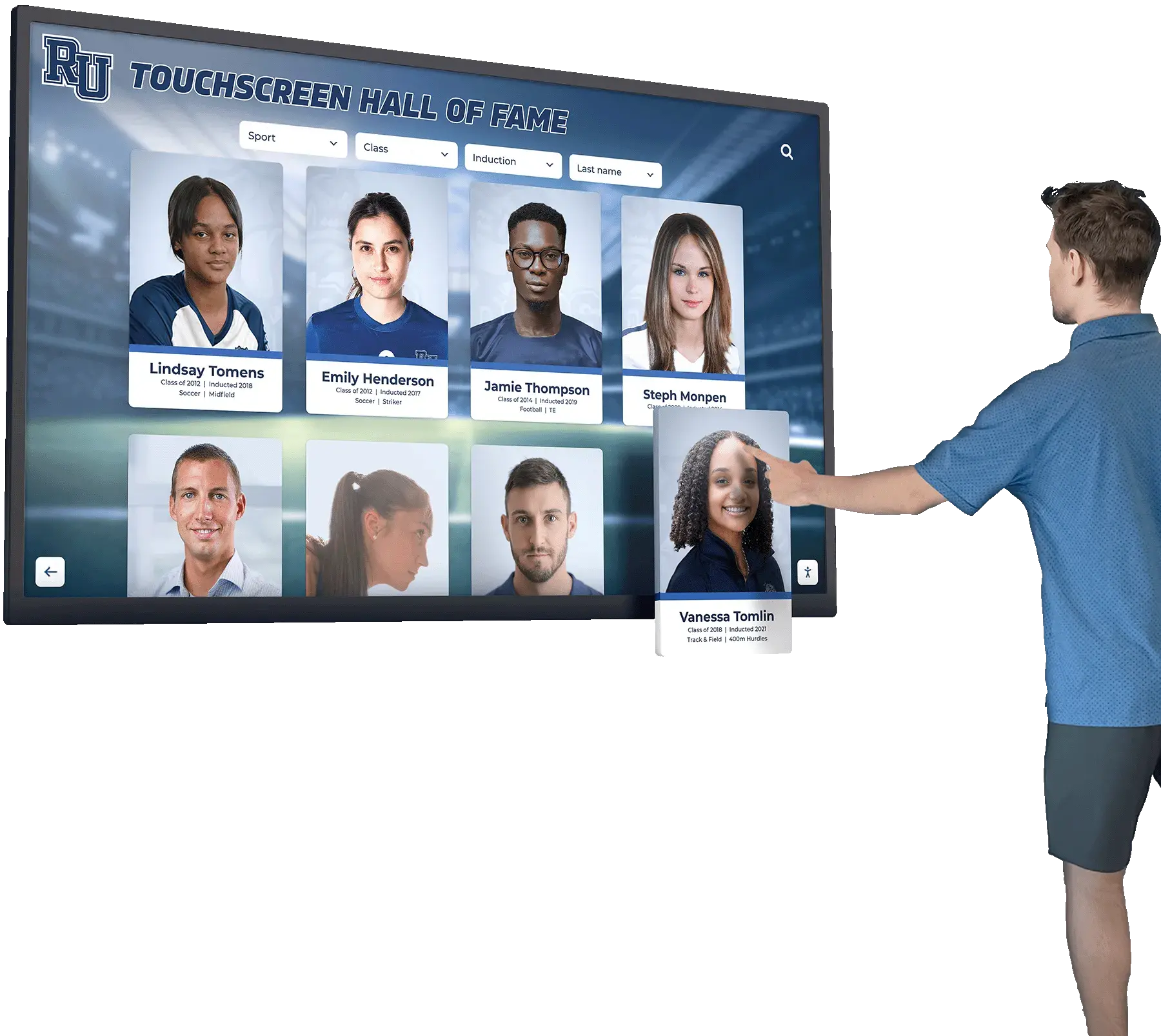
Modern recognition technology creates interactive experiences connecting donors with institutional impact, building the engagement depth that inspires legacy giving commitment
Measuring Planned Giving Program Success
Evaluating planned giving effectiveness requires different metrics than annual fund or major gift programs given longer timeframes and deferred benefits.
Key Performance Indicators
Organizations should track multiple indicators assessing program health, cultivation effectiveness, and ultimate revenue impact.
Documented Commitment Growth
The primary planned giving metric measures documented commitments—signed bequest intent letters, established charitable remainder trusts, verified beneficiary designations, or other written confirmations of planned gift intentions. Organizations should track:
- Total number of documented planned gift commitments
- Estimated value of documented commitments (recognizing uncertainty)
- New commitments documented annually
- Commitment growth rate year-over-year
- Average estimated commitment size
- Percentage of donor base with documented planned gifts
These metrics assess cultivation effectiveness independent of actual gift receipt timing. Programs documenting 20-30 new planned gift commitments annually demonstrate healthy cultivation even if estate gift receipts remain modest due to donor longevity.
Marketing Reach and Engagement
Supporting indicators measure cultivation activity creating planned giving awareness and consideration:
- Planned giving seminar attendance
- Legacy society event participation
- Planned giving website page views
- Bequest planning guide requests
- Donor advisor consultations completed
- Planned giving inquiry response rate
These engagement metrics help organizations understand cultivation effectiveness and identify prospects demonstrating interest warranting personal follow-up.
Ultimate Revenue Realization
Organizations must also track actual planned gift receipts as estates settle and other planned gifts materialize:
- Annual planned gift revenue received
- Number of estate gifts received annually
- Average estate gift size
- Largest estate gifts received
- Total endowment principal from planned gifts
- Planned gift revenue as percentage of total development revenue
Comparing documented commitments with actual receipts helps organizations assess pipeline health, projection accuracy, and ultimate return on planned giving investment.
Celebrating Milestones and Successes
Planned giving success often occurs incrementally across decades rather than dramatic immediate results. Organizations should actively celebrate milestones maintaining momentum and demonstrating program value.
Recognition opportunities include:
- Announcing legacy society membership milestones (100th member, 250th member, etc.)
- Celebrating largest estate gift receipts publicly (with family permission)
- Profiling legacy society members in publications, events, or digital platforms
- Hosting legacy society anniversary celebrations (10-year, 25-year, 50-year anniversaries)
- Recognizing development staff planned giving successes through internal awards
- Sharing estate gift impact stories showing how planned gifts transform mission
These celebrations reinforce that planned giving represents core institutional priority, inspire additional commitments from prospects observing recognition, and maintain organizational focus on long-term sustainability planned giving enables.
Building Your Legacy Donor Community
Ultimately, successful planned giving programs create communities of committed supporters who see ensuring institutional permanence as integral to their own legacy planning.
Organizations cultivate these communities through:
Consistent engagement demonstrating institutional vitality, mission clarity, and impact worthy of perpetual support
Transparent communication building trust that organizations will honor gift intentions and steward planned gifts responsibly across generations
Meaningful recognition celebrating legacy commitments appropriately while inspiring others to consider similar philanthropy
Personal relationships where donors feel valued as community members, not prospect pipeline components
Modern engagement tools creating vibrant institutional connections through interactive platforms, digital recognition, and personalized experiences
When schools and nonprofits invest in these relationship foundations, planned giving emerges naturally from donors’ desire to perpetuate values, ensure mission continuity, and create legacies extending beyond their lifetimes. The resulting estate gifts, charitable trusts, and other planned giving vehicles provide financial sustainability enabling institutions to pursue mission with confidence that current donor commitment ensures future organizational capacity.
Organizations ready to build or expand planned giving programs should evaluate how current donor recognition, engagement platforms, and stewardship activities create the deep institutional connections inspiring legacy giving. Modern solutions like Rocket Alumni Solutions provide the interactive recognition and digital engagement capabilities that transform transactional donor relationships into vibrant community connections—the foundation upon which lasting planned giving programs are built.

Interactive digital displays create engaging donor experiences that build institutional connection and inspire the transformational giving that sustains organizational mission
Conclusion: Building Institutional Sustainability Through Legacy Relationships
Planned giving programs represent far more than development tactics generating future revenue—they embody strategic commitments to institutional permanence, donor relationship depth, and mission sustainability extending across generations. Organizations that build thriving planned giving initiatives recognize they’re cultivating something profound: communities of supporters so committed to organizational values that ensuring mission continuity beyond their own lifetimes becomes integral to personal legacy planning.
This cultivation requires patience, relationship investment, consistent engagement, and recognition systems celebrating commitment while inspiring others. It demands viewing donors as valued community members deserving genuine connection rather than prospects targeted for estate gift extraction. It necessitates creating institutional environments—through programming excellence, impact demonstration, and vibrant community spaces—that inspire confidence warranting inclusion in supporters’ most important financial planning documents.
When schools and nonprofits embrace these principles, planned giving transforms from uncertain future revenue into reliable sustainability foundation. Legacy society membership grows. Estate gift commitments accumulate. Endowment principal expands. And most importantly, organizations build donor communities ensuring that today’s mission excellence continues serving future generations through philanthropic commitments perpetuating institutional values long after current leaders, staff, and donors have passed.
Organizations ready to develop planned giving programs that truly transform institutional futures should begin by evaluating current donor engagement depth, recognition effectiveness, and relationship cultivation quality. The most successful programs combine personal relationship building with modern engagement platforms creating the institutional connection inspiring transformational giving.
Discover how Rocket Alumni Solutions creates interactive donor recognition experiences that build engaged donor communities, celebrate legacy commitments meaningfully, and inspire the deep institutional connection that motivates planned giving decisions across all donor segments. Transform how your organization recognizes donors and cultivates the lasting relationships that ensure mission sustainability for generations to come.