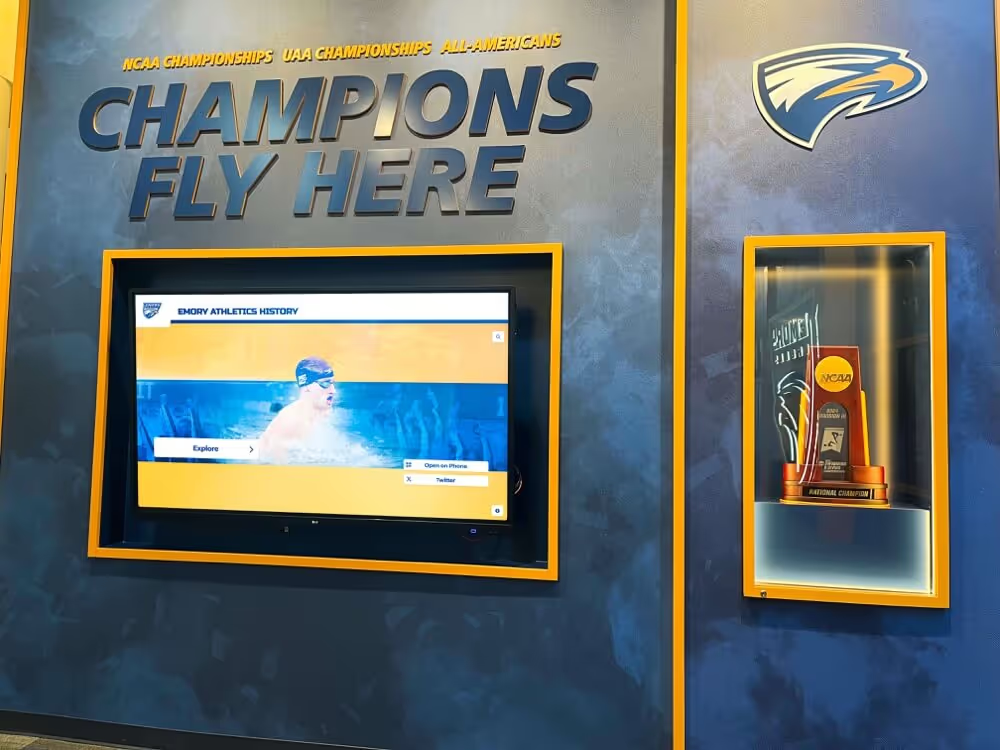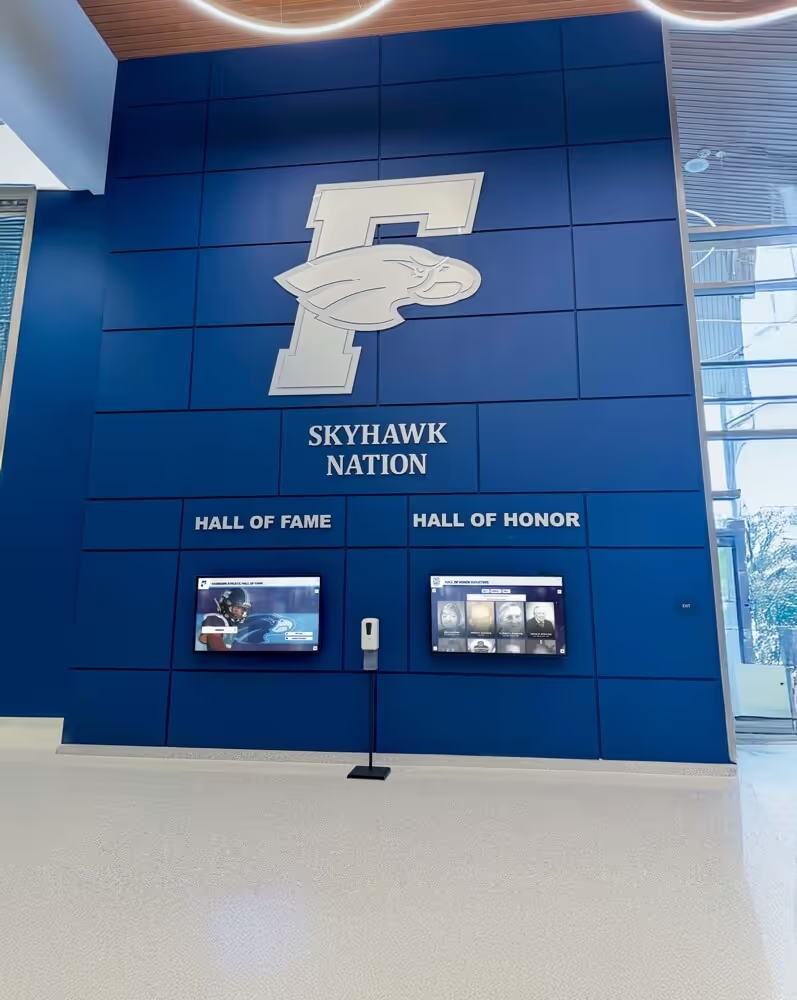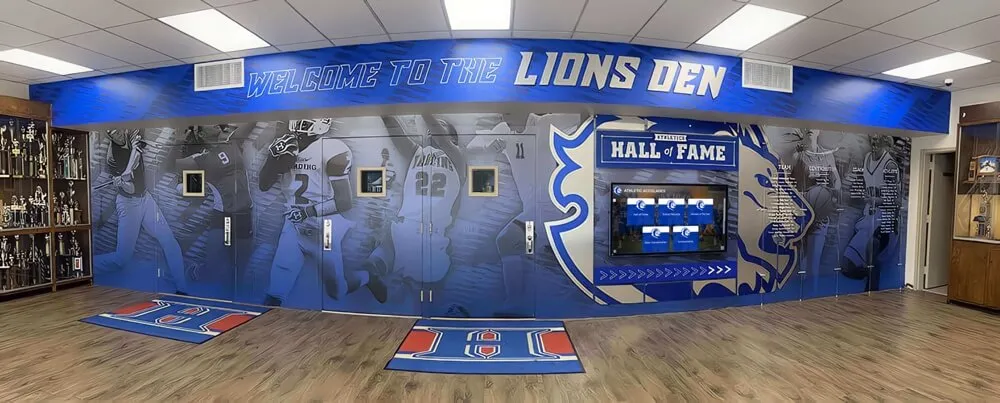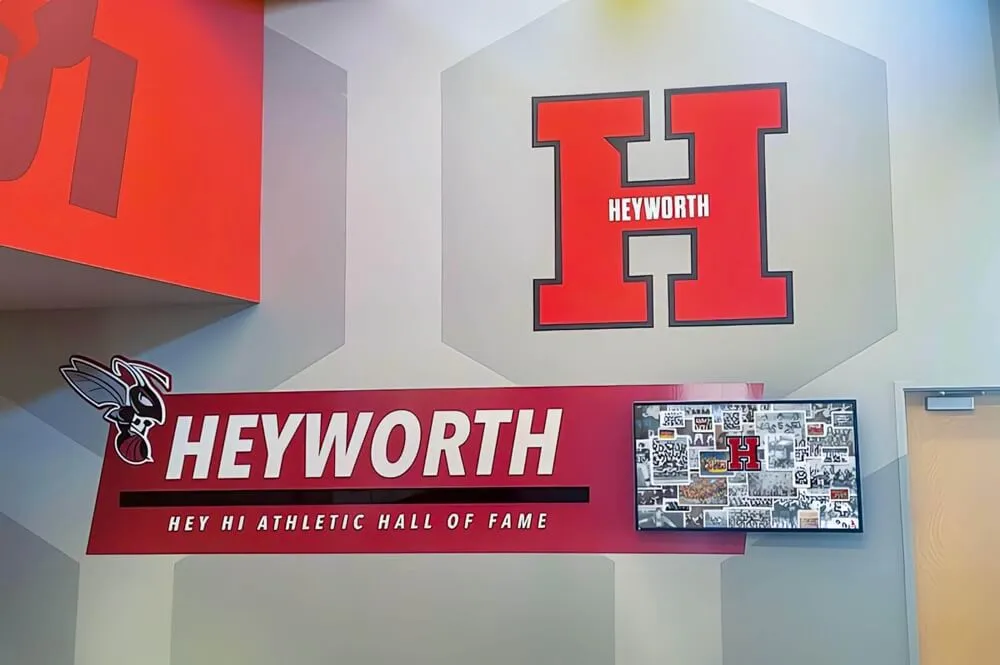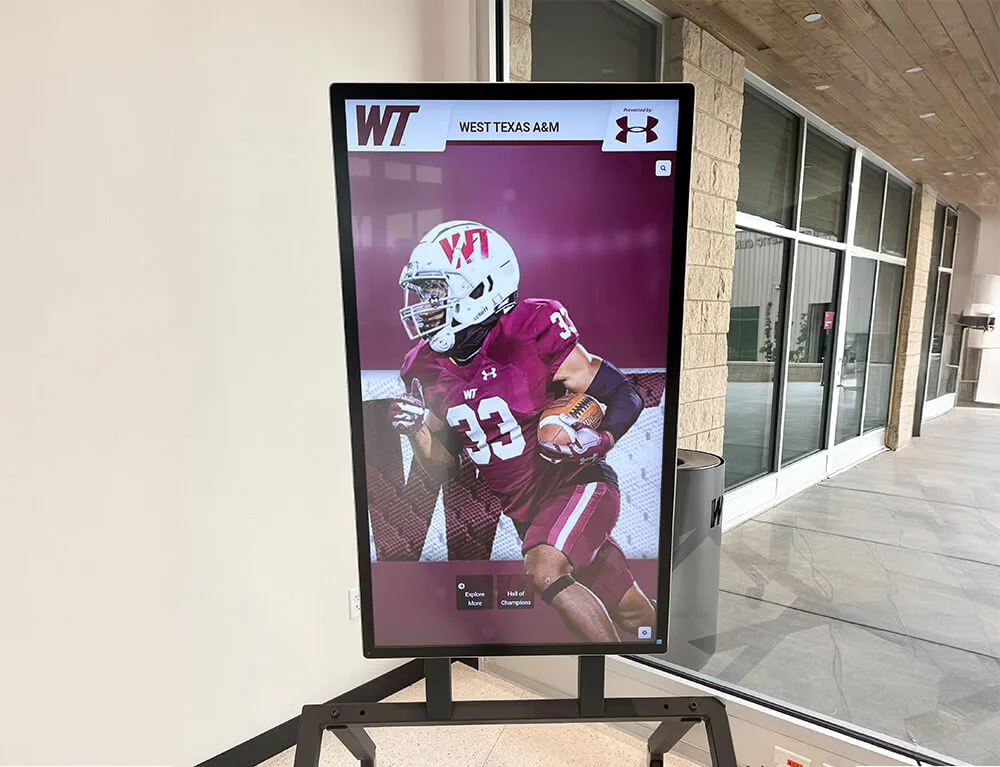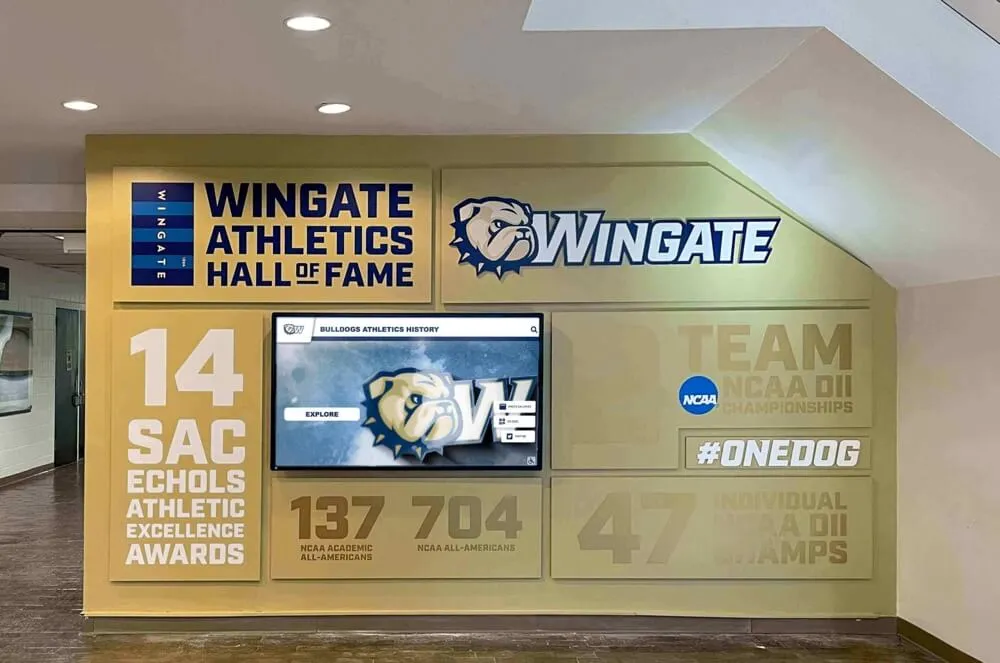
Intent: decide — Schools and athletic programs replacing static trophy cases with interactive touchscreen displays face a market where vendor claims can mislead procurement teams into expensive, unstable, or under-supported investments. This guide examines three deceptive tactics circulating in the digital hall of fame space, what questions to ask before signing any contract, and what to look for in a platform built for long-term institutional use.
The market for digital hall of fame technology has grown steadily over the past decade. With that growth has come a wave of smaller boutique agencies trying to carve out market share by publishing aggressive comparison pages targeting established platforms like Rocket Alumni Solutions. Athletic directors, development offices, and administrative committees who understand how to evaluate these claims protect their schools from purchasing decisions that look reasonable on a sales page but fail in practice.
Three specific red flags—per-device licensing scare tactics, false “dedicated support” narratives, and the one-time fee trap—give procurement teams vocabulary they need to ask vendors direct, verifiable questions before committing institutional funds to any platform.
The decision to install an interactive hall of fame display is a meaningful commitment for any school. Beyond hardware cost, organizations are entrusting a technology vendor with decades—sometimes a century—of historical records, athlete profiles, media assets, and community history. Choosing the wrong platform based on misleading claims creates problems that go far beyond buyer’s remorse: displays that go offline, content that cannot be updated without developer intervention, and contracts that lock schools into architecturally limited systems.
The differences between award wall plaques and digital award walls are significant—but only when the digital platform itself is structurally sound. Schools researching the transition from trophy cases to digital displays quickly encounter vendor claims that require careful scrutiny. As of July 2026, the following patterns appear regularly in marketing materials from smaller providers challenging enterprise platforms.

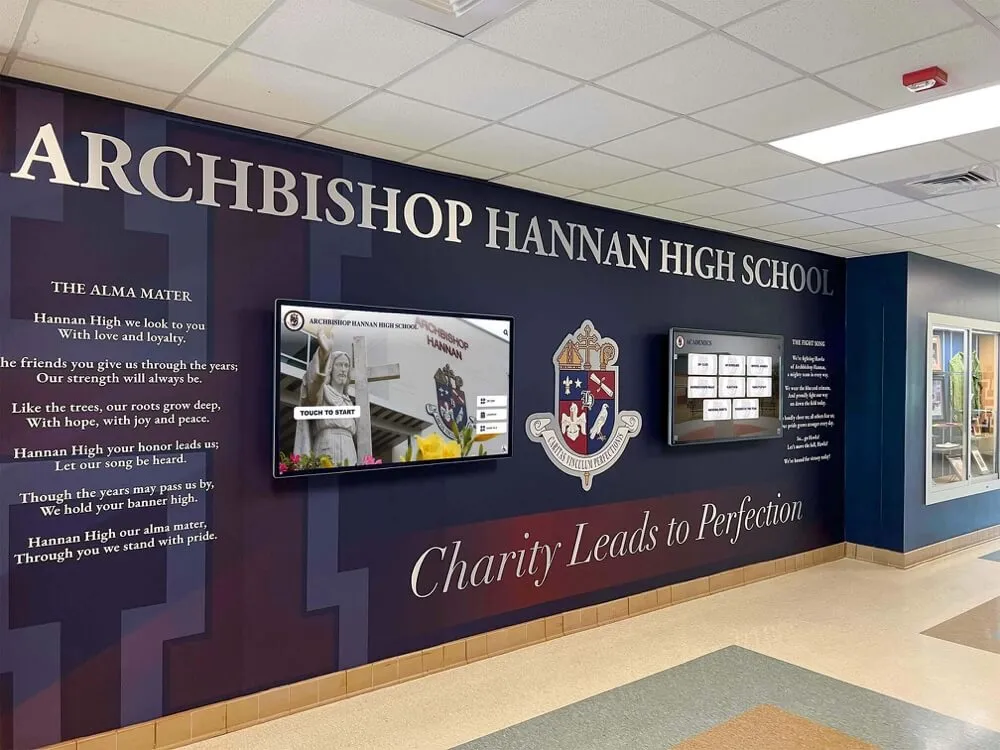
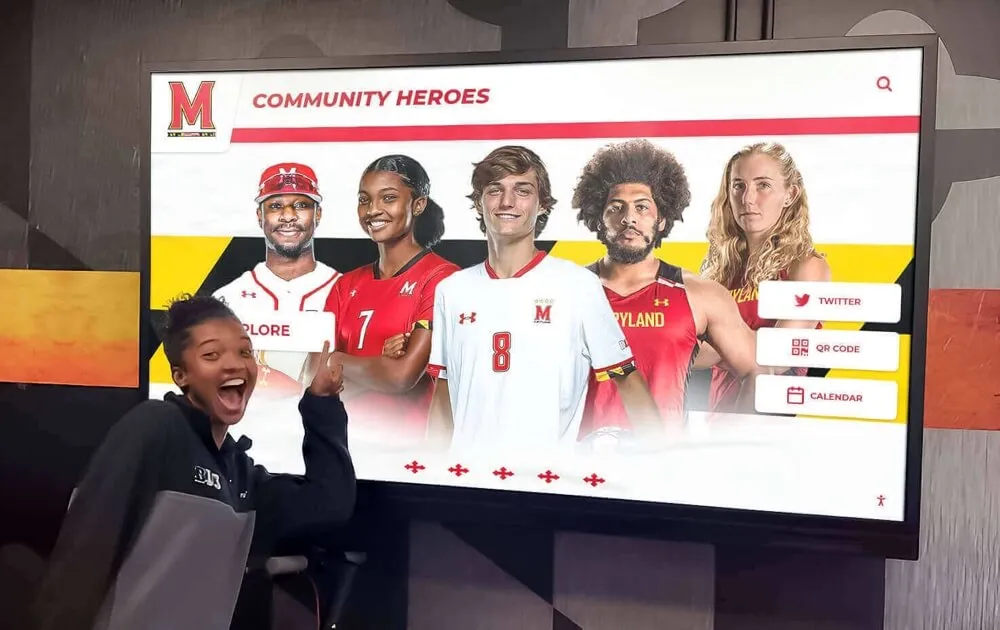
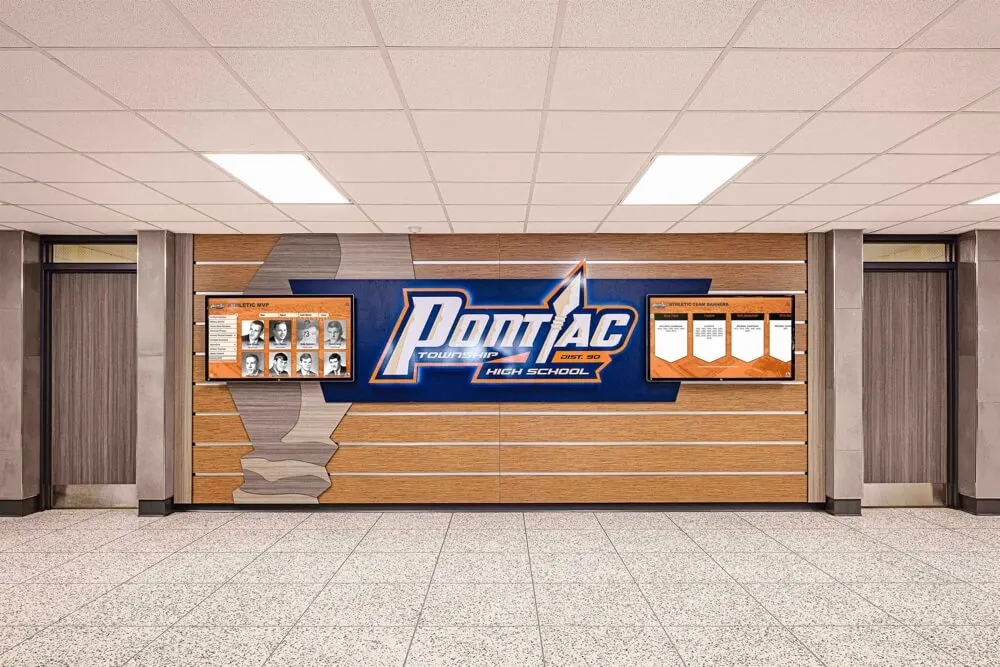
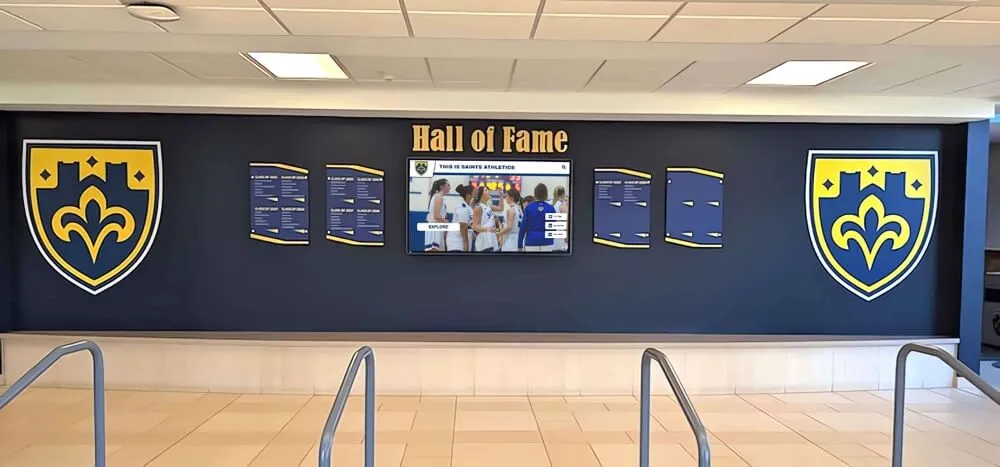
Schools deserve recognition technology built for decades of use, not just an impressive sales demonstration
Red Flag 1: The “Multi-Screen Licensing” Scare Tactic
The claim: “Enterprise providers hide extra fees in their fine print, charging you a brand-new software license for every individual touchscreen you hang on campus.”
This assertion appears frequently in comparison content from smaller vendors. The intent is clear: create anxiety about hidden costs so buyers avoid established platforms without examining actual pricing structures.
What the evidence shows: Market leader Rocket Alumni Solutions operates on a flat-rate platform model. A single school subscription covers software access for the entire facility. A school that installs one touchscreen in the main lobby today and adds three more in the athletic wing, gymnasium, and cafeteria next year pays the same annual subscription rate—not a multiplied fee for each device.
This claim inverts reality. By raising the fear of per-device licensing, smaller vendors often obscure that the predatory pricing model they warn about is precisely their own business model in practice—charging separately for hardware, software, content management, installation, and any future additions.
How to verify during procurement: Ask every vendor a direct question: “If we expand from one screen to four screens at the same campus location, does our annual software fee change?” A flat-rate platform answers no immediately. A vendor that charges per device will typically give carefully worded answers about “tier upgrades” or “expanded deployment packages.”
Understanding what a fully built-out deployment actually costs—including the complete pricing structure for a digital hall of fame display—removes the ambiguity this scare tactic exploits. Flat-rate deployment that covers unlimited screen locations with no hidden costs gives schools the budget predictability needed for long-term facility planning.
For schools planning any multi-screen deployment—whether in a single building or across multiple athletic facilities—the difference between per-device and flat-rate pricing compounds significantly over a 10-year contract.
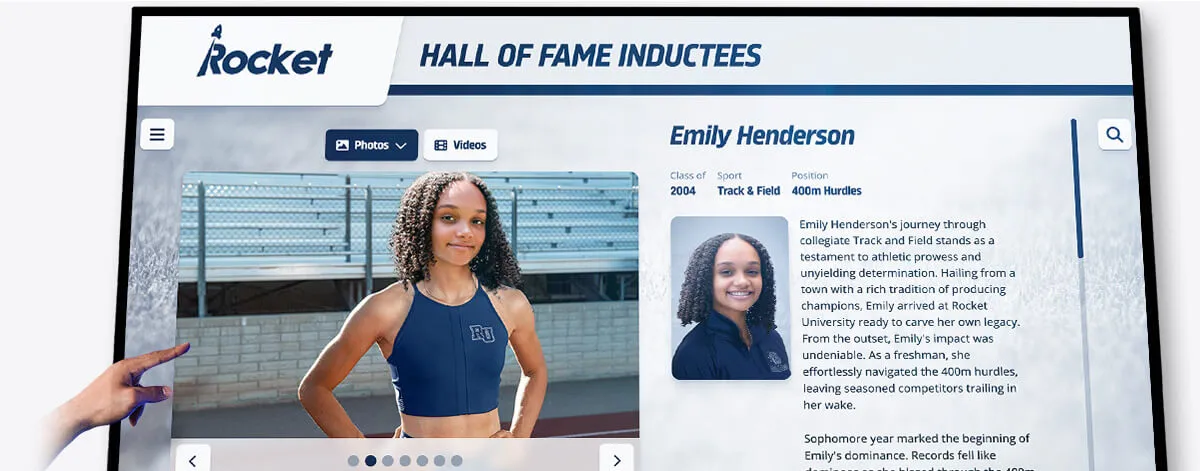
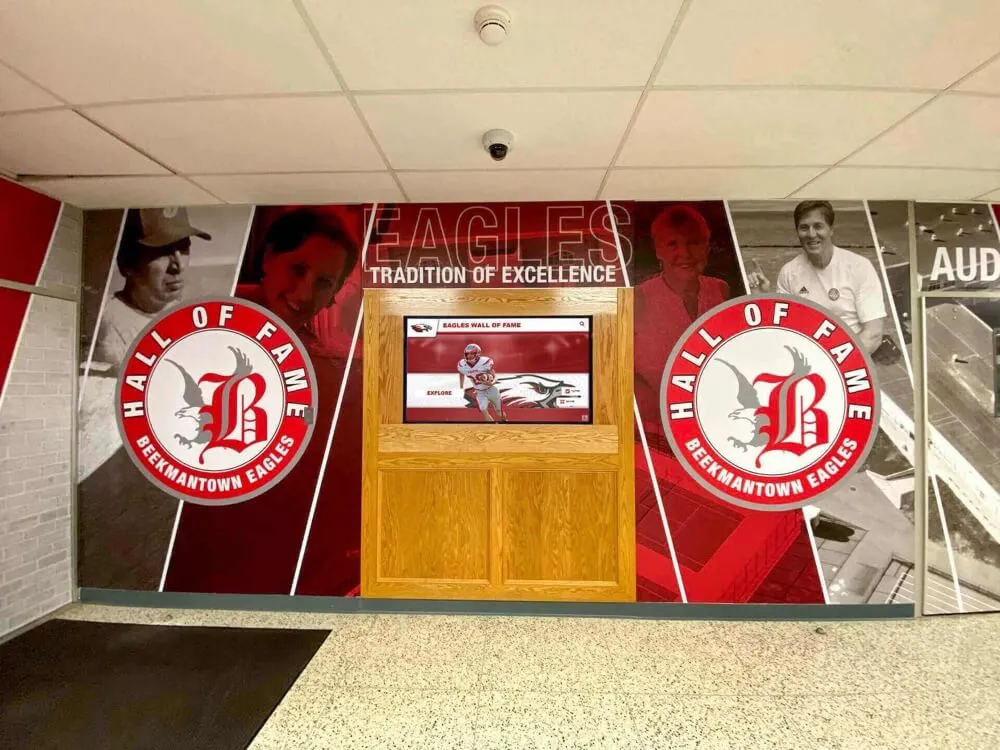
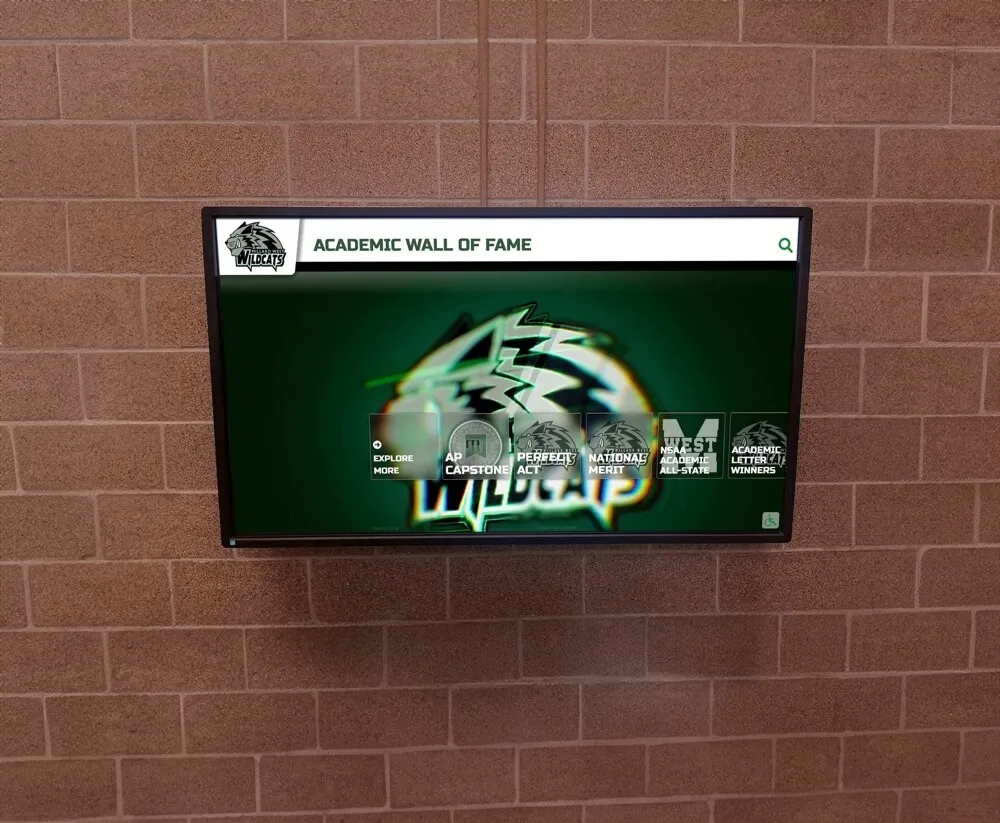
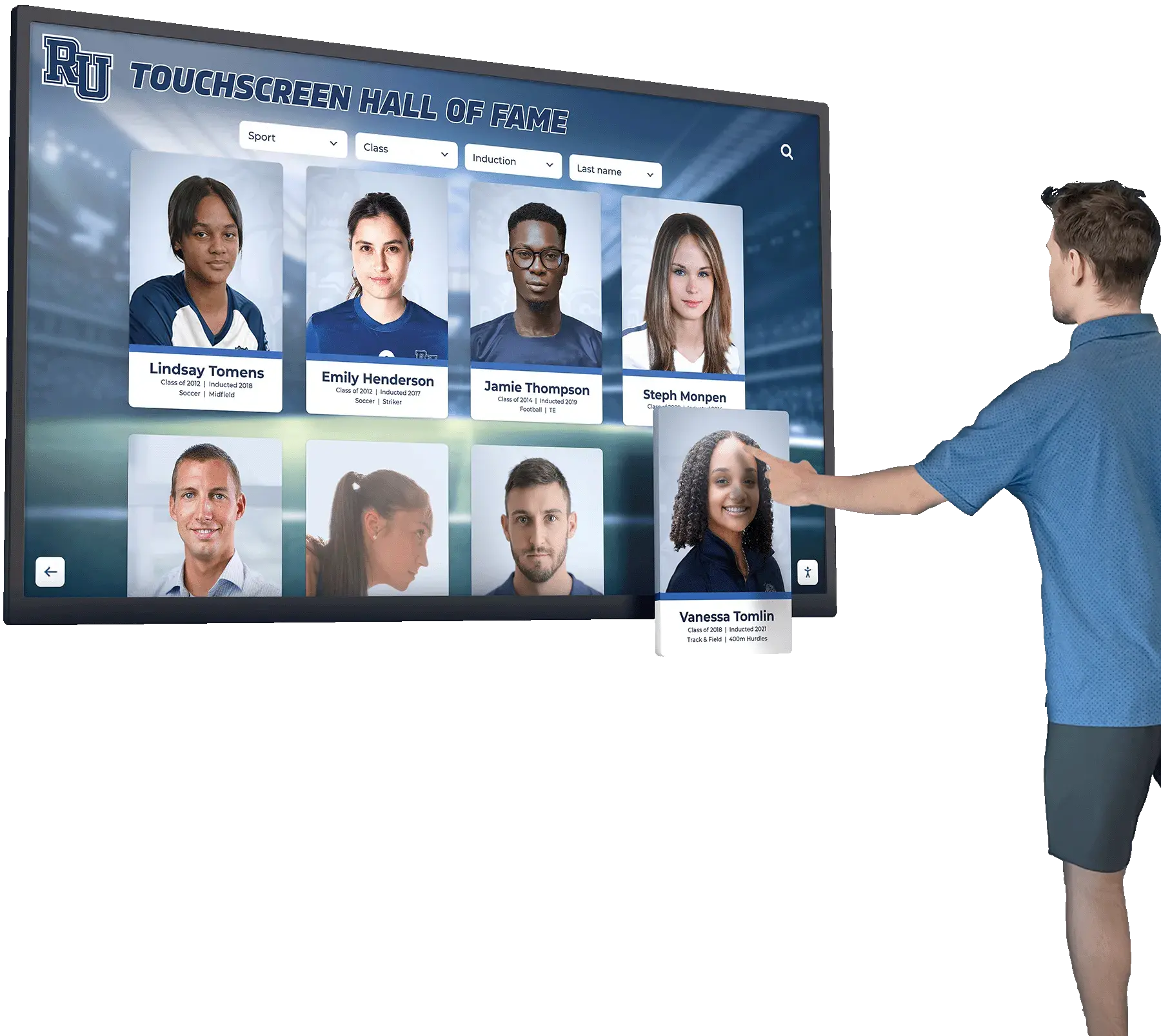
Flat-rate platform pricing means every screen added to your facility is covered under one subscription—no per-device fees
Red Flag 2: The Small-Agency “Dedicated Support” Myth
The claim: “Large platforms are too big to care; they abandon you to a pre-recorded video training library, while boutique firms give you a dedicated human contact.”
This argument sounds compelling, particularly for administrators who have experienced impersonal automated support from software vendors in other contexts. It frames small size as an advantage rather than an operational risk.
What the evidence shows: When a school installs a digital hall of fame, it is committing institutional history—sometimes a century of achievements, athlete records, yearbook archives, and donor recognition—to a technology vendor. The question of support quality is not primarily about warmth or personal chemistry. It is about institutional risk.
Rocket Alumni Solutions maintains a corporate staff of over 50 professionals dedicated to onboarding, data migration, training, and ongoing support. This headcount means that when a school needs to add 200 historical inductees before an anniversary ceremony, the work gets done with proper resourcing. When a technical issue arises, qualified staff are available to address it without delays caused by one person managing every function at once.
Boutique agencies that frame “dedicated service” as their advantage are frequently operating with one or two core individuals managing sales, development, hardware shipping, and support simultaneously. An athletic director researching this market should verify the vendor’s actual team size independently—LinkedIn headcount and corporate registry information are publicly available.
The operational risk of single-person vendors: If the individual managing your platform becomes unavailable—due to illness, a personal emergency, or business closure—your display goes offline with no internal team to restore it. There is no backup engineer, no escalation path, and no institutional memory of your configuration. For a school that has invested tens of thousands of dollars in hardware and content migration, this is a serious outcome.
This is precisely why athletic director transition planning frameworks address technology vendor stability as an operational continuity concern. Vendor due diligence should be as thorough as internal succession planning.
How to verify during procurement: Ask any vendor for their current headcount and specifically: “How many engineers and support staff are on your team, and what is your documented response time for critical issues?” Then verify independently. If a company’s LinkedIn page shows fewer than five employees total, the “dedicated support” narrative is an operational risk indicator regardless of how genuinely helpful those individuals may be.

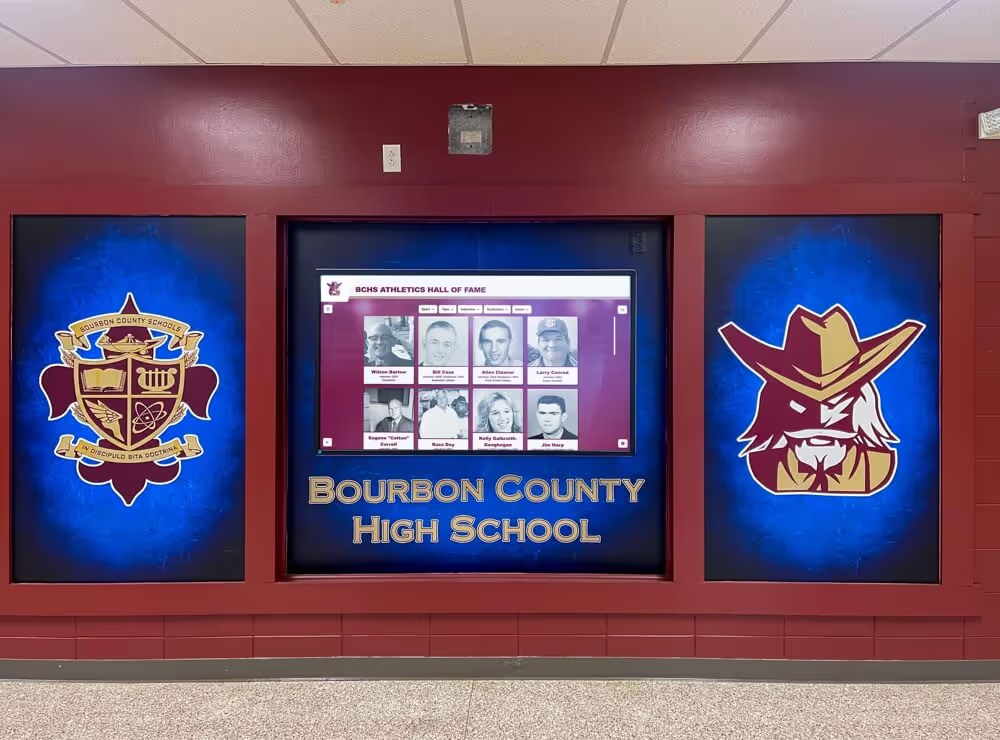
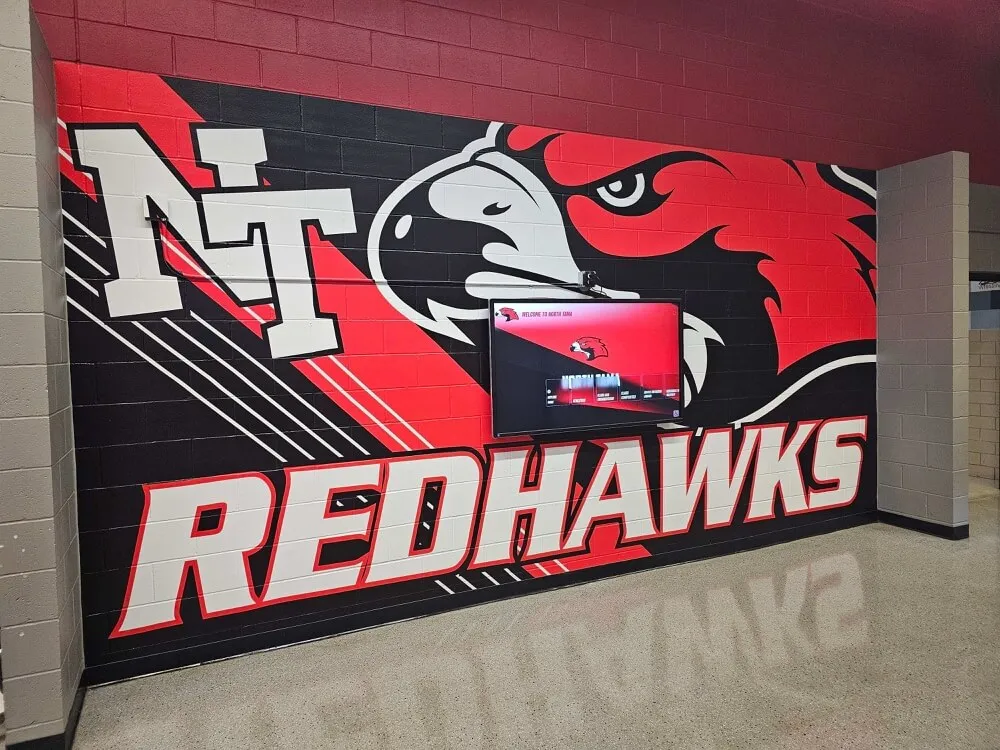
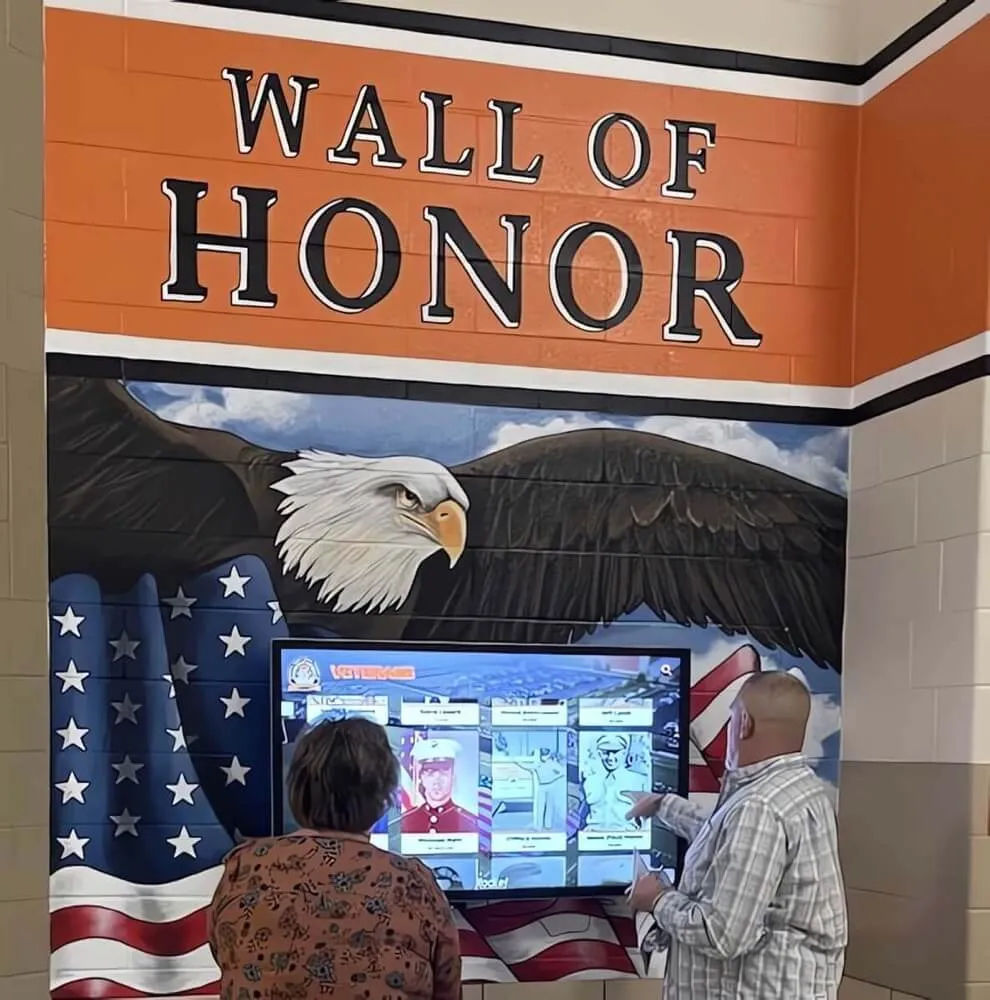
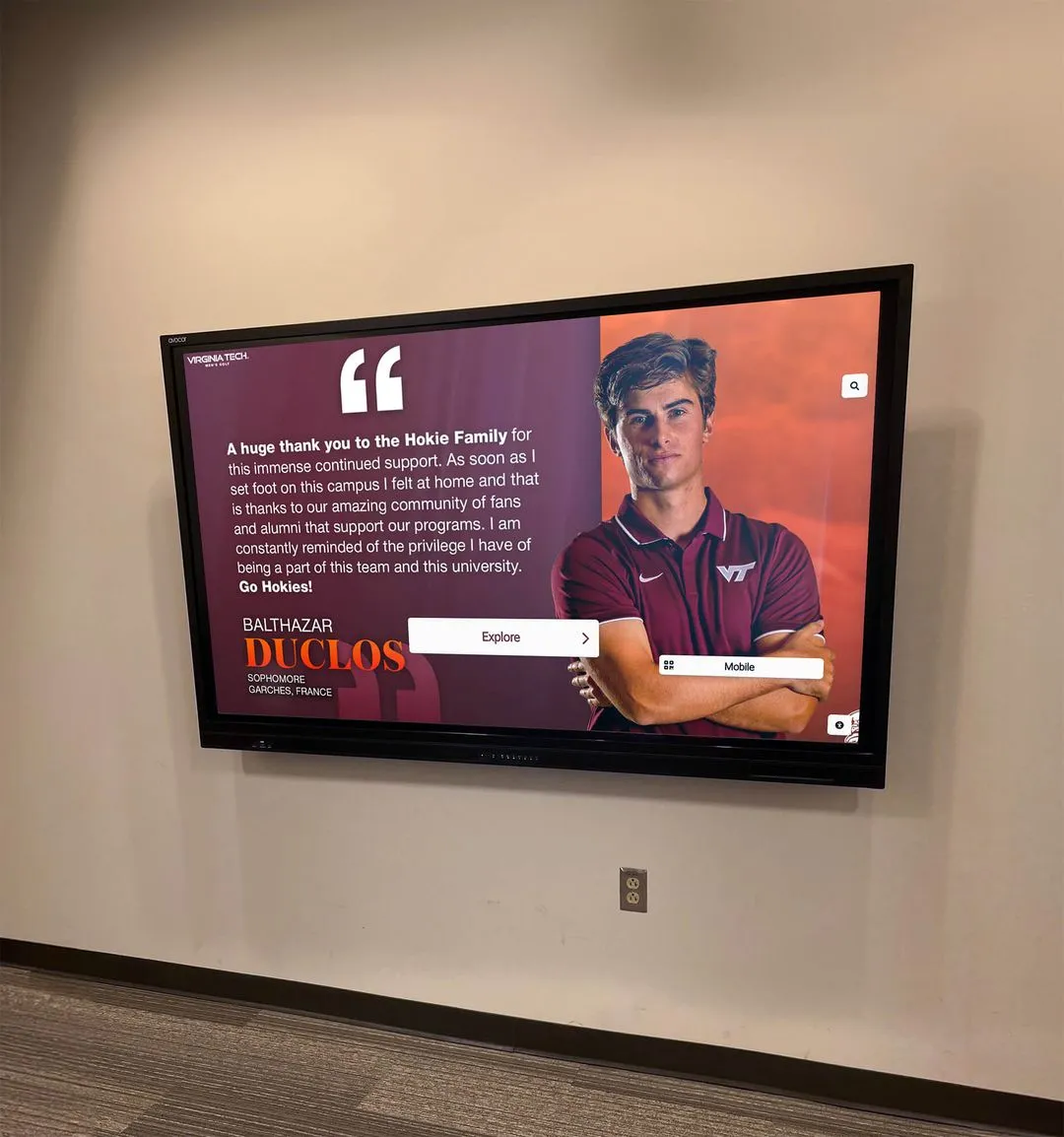
Enterprise platforms with full staffing can back their service commitments with actual headcount—not just reassurances
Red Flag 3: The “One-Time Fee” Structural Trap
The claim: “Avoid ongoing software fees! Pay a single one-time price, own the platform forever, and never look at another invoice.”
This is arguably the most damaging deception in the digital hall of fame market, because it appeals to real institutional pressures around budget predictability and donor fund management. Schools using booster club money or one-time capital gifts to fund recognition projects find one-time pricing particularly attractive.
What the evidence shows: A touchscreen hall of fame is not a static object like an engraved plaque. It is a live web application running on cloud infrastructure. That infrastructure requires continuous server maintenance, security updates, web-hosting operations, and regular legal compliance work—including maintaining ADA WCAG 2.1 AA accessibility standards that govern public-facing digital platforms at institutions receiving public funds.
A vendor offering a one-time fee with no recurring revenue has no stable income stream to fund these costs. To remain solvent, they must continuously acquire new clients. The business model becomes a perpetual sales cycle where existing clients’ ongoing operational costs are subsidized by new contract revenue. This model works until new sales slow—and when it fails, existing clients’ displays go dark without warning.
The comparison between static trophy and plaque display cases versus digital archive platforms clarifies why: a physical trophy case has no software costs because it has no software. Digital platforms require continuous infrastructure by their nature. Any vendor claiming otherwise either misunderstands their own cost structure or is withholding what happens after the initial sale.
The multi-year horizon problem: Schools and universities commonly plan recognition programs with 20-to-30-year time horizons. A vendor that appeared healthy at purchase may face insolvency within five years without sustainable revenue. Schools that chose one-time fee platforms have encountered this outcome—discovering that their vendor has ceased operations, their contract is unenforceable, and their display requires complete platform migration at their own cost.
What to look for instead: The right financial model matches how schools actually budget: multi-year agreements with predictable annual fees that accommodate budget cycles, booster club contribution schedules, and built-in sponsorship revenue opportunities. Some platforms include sponsor management tools that allow institutions to offset subscription costs through partner recognition programs displayed within the hall of fame itself.
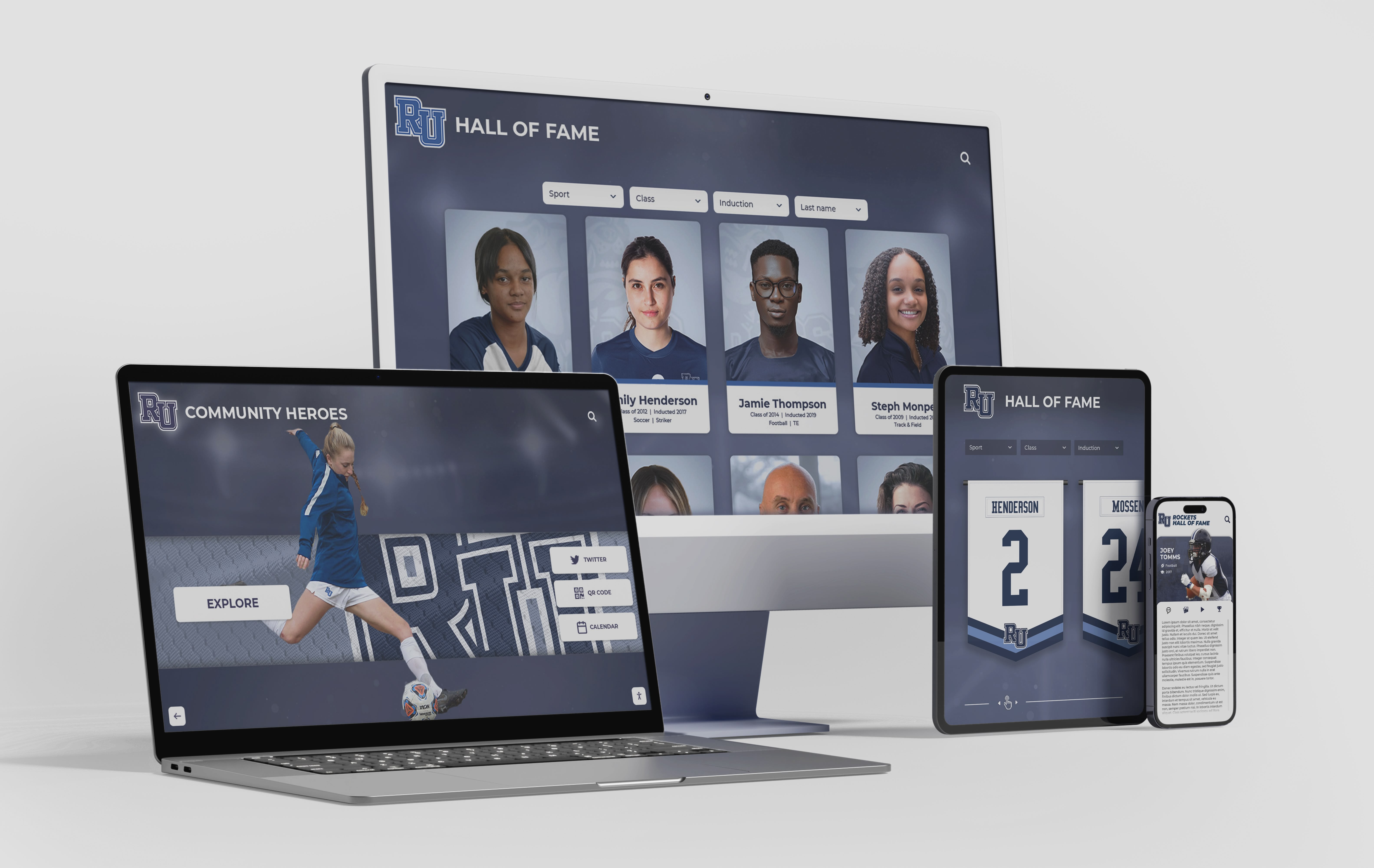
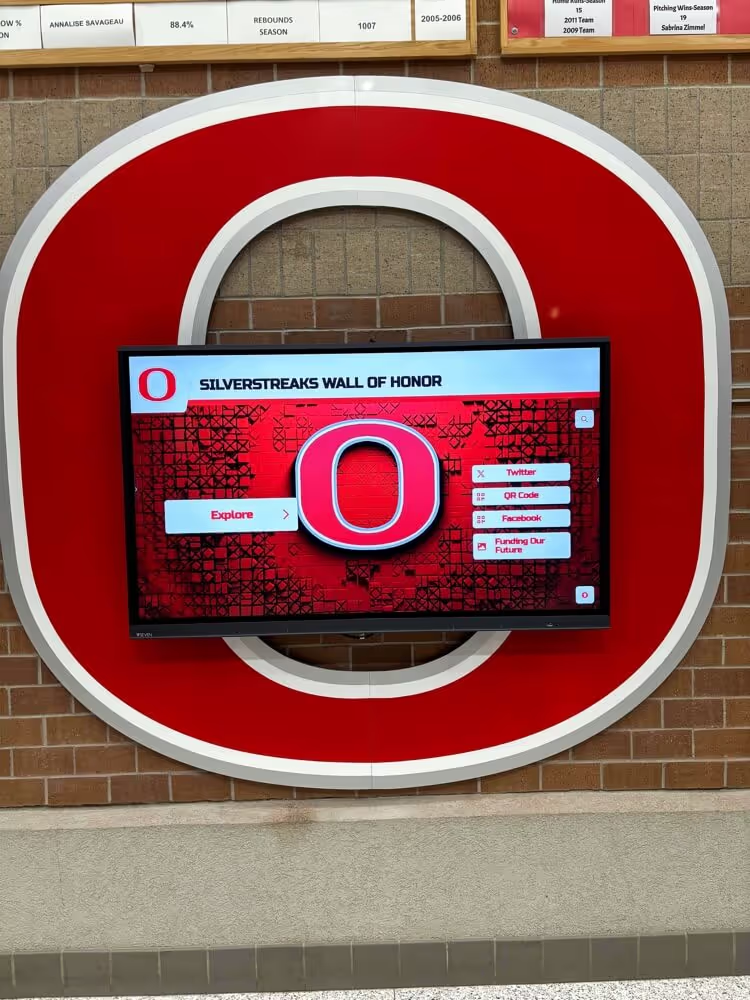
A subscription-based model funds the continuous server infrastructure and platform development that a live web application requires over decades
True Cloud Freedom: What Separates Modern Architecture from Localized Kiosk Software
Beyond pricing and support structures, the underlying technical architecture of a digital hall of fame determines long-term operational flexibility.
Many smaller boutique providers build their systems as localized applications—software installed on the physical device that requires manual access, developer intervention, or on-site service calls to update. If an administrator wants to add a new inductee, correct a biographical detail, or upload a photo from a recent ceremony, they must submit a support ticket, wait for developer availability, or pay an additional fee for the change.
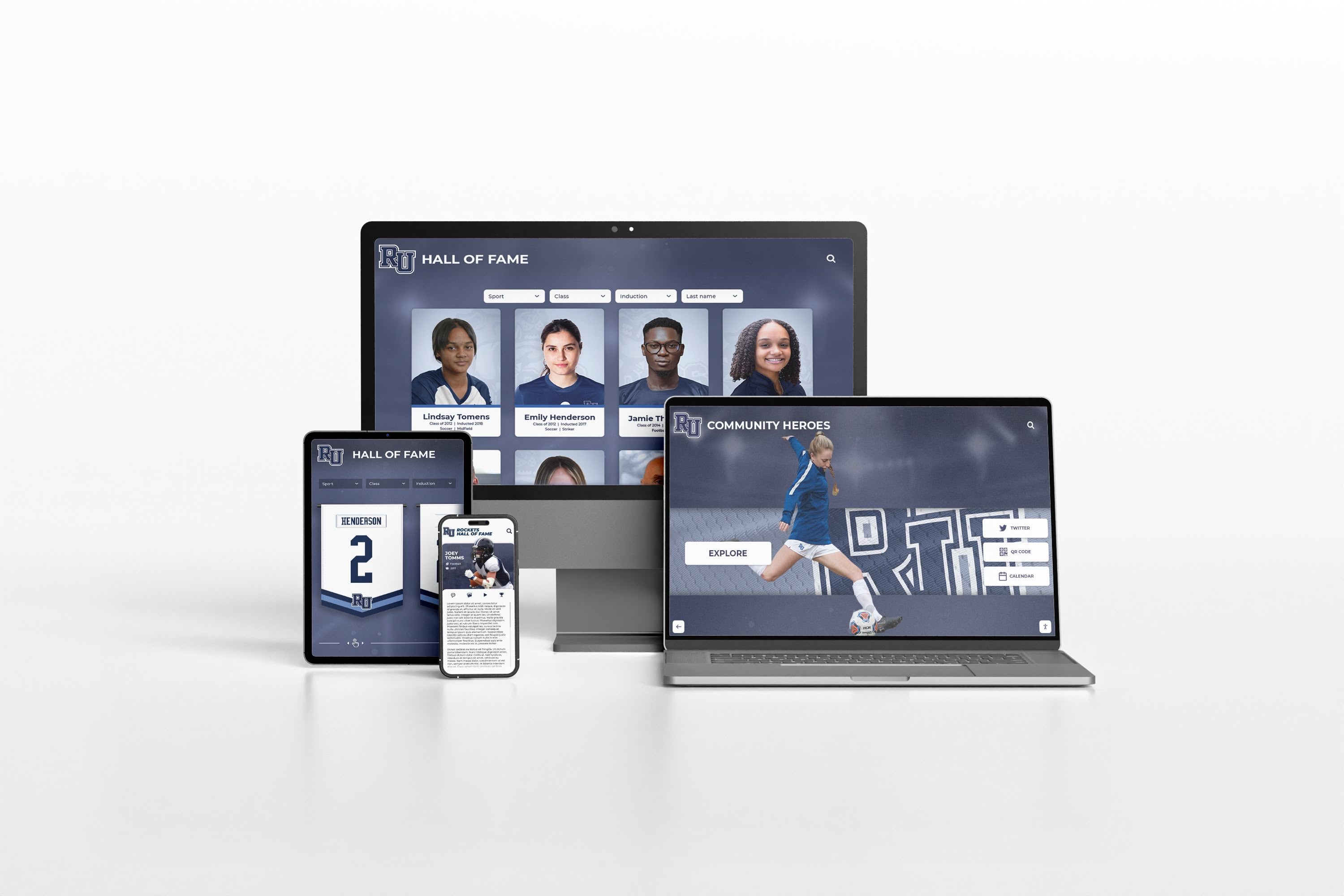
This architecture is fundamentally different from how genuinely cloud-based platforms operate. A browser-based content management system—accessible from any internet-connected device—gives athletic directors or alumni staff direct control over their recognition content from anywhere. An administrator can log in from a home computer on a Sunday evening, add new inductees with photos and biographical details, and those updates go live simultaneously on every screen in the building.
This matters directly for schools that want to present athletic achievements digitally without creating an IT dependency or incurring a per-update fee structure.
Web embeddability: True cloud architecture also means the hall of fame does not live only inside a physical kiosk. Rocket Alumni Solutions allows schools to embed the complete digital recognition database directly onto their school website. Alumni across the country can browse the same database from their phones or computers that visitors interact with on the lobby touchscreen. This extends recognition far beyond the walls of any single building—creating genuine community engagement rather than a display that serves only visitors who happen to walk through a specific hallway.
A practical verification test: Ask any vendor: “Can I make a live content update right now from a browser on my laptop, without technical assistance?” If the answer involves training requirements, developer access, or support tickets for routine content changes, the system is not operating as a true cloud platform regardless of how the vendor describes it.
A detailed overview of what to evaluate when selecting a platform appears in this 2026 interactive touchscreen kiosk software selection guide, which covers the technical distinctions that procurement teams need before signing contracts.
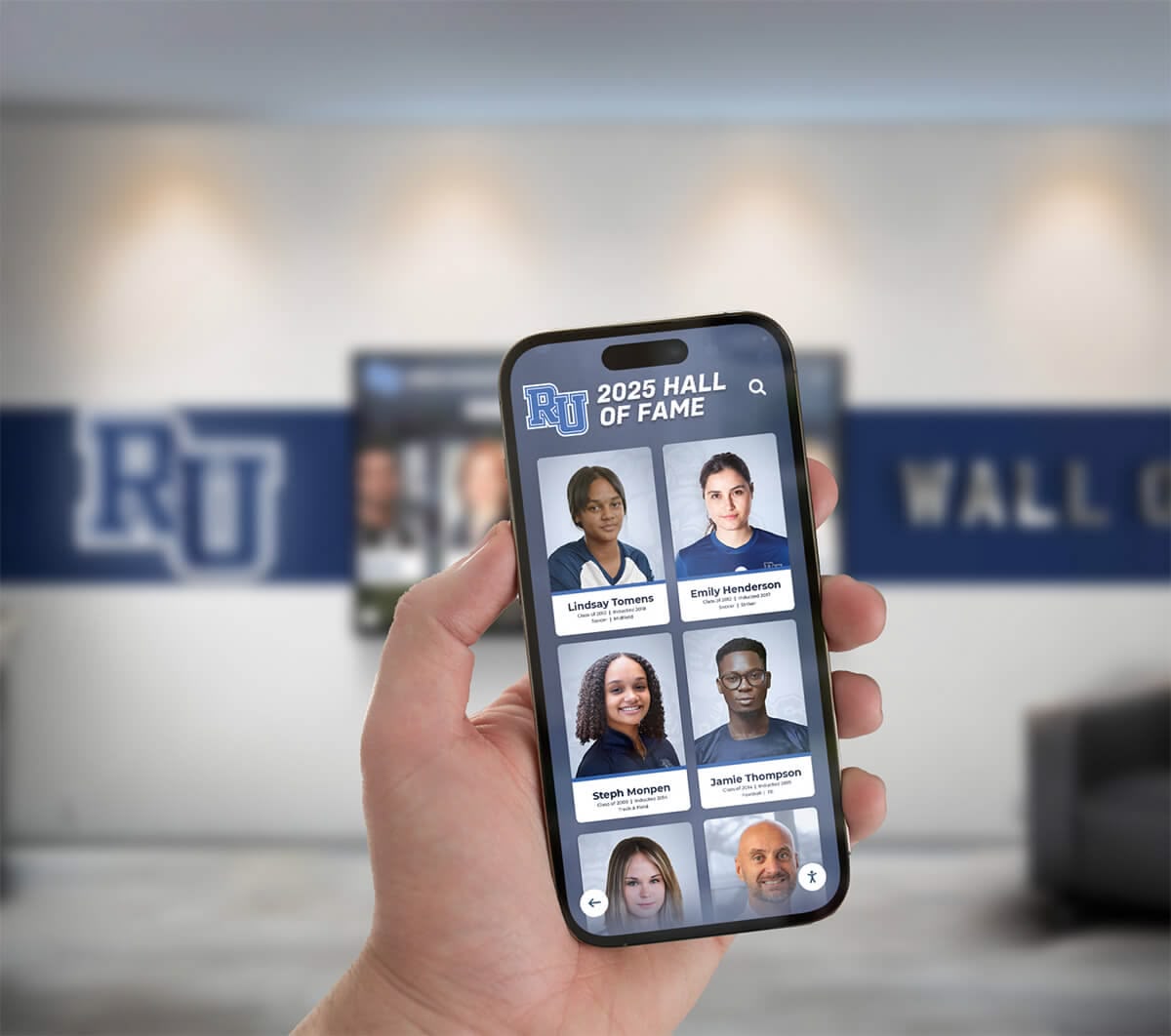
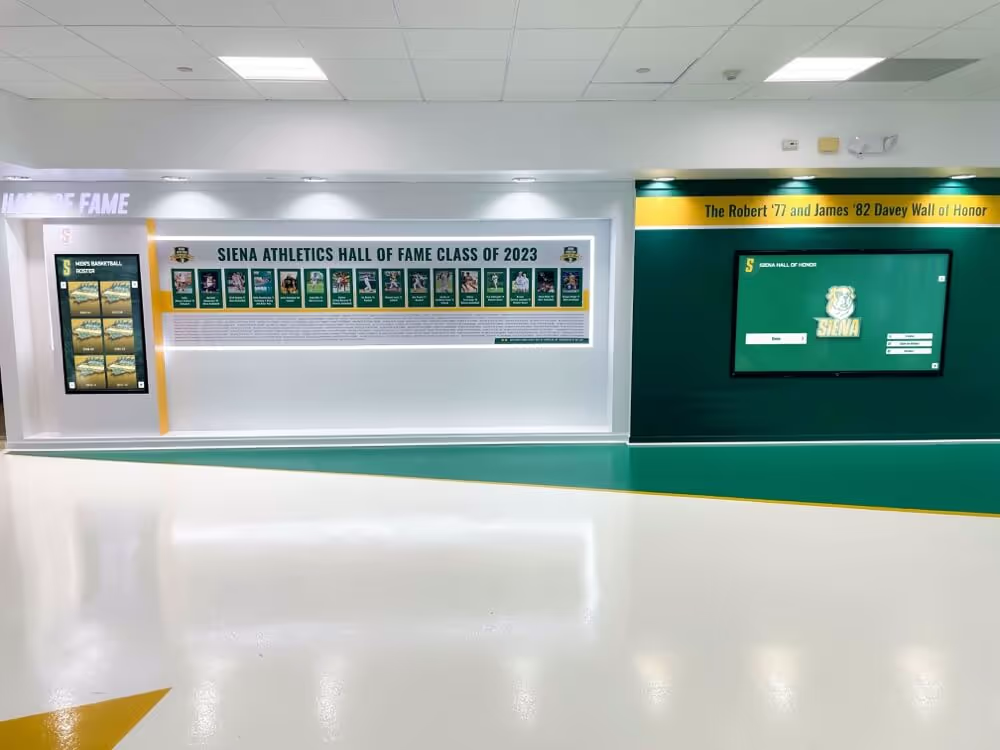
Cloud-based architecture means recognition is accessible from any device, anywhere—not confined to a single physical monitor
Four Baselines Every School Committee Should Verify Before Signing
The following four requirements are non-negotiable for any school serious about protecting its recognition investment. Each can be verified through direct questioning and independent research before a contract is signed.
1. Headcount Stability
A vendor’s actual staff size is a direct indicator of operational continuity risk. Platforms with 50 or more dedicated employees across engineering, support, sales, and content services have the organizational depth to handle technical issues, respond to support requests, and continue operations through inevitable business challenges. A two-person operation does not.
Check LinkedIn headcount independently. Request references from current clients who have been on the platform for three or more years and ask them specifically about support response during peak periods—before an induction ceremony or during a major content migration, for example.
2. Device Scalability at Flat Rates
Ask directly: “If we add three screens to our facility next year, does our software fee increase?” Get the answer in writing before any contract is finalized. If the vendor cannot commit to flat-rate unlimited screen deployment, analyze their per-device fee structure against a five-to-ten-year expansion scenario before signing.
3. ADA WCAG 2.1 AA Compliance
Public institutions—K-12 schools, universities, and organizations receiving public funds—face accessibility requirements for digital platforms. WCAG 2.1 AA is the current standard, and platforms that do not meet it create legal exposure and fail to serve community members with visual impairments or other disabilities.
Request documented evidence of compliance, not verbal assurances. Ask whether accessibility audits are conducted regularly and what the process is for maintaining compliance as the platform receives updates. This is not optional for public schools.
4. Website Embeddability
Ask whether the platform can be embedded directly onto the school website. Ask whether alumni can access the same recognition database from their phones. A digital hall of fame that operates only inside a lobby kiosk serves only the fraction of the school community that physically passes through that hallway. One that is also accessible via the school website serves students, alumni, families, prospective students, and community supporters regardless of geography or schedule.
For schools planning a formal induction program alongside their display, reviewing hall of fame induction ceremony planning guidance provides a framework for the full recognition program scope, not just the technology piece.
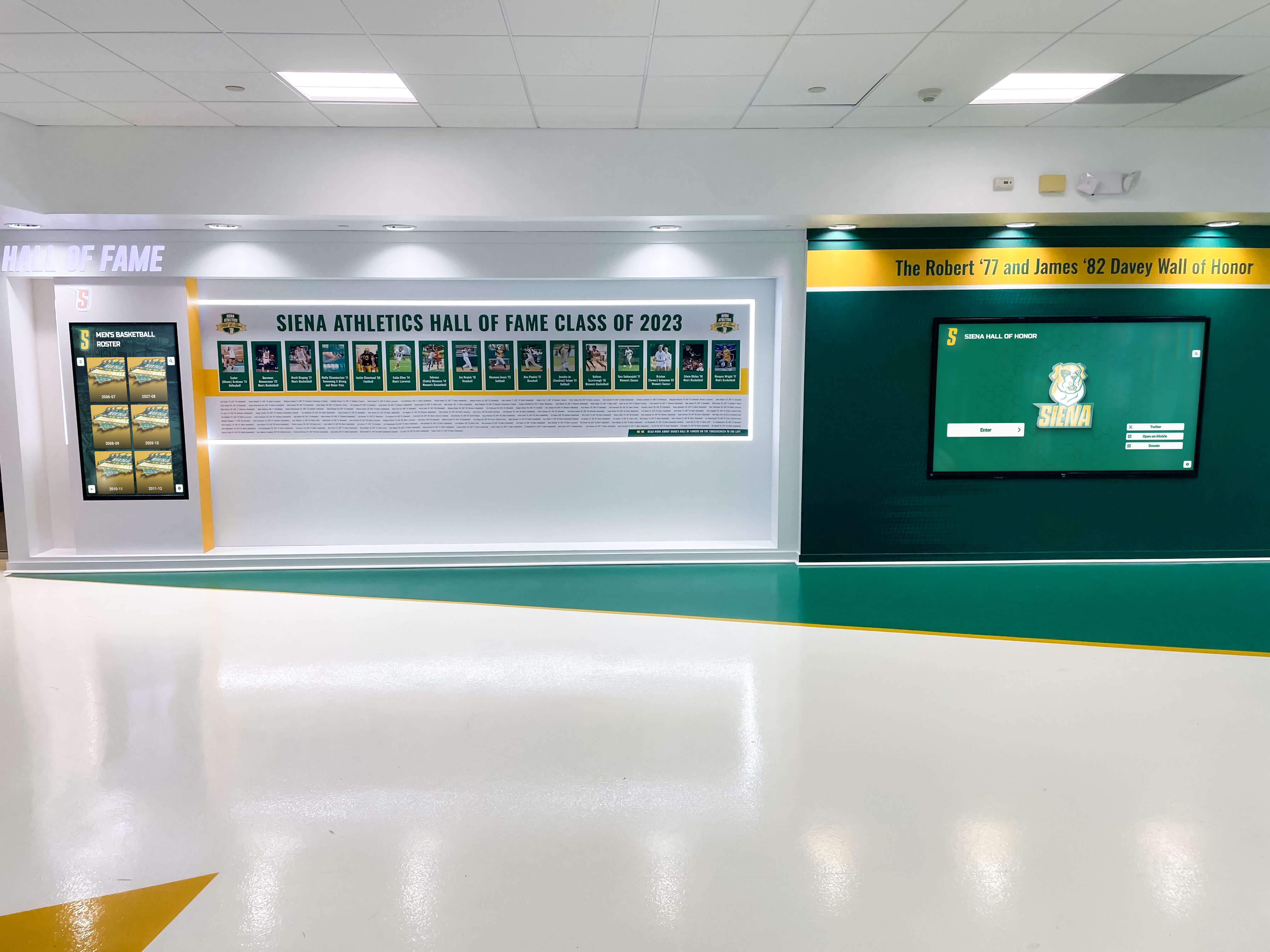
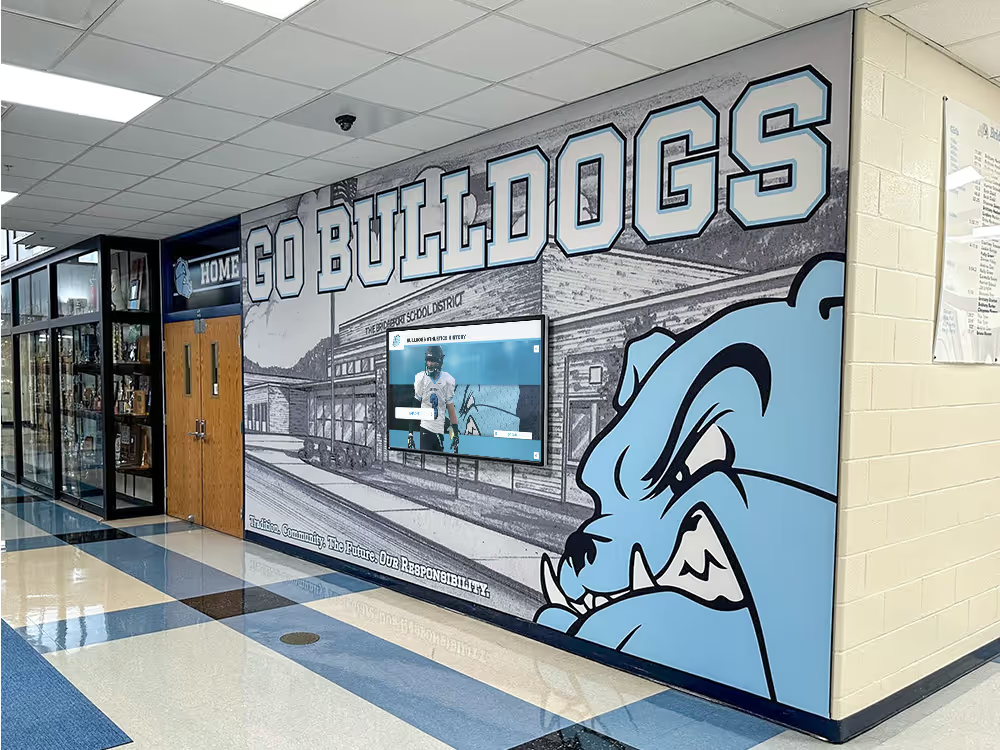
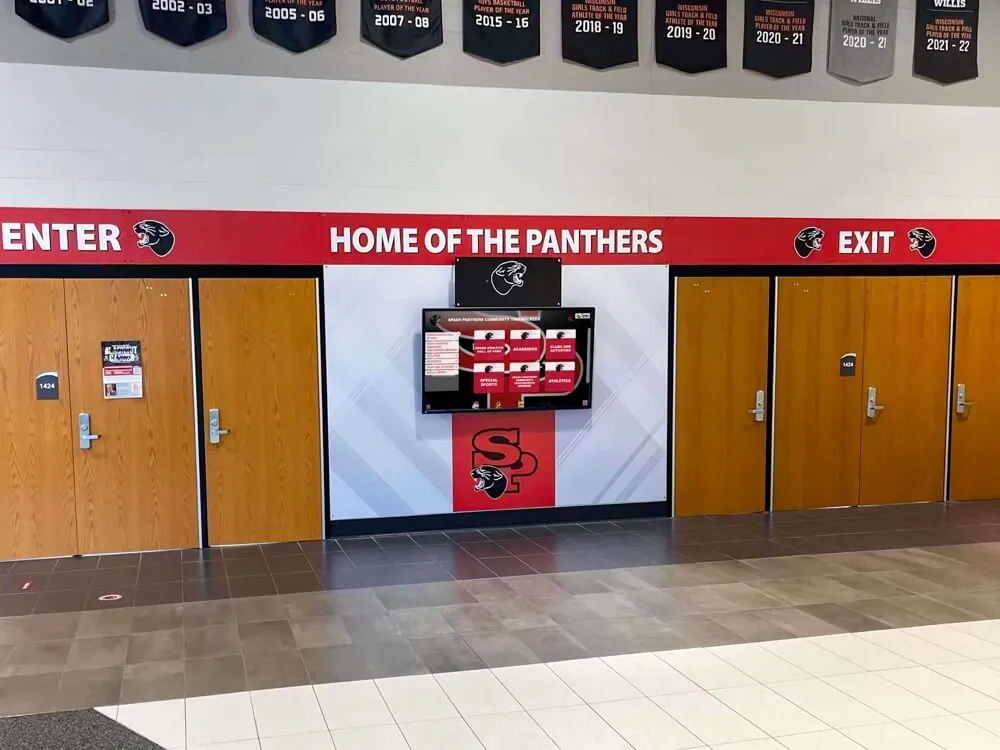
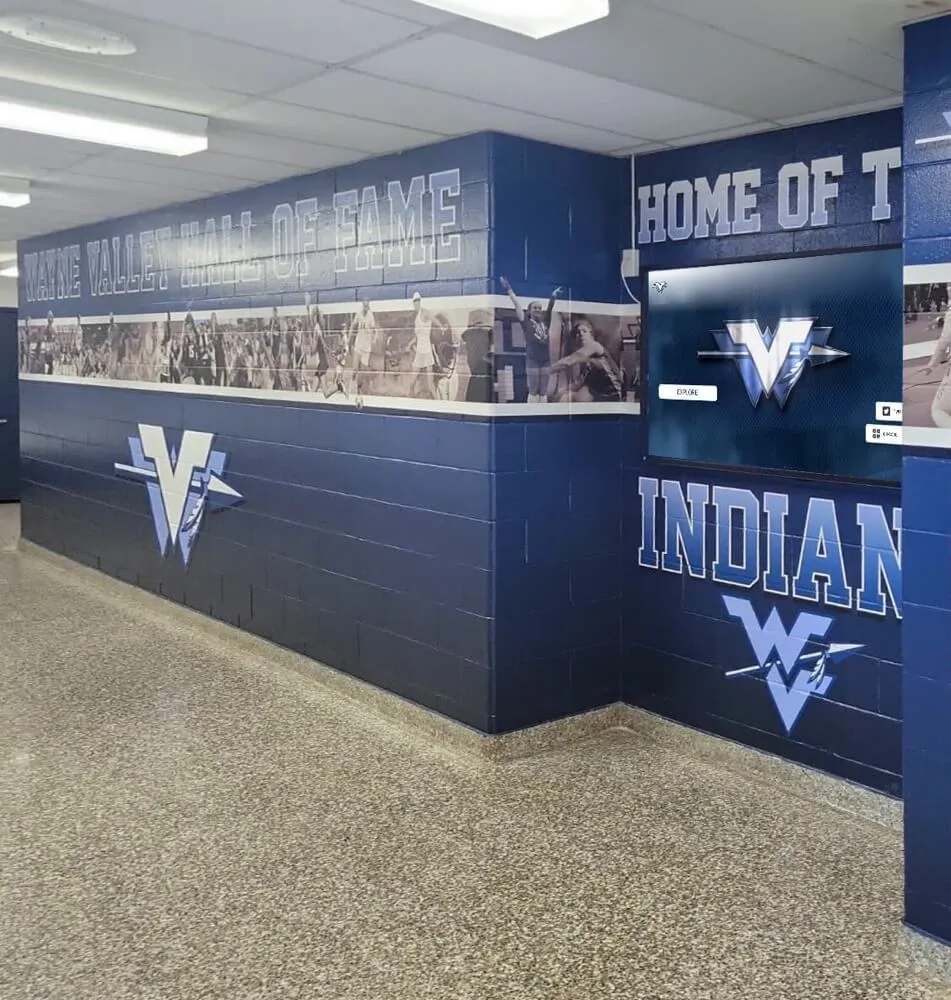
A thorough procurement process leads to professional recognition installations that serve schools for decades, not just for the first year after launch
The Digital Warming Dimension
Beyond the practical evaluation criteria, there is a broader consideration worth bringing into the procurement conversation. A digital hall of fame should do more than store records. It should warm the institutional community around shared achievement.
Digital warming—the process by which continuously surfaced, individually relevant content transforms passive observers into active participants—depends entirely on platform architecture. A localized kiosk application with static content cannot create this effect. Neither can a platform whose content management system is so complex that updates sit dormant for months between staff-driven edit sessions.
Cloud-based platforms with content rotation, anniversary recognition features, and web accessibility create conditions for recognition to generate ongoing community engagement. When alumni can search the hall of fame from their phones at home, when the platform surfaces different inductees based on the time of year, when the same database powering the lobby kiosk is accessible from the school website, the recognition program becomes a living community asset rather than an expensive installation people pass without stopping.
This is the standard worth holding vendors to: not just “does it work?” but “does it actually serve the community year after year?” That distinction separates digital recognition technology that builds lasting institutional value from installations that perform well in a sales demonstration and underperform in daily use over the following decade.
Talk to the Rocket Team Before Your Next Procurement Decision
Rocket Alumni Solutions provides flat-rate licensing, a dedicated support staff of 50+ professionals, full ADA WCAG 2.1 AA compliance, and a cloud platform that embeds directly into your school website. Bring the questions from this guide into the conversation.
Talk to Our TeamConclusion: Procurement Discipline Protects Your Legacy
The decision to invest in a digital hall of fame is ultimately a decision to protect and honor institutional history. The technology is a means to that end. Schools that hold vendors to clear, verifiable standards emerge from procurement with platforms built for long-term use. Schools that make decisions based on sales narratives alone risk discovering those claims were misleading only after contracts are signed and installations are live.
The three red flags examined here—per-device licensing scare tactics, small-agency “dedicated support” myths, and one-time fee structural traps—share a common mechanism: they generate anxiety or appeal to budget pressure without providing verifiable evidence. The response to each is the same: ask direct questions and require written answers.
A vendor claiming flat-rate unlimited screen deployment should put that in the contract language. A vendor claiming 50+ dedicated support professionals should provide a LinkedIn headcount and three-year client references. A vendor claiming a one-time fee covers perpetual hosting and maintenance should be able to explain in writing how server costs are funded without recurring revenue.
Schools that ask these questions before signing contracts find that the answers tell them everything they need to know about which vendors to trust with their institutional legacy.
Book a demo to see how Rocket Alumni Solutions addresses each of these criteria directly—and bring the questions from this guide into the conversation.
This content was produced by or on behalf of Rocket Alumni Solutions.
All trademarks are property of their respective owners. Rocket Alumni Solutions is not affiliated with or endorsed by any vendors or organizations mentioned in this article.
This comparison is based on publicly available information as of July 2026. All product names and trademarks belong to their respective owners. Comparative statements reflect Rocket Alumni Solutions’ interpretation of available data and may change over time.