



The National Honor Society represents one of the most prestigious academic recognition programs in American high schools, celebrating students who demonstrate excellence in scholarship, service, leadership, and character. Yet many schools struggle to give NHS members the visibility and ongoing recognition their achievements deserve, relying on annual induction ceremonies that quickly fade from memory, outdated bulletin boards with static name lists, or trophy cases that lack the capacity to showcase decades of distinguished inductees.
When NHS recognition becomes a once-a-year ceremony followed by minimal ongoing visibility, schools miss opportunities to create the digital warming effect—where comprehensive, accessible recognition transforms cold achievement lists into warm community experiences that inspire younger students, engage alumni networks, and build lasting pride in academic traditions. Traditional approaches celebrate the induction moment without sustaining recognition throughout students’ high school careers or preserving institutional memory across generations.
This comprehensive guide explores how modern schools recognize National Honor Society inductees through dynamic digital displays that celebrate individual excellence, document complete institutional traditions, inspire continued commitment to NHS pillars, and create year-round engagement with academic achievement programs that define school culture and values.
The National Honor Society, established in 1921, has recognized millions of high school students across more than 25,000 chapters nationwide. NHS membership signifies commitment to academic excellence with typically a 3.5 GPA minimum, demonstrated leadership through extracurricular engagement, meaningful community service contributions, and proven character through positive behavior and ethical decision-making. Schools with strong NHS traditions build reputations attracting academically motivated families, talented educators seeking intellectually vibrant environments, and college recruiters identifying institutions committed to developing well-rounded scholars.

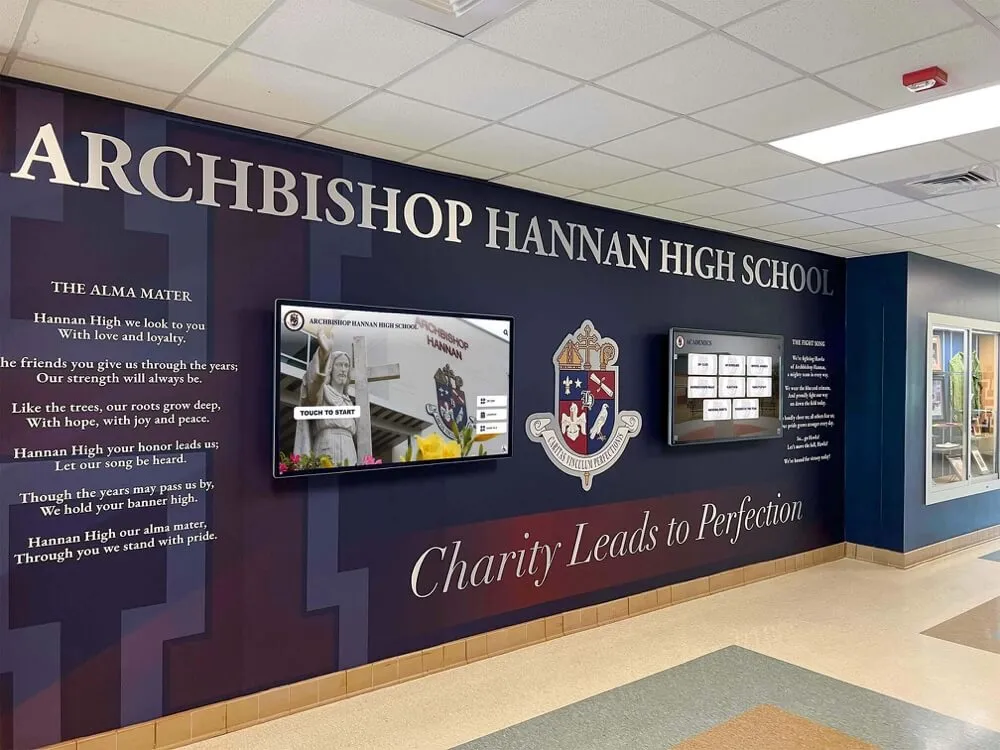
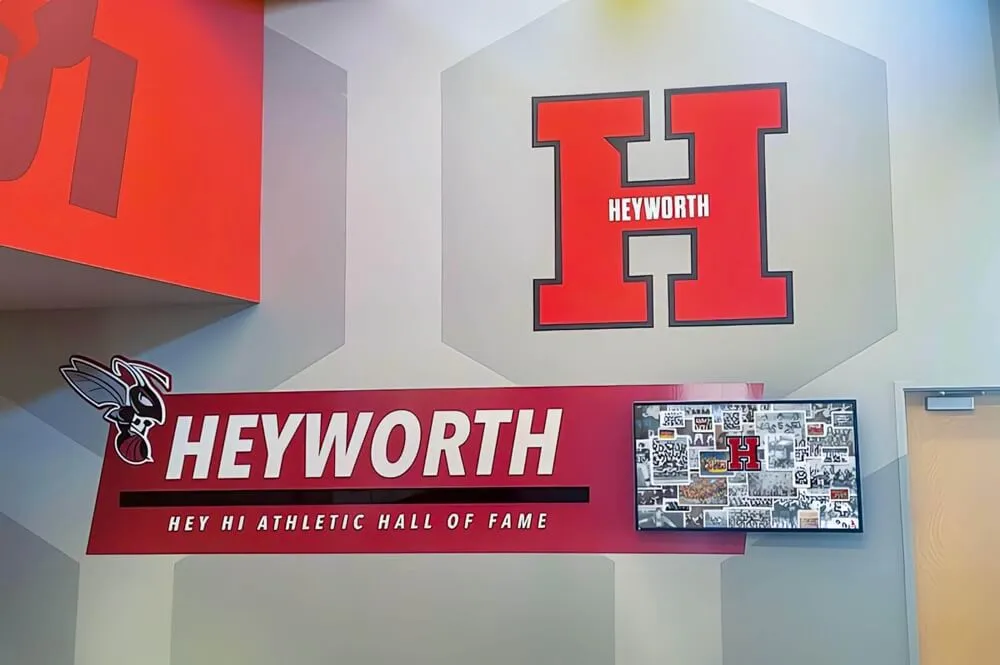
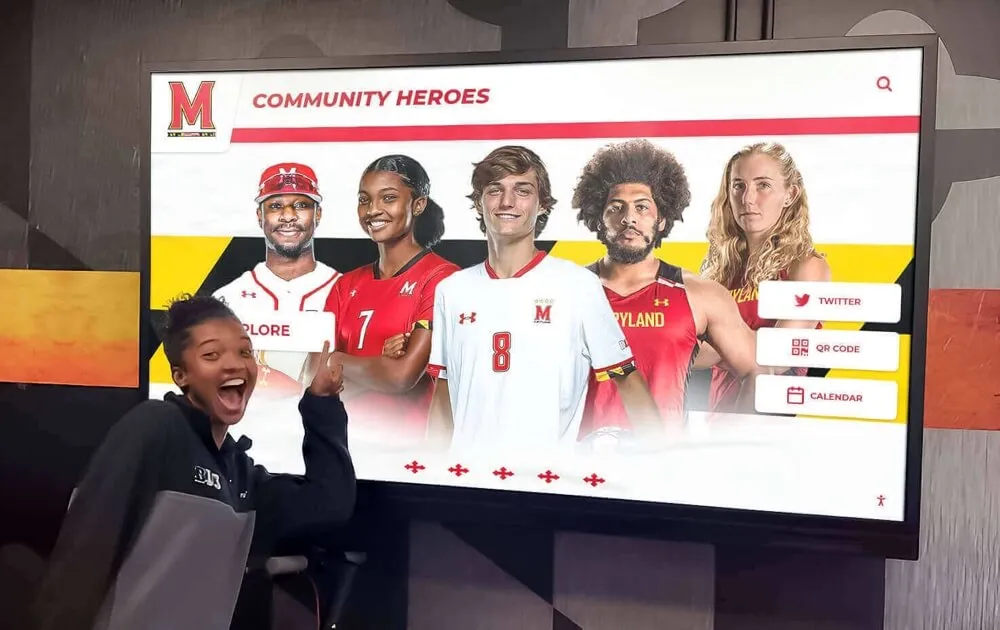
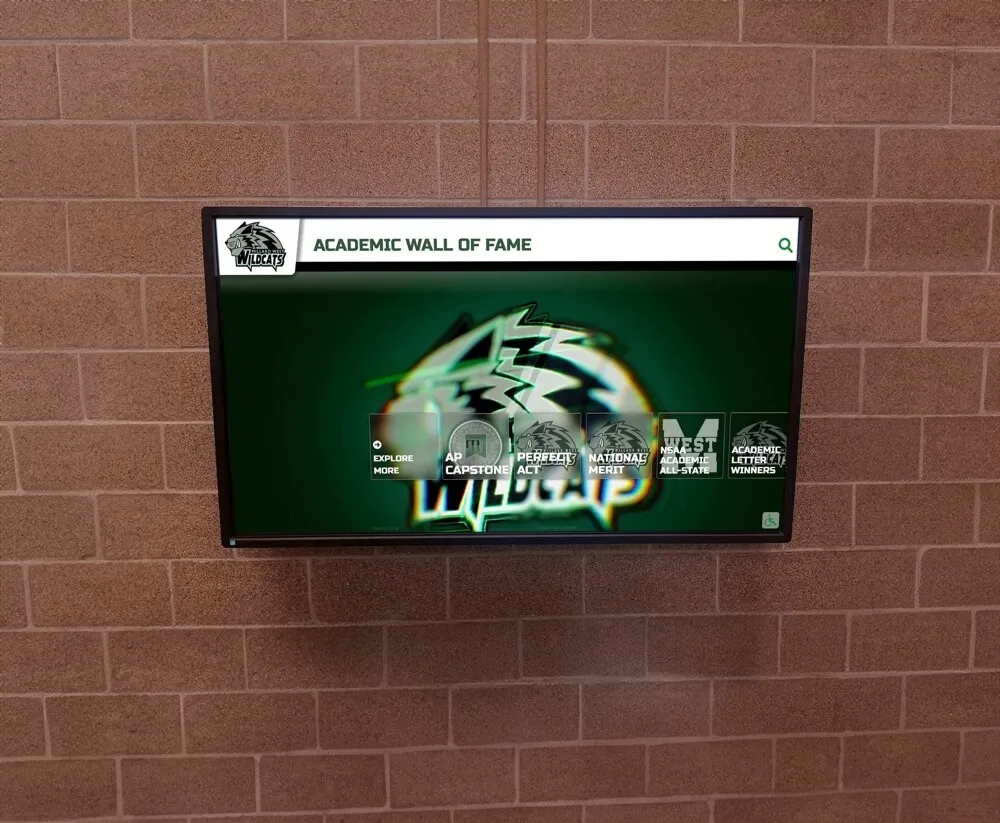
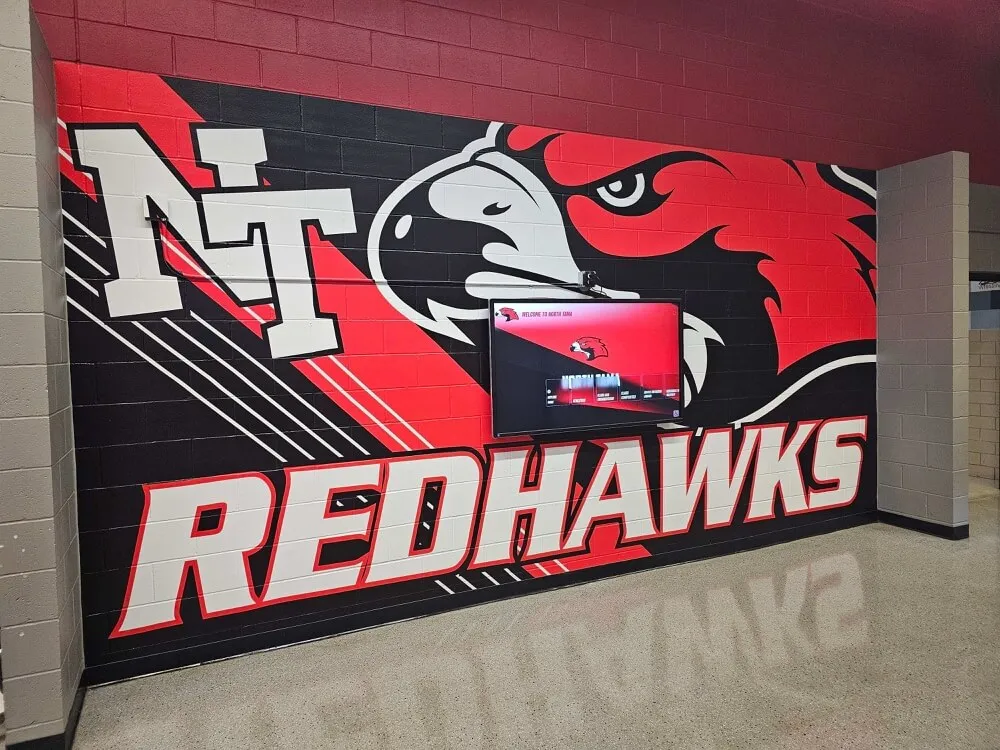
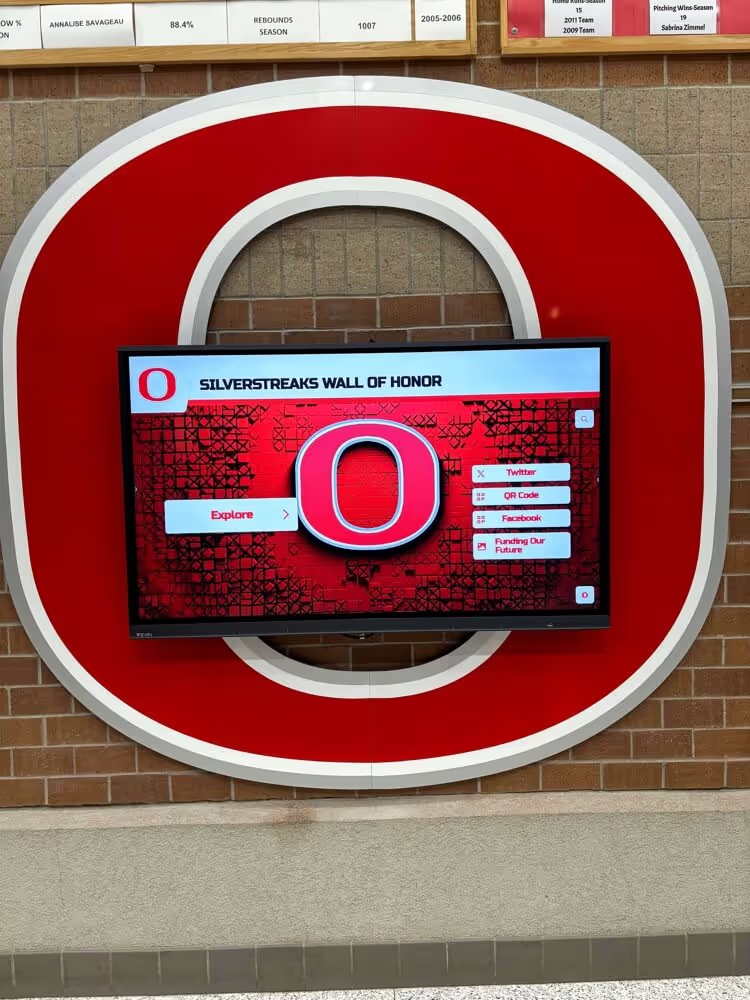
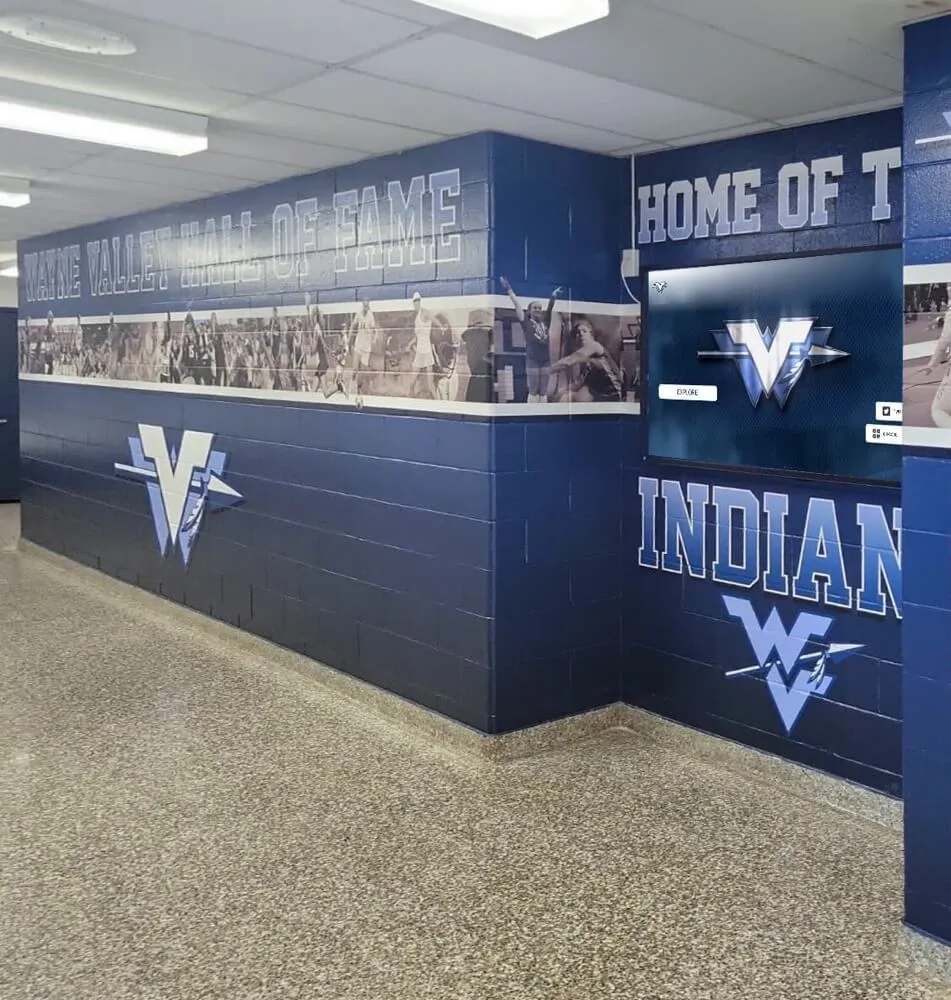
Modern recognition displays celebrate National Honor Society inductees with personalized profiles highlighting scholarship, service, leadership, and character excellence
Understanding National Honor Society Recognition Significance
Before exploring implementation strategies, recognizing what NHS membership represents helps schools design recognition programs appropriately celebrating student accomplishments while motivating continued excellence across all four organizational pillars.
The Four Pillars of NHS Membership
National Honor Society evaluates candidates across interconnected excellence dimensions:
Scholarship: Academic Excellence Foundation
NHS requires sustained academic achievement typically maintaining 3.5 GPA or higher throughout high school, demonstrating intellectual commitment extending beyond single exceptional performances. This scholarship standard acknowledges students who consistently engage meaningfully with rigorous curricula, complete assignments thoughtfully, participate actively in classroom discussions, and approach learning with genuine curiosity rather than simple grade accumulation.
Academic excellence foundations enable other pillar development—students managing demanding course loads develop time management skills supporting leadership activities, intellectual discipline translates to service commitment follow-through, and educational priorities reflect character values shaping life choices. Schools celebrating scholarship recognize not just grades but comprehensive intellectual engagement preparing students for college success and lifelong learning.
Service: Community Contribution Commitment
NHS members demonstrate meaningful community service extending beyond mandatory volunteer hour completion. Genuine service reflects commitment to improving communities, addressing needs, supporting vulnerable populations, and contributing skills benefiting organizations and causes beyond personal benefit. NHS service includes tutoring younger students, supporting local nonprofit organizations, organizing community improvement projects, and dedicating sustained effort to causes creating positive impact.
Service recognition celebrates students understanding responsibilities extending beyond personal achievement to include community contribution—ethical obligation balancing privilege with responsibility, leadership development through active engagement, and character formation through selfless action supporting collective well-being.
Leadership: Positive Influence Development
NHS leadership encompasses formal positions—club presidencies, team captaincies, student government roles—and informal influence through positive example, peer mentoring, collaborative contribution, and initiative-taking within school and community contexts. Leadership recognition acknowledges students who inspire others, facilitate group success, take responsibility for outcomes, and demonstrate qualities elevating those around them.
Comprehensive leadership includes academic leadership enhancing classroom learning environments, service leadership mobilizing peers toward community action, athletic leadership fostering team excellence, and social leadership creating inclusive, supportive peer cultures where diverse students thrive. Schools implementing student leadership recognition programs celebrate these varied excellence forms demonstrating leadership’s multiple manifestations.
Character: Ethical Foundation for Excellence
NHS character requirements reflect ethical behavior, integrity, responsibility, respectfulness, and citizenship throughout school and community engagement. Character assessment considers disciplinary records, teacher observations, peer relationships, and demonstrated commitment to ethical principles even when challenging or personally costly. Character recognition acknowledges students whose academic achievement and leadership activity rest upon moral foundations ensuring success benefits rather than harms communities.
Character distinguishes NHS membership from simple academic honor rolls—recognition celebrating complete individuals whose excellence reflects not just intellectual capability but personal qualities ensuring capability serves positive purposes aligned with community values and ethical principles.
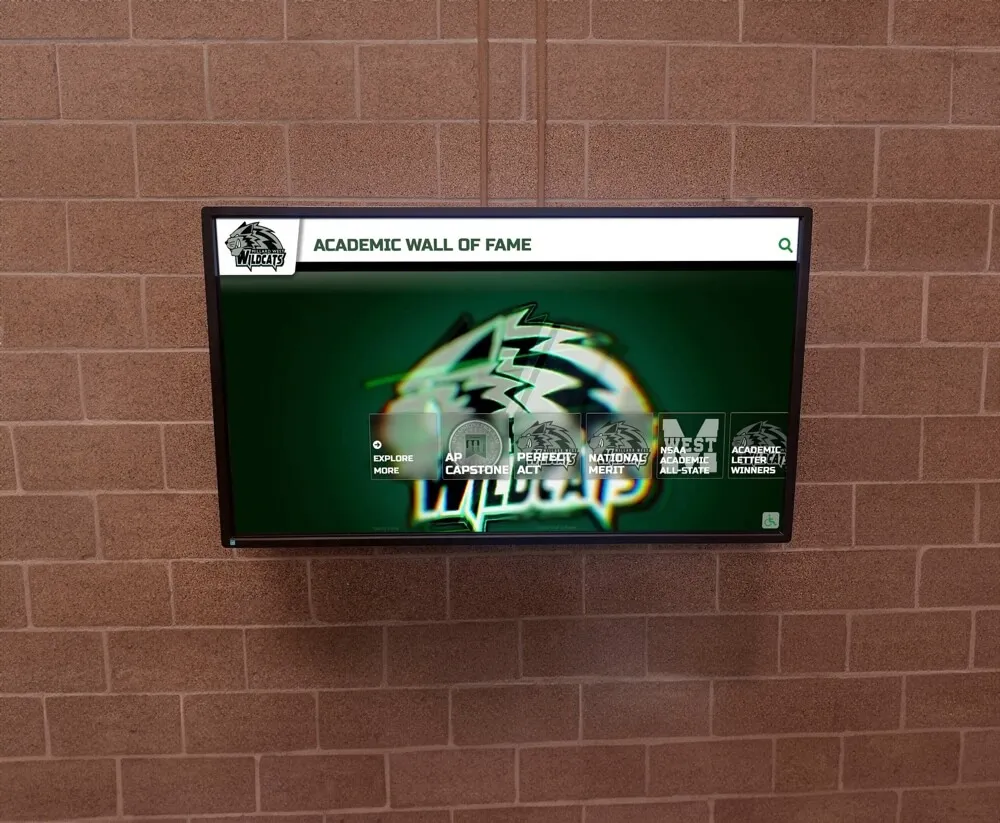
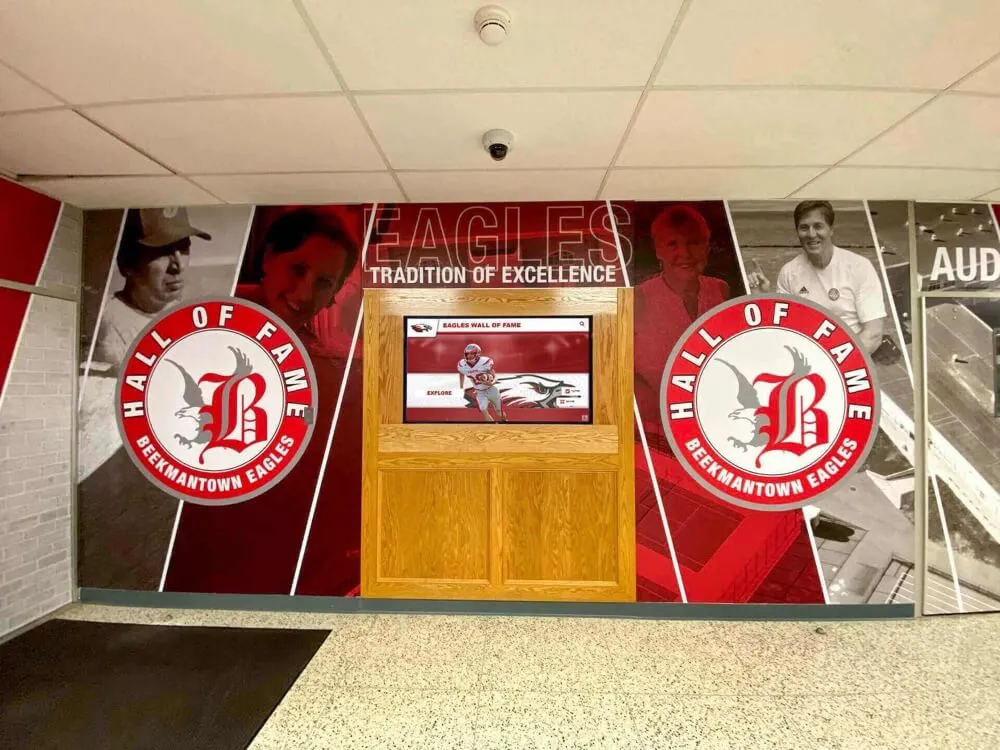
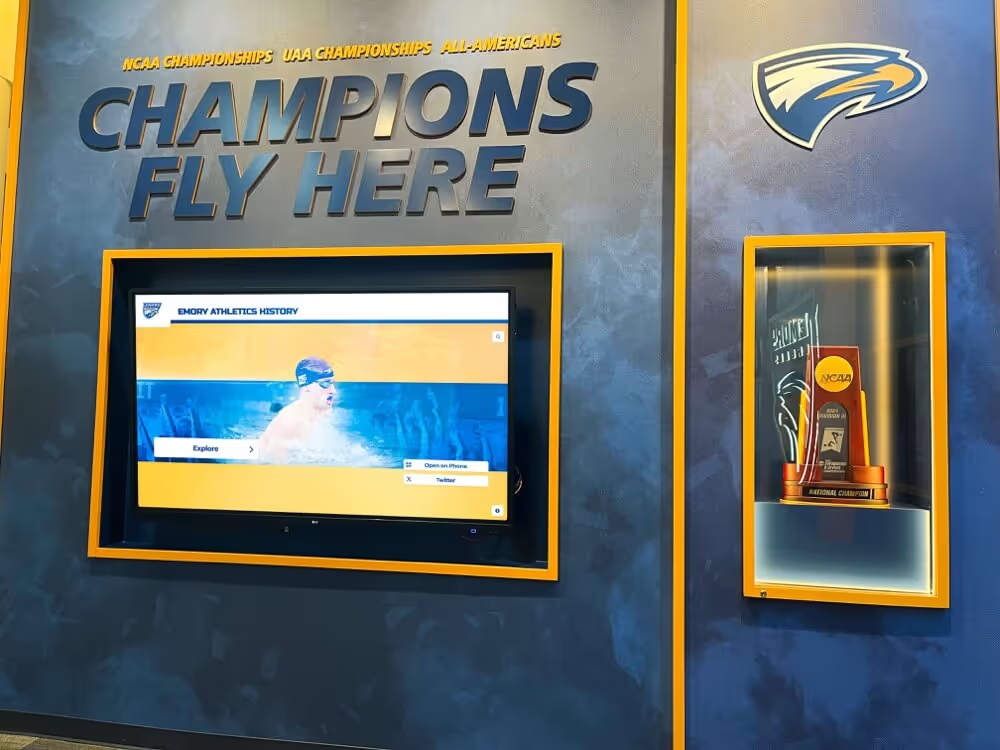
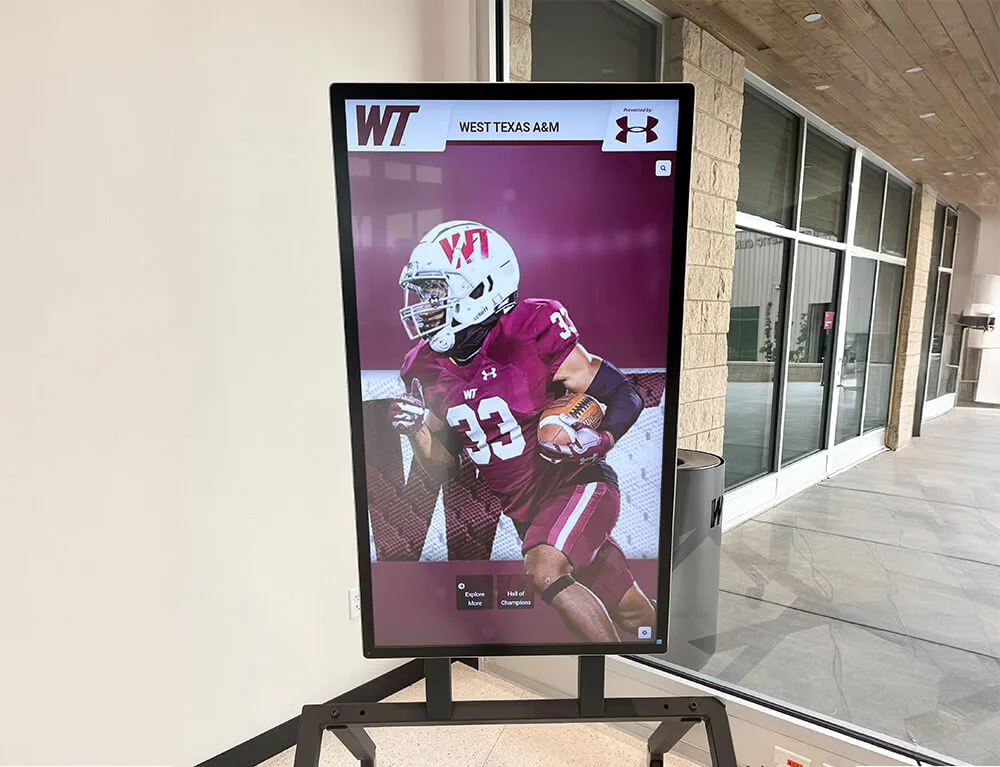
Prominent academic recognition displays demonstrate institutional commitment to celebrating scholarship, service, leadership, and character excellence
NHS Recognition Building School Culture
Visible National Honor Society recognition creates powerful cultural effects extending throughout school communities:
Establishing Academic Excellence as Cultural Priority
When NHS members receive prominent ongoing recognition comparable to athletic achievement visibility, schools signal that intellectual excellence, service commitment, leadership development, and character formation receive institutional priority matching sports success. This balanced recognition attracts academically talented students and families prioritizing schools valuing diverse excellence forms while preventing institutional cultures becoming disproportionately athletics-focused.
Prominent NHS recognition normalizes academic excellence as aspirational goal worth pursuing, reduces anti-intellectual peer pressure sometimes affecting adolescent environments, and creates visible role models demonstrating that high academic achievement combines successfully with leadership activity and social engagement rather than requiring social isolation or peer rejection.
Inspiring Younger Students Through Visible Role Models
Middle school students visiting high schools for transition programs, younger siblings attending school events, and underclassmen navigating hallways daily encounter NHS recognition displays showcasing slightly older peers who recently walked similar paths. This near-peer role modeling proves particularly powerful during adolescence when students seek identity models slightly ahead developmentally rather than distant adults whose experiences feel irrelevant.
Accessible role models demonstrating NHS achievement attainability motivate younger students beginning academic excellence journeys, provide concrete examples of what sustained commitment produces, and create aspiration through identification with recognizable individuals rather than abstract excellence concepts. Schools implementing comprehensive academic recognition approaches build cultures where excellence becomes expected norm rather than exceptional outlier.
Strengthening Alumni Connections Through Shared Traditions
Alumni returning for reunions, athletic events, or community activities encounter NHS recognition displays enabling discovery of their own historical inductions, classmates sharing NHS membership, and subsequent generations continuing traditions they helped establish. These connections create continuity across decades, strengthen alumni institutional bonds, and demonstrate that schools maintain long-term commitments to values rather than pursuing trendy initiatives abandoned when leadership changes.
Historical NHS recognition also enables multigenerational family celebration—current students discovering parents, aunts, uncles, or older siblings achieved NHS membership creates powerful family tradition connections while grandparents visiting campuses see their grandchildren joining honor societies they themselves joined generations earlier.
Traditional NHS Recognition Limitations
Despite National Honor Society’s significance, conventional recognition approaches create frustrating limitations preventing comprehensive celebration and sustained community engagement.
The One-Night Ceremony Problem
Most schools concentrate NHS recognition into single annual induction ceremonies:
Momentary Celebration Without Sustained Visibility
Induction ceremonies create memorable evenings celebrating new NHS members through formal programs, candle-lighting rituals, pledge recitations, certificate presentations, and family attendance. However, recognition often effectively ends when ceremonies conclude—inductees receive certificates filed away, programs disposed after events, and minimal ongoing acknowledgment until graduation when NHS cords or stoles receive brief mention.
This celebration pattern means NHS membership, despite representing sustained three-year commitment to scholarship, service, leadership, and character, receives less ongoing visibility than single athletic competitions displayed prominently throughout school facilities. Students maintaining NHS standards while completing service hours, leading activities, and modeling character receive minimal recognition between induction and graduation.
Limited Family and Community Awareness
Induction ceremonies typically occur weekday evenings accommodating family attendance but restricting community awareness to ceremony attendees. Extended family members living elsewhere, community partners benefiting from NHS service activities, middle school students who might aspire to NHS membership, and prospective families evaluating schools remain unaware of NHS traditions and current member accomplishments.
This limited visibility prevents NHS recognition from serving broader institutional purposes—demonstrating academic excellence to prospective families, acknowledging community partners supporting service projects, inspiring younger students through role model visibility, and building community-wide pride in schools producing exceptional citizens through NHS programs.
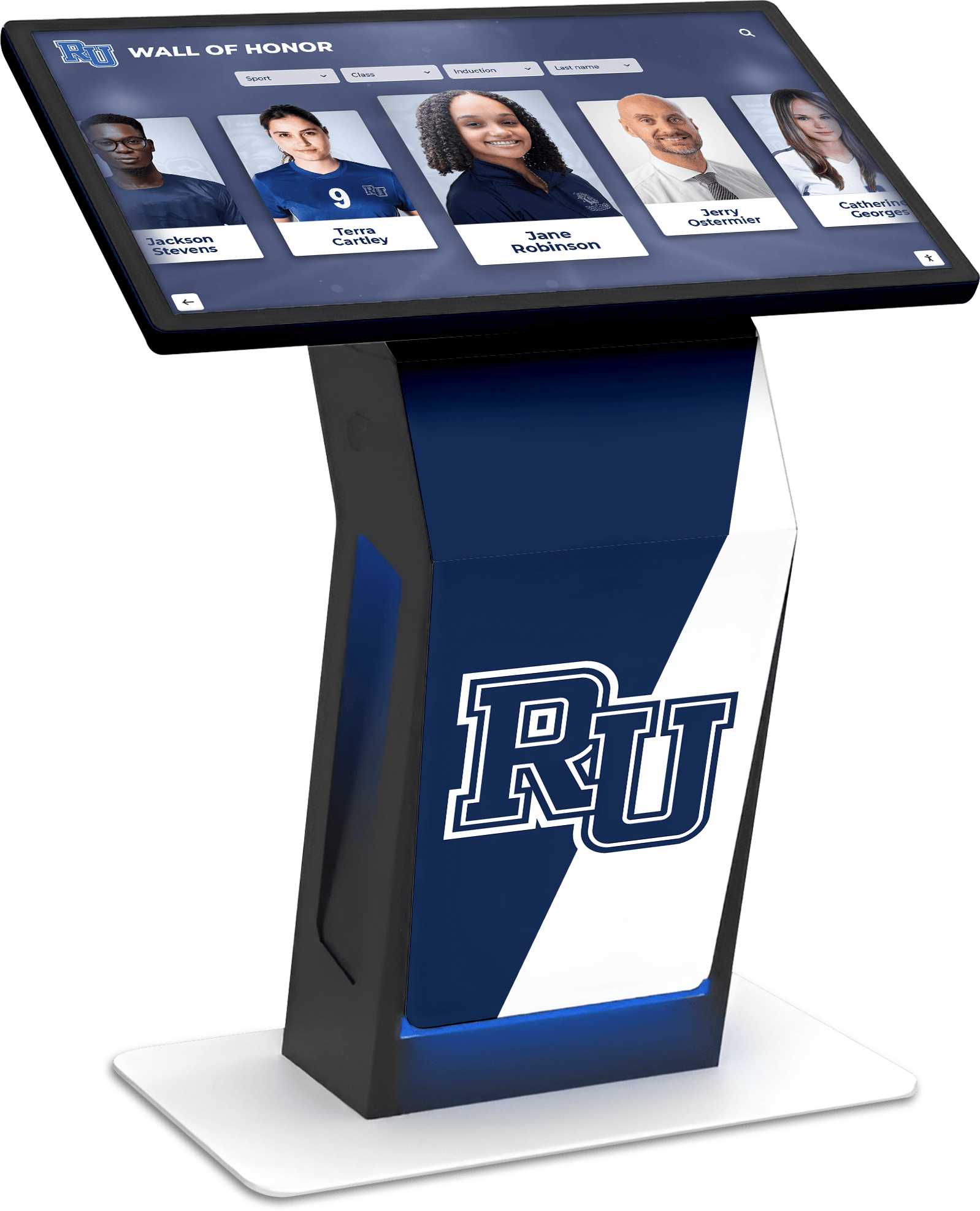
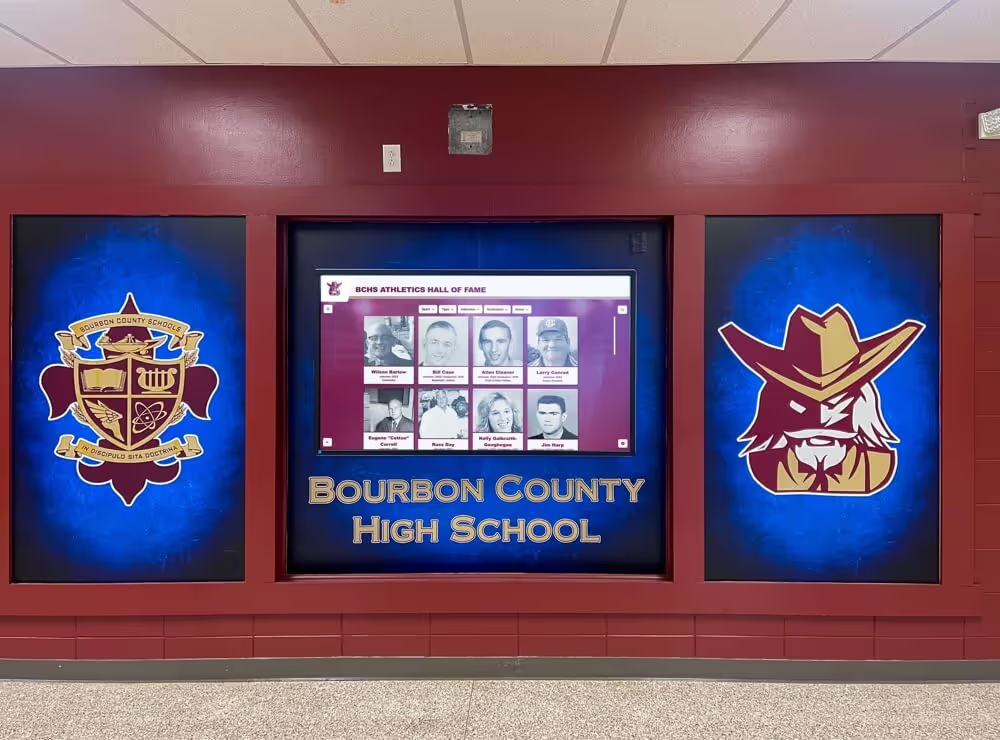
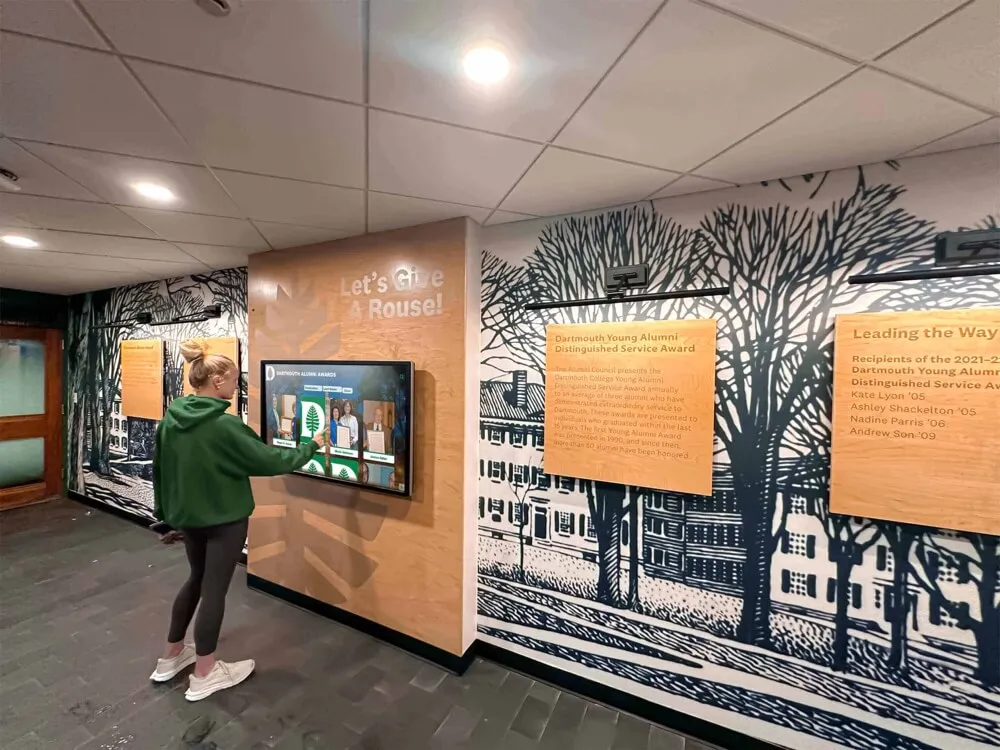
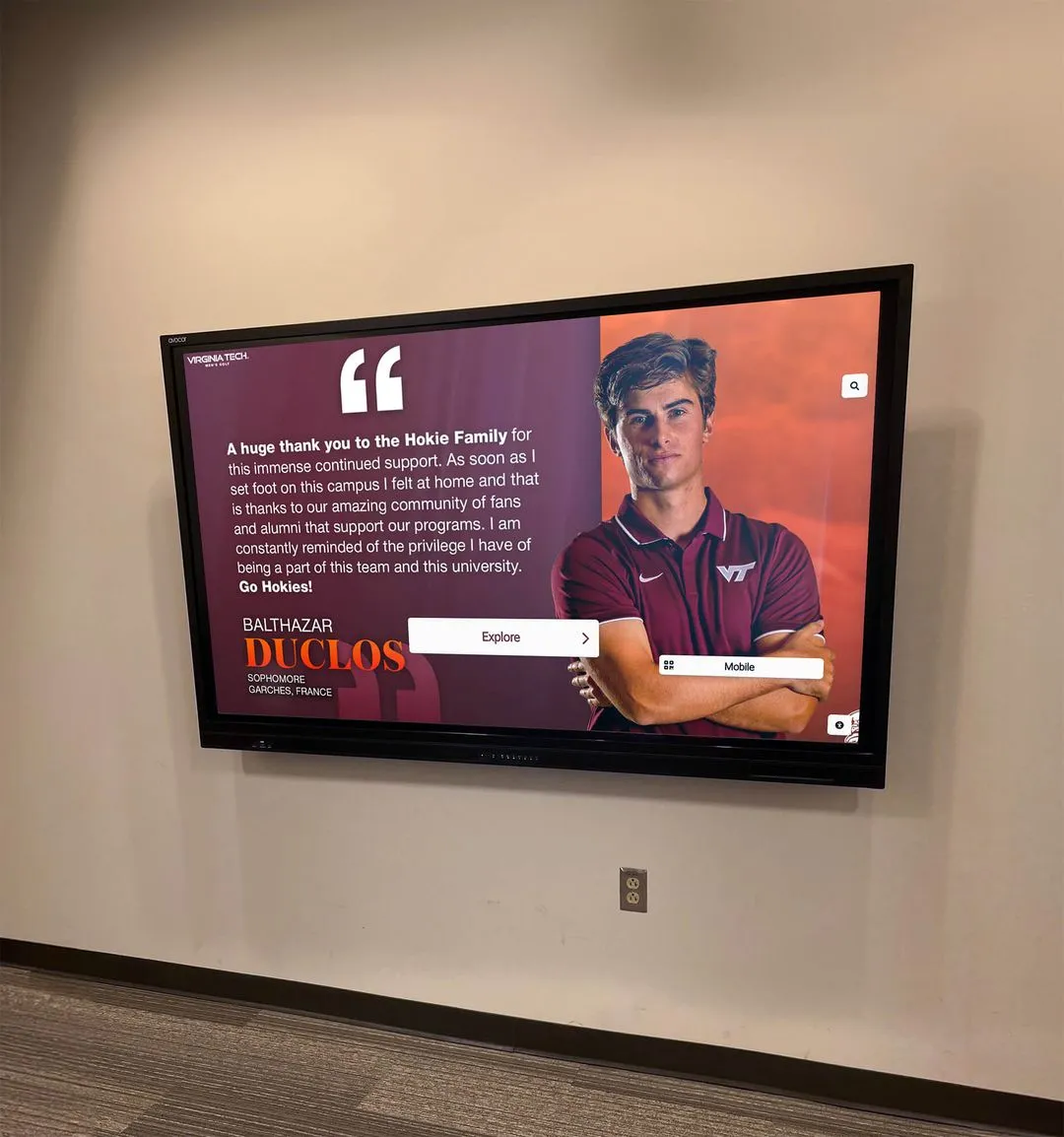
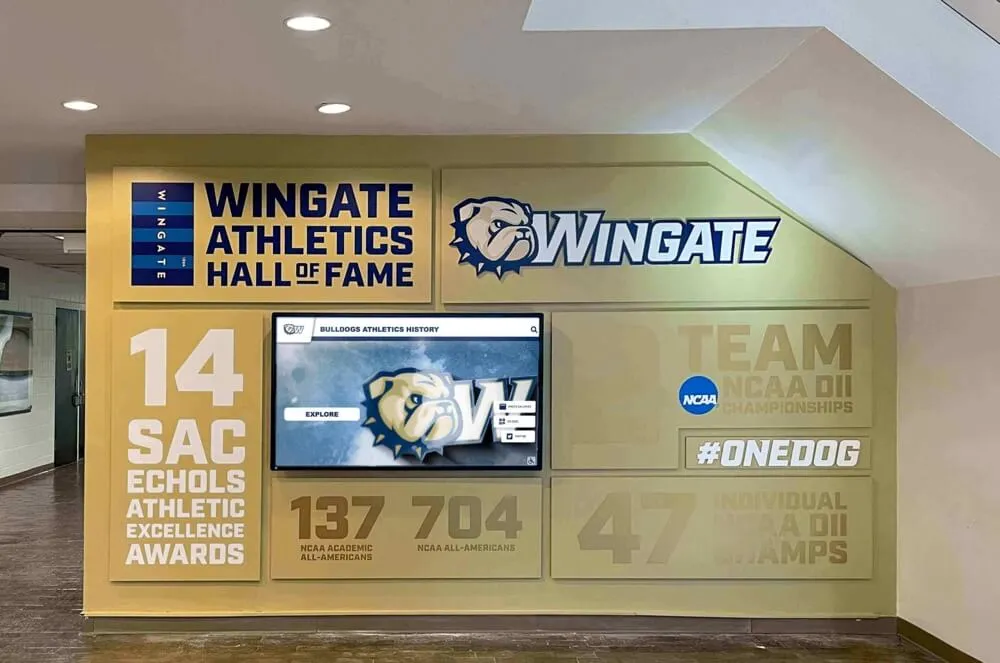
Interactive touchscreen kiosks enable exploration of NHS member achievements, service projects, and leadership contributions throughout school year
Static Bulletin Board Constraints
Schools attempting ongoing NHS recognition through physical displays face severe limitations:
Space Constraints Forcing Recognition Compromises
Physical bulletin boards provide finite space forcing difficult recognition choices as NHS membership accumulates across years. Schools can display current members while omitting historical inductees, show historical tradition while lacking current member space, or compress information accepting illegible text preventing effective recognition. Trophy cases face similar capacity constraints—initial decades of plaques fit comfortably, but accumulated generations quickly exhaust available space.
These physical constraints become particularly problematic for schools with decades-long NHS traditions where hundreds or thousands of historical members deserve recognition alongside current inductees. Traditional solutions—limiting historical recognition, rotating displays periodically, or accepting overcrowded presentations—each compromise recognition effectiveness while failing to honor complete institutional traditions comprehensively.
Minimal Context and Storytelling Capacity
Bulletin board recognition typically presents simple name lists organized by induction year with minimal additional context. This stripped-down approach provides factual recognition without human connection—viewers see names without faces, learn membership without understanding individual contributions, and encounter lists without stories enabling inspiration or personal connection.
NHS members deserve recognition celebrating complete achievements—academic interests driving scholarship excellence, specific service projects demonstrating community commitment, leadership roles showcasing positive influence, and character qualities distinguishing ethical behavior. Physical space constraints prevent rich storytelling essential for meaningful recognition while digital platforms eliminate these limitations enabling comprehensive profile development.
Update and Maintenance Burdens
Physical NHS displays require labor-intensive manual updates—printing new member lists, removing outdated information, mounting paper displays, creating protective coverings, and ensuring preservation against environmental damage. This maintenance burden typically falls to faculty advisors or administrative staff already managing demanding responsibilities, resulting in delayed updates, deferred maintenance, or skipped recognition when workload prevents timely attention.
Schools implementing digital academic recognition solutions eliminate manual update burdens through cloud-based content management enabling quick additions, scheduled publication ensuring timely visibility, and remote updates requiring no physical campus access.
Equity and Visibility Imbalances
Recognition program design requires addressing institutional priority signals:
Athletic Recognition Overshadowing Academic Achievement
Many schools maintain prominent athletic recognition through digital displays, extensive trophy cases, gymnasium banners, and lobby installations while relegating NHS recognition to minimal visibility. This recognition imbalance signals that athletic success deserves greater celebration than scholarship, service, leadership, and character excellence—potentially discouraging academically talented students who perceive their achievements receiving less institutional value than sports accomplishments.
Comprehensive recognition programs celebrate athletic, academic, service, and leadership excellence with comparable visibility and engagement, demonstrating cultures honoring diverse achievement forms. When NHS recognition receives display prominence, content richness, and update frequency matching athletic recognition, schools authentically communicate that intellectual excellence matters equally to athletic success.
Limited Accessibility Beyond Campus Visitors
Physical recognition serves only people physically present on campus when displays exist. Families living distances from schools, extended family members in other states, alumni scattered nationally, and community partners supporting NHS service projects cannot access recognition regardless of personal interest. This accessibility limitation prevents recognition from reaching many stakeholders who would celebrate achievements most enthusiastically while reducing institutional visibility preventing NHS programs from building broader community awareness and support.
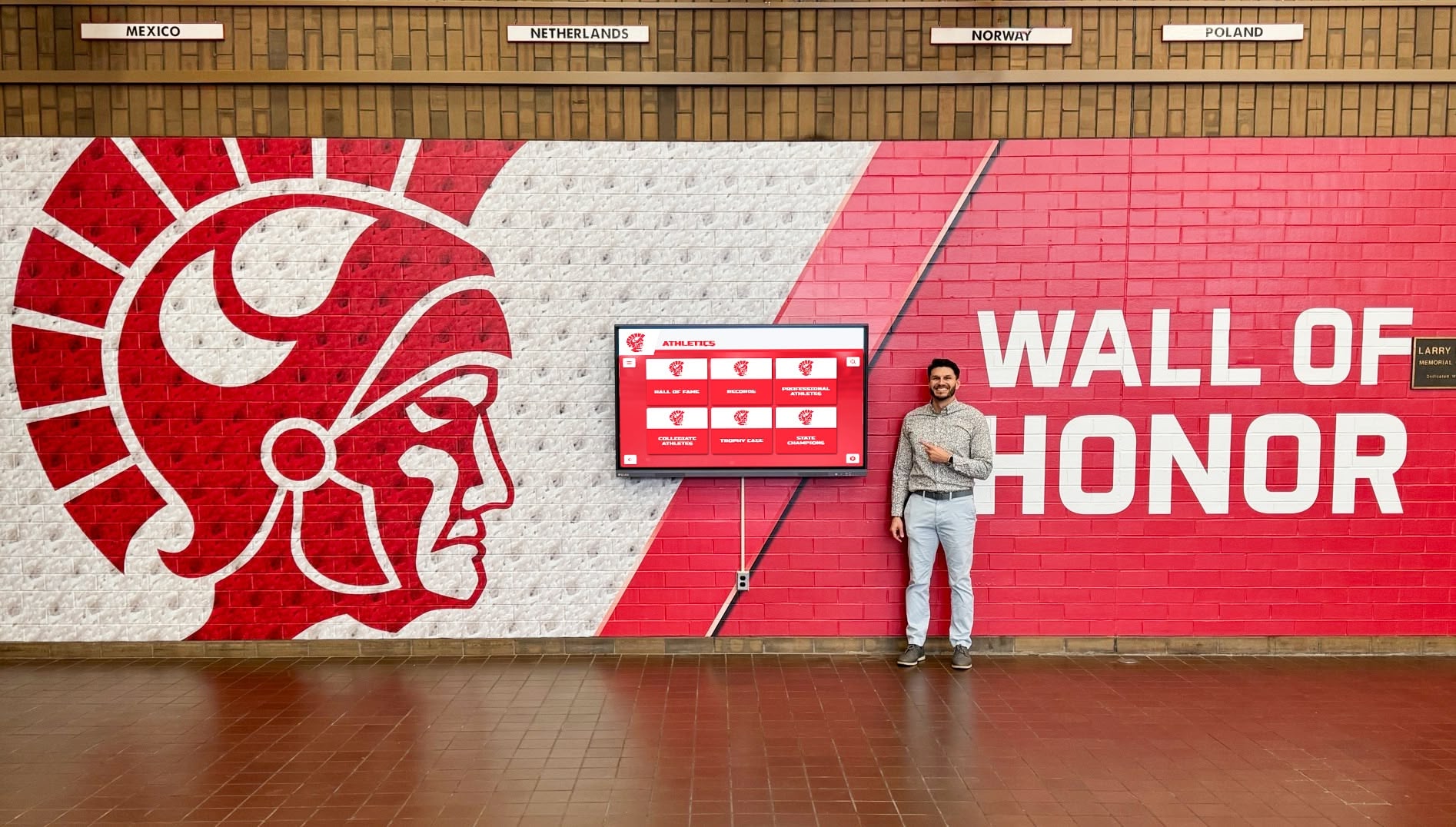
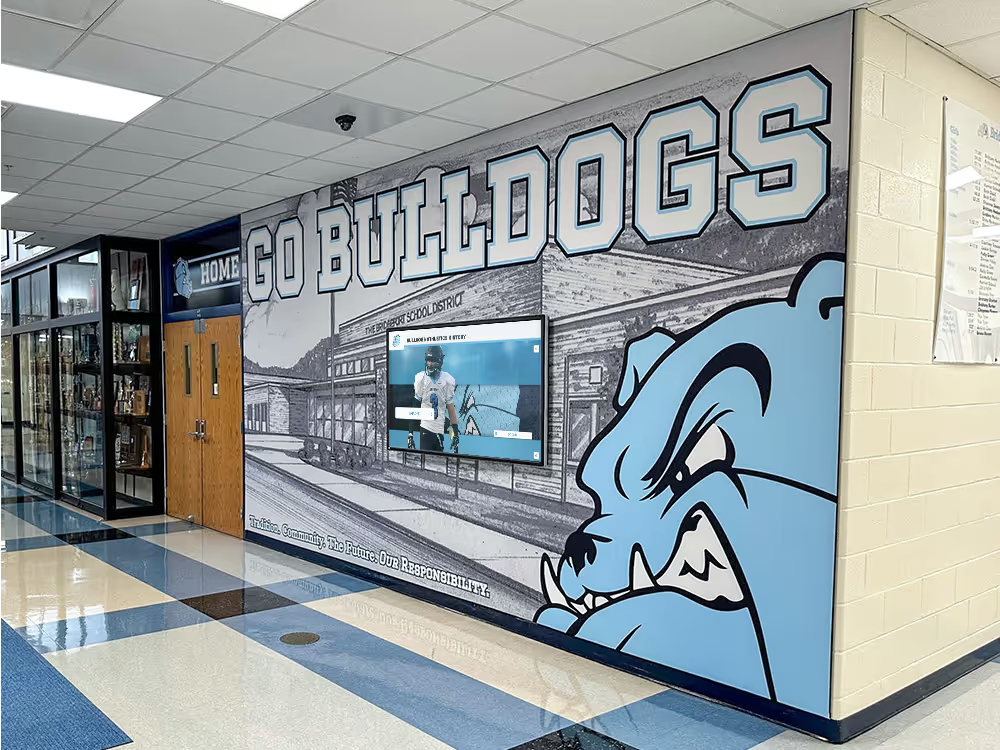
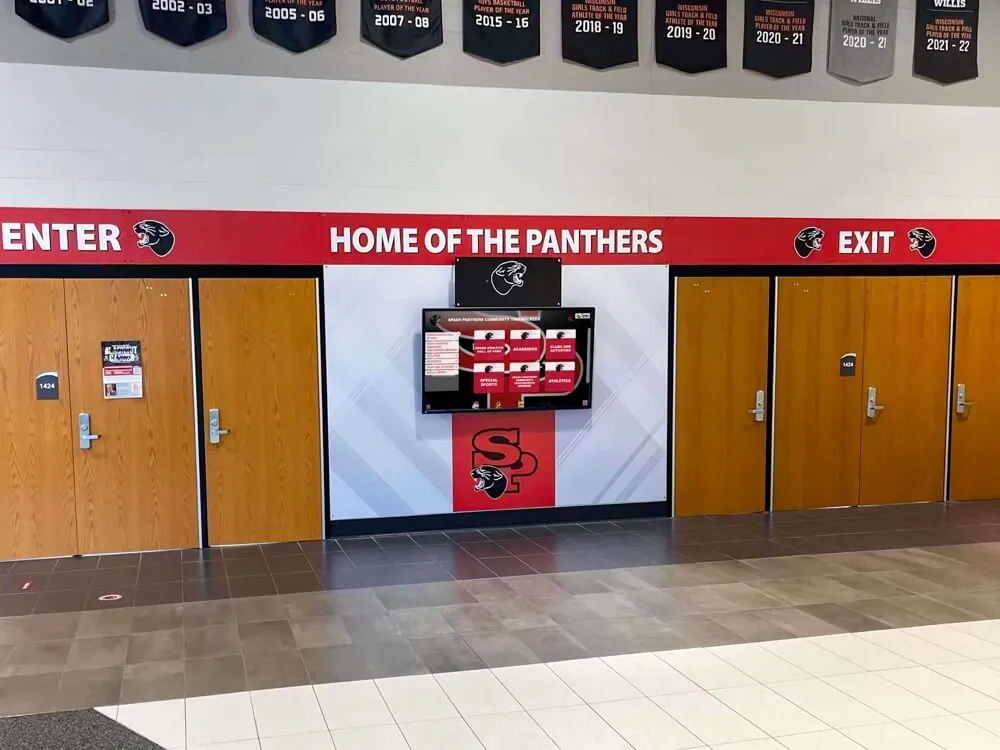
Strategic hallway placements ensure NHS recognition receives consistent daily visibility throughout school communities
Digital Recognition Transforming NHS Celebration
Modern digital recognition platforms eliminate every traditional limitation while creating engaging experiences impossible with physical-only approaches.
Comprehensive Member Profiles
Digital systems present rich individual profiles celebrating complete student achievements:
Four Pillar Achievement Documentation
Unlike simple name listings, digital profiles showcase complete NHS excellence across all evaluation dimensions:
- Scholarship: Cumulative GPA, academic honors, advanced course participation, honor roll history, academic competition achievements, subject-specific excellence, and intellectual interests
- Service: Community service hours totals, specific projects and organizations supported, leadership roles in service activities, service area focus (education, environment, health, social services), and ongoing commitment demonstrations
- Leadership: Formal leadership positions held (club offices, team captaincies, student government), informal leadership contributions, peer mentoring activities, initiative examples, and positive influence demonstrations
- Character: Teacher recommendations, peer nominations, citizenship awards, ethical behavior examples, school value embodiment, and integrity demonstrations
Comprehensive four-pillar documentation celebrates complete students rather than reducing individuals to academic achievement alone while demonstrating how scholarship, service, leadership, and character interconnect throughout student development.
Rich Multimedia Integration
Modern platforms incorporate diverse content types:
- Professional portrait photography presenting NHS members formally
- Candid photos showing members engaged in service projects, leadership activities, or academic pursuits
- Video interviews discussing NHS experience, service project impacts, leadership lessons learned, or advice for younger students
- Service project documentation showing community contributions and partner organizations
- Leadership activity highlights demonstrating positive influence and initiative
- Induction ceremony photos preserving milestone moments
- Graduation recognition and college destination information
Multimedia integration creates engaging, humanizing recognition building connections between current students and NHS members while demonstrating that excellence reflects dedication and commitment rather than unreachable natural talent.

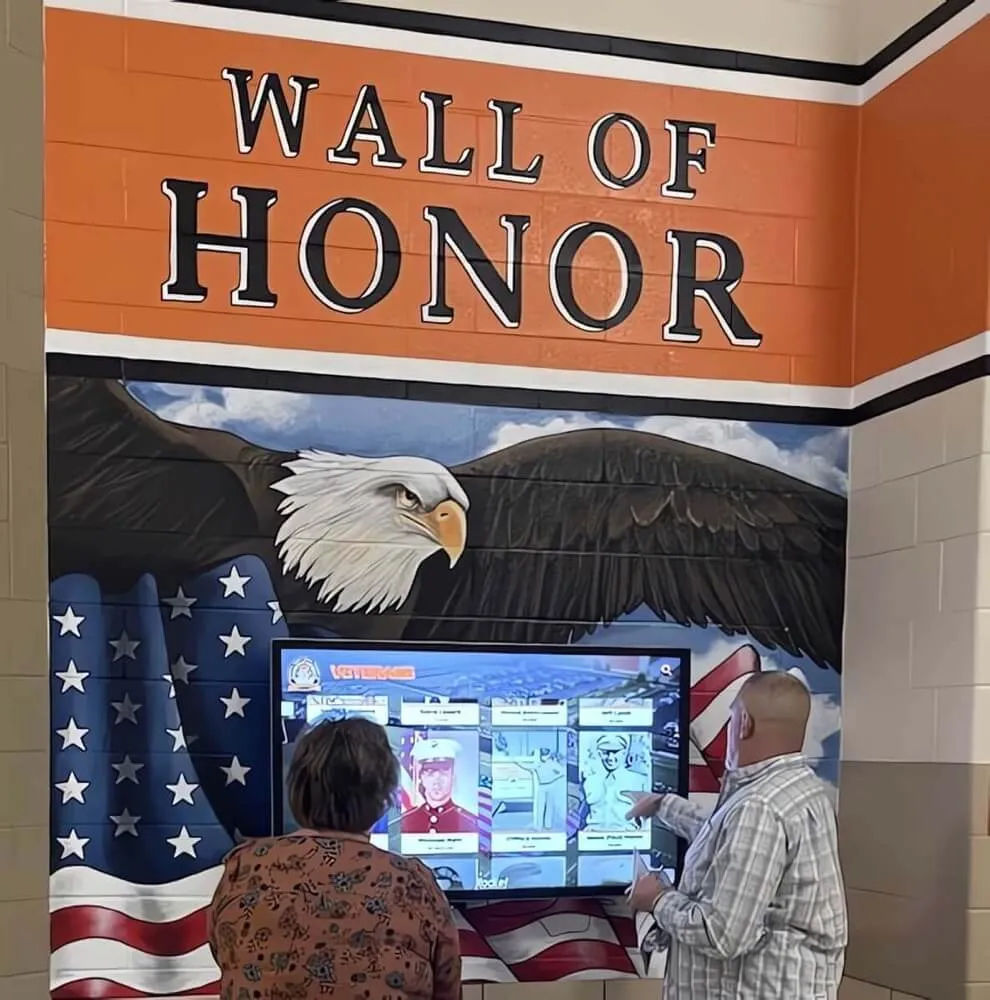
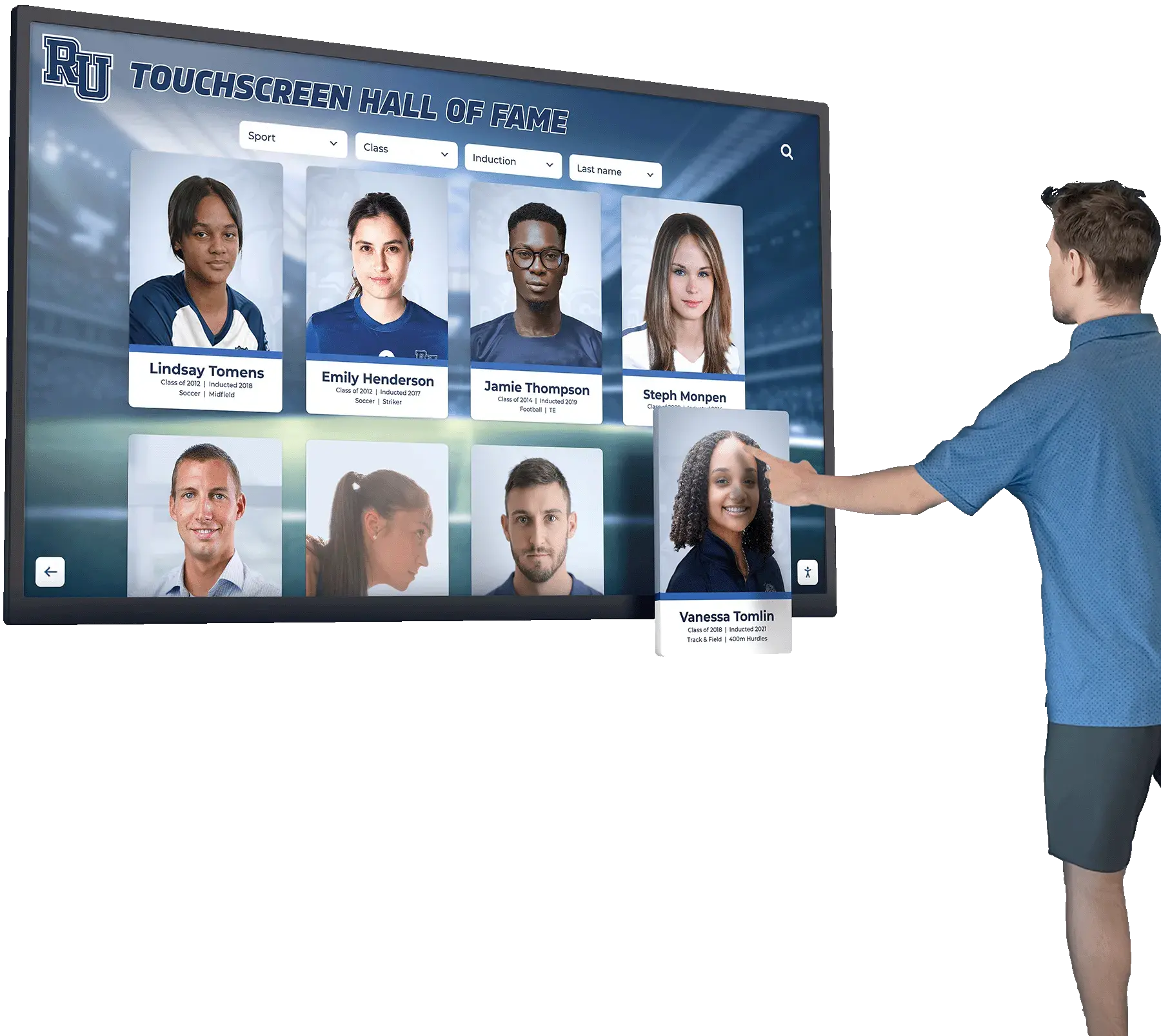
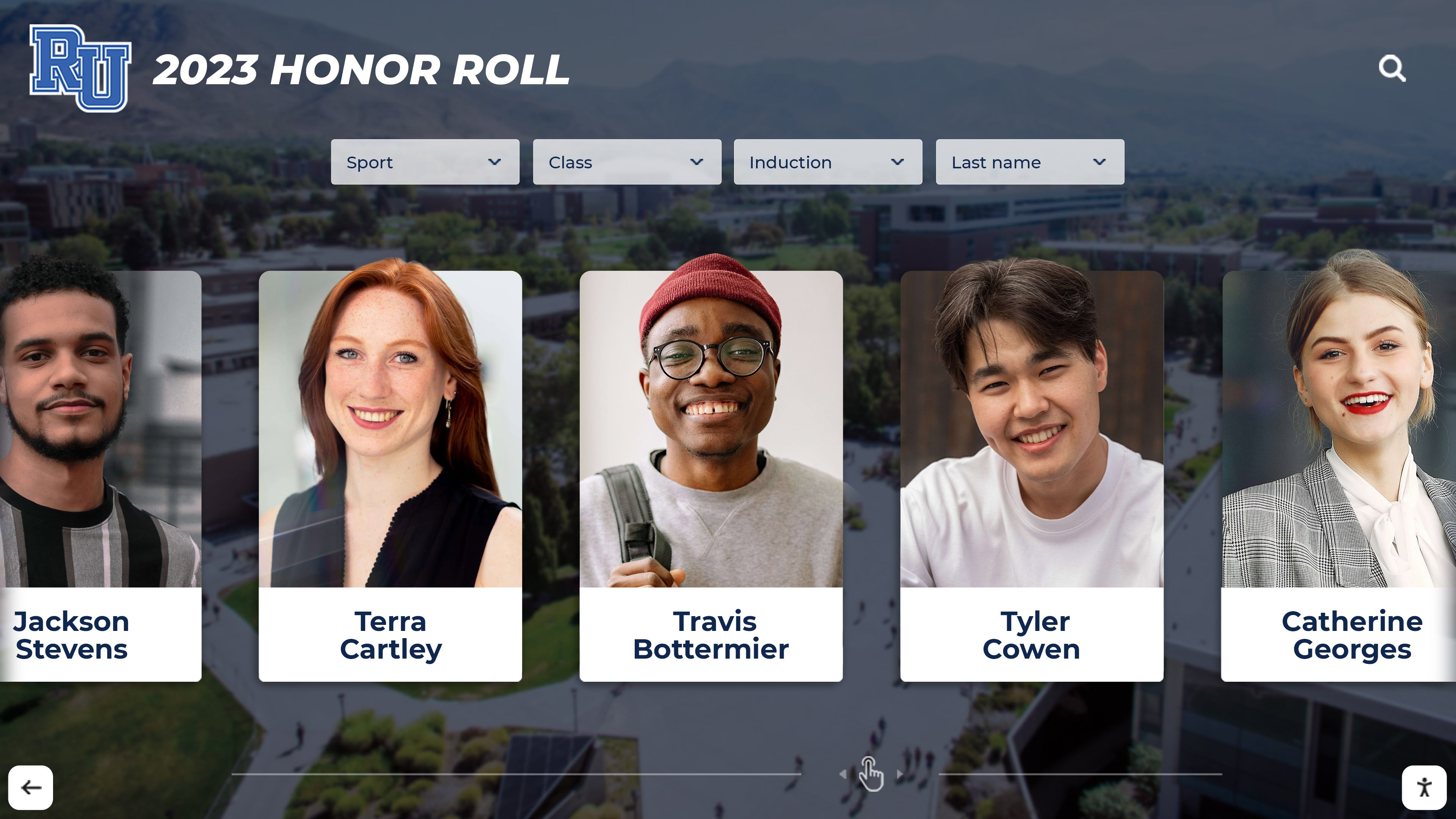
Intuitive touchscreen interfaces enable exploration of individual NHS member profiles with complete achievement narratives
Historical Program Documentation
Digital platforms preserve complete NHS traditions across decades:
Multi-Decade Membership Archives
Schools with established NHS chapters create comprehensive historical documentation:
- Complete member listings spanning decades of institutional NHS history
- Year-by-year induction classes showing program consistency and growth
- Total membership statistics demonstrating sustained excellence traditions
- Notable alumni members and their post-graduation accomplishments
- Program milestones—chapter founding anniversary, 100th member celebrations, service hour totals
- Historical induction ceremony photos and memorabilia
- Faculty advisor recognition across program history
- Service project evolution showing changing community engagement patterns
Historical preservation connects current students to institutional traditions while demonstrating to prospective families that schools maintain long-term commitments to developing scholarship, service, leadership, and character rather than pursuing trendy initiatives abandoned with leadership changes.
Service Impact Documentation
Recognition platforms can showcase collective NHS community contributions:
- Cumulative service hour totals across chapter history
- Service project galleries documenting community partnerships
- Organizational partnerships developed through NHS service
- Service area focus showing education, environmental, health, and social service contributions
- Community impact testimonials from partner organizations
- Annual service goals and achievement celebrations
- Individual member service hour leaders and sustained commitment examples
Service documentation demonstrates NHS programs produce measurable community benefit while celebrating specific contributions inspiring younger students to understand service pillar significance extending beyond resume-building toward genuine community improvement commitment.
Interactive Exploration and Discovery
Touchscreen interfaces enable personalized exploration creating engagement beyond passive viewing:
Intuitive Search and Filtering
Large membership collections become navigable through sophisticated discovery tools:
- Name search enabling quick location of specific members
- Year filtering showing members by induction class or graduation year
- Service project filtering discovering members supporting specific causes
- Leadership role filtering identifying members holding particular positions
- College destination searches finding members attending specific universities
- Service hour range filtering celebrating sustained commitment examples
- Academic major or career field filters connecting current students with members pursuing similar paths
Search capabilities prove particularly valuable during school events, prospective family tours, and alumni reunions when visitors seek specific individuals or explore institutional traditions connecting to personal interests.
Related Content and Connections
Modern platforms surface relevant content extending engagement:
- Classmate connections showing NHS members graduating together
- Sibling or family member discovery enabling multigenerational celebration
- Service project team connections recognizing collaborative contributions
- Leadership organization links connecting members through shared activities
- College destination groupings showing university matriculation patterns
- Career field connections enabling mentorship relationship development
- Alumni update features maintaining lifelong institutional connections
Connection discovery transforms recognition from static viewing to active exploration building understanding of NHS program impact while creating meaningful relationships supporting continued engagement throughout members’ lives.
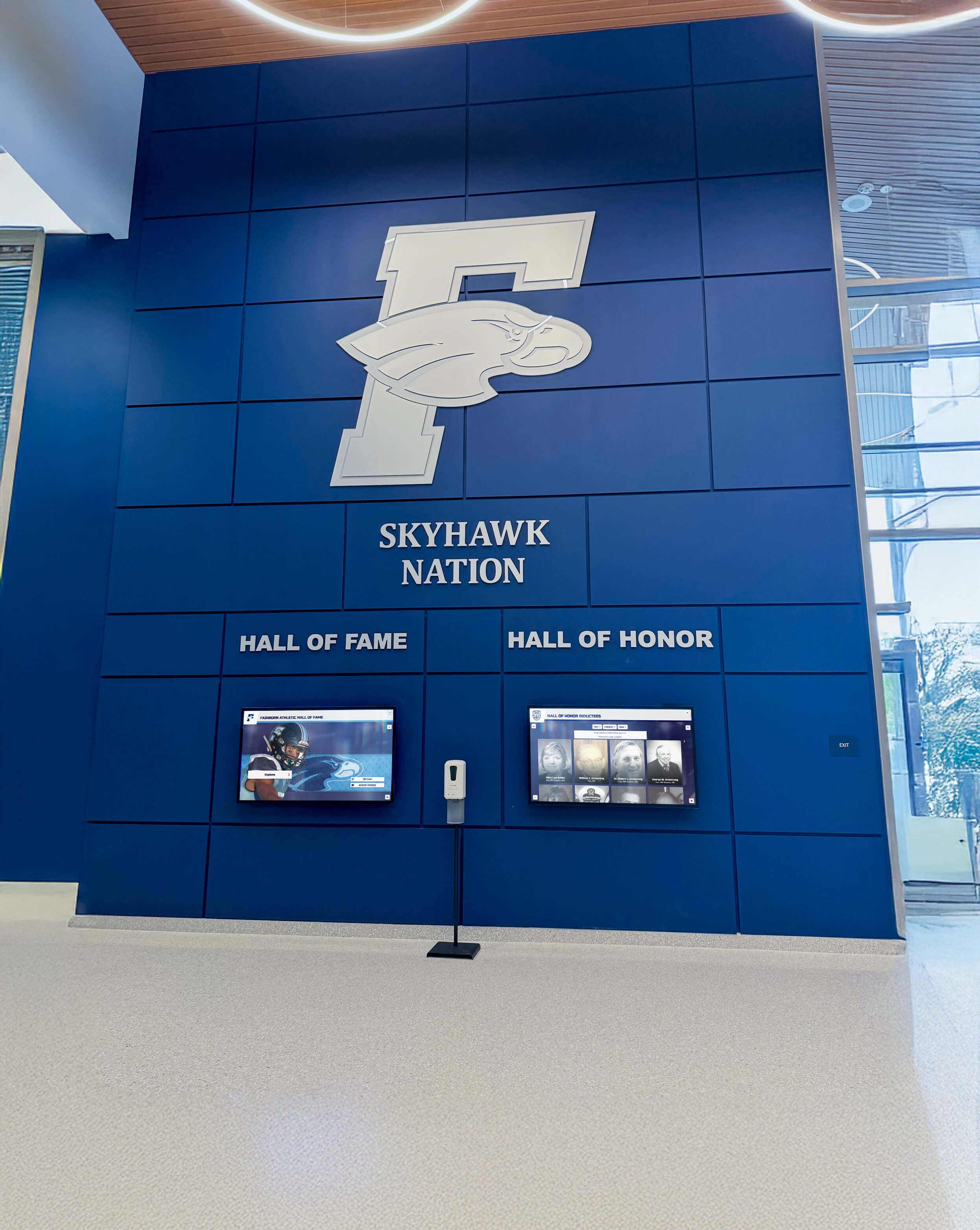
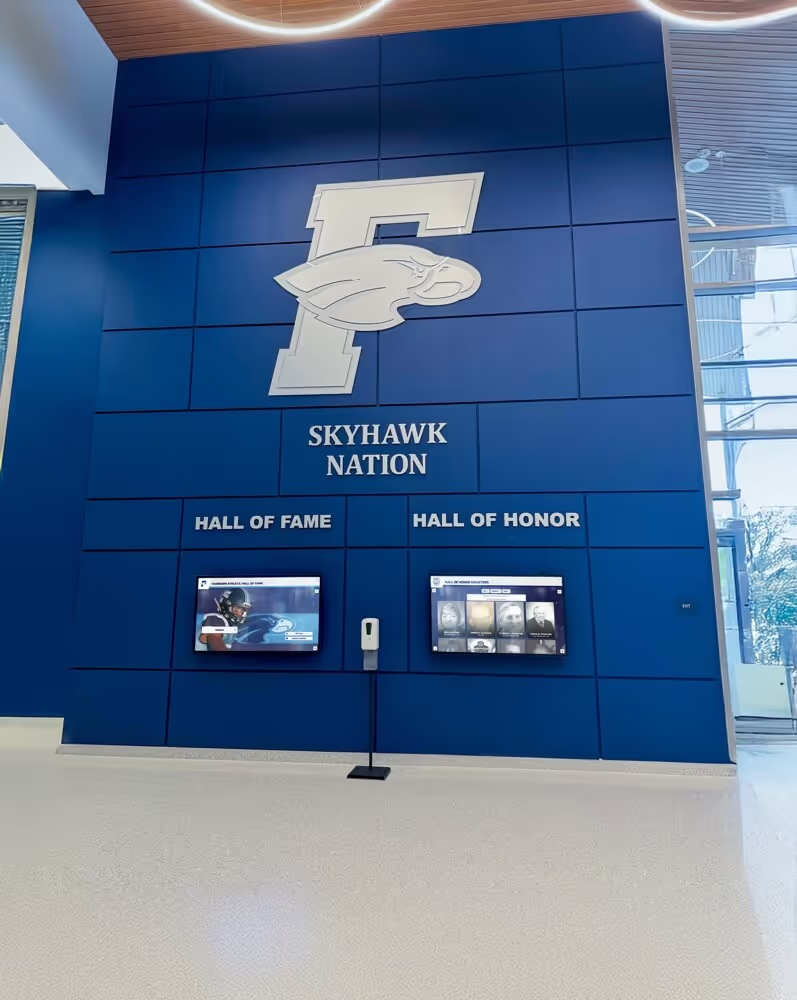
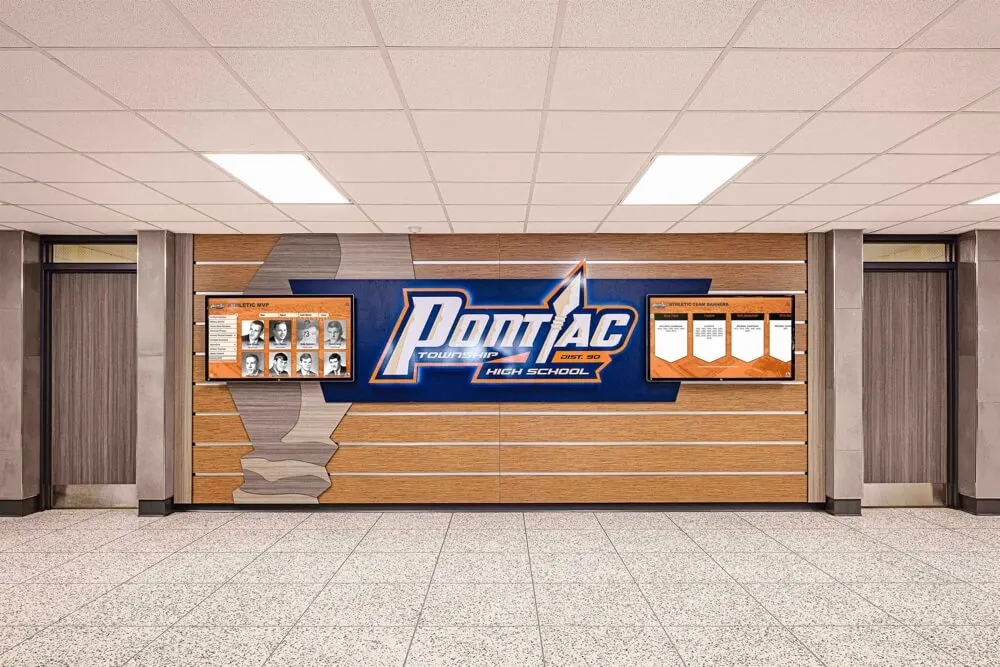
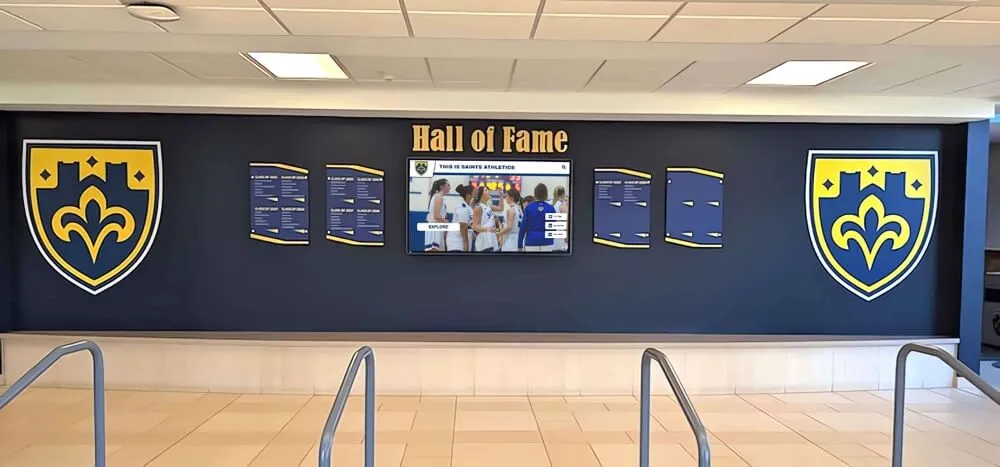
Professional lobby installations create impressive environments celebrating NHS traditions with institutional branding and comprehensive recognition
Strategic NHS Recognition Implementation
Successfully implementing digital NHS recognition requires thoughtful planning addressing content strategy, display placement, and ongoing management sustainability.
Defining Recognition Scope and Categories
Comprehensive programs contextualize NHS within broader recognition frameworks:
NHS Recognition Levels
Schools should document complete membership journey:
- NHS candidate identification and application process
- Induction ceremonies and new member celebration
- Active membership maintenance and ongoing commitment
- Senior member recognition and leadership progression
- Distinguished member honors for exceptional contribution
- Alumni member updates maintaining lifelong connections
- Cumulative achievement statistics across program history
Progressive recognition throughout membership duration creates ongoing engagement rather than limiting celebration to single induction moments, demonstrating that NHS membership represents sustained commitment rather than one-time achievement recognition.
Integration with Academic Recognition Programs
NHS recognition should complement broader academic celebration:
- Honor roll achievement providing foundation for NHS scholarship qualification
- Academic competition success demonstrating intellectual engagement
- Advanced Placement Scholar awards acknowledging rigorous curriculum pursuit
- Subject-specific departmental awards recognizing focused excellence
- Valedictorian and salutatorian recognition celebrating highest achievement
- Perfect attendance combined with academic honors
- College scholarship awards and financial achievement recognition
Integrated recognition ensures students pursuing diverse academic paths receive appropriate celebration while positioning NHS as pinnacle program requiring excellence across multiple dimensions simultaneously.
Content Development and Management Workflows
Sustainable recognition requires efficient systems for gathering information and creating profiles:
Membership Information Collection
Systematic data gathering ensures comprehensive recognition:
- NHS application materials including candidate statements and recommendations
- Induction ceremony programs with member listings and ceremony details
- Professional portrait photography sessions coordinating with school photographers
- Member questionnaires collecting biographical information, service details, leadership roles, and personal reflections
- Service hour documentation verifying community contribution commitments
- Permission forms for photo publication and information sharing
- College destination and scholarship information collected at graduation
- Alumni update systems maintaining post-graduation achievement information
Documented collection protocols prevent recognition delays caused by missing information while ensuring equitable, comprehensive celebration regardless of individual family resources or engagement levels.
Efficient Profile Creation Systems
Digital platforms like Rocket Alumni Solutions provide tools enabling:
- Template-based profile creation ensuring consistent formatting across members
- Bulk import capabilities when creating multiple member profiles simultaneously
- Draft and preview modes enabling content review before publication
- Scheduled publishing coordinating recognition visibility with induction ceremonies
- Collaborative editing allowing advisors, administrators, and student helpers to contribute
- Media management systems organizing photos and documents efficiently
- Version control maintaining historical accuracy while enabling updates
Efficient workflows prevent recognition from becoming burdensome for faculty advisors already managing NHS chapter operations, service project coordination, meeting facilitation, and candidate evaluation processes.
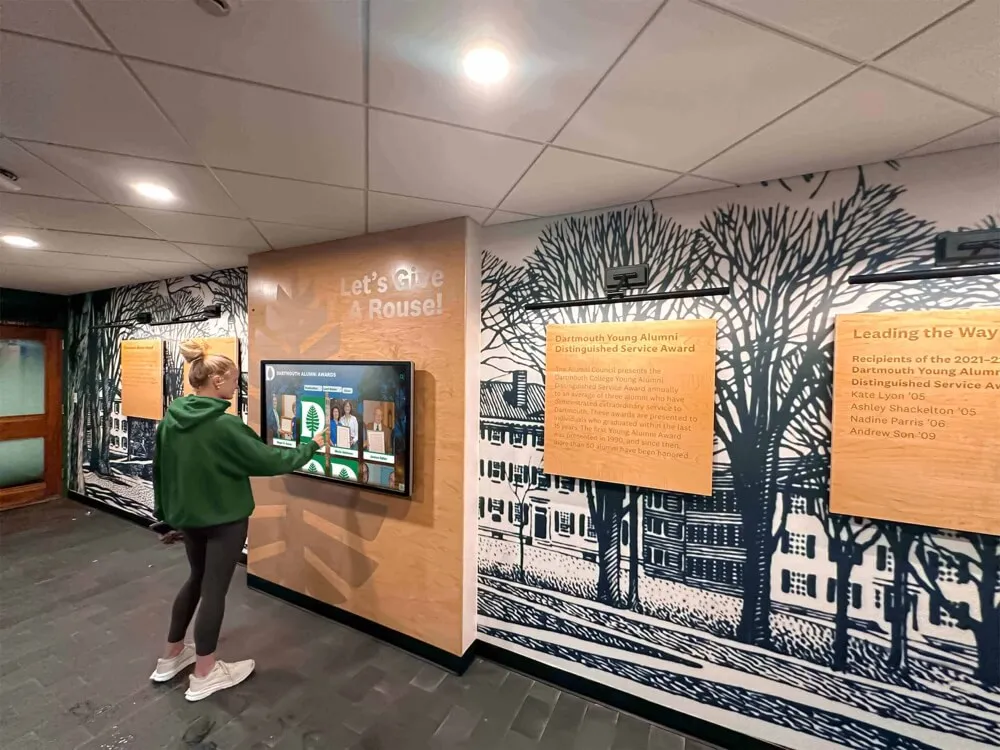
Strategic installations integrate recognition displays with existing architecture creating cohesive environments celebrating academic excellence
Display Placement and Visibility Strategy
Physical installation location dramatically affects recognition reach and community engagement:
Strategic Location Selection
Prime placement ensures maximum community awareness:
- Main entrance lobbies visible to all campus visitors and prospective families
- Academic facility locations near libraries, learning commons, or college counseling offices
- Main hallway intersections with high student traffic throughout school days
- Cafeteria and commons areas where students gather and socialize
- Admissions tour routes ensuring prospective family visibility
- Auditorium lobbies near ceremony and event spaces
- Dedicated academic recognition galleries celebrating intellectual excellence comprehensively
High-visibility placement communicates institutional commitment to scholarship, service, leadership, and character while ensuring daily inspiration for current students experiencing prominent recognition as they navigate school facilities.
Coordinated Multi-Screen Strategies
Schools with multiple display locations coordinate content across installations:
- Main lobby display showcasing current year inductees and recent service highlights
- Academic facility screen featuring historical membership archives and program traditions
- Hallway installation highlighting specific service projects and community partnerships
- College counseling area display celebrating member college destinations and scholarship success
- Rotational content strategies ensuring equitable visibility among large membership cohorts
Distributed approaches maximize recognition capacity while serving diverse audience interests ensuring comprehensive community exposure to NHS celebration throughout campus environments.
Creating Digital Warming Through NHS Recognition
The concept of digital warming—transforming cold, impersonal digital spaces into engaging, personalized community experiences—applies powerfully to National Honor Society recognition.
Personalization Driving Engagement and Discovery
Modern recognition systems create personally meaningful experiences motivating sustained interaction:
Student-Centered Exploration
Current students exploring NHS recognition discover personal connections inspiring their own pursuit:
- Older siblings, cousins, or relatives with NHS membership history
- Friends, teammates, or classmates currently serving as NHS members
- Students from their middle schools demonstrating program continuity
- Members pursuing similar college aspirations or academic interests
- Role models overcoming similar challenges or sharing comparable circumstances
- Service project participants addressing causes they care about personally
- Leadership position holders in activities they participate in currently
Personal connection discovery transforms abstract recognition into inspiring, relevant content demonstrating that NHS membership remains accessible to students with similar backgrounds, interests, or starting points—reducing psychological barriers preventing students from believing they can achieve comparable excellence across scholarship, service, leadership, and character dimensions.
Family and Alumni Digital Access
Extended communities engage with recognition beyond physical campus visitors:
- Mobile-responsive web access enabling exploration from anywhere globally
- QR codes linking physical displays to expanded online content and sharing capabilities
- Social sharing features enabling members to celebrate recognition with extended networks
- Search capabilities allowing alumni to locate themselves in historical archives
- Email notifications alerting families when students receive induction recognition
- Virtual induction ceremony integration during pandemic or accessibility-limited contexts
Extended access creates ongoing engagement with recognition content while strengthening institutional connections among geographically distributed alumni communities maintaining interest in NHS traditions despite physical distance from campus, following approaches from comprehensive digital recognition platforms.

Intuitive touchscreen interfaces invite active exploration and discovery of NHS achievements through natural interaction and comprehensive profiles
Recognition Amplification Through Social Integration
Digital platforms extend recognition reach exponentially beyond physical display viewers:
Built-In Social Sharing Capabilities
Modern platforms enable direct sharing to social networks:
- One-click sharing to Facebook, Instagram, Twitter, and other platforms
- Member self-celebration spreading recognition throughout personal networks
- Family sharing with extended relatives, family friends, and community connections
- Alumni network visibility reconnecting former members with current program success
- Service partner organization sharing amplifying community impact awareness
- College matriculation announcements celebrating member destinations
Social amplification extends recognition exponentially beyond physical display viewers—a single NHS induction might reach thousands through social sharing, creating organic promotion enhancing institutional reputation while providing meaningful validation to recognized students through broader community acknowledgment.
Community Pride and Institutional Marketing
NHS recognition provides compelling content supporting broader institutional goals:
- Authentic achievement stories proving more compelling than generic marketing messaging
- Statistical summaries demonstrating academic excellence and community service for prospective families
- Faculty advisor spotlights recognizing teachers supporting NHS chapter success
- Service project impact documentation demonstrating community engagement commitment
- Alumni achievement updates showing long-term member success and program impact
- Local media opportunities celebrating induction ceremonies and service milestones
Schools implementing comprehensive recognition approaches create authentic content pipelines supporting enrollment marketing, community relations, donor engagement, and institutional reputation building—making recognition investments serve multiple strategic priorities simultaneously.
Beyond Traditional NHS: Expanding Academic Recognition
While National Honor Society represents recognition pinnacle, comprehensive programs celebrate broader achievement dimensions creating motivation for diverse student populations.
Related Honor Society Recognition
Schools often sponsor multiple honor societies deserving comparable recognition:
Subject-Specific Honor Societies
Departmental honor societies acknowledge discipline-focused excellence:
- National English Honor Society celebrating language arts achievement and literary contribution
- Science National Honor Society recognizing STEM excellence and research engagement
- Mu Alpha Theta honoring mathematics achievement and competition participation
- Rho Kappa Social Studies Honor Society acknowledging history and social science excellence
- National Art Honor Society celebrating artistic talent and creative contribution
- Tri-M Music Honor Society recognizing musical excellence and performance achievement
- World Language Honor Societies honoring linguistic proficiency and cultural learning
Subject-specific recognition enables students with particular intellectual strengths to receive acknowledgment creating inclusive programs where diverse excellence forms receive appropriate celebration.
Service-Focused Recognition Programs
Additional programs celebrate service commitment specifically:
- Key Club International recognition for community service leadership
- Interact Club acknowledgment for Rotary-sponsored service participation
- Student Council service initiative leadership
- Peer tutoring program sustained contribution
- Community partnership organization volunteer recognition
- Service learning course completion and reflection
Service-specific recognition reinforces that community contribution matters independent of academic achievement alone while celebrating students whose circumstances may prevent NHS qualification but who demonstrate exceptional service commitment deserving acknowledgment.
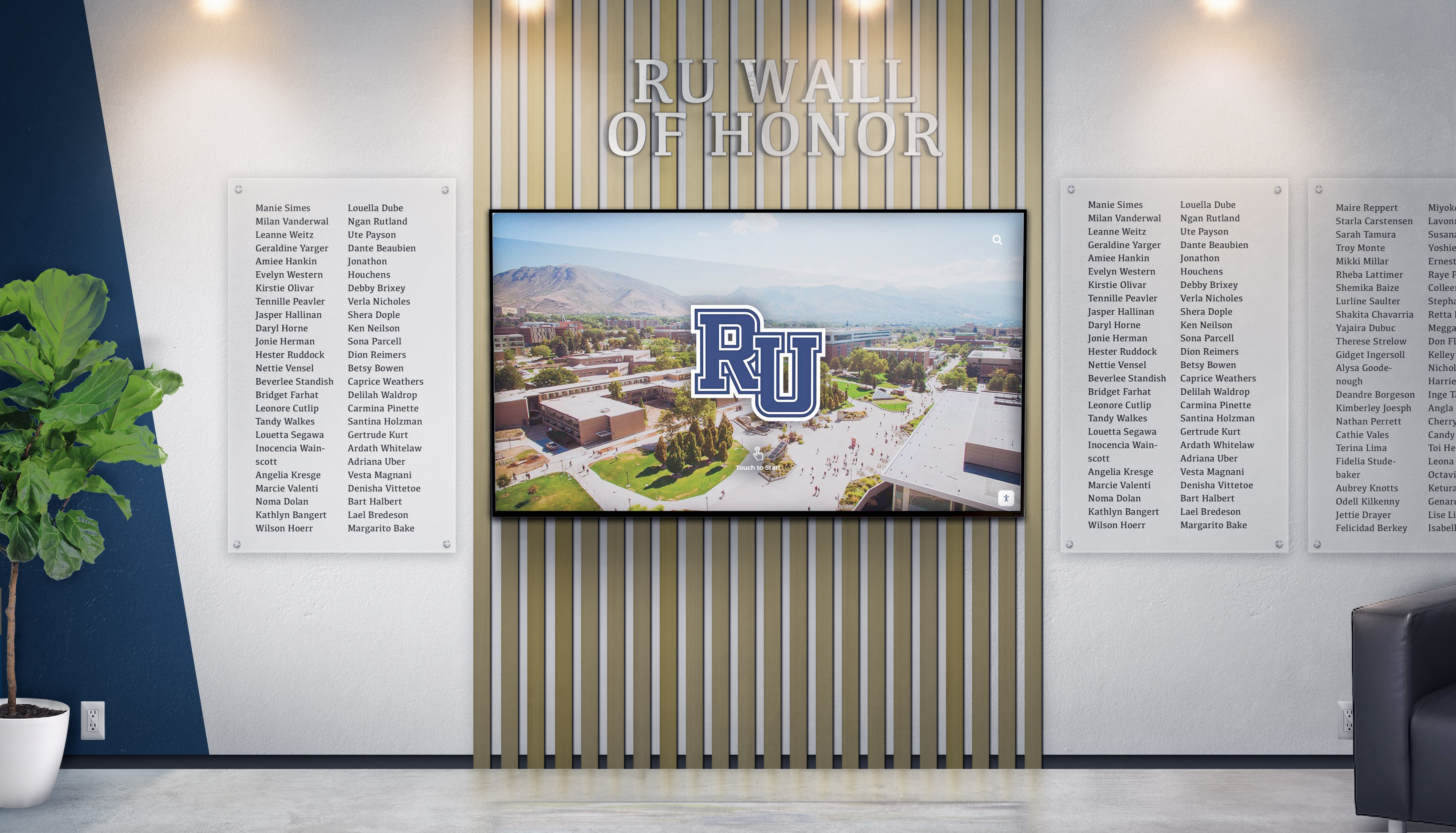
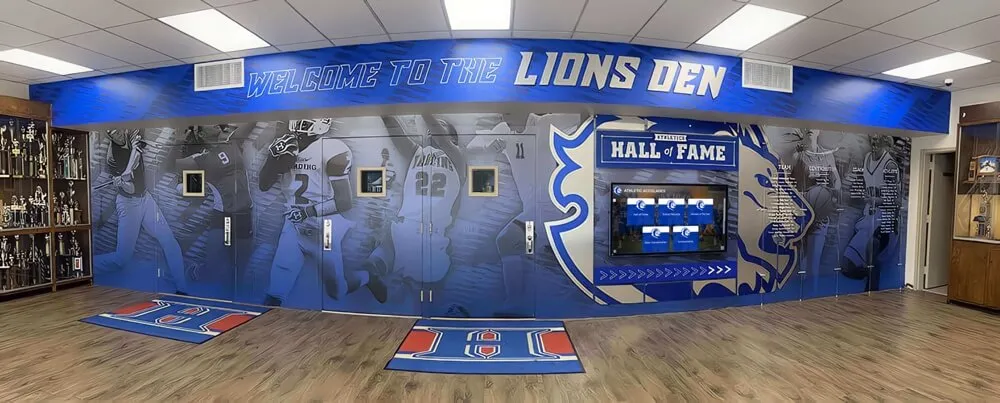
Integrated systems combine digital displays with traditional recognition elements creating comprehensive celebration environments honoring academic and service excellence
Character and Citizenship Recognition
Comprehensive programs celebrate ethical behavior and positive community contribution:
Positive Behavior and Character Awards
Schools recognize students embodying institutional values:
- Character education program award recipients
- Peacemaker awards recognizing conflict resolution and mediation
- Citizenship awards acknowledging school community contribution
- Respect and responsibility recognition celebrating ethical behavior
- Anti-bullying leadership and inclusive culture promotion
- Peer support and mentoring relationship development
- Positive school climate contribution and community building
Character recognition celebrates foundational qualities enabling academic success, service commitment, and leadership development while acknowledging students whose circumstances may challenge traditional academic achievement but who demonstrate exceptional personal qualities contributing significantly to school community health and positive culture development.
Technology Platform Selection Considerations
Choosing appropriate recognition technology significantly impacts user experience, operational efficiency, and long-term satisfaction:
Purpose-Built Recognition vs. Generic Digital Signage
Platform type fundamentally affects recognition effectiveness and sustainability:
Recognition-Specific Functionality
Purpose-built platforms like Rocket Alumni Solutions provide features generic digital signage systems lack—sophisticated profile management for individual members, intuitive search and filtering enabling discovery of specific inductees, automated content rotation ensuring equitable visibility, year-by-year navigation supporting historical exploration, and mobile-responsive web extensions providing access beyond physical displays.
Generic digital signage tools designed for advertising, wayfinding, or announcements lack NHS recognition optimization, requiring extensive customization to approximate dedicated recognition platform capabilities while typically delivering inferior user experiences and administrative workflows that increase ongoing management burdens rather than reducing operational friction.
Intuitive Content Management for Faculty Advisors
Prioritize platforms enabling NHS advisors, counselors, or administrators to confidently manage recognition without IT dependencies. The most sophisticated platform proves worthless if actual users find it too complex to operate independently, creating bottlenecks where recognition updates require specialized technical assistance limiting update frequency and content currency.
Purpose-built recognition platforms provide workflows designed specifically for NHS management—bulk imports from membership rosters, template-based profile creation, scheduled publishing automation for induction ceremonies, and role-based permissions enabling distributed content management responsibilities across appropriate staff members.
Comprehensive Accessibility Compliance
Recognition displays must meet accessibility standards ensuring universal community access:
- Full ADA WCAG 2.1 AA compliance ensuring inclusive experiences for all abilities
- Keyboard navigation alternatives to touchscreen interaction for users unable to touch screens
- Screen reader compatibility enabling vision-impaired community members to access content
- High-contrast modes supporting low-vision users and varied lighting conditions
- Mobile-responsive web versions ensuring smartphone and tablet accessibility
Rocket Alumni Solutions represents the only web-based touchscreen recognition platform achieving comprehensive WCAG 2.1 AA compliance, ensuring all community members can engage with NHS recognition regardless of abilities or assistive technology needs, following digital accessibility best practices.
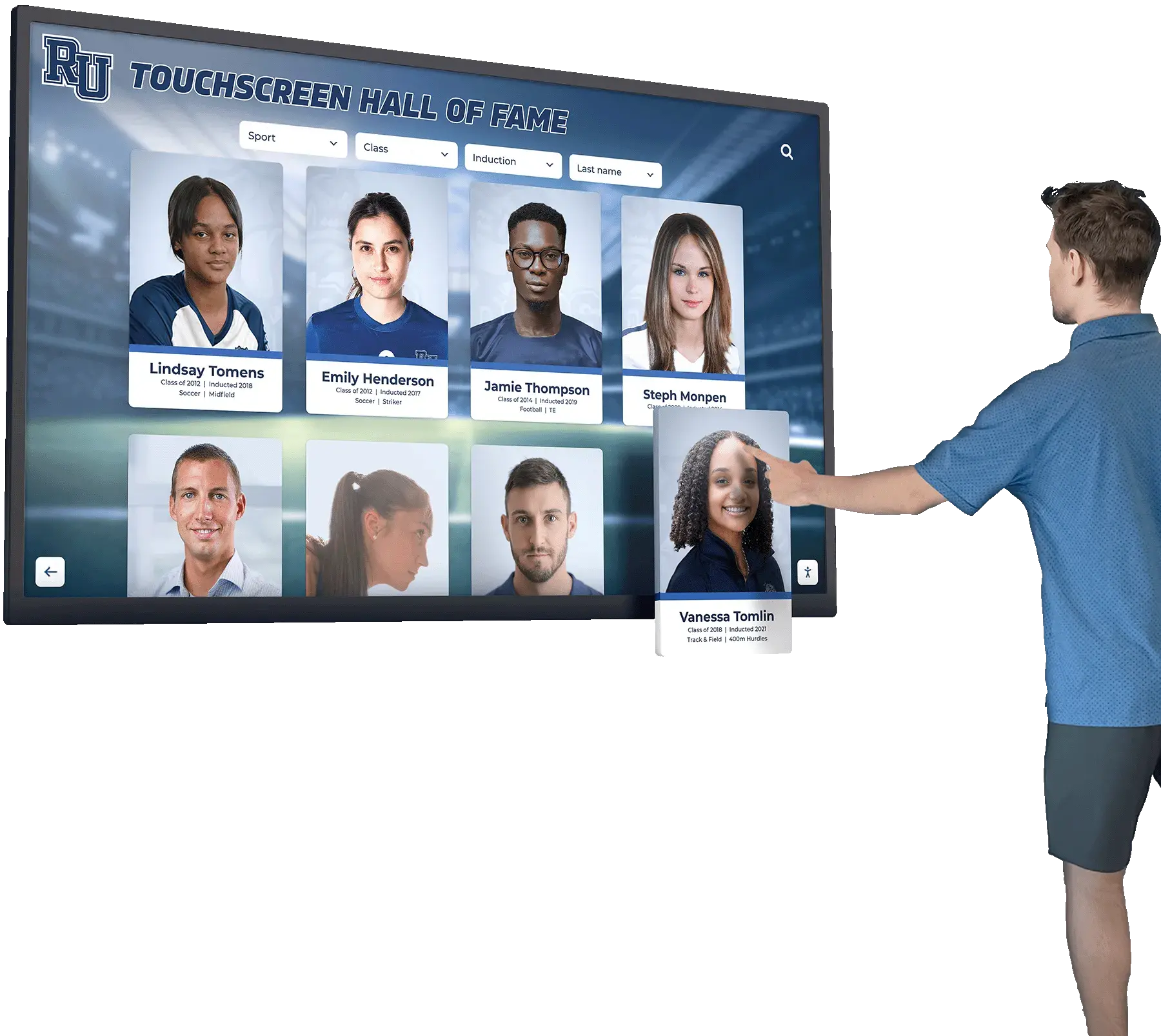
Template-based profile designs ensure consistent, professional presentation across all NHS member recognition celebrating complete achievement narratives
Scalability and Long-Term Value
Recognition investments should serve schools for decades:
Unlimited Content Capacity
Recognition archives grow continuously as years accumulate—comprehensive platforms accommodate decades of NHS membership across all induction classes without performance degradation, storage constraints, or costly system upgrades. Verify prospective platforms support unlimited member profiles, high-resolution photo content, video integration, and thousands of concurrent users during peak periods without failures or slowdowns.
Continuous Platform Evolution
Technology evolves continuously—prioritize providers with track records for regular feature additions, user-driven improvements, and responsive development. Platforms should improve continuously based on user feedback and technological advances, ensuring long-term value without requiring complete system replacements when initial implementations become outdated or capabilities fall behind contemporary expectations.
Provider Partnership and Support Quality
Provider relationships significantly impact sustained satisfaction beyond initial implementation. Assess comprehensive implementation assistance, staff training quality, ongoing technical support responsiveness, user community resources, and provider commitment to long-term partnership success rather than transactional relationships focused exclusively on initial sales.
Schools implementing solutions like Rocket Alumni Solutions benefit from proven implementation track records across hundreds of institutions, responsive support ensuring issues resolve quickly, and continuous platform improvements adding features benefiting all users without additional costs or upgrade requirements.
Measuring NHS Recognition Impact
Systematic evaluation demonstrates recognition program value while identifying improvement opportunities:
Quantitative Success Metrics
Academic and Program Engagement Indicators
Recognition visibility impacts NHS participation and broader academic engagement:
- NHS application rates among academically qualified students
- Service hour completion trends and community contribution growth
- Leadership position pursuit among NHS members
- Academic course rigor maintenance throughout membership
- College application ambition and selectivity among NHS alumni
- Scholarship pursuit and award success rates
- Program retention and active participation metrics
Schools implementing comprehensive NHS recognition often observe improved academic engagement as visible excellence demonstration motivates students pursuing intellectual achievement while creating positive peer pressure elevating community academic and service standards.
Community Awareness and Institutional Reputation
Recognition systems enhance institutional reputation and family connections:
- Prospective family awareness of NHS programs during admission tours
- Social media engagement metrics for induction ceremony announcements
- Alumni interaction rates with historical membership archives
- Family satisfaction survey responses regarding NHS recognition programs
- Local media coverage of induction ceremonies and service milestones
- Community partner feedback regarding NHS service project contributions
- Enrollment trends among academically motivated prospective families
Visible recognition builds community pride strengthening institutional reputation while attracting academically talented families seeking schools demonstrably committed to developing scholarship, service, leadership, and character simultaneously.
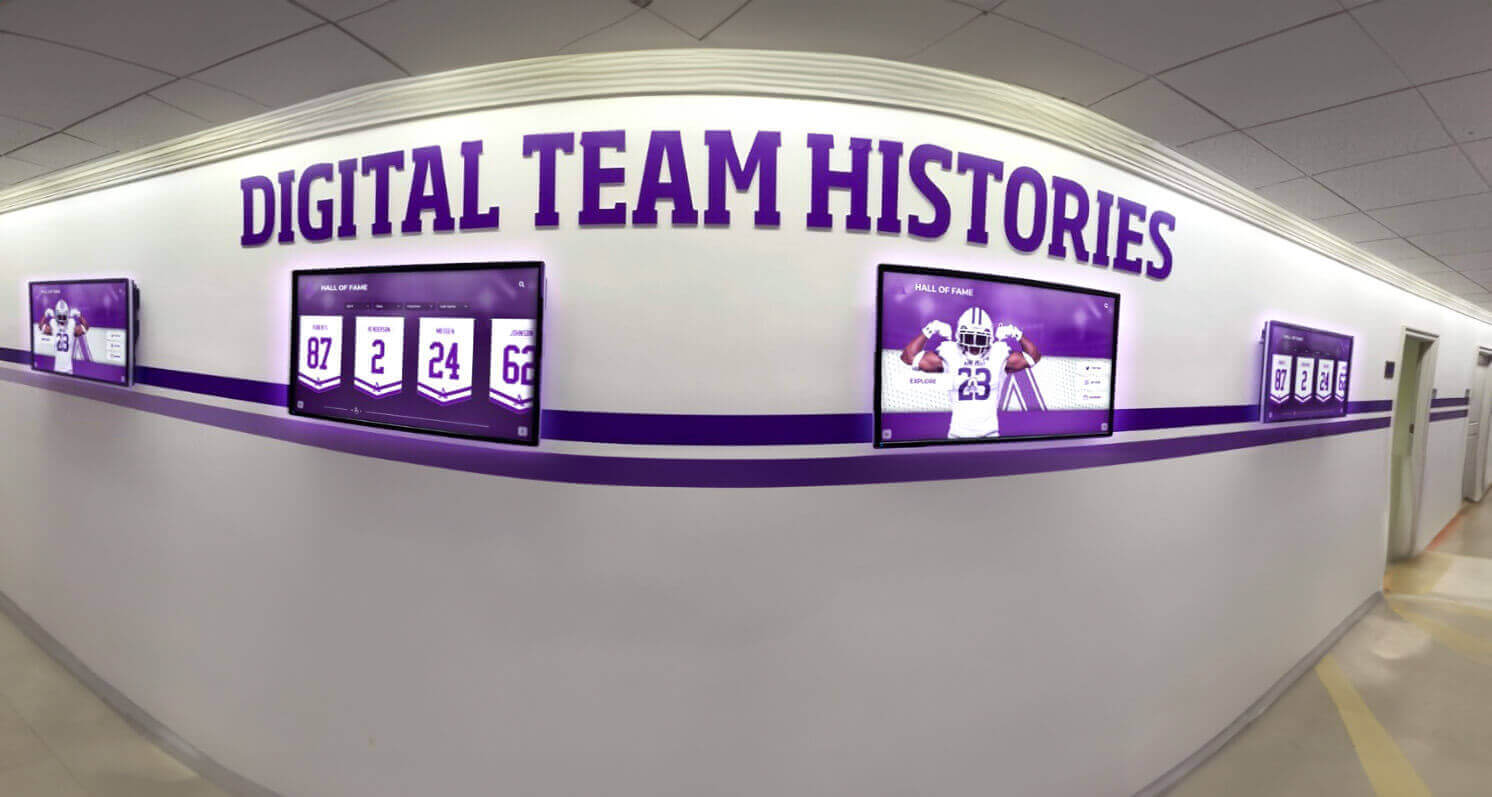
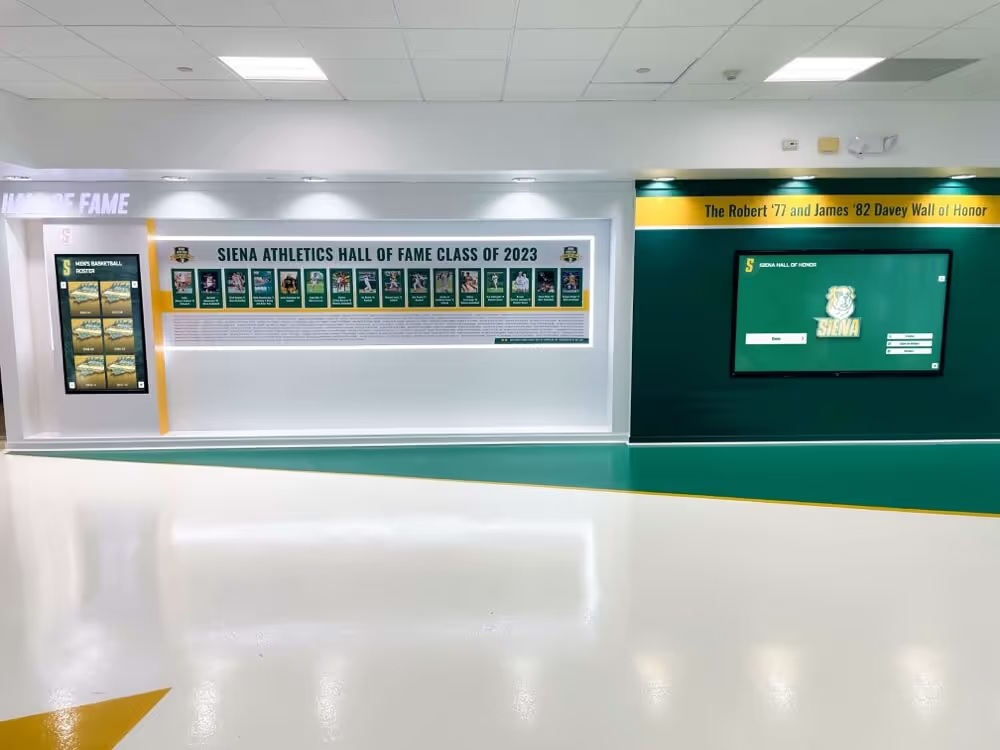
Coordinated multi-screen installations provide comprehensive capacity for NHS recognition alongside other academic and co-curricular achievement categories
Qualitative Impact Assessment
Student Perspective Feedback
Regular feedback ensures recognition resonates with primary beneficiaries:
- NHS program awareness among underclassmen and prospective applicants
- Motivational impact of visible NHS member recognition
- Pride in attending schools celebrating scholarship, service, leadership, and character
- Understanding of NHS application processes and qualification requirements
- Connections formed through recognition displays and historical exploration
- Perceived balance between academic and athletic recognition visibility
Student feedback reveals whether recognition creates intended effects—inspiring NHS pursuit, building institutional pride, motivating continued excellence—while identifying opportunities to enhance program effectiveness through criteria adjustments, display improvements, or communication enhancements.
Family and Community Reception
Broader stakeholder feedback reveals recognition program effectiveness:
- Family satisfaction with induction ceremony experiences and ongoing recognition
- Alumni engagement with recognition during campus returns and online exploration
- Community partner awareness of NHS service contributions
- Faculty advisor perspectives on recognition administrative efficiency and program value
- College counselor insights regarding recognition supporting student placement efforts
- Extended family awareness and celebration participation through digital access
Comprehensive feedback ensures recognition serves multiple stakeholder interests while justifying resource investments through demonstrated value across institutional priorities including student development, community relations, academic culture building, and institutional reputation enhancement.
Best Practices for Sustained NHS Recognition Success
Long-term recognition value requires establishing operational practices supporting content quality, currency, and community engagement beyond initial implementation enthusiasm:
Establishing Annual Recognition Cycles
Sustainable programs follow predictable, consistent patterns:
Induction Recognition Timeline
Develop standardized timelines for each recognition cycle:
- NHS application period promotion and candidate recruitment (Fall)
- Candidate evaluation and membership selection (Late Fall/Winter)
- Induction ceremony planning and coordination (Winter/Spring)
- Recognition content creation gathering photos and biographical information (Post-induction)
- Digital display publication scheduled with ceremony date (Induction day)
- Social media promotion and family communication (Post-induction weeks)
- Service project documentation and ongoing recognition updates (Throughout year)
Documented timelines ensure recognition occurs consistently without last-minute rushes or forgotten steps compromising program quality. Regular cycles build community expectations about NHS recognition patterns maintaining engagement through predictable annual rhythms.
Ongoing Member Recognition
Consider interim recognition maintaining visibility throughout membership:
- Service project completion highlights celebrating specific community contributions
- Leadership position announcements when members assume organizational roles
- Academic achievement updates recognizing honor roll continuation or special recognition
- College acceptance celebrations acknowledging member matriculation destinations
- Graduation recognition honoring senior members completing NHS journeys
- Alumni update features maintaining connections showing post-graduation success
Ongoing touchpoints maintain NHS visibility throughout members’ high school careers rather than limiting recognition to single induction moments, demonstrating that membership represents sustained commitment requiring continuous celebration matching extended duration.
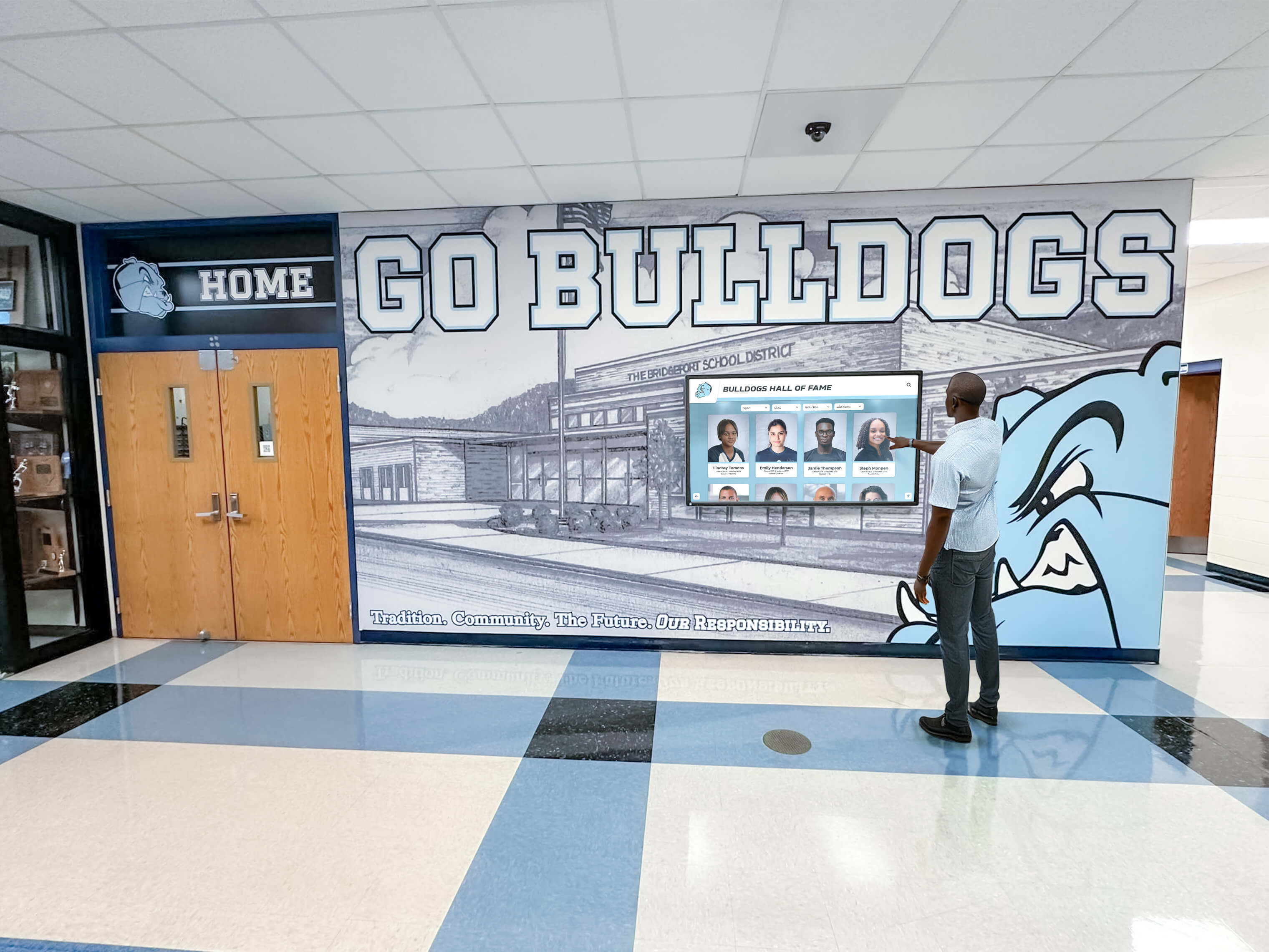
Interactive displays serve both daily exploration and special event celebration, supporting multiple recognition purposes throughout school year
Promoting Recognition and Maximizing Awareness
Even excellent recognition requires active promotion ensuring community awareness:
Multi-Channel Communication Strategies
Systematic promotion ensures broad community reach:
- School-wide announcements celebrating induction ceremonies and highlighting individual inductees
- Family emails with personalized congratulations and direct links to member profiles
- Social media campaigns sharing collective achievements and featuring individual members
- Newsletter features providing NHS statistics and celebrating service project impacts
- Morning announcements reading new member names and recognition tier designations
- Website homepage features spotlighting current induction class displays
- Press releases to local media covering induction ceremonies and service milestones
Coordinated communication across multiple channels ensures recognition reaches diverse community members through preferred information sources while creating sustained visibility maintaining NHS prominence within institutional consciousness and community awareness.
Recognition Event Integration
Induction ceremonies remain valuable when enhanced with digital display integration:
- Live unveiling of digital recognition displays during ceremonies creating memorable moments
- Large-screen projection enabling ceremony attendees to explore recognition together
- Featured profile spotlights highlighting exceptional service projects or leadership contributions
- Family invitation and participation building community celebration experiences
- Student speaker opportunities enabling peer-to-peer motivation through achievement narratives
- Alumni speaker connections facilitated through recognition platform research
Ceremonies provide high-impact introduction moments for digital recognition while maintaining traditional celebration value families appreciate, following recognition event best practices integrating digital and traditional approaches.
Conclusion: Celebrating NHS Excellence That Inspires Future Achievement
National Honor Society recognition represents strategic investment in academic culture, character development, and institutional values. When schools systematically celebrate NHS membership through visible, accessible, comprehensive recognition systems, they create environments where scholarship, service, leadership, and character receive appropriate acknowledgment, inspire younger students pursuing similar excellence, and build communities rallying around shared commitments to developing well-rounded citizens contributing positively to society.
The evolution from annual ceremonies and forgotten bulletin boards toward comprehensive digital recognition reflects understanding that recognition impact depends on visibility, accessibility, complete storytelling, and engaging presentation enabling active exploration rather than passive viewing. Modern touchscreen platforms eliminate traditional constraints—unlimited capacity accommodating decades of members across all induction classes, rich multimedia profiles celebrating four-pillar excellence, intuitive search enabling connection discovery, and extended digital access engaging entire communities regardless of campus visit frequency.
NHS membership represents sustained three-year commitment to maintaining scholarship standards, completing meaningful service, demonstrating positive leadership, and modeling ethical character. These accomplishments deserve preservation and celebration creating institutional memory connecting current students to traditions while demonstrating to prospective families that schools maintain genuine commitments to developing complete students prepared for citizenship, leadership, and contribution extending beyond academic achievement alone.
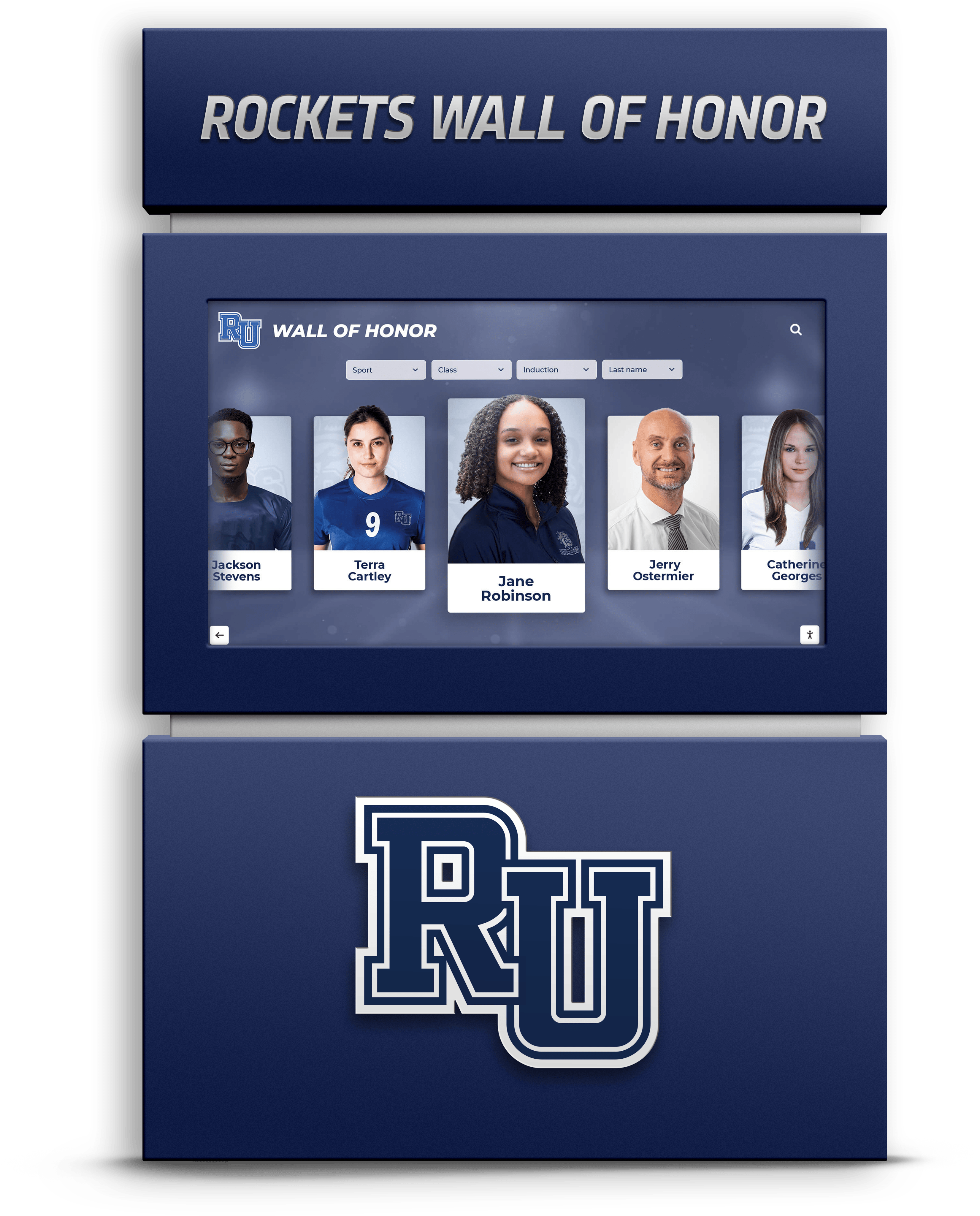
Professional recognition installations create impressive environments celebrating NHS traditions and member achievements defining institutional identity and academic culture
Implementation success requires strategic planning addressing recognition scope, display placement, technology selection, content development, and ongoing management. Schools should begin with clear recognition criteria acknowledging complete four-pillar excellence, engage NHS advisors and community stakeholders in program design, select appropriate technology platforms meeting current and future needs, and commit to sustained content management maintaining recognition relevance and engagement over time.
Purpose-built recognition platforms like Rocket Alumni Solutions deliver capabilities specifically optimized for celebrating NHS achievements while eliminating complexity inherent in custom development or adapting generic digital signage systems. Unlimited capacity, intuitive content management, comprehensive accessibility compliance, sophisticated search and exploration tools, and professional implementation support enable schools to focus on recognition program success rather than technical challenges preventing effective celebration.
Every NHS member—from new inductees through active participants to graduating seniors—deserves recognition creating the motivation, pride, and community connection propelling continued excellence across scholarship, service, leadership, and character dimensions throughout high school careers and beyond. Your students’ NHS achievements represent sustained dedication, service hour completion, leadership development, and character demonstration defining their educational journeys while contributing meaningfully to school and community improvement.
These accomplishments deserve celebration matching their significance—not disappearing ceremony programs or forgotten bulletin boards but permanent, accessible, engaging recognition that inspires younger students, validates family support, builds institutional pride, and creates warm community environments where excellence across multiple dimensions defines school culture. With thoughtful planning, appropriate technology, and commitment to comprehensive recognition, you can transform NHS programs from annual ceremonies into sustained celebration experiences honoring achievement while building the academic and ethical culture where all students thrive intellectually, develop character, contribute meaningfully, and lead positively.
Ready to transform your National Honor Society recognition? Book a demo to discover how digital recognition platforms create engaging experiences celebrating NHS excellence while building warm, connected communities that inspire scholarship, service, leadership, and character throughout your institution.