



Every year, thousands of high-achieving Hispanic and Latino students earn prestigious recognition through the National Hispanic Recognition Program (NHRP)—yet many eligible students and their families remain unaware this opportunity exists or misunderstand qualification requirements, application processes, and the substantial benefits this distinction provides for college admissions and scholarship opportunities.
The National Hispanic Recognition Program, administered by the College Board as part of their National Recognition Programs, identifies academically exceptional Hispanic and Latino high school students based on rigorous performance criteria including GPA thresholds and standardized test achievement. This distinction signals to colleges that recognized students rank among the highest-performing Hispanic students nationally while demonstrating the academic preparation necessary for success in competitive higher education environments.
For eligible students, NHRP recognition provides tangible advantages throughout college application processes—from scholarship eligibility to enhanced admissions consideration at selective institutions actively seeking diverse student populations. For schools, celebrating NHRP recipients creates opportunities to honor Hispanic academic excellence while building cultures where intellectual achievement across all student populations receives appropriate visibility and community celebration.
This comprehensive guide explains everything students, families, and educators need to know about the National Hispanic Recognition Program—from specific eligibility criteria and application processes to strategic preparation approaches, recognition benefits, and how schools can effectively celebrate NHRP recipients through comprehensive recognition programs that inspire achievement throughout their communities.

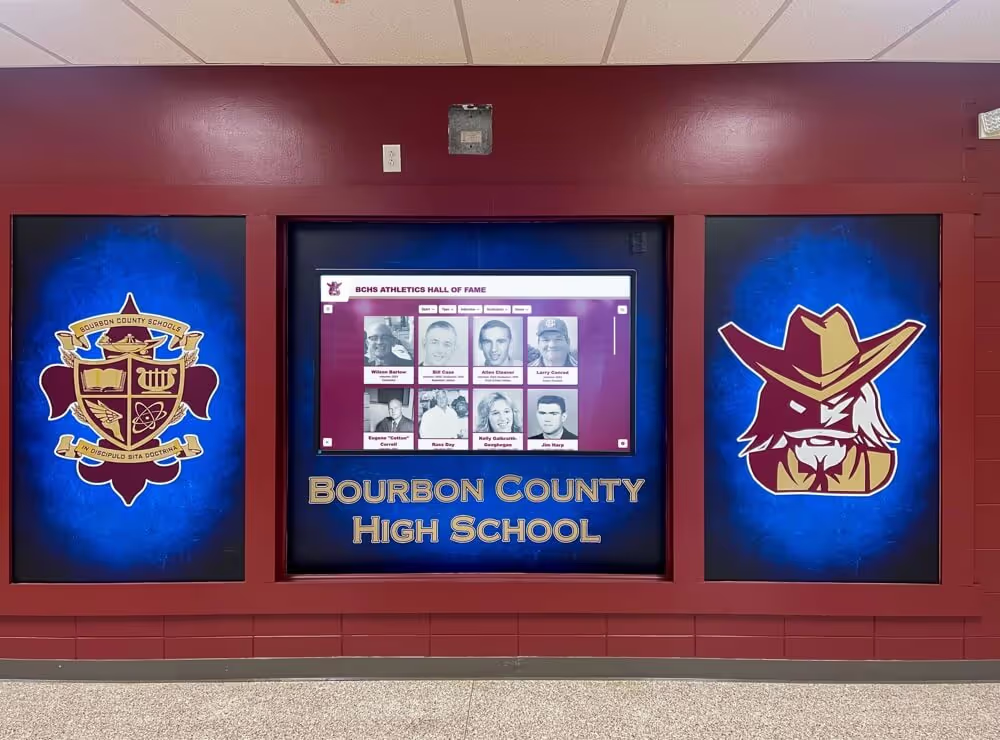
Modern recognition systems enable schools to celebrate National Hispanic Recognition Program recipients alongside other academic achievements, creating comprehensive visibility for diverse excellence
Understanding the National Hispanic Recognition Program
Before exploring application strategies and benefits, understanding the program’s purpose, structure, and evolution provides essential context for students and families navigating this opportunity.
Program Overview and Purpose
The National Hispanic Recognition Program emerged from the College Board’s commitment to identifying and celebrating academic excellence among underrepresented student populations while connecting high-achieving students with colleges and scholarship opportunities specifically seeking diverse candidates.
Mission and Institutional Goals
NHRP serves multiple interconnected purposes across the educational landscape:
- Student Identification: Systematically identifies Hispanic and Latino students demonstrating exceptional academic performance based on objective criteria rather than relying on school nominations or self-promotion that might disadvantage students from under-resourced communities
- College Connection: Creates pathways connecting recognized students with selective institutions seeking qualified Hispanic applicants to enhance campus diversity and meet institutional diversity goals
- Scholarship Access: Opens doors to merit-based financial aid specifically designated for NHRP recipients, reducing financial barriers to higher education for high-achieving Hispanic students
- Achievement Recognition: Provides official validation of academic excellence that students can cite throughout college applications, scholarship essays, and professional development opportunities
This multi-layered approach addresses both immediate college access challenges and longer-term goals of increasing Hispanic representation in higher education leadership while recognizing the specific excellence Hispanic students bring to academic communities.
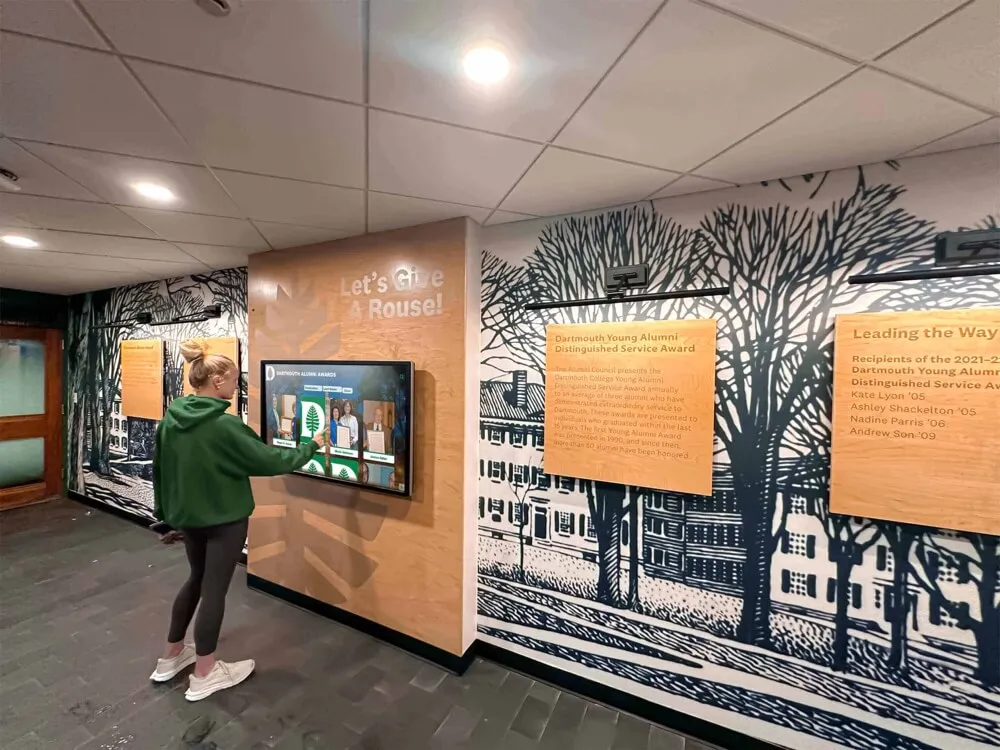
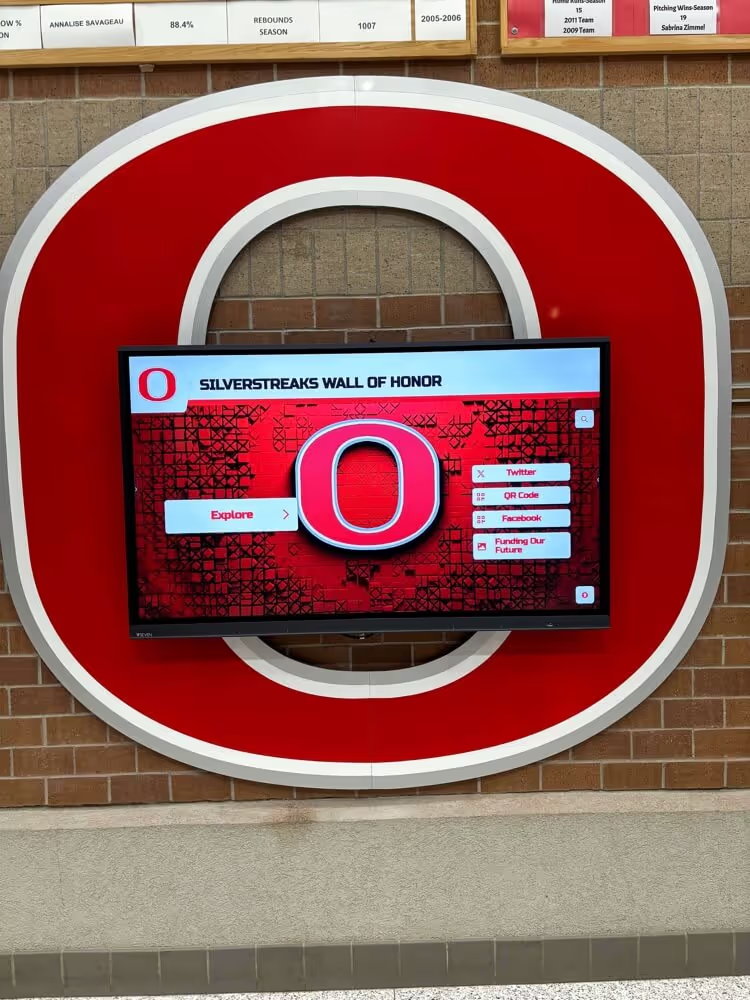
Interactive recognition displays allow students, families, and visitors to explore diverse academic achievements including national recognition programs
National Recognition Programs Ecosystem
The National Hispanic Recognition Program functions as one component within the College Board’s broader National Recognition Programs initiative launched in 2021, which consolidated and expanded previous recognition efforts including the former National Hispanic Recognition Program established in 1983.
Current National Recognition Programs include:
- National African American Recognition Award: Honoring high-achieving Black students demonstrating academic excellence
- National First-Generation Recognition Award: Celebrating students who will be first in their families to complete four-year college degrees
- National Indigenous Award: Recognizing exceptional academic performance among Indigenous students including Native American, Alaska Native, and Native Hawaiian students
- National Rural and Small Town Award: Highlighting achievement by students from rural communities and small towns often overlooked in college recruiting
- National Hispanic Recognition Program: Acknowledging outstanding Hispanic and Latino student academic performance
This integrated structure enables students to qualify for multiple recognition categories when applicable—for example, a Hispanic student from a rural community whose parents didn’t attend college could potentially earn three distinct recognitions—creating cumulative advantages throughout college admissions and scholarship processes.
Evolution From Previous Program Structure
Understanding recent program changes helps families navigate current requirements while avoiding outdated information from earlier NHRP iterations:
Pre-2021 Program Structure
The original National Hispanic Recognition Program required students to:
- Take the PSAT/NMSQT during their junior year as the sole qualifying assessment
- Meet specific score thresholds varying by region to account for demographic differences
- Self-identify ethnicity during test registration
- Maintain minimum 3.5 GPA in academic coursework
This structure, while effective for identifying many high-achieving students, created limitations including reliance on single test administration, regional score variations creating perceived unfairness, and delayed recognition occurring during junior year rather than earlier in high school when students could leverage distinction more strategically.
Current 2021+ Program Enhancements
The redesigned National Recognition Programs implemented several improvements:
- Earlier Qualification Opportunities: Students can now qualify as early as 9th and 10th grade through AP exam performance, enabling earlier strategic college planning leveraging recognition status
- Multiple Assessment Pathways: Qualification now accepts either PSAT 8/9, PSAT 10, PSAT/NMSQT, or AP exam scores, creating flexibility accommodating diverse testing situations and preferences
- Unified National Standards: Elimination of regional score variations establishes consistent criteria nationwide, simplifying qualification understanding while ensuring equitable recognition across geographic contexts
- Automatic Consideration: Eligible students receive recognition automatically when meeting criteria without requiring separate applications, reducing administrative burden and ensuring deserving students aren’t overlooked due to unfamiliarity with nomination processes
These enhancements broadened program accessibility while maintaining rigorous standards ensuring recognition continues signaling genuine academic excellence rather than participation awards diminishing distinction value.
Schools implementing comprehensive recognition programs celebrating diverse student achievement understand that honoring national distinctions like NHRP within school-level recognition systems creates cultures valuing multiple excellence forms across student populations.

Strategic lobby installations create prominent visibility for national recognition programs alongside school-specific achievements
Eligibility Requirements: Who Qualifies for NHRP
Understanding specific qualification criteria enables students to set appropriate goals, develop strategic preparation plans, and maximize their chances of earning recognition.
Academic Performance Requirements
NHRP qualification demands both strong grade point averages and exceptional standardized test performance demonstrating comprehensive academic capability:
Minimum GPA Threshold
Students must maintain cumulative GPA of 3.3 or higher on a 4.0 scale (equivalent to B+ average or approximately 87-89% depending on school grading scales). This requirement ensures recognized students demonstrate sustained academic performance across multiple subjects and marking periods rather than isolated achievement or test-taking ability disconnected from classroom success.
Schools using weighted GPA systems for advanced coursework should verify how the College Board calculates GPA for recognition purposes—typically unweighted calculations ensure fairness across schools with varying weighting policies, though students should confirm specific requirements through official College Board resources or school counselors familiar with program details.
The 3.3 GPA threshold represents substantial but attainable achievement for motivated students—significantly lower than National Merit requirements targeting top 1% performers, making NHRP accessible to broader student populations demonstrating strong but not necessarily exceptional academic performance, which appropriately reflects program goals of expanding opportunity rather than exclusively celebrating elite performers.
Testing Performance Criteria
Students must also meet performance standards on qualifying assessments. The College Board provides two primary qualification pathways:
Pathway 1: PSAT Family Assessment Performance Students score in approximately top 10% nationally among their demographic category on PSAT 8/9, PSAT 10, or PSAT/NMSQT. Specific score thresholds vary annually based on test performance distributions but typically fall in ranges like:
- PSAT/NMSQT: 1060-1100+ (out of 1520)
- PSAT 10: Similar scaled scores
- PSAT 8/9: Age-appropriate scaled equivalents
The “top 10%” criterion means thresholds adjust annually ensuring consistent selectivity regardless of test difficulty variations—approximately one in ten Hispanic test-takers within their testing cohort qualify based purely on assessment performance.
Pathway 2: Advanced Placement Exam Excellence Students earn scores of 3 or higher on two or more distinct AP exams during 9th or 10th grade, demonstrating college-level mastery in multiple subject areas before reaching junior year. This pathway rewards students pursuing rigorous coursework early in high school rather than waiting until junior and senior years for AP participation.
The AP qualification pathway particularly benefits students attending schools offering extensive early AP access, students self-studying for AP exams outside school curricula, and those preferring coursework-based assessment over standardized testing demonstrating knowledge through sustained engagement rather than single examination performance.
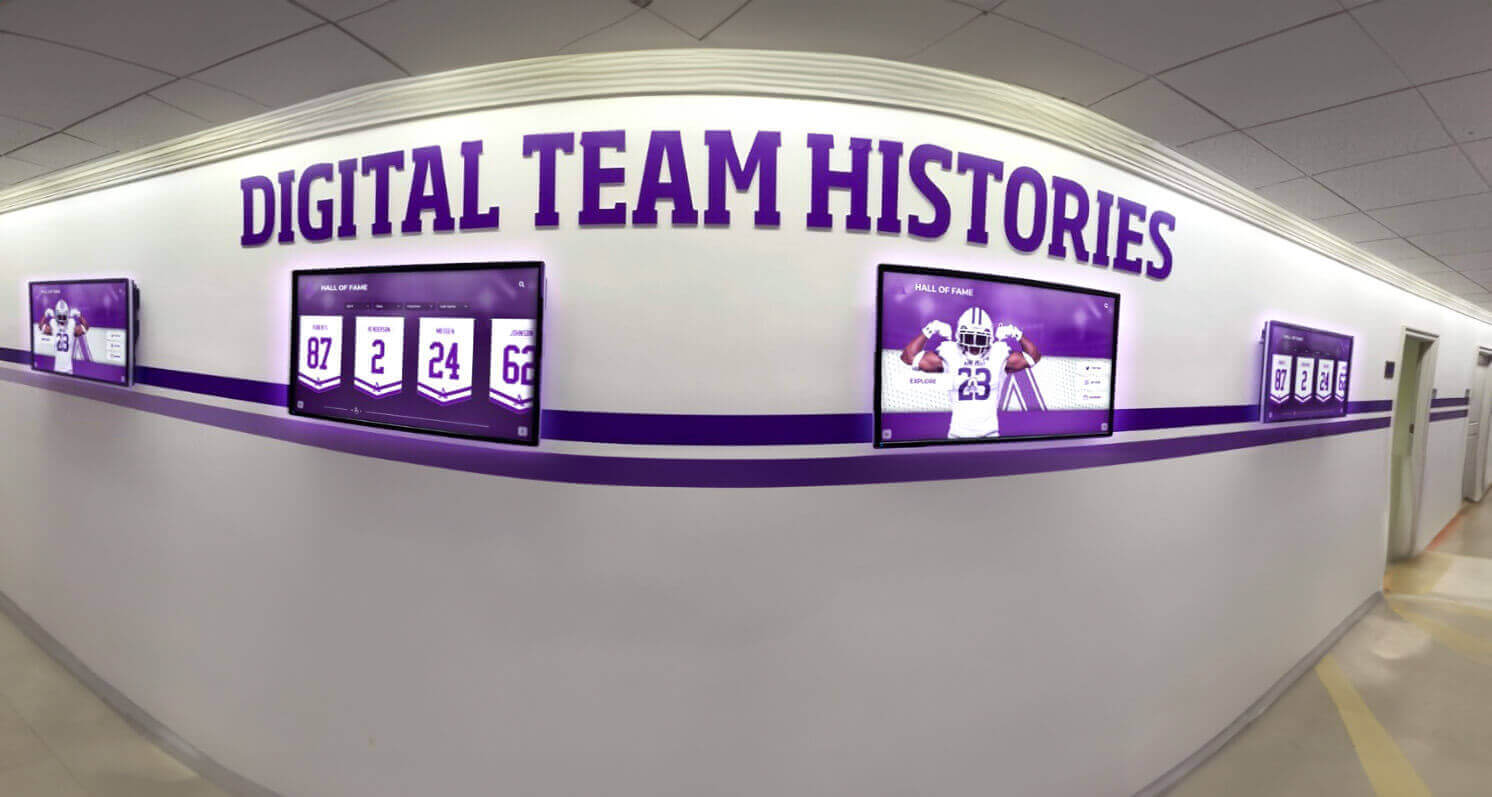
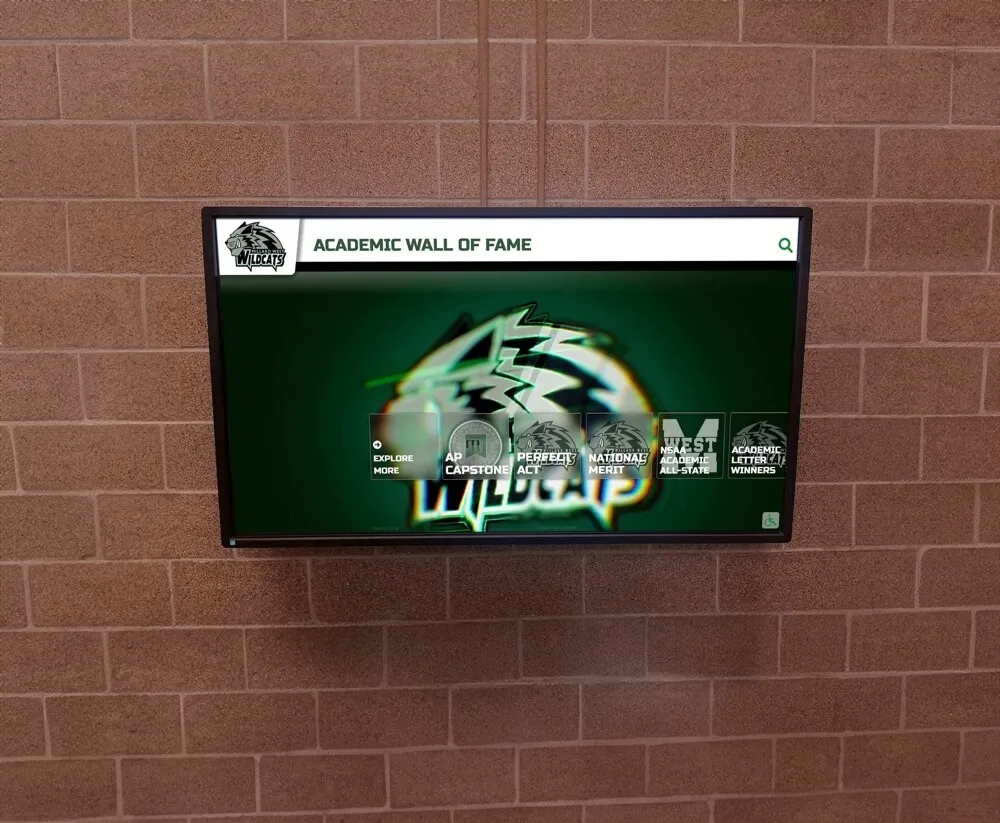
Strategic hallway placements ensure recognition programs remain visible throughout daily school life, inspiring sustained achievement motivation
Ethnicity and Identity Verification
NHRP specifically recognizes Hispanic and Latino students, requiring appropriate self-identification during test registration or College Board account setup:
Qualifying Ethnic Identities
Students qualify when identifying as Hispanic, Latino, or Spanish-origin regardless of race. This inclusive definition encompasses diverse ethnic backgrounds including:
- Mexican, Mexican-American, or Chicano heritage
- Puerto Rican descent
- Cuban family backgrounds
- Central American origins (Guatemalan, Honduran, Salvadoran, etc.)
- South American heritage (Colombian, Venezuelan, Peruvian, etc.)
- Spanish-origin families
- Other Hispanic or Latino cultural backgrounds
The program explicitly acknowledges that Hispanic/Latino identity encompasses multiple racial categories—students identifying as white Hispanic, Black Hispanic, Asian Hispanic, Indigenous Hispanic, or multiracial Hispanic all qualify when meeting academic criteria, reflecting the diversity within Hispanic communities rather than imposing narrow ethnic definitions.
Self-Identification Process and Timing
Students indicate Hispanic/Latino ethnicity through:
- Test Registration: Demographic questions during PSAT or SAT registration where students select ethnic identity categories
- College Board Account: Ethnicity selections within student profiles accessible throughout high school years
- Questionnaire Responses: Optional but recommended student questionnaires providing additional background information
Importantly, students must self-identify before or during qualification assessments—recognition determination uses demographic data from testing dates or AP exam completion periods rather than retroactive ethnic identification after students learn about program existence or benefits. This timing requirement emphasizes authentic self-identification rather than strategic ethnic claiming for recognition purposes.
Privacy and Identity Considerations
The College Board maintains demographic information confidentially, sharing data with colleges only when students explicitly authorize such sharing through college application processes or scholarship programs. Students concerned about privacy can qualify for recognition while controlling how their demographic information connects to college recruitment and scholarship outreach, allowing nuanced navigation of identity disclosure in contexts where students may have complex feelings about ethnic identification in admissions processes.
Grade Level and Testing Timeline
Understanding when students can qualify enables strategic planning maximizing recognition benefits:
Early Qualification Opportunities (9th-10th Grade)
Students can earn recognition as early as 9th grade by:
- Taking PSAT 8/9 during 9th grade and scoring in top performance tiers among Hispanic test-takers
- Completing two AP exams with scores of 3+ during 9th grade (rare but possible for exceptionally advanced students)
- Taking PSAT 10 during 10th grade achieving qualifying scores
- Earning two AP exam scores of 3+ during 10th grade (increasingly common for students in advanced programs)
Early qualification provides substantial advantages including earlier college recruitment contact, longer timeframe for leveraging recognition in scholarship applications and competitive program admissions, and confidence boost validating academic capabilities during formative high school years when students establish academic identities and aspirations.
Traditional Junior Year Recognition
Most students qualify through PSAT/NMSQT during 11th grade, the traditional timing for this assessment. Junior year qualification still provides benefits throughout college application processes beginning later that year and extending through senior year, though the earlier students qualify, the more strategically they can leverage recognition throughout high school planning.
Students implementing comprehensive academic achievement strategies understand that national recognition programs reward sustained excellence across multiple performance dimensions rather than isolated achievements.
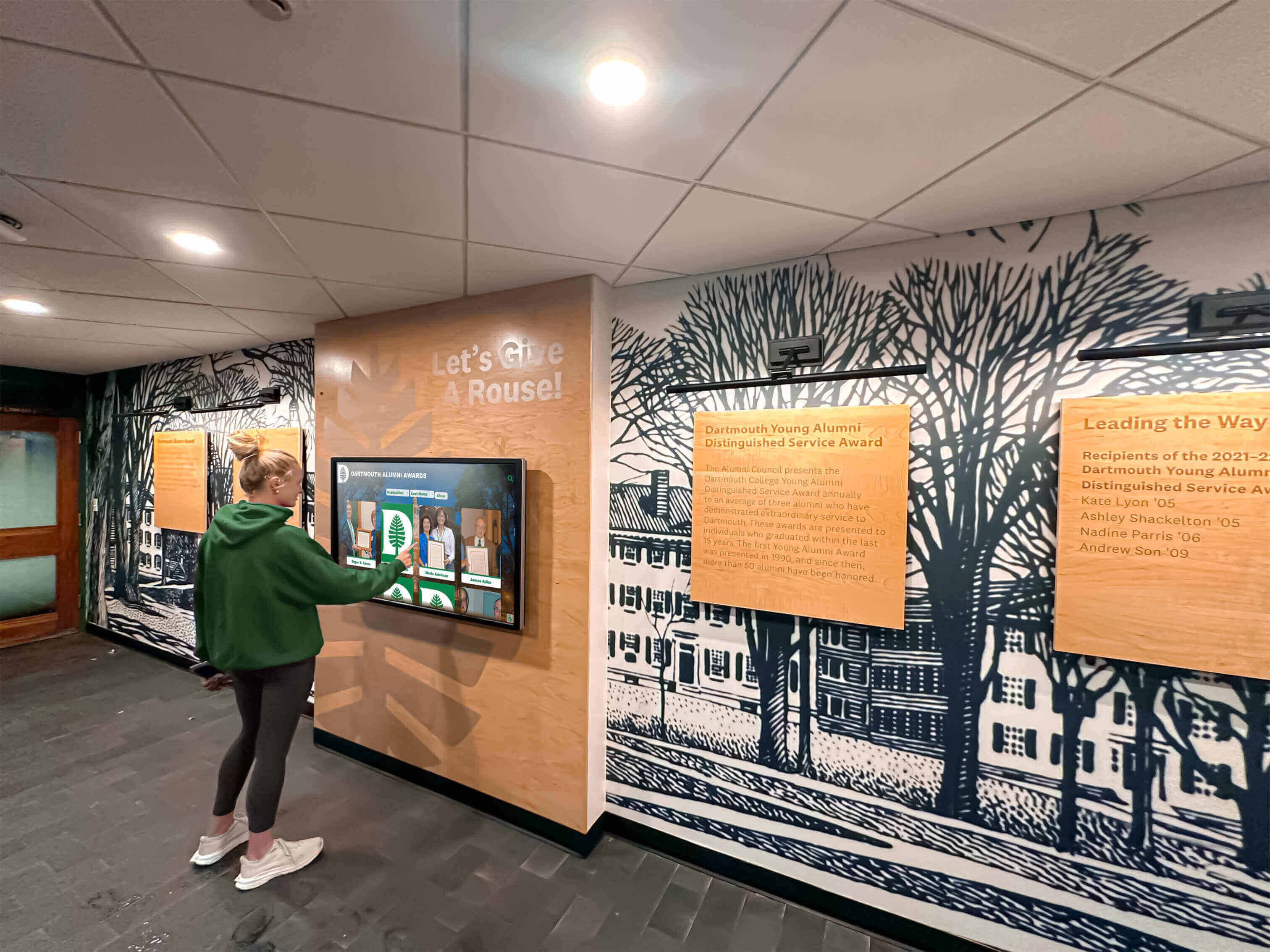
Accessible recognition technology enables students to explore achievements and discover peer role models demonstrating academic excellence attainability
Application Process and Timeline
Unlike scholarship programs requiring extensive applications, NHRP recognition occurs through streamlined processes emphasizing automatic identification of qualifying students:
Automatic Recognition Determination
One of NHRP’s most student-friendly features is automatic qualification assessment—students meeting criteria receive recognition without submitting separate applications, writing essays, gathering recommendations, or navigating complex nomination processes that might disadvantage students from under-resourced schools lacking college counseling infrastructure.
How Automatic Recognition Works
The College Board analyzes performance data from PSAT and AP assessments cross-referenced with demographic information students provide during registration or in College Board accounts. When students simultaneously meet both academic criteria (GPA + test scores or AP exams) and demographic criteria (Hispanic/Latino self-identification), the College Board automatically designates them as NHRP recipients.
This streamlined approach eliminates several potential barriers:
- Students unfamiliar with program existence still receive recognition when qualifying
- Under-resourced schools lacking robust college counseling don’t disadvantage students through missed nomination opportunities
- Administrative burden on students, families, and schools remains minimal
- Recognition occurs equitably based on objective criteria rather than nomination processes potentially influenced by favoritism, relationships, or institutional awareness
Students simply register for qualifying assessments, perform well academically, and receive notification if they earn recognition—no additional action required beyond maintaining academic standards and taking assessments most college-bound students complete regardless.
Notification and Official Designation
Recognition Announcement Timeline
The College Board notifies students of NHRP qualification through:
- Email Notification: Direct communication sent to email addresses associated with College Board accounts, typically arriving several weeks after final qualification determination from relevant assessment results
- Account Dashboard: Recognition status visible within student College Board online accounts where students can log in, view their recognition designations, and access official documentation
- School Notification: Many schools receive lists of recognized students enabling appropriate local celebration and transcript notation
Notification timing varies depending on qualification pathway—students qualifying through PSAT/NMSQT during fall typically receive notification during winter or early spring of the same academic year, while AP exam qualifiers receive notification after summer score release, typically in late summer or early fall of the following academic year.
Official Recognition Documentation
Recognized students receive official College Board certification of their NHRP designation including:
- Formal recognition letters suitable for inclusion in college applications and scholarship portfolios
- Digital badges students can display on social media profiles, personal websites, and electronic portfolios
- Certificate graphics appropriate for printing and framing
- Permission to reference NHRP recognition in application materials, resumes, and biographical information throughout college and early career stages
This official documentation provides tangible recognition students can leverage strategically while the formal College Board certification carries weight institutions respect when evaluating student credentials.

Prominent lobby installations create welcoming environments celebrating diverse achievements including national recognition programs
Maintaining Recognition Status
Once earned, NHRP recognition remains permanent designation students carry throughout college applications and beyond—there are no renewal requirements, annual recertification processes, or conditions under which previously earned recognition expires or faces revocation.
Academic Performance Expectations
While recognition itself remains permanent, students should maintain strong academic performance throughout high school for practical reasons:
- Colleges reviewing applications consider senior year coursework rigor and grades alongside earlier achievement represented by NHRP designation
- Scholarship programs requiring NHRP qualification often impose their own GPA requirements for final award disbursement
- Dramatic academic decline after recognition could raise questions during college admissions about factors affecting performance consistency
Think of NHRP recognition as confirmation of demonstrated capability rather than guarantee of future performance—the recognition validates past achievement while students must continue demonstrating college readiness through subsequent academic work.
Multiple Recognition Potential
Students potentially qualifying for multiple National Recognition Program categories should understand that earning additional recognitions provides cumulative benefits:
- Some scholarship programs specifically seek students with multiple recognition designations
- College applications allow students to list all earned recognitions, with multiple awards suggesting achievement across various dimensions
- Different institutions may weight various recognition types differently based on their specific diversity priorities and enrollment goals
For example, a first-generation Hispanic student from a rural community could potentially earn National Hispanic Recognition, National First-Generation Recognition, and National Rural and Small Town Recognition simultaneously—three distinct validations of achievement potentially opening even more scholarship and admission opportunities than single recognition alone.
Schools implementing comprehensive student recognition systems understand that celebrating national achievements alongside school-level accomplishments creates cultures where students aspire toward excellence across multiple dimensions.
Benefits of NHRP Recognition
Understanding specific advantages helps students appreciate recognition value while enabling strategic leveraging throughout college admissions and scholarship processes:
College Admissions Advantages
NHRP designation provides several meaningful benefits during highly competitive college application processes:
Enhanced Application Visibility
When students list NHRP recognition in college applications, admissions officers immediately identify them as high-achieving Hispanic students meeting rigorous objective criteria. This visibility particularly benefits students applying to:
- Selective Institutions Seeking Diversity: Highly competitive colleges actively recruiting qualified underrepresented minority applicants to enhance campus diversity often maintain specialized recruitment pipelines for NHRP recipients
- Public Universities With Diversity Goals: State institutions with missions including serving diverse populations may give additional application consideration to recognized students contributing to institutional diversity metrics
- Private Colleges With Hispanic Enrollment Initiatives: Schools with strategic priorities increasing Hispanic representation actively seek NHRP recipients as evidence of genuine commitment to academic excellence alongside demographic diversity
The recognition serves as third-party validation of academic capability from respected educational organization (College Board) rather than relying exclusively on school-generated grades and recommendations potentially subject to grade inflation or varying institutional standards.
Holistic Review Enhancement
Beyond simple credential listings, NHRP recognition strengthens holistic application review in multiple ways:
- Demonstrates that students not only performed well within their specific schools but also ranked highly among national Hispanic student populations based on standardized assessments
- Validates academic preparation for college-level work through either strong PSAT performance predicting SAT scores or AP exam success demonstrating college course mastery
- Signals cultural background contributing to campus diversity while simultaneously confirming students possess academic preparation succeeding without extensive remediation or support programs
- Provides concrete achievement colleges can cite when explaining enrollment decisions emphasizing both merit and diversity considerations
These nuanced benefits prove particularly valuable at selective institutions where applicants generally possess strong credentials—NHRP recognition helps students stand out in competitive pools while providing admissions offices defensible criteria supporting diversity-conscious admission practices.

Prominent recognition displays throughout school facilities ensure national achievements receive visibility inspiring peer aspiration
Recruitment Opportunities and Direct Outreach
Many colleges purchase lists of NHRP recipients from the College Board, enabling targeted recruitment outreach including:
- Personalized recruitment letters highlighting institutional Hispanic student support services, cultural organizations, and academic resources
- Fee waiver offers for application costs reducing financial barriers to applying to multiple institutions
- Priority admission review or specialized application tracks expediting processes for high-priority recruitment targets
- Invitations to prospective student visit programs specifically designed for recruited populations
- Direct contact from admissions counselors specializing in Hispanic student recruitment
This proactive outreach expands students’ college awareness beyond schools they might independently discover, potentially introducing options they hadn’t considered while signaling genuine institutional interest creating confidence applying to reach schools students might otherwise perceive as unattainable.
Scholarship Opportunities and Financial Benefits
NHRP recognition opens doors to substantial financial aid from multiple sources:
NHRP-Specific Scholarships
Numerous organizations offer scholarships exclusively or preferentially to National Hispanic Recognition Program recipients:
- College Board Partner Scholarships: Institutions partnering directly with College Board to recruit NHRP recipients often provide guaranteed scholarship consideration or special awards specifically for recognized students
- Hispanic Organization Scholarships: National and regional Hispanic advocacy organizations frequently require or strongly prefer NHRP recognition for scholarship eligibility, using designation as objective credential confirming academic merit
- Corporate Diversity Scholarships: Companies with Hispanic recruitment and diversity initiatives offer merit scholarships targeting NHRP recipients as evidence of both academic capability and cultural background
- Community Foundation Awards: Local and regional community foundations serving Hispanic populations may designate scholarship funds specifically for NHRP-recognized students from their service areas
Scholarship amounts vary dramatically from $500 one-time awards through organizations providing modest recognition to full-tuition four-year packages from institutions using NHRP status as merit scholarship qualification criterion. Students should research both national NHRP-specific opportunities and local awards in their regions potentially leveraging recognition for funding.
General Scholarship Competitiveness Enhancement
Beyond NHRP-exclusive opportunities, recognition strengthens applications for:
- General Merit Scholarships: Any scholarship evaluating academic achievement considers NHRP designation as additional credential demonstrating excellence
- Diversity Scholarships: Awards seeking underrepresented minority recipients with strong academic records often prioritize NHRP students meeting both criteria simultaneously
- First-Generation Scholarships: For students qualifying under both NHRP and First-Generation Recognition, dual designation particularly strengthens scholarship applications
- Major-Specific Awards: Discipline-focused scholarships in fields like STEM where Hispanic representation remains low may especially value NHRP recognition
The cumulative effect of marginally stronger applications across dozens of scholarship opportunities potentially results in significant additional financial aid even beyond explicitly NHRP-designated awards.
Institutional Merit Aid Consideration
Many colleges incorporate NHRP recognition into institutional merit scholarship determinations:
- Automatic Merit Scholarships: Schools using credential matrices for automatic merit aid may include NHRP recognition as factor increasing award amounts
- Competitive Scholarship Selection: Universities offering limited competitive scholarships often evaluate NHRP designation during selection processes
- Financial Aid Packaging: Even when not directly increasing scholarship amounts, NHRP status might influence overall financial aid packages through enhanced grant aid reducing loan expectations
- Scholarship Renewal Criteria: Some institutions offer special renewal GPA requirements or support services for NHRP scholarship recipients ensuring students successfully maintain funding eligibility
Students should directly inquire with colleges about whether they offer institutional benefits for NHRP recognition—many schools incorporate recognition into aid calculations without explicitly advertising these connections in scholarship literature.
Schools exploring comprehensive donor recognition and fundraising programs understand that celebrating student achievement creates communities inspiring continued excellence worth recognizing and supporting.

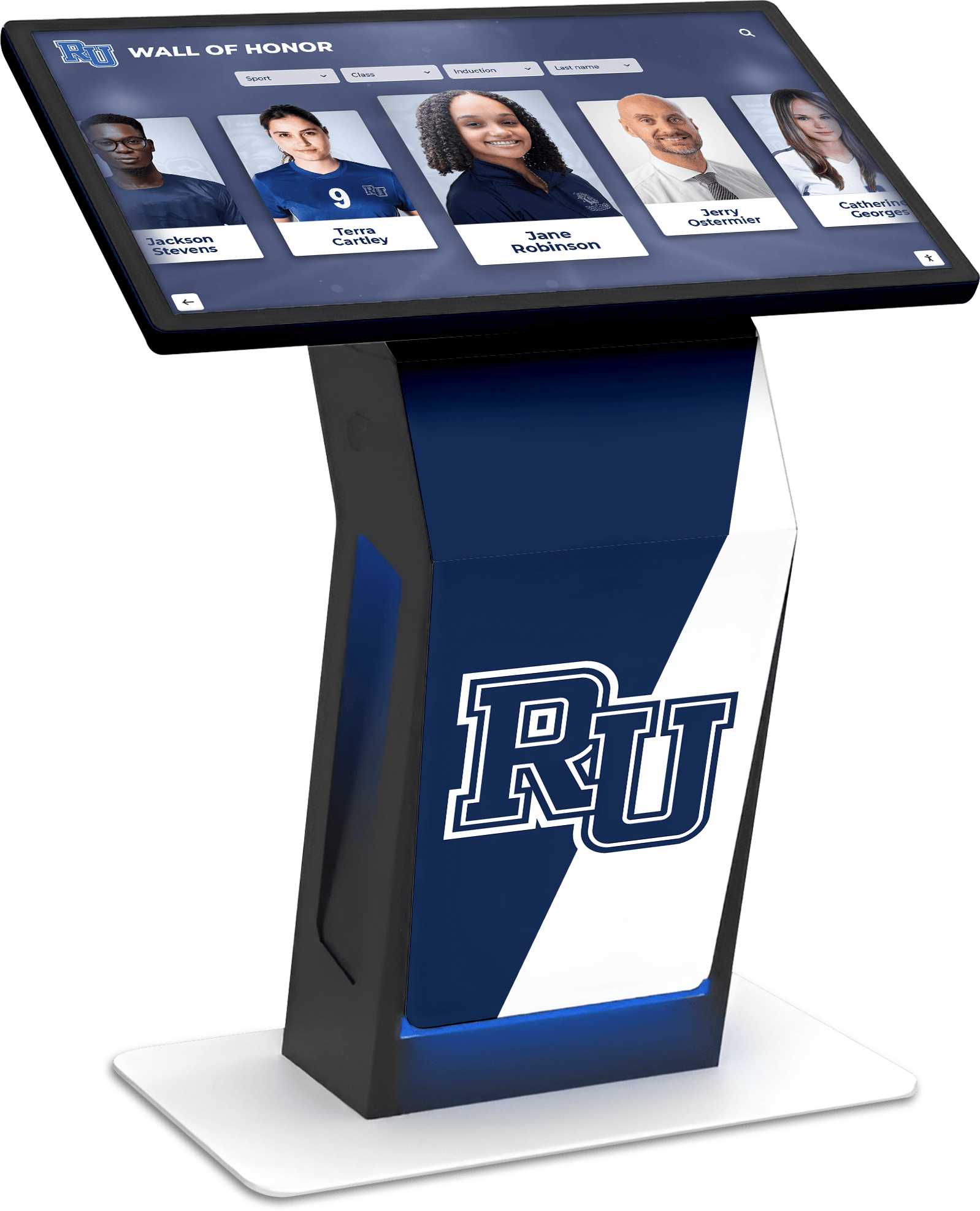
Intuitive touchscreen interfaces enable detailed exploration of individual achievement profiles including national recognition details
Personal and Professional Development Benefits
Beyond immediate college admissions and financial advantages, NHRP recognition provides lasting benefits throughout educational and professional trajectories:
Resume and Credential Enhancement
Throughout college and early career stages, students can cite NHRP recognition as evidence of academic excellence:
- College Resumes: Undergraduate students applying for internships, research positions, and campus leadership lacking extensive work experience can prominently feature NHRP recognition as credential demonstrating capability
- Professional Applications: Recent graduates entering job markets or applying to graduate programs can reference recognition from high school as part of academic credential packages
- Biographical Profiles: NHRP recognition provides appropriate content for professional biographies, LinkedIn profiles, and other platforms requiring credential summaries
While recognition value gradually diminishes as students accumulate more recent and relevant credentials, NHRP remains appropriate citation for several years post-high-school, particularly in contexts emphasizing academic foundations or Hispanic professional representation.
Confidence and Identity Development
The personal psychological benefits of recognition frequently prove as meaningful as tangible opportunities:
- Academic Self-Concept: External validation from respected organization affirms students’ academic capabilities during formative developmental stages, building positive self-concepts as capable learners worthy of achievement
- Cultural Pride: Recognition specifically honoring Hispanic excellence enables students to integrate ethnic identity with academic achievement rather than perceiving tension between cultural background and intellectual pursuits
- Aspirational Modeling: NHRP recipients serve as role models for younger Hispanic students demonstrating that academic excellence remains attainable for students sharing their backgrounds
- Imposter Syndrome Mitigation: Objective credential helps combat imposter syndrome feelings during college transition when students might question whether they truly belong at selective institutions
These psychological benefits support persistence through challenging coursework, confidence pursuing ambitious opportunities, and resilience recovering from setbacks—characteristics predicting long-term success beyond any single credential’s value.
Strategic Preparation for NHRP Qualification
While recognition requires meeting specific criteria, strategic planning throughout high school maximizes qualification probability:
Academic Performance Planning
Students aspiring toward NHRP recognition should implement comprehensive academic strategies from early high school:
GPA Management Throughout High School
The 3.3 GPA requirement demands consistent performance across multiple years rather than isolated excellence:
- Freshman Year Foundation: Establish strong study habits and performance patterns early—poor freshman grades create GPA deficits requiring exceptional later performance to overcome
- Coursework Selection Balance: Choose appropriately challenging courses demonstrating rigor without overcommitting beyond your capacity for maintaining strong grades
- Grade Recovery Strategies: Address any grades below expectations immediately through teacher consultation, tutoring, and adjusted study approaches before patterns establish
- Cumulative Awareness: Monitor cumulative GPA regularly understanding how each semester’s performance affects overall average determining qualification
Students should remember that 3.3 represents substantial but achievable performance—approximately B+ average—rather than requiring straight As. Strategic students recognize that consistent solid performance proves more valuable than alternating between perfect and poor semesters creating volatile GPA patterns.
Core Academic Course Prioritization
Focus particular attention on core academic subjects most heavily weighted in GPA calculations:
- Mathematics coursework from algebra through calculus
- English and language arts courses throughout all four years
- Laboratory science sequences in biology, chemistry, physics
- Social studies including history, government, economics
- World language study through multiple proficiency levels
While electives contribute to overall GPA, colleges and recognition programs emphasize core academic performance demonstrating college-preparatory curriculum mastery.
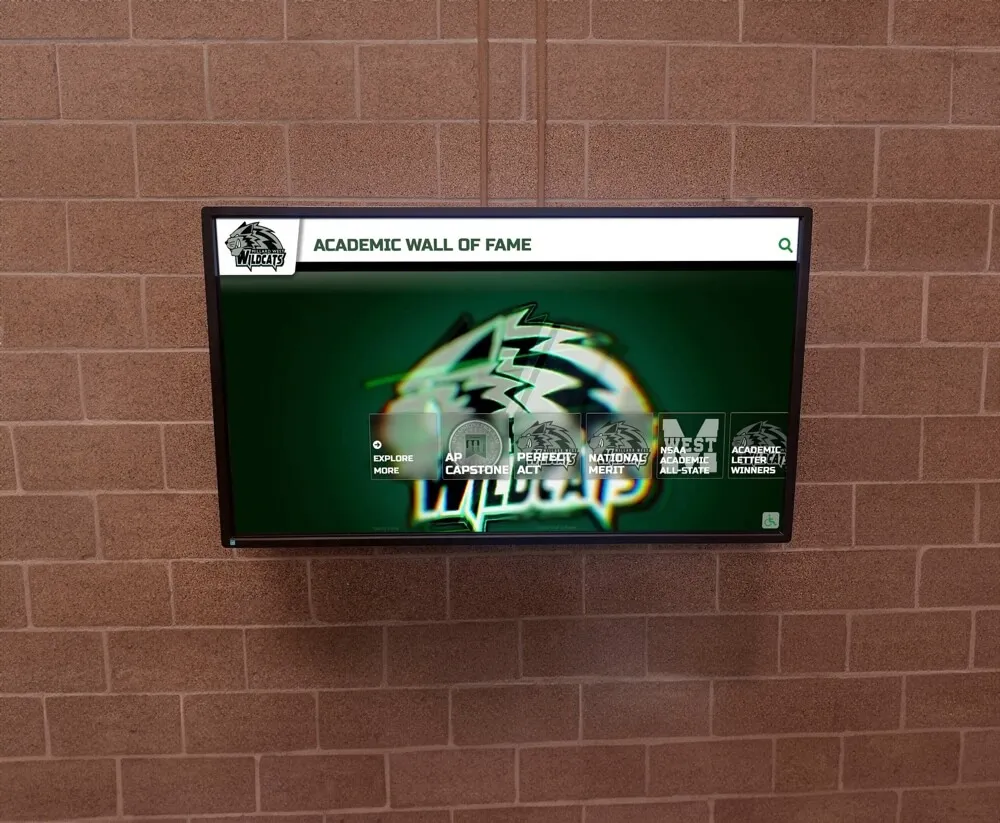
Purpose-built academic recognition displays ensure intellectual achievements receive prominence inspiring school-wide excellence aspiration
Test Preparation Strategies
Success on qualifying assessments requires strategic preparation approaches:
PSAT Preparation Planning
Students should begin PSAT preparation well before testing dates:
- Freshman/Sophomore Practice: Take PSAT 8/9 or practice tests early identifying strengths and weaknesses enabling focused improvement before high-stakes junior year administration
- Focused Skill Development: Address specific content gaps through targeted study rather than diffuse general preparation—students weak in algebra should concentrate there before advancing to geometry
- Official Practice Resources: Utilize free College Board practice materials perfectly matching actual test format and question styles rather than relying exclusively on third-party materials potentially emphasizing different content
- Diagnostic Assessment: Complete full-length practice tests under realistic conditions periodically measuring progress and identifying persistent weaknesses requiring additional focus
Remember that PSAT preparation simultaneously supports SAT readiness—time invested preparing for NHRP qualification through PSAT performance directly transfers to eventual SAT preparation for college admissions, making this effort doubly valuable.
AP Exam Strategic Planning
Students pursuing early qualification through AP exams should:
- Early AP Access: Seek schools offering AP courses during 9th and 10th grade or research self-study opportunities for motivated students whose schools limit early AP enrollment
- Subject Selection: Choose AP subjects aligning with genuine strengths and interests rather than randomly selecting courses—students excel where they engage deeply with material
- Dual Preparation: View AP courses as simultaneous opportunities for grade excellence (supporting 3.3 GPA requirement) and exam success (supporting testing qualification criterion)
- Score Goal Clarity: Understand that 3+ scores qualify—perfection isn’t required, reducing pressure while maintaining realistic standards
Two AP exams with 3+ scores represents substantial but attainable achievement for motivated students in rigorous programs, particularly when students select subjects matching their academic strengths.
Timeline and Milestone Planning
Strategic students implement multi-year plans ensuring they meet all requirements:
9th Grade Foundation Year
- Establish strong GPA patterns from first semester
- Take PSAT 8/9 if available for diagnostic baseline
- Explore potential AP subjects for future enrollment
- Verify Hispanic/Latino identity reflected accurately in College Board account
- Research NHRP requirements understanding what later qualification demands
10th Grade Preparation Year
- Maintain cumulative GPA above 3.3 threshold
- Take PSAT 10 prepared to potentially qualify early
- Complete AP courses and exams if pursuing early qualification pathway
- Continue skill development in weak subject areas
- Confirm College Board demographic information current and accurate
11th Grade Traditional Qualification Year
- Maintain strong GPA through junior year
- Take PSAT/NMSQT with serious preparation for potential NHRP qualification
- Complete additional AP courses strengthening college applications regardless of NHRP outcome
- Monitor notification for recognition status during winter/spring
- Begin leveraging recognition in scholarship applications if qualified
12th Grade Application Year
- Prominently feature NHRP recognition in all college applications
- Apply for NHRP-specific scholarships and general opportunities strengthened by recognition
- Maintain strong senior year performance supporting college admission decisions
- Assist younger Hispanic students understanding NHRP opportunity and qualification paths
This multi-year approach ensures students systematically address all qualification components while maintaining flexibility adapting to performance patterns and evolving interests.
Schools implementing comprehensive academic recognition celebrating diverse achievements create cultures where national distinction pursuit becomes normalized part of academic development rather than exceptional unusual achievement.
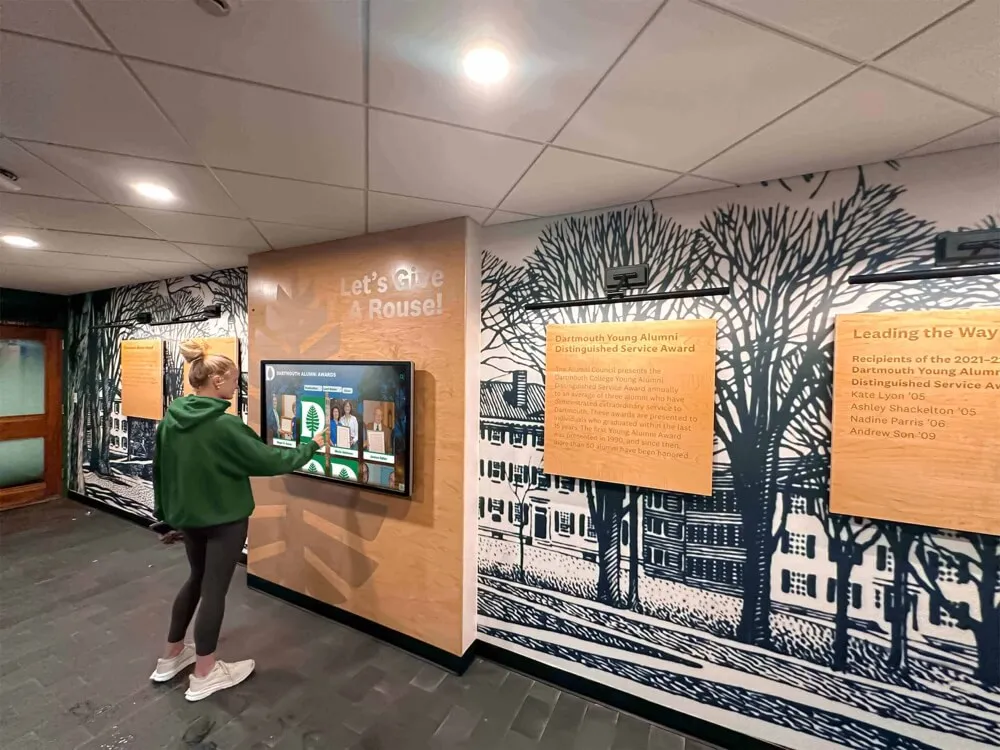
Strategic integration of recognition technology with existing school architecture creates cohesive environments celebrating achievement
How Schools Can Celebrate NHRP Recipients
Educational institutions play crucial roles ensuring recognized students receive appropriate celebration while inspiring future students toward similar achievement:
Announcement and Communication Strategies
Schools should implement systematic approaches ensuring recognition receives appropriate visibility:
Internal School Announcements
When NHRP recipients receive notification, schools should:
- Morning Announcements: Publicly acknowledge recognized students during school-wide morning programs or assemblies creating peer awareness and celebration
- Newsletter Features: Include NHRP recipients in school newsletters distributed to families highlighting this prestigious distinction alongside other student achievements
- Principal Recognition: Personal congratulations letters from principals or superintendents acknowledging specific achievement significance
- Department Acknowledgment: Recognition within academic departments where students demonstrated excellence creating subject-specific celebration
These multi-channel internal communications ensure entire school communities become aware of achievement rather than recognition remaining known only to individual recipients and their immediate families.
External Community Communication
Schools should extend recognition celebration beyond campus boundaries:
- Local Media Announcements: Submit press releases to community newspapers featuring NHRP recipients with photos and brief achievement descriptions
- Social Media Celebration: Post recognition announcements on school social media platforms enabling broad community awareness and family sharing
- School Website Features: Prominent website placement highlighting current year’s NHRP recipients alongside other academic honors
- Community Partnership Sharing: Inform booster clubs, PTAs, and community organizations supporting schools about student recognition enabling broader celebration
External communication creates community pride while raising awareness among middle school families about NHRP opportunity existence, potentially inspiring younger students toward qualification pursuit.
Transcript Documentation
Critically, schools should ensure NHRP recognition appears officially on student transcripts where colleges reviewing applications can clearly identify the distinction. Transcript notation provides permanent documentation accompanying all application materials regardless of whether students remember to list recognition themselves in applications—crucial insurance ensuring achievement receives appropriate consideration during admissions review.

Impressive lobby installations create immediate achievement visibility for all campus visitors celebrating diverse student excellence
Recognition Ceremonies and Events
Schools can create memorable experiences celebrating NHRP recipients:
Academic Recognition Assemblies
Incorporate NHRP acknowledgment into broader academic recognition events:
- Award Presentations: Present official certificates or school-created recognition materials during formal ceremonies attended by families, administrators, and school communities
- Program Features: Include NHRP explanation in ceremony programs educating audiences about distinction significance and qualification rigor
- Recipient Spotlights: Feature brief student profiles or speeches enabling recognized students to share their academic journeys and inspire peers
- Photo Opportunities: Create formal photography capturing recognition moments families treasure while providing content for school communications and publications
Well-designed ceremonies communicate institutional values honoring intellectual achievement comparable to athletic championships and artistic performances, creating balanced school cultures celebrating diverse excellence forms.
Hispanic Heritage Celebrations
NHRP recognition provides natural connection to Hispanic Heritage Month programming:
- Heritage Month Spotlights: Feature NHRP recipients during September 15 - October 15 Hispanic Heritage Month celebrations honoring cultural contributions
- Panel Discussions: Host conversations with recognized students discussing academic strategies, Hispanic identity navigation in educational contexts, and college planning approaches
- Mentorship Programs: Connect NHRP recipients with younger Hispanic students seeking academic guidance and role models demonstrating achievement attainability
- Cultural Integration: Celebrate academic excellence alongside cultural heritage programming demonstrating that intellectual achievement and ethnic identity strengthen rather than contradict each other
These integrated approaches honor both academic achievement and cultural identity, creating holistic recognition particularly meaningful for students who might otherwise feel tension between cultural background and academic pursuits.
Schools exploring comprehensive cultural recognition programs understand that celebrating diverse achievement creates inclusive cultures where all students feel valued.
Digital Recognition Display Systems
Modern schools increasingly implement sophisticated recognition technology celebrating NHRP alongside other achievements:
Interactive Touchscreen Displays
Solutions like Rocket Alumni Solutions enable schools to create engaging recognition installations featuring:
- Searchable Databases: Comprehensive systems enabling students, families, and visitors to explore NHRP recipients alongside other academic honors through intuitive search interfaces
- Individual Profiles: Detailed pages for each recognized student including photos, achievement descriptions, college destinations, and academic accomplishments creating comprehensive celebration
- Historical Archives: Multi-year recognition documentation preserving institutional traditions while enabling current students to discover peer role models from recent graduating classes
- Integration With Other Honors: Seamless inclusion of NHRP recognition within broader achievement systems celebrating National Merit, honor roll, valedictorian status, and other academic distinctions
These interactive recognition displays provide year-round visibility rather than momentary ceremony acknowledgment, creating sustained inspiration throughout school communities.
Web-Based Recognition Extensions
Digital recognition should extend beyond physical campus:
- Online Achievement Galleries: Web-accessible platforms enabling alumni, extended families, and prospective students worldwide to explore current recognition programs
- Mobile Optimization: Responsive design ensuring recognition remains accessible across smartphones and tablets where students naturally consume content
- Social Sharing Integration: Built-in capabilities enabling recognized students to share achievements throughout personal networks amplifying celebration reach
- Search Engine Visibility: Optimized content ensuring prospective families researching schools discover strong academic recognition traditions including NHRP celebration
This digital warming approach—where cold achievement lists transform into warm, engaging community experiences—creates cultures inspiring broader student populations toward excellence while demonstrating institutional commitment to celebrating diverse achievement.

Integrated systems combining digital displays with traditional elements create comprehensive recognition environments celebrating achievement history
Strategic Display Placement
Recognition visibility depends significantly on installation location:
- Main Entrances: Lobby installations ensure every visitor immediately encounters achievement celebration creating positive first impressions
- Library and Academic Buildings: Placement in study and classroom areas reinforces intellectual achievement value within explicitly academic contexts
- Cafeterias and Commons: High-traffic social spaces maximize student exposure ensuring recognition becomes part of daily school experience
- Counseling Offices: Displays near guidance areas provide inspiration during college planning while enabling counselors to reference recognition during student meetings
Strategic placement transforms recognition from isolated acknowledgment into pervasive cultural element shaping school identity and student aspirations throughout daily experiences.
Beyond NHRP: Related Hispanic Recognition Programs
Understanding the broader landscape of Hispanic student recognition opportunities enables comprehensive planning:
Additional Hispanic Academic Recognition
NHRP represents one component within larger Hispanic achievement recognition ecosystem:
Hispanic Scholarship Fund (HSF)
The nation’s largest Hispanic scholarship organization provides both funding and comprehensive support services beyond simple financial awards. HSF programs include:
- Undergraduate Scholarships: Merit-based awards requiring minimum GPA, Hispanic heritage, and financial need documentation
- Graduate Fellowships: Advanced degree support for Hispanic students pursuing master’s and doctoral programs
- Professional Development: Mentorship, networking, and career readiness programming connecting scholars with professionals
- Scholar Services: Ongoing support throughout college including academic counseling, financial literacy education, and retention programming
While HSF scholarships require separate applications beyond NHRP automatic recognition, NHRP recipients often possess competitive profiles for HSF awards given overlapping merit criteria.
Congressional Hispanic Caucus Institute (CHCI)
CHCI offers competitive programs including:
- Internship Programs: Paid congressional and private sector internships connecting Hispanic students with professional experiences and political engagement
- Leadership Development: Training programs building skills, knowledge, and networks Hispanic students leverage throughout careers
- Scholarship Programs: Financial awards supporting educational attainment alongside professional development opportunities
CHCI programs particularly benefit students interested in public service, policy, and political engagement, providing pathways into these fields where Hispanic representation remains limited.
State-Level Hispanic Recognition
Many states maintain recognition programs for Hispanic students:
- Texas Top 10% Automatic Admission: Demographic considerations within automatic admission programs benefiting high-achieving Hispanic students at Texas public universities
- California Student Opportunity and Access Program (Cal-SOAP): Support services helping underrepresented students including Hispanic youth access college preparation and financial aid
- State University Hispanic Initiatives: Institution-specific programs recruiting and supporting Hispanic students at public university systems
Students should research state-specific opportunities where they reside and plan to attend college, as these programs sometimes provide advantages comparable to or exceeding national recognition benefits.
Schools implementing comprehensive recognition systems celebrating diverse achievement ensure students across varied backgrounds receive appropriate acknowledgment inspiring continued excellence.

Accessible displays throughout school buildings ensure recognition remains constantly visible inspiring daily student engagement
Professional and Career-Focused Hispanic Organizations
Beyond purely academic recognition, organizations support Hispanic professional development:
Society of Hispanic Professional Engineers (SHPE)
For STEM-focused students, SHPE provides:
- Student Chapters: Campus organizations connecting Hispanic engineering and science students with peers and professional mentors
- National Convention: Annual gathering offering career fair access, professional development, and networking with major corporations recruiting Hispanic talent
- Scholarship Programs: Financial support specifically for Hispanic students pursuing engineering and technical degrees
NHRP recipients interested in STEM fields should explore SHPE membership as natural extension of academic recognition into professional preparation.
Association of Latino Professionals For America (ALPFA)
Business-oriented students benefit from ALPFA programs including:
- Student Membership: Access to professional development resources, networking events, and corporate recruitment opportunities
- Convention and Career Fair: National gathering connecting students with employers specifically recruiting Hispanic business talent
- Scholarship Competitions: Financial awards for outstanding Hispanic students pursuing business and related degrees
These professional organization connections transform academic recognition into career pathway development, creating comprehensive support from high school achievement through professional establishment.
Common Questions and Misconceptions
Addressing frequent confusion ensures students and families understand NHRP accurately:
Eligibility Confusion and Clarifications
“Do I need to be low-income to qualify?”
No—NHRP recognition focuses exclusively on academic merit (GPA + test scores or AP performance) and Hispanic/Latino ethnicity. The program imposes no income restrictions, family education level requirements, or financial need considerations for qualification. Recognition celebrates academic achievement regardless of socioeconomic status.
Some scholarships subsequently available to NHRP recipients may impose financial need criteria, but recognition itself remains purely merit-based accessible to Hispanic students from all economic backgrounds.
“Can I qualify if only one parent is Hispanic?”
Yes—students with any Hispanic or Latino heritage qualify regardless of whether both parents, only one parent, or more distant relatives represent Hispanic background. The program uses self-identification rather than requiring specific ancestry percentages or family composition patterns. If you genuinely identify as Hispanic or Latino in your cultural identity and family background, you qualify for recognition when meeting academic criteria.
“Does being bilingual matter for qualification?”
No—NHRP imposes no language requirements. Students never speaking Spanish or other heritage languages qualify equally with bilingual peers. Recognition focuses on academic performance and ethnic identity, not cultural practice specifics or language fluency. Hispanic students from fully English-speaking families or those who haven’t maintained heritage language skills qualify identically to students actively bilingual in their daily lives.

Comprehensive recognition systems integrate multiple achievement types including national programs creating cohesive excellence celebration
Application and Process Misconceptions
“Do I need to submit a separate application?”
No—NHRP recognition occurs automatically when students meet criteria. Unlike scholarship programs requiring extensive applications, NHRP operates through automatic identification based on test performance and demographic data already collected during normal PSAT/SAT/AP processes. Students simply register for qualifying assessments, provide accurate demographic information, perform well academically, and receive notification if they qualify—no additional application, essay, recommendation letters, or administrative work required.
This streamlined approach removes barriers potentially disadvantaging students from under-resourced schools or families unfamiliar with complex college processes.
“Can I appeal if I don’t qualify?”
The automatic qualification system based on objective criteria (GPA thresholds and test score requirements) leaves limited appeal opportunity. Students very close to qualification thresholds who believe errors occurred in GPA calculation or test scoring can contact the College Board requesting review, but the program maintains relatively rigid criteria without the subjective evaluation processes typical of programs where compelling personal circumstances might influence selection decisions.
Students not qualifying should focus on other recognition opportunities, understand that numerous paths exist toward college admission and scholarship success beyond NHRP, and potentially target qualification in subsequent testing administrations if they’ll remain eligible during future PSAT/SAT/AP testing windows.
“Will recognition guarantee college admission or scholarships?”
No—NHRP provides advantages and enhances competitiveness but guarantees nothing. College admissions remain holistic processes evaluating multiple factors beyond single credentials, and scholarship awards involve competitive selection among many qualified candidates. NHRP recognition significantly strengthens applications and opens opportunities that might otherwise remain inaccessible, but students must still develop comprehensive applications demonstrating full range of qualifications colleges and scholarship organizations seek.
Think of NHRP as meaningful advantage improving odds rather than golden ticket ensuring automatic success regardless of other credential strength.
Recognition Value and Perception
“How prestigious is NHRP recognition?”
NHRP represents substantial achievement validated by respected educational organization (College Board) based on objective criteria approximately one in ten qualifying Hispanic test-takers meet. The recognition carries genuine weight with college admissions offices and scholarship organizations who understand qualification rigor and rarity.
However, NHRP operates at different prestige level than programs like National Merit requiring top 1% performance. It’s more selective than school-level honor roll (typically top 25-30% of students) but less exclusive than the very highest national distinctions. This positioning makes recognition particularly valuable—selective enough to carry meaningful weight while accessible enough that motivated students pursuing strong but not necessarily exceptional performance can reasonably target qualification.
“Do colleges outside the Hispanic-serving context care about NHRP?”
Yes—while recognition particularly resonates with institutions actively recruiting Hispanic students, all selective colleges value NHRP recognition as validation of academic merit. Admissions officers at any institution recognize that students meeting NHRP criteria demonstrated strong performance on nationally-normed assessments and maintained solid GPA patterns—valuable information regardless of institutional diversity priorities.
Students shouldn’t assume recognition only helps at Hispanic-Serving Institutions or schools with explicit Hispanic recruitment initiatives. Any college practicing holistic admissions considers multiple dimensions including academic achievement and demographic diversity that NHRP recognition simultaneously addresses.
Schools implementing comprehensive recognition approaches understand that celebrating diverse achievement creates inclusive cultures where all students feel valued.
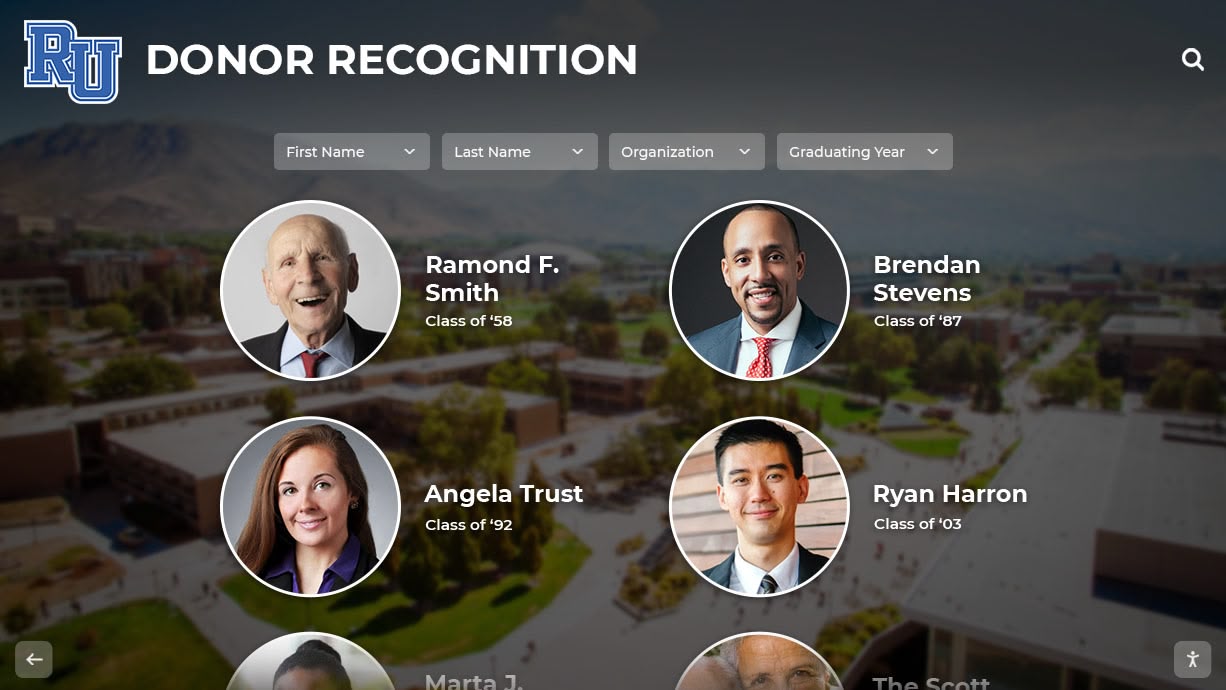
Professional recognition installations create cohesive environments celebrating student achievement as integral to institutional identity
Conclusion: Maximizing NHRP Opportunity and Recognition Value
The National Hispanic Recognition Program represents meaningful opportunity for high-achieving Hispanic and Latino students to receive prestigious distinction enhancing college applications, opening scholarship pathways, and providing personal validation of academic excellence. Understanding qualification requirements, strategic preparation approaches, and effective recognition leveraging enables students to maximize benefits throughout college admissions and beyond.
For students pursuing recognition, success requires multi-year commitment to academic excellence maintaining cumulative GPA above 3.3 thresholds while preparing strategically for qualifying assessments either through PSAT performance or early AP exam achievement. This sustained effort develops not just credentials for college applications but foundational study habits, time management skills, and intellectual discipline serving students throughout higher education and professional careers.
For schools celebrating recognized students, comprehensive approaches ensure achievement receives appropriate visibility inspiring future students toward similar excellence while demonstrating institutional commitment to honoring diverse achievement across student populations. From morning announcements and transcript documentation through sophisticated digital recognition displays creating year-round visibility, schools can transform NHRP acknowledgment from simple name listing into meaningful celebration building cultures where intellectual excellence receives prominence inspiring aspiration throughout communities.
The broader significance of NHRP extends beyond individual student benefits or school-level recognition practices. The program addresses persistent underrepresentation of Hispanic students in higher education, particularly at selective institutions and in fields like STEM where Hispanic participation lags despite population growth. By systematically identifying high-achieving Hispanic students using objective criteria and connecting them with colleges actively seeking qualified diverse applicants, NHRP creates pathways increasing Hispanic educational attainment with rippling effects across communities as successful students return inspiring younger generations toward similar achievement.
Celebrate Academic Excellence Across Your Community
Discover how modern recognition solutions can help your school celebrate National Hispanic Recognition Program recipients alongside other academic achievements, creating comprehensive visibility that inspires excellence throughout diverse student populations. Build the engaged, achievement-focused culture where every student's accomplishments receive appropriate celebration.
Explore Recognition SolutionsWhether you’re a student pursuing recognition, parent supporting academic achievement, counselor guiding students through qualification processes, or administrator designing recognition systems, understanding NHRP significance and implementation strategies proves essential. This program remains one of the most accessible yet meaningful national academic distinctions available to Hispanic students—requiring neither exceptional genius nor specialized talents, just sustained academic effort, strategic planning, and genuine engagement with rigorous coursework throughout high school.
Your achievements deserve celebration creating the motivation, recognition, and competitive advantage propelling continued success throughout education and professional life. NHRP provides that foundation—objective validation of intellectual capability and achievement potential that teachers, counselors, college admissions officers, scholarship organizations, and employers consistently value when identifying promising individuals worthy of opportunity, investment, and advancement.
For schools ready to transform academic recognition from occasional announcements to comprehensive celebration systems, solutions like Rocket Alumni Solutions provide purpose-built platforms designed specifically for educational institutions seeking to honor diverse excellence including NHRP recognition alongside school-specific achievements. These integrated approaches create digital warming effects transforming cold achievement lists into engaging community experiences inspiring broader student populations toward excellence while demonstrating genuine institutional commitment to celebrating intellectual achievement comparable to athletic and extracurricular success.
Start where you are, implement approaches matching your context and resources, commit to sustained effort, and celebrate achievements creating the positive, engaged learning communities where students thrive and excellence flourishes across all populations. The National Hispanic Recognition Program provides meaningful opportunity—understanding and leveraging that opportunity strategically transforms possibility into reality for thousands of deserving students annually.
Ready to learn more about comprehensive student recognition? Explore approaches to celebrating academic achievement or discover how digital recognition platforms enable schools to celebrate diverse honors including national recognition programs alongside institutional achievements.