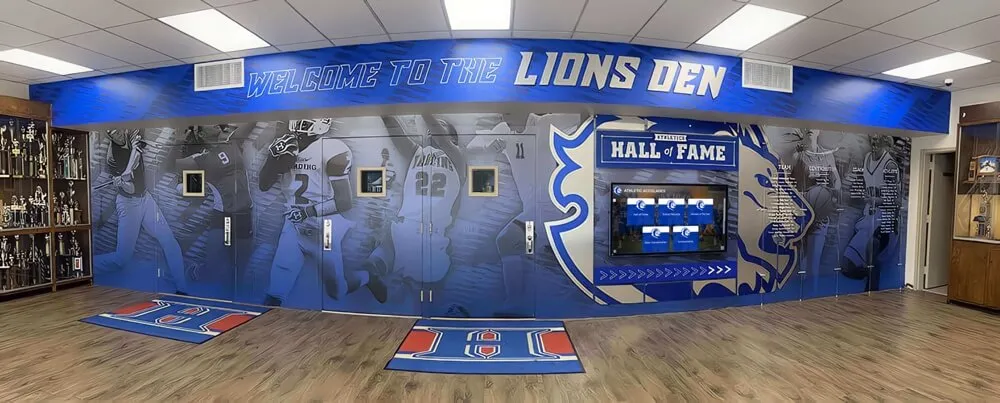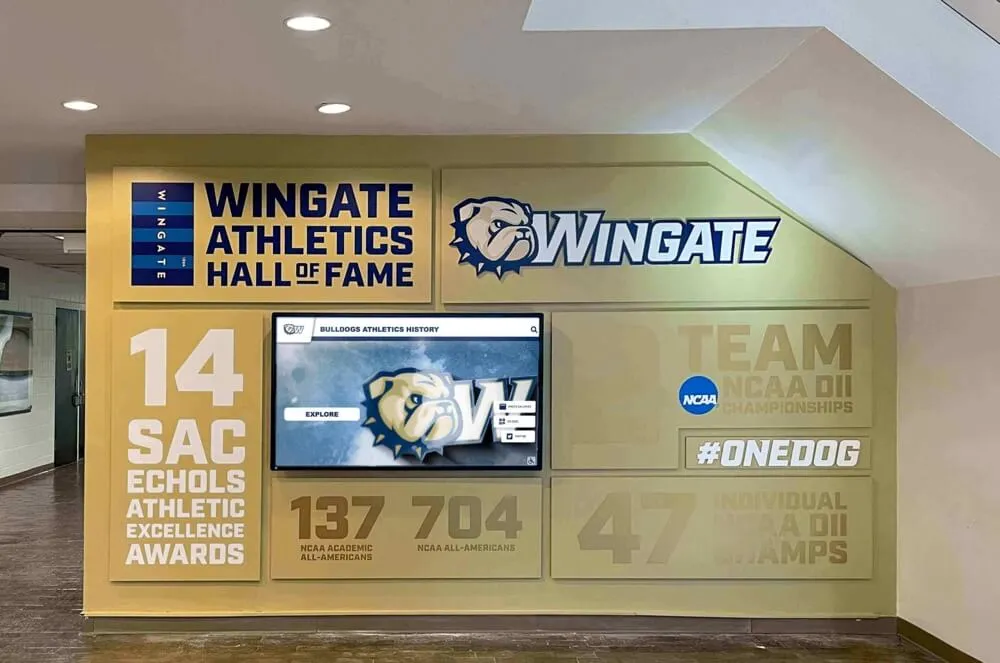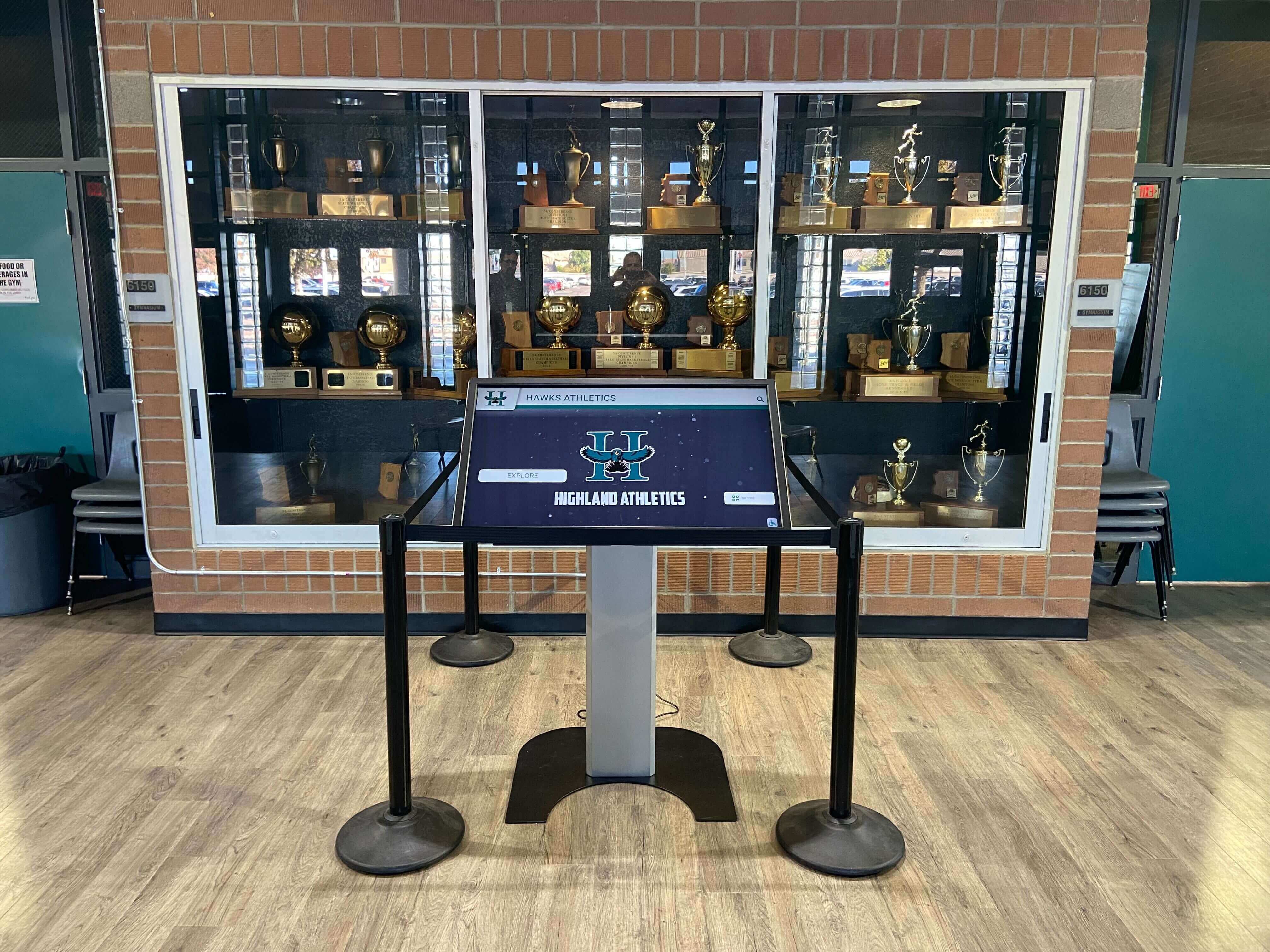
School lobbies, athletic wings, and gymnasium entrances showcase decades of competitive achievement through carefully curated memorabilia display cabinets that preserve championship trophies, retired jerseys, game-used equipment, and historic artifacts. These display spaces serve as physical archives of institutional identity—connecting current students to past glories, reminding communities of sustained excellence, and creating tangible symbols of tradition that transcend individual seasons or graduating classes.
Athletic directors, facilities managers, and school administrators face practical decisions when planning memorabilia displays: selecting appropriate cabinet styles that protect artifacts while maintaining visibility, arranging diverse items—from small medals to full-size jerseys—in compelling visual narratives, balancing limited display space against decades of accumulated achievements, and maintaining aging displays as items fade, dust accumulates, and cabinet hardware deteriorates over years of continuous exposure.
Traditional glass-front cabinets remain the default memorabilia display solution, but schools increasingly evaluate how digital recognition platforms complement or replace physical cases—preserving unlimited historical content, updating displays instantly without physical access, and creating interactive experiences that engage visitors more deeply than static artifacts behind locked glass.
Schools accumulate athletic memorabilia continuously—each championship season adds trophies, standout athletes earn jersey retirement consideration, milestone events create commemorative items, and anniversary celebrations surface historical artifacts from storage. The challenge isn’t acquiring meaningful memorabilia; it’s deciding what deserves prominent display, how to present diverse items cohesively, and how to maintain relevance as collections grow beyond available cabinet space.

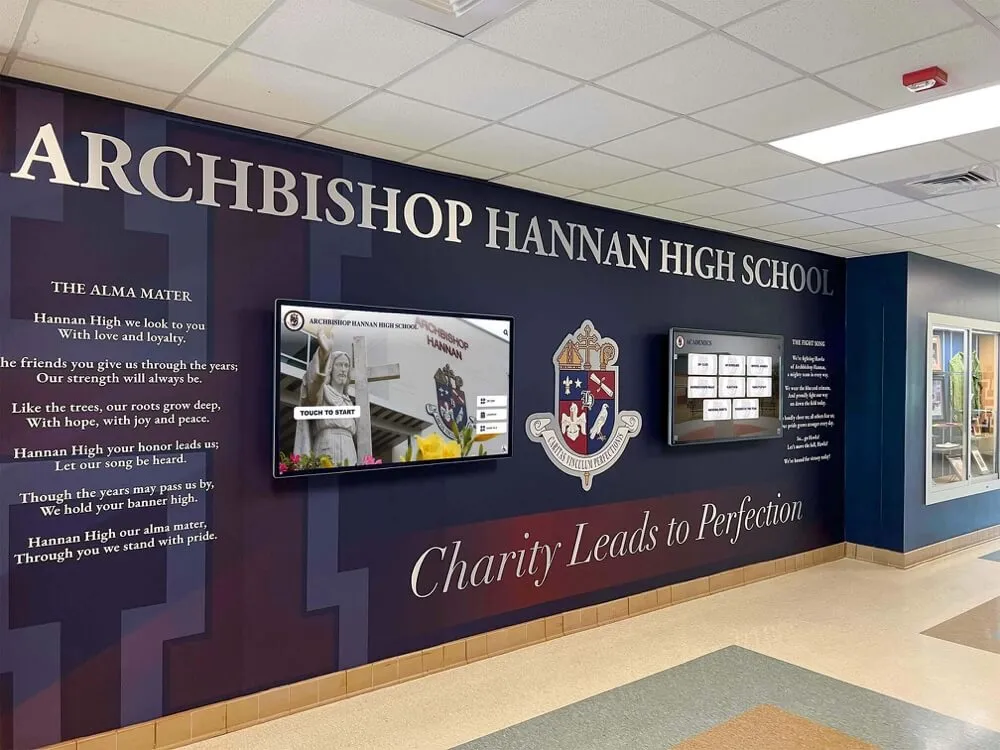
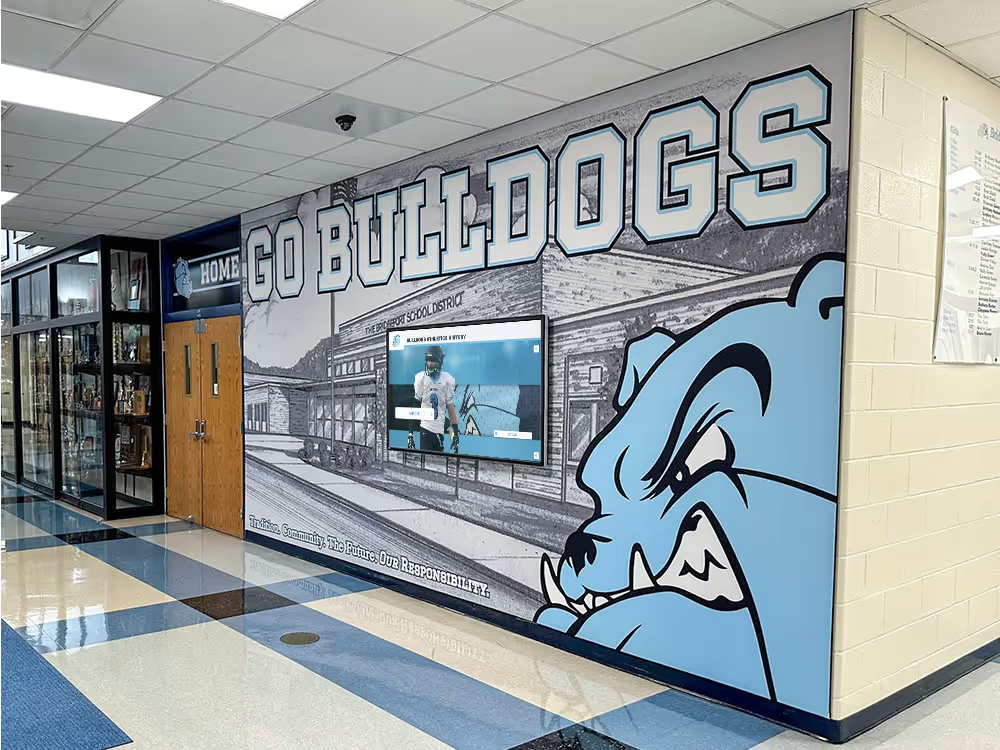
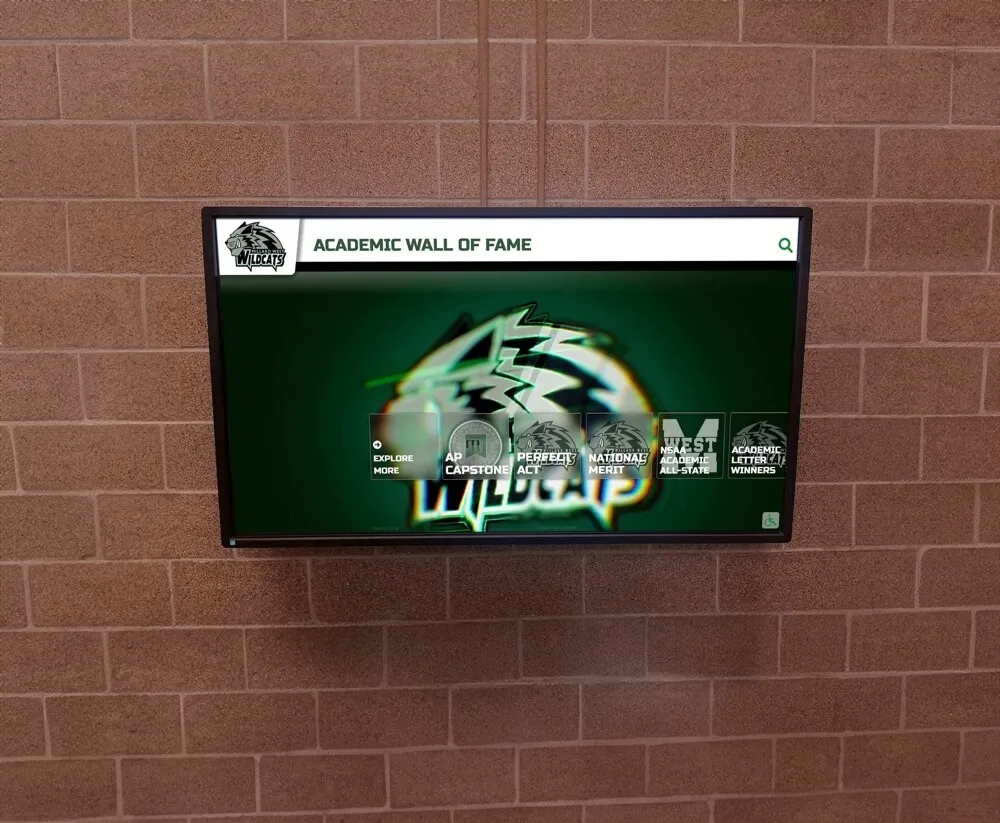
Modern memorabilia strategies combine traditional trophy cases with [digital recognition displays](https://touchscreenwebsite.com/blog/hall-of-fame-display-ideas-creating-inspiring-recognition-spaces/?utm_source=organic&utm_medium=seo-auto&utm_content=digitalwarming&utm_campaign=memorabilia-display-cabinet&utm_term=seo) that preserve unlimited achievements
Understanding Memorabilia Display Cabinet Options
Schools selecting memorabilia display cabinets consider factors beyond simple aesthetics—cabinet construction determines longevity, visibility design affects engagement, and practical features influence ongoing maintenance burden.
Wall-Mounted Display Cabinets
Wall-mounted cabinets maximize floor space while creating elevated viewing angles that improve visibility from hallway traffic. These units mount directly to structural walls, freeing floor area for circulation while positioning memorabilia at eye level rather than requiring visitors to look down at freestanding cases.
Standard wall-mounted cabinets typically measure 48 to 72 inches wide and 36 to 48 inches tall, providing substantial display area without overwhelming hallway proportions. Tempered glass fronts protect contents while maintaining clear visibility from typical viewing distances of 6 to 10 feet. Locking mechanisms secure valuable or irreplaceable items against theft or tampering.
Successful wall-mounted installations require solid backing structure—mounting heavy glass cabinets to standard drywall creates failure risks, while proper installation into studs or blocking supports sustained weight. Schools planning wall-mounted displays should verify wall construction adequacy before cabinet purchase to avoid costly remediation if existing walls cannot support intended loads.
Interior lighting transforms wall-mounted cabinets from passive storage to active displays. LED strip lighting along top or side edges illuminates contents without heat buildup that could damage jerseys or photographs, creating visual focus even in dimly lit hallways. Lighting particularly benefits cabinets positioned away from natural light sources where unlit displays fade into background visual noise.
Freestanding Display Cases
Freestanding floor units provide maximum capacity for large memorabilia collections, accommodate oversized items like full uniforms or equipment, and allow four-sided visibility when positioned as room dividers or lobby centerpieces. These substantial cabinets range from simple rectangular towers to elaborate custom designs incorporating team colors, mascot imagery, or architectural elements matching broader facility aesthetics.
Standard freestanding cases typically offer 18 to 24 inches of depth compared to 12 to 16 inches for wall-mounted units, providing space for three-dimensional arrangements rather than flat presentations. This depth accommodates helmets, balls, larger trophies, and equipment displays that create visual interest through layered depth rather than single-plane arrangements.
Freestanding cabinets work particularly well in dedicated trophy rooms or athletic wing lobbies where floor space permits substantial installations. Schools with limited hallway width may find these units create traffic congestion, while institutions with spacious entrance areas can position impressive displays that immediately communicate athletic tradition to visitors.
Security considerations intensify with freestanding units—four-sided glass construction and accessible positioning increase vulnerability compared to wall-mounted cases with protected backs. Robust locking systems, alarmed cabinets for particularly valuable items, and strategic positioning within sight lines of occupied offices provide layered security that discourages opportunistic theft.
Custom Built-In Displays
Schools undertaking facility renovations or new construction can integrate custom built-in memorabilia displays that maximize available space, match architectural finishes precisely, and create permanent recognition installations that signal institutional commitment to honoring tradition.
Built-in displays allow creative solutions impossible with prefabricated cabinets—wrapping corner angles, filling irregular wall sections, incorporating lighting architecture, and blending seamlessly with surrounding millwork. These custom installations become architectural features rather than furniture pieces added to existing spaces.
Cost considerations make built-in displays substantial investments, typically requiring professional design services, custom fabrication, and installation during broader construction timelines. Schools planning renovations should allocate budget specifically for memorabilia displays rather than treating them as afterthoughts, ensuring adequate resources for quality execution that justifies permanent architectural integration.

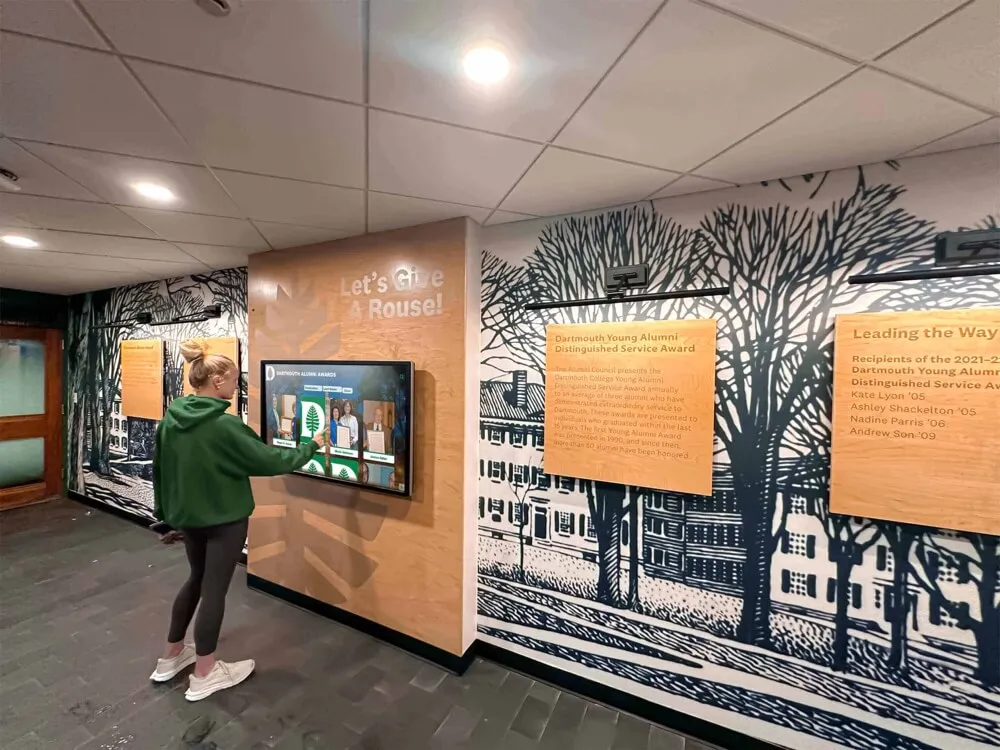
Comprehensive recognition spaces combine [traditional trophy displays with digital platforms](https://touchwall.tv/blog/school-trophy-case-design-traditional-to-digital/?utm_source=organic&utm_medium=seo-auto&utm_content=digitalwarming&utm_campaign=memorabilia-display-cabinet&utm_term=seo) for complete athletic history presentation
Memorabilia Types and Display Strategies
Effective memorabilia display cabinets organize diverse artifact types into coherent visual narratives rather than creating cluttered collections where individual items lose impact among competing elements.
Championship Trophies and Awards
Trophies represent the most common athletic memorabilia, ranging from small individual medals to substantial team championship cups that require dedicated display space. Schools typically organize trophies chronologically by achievement year, by sport creating dedicated sections for each program, or by significance highlighting major championships prominently while grouping lesser awards together.
Visual hierarchy matters tremendously in trophy displays—positioning the most significant awards at primary sight lines (typically center and eye level) while placing smaller trophies on peripheral shelves prevents important achievements from disappearing among participation awards. Creating dedicated championship sections separated from regular season awards helps visitors immediately identify the school’s highest accomplishments.
Overcrowding undermines trophy displays more than any other single factor. Cramming maximum trophies into available space creates visual chaos where no individual achievement receives attention. Selective curation—choosing representative examples rather than displaying every award—creates cleaner presentations where visitors actually notice and appreciate showcased achievements. Schools with extensive trophy collections should rotate displayed items seasonally rather than permanently exhibiting everything simultaneously.
Supporting context elevates trophies from generic objects to meaningful historical artifacts. Small plaques identifying the achievement (sport, year, competition level, significant details), photographs of championship teams adjacent to their trophies, and brief descriptions of particularly notable victories transform anonymous awards into stories that engage viewers emotionally rather than simply documenting achievements factually.
Retired Jerseys and Uniforms
Jersey displays create powerful visual impact through color, scale, and immediate recognizability—visitors instantly understand athletic significance without reading explanatory text. Schools typically reserve jersey retirement for truly exceptional athletes, creating exclusive recognition that maintains significance through rarity. Clear jersey retirement criteria (state championships, records that stand for decades, professional sports achievement, extraordinary character beyond athletic performance) prevent dilution where excessive retirements diminish honor prestige.
Displaying jerseys properly requires specific considerations. Hanging jerseys on hangers creates sagging that looks sloppy and eventually damages fabric through stress concentration at shoulder points. Professional jersey mounting on rigid forms maintains proper shape, prevents fabric damage, and creates clean visual presentation. Mounting services typically cost $75 to $150 per jersey but preserve items properly for decades of display rather than risking damage through improper hanging.
Full uniform displays—jersey, pants, helmet, cleats—create more substantial visual impact than jerseys alone, particularly for sports where equipment creates iconic imagery (football, hockey, baseball). These complete displays require deeper cabinets and more vertical space but provide dramatic presentations worthy of the most exceptional athletes.
UV protection becomes critical for jersey displays since fabric fades rapidly under continuous light exposure. UV-filtering glass adds cost to cabinet construction but prevents irreplaceable jerseys from degrading visibly over years of display. Schools displaying valuable vintage uniforms should prioritize UV protection as essential rather than optional.
Game-Used Equipment and Artifacts
Balls, bats, gloves, sticks, and other game-used equipment carry authentic connection to specific achievements—the actual ball from a no-hitter, the bat that hit a state championship-winning home run, the stick used to score a milestone goal. These artifacts provide tangible links to historic moments that resonate more deeply than generic trophies that could represent any achievement.
Equipment displays benefit enormously from specific context. A baseball sitting alone on a shelf means nothing; that same ball identified as “Perfect game baseball - Sarah Martinez vs. Lincoln High - May 14, 2023” becomes a meaningful artifact that tells a story. Schools should create small engraved plaques or printed cards for significant equipment items, providing context that transforms objects into narratives.
Preservation challenges affect game-used equipment more than manufactured trophies. Leather deteriorates, rubber cracks, fabrics fade, and adhesives fail over years of display. Climate-controlled environments, UV-filtered lighting, and occasional conservation treatments extend equipment longevity, but schools should accept that organic materials eventually degrade regardless of care quality. Photographing equipment thoroughly when fresh preserves visual documentation even if physical artifacts eventually deteriorate beyond display quality.
Creating dedicated displays for truly extraordinary artifacts—balls from perfect games, equipment used by athletes who reached professional levels, items associated with state championships—prevents these exceptional pieces from disappearing among common memorabilia. Shadow box displays with individual mounting and detailed descriptions give significant artifacts the prominence they deserve.
Photographs and Historical Documents
Photographs provide essential context that transforms memorabilia displays from object collections to historical narratives. Images of championship teams adjacent to their trophies, action shots of retired jersey athletes, and facility photos showing program evolution create stories that engage viewers emotionally while documenting institutional history.
Print quality and mounting matter significantly for photographic displays. Standard inkjet prints fade visibly within months under typical display lighting; professional archival prints maintain quality for decades. Schools creating permanent displays should invest in professional printing rather than accepting rapid degradation of consumer-grade outputs.
Photograph arrangement within memorabilia cabinets requires thoughtful composition. Mixing photo sizes randomly creates visual confusion; establishing consistent sizing (8x10 or 11x14 for team photos, 5x7 for individuals, consistent matting) creates cleaner presentations. Grouping related photographs together—multiple images from a championship season, progression photos showing facility evolution—creates narrative flow rather than scattered imagery.
Historical documents—championship brackets, newspaper clippings, game programs, ticket stubs—add depth to memorabilia displays but require careful presentation. Laminating documents protects them from handling but may trap moisture that accelerates deterioration; using archival sleeves with UV-resistant covers provides better long-term preservation. Schools should scan valuable documents digitally before display, creating backups if originals eventually degrade.
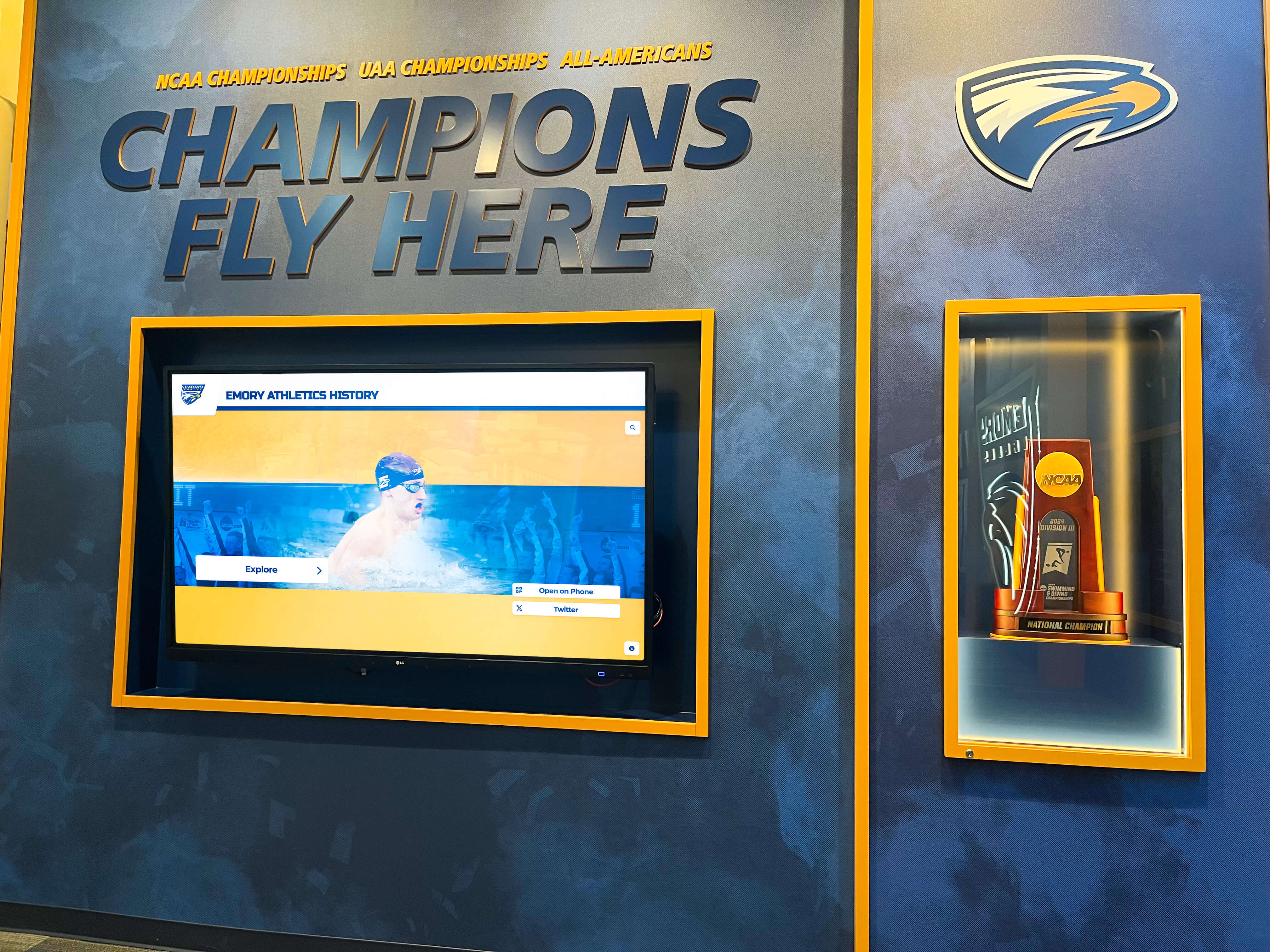
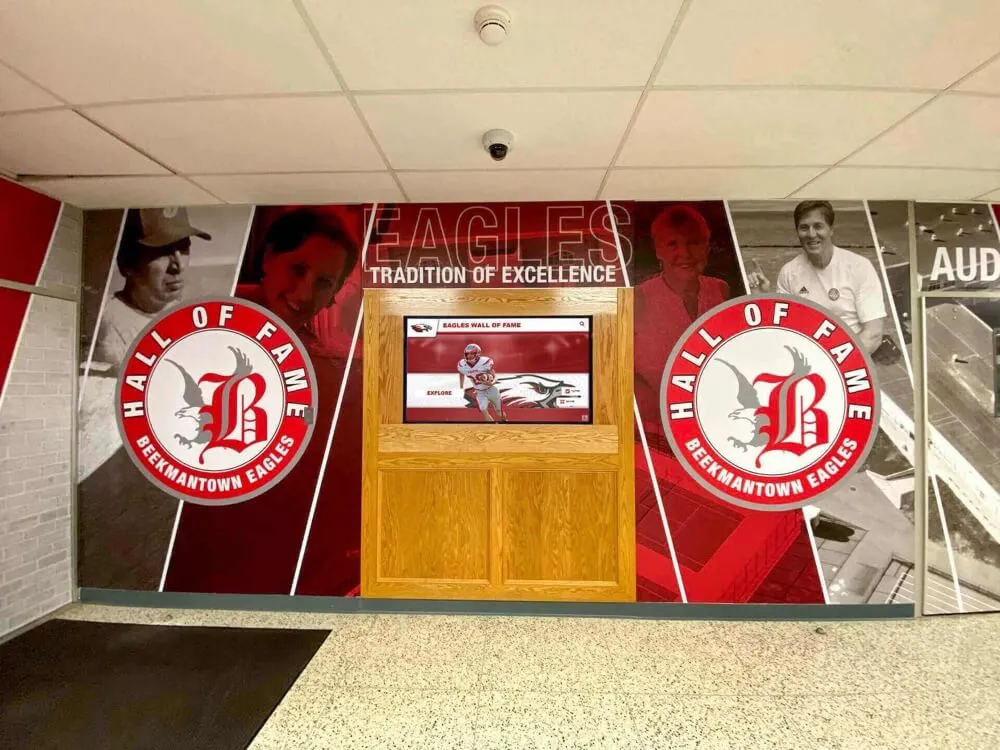
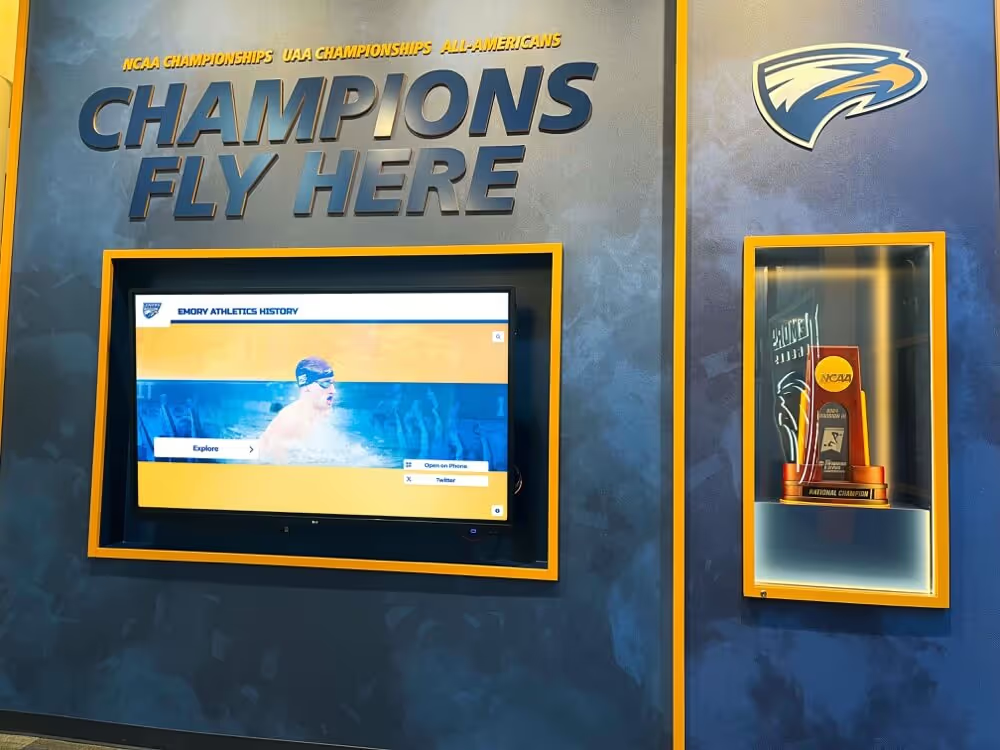
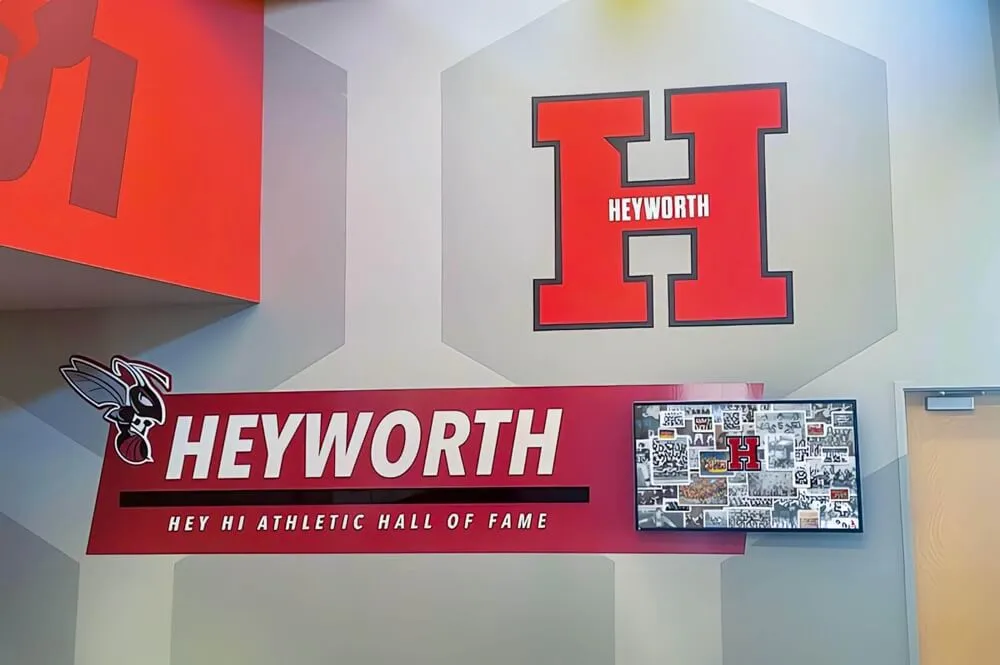
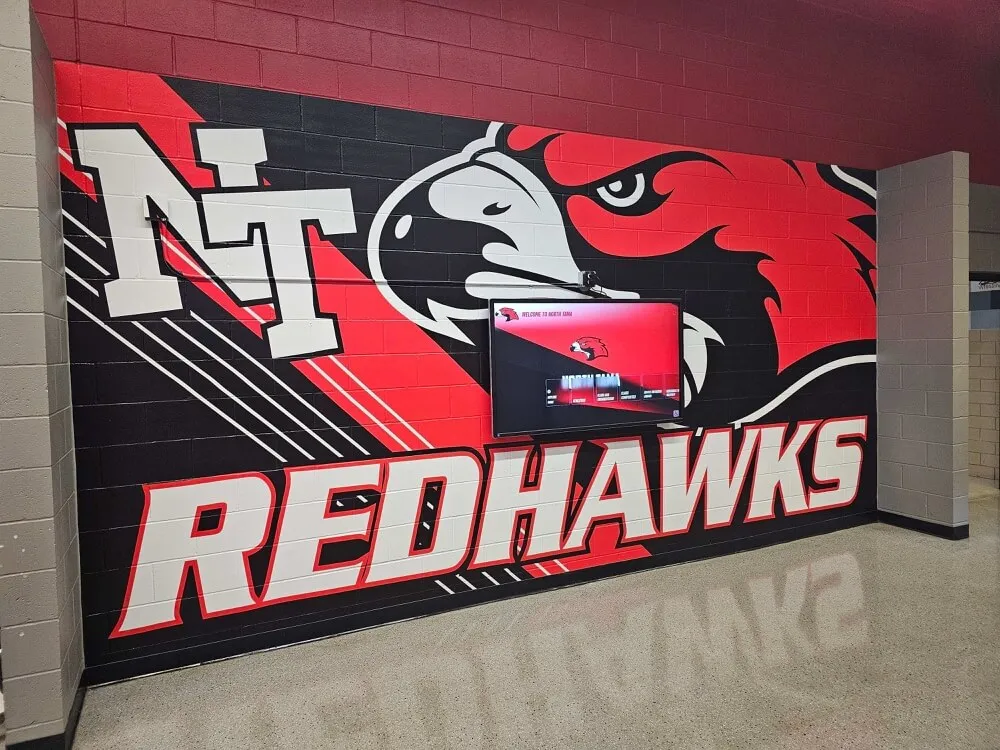
Dedicated championship walls create focal points celebrating program excellence and [major athletic achievements](https://digitalyearbook.org/blog/hall-of-fame-induction-criteria-digital-display-guide/?utm_source=organic&utm_medium=seo-auto&utm_content=digitalwarming&utm_campaign=memorabilia-display-cabinet&utm_term=seo)
Cabinet Placement and Location Strategy
Where schools position memorabilia display cabinets affects visibility, engagement frequency, and perceived importance of honored achievements.
High-Traffic Location Advantages
Positioning memorabilia displays in main entrance lobbies, primary hallways connecting academic wings, or routes between parking areas and athletic facilities maximizes daily viewing frequency. Displays in high-traffic areas receive continuous exposure from students, staff, visitors, and community members—reinforcing institutional identity and athletic tradition through repeated viewing.
Main lobby placement signals that athletic achievement holds institutional importance worthy of prominent recognition rather than relegation to secondary spaces. Visitors form immediate impressions based on what schools choose to display prominently; dedicating prime lobby real estate to memorabilia communicates that athletic tradition matters to school identity and community pride.
However, high-traffic placement creates practical challenges. Hallway congestion occurs when visitors stop to examine displays in narrow circulation paths; lobby placement near security desks provides visibility but may interfere with check-in operations; positioning near exterior doors exposes cabinets to temperature fluctuations and direct sunlight that accelerates memorabilia deterioration.
Schools should balance traffic considerations with practical placement requirements—slightly offset from primary circulation paths reduces congestion while maintaining visibility; positioning perpendicular to walking direction rather than parallel allows viewing without completely blocking passage; creating small alcoves or widened hallway sections provides dedicated display zones that don’t compromise circulation.
Athletic Facility Integration
Locating memorabilia displays within gymnasiums, field houses, or athletic wings creates thematic consistency and positions recognition where athletes encounter it daily during practices and competitions. Locker room hallways, gymnasium lobbies, and team meeting room adjacencies provide continuous exposure that reinforces tradition and inspires current athletes through tangible evidence of program excellence.
Athletic-specific placement allows context that main lobby displays cannot provide. Displaying sport-specific memorabilia near relevant competition or practice spaces—basketball achievements near the gymnasium, baseball memorabilia near the diamond access, swimming records in the aquatic center—creates immediate connection between current athletes and historical accomplishments in identical spaces.
Visitor access considerations complicate athletic facility displays. Memorabilia positioned in competition venues receives exposure during games when community members attend, but displays in practice facilities or locker room areas remain hidden from public view. Schools should consider dual display strategies—public-facing memorabilia in competition venue lobbies, team-specific displays in restricted practice areas that serve primarily as athlete inspiration rather than community showcase.
Environmental challenges affect athletic facility displays more than climate-controlled academic spaces. Gymnasiums experience temperature and humidity fluctuations, pool areas create excessive moisture and chlorine exposure, and outdoor facility storage areas subject cabinets to extreme conditions. Selecting weather-resistant cabinet construction and accepting shorter display longevity becomes necessary for athletic facility installations compared to protected interior locations.
Creating Dedicated Trophy Rooms
Schools with extensive memorabilia collections can justify dedicated trophy rooms that consolidate displays in single locations optimized for recognition purposes. These specialized spaces allow comprehensive presentations impossible within limited hallway cabinets—full walls of jerseys, extensive trophy arrays, multimedia presentations, and comfortable viewing areas where visitors can spend extended time appreciating institutional history.
Dedicated trophy rooms work best when positioned along natural circulation paths between primary destinations rather than requiring deliberate detours to spaces visitors wouldn’t otherwise access. Rooms adjacent to gymnasiums, connecting academic and athletic wings, or near main entrances achieve visibility and casual traffic that isolated locations never generate.
Successful trophy rooms balance comprehensive collections with thoughtful curation—displaying everything creates overwhelming visual clutter where no individual achievement receives attention. Organizing rooms thematically (by sport, by decade, by achievement level) creates navigation that helps visitors find personally relevant content. Interactive elements—digital displays, video compilations, searchable databases—enhance trophy rooms beyond static memorabilia viewing into engaging experiences.
Maintenance and security challenges intensify with dedicated trophy rooms. Isolated spaces receive less passive supervision than busy hallways, increasing theft and vandalism risks; extensive collections require proportionally greater cleaning and upkeep; and underutilized rooms may eventually face pressure for repurposing to more critical space needs. Schools creating trophy rooms should plan active programming (team meetings, alumni events, new student orientations) that ensures spaces receive regular use justifying dedicated square footage allocation.

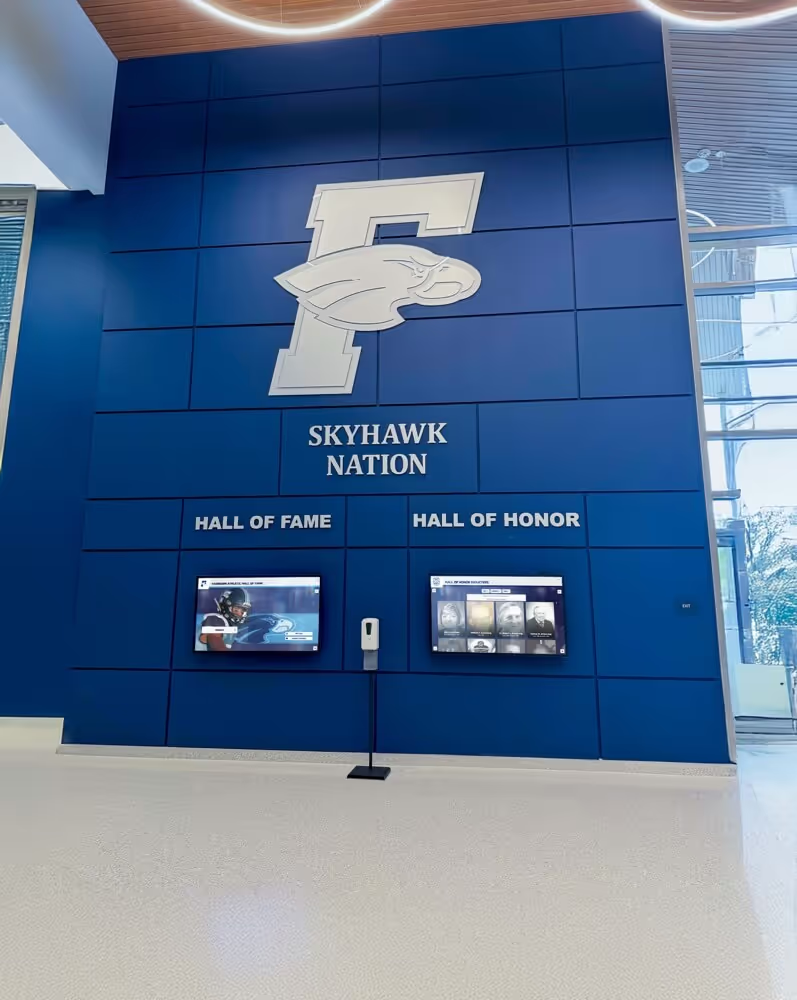
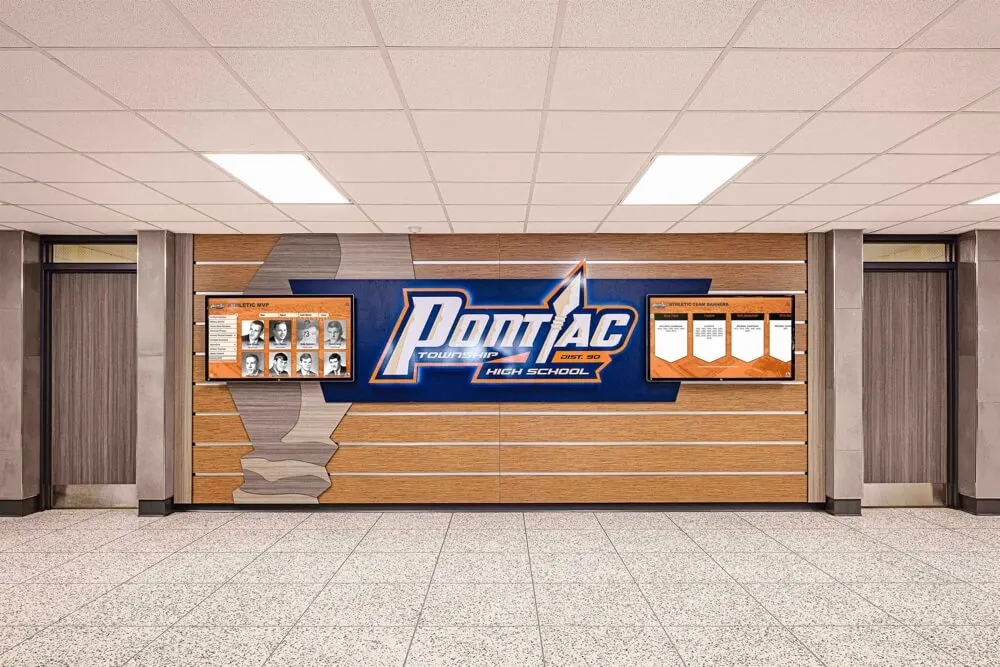
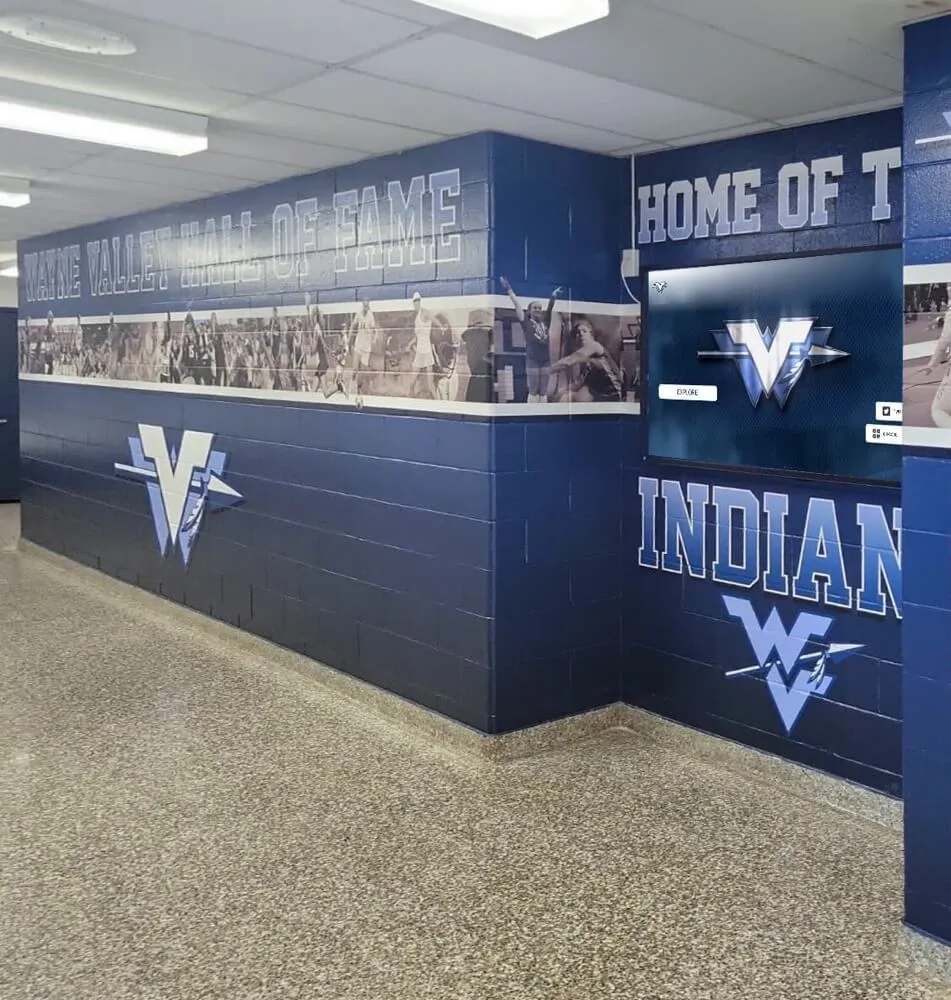
Athletic wings integrate [traditional memorabilia cabinets with architectural recognition features](https://digital-trophy-case.com/blog/sports-wall-art-ideas-inspiring-decor-gyms-locker-rooms-athletic-facilities/?utm_source=organic&utm_medium=seo-auto&utm_content=digitalwarming&utm_campaign=memorabilia-display-cabinet&utm_term=seo) celebrating program tradition
Memorabilia Display Maintenance and Preservation
Physical memorabilia display cabinets require ongoing maintenance that schools often underestimate during initial installation—creating beautiful displays proves easier than sustaining them through years of accumulated dust, fading, and deterioration.
Regular Cleaning and Upkeep
Glass cabinets accumulate fingerprints, dust, and smudges that gradually obscure contents and create neglected appearance. Establishing regular cleaning schedules—monthly for high-traffic displays, quarterly for less-visible installations—prevents gradual deterioration that eventually requires intensive restoration efforts to remedy.
Interior cleaning requires cabinet access, creating scheduling challenges around key security and logistics coordination. Many schools delay interior cleaning indefinitely rather than coordinating key access, resulting in visibly dusty memorabilia that undermines recognition purpose. Assigning specific personnel with key access and scheduled cleaning responsibilities prevents this gradual degradation.
Memorabilia items themselves require periodic attention beyond cabinet glass cleaning. Trophies tarnish and require polishing, jerseys accumulate dust requiring vacuuming, and photographs behind glass develop moisture condensation requiring repositioning. Complete cabinet inspection annually—removing items, cleaning thoroughly, checking mounting security, replacing deteriorated elements—maintains presentation quality that casual exterior glass cleaning cannot achieve.
Schools should budget modest annual maintenance costs for cleaning supplies, replacement lighting, hardware repairs, and occasional professional conservation services. Treating displays as install-and-forget elements guarantees visible degradation within years that eventually necessitates complete replacement rather than modest ongoing upkeep.
Controlling Environmental Factors
Light exposure, temperature fluctuations, and humidity create the primary environmental threats to memorabilia longevity. Minimizing these factors extends display life significantly compared to uncontrolled exposure.
UV radiation causes the most visible memorabilia damage—fabrics fade from vibrant team colors to washed-out pastels, photographs yellow and lose contrast, and even trophy finishes degrade under sustained exposure. UV-filtering glass blocks 99% of damaging radiation while maintaining visual clarity, protecting contents for decades rather than years. Retrofitting existing cabinets with UV-filtering acrylic panels provides cost-effective protection without complete cabinet replacement.
Direct sunlight creates catastrophic damage far exceeding artificial lighting risks. Memorabilia cabinets positioned where direct sun strikes contents for hours daily will show visible fading within months regardless of UV filtering. Schools should audit display positions seasonally—sun angles change dramatically between winter and summer—repositioning vulnerable items away from direct exposure or installing window treatments that block sun during peak damage hours.
Temperature stability matters less than extreme fluctuations for most memorabilia types. Athletic artifacts survive typical indoor temperature ranges without damage, but locations experiencing repeated cycles between climate-controlled and unconditioned states (near exterior doors, in gymnasiums, in spaces with unreliable HVAC) accelerate deterioration through expansion and contraction stress. Consistent temperatures—even if slightly elevated or reduced—cause less damage than constant cycling.
Humidity control prevents mold growth on organic materials, corrosion on metal trophies, and photographic emulsion damage. Maintaining 40-50% relative humidity protects most memorabilia adequately; levels above 60% create mold and corrosion risks, while sustained low humidity below 30% dries organic materials causing brittleness. Schools in humid climates should verify HVAC systems adequately dehumidify spaces containing memorabilia displays, particularly ground-floor locations vulnerable to moisture infiltration.
Managing Limited Space as Collections Grow
Schools accumulate memorabilia continuously while display space remains fixed, creating inevitable capacity challenges. Athletic programs celebrating 50, 75, or 100-year anniversaries possess far more significant achievements than available cabinet space can accommodate, forcing difficult curation decisions about what deserves continued display versus respectful storage.
Rotating displays provide one solution—changing exhibited memorabilia seasonally or annually creates fresh presentations that maintain visitor interest while allowing broader collections to receive display time. Winter sports memorabilia can feature prominently during competitive seasons, then rotate to storage as spring sports take prominence. Anniversary years provide natural rotation opportunities—highlighting specific decades during reunion years, then returning to current achievement focus.
Creating tiered display approaches manages space efficiently while maintaining comprehensive recognition. The most exceptional achievements (state championships, undefeated seasons, national recognition, professional athletes) receive permanent prominent display, while strong but less extraordinary accomplishments (conference championships, individual medals, league recognition) appear in rotating secondary displays. This hierarchy ensures truly historic achievements maintain visibility while still honoring substantial accomplishments.
Digital archiving provides unlimited capacity that physical displays cannot match. Schools can photograph every trophy, scan every certificate, and digitize complete memorabilia collections—preserving comprehensive historical records while displaying only selected physical artifacts. This digital preservation enables storage or disposal of physical items with less historical significance, freeing cabinet space for truly irreplaceable artifacts while maintaining complete archives.
Eventually, schools may conclude that physical display limitations justify transitioning entirely to digital recognition platforms that eliminate capacity constraints while providing superior engagement capabilities compared to static cabinets.
The Digital Alternative: Interactive Recognition Displays
Schools evaluating memorabilia display cabinet options increasingly consider whether digital recognition platforms better serve institutional needs compared to traditional physical displays—particularly as collections exceed available cabinet space and maintenance burden accumulates.
Unlimited Capacity for Complete Historical Archives
Physical display cabinets accommodate perhaps 50-200 items depending on size and arrangement density. Athletic programs celebrating 50+ years of competition generate thousands of achievements deserving recognition—hundreds of individual athletic awards, dozens of team championships, countless All-Conference and All-State selections, retired jerseys, records, and milestone performances. Physical displays force artificial scarcity where most achievements never receive public recognition simply because cabinet space doesn’t exist.
Digital recognition platforms eliminate capacity constraints entirely. Schools can honor every All-Conference athlete, document every varsity letter winner, record every team season result, archive every retired jersey with complete statistics and achievements, and preserve comprehensive institutional history without arbitrary limits imposed by physical space availability.
This unlimited capacity transforms recognition philosophy from selective curation of exceptional achievements to comprehensive celebration of all participant contributions. Rather than exclusively highlighting state championships while ignoring strong seasons that fell short of ultimate victory, digital platforms honor every athlete, every season, and every achievement level—creating inclusive recognition that celebrates broad participation rather than exclusively focusing on peak accomplishments.
Dynamic Updates Without Physical Access
Traditional memorabilia cabinets require physical access for any content change—unlocking cases, arranging new items, updating labels, and securing everything again. This physical requirement creates practical barriers where displays remain static for years simply because coordinating cabinet access, gathering new memorabilia, and executing updates requires time and logistics that schools postpone indefinitely.
Digital displays update instantly from any location with internet access—athletic directors add new championship achievements from their offices, technology coordinators schedule content updates for automated publishing, and communications staff correct information errors immediately without touching physical installations. This effortless updating enables recognition that stays current rather than gradually becoming historical archives of increasingly outdated information.
Remote updating also enables distributed maintenance responsibilities. Rather than concentrating all display management on single facilities personnel with physical key access, schools can delegate content management to athletic directors for sports achievements, activities coordinators for academic recognition, development officers for donor content, and technology staff for system administration—creating collaborative ownership that distributes workload and leverages specialized knowledge.
Scheduled content updates create dynamic displays that maintain visitor interest through changing presentations. Schools can feature current sports during their competitive seasons, highlight graduating seniors during commencement periods, showcase major anniversaries during reunion weekends, and adapt recognition focus to current institutional priorities—all without physical cabinet access or manual memorabilia rearrangement.
Richer Context Through Multimedia Integration
Physical memorabilia displays present artifacts with limited context—small plaques provide basic information, but meaningful storytelling requires space and format that traditional displays cannot support. A retired jersey, trophy, or piece of equipment tells incomplete stories when exhibited as isolated objects without deeper narrative.
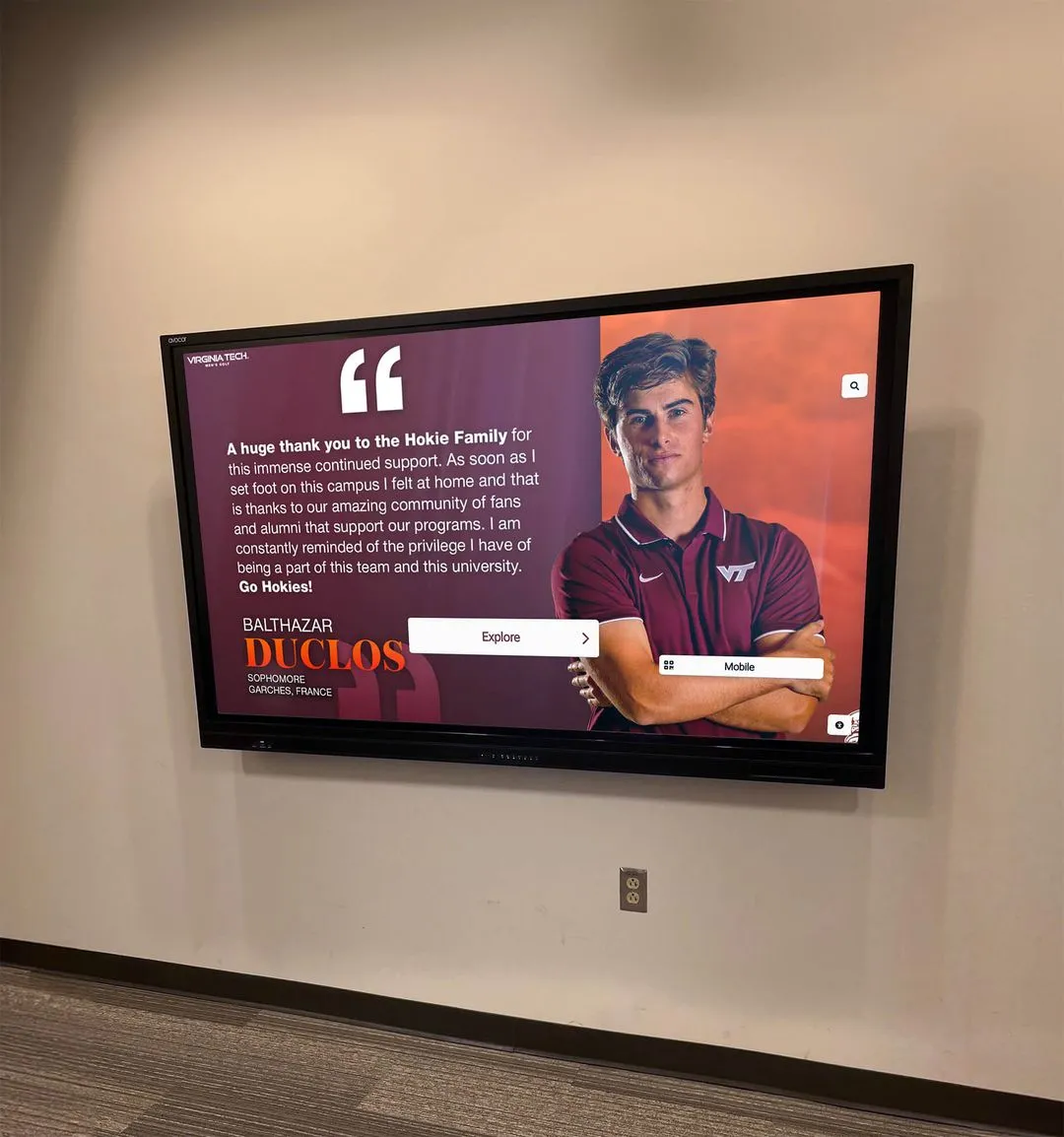
Digital recognition platforms integrate photographs, videos, complete statistical records, game recaps, athlete interviews, and biographical information that transform simple achievements into compelling stories. Displaying a championship trophy alongside game highlights video, team photographs, season statistics, and participant interviews creates emotional engagement that static trophy displays never achieve.
This contextual depth particularly benefits visitors without personal connection to displayed achievements—current students viewing championships won decades before their birth, community members unfamiliar with program history, and prospective families evaluating school culture. Rich multimedia context makes historical achievements relevant and engaging rather than meaningless lists of dates and names.
Search and filtering capabilities let visitors find personally relevant content within comprehensive archives. Alumni can search for their graduation years, specific sports, or their own names—immediately accessing their contributions rather than hoping they appear in limited physical displays. This personalization creates engagement that generic displays cannot provide.
Interactive Engagement Beyond Passive Viewing
Traditional memorabilia cabinets offer only passive viewing—visitors look at displayed items through glass but cannot interact, explore, or personalize experiences. This limitation reduces engagement to brief glances rather than meaningful interaction that creates lasting impressions.
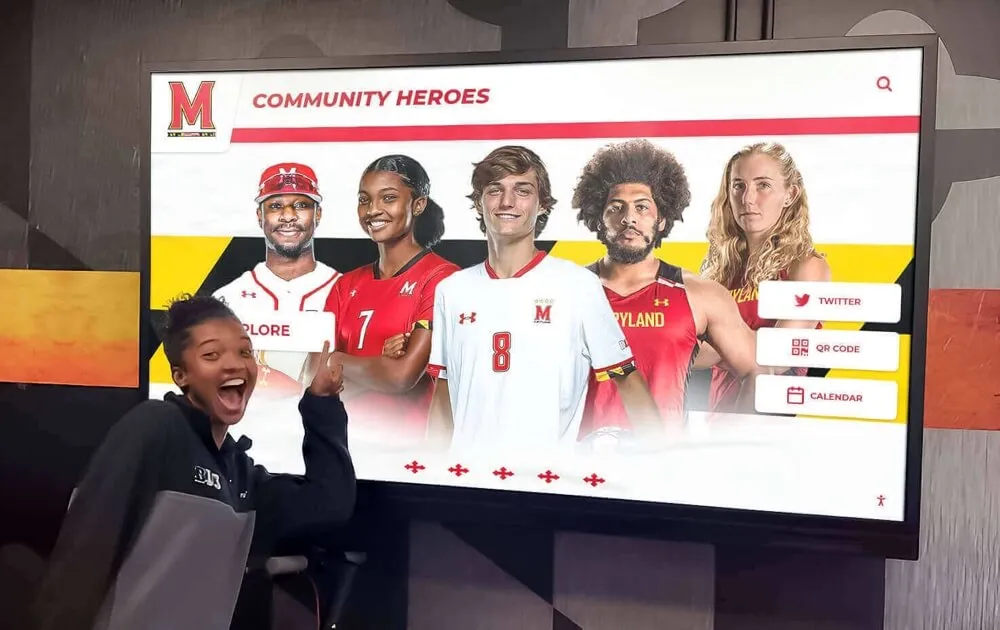
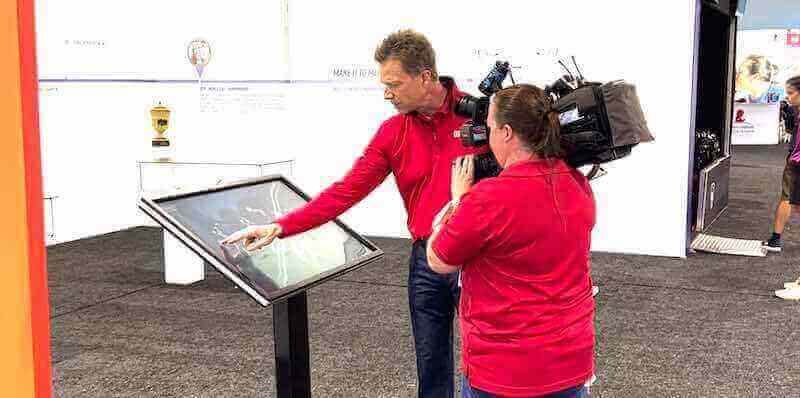
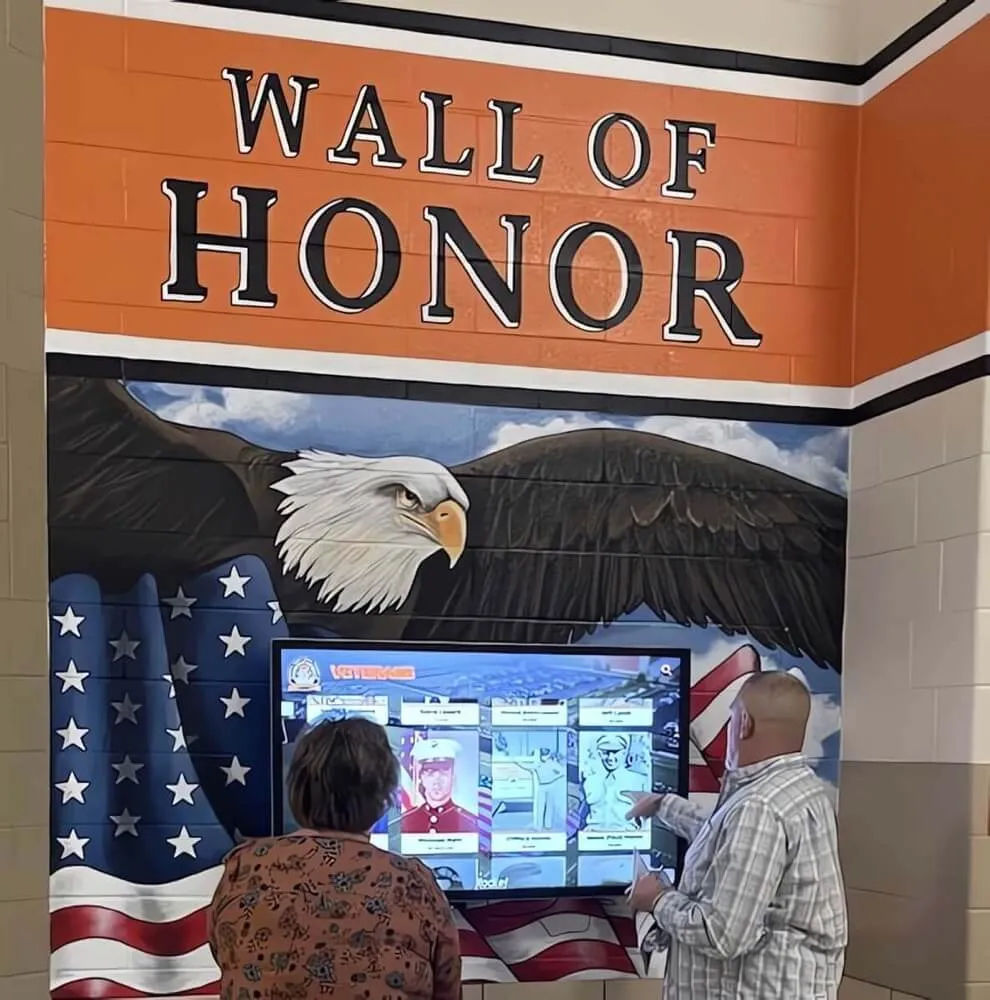
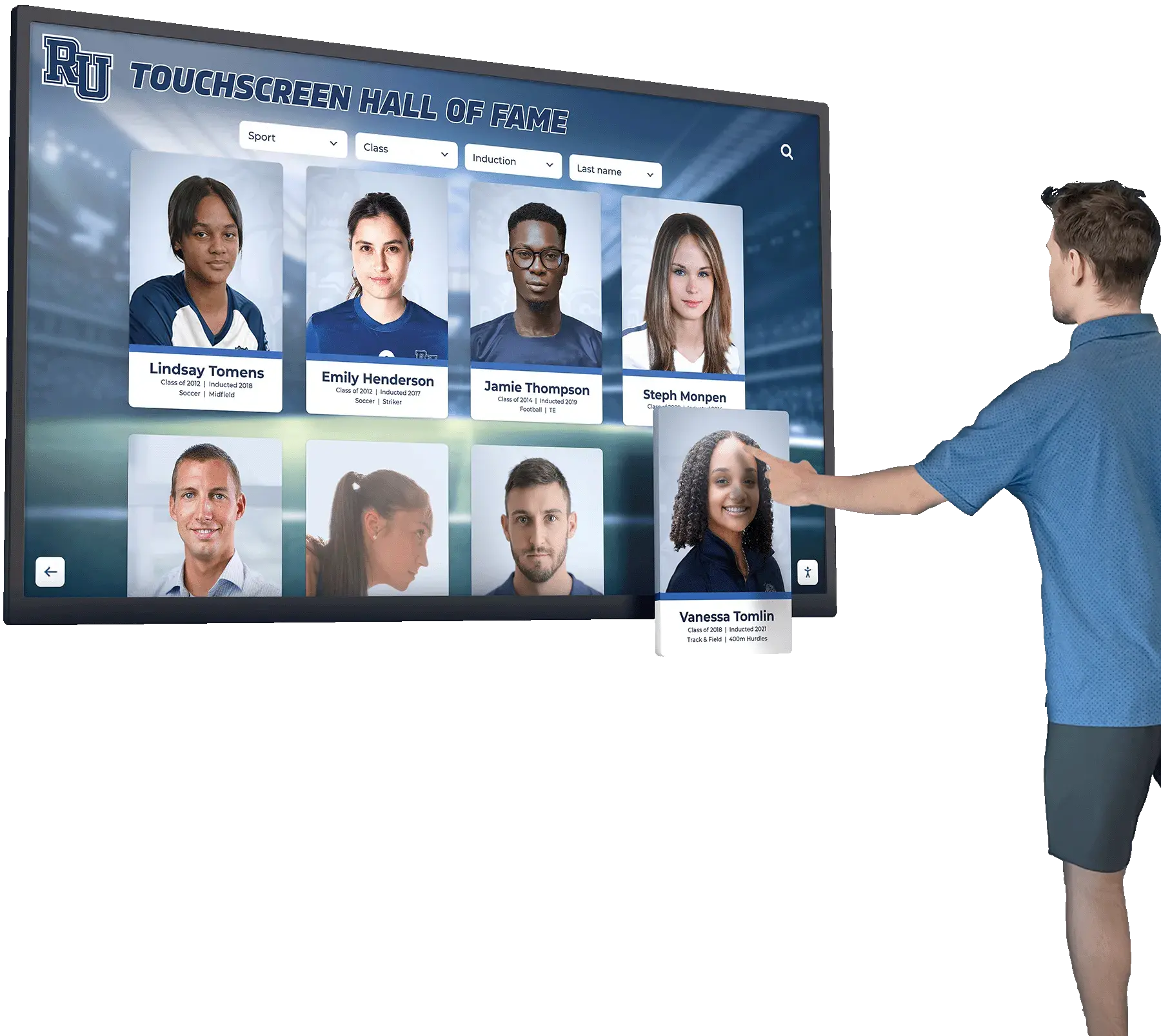
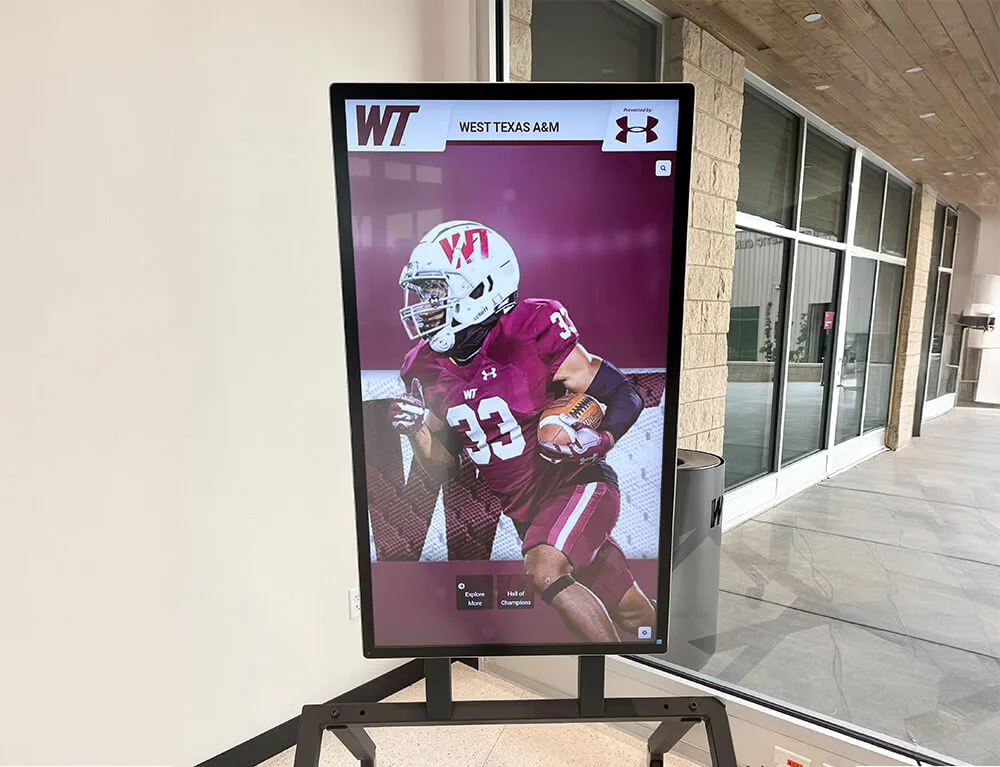
Interactive touchscreen recognition displays invite active exploration where visitors control experiences rather than accepting fixed presentations. Touch interfaces encourage browsing, searching specific interests, comparing different achievements, sharing discoveries with companions, and spending extended time engaging with content—creating meaningful experiences rather than casual glances at static displays.
This interactivity particularly engages younger generations accustomed to digital interaction who find static displays antiquated and unengaging. Students who ignore traditional trophy cases readily engage with touchscreen displays offering dynamic content, video highlights, and personalized search capabilities.
Schools can gather engagement analytics from digital displays—understanding which content receives most attention, tracking interaction patterns, and measuring viewing duration. These insights inform content strategy and help schools highlight achievements that resonate with their communities.

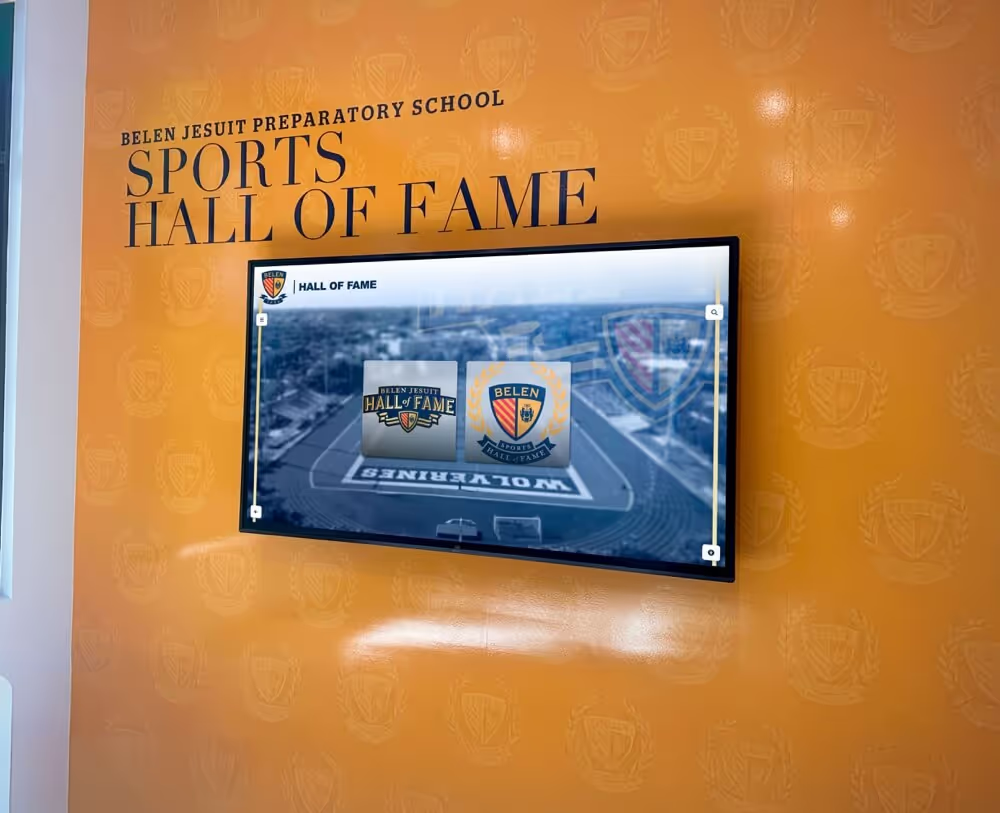
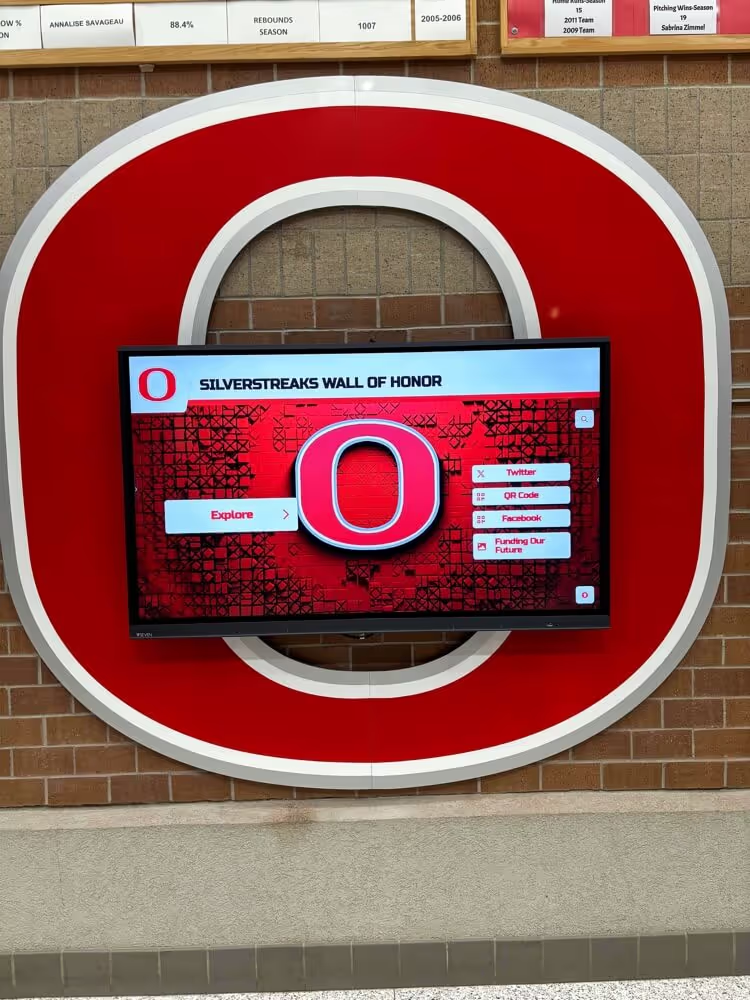
[Interactive digital platforms](https://touchwall.us/blog/digital-storytelling-athletic-programs/?utm_source=organic&utm_medium=seo-auto&utm_content=digitalwarming&utm_campaign=memorabilia-display-cabinet&utm_term=seo) enable rich athlete profiles with photos, statistics, and achievements beyond what physical displays accommodate
Hybrid Approaches: Combining Physical and Digital
Schools need not choose between traditional memorabilia display cabinets and digital recognition platforms—many institutions implement hybrid approaches that leverage advantages of both formats while mitigating individual limitations.
Selective Physical Display with Comprehensive Digital Archives
The most common hybrid strategy displays the most significant physical artifacts in traditional cabinets while providing comprehensive digital recognition for all achievements. State championship trophies, retired jerseys from professional athletes, historic equipment from milestone events, and items with particular aesthetic or symbolic value receive prominent physical display, while complete honor rolls, season records, individual awards, and extensive statistical archives live digitally.
This approach solves the capacity problem without abandoning traditional recognition entirely. Schools honor truly exceptional achievements through physical prominence while ensuring that strong-but-not-historic accomplishments receive appropriate digital recognition rather than disappearing entirely due to cabinet space limitations.
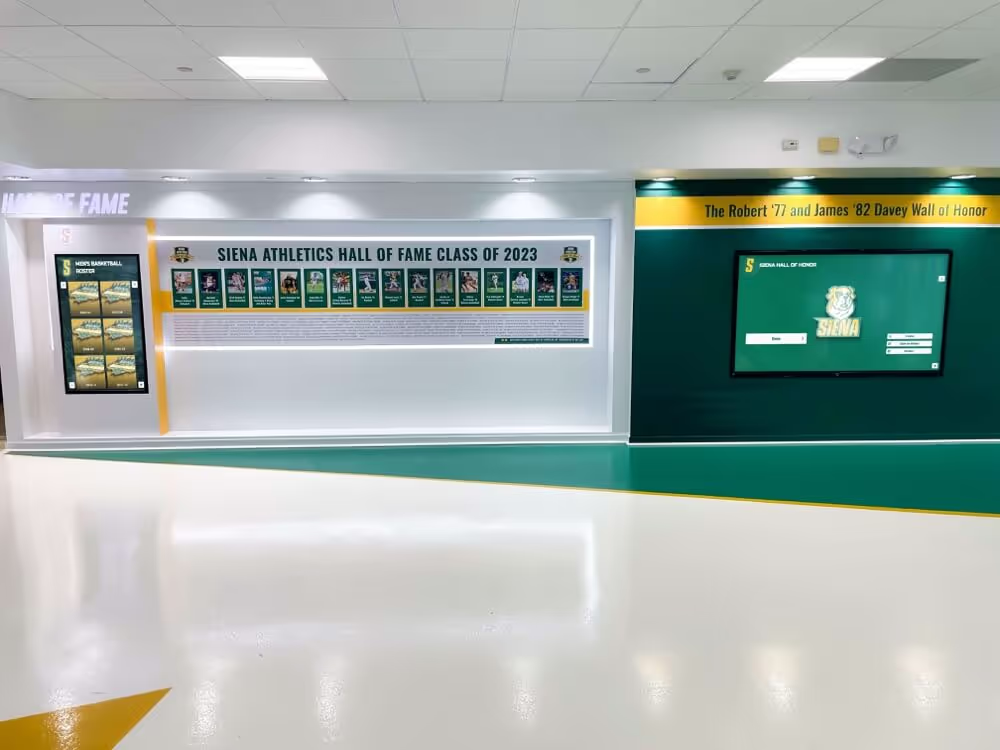
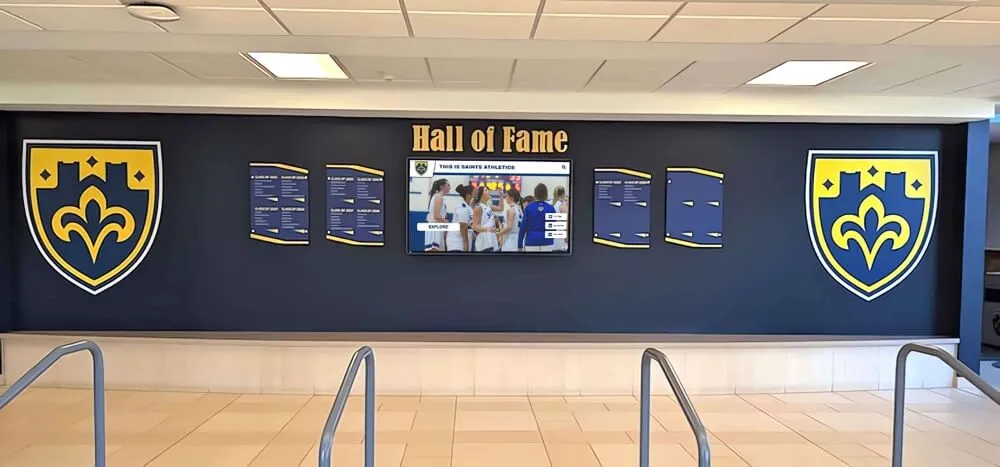
Physical artifacts positioned adjacent to digital displays create natural integration—championship trophies displayed alongside touchscreen content providing team rosters, season highlights, game statistics, and participant profiles. This pairing provides immediate visual impact through physical objects while supporting deep engagement through rich digital context.
Digital Displays Explaining Physical Collections
Another effective hybrid approach uses digital screens positioned near memorabilia cabinets to provide context, storytelling, and navigation that physical displays cannot offer. Touchscreens allow visitors to access detailed information about displayed artifacts, watch video footage from showcased championships, read athlete biographies, and understand historical context that small plaques cannot communicate.
This augmented approach respects existing physical investments while addressing their fundamental limitation—inability to provide meaningful context and storytelling within constrained physical display space. Schools with recently renovated trophy cases or significant investments in traditional displays can extend their value through digital enhancement rather than replacement.
QR codes placed on individual memorabilia items provide another digital augmentation strategy. Visitors scan codes with smartphones to access videos, extended information, and related content—creating self-guided experiences where physical artifacts serve as gateways to comprehensive digital archives. This low-cost approach requires no dedicated touchscreen hardware while providing expandable content accessible from visitors’ personal devices.
Transitioning Gradually From Physical to Digital
Schools considering complete transition to digital recognition can implement gradual migration that respects emotional attachment to traditional displays while moving toward more effective digital platforms. Rather than abruptly removing beloved trophy cases that alumni and community members value, schools can begin with digital displays in new spaces, allow physical displays to remain during transition periods, and gradually reduce physical footprints as communities adjust to digital alternatives.
New facility construction or renovations provide natural transition opportunities. Schools building athletic wings can specify digital recognition installations rather than traditional cabinets, allowing existing displays to remain in older buildings while establishing digital-first approaches in new spaces. Over time, as older facilities undergo renovations, physical displays can transition to match newer digital standards.
Communicating transition rationale helps communities understand benefits rather than perceiving changes as abandoning tradition. Explaining unlimited capacity advantages, updating flexibility, enhanced storytelling capabilities, and preservation of complete historical archives demonstrates that digital transitions enhance recognition rather than diminishing it. Many initial skeptics become enthusiastic supporters once experiencing digital recognition capabilities firsthand.
Making the Memorabilia Display Decision
Schools evaluating memorabilia display approaches should consider multiple factors beyond simple preference for traditional or digital presentations.
Budget Considerations
Traditional display cabinets require moderate upfront investment—quality wall-mounted cases typically cost $2,000-$5,000, freestanding units $5,000-$12,000, and custom built-in installations $15,000-$50,000+ depending on scale and customization. These costs include cabinet structure, lighting, locks, and installation but exclude memorabilia mounting supplies, professional jersey framing, and engraving for identification plaques.
Ongoing maintenance costs remain modest—$500-$1,500 annually for cleaning supplies, replacement bulbs, occasional repairs, and professional conservation services for valuable items. However, the hidden cost involves staff time for regular maintenance, content updates, and managing limited space as collections grow.
Digital recognition displays require higher initial investment—touchscreen installations typically range $10,000-$30,000 depending on screen size, custom design work, content development, and system capabilities. However, these platforms eliminate ongoing physical maintenance, provide unlimited capacity preventing future expansion costs, and update remotely without staff time for physical cabinet access.
Return on investment for digital platforms comes from avoided costs—no additional cabinets required as collections grow, no staff time for physical updates and maintenance, no periodic renovation costs to accommodate expanding displays, and revenue opportunities through sponsorship features that monetize recognition platforms. Schools can also redirect trophy case maintenance budgets toward digital platform subscriptions.
Space and Location Factors
Available space significantly influences memorabilia display decisions. Schools with dedicated trophy rooms or substantial hallway areas can showcase impressive physical collections that create visual impact through scale. Institutions with limited space find physical displays quickly overwhelmed by growing collections, making unlimited digital capacity appealing.
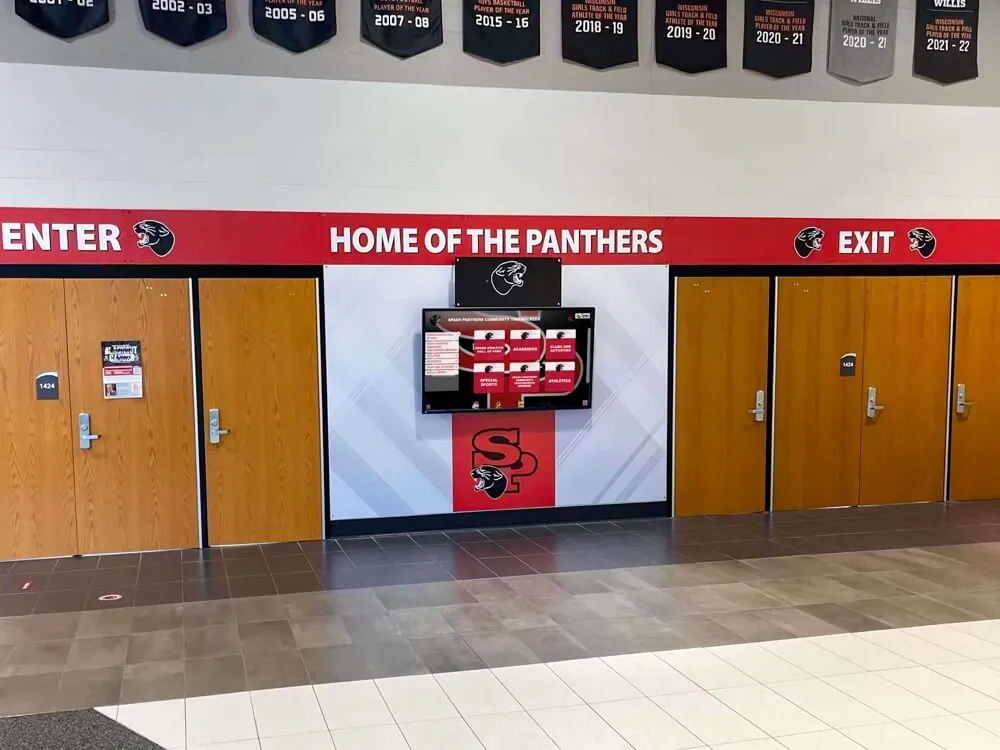
Location also matters—premier lobby spaces may deserve traditional displays creating immediate physical presence, while secondary locations might better suit digital screens that draw attention through motion and light. Athletic facilities with environmental challenges (humidity, temperature fluctuations, security risks) may favor digital installations over vulnerable physical artifacts.
Multiple locations benefit particularly from digital approaches—content populates numerous displays throughout facilities from central management rather than requiring separate physical collections in each location. Schools can position identical or customized recognition content in athletic wings, academic buildings, and administrative areas without duplicating physical artifacts.
Collection Scope and Growth Trajectory
Schools with modest, well-curated memorabilia collections highlighting truly exceptional achievements can showcase these effectively in traditional cabinets. Institutions with extensive collections, comprehensive recognition philosophies honoring all participants, or rapidly growing programs adding significant achievements regularly find physical displays increasingly inadequate.
Future growth projections should guide decisions. Programs experiencing expanding participation, increasing competitive success, or approaching major anniversaries will accumulate memorabilia rapidly—what fits current cabinet capacity may overflow within 5-10 years. Planning for growth avoids expensive renovations or awkward transitions as displays reach capacity.
Community Values and Expectations
Understanding community attachment to traditional recognition formats prevents transitions that create unnecessary controversy. Schools with strong alumni connections to existing trophy displays should respect this emotional significance, implementing changes thoughtfully rather than abruptly eliminating beloved physical spaces.
However, communities often prove more flexible than schools assume once experiencing digital alternatives firsthand. Demonstrating comprehensive recognition that honors more athletes, provides richer storytelling, and maintains historical preservation often converts initial skeptics into enthusiastic supporters. Pilot implementations in secondary locations allow communities to experience benefits before major transitions in prominent spaces.
Younger generations raised with digital interaction often prefer touchscreen experiences over static displays—what alumni view as abandoning tradition, current students perceive as modernizing recognition to match contemporary expectations. Balancing generational preferences requires thoughtful communication and potentially hybrid approaches that honor both perspectives.
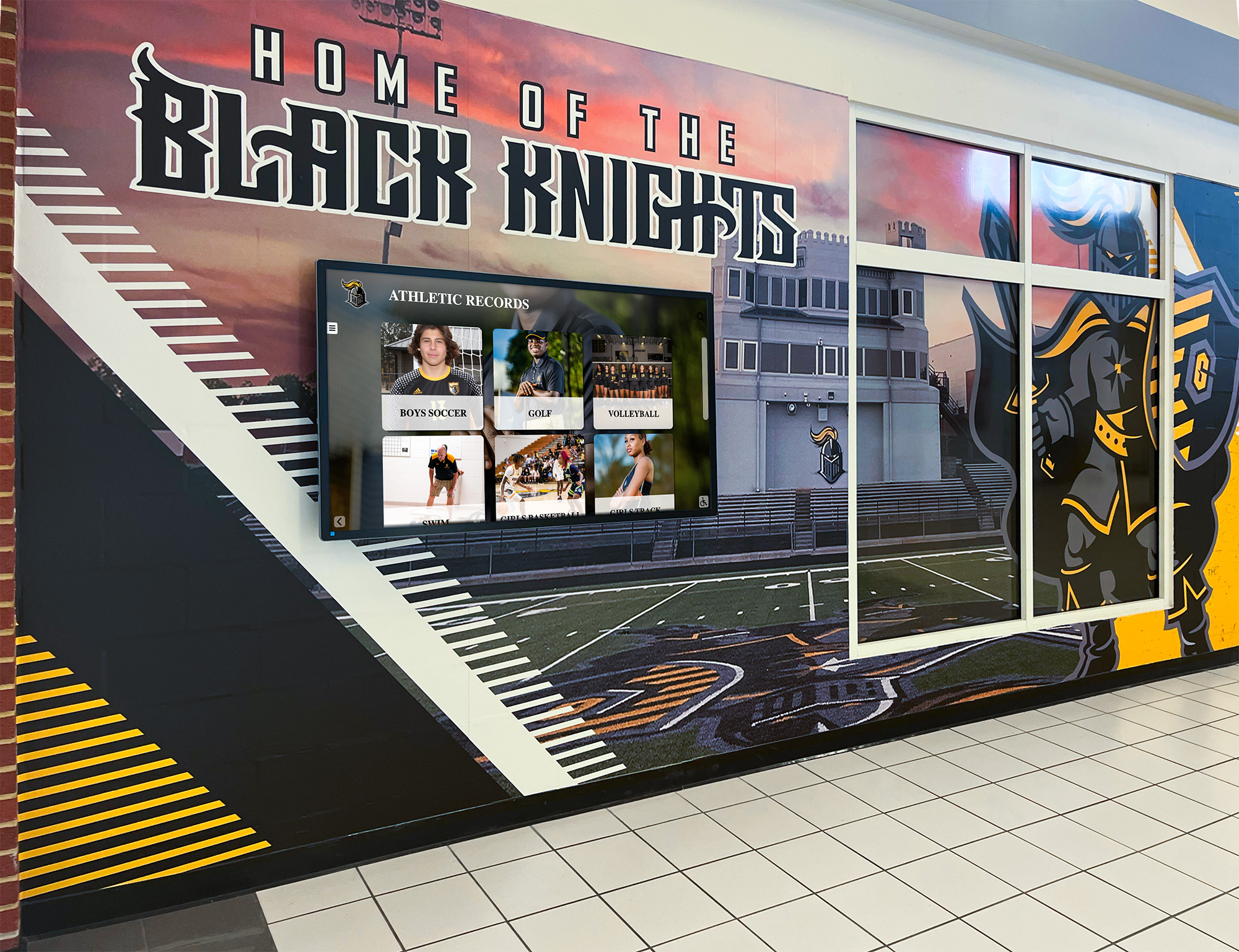
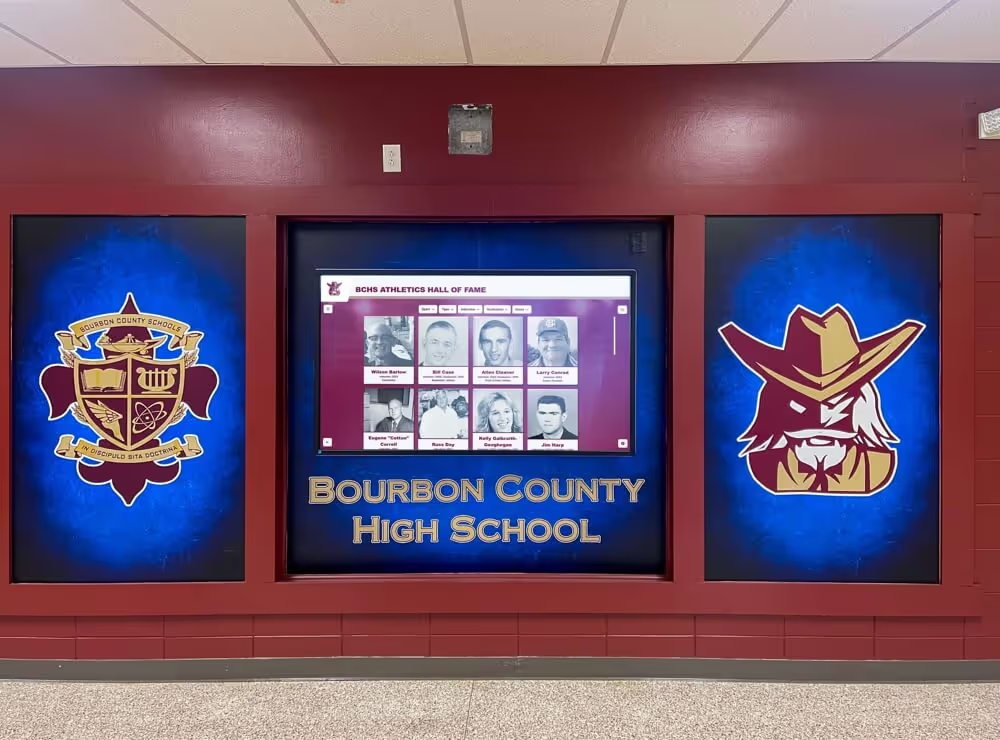
Contemporary recognition spaces integrate [multiple display formats](https://digitalyearbook.org/blog/baseball-display-case-ideas-showcasing-balls-bats-memorabilia/?utm_source=organic&utm_medium=seo-auto&utm_content=digitalwarming&utm_campaign=memorabilia-display-cabinet&utm_term=seo) celebrating tradition while embracing digital capabilities
Best Practices for Effective Memorabilia Recognition
Regardless of display format chosen, several principles create more effective memorabilia recognition that genuinely engages communities and honors achievements meaningfully.
Prioritize Storytelling Over Object Display
Displaying artifacts without context reduces meaningful items to decorative objects. Every displayed trophy, jersey, or piece of equipment should answer basic questions: What achievement does this represent? Who participated? Why was this significant? What story makes this worth remembering? Providing this narrative context—whether through physical plaques, adjacent digital screens, or integrated multimedia—transforms displays from object collections to historical narratives.
Effective storytelling uses specific details rather than generic descriptions. “2018 Basketball State Champions” identifies achievement minimally; “2018 Basketball State Champions - First championship in 23 years - Defeated defending champions in overtime on late-season call-up Sarah Martinez’s three-pointer - Coach Johnson’s final game before retirement” creates memorable narrative that engages emotionally and contextualizes significance.
Create Visual Hierarchy and Organization
Random arrangement where items compete equally for attention creates visual confusion where nothing receives focus. Establishing clear hierarchy—prominent placement for the most significant achievements, secondary positioning for strong accomplishments, organized grouping rather than scattered distribution—helps visitors navigate displays and appreciate relationships between achievements.
Organizational schemes might group chronologically showing program evolution, by sport creating dedicated sections, by achievement level highlighting championships separately from participation awards, or thematically around particular eras, coaches, or milestones. Consistent organization helps visitors find relevant content rather than confronting overwhelming walls of undifferentiated artifacts.
Balance Tradition and Current Achievement
Displays exclusively celebrating historical achievements while ignoring current successes suggest programs living in past glories rather than maintaining ongoing excellence. Regularly updating displays with recent accomplishments demonstrates sustained competitiveness and gives current athletes recognition alongside historical legends.
Similarly, displays focusing entirely on recent achievements without historical context miss opportunities to connect current students to institutional tradition and program legacy. Balanced recognition honors tradition while celebrating present excellence—showing program continuity across generations rather than isolated snapshots of particular eras.
Make Recognition Inclusive Across Achievement Levels
While peak accomplishments like state championships deserve prominent recognition, displays exclusively highlighting ultimate victories ignore the many athletes who competed honorably, contributed meaningfully, and represented programs positively without reaching championship levels. Inclusive recognition philosophies honor all participants at appropriate scale—ensuring that strong seasons, conference achievements, individual excellence, and sustained participation receive acknowledgment even if these fall short of historic significance.
Digital platforms particularly enable this inclusive approach through unlimited capacity that accommodates comprehensive recognition without physical space constraints forcing artificial selectivity. Schools can honor every athlete while maintaining prominence for exceptional achievements through organizational hierarchy and search capabilities.
Maintain Currency Through Regular Updates
Static displays that remain unchanged for years gradually transform from current recognition to historical archives, creating perceptions that programs no longer achieve recognition-worthy accomplishments or that institutions don’t value recent success sufficiently to update displays. Regular content updates—adding new championships immediately, rotating featured athletes seasonally, refreshing photographs and supporting materials annually—maintains relevance and engagement.
Physical displays require dedicated processes ensuring timely updates despite logistical challenges. Digital platforms eliminate these barriers, making currency a content management question rather than a facilities challenge.
Conclusion: Effective Memorabilia Recognition for Modern Schools
Memorabilia display cabinets serve essential purposes in school recognition strategies—preserving institutional history, inspiring current athletes through tangible evidence of program excellence, engaging communities around shared traditions, and creating physical spaces that celebrate achievement beyond purely academic focus. The question facing schools isn’t whether to recognize athletic memorabilia, but rather how to do so most effectively given contemporary capabilities and institutional priorities.
Traditional glass-front cabinets continue working well for focused collections highlighting truly exceptional achievements, particularly when schools maintain realistic expectations about capacity constraints and commit to ongoing maintenance that preserves display quality. These physical presentations create immediate visual impact through authentic artifacts that digital representations cannot fully replicate, making them valuable for the most significant championship trophies, retired jerseys from extraordinary athletes, and historic equipment with powerful emotional resonance.
However, physical displays face inherent limitations that schools should acknowledge honestly rather than accepting as inevitable constraints. Finite cabinet space forces selective curation that leaves most achievements unrecognized, physical updating requirements create maintenance burden and inevitable delays, static presentations provide minimal context and storytelling, and deterioration gradually degrades display quality despite best preservation efforts.
Digital recognition platforms eliminate these fundamental limitations while introducing capabilities that traditional displays simply cannot match—unlimited capacity honors all participants comprehensively rather than forcing artificial selectivity, remote updating keeps content current without physical access requirements, multimedia integration provides rich storytelling and context, interactive engagement creates active experiences rather than passive viewing, and comprehensive archives preserve institutional history permanently without physical storage challenges.
For many schools, hybrid approaches combining selective physical display of peak achievements with comprehensive digital recognition for complete historical archives provide optimal solutions—respecting community attachment to traditional formats while embracing digital advantages. These integrated strategies let schools highlight irreplaceable physical artifacts while extending recognition far beyond what cabinet space permits, creating layered experiences where visitors can engage at whatever depth interests them.
The most important recognition principle transcends format debates: effective memorabilia displays tell stories that engage communities emotionally and connect current generations to institutional traditions. Whether through carefully curated physical cabinets, comprehensive digital platforms, or hybrid combinations, successful recognition creates meaningful experiences that celebrate achievement authentically, honor participants appropriately, preserve history permanently, and inspire continued excellence. Schools should evaluate display options against these outcome measures rather than defaulting to traditional formats simply because that’s how recognition has always been done.
Ready to explore how digital recognition platforms can complement or enhance your school’s memorabilia displays? Discover Rocket Alumni Solutions—interactive touchscreen displays that preserve unlimited athletic achievements, update instantly from anywhere, integrate rich multimedia storytelling, and create engaging experiences that honor every athlete and achievement in your program’s history. Transform physical space constraints into unlimited digital recognition that connects current students to institutional tradition while celebrating ongoing excellence.