



Every February, high school wrestling reaches its pinnacle in Iowa as the best wrestlers from across the state converge on Wells Fargo Arena in Des Moines for the Iowa High School State Wrestling Tournament. Few states embrace wrestling with the passion and tradition that Iowa displays—where entire communities pack arenas to watch their wrestlers compete, where state qualifiers receive hero welcomes returning to their schools, and where becoming a state champion represents a lifetime achievement celebrated across generations.
For Iowa high school wrestlers, reaching the state tournament means joining an elite tradition spanning decades of legendary athletes, memorable matches, and championship moments etched into the state’s athletic history. The path to state qualification demands year-round dedication, rigorous competition through sectionals and districts, and the mental toughness to perform when everything is on the line. When wrestlers finally step onto the mat at Wells Fargo Arena, they carry the hopes of their schools, families, and communities.
Yet many Iowa schools struggle to adequately celebrate wrestling achievements—state qualifiers deserve recognition equal to other athletic accomplishments, championship runs merit comprehensive documentation preserving memorable seasons, and wrestling traditions should be honored through year-round displays connecting current wrestlers to program history. This guide explores the Iowa high school state wrestling tournament while demonstrating how modern recognition systems help schools honor wrestling excellence.
Wrestling holds a special place in Iowa’s athletic culture. While other states may elevate football or basketball as their signature sport, Iowa has long been synonymous with wrestling excellence at every level—from youth programs through college wrestling powerhouses like the University of Iowa and Iowa State. This cultural commitment creates an environment where high school wrestlers receive support, recognition, and community celebration that makes qualifying for and competing at the state tournament truly special.

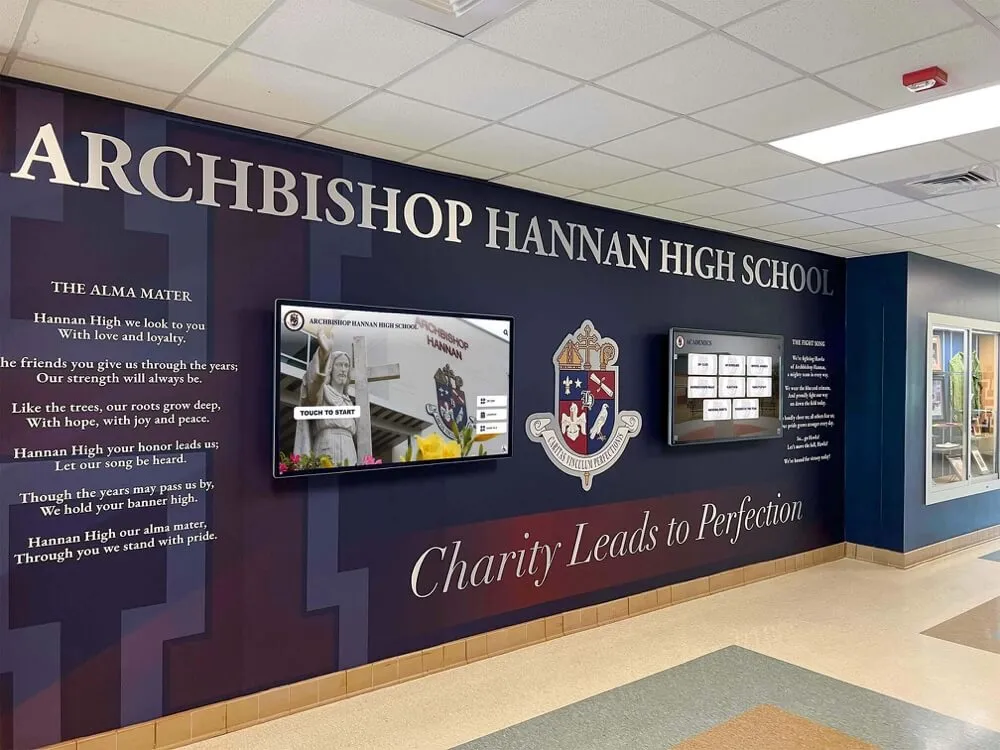
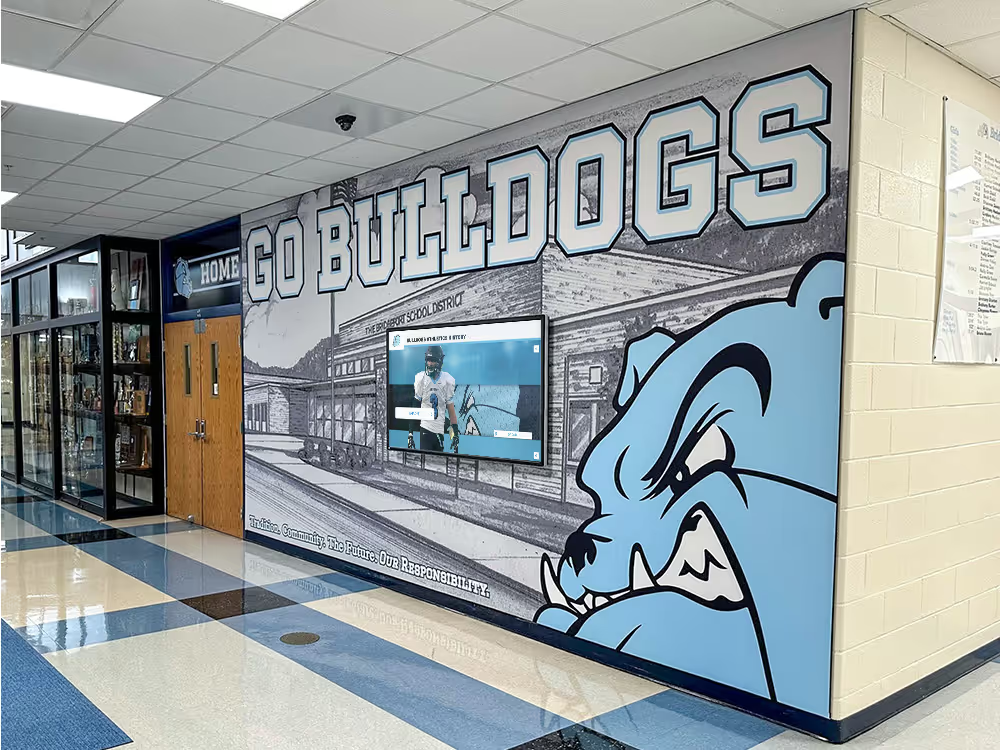
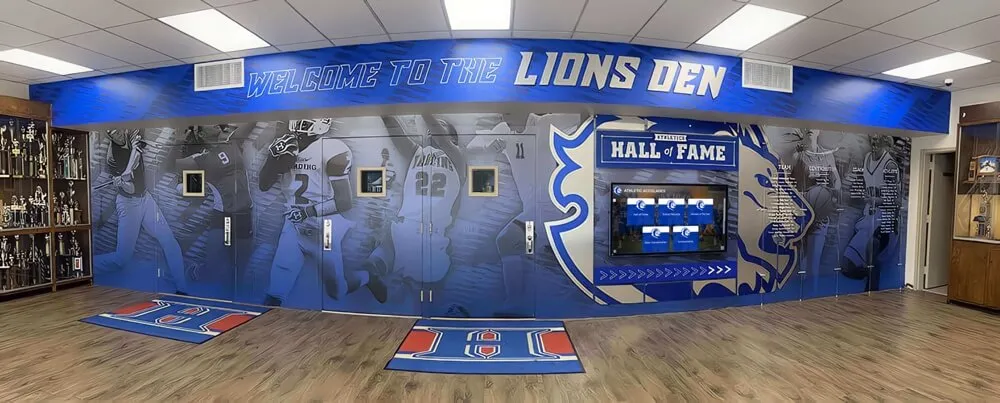
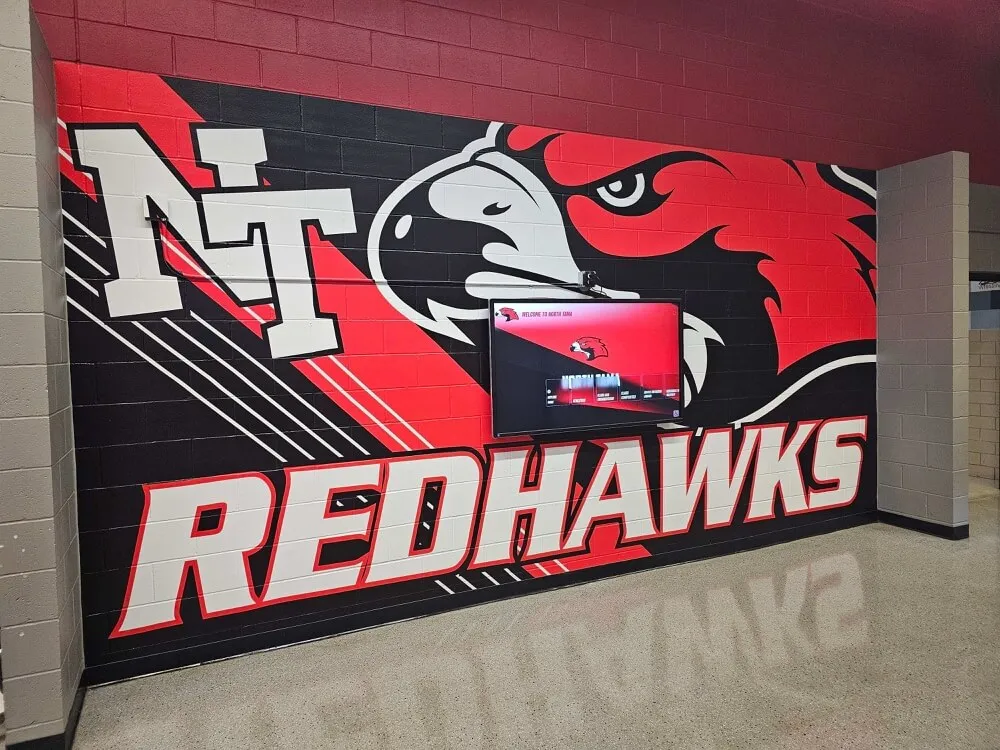
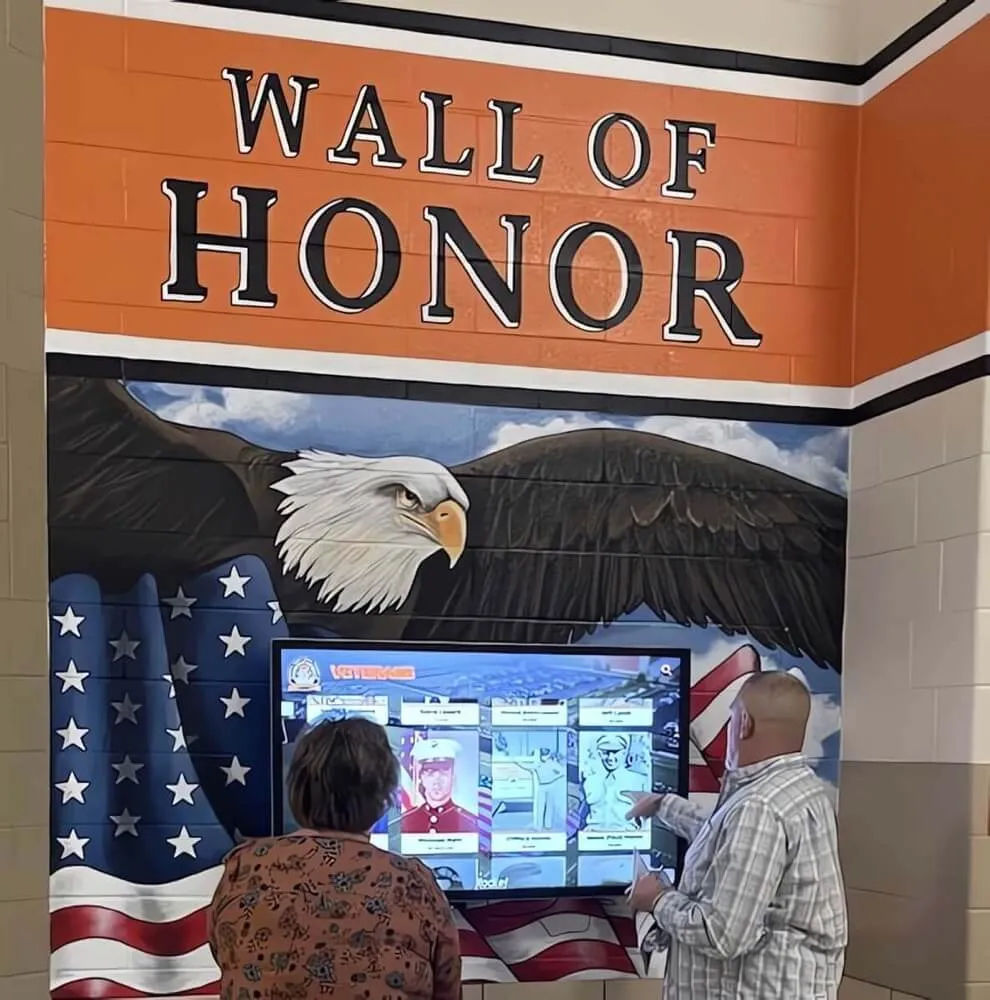
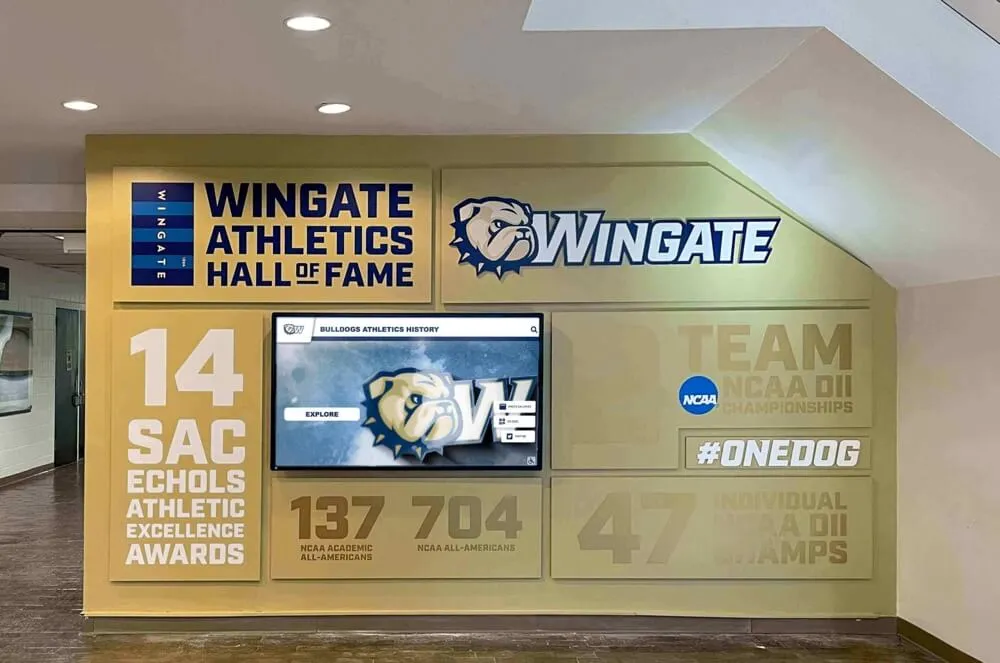
Iowa schools honor wrestling traditions through recognition systems celebrating state qualifiers, champions, and program excellence
Understanding the Iowa High School State Wrestling Tournament
The Iowa High School Athletic Association (IHSAA) organizes one of the nation’s most prestigious high school wrestling tournaments each year, attracting thousands of spectators and showcasing exceptional athletic competition.
Tournament Structure and Format
Iowa’s state wrestling tournament accommodates competitors across multiple classifications ensuring appropriate competitive balance while maintaining high championship standards.
Classification System
Iowa divides high school wrestling into three classes based on school enrollment:
- Class 1A: Smallest schools with enrollments typically under 215 students
- Class 2A: Medium-sized schools with enrollments from approximately 215-490 students
- Class 3A: Largest schools with enrollments over 490 students
This classification ensures schools compete against similarly-sized institutions while enabling schools of all sizes to pursue state championships. Each classification conducts its own tournament with separate brackets, champions, and team competitions.
Weight Class Competitions
Iowa high school wrestling features 14 weight classes ranging from 106 pounds through 285 pounds (heavyweight). Each weight class conducts independent tournaments with wrestlers competing exclusively against others in their weight class throughout districts, sectionals, and the state tournament.
The weight classes are: 106, 113, 120, 126, 132, 138, 145, 152, 160, 170, 182, 195, 220, and 285 pounds. Strategic weight management throughout the season positions wrestlers optimally within classes where they can compete most effectively while maintaining healthy wrestling weight.
Tournament Bracket Format
The state tournament uses a traditional wrestling bracket format:
- Initial rounds narrow the field through single-elimination competition advancing winners toward championship finals
- Consolation brackets provide wrestlers defeated by eventual finalists opportunities to wrestle back for placing positions
- Championship finals determine state champions in each weight class
- Consolation finals establish third through eighth place finishers receiving place medals
This format ensures all state qualifiers wrestle multiple matches regardless of opening round results while maintaining competitive intensity throughout the tournament as wrestlers pursue the highest placements possible.
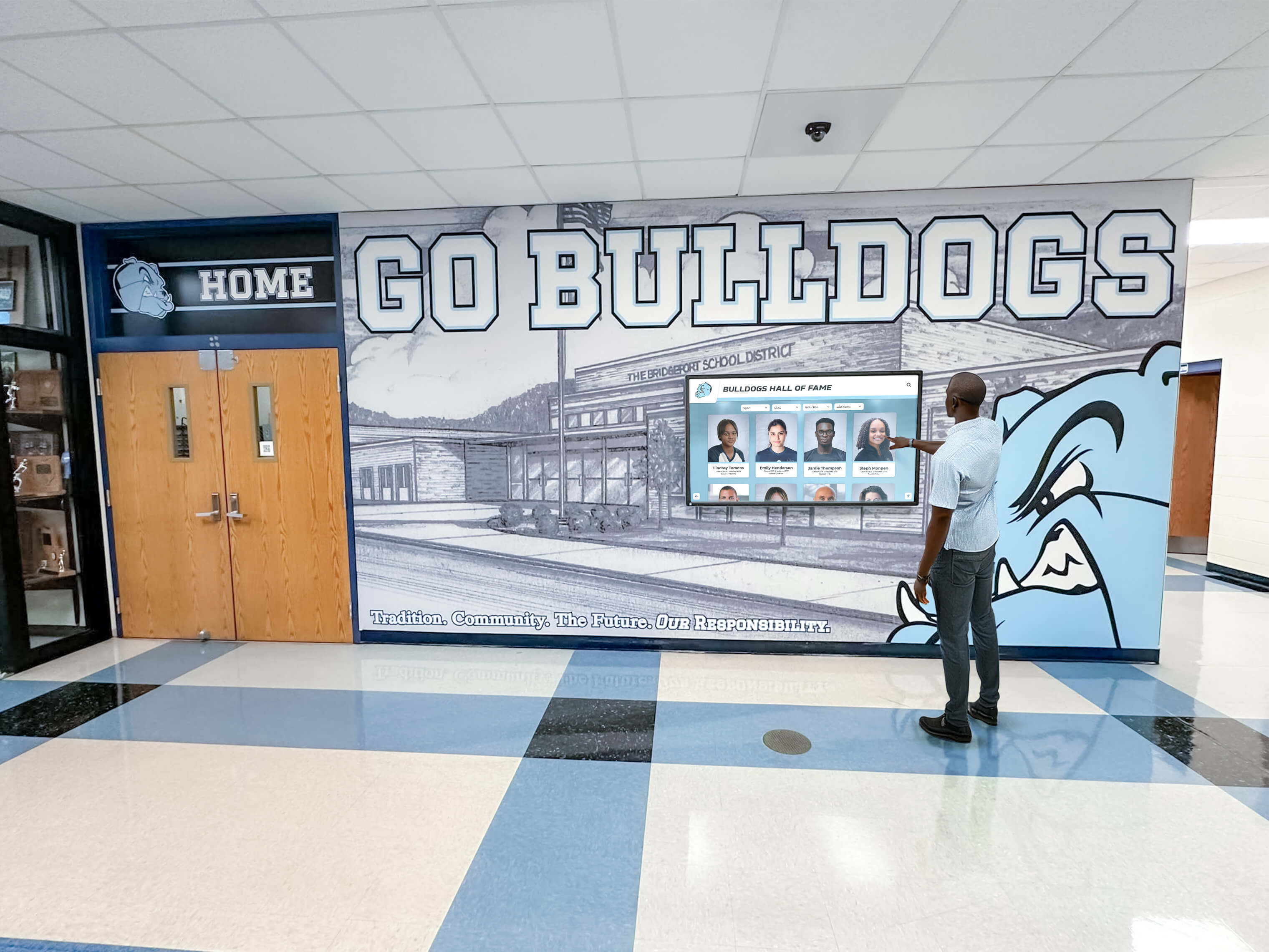
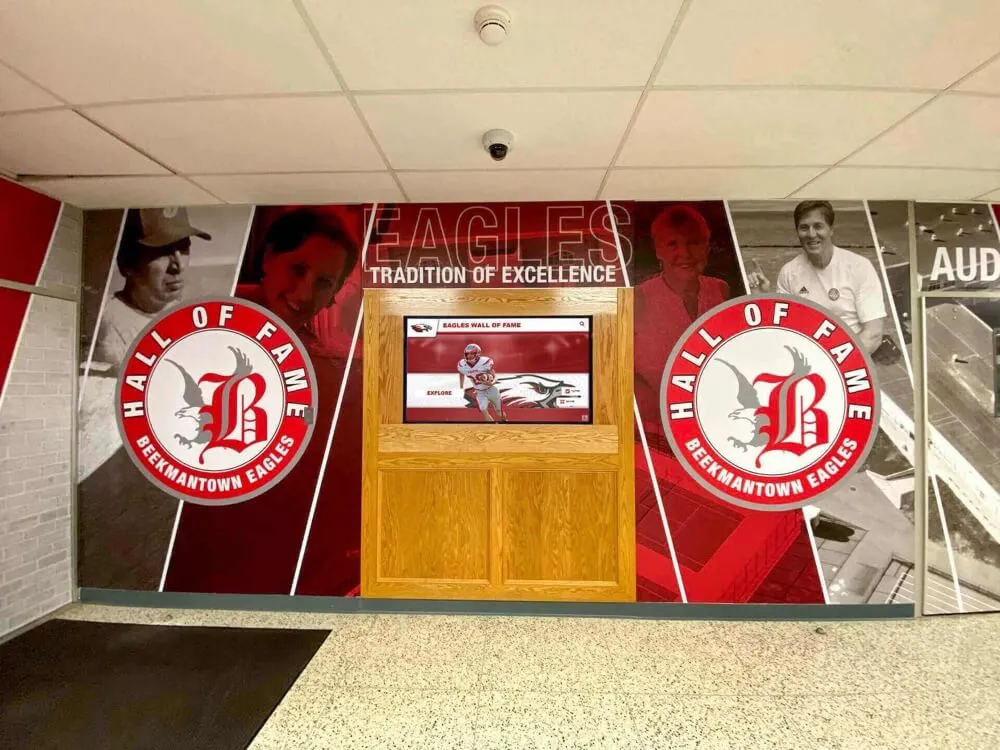
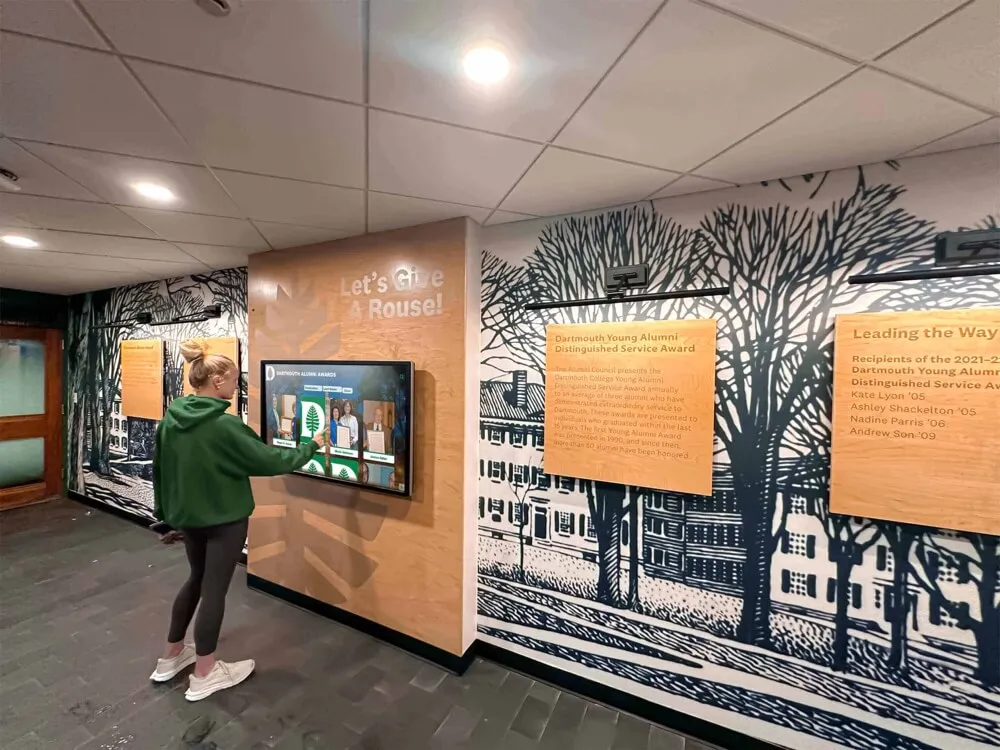
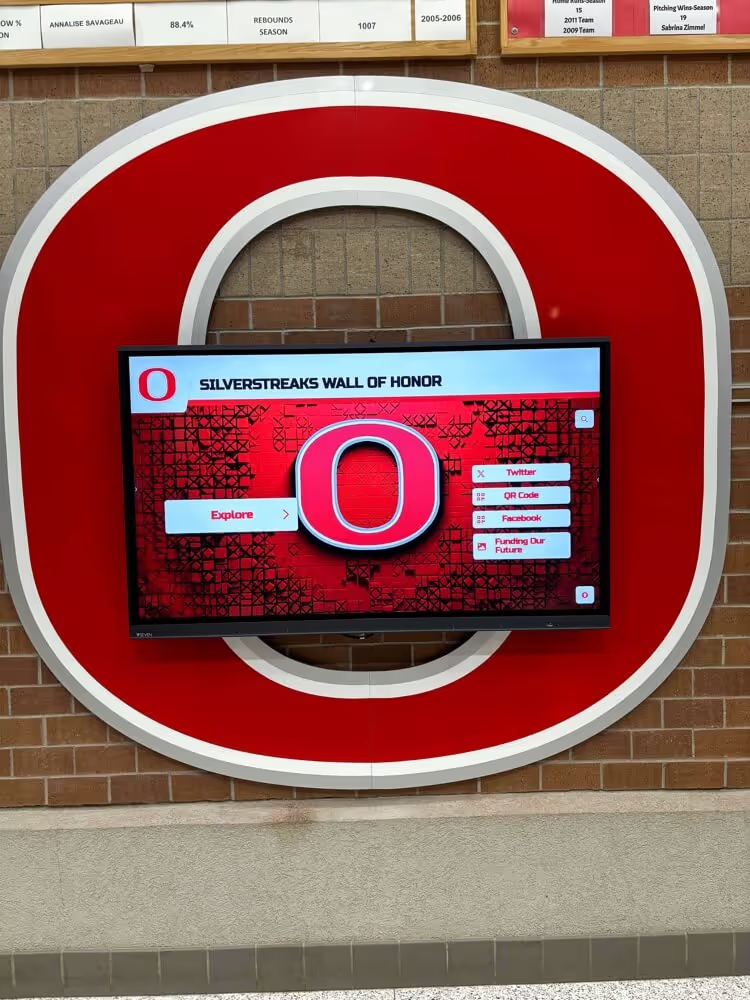
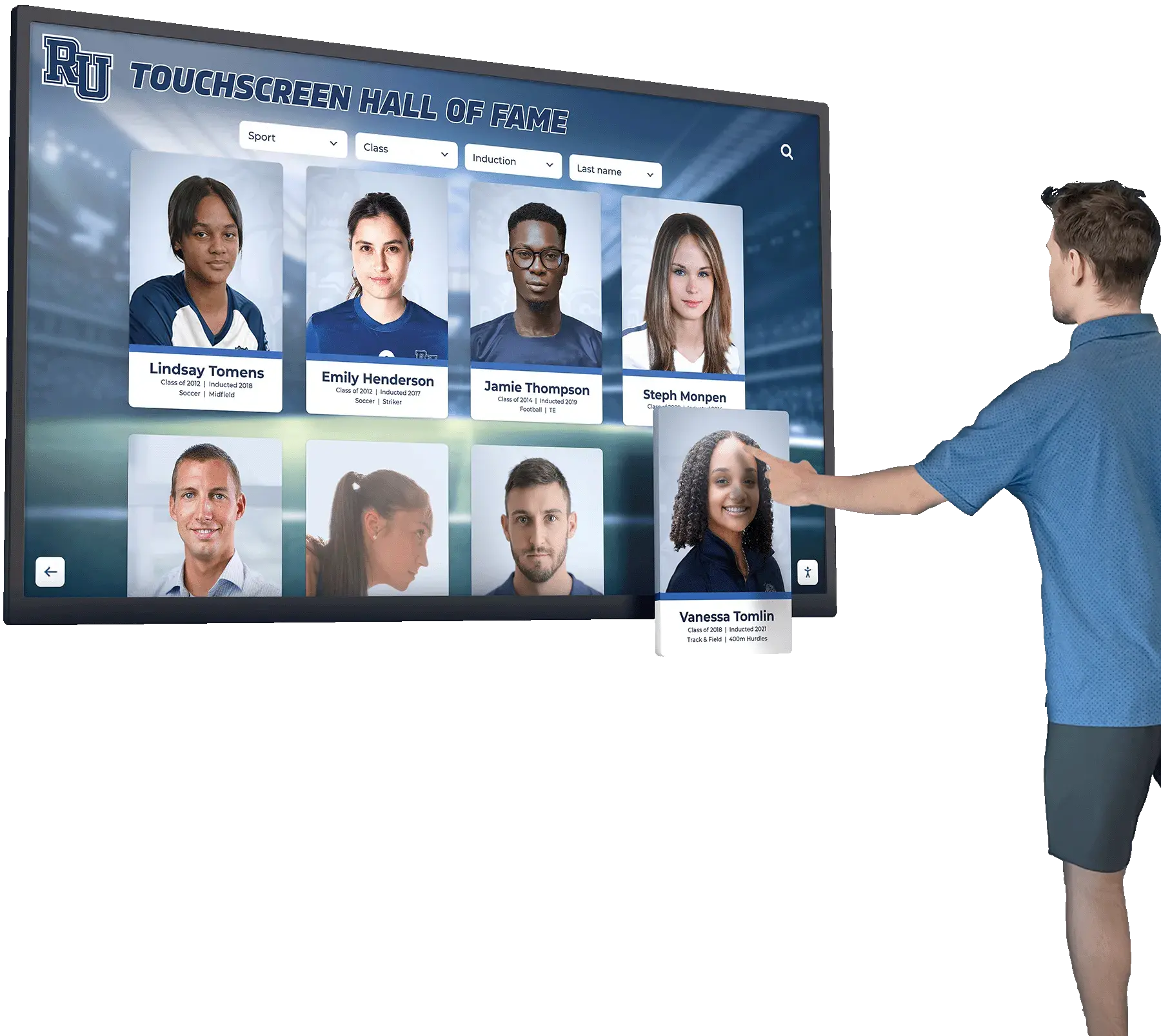
Interactive displays enable wrestlers, families, and communities to explore program history and championship achievements
Qualification Path to State Tournament
Reaching the Iowa state wrestling tournament requires navigating a rigorous qualification structure testing wrestlers throughout February competition.
Regular Season Competition
The wrestling season typically begins in late November or early December with dual meets, tournaments, and conference competitions building toward postseason. Regular season performance determines seeding for district tournaments while providing crucial match experience and conditioning essential for championship competition.
Wrestlers and coaches strategically schedule competitions against quality opponents preparing athletes for the intensity of postseason pressure while managing injury risk and maintaining optimal weight and conditioning throughout the long season.
District Tournaments
Iowa divides each classification into districts with typically 12-16 schools competing in each district tournament. District tournaments occur in mid-February with top finishers in each weight class advancing to sectional competition.
The number of district qualifiers varies by class and district size, but typically the top three or four wrestlers in each weight class advance to sectionals. District tournaments provide the first high-stakes elimination competition where mistakes end postseason hopes, creating intense competitive atmosphere.
Sectional Tournaments
Sectional tournaments serve as the final qualification round before state. District qualifiers compete against wrestlers from other districts within their sectional assignment, with only the top finishers advancing to Wells Fargo Arena.
Typically the sectional champion and runner-up automatically qualify for state, with additional qualifiers sometimes determined through wrestle-back brackets or third-place matches depending on the specific sectional and class. Sectional weekend represents the culmination of months of preparation as wrestlers pursue their state tournament dreams.
State Tournament Qualification Pressure
The pressure to qualify for state creates memorable drama each sectional weekend. Wrestlers who dominated regular season competition face opponents equally talented, equally prepared, and equally desperate to reach Des Moines. Split-second decisions, strategic coaching choices, and mental toughness often determine who advances and who watches state from home.
Schools implementing comprehensive athletic recognition systems honor not just state champions but also sectional qualifiers who achieved significant accomplishments even when championships remained elusive.
The State Tournament Experience at Wells Fargo Arena
For wrestlers qualifying for state, competing at Wells Fargo Arena represents the pinnacle of their high school careers, creating memories lasting lifetimes.
Tournament Week Schedule and Format
The state tournament typically occurs over three days in mid-to-late February, with each session building toward championship finals.
Thursday: Opening Rounds
The tournament begins Thursday morning with opening round matches for all three classes. The arena atmosphere builds throughout the day as wrestlers and their supporters arrive from across Iowa. Opening round victories advance wrestlers toward championship brackets while defeats send competitors into consolation rounds where they must wrestle back for placing positions.
Thursday evening sessions continue advancing championship and consolation brackets, with wrestlers needing multiple victories to position themselves for Friday and Saturday medal rounds.
Friday: Semifinal and Consolation Rounds
Friday features semifinal rounds determining which wrestlers will compete for state championships Saturday night. These semifinal matches often prove most challenging as only four wrestlers per weight class remain in championship contention, each believing they can win state titles.
Friday also includes critical consolation rounds where wrestlers battle for top-eight placements earning medals. The consolation brackets create their own drama as wrestlers work to overcome earlier defeats, stay alive for higher placements, and salvage seasons that didn’t reach championship finals.
Saturday: Championship Finals and Place Matches
Saturday culminates with championship finals determining state champions in each weight class. The evening session at Wells Fargo Arena draws capacity crowds as Iowa wrestling fans witness the crowning of state champions whose names will be remembered in school and community history.
Saturday afternoon sessions also determine third through eighth place finishers through consolation finals and placement matches. Every placement matters—medaling at state represents significant achievement worthy of recognition regardless of final placement position.
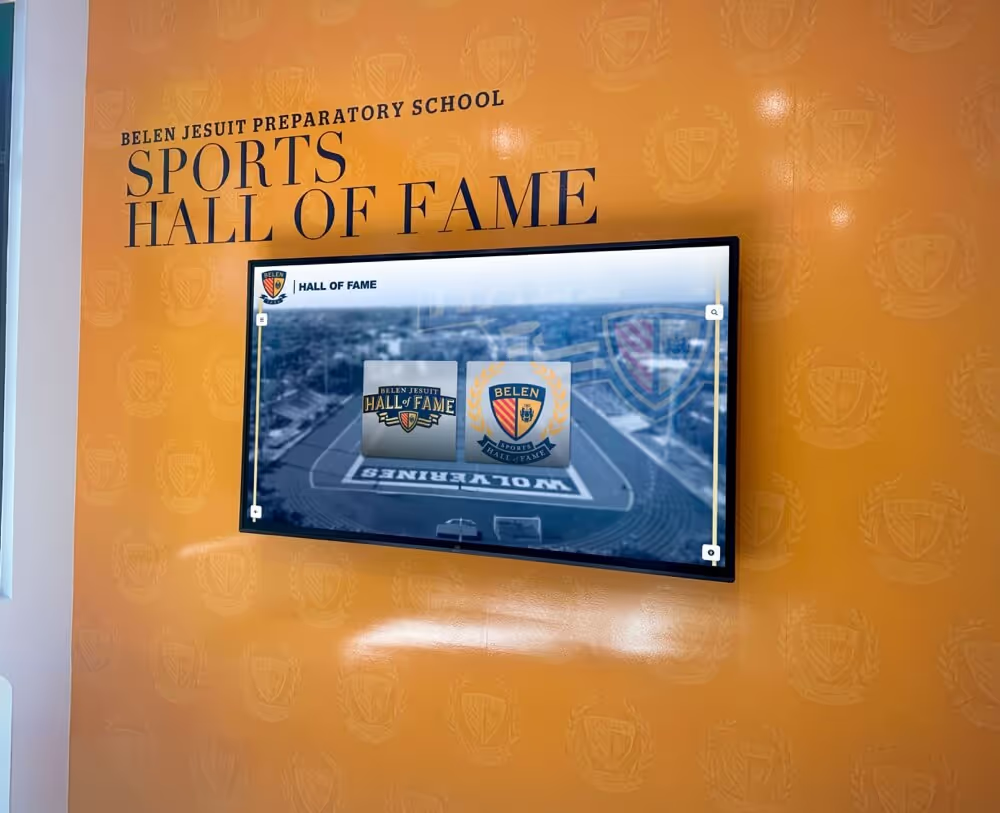
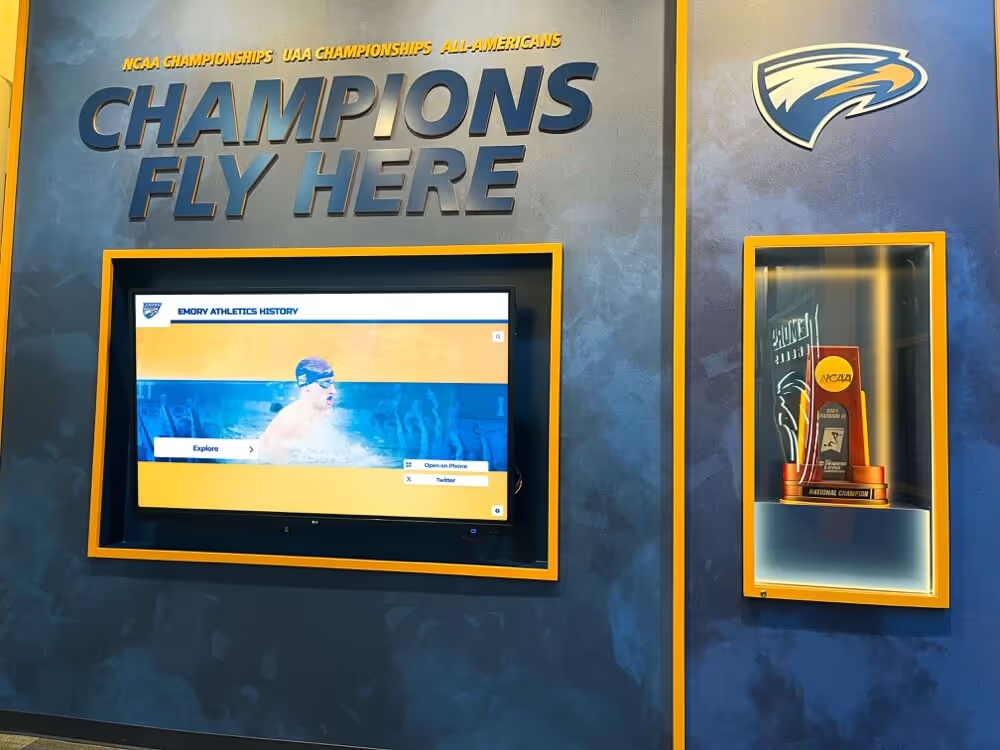
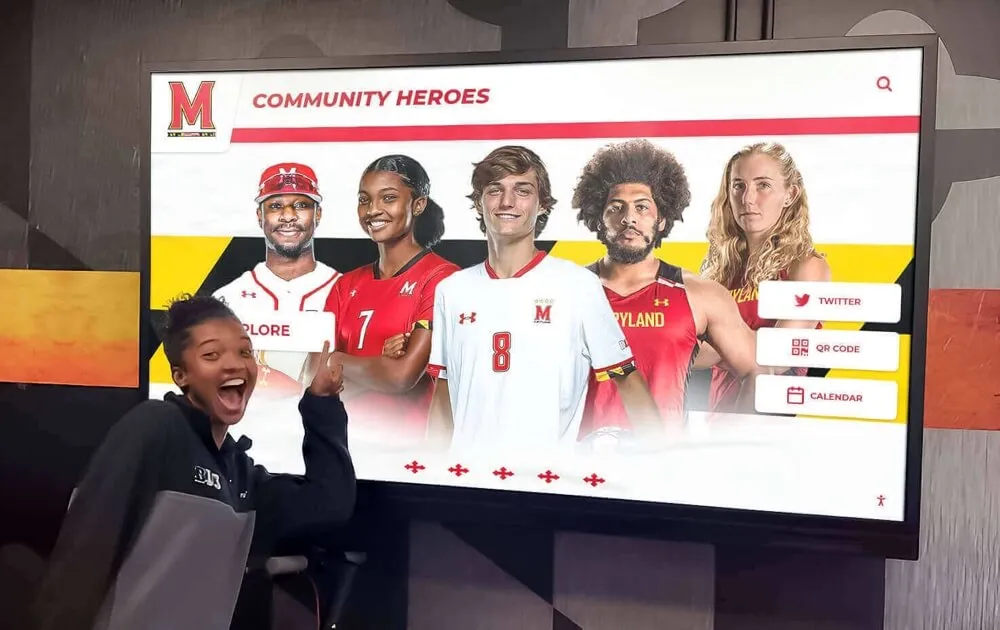
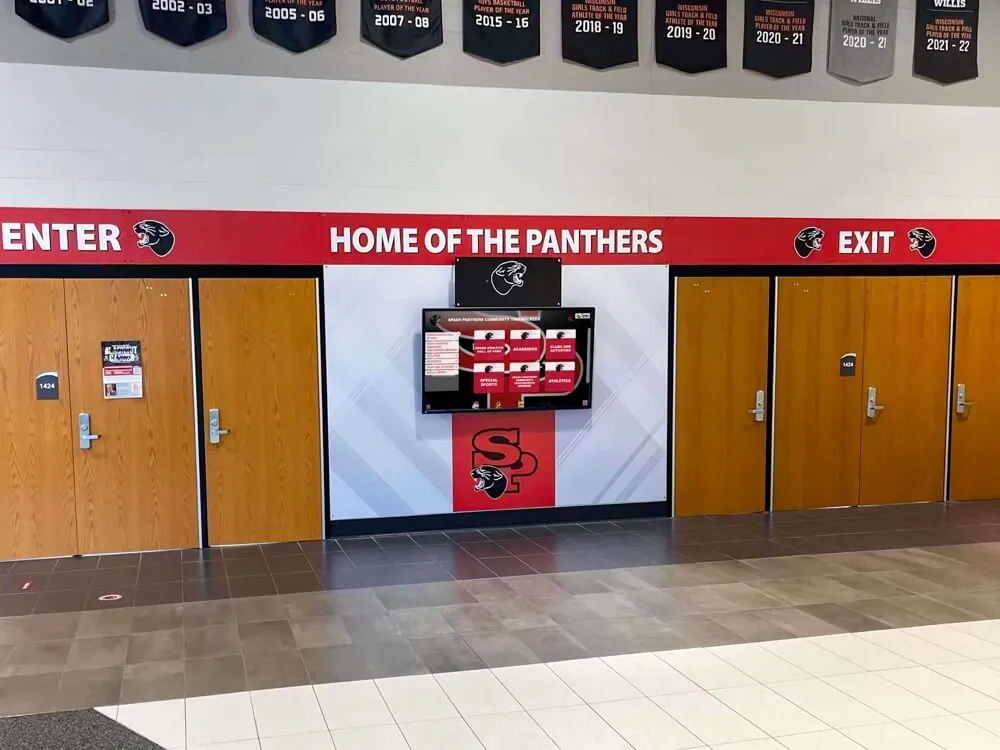
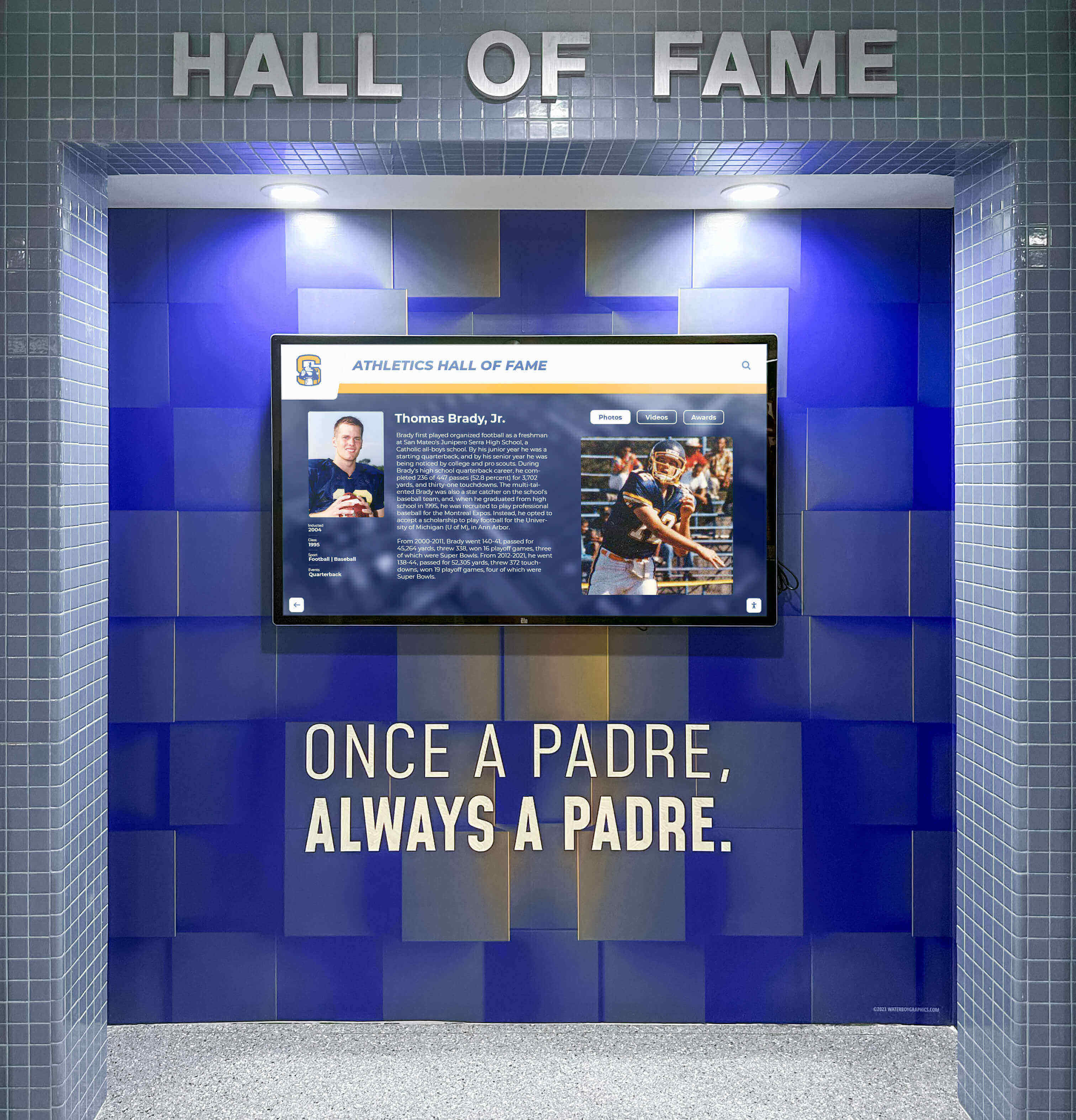
Digital recognition creates gathering points where wrestling communities celebrate achievements together
The Atmosphere and Fan Culture
Iowa’s wrestling culture creates an atmosphere unmatched in high school sports nationally.
Community Support and School Pride
When wrestlers qualify for state, entire communities rally in support. Schools organize pep rallies celebrating state qualifiers before departure to Des Moines, local businesses display congratulatory signs, and social media buzzes with encouragement and pride.
At Wells Fargo Arena, Iowa communities transform sections into school spirit zones with coordinated colors, homemade signs, and organized cheering sections rivaling college sporting events. The sound of thousands of fans filling the arena creates an electric atmosphere pushing wrestlers to their best performances.
Multigenerational Wrestling Tradition
Iowa wrestling tradition spans generations. Grandparents who wrestled decades ago bring their grandchildren to watch current competitors. Alumni who qualified for or won state championships return annually to watch their schools’ wrestlers compete. Former coaches still attend supporting programs they built.
This generational continuity creates unique emotional connections. Current wrestlers compete not just for themselves but for programs whose traditions stretch back decades, creating pressure but also pride in representing institutions larger than individual athletes.
Recognition Beyond the Tournament
State qualifiers and champions receive recognition extending far beyond tournament week. Schools celebrate returning wrestlers with welcome assemblies, local newspapers profile achievements, and wrestling accomplishments become permanent parts of school athletic history.
Schools using digital recognition platforms ensure this recognition remains visible year-round rather than fading after initial celebrations, maintaining wrestling visibility comparable to other sports while honoring the sport’s special place in Iowa athletic culture.
Weight Class Dynamics and Competition Strategy
Understanding weight classes and strategic considerations helps appreciate the complexity of championship-level wrestling.
Weight Management and Cutting Weight
Wrestling’s weight class system creates unique challenges around weight management throughout the season.
Healthy Weight Management Approaches
Modern wrestling increasingly emphasizes healthy weight management versus extreme cutting practices. Iowa high school wrestling follows IHSAA regulations establishing minimum weight certifications ensuring wrestlers cannot compete below weights determined unhealthy based on body composition assessments.
These regulations protect wrestlers from dangerous weight loss practices while encouraging competition at weights where athletes maintain strength, stamina, and health throughout the season. Coaches and families must balance competitive advantage gained from lower weight classes against performance and health consequences of excessive weight cutting.
Strategic Weight Class Selection
Teams and individual wrestlers make strategic decisions about optimal weight classes considering multiple factors: where wrestlers can maintain health while making weight, which weight classes have the toughest district and sectional competition, and how individual weights affect team scoring in dual meets and tournaments.
These decisions often determine postseason success. A wrestler might dominate at one weight class while struggling at another just one class higher or lower. Finding the right weight class represents crucial strategic planning throughout the season.
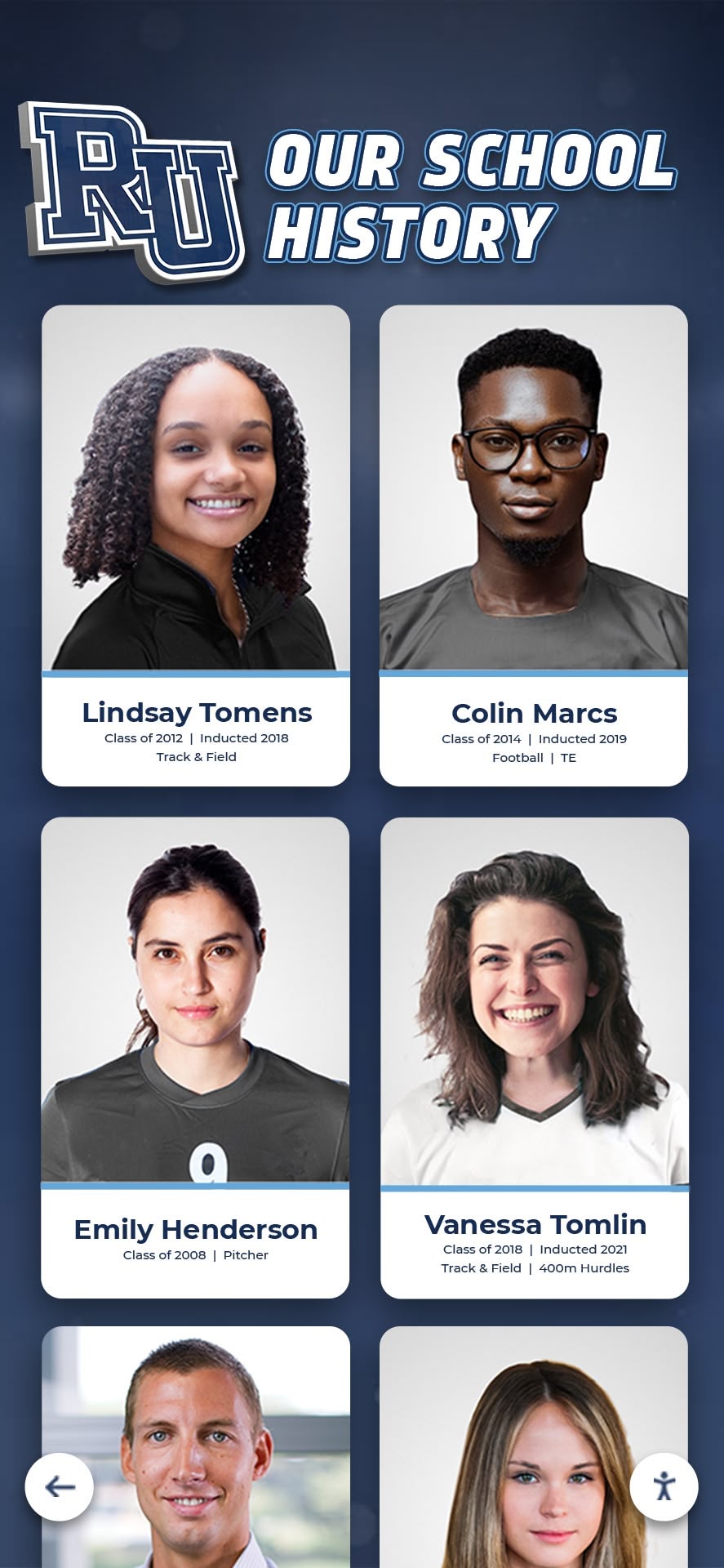
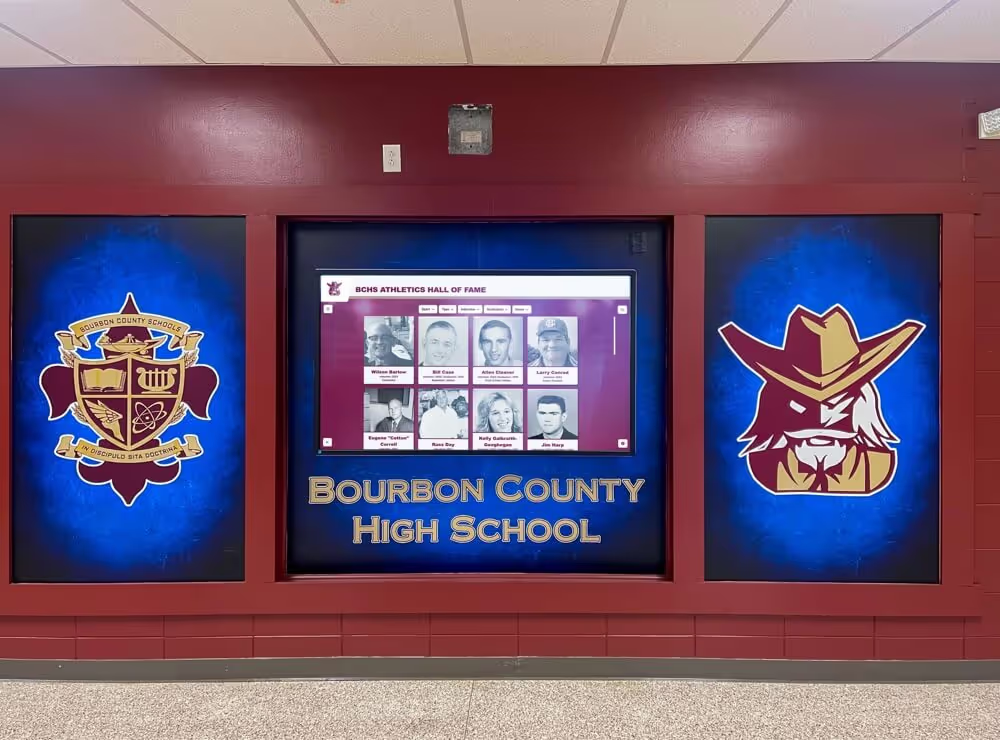
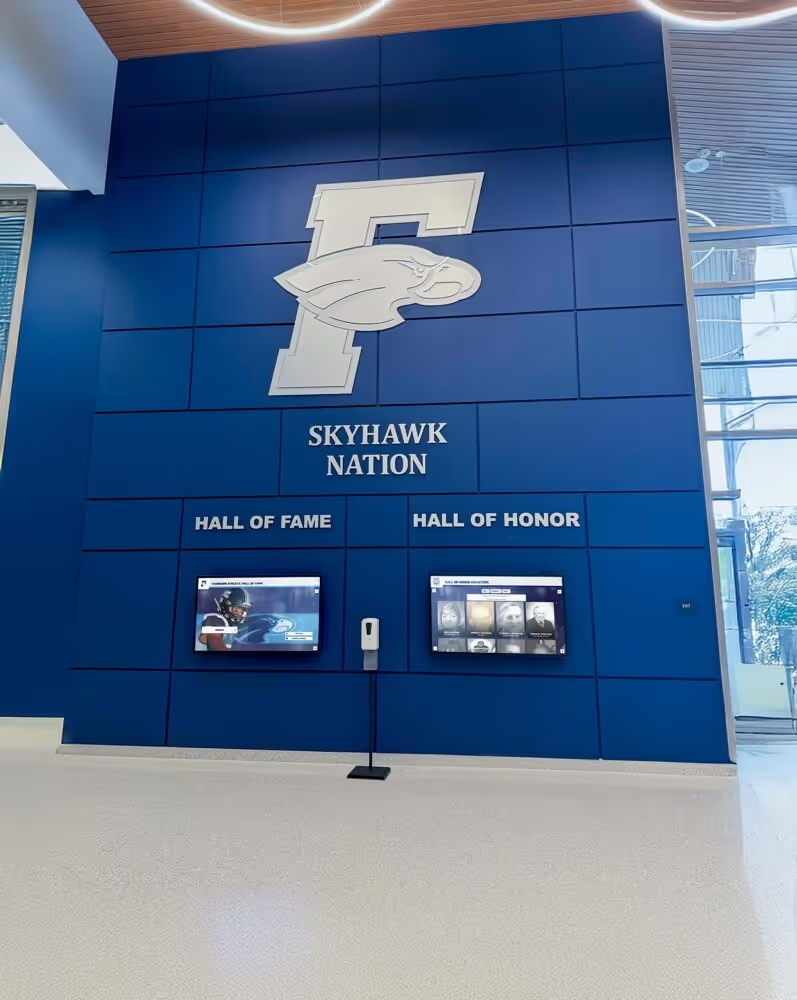
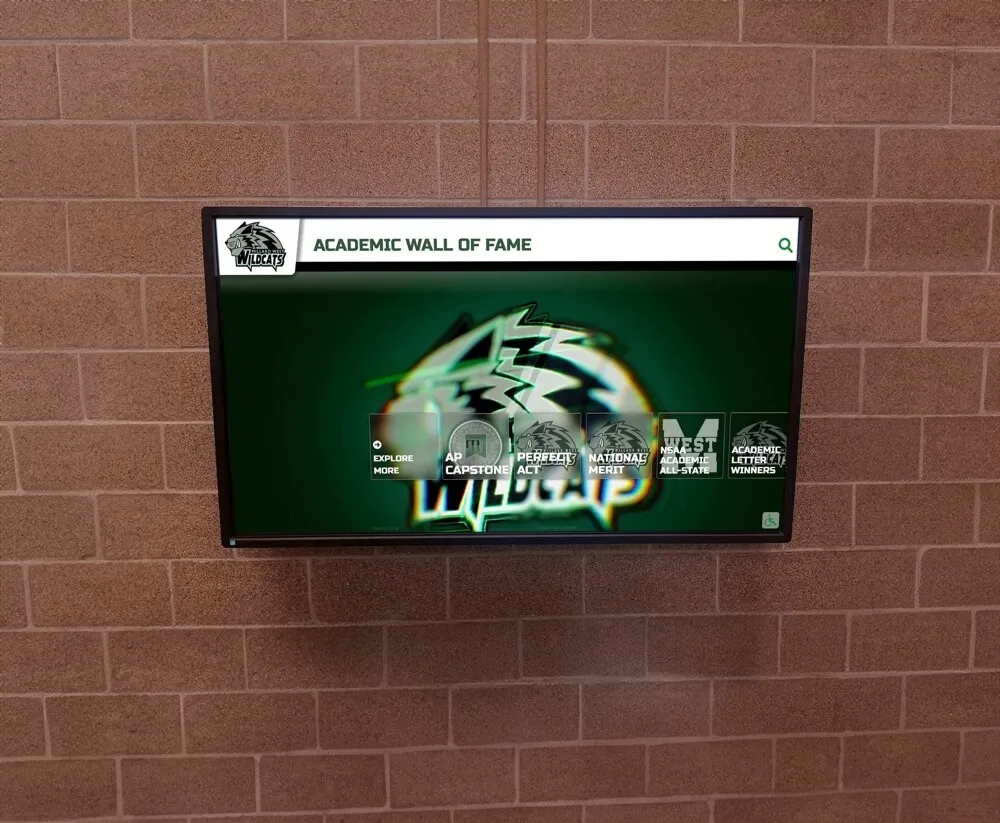
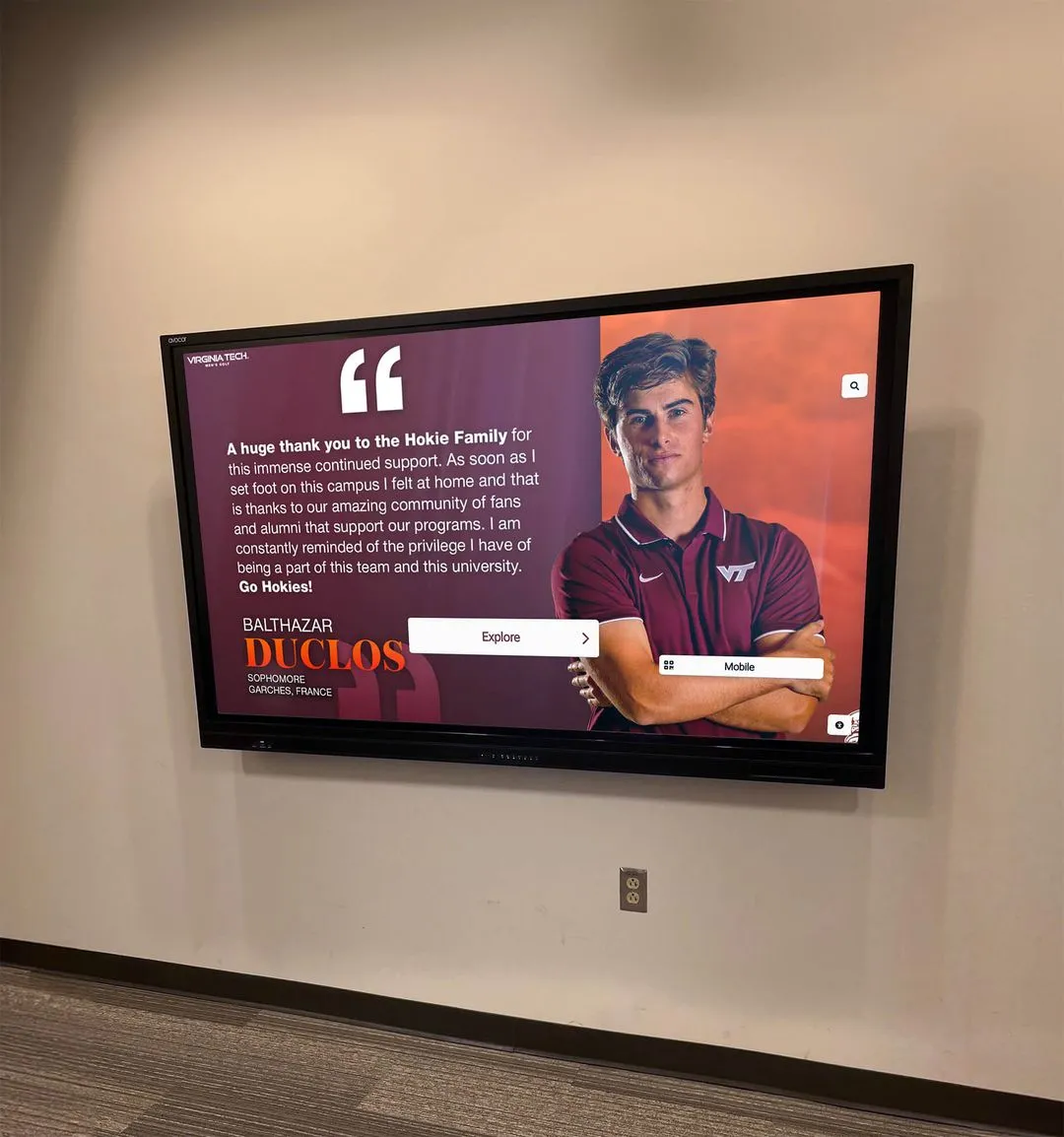
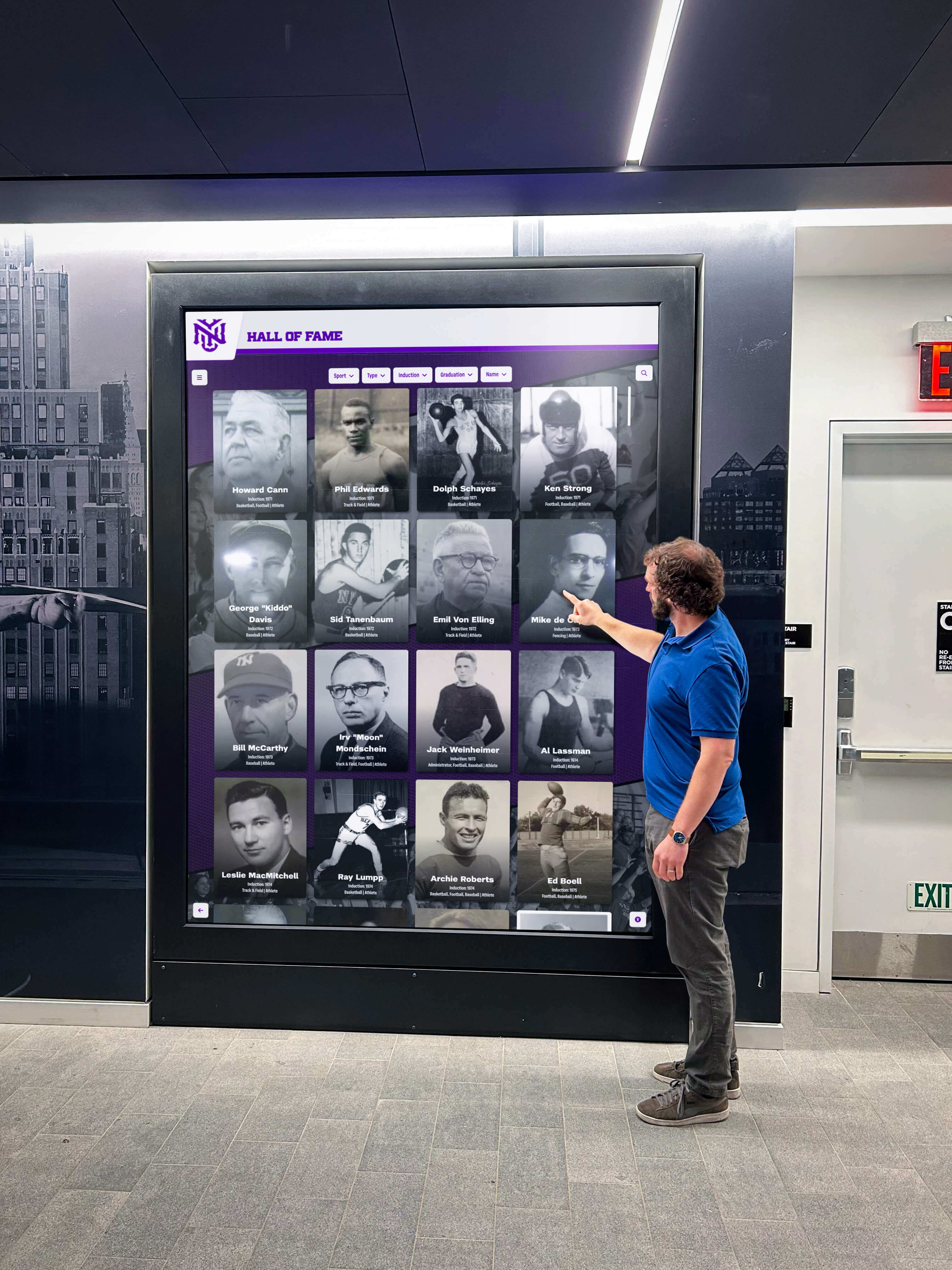
Comprehensive athlete profiles document wrestling careers, championships, and contributions to program excellence
Coaching Strategy and Match Preparation
Championship-level wrestling demands sophisticated coaching and strategic preparation.
Opponent Scouting and Match Planning
Successful coaches extensively scout potential opponents through tournament observation, video study, and statistical analysis. Understanding opponents’ preferred techniques, conditioning levels, scoring patterns, and tactical tendencies enables coaches to develop specific match plans exploiting weaknesses while neutralizing strengths.
At state tournaments where opponents might be unfamiliar, coaches must rapidly assess competition draw, gather intelligence on potential opponents, and adapt strategies between sessions as brackets progress and match conditions change.
Mental Preparation and Tournament Psychology
Wrestling’s individual nature creates intense psychological pressure. Unlike team sports where teammates share competitive burden, wrestlers step onto mats alone with match outcomes depending entirely on individual performance. This pressure magnifies at state tournaments where wrestlers compete in front of thousands with season-long goals at stake.
Effective coaches prepare wrestlers mentally through visualization exercises, pressure situation training, and confidence building enabling athletes to perform optimally despite tournament pressure and atmosphere distractions.
Recognizing Wrestling Excellence in Iowa Schools
State wrestling achievements deserve celebration and recognition matching the sport’s significance in Iowa athletic culture.
Traditional Wrestling Recognition Approaches
Many schools rely on traditional recognition methods displaying wrestling accomplishments:
Trophy Cases and Physical Displays
Wrestling trophies, medals, and awards fill trophy cases in many Iowa schools. State championship team trophies, individual state champion plaques, and conference championship recognition create visible testaments to program excellence.
However, traditional trophy cases face inherent limitations—finite space restricts how much can be displayed, static presentations lack engagement potential, and physical displays offer no search or exploration capabilities enabling visitors to discover specific wrestlers or seasons of interest.
Gymnasium Banners and Wall Recognition
Championship banners hanging in wrestling rooms or gymnasiums represent common wrestling recognition. These banners list state qualifiers, champions, and team accomplishments providing visible reminders of program tradition.
Banner recognition also faces challenges—hanging space limitations, deterioration requiring replacement, difficulty updating with current achievements, and limited information capacity reducing recognition to names and years without comprehensive achievement documentation. Schools seeking better alternatives are replacing expensive gym banners with digital displays providing unlimited capacity and engaging interactivity.
Yearbook and Program Documentation
School yearbooks and wrestling program guides preserve season documentation including rosters, schedules, results, and state tournament achievements. These publications create valuable historical records but suffer from limited accessibility—yearbooks sit on shelves rarely consulted, program guides reach only those attending specific events, and information remains difficult to search or access for those seeking specific wrestlers or seasons.
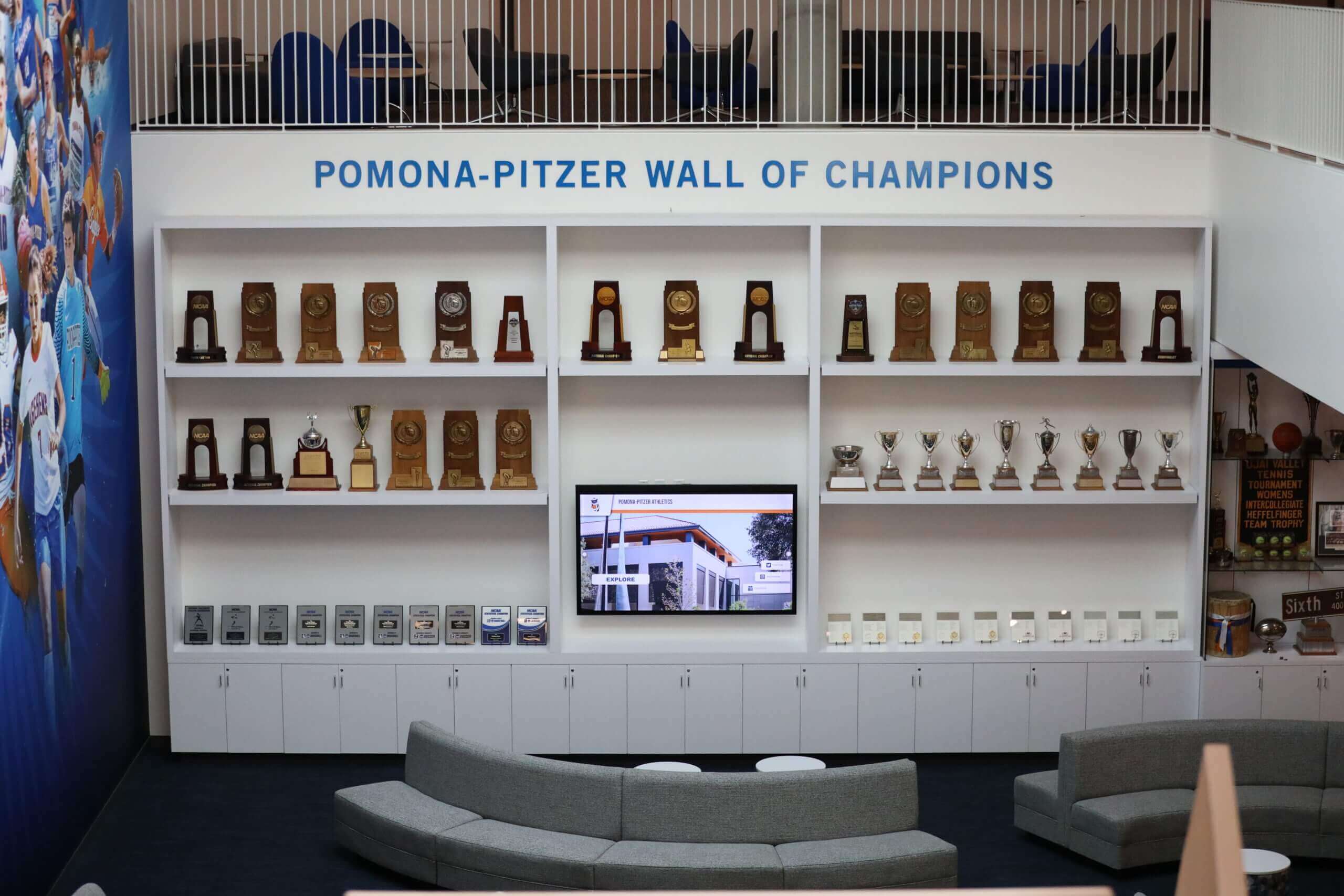
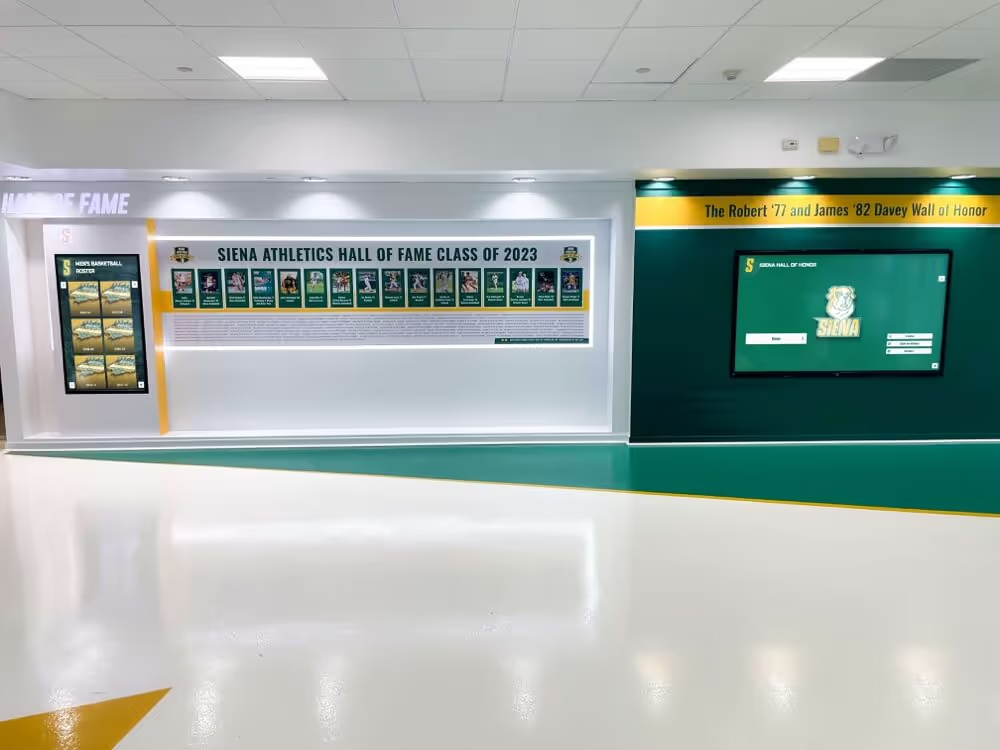
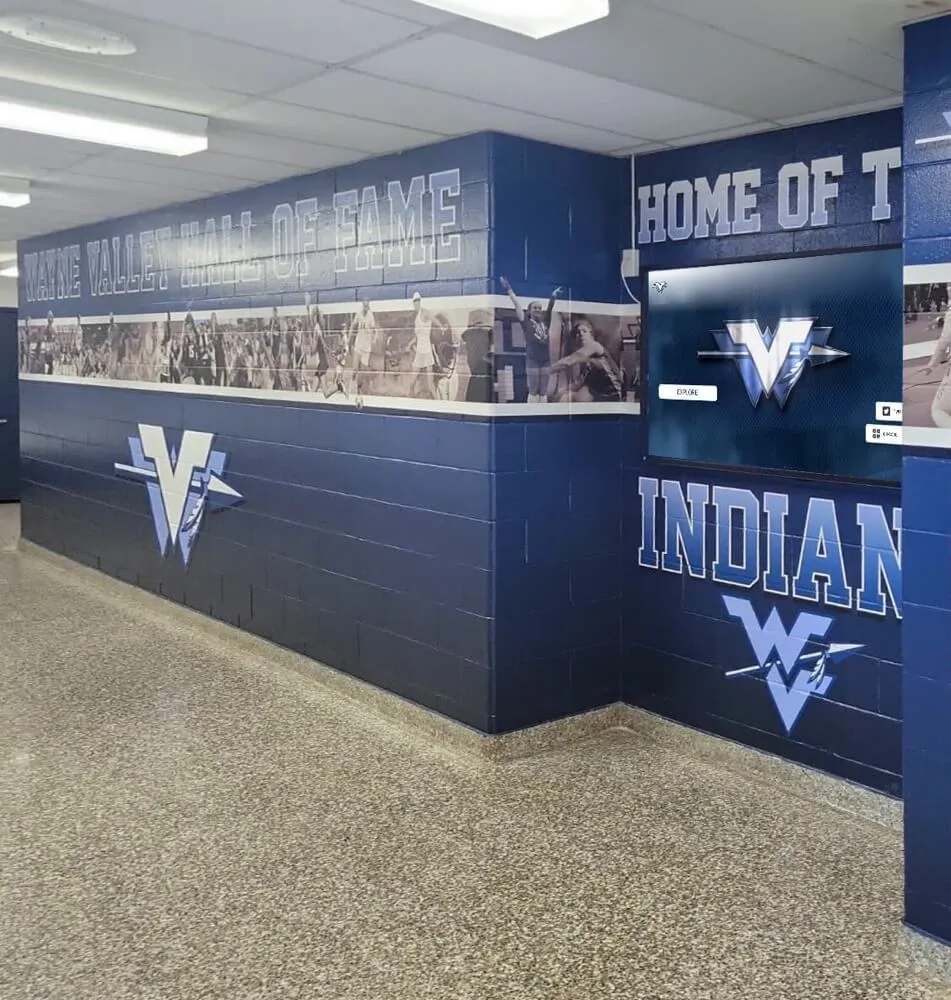
Dedicated wrestling recognition spaces create impressive environments celebrating program traditions and championship moments
Modern Digital Recognition Solutions for Wrestling Programs
Digital recognition platforms transform how Iowa schools celebrate wrestling excellence while addressing traditional approach limitations.
Unlimited Recognition Capacity
Digital systems eliminate space constraints entirely. Schools can honor every state qualifier, every district champion, every memorable match and season milestone across decades without competing for limited display space. This comprehensive recognition ensures no achievement goes uncelebrated regardless of how many wrestlers and seasons accumulated over program history.
For Iowa schools with rich wrestling traditions spanning decades, unlimited capacity proves essential. Programs might have hundreds of state qualifiers and dozens of state champions across multiple weight classes and classifications—comprehensive recognition requires systems accommodating this volume while maintaining engagement and accessibility.
Comprehensive Wrestler Profiles and Achievement Documentation
Unlike simple name-and-year trophy case recognition, digital platforms support rich wrestler profiles including:
- Complete wrestling careers with season-by-season results and records
- State tournament brackets showing paths to championships or placements
- Match videos and highlight reels showcasing technique and memorable wins
- Weight class history and progression throughout careers
- Post-graduation updates documenting college wrestling careers or other achievements
- Coach testimonials and teammate reflections providing personal context
- Statistical career summaries documenting wins, pins, and competitive excellence
This comprehensive documentation tells complete wrestling stories celebrating individual athletes’ dedication, growth, and achievement rather than reducing careers to simple champion-or-qualifier labels.
Interactive Exploration and Search Capabilities
Digital recognition enables active exploration impossible with static displays:
- Search by wrestler name finding specific individuals across program history
- Filter by graduation year, weight class, or achievement level
- Compare eras examining how wrestling evolved across decades
- Discover wrestlers from specific seasons or coaching tenures
- Explore state tournament brackets year-by-year reliving championship runs
- Access wrestler profiles through intuitive touchscreen navigation
This interactivity creates engagement transforming passive viewing into active discovery. Wrestling families explore their athletes’ profiles, alumni reconnect with teammates and competition memories, and current wrestlers research program history understanding traditions they’re joining.
Solutions like Rocket Alumni Solutions provide purpose-built platforms designed specifically for athletic recognition including wrestling-specific features like weight class organization, tournament bracket visualization, and match result documentation.
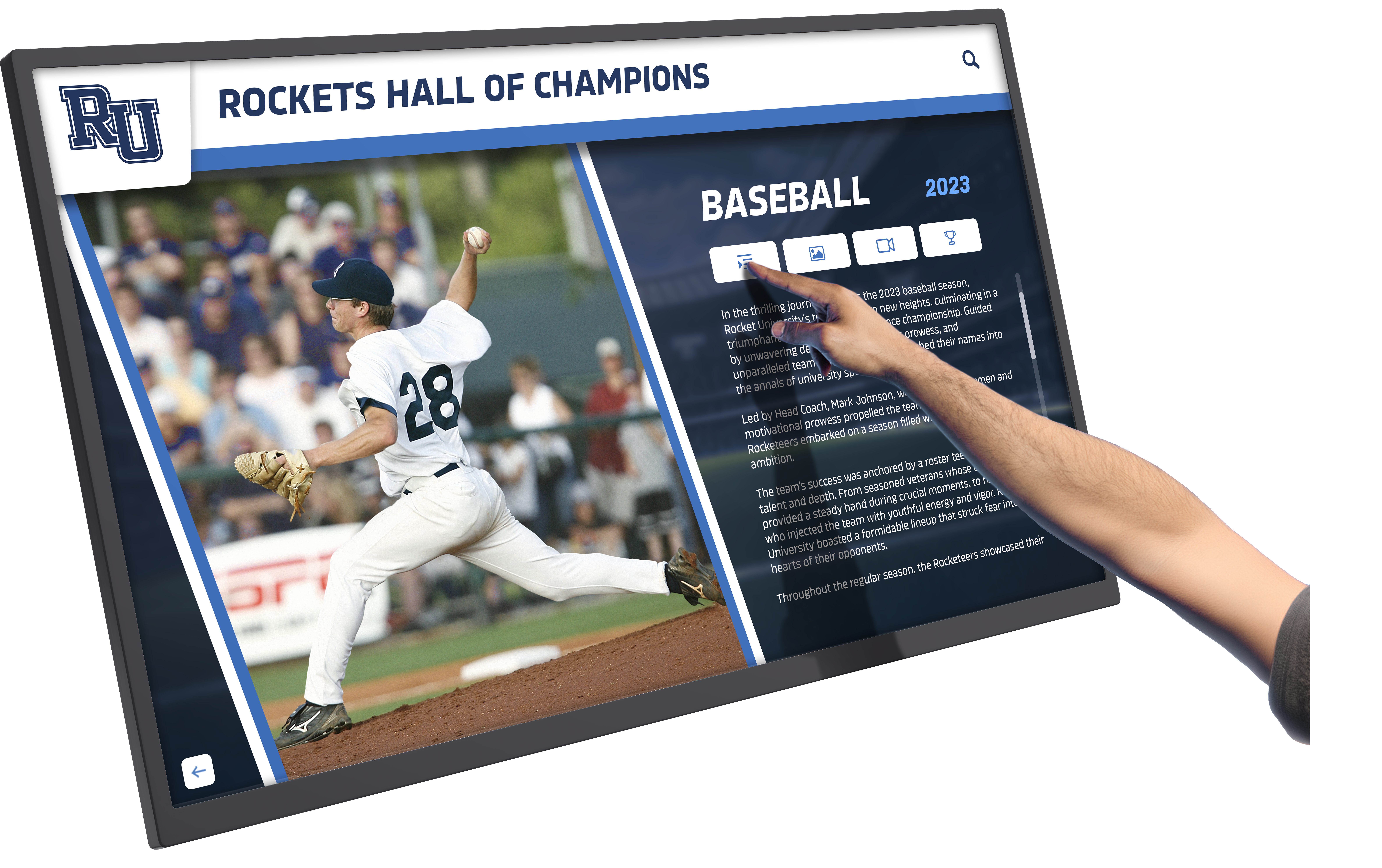
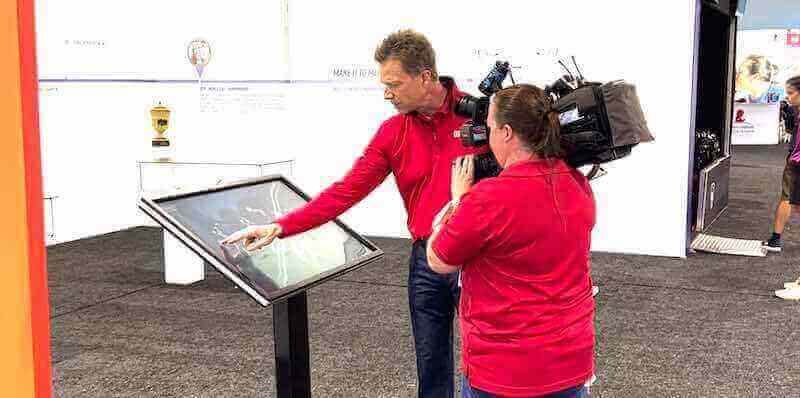
Touchscreen interfaces enable intuitive exploration of wrestler profiles, achievements, and program history
Specific Recognition Categories for Wrestling Programs
Comprehensive wrestling recognition celebrates diverse achievement forms:
State Qualifiers
Reaching the state tournament represents significant accomplishment deserving recognition. State qualifier recognition should include:
- Qualification year and weight class
- District and sectional performance leading to qualification
- State tournament bracket placement and match results
- Season record and notable victories
- Team captaincy or leadership roles
Many wrestlers never reach championship heights but qualifying for state multiple times demonstrates consistency and excellence worthy of permanent acknowledgment.
State Champions and Place Winners
Championship and placing performances merit enhanced recognition:
- Championship match details and winning techniques
- Tournament bracket progression showing path to finals
- Video highlights of championship matches and key victories
- Post-tournament interviews and reactions
- Multiple championship recognition for wrestlers winning titles multiple years
- Place winner recognition acknowledging top-eight finishes earning medals
State champions become permanent parts of school athletic lore. Their achievements inspire future wrestlers while demonstrating program capabilities to prospective athletes considering school options.
Team Accomplishments
Wrestling recognition should extend beyond individuals to celebrate team success:
- Team state tournament placements and scoring
- Dual meet records and conference championships
- Tournament team championships at invitational and conference levels
- Multiple state qualifiers in single seasons
- Team records and milestone achievements documenting program excellence
Team recognition acknowledges that championship programs require depth across multiple weight classes and comprehensive program development beyond individual star wrestlers.
Coaching Legacy Recognition
Successful wrestling programs reflect coaching excellence:
- Career records and years of service
- State qualifiers and champions developed
- Team championships and significant victories
- Coaching philosophy and program building contributions
- Wrestler development examples and coaching impact stories
Coach recognition honors individuals who built programs, developed athletes, and created traditions extending beyond their own coaching tenures.
Planning and Implementing Wrestling Recognition Systems
Schools seeking to establish or enhance wrestling recognition should follow systematic approaches ensuring effective implementation.
Assessing Current Recognition and Identifying Gaps
Begin by evaluating existing recognition approaches:
Current Recognition Audit
Document what recognition currently exists:
- Trophy case contents and available space for additional recognition
- Banner displays and physical condition
- Historical documentation in archives, yearbooks, and records
- Digital presence on websites or social media
- Notable gaps in recognition coverage
This audit reveals what’s working, what needs improvement, and where significant wrestlers or achievements lack appropriate recognition.
Stakeholder Input Gathering
Consult key wrestling program stakeholders:
- Current and former wrestlers about recognition preferences and gaps
- Wrestling coaches regarding program history and priority achievements
- Athletic directors about budget, installation, and broader athletic recognition alignment
- Booster clubs and wrestling parent groups regarding support and fundraising
- Alumni about historical achievements and wrestlers deserving recognition
Stakeholder input ensures recognition systems serve community needs while identifying potential support sources for funding and implementation.

Comprehensive recognition systems integrate physical displays with digital interactivity celebrating complete program histories
Content Development and Historical Research
Comprehensive wrestling recognition requires systematic content collection:
Historical Wrestler and Achievement Research
Gather information about past wrestlers and accomplishments:
- Review yearbooks, wrestling program archives, and school records
- Contact former coaches and wrestling alumni requesting information and photos
- Research newspaper archives for state tournament coverage and wrestler features
- Review IHSAA archives for official state tournament results and records
- Compile comprehensive lists of state qualifiers, champions, and significant achievements
Historical research often reveals forgotten wrestlers and achievements deserving recognition, ensuring comprehensive celebration of complete program tradition rather than only recent, well-documented seasons.
Photo and Video Content Collection
Visual content significantly enhances wrestling recognition:
- Scan historical wrestling photos from yearbooks and personal collections
- Request photos from wrestler families and alumni
- Digitize video footage from state tournament matches and season highlights
- Capture contemporary photos of current wrestlers for ongoing recognition
- Photograph physical trophies and awards for digital integration
Quality visual content transforms name-based recognition into engaging storytelling celebrating wrestlers as individuals with faces, personalities, and documented achievements rather than simply text entries in databases.
Systematic Profile Creation
Develop wrestler profiles using consistent templates:
- Biographical information and wrestling career summaries
- Season-by-season records and competitive progression
- State tournament details including brackets, placement, and results
- Notable matches, victories, and competitive highlights
- Post-graduation updates and continued wrestling involvement
- Coach and teammate testimonials providing personal context
Template-based profiles ensure consistency while enabling efficient content creation across potentially hundreds of wrestlers spanning decades of program history.
Technology Platform Selection and Implementation
Choosing appropriate technology determines long-term recognition success:
Purpose-Built Wrestling Recognition Platforms
Select platforms designed specifically for athletic recognition versus generic content management systems requiring extensive customization. Purpose-built platforms provide:
- Weight class organization and tournament bracket visualization
- Intuitive wrestler profile templates and navigation
- Unlimited capacity accommodating decades of achievements
- ADA accessibility ensuring inclusive experiences for all visitors
- Mobile responsiveness enabling remote access for alumni and families
- Simplified content management requiring no technical expertise
Platforms like Rocket Alumni Solutions specialize in athletic recognition including wrestling-specific functionality designed around common wrestling recognition needs.
Hardware and Installation Considerations
Physical display installations require:
- Commercial-grade touchscreen displays sized appropriately for viewing distances and traffic
- Strategic placement in high-traffic areas—wrestling room entrances, athletic facility lobbies, main school hallways
- Secure mounting preventing theft or vandalism
- Network connectivity enabling remote content management
- Professional installation ensuring proper positioning, accessibility, and integration with facility aesthetics
Hardware investments pay dividends through years of reliable operation celebrating wrestling programs daily versus special-occasion-only recognition.
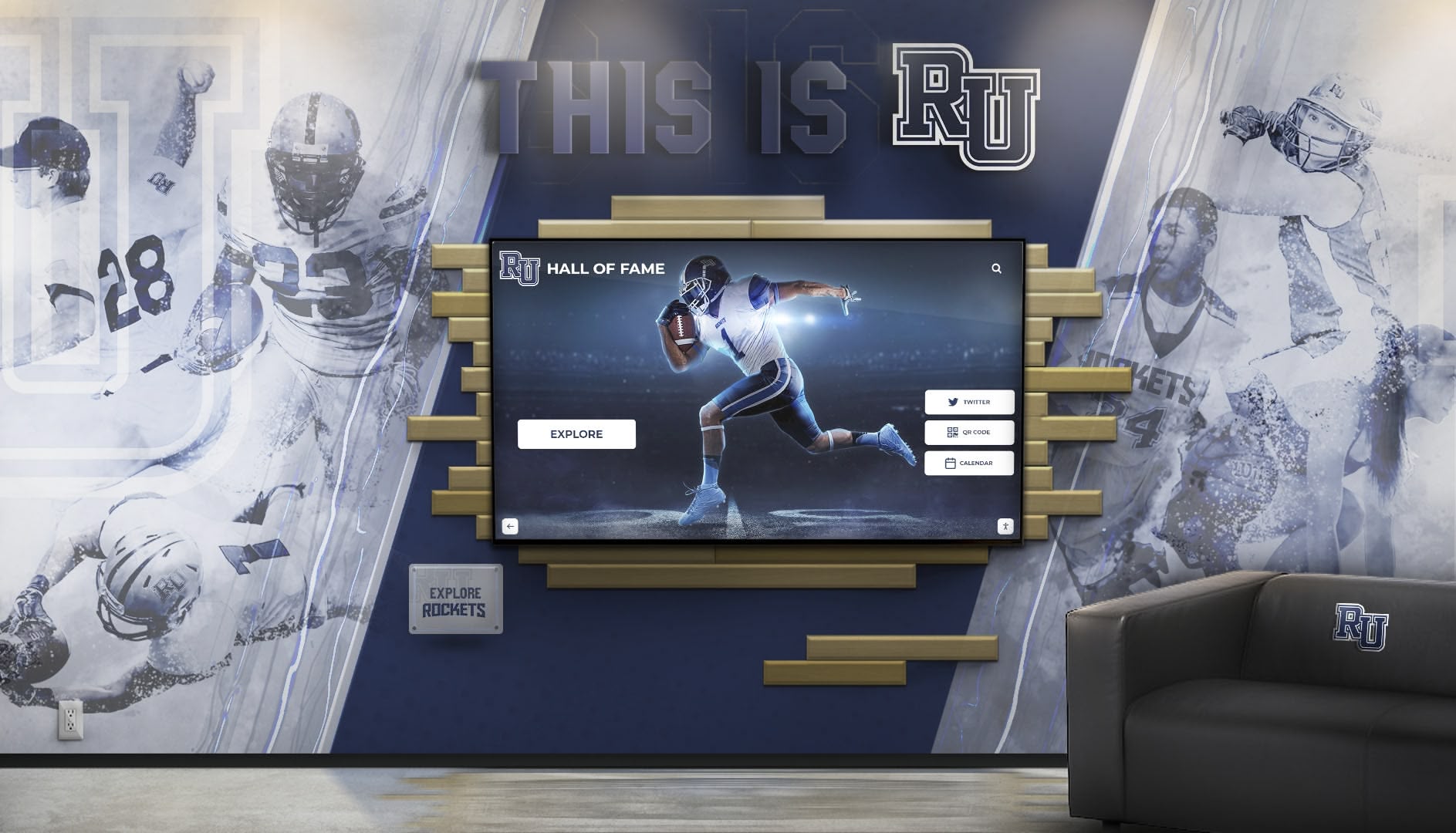
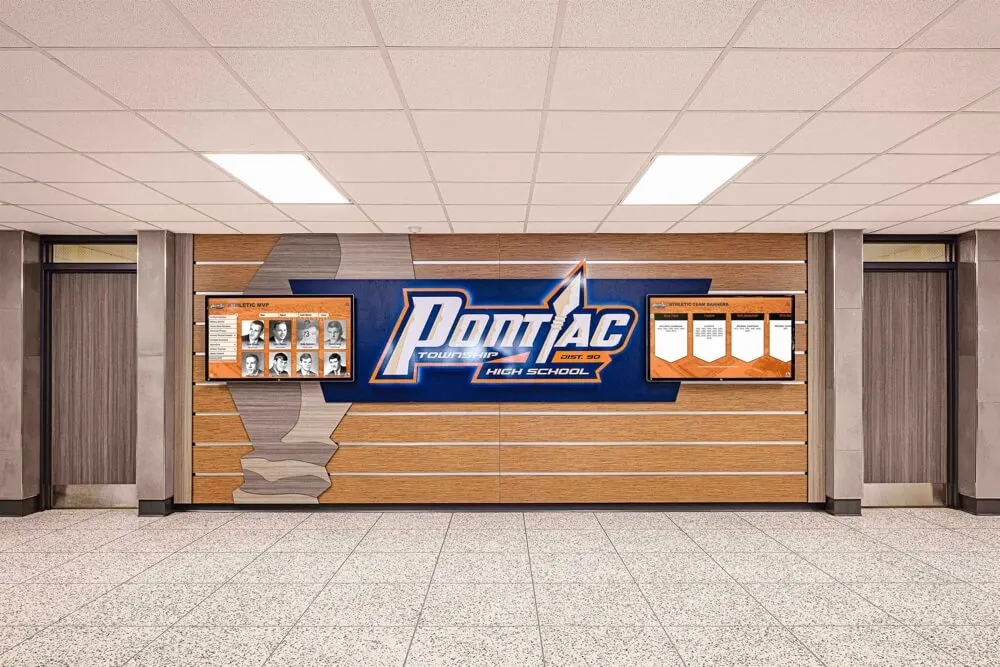
Professional installations create impressive environments demonstrating institutional commitment to wrestling excellence
Creating Digital Warmth Through Wrestling Recognition
Digital warming occurs when technology transforms cold achievement lists into warm, engaging experiences deepening community connections to wrestling programs.
Personalization and Community Engagement
Modern recognition creates personalized experiences connecting individuals to content most relevant to them:
Family and Alumni Discovery
Recognition platforms enable personal discovery:
- Families locate their wrestlers’ profiles quickly through search functionality
- Alumni explore teammates and competition from their wrestling eras
- Graduates share digital profiles with extended family networks
- Current wrestlers research program history connecting to traditions
- College recruiters access comprehensive wrestler documentation
Personal relevance transforms generic school pride into specific emotional connections as families celebrate their specific wrestlers and alumni reconnect with their particular seasons and teammates.
Social Sharing and Extended Reach
Digital recognition extends beyond physical campus:
- Wrestlers share profiles on social media celebrating achievements with friends and extended family
- Alumni post profiles during throwback celebrations maintaining program visibility
- Schools promote state qualifiers and champions through digital content reaching broader audiences
- Family members living far from Iowa maintain connection to school wrestling programs
- College coaches access wrestler documentation supporting recruitment processes
Extended reach amplifies recognition impact while marketing wrestling programs to prospective athletes considering school options.
Maintaining Year-Round Wrestling Visibility
Unlike traditional recognition visible primarily during wrestling season, digital platforms maintain year-round wrestling presence:
Seasonal Feature Rotation
Automated content rotation maintains engagement:
- Feature current wrestlers during season with updated records and upcoming matches
- Highlight state tournament qualifiers and champions during February tournament week
- Celebrate championship anniversaries throughout the year
- Showcase alumni wrestlers achieving post-graduation success
- Display historical throwbacks introducing newer community members to program traditions
Dynamic rotation prevents recognition from becoming stale while ensuring all wrestlers receive visibility rather than only most recent or most accomplished athletes dominating limited static display space.
Integration with Other Athletic Recognition
Comprehensive athletic hall of fame systems integrate wrestling with other sports creating holistic athletic celebration:
- Wrestling achieves visibility comparable to traditionally higher-profile sports
- Multi-sport athletes receive recognition across all sports participated
- School athletic excellence demonstrates breadth across multiple competitive areas
- Wrestling traditions connect to broader school identity and community pride
Integration ensures wrestling receives appropriate recognition within comprehensive athletic programs rather than being overshadowed by sports with larger budgets or more media attention.
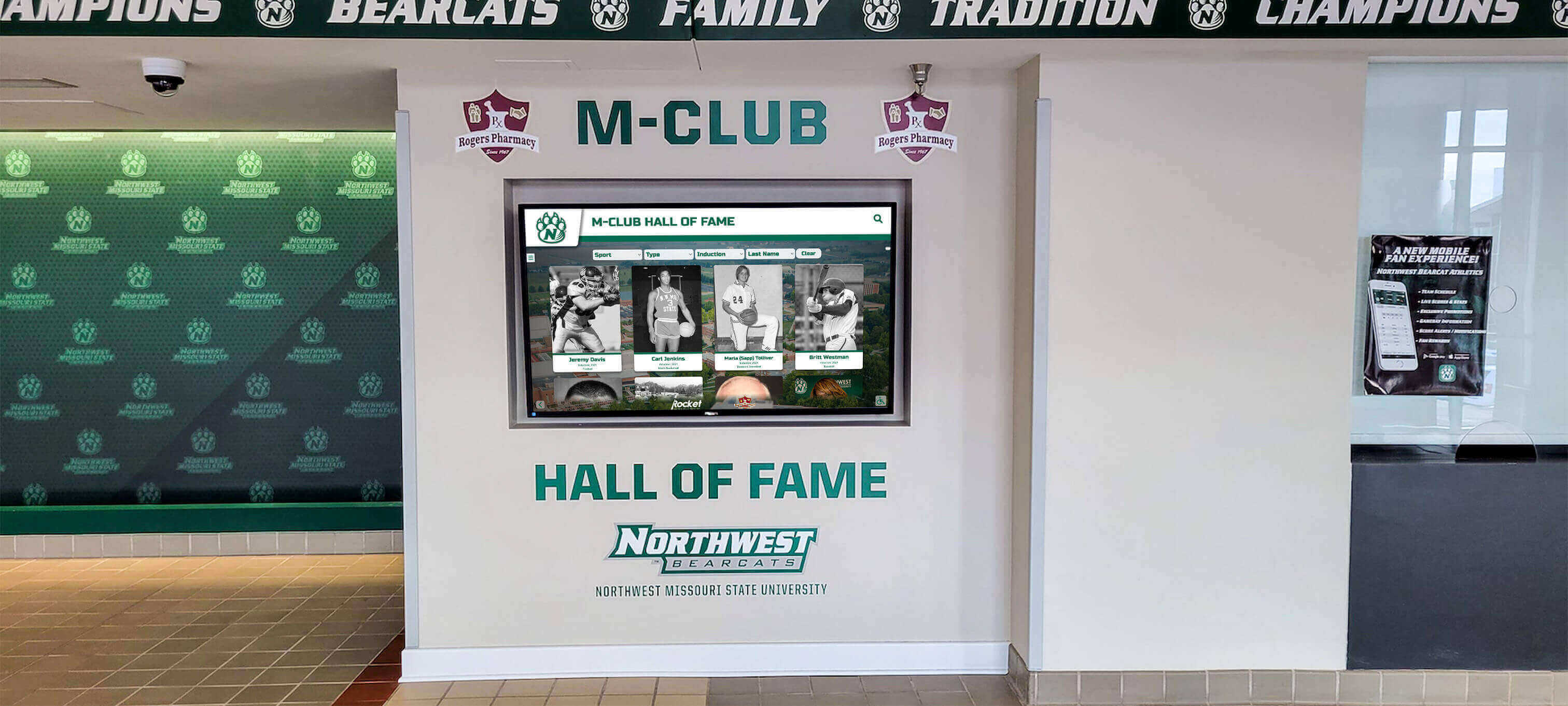
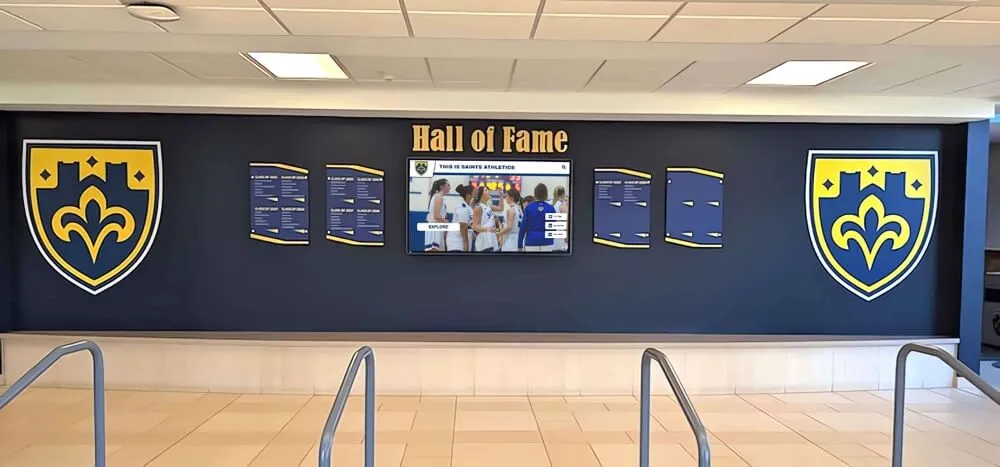
Comprehensive recognition systems celebrate excellence across all athletic programs including wrestling traditions
Special Considerations for Iowa Wrestling Recognition
Iowa’s unique wrestling culture creates specific recognition considerations:
Honoring Iowa Wrestling Tradition and Legacy
Iowa wrestling history spans decades with legendary programs, coaches, and wrestlers:
Preserving Historical Program Documentation
Many Iowa wrestling programs have rich histories predating digital documentation:
- State champions from 1960s, 70s, and 80s deserving recognition alongside recent achievers
- Legendary coaches who built programs through decades of service
- Historic moments defining program identity and community pride
- Evolution of program traditions showing continuity across eras
Comprehensive recognition ensures complete program history receives visibility rather than only recent, easily-documented achievements overshadowing earlier program builders.
Connecting to College Wrestling Traditions
Iowa’s college wrestling prominence creates unique recognition opportunities:
- Acknowledge wrestlers continuing careers at University of Iowa, Iowa State, or other collegiate programs
- Document wrestlers achieving All-American status or NCAA championships after high school
- Recognize alumni coaching college programs or contributing to wrestling development beyond high school
- Celebrate Olympic or international competition participation by program alumni
These connections demonstrate program quality producing wrestlers succeeding at highest competitive levels while inspiring current wrestlers to pursue continued wrestling excellence.
Celebrating State Tournament Participation
In Iowa’s competitive wrestling environment, simply qualifying for state represents significant achievement:
Qualifier Recognition Equal to Champions
Recognition systems should celebrate state qualifiers prominently:
- Document qualification paths through districts and sectionals
- Acknowledge achievement reaching tournament among state’s best wrestlers
- Include tournament brackets showing competition faced even when results didn’t include medals
- Recognize multiple-time qualifiers demonstrating consistency across seasons
- Celebrate breakthroughs when wrestlers or schools qualify for first time
This comprehensive recognition acknowledges that tournament participation represents excellence worthy of celebration regardless of placement outcomes.
Season Achievement Context
State tournament results represent single weekend performances following months of preparation:
- Include season records providing context for qualification achievements
- Document regular season tournament victories and significant wins
- Recognize leadership roles and team contributions beyond state results
- Celebrate improvement trajectories showing wrestler development across seasons
- Acknowledge injuries or challenges overcome reaching state tournament
Contextual recognition presents wrestlers as complete athletes with full season contributions rather than reducing careers to single state tournament performances that might not reflect overall excellence or impact.
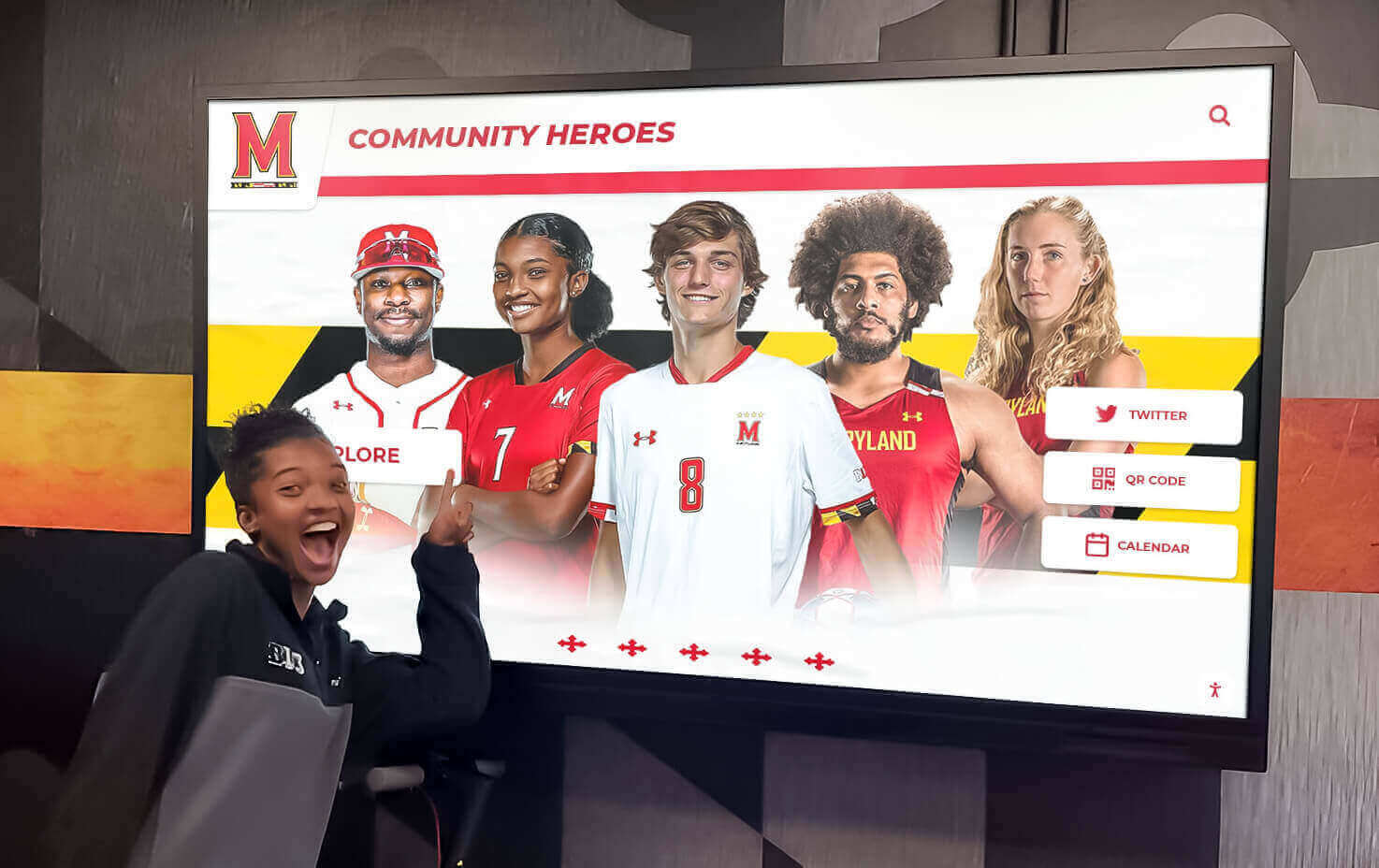
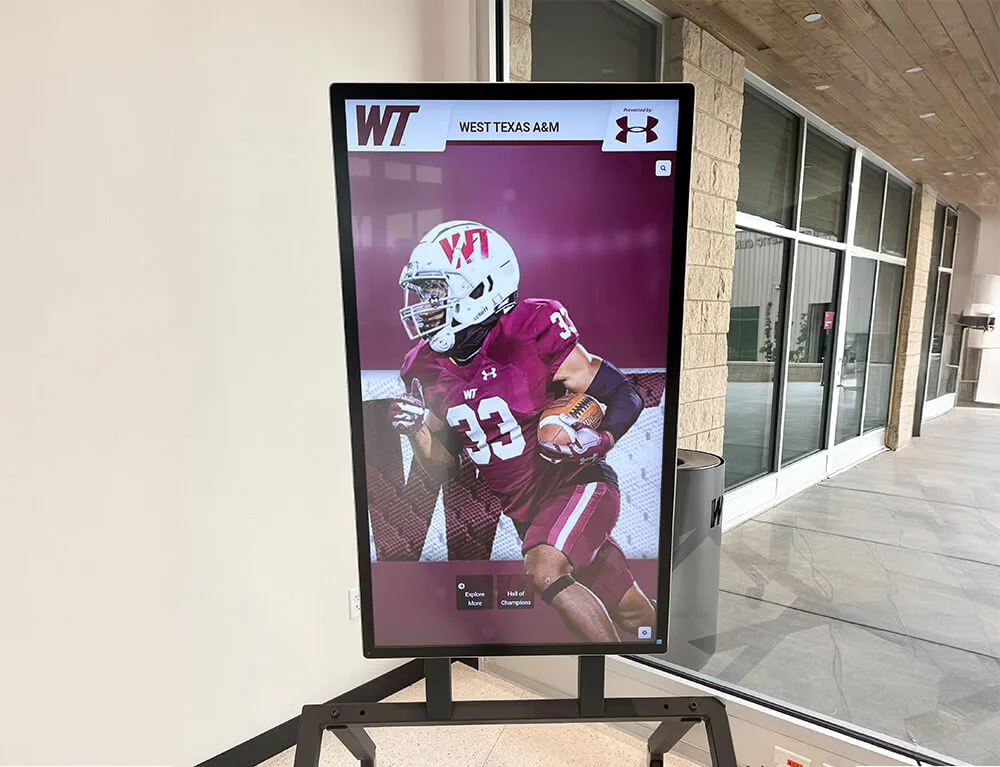
Interactive displays engage wrestling communities with achievement stories celebrating program excellence
Funding Wrestling Recognition Systems
Establishing comprehensive recognition requires budget planning and potential fundraising:
Typical Recognition System Costs
Understanding investment requirements enables appropriate planning:
Hardware and Installation
Physical display components include:
- Commercial touchscreen displays ranging from $2,000-6,000 depending on size and specifications
- Professional mounting and installation: $500-1,500
- Network connectivity and electrical work as needed
- Extended warranties or service agreements for ongoing support
Hardware represents one-time capital investment lasting 5-7 years with proper maintenance, making per-year costs modest when amortized across expected lifespan.
Software Platform and Content Management
Digital recognition platforms typically charge:
- Annual subscription fees covering software access, hosting, support, and updates
- Initial content development and profile creation if utilizing professional services
- Ongoing content management requiring staff time for updates and maintenance
Many schools find that comprehensive digital solutions cost less annually than traditional plaque and trophy approaches when accounting for per-athlete recognition costs and ongoing physical display maintenance.
Fundraising and Sponsorship Opportunities
Wrestling recognition systems create natural fundraising opportunities:
Booster Club Support
Wrestling booster clubs often fundraise for program enhancements including recognition:
- Campaign to fund recognition system as signature booster project
- Annual giving programs supporting ongoing recognition and updates
- Legacy campaigns enabling families to sponsor wrestler profiles or recognition categories
- Alumni appeals leveraging emotional connections to program traditions
Booster support demonstrates community commitment to wrestling while creating sustainable funding ensuring long-term recognition success.
Corporate and Community Sponsorship
Local businesses benefit from association with wrestling programs:
- Recognition system naming rights providing prominent business acknowledgment
- Sponsored content areas within digital displays
- Tournament weekend promotions connecting businesses to wrestling community
- Multi-year partnerships providing sustained funding and community relationships
Sponsorship arrangements can offset recognition costs while building mutually beneficial business-school relationships supporting athletic programs comprehensively.
Conclusion: Celebrating Iowa Wrestling Excellence
Iowa high school state wrestling represents pinnacle achievement in one of America’s most competitive high school wrestling environments. From the rigorous qualification path through districts and sectionals to the championship battles at Wells Fargo Arena, reaching and competing at state embodies dedication, toughness, and excellence deserving recognition matching significance.
For too long, wrestling achievements have relied on limited trophy case space, deteriorating gymnasium banners, or forgotten yearbook documentation failing to adequately celebrate wrestlers who invested years building programs and representing schools in one of athletics’ most demanding sports. Modern digital recognition platforms transform how schools honor wrestling excellence—unlimited capacity celebrates every state qualifier and champion across decades, rich multimedia profiles tell complete wrestling stories, and interactive exploration creates engaging experiences connecting communities to program traditions.
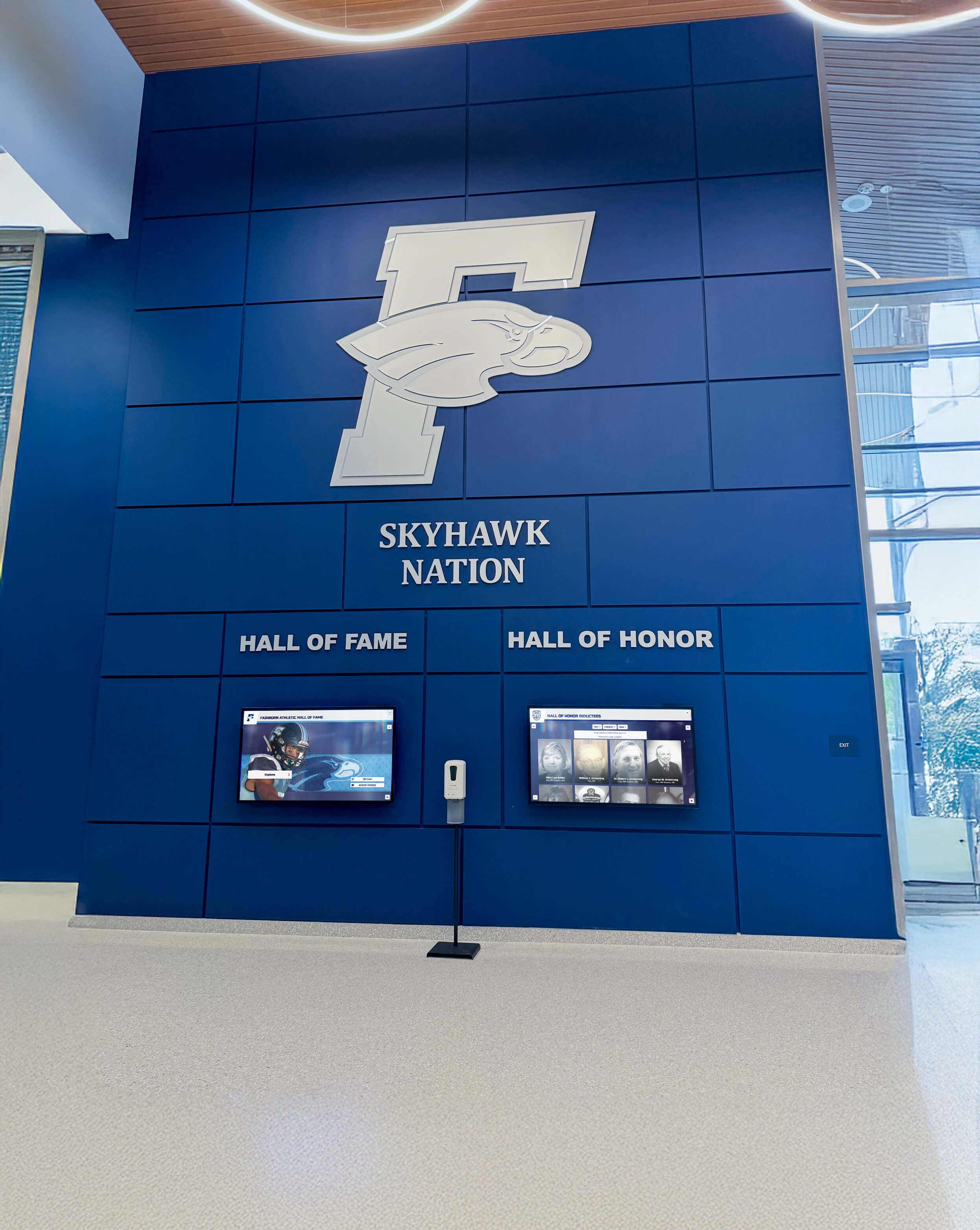
Professional recognition installations demonstrate institutional commitment to wrestling excellence and program tradition
Implementation success requires systematic approaches—comprehensive historical research preserving complete program documentation, stakeholder engagement ensuring recognition serves community needs, appropriate technology selection providing intuitive management and accessibility, and sustainable funding through booster support or sponsorships enabling long-term recognition success.
Digital warming occurs when wrestling recognition transforms from cold achievement lists into warm, engaging community experiences. When wrestler families discover their athletes’ profiles and share them with extended networks, when alumni explore teammates and relive competition memories, when current wrestlers research program history understanding traditions they’re joining, and when communities gather around displays celebrating wrestling excellence—recognition succeeds in building connections strengthening programs and pride.
Iowa wrestling culture deserves recognition systems matching the sport’s significance in state athletic tradition. The state qualifiers who battled through sectionals, the champions who reached the top of podiums at Wells Fargo Arena, the multiple-time qualifiers demonstrating remarkable consistency, the program-building coaches who developed generations of wrestlers—all deserve celebration creating institutional memory honoring their contributions while inspiring future wrestlers pursuing their own state tournament dreams.
Your wrestling program’s history—the state champions and qualifiers, the memorable matches and seasons, the coaching legacies and team achievements—represents tradition worthy of comprehensive recognition. With thoughtful planning, appropriate technology selection, and commitment to complete program celebration, you can transform wrestling recognition from limited trophy case space into engaging experiences celebrating excellence while building warm, connected communities maintaining wrestling pride throughout the year and across generations.
Ready to transform your wrestling program recognition? Explore how digital recognition platforms help Iowa schools celebrate wrestling excellence through comprehensive, engaging systems honoring state qualifiers, champions, and the program traditions that make Iowa high school wrestling legendary.