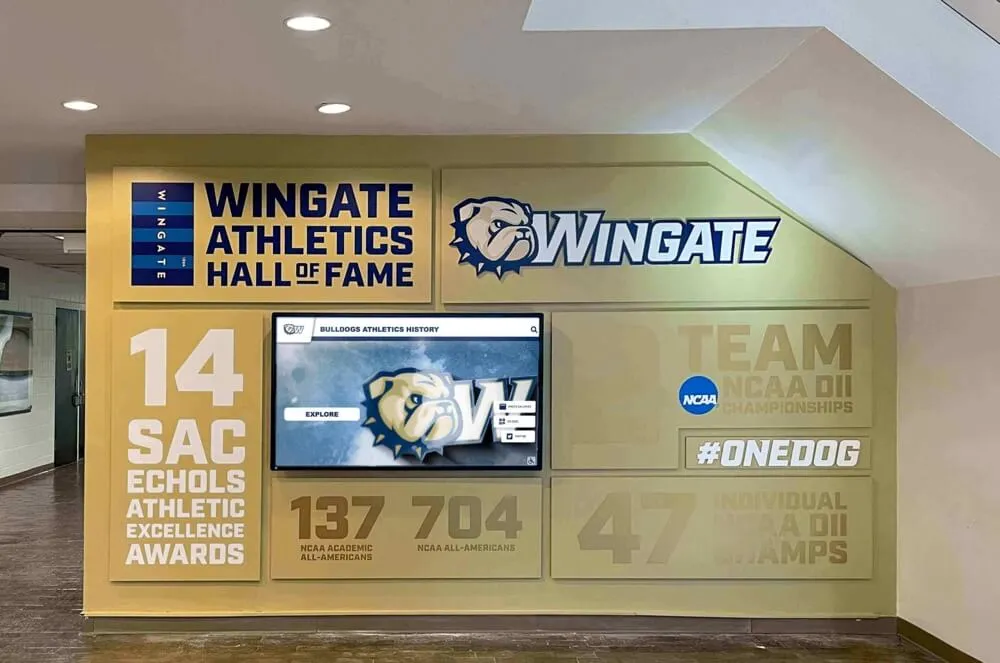




School lobbies and entrance areas serve as critical first impression spaces where prospective families form initial perceptions, current students gather between classes, and alumni return to reconnect with institutional heritage. Yet many schools struggle to create engaging experiences in these high-traffic areas, relying on static bulletin boards, aging trophy cases, and outdated communication methods that fail to capture attention or convey the vibrant community within.
Interactive touch screen displays transform these underutilized spaces into dynamic engagement destinations where visitors actively explore school achievements, prospective families discover program excellence, students feel pride in institutional heritage, and alumni maintain lasting connections. This technology creates what we call “digital warming”—the transformation of cold, impersonal spaces into welcoming environments where personalized content surfaces create meaningful connections and ongoing engagement.
This comprehensive guide explores how schools successfully implement interactive touch screen displays for visitor engagement, examining technology selection criteria, content strategy approaches, implementation best practices, and proven methods for maximizing community impact through thoughtfully deployed touchscreen installations.
Modern schools recognize that effective visitor engagement requires more than printed materials and guided tours. Interactive touch screen displays enable self-directed exploration accommodating diverse visitor interests, time constraints, and information needs while creating memorable experiences distinguishing institutions in competitive educational markets.

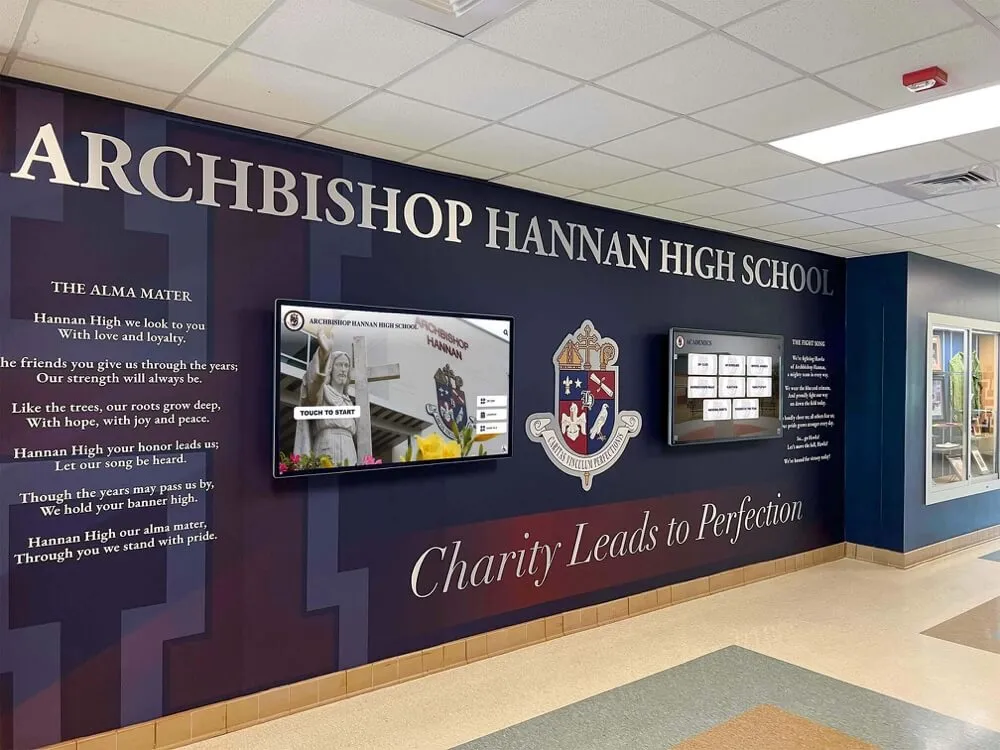
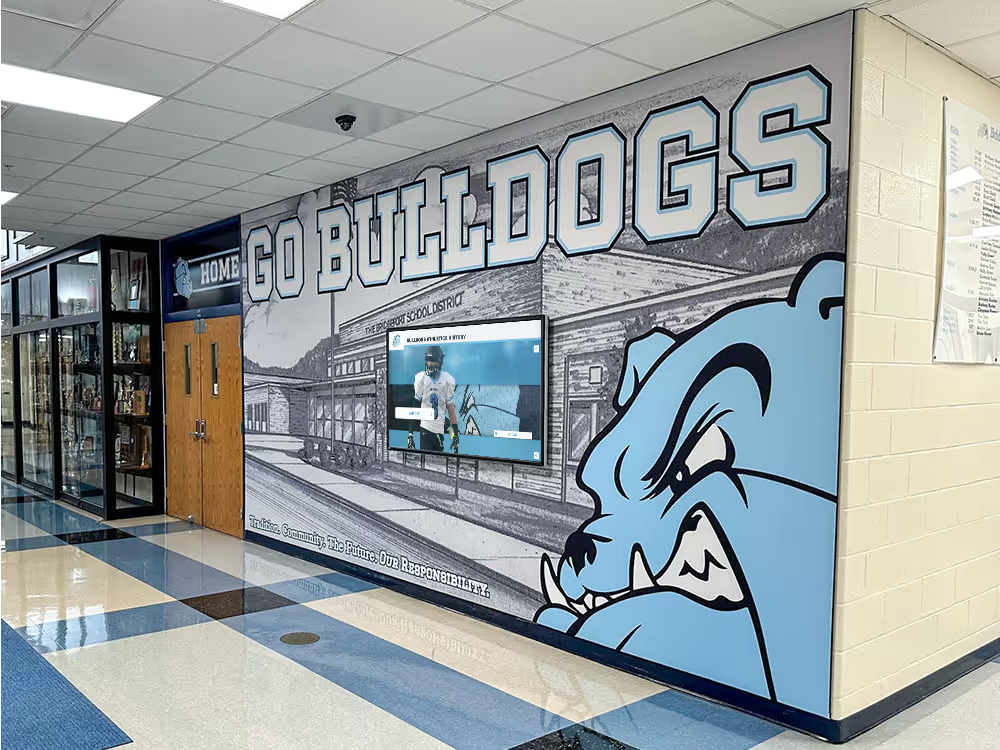
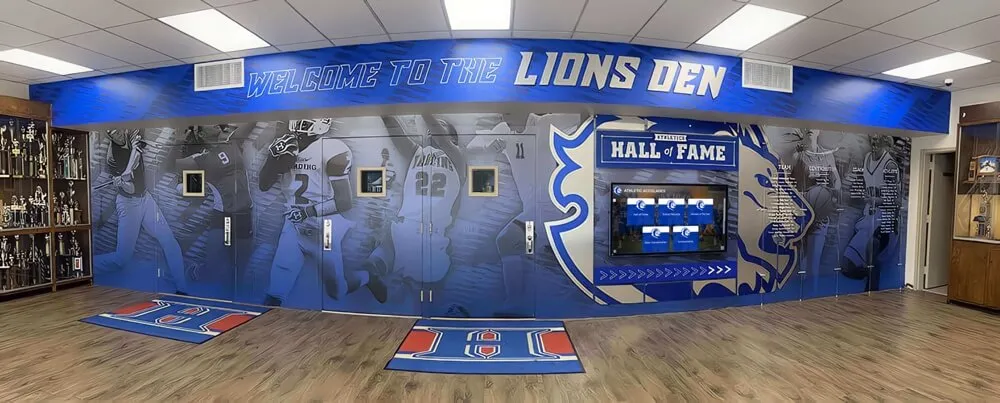
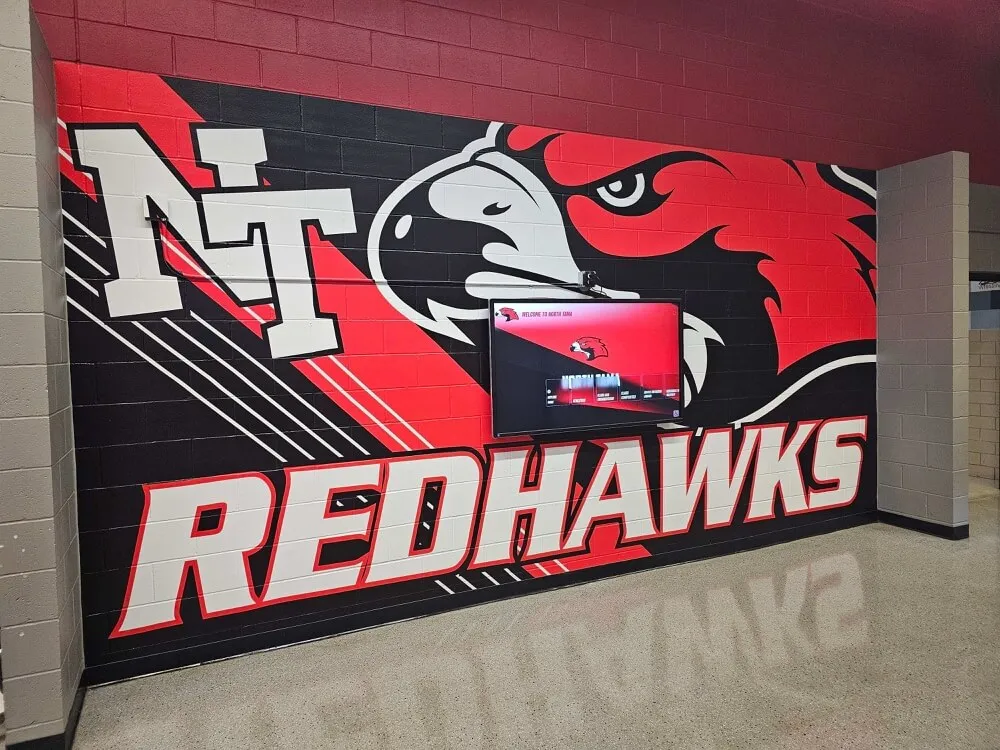
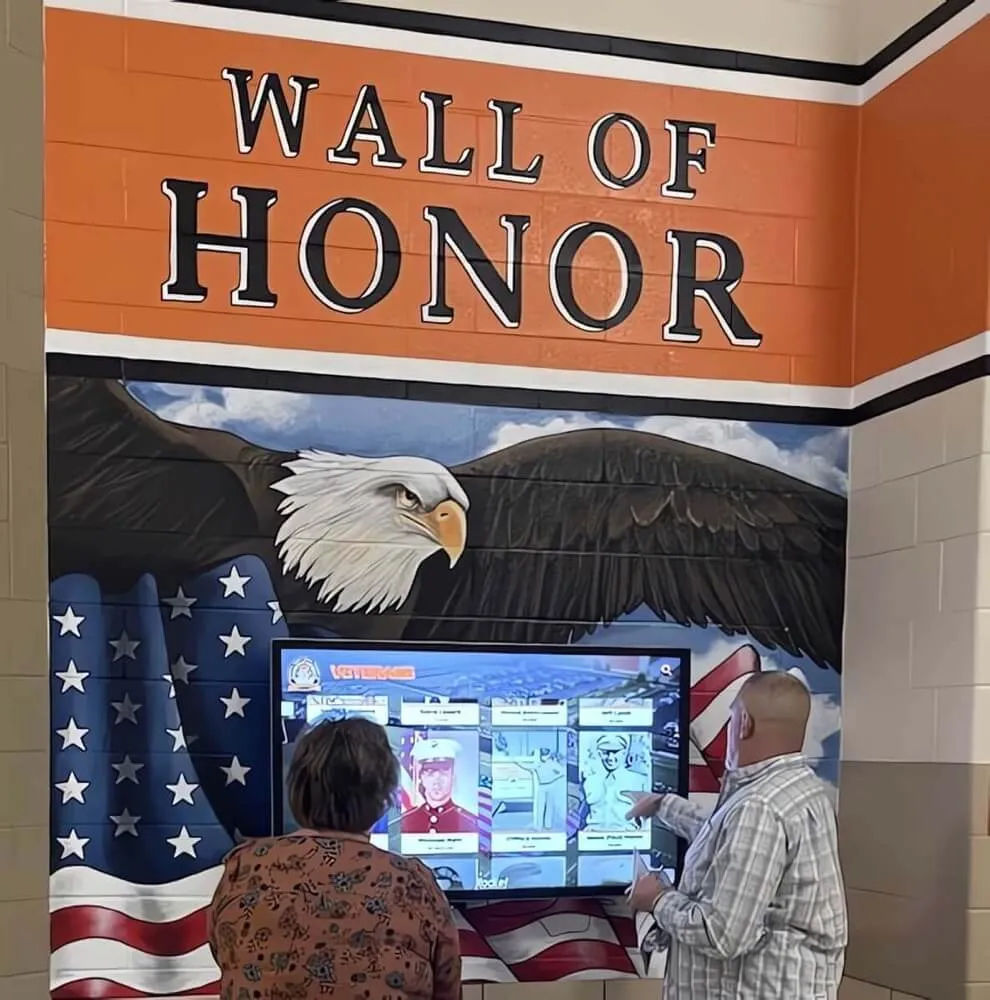
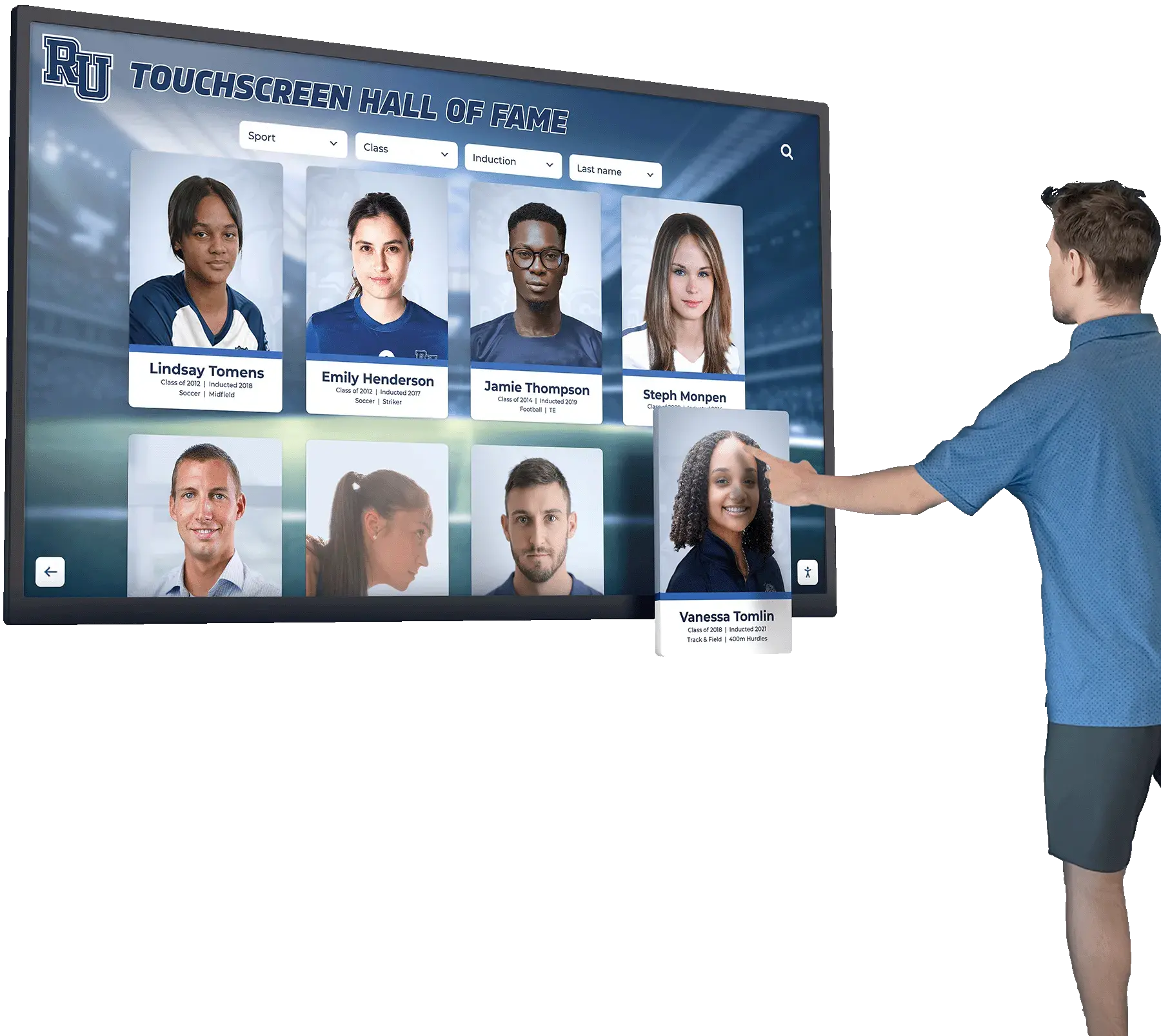
Interactive touchscreens create engaging visitor experiences enabling personalized exploration of school excellence
Why Schools Need Interactive Touch Screen Displays
Educational institutions implementing interactive touch screen technology report significant improvements across multiple dimensions of visitor experience, community engagement, and institutional communication effectiveness.
Creating Memorable First Impressions
School lobbies represent critical decision-making moments for prospective families evaluating educational options. First impressions formed during campus visits significantly influence enrollment decisions, making lobby experiences essential marketing opportunities requiring thoughtful design.
Interactive touch screen displays create immediate engagement differentiating schools through technology-enabled exploration impossible with traditional static displays. Visitors actively discover athletic championships, academic achievements, arts program excellence, and community values through intuitive interfaces encouraging extended interaction rather than passive viewing of bulletin boards easily overlooked during facility tours.
This active engagement creates memorable experiences visitors recall when comparing school options, often citing interactive technology as evidence of institutional innovation and commitment to modern educational approaches. Schools report prospective families specifically mentioning touchscreen displays as factors distinguishing their institutions from competitors relying on traditional communication methods.
Accommodating Diverse Visitor Needs
School visitors arrive with vastly different information needs, time availability, and areas of interest. Athletic families focus on sports programs, academically oriented students seek advanced placement offerings, arts-interested families explore performing programs, and community members value service opportunities and values alignment.
Interactive displays accommodate this diversity through layered content architecture enabling visitors to explore areas matching personal interests without forcing linear presentations covering topics irrelevant to individual needs. Searchable databases allow finding specific information quickly, categorical organization enables focused exploration of relevant programs, and featured content spotlights diverse excellence ensuring all visitors discover compelling institutional strengths.
This personalized approach proves impossible with guided tours following predetermined scripts or printed materials attempting comprehensive coverage through overwhelming information volume. Interactive exploration respects visitor autonomy while guiding discovery through intuitive navigation reflecting how people naturally seek information.
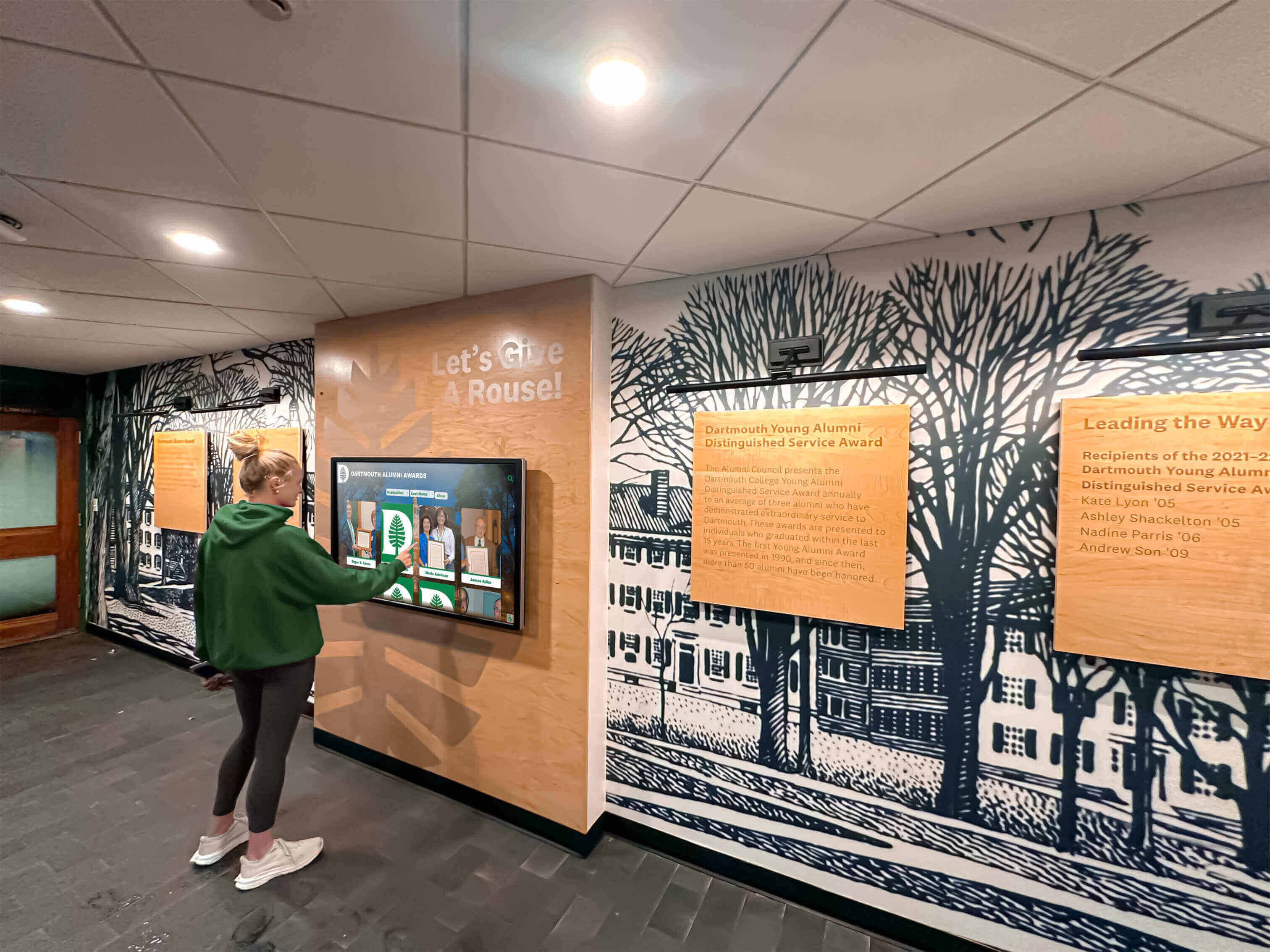
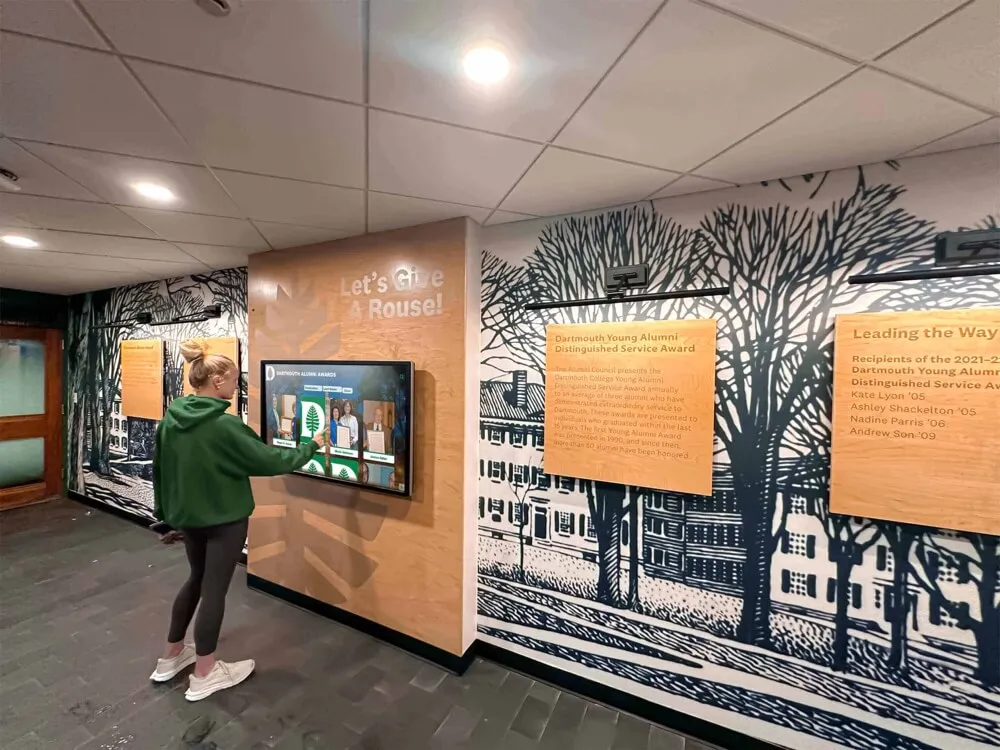
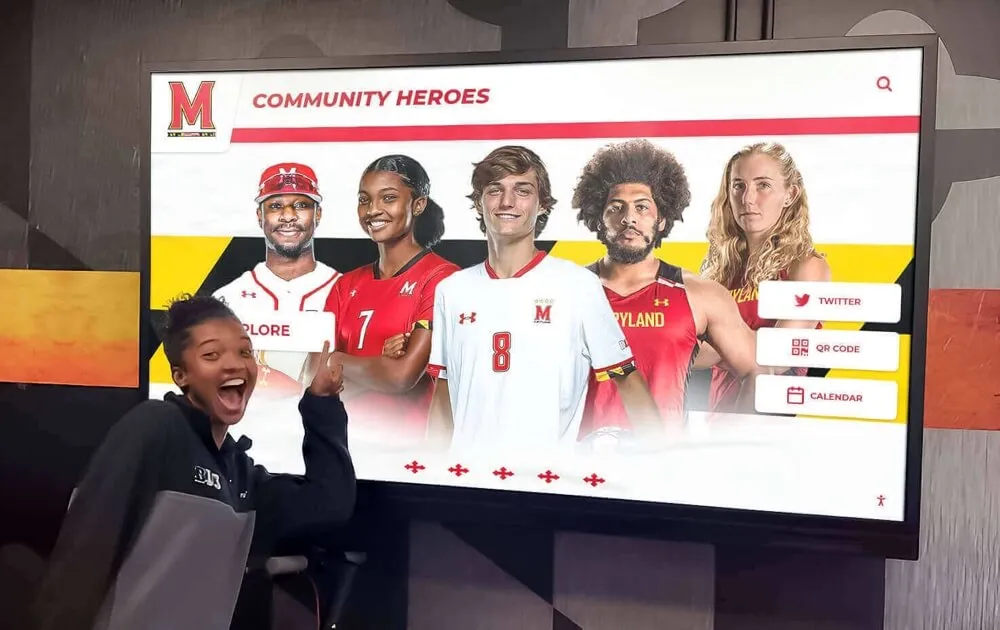
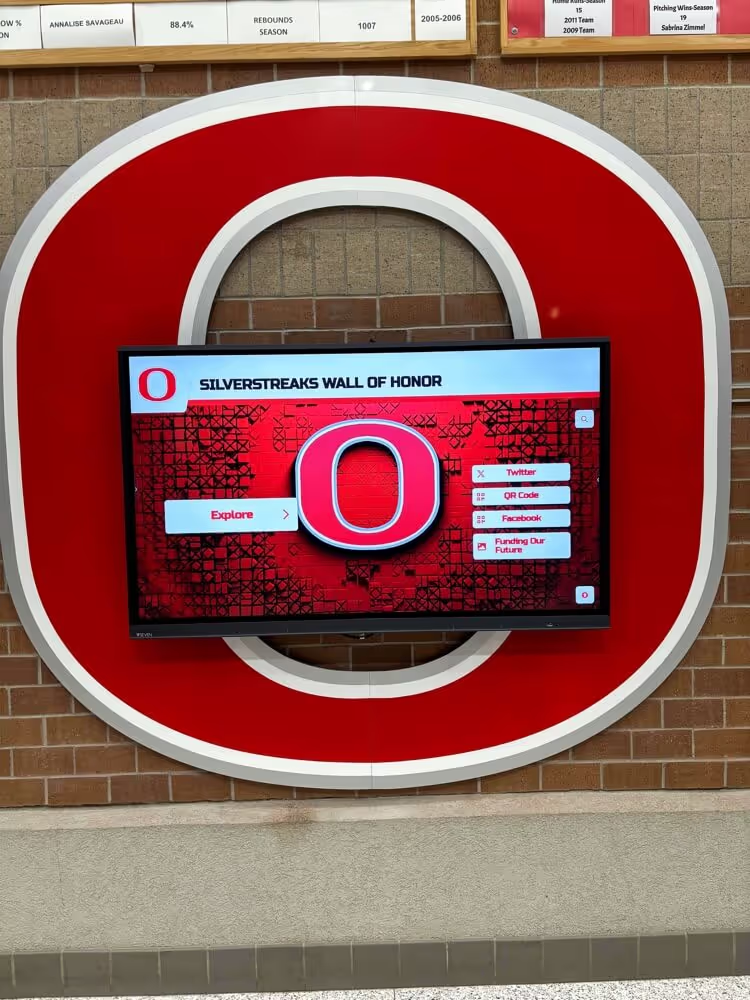
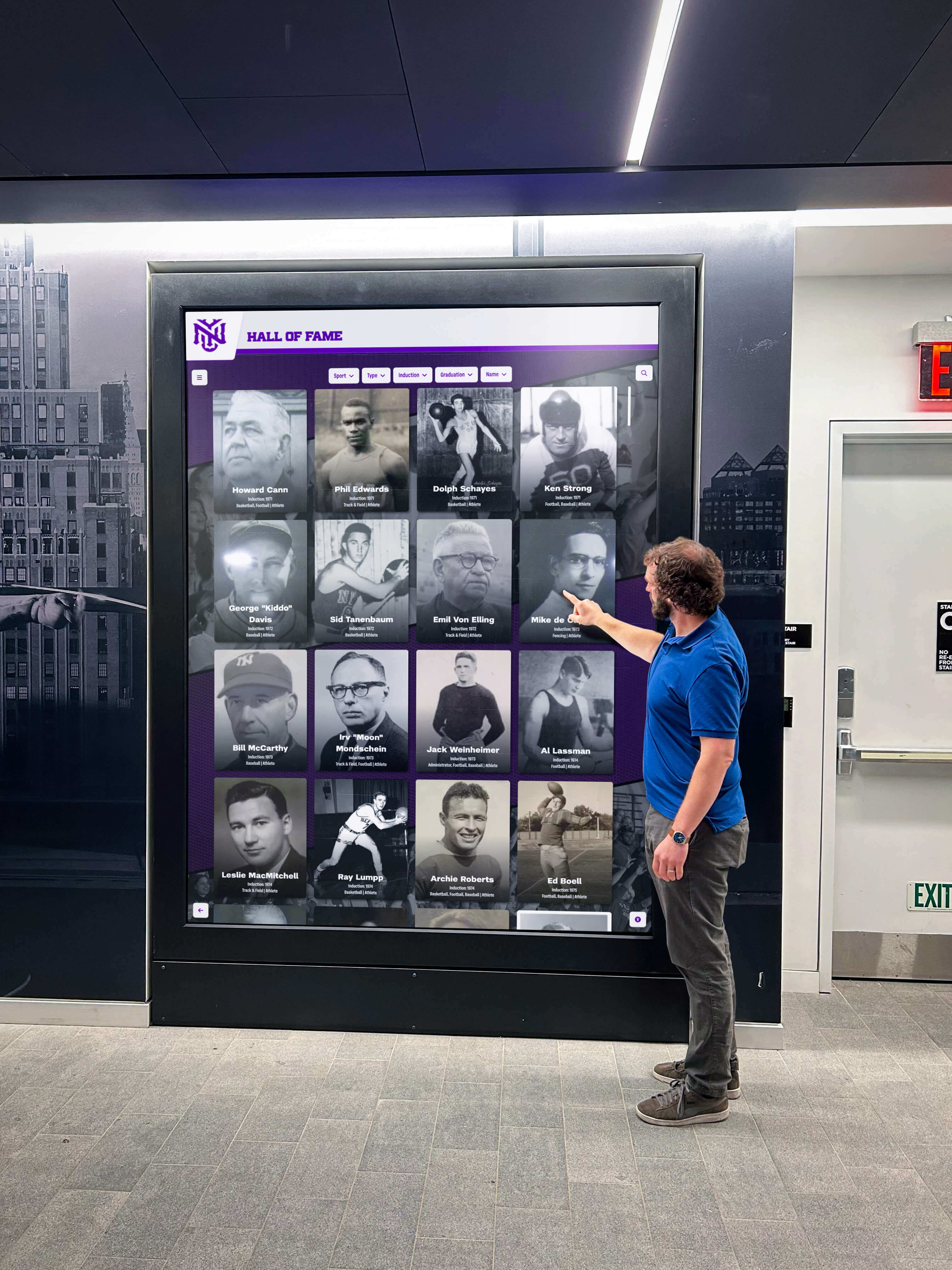
Students actively engage with school history and achievements through intuitive touchscreen interfaces
Showcasing Achievement and Building Pride
Schools accumulate remarkable achievements across athletics, academics, arts, community service, and diverse programs deserving celebration that inspires current students while impressing visitors. Traditional trophy cases and plaque walls prove inadequate for comprehensive achievement celebration, forcing difficult decisions about limited display space while leaving most accomplishments invisible in storage.
Interactive touch screen displays provide unlimited capacity celebrating every championship team, honor roll recipient, distinguished alumni, performing arts accomplishment, and community contribution without space constraints. This comprehensive recognition builds institutional pride while demonstrating excellence across all programs to visitors evaluating school quality.
Students seeing their achievements and those of peers celebrated prominently develop stronger school identity and community belonging. Alumni visiting campus discover their names and accomplishments preserved digitally, strengthening emotional connections and ongoing institutional relationships. This comprehensive recognition creates vibrant community culture where excellence receives systematic celebration inspiring continued achievement.
Enabling 24/7 Access Through Web Extensions
Physical touchscreen installations in school lobbies provide engaging on-campus experiences, but their greatest value extends through web-based accessibility enabling global exploration. Alumni worldwide access recognition content from personal devices, prospective families research schools remotely before campus visits, and community members maintain connections despite geographic distance.
This web accessibility transforms local installations into global engagement platforms. Schools report recognition content accessed from dozens of states and countries as geographically distributed alumni explore institutional heritage, share accomplishments with extended networks, and maintain active participation despite living far from campus. QR codes enable seamless transitions from physical touchscreen exploration to mobile continuation, allowing visitors to save content, share discoveries, and return to information later without requiring sustained physical presence.
Solutions like Rocket Alumni Solutions pioneered this dual-platform approach, delivering identical interactive experiences through physical touchscreen kiosks and responsive web platforms ensuring universal accessibility regardless of user location or device type.
Key Features of Effective School Touchscreen Displays
Successful interactive touch screen implementations share common characteristics distinguishing professionally designed solutions from generic digital signage adapted for school applications.
Intuitive Navigation and User Experience
Visitors arriving at school lobbies represent diverse audiences spanning different ages, technology comfort levels, and familiarity with touchscreen interfaces. Systems requiring technical sophistication or prior knowledge create frustrating experiences driving visitors away rather than encouraging engagement.
Effective touchscreens prioritize intuitive navigation requiring no instructions or prior training. Large, clearly labeled buttons eliminate ambiguity about available options. Visual hierarchy guides attention naturally to most important content. Consistent navigation patterns prevent confusion as users explore different content areas. Home buttons provide reliable escape routes when visitors feel lost in information hierarchies.
The best implementations observe how visitors naturally approach touchscreens—what they touch first, where confusion occurs, when they abandon interactions—and refine interfaces based on actual behavior rather than assumptions about ideal usage patterns. This user-centered design ensures positive experiences for all visitors regardless of technological familiarity.

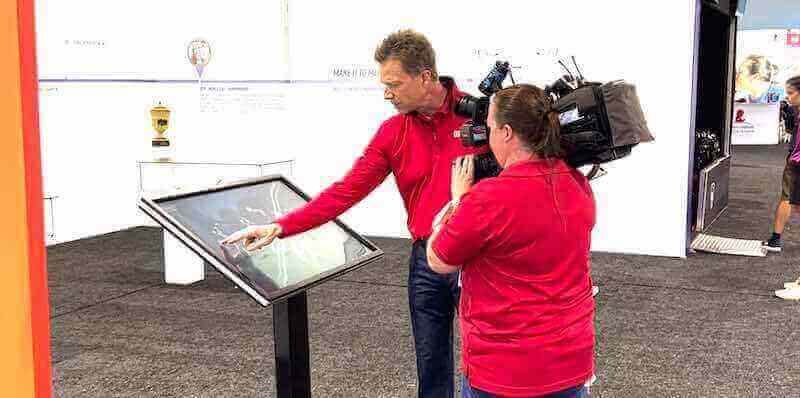
Touch-responsive interfaces make exploring content collections intuitive for visitors of all ages
Comprehensive Content Categories
School touchscreen displays should showcase the full breadth of institutional excellence rather than focusing narrowly on single program areas.
Athletic Recognition and Records
Athletic hall of fame displays celebrate championship teams, individual athlete achievements, coaching excellence, and program traditions. Comprehensive athlete profiles include statistics, career highlights, photos, and biographical information impossible to convey through traditional trophy case plaques. Auto-ranking record boards showcase top performances across all sports, automatically updating as new records occur while preserving historical context.
Multi-sport recognition ensures equitable celebration across all athletic programs rather than favoring major sports due to display space limitations. Every team and athlete receives comparable recognition opportunity regardless of program size or revenue generation.
Academic Excellence Recognition
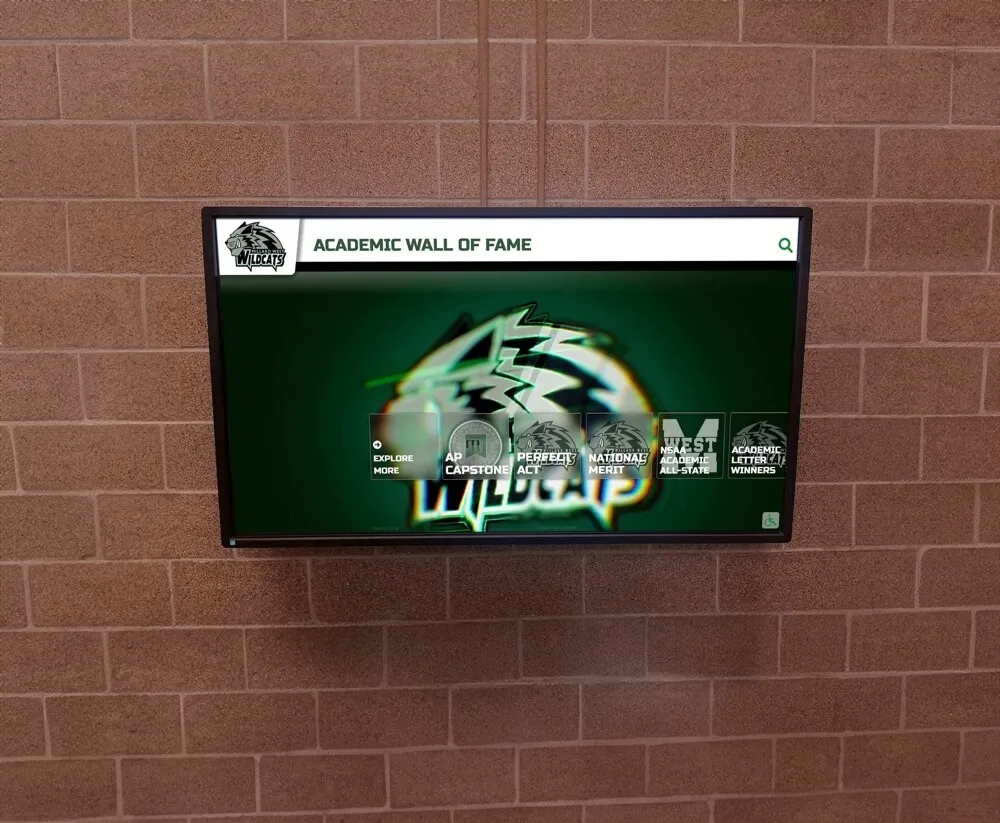
Academic recognition programs showcase intellectual achievement deserving visibility comparable to athletic recognition. Honor roll recipients, National Merit Scholars, AP achievement, academic competition success, and specialized program accomplishments receive systematic celebration reinforcing institutional values balancing athletic and academic excellence.
Quarterly and annual academic recognition provides ongoing celebration rather than limiting acknowledgment to year-end ceremonies quickly forgotten. This sustained visibility inspires student academic focus while demonstrating program quality to prospective families evaluating school options.
Arts and Special Programs
Performing arts achievements, visual arts exhibitions, music accomplishments, theater productions, and specialized program success deserve recognition highlighting diverse excellence beyond traditional academic and athletic metrics. Digital signage content can showcase recent performances through video highlights, display student artwork digitally, and celebrate program participation encouraging continued involvement.
Historical Archives and School Heritage
Interactive timelines documenting school history preserve institutional memory while educating current community members about heritage and traditions. Historical photos, yearbook archives, facility evolution, leadership transitions, and cultural milestones create comprehensive institutional narratives connecting present community to decades or centuries of heritage.
Alumni recognition celebrating distinguished graduates demonstrates long-term outcomes of educational programs while providing current students with role models and potential mentors. Career information enables students to discover alumni in fields matching their interests, facilitating connections supporting career exploration and professional development.
Rich Multimedia Content Integration
Text-only displays fail to capture attention or create engaging experiences worthy of celebrated achievements. Effective touchscreens integrate diverse content types creating visual interest and emotional connection.
High-Resolution Photography
Professional photos establish immediate personal connections and visual appeal. Multiple photos per profile enable richer storytelling—action shots capturing achievement moments, team photos providing broader context, candid images revealing personality, and chronological progressions showing individuals across life stages.
Image quality matters significantly. Professional photography proves worth the investment compared to amateur snapshots diminishing rather than enhancing recognition. Schools should prioritize photo collection during achievement moments, systematically building image libraries supporting comprehensive digital recognition.
Video Content Integration
Brief video clips create particularly engaging recognition when available. Game highlights showcasing athletic accomplishments, performance excerpts demonstrating artistic achievement, student testimonials sharing personal experiences, and historical footage providing era context enhance profiles significantly beyond static content alone.
Video duration requires careful consideration. Brief 30-90 second clips sustain attention better than lengthy features most visitors won’t watch completely. Multiple short videos prove more effective than single comprehensive presentations attempting excessive coverage.
Statistical and Achievement Data
Athletic records, academic metrics, competition results, and quantifiable achievements provide concrete evidence of excellence. Auto-ranking capabilities enable dynamic display of top performances across statistical categories without manual updates as new achievements occur. This automated approach celebrates all-time excellence while acknowledging current accomplishments as they happen.
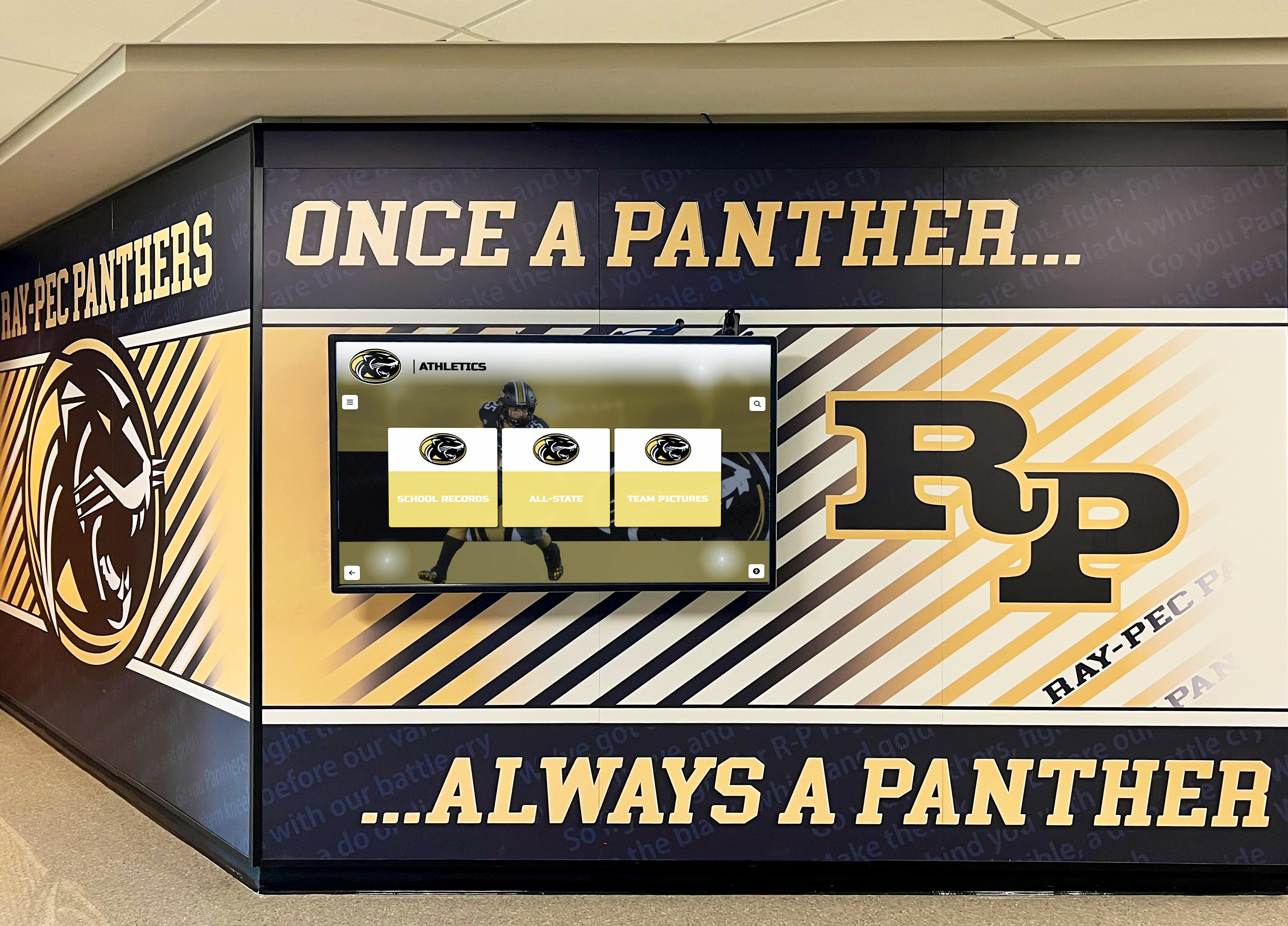
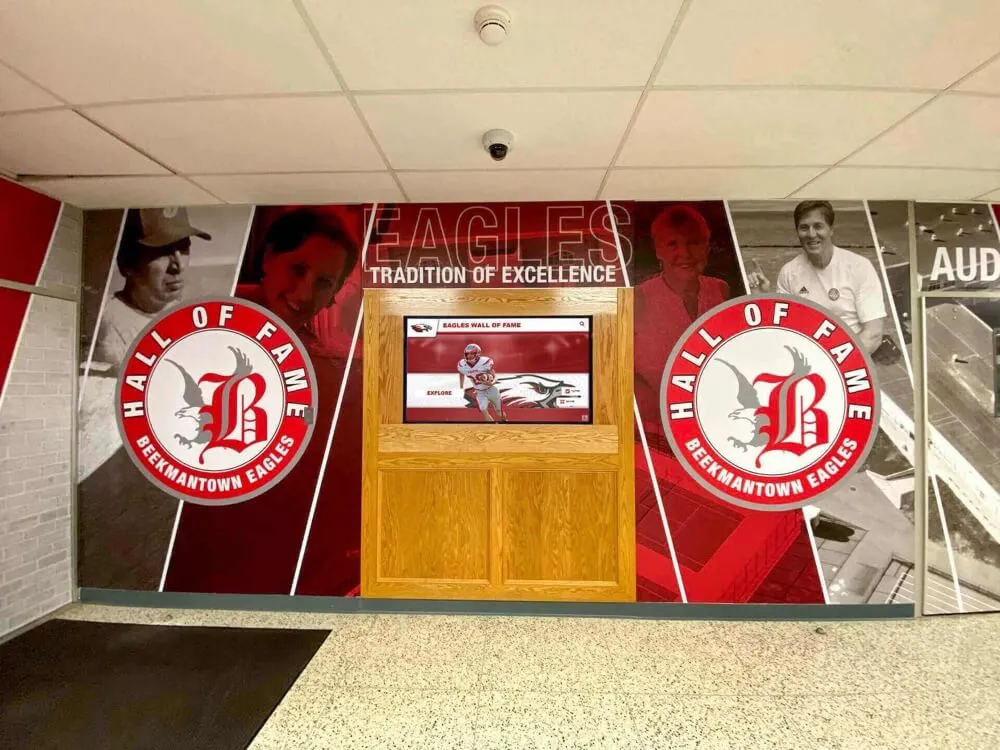
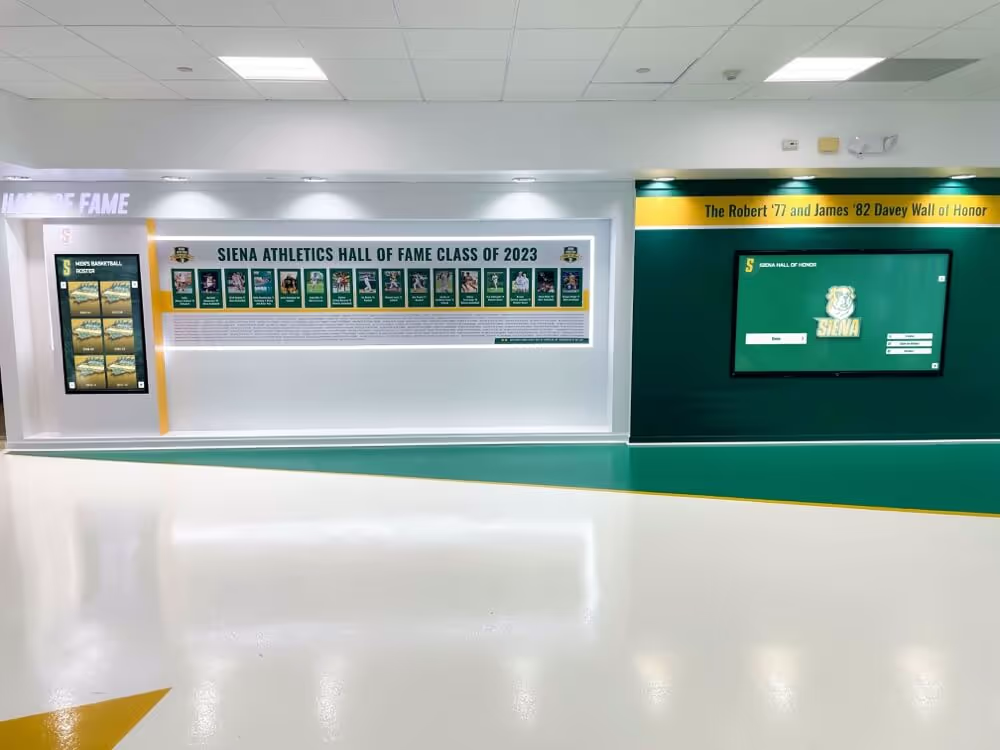
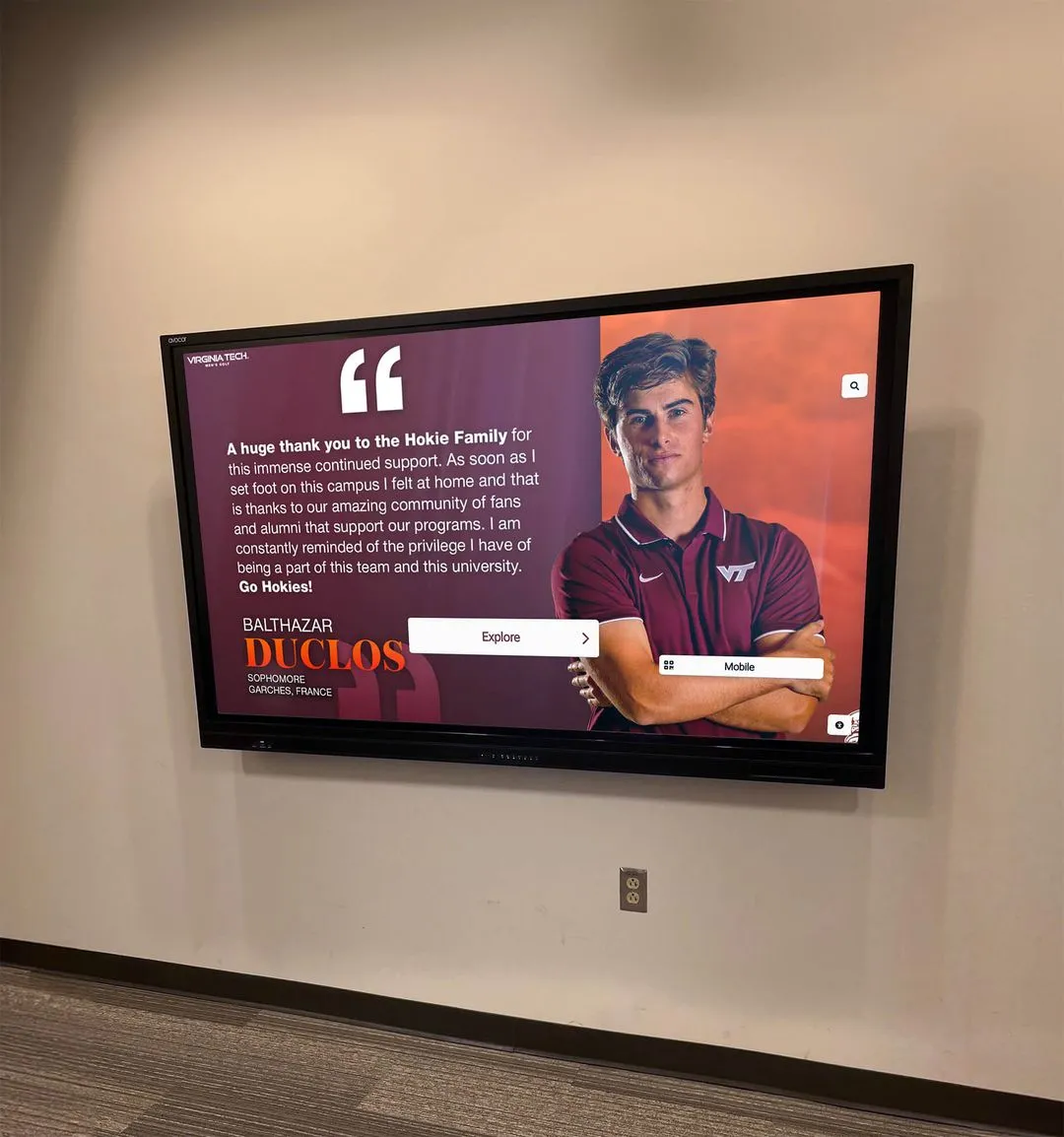
Strategic display installations transform spaces into engaging recognition destinations
Searchable Databases and Discovery Features
Random browsing creates pleasant exploration, but visitors often seek specific information requiring robust search functionality.
Comprehensive search accommodates diverse query types—name searches locating specific individuals, keyword searches finding topics or programs, year-based filtering discovering historical content, and category browsing exploring achievement types. Search autocomplete helps users find correct spellings while encouraging exploration of related content they might not have searched initially.
Discovery features complement direct search by surfacing content visitors didn’t know to seek. Featured recognition rotating daily highlights different achievements ensuring all recognized individuals receive visibility. Related content suggestions connect teammates, classmates, and family members encouraging extended exploration following relationship threads. Anniversary-based highlighting celebrates milestone achievements automatically without requiring manual curation.
Mobile Accessibility and QR Integration
Visitors increasingly expect mobile access to information enabling continued exploration beyond physical campus presence. Responsive web platforms deliver identical interactive experiences through smartphones and tablets, supporting exploration during campus tours, at home during school research, and anywhere worldwide enabling ongoing engagement.
QR codes bridge physical and digital experiences seamlessly. Visitors scanning codes transition from touchscreen kiosks to personal devices, enabling content saving, social sharing, and later reference without requiring sustained physical presence at installations. This mobile continuation extends engagement far beyond brief lobby interactions, creating persistent connections supporting ongoing institutional relationships.
Touch screen kiosk software designed specifically for recognition applications provides these mobile features natively rather than requiring custom development or awkward adaptations of generic digital signage platforms lacking essential recognition functionality.
Strategic Placement and Installation Considerations
Technology capabilities matter little without strategic placement ensuring visibility and encouraging engagement.
High-Traffic Location Selection
Install interactive displays where they receive maximum visibility from diverse audiences. Main entrance lobbies ensure all campus visitors encounter technology immediately upon arrival. Athletic facility entrances engage sports families and community members attending events. Commons areas where students gather create ongoing engagement opportunities beyond occasional visitor interactions.
Multiple installation locations serve different audiences—athletic centers emphasize sports recognition, academic buildings highlight scholarly achievement, performing arts facilities showcase artistic excellence, and main lobbies present comprehensive institutional narratives spanning all program areas.
Architectural Integration and Aesthetics
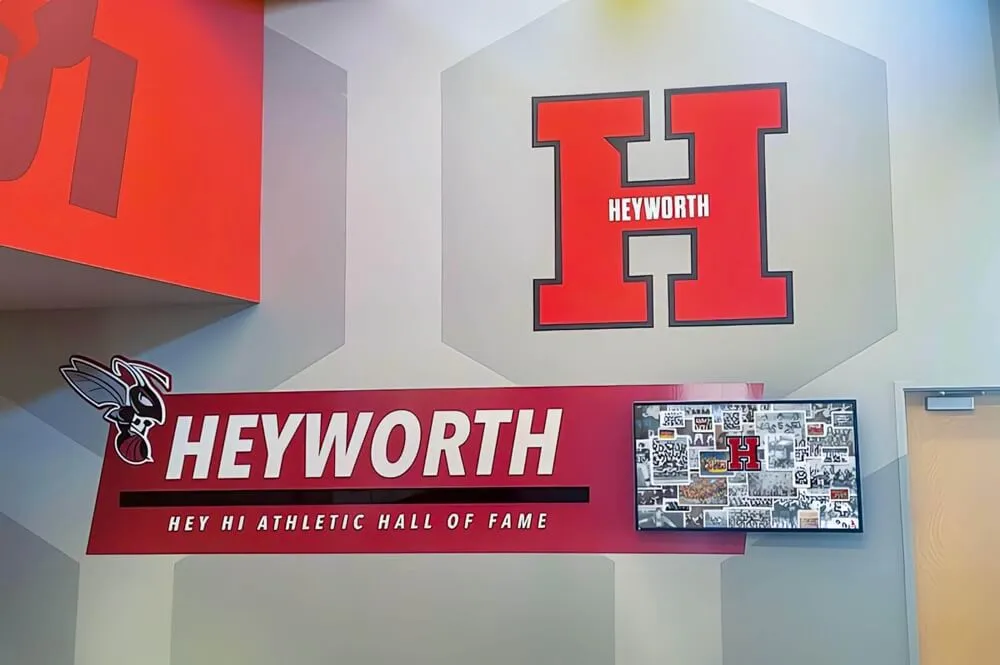
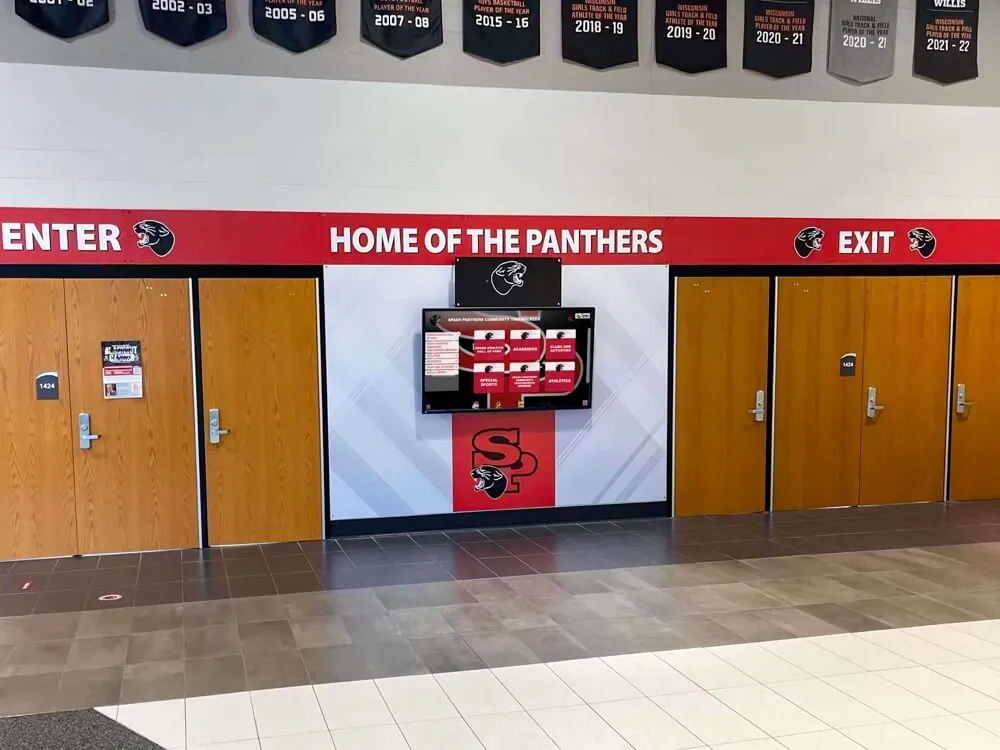
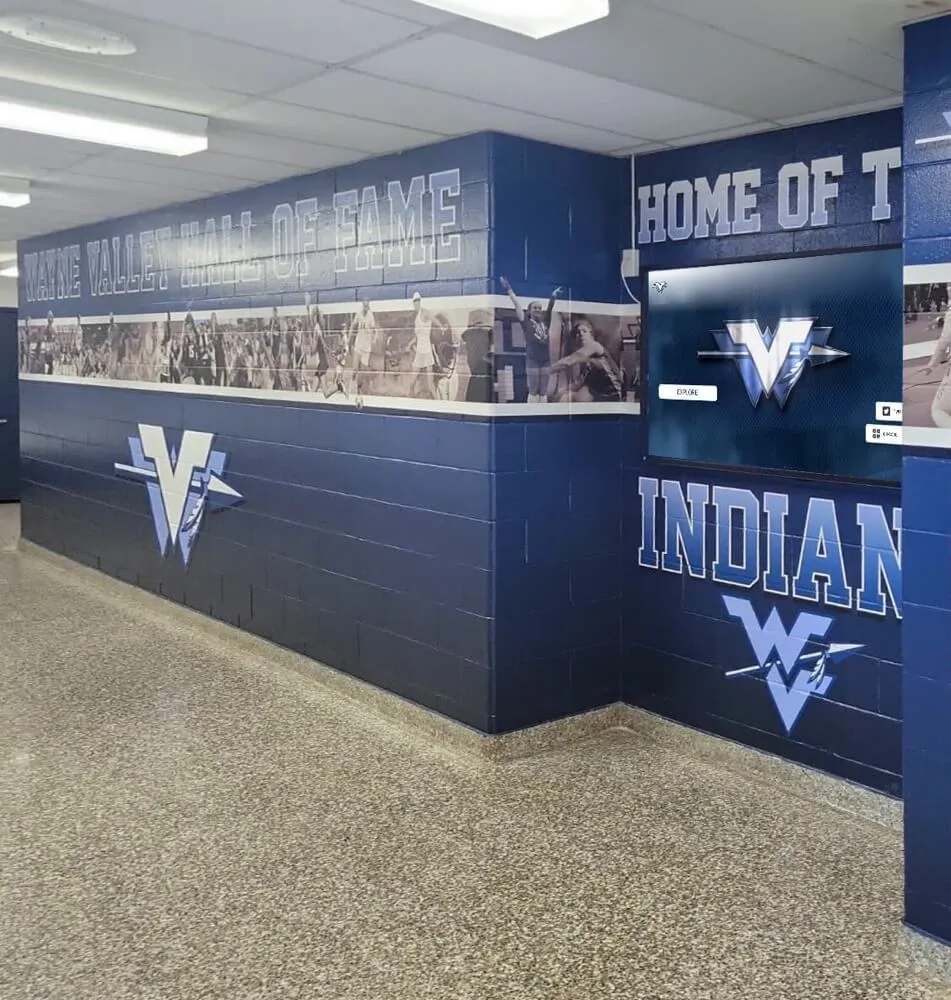
Professional installations integrate technology with architectural elements creating cohesive recognition destinations rather than awkward afterthought equipment placements. Custom kiosk enclosures incorporate school colors, logos, and visual identity. Wall-mounted installations coordinate with existing architectural materials and design elements. Recessed mounting creates clean contemporary aesthetics embedding displays flush with walls.
This thoughtful integration signals institutional commitment to recognition as core cultural value rather than temporary technology experiment. Visitors perceive professionally integrated installations as permanent institutional investments rather than disposable digital signage scheduled for eventual removal.
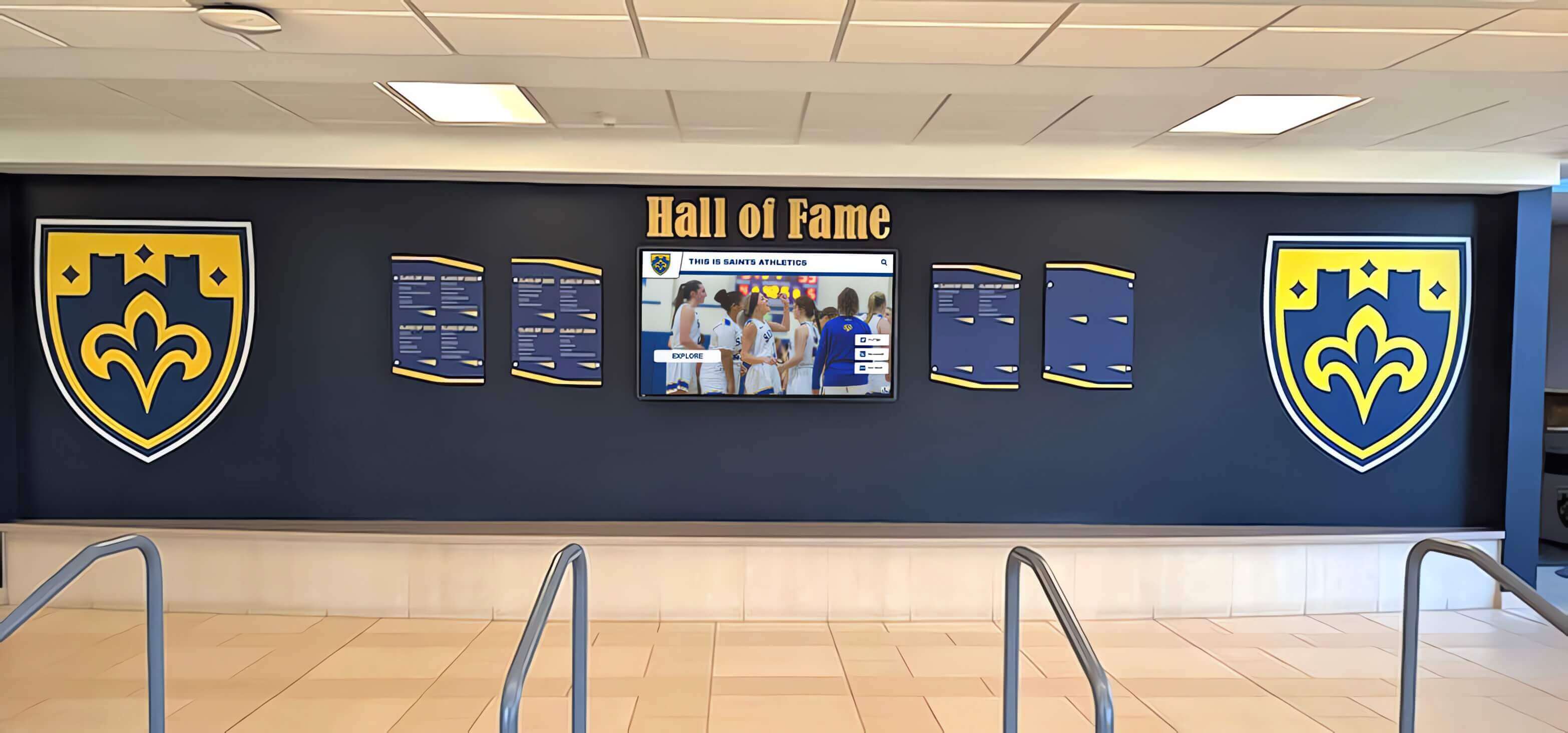
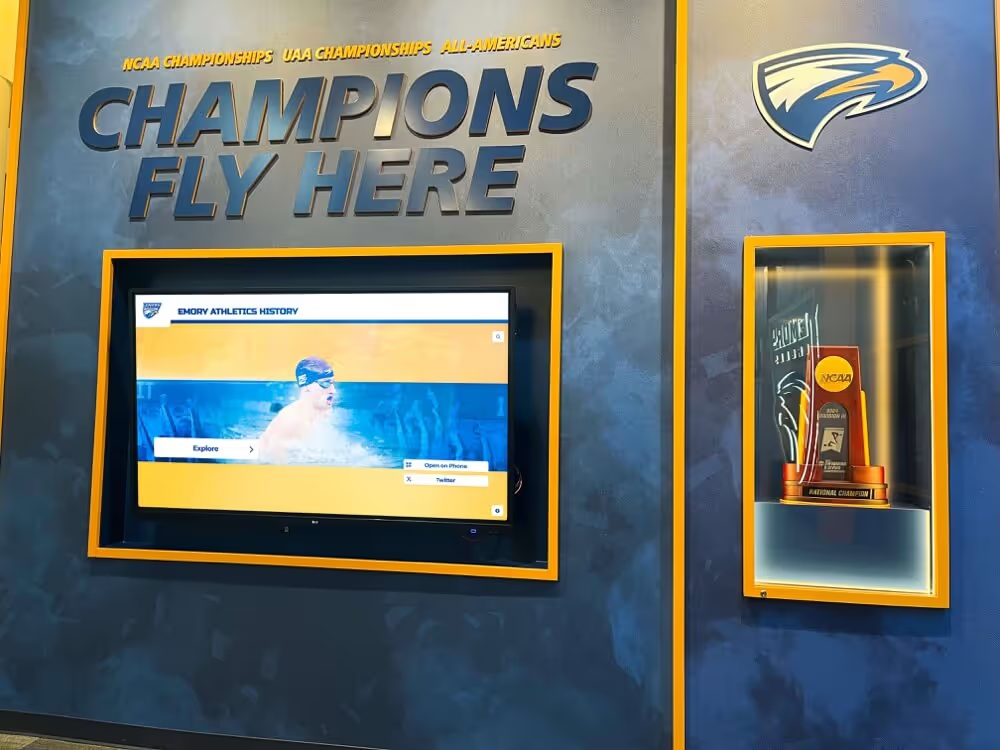
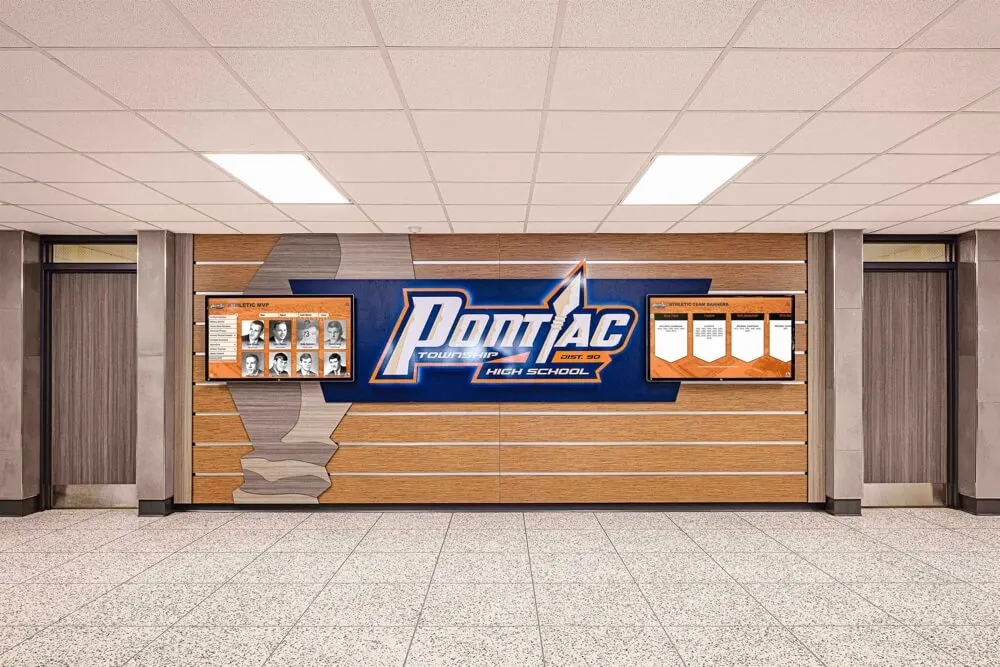
Custom integration creates recognition installations reflecting institutional identity and pride
Accessibility Compliance
Physical accessibility ensures all visitors can engage with recognition regardless of abilities or circumstances. Appropriate mounting heights position touchscreens with center points approximately 48-52 inches from floor level, enabling comfortable interaction for wheelchair users while remaining accessible to standing visitors of various heights.
Clear approach paths without obstructions ensure visitors with mobility devices can reach installations comfortably. Adequate lighting without glare enables visibility for visitors with vision limitations. Volume controls and closed captioning for video content accommodate hearing diversity.
Web-based platforms meeting WCAG 2.1 AA accessibility standards ensure digital content proves genuinely accessible through screen readers, keyboard navigation, and assistive technologies. Solutions like Rocket Alumni Solutions provide the only web-based touchscreen platform meeting full accessibility compliance, ensuring inclusive recognition rather than performative accessibility claims failing when visitors with disabilities attempt actual usage.
Network Infrastructure and Reliability
Reliable network connectivity enables remote content management and ensures consistent operation essential for positive visitor experiences. Wired Ethernet connections provide most reliable performance where practical, though modern wireless networks prove adequate for recognition applications primarily serving text content and images rather than high-bandwidth streaming.
Commercial-grade displays designed for continuous operation deliver 7-10+ year lifespans through higher-quality components and better thermal management compared to consumer televisions failing prematurely in demanding public environments. This hardware reliability proves essential for installations representing significant institutional investments warranting decade+ operational horizons.
Content Strategy for Maximum Engagement
Technology provides platforms, but compelling content creates meaningful engagement inspiring repeated interaction and sustained community connections.
Layered Information Architecture
Visitors arrive with different time availability, information needs, and depth of interest. Effective content accommodates this diversity through layered architecture enabling appropriate engagement levels.
Surface Layer: Quick Engagement
Initial screens provide immediate impact through striking visuals, clear category organization, and prominent search functionality. Visitors scanning quickly gather essential information and decide whether deeper exploration interests them. Featured content spotlighting rotating recognition creates visual interest while ensuring all recognized individuals receive visibility over time.
Middle Layer: Detailed Information
Visitors choosing to explore further access detailed profiles—comprehensive biographies, achievement narratives, photo galleries, and statistical records. This middle layer satisfies most visitor curiosity providing substantive information without overwhelming those wanting overview rather than exhaustive detail.
Deep Layer: Comprehensive Archives
The deepest information layers provide extensive resources for serious researchers, historians, and enthusiasts wanting maximum depth. Complete statistical archives, historical documentation, related materials, and connection networks serve specialized audiences without cluttering experiences for casual visitors.
This layered approach respects visitor autonomy, allowing individuals to choose their engagement depth rather than forcing uniform information volume on everyone regardless of interest or available time.
Featured Content and Rotation Strategies
Automated content rotation ensures all recognized individuals receive featured visibility while keeping displays fresh for repeat visitors. Birthday-based highlighting celebrates individuals on birth dates, achievement anniversary recognition marks milestone years since accomplishments, randomized rotation distributes visibility equitably, and seasonal themes align featured content with current school calendar.
Rotation frequency should balance novelty encouraging return visits with sufficient dwell time enabling new visitors to explore featured content before it changes. Daily rotation typically works well for schools with extensive recognition databases, while weekly rotation proves appropriate for smaller content collections.
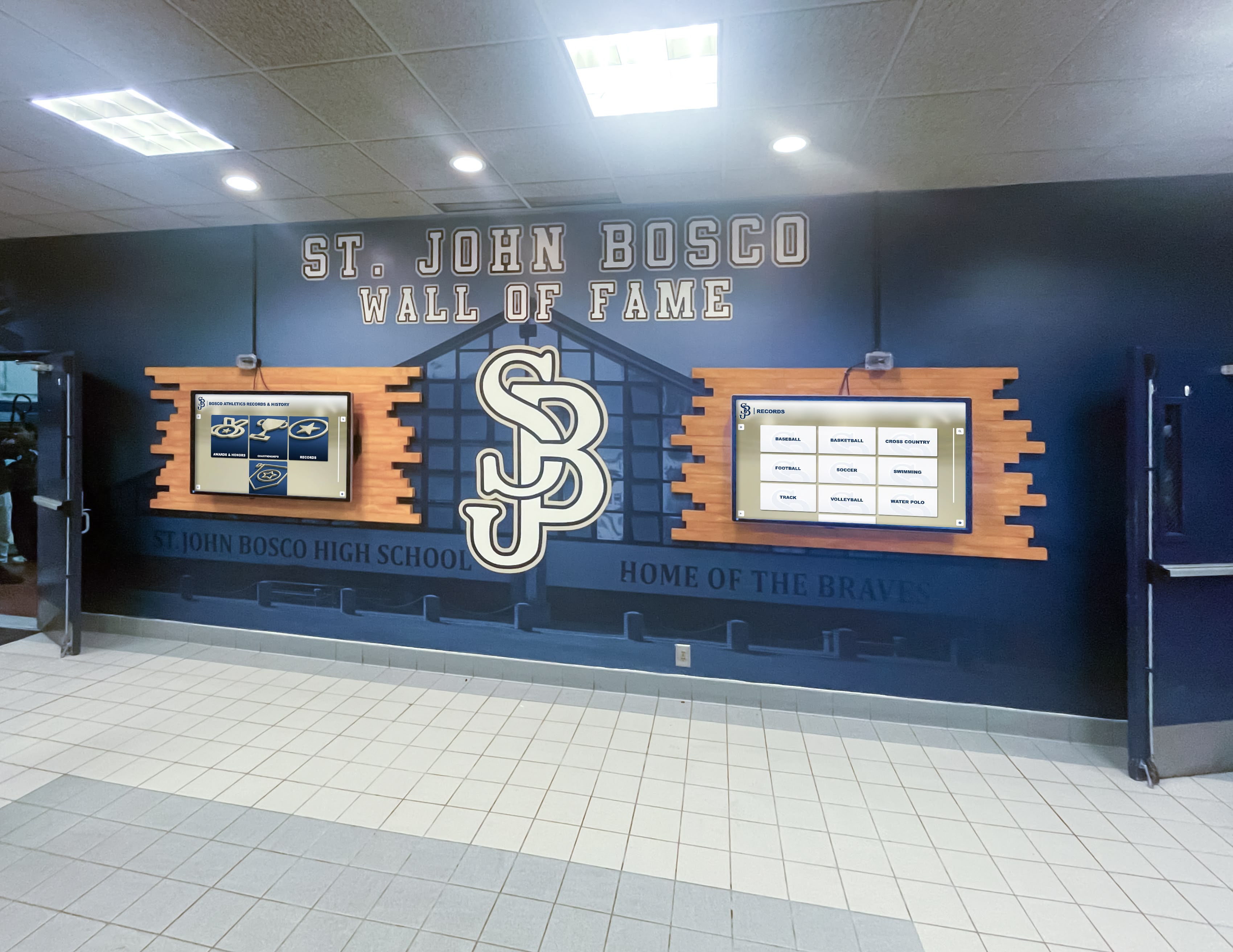
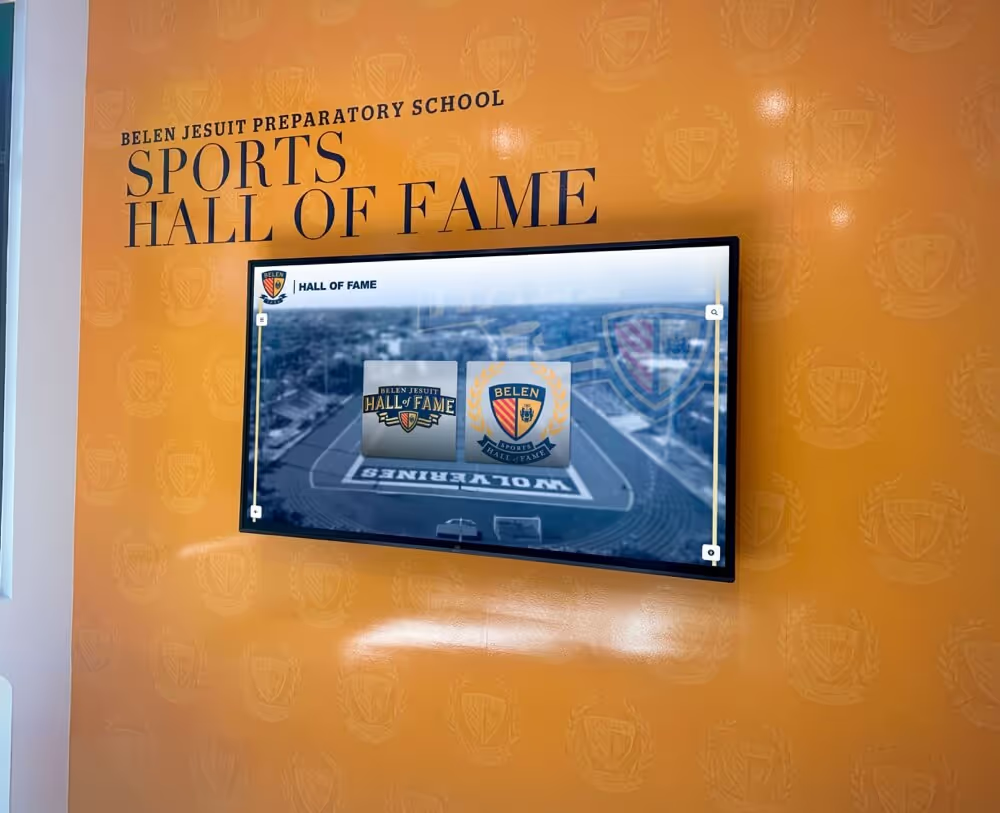
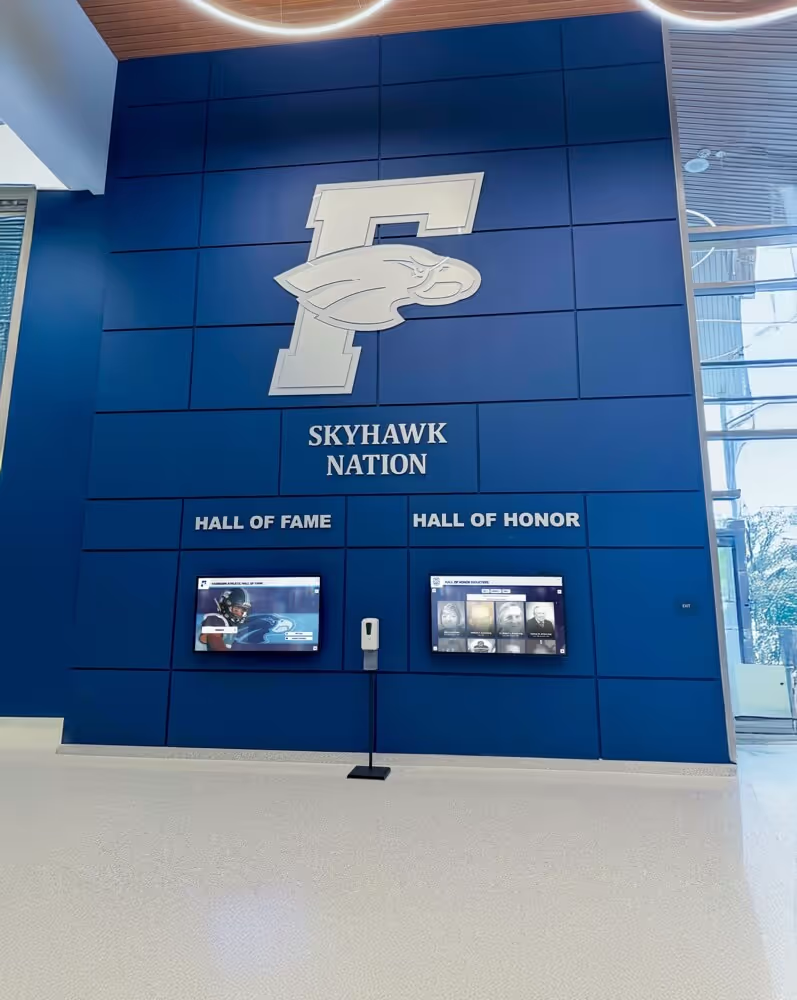
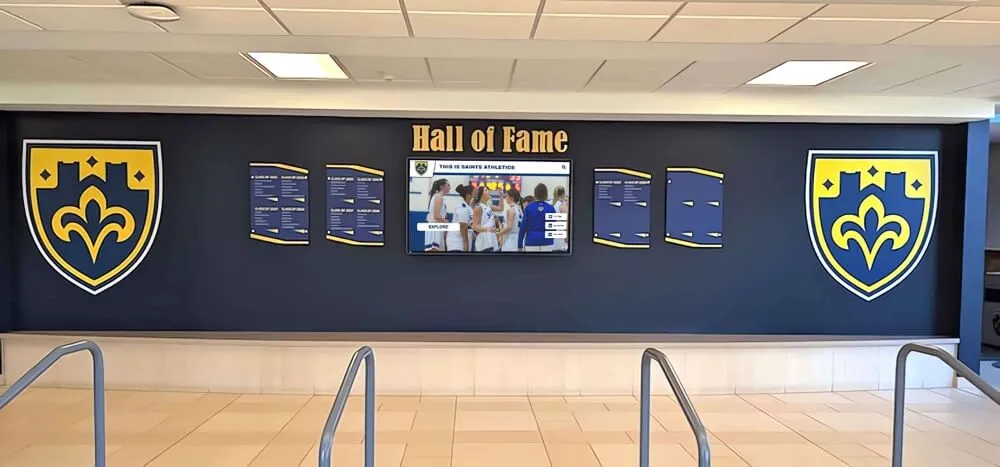
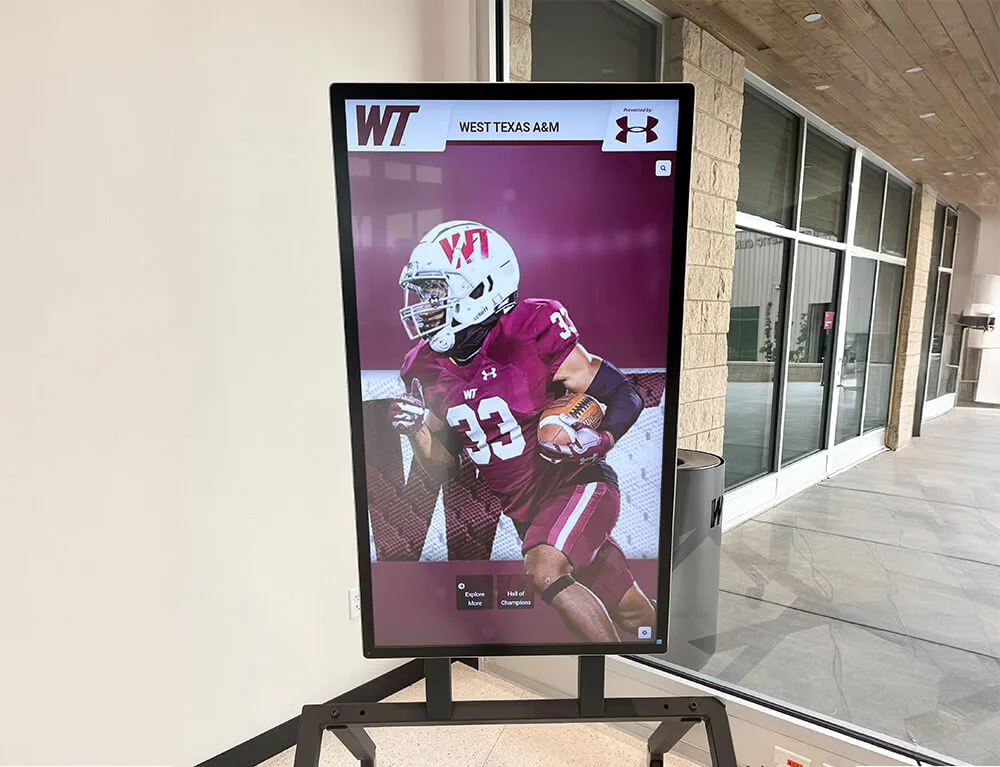
Multiple displays accommodate comprehensive recognition celebrating diverse excellence
Community Contribution and Living Archives
The most engaging recognition evolves continuously as community members contribute memories, photos, and information enriching existing profiles. Enable alumni to submit biographical updates through online forms, family members to provide historical materials about deceased individuals, students to research and develop historical content as educational projects, and volunteers to contribute ongoing content enhancement.
These community contributions transform recognition from static institutional projects into living archives reflecting collective community memory and investment. Participatory recognition builds broader engagement while acknowledging that distributed community knowledge exceeds what any individual administrator can possess independently.
Integration with School Communications
Recognition content provides ready material for broader school communications amplifying impact beyond physical and web installations. Feature individual profiles in newsletters celebrating achievements, share recognition content through social media platforms engaging wider audiences, incorporate recognition into admission materials showcasing excellence, and reference achievements during fundraising appeals connecting giving to visible outcomes.
This integrated approach maximizes recognition value by deploying content across multiple channels rather than limiting impact to isolated technology installations accessed only by lobby visitors.
Implementation Best Practices
Successful touchscreen implementations follow systematic approaches addressing technology selection, content development, staff training, and ongoing management.
Needs Assessment and Planning
Begin with thorough evaluation of recognition objectives and visitor engagement goals. Define what success looks like—increased prospective family engagement, improved alumni connections, enhanced student pride, or comprehensive achievement celebration. Understanding desired outcomes guides technology selection and content strategy ensuring alignment between capabilities and institutional needs.
Assess current recognition approaches identifying strengths worth preserving and limitations digital solutions should address. Involve stakeholders including admissions staff understanding prospective family needs, advancement professionals managing alumni relations, athletic directors overseeing sports recognition, and facilities managers addressing practical installation considerations.
Establish realistic budgets encompassing hardware, software, implementation, training, and ongoing operation. Consider total cost of ownership over multi-year periods rather than focusing solely on initial purchase prices that ignore significant ongoing expenses some platforms require.
Platform and Provider Selection
Technology platform selection significantly impacts long-term satisfaction, maintenance burden, and recognition program success. Prioritize purpose-built recognition platforms designed specifically for achievement celebration rather than generic digital signage requiring awkward adaptation for hall of fame applications.
Evaluation Criteria
Assess providers based on recognition-specific functionality including searchable databases with detailed profiles, category organization and filtering, multimedia content integration, mobile responsiveness, and discovery features encouraging extended exploration. Evaluate content management ease ensuring staff can confidently update recognition without extensive technical expertise or vendor dependencies creating delays and ongoing costs.
Consider accessibility compliance verifying WCAG 2.1 AA standards rather than accepting incomplete accommodation creating legal exposure and excluding community members with disabilities. Review support offerings including implementation assistance, staff training, ongoing technical support, and content migration services facilitating smooth transitions from traditional recognition.
Total Cost of Ownership
Compare complete costs over five-year periods accounting for initial hardware and software investments, implementation and training expenses, ongoing subscription or licensing fees, support and maintenance charges, and future hardware replacement. Platforms advertising low initial prices sometimes carry substantial ongoing costs through per-user fees, capacity limitations requiring expensive upgrades, or inadequate support necessitating outside technical assistance.
Content Development and Migration
Thoughtful content preparation ensures successful launches demonstrating recognition value immediately rather than disappointing visitors with sparse initial implementations suggesting platform limitations.
Begin content development with recent 5-10 years where information is readily available and most relevant to current community members. Prioritize high-visibility recognition like athletic hall of fame inductees, distinguished alumni, and major achievement milestones establishing compelling initial content.
Develop systematic historical migration plans gradually building comprehensive archives post-launch through sustained manageable effort rather than requiring heroic pre-launch work proving unsustainable and delaying value realization indefinitely. Many schools implement digital archives through phased approaches respecting resource constraints while building toward complete coverage.
Establish quality standards and profile templates ensuring consistent professional presentation. Define image specifications, biographical content requirements, statistical data formats, and multimedia guidelines enabling multiple staff members to develop content maintaining cohesive recognition quality.
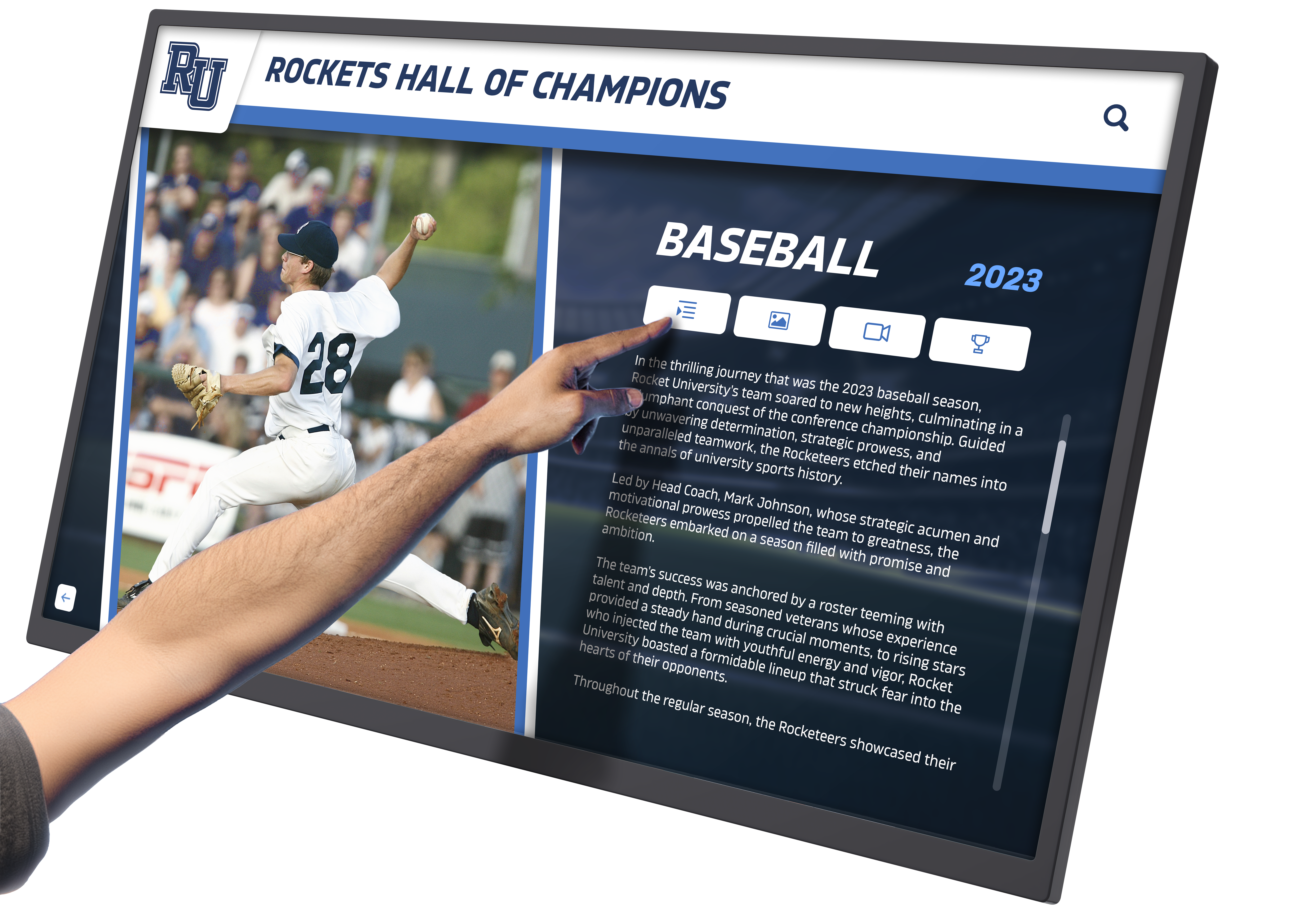
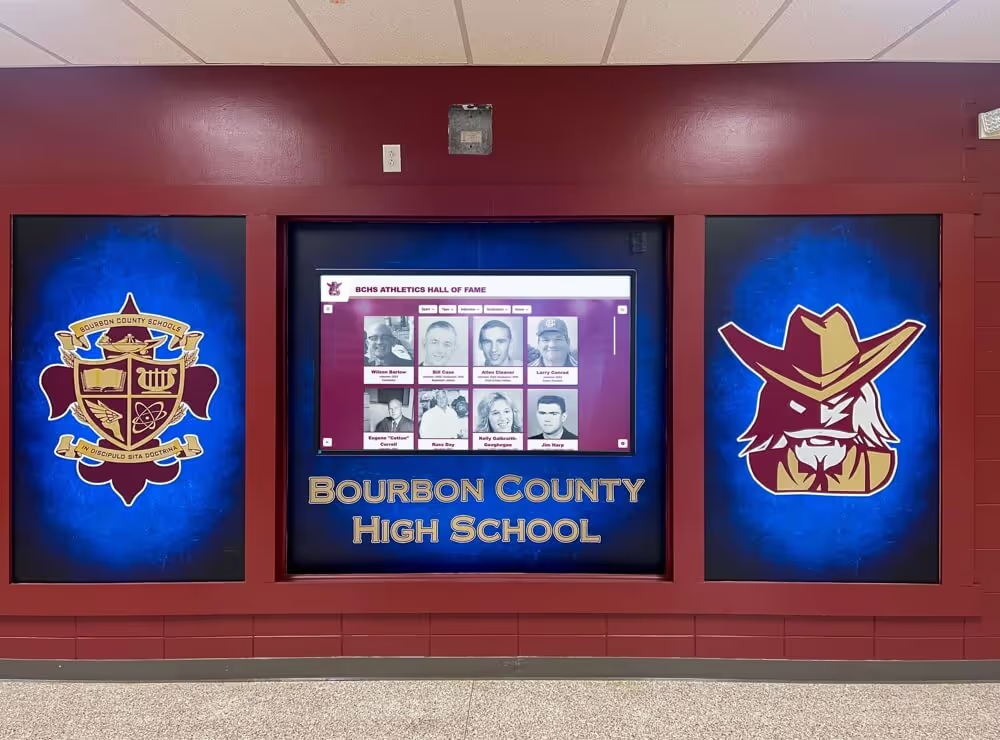
Rich profiles including photos, statistics, and narratives create meaningful achievement celebration
Staff Training and Capability Building
Technology proves worthless if staff lack confidence managing content and troubleshooting basic issues. Comprehensive initial training should cover platform navigation and content discovery, profile creation and editing, multimedia content upload, search and filtering functionality, and basic troubleshooting for common issues visitors might encounter.
Quality documentation accessible for ongoing reference supports long-term sustainability as trained staff transition and replacements require onboarding without vendor dependencies. Video tutorials, step-by-step guides, and searchable knowledge bases enable self-service learning reducing ongoing support requirements.
Plan for knowledge transfer and succession ensuring recognition management expertise doesn’t reside with single individuals whose departure threatens program continuity. Cross-train multiple staff members, document processes thoroughly, and establish collaborative management approaches distributing responsibility across teams.
Creating Digital Warming in School Environments
The most successful touchscreen implementations transcend basic information delivery to create digital warming—transforming cold institutional spaces into welcoming environments where personalized content surfaces create meaningful connections and ongoing engagement.
Personalization and Individual Discovery
Generic information broadcasts treat all visitors identically regardless of interests, backgrounds, or relationships to institutions. Digital warming occurs when content surfaces personally relevant information creating individual discovery experiences.
Search functionality enables visitors to find themselves, family members, classmates, or hometown connections within recognition databases. Related content suggestions reveal teammates, fellow inductees, and shared achievement connections. Filtering allows focusing on graduation years, specific sports or programs, or achievement types matching personal interests.
This personalization respects visitor autonomy while guiding discovery through relevant content pathways. Prospective families exploring schools discover students from their communities or alumni working in fields matching student interests, creating personal connections influencing enrollment decisions. Alumni returning to campus find themselves and classmates preserved in institutional memory, strengthening emotional bonds supporting ongoing relationships.
Building Community Pride and Belonging
Recognition celebrating comprehensive achievement across all programs builds inclusive culture where every student sees their potential contributions valued. When athletic recognition receives equal treatment across all sports, academic achievement gets visibility comparable to athletics, arts programs receive systematic celebration, and diverse excellence across multiple dimensions gets acknowledged, students develop stronger institutional identity and community belonging.
This inclusive recognition proves particularly important for students in smaller programs traditionally overshadowed by major sports or marquee activities. Seeing their achievements and those of program predecessors celebrated prominently validates program participation while building pride inspiring continued commitment.
Building school pride through comprehensive recognition creates vibrant community culture where excellence receives systematic acknowledgment regardless of achievement type or program visibility.
Inspiring Future Achievement
Current students exploring recognition discover what excellence looks like in their programs and what accomplishments earn institutional celebration. Understanding recognition criteria clarifies excellence standards while providing concrete achievement goals inspiring focused effort and sustained commitment.
Seeing alumni success stories following similar paths demonstrates possibility and provides motivation during challenging periods. Athletes discover predecessors who succeeded at next competitive levels, scholars find alumni achieving academic distinction, and students across programs encounter role models proving that excellence leads to recognition and opportunity.
This inspirational function proves particularly valuable for first-generation students lacking family networks exposing them to achievement possibilities and pathways to success. Recognition becomes aspirational resource showing what commitment and talent development can accomplish.
Extending Engagement Beyond Campus Visits
Physical touchscreen installations create engaging on-campus experiences, but web accessibility extends engagement to global audiences maintaining institutional connections despite geographic distance. Alumni worldwide explore recognition content regularly, sharing discoveries with extended networks and maintaining active participation in institutional community.
Prospective families research schools extensively online before campus visits, with recognition platforms enabling deep exploration of institutional excellence from home. This remote access influences enrollment decisions by demonstrating achievement breadth impossible to convey through limited tour schedules or printed marketing materials.
Interactive kiosk solutions designed for schools understand this dual-platform requirement, delivering identical experiences through physical installations and web platforms ensuring universal accessibility regardless of visitor location or device type.
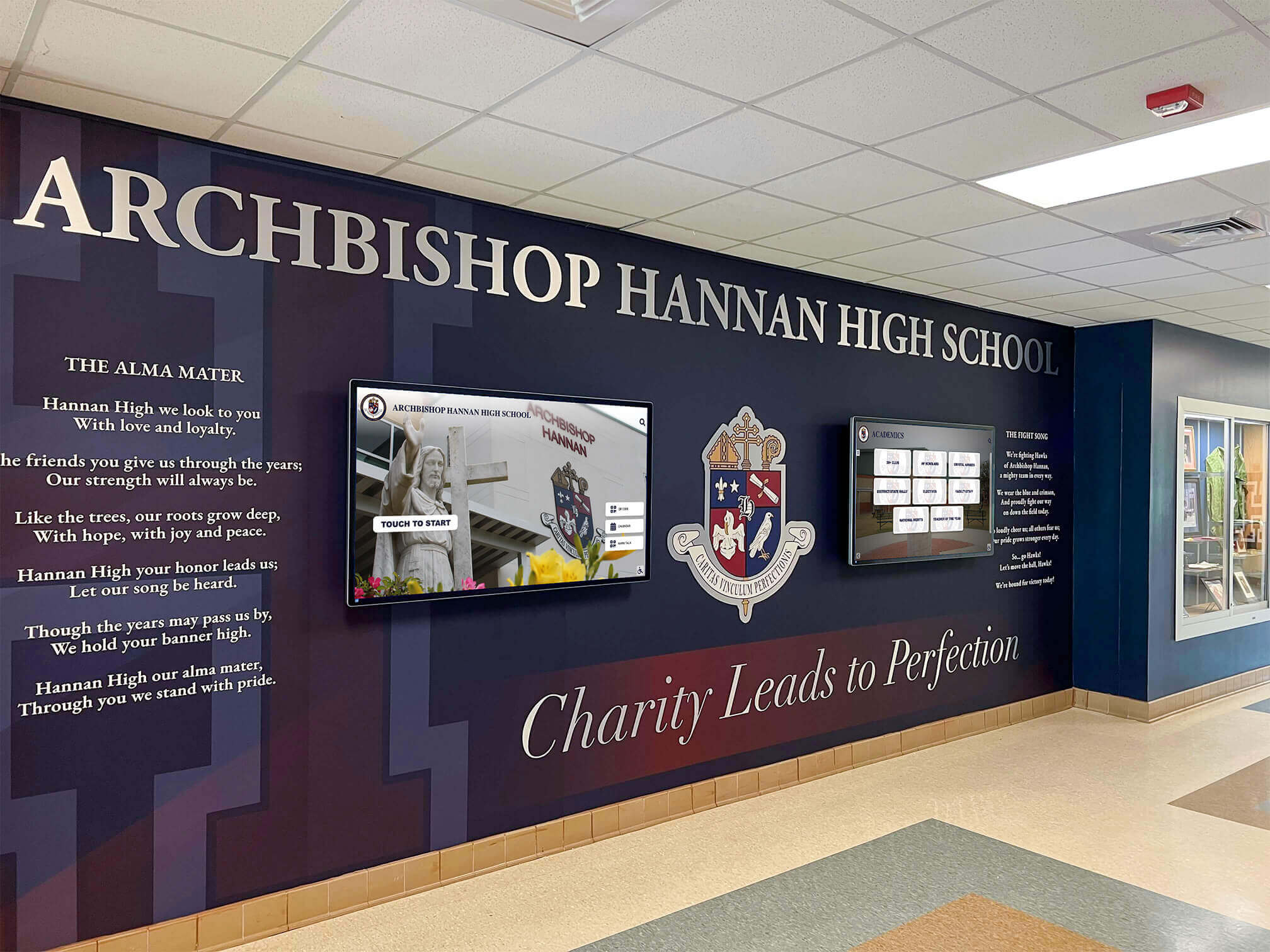
Professional integration signals institutional commitment to recognition as core cultural value
Measuring Success and Demonstrating Value
Systematic assessment ensures touchscreen investments achieve intended goals while identifying optimization opportunities justifying ongoing resource allocation.
Engagement Metrics and Analytics
Digital platforms capture quantitative engagement data impossible to obtain with traditional bulletin boards or static displays.
Interaction Volume Tracking
Monitor total touchscreen interactions, unique visitors, session duration, and return visit frequency. These metrics reveal whether displays generate sustained community engagement or limited initial curiosity followed by declining interest requiring intervention. Successful implementations typically show growing engagement as word spreads and content expands.
Search and Discovery Patterns
Analyze most-searched names revealing which individuals generate greatest interest, frequently viewed profiles indicating compelling content worthy of emulation, popular categories guiding content priorities, and navigation pathways showing how visitors explore systems. These insights inform ongoing content development ensuring enhancement focuses on high-value improvements.
Web Platform Analytics
Monitor online recognition portal traffic measuring global reach beyond physical installations, geographic distribution showing where access occurs, referral sources indicating discovery pathways, social sharing demonstrating content resonating sufficiently to motivate voluntary promotion, and device usage informing mobile optimization priorities.
Qualitative Feedback Collection
Stakeholder perspectives provide context beyond quantitative metrics alone.
Observe how visitors interact with displays noting engagement duration, spontaneous reactions, group viewing patterns, and content receiving sustained attention. Position brief feedback mechanisms enabling convenient input—simple satisfaction ratings, optional comment submission, and QR codes linking to longer surveys.
Gather feedback from prospective families during admission processes asking specifically about touchscreen experiences and influence on enrollment decisions. Survey current students and alumni about recognition value and emotional impact. Collect staff perspectives about content management ease and perceived community reception.
Return on Investment Evaluation
Comprehensive value assessment considers multiple benefit dimensions beyond simple cost accounting.
Cost Comparison to Traditional Methods
Calculate cumulative costs of traditional recognition over comparable timeframes including plaque engraving, trophy case maintenance, bulletin board updates, and space expansion as recognition needs grow. Compare these recurring expenses to digital solutions requiring substantial upfront investment but minimal marginal costs as recognition expands.
Admission and Advancement Impact
Track correlations between touchscreen implementation and advancement metrics including prospective family engagement during tours, admission yield rates, alumni participation and giving, event attendance, and volunteer engagement. While attribution proves complex, systematic tracking reveals trends suggesting recognition impact on institutional priorities.
Cultural and Intangible Benefits
Consider harder-to-quantify benefits including student pride and belonging, community cohesion and identity, tradition preservation and institutional memory, competitive positioning relative to peer schools, and reputation enhancement through technology-enabled innovation. These intangible benefits often justify investments beyond what purely financial analysis might suggest.
Future Trends in School Interactive Displays
Understanding emerging trends helps schools make technology decisions supporting long-term relevance rather than implementing solutions becoming obsolete quickly.
Artificial Intelligence and Personalization
AI-powered systems will increasingly analyze visitor interests and behavior patterns to deliver personalized content recommendations, adapt information complexity to individual comprehension levels, and provide conversational interfaces answering natural language questions. These capabilities promise enhanced visitor experiences while requiring careful implementation respecting privacy and maintaining accuracy.
Augmented Reality Integration
Mobile devices will increasingly overlay digital information onto physical spaces through augmented reality. Pointing smartphones at recognition displays could reveal extended content, virtual artifact examination, historical recreation, and interactive elements exceeding what fixed displays can present simultaneously. This AR approach enables unlimited digital content accessed via personal devices while maintaining prominent physical recognition presence.
Social Integration and Community Interaction
Recognition platforms will evolve to include social features enabling recognized individuals to connect with each other, community members to share memories and comments, and ongoing conversations around institutional heritage. These social dimensions transform one-way recognition into interactive community platforms facilitating relationship building and sustained engagement.
Improved Accessibility and Universal Design
Continued advancement in accessibility technologies will enable increasingly inclusive recognition serving visitors with diverse abilities through improved screen reader capabilities, voice interaction options, adaptive interfaces responding to individual needs, and universal design principles ensuring usability for everyone regardless of abilities or circumstances.
Conclusion
Interactive touch screen displays represent transformative technology for school visitor engagement when implemented thoughtfully with clear purpose, appropriate platform selection, compelling content, and integration with broader community building strategies. These systems enhance rather than replace traditional communication by providing depth for interested visitors, accessibility for diverse audiences, flexibility for evolving content, and engagement impossible with static bulletin boards and aging trophy cases.
Success requires moving beyond technology installation to creating genuine digital warming—transforming cold institutional lobbies into welcoming environments where visitors discover personal connections to schools, explore achievements demonstrating excellence, and develop emotional bonds influencing enrollment decisions, alumni relationships, and community support.
Schools implementing interactive touchscreen displays should begin with clear needs assessment identifying specific problems technology will solve, careful platform evaluation prioritizing purpose-built recognition solutions over adapted digital signage, realistic budget planning accounting for total ownership costs, comprehensive content development creating immediate value, staff training enabling confident ongoing management, and systematic integration with admission processes, alumni relations, and school communications.
Technology choices matter profoundly—web-based platforms deliver universal device compatibility and automatic updates, cloud infrastructure provides reliability exceeding self-hosted approaches, purpose-built recognition software understands school needs impossible to achieve with generic adaptation, accessibility compliance ensures inclusive access rather than performative gestures, and thoughtful hardware selection ensures reliable long-term operation.
Content development proves equally critical—comprehensive achievement celebration across all programs, rich multimedia creating visual interest and emotional connection, layered information architecture accommodating diverse visitor needs, community contribution opportunities building participatory recognition, and integration with broader communications amplifying impact.
The future of school interactive displays continues evolving through artificial intelligence creating personalized experiences, augmented reality enabling immersive exploration, enhanced social integration building community interaction, and improved accessibility ensuring universal participation. Schools implementing touchscreen technology today position themselves to adopt these advances, ensuring recognition systems remain current and engaging for decades to come.
Every school accumulates achievements worthy of celebration—athletic championships, academic excellence, artistic accomplishment, community service, and countless individual and collective successes deserving recognition honoring excellence while building community pride. Interactive touch screen displays ensure these achievements receive the visibility, accessibility, and celebration they deserve while creating the engaging visitor experiences that distinguish institutions in competitive educational markets.
Ready to transform your school’s visitor engagement through interactive touchscreen technology? Explore solutions designed specifically for schools, discover how digital warming creates vibrant communities, and see how institutions nationwide use interactive displays to showcase excellence, engage visitors, and build lasting connections with students, families, alumni, and broader communities.