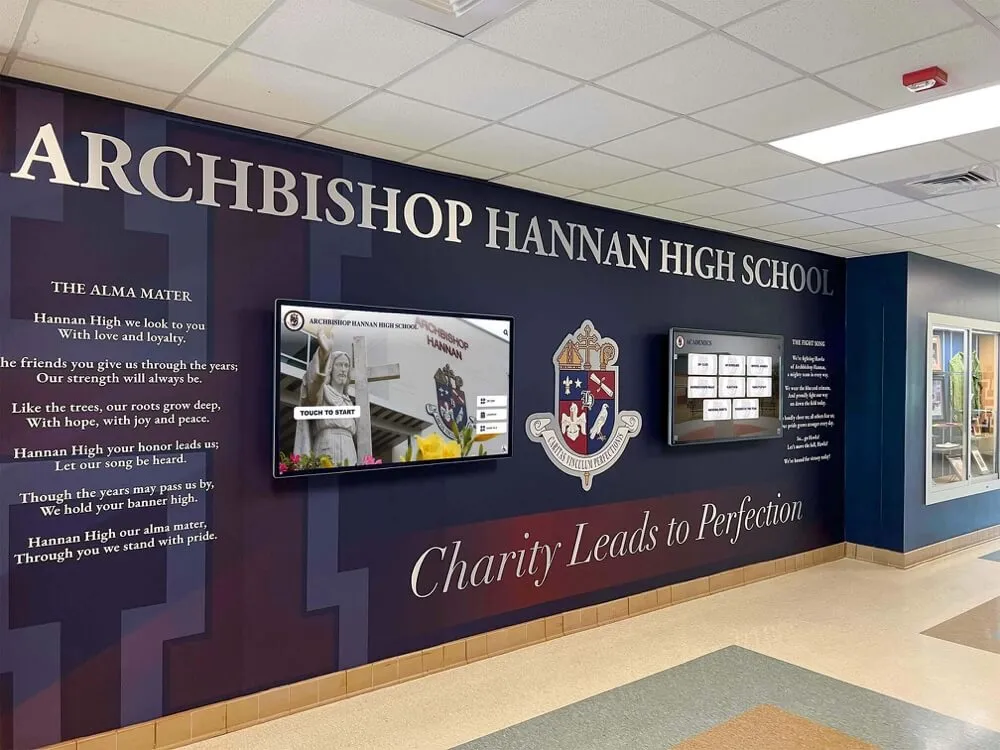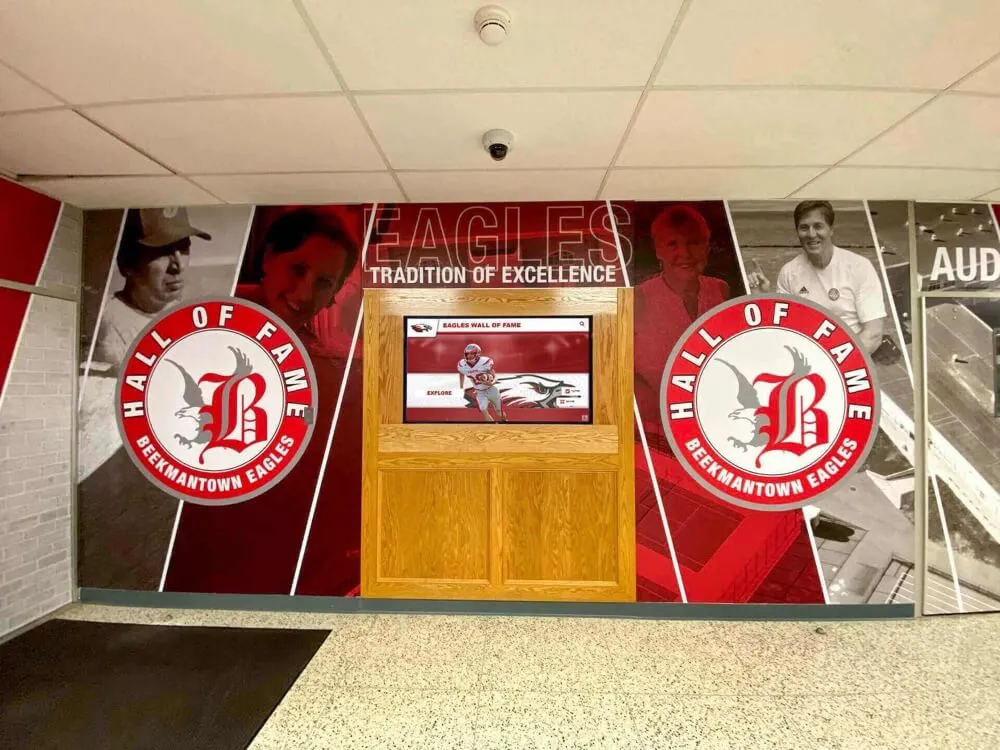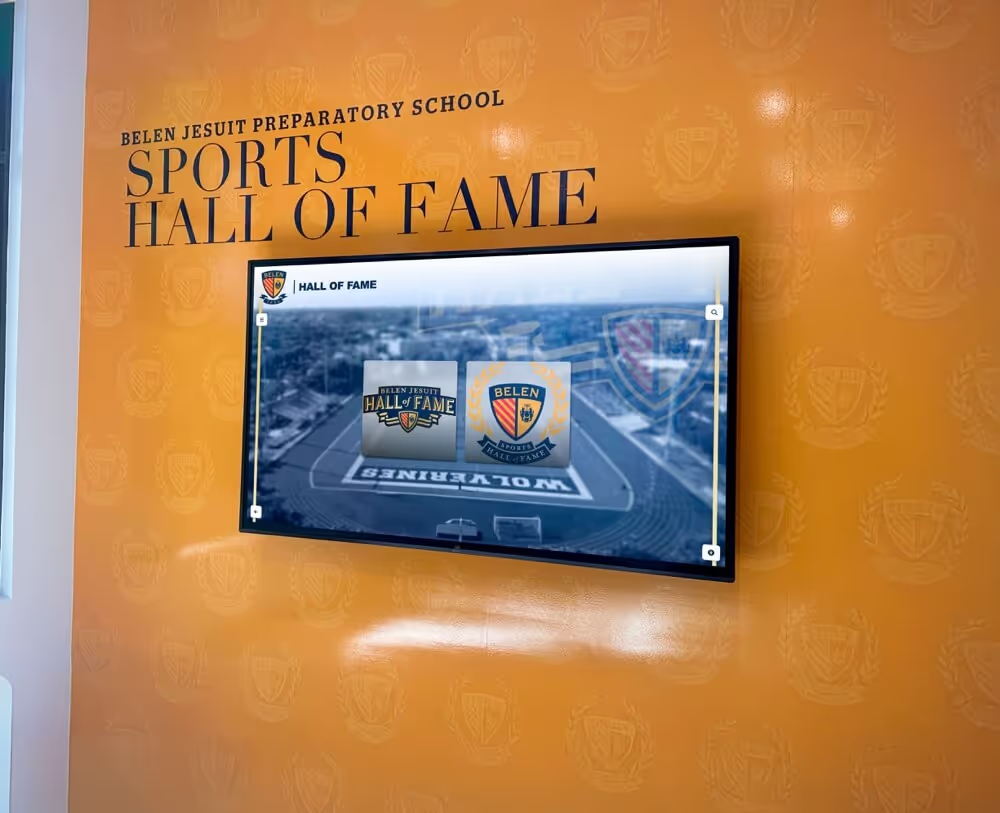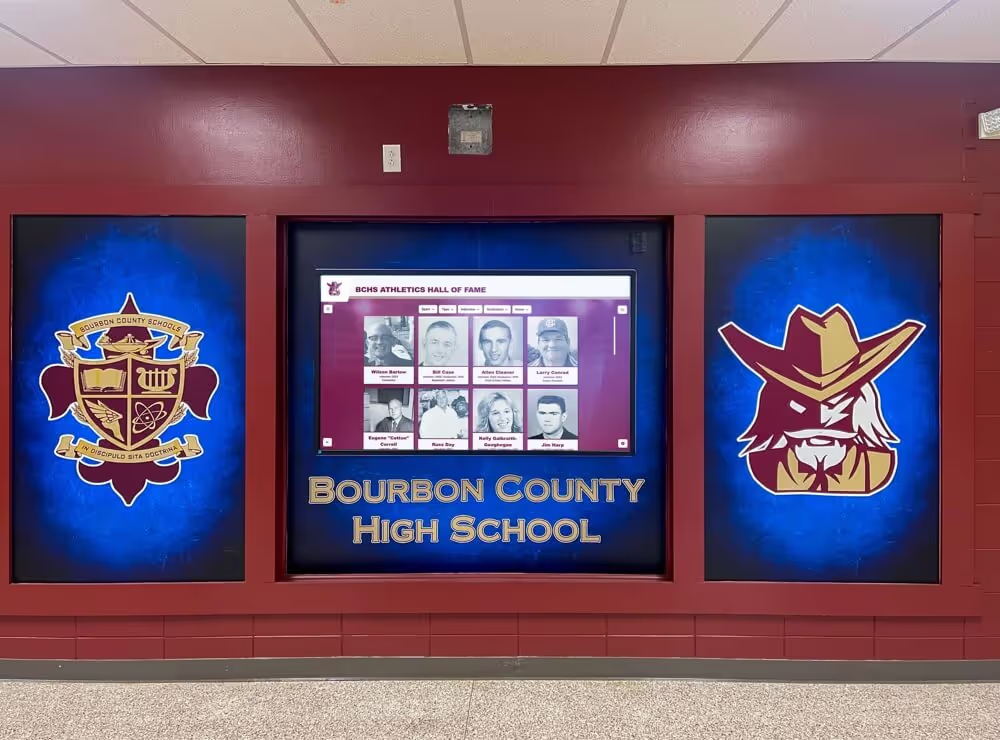




Intent: demonstrate — High school walls of fame represent one of the most visible ways schools celebrate achievement, honor distinguished alumni, and inspire current students—yet traditional plaque-based approaches increasingly fail to serve modern school communities. Limited wall space forces difficult choices about whose accomplishments receive visibility, expensive engraving creates barriers to frequent updates, and static displays generate minimal engagement from students accustomed to interactive digital experiences.
Schools across the country struggle with overflowing trophy cases, outdated recognition systems that haven’t been updated in years, and growing frustration among athletic directors, alumni coordinators, and advancement teams who watch worthy achievements go uncelebrated due to practical limitations. Meanwhile, current students walk past these static displays daily without truly engaging, missing opportunities to discover role models and connect with institutional heritage that could inspire their own excellence.
Digital walls of fame create what we call the “digital warming” effect—transforming cold, passive recognition displays into vibrant, personalized experiences that draw community members deeper into exploration and engagement. When recognition surfaces relevant content based on individual connections, enables intuitive search and discovery, and celebrates unlimited achievements without space constraints, schools build the warm, connected communities where every member feels valued and motivated to maintain lifelong institutional bonds.
This comprehensive guide explores how high schools leverage modern wall of fame solutions to overcome traditional recognition limitations while creating engaging experiences that serve multiple constituencies—current students seeking inspiration, alumni maintaining connections, prospective families evaluating school culture, and advancement teams building donor relationships and institutional pride.

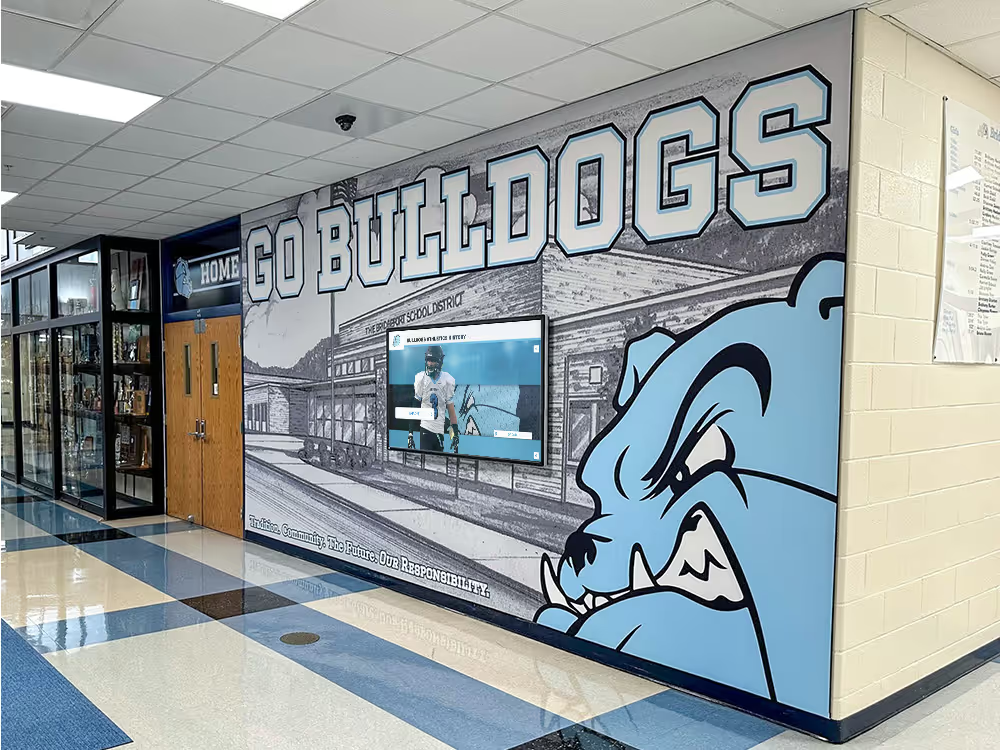
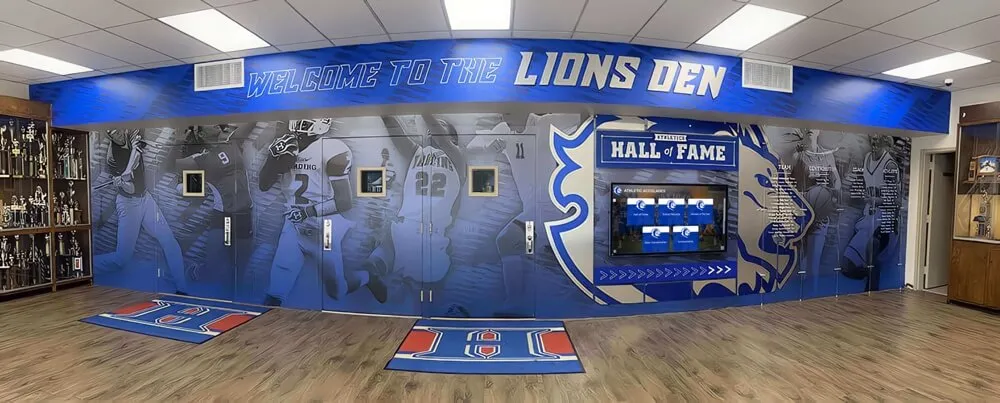
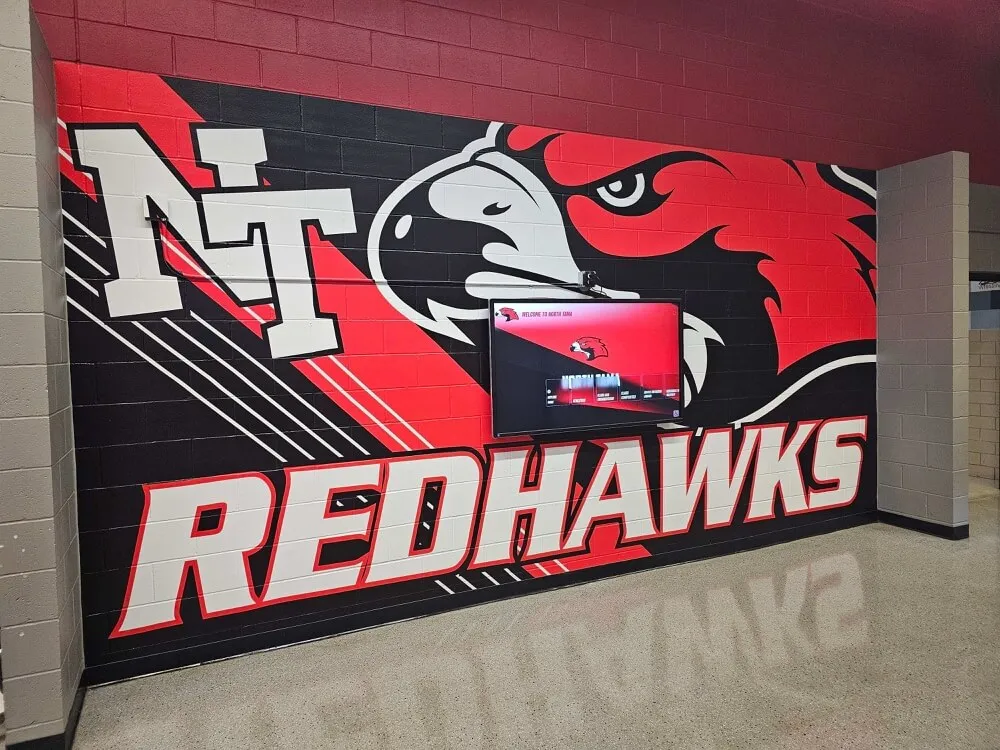
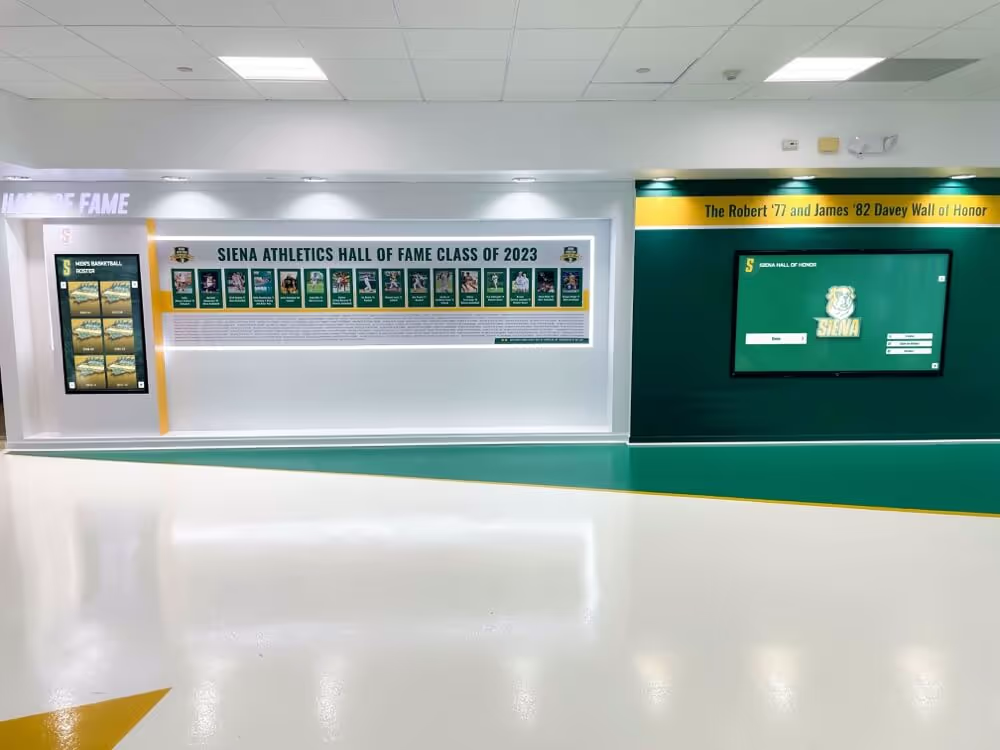
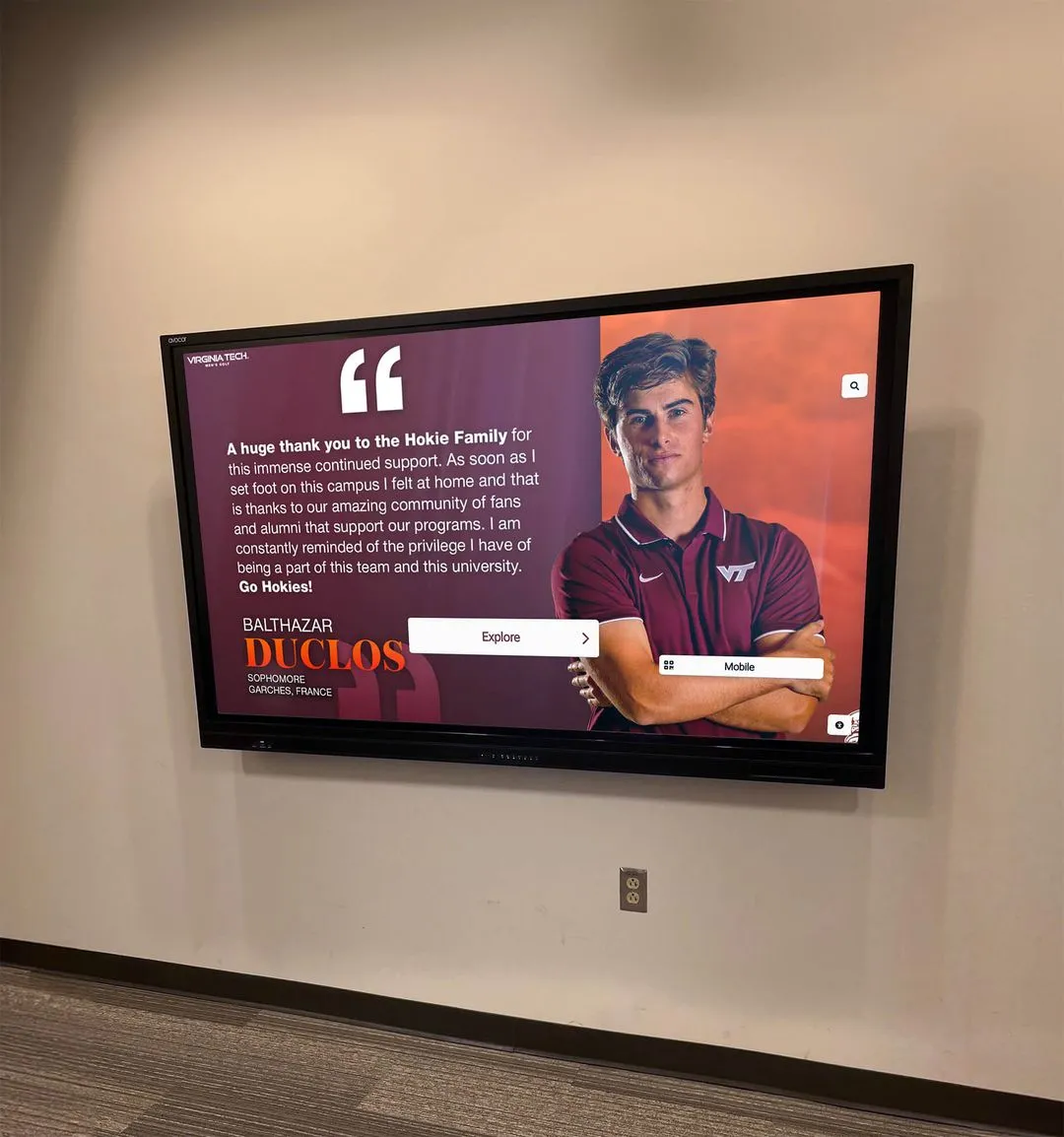
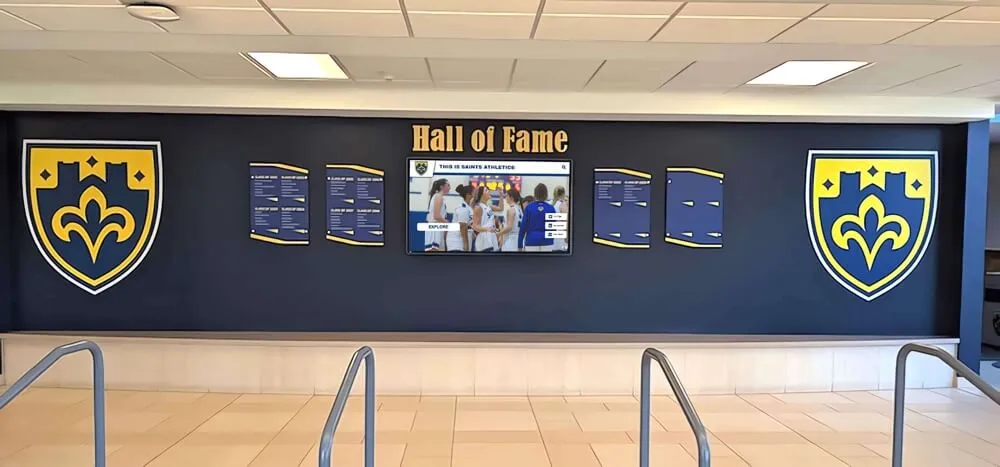
High school walls of fame celebrate achievement while building community pride and institutional identity
The Evolution of High School Walls of Fame
Understanding how school recognition has evolved helps contextualize why digital approaches increasingly replace traditional methods.
Traditional Recognition: Plaques and Trophy Cases
For generations, high schools recognized achievement through physical installations that served important community functions despite inherent limitations.
The Gold Standard Era Mid-20th century schools built impressive recognition displays—polished brass plaques, mahogany trophy cases, championship banners hanging from gymnasium rafters, and engraved name plates honoring distinguished alumni. These installations conveyed permanence and prestige, signaling that achievements mattered enough to merit lasting physical commemoration. Trophy cases became destination areas where students, families, and visitors gathered to celebrate school heritage and excellence.
Space Constraints Emerge As decades accumulated achievements worthy of celebration, physical space limitations created growing challenges. Trophy cases filled completely, hallway walls ran out of room for additional plaques, and championship banners crowded gymnasiums until no space remained for new honors. Schools faced difficult decisions—remove older recognition to accommodate recent achievements, stop recognizing new accomplishments once space filled, or undertake expensive facility modifications creating additional display capacity.
Update Costs Accumulate Each new inductee or achievement required expensive engraving, professional installation, and often custom plaque fabrication matching existing designs. Small schools might spend $150-300 per new plaque including engraving and mounting, while comprehensive updates could cost thousands of dollars. These recurring costs made frequent recognition updates financially prohibitive, causing delays between achievement and recognition that diminished impact.
Limited Engagement Capacity Static displays provided passive viewing experiences only—visitors might glance at names and dates, but deeper exploration proving difficult or impossible. No search functionality helped visitors find specific individuals, limited information beyond names and achievement dates provided minimal context, and once visitors had viewed displays once, little reason existed to return unless new content had been added.
The Digital Transformation
Modern digital recognition platforms address every traditional limitation while enabling experiences impossible with physical-only approaches. Solutions like Rocket Alumni Solutions have pioneered interactive wall of fame systems that transform how high schools celebrate achievement.
Unlimited Recognition Capacity Digital systems remove space constraints entirely. Schools can recognize unlimited inductees across unlimited categories—athletic hall of fame, distinguished alumni, academic honors, performing arts achievements, community service recognition, and specialized program accomplishments—all within single display installations. Every deserving individual receives comprehensive recognition without competing for limited physical space.
Instant Updates at Zero Marginal Cost Cloud-based content management enables authorized school staff to add new inductees, update existing profiles, correct information, and publish content changes instantly from any internet-connected device. Unlike traditional plaques requiring weeks for engraving and installation at $150-300 per addition, digital updates take minutes and cost nothing per inductee once systems are implemented.
Rich, Multimedia Recognition Digital profiles can include comprehensive biographical information, multiple photos spanning high school years through present day, video interviews or highlight clips, career accomplishment details, family connections, and personal reflections—creating meaningful recognition that tells complete stories rather than reducing achievements to names and dates on plaques.
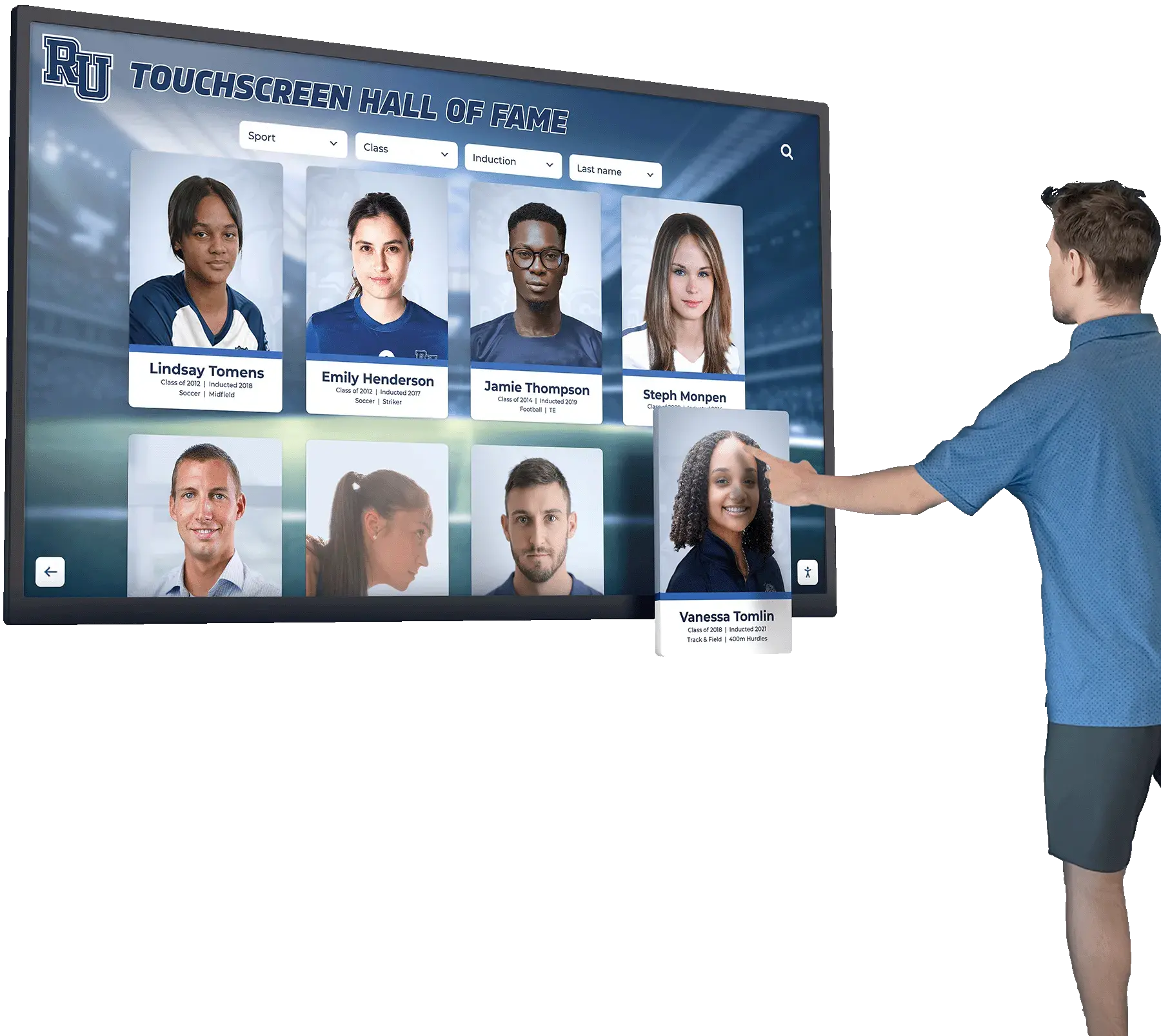
Interactive Search and Discovery Intuitive touchscreen interfaces enable visitors to search by name, browse by category, filter by graduation year, explore by achievement type, or discover through featured content rotation. This interactive exploration increases engagement dramatically compared to passive viewing, with visitors spending significantly more time discovering achievements and connections.
Web Access Extends Recognition Globally Mobile-optimized web platforms extend wall of fame access beyond physical campus visits, enabling alumni worldwide to explore recognition, share profiles with extended networks, and maintain ongoing connection to school communities from anywhere at any time.
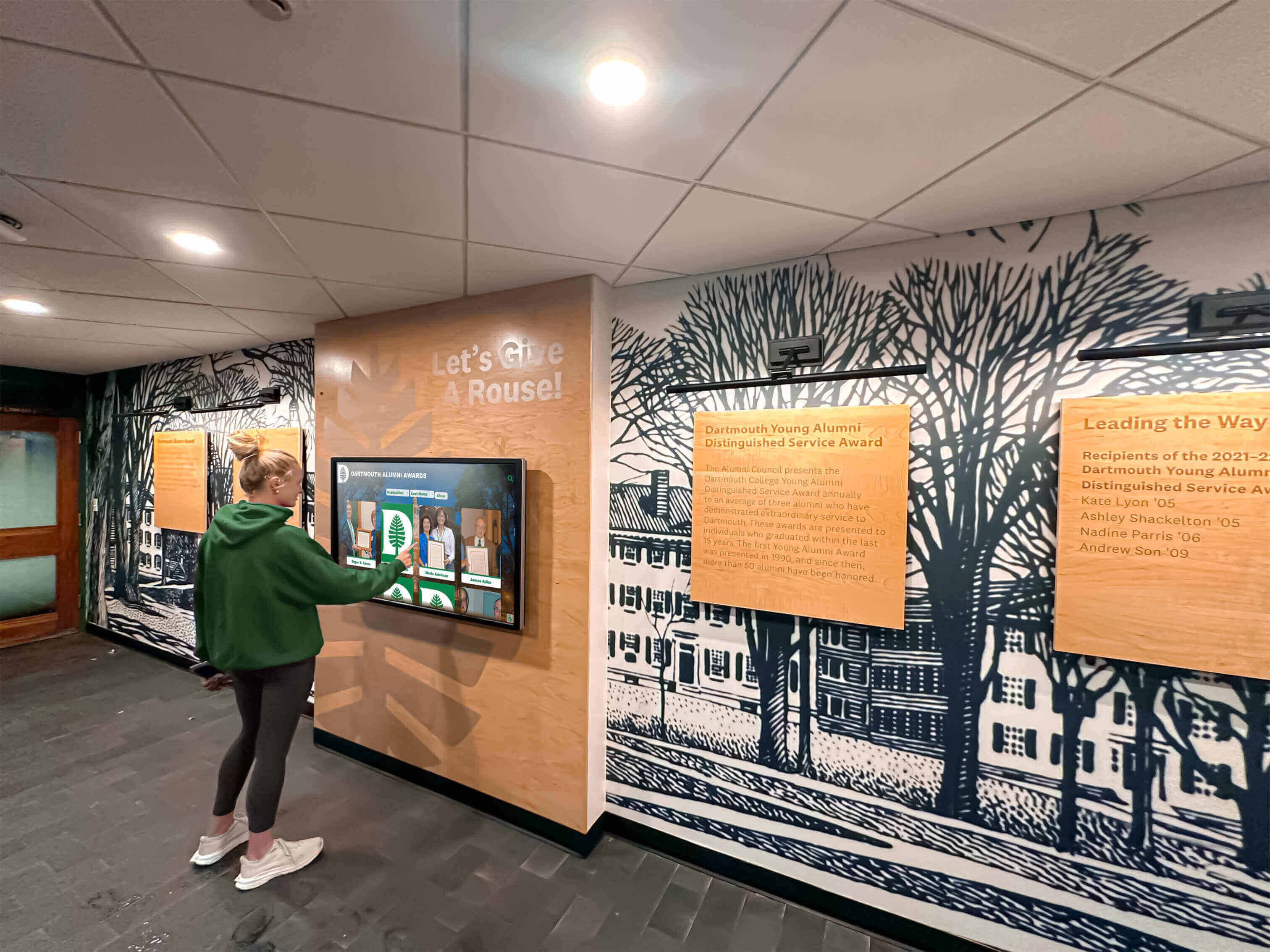
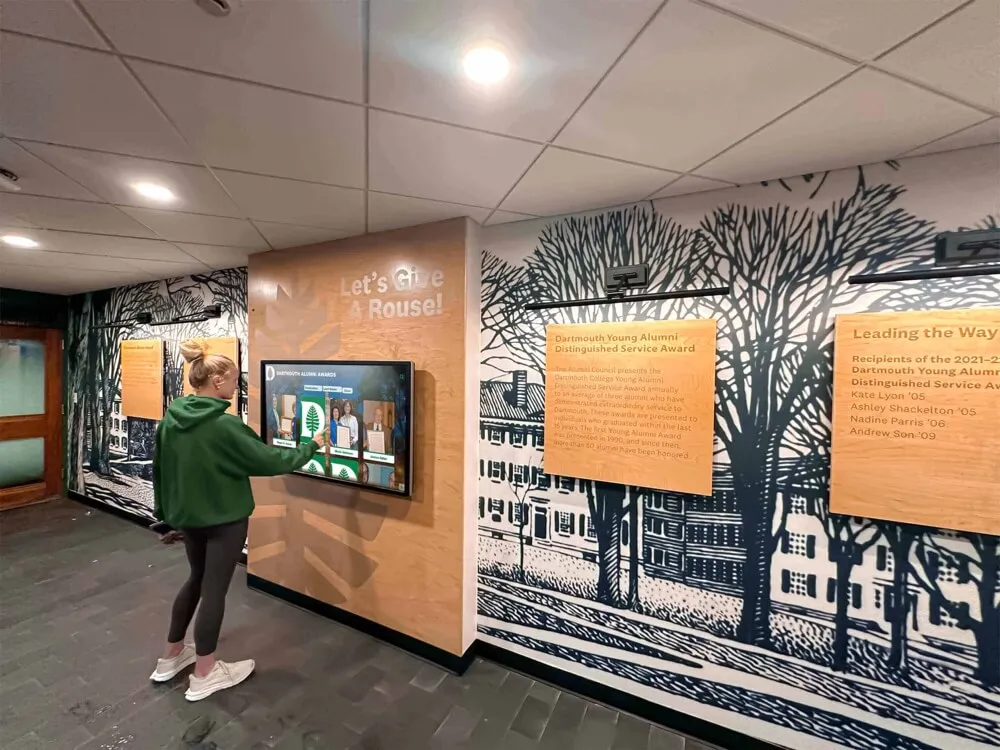
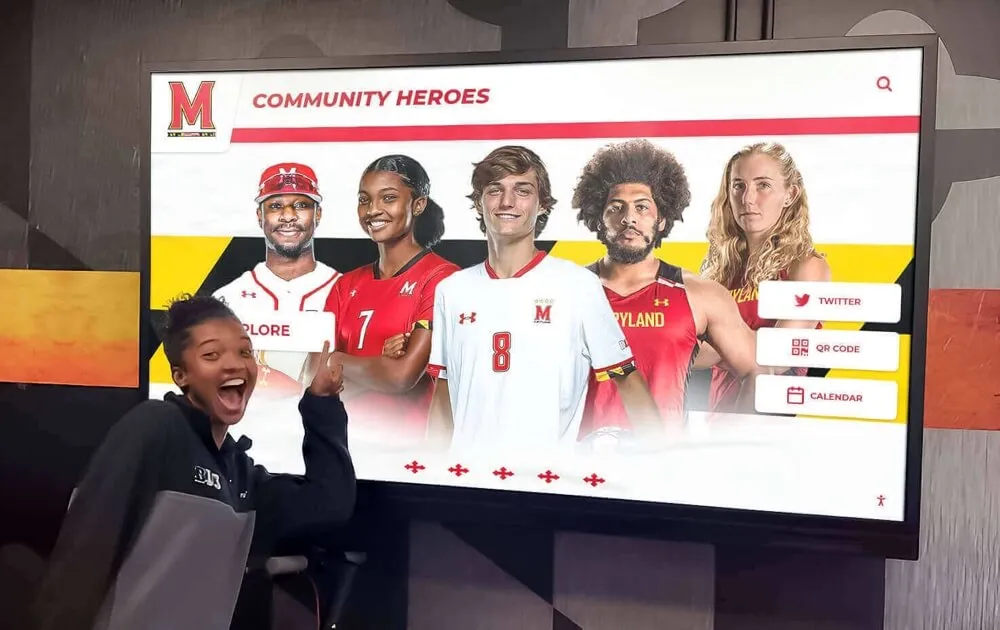
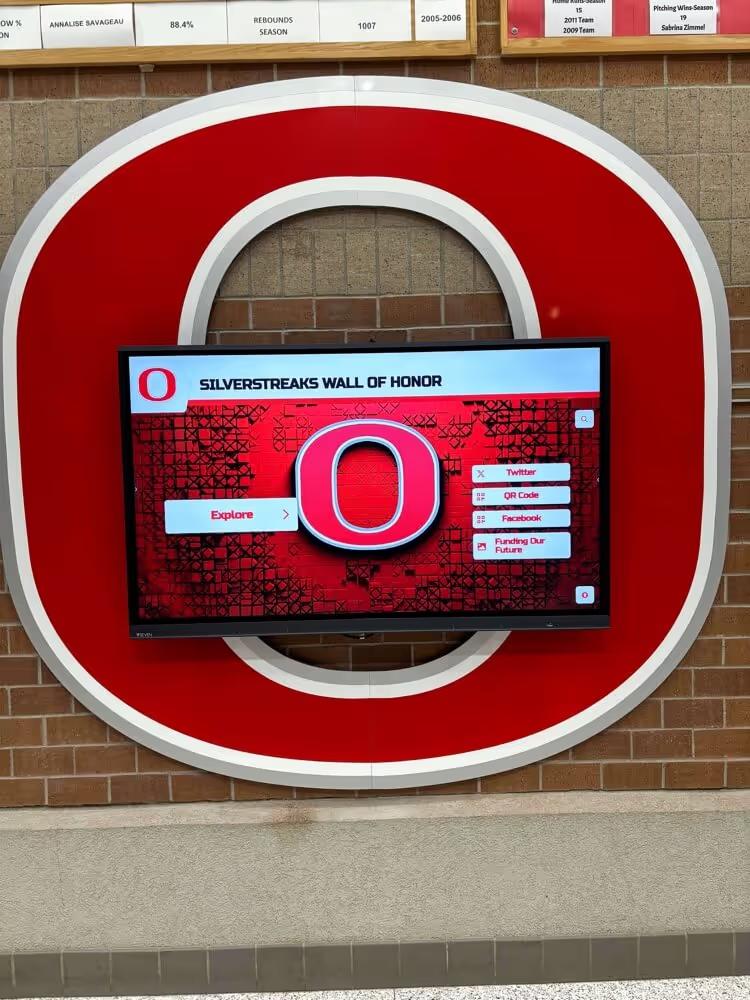
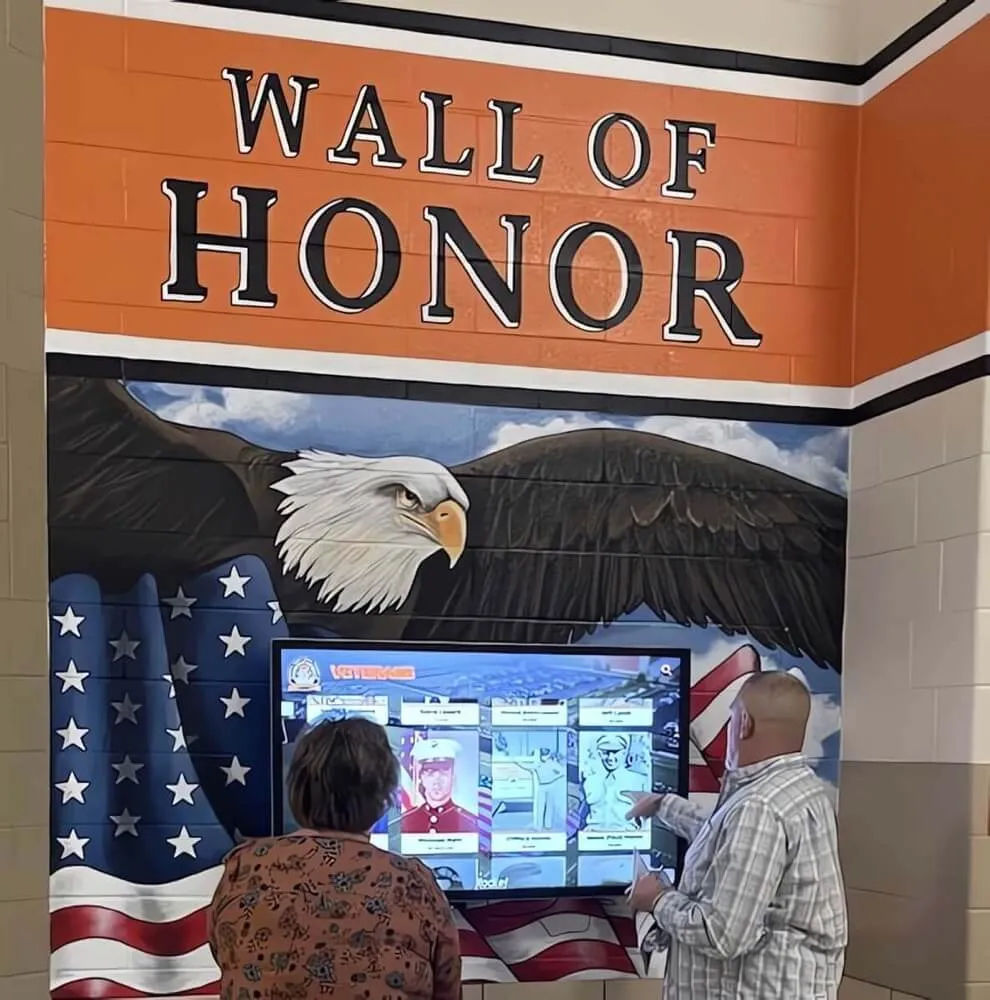
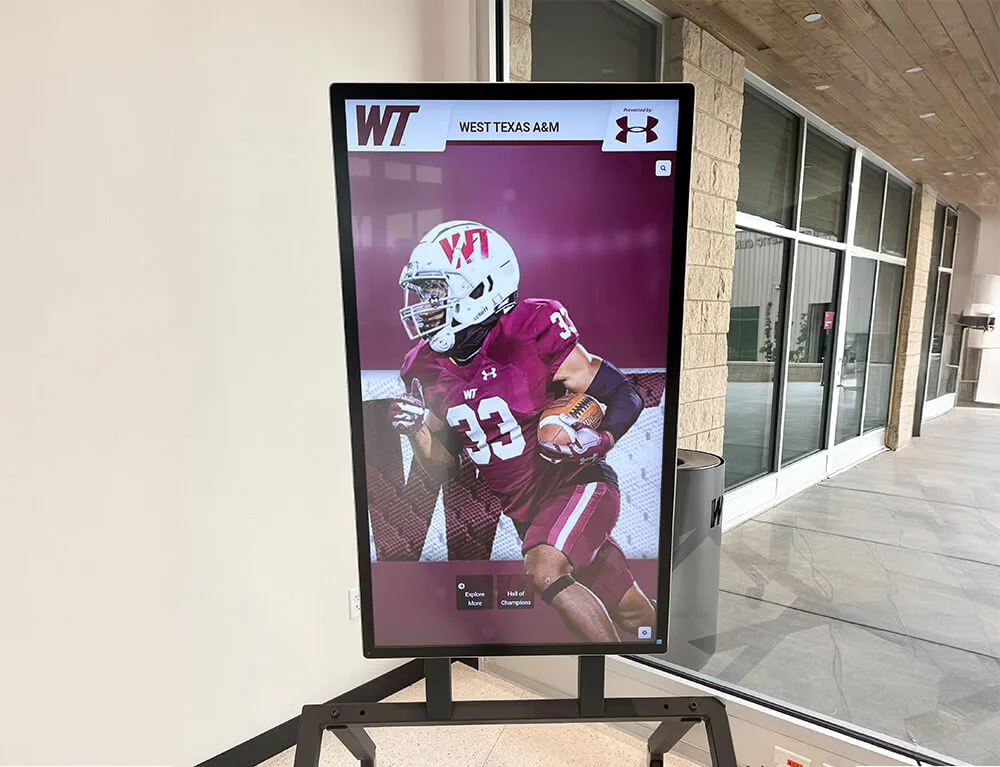
Interactive displays create active engagement impossible with traditional static plaques
Types of High School Wall of Fame Recognition
Comprehensive recognition systems address diverse achievement categories serving different community functions.
Athletic Halls of Fame
Sports recognition represents the most common high school wall of fame application, celebrating competitive excellence across all athletic programs.
Individual Athlete Recognition Comprehensive athlete profiles celebrate statistical achievements, championship contributions, records set, post-graduation athletic careers, and character attributes that made individuals exemplary representatives of school values. Athletic hall of fame systems enable detailed recognition impossible with basic name plaques, including career statistics, photos from playing days, video highlights when available, and biographical information about college and professional athletic careers.
Team Championship Celebration Championship teams receive permanent recognition with complete rosters, season records, tournament results, photos, and game highlights. Digital systems can showcase every championship season across all sports without the space limitations that force schools to choose which teams receive trophy case visibility. Learn about comprehensive approaches in state championship recognition.
Record Board Integration Auto-ranking record boards display top performances across all statistical categories—fastest times, highest scores, longest distances, most points, career achievements—automatically updating when new performances occur while maintaining complete historical records. Unlike static record boards requiring manual updates and limited to top few performances per category, digital systems preserve complete historical records enabling exploration of record progression across decades.
Coach and Contributor Recognition Successful athletic programs depend on more than athletes. Coaches, athletic directors, trainers, officials, boosters, and volunteers whose contributions enabled program success deserve recognition alongside athletes. Comprehensive systems honor all program contributors celebrating the complete community required for sustained athletic excellence.
Distinguished Alumni Recognition
Alumni walls of fame celebrate graduates whose post-graduation accomplishments bring honor to their alma maters while inspiring current students.
Career Achievement Recognition Professional accomplishments across all fields—business leadership, medical innovation, educational excellence, military service, public service, artistic achievement, scientific research, entrepreneurial success—receive celebration through detailed profiles exploring career paths, notable accomplishments, awards and honors, and ongoing community contributions. Organizing alumni by career field categories helps current students discover role models in areas matching their interests while facilitating mentorship connections.
Service and Character Recognition Not all distinction comes from conventional career success. Alumni who demonstrate exceptional character, provide extraordinary community service, overcome significant adversity, or exemplify school values deserve recognition celebrating attributes beyond professional achievement. This inclusive approach honors diverse paths to meaningful lives while reinforcing institutional values.
Legacy Family Celebration Multi-generational families with decades or even centuries of institutional connection receive special recognition celebrating sustained family traditions. Highlighting legacy families demonstrates enduring value while creating pride among current students from similar family backgrounds. Explore comprehensive alumni recognition approaches that celebrate diverse accomplishments.
Induction Ceremony Integration Formal induction ceremonies gain impact when coordinated with wall of fame recognition. Inductee profiles can go live during ceremonies for immediate visibility, displays can be positioned at ceremony venues for attendee exploration, and ceremony photos and videos can be added to profiles preserving complete induction documentation.
Academic and Scholar Recognition
Academic achievement deserves visibility comparable to athletic recognition, celebrating intellectual excellence and scholarly accomplishment.
Honor Roll and Academic Excellence Systematic recognition for grade point achievement, perfect attendance, subject-specific excellence, academic improvement, and effort demonstrates institutional commitment to intellectual achievement. Academic recognition programs create visibility for scholarly accomplishment comparable to athletic recognition, supporting culture where intellectual excellence receives celebration.
Advanced Placement and National Recognition Students earning AP Scholar designations, National Merit recognition, Presidential Scholar awards, National Honor Society membership, and other national academic honors deserve prominent celebration. These achievements demonstrate college readiness and exceptional academic capability worthy of lasting recognition.
Competition and Contest Achievement Academic competition success in areas like science fairs, math competitions, robotics competitions, debate tournaments, and knowledge bowls provides tangible achievement metrics enabling recognition similar to athletic accomplishments. Celebrating competitive intellectual achievement reinforces the value of academic pursuits.
Specialized Program Recognition Career and technical education certifications, performing arts achievements, student leadership positions, and specialized program accomplishments receive equal recognition alongside traditional academic metrics, honoring diverse paths to excellence and success.
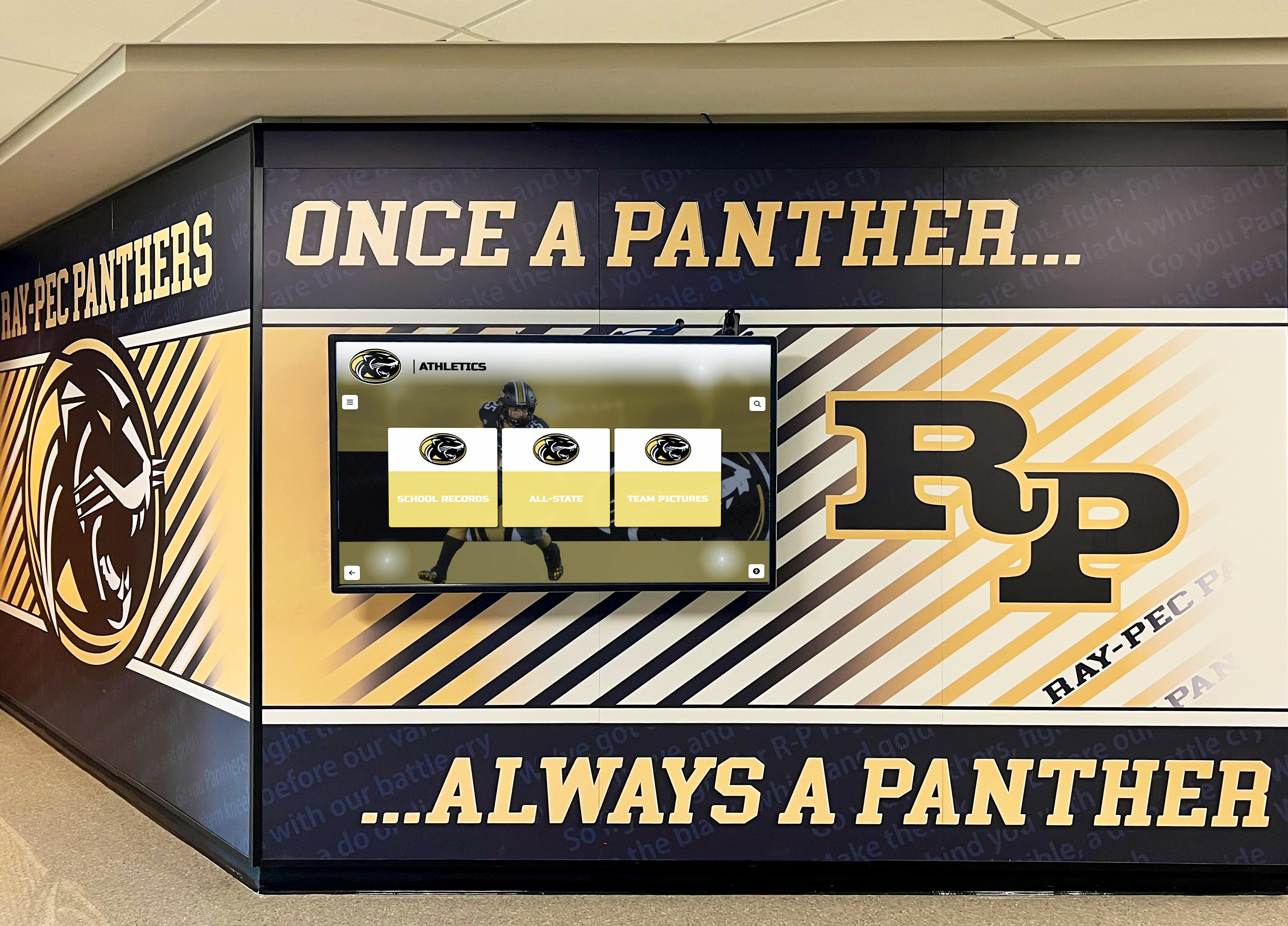
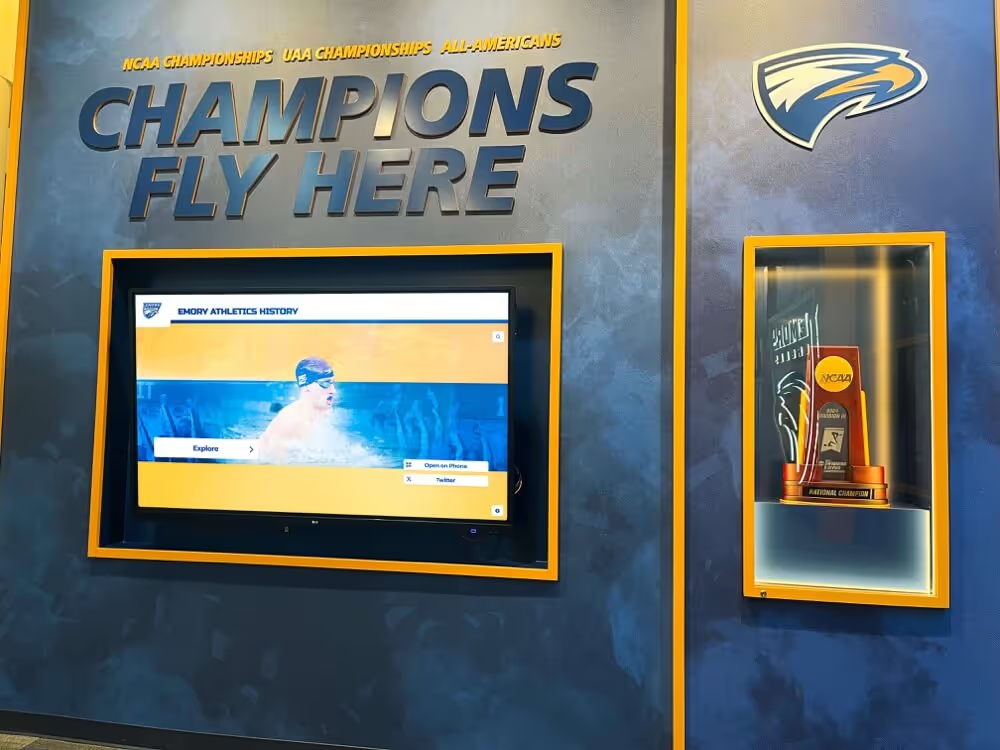
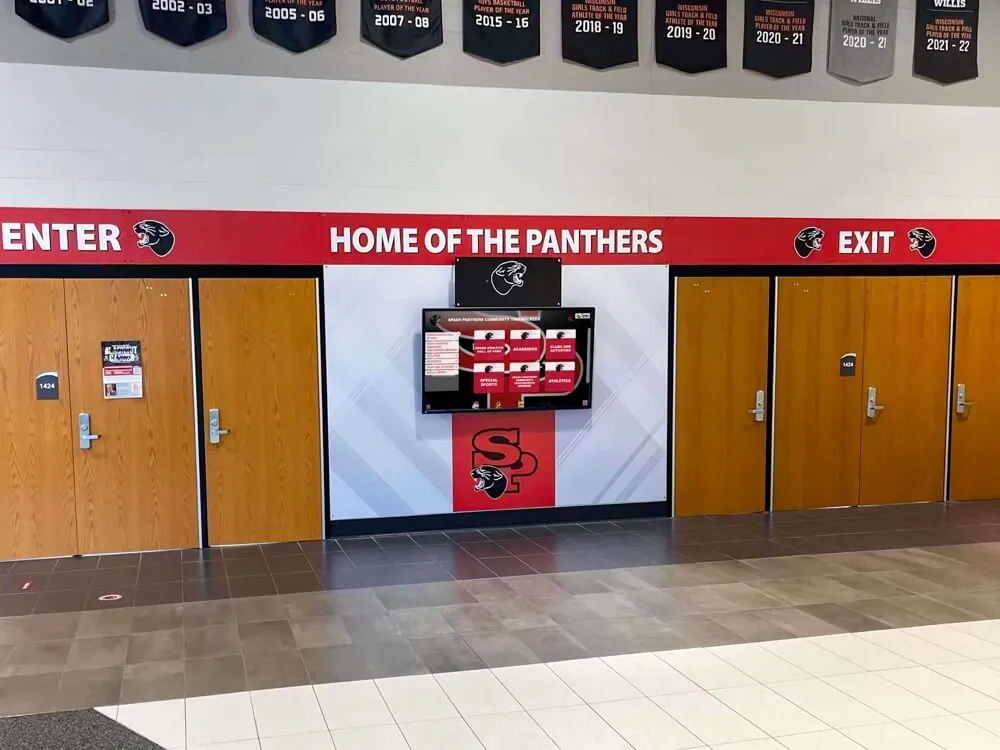
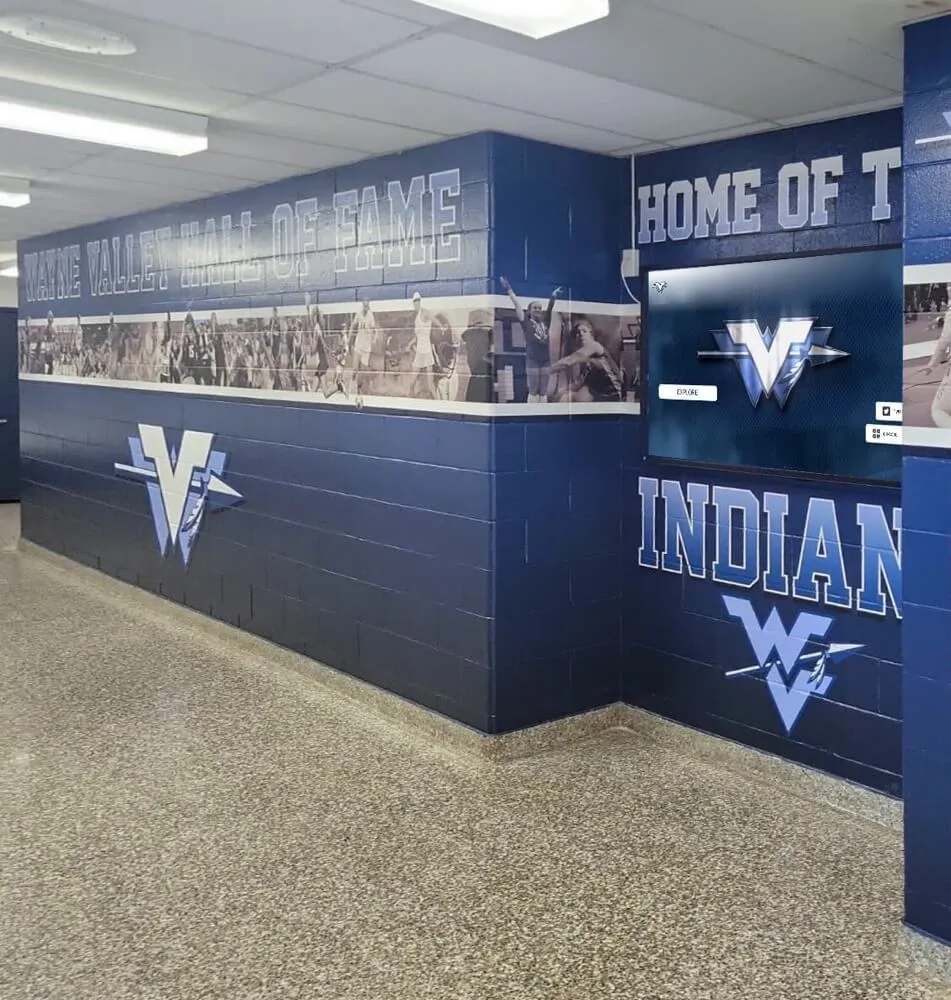
Strategic hallway placements ensure recognition receives maximum daily visibility from students and visitors
Benefits of Digital Wall of Fame Systems
Schools implementing digital recognition experience transformative benefits extending across multiple constituencies and institutional functions.
Overcoming Space and Capacity Limitations
The most immediate and visible benefit involves removing physical constraints that plagued traditional recognition.
Unlimited Inductee Capacity Digital platforms accommodate unlimited recognition without requiring additional physical infrastructure. Schools recognizing 10 inductees annually can easily project 50-year recognition capacity requiring 500 profiles—impossible in traditional trophy case space but trivially accommodated by digital systems. This unlimited capacity eliminates difficult decisions about removing older recognition to accommodate new achievements.
Multi-Category Recognition Support Single installations can host athletic achievements, academic honors, distinguished alumni, performing arts recognition, community service awards, and specialized program acknowledgments without requiring separate physical displays for each category. This consolidated approach provides equitable recognition capacity across all achievement types rather than allowing limited space to favor certain programs.
Complete Historical Archive Preservation Decades or even centuries of institutional achievement remain permanently accessible rather than relegated to storage when physical space fills. Digital migration of historical plaques, trophy documentation, yearbook content, and archival materials preserves complete institutional memory while making history searchable and engaging.
Flexible Recognition Expansion As schools develop new recognition programs or achievement categories deserving celebration, digital systems accommodate expansion without facility modifications or additional hardware investments. Institutional recognition can evolve organically responding to changing community values and opportunities.
Enhancing Engagement and Interaction
Digital systems transform recognition from passive viewing into active exploration creating deeper community connection.
Intuitive Search and Discovery Visitors can instantly find themselves, family members, former teammates, or individuals of interest through name search, browse recognition by category or year, discover alumni in specific career fields, or explore through automated featured content rotation. This discovery capability increases time spent with recognition content dramatically compared to scanning static plaque arrays.
Detailed Profile Storytelling Unlike plaques limited to names and dates, digital profiles tell complete stories including comprehensive biographies, career journey details, achievement contexts, personal reflections, and family connections. This narrative richness creates meaningful recognition honoring whole persons rather than reducing lives to minimal engraved text.
Rotating Featured Content Automated content rotation ensures all recognized individuals receive featured visibility while keeping displays fresh for repeat visitors. Anniversary highlights celebrating milestone induction anniversaries, birthday features, themed collections exploring specific achievement types, and seasonal content create reasons for ongoing engagement rather than one-time viewing.
Social Sharing and Amplification Recognized individuals can share digital profiles via social media, email, and messaging, extending recognition reach far beyond physical campus visits. When alumni share recognition with extended networks, content showcasing school heritage and community vibrancy reaches prospective donors, admission families, and community stakeholders organically amplifying institutional marketing.
Simplifying Management and Updates
Cloud-based administration eliminates traditional recognition update burdens.
Remote Content Management Authorized staff update recognition content from any internet-connected device—office computers, home laptops, mobile devices—without touching physical hardware or coordinating with engravers and installers. This remote capability enables efficient content management regardless of staff location or schedule.
Scheduled Publishing Capability Content updates can be scheduled in advance, enabling recognition announcements to go live automatically during induction ceremonies, graduation events, or scheduled recognition dates without requiring staff presence or manual publishing action. This scheduling capability ensures timely recognition aligned with ceremonial importance.
Collaborative Workflow Support Role-based permissions enable appropriate staff across departments—athletic directors managing sports recognition, alumni coordinators updating distinguished alumni, academic deans handling scholar recognition—to contribute content within their areas while maintaining centralized quality control and approval processes.
Bulk Import and Migration Tools Historical data can be imported from existing databases, spreadsheets, or digitized yearbooks, enabling comprehensive archive creation without individual manual profile entry. This bulk capability makes large-scale historical migration manageable even for schools with decades of accumulated achievements.
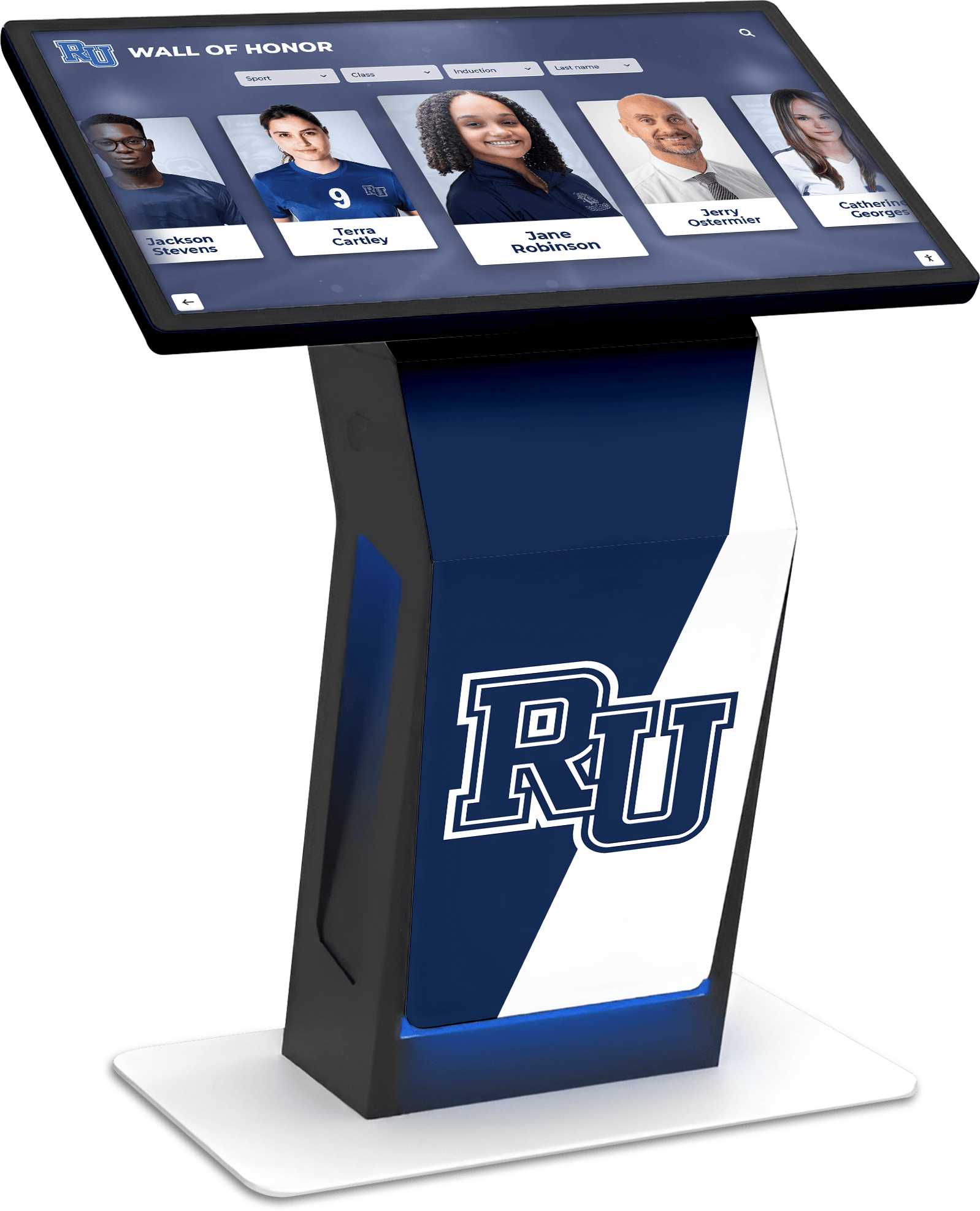
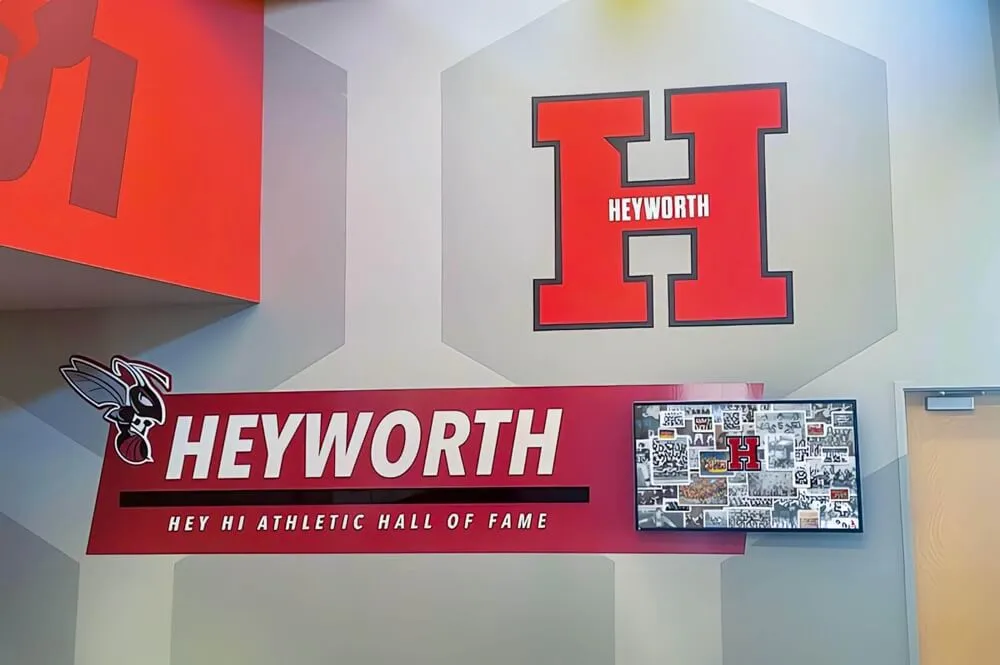
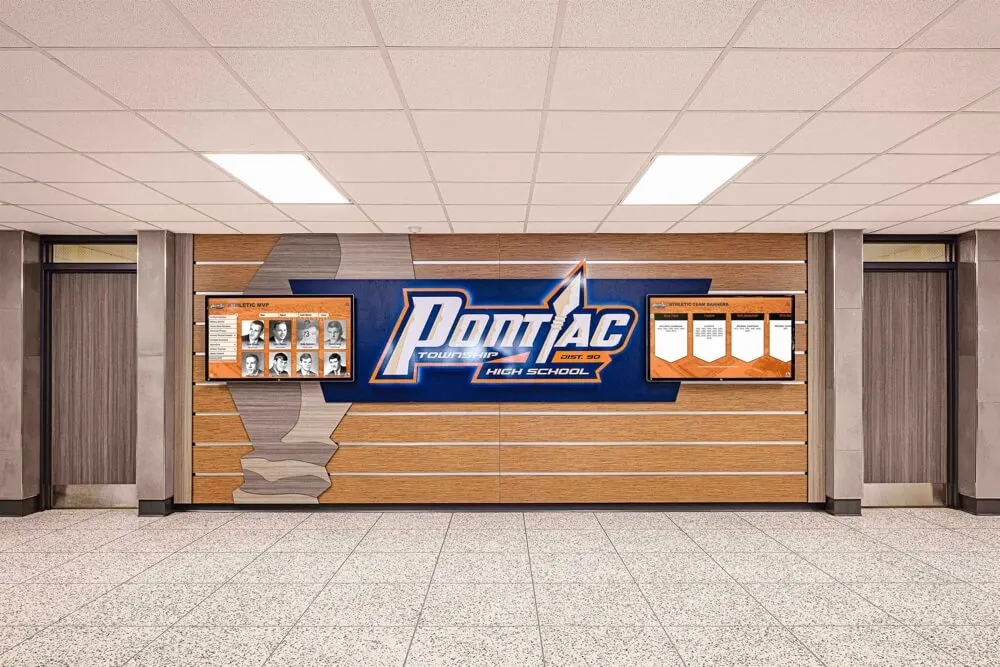
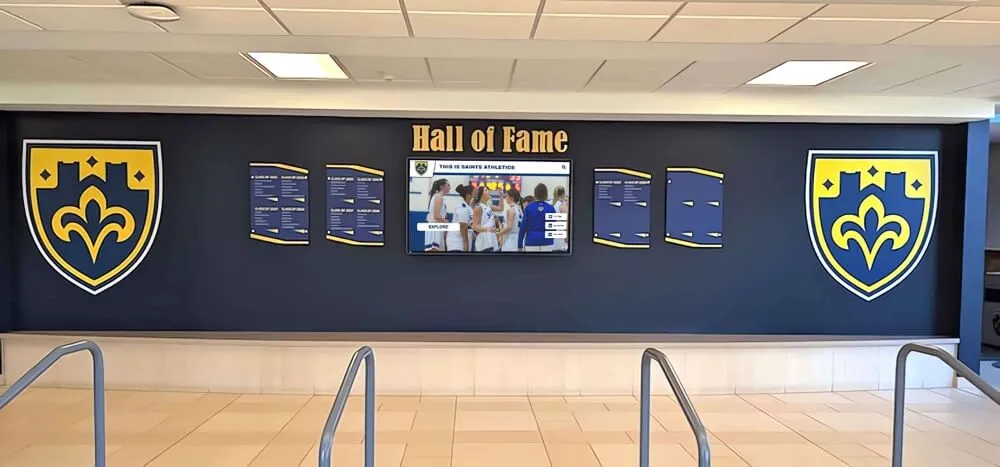
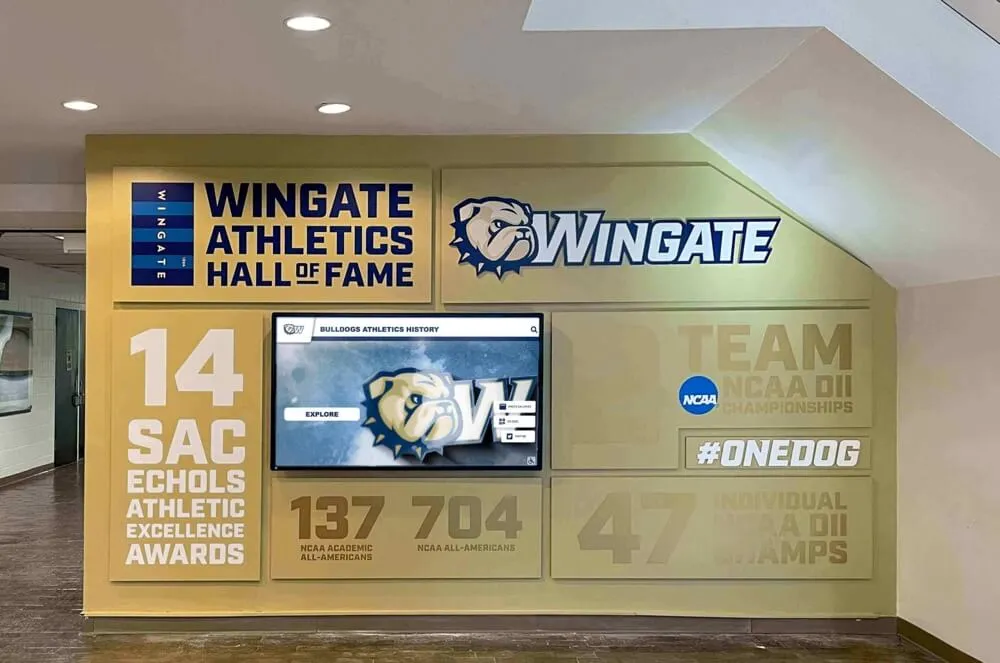
Professional installations integrate recognition technology with institutional branding and design aesthetics
Strategic Implementation Planning
Successful wall of fame implementations require thoughtful planning addressing organizational needs, stakeholder expectations, and technical requirements.
Defining Recognition Objectives and Criteria
Clear objectives guide system design and content strategy decisions.
Recognition Category Determination Schools must decide which achievement types deserve wall of fame recognition—athletic hall of fame only, distinguished alumni exclusively, comprehensive recognition encompassing athletics, academics, alumni, and historical preservation, or phased implementation beginning with priority categories and expanding over time.
Transparent Induction Criteria Establishing clear, transparent criteria defining recognition eligibility prevents perceptions of favoritism or inconsistency while creating defensible selection processes. Athletic criteria might require minimum achievement thresholds, alumni recognition may specify time periods since graduation, and academic recognition could define specific accomplishment categories. Explore comprehensive hall of fame creation approaches that establish credible selection frameworks.
Selection Process and Committee Structure Formal selection committees, nomination processes accepting community input, objective evaluation rubrics, and administrative approval workflows ensure consistent, fair recognition decisions building community trust in wall of fame integrity and credibility.
Content Depth Standards Schools must determine how comprehensive individual profiles should be—basic name and achievement only, moderate detail with photos and descriptions, or extensive profiles including statistics, videos, biographical narratives, career updates, and personal reflections. Content depth decisions affect development effort and ongoing maintenance requirements.
Selecting Physical Locations and Hardware
Strategic placement and appropriate hardware maximize visibility and engagement while ensuring technical reliability.
High-Traffic Location Selection Position displays where they receive maximum community exposure—main school entrances ensuring all visitors encounter recognition, athletic facility lobbies where athletes and families gather, hallway intersections with heavy student traffic, or dedicated recognition rooms creating destination spaces. Avoid isolated locations requiring intentional seeking that many community members never discover.
Hardware Sizing and Specifications Consider viewing distances, available wall space, expected simultaneous users, and architectural integration when selecting display sizes. Typical high school installations use 55-75 inch commercial-grade touchscreens providing optimal viewing for individual and small group exploration, though larger implementations may warrant multiple displays or ultra-wide configurations accommodating larger group viewing.
Installation Environment Considerations Account for ambient lighting conditions affecting screen visibility, background noise levels requiring audio consideration, accessibility requirements ensuring universal design, and architectural elements influencing installation aesthetics. Proper environmental planning ensures installations function optimally in actual usage contexts.
Durability and Public-Use Design School installations require commercial-grade hardware designed for continuous operation and heavy public use. Consumer displays used in home settings cannot withstand intensive school environment demands and will fail prematurely. Prioritize touchscreen solutions specifically designed for educational institution applications.
Content Strategy and Development
Compelling content maximizes recognition impact and community engagement.
Historical Content Digitization Most schools implementing digital walls of fame possess decades of existing recognition deserving migration—trophy and plaque documentation, yearbook photos and information, school archive materials, newspaper articles covering school events and alumni achievements, and institutional records. Systematic digitization approaches using scanning events, volunteer coordination, and gradual migration processes make large-scale historical preservation manageable.
Profile Template Standardization Consistent profile structures ensure all inductees receive comparable recognition while accommodating varying information availability. Standard elements might include photos (high school era and current), biographical summaries, achievement details, statistics when relevant, career updates, family connections, and personal reflections—with flexibility allowing partial profiles when complete information unavailable.
Ongoing Update Processes Initial content represents starting points rather than finished products. Establishing processes for continuous enrichment—alumni submitting updated information, volunteers adding newly discovered historical materials, annual review cycles ensuring accuracy, and systematic profile enhancement—maintains platform vitality and prevents content from becoming stale.
Multimedia Integration Planning Beyond photos and text, consider opportunities for video content (highlight clips, interviews, ceremony footage), audio elements (fight songs, historical recordings, interviews), document archives (newspaper articles, programs, certificates), and interactive timeline features connecting individual achievements to broader institutional history. Explore comprehensive digital archives approaches that preserve complete institutional memory.
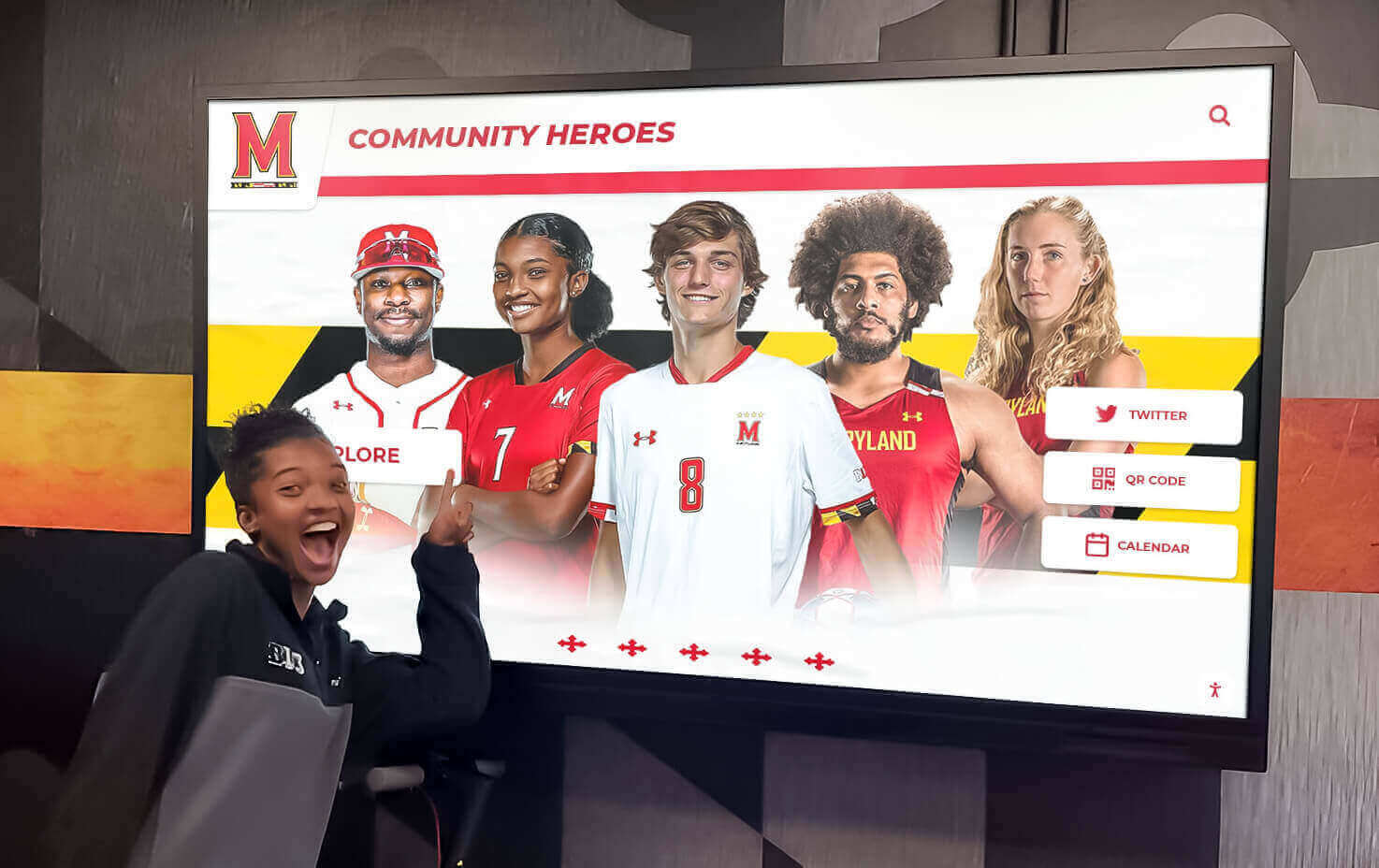
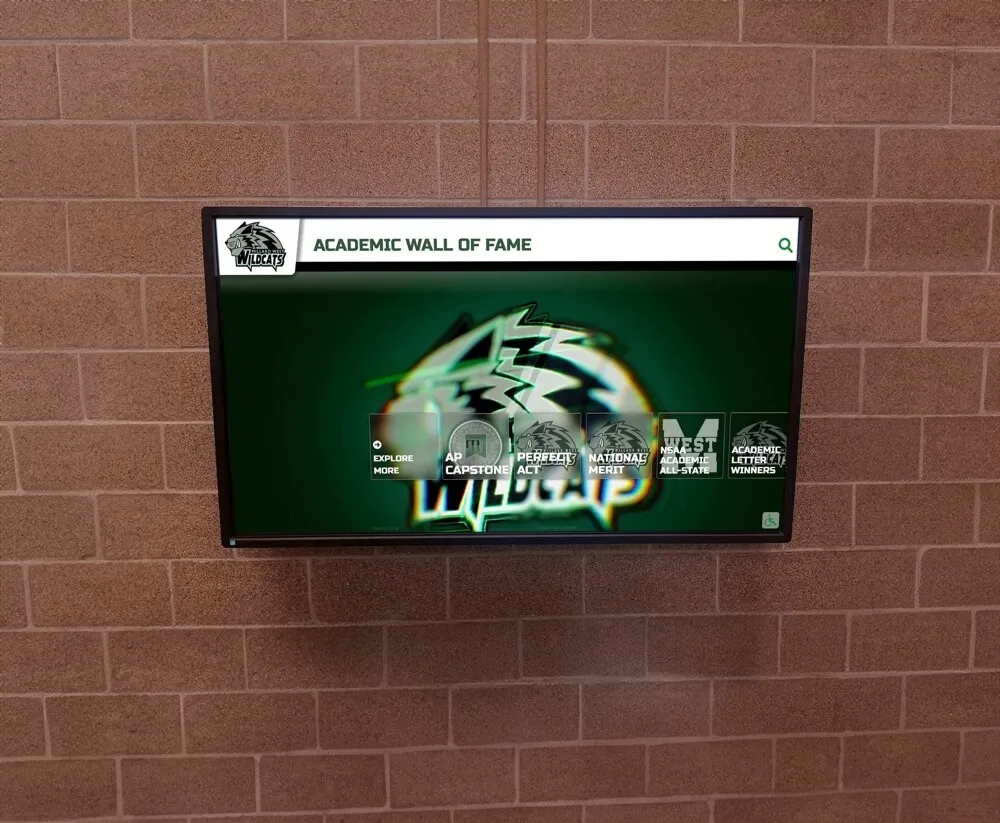
Student-focused content creates inspiration while demonstrating institutional commitment to achievement celebration
Integration with School Community Goals
Strategic implementations integrate wall of fame recognition with comprehensive institutional objectives spanning advancement, admission, student development, and community building.
Supporting Alumni Relations and Advancement
Recognition platforms create infrastructure supporting broader alumni engagement and development goals.
Alumni Directory and Networking Digital platforms function as comprehensive alumni directories enabling graduates to find classmates, discover peers in similar career fields, identify alumni in geographic proximity, and maintain ongoing connection to institutional communities. This networking capability adds value beyond recognition alone, creating reasons for frequent alumni engagement.
Event Promotion and Reunion Support Recognition platforms provide natural venues for promoting alumni events, coordinating reunion activities, and facilitating registration. Alumni exploring wall of fame content receive targeted invitations for relevant events, displays at reunion venues enable attendee exploration, and integrated event calendars connect recognition to ongoing programming.
Fundraising and Development Integration Recognition demonstrates effective stewardship of donor investments while identifying philanthropic prospects. Alumni seeing comprehensive achievement celebration understand how contributions support student success, distinguished alumni profiles reveal individuals with likely giving capacity, and integrated giving opportunities enable direct contributions connected to recognition interests. Consider comprehensive donor recognition strategies applicable to alumni development contexts.
Mentorship and Career Connection Career information within alumni profiles enables current students to identify potential mentors, alumni volunteers to connect with students sharing professional interests, and career services staff to facilitate meaningful relationships bridging current students and accomplished graduates.
Enhancing Admission and Marketing Efforts
Recognition provides compelling content supporting enrollment and institutional marketing objectives.
Demonstrating Achievement Culture Prospective families evaluating schools seek evidence of achievement culture and excellence expectations. Visible, comprehensive recognition demonstrates that schools celebrate accomplishment, maintain high performance standards, and build communities where excellence receives acknowledgment and inspiration. This culture signaling influences admission decisions particularly among achievement-oriented families.
Showcasing Diverse Success Pathways Recognition highlighting alumni achievements across varied career paths, creative pursuits, entrepreneurial ventures, community service, and personal accomplishments demonstrates that educational preparation serves students with diverse interests and aspirations. This diversity reassures prospective families that schools can serve their specific student rather than only certain types of learners.
Building Institutional Pride and Spirit Current students, families, and staff encountering robust recognition develop stronger institutional identification and pride. When schools visibly celebrate accomplished alumni and exemplary student achievement, community members feel part of traditions producing distinguished graduates, reinforcing culture valuing excellence and lifelong institutional attachment.
Creating Marketing Content Assets Distinguished alumni profiles and achievement celebrations provide ready marketing content for websites, social media, publications, and communications. These authentic stories prove more compelling than internally-generated marketing messaging while demonstrating concrete outcomes of educational investment.
Supporting Student Development and Aspiration
Recognition benefits extend to current students who discover role models and envision possibilities through displayed content.
Career Exploration and Planning Students exploring career interests can discover alumni in relevant fields, learn about diverse professional pathways, understand educational requirements, and identify potential mentors or information interview contacts. This career exploration proves particularly valuable for first-generation college students lacking family career networks providing guidance.
College and Post-Secondary Decision Support Seeing where alumni attended college, what degrees they pursued, and how educational choices connected to career outcomes helps current students make informed post-secondary decisions. Alumni attending less-competitive institutions who achieved significant success provide proof points that excellence emerges from many educational paths.
Character Development and Values Formation Recognition honoring service, character, leadership, and citizenship alongside conventional achievement metrics demonstrates institutional values and what characteristics receive celebration. Students internalize these value signals shaping aspirations toward qualities schools aim to cultivate rather than exclusively external achievement metrics.
Realistic Success Modeling Comprehensive recognition showcasing alumni across achievement spectrums—from modest local success to international acclaim—helps students develop realistic expectations. Not every graduate becomes famous, but all can lead meaningful, successful lives worthy of recognition and celebration.
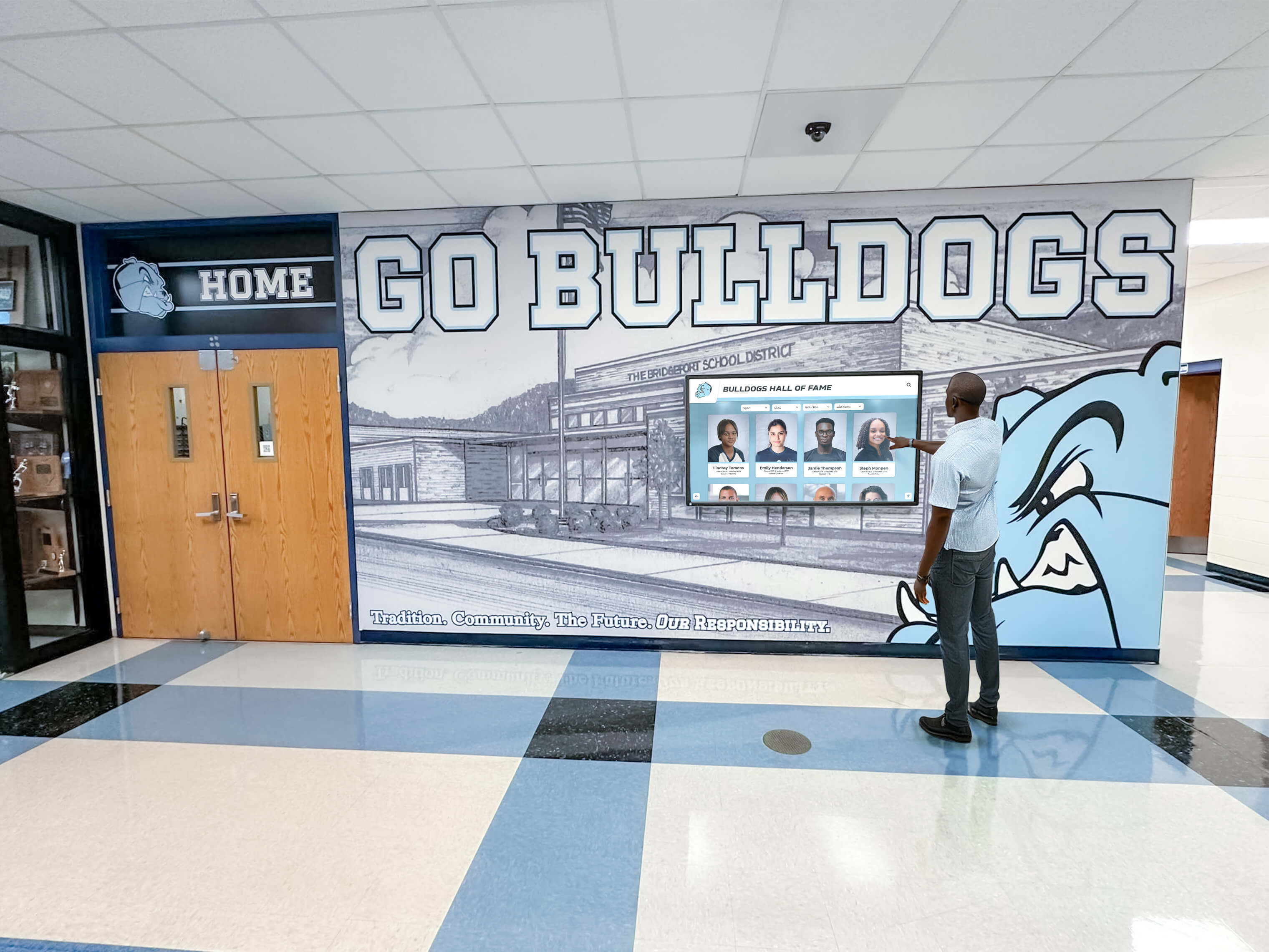
Alumni and visitors engage deeply with recognition content when intuitive search and rich profiles enable discovery
Technology Platform Selection
Choosing appropriate recognition technology significantly impacts long-term satisfaction, operational ease, and community engagement outcomes.
Purpose-Built Recognition vs. Generic Digital Signage
Platform selection represents the most consequential implementation decision affecting every aspect of long-term success.
Recognition-Specific Functionality Purpose-built recognition platforms like Rocket Alumni Solutions provide features generic digital signage systems lack—sophisticated search and filtering enabling visitor discovery, individual profile pages with rich biographical content, automated content rotation ensuring equitable visibility, role-based content management accommodating multiple contributors, and responsive web access extending recognition beyond physical displays.
Content Management Intuitiveness Prioritize platforms enabling non-technical staff to confidently manage content without IT dependencies. Evaluation should involve actual staff members testing profile creation, editing, and publishing workflows ensuring systems match organizational capabilities. Overly complex platforms requiring specialized expertise create bottlenecks undermining content currency and platform value.
Web-Based vs. Native Applications Web-based platforms accessible through standard browsers provide advantages over native applications requiring installation and updates—universal device compatibility including touchscreens, computers, tablets, and smartphones; automatic feature updates without local software maintenance; remote content management from any internet-connected device; and elimination of platform-specific development costs. Learn about web-based touchscreen advantages compared to installed applications.
ADA Accessibility Compliance Properly implemented systems must meet accessibility standards ensuring universal access for community members with disabilities. Requirements include screen reader compatibility for vision-impaired users, keyboard navigation alternatives to touch interaction, high contrast modes supporting low vision users, appropriate physical mounting heights, and captioning for audio/video content. Verify that prospective platforms support required accessibility features.
Support, Training, and Implementation Services
Provider support quality significantly impacts user experience and long-term satisfaction beyond platform features alone.
Implementation Support and Content Migration Comprehensive providers assist with historical content digitization, initial profile creation from existing records, staff training on content management workflows, and launch coordination ensuring successful implementations. Consider whether providers offer turnkey implementation services or expect schools to manage all content development independently.
Ongoing Technical Support Responsive customer service, troubleshooting assistance, feature guidance, and proactive platform optimization significantly affect satisfaction. Evaluate typical support response times, after-hours availability for time-sensitive issues, whether support fees are included or additional, and whether providers demonstrate genuine commitment to customer success versus transactional relationships.
Training and Professional Development Staff confidence in platform management depends on quality training. Assess whether providers offer comprehensive initial training, ongoing professional development as features evolve, documentation and self-service resources, and whether training accommodates staff turnover requiring periodic retraining of new personnel.
Platform Evolution and Updates Platforms should evolve continuously responding to user feedback, technological advances, and changing community expectations. Investigate provider track records for regular feature additions, platform improvements, and customer-driven development versus stagnant systems requiring eventual replacement when they become outdated.
Best Practices for Maximum Impact
Successful implementations combine appropriate technology with thoughtful operational practices maximizing recognition value and community engagement.
Strategic Content Development
Compelling recognition content requires systematic development approaches balancing comprehensiveness with sustainable effort.
Phased Implementation Approach Rather than attempting comprehensive historical digitization before launch, successful schools often implement in phases—beginning with recent recognition where information is readily available and most relevant to current community, gradually expanding to historical content as resources permit, and establishing ongoing processes ensuring continuous enhancement rather than treating digitization as one-time projects.
Community Contribution Opportunities Alumni, families, and community members often possess information and materials enriching recognition profiles. Creating submission processes—online forms requesting biographical updates and photos, scheduled scanning events where community members bring materials for digitization, and volunteer teams coordinating content development—leverages community knowledge while building engagement through participatory recognition development.
Quality Standards and Verification Recognition accuracy matters enormously given public visibility and personal significance. Systematic review processes involving multiple verification stages, alumni self-verification when possible, careful fact-checking of achievement claims, and sensitivity review ensuring appropriate inclusion of personal information prevents errors undermining credibility and community trust.
Storytelling Beyond Facts The most compelling recognition moves beyond basic biographical facts to tell meaningful stories—exploring challenges overcome, describing impact on communities, explaining what motivated achievements, connecting individual success to institutional preparation, and preserving first-person reflections providing personal dimension to factual accomplishments.
Maximizing Visibility and Engagement
Even excellent recognition content requires strategic promotion ensuring community awareness and regular engagement.
Strategic Physical Positioning Beyond high-traffic locations, consider creating destination experiences framing displays as featured institutional elements rather than background decorations. Signage directing visitors to recognition areas, physical design elements highlighting display importance, and comfortable viewing areas encouraging extended exploration all enhance engagement.
Promotional Integration Across Communications Recognition launches and ongoing content updates deserve promotion through school communications—email campaigns highlighting featured profiles, social media posts celebrating recent inductees, website landing pages explaining recognition and encouraging exploration, and inclusion in newsletters, admission tours, and event programming.
Ceremonial Integration and Events Coordinate recognition with ceremonial occasions—unveiling displays at homecoming events, featuring wall of fame during induction ceremonies, incorporating exploration into reunion programming, and using recognition as admission event focal points. These integrations elevate recognition importance while creating natural engagement opportunities.
Ongoing Content Freshness Regular content updates, featured profile rotation, seasonal themes, anniversary highlights, and continuous historical expansion create reasons for repeat engagement rather than one-time viewing. Communities recognize when recognition receives ongoing attention versus becoming neglected installations reflecting initial enthusiasm that faded.
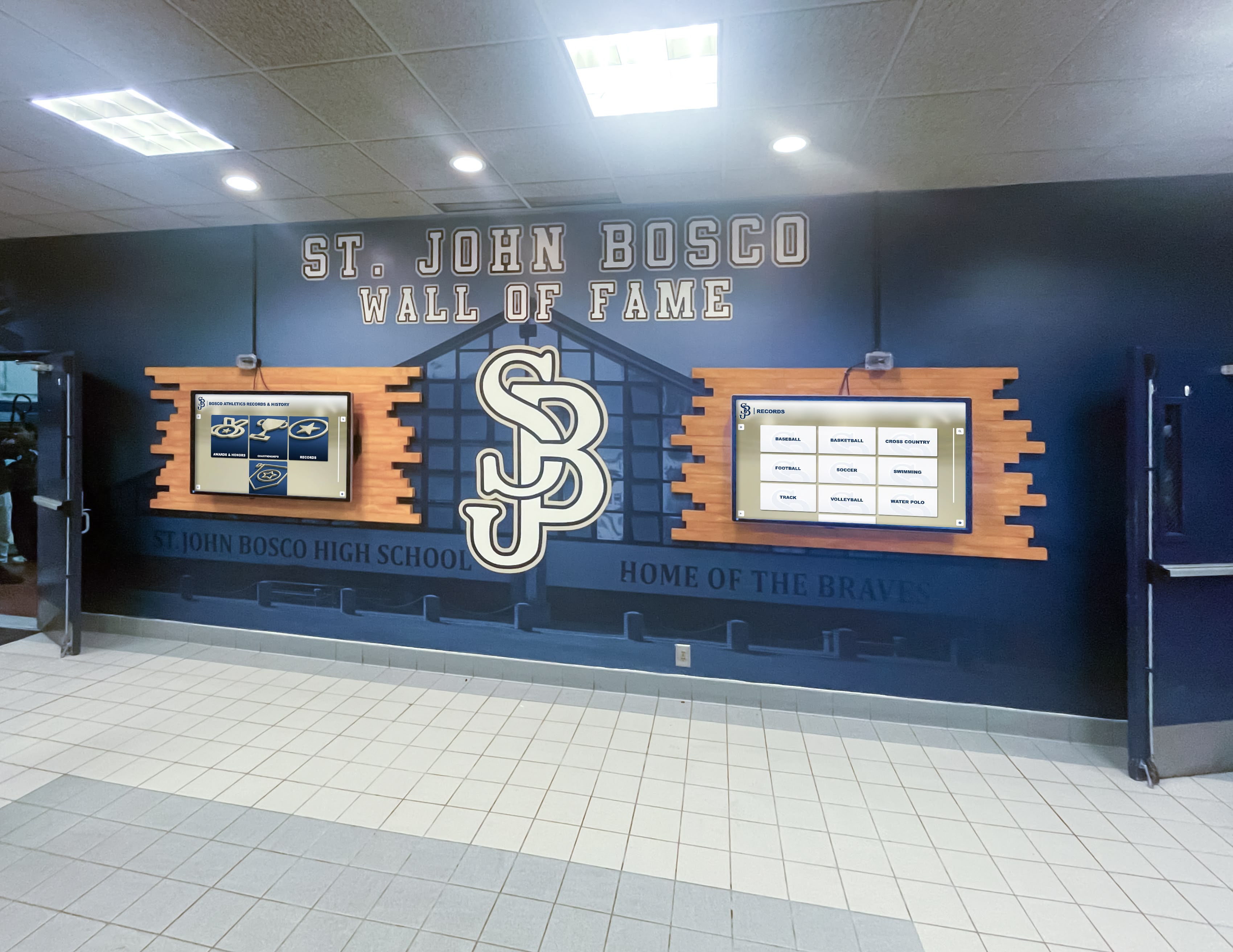
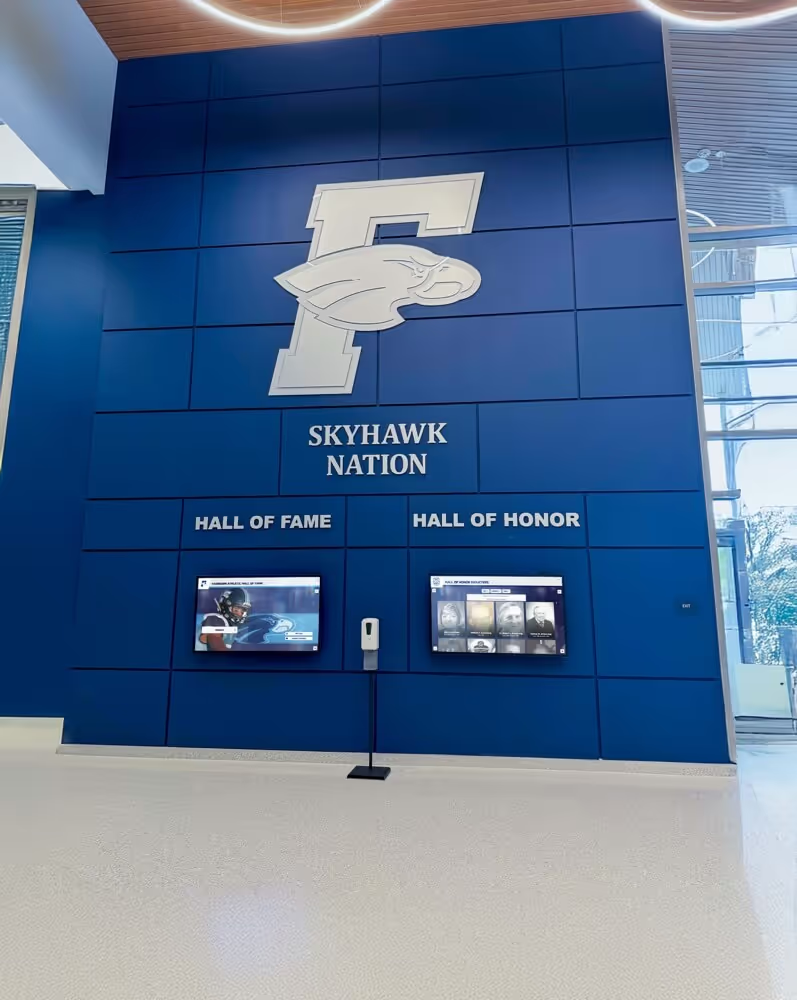
Multiple displays provide capacity for diverse recognition categories while ensuring visibility across campus areas
Transform Your High School Wall of Fame
Discover how digital recognition systems create the warming effect that transforms static displays into vibrant community experiences celebrating unlimited achievement while inspiring current students and strengthening alumni connections.
Schedule Your DemoMeasuring Success and Demonstrating Value
Systematic assessment ensures recognition investments achieve intended goals while identifying optimization opportunities.
Quantitative Engagement Metrics
Digital platforms capture data unavailable with traditional recognition approaches.
Interaction Volume and Patterns Track total touchscreen interactions, unique users, session duration, return visit frequency, and peak engagement timing. These metrics reveal whether recognition generates sustained community engagement or limited initial curiosity followed by declining interest requiring intervention.
Search and Discovery Analytics Analyze most-searched names, frequently viewed profiles, popular recognition categories, and navigation pathways revealing what content resonates and how visitors explore recognition. These insights inform content development priorities and feature enhancement decisions.
Web Platform Analytics Monitor website traffic to online recognition portals, geographic distribution showing where access occurs, referral sources revealing how visitors discover recognition, and device usage patterns indicating whether mobile optimization requires enhancement.
Social Sharing Activity Measure social media shares, profile link distributions, and external traffic sources indicating how recognition amplifies beyond direct platform visits. High sharing activity suggests recognition successfully creates pride motivating community members to voluntarily promote institutional achievements.
Qualitative Feedback and Community Response
Stakeholder perspectives provide context beyond quantitative metrics alone.
Direct User Feedback Gather community input through brief surveys prompting visitors for improvement suggestions, informal observation of how people interact with displays noting engagement duration and spontaneous reactions, and systematic collection of testimonials from recognized individuals and their families describing recognition impact.
Staff and Administrator Assessment Survey staff about content management ease, administrative efficiency gains compared to traditional recognition, and perceived value in supporting institutional objectives. Staff satisfaction with recognition systems significantly affects long-term success as frustrated administrators may abandon or minimize systems proving difficult to manage.
Alumni and Community Sentiment Monitor broader community commentary through social media discussions, informal feedback shared with school personnel, and general atmosphere at events where recognition appears prominently. Recognition should generate positive sentiment and pride rather than controversy or indifference suggesting implementation problems requiring attention.
Student Impact Observation Assess whether current students engage with recognition through observation of spontaneous display interaction, student commentary about recognized individuals, and evidence that recognition successfully inspires student achievement and aspiration.
Return on Investment Evaluation
Comprehensive value assessment considers multiple benefit dimensions beyond simple cost calculations.
Cost Comparison to Traditional Methods Calculate cumulative costs of traditional recognition over comparable timeframes—engraving expenses at $150-300 per inductee across years, trophy case and display infrastructure costs, periodic renovation and expansion expenses, and staff time managing physical recognition systems. Many schools find digital recognition achieving cost parity within 5-10 years while delivering far superior functionality.
Advancement Impact Correlation Track relationships between recognition implementation and advancement metrics including alumni giving participation and average gift size, event attendance rates, volunteer engagement levels, and overall alumni satisfaction scores. While recognition alone doesn’t drive advancement success, comprehensive systems supporting engagement strategies contribute measurably to institutional relationship building.
Admission and Enrollment Effects Monitor whether recognition contributes to prospective family engagement during campus visits, influences admission decision factors in exit surveys, or appears in enrollment marketing effectiveness assessments. Visible achievement celebration often features in families’ descriptions of positive school culture influencing enrollment decisions.
Cultural and Intangible Benefits Consider benefits difficult to quantify financially—strengthened community pride and identification, preservation of institutional memory that might otherwise be lost, inspiration and aspiration among current students, and reinforced culture of excellence where achievement receives lasting celebration. These intangible benefits often constitute the most significant recognition value despite measurement challenges.
Future Evolution and Emerging Opportunities
Digital recognition continues evolving with emerging technologies and changing community expectations creating new enhancement opportunities.
Personalization and Intelligent Content Surfacing
Advanced systems increasingly leverage data and user signals to deliver personalized recognition experiences.
Connection-Based Recommendations Systems recognizing individual users can highlight relevant inductees—classmates from similar graduation years, family members across multiple generations, individuals from same geographic areas, or alumni in career fields matching user interests. This personalization creates immediate relevance increasing engagement likelihood.
Anniversary and Milestone Highlighting Automated systems can feature inductees celebrating induction anniversaries, graduation anniversaries, career milestones, or birthdays, creating timely recognition moments encouraging community acknowledgment and celebration.
Adaptive Interface Design Systems learning from user behavior can optimize interface design and navigation—highlighting frequently used features, surfacing popular content more prominently, and adapting workflows to match actual usage patterns rather than forcing predetermined interaction models.
Enhanced Multimedia and Immersive Experiences
Advancing technology enables increasingly rich recognition experiences.
Video Interview Integration Systematic video interview programs capturing inductee reflections, career advice for current students, and personal stories create compelling multimedia content bringing recognition to life beyond text and photos.
Virtual Reality Historical Recreation VR technology can recreate significant moments—championship games, historic campus settings, or era-specific contexts—enabling visitors to experience history rather than simply reading about it.
Augmented Reality Extensions AR applications can overlay additional recognition content on physical spaces via personal mobile devices, enabling unlimited digital content accessed through physical school environments without requiring extensive touchscreen infrastructure.
Artificial Intelligence and Automation
AI capabilities create opportunities for enhanced recognition management and user experiences.
Automated Content Enhancement AI can assist with biographical research, suggest profile enhancements, identify relevant historical context, and highlight connections between inductees reducing manual content development effort.
Natural Language Interaction Voice-activated search and conversational interfaces enable more intuitive interaction compared to traditional search boxes and navigation menus, particularly benefiting users less comfortable with touchscreen technology.
Predictive Analytics for Engagement Machine learning analyzing engagement patterns can predict what content will resonate, optimize featured content rotation, and identify opportunities for profile enhancement based on historical interaction data.
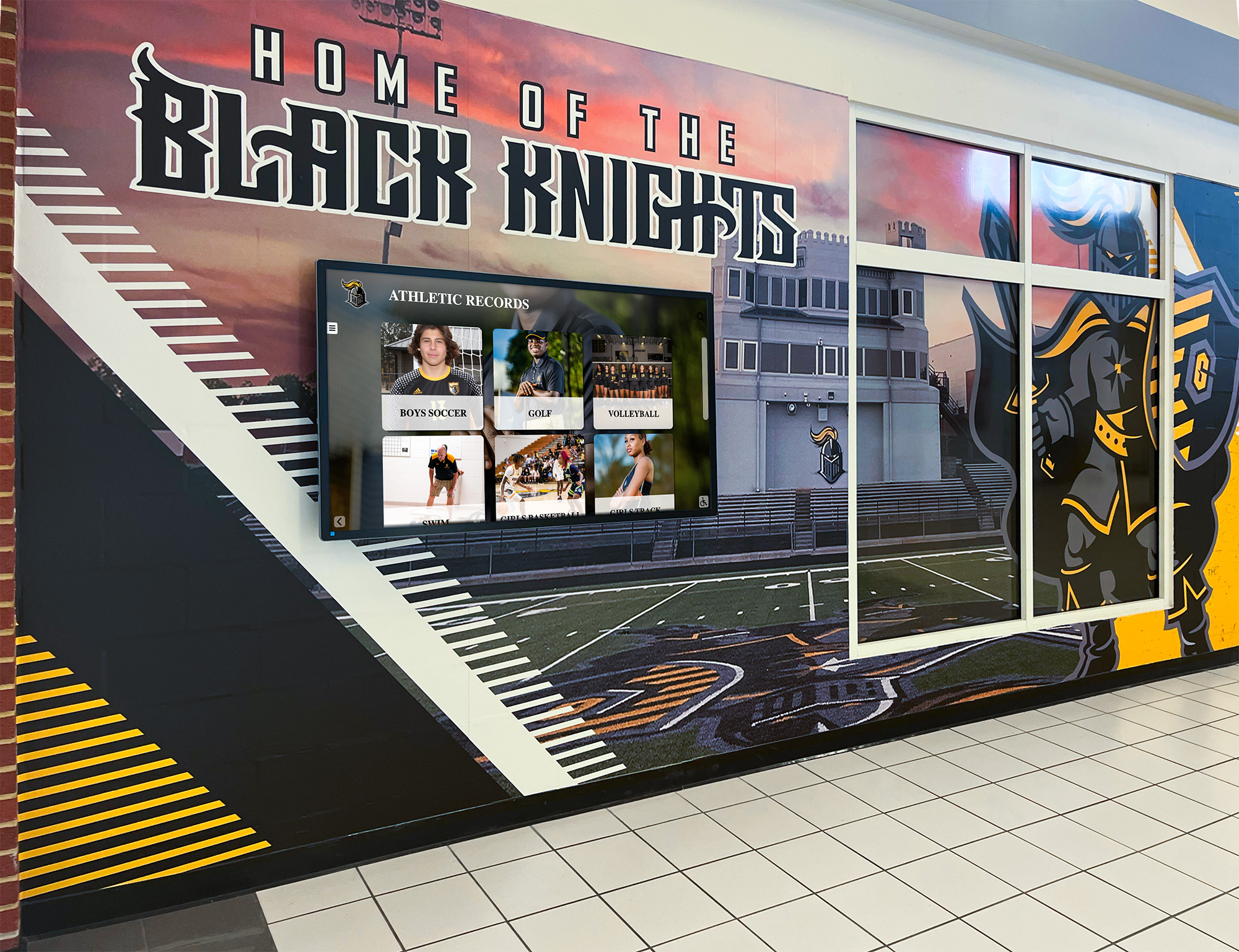
Integrated designs combine architectural elements with digital technology creating cohesive recognition environments
Conclusion: Building Vibrant Communities Through Recognition
High school walls of fame represent far more than achievement listings—they embody institutional values, preserve heritage, inspire aspiration, and create touchpoints maintaining lifelong community connections. The transformation from static plaques to dynamic digital experiences removes limitations that prevented comprehensive celebration while enabling engagement impossible with traditional approaches.
Digital warming—the concept describing what happens when cold, impersonal recognition transforms into personalized, interactive experiences drawing community members deeper into exploration and connection—proves particularly powerful in educational contexts where inspiration and aspiration significantly influence student development. When current students discover accomplished alumni who attended the same school, played the same sports, participated in the same activities, or came from similar backgrounds, these connections create tangible evidence that their own aspirations remain achievable through dedication and institutional support.
The practical benefits prove equally compelling for schools facing traditional recognition challenges. Unlimited capacity eliminates space constraints forcing difficult decisions about whose achievements receive visibility, instant updates at zero marginal cost remove engraving expenses and implementation delays, rich multimedia profiles create meaningful recognition honoring complete stories rather than reducing lives to names and dates, and web access extends recognition reach globally enabling alumni worldwide to maintain institutional connections.
Strategic implementation requires thoughtful planning addressing recognition objectives, stakeholder needs, technical requirements, content development strategies, and integration with comprehensive school community goals. Schools following systematic approaches create recognition experiences worthy of celebrated achievements while avoiding common pitfalls undermining platform value.
The most successful implementations integrate wall of fame recognition with broader institutional strategies spanning alumni relations, admission marketing, student development, and community building. Recognition becomes infrastructure supporting multiple objectives rather than isolated projects serving narrow purposes, maximizing return on investment while justifying continued administrative attention and resource allocation.
As technology continues evolving, digital recognition platforms will offer increasingly sophisticated capabilities including enhanced personalization, immersive multimedia experiences, artificial intelligence assistance, and deeper integration with comprehensive engagement systems. Schools implementing modern recognition today position themselves to adopt these advances ensuring their recognition remains current and engaging for decades to come.

Recognition displays become community gathering points creating shared experiences and strengthening institutional bonds
Every high school community accumulates achievements worth celebrating—athletic excellence, distinguished alumni, academic accomplishments, artistic achievement, community service, and character exemplification. Digital wall of fame systems ensure these achievements receive visibility, accessibility, and celebration they deserve while building vibrant, engaged communities where every member feels valued and motivated to maintain lifelong connections to institutions that shaped their formative years.
Your school’s achievements and the people behind them deserve recognition that honors excellence while building community pride and engagement. With thoughtful planning, appropriate technology, and commitment to comprehensive recognition, you can create wall of fame experiences that celebrate heritage while inspiring your community’s future.
Ready to transform your recognition? Explore comprehensive digital hall of fame implementation approaches or learn about creating athletic wall of honor systems that celebrate your community while strengthening institutional connections across generations.
Sources: