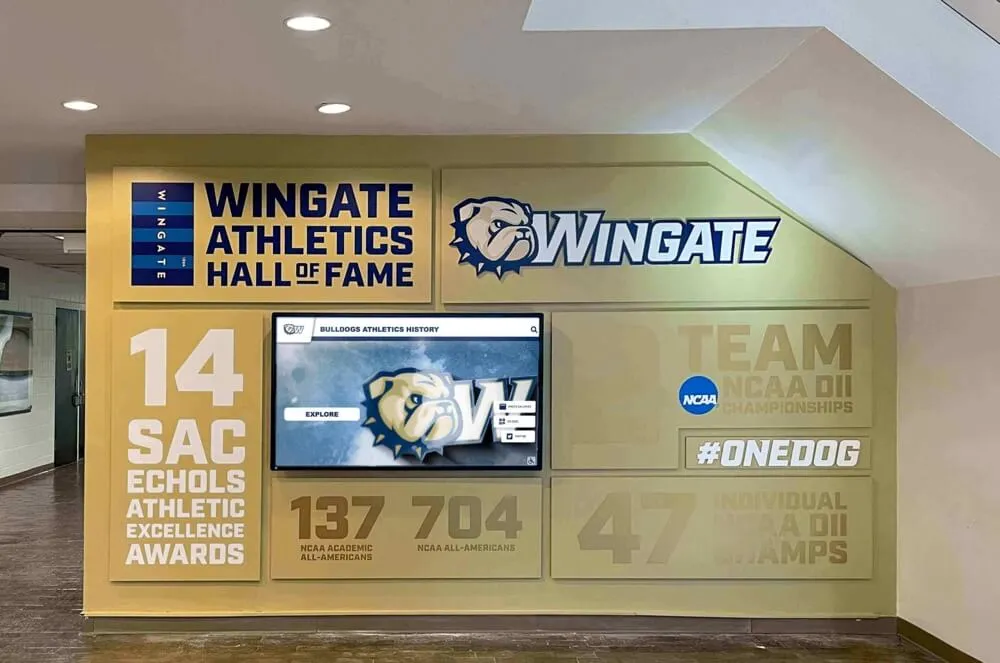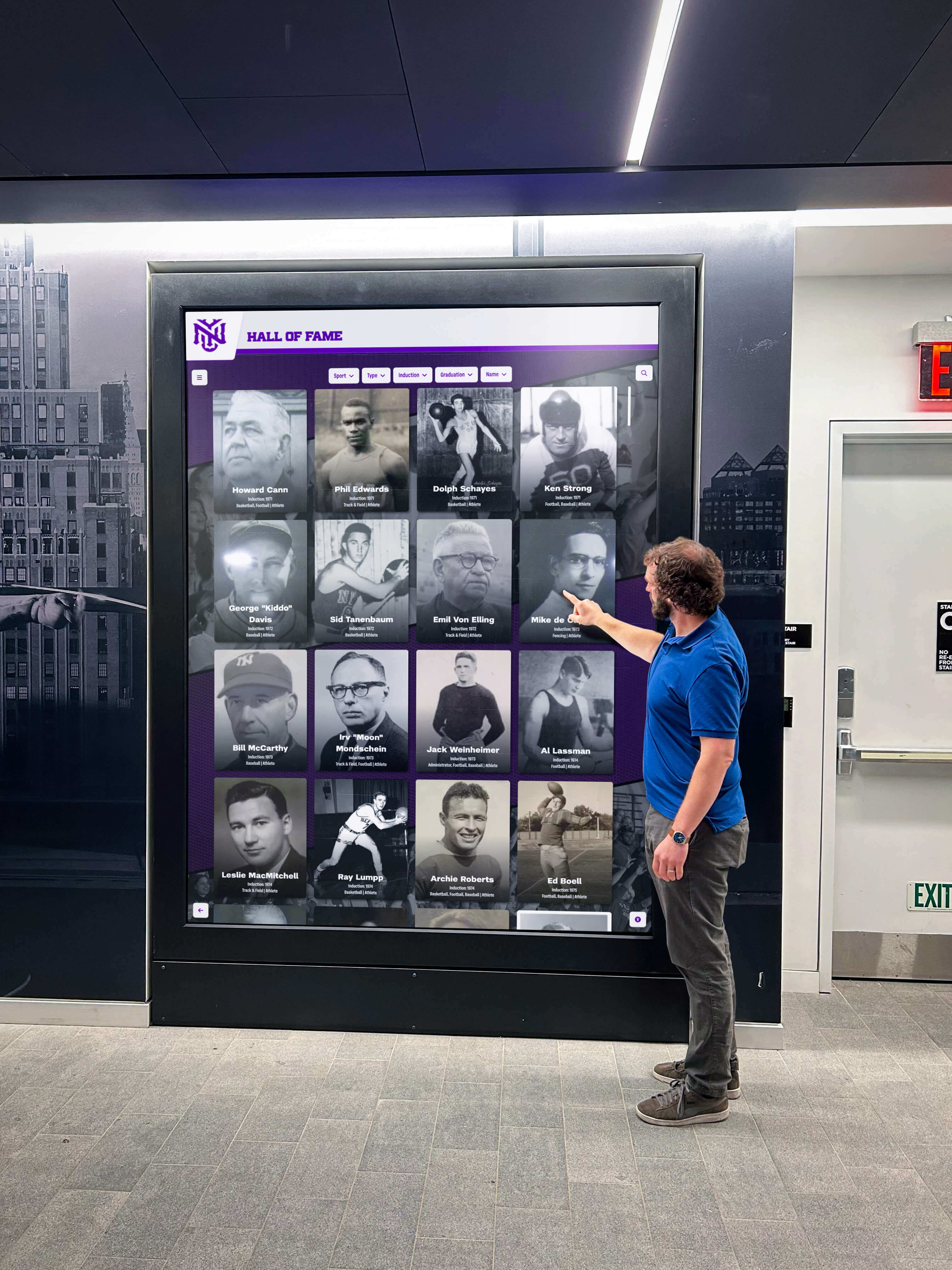




Intent: demonstrate — High school reunions hold tremendous potential for meaningful reconnection and community building, yet many gatherings struggle to move beyond superficial small talk and awkward name tag exchanges. Alumni arrive eager to reconnect but uncertain how to bridge years or decades of separation, reunion committees work tirelessly to create memorable experiences but lack tools to facilitate genuine engagement, and precious reunion hours slip away without the deep connections everyone hoped to achieve.
Traditional reunion display boards—poster boards with faded yearbook photocopies, printed directories, static photo collages—offer passive viewing experiences that generate fleeting nostalgia without facilitating ongoing engagement or conversation. Alumni glance at familiar faces, perhaps point out themselves or friends, but quickly move on without deeper exploration or discovery. These static displays represent missed opportunities to create what we call “digital warming”—transforming cold social situations into vibrant, personalized experiences where alumni feel immediately welcomed, discover unexpected connections, and engage deeply with shared heritage.
This comprehensive guide explores how modern high school reunion display boards leverage interactive technology, thoughtful content curation, and strategic design to create engaging memory walls that don’t just showcase the past but actively facilitate the reconnection and community building that make reunions truly successful.
The evolution from traditional poster boards to sophisticated interactive displays represents more than technological upgrade—it reflects fundamental shift in understanding how people engage with memories and connect with communities. While physical limitations once forced reunion committees to choose which dozen photographs or achievements received limited display space, modern reunion display boards accommodate unlimited content, enable personal discovery through search and exploration, surface personalized connections relevant to individual alumni, and create engaging experiences that draw attendees deeper into shared heritage rather than offering passive glimpses.

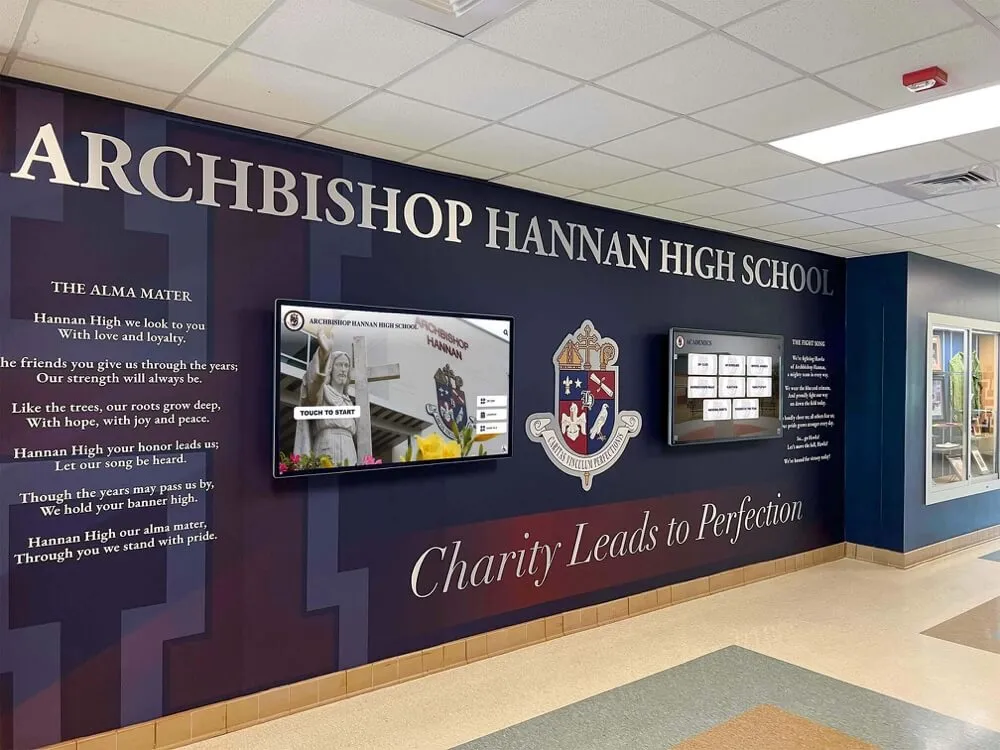
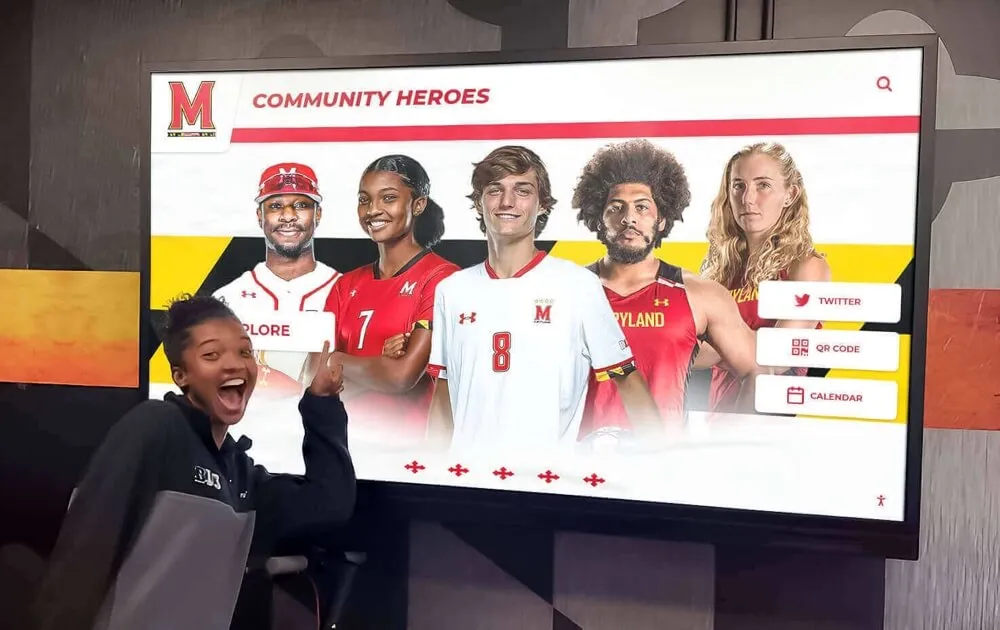
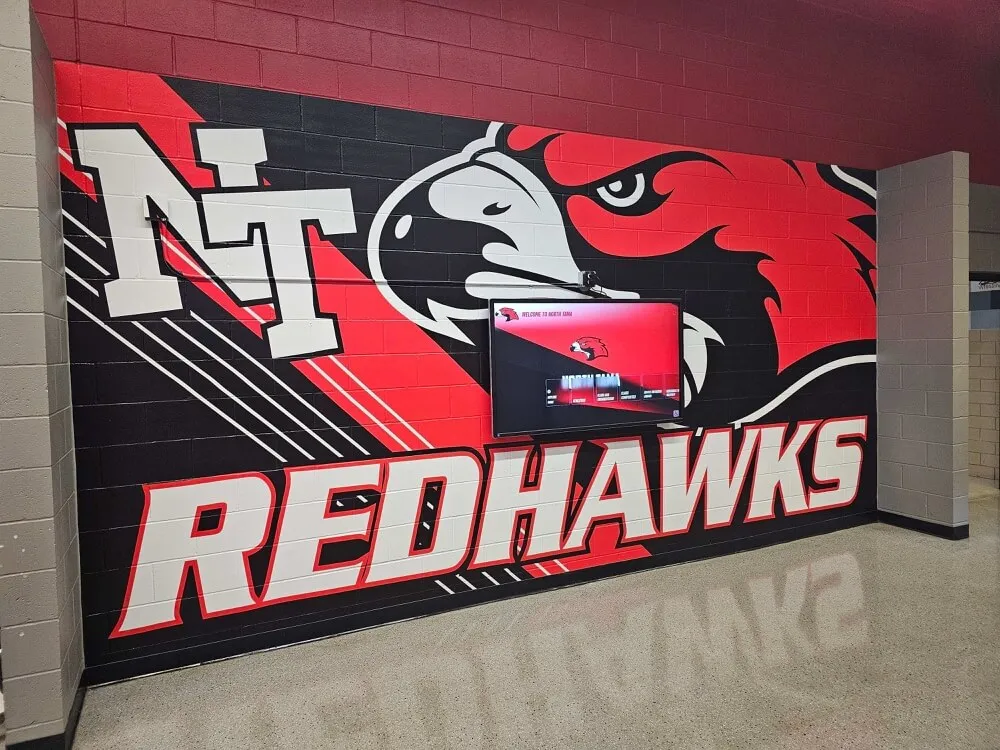
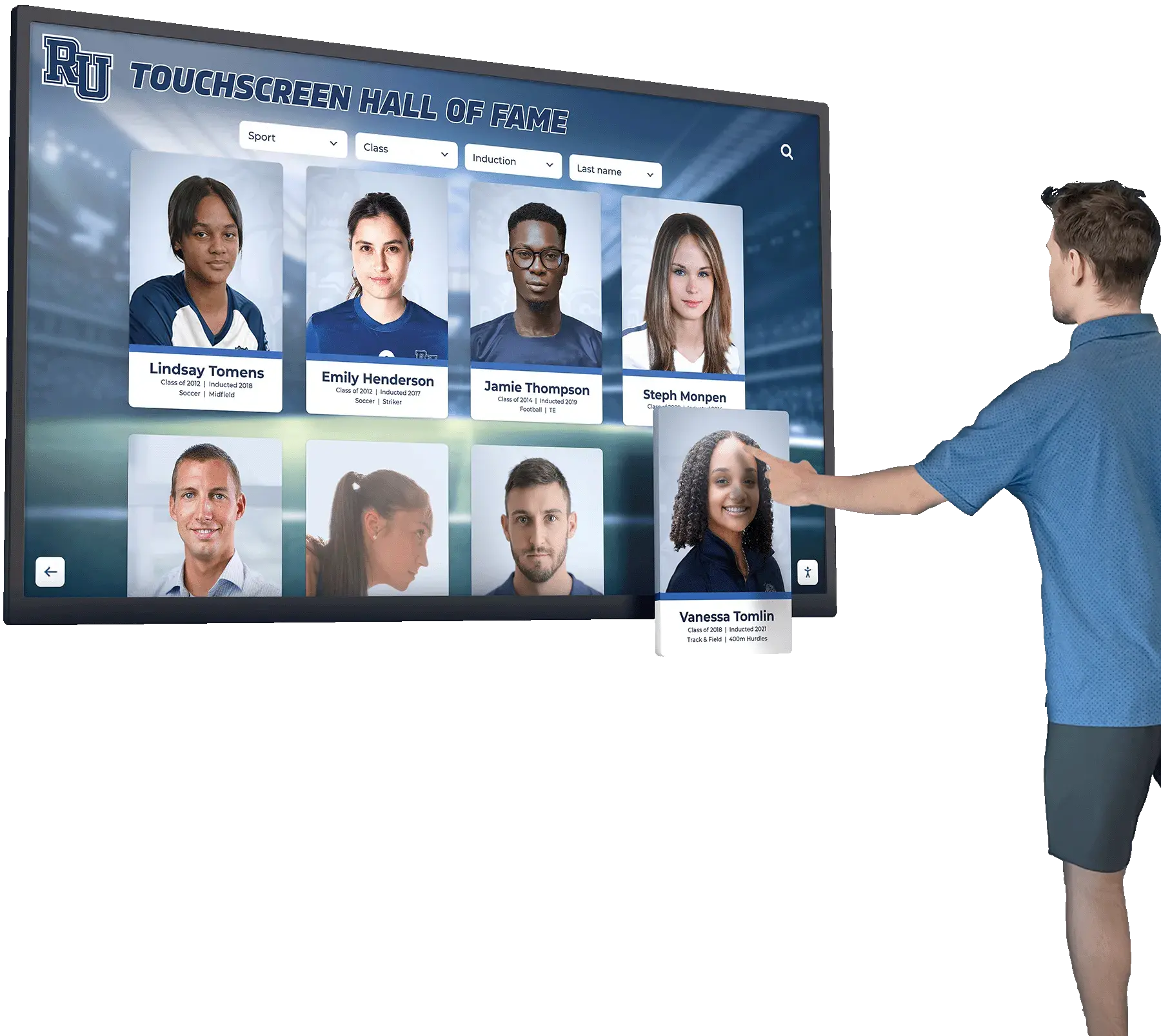
Interactive reunion display boards become natural gathering points where alumni discover classmates, explore shared memories, and reconnect around personalized content
Understanding High School Reunion Display Board Fundamentals
Effective reunion display boards serve multiple critical purposes beyond simple decoration or nostalgia generation.
The Core Functions of Reunion Display Boards
Well-designed reunion displays fulfill specific objectives that enhance attendee experience and reunion success:
Facilitating Recognition and Discovery After 10, 20, or 50 years, physical appearances change dramatically. Alumni struggle to recognize former classmates, creating awkward interactions where neither party remembers the other despite years of shared experiences. Reunion display boards that showcase both historical yearbook photos and current images create visual bridges connecting present appearance to past memories, helping alumni identify classmates while triggering recognition and conversation.
Sophisticated displays enable discovery beyond obvious connections. Alumni might discover former teammates from sports they’d forgotten, identify classmates who participated in same activities, find individuals who currently live nearby enabling ongoing friendship, or learn about shared interests developed since graduation. These unexpected discoveries create conversation starters far more meaningful than generic “what have you been doing?” exchanges.
Creating Conversation Starters and Ice Breakers The most valuable reunion display boards don’t just present information—they actively facilitate the social interactions reunions aim to foster. When two alumni simultaneously discover they both played in the band, participated in debate club, or currently work in the same industry, displays provide immediate common ground for meaningful conversation beyond superficial catching up.
Digital reunion memory walls create natural gathering points where alumni congregate, browse content together, and discover shared connections sparking conversations. Rather than awkward mingling without clear purpose, displays provide focal points organizing social interaction around shared content exploration.
Celebrating Individual and Collective Achievement Reunions represent opportunities to acknowledge what alumni accomplished both during high school and in decades since graduation. Display boards that celebrate diverse achievements—athletic excellence, academic honors, career accomplishments, community service, creative pursuits, family milestones—validate that different paths to success all deserve recognition while creating pride in collective class character and accomplishments.
Recognition extends beyond individual achievement to class identity and legacy. Displays might highlight collective class contributions, unique characteristics distinguishing particular graduation years, significant events during specific school years, or traditions that defined eras. This collective recognition strengthens shared identity while helping alumni understand their place in broader institutional narrative.
Preserving and Sharing Class Heritage Each reunion represents opportunity to document current class status while preserving historical memory for future gatherings. Comprehensive display boards capture where alumni are now, document reunion gatherings for historical record, preserve memories and connections that might otherwise fade, and create content foundations for future reunion planning. When reunion committees thoughtfully develop and preserve display content, they build institutional memory serving classes for decades.
Traditional Reunion Display Board Limitations
Conventional approaches face significant constraints that undermine their effectiveness:
Severe Space and Capacity Restrictions Physical poster boards accommodate limited photographs—perhaps dozens from classes of hundreds. Reunion committees face agonizing choices about whose images receive inclusion, which achievements get highlighted, what memories deserve limited space, and who gets left out despite equal right to recognition. These capacity constraints create incomplete, inadequate displays that fail to serve entire classes comprehensively.
Printed directories suffer similar limitations. Brief biographical entries provide minimal information beyond basic contact details and career summaries, forcing significant abbreviation of rich life stories and accomplishments. When space dictates content rather than value or interest, displays necessarily disappoint.
Static, Passive Viewing Experiences Traditional displays offer no interactivity beyond physical proximity. Alumni can look at photographs and read printed text, but cannot search for specific individuals, explore content based on personal interests, discover connections relevant to themselves, or engage actively with material in ways that create memorable experiences. This passive consumption generates momentary nostalgia without sustaining engagement or facilitating the social connection reunions aim to achieve.
Difficult Content Updates and Corrections Once poster boards are printed and assembled, errors become permanent fixtures throughout reunion events. Misspelled names, incorrect information, missing photographs—these mistakes cannot be corrected without recreating entire displays. The inflexibility discourages ambitious content development, as committees know any errors will remain visible and embarrassing throughout gatherings.
Ephemeral, Single-Use Nature Traditional reunion displays typically get discarded after events conclude. The effort invested in gathering photographs, researching biographies, designing layouts, and assembling materials serves single-evening purposes before being thrown away. This disposability means reunion committees must recreate displays from scratch for subsequent gatherings rather than building upon previous work, while alumni lose access to reunion content immediately after events end.
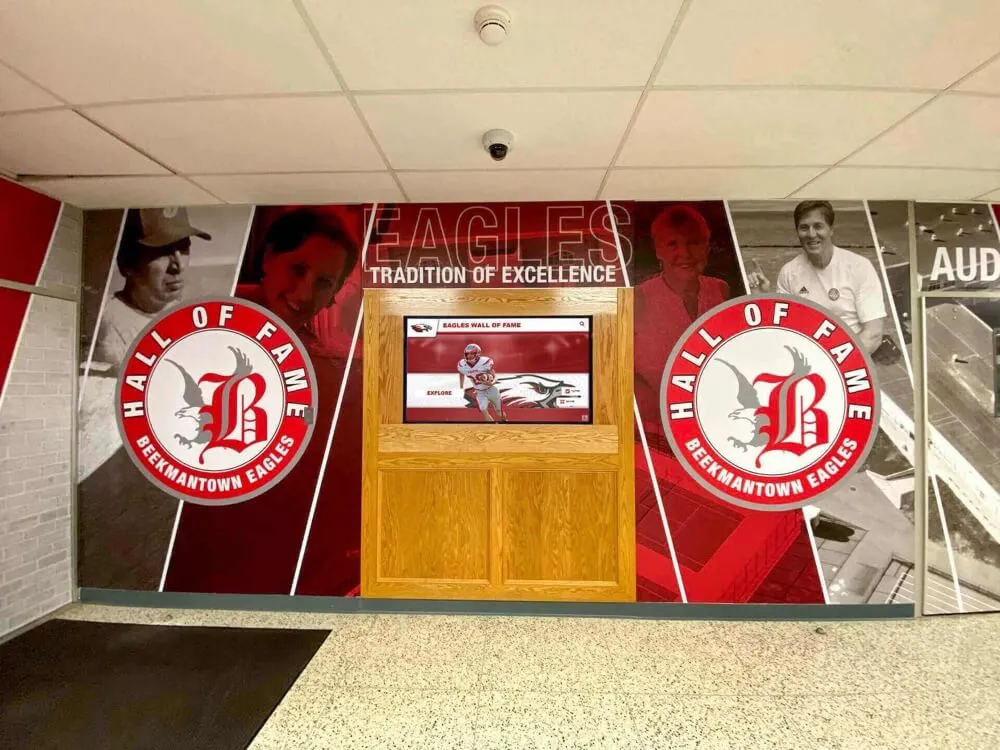
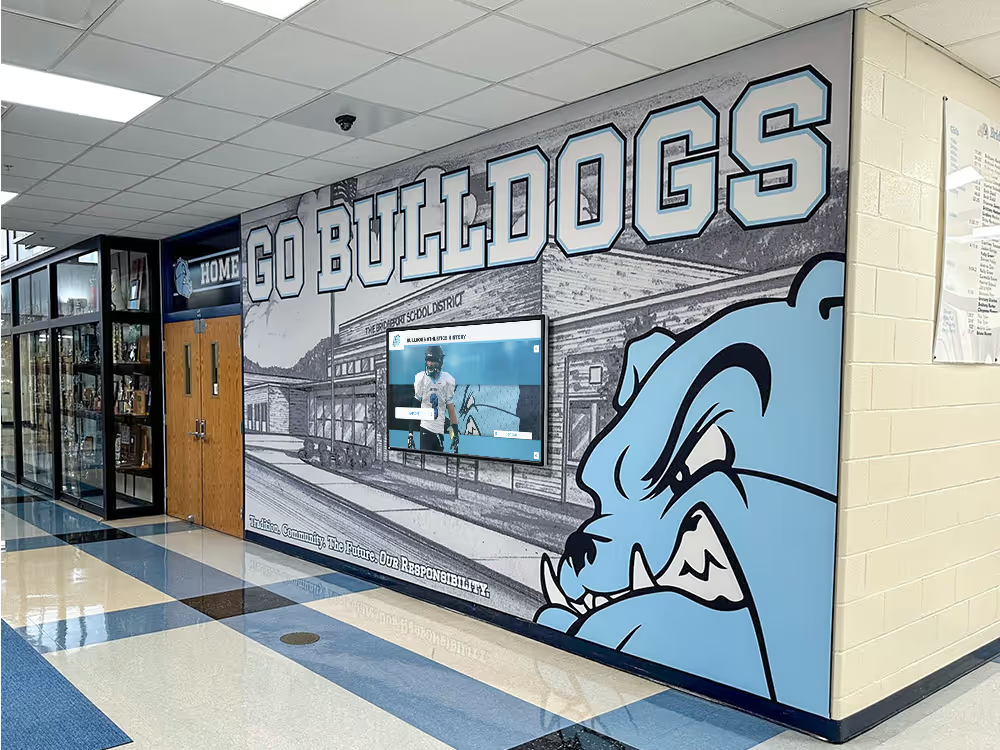
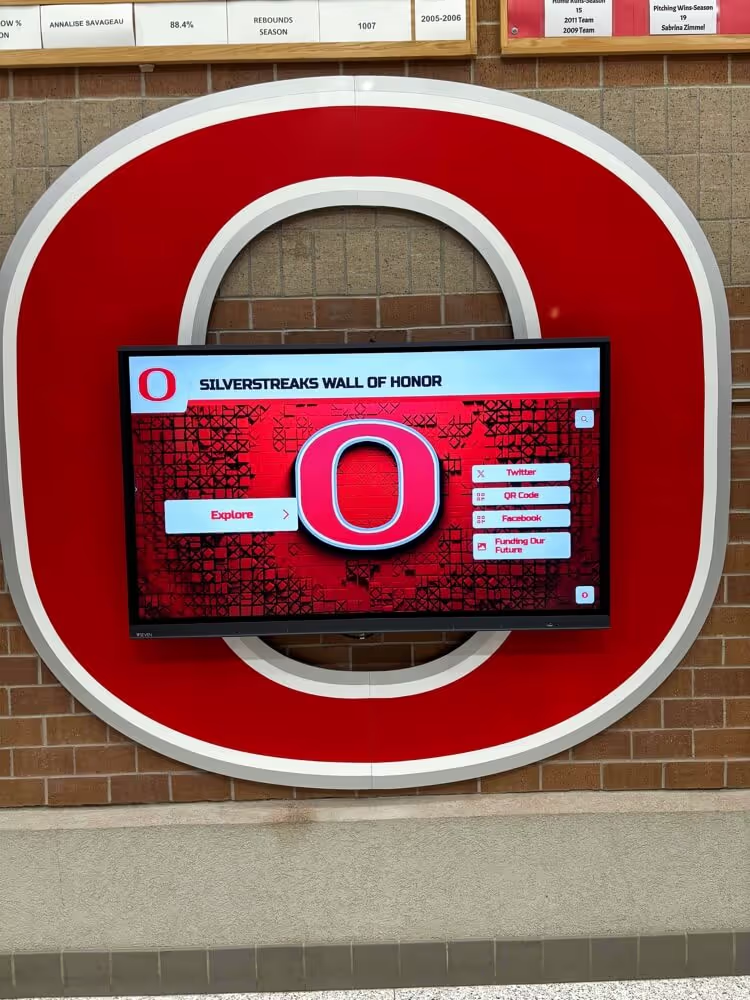
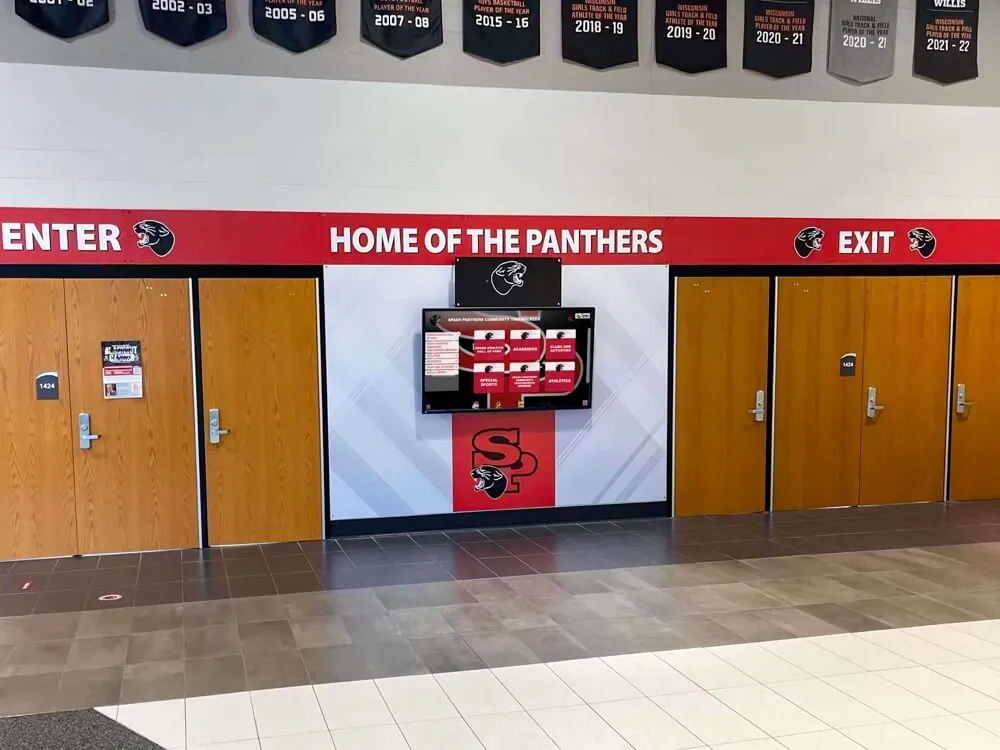
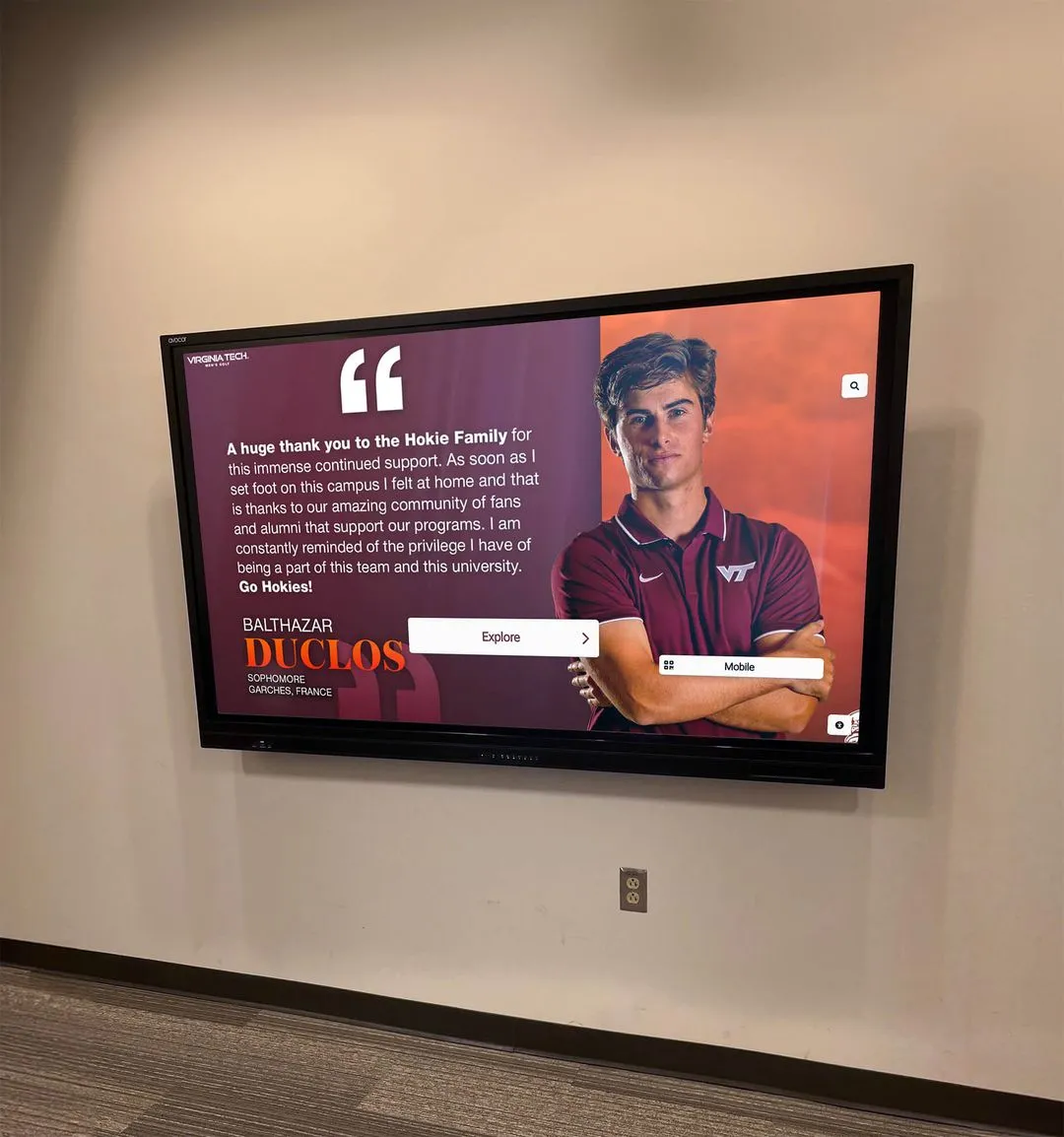
Strategic placement of interactive displays creates engaging experiences that passive poster boards cannot achieve
Modern Interactive Reunion Display Board Solutions
Technology enables fundamentally different approaches that address traditional limitations while creating new engagement possibilities.
Digital Touchscreen Display Boards
Interactive digital displays transform reunion experiences through sophisticated functionality:
Unlimited Content Capacity Digital platforms accommodate unlimited alumni profiles without space constraints. Every class member receives comprehensive recognition including multiple photographs spanning high school years through present day, detailed biographical information, achievement highlights across diverse domains, career updates and accomplishments, family information and multi-generational school connections, and personal reflections about school experiences and their lasting impact.
This unlimited capacity ensures equitable visibility regardless of class size while eliminating difficult decisions about whose recognition to prioritize based on physical space limitations rather than actual significance. Solutions like Rocket Alumni Solutions provide purpose-built platforms specifically designed for comprehensive recognition without arbitrary capacity restrictions.
Intuitive Search and Discovery Features Advanced search functionality enables multiple discovery pathways addressing different user needs and exploration styles. Alumni can instantly find themselves by typing names, discover former teammates by browsing athletic rosters, identify classmates who participated in specific activities through club membership filters, explore “where are they now” career categories finding alumni in similar professions, or search by geographic location to find classmates living nearby.
This sophisticated discovery capability transforms passive viewing into active exploration that keeps alumni engaged for extended periods while facilitating the specific connections most relevant to individual interests and histories.
Rich Multimedia Integration Comprehensive digital platforms host photographs, videos, audio recordings, documents, and interactive timelines creating multidimensional memory exploration impossible with static displays. Video interviews featuring alumni reflecting on high school experiences, complete yearbook page scans enabling annual browsing, audio clips from school events and performances, digitized school newspapers and publications, and historical timeline contexts transform simple photo viewing into immersive heritage journeys.
Personalized Content Surfacing Intelligent systems can highlight relevant connections for individual users. When alumni interact with displays, sophisticated platforms surface classmates they knew well but might not immediately remember, suggest profiles of people with shared interests or career paths, feature alumni with geographic proximity enabling ongoing connection after reunions, and present content related to individual participation activities creating personally relevant exploration experiences.
This personalization creates immediate warmth—alumni feel recognized and welcomed rather than encountering generic content assuming all attendees relate equally to all displayed information.
Web-Based Accessible Memory Platforms
Extending reunion experiences beyond physical events and locations:
Mobile-Optimized Web Access Modern reunion display board systems provide web platforms enabling alumni to explore content from any device at any time from any location. This mobile accessibility means alumni unable to attend reunions physically can participate virtually, those reflecting after events can continue exploration, distant family members can view reunion content, and ongoing engagement between reunions maintains relationship momentum that single-event formats allow to dissipate.
Responsive design ensures content functions beautifully on all screen sizes from large touchscreen displays to smartphones, with navigation adapted appropriately to each device type rather than awkwardly forcing desktop designs onto mobile screens.
Social Sharing and Distribution Integrated sharing functionality enables alumni to distribute profiles, photographs, or discovery moments through social media directly from displays, amplifying reunion visibility beyond physical attendance. When alumni share reunion experiences with extended networks, content showcasing high school heritage and current community vibrancy reaches prospective donors, admission families, and community stakeholders expanding institutional marketing reach organically.
Continuous Content Updates and Enrichment Unlike static displays frozen at creation, digital platforms enable continuous content enhancement. Alumni can submit updated photographs and biographical information between reunions, reunion committees can add newly discovered historical content, schools can incorporate recent institutional achievements, and systems can surface anniversary and milestone content automatically maintaining platform currency rather than allowing content to become stale across multi-year reunion cycles.
QR Code Mobile Bridges
Creating seamless transitions between physical and digital experiences:
Instant Personal Device Transfer QR codes placed near physical displays or included in reunion materials enable instant content transfer to personal devices. Alumni scan codes to access full reunion memory platforms on smartphones, save specific profiles or photographs for later review, share content easily through personal networks, and continue exploration after leaving physical display locations. This mobile bridge creates seamless experiences spanning physical touchscreen interaction and personal device exploration.
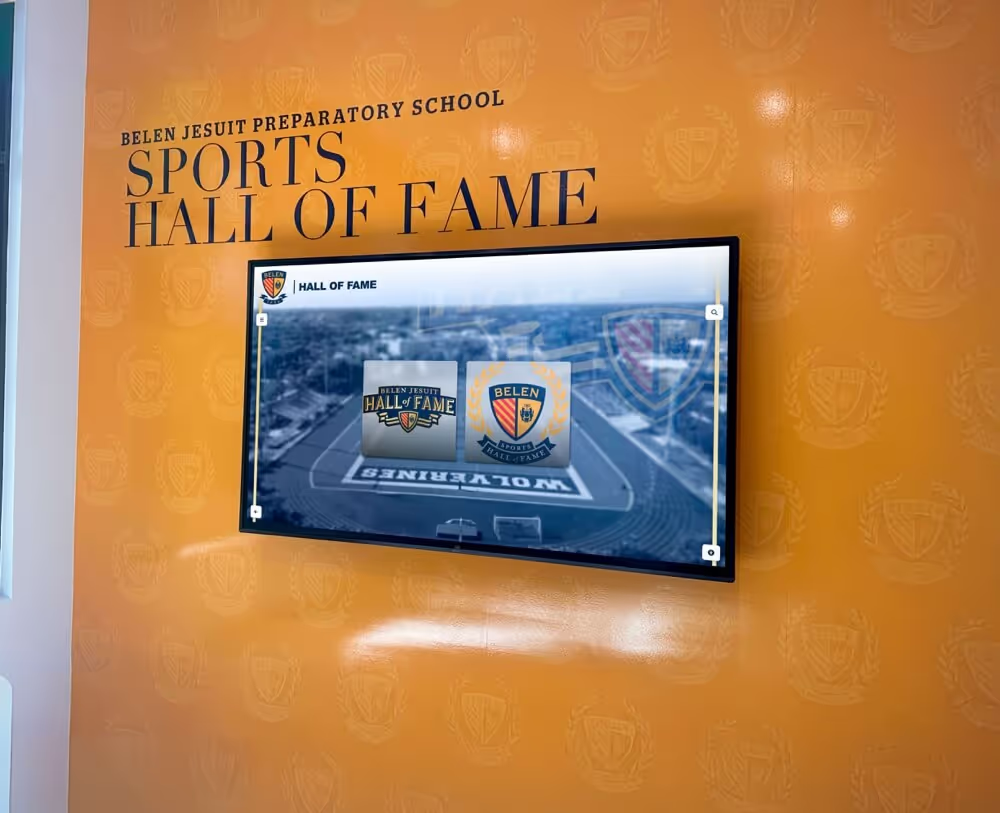
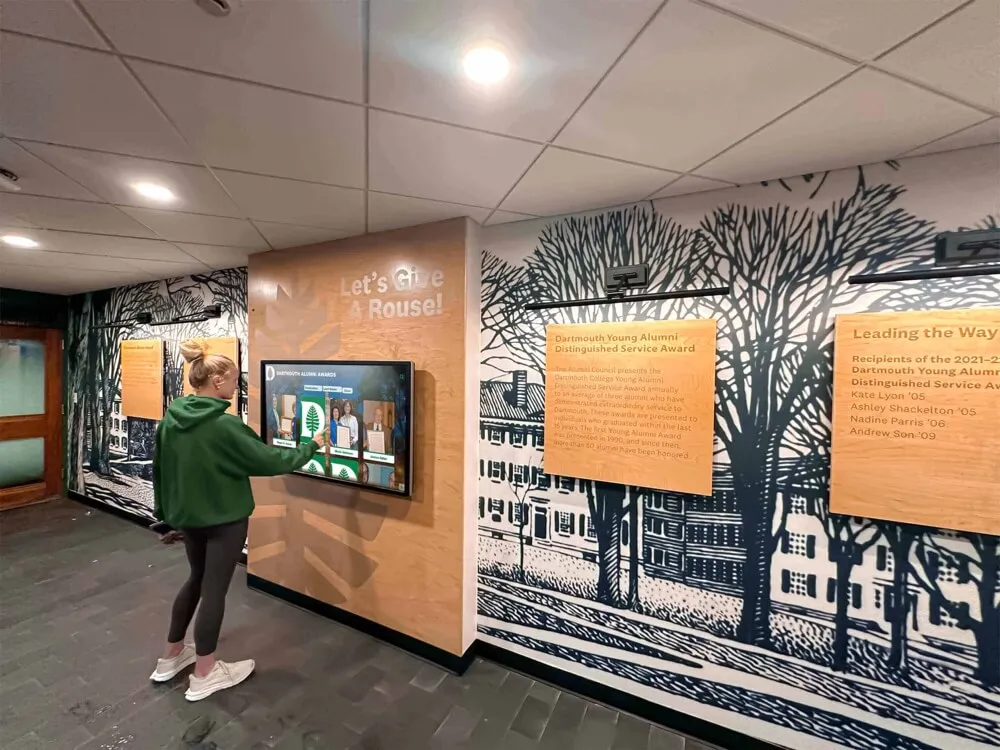
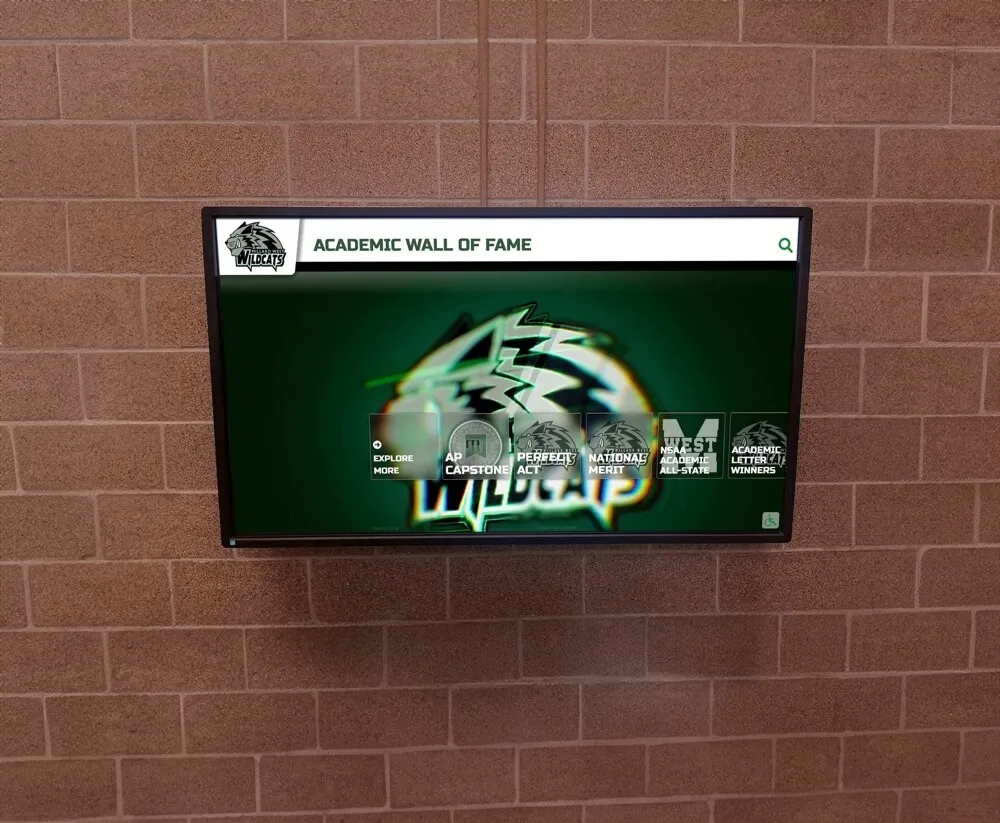
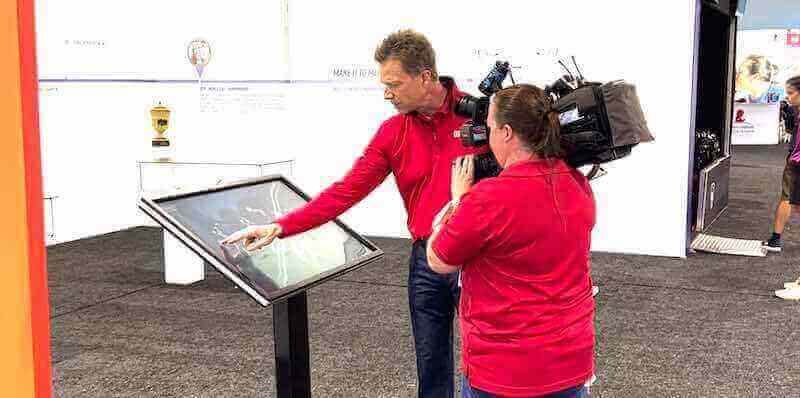
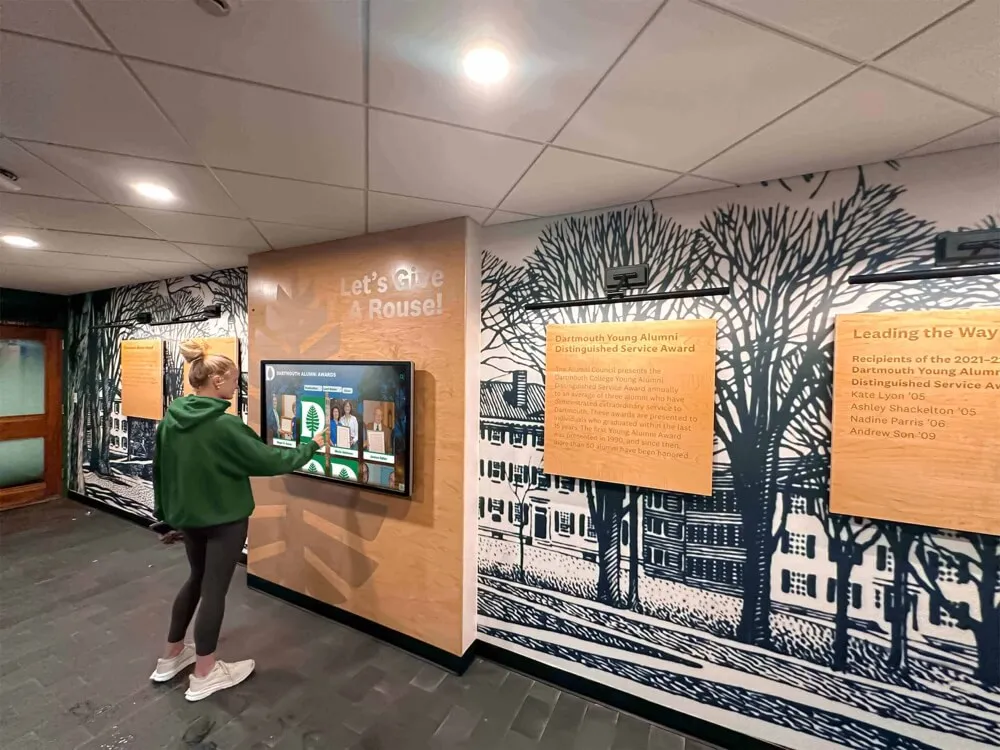
Intuitive interfaces encourage extended exploration sessions with visitors discovering unexpected connections and memories
Extended Engagement Opportunities QR code access means engagement need not end when alumni leave reunion venues. Attendees can explore content during travel home, share discoveries with spouses and families who didn’t attend, revisit particular profiles or photographs days or weeks later, and maintain connection to reunion memories indefinitely. This extended engagement amplifies reunion impact far beyond single-evening events while creating ongoing touchpoints supporting community building between formal gatherings.
Creating Compelling Reunion Display Board Content
Technology enables sophisticated delivery, but content quality determines whether displays truly engage alumni and facilitate meaningful connection.
Essential Content Elements for Reunion Displays
Comprehensive displays include multiple content types serving different purposes:
Individual Alumni Profiles The foundation of effective reunion displays involves detailed individual recognition celebrating each class member. Essential profile elements include multiple photographs showing both high school years and current appearance, comprehensive biographical narratives beyond brief text snippets, achievement highlights celebrating accomplishments across diverse domains, career information showing professional paths and current positions, family details including spouses and children, and personal reflections where alumni share favorite memories or perspectives on school influence.
When alumni discover themselves comprehensively recognized—not just their yearbook photo but rich biographical context—they feel valued and included. This sense of recognition creates immediate emotional warmth that transforms cold social situations into welcoming community experiences.
Historical Class Context and Timelines Contextual information helps alumni understand their graduation years within broader institutional and cultural narratives. Historical timeline displays might include significant school events during specific years, local and national historical events during different graduation periods, evolving school traditions and how they changed across eras, demographic and enrollment changes over time, and facility development and campus evolution milestones.
This historical context enriches memory exploration by connecting individual experiences to larger stories while helping alumni appreciate how their specific graduation years fit within decades or centuries of institutional heritage.
Activity and Organization Group Photos Beyond individual portraits, group photographs documenting teams, clubs, performances, and activities create powerful nostalgia and connection opportunities. Athletic team rosters showing complete squads, performing arts cast and ensemble photographs, club and organization membership documentation, student government and leadership groups, and academic competition teams provide visual references that help alumni identify classmates they might not remember from individual yearbook photos alone.
Group photographs work particularly effectively when accompanied by roster information identifying all individuals pictured, achievement documentation showing what groups accomplished, and contextual stories about significant moments or memorable experiences.
“Where Are They Now” Updates Contemporary information showing where alumni are now and what they’ve accomplished since graduation creates bridge between past and present. Career achievement highlights, advanced degrees and educational accomplishments, entrepreneurial ventures and businesses founded, creative pursuits and artistic achievements, community service and leadership roles, family milestones and multi-generational school connections, and geographic distribution showing where classmates currently live all provide current context making reunion displays feel alive and relevant rather than purely historical exercises.
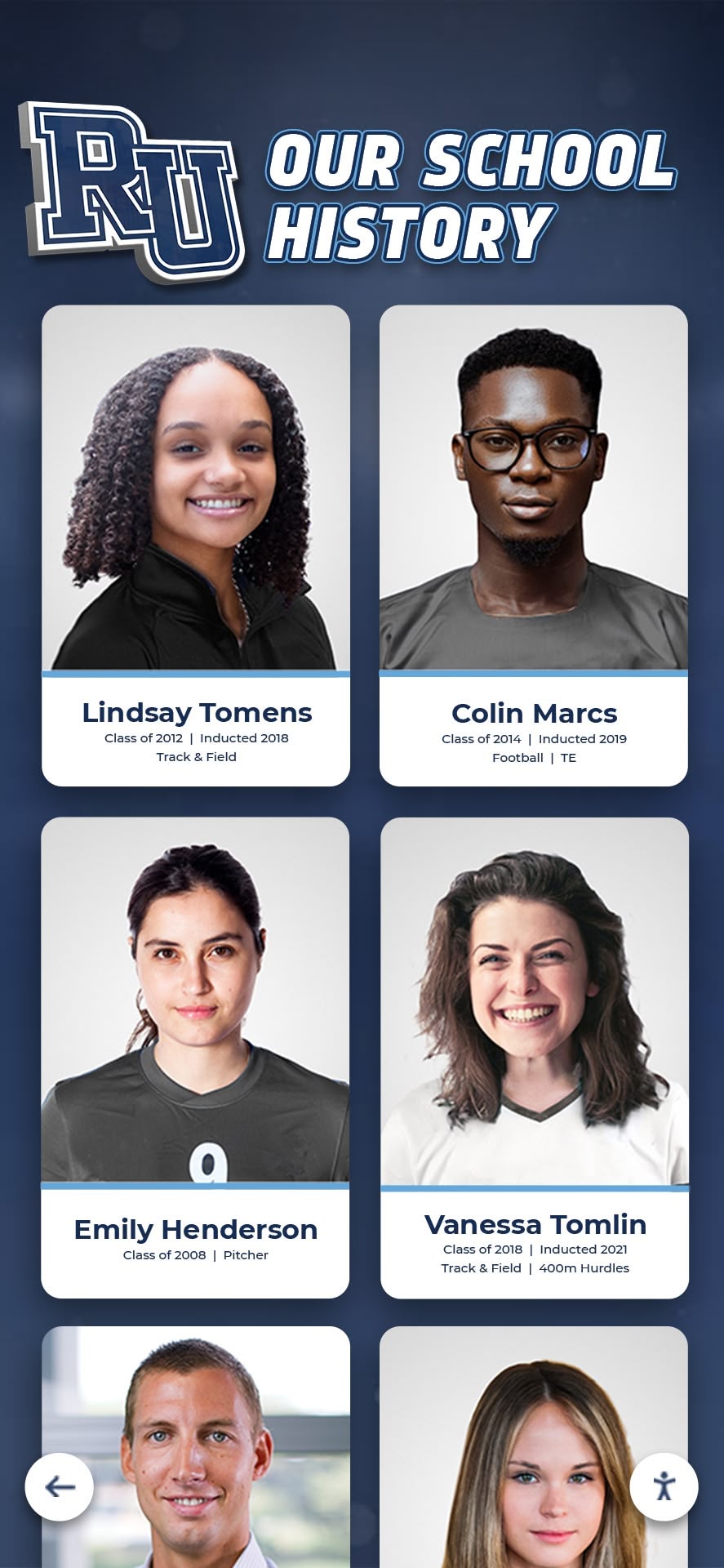
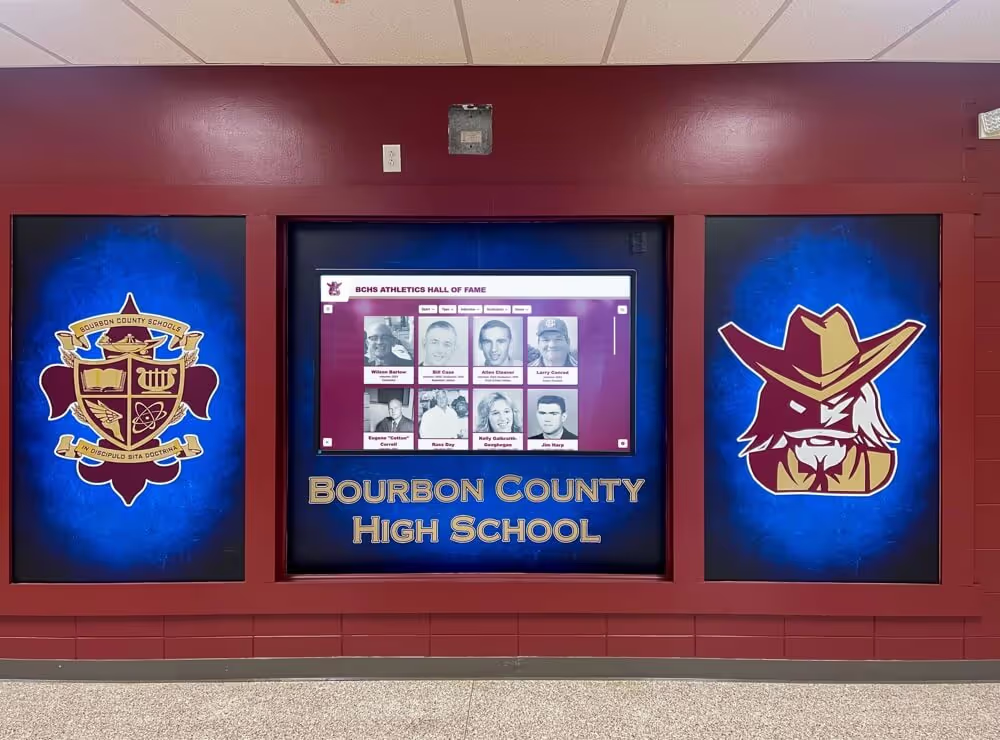
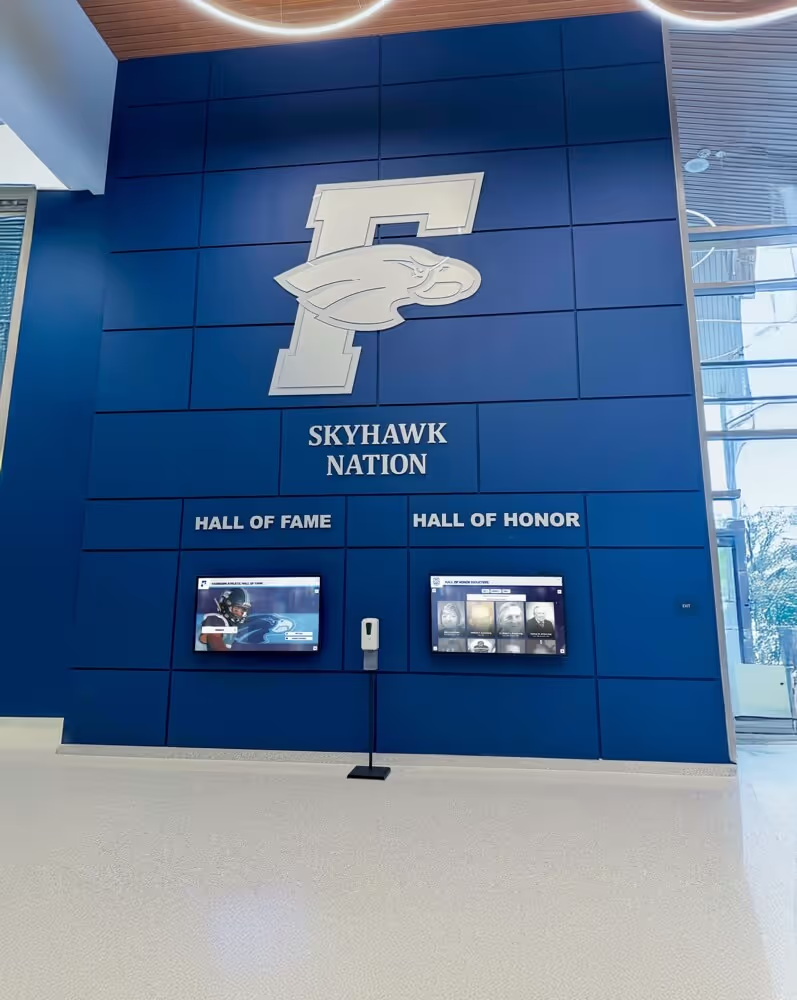
Comprehensive archives preserve decades of class memories while making heritage immediately accessible for discovery and sharing
Content Development Strategies and Sources
Building compelling reunion displays requires systematic content collection from multiple sources:
Yearbook Digitization and Extraction School yearbooks provide essential baseline content including individual portrait photographs, activity and organization group photos, athletic team documentation, candid photographs of student life, achievement and award recognition, and tradition and event documentation. Systematic yearbook digitization creates searchable archives while extracting specific content for reunion display purposes.
Modern scanning and OCR technology enables efficient bulk digitization, while online services can digitize yearbook collections for schools lacking internal scanning capabilities. Once digitized, yearbook content serves reunion displays indefinitely while also supporting broader institutional heritage preservation objectives.
Direct Alumni Submissions The most current, personal content comes directly from alumni themselves through online submission forms, scanning events at reunion venues, email collection campaigns, and social media gathering initiatives. Alumni can contribute current photographs showing present appearance, biographical updates about careers and accomplishments, family photographs including spouses and children, personal reflections and favorite memories, and additional historical photographs from personal collections that schools may not possess.
Submission processes should make contribution easy through simple online forms, clear guidelines about desired content, multiple format acceptance without rigid specifications, and explicit permission granting enabling public display. The more convenient submission processes, the higher participation rates and richer resulting content.
School Archive and Historical Records Institutional archives often contain materials beyond published yearbooks including historical photographs from multiple sources, newspaper clippings documenting school events, program booklets from performances and competitions, athletic statistics and record documentation, and administrative records about achievements and honors.
Collaboration with school archivists, librarians, or historians can surface valuable materials that reunion committees might not discover independently. These professional resources often know exactly where to find specific historical content while understanding appropriate permissions and usage protocols.
Alumni Association and Previous Reunion Materials Many schools maintain alumni associations with existing historical collections and reunion documentation. Previous reunion materials provide starting points for current displays, alumni association databases offer biographical information, class correspondent files contain updates received over years, and memorial lists ensure appropriate recognition of deceased classmates.
Building upon previous work rather than starting from zero saves significant time while ensuring continuity across multiple reunion cycles. Each reunion can enhance and expand content rather than recreating displays entirely from scratch.
Strategic Implementation for Reunion Display Board Success
Effective reunion displays require thoughtful planning addressing content, technology, logistics, and integration with broader reunion programming.
Timeline and Planning Process
Successful implementations follow systematic development processes:
12-15 Months Before Reunion Initial planning phase involves establishing reunion committee and display responsibilities, researching display technology options and vendors, developing content collection strategies, creating preliminary budgets and funding plans, and identifying historical content sources and access methods.
Early planning enables thoughtful decision-making without time pressure while ensuring adequate preparation time for content development—typically the most time-intensive aspect of quality reunion display creation.
9-12 Months Prior Content collection begins in earnest through launching alumni submission campaigns, beginning yearbook and archival material digitization, developing profile templates and style guidelines, requesting biographical updates from classmates, and organizing volunteer teams for content entry if needed.
Parallel technology work involves finalizing display platform selection, arranging hardware rental or purchase if needed, confirming venue technical requirements and capabilities, and beginning custom design and branding development if applicable.
6-9 Months Before Intensive content development phase includes entering collected content into selected platforms, conducting quality review and error correction, developing supplementary timeline and context content, creating category organization and navigation structures, and testing search and discovery functionality to ensure usability.
This mid-timeline phase represents highest effort period when substantial content entry occurs. Adequate advance scheduling prevents rushed last-minute work that compromises quality while creating stress for volunteer committees.
3-6 Months Prior Final refinement involves implementing feedback from alumni who review draft profiles, adding final biographical updates and corrections, developing featured content and rotation schedules, creating reunion event integration plans, and preparing backup plans and contingency procedures.
Technical logistics finalization includes confirming venue display placement and power/network requirements, arranging equipment delivery and setup if needed, developing display operation instructions for reunion volunteers, and ensuring technical support availability during reunion events.
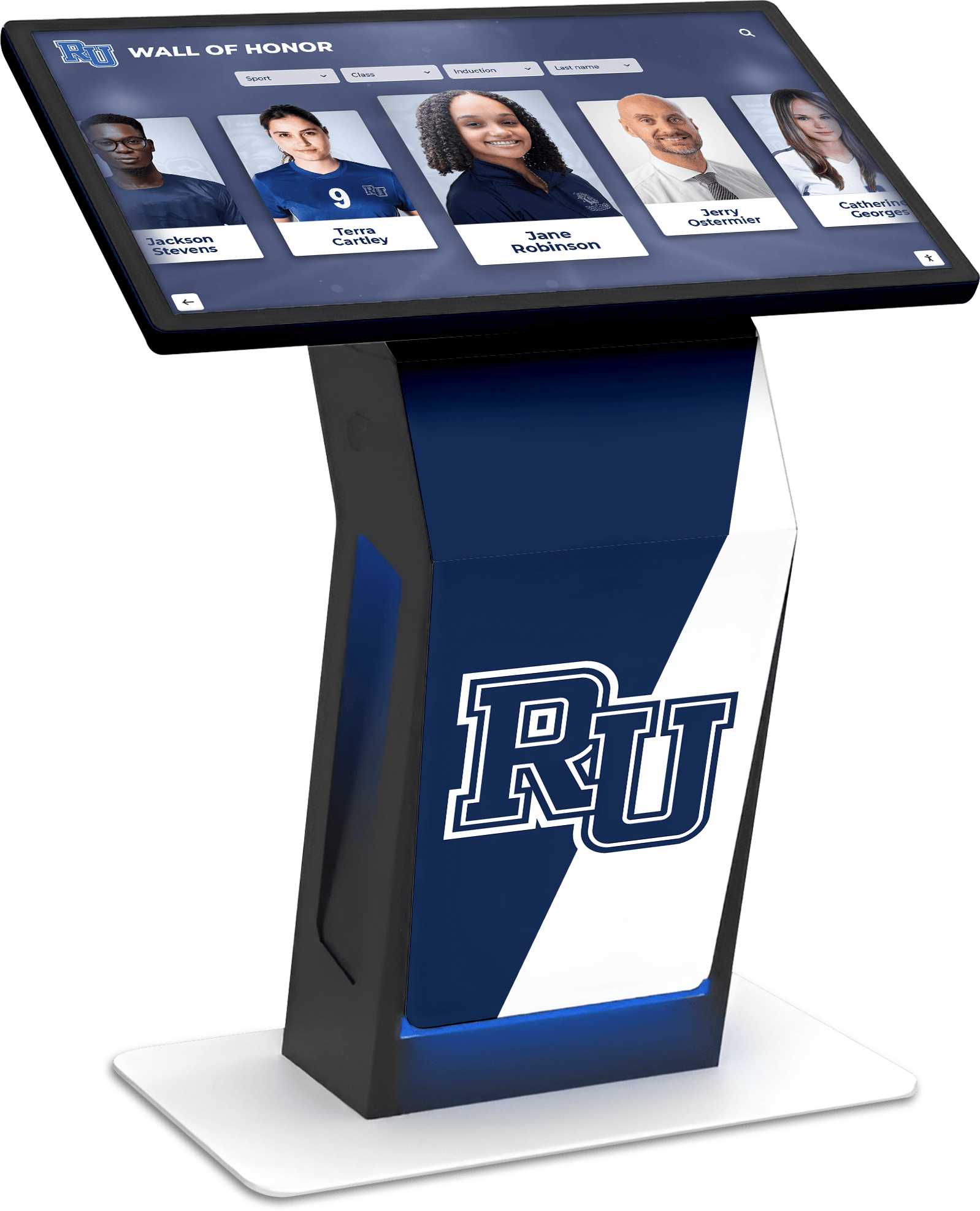
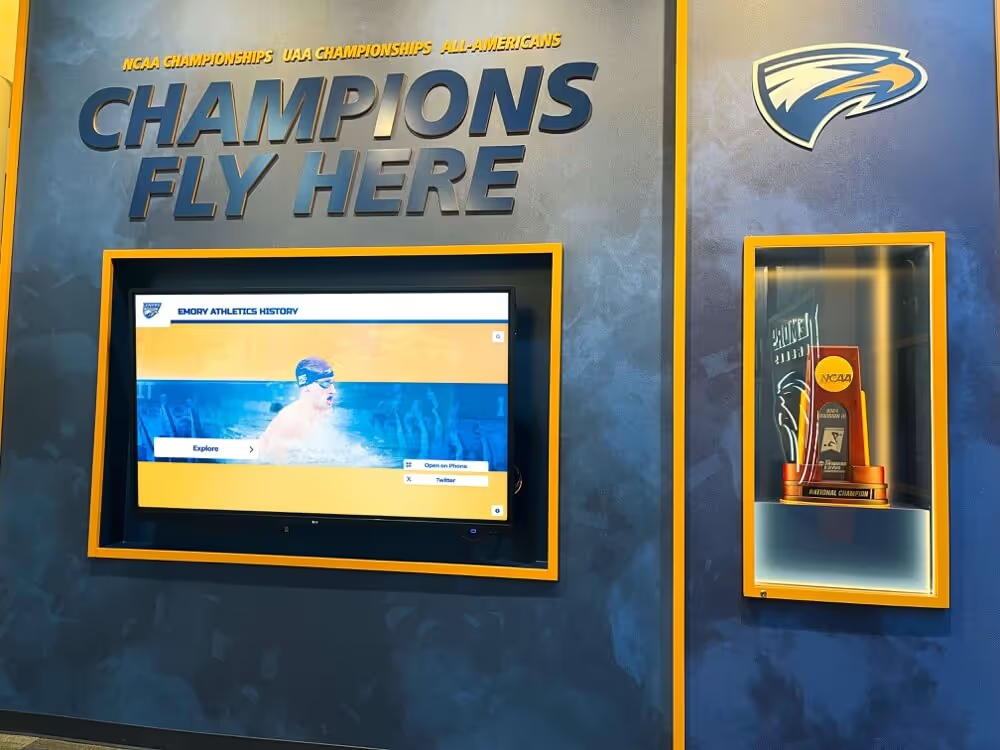
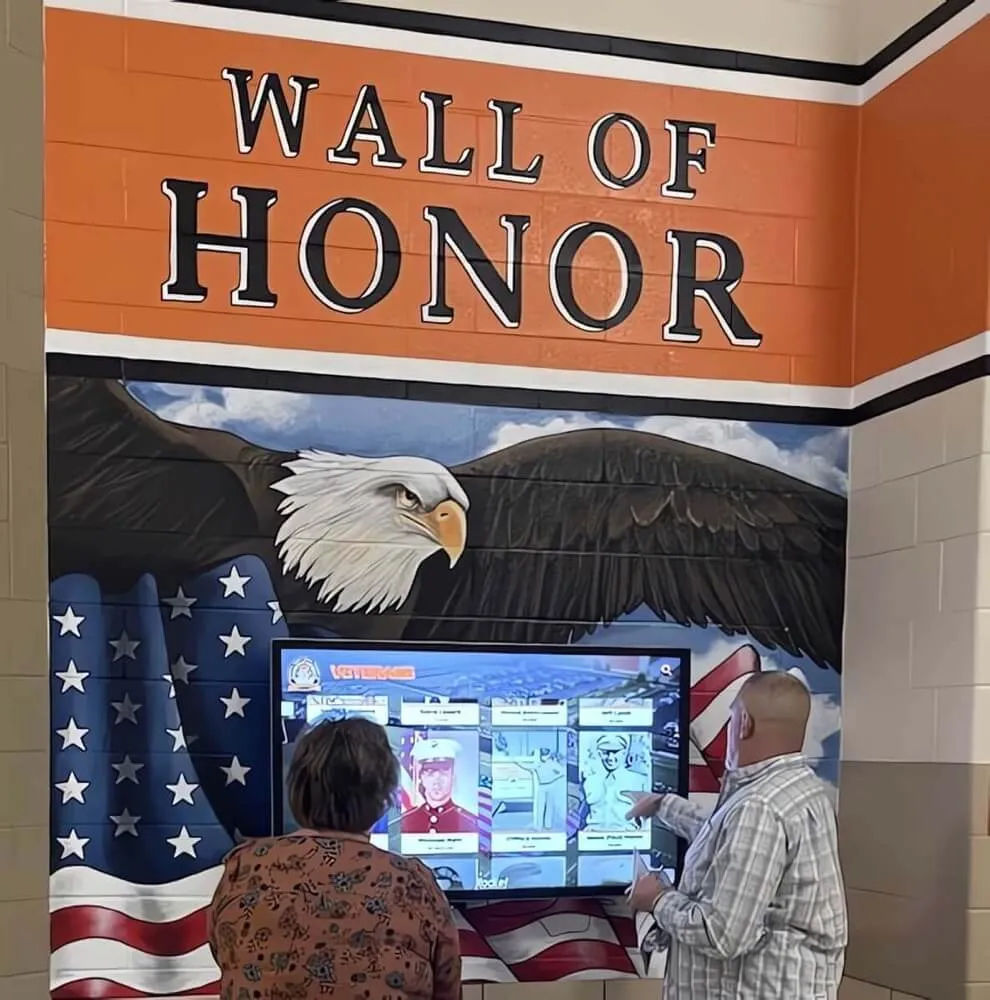
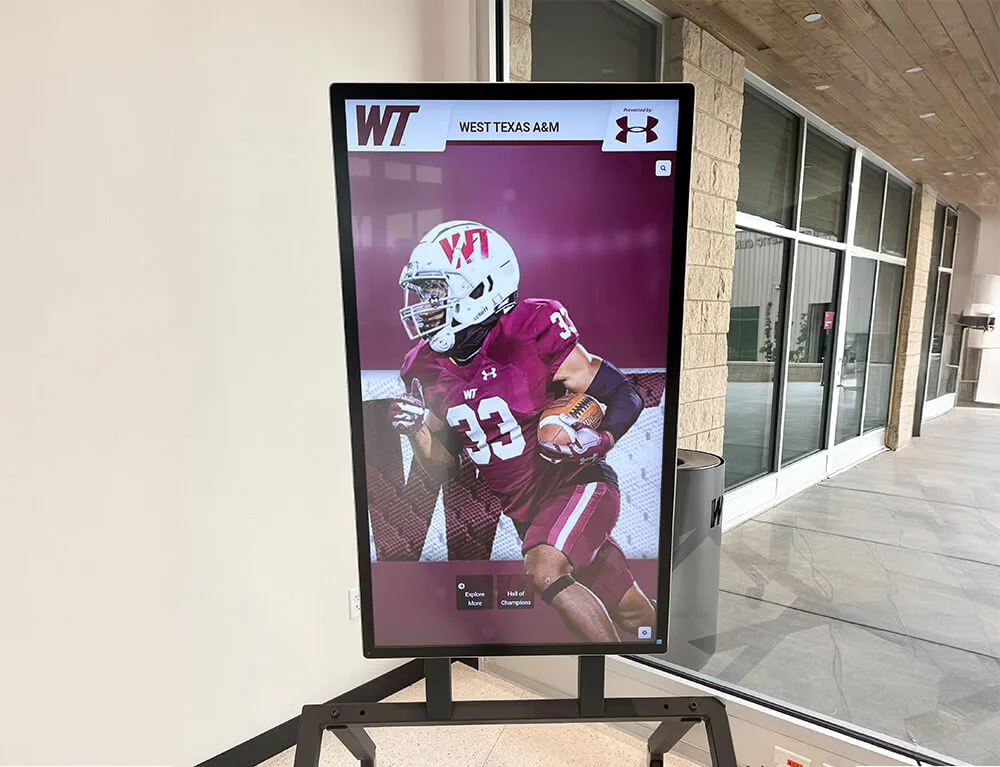
Professional-grade interactive kiosks create impressive installations that enhance reunion venue aesthetics while providing engaging functionality
Display Positioning and Venue Integration
Physical placement significantly impacts engagement levels and reunion experience enhancement:
High-Traffic Location Selection Position displays where alumni naturally congregate or pass frequently—near venue entrances ensuring all attendees encounter displays immediately upon arrival, adjacent to registration areas where check-in creates natural waiting opportunities, near food and beverage stations attracting repeated traffic throughout events, in lounge areas where conversation happens naturally, or along pathways between different reunion activity spaces.
Avoid isolated corners requiring intentional seeking that many attendees never discover. When displays sit in marginal locations, even excellent content fails to achieve full engagement potential.
Creating Destination Experiences Frame displays as featured reunion elements rather than background decorations through prominent signage directing alumni to “Memory Wall” or “Class Recognition Center,” designated volunteer hosts who encourage exploration and assist uncertain users, reunion program references establishing displays as key reunion features, and comfortable viewing areas with adequate space for group exploration and conversation.
These framing elements communicate that displays represent primary attractions deserving extended attention rather than peripheral decorations meriting brief glances before moving on to “real” reunion activities.
Multiple Display Distribution Larger reunion venues may benefit from multiple displays serving different locations or content areas—separate displays featuring different graduation decades at multi-class reunions, activity-specific displays showing athletic vs. academic vs. performing arts content, geographic distribution in multi-space venues ensuring all attendees encounter displays, or complementary displays pairing large shared touchscreens with smaller tablet stations enabling individual exploration.
Distributed approaches ensure broad exposure while potentially reducing crowding at single popular installations that become bottlenecks preventing everyone from adequate exploration opportunities.
Integration with Reunion Programming
Displays deliver maximum value when thoughtfully integrated with broader reunion activities:
Structured Display Tours and Introductions Rather than assuming alumni will discover displays independently, reunion programming might include guided group tours highlighting interesting features and content, scavenger hunt activities encouraging specific profile discovery, designated exploration periods when entire reunion focuses on memory wall, or facilitated small group sessions where alumni explore together and discuss discoveries.
These structured approaches ensure all attendees engage with displays rather than assuming passive discovery will occur naturally for everyone.
Ice Breaker and Conversation Starter Activities Reunion programming can leverage displays as ice breaker tools through “Find Someone Who…” games directing attendees to locate specific profiles, partner activities pairing alumni to explore and find commonalities, group challenges to identify obscure historical photographs or people, or shared viewing of featured content with group discussion and reflection.
These activities transform displays from optional attractions into integral reunion elements that actively facilitate the social connection reunions aim to achieve.
Ceremonial Recognition Moments Displays can enhance formal recognition segments through video presentation of distinguished alumni featured in displays, group acknowledgment of classmates with specific achievements, memorial moments honoring deceased classmates featured in displays, or special recognition of alumni who contributed significant content or support.
Integrating displays into formal programming rather than treating as separate elements reinforces their importance while ensuring all attendees appreciate the effort invested in comprehensive class documentation.
Transform Your High School Reunion Experience
Discover how interactive reunion display boards create warm, engaging experiences that reconnect alumni through personalized content, spark meaningful conversations, and build vibrant communities extending far beyond single reunion evenings.
Book Your DemoExtending Value Beyond Single Reunion Events
Strategic implementations leverage reunion gatherings as entry points for ongoing community building rather than treating them as isolated occasions.
Permanent School Campus Installations
Schools installing display systems in permanent campus locations create year-round alumni recognition:
High-Traffic Campus Placements Interactive recognition displays in school main lobbies, alumni centers, athletic facilities, or student commons serve multiple constituencies—current students discover accomplished alumni inspiring aspirations, prospective families touring campus observe strong alumni communities, visiting alumni engage with recognition during campus visits, and reunion gatherings leverage existing installations rather than requiring temporary setup.
Permanent installations justify larger technology investments since systems serve continuous purposes rather than single-event functions, while content developed for reunions enhances permanent displays creating synergistic value.
Ongoing Content Enhancement Unlike temporary reunion displays discarded after events, permanent installations enable continuous content enrichment through systematic addition of recent alumni as graduation classes age, regular biographical updates as alumni share accomplishments, seasonal featured content rotation highlighting relevant anniversaries, and integration of reunion photographs and materials extending event documentation.
This ongoing development maintains platform currency and engagement while demonstrating institutional commitment to comprehensive, current alumni recognition rather than static historical exercises.
Web-Based Community Platforms
Digital extensions enable ongoing engagement between physical reunion cycles:
Always-Accessible Online Memory Walls Web-accessible versions of reunion displays function as virtual gathering spaces where alumni explore content anytime from anywhere, share discoveries through social media and personal networks, submit profile updates and corrections continuously, and maintain community connections between formal reunion events.
This online access particularly benefits alumni unable to attend reunions physically due to distance, health, or schedule conflicts. When quality online experiences enable full virtual participation, classes maintain broader engagement than in-person events alone achieve.
Integrated Social Networking Features Advanced platforms might include alumni directory functionality enabling direct connection, private messaging between classmates who reconnect, event organization tools for informal gatherings, and alumni networking capabilities supporting career mentorship and professional connections.
These social features transform display boards from passive historical archives into active community platforms supporting ongoing relationship building and mutual support among alumni.
Continuous Milestone Recognition Automated systems can recognize individual milestones throughout years—birthday messages featuring alumni profile links, graduation anniversary celebrations highlighting class heritage, career achievement spotlights when alumni share accomplishments, and memorial tributes when classmates pass away.
This continuous recognition maintains community vitality between reunion cycles while demonstrating that class identity and connection persist beyond quinquennial gathering schedules.

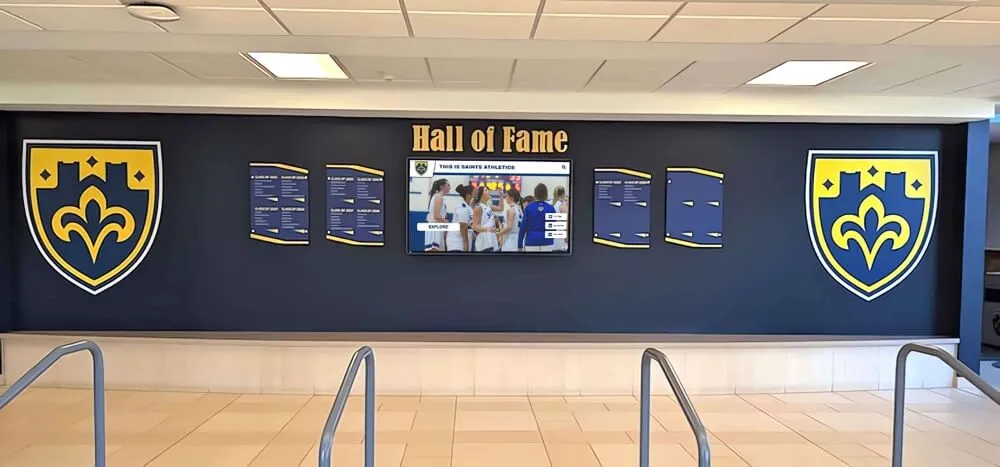
Community heritage displays create gathering spaces that strengthen collective identity while honoring shared history
Technical Considerations and Best Practices
Successful implementations require attention to practical technical details:
Hardware Selection for Reunion Displays
Choosing appropriate equipment significantly impacts user experience and operational success:
Display Size and Technology Reunion implementations typically use 55-75 inch commercial-grade touchscreens providing optimal viewing size for group exploration while remaining transportable to different venues. Commercial-grade displays designed for continuous public operation withstand heavy reunion traffic better than consumer displays prone to overheating or touch sensor degradation.
Capacitive touch technology providing smartphone-like responsiveness proves essential for intuitive interaction. Infrared or resistive touch technologies common in older systems feel sluggish and imprecise, frustrating users and discouraging engagement.
Portable vs. Permanent Installation Reunion committees often change venues or host events in locations without permanent mounting infrastructure. Portable solutions using professional-grade mobile stands enable flexible positioning while maintaining stable, secure installations. Displays should accommodate standard electrical outlets without requiring specialized power, and wireless internet connectivity ensures network access in venues lacking ethernet.
Schools hosting reunions in campus facilities may choose permanent installations serving both reunion and daily purposes, while committees hosting off-campus events require truly portable solutions enabling transportation and quick setup.
Backup Equipment and Contingency Planning Technical failures during reunions prove particularly problematic given irreplaceable event timing. Backup plans should include redundant displays enabling quick substitution if primary units fail, offline content access modes functioning without internet connectivity, technical support availability during event hours, and clear troubleshooting documentation for volunteer operators.
Software Platform Requirements
Backend systems determine long-term usability and feature accessibility:
Purpose-Built vs. Generic Solutions Platforms designed specifically for alumni recognition like Rocket Alumni Solutions’ touchscreen software provide features generic digital signage or slideshow applications lack—sophisticated searchability enabling instant name lookup, individual profile pages with rich biographical content, automated featured content rotation ensuring equitable visibility, web accessibility extending recognition beyond physical displays, and ADA WCAG 2.1 AA compliance ensuring universal access.
Generic alternatives force awkward workarounds for functionality that purpose-built platforms provide natively, creating frustrating user experiences and administrative complications.
Content Management Ease Reunion committees typically include volunteers with limited technical expertise. Cloud-based platforms with intuitive interfaces enable confident content management without IT dependencies through drag-and-drop profile creation, template-based designs requiring minimal customization, bulk upload tools processing spreadsheet data, and remote management from any internet-connected device.
Complex systems requiring specialized technical knowledge create bottlenecks and frustration undermining content currency and committee satisfaction.
Analytics and Engagement Tracking Understanding how alumni interact with displays informs future planning and content development through metrics tracking most-viewed profiles revealing community interest, popular search terms showing discovery patterns, average engagement duration indicating content effectiveness, peak usage times identifying optimal display positioning, and navigation pathways revealing how visitors explore content.
These insights demonstrate display value while identifying underutilized features requiring better promotion or redesign.
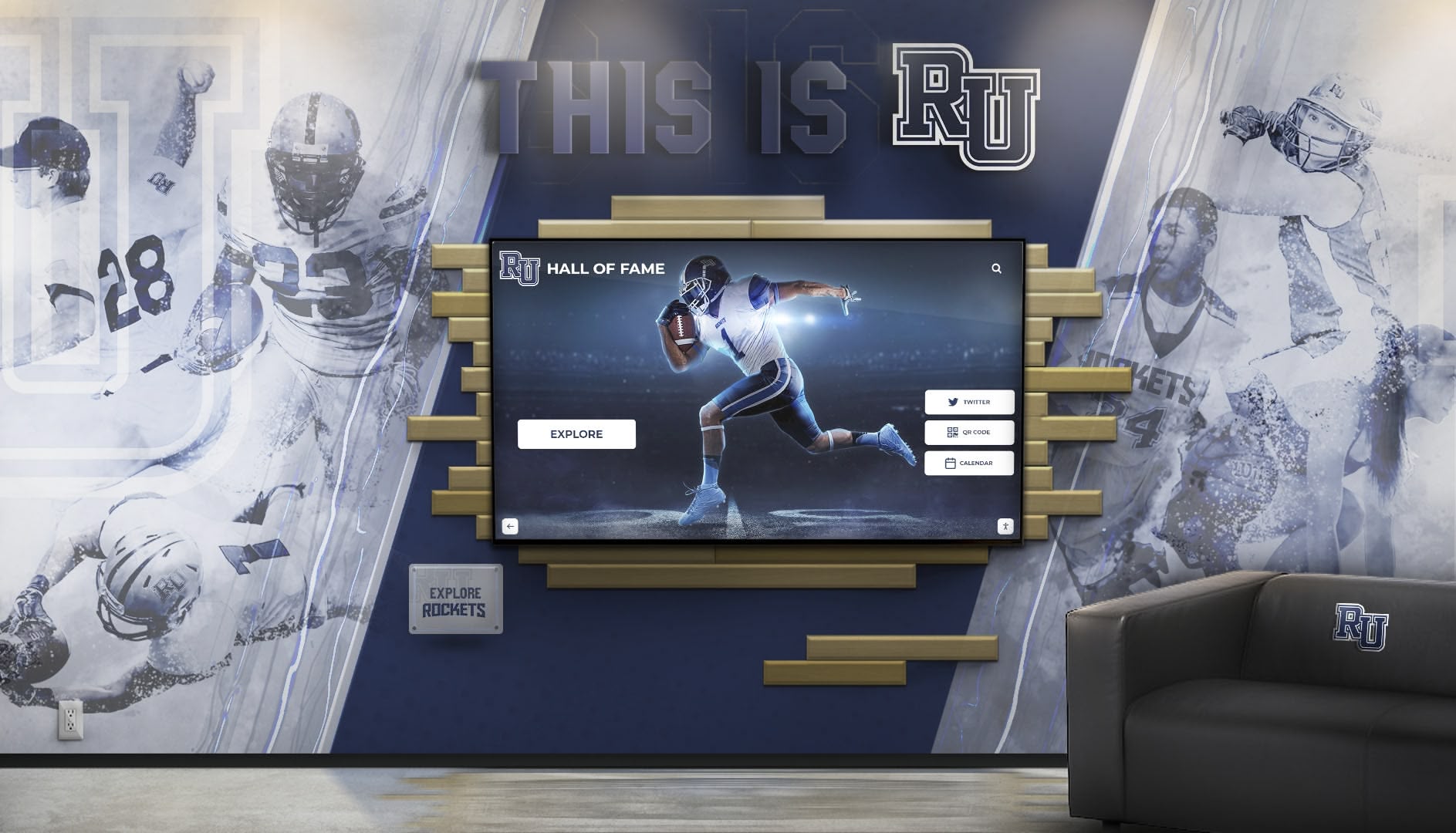
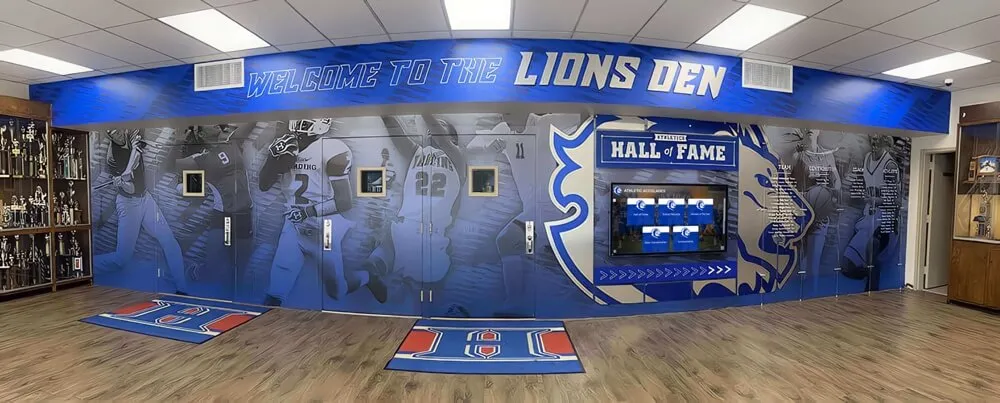
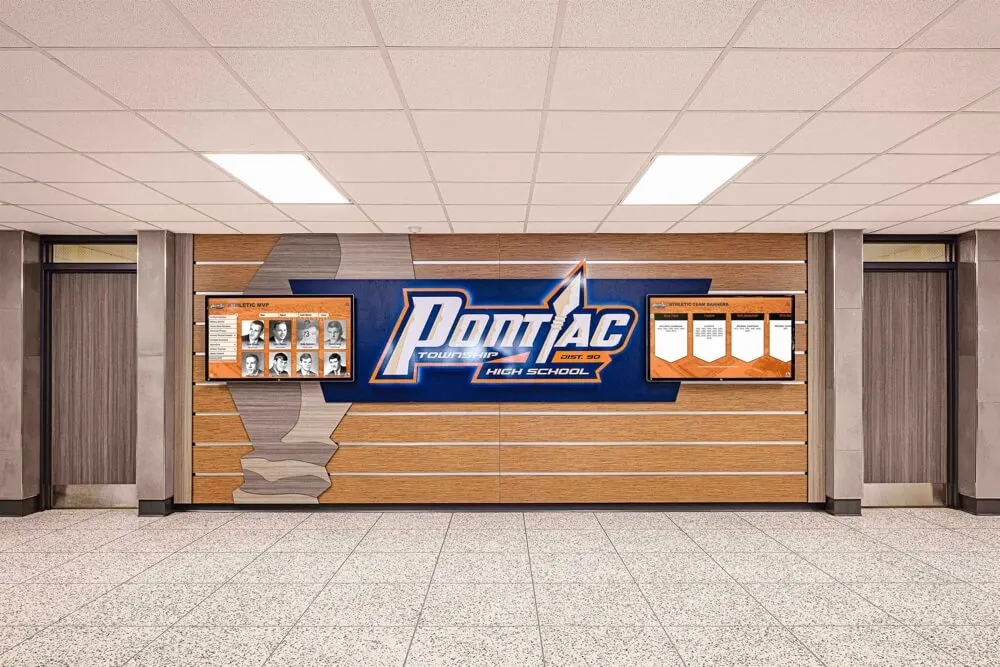
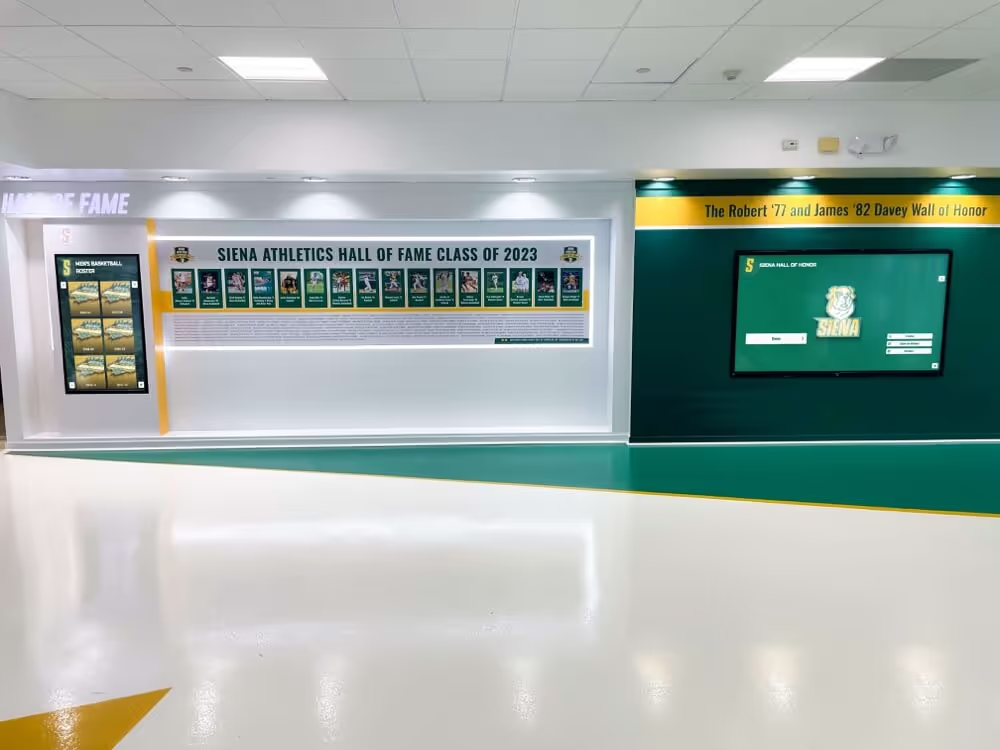
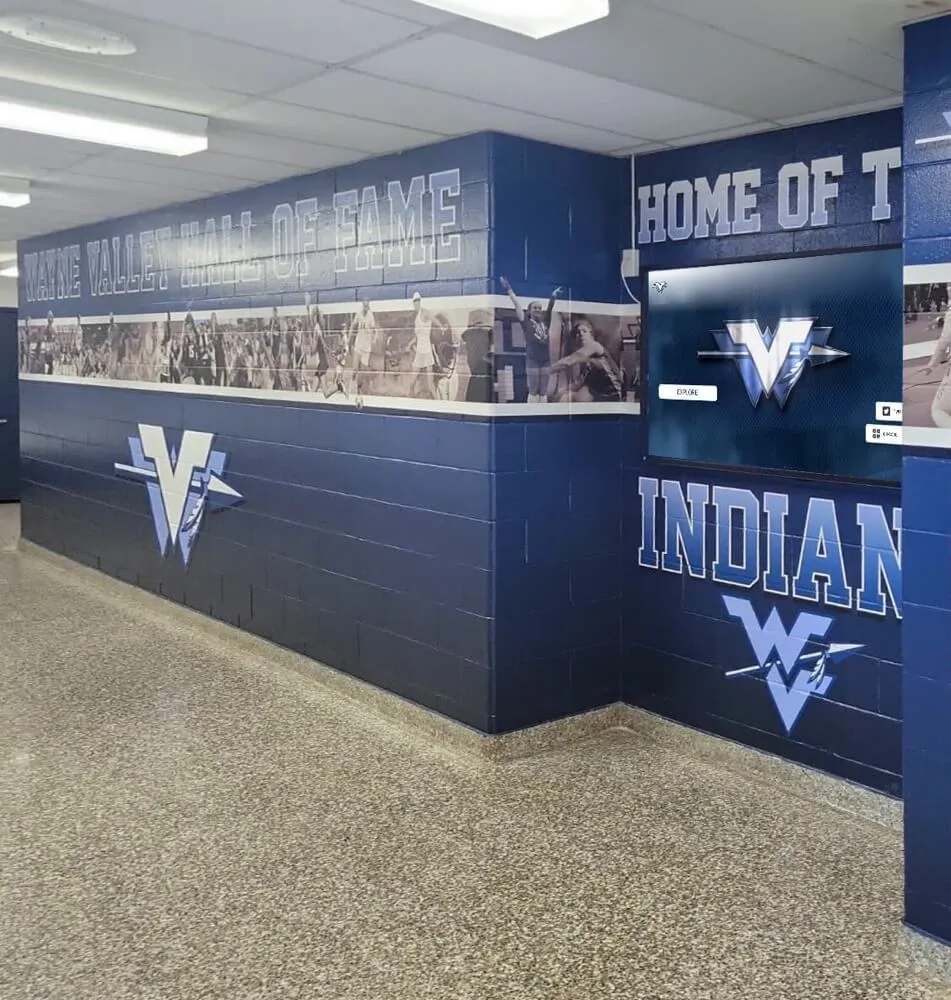
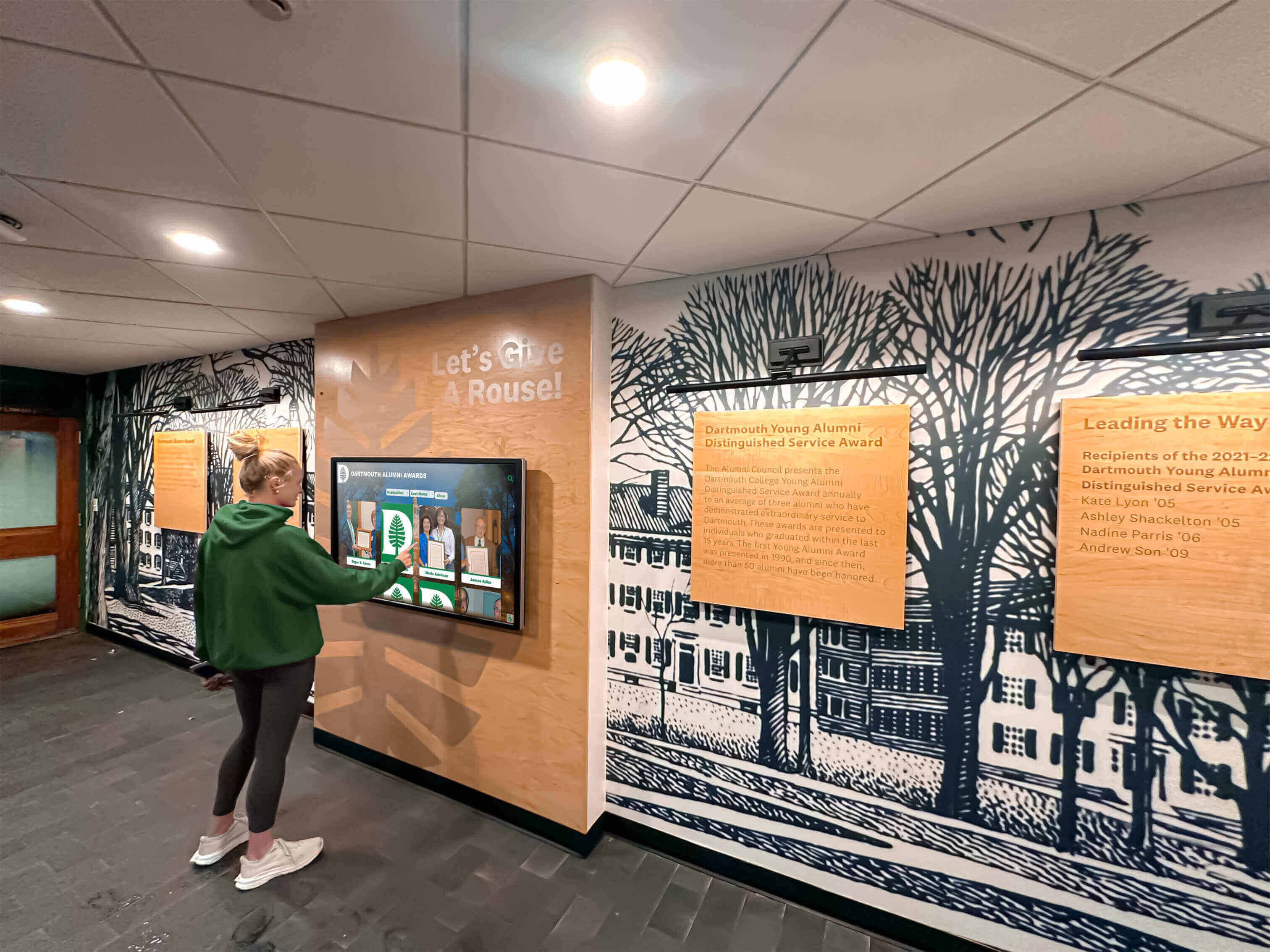
Integrated display systems combine traditional artistic elements with interactive digital content creating comprehensive heritage experiences
Budget Considerations and Investment Levels
Understanding complete costs enables realistic planning and appropriate resource allocation:
Investment Options Across Budget Ranges
Reunion displays accommodate varying budget levels:
Entry-Level Solutions ($1,500-$3,500) Basic implementations suitable for smaller reunions or testing concepts include consumer-grade large displays with basic touch capability, simple slideshow or presentation software, portable stands or temporary mounting, and limited professional implementation support. These solutions work for single-class reunions under 100 attendees or pilot programs building support for comprehensive implementations.
Mid-Range Comprehensive Systems ($4,000-$8,000) Purpose-built recognition platforms designed specifically for school and alumni applications typically cost moderately and include commercial-grade touchscreen hardware suitable for heavy use, sophisticated content management platforms with search and profiles, portable or semi-permanent mounting solutions, comprehensive training and implementation support, and unlimited content capacity without per-profile fees.
These systems serve multiple reunion classes, function as permanent school installations, and integrate with broader alumni engagement strategies providing value far beyond single reunion events.
Premium Multi-Display Installations ($8,000-$15,000+) Large schools, multi-class reunions, or comprehensive implementations featuring multiple displays in various locations might invest significantly and include multiple large commercial touchscreen displays, custom design and branding matching institutional identity, extensive historical content digitization services, ongoing managed content maintenance services, and integration with existing school databases and websites.
Funding Strategies and Cost Sharing
Reunion committees fund displays through various approaches:
Class Reunion Budgets Traditional reunion funding from attendee registration fees or ticket sales, class funds accumulated through previous fundraising or dues, and sponsorships from local businesses or successful alumni all support display investments that enhance specific reunion events.
School or Alumni Association Support Institutional funding through school operating budgets for technology or recognition, alumni association grants supporting engagement initiatives, capital campaign allocations for recognition infrastructure, and corporate sponsorships providing revenue in exchange for recognition all enable implementations serving multiple reunion classes and broader institutional purposes.
Shared Multi-Class Investments Reunion committees representing multiple graduation years can pool resources creating comprehensive displays serving all participating classes, share costs based on class size or registration numbers, and create permanent installations benefiting future reunions beyond immediate investment classes.
This collaborative approach enables investments beyond what single classes afford while creating equitable recognition across all participating graduation years.
Measuring Reunion Display Board Success
Systematic assessment ensures investments achieve intended goals while identifying optimization opportunities:
Quantitative Engagement Metrics
Digital platforms capture data unavailable with traditional approaches:
Interaction Volume and Duration Total touchscreen interactions measuring overall engagement, unique users showing how many alumni engaged, average session duration indicating content depth and interest, return visits showing sustained curiosity, and peak usage timing revealing optimal positioning and programming integration all demonstrate whether displays successfully capture attention and generate meaningful engagement.
Search and Discovery Patterns Most-searched names revealing community interest, frequently viewed profiles indicating compelling content, popular category navigation showing valued content types, and discovery pathways revealing how visitors explore all inform content development priorities while demonstrating which features alumni actually use versus those that seemed good ideas but generate limited practical engagement.
Web Platform Usage Online traffic to web-accessible reunion displays, geographic distribution showing access locations, device types indicating how alumni prefer to engage, session depth revealing online exploration patterns, and social sharing frequency demonstrating content value all extend assessment beyond physical reunion events to broader ongoing engagement.
Qualitative Feedback and Observations
Stakeholder perspectives provide context beyond quantitative metrics:
Alumni Satisfaction Surveys Brief exit surveys asking reunion attendees about display value, suggestions for improvement, most memorable discoveries, and likelihood to recommend participating in future reunion planning all capture direct user perspectives impossible to infer from usage metrics alone.
Observational Assessment Reunion committee observations noting engagement duration and enthusiasm levels, conversation patterns around displays, accessibility challenges or confusion observed, and spontaneous feedback or comments during events reveal practical considerations that surveys might miss while identifying specific problems requiring attention.
Long-Term Community Impact Post-reunion engagement levels comparing activity before and after implementations, subsequent reunion attendance rates showing whether improved experiences motivate future participation, alumni network strength indicated by ongoing communication and connection, and volunteer recruitment success showing whether positive experiences encourage future reunion committee participation all reveal whether displays contribute to broader community building goals beyond immediate event enhancement.
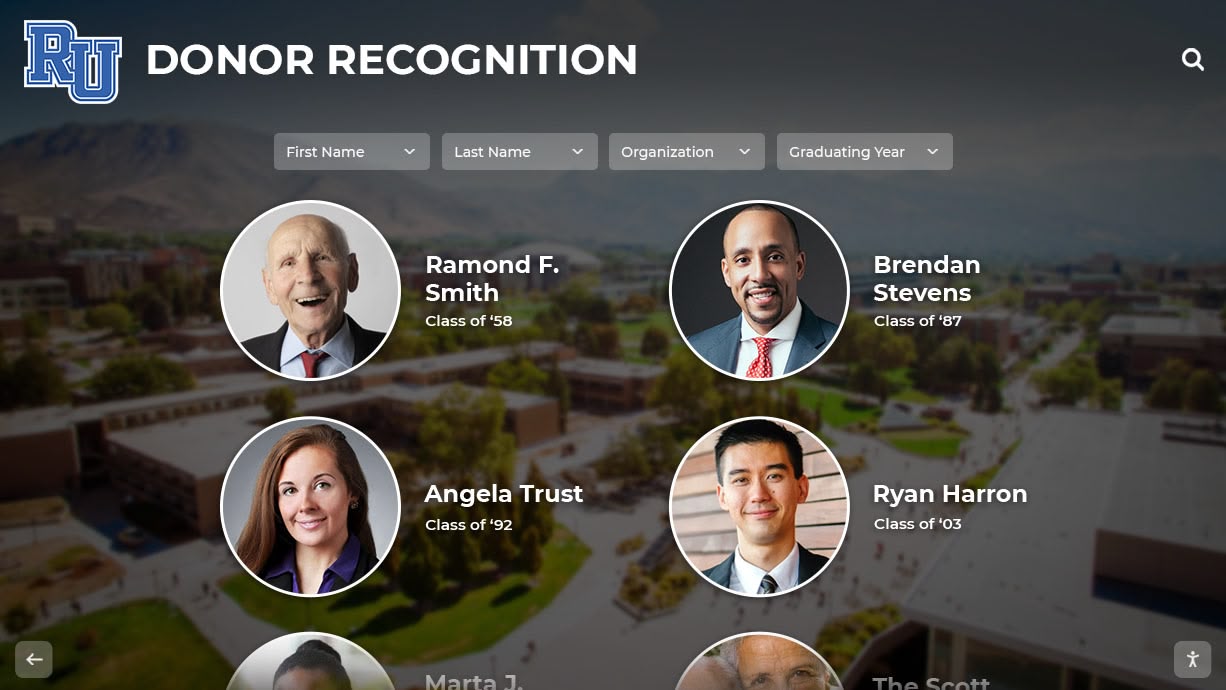
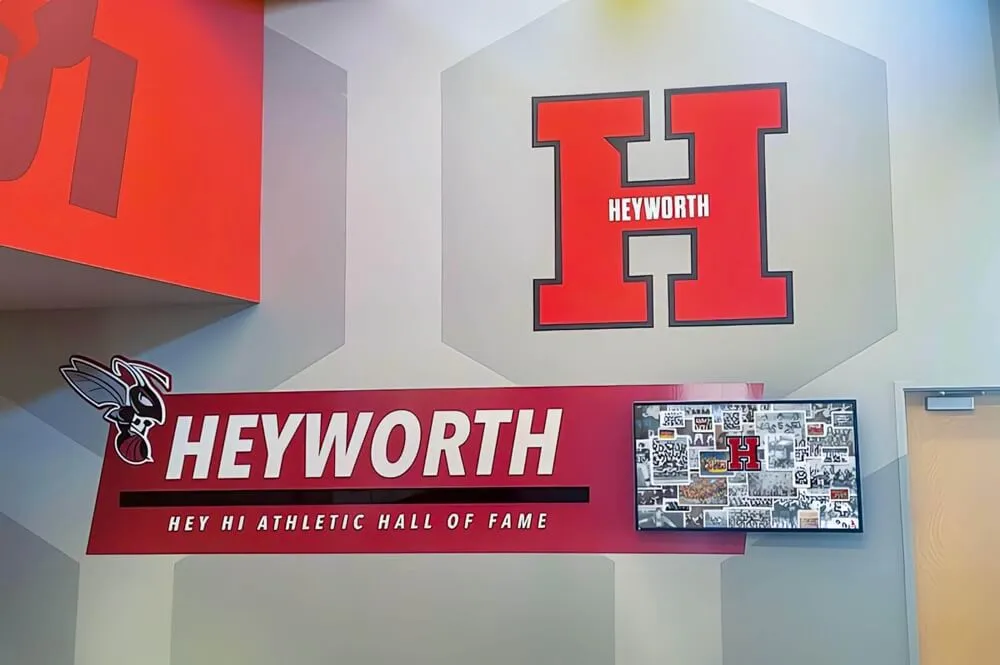
Professional recognition displays combine historical portraits with contemporary campus imagery connecting past alumni to evolving institutions
Conclusion: From Cold Gatherings to Warm Community Celebrations
High school reunions represent precious opportunities for meaningful reconnection and community building, yet traditional approaches often fall short of their potential. Outdated poster boards with limited photographs, passive viewing experiences, and ephemeral single-use designs fail to facilitate the deep engagement and genuine connection that make reunions truly memorable and valuable.
Modern high school reunion display boards transform these gatherings through comprehensive content celebrating entire classes without space limitations, interactive exploration enabling personal discovery and relevant connections, rich multimedia bringing memories to life through photographs, videos, and timelines, personalized experiences surfacing content most meaningful to individual alumni, and extended access maintaining engagement beyond single reunion evenings.
This transformation creates what we call digital warming—converting cold social situations where alumni feel uncertain and disconnected into warm, welcoming experiences where personalized content surfaces immediately relevant connections, conversation starters emerge naturally from shared discoveries, and communities feel vibrant and alive rather than awkward and uncomfortable.
The technology enabling these transformations has matured significantly. Purpose-built platforms like Rocket Alumni Solutions provide sophisticated functionality specifically designed for alumni recognition and heritage preservation, commercial-grade touchscreen hardware delivers intuitive smartphone-like interaction supporting heavy use, web-based access extends engagement globally beyond physical reunion venues, and cloud-based content management enables continuous enhancement without technical expertise requirements.
Successful implementations require thoughtful planning addressing content development through systematic collection from yearbooks, archives, and alumni submissions, strategic positioning ensuring high visibility and natural discovery, integration with reunion programming creating structured engagement opportunities, and extension beyond single events through permanent installations or web-based platforms.
The investment in quality reunion display boards delivers value across multiple dimensions beyond immediate reunion enhancement. Strengthened alumni relationships increase long-term engagement supporting advancement goals, comprehensive heritage preservation serves institutional memory and identity, current student inspiration emerges from discovering accomplished alumni role models, and marketing content showcases vibrant communities to prospective families and supporters.
Your reunion deserves display boards that honor classmates comprehensively while facilitating the meaningful reconnection everyone hopes to achieve. Whether planning milestone reunions for specific classes or implementing permanent installations serving multiple graduation years, interactive display boards provide the infrastructure creating warm, engaging experiences worthy of your alumni community.
Ready to transform your high school reunion display board from passive poster to engaging interactive experience? Explore comprehensive class reunion planning strategies or discover how digital alumni recognition systems create lasting community engagement extending far beyond single reunion events.