Gymnasium wall graphics do more than decorate empty space—they transform a room where athletes train and compete into a living record of what the program has built. Walk into a gym with well-designed wall graphics and the recognition is immediate: this school takes its athletic history seriously. Walk into one without them and the space feels provisional, like the program could pack up and leave without leaving a mark. This guide covers the most effective wall graphic ideas for school gymnasiums, from championship murals and mascot-driven identity walls to athlete tribute graphics and record displays—along with a clear framework for deciding when static graphics reach their limit and a digital display should take over.
The ceiling of most gyms fills up faster than anyone expects. A conference title here, a sectional run there, a spirit banner for homecoming—within a decade the walls tell a story that’s harder and harder to read. Gymnasium wall graphics, when planned deliberately, prevent that accumulation from becoming visual noise and turn it into something students and visitors actually engage with.

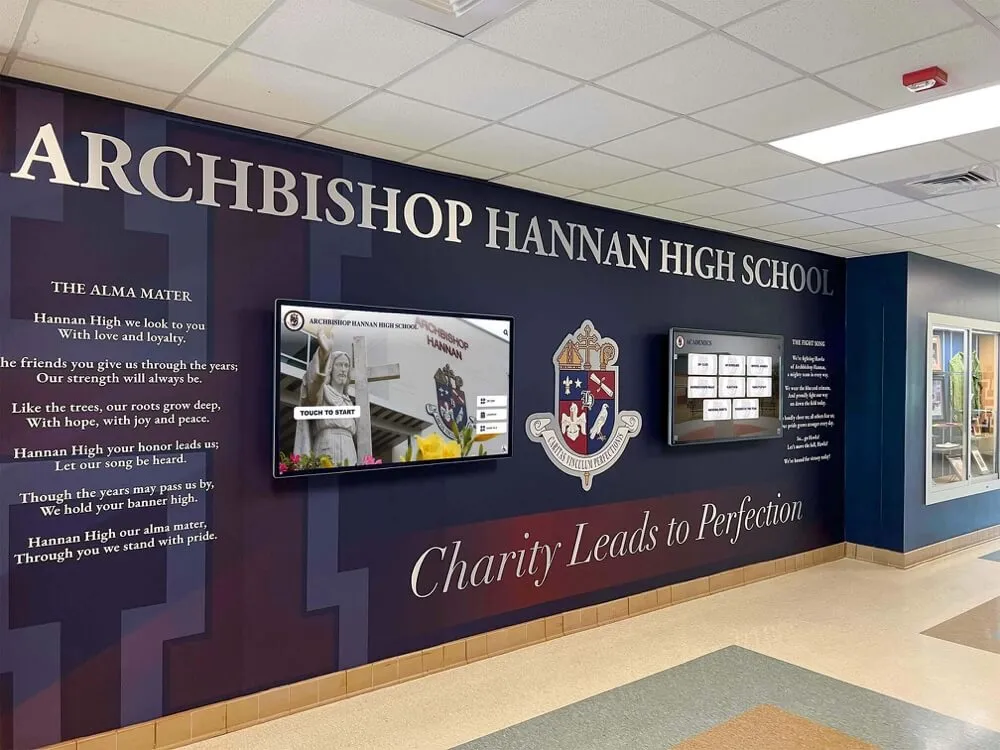
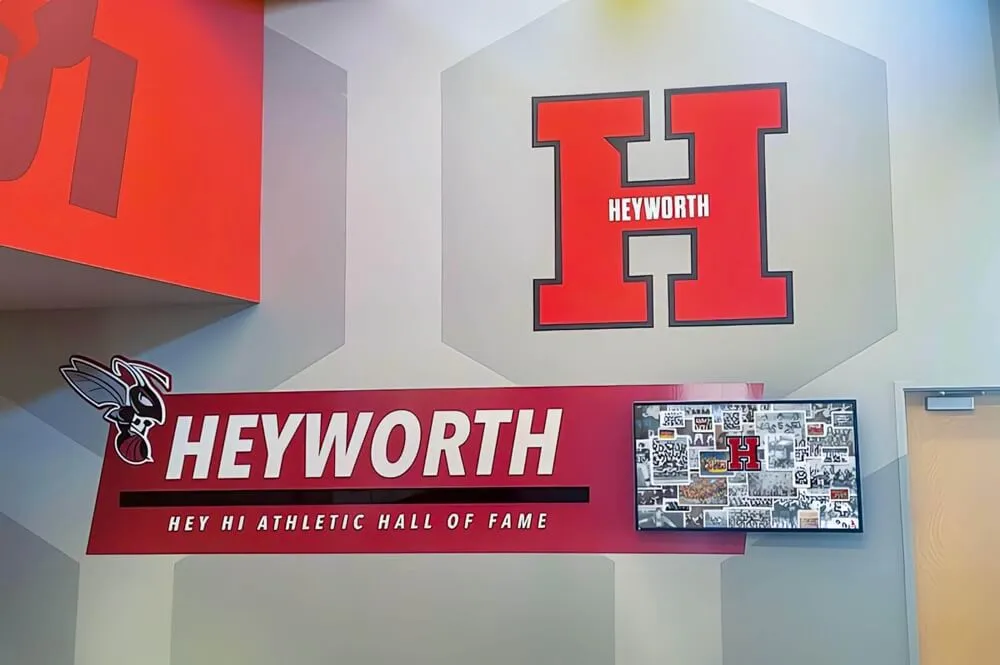
Well-planned gymnasium wall graphics combine identity elements—mascot art, school crest, program colors—with recognition content that tells the full athletic story at a glance
7 Gymnasium Wall Graphics Ideas That Work for School Athletic Programs
1. Championship Tier Walls
The most effective gymnasium wall graphic for legacy programs is a dedicated championship tier wall: a single, visually unified display that organizes every state or sectional title by sport and year. Rather than hanging individual banners in whatever open rafter space remains, a tier wall treats championship recognition as a designed system.
A strong championship tier wall uses consistent typography, school colors, and proportional spacing so that a 1987 state basketball title and last year’s regional crown share the same visual language. The wall communicates program depth at a glance—not because it shows every win, but because it shows the wins that mattered most in a format visitors can actually read from the bleachers.
This format pairs well with gymnasium design principles that prioritize sightlines and legibility over raw coverage. A championship tier wall with twenty titles displayed cleanly beats a rafter full of sixty banners that blur together at distance.
2. Mascot Identity Murals
A mascot mural serves a different purpose than a championship display—it establishes identity rather than recording history. These graphics typically cover a full wall or end wall and feature the school mascot, program colors, and sometimes a program slogan that’s been part of the culture for years.
The best mascot murals are scaled for the space. A mural that fills a gym wall from floor to fifteen feet carries presence during competition: home teams feel it, visiting teams see it, recruits absorb it. At that scale, the mural becomes part of the competition environment rather than background decoration.
Some schools combine the mascot identity mural with a varsity recognition element—integrating letter patches, retired numbers, or career highlights directly into the mural’s compositional space. This approach works when the mural is planned to evolve rather than remain static, though it introduces the ongoing design challenge of keeping additions consistent.
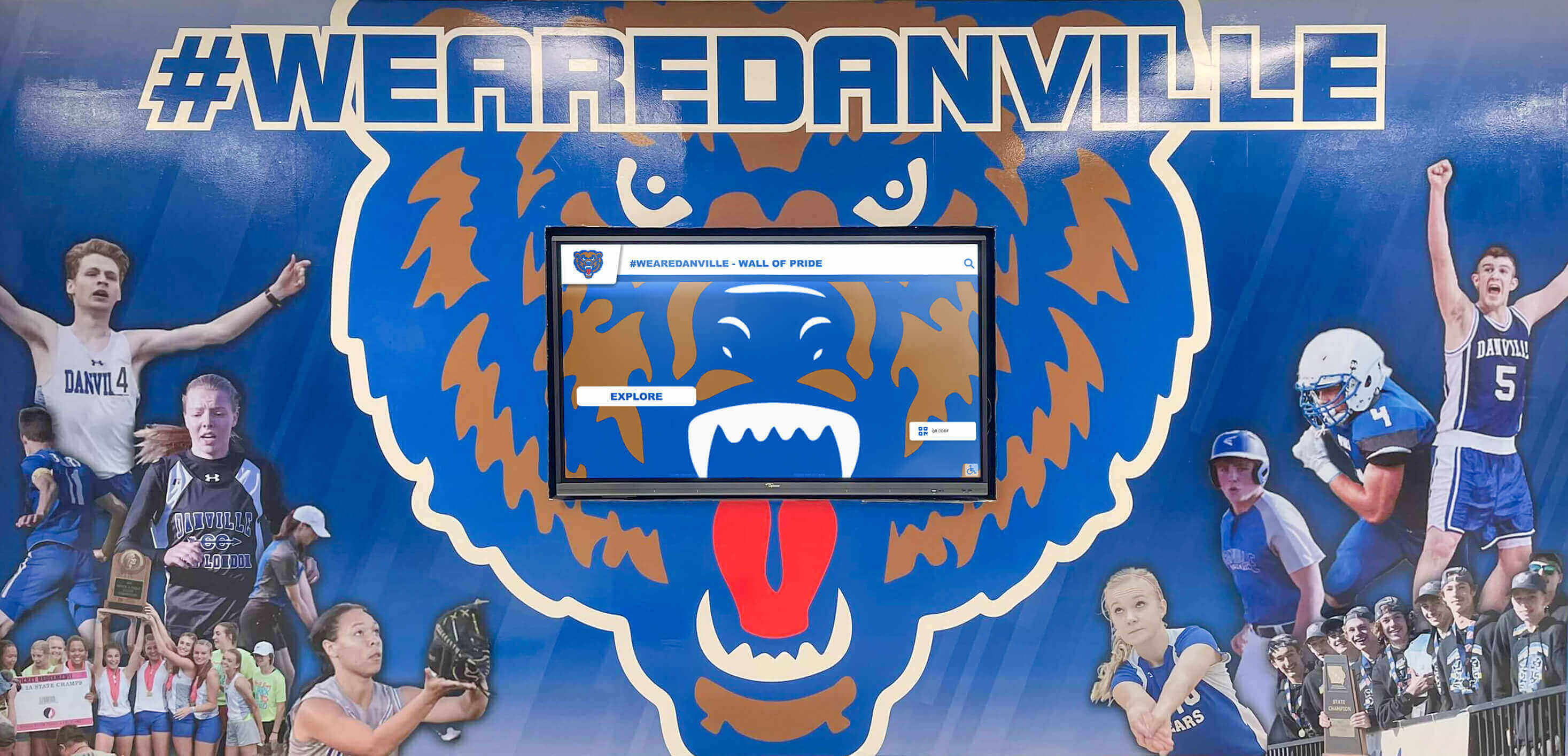
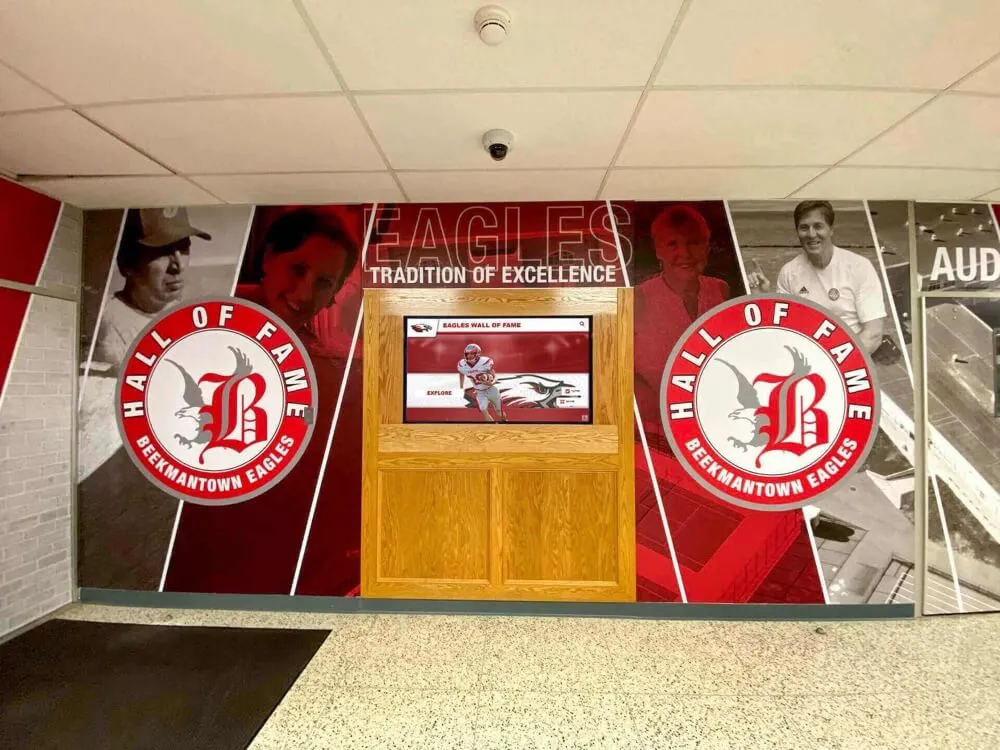
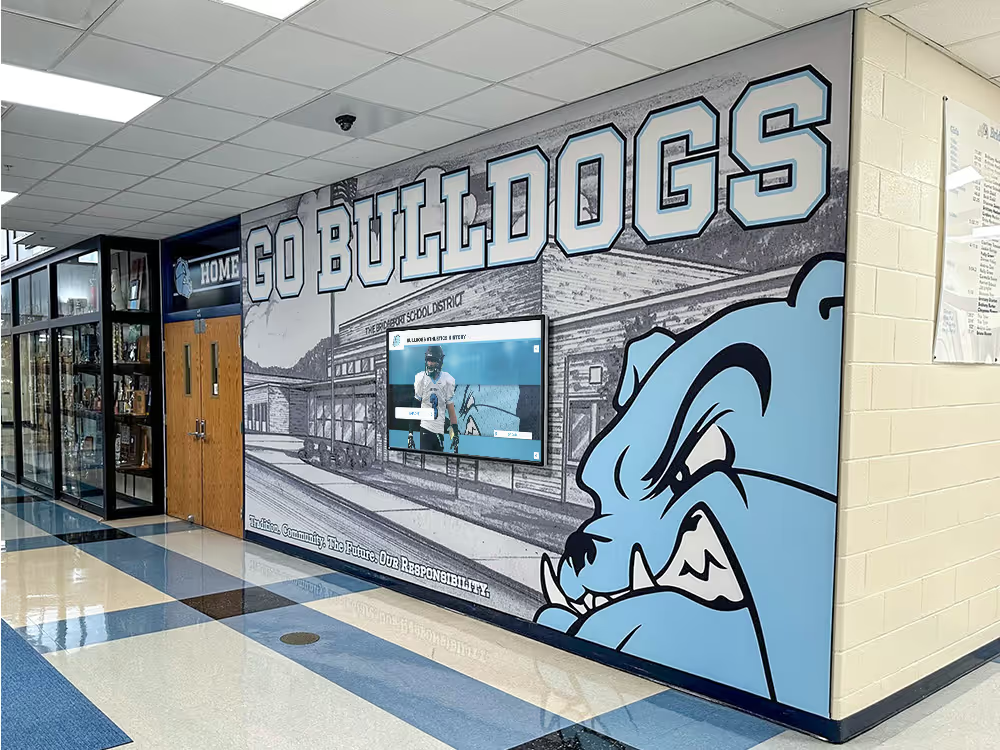
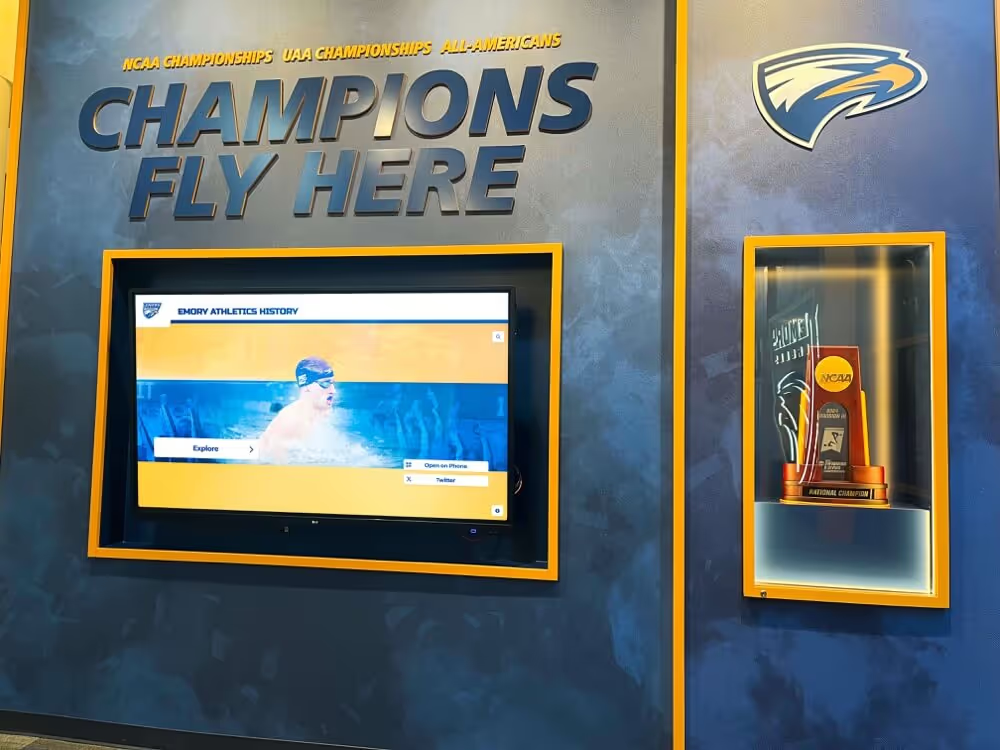
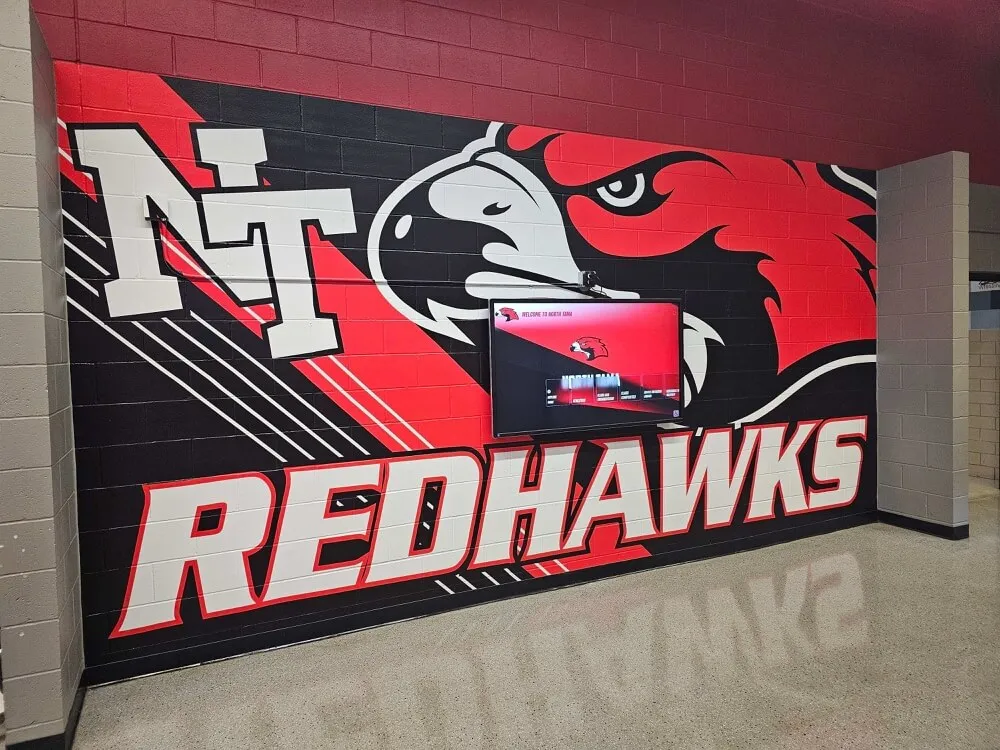
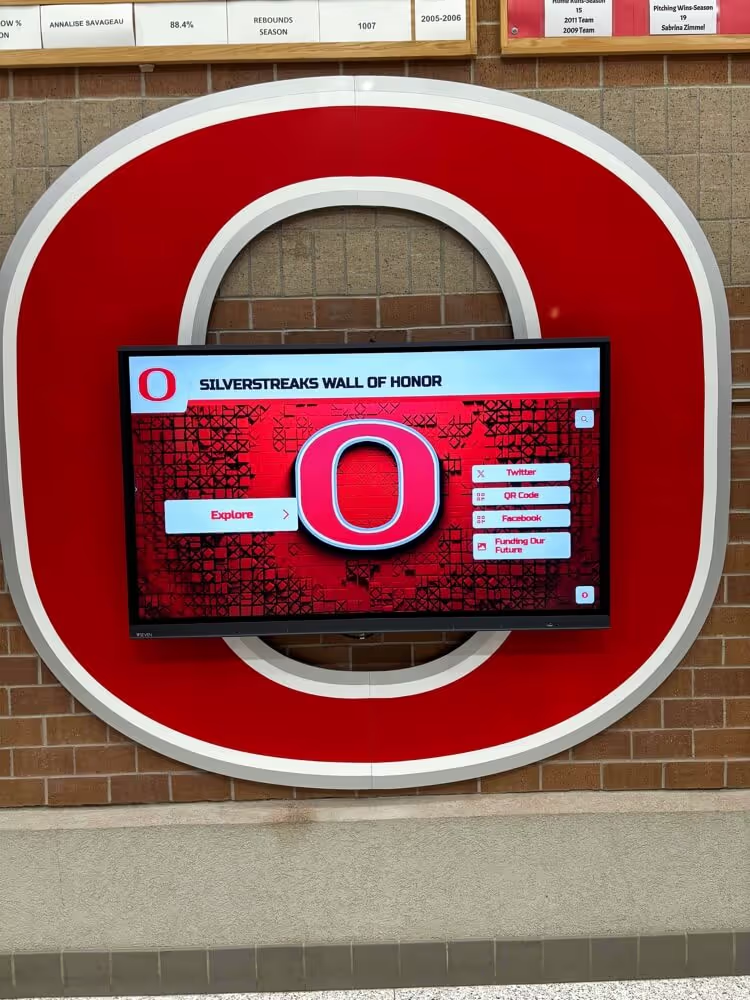
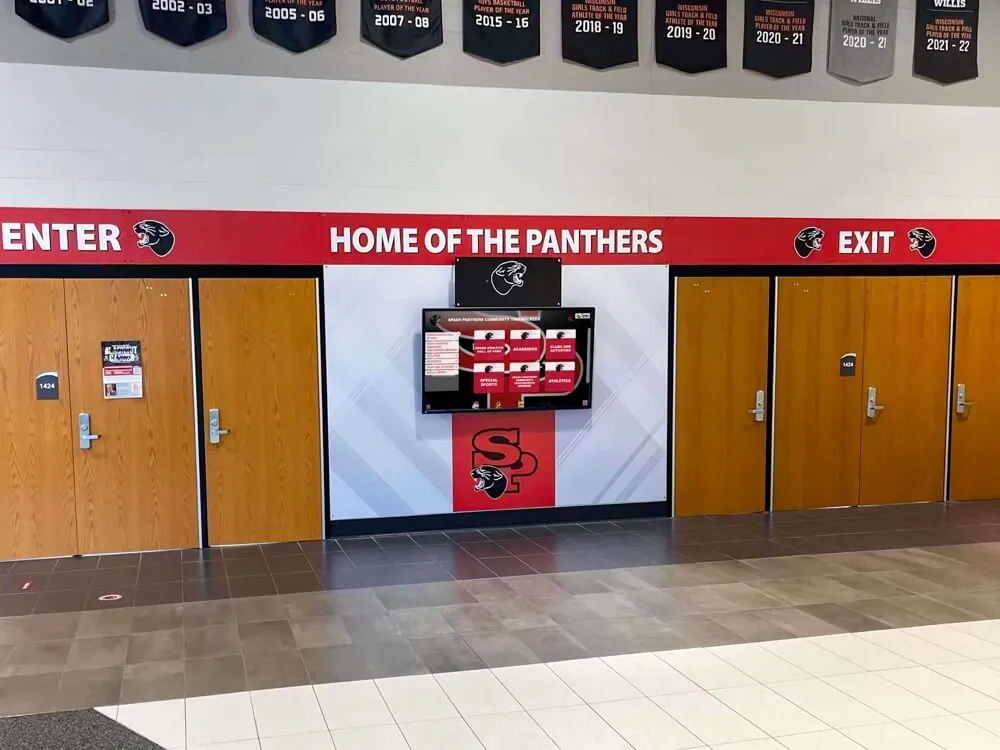
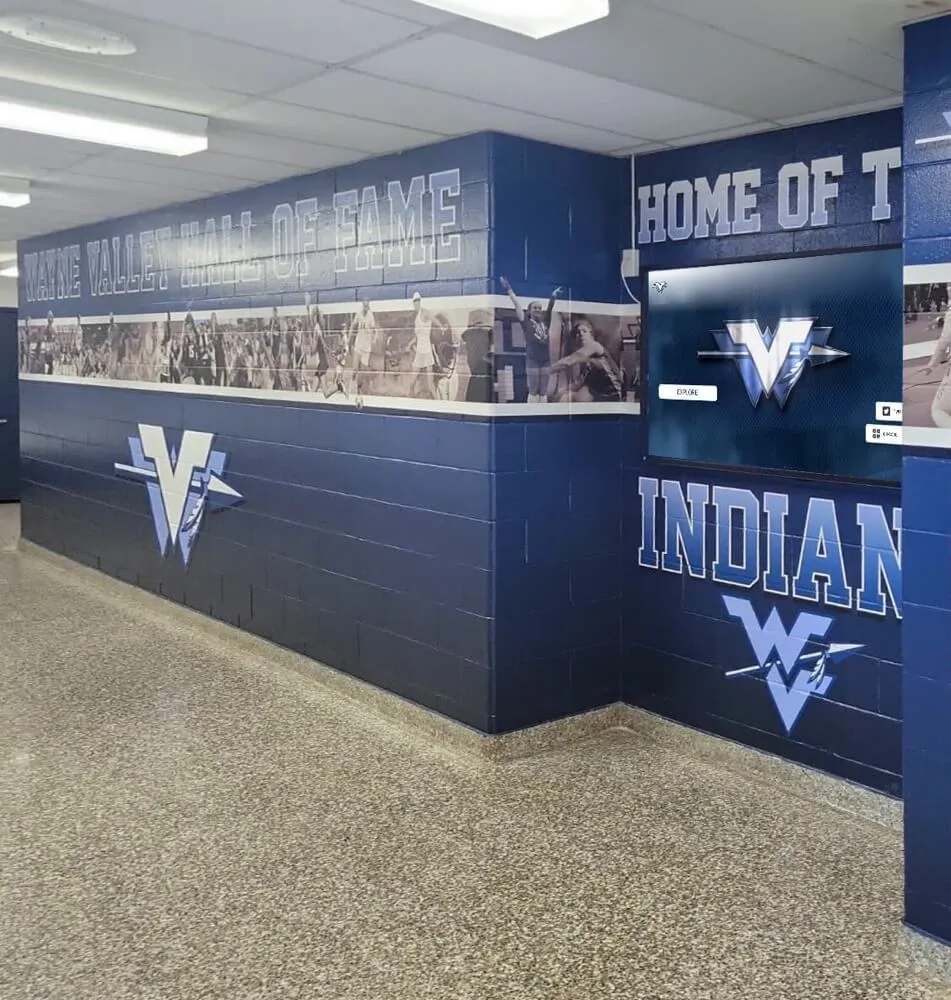
Mascot murals establish program identity at a scale that physical banners can't match—and mounting a digital screen within or adjacent to the mural adds recognition depth without disrupting the visual anchor
3. Athletic Record Boards
Record boards are among the most functionally valuable gymnasium wall graphics because they give current athletes something to measure themselves against. A well-designed record board lists the top performances across track events, swimming times, basketball scoring, or any statistically trackable category—and it updates when records fall.
The challenge with physical record boards is the update cost. Traditional plaques require engraving, replacement panels, or manual repainting every time a record changes. Schools that haven’t updated their record boards in years effectively communicate that the records aren’t being watched, which is the opposite of the motivational message a record board is supposed to send.
Creating inspiring athletic spaces means keeping recognition current—and that’s where physical record boards eventually hit their limit.
4. Hall of Fame Tribute Walls
A hall of fame tribute wall in the gymnasium gives inducted athletes a dedicated recognition presence within the athletic space itself. Unlike plaques in a trophy case hallway that most students walk past without stopping, a tribute wall positioned inside the gym creates a backdrop that connects every practice and game to the athletes who came before.
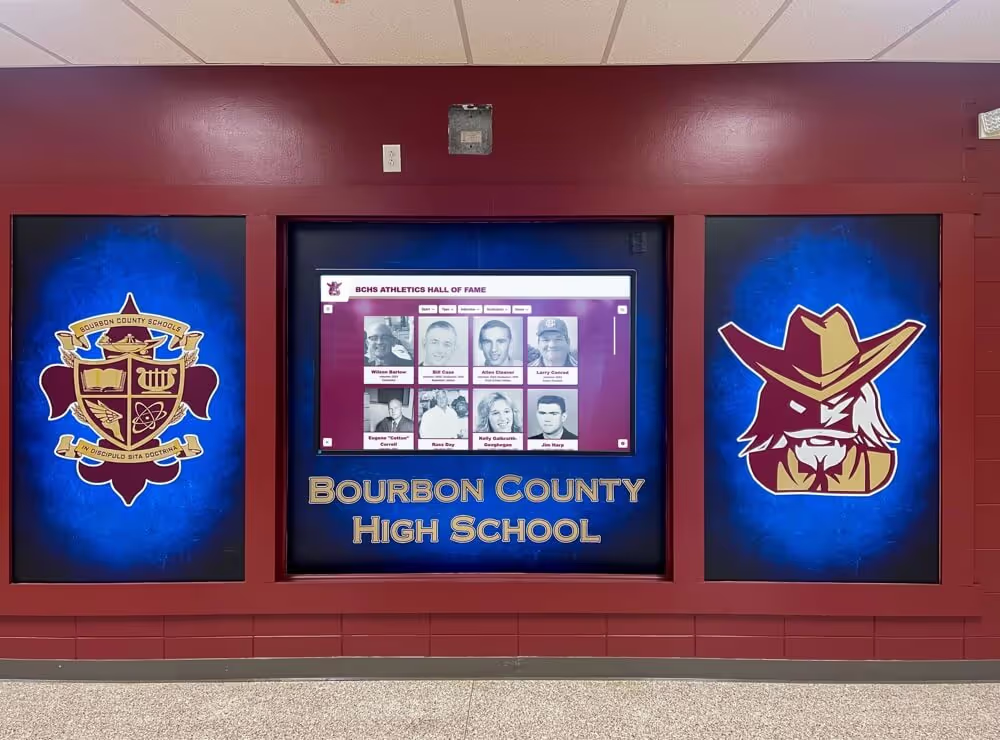
Common formats include a grid of portrait graphics—consistent in size and framing—arranged chronologically or alphabetically, with each athlete’s name, graduation year, and sport labeled clearly. Some schools add a brief achievement callout: all-state honors, program records, or post-graduation athletic milestones.
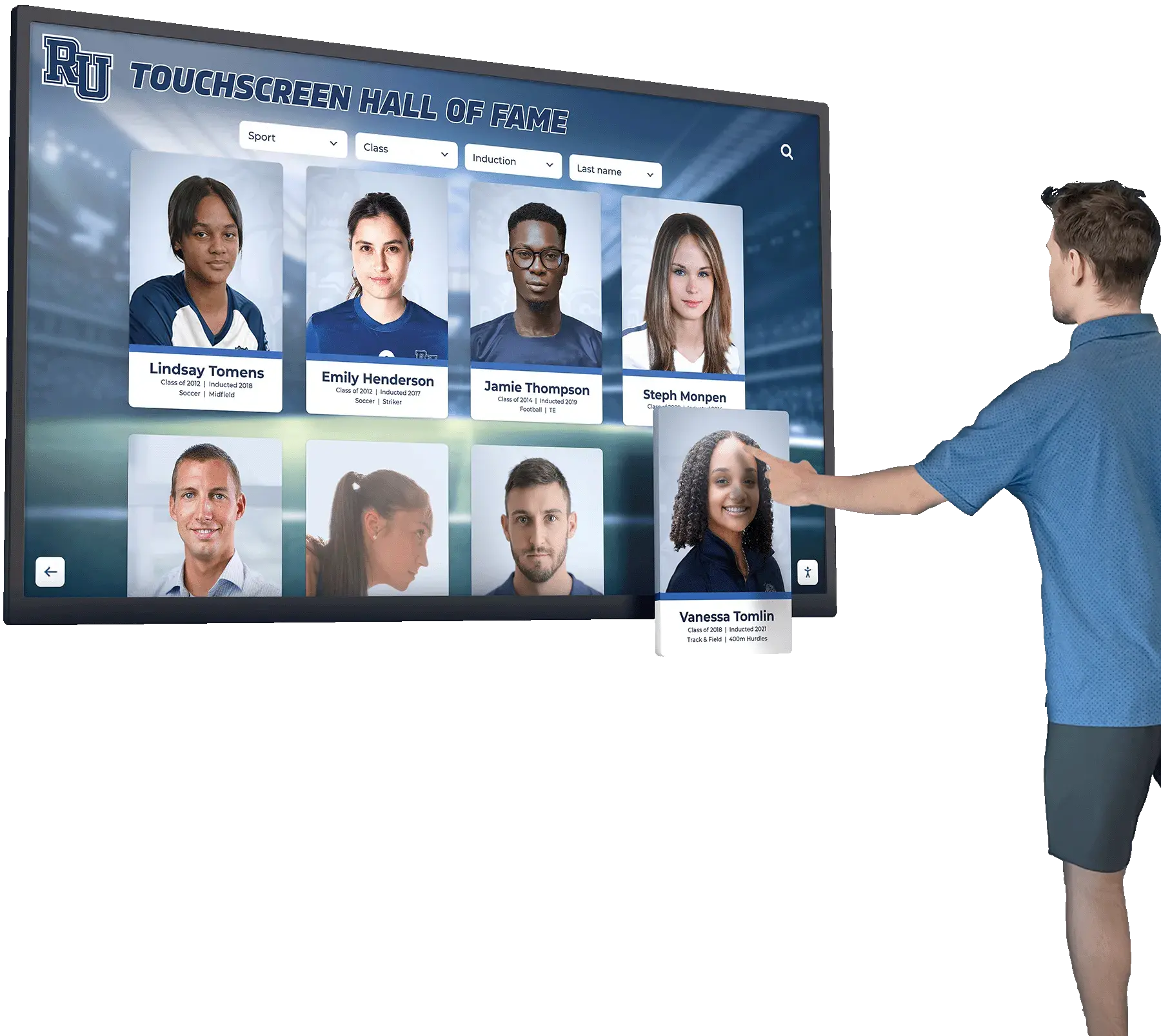
The portrait-grid format has a natural scaling problem: ten inductees looks clean, fifty inductees looks crowded, and a hundred inductees requires wall space most gyms don’t have. That scaling challenge is one of the core reasons schools eventually look at digital display systems to extend what a wall graphic starts.

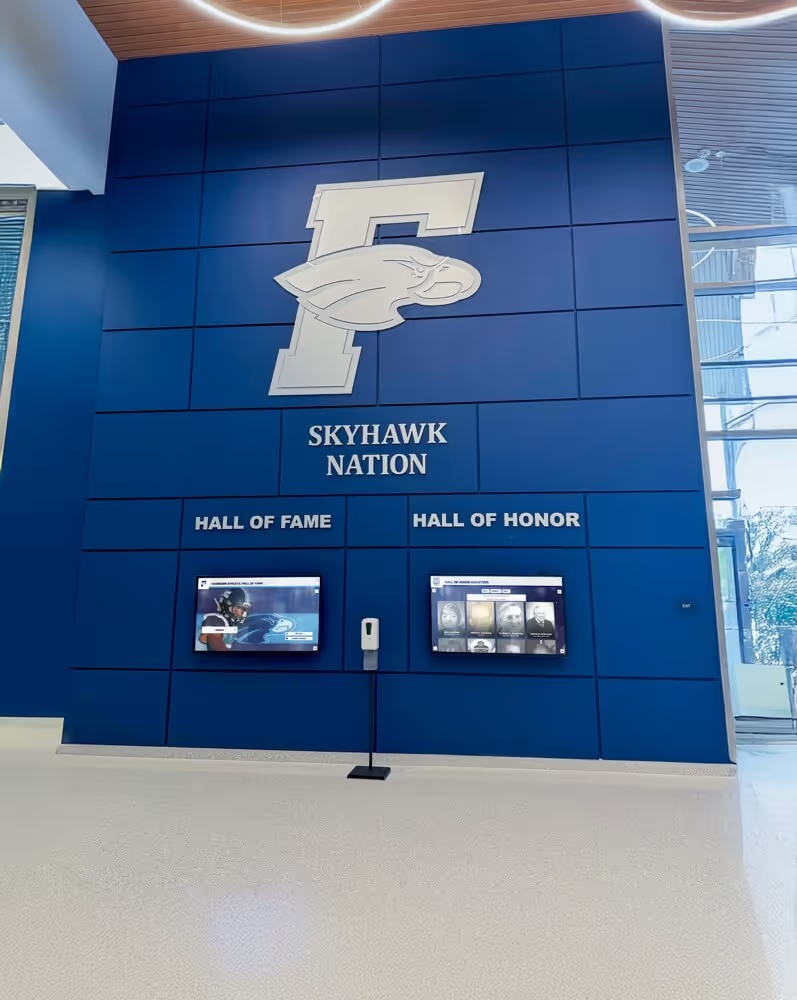
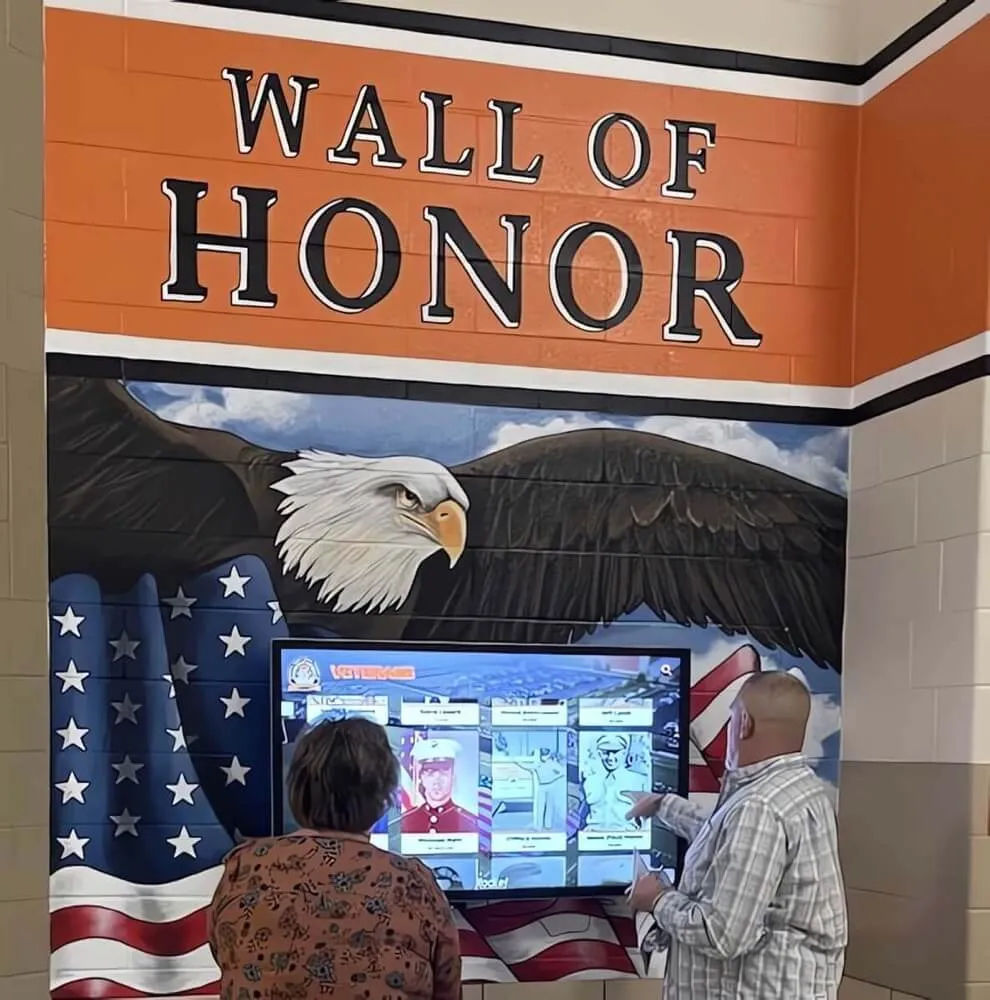
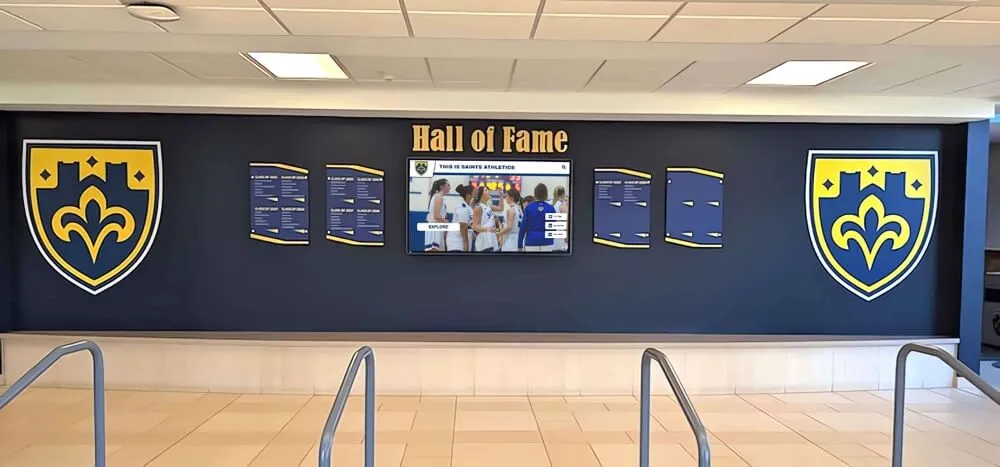
Hall of fame murals give inducted athletes a visual presence inside athletic spaces—connecting current athletes to the program's history during every practice and competition
5. Program History Timelines
A timeline graphic traces the program’s arc: founding year, first championship, coaching milestones, enrollment changes that shifted competitive classifications, and the seasons that defined the program’s identity. Unlike a championship tier wall that focuses on wins, a timeline includes context—the 1-9 season that preceded a three-year title run, the coach who built the foundation before anyone noticed.
Timeline graphics work best when they’re positioned where athletes spend time waiting: near the weight room entrance, along the hallway from locker rooms to the gym floor, or in a team meeting room. The audience is the team itself, not visiting fans, which means the content can go deeper than a trophy wall facing the bleachers.
Designing a recognition wall that inspires for decades often starts with this kind of historical framing—giving current athletes a sense that they’re part of a story that started well before them and will continue long after.
6. Donor and Booster Recognition Panels
Athletic programs run on support from boosters, alumni donors, and community sponsors. Gymnasium wall graphics can formally acknowledge that support in a dedicated panel or recognition section without competing visually with championship or athlete recognition.
The key design decision is separation: donor recognition should occupy its own designated space rather than interleaving with athletic achievement displays. When sponsor logos and championship banners share the same visual field without clear organization, neither reads clearly.
Some schools use the gymnasium’s entrance area or concession alcove for donor recognition panels, keeping the primary athletic space focused on program recognition. Others designate a specific wall section with consistent framing that signals “this is community support” while the championship and athlete graphics signal “this is program achievement.” For ideas on donor recognition design, school recognition wall designs offer models that balance appreciation with visual discipline.
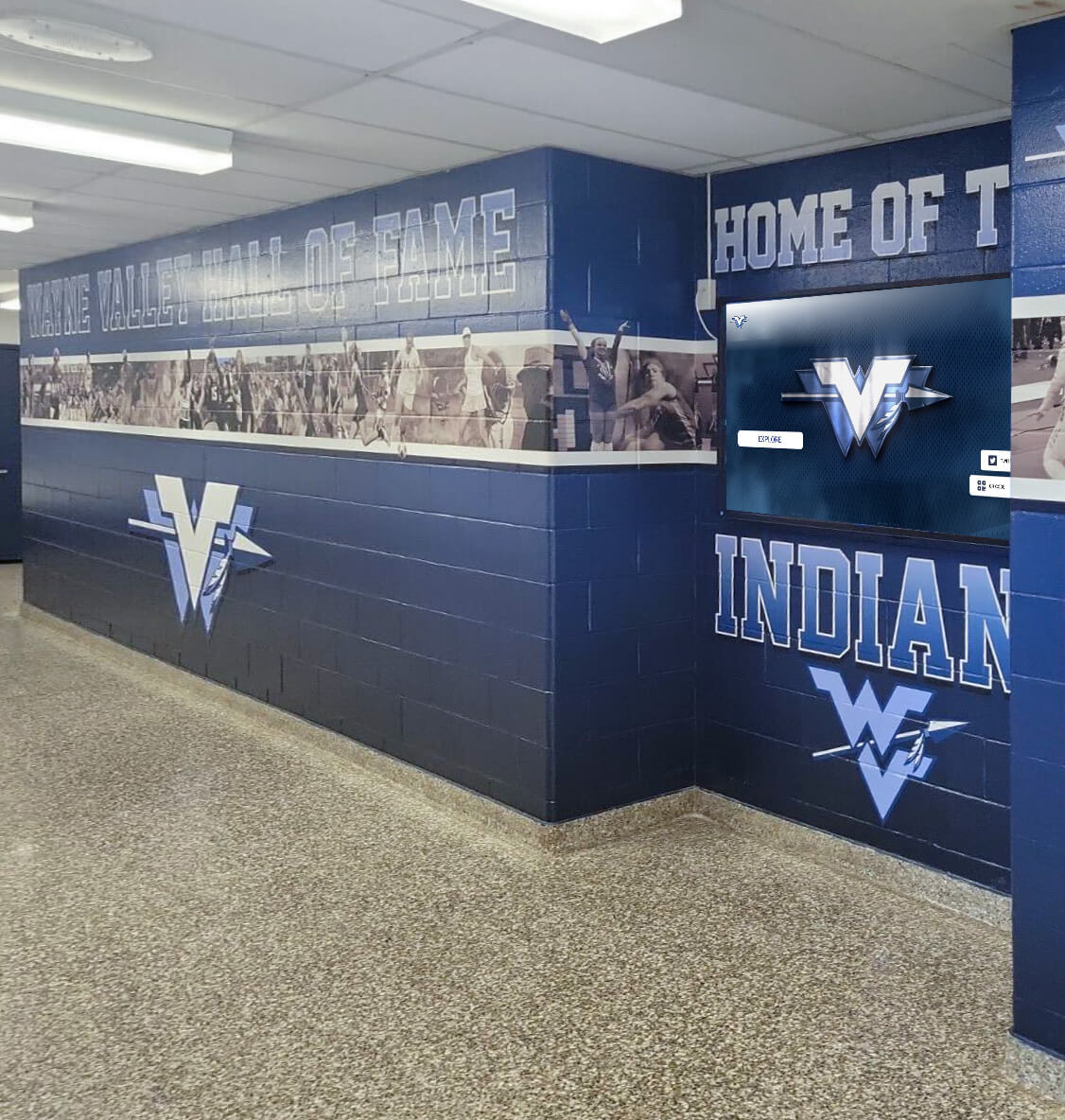
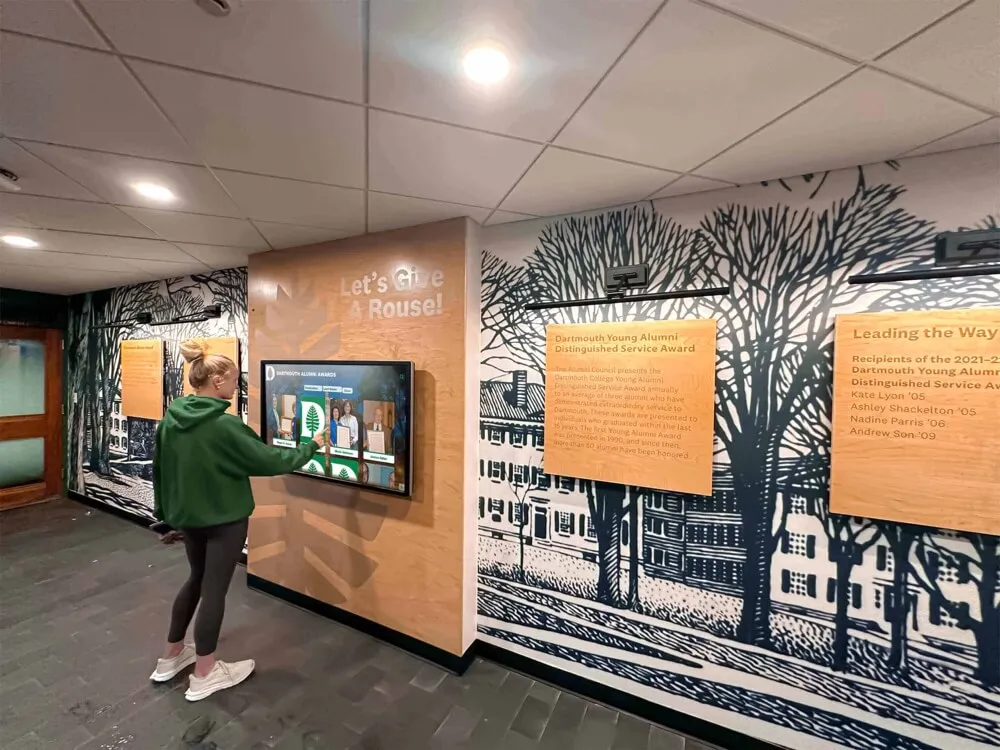
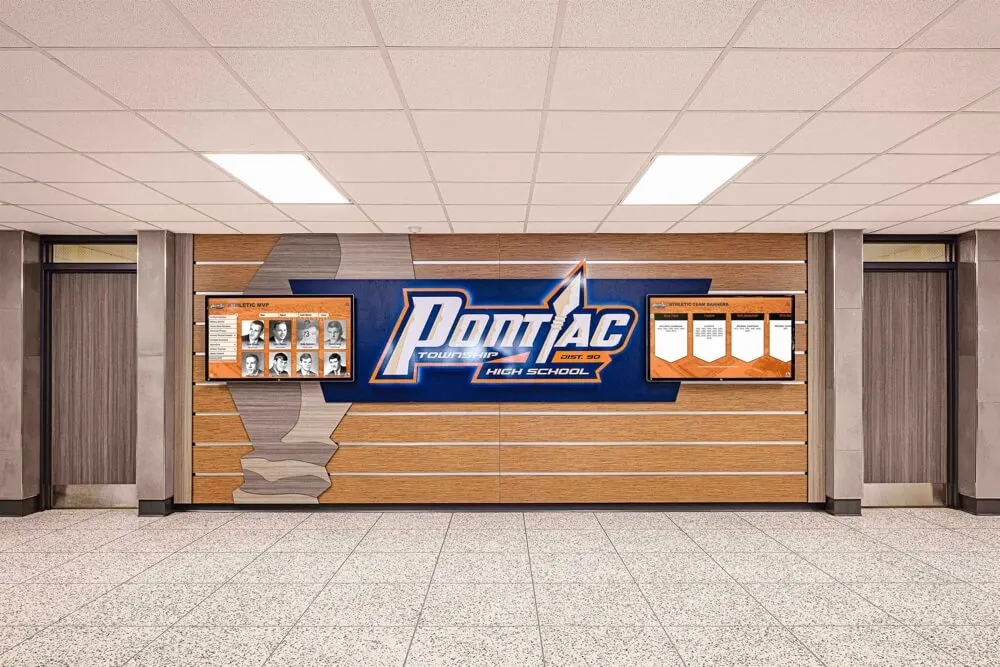
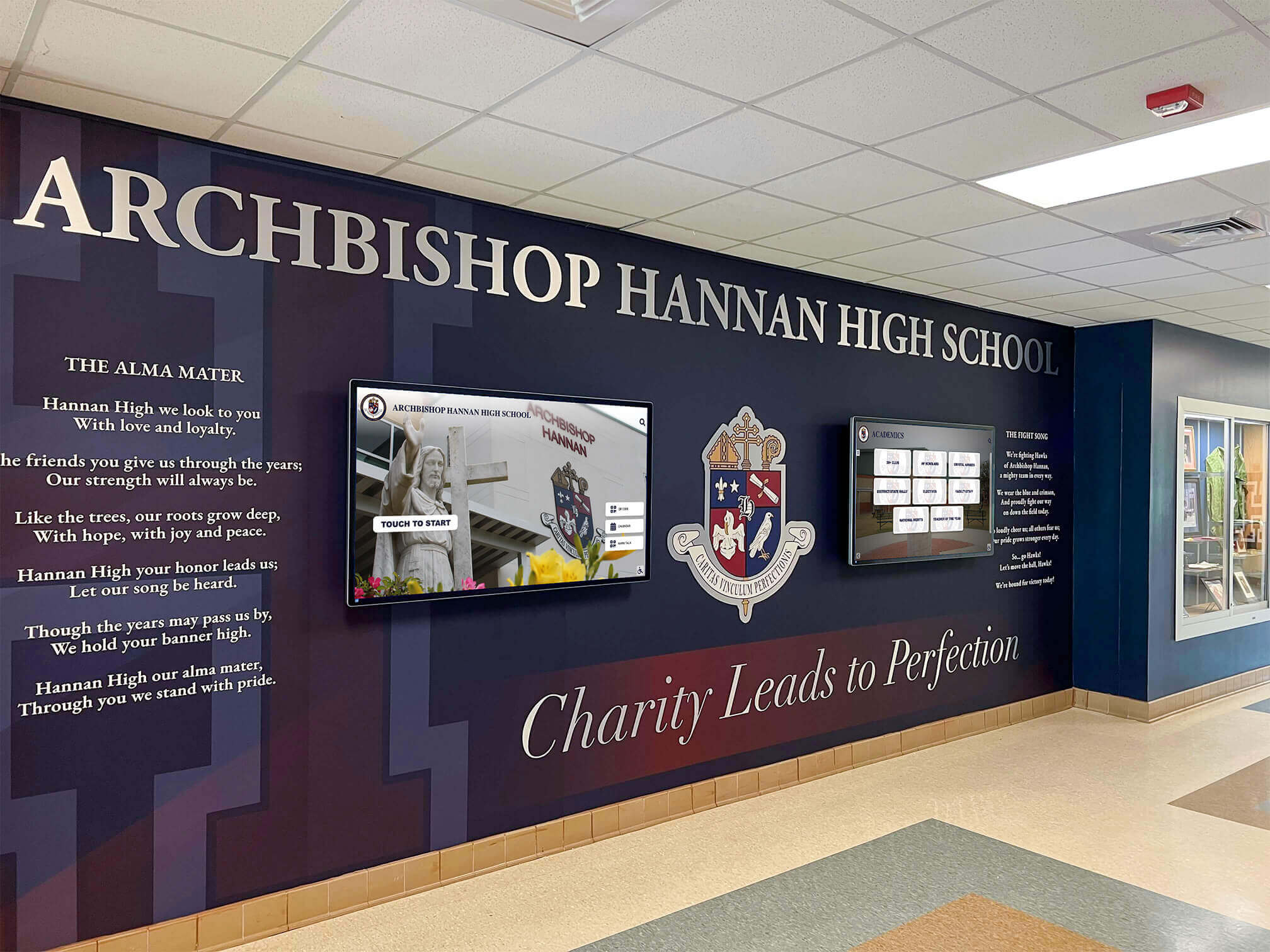
Organized recognition panels with consistent color palette and typography transform hallway walls into cohesive recognition environments—not just a collection of plaques and banners
7. Spirit and Game-Day Graphics
Not every gymnasium wall graphic needs to be permanent. Spirit graphics—large-format vinyl installations with the team’s schedule, roster, or season theme—give the space energy during competition season without requiring the permanence of painted or printed recognition content.
The design consideration here is intentionality: spirit graphics should be clearly positioned as seasonal rather than permanent recognition. Using removable vinyl and designated display areas (rather than painted directly over championship content) keeps the space flexible while still giving it presence during game weeks.
Spirit graphics work particularly well alongside end-of-year recognition programs where seasonal achievements are acknowledged before the permanent display is updated.
Comparison: Static Gymnasium Wall Graphics vs. Digital Recognition Displays
| Recognition Type | Static Wall Graphics | Digital Display |
|---|---|---|
| Championship titles | Strong—permanent presence, visible from bleachers | Good—searchable, linkable to full season context |
| Individual athlete records | Weak—expensive to update when broken | Strong—auto-updates, shows full historical record |
| Hall of fame inductees | Limited by wall space | Unlimited—rich profiles with photos and stats |
| Program history/archives | Very limited | Comprehensive—full archive searchable by year, sport |
| Current season rosters | High update cost | Instant updates, no cost per change |
| Multi-sport recognition | Separate displays per sport | Unified system with filtering by sport/year |
| Accessibility | Readable only in-person | Web-accessible, mobile-compatible |
| Visitor engagement | Passive viewing | Interactive browsing, search by name |
| Cost over time | Accumulates (new banners, engraving, repainting) | Fixed subscription, no per-update cost |
| Scale | Constrained by physical wall space | Unlimited |
The table reflects the core tradeoff: static gymnasium wall graphics do certain things better than any screen ever will—ambient presence during competition, permanent landmark status, communal authority that decades of hanging there creates. Digital displays do different things better: depth of information, individual athlete stories, records that actually update, and history that doesn’t require a ladder and a camera to access.
The most effective recognition environments use both.
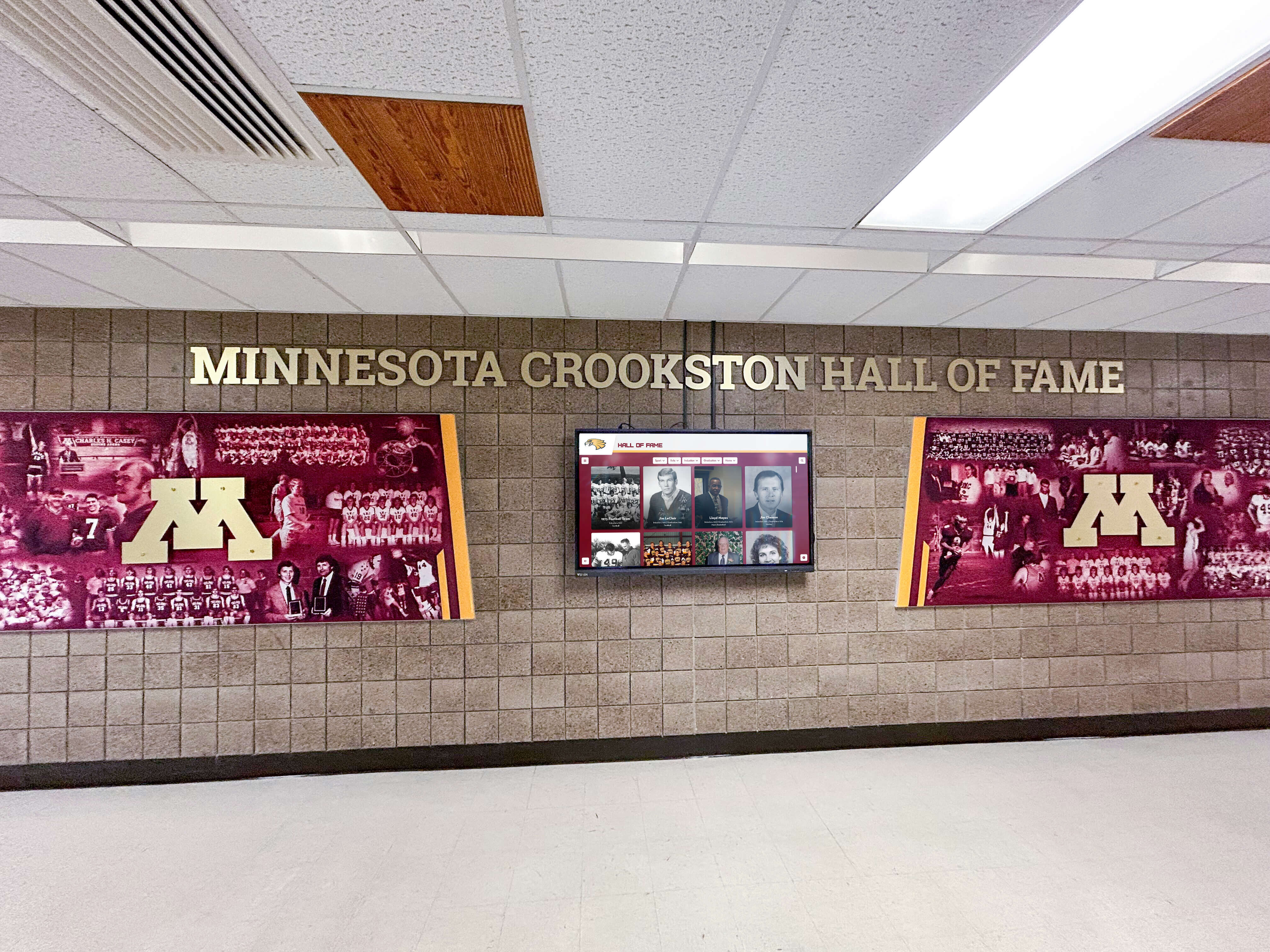
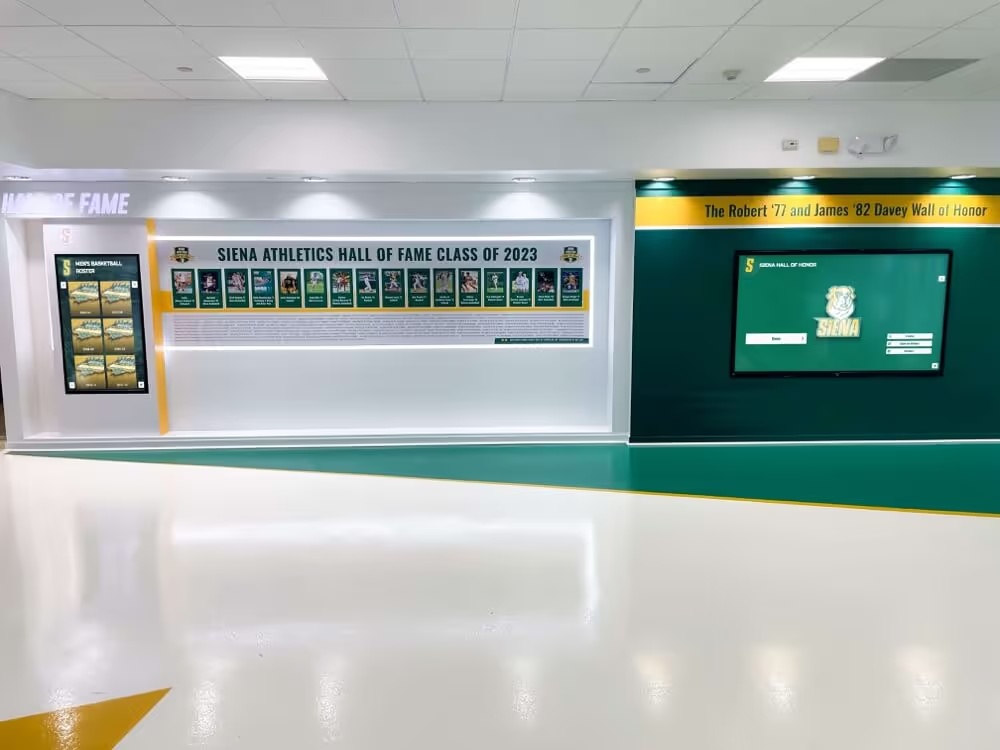
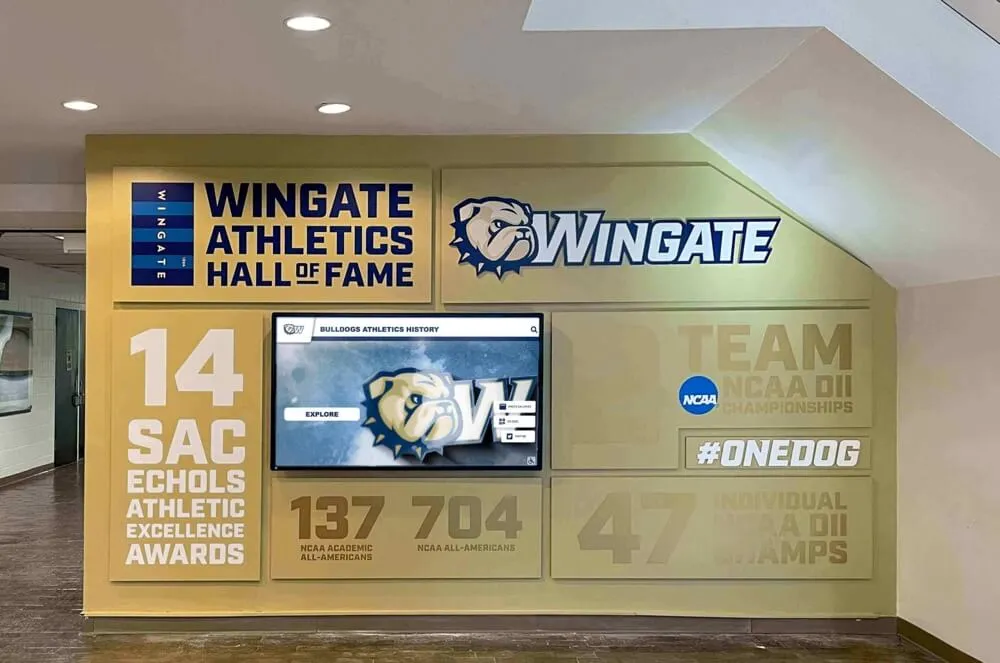
Combining large-format wall graphics with a digital display creates layered recognition: the graphics establish identity and permanence, the screen adds depth and interactivity that static surfaces can't provide
When Static Wall Graphics Should Hand Off to a Digital Display
There are specific signals that a gymnasium’s wall graphic program has reached what a digital display handles better:
Record boards that haven’t been updated in years. If the current record holder can’t find their own name on the gym wall, the record board has stopped doing its job. A digital record board connected to a content management system updates in minutes when a record falls—and shows the full historical progression rather than just the current top mark.
Hall of fame rosters that have outgrown the wall. A program inducting three to five athletes per year will exhaust a typical portrait-wall format within a decade. When the wall is full, schools face a choice between removing older inductees (which dishonors the recognition) or stopping new inductions (which undermines the program). A digital hall of fame system removes that constraint entirely—and allows each inductee a profile depth no wall graphic could provide.
Program history that predates any digital records. Most schools have athletic achievements that exist only on faded banners, brittle newspaper clippings, or in the memories of alumni who graduated decades ago. Digitizing yearbooks and archival materials gives that history a permanent, searchable home—and a digital display in the gymnasium lobby makes it accessible to current athletes and visitors who would never encounter it otherwise.
Multi-sport programs without unified recognition. Physical wall space tends to favor the sports with the most visual real estate—basketball and football get the prominent end walls, while swimming, tennis, and cross country get a corner. A digital display handles all sports through a unified interface with equal access, which matters for recognition that motivates across the full athletic community.
Alumni engagement goals. A championship mural engages the people in the building. A digital platform connected to a web portal engages alumni who graduated thirty years ago and haven’t been back since. Alumni engagement software built around recognition content creates touchpoints that physical wall graphics simply cannot reach.
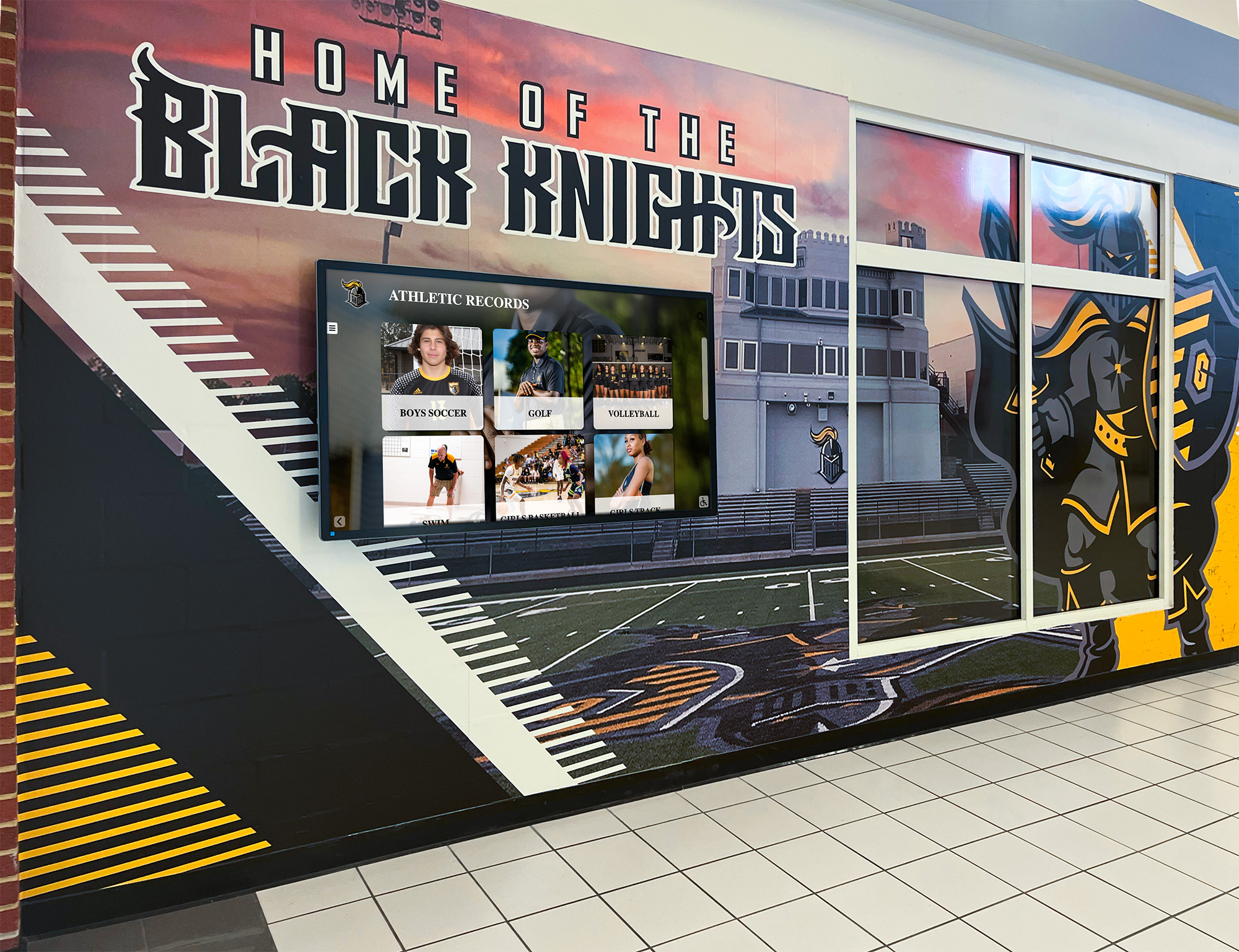
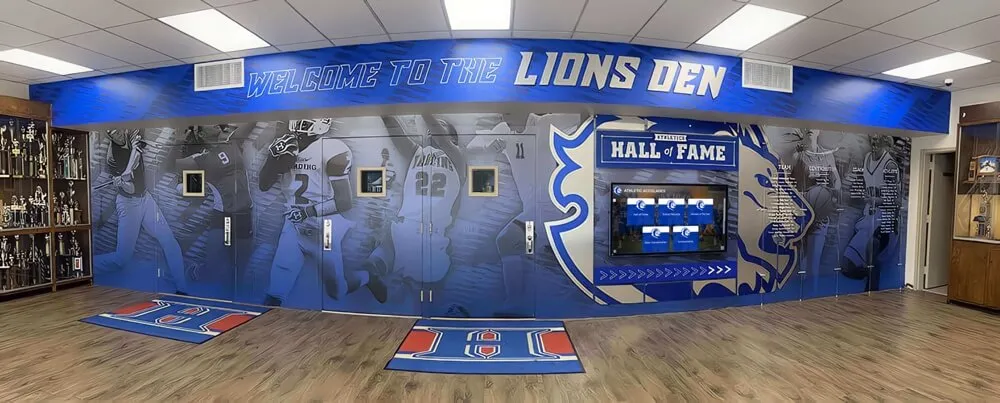
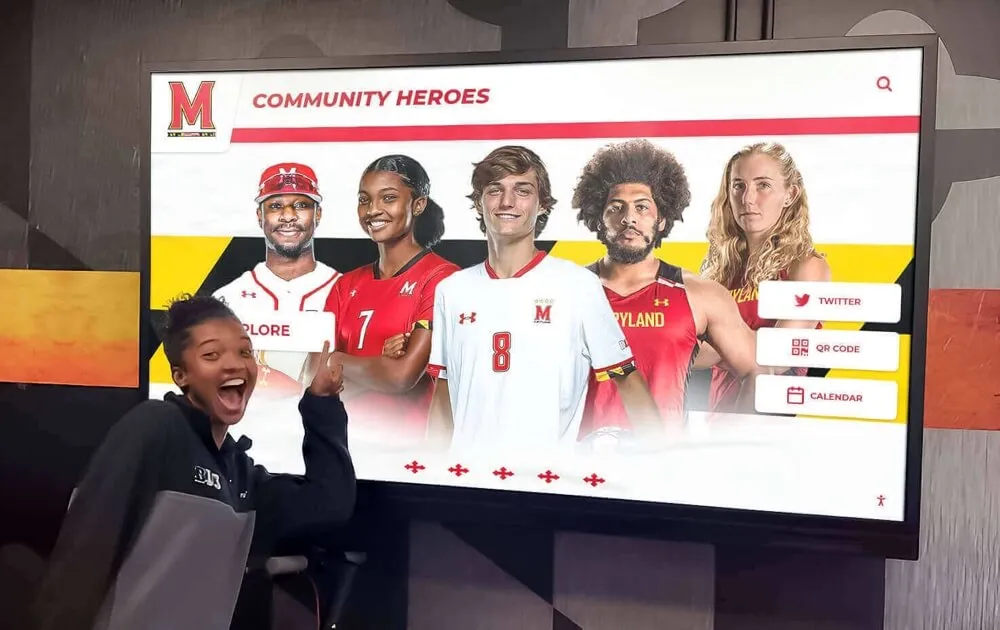
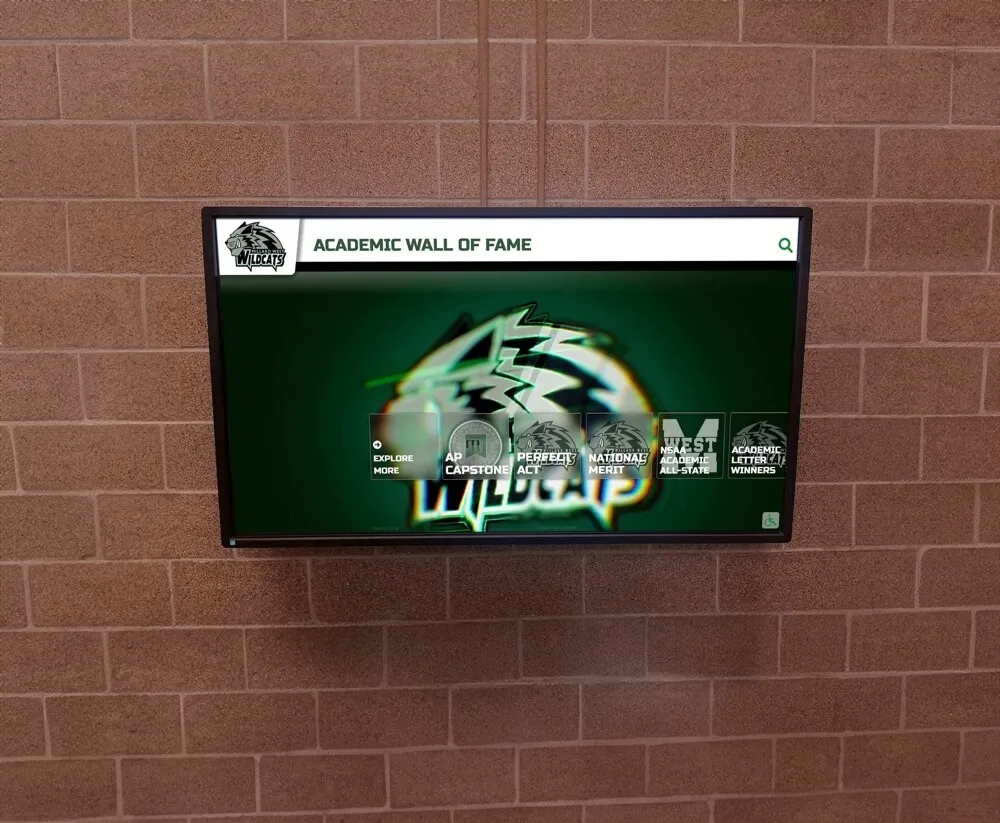
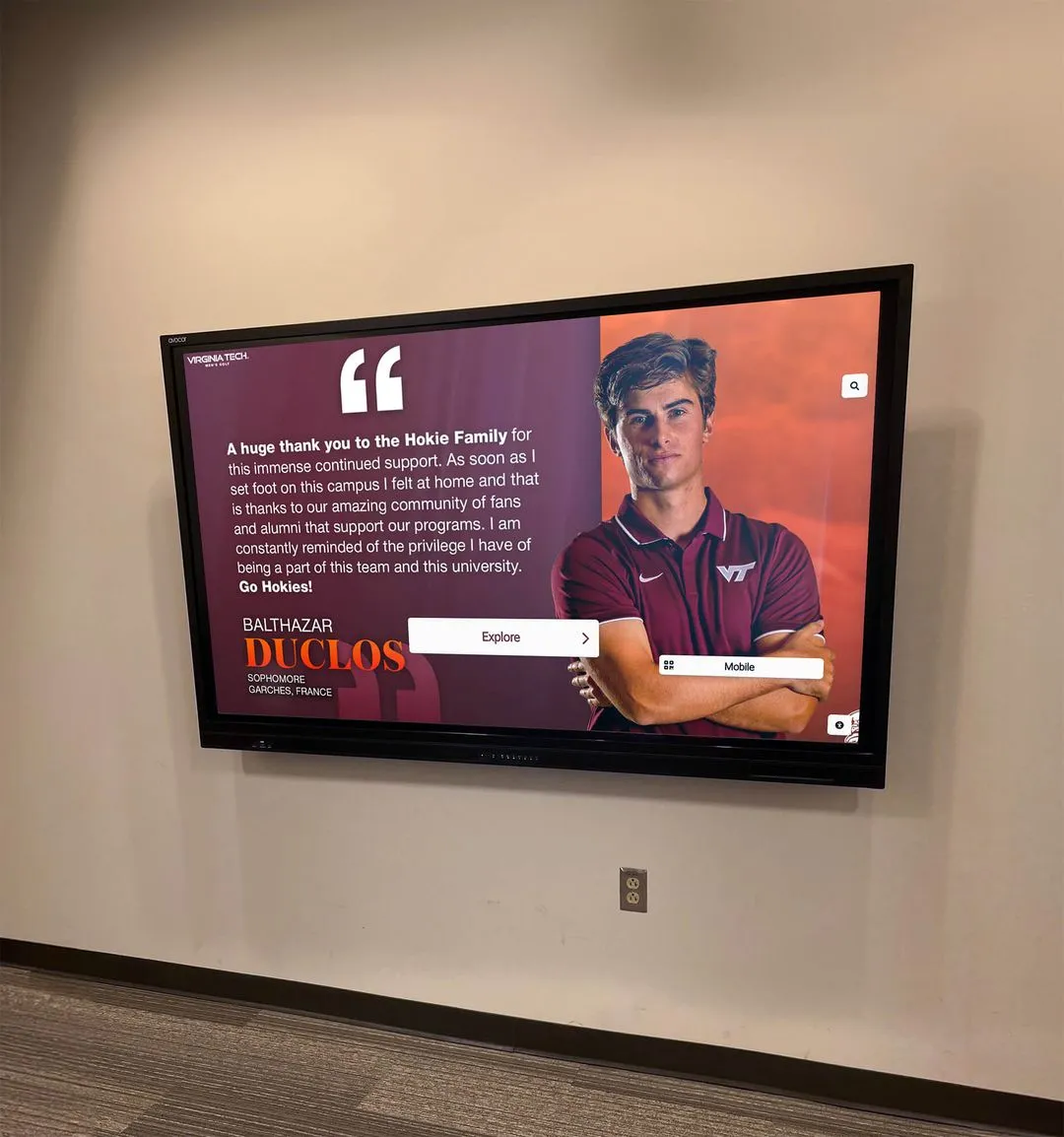
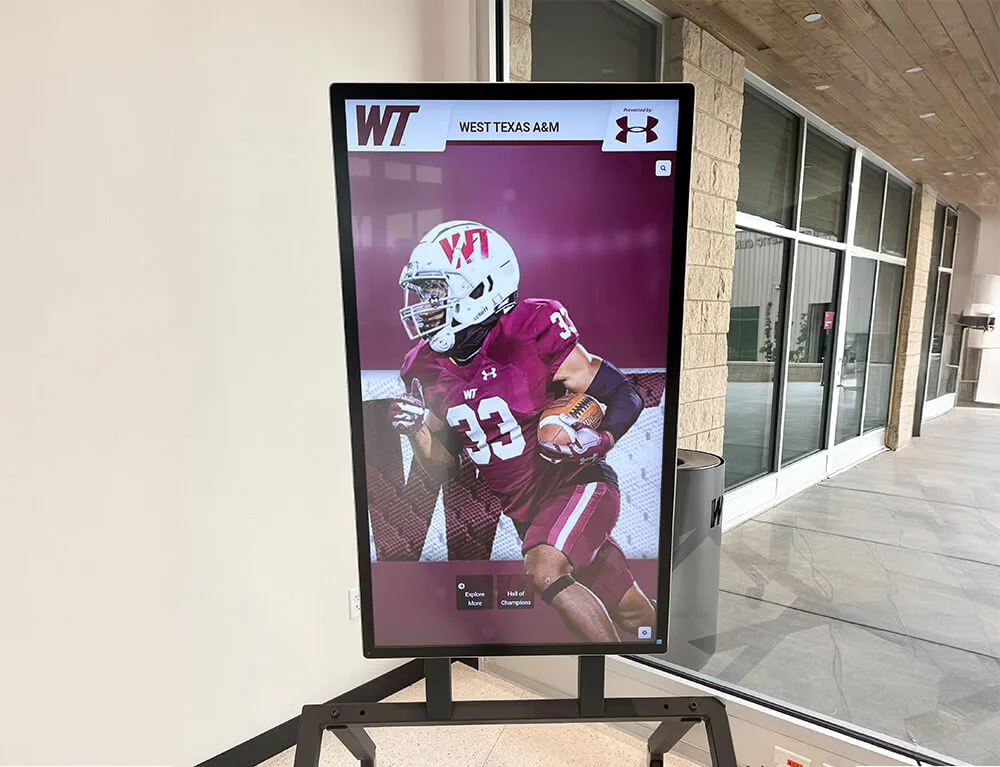
Digital athletic record displays mounted in athletic hallways bridge the gap between permanent wall graphics and dynamic content—updating automatically without requiring design or installation work
Design Principles for Gymnasium Wall Graphics That Last
Plan for the institution, not just the current season. Wall graphics designed around this year’s team—with specific roster art or season-specific imagery—age quickly. Graphics built on the program’s identity elements (mascot, colors, historical tier, founding year) remain relevant indefinitely.
Standardize before adding. The most common visual problem in gymnasium wall graphic programs isn’t bad design—it’s accumulated inconsistency. Banners from different vendors, plaques in different formats, and painted murals from different eras create visual noise rather than a cohesive recognition environment. Establishing a consistent visual system before adding anything new is worth the design investment.
Reserve space for what comes next. A championship tier wall with no room for future titles isn’t a recognition display—it’s a closed file. Build the system to accommodate growth, or define the rotation policy that manages it. The goal is a gymnasium wall that looks as good in twenty years as it does today.
Treat digital as complement, not competition. Schools that install a digital display in their athletic lobby and then stop maintaining their wall graphics end up with a fragmented recognition environment. The better approach: let the wall graphics anchor the visual identity and permanent recognition, and let the digital display carry the dynamic content—records, inductee profiles, archives, current rosters—that would otherwise require constant wall maintenance.
Academic decathlon and other program-specific recognition benefits from the same thinking: establish permanent recognition for the achievements that deserve it, and use dynamic systems for the content that needs to stay current.
Putting It Together: A Recognition Space That Serves Athletes and Alumni
The goal of gymnasium wall graphics isn’t to cover available surface area—it’s to create an environment where the program’s history is visible, legible, and meaningful. That means making choices: which achievements earn permanent wall space, which recognition belongs in a digital system, and how the two work together.
Schools that approach this strategically end up with gymnasiums that communicate program seriousness to recruits, create genuine pride among current athletes, and give returning alumni a reason to stop and look. Schools that accumulate recognition without planning end up with walls that feel cluttered and records that can’t be found.
The combination of well-designed physical wall graphics and a digital recognition display handles both dimensions: the permanent, visible presence that only a physical installation provides, and the searchable, updatable depth that only a digital system can deliver.
Ready to Add a Digital Layer to Your Gymnasium Recognition?
Rocket Alumni Solutions builds touchscreen walls of fame, digital record boards, and interactive recognition displays designed specifically for school athletic programs. See how a digital display can carry the recognition your wall graphics can't—individual athlete profiles, searchable archives, records that update automatically, and history that alumni can access from anywhere.
Schedule a Demo