



Intent: demonstrate — Future Business Leaders of America (FBLA) and Future Farmers of America (FFA) programs develop essential career skills, leadership capabilities, and professional competencies that prepare students for college and workplace success. Yet many schools struggle to provide recognition matching the dedication these student organizations demand. When trophy cases overflow with athletic accomplishments while career education achievements receive minimal visibility, schools send unintended messages about institutional values and priorities.
FBLA and FFA students invest hundreds of hours developing business acumen, agricultural expertise, public speaking abilities, parliamentary procedure mastery, and leadership skills directly applicable to professional careers. State and national competition victories, degree progressions, officer service, and community impact projects deserve celebration creating the same pride and engagement typically reserved for athletic championships. Recognition systems that relegate career education excellence to forgotten bulletin boards or storage closets undervalue programs producing workforce-ready graduates and industry leaders.
This comprehensive guide explores how schools implement engaging FBLA and FFA recognition programs through modern display solutions, examines traditional trophy and plaque limitations, and demonstrates how digital recognition platforms create warmer, more connected communities where career and technical education excellence receives the visibility and celebration it deserves.
The career and technical education landscape has evolved dramatically, yet recognition approaches often remain stuck in outdated paradigms. Schools with thriving FBLA and FFA programs understand that visible, accessible, meaningful recognition drives participation, motivates excellence, and demonstrates to prospective families that the institution values career preparation alongside traditional academics. When recognition systems celebrate every achievement level—from chapter membership through national championships—they create cultures where career-focused students feel valued and understood.

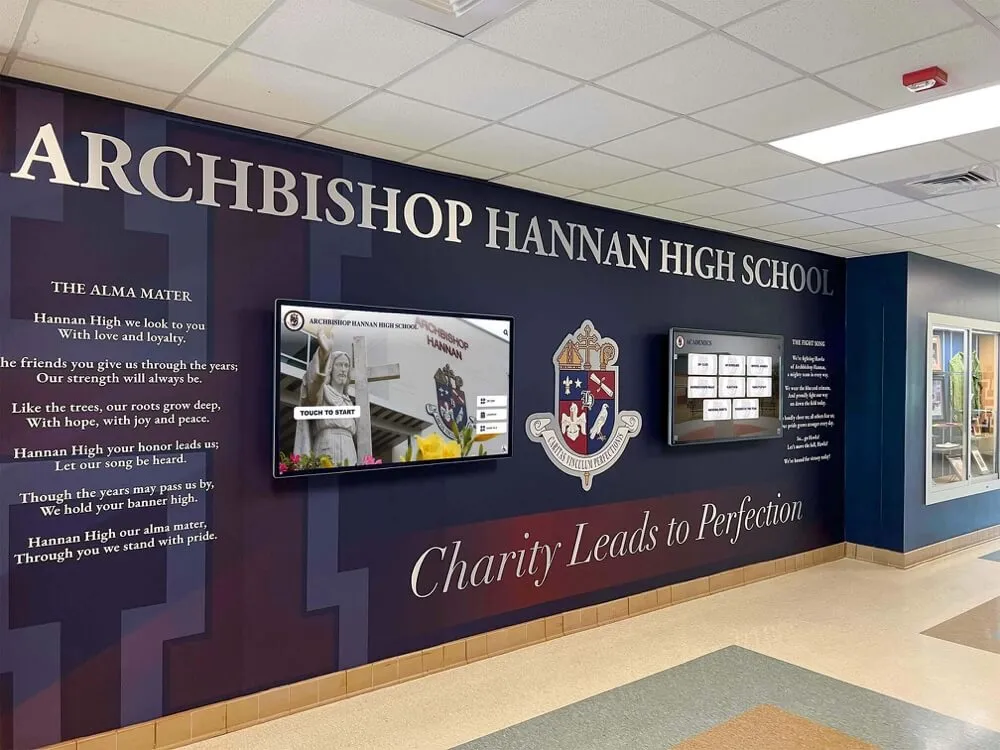
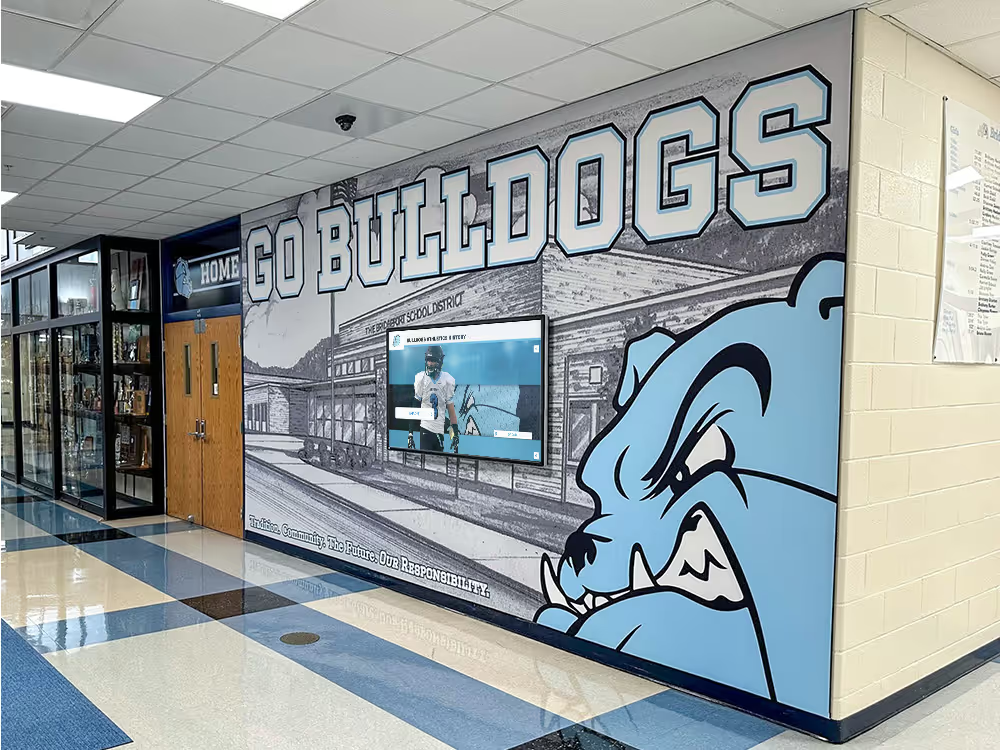
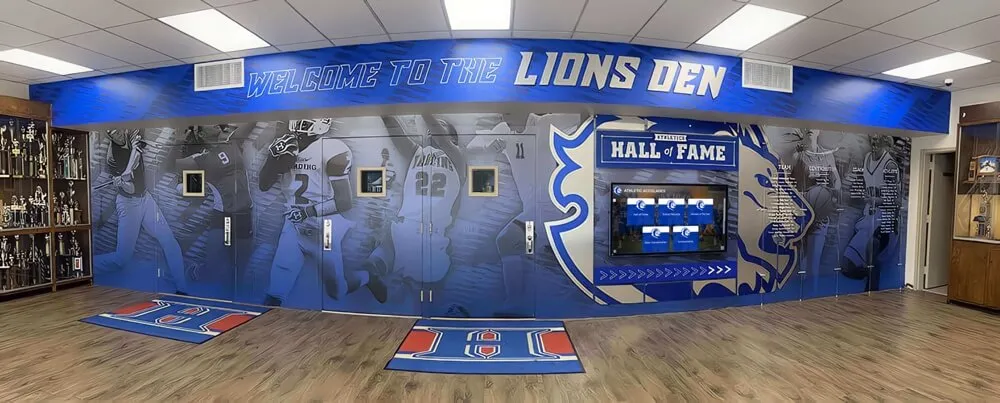
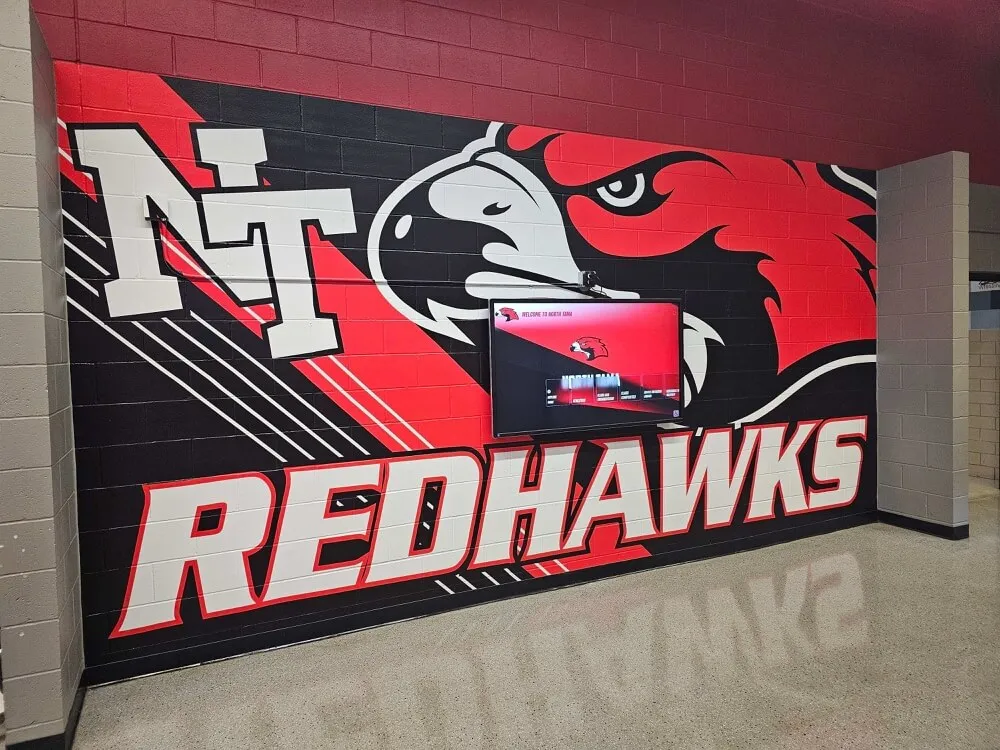
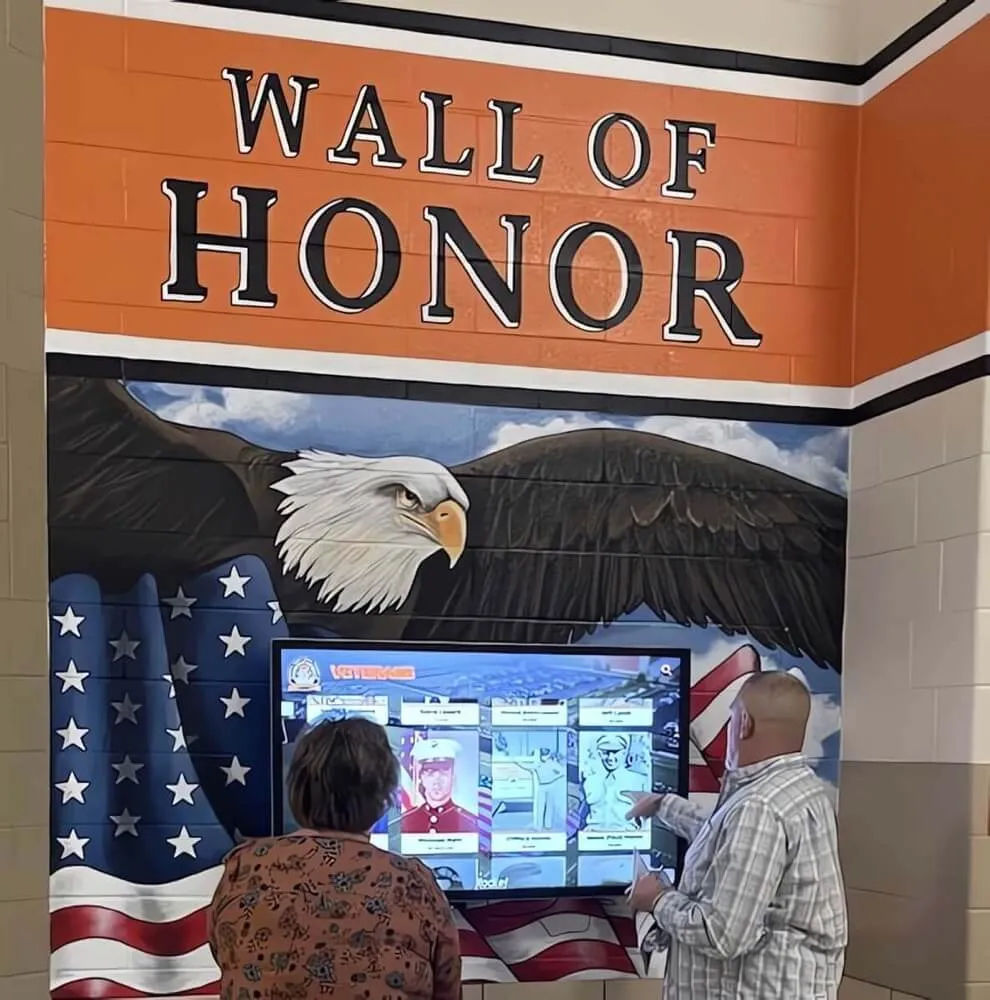
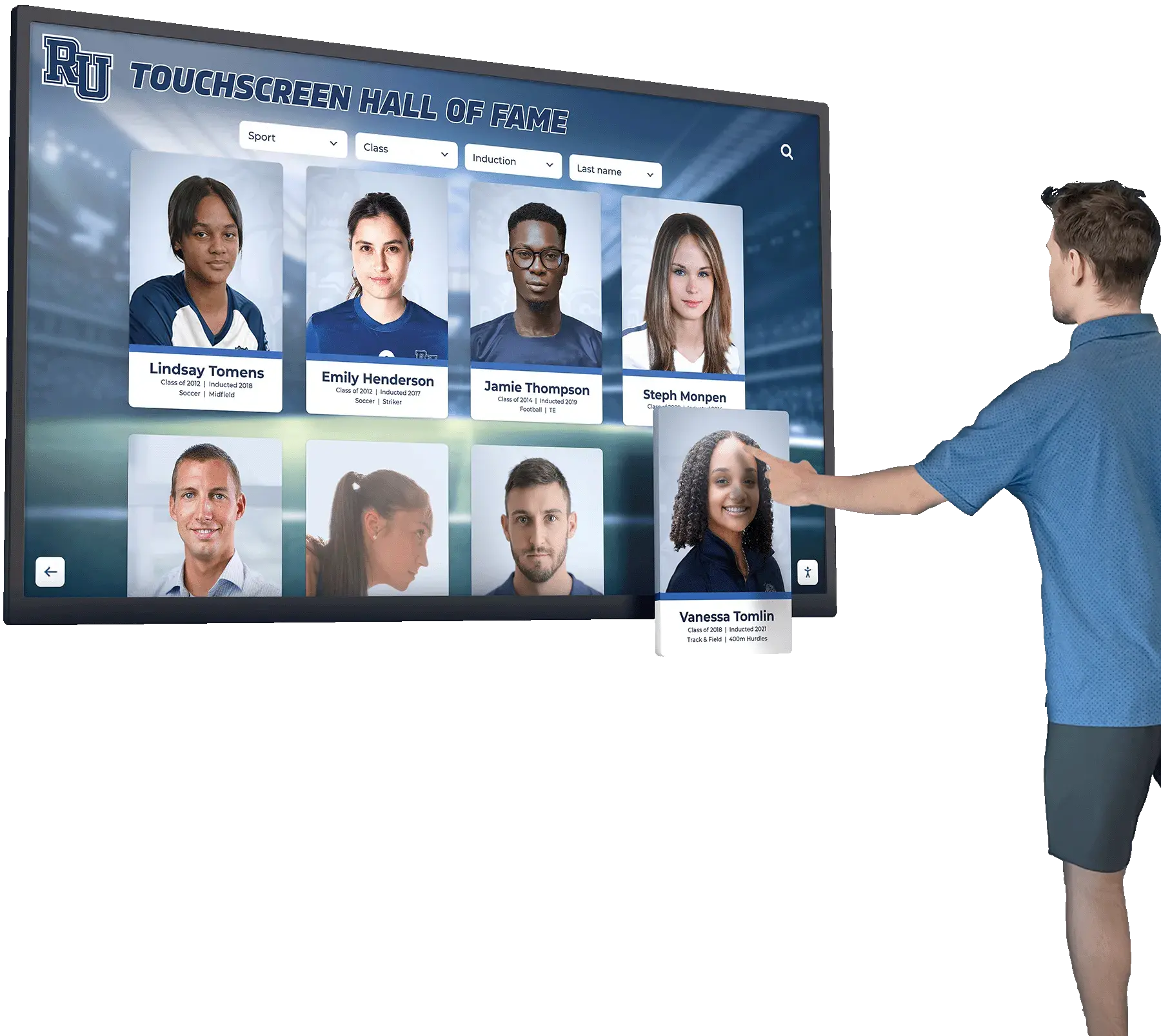
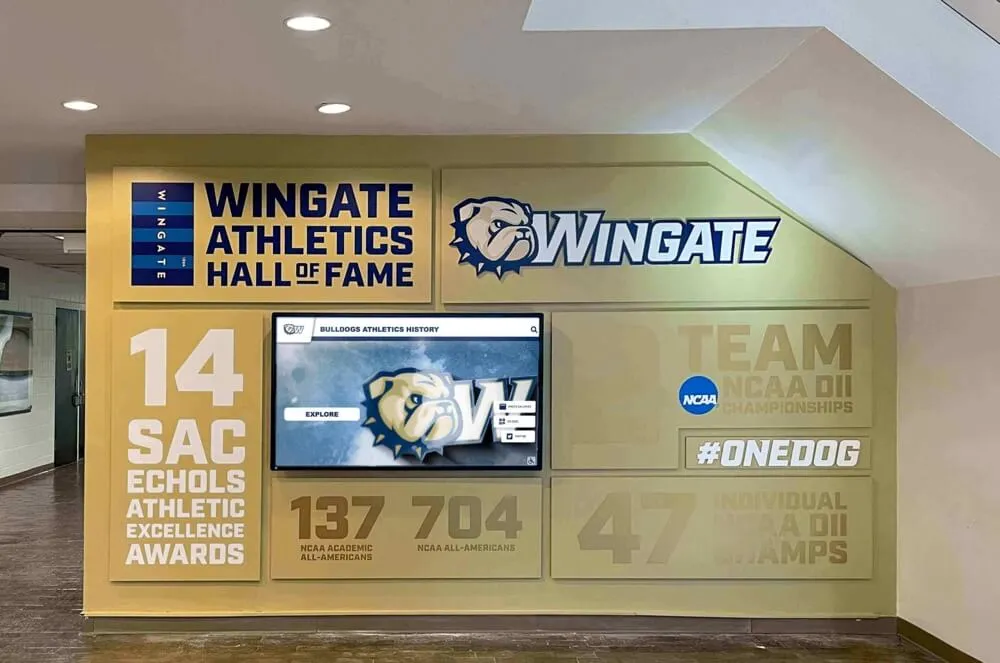
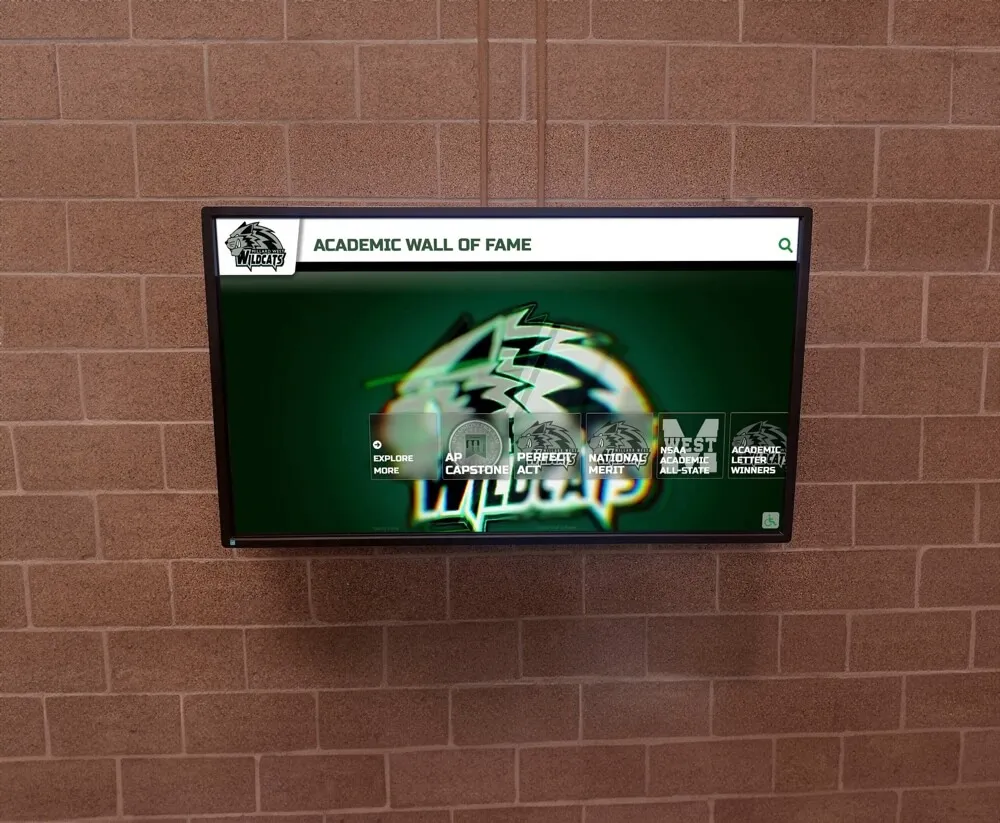
Modern recognition displays elevate FBLA and FFA achievements to institutional prominence
Understanding FBLA and FFA Achievement Recognition
Both FBLA and FFA offer structured recognition systems celebrating progressive skill development, competitive excellence, and leadership growth that schools should systematically acknowledge.
FBLA Recognition Framework
Future Business Leaders of America provides comprehensive pathways for celebrating business education excellence:
Business Achievement Awards (BAA) Program
The progressive Business Achievement Awards structure includes four levels—Contributor, Leader, Advocate, and Capstone—each representing significant accomplishment deserving institutional recognition. Schools implementing systematic BAA celebration demonstrate commitment to business education while motivating chapter members pursuing progressive skill development.
Students completing Contributor awards demonstrate initial FBLA commitment and organizational understanding. Leader designation recognizes growing leadership capability and self-awareness. Advocate awards acknowledge specialized business skill development in chosen competency areas. Capstone completion represents culminating project excellence solving real-world business problems through design thinking methodology.
Competitive Events Recognition
FBLA competitions span 50+ events testing comprehensive business knowledge across accounting, marketing, management, economics, technology, and professional presentation categories. Recognition opportunities exist at multiple levels:
- Regional and district competition placement
- State Leadership Conference (SLC) qualification and awards
- National Leadership Conference (NLC) participation
- National top-10 finishes and championship victories
- Multi-year competitive excellence and career statistics
Schools should celebrate achievements at all competitive tiers, ensuring students at every performance level have recognition pathways while building motivation for continued excellence.
Chapter and Leadership Recognition
Beyond individual achievement, FBLA offers chapter-level recognition through Champion Chapter programs and Gold Seal Chapter Award of Merit designations. Officer positions—president, vice president, secretary, treasurer—plus committee leadership and project coordination deserve systematic acknowledgment. State and national officer service represents pinnacle leadership accomplishment warranting prominent institutional celebration.
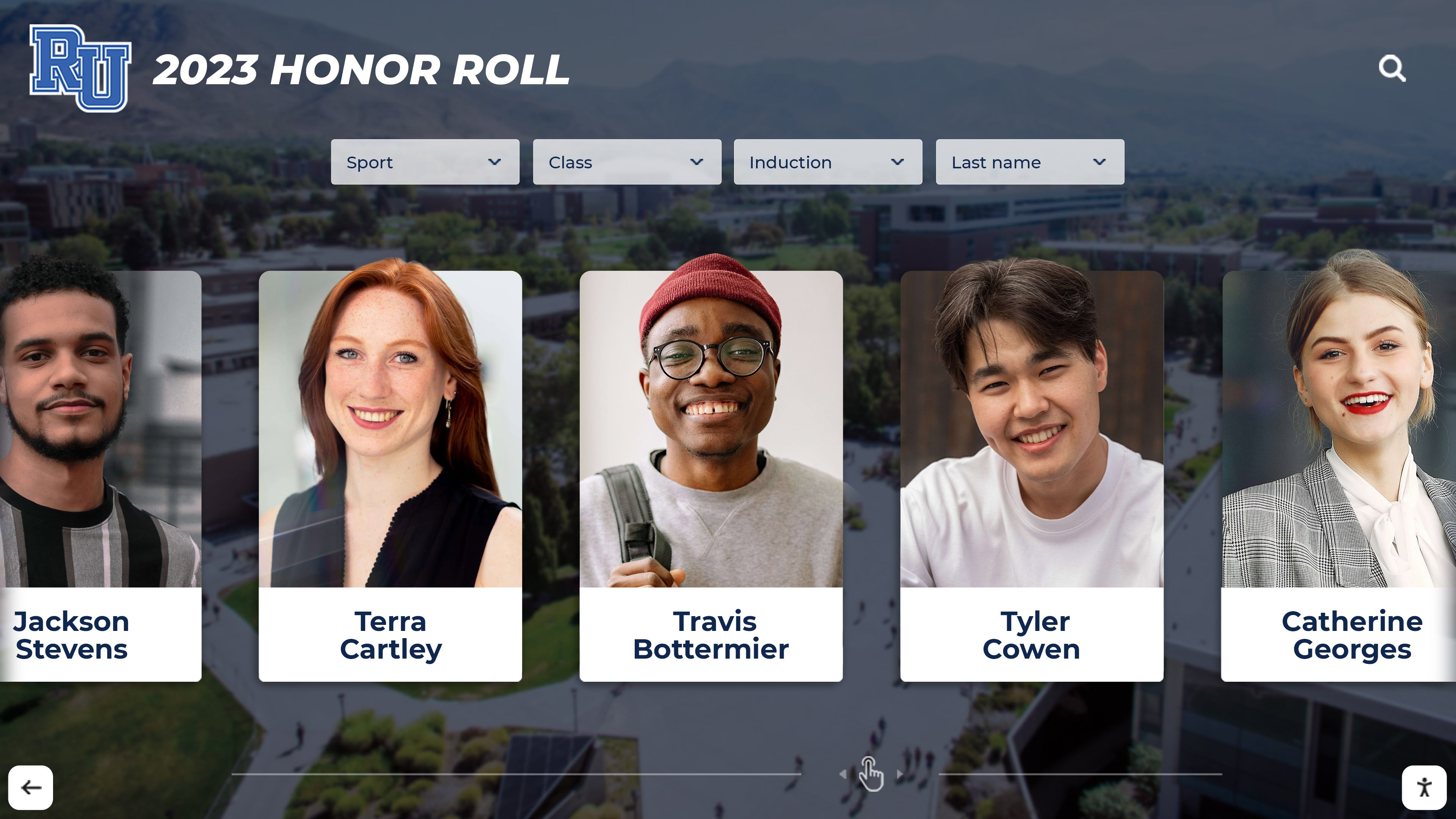
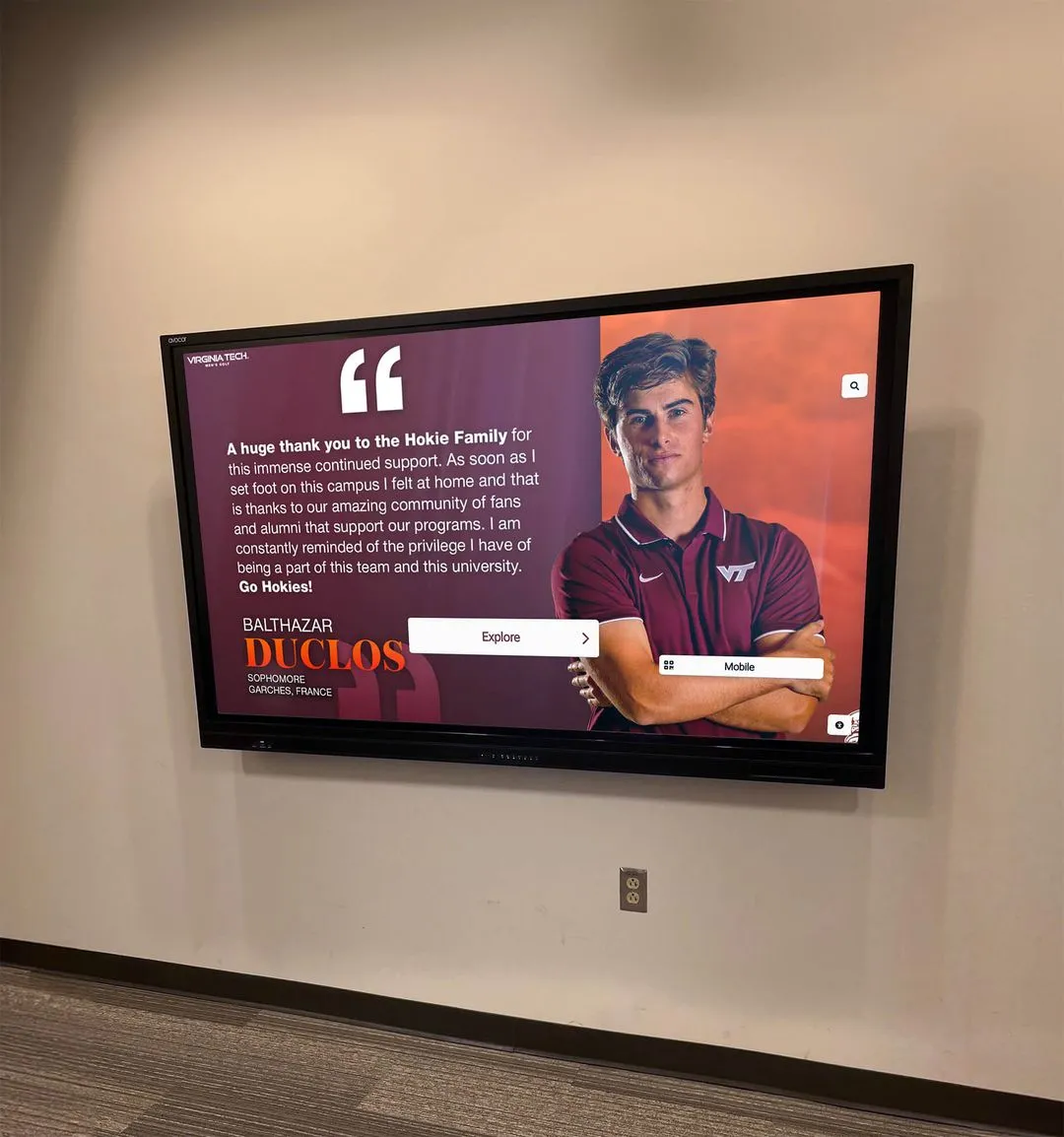
Detailed recognition profiles celebrate complete FBLA journeys beyond simple award listings
FFA Achievement Framework
The National FFA Organization provides structured recognition celebrating agricultural education excellence and leadership development:
FFA Degree Progression
FFA’s degree system creates clear achievement milestones deserving progressive recognition:
- Discovery FFA Degree: Entry-level recognition for middle school FFA participants
- Greenhand Degree: First-year high school members demonstrating agricultural knowledge and FFA participation
- Chapter FFA Degree: Recognition for demonstrated leadership, community service, and supervised agricultural experience (SAE) completion
- State FFA Degree: Prestigious state-level recognition requiring extensive SAE documentation and chapter contribution
- American FFA Degree: Highest achievement level recognizing outstanding agricultural excellence, awarded to less than 1% of FFA members
Each degree represents significant accomplishment requiring documented project work, leadership development, and agricultural competency mastery. Schools implementing comprehensive FFA recognition systems celebrate degree progression prominently, demonstrating institutional commitment to agricultural education excellence.
Career Development Events (CDEs)
FFA competitions test technical agricultural knowledge, professional skills, and practical abilities across diverse specializations:
- Agricultural mechanics and technology
- Animal science and veterinary science
- Environmental and natural resources
- Food science and agricultural processing
- Horticulture and landscape management
- Agricultural sales and marketing
- Parliamentary procedure and public speaking
Recognition should acknowledge achievement at local, district, state, and national competition levels, ensuring students excelling in specialized agricultural disciplines receive appropriate celebration regardless of competition scale.
Proficiency Awards and Leadership Recognition
FFA proficiency awards honor agricultural entrepreneurship, placement experiences, and career skill development in specific areas. Leadership recognition includes chapter officer service, district and state officer election, and national officer positions representing pinnacle FFA engagement. Community service projects, fundraising leadership, and agricultural advocacy deserve systematic acknowledgment alongside competitive achievements.
Scholarship and Special Recognition
Both FBLA and FFA offer significant scholarship opportunities:
FBLA Scholarships
- Distinguished Business Leader Scholarship
- National Leadership Conference funding
- Dressed to Impress professional attire support
- Corporate-sponsored scholarship programs
FFA Scholarships
- National FFA Scholarship Program
- State association scholarship awards
- Agricultural industry partner scholarships
- College and university FFA recruitment scholarships
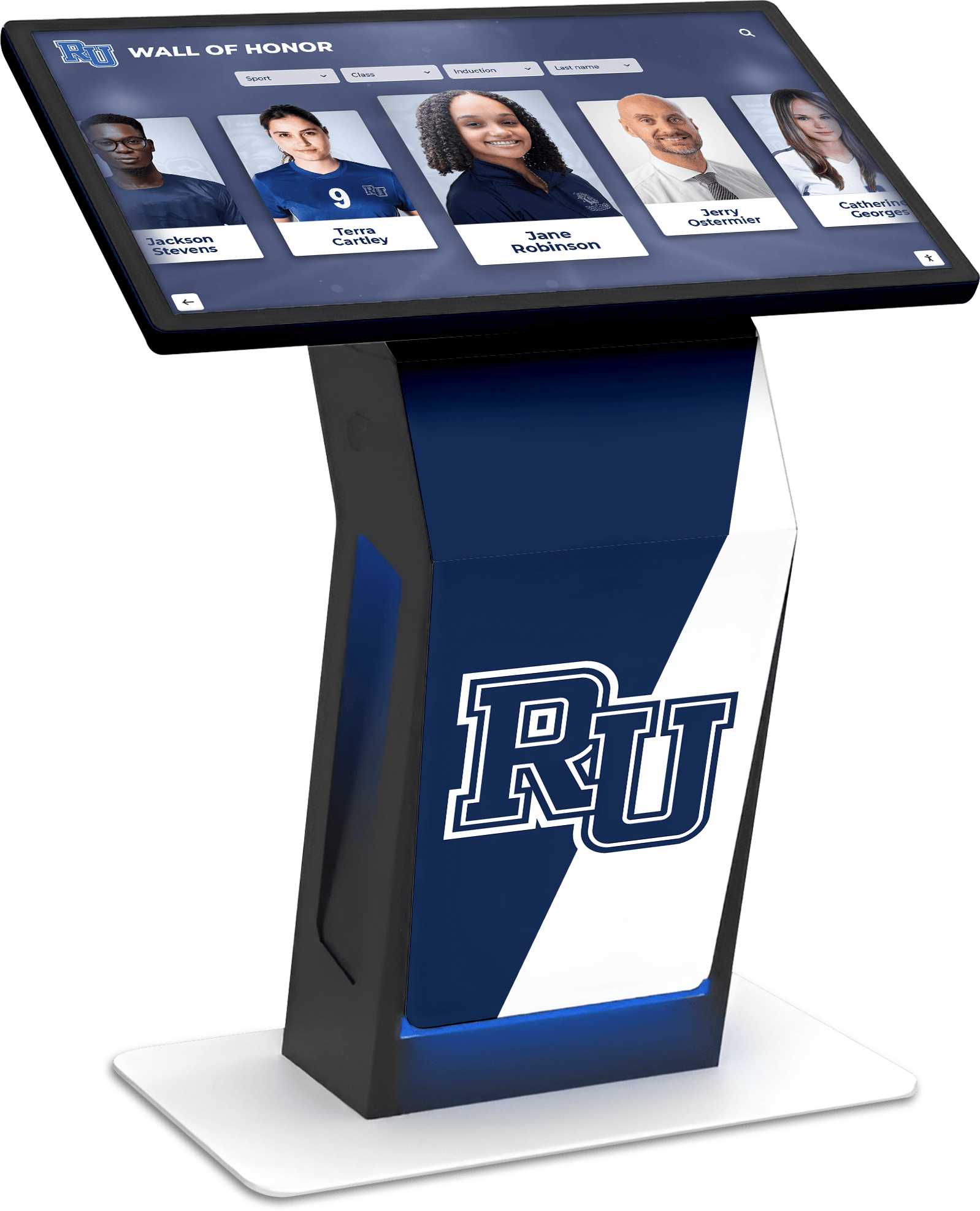
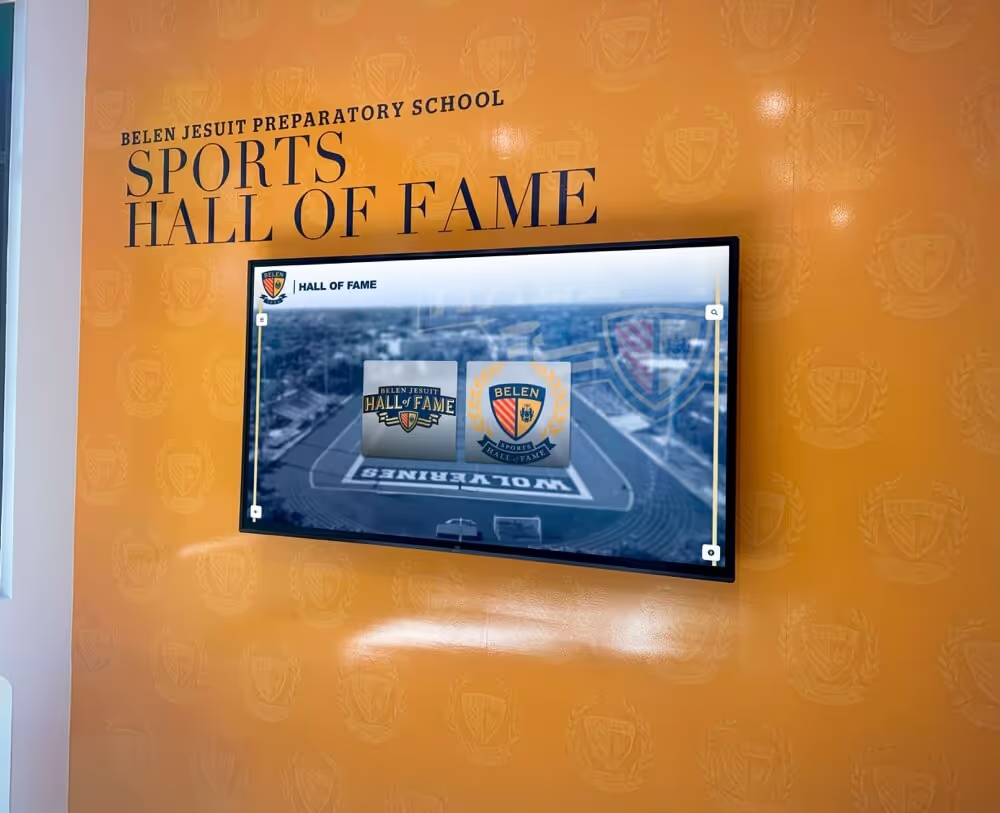
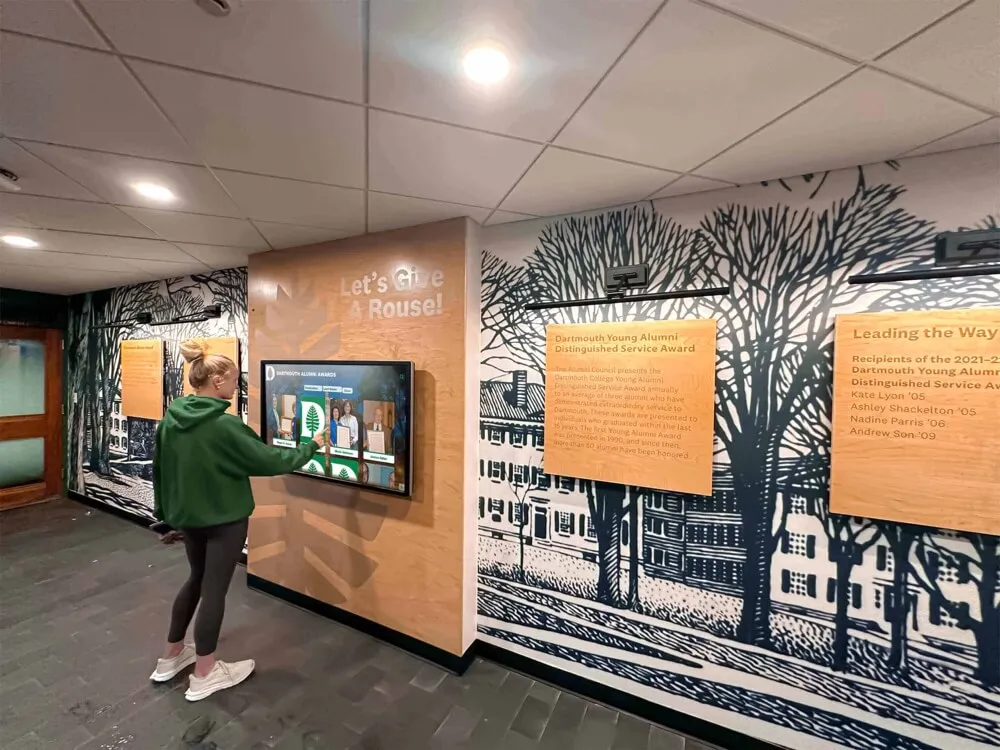
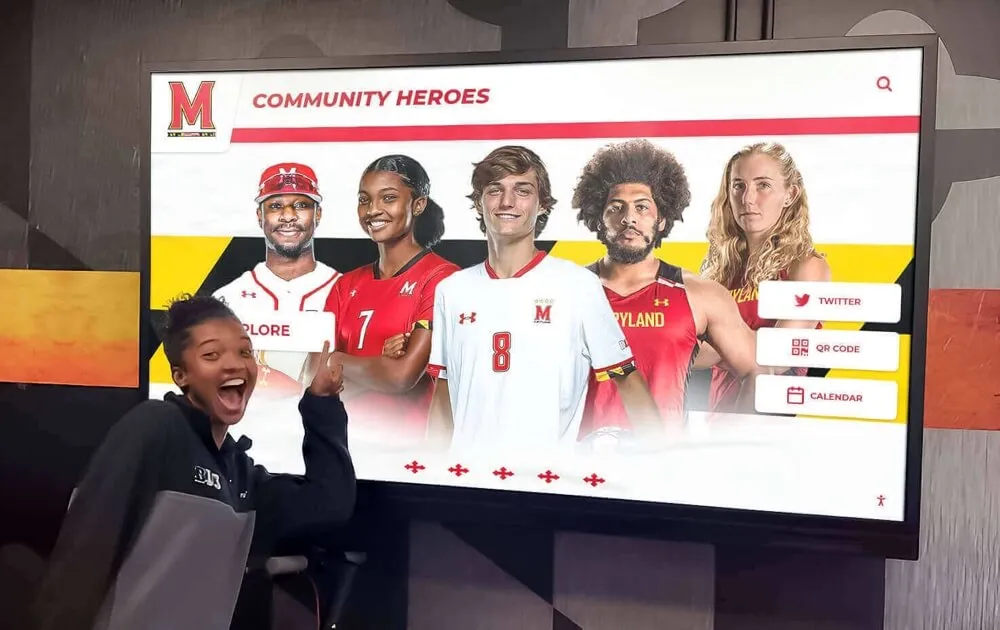
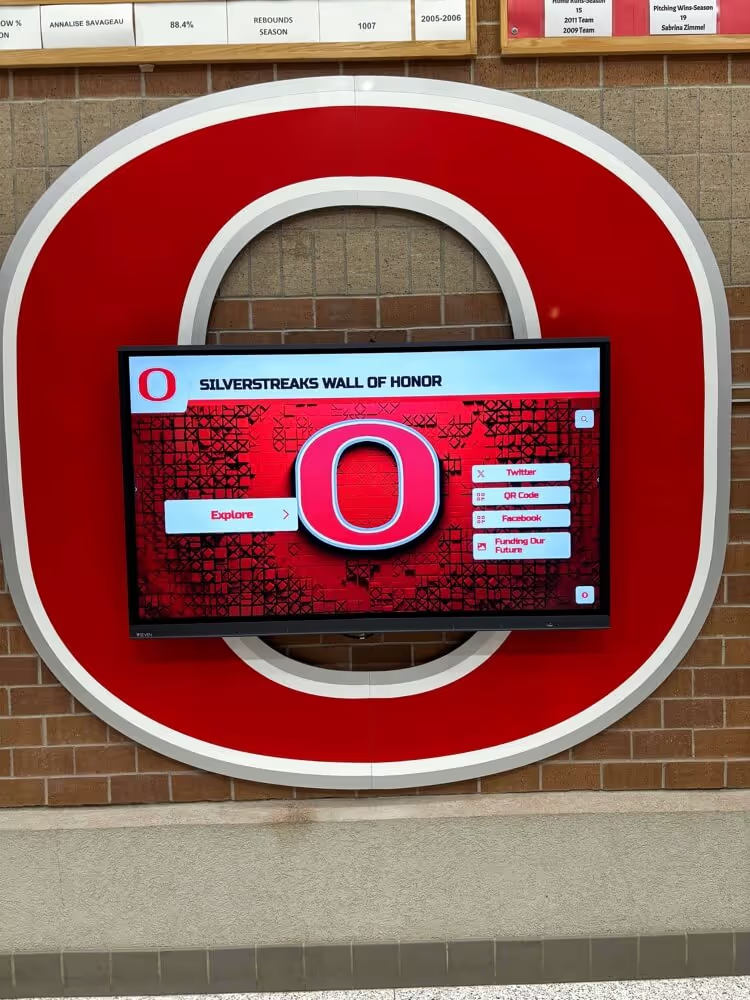
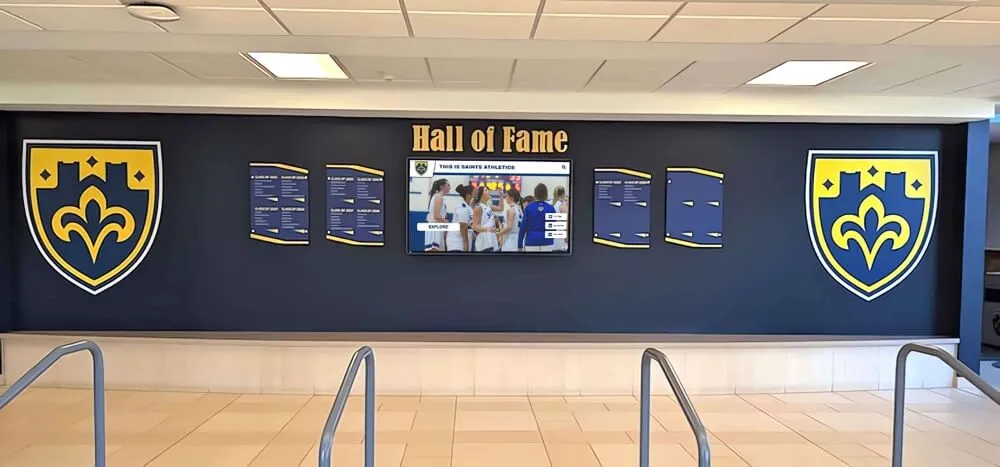
Interactive displays enable deep exploration of complete achievement portfolios
Scholarship recipients deserve prominent recognition celebrating both academic merit and financial achievement, demonstrating tangible benefits of FBLA and FFA participation to prospective chapter members.
Traditional Recognition Limitations for Career Education Programs
Understanding conventional display constraints reveals why many schools seek better alternatives for celebrating FBLA and FFA excellence.
Physical Space Constraints
Traditional trophy cases and plaque walls face inherent capacity limitations:
Finite Display Capacity
Schools maintaining physical displays for FBLA and FFA achievements encounter the same space problems affecting all recognition programs—as years accumulate and programs grow, physical capacity fills completely. Administrators face difficult choices: remove historical recognition to accommodate current achievements, expand expensive physical displays, or leave recent accomplishments unrecognized.
These decisions create problems regardless of approach. Eliminating historical recognition erases program legacy and institutional memory connecting current students to chapter traditions. Physical expansion proves cost-prohibitive while consuming valuable facility space. Failing to recognize current achievements demoralizes active participants and signals that career education excellence receives lower institutional priority than other achievement forms.
Visibility and Location Challenges
FBLA and FFA recognition often appears only in agricultural education facilities, business classrooms, or program-specific spaces limiting visibility to students already involved in these organizations. This isolation reduces recognition impact on broader school communities while missing opportunities to recruit prospective members by demonstrating program excellence.
When career education recognition hides in specialty spaces while athletic achievements dominate main lobbies and common areas, schools inadvertently communicate that athletic success deserves greater celebration than career preparation excellence—despite career education providing direct workforce preparation and economic opportunity.
Inequitable Recognition Distribution
Physical space limitations force schools to prioritize certain achievements over others. National competition victories receive prominence while regional success, degree progression, scholarship awards, officer service, and community impact projects remain unacknowledged despite representing valuable contributions and significant accomplishment.
This prioritization creates recognition systems favoring students already achieving at highest levels while undervaluing contributions from participants at all engagement stages. Comprehensive programs should celebrate national champions alongside Greenhand Degree recipients and first-time regional competitors, ensuring recognition opportunities exist throughout chapter membership.
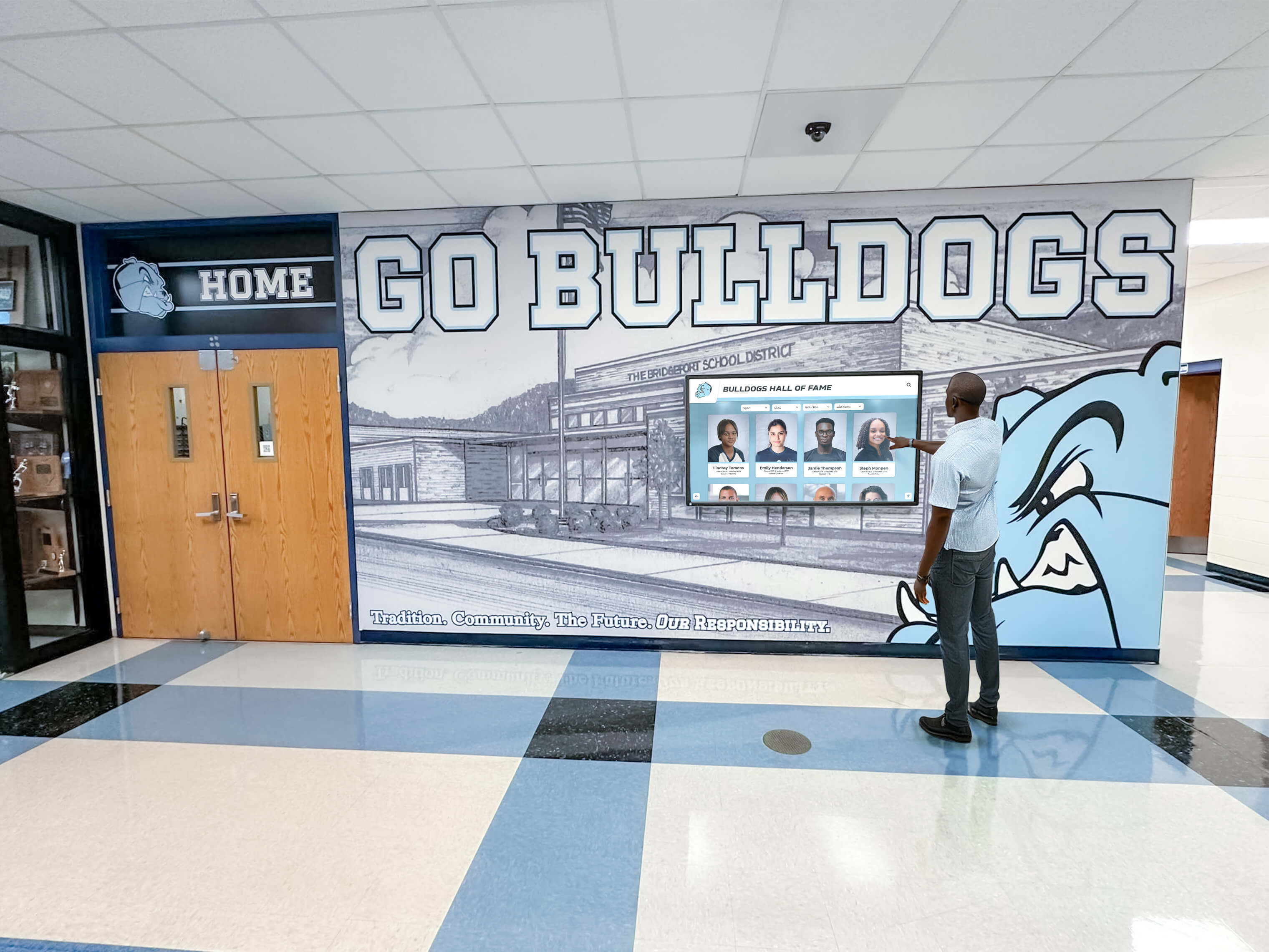
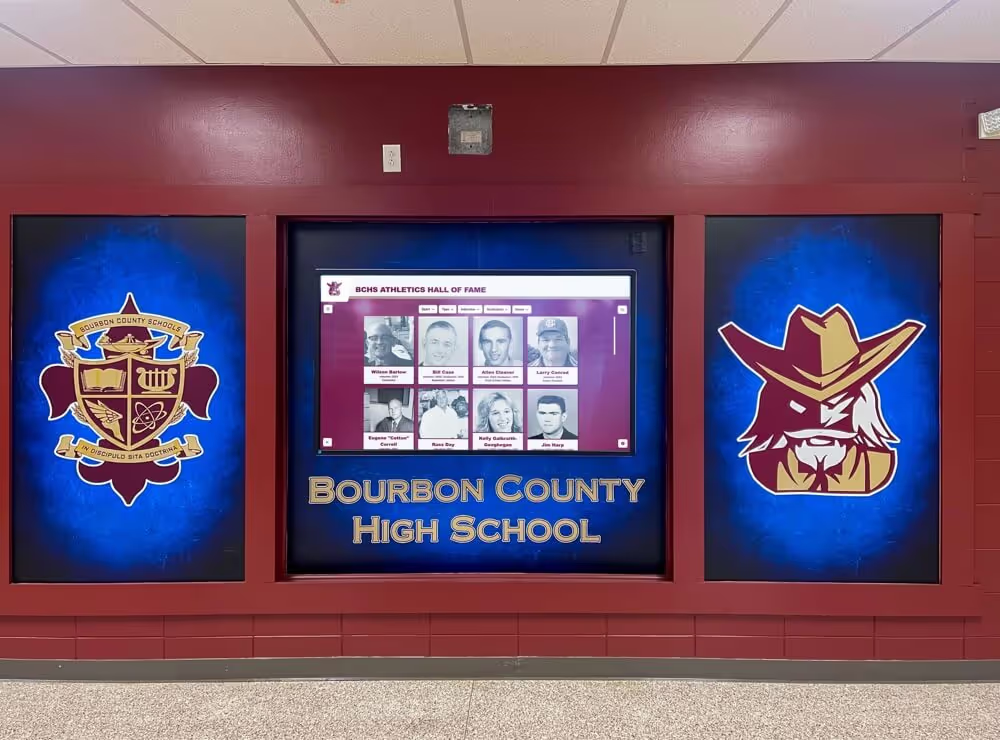
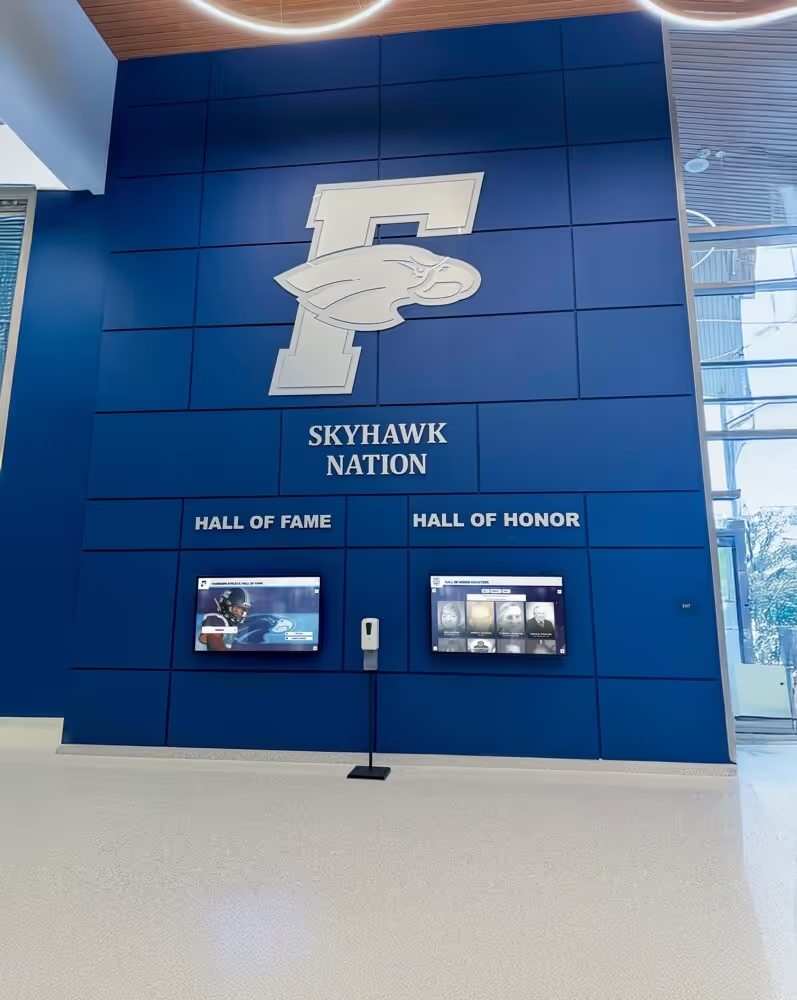
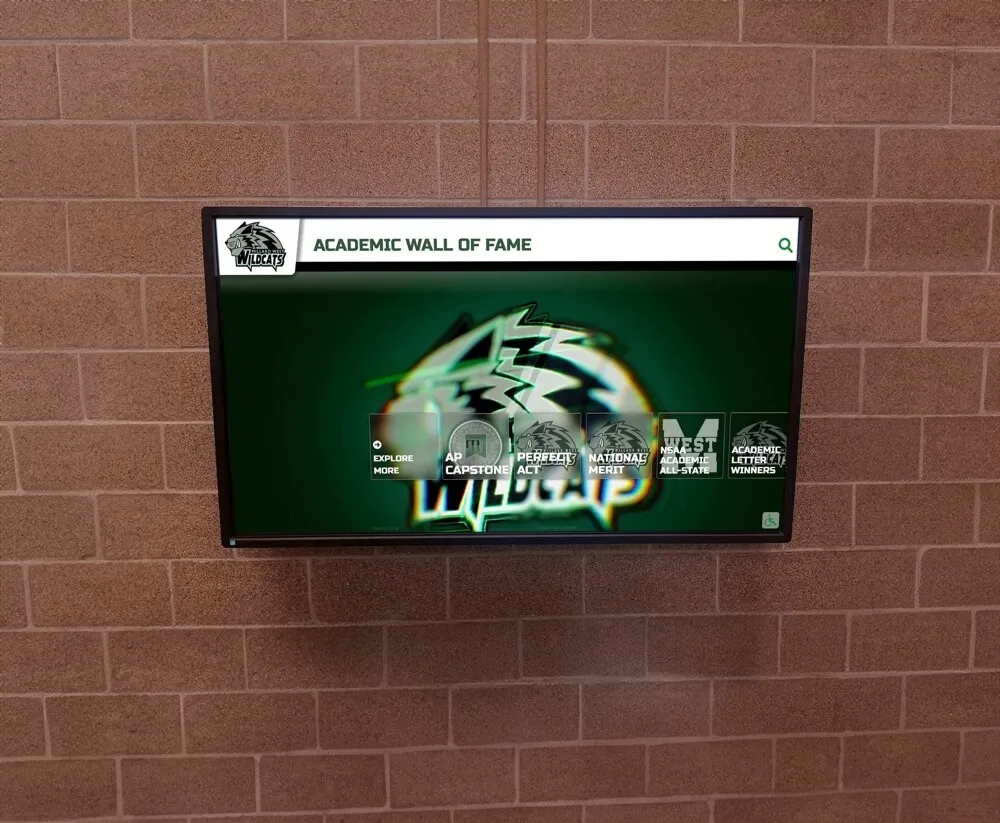
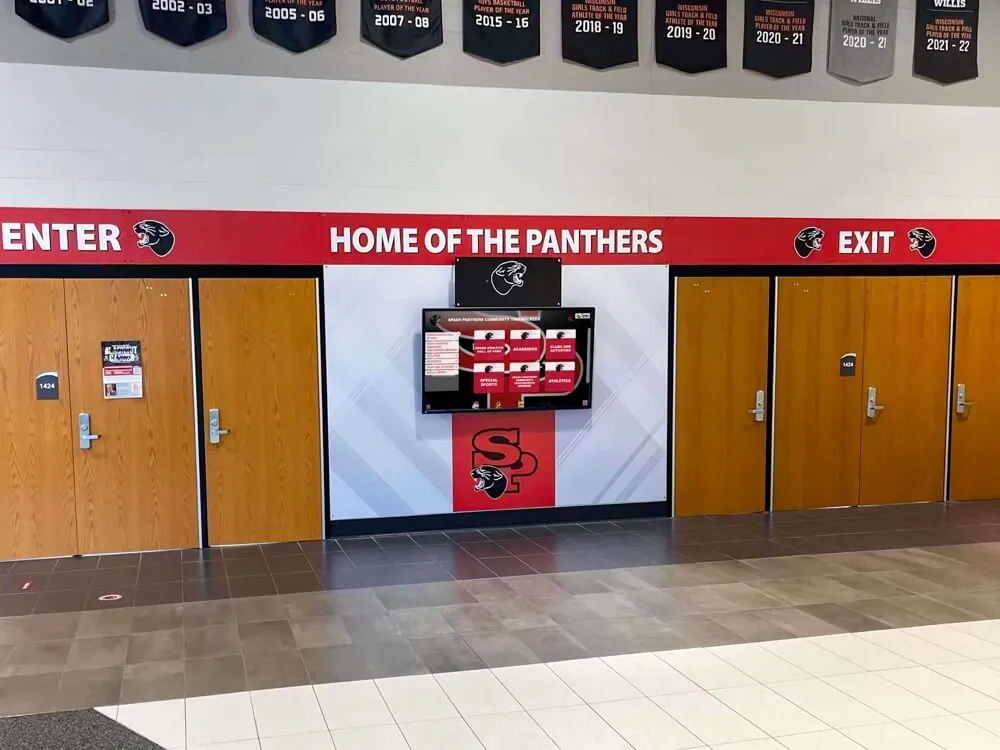
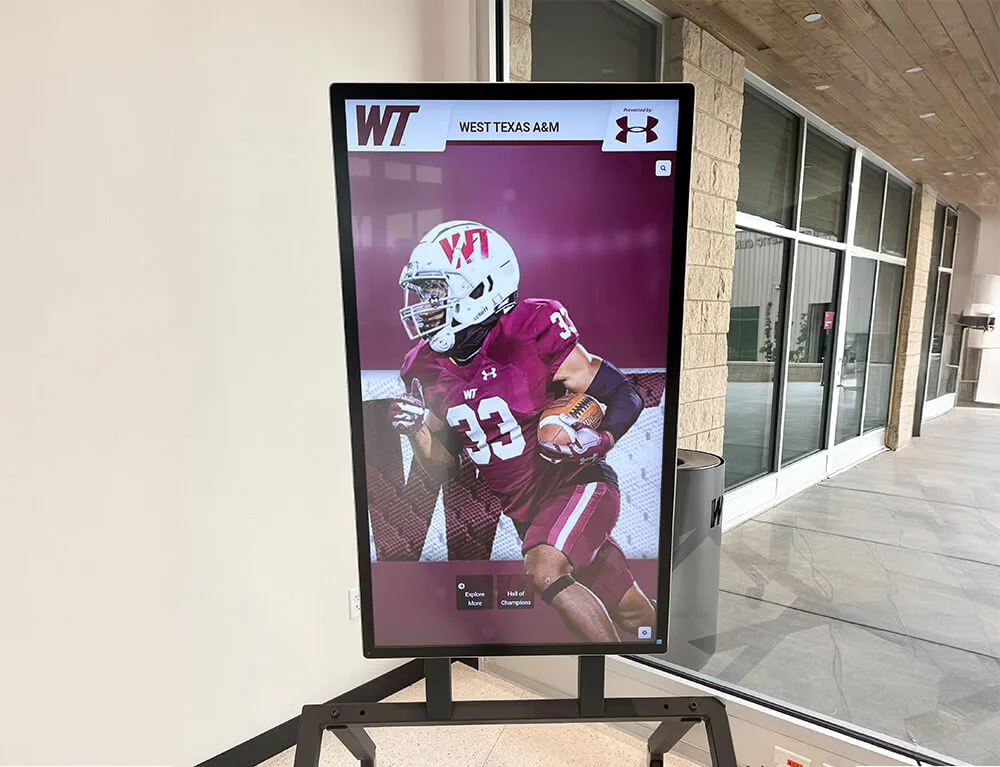
Accessible displays in high-traffic locations ensure career education visibility
Maintenance and Update Challenges
Traditional recognition creates ongoing administrative burden:
Manual Update Requirements
Adding achievements to physical trophy cases or plaque walls requires someone physically accessing displays, installing new elements, and maintaining organization. State competition results from March conferences might not appear in recognition systems until May, dramatically reducing motivational impact through delayed acknowledgment.
This lag between achievement and recognition weakens psychological reinforcement that makes recognition effective. Students receiving national competition placement in June deserve immediate celebration rather than waiting until fall semester when recognition feels disconnected from accomplishment context.
Inconsistent Maintenance Quality
Agricultural education teachers and business education instructors managing FBLA and FFA programs alongside full teaching responsibilities often struggle to consistently update recognition displays. Cases become outdated, plaques tarnish, organization deteriorates, and recognition systems lose effectiveness through neglect—not from lack of caring but from time constraints and competing priorities.
Limited Content Depth
Traditional trophies and plaques accommodate only basic information—names, competition categories, placement levels, years. The context making accomplishments meaningful—competition field strength, project descriptions, degree progression stories, career aspirations, post-graduation paths—remains invisible, reducing recognition meaning and inspirational impact.
A national FBLA competition victory represents vastly different achievement compared to regional recognition, yet traditional displays provide no context distinguishing accomplishment scale. FFA degree progression spanning four years of documented agricultural work appears as simple plaque text rather than celebrated journey demonstrating sustained commitment and skill development.
Schools implementing digital recognition platforms for CTE programs overcome these traditional limitations while creating engaging recognition experiences impossible with static trophy cases and plaque walls.
Cost and Environmental Considerations
Physical recognition carries hidden expenses:
Escalating Trophy and Plaque Costs
Individual trophies for every competitive placement, achievement level, and recognition category create substantial recurring expenses. A single state FBLA competition might generate 20+ trophy purchases annually. Multiply across both organizations, multiple competition levels, and various achievement categories, and schools face thousands of dollars in recognition expenses each year.
Plaques for degree progression, scholarship recipients, officer recognition, and special awards add additional costs. Over decades, these expenses accumulate to tens of thousands of dollars while creating display elements requiring physical space and maintenance.
Environmental Impact
Traditional trophies contribute to environmental concerns through manufacturing processes, material consumption, and eventual disposal. Many trophies end in landfills when recipients discard them during moves or life transitions. Schools implementing sustainable digital recognition alternatives reduce environmental footprint while creating more meaningful, enduring acknowledgment.
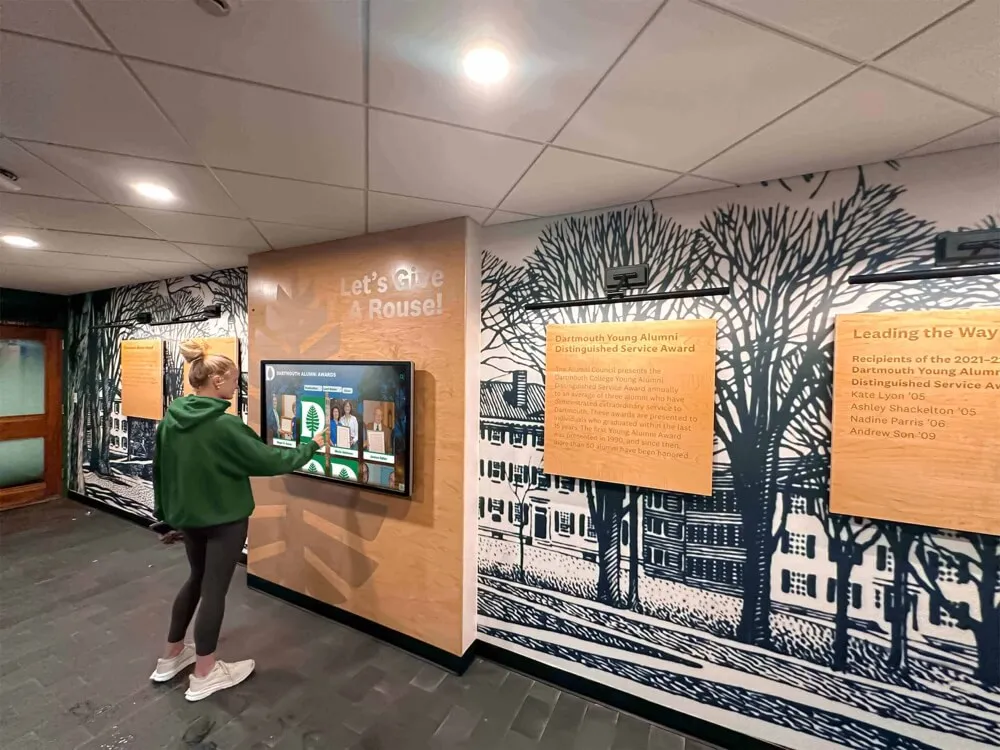
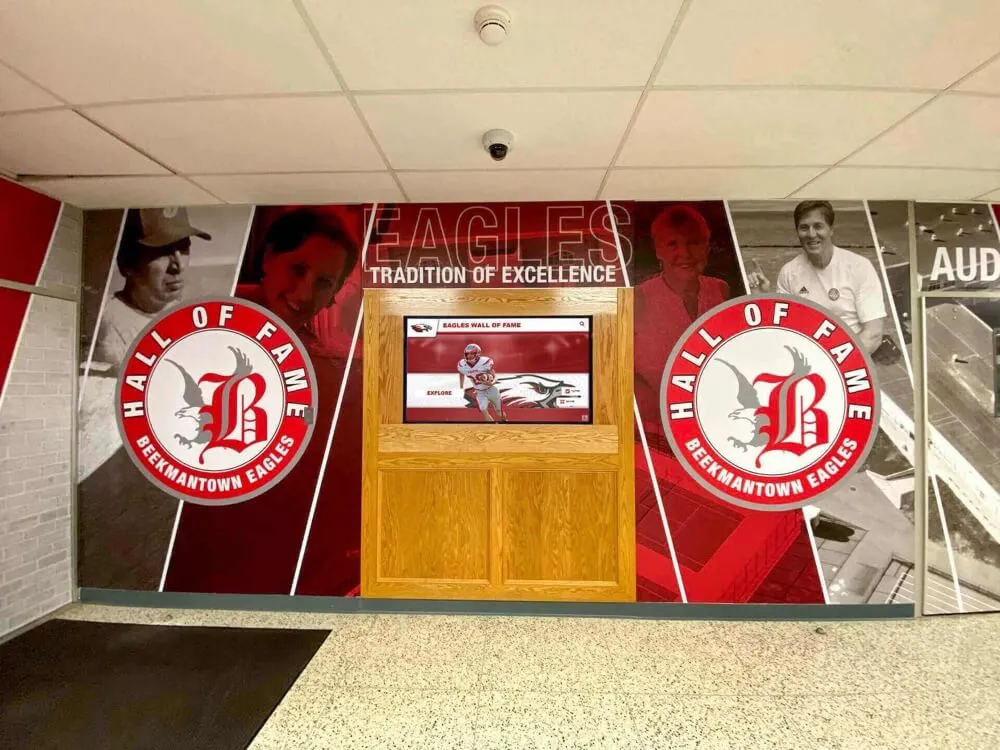
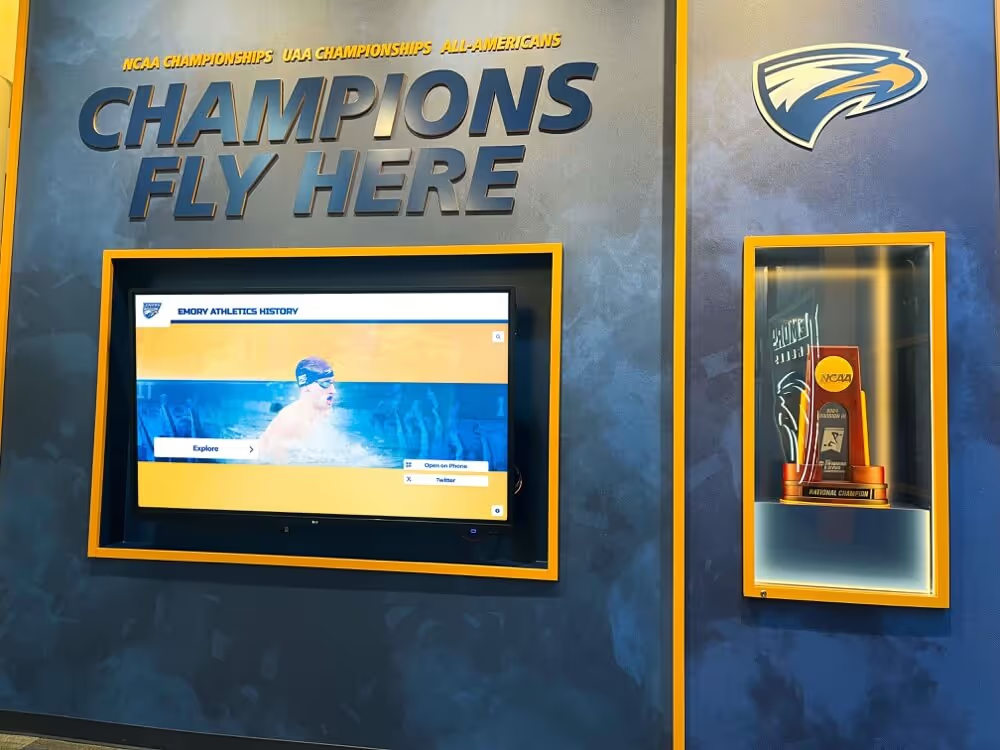
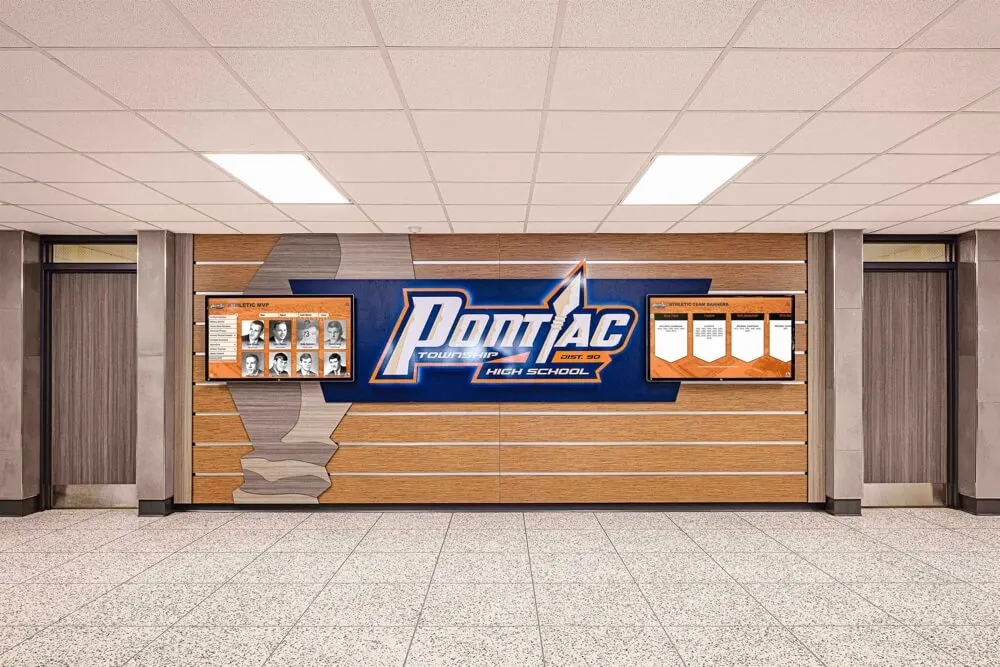
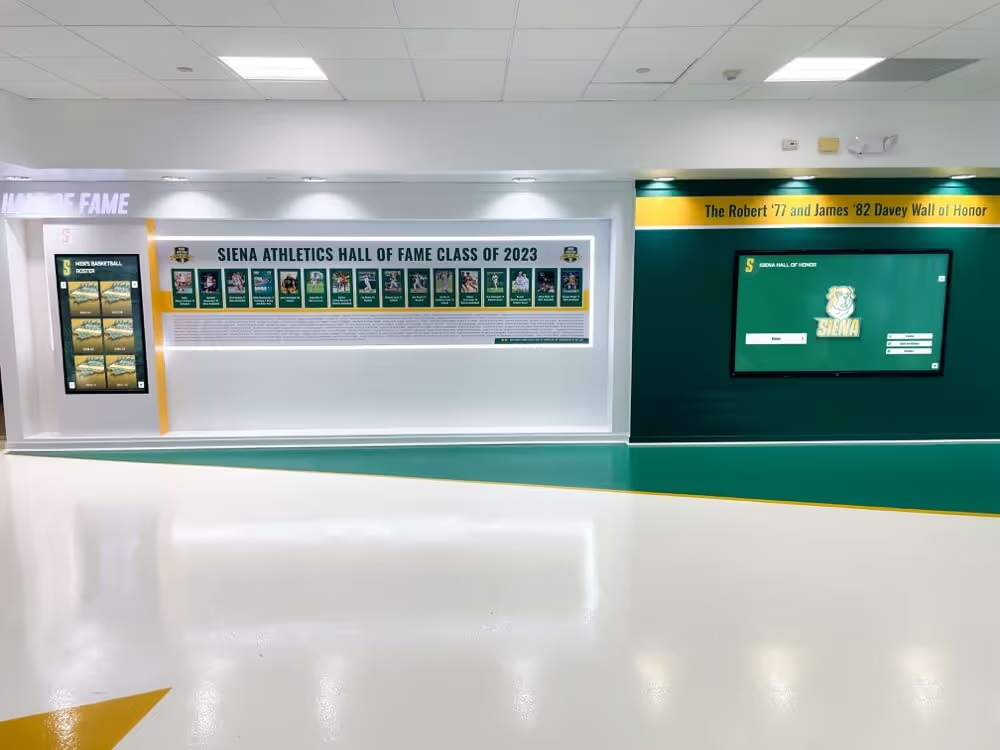
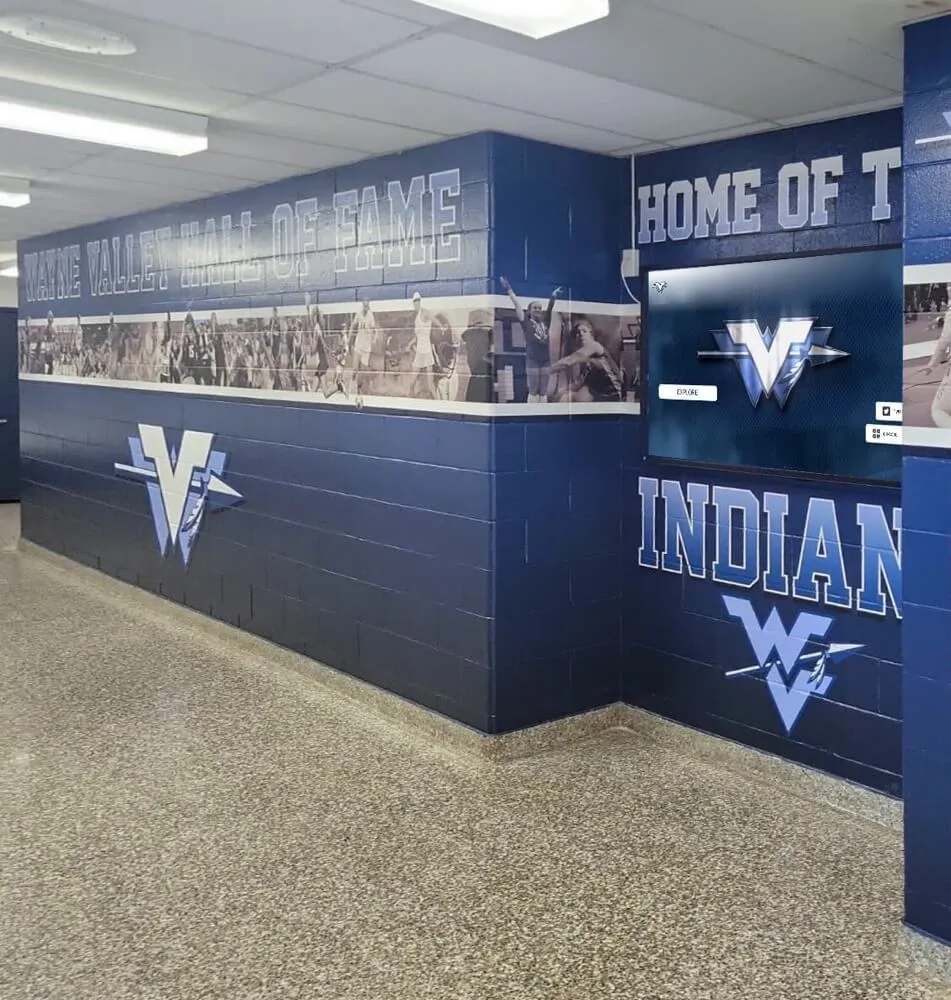
Modern installations integrate aesthetically with facility design while providing unlimited capacity
Digital Recognition Solutions for FBLA and FFA
Modern platforms transform how schools celebrate career education excellence, creating warm, personalized experiences that honor achievements while building engaged communities.
Unlimited Recognition Capacity
Digital systems eliminate space constraints fundamentally:
Comprehensive Achievement Archives
Digital platforms accommodate unlimited inductees across all FBLA and FFA recognition categories—competitive events, degree progressions, scholarship recipients, officer service, community impact projects, and historical chapter accomplishments. Schools recognize every deserving achievement without difficult prioritization decisions forced by physical space limitations.
Single installations showcase current achievements alongside decades of historical recognition, creating institutional memory connecting present participants to program traditions. Students discover accomplished alumni who walked the same paths, creating inspiration and mentorship connections impossible with physical displays removing historical recognition to accommodate current achievers.
Multi-Dimensional Recognition Programs
Digital displays present competitive achievements, degree progressions, officer contributions, career and technical education excellence, scholarship awards, and community service impact simultaneously. This comprehensive approach ensures all contribution types receive appropriate visibility rather than competing for limited physical space.
Schools implementing comprehensive systems celebrate national FBLA competitors alongside BAA Capstone completers, American FFA Degree recipients with chapter officer contributors, and state champions with dedicated community service leaders—demonstrating institutional values honoring diverse excellence forms within career education.
Flexible Organization and Filtering
Digital platforms enable intuitive organization by achievement type, year, competition category, degree level, or individual student. Visitors search for specific students, filter by graduation year, browse degree holders by level, or explore competition results by category—creating personalized discovery experiences impossible with static physical displays presenting fixed organization.
Rich Multimedia Recognition Profiles
Unlike simple name engravings, digital recognition presents complete achievement narratives:
Comprehensive Student Profiles
Modern recognition includes:
- Complete competitive event results and placement history
- FFA degree progression documentation with project descriptions
- FBLA Business Achievement Awards journey across all earned levels
- Chapter officer positions and leadership service periods
- Scholarship awards and financial recognition
- Community service contributions and impact projects
- Supervised Agricultural Experience (SAE) documentation
- College destinations and career paths
- Post-graduation success stories and alumni updates
This comprehensive presentation celebrates complete students rather than reducing individuals to trophy collections, demonstrating multiple paths to career education excellence and inspiring current members through relatable achievement stories.
Visual Content Integration
Digital profiles incorporate:
- Professional portrait photography
- Competition photos from state and national conferences
- Degree ceremony documentation
- Officer service and chapter event images
- SAE project progress documentation
- Community service activity photos
- Video interviews discussing achievement journeys
- Testimonials from advisers and industry mentors
Multimedia integration creates engaging, humanizing recognition that builds connections between current students and accomplished program alumni while demonstrating that excellence reflects dedication rather than innate unreachable talent.
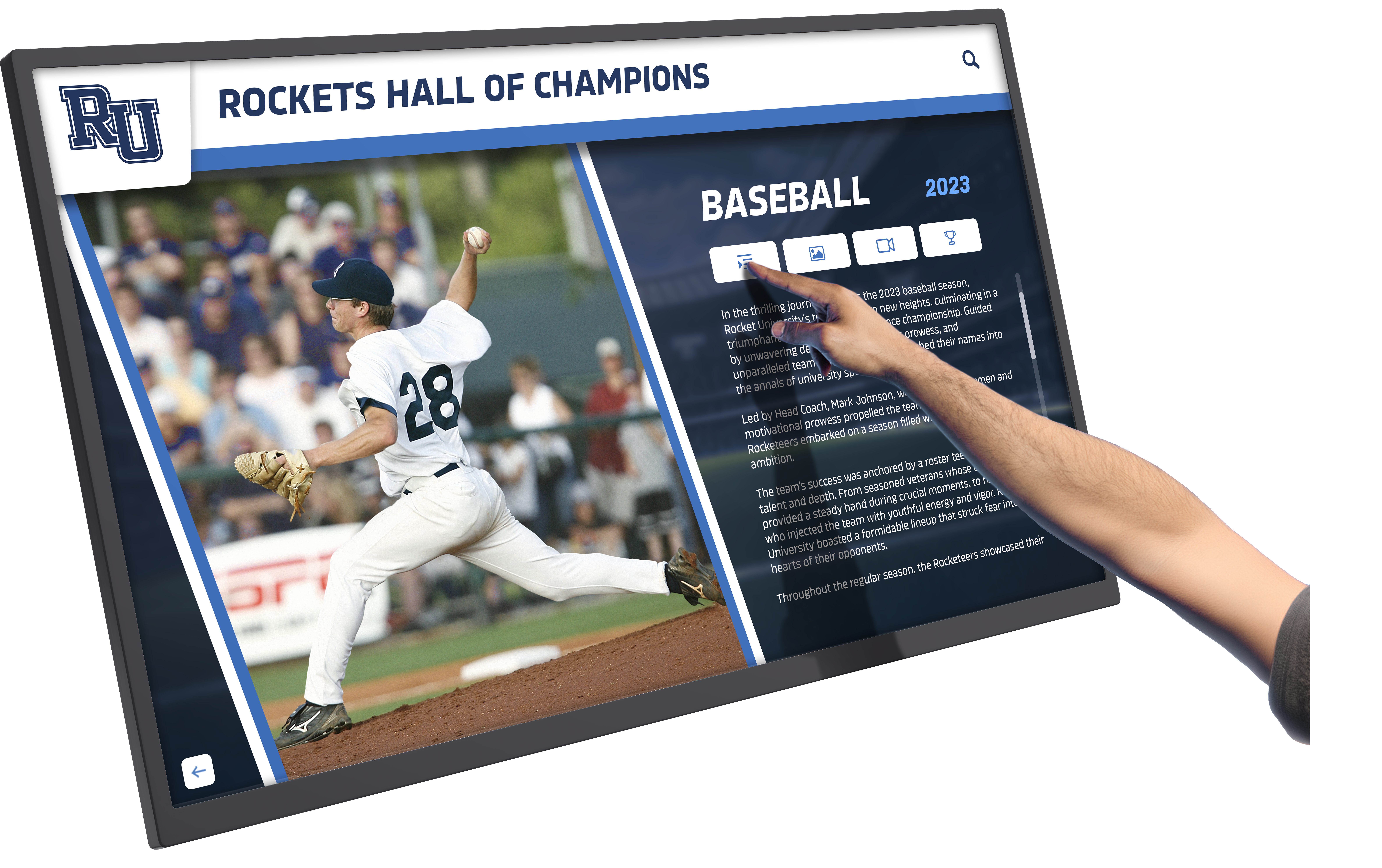
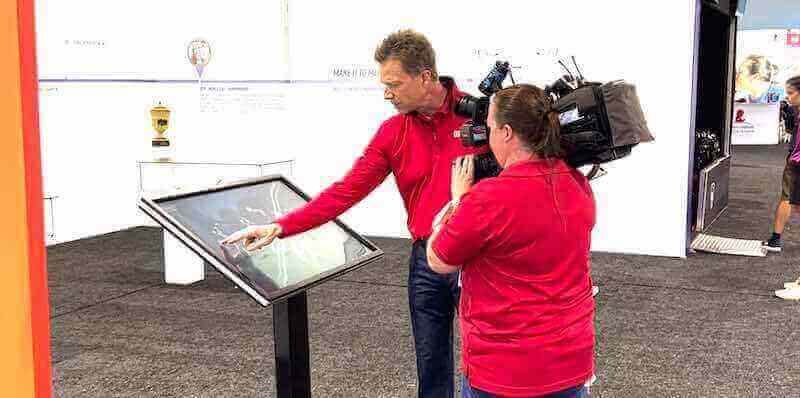
Intuitive interfaces encourage exploration and discovery of achievement details
Interactive Exploration Features
Touchscreen interfaces enable personalized discovery:
Advanced Search Capabilities
Large recognition collections become navigable through sophisticated tools:
- Name search enabling quick location of specific students
- Year filtering showing recognition by graduating class
- Achievement type filtering—degrees, competitions, scholarships, officer service
- Competition category searches finding specialists in business or agricultural disciplines
- College destination filtering discovering alumni at specific universities
- Career field filters connecting current students with professionals in aspirational industries
Search capabilities prove particularly valuable during school events, tours, and alumni gatherings when visitors seek specific individuals or explore institutional traditions connecting to personal interests.
Dynamic Content Rotation
Automated featured content ensures all recognized students receive prominent visibility over time. Anniversary highlights, degree milestone celebrations, and competitive success collections keep displays fresh for repeat viewers while preventing any recognition from becoming buried in large archives.
Recognition displays can highlight monthly featured achievers, showcase current competition season results, celebrate historical program milestones, or present themed collections around agricultural months, business education week, or career and technical education celebrations.
Social Sharing and Extended Reach
Digital profiles enable sharing via social media, email, and messaging, extending recognition beyond physical campus visits. Recognized students share accomplishments with extended family, industry mentors, college admissions representatives, and potential employers, amplifying recognition impact while promoting FBLA and FFA program excellence to broader audiences.
This extended reach creates organic recruitment as prospective students and families discover program achievements through social networks, building awareness and interest before formal campus visits or information sessions.
Simplified Content Management
Cloud-based platforms eliminate administrative burden:
Remote Updates from Anywhere
Advisers and staff update recognition content from any internet-connected device without touching physical hardware. Add State FFA Convention results Sunday evening from home after weekend competitions, eliminating delays between achievement and recognition that reduce motivational impact.
Update capabilities enable:
- Immediate recognition additions as achievements occur
- Scheduled publishing coordinating announcements with ceremonies
- Draft mode enabling content review before publication
- Bulk imports for historical achievement data
- Collaborative editing allowing multiple staff contributions
- Media library management organizing photos and documents
Template-Based Profile Creation
Standardized templates ensure consistent, professional recognition presentation while accelerating content creation. Templates incorporate all relevant fields for FBLA or FFA achievements—competition details, degree information, officer positions, scholarship data—guiding content creators through comprehensive profile development without requiring design expertise.
Organizations implementing efficient digital recognition workflows report 80-90% reduction in administrative time spent maintaining recognition systems compared to physical trophy cases and plaque walls.
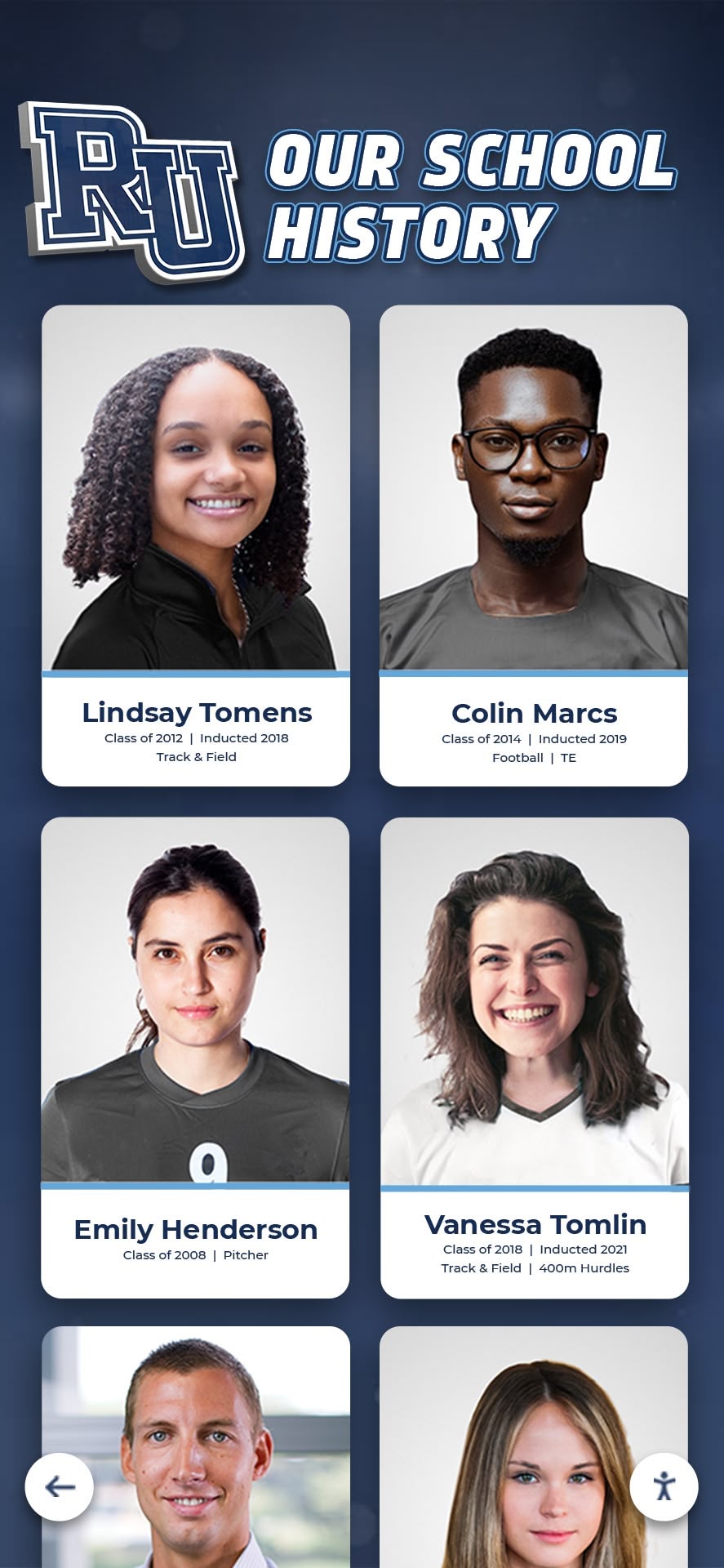
Systematic recognition documents complete career education journeys from entry through graduation
Implementing FBLA and FFA Recognition Programs
Strategic planning ensures recognition programs honor achievements effectively while remaining sustainable for staff.
Recognition Scope and Criteria Definition
Comprehensive programs celebrate diverse accomplishments:
FBLA Recognition Categories
Complete systems acknowledge:
- Competitive event placement at all levels (regional through national)
- Business Achievement Awards progression (Contributor through Capstone)
- Chapter officer positions and leadership service
- State and national officer election and service
- Scholarship recipients and financial awards
- Community service hour milestones and project leadership
- National Leadership Conference participation
- Chapter recognition (Champion Chapter, Gold Seal awards)
FFA Recognition Categories
Systematic programs celebrate:
- Degree progression (Discovery through American FFA Degree)
- Career Development Event placement at all competition levels
- Proficiency award recipients in specialized agricultural areas
- Chapter, district, state, and national officer service
- Scholarship awards and financial recognition
- Supervised Agricultural Experience (SAE) excellence
- Community service and agricultural advocacy leadership
- National FFA Convention participation and delegation service
Schools should establish clear criteria for each recognition category while ensuring opportunities exist for students at all participation and achievement levels—from first-year chapter members through national-level excellence.
Strategic Display Placement
Location dramatically affects recognition visibility and impact:
High-Traffic Common Areas
Install primary FBLA and FFA displays in main lobbies, cafeterias, library entrances, or central hallways where entire school communities naturally gather. High visibility signals institutional commitment to career education while ensuring recognition reaches audiences beyond current chapter members, supporting recruitment and program awareness.
Strategic placement in common areas creates daily inspiration for current students while demonstrating to prospective families during campus tours that the institution values career preparation alongside traditional academics and athletics.
Career and Technical Education Spaces
Dedicated displays in agricultural education facilities, business classrooms, or career centers provide focused recognition for program participants. Proximity to daily program activities keeps achievements visible for current members while reinforcing chapter culture and tradition.
These program-specific installations complement rather than replace common area recognition, creating comprehensive visibility ensuring career education excellence receives institutional prominence comparable to athletic achievement.
Integrated Academic Recognition Zones
Schools creating dedicated academic recognition areas often include FBLA and FFA alongside traditional academic honors, National Honor Society induction, AP Scholar designations, and other intellectual accomplishments. This consolidated approach elevates career and technical education to prominence alongside academic excellence, demonstrating institutional cultures valuing diverse educational pathways.
Virtual and Web-Based Accessibility
Web-accessible recognition extends beyond physical campus to engage families, alumni, industry partners, college recruiters, and the broader professional community. Mobile-optimized platforms ensure accessibility across devices while enabling social sharing that amplifies recognition impact and program visibility.
Solutions like Rocket Alumni Solutions provide both physical touchscreen installations and web-based platforms, creating comprehensive recognition ecosystems that maximize visibility and engagement across all community segments.
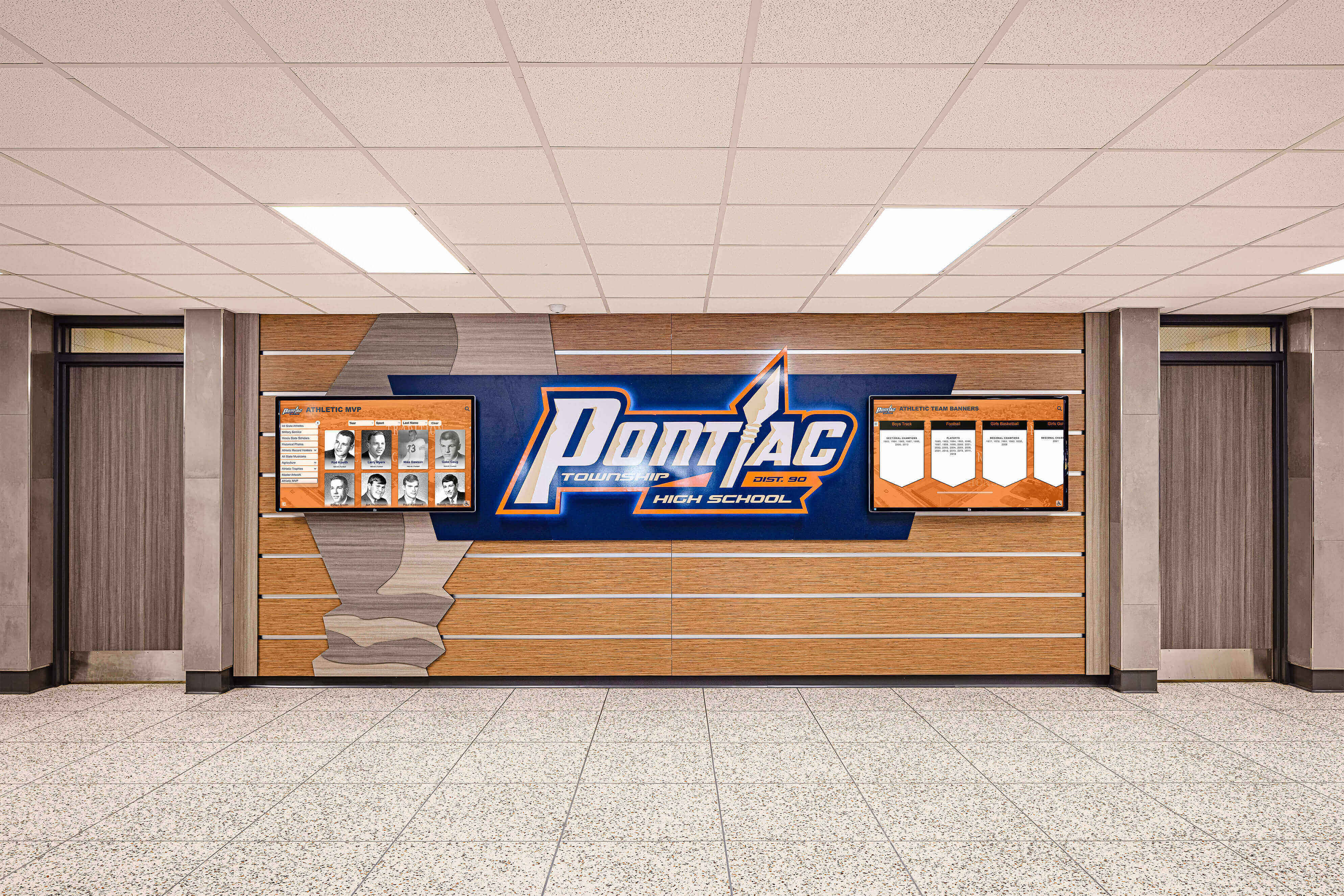
Coordinated installations celebrate athletic and academic excellence with equal prominence
Content Development and Gathering
Effective recognition requires systematic information collection:
Achievement Data Documentation
Maintain comprehensive records including:
- Complete competition results with placement details and field size
- Degree application documentation with SAE project descriptions
- Officer service periods and leadership contributions
- Scholarship award amounts and sponsoring organizations
- Community service hours and project impact documentation
- Convention participation and conference attendance
- Business Achievement Awards progression timelines
- Post-graduation college destinations and career paths
Visual Content Collection
Gather high-quality media:
- Professional student portraits for consistent presentation
- Competition photos from state and national conferences
- Degree ceremony and award recognition event documentation
- Officer installation and leadership activity photos
- SAE project progress images and completion documentation
- Community service project photos
- Video testimonials from students, advisers, and industry mentors
- Historical chapter photos preserving program evolution
Student and Adviser Contributions
Collect personal perspectives making recognition meaningful:
- Student reflections on how FBLA/FFA impacted career goals
- Adviser commentary on student development and growth trajectories
- Memorable competition moments or project achievements
- Challenges overcome demonstrating resilience and dedication
- Connections between program experience and future aspirations
- Alumni updates on college majors, careers, and continued agricultural/business involvement
Organizations implementing comprehensive student recognition systems adapt these content strategies to career education contexts, creating meaningful celebration beyond basic achievement statistics.
Technology Platform Selection
Choosing appropriate systems ensures long-term program success:
Recognition-Specific Platforms
Purpose-built solutions like Rocket Alumni Solutions deliver capabilities specifically optimized for celebrating achievements:
- Pre-configured templates for FBLA and FFA recognition categories
- Intuitive content management requiring minimal technical expertise
- Built-in search and filtering optimized for student discovery
- Proven accessibility compliance ensuring inclusive experiences
- Scalable architecture accommodating unlimited growth
- Professional implementation support and ongoing training
Specialized platforms enable faster deployment while ensuring functionality matches career education recognition needs rather than requiring extensive customization of generic content management systems.
Hardware Considerations
Physical installations require appropriate equipment:
- Commercial-grade touchscreen displays designed for continuous operation
- Screen sizes appropriate for viewing distances (typically 43"-65" for hallway installations)
- 4K resolution ensuring text readability and professional photo quality
- Responsive touchscreen technology supporting intuitive interaction
- Professional mounting creating ADA-accessible, secure installations
- Network connectivity enabling remote content management
- Environmental considerations for agricultural education facilities
Schools should consult with providers offering complete solution delivery including hardware recommendations, installation coordination, and technical support rather than managing multiple vendors independently.
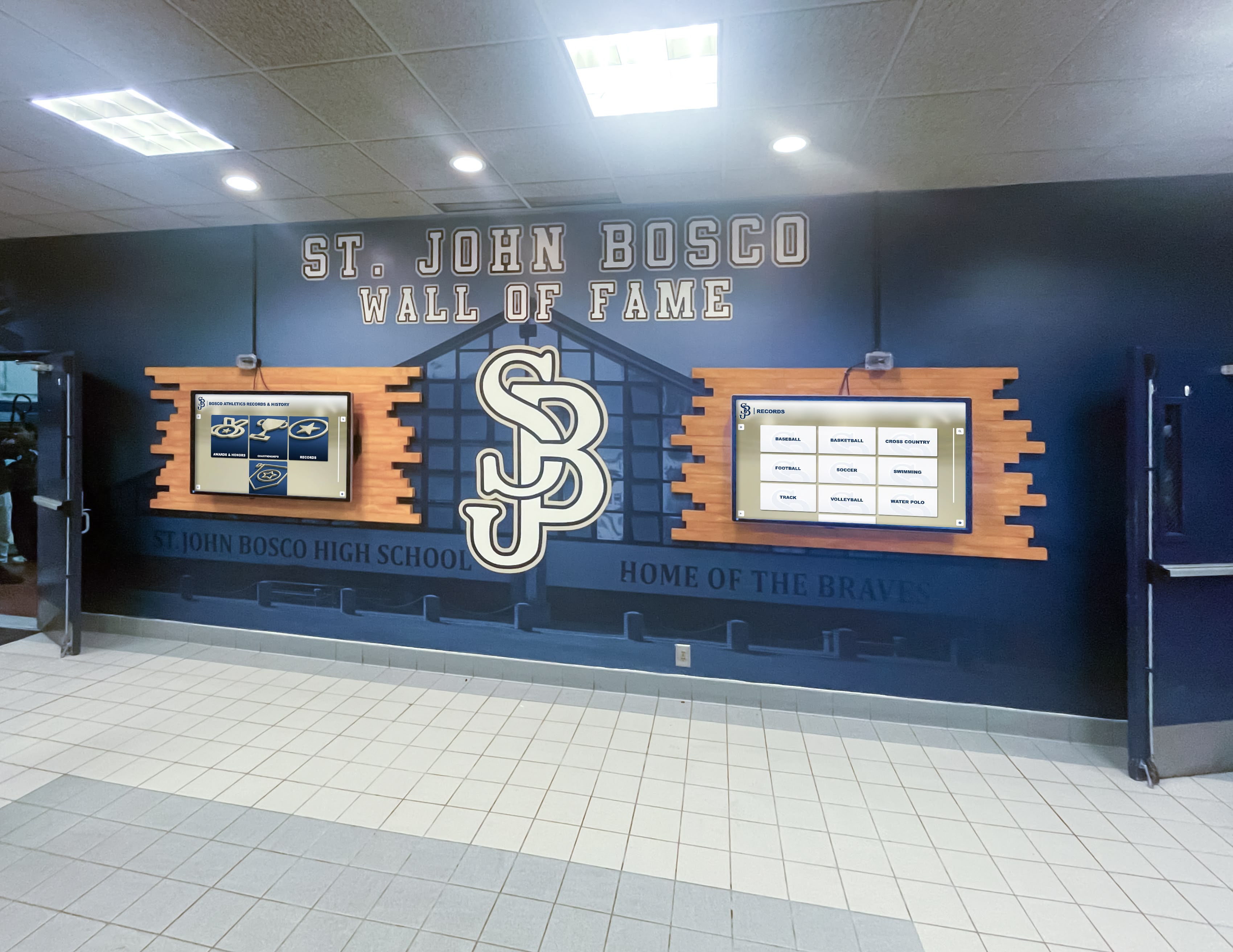
Multi-display installations provide comprehensive recognition capacity for growing programs
Integrating FBLA and FFA Recognition with Broader CTE Celebration
Career education recognition works best within comprehensive acknowledgment of all career and technical education pathways.
Multi-Organization CTE Recognition
Schools offering diverse career education programs should integrate recognition:
Coordinated Career Organization Celebration
Comprehensive systems showcase FBLA and FFA alongside:
- DECA (marketing and business management)
- HOSA (health occupations)
- SkillsUSA (trade and technical skills)
- TSA (technology student association)
- Family, Career and Community Leaders of America (FCCLA)
- National Art Honor Society (creative careers)
Integrated platforms demonstrate institutional commitment to career preparation across all pathways while enabling students to discover connections between organizations and explore multiple career interests during secondary education.
Industry Certification Recognition
Students pursuing career education often earn industry certifications alongside organization participation:
- Agricultural certifications (pesticide application, equipment operation, animal handling)
- Business technology certifications (Microsoft Office, QuickBooks, Adobe Creative Suite)
- Professional communication credentials
- Project management certifications
- Entrepreneurship competencies
Recognition systems acknowledging these multi-dimensional achievements demonstrate comprehensive career preparation rather than isolated program participation, enhancing student marketability for college programs and employment opportunities.
Work-Based Learning Integration
Connect FBLA and FFA recognition with:
- Internship experiences and placement success
- Apprenticeship program participation
- Work-based learning accomplishments
- Job shadowing and industry exposure
- Employment during secondary education
- Career exploration and job readiness demonstrations
This integration positions career student organizations within comprehensive preparation ecosystems rather than standalone activities, demonstrating how FBLA and FFA complement and enhance broader career development.
Building Career Readiness Culture
Strategic recognition shapes institutional culture:
Normalizing Career Education Excellence
Prominent FBLA and FFA recognition signals that career preparation and business/agricultural knowledge deserve celebration comparable to traditional academic and athletic achievement. When career education accomplishments receive visibility matching other school programs, culture shifts toward valuing diverse excellence forms and multiple pathways to success.
This cultural transformation benefits all students by demonstrating that college-bound, career-focused, and vocational pathways all deserve institutional support and celebration—reducing stigma sometimes associated with career and technical education while attracting talented students to these programs.
Inspiring Future Participation
Current recognition motivates prospective chapter members. Underclassmen seeing prominent celebration of FBLA and FFA achievement understand program value and available recognition opportunities, improving recruitment and retention while building stronger chapters with sustained membership across grade levels.
Recognition particularly impacts first-generation college students and students from agricultural or business-owning families who see themselves reflected in celebrated alumni pursuing similar backgrounds and interests.
Alumni Connection and Mentorship
Recognition platforms including alumni FBLA and FFA achievements create mentorship opportunities. Current students discover successful agricultural professionals, business leaders, and entrepreneurs who participated in these organizations during high school years, facilitating networking and mentorship relationships supporting college and career development.
Organizations implementing alumni engagement through recognition demonstrate how celebration creates ongoing community connections beyond current student populations, building professional networks benefiting chapter members for decades.
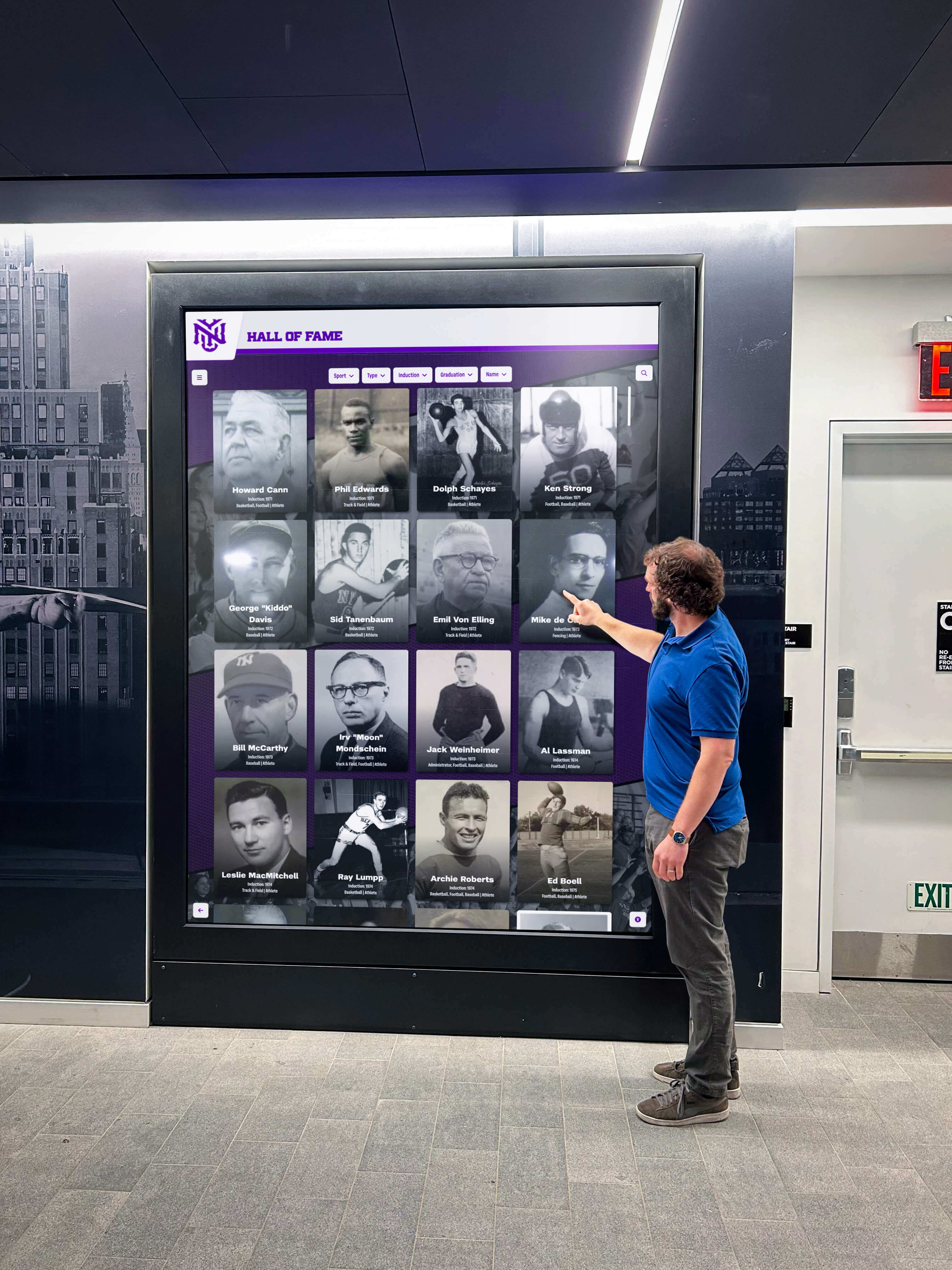
Family-friendly displays create gathering points celebrating career education traditions
Measuring FBLA and FFA Recognition Program Success
Systematic evaluation demonstrates recognition value and identifies improvement opportunities.
Quantitative Success Metrics
Program Participation Indicators
Track recognition impact through:
- Chapter membership recruitment and retention rates
- Competition participation breadth across available events
- Degree progression completion rates (percentage earning advanced degrees)
- Officer candidate pools and leadership position interest
- State and national conference attendance and delegation size
- Scholarship application and award success rates
Schools implementing comprehensive recognition often observe 20-40% membership increases as enhanced visibility improves program prestige and recruitment appeal while demonstrating institutional support attracting talented students.
Achievement Trend Analysis
Monitor competitive and recognition success:
- Regional and district competition advancement rates over time
- State competition qualification and placement trends
- National conference participation and recognition frequency
- Degree completion rates by level and year
- Historical achievement comparison showing program growth
- Recognition distribution ensuring equitable opportunity access
Recognition creates performance motivation, with many schools reporting improved competitive results and degree completion following enhanced celebration of FBLA and FFA achievements.
Engagement Analytics
Digital platforms provide detailed metrics:
- Physical display interaction frequency and session duration
- Web platform traffic and user engagement patterns
- Search queries revealing popular content and discovery methods
- Social sharing frequency and recognition reach amplification
- Return visitor patterns demonstrating sustained community interest
- Peak engagement periods informing content strategy
These analytics enable data-informed program improvement while demonstrating recognition ROI to administrators and stakeholders evaluating career education investments.
Qualitative Impact Assessment
Student Perspective Feedback
Gather insights through:
- Recognition program awareness among chapter members
- Perceived fairness of recognition criteria and selection
- Motivational impact of visible achievement celebration
- Influence on continued program participation and leadership pursuit
- Pride in chapter traditions and institutional connections
- Career aspiration formation influenced by alumni recognition
Regular feedback ensures recognition resonates with primary beneficiaries while identifying opportunities to enhance motivational impact.
Family and Community Reception
Assess broader stakeholder impact:
- Family satisfaction with achievement celebration
- Community understanding of FBLA and FFA program excellence
- Industry partner awareness and engagement with programs
- Alumni responses to recognition and ongoing institutional connection
- Prospective family responses during admission processes
- Media coverage and public perception of career education quality
Comprehensive stakeholder feedback reveals whether recognition creates intended effects transforming cold achievement lists into warm, engaging community experiences building lasting pride and connection.
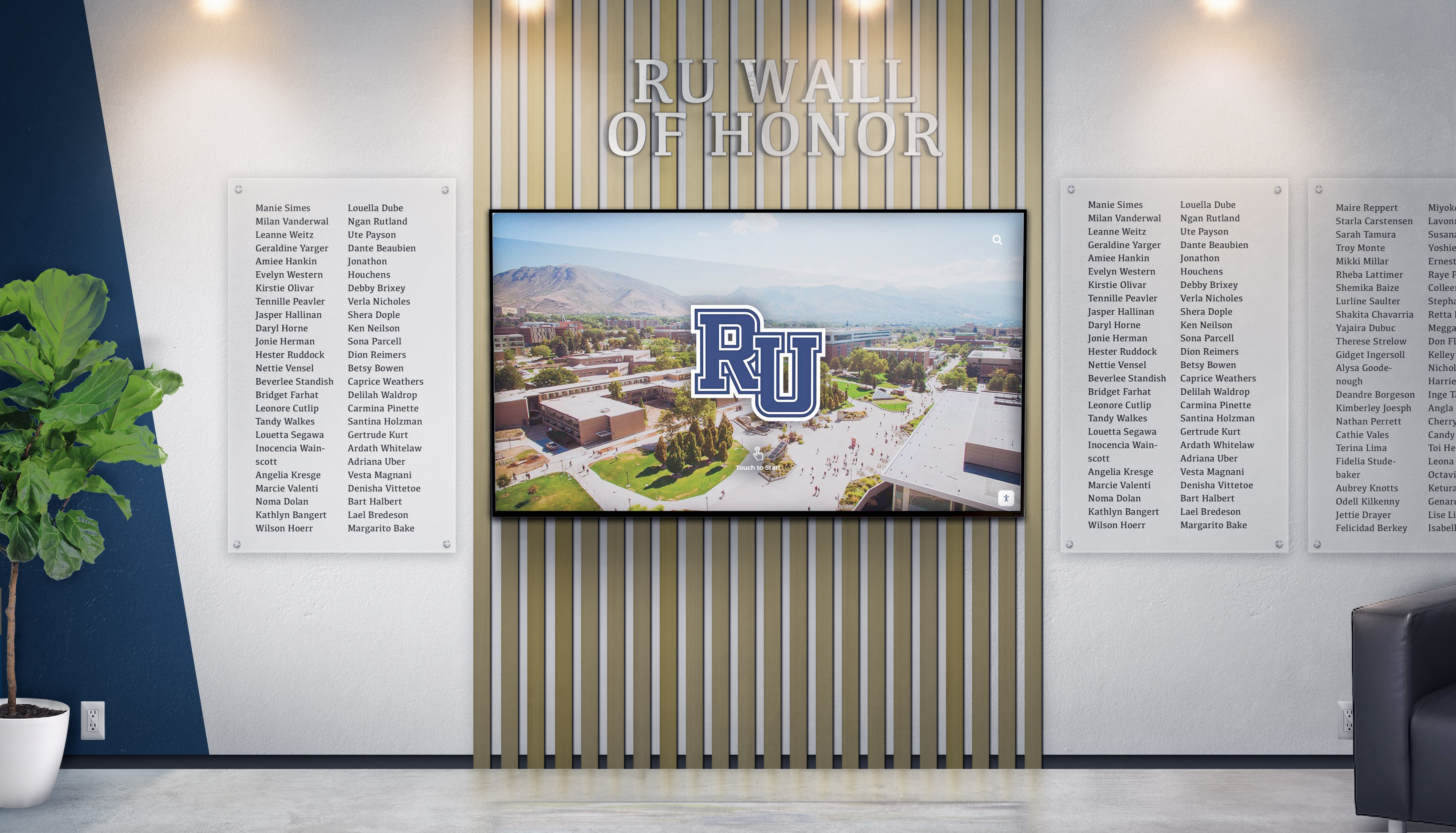
Hybrid systems combine digital innovation with traditional recognition elements
Special Considerations for Career Education Recognition
FBLA and FFA programs present unique opportunities and challenges requiring thoughtful approaches.
Recognizing Diverse Excellence Forms
Avoid recognition systems favoring specific achievement types:
Equitable Multi-Category Recognition
Ensure competitive events, degree progressions, officer service, scholarship recipients, and community contributions receive comparable recognition capacity and visibility. Excellence takes many forms within career student organizations, and recognition systems should remain neutral, celebrating achievement across all dimensions equally.
National competition qualifiers naturally accumulate more accolades than students competing only regionally or pursuing degree progressions without competition participation. Ensure recognition systems celebrate participation milestones, improvement trajectories, and contribution diversity—not solely top-tier competitive placement and national championships.
Team and Individual Balance
Many FBLA and FFA activities involve both collaborative success and individual achievement. Recognition should honor teamwork in parliamentary procedure competitions, group presentations, and chapter projects alongside personal accomplishment in individual competitive events and degree progressions.
This balance demonstrates that career success requires both independent capability and collaborative skill—preparing students for workplace environments demanding both individual contribution and team coordination.
Managing Academic and Career Balance
Recognition requires cultural awareness:
Integrated Academic-Career Recognition
Many successful FBLA and FFA students also excel in traditional academics. Recognize students appearing on both academic honor rolls and career organization achievement displays, celebrating connections between general intellectual excellence and specialized career competencies.
This integration reduces false dichotomies positioning academic and career education as competing pathways rather than complementary approaches to comprehensive student development and future preparation.
Diverse Post-Secondary Path Celebration
FBLA and FFA prepare students for various trajectories—four-year universities pursuing agricultural sciences or business degrees, community college career programs, agricultural production careers, direct business employment, military service, entrepreneurship. Recognition should celebrate diverse post-graduation pathways rather than privileging any single definition of success.
This inclusive approach honors how career education serves students with different goals, circumstances, and aspirations while demonstrating that program value extends across all post-secondary possibilities.
Professional Development Beyond Trophies
Recognize professional skill development alongside competition success:
- Public speaking confidence and presentation polish
- Professional communication and business correspondence
- Interview preparation and workplace readiness
- Networking capability and relationship-building skills
- Leadership development and organizational management
- Problem-solving and critical thinking applications
These competencies prove as valuable as trophies for students’ futures, deserving systematic acknowledgment that prepares participants for comprehensive professional success.
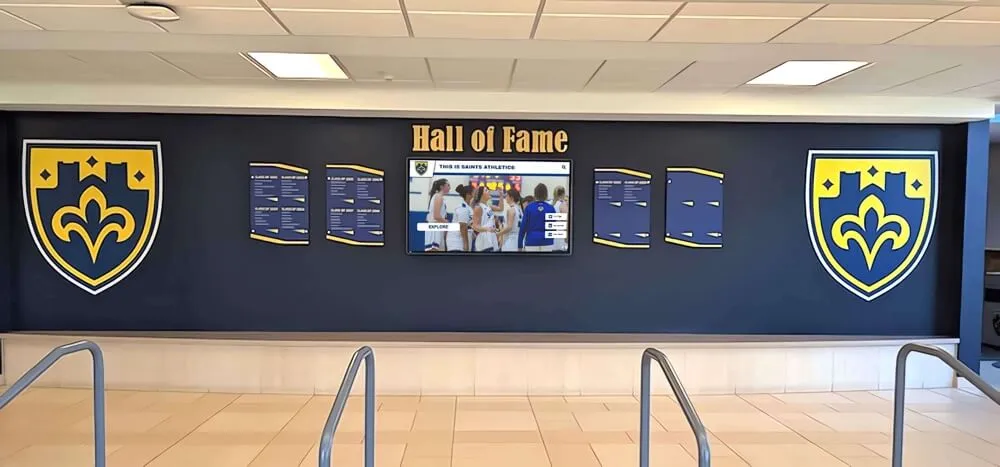
Integrated systems honor tradition while providing modern engagement capabilities
Implementation Roadmap for FBLA and FFA Recognition
Systematic planning ensures successful program launches.
Planning Phase (Weeks 1-3)
Stakeholder Engagement
Gather input from:
- FBLA and FFA advisers about recognition priorities and historical achievements
- Chapter officers regarding current recognition adequacy and desired improvements
- Administration concerning budget parameters and installation locations
- Agricultural education and business education departments
- Industry advisory councils and community business/agricultural partners
Recognition Framework Definition
Establish clear parameters:
- Specific achievement categories and recognition criteria for each organization
- Degree progression and competitive event recognition thresholds
- Officer service and leadership contribution acknowledgment approaches
- Scholarship and special recognition inclusion
- Historical archive scope and content priorities
- Update schedules and content management responsibilities
Technology and Budget Planning
Develop comprehensive implementation approach:
- Evaluate recognition platform options and capabilities
- Assess physical display placement locations for visibility and accessibility
- Consider solutions like Rocket Alumni Solutions offering purpose-built career education recognition
- Develop budget including hardware, software, implementation, and ongoing management
- Identify funding sources—school budget, chapter fundraising, industry partner sponsorship, agricultural education facility funds
Content Development Phase (Weeks 4-6)
Historical Achievement Documentation
Compile comprehensive records:
- Competition results and placement records across years
- Degree recipient documentation by level and year
- Officer service records and leadership position history
- Scholarship recipient information and award amounts
- Photos from conferences, competitions, and chapter events
- Alumni interviews about FBLA/FFA impact on careers
- Initial recognition profiles for launch content
Visual Design and Branding
Create consistent presentation:
- Customize display templates reflecting school and organizational identity
- Design category-specific icons and graphics for FBLA/FFA elements
- Create visual hierarchy emphasizing achievement levels appropriately
- Ensure brand consistency across physical and web platforms
- Develop mobile-responsive layouts for extended access
Process Documentation
Establish sustainable management:
- Content management procedures and workflows
- Update schedules coordinating with competition calendars
- Recognition nomination and selection processes
- Quality standards for photos, descriptions, and achievement documentation
- Staff and officer training on content management systems
Launch Phase (Weeks 7-8)
Physical Installation and Integration
Complete technical deployment:
- Install hardware at designated high-visibility locations
- Configure network connectivity and remote management capabilities
- Test touchscreen functionality and display performance across all features
- Verify web platform integration and mobile device accessibility
- Ensure ADA compliance and appropriate mounting for all users
Organizations implementing professional recognition displays benefit from comprehensive installation planning ensuring reliable operation and polished appearance.
Launch Communication and Celebration
Generate excitement and awareness:
- Announce recognition program through multiple communication channels
- Promote display locations and web access methods to students and families
- Celebrate initially recognized individuals with special acknowledgment
- Host dedication event involving industry partners and agricultural/business community
- Generate media coverage highlighting institutional career education commitment
Training and Documentation
Ensure sustainable management:
- Train advisers, officers, and administrative staff on content management
- Provide ongoing technical support resources and documentation
- Create user guides for common tasks and troubleshooting
- Establish helpdesk processes for technical issues
- Schedule follow-up training sessions as staff changes occur
Ongoing Management Phase
Regular Content Updates
Maintain recognition currency:
- Add competition results within 48 hours of events
- Update degree recognitions promptly upon completion and ceremony
- Rotate featured content maintaining freshness for repeat viewers
- Archive historical content while preserving accessibility
- Expand recognition categories as programs evolve and grow
Continuous Improvement
Refine based on experience:
- Monitor engagement analytics identifying popular content and usage patterns
- Gather ongoing feedback from chapter members, families, and advisers
- Benchmark recognition distribution ensuring equitable opportunity
- Adjust criteria and approaches based on program evolution
- Expand recognition programs based on success and stakeholder input
Program Marketing and Visibility
Sustain recognition awareness:
- Maintain visibility through ongoing school communications
- Share recognition externally for recruitment and community engagement
- Integrate recognition into chapter meetings, recruitment events, and parent information sessions
- Celebrate program milestones and achievement records
- Continuously reinforce recognition program value to all stakeholders
Transform Your FBLA & FFA Recognition Program
Discover how modern digital recognition displays can help you celebrate career education excellence, motivate chapter members, and build the engaged communities your FBLA and FFA programs deserve.
Book a DemoBeyond Recognition: Building Complete Career Education Culture
Recognition represents one component of comprehensive FBLA and FFA program development.
Creating Warm, Engaged Career Education Communities
Recognition contributes to broader community building through what we call “digital warming”—transformation of cold, impersonal achievement lists into vibrant, personalized experiences drawing members deeper into chapter engagement.
When schools implement engaging digital FBLA and FFA recognition, they create environments where students discover themselves and chapter mates through intuitive search, explore role models and program traditions connecting past to present, and maintain ongoing connections through accessible, meaningful recognition experiences available from any internet-connected device.
Alumni Engagement and Professional Networking
Recognition platforms connecting current students with accomplished FBLA and FFA alumni create mentorship opportunities, professional networking pathways, and program legacy awareness. Alumni see their achievements preserved and celebrated decades after graduation, maintaining connections to programs that shaped their career development and professional trajectories.
Current chapter members discover alumni now leading businesses, managing agricultural operations, serving in agricultural education roles, or pursuing careers directly connected to their high school FBLA and FFA experiences—creating aspirational models and potential mentorship connections supporting college and career transitions.
Family Understanding and Support
Comprehensive recognition helps families understand FBLA and FFA program demands, achievement significance, and career skills their students develop through participation. This understanding builds family support essential for sustained involvement in time-intensive career education requiring travel, preparation, financial investment, and dedication.
When families see detailed recognition celebrating their students’ competitive achievements, degree progressions, and leadership development, they develop appreciation for program value extending beyond high school participation into lifelong career benefits and professional network development.
Industry Partnership and Community Connection
Visible recognition demonstrates FBLA and FFA program excellence to agricultural businesses, corporate partners, and local industry leaders. This visibility builds pride translating into financial support, mentorship opportunities, internship offerings, SAE project sponsorship, and advocacy for program resources and facilities.
Industry partners seeing systematic recognition of student achievement understand schools’ commitment to career education excellence, making them more willing to invest time, expertise, and resources supporting chapter success and student development.
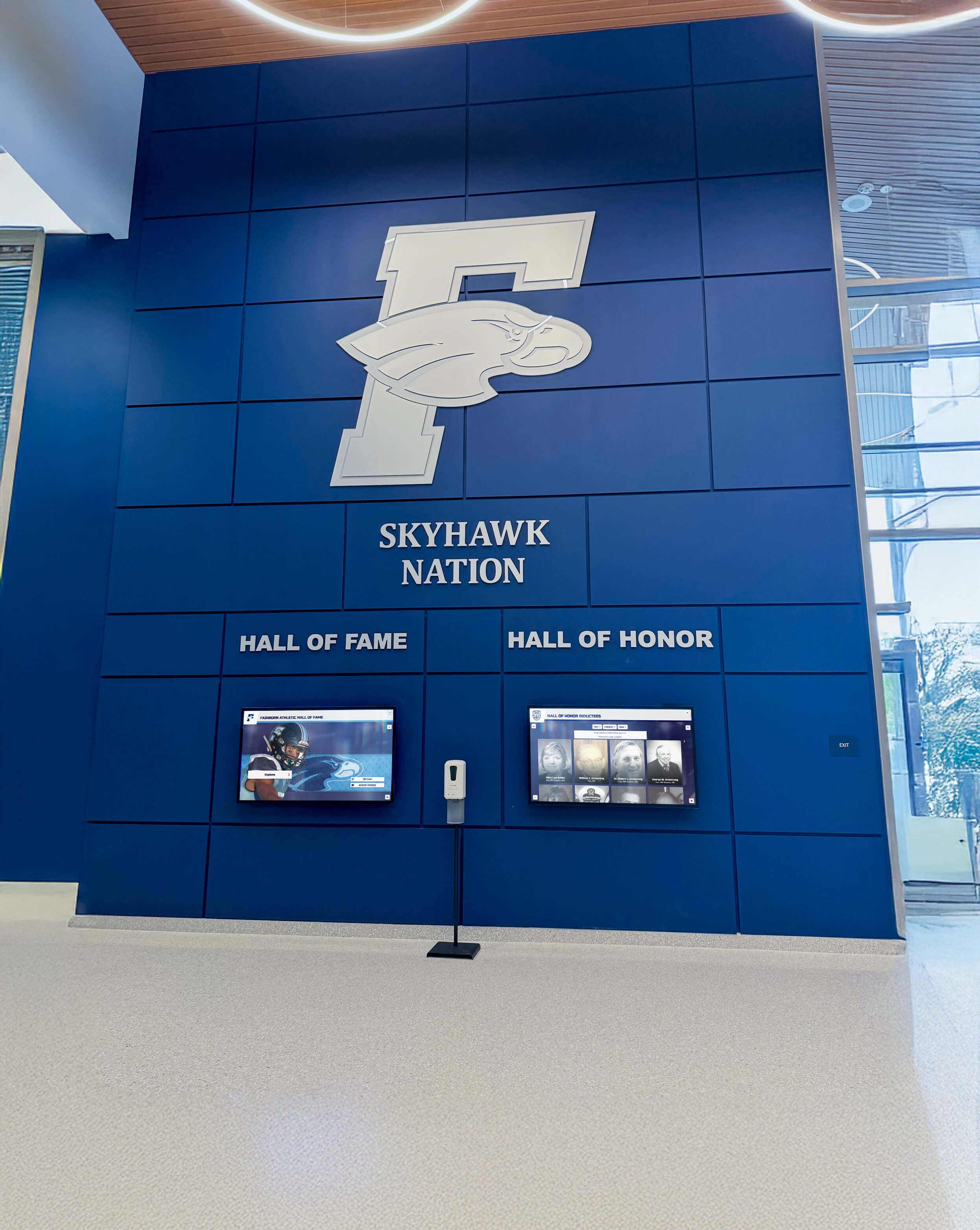
Professional installations create impressive environments celebrating career education traditions and institutional values
Conclusion: Celebrating the Career Excellence FBLA and FFA Develop
FBLA and FFA recognition represents strategic investment in program culture, student motivation, and institutional values communication. When schools systematically celebrate Future Business Leaders of America and Future Farmers of America accomplishments through visible, accessible, meaningful displays, they create environments where career education excellence receives appropriate acknowledgment, chapter traditions build pride and motivation, and students understand that career preparation, agricultural knowledge, and business competency matter as much as any other achievement domain.
The evolution from forgotten trophy cases and isolated bulletin boards toward comprehensive digital recognition reflects broader understanding that recognition impact depends on visibility, accessibility, timeliness, and meaningful content presentation. Modern recognition platforms eliminate traditional constraints enabling unlimited capacity, rich multimedia profiles, interactive exploration, and extended reach ensuring every deserving achievement receives appropriate celebration regardless of accomplishment level, recognition category, or years since achievement occurred.
FBLA and FFA participation transforms students’ career trajectories in ways directly preparing them for professional success. The business knowledge, agricultural expertise, leadership capabilities, public speaking confidence, and professional networking skills developed through these organizations provide documented advantages for college success, career advancement, and lifelong professional development. These benefits deserve recognition matching the time, dedication, and personal growth FBLA and FFA programs demand.
Digital recognition displays provide this visibility while motivating continued excellence, building chapter culture, demonstrating institutional values, and creating warm communities where career-focused achievement flourishes. Implementation success requires strategic planning addressing recognition criteria, display placement, technology selection, content development, and ongoing management commitment.
Schools should begin with clear recognition frameworks acknowledging all achievement forms, engage stakeholders in program design, select appropriate technology platforms, and commit to consistent content updates maintaining program relevance and engagement over time. Purpose-built recognition platforms like Rocket Alumni Solutions deliver capabilities specifically optimized for celebrating achievements while eliminating complexity inherent in custom development or adapting generic systems.
Every FBLA and FFA achievement—from initial chapter membership through American FFA Degree completion, from first regional competition through national championship success, from chapter officer service through state leadership positions—deserves celebration creating the motivation, engagement, and program pride propelling continued excellence. Modern recognition technology makes comprehensive, accessible, impactful acknowledgment achievable for schools committed to building cultures where career education excellence receives recognition it deserves.
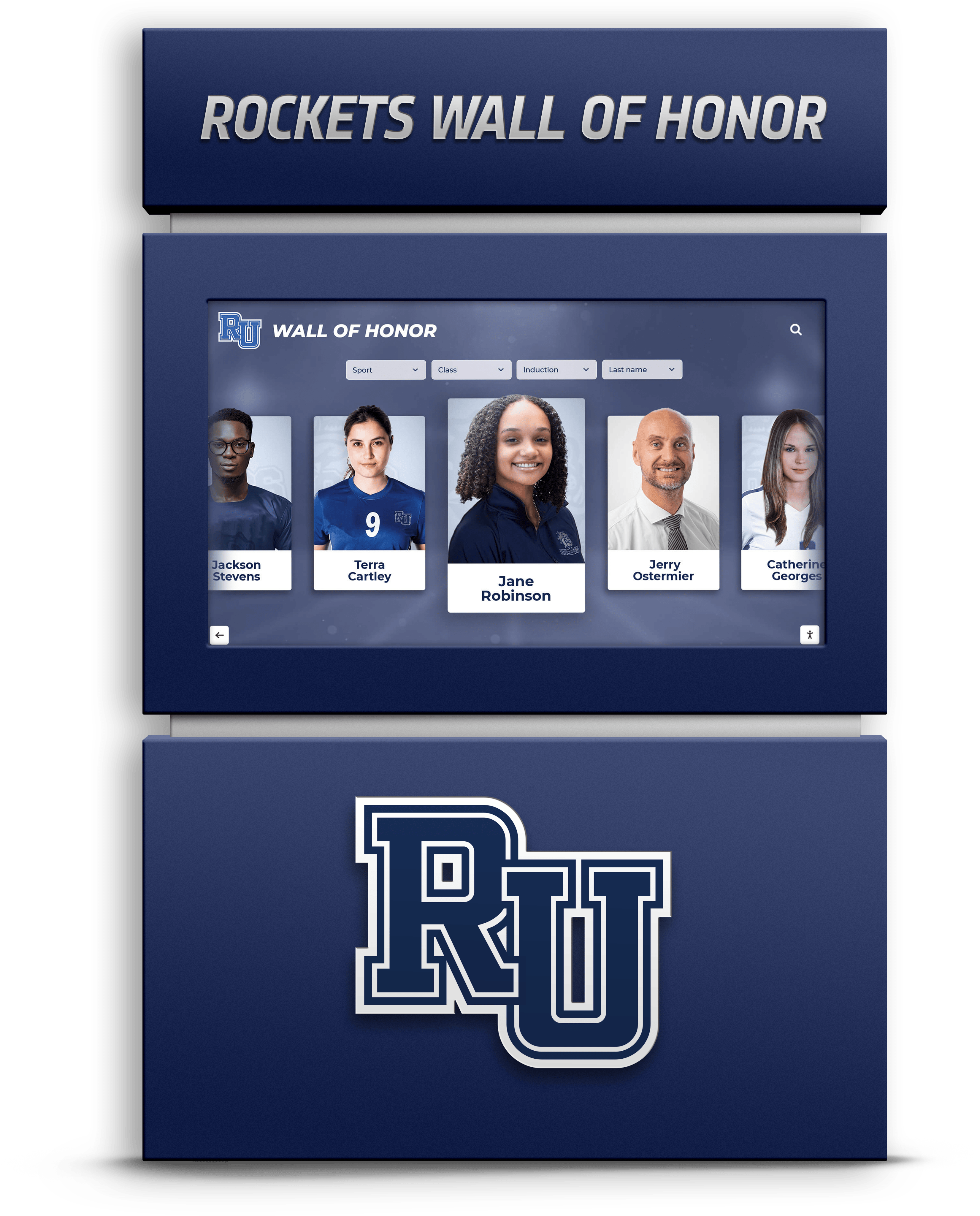
Modern recognition systems create professional environments celebrating complete career education journeys
Your FBLA and FFA chapters’ accomplishments represent hundreds of hours of skill development, competition preparation, SAE project management, leadership growth, and community service developing competencies serving students throughout their professional lives. These achievements deserve celebration matching their significance while inspiring future excellence across your programs.
Ready to transform your FBLA and FFA recognition? Talk to our team to explore how digital recognition displays create engaging experiences celebrating career education excellence, or discover comprehensive approaches to CTE recognition inspiring career readiness cultures throughout schools.