Intent: demonstrate — Communities across America face a profound challenge: how to honor fallen military service members with recognition worthy of their ultimate sacrifice while ensuring their stories remain accessible and meaningful for future generations. Traditional memorial approaches—stone monuments, engraved plaques, and static walls of remembrance—provide important tributes but face inherent limitations in storytelling capacity, accessibility, and ability to engage modern audiences with the full depth of these heroes’ lives and service.
Fallen heroes touchscreen displays represent a transformative approach to military memorial recognition, combining the solemnity of traditional memorials with interactive technology that brings service members’ stories to life. These digital recognition systems preserve comprehensive biographical information, military service details, personal photographs, and family memories in formats that engage visitors while ensuring no hero is forgotten due to space constraints or the passage of time.
This comprehensive guide explores how communities, schools, veterans organizations, and military institutions create meaningful fallen heroes memorial displays through technology that honors sacrifice with the depth, accessibility, and engagement it deserves.
The shift from static memorials to interactive fallen heroes displays reflects changing expectations about how we remember and honor military service. Modern communities seek recognition approaches that educate younger generations, preserve detailed personal histories, enable family connections, and create meaningful engagement rather than passive observation. Solutions like Rocket Alumni Solutions provide platforms specifically designed for military memorial applications, offering features that address the unique sensitivity, permanence, and comprehensiveness these tributes require.

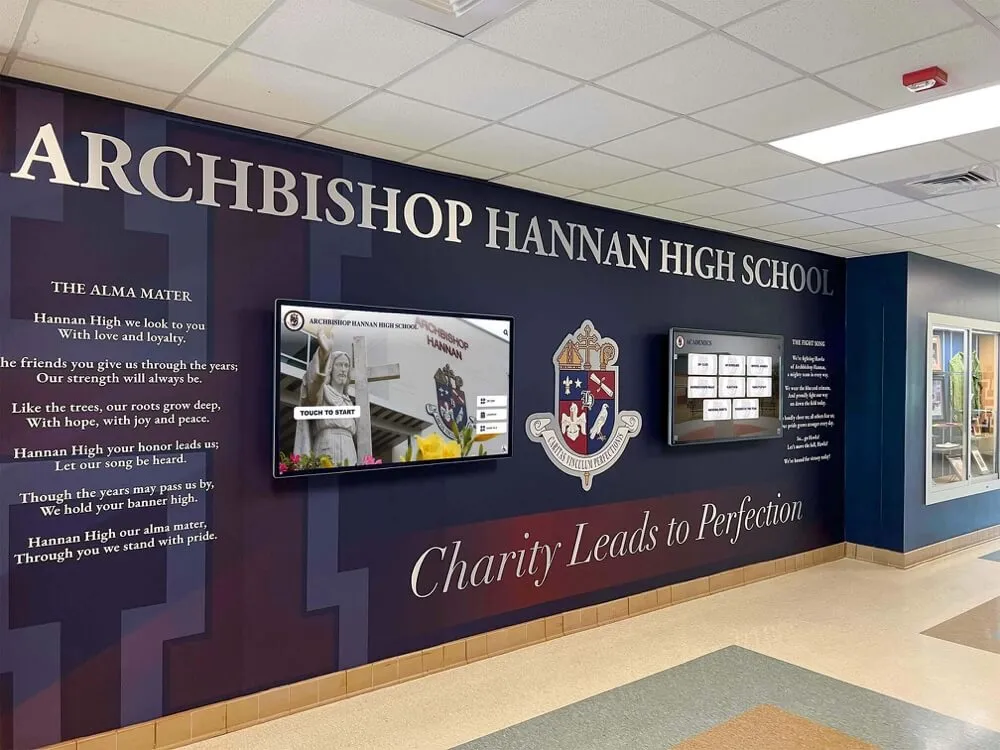
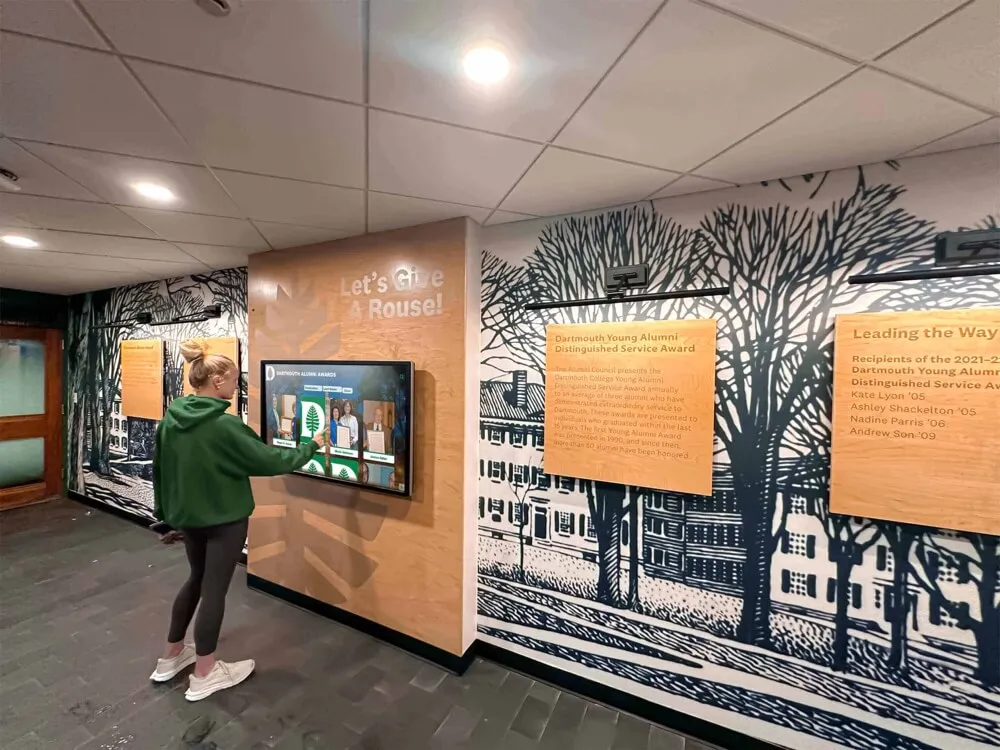
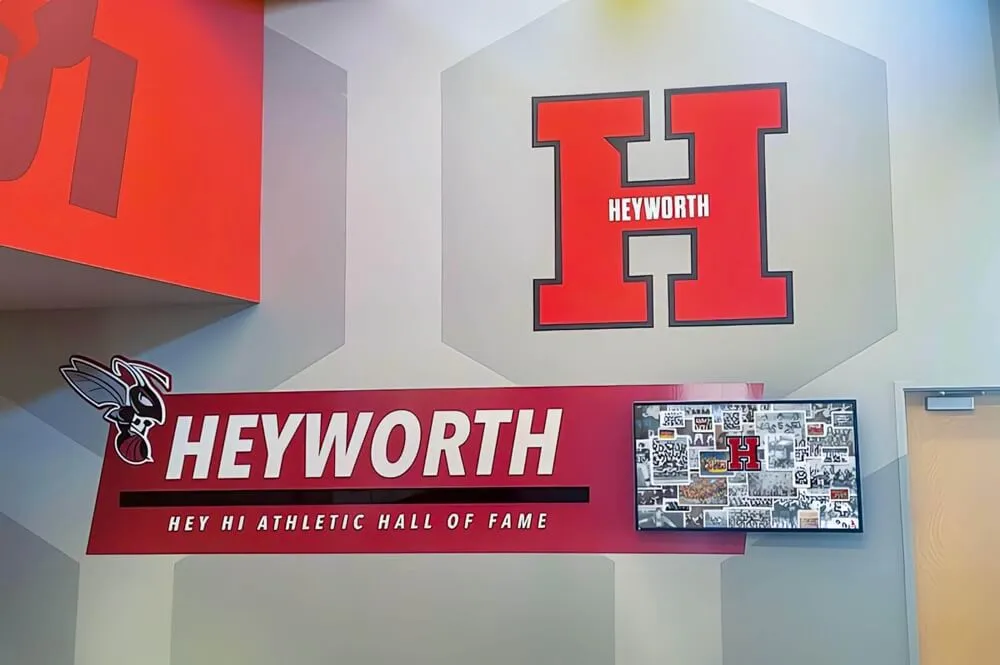
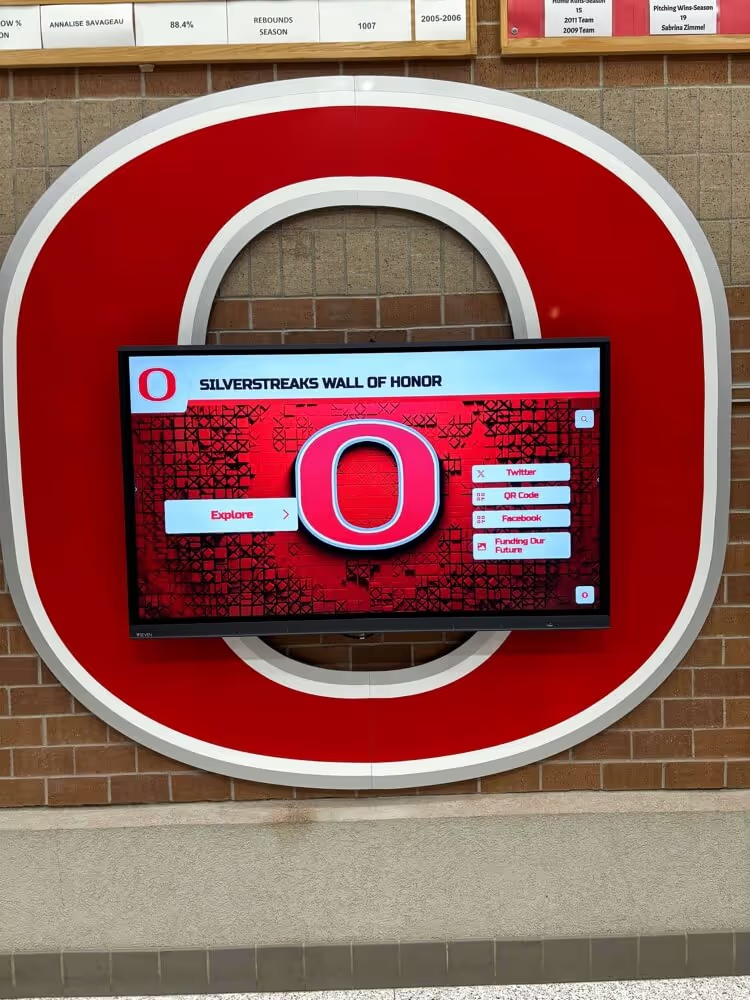
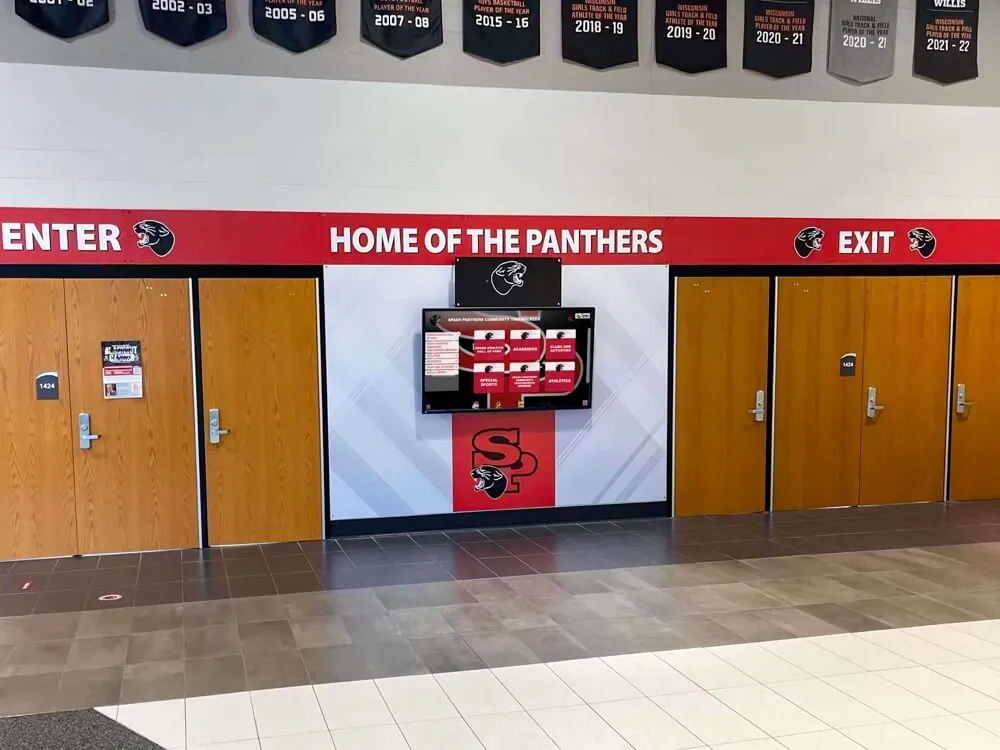
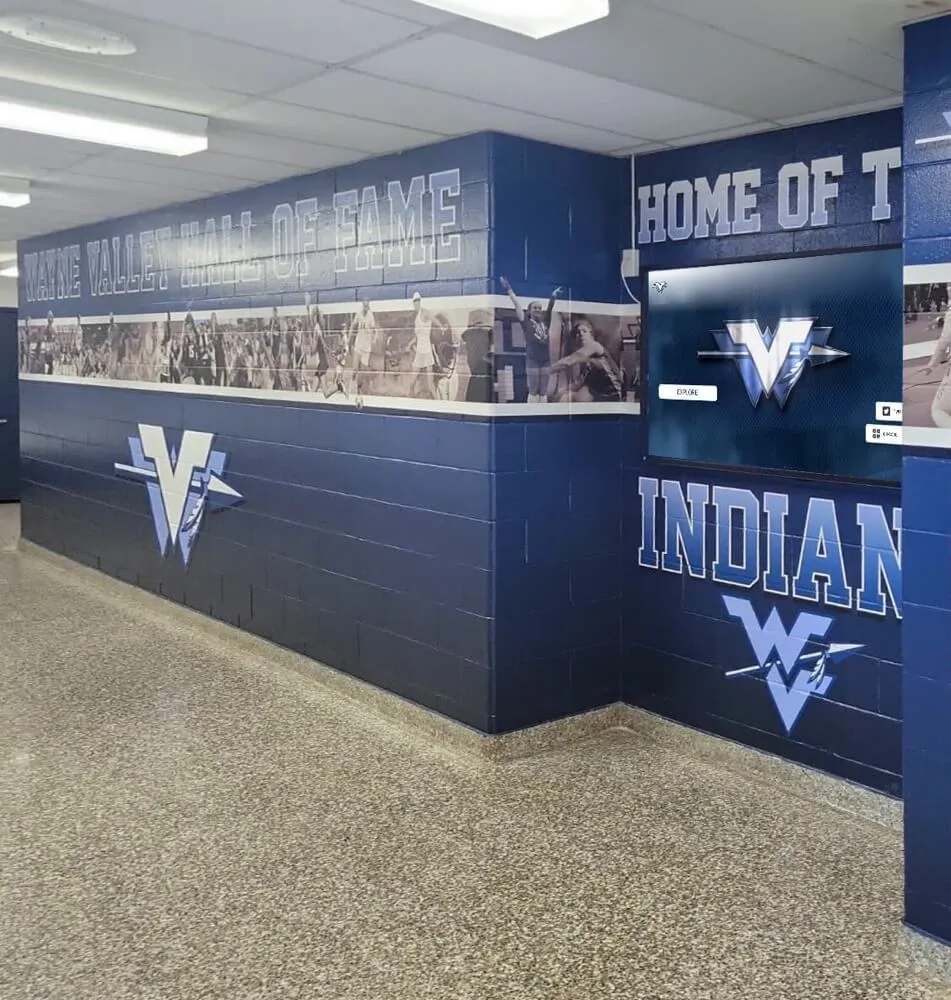
Modern memorial technology creates engaging spaces where communities honor fallen heroes while preserving their legacies
The Evolution of Military Memorial Recognition
Understanding how memorial recognition has evolved reveals why interactive technology now plays critical roles in honoring fallen service members.
Traditional Memorial Limitations and Challenges
Physical military memorials have served communities honorably but face systematic constraints affecting their impact and sustainability:
Space Limitations Creating Impossible Choices Traditional monuments and memorial walls provide finite space for recognition. As communities lose more service members across subsequent conflicts and generations, memorial committees face heartbreaking decisions about whose names receive prominent placement versus whose recognition gets relegated to less visible locations or excluded entirely due to space constraints.
Many communities maintain Vietnam War memorials, Korean War plaques, and World War II monuments as separate installations because single locations lack capacity for comprehensive recognition across all conflicts. This fragmentation prevents unified memorial experiences honoring all fallen heroes collectively.
Minimal Biographical Context Stone engravings and bronze plaques typically include only names, rank, branch, and dates of service or death. This basic information honors identity but fails to convey personality, family connections, service details, circumstances of sacrifice, or the full human stories behind each name. Visitors lack context that would deepen understanding and emotional connection.
Deterioration and Maintenance Challenges Physical memorials weather, tarnish, and deteriorate over time. Engraved text becomes difficult to read, stone surfaces stain, and exposure damages materials. Ongoing maintenance requires continuous funding and effort that many communities struggle to sustain, resulting in memorials falling into disrepair—an outcome dishonoring the very heroes they commemorate.
Limited Accessibility and Discovery Physical memorials serve only visitors who can physically travel to their locations. Military families living far from their fallen heroes’ hometowns rarely access these tributes. Current service members deployed overseas cannot visit memorials honoring fallen comrades. The next generation researching family military history encounters barriers connecting with distant memorials.
Static Content Preventing Updates Once engraved or cast, traditional memorial content cannot be updated. Biographical errors cannot be corrected. Additional information cannot be added as families share memories, photos, and personal effects. New service members who fall in current conflicts require entirely new memorial construction or plaque additions with associated costs and delays.
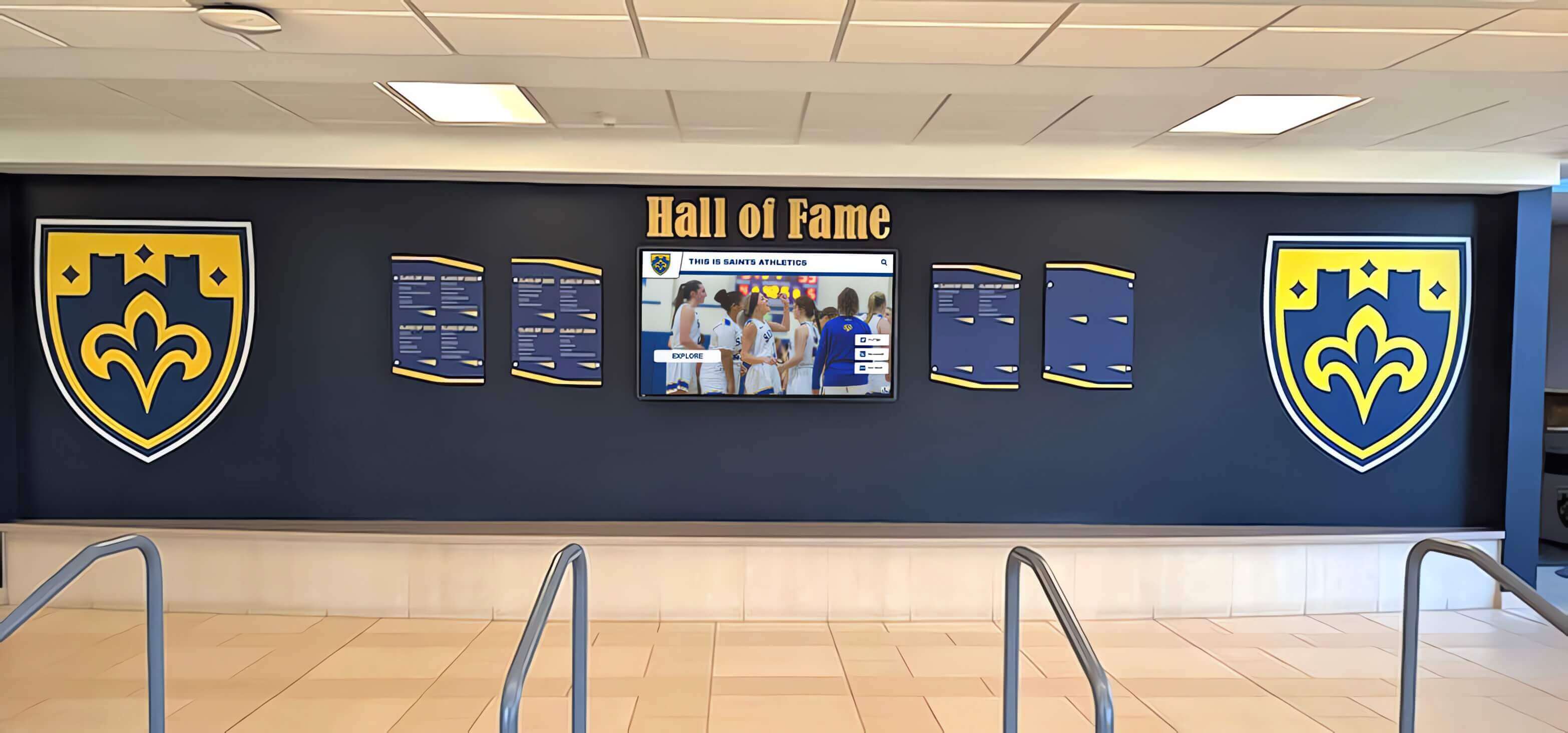
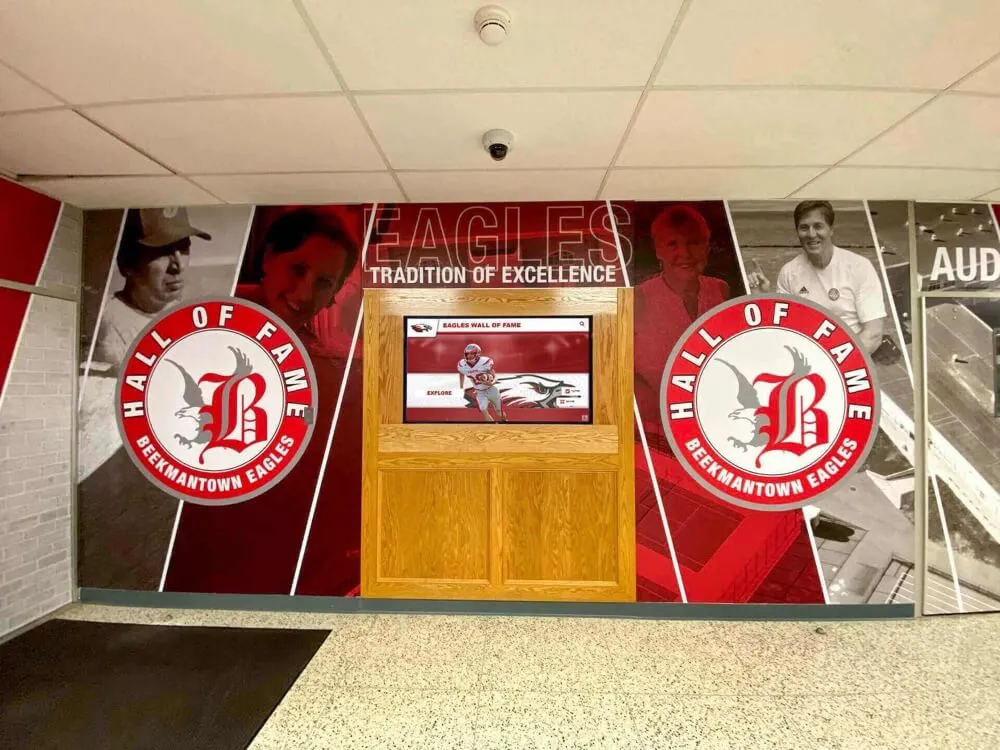
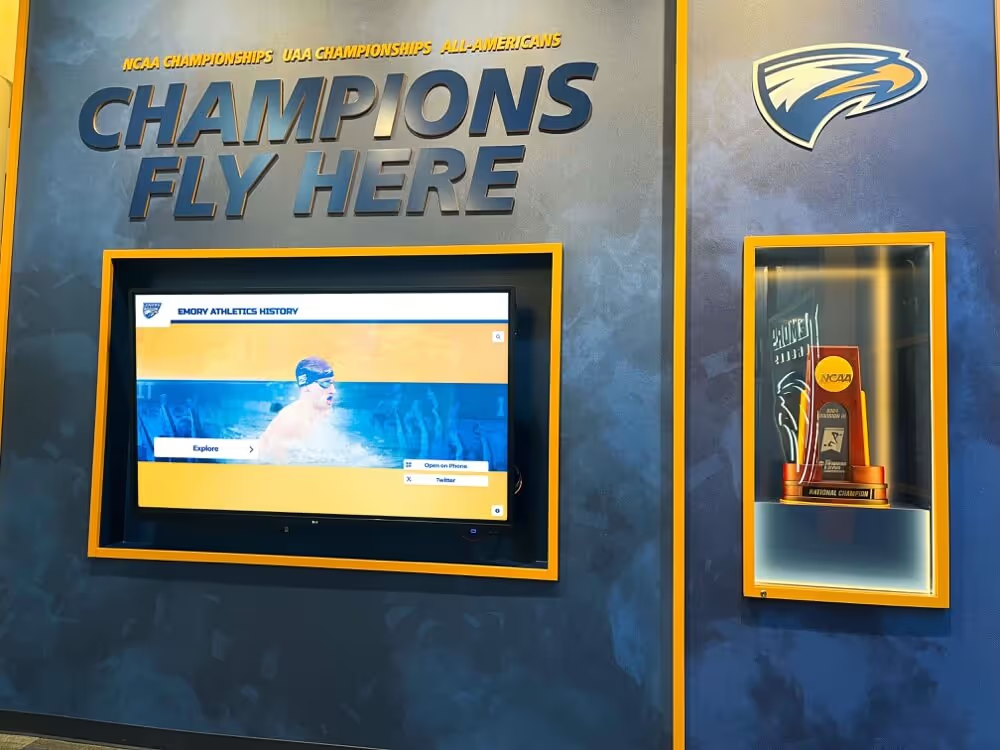
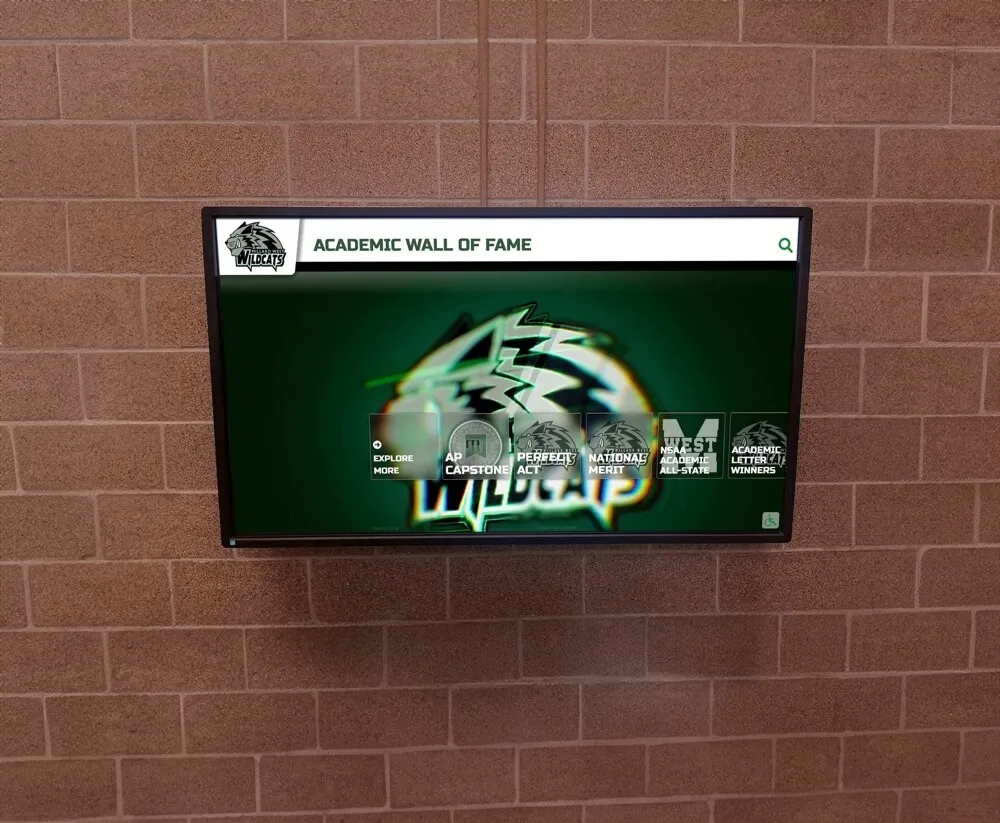
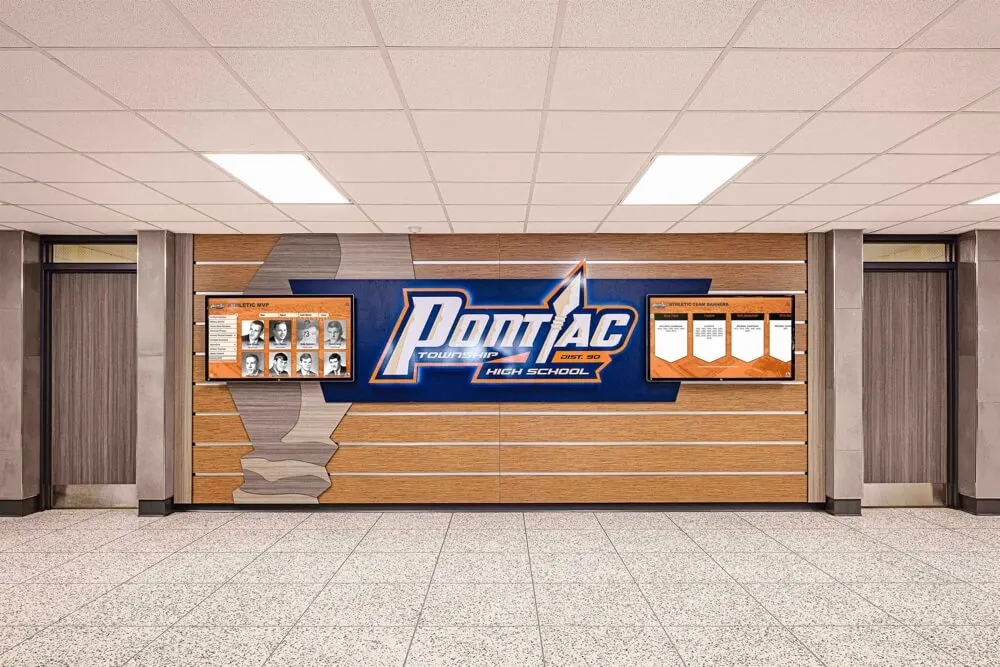
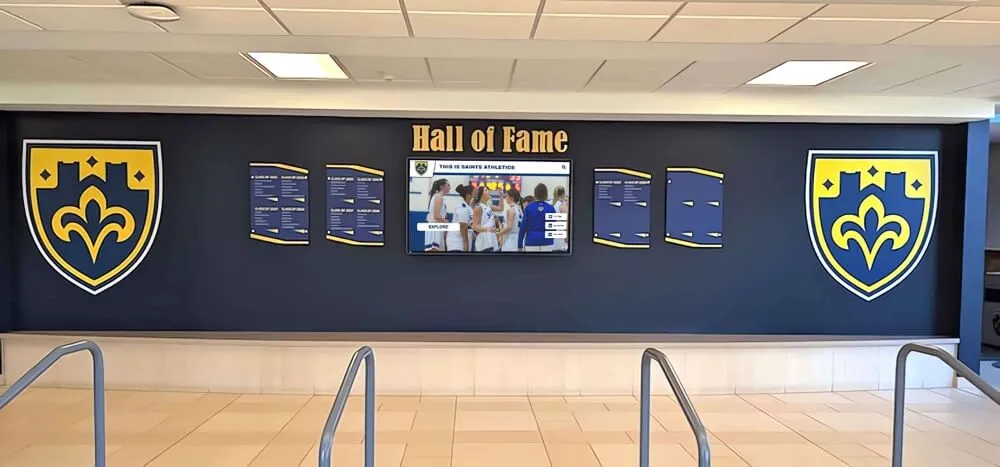
Modern memorial approaches integrate digital capabilities with traditional memorial aesthetics
The Digital Transformation of Memorial Recognition
Interactive technology addresses traditional limitations while creating new opportunities for meaningful commemoration:
Unlimited Recognition Capacity Digital platforms accommodate comprehensive recognition for every fallen service member regardless of conflict era, branch, hometown, or other factors. Communities no longer face space constraints forcing selective recognition. Every hero receives equal memorial capacity with detailed biographical profiles, service records, photographs, and personal narratives.
Rich Multimedia Storytelling Digital memorials incorporate photographs from service, childhood, and family life; video tributes from fellow service members and families; audio recordings of voices and stories; military service records and commendations; personal letters and correspondence; and detailed biographical narratives explaining service context and sacrifice circumstances. This comprehensive storytelling honors complete lives rather than reducing heroes to mere names.
Perpetual Accessibility and Global Reach Web-based memorial platforms enable families, veterans, active service members, students, and community members worldwide to access recognition content anytime from any location. Military families separated from hometowns maintain connection to local memorials. Deployed service members honor fallen comrades remotely. Genealogy researchers discover military ancestors’ service details.
Continuous Updates and Living Memorials Digital systems accommodate ongoing content additions as families share new photos, fellow veterans contribute memories, historians add service context, and communities learn additional details about fallen heroes’ lives. Memorials become living tributes growing richer over time rather than frozen artifacts of initial dedication moments.
Educational Integration and Engagement Interactive technology creates opportunities for educational programming connecting younger generations with military history and sacrifice concepts. Schools integrate memorial content into curricula. Students research fallen heroes for projects. Interactive displays in public spaces engage visitors in deeper exploration beyond passive observation, following approaches outlined in digital memorial recognition guides.
This evolution represents more than technology adoption—it reflects philosophical commitments to ensure fallen heroes receive comprehensive recognition worthy of their sacrifice while remaining accessible and meaningful across generations.
Understanding Fallen Heroes Touchscreen Display Systems
Effective military memorial technology requires purpose-built features addressing the unique requirements of honoring fallen service members.
Core Components of Memorial Display Systems
Comprehensive fallen heroes recognition platforms integrate several essential elements:
Interactive Touchscreen Memorial Kiosks Physical installations in community centers, veterans facilities, schools, government buildings, and public spaces provide engaging recognition experiences where visitors explore detailed profiles, search for specific service members, view photographs and videos, and discover military history. Professional-grade touchscreen displays designed for continuous public operation ensure reliability and durability appropriate for permanent memorial installations.
Web-Based Memorial Platforms Online extensions enable global access to memorial content, allowing military families, veterans, researchers, and public audiences worldwide to explore fallen heroes’ stories from any device. Web platforms ensure memorial recognition reaches far beyond physical installation locations while providing 24/7 accessibility for those seeking connections with fallen service members.
Comprehensive Profile Management Systems Cloud-based content management platforms enable authorized memorial committee members, veterans organizations, and family representatives to add new fallen heroes, update existing profiles, upload photos and documents, and maintain memorial databases without technical expertise. Remote management eliminates delays associated with physical memorial updates while ensuring content accuracy and completeness.
Search and Discovery Capabilities Intuitive search functions enable visitors to find specific individuals by name, browse by conflict or era, filter by military branch or unit, explore by hometown or state, and discover connections through relationship links. These discovery tools help visitors with personal connections locate relevant recognition while enabling broader audiences to explore military history and understand sacrifice scope.
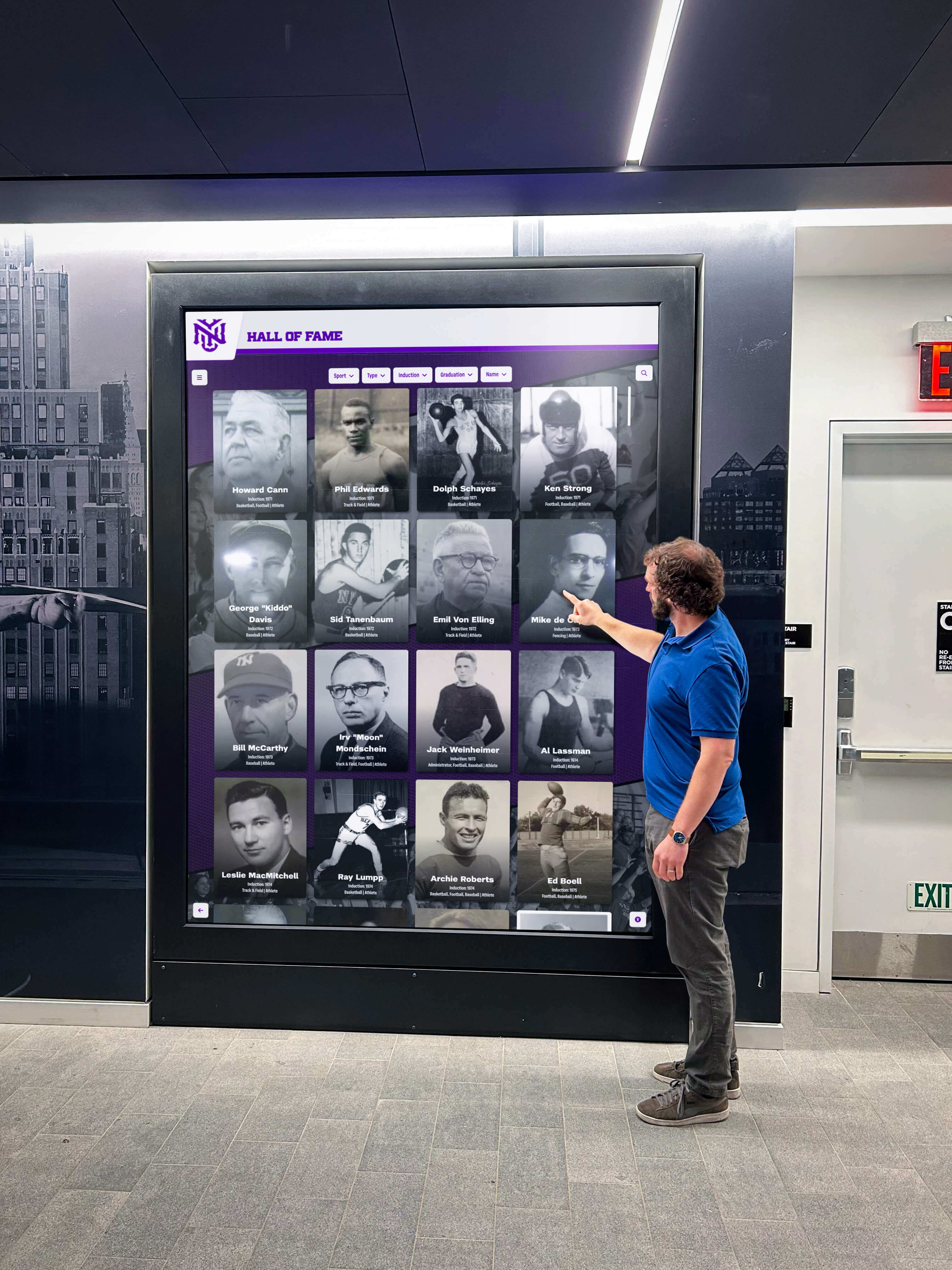
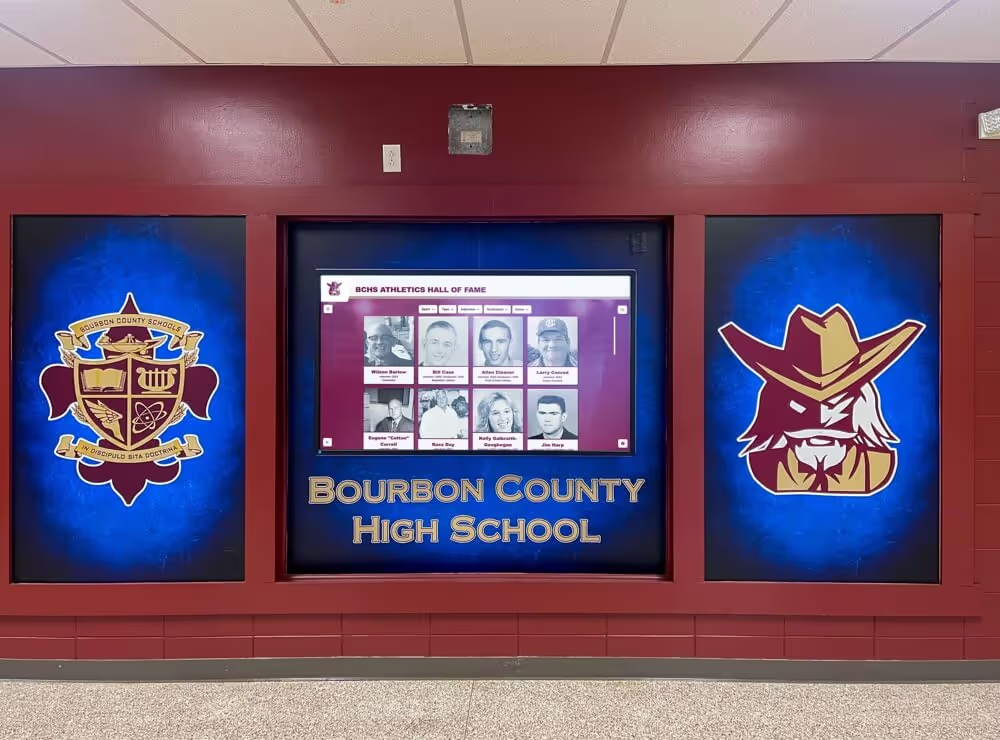
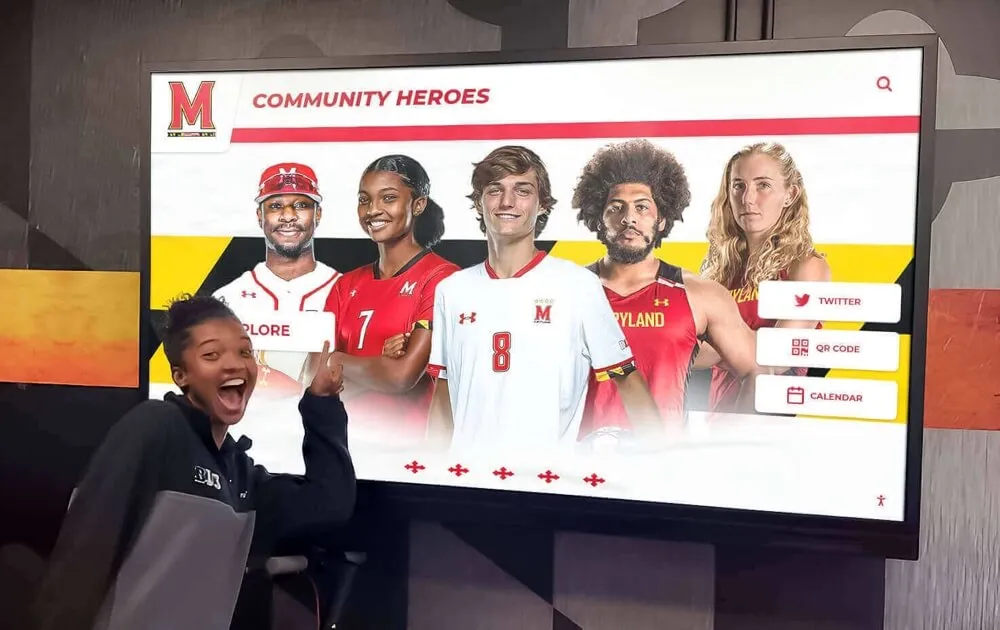
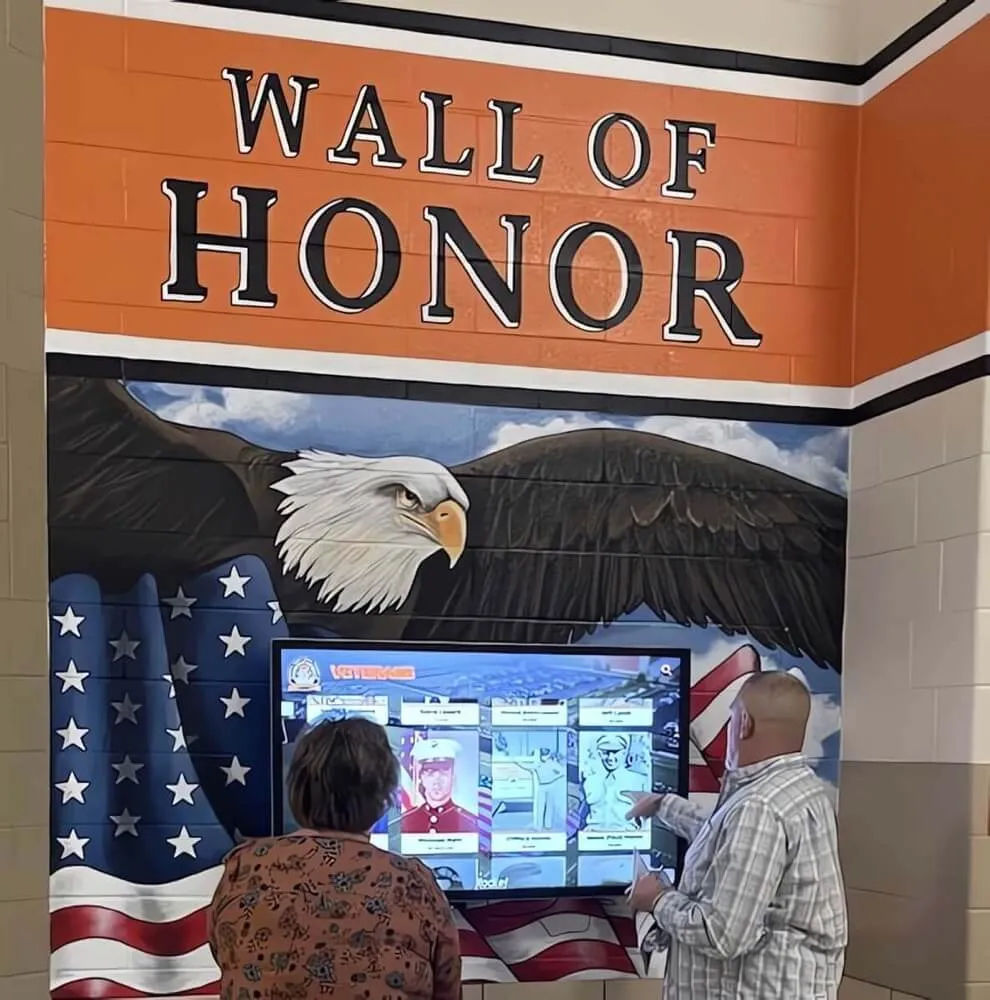
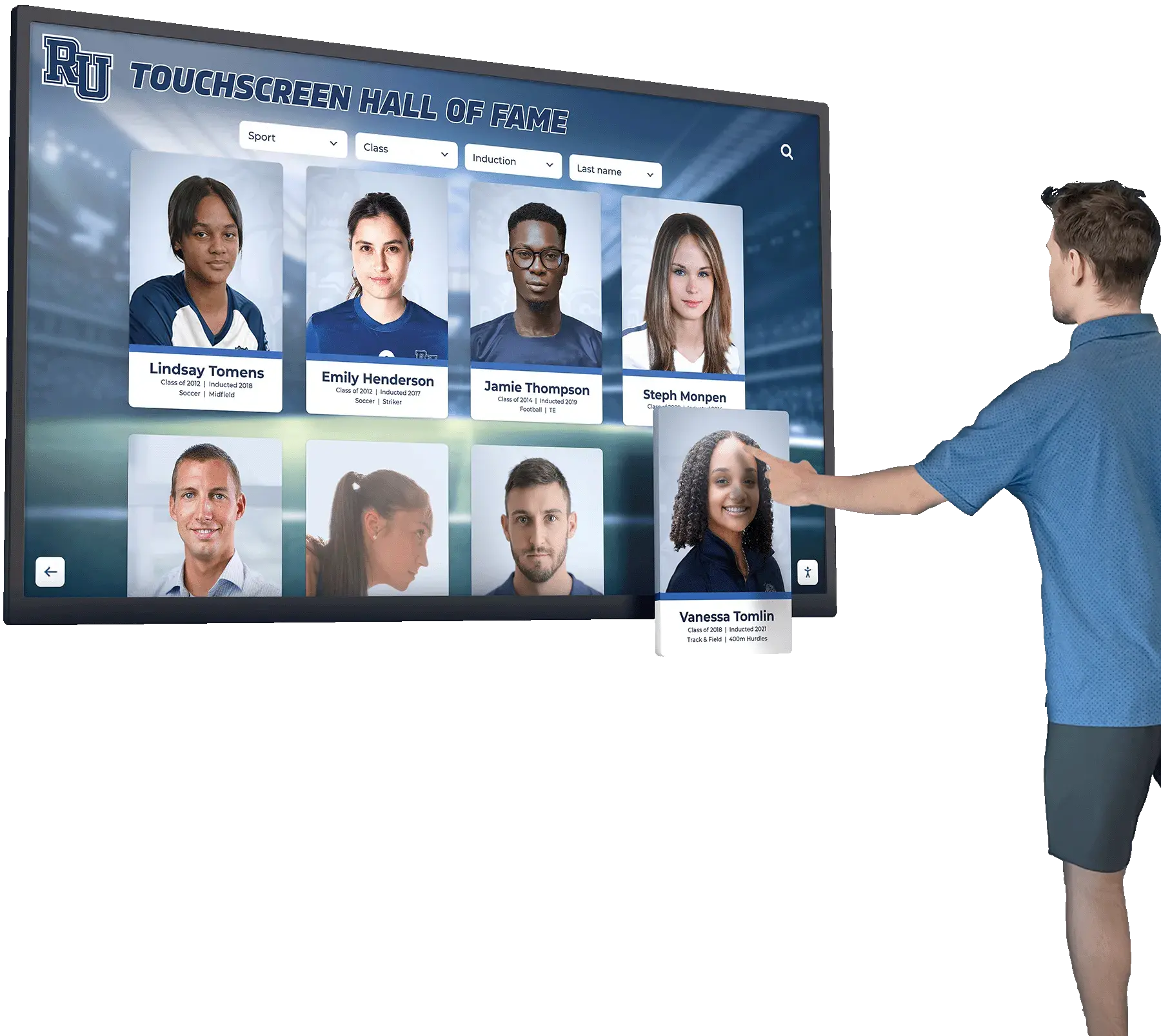
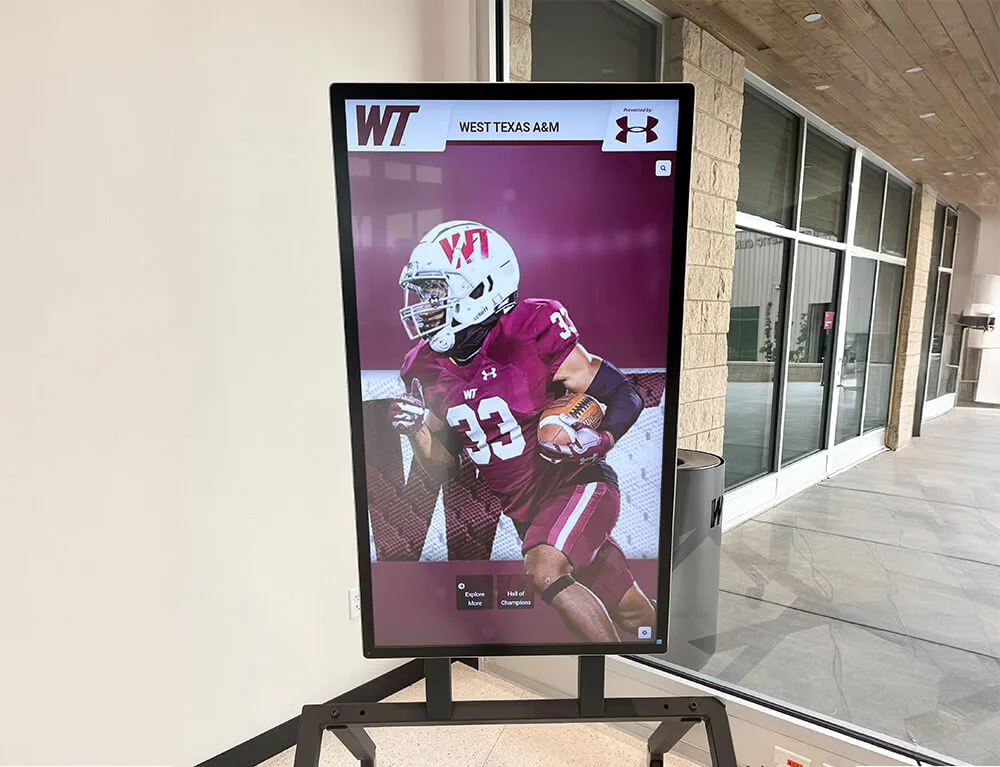
Intuitive touchscreen interfaces make memorial exploration accessible for visitors of all ages and technical abilities
Essential Features for Military Memorial Applications
Purpose-built memorial platforms must provide functionality specifically designed for fallen heroes recognition:
Respectful Aesthetic and Solemn Presentation Memorial displays require visual designs reflecting the gravity and respect these tributes deserve. Color schemes, typography, imagery, and interface elements should convey honor, dignity, and appreciation appropriate for military memorial contexts rather than generic digital signage aesthetics.
Military Service Documentation Comprehensive profile systems must accommodate military-specific information including branch and unit assignments, rank and rate progression, deployment locations and dates, commendations and awards received, circumstances of death or injury, and burial or memorial location details. This structured information provides factual service documentation alongside personal biographical content.
Family and Personal Life Context Beyond military service, profiles should honor fallen heroes as complete individuals including family relationships and survivors, educational background and early life, career aspirations and achievements, hobbies and personal interests, community involvement and service, and personality traits and character qualities remembered by those who knew them. This comprehensive approach prevents reducing heroes to mere military statistics.
Photograph and Multimedia Integration Rich media support enables incorporating diverse visual and audio content including military service photographs, family photos from various life stages, video tributes and remembrances, audio recordings when available, scanned personal letters and documents, and news articles or historical documentation. Multimedia creates emotional connections and brings stories to life beyond text descriptions, utilizing approaches similar to digital storytelling in athletic programs.
Conflict and Era Organization Memorial content organization by conflict era—World War I, World War II, Korean War, Vietnam War, Gulf War, Iraq War, Afghanistan War, and other conflicts—enables visitors to explore specific historical periods while understanding casualty scope across different conflicts. Chronological organization provides historical context supporting educational objectives.
Unit and Military Branch Recognition Organization by military branch (Army, Navy, Air Force, Marines, Coast Guard) and specific unit assignments enables veterans and military families to find service members from particular organizations. This structure honors unit bonds and military community connections central to service culture.
Balancing Technology with Memorial Solemnity
Successful fallen heroes displays require thoughtful balance between interactive capabilities and appropriate memorial dignity:
Engagement Without Trivialization Interactive features should enhance memorial experience without diminishing respect or creating inappropriate entertainment aspects. Exploration, search, and multimedia viewing serve educational and commemorative purposes rather than gamification or frivolous interaction.
Accessibility Without Distraction Touchscreen interfaces must remain intuitive and unobtrusive, allowing content to take precedence over technology. The display mechanism should feel natural and respectful rather than drawing attention away from the memorial’s true purpose—honoring fallen heroes.
Modern Without Dated Technology selections should reflect current capabilities while maintaining timeless dignity that won’t appear trendy or dated as years pass. Classic design principles, neutral color palettes, and sophisticated presentations ensure memorial displays remain appropriate and respectful across decades.
Personal Without Invasive Family involvement in profile creation enables personal storytelling while respecting privacy and sensitivity about painful losses. Clear protocols about what information families wish to share, appropriate photograph selection, and respectful narrative presentation ensure memorial content honors families’ wishes while serving public commemoration purposes.
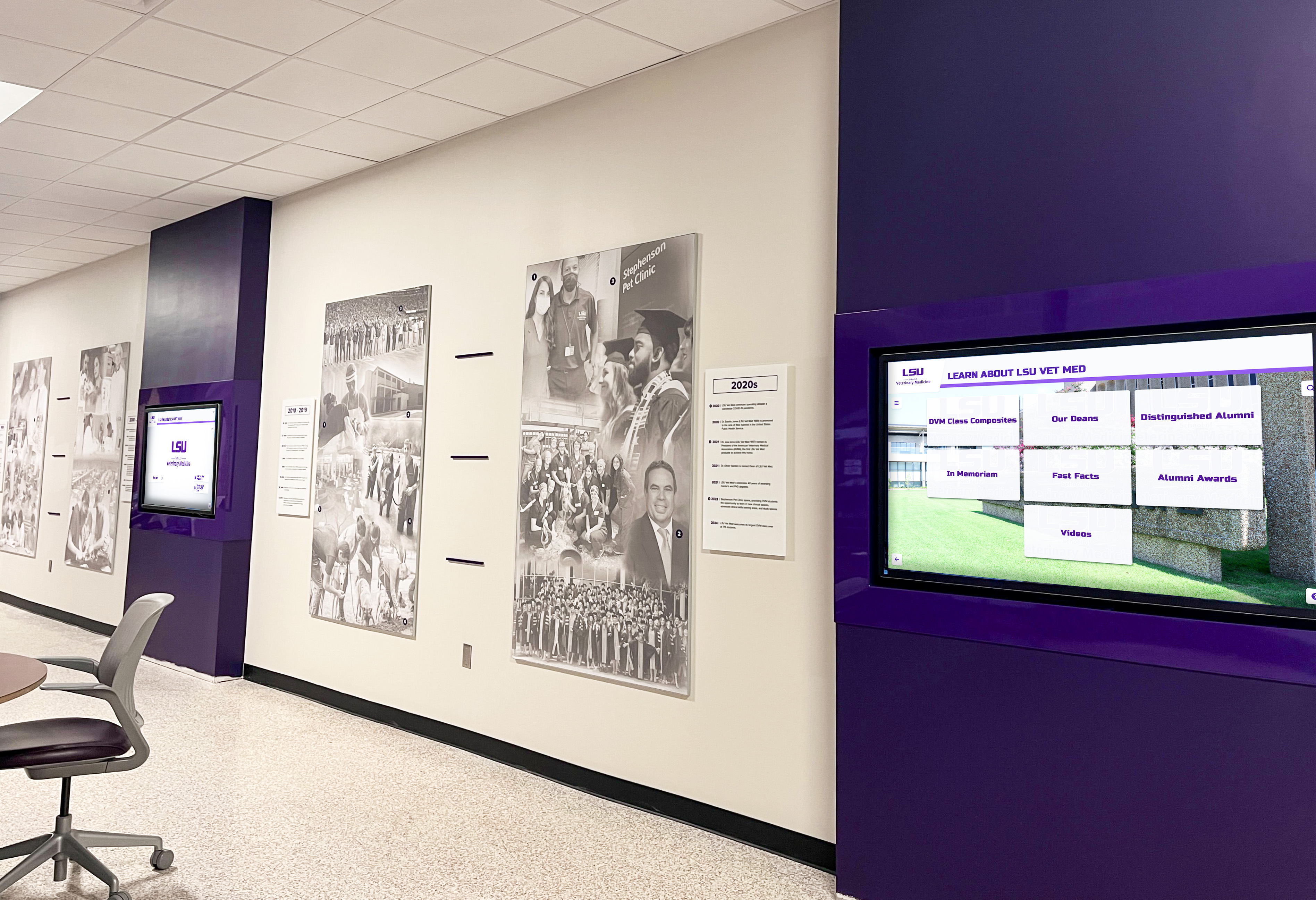
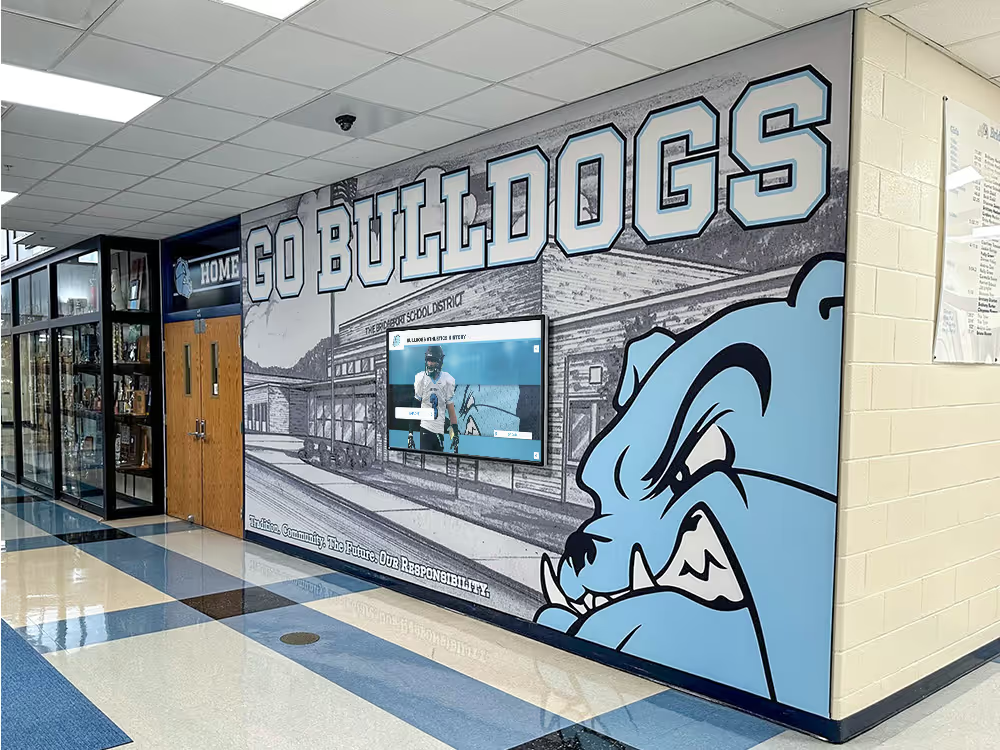
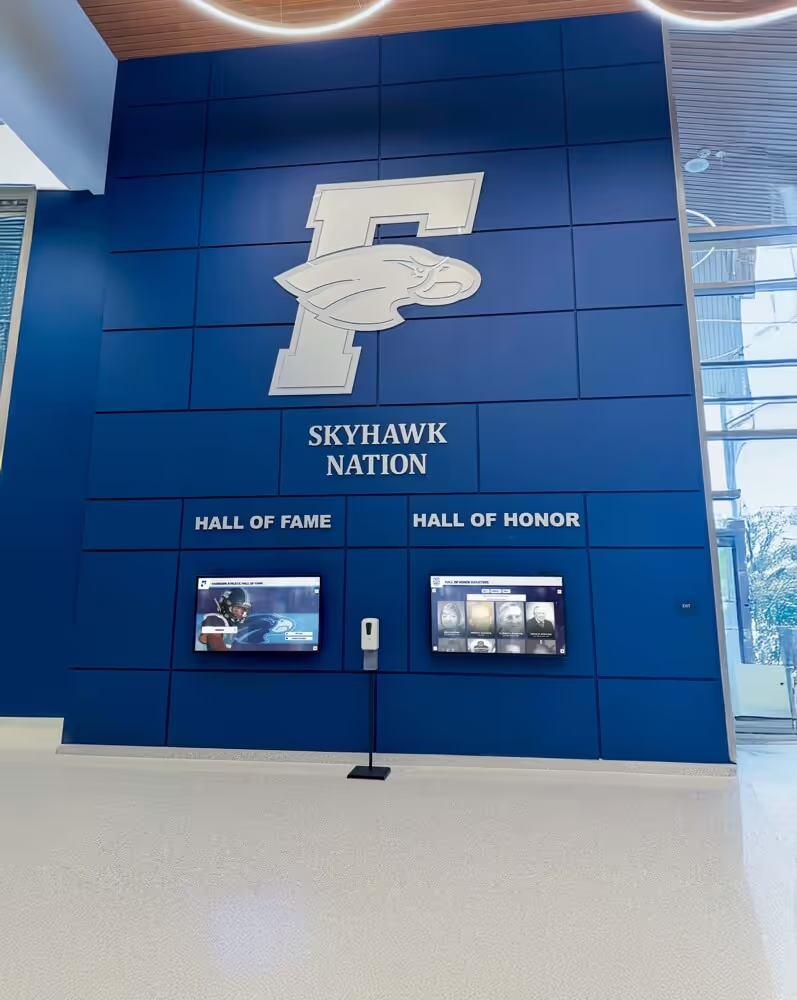
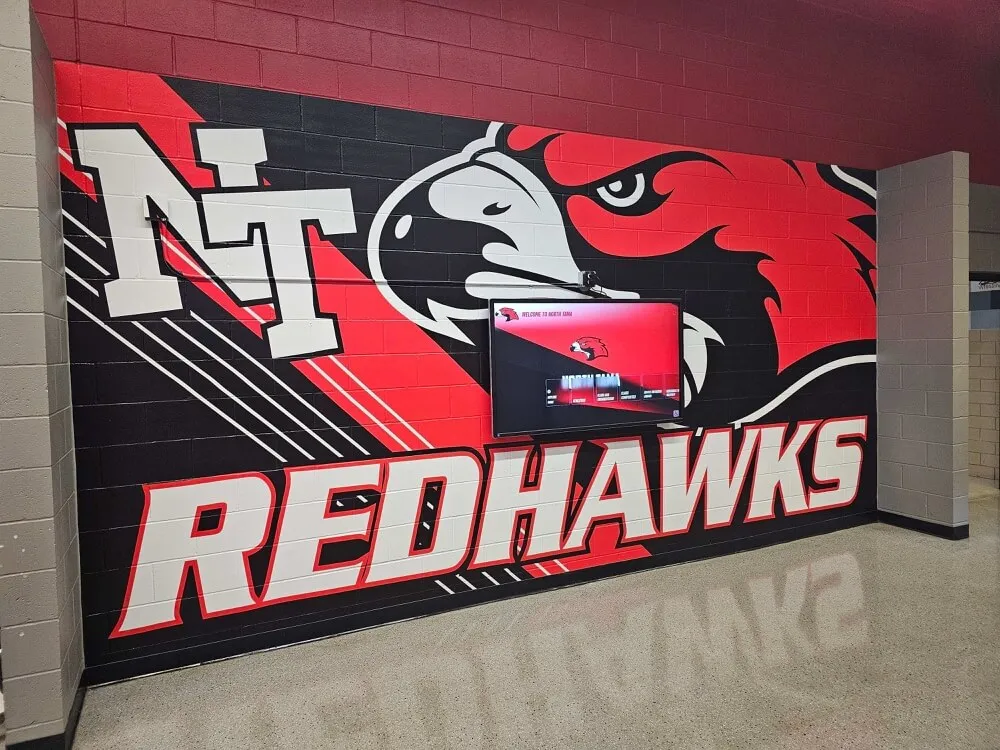
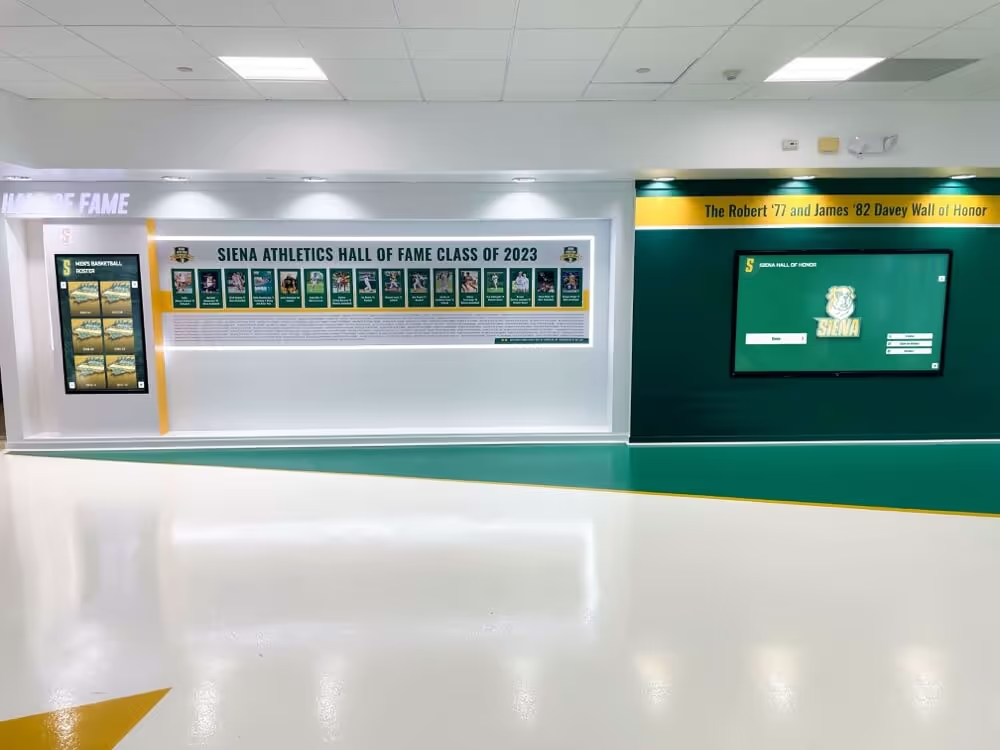
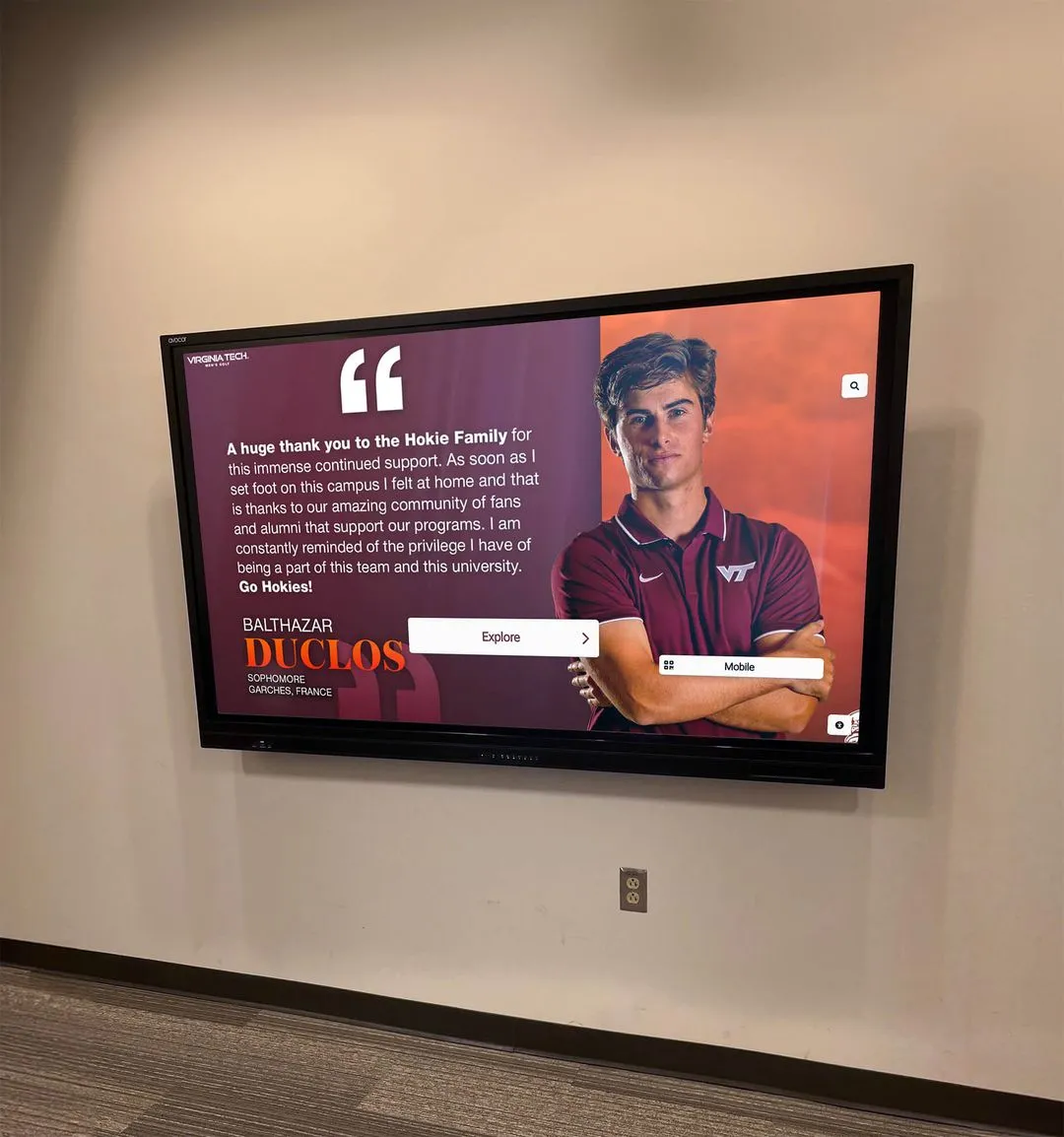
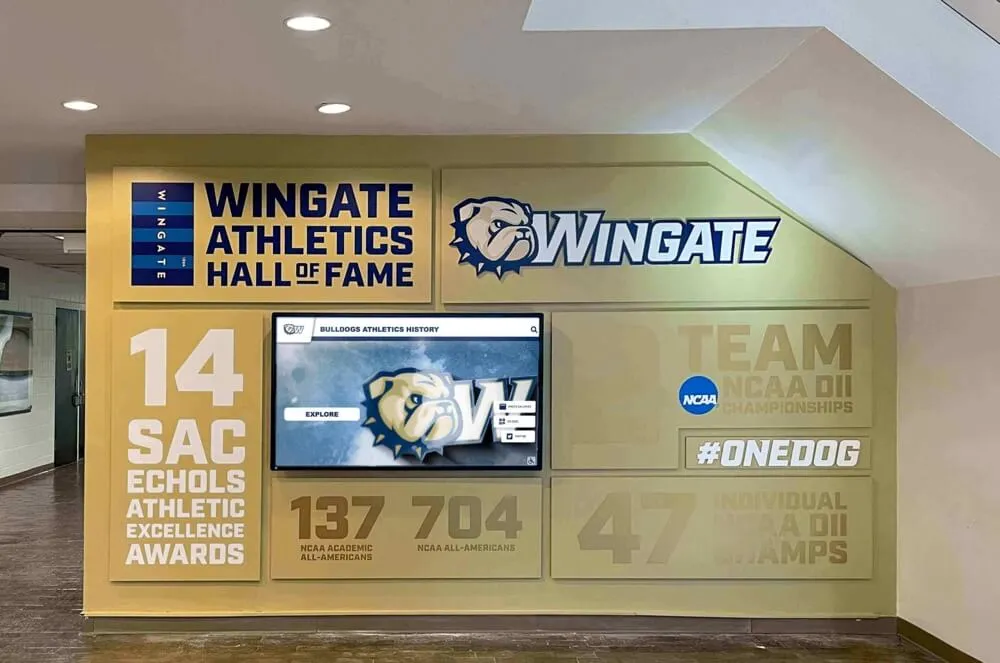
Professional installations integrate seamlessly with facility architecture while maintaining memorial dignity
Planning Fallen Heroes Memorial Display Projects
Successful memorial technology implementation requires thoughtful planning addressing community needs, stakeholder input, and technical considerations.
Forming Memorial Committees and Gathering Input
Inclusive planning processes ensure memorials serve diverse stakeholder needs:
Stakeholder Identification and Engagement Effective memorial projects engage veterans organizations (American Legion, VFW, DAV), military family representatives, local government officials, school administrators when appropriate, historical societies and museums, community leaders and organizations, and previous memorial committee members. Diverse perspectives ensure comprehensive consideration of memorial purposes and community expectations.
Veteran and Family Input Prioritization Veterans who served with fallen heroes and military families who lost loved ones must receive central roles in planning processes. Their perspectives about appropriate recognition approaches, biographical content priorities, and memorial presentation styles guide decisions ensuring memorials honor fallen heroes in ways that resonate with those most directly affected by sacrifice.
Community Context and Location Considerations Memorial display location significantly impacts effectiveness and appropriateness. Consider options including community centers and civic buildings providing central public access, veterans facilities and service organization halls serving military communities directly, schools and educational institutions connecting younger generations with military history, government buildings honoring service through official recognition, and memorial parks or monuments integrating technology with existing physical memorials.
Each context presents unique opportunities and requirements affecting design decisions, content strategies, and operational approaches.
Defining Memorial Scope and Recognition Criteria
Clear parameters guide content development and ensure consistent recognition:
Conflict Coverage Decisions Determine which conflicts and eras the memorial encompasses. Comprehensive approaches honoring all fallen heroes from a community across all conflicts provide most complete recognition but require more extensive research and content development. Focused memorials highlighting specific conflicts (Vietnam veterans, Global War on Terror casualties) may align better with available resources and specific community memorial needs.
Geographic Scope Definition Define geographic criteria for inclusion such as hometown-based recognition for residents of specific communities, school-based recognition for graduates of particular institutions, state or regional recognition for broader geographic areas, or unit-based recognition for specific military organizations. Clear geographic scope prevents confusion about which fallen heroes receive recognition and ensures families understand criteria.
Military Branch and Service Type Decide whether memorials encompass all military branches (Army, Navy, Air Force, Marines, Coast Guard, Space Force) or focus on specific services. Most community memorials adopt inclusive approaches honoring all service branches equally, while some contexts (naval base memorials, Air Force academy tributes) appropriately focus on particular services.
Active Duty, Guard, and Reserve Recognition Clarify whether memorials include only active duty casualties or also honor National Guard and Reserve component service members who died during military service. Comprehensive approaches recognizing all service members regardless of component status provide most inclusive recognition.
Circumstances of Death Considerations Determine criteria regarding circumstances of death such as killed in action or combat-related deaths, deaths during military service from non-combat causes, or veterans who died after service completion. Most fallen heroes memorials focus on service members who died during military service (combat or non-combat) rather than all deceased veterans, but communities define appropriate criteria based on memorial purposes.
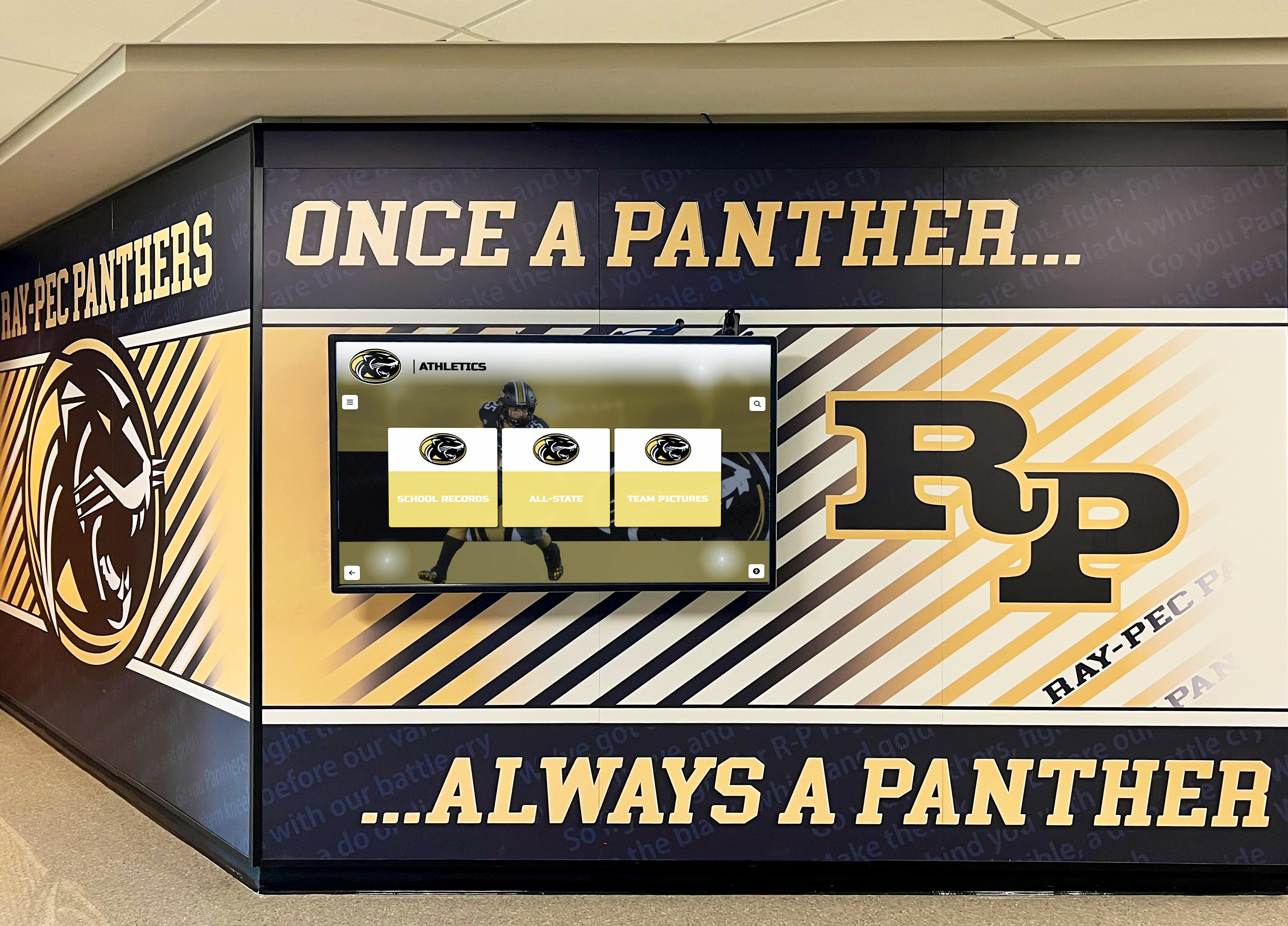
Integrated installations honor fallen heroes while complementing facility aesthetics and architecture
Research and Information Gathering Processes
Comprehensive memorial content requires systematic research approaches:
Military Records and Official Documentation Access military service records through official channels including Department of Defense casualty databases, National Archives military personnel records, state veterans affairs offices, and service-specific historical centers. Official records provide authoritative documentation about service details, assignments, ranks, awards, and casualty circumstances.
Family Outreach and Personal Information Contact military families inviting participation in memorial content development. Families often possess photographs, personal information, letters, memorabilia, and biographical details that official records lack. Sensitive outreach respecting grief and privacy while offering opportunities for families to contribute to their heroes’ recognition creates meaningful family engagement.
Veteran Community Memory Collection Veterans who served with fallen heroes provide valuable context including personal character observations, specific incident details, unit history and context, and remembrances about service together. Veteran oral histories and written submissions enrich memorial content with peer perspectives honoring fallen comrades, following approaches used in veteran memorial recognition programs.
Historical Research and Context Historical research provides context about conflicts, battles, military units, and periods during which service members fell. Understanding historical context enables memorial content that educates visitors about circumstances of service and sacrifice, connecting individual stories to broader military history.
Newspaper Archives and Local Documentation Local newspaper obituaries, casualty announcements, and memorial service coverage often contain biographical information, family details, and community responses to losses. Historical newspaper research supplements official records and family information.
Content Development for Fallen Heroes Profiles
Thoughtful profile creation honors each fallen hero comprehensively while maintaining appropriate sensitivity.
Biographical Information and Personal Story Elements
Complete profiles celebrate whole lives beyond military service:
Early Life and Family Background Include birth date and location, parents and siblings, childhood hometown, educational background and schools attended, early interests and aspirations, and family circumstances. This context helps visitors understand fallen heroes as individuals with families, dreams, and lives beyond military service.
Military Service Journey Document enlistment or commissioning date and circumstances, branch selection and motivations, training locations and experiences, duty stations and assignments, deployments and operations, promotions and advancement, and notable achievements and commendations. Comprehensive service documentation honors career progression and dedication.
Character and Personality Convey personal qualities through descriptions from family and fellow service members including leadership traits and abilities, sense of humor and personality, values and commitments, relationships with fellow service members, and impact on others. Personal character recognition honors individuals rather than reducing them to rank and dates.
Service Circumstances and Ultimate Sacrifice Document with appropriate sensitivity the circumstances of death or fatal injury including location and date, operation or circumstance, immediate cause, and recognition received (Purple Heart, other awards). Balance between honoring sacrifice circumstances and respecting family privacy and sensitivities about painful loss details.
Legacy and Surviving Family When families wish to share this information, include details about surviving spouse, children, parents, siblings, memorial services and tributes, posthumous recognitions and honors, and continuing family connections to military or community. Legacy information helps visitors understand ongoing impact of sacrifice on families and communities.
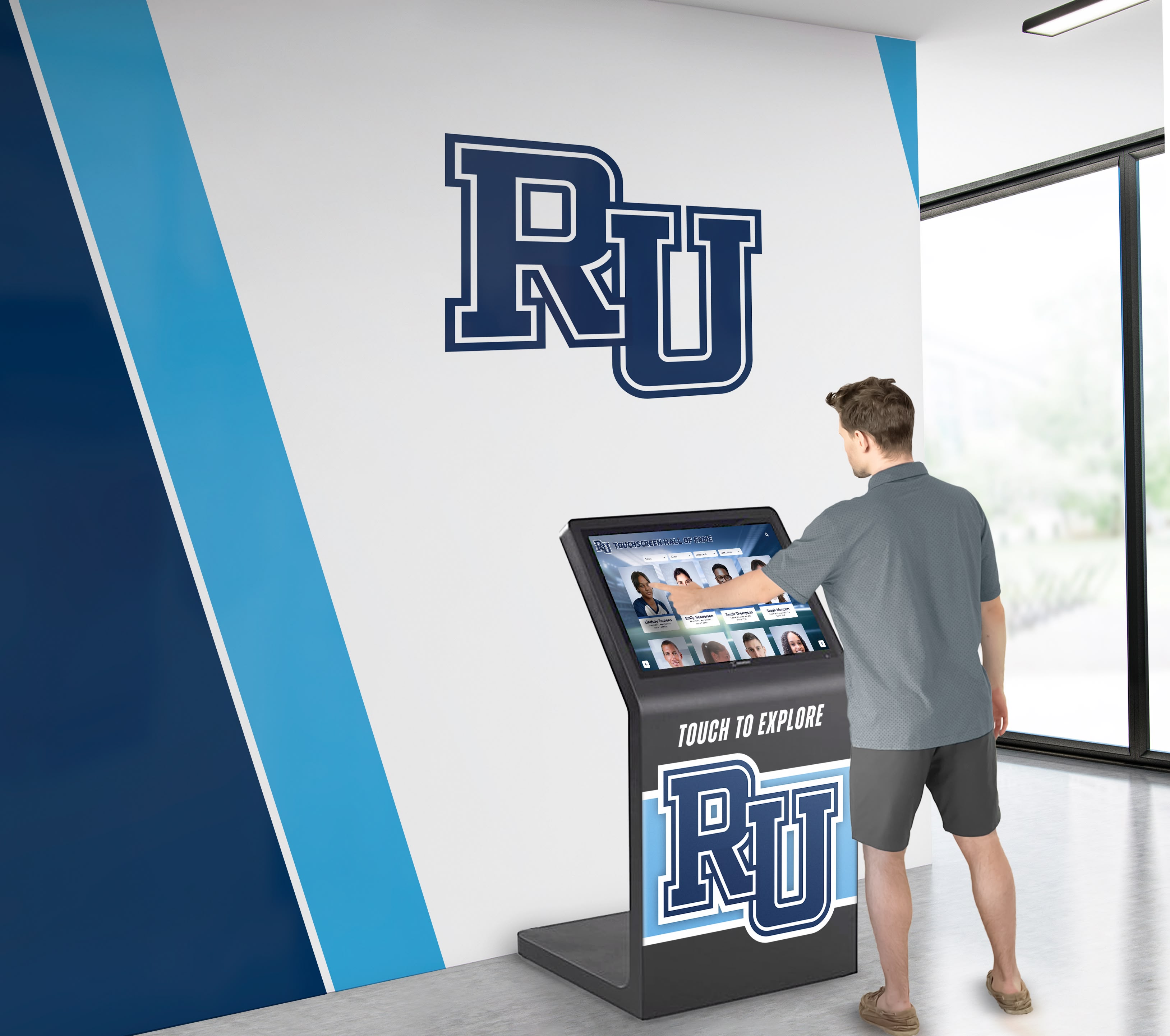
User-friendly interfaces enable visitors to explore memorial content intuitively and respectfully
Photograph and Multimedia Selection Guidelines
Visual content brings memorial profiles to life while requiring sensitive curation:
Military Service Photographs Include official military portraits showing service members in uniform, deployment photos from service locations, unit or squad photographs with fellow service members, training photos from military education and preparation, and photos depicting military service contexts and experiences. Military photographs honor service identity and dedication.
Personal and Family Photographs When families provide permission, incorporate childhood and youth photos showing early life, family photographs with parents and siblings, photos with spouses or significant others, photos with children when applicable, and photos from significant personal life moments. Personal photographs humanize heroes and honor complete lives.
Video Tribute Integration Video content when available creates powerful memorial experiences including video messages from family members, fellow veteran remembrances and stories, memorial service footage, news coverage of service or sacrifice, and video created by community members or students. Video provides emotional depth text and still photographs cannot achieve.
Document and Memorabilia Digitization Scanned personal documents add authenticity and depth including military orders and commissions, commendation and award citations, personal letters written during service, news clippings and articles, and memorial programs and tributes. Historical documents provide tangible connections to service experiences.
Writing Respectful and Meaningful Narratives
Memorial profile narratives require special care balancing comprehensive storytelling with appropriate respect:
Tone and Voice Considerations Memorial writing should maintain dignity and respect appropriate for honoring ultimate sacrifice, convey genuine appreciation and admiration, provide factual accuracy without sensationalism, include personal details humanizing individuals, and acknowledge loss without dwelling unnecessarily on grief. The goal involves celebration of lives and service rather than focus on death and loss.
Family Sensitivity and Privacy Always respect family preferences about information sharing, avoid traumatic details that reopen painful wounds, obtain permission before including personal information, honor requests to omit certain details, and maintain communication with families throughout content development. Fallen heroes’ families must feel their loved ones are honored appropriately and respectfully.
Factual Accuracy and Verification Verify all information through multiple reliable sources, cross-reference military records with family accounts, correct misinformation from initial reports when appropriate, acknowledge uncertainty when definitive information is unavailable, and cite sources for historical or contextual claims. Accuracy honors fallen heroes by ensuring memorial content reliably represents their lives and service.
Educational Context Without Glorification Provide historical context helping visitors understand conflicts and circumstances, explain military significance of service and sacrifice, connect individual stories to broader military history, and educate without inappropriate glorification of violence or war. The balance involves honoring service and sacrifice while maintaining appropriately solemn memorial tone.
Technology Integration and Display Implementation
Successful memorial displays require thoughtful technical planning and professional execution.
Hardware Selection and Installation Considerations
Memorial technology must meet reliability, durability, and presentation standards appropriate for permanent public installations:
Commercial-Grade Display Hardware Memorial kiosks require professional touchscreen displays designed for continuous operation in public environments. Consumer electronics fail rapidly under constant public use while commercial systems provide reliability appropriate for permanent memorial installations. Display specifications should include commercial-grade touchscreen panels rated for 24/7 operation, anti-glare and high-brightness displays for various lighting environments, vandal-resistant construction appropriate for public spaces, and professional mounting systems ensuring secure, permanent installation.
Screen Size and Viewing Considerations Display sizing should match installation contexts and expected usage patterns. Lobby installations where multiple people might view simultaneously benefit from larger 55-75" displays enabling group viewing, while hallway locations or smaller memorial spaces accommodate 43-55" screens. Consider viewing distances, surrounding architecture, and traffic flow patterns when selecting appropriate screen sizes.
Environmental Factors and Durability Installation environments affect hardware specifications including temperature and humidity control for indoor vs. outdoor locations, lighting conditions and screen brightness requirements, security considerations for publicly accessible spaces, and accessibility requirements for ADA compliance. Professional installations account for environmental factors affecting long-term reliability and user experience, following guidance similar to digital hall of fame planning approaches.
Network Connectivity and Content Delivery Reliable content delivery requires proper network infrastructure including hardwired ethernet connections providing stable connectivity, sufficient bandwidth for multimedia content delivery, secure network access protecting memorial content, and remote management capabilities enabling updates without site visits. WiFi-dependent solutions create maintenance challenges in public installations with network congestion.
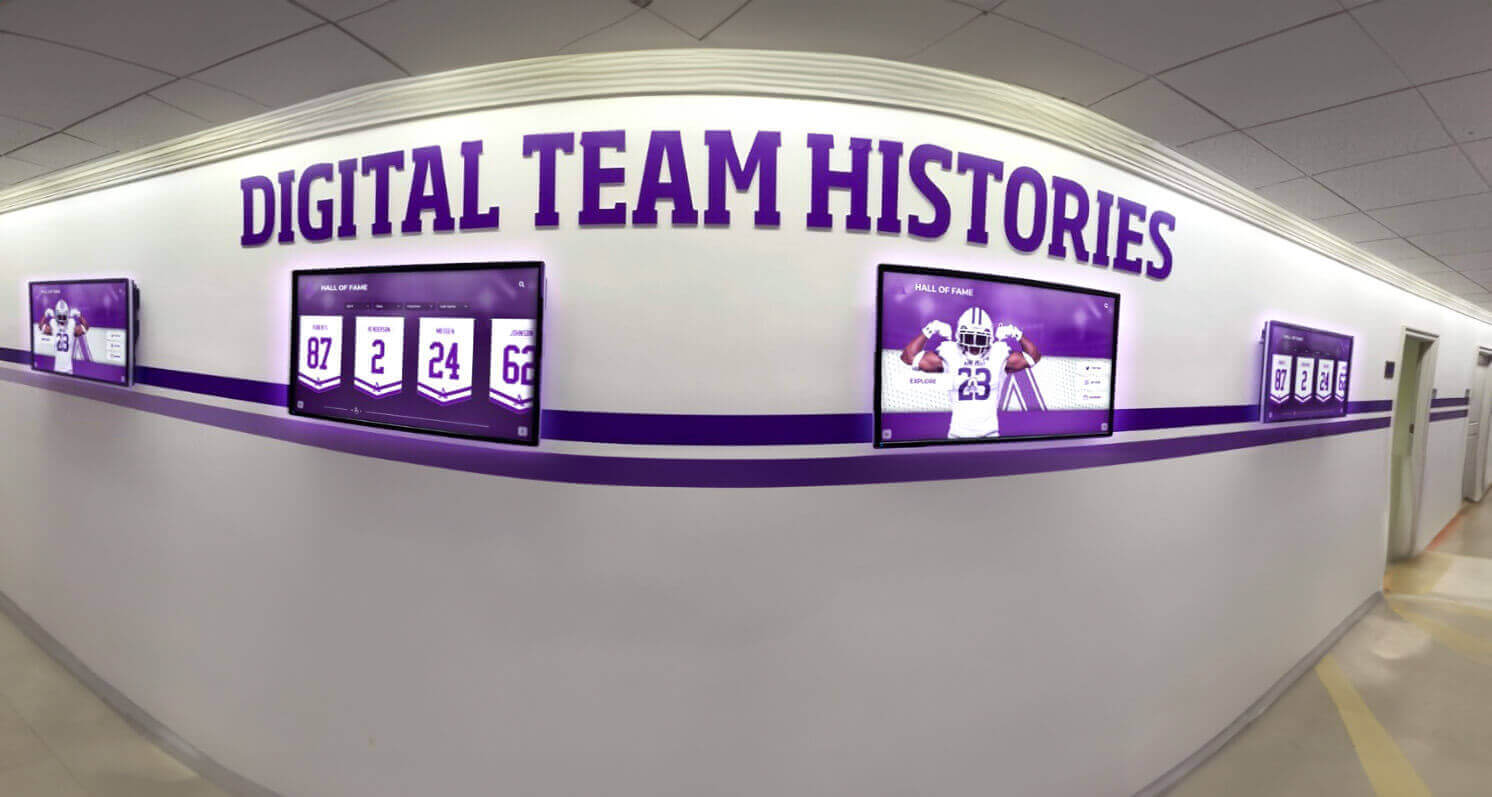
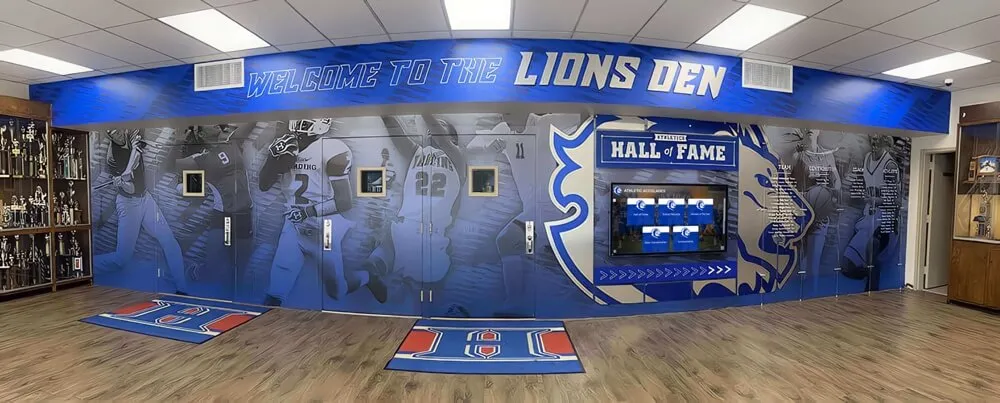
Coordinated multiple-display installations provide comprehensive memorial capacity throughout facilities
Software Platform and Content Management Requirements
Memorial platforms require specialized capabilities beyond generic digital signage:
Purpose-Built Memorial Features Generic digital signage software designed for advertising and announcements lacks features essential for memorial applications. Purpose-built recognition systems like Rocket Alumni Solutions provide functionality specifically designed for commemoration including structured profile systems for biographical information, searchable databases enabling visitor discovery, multimedia integration supporting photos and videos, and appropriate aesthetic templates maintaining memorial dignity. Memorial-specific platforms honor fallen heroes appropriately while providing functionality generic systems lack.
Cloud-Based Remote Management Modern memorial platforms enable authorized committee members to update content remotely from any internet-connected device without requiring physical access to display hardware. Cloud-based management proves essential for timely updates when communities lose service members, families share additional information, or memorial committees make content corrections and enhancements.
Multi-User Access and Permissions Memorial content management often involves multiple stakeholders including veterans organizations maintaining military information, family representatives contributing personal content, historians adding contextual information, and technical administrators managing systems. Role-based permission systems enable appropriate stakeholders to contribute while maintaining quality control and content approval workflows.
Data Security and Content Protection Military memorial content requires security protecting against unauthorized changes, vandalism, or loss including secure access controls limiting editing capabilities, automated backup systems preventing content loss, audit trails documenting all content changes, and recovery systems enabling restoration after problems. The permanent, sacred nature of memorial recognition demands robust security ensuring content integrity.
Web Platform Integration Memorial content should extend beyond physical displays through web-accessible platforms enabling remote access, mobile device optimization for smartphone and tablet viewing, social sharing capabilities when appropriate, and integration with existing community or veterans organization websites. Web access dramatically expands memorial reach and accessibility.
Location Selection and Installation Best Practices
Strategic placement maximizes memorial visibility and community impact:
High-Visibility Public Locations Memorial displays achieve maximum impact in locations with substantial public traffic including city hall and government building lobbies, community center and library main entrances, veterans facilities and service organization halls, school main lobbies and common areas (when appropriate), and museum or historical society public spaces. High-traffic placement ensures fallen heroes receive visibility honoring their sacrifice while enabling maximum community engagement.
Context Appropriateness and Memorial Dignity Installation locations should provide appropriate contexts for solemn memorial purposes. Quiet, respectful spaces enable contemplation and honor. Avoid locations near entertainment, commercial activity, or casual gathering areas where memorial dignity might be compromised by surrounding context.
Accessibility and Inclusive Design Memorial displays must be accessible to all community members including wheelchair users and people with mobility limitations through ADA-compliant mounting heights, clear approach spaces and circulation paths, accessible touchscreen interaction heights, and screen reader compatibility for visitors with vision impairments. Inclusive design ensures all community members can honor fallen heroes regardless of disability.
Integration with Existing Memorials Digital displays can complement existing physical memorials rather than replacing them. Consider installations that integrate physical monuments with interactive content, combine traditional memorial walls with digital storytelling extensions, place displays near existing memorial spaces, and create cohesive memorial environments honoring tradition while leveraging technology. Integration respects community memorial heritage while providing enhanced recognition capacity and engagement, similar to approaches in donor recognition integration.
Community Engagement and Educational Programming
Fallen heroes memorial displays serve broader purposes beyond basic recognition, enabling community engagement and educational initiatives.
Veterans Day and Memorial Day Programming
Memorial displays provide focal points for commemorative programming:
Ceremonial Event Integration Annual Veterans Day and Memorial Day observances incorporate memorial display content through featured tributes highlighting specific fallen heroes, video presentations using memorial content, community gatherings at display locations, and ceremonial additions of newly fallen service members. Memorial displays become living components of ongoing commemorative traditions rather than static monuments visited occasionally.
Student and Youth Involvement Schools develop programming connecting students with fallen heroes recognition including research projects studying specific service members, creative writing assignments based on memorial content, art projects honoring fallen heroes’ service, and youth participation in commemorative ceremonies. Student engagement helps younger generations understand sacrifice while honoring heroes through educational initiatives, following models from student recognition programs.
Public Awareness and Participation Communities build awareness and participation through social media campaigns featuring memorial content, local media coverage of memorial additions, community challenges encouraging memorial visits, and public nomination of overlooked fallen heroes. Active promotion ensures memorials remain living community resources rather than overlooked installations.
Educational Curriculum Integration
Memorial content supports formal educational programming:
History and Social Studies Connections Educators incorporate fallen heroes memorials into curriculum including military history lessons using local examples, conflict-specific units featuring community casualties, primary source analysis of memorial documents and letters, and research projects investigating fallen heroes’ service. Local military memorial content provides powerful educational resources connecting abstract historical concepts to community impacts.
Civics and Character Education Memorial recognition supports civic and character education teaching sacrifice and service concepts, citizenship responsibilities and privileges, courage and dedication values, and community responsibility and appreciation. Fallen heroes’ stories provide concrete examples illustrating abstract civic concepts and values.
Research Skills and Information Literacy Student projects using memorial content develop academic skills including biographical research methodologies, primary and secondary source evaluation, interview techniques with veterans and families, historical context research and analysis, and presentation and communication skills. Memorial research combines meaningful content with practical academic skill development.
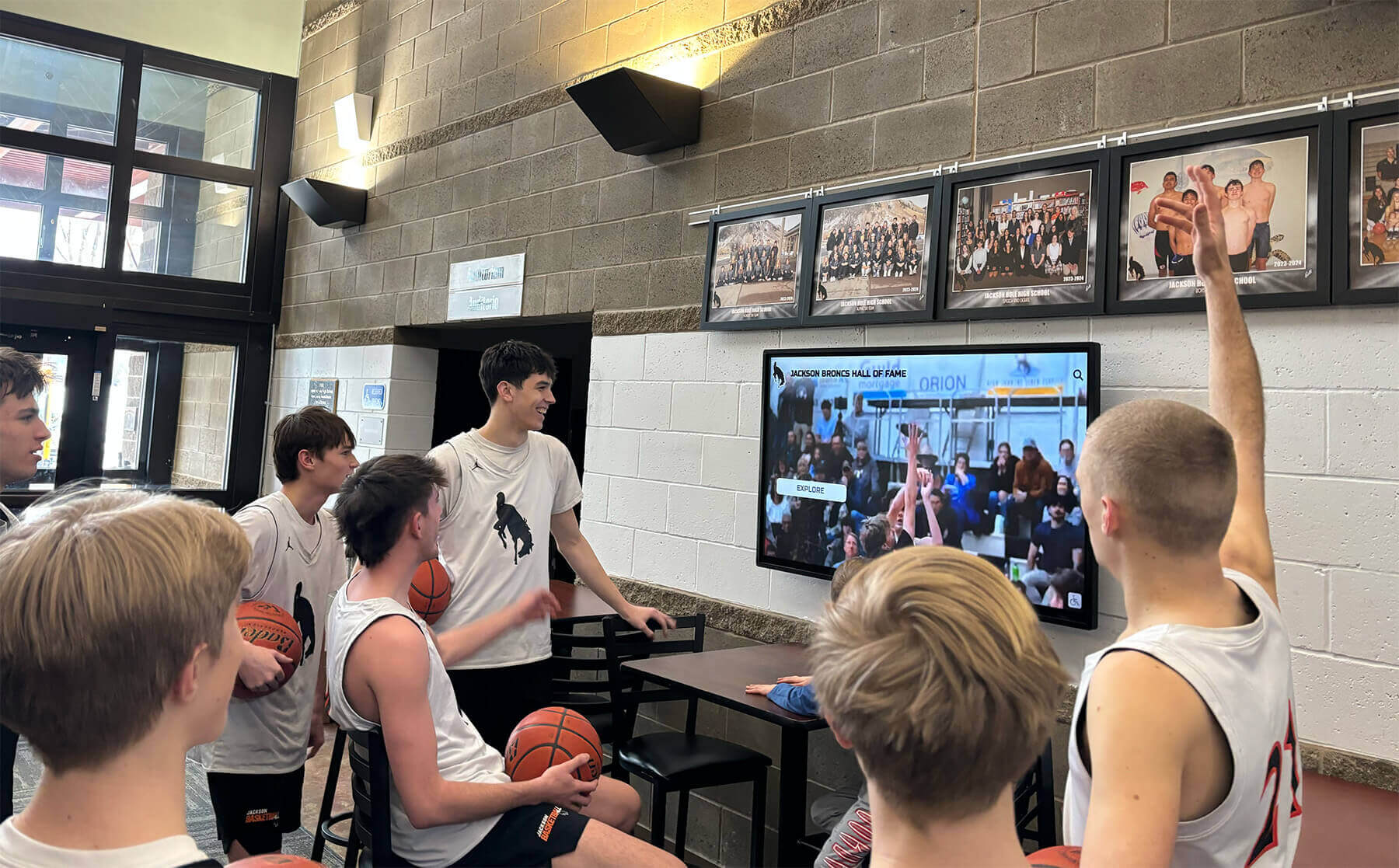
Memorial displays engage younger generations, connecting them with military history and sacrifice
Family and Veteran Community Connection
Memorial displays facilitate ongoing connections between families, veterans, and broader communities:
Family Access and Participation Memorial platforms enable military families to maintain ongoing connections through remote access to fallen heroes’ profiles, contribution opportunities for photos and memories, notification systems for memorial updates and events, and connection with other families sharing loss experiences. Sustained family engagement honors families’ sacrifices while providing support and community.
Veteran Fellowship and Remembrance Veterans use memorial displays for fellowship and remembrance activities including reunion events at memorial locations, oral history collection from fellow service members, ceremonial events honoring fallen comrades, and peer support through shared memorial experiences. Memorial displays become gathering points for veteran communities honoring fallen brothers and sisters in arms.
Genealogy and Family History Research Descendants researching military family history access memorial content through online platforms, discovering service details about military ancestors, connecting with other family researchers, and contributing family information to memorial records. Memorial platforms preserve military heritage for future generations while facilitating family connections.
Funding and Sustainability Strategies
Sustainable memorial projects require thoughtful funding approaches and long-term maintenance planning.
Initial Implementation Funding Sources
Memorial display projects access diverse funding sources:
Veterans Organization Support Veterans service organizations provide logical funding partners including American Legion national and local chapters, Veterans of Foreign Wars posts, Disabled American Veterans chapters, and military service-specific organizations (Marine Corps League, Navy League). These organizations prioritize fallen heroes recognition and memorial projects aligned with core missions.
Government Grants and Allocations Public funding opportunities support memorial projects including municipal government allocations for community memorials, state veterans affairs grants and programs, federal veterans commemoration grants, and military installation community support programs. Government funding recognizes public interest in honoring military service and sacrifice.
Private Donations and Fundraising Community fundraising generates memorial support through memorial donation campaigns, individual major gifts from community members, corporate sponsorships from businesses, legacy gifts and estate planning, and crowdfunding platforms for community projects. Personal connections to fallen heroes often motivate generous community support for memorial initiatives.
Memorial Dedication and Naming Opportunities Structured giving programs create fundraising through memorial dedications in honor of specific fallen heroes, naming opportunities for memorial components or features, tribute gifts in memory of deceased veterans, and recognition for significant donors supporting projects. Memorial giving enables personal connections while funding projects, similar to approaches used in church donor boards.
Ongoing Maintenance and Content Management
Long-term sustainability requires planning for continued operations:
Annual Operating Budgets Allocate resources for ongoing operations including software licensing and subscription fees, network connectivity and hosting costs, content management and curation time, and technical support and troubleshooting. Sustainable funding prevents memorial neglect when initial enthusiasm wanes.
Content Update Responsibilities Establish clear protocols for ongoing content maintenance including procedures for adding newly fallen heroes, systems for accepting family contributions, processes for content corrections and updates, and schedules for regular content review and quality assurance. Clear responsibility assignments ensure sustained memorial attention.
Technical Maintenance and Support Plan for technology maintenance requirements including hardware warranty and replacement planning, software updates and security patches, network maintenance and monitoring, and access to technical support when problems arise. Technology reliability proves essential for permanent memorial installations.
Community Stewardship and Governance Sustainable memorials require ongoing governance including memorial committee continuity planning, veteran organization involvement sustaining, community engagement maintaining, and succession planning for key roles and responsibilities. Long-term stewardship ensures memorials remain vibrant community resources honoring fallen heroes perpetually.
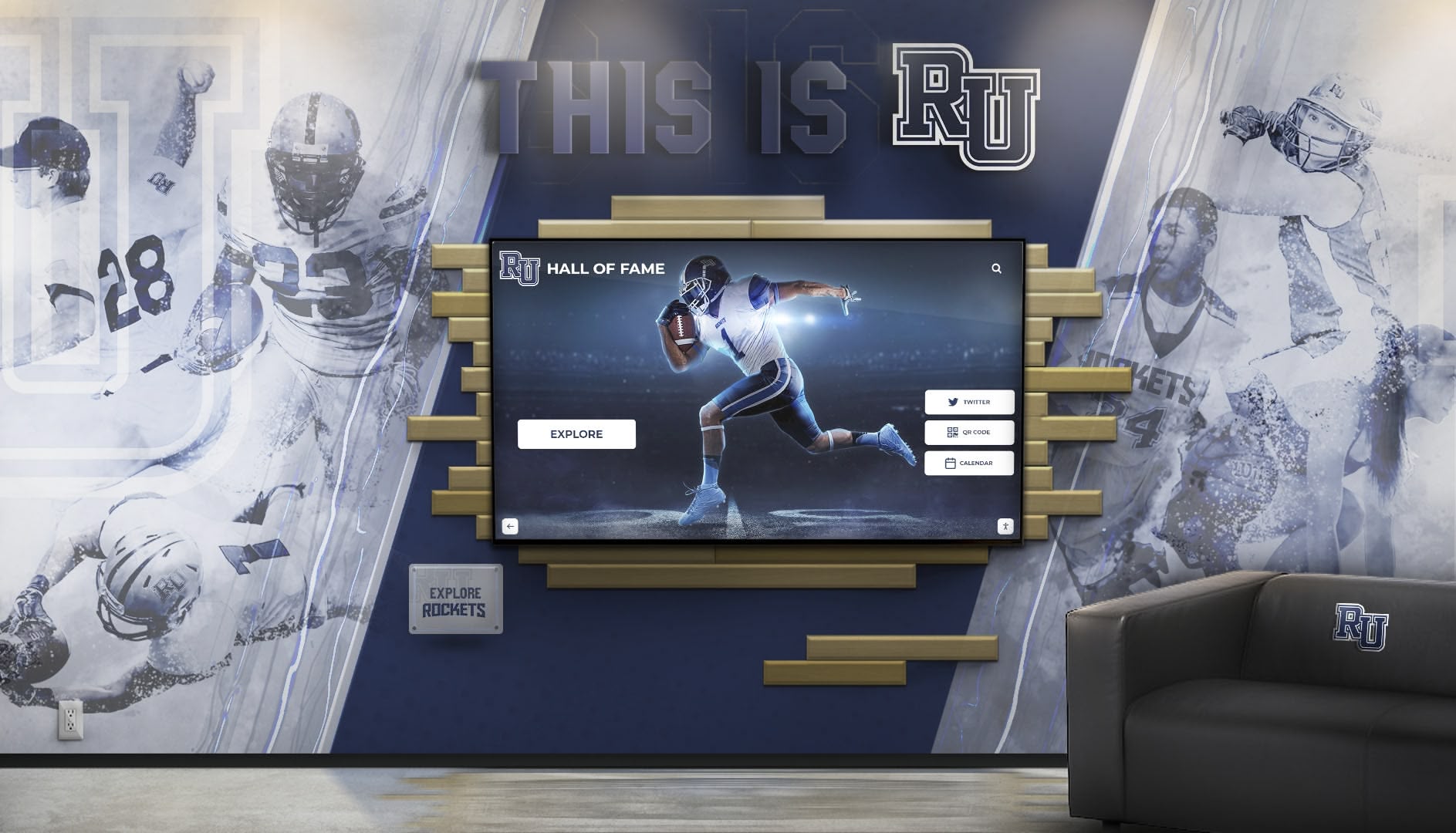
Professional memorial installations create lasting tributes worthy of heroes' ultimate sacrifice
Measuring Memorial Impact and Effectiveness
Assessing memorial displays ensures they effectively honor fallen heroes while serving community needs.
Engagement Metrics and Usage Analytics
Digital platforms provide quantitative engagement data unavailable with traditional memorials:
Interaction Volume and Patterns Track total touchscreen interactions measuring community engagement, unique visitors indicating reach breadth, session duration showing engagement depth, and return visits suggesting ongoing connection. Engagement metrics demonstrate whether memorials successfully engage communities versus serving as overlooked installations.
Search and Navigation Analysis Monitor most-searched fallen heroes revealing which service members receive particular interest, frequently viewed profiles indicating compelling content, popular historical periods showing conflict interest, and navigation paths revealing how visitors explore content. Usage patterns guide content strategy and feature prioritization.
Web Platform Analytics Monitor online memorial access through website traffic and page views, geographic distribution of visitors, referral sources directing traffic, and mobile versus desktop usage. Web analytics reveal memorial reach far beyond physical installation locations.
Educational and Event Impact Assess memorial’s role in programming through school visit frequency and duration, ceremonial event attendance, educational program participation, and community event connections. Impact measurement demonstrates memorial value supporting formal programming and community traditions.
Qualitative Feedback and Community Sentiment
Stakeholder perspectives provide essential context for quantitative metrics:
Family Appreciation and Satisfaction Gather feedback from military families about memorial appropriateness, accuracy of fallen heroes’ profiles, emotional impact and meaning, and family engagement opportunities. Family satisfaction proves critical since memorials primarily honor their loved ones and serve their needs.
Veteran Community Reception Assess veteran perspectives through feedback from veterans organizations, comments from fellow service members, participation in memorial events and activities, and continuing engagement with memorial content. Veteran approval validates that memorials appropriately honor military service and sacrifice.
Broader Community Response Monitor community reception through public comments and testimonials, social media discussions and sharing, media coverage and reporting, and community pride and identification with memorial. Positive community response indicates memorials successfully serve civic purposes honoring sacrifice while building community identity.
Student and Educator Assessment Gather educational stakeholder feedback regarding curriculum integration success, student engagement and learning, educational value and impact, and appropriateness for youth audiences. Educational effectiveness measures whether memorials successfully teach younger generations about service and sacrifice.
Honor Fallen Heroes with Digital Memorial Recognition
Discover how interactive memorial displays create meaningful tributes that preserve legacies, engage communities, and ensure no hero is ever forgotten. Explore comprehensive memorial solutions designed specifically for honoring military service and sacrifice.
Schedule Your ConsultationConclusion: Memorial Recognition Worthy of Ultimate Sacrifice
Fallen heroes who made the ultimate sacrifice defending our nation deserve recognition reflecting the depth of their service, the completeness of their lives, and the magnitude of their courage. Traditional memorial approaches—stone monuments, engraved plaques, and static memorial walls—honor these principles with dignity and permanence but face inherent limitations preventing comprehensive storytelling, restricting accessibility, and creating space constraints forcing impossible choices about whose sacrifice receives prominent recognition.
Interactive fallen heroes touchscreen displays transform military memorial recognition by removing these limitations while maintaining—indeed, enhancing—the dignity, solemnity, and permanence these sacred tributes require. Digital platforms accommodate unlimited recognition capacity ensuring every fallen hero receives comprehensive commemoration regardless of conflict era, military branch, or hometown. Rich multimedia capabilities enable storytelling that honors complete lives—military service, personal character, family connections, and lasting legacies—rather than reducing heroes to mere names and dates on plaques.
Global accessibility through web platforms ensures military families living far from memorial locations maintain connections with tributes honoring their loved ones. Active service members deployed overseas can honor fallen comrades remotely. Future generations researching family military history discover ancestors’ service details and sacrifice circumstances. Students studying military history connect abstract historical concepts with local community impacts through personal stories of fallen heroes.

Memorial spaces combine solemn recognition with community gathering opportunities
The educational opportunities interactive memorials create prove particularly valuable for connecting younger generations with military history and sacrifice concepts. When students research specific fallen heroes for class projects, when teachers integrate local memorial content into history curricula, when youth groups participate in Veterans Day programming centered on memorial displays—these educational touchpoints ensure fallen heroes’ sacrifices remain meaningful for generations who never experienced the conflicts in which these service members fell.
What we call “digital warming” describes the transformation occurring when cold, impersonal memorial lists become personalized, interactive experiences drawing community members into deeper engagement with fallen heroes’ stories. When veterans discover fallen comrades and share remembrances, when military families contribute photos and memories enriching their heroes’ profiles, when community members search for neighbors who served and never returned, when students explore these stories developing appreciation for sacrifice—these interactions create warmth and connection traditional static memorials cannot achieve.
Implementation success requires thoughtful planning engaging diverse stakeholders including veterans organizations, military families, community leaders, and technical specialists. Clear protocols about recognition criteria, biographical content standards, and family privacy protections ensure memorials honor fallen heroes appropriately while respecting families’ needs. Purpose-built memorial technology specifically designed for fallen heroes recognition provides features and aesthetics appropriate for these sacred applications versus generic digital signage repurposed for memorial contexts.
Solutions like Rocket Alumni Solutions offer comprehensive platforms addressing every aspect of fallen heroes memorial recognition—from intuitive content management enabling non-technical memorial committee members to contribute content, to robust search and discovery tools helping visitors find specific service members, to multimedia integration capabilities preserving photographs and video tributes, to appropriate aesthetic templates maintaining memorial dignity and respect.
The investment in interactive memorial technology honors not only fallen heroes but also their families, fellow veterans, and broader communities who share profound gratitude for ultimate sacrifice. Every community member deserves opportunities to learn about, honor, and remember local heroes who gave everything defending our freedoms. Military families deserve tributes preserving their loved ones’ complete stories for generations who will never meet them but benefit from their sacrifice. Veterans deserve memorials honoring fallen comrades with comprehensiveness and accessibility reflecting bonds forged through shared service.
Your community’s fallen heroes deserve recognition worthy of their ultimate sacrifice—tributes that preserve complete stories, engage future generations, remain accessible to families regardless of distance, and create meaningful connections between past sacrifice and present freedom. With thoughtful planning, appropriate technology, family involvement, and sustained community stewardship, you can create memorial recognition honoring these heroes with the depth, dignity, and permanence their service demands.
Ready to begin honoring your community’s fallen heroes through interactive memorial recognition? Explore comprehensive guidance about honoring fallen soldiers through digital memorial recognition or learn about veterans memorial wall programs that celebrate military service while preserving legacies for future generations.