



Donor walls represent far more than acknowledgment obligations for nonprofits, schools, hospitals, and cultural institutions—they embody strategic investments in relationship building that determine fundraising sustainability. When organizations implement thoughtful donor recognition that celebrates supporters meaningfully while creating engaging community destinations, they activate what experts call digital warming: continuously surfaced, personalized content that transforms cold institutional spaces into vibrant gathering places where every supporter feels valued and inspired to deepen their commitment.
Yet countless organizations struggle with donor wall decisions. Traditional engraved plaques fill available space within years, cost thousands for routine updates, and fail to create the storytelling depth modern supporters expect. Meanwhile, digital signage solutions designed for corporate communications lack the specialized features donor recognition requires. Between these extremes lies confusion about costs, technologies, implementation strategies, and which approaches deliver meaningful return on recognition investment.
This comprehensive 2026 guide cuts through the complexity. You’ll discover every donor wall type from traditional bronze plaques to advanced interactive touchscreens, understand true costs including hidden long-term expenses, learn implementation strategies proven across hundreds of installations, and explore how modern recognition technology builds the engaged donor communities essential for fundraising success in today’s competitive philanthropic landscape.
Organizations that invest thoughtfully in donor recognition consistently outperform peers in retention, lifetime donor value, and campaign success rates. Research across the nonprofit sector demonstrates that recognized donors give 30-50% more over their lifetimes and maintain giving relationships three times longer than unrecognized supporters. The difference lies not in recognition existence but in recognition quality—visibility, accessibility, storytelling depth, and the authentic appreciation these systems communicate every day.

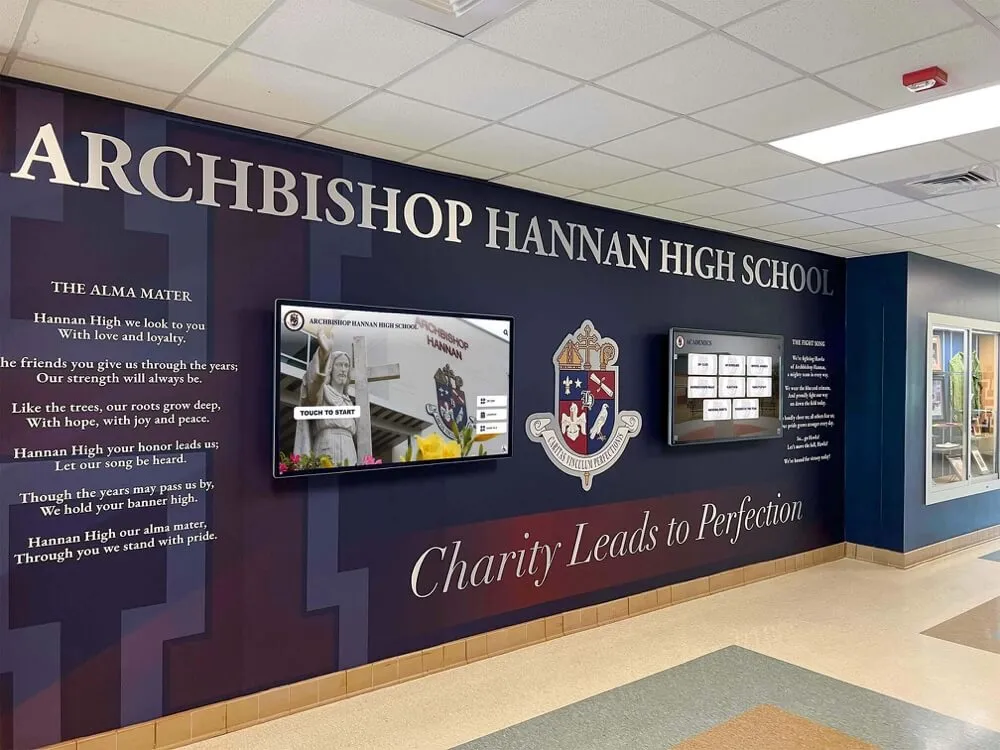
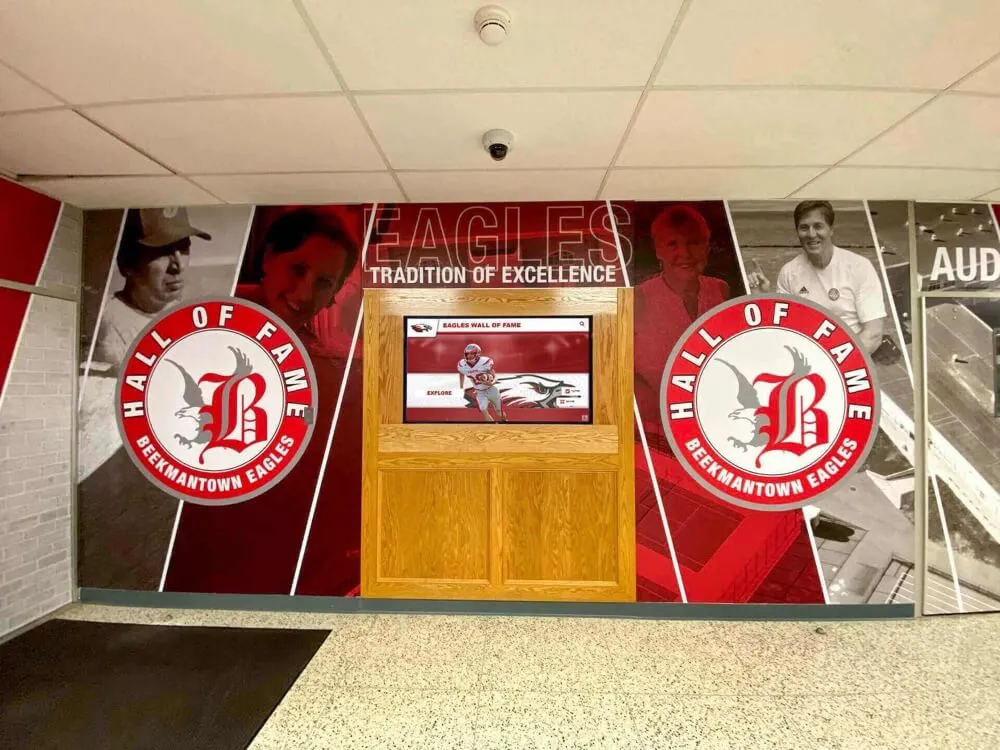
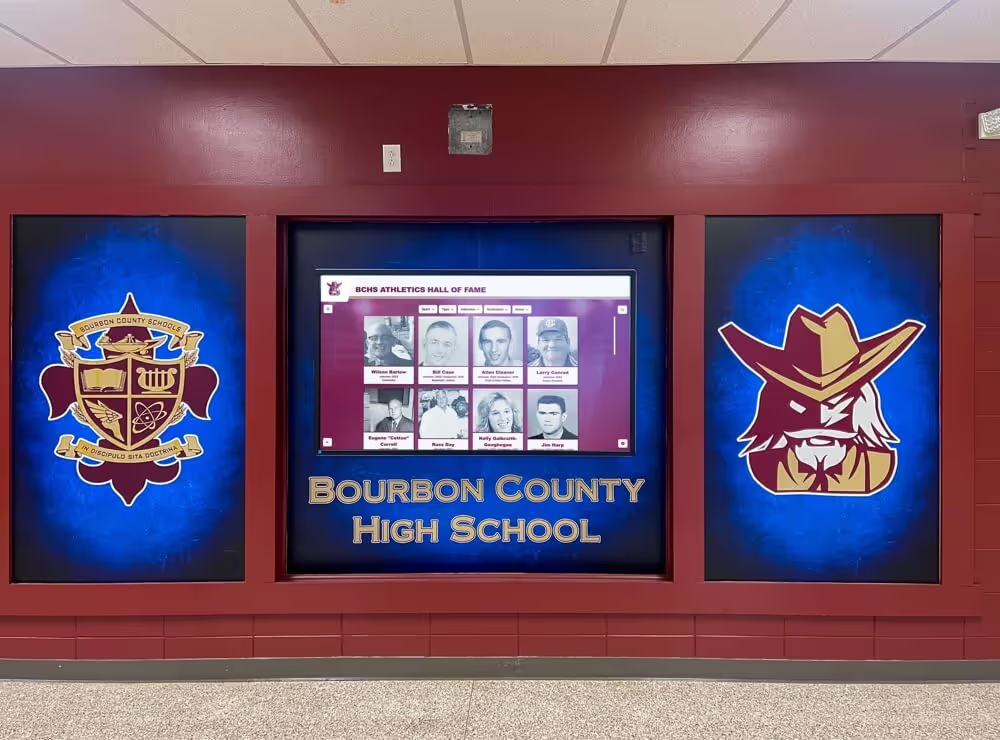
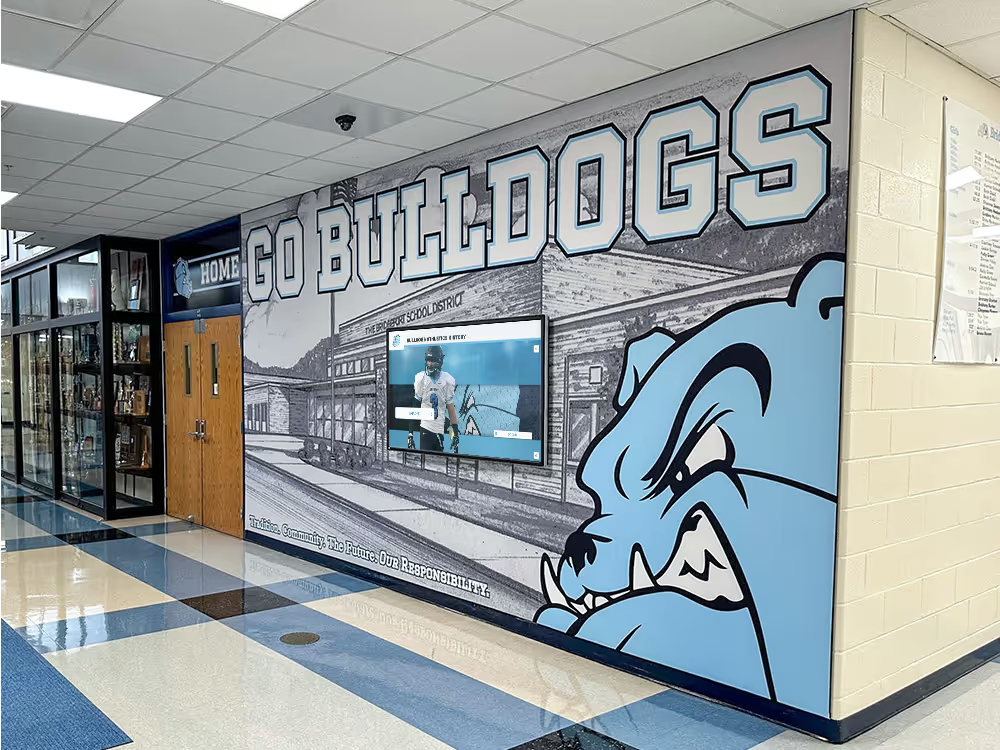
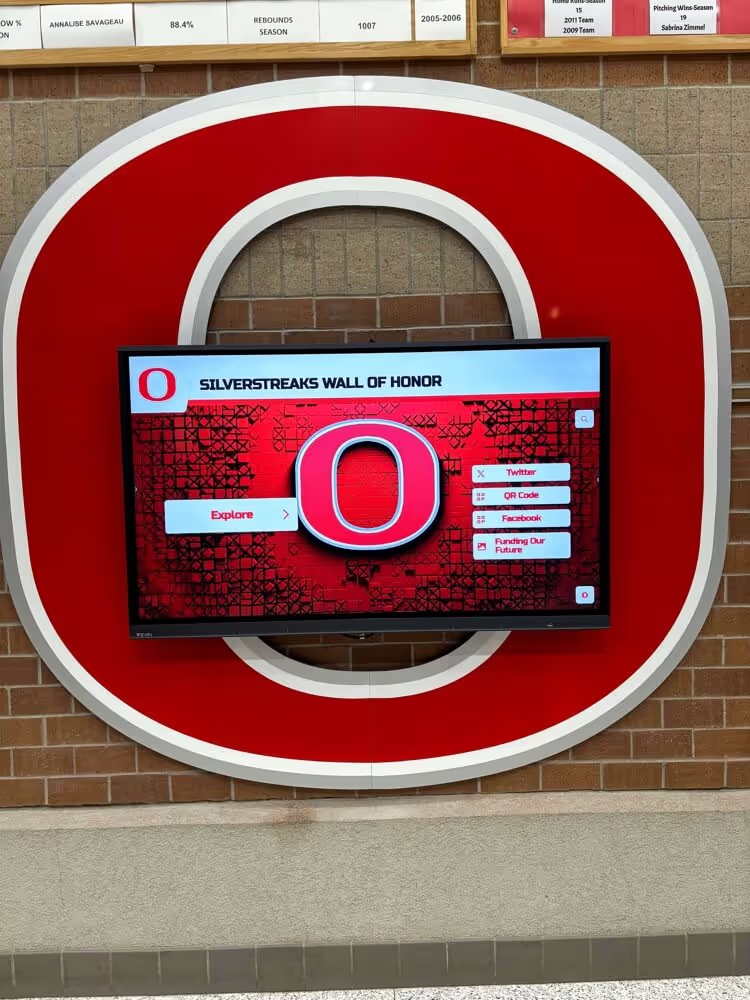
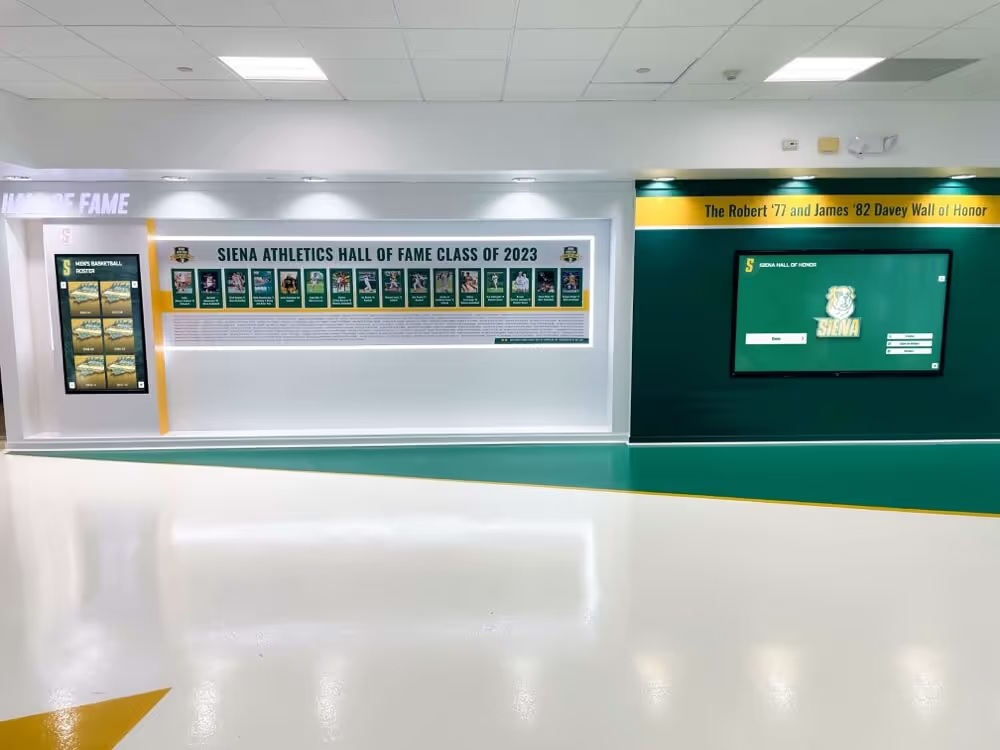
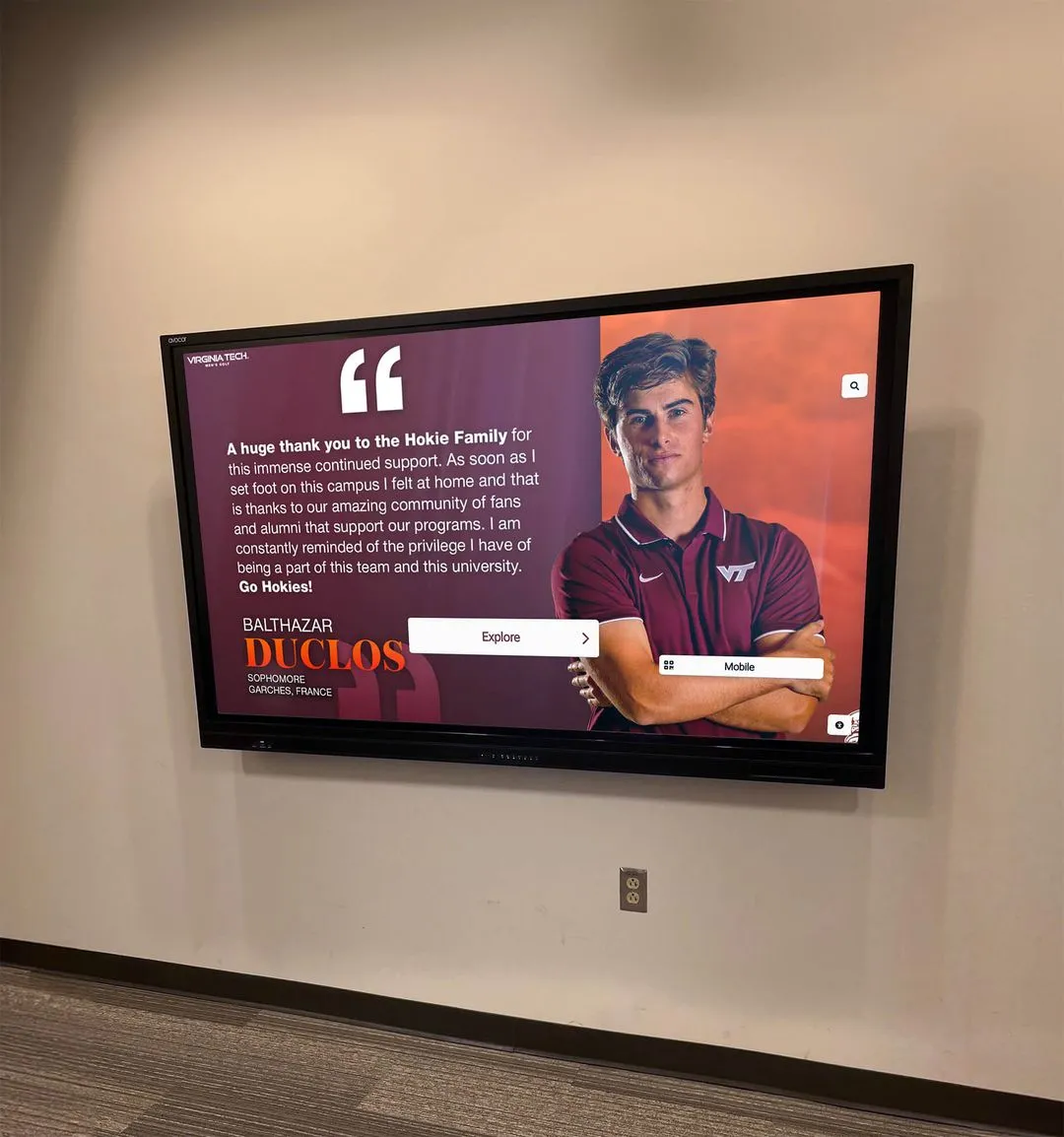
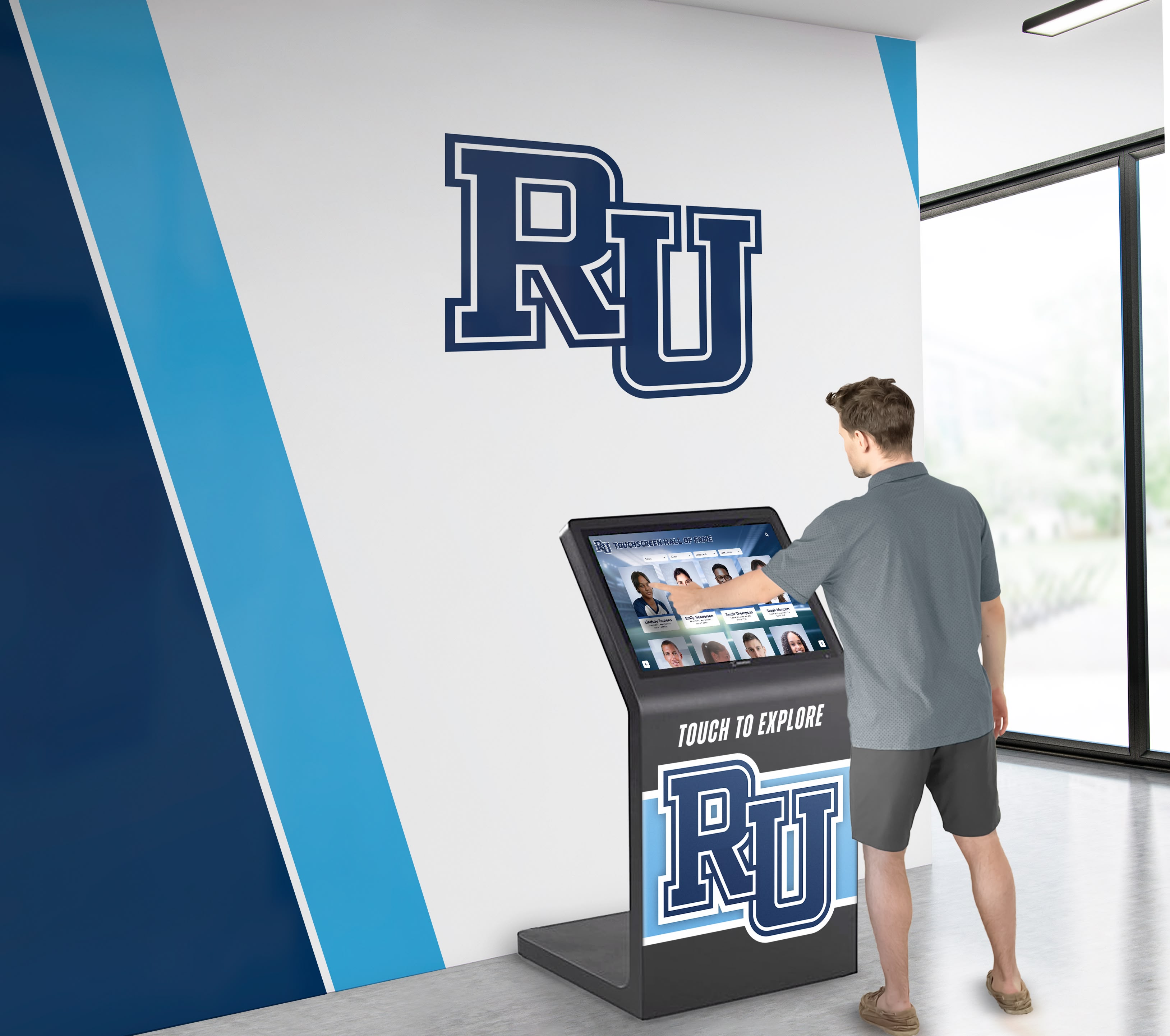
Modern donor recognition creates engaging destinations where supporters discover their impact and feel genuine connection to organizational missions
Understanding Donor Walls: Purpose and Strategic Value
Before exploring specific donor wall types, organizations should understand the strategic purposes effective recognition serves beyond simple thank-you gestures.
Why Donor Walls Matter for Fundraising Success
Effective donor recognition accomplishes several critical objectives directly impacting organizational sustainability:
Building Visible Supporter Communities
Visible donor recognition creates powerful social proof motivating participation. When prospective supporters see hundreds or thousands of donors, they gain confidence that organizations merit trust and investment. This visibility proves particularly valuable during capital campaigns and annual giving drives, as visible momentum attracts additional participation while demonstrating institutional health and community backing strength.
Research published in the Nonprofit Quarterly demonstrates that visible donor communities increase gift conversion rates by 18-24% compared to organizations where supporters remain invisible. The psychological principle is straightforward: people give to organizations others support, creating positive reinforcement cycles where visibility generates additional participation.
Creating Year-Round Sustained Appreciation
Unlike momentary thank-you letters or brief recognition at events, donor walls provide 365-day visibility ensuring sustained appreciation. Supporters visiting facilities encounter their recognition prominently displayed, creating positive reinforcement while demonstrating organizational gratitude extending beyond transactional acknowledgments.
This sustained visibility significantly impacts retention. The Chronicle of Philanthropy reports that donors receiving visible ongoing recognition renew gifts at rates 35-45% higher than those acknowledged only through private communications.
Inspiring Future Giving Through Compelling Examples
Well-designed recognition inspires others through powerful examples and authentic narratives. When visitors explore donor stories discovering why people give, what motivates their support, and what impact their contributions create, these testimonials prove more persuasive than any institutional marketing could achieve.
First-person donor narratives, impact connections between gifts and outcomes, and visible celebration of philanthropic partnership create inspiration impossible through traditional marketing channels.
Demonstrating Accountability and Mission Impact
Recognition connecting individual gifts to tangible outcomes—scholarships funded, programs sustained, facilities improved, research advanced—demonstrates accountability while reinforcing supporters’ decisions to invest in organizations. This visible connection between philanthropic investment and mission outcomes builds confidence supporting continued commitment and gift progression over time.
Organizations implementing comprehensive approaches to donor recognition that emphasize impact consistently report stronger retention and average gift growth.
The Cost of Inadequate Recognition
Failing to recognize donors appropriately carries measurable financial consequences:
Donor Attrition Impact
First-year donor retention averages only 19-27% across the nonprofit sector, meaning more than three-quarters of first-time supporters never make second gifts. The Association of Fundraising Professionals identifies inadequate recognition among the top three factors driving this attrition.
When organizations calculate lost lifetime value from departed donors, recognition investments become obviously justified. A donor who would have given $500 annually for fifteen years represents $7,500 in lost revenue—making even significant recognition investments worthwhile when they improve retention even modestly.
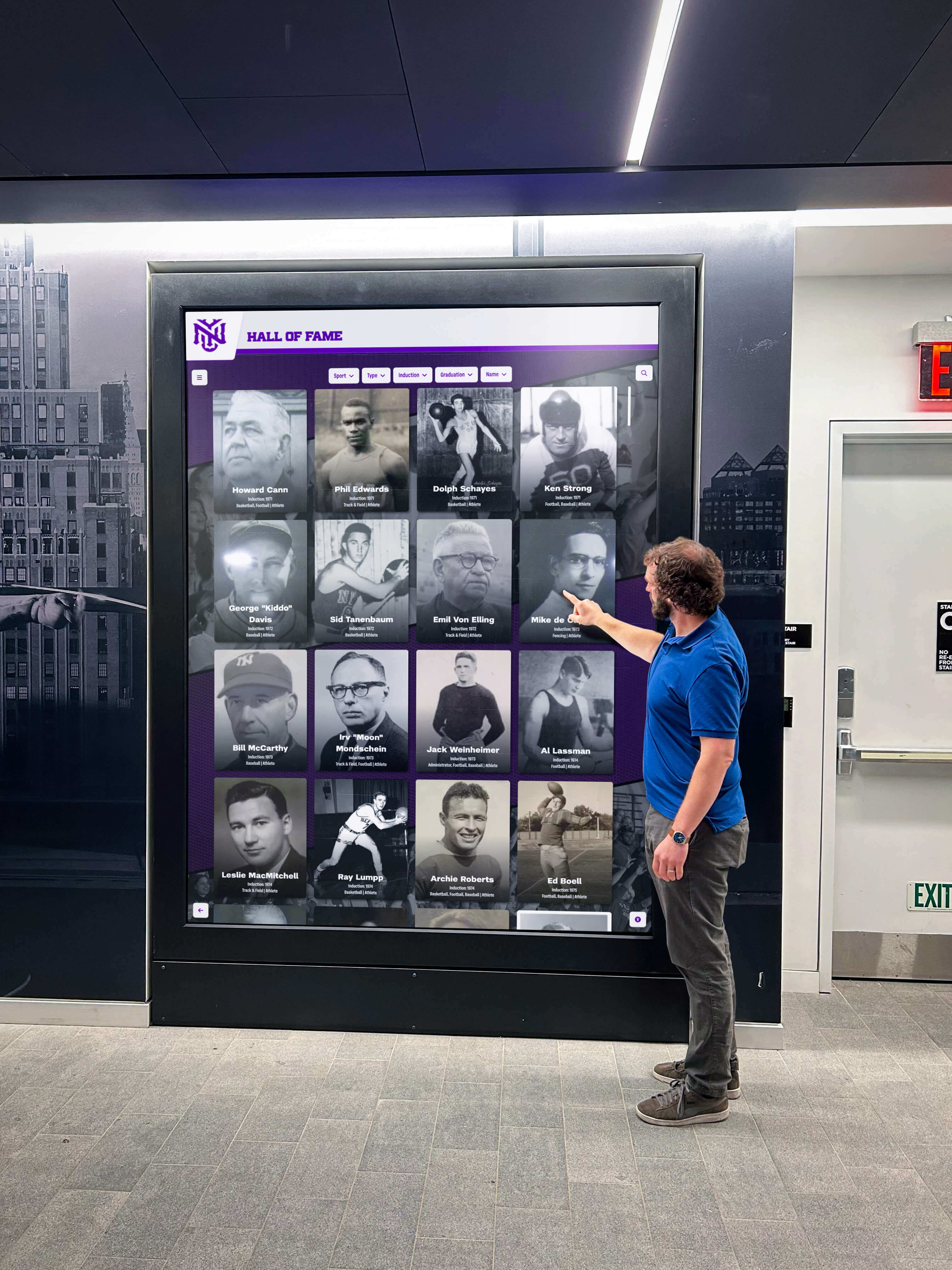
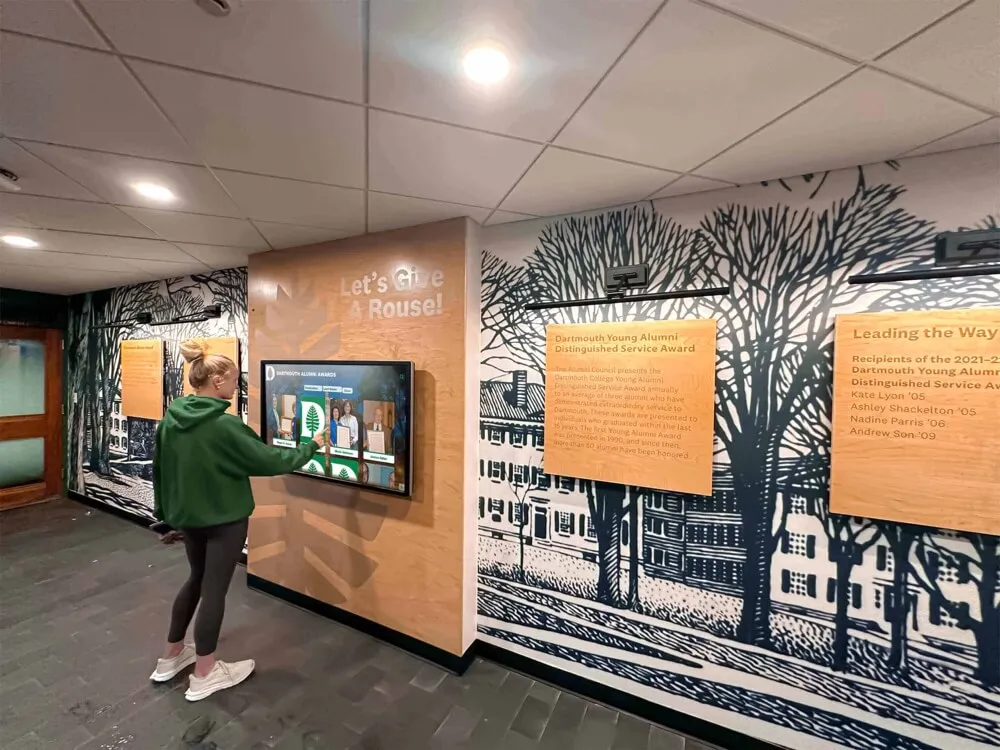
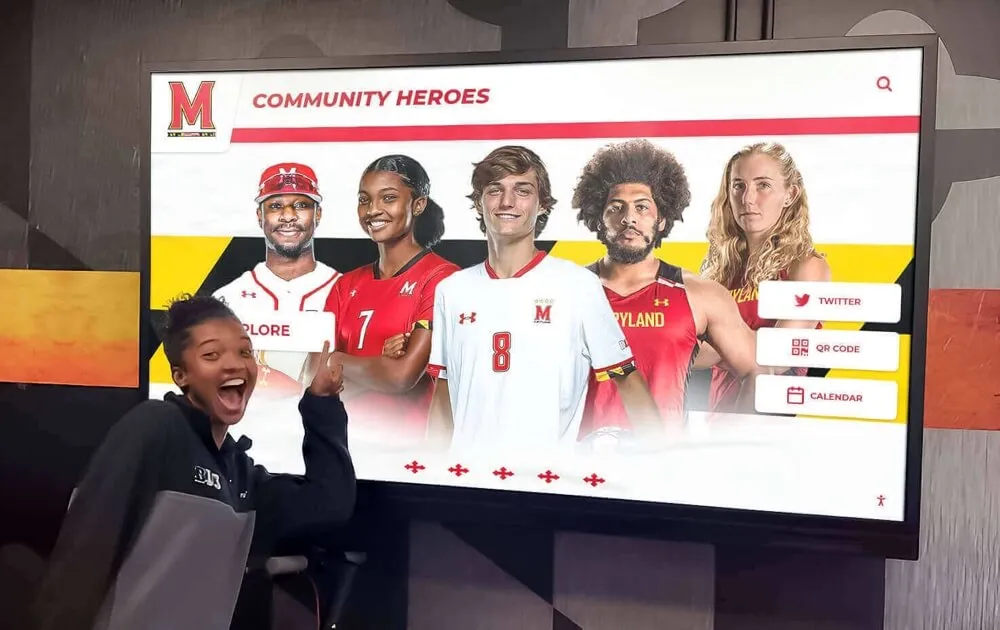
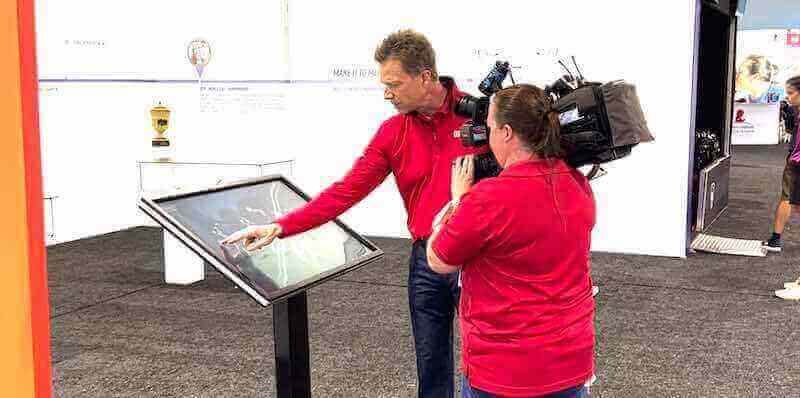
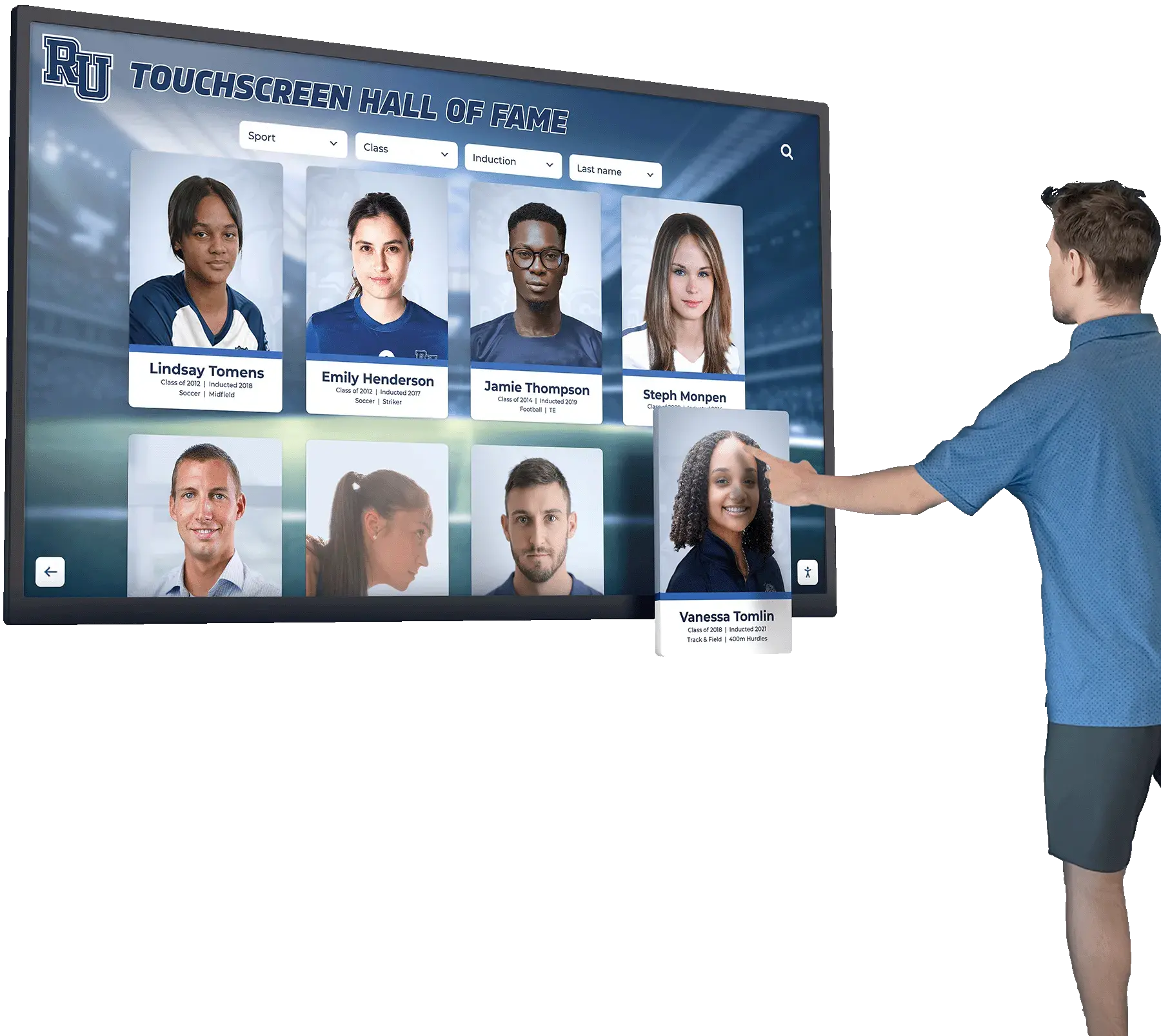
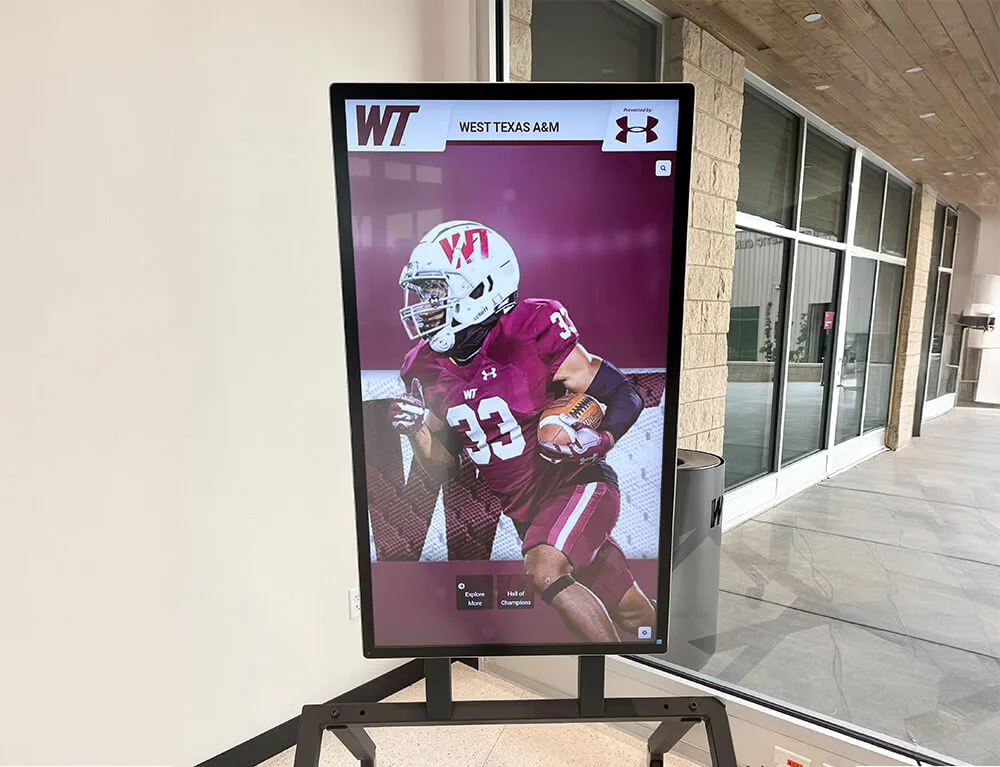
Interactive displays transform passive acknowledgment into active engagement where donors discover their place in institutional communities
Campaign Underperformance
Organizations with weak recognition infrastructure face measurable campaign disadvantages. Development consultants consistently observe that visible donor recognition during active campaigns increases participation rates by 15-30% as prospects see social proof through growing donor communities.
Conversely, organizations lacking visible recognition struggle to demonstrate momentum, forcing reliance on abstract appeals rather than tangible evidence of community participation driving campaign success.
Competitive Disadvantage
In today’s competitive philanthropic landscape, donors choose among countless worthy organizations. Recognition quality increasingly influences giving decisions, particularly among younger supporters accustomed to immediate acknowledgment, social sharing capabilities, and storytelling depth traditional recognition cannot provide.
Organizations implementing modern recognition strategies position themselves advantageously against competitors still relying on outdated approaches that fail to meet contemporary donor expectations.
Traditional Donor Wall Types: Classic Approaches
Traditional donor recognition has evolved over decades, establishing approaches that remain relevant for many organizations while carrying inherent limitations modern alternatives address.
Bronze and Metal Plaque Walls
The most traditional donor recognition features individually engraved bronze, brass, or aluminum plaques mounted on architectural walls.
Typical Implementation
Metal plaque walls typically include:
- Individual plaques sized 3x5 inches to 6x8 inches depending on donor tier
- Engraved donor names, sometimes with gift amounts or giving society designations
- Architectural headers identifying recognition purpose and giving campaigns
- Mounting on prominent walls in lobbies, hallways, or dedicated recognition spaces
- Grid layouts accommodating planned expansion as additional donors are added
Advantages of Metal Plaques
Traditional plaques offer several benefits:
- Permanent, prestigious aesthetic communicating tradition and institutional stability
- No ongoing technology requirements or maintenance concerns
- Perceived permanence important to major donors seeking lasting legacy
- Familiar format meeting traditional donor expectations
- No electrical requirements or infrastructure dependencies
Limitations and Challenges
Metal plaque approaches face significant constraints:
- Space Limitations: Available wall space fills completely within 3-10 years depending on organization size
- Expensive Updates: Each new plaque costs $75-250 for engraving, mounting hardware, and installation labor
- Recognition Delays: Production timelines of 6-12 weeks create gaps between gifts and visible acknowledgment
- Minimal Storytelling: Space constraints limit content to names with minimal context
- Fixed Hierarchy: Physical positioning creates permanent tiering difficult to adjust as giving patterns evolve
- Exclusivity Pressures: Space limitations force minimum thresholds excluding smaller donors whose collective impact often equals major gifts
Organizations frequently spend $3,000-8,000 annually maintaining traditional plaque walls through routine additions, creating recurring costs that accumulate dramatically over decades.

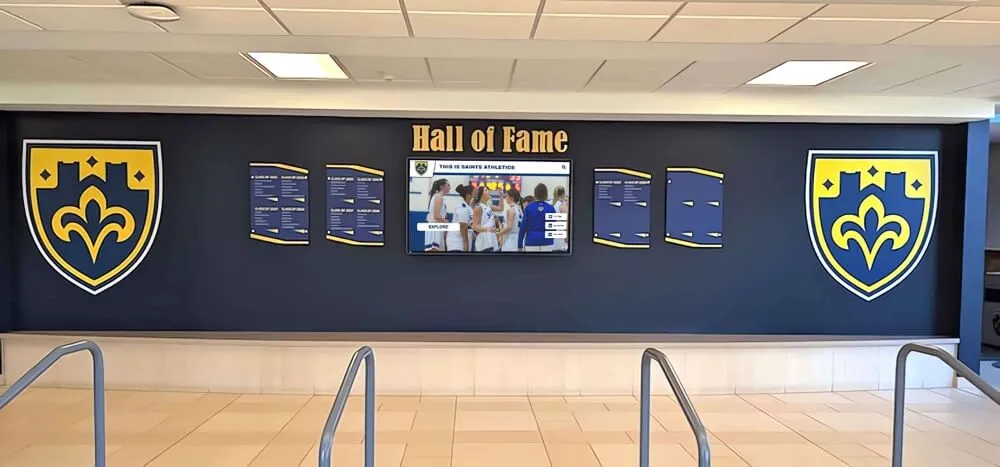
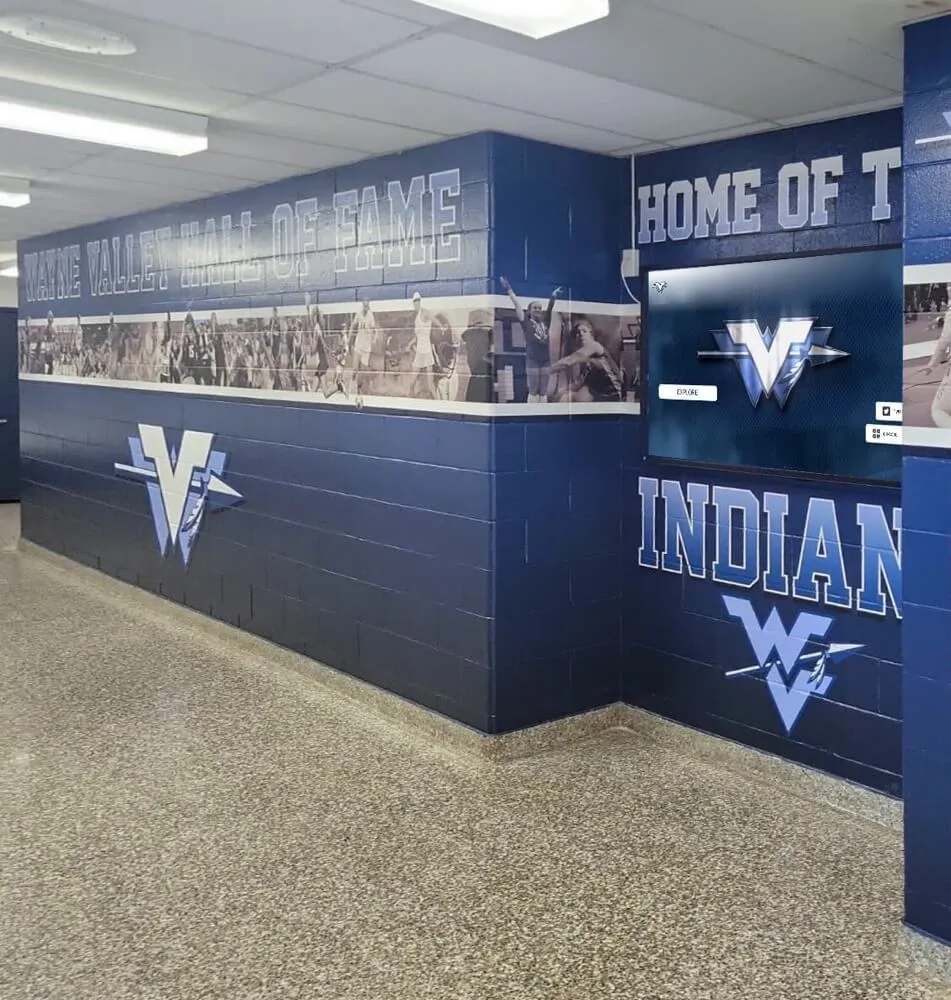
Hybrid approaches combining traditional architectural elements with digital technology provide both permanence and flexibility
Etched Glass and Acrylic Recognition Walls
Glass and acrylic donor walls provide contemporary alternatives to metal plaques while maintaining traditional permanence.
Implementation Characteristics
Glass recognition typically includes:
- Individual panels with laser-etched or sandblasted names
- Backlit installations creating visual impact through illumination
- Frosted or clear glass options matching architectural design
- Modular panel systems allowing future expansion
- Custom graphics, logos, and decorative elements
Advantages Over Metal Plaques
Glass recognition offers several improvements:
- Sophisticated, contemporary aesthetic appealing to modern sensibilities
- Illumination options creating prominent visual features
- Cleaner visual presentation than clustered metal plaques
- Easier cleaning and maintenance than textured metal surfaces
Persistent Traditional Limitations
Despite aesthetic improvements, glass recognition shares traditional constraints:
- Similar per-donor costs of $100-300 for etching and installation
- Finite capacity requiring eventual expansion or donor removal
- Limited storytelling depth beyond name listings
- Weeks-long production timelines delaying recognition
- Fixed content unchangeable after installation
Organizations considering glass recognition should evaluate whether aesthetic improvements justify costs while accepting that fundamental space and content limitations remain unaddressed.
Dimensional Letter and Nameplate Walls
Individual dimensional letters or nameplates mounted directly on architectural surfaces provide flexible traditional recognition.
Typical Specifications
Dimensional recognition includes:
- Individual letters or pre-fabricated nameplates for each donor
- Materials including brushed metal, painted wood, or acrylic
- Varying sizes reflecting giving levels
- Mounting on architectural walls using adhesive or standoffs
- Organized layouts grouping donors by giving society or campaign
Flexibility Advantages
This approach provides benefits:
- Easier rearrangement as donor communities grow
- Lower per-donor costs of $30-80 for smaller nameplate systems
- Quicker production timelines allowing faster acknowledgment
- Visual hierarchy through size variation emphasizing major gifts
Ongoing Limitations
Fundamental constraints persist:
- Space eventually fills requiring expansion or removal decisions
- Minimal storytelling capacity beyond names
- Labor-intensive installation and maintenance
- Aesthetic limitations compared to unified architectural treatments
Dimensional recognition serves organizations seeking traditional permanence with somewhat greater flexibility, though fundamental limitations remain unaddressed.

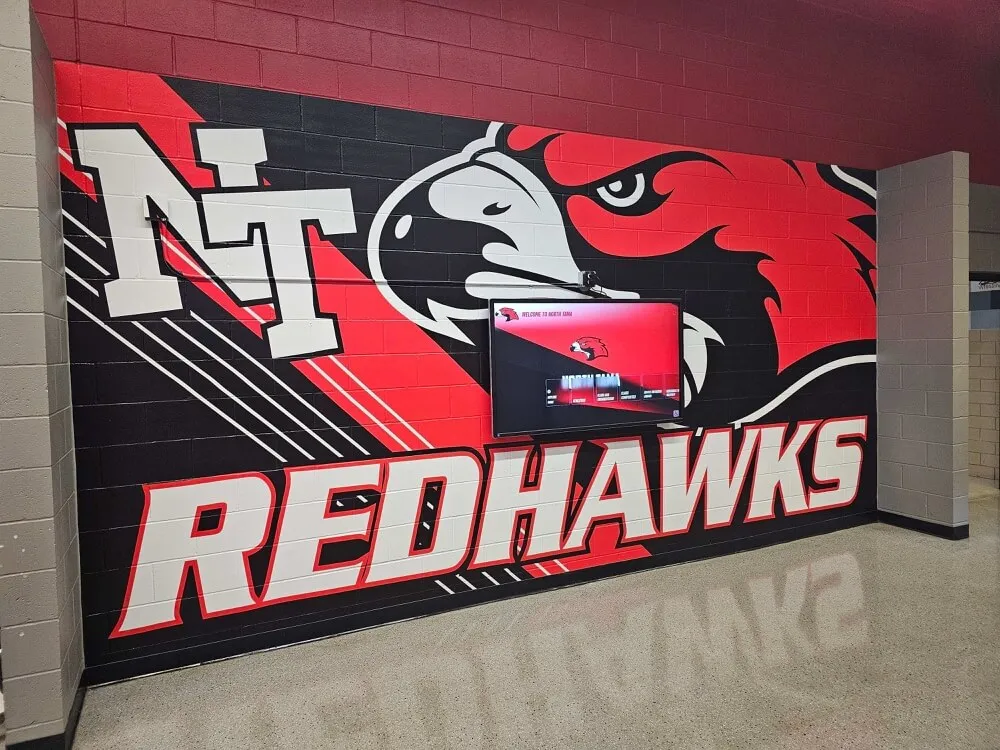
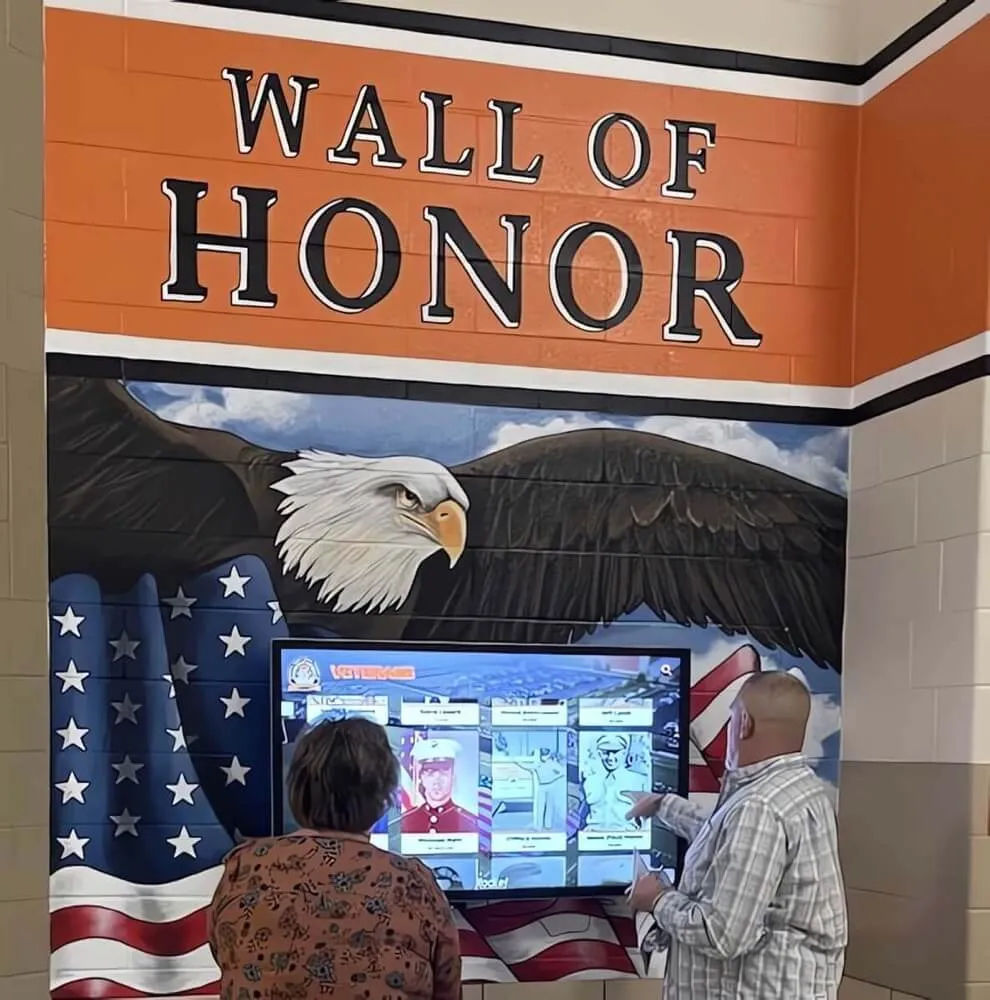
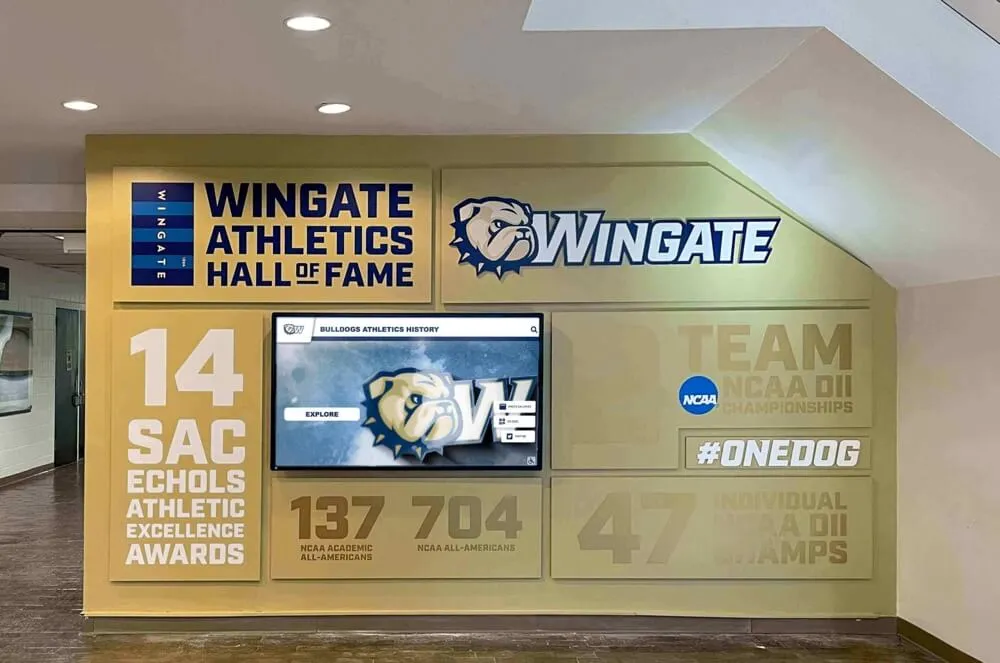
Architectural murals create institutional identity while accommodating flexible recognition technology
Digital Donor Wall Solutions: Modern Recognition Technology
Digital recognition technology fundamentally transforms what donor acknowledgment can accomplish, eliminating traditional limitations while creating capabilities impossible with static displays.
Interactive Touchscreen Donor Walls
The most transformative donor recognition embraces interactive touchscreen technology reimagining supporter acknowledgment entirely.
Core Capabilities
Modern touchscreen donor walls provide:
- Unlimited Recognition Capacity: Accommodate thousands of donors across all giving levels without space constraints
- Rich Multimedia Profiles: Individual pages featuring photos, videos, donor statements, impact stories, and comprehensive biographical content
- Advanced Search and Filtering: Visitors find donors by name, location, giving society, campaign, or any searchable attribute
- Real-Time Updates: Cloud-based management enables immediate recognition after gifts process
- Web Accessibility: Online platforms extend recognition globally beyond physical displays
- Automated Content Rotation: Ensure all donors receive featured visibility over time through algorithmic fairness
- Analytics and Engagement Tracking: Measure interaction rates, popular content, and user behavior informing optimization
Organizations implementing solutions like Rocket Alumni Solutions’ interactive touchscreen platforms eliminate space constraints while creating engaging experiences impossible with traditional recognition.
Strategic Advantages Over Traditional Recognition
Digital systems provide measurable benefits:
- Comprehensive Inclusivity: Recognize every donor regardless of gift size, building inclusive communities celebrating collective impact
- Immediate Acknowledgment: Update recognition within hours of gifts processing rather than waiting months for production
- Compelling Storytelling: Share donor motivations, impact narratives, and beneficiary testimonials creating emotional connections
- Extended Reach: Web platforms enable worldwide access from any device, amplifying recognition far beyond facility visitors
- Reduced Long-Term Costs: Eliminate recurring plaque expenses that accumulate to tens of thousands over decades
- Long-Term Flexibility: Adapt content, categories, and presentation as organizational priorities evolve
Research conducted across educational institutions shows that interactive donor recognition increases average engagement time from 15-30 seconds (typical for traditional plaques) to 3-7 minutes, dramatically amplifying recognition impact while creating memorable experiences.
Implementation Considerations
Organizations evaluating touchscreen recognition should address:
- Hardware selection matching budget, space, and visibility requirements
- Purpose-built recognition software versus generic digital signage platforms
- Content management system accessibility for non-technical staff
- Accessibility compliance ensuring experiences serve all community members
- Vendor support quality and responsiveness
- Long-term platform sustainability and update frequency
Purpose-built systems specifically designed for donor recognition provide capabilities generic digital signage cannot match, including specialized search functions, giving level categorization, automated rotation ensuring recognition equity, and donor-specific features like memorial designations and tribute acknowledgments.
Standard Digital Display Recognition (Non-Interactive)
Non-touch digital screens provide more affordable alternatives when interactive capabilities aren’t essential.
Typical Implementation
Standard digital recognition includes:
- Wall-mounted flat screens displaying rotating donor content
- Digital signage software managing content schedules
- Simple donor listings organized by giving level
- Rotating presentations ensuring all donors receive visibility
- Remote content updates via cloud platforms
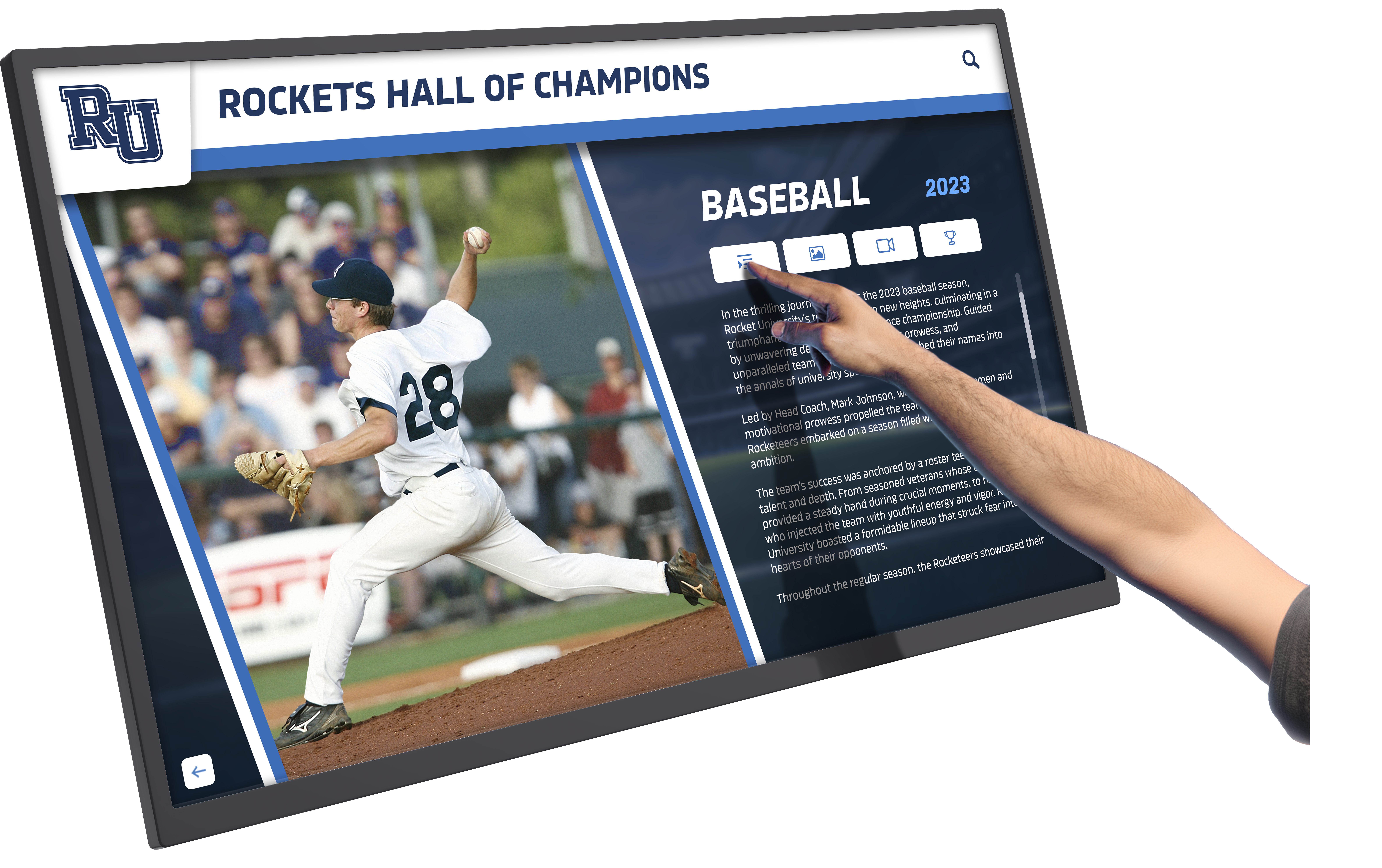
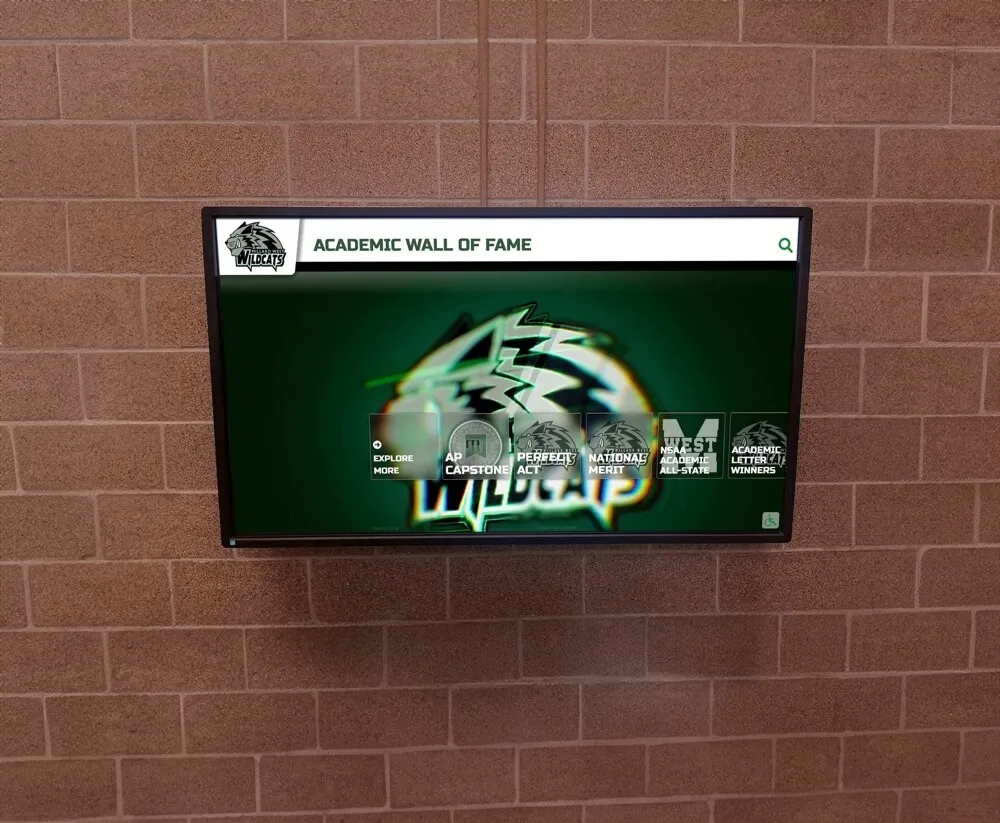
Intuitive touchscreen interfaces make exploration natural and accessible for donors of all ages and technical comfort levels
Advantages Over Traditional Static Recognition
Digital displays provide benefits:
- Lower hardware costs of $800-2,500 versus $8,000-25,000 for touchscreen systems
- Unlimited donor capacity through rotating presentations
- Flexible content updates without production expenses
- Multimedia capabilities including photos and videos
- Professional presentation compared to DIY solutions
Limitations Compared to Interactive Systems
Standard displays lack engagement capabilities:
- No search functionality limiting personal discovery
- Passive viewing rather than active exploration
- Reduced engagement time as visitors cannot control experience
- Limited storytelling depth in rotating formats
- No analytics measuring visitor interest or behavior
Non-interactive digital recognition serves budget-conscious organizations prioritizing capacity and flexibility over engagement depth, providing middle-ground solutions between traditional limitations and interactive capabilities.
Hybrid Recognition Combining Traditional and Digital Elements
Many organizations implement hybrid approaches blending traditional permanence with digital flexibility.
Common Hybrid Configurations
Effective combinations include:
- Traditional bronze plaques for transformational gifts above specific thresholds paired with digital recognition for comprehensive donor communities
- Architectural graphics and branded murals creating visual impact alongside integrated touchscreen displays
- Traditional recognition in prestige locations (board rooms, donor lounges) complemented by interactive systems in public spaces
- Printed giving society headers with digital content showcasing individual donors within each tier
Strategic Rationale for Hybrid Approaches
Blended recognition addresses diverse stakeholder needs:
- Major donors receive traditional permanent acknowledgment meeting their expectations
- Broad donor bases gain recognition through inclusive digital platforms
- Architectural investment creates institutional identity complementing technology
- Budget realities balanced between permanent elements and flexible systems
Organizations exploring comprehensive recognition strategies often find hybrid approaches optimize stakeholder satisfaction while managing implementation costs.
Implementation Planning for Hybrid Systems
Successful hybrid recognition requires:
- Clear criteria determining which donors receive which recognition types
- Coordinated design ensuring traditional and digital elements feel unified
- Proportional investment ensuring neither element appears afterthought
- Maintenance plans addressing both physical and digital components
- Governance preventing conflicts between recognition tiers
Hybrid recognition serves organizations with diverse stakeholder groups, significant major gifts requiring traditional treatment, and desire for comprehensive community recognition digital platforms enable.
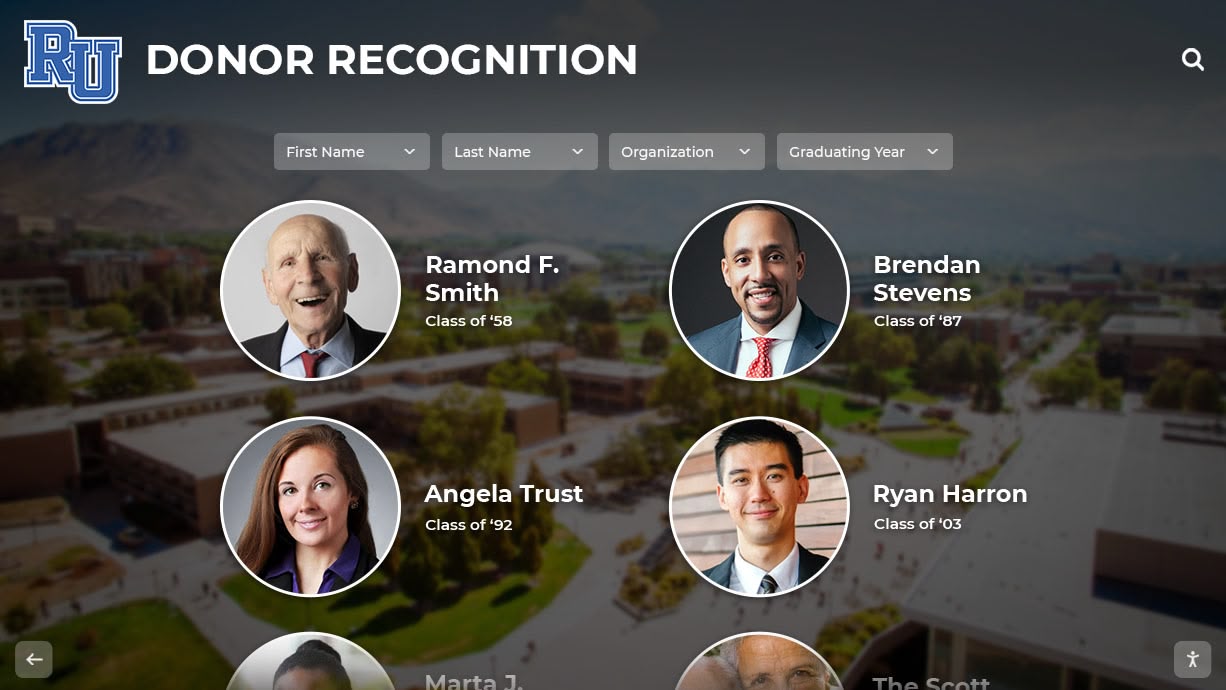
Professional installations integrate recognition seamlessly with institutional architecture and branding creating cohesive environments
Donor Wall Costs: Comprehensive Budget Planning
Understanding true total costs enables realistic planning and informed decisions comparing recognition alternatives.
Traditional Donor Wall Costs
Initial Installation Investment
Traditional recognition requires substantial upfront costs:
- Design and Planning: $1,500-5,000 for professional design services
- Architectural Preparation: $2,000-8,000 for wall preparation, mounting systems, and infrastructure
- Initial Donor Plaques: $75-250 per plaque depending on size and material
- Headers and Framework: $3,000-12,000 for architectural elements and giving society identification
- Installation Labor: $2,500-6,000 for professional mounting and finishing
Total initial investment typically ranges $15,000-50,000 depending on donor volume, material choices, and architectural complexity. Organizations recognizing 200 initial donors might spend $25,000-35,000 for comprehensive traditional installations.
Ongoing Maintenance Costs
Recurring expenses accumulate significantly:
- New Donor Plaques: $75-250 per donor for production and installation
- Annual Plaque Additions: Organizations typically add 20-100+ plaques annually costing $2,000-15,000
- Expansion Requirements: Wall expansion every 5-10 years costing $8,000-20,000
- Plaque Replacement: Damaged or outdated plaques requiring periodic replacement
- Cleaning and Maintenance: Professional cleaning services for metal and glass surfaces
Over twenty years, ongoing traditional recognition costs often exceed $60,000-120,000 for mid-sized organizations, dramatically surpassing initial investment through accumulated recurring expenses.
Digital Recognition System Costs
Initial Implementation Investment
Digital recognition requires different upfront costs:
- Hardware Costs: $8,000-25,000 for quality touchscreen displays, mounting systems, and installation
- Software Licensing: $3,000-8,000 annually for purpose-built recognition platforms (or $200-500 annually for basic digital signage)
- Content Development: $2,000-8,000 for initial donor profile creation, photography, and content migration
- Implementation Services: $1,500-5,000 for platform configuration, staff training, and launch support
Total initial investment typically ranges $15,000-45,000 for single-display interactive systems, comparable to traditional recognition while providing vastly greater capacity and capabilities.
Ongoing Annual Costs
Recurring expenses remain modest:
- Software Subscriptions: $3,000-8,000 annually for comprehensive recognition platforms
- Technical Support: Often included in subscription pricing
- Hosting and Infrastructure: Typically included in cloud platforms
- Content Updates: Largely staff time rather than external expenses
Annual recurring costs of $3,000-8,000 contrast dramatically with traditional recognition where equivalent donor additions cost $5,000-15,000 annually through plaque production and installation.
Twenty-Year Total Cost Comparison
Comparing recognition alternatives over realistic timeframes reveals significant differences:
- Traditional Recognition: $90,000-180,000 total (initial $25,000-50,000 + $65,000-130,000 recurring)
- Digital Recognition: $75,000-125,000 total (initial $20,000-45,000 + $55,000-80,000 recurring)
Digital recognition saves $15,000-55,000 over two decades while providing unlimited capacity, richer content, better engagement, and broader reach—delivering superior value alongside cost advantages.
Organizations reviewing recognition technology investment discover that modern platforms deliver exceptional value compared to accumulated traditional expenses.
Hidden Costs Organizations Often Overlook
Staff Time and Administrative Burden
Recognition maintenance requires significant staff investment:
- Traditional systems: Coordinating plaque production, reviewing proofs, scheduling installations, managing contractors
- Digital systems: Content creation and updates, though dramatically faster than traditional coordination
- Governance and policy: Establishing criteria, managing donor expectations, resolving recognition disputes
Organizations should calculate fully-loaded staff time costs when comparing alternatives, as traditional recognition often consumes 40-60 hours annually versus 10-20 hours for well-designed digital systems.
Opportunity Costs of Space Limitations
Traditional recognition forces difficult decisions when space fills:
- Removing historical donors damages relationships and organizational reputation
- Increasing minimum thresholds excludes grassroots supporters whose collective impact often equals major gifts
- Delaying recognition until expansion becomes affordable creates damaging acknowledgment gaps
These opportunity costs—lost relationships, damaged goodwill, diminished fundraising performance—prove difficult to quantify but significantly impact organizational success.
Recognition Gap Impact During Transitions
When organizations replace full traditional walls with expanded capacity, recognition gaps during transition periods create donor dissatisfaction. Digital migrations avoid this issue by maintaining all existing recognition while immediately adding capacity for new supporters.
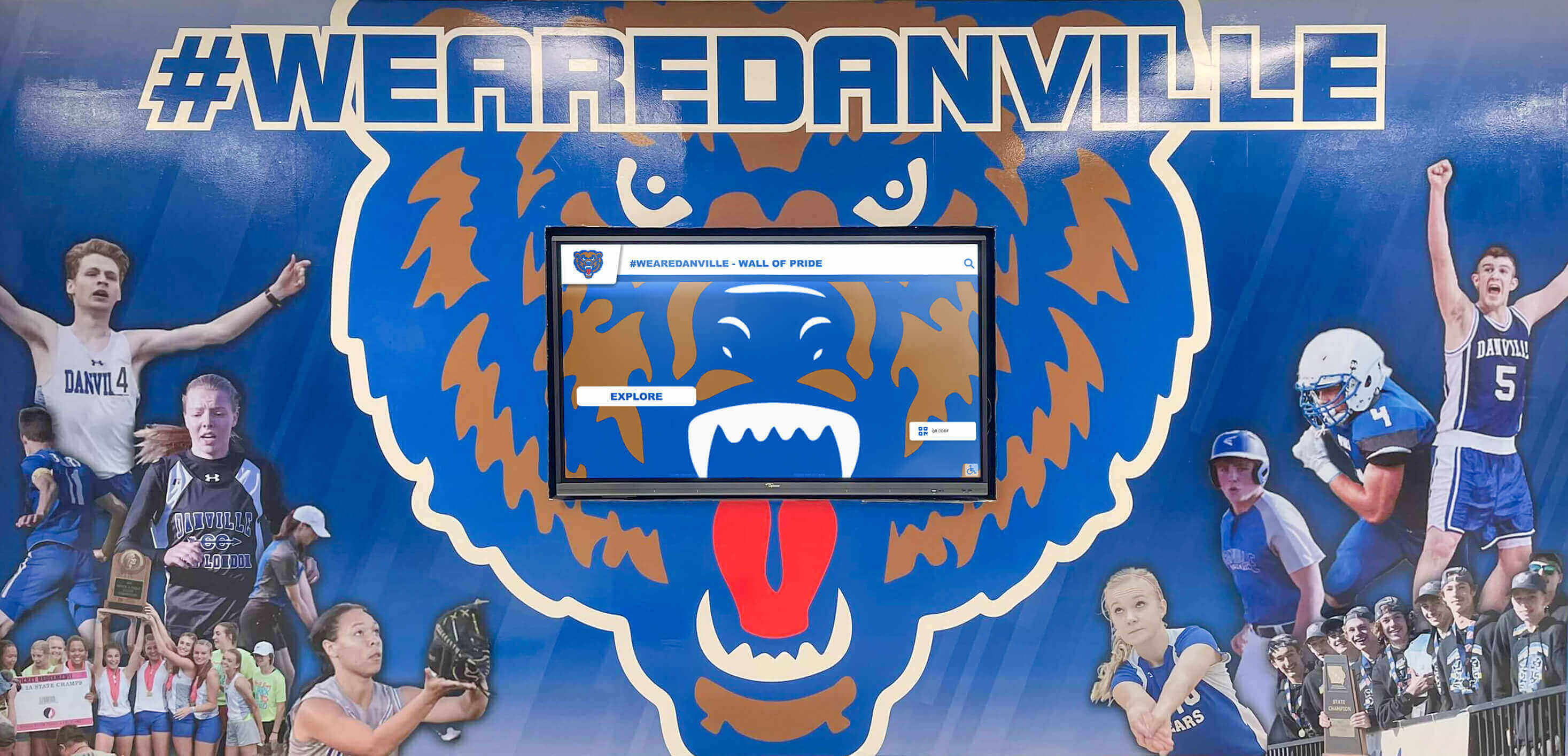
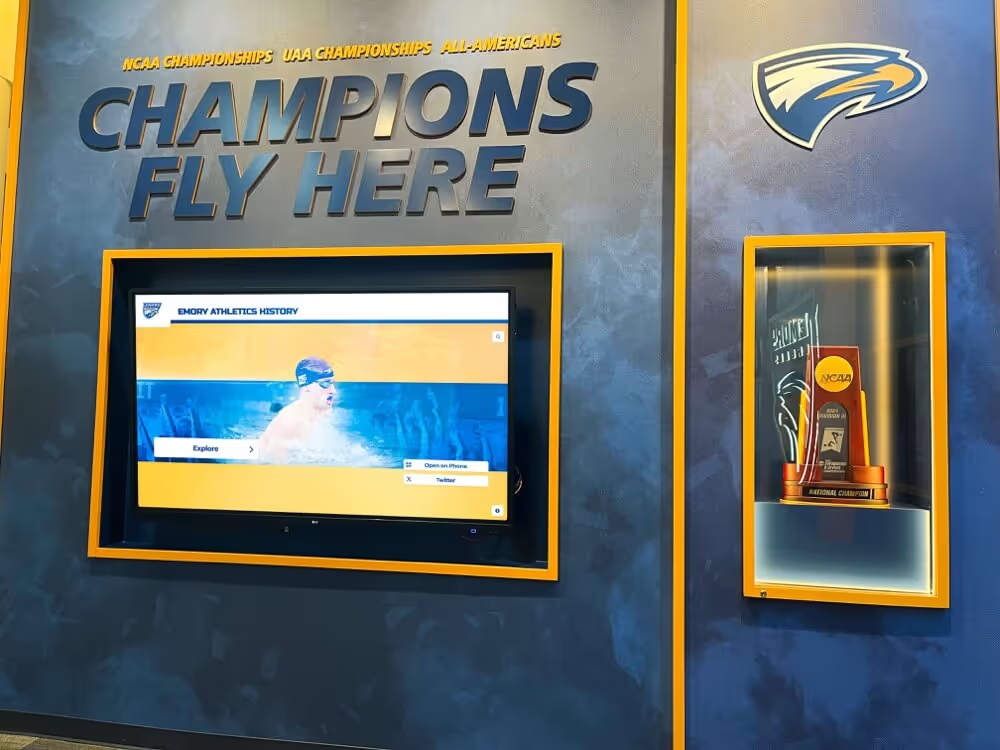
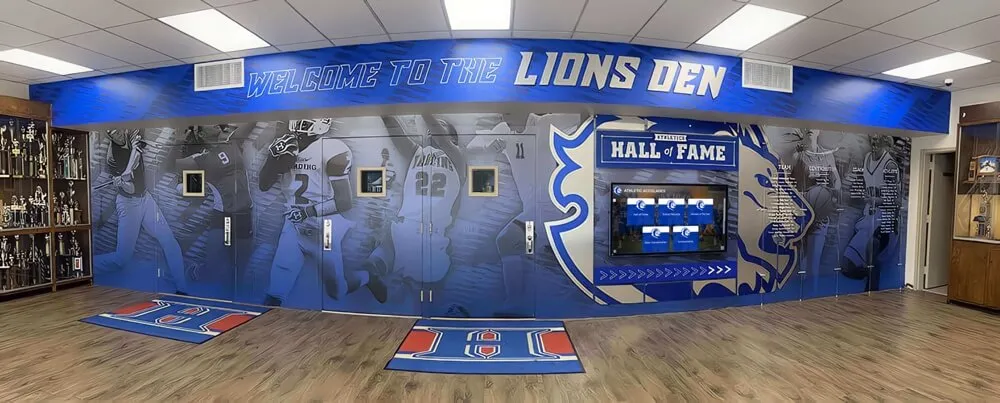
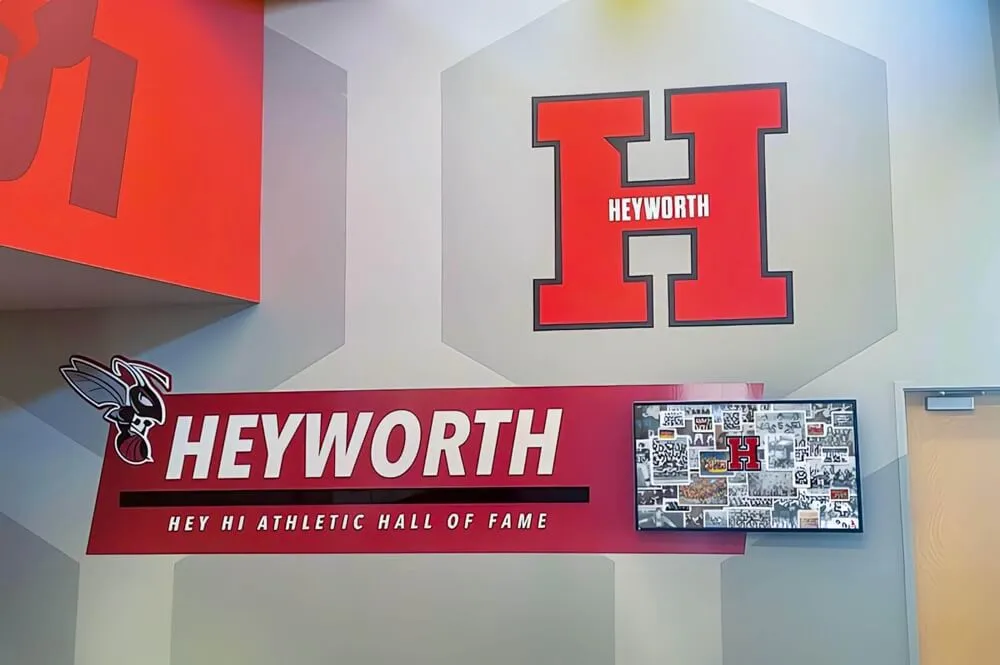
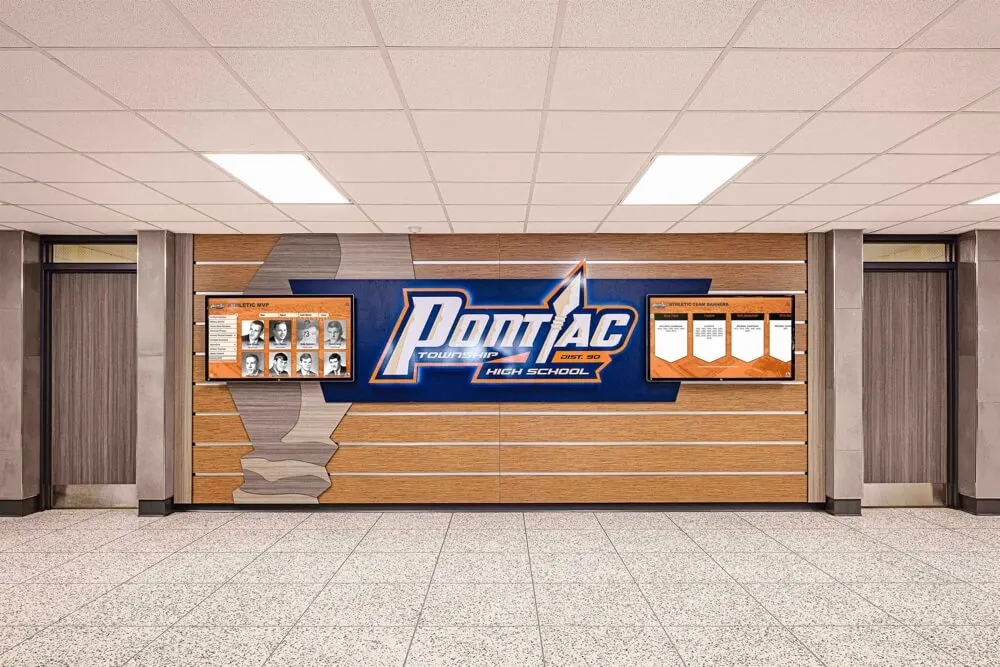
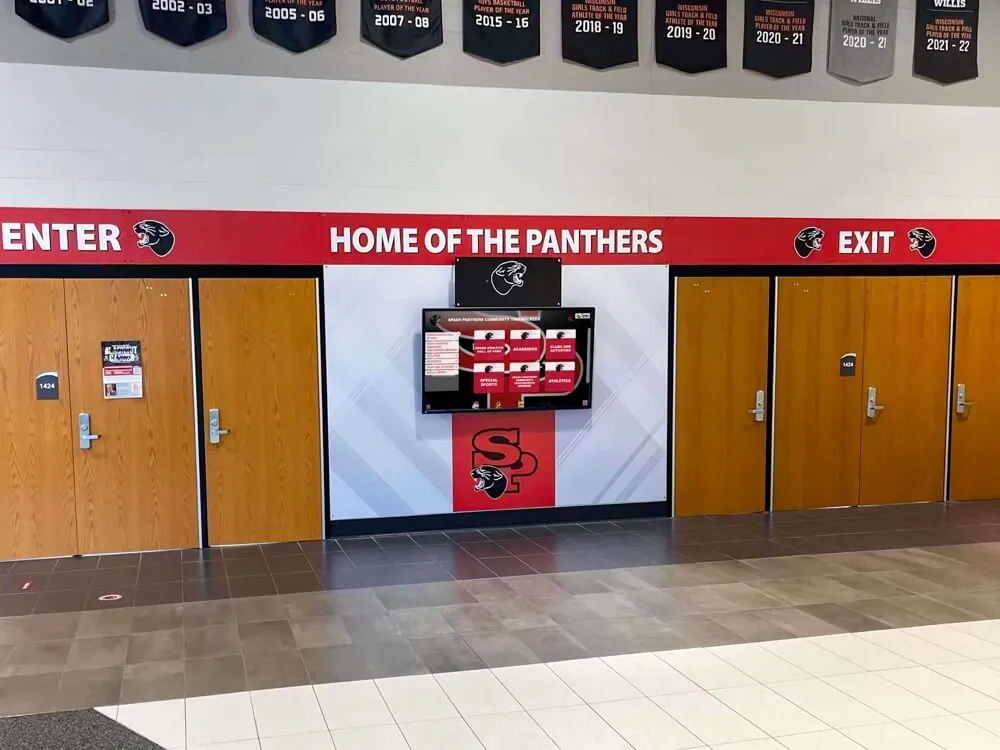
Athletic facilities showcase both team identity and donor appreciation through integrated recognition design
Donor Wall Content and Design Strategies
Effective recognition extends beyond selecting hardware—thoughtful content and design maximize impact while building authentic community connections.
Recognition Categories and Giving Level Organization
Tiered Recognition Structures
Most organizations organize recognition around contribution thresholds creating clear progression pathways:
- Transformational Circle ($500,000+ lifetime giving)
- Visionary Society ($250,000-$499,999 lifetime)
- Leadership Circle ($100,000-$249,999 lifetime)
- Benefactor Society ($50,000-$99,999 lifetime)
- Partner Circle ($25,000-$49,999 lifetime)
- Sustainer Society ($10,000-$24,999 lifetime)
- Friend Circle ($5,000-$9,999 lifetime)
- Supporter Circle ($1,000-$4,999 lifetime)
- Community Circle (under $1,000 lifetime)
Clear tier structures provide supporters with roadmaps for giving progression, create aspirational next levels motivating continued support, and ensure all contributors receive appropriate acknowledgment regardless of capacity.
Alternative Organization Frameworks
Beyond giving levels, recognition can organize by:
- Campaign Designation: Capital projects, endowment funds, annual giving, special initiatives
- Program Support: Specific programs, departments, or mission areas donors support
- Geographic Communities: Local, regional, national, or international supporter networks
- Recognition Timeframes: Current year, sustained giving streaks, historical eras
- Support Types: Financial gifts, planned giving, in-kind contributions, volunteer service
Multi-dimensional organization enables donors to appear in multiple contexts matching their diverse participation, creating richer recognition acknowledging complete relationships rather than single transactions.
Creating Compelling Donor Stories and Profiles
Essential Profile Elements
Effective individual recognition includes:
- Professional photography creating visual interest and personal connection
- Donor statements explaining giving motivations and organizational connections
- Biographical context highlighting professional accomplishments and community leadership
- Impact narratives connecting gifts to specific mission outcomes
- Timeline presentations showing giving journeys and sustained commitment
- Family connections and multi-generational support legacies
Rich storytelling transforms acknowledgment from transactional lists into compelling narratives inspiring others while honoring supporters meaningfully.
Gathering Donor Content
Organizations should systematically collect recognition content:
- Donor profile forms during gift processing collecting photos, statements, and preferences
- Interviews with major donors creating detailed biographical narratives
- Testimonial videos produced during events or facility visits
- Impact documentation connecting gifts to program outcomes
- Family histories and legacy information for multi-generational supporters
Proactive content development during routine donor interactions prevents recognition delays while building comprehensive storytelling assets.
Balancing Privacy and Recognition
Donor preferences vary significantly regarding recognition visibility:
- Anonymous recognition acknowledging participation without identifying donors
- Name-only recognition for supporters preferring minimal visibility
- Standard recognition including names with basic giving information
- Enhanced recognition with photographs, statements, and biographical content
- Champion-level recognition featuring video testimonials and extensive profiles
Flexible recognition systems accommodate diverse preferences, ensuring comfort across donor populations with varying privacy expectations.
Organizations implementing donor recognition best practices systematically gather content enabling compelling storytelling.
Visual Design and Branding Integration
Institutional Identity Integration
Effective recognition reflects organizational identity through:
- Brand colors, logos, and visual standards
- Typography consistent with institutional communications
- Imagery reflecting mission, programs, and communities served
- Architectural elements complementing facility design
- Tone and messaging aligned with organizational voice
Professional design ensures recognition feels integrated rather than appearing as afterthought additions, building cohesive institutional environments.
Accessibility and Universal Design
Recognition should serve all community members through:
- ADA-compliant physical placement and hardware accessibility
- Screen reader compatibility for visual accessibility
- High-contrast viewing modes and adjustable text sizes
- Multilingual content options for diverse communities
- Mobile-responsive designs enabling access across devices
Solutions meeting WCAG 2.1 AA accessibility standards ensure inclusive experiences serving entire communities including those using assistive technologies.
Engagement Optimization
Design choices significantly impact interaction quality:
- Intuitive navigation enabling easy discovery without instruction
- Compelling featured content encouraging initial engagement
- Search functionality designed for partial name matches and flexible queries
- Appropriate content density avoiding overwhelming or sparse presentations
- Strategic placement in high-traffic areas with comfortable viewing distances
Testing designs with representative users before final implementation prevents usability issues while optimizing engagement quality.
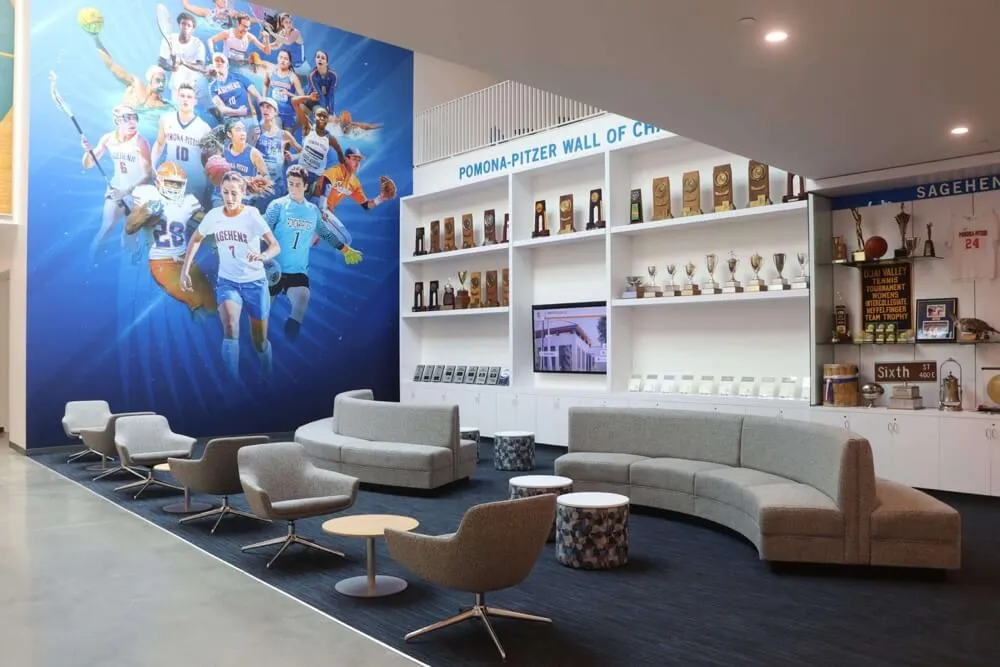
Recognition environments create destinations where communities gather, connect, and celebrate collective achievements
Implementation Process: From Planning to Launch
Successful donor wall implementation requires systematic planning addressing organizational goals, stakeholder expectations, and operational realities.
Phase One: Strategic Planning and Requirements Definition
Establishing Recognition Philosophy
Organizations should articulate clear recognition philosophies addressing:
- Will all donors receive individual recognition regardless of gift size, or do minimum thresholds apply?
- How will recognition balance honoring exceptional generosity while maintaining comprehensive acknowledgment?
- What anonymous donor options will accommodate supporters preferring privacy?
- How will memorial, tribute, and honor gifts be acknowledged?
- Will recognition focus exclusively on financial donors, or will volunteers and in-kind supporters receive parallel acknowledgment?
These philosophical decisions shape platform requirements and content strategies while communicating organizational values through recognition approaches.
Stakeholder Requirements Gathering
Development departments, program staff, communications teams, board members, and volunteers each have distinct perspectives on recognition needs. Involving stakeholders early through interviews, focus groups, or surveys ensures selected platforms accommodate diverse uses while establishing governance preventing conflicts.
Common stakeholder priorities include:
- Development teams need efficient management enabling timely acknowledgment without IT dependencies
- Program staff want recognition demonstrating how donor support enables specific activities
- Communications teams seek content supporting storytelling across multiple channels
- Board members require confidence that recognition reflects organizational professionalism
- Major donors may have specific expectations regarding traditional versus digital recognition
Success Metrics Definition
Establishing clear indicators enables post-implementation assessment:
- Donor retention rate improvements comparing periods before and after implementation
- Average donor lifetime value increases as retained supporters give over extended timeframes
- Display interaction analytics measuring engagement frequency and duration
- Web platform traffic indicating reach beyond facility visitors
- Social sharing activity demonstrating content amplification
- Campaign performance trends correlating recognition with fundraising outcomes
Phase Two: Budget Development and Vendor Selection
Total Cost of Ownership Assessment
Consider all expenses beyond initial purchase:
- Hardware costs for displays, mounting systems, and installation labor
- Software licensing for cloud platforms and content management systems
- Implementation services including design consultation, content migration, and staff training
- Ongoing costs for platform subscriptions, technical support, and periodic updates
Phased Implementation Strategies
Organizations with limited budgets can implement recognition progressively:
Phase One: Web-Based Recognition requiring minimal upfront investment—often only cloud platform subscriptions and staff time for content development. Online platforms provide immediate recognition value before physical display investment.
Phase Two: Single Physical Display added once resources become available, providing focused visibility ensuring maximum return from limited hardware investment.
Phase Three: Multiple Coordinated Displays expanding recognition through additional touchscreens at strategic locations after fundraising success validates approach.
This phased approach enables immediate recognition implementation while accommodating budget realities, proving more effective than delaying recognition until complete ideal installations become affordable.
Vendor Evaluation Criteria
Platform selection significantly impacts long-term satisfaction:
- Purpose-Built Recognition vs. Generic Digital Signage: Specialized donor recognition software provides capabilities generic platforms cannot match
- Content Management Accessibility: Non-technical staff need intuitive systems enabling confident updates
- Vendor Support Quality: Implementation assistance, training, and ongoing technical support significantly impact user experience
- Platform Sustainability: Vendor stability, update frequency, and long-term roadmap ensure lasting value
- Customer References: Current nonprofit clients provide valuable insights beyond marketing materials
Questions to ask references include: How responsive is technical support when issues arise? How helpful was implementation assistance? How frequently does the platform receive updates? Does the vendor understand nonprofit contexts and constraints?
Organizations reviewing recognition technology platforms should evaluate specialized solutions against organizational requirements rather than selecting based on lowest initial cost.
Phase Three: Content Development and Migration
Historical Donor Data Compilation
Gather existing donor information from:
- Fundraising databases and donor management systems
- Historical plaque records and recognition archives
- Campaign materials and annual reports
- Anniversary publications and institutional histories
- Alumni and membership directories
Comprehensive historical data ensures complete recognition while demonstrating institutional memory honoring long-term supporters.
Content Creation Workflows
Systematic content development includes:
- Donor profile forms collecting photos, statements, and biographical information
- Photography sessions producing consistent professional imagery
- Interview processes gathering compelling donor narratives
- Impact documentation connecting gifts to mission outcomes
- Quality review ensuring consistency, accuracy, and appropriate tone
Organizations typically allocate 40-100 hours for initial content development depending on donor volume and profile depth, with ongoing additions requiring 1-3 hours per new donor.
Testing and Quality Assurance
Before public launch, verify:
- Name spelling accuracy and biographical information correctness
- Photo quality and appropriate image selection
- Search functionality returning expected results
- Navigation intuitive for diverse users
- Content appropriately categorized across giving levels and campaigns
- Mobile responsiveness and accessibility features functioning properly
Thorough quality assurance prevents embarrassing errors while ensuring positive donor experiences from launch day.
Phase Four: Installation and Launch
Physical Installation Coordination
Hardware installation requires:
- Electrical infrastructure ensuring appropriate power and network connectivity
- Mounting systems meeting weight requirements and ADA placement standards
- Professional cable management and finishing
- Testing all touchscreen functionality and display quality
- Coordinating installation timing minimizing facility disruption
Professional installation ensures reliable operation while protecting hardware investments through proper mounting and electrical configuration.
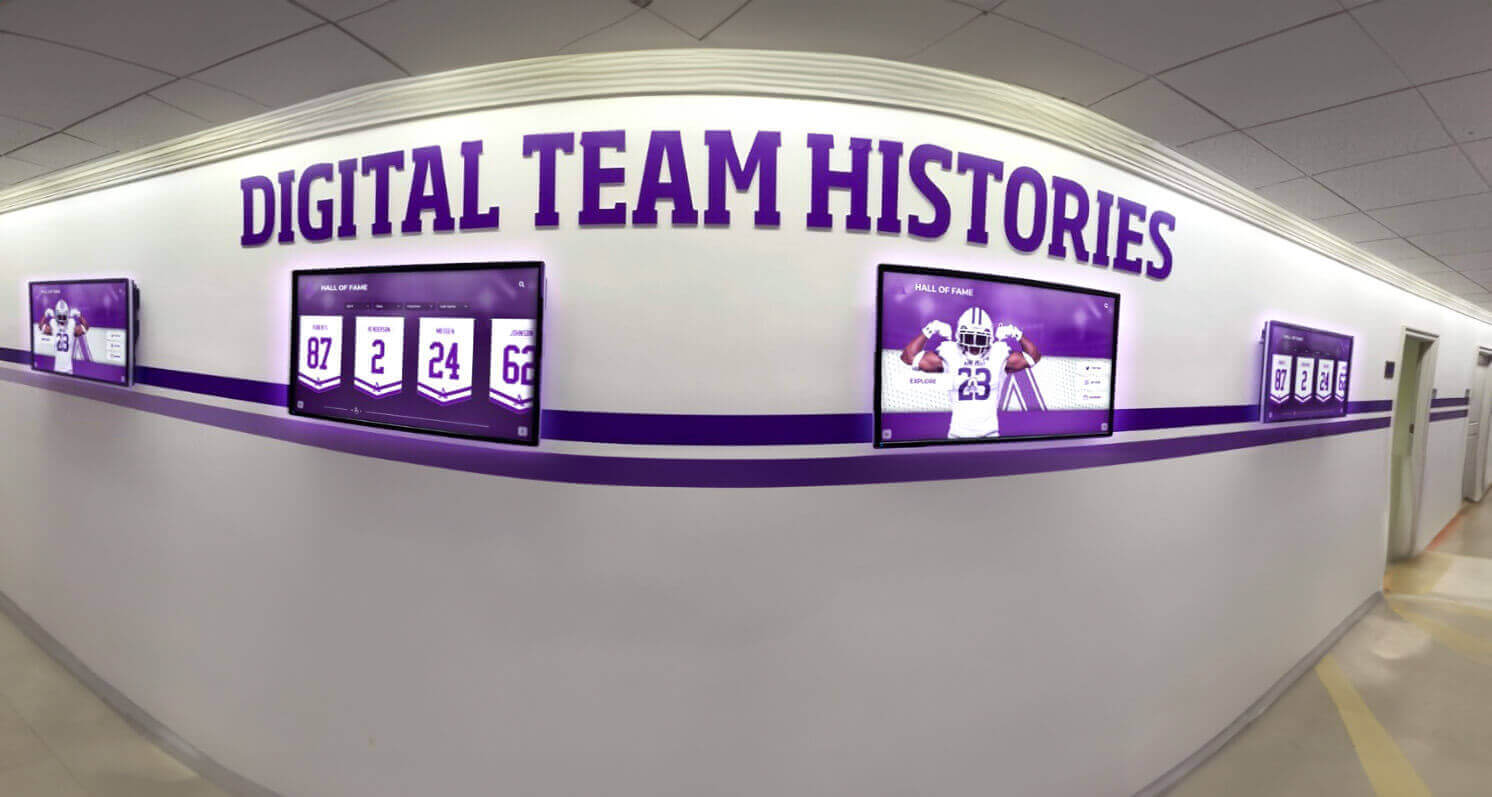
Strategic placement in high-traffic corridors ensures maximum donor recognition visibility throughout daily institutional life
Staff Training and Support
Comprehensive training enables confident system management:
- Content management system navigation and basic functions
- Adding new donors and updating existing profiles
- Creating featured content and scheduled campaigns
- Running reports and reviewing engagement analytics
- Troubleshooting common issues and accessing vendor support
- Governance procedures ensuring appropriate content standards
Training multiple staff members ensures continuity when responsibilities change while building institutional capacity for system management.
Launch Communications Strategy
Maximize launch impact through:
- Announcement communications to all donors explaining new recognition
- Ribbon-cutting or unveiling events celebrating enhanced donor appreciation
- Social media content featuring recognition screenshots and donor testimonials
- Press releases for significant recognition installations
- Website integration directing online visitors to web-based recognition
- Donor newsletter features explaining how to access and explore new system
Strategic launch communications build awareness while demonstrating organizational commitment to meaningful donor appreciation.
Phase Five: Ongoing Management and Optimization
Routine Update Schedules
Establish regular maintenance including:
- Weekly or monthly additions of new donors as gifts process
- Quarterly content refreshes featuring seasonal themes or campaign updates
- Annual comprehensive reviews updating historical information
- Periodic featured content highlighting specific donor communities or giving societies
Consistent updates maintain currency while demonstrating ongoing organizational commitment to recognition.
Engagement Analytics Review
Regular analysis of interaction data reveals:
- Most-viewed content identifying popular features worth expanding
- Search patterns informing content organization improvements
- Peak usage times suggesting optimal placement for additional displays
- Return visitor rates indicating lasting engagement quality
- Drop-off points revealing navigation or content issues requiring attention
Data-informed optimization ensures recognition continuously improves based on actual user behavior rather than assumptions.
Donor Feedback Integration
Systematically gather donor perspectives through:
- Informal conversations during facility visits
- Formal surveys assessing recognition satisfaction
- Focus groups exploring recognition preferences
- Comments and questions received by development staff
- Social media monitoring revealing public reactions
Donor input ensures recognition meets audience needs while identifying enhancement opportunities maintaining relevance as expectations evolve.
Organizations implementing comprehensive recognition management practices maintain systems that continuously improve while serving communities effectively.
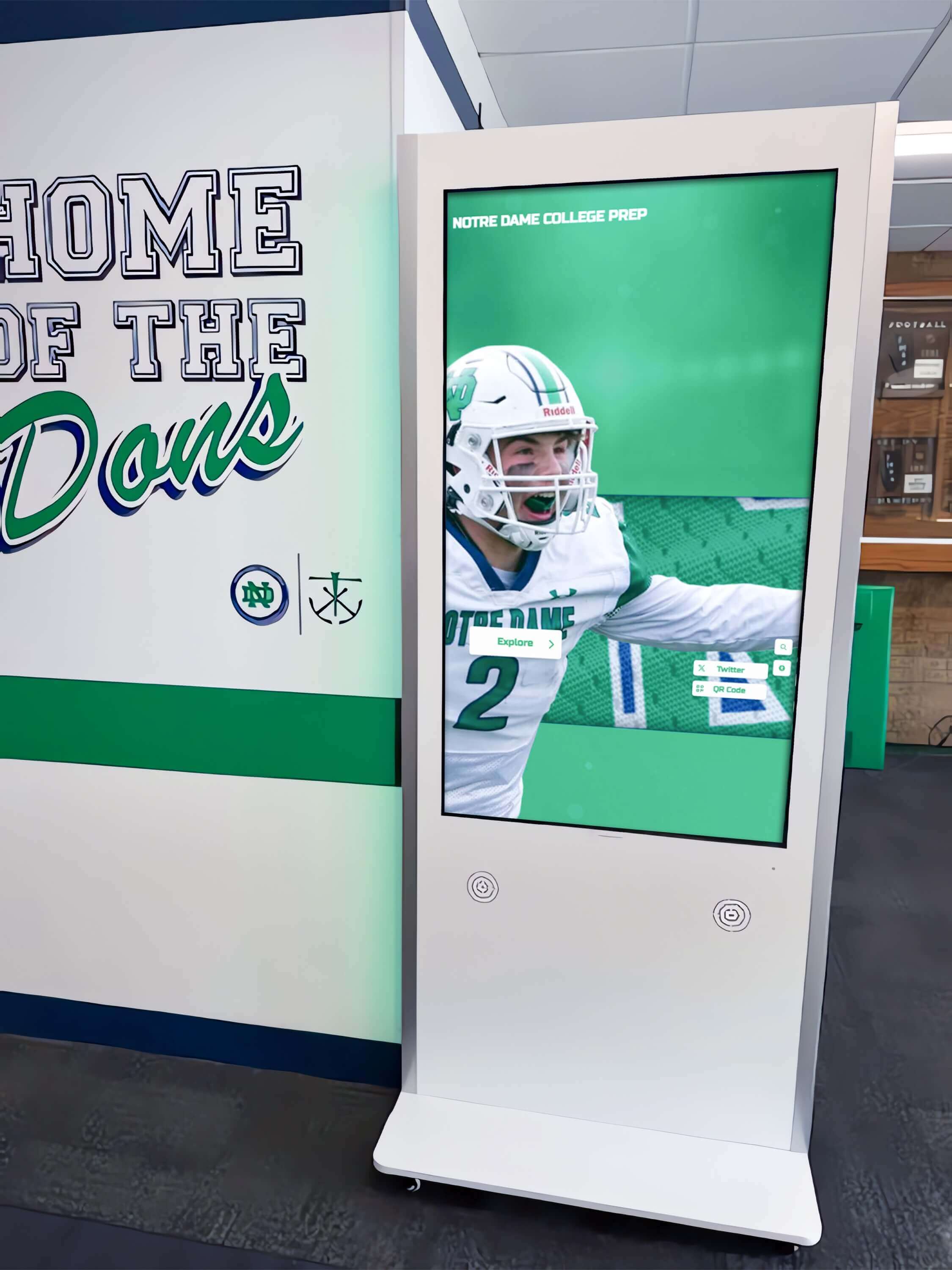
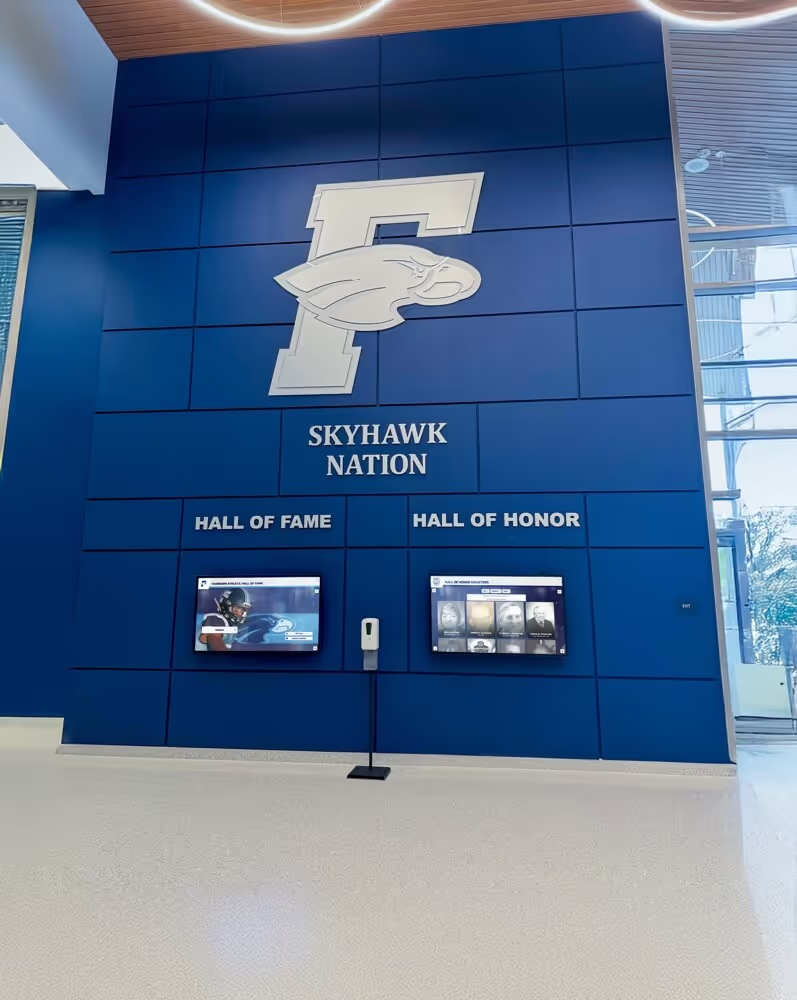
Wayfinding and recognition combine in strategic installations serving both functional and celebratory purposes
Donor Wall Best Practices Across Organization Types
Recognition approaches should adapt to organizational contexts, donor demographics, and institutional cultures.
Educational Institutions: Schools, Colleges, Universities
Academic Recognition Integration
Educational donors often have specific institutional connections worth highlighting:
- Alumni graduation years and degree programs
- Student parent and family connections to current enrollments
- Former faculty and staff relationships
- Athletic participation and team affiliations
- Campus organization membership and leadership
Contextual connections strengthen donor-institution bonds while helping current students discover successful alumni role models who support their education.
Campaign-Specific Recognition
Educational institutions frequently conduct major campaigns warranting dedicated recognition:
- Capital projects for new academic buildings, athletic facilities, or student centers
- Endowment campaigns for scholarships, faculty positions, or program support
- Annual funds supporting current operations and student experiences
- Athletics campaigns for team support, facility improvements, or scholarship funds
Clear campaign organization helps donors understand how their gifts contribute to specific institutional priorities while demonstrating accountability through visible progress.
Multi-Generational Recognition
Educational institutions uniquely serve multiple generations within single families. Recognition systems should accommodate:
- Parent and grandparent alumni alongside current student parents
- Multi-generational giving families with century-long institutional relationships
- Legacy students following family traditions of institutional connection
- Family giving societies celebrating collective multi-person household support
Highlighting family connections reinforces institutional belonging across generations while inspiring continued family participation.
Healthcare Organizations: Hospitals, Medical Centers, Foundations
Patient and Family Memorial Recognition
Healthcare philanthropy frequently includes memorial and tribute gifts requiring sensitive acknowledgment:
- Recognizing both donors making gifts and individuals being remembered
- Connecting memorial gifts to specific programs or services when appropriate
- Gathering family stories explaining gift significance and honoree connections
- Creating lasting digital memorials extending beyond physical plaques
- Accommodating ongoing additions as families continue memorial support over years
Healthcare institutions should design recognition enabling families to find tributes honoring loved ones easily, creating lasting connections between families and institutions.
Gratitude-Driven Philanthropy Recognition
Healthcare giving often stems from grateful patient experiences. Recognition should connect:
- Patient testimonials thanking donors for programs that served them
- Clinical outcome improvements enabled by philanthropic support
- Medical equipment and technology donations fund
- Research breakthroughs supported by donor investment
- Healthcare professional education and training donor gifts enable
Impact connections demonstrate accountability while inspiring additional support from grateful patients and families witnessing institutional excellence.
Staff and Medical Professional Recognition
Healthcare philanthropy includes significant support from staff and medical professionals. Recognition should accommodate:
- Physician and clinician giving alongside patient donor communities
- Employee giving campaigns and payroll deduction programs
- Nursing and allied health professional support
- Volunteer auxiliary and guild contributions
- Medical staff leadership gifts and society memberships
Comprehensive recognition celebrating all supporter types builds inclusive communities acknowledging diverse participation forms.
Cultural Organizations: Museums, Theaters, Symphony Orchestras
Membership Integration
Cultural organizations blur lines between membership fees and philanthropic support. Recognition should:
- Celebrate members whose annual support provides operational foundation
- Distinguish philanthropic gifts above membership levels
- Acknowledge multi-year members demonstrating sustained commitment
- Recognize volunteer docents, guides, and program supporters
- Honor patron societies and leadership giving circles
Flexible recognition accommodates complex relationship types common in cultural institutions where participation takes multiple overlapping forms.
Donor-Artist Connections
Cultural philanthropy often includes passion for specific art forms, collections, or programs. Recognition can highlight:
- Support for specific acquisitions, exhibitions, or performances
- Endowments for curator positions or collection care
- Program sponsorships for educational initiatives or community access
- Capital support for facility improvements or renovations
- Collection donations of artwork, archives, or artifacts
Connecting donors to mission elements they specifically enable demonstrates impact while inspiring similar targeted support from others sharing artistic passions.
Volunteer and In-Kind Recognition
Cultural institutions depend significantly on volunteer contributions. Recognition should celebrate:
- Docents and tour guides enabling visitor experiences
- Board members providing governance and fundraising leadership
- Gala and event committees producing fundraising programs
- Professional services donated by attorneys, accountants, and consultants
- In-kind contributions of materials, equipment, or facilities
Comprehensive recognition honoring diverse contribution types builds inclusive communities celebrating all forms of institutional support.
Organizations exploring recognition approaches for diverse institution types discover specialized strategies addressing unique organizational contexts.
Future Trends: The Evolution of Donor Recognition
Understanding emerging trends helps organizations make sustainable recognition investments aligned with evolving donor expectations.
Increased Personalization and Data Integration
Next-generation recognition will leverage data creating individualized experiences:
- QR code connections enabling donors to access personalized dashboards from physical displays
- Integration with CRM systems surfacing real-time giving histories and engagement data
- Personalized impact reporting showing individual donors their cumulative contributions and outcomes
- Intelligent content recommendations suggesting related donors and inspiring stories based on interests
- Customized views enabling donors to see their recognition across multiple campaigns and years
Advanced personalization transforms recognition from institutional broadcasts into personal conversations creating deeper engagement.
Virtual and Augmented Reality Recognition
Emerging technologies will create immersive donor experiences:
- Virtual donor walls accessible through VR headsets enabling remote exploration of 3D recognition spaces
- Augmented reality overlays adding digital recognition layers to physical environments
- 360-degree video testimonials from donors and beneficiaries creating emotional connections
- Interactive impact visualizations showing real-time mission outcomes
- Virtual recognition events connecting geographically distributed donor communities
While early-stage currently, immersive technologies will increasingly supplement physical and digital recognition as adoption grows.
Blockchain and NFT Recognition
Cryptocurrency adoption introduces new recognition possibilities:
- Blockchain verification of donor recognition creating permanent authenticated records
- NFT certificates providing unique digital commemoratives supplementing traditional recognition
- Cryptocurrency gift acceptance integrated with immediate digital recognition
- Automated contracts triggering recognition based on giving milestones
- Decentralized recognition records portable across institutional affiliations
Though speculative currently, blockchain technologies may influence future recognition approaches as adoption matures.
Predictive Analytics and Proactive Engagement
Machine learning will enable data-driven recognition optimization:
- Predictive models identifying donors at retention risk enabling proactive outreach
- Engagement scoring revealing which recognition elements drive strongest donor satisfaction
- Content recommendation algorithms suggesting optimal recognition approaches for donor segments
- Automated recognition triggering based on behavioral signals and giving patterns
- Performance forecasting demonstrating recognition return on investment quantitatively
Analytics-driven recognition management will help organizations optimize strategies based on evidence rather than intuition alone.
Conclusion: Building Engaged Donor Communities Through Strategic Recognition
Donor walls represent strategic investments in relationship building that directly impact organizational sustainability and mission capacity. When institutions implement thoughtful recognition that celebrates supporters meaningfully while creating engaging community destinations, they activate the digital warming effect—continuously surfaced, personalized content transforming cold institutional spaces into vibrant gathering places where every supporter feels valued, connected, and inspired to deepen commitment.
The comprehensive strategies explored in this guide provide frameworks for making recognition decisions aligned with organizational goals, stakeholder expectations, and budget realities. From traditional plaques serving institutions preferring proven permanence to advanced interactive touchscreens eliminating space constraints while creating compelling storytelling, recognition options exist for every organizational context and resource level.
Transform Your Donor Recognition Strategy
Discover how interactive recognition technology can help you celebrate every supporter while building the engaged donor community essential for fundraising success. Explore solutions designed specifically for donor recognition—not generic digital signage adapted for purposes it wasn't built to serve.
Explore Recognition SolutionsThe evidence supporting recognition investment proves overwhelming. Recognized donors give 30-50% more over their lifetimes, maintain giving relationships three times longer, and renew support at rates 35-45% higher than unrecognized peers. When calculating lost lifetime value from departed donors, even significant recognition investments demonstrate clear positive return through improved retention delivering multiples of recognition costs through sustained giving.
Modern recognition technology eliminates the space constraints, update delays, and storytelling limitations that undermined traditional approaches while delivering comprehensive inclusivity, immediate acknowledgment, compelling narratives, and extended reach impossible with static plaques. Organizations implementing purpose-built platforms discover capabilities generic solutions cannot match while building recognition programs that honor every supporter meaningfully regardless of gift size.
Your donors’ generosity deserves celebration equal to the commitment they demonstrate through their support. With thoughtful planning, appropriate technology, and consistent management, you can create recognition systems that honor every gift while building the positive, appreciative institutional culture where supporters thrive and giving communities flourish.
Ready to begin? Explore nonprofit donor recognition strategies or learn more about interactive touchscreen recognition platforms purpose-built for donor appreciation.