



When organizations implement meaningful donor recognition that celebrates supporters authentically while creating engaging community experiences, they activate digital warming—transforming cold institutional lobbies into vibrant spaces where every contributor discovers their valued place in mission-driven communities. The difference between perfunctory acknowledgment and recognition that drives sustained engagement lies not in budget size but in thoughtful implementation of proven practices organizations worldwide have refined through experience.
Yet countless institutions struggle with donor recognition decisions, uncertain which approaches deliver genuine value versus superficial gestures quickly forgotten. Traditional plaques fill available space within years while failing to tell compelling stories. Generic digital signage lacks features donor recognition requires. Between these extremes, organizations need concrete examples demonstrating what effective recognition looks like when thoughtfully implemented across diverse institutional contexts.
This guide showcases proven donor recognition wall examples from leading organizations while extracting the strategic principles underlying their success. You’ll discover approaches serving schools, hospitals, cultural institutions, and community organizations at various budget levels, understand what makes recognition resonate emotionally while inspiring others to give, and learn implementation strategies you can adapt to your specific organizational context.
Organizations investing thoughtfully in donor recognition consistently outperform peers in retention rates, lifetime donor value, and campaign success metrics. Research across the nonprofit sector demonstrates that recognized donors give 30-50% more over their lifetimes and maintain giving relationships three times longer than unrecognized supporters. The strategic examples explored here reveal how leading institutions create recognition worthy of this demonstrated return on investment.

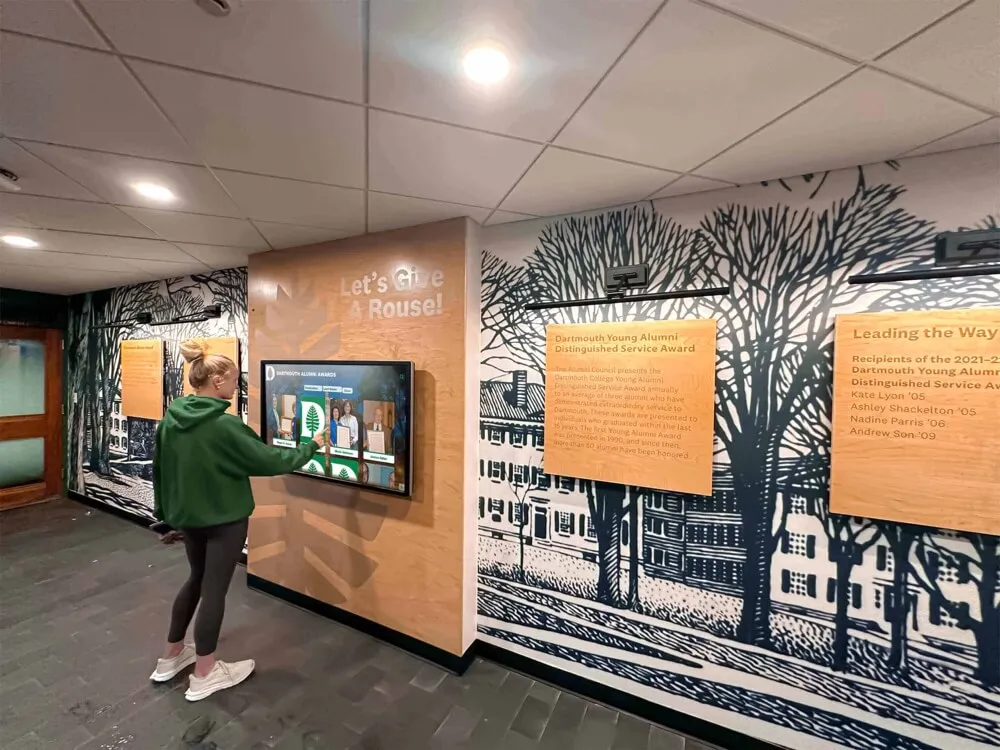
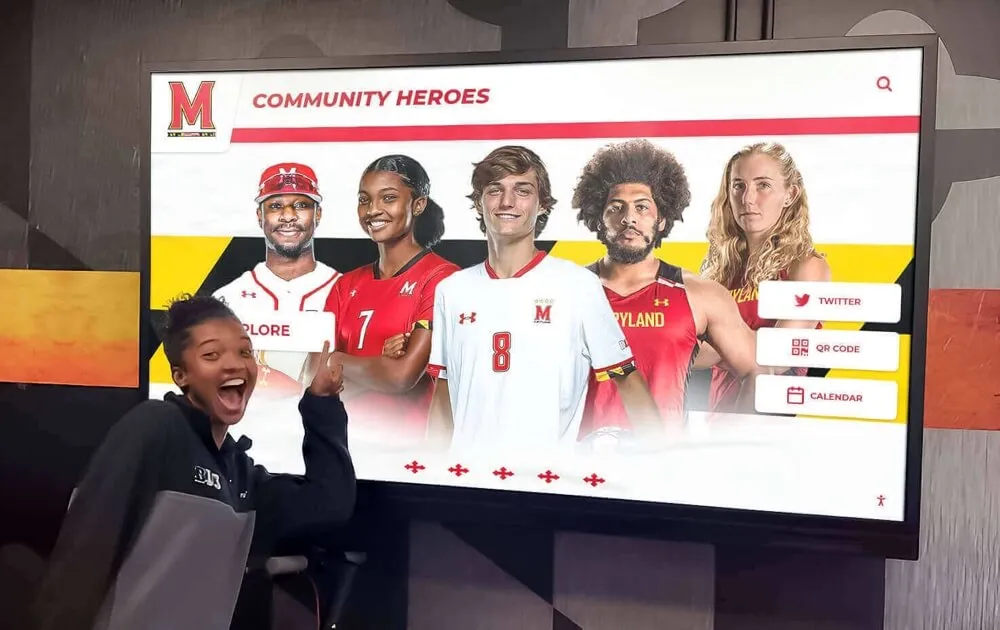
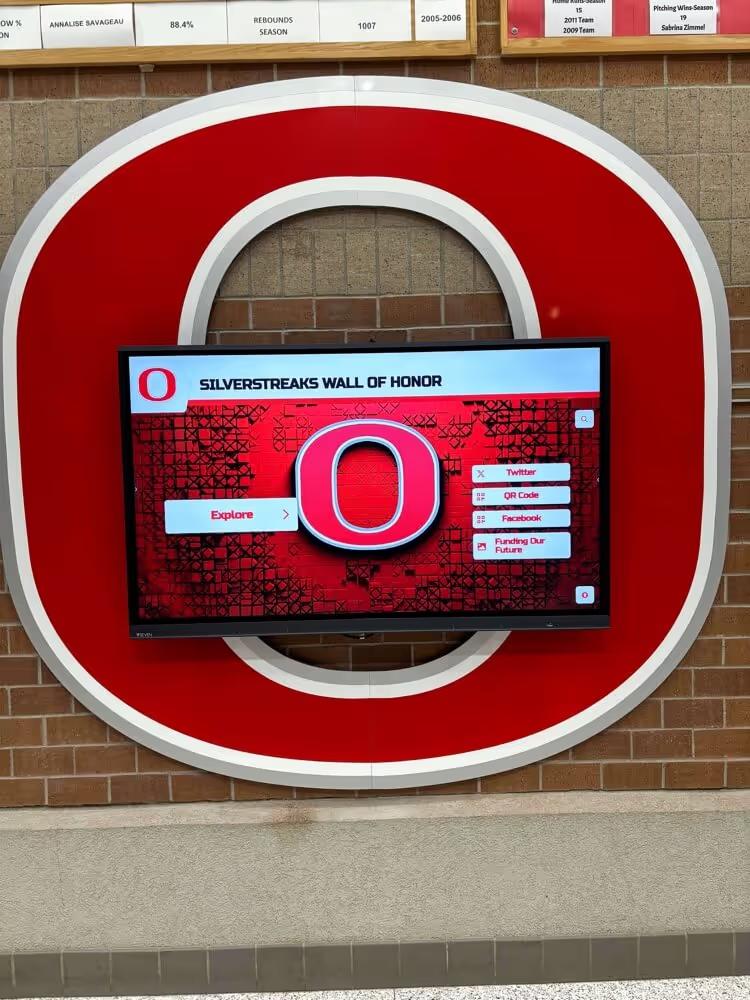
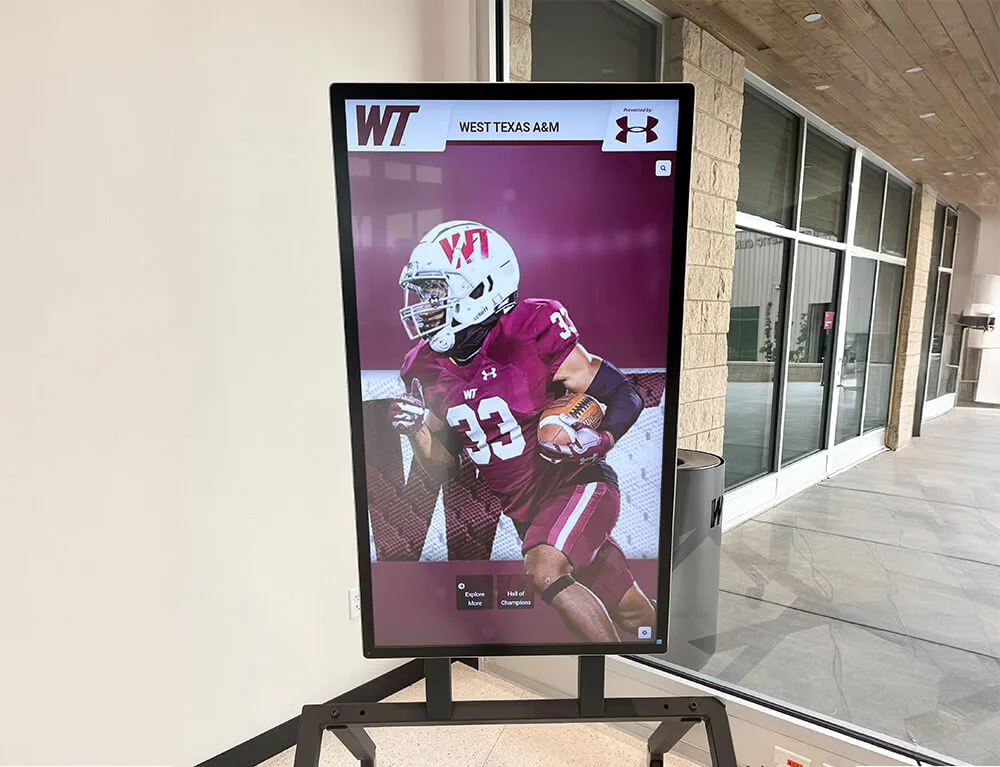
Modern donor recognition creates destinations where supporters discover personal connections and feel genuine appreciation extending beyond momentary acknowledgment
Understanding What Makes Recognition Examples Worth Studying
Before exploring specific examples, organizations should understand the distinguishing characteristics separating recognition that drives engagement from acknowledgment that becomes invisible background wallpaper.
Recognition That Creates Digital Warming Effects
The most effective donor walls generate what experts call digital warming—the transformation of cold, impersonal spaces into vibrant community destinations through continuously surfaced, personalized content that makes every visitor feel connected to institutional mission and community.
Creating Personal Discovery Moments
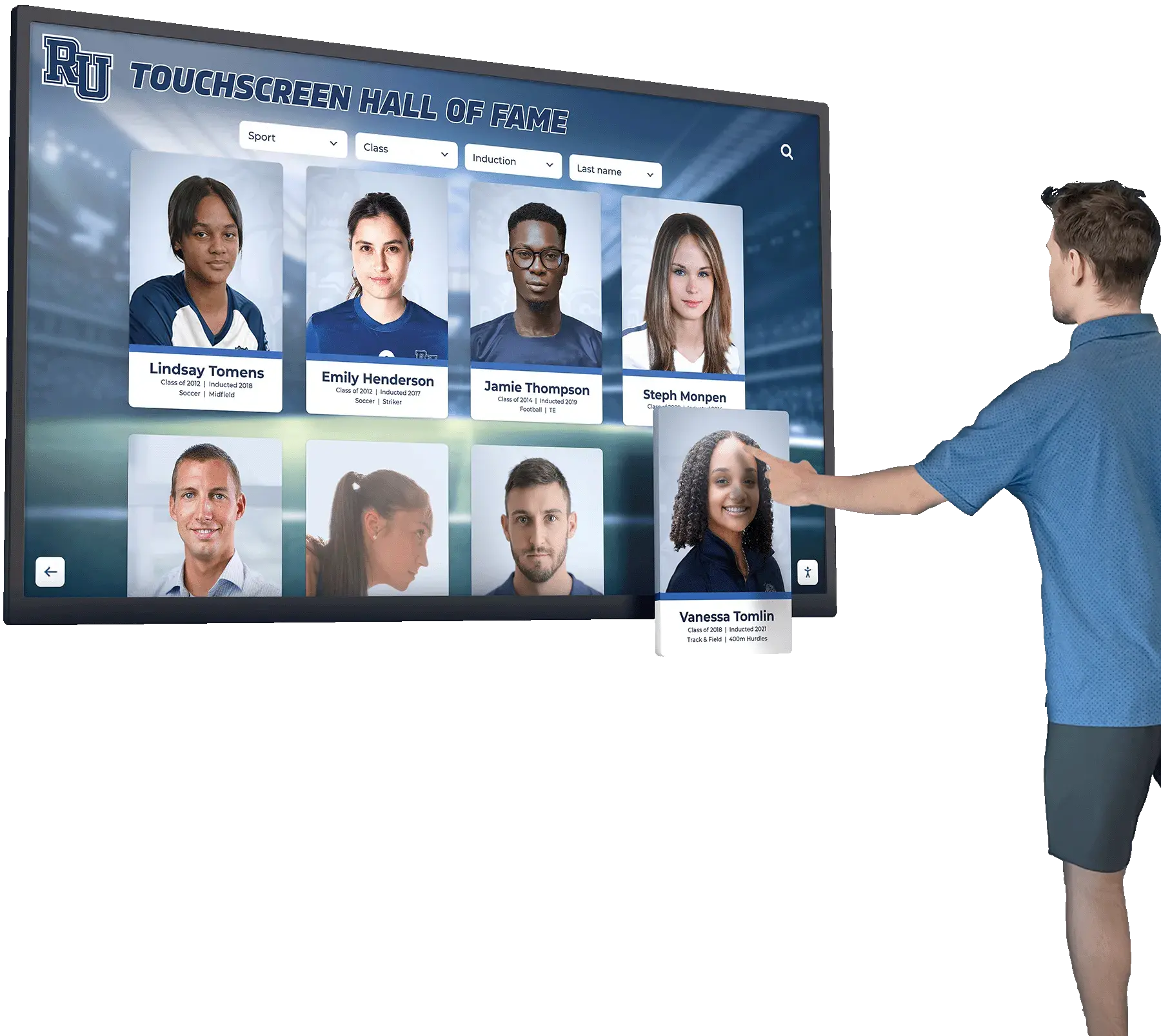
Recognition examples worth emulating enable personal discovery rather than requiring visitors to scan dense lists searching for familiar names. When donors can search for themselves, classmates, colleagues, or family members within supporter communities, these moments of personal connection create emotional resonance impossible with passive displays requiring extensive effort to locate individual acknowledgment.
The architectural firm constructing a new performing arts center might discover that the venue’s founding donors include business leaders they’ve known for years. A prospective student’s parents visiting campus might find that distinguished alumni supporting scholarships include former classmates inspiring their own participation. These personal connections transform abstract institutional support into tangible community commitment that motivates engagement and giving decisions.
Telling Stories That Inspire Others
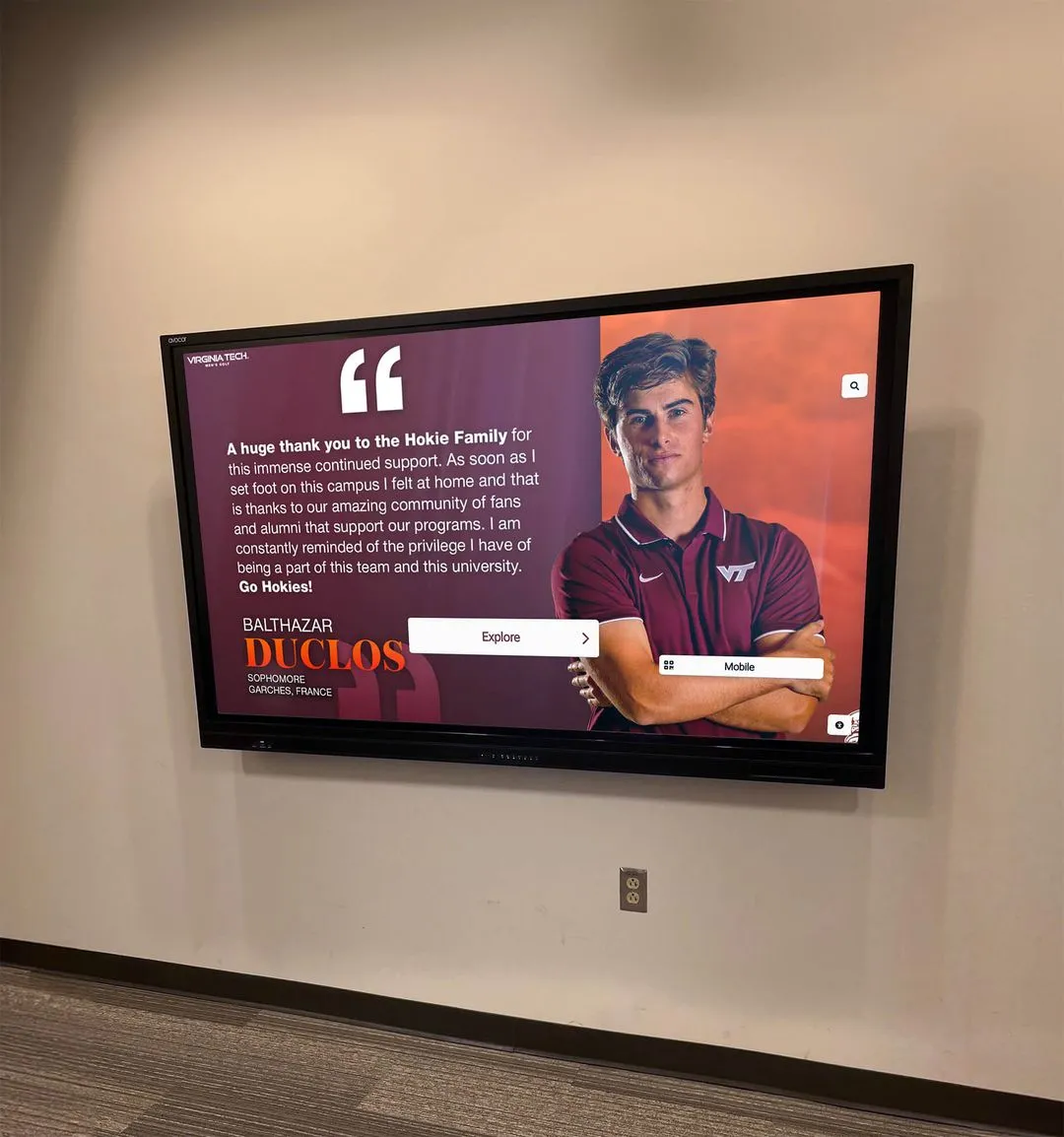
Exceptional recognition examples go beyond names and giving levels to share compelling narratives explaining why supporters give, what motivated their commitment, and what impact they hope contributions create. First-person donor testimonials prove more persuasive than any institutional marketing could achieve, demonstrating that generosity stems from authentic values and meaningful experiences rather than abstract altruism or social obligation.
When visitors explore why longtime alumni continue supporting their educational institutions decades after graduation, discover grateful patients funding medical research that saved family members, or learn about community leaders whose childhood experiences at cultural institutions shaped lifelong values—these authentic stories inspire similar commitment while honoring supporters through meaningful celebration extending far beyond transactional acknowledgment.
Demonstrating Visible Momentum
Leading recognition examples create visible evidence of community support that provides powerful social proof encouraging additional participation. When prospective donors see hundreds or thousands of supporters, they gain confidence that organizations merit trust and investment. This visibility proves particularly valuable during active campaigns, as visible momentum attracts additional gifts while demonstrating institutional health and community backing strength.
Research published in nonprofit studies demonstrates that visible donor communities increase conversion rates by 18-24% compared to organizations where supporters remain invisible. Organizations implementing solutions like digital recognition platforms leverage this psychological principle through comprehensive acknowledgment impossible with space-limited traditional approaches.
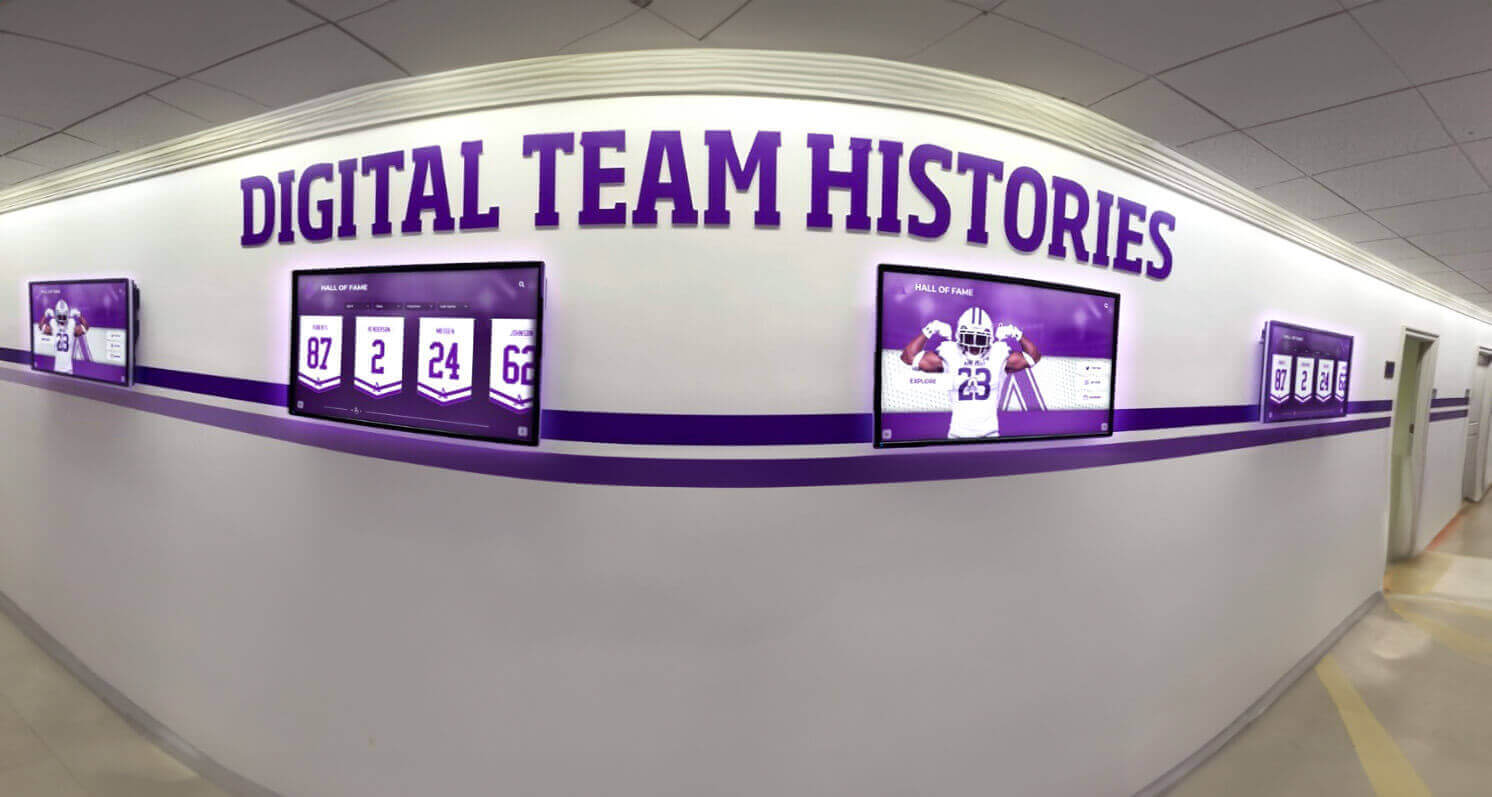
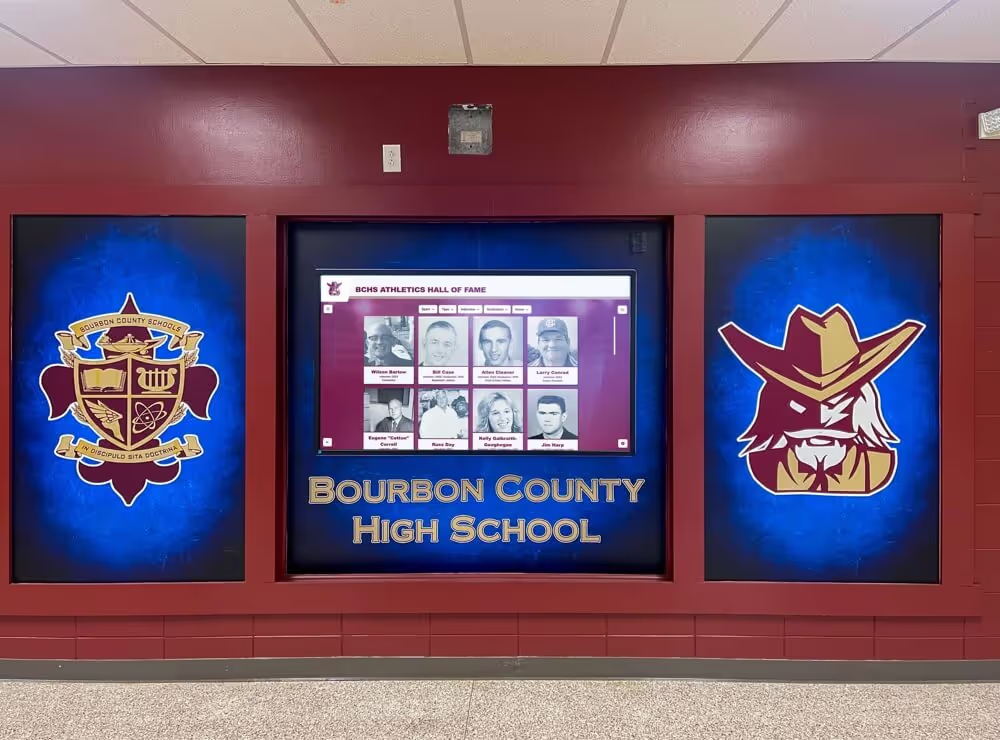
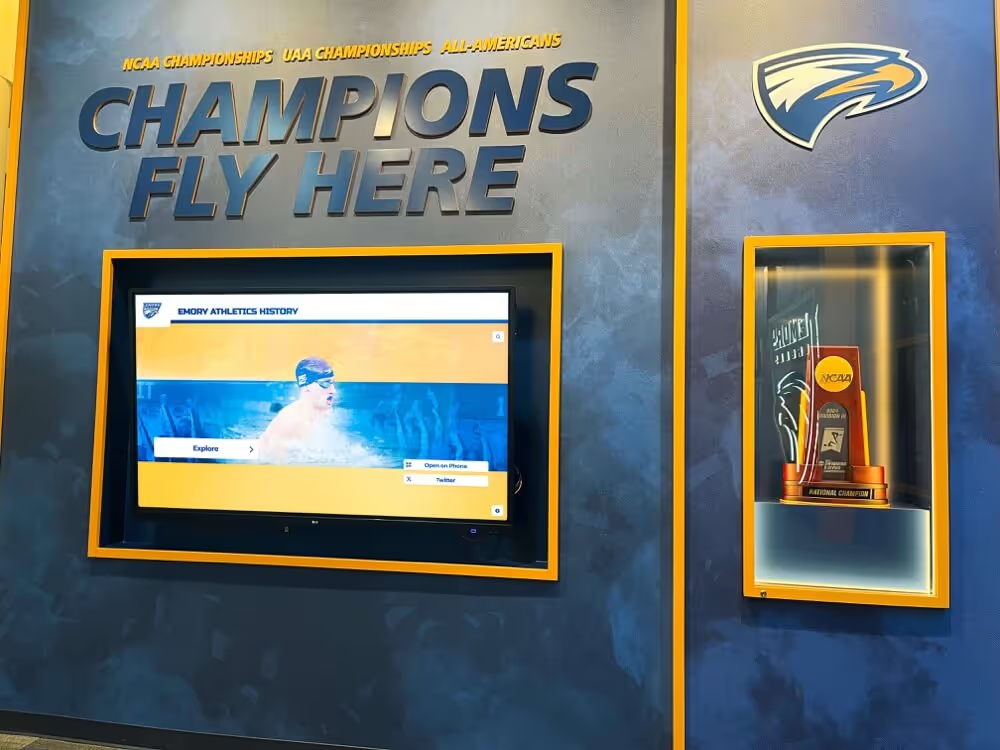
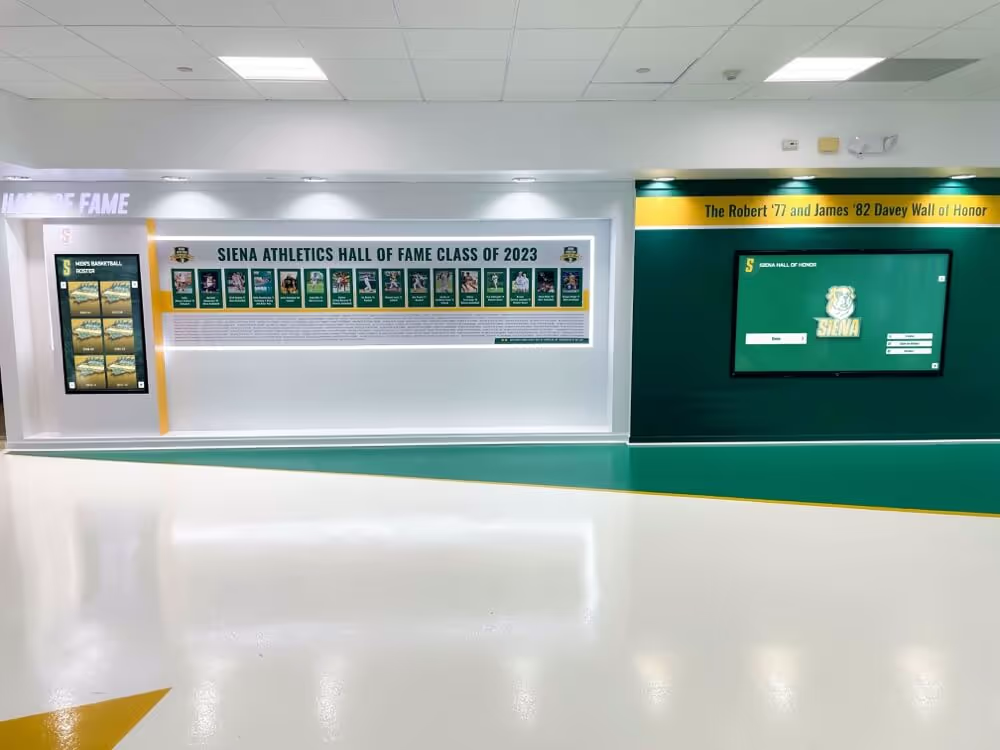
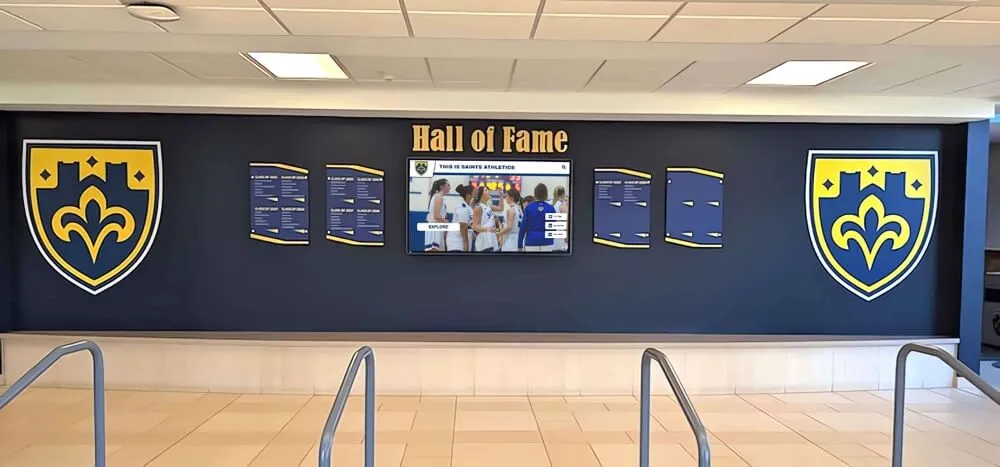
Strategic multi-display installations provide capacity for recognizing entire communities while creating impressive visual destinations
Key Elements Present in Successful Recognition Examples
Analyzing recognition approaches that drive measurable engagement reveals common elements worthy of emulation across diverse organizational contexts.
Comprehensive Inclusivity Across Giving Levels
The most effective examples recognize all supporters regardless of contribution size, building inclusive communities celebrating collective impact rather than creating exclusive hierarchies acknowledging only exceptional individual generosity. Research consistently demonstrates that recognized donors at all levels give more frequently and maintain longer giving relationships than unrecognized peers, making comprehensive acknowledgment strategic rather than merely courteous.
Organizations limiting recognition to major donors exclusively miss opportunities to strengthen relationships with grassroots supporters whose collective contributions often equal or exceed transformational individual gifts. Inclusive frameworks that celebrate every supporter while appropriately distinguishing exceptional generosity optimize engagement across entire donor communities rather than focusing narrowly on top tiers alone.
Immediate or Near-Immediate Acknowledgment
Leading recognition examples provide prompt visibility following contributions rather than creating delays of months between gifts and public recognition. Traditional plaque production timelines of 8-16 weeks undermine the positive reinforcement immediate acknowledgment provides, while digital systems enable updates within hours or days of gift processing.
This responsiveness demonstrates organizational efficiency while creating positive donor experiences reinforcing giving decisions and maintaining campaign momentum through visible growth that encourages others to join expanding communities. During active fundraising periods, real-time recognition updates function as dynamic campaign tools demonstrating participation rates and progress toward goals.
Rich Storytelling Beyond Basic Information
Recognition worth studying includes contextual information transforming names into people with authentic stories, relatable experiences, and meaningful motivations. Professional photography creates visual interest and personal connection. Donor statements explain giving motivations and organizational relationships. Impact narratives connect contributions to specific mission outcomes. Video testimonials bring recognition to life through supporters’ own voices and authentic emotions.
These rich profiles honor complete individuals rather than reducing generosity to names and dollar amounts, creating emotional connections that inspire others while demonstrating the kind of thoughtful appreciation that motivates sustained commitment across years or decades.
Strategic Placement in High-Visibility Locations
Exemplary recognition receives prominent placement ensuring visibility among target audiences—prospective supporters evaluating participation, current donors seeing their acknowledgment during facility visits, community members forming impressions about institutional health, and staff regularly reinforced about philanthropic support importance.
Main entrance lobbies, development office areas, program facilities demonstrating direct impact, and high-traffic corridors all serve strategic recognition purposes. Organizations implementing multiple coordinated displays across facility portfolios maximize reach while serving diverse audience interests at locations where recognition delivers greatest value.

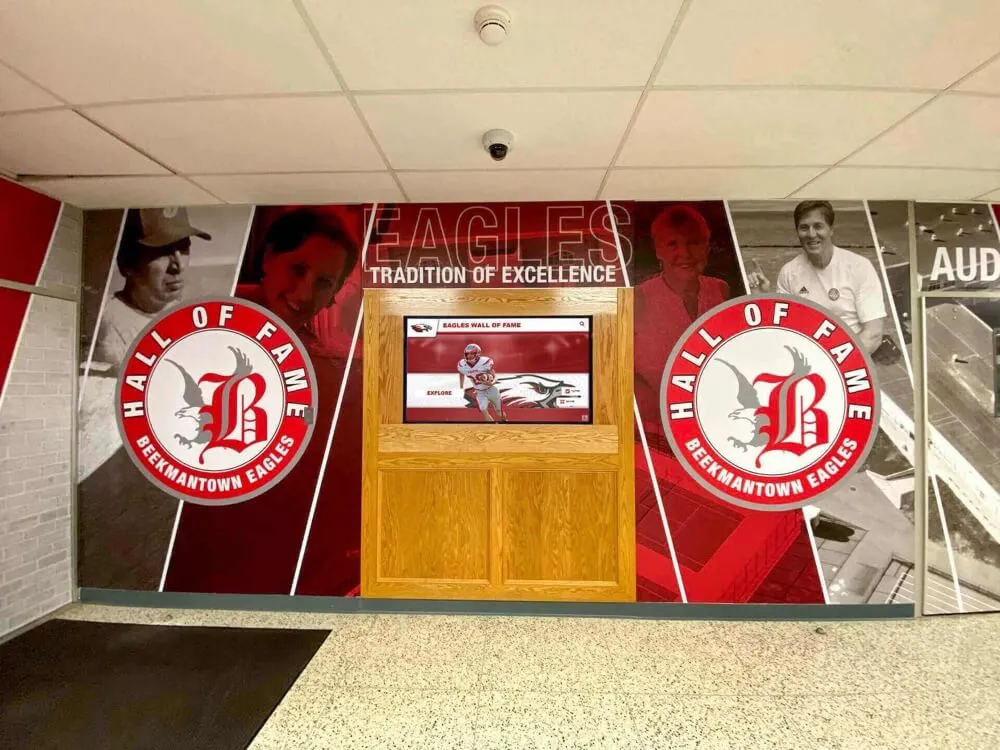
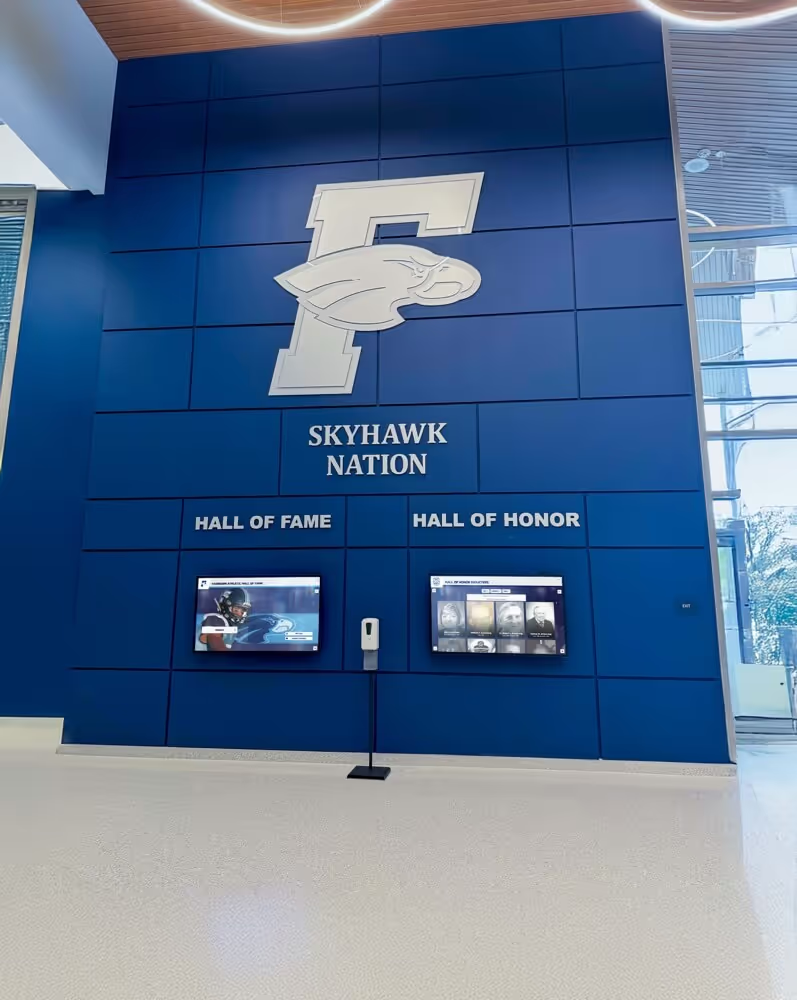
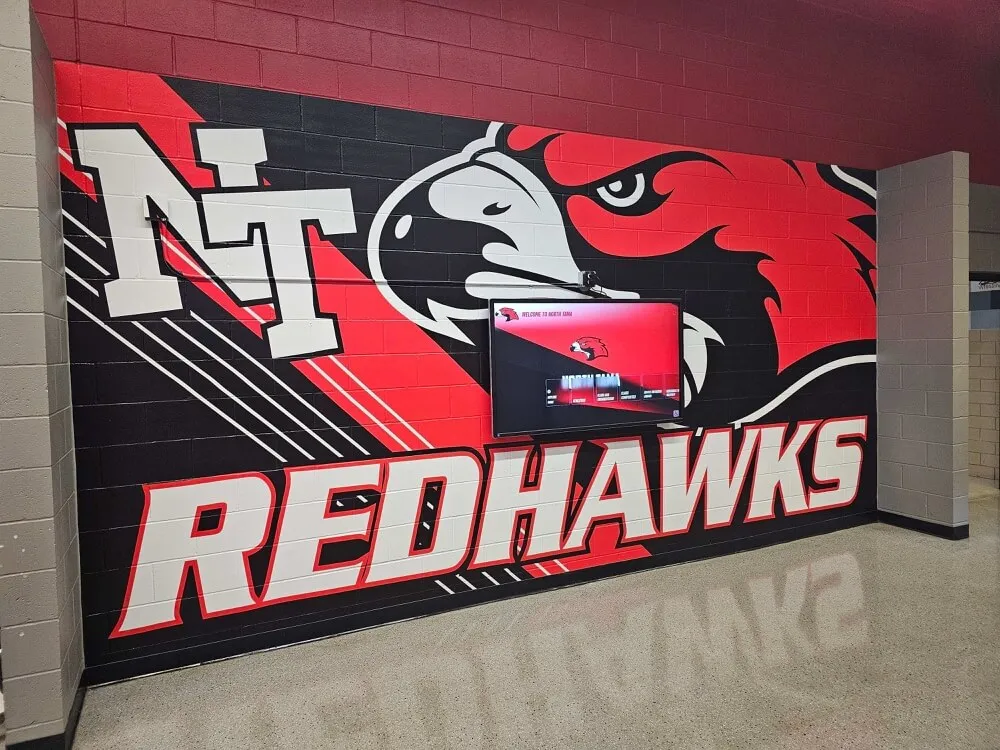
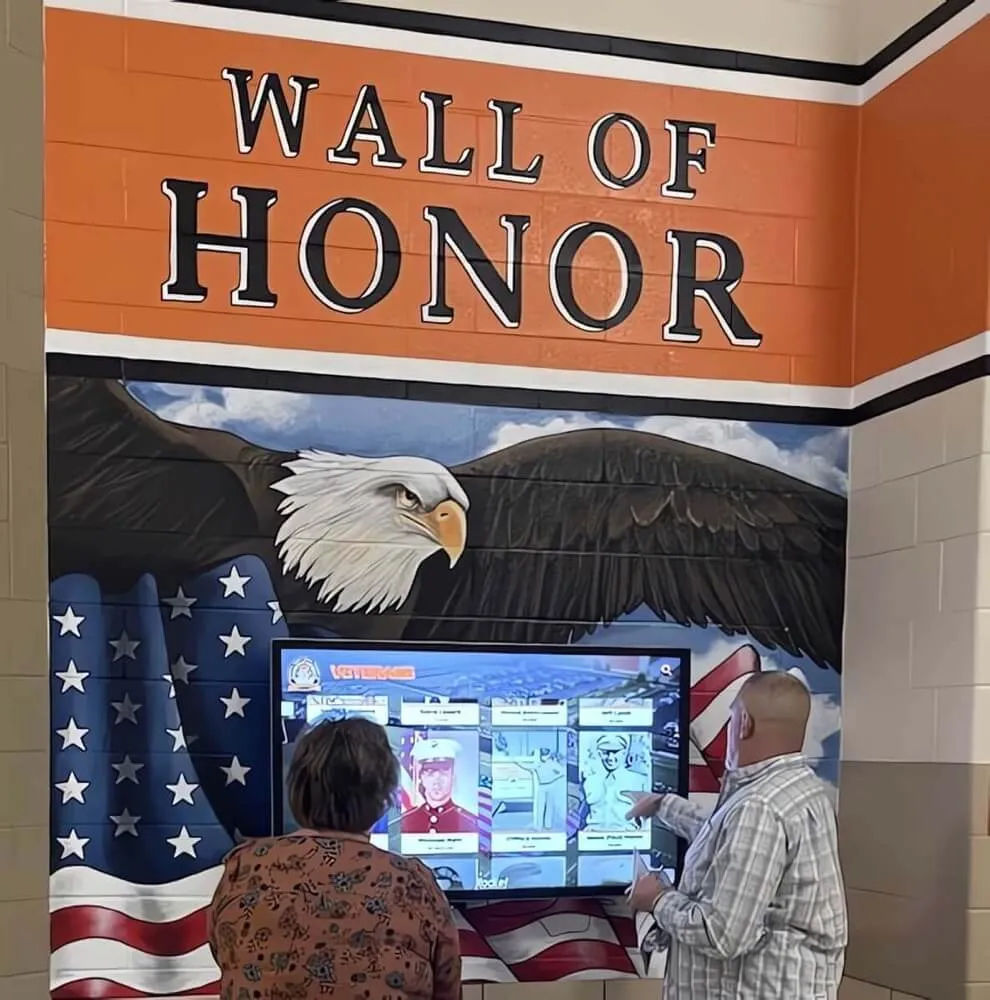
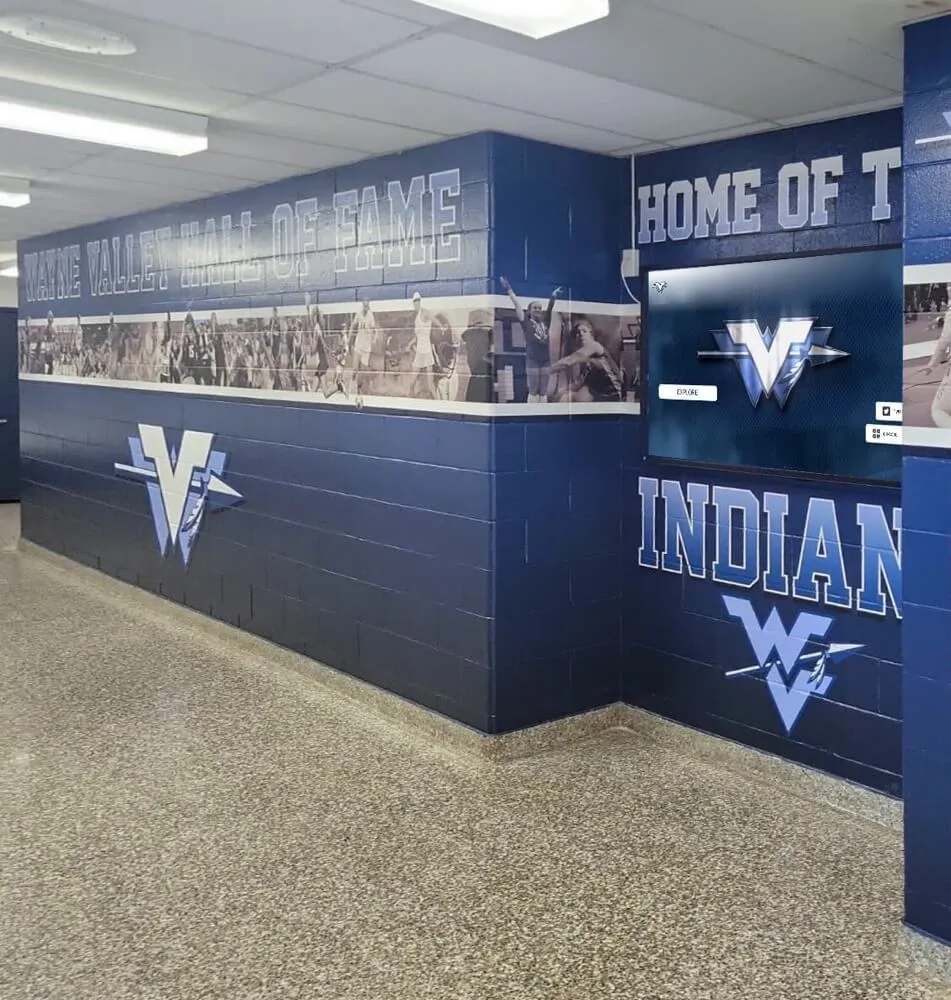
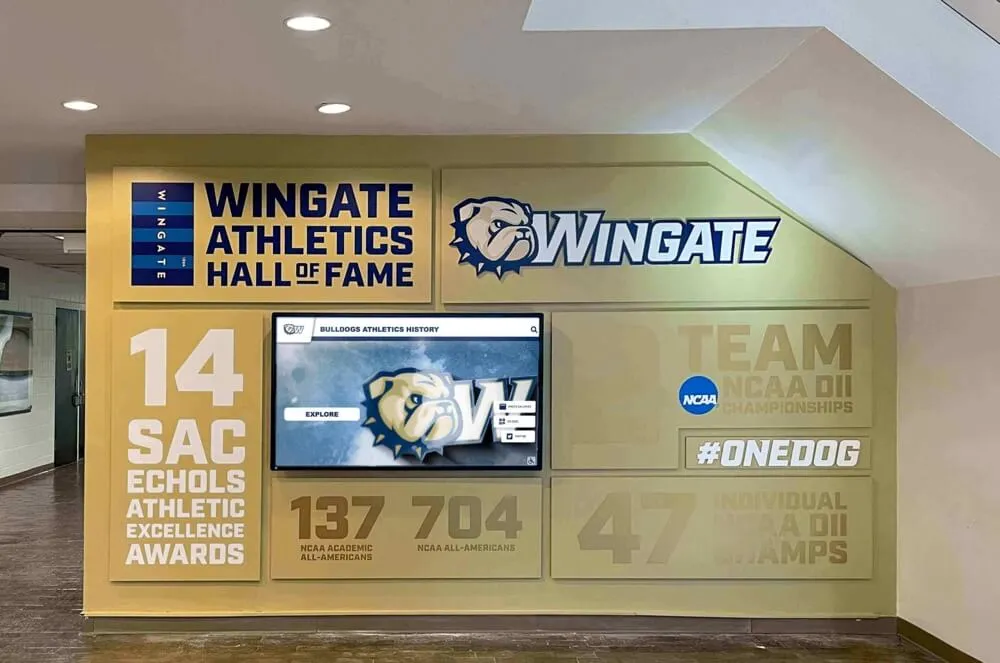
Architectural murals create institutional identity while accommodating flexible recognition technology in cohesive, impressive installations
Educational Institution Recognition Examples
Schools, colleges, and universities represent leading innovators in donor recognition, developing approaches that celebrate supporters while building engaged alumni communities essential for sustained institutional success.
University Interactive Recognition Walls
Leading higher education institutions implement comprehensive interactive touchscreen systems providing unlimited capacity for recognizing alumni donors, parent supporters, corporate partners, and community contributors across all giving levels.
Comprehensive Digital Recognition Approach
Top university examples feature large-format touchscreen displays positioned in prominent campus locations—main administration building lobbies, student center entrances, library gathering spaces, and development office areas where advancement professionals host prospective donors. These installations typically include 55-inch or larger displays providing comfortable viewing for multiple simultaneous visitors, intuitive touchscreen interfaces requiring no instruction, and professional architectural integration coordinating with institutional branding and facility aesthetics.
Content organization reflects diverse recognition needs: alumni donors searchable by graduation year, degree program, and geographic location; giving societies organized by cumulative contribution levels with clear tier structures; campaign-specific recognition celebrating supporters of capital projects, endowment funds, and annual giving programs; and special collections highlighting leadership volunteers, planned giving society members, and distinguished achievement recipients.
The most sophisticated examples integrate recognition with broader alumni engagement platforms, enabling donors to update their own profiles, share recognition via social media, and access personalized dashboards showing their cumulative giving history and institutional impact. This integration transforms recognition from passive acknowledgment into active relationship-building infrastructure supporting sustained engagement across entire alumni lifecycles.
Supporting Technology Infrastructure
Successful university implementations leverage purpose-built recognition platforms specifically designed for donor acknowledgment rather than adapting generic digital signage systems lacking specialized features donor recognition requires. These platforms provide automated content rotation ensuring equitable visibility across all giving levels, advanced search functionality enabling partial name matching and flexible queries, memorial and tribute designation features accommodating honorary gifts, and comprehensive analytics measuring engagement patterns informing continuous optimization.
Cloud-based content management enables advancement staff to update recognition independently without IT dependencies, adding new donors within hours of gift processing while maintaining consistent presentation standards through template-driven design systems. Integration with constituent relationship management (CRM) systems streamlines workflows by automatically surfacing donor information from institutional databases, reducing manual data entry while ensuring recognition accuracy.
Organizations exploring similar approaches discover that solutions like Rocket Alumni Solutions provide capabilities specifically optimized for educational recognition needs while eliminating technical complexity inherent in custom development or DIY approaches.
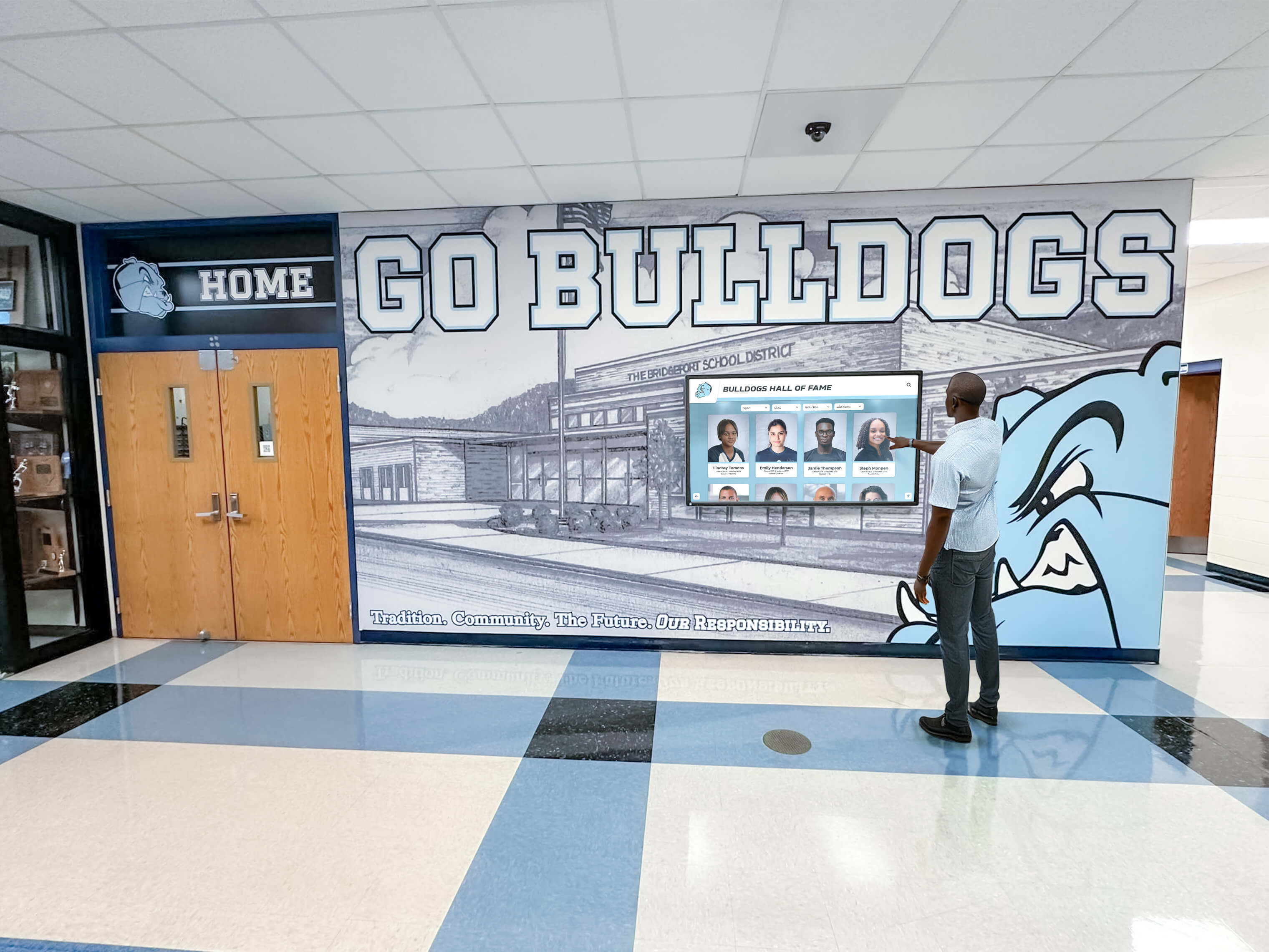
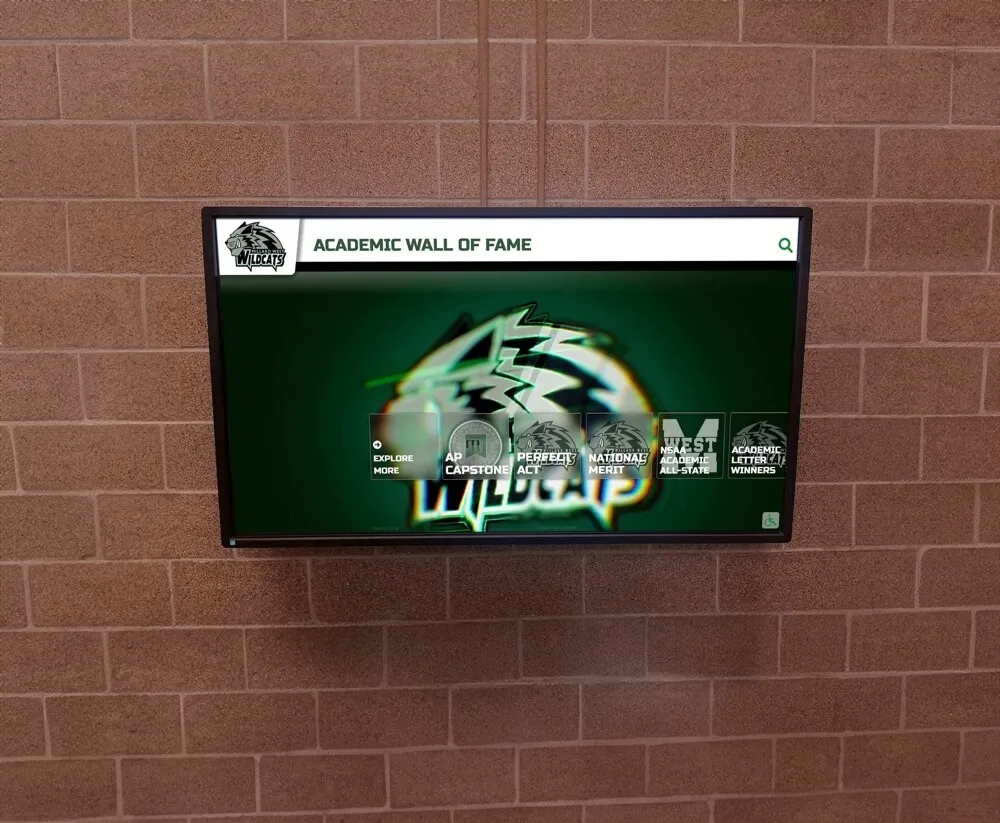
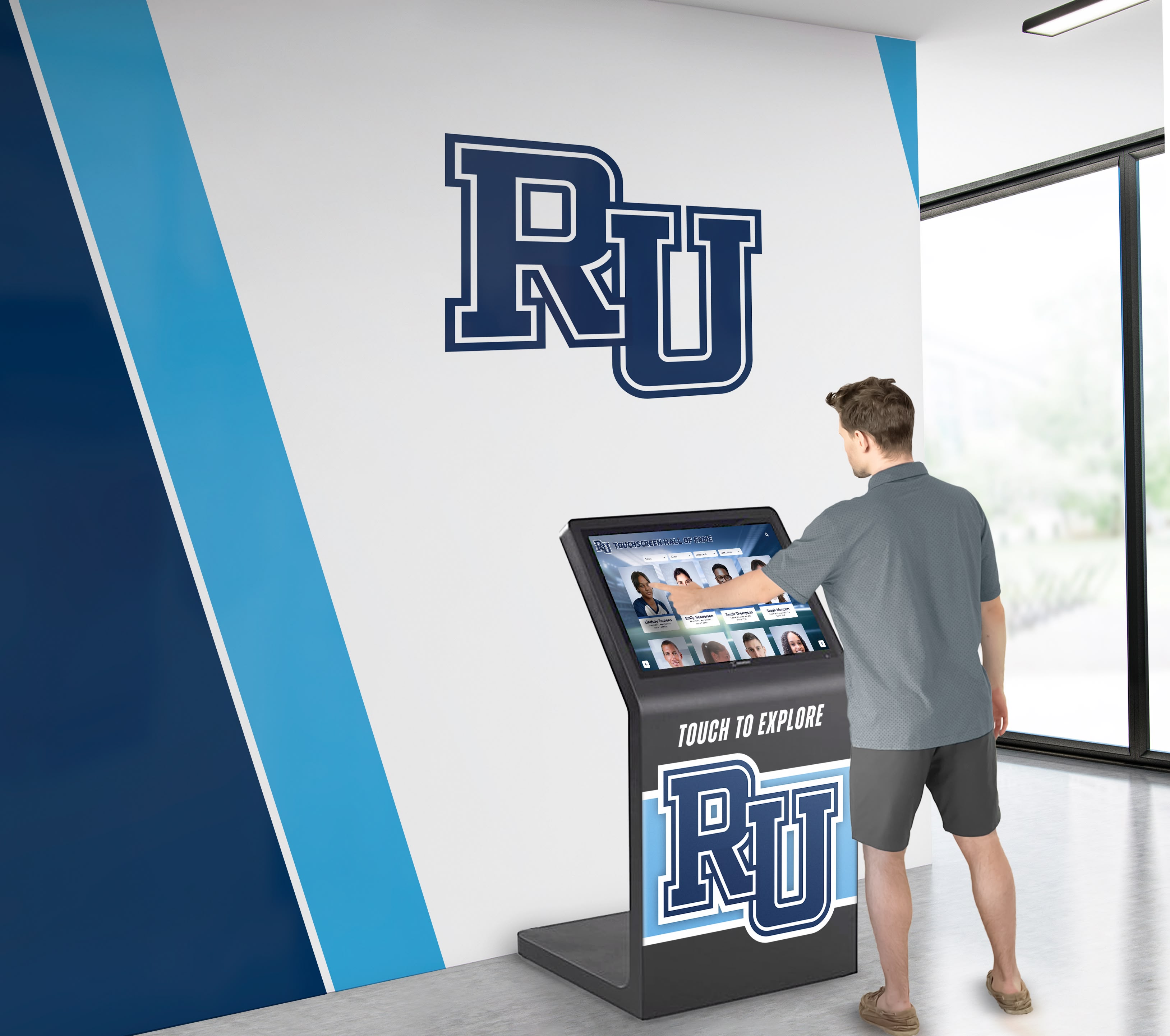
Search functionality enables personal discovery, transforming recognition into engaging experiences rather than passive displays
Secondary School Donor Recognition Integration
High schools implementing effective recognition often integrate donor acknowledgment with broader community celebration including athletic achievements, academic honors, and distinguished alumni recognition—creating comprehensive community showcases rather than isolated donor displays.
Hybrid Architectural and Digital Approaches
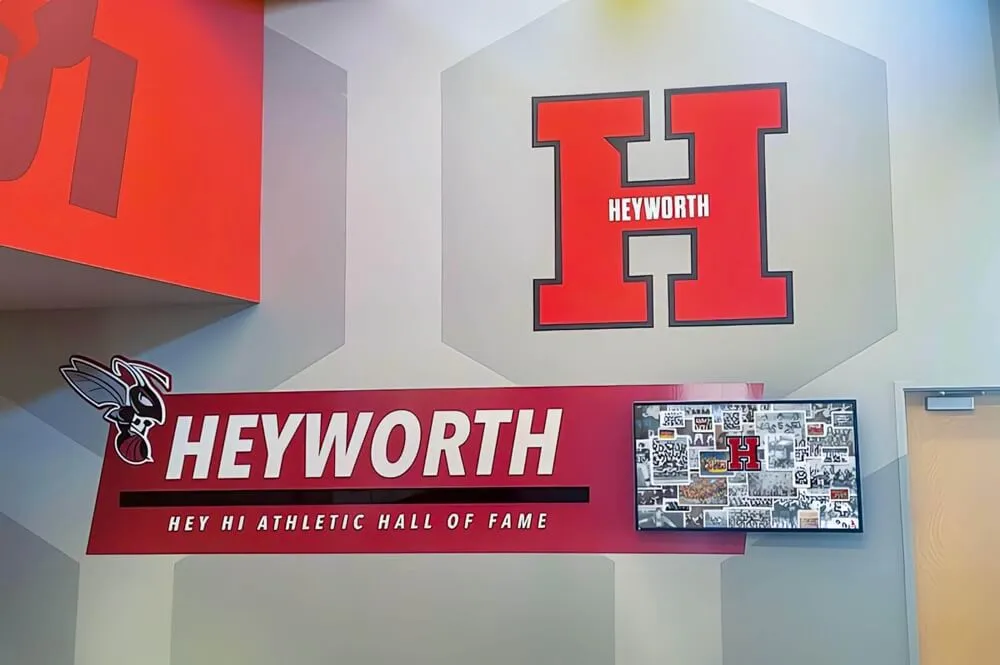
Leading secondary school examples combine branded architectural elements with flexible digital technology. Custom murals featuring school colors, mascots, and institutional logos create permanent visual identity and emotional resonance, while integrated digital displays provide the capacity and flexibility modern recognition requires.
These coordinated installations typically include professionally designed and installed wall graphics establishing visual frameworks, one or more touchscreen displays positioned within architectural treatments for cohesive presentation, traditional trophy cases or honor elements maintaining connections to institutional heritage, and strategic lighting ensuring visibility throughout the day regardless of natural light conditions.
This hybrid approach honors tradition while embracing innovation, respecting stakeholders who value permanent architectural elements while providing the unlimited capacity, immediate updates, and rich storytelling digital platforms enable. Budget-conscious schools often implement phased strategies beginning with architectural investment and adding digital components as fundraising success provides resources.
Campaign-Specific Recognition Focus
Secondary school examples often emphasize capital campaign recognition celebrating supporters of specific facility projects—athletic complex improvements, performing arts center construction, technology infrastructure upgrades, or comprehensive campus renovations. Campaign-focused recognition creates clear connections between philanthropic investment and tangible outcomes students, families, and community members experience directly.
Effective campaign recognition includes contextual information explaining project significance and community impact, before-and-after imagery documenting transformation donors enabled, construction timeline presentations showing project progression, budget transparency demonstrating fiscal responsibility and full community participation, and beneficiary testimonials from students, athletes, performers, or faculty whose experiences improved through donor generosity.
This impact-focused approach demonstrates accountability while honoring supporters through celebration connecting their gifts to mission outcomes rather than reducing recognition to generic acknowledgment divorced from specific achievements donors made possible.
Independent School Comprehensive Recognition Programs
Private and independent schools often implement particularly sophisticated recognition acknowledging not just current campaign donors but historical supporters whose past generosity continues benefiting current students through endowments, facilities, and established programs.
Multi-Generational Recognition Frameworks
Leading independent school examples celebrate legacy families with multiple generations of students, historical benefactors whose century-old gifts established enduring institutional assets, and contemporary supporters continuing traditions of philanthropic partnership. This historical depth creates institutional memory preserving heritage while demonstrating sustained community commitment spanning decades or centuries.
Content organization might include chronological presentations showing supporter evolution across eras, family tree visualizations highlighting multi-generational participation, historical photography documenting facilities and programs donors created, archival documents preserving founding gift agreements and original benefactor intentions, and modern impact connections showing how historical gifts continue serving contemporary students.
This comprehensive approach honors complete institutional history rather than focusing narrowly on recent contributions alone, building recognition that serves both stewardship purposes for current donors and educational objectives helping students understand that their educational opportunities result from sustained community investment across generations.
Organizations serving similar audiences benefit from reviewing recognition strategies for private institutions balancing tradition with innovation.
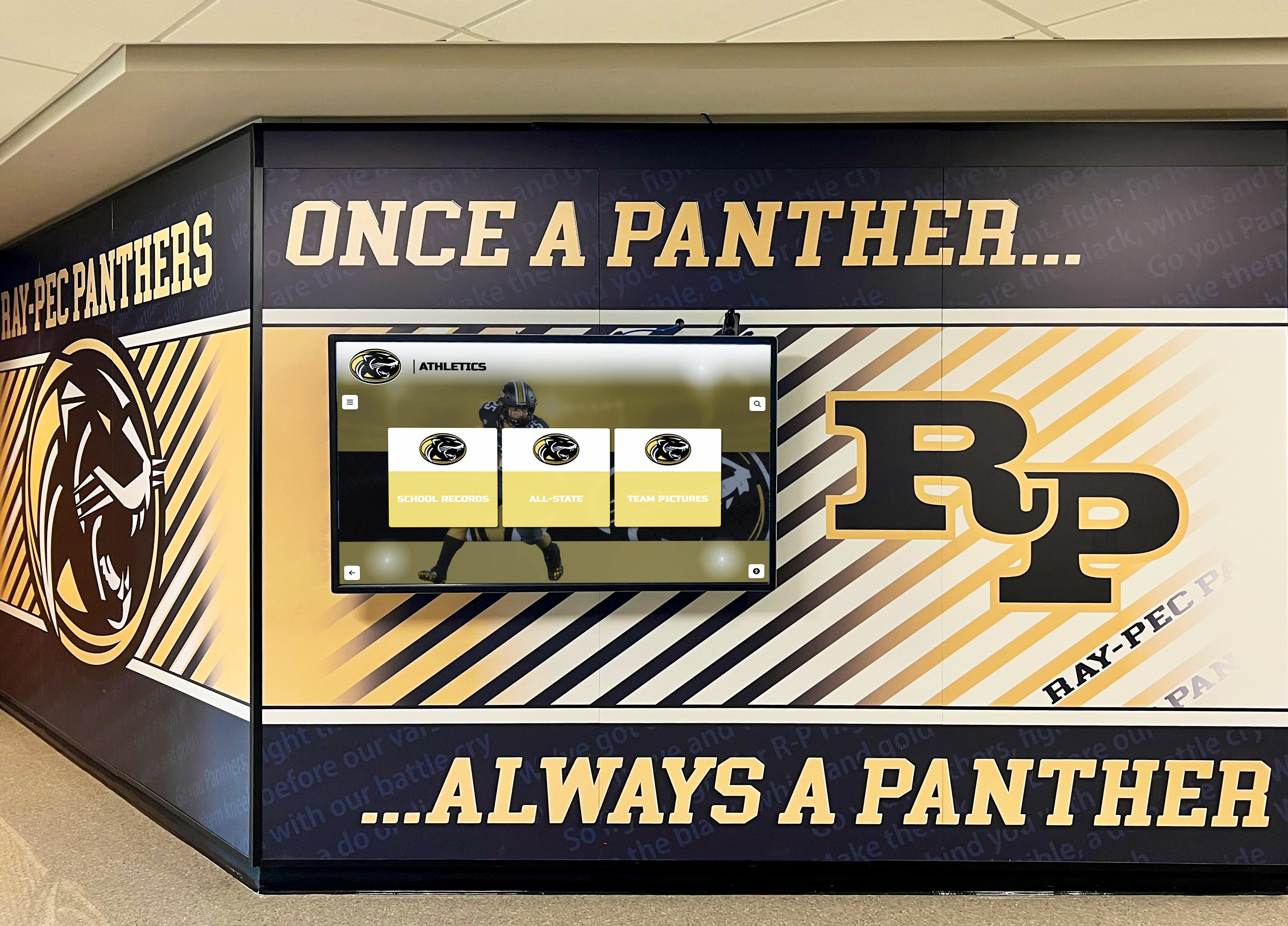
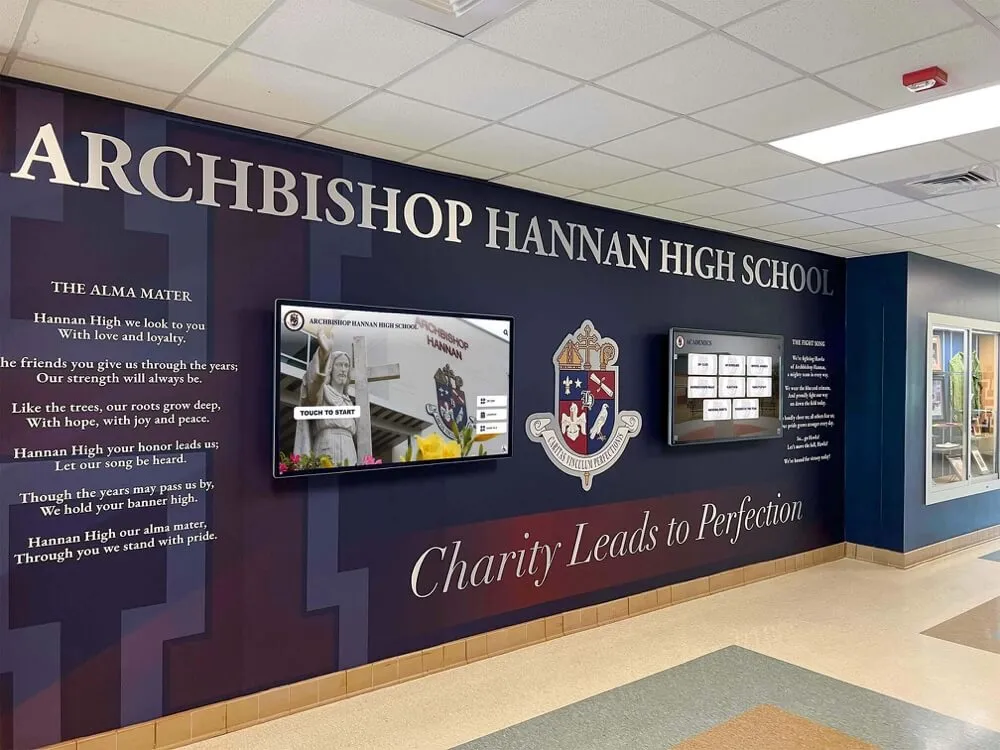
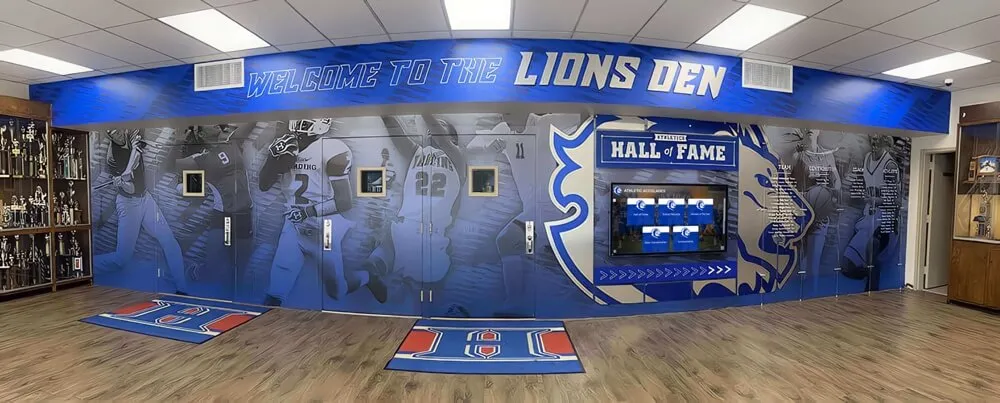
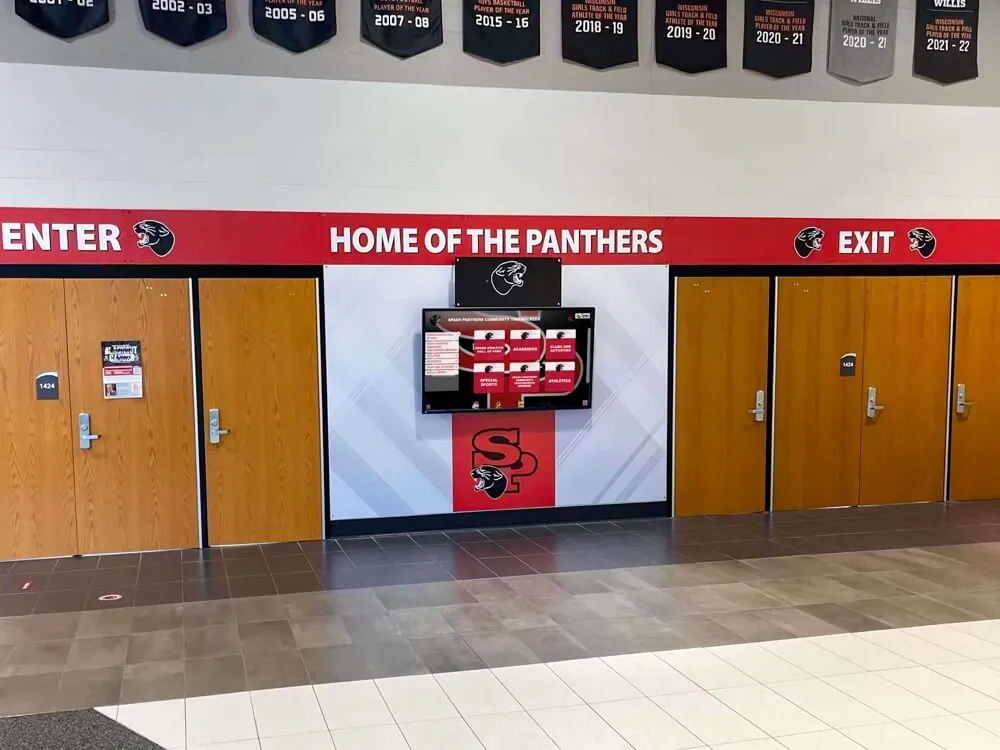
Branded environments create pride while providing infrastructure for comprehensive community recognition across multiple categories
Healthcare Organization Recognition Examples
Hospitals, medical centers, and healthcare foundations develop recognition approaches reflecting the unique character of healthcare philanthropy, where giving often stems from grateful patient experiences and memorial commitments honoring loved ones.
Hospital Comprehensive Donor Recognition Systems
Leading healthcare systems implement recognition celebrating diverse supporter types—grateful patients and families, medical staff and employees, community leaders and corporate partners, research funding organizations, and memorial gift families—each requiring sensitive, appropriate acknowledgment.
Memorial and Tribute Recognition Integration
Healthcare recognition examples excel at incorporating memorial and honor gifts requiring thoughtful treatment beyond standard donor acknowledgment. Effective implementations enable families to find tributes easily through search functionality, include both donor names and individuals being remembered or honored, incorporate personal statements explaining gift significance and honoree connections, feature photography celebrating lives being commemorated, and create lasting digital memorials extending beyond physical plaques while maintaining emotional connections between families and institutions across years.
This sensitive handling demonstrates institutional respect while honoring both generous donors making gifts and beloved individuals whose memories inspire continued family engagement. Memorial recognition often includes connections to specific programs or services—cancer treatment centers, cardiac care units, pediatric facilities, or research initiatives—creating meaningful associations between loved ones being remembered and institutional missions serving others facing similar healthcare challenges.
Organizations implementing healthcare recognition discover that purpose-built platforms provide memorial designation features generic systems lack, enabling the specialized acknowledgment healthcare philanthropy requires while maintaining comprehensive community celebration across all supporter types and giving motivations.
Patient Gratitude Story Sharing
Leading healthcare examples incorporate beneficiary testimonials connecting donor generosity to tangible patient outcomes. When current or former patients share how programs, equipment, facilities, or services donors funded directly impacted their care experiences, these authentic stories create powerful social proof inspiring additional support from others recognizing that philanthropic investment produces measurable healthcare improvements.
Effective patient story integration includes video testimonials featuring patients explaining their healthcare journeys, treatment outcome documentation showing medical advances donors enabled, clinician perspectives describing how philanthropic support enhances care capacity, family narratives celebrating multi-generational institutional relationships, and photographic storytelling documenting patient experiences and recovery successes.
This impact-focused content demonstrates accountability while inspiring participation from community members who may become patients themselves or wish to support institutions serving neighbors and family members. Healthcare organizations implementing impact storytelling approaches strengthen donor relationships through visible connections between generosity and mission outcomes.
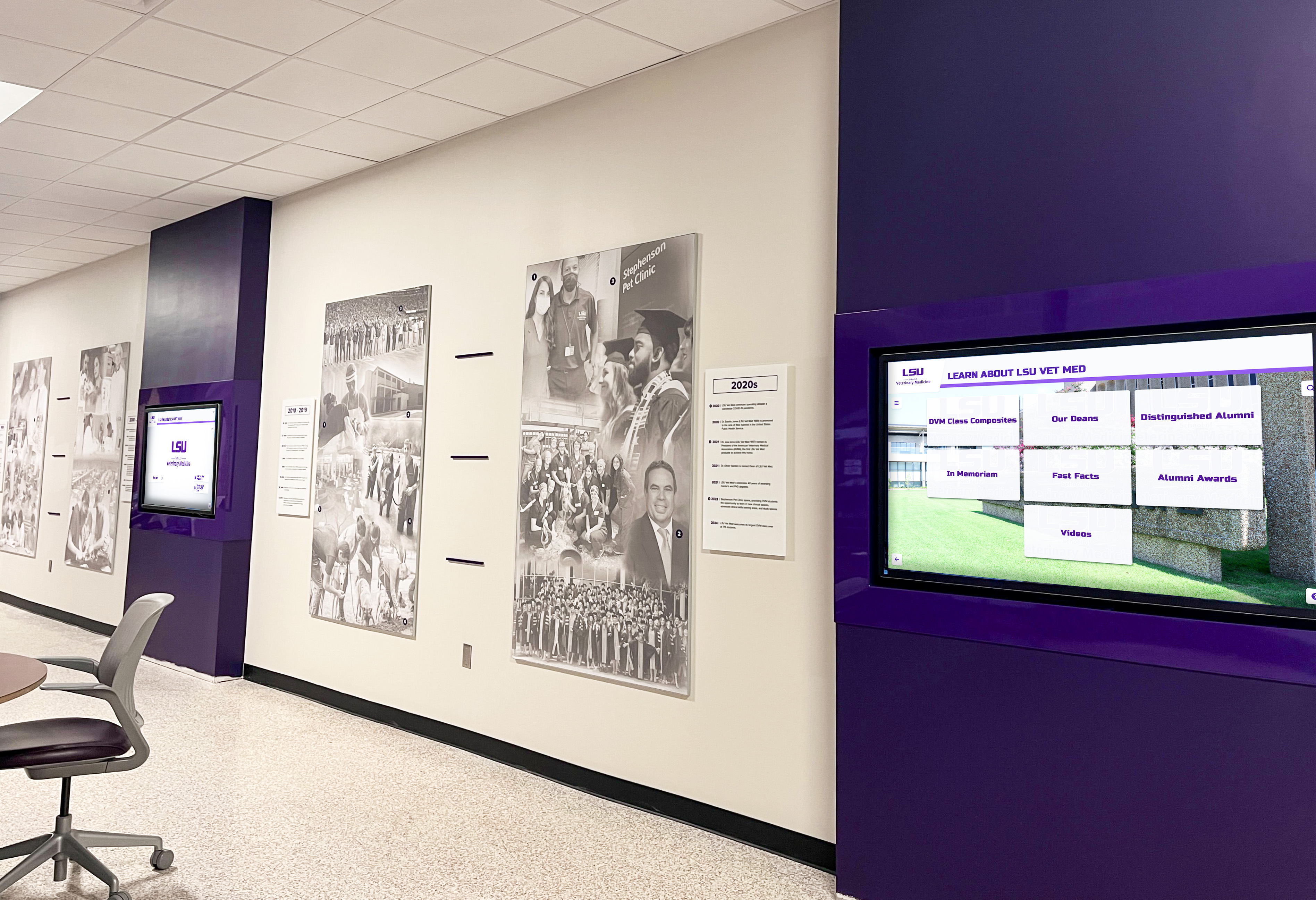
Healthcare and educational facilities position recognition where students, visitors, and community members naturally gather throughout daily institutional life
Medical Foundation Recognition Strategies
Hospital foundations managing philanthropic relationships often implement recognition serving multiple strategic purposes—donor stewardship and retention, prospective donor cultivation, board member engagement, and staff inspiration demonstrating community support importance.
Development Office Recognition Tools
Foundation examples strategically position recognition in advancement office areas where development professionals host prospective donors during cultivation meetings, conduct tours for major gift prospects, and manage stewardship events for current supporters. Recognition in these contexts functions as active fundraising infrastructure rather than passive acknowledgment.
When advancement staff meet with prospects, comprehensive donor displays visible during facility tours provide powerful social proof while enabling professionals to highlight relevant supporters—peers from similar professional fields motivating participation through peer influence, geographic neighbors demonstrating local community backing, giving society members at aspirational levels prospects might join, or longtime supporters whose sustained commitment demonstrates institutional worthiness of continued investment.
This strategic accessibility transforms recognition from ceremonial obligation into development tool that advancement teams leverage throughout donor relationship lifecycles—from initial awareness and cultivation through solicitation, acknowledgment, and ongoing stewardship supporting retention and gift progression over time.
Campaign Progress Visualization
During active capital campaigns, leading foundation examples use recognition displays as dynamic campaign hubs showing real-time progress toward goals. Live counters displaying current donor numbers, funds raised toward targets, and participation rates create urgency while demonstrating momentum that encourages prospects to join visible, growing communities rather than questioning whether campaigns will succeed.
Campaign-focused recognition might include thermometer-style progress visualizations familiar from traditional fundraising, real-time donor additions showing recent gifts and creating visible momentum, milestone celebrations acknowledging achievement of campaign phases or targets, leadership donor spotlights featuring major contributors whose gifts inspire others, and countdown timers creating urgency during campaign final phases.
This dynamic presentation transforms recognition from static acknowledgment into active fundraising communication demonstrating campaign vitality and community participation strength that motivates additional gifts from prospects inspired by visible social proof.
Community Health Center Recognition Approaches
Smaller community health centers and rural hospitals with limited budgets implement creative recognition approaches delivering meaningful impact without requiring substantial capital investment.
Phased Implementation Strategies
Budget-conscious healthcare examples often begin with web-based recognition requiring minimal upfront investment—cloud platform subscriptions and staff time for content development—before adding physical displays as resources permit. Online recognition provides immediate value through global accessibility enabling supporters worldwide to view acknowledgment, searchable databases allowing personal name discovery, rich profiles honoring donors comprehensively without space constraints, and social sharing extending recognition reach through personal networks.
This web-first approach delivers substantial recognition value before physical hardware investment, enabling organizations to begin comprehensive acknowledgment immediately while planning touchscreen installations over time as capital budgets permit or campaign success provides resources. Many organizations discover that phased strategies prove more effective than delaying all recognition until ideal complete installations become affordable—which often never occurs given competing organizational priorities.
Volunteer and In-Kind Recognition Integration
Community health examples often integrate volunteer and in-kind supporter recognition alongside financial donor acknowledgment, building inclusive frameworks celebrating all contribution types enabling mission delivery. Auxiliary volunteers staffing information desks and gift shops, board members providing governance and fundraising leadership, professional services donated by attorneys and accountants, equipment contributions from medical suppliers, and facility improvements funded by construction companies all deserve public acknowledgment demonstrating comprehensive community partnership.
This inclusive approach communicates that organizations value diverse contribution forms, encouraging continued service while potentially transitioning volunteers toward financial support when circumstances permit. Comprehensive recognition also demonstrates to financial donors that organizations maximize all resource types rather than relying exclusively on philanthropic contributions for mission delivery—building confidence in institutional efficiency and stewardship capacity.
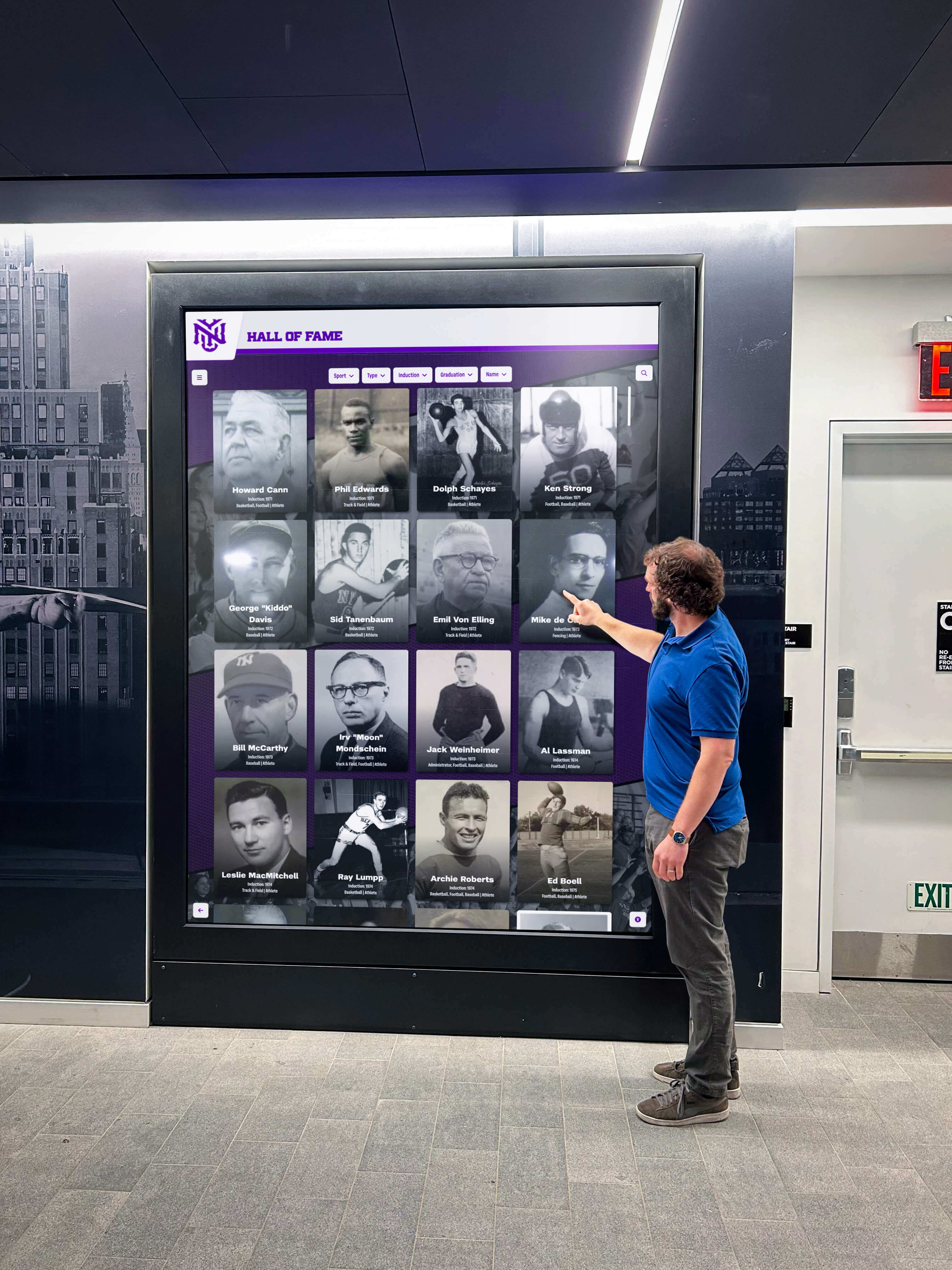
Main entrance placement ensures recognition reaches all facility visitors immediately upon arrival, communicating institutional priorities through prominent positioning
Cultural Organization Recognition Examples
Museums, performing arts centers, symphony orchestras, and cultural institutions develop recognition approaches reflecting the creative character of their missions while celebrating supporters who make cultural programming accessible to entire communities.
Museum Interactive Donor Recognition
Leading museums implement recognition that extends beyond donor acknowledgment to enhance visitor experiences through rich storytelling connecting philanthropic support to exhibitions, collections, acquisitions, and educational programming.
Collection and Exhibition Attribution
Museum recognition examples often integrate donor acknowledgment directly with collection objects and exhibitions rather than isolating recognition in separate locations. Gallery labels identify acquisition donors alongside artwork information, exhibition credits acknowledge supporters funding programming and installations, collection databases accessible via digital platforms highlight donors whose gifts enabled acquisitions, audio tour content includes donor story segments explaining giving motivations, and interactive collection browsers feature donor profiles alongside object information.
This integrated approach demonstrates tangible connections between philanthropic investment and cultural outcomes visitors experience directly, building donor satisfaction through visible impact attribution while educating public audiences about how museums build and maintain collections serving educational missions. Rather than generic acknowledgment divorced from specific achievements, attribution-based recognition honors supporters through celebration connecting gifts to precise mission accomplishments.
Interactive Collection Exploration
Sophisticated museum examples implement touchscreen installations enabling visitors to explore collections while discovering donor stories interwoven with object information. A visitor examining impressionist paintings might learn about collectors whose donations established the museum’s core holdings, families whose sustained support enabled gallery renovations, or corporate partners whose sponsorship made special exhibitions possible.
This storytelling integration serves both visitor engagement and donor stewardship purposes, creating compelling educational content while demonstrating to supporters that their generosity receives prominent acknowledgment creating lasting public appreciation extending far beyond momentary thank-you gestures. Organizations implementing similar approaches often leverage museum-specific recognition strategies optimizing both visitor experience and donor cultivation objectives.
Performing Arts Center Recognition Programs
Theaters, concert halls, and performing arts venues develop recognition celebrating diverse supporter types—season ticket holders providing operational foundation, program sponsors enabling specific performances, capital campaign donors funding facility construction, endowment contributors ensuring perpetual sustainability, and volunteer supporters contributing time and talent.
Patron Society Tiered Recognition
Performing arts examples often organize recognition around patron societies with creative names reflecting institutional character—Maestro Circle, Directors Guild, Ovation Society, Encore Club, or similar culturally themed designations creating memorable frameworks more engaging than generic dollar-based tier labels.
Effective patron society recognition includes clear tier structure providing supporters with progression roadmaps, specific benefits associated with each level creating tangible value beyond acknowledgment alone, featured recognition highlighting current society members prominently, lifetime giving calculations encouraging sustained participation rather than only single-year commitments, and special event access or programming benefits reinforcing society membership value.
This structured approach creates aspirational next levels motivating giving growth while ensuring all contributors receive appropriate acknowledgment regardless of capacity. Organizations implementing society-based recognition report improved retention and upgrade rates as donors pursue higher recognition tiers while maintaining sustained participation to preserve society membership status.
Program and Performance Attribution
Leading performing arts examples connect donor recognition to specific programming rather than providing only generic acknowledgment. Season brochures and programs identify performance sponsors, lobby displays highlight supporters enabling particular productions or visiting artists, digital displays feature rotating content connecting current performances to enabling donors, and curtain speeches or program announcements acknowledge supporters making performances possible before audiences experiencing direct benefits.
This attribution-based approach demonstrates impact accountability while building donor satisfaction through visible acknowledgment creating community-wide appreciation for philanthropic partnership enabling cultural programming. When supporters see their names associated with performances they attend alongside friends and family, recognition creates personal pride motivating continued commitment while inspiring others to participate in visible, celebrated donor communities.
Symphony and Orchestra Recognition Approaches
Symphony orchestras and classical music organizations often implement elegant, sophisticated recognition approaches reflecting the refined character of their artistic missions while celebrating supporters who make world-class musical performance accessible to entire communities.
Musician Endowment Recognition
Some symphony examples organize recognition around endowed musician chairs—principal positions, section leadership roles, or specific instrumental positions donors fund through major endowment gifts. Recognition might include musician profiles featuring performers holding endowed positions alongside donor information, performance programs identifying endowed chairs and supporting donors, special recognition during concerts where endowed position musicians perform featured solos, and digital content explaining how endowment gifts enable orchestras to attract and retain world-class talent.
This specialized recognition creates meaningful connections between donors and specific musicians while educating audiences about how philanthropic support enables artistic excellence. Rather than generic acknowledgment, position-specific recognition honors supporters through celebration connecting gifts to tangible musical outcomes audiences experience directly throughout concert seasons.
Concert Series and Season Sponsorship Recognition
Orchestra examples often feature recognition for series sponsors supporting specific programming—pops concerts, family matinees, educational performances, chamber music series, or special guest artist presentations. Season program books provide comprehensive sponsor acknowledgment, concert hall displays highlight current performance sponsors, digital platforms feature rotating content connecting performances to enabling supporters, and social media content celebrates sponsors before performances reach broader audiences.
This performance-focused recognition demonstrates how diverse giving levels collectively enable comprehensive programming serving varied audience interests, from major underwriters funding entire seasons to modest supporters enabling specific concerts. Comprehensive acknowledgment builds inclusive communities celebrating collective impact rather than focusing exclusively on exceptional individual gifts alone.
Organizations implementing performing arts recognition benefit from reviewing recognition approaches for cultural institutions balancing artistic sophistication with inclusive community building.

Comprehensive installations accommodate diverse recognition needs through multiple coordinated elements serving different acknowledgment purposes
Religious Organization Recognition Examples
Houses of worship, denominational institutions, and faith-based organizations develop recognition approaches honoring supporters while reflecting spiritual values of humility, service, and community rather than emphasizing individual prominence or wealth display.
Church Capital Campaign Recognition
Churches and religious institutions conducting facility campaigns—building construction, renovation projects, organ installations, or campus improvements—implement recognition celebrating community partnership enabling projects while maintaining appropriate spiritual context and avoiding ostentatious wealth display.
Values-Aligned Recognition Language
Faith-based examples carefully select recognition language emphasizing stewardship, generosity, and community service rather than donor prominence or status. Giving societies might use names like Cornerstone Society, Good Shepherd Circle, Faithful Stewards, or Covenant Partners—terminology reinforcing spiritual values while creating memorable frameworks more meaningful than generic dollar-based tier labels.
Recognition content emphasizes faith motivations, scripture reflecting generosity theology, community impact rather than individual prominence, collective accomplishment celebrating congregation-wide participation, and humble appreciation rather than excessive praise potentially conflicting with religious values around humility and modest recognition.
This values-conscious approach ensures recognition remains consistent with spiritual missions while celebrating supporters meaningfully. Organizations serving faith communities discover that religious institution recognition strategies require specialized understanding of theological contexts affecting acknowledgment appropriateness.
Memorial and Heritage Recognition
Faith community examples often emphasize memorial recognition honoring deceased members whose gifts or whose families’ gifts celebrate lives of service and faith commitment. Memorial recognition in religious contexts typically includes spiritual language appropriate to denominational traditions, scripture passages meaningful to families or faith communities, connections between memorial gifts and church missions served, photographic celebration of lives being remembered, and family statements explaining memorial significance.
This sensitive acknowledgment honors both generous donors making gifts and beloved community members whose memories inspire continued engagement, creating lasting connection between families and institutions across generations. Religious memorial recognition serves pastoral care functions alongside stewardship purposes, helping families process grief through meaningful contribution while building church resources serving ongoing community needs.
Religious School and University Recognition
Faith-based educational institutions implement recognition celebrating supporters while reinforcing denominational identities and spiritual values distinguishing their missions from secular institutions.
Mission-Focused Recognition Content
Religious education examples emphasize how donor support enables distinctive faith-based educational missions—theological education and spiritual formation, service learning and community outreach, values-based character development, campus ministry and worship opportunities, and denominational tradition preservation. Recognition content connects philanthropic investment to these distinctive mission elements rather than focusing exclusively on academic program quality or facility excellence common across all educational contexts.
This mission-focused approach demonstrates to supporters that their gifts enable the specific spiritual and educational outcomes motivating their selection of faith-based institutions, building satisfaction through visible impact attribution while inspiring additional participation from others sharing similar values and educational philosophy preferences.
Denominational Heritage Recognition
Some faith-based institutions implement historical recognition celebrating founding religious communities, denominational leaders whose vision established institutions, and historical supporters whose century-old gifts created enduring assets continuing to serve contemporary students. This heritage recognition preserves institutional memory while demonstrating sustained faith community commitment spanning generations or centuries.
Historical content might include founding documents and original charters, archival photography documenting early facilities and communities, timeline presentations showing institutional evolution across denominational history, biographical profiles of founding leaders and early benefactors, and connections between historical gifts and contemporary programs benefiting current students.
This comprehensive historical approach honors complete institutional stories rather than focusing narrowly on recent contributions alone, building recognition serving both stewardship and educational purposes helping students understand their educational opportunities result from sustained denominational investment across generations.
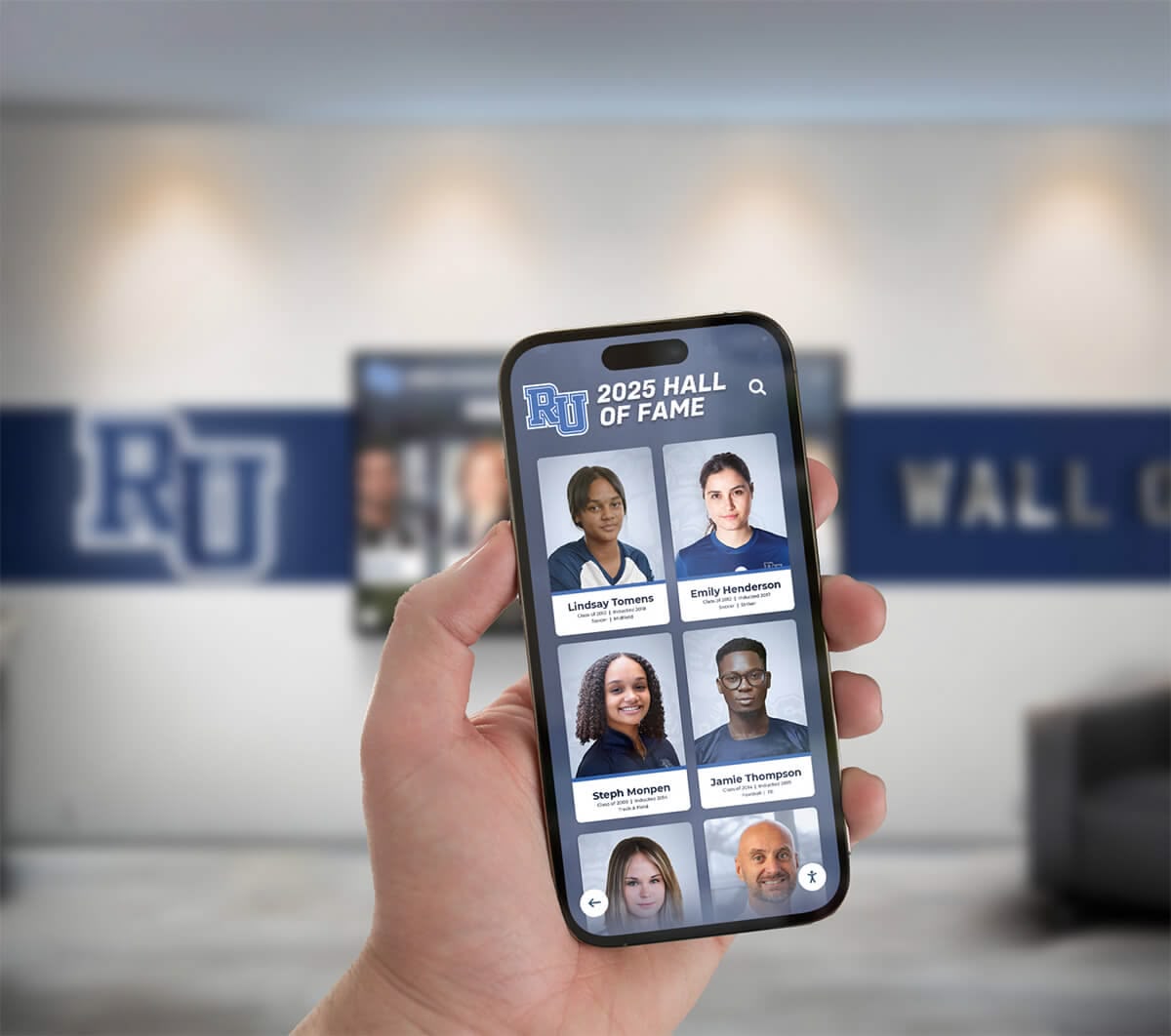
Web-accessible platforms extend recognition reach globally beyond physical displays, enabling supporters anywhere to explore communities from personal devices
Community Organization Recognition Examples
Community foundations, service organizations, youth programs, and local nonprofits develop recognition approaches celebrating grassroots supporters and community partners who collectively enable missions serving local populations.
Community Foundation Donor Recognition
Community foundations managing philanthropic resources serving entire regions implement recognition celebrating diverse supporter types—individual donors establishing funds, family foundations creating philanthropic legacies, corporate partners supporting community initiatives, professional advisors facilitating planned gifts, and volunteer board members providing governance leadership.
Fund Type Recognition Organization
Community foundation examples often organize recognition by fund type rather than only contribution amount, acknowledging that donors create different vehicles for achieving philanthropic objectives. Recognition categories might include unrestricted funds supporting greatest community needs, field-of-interest funds supporting specific causes like education or healthcare, donor-advised funds providing ongoing philanthropic engagement, scholarship funds enabling educational access, designated funds supporting specific organizations, and agency endowments ensuring perpetual nonprofit sustainability.
This fund-focused organization helps donors discover others supporting similar causes while demonstrating foundation capacity to accommodate diverse philanthropic interests and giving structures. Rather than one-dimensional dollar-based hierarchies, multi-dimensional frameworks acknowledge that supporters contribute through varied mechanisms requiring tailored recognition approaches.
Community Impact Storytelling
Leading community foundation examples emphasize collective impact rather than individual donor prominence, celebrating how aggregate philanthropic investment produces measurable community improvements. Recognition content connects giving to outcomes—students receiving scholarships and completing degrees, nonprofits strengthened through capacity-building grants, community facilities improved through capital support, regional issues addressed through collaborative funding, and quality of life enhancements benefiting entire populations.
This impact-focused approach reinforces community foundation value propositions while honoring supporters through demonstration that their generosity produces tangible results worthy of continued investment. Organizations implementing impact-focused recognition strategies strengthen donor relationships through visible accountability and mission outcome attribution.
Youth Program Recognition Approaches
Boys and Girls Clubs, YMCA/YWCA organizations, Scouts, and other youth-serving programs develop recognition celebrating supporters who enable programs serving children and families throughout communities.
Family-Friendly Recognition Content
Youth organization examples create recognition appropriate for young audiences while celebrating supporters enabling programming. Content includes child-friendly language and visual presentation, success stories featuring program participants and their achievements, volunteer recognition acknowledging adult leaders enabling activities, photography showing programs in action and youth engagement, and family testimonials explaining program impact on children’s development.
This audience-conscious approach ensures recognition serves both stewardship functions for adult donors and inspirational purposes for youth participants discovering that community members invest in their success and development. Recognition becomes educational infrastructure teaching children about philanthropy, community responsibility, and civic engagement while honoring supporters enabling mission delivery.
Program-Specific Recognition
Youth program examples often organize recognition by program area—after-school programming, summer camps, sports leagues, arts instruction, academic tutoring, or leadership development—enabling donors to see their support connected to specific activities rather than only generic organizational acknowledgment. Program managers can highlight relevant recognition during family events, participants can discover supporters enabling activities they directly benefit from, and prospective donors can identify programming matching their philanthropic interests and priorities.
This granular organization demonstrates accountability while accommodating donors who prefer supporting specific program types over general operating support, building comprehensive communities where all contribution types receive appropriate visibility regardless of designation or restriction.
Service Organization Recognition Strategies
Rotary clubs, Lions clubs, Kiwanis, and other service organizations implement recognition celebrating members whose financial support and volunteer service collectively enable community service projects addressing local needs.
Member Service Recognition Integration
Service organization examples integrate volunteer recognition with financial support acknowledgment, celebrating complete member contributions rather than focusing exclusively on monetary gifts. Recognition might include volunteer hour tracking and celebration, committee leadership and project management acknowledgment, fundraising event organizing and execution recognition, professional expertise contributions and in-kind service, and financial giving alongside service participation.
This comprehensive approach communicates that organizations value all contribution types while building inclusive communities celebrating diverse participation forms. Many service organizations discover that volunteer-to-donor conversion increases when recognition frameworks honor service alongside financial support, creating natural progression pathways from active membership toward philanthropic commitment.
Project-Based Recognition
Service organization examples often recognize supporters in connection with specific community projects—scholarship programs, disaster relief initiatives, youth sports sponsorships, community facility improvements, or healthcare access projects. Project-focused recognition creates tangible connections between philanthropic investment and visible community outcomes, building member pride while demonstrating to broader communities how service organizations address local needs through coordinated volunteer effort and financial support.
Recognition content might include project descriptions explaining community needs being addressed, before-and-after documentation showing improvements created, beneficiary testimonials celebrating project impact, volunteer participation acknowledgment honoring active engagement, and financial supporter recognition celebrating enabling contributions.
This project-oriented approach transforms generic organizational acknowledgment into specific mission attribution, honoring supporters through celebration connecting their generosity to precise community improvements they enabled through partnership.
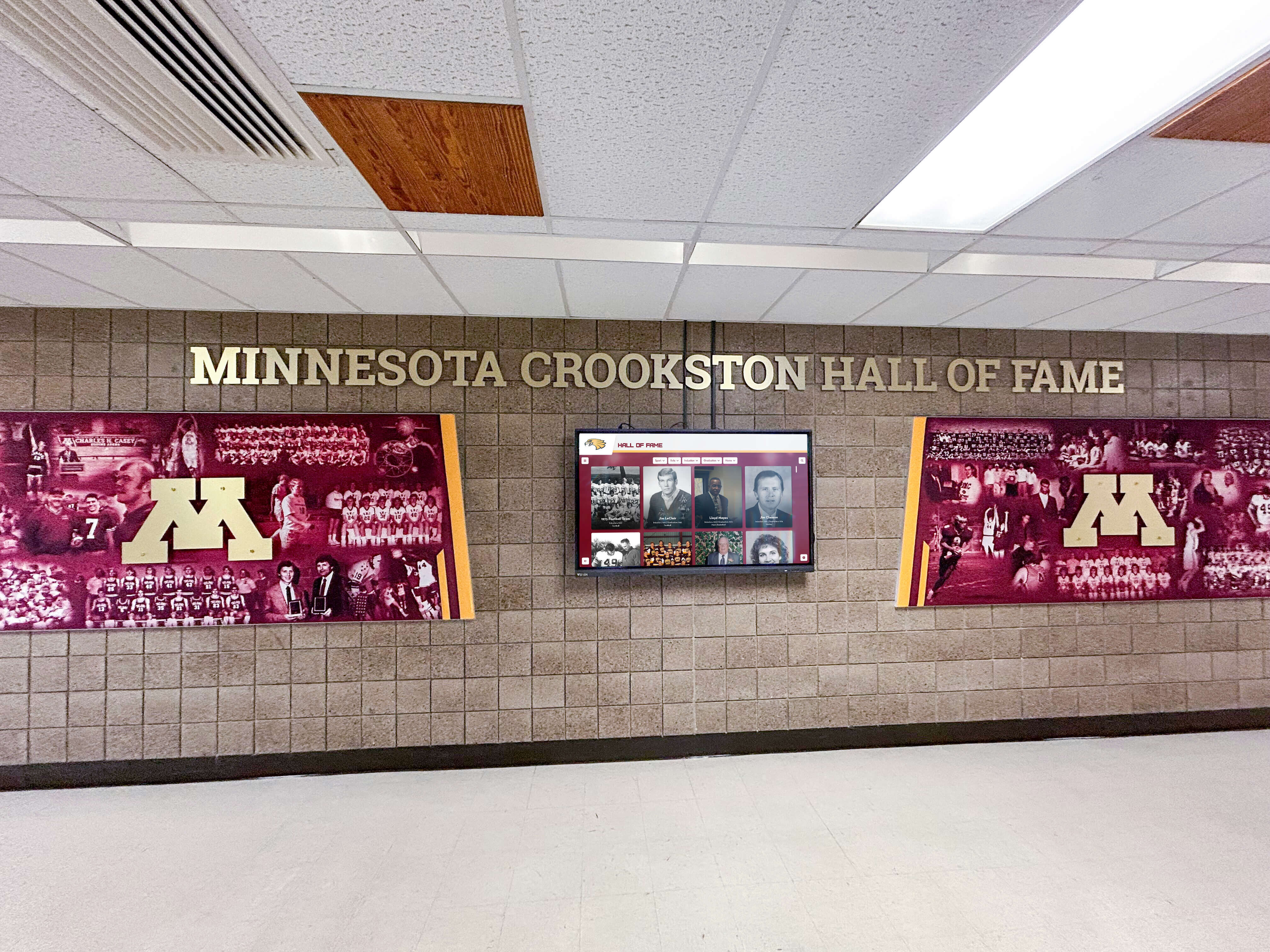
Institutional branding integrated throughout recognition installations creates cohesive environments reinforcing organizational identity while celebrating communities
Best Practices Synthesis: Key Principles from Leading Examples
Analyzing recognition approaches across diverse organizational contexts reveals universal principles applicable regardless of institution type, mission, or budget level.
Recognition That Honors Supporters Authentically
The most effective examples prioritize genuine appreciation over perfunctory acknowledgment, communicating authentic gratitude worthy of the commitment supporters demonstrate through their generosity.
Personalized Rather Than Generic Acknowledgment
Leading recognition examples treat supporters as individuals with unique stories, motivations, and relationships rather than generic entries in donor databases. Rich profiles including professional photography, first-person statements, biographical context, and connection narratives honor complete people rather than reducing generosity to names and dollar amounts. This personalization demonstrates institutional investment in knowing supporters as individuals worthy of thoughtful celebration rather than transactional processing.
Sustained Visibility Rather Than Momentary Mention
Recognition examples worth emulating provide year-round visibility ensuring donors encounter acknowledgment during facility visits, creating positive reinforcement while demonstrating appreciation extending beyond momentary thank-you communications. This sustained presence significantly impacts retention, as donors receiving ongoing visible recognition renew gifts at rates substantially higher than those acknowledged only through private correspondence.
Appropriate Recognition Matching Institutional Context
Effective examples reflect organizational character, mission, and culture rather than applying generic templates disconnected from specific contexts. Religious institution recognition emphasizes spiritual values and humble service, cultural organization acknowledgment celebrates artistic sophistication, educational recognition highlights learning and development outcomes, and healthcare examples focus on healing and grateful patient experiences. Context-appropriate approaches ensure recognition resonates authentically with supporters rather than feeling disconnected from missions inspiring their commitment.
Recognition That Inspires Others to Give
Beyond honoring current supporters, exemplary recognition attracts additional participation through powerful social proof and compelling storytelling demonstrating that giving produces satisfaction worthy of others’ investment.
Visible Community Demonstrating Social Proof
Recognition creating visible supporter communities provides psychological reassurance that organizations merit trust and investment. When prospective donors see hundreds or thousands of contributors, they gain confidence from peer participation while feeling inspired to join celebrated communities. This visibility proves particularly valuable during campaigns, as momentum attracts additional gifts through demonstrated community backing strength.
Authentic Donor Stories Creating Relatable Motivation
First-person testimonials explaining why people give prove more persuasive than institutional marketing. When visitors discover that longtime supporters maintain commitment because organizations transformed their lives, grateful beneficiaries give because services saved family members, or community leaders support because institutions serve neighbors—these authentic motivations inspire similar decisions from others sharing relatable values and experiences.
Impact Attribution Demonstrating Accountability
Recognition connecting individual contributions to specific mission outcomes demonstrates that philanthropic investment produces tangible results rather than disappearing into generic operations. When supporters see their gifts funding scholarships enabling student success, equipment purchases improving healthcare delivery, facility improvements enhancing programming, or research breakthroughs advancing knowledge—visible impact attribution builds confidence motivating continued commitment and gift progression over time.
Organizations implementing these evidence-based principles discover that thoughtful recognition delivers measurable return through improved retention, lifetime donor value growth, and campaign performance enhancement worth multiples of recognition investment costs.
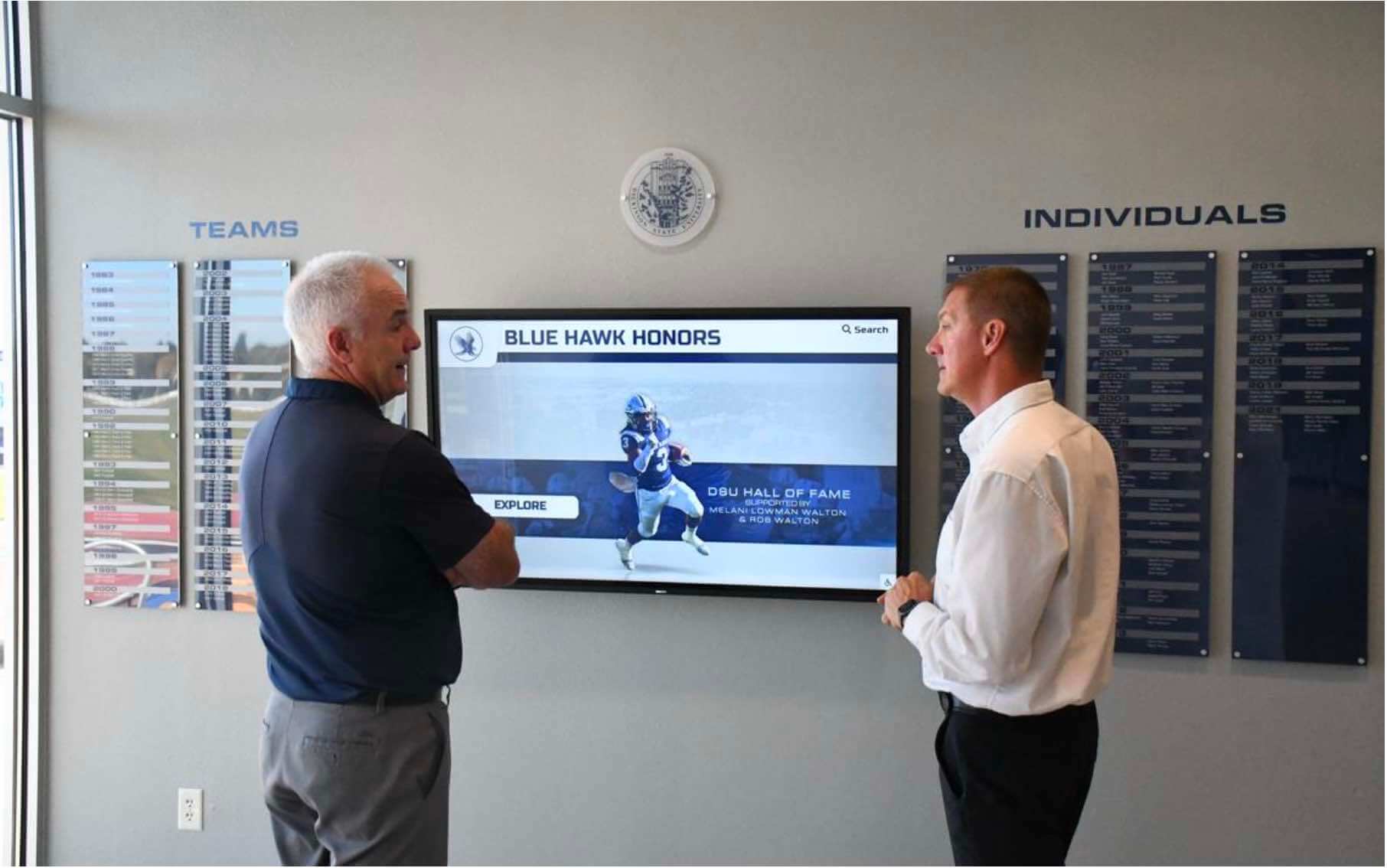
Recognition installations become community gathering places where supporters, visitors, and constituents discover connections and celebrate collective achievements
Recognition That Adapts to Evolving Needs
The most successful examples maintain long-term effectiveness through flexibility accommodating organizational evolution, growing communities, and changing expectations rather than becoming obsolete through rigid fixed approaches.
Unlimited Capacity Accommodating Growth
Leading recognition examples avoid space limitations forcing uncomfortable decisions about removing historical donors or increasing minimum thresholds excluding grassroots supporters. Digital platforms provide essentially unlimited capacity accommodating decades of community growth without performance degradation or capacity-based cost increases, ensuring that recognition sustainability extends indefinitely rather than requiring periodic replacement when space fills.
Flexible Content Enabling Updates
Effective examples enable prompt updates adding new supporters, correcting errors, updating information, or adapting presentation as priorities evolve—rather than permanent fixed content requiring expensive replacement for routine changes. Cloud-based content management provides flexibility impossible with traditional engraved approaches while maintaining consistent professional presentation through template-driven design systems.
Multi-Purpose Platforms Supporting Diverse Uses
Sophisticated recognition examples serve multiple organizational purposes beyond donor acknowledgment alone—volunteer recognition celebrating service contributions, program impact storytelling demonstrating mission outcomes, historical preservation maintaining institutional memory, campaign communications driving fundraising momentum, and constituent engagement building community connections. Multi-purpose platforms maximize return on recognition investment through diverse applications serving varied stakeholder needs.
Organizations implementing flexible platforms discover that adaptable recognition infrastructure delivers sustained value across decades while accommodating inevitable organizational evolution impossible to predict at initial implementation.
Implementation Insights: Translating Examples to Your Context
Studying recognition examples provides inspiration, but successful implementation requires adapting observed principles to your specific organizational circumstances, stakeholder expectations, and resource realities.
Assessing Which Examples Match Your Situation
Not all recognition approaches suit every organizational context. Thoughtful evaluation identifies examples most relevant to your specific circumstances.
Organizational Size and Donor Volume Considerations
Small community organizations with 50-200 donors face different recognition challenges than large healthcare systems or universities with 5,000+ supporters. Budget-conscious approaches emphasizing web-based recognition and single strategic displays prove more appropriate for smaller organizations, while large institutions benefit from multiple coordinated installations across facility portfolios serving diverse audiences at locations where recognition delivers greatest value.
Donor Demographic and Expectation Analysis
Older donor populations may value traditional permanent elements alongside digital recognition, younger supporters often prefer mobile-accessible platforms enabling social sharing, corporate partners might expect professional presentation quality matching business contexts, and major donors frequently have specific expectations regarding acknowledgment visibility and permanence requiring accommodation within broader recognition frameworks.
Understanding your specific donor community characteristics enables selection of approaches resonating with supporters’ values and expectations rather than implementing generic solutions potentially misaligned with audience preferences.
Budget Reality Assessment
Organizations should assess total available resources including initial capital investment, ongoing operational costs, staff time capacity, and potential phased implementation enabling immediate recognition launch while planning expansions as resources permit. Honest budget assessment prevents both under-investment producing inadequate recognition and over-investment creating financial stress potentially undermining other organizational priorities.
Many organizations discover that phased recognition strategies prove more effective than delaying implementation until complete ideal systems become affordable, as immediate comprehensive acknowledgment delivers value justifying investment while potentially attracting additional campaign support from donors inspired by visible recognition.
Adapting Best Practices to Your Mission
Successful implementation requires translating observed principles into approaches reflecting your specific mission, culture, and stakeholder relationships.
Mission-Specific Content Development
Recognition content should emphasize your distinctive mission elements rather than generic acknowledgment applicable to any organization. Educational institutions highlight learning outcomes and student success, healthcare organizations emphasize healing and grateful patient experiences, cultural institutions celebrate artistic programming and community cultural enrichment, and religious organizations reinforce spiritual values and faith community service.
Mission-focused content demonstrates to supporters that their gifts enable the specific outcomes motivating their institutional selection and philanthropic commitment, building satisfaction through visible impact attribution while inspiring similar targeted support from others sharing mission passion.
Stakeholder Involvement in Planning
Engaging board members, major donors, development staff, and program leaders in recognition planning ensures selected approaches satisfy diverse expectations while building stakeholder ownership supporting long-term program success. Common planning questions include: Will all donors receive individual recognition regardless of gift size? What anonymous options accommodate privacy preferences? How will recognition balance major gift prominence with comprehensive community acknowledgment? What content will donors provide versus institutional preparation? How will recognition integrate with broader advancement strategies?
Early stakeholder involvement prevents conflicts while building consensus supporting implementation success.
Vendor Selection Matching Organizational Needs
Organizations should evaluate whether purpose-built recognition platforms specifically designed for donor acknowledgment better serve their needs compared to generic digital signage systems lacking specialized features donor recognition requires. Purpose-built solutions like Rocket Alumni Solutions provide capabilities including advanced search functionality, giving level categorization, automated rotation ensuring recognition equity, memorial and tribute designations, and donor-specific features generic platforms cannot match.
Vendor evaluation should assess not just initial costs but total long-term value including implementation support, staff training quality, ongoing technical assistance, platform update frequency, and vendor stability ensuring lasting partnership.
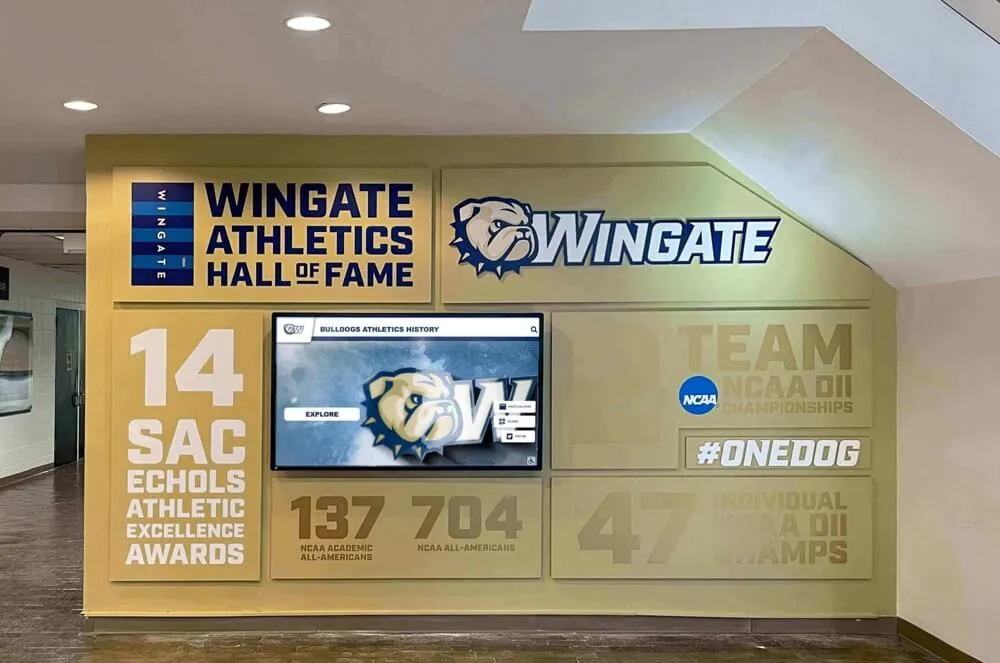
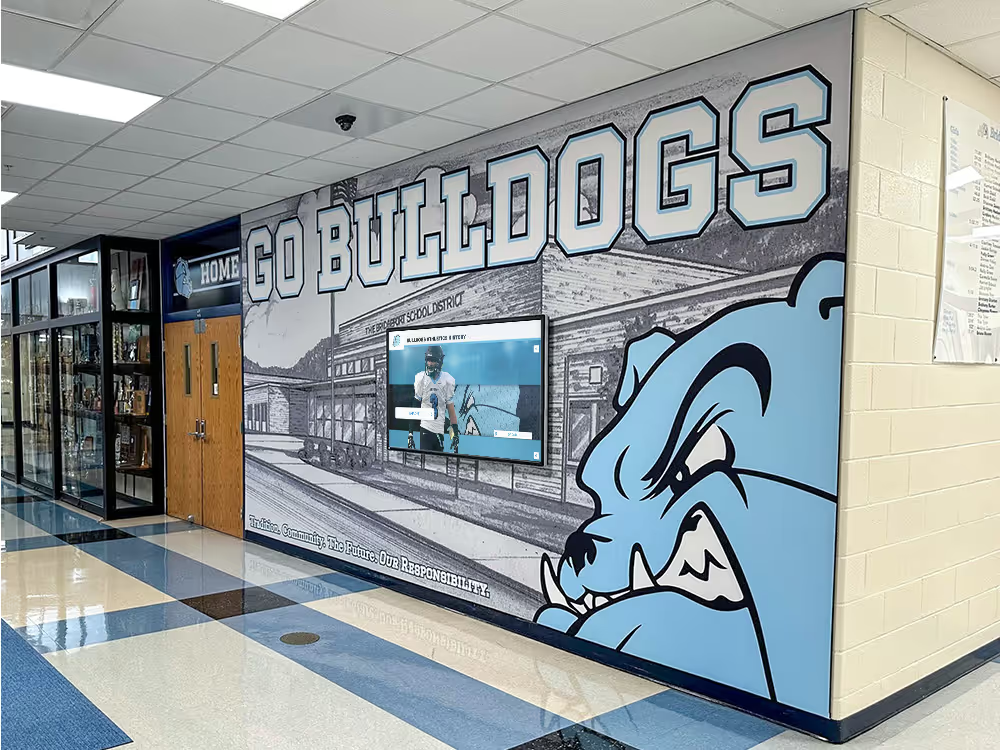
Athletic facility recognition celebrates both competitive achievement and donor support enabling programs serving student-athletes and entire communities
Measuring Recognition Success: Tracking Return on Investment
Systematic assessment ensures recognition investments achieve intended objectives while identifying optimization opportunities maximizing long-term value.
Quantitative Metrics Revealing Recognition Impact
Digital recognition platforms provide analytics impossible with traditional approaches, enabling evidence-based evaluation and continuous improvement.
Engagement Analytics from Physical Displays
Touchscreen recognition systems track interaction patterns revealing how visitors engage with content: total interactions measuring overall engagement volume, unique visitor estimates indicating reach beyond repeat users, session duration showing content depth and genuine interest levels, search patterns revealing discovery methods and content preferences, most-viewed profiles identifying compelling content worth featuring prominently, and category popularity showing which recognition types generate greatest interest.
These metrics inform optimization decisions. If search dominates interaction patterns, enhanced search capabilities warrant priority. If session durations prove shorter than desired, content depth or visual interest requires improvement. Data-driven management transforms recognition from static installations into continuously improving programs optimizing engagement over time.
Web Platform Access and Reach Measurement
Online recognition extensions provide global reach analytics demonstrating value beyond physical facility visitors: website traffic volume indicating total reach, geographic distribution showing worldwide access patterns, referral sources revealing discovery methods including social media and search engines, social sharing activity measuring content amplification, device usage showing desktop versus mobile preferences, and return visitor rates indicating lasting engagement quality.
Web analytics demonstrate recognition reach extending far beyond campus audiences, proving value traditional plaques limited to facility visitors cannot deliver while justifying recognition investment through demonstrated community engagement spanning global constituencies.
Fundraising Outcome Correlation Analysis
While multiple variables affect advancement results making definitive causation claims impossible, tracking key metrics alongside recognition implementations reveals directional relationships supporting investment decisions.
Donor Retention Rate Trends
Organizations should compare retention rates across equivalent periods before and after recognition implementation. While recognizing external factors affect retention independent of recognition quality, consistent improvements following launches provide valuable evidence supporting program value. Research demonstrates that increasing retention by just 10% can double lifetime donor value, making recognition investments highly cost-effective when improving loyalty even modestly.
Gift Progression and Upgrade Rates
Monitor whether recognized donors demonstrate increased giving over time compared to unrecognized control groups or historical patterns. Recognition’s psychological impact should manifest through giving growth as donors feel greater institutional connection and community belonging motivating generous support at escalating levels. Tracking average gift progression among recognized versus unrecognized populations reveals whether recognition investments drive measurable giving increases justifying continued program funding.
Campaign Performance During Recognition-Featured Initiatives
Measure campaign results emphasizing visible recognition components against historical benchmarks or comparable campaigns lacking prominent acknowledgment. If recognition drives participation effectively, campaigns featuring visible donor communities should demonstrate improved acquisition, higher average gifts, or greater volunteer engagement compared to initiatives where recognition remains less prominent.
While causation proves difficult to establish definitively, directional relationships between comprehensive recognition and improved outcomes provide valuable justification for ongoing investment and program enhancement.
Organizations implementing recognition analytics programs leverage data insights for continuous improvement optimizing engagement and fundraising return over time.
Conclusion: Building Engaged Donor Communities Through Proven Recognition Approaches
The recognition examples showcased throughout this guide demonstrate that thoughtful supporter acknowledgment represents strategic investment in relationship building directly impacting organizational sustainability and mission capacity. When institutions implement recognition celebrating donors meaningfully while creating engaging community destinations, they activate the digital warming effect—continuously surfaced, personalized content transforming cold institutional spaces into vibrant gathering places where every supporter feels valued, connected, and inspired to deepen commitment.
The proven approaches explored here—from comprehensive university interactive systems to focused community organization recognition, from healthcare memorial acknowledgment to performing arts patron celebration—reveal universal principles applicable across organizational contexts: authentic appreciation honoring supporters as individuals worthy of thoughtful celebration, sustained visibility providing year-round reinforcement, compelling storytelling inspiring others through relatable examples, comprehensive inclusivity building communities celebrating collective impact, and flexible infrastructure adapting to inevitable organizational evolution.
Implementation success requires systematic planning addressing recognition philosophy establishing criteria and frameworks, stakeholder engagement building consensus supporting program launch, appropriate technology selection balancing features with usability and budget, thoughtful content development honoring individuals meaningfully, strategic placement maximizing visibility among target audiences, and ongoing management ensuring sustained quality over time. Organizations following proven implementation pathways create recognition delivering value for decades while continuously improving based on engagement data and stakeholder feedback.
Purpose-built recognition platforms specifically designed for donor acknowledgment deliver capabilities generic digital signage systems cannot match, including specialized search functionality, giving level organization, automated content rotation ensuring recognition equity, memorial and tribute features, and comprehensive analytics measuring engagement patterns. Solutions like Rocket Alumni Solutions eliminate technical complexity inherent in custom development while providing professional support ensuring implementation success and long-term program effectiveness.
Every donor whose generosity enables your mission deserves recognition creating motivation, engagement, and community pride rather than perfunctory acknowledgment quickly forgotten. Your supporters invest not just financial resources but confidence, hope, and commitment in your capacity to accomplish meaningful work transforming lives and strengthening communities. This trust warrants celebration matching its significance—recognition honoring complete individuals rather than reducing generosity to names and amounts, telling compelling stories inspiring others, and creating lasting impressions demonstrating the genuine gratitude their support deserves.
Ready to transform your donor recognition approach through proven strategies adapted from leading organizations? Explore how digital recognition platforms create experiences that celebrate every supporter while building the engaged communities essential for fundraising success and long-term institutional sustainability.
Disclaimer: This content was produced by Rocket Alumni Solutions to demonstrate how purpose-built digital recognition technology supports advancement goals and community engagement. Product capabilities mentioned reflect publicly available information as of February 2026 and may evolve over time.