



Intent: demonstrate — Booster clubs face a persistent challenge that threatens long-term sustainability: converting one-time event donors and annual fundraiser participants into committed supporters who give consistently year after year. Traditional donor recognition approaches—thank-you emails, names listed in game programs, occasional shoutouts during events—fail to create the lasting visibility and appreciation that inspire continued commitment to athletic programs and student activities.
Most booster clubs operate with limited budgets, volunteer leadership that turns over regularly, and recognition constraints that force difficult choices about whose support receives visibility. Physical donor plaques fill quickly, game program thank-yous disappear after a single use, and social media acknowledgments scroll away within hours. These ephemeral recognition methods treat donors as transactions rather than valued community members whose ongoing support sustains programs students depend on.
Digital donor recognition displays powered by solutions like Rocket Alumni Solutions transform how booster clubs acknowledge support. Interactive touchscreen installations and web-accessible platforms create “digital warming”—continuously surfaced, personalized content that activates spaces and builds vibrant communities where supporters feel valued, connected, and motivated to maintain lifelong engagement with programs they care about deeply.
This comprehensive guide explores how booster clubs leverage donor recognition displays to maximize fundraising impact, strengthen supporter relationships, improve retention dramatically, and build engaged communities sustaining athletic programs and student activities for decades. We’ll examine practical implementation strategies, budget-conscious technology choices, content development approaches requiring minimal staff time, and proven methods for creating recognition that honors every contribution from major sponsors to grassroots supporters.

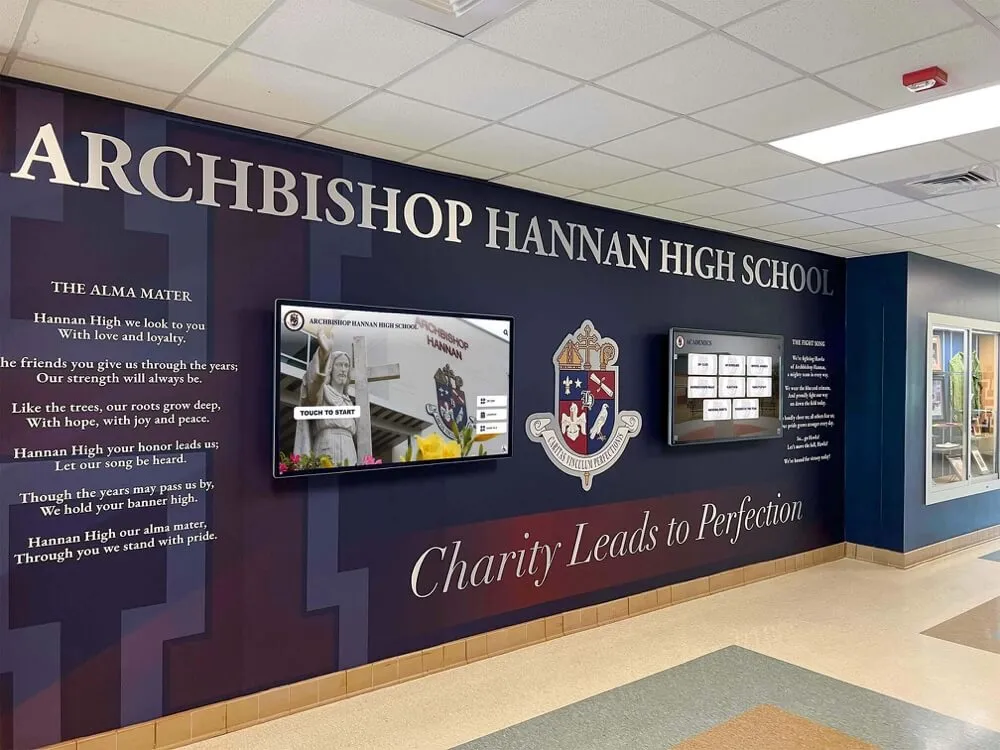
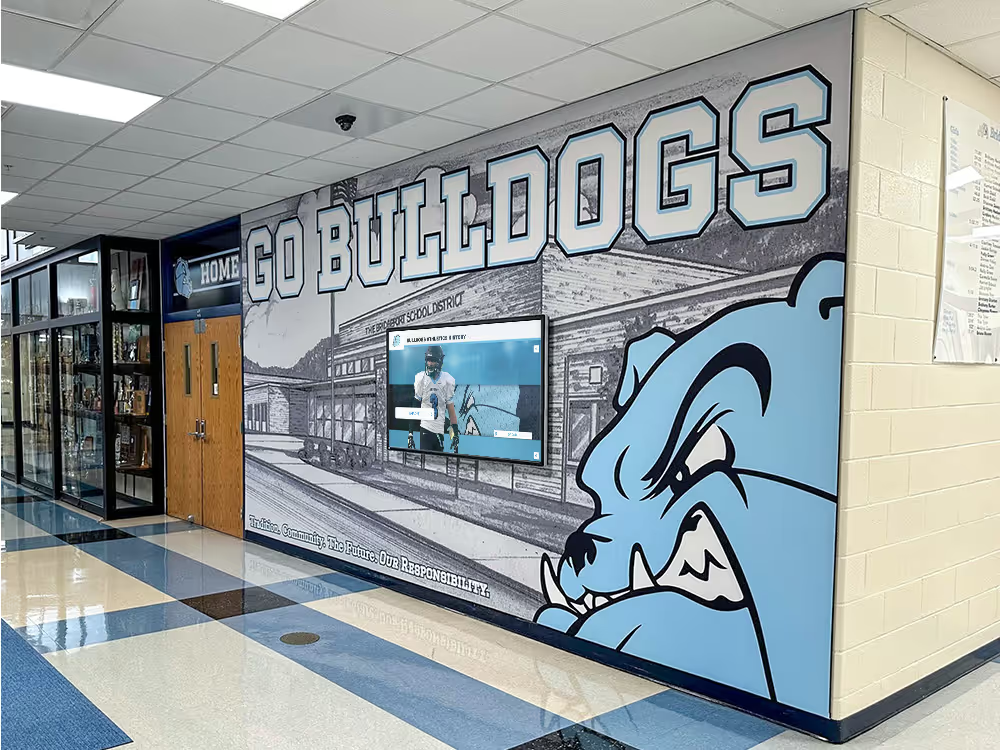
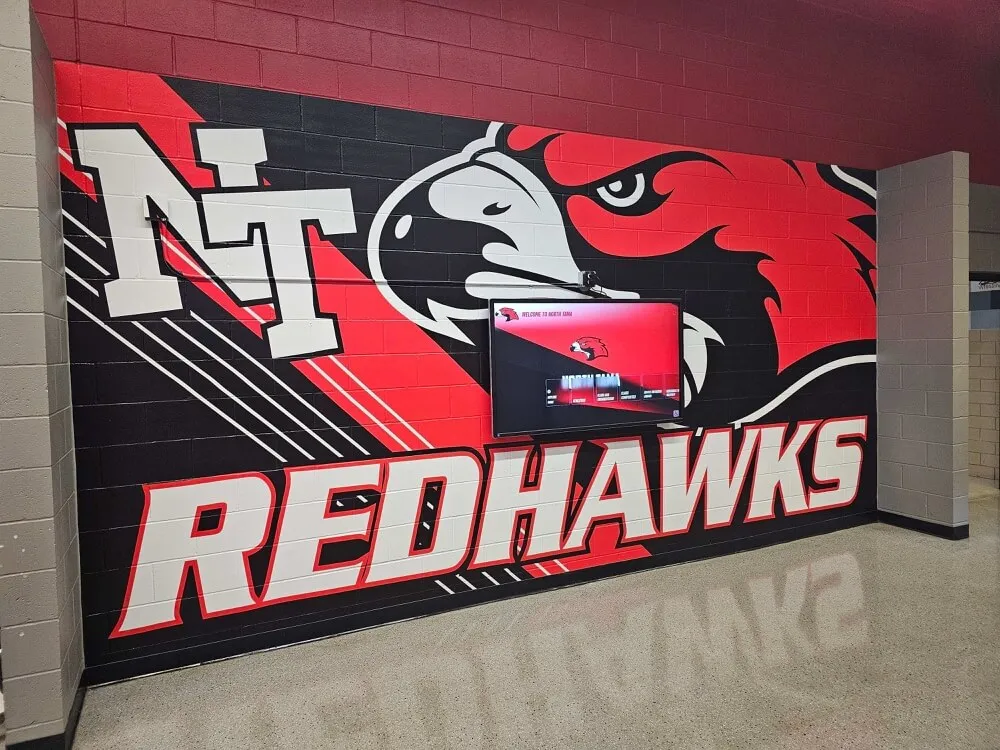
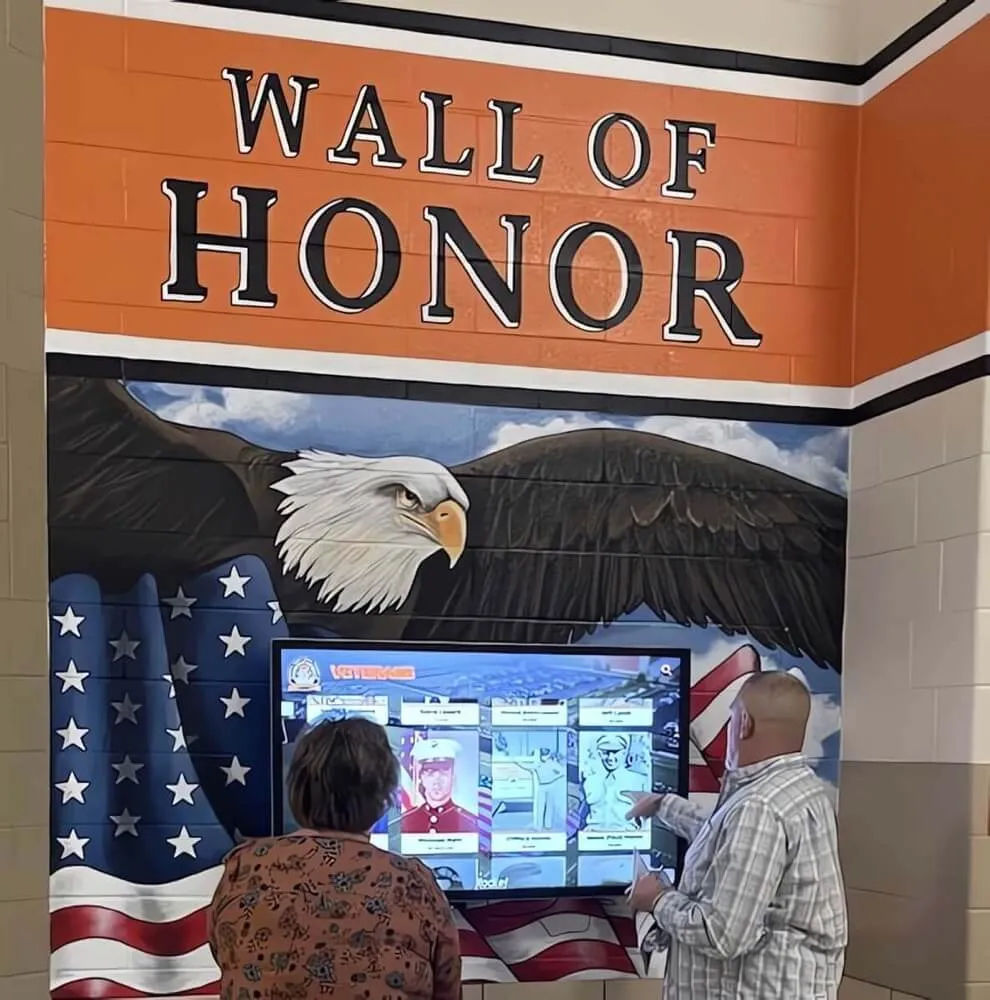
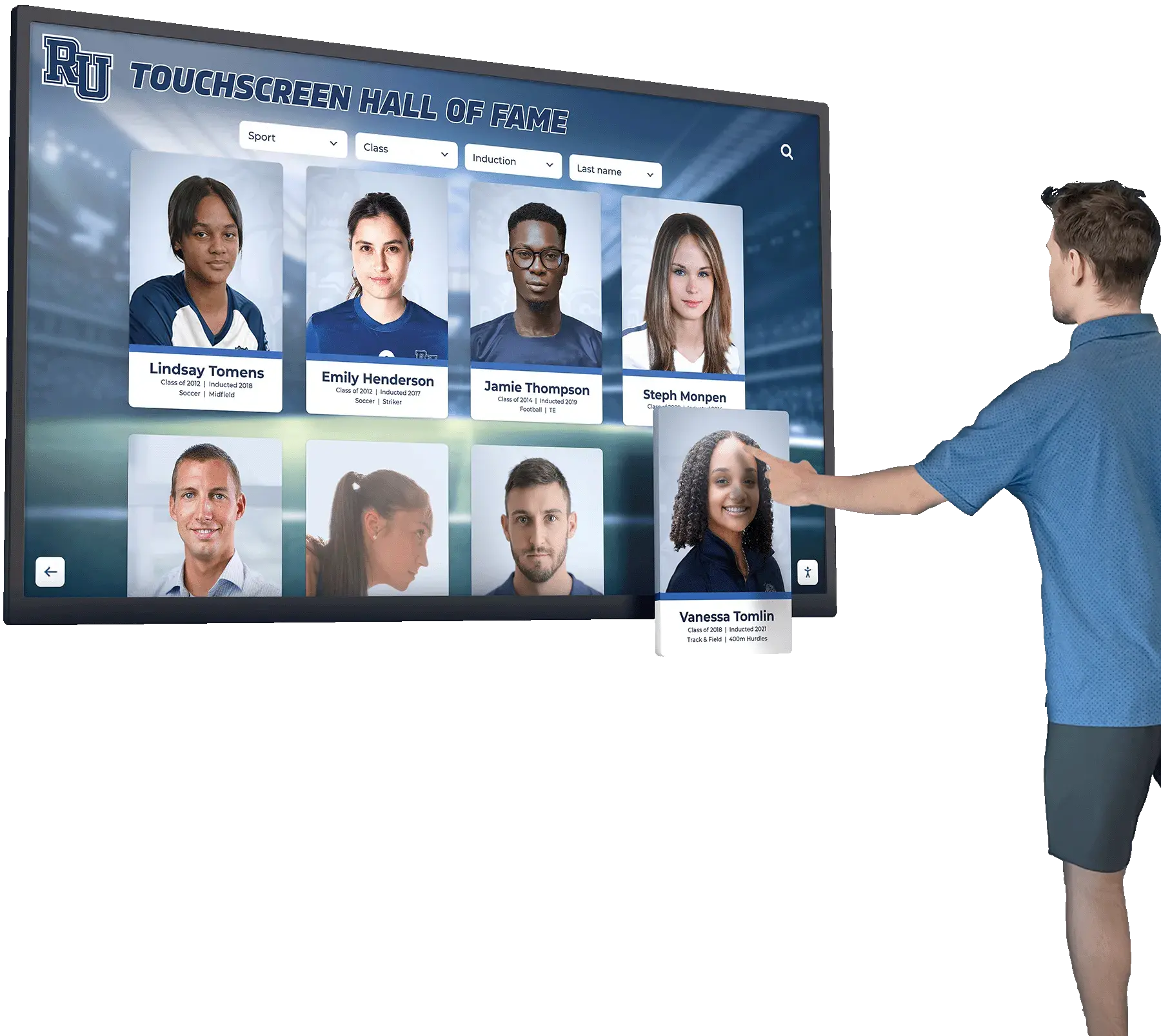
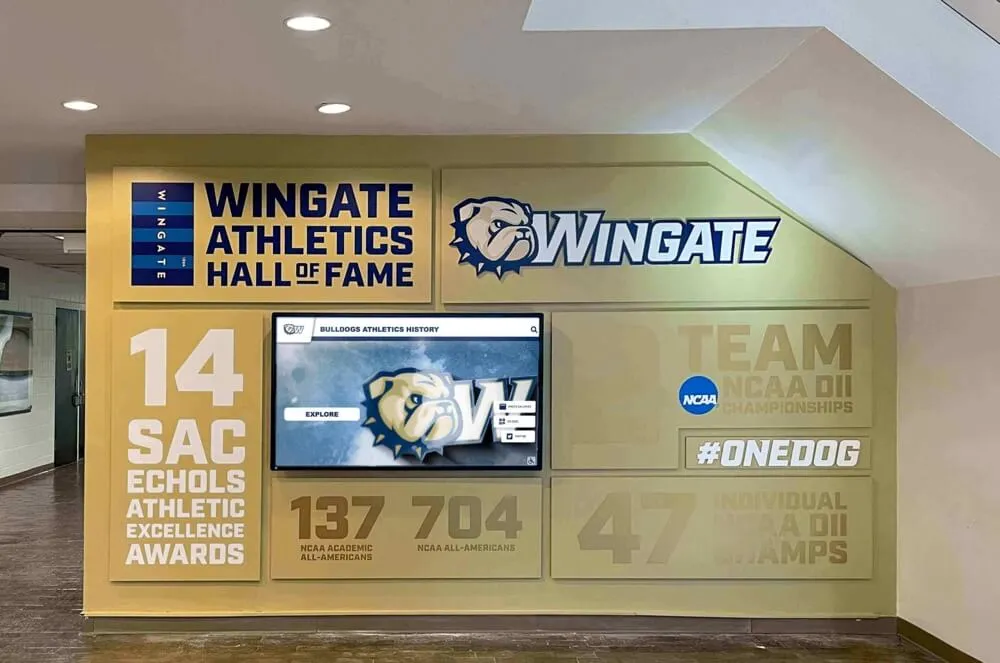
Modern donor recognition transforms booster club acknowledgment into engaging community experiences celebrating all supporters
Understanding Booster Club Donor Recognition Challenges
Booster clubs operate in uniquely challenging fundraising environments where volunteer leadership, limited resources, and competing priorities create recognition obstacles undermining supporter retention and long-term program sustainability.
The Volunteer Leadership Challenge
Unlike development offices with professional staff dedicated to donor relations, booster clubs depend on volunteer leaders juggling recognition alongside full-time careers, family obligations, and numerous other booster responsibilities.
Limited Time for Recognition Administration
Volunteer presidents, treasurers, and board members rarely have bandwidth for elaborate recognition programs requiring significant ongoing maintenance. Traditional approaches demanding regular plaque updates, program design, wall maintenance, and continuous manual processes prove unsustainable when volunteer leadership turns over every few years.
Effective booster club recognition must accommodate reality that volunteers need simple, efficient systems requiring minimal time investment while delivering professional results honoring donor generosity appropriately. Cloud-based platforms enabling quick updates from any device, automated content features reducing manual work, and intuitive interfaces requiring minimal training prove essential for volunteer-led organizations.
Turnover and Institutional Knowledge Loss
Booster club leadership typically rotates every 2-4 years as children graduate and parents transition out. This regular turnover creates continuity challenges where incoming leaders inherit incomplete records, inconsistent processes, and recognition systems requiring institutional knowledge departing volunteers take with them.
Digital platforms with centralized databases, documented processes, and cloud-based accessibility ensure recognition continuity despite leadership changes. New volunteers access complete donor histories, established recognition frameworks, and systems enabling them to continue honoring supporters without starting from scratch or losing historical context.
Resource Constraints and Competing Priorities
Booster clubs balance recognition needs against immediate program funding requirements—equipment purchases, facility improvements, student support, coaching expenses, and travel costs. When budgets stretch thin, recognition often receives lower priority than direct student benefit programs, creating cycles where inadequate acknowledgment undermines future fundraising necessary for those same programs.
Cost-effective digital recognition eliminating recurring plaque engraving expenses, reducing printing costs, and providing comprehensive acknowledgment within reasonable budgets enables booster clubs to honor supporters appropriately without diverting excessive resources from program funding missions.
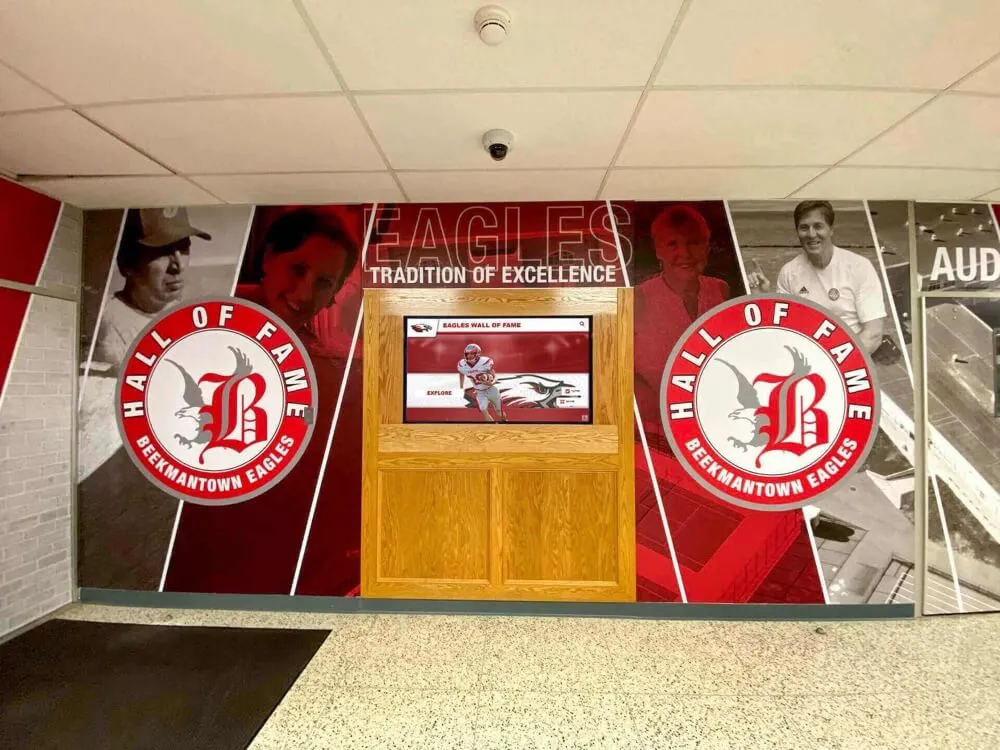
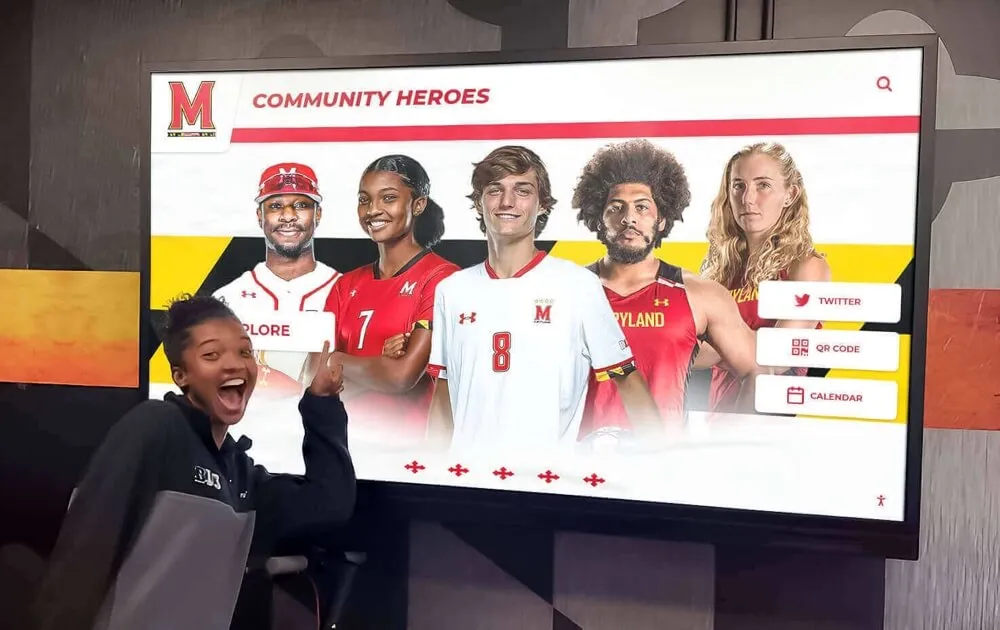
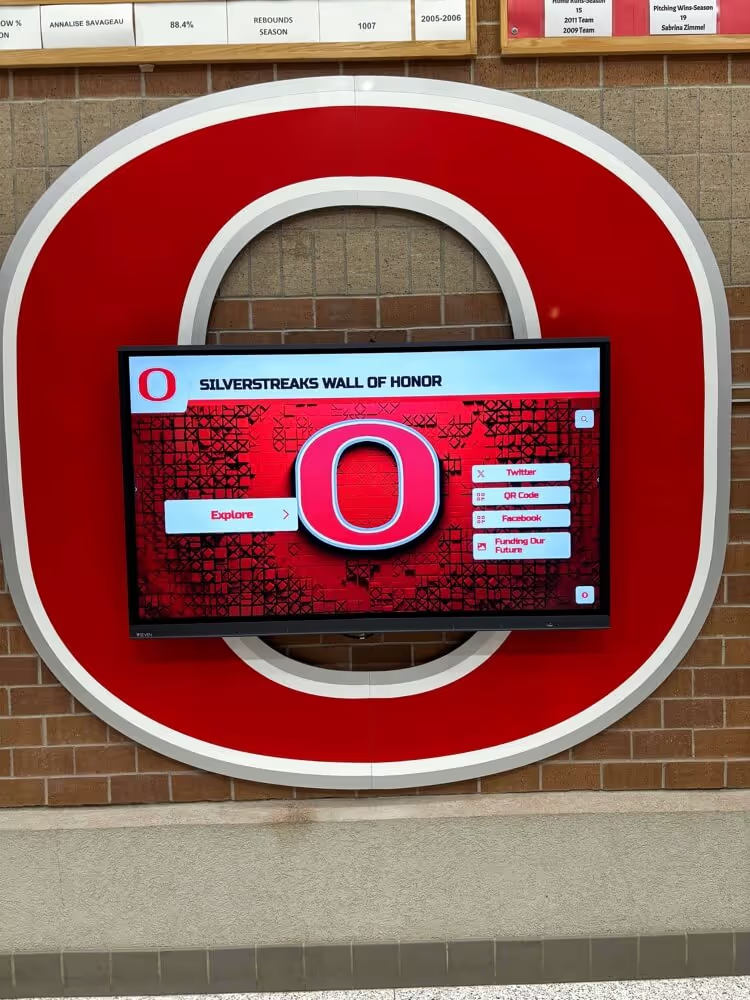
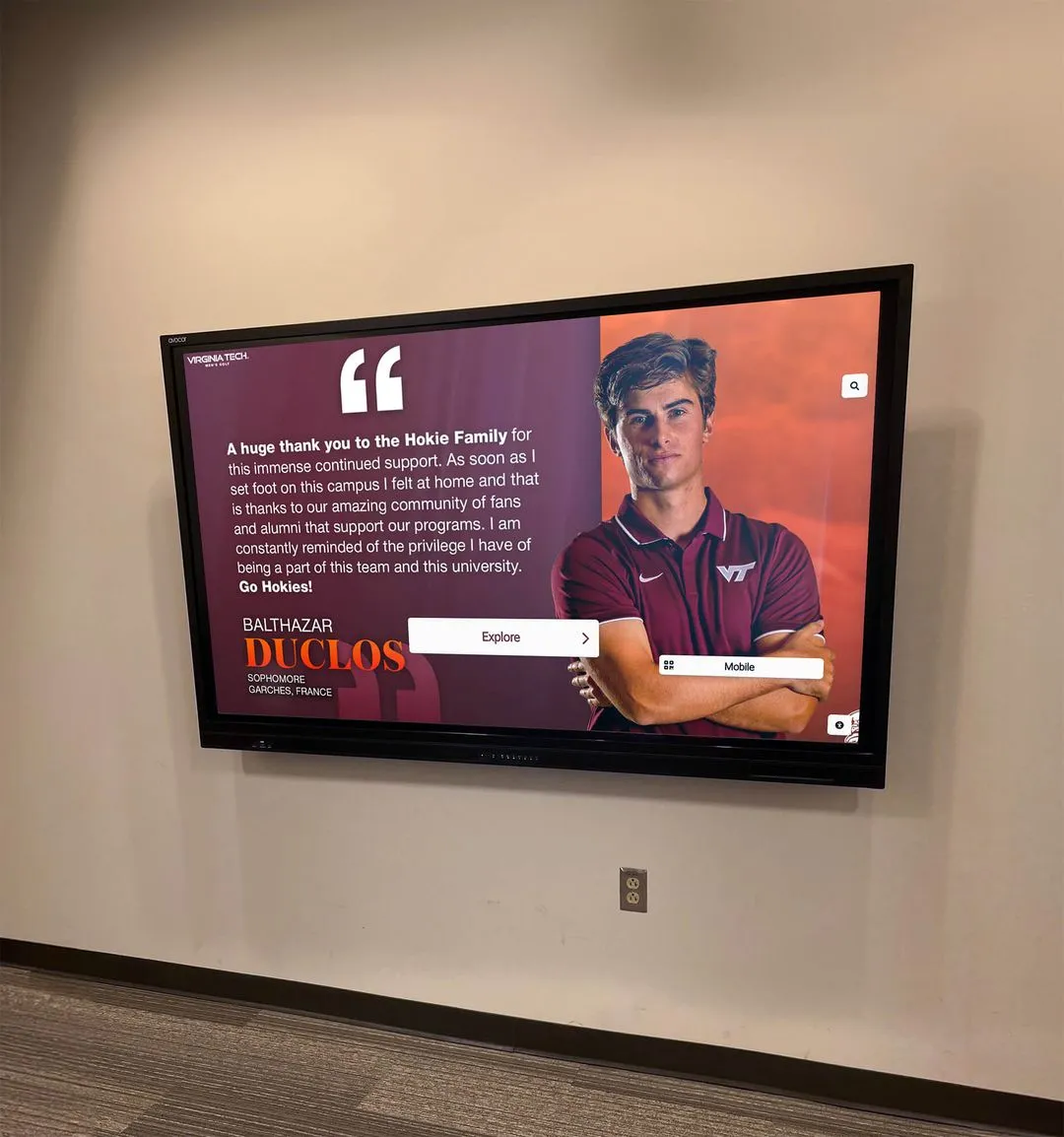
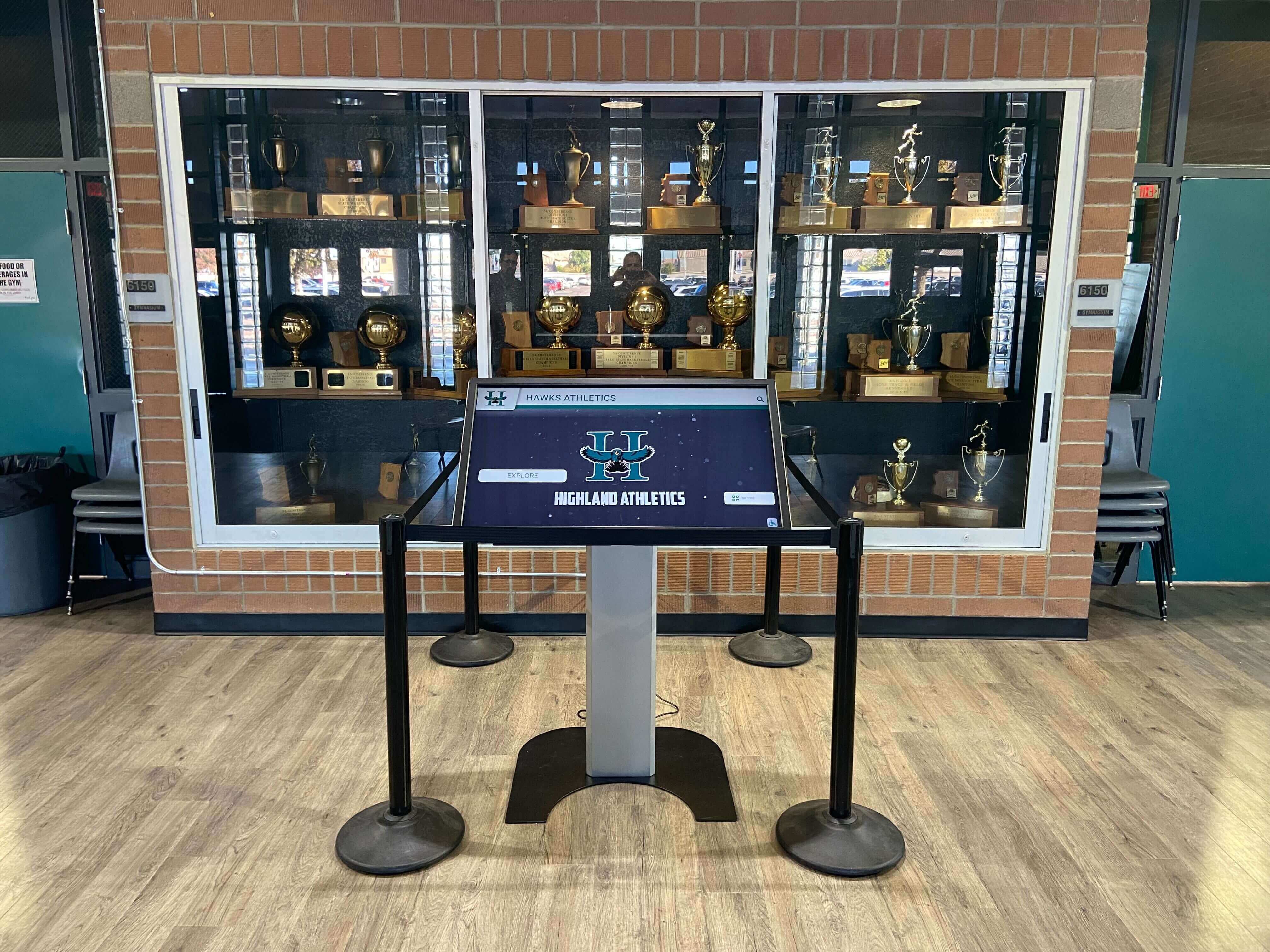
Interactive displays create community gathering points where supporters discover connections and program pride
Space and Capacity Limitations
Physical recognition space constraints force impossible choices about whose support receives visibility in facilities that already overflow with trophies, banners, and competing recognition needs.
Competing Space Demands
Athletic facilities must accommodate team recognition, championship banners, player honors, coach acknowledgment, donor recognition, sponsor visibility, and historical achievements—all competing for limited wall space in lobbies, gyms, and common areas. When donor recognition competes with team accomplishments for scarce space, both suffer from inadequate visibility.
Digital displays with unlimited capacity eliminate zero-sum space competitions. Single installations accommodate comprehensive donor recognition alongside team achievements, player honors, and historical content—all searchable, browsable, and accessible without physical space constraints limiting who receives visibility.
Multi-Sport Program Recognition
Booster clubs supporting multiple sports face exponentially more complex recognition challenges. Do all sports receive equal donor wall space? How do football sponsors coexist with track supporters when facility sizes differ dramatically? Should major sport donors receive prominence that smaller program supporters cannot access?
Digital systems provide equitable capacity across all supported programs. Football, basketball, soccer, track, swimming, golf, tennis, and every supported sport receive equal recognition opportunity ensuring comprehensive acknowledgment regardless of program size, revenue generation, or facility advantages. This equitable approach supports inclusive booster culture valuing all programs equally.
Growth and Historical Preservation
Successful fundraising creates recognition challenges as donor communities grow beyond initial capacity planning. Wall space that seemed adequate at program launch fills within years, forcing difficult decisions about removing historical recognition to accommodate current supporters or limiting new donor visibility.
Digital platforms accommodate unlimited growth spanning decades without capacity concerns. Booster clubs preserve complete giving histories while continuously adding current campaign recognition, creating comprehensive supporter archives demonstrating program health and community strength to prospective donors evaluating participation.
Recognition Visibility and Engagement Issues
Traditional recognition methods offer minimal ongoing visibility and zero engagement beyond momentary acknowledgment, failing to create lasting impressions inspiring continued support.
Ephemeral Event-Based Recognition
Game program thank-yous, event announcements, and annual banquet acknowledgments provide brief visibility before disappearing completely. Donors receive momentary recognition during specific occasions while remaining invisible the remaining 360+ days annually when community members, prospective supporters, and even donors themselves visit facilities.
This ephemeral visibility creates illusions of recognition without delivering genuine sustained acknowledgment that supporters value and remember. Research consistently shows that donors who feel recognized give more frequently and at higher levels, making sustained visibility strategic investment rather than mere courtesy.
Limited Accessibility
Physical plaques in gyms and athletic facilities reach only campus visitors during limited hours, excluding vast portions of supporter communities unable to visit regularly. Alumni supporters living elsewhere, extended family members, and community members with limited facility access never experience recognition honoring their contributions.
Web-accessible digital recognition extends visibility globally, enabling donors to share acknowledgment with families, explore giving communities from home, and maintain connections despite geographic distance. This expanded accessibility transforms local installations into community-wide engagement platforms serving geographically distributed supporter bases.
Zero Interactivity or Discovery
Static plaques offer passive viewing without opportunities for active engagement, personal discovery, or extended exploration. Visitors glance at alphabetical name lists without finding personal connections, discovering fellow supporters from their communities, or learning stories behind contributions.
Interactive digital displays enable active exploration where supporters search for friends and neighbors, discover classmates who share their commitment, filter by graduation year or giving level, and explore detailed stories explaining why people give. This active engagement increases time spent with recognition content from seconds (traditional plaques) to minutes (interactive displays), creating meaningful connections impossible with static approaches.
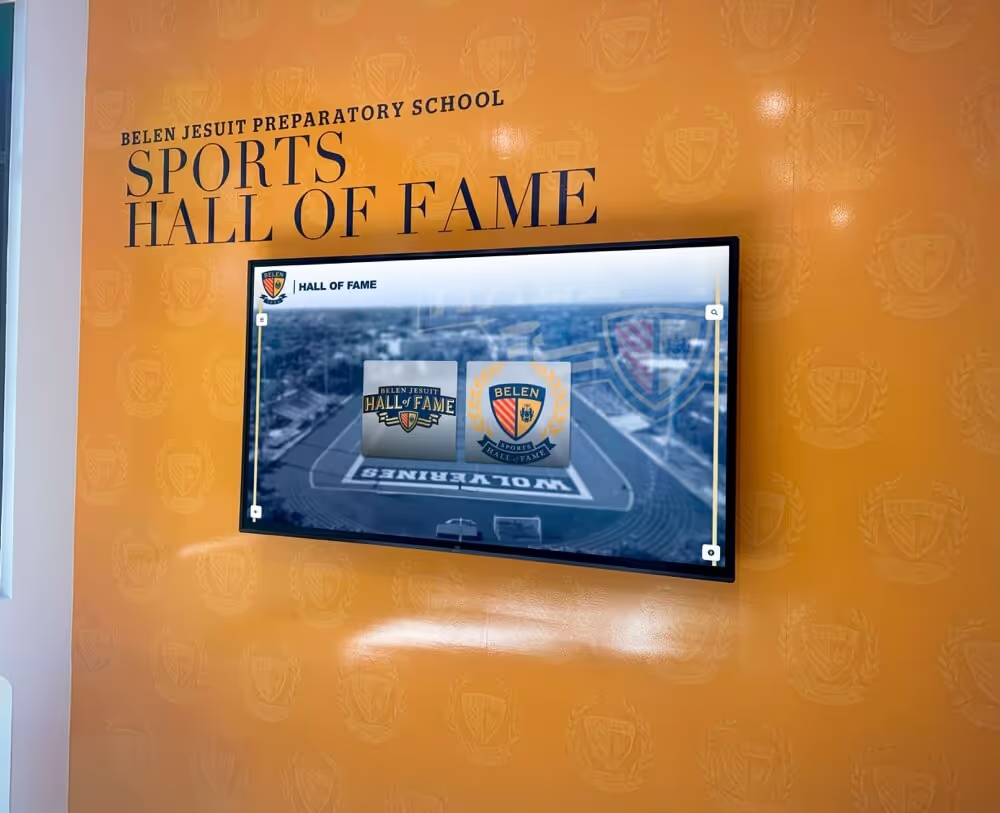
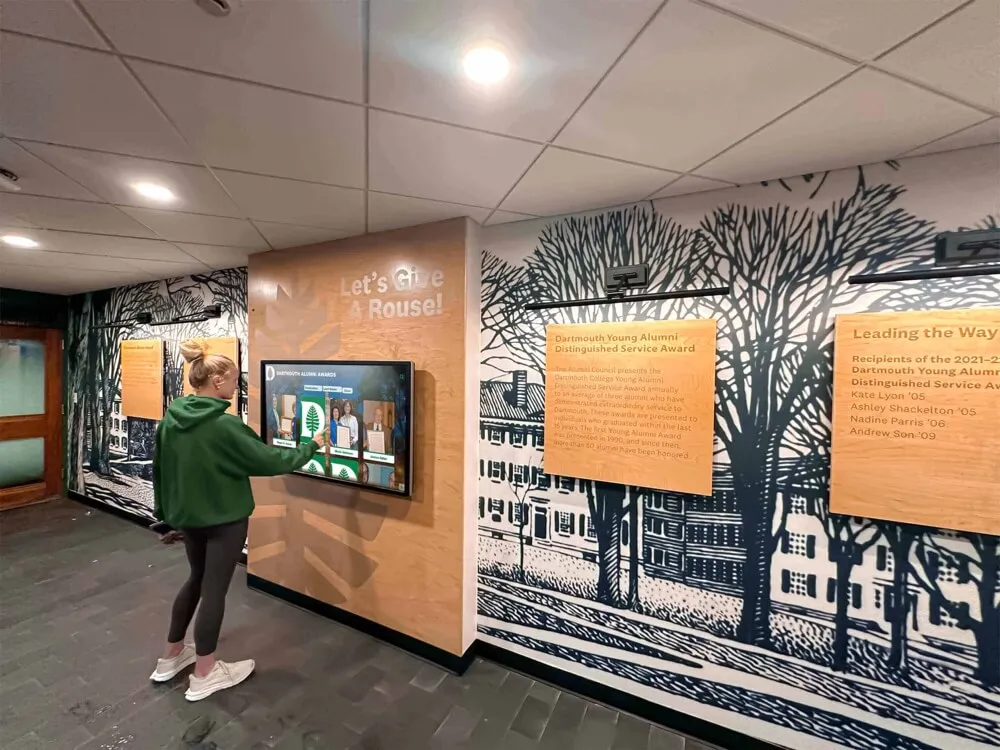
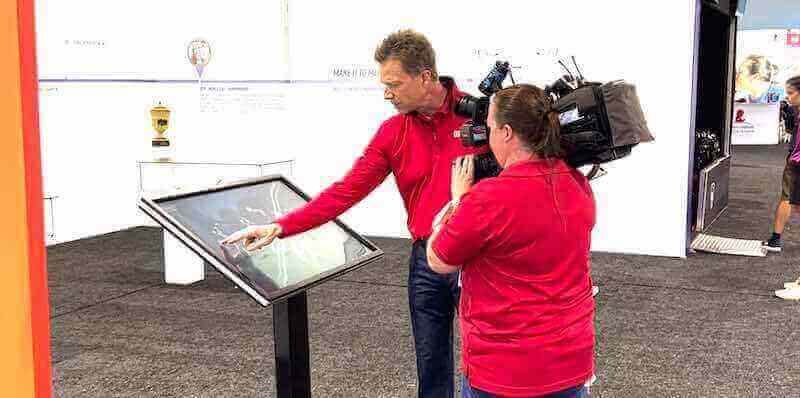
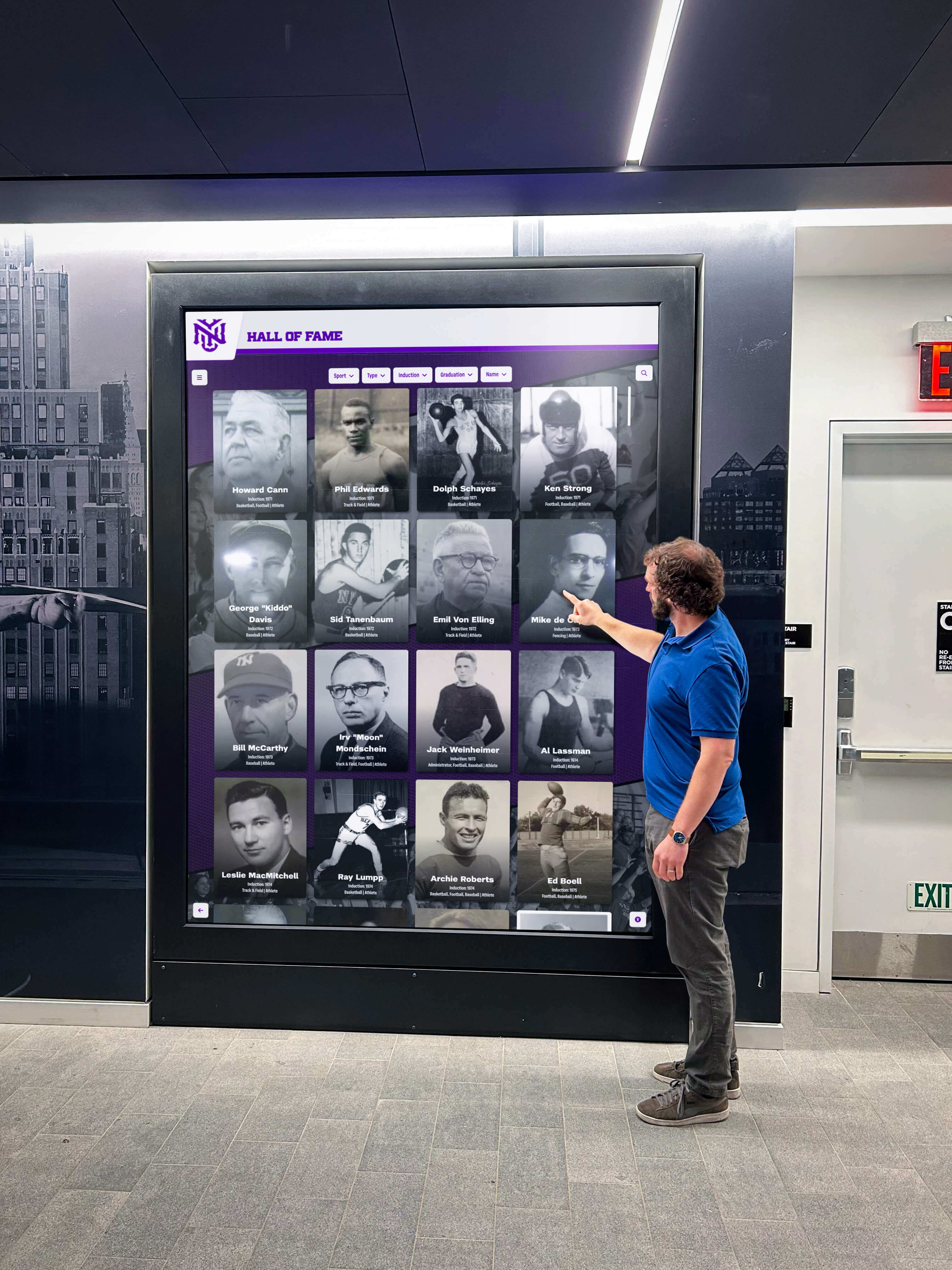
Intuitive touchscreen interfaces make exploration natural and engaging for supporters of all ages
How Digital Recognition Displays Solve Booster Club Challenges
Modern donor recognition platforms address traditional limitations while creating new engagement opportunities impossible with conventional approaches, all within budgets respecting booster club financial realities.
Unlimited Recognition Without Space Constraints
Digital systems remove physical limitations that force difficult choices about whose support receives visibility.
Comprehensive Supporter Celebration
Every contributor receives recognition regardless of giving level—from major corporate sponsors providing five-figure support to grassroots parents contributing modest annual gifts. This comprehensive acknowledgment creates inclusive communities where all supporters see their gifts valued, reinforcing that collective impact depends on broad participation across the entire donor base.
Inclusive recognition proves particularly important for booster clubs depending on wide participation rather than only major gifts. When annual fund contributors see themselves acknowledged alongside larger donors, they develop stronger connections and sustained giving commitments knowing their participation matters and receives appropriate appreciation.
Multiple Campaign and Program Organization
Single digital installations accommodate multiple recognition frameworks simultaneously—annual fund giving circles, capital campaign contributors, equipment fund donors, scholarship supporters, facility improvement campaigns, and sport-specific recognition. This flexibility enables booster clubs to highlight different supporter segments during various campaigns while maintaining comprehensive visibility for all community members.
Traditional donor walls lack this versatility. Once clubs commit physical space to specific recognition purposes, changing frameworks requires expensive reinstallation. Digital platforms adapt instantly through software updates, accommodating evolving fundraising priorities without construction projects or hardware replacement.
Historical Archive Preservation
Decades of donor history remain permanently accessible rather than removed when space limitations force choices. Booster clubs preserve complete giving legacies spanning their organizational lifespans, creating comprehensive supporter archives that honor long-term commitment while accommodating current campaign recognition.
This historical preservation serves strategic purposes beyond recordkeeping. Long-term supporters appreciate seeing their sustained commitment documented. New donors gain confidence discovering robust supporter communities demonstrating organizational health. Anniversary celebrations, legacy profiles, and institutional storytelling draw from comprehensive historical data strengthening fundraising messaging and community pride.
Learn effective approaches in nonprofit donor recognition strategies applicable to booster club contexts.
Enhanced Engagement Through Interactivity
Digital systems create active engagement impossible with static displays, transforming recognition from passive acknowledgment into participatory community experiences.
Intuitive Search and Discovery
Visitors search by name, graduation year, sport, giving society, or campaign affiliation, finding specific donors or exploring supporter communities of personal interest. This active exploration increases engagement time dramatically compared to passive scanning of alphabetical lists displayed on traditional plaques.
Searchability enables crucial personal discovery creating emotional connections. When supporters find themselves prominently displayed among valued community members, when they discover teammates who share their commitment, when they explore giving patterns connecting them to others with similar values—these moments of relevance transform abstract institutional relationships into concrete community belonging.
Rich Profile Content Beyond Name Lists
Digital profiles accommodate comprehensive information beyond names and amounts—donor photos, personal statements explaining giving motivations, family connections to programs, athletic backgrounds and achievements, and impact stories describing what contributions accomplish. This depth transforms generic acknowledgment into meaningful celebration honoring individual generosity while inspiring others through compelling examples.
Not every donor provides extensive profile content, but offering opportunities for enhanced visibility creates tiered engagement matching supporter preferences. Major donors often welcome opportunities to share detailed stories, while smaller-dollar contributors may prefer simple name recognition. Digital platforms accommodate both approaches within unified systems.
Dynamic Featured Content Rotation
Automated content rotation ensures all donors receive featured prominence over time rather than permanent relegation to generic lists. Monthly spotlights highlighting different supporters, anniversary recognitions celebrating multi-year commitment, and themed collections around shared characteristics keep displays fresh for repeat visitors while ensuring equitable visibility regardless of giving level.
This rotation addresses common complaints about traditional recognition where major donors receive permanent prominent placement while grassroots supporters remain buried in alphabetical lists. Digital systems democratize visibility through automated fairness, ensuring every supporter enjoys moments of featured recognition celebrating their unique contribution.
Social Sharing Integration
Recognized donors easily share profiles via social media, email, and messaging, extending recognition reach far beyond facility visitors while promoting program awareness through authentic personal networks. When supporters share their recognition, they become voluntary ambassadors broadcasting program value to extended networks institutional communications cannot reach directly.
Social sharing proves particularly valuable for booster clubs whose supporters include alumni living across regions. Web-accessible recognition enables distant donors to engage with acknowledgment they cannot experience through facility visits, while social features amplify organizational visibility to prospective supporters discovering programs through trusted personal referrals.
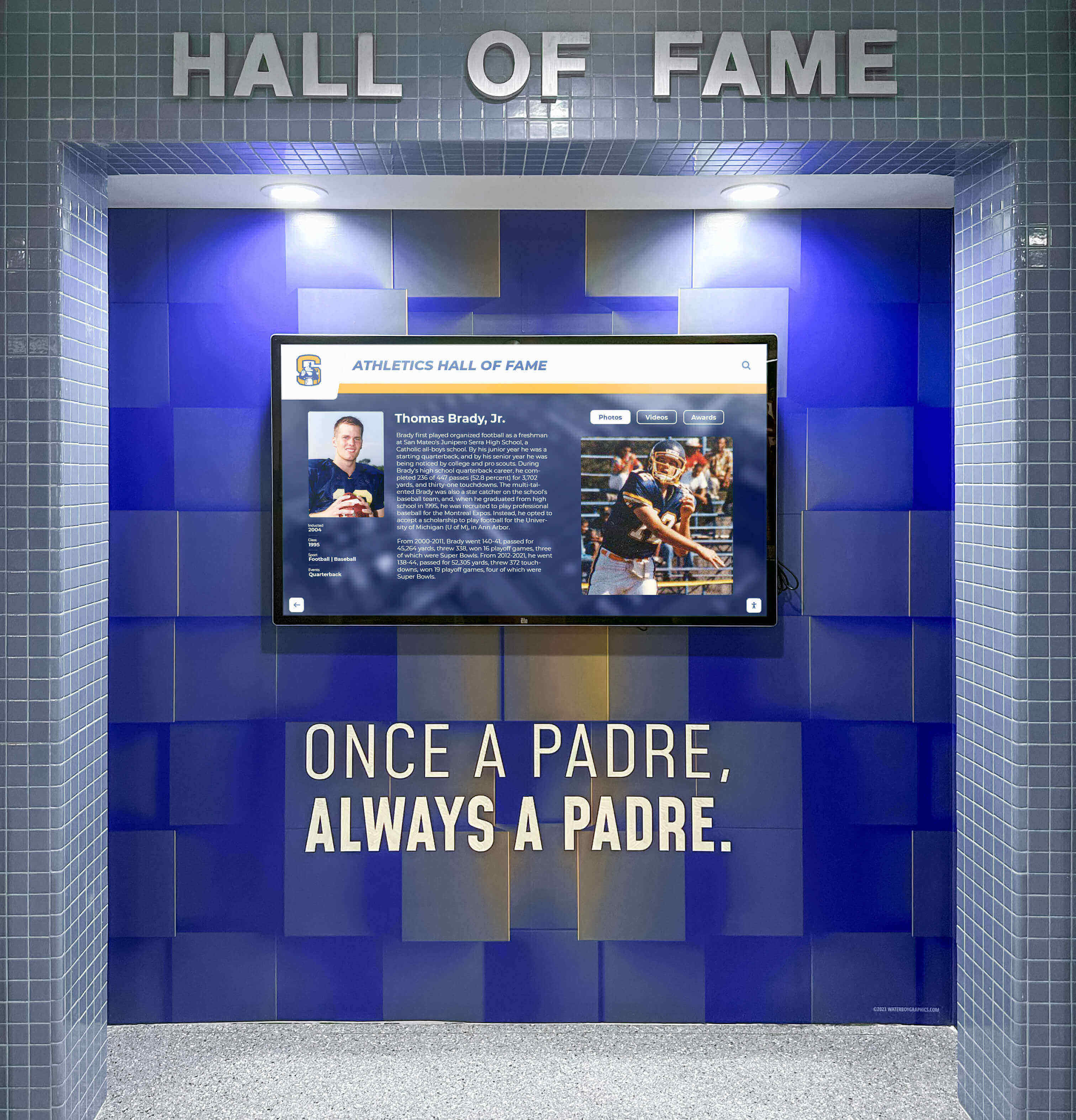
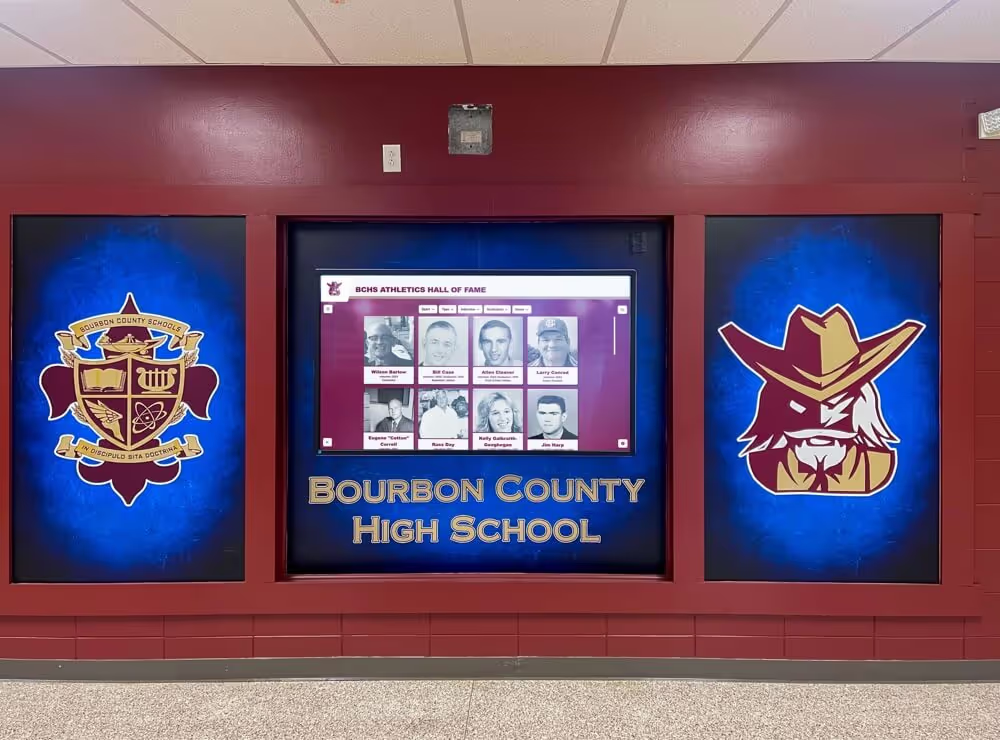
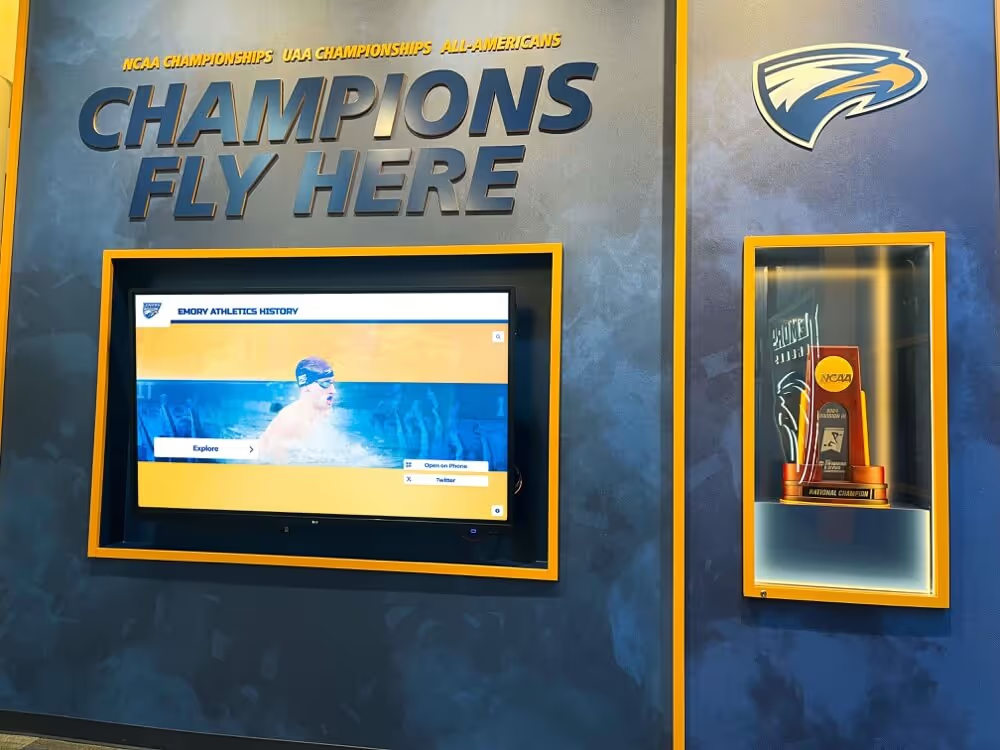
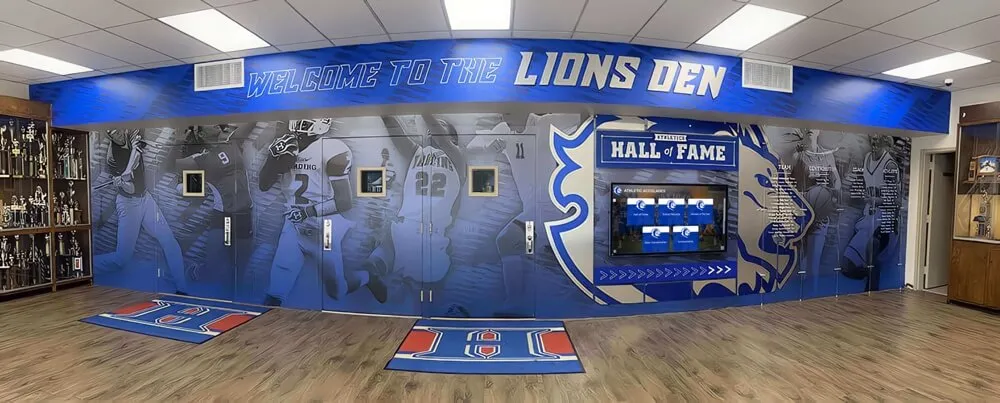
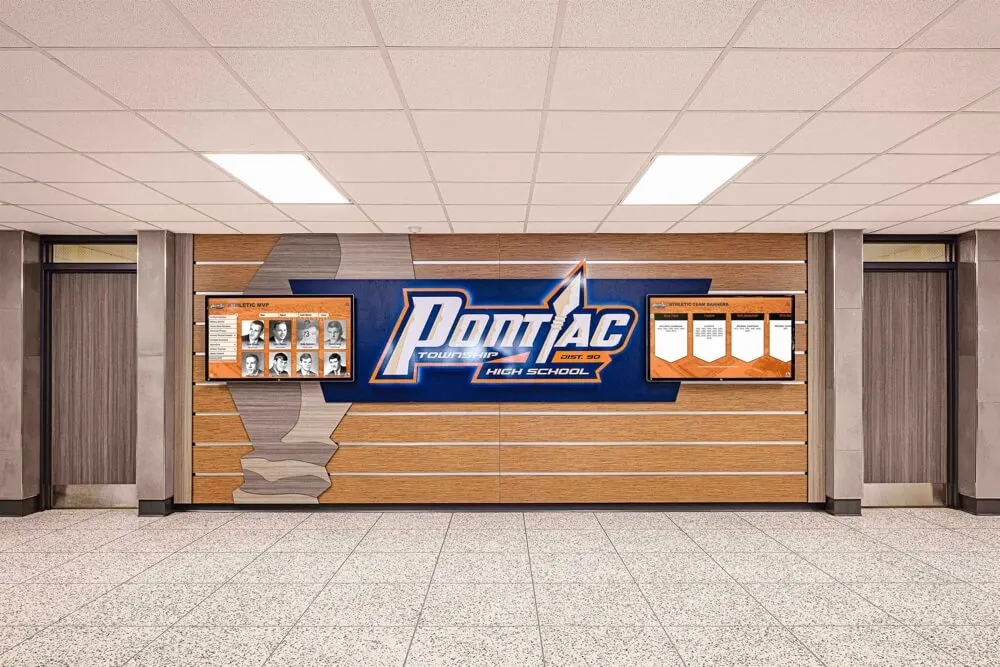
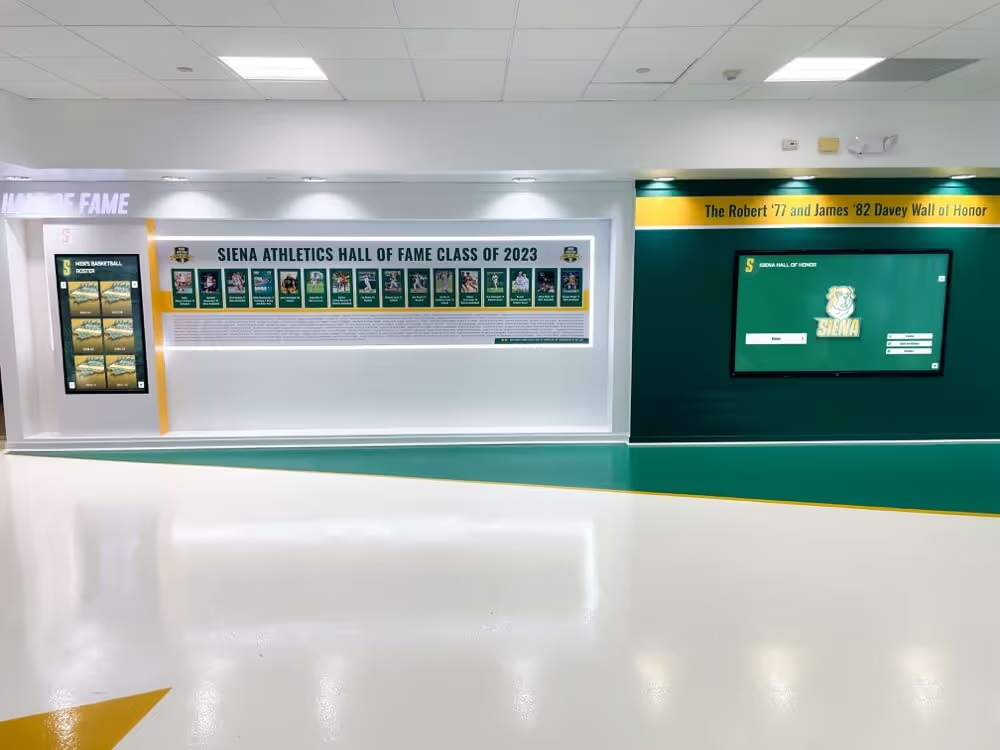
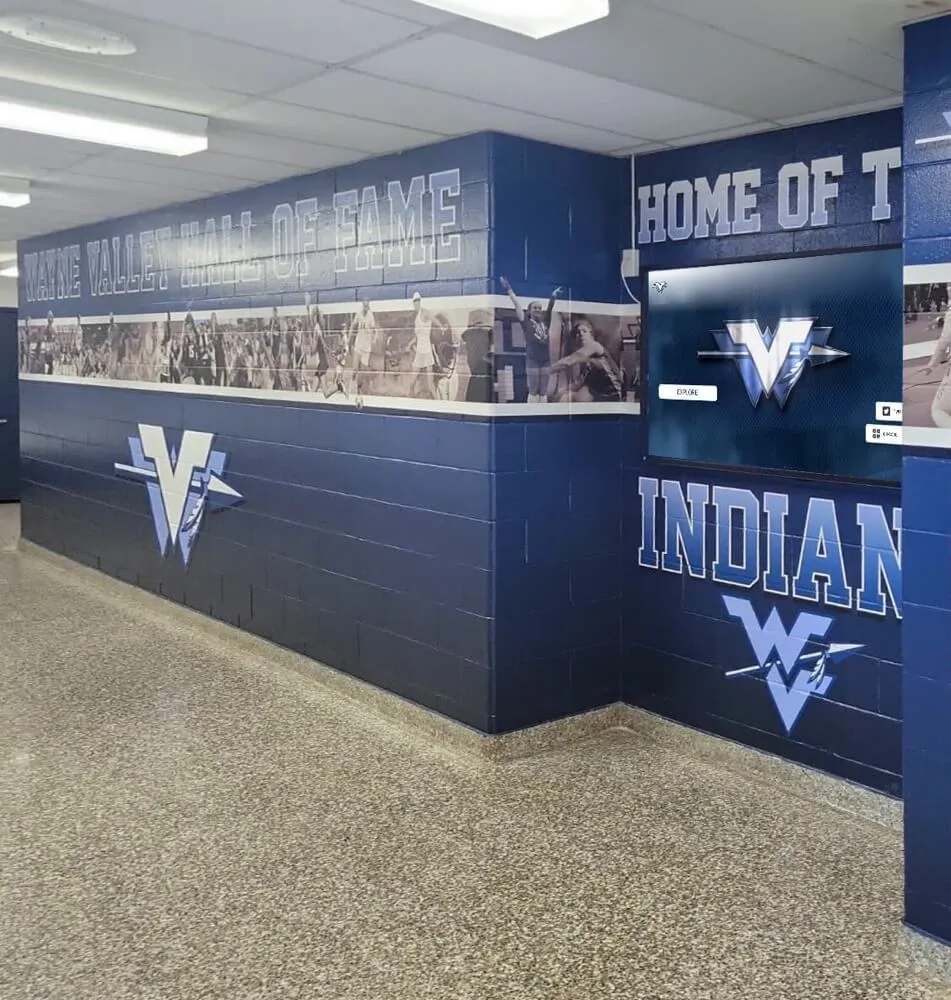
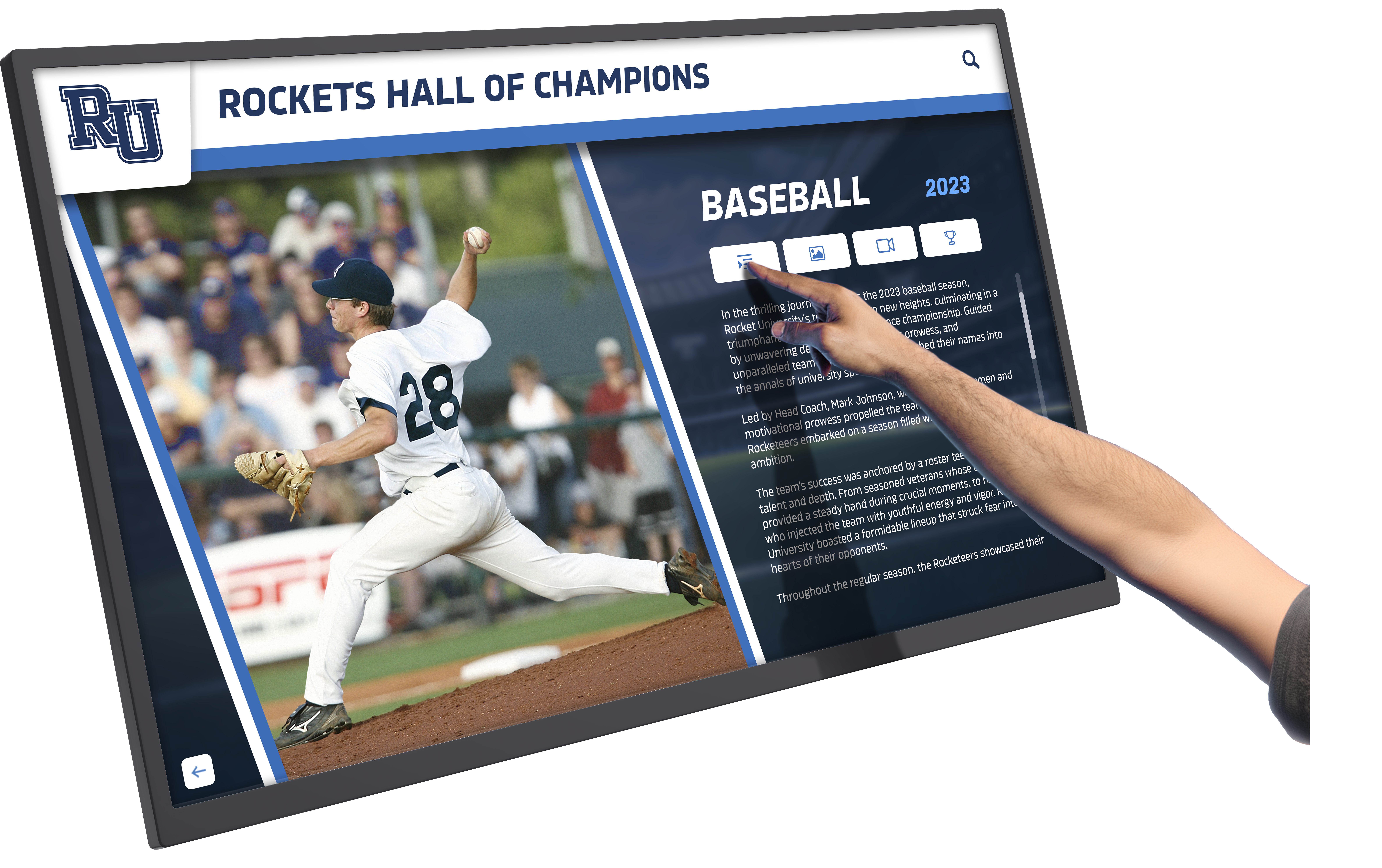
Professional installations integrate recognition with facility design creating cohesive athletic program identity
Operational Efficiency for Volunteer Leaders
Cloud-based management and digital delivery create significant operational advantages for volunteer-led organizations with limited administrative capacity.
Elimination of Recurring Engraving Costs
Traditional donor walls require $50-200 per donor for plaque engraving and installation, creating recurring costs accumulating as donor communities grow. Digital recognition involves zero marginal cost per additional donor beyond initial system implementation, making comprehensive recognition economically viable for booster clubs with modest budgets.
Over five years, the cost difference proves dramatic. A booster club adding 50 donors annually at $100 per plaque spends $25,000 on engraving alone—funds that could support scholarships, equipment, or program needs. Digital recognition redirects these recurring expenses toward mission delivery while providing superior donor acknowledgment.
Real-Time Update Capabilities
Volunteer leaders update recognition immediately after gifts process from any internet-connected device, eliminating months-long delays between donations and public acknowledgment. This immediacy creates gratification reinforcing giving decisions while demonstrating organizational responsiveness building donor confidence.
Remote updates prove particularly valuable for volunteer leaders managing responsibilities around work schedules and family commitments. Cloud-based platforms enable evening and weekend content management from home without requiring facility access, creating flexibility essential for volunteer sustainability.
Simplified Content Management
Intuitive interfaces enable volunteers with basic computer skills to add donors, update profiles, schedule features, and manage categories without technical expertise or IT dependencies. Visual profile builders show exactly how content will appear, drag-and-drop media upload simplifies image management, and template-based layouts ensure consistency.
This simplicity reduces onboarding requirements when leadership transitions. New volunteers learn essential functions within hours rather than weeks, enabling continuity despite regular turnover inevitable in parent-led organizations where children’s graduations naturally end family involvement.
Reduced Physical Maintenance
Digital displays require minimal maintenance compared to traditional plaques needing regular cleaning, brass polishing, and periodic replacement when tarnished or damaged. Commercial-grade touchscreen hardware designed for continuous operation provides years of reliable service with basic care, eliminating ongoing maintenance consuming volunteer time.
Explore comprehensive donor recognition screen implementation guidance providing practical strategies for budget-conscious organizations.
Types of Booster Club Donor Recognition Categories
Effective recognition systems acknowledge diverse contribution types supporting comprehensive athletic program and activity funding.
Financial Giving Levels and Societies
Structured giving societies create clear recognition tiers motivating donor progression while honoring support appropriately across all contribution levels.
Annual Fund Recognition Circles
Most booster clubs establish annual giving circles recognizing contribution levels—for example, Bronze Circle ($100-249), Silver Circle ($250-499), Gold Circle ($500-999), and Platinum Circle ($1,000+). These tiered societies provide aspirational levels motivating giving increases while ensuring all contributors receive appropriate recognition regardless of capacity.
Digital platforms display giving societies clearly, enable filtering and browsing by recognition level, highlight society member counts demonstrating community participation, and celebrate donors approaching next recognition thresholds creating natural upgrade pathways.
Cumulative Lifetime Giving Recognition
Beyond annual contributions, cumulative lifetime giving recognition honors sustained commitment over years or decades. Legacy Circle members ($10,000+ lifetime giving), Heritage Society supporters ($25,000+ cumulative), and Founder’s Club champions ($50,000+ total contribution) receive special acknowledgment celebrating long-term program investment.
Lifetime recognition proves particularly meaningful for families supporting programs across multiple children’s athletic careers, maintaining involvement despite individual children graduating. This long-term perspective encourages sustained relationships extending beyond single student participation.
Capital Campaign Recognition
Major facility improvements, equipment purchases, or endowment building campaigns generate donor communities deserving permanent recognition separate from annual fund acknowledgment. Capital campaign recognition commemorates specific initiatives, documents campaign leadership, and preserves historical records of transformational support enabling program advancement.
Digital systems accommodate campaign-specific recognition alongside ongoing annual fund acknowledgment without requiring separate physical installations or competing for limited space. Supporters exploring recognition discover both their annual participation and campaign contributions acknowledged comprehensively.
Corporate and Business Sponsor Recognition
Business sponsors providing financial support, in-kind donations, or services deserve prominent recognition appropriate to partnership levels. Digital platforms accommodate company logos, sponsorship descriptions, contact information promoting sponsor businesses, and partnership terms (annual, multi-year, or campaign-specific).
Enhanced sponsor visibility creates value justifying larger contributions while encouraging business community participation. When local businesses see existing sponsors prominently acknowledged, social proof drives additional partnership participation strengthening community business engagement with athletic programs.
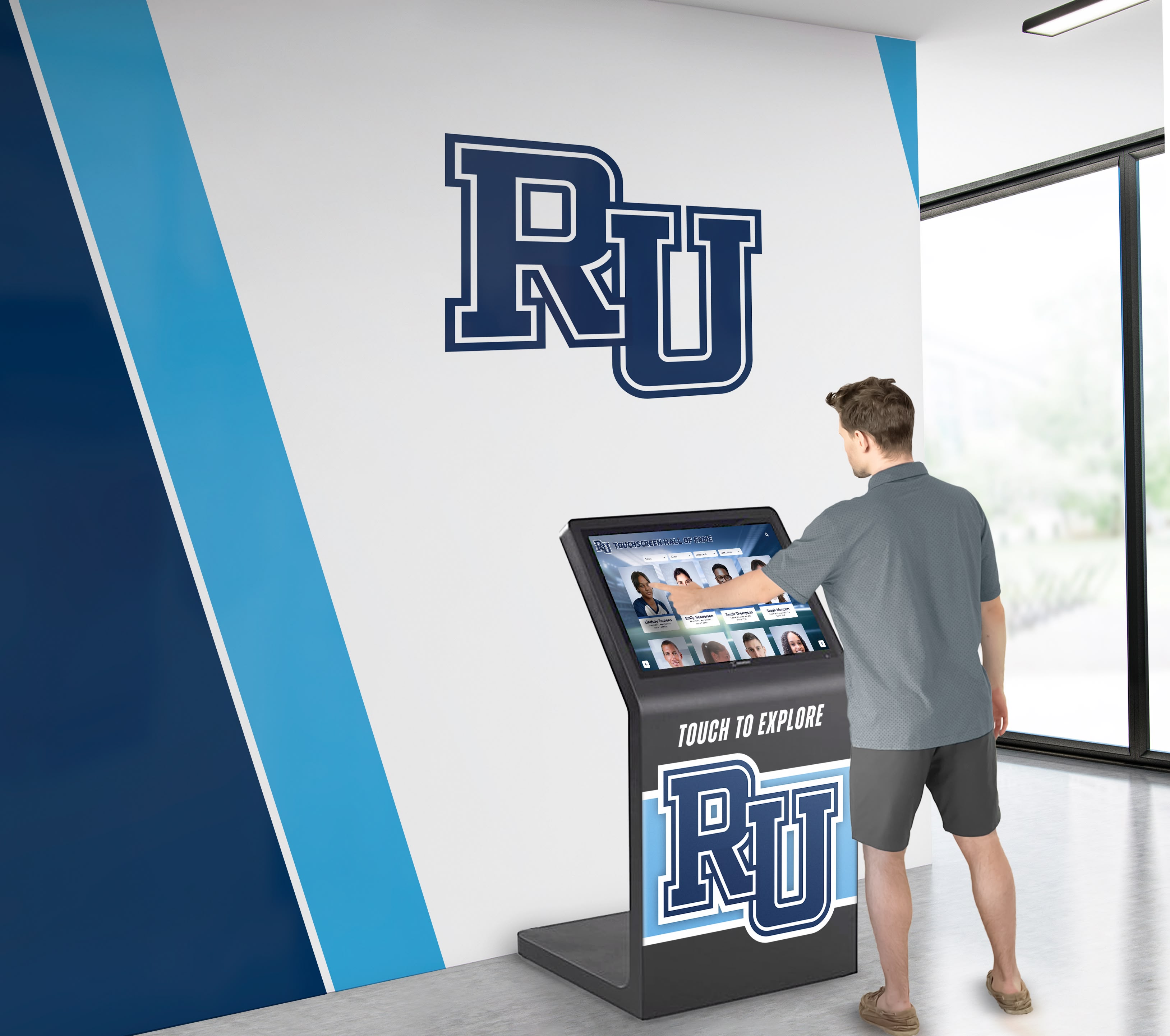
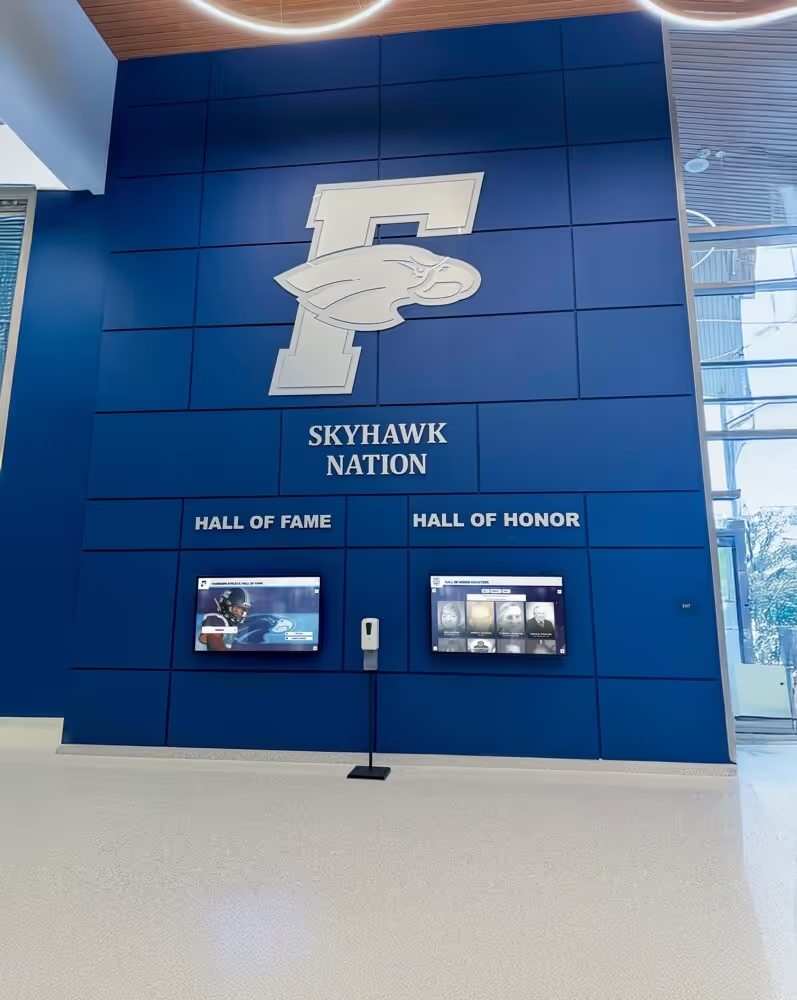
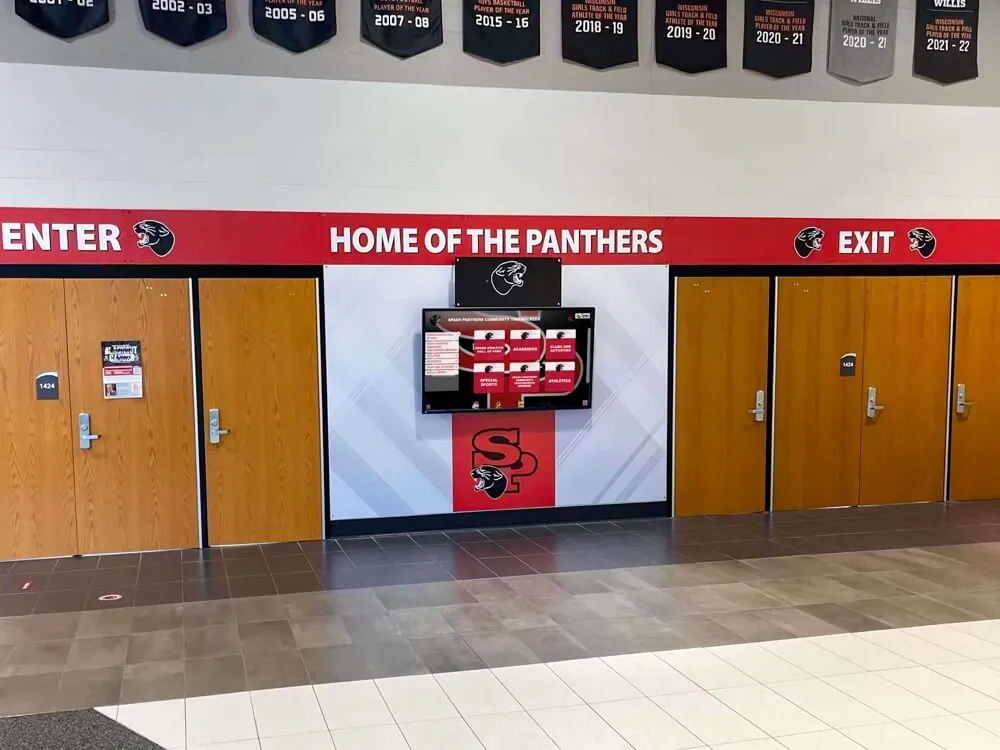
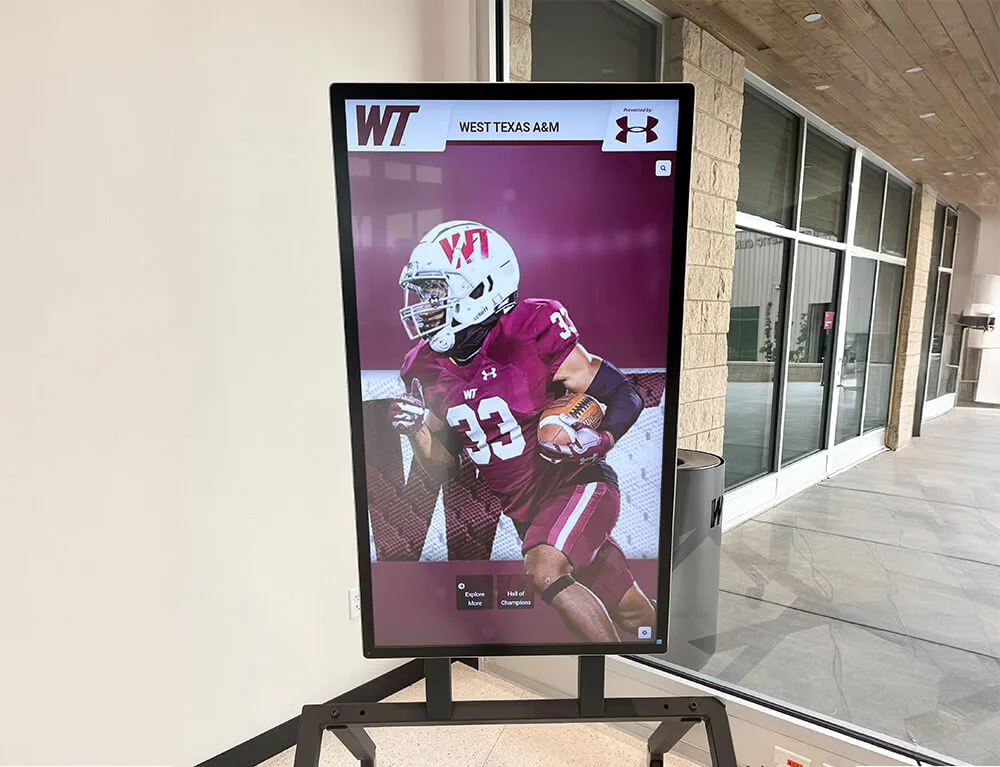
Strategic placement ensures recognition receives visibility from students, parents, visitors, and community members
Volunteer and Service Recognition
Beyond financial contributions, comprehensive booster club recognition celebrates volunteers and service contributors whose non-monetary support enables program success.
Board and Leadership Recognition
Current and historical board members, officers, and committee leaders deserve acknowledgment for governance and operational leadership sustaining organizational effectiveness. Recognition honoring years served, leadership positions held, and specific initiatives championed creates appreciation for volunteer time investment often exceeding monetary contribution value.
This leadership recognition proves particularly valuable for recruitment and retention of quality volunteers. When prospective board members see historical leadership honored appropriately, they develop confidence their service will receive lasting appreciation rather than being forgotten immediately upon term completion.
Volunteer Hour Contributions
Many booster clubs track volunteer hours contributed through concession operations, event staffing, fundraiser coordination, facility maintenance, and administrative support. Recognition acknowledging significant volunteer service—100 hours, 500 hours, 1,000+ hours—honors time investment while inspiring others to increase participation in volunteer opportunities.
Volunteer recognition creates inclusive acknowledgment for families unable to provide major financial support but offering substantial time contributions. This inclusive approach ensures all participation forms receive appropriate visibility, reinforcing that program success depends on comprehensive community engagement beyond only financial gifts.
Special Committee and Initiative Recognition
Targeted recognition acknowledges volunteers leading specific initiatives—capital campaigns, facility improvements, special events, scholarship programs, or equipment fundraisers. This initiative-specific acknowledgment documents organizational history while honoring volunteers whose focused efforts accomplished particular program advancements.
Sport-Specific and Program Recognition
Booster clubs supporting multiple sports benefit from recognition accommodating sport-specific giving while maintaining unified community visibility.
Individual Sport Program Support
Parents and community members often direct contributions to specific sports their children play or they personally value. Sport-specific recognition categories—Football Boosters, Basketball Supporters, Track and Field Champions, Soccer Sponsors—acknowledge targeted giving while creating sport communities within broader booster organizations.
Digital platforms enable sport filtering allowing visitors to explore all football supporters, view basketball program donors, or discover track and field contributors. This organizational flexibility accommodates both targeted and general giving within unified recognition systems preventing fragmentation requiring separate displays or competing installations.
All-Sport General Support Recognition
General booster club contributions benefiting all programs receive prominent acknowledgment celebrating supporters whose giving transcends individual sport allegiances. All-Sport Champions, Multi-Program Supporters, and General Fund Contributors deserve recognition honoring flexible giving enabling program-wide investments in shared facilities, equipment, and support services.
This general support recognition proves strategically important for attracting donors without children currently participating but who support comprehensive athletic program excellence and community youth development broadly. These community supporters represent crucial donor segments whose giving continues despite lacking immediate personal connections to specific sports.
Facility and Equipment Donations
Specific facility improvements—scoreboards, weight room equipment, field upgrades, locker room renovations—receive permanent recognition acknowledging donors whose gifts created lasting infrastructure benefiting multiple sport generations. Naming opportunities for facilities, rooms, or major equipment installations provide premium recognition for substantial contributions.
Digital recognition enables rich documentation of facility gifts including before/after photos, impact narratives describing usage and benefits, and ongoing acknowledgment ensuring gifts made years ago receive continued visibility as new families join programs and discover historical contributions enabling current opportunities.
Discover approaches for academic and athletic recognition programs that celebrate diverse achievement types.
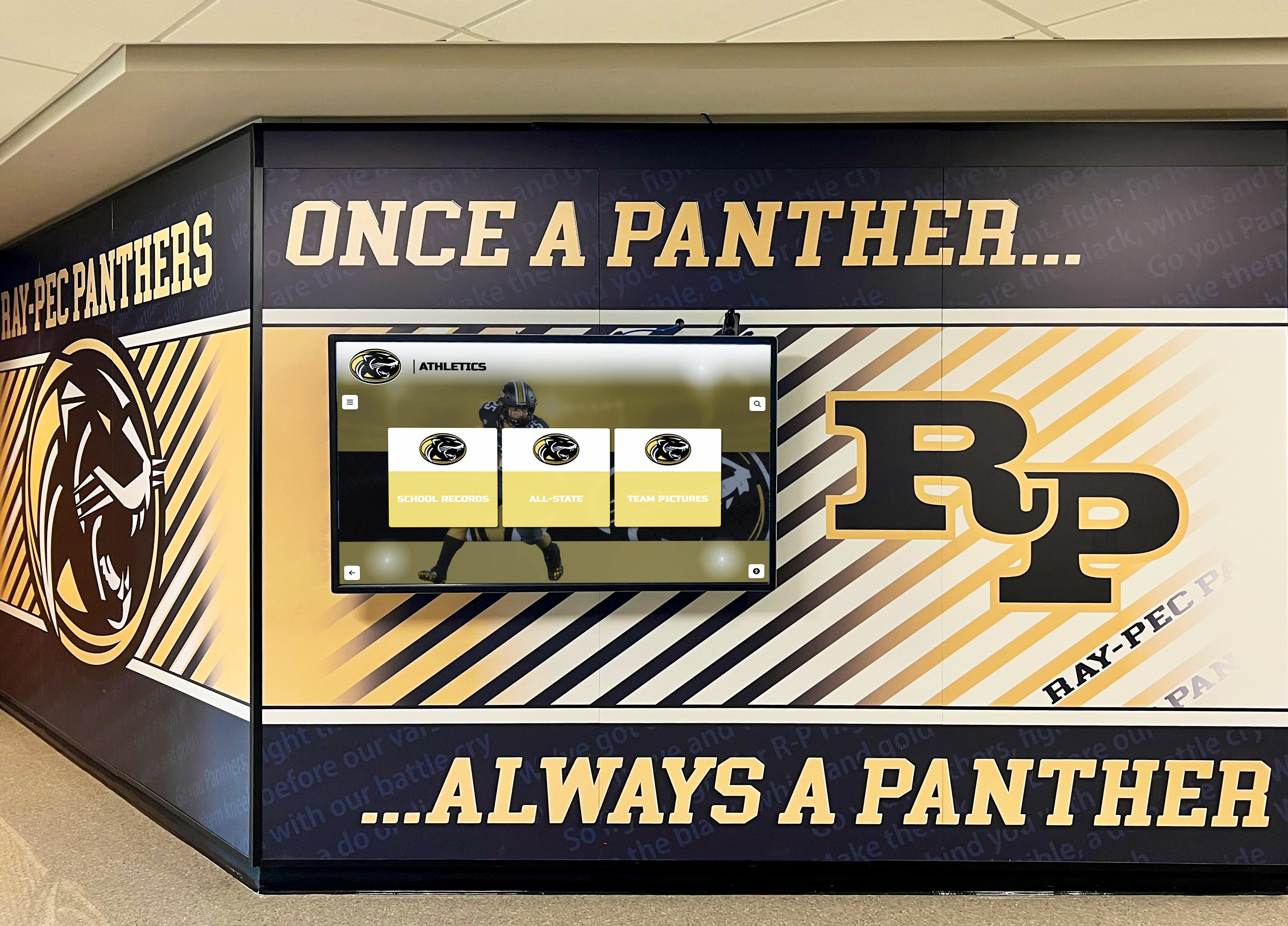
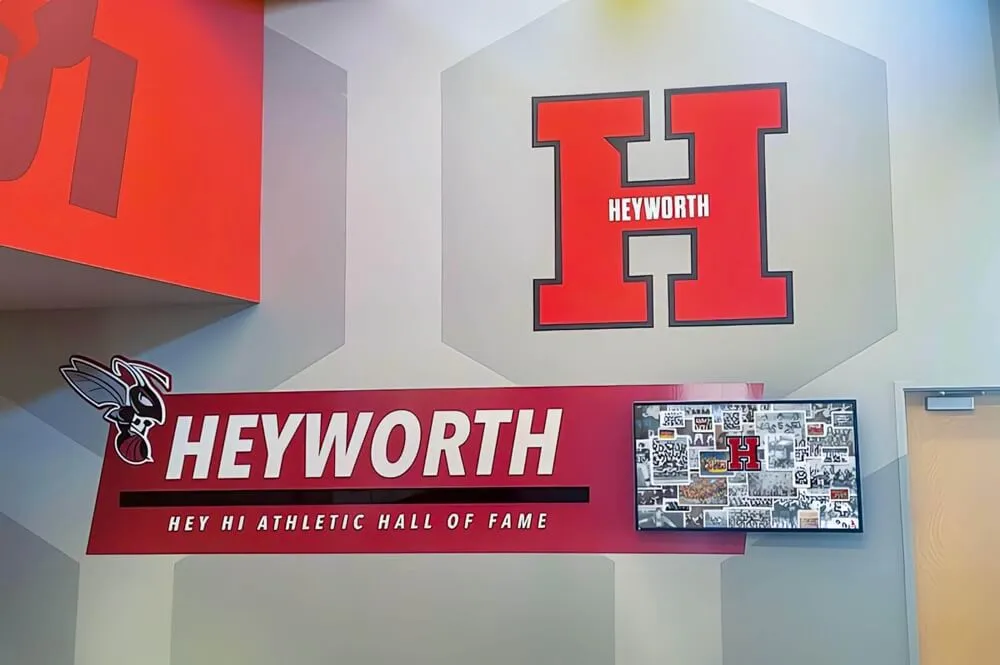
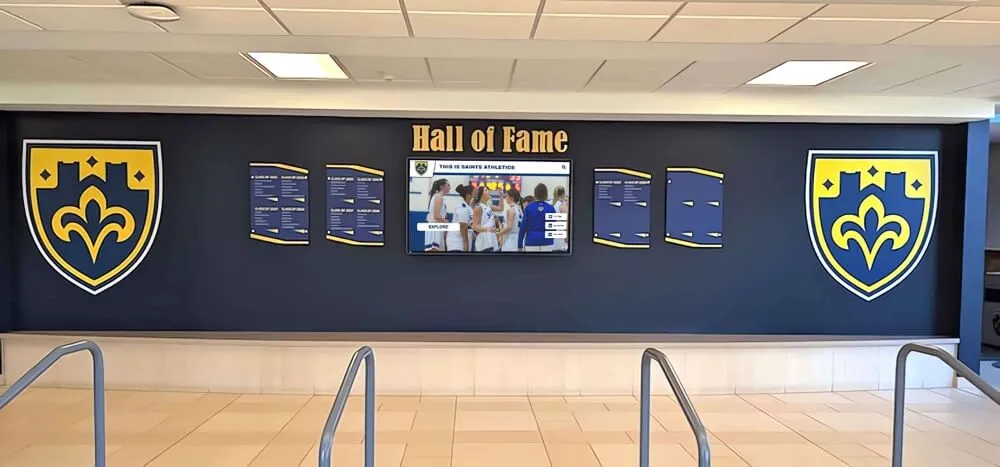
Recognition installations integrate with athletic branding creating cohesive program identity and pride
Implementing Digital Donor Recognition for Booster Clubs
Successful implementation requires thoughtful planning addressing volunteer capacity, budget constraints, and booster club organizational realities.
Planning Recognition Strategy and Scope
Clear objectives guide implementation decisions ensuring recognition systems align with organizational priorities and volunteer resource realities.
Defining Recognition Philosophy
Booster clubs should articulate recognition philosophies addressing fundamental questions about acknowledgment approaches:
- Will all donors receive individual recognition regardless of gift size, or do minimum thresholds apply?
- How will giving levels and recognition societies be structured and displayed?
- What anonymous donor options will accommodate supporters preferring privacy?
- How will memorial and tribute gifts be acknowledged?
- Will recognition focus exclusively on financial donors, or will volunteer contributors receive parallel acknowledgment?
These philosophical decisions shape platform requirements and content strategies while communicating organizational values. Inclusive philosophies celebrating all supporters signal democratic values and collective impact emphasis, while tiered approaches highlighting major gifts communicate appreciation for exceptional generosity enabling ambitious program expansion.
Stakeholder Requirements Gathering
Booster club boards, sport coordinators, school athletic directors, parent representatives, and major donors each have perspectives on recognition needs and priorities. Involving stakeholders early ensures selected platforms accommodate diverse uses while establishing content governance preventing conflicts and maintaining quality standards.
Common stakeholder priorities include:
- Board members need efficient content management enabling timely donor acknowledgment without technical barriers
- Sport coordinators want recognition demonstrating how donor support enables specific programs and student benefits
- Athletic directors require confidence that recognition reflects school values and maintains professional standards
- Parent representatives seek transparency about how contributions are acknowledged and giving options available
- Major donors expect recognition appropriate to their support level demonstrating organizational appreciation
Success Metrics Definition
Establishing clear success indicators enables post-implementation assessment. Common metrics booster clubs track include:
- Donor retention rate improvements comparing periods before and after implementation
- Average donor lifetime value increases as retained supporters give over extended timeframes
- Digital display interaction analytics measuring engagement frequency and session duration
- Web platform traffic to recognition pages indicating reach beyond facility visitors
- Social sharing activity demonstrating content amplification through supporter networks
- Fundraising campaign results and year-over-year giving growth
- Volunteer satisfaction with content management efficiency and recognition outcomes
Budget Development and Funding Sources
Realistic budget planning accounts for hardware purchases, software licensing, implementation services, training, content development, and ongoing support. Booster clubs should explore whether recognition systems themselves might attract donor funding through dedication opportunities or sponsorships from businesses or families with capacity to support infrastructure investments.
Some booster clubs successfully position digital recognition as fundable projects worthy of restricted campaign support. When donors understand that recognition investments improve retention thereby multiplying future giving impact, they often support infrastructure enhancing stewardship capacity without diverting operating funds from direct student benefit programs.
Selecting Budget-Appropriate Recognition Technology
Platform selection significantly impacts long-term satisfaction, with purpose-built recognition systems offering substantial advantages over generic alternatives while respecting booster club budget realities.
Purpose-Built Recognition Platforms
Solutions like Rocket Alumni Solutions designed specifically for donor recognition provide capabilities generic digital signage cannot match:
- Unlimited donor capacity accommodating thousands of supporters without performance degradation or tiered pricing penalties
- Sophisticated searchability enabling name, location, giving society, sport, and keyword discovery facilitating personal connections
- Individual donor profiles supporting biographical content, photos, personal statements, and impact stories beyond simple listings
- Web accessibility extending recognition beyond physical touchscreens through responsive mobile-optimized platforms accessible globally
- ADA WCAG 2.1 AA compliance ensuring accessible experiences for all community members including those using assistive technologies
- Flexible content categorization accommodating multiple giving frameworks, recognition societies, and sport structures simultaneously
- Automated fair rotation ensuring all donors receive featured visibility over time rather than permanent hierarchy based solely on giving amounts
- Cloud-based management enabling remote updates from any device without IT dependencies or specialized expertise
Hardware Considerations and Options
Physical touchscreen installations require appropriate equipment balancing cost, quality, and longevity:
Budget-Conscious Options: Entry-level commercial displays with touchscreen capability start around $2,000-4,000 for 43-55 inch installations. These budget options provide basic functionality suitable for booster clubs with limited initial budgets while offering significant advantages over traditional plaque approaches.
Mid-Range Installations: Commercial-grade displays designed for public environments with 7-10+ year lifespans typically cost $4,000-8,000 for complete installations including mounting and configuration. This mid-range investment balances quality, reliability, and budget constraints effectively for most booster club contexts.
Premium Integration: Custom installations incorporating architectural integration, branded enclosures, and premium commercial displays range from $10,000-20,000. These premium approaches suit well-funded booster organizations seeking showpiece recognition reflecting program excellence and commitment to supporter appreciation.
Software Licensing Models
Understanding software cost structures proves essential for budget planning and long-term affordability:
Annual Subscription Licensing: Most purpose-built recognition platforms use annual subscription models ($1,500-5,000 annually depending on features and capacity) including software updates, cloud hosting, technical support, and ongoing platform enhancements. This predictable annual cost enables budget planning while ensuring continuous access to improvements.
One-Time Purchase with Maintenance: Some platforms offer one-time licensing with optional annual maintenance fees for support and updates. While appearing lower-cost initially, these approaches often involve significant additional costs for major upgrades and may lack cloud-based features requiring local server infrastructure.
Hybrid Approaches: Consider phased implementations starting with web-only recognition accessible via existing displays, computers, or QR codes directing visitors to mobile-optimized recognition platforms. This approach enables immediate recognition launch at minimal cost while planning for future touchscreen kiosk addition as budgets allow.
Explore comprehensive donor wall implementation options suitable for various budget levels.
Installation Planning and Physical Placement
Strategic placement maximizes visibility and community engagement while working within facility constraints and school requirements.
High-Traffic Location Selection
Install displays where they receive natural visibility from target audiences:
- Main entrance lobbies capturing all facility visitors including parents, students, opponents, and community members
- Athletic director offices enabling advancement conversations during donor meetings and recruitment
- Common areas where teams, families, and spectators naturally congregate before and after events
- Concession areas providing engagement opportunities during event intermissions and waiting periods
Locations where people naturally linger—building entrances, waiting areas, hallway intersections—encourage exploration rather than hurried glances from people rushing to specific destinations.
School and Facility Coordination
Booster club installations require coordination with school administration, athletic directors, and facility managers:
- Obtain necessary approvals for hardware installation and electrical requirements
- Ensure compliance with school technology policies and network usage guidelines
- Coordinate with other recognition needs (team achievements, player honors, school displays)
- Establish clear ownership, maintenance responsibilities, and content governance
- Address any concerns about competing recognition or space allocation
This coordination ensures smooth implementation while maintaining positive relationships between booster clubs and school administration essential for long-term program success.
Mobile and Web-First Alternatives
Booster clubs without immediate budgets for physical installations can launch recognition through web-first approaches:
- QR code displays in facilities directing visitors to mobile-optimized recognition websites
- Existing screen utilization adding recognition content to school displays during booster-controlled times
- Social media integration featuring weekly donor spotlights driving traffic to comprehensive online recognition
- Event promotion using printed materials, presentations, and communications highlighting online recognition access
These low-cost approaches establish recognition programs immediately while building cases for future hardware investments through demonstrated engagement and donor response.
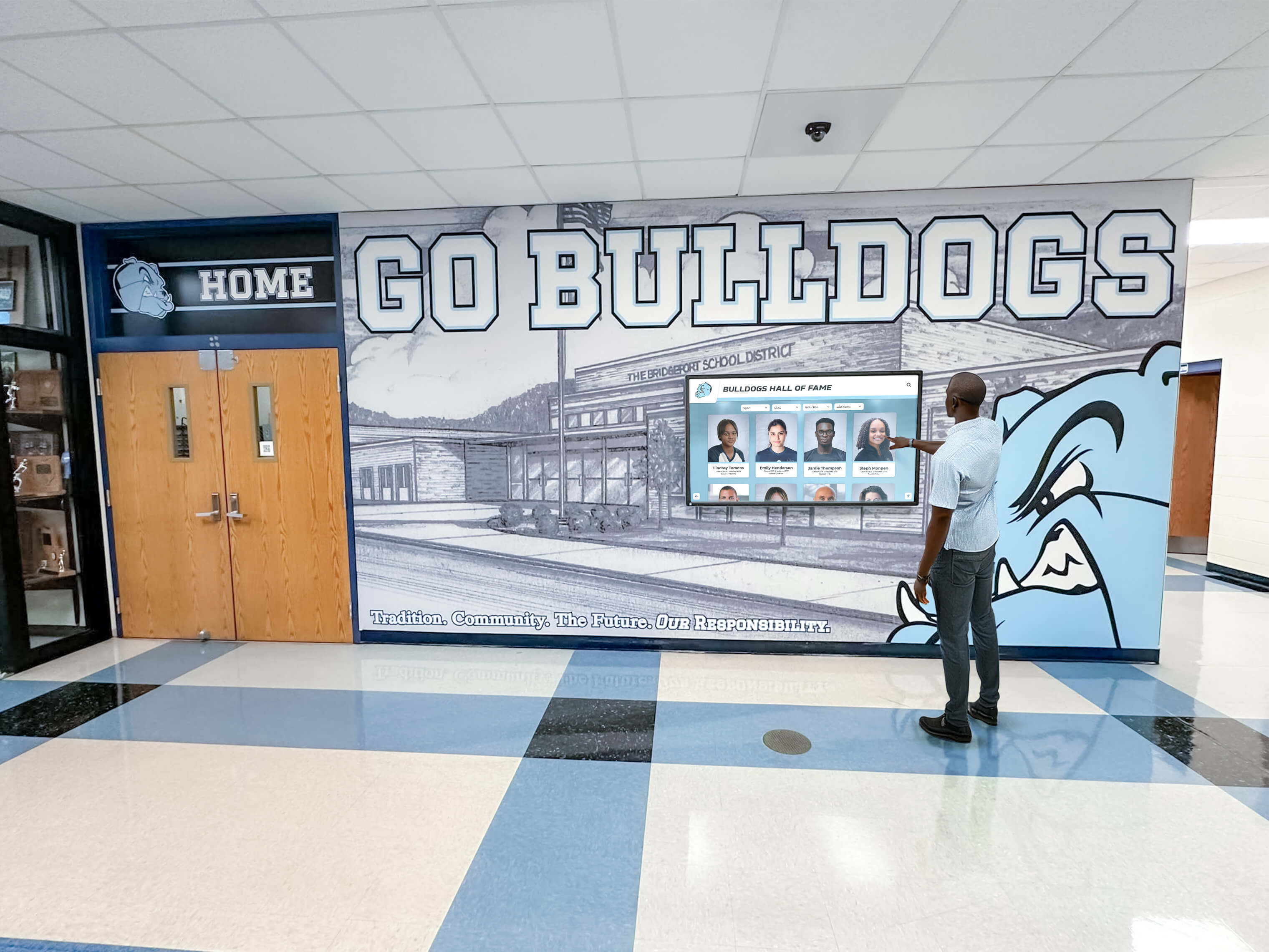
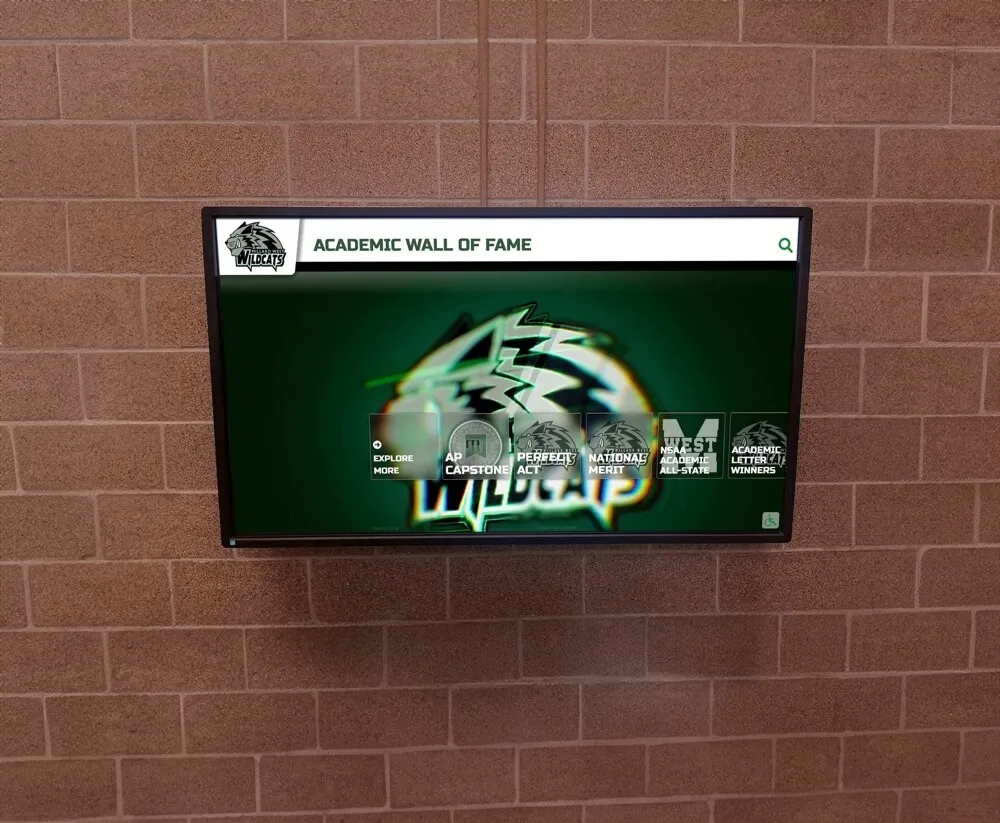
User-friendly interfaces enable confident exploration by volunteers, parents, students, and community members
Content Development for Booster Club Recognition
Compelling content transforms basic acknowledgment into meaningful celebration that engages communities while motivating continued support—all achievable with volunteer resources.
Creating Engaging Donor Profiles
Thoughtful profile development honors generosity while creating content inspiring others through compelling examples.
Essential Profile Components
Effective profiles include:
- Donor names and recognition levels clearly identifying individuals and contribution categories
- Graduation years and family connections helping visitors discover classmates and program relationships
- Athletic backgrounds for alumni donors, noting sports played and achievements earned
- Giving motivations when donors share personal statements about why they support programs
- Family photos creating personal connections and visual interest
- Cumulative giving recognition acknowledging sustained multi-year commitment
- Impact statements connecting contributions to specific program benefits and student outcomes
Not every profile requires comprehensive information. Start with essential elements (names, levels, years) and enhance over time as additional information becomes available through donor outreach and volunteer research.
Efficient Content Collection Strategies
Volunteer-led organizations require practical approaches for gathering profile content:
Online Submission Forms: Create simple web forms where donors provide biographical information, upload photos, and share giving motivations at their convenience. This self-service approach distributes content development effort while enabling donors to control personal information shared.
Event-Based Collection: Gather information and photos during booster events, athletic banquets, and recognition ceremonies when donors attend and volunteer photographers capture attendee images.
Social Media Sourcing: Request profile photos and information via email and social media, leveraging digital communication channels where families already engage with booster clubs.
Phased Enhancement: Launch with basic profiles (names, levels, years) and systematically enhance over time rather than requiring complete information before recognizing any donors. This phased approach enables reasonable timelines while building toward comprehensive content through sustained effort.
Volunteer and Service Documentation
Beyond financial donors, comprehensive recognition documents volunteer contributions:
- Total volunteer hours contributed across multiple activities and events
- Specific roles and responsibilities detailing concession management, event coordination, or administrative support
- Years of service acknowledging sustained commitment across multiple seasons or children
- Special initiatives led highlighting capital campaigns, facility projects, or program innovations
- Leadership positions held documenting board service, committee chairs, and organizational governance
This volunteer recognition creates inclusive acknowledgment for families offering substantial time investment rather than only financial capacity, ensuring all contribution forms receive appropriate visibility and appreciation.
Organizing Recognition for Maximum Engagement
Strategic content organization makes donor communities accessible and inspiring to diverse audiences.
Multiple Navigation Pathways
Provide diverse exploration methods accommodating different visitor interests:
- Alphabetical name search for quickly finding specific individuals
- Graduation year browsing helping alumni discover classmates
- Sport-specific filtering showing supporters of particular programs
- Giving society organization enabling exploration by contribution level
- Recognition year views highlighting donors by when contributions occurred
- Volunteer vs. financial categories distinguishing contribution types
This navigation flexibility ensures visitors with different interests—someone searching for a specific friend, someone curious about their class participation, someone researching major donors—all find intuitive pathways to relevant content.
Featured Content and Spotlight Rotation
Implement automated rotation ensuring all donors receive featured prominence:
- Monthly donor spotlights highlighting individual stories and motivations
- Anniversary recognitions celebrating 5, 10, 15+ years of sustained giving
- New donor welcomes introducing recent community members joining supporter base
- Milestone celebrations acknowledging cumulative giving thresholds reached
- Volunteer highlights featuring service contributors and leadership volunteers
Automated rotation ensures equitable visibility without requiring manual curation becoming unsustainable for volunteer administrators.
Impact Storytelling and Program Connection
Connect donor support to tangible outcomes whenever possible:
- How equipment donations enabled specific team success or training improvements
- What scholarship funds accomplished for individual student-athletes
- How facility upgrades created better competition venues and training environments
- What program expansions or new opportunities donor support made possible
- How sustained annual fund support maintains program excellence across multiple sports
Impact documentation reinforces donors’ decisions while demonstrating accountability essential for continued confidence and renewed support. These stories prove particularly valuable during campaign communications, demonstrating concrete benefits motivating participation.
Explore effective student and athlete recognition strategies that complement donor recognition.
Connecting Recognition to Active Fundraising
Sophisticated recognition implementations don’t just celebrate past giving—they actively drive new donations through strategic integration connecting recognition with immediate giving opportunities.
Creating Seamless Giving Pathways
When visitors explore donor communities and feel inspired by visible support, capturing that motivational moment requires frictionless pathways from recognition to participation.
Embedded Giving Prompts
Digital platforms enable customizable calls-to-action integrated within recognition experiences:
- “Join Our Community” buttons on donor directory pages linking to online giving platforms
- Giving level information paired with “Give at This Level” links enabling immediate inspiration-to-action conversion
- Featured donor stories concluding with contextual prompts like “Support What [Donor Name] Supports”
- Sport-specific giving links enabling visitors exploring football supporters to contribute directly to football programs
These contextual prompts prove far more effective than generic “donate” buttons because they connect recognition inspiration directly with participation opportunities while visitors feel motivated by visible community support.
Real-Time Campaign Integration
During active fundraising campaigns, recognition displays function as dynamic campaign hubs:
- Live progress counters showing current donor numbers and funds raised toward goals
- Participation thermometers visualizing percentage of target achieved creating urgency
- Recent donor highlights featuring newest contributors demonstrating momentum
- Campaign deadline countdowns creating scarcity motivating immediate action
- Matching gift notifications promoting time-limited incentives amplifying impact
Real-time integration requires platforms with APIs connecting recognition to giving platforms, ensuring seamless coordination between donor management systems and public recognition displays.
Social Proof and Peer Motivation
Recognition displays create powerful social proof driving participation:
When prospective donors see “Join 500+ families supporting our athletic programs” alongside searchable directories showing neighbors, classmates, and friends who have given, social proof combines with peer influence creating compelling motivation. People feel confident supporting causes when they see evidence that others—especially similar individuals—have already given.
Search functionality proves essential for social proof effectiveness. When prospects can actually find their neighbors, teammates, or classmates among existing donors (not just be told abstractly that community members support programs), discovery creates personal relevance dramatically increasing conversion likelihood.
Event Integration and Ceremonial Recognition
Recognition platforms support fundraising events and appreciation ceremonies creating unified engagement experiences.
Event-Based Recognition Features
During booster banquets, athletic awards nights, and fundraising galas:
- Display recognition highlighting event attendees and honorees
- Feature current campaign progress and donor participation
- Enable real-time giving with instant public acknowledgment creating social pressure and excitement
- Project donor recognition during ceremonies celebrating supporter community visibly
- Provide QR codes enabling event attendees to explore recognition via personal devices
This event integration creates unified experiences spanning physical attendance and ongoing digital engagement, ensuring event energy translates to sustained involvement beyond single occasions.
Ceremony Content Development
Annual recognition ceremonies provide natural content development opportunities:
- Professional photography capturing attendees for profile enhancement
- Video testimonials recorded during events from donors sharing giving motivations
- Impact stories shared by coaches, athletes, and program beneficiaries documenting donor support outcomes
- Leadership acknowledgment recognizing board members and volunteer contributors
- Historical milestone celebrations marking organizational anniversaries and achievements
Ceremony content enriches year-round recognition while ceremonies themselves gain substance from comprehensive digital recognition documented and celebrated during events.
Discover comprehensive approaches in school fundraising and donor recognition applicable to booster club contexts.
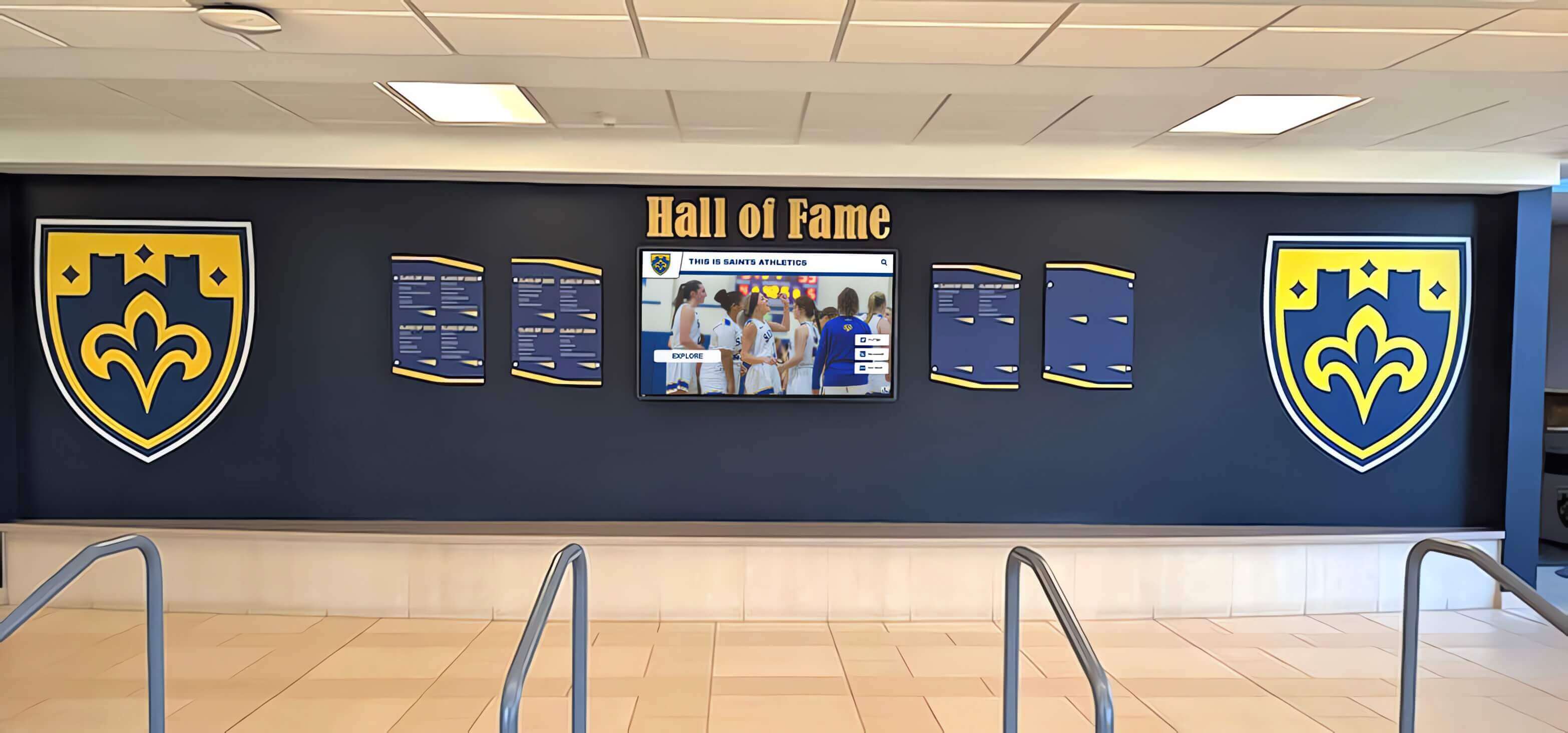
Strategic placement in athletic facilities ensures recognition becomes part of program culture and identity
Measuring Recognition Impact and Demonstrating Value
Systematic assessment ensures recognition investments achieve intended goals while identifying optimization opportunities justifying continued support.
Engagement Analytics and Usage Patterns
Digital platforms provide quantitative data unavailable with traditional approaches:
Touchscreen Display Metrics
Physical display analytics reveal engagement patterns:
- Total interactions measuring overall engagement volume
- Unique users indicating how many different people explore recognition
- Session duration showing content depth and genuine interest levels
- Return visitor frequency demonstrating sustained engagement beyond initial curiosity
- Most-viewed profiles identifying compelling content worthy of emulation
- Search patterns revealing what visitors seek and how they explore
- Peak usage times informing when recognition receives most visibility
These metrics inform optimization. If analytics show visitors primarily search for specific names rather than exploring featured content, enhance search capabilities. If session durations prove shorter than desired, add visual interest or content depth.
Web Platform Analytics
Online recognition analytics extend measurement to digital audiences:
- Website traffic volume indicating reach beyond facility visitors
- Geographic distribution showing where access occurs revealing supporter dispersal
- Referral sources revealing how visitors discover recognition
- Device usage patterns informing mobile optimization priorities
- Social sharing activity measuring content amplification
- Time on page indicating content engagement quality
Web analytics demonstrate recognition value extending far beyond physical installations to engagement impossible with traditional plaques restricted to facility visitors.
Fundraising Outcome Correlations
Track key advancement metrics alongside recognition implementations revealing directional relationships supporting investment decisions.
Donor Retention Rate Tracking
Compare retention rates across equivalent periods before and after recognition implementation. While recognizing that external factors affect retention independent of recognition quality, consistent improvements following launches provide valuable evidence supporting recognition program value.
Booster clubs implementing comprehensive digital recognition commonly report 10-30 percentage point retention increases—for example, improving from 40% to 60% retention represents substantial progress directly impacting program funding stability. Even modest retention improvements generate significant financial returns, as retaining donors costs dramatically less than acquiring new supporters.
Giving Level Progression
Track whether recognized donors demonstrate increased giving over time compared to baseline patterns. Recognition’s psychological impact should manifest through giving growth as donors develop stronger connections and community belonging motivating expanded generosity.
Some organizations segment analysis comparing giving progression among donors with enhanced recognition profiles versus those with basic name listings. While not randomized experiments providing causal proof, these comparisons offer insights about whether profile depth investments correlate with superior retention and upgrade outcomes.
Campaign Performance Trends
Monitor fundraising results during and following recognition implementations. While external factors influence outcomes, recognition should contribute to positive performance through improved retention, increased average gifts, and expanded participation rates.
Year-over-year improvements in donor counts, dollars raised, and participation percentages provide evidence that recognition investments support broader fundraising effectiveness. Booster clubs can compare campaign results before and after recognition launches, controlling for obvious confounding factors like economic conditions or competitive season success.
Qualitative Stakeholder Feedback
Stakeholder perspectives provide context beyond quantitative metrics:
- Donor satisfaction with recognition appropriateness and visibility
- Volunteer assessment of content management efficiency and time requirements
- Board member confidence that recognition reflects organizational professionalism
- Coach and athletic director perspectives on program impact and recruiting benefits
- Student awareness of community support and program resource sustainability
This qualitative feedback reveals what stakeholders value most about recognition and where improvement opportunities exist, informing ongoing enhancement priorities and demonstrating recognition impact in human terms complementing quantitative engagement metrics.
Best Practices and Common Pitfalls
Learning from successful implementations and frequent mistakes helps booster clubs avoid problems while maximizing recognition value.
Successful Launch Strategies
Thoughtful approaches build enthusiasm and establish recognition as valued organizational resource.
Pre-Launch Content Development
Launch with substantial content rather than empty systems slowly populated over time. Minimally populate recent 3-5 years where information is readily available, include major donors and volunteer leaders demonstrating recognition comprehensiveness, and incorporate photos and basic biographical content showing platform capabilities.
Substantial launch content creates immediate value justifying investment while generating enthusiasm. Empty or sparse systems fail to impress, potentially creating negative first impressions difficult to overcome despite future content enhancement.
Strategic Communications Campaigns
Promote recognition launch broadly:
- Email announcements to all booster members and past donors
- Social media campaigns featuring individual donor profiles and recognition highlights
- Event-based unveiling during athletic banquets, homecoming, or major fundraising occasions
- Press releases to local media generating community awareness and program visibility
- Parent and student communications ensuring school community awareness
Consistent ongoing communication maintains recognition awareness preventing displays from fading into background despite substantial investment.
Ceremonial Integration
Align recognition launch with ceremonial occasions maximizing significance:
- Unveil during homecoming events creating memorable community moments
- Feature during athletic awards banquets celebrating supporter and athlete communities together
- Coordinate with major fundraising campaign kickoffs positioning recognition as campaign component
- Incorporate into facility tours for prospective families demonstrating community support
Ceremonial integration elevates recognition importance while creating natural engagement opportunities embedded in organizational culture and calendar.
Common Implementation Mistakes to Avoid
Understanding frequent errors helps organizations avoid problems.
Inadequate Initial Content
Launching with minimal content creates disappointing impressions. Delay launch until substantial content exists demonstrating recognition breadth, even if comprehensive historical archives require phased post-launch completion through sustained volunteer effort.
Neglecting Mobile Optimization
Recognition must function beautifully on smartphones and tablets, not just touchscreen kiosks. Community members increasingly access content primarily through mobile devices requiring responsive design, appropriate touch targets, readable typography, and navigation patterns feeling native to mobile contexts.
Insufficient Volunteer Training
Platform features prove worthless if volunteers lack confidence managing content. Comprehensive initial training, quality documentation for ongoing reference, and responsive support assistance enable volunteers to maintain recognition effectively despite regular leadership turnover.
Failure to Plan for Growth
Recognition needs grow continuously as organizations accumulate achievements and supporters. Select systems supporting unlimited growth without capacity concerns or escalating costs based on recognition volume. Platforms with artificial limits force difficult future decisions about whose recognition to maintain or remove.
Overlooking Accessibility Requirements
Accessibility compliance proves legally required and morally essential for inclusive recognition. Platforms must meet WCAG 2.1 AA standards ensuring all community members can access recognition regardless of disabilities, preventing legal exposure while honoring inclusive values.
Learn about digital recognition best practices applicable across various organizational contexts.
Building Long-Term Sustainability
Recognition programs succeeding long-term treat implementation as ongoing commitment rather than one-time project completion.
Establishing Sustainable Management Processes
Volunteer organizations require efficient processes surviving leadership transitions.
Documentation and Process Standards
Create clear documentation covering:
- Content addition workflows for new donors
- Profile enhancement procedures for gathering additional information
- Quality standards ensuring consistency across profiles
- Approval processes for sensitive content or major changes
- Technical support contacts and common troubleshooting procedures
- Annual review schedules ensuring information currency
Written documentation enables incoming leaders to continue recognition management without starting from scratch or relying on institutional knowledge departing volunteers take with them.
Role Definition and Succession Planning
Clearly define recognition management roles:
- Content Manager responsible for adding new donors and updating profiles
- Quality Reviewer ensuring accuracy and appropriateness before publication
- Campaign Coordinator connecting recognition to active fundraising initiatives
- Technical Liaison interfacing with platform vendor for support needs
- Communications Integrator featuring recognition in newsletters, social media, and events
Role clarity prevents gaps where essential tasks fall between unclear responsibilities, while succession planning ensures smooth transitions when specific individuals depart leadership positions.
Integration with Broader Booster Operations
Recognition succeeds when integrated with comprehensive booster activities:
- Fundraising campaigns prominently featuring recognition as benefit motivating participation
- Membership communications regularly highlighting donor community and recognition updates
- Event planning incorporating recognition displays and content into athletic events
- Volunteer recruitment offering recognition management roles to parents seeking involvement opportunities
- Financial systems ensuring donation data flows efficiently to recognition platforms
This integration ensures recognition receives sustained attention and resources rather than being treated as isolated technology installation gradually neglected as initial enthusiasm wanes.
Future-Proofing Recognition Investments
Select approaches protecting investments across decades of organizational evolution.
Scalable Technology Choices
Choose platforms accommodating growth without architectural limitations:
- Unlimited capacity supporting decades of donor accumulation
- Cloud-based infrastructure eliminating local server dependencies
- Web-based architecture functioning on future devices not yet invented
- API capabilities enabling future integration with emerging technologies
These characteristics ensure recognition investments remain viable despite technological change, organizational growth, and evolving community expectations over 10-20+ year horizons typical for capital recognition investments.
Vendor Stability and Partnership Quality
Select established vendors with strong track records:
- Years of recognition platform operation demonstrating market viability
- Regular product updates showing continued development investment
- Responsive customer support essential for volunteer leaders
- Industry experience understanding booster club and school contexts
Vendor stability protects against platforms being abandoned, companies failing, or support disappearing leaving organizations with orphaned systems requiring expensive replacement despite recent investments.
Community Ownership and Investment
Recognition succeeds when entire communities understand and value systems as organizational assets:
- Donor awareness that contributions receive lasting, accessible acknowledgment
- Volunteer pride in professional recognition honoring community generosity
- Administrative support from school leadership valuing booster contributions
- Student understanding of community support sustaining program opportunities
- Broader community recognition of athletic program support and excellence
This broad community investment ensures recognition receives sustained attention, resources, and protection across leadership transitions and organizational evolution spanning decades.
Conclusion: Building Vibrant Booster Communities
Booster club donor recognition displays represent far more than technology upgrades to traditional plaques—they embody fundamental shifts in how volunteer organizations celebrate support, maintain donor relationships, and cultivate communities of sustained engagement. The transition from static, space-constrained recognition to dynamic, unlimited digital systems removes barriers preventing comprehensive celebration while creating engagement opportunities impossible with traditional approaches.
The concept of digital warming describes what happens when cold, impersonal recognition transforms into personalized, interactive experiences drawing supporters deeper into community engagement. When families discover themselves and neighbors who share their commitment, when they explore compelling stories about why people give, when they see their names prominently displayed among valued community members—these interactions create warmth strengthening bonds and motivating ongoing participation extending across multiple children, multiple sports, and multiple decades.
Booster clubs implementing digital donor recognition consistently report dramatic improvements in engagement duration, supporter retention, volunteer satisfaction, and fundraising effectiveness. Members spend significantly more time exploring recognition compared to brief glances at traditional plaques. Donors express appreciation for professional acknowledgment honoring their contributions appropriately. Volunteers manage content efficiently without technical barriers or excessive time investment. Most importantly, recognition contributes to fundraising success through social proof, sustained visibility, and community building supporting long-term program sustainability.
Practical benefits prove equally compelling—unlimited recognition capacity eliminating impossible choices about whose support receives visibility, eliminated recurring engraving costs redirecting funds toward program needs, operational efficiency enabling volunteer administration with minimal time investment, improved cost-effectiveness over multi-year ownership horizons, true accessibility ensuring global audiences can access recognition, and integration supporting fundraising campaigns and community engagement initiatives.

Recognition installations become community destinations celebrating shared pride in athletic program excellence
Successful implementation requires thoughtful planning addressing volunteer capacity, budget constraints, and booster club organizational realities. Organizations following systematic approaches—defining clear recognition philosophy, selecting purpose-built platforms respecting budget realities, developing practical content collection strategies, planning sustainable management processes surviving leadership transitions—create recognition systems delivering value for decades while adapting to evolving technologies and community expectations.
The technology choices matter profoundly. Purpose-built recognition platforms understand booster club requirements impossible to achieve with generic digital signage. Web-based systems provide universal device compatibility and automatic updates. Cloud infrastructure ensures reliability without requiring local technical expertise. Budget-appropriate hardware balances quality and cost effectively. These technology decisions determine whether recognition becomes valued organizational asset or problematic burden consuming volunteer time and organizational resources.
Content development proves achievable for volunteer organizations through efficient collection strategies, phased enhancement approaches, and realistic expectations about information completeness. Recognition launches successfully with essential profile elements (names, levels, years) systematically enhanced over time through donor outreach, event-based collection, and volunteer research efforts distributed across multiple contributors preventing overwhelming individual burden.
Strategic integration connects recognition to fundraising through embedded giving prompts, real-time campaign coordination, social proof mechanisms, and event integration creating unified engagement experiences. Recognition becomes active fundraising tool rather than passive acknowledgment, capturing inspiration moments when visitors discover vibrant supporter communities and converting motivation to immediate participation.
Your booster club supporters and their transformational contributions deserve recognition honoring their significance while building vibrant, engaged communities where members feel valued and motivated to maintain lifelong commitment to athletic programs and student activities they care about deeply. Digital donor recognition displays make this comprehensive celebration achievable within volunteer capacity and budget constraints, transforming fundraising moments into sustained relationships creating the digital warming essential for long-term program sustainability and excellence.
Ready to explore how digital recognition transforms booster club fundraising and community engagement? Book a demo to discover how purpose-built platforms create engaging recognition experiences worthy of your community’s generosity while supporting advancement goals through comprehensive, accessible, unlimited recognition capacity that volunteers can manage confidently across leadership transitions and organizational evolution.
Disclaimer: This content was produced by Rocket Alumni Solutions to demonstrate how purpose-built digital recognition technology supports booster club advancement goals and community engagement. Product capabilities mentioned reflect publicly available information as of December 2025 and may evolve over time.