



Intent: demonstrate — History comes alive when people can interact with it, explore it, and discover personal connections to the past. For decades, museums, schools, and cultural institutions relied on static displays, printed materials, and linear narratives that engaged some visitors while leaving others disconnected. Digital tools that help bring history to life transform passive observation into active exploration, turning cold historical facts into warm, personalized experiences that resonate with modern audiences accustomed to interactive, on-demand content.
Interactive technology creates what we call “digital warming”—the transformation of static, impersonal historical displays into engaging experiences that draw visitors deeper into discovery, surface relevant content creating meaningful connections, and build the vibrant learning communities where history becomes personally relevant rather than academically distant. When students touch a screen to explore their school’s past, when museum visitors customize their journey through history, when alumni discover their own stories preserved in digital archives—these moments of connection represent history truly coming alive.
This comprehensive guide explores how schools, museums, historical societies, and cultural institutions leverage digital tools to transform historical engagement, preserve institutional heritage, and create the compelling experiences that ensure history remains relevant for current and future generations.
The evolution from traditional historical displays to interactive digital experiences reflects fundamental shifts in how modern audiences engage with information. According to research on museum technology, digital engagement tools are transforming visitor experiences by creating personalized, interactive journeys through historical content that traditional static displays cannot achieve. Educational technology studies indicate that using tools such as augmented reality, virtual reality, and interactive simulations not only captures students’ attention but also deepens their understanding of complex historical narratives.
Digital tools democratize access to historical content, removing geographic barriers that previously limited who could experience important collections and archives. Students in rural schools access world-class museum collections through virtual platforms. Researchers halfway around the globe examine historical documents through high-resolution digitization. Alumni living far from their alma maters reconnect with institutional history through web-accessible archives. This accessibility ensures historical preservation serves broader audiences while creating engagement opportunities impossible with physical-only displays.

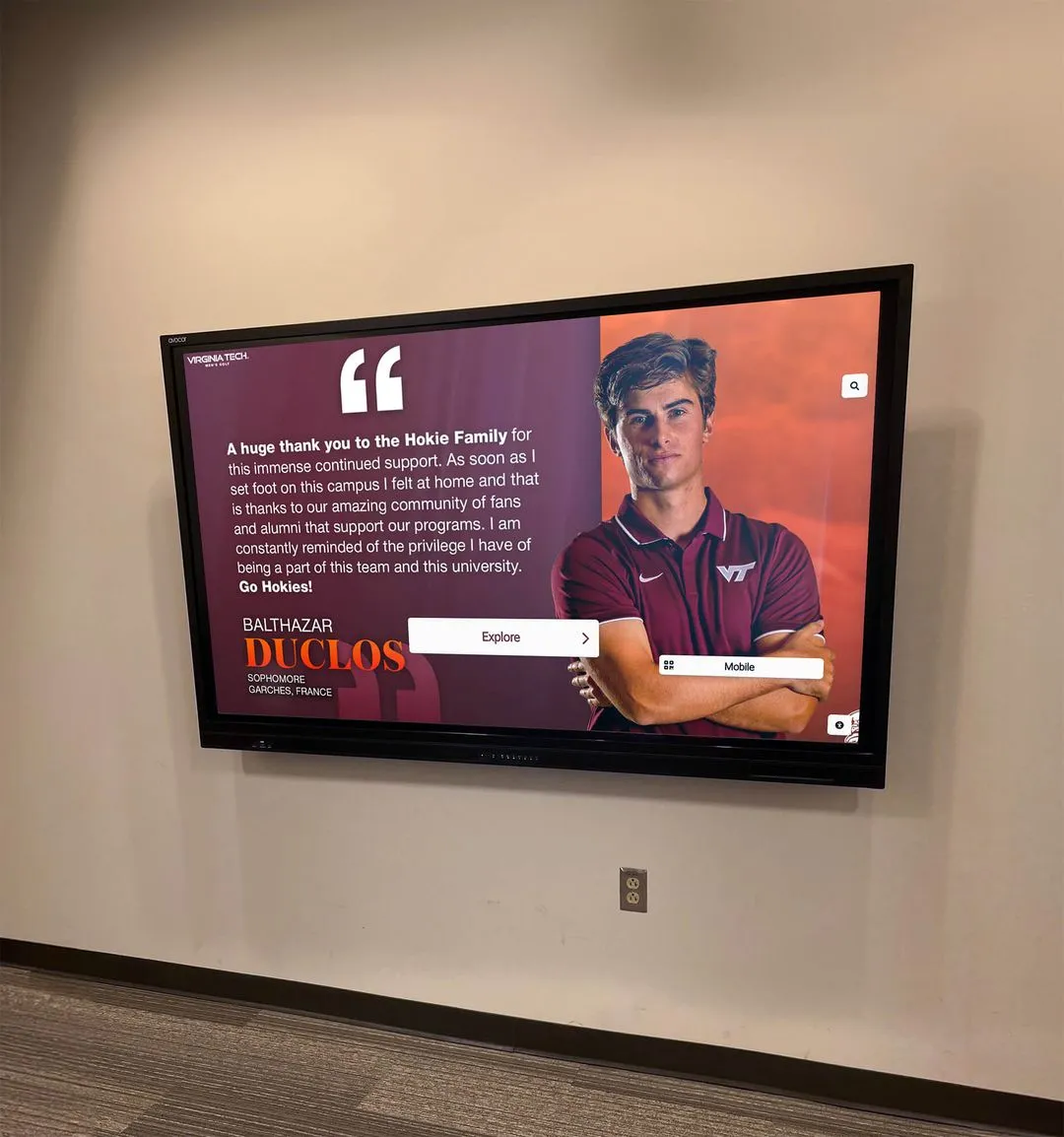
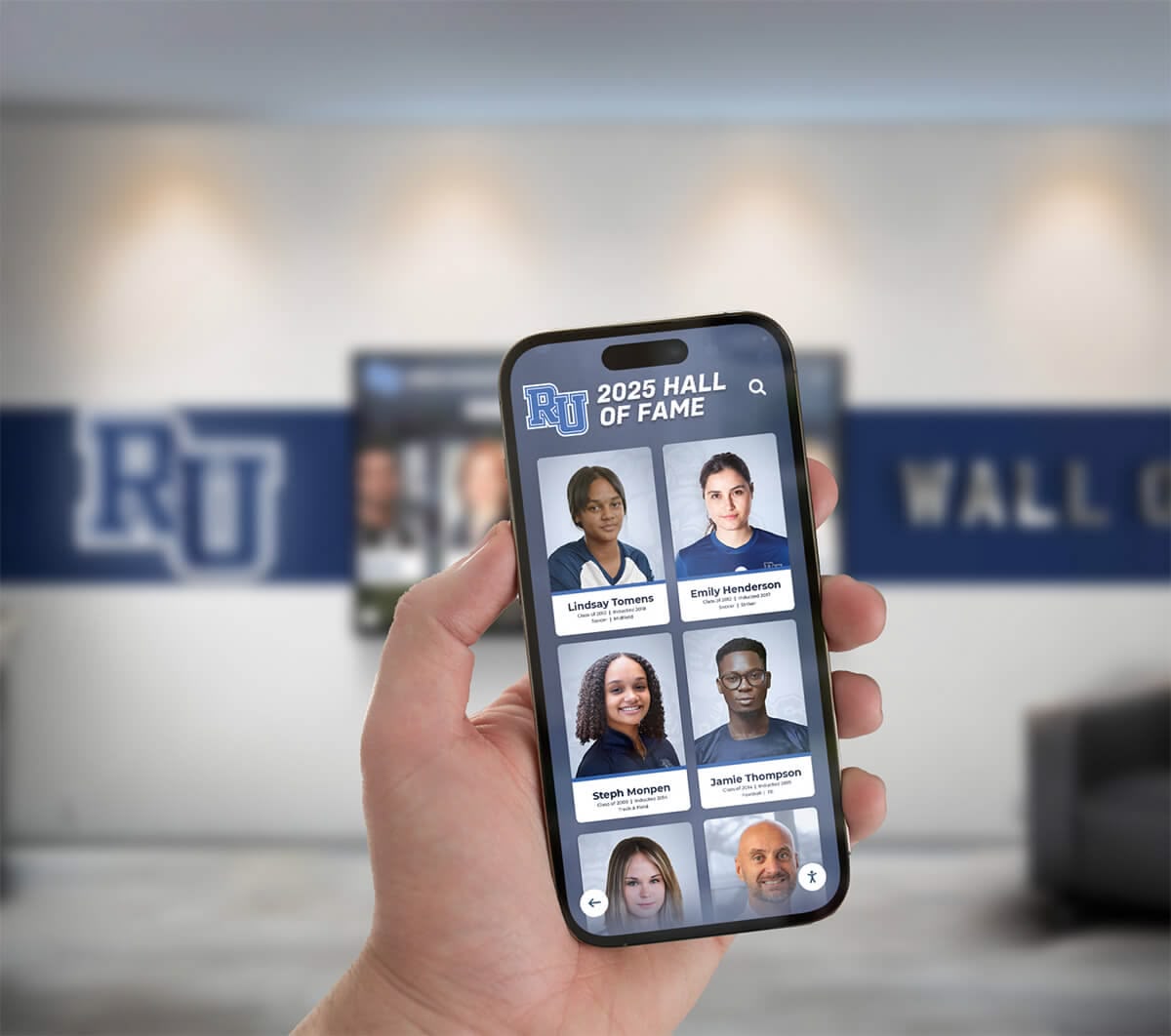
Mobile-accessible digital archives enable anytime, anywhere access to institutional history
Understanding Digital Tools for Historical Engagement
Modern technology offers diverse tools serving different purposes within historical preservation and engagement strategies.
Interactive Touchscreen Displays and Kiosks
Physical interactive displays create engaging historical exploration in museums, schools, lobbies, and public spaces:
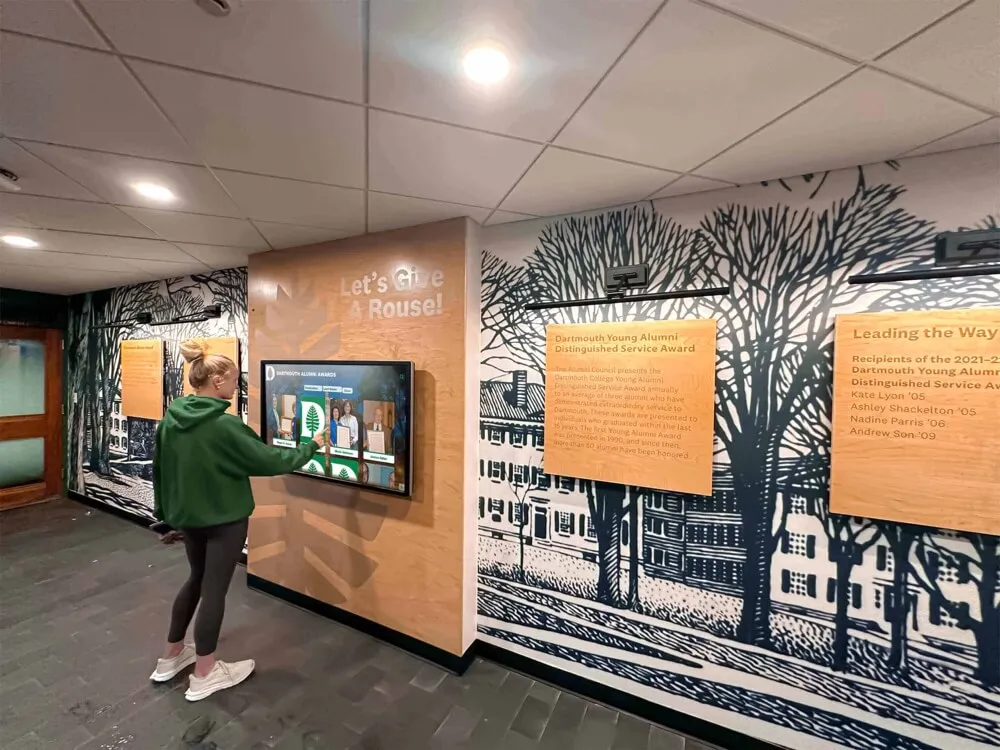
Touchscreen Technology Benefits Interactive touchscreens transform how visitors engage with historical content by enabling self-directed exploration through intuitive interfaces familiar from smartphones and tablets. Visitors navigate historical timelines at their own pace, search for specific people or events matching personal interests, zoom into detailed images examining artifacts closely, and access layered information revealing depth without overwhelming casual browsers.
Schools implementing interactive historical timeline displays report 70% increases in engagement compared to traditional static displays. The interactive nature encourages exploration and discovery, with visitors spending significantly more time engaging with historical content when they control their journey through information.
Unlimited Content Capacity Unlike physical plaques and traditional displays constrained by space limitations, digital platforms accommodate comprehensive historical collections. Schools preserve complete yearbook archives spanning decades, museums present entire collection catalogs exceeding physical display capacity, and historical societies maintain detailed biographical databases of thousands of individuals who shaped local communities.
Solutions like Rocket Alumni Solutions provide platforms specifically designed for historical recognition applications, offering unlimited capacity ensuring every significant person, event, or achievement receives appropriate documentation regardless of space constraints affecting traditional displays.
Multimedia Storytelling Integration Digital displays incorporate diverse media formats enriching historical narratives including historical photographs and document scans, video interviews with participants in historical events, audio recordings of voices and sounds from the past, interactive maps showing geographical contexts, and 3D models of artifacts and historical structures. This multimedia approach creates engaging experiences that text-only descriptions cannot match, bringing history to life through sensory-rich presentations.
Schools using digital historical preservation systems can present comprehensive institutional narratives incorporating visual, audio, and textual elements creating complete historical records that honor complexity while remaining accessible.
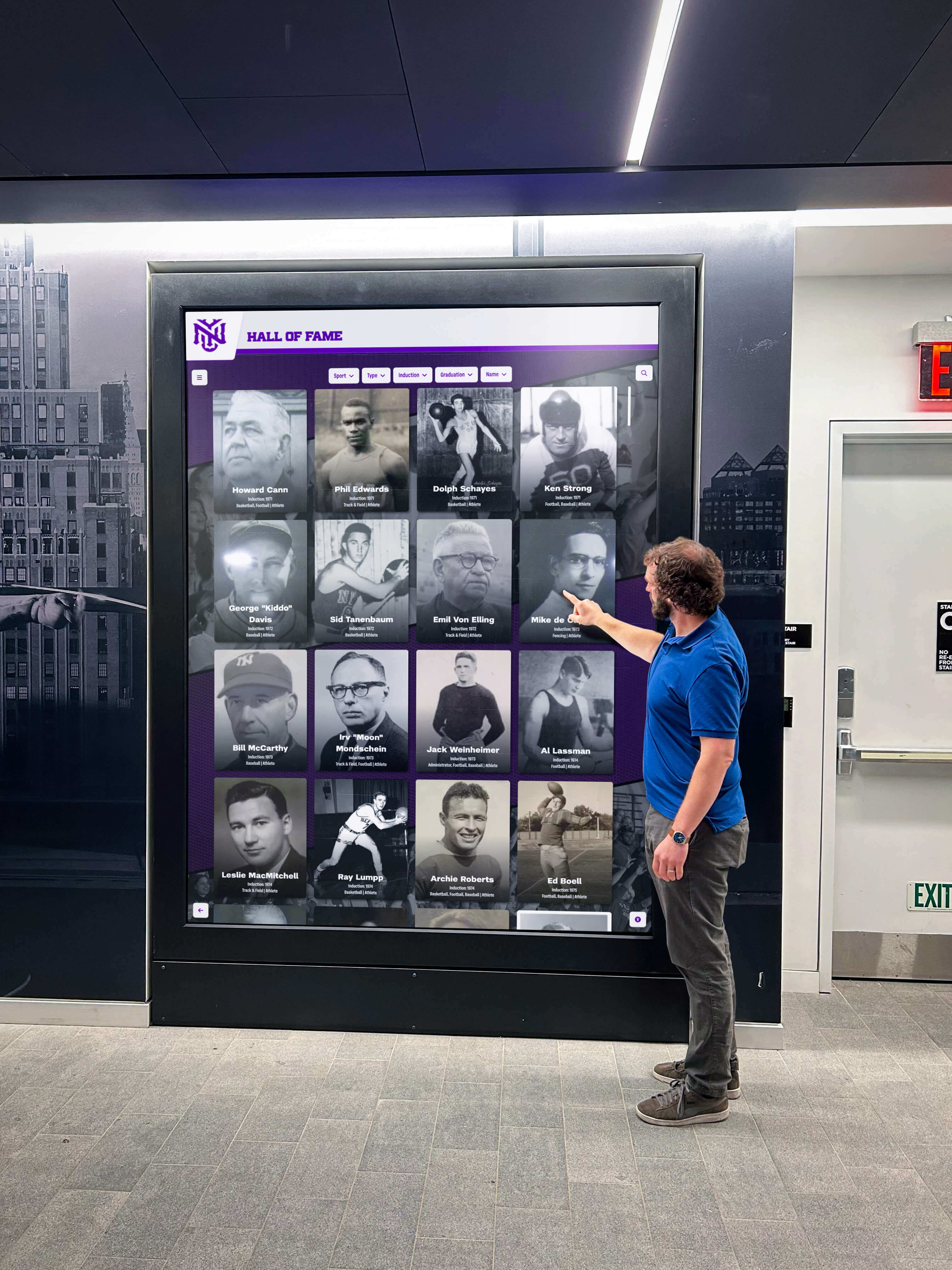
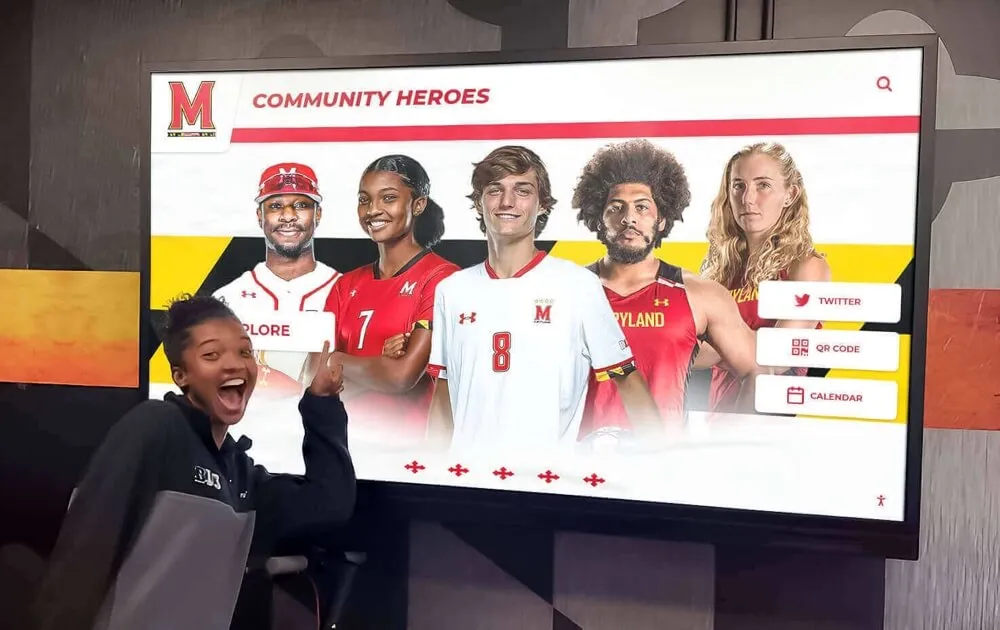
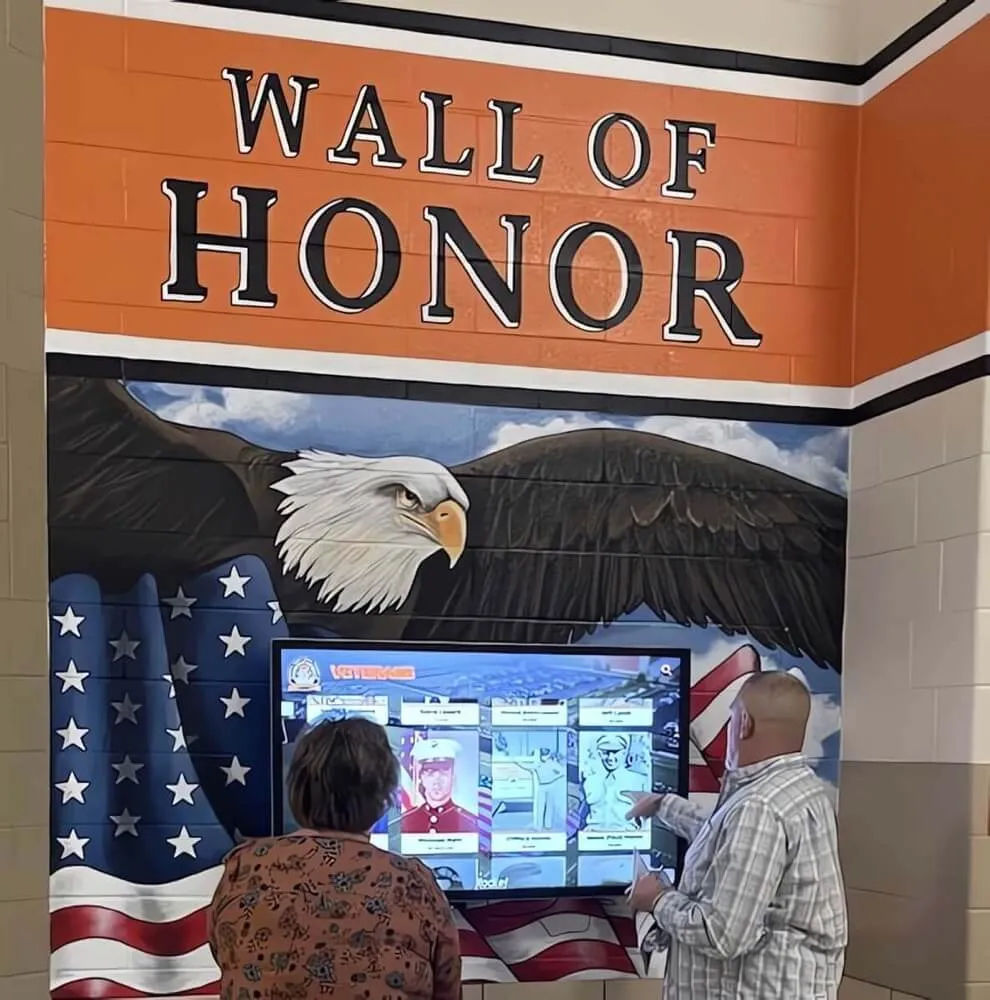
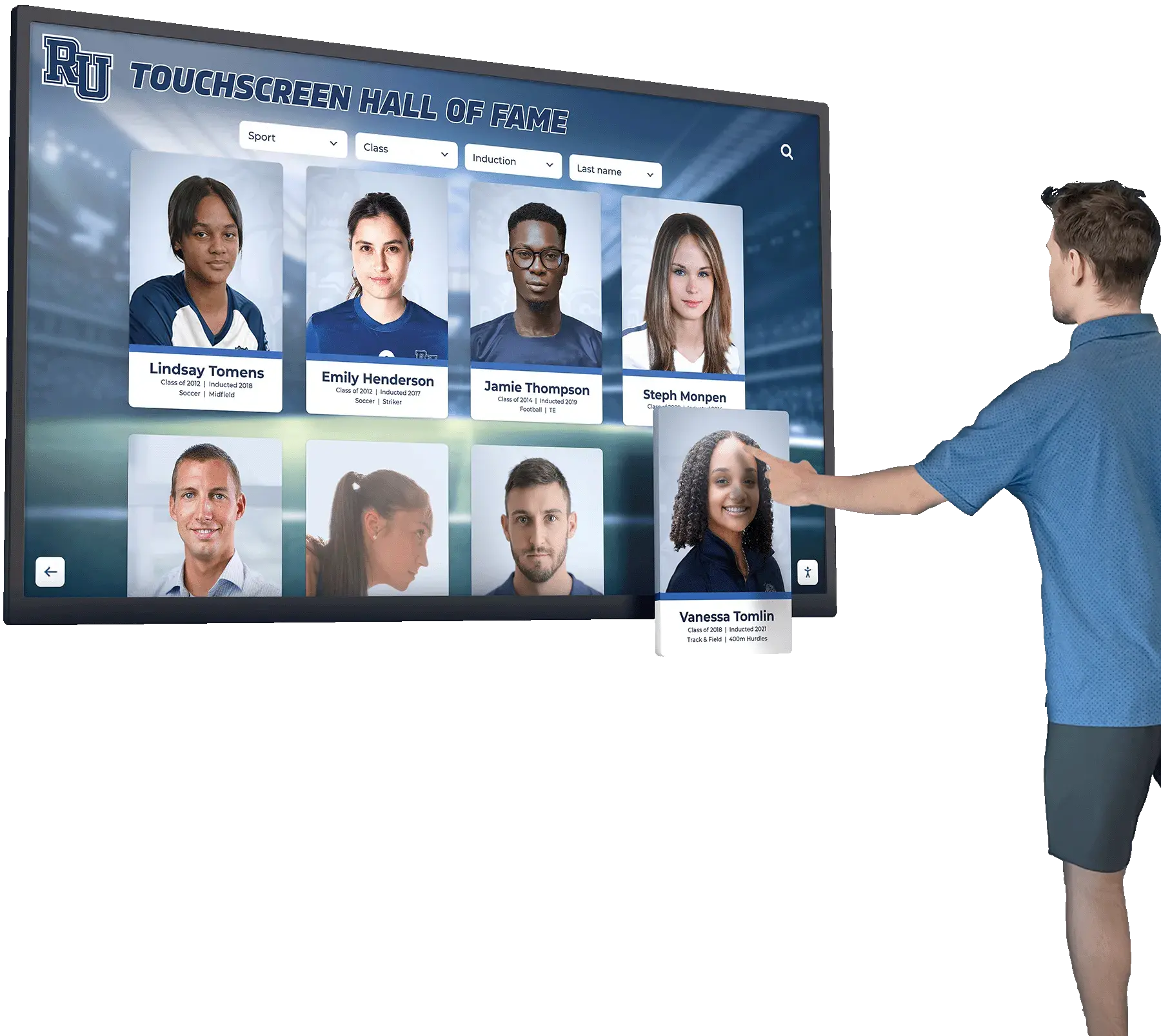
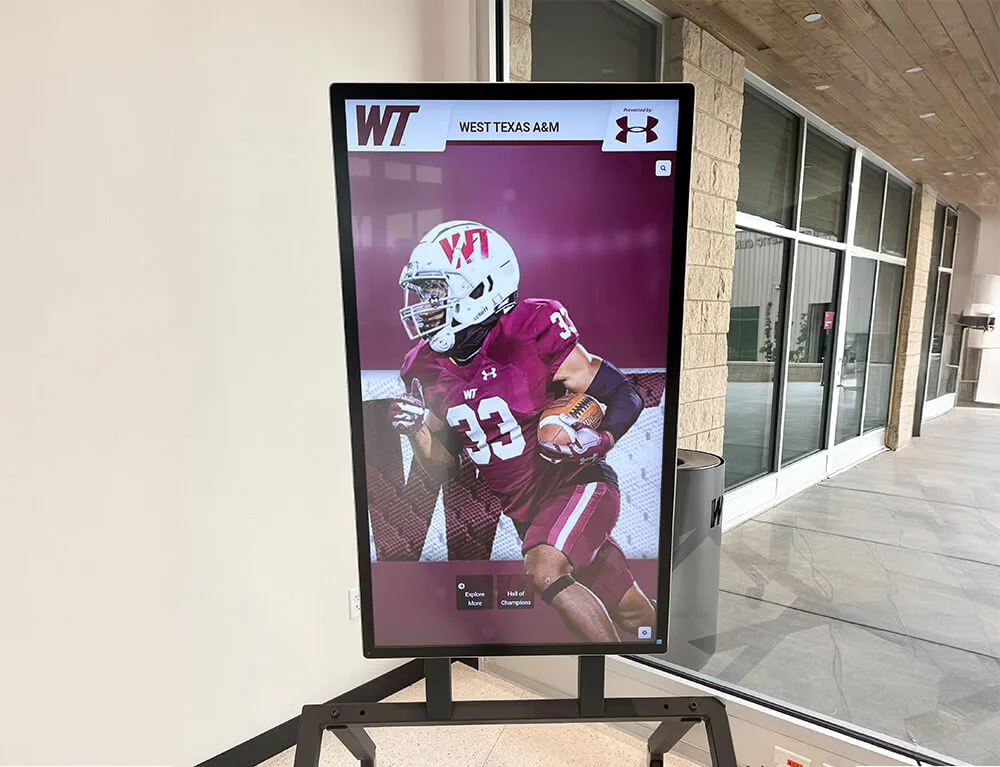
Intuitive touchscreen interfaces encourage exploration and personal discovery
Virtual and Augmented Reality Historical Experiences
Immersive technologies transport users into historical contexts:
Virtual Reality Historical Reconstructions VR creates presence in historical settings impossible to visit physically—ancient cities that no longer exist, historical buildings lost to fire or demolition, battlefields as they appeared during conflicts, or architectural interiors inaccessible for preservation. The British Museum’s VR experiences, for example, enable visitors to explore the Bronze Age in lifelike, immersive settings that bring ancient history to vivid life.
Students studying history through VR report deeper emotional connections and better retention compared to traditional textbook learning. The immersive nature creates memorable experiences where learners feel transported into historical moments rather than merely reading about them.
Augmented Reality Historical Overlays AR technology overlays digital historical content onto physical environments through smartphones or tablets. Museum visitors point devices at artifacts to access detailed information, animations, or 3D models. Students exploring historical sites view reconstructions showing how locations appeared in the past. Historical walking tours provide contextual information about buildings and locations as participants move through spaces.
According to MuseumNext research on AR technology, augmented reality offers immersive and educational experiences allowing cultural institutions to present stories, artworks, or artifacts that may have been lost or damaged, effectively bringing disappeared history back to visual life.
Accessibility and Scalability Advantages While VR and AR represent cutting-edge applications, even basic digital tools democratize access to historical content. Web-based platforms require no specialized hardware beyond standard internet-connected devices, making comprehensive historical archives accessible to anyone regardless of technical sophistication or equipment investment.
Digital Archives and Online Collections
Comprehensive digitization preserves and provides access to historical materials:
Yearbook and Document Digitization Schools implementing digital archive systems scan decades of yearbooks, student newspapers, event programs, historical photographs, and institutional records creating searchable databases where alumni, researchers, and students discover specific individuals, years, or events instantly. Optical character recognition technology makes scanned text searchable, enabling users to locate specific names across decades of publications in seconds rather than hours of manual searching.
Organizations developing comprehensive school digital archives preserve institutional memory while making heritage accessible to current community members who build understanding of institutional evolution and tradition.
Museum Collection Databases Major museums maintain extensive online collections allowing global audiences to explore holdings from anywhere. The Smithsonian Institution offers digital education resources providing access to millions of artifacts, specimens, and artworks through high-resolution imagery and detailed contextual information supporting education and research worldwide.
Google Arts & Culture exemplifies how digital tools democratize access to cultural heritage, providing thousands of digitized artworks, 3D models of famous buildings and sculptures, and 360-degree virtual museum walkabouts bringing world-class collections to anyone with internet access.
Preservation Through Digitization Digital archives serve crucial preservation functions. Fragile historical documents and photographs deteriorate with handling and age. Digital surrogates provide access while protecting originals. Natural disasters, fires, and accidents threaten physical collections, but distributed digital backups ensure historical content survives even if physical materials are lost.
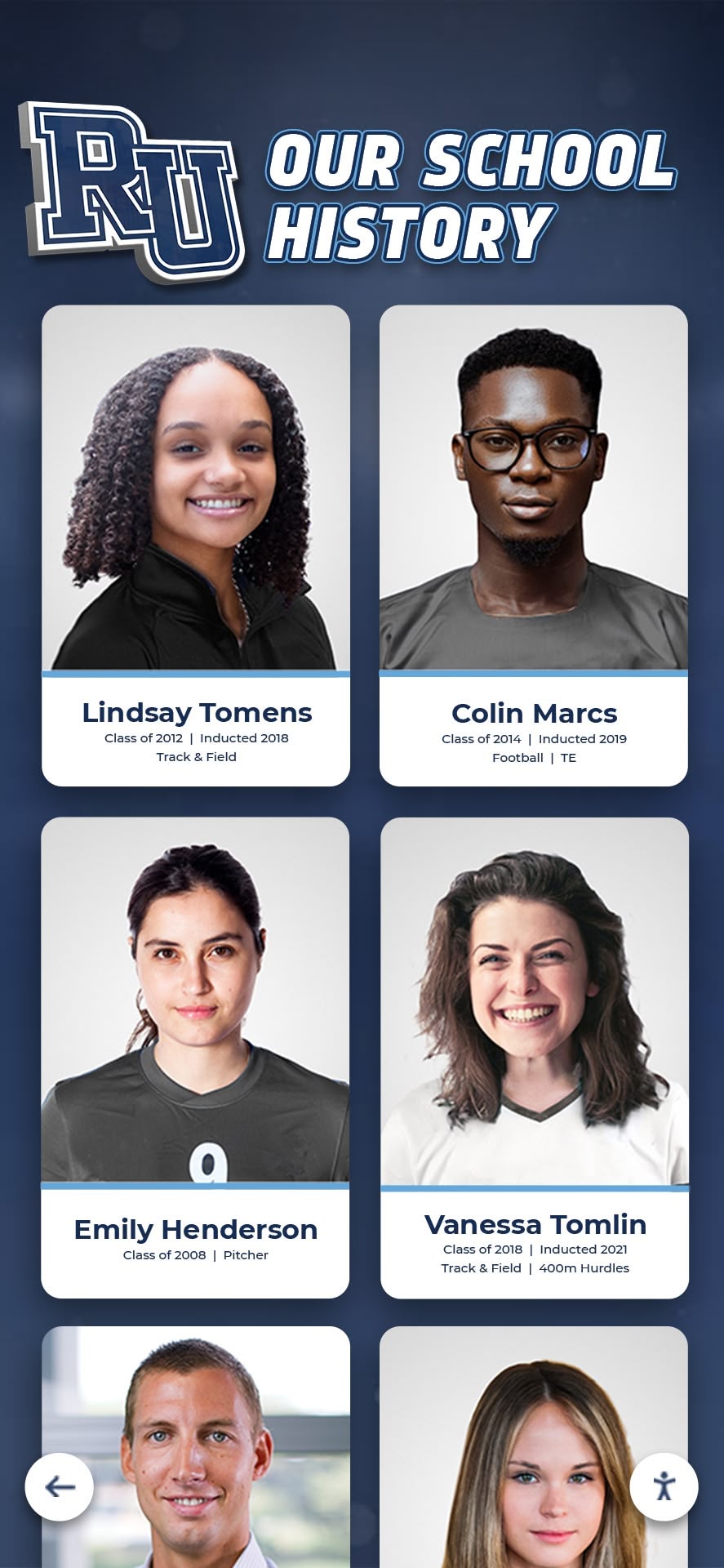
Digitized historical photographs preserve institutional heritage while enabling easy discovery and access
Mobile Applications and Responsive Platforms
History access extends beyond physical locations through mobile technology:
Mobile-First Historical Access Modern audiences expect content optimized for smartphones and tablets. Historical archives, museum collections, and institutional recognition systems require responsive design ensuring full functionality across all device sizes. Students research school history from personal devices. Museum visitors access collection information through phones while viewing physical exhibits. Alumni explore institutional history remotely from anywhere in the world.
Web-based platforms like Rocket Alumni Solutions provide native mobile experiences without requiring specialized app downloads, reducing barriers to historical content access while ensuring compatibility across diverse devices and operating systems.
QR Code Physical-Digital Bridges QR codes strategically placed throughout museums, schools, and historical sites bridge physical and digital experiences. Visitors scan codes with smartphones to access detailed information about displays, view video content elaborating on physical exhibits, share discoveries through social media, and save content for later review. This integration creates seamless experiences where physical presence enhances digital exploration and vice versa.
Schools implementing mobile-accessible recognition systems report increased engagement as students discover they can access institutional history anytime, anywhere, not just during physical visits to display locations.
Location-Based Historical Content Mobile applications provide location-aware historical content, automatically presenting information relevant to users’ physical positions. Historical walking tours deliver narration and context as participants reach specific locations. Campus tours highlight historical significance of buildings as groups approach. Battlefield guides provide tactical information corresponding to actual ground positions during conflicts.
Digital Tools Transforming School Historical Preservation
Educational institutions leverage technology to preserve and celebrate institutional heritage:
Comprehensive School History Software Platforms
Purpose-built platforms address unique needs of educational historical preservation:
Centralized Heritage Management Modern school history software transforms fragmented approaches—yearbooks stored in closets, athletic records on paper, photographs scattered across filing cabinets—into centralized, searchable digital systems preserving institutional memory while making heritage accessible to current students, alumni, and community members.
Comprehensive platforms integrate multiple historical content types including digitized yearbooks with searchable text, athletic and academic achievement records, historical photographs and videos, biographical information about notable alumni and faculty, institutional timeline documentation, and facility evolution records. Centralization ensures historical information remains organized and accessible rather than fragmenting across incompatible systems or physical storage locations.
Role-Based Content Management School historical platforms require multi-user access enabling different stakeholders to contribute appropriately. Alumni office staff manage biographical content and historical records, athletic department personnel update sports achievement information, librarians oversee yearbook digitization and organization, student groups contribute to historical research projects, and community historians share local context and memories.
Cloud-based remote management through platforms like Rocket Alumni Solutions enables authorized contributors to update content from any location without requiring physical access to display hardware or specialized technical expertise. This accessibility ensures historical archives remain living resources growing richer over time rather than static collections frozen at creation.
Search and Discovery Functionality Effective historical archives require robust search enabling users to find relevant content including name-based searches locating specific individuals, year-based browsing exploring particular time periods, event-based discovery finding significant institutional moments, category-based exploration discovering athletic achievements, academic honors, or faculty histories, and relationship-based connections following networks of classmates, teammates, or colleagues.
Advanced search functionality transforms historical archives from impressive but overwhelming collections into personally relevant resources where each visitor discovers connections matching individual interests and relationships.
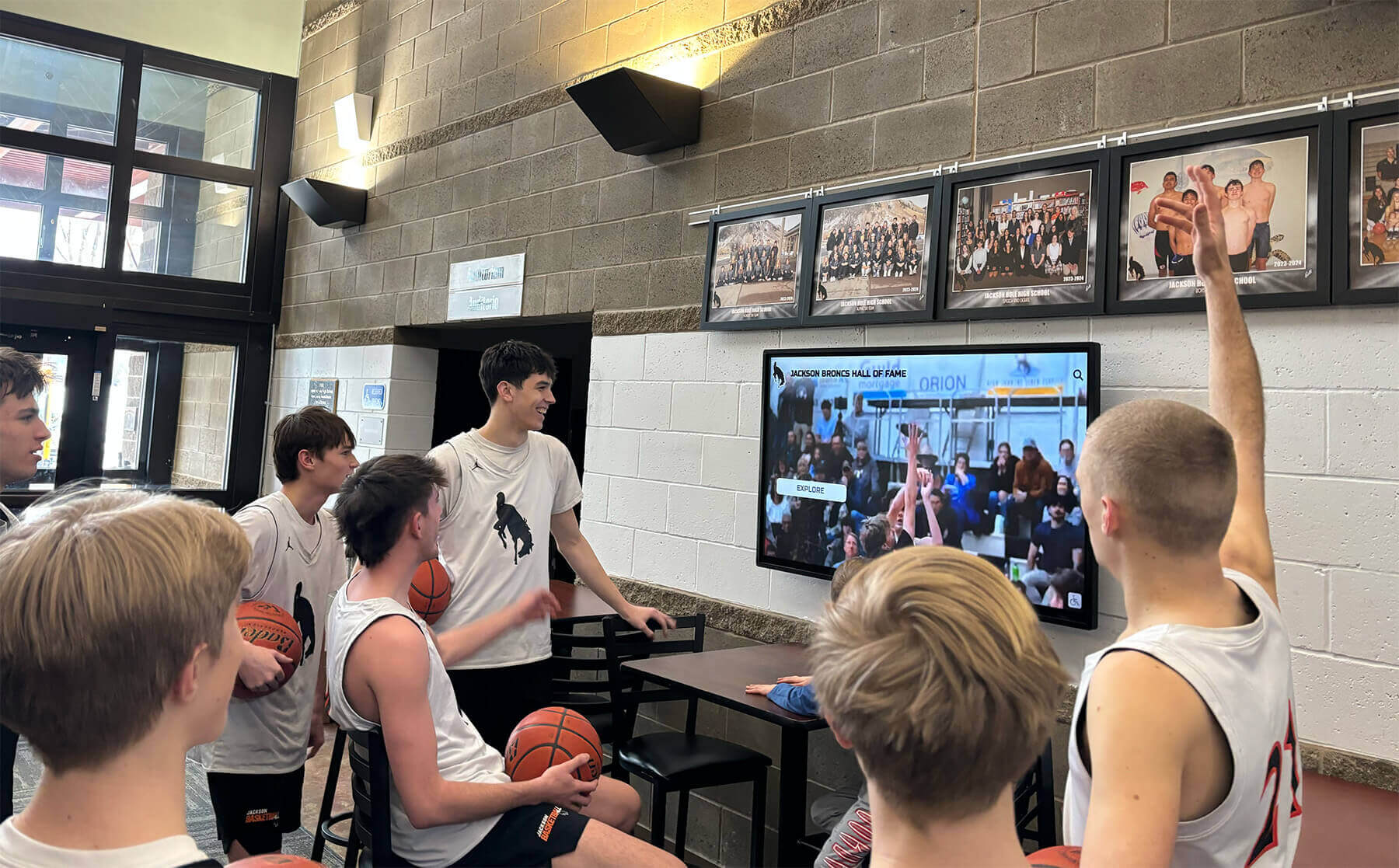
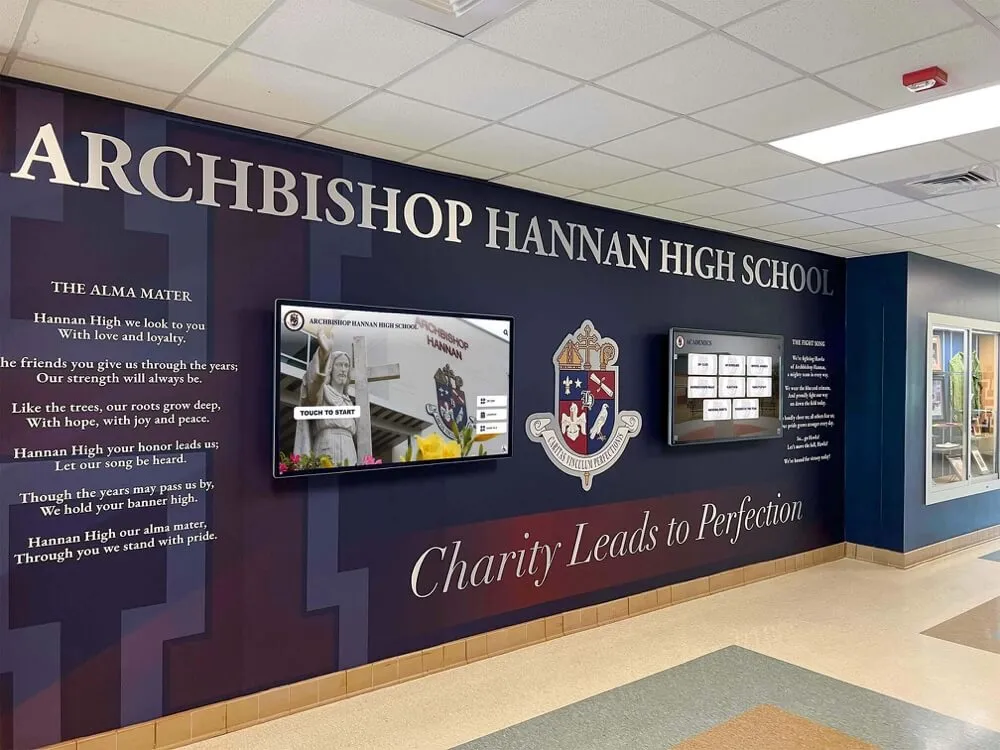
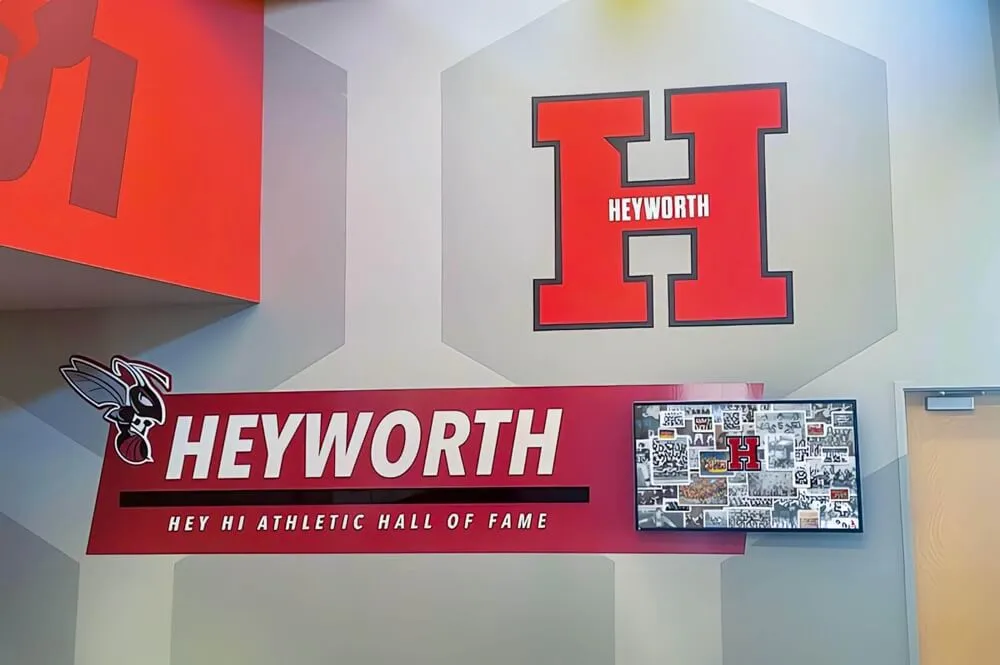
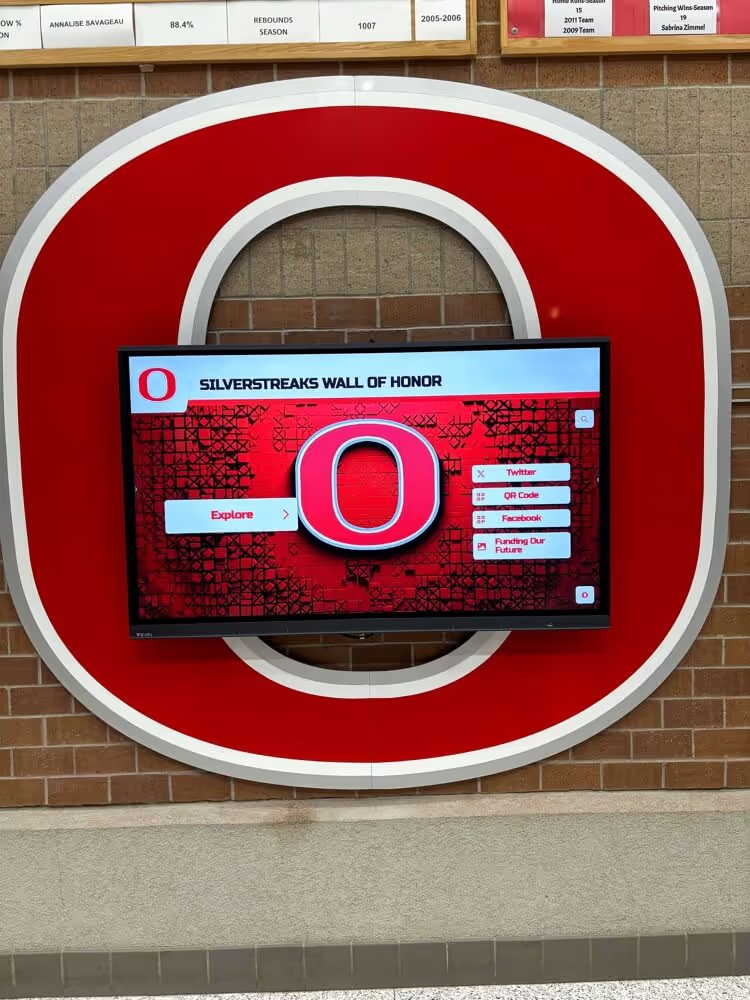
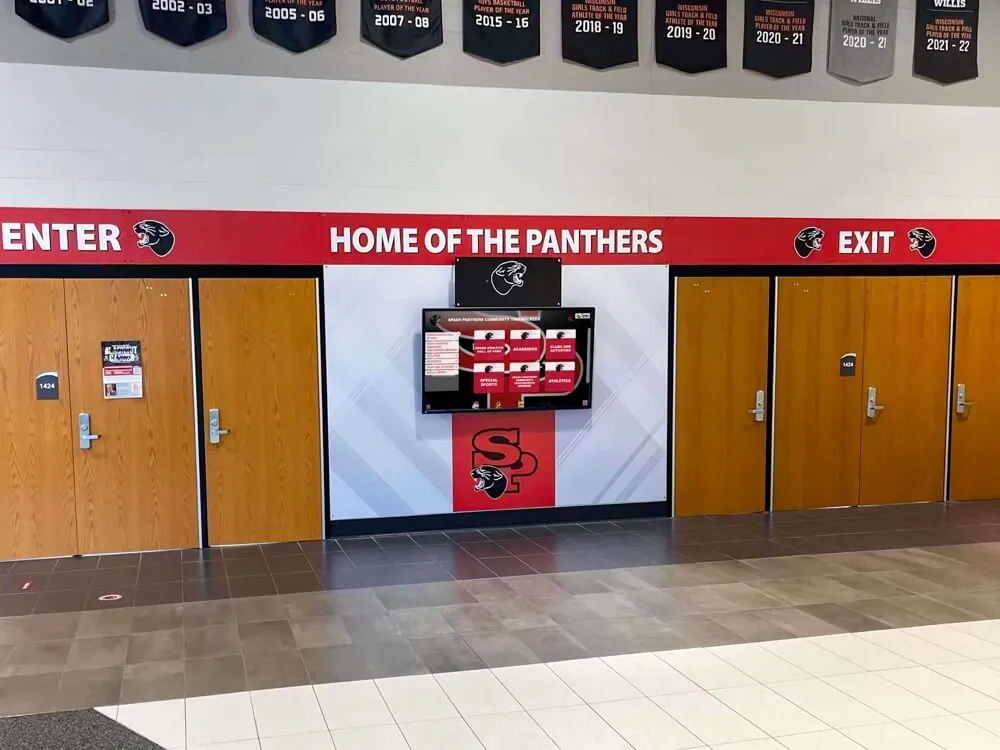
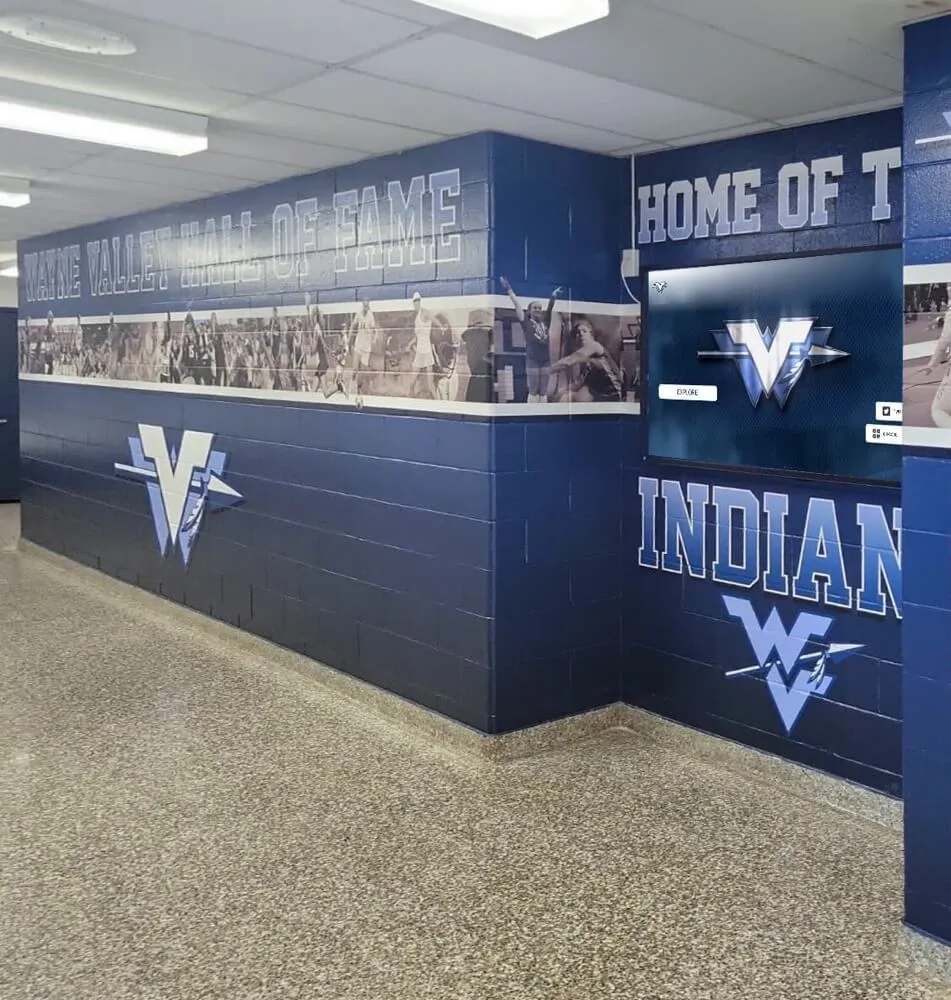
Interactive school history displays create gathering points where students connect with institutional heritage
Athletic and Academic Achievement Recognition
Digital displays celebrate student accomplishments across generations:
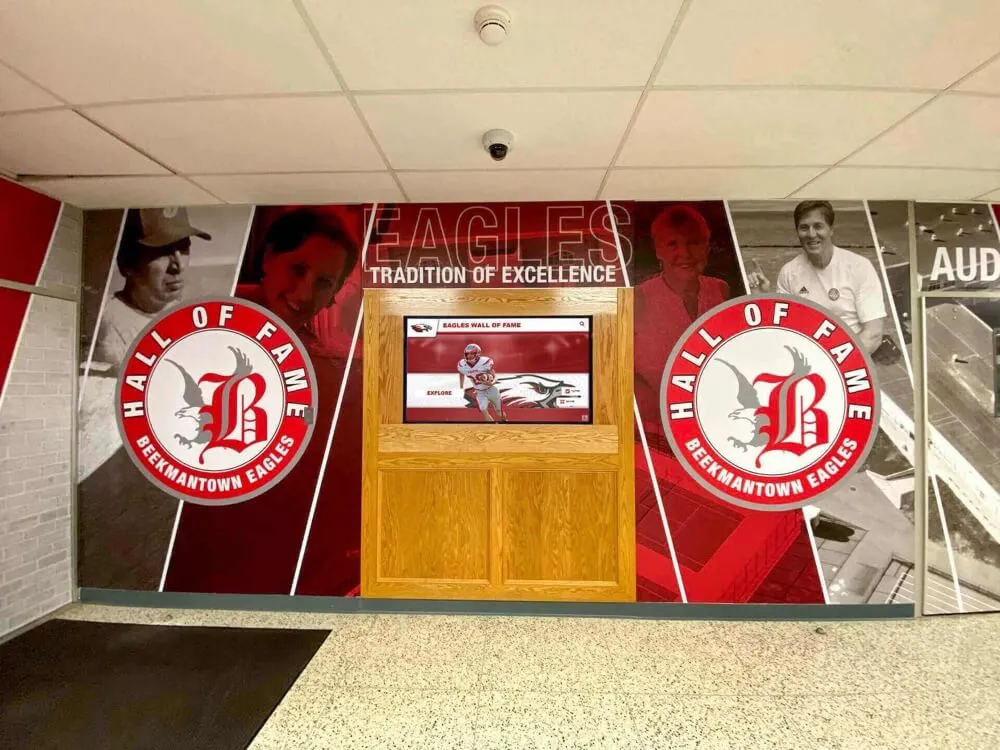
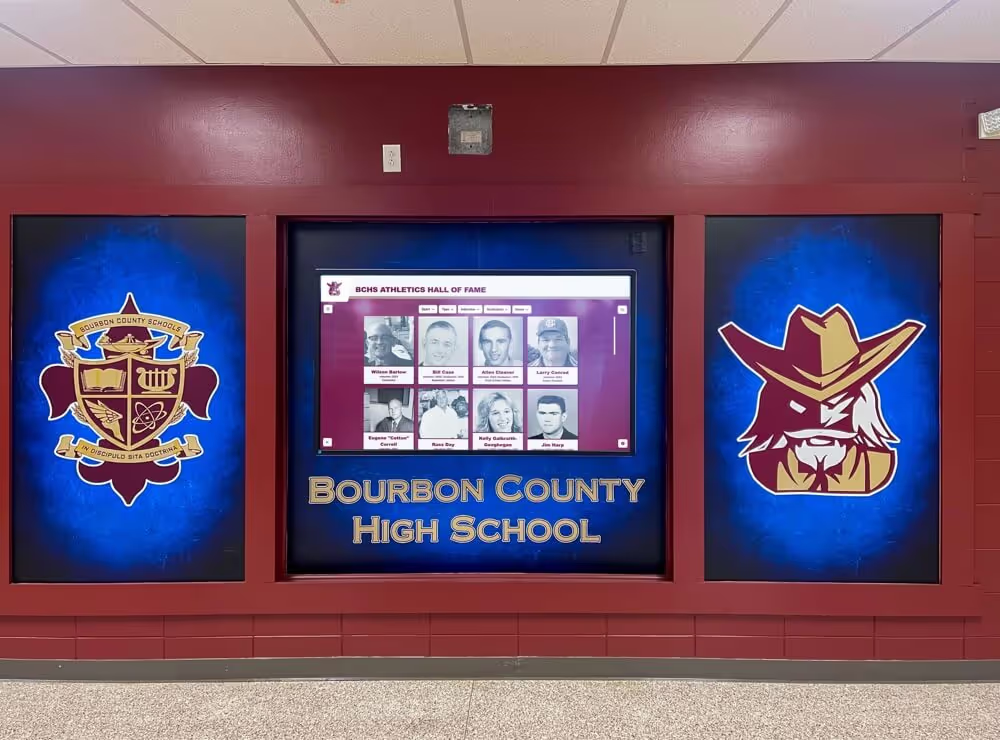
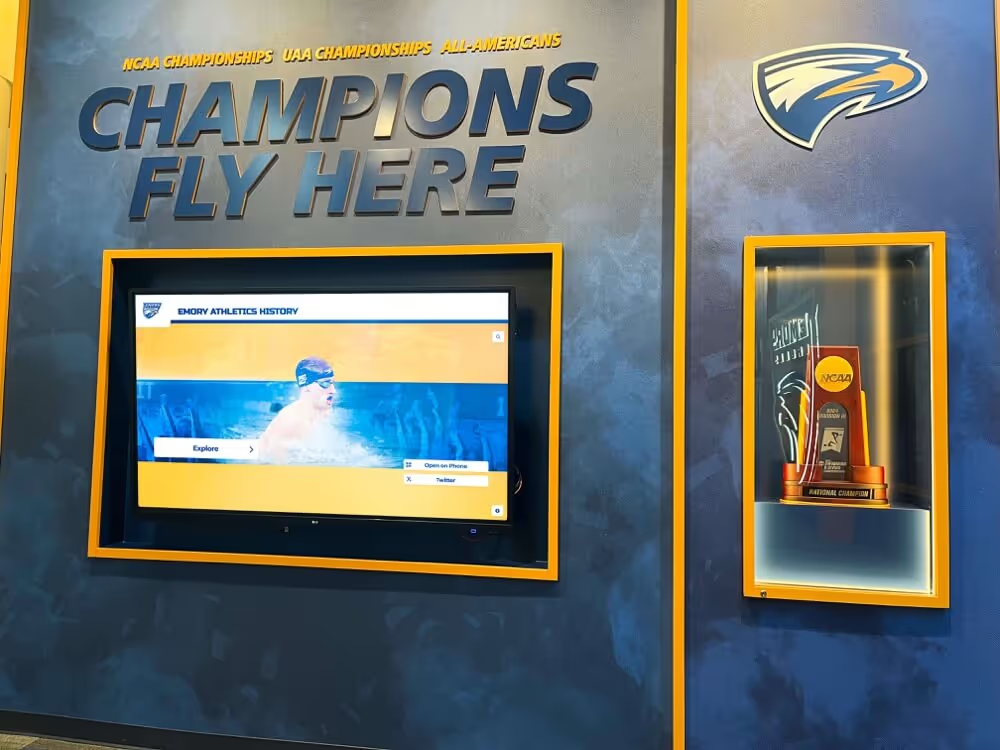
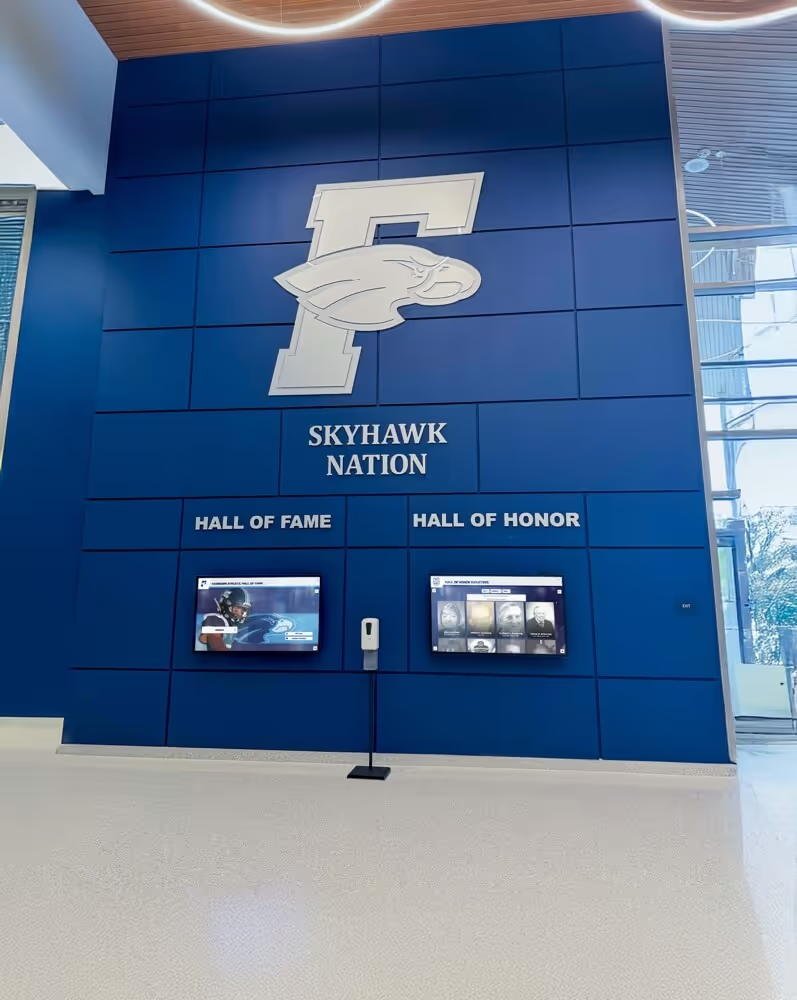
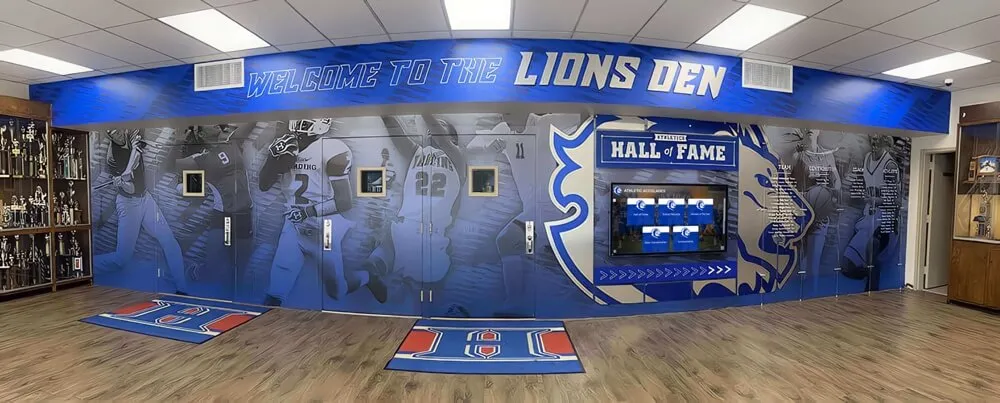
Digital Halls of Fame and Record Boards Traditional athletic recognition faces space constraints limiting how many achievements receive visibility. Wall-mounted plaques fill quickly, trophy cases overflow, and record boards accommodate finite entries. Digital recognition platforms eliminate these limitations, accommodating comprehensive celebration of athletic excellence across all sports, genders, and time periods.
Schools implementing digital athletic recognition systems report increased athlete motivation and family engagement when students see their achievements preserved alongside historical greats. The unlimited capacity ensures equitable recognition across all programs rather than limiting visibility to highest-profile sports.
Auto-Ranking and Dynamic Content Sophisticated digital platforms automatically rank and display athletic records based on performance data. When a student breaks a school record, the digital display immediately updates reflecting new achievements without requiring manual intervention. This dynamic functionality keeps recognition current and relevant, honoring excellence promptly rather than waiting for annual plaque updates or trophy additions.
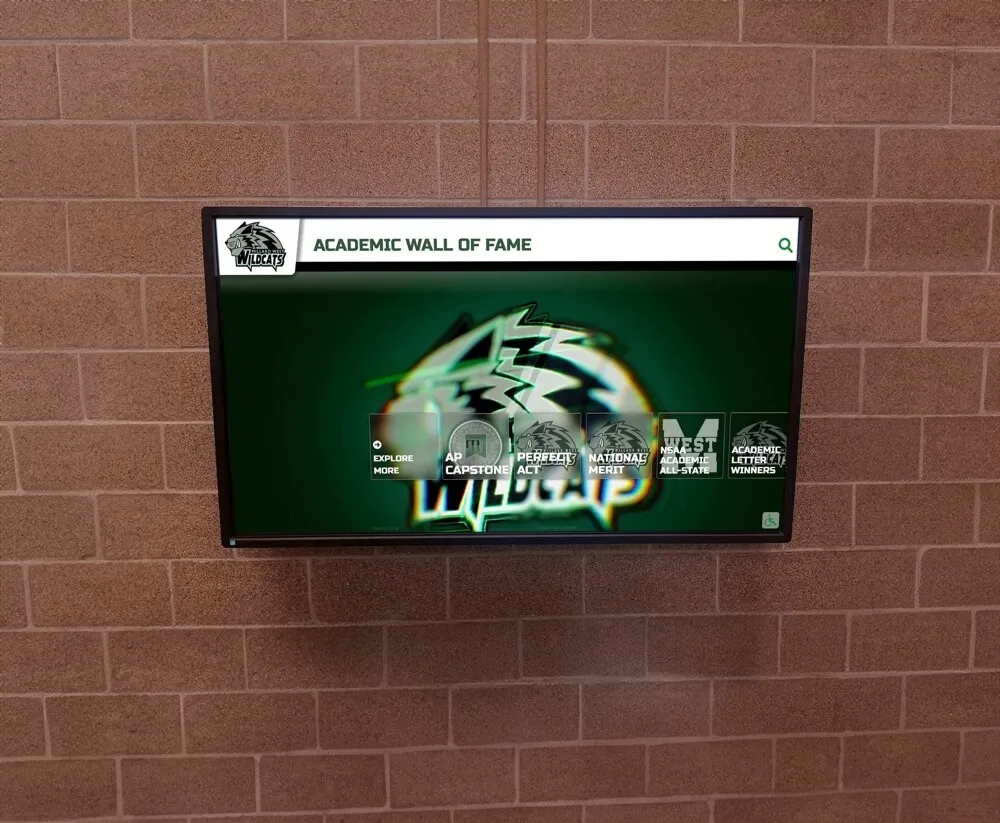
Academic Excellence Recognition Beyond athletics, digital platforms celebrate academic achievements including honor roll recognition, scholarship recipients, academic competition winners, perfect attendance honorees, National Honor Society inductees, and valedictorian and salutatorian histories. Comprehensive recognition validates diverse excellence types, demonstrating institutional values celebrating intellectual and service achievements alongside athletic prowess.
Interactive Historical Timeline Displays
Chronological presentations contextualize institutional evolution:
Visual Timeline Interfaces Interactive timeline displays present institutional history chronologically through visually engaging interfaces where users explore decades of evolution, zoom into specific time periods, view historical photographs from particular eras, and discover how current traditions and facilities evolved over time.
Schools approaching centennial or milestone anniversaries find timeline displays particularly valuable for celebrating institutional longevity while educating current students about rich histories and traditions predating their personal experiences.
Contextual Historical Integration Effective institutional timelines integrate local, national, and world historical contexts, helping students understand how school history intersects with broader social movements and events. A 1960s-era school building expansion gains meaning when presented alongside space race enthusiasm. Integration of diverse student populations in the 1970s connects with civil rights progress. Technology adoption in classrooms reflects broader digital transformation.
This contextualization transforms institutional history from insular chronicles into meaningful narratives showing how schools participated in and reflected broader societal evolution.
Themed Historical Explorations Beyond chronological presentation, interactive systems enable thematic exploration including architectural evolution of facilities, development of specific academic programs, athletic program establishment and growth, faculty and leadership histories, traditions and spirit activities evolution, and demographic and community changes over time. Thematic organization helps visitors with specific interests efficiently discover relevant historical content.
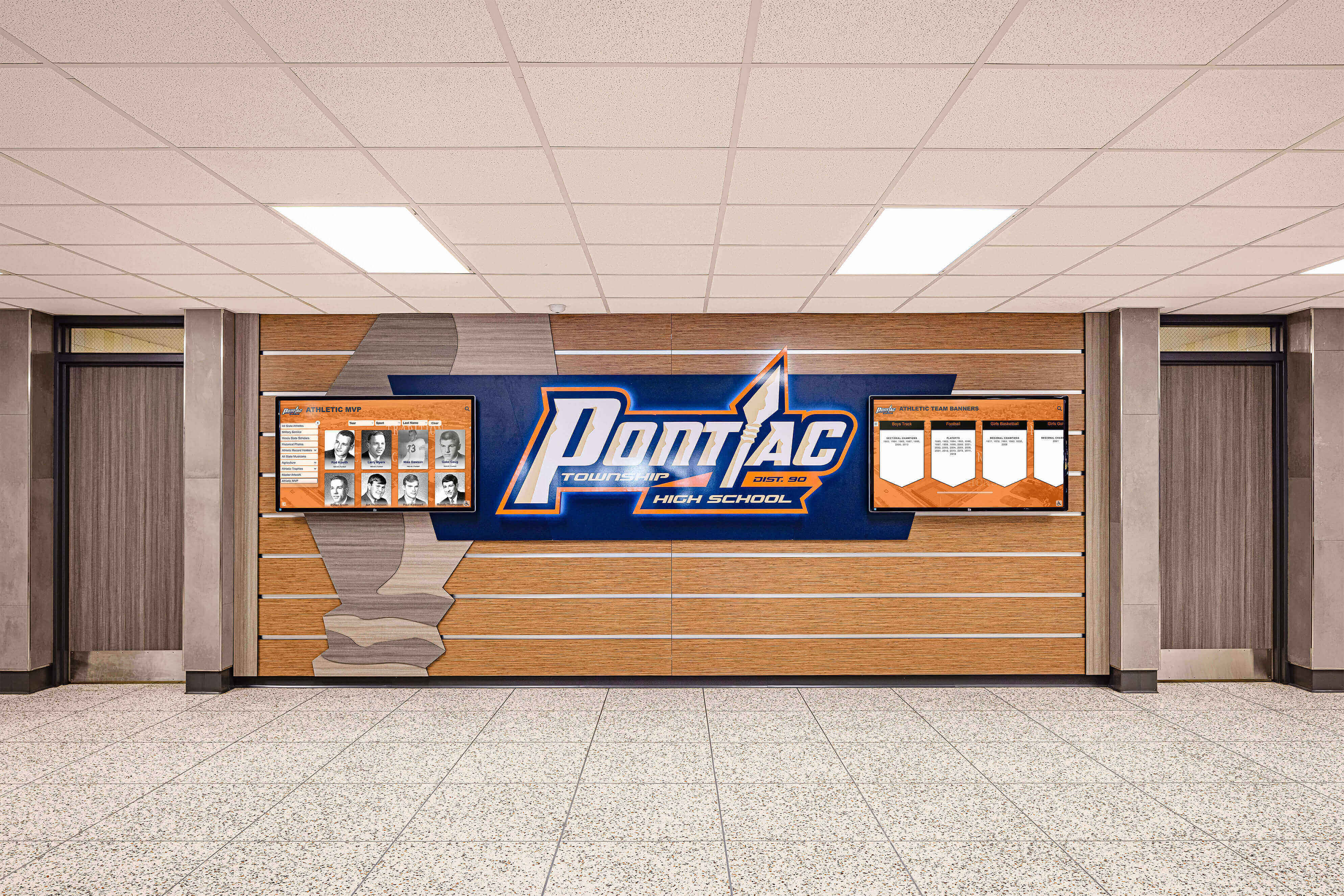
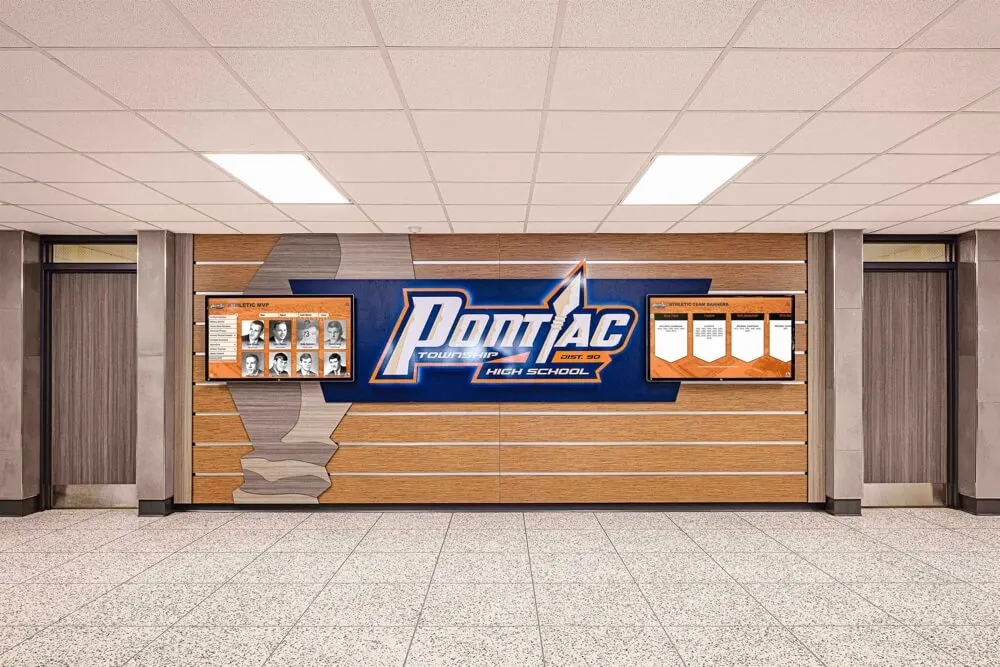
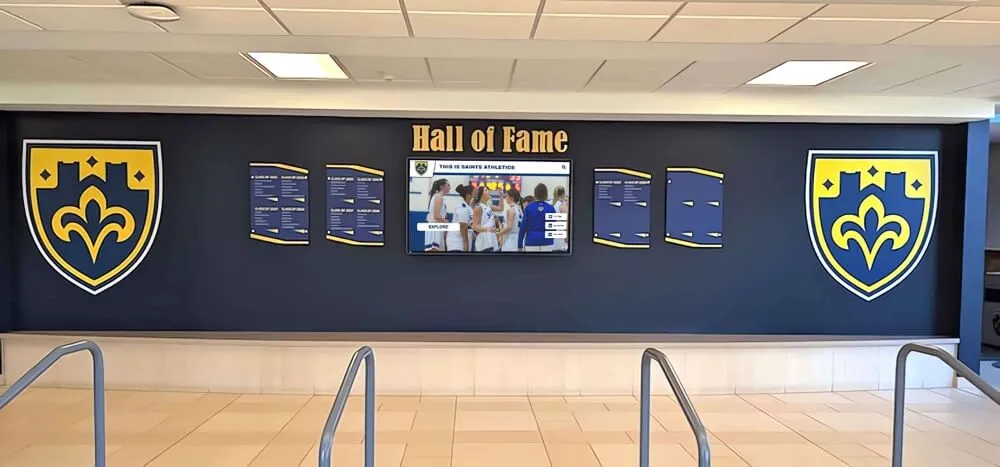
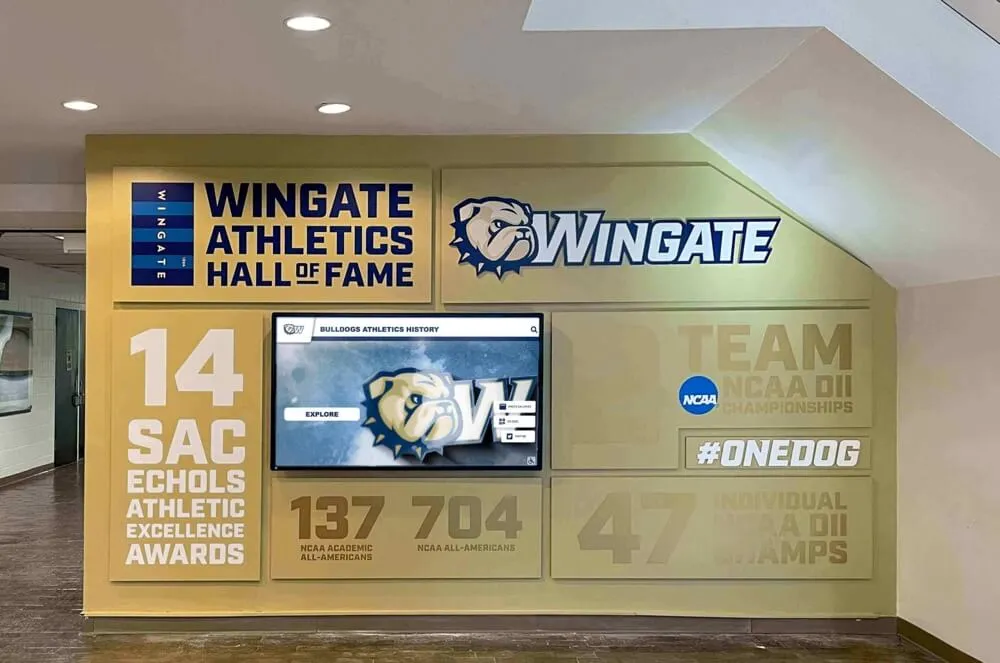
Integrated historical displays honor institutional heritage while complementing facility architecture
Museum and Cultural Institution Digital Engagement
Museums leverage technology creating experiences impossible with traditional exhibits:
Interactive Exhibit Technology
Digital tools augment physical collections:
Touchscreen Information Kiosks Museum touchscreen kiosks provide layered information accommodating different visitor interests and expertise levels. Casual visitors access basic information and visual content, curious learners explore medium-depth contextual details, serious students and researchers access comprehensive scholarly information, and children engage with age-appropriate interactive games and activities.
This layered approach ensures exhibits serve diverse audiences without overwhelming casual visitors with academic detail while still providing depth for those seeking comprehensive understanding.
Collection Exploration Stations Museums with extensive collections exceeding physical display capacity use digital exploration stations enabling visitors to browse complete catalogs, search for specific artists or time periods, view high-resolution images of items in storage, request physical viewing of particular objects, and curate personal collections for further research.
The Smithsonian Institution exemplifies comprehensive digital collection access, using 3D printing to create replicas of delicate fossils and artifacts for hands-on educational experiences while protecting fragile originals through digitization supporting remote research and learning.
Interactive Educational Games Educational gaming transforms potentially dry historical content into engaging learning experiences. The nonprofit iCivics—founded by former Supreme Court Justice Sandra Day O’Connor—offers free games engaging students with civics and history content that might otherwise seem boring, demonstrating how game mechanics create meaningful engagement with important but challenging subject matter.
Virtual Museum Tours and Remote Access
Geographic barriers disappear through digital platforms:
360-Degree Virtual Walkthroughs High-quality virtual museum tours provide immersive experiences for those unable to visit physically. International audiences explore institutions thousands of miles away. Mobility-limited individuals access museums with challenging physical layouts. Teachers preview exhibitions before planning field trips. Researchers study exhibit presentations for academic analysis.
During pandemic closures, virtual tours enabled museums to maintain educational missions and public engagement despite physical access restrictions, demonstrating how digital tools provide resilience ensuring cultural institutions continue serving audiences despite challenges affecting physical operations.
Online Educational Resources and Curriculum Integration Museums develop comprehensive educational resources extending institutional expertise to classrooms worldwide. Lesson plans aligned with curriculum standards help teachers integrate museum content into existing courses. Virtual field trips provide structured educational experiences accessible to schools lacking funding for physical visits. Educator guides support effective use of digital resources maximizing learning impact.
Museums across America provide digital learning resources that classroom teachers integrate into history, science, art, and social studies curricula, extending museum educational missions far beyond physical walls to impact students in communities lacking local access to equivalent cultural resources.
Collection Research and Academic Access Digital collections serve scholarly communities by providing high-resolution imagery for detailed analysis, comprehensive metadata supporting research, comparative tools enabling cross-collection studies, citation systems supporting academic publication, and request mechanisms enabling physical examination of particular objects when necessary.
This research infrastructure ensures museums fulfill scholarly missions while making collections accessible to global research communities rather than limiting access to those able to visit physically.
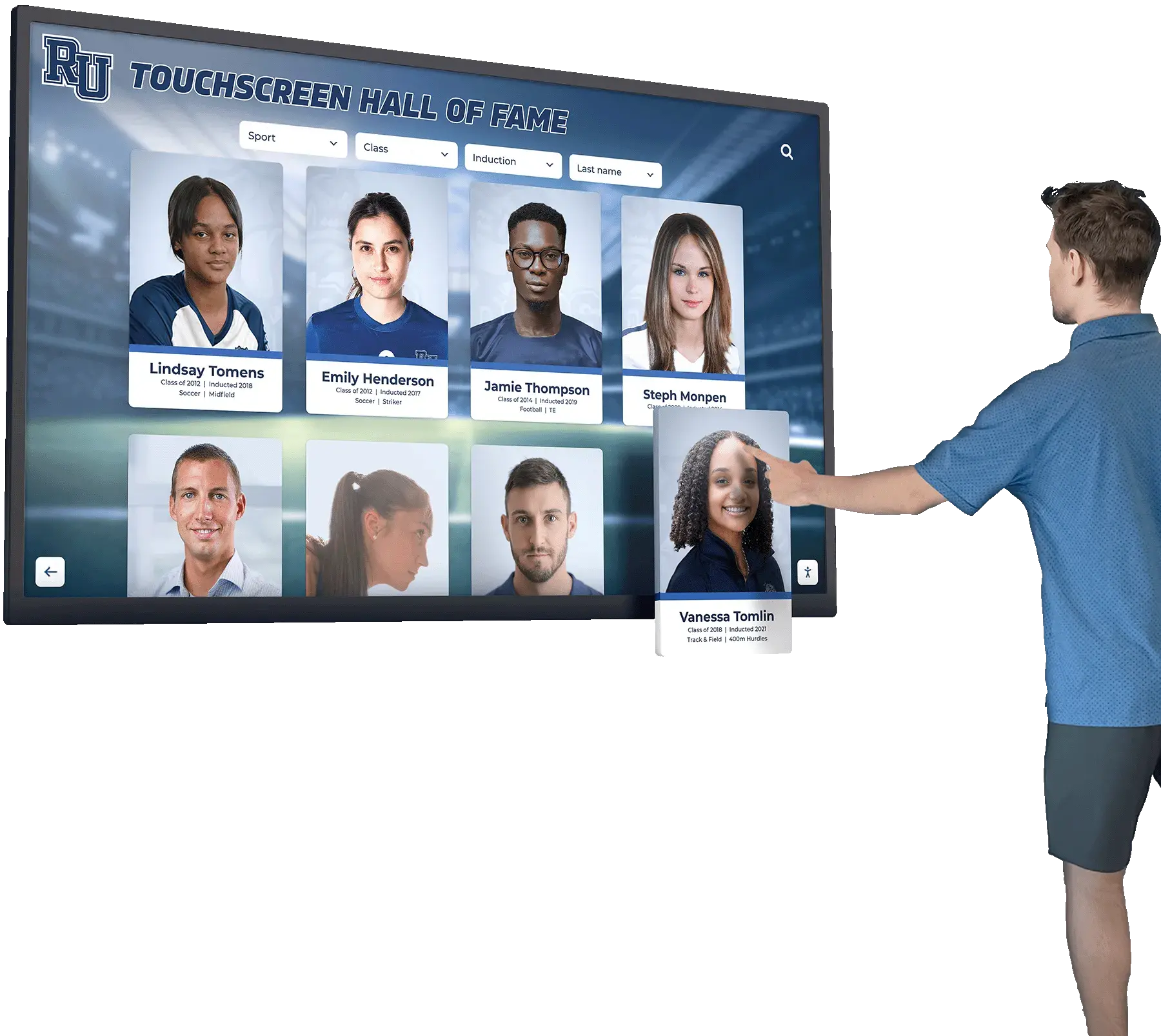
Museum touchscreen displays enable self-directed exploration at each visitor's own pace
Historical Societies and Community Archives
Local historical preservation benefits particularly from digital accessibility:
Preserving Local and Regional History
Community historical organizations leverage technology serving local heritage missions:
Genealogy and Family History Research Digital archives enable family historians and genealogists to discover ancestors’ roles in local communities through searchable databases of historical records, digitized newspaper archives documenting births, deaths, marriages, and significant events, photograph collections identifying community members, cemetery and burial records, and property and census data.
Making these resources web-accessible democratizes genealogical research, removing barriers requiring researchers to travel to physical archives during limited operating hours. Distributed digital archives also protect against disasters that might destroy irreplaceable physical records.
Community Heritage Documentation Historical societies document local heritage through oral history recordings with longtime residents, historic building and landmark documentation, traditional craft and skill preservation, cultural tradition and celebration records, and economic and industrial evolution documentation.
Digital platforms ensure these valuable community heritage resources remain accessible to current residents, attract descendant communities interested in heritage tourism, support local history education in schools, and inform preservation and planning decisions.
Collaborative Community History Projects Digital platforms enable collaborative historical documentation where multiple stakeholders contribute including longtime residents sharing memories and photographs, descendant communities providing family records, local historians offering contextual expertise, librarians and archivists managing organization, and students conducting research projects.
This collaborative approach creates richer, more comprehensive historical records than individual institutions could develop alone, ensuring community heritage preservation reflects diverse perspectives and experiences rather than limiting narratives to official institutional perspectives.
Integrating Traditional and Digital Preservation
Effective historical preservation balances old and new:
Complementary Physical and Digital Experiences Digital tools augment rather than replace traditional historical preservation. Physical archives preserve original documents requiring conservation for long-term survival. Traditional museum exhibits provide tactile engagement with authentic objects. Historical markers and plaques honor significant locations. These traditional approaches maintain value while digital tools extend access, provide layered information, and create engaging experiences attracting modern audiences.
Organizations successfully integrating traditional and digital approaches create comprehensive programs honoring preservation traditions while leveraging technology for accessibility and engagement.
Digitization Priorities and Strategies Historical organizations face enormous digitization tasks given vast physical collections accumulated over decades or centuries. Strategic prioritization ensures limited resources create maximum impact by focusing on most fragile materials facing imminent degradation, most frequently requested items serving many researchers, unique materials unavailable elsewhere, items supporting current educational programs or exhibitions, and collections with clear audience demand.
Systematic approaches prevent scattered digitization efforts from creating disconnected resources lacking coherence and utility.
Sustainability and Long-Term Access Digital preservation requires addressing long-term sustainability including format migration as technologies evolve, multiple backup systems preventing data loss, metadata standards ensuring continued discoverability, storage infrastructure maintaining access, and governance ensuring ongoing stewardship.
Organizations implementing digital historical preservation must plan beyond initial digitization to ensure content remains accessible decades into the future, truly fulfilling preservation missions rather than creating digital content facing technological obsolescence.
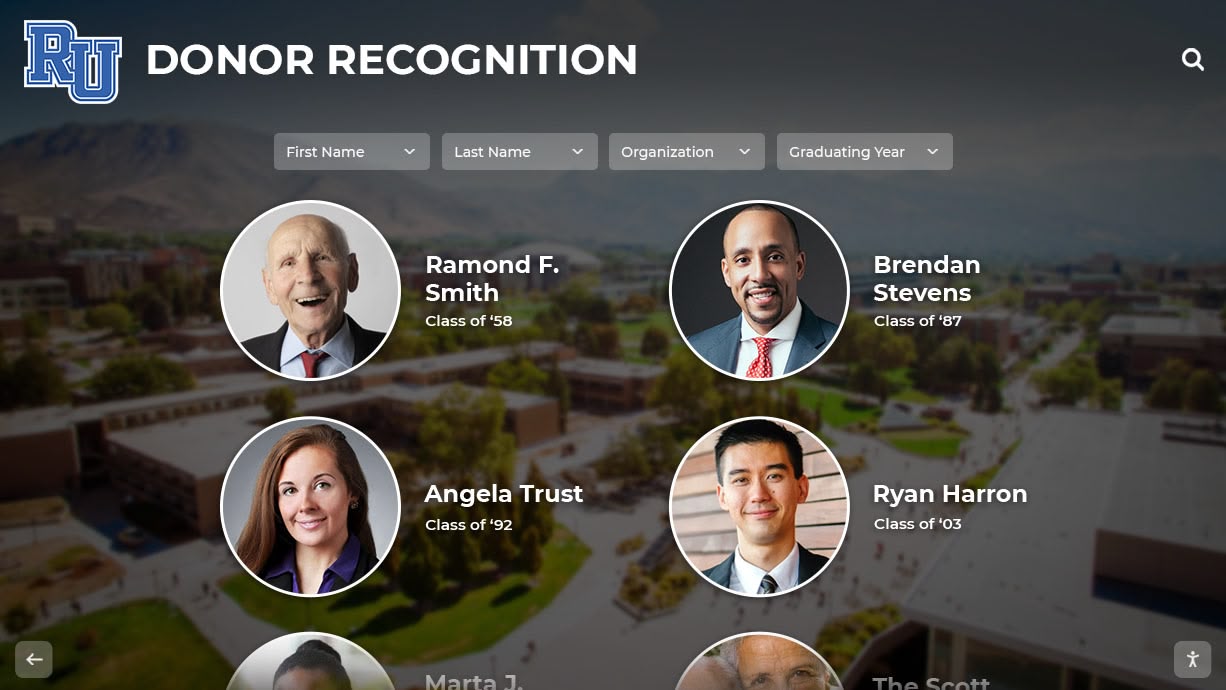
Community archives preserve local heritage while creating accessible digital experiences
Educational Benefits of Digital Historical Tools
Interactive history technology transforms learning experiences:
Increased Student Engagement and Motivation
Digital tools capture attention in ways traditional methods cannot:
Self-Directed Exploration Interactive historical tools enable students to explore topics matching personal interests rather than following rigid curriculum sequences. A student interested in sports history researches athletic evolution at their school. Another curious about women’s history examines how female students’ experiences evolved across decades. Self-directed learning increases engagement and retention compared to passive reception of predetermined content.
Educational research consistently demonstrates that student choice and autonomy increase motivation and learning outcomes. Digital historical tools provide this autonomy while maintaining educational rigor and standards alignment.
Multimedia Learning Styles Students process information differently—some learn best through reading text, others through visual content, still others through audio narration or hands-on interaction. Digital historical platforms accommodate diverse learning styles by presenting information through multiple formats including text descriptions for readers, photographs and videos for visual learners, audio recordings and narration for auditory learners, and interactive elements for kinesthetic learners.
This multimodal approach ensures all students access historical content through personally effective formats rather than struggling with single-mode presentations mismatched to individual learning preferences.
Personal Historical Connections When students discover personal connections to institutional history—finding grandparents in yearbooks, discovering teachers were students at the school decades earlier, recognizing family names in achievement records—history transforms from abstract academic content into personally meaningful narrative. These connection moments create lasting engagement and appreciation for historical study.
Schools implementing comprehensive alumni recognition systems create opportunities for these personal connections, helping current students understand they participate in continuing institutional stories rather than existing in historical isolation.
Developing Research and Critical Thinking Skills
Historical digital tools support essential academic skill development:
Primary Source Analysis Digital archives provide access to primary historical sources—original photographs, documents, recordings, and artifacts—enabling students to practice historical research skills including document authentication and reliability assessment, perspective and bias identification, contextual analysis and interpretation, corroboration across multiple sources, and evidence-based conclusion development.
These skills transfer beyond history education to support critical thinking in all academic disciplines and civic life, helping students evaluate information credibility in era of abundant but variable-quality online content.
Information Organization and Synthesis Historical research requires students to organize large amounts of information, identify patterns and trends, synthesize findings into coherent narratives, support claims with appropriate evidence, and communicate findings effectively. Digital tools support these complex cognitive tasks while providing scaffolding helping students manage information abundance.
Digital Literacy Development Using historical digital tools helps students develop technological competencies including effective search strategies, database navigation, digital content evaluation, media format interpretation, and collaborative online work. These digital literacy skills prove essential for academic success and future career readiness.
Connecting Local and Broader Historical Contexts
Effective history education links personal, local, and global perspectives:
Making History Personally Relevant Students often perceive history as distant and irrelevant to their lives. Local institutional history creates entry points showing how historical forces and events affected specific communities and families. Understanding how the Great Depression impacted their school, how World War II mobilization affected local families, or how civil rights movements changed their community makes abstract historical concepts concrete and meaningful.
Understanding Historical Continuity and Change Exploring institutional evolution across decades helps students understand historical concepts including continuity and change over time, cause and effect relationships, multiple perspective analysis, historical context importance, and periodization and era characteristics. These conceptual understandings represent sophisticated historical thinking transcending factual memorization.
Inspiring Civic Engagement Learning about individuals who shaped institutional and community histories—leaders who made difficult decisions, activists who fought for justice, innovators who created opportunities, and ordinary people who contributed to collective progress—inspires students to consider their own potential contributions to ongoing historical narratives.
Digital historical preservation creates accessible models of civic engagement, leadership, and community contribution that can inspire current students to imagine themselves as future historical subjects worthy of recognition and remembrance.
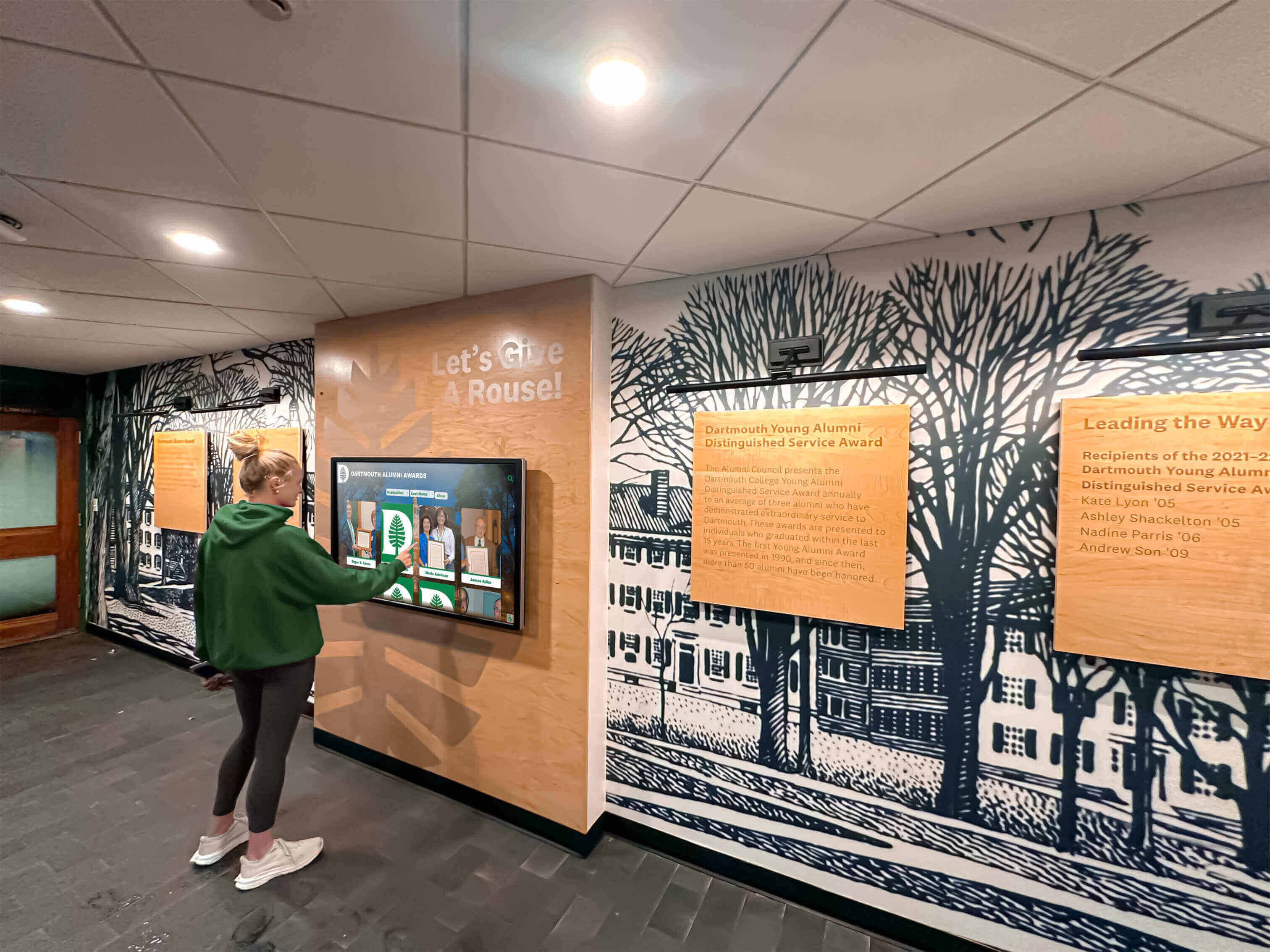
Students develop research skills and historical understanding through interactive digital exploration
Implementation Considerations for Digital Historical Tools
Successful digital history projects require thoughtful planning:
Content Development and Digitization Strategies
Building comprehensive historical archives demands systematic approaches:
Assessing Existing Historical Collections Organizations beginning digital preservation should inventory existing materials including yearbooks, scrapbooks, and publications; photographs and negatives; institutional records and documents; memorabilia and artifacts; and recorded interviews and oral histories. Understanding collection scope informs digitization priorities and resource requirements.
Establishing Digitization Workflows Systematic processes ensure consistent quality including material preparation and conservation assessment, scanning specifications and quality standards, metadata creation and documentation, quality control and verification, and storage organization and backup procedures.
Organizations lacking in-house expertise often partner with professional digitization services specializing in historical materials, ensuring appropriate handling and quality while building internal capacity for ongoing work.
Building Sustainable Content Management Digital historical archives require ongoing maintenance and growth including procedures for adding new historical content, systems for community contribution and submission, quality standards and approval workflows, metadata consistency and searchability, and periodic content review and updating.
Establishing clear governance and procedures prevents digital archives from becoming outdated repositories receiving no ongoing attention beyond initial creation.
Technology Selection and Integration
Appropriate technology choices determine long-term success:
Purpose-Built vs. General Digital Signage Organizations should distinguish between purpose-built historical recognition platforms like Rocket Alumni Solutions—designed specifically for biographical content, searchable databases, and historical preservation—versus generic digital signage systems designed for advertising, announcements, and scheduled content rotation lacking features essential for interactive historical applications.
Purpose-built platforms provide functionality specifically supporting historical engagement including structured profile systems, advanced search and filtering, multimedia integration supporting historical content types, appropriate aesthetic templates for institutional contexts, and web platform integration enabling remote access beyond physical displays.
Generic digital signage systems repurposed for historical applications often frustrate users and limit engagement due to missing essential features and inappropriate design patterns.
Cloud-Based vs. Local Management Systems Cloud-based historical platforms enable remote content management from any internet-connected device without requiring physical display access or specialized technical expertise. This accessibility proves essential for sustainable management allowing multiple stakeholders across locations to contribute content.
Local systems requiring physical access for content updates create management bottlenecks limiting sustainable maintenance, particularly for organizations with limited technical staff or displays located in facilities lacking constant staff presence.
Accessibility and Inclusive Design Historical digital tools must serve all audiences including individuals with visual impairments through screen reader compatibility, people with mobility limitations through accessible touchscreen heights and clear approach spaces, users with cognitive differences through clear navigation and consistent interfaces, and visitors with hearing impairments through text alternatives for audio content.
Organizations should evaluate digital tools for ADA accessibility compliance ensuring historical content remains accessible to all community members regardless of disability.
Mobile and Web Platform Integration Effective historical engagement extends beyond physical displays through responsive web platforms providing full functionality on smartphones and tablets, QR code integration linking physical and digital experiences, social sharing capabilities enabling content distribution, and personal account features allowing users to save and return to content.
This integration ensures historical content reaches audiences unable to visit physical installations while providing extended engagement for those who do visit in person.
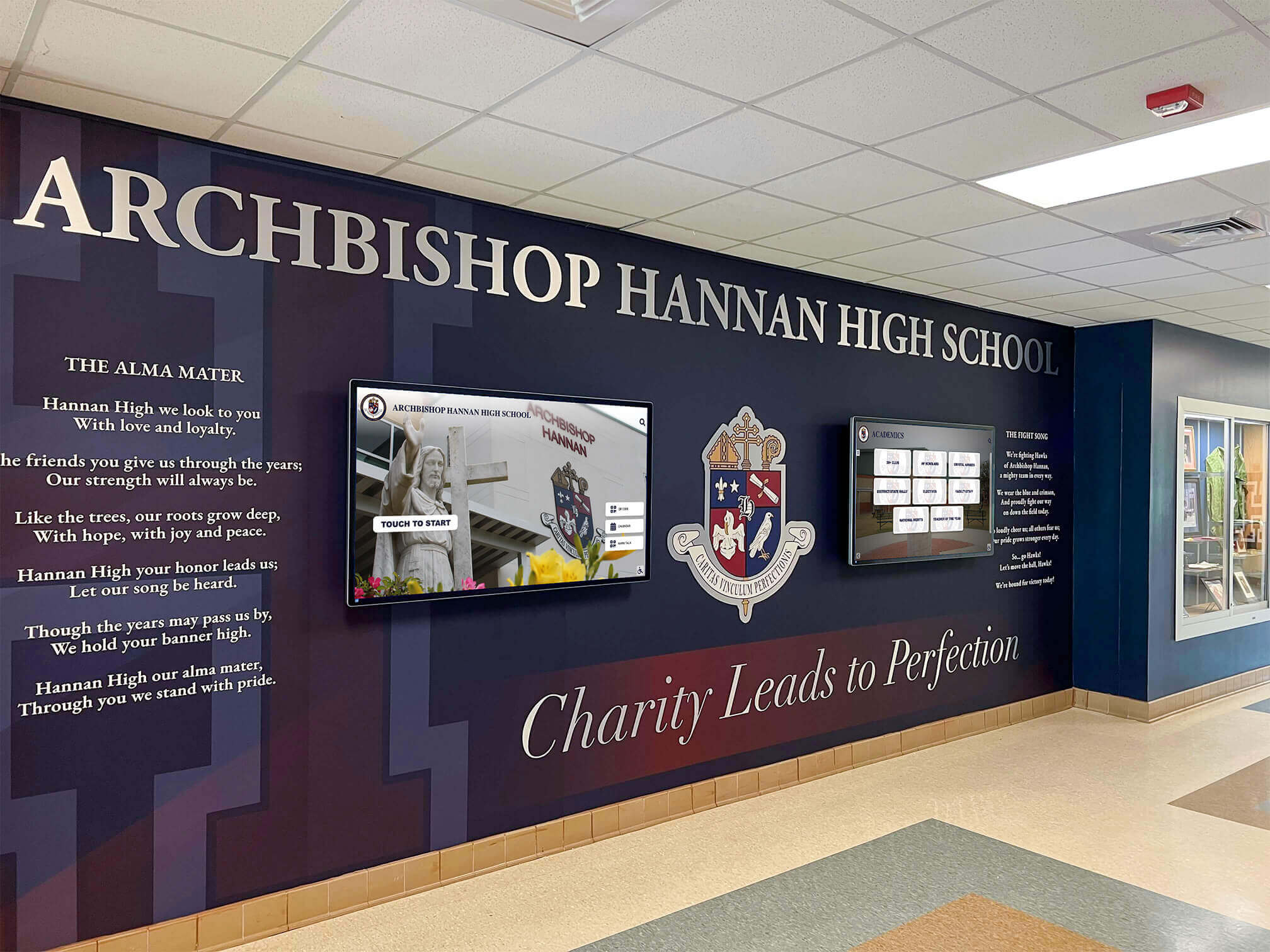
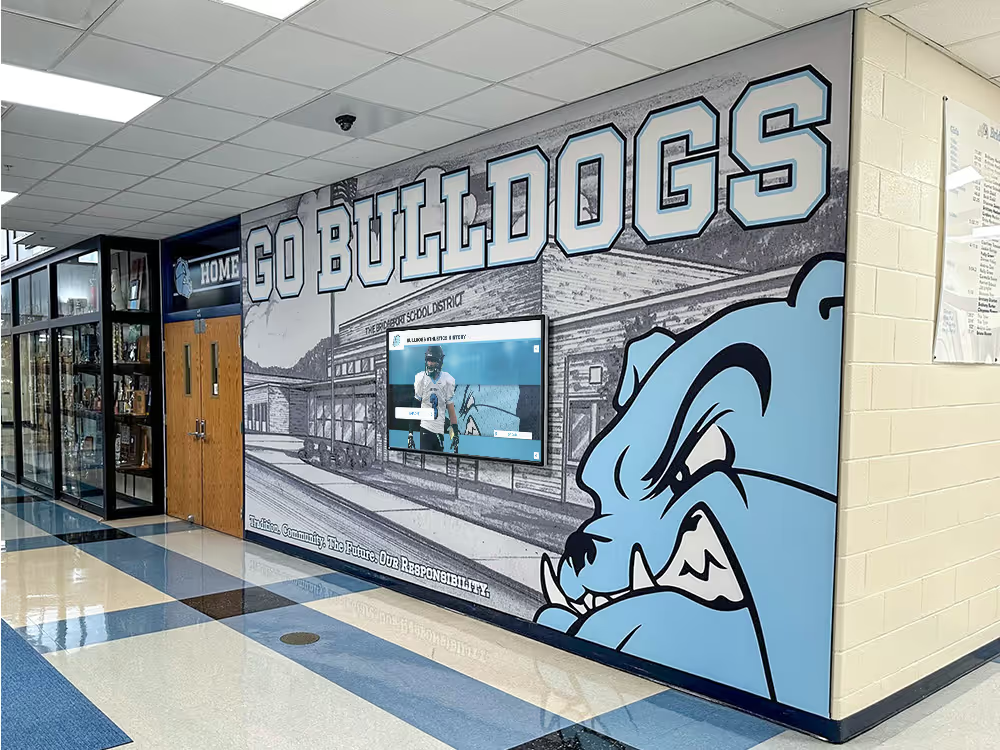
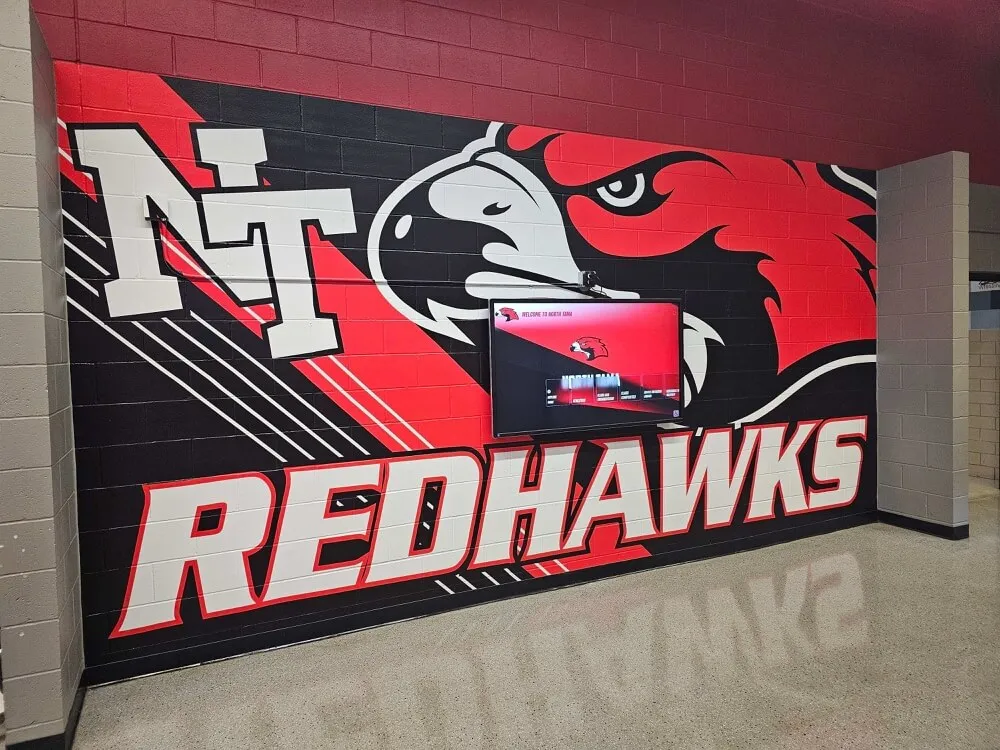
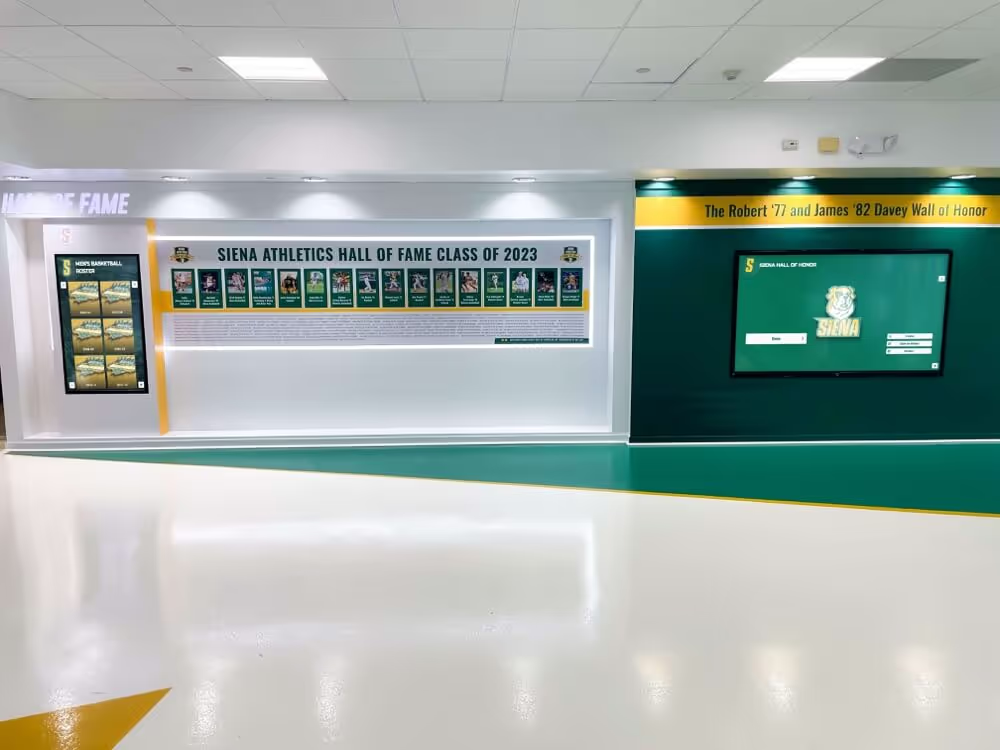
Successful implementations integrate digital technology with traditional institutional design elements
Funding and Sustainability Planning
Long-term success requires addressing financial realities:
Initial Implementation Funding Sources Organizations develop funding for digital historical projects through capital campaign allocations for technology infrastructure, grant funding from foundations supporting education, culture, or technology, alumni and donor contributions particularly for school-based projects, government support for cultural preservation initiatives, and earned revenue through admission fees or merchandise.
Historical preservation projects often attract funding due to clear preservation missions, educational value, and community benefits resonating with diverse funding sources.
Calculating Total Cost of Ownership Budget planning should account for complete project costs including hardware procurement and installation, software licensing and subscription fees, initial content development and digitization, training for staff and content managers, and network infrastructure and connectivity.
Transparent cost analysis prevents underbudgeting that leads to incomplete implementations or unsustainable projects requiring additional emergency funding.
Sustainable Operating Models Long-term financial sustainability requires planning for ongoing expenses including software maintenance and upgrades, content management labor and expertise, hardware repair and eventual replacement, hosting and network connectivity, and technical support and troubleshooting.
Organizations should establish sustainable funding mechanisms supporting ongoing operations rather than treating digital historical preservation as one-time capital projects requiring no continuing investment.
Phased Implementation Approaches Organizations with limited initial resources can implement historical digital tools in phases starting with core platform establishment and initial content digitization, expanding through additional content development and collection growth, enhancement via advanced features and integration development, and scaling through multiple display locations and expanded access. Phased approaches prove more sustainable than attempting comprehensive implementations exceeding available resources.
Measuring Success and Ongoing Improvement
Evaluating digital historical tool effectiveness ensures continuous enhancement:
Engagement Metrics and Analytics
Digital platforms provide quantitative data unavailable with traditional displays:
Usage Volume and Patterns Track interaction metrics revealing engagement including total touchscreen interactions and web visits, unique visitors indicating reach breadth, session duration showing engagement depth, return visits suggesting ongoing value, and search queries revealing interests and discovery patterns.
These metrics demonstrate whether historical tools successfully engage audiences versus becoming overlooked technology installations.
Content Performance Analysis Monitor which historical content receives most attention, discovering most-viewed individuals or time periods, frequently accessed media types, popular search terms and topics, and navigation patterns revealing how visitors explore content. Performance data guides content development priorities and interface improvements.
Demographic and Audience Insights When possible within privacy constraints, analyze audience characteristics including age groups engaging most actively, community segments represented in usage, geographic distribution of web visitors, and device types used for access. Demographic insights reveal whether historical tools reach intended audiences and identify underserved segments requiring targeted outreach.
Qualitative Feedback and User Experience
Stakeholder perspectives provide essential context for quantitative metrics:
User Feedback Collection Systematically gather experiences and suggestions through visitor surveys about historical displays, observation of actual usage patterns and behaviors, community forums for input and discussion, educator assessment of educational value, and stakeholder interviews with alumni, donors, and community members. Qualitative feedback reveals usability issues, content gaps, and enhancement opportunities metrics alone might miss.
Continuous Improvement Processes Organizations committed to excellence establish regular review and enhancement cycles including quarterly or annual engagement metric analysis, periodic user experience testing and assessment, iterative content additions and improvements, interface refinements based on observed behavior, and feature enhancements addressing user needs.
Digital historical tools should evolve continuously improving rather than remaining static following initial implementation.
Transform Historical Engagement Through Digital Innovation
Discover how interactive digital tools bring history to life, creating engaging experiences that preserve heritage, educate audiences, and build vibrant learning communities where the past feels personally relevant. Explore comprehensive solutions designed specifically for schools, museums, and cultural institutions.
Schedule Your ConsultationThe Future of Digital Historical Engagement
Emerging technologies promise even richer historical experiences:
Artificial Intelligence and Machine Learning Applications
AI technologies enhance historical content discovery and analysis:
Automated Metadata and Tagging Machine learning algorithms analyze historical photographs automatically identifying individuals through facial recognition, detecting objects and locations within images, generating descriptive captions and keywords, and suggesting relationships and connections between content. AI-assisted metadata creation reduces labor requirements for large-scale digitization while improving searchability.
Natural Language Search and Discovery Advanced search interfaces enable conversational queries—“show me athletes from the 1960s who played basketball” or “find yearbook photos from 1985 showing the debate team”—rather than requiring structured database searches. Natural language processing makes historical archives accessible to general audiences unfamiliar with specialized search techniques.
Content Recommendation and Personalization AI systems analyze user behavior suggesting related content likely to interest individual visitors, creating personalized historical journeys reflecting interests and exploration patterns. This personalization enhances engagement by surfacing relevant content users might otherwise overlook in large collections.
Emerging Display Technologies
Hardware innovations create new presentation possibilities:
Transparent and Flexible Displays Emerging screen technologies enable historical content overlay on existing displays and exhibits, integration into architectural elements like windows and walls, and novel form factors impossible with traditional rectangular screens. These innovations create seamless historical content integration into physical environments.
Holographic and 3D Projection Volumetric display technologies project three-dimensional historical content including artifact reproductions viewers can examine from all angles, historical figure representations enabling “conversations” with past individuals, and architectural reconstructions showing historical structures at scale. While currently expensive, costs decline as technologies mature.
Blockchain and Permanent Digital Preservation
Distributed ledger technologies address long-term preservation challenges:
Verified Historical Records Blockchain systems create tamper-proof historical records ensuring content authenticity and preventing unauthorized alterations. This verification proves particularly valuable for official records, authenticated documents, and provenance tracking ensuring historical content integrity across time.
Decentralized Preservation Distributed storage systems eliminate single points of failure threatening centralized archives. Historical content distributed across multiple locations survives disasters, institutional failures, or technological disruptions threatening conventional centralized preservation approaches.

Ongoing innovation continues expanding possibilities for interactive historical engagement
Conclusion: History That Engages Modern Audiences
Digital tools fundamentally transform how institutions preserve history and how audiences engage with the past. Static plaques, linear exhibit narratives, and physically constrained archives served preservation missions admirably for generations, but modern audiences accustomed to interactive, personalized, on-demand content increasingly find traditional historical presentations disconnected and unengaging. When students walk past static trophy cases without pausing, when museum visitors hurry through exhibits barely glancing at text panels, when alumni feel disconnected from institutional heritage—these disengagement patterns demonstrate that traditional approaches no longer effectively fulfill historical preservation missions in contemporary contexts.
Interactive digital tools bring history to life by transforming passive observation into active exploration, creating what we call “digital warming”—the transformation of cold, impersonal historical facts into warm, engaging experiences that draw visitors deeper into discovery. When students touch screens to explore their school’s evolution, when museum visitors customize their journeys through collections matching personal interests, when alumni discover their own stories preserved in searchable archives—these moments of connection represent history truly resonating with modern audiences.
The comprehensive benefits span multiple dimensions. Unlimited digital capacity ensures every significant person, achievement, and event receives appropriate recognition regardless of space limitations affecting traditional displays. Multimedia storytelling incorporates photographs, videos, documents, and audio creating rich narratives honoring historical complexity. Global accessibility through web platforms removes geographic barriers, enabling distant audiences to engage with collections previously requiring physical visits. Dynamic content management allows continuous updates and improvements, transforming static historical monuments into living resources growing richer over time.
Educational impact proves particularly significant. Research demonstrates that students engaging with interactive historical tools show increased motivation, deeper understanding, better retention, and enhanced critical thinking compared to traditional textbook-based instruction. Self-directed exploration through searchable archives enables students to discover personal connections to history, transforming abstract academic content into personally meaningful narratives. These engagement patterns create lasting appreciation for historical study extending beyond immediate classroom contexts.
Implementation success requires thoughtful planning addressing content development, technology selection, stakeholder engagement, and sustainability. Organizations should prioritize purpose-built historical platforms specifically designed for biographical content and interactive exploration rather than repurposing generic digital signage systems lacking essential features. Cloud-based remote management ensures sustainable content stewardship by enabling multiple stakeholders to contribute without requiring specialized technical expertise or physical hardware access. Accessibility standards ensure historical content remains available to all community members regardless of disability.
Solutions like Rocket Alumni Solutions provide comprehensive platforms addressing unique requirements of historical recognition applications—from intuitive content management enabling non-technical staff to contribute, to robust search supporting discovery of specific individuals and events, to multimedia integration preserving photographs and videos, to appropriate aesthetic templates maintaining institutional dignity. Purpose-built platforms eliminate countless implementation challenges while delivering proven engagement experiences that honor historical preservation missions.

Successful implementations balance traditional preservation with innovative technology engagement
The investment in digital historical tools honors not only past achievements but also current and future audiences deserving meaningful access to heritage. Every community member benefits from understanding institutional evolution, learning about individuals who shaped collective histories, and discovering personal connections to the past. Students deserve educational experiences making history engaging and relevant rather than disconnected and boring. Alumni deserve recognition preserving their contributions and enabling them to share histories with descendants. Researchers deserve access to comprehensive archives supporting scholarship and discovery.
Your institution’s history deserves preservation and presentation worthy of its significance—recognition that honors completeness and complexity, engages modern audiences accustomed to interactive experiences, remains accessible to global communities regardless of geographic location, and evolves continuously as new stories emerge and technologies advance. With thoughtful planning, appropriate technology, stakeholder engagement, and sustained stewardship, you can create historical experiences that truly bring the past to life for current and future generations.
Ready to explore how digital tools can transform your historical preservation and engagement? Schedule a consultation with Rocket Alumni Solutions to discover comprehensive platforms designed specifically for schools, museums, and cultural institutions seeking to honor heritage while creating the engaging experiences that ensure history remains vibrant and relevant.
Sources
- 7 Digital Tools That Help Bring History to Life | Edutopia
- What kind of technology do museums use? - MuseumNext
- Digital Engagement Tools for Museums | Cuseum
- Six Digital Learning Resources From Museums All Over the Country
- How Museums are using Augmented Reality - MuseumNext
- Eight Digital Education Resources From Around the Smithsonian