Your school lobby creates the first impression for every visitor, prospective family, and returning alumnus who walks through your doors. In those crucial opening moments, your entrance communicates institutional values, celebrates community achievements, and sets the tone for the entire campus experience. Yet too many schools settle for static bulletin boards with faded announcements, outdated trophy cases collecting dust, or bare walls that say nothing about the vibrant community within.
Digital lobby displays offer a transformative alternative—dynamic installations that welcome visitors with current information, celebrate student and alumni achievements, showcase school culture, and create memorable experiences that distinguish your institution. These modern systems combine visual impact with practical functionality, serving as information hubs, recognition platforms, and pride-building centerpieces that make lobbies destinations rather than mere passageways.
Schools investing in thoughtful digital lobby displays report measurably stronger first impressions during admissions tours, increased community engagement with recognition content, enhanced campus pride among current students and staff, and more efficient communication of important announcements and updates. The lobby becomes an active participant in your institutional story rather than static background scenery.
This comprehensive guide explores practical digital lobby display ideas specifically designed for schools—from selecting the right technology and designing effective content to integrating displays architecturally and maintaining long-term engagement. Whether planning a complete lobby renovation or enhancing an existing entrance, these frameworks help you create an unforgettable first impression that reflects your school’s excellence.

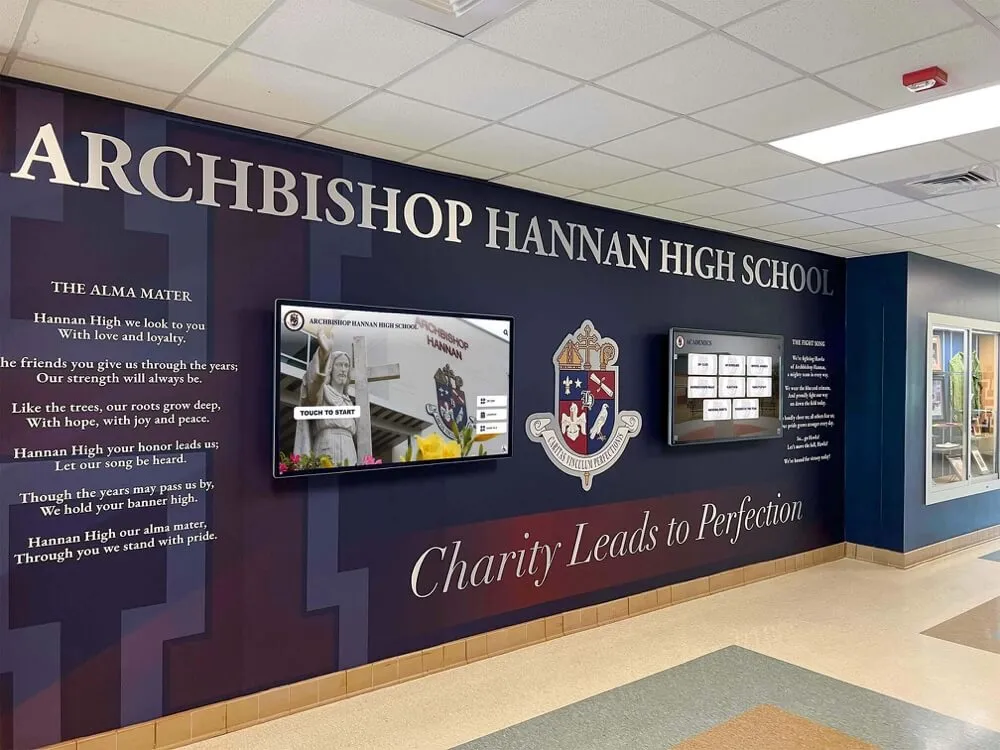
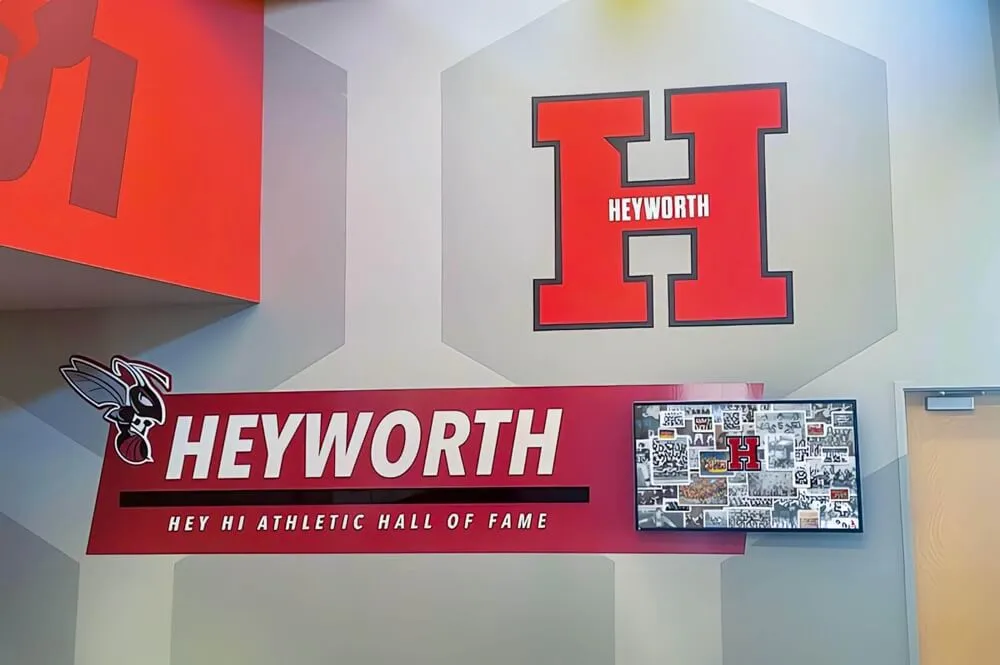
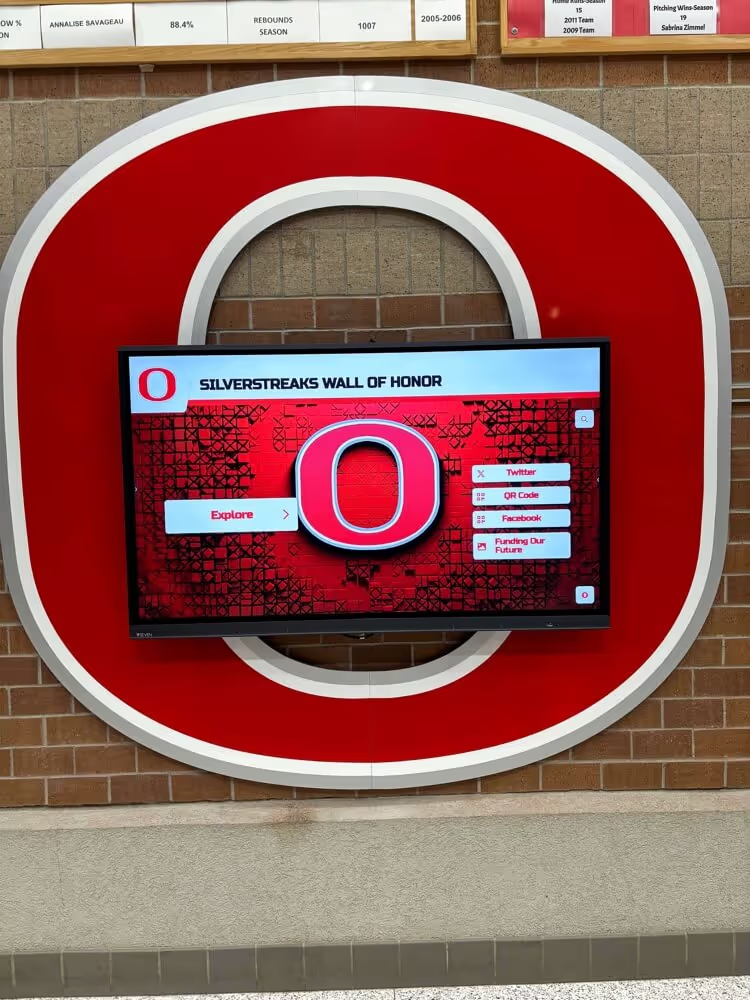
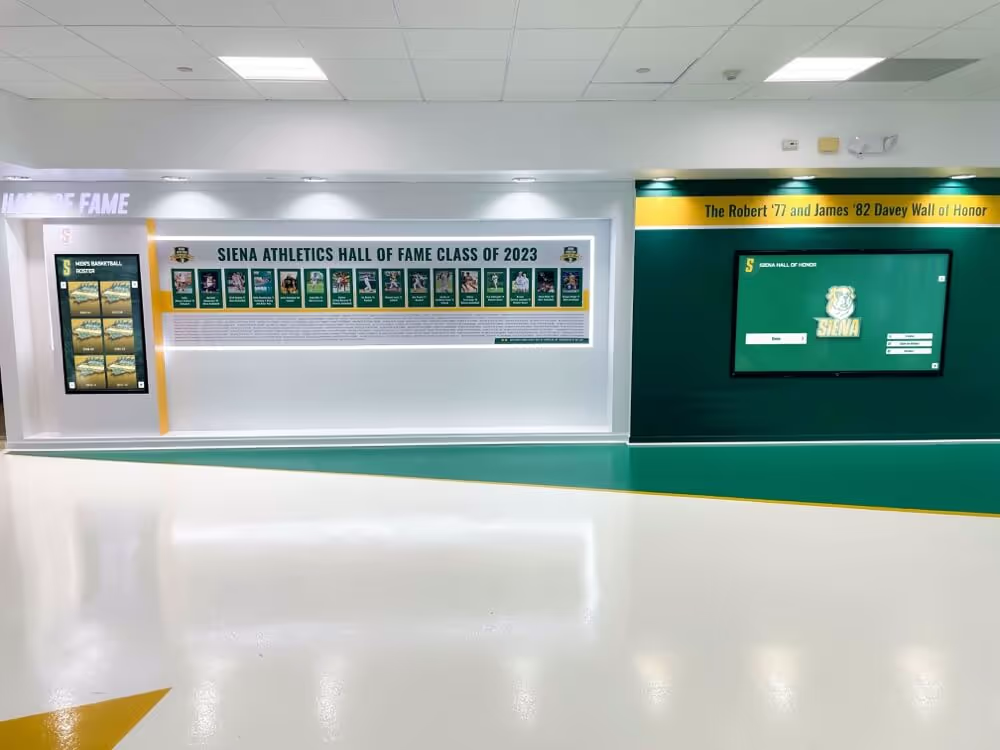
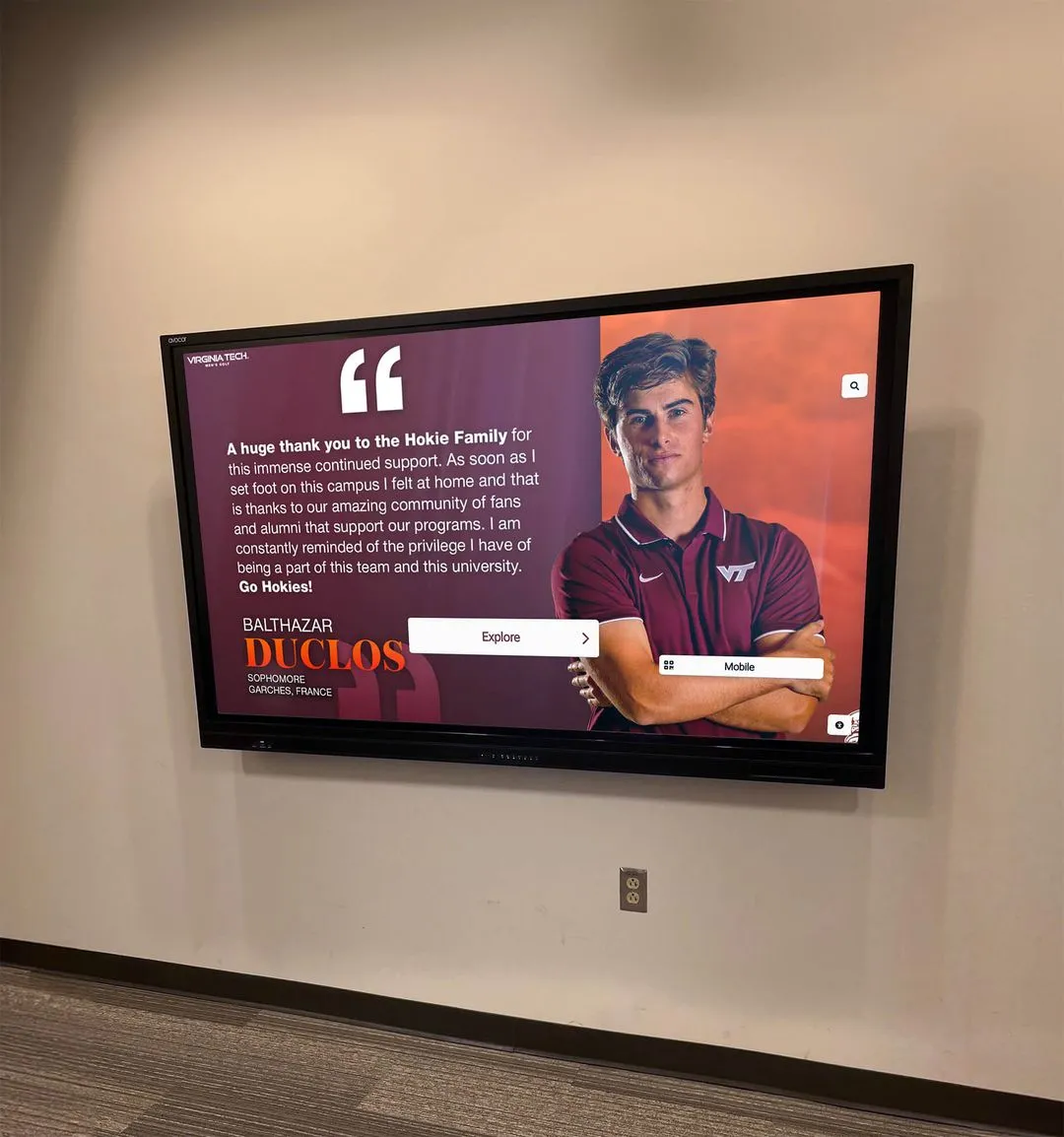
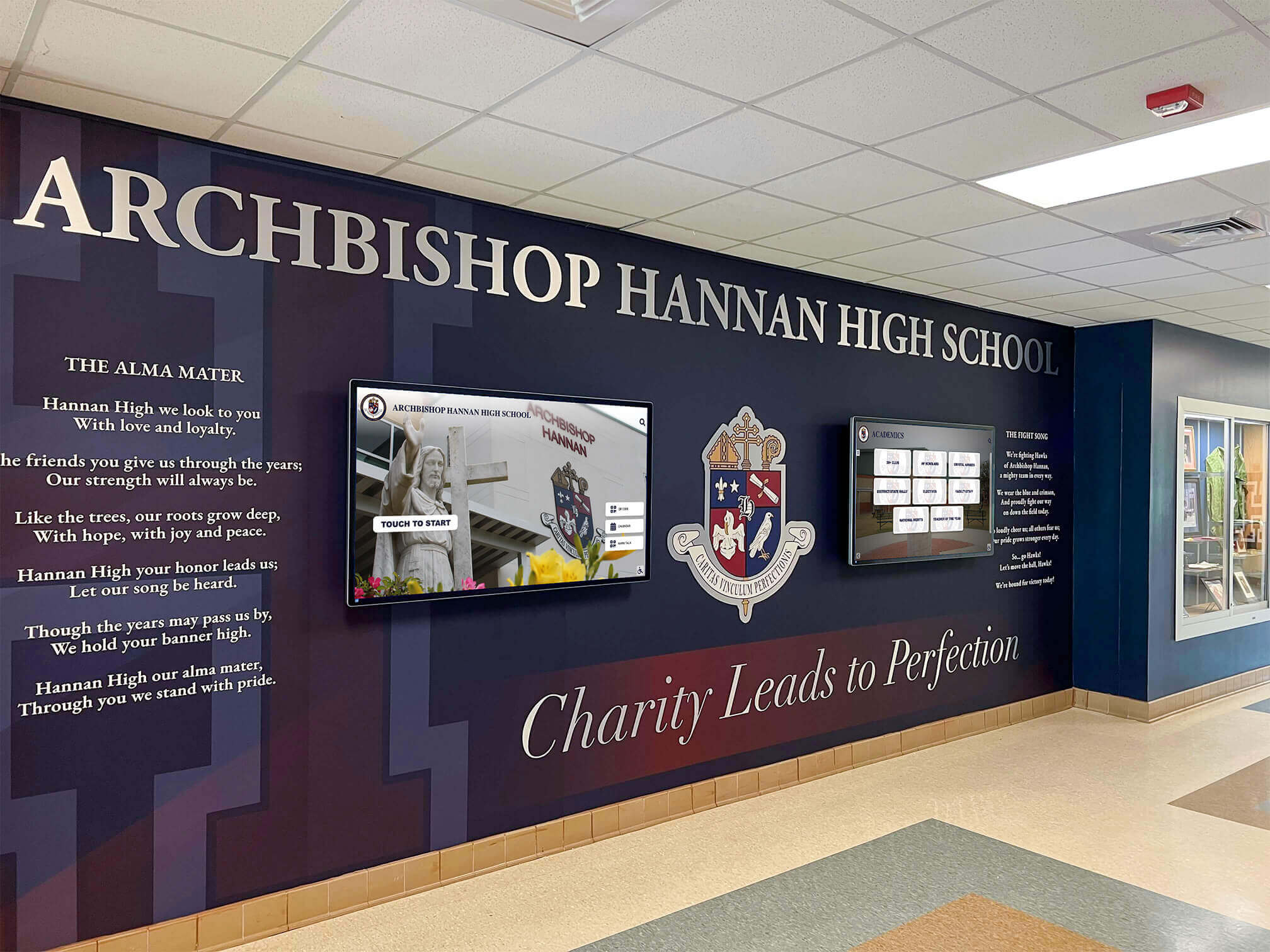
Digital lobby displays transform school entrances into welcoming, information-rich spaces that celebrate community and communicate institutional pride
Why Digital Lobby Displays Matter for Schools
Before exploring specific implementation ideas, understanding the strategic value of digital lobby displays helps justify investment and guide design decisions that maximize impact.
First Impressions Shape Institutional Perception
Your lobby serves as the physical embodiment of your school’s identity and values. Research on environmental psychology demonstrates that people form lasting impressions of organizations within the first 7-10 seconds of entering a space. During admissions tours, those precious moments significantly influence enrollment decisions as prospective families assess whether your school feels like the right fit.
Traditional lobby elements—bulletin boards with pinned announcements, static plaques, aging trophy cases—communicate that your school may be stuck in the past or indifferent to creating welcoming spaces. Digital displays signal that your institution embraces current technology, invests in student experience, maintains active engagement with community achievements, and prioritizes creating professional, polished environments. This perception extends well beyond aesthetics, influencing how families evaluate educational quality, resource allocation, and institutional priorities.
Strategic Communication Hub
Beyond aesthetics, lobbies function as critical communication intersections where school communities receive important information. Digital displays transform lobbies into centralized information hubs that serve multiple audiences simultaneously: visitors learning about campus facilities and programs, students checking schedules and announcements, families reviewing upcoming events and deadlines, and staff accessing building information and emergency protocols.
Unlike static signage requiring physical updates, digital systems enable real-time content changes ensuring information stays current and relevant. This operational efficiency reduces the administrative burden of maintaining lobby communications while improving information accuracy and timeliness across your campus community.
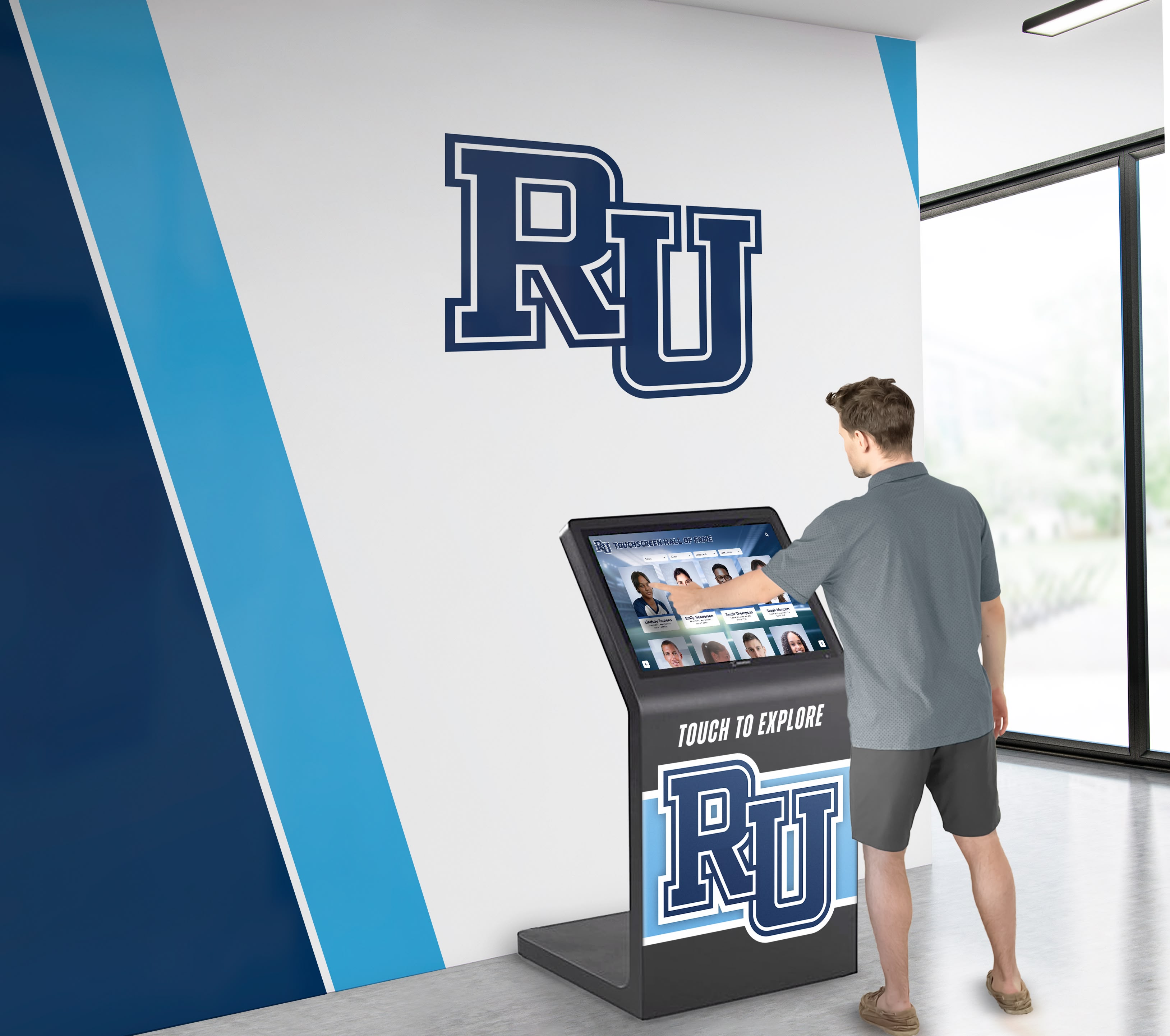
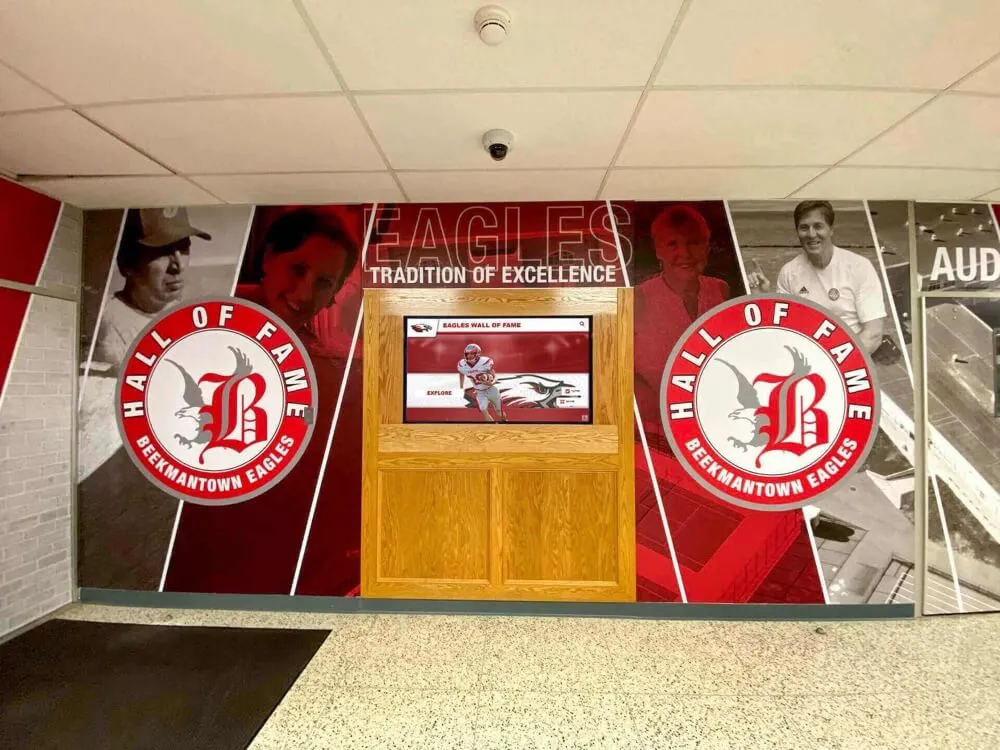
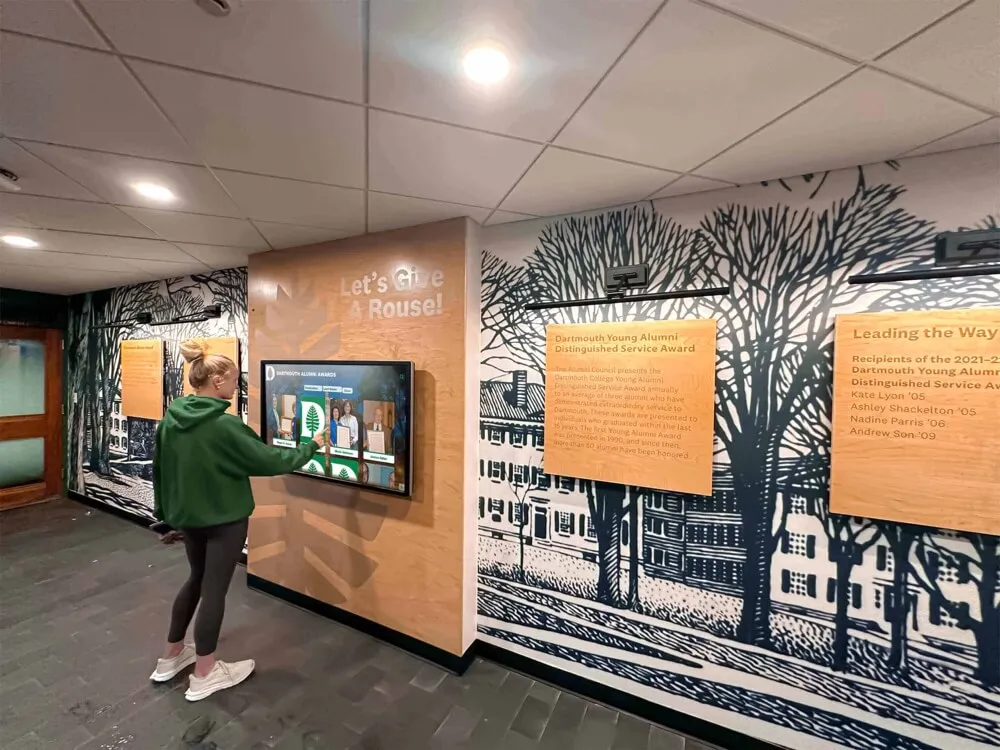
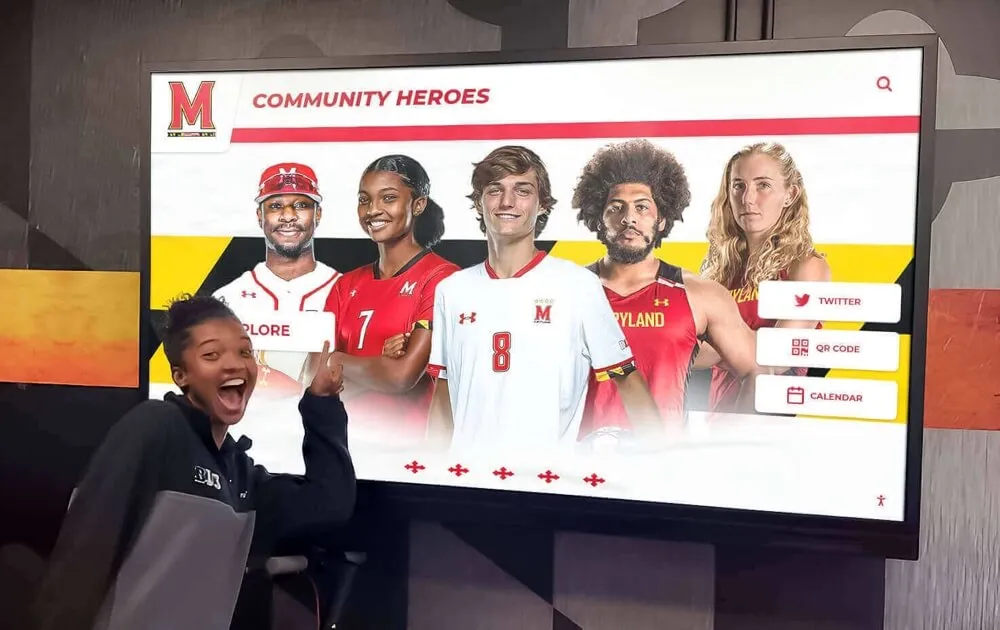
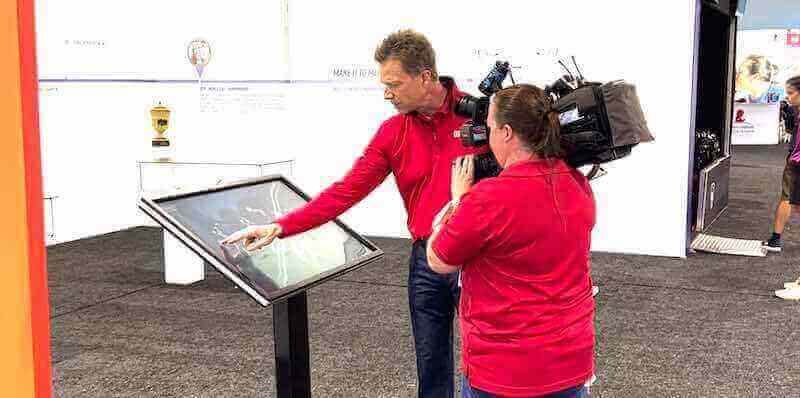
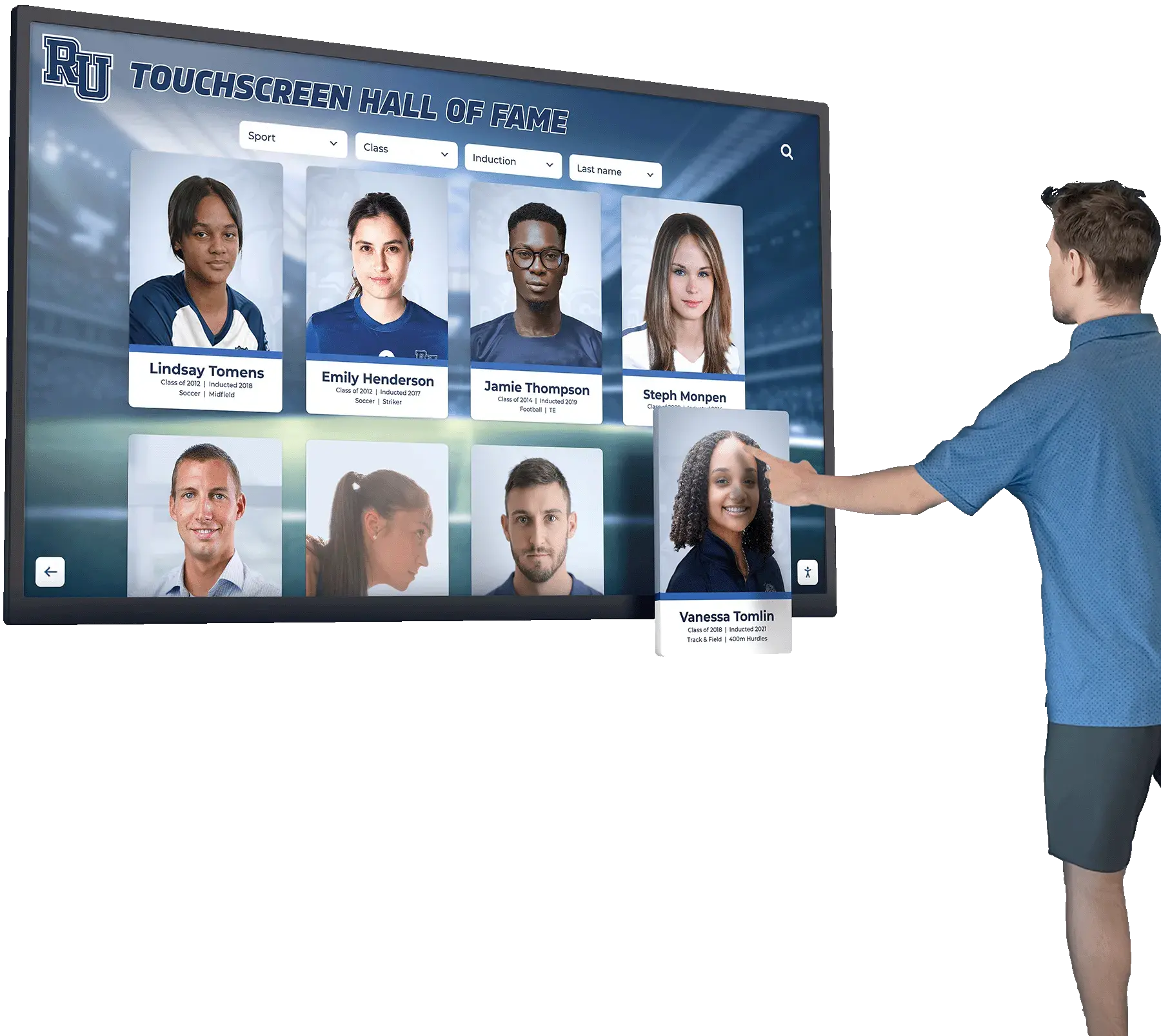
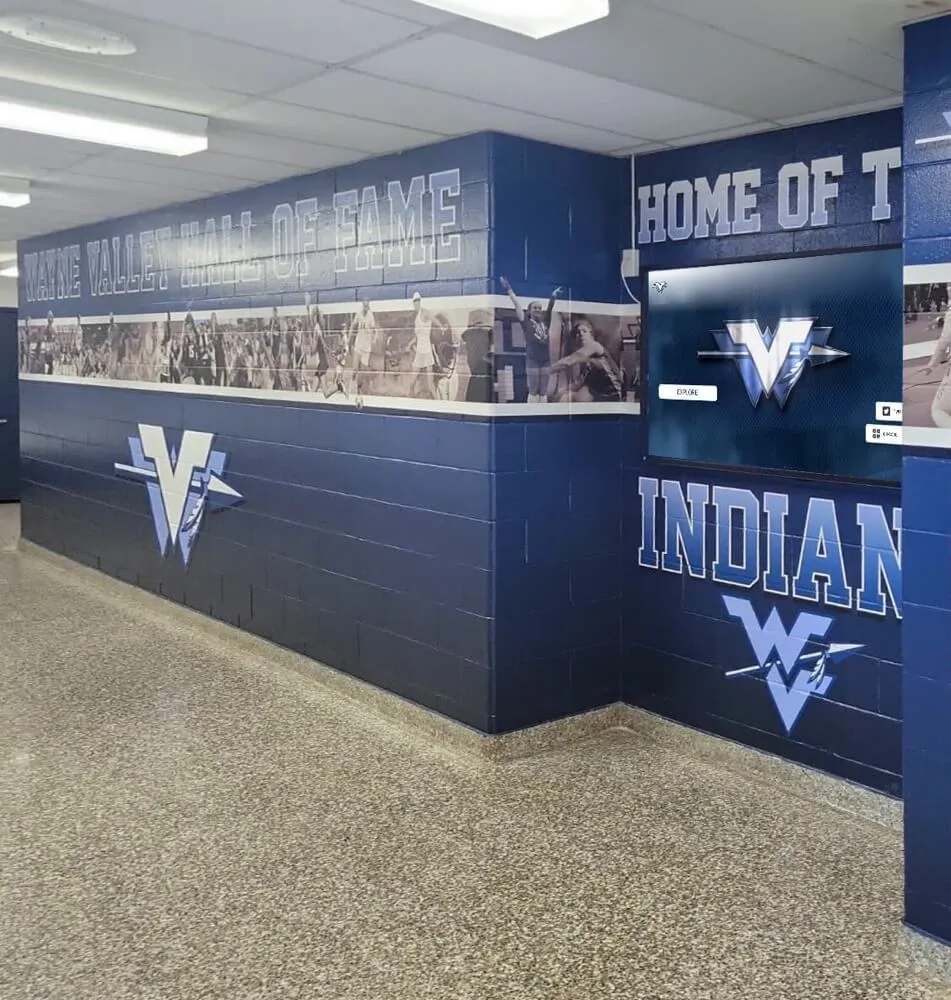
Interactive lobby displays enable visitors to explore campus information, achievements, and programs at their own pace
Building Community Pride and Connection
Effective digital lobby displays serve as community gathering points that strengthen institutional connections and cultivate school pride among diverse stakeholder groups.
Celebrating Achievement Visibly
Recognition forms the foundation of strong school culture. When students, athletes, scholars, artists, and alumni see their achievements celebrated prominently in lobby displays, several powerful dynamics occur: recognition validates effort and accomplishment, public celebration motivates continued excellence, visible achievement inspires younger students, and displayed accomplishments strengthen school reputation among visitors and prospective families.
Digital recognition systems offer advantages impossible with traditional displays. They provide unlimited capacity for acknowledging achievements without space constraints, enable rich storytelling through photos, videos, and detailed narratives, allow easy updates recognizing current students throughout the year, and create searchable databases helping community members find specific individuals or accomplishments.
Many schools implementing interactive touchscreen displays report that lobby installations become the most frequently photographed locations on campus as community members capture and share their recognition moments on social media, exponentially extending reach and engagement.
Creating Alumni Connection Points
School lobbies serve as primary spaces where alumni returning to campus reconnect with institutional history and their personal educational journeys. Digital displays featuring alumni achievements, historical photos, and “where are they now” profiles transform casual visits into meaningful engagement experiences.
Alumni who feel recognized and connected remain more likely to support their schools financially, volunteer time and expertise, refer prospective students, and maintain lifelong relationships with their educational institutions. Lobby displays that honor alumni contributions while showcasing institutional evolution create powerful touchpoints strengthening these vital relationships.
Essential Digital Lobby Display Ideas for School Entrances
Schools successfully implementing digital lobby displays typically deploy several core content categories that serve both practical and inspirational purposes.
Welcome and Wayfinding Displays
The most fundamental lobby function involves welcoming visitors and helping them navigate campus facilities efficiently.
Dynamic Welcome Messages
Digital displays can present personalized welcome messages tailored to different audiences and occasions: customized greetings for scheduled tour groups, welcome messages for event attendees, acknowledgment of visiting teams or organizations, seasonal greetings reflecting school calendar moments, and celebration of specific community milestones or achievements.
These dynamic messages create immediate connection and hospitality, demonstrating that your school actively prepares for and values visitors. Integration with scheduling systems can trigger automatic welcome content based on calendar events, requiring minimal staff management while maintaining personalized touches.
Interactive Campus Maps and Directories
Large campuses benefit tremendously from interactive wayfinding displays helping visitors locate specific buildings, offices, classrooms, athletic facilities, or parking areas. Touchscreen maps allow users to search for destinations, view walking directions, identify accessible routes, and estimate travel times between locations.
Schools with complex, multi-building campuses find that lobby wayfinding displays significantly reduce confusion, minimize interruptions to reception staff, improve visitor experience and satisfaction, and enhance accessibility for community members with mobility considerations.
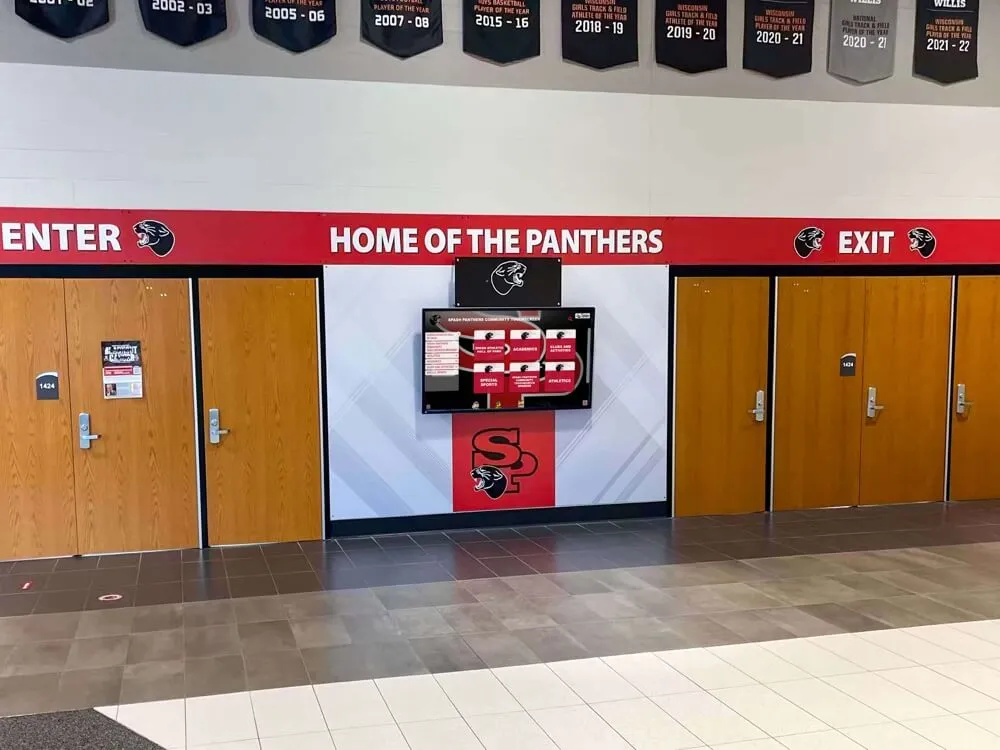
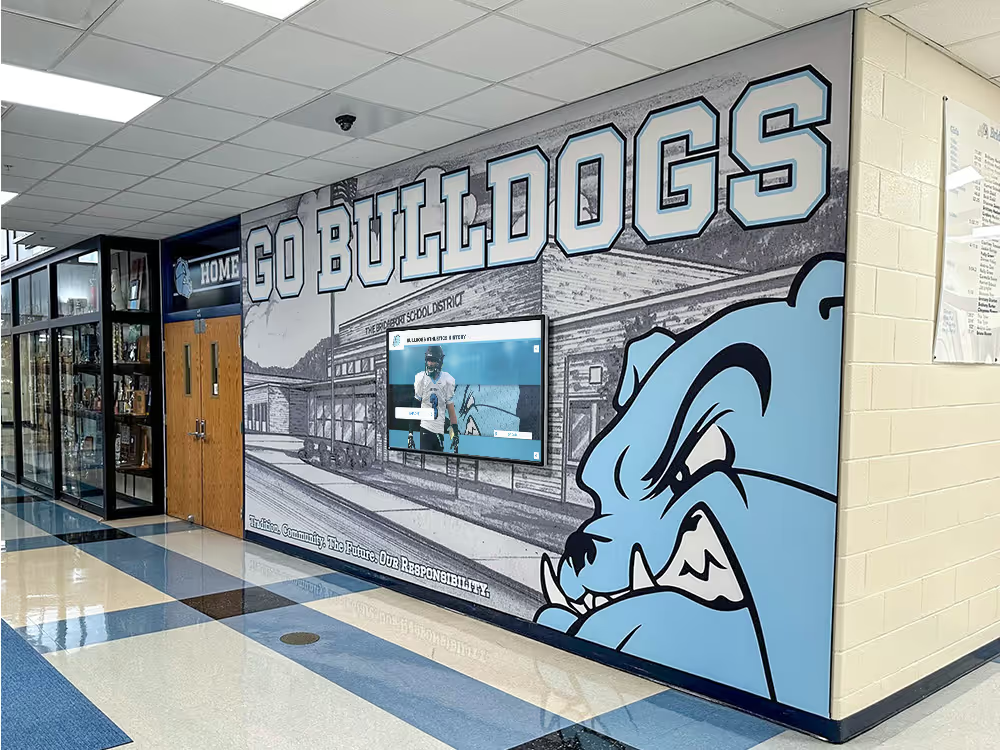
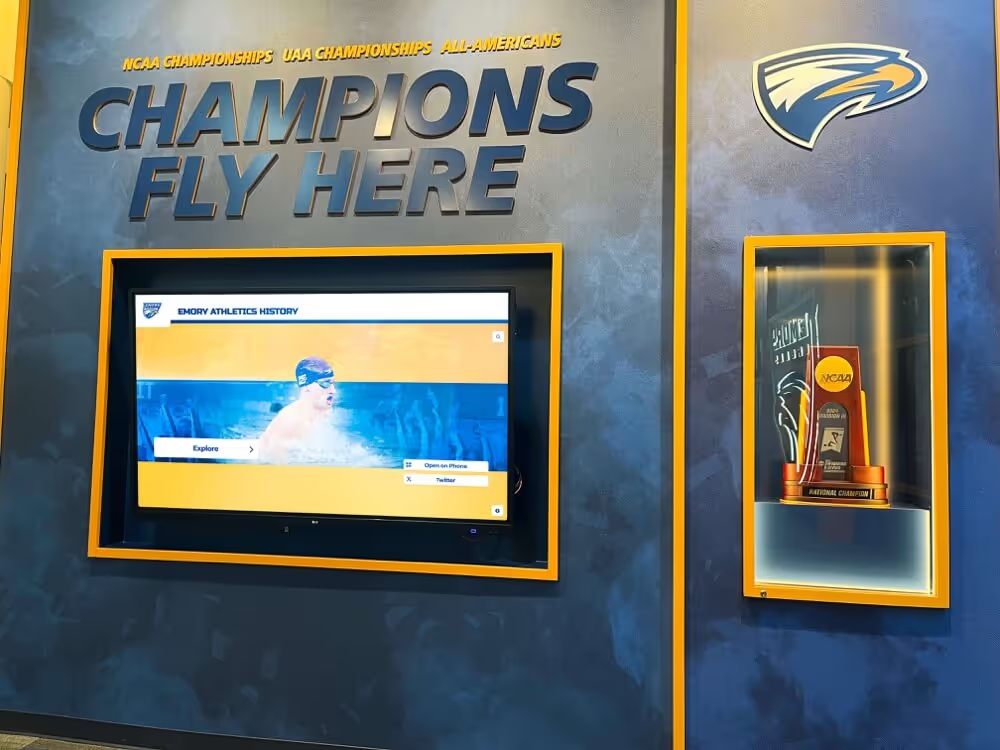
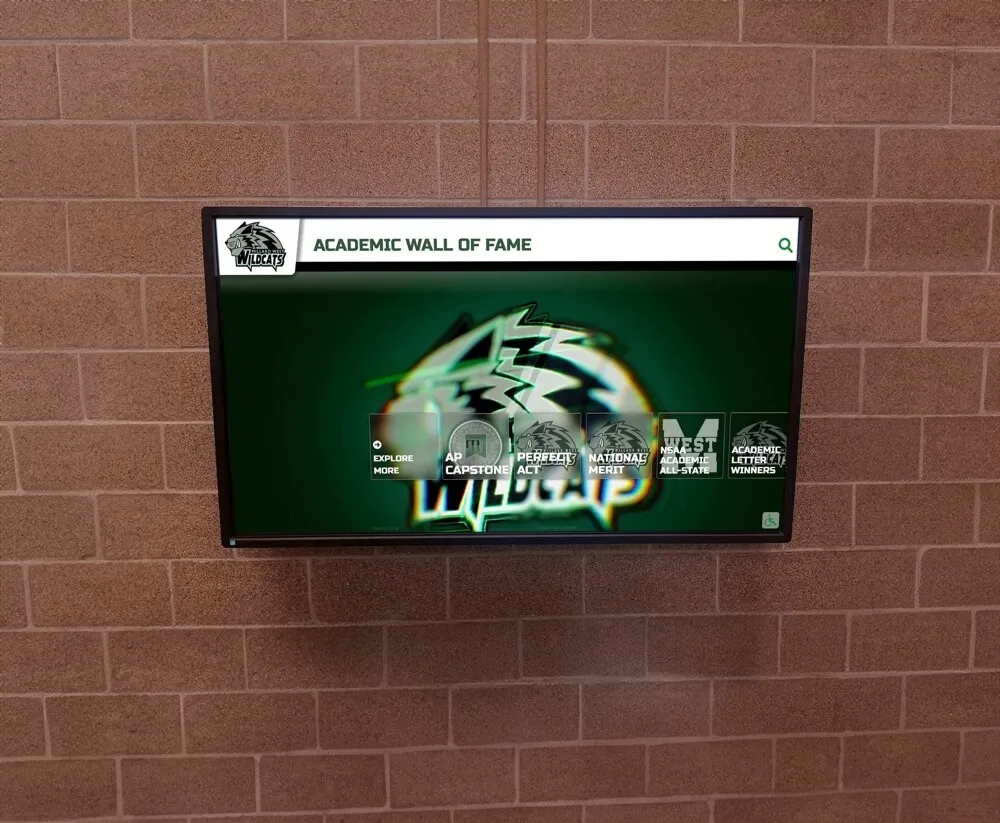
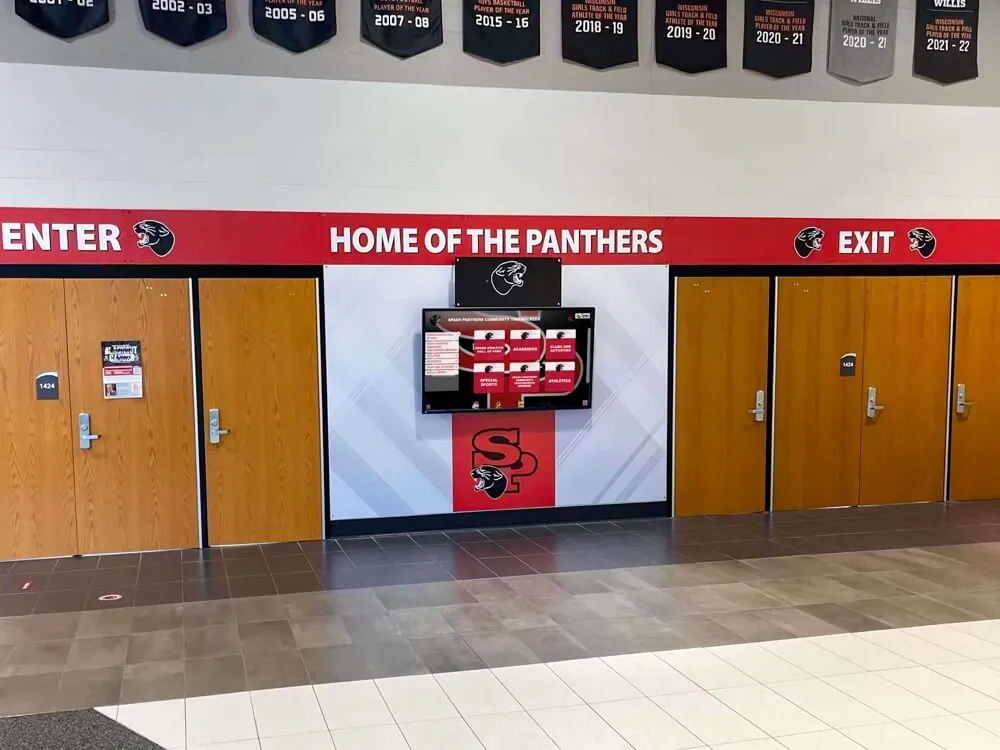
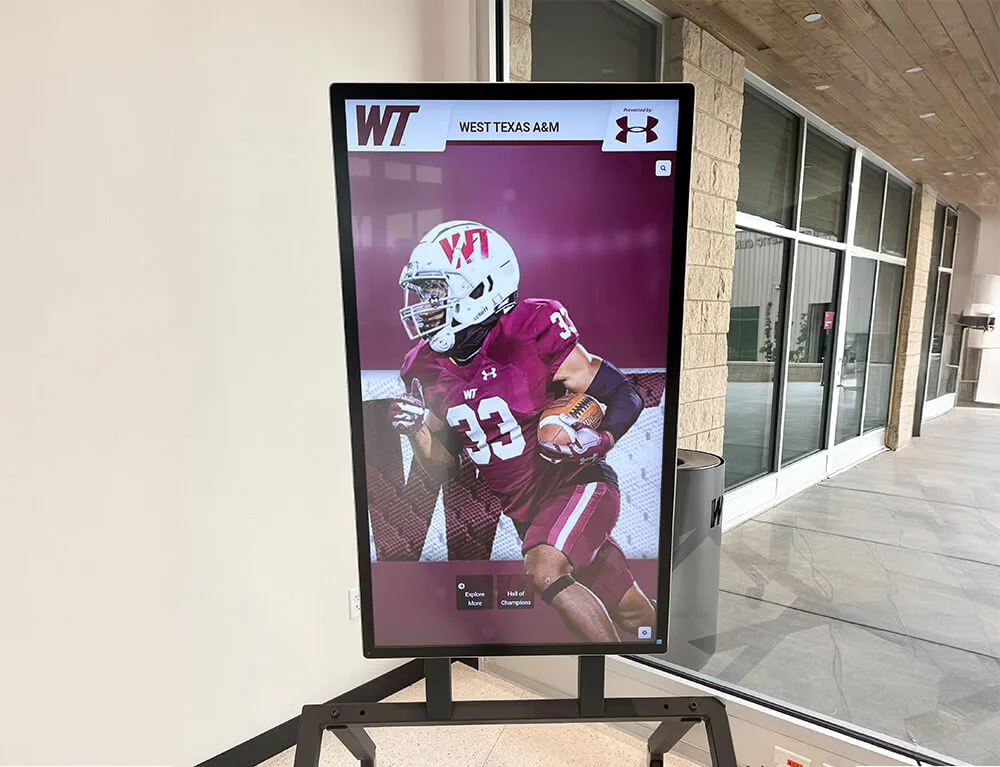
Strategically placed digital displays transform functional spaces into welcoming environments that communicate school identity
Student Achievement Recognition Displays
Celebrating student excellence forms a cornerstone of effective lobby display strategies.
Academic Honor Recognition
Digital displays provide ideal platforms for showcasing academic achievements: honor roll recognition updated each grading period, National Honor Society member spotlights, AP Scholar acknowledgments, academic competition results and team rosters, scholarship recipient celebrations, and distinguished graduate recognitions with college acceptances.
Unlike traditional honor roll plaques with limited capacity, digital systems can recognize every deserving student while providing context about specific achievements, GPAs, or academic distinctions. This inclusive approach ensures all academic excellence receives appropriate visibility rather than recognizing only top performers.
Athletic Achievement Showcases
School lobbies represent prime real estate for celebrating athletic accomplishments that build school pride and motivate current athletes: team championship banners and season records, athlete of the week or month spotlights, senior athlete recognitions and college signing announcements, record-breaking performance acknowledgments, and coaching milestone celebrations.
Digital athletic recognition displays can rotate through multiple sports and seasons, ensuring equitable visibility for all programs rather than privileging only the most visible sports. Integration with athletic management systems can automate content updates based on game results, maintaining current recognition throughout competitive seasons.
Arts, Music, and Co-Curricular Honors
Comprehensive recognition systems celebrate excellence across all school programs: performing arts cast and crew acknowledgments, visual arts exhibition features and student artist spotlights, music competition results and ensemble achievements, STEM competition participants and award winners, debate and forensics tournament results, and service learning and community engagement highlights.
Schools that showcase diverse achievement categories through lobby displays communicate that excellence takes many forms, validating student effort across the full spectrum of school programming rather than focusing narrowly on traditional academic and athletic categories.
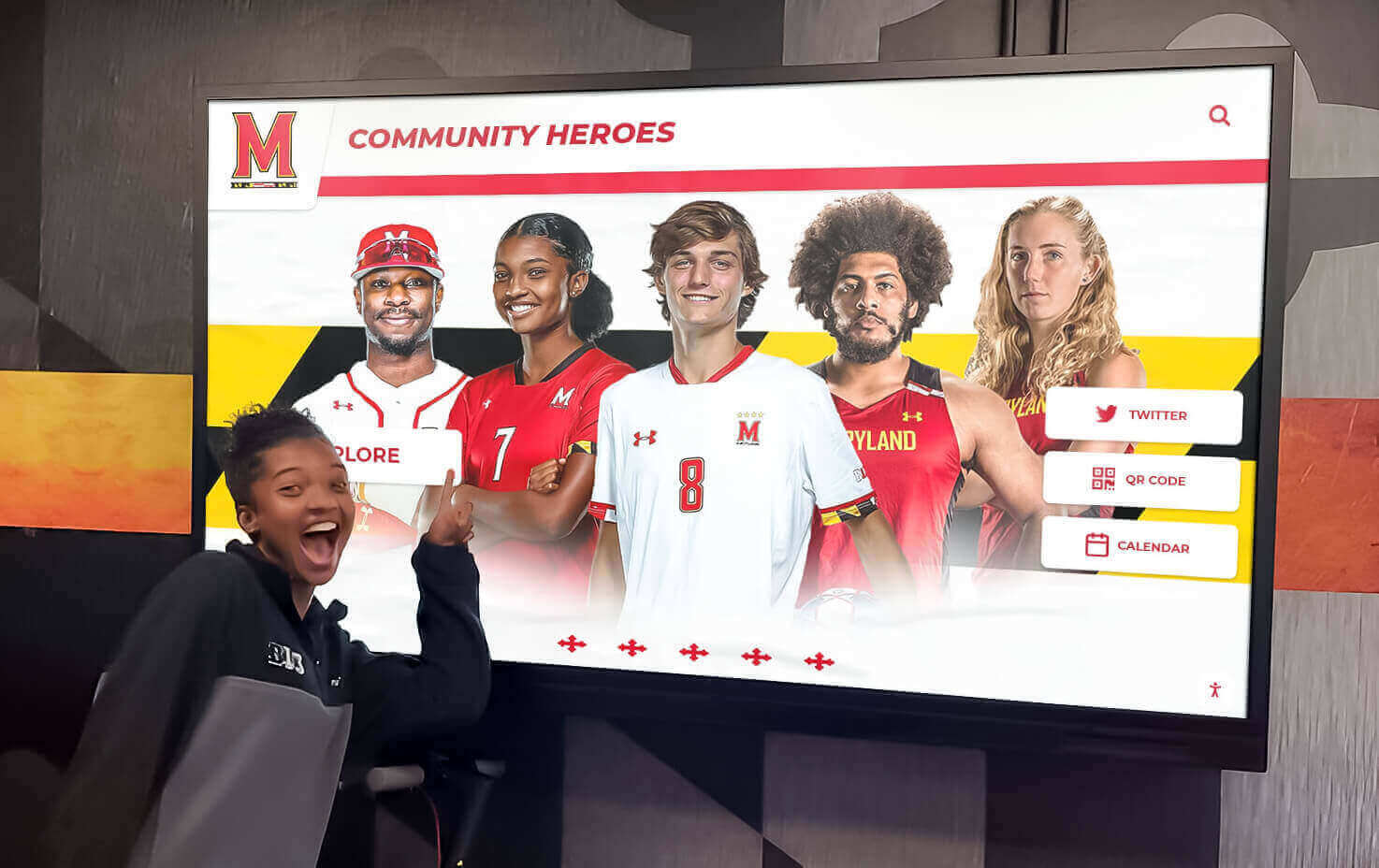
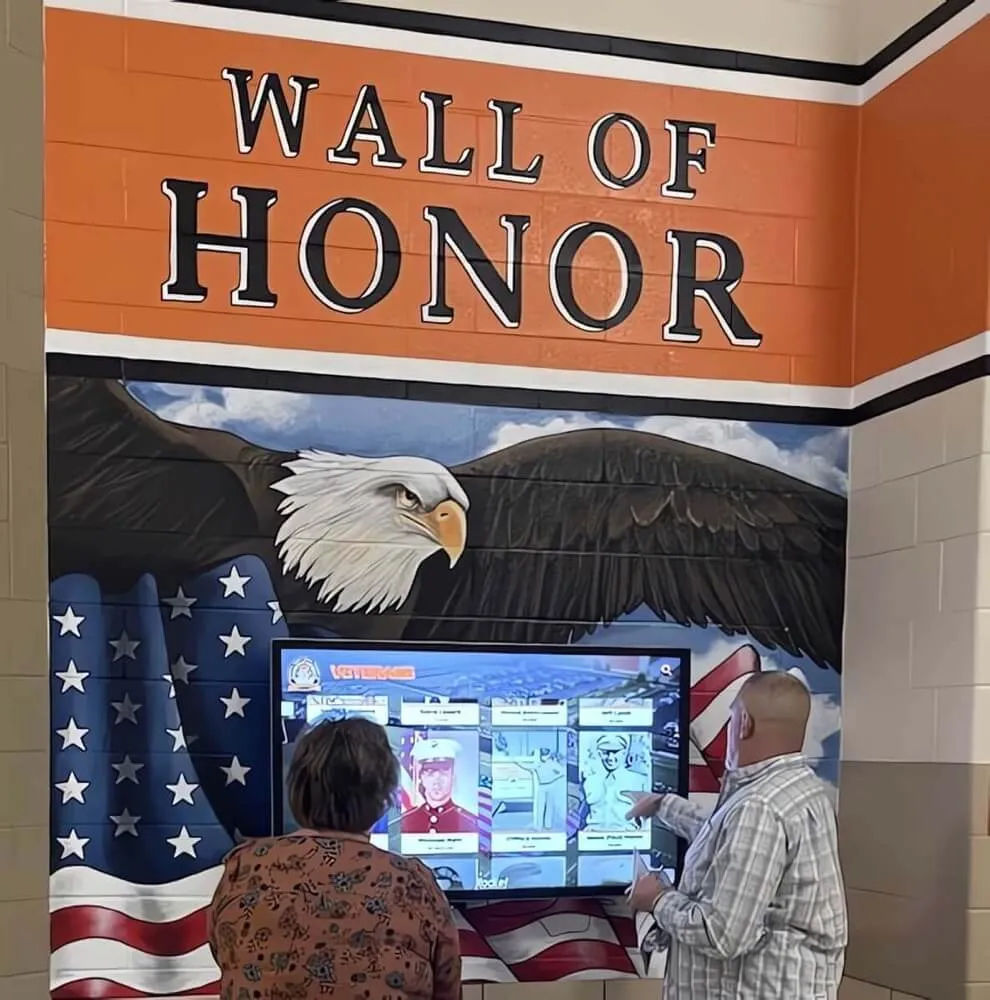
Interactive recognition displays enable students to explore achievement stories and see themselves represented in school history
School History and Heritage Displays
Institutional history provides powerful content connecting past and present while building understanding of school traditions and evolution.
Historical Timeline Presentations
Digital timelines offer engaging approaches to presenting school history: chronological displays showing founding stories and institutional milestones, decade-by-decade highlights featuring photos, events, and notable achievements, thematic histories focusing on specific programs, facilities, or traditions, and comparative views showing how campus, programs, or community have evolved.
Interactive timeline displays allow visitors to explore different eras in depth, viewing historical photos, reading detailed narratives, or watching archival video content. This layered approach serves casual browsers interested in highlights while enabling history enthusiasts to dive deeply into specific periods or stories.
Learn more about creating engaging historical timeline displays that bring institutional heritage to life through compelling storytelling and rich media.
Distinguished Alumni Showcases
Alumni achievement stories demonstrate the long-term impact of education while inspiring current students: career achievement profiles highlighting professional accomplishments, community service and leadership recognition, artistic, athletic, or academic distinction at higher education or professional levels, entrepreneurial ventures and business leadership, and multi-generational family connections showing legacy relationships.
Digital displays enable rich alumni storytelling through professional photos, career narratives, personal reflections on their educational experiences, and “advice to current students” video messages. These comprehensive profiles create human connections between current students and successful graduates, making aspirational pathways tangible and achievable.
Notable School Traditions and Milestones
Every school maintains unique traditions worth celebrating and explaining to new community members: founding stories and institutional mission evolution, signature events and their historical origins, school symbols, colors, mascots and their significance, facility dedications and major capital improvements, and championship seasons or historical competitive achievements.
Lobby displays that explain school traditions help new families understand institutional culture while reminding longstanding community members why specific rituals and customs matter. This cultural transmission strengthens shared identity across diverse community members.
Design Considerations for Effective Lobby Displays
Beyond content strategy, physical design decisions significantly impact how successfully digital displays integrate into school lobbies and engage community members.
Screen Size, Placement, and Visibility
Strategic physical installation ensures maximum display impact and usability.
Sizing Displays Appropriately
Screen size should match viewing distance and lobby dimensions. Large lobbies with significant walking distances benefit from 65-75 inch displays ensuring content remains visible from entrance points. Smaller, more intimate lobbies may find 43-55 inch screens sufficient for clear visibility without overwhelming the space.
Consider whether displays primarily serve distance viewing as people walk through lobbies, or up-close interaction where visitors stop to engage with touchscreen content. Viewing purpose should guide size selection—information displays work well at larger sizes for distance visibility, while interactive touchscreen systems optimize around comfortable arm’s reach for 43-55 inch screens.
Mounting Height and Accessibility
Display placement should balance visibility with accessibility requirements. Standard wall-mounted displays typically install with screen centers at 60-65 inches from the floor—high enough for visibility over crowds while remaining viewable from wheelchairs. Interactive touchscreen displays require lower mounting with bottom edges 15-20 inches from the floor ensuring wheelchair users can comfortably reach all screen areas.
Consider sightlines from multiple lobby locations. Displays should remain visible from entrance doors, reception areas, and primary circulation pathways. Avoid placement in corners or alcoves where only people standing directly in front can view content.
Lighting and Glare Management
Lobby lighting significantly affects display visibility. Assess existing lighting conditions during different times of day and seasons, considering natural light from windows or skylights, overhead artificial lighting that may reflect on screens, and potential glare from specific angles or times when direct sunlight enters lobbies.
High-brightness commercial displays (400-700 nits) handle ambient lighting better than consumer televisions, remaining clearly visible even in brightly lit lobbies. Anti-glare screen treatments or protective glass reduce reflection while maintaining touch sensitivity for interactive displays.
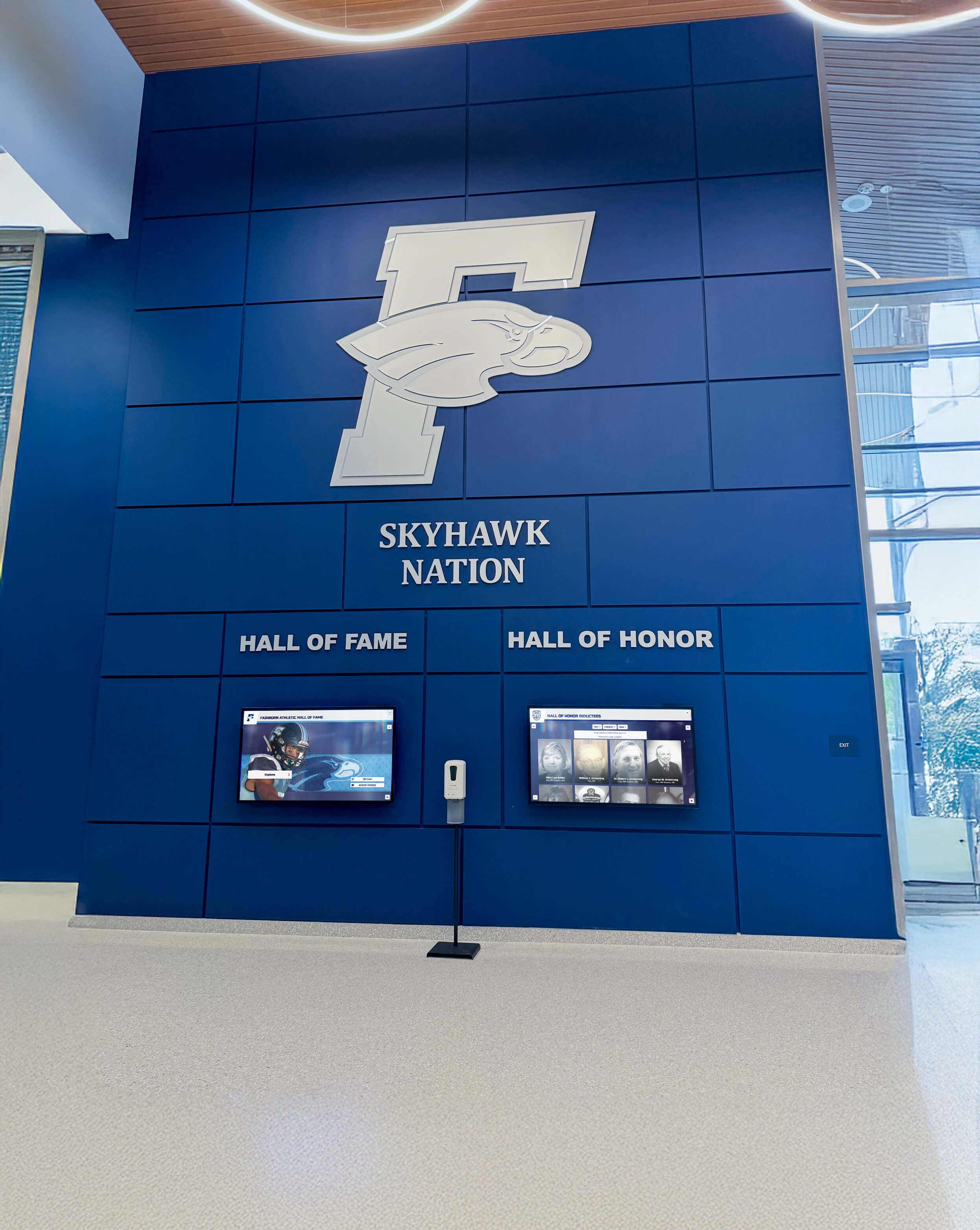
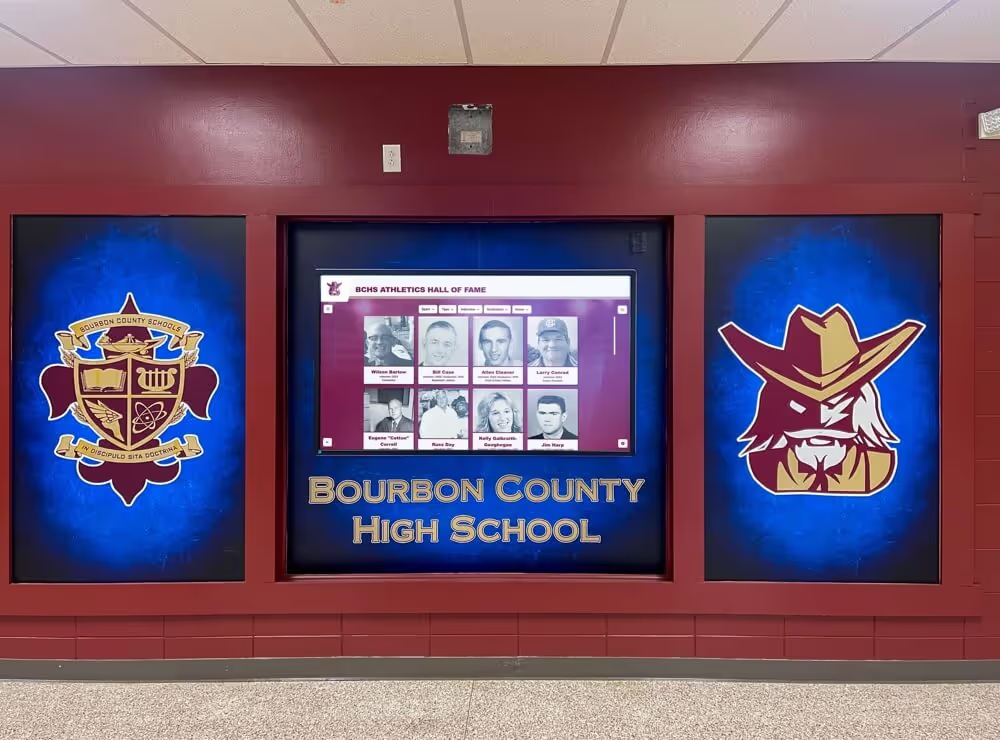
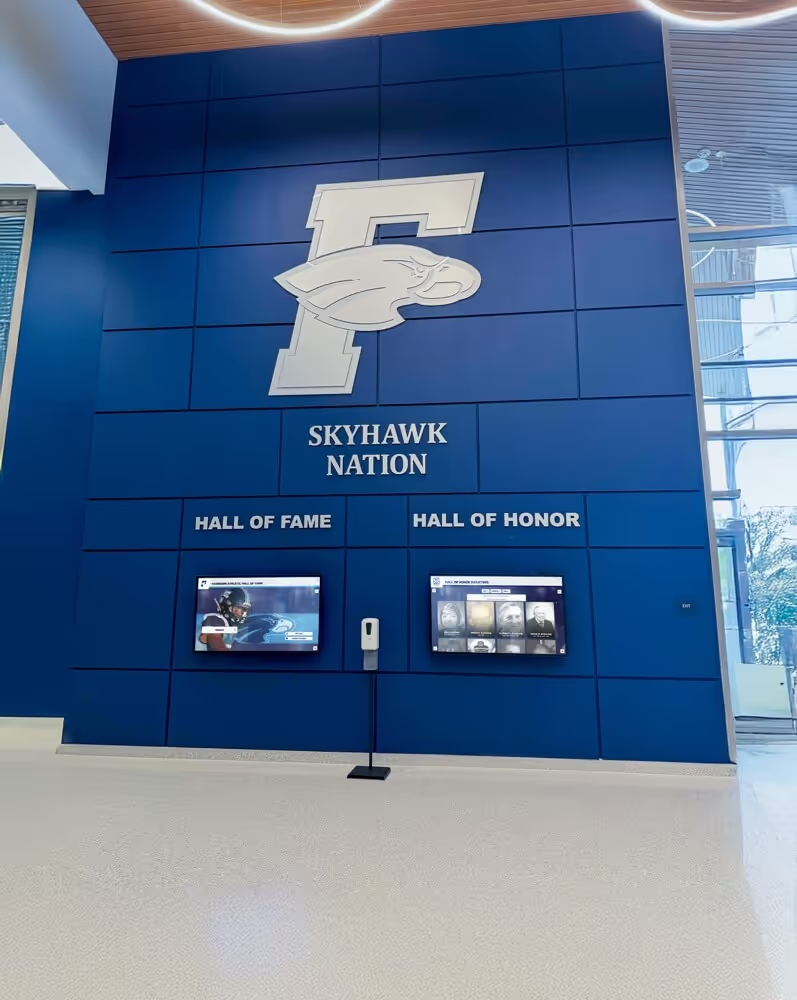
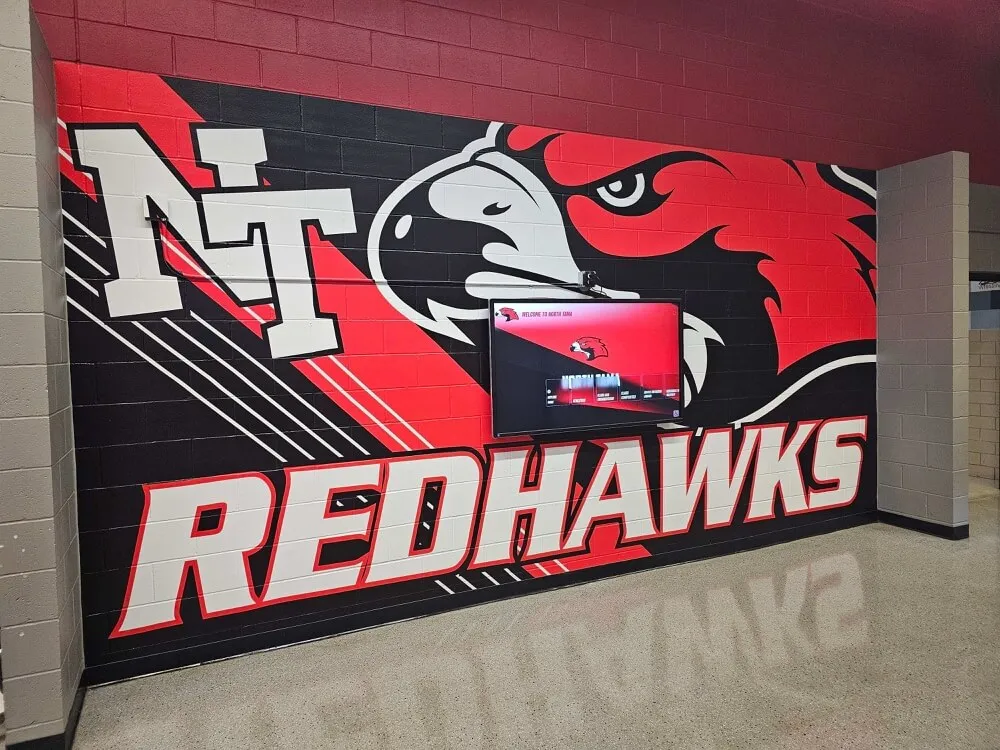
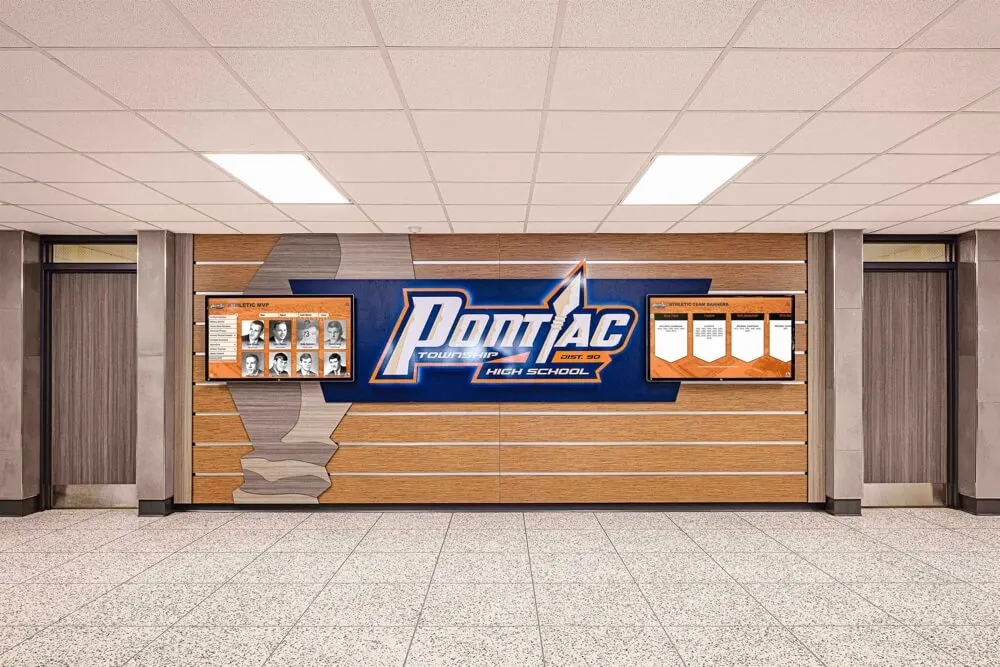
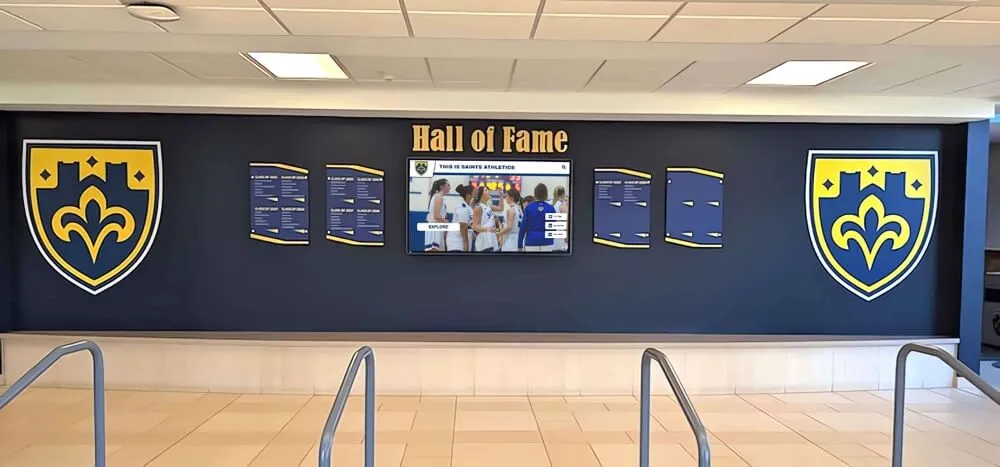
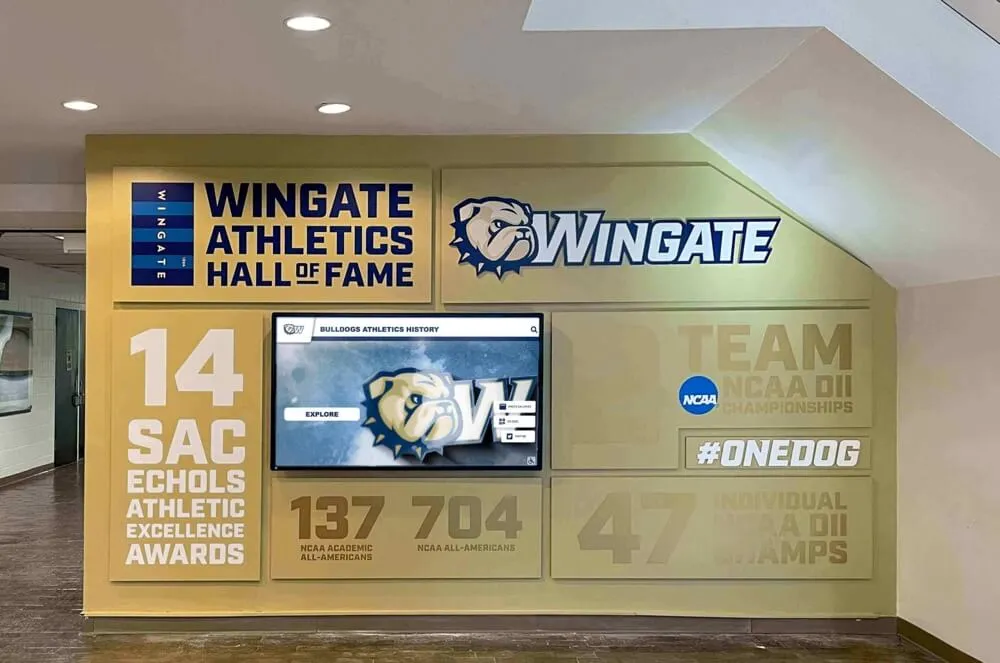
Thoughtful display integration with school branding creates cohesive lobby environments that reinforce institutional identity
Architectural Integration and Aesthetic Cohesion
The most successful lobby displays feel intentionally integrated rather than retrofitted afterthoughts.
Working with Existing Architecture
Effective displays complement rather than compete with lobby design: consider wall materials and colors when selecting display frames and surrounds, integrate with existing architectural features like columns, archways, or alcoves, align with material palettes using wood, metal, or painted finishes matching lobby aesthetics, and maintain proportion relative to wall space and surrounding elements.
Custom millwork surrounds or feature walls help displays feel architecturally intentional. Schools can incorporate branding elements, school colors, mascot imagery, or donor recognition into the physical installation creating cohesive designs that extend beyond the screen itself.
Branding and Visual Identity
Lobby displays represent prime opportunities to reinforce school branding: integrate institutional colors throughout display frames, backgrounds, and content design, feature school logos, crests, or seals prominently in display headers or surrounds, use consistent typography matching other branded school materials, and maintain visual style guidelines across all display content.
This brand consistency creates professional impressions while ensuring displays feel unified with broader institutional communications. Content should look intentionally designed rather than assembled from mismatched elements.
Multi-Display Configurations
Larger lobbies may benefit from multiple coordinated displays serving different purposes: one large display for prominent recognition and welcome content, secondary displays for wayfinding, schedules, or announcements, and interactive touchscreen stations for detailed exploration of archives or achievement databases.
When deploying multiple displays, establish clear visual hierarchy and content relationships. Visitors should intuitively understand each display’s purpose and which to consult for specific information needs.
Technology Selection and System Capabilities
Choosing appropriate display technology ensures systems meet both current needs and future expansion requirements.
Display Types and Interaction Modes
Schools implementing lobby displays typically choose between several technology approaches:
Standard Digital Signage Displays offer straightforward content presentation through large format screens showing rotating slides, videos, or information loops. These passive displays work well for general announcements, recognition slideshows, or welcome messages where interaction isn’t required.
Interactive Touchscreen Displays enable visitor engagement through touch-responsive interfaces allowing searches, exploration, and personalized content discovery. These interactive systems prove particularly valuable for achievement databases, alumni directories, campus maps, or historical archives where different visitors seek different information.
Mobile-Connected Displays extend engagement beyond the physical lobby through QR codes or NFC tags enabling visitors to transfer content to personal devices. Students can save their recognition moments, visitors can transfer wayfinding directions to phones, or alumni can access detailed achievement information for later review.
Content Management Capabilities
Effective lobby display systems require robust content management enabling staff to update displays efficiently without specialized technical expertise: cloud-based management allowing updates from any location, scheduled content rotation automating displays across different times or dates, user permissions systems controlling who can edit specific content categories, template-based design ensuring brand consistency, and integration capabilities connecting to student information systems, athletic management platforms, or calendar systems.
Systems requiring IT staff involvement for every content update quickly become bottlenecks limiting display effectiveness. User-friendly management platforms empower communications staff, administrators, or designated faculty to maintain current content without technical barriers.
Content Strategies That Maintain Long-Term Engagement
Initial lobby display installations often generate excitement, but sustained engagement requires intentional content strategies preventing displays from becoming stale background noise.
Regular Content Rotation and Updates
Frequent content changes give community members reasons to pay attention to lobby displays repeatedly.
Establishing Update Schedules
Different content types benefit from varying update frequencies: daily changes for announcements, schedules, or event information, weekly rotations for student spotlights or achievement highlights, monthly updates for athletics seasons, performance calendars, or academic periods, and quarterly changes for alumni features, historical content, or thematic presentations.
Regular schedules create expectations that displays offer fresh content worth checking regularly. Community members develop habits around viewing lobby displays when they know content changes frequently.
Seasonal and Event-Based Content
Tie lobby display content to school calendar rhythms: back-to-school welcome messages and facility information for new families, homecoming celebration content and alumni recognition, winter concert or theater performance promotions, spring sports season highlights and senior athlete recognition, graduation celebration content and senior class tributes, and summer program information and campus improvement updates.
This calendar-aligned approach ensures content feels timely and relevant while reducing the burden of constantly generating new material from scratch—seasonal templates can be refreshed annually with updated information.
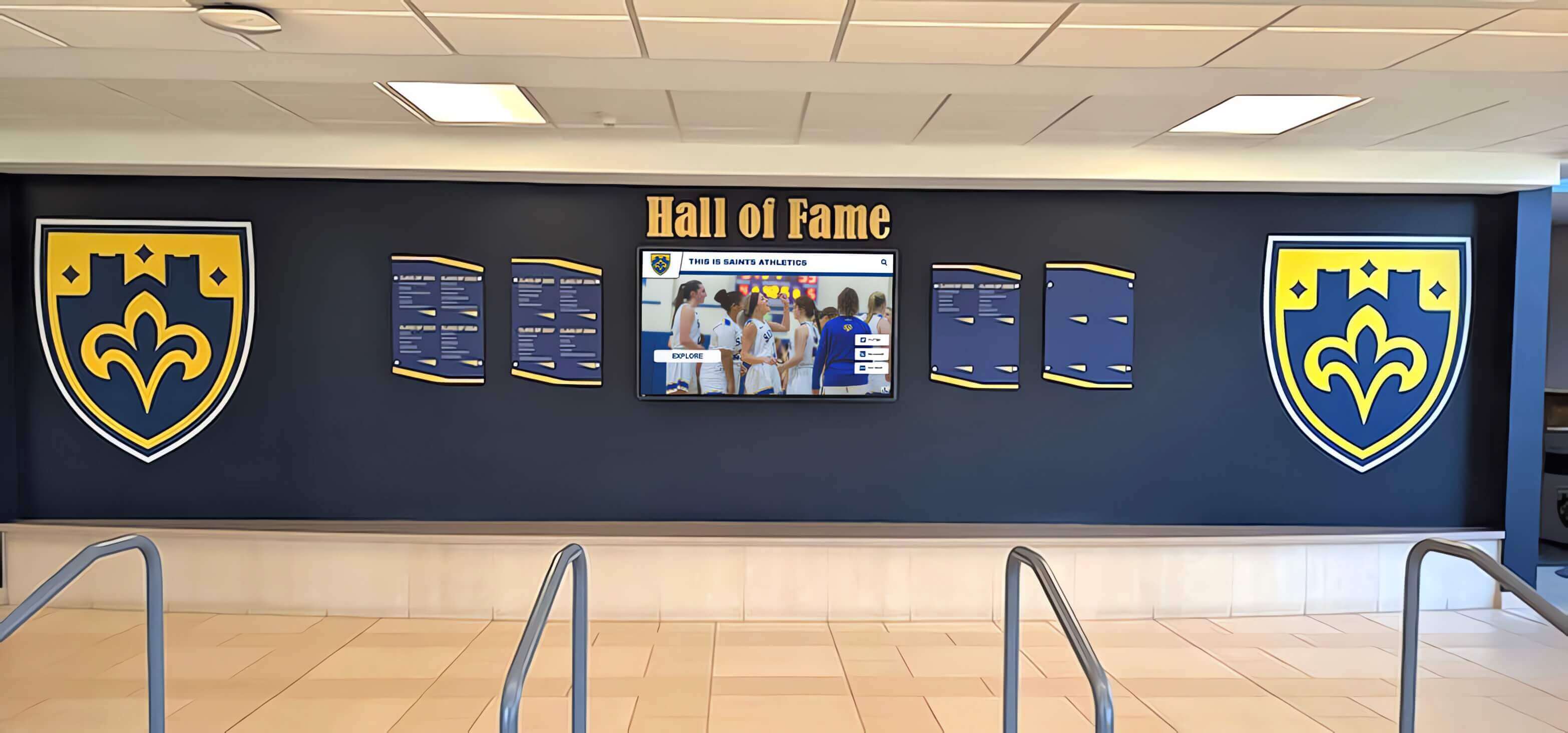
Seasonal content rotation and achievement updates keep lobby displays relevant and engaging throughout the school year
Balancing Information and Inspiration
Effective lobby displays serve both practical information needs and inspirational community-building purposes.
The 70-20-10 Content Framework
Successful display content typically follows a balanced distribution: 70% recognition and inspiration focusing on student achievements, school traditions, and community stories, 20% practical information including announcements, schedules, wayfinding, and important updates, and 10% promotional content about programs, events, fundraising, or institutional priorities.
This framework ensures displays primarily serve community celebration and connection—their most powerful purpose—while still providing necessary practical information that makes displays useful tools community members consult regularly.
Creating Emotional Connection
The most memorable lobby displays create emotional responses connecting visitors to your school story: feature individual student stories showing personal growth and achievement, highlight meaningful moments rather than just statistics and results, include quotes, reflections, or testimonials adding personal voice, and use high-quality photos showing authentic emotion and community connection.
Generic achievement lists rarely inspire strong engagement. Stories about specific individuals, memorable seasons, or transformative experiences create lasting impressions that build institutional pride and strengthen community bonds.
User-Generated and Community-Contributed Content
Involving community members in content creation distributes workload while increasing personal investment in displays.
Student Spotlight Submissions
Establish processes enabling teachers, coaches, or advisors to nominate students for lobby recognition: standardized submission forms capturing necessary information and photos, regular review cycles ensuring timely recognition, and diverse category options spanning academics, athletics, arts, service, and leadership.
When community members know they can nominate deserving students for lobby recognition, displays become collaborative celebrations rather than top-down institutional proclamations. This participation strengthens buy-in and ensures more comprehensive recognition across different programs and student groups.
Alumni Update Mechanisms
Create channels through which alumni can submit career updates, achievements, or personal milestones for potential lobby display: online submission forms on school websites or alumni portals, annual alumni survey campaigns requesting updates, milestone reunion outreach encouraging class year updates, and social media monitoring identifying notable alumni achievements.
Regular alumni content updates demonstrate that displays serve as living recognition systems celebrating ongoing community accomplishment rather than static historical records.
Practical Implementation Considerations
Moving from lobby display ideas to actual installations requires addressing practical budget, technical, and operational realities.
Budget Planning and Investment Models
Understanding total cost of ownership helps schools plan appropriately and avoid budget surprises.
Hardware Investment
Digital lobby display hardware costs vary significantly based on size, capabilities, and installation complexity: basic 43-55 inch commercial displays: $1,200-$2,500 per screen, large format 65-75 inch displays: $2,500-$5,000 per screen, interactive touchscreen systems: $5,000-$15,000 depending on size and capabilities, mounting hardware, cables, and installation labor: $500-$2,000 per display, and custom millwork or architectural integration: $2,000-$10,000+ depending on complexity.
These ranges reflect commercial-grade equipment suitable for continuous operation in public spaces. Consumer televisions lack the durability, warranty coverage, or professional appearance appropriate for institutional installations.
Software and Content Management
Beyond hardware, consider ongoing software and content management expenses: content management system subscriptions: $500-$3,000 annually depending on features and number of displays, initial content development and design: $2,000-$10,000 for professional templates and launch content, training for staff managing content updates: $500-$1,500 initially, and ongoing support and software updates: typically included in annual subscriptions.
All-inclusive solutions like Rocket Alumni Solutions bundle hardware, software, content management, and support into comprehensive packages designed specifically for school recognition needs, simplifying budgeting while ensuring all components work seamlessly together.
Creative Funding Approaches
Schools successfully funding lobby display projects often employ diverse strategies: capital improvement budgets for facilities and technology, memorial or tribute naming opportunities for major installations, alumni association funding for recognition-focused displays, athletic booster support for sports achievement showcases, donor recognition approaches acknowledging contributors on displays themselves, and phased implementation spreading costs across multiple budget cycles.
Frame lobby displays as multi-purpose investments serving admissions, community engagement, recognition, and communication functions—comprehensive value justifies resource allocation across multiple budget areas.
Technical Infrastructure Requirements
Successful installations require adequate technical infrastructure supporting display operations.
Network Connectivity
Most modern display systems require reliable internet connectivity for content management: wired Ethernet connections provide most reliable performance for stationary displays, wireless connectivity works when running network cables proves impractical, adequate bandwidth supporting content streaming and remote management, and network security protocols protecting displays from unauthorized access.
Coordinate with IT departments early in planning processes ensuring network access exists in planned installation locations or can be added within project budgets.
Power and Electrical Considerations
Displays require dedicated electrical service: standard 110V outlets sufficient for most display systems, electrical codes may require dedicated circuits for commercial installations, consider cable management routing power and network cables cleanly, and backup power systems for critical announcement displays in emergency situations.
Work with licensed electricians ensuring installations meet local electrical codes while maintaining clean professional appearance without exposed cables or power strips.
Ongoing Maintenance and Support
Plan for long-term maintenance ensuring displays remain operational: regular cleaning maintaining screen appearance and touch sensitivity, software updates applied to maintain security and functionality, content management training as staff roles change, technical support arrangements for troubleshooting display issues, and replacement planning for hardware reaching end of useful life.
Commercial display warranties typically cover 3-5 years, after which budgeting for eventual replacement ensures continuous operation. Well-maintained displays often function successfully for 7-10 years before requiring replacement.
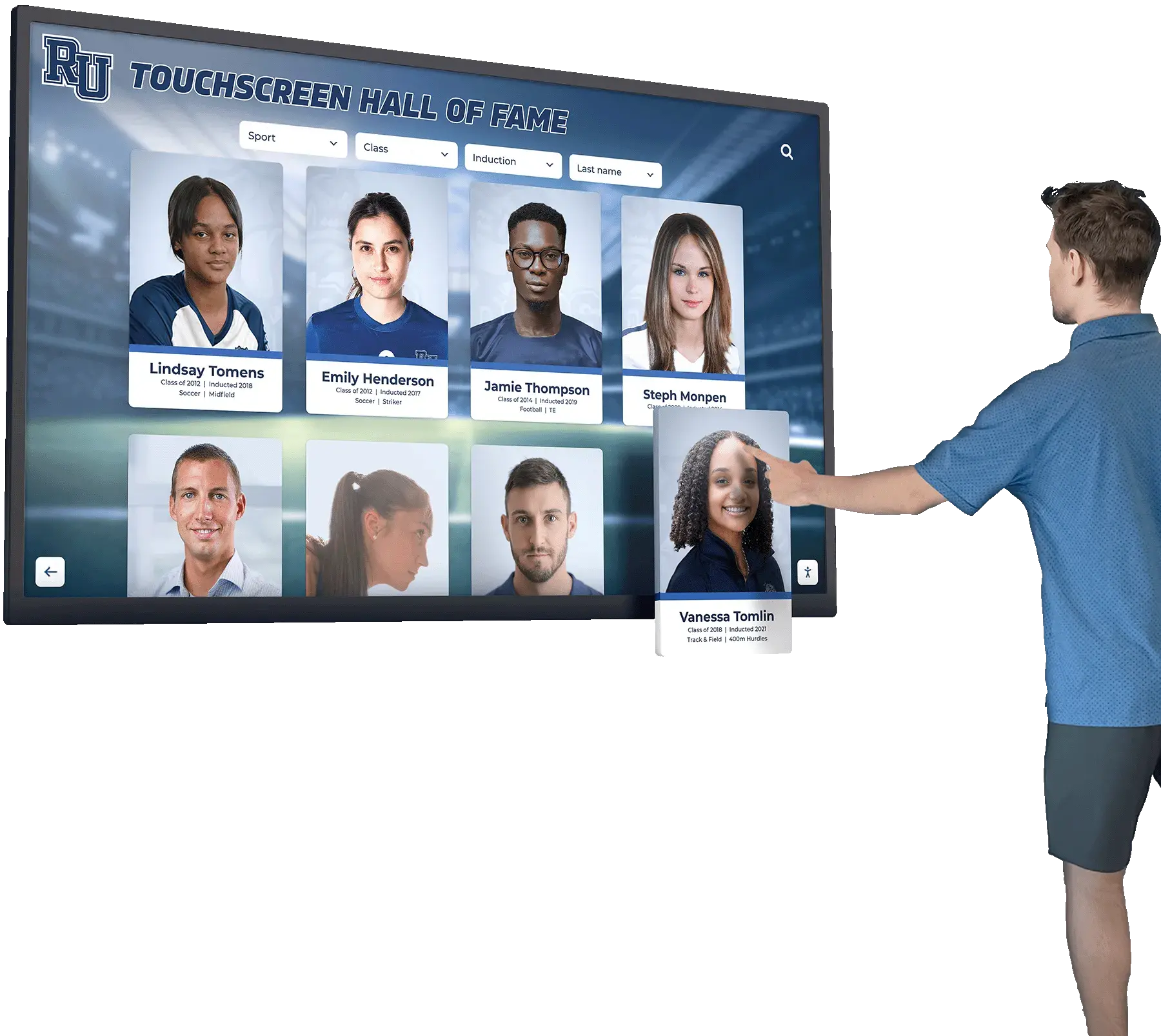
Professional-grade interactive displays require minimal maintenance while providing years of reliable operation in high-traffic school lobbies
Measuring Success and Optimizing Display Impact
Once lobby displays are operational, assessing their effectiveness and making data-informed improvements maximizes return on investment.
Engagement Metrics and Assessment
Several approaches help schools understand how community members interact with lobby displays.
Direct Observation and Usage Patterns
Simple observational assessment provides valuable insights: count visitors stopping to view or interact with displays during specific time periods, note which content types generate longest engagement sessions, identify peak usage times or days of the week, and observe which community groups (students, families, alumni, visitors) engage most frequently.
These qualitative observations inform content strategy decisions and help identify opportunities to increase engagement among underutilized community segments.
Analytics from Interactive Systems
Interactive touchscreen displays often include built-in analytics tracking: total interactions and unique sessions, most frequently accessed content categories, search terms revealing what information visitors seek, average session duration indicating engagement depth, and time-of-day usage patterns showing when displays receive most traffic.
Review analytics quarterly to identify content resonating strongly or underperforming, then adjust strategies accordingly. High search volume for specific topics signals opportunities to feature that content more prominently.
Community Feedback Collection
Direct feedback from students, staff, families, and visitors reveals subjective experience: informal conversations with community members about display usefulness, periodic surveys assessing satisfaction with content and functionality, suggestion mechanisms inviting ideas for new content or features, and monitoring social media for organic mentions or photos of lobby displays.
Community members who feel heard through feedback processes develop stronger investment in displays as collaborative community assets rather than top-down institutional installations.
Continuous Improvement Strategies
Successful lobby displays evolve based on usage data, community feedback, and changing institutional priorities.
A/B Content Testing
Experiment with different content approaches to identify what resonates: test varying visual styles, color schemes, or typography, compare engagement with static images versus video content, try different content rotation speeds or slide durations, and experiment with content organization approaches or navigation structures.
Make one variable change at a time and measure impact before implementing additional changes, ensuring you understand what specifically influences engagement patterns.
Expanding Content Categories
As display programs mature, consider expanding into additional content areas based on community interests: STEM achievement recognition for growing programs, spirit week and school event coverage building enthusiasm, college acceptance and scholarship celebrations for graduating seniors, community partnership acknowledgment and local business support, and environmental sustainability initiatives showcasing institutional values.
Diverse content ensures displays remain relevant to broad community cross-sections rather than narrowly serving specific student populations.
Integration with Broader Digital Ecosystem
Consider how lobby displays can integrate with other school communication and technology systems: sync with websites and social media creating consistent messaging across channels, connect with student information systems automating academic recognition, integrate with athletic management platforms pulling current statistics and results, link to school calendars automatically highlighting upcoming events, and enable mobile connectivity extending engagement beyond physical lobby visits.
Integrated systems reduce duplicate data entry while ensuring consistency across all institutional communications.
Specific Digital Lobby Display Ideas by School Type
Different educational institutions face unique lobby display needs based on student age, campus size, and institutional culture.
Elementary School Lobby Displays
Elementary schools benefit from displays emphasizing student work, positive behavior recognition, and family engagement.
Student Artwork Galleries
Digital displays provide perfect venues for rotating student art exhibitions: showcase work from all grade levels ensuring every student receives recognition, organize by art units or themes aligned with curriculum, feature artist statements where students describe their work and process, and rotate content monthly highlighting different grades, classes, or artistic approaches.
Digital art galleries allow far more students to see work displayed than physical hallway space permits while enabling vibrant color reproduction and easy rotation.
Positive Behavior and Character Recognition
Elementary schools emphasizing character development can use lobby displays to celebrate: students demonstrating school values like kindness, respect, or responsibility, classroom citizenship awards and student-of-the-month acknowledgments, peer nominations where students recognize classmate acts of kindness, and reading achievement milestones or academic growth celebrations.
Positive recognition displays reinforce behavioral expectations while motivating students through visible peer achievement celebration.
Middle and High School Lobby Displays
Secondary schools typically emphasize more sophisticated achievement recognition and college/career preparation content.
College Signing and Scholarship Celebrations
High schools can create dynamic college signing announcements celebrating senior commitments: display senior photos with college logos and intended majors, highlight athletic scholarship recipients and signing day moments, feature academic scholarship awards and amounts, showcase acceptance statistics and college placement lists, and include senior advice for underclassmen about college preparation.
These displays inspire younger students while celebrating senior achievements and signaling that your school successfully prepares students for post-secondary success.
Student Leadership and Club Recognition
Secondary school lobby displays can highlight co-curricular involvement: student government officers and initiative spotlights, club achievement and community service project highlights, competition teams and tournament results across diverse activities, and student voice through quotes, reflections, or school improvement ideas.
Comprehensive club and activity recognition demonstrates that your school values diverse forms of student engagement beyond traditional academics and athletics.
University and College Lobby Displays
Higher education institutions use lobby displays for more sophisticated purposes emphasizing research, academic programs, and institutional prestige.
Research and Academic Achievement Showcases
University lobbies often feature: faculty research highlights and grant announcements, student research symposium content and thesis abstracts, publication celebrations and academic distinction recognition, departmental achievement and program ranking information, and visiting scholar or speaker series promotions.
Academic content establishes intellectual seriousness while demonstrating institutional research capacity to prospective students, visiting families, and community partners.
Alumni Career Achievement Networks
College lobby displays can feature sophisticated alumni tracking and recognition: searchable databases by graduation year, major, or career field, video testimonials from distinguished alumni about career paths, internship and employment placement statistics by major, and networking opportunities connecting current students with alumni mentors.
Career-focused content demonstrates return on educational investment while strengthening alumni-student connections that benefit both groups.
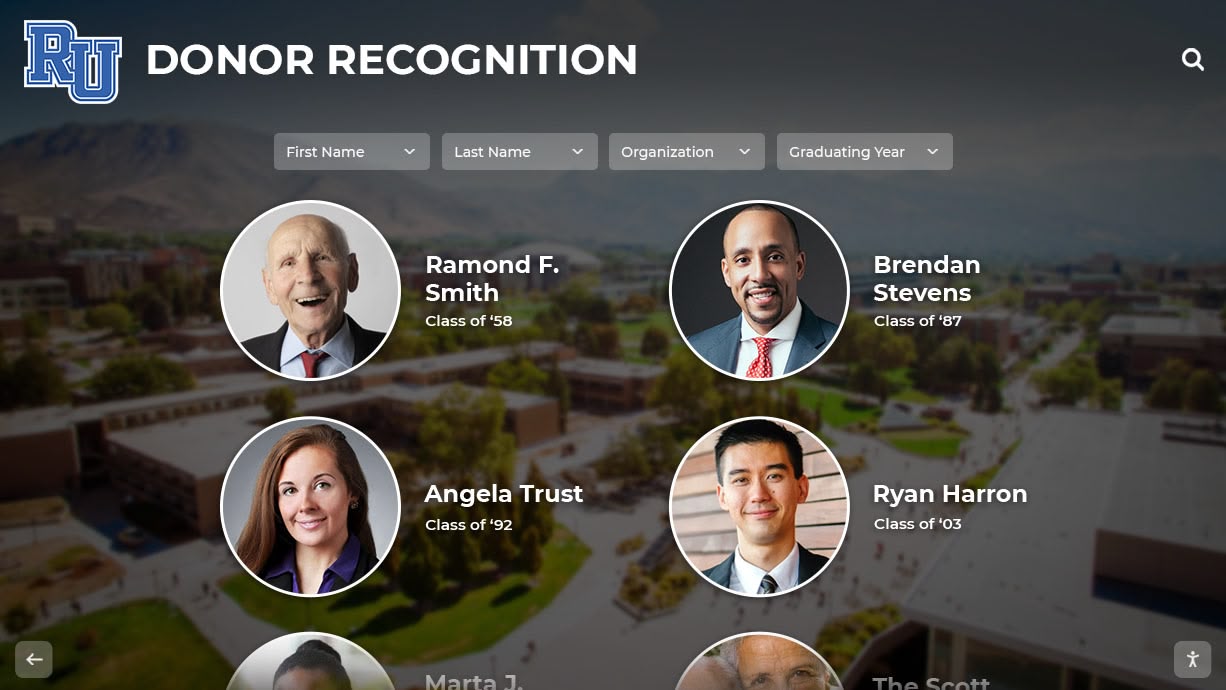
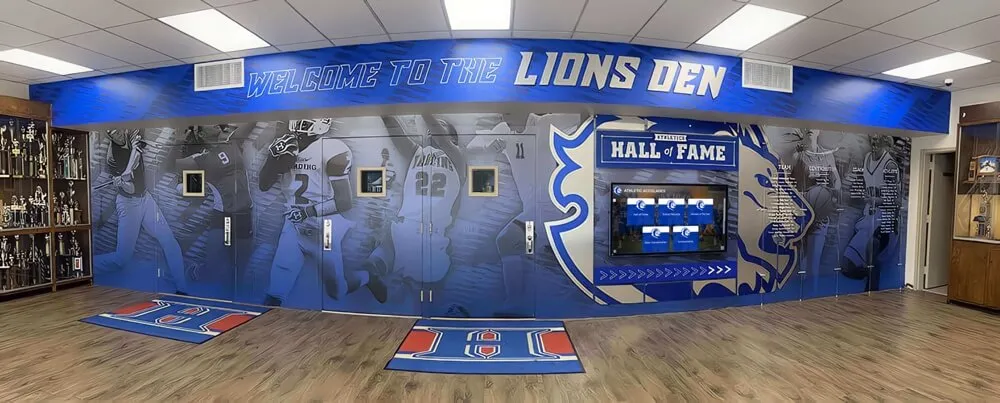
Higher education lobby displays showcase alumni achievements and donor recognition while reinforcing institutional prestige and community connections
Common Challenges and How to Overcome Them
Schools implementing lobby displays encounter predictable challenges. Anticipating these obstacles and planning responses prevents implementation setbacks.
Content Creation and Management Workload
The most common implementation concern involves ongoing content management burden.
Challenge: “We don’t have staff time to constantly update displays.”
Address this through several approaches: invest in systems with user-friendly interfaces requiring minimal training, create content templates enabling quick updates without starting from scratch, establish clear content calendars reducing decision fatigue, delegate content responsibility across multiple departments or roles, implement automated content feeds pulling from existing systems, and start with manageable content scope expanding as processes mature.
Schools initially overwhelmed by content management often discover that streamlined processes and clear responsibilities make displays far less burdensome than anticipated. The key involves right-sizing initial scope rather than attempting comprehensive content coverage immediately.
Technical Integration and IT Coordination
Technical implementation requires coordination with IT departments who may have limited bandwidth.
Challenge: “Our IT department says they’re too busy to support another system.”
Successful approaches include: select systems designed for non-technical users minimizing IT dependency, leverage cloud-based solutions reducing on-premise server and network demands, choose vendors providing comprehensive support and troubleshooting, involve IT early in planning processes rather than presenting completed decisions, and demonstrate how displays solve problems IT departments care about (reducing signage update tickets, improving visitor experience, centralizing announcements).
Position displays as tools reducing burden on IT and other staff rather than adding to their workload. Frame implementation as strategic investment in operational efficiency rather than optional technology addition.
Maintaining Fresh, Engaging Content Long-Term
Initial installations generate excitement, but maintaining engagement over months and years proves challenging.
Challenge: “Displays were exciting initially but community stopped paying attention.”
Sustain engagement through: establishing regular content rotation preventing staleness, soliciting community content contributions distributing creation burden, tying content to school calendar events maintaining relevance, monitoring analytics identifying high-performing content types, celebrating new content updates through other communication channels, and periodically surveying community about desired display content.
Displays require active management like any communication channel. Schools treating them as “set and forget” installations predictably see declining engagement over time.
Budget Constraints and Funding Limitations
Financial resources represent persistent challenges, particularly for under-resourced schools.
Challenge: “We love these ideas but simply can’t afford the investment.”
Creative funding approaches can make displays accessible: pursue phased implementation starting with single displays expanding over time, explore memorial or tribute naming opportunities for donor funding, apply for educational technology grants specifically supporting this work, involve booster organizations or alumni associations in funding recognition-focused displays, consider refurbished or previous-generation hardware reducing initial costs, and leverage comprehensive solutions offering predictable total costs rather than accumulating unexpected expenses.
Additionally, calculate total cost of ownership for current lobby signage approaches. When schools tally staff time physically updating boards, design and printing costs for new displays, and replacement expenses for damaged materials, digital systems often prove surprisingly cost-competitive while offering dramatically superior functionality.
Future Trends in School Lobby Display Technology
While focusing on current best practices, understanding emerging trends helps schools make future-oriented investment decisions.
AI-Powered Personalization and Content Generation
Artificial intelligence capabilities increasingly influence lobby display functionality.
Smart Content Recommendations
Advanced systems can analyze usage patterns and automatically surface relevant content to specific users. Touchscreen displays might recognize returning visitors (through optional login or NFC card taps) and present personalized content like their own achievement records, their child’s recognitions, or updates from their graduation year cohort.
AI-assisted content generation tools can help schools create draft achievement descriptions, suggest relevant historical content connections, or automatically format submitted photos and information into display-ready designs, dramatically reducing content creation workload.
Real-Time Language Translation
Increasingly diverse school communities benefit from displays offering real-time content translation. Visitors can select preferred languages, accessing announcements, wayfinding information, and recognition content in their most comfortable language. This accessibility feature ensures lobby displays serve entire school communities regardless of primary language spoken at home.
Enhanced Interactive Capabilities
Display interaction methods continue evolving beyond basic touchscreens.
Gesture and Voice Control
Emerging interfaces enable voice commands or gesture recognition allowing users to navigate content without physical screen contact—particularly valuable during health-conscious periods or for visitors with mobility limitations affecting touch precision.
Augmented Reality Integration
AR-enabled displays allow visitors to point phones at lobby installations accessing additional layered content—3D trophy models, video highlights, extended biographical information, or interactive timelines that wouldn’t fit on physical displays but enrich visitor experience through mobile devices.
Social Media Integration
Displays increasingly enable direct social sharing allowing visitors to instantly post recognition moments to personal social media accounts, exponentially extending reach and engagement while creating authentic user-generated content promoting school communities.
These emerging capabilities expand what lobby displays can accomplish while making them more accessible and engaging for increasingly tech-comfortable community members.
Learn more about emerging digital recognition trends shaping the future of school achievement celebration.
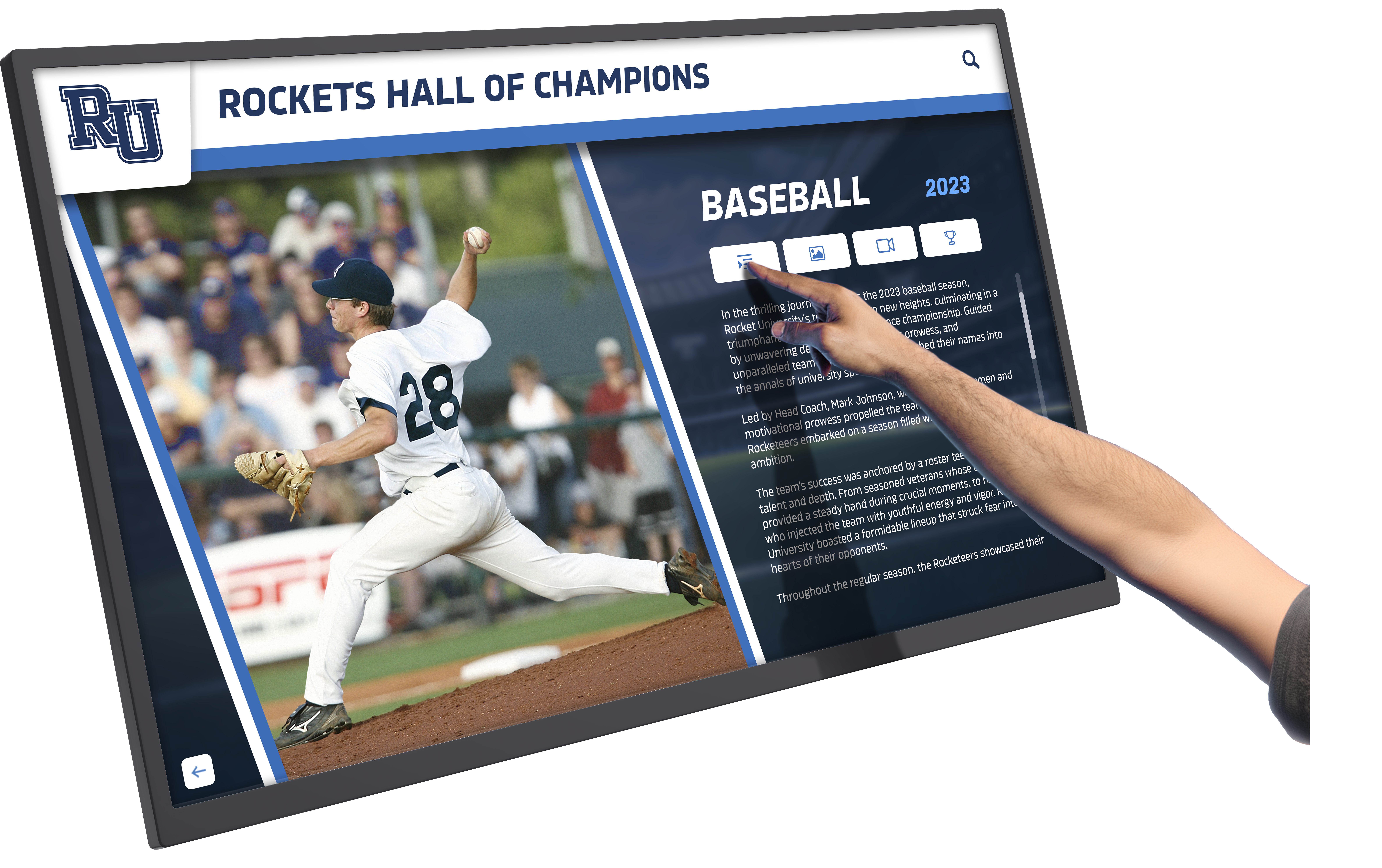
Next-generation interactive displays offer enhanced touch responsiveness, personalization, and mobile connectivity extending engagement beyond physical installations
Taking the First Step Toward Transforming Your School Lobby
Implementing digital lobby displays represents significant institutional investment, but schools that approach projects strategically discover transformative impact on community engagement, institutional pride, and visitor experience.
Starting Your Planning Process
Begin with clear assessment of current lobby functionality and future aspirations: conduct honest evaluation of existing lobby effectiveness and limitations, gather input from diverse stakeholders about desired lobby functions and content, research budget availability from various funding sources, assess technical infrastructure and IT coordination requirements, and establish realistic timeline accounting for planning, procurement, installation, and content development.
Successful projects begin with thorough discovery ensuring all stakeholders understand scope, expectations, and requirements before committing resources.
Finding the Right Solution Partner
Not all digital display vendors understand school-specific needs. Seek partners with: demonstrated experience in educational environments, comprehensive solutions addressing both hardware and content management, user-friendly systems enabling non-technical staff to manage content, ongoing support and training ensuring long-term success, and transparent pricing models clarifying total cost of ownership.
The right vendor functions as collaborative partner throughout implementation and beyond rather than simply selling equipment and disappearing after installation.
Transform Your School Entrance with Professional Digital Recognition
Your school lobby creates first and lasting impressions shaping how prospective families, visitors, current students, and returning alumni perceive your institution. Digital lobby displays offer powerful tools for creating welcoming environments, celebrating community achievements, communicating important information, and building the school pride that strengthens engagement across diverse stakeholder groups.
While planning and implementing lobby displays requires thoughtful consideration of content strategy, technology selection, design integration, and ongoing management, schools of all sizes and resource levels can successfully deploy installations matching their unique communities and priorities. The key involves starting with clear goals, involving stakeholders throughout planning processes, choosing appropriate technology for your needs and capabilities, and committing to ongoing content management that keeps displays relevant and engaging.
Ready to transform your school lobby with professional digital recognition displays? Rocket Alumni Solutions specializes in comprehensive touchscreen recognition systems designed specifically for schools and educational institutions. Our turnkey solutions include professional-grade hardware, user-friendly content management, design services, installation support, and ongoing training ensuring your lobby displays create the unforgettable entrance your community deserves. Contact us today to discuss how we can help you celebrate achievement, welcome visitors, and build lasting school pride through impactful digital lobby displays.