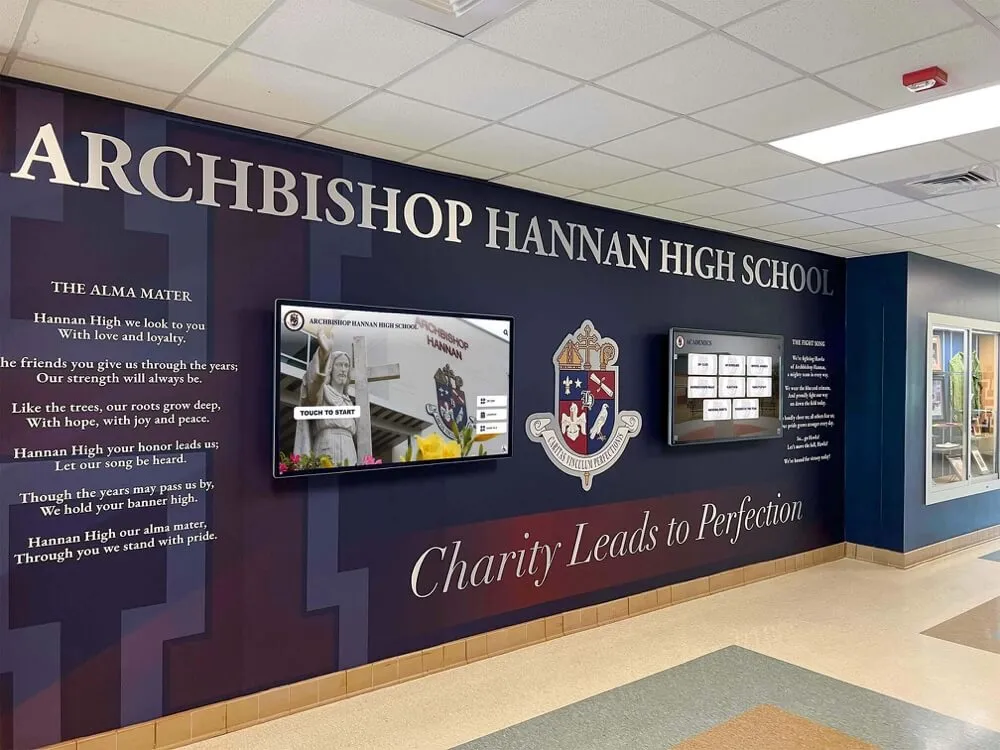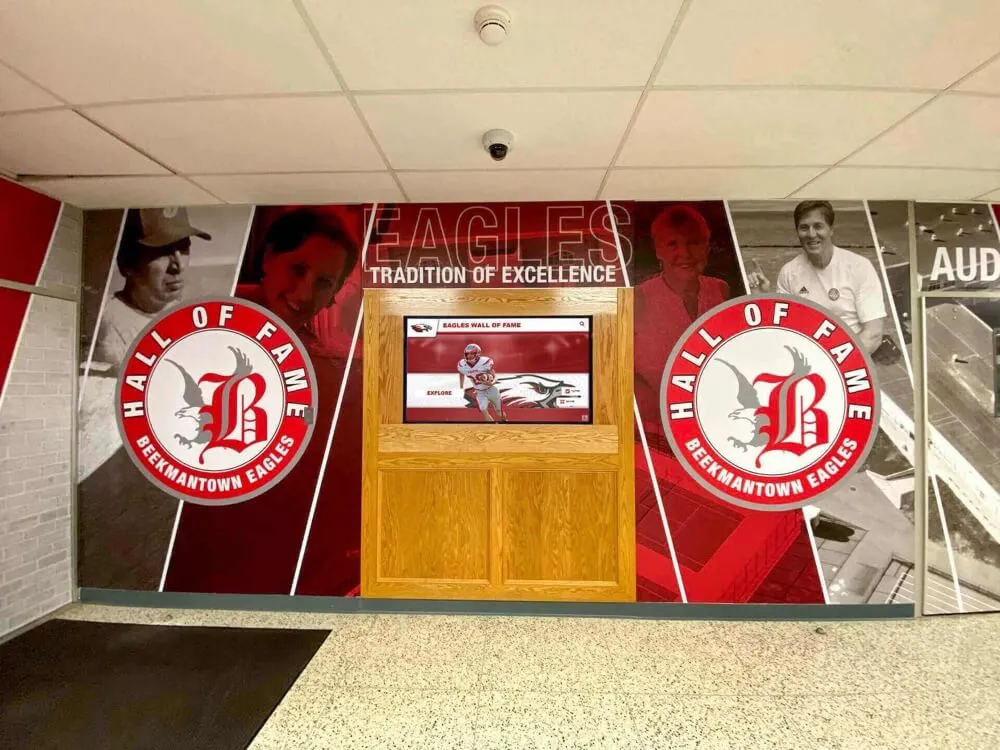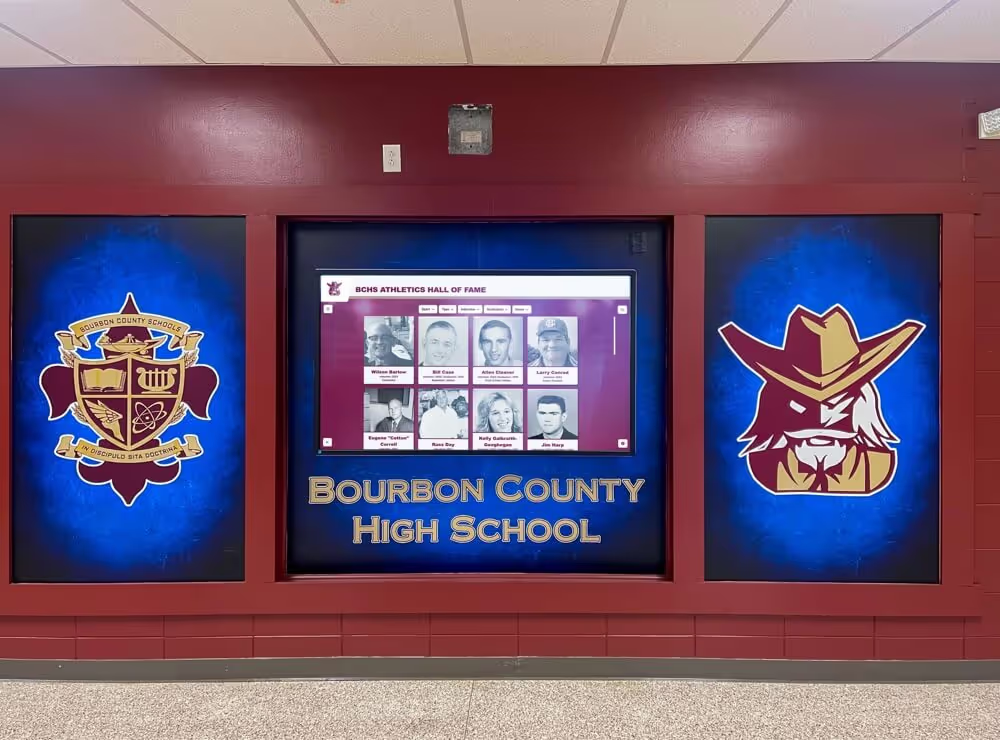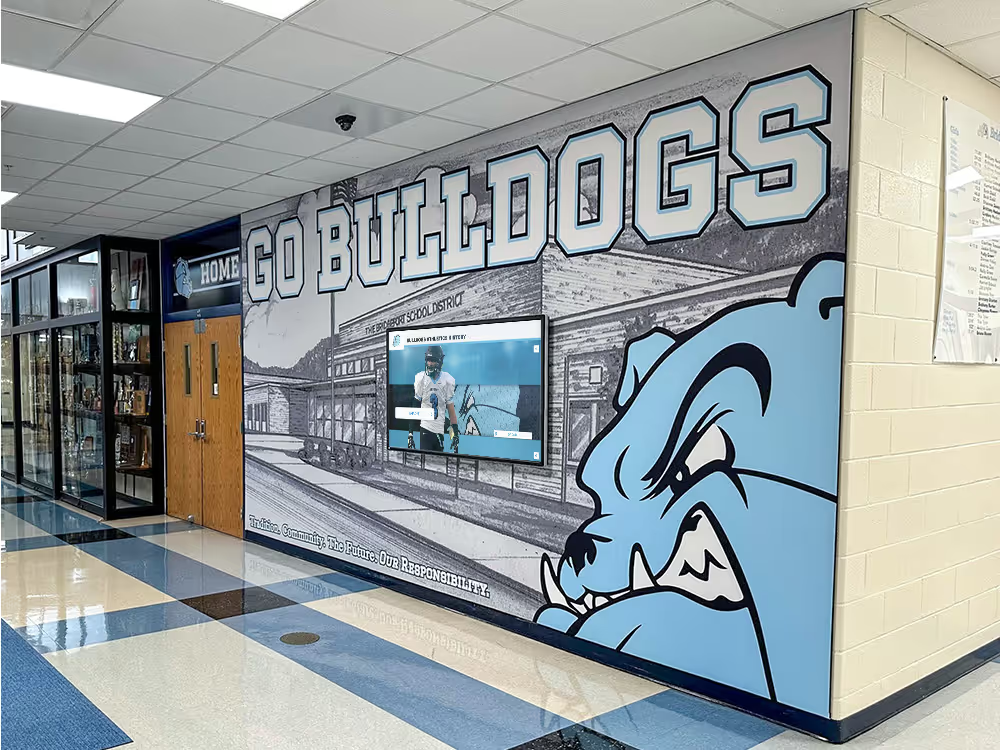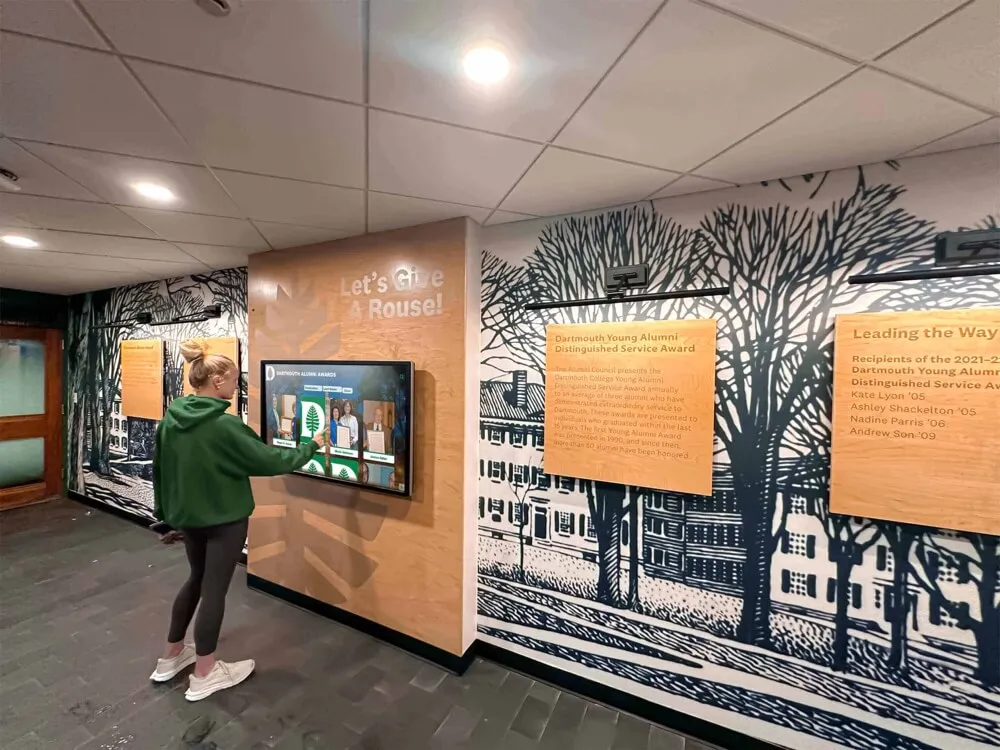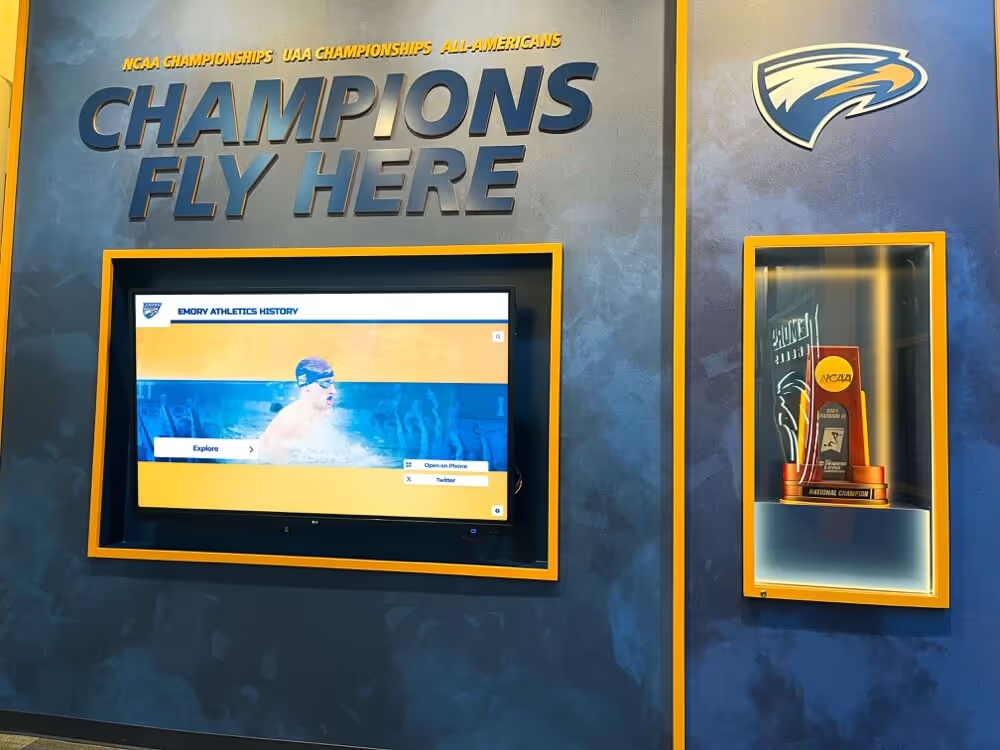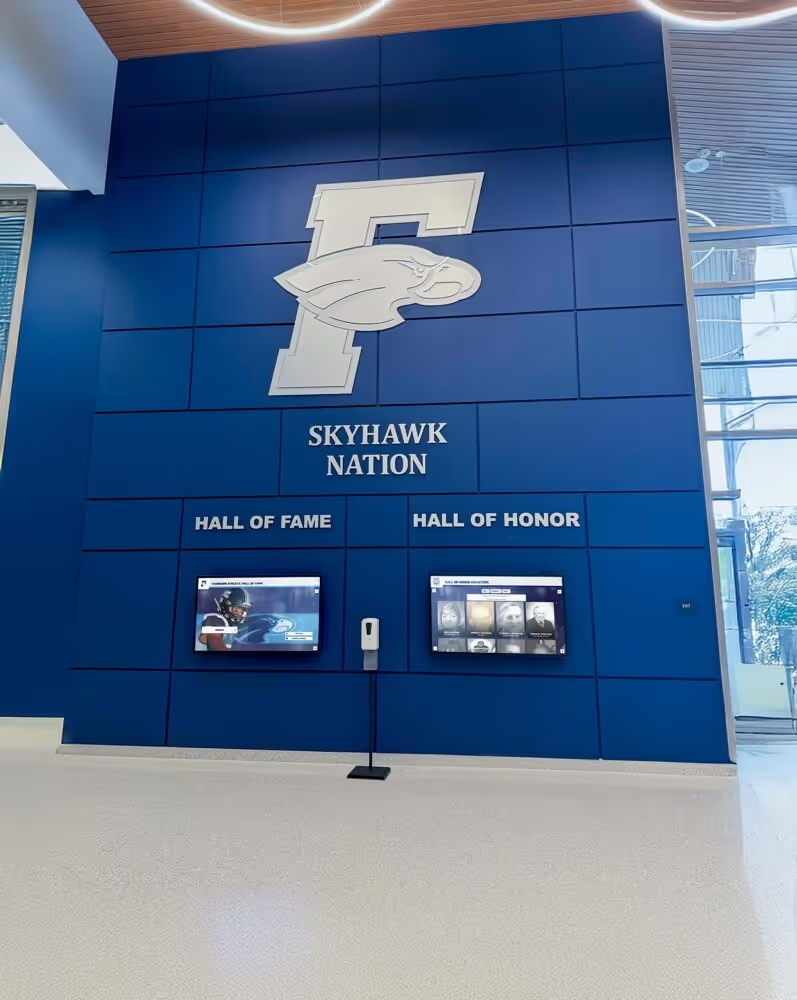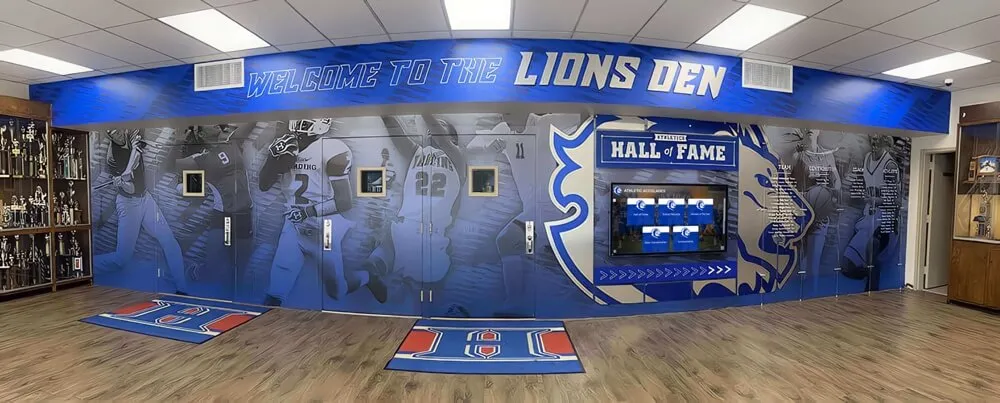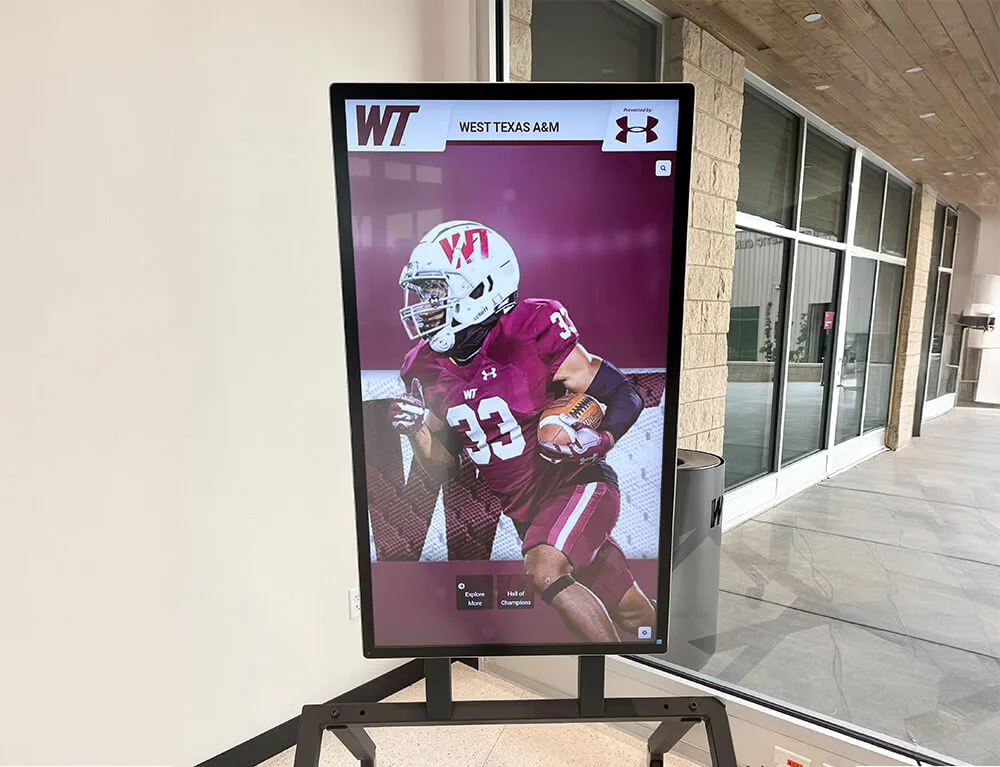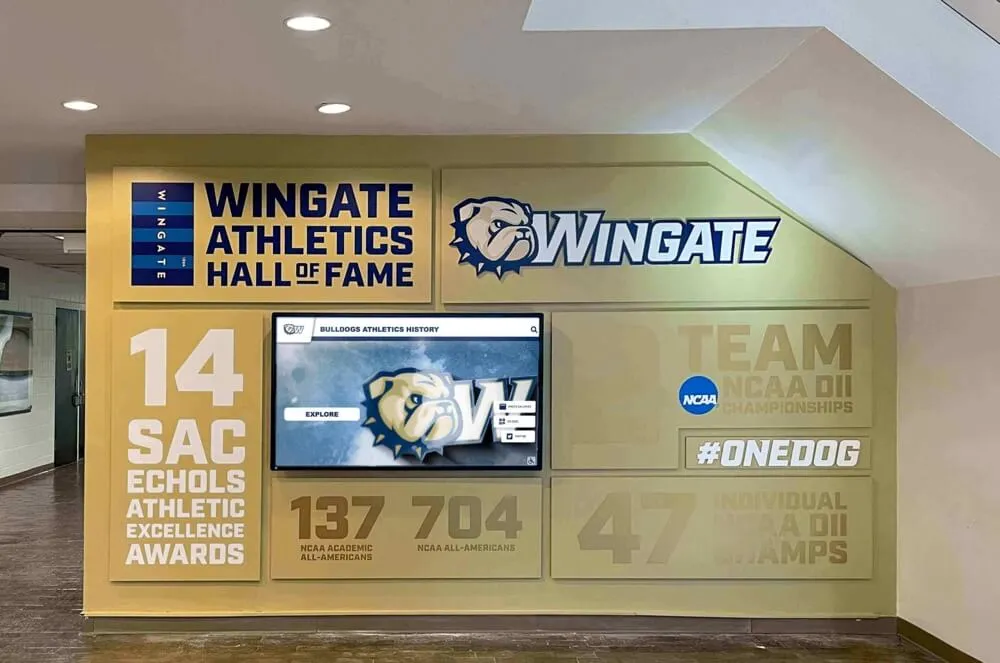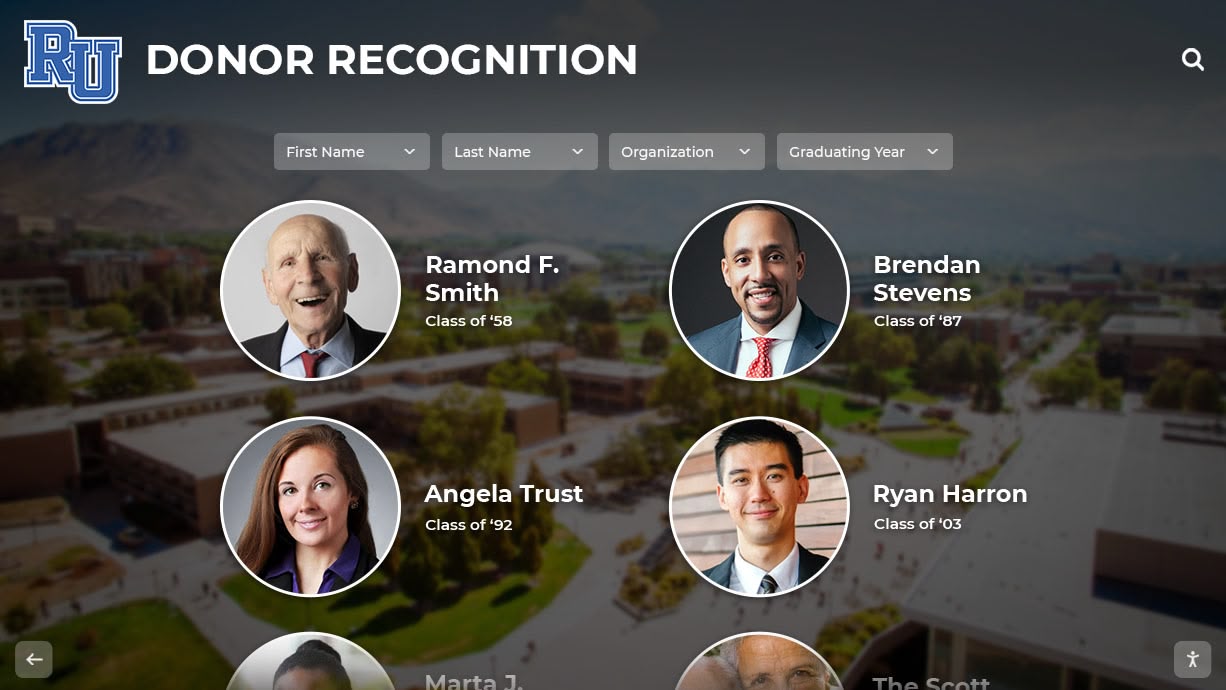




Many schools, universities, and community organizations face space constraints when they want to celebrate both athletic or academic achievement and recognize donors who make their programs possible. Traditional approaches require separate installations—one wall for hall of fame inductees, another for donor plaques, and yet another for sponsor acknowledgment. This creates scattered recognition experiences, competes for premium wall space, and multiplies both installation and maintenance costs.
Digital recognition displays answer a practical question many administrators ask: can one system handle multiple recognition needs? The answer is yes, and understanding how these dual-purpose platforms work helps organizations make smarter investments in recognition technology while creating richer community engagement through what we call digital warming—continuously surfaced, personalized content that transforms static recognition into active community celebration.
How Digital Displays Handle Multiple Recognition Types
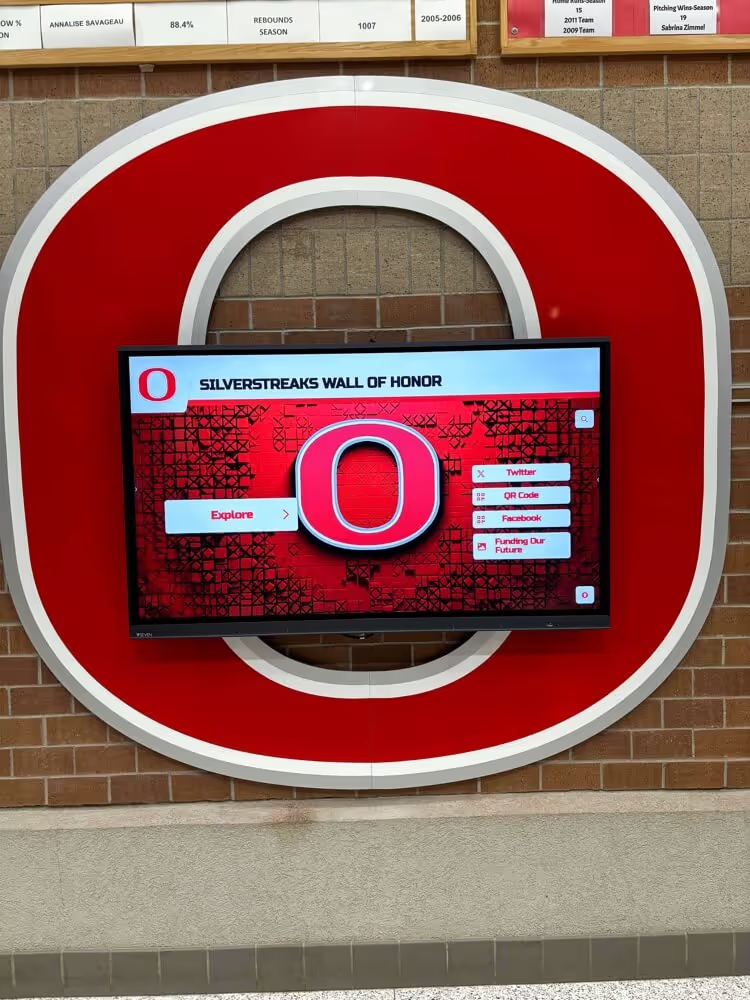
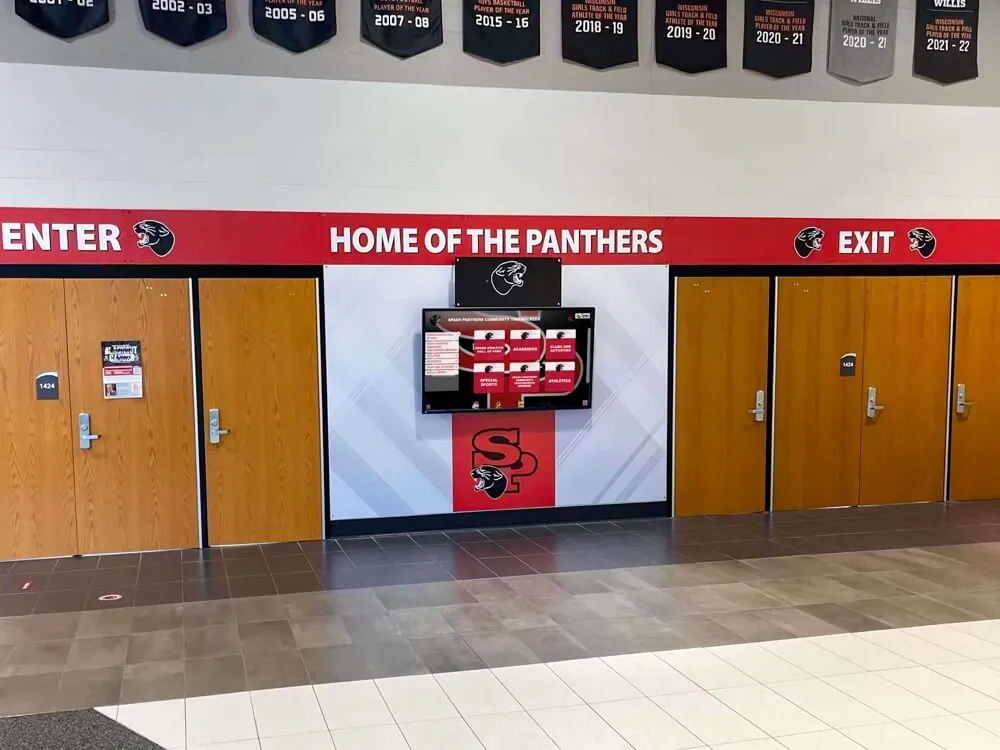
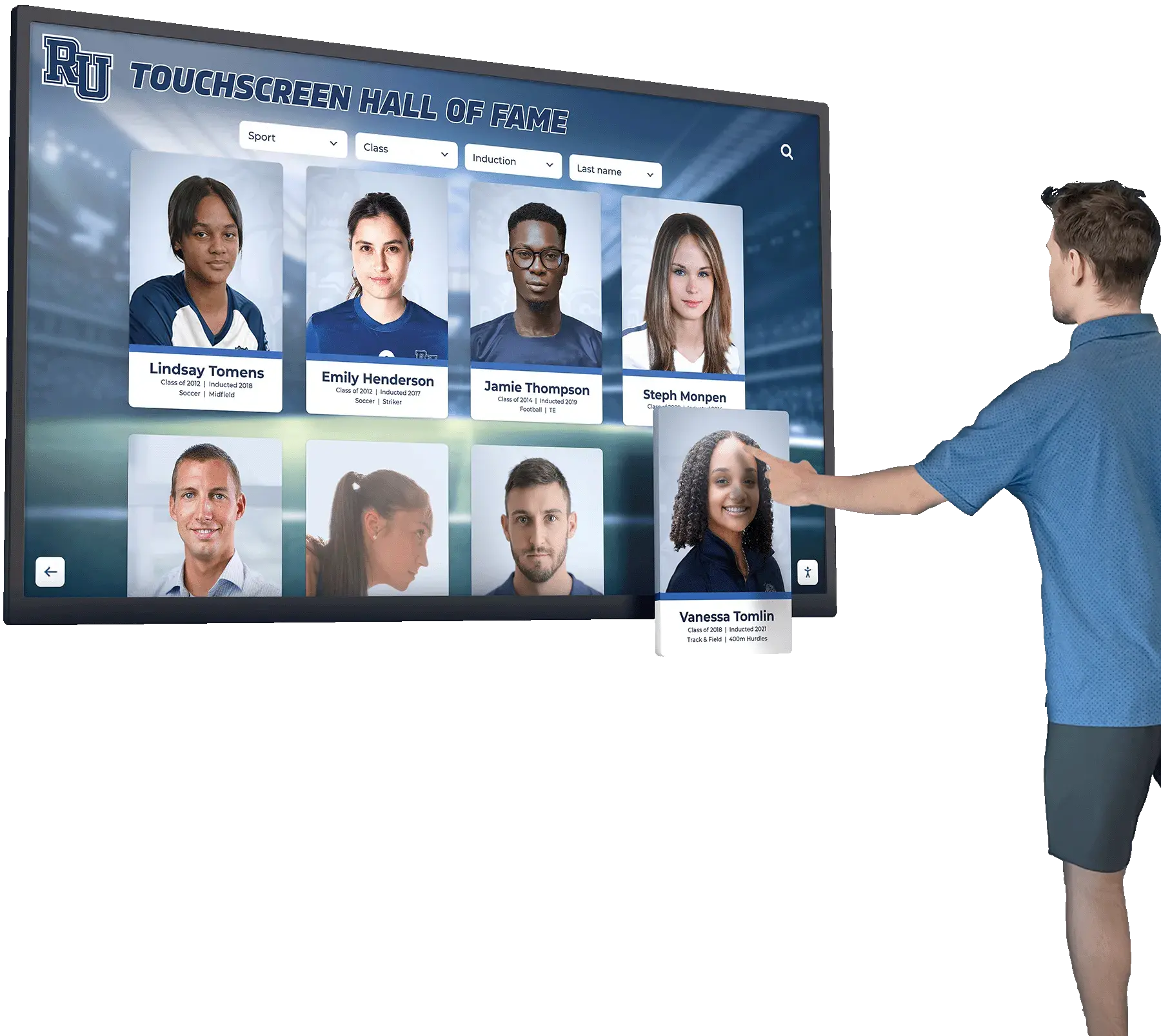

Modern digital recognition platforms function simultaneously as hall of fame displays, donor walls, and sponsor recognition systems because they separate content management from physical hardware. Rather than mounting fixed plaques that occupy dedicated wall space for single purposes, organizations install touchscreen displays or wall-mounted screens that present different recognition categories through software.
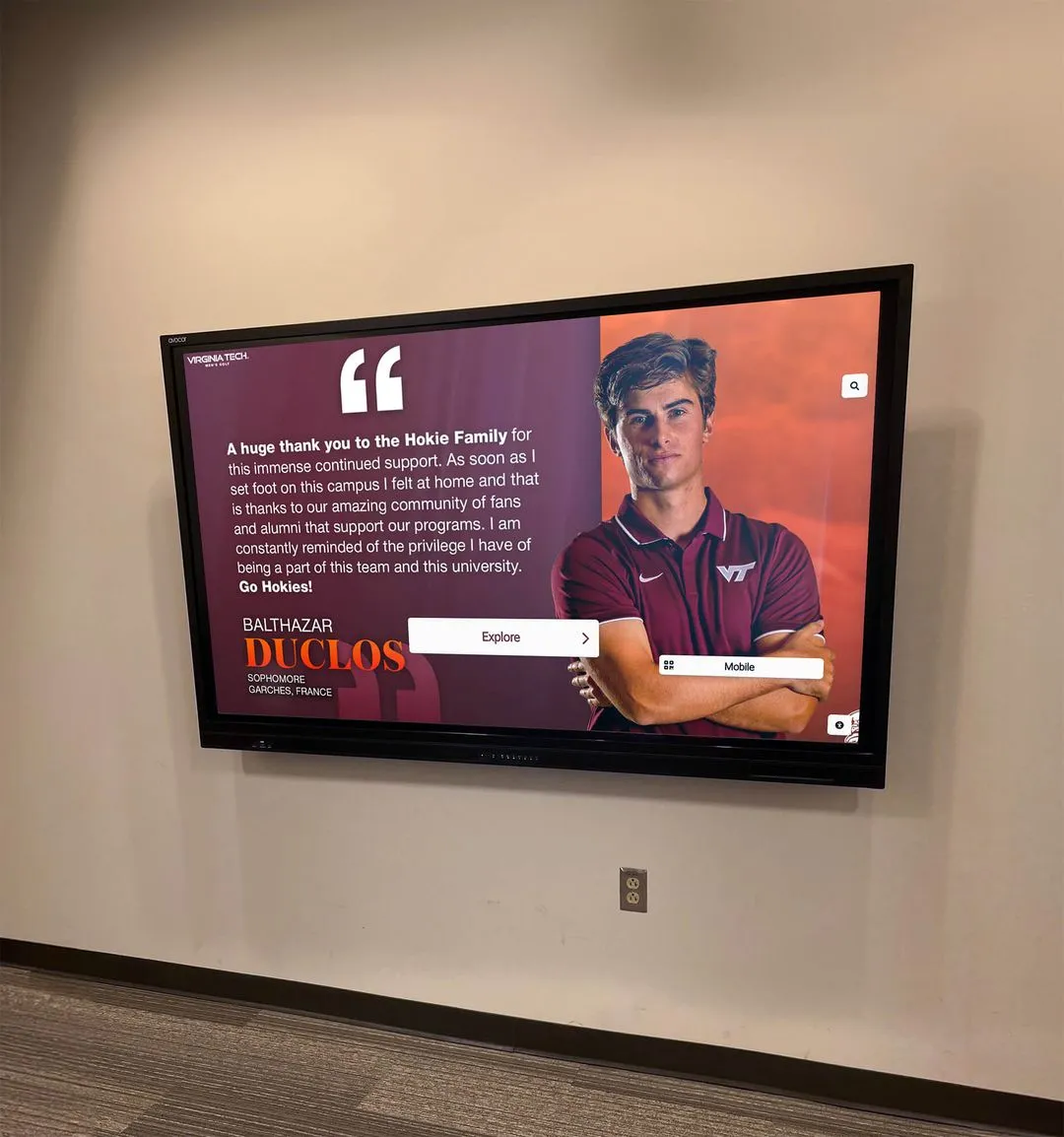
A school might configure one digital display to show athletic hall of fame inductees at certain times, donor recognition during school events, academic achievement lists during parent conferences, and rotating sponsor acknowledgments throughout the day. This multiplexing capability means one 55-inch touchscreen accomplishes what previously required three separate wall installations.
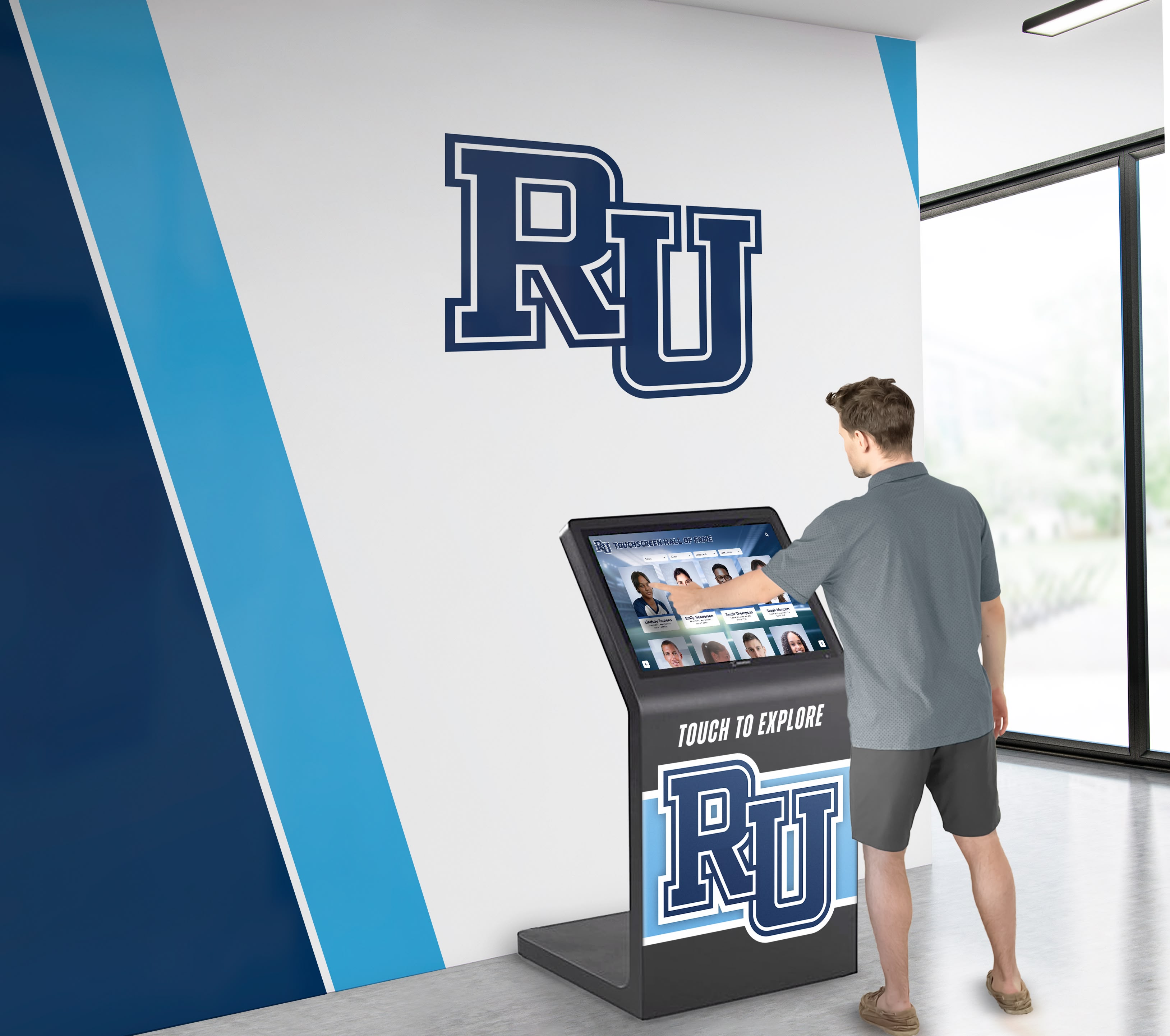
The technical architecture enabling this functionality relies on content management systems that organize recognition into categories, assign display priorities, and schedule when different content appears. Organizations can structure their recognition database to include inductee profiles, donor acknowledgments, sponsor logos, and achievement records within a unified platform rather than maintaining separate systems for each recognition type.
Solutions like Rocket Alumni Solutions provide this integrated approach, allowing administrators to update hall of fame content, adjust donor recognition tiers, and modify sponsor acknowledgments through the same remote content management system. This unified administration significantly reduces the time investment required to maintain multiple recognition programs.
Managing Donor Recognition Within Hall of Fame Systems
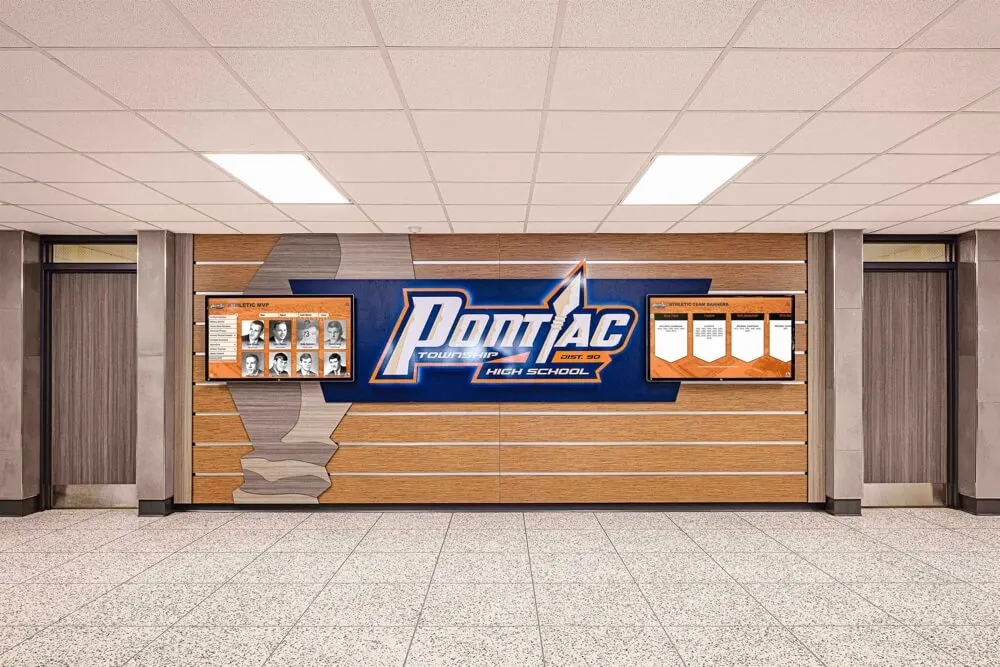
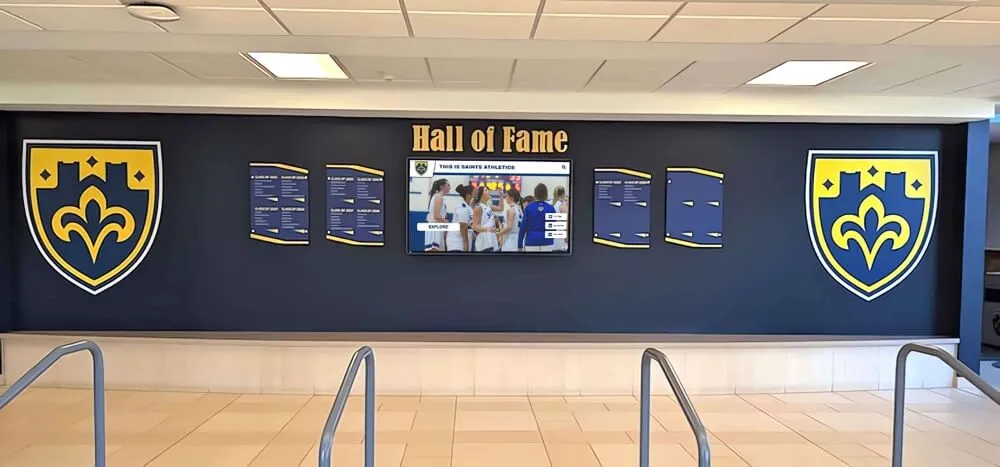
When digital displays serve dual purposes, donor recognition typically appears through several integration approaches. The most common implementation dedicates specific screens or screen sections to donor acknowledgment while other areas display hall of fame content. A three-screen installation might allocate one screen to rotating donor recognition, another to hall of fame inductee profiles, and a third to current athletic records or sponsor acknowledgments.
Organizations implementing dual-purpose hall of fame and donor recognition systems within their facilities typically organize donors into giving levels that determine recognition prominence. Major donors might receive dedicated profile pages similar to hall of fame inductees—complete with photos, biographical information, and statements about why they support the organization. Mid-level donors appear in scrolling lists grouped by giving tier. Annual fund contributors might be acknowledged through rotating acknowledgment screens that cycle through supporter names.
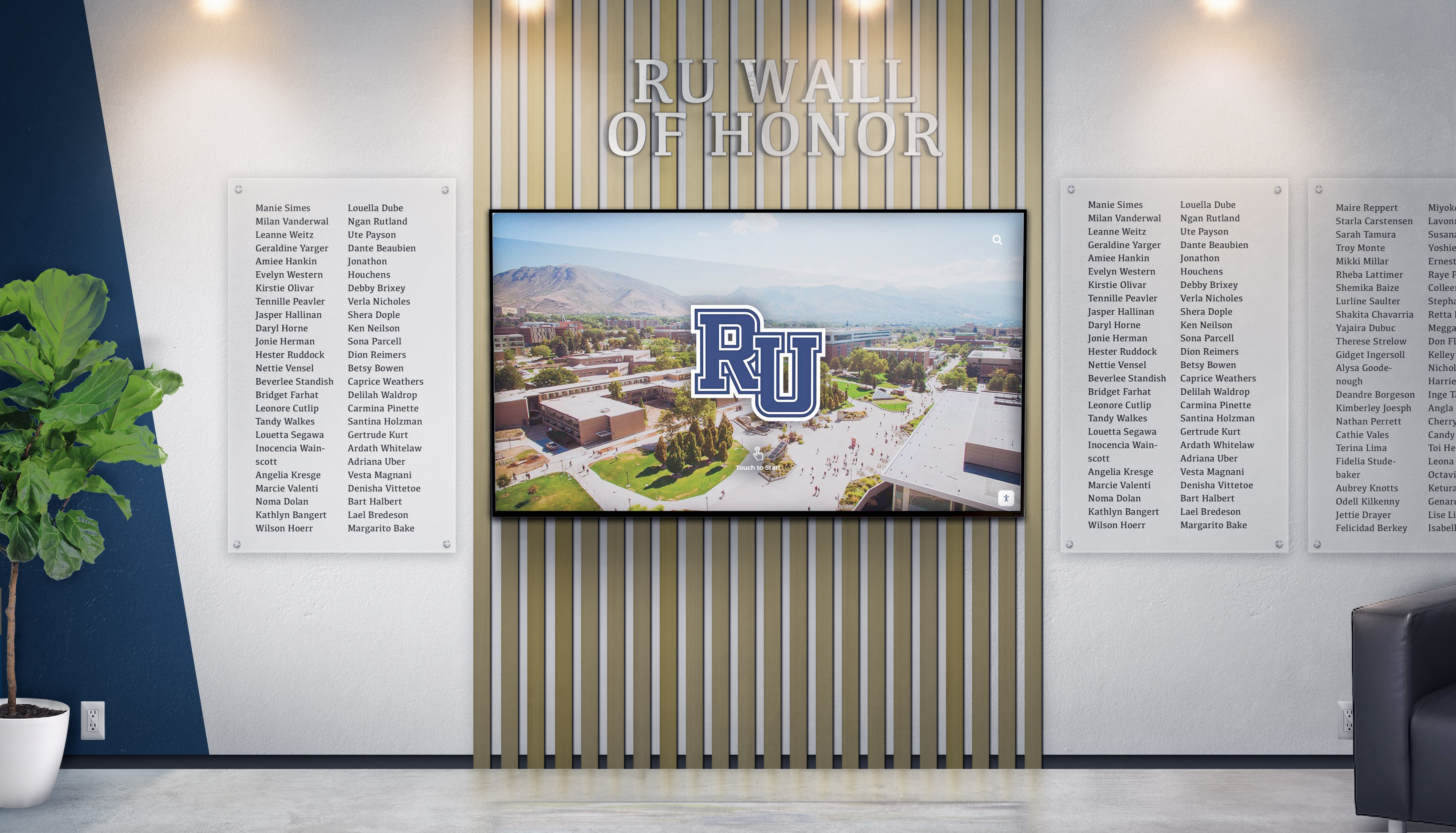
The flexibility of digital systems allows organizations to adjust donor recognition as giving levels change. When a donor increases their contribution tier, administrators update their digital profile to reflect the new recognition level rather than ordering new plaques or renovating physical installations. This responsiveness strengthens donor relationships by acknowledging advancement immediately rather than waiting for annual recognition updates.
Many organizations discover that integrating donor recognition with hall of fame displays creates natural connections between institutional success and philanthropic support. A profile of a championship team displayed next to recognition of the donor who funded facility improvements tells a more complete story than either recognition element in isolation. This contextual storytelling approach exemplifies digital warming—making recognition feel relevant and connected rather than transactional.
Sponsor Recognition Management and Revenue Opportunities
Sponsor acknowledgment represents a critical funding mechanism for many athletic programs, performing arts departments, and community organizations. Digital displays managing both hall of fame and donor content can simultaneously handle sponsor recognition through dedicated sponsor screens, rotating acknowledgment slides, or integrated sponsor logos within content categories.
The economic model for digital sponsor recognition often differs from traditional sponsorship approaches. Rather than selling fixed plaques or banner space that remains unchanged for contract periods, digital platforms offer sponsors tiered recognition packages based on display frequency, placement prominence, and content richness. A platinum sponsor might receive rotating full-screen acknowledgments every ten minutes, dedicated sponsor profile pages accessible through touchscreen navigation, and logo placement on related content screens. Silver sponsors might appear in rotating acknowledgment lists or smaller logo placements.
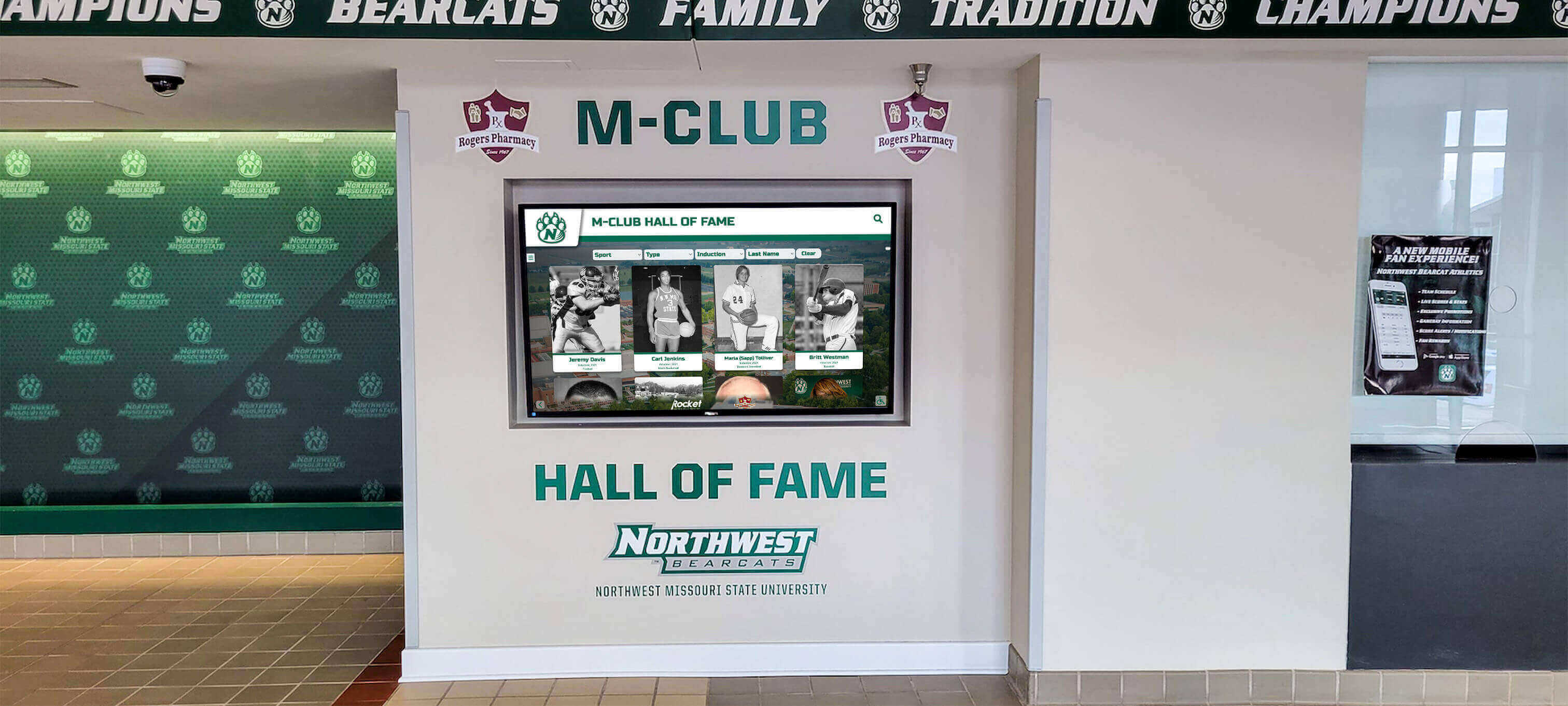
Organizations implementing digital donor wall systems with sponsor functionality typically create sponsor content packages that allow real-time updates. When sponsors change promotions, update branding, or modify messaging, organizations can refresh sponsor content remotely without physical replacements or professional design services.
Some platforms include sponsor analytics tracking how frequently sponsor content displays, which screens show sponsor acknowledgments, and general engagement metrics for touchscreen interactions. This data helps organizations demonstrate sponsorship value when renewing contracts or pursuing new sponsor relationships—transforming sponsor recognition from static acknowledgment into documented exposure.
The revenue implications matter for budget-conscious organizations. Traditional recognition requires upfront investment with limited ongoing revenue potential. Digital recognition systems generate recurring sponsor revenue through annual acknowledgment contracts while simultaneously serving hall of fame and donor recognition needs. Organizations covering initial digital display investments through sponsor commitments create self-sustaining recognition programs rather than competing with operating budgets.
Content Organization Strategies for Unified Recognition
Successfully managing multiple recognition types through single platforms requires thoughtful content architecture. Organizations typically implement one of three organizational approaches: categorical segregation, integrated storytelling, or hybrid models.
Categorical segregation dedicates specific screens or navigation sections to each recognition type. Visitors encountering the display understand immediately whether they’re viewing hall of fame inductees, donor acknowledgments, or sponsor recognition. This clarity serves organizations with distinct recognition audiences—alumni seeking hall of fame information, donors checking their acknowledgment, and sponsors verifying their placement.
Integrated storytelling weaves recognition types together thematically. A display covering a championship season might include hall of fame athlete profiles from that era, acknowledge donors who supported the program during that period, and recognize sponsors who funded related initiatives. This narrative approach creates richer engagement by connecting recognition elements through shared stories rather than treating each recognition type as isolated acknowledgment.
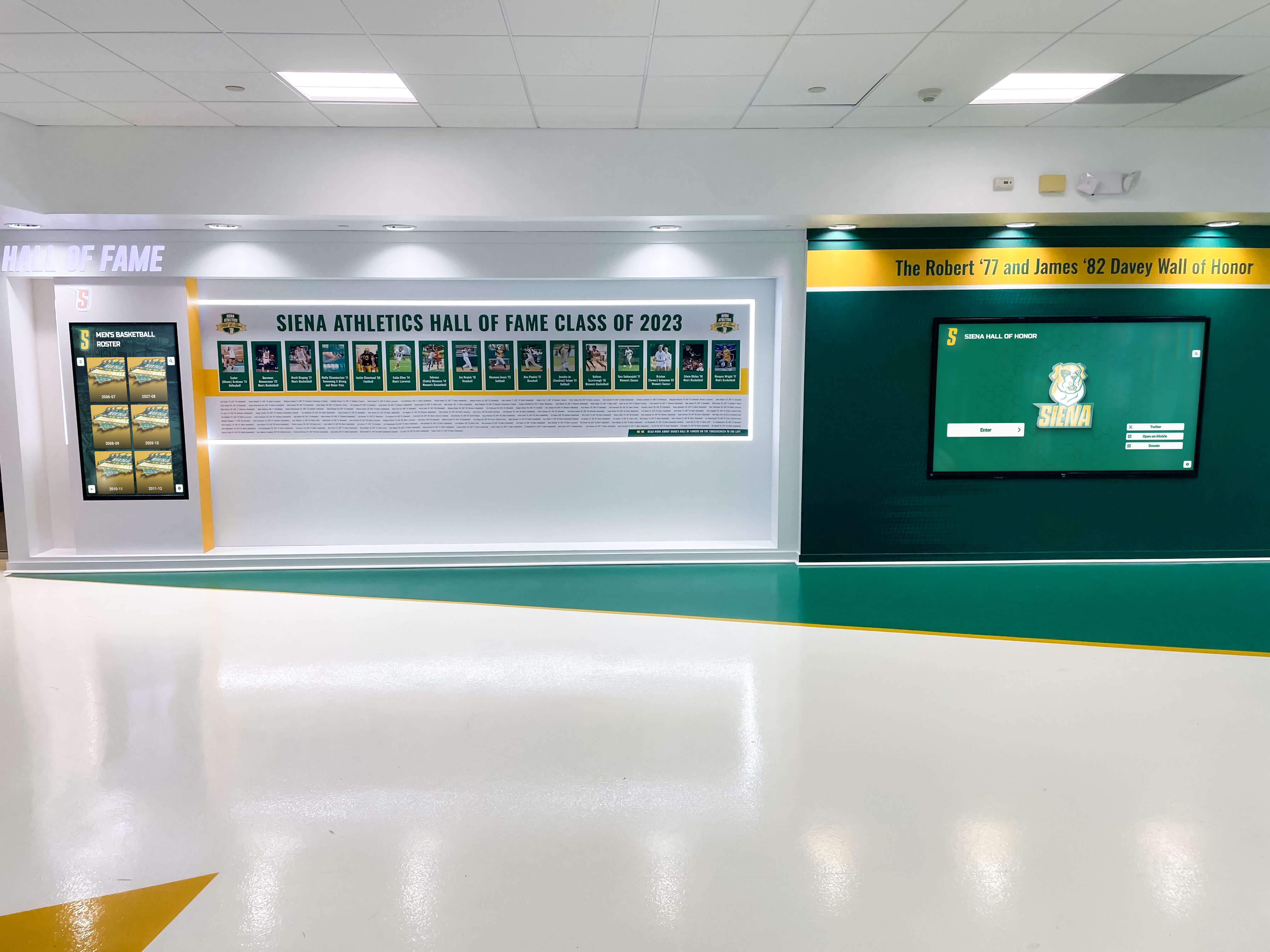
Hybrid models combine both approaches—maintaining categorical organization for primary navigation while creating special integrated content for featured stories or themed recognition periods. Many organizations using comprehensive donor recognition approaches find hybrid models provide organizational clarity while preserving storytelling flexibility.
Content scheduling adds another organizational dimension. Organizations can program displays to emphasize different recognition types based on timing—highlighting donor recognition during giving campaigns, featuring hall of fame content during reunion weekends, and emphasizing sponsor acknowledgment during athletic seasons or performance series. This dynamic prioritization ensures recognition remains relevant to current organizational activities while preserving access to all recognition categories.
The technical implementation typically involves tagging content within the content management system. Each recognition entry receives category tags (hall of fame, donor, sponsor), priority levels, and scheduling parameters. The display software then assembles content based on these parameters, organizational rules, and real-time conditions. This metadata-driven approach provides organizational flexibility without requiring technical expertise for content updates.
Design Considerations for Dual-Purpose Recognition
Visual design for displays serving multiple recognition functions requires balancing consistency with differentiation. Organizations want unified visual identity across recognition types while maintaining enough distinction that visitors immediately understand which recognition category they’re viewing.
Most effective dual-purpose displays establish consistent design frameworks—standard layouts, typography, color schemes, and navigation patterns—that unify the recognition experience. Within this framework, subtle variations signal recognition type. Hall of fame content might use gold accent colors, donor recognition might incorporate institutional blue, and sponsor acknowledgment might feature sponsor brand colors appropriately integrated.
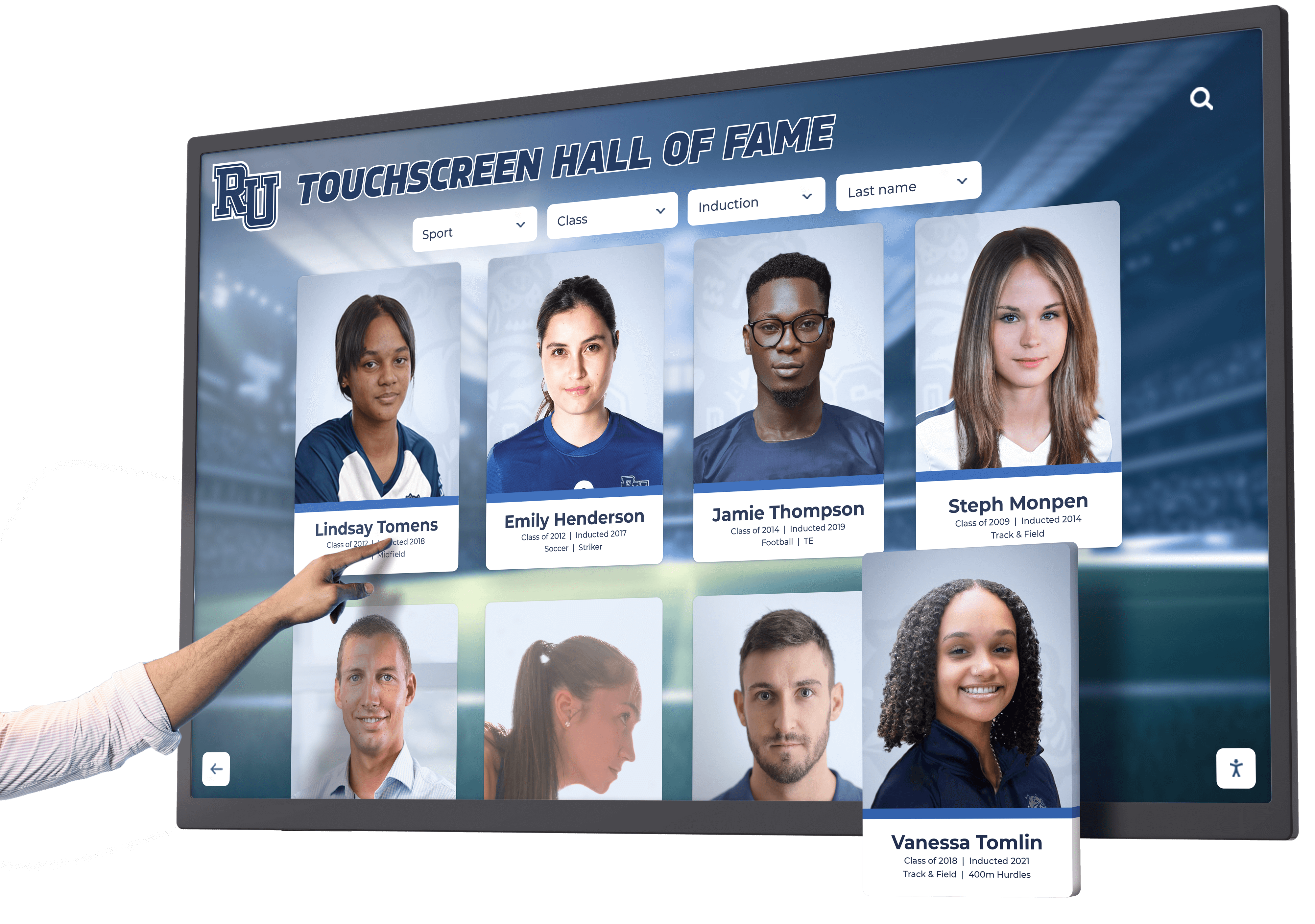
Content density represents another design consideration. Hall of fame inductee profiles typically warrant detailed presentations—photographs, biographical information, achievement summaries, statistics, and personal statements. This content richness serves visitors seeking deep engagement with inductee stories. Donor recognition often requires less content depth but broader coverage—acknowledging many supporters with names, giving levels, and optional personal messages. Sponsor content emphasizes visual prominence—logos, taglines, and sponsor messaging that communicates brand presence rather than detailed information.
Organizations implementing advanced hall of fame display technology balance these varying content needs through adaptive layouts. The same display system presents rich inductee profiles, comprehensive donor lists, and visually prominent sponsor acknowledgments by adjusting layout templates based on content type rather than forcing all recognition into identical formats.
Accessibility requirements apply equally across recognition types. Text sizing, color contrast, screen reader compatibility, and alternative navigation methods must serve users regardless of whether they’re viewing hall of fame content, donor recognition, or sponsor acknowledgment. Organizations subject to ADA compliance find that digital recognition platforms meeting WCAG 2.2 AA standards provide consistent accessibility across all recognition functions.
Budget Implications and Cost Comparisons
Financial considerations significantly influence decisions about implementing dual-purpose recognition versus maintaining separate systems. Traditional approaches require separate installations for hall of fame displays, donor walls, and sponsor recognition—each with associated hardware costs, installation expenses, design fees, and maintenance requirements. A school implementing all three recognition types might invest $15,000-$25,000 in hardware and installation, plus ongoing maintenance costs for updating plaques and managing physical elements.
Digital dual-purpose systems consolidate these investments. A touchscreen display with professional installation typically ranges $8,000-$15,000 depending on screen size, installation complexity, and customization requirements. The same hardware serves all recognition functions, immediately reducing total investment. When organizations factor subscription costs for content management platforms ($500-$2,000 annually depending on features and scale), total first-year costs often remain below traditional multi-installation approaches.
Ongoing cost differences become even more significant. Updating traditional recognition requires ordering new plaques ($100-$500 per plaque depending on materials and engraving complexity), scheduling installation appointments, and potentially redesigning layouts when space fills. Digital systems accept unlimited content updates through remote content management with no per-update costs beyond administrative time to enter information.
Organizations generating sponsor revenue through their recognition systems can offset digital platform investments entirely. Annual sponsor packages generating $5,000-$15,000 in revenue create positive return on investment within 1-3 years while simultaneously providing hall of fame and donor recognition capabilities. This economic model transforms recognition from budget expense into revenue-generating program.
The hidden costs of separate systems often surprise administrators. Maintaining three distinct recognition installations requires coordinating multiple update schedules, managing different content submission processes for inductees versus donors versus sponsors, and troubleshooting different maintenance needs. Unified digital platforms simplify administration by consolidating all recognition management through single interfaces and update processes—reducing administrative burden alongside direct costs.
Implementation Planning for Multi-Function Recognition
Successfully deploying recognition systems serving multiple purposes requires planning that addresses technical requirements, content migration, stakeholder communication, and operational procedures. Organizations typically follow phased implementation approaches rather than attempting simultaneous launch of all recognition functions.
Many schools and organizations begin with hall of fame content because inductee information already exists in organized formats—selection committee records, induction ceremony programs, and existing recognition materials. Migrating this structured content into digital platforms establishes the recognition system foundation while administrators become familiar with content management processes.
Donor recognition typically follows as the second implementation phase. Organizations audit existing donor databases, determine recognition tier structures, and establish content standards for donor profiles and acknowledgments. Implementing comprehensive donor recognition systems requires coordination with development offices to ensure recognition accuracy and donor communication about their digital acknowledgment.
Sponsor recognition implementation depends on whether organizations currently maintain sponsor relationships or are launching sponsor programs alongside their recognition systems. Existing sponsor agreements may require renegotiation to transition from traditional recognition to digital acknowledgment, presenting opportunities to restructure sponsor packages and potentially increase sponsor revenue through enhanced digital placement options.
Technical implementation addresses network connectivity, content management system configuration, display mounting and installation, and staff training on content updates. Organizations should plan 2-4 weeks from equipment delivery to full system launch, allowing time for installation, content population, staff familiarization, and testing across all recognition functions.
Stakeholder communication proves critical for successful implementation. Hall of fame inductees may wonder how digital recognition compares to traditional plaques. Donors might question whether digital acknowledgment provides appropriate permanence. Sponsors need assurance that digital placement delivers visibility and value. Proactive communication addressing these concerns—including preview demonstrations, recognition policy documentation, and examples from similar organizations—builds confidence in dual-purpose recognition approaches.
Maintaining Recognition Relevance Through Digital Warming
The concept of digital warming—continuously surfaced, personalized content that keeps communities engaged—directly applies to dual-purpose recognition systems. Static recognition, whether traditional plaques or unchanging digital content, fails to generate ongoing community interest. Dynamic recognition that evolves, updates, and responds to community activities creates living recognition experiences that visitors return to regularly.
Organizations applying digital warming principles to their recognition systems implement regular content refreshes. New hall of fame inductees receive featured placement during induction periods. Donor spotlights rotate through major supporters, highlighting different philanthropic stories each month. Sponsor content updates reflect current promotions or seasonal messaging. Record boards refresh as athletes achieve new milestones. Historical content resurfaces during anniversary commemorations or reunion events.
This continuous evolution transforms recognition displays from static acknowledgment into community engagement destinations. Alumni visiting campus don’t simply confirm that their name appears on the donor wall—they discover new inductee profiles, check updated athletic records, learn about current sponsors supporting programs they value, and explore historical content they hadn’t previously encountered. Each visit offers new discovery, encouraging return engagement that deepens community connection.
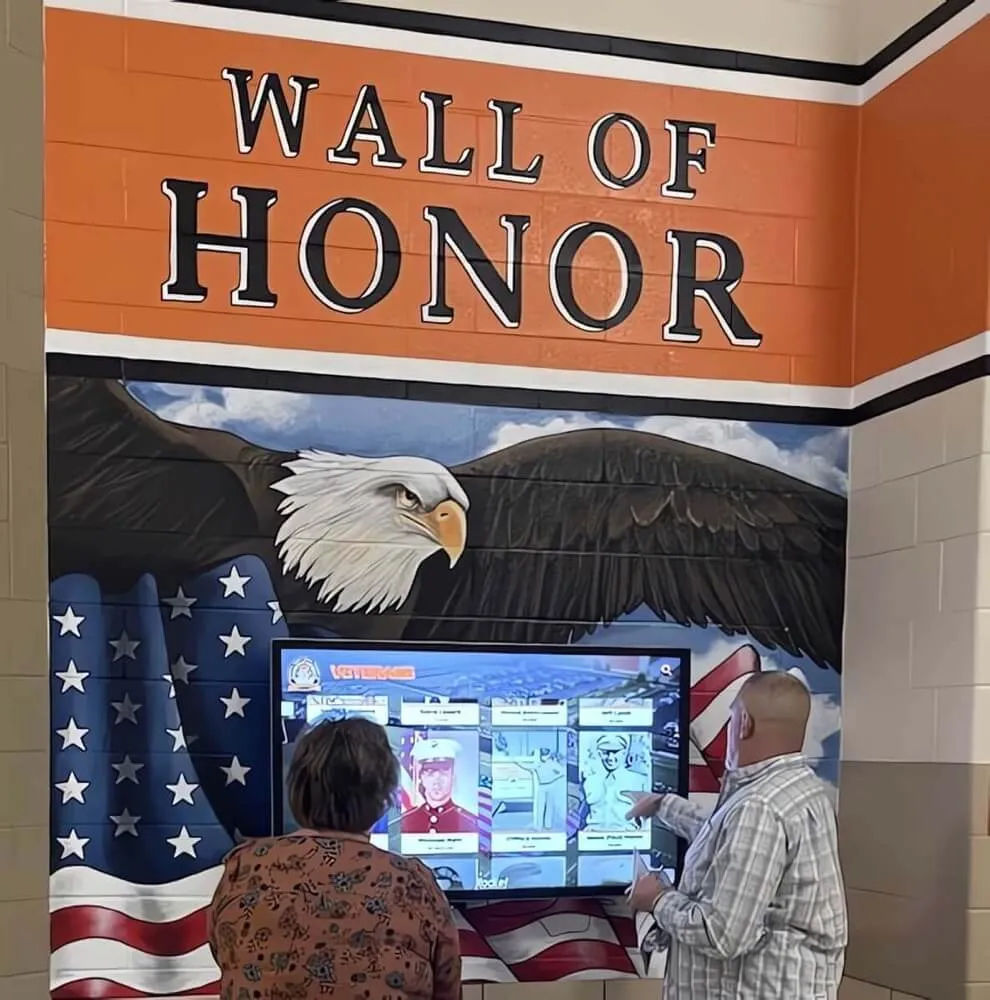
Touchscreen interactivity amplifies this engagement. Visitors actively exploring recognition content spend significantly more time with digital displays than they would viewing traditional plaques. They search for their own names, look up classmates, explore inductees from their era, and navigate through historical periods. This active participation creates memorable experiences that strengthen community identity and belonging.
Organizations implementing interactive recognition technology report that recognition displays become community gathering points. Visitors encounter displays, begin exploring content, and spontaneously share memories with companions. This social interaction around recognition creates warmer, more engaging spaces than traditional static displays generate.
The mobile dimension extends digital warming beyond physical display locations. QR codes linking to web-accessible recognition content allow community members to explore hall of fame profiles, review donor lists, or check sponsor information from anywhere. Remote access particularly matters for distant alumni, donors who cannot visit physically, and sponsors tracking their recognition placement. This accessibility expands recognition reach while maintaining engagement between physical campus visits.
Administrative Efficiency Through Unified Recognition Management
Organizations maintaining multiple recognition programs through separate systems face fragmented administrative workflows. Hall of fame committees submit inductee information through one process. Development offices manage donor recognition through different databases. Athletic directors or program coordinators handle sponsor acknowledgment separately. This fragmentation creates redundant administrative effort, increases error risk, and complicates recognition coordination.
Dual-purpose digital recognition platforms consolidate these workflows. Organizations establish single content submission processes adaptable to different recognition types. Whether adding hall of fame inductees, acknowledging new donors, or updating sponsor content, administrators use the same content management interface and follow similar procedures. This standardization reduces training requirements, simplifies administration, and ensures consistent content quality across recognition categories.
Role-based access control allows appropriate stakeholders to manage their recognition domains while maintaining system security. Hall of fame committee members can update inductee content without accessing donor or sponsor information. Development staff manage donor recognition without modifying hall of fame profiles. Sponsor coordinators update sponsor content within their defined parameters. System administrators retain oversight across all recognition types while delegating day-to-day management to appropriate roles.
Version control and approval workflows provide quality assurance for recognition content. Organizations can require content review before publication, maintain edit histories tracking content changes, and restore previous content versions if needed. These controls prove particularly important for donor recognition where accuracy directly affects donor relationships and for sponsor content representing contractual obligations.
The time savings prove substantial. Organizations report that unified recognition management reduces administrative time by 40-60% compared to maintaining separate recognition systems. Rather than learning multiple platforms, coordinating different update schedules, and troubleshooting various technical issues, administrators work within single systems that handle all recognition functions through consistent processes.
Addressing Common Concerns About Dual-Purpose Recognition
Organizations considering dual-purpose recognition systems often raise practical concerns about implementation, effectiveness, and community reception. Understanding how successful implementations address these concerns helps organizations make confident decisions.
“Will dual-purpose displays dilute recognition impact?” Experience shows that integrated recognition actually strengthens impact by creating richer context. Hall of fame inductees appreciate recognition placed within broader institutional stories that include donor support and sponsor partnerships. Donors value association with hall of fame excellence. Sponsors benefit from placement alongside prestigious recognition content. Rather than competing for attention, different recognition types create mutually reinforcing narratives.
“How do we ensure adequate space for each recognition category?” Digital platforms eliminate the fixed space constraints that limit traditional recognition. Organizations can acknowledge unlimited inductees, donors, and sponsors because digital content doesn’t compete for physical wall space. Content organization and navigation design ensure all recognition receives appropriate emphasis regardless of volume.
“What if donors prefer traditional plaques?” Many organizations maintain hybrid approaches that combine digital recognition with traditional elements. Major donors might receive both comprehensive digital profiles and traditional naming rights or plaque placement. This dual recognition honors donor preferences while extending recognition reach through digital channels. Organizations report that donors initially preferring traditional recognition embrace digital acknowledgment after experiencing its richness and accessibility.
“How do sponsor contracts work with digital recognition?” Organizations establish clear sponsor packages defining digital placement specifics—screen frequency, content types, placement prominence, and update flexibility. Written agreements document these terms just as traditional sponsor contracts specify plaque sizes and banner placements. Digital recognition actually provides more precise contractual terms because organizations can specify exact rotation schedules and measure display frequency.
“Can we add recognition categories beyond hall of fame, donors, and sponsors?” Digital platforms accommodate any recognition categories organizations want to implement. Schools add academic achievement recognition, community service awards, distinguished teacher acknowledgment, and historical commemorations. The content management flexibility supports diverse recognition needs without requiring additional hardware investments.
Future-Proofing Recognition Through Flexible Platforms
Recognition needs evolve as organizations grow, priorities shift, and communities change. Traditional recognition installations lock organizations into fixed structures that become outdated or inadequate as circumstances evolve. Digital dual-purpose platforms provide recognition flexibility that adapts to changing organizational needs.
When schools merge or organizations undergo rebranding, digital recognition systems accommodate these transitions smoothly. Content updates reflect new institutional names, revised visual identities, and evolved recognition criteria without replacing physical installations. Historical recognition remains accessible while current content reflects organizational evolution.
Technology advancement also influences recognition longevity. Digital recognition platforms receive software updates that add new features, improve user experiences, and incorporate emerging technologies—extending recognition effectiveness without complete system replacement. Organizations implementing digital recognition today access ongoing platform improvements that keep their recognition current with evolving expectations.
The investment protection matters for budget planning. Traditional recognition becoming dated requires expensive renovations or replacement. Digital recognition systems receive functional improvements through software updates while hardware typically serves effectively for 7-10 years before technical obsolescence—similar to other institutional technology investments and significantly longer than many organizations maintain traditional recognition before renovation.
Looking toward implementation, organizations can explore digital recognition platforms that balance immediate recognition needs with long-term flexibility. The most effective systems handle multiple recognition types through unified platforms while preserving organizational freedom to adjust recognition approaches as communities and priorities evolve—creating recognition experiences that serve communities today while remaining relevant for years ahead.